Словари

Словарь английского языка | Значения слов, определения и примеры

adjective
/ˈblɪŋkəd/
ограниченный (ogranichennyy)

Having a limited or narrow outlook; unable or unwilling to consider other perspectives.

"His blinkered attitude stopped him from seeing the bigger picture."

"Его ограниченное отношение не позволяло ему увидеть полную картину." (Yego ogranichennoye otnosheniye ne pozvolyalo yemu uvidet' polnuyu kartinu.)
noun
/blɪs/
блаженство (blazhentsvo)

Perfect happiness or great joy.

"The couple enjoyed a moment of pure bliss on their wedding day."

"Пара наслаждалась моментом чистого блаженства в день своей свадьбы." (Para naslazhdalas momentom chistogo blazhentsva v den' svoey svad'by.)
noun
/ˈblɪs.tər/
мозоль (mozol)

a small bubble on the skin filled with serum and caused by friction, burning, or other damage

"The new shoes gave her a painful blister on her heel."

"Новые туфли вызвали болезненную мозоль на её пятке." (Novye tufli vyzvali boleznennuyu mozol' na yei pyatke.)
adjective
/blaɪð/
беспечный (bespechnyy)

Showing a casual and cheerful indifference considered improper or carefree happiness.

"She had a blithe disregard for the rules."

"Она беззаботно пренебрегала правилами." (Ona bezzabotno prenehregala pravilami.)
adjective
/ˈblaɪðsəm/
весёлый (vesyoly)

cheerful, carefree, and full of joy

"She entered the room with a blithesome smile that lifted everyone's spirits."

"Она вошла в комнату с весёлой улыбкой, которая подняла настроение всех." (Ona voshla v komnatu s vesyoloy ulybkoy, kotoraya podnyala nastroenie vsekh.)
verb
/bloʊt/
раздуваться (razzduvat'sya)

to swell or cause to swell, often due to fluid or gas

"Eating too much junk food can bloat your stomach."

"Слишком много фастфуда может раздуть ваш живот." (Slishkom mnogo fastfuda mozhet razdut' vash zhivot.)
adjective
/ˈbloʊtɪd/
вздутый (vzdutyy)

swollen or puffed up, often unpleasantly

"After the big meal, he felt bloated and uncomfortable."
"После большого обеда он почувствовал себя вздутым и неудобным." (Posle bol'shogo obeda on pochuvstvoval sebya vzdutym i neudobnym.)
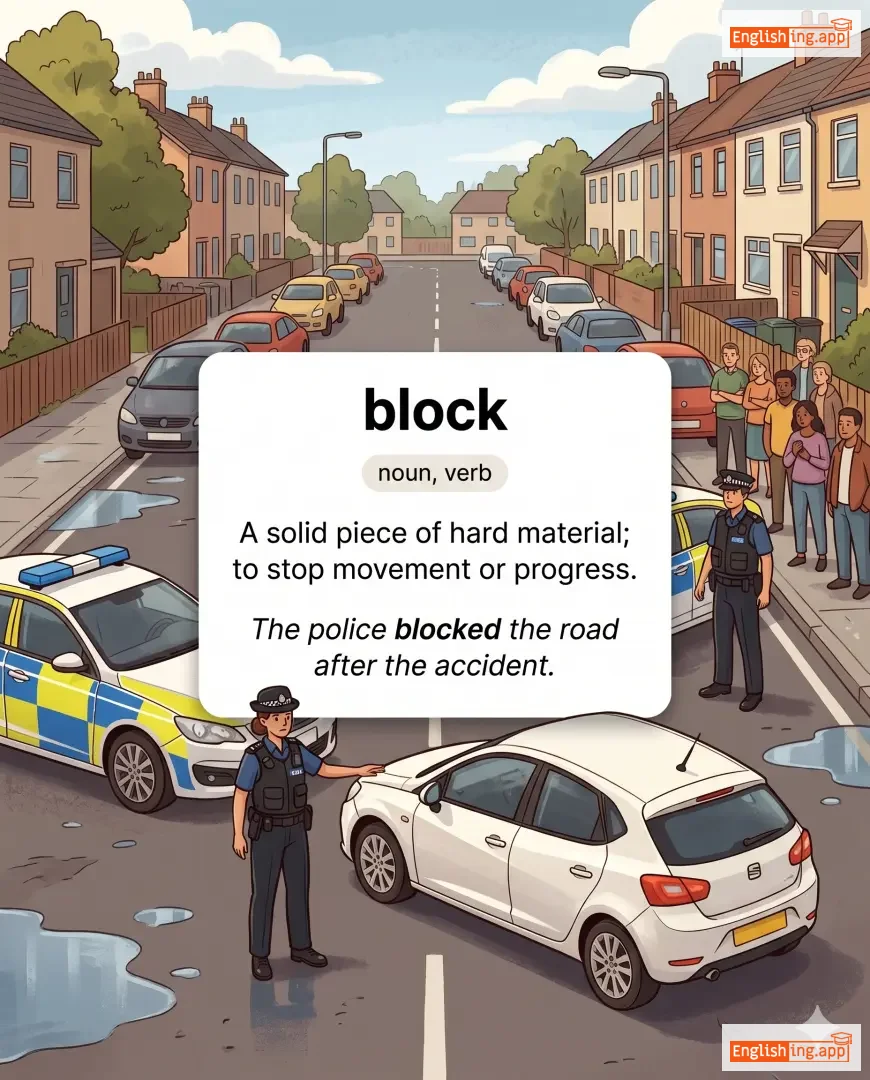
block definition card — visual illustration of the meaning
noun, verb
/blɑːk/
блокировка (blokirovka)

A solid piece of hard material; to stop movement or progress.

"The police blocked the road after the accident."

"Полиция заблокировала дорогу после аварии." (Politsiya zablokirovala dorogu posle avarii.)
noun
/blɑːˈkeɪd/
блокада (blokada)

an act of sealing off a place to prevent goods or people from entering or leaving

"The navy set up a blockade around the harbor."

"Военно-морской флот установил блокаду вокруг порта." (Voyenno-morskoy flot ustanovil blokadu vokrug porta.)
noun
/ˈblɒk.ɪdʒ/
блокировка (blokirovka)

an obstruction that makes movement or flow difficult or impossible

"The drain blockage caused water to overflow in the kitchen."

"Засор в трубе вызвал переполнение воды на кухне." (Zasor v trube vyzval perepolnenie vody na kukhne.)
blockchain definition card — visual illustration of the meaning
noun
/ˈblɒkˌtʃeɪn/
блокчейн (blokcheyn)

A system of recording information in a way that makes it difficult or impossible to change, hack, or cheat the system

"Blockchain technology ensures transparency in financial transactions."

"Технология блокчейн обеспечивает прозрачность финансовых транзакций." (Tekhnologiya blokcheyn obespechivayet prozrachnost' finansovykh tranzaktsiy.)
adjective
/blɒnd/
блонди (blondi)

having light-colored hair, typically pale yellow or golden.

"She has long blond hair that shines in the sunlight."

"У неё длинные светлые волосы, которые блестят на солнце." (U nee dlinnyye svetlyye volosy, kotoryye blyestyat na solntse.)
noun
/blʌd/
кровь (krov)

The red liquid that circulates in the arteries and veins of humans and animals.

"The doctor took a sample of blood for testing."

"Доктор взял образец крови для тестирования." (Doktor vzyal obrazets krovi dlya testirovaniya.)
noun
/ˈblʌdˌbæθ/
кровавая бойня (krovavaya boynya)

an event in which a lot of people are killed or injured, especially in a violent conflict

"The war turned into a bloody bloodbath."

"Война превратилась в кровавую бойню." (Voyna prevratilas' v krovavuyu boynyu.)
adjective
/ˈblʌdləs/
без крови (bez krovi)

without bloodshed; lacking violence or vitality

"The revolution was surprisingly bloodless."

"Революция была удивительно без крови." (Revolyutsiya byla udivitel'no bez krovi.)
noun
/ˈblʌd.ʃed/
кровопролитие; резня (krovoprolitie; reznya)

the killing or wounding of people, typically in large numbers during a conflict

"The peace treaty was signed to prevent further bloodshed."

"Мирный договор был подписан, чтобы предотвратить дальнейшее кровопролитие." (Mirnyy dogovor byl podpisan, chtoby predotvratit' dal'neysheye krovoprolitie.)
adjective
/ˈblʌdi/
кровавый (krovavyy)

covered in, involving, or containing blood; also used informally for emphasis in British English.

"The soldier returned from battle with a bloody arm."

"Солдат вернулся с битвы с кровавой рукой." (Soldat vernulsya s bitvy s krovavoy rukoy.)
noun, verb
/bluːm/
цвести (tsvesti)

to produce flowers; to develop or flourish; a flower or the state of flowering

"The roses bloom beautifully every spring."

"Розы красиво цветут каждую весну." (Rozy krasivo tsvetut kazhduyu vesnu)
noun, verb
/ˈblɒsəm/
цвести (tsvesti)

a flower or mass of flowers on a tree or plant; to develop or flourish

"The small garden began to blossom in spring."

"Маленький сад начал цвести весной." (Malenkiy sad nachal tsvesti vesnoy)
noun
/blɑːtʃ/
пятно (pyatno)

a large, irregular spot or stain, often on skin or fabric

"His shirt had a red blotch from the spilled juice."

"На его рубашке было красное пятно от пролитого сока." (Na ego rubashke bylo krasnoe pyatno ot prolitogo soka.)
noun
/blaʊz/
блузка (bluzka)

a woman's loose upper garment resembling a shirt

"She wore a beautiful silk blouse to the party."
"Она надела красивую шелковую блузку на вечеринку." (Ona nadela krasivuyu shelkovuyu bluzku na vecherinku.)
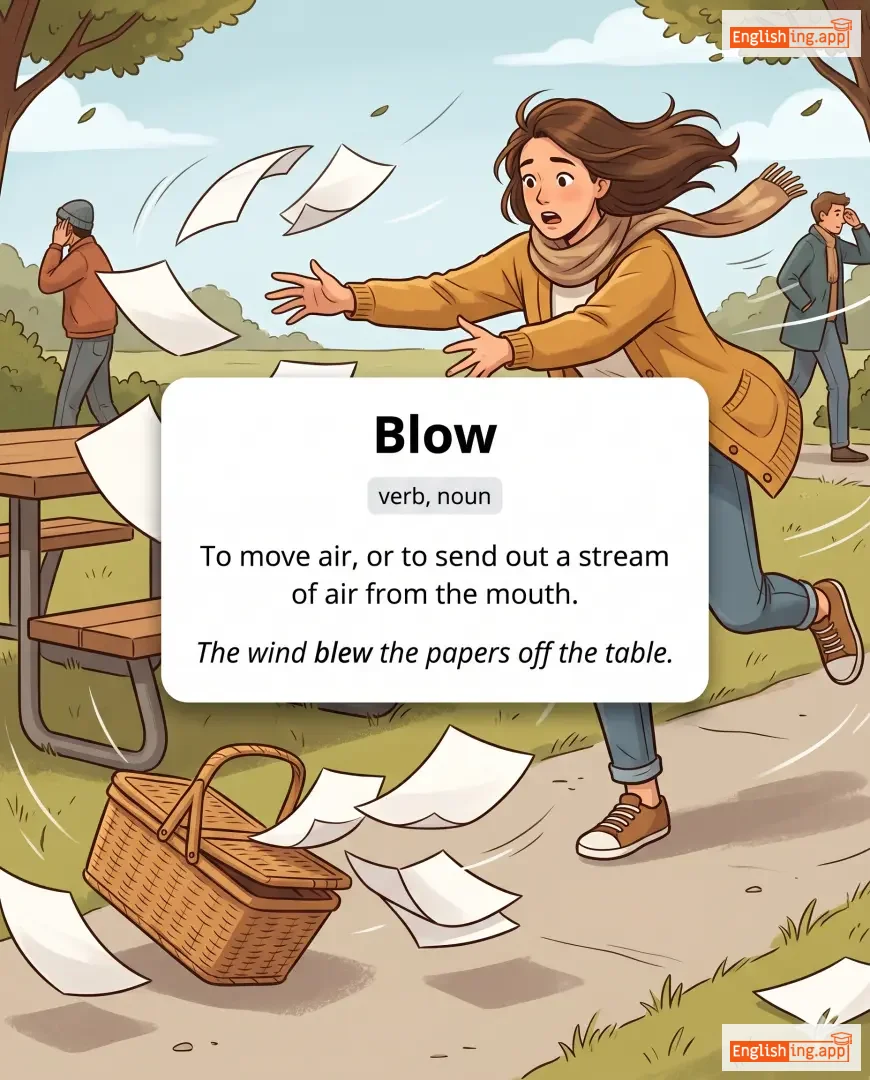
Blow definition card — visual illustration of the meaning
verb, noun
/bloʊ/
дуть / ударять (dut' / udaryat')

To move air, or to send out a stream of air from the mouth.

"The wind blew the papers off the table."

"Ветер сдул бумаги со стола." (Veter sduł bumagi so stola.)
phrasal verb
/bloʊ aʊt/
задуть (zadut)

to extinguish by blowing; to fail suddenly or burst; to expand or exceed limits dramatically

"She blew out the candles on her birthday cake."

"Она задула свечи на своём праздничном торте." (ona zadula svechi na svoyom prazdnichnom torte)
noun
/ˈbloʊˌhɑrd/
тщеславный человек (tshcheslavnyy chelovek)

a person who brags a lot or talks in a boastful way

"Everyone avoided the blowhard at the party because he wouldn't stop bragging."

"Все избегали тщеславного человека на вечеринке, потому что он не прекращал хвастаться." (Vse izbegali tshcheslavnogo cheloveka na vecherinke, potomu chto on ne prekrashchal khvastat'sya.)
verb
/ˈblʌdʒən/
бить дубинкой (bit' dubinkoy)

to hit someone with a heavy object; to force someone into doing something

"The guard was bludgeoned by the attacker in the alley."

"Стража была избита нападающим в переулке дубинкой." (Strazha byla izbita napadayushchim v pereulke dubinkoy.)
adjective
/bluː/
синий (siniy)

the color of the clear sky; feeling sad or depressed

"She wore a bright blue dress to the party."

"Она носила яркое синее платье на вечеринке." (Ona nosila yarkoe sinee plat'ye na vecherinke.)
noun
/ˌbluː ˈblʌd/
голубая кровь (golubaya krov)

a person of noble birth; aristocrat

"She came from a family of blue-bloods with centuries of royal heritage."

"Она пришла из семьи голубой крови с веками королевского наследия." (Ona prishla iz sem'i goluboy krovi s vekami korolevskogo naslediya.)
noun
/ˈbluː.ber.i/
черника (chernika)

a small round blue fruit that grows on bushes

"She picked fresh blueberries for the pie."

"Она собрала свежую чернику для пирога." (ona sobrala svezhuyu cherniku dlya piroga)
blueprint definition card — visual illustration of the meaning
noun
/ˈbluːˌprɪnt/
чертеж (chertezh)

a detailed plan or design; a guide for making something

"The architect shared the blueprint of the new building with the team."

"Архитектор поделился чертежом нового здания с командой." (Arkhitektor podelilsya chertezhem novogo zdaniya s komandoi.)
noun
/bluːz/
блюз (blyuz)

a feeling of sadness; a style of music with melancholy themes

"Listening to blues music always calms him down."

"Слушать блюз всегда его успокаивает." (Slushat' blyuz vsegda ego uspokaivayet.)
🃏

bluff

verb
/blʌf/

to deceive someone by pretending to have strength, knowledge, or resources that one does not actually possess

"He tried to bluff his way into the exclusive club."

noun
/ˈblʌfər/
блефующий (blefuyushchiy)

a person who pretends to be more confident, skilled, or knowledgeable than they really are; someone who deceives others by bluffing

"Everyone eventually realized that he was just a bluffer with no real experience."
"В конце концов все поняли, что он был просто блефующим." (v kontse kontsov vse ponyali chto on byl prosto blefuyushchim)
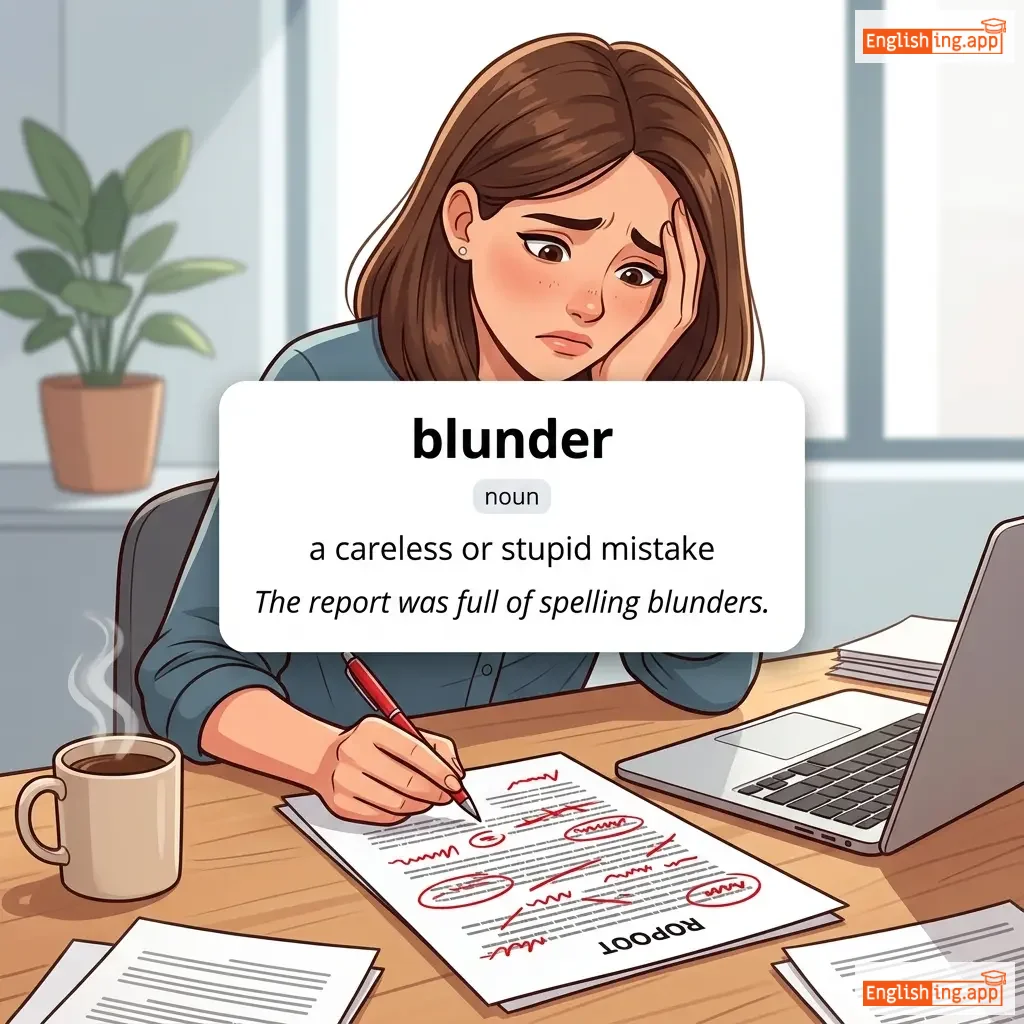
blunder definition card — visual illustration of the meaning
noun
/ˈblʌndər/
ошибка (oshibka)

a careless or stupid mistake

"The report was full of spelling blunders."

"Отчет был полон орфографических ошибок." (Otyot byl polon orfograficheskikh oshibok.)
adjective
/blʌnt/
тупой, прямой (tupoy, pryamoy)

not sharp; direct and straightforward in speech

"Her blunt remarks offended some people."

"Ее прямые замечания обидели некоторых людей." (Eyo pryamye zamechaniya obideli nekotorykh lyudey.)
adverb
/ˈblʌnt.li/
прямо; без церемоний (pryamo; bez tseremoniy)

in a direct way without trying to be polite; frankly

"He told her bluntly that she was wrong."

"Он сказал ей прямо, что она была не права." (On skazal yey pryamo, chto ona byla ne prava.)
verb
/blɜːr/
размывать (razmyvat)

to make something unclear or difficult to see

"Tears blurred her vision."

"Слезы размазали её зрение." (Slezy razmazali yeyo zrenie.)
noun
/blɜːrb/
рекламное описание (reklamnoye opisaniye)

a short promotional description of a book, product, or service

"The back cover had a blurb praising the novel."
"На задней обложке была рекламная аннотация, восхваляющая роман." (Na zadney oblozhke byla reklamnaya annotatsiya, voskhvalyayushchaya roman.)
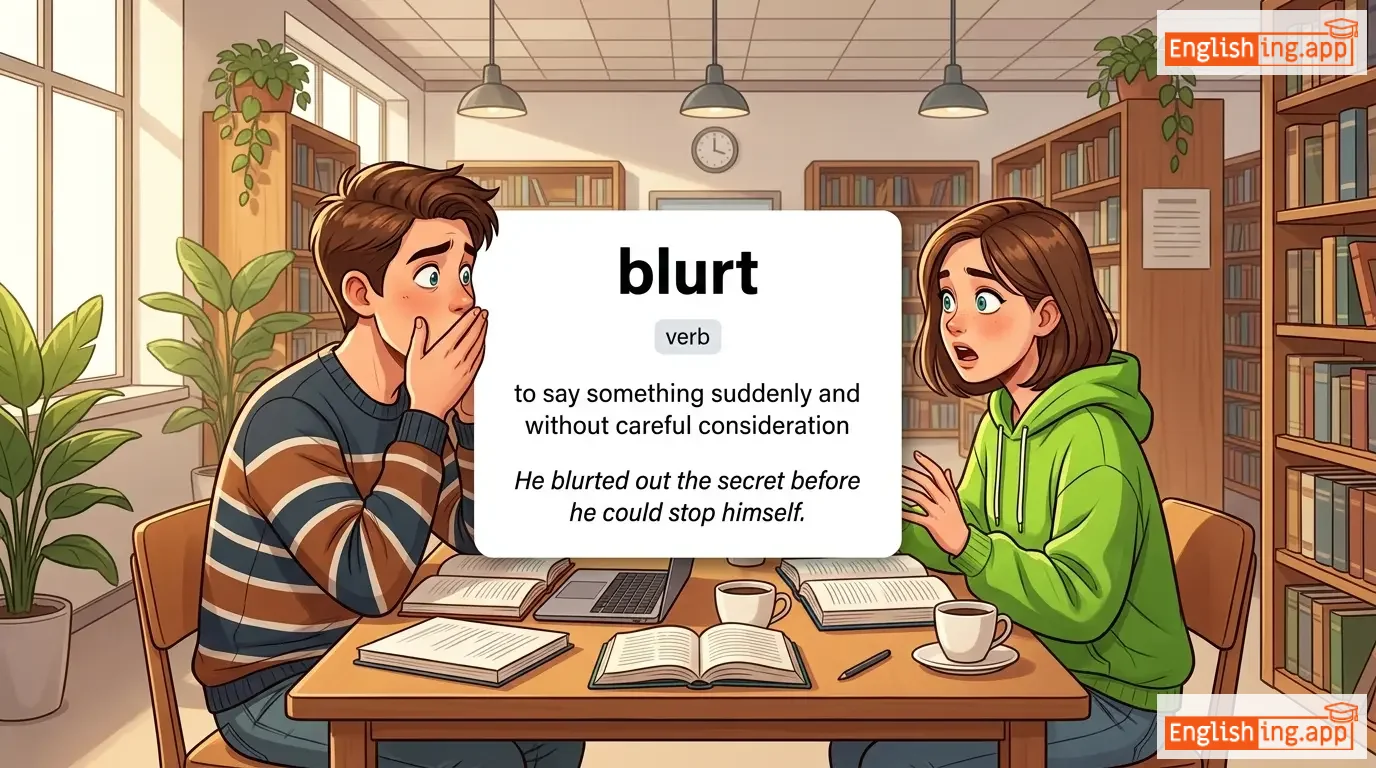
blurt definition card — visual illustration of the meaning
verb
/blɜːrt/
выболтать что-то (vyboltat' chto-to)

to say something suddenly and without careful consideration

"He blurted out the secret before he could stop himself."

"Он выболтал секрет, прежде чем успел остановиться." (On vyboltal sekret, prezhde chem uspel ostanovit'sya.)
verb
/blʌʃ/
краснеть (krasnet)

to become red in the face due to embarrassment or shyness

"She blushed when he complimented her."

"Она покраснела, когда он сделал ей комплимент." (Ona pokrasnela, kogda on sdelal yey kompliment.)
verb
/ˈblʌstər/
громкие слова (gromkie slova)

to speak loudly in an aggressive or threatening way, often without real power

"The manager blustered about firing people but did nothing."

"Менеджер говорил о том, как уволит людей, но ничего не сделал." (Menedzher govoril o tom, kak uvolit lyudey, no nichego ne sdelal.)
noun
/ˈboʊ.ə/
боа constrictor (boa constrictor)

a large non-venomous snake that kills prey by constriction

"The boa constrictor wrapped around its prey."

"Боа-констриктор обвил свою добычу." (boa constrictor obvil svoyu dobychu)
noun
/bɔːrd/
доска; совет директоров (bord)

a flat, thin, rectangular piece of material such as wood; also a group of people managing an organization

"The board decided to increase the budget."
"Совет директоров принял решение увеличить бюджет." (Sovet direktorov prinyal reshenie uvelichit byudzhet.)
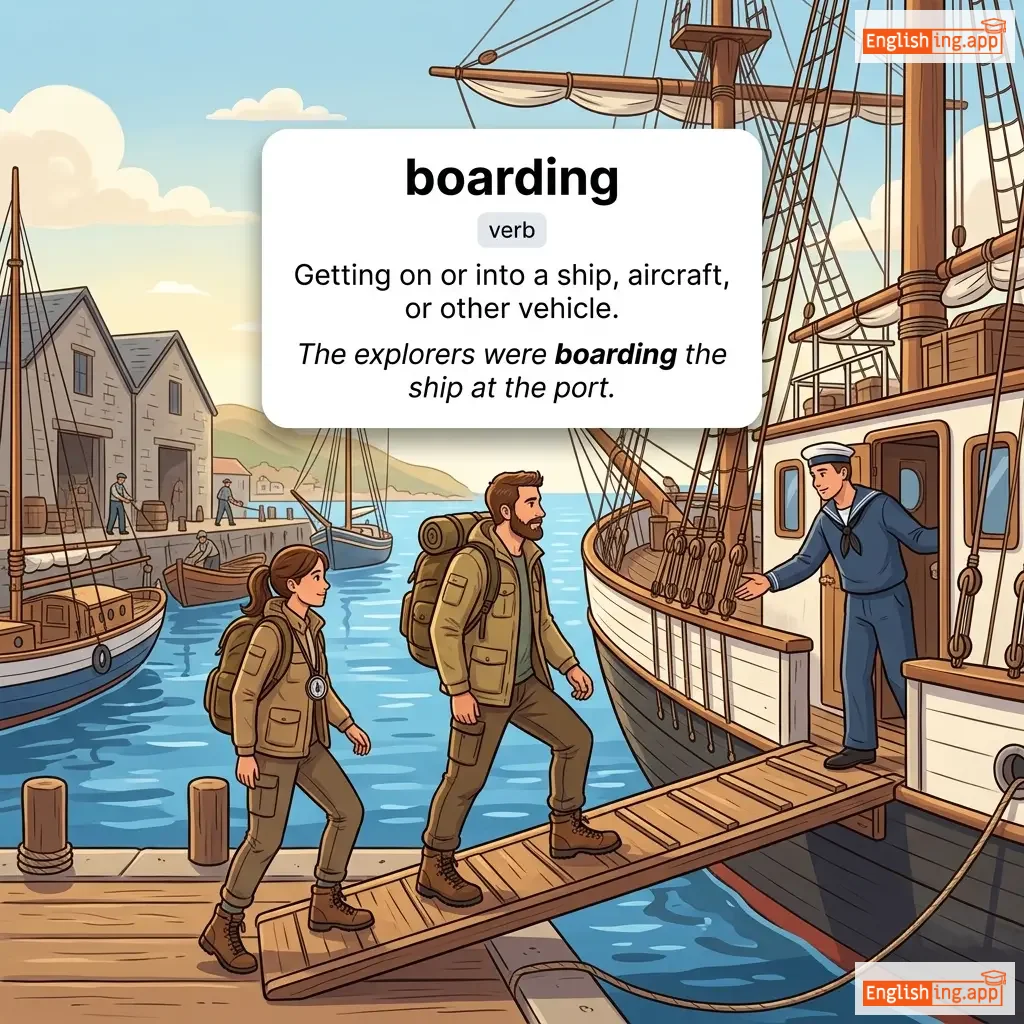
boarding definition card — visual illustration of the meaning
verb
/ˈbɔːrdɪŋ/
посадка (posadka)

Getting on or into a ship, aircraft, or other vehicle.

"The explorers were boarding the ship at the port."

"Исследователи садились на корабль в порту." (Issledovateli sadilis' na korabl' v portu.)
Boast definition card — visual illustration of the meaning
verb
/boʊst/
хвастаться (khvastat'sya)

to talk with pride about something you have or achieved

"He boasted about his new car."

"Он хвалился своей новой машиной." (On khvalilsya svoey novoy mashinoy.)
noun
/boʊt/
лодка (lodka)

a small vessel used for traveling on water

"They took a boat across the river."

"Они взяли лодку, чтобы переплыть реку." (Oni vzyali lodku, chtoby pereplyt' reku.)
noun
/ˈboʊsən/
старший помощник судна (starshiy pomoshchnik sudna)

a ship's officer in charge of equipment and the crew

"The boatswain supervised the sailors on deck."

"Ботсвен контролировал моряков на палубе." (Botsven kontrolировал moryakov na palube.)
noun, verb
/bɒb/
качаться (kachatsya)

a short sudden movement up and down; to move quickly up and down

"The small boat began to bob on the waves."

"Маленькая лодка начала качаться на волнах." (Malenkaya lodka nachala kachatsya na volnakh)
verb
/boʊd/
предвещать (predveshchat)

to be an omen of a particular outcome, often something bad

"The dark clouds bode a heavy storm."

"Тёмные облака предсказывают сильный шторм." (Tyomnye oblaka predskazyvayut sil'nyy shtorm.)
noun
/ˈbɒdɪs/
корсаж (korsazh)

the part of a woman's dress that covers the body from the neck to the waist

"She wore a dress with an embroidered bodice."

"Она носила платье с вышитым корсажем." (Ona nosila plat'ye s vyshitym korsazhem.)
adjective
/ˈbɒdɪli/
телесный (telesnyy)

relating to or concerning the body

"He suffered bodily harm in the accident."

"Он получил телесные повреждения в аварии." (On poluchil telesnye povrezhdeniya v avarii.)