Словари

Словарь английского языка | Значения слов, определения и примеры

adjective
/əˈkjuː.zəˌtɔːr.i/
обвиняющий (obvinyayushchiy)

Suggesting blame or indicating someone has done wrong.

"He gave her an accusatory glance."

"Он бросил на неё обвиняющий взгляд." (On brosil na neyo obvinyayushchiy vzglyad.)
accuse definition card — visual illustration of the meaning
verb
/əˈkjuːz/
обвинять (obvinyat)

To say that someone has done something wrong or illegal.

"They accused him of lying during the meeting."

"Они обвинили его во лжи во время встречи." (Oni obvinili ego vo lzhi vo vremya vstrechi)
noun
/əˈkjuːzd/
обвиняемый (obvinyayemyi)

a person who has been charged with a crime

"The accused pleaded not guilty in court."

"Обвиняемый не признал себя виновным в суде." (Obvinyayemyi ne priznali sebya vinovnym v sude.)
verb
/əˈkʌstəm/
приучать (priuchat)

to make someone familiar with something through regular experience or use

"It took him a while to accustom himself to the new environment."

"Ему понадобилось некоторое время, чтобы привыкнуть к новой обстановке." (Emu ponadobilos' nekotoroje vremya, chtoby privykhnut' k novoj obstanovke.)
adjective
/eɪˈsɛfələs/
безглавный (asefalas)

having no leader or head; headless

"The acephalous group soon fell into disorganization."

"Безглавная группа вскоре распалась." (Bezgolovaya gruppa vskore raspalas.)
adjective
/əˈsɜːrbɪk/
едкий (yedkiy)

sharp, harsh, or bitter in tone or taste

"His acerbic comments offended many people in the meeting."

"Его едкие комментарии оскорбили многих людей на собрании." (Yego yedkiye kommentarii oskorbili mnogikh lyudey na sobranii.)
noun
/əˈsɜːrbəti/
резкость (rezkost)

bitterness or sharpness of tone, manner, or taste

"The acerbity of his remarks left everyone silent."

"Острота его замечаний оставила всех в тишине." (Ostrota ego zamechaniy ostavila vsekh v tishine.)
noun
/ˈæsɪˌteɪt/
ацетат (acetat)

a salt or ester of acetic acid; a synthetic material used in textiles and film

"The company produces acetate fibers for clothing."

"Компания производит ацетатные волокна для одежды." (Kompaniya proizvodit atsetatnye volokna dlya odezhdy.)
adjective
/əˈsiːtɪk/
уксусный (uksusny)

relating to or containing acetic acid; sour or vinegary in taste or smell

"The acetic smell of vinegar filled the kitchen."

"Уксусный запах уксуса наполнил кухню." (Uksusnyy zapakh uksusa napolnil kukhnyu.)
verb
/eɪk/
боль (bol)

to suffer a continuous dull pain

"Her back ached after sitting for so long."

"Ее спина болела после того, как она сидела так долго." (Eyo spina bolela posle togo, kak ona sidel tak dolgo.)
achievable definition card — visual illustration of the meaning
adjective
/əˈtʃiːvəbl/
достижимый (dostizhimy)

Able to be brought about or reached successfully.

"Start with achievable steps to stay motivated."

"Начните с достижимых шагов, чтобы оставаться мотивированным." (Nachnite s dostizhimykh shagov, chtoby ostavat'sya motivirovannym.)
verb
/əˈtʃiːv/
достигать (dostigat)

to successfully bring about or reach a desired goal or result

"She worked hard to achieve her dream of becoming a doctor."

"Она усердно работала, чтобы достичь своей мечты стать врачом." (Ona usyerdno rabotala, chtoby dostich svoey mechtu stat' vrachom.)
noun
/əˈtʃiːvmənt/
достижение (dostizhenie)

Something that has been successfully completed or accomplished through effort or skill.

"Graduating from university was her greatest achievement."

"Окончание университета было её величайшим достижением." (Okonchanie universiteta bylo yey velechayshim dostizheniem.)
adjective
/əˈkɪliən/
ахиллесовский (akhillesovskiy)

like or characteristic of Achilles; strong but vulnerable

"His achillean pride made him blind to danger."

"Его ахиллесовская гордость сделала его слепым к опасности." (Ego akhillesovskaya gordost' sdelala ego slepym k opasnosti.)
adjective
/ˌækrəˈmætɪk/
ахроматичный (akhromatichny)

without color; free from color

"The designer chose an achromatic palette of black, white, and gray."

"Дизайнер выбрал ахроматическую палитру из черного, белого и серого." (Dizayner vybral akhromaticheskuyu palitru iz chernogo, belogo i serogo.)
noun
/ˈæsɪd/
кислота (kisota)

a chemical substance that reacts with bases and has a sour taste

"Lemons contain citric acid."
"Лимоны содержат лимонную кислоту." (Limony soderzhat limonnuyu kislotu.)
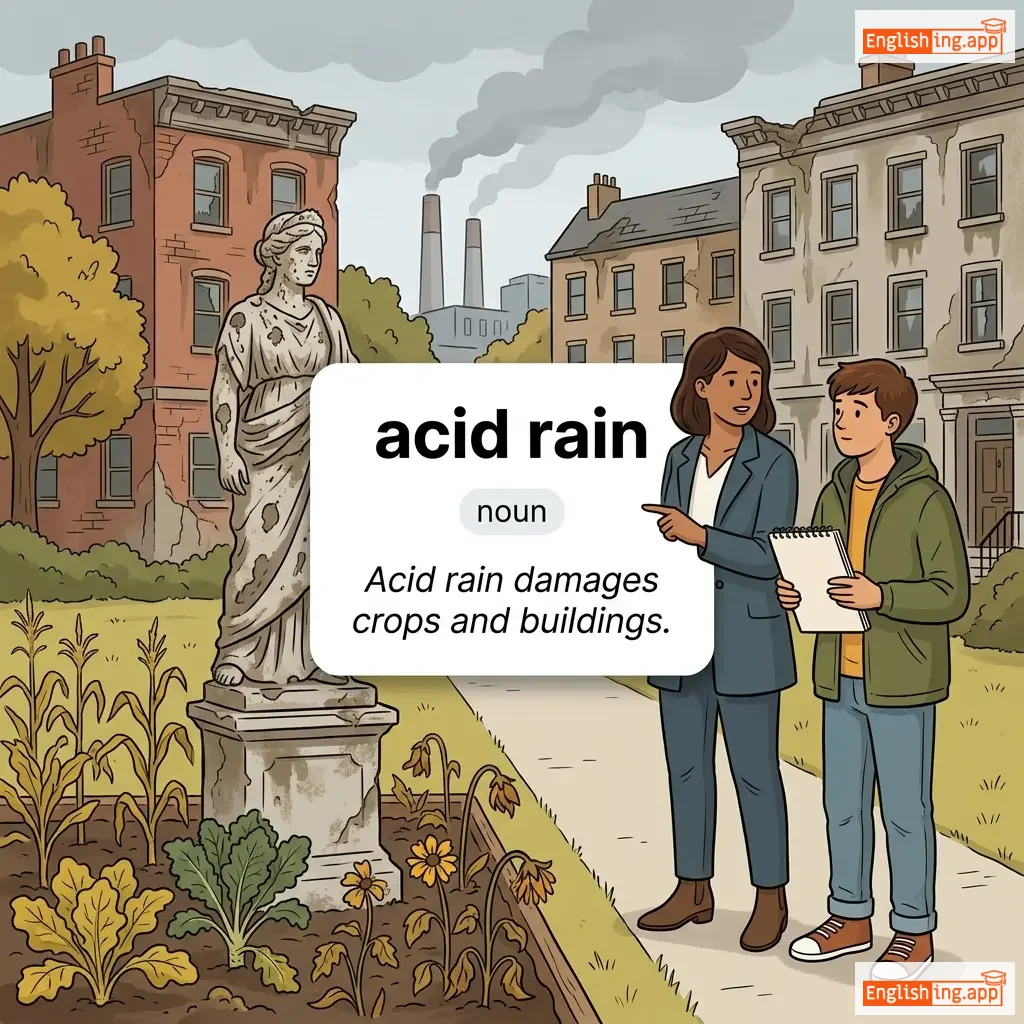
acid rain definition card — visual illustration of the meaning
noun
ˈæsɪd reɪn
кислотный дождь (kislotnyy dozhd')

Rainfall made acidic by atmospheric pollution, especially from industrial emissions.

"Acid rain damages crops and buildings."

"Кислотный дождь повреждает сельскохозяйственные культуры и здания." (Kislotnyy dozhd' povrezhdaet selskokhozyaystvennye kultury i zdaniya.)
adjective
/əˈsɪdɪk/
кислый (kislyy)

containing acid; having a sour taste; sharp or biting in tone

"The lemon has an acidic taste that makes your mouth pucker."

"Лимон имеет кислый вкус." (limon imeyet kislyy vkus)
verb
/əˈsɪdɪfaɪ/
кислить (kislit)

to make something acidic or more acidic

"Farmers worry that pollution will acidify the soil."

"Фермеры обеспокоены тем, что загрязнение сделает почву более кислой." (Fermery obespokoyeny tem, chto zagryaznenie sdelayet pochvu bolee kisloy.)
noun
/əˈsɪdɪti/
кислотность (kislotnost)

the quality or degree of being acidic; the amount of acid present in a substance

"The acidity of the soil affects how well crops grow."

"Кислотность почвы влияет на рост растений." (Kislotnost pochvy vliyaet na rost rastenii)
adjective
/əˈsɪdjʊləs/
слегка кислый или резкий (slegka kislyy ili rezkiy)

slightly sour or sharp in taste or manner

"The critic wrote an acidulous review of the movie."

"Критик написал кислотный обзор фильма." (Kritik napisал kislotnyy obzor fil'ma.)
verb
/əkˈnɒlɪdʒ/
признавать (priznavat)

to accept, admit, or recognize the truth or existence of something

"She refused to acknowledge her mistake."

"Она отказалась признать свою ошибку." (Ona otkazalas priznat svoju oshibku.)
noun
/əkˈnɒlɪdʒmənt/
признание (priznaniye)

the act of recognizing or accepting something as true or valid; an expression of gratitude or recognition

"She received an acknowledgement for her contribution to the project."

"Она получила признание за свой вклад в проект." (ona poluchila priznaniye za svoy vklad v proyekt)
noun
/əkˈnɒlɪdʒmənt/
признание (priznanie)

the act of accepting, admitting, or recognizing something

"He received an acknowledgment of his application."

"Он получил признание за свою заявку." (On poluchil priznanie za svoiu zayavku.)
noun
/ˈækmi/
высшая точка (vyshee tochka)

the highest point of achievement or excellence

"Winning the award was the acme of his career."

"Победа в конкурсе стала высшей точкой его карьеры." (Pobeda v konkyrse stala vysshiyey tochkoy yego kariery.)
noun
/ˈækni/
акне (akne)

a skin condition in which pores become inflamed and clogged, causing pimples and spots

"Regular cleansing and a balanced diet can help reduce acne."

"Регулярная чистка и сбалансированное питание могут помочь уменьшить акне." (Reguljarnaja chistka i sbalansirovannoe pitaniye mogut pomoch' umenshit' akne.)
🕯️

acolyte

noun
/ˈækəlaɪt/

a follower or assistant, especially in a religious service or as a devoted supporter of a leader

"The senator arrived with a small group of acolytes who handled the press."

adjective
/əˈkuːstɪk/
акустический (akusticheskiy)

relating to sound or the sense of hearing; not amplified by electrical means

"We recorded an acoustic version of the song in a quiet room."

"Мы записали акустическую версию песни в тихой комнате." (My akusticheskuyu versiyu pesni v tikhoy komnate)
noun
/əˈkuːstɪks/
акустика (akustika)

the science of sound, or the properties of a space that affect how sound is heard

"The hall’s excellent acoustics made the orchestra sound rich and clear."

"Отличная акустика зала позволила оркестру звучать богато и ясно." (Otlichnaya akustika zala pozvolila orkestru zvuchat' bogato i yasno.)
verb
/əˈkweɪnt/
ознакомить (oznakomit)

to make someone familiar with something; to inform or introduce

"Please acquaint yourself with the safety guidelines before operating the machine."

"Пожалуйста, ознакомьтесь с инструкциями по безопасности перед использованием машины." (Pozhaluysta, ozkom'tes' s instruktsiyami po bezopasnosti pered ispol'zovaniem mashiny.)
verb
/ˌækwiˈɛs/
молча соглашаться (molcha soglashat'sya)

to accept something reluctantly but without protest

"She decided to acquiesce to her parents’ wishes."
"Она решила молча согласиться с желаниями своих родителей." (Ona reshil molcha soglashat'sya s zhelaniyami svoikh roditeley.)
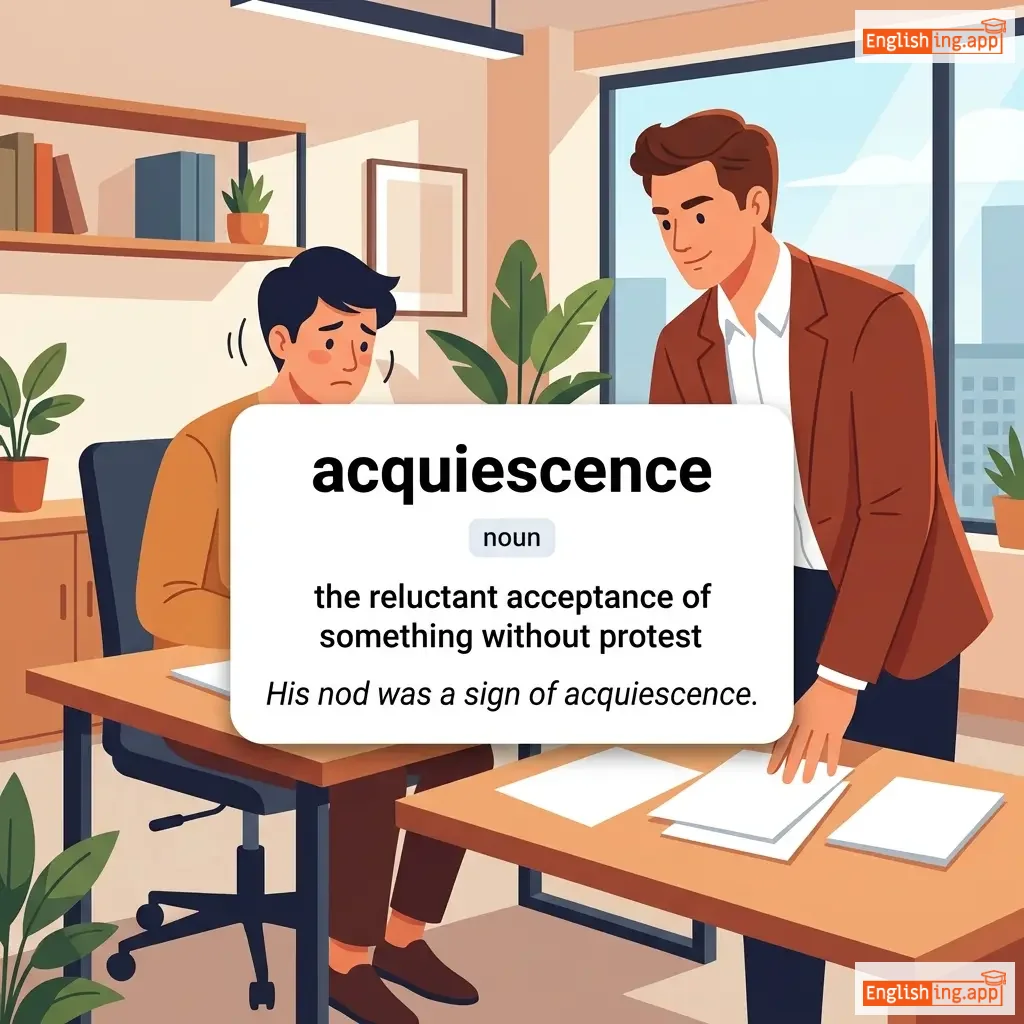
acquiescence definition card — visual illustration of the meaning
noun
/ˌækwiˈɛsəns/
молчаливое согласие (molchalivoye soglasie)

the reluctant acceptance of something without protest

"His nod was a sign of acquiescence."

"Его кивок был знаком молчаливого согласия." (Yego kivok byl znakom molchalivogo soglasiya.)
adjective
/ˌækwiˈɛsənt/
покорный (pokorny)

ready to accept something without protest, or to do what someone else wants

"He gave an acquiescent smile and agreed to the plan."

"Он дал покорную улыбку и согласился с планом." (On dal pokornuyu ulybku i soglasilis' s planom.)
acquire definition card — visual illustration of the meaning
verb
/əˈkwaɪər/
приобретать (priobretat)

to obtain or gain possession of something

"She managed to acquire a rare painting at the auction."

"Она смогла приобрести редкую картину на аукционе." (Ona smogla priobretat' redkuyu kartinu na auktsione.)
noun
/əˈkwaɪərmənt/
приобретение; достижение (priobretenie; dostizhenie)

the act of acquiring something; something that has been acquired, especially a skill or possession

"Language proficiency is an important acquirement for global careers."

"Знание языка — важное приобретение для глобальной карьеры." (Znanie yazyka vazhnoe priobretenie dlya globalnoy kariery)
Acquisition definition card — visual illustration of the meaning
noun
/ˌækwɪˈzɪʃən/

the act of obtaining or gaining something, often knowledge, skills, or property

"The company announced the acquisition of a smaller competitor."

adjective
/əˈkwɪzətɪv/

excessively interested in acquiring money or material things

"The acquisitive businessman bought every piece of land he could find."

verb
/əˈkwɪt/
оправдать (opravdat)

to free someone from a criminal charge by a verdict of not guilty

"The court decided to acquit the defendant of all charges."

"Суд решил оправдать подсудимого по всем обвинениям." (Sud reshio opravdat podsudimogo po vsemm obvineniiyam.)
noun
/əˈkwɪtl/
оправдание (opravdanie)

a judgment that a person is not guilty of the crime with which they have been charged

"The acquittal of the accused shocked the public."

"Оправдание обвиняемого шокировало общественность." (Opravdanie obvinyayemogo shokirovalo obshchestvennost.)
noun
/əˈkwɪtəns/
квитанция (kvytantsiya)

a written receipt acknowledging payment or discharge of a debt

"He demanded an acquittance after paying the loan."

"Он потребовал квитанцию после того, как оплатил кредит." (On potreboval kvitantsiyu posle togo, kak oplatil kredit.)
🌾

acre

noun
/ˈeɪkər/

a unit of land area equal to 4,840 square yards (about 4,047 square meters)

"The farmer owns five acres of fertile land."

noun
/ˈeɪ.kər.ɪdʒ/
акр (akr)

An area of land measured in acres.

"The farmer owns a large acreage of fertile land."

"Фермер владеет большим участком плодородной земли." (Fermer vladeyet bol'shim uchastkom plodorodnoy zemli.)
adjective
/ˈæk.rɪd/
едкий (akrid)

Having a strong, unpleasantly sharp taste or smell.

"The acrid smoke from the fire made it hard to breathe."

"Едкий дым от пожара затруднял дыхание." (Yedkiy dym ot pozhara zatrudnyal dykhaniye.)
adjective
/ˌæk.rɪˈmoʊ.ni.əs/
горький и злой (gorkiy i zloy)

Bitter and angry, often involving harsh words.

"The debate turned acrimonious after the controversial remark."

"Дебаты стали акримониозными после спорного замечания." (Debaty stali akrimoniyoznymi posle spornogo zamechaniya.)
noun
/ˈæk.rɪ.moʊ.ni/
горечь (akrimoni)

Bitterness and anger, especially in speech or behavior.

"The divorce was filled with acrimony and disputes."

"Развод сопровождался горечью и спорами." (Razvod soprovozhdalsya gorechyu i sporami.)
noun
/ˌæk.rəˈfoʊ.bi.ə/
страх высоты (strakh vysoty)

An extreme or irrational fear of heights.

"Her acrophobia prevented her from climbing the tall building."

"Её акрофобия помешала ей подняться на высокое здание." (Yeyo akrofobiya pomeshchala yey podnyat'sya na vysokoye zdanije.)
preposition/adverb
/əˈkrɒs/
через (cherez)

From one side to the other side of something.

"He ran across the street to catch the bus."
"Он пробежал через улицу, чтобы поймать автобус." (On probegil cherez ulitsu, chtoby poymat' avtobus.)
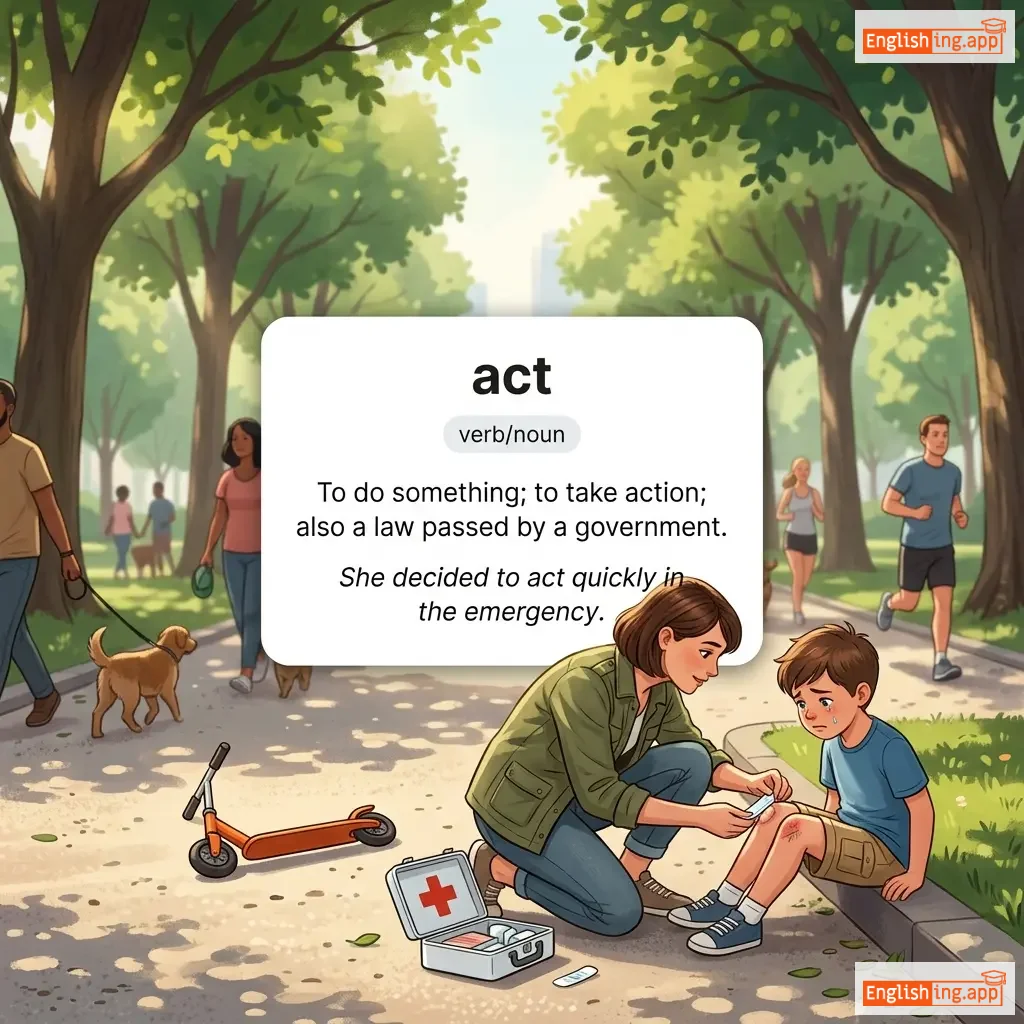
act definition card — visual illustration of the meaning
verb/noun
/ækt/
действие / закон (deystvie / zakon)

To do something; to take action; also a law passed by a government.

"She decided to act quickly in the emergency."

"Она решила действовать быстро в экстренной ситуации." (Ona reshilа deystvovat' bystro v ekstrennoy situatsii.)
noun, adjective, gerund
/ˈæk.tɪŋ/
актёрская игра (akterskaya igra)

the art or profession of performing in plays, films, or television; temporary performance of duties; the process of performing an action

"She is studying acting to become a professional actress."

"Она изучает актёрское мастерство, чтобы стать профессиональной актрисой." (ona izuchaet akterskoye masterstvo chtoby stat professionalnoy aktrisoy)
noun
/ˈækʃən/
действие (deystvie)

The process of doing something, typically to achieve a goal.

"The government took immediate action to control inflation."

"Правительство приняло незамедлительные меры для контроля над инфляцией." (Pravitel'stvo prinyalo nezamedlitel'nye mery dlya kontrolya nad inflyatsiey.)