Словари

Словарь английского языка | Значения слов, определения и примеры

noun
/ɔː/
изумление (izumlenie)

a feeling of deep respect mixed with fear or wonder

"The children looked at the fireworks in awe."

"Дети смотрели на фейерверки с изумлением." (Deti smotreli na feyerverki s izumleniem.)
adjective
/ˈɔːfəl/
ужасный (uzhasnyy)

very bad or unpleasant

"The weather was awful during our trip."

"Погода была ужасной во время нашего путешествия." (Pogoda byla uzhasnoy vo vremya nashego puteshestviya.)
adverb
/ˈɔːfəli/
ужасно (uzhasno)

in a very great degree; extremely; in a way that is very bad or unpleasant

"I am awfully glad to see you again."

"Я ужасно рад снова тебя видеть." (ya uzhasno rad snova tebya videt)
adjective
/ˈɔːkwəd/
неловкий (nelovkiy)

causing or feeling embarrassment; difficult to deal with

"There was an awkward silence after his joke."

"После его шутки наступила неловкая тишина." (Posle ego shutki nastupila nelovkaya tishina.)
🛠️

awl (ол)

noun
/ɔːl/
шило (shilo)

a small pointed tool used for making holes, especially in leather

"The cobbler used an awl to punch holes in the leather."

"Сапожник использовал шило, чтобы пробить отверстия в коже." (Sapozhnik ispol'zoval shilo, chtoby probit' otverstiya v kozhe.)
noun
/ˈɔːnɪŋ/
тент (tent)

a sheet of canvas or material stretched on a frame to shelter a place from the sun or rain

"We sat under the awning to avoid the heavy rain."

"Мы сидели под тентом, чтобы избежать сильного дождя." (My sidelí pod tentom, chtoby izbezhat' sil'nogo dozhdya.)
adverb
/əˈraɪ/
неправильно (nepravil'no)

away from the expected or proper direction; wrong or amiss

"The plan went awry when the weather suddenly changed."

"План пошел не так, когда погода внезапно изменилась." (Plan poshel ne tak, kogda pogoda vnezapno izmenilas'.)
noun
/æks/
топор (topor)

a tool with a heavy blade for cutting wood

"The lumberjack swung his axe to chop the tree."
"Лесоруб размахивал своим топором, чтобы срубить дерево." (Lesorub ramakhival svoim toporom, chtoby srubit derevo.)
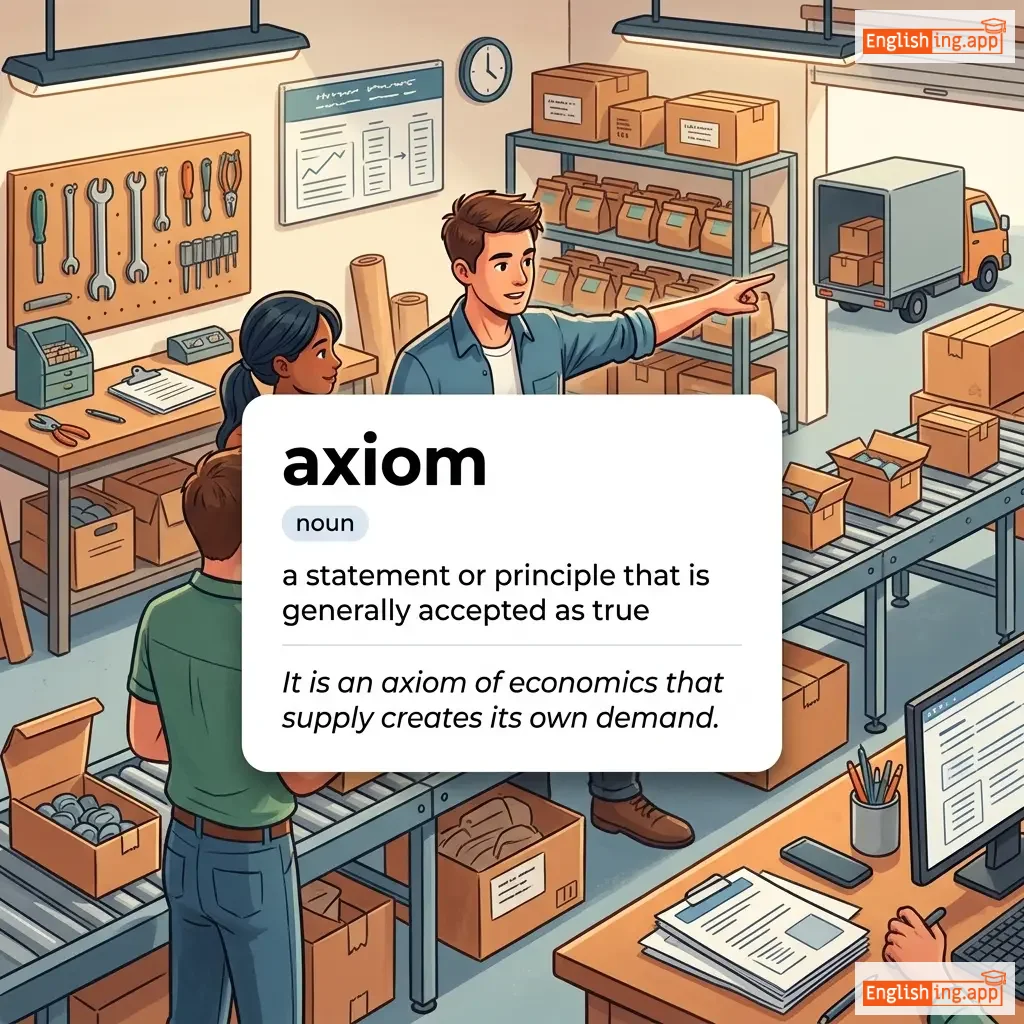
axiom definition card — visual illustration of the meaning
noun
/ˈæk.si.əm/
аксиома (aksioma)

a statement or principle that is generally accepted as true

"It is an axiom of economics that supply creates its own demand."
"Это аксиома экономики, что предложение создает собственный спрос." (Eto aksioma ekonomiki, chto predlozhenie sozdajet sobstvennyy spros.)
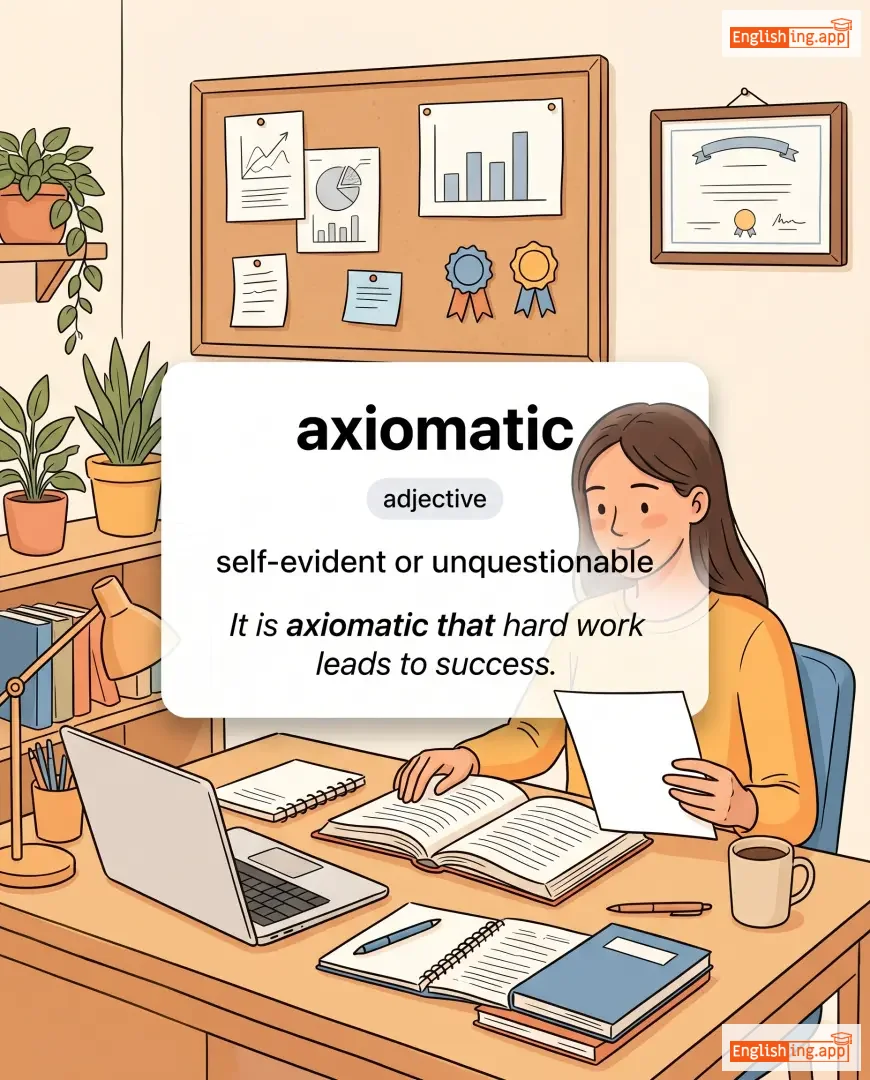
axiomatic definition card — visual illustration of the meaning
adjective
/ˌæk.si.əˈmæt.ɪk/
аксиоматический (aksiomatičeskij)

self-evident or unquestionable

"It is axiomatic that hard work leads to success."

"Это аксиома, что тяжелая работа приводит к успеху." (Eto aksioma, chto tyazhelaya rabota privodit k uspekhu.)
noun
/aɪ/
да (da)

an affirmative vote or expression of agreement

"The committee voted aye on the proposal."

"Комитет проголосовал за предложение." (Komitet progolosoval za predlozheniye.)
noun
/əˈzeɪ.li.ə/
азалия (azaliya)

a flowering shrub with brightly colored blooms, often grown ornamentally

"The garden was full of blooming azaleas in spring."

"Сад был полон цветущих азалий весной." (Sad byl polon tsvetushchikh azali v vesnoy.)
adjective
/ˈæʒər/
азурный (azurnyy)

A bright blue color like that of a clear sky.

"The clear sky was painted in a deep shade of azure."

"Чистое небо было окрашено в глубокий оттенок азурного." (Chistoye nebo bylo okrasheno v glubokiy otyenok azurnogo.)