Словари

Словарь английского языка | Значения слов, определения и примеры

adjective
/ˌɔːtəˈkrætɪk/
автократический (avtokraticheskiy)

Relating to a ruler who has absolute power and does not consult others.

"The manager’s autocratic style discouraged employees from sharing their ideas."

"Автократичный стиль управления менеджера не поощрял сотрудников делиться своими идеями." (Avtokratichnyy stil' upravleniya menedzhera ne pooshchryal sotrudnikov delitsya svoimi ideyami.)
automate definition card — visual illustration of the meaning
verb
/ˈɔːtəmeɪt/

To use machines or computers to control or operate a process, making it automatic.

"The company decided to automate its customer service operations."

adjective
/ˌɔːtəˈmætɪk/
автоматический (avtomaticheskiy)

working by itself without direct human control

"This car has an automatic transmission."

"У этой машины автоматическая коробка передач." (U etoy mashiny avtomaticheskaya korobka peredach.)
adverb
/ˌɔːtəˈmætɪkli/
автоматически (avtomaticheski)

without human control or intervention; done by itself

"The door closes automatically after you enter."

"Дверь закрывается автоматически после того, как вы входите." (Dver' zakryvayetsya avtomaticheski posle togo, kak vy vkhodite.)
automation definition card — visual illustration of the meaning
noun
ˌɔː.təˈmeɪ.ʃən
автоматизация (avtomatizatsiya)

The use of machines or computers to do work that was previously done by people.

"Automation has increased efficiency in industries."

"Автоматизация повысила эффективность в промышленности." (Avtomatizatsiya povysila effektivnost' v promyshlennosti.)
noun
/ɔːˈtɒmətən/
автоматическая машина (avtomaticheskaya mashina)

A machine that works automatically; also refers to a person who behaves like a machine, without thinking.

"He worked like an automaton, without showing any emotion."

"Он работал как автомат, не показывая никаких эмоций." (On rabotal kak avtomat, ne pokazyvaya nikakikh emotsiy.)
noun
/ˈɔːtəmoʊbiːl/
машина (mashina)

a road vehicle powered by an engine, typically with four wheels

"He bought a new automobile last week."
"Он купил новую машину на прошлой неделе." (On kupil novuyu mashinu na proshloy nedele.)
autonomous definition card — visual illustration of the meaning
adjective
/ɔːˈtɒnəməs/
автономный (avtonomnyy)

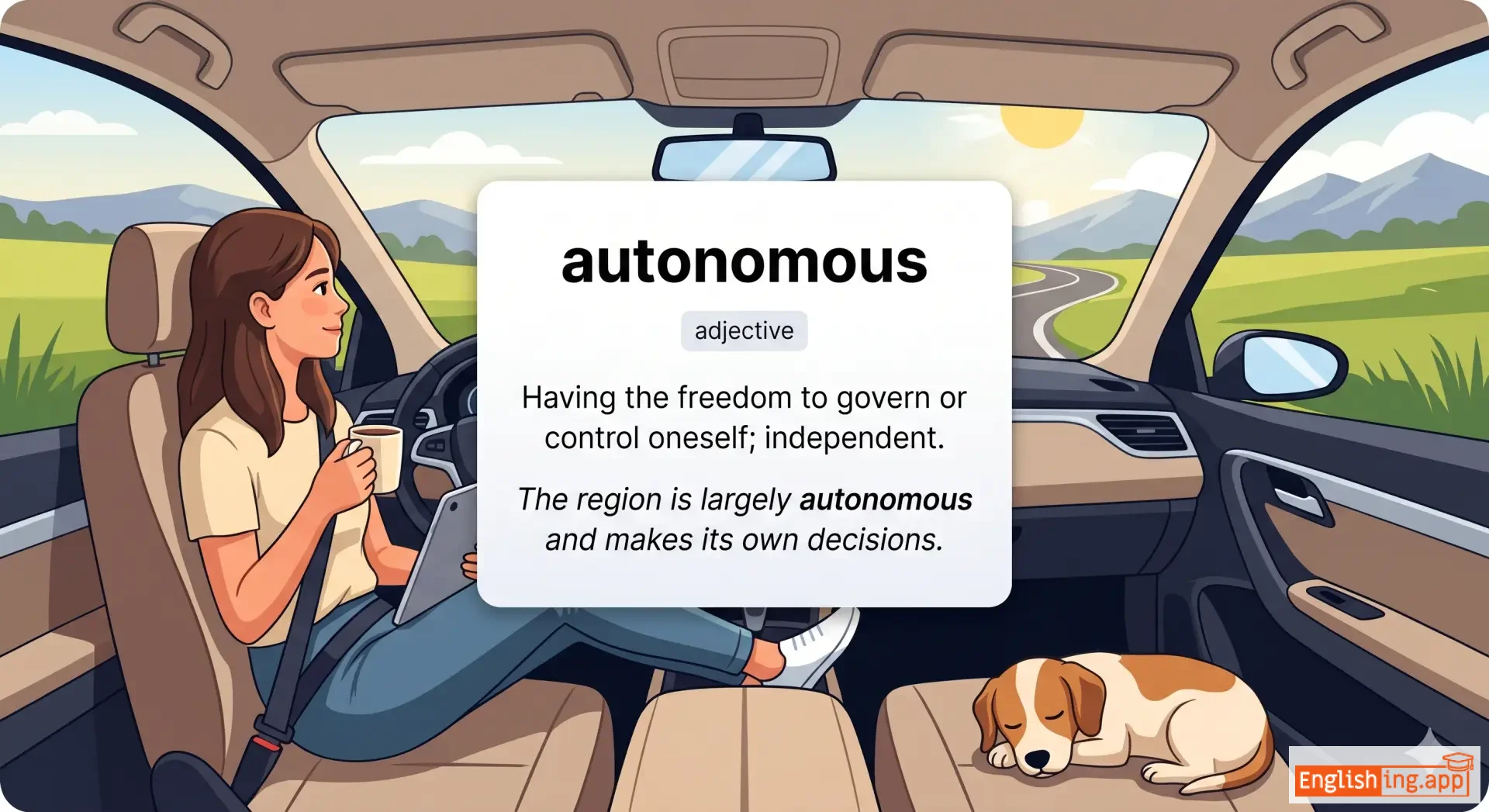
Having the freedom to govern or control oneself; independent.

"The region is largely autonomous and makes its own decisions."
"Регион в значительной степени автономен и принимает собственные решения." (Region v znachitel'noy stepeni avtonomenn i prinimayet sobstvennye resheniya.)
autonomous vehicles definition card — visual illustration of the meaning
noun
/ɔːˈtɒn.ə.məs ˈviː.ɪ.kəlz/
автономные транспортные средства (avtonomnye transportnye sredstva)

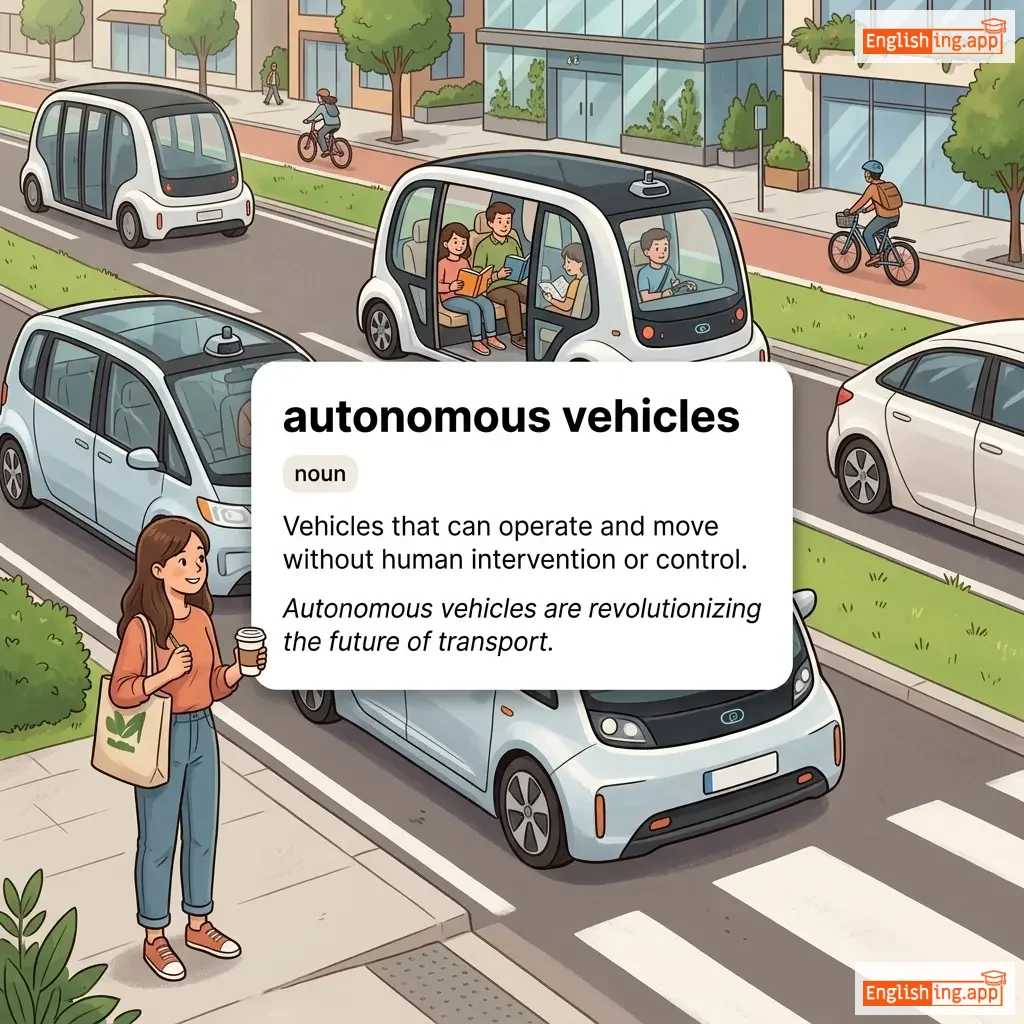
Vehicles that can operate and move without human intervention or control.

"Autonomous vehicles are revolutionizing the future of transport."

"Автономные транспортные средства революционизируют будущее транспорта." (Avtonomnye transportnye sredstva revolyutsioniruyut budushcheye transporta.)
adverb
/ɔːˈtɒnəməsli/
автономно (avtonomno)

In an independent or self-governing manner.

"The robot can operate autonomously without human intervention."
"Робот может работать автономно без вмешательства человека." (Robot mozhet rabotat' avtonomno bez vmeshatel'stva cheloveka.)
autonomy definition card — visual illustration of the meaning
noun
/ɔːˈtɒnəmi/
автономия (avtonomiya)

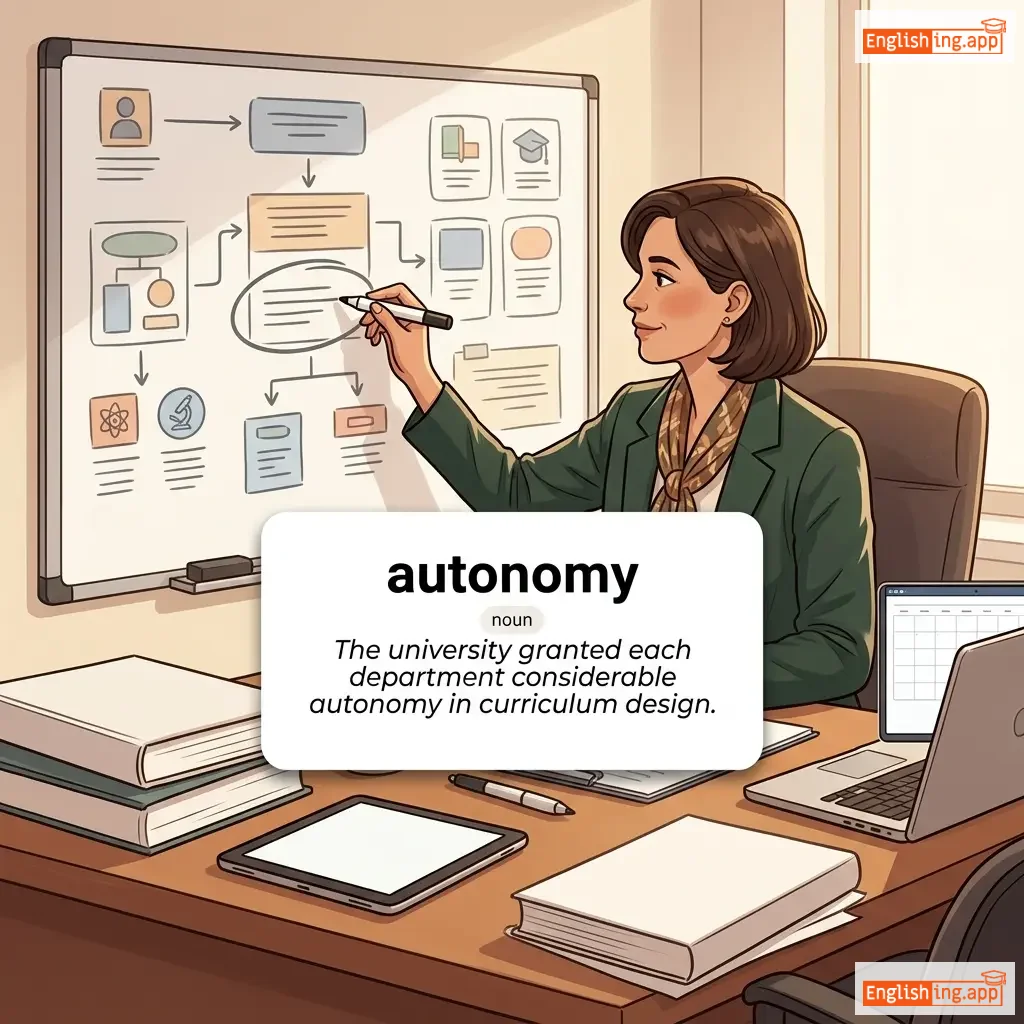
the right or condition of self-government; independence or freedom to act or make decisions

"The university granted each department considerable autonomy in curriculum design."

"Университет предоставил каждому факультету значительную автономию в разработке учебной программы." (Universitet predostavil kazhdomu fakul'tetu znachitel'nuyu avtonomiyu v razrabotke uchebnoy programmy.)
noun, verb
/ˈɔːtɒpsi/
автопсия (avtopsiya)

a post-mortem examination to discover the cause of death or the extent of disease

"The autopsy revealed that the victim had died from poisoning."

"Автопсия показала, что жертва умерла от отравления." (Avtopsiya pokazala, chto zhertva umerla ot otravleniya.)
noun
/ˈɔːtəm/
осень (osen)

the season between summer and winter, when leaves fall from trees

"The trees look beautiful in autumn, with colorful leaves falling."

"Деревья выглядят красиво осенью, с падающими разноцветными листьями." (Derev'ya vyglyadyat krasivo osenyu, s padayushchimi raznozvetnymi list'yami.)
adjective
/ɔːˈtʌmnəl/
осенний (osennij)

relating to or characteristic of autumn; occurring in autumn

"The autumnal colors of red and gold filled the forest."

"Осенние цвета красного и золота заполнили лес." (Osenniye tsveta krasnogo i zolota zapolnili les.)
adjective, noun
/ɔːɡˈzɪliəri/
вспомогательный (vspomogatel'nyy)

(adjective) providing supplementary or additional help and support; (noun) a person or thing that provides auxiliary support

"The hospital has an auxiliary power generator in case of emergencies."

"В больнице есть вспомогательный генератор энергии на случай чрезвычайных ситуаций." (V bol'nitse yest' vspomogatel'nyy generator energii na sluchay chrezvychaynykh situatsiy.)
verb
/əˈveɪl/
воспользоваться (vospolzovatsya)

to make use of something; to be of use or benefit

"You should avail yourself of this opportunity."

"Тебе следует воспользоваться этой возможностью." (tebe sleduet vospolzovatsya etoy vozmozhnostyu)
noun
/əˌveɪləˈbɪləti/
доступность (dostupnost)

the state of being able to be used or obtained

"The availability of clean water is crucial for health."

"Доступность чистой воды важна для здоровья." (Dostupnost' chistoy vody vazhna dlya zdorov'ya.)
adjective
/əˈveɪləbl/
доступный (dostupny)

Able to be used, obtained, or accessed.

"The product is now available in all stores."

"Продукт теперь доступен во всех магазинах." (Produkt teper' dostupen vo vsekh magazinakh.)
noun, verb
/ˈævəlæntʃ/

(noun) a mass of snow, ice, and rocks falling rapidly down a mountainside; a sudden overwhelming quantity; (verb) to descend like an avalanche

"The avalanche buried the mountain road under tons of snow."
avant-garde definition card — visual illustration of the meaning
adjective
/ˌævɒ̃ˈɡɑːrd/
авангард (avangard)

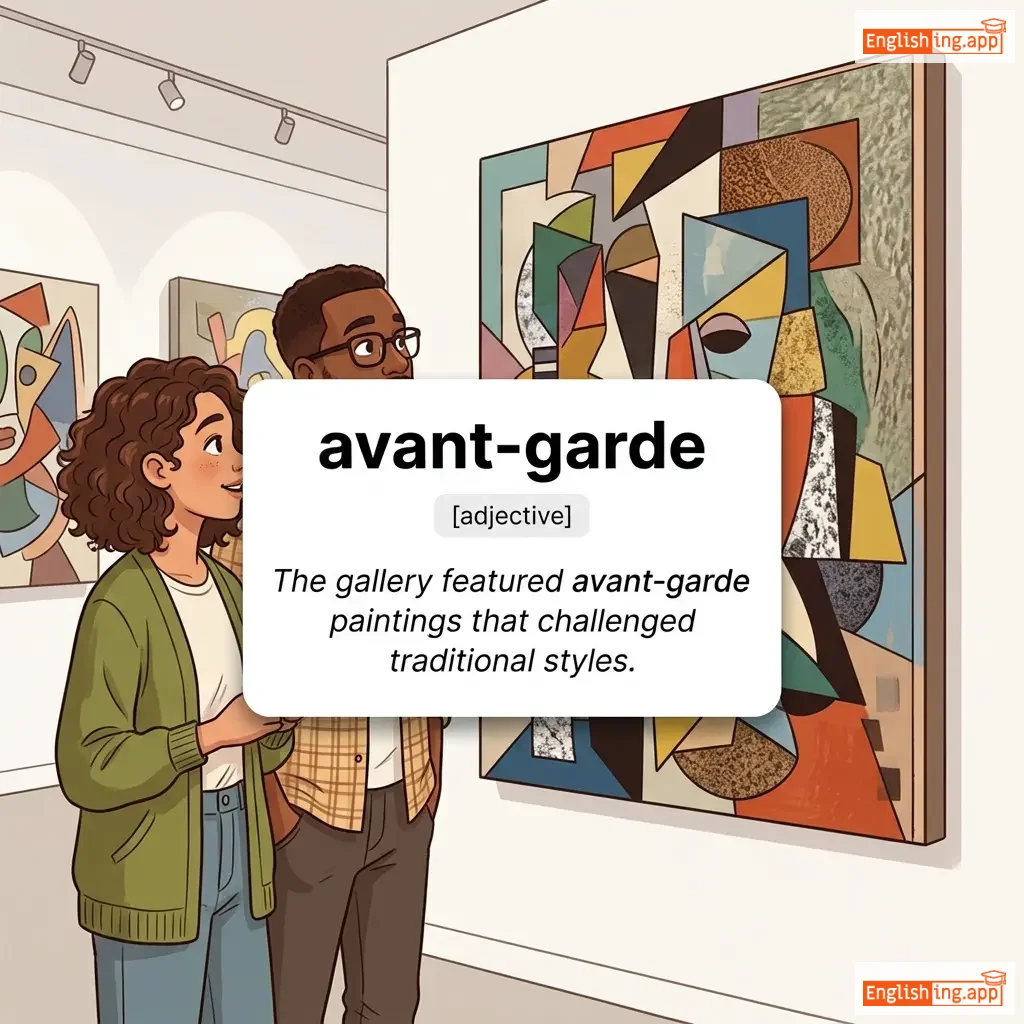
innovative, experimental, or ahead of its time, especially in the arts and culture

"The gallery featured avant-garde paintings that challenged traditional styles."

"Галерея представила авангардные картины, которые бросали вызов традиционным стилям." (Galereya predstavila avangardnye kartiny, kotorye brosali vyzov traditsionnym stilyam.)
noun
/ˌævɒ̃ˈɡɑːrd/
авангард (avangard)

people or works that are innovative, experimental, and ahead of their time

"The avantgarde of the 20th century reshaped modern art."
"Авангард XX века преобразил современное искусство." (Avangard XX veka preobrazil sovremennoe iskusstvo.)
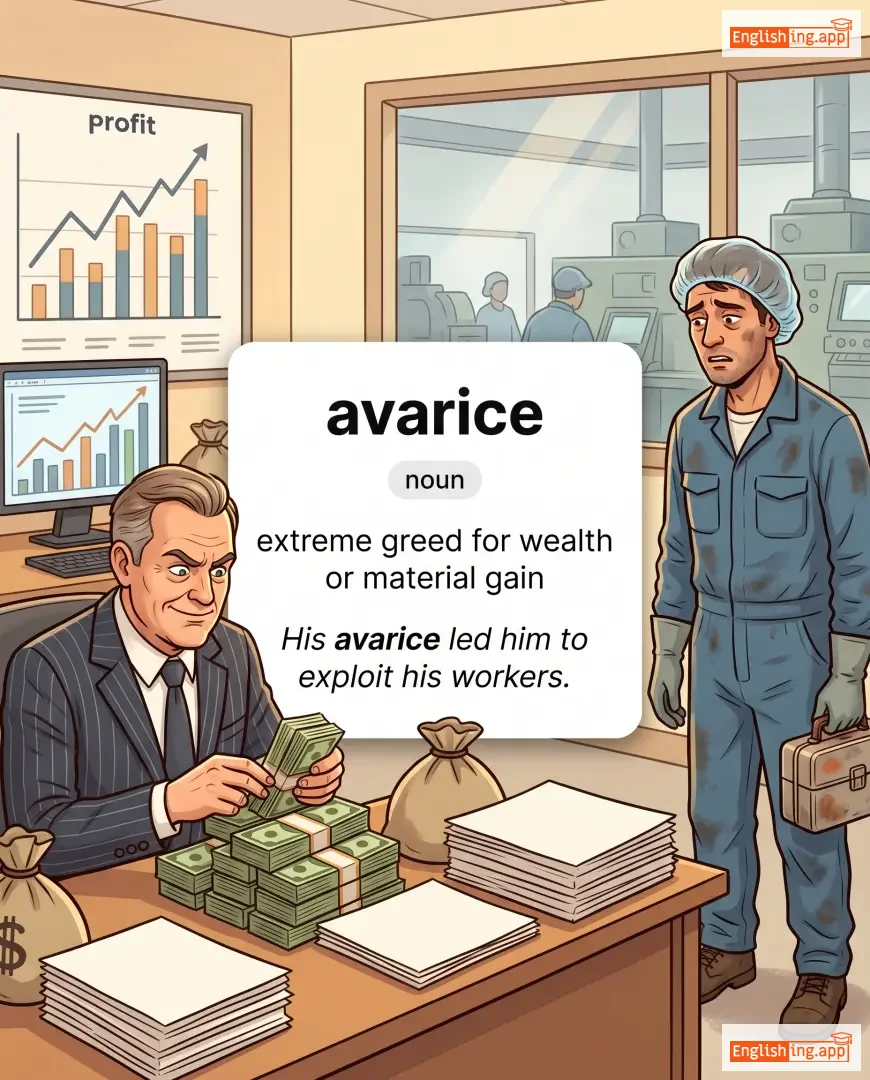
avarice definition card — visual illustration of the meaning
noun
/ˈævərɪs/
жадность (zhadnost)

extreme greed for wealth or material gain

"His avarice led him to exploit his workers."

"Его жадность привела его к эксплуатации своих работников." (Yego zhadnost' privela ego k eksployatatsii svoikh rabotnikov.)
adjective
/ˌævəˈrɪʃəs/
жадный (zhadnyy)

having or showing extreme greed for wealth or material gain

"The avaricious landlord increased the rent unfairly."

"Жадный арендодатель несправедливо увеличил аренду." (Zhaddnyy arendodatel' nespravedlivo uvelichil arendu.)
noun
/ˈævətɑːr/
аватар (avatar)

an icon or figure representing a person in digital contexts; in Hinduism, a divine incarnation

"She changed her social media avatar to a new cartoon image."

"Она изменила свой аватар в социальных сетях на новое изображение мультфильма." (Ona izmenila svoi avatar v sotsial'nykh setyakh na novoe izobrazhenie multfil'ma.)
verb
/əˈvɛndʒ/
отомстить (otomstity)

to inflict harm in return for an injury or wrong done to oneself or another

"He vowed to avenge his brother's death."
"On poklyalsya otnesti smert' svoego brata." (On poklyalsya otnesti smert' svoego brata.)
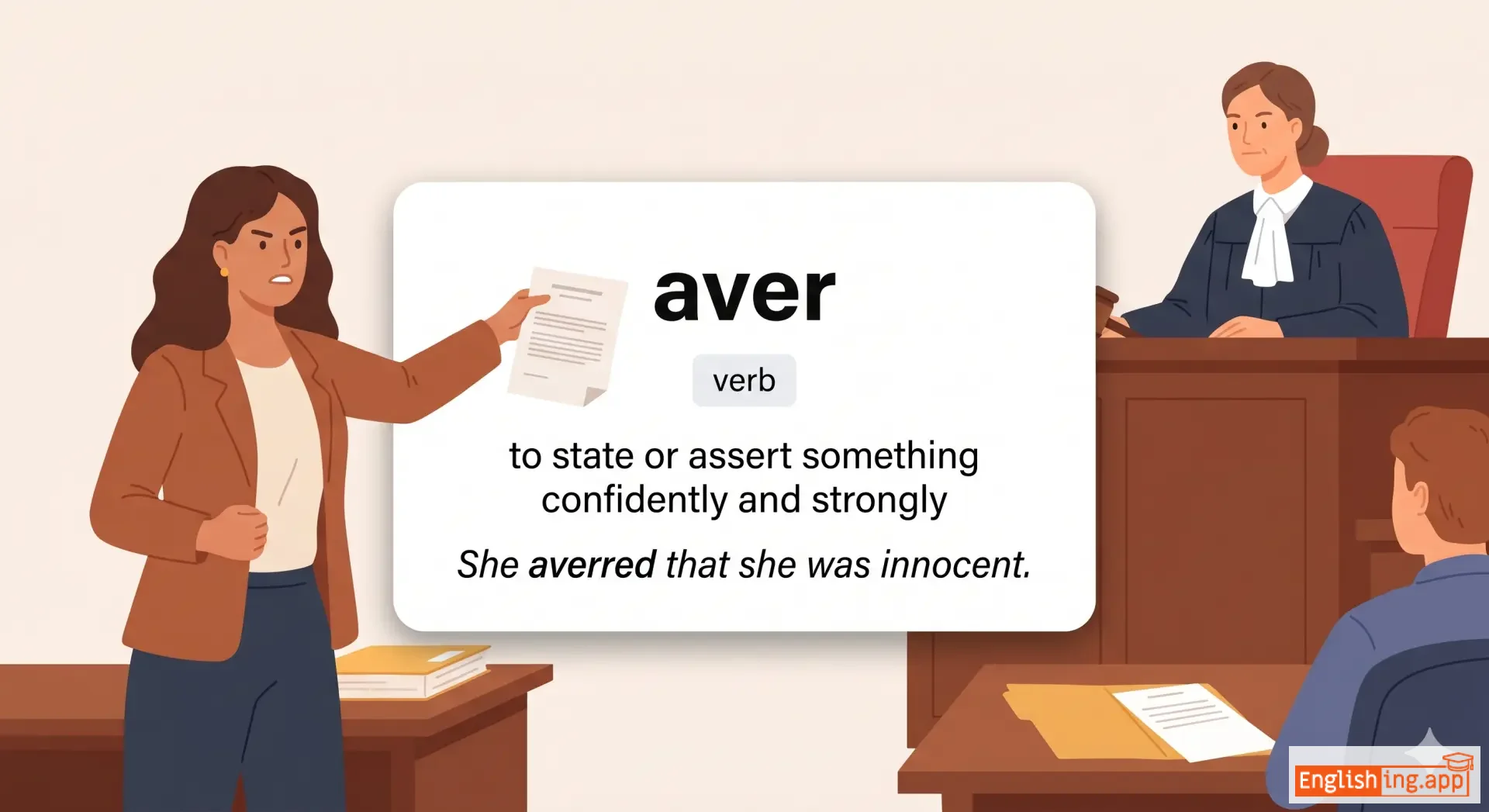
aver definition card — visual illustration of the meaning
verb
/əˈvɜːr/
утверждать (utverzhdat')

to state or assert something confidently and strongly

"She averred that she was innocent."
"Она утверждала, что была невиновна." (Ona utverzhdala, chto byla nevinovna.)
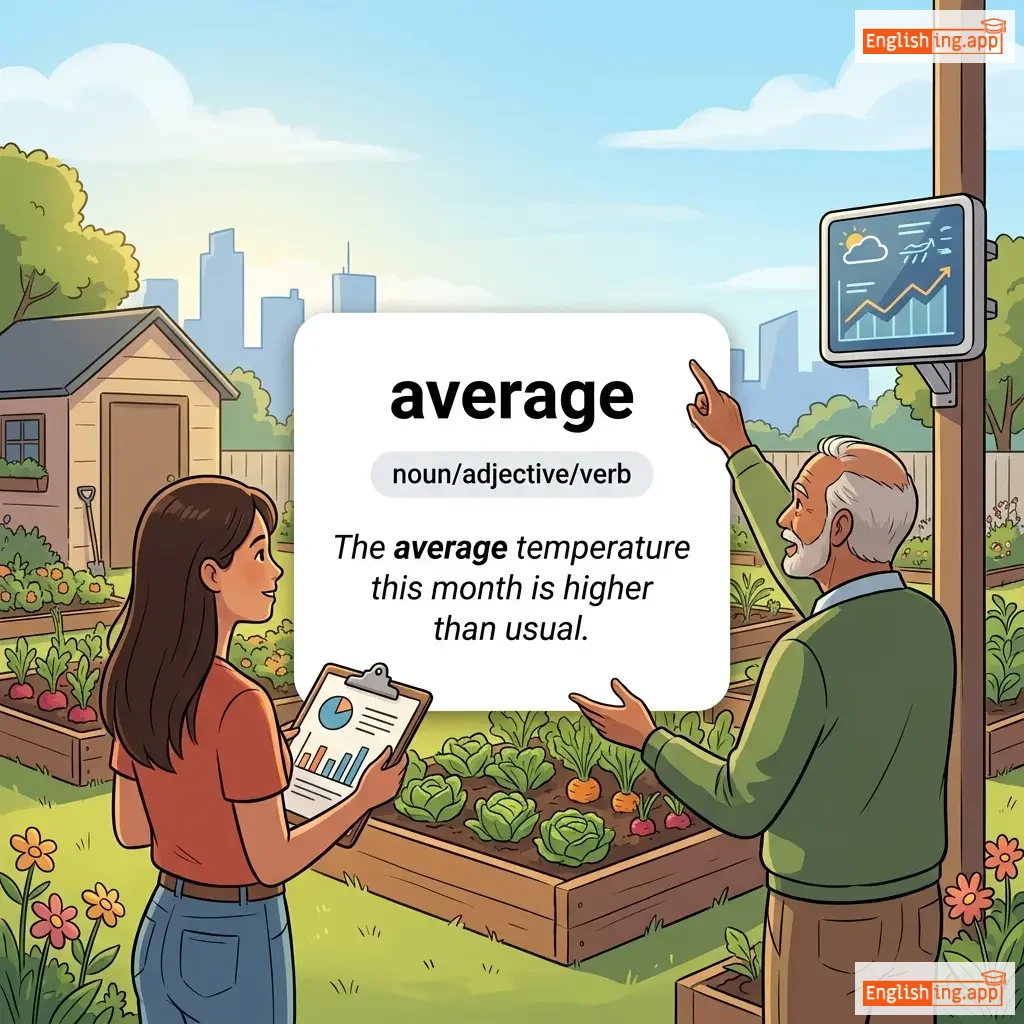
average definition card — visual illustration of the meaning
noun/adjective/verb
/ˈævərɪdʒ/
среднее (srednee)

the result obtained by adding several quantities together and then dividing by the number of quantities; typical or normal level

"The average temperature this month is higher than usual."

"Средняя температура в этом месяце выше обычной." (Srednyaya temperatura v etom mesyatse vyshe obychnoy.)
adjective
/əˈvɜːrs/
неохотный (neokhotnyy)

having a strong dislike of or opposition to something

"He was averse to taking unnecessary risks."

"Он был неохотен рисковать излишне." (On byl neokhoten riskovat' izlishne.)
noun
/əˈvɜːrʒən/
отвращение (otvrashchenie)

a strong feeling of dislike or unwillingness towards something

"She has a strong aversion to smoking."

"У неё сильное отвращение к курению." (U neyo sil'noye otvrashcheniye k kuryeniyu.)
verb
/əˈvɜːrt/
предотвращать (predotvrashchat)

to prevent something bad from happening or to turn away one's eyes or thoughts

"Quick action helped avert a disaster."

"Быстрое действие помогло избежать катастрофы." (Bystroje dejstvie pomoglo izbezhat' katastrofy.)
noun
/ˈeɪ.viˌɛr.i/
вольер (vol'er)

a large enclosure for keeping birds

"The zoo built a new aviary for exotic parrots."

"Зоопарк построил новый вольер для экзотических попугаев." (Zoopark postroil novyy vol'er dlya ekzoticheskikh popugaev.)
adjective
/ˈæv.ɪd/
увлечённый (uvlechyonnyy)

having an eager desire or enthusiasm for something

"She is an avid reader of mystery novels."

"Она увлечённая читательница детективных романов." (Ona uvlechyonnyaya chitatelnitsa detektivnykh romanov.)
noun
/əˈvɪdəti/
жажда (zhazhda)

extreme eagerness or enthusiasm

"He accepted the offer with avidity."

"Он принял предложение с жаждой." (On prinjal predlozheniye s zhazhdoi.)
noun
/ˌæv.əˈkɑː.doʊ/
авокадо (avokado)

a green pear-shaped fruit with creamy flesh and high fat content, often used in healthy diets

"Avocado is rich in healthy fats and is popular in salads and toast."

"Авокадо богато полезными жирами и популярен в салатах и на тостах." (Avokado bogato poleznymi zhirami i populyaren v salatah i na tostakh.)
avocation definition card — visual illustration of the meaning
noun
/ˌæv.oʊˈkeɪ.ʃən/
увлечение (uvlechenie)

a hobby or minor occupation pursued in addition to one's main work

"Painting is his avocation after office hours."

"Живопись — его увлечение после рабочего дня." (Zhivopis’ — ego uvlechenie posle rabochego dnya.)
verb
/əˈvɔɪd/
избегать (izbegat')

To keep away from or stop oneself from doing something.

"He tries to avoid junk food."

"Он пытается избегать фастфуда." (On pytayetsya izbegat' fastfuda.)
adjective
/əˈvɔɪdəbl/
предотвратимый (predotvratimyi)

able to be prevented or avoided

"Most of the damage was avoidable with proper planning."

"Большую часть ущерба можно было предотвратить при правильном планировании." (bolshuyu chast usherba mozhno bylo predotvratit pri pravilnom planirovanii)
noun
/əˈvɔɪdəns/
избегание (izbeganiye)

the act of staying away from something; deliberate prevention of contact or confrontation

"Avoidance of difficult conversations can create bigger problems later."

"Избегание трудных разговоров может позже создать большие проблемы." (izbeganiye trudnykh razgovorov mozhet pozzhe sozdat bolshiye problemy)
verb
/əˈvaʊtʃ/
подтверждать (podtverzhdat)

to affirm or assert something as true

"He avouched his innocence before the judge."

"Он подтвердил свою невиновность перед судьей." (On podtverdil svoju nevinovnost pered sud'ej.)
verb
/əˈvaʊ/
открыто признать (otkryto priznát')

to openly declare or admit something, often publicly and firmly

"He avowed his loyalty to the cause without hesitation."

"Он без колебаний признал свою лояльность делу." (On bez kolebaniy priznál svoiyu loyal'nost' delu.)
verb
/əˈvʌls/
оторвать (otorvat)

to tear away or separate forcibly, especially in medical or geological contexts

"The surgeon had to avulse the damaged tissue during the operation."
"Хирург должен был оторвать поврежденную ткань во время операции." (Khirurg dolzhen byl otorvat povrezhdennuyu tkany vo vremya operatsii.)
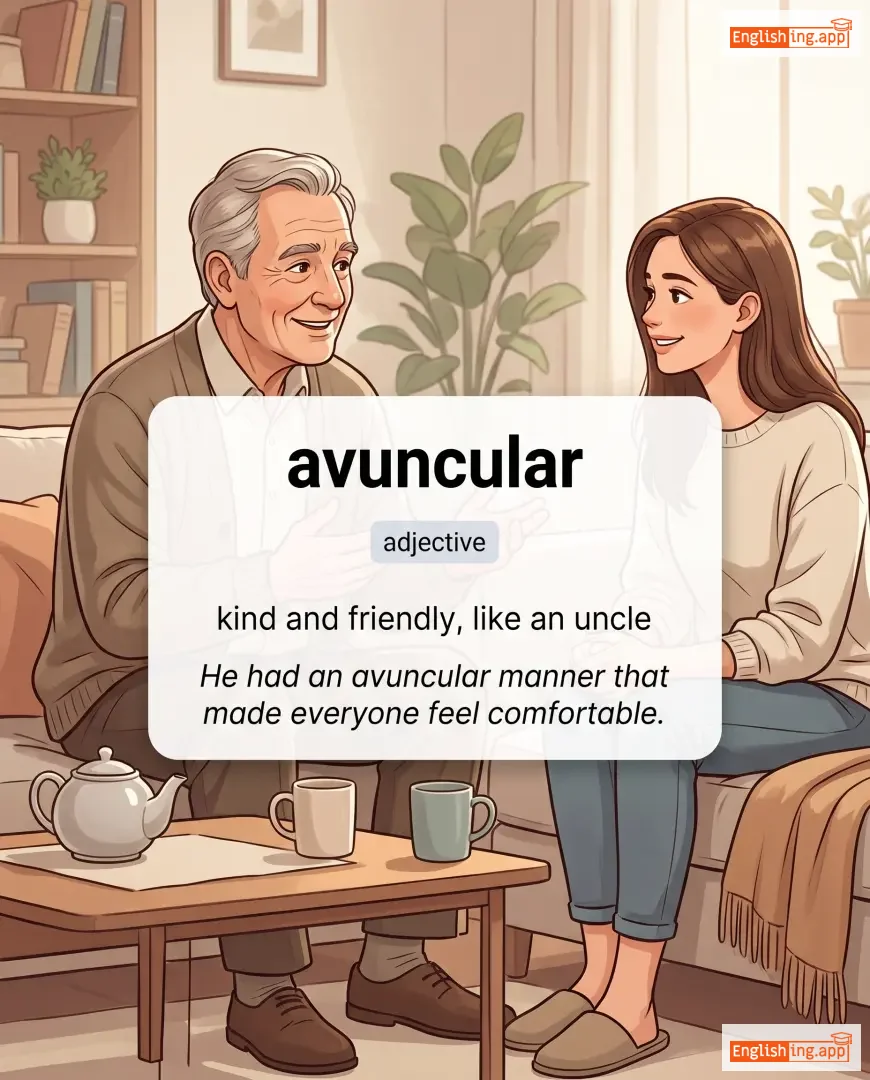
avuncular definition card — visual illustration of the meaning
adjective
/əˈvʌŋkjələr/
дружелюбный как дядя (druzhelyubnyy kak dyadya)

kind and friendly, like an uncle

"He had an avuncular manner that made everyone feel comfortable."
"У него был авункуларный манер, который заставлял всех чувствовать себя комфортно." (U nego byl avunkularnyy maner, kotoryy zastavlyal vsekh chuvstvovat' sebya komfortno.)
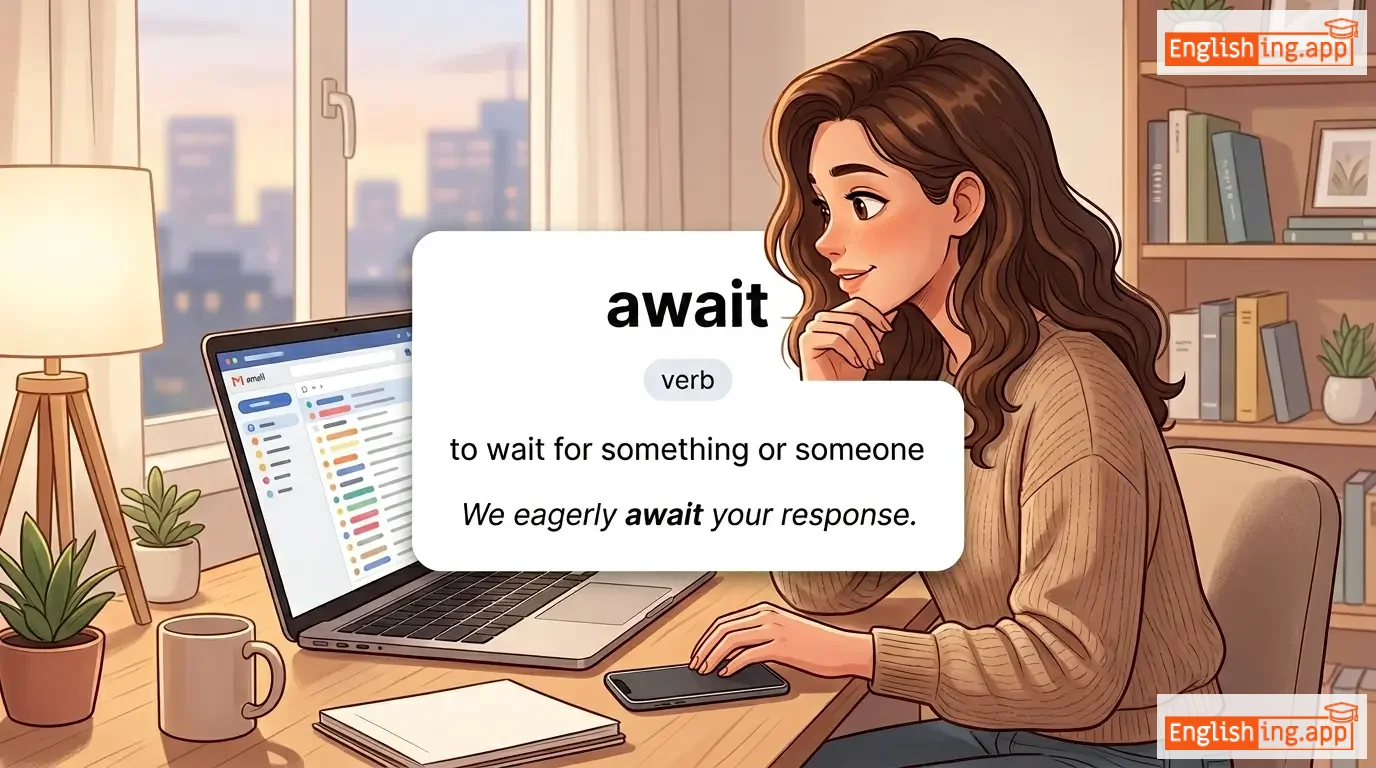
await definition card — visual illustration of the meaning
verb
/əˈweɪt/
ждать (zhdat)

to wait for something or someone

"We eagerly await your response."

"Мы с нетерпением ждем вашего ответа." (My s neterpeniem zhdyom vashego otveta.)
verb/adjective
/əˈweɪk/
бодрствующий (bodrstvuyushchiy)

to stop sleeping; not asleep

"She was still awake when I got home."

"Она все еще была бодрствующей, когда я пришел домой." (Ona vse eshchyo byla bodrstvuyushchey, kogda ya prishel domoy.)
verb
/əˈweɪkən/
разбудить (razbudit)

to stop sleeping; to cause to become aware

"The loud noise awakened the entire neighborhood."

"Громкий звук разбудил весь район." (Gromkiy zvuk razbudil ves' rayôn.)
noun/verb
/əˈwɔːrd/
награда (nagrada)

a prize or recognition given for an achievement; to give a prize or recognition

"She received an award for her outstanding performance."

"Она получила награду за выдающееся выступление." (Ona poluchila nagradu za vydajushheesya vystuplenie.)
adjective
/əˈwɛər/
осведомлённый (osvedomlennyy)

having knowledge or perception of a situation or fact

"She is aware of the risks involved."

"Она осведомлена о рисках." (Ona osvedomlena o riskakh.)
noun
/əˈwɛərnəs/

knowledge or perception of a situation, fact, or issue

"Public awareness of climate change is increasing."

adjective
/əˈwɒʃ/
затопленный (zatoplenniy)

covered or flooded with water or something in large quantities

"The market was awash with cheap imported goods."

"Рынок был затоплен дешевыми импортными товарами." (Rynok byl zatoplen deshevoy importnymi tovarami.)
🏃‍♂️

Away (uh-veh)

adverb
/əˈweɪ/
далеко (daleko)

at a distance from a particular place, person, or thing

"She walked away without saying a word."

"Она ушла, не сказав ни слова." (Ona ushla, ne skazav ni slova.)