Словари

Словарь английского языка | Значения слов, определения и примеры

adjective
/ˌeɪθiˈɪstɪk/
атеистический (ateisticheskiy)

Relating to or characteristic of atheists or atheism.

"She grew up in an atheistic household with no religious rituals."

"Она выросла в атеистической семье, где не было религиозных ритуалов." (Ona vyrosla v ateistskoy sem'e, gde ne bylo religioznykh rituallov.)
adjective
/əˈθɜːrst/
жаждущий, стремящийся (zhazhdushchiy, stremyashchiesya)

Very eager or desirous for something.

"The explorer was athirst for adventure."

"Исследователь был жаждущим приключений." (Issledovatel' byl zhazhdushchim priklyucheniy.)
noun
/ˈæθliːt/
атлет (atlet)

a person who is trained or skilled in physical exercises, sports, or games requiring strength, agility, or stamina

"The athlete trained hard for the upcoming Olympic Games."

"Атлет усердно тренировался для предстоящих Олимпийских игр." (Atlet usyerdno trenirovalsya dlya predstoyashchikh Olimpiyskikh igr.)
adjective
/æθˈlɛtɪk/
атлетический, крепкий (atleticheskiy, krepkiy)

physically strong, fit, and active; related to athletes or sports

"She has an athletic body because she exercises regularly."

"У неё атлетическое телосложение, потому что она регулярно занимается спортом." (U neyo atleticheskoe teloslozhenie, potomu chto ona regulyarno zanimaetsya sportom.)
adverb
/əˈθwɔːrt/
поперек, против (poperek, protiv)

Across or in opposition to something.

"A fallen tree lay athwart the road, blocking traffic."

"Павший дерево лежало поперек дороги, блокируя движение." (Pavshij derevo lezhalo poperek dorogi, blokiruyaya dvizhene.)
noun
/ˈætməsfɪər/
атмосфера (atmosfera)

the layer of gases surrounding the Earth; the mood or feeling of a place

"The restaurant had a warm and welcoming atmosphere."

"В ресторане была теплая и гостеприимная атмосфера." (V restorane byla teplya i gostepriimnaya atmosfera.)
adjective
/əˈtɒm.ɪk/
атомный (atomny)

relating to atoms or atomic energy; extremely small

"The atomic structure of hydrogen is the simplest."
"Атомная структура водорода самая простая." (Atomnaya struktura vodoroda samaya prostaya.)
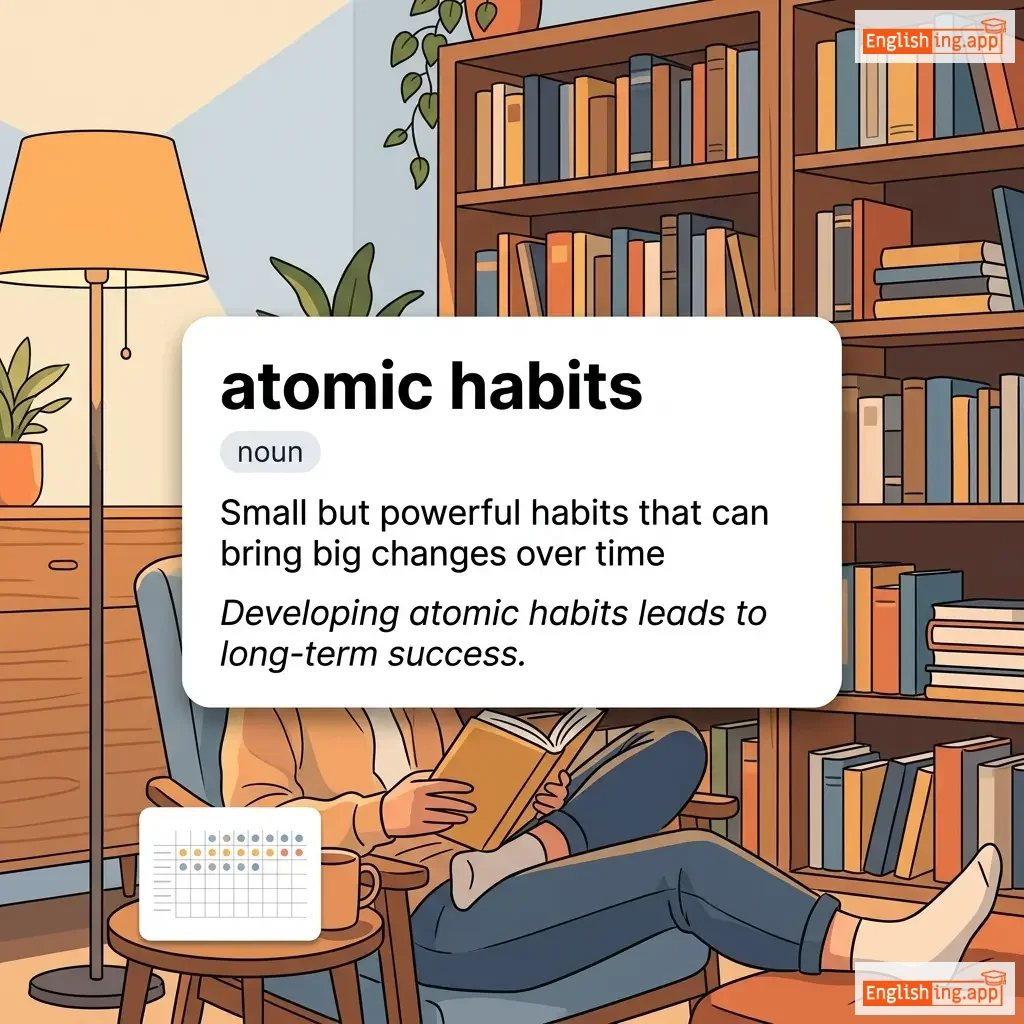
atomic habits definition card — visual illustration of the meaning
noun
/əˈtɒm.ɪk ˈhæb.ɪts/
атомные привычки (atomnye privychki)

Small but powerful habits that can bring big changes over time

"Developing atomic habits leads to long-term success."

"Развитие атомных привычек приводит к долгосрочному успеху." (Razvitiye atomnykh privychek privodyt k dolgosrochnomu uspekhu.)
noun
/ˈætəmaɪzər/
распылитель (raspylitel)

A device that sprays liquid into a fine mist.

"She used an atomizer to apply the perfume evenly."
"Она использовала атомайзер, чтобы равномерно нанести духи." (Ona ispol'zovala atomayzer, chtoby ravnomerno nanesti dukhi.)
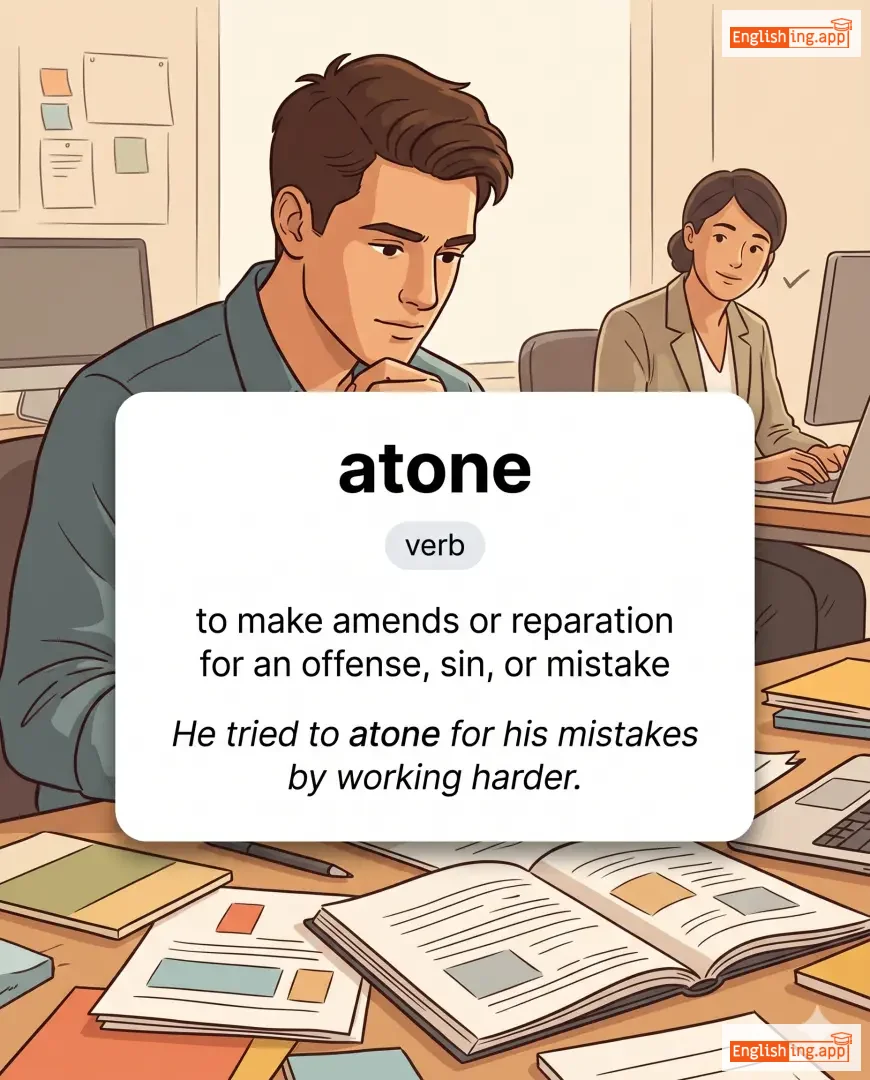
atone definition card — visual illustration of the meaning
verb
/əˈtoʊn/
искупать (iskupat)

to make amends or reparation for an offense, sin, or mistake

"He tried to atone for his mistakes by working harder."

"Он пытался искупить свои ошибки, работая усерднее." (On pytalsya iskupit svoi oshibki, rabotaya usyerdnee.)
noun
/əˈtoʊnmənt/
искупление (iskuplenie)

the act of making amends for a wrong, sin, or injury

"The festival was celebrated as a day of atonement."

"Фестиваль был отмечен как день искупления." (Festival byl otmechen kak den iskupleniya.)
preposition
/əˈtɒp/
на вершине (na vershine)

on the top of something

"A flag was placed atop the tower."

"Флаг был размещен на вершине башни." (Flag byl razmeshchen na vershine bashni.)
adjective
/əˈtroʊʃəs/
ужасный (uzhasny)

extremely bad, unpleasant, or cruel

"The prisoners were kept in atrocious conditions."

"Заключенные содержались в ужасных условиях." (Zaklyuchennyye soderzhalsya v uzhasnykh usloviyakh.)
adverb
/əˈtroʊʃəsli/
ужасно (uzhasno)

in a very cruel, shocking, or extremely bad manner

"The service at the restaurant was atrociously slow."

"Обслуживание в ресторане было ужасно медленным." (Obsluzhivanie v restorane bylo uzhasno medlennym)
atrocities definition card — visual illustration of the meaning
noun
əˈtrɒs.ɪ.tiz
жестокости (zhestokosti)

Extremely wicked or cruel acts, typically involving physical violence or injury.

"The atrocities shocked the international community."

"Жестокости потрясли международное сообщество." (Zhestokosti potryasli mezhdunarodnoe soobshchestvo.)
noun
/əˈtrɑːsəti/
зверство (zverstvo)

an extremely cruel or violent act, often involving physical violence

"The world condemned the atrocity committed against civilians."

"Мир осудил зверство, совершенное против мирных жителей." (Mir osudil zverstvo, sovershennoe protiv mirnykh zhitelei.)
noun/verb
/ˈætrəfi/
атрофия (atrofiya)

a decrease in size or wasting away of a body part, tissue, or ability due to lack of use

"Without regular exercise, muscles may atrophy over time."

"Без регулярных упражнений мышцы могут атрофироваться со временем." (Bez regulyarnykh uprazhneniy myshcy mogut atrofirovatsya so vremenem.)
verb
/əˈtætʃ/
прикрепить (prikrepit)

to join or fasten something to another thing

"Please attach the document to the email before sending."

"Пожалуйста, прикрепите документ к письму перед отправкой." (Pozhaluysta, prikrepite dokument k pis'mu pered otpravkoy.)
noun
/ˌætəˈʃeɪ/
дипломатический атташе (diplomatischeskiy attashe)

A person officially assigned to the staff of a diplomatic mission, often with a specific area of responsibility.

"The cultural attache organized an art exhibition in the embassy."

"Культурный атташе организовал художественную выставку в посольстве." (Kul'turnyy attashe organizoval khudozhestvennuyu vystavku v posol'stve.)
adjective
/əˈtætʃt/
прикреплённый (prikreplyonnyi)

joined or fastened to something; emotionally connected or fond of someone or something

"The file is attached to the email."

"Файл прикреплён к электронному письму." (Fail prikreplyon k elektronnomu pismu)
noun
/əˈtæʧmənt/
привязанность (privyazannost)

a strong feeling of affection or connection

"The attachment he felt to his hometown was undeniable."
"Привязанность, которую он чувствовал к своему родному городу, была неоспоримой." (Privyazannost', kotoruyu on chuvstvoval k svoemu rodnomu gorodu, byla neosporimoy.)
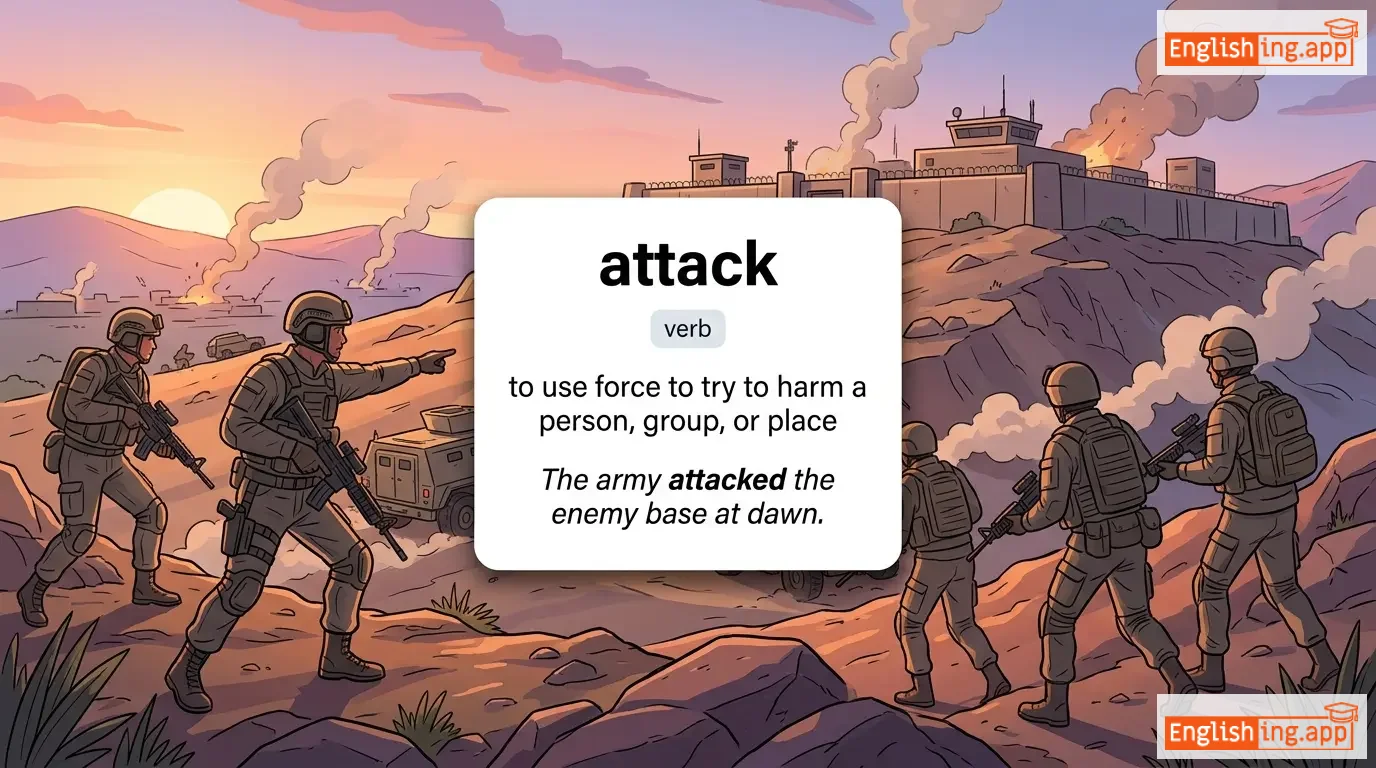
attack definition card — visual illustration of the meaning
verb
/əˈtæk/
атаковать (atakovat)

to use force to try to harm a person, group, or place

"The army attacked the enemy base at dawn."

"Армия атаковала вражескую базу на рассвете." (Armiya atakovala vrazheskuyu bazu na rassvete.)
verb
/əˈtækt/
атаковал (atakoval)

physically or verbally assaulted someone or something; launched an aggressive action against a target

"The soldiers attacked the enemy at dawn."

"Солдаты атаковали врага на рассвете." (soldaty atakovali vraga na rassvete)
verb
/əˈteɪn/
достигать (dostigat)

to achieve or reach something

"She worked hard to attain her goals."
"Она усердно работала, чтобы достичь своих целей." (Ona usyerdno rabotala, chtoby dostich' svoikh tseley.)
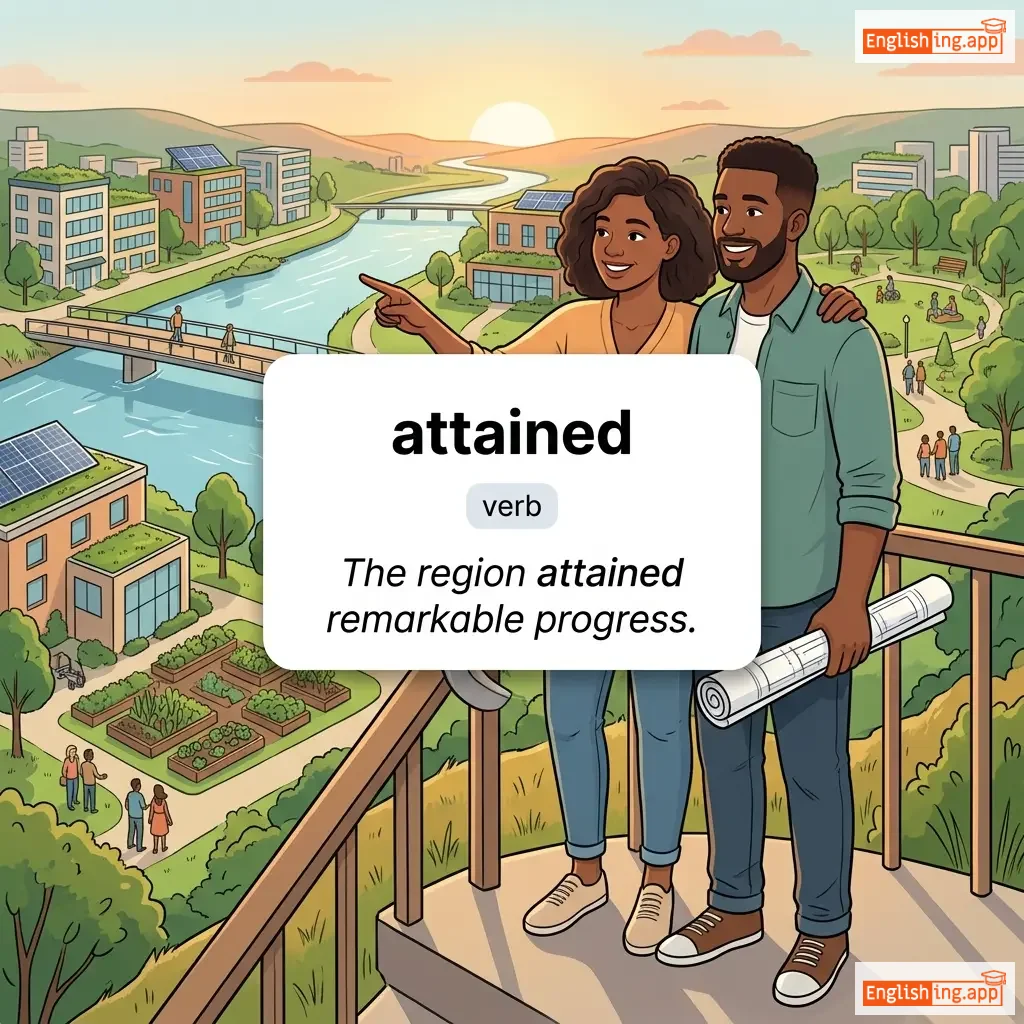
attained definition card — visual illustration of the meaning
verb
əˈteɪnd
достигнут (dostignut)

Succeeded in achieving (something that one desires and has worked for); reached a specified age, size, or amount.

"The region attained remarkable progress."

"Регион достиг значительного прогресса." (Region dostig zamechatelnogo progressa.)
verb
/əˈtɛmpt/

to make an effort to achieve or complete something difficult

"He attempted to climb the mountain despite the bad weather."
attend definition card — visual illustration of the meaning
verb
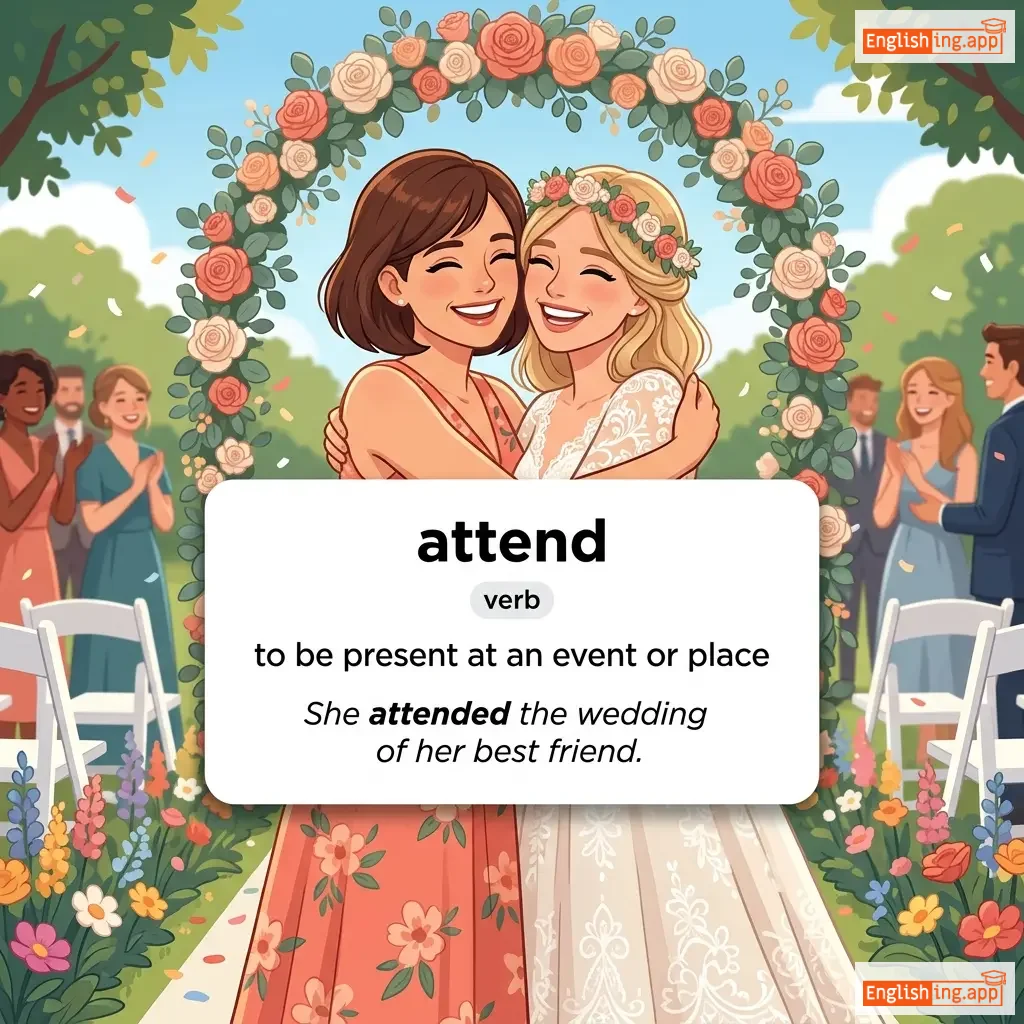
/əˈtɛnd/
посетить (posetit)

to be present at an event or place

"She attended the wedding of her best friend."

"Она посетила свадьбу своей лучшей подруги." (Ona posetila svad'bu svoey luchshey podrugi.)
noun
/əˈtɛndəns/
присутствие (prisutstvie)

the act of being present at a place or event

"The teacher checked the students’ attendance every morning."

"Учитель проверял присутствие студентов каждое утро." (Uchitel' proveryal prisutstvie studentov kazhdoe utro.)
noun
/əˈtɛnʃən/
внимание (vnimanie)

the act of focusing on something or someone

"The teacher asked for the students' attention."

"Учитель попросил внимание студентов." (Uchitel' poprosil vnimanie studentov.)
adjective
/əˈtɛntɪv/
внимательный (vnimatel'nyj)

Paying close attention to something or someone; being considerate and alert.

"The teacher praised the students for being attentive during the lesson."

"Учитель похвалил студентов за то, что они были внимательны во время урока." (Uchitel' pokhvalil studentov za to, chto oni byli vnimatel'ny v o vremya uрокa.)
adverb
/əˈten.tɪv.li/
внимательно (vnimatel'no)

with careful attention; in a focused manner

"She listened attentively to her teacher's instructions."
"Она внимательно слушала указания своего учителя." (Ona vnimatel'no slushala ukazaniya svoego uchitelya.)
attenuate definition card — visual illustration of the meaning
verb
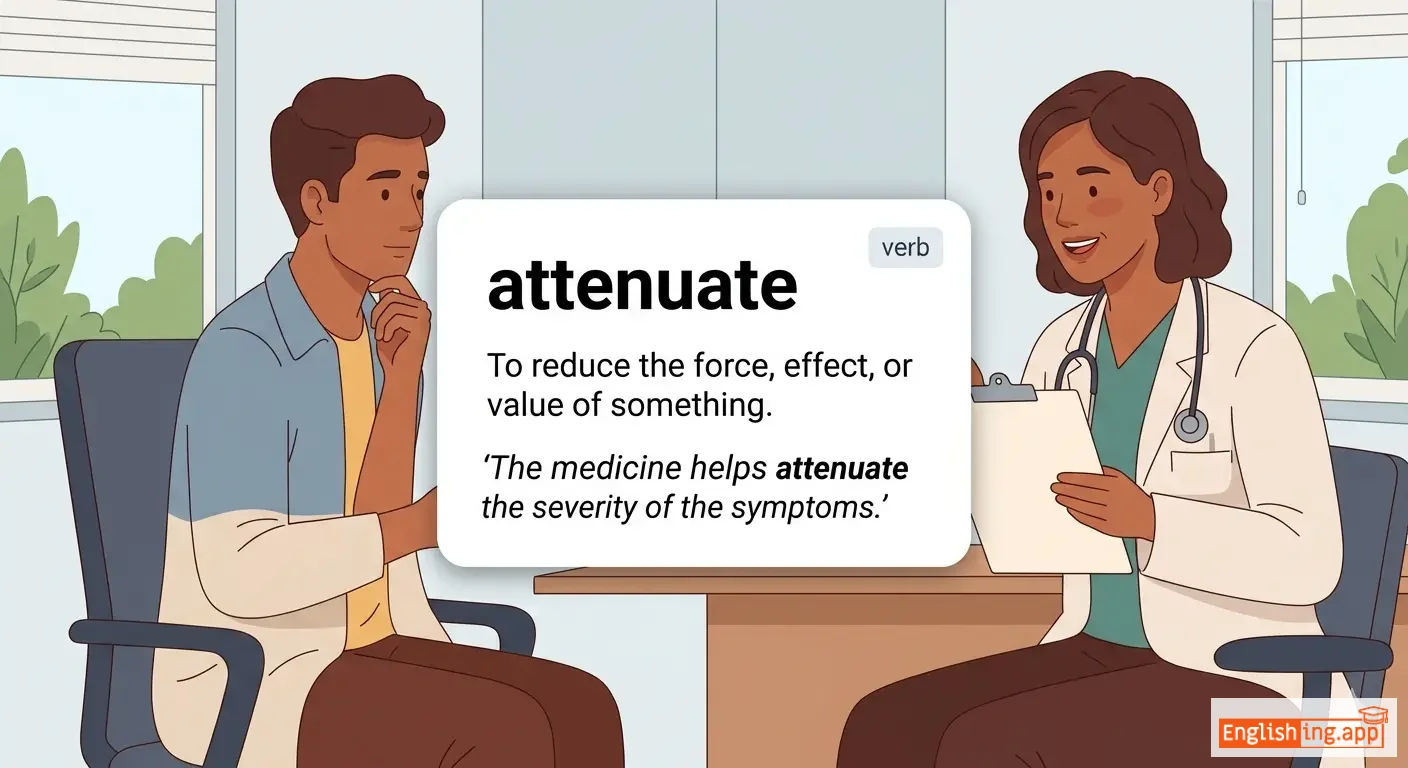
/əˈtɛnjueɪt/
ослабить (oslabit')

To reduce the force, effect, or value of something.

"The medicine helps attenuate the severity of the symptoms."
"Лекарство помогает ослабить тяжесть симптомов." (Lekarstvo pomogaet oslabit' tyazhest' simptomov.)
attenuation definition card — visual illustration of the meaning
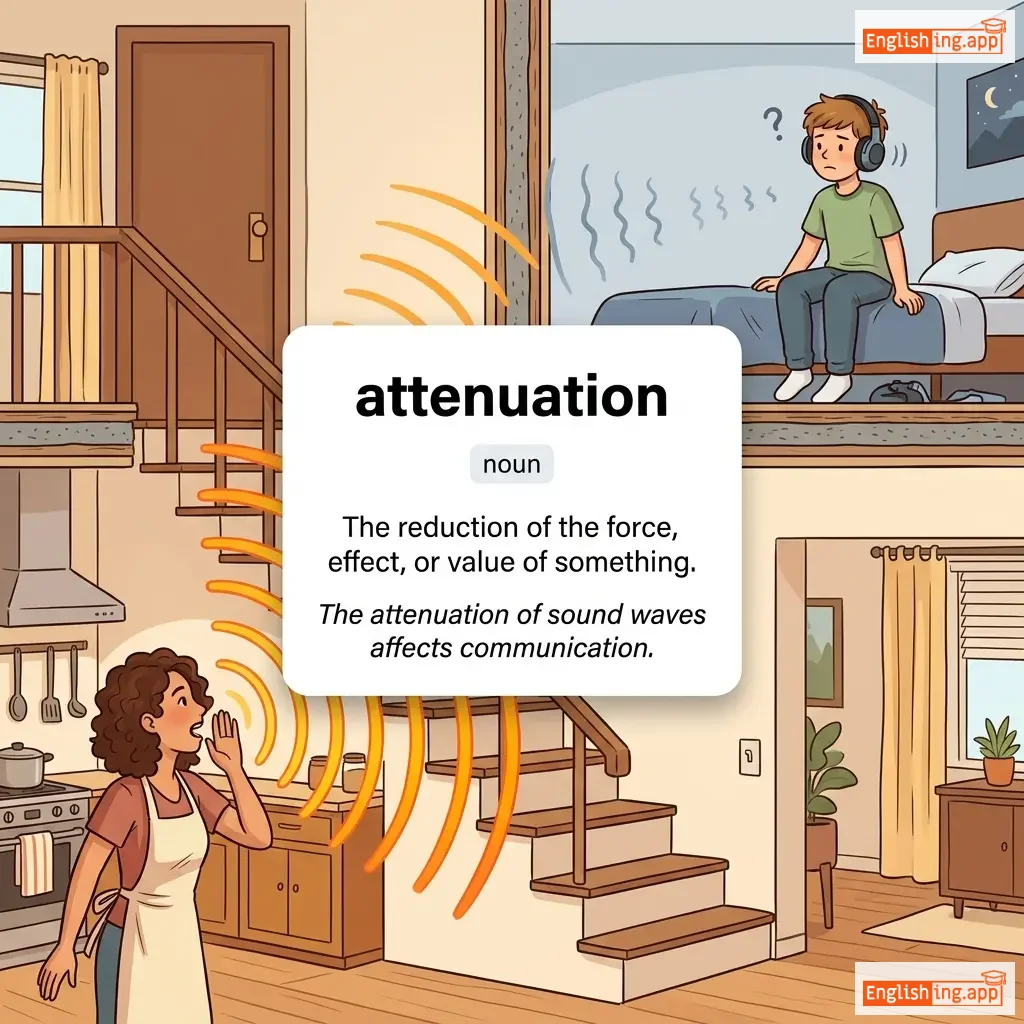
noun
əˌten.juˈeɪ.ʃən
ослабление, уменьшение, сокращение (oslablenie, umenshenie, sokrashchenie)

The reduction of the force, effect, or value of something.

"The attenuation of sound waves affects communication."

"Атенюация звуковых волн влияет на коммуникацию." (Atenyuatsiya zvukovykh voln vliyaet na kommunikatsiyu.)
verb
/əˈtɛst/
засвидетельствовать (zasviedetielstvovat)

To provide or serve as clear evidence of; to confirm or certify the truth of something.

"The witness attested to the accuracy of the report."

"Свидетель засвидетельствовал точность отчета." (Svidetel' zasvidetel'stvoval tochnost' otcheta.)
noun
/əˈtaɪər/
одежда (odezhda)

Clothing, especially formal or elegant wear.

"She wore traditional attire at the wedding ceremony."

"Она носила традиционную одежду на свадебной церемонии." (Ona nosila traditsionnuyu odezhdu na svadebnoy tseremonii.)
noun
/ˈætɪˌtjuːd/

A settled way of thinking or feeling about someone or something, often reflected in behavior.

"Her positive attitude helped her overcome many challenges."

noun
/əˈtɜːrni/
адвокат (advokat)

a person who practices law; a lawyer

"She hired an attorney to represent her in court."

"Она наняла адвоката, чтобы он представлял её в суде." (Ona nanyala advokata, chtoby on predstavlyal yeye v sude.)
noun
/əˌtɜːni ˈdʒɛnərəl/
генеральный прокурор (general'nyy prokuror)

The chief legal officer of a state or country.

"The attorney-general announced new reforms to strengthen justice."

"Генеральный прокурор объявил о новых реформах для укрепления правосудия." (General'nyy prokuror ob'yavil o novykh reformakh dlya ukrepleniya pravosudiya.)
verb
/əˈtrækt/
привлекать (privelykat)

to cause someone to have interest or draw something towards

"The flowers attract bees with their bright colors."

"Цветы привлекают пчел с помощью своих ярких цветов." (Tsvety privelykayu pchely s pomoshch'yu svoikh yarkikh tsvetov.)
verb (past tense / past participle)
/əˈtræktɪd/
привлечённый (privlechyonnyy)

felt interest or liking toward someone or something; was drawn by appeal or force

"She was attracted to the idea of studying abroad."

"Её привлекла идея учёбы за границей." (eyo privlekla ideya ucheby za granitsey)
noun
/əˈtrækʃən/
привлечение (privelchenie)

something that draws attention, interest, or enjoyment

"The Eiffel Tower is a major tourist attraction in Paris."

"Эйфелева башня является главной туристической достопримечательностью Парижа." (Eyfeleva bashnya yavlyaetsya glavnoj turistskoj dostoprimechatel'nost'yu Parizha.)
adjective
/əˈtræktɪv/
привлекательный (privlekatel'nyy)

pleasing or appealing to the senses or mind; having qualities that arouse interest or admiration

"The attractive design of the house caught everyone's attention."

"Привлекательный дизайн дома привлек внимание всех." (Privlekatel'nyy dizayn doma prived vnimaniye vsekh.)
adverb
/əˈtræktɪvli/
привлекательно (privlekatelno)

in a pleasing or appealing way; in a manner that draws interest or admiration

"The room was attractively decorated with soft lights and plants."
"Комната была привлекательно украшена мягким светом и растениями." (Komnata byla privlekatelno ukrashena myagkim svetom i rasteniyami)
attribute definition card — visual illustration of the meaning
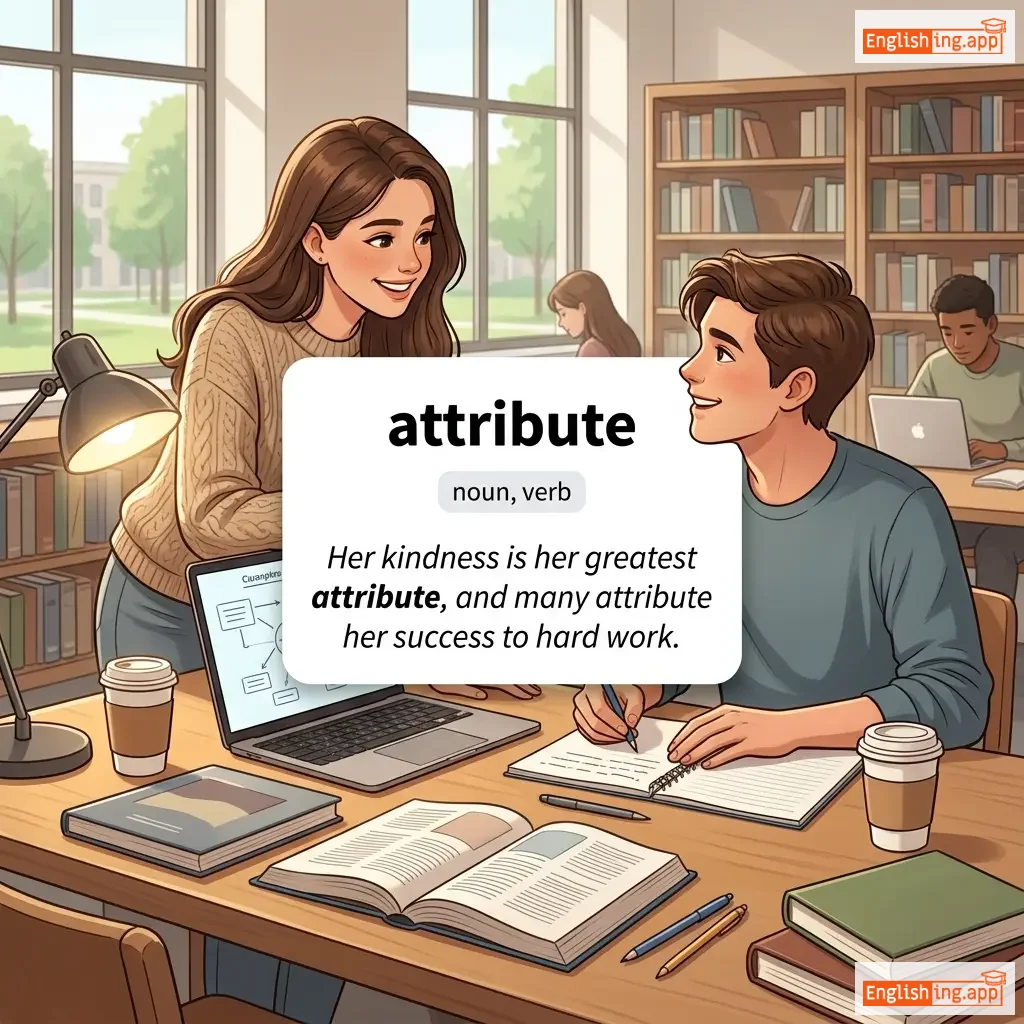
noun, verb
/ˈætrɪˌbjuːt/ (noun), /əˈtrɪbjuːt/ (verb)

As a noun: a quality or characteristic of someone or something. As a verb: to regard something as being caused by someone or something.

"Her kindness is her greatest attribute, and many attribute her success to hard work."
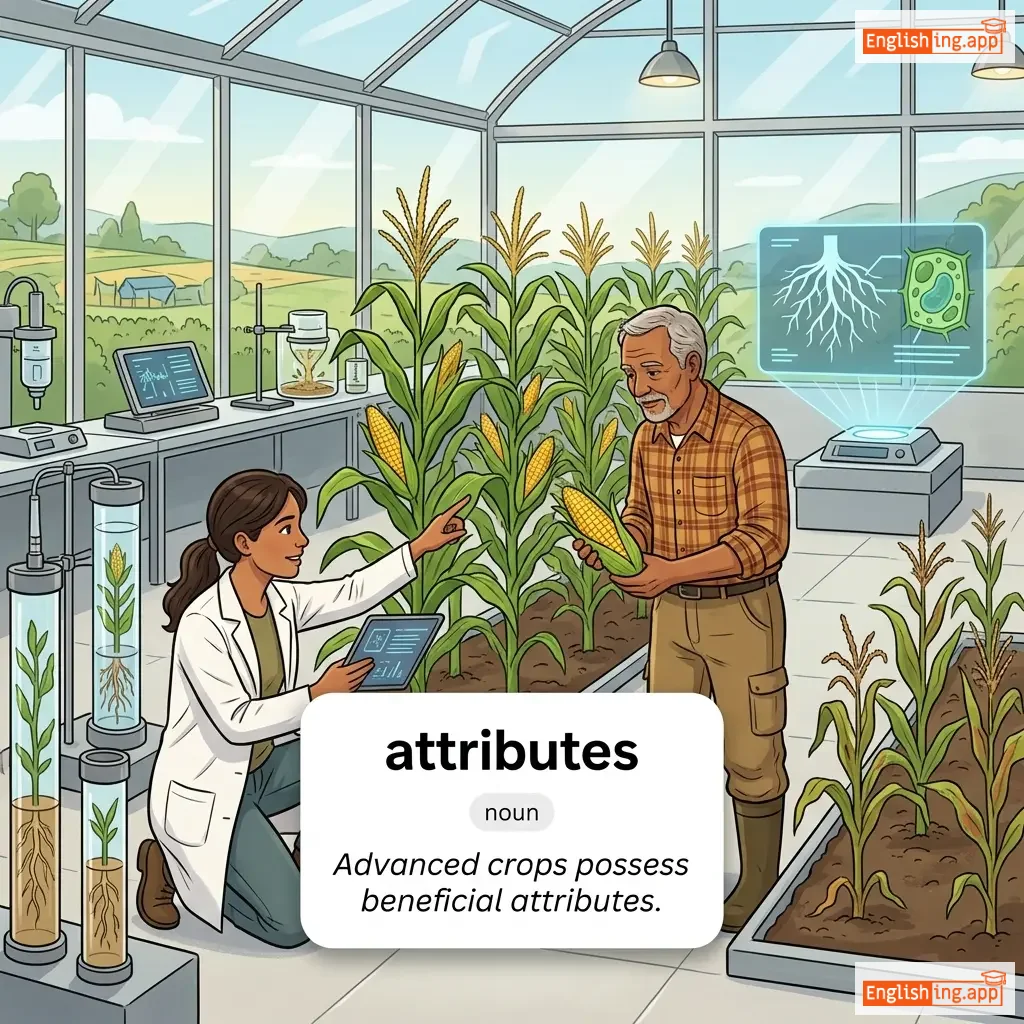
attributes definition card — visual illustration of the meaning
noun
ˈæt.rɪ.bjuːts
атрибуты (atributy)

A quality or feature regarded as a characteristic or inherent part of someone or something.

"Advanced crops possess beneficial attributes."
"Передовые культуры обладают полезными аттрибутами." (Peredovye kultury obladayut poleznymi attribyutami.)
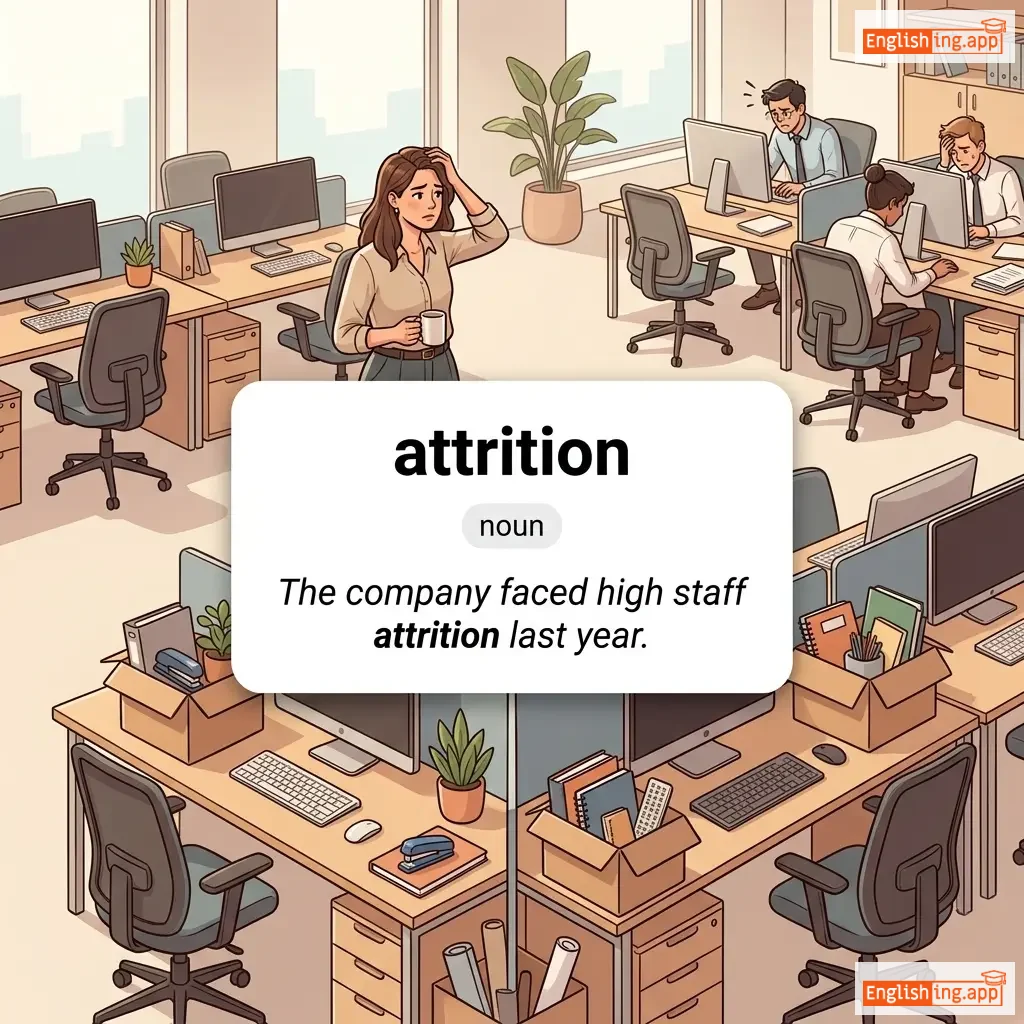
attrition definition card — visual illustration of the meaning
noun
/əˈtrɪʃən/
постепенное сокращение (postepennoye sokrashcheniye)

The gradual reduction in the number or strength of something, often due to constant stress, conflict, or loss.

"The company faced high staff attrition last year."

"Компания столкнулась с высокой текучестью кадров в прошлом году." (Kompaniya stolknulas' s vysokoy tekuchest'yu kadrov v proshlom godu.)
verb
/əˈtjuːn/
настраивать (nastraivat)

to make someone or something aware of or responsive to something; to adjust or harmonize

"She quickly attuned herself to the needs of her new team."

"Она быстро настроилась на потребности своей новой команды." (Ona bystro nastroilas na potrebnosti svoei novoi komandy)
adjective
/əˈtjuːnd/
чувствительный / настроенный (chuvstvitel'nyy / nastroennyy)

Being receptive or sensitive to something; well adjusted or in harmony.

"She is attuned to the needs of her students."
"Она настроена на потребности своих студентов." (Ona nastroena na potrebnosti svoikh studentov.)
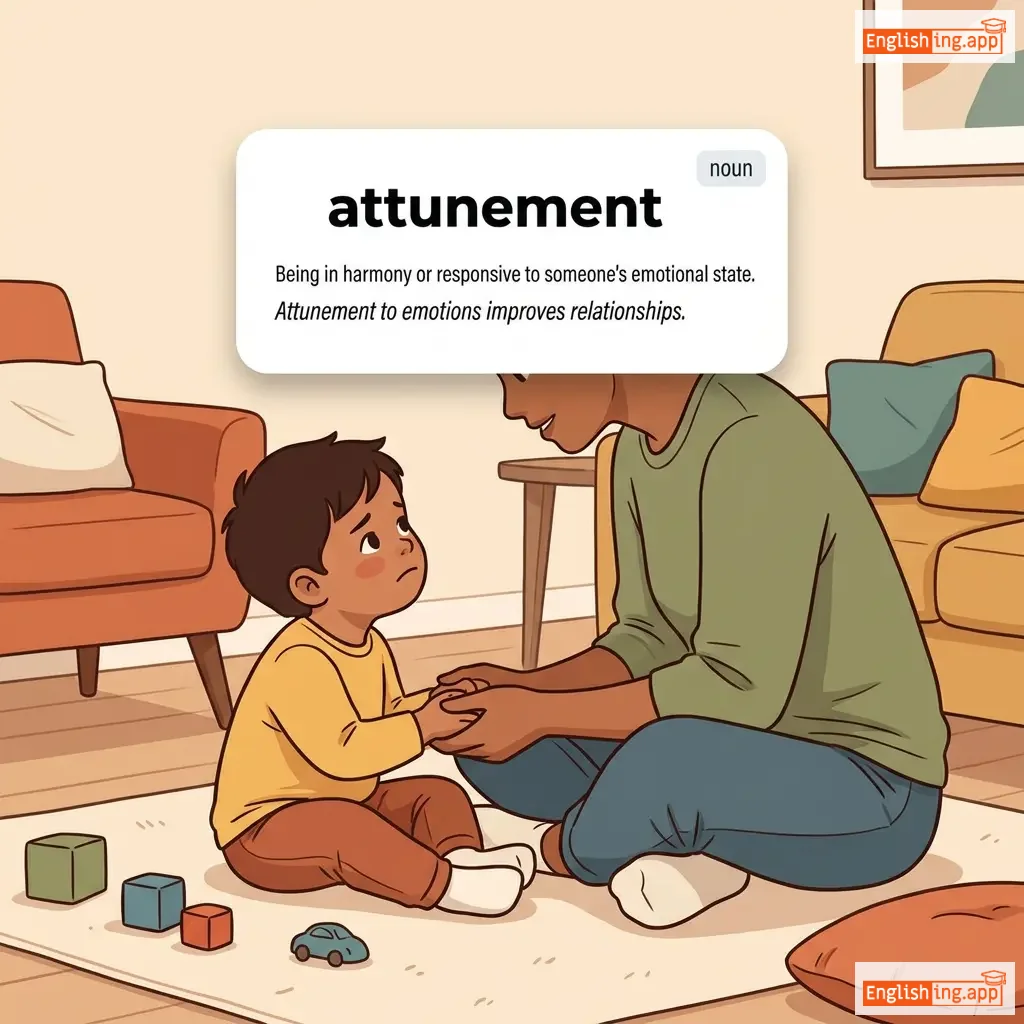
attunement definition card — visual illustration of the meaning
noun
/əˈtjuːn.mənt/
настройка (nastroika)

Being in harmony or responsive to someone's emotional state.

"Attunement to emotions improves relationships."

"Настройка на эмоции улучшает отношения." (nastroika na emoczii uluchshaet otnosheniya)
adjective
/ˌeɪˈtɪpɪkəl/
нетипичный (netipichny)

not representative of a type, group, or class; unusual or abnormal

"The doctor said it was an atypical case of the disease."

"Доктор сказал, что это был нетипичный случай болезни." (Doktor skazal, chto eto byl netipichnyy sluchay bolezni.)