Словари

Словарь английского языка | Значения слов, определения и примеры

preposition, adverb
/əˈbʌv/
выше (vyshe)

at a higher place or position than something

"The picture hangs above the fireplace."

"Картина висит над камином." (Kartina visit nad kaminom.)
adjective, adverb
/əˈbʌvˌbɔːrd/
Честно и открыто (Chesno i otkryto)

Open and honest; without deception or trickery.

"The business deal was completely aboveboard."

"Деловая сделка была полностью честной и открытой." (Delovaya sdelka byla polnost'yu chestnoy i otkrytoy.)
verb
/əˈbreɪd/
стирать трением (stirat' treyeniem)

to scrape or wear away the surface by friction or erosion

"The rough cloth can easily abrade the skin."

"Шероховатая ткань может легко стереть кожу." (Sherokhavataya tkan' mozhet legko steret' kozhu.)
noun
/əˈbreɪʒən/
царапина или износ кожи или поверхности из-за трения (tsarapina ili iznos kozhi ili poverkhnosti iz-za treniya)

a scrape or wearing away of the skin or surface due to friction

"He suffered a minor abrasion on his knee after falling."

"Он получил небольшую царапину на колене после падения." (On poluchil nebozhuyu tsarapinu na kolene posle padeniya.)
adjective
/əˈbreɪsɪv/
грубый, шероховатый или способный изнашиваться при трении (grubyy, sherokhovatyy ili sposobnyy iznashivatsya pri treni)

harsh, rough, or capable of wearing down by rubbing

"His abrasive tone made everyone uncomfortable."

"Его грубый тон заставил всех чувствовать себя неловко." (Ego grubyy ton zastavil vsekh chuvstvovat' sebya nelovko.)
🚶‍♂️🚶‍♂️

abreast (абрест)

adverb
/əˈbrɛst/
бок о бок (bok o bok)

side by side and facing the same direction; informed about something

"The soldiers marched two abreast down the street."

"Солдаты маршировали два бок о бок по улице." (Soldaty marshirovali dva bok o bok po ulitse.)
verb
/əˈbrɪdʒ/
сокращать (sokrashchat)

to shorten a text without losing its meaning

"The editor decided to abridge the long novel for young readers."

"Редактор решил сократить длинный роман для молодых читателей." (Redaktor reshyl sokratit dlinnyy roman dlya molodykh chitateley.)
noun
/əˈbrɪdʒmənt/
сокращение (sokrashchenie)

A shortened version of a larger work, such as a book or speech.

"The publisher released an abridgment of the lengthy novel for students."

"Издатель выпустил сокращенную версию длинного романа для студентов." (Izdatel' vypustil sokrashchennuyu versiyu dlinogo romana dlya studentov.)
adverb
/əˈbrɔːd/
за границей (za granitsey)

In or to a foreign country or countries.

"She studied abroad for two years in Germany."

"Она училась за границей два года в Германии." (Ona uchilas' za granitsey dva goda v Germanii.)
verb
/ˈæbrəɡeɪt/
аброгировать (abrogirovat)

To formally repeal, cancel, or abolish a law, agreement, or custom.

"The government decided to abrogate the outdated treaty."

"Правительство решило аброгировать устаревший договор." (Pravitel'stvo reshilos' abrogirovat' ustarevshiy dogovor.)
adjective
/əˈbrʌpt/
резкий (rezkiy)

Sudden or unexpected, often without warning.

"The car came to an abrupt stop in the middle of the road."

"Машина резко остановилась в середине дороги." (Mashina rezko ostanovilas v seredine dorogi.)
adverb
/əˈbrʌptli/
внезапно и неожиданно; без предупреждения (vnezapno i neozhidanno; bez preduprezhdeniya)

suddenly and unexpectedly; without warning

"The meeting ended abruptly when the power went out."

"Встреча закончилась внезапно, когда отключили электричество." (Vstrecha zakonchilas vnezapno, kogda otklyuchili elektroseti)
noun
/ˈæbsɛs/
абсцесс (abstsess)

A swollen area within body tissue containing pus, usually caused by infection.

"The dentist treated the abscess in his tooth."
"Стоматолог лечил абсцесс в его зубе." (Stomatolog lechil abstsess v yevo zube.)
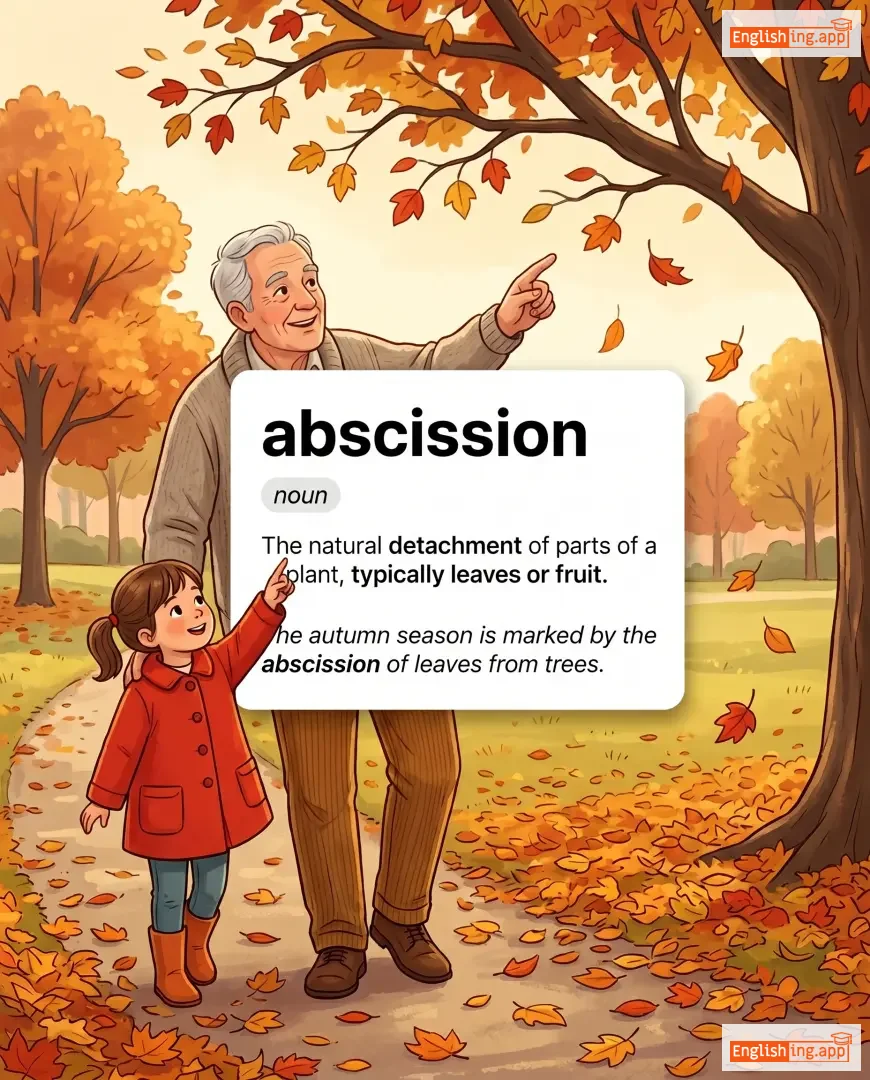
abscission definition card — visual illustration of the meaning
noun
/æbˈsɪʒən/
опадение листьев (opadenie listev)

The natural detachment of parts of a plant, typically leaves or fruit.

"The autumn season is marked by the abscission of leaves from trees."
"Осень характеризуется опадением листьев с деревьев." (Osen' kharakterizuetsya opadeniyem listev s derev'yev.)
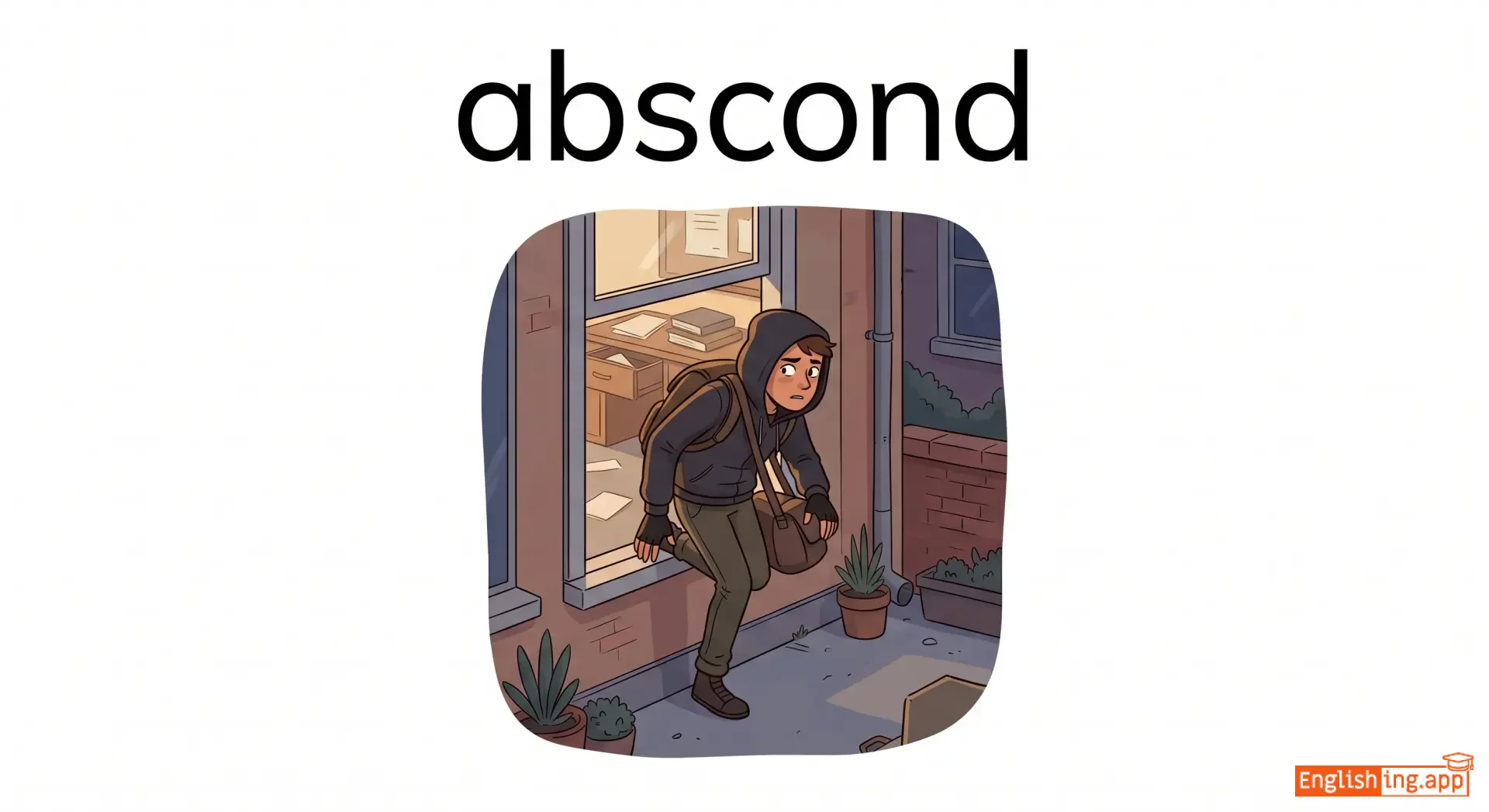
abscond definition card — visual illustration of the meaning
verb
/əbˈskɒnd/
покидать скрытно (pokidat' skrytnno)

to leave secretly and quickly, often to avoid arrest or punishment

"The thief tried to abscond with the stolen jewelry."

"Вор пытался сбежать с украденными ювелирными изделиями." (Vor pytalsya sbezhat' s ukradennymi yuvelirnymi izdeliyami.)
noun
/ˈæbsəns/
отсутствие (otsutstvie)

the state of being away from a place or person

"His absence from the meeting was noticed by everyone."

"Его отсутствие на встрече было замечено всеми." (Yego otsutstvie na vstreche bylo zamecheno vsemi.)
adjective
/ˈæbsənt/
отсутствующий (otsutstvuyushchiy)

not present at a place or event

"She was absent from the meeting yesterday."

"Она отсутствовала на собрании вчера." (Ona otsutstvovala na sobraníye vchera.)
adjective
/ˌæbsənt ˈmaɪndɪd/
забывчивый (zabyvchivyy)

often forgetting things or not paying attention

"He is so absent-minded that he often forgets his keys."

"Он так забывчив, что часто забывает свои ключи." (On tak zabyvchiv, chto chasto zabyvayet svoi klyuchi.)
adjective
/ˈæbsəluːt/
абсолютный (absolyutny)

total, complete, or without restriction

"The dictator had absolute power over the nation."

"У диктатора была абсолютная власть над нацией." (U diktatora byla absolyutnaya vlast' nad natsiyey.)
adverb
/ˈæbsəluːtli/
абсолютно (absolyutno)

Completely; without qualification or restriction.

"I absolutely agree with your decision."

"Я абсолютно согласен с твоим решением." (Ya absolutely soglasen s tvoyim resheniyem.)
noun
/ˌæbsəˈluːʃən/
опрощение (oproshchenie)

formal release from guilt, obligation, or punishment

"The priest granted him absolution for his sins."
"Священник даровал ему прощение за его грехи." (Svyashchennik daroval emu proshchenie za ego grekhi.)
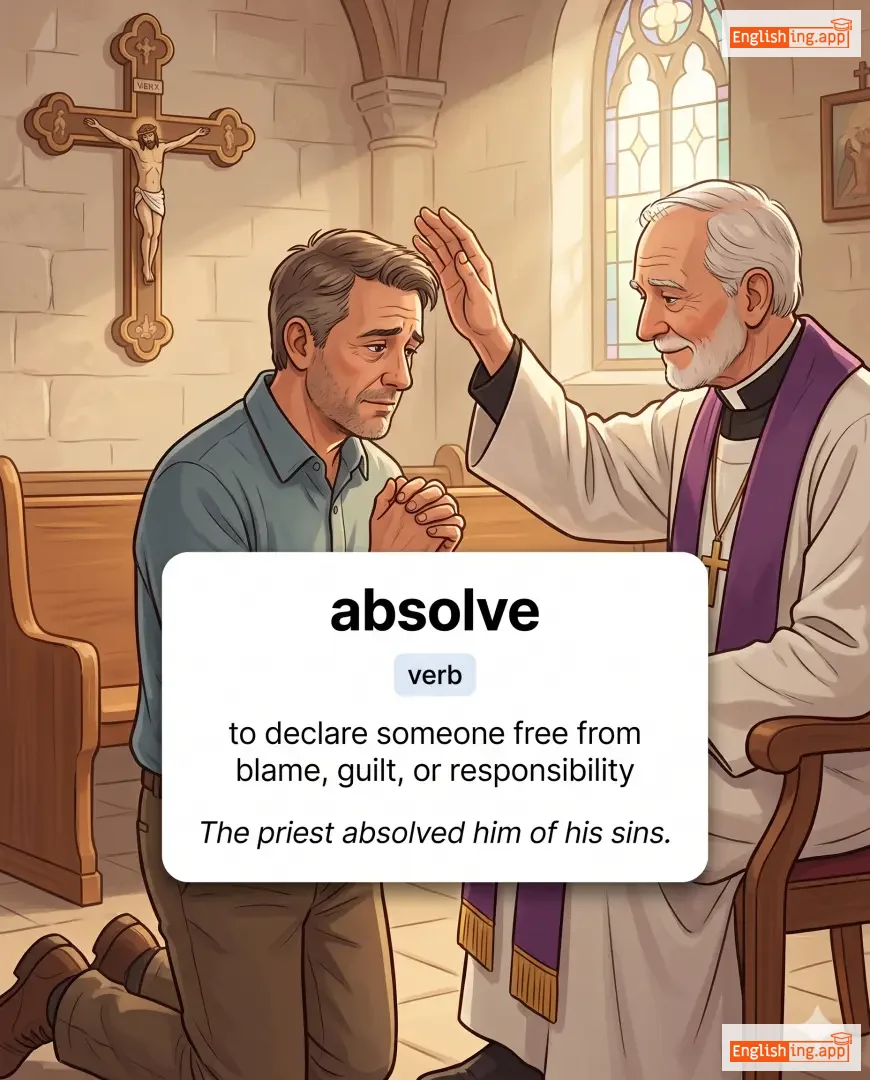
absolve definition card — visual illustration of the meaning
verb
/əbˈzɒlv/
освобождать от вины (osvobozhdat' ot viny)

to declare someone free from blame, guilt, or responsibility

"The priest absolved him of his sins."

"Священник освободил его от грехов." (Svyashchennik osvobodil ego ot grekhov.)
verb
/əbˈzɔːrb/
впитывать (vpitivat)

to take in or soak up a liquid, energy, or information

"The sponge absorbed all the water."

"Губка впитала всю воду." (Gubka vpitala vsyu vodu.)
adjective, noun
/əbˈzɔːrbənt/
впитывающий (vpityvayushchiy)

able to soak up liquid, moisture, or energy easily; a material or substance that absorbs

"This towel is highly absorbent and dries quickly."
"Это полотенце очень впитывающее и быстро сохнет." (eto polotentse ochen vpityvayushchee i bystro sokhnet)
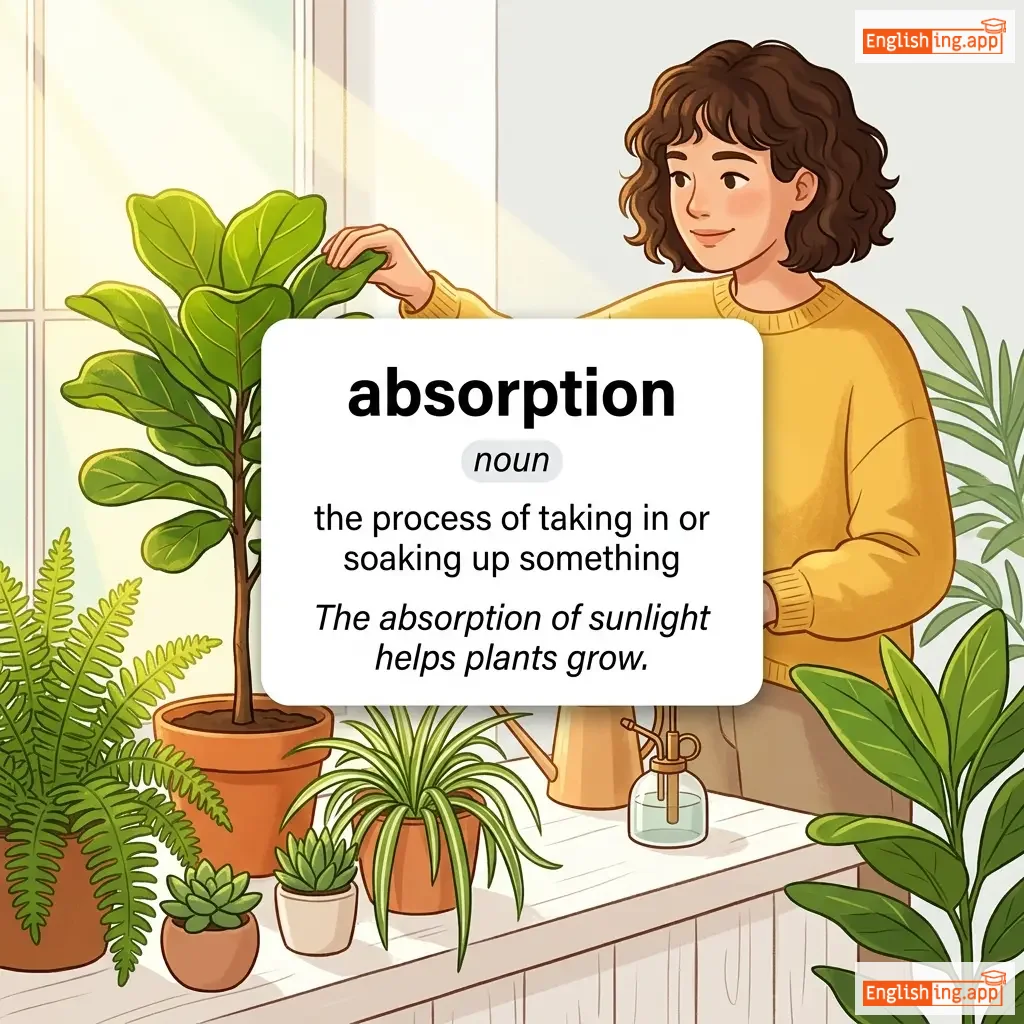
absorption definition card — visual illustration of the meaning
noun
/əbˈzɔːrpʃən/
поглощение (pogloshchenie)

the process of taking in or soaking up something

"The absorption of sunlight helps plants grow."
"Поглощение солнечного света помогает растениям расти." (Pogloshchenie solnechnogo sveta pomogaet rasteniyam rasti.)
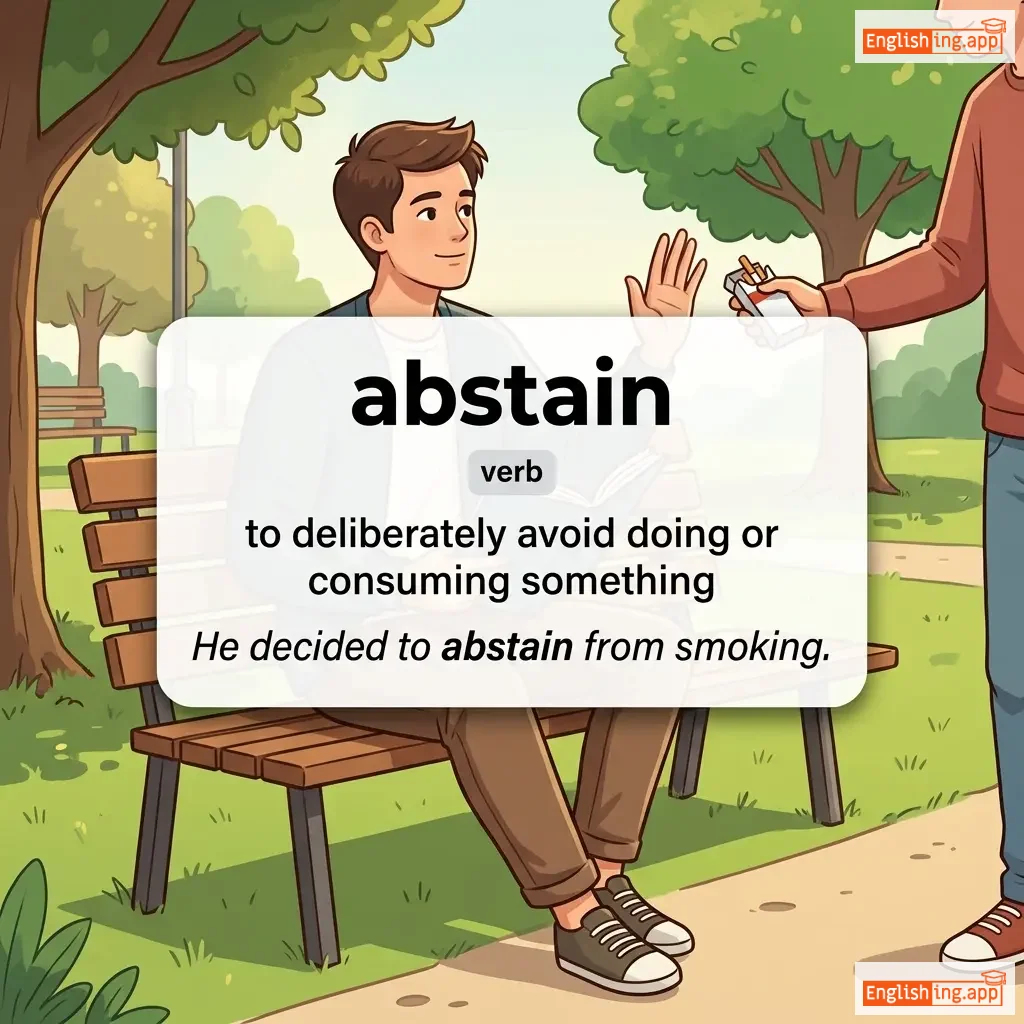
abstain definition card — visual illustration of the meaning
verb
/əbˈsteɪn/
воздерживаться (vozderzhivatsya)

to deliberately avoid doing or consuming something

"He decided to abstain from smoking."
"Он решил воздержаться от курения." (On reshil vozderzhivatsya ot kureniya.)
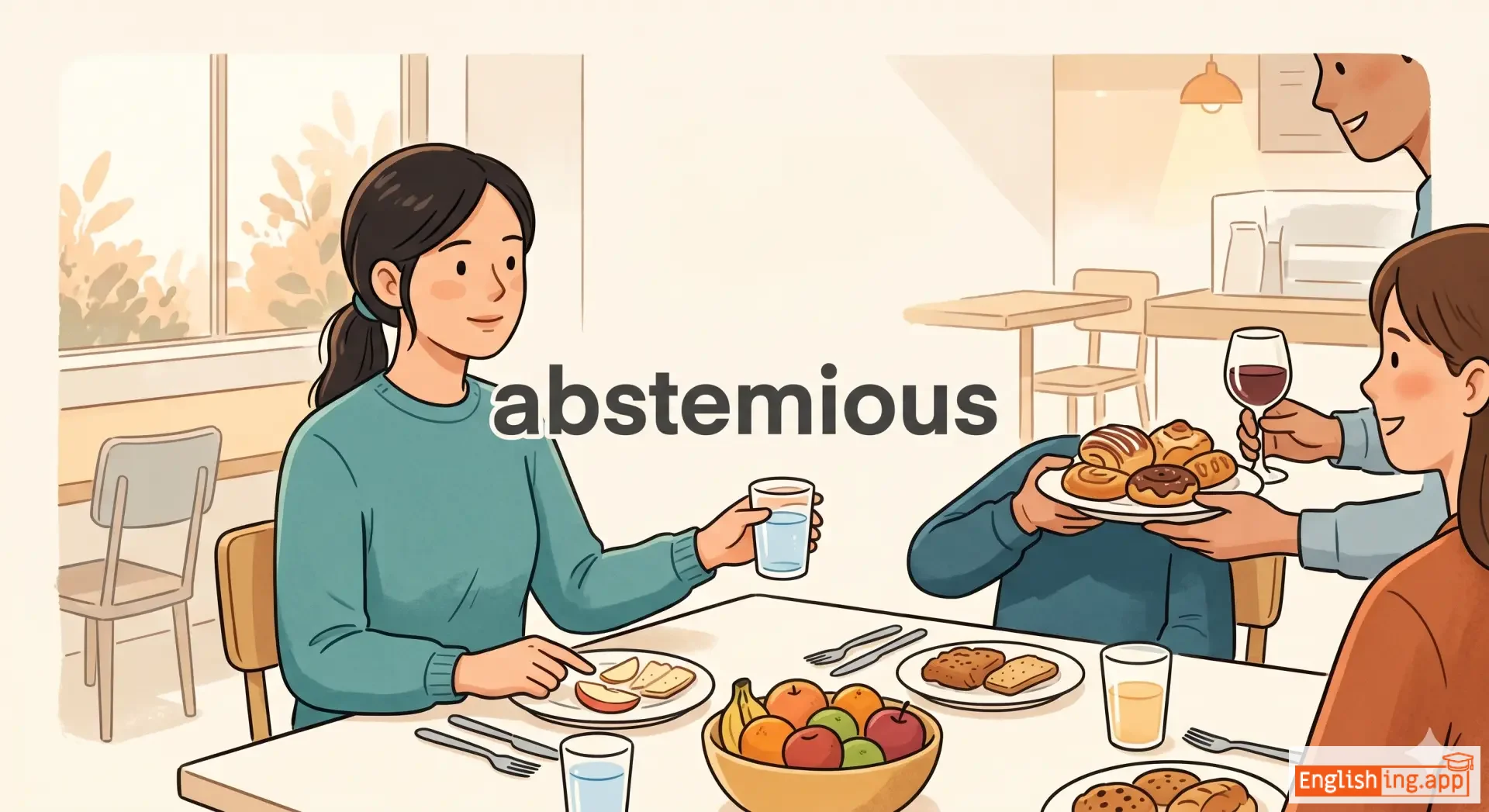
abstemious definition card — visual illustration of the meaning
adjective
/æbˈstiːmiəs/
абстинентный (abstinentnyy)

not self-indulgent, especially when eating and drinking; moderate or sparing in consumption

"She lived an abstemious lifestyle, avoiding excesses of all kinds."
"Она вела абстинентный образ жизни, избегая чрезмерностей всех видов." (Ona vела abstinentnyy obraz zhizni, izbegaya chrezmernоstey vsekh vidov.)
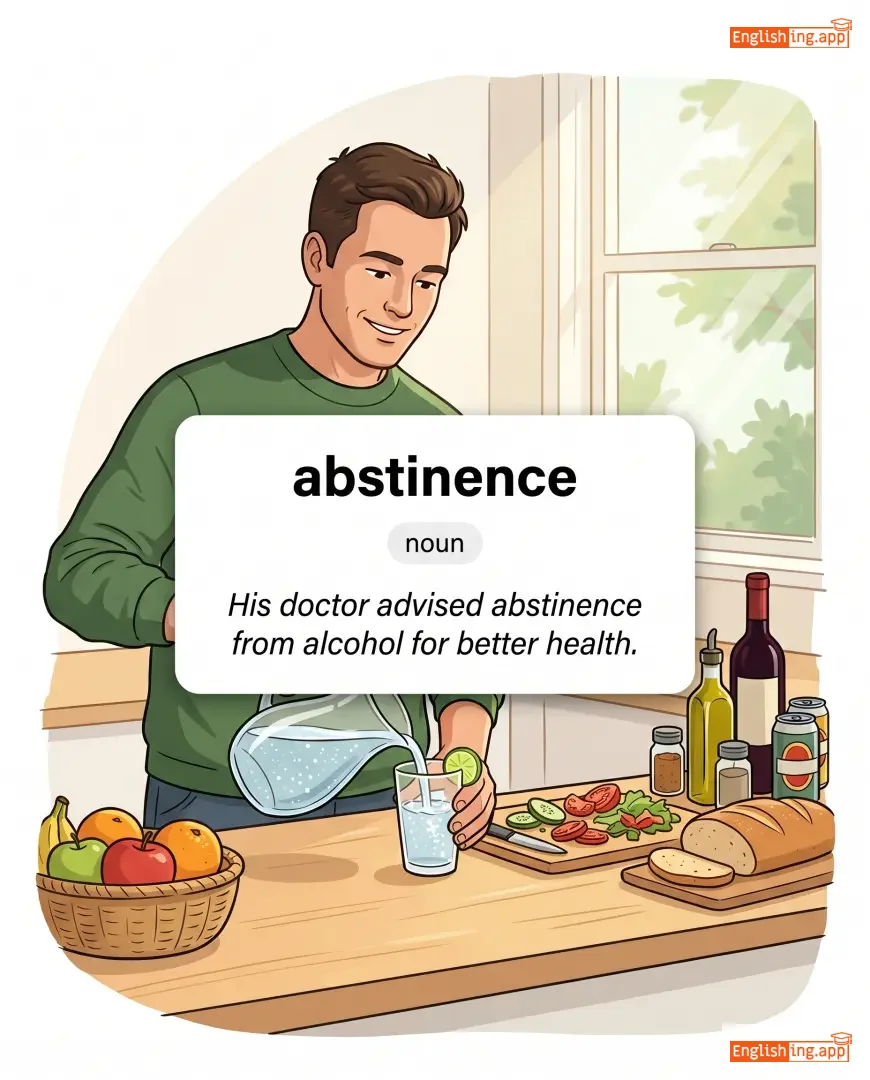
abstinence definition card — visual illustration of the meaning
noun
/ˈæb.stɪ.nəns/
абстиненция, воздержание (abstinentsiya, vozderzhaniye)

the practice of restraining oneself from indulging in something, typically alcohol or sex

"His doctor advised abstinence from alcohol for better health."

"Его врач порекомендовал воздержание от алкоголя для лучшего здоровья." (Ego vrach porekomendoval vozderzhaniye ot alkogolya dlya luchshego zdorov'ya.)
adjective, noun, verb
/ˈæb.strækt/
абстрактный, резюме (abstraktnyy, rezyume)

existing in thought or as an idea but not having physical or concrete existence; a summary of a text

"The artist is known for her abstract paintings."

"Художник известен своими абстрактными картинами." (Khodzhonik izvesten svoimi abstraktnymi kartinami.)
noun
/æbˈstrækʃən/
абстракция (abstraktsiya)

the process of forming general ideas by removing specific details; an abstract concept or idea

"Abstraction allows complex ideas to be represented in a simplified form."
"Абстракция позволяет представлять сложные идеи в упрощённой форме." (abstraktsiya pozvolyaet predstavlyat slozhnye idei v uproshchyonnoy forme)
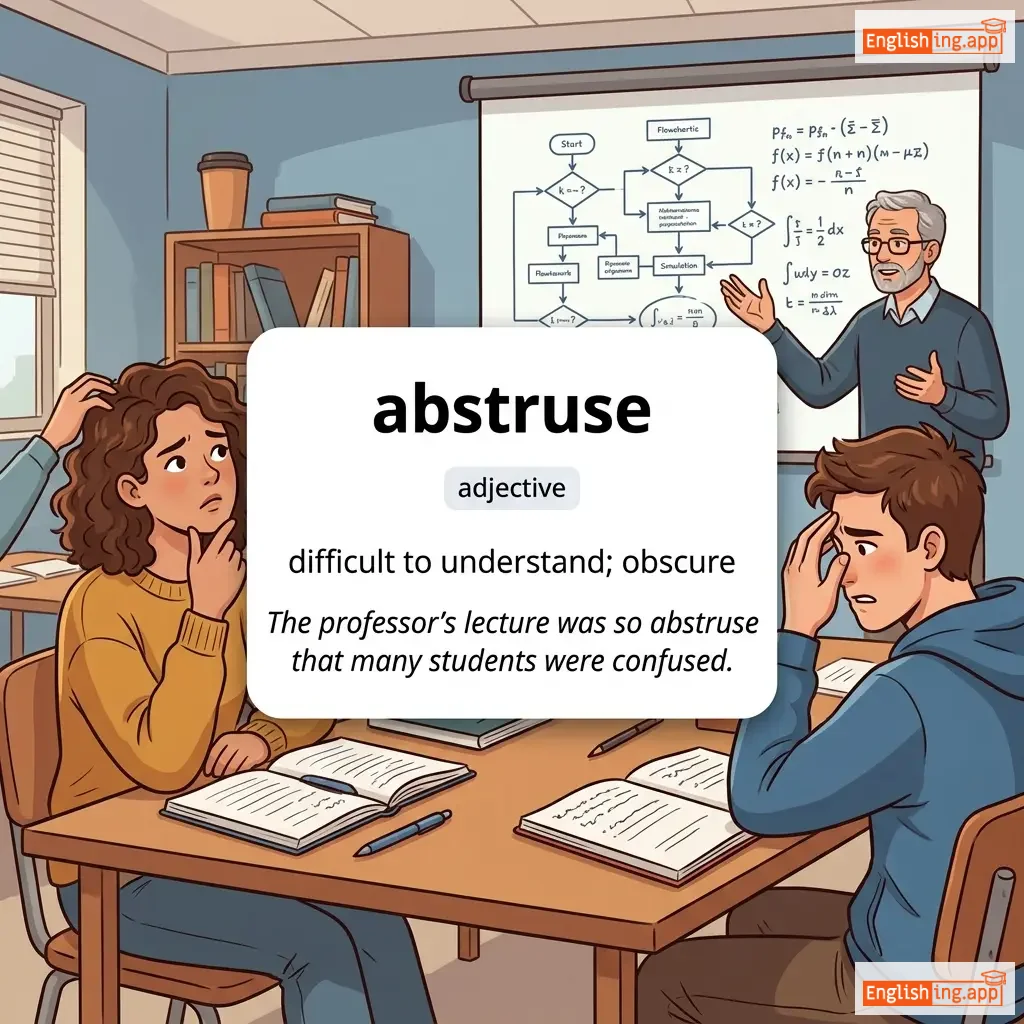
abstruse definition card — visual illustration of the meaning
adjective
/æbˈstruːs/
трудный для понимания (trudnyy dlya ponimaniya)

difficult to understand; obscure

"The professor’s lecture was so abstruse that many students were confused."

"Лекция профессора была настолько абстрактной, что многие студенты были озадачены." (Lektsiya professora byla nastol'ko abstrusnoy, chto mnogiye studenty byli ozadacheny.)
adjective
/əbˈsɜːrd/
абсурдный, нелепый (absurdny, nelepy)

wildly unreasonable, illogical, or inappropriate

"It is absurd to think that the earth is flat."
"Абсурдно думать, что Земля плоская." (Absurdno dumat, chto Zemlya ploskaya.)
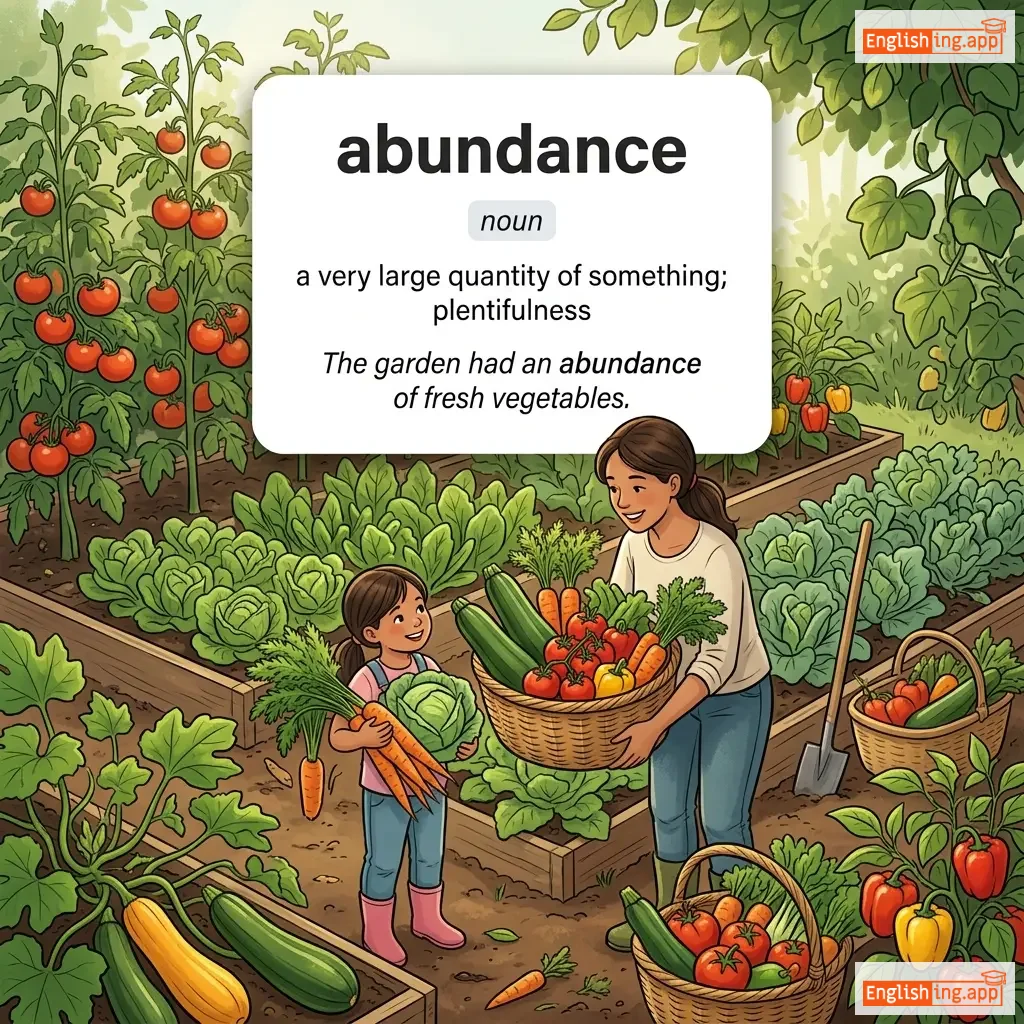
abundance definition card — visual illustration of the meaning
noun
/əˈbʌndəns/
изобилие; большое количество (izobilie; bolshoe kolichestvo)

a very large quantity of something; plentifulness

"The garden had an abundance of fresh vegetables."

"В саду было много свежих овощей." (V sadu bylo mnogo svezhikh ovochhey.)
adjective
/əˈbʌndənt/
обильный (obilny)

existing or available in large quantities; plentiful

"The garden was abundant with colorful flowers."

"Сад был полон ярких цветов." (Sad byl polon yarkikh tsvetov.)
🚫

Abuse

verb, noun
/əˈbjuːs/ (verb), /əˈbjuːs/ (noun)
злоупотребление (zloupotreblenie)

to use something in a harmful way; to treat someone badly or cruelly

"He was accused of abusing his power."

"Его обвинили в злоупотреблении своей властью." (Ego obvinili v zlopotreblenii svoei vlast'yu.)
adjective
/əˈbjuːsɪv/
оскорбительный / наносящий физический или вербальный вред (oskorbitel'nyy / nanosyashchiy fizicheskiy ili verbal'nyy vred)

extremely offensive or insulting; involving physical or verbal harm

"She left her job because of her abusive boss."

"Она ушла с работы из-за своего оскорбительного начальника." (Ona ushla s raboty iz-za svoego oskorbitelnogo nachal'nika.)
verb
/əˈbʌt/
сопредельный (sopredel'nyy)

to be next to or share a border with

"The park abuts the river on the north side."
"Парк находится рядом с рекой на северной стороне." (Park nakhoditsya ryadom s rekoj na severnoj storone.)
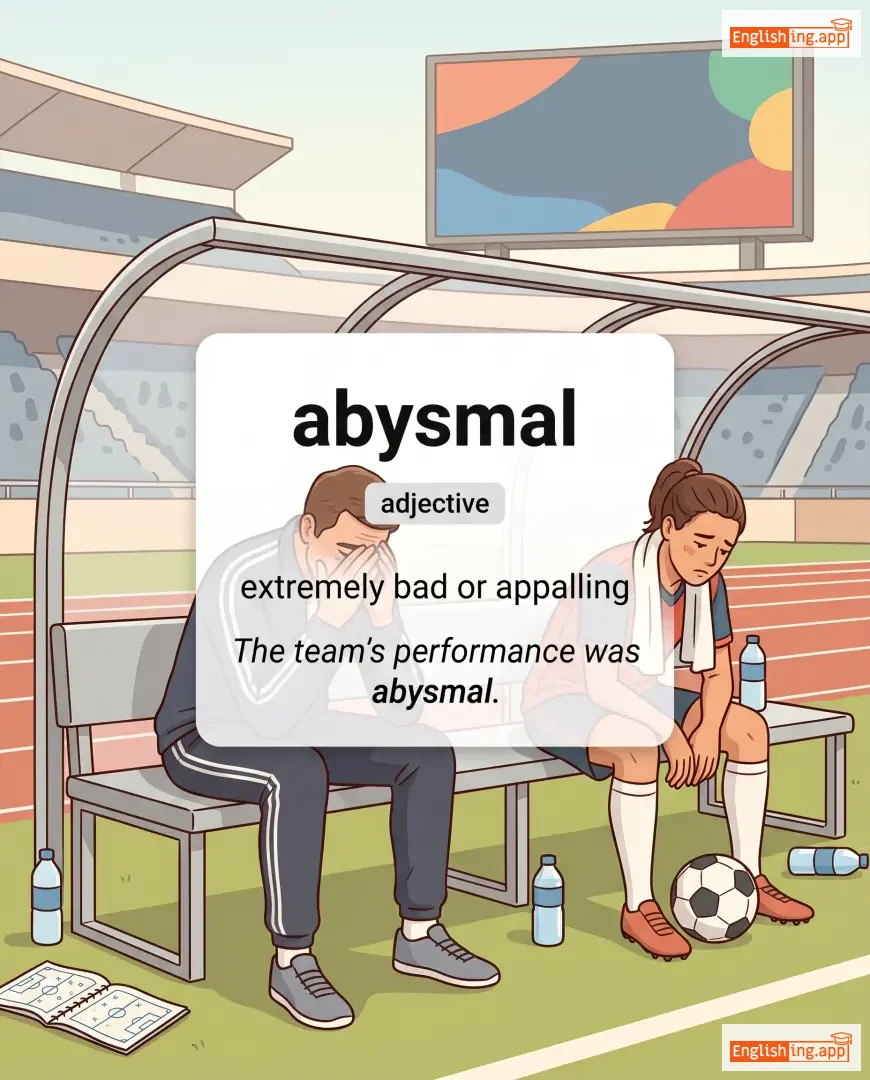
abysmal definition card — visual illustration of the meaning
adjective
/əˈbɪzməl/
ужасный / катастрофический (uzhasnyy / katastroficheskiy)

extremely bad or appalling

"The team's performance was abysmal."

"Выступление команды было ужасным." (Vystuplenie komandy bylo uzhasnym.)
noun
/əˈbɪs/
бездна (bezdna)

a deep, immeasurable space, chasm, or void; something seemingly without end

"The climbers looked down into the dark abyss below."
"Скалолазы смотрели в темную бездну внизу." (Skalolazy smotreli v temnuyu bezdnu vnizu.)
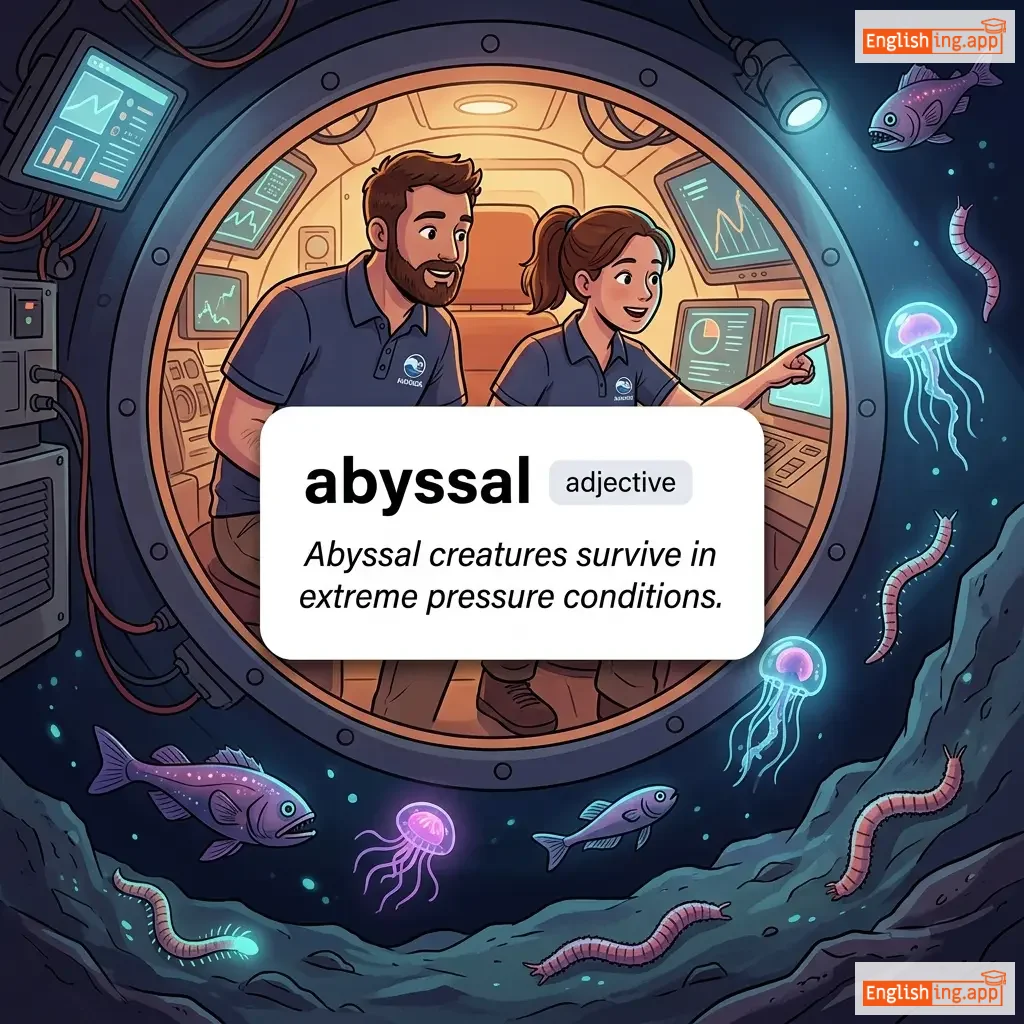
abyssal definition card — visual illustration of the meaning
adjective
/əˈbɪs.əl/
абиссальный (abissal'nyj)

Related to or characteristic of the deep ocean, especially the zone below 4000 meters.

"Abyssal creatures survive in extreme pressure conditions."

"Абиссальные существа выживают в условиях экстремального давления." (Abissal'nye sushchestva vyzhivayut v usloviyakh ekstrenal'nogo davleniya.)
adjective
/ˌækəˈdɛmɪk/
академический (akademicheskiy)

related to education, learning, or scholarly activities

"She has an outstanding academic record."

"У нее выдающиеся академические достижения." (U nee vydyashchiesya akademicheskiye dostizheniya.)
noun
/əˌkædəˈmɪʃən/
академик (akademik)

a member of an academy; a scholar or expert in a field of study

"The academicians gathered to discuss the future of education."

"Академики собрались, чтобы обсудить будущее образования." (Akademiki sobrális chtoby obsudit buduschee obrazovaniya)
noun
/əˈkædəmi/
академия (akademiya)

an institution of learning or training

"He enrolled in a military academy."

"Он поступил в военную академию." (On postupil v voyennuyu akademiyu.)
verb
/əkˈsiːd/
соглашаться (soglashatsya)

to agree to a request, proposal, or demand; to assume an office or position

"The government finally acceded to the demands of the protesters."

"Правительство наконец согласилось с требованиями протестующих." (Pravitel'stvo nakonec soglashilos' s trebovaniyami protestuyushchikh.)
verb
/əkˈsɛləreɪt/
ускорять (uskoryat)

to increase speed or make something happen sooner

"The driver accelerated to overtake the truck."

"Водитель ускорился, чтобы обогнать грузовик." (Voditel' uskorilsya, chtoby obognat' gruzovik.)
accelerated definition card — visual illustration of the meaning
adjective
/əkˈsel.ə.reɪ.tɪd/
ускоренный (uskorenniy)

Happening or developing faster than usual.

"The project progressed at an accelerated pace."

"Проект продвигался с ускоренным темпом." (Proyekt prodvigayalsya s uskorennym tempom.)
noun
/əkˌseləˈreɪʃən/
ускорение (uskorenie)

the rate at which velocity changes over time; the act of speeding up

"The car showed rapid acceleration as it entered the highway."

"Автомобиль показал быстрое ускорение при выезде на шоссе." (avtomobil pokazal bystroye uskorenie pri vyezde na shosse)
noun
/ˈæksɛnt/
акцент (aktsent)

a distinctive way of pronouncing words, often associated with a particular region or group

"She speaks English with a French accent."

"Она говорит по-английски с французским акцентом." (Ona govorit po-angliyski s frantsuzskim aktsentom.)
verb
/əkˈsɛntʃueɪt/
акцентировать (aktsentirovat)

to emphasize or make something more noticeable

"The lighting accentuated the beauty of the painting."
"Освещение подчеркнуло красоту картины." (Osveshchenie podcherknulo krasotu kartiny.)
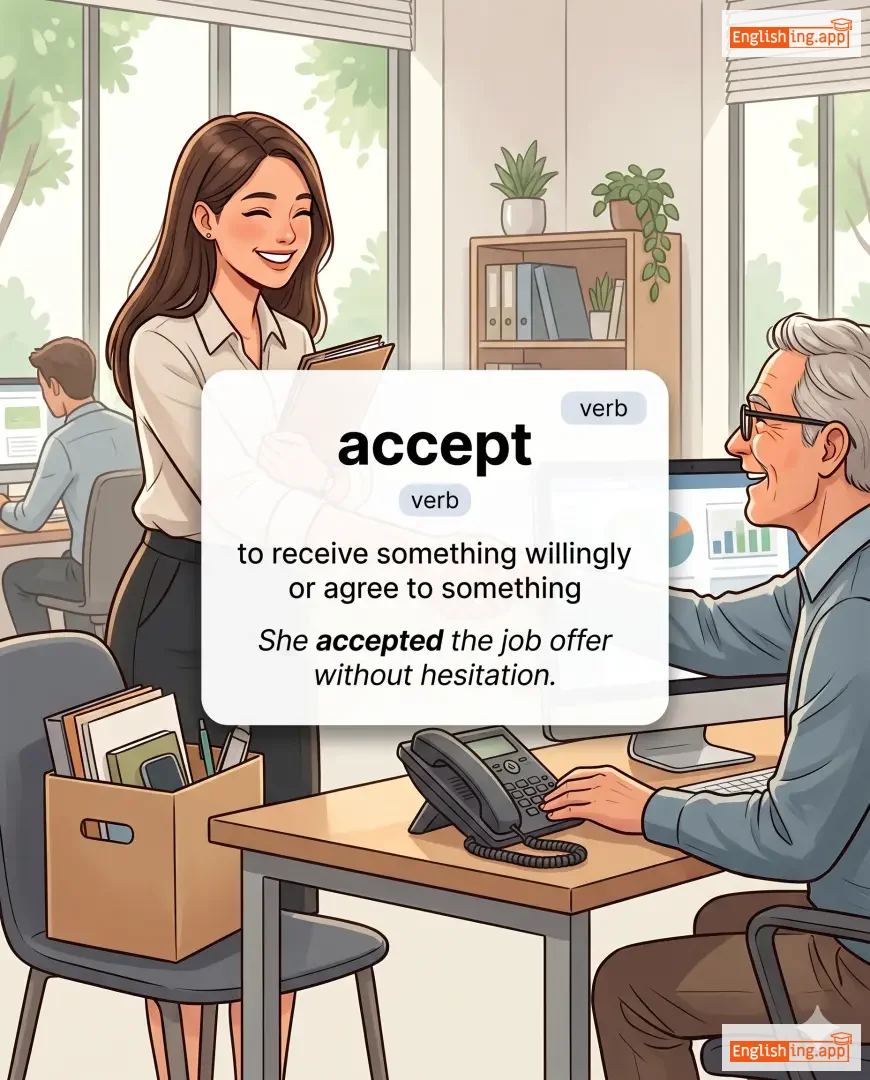
accept definition card — visual illustration of the meaning
verb
/əkˈsɛpt/
принять (prinyat')

to receive something willingly or agree to something

"She accepted the job offer without hesitation."

"Она приняла предложение о работе без колебаний." (Ona prinяла predlozhenie o rabote bez kolebaniy.)