Словари

Словарь английского языка | Значения слов, определения и примеры

noun
/ˈæpərtʃər/
отверстие / дыра (otverstie / dyra)

an opening, hole, or gap, especially one that lets in light

"Light entered through the small aperture in the wall."

"Свет вошел через маленькое отверстие в стене." (Svet voshel cherez malen'koye otverstie v stene.)
apex definition card — visual illustration of the meaning
noun
/ˈeɪ.pɛks/
пик (pik)

the highest point or peak of something

"The climbers finally reached the apex of the mountain."

"Альпинисты наконец достигли пика горы." (Al'pinisty nakonechno dostigli pika gory.)
noun
/əˈfeɪ.ʒə/
афазия (afaziya)

a medical condition that causes loss of ability to speak or understand language

"After the stroke, she was diagnosed with aphasia."

"После инсульта ей поставили диагноз афазии." (Posle insulta ey postavili diagnoz afazii.)
noun
/ˈæf.ə.rɪ.zəm/
афоризм (aforizm)

a short, witty saying that expresses a general truth or principle

"He began his speech with an aphorism about life and success."

"Он начал свою речь с афоризма о жизни и успехе." (On nachal svoyu rech s aforizma o zhizni i uspekhe.)
adjective
/ˌæf.əˈrɪs.tɪk/
афористический стиль (aforisticheskiy stil')

expressed in the style of a short, witty saying

"Her writing style is concise and aphoristic."

"Её стиль письма лаконичен и афористичен." (Eyo stil' pis'ma lakonichen i aforistichen.)
noun
/ˈeɪ.pi.ə.rɪst/
пчеловод (pchelovod)

a person who keeps and tends bees for honey production

"The apiarist collected fresh honey from the hives."

"Пчеловод собрал свежий мед с ульев." (Pchelovod sobral svezhij med s ul'yev.)
noun
/ˈeɪ.pi.ˌɛr.i/
пчеловодческая станция (pchelovodcheskaya stantsiya)

A place where beehives are kept, especially for commercial purposes.

"The farmer built a new apiary to produce organic honey."

"Фермер построил новую пчеловодческую станцию для производства органического меда." (Fermyer postroil novuyu pchelovodcheskuyu stantsiyu dlya proizvodstva organicheskogo myoda.)
noun
/ˈæp.ɪˌkʌl.tʃər/
пчеловодство (pchelovodstvo)

The practice of keeping and raising bees for honey and other products.

"Apiculture plays a vital role in agriculture by supporting pollination."

"Пчеловодство играет важную роль в сельском хозяйстве, поддерживая опыление." (Pchelovodstvo igayet vazhnuyu rol' v selskom khozyaystve, podderzhivaya opyleniye.)
noun
/əˈplɒm/
самообладание (aplomb)

Complete and confident self-assurance or poise.

"She handled the difficult questions with aplomb."

"Она справилась с трудными вопросами с самообладанием." (Ona spravilas s trudnymi voprosami s samoobladaniem.)
adjective
/əˌpɒk.əˈlɪp.tɪk/
апокалиптический (apokalipticheskiy)

Describing the end of the world, or something catastrophic and disastrous.

"The movie depicts an apocalyptic future after a nuclear war."

"Фильм изображает апокалиптическое будущее после ядерной войны." (Film izobrazhaet apokalipticheskoe budushchee posle yadernoi voiny.)
adjective
/əˈpɒ.krɪ.fəl/
сомнительный (somnitel'nyy)

Of doubtful authenticity, though widely circulated as true.

"The story about him saving the village is probably apocryphal."

"История о том, как он спас деревню, вероятно, сомнительна." (Istoriya o tom, kak on spas derevnyu, veroyatno, somnitel'na.)
apogee definition card — visual illustration of the meaning
noun
/ˈæpədʒiː/
апогей (apogey)

the highest or most distant point; the climax or peak of something

"The empire reached its apogee during the 18th century."

"Империя достигла своего апогея в 18 веке." (Imperiya dostigla svoego apogeya v 18 veke.)
adjective
/ˌeɪpəˈlɪtɪkəl/
аполитичный (apolitichny)

not interested in or not connected with politics

"She prefers to stay apolitical and focus on her work."

"Она предпочитает оставаться аполитичной и сосредотачиваться на своей работе." (Ona predpochitayet ostavat'sya apolitichnoy i sosredotochivatsya na svoey rabote.)
noun
/əˈpɒlədʒɪst/
защитник (zashchitnik)

a person who defends or justifies something, often a controversial belief or institution

"He is known as an apologist for authoritarian regimes."

"Он известен как защитник авторитарных режимов." (On izvesten kak zashchitnik avtoritarnykh rezimov.)
verb
/əˈpɒlədʒaɪz/
извиняться (izvinyatsya)

to say sorry for something wrong you have done

"He apologized for being late to the meeting."

"Он извинился за опоздание на встречу." (On izvinilsya za opazdanie na vstrechu.)
noun
/ˈæpəˌlɔːɡ/
нравоучительный рассказ (nravouchitel'nyy rasskaz)

a short moral story or fable intended to teach a lesson

"The teacher used an old apologue to explain honesty to the children."

"Учитель использовал старую нравоучительную историю, чтобы объяснить детям честность." (Uchitel' ispol'zoval staruyu nravouchitelnuyu istoriyu, chtoby ob'ясnить detyam chestnost'.)
noun
/əˈpɒlədʒi/

a statement expressing regret for something wrong or hurtful

"He offered an apology for being late to the meeting."

🗣️

apophasis

noun
/əˈpɒfəsɪs/

A rhetorical device where the speaker brings up a subject by denying it or pretending to pass over it.

"The politician used apophasis by saying, 'I won’t even mention my opponent’s scandals.'"

noun
/ˈæpəfθɛm/
краткое, остроумное и поучительное высказывание или максима (apoftem)

A short, pithy, and instructive saying or maxim.

"She always had a witty apophthegm to share at meetings."

"Она всегда имела остроумный апофтем, чтобы поделиться на встречах." (Ona vsegda imela ostroumnoe apoftem, chtoby podelit'sya na vstrechakh.)
adjective
/ˌæpəˈplɛktɪk/
апоплектический (apoplekticheskiy)

Extremely angry; furious.

"He was apoplectic when he heard about the unfair decision."

"Он был апоплектичным, когда услышал об этом несправедливом решении." (On byl apoplektichnym, kogda uslyshal ob etom nespravedlivom reshenii.)
noun
/ˈæpəplɛksi/
Внезапная потеря сознания или контроля из-за инсульта или сильного гнева (apopleksiya)

A sudden loss of consciousness or control due to stroke or extreme anger.

"The old man nearly had apoplexy when he heard the shocking news."

"Старик чуть не потерял сознание, когда услышал шокирующую новость." (Starik chut' ne poteryal soznanie, kogda uslyshal shokiruyushchuyu novost'.)
noun
/əˈpɒstəsi/
апостасия (apostasiya)

The abandonment or renunciation of a religious or political belief.

"His public apostasy shocked his followers."

"Его публичная апостасия потрясла его последователей." (Ego publichnaya apostasiya potryasla ego posledovateley.)
noun
/ˈæpəˌsteɪt/
отступник (otstupnik)

A person who renounces a religious or political belief or principle.

"He was labeled an apostate after abandoning the faith of his community."

"Его назвали отступником после того, как он покинул веру своей общины." (Ego nazvali otstupnikom posle togo, kak on pokinul veru svoei obshchiny.)
noun
/əˈpɒsəl/
апостол, защитник (apostol, zashchitnik)

A vigorous and pioneering advocate or supporter of a particular cause, often used for the early Christian disciples.

"He became an apostle of environmental protection."

"Он стал апостолом охраны окружающей среды." (On stal apostolom okhrany okruzhayushchey sredy.)
noun
/əˈpɒstrəfi/

A punctuation mark (') used to indicate possession or the omission of letters or numbers.

"You need an apostrophe in the word 'children’s'."

noun
/əˈpɒθəˌkɛri/
аптекарь (aptekary)

A historical term for a person who prepared and sold medicines and drugs.

"The village apothecary provided remedies for many common illnesses."
"Сельский аптекарь предоставлял лекарства от многих распространенных болезней." (Selskiy aptekary predostavlyal lekarstva ot mnogikh rasprostranennykh bolezney.)
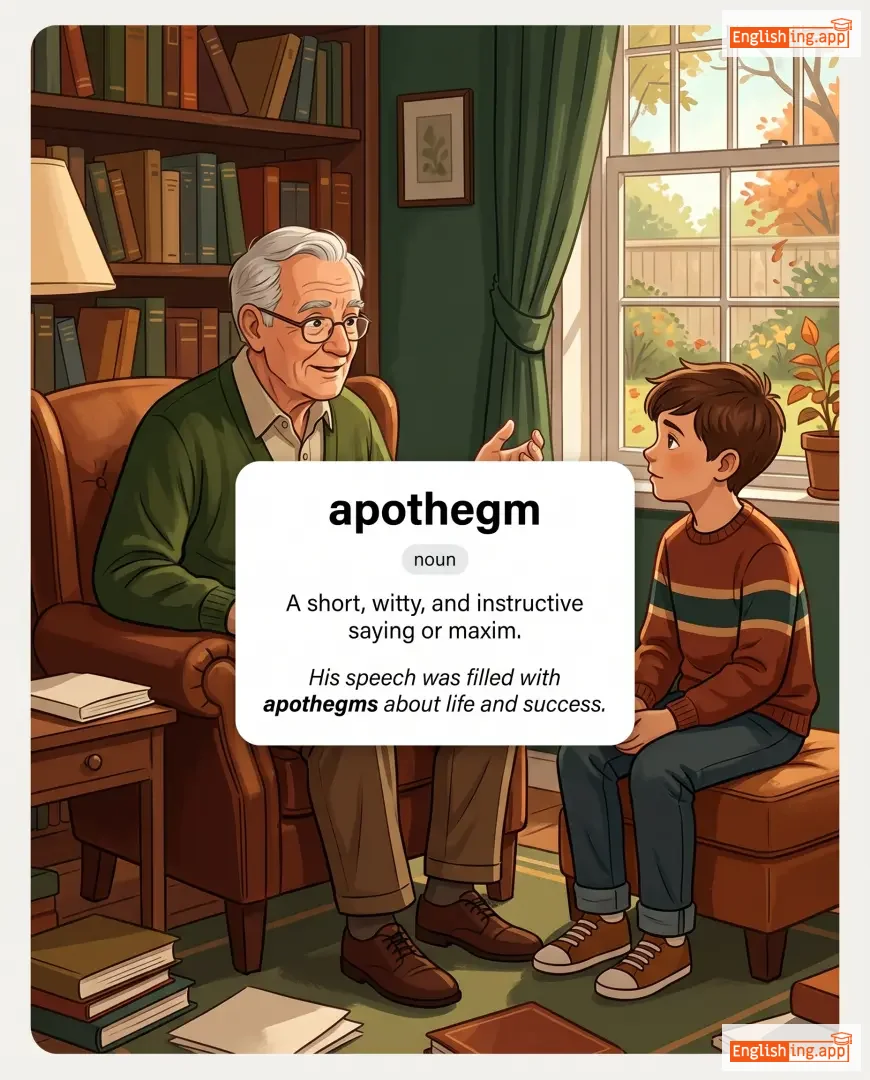
apothegm definition card — visual illustration of the meaning
noun
/ˈæpəˌθɛm/
максима, изречение (maksima, izrechenie)

A short, witty, and instructive saying or maxim.

"His speech was filled with apothegms about life and success."

"Его речь была полна максим о жизни и успехе." (Ego rech' byla polna maksym o zhizni i uspekhe.)
noun
/əˌpɒθiˈoʊsɪs/
апофеоз, вершина (apofeoz, vershina)

The highest point of development; the perfect example of something; the elevation of someone to divine status.

"Many see the Renaissance as the apotheosis of art and culture in Europe."

"Многие считают Ренессанс апофеозом искусства и культуры в Европе." (Mnogie schitayut Renessans apofeozom iskusstva i kultury v Yevrope.)
verb
/əˈpɔːl/
ошеломить (oshelomit)

To shock or horrify someone with something unpleasant or bad.

"The cruelty of the crime appalled the entire community."
"Жестокость преступления ошеломила все сообщество." (Zhestokost' prestupleniya oshelomila vse soobshchestvo.)
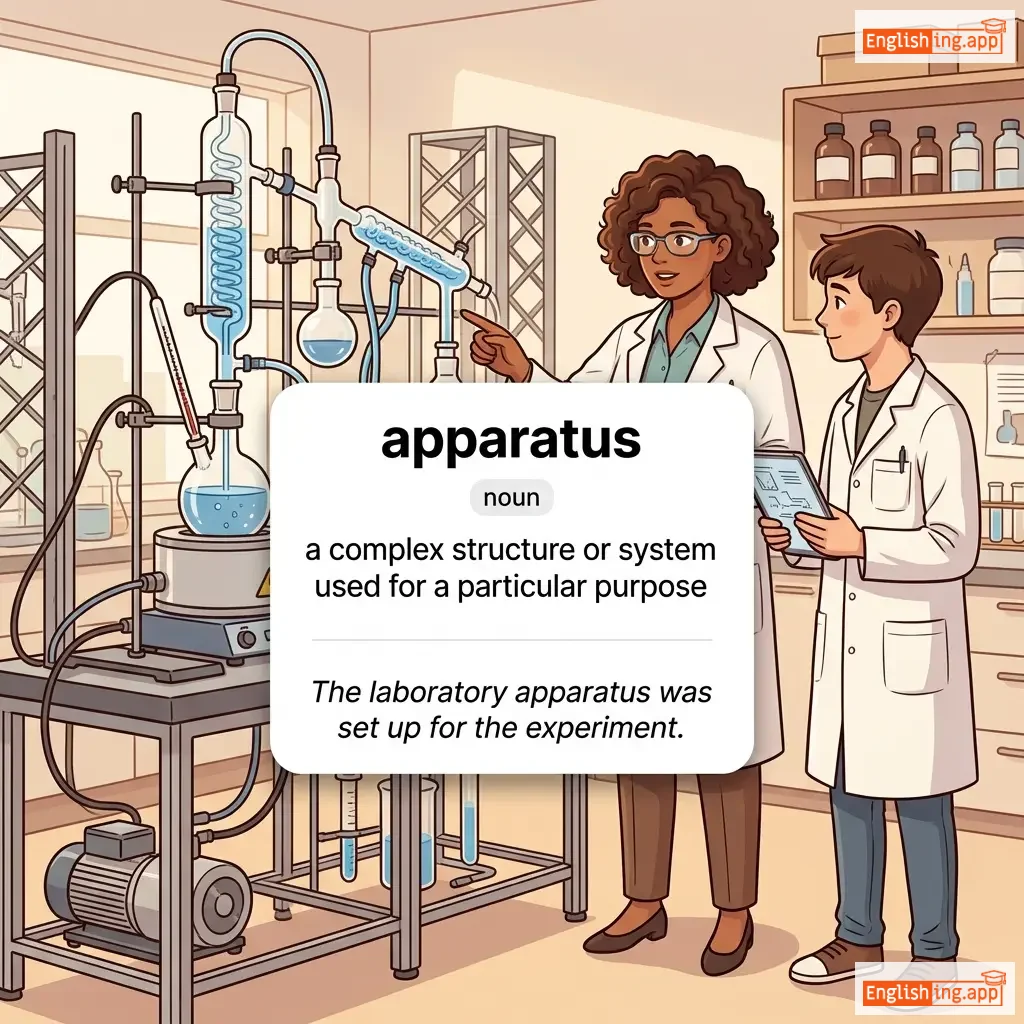
apparatus definition card — visual illustration of the meaning
noun
/ˌæpəˈreɪtəs/
аппарат (apparat)

a complex structure or system used for a particular purpose

"The laboratory apparatus was set up for the experiment."

"Лабораторный аппарат был настроен для эксперимента." (Laboratornyi apparat byl nastroen dlya eksperimenta.)
noun
/əˈpærəl/
одежда (odezhda)

Clothing, especially formal or special clothes.

"The store specializes in wedding apparel."

"Магазин специализируется на свадебной одежде." (Magazin spetsializiruetsya na svadebnoy odezhde.)
adjective
/əˈpærənt/
очевидный (ochevidnyy)

Clearly visible or understood; obvious.

"It soon became apparent that he was not telling the truth."

"Скоро стало очевидно, что он не говорил правду." (Skoro stalo ochevidno, chto on ne govoril pravdu.)
adverb
/əˈpærəntli/
по-видимому (po-vidimomu)

as far as one knows or can see; seemingly

"Apparently, she forgot about the meeting."

"По-видимому, она забыла о встрече." (Po-vidimomu, ona zabula o vstreche.)
noun
/ˌæpəˈrɪʃən/
призрак (prizrak)

A ghostly figure or an unusual or unexpected appearance.

"The children were frightened by the sudden apparition in the old house."

"Дети испугались от внезапного призрака в старом доме." (Deti ispugalis' ot vnezapnogo prizraka v starom dome.)
verb, noun
/əˈpiːl/
обращение / привлечение (obrashchenie / privlechenie)

to make a serious request; to be attractive or interesting; a formal request to a higher authority for a decision to be changed

"The charity appealed to the public for donations."

"благотворительная организация обратилась к публике за пожертвованиями." (blagotvoritel'naya organizatsiya obratilas' k publike za pozhertvovaniyami.)
adjective
/əˈpiːlɪŋ/

attractive or interesting

"The design of the house is very appealing."

verb
/əˈpɪə/
появиться (poyavitsya)

to become visible or come into sight; to seem

"She appeared suddenly at the door."

"Она появилась внезапно у двери." (Ona poyavilas' vnezapno u dveri.)
noun
/əˈpɪərəns/
внешность (vneshnost)

the way that someone or something looks

"His sudden appearance surprised everyone."
"Его внезапное появление удивило всех." (Ego vnezapnoe poyavlenie udivilo vsekh.)
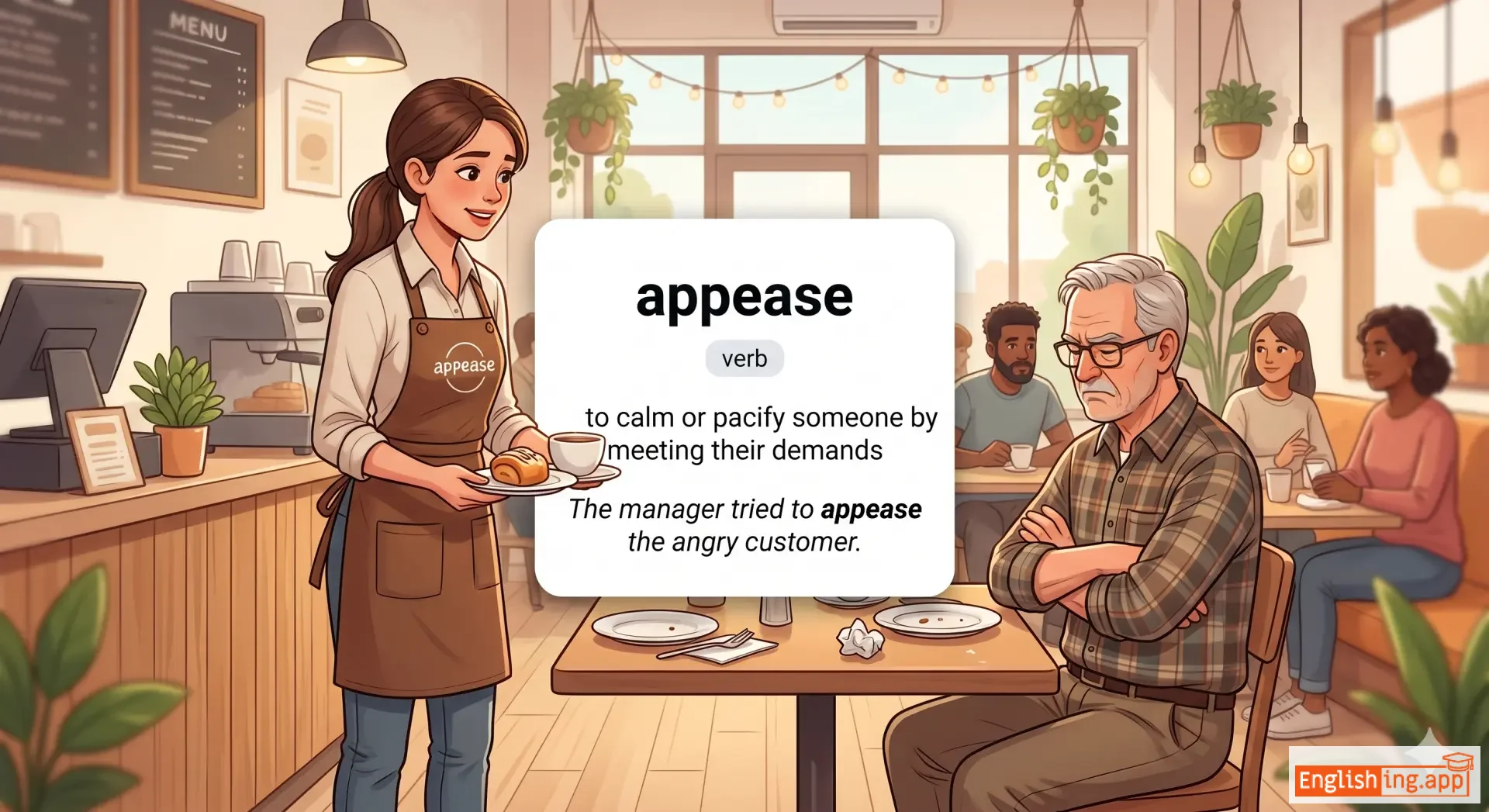
appease definition card — visual illustration of the meaning
verb
/əˈpiːz/
успокаивать / удовлетворять (uspokaivat' / udovletvorjat')

to calm or pacify someone by meeting their demands

"The manager tried to appease the angry customer."

"Менеджер пытался успокоить сердитого клиента." (Menedzher pytalsya uspokoit' serditogo klienta.)
adjective
/ˈæpəˌleɪt/
относящийся к апелляциям (otnosyashchijsya k apellyatsiyam)

relating to appeals in a court of law

"The case was taken to an appellate court."
"Дело было передано в апелляционный суд." (Delo bylo peredano v apellyatsionnyj sud.)
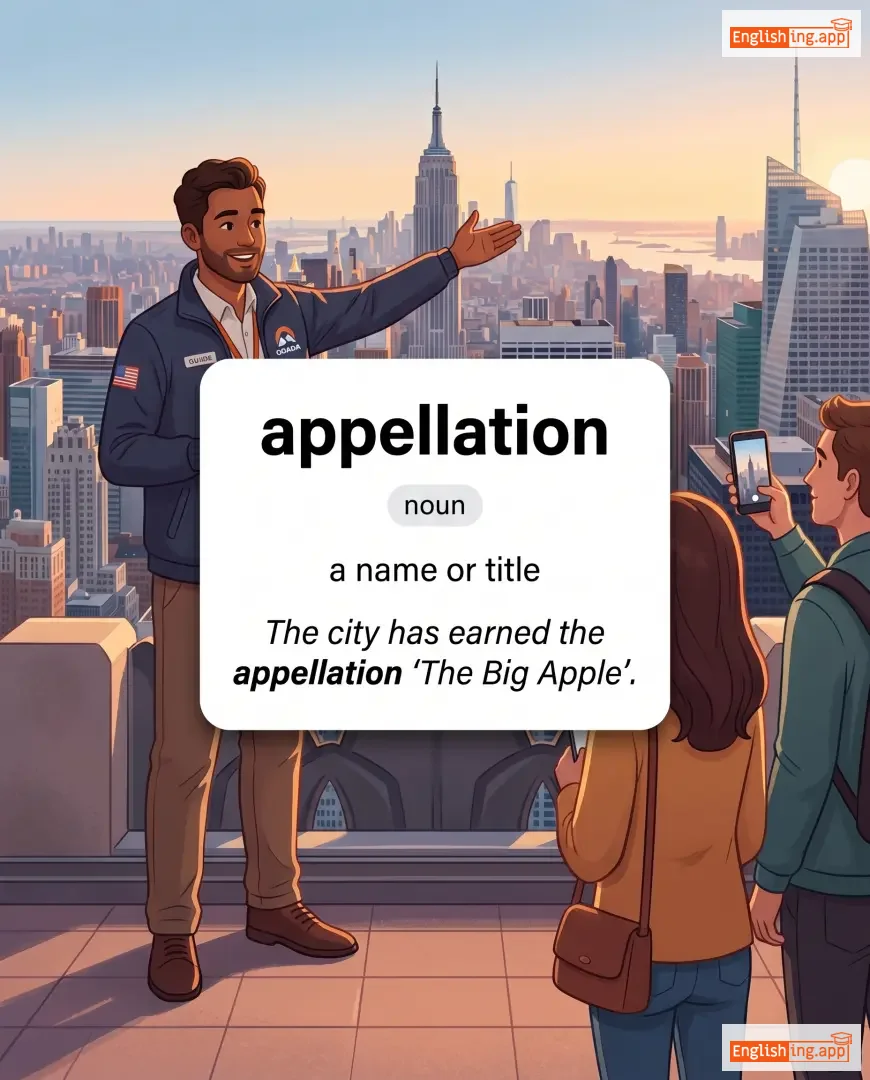
appellation definition card — visual illustration of the meaning
noun
/ˌæpəˈleɪʃən/
наименование / титул (naimenovanie / titul)

a name or title

"The city has earned the appellation 'The Big Apple'."

"Город получил титул 'Большое Яблоко'." (Gorod poluchil titul 'Bol'shoye Yabloko'.)
verb
/əˈpɛnd/
добавить (dobavit)

to add something as an attachment or supplement, usually at the end of a document or list

"She decided to append a note to the end of the report."

"Она решила добавить заметку в конце отчета." (Ona reshila dobavit' zameetku v kontse otcheta.)
verb
/ˌæpərˈteɪn/
относиться (otnositsya)

to relate to or be connected with something

"The rules only appertain to members of the club."

"Правила касаются только членов клуба." (Pravila kasayutsya tol'ko chlenov kluba.)
appetite definition card — visual illustration of the meaning
noun
/ˈæpɪtaɪt/
аппетит (appetit)

a natural desire for food; a strong desire for something

"After the long walk, I had a huge appetite."

"После долгой прогулки у меня был огромный аппетит." (Posle dolgoy progulki u menya byl ogromnyy appetit.)
verb
/ˈæpɪtaɪz/
вызывать аппетит (vyzyvat appetit)

to stimulate the appetite; to make someone eager or interested

"The aroma of fresh bread will appetize the guests before dinner."

"Аромат свежего хлеба вызовет аппетит у гостей." (Aromat svezhego khleba vyzovet appetit u gostei)
verb
/əˈplɔːd/
аплодировать (aplodirovat)

to show approval by clapping or expressing admiration

"The audience applauded the performance."

"Зрители аплодировали выступлению." (Zriteli aplodirovali vystupleniyu.)
noun
/əˈplɔːz/
аплодисменты (aplodismenty)

the sound of people clapping their hands to show approval or enjoyment

"The actor received loud applause after his performance."

"Актер получил громкие аплодисменты после своей выступления." (Akter poluchil gromkiye aplodismenty posle svoey vystupleniya.)
noun
/ˈæpəl/
яблоко (yabloko)

a round fruit with red, green, or yellow skin

"She ate a red apple for breakfast."
"Она съела красное яблоко на завтрак." (Ona syela krasnoye yabloko na zavtrak.)
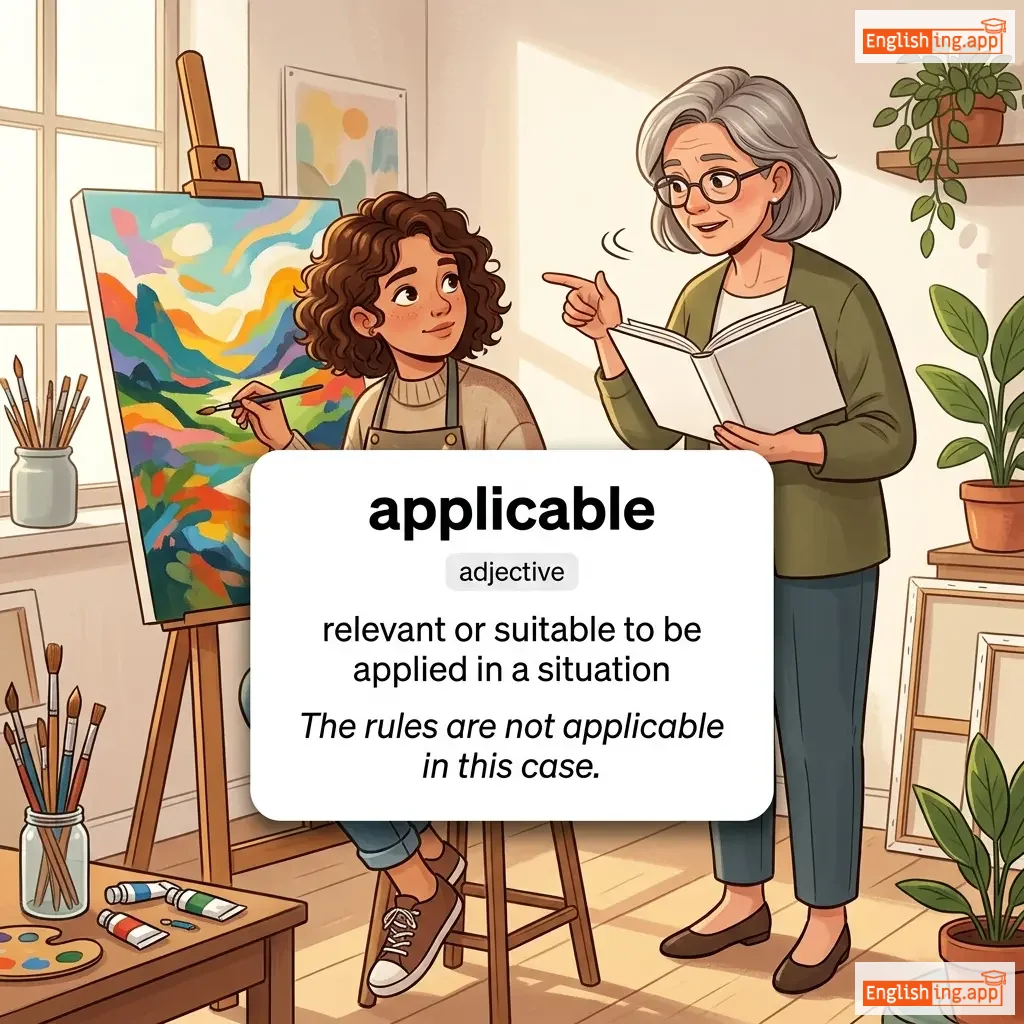
applicable definition card — visual illustration of the meaning
adjective
/ˈæplɪkəbl/
применимый (primenimy)

relevant or suitable to be applied in a situation

"The rules are not applicable in this case."

"Правила не применимы в этом случае." (Pravila ne primenimy v etom sluchaye.)
noun
/ˈæplɪkənt/
кандидат (kandidat)

a person who applies for something, such as a job or a position

"The applicant was interviewed for the position."

"Кандидат был интервьюирован для этой позиции." (Kandidat byl intervyuirovan dlya etoj pozitsii.)