Словари

Словарь английского языка | Значения слов, определения и примеры

adjective
/ˌænθrəpəˈmɔːrfəs/
антропоморфный (antropomorfny)

having the form or attributes of a human

"The statue had an anthropomorphous shape resembling a human."

"Статуя имела антропоморфную форму, напоминающую человека." (Statua imela antropomorfnuyu formu, napominayushchuyu cheloveka.)
noun
/ˈænti ˈeəkræft ɡʌn/
зенитное орудие (zenitnoe orudiye)

a weapon designed to attack aircraft from the ground

"The anti-aircraft gun was positioned to defend the military base."
"Зенитное орудие было расположено для защиты военной базы." (Zenitnoye orudiye bylo raspolozheno dlya zashchity voyennoy bazy.)
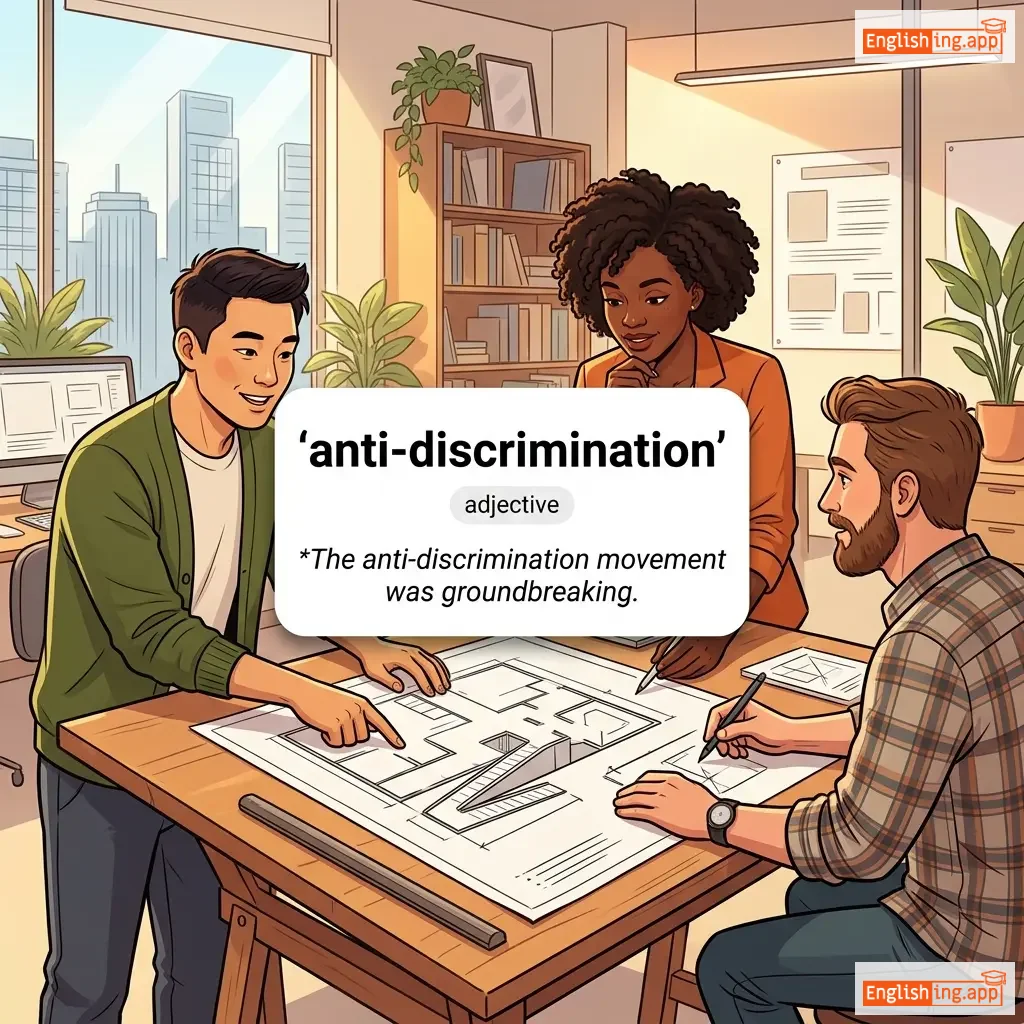
anti-discrimination definition card — visual illustration of the meaning
adjective
ˌæn.tiˌdɪs.krɪˈmɪn.eɪ.ʃən
анти-дискриминационный (anti-diskriminatsionny)

Opposed to or working against discrimination; promoting equal treatment regardless of differences.

"The anti-discrimination movement was groundbreaking."

"Анти-дискриминационное движение было революционным." (Anti-diskriminatsionnoe dvizhienie bylo revolyutsionnym.)
noun
/ˈæntɪk/
шалость (shalost)

a playful, funny, or silly act or gesture

"The children laughed at the clown’s antics."

"Дети смеялись над шалостями клоуна." (Deti smejalis' nad shalostyami klouna.)
noun
/ˈæntiˌkraɪst/
антихрист (antikhrist)

A person regarded as the supreme opponent of Christ, often seen as a figure of ultimate evil.

"Some people fear the rise of an Antichrist in the future."

"Некоторые люди боятся появления антихриста в будущем." (Nekotorye lyudi boyatsya poyavleniya antikhrista v budushchem.)
verb
/ænˈtɪsɪˌpeɪt/
ожидать (ozhidat')

to expect or look forward to something; to realize or foresee in advance

"We anticipate a large crowd at the event."
"Мы ожидаем большую толпу на мероприятии." (My ozhidayem bol'shuyu tolpu na meropriyatii.)
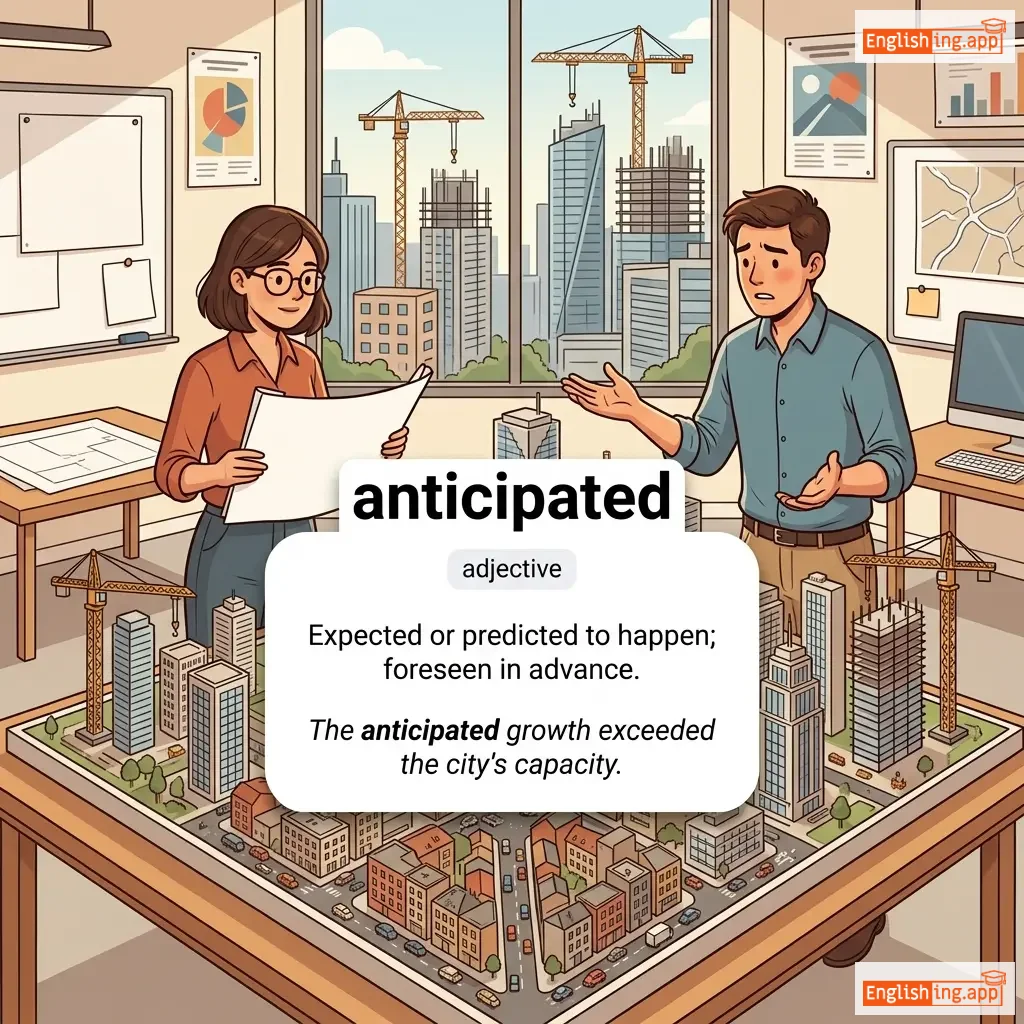
anticipated definition card — visual illustration of the meaning
adjective
ænˈtɪsɪpeɪtɪd
предсказанный (predskazannyy)

Expected or predicted to happen; foreseen in advance.

"The anticipated growth exceeded the city's capacity."

"Ожидаемый рост превысил вместимость города." (Ozhidayemyy rost prevyshil vmeshchayemost' goroda.)
noun
/ˌæntiˈklaɪmæks/
анти-климакс (anti-klimaks)

A disappointing end after a big build-up of excitement or expectation.

"The movie's ending was an anticlimax after such a thrilling story."

"Конец фильма был анти-климаксом после такой захватывающей истории." (Konets fil'ma byl anti-klimaksom posle takoy zakhvatyvayushchey istorii.)
noun
/ˌæntiˈsaɪkloʊn/
антициклон (anticiklon)

A weather system with high atmospheric pressure at its center, usually bringing calm and clear conditions.

"An anticyclone brought sunny weather across the region."

"Антициклон принес ясную погоду на всю территорию." (Antitsiklon prines yasnuyu pogodu na vsyu territoriyu.)
noun
/ˈæntɪˌdoʊt/
антидот (antidot)

A substance that neutralizes the effects of a poison; something that relieves or counteracts.

"The doctor quickly administered an antidote to the snake venom."

"Доктор быстро ввел антидот от яда змеи." (Doktor bystro vvel antidot ot yeda zmei.)
noun
/ænˈtɪlədʒi/
антилогия (antilogiya)

A contradiction in terms or ideas; inconsistency in speech or writing.

"The politician's statement was criticized for its antilogy."
"Заявление политика было раскритиковано за свою антирологию." (Zayavlenie politika bylo raskritikovano za svoiu antilogiu.)
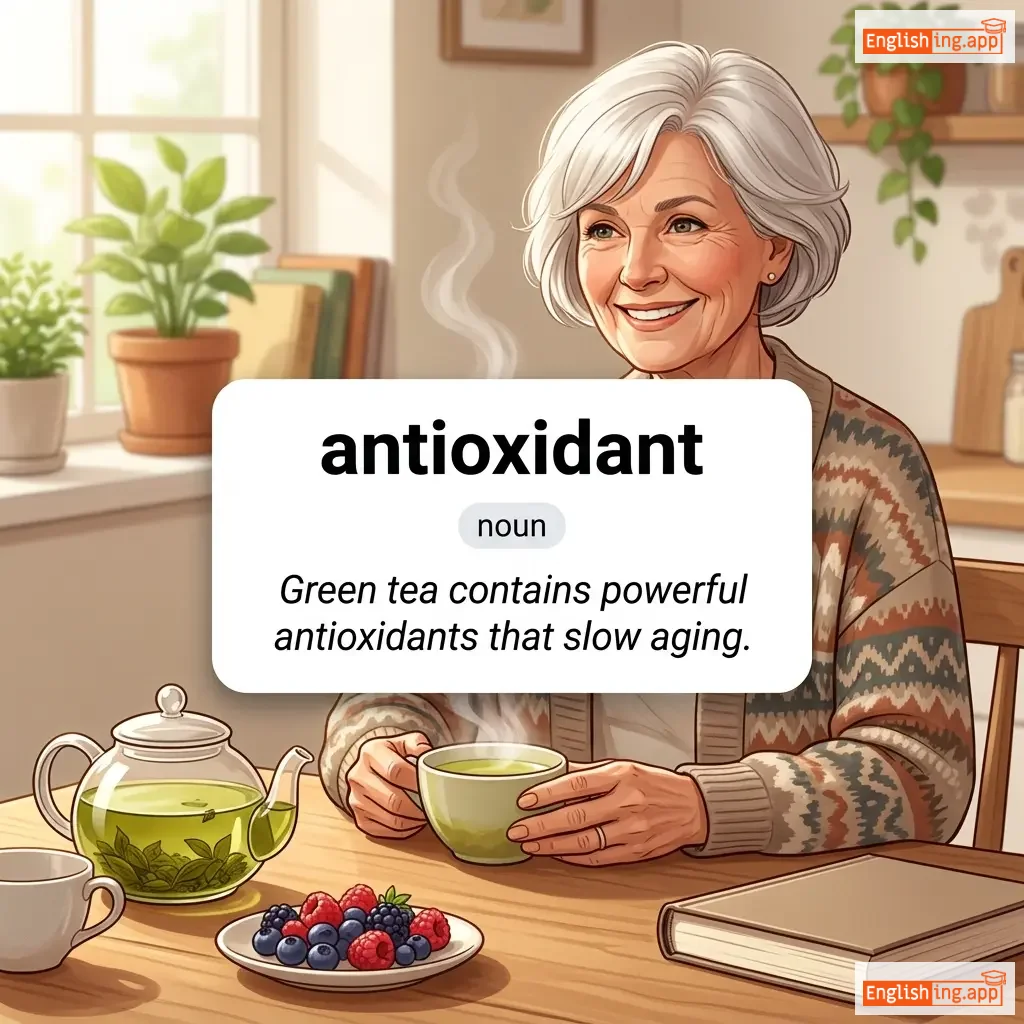
antioxidant definition card — visual illustration of the meaning
noun
ˌæn.tiˈɒk.sɪ.dənt
антиоксидант (antioxidant)

A substance that may prevent or delay some types of cell damage by neutralizing free radicals.

"Green tea contains powerful antioxidants that slow aging."
"Зеленый чай содержит мощные антиоксиданты, которые замедляют старение." (Zelenyi chai soderzhit moshchnye antioksidanty, kotorye zamedlyayut stareniye.)
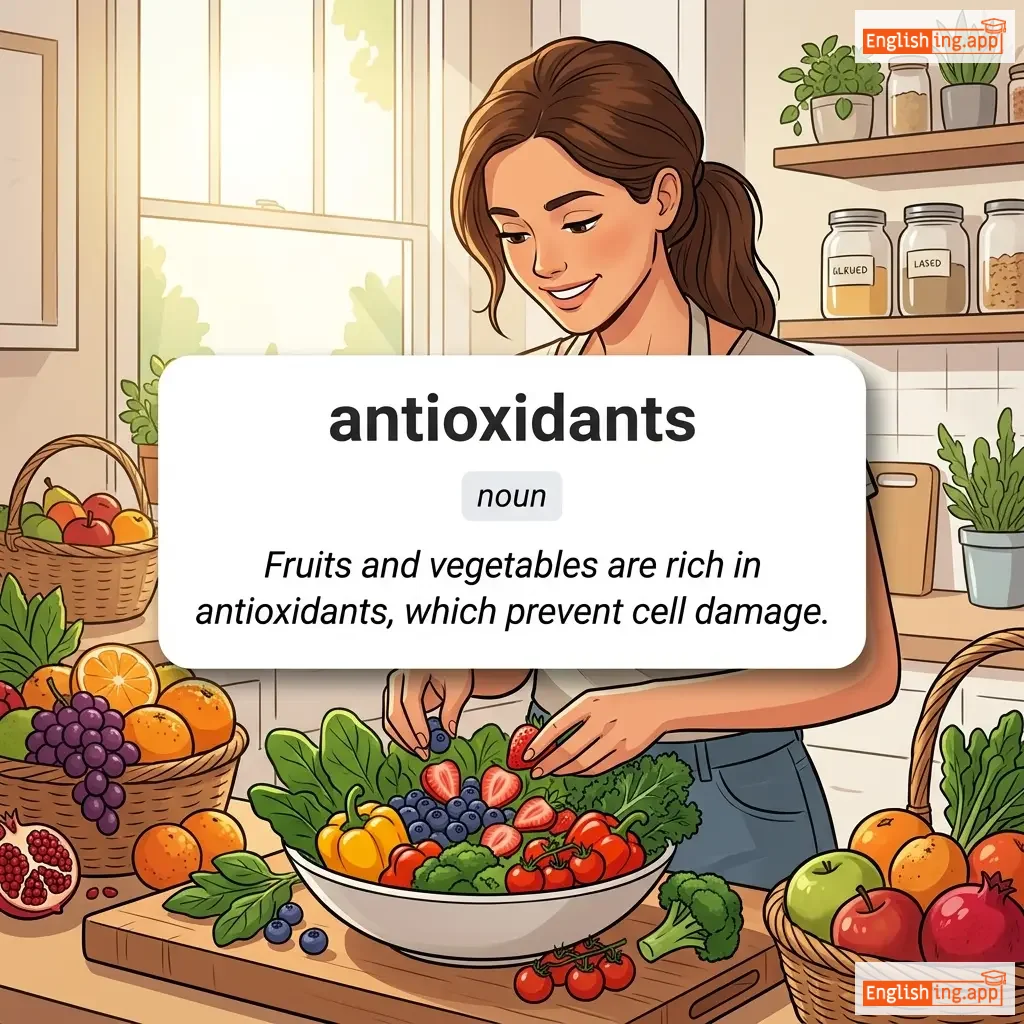
antioxidants definition card — visual illustration of the meaning
noun
/ˌæn.tiˈɒk.sɪ.dənts/
антиоксиданты (antioksidanty)

Substances that may prevent or delay cell damage caused by free radicals, potentially reducing the risk of certain diseases.

"Fruits and vegetables are rich in antioxidants, which prevent cell damage."

"Фрукты и овощи богаты антиоксидантами, которые предотвращают повреждение клеток." (frukty i ovoshchi bogaty antioksidantami kotorye predotvrashchayut povrezhdenie kletok)
verb
/ænˈtɪpəθaɪz/
антипатизировать (antipatizirovat)

to feel or express a strong dislike or aversion toward something or someone

"He seemed to antipathize with the new management's approach."
"Он, похоже, антипатизировал подход нового руководства." (On, pokhozhe, antipatiziroval podkhod novogo rukovodstva.)
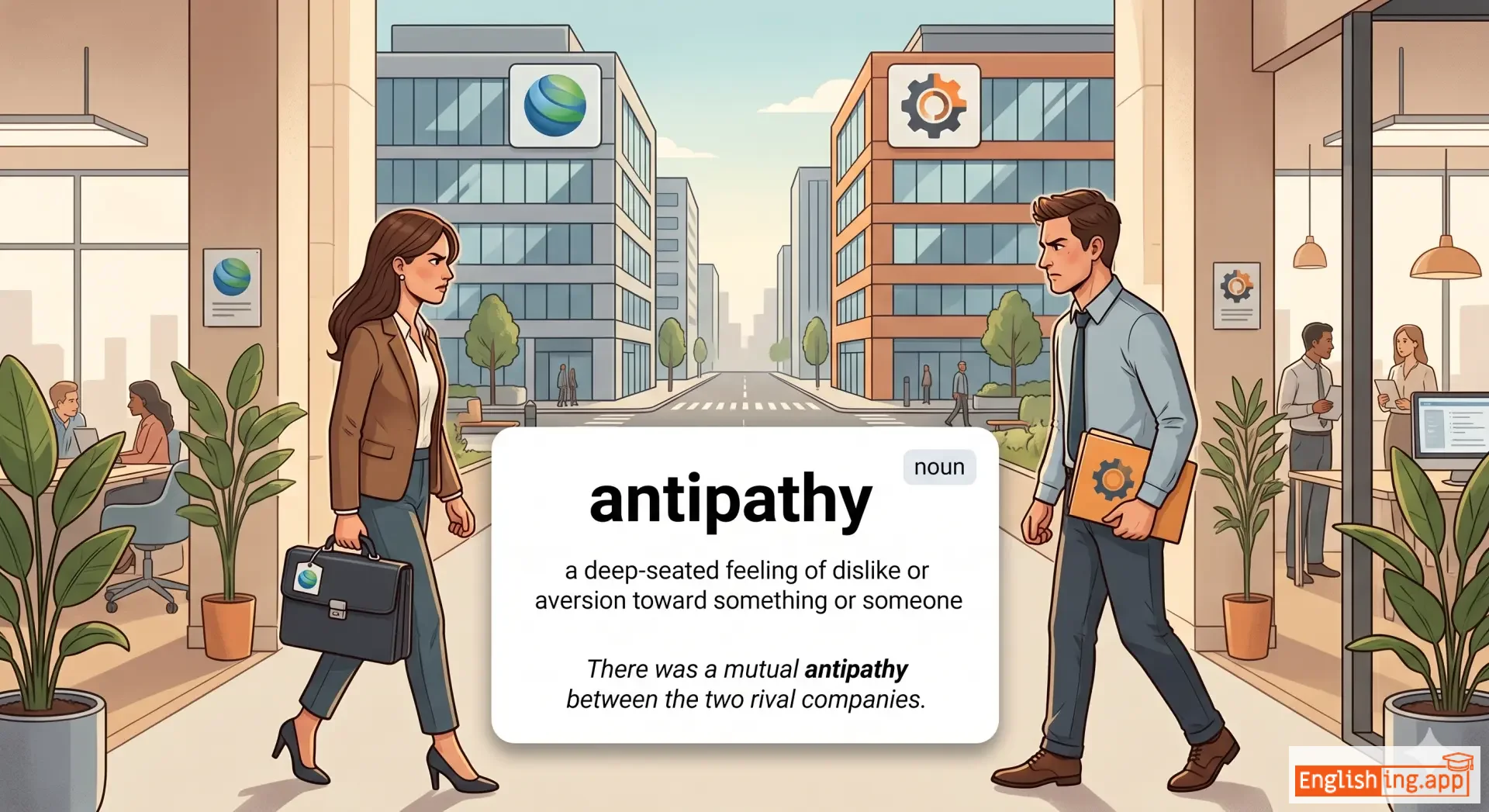
antipathy definition card — visual illustration of the meaning
noun
/ænˈtɪpəθi/
антипатия (antipatiya)

a deep-seated feeling of dislike or aversion toward something or someone

"There was a mutual antipathy between the two rival companies."

"Между двумя конкурентами была взаимная антипатия." (Mezhdu dvumya konkurentami byla vzaimnaya antipatiya.)
noun
/ˈæntɪfɒn/
антифона (antifona)

a short chant or verse sung responsively in Christian worship, typically sung before or after a psalm or canticle

"The choir sang the antiphon before beginning the main hymn."

"Хор спел антифону перед тем, как начать основное песнопение." (Khor spel antifonu pered tem, kak nachat' osnovnoe pesnopenie.)
noun
/ænˈtɪfəni/
антифония (antifoniya)

a form of music in which two or more groups or choirs sing alternately in response to each other

"The cathedral's architecture was designed to enhance the effect of antiphony."

"Архитектура собора была спроектирована для усиления эффекта антифонии." (Arkhitektura sobora byla sproyektirovana dlya usileniya effekta antifonii.)
noun
/ænˈtɪpədiːz/

places on opposite sides of the Earth; also refers to things that are direct opposites

"Australia and Britain are often considered antipodes of each other."

noun
/ˈæntɪkwɛri/
антиквар (antikvar)

A person who studies, collects, or deals in antiques or ancient objects.

"The antiquary spent years collecting rare manuscripts from the medieval period."

"Антиквар потратил годы на сбор редких манускриптов из средневекового периода." (Antikvar potratil gody na sbor redkikh manuskripotov iz srednevekovogo perioda.)
verb
/ˈæntɪkweɪt/
устаревать (ustarevat)

To make something old-fashioned or obsolete.

"The rise of digital cameras antiquated traditional film photography."

"Восход цифровых камер устарел традиционную пленочную фотографию." (Voskhod tsifrovykh kamer ustarel traditsionnuyu plenochuyu fotografiyu.)
adjective
/ˈæntɪkweɪtɪd/
устаревший (ustarevshiy)

Old-fashioned or outdated.

"The office still uses an antiquated filing system."

"Офис всё ещё использует устаревшую систему хранения." (Ofis vso yeshche ispol'zuyet ustarevshuyu sistemyu khraneniya.)
noun
/ænˈtiːk/
антикварный предмет (antikvarny predmet)

An old collectible item that has high value because of its age and rarity.

"She bought an antique vase from the market."
"Она купила антикварную вазу на рынке." (Ona kupila antikvarnuyu vazu na rynke.)
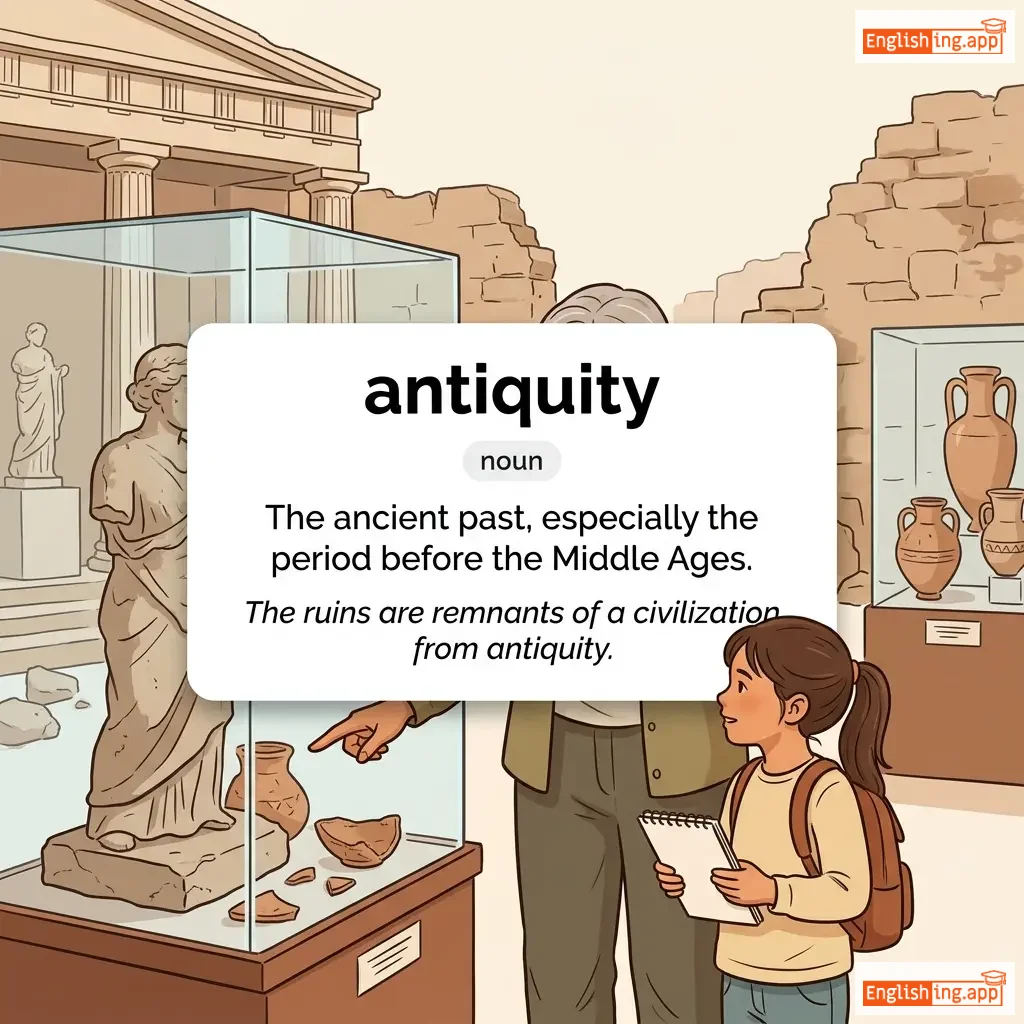
antiquity definition card — visual illustration of the meaning
noun
/ænˈtɪkwɪti/
древность (drevnost)

The ancient past, especially the period before the Middle Ages.

"The ruins are remnants of a civilization from antiquity."

"Руины — это остатки цивилизации из древности." (Ruinı — eto ostatki tsivilizatsii iz drevnosti.)
noun, adjective
/ˌæntiˈsɛptɪk/
антисептик; антисептический (antiseptik)

A substance that prevents the growth of disease-causing microorganisms; clean and free from germs.

"The nurse applied an antiseptic to the wound."

"Медсестра обработала рану антисептиком." (Medsestra obrabotala ranu antiseptikom.)
adjective
/ˌæntiˈsleɪvəri/
антирабство (antirabstvo)

Opposed to the practice or system of slavery.

"The antislavery movement gained momentum in the 19th century."

"Антирабовладельческое движение приобрело популярность в XIX веке." (Antiraboladelcheskoe dvizhene pribrelo popularnost v XIX veke.)
adjective
/ˌæn.tiˈsoʊ.ʃəl/
антисоциальный; враждебный социальной системе (antisotsial'nyy; vrashdebnyy sotsial'noy sisteme)

avoiding social interaction; hostile to social order

"His antisocial behavior made it difficult for him to make friends."

"Его антисоциальное поведение мешало ему заводить друзей." (Ego antisotsial'noye povedeniye meshhalo yemu zavodit' druzey.)
noun, adjective
/ˌæntiˌspæzˈmɒdɪk/
антиспазмодическое (antispazmodicheskoe)

A drug or agent that relieves or prevents muscle spasms.

"The doctor prescribed an antispasmodic to ease the pain."

"Врач прописал антиспазмодическое средство для облегчения боли." (Vrach propisal antispazmodicheskoe sredstvo dlya oblegcheniya boli.)
noun
/ænˈtɪstrəfi/
антистропфа (риторический прием) (antistrofa)

A rhetorical device in which a word or phrase is repeated at the end of successive clauses; in Greek choral poetry, the part of the ode sung by the chorus in return movement.

"The poet used antistrophe to emphasize the repeated phrase."

"Поэт использовал антистропфу, чтобы подчеркнуть повторяемую фразу." (Poet ispol'zoval antistrofu, chtoby podcherknut' povtoryayemuyu frazu.)
noun
/ænˈtɪθəsɪs/
антитеза (antiteza)

A person, thing, or idea that is the direct opposite of another; a rhetorical device contrasting opposing ideas in parallel structure.

"Love is the antithesis of hate."

"Любовь - это антитеза ненависти." (Lyubov' - eto antiteza nenavisti.)
adjective
/ˌæntɪˈθɛtɪkəl/
антипетический (antipeticheskiy)

Directly opposed or contrasted; mutually incompatible.

"His views were antithetical to the values of the organization."

"Его взгляды были антипетическими по отношению к ценностям организации." (Ego vzglyady byli antipeticheskimi po otnosheniyu k tsennostyam organizatsii.)
noun
/ˌæntɪˈtɒksɪn/
антибиотоксин (antibiotoksin)

A substance that neutralizes a specific toxin in the body.

"The doctor administered an antitoxin to counter the snake venom."

"Доктор применил антибиотоксин для нейтрализации яда змеи." (Doktor primenil antibiotoksin dlya neytralizatsii yada zmei.)
noun
/ˈæntlɚ/
рог оленя (rog olenya)

The branched horns on the head of a deer or similar animal, usually shed and regrown annually.

"The deer’s antlers grew larger each year."

"Рога оленя становились больше с каждым годом." (Roga olenya stanovilis' bol'she s kazhdym godom.)
noun
/ˈæntənɪm/
антоним (antonim)

A word opposite in meaning to another.

"‘Hot’ is the antonym of ‘cold’."

"‘Hot’ — это антоним слова ‘cold’." ('Hot' - eto antonim slova 'cold'.)
noun
/ˈeɪ.nəs/
анус (anus)

the opening at the end of the digestive tract through which waste leaves the body

"The doctor examined the patient's anus during the medical checkup."

"Доктор осмотрел анус пациента во время медицинского осмотра." (Doktor osmotrel anus patsiyenta vo vremya meditsinskogo osmotra.)
noun
/ˈænvɪl/
наковальня из железа (nakoval'nya iz zheleza)

A heavy iron block used by blacksmiths for hammering and shaping metal.

"The blacksmith placed the hot iron on the anvil."
"Кузнец положил раскалённое железо на наковальню." (Kuznets polozhil raskalyonnoe zhelezo na nakoval'nyu.)
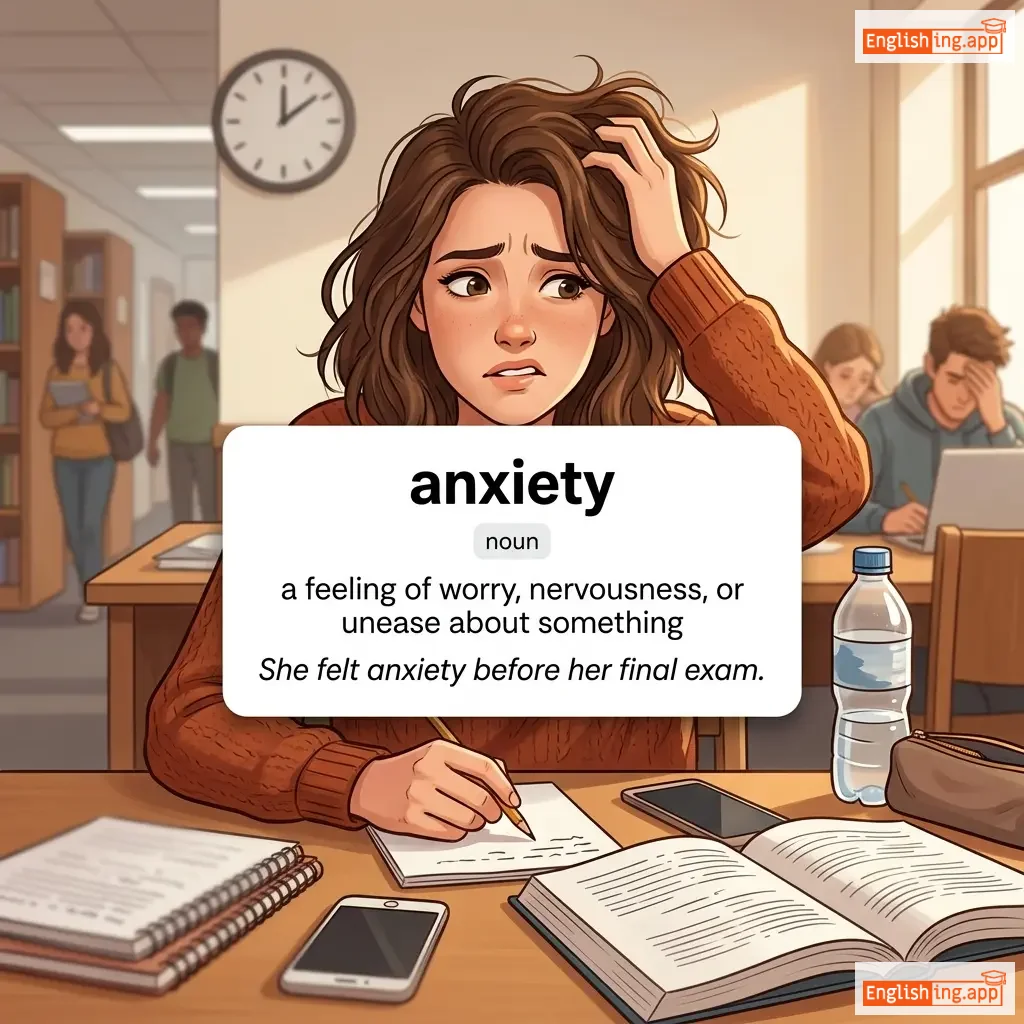
anxiety definition card — visual illustration of the meaning
noun
/æŋˈzaɪəti/
тревога (trevoga)

a feeling of worry, nervousness, or unease about something

"She felt anxiety before her final exam."

"Она почувствовала тревогу перед финальным экзаменом." (Ona pochuvstvovala trevogu pered final'nym ekzamenom.)
adjective
/ˈæŋkʃəs/
тревожный (trevozhnyy)

feeling worried, nervous, or uneasy about something

"She felt anxious before her job interview."

"Она чувствовала тревогу перед своим собеседованием." (Ona chuvstvovala trevogu pered svoim sobesedovaniem.)
adverb
/ˈæŋkʃəsli/
тревожно (trevozhno)

in a worried, nervous, or uneasy manner; with anxious anticipation

"She waited anxiously for the exam results."

"Она тревожно ждала результатов экзамена." (ona trevozhno zhdala rezultatov ekzamena)
determiner/pronoun
/ˈɛni/
любой (lyuboy)

one, some, or all, without specifying which

"Do you have any questions?"

"У тебя есть вопросы?" (U tebya yest' voprosy?)
pronoun
/ˈɛniˌbɒdi/
любой (lyuboy)

any person; anyone

"Anybody can join the club."

"Любой может присоединиться к клубу." (Lyuboy mozhet prisoyedinit'sya k klubu.)
adverb
/ˌɛniˈmɔr/
больше не (bol'she ne)

used to refer to the present time, typically to mean no longer

"He doesn’t live here anymore."

"Он больше не живет здесь." (On bol'she ne zhivet zdes'.)
pronoun
/ˈɛniwʌn/
кто-то (kto-to)

any person at all; used to refer to an unspecified person

"Does anyone know the answer to this question?"

"Кто-то знает ответ на этот вопрос?" (Kto-to znayet otvet na etot vopros?)
pronoun
/ˈɛnɪθɪŋ/
что угодно (chto ugodno)

any object, event, or matter; whatever thing

"You can ask me anything about the project."

"Ты можешь спросить меня о чем угодно касаемо проекта." (Ty mozhesh' sprosit' menya o chem ugodno kasaemo proyektu.)
adverb
/ˈɛniweɪ/
в любом случае (v lyubom sluchaye)

used to emphasize a statement or to return to a previous subject; regardless of what happened

"I was tired, but I went to the meeting anyway."

"Я был уставшим, но я все равно пошел на встречу." (Ya byl ustavshim, no ya vse ravno poshel na vstrechu.)
adverb
/ˈɛnɪwɛər/
в любом месте (anywhere)

in, at, or to any place

"You can find good food anywhere in this city."

"В этом городе можно найти хорошую еду в любом месте." (V etom gorode mozhno nayti khoroshuyu yedu v lyubom meste.)
adverb
/əˈpɑːrt/
на расстоянии (apart)

separated by distance or time; into pieces

"They live miles apart from each other."

"Они живут на расстоянии многих миль друг от друга." (Oni zhivut na rasstoyanii mnogikh mil drug ot druga)
noun
/əˈpɑːrtmənt/
квартира (kvartira)

a set of rooms forming a residence within a building

"She rented an apartment in the city center."

"Она арендовала квартиру в центре города." (Ona arendovala kvartiru v tsentre goroda.)
adjective
/ˌæpəˈθɛtɪk/
апатичный (apatichny)

showing or feeling little or no interest, enthusiasm, or concern

"He was apathetic about the outcome of the match."
"Он был безразличен к исходу матча." (On byl bezrazlichen k iskhodu matcha.)
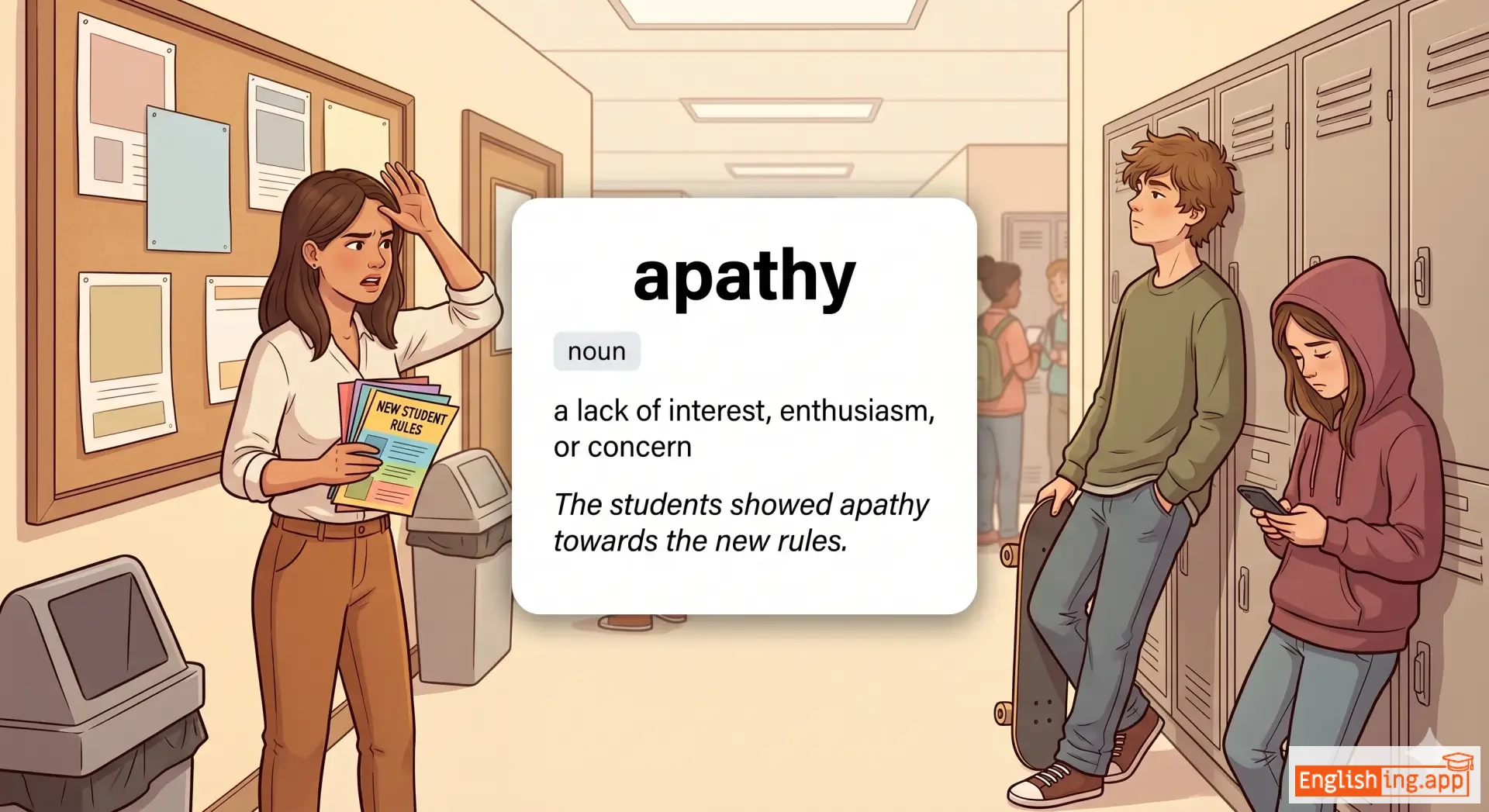
apathy definition card — visual illustration of the meaning
noun
/ˈæpəθi/
апатия (apatia)

a lack of interest, enthusiasm, or concern

"The students showed apathy towards the new rules."

"Студенты показали апатию к новым правилам." (Studenty pokazali apatiyu k novym pravilam.)
noun/verb
/eɪp/
крупный примат, похожий на обезьяну / подражать (krupnyy primat, pokhozhiy na obez'yanu / podrazhat')

a large primate similar to a monkey but without a tail; as a verb, to imitate or mimic

"Children often ape the behavior of adults."

"Дети часто подражают поведению взрослых." (Deti chasto podrazhayut povedeniyu vzroslykh.)