|
絵文字
|
単語 | Images | 翻訳 | 過去 | 過去分詞 | 三人称単数 | 動名詞 | 意味 | 例文 | 例文の翻訳 | 表現例 | 表現例の意味 | 表現例の翻訳 | 同義語 | 対義語 | コロケーション | ニーモニック |
|---|---|---|---|---|---|---|---|---|---|---|---|---|---|---|---|---|---|
|
✅
••••••
|
/ʃʊd/
modal verb
(シュッド)
••••••
|
- •••••• |
べき
beki
••••••
|
- •••••• | - •••••• | - •••••• | - •••••• |
used to indicate obligation or duty
••••••
|
You should study for your exams. |
試験のために勉強すべきです。
Shiken no tame ni benkyou subeki desu.
••••••
|
- •••••• | - •••••• | - •••••• |
ought to, must, need to
••••••
|
must not, don't have to
••••••
|
should have, should not, should do
••••••
|
Should means 'beki', you should do what's required!
••••••
|
|
💪
••••••
|
/ˈʃoʊldər/
noun
(ショルダー)
••••••
|
- •••••• |
肩
kata
••••••
|
- •••••• | - •••••• | - •••••• | - •••••• |
the upper joint of the human arm and the part of the body to which it is attached
••••••
|
He hurt his shoulder while lifting weights. |
彼はウェイトを持ち上げているときに肩を痛めました。
Kare wa weito wo mochi agete iru toki ni kata wo itamemashita.
••••••
|
Shoulder the responsibility |
To accept or take on a heavy responsibility
••••••
|
責任を肩に負う
sekinin wo kata ni ou
••••••
|
arm, upper arm, joint, scapula
••••••
|
foot, hand, ankle
••••••
|
shoulder pain, shoulder injury, broad shoulders
••••••
|
肩に責任を背負う - Shoulder the burden
••••••
|
|
📢
••••••
|
/ʃaʊt/
verb
(シャウト)
••••••
|
- •••••• |
叫ぶ
sakebu
••••••
|
shouted
シャウテッド
••••••
|
shouted
シャウテッド
••••••
|
shouts
シャウツ
••••••
|
shouting
シャウティング
••••••
|
to say something very loudly
••••••
|
He shouted at the top of his lungs to get their attention.
彼は彼らの注意を引くために全力で叫んだ。
••••••
|
彼は彼らの注意を引くために全力で叫んだ。
Kare wa karera no chūi o hiku tame ni zenryoku de sakenda.
••••••
|
Shout from the rooftops
屋根の上で叫ぶ
••••••
|
To tell everyone about something in a very public way
••••••
|
屋根の上で叫ぶ
Yane no ue de sakebu
••••••
|
yell, scream, holler, cry
••••••
|
whisper, mumble
••••••
|
shout loudly, shout angrily, shout for help
••••••
|
叫んでみんなに知らせよう!
••••••
|
|
👀
••••••
|
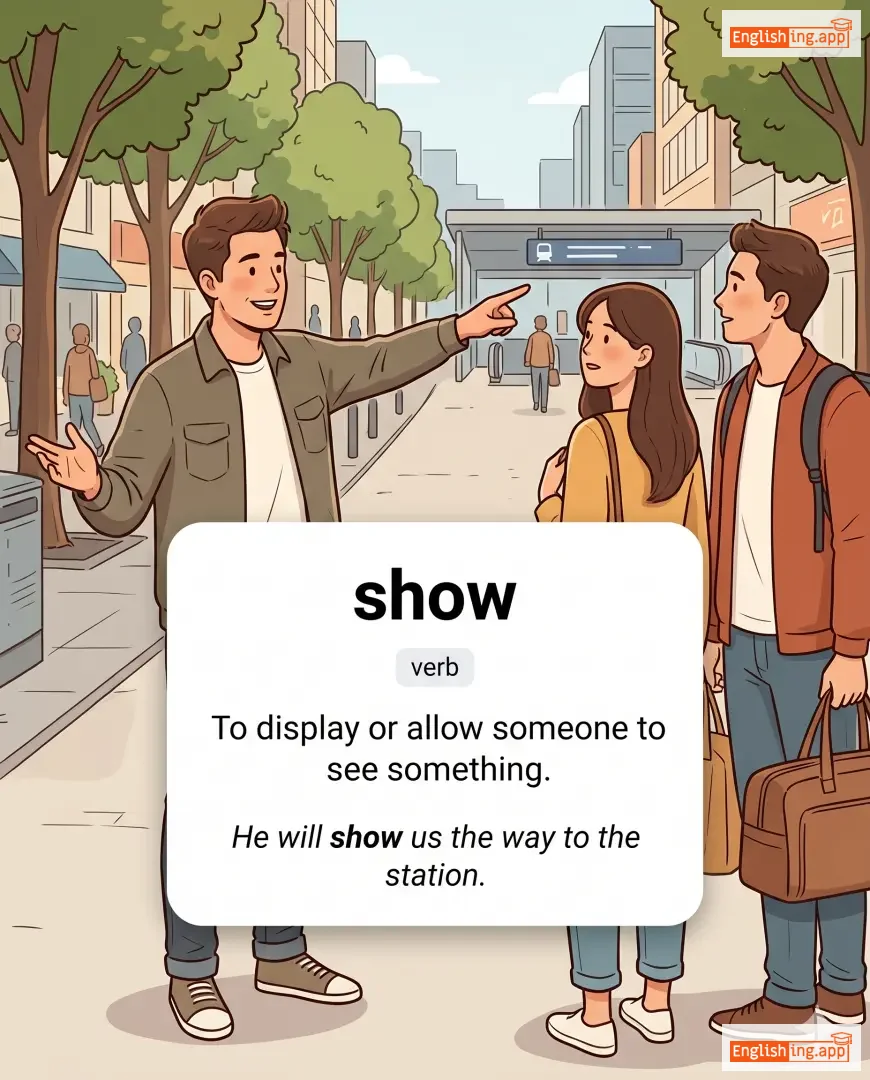
/ʃoʊ/
verb
(ショー)
••••••
|
|
見せる
miseru
••••••
|
showed
ショード
••••••
|
shown
ショーン
••••••
|
shows
ショーズ
••••••
|
showing
ショーイング
••••••
|
To display or allow someone to see something.
••••••
|
He will show us the way to the station.
彼は私たちに駅への道を見せてくれるでしょう。
••••••
|
彼は私たちに駅への道を見せてくれるでしょう。
Kare wa watashitachi ni eki e no michi wo misete kureru deshou.
••••••
|
show off
ショーオフ
••••••
|
to try to impress others by displaying abilities or possessions
••••••
|
見せびらかす
misebikasu
••••••
|
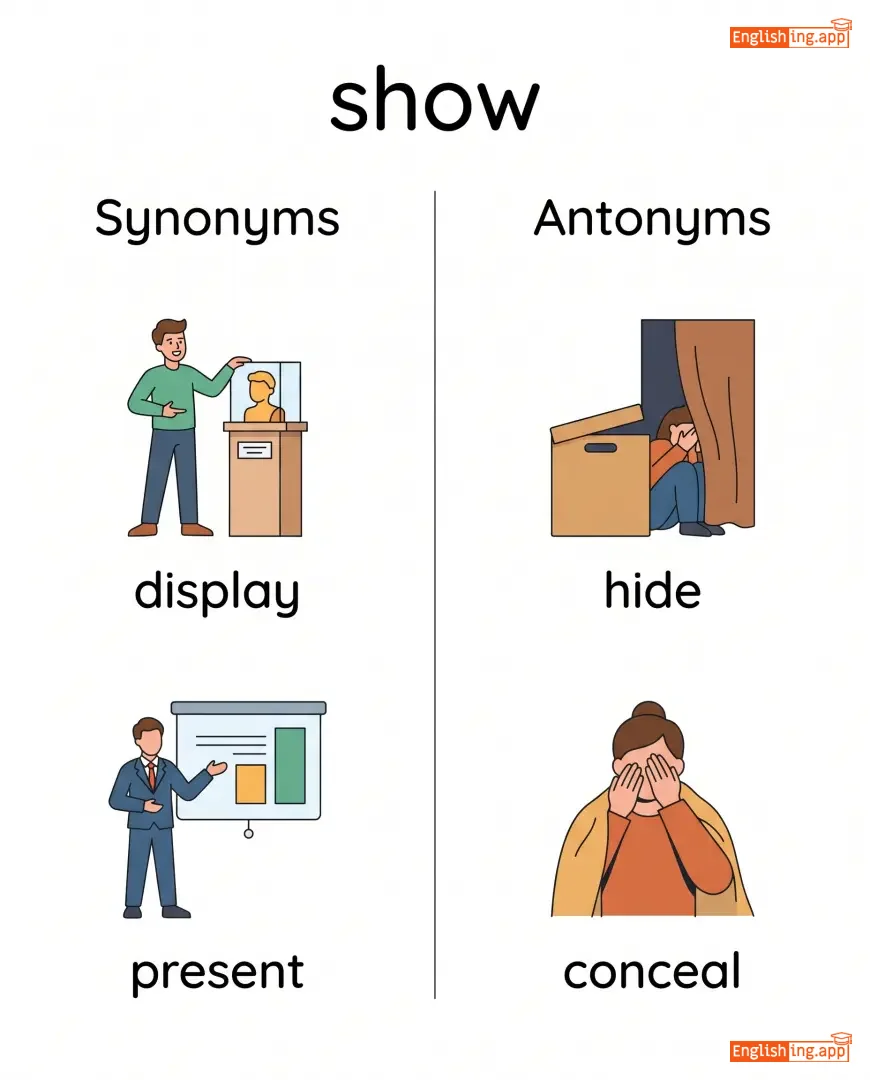
display, present, demonstrate, reveal, exhibit
••••••
|
hide, conceal, cover
••••••
|
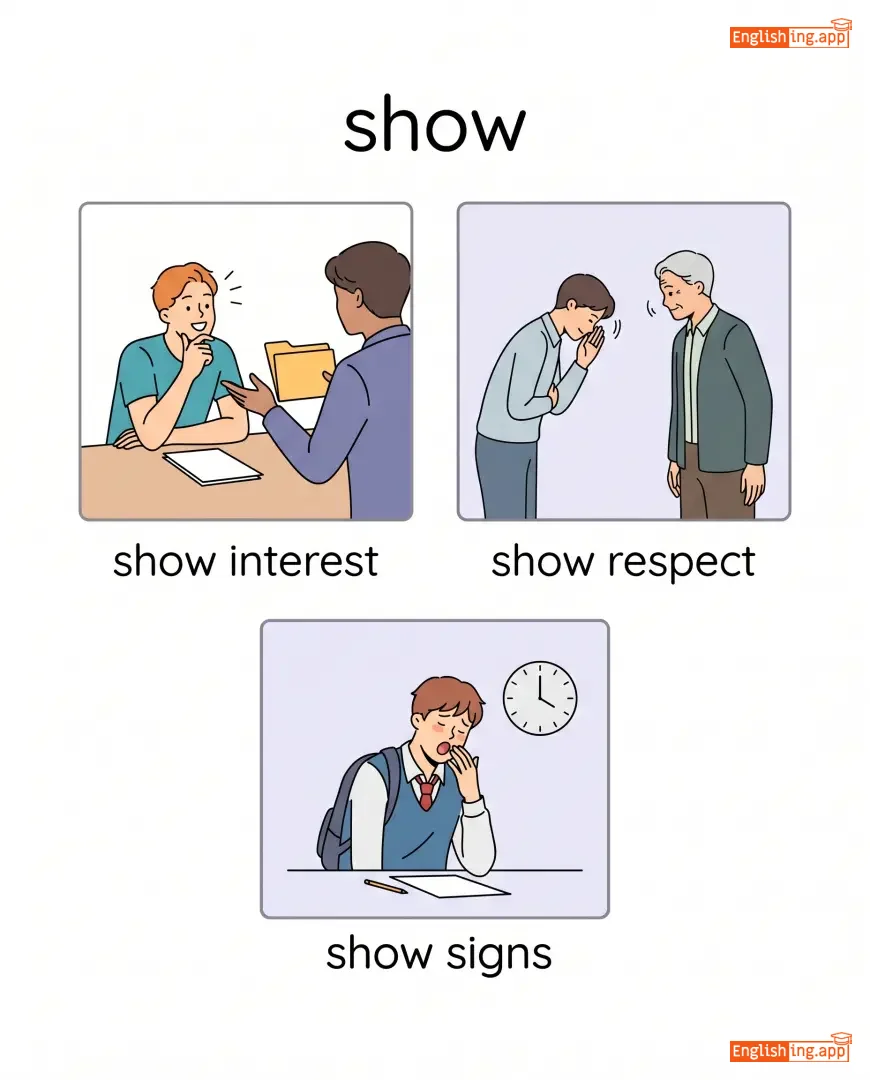
show interest, show respect, show signs, show off
••••••
|
Show は見せる意味 – テレビ番組ではすべて見せることが大切です。
••••••
|
|
🚿
••••••
|
/ˈʃaʊər/
noun
••••••
|
- •••••• | - •••••• | - •••••• | - •••••• | - •••••• | - •••••• |
a brief fall of rain or snow or a device for taking a bath or washing oneself
••••••
|
After the workout, I took a quick shower to refresh myself. |
- •••••• |
Take a shower |
To wash oneself in a shower
••••••
|
- •••••• |
bath, rinse, wash, sprinkle
••••••
|
drought, dryness
••••••
|
take a shower, shower curtain, hot shower
••••••
|
No •••••• |
|
📉
••••••
|
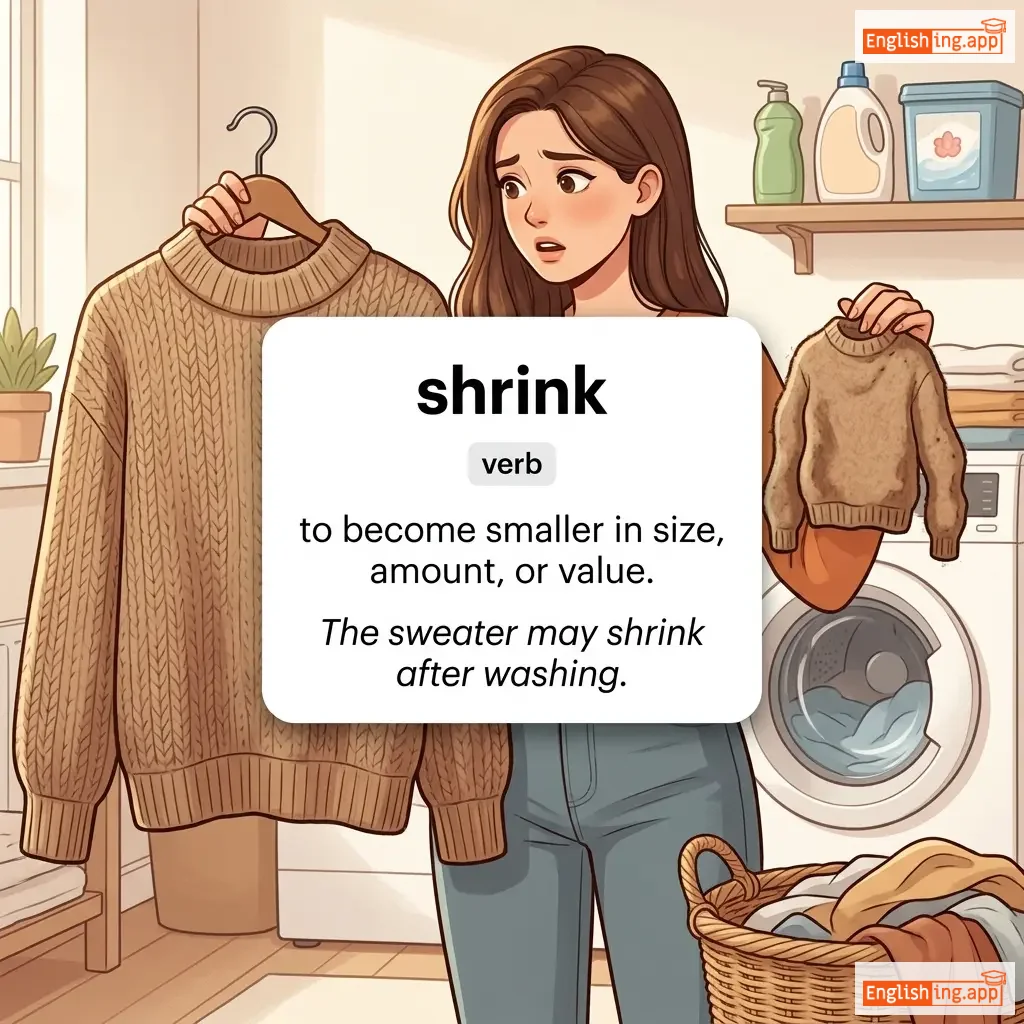
/ʃrɪŋk/
verb
(幸せ)
••••••
|
|
幸せ
shiawase
••••••
|
shrank
••••••
|
shrunk
••••••
|
shrinks
••••••
|
shrinking
••••••
|
to become smaller in size, amount, or value.
••••••
|
The sweater may shrink after washing.
彼女は賞を受け取ったとき、幸せを隠すことができませんでした。
••••••
|
彼女は賞を受け取ったとき、幸せを隠すことができませんでした。
Kanojo wa shō o uketotta toki, shiawase o kakusu koto ga dekimasen deshita.
••••••
|
shrink from responsibility
幸せの追求
••••••
|
to avoid or back away from duties or obligations
••••••
|
幸せの追求
shiawase no tsuikyū
••••••
|
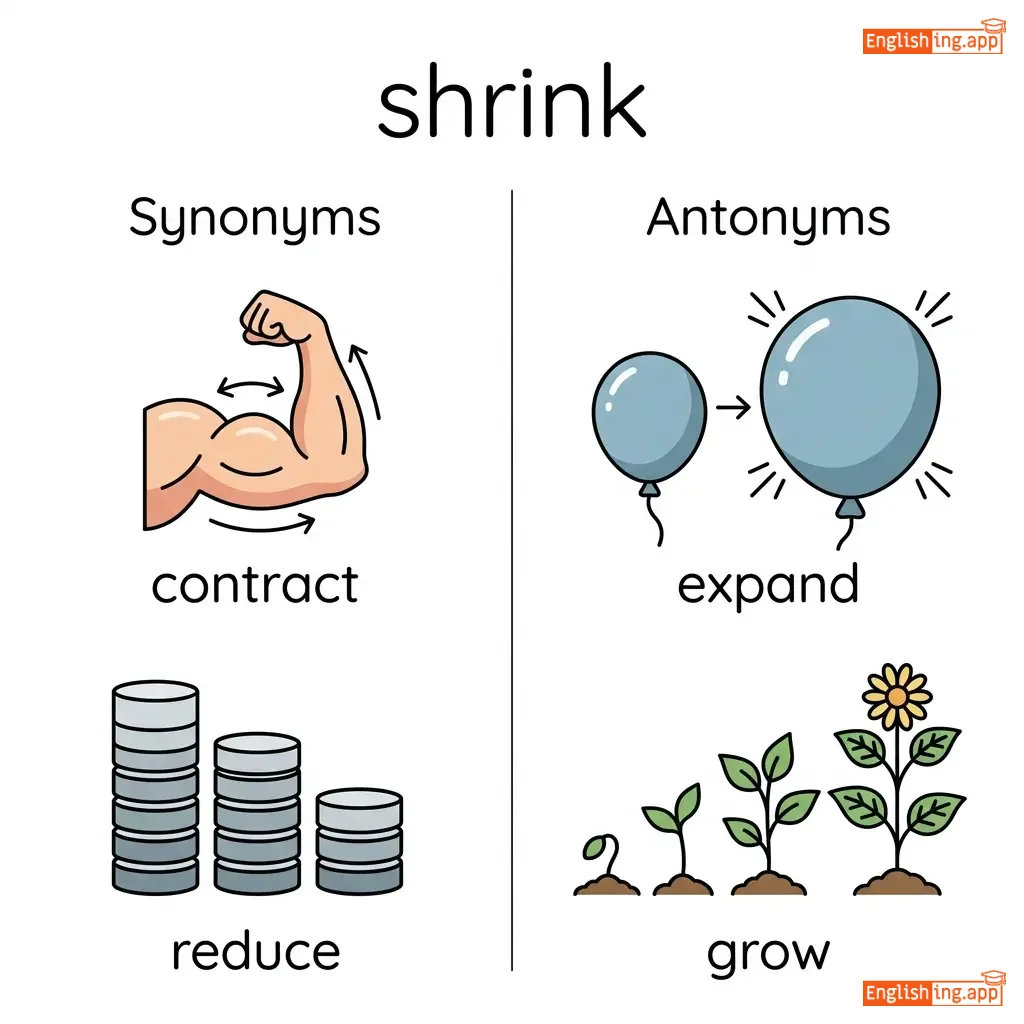
contract, reduce, lessen, diminish, condense
••••••
|
expand, grow, enlarge
••••••
|
shrink in size, shrink away, shrink back, shrink rapidly
••••••
|
幸せを見つけるためには、継続的に追求することが必要です!
••••••
|
|
🤷
••••••
|
/ʃrʌɡ/
verb
(シュラッグ)
••••••
|
- •••••• |
肩をすくめる
kata o sukumeru
••••••
|
shrugged
シュラッグド
••••••
|
shrugged
シュラッグド
••••••
|
shrugs
シュラッグス
••••••
|
shrugging
シュラッギング
••••••
|
To raise and lower the shoulders to express uncertainty or indifference.
••••••
|
He shrugged when asked about the missing file.
彼は失われたファイルについて聞かれると肩をすくめました。
••••••
|
彼は失われたファイルについて聞かれると肩をすくめました。
Kare wa ushinawareta fairu ni tsuite kikareru to kata o sukumemashita.
••••••
|
shrug off
肩をすくめる
••••••
|
To treat something as unimportant or not worth worrying about.
••••••
|
無視する
mushi suru
••••••
|
dismiss, disregard, ignore, downplay
••••••
|
acknowledge, accept, emphasize
••••••
|
shrug shoulders, shrug indifferently, shrug off criticism, shrug casually
••••••
|
肩をすくめる = 無関心や不確実性を示す動作。
••••••
|
|
🤐
••••••
|
/ʃʌt/
verb
(シャット)
••••••
|
- •••••• |
閉じる
tojiru
••••••
|
shut
シャット
••••••
|
shut
シャット
••••••
|
shuts
シャッツ
••••••
|
shutting
シャッティング
••••••
|
to close something, especially a door or window
••••••
|
Please shut the door before you leave.
出かける前にドアを閉めてください。
••••••
|
出かける前にドアを閉めてください。
Dekakeru mae ni doa o shimete kudasai.
••••••
|
Shut up
黙れ
••••••
|
A rude way of telling someone to stop talking
••••••
|
黙れ
Damare
••••••
|
close, lock, seal, fasten
••••••
|
open, unlock
••••••
|
shut the door, shut your mouth, shut the window
••••••
|
ドアを閉じて、すべてを閉じて - Shut the door, shut everything.
••••••
|
|
🙈
••••••
|
/ʃaɪ/
adjective
(shai)
••••••
|
- •••••• |
恥ずかしがり屋
hazukashigariya
••••••
|
- •••••• | - •••••• | - •••••• | - •••••• |
Being reserved or nervous around other people.
••••••
|
The child was too shy to speak in class. |
その子はクラスで話すのが恥ずかしすぎた。
Sono ko wa kurasu de hanasu no ga hazukashisugita.
••••••
|
shy away |
to avoid something because of fear or lack of confidence
••••••
|
避ける
sakeru
••••••
|
timid, bashful, reserved, modest
••••••
|
bold, confident, outgoing
••••••
|
shy smile, shy away, shy child, shy personality
••••••
|
恥ずかしがり屋の子供がクラスで話すのを避ける。
••••••
|
|
👫
••••••
|
/ˈsɪblɪŋ/
noun
(シブリング)
••••••
|
- •••••• |
兄弟姉妹
kyoudai shimai
••••••
|
- •••••• | - •••••• | - •••••• | - •••••• |
A brother or sister.
••••••
|
She has three siblings, two brothers and one sister.
彼女は三人の兄弟姉妹がいます。二人の兄と一人の妹。
••••••
|
彼女は三人の兄弟姉妹がいます。二人の兄と一人の妹。
Kanojo wa sannin no kyoudai shimai ga imasu. Futari no ani to hitori no imouto.
••••••
|
- •••••• | - •••••• | - •••••• |
brother, sister, kin, relative
••••••
|
stranger, outsider
••••••
|
sibling rivalry, younger sibling, elder sibling, sibling bond
••••••
|
Siblings という英単語は兄弟姉妹を意味します。家族みんなが一つのチームのようです。
••••••
|
|
🤒
••••••
|
/sɪk/
adjective
(シック)
••••••
|
- •••••• |
病気
byouki
••••••
|
- •••••• | - •••••• | - •••••• | - •••••• |
feeling unwell or suffering from illness
••••••
|
She stayed home because she was feeling sick.
シー ステイド ホーム ビコーズ シー ワズ フィーリング シック。
••••••
|
彼女は気分が悪かったので家にいました。
kanojo wa kibun ga warukatta node ie ni imashita
••••••
|
sick and tired
シック アンド タイアード
••••••
|
completely fed up or annoyed
••••••
|
うんざりして疲れた
unzari shite tsukareta
••••••
|
ill, unwell, unhealthy, nauseous, ailing
••••••
|
healthy, well, fit
••••••
|
feel sick, get sick, sick leave, sick child, sick person
••••••
|
Sick シック sounds like 'byouki' — When you are シック, you stay in bed!
••••••
|
|
➡️
••••••
|
/saɪd/
noun
(サイド)
••••••
|
- •••••• |
側
sokozu
••••••
|
- •••••• | - •••••• | - •••••• | - •••••• |
a position to the left or right of something
••••••
|
The store is on the side of the road. |
店は道路の側にあります。
Mise wa douro no soko ni arimasu.
••••••
|
On the side |
Something extra, or not central
••••••
|
横に
Yoko ni
••••••
|
flank, edge, border, aspect
••••••
|
center, middle
••••••
|
side of the road, side effect, side dish
••••••
|
側にあると簡単に見える - Side by side, easy to spot!
••••••
|
|
😔
••••••
|
/saɪ/
verb
(サイ)
••••••
|
- •••••• |
ため息をつく
tameiki o tsuku
••••••
|
sighed
サイド
••••••
|
sighed
サイド
••••••
|
sighs
サイズ
••••••
|
sighing
サイング
••••••
|
to let out a long, deep breath as an expression of tiredness, relief, or sadness
••••••
|
She sighed with relief when she heard the good news.
良いニュースを聞いたとき、彼女は安心してため息をついた。
••••••
|
良いニュースを聞いたとき、彼女は安心してため息をついた。
Yoi nyuusu o kiita toki, kanojo wa anshin shite tameiki o tsuita.
••••••
|
- •••••• | - •••••• | - •••••• |
breathe out, exhale, moan, groan
••••••
|
inhale, gasp, cheer
••••••
|
let out a sigh, deep sigh, sigh of relief, sigh with exhaustion
••••••
|
Sighは'ため息をつく'に似ていて、'ため息をつく'はsighの意味と同じ
••••••
|
|
👀
••••••
|
/saɪt/
noun
(サイト)
••••••
|
- •••••• |
視力
shiryoku
••••••
|
- •••••• | - •••••• | - •••••• | - •••••• |
the ability to see or something that is seen
••••••
|
The sight of the sunset took her breath away. |
夕日の光景は彼女を驚かせた。
Yūhi no kōkei wa kanojo o odorokaseta.
••••••
|
- •••••• | - •••••• | - •••••• |
vision, view, scene, perception
••••••
|
blindness, darkness
••••••
|
beautiful sight, breathtaking sight, sight of a lifetime, wonderful sight
••••••
|
Sight は '視力'、それがあなたに美しい景色を見せる。
••••••
|
|
✍️
••••••
|
/saɪn/
verb
(サイン)
••••••
|
|
署名
shomei
••••••
|
signed
サインド
••••••
|
signed
サインド
••••••
|
signs
サインス
••••••
|
signing
サインイング
••••••
|
to write your name on something to show agreement or approval; to make a gesture with meaning
••••••
|
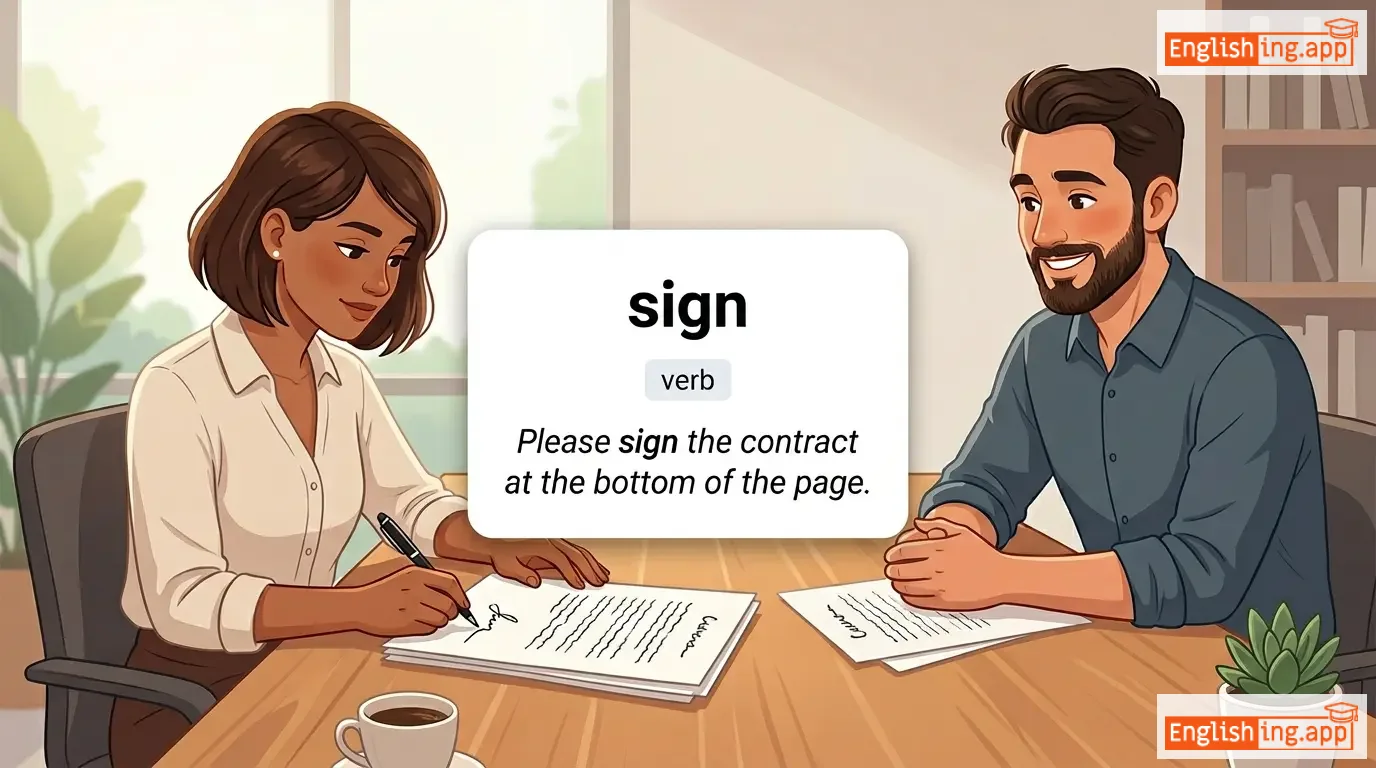
Please sign the contract at the bottom of the page.
ページの下部で契約書にサインしてください。
••••••
|
ページの下部で契約書にサインしてください。
Pēji no kabu de keiyaku-sho ni sain shite kudasai.
••••••
|
- •••••• | - •••••• | - •••••• |
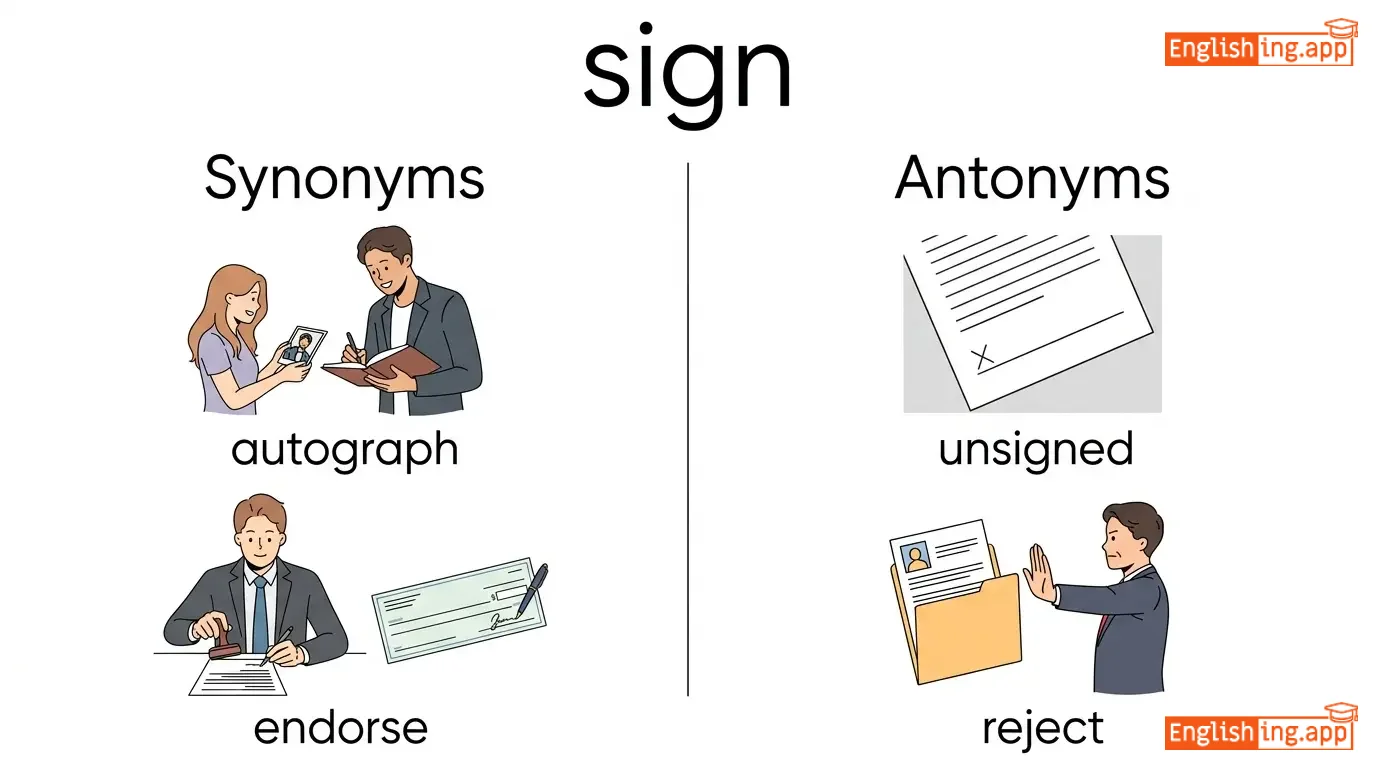
autograph, endorse, approve, gesture
••••••
|
unsigned, reject, refuse, disapprove
••••••
|
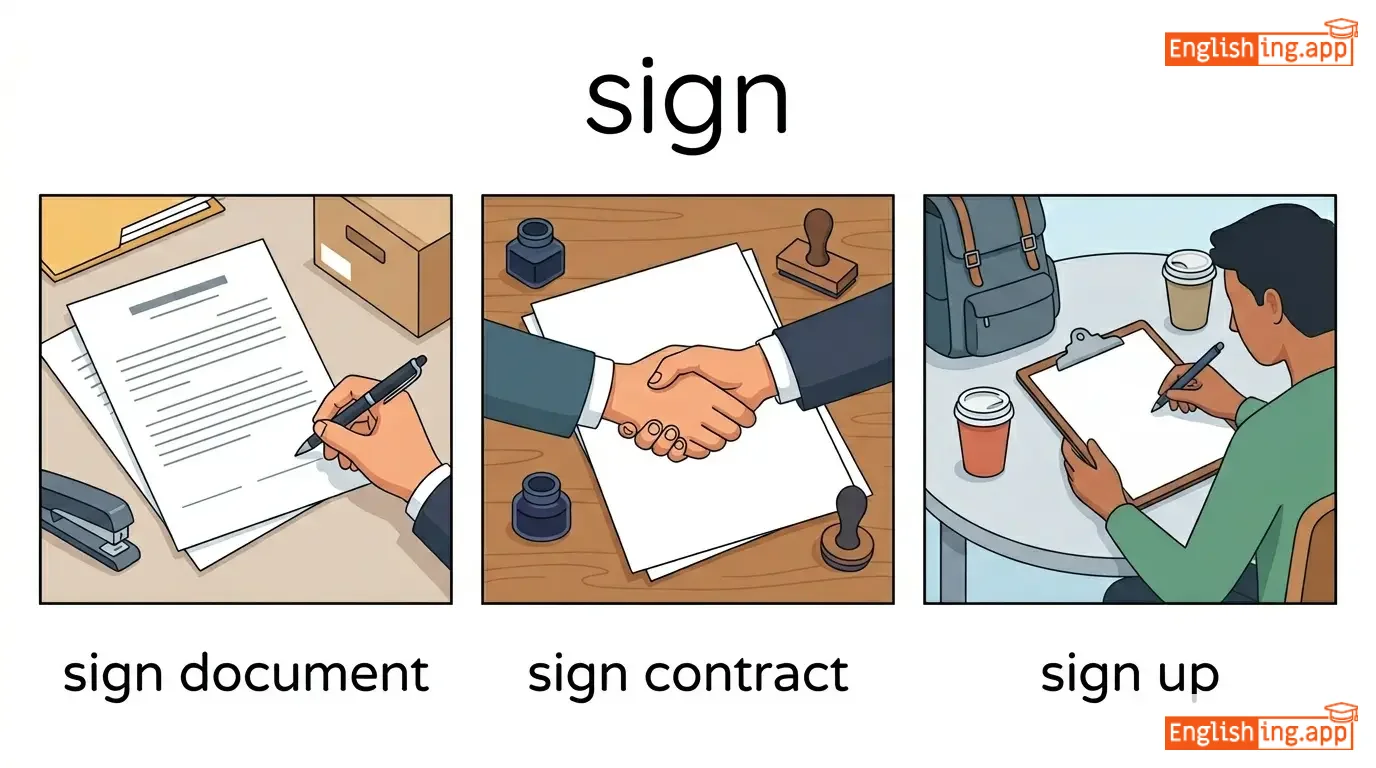
sign document, sign contract, sign up, sign off
••••••
|
署名は同意を示すために名前を記入することです。
••••••
|
|
🚦
••••••
|
/ˈsɪɡnəl/
noun/verb
(シグナル)
••••••
|
- •••••• |
合図
aizu
••••••
|
signaled
シグナルド
••••••
|
signaled
シグナルド
••••••
|
signals
シグナルズ
••••••
|
signaling
シグナリング
••••••
|
a gesture, sound, or action used to convey information or instructions
••••••
|
The driver gave a hand signal before turning left.
運転手は左に曲がる前に手の合図を出した。
••••••
|
運転手は左に曲がる前に手の合図を出した。
Unten-shu wa hidari ni magaru mae ni te no aizu o dashita.
••••••
|
signal a change
変化を示す
••••••
|
to indicate that something new is about to happen
••••••
|
変化を示す
henka o shimesu
••••••
|
gesture, indication, sign, cue, alert
••••••
|
silence, concealment
••••••
|
give a signal, danger signal, signal strength, signal failure
••••••
|
信号 = 信号機のように道を示す。
••••••
|
|
✍️
••••••
|
/ˈsɪɡ.nə.tʃər/
noun
(シグネチャー)
••••••
|
- •••••• |
署名
shomei
••••••
|
- •••••• | - •••••• | - •••••• | - •••••• |
a person's name written by themselves, often as a form of identification or authorization
••••••
|
She signed the contract with her elegant signature. |
彼女は優雅な署名で契約書にサインしました。
Kanojo wa yūga na shomei de keiyakusho ni sain shimashita.
••••••
|
signature dish |
a special meal that a chef is particularly known for
••••••
|
シグネチャーディッシュ
shigunetchā dishu
••••••
|
autograph, sign, endorsement, mark, handwriting
••••••
|
anonymity, namelessness
••••••
|
signature style, signature dish, signature look, digital signature
••••••
|
Signatureはサインされた名前の意味です–覚えておいて ✍️ 署名はあなたのIDです。
••••••
|
|
📌
••••••
|
/sɪɡˈnɪfɪkəns/
noun
(シグニフィカンス)
••••••
|
- •••••• |
重要性
jūyō-sei
••••••
|
- •••••• | - •••••• | - •••••• | - •••••• |
the quality of being important, meaningful, or worthy of attention
••••••
|
The significance of the discovery was recognized worldwide. |
その発見の重要性は世界中で認識されました。
Sono hakken no jūyō-sei wa sekaijū de ninshiki saremashita.
••••••
|
of great significance |
something very important or meaningful
••••••
|
非常に重要
hijō ni jūyō
••••••
|
importance, meaning, value, weight, consequence
••••••
|
insignificance, triviality
••••••
|
historical significance, cultural significance, great significance, significance level
••••••
|
Significanceは重要性を意味します - 重要なことには意味があります
••••••
|
|
⭐
••••••
|
/sɪɡˈnɪfɪkənt/
adjective
(シグニフィカント)
••••••
|
|
重要な
jūyōna
••••••
|
- •••••• | - •••••• | - •••••• | - •••••• |
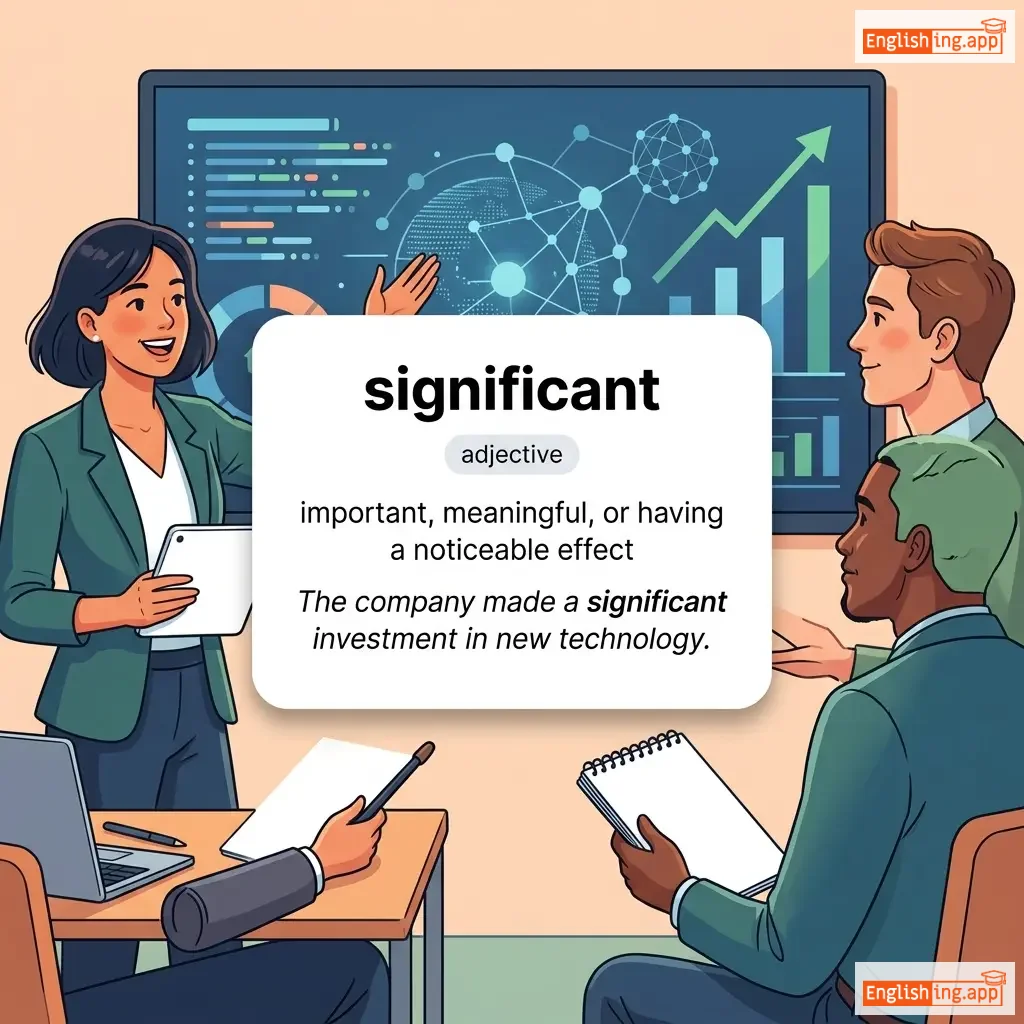
important, meaningful, or having a noticeable effect
••••••
|
The company made a significant investment in new technology. |
会社は新しい技術に重要な投資をしました。
Kaisha wa atarashī gijutsu ni jūyōna tōshi o shimashita.
••••••
|
significant other |
a person with whom someone has an established romantic or sexual relationship
••••••
|
重要な他者
jūyōna tasha
••••••
|
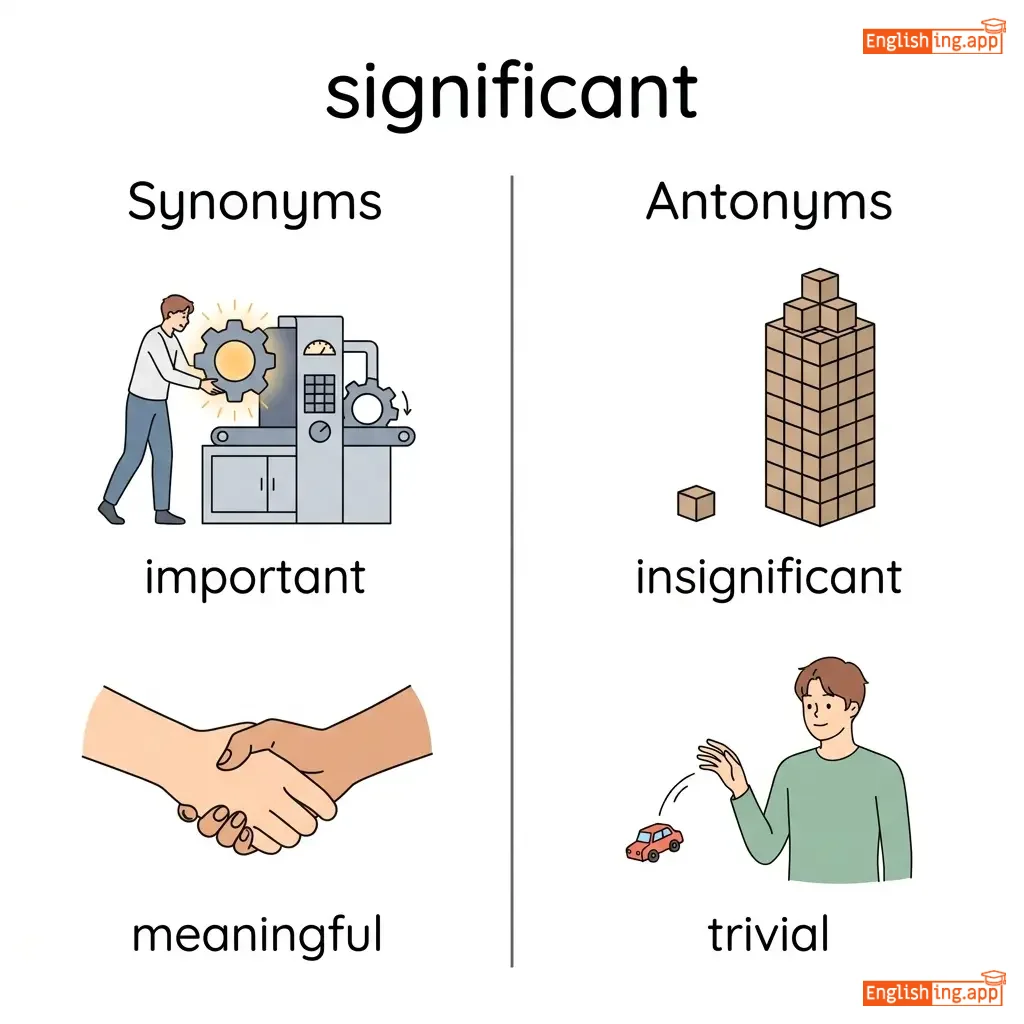
important, meaningful, considerable, notable, substantial
••••••
|
insignificant, trivial, minor
••••••
|
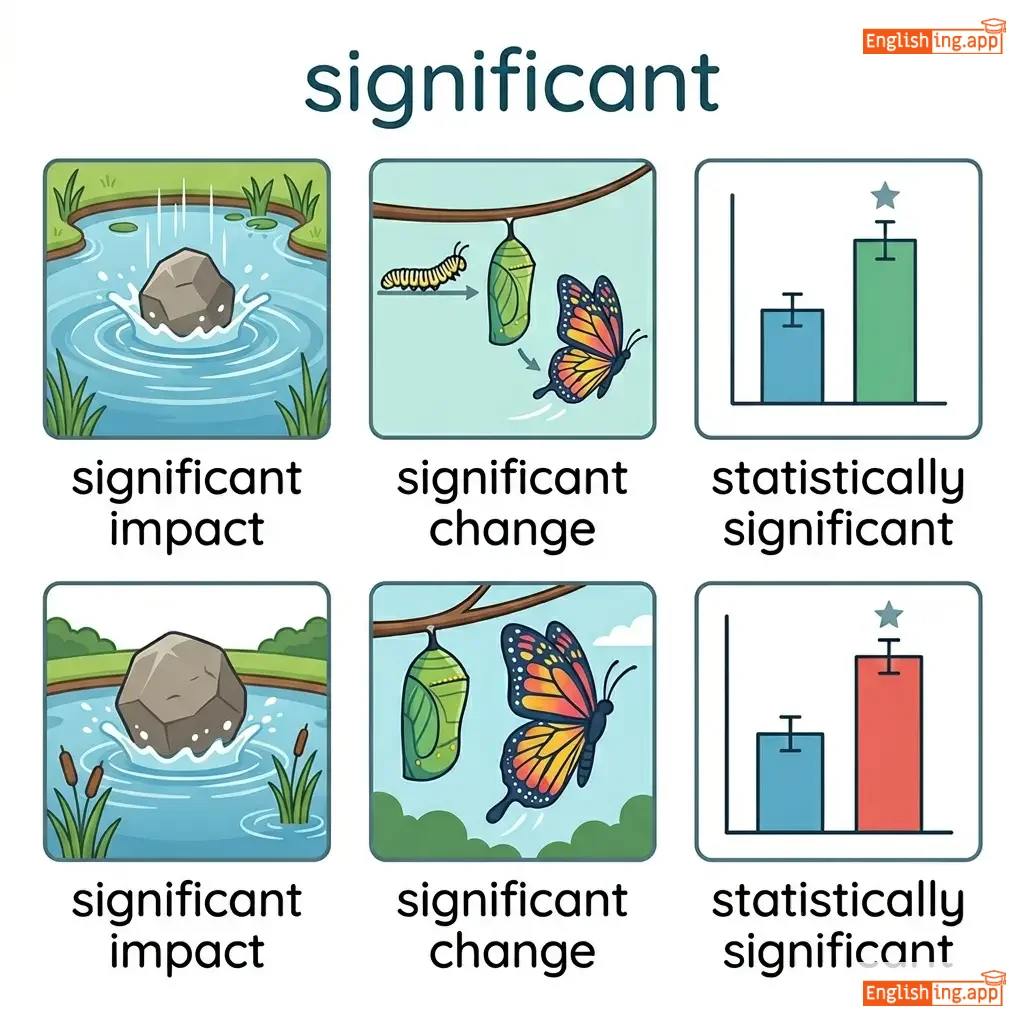
significant impact, significant change, statistically significant, significant role
••••••
|
重要な投資が重要な成果を生み出す
••••••
|
|
📊
••••••
|
/sɪɡˈnɪfɪkəntli/
adverb
(シグニフィカントリー)
••••••
|
- •••••• |
顕著に
kenchoni
••••••
|
- •••••• | - •••••• | - •••••• | - •••••• |
in a way that is large or important enough to have an effect
••••••
|
The economy has significantly improved over the last decade.
経済は過去10年間でシグニフィカントリー改善しました。
••••••
|
経済は過去10年間で顕著に改善しました。
Keizai wa kako 10 nenkan de kencho ni kaizen shimashita.
••••••
|
- •••••• | - •••••• | - •••••• |
considerably, notably, appreciably, substantially
••••••
|
slightly, marginally, insignificantly
••••••
|
significantly improve, significantly increase, significantly change
••••••
|
Significant を日本語で '顕著' に変換して覚えよう。
••••••
|
|
🤫
••••••
|
/ˈsaɪ.ləns/
noun
(サイレンス)
••••••
|
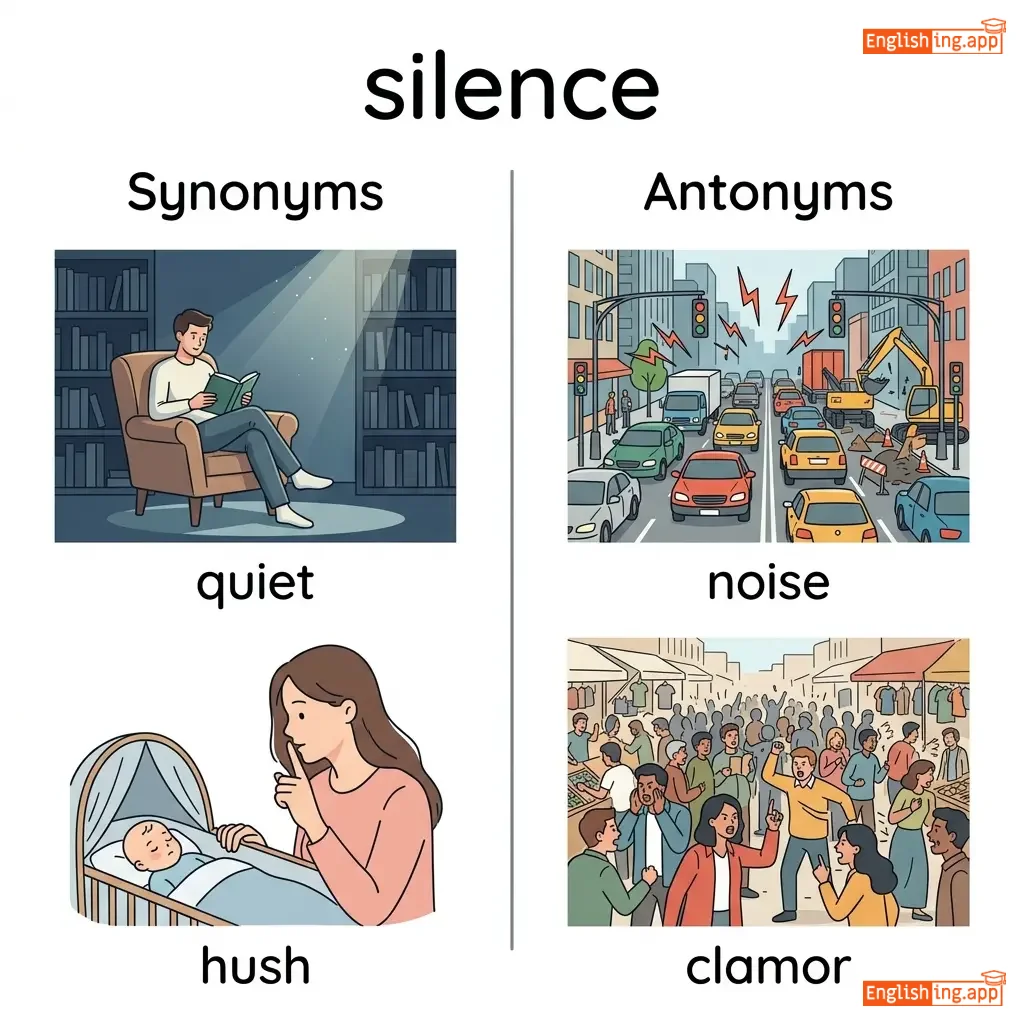
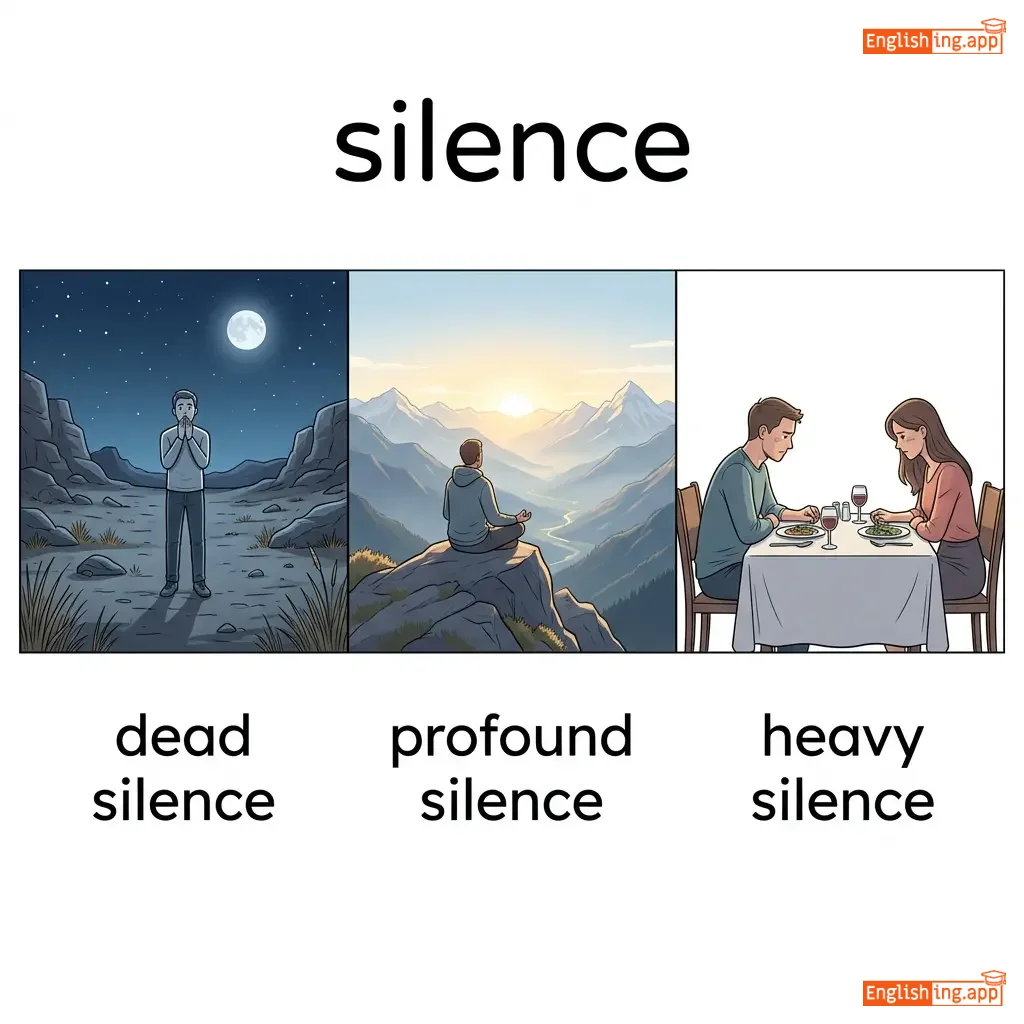
|
静けさ
shizukesa
••••••
|
- •••••• | - •••••• | - •••••• | - •••••• |
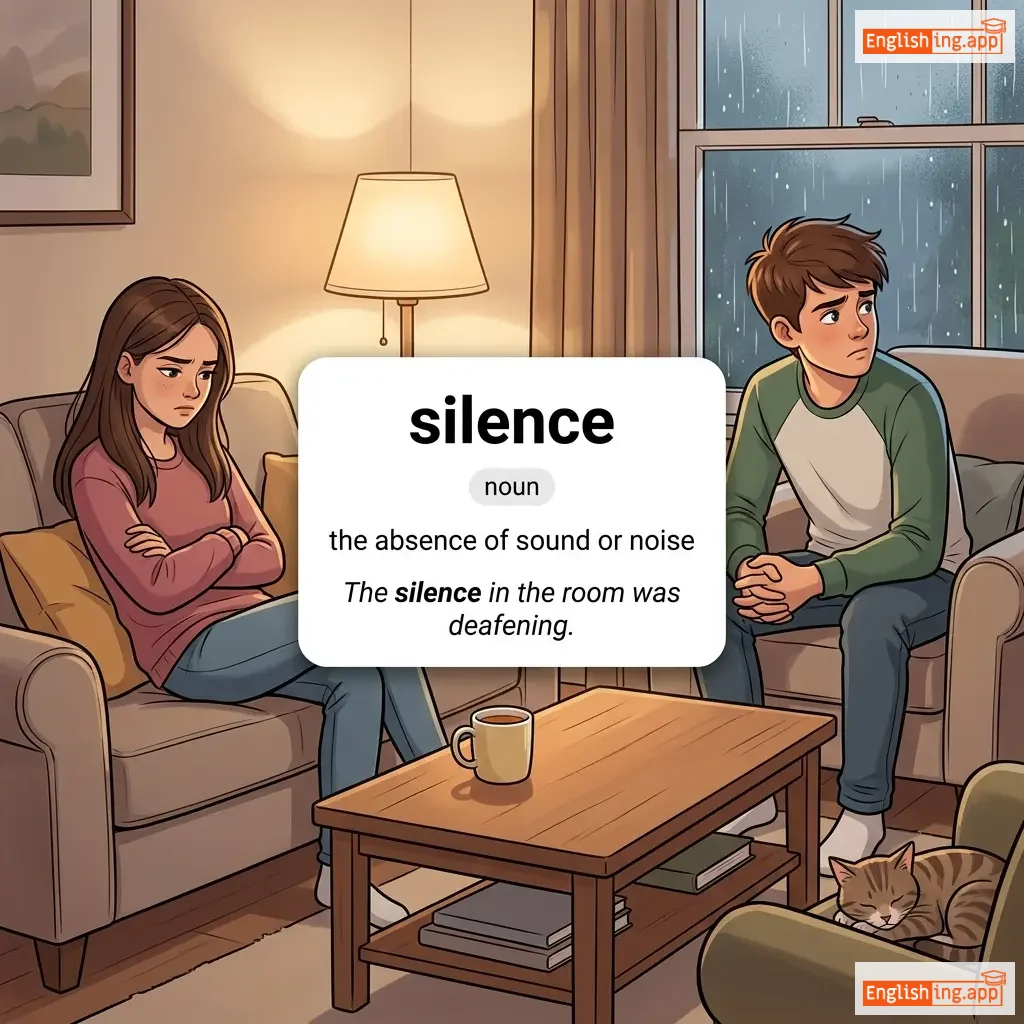
complete absence of sound; the refusal to speak or make noise
••••••
|
The teacher asked for silence during the exam. |
教師は試験中に静けさを求めました。
Kyōshi wa shiken-chū ni shizukesa o motomemashita.
••••••
|
- •••••• | - •••••• | - •••••• |
quiet, stillness, hush, calm
••••••
|
noise, sound, chatter, commotion
••••••
|
awkward silence, dead silence, moment of silence, break the silence
••••••
|
静けさは心を整え、集中を高める。
••••••
|
|
🤫
••••••
|
/ˈsaɪ.lənt/
adjective
(サイレント)
••••••
|
- •••••• |
静かな; 無音の; 騒がない
shizukana; muon no; sawagaranai
••••••
|
- •••••• | - •••••• | - •••••• | - •••••• |
making no sound; quiet; not speaking
••••••
|
The library was completely silent during study hours. |
図書館は学習時間中は完全に静かでした。
Toshokan wa gakushū jikan-chū wa kanzen ni shizuka deshita
••••••
|
- •••••• | - •••••• | - •••••• |
quiet, noiseless, mute, speechless
••••••
|
noisy, loud, vocal, talkative
••••••
|
silent treatment, silent film, remain silent
••••••
|
静かさが心を落ち着かせる。
••••••
|
|
🤪
••••••
|
/ˈsɪli/
adjective
(シリー)
••••••
|
- •••••• |
馬鹿
baka
••••••
|
- •••••• | - •••••• | - •••••• | - •••••• |
showing a lack of good sense; foolish or playful
••••••
|
He made a silly mistake on the test. |
彼はテストで馬鹿なミスをした。
Kare wa tesuto de baka na misu o shita.
••••••
|
silly goose |
a playful way to call someone foolish or goofy
••••••
|
馬鹿ガチョウ
baka gachou
••••••
|
foolish, goofy, childish, playful, nonsensical
••••••
|
serious, sensible, wise
••••••
|
silly mistake, silly joke, silly idea, feel silly
••••••
|
Sillyは馬鹿を意味する — Silly mistakeは馬鹿なミスを意味する。
••••••
|
|
🥈
••••••
|
/ˈsɪl.vər/
noun
(シルバー)
••••••
|
- •••••• |
銀
gin
••••••
|
- •••••• | - •••••• | - •••••• | - •••••• |
a shiny white precious metal used for making jewelry and ornaments
••••••
|
The silver ring sparkled in the sunlight.
シルバーの指輪は日光で輝いていました。
••••••
|
銀の指輪は日光で輝いていました。
Gin no yubiwa wa nikkō de kagayaite imashita.
••••••
|
- •••••• | - •••••• | - •••••• |
argentum, sterling silver
••••••
|
gold, bronze
••••••
|
silver jewelry, silver coin, silver bracelet, silver necklace
••••••
|
銀は光り輝き、まるで銀の指輪のようです。
••••••
|
|
🔄
••••••
|
/ˈsɪmɪlər/
adjective
(シミラー)
••••••
|
- •••••• |
似ている
niteru
••••••
|
- •••••• | - •••••• | - •••••• | - •••••• |
Having a resemblance in appearance, character, or quantity, without being identical.
••••••
|
The twins wore similar clothes to the party. |
双子はパーティーで似たような服を着ていました。
Futago wa pātī de nita yō na fuku o kiteimashita.
••••••
|
similar to |
Having a likeness or resemblance to something.
••••••
|
~に似ている
~ni niteiru
••••••
|
alike, comparable, related, akin, resembling
••••••
|
different, dissimilar, unlike
••••••
|
similar case, similar result, similar style, similar appearance
••••••
|
SIMILARは似ているという意味で、'似ている'の日本語と同じです。
••••••
|
|
🔁
••••••
|
/ˌsɪmɪˈlærəti/
noun
(シミラリティ)
••••••
|
- •••••• |
類似
ruiji
••••••
|
- •••••• | - •••••• | - •••••• | - •••••• |
the state of being alike or having characteristics in common
••••••
|
There is a strong similarity between the two paintings. |
2枚の絵の間には強い類似性があります。
2-mai no e no aida ni wa tsuyoi ruijisei ga arimasu.
••••••
|
family similarity |
resemblance among family members
••••••
|
家族の類似性
kazoku no ruijisei
••••••
|
likeness, resemblance, correspondence, equivalence, analogy
••••••
|
difference, dissimilarity, contrast
••••••
|
striking similarity, close similarity, family similarity, similarity score
••••••
|
Similarity → ruiji; 覚えておいて:‘similar faces’ は似た顔という意味です
••••••
|
|
🔄
••••••
|
/ˈsɪmɪlərli/
adverb
(シミラリー)
••••••
|
- •••••• |
同様に
douyou ni
••••••
|
- •••••• | - •••••• | - •••••• | - •••••• |
in a similar way
••••••
|
Similarly, we can achieve success with dedication and hard work. |
同様に、私たちは献身と努力によって成功を収めることができます。
Douyou ni, watashitachi wa kenshin to doryoku ni yotte seikou o osameru koto ga dekimasu.
••••••
|
- •••••• | - •••••• | - •••••• |
alike, likewise, in the same way
••••••
|
differently, oppositely
••••••
|
similarly to, similarly minded, similarly structured
••••••
|
Similarly, like two hands working in harmony!
••••••
|
|
✨
••••••
|
/ˈsɪmpəl/
adjective
(シンプル)
••••••
|
- •••••• |
簡単な; シンプル; 複雑でない
simple
••••••
|
- •••••• | - •••••• | - •••••• | - •••••• |
easy to understand or do; not complicated
••••••
|
This is a simple recipe that anyone can follow.
これは誰でもフォローできるシンプルなレシピです。
••••••
|
これは誰でもフォローできる簡単なレシピです。
Kore wa daredemo forō dekiru kantan na reshipi desu.
••••••
|
- •••••• | - •••••• | - •••••• |
easy, basic, straightforward, uncomplicated
••••••
|
complex, complicated, difficult, intricate
••••••
|
simple task, simple solution, simple life
••••••
|
SIMPLE = 簡単
••••••
|
|
😊
••••••
|
/ˈsɪm.pli/
adverb
(simpuri)
••••••
|
- •••••• |
単純に; ただ;
tanjun ni; tada;
••••••
|
- •••••• | - •••••• | - •••••• | - •••••• |
in a clear and easy way; merely; just
••••••
|
I simply wanted to help you with your homework.
私はただあなたの宿題を手伝いたかった。
••••••
|
私はただあなたの宿題を手伝いたかった。
Watashi wa tada anata no shukudai o tetsudaitakatta.
••••••
|
- •••••• | - •••••• | - •••••• |
merely, just, only, plainly, clearly
••••••
|
complexly, complicatedly, difficultly
••••••
|
simply put, simply stated, simply amazing, simply beautiful
••••••
|
シンプルにやることが 'simply' だ
••••••
|
|
🎮
••••••
|
/ˈsɪmjʊˌleɪt/
verb
(シミュレート)
••••••
|
- •••••• |
シミュレート
shimyurēto
••••••
|
simulated
シミュレートされた
••••••
|
simulated
シミュレートされた
••••••
|
simulates
シミュレートする
••••••
|
simulating
シミュレートしている
••••••
|
to imitate the appearance, character, or behavior of something; to pretend or reproduce conditions artificially
••••••
|
The pilot had to simulate an emergency landing during training.
パイロットは訓練中に緊急着陸をシミュレートしなければならなかった。
••••••
|
パイロットは訓練中に緊急着陸をシミュレートしなければならなかった。
Pairotto wa kunrenchū ni kinkyū chakuriku o shimyurēto shinakereba naranakatta.
••••••
|
- •••••• | - •••••• | - •••••• |
imitate, mimic, reproduce, replicate, pretend
••••••
|
differ, real, genuine
••••••
|
simulate behavior, simulate conditions, simulate response, computer simulate
••••••
|
シミュレーターで緊急着陸をシミュレート
••••••
|
|
🎮
••••••
|
/ˌsɪmjuˈleɪʃən/
noun
(シミュレーション)
••••••
|
- •••••• |
シミュレーション
shimyurēshon
••••••
|
- •••••• | - •••••• | - •••••• | - •••••• |
the imitation of a situation or process
••••••
|
The simulation helped the students understand the complex theory. |
シミュレーションは学生が複雑な理論を理解するのを助けました。
Shimyurēshon wa gakusei ga fukuzatsu na rironn o rikai suru no o tasukemashita.
••••••
|
- •••••• | - •••••• | - •••••• |
imitation, modeling, reproduction, emulation
••••••
|
reality, actuality
••••••
|
simulation model, simulation game, flight simulation
••••••
|
シミュレーションは物事を模倣すること
••••••
|
|
⏱️
••••••
|
/ˌsaɪ.məlˈteɪ.ni.əs.li/
adverb
(シムルタネオスリー)
••••••
|
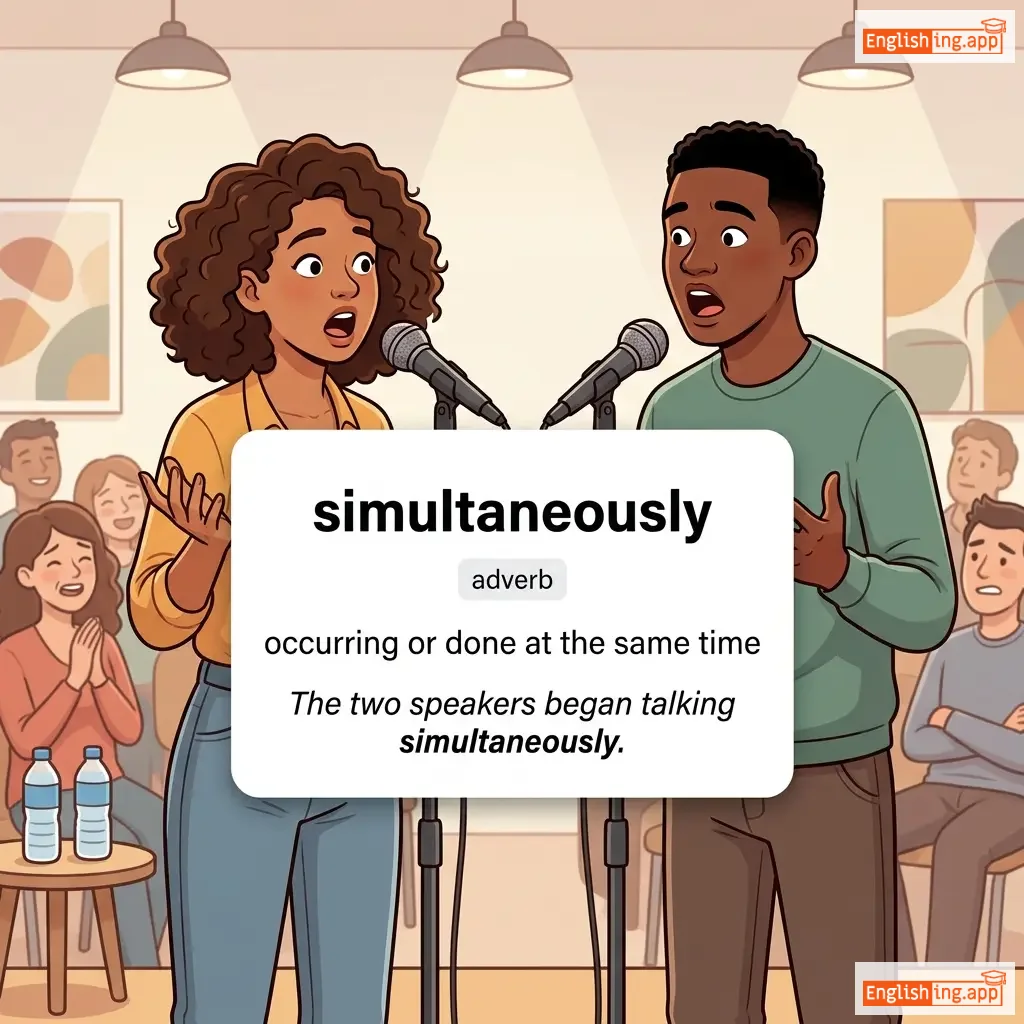
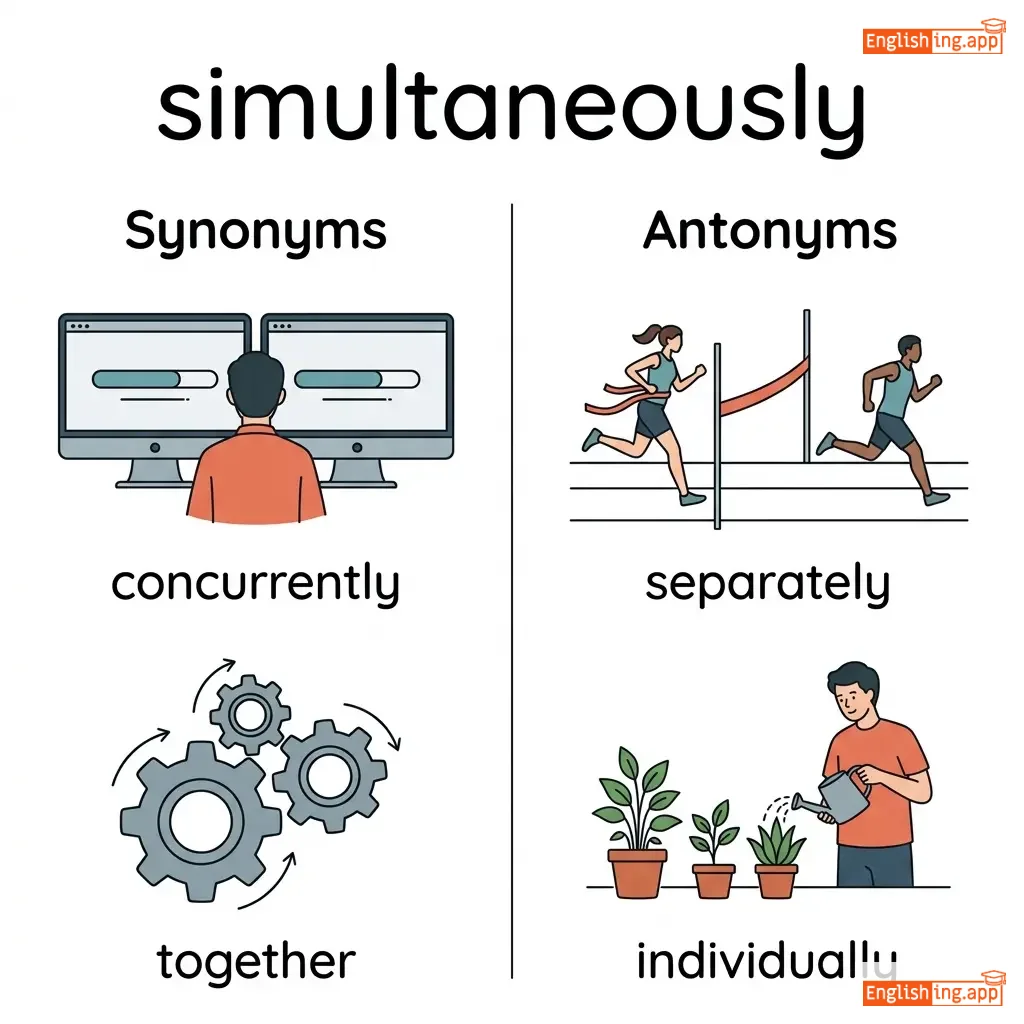
|
同時に
douji ni
••••••
|
- •••••• | - •••••• | - •••••• | - •••••• |
occurring or done at the same time
••••••
|
The two speakers began talking simultaneously.
二人のスピーカーは同時に話し始めました。
••••••
|
二人のスピーカーは同時に話し始めました。
Futari no supiikaa wa douji ni hanashihajimemashita.
••••••
|
- •••••• | - •••••• | - •••••• |
concurrently, together, synchronously, at once, in unison
••••••
|
separately, individually, consecutively
••••••
|
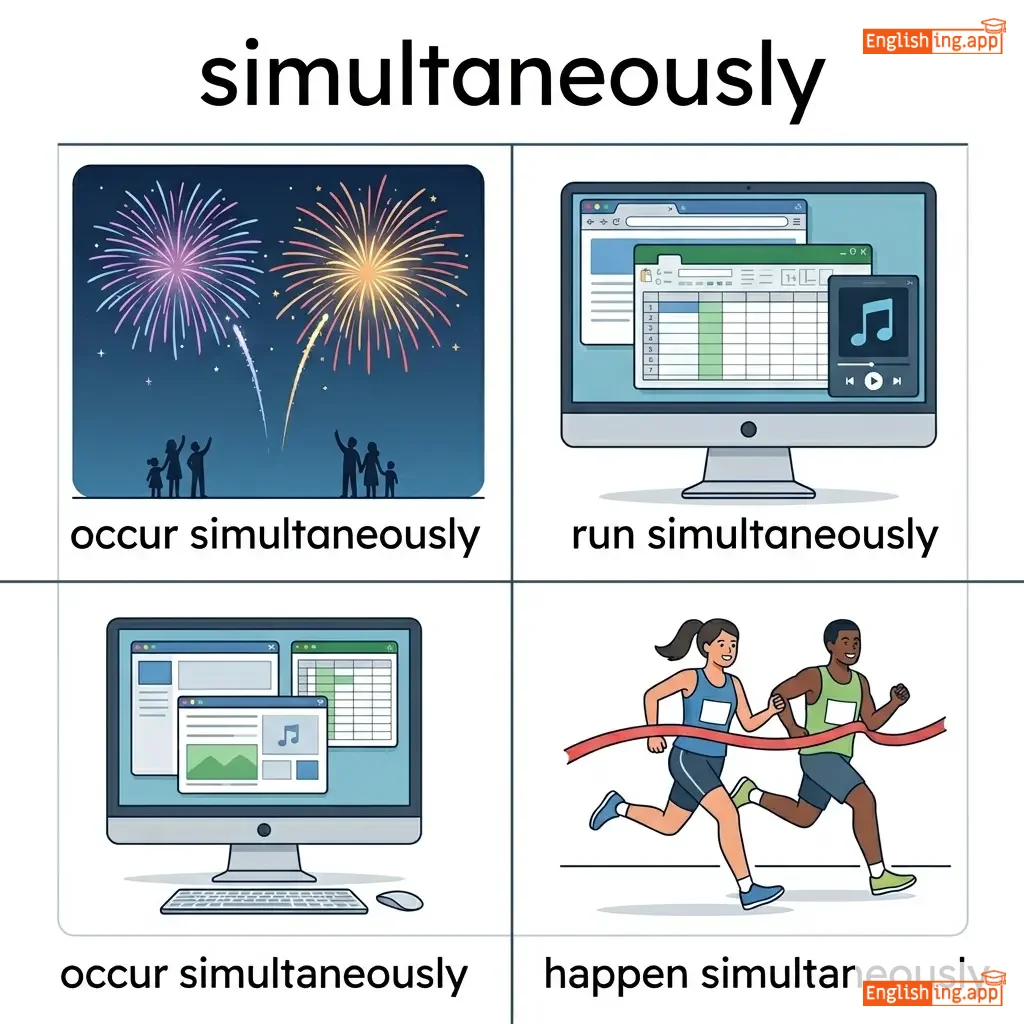
occur simultaneously, run simultaneously, happen simultaneously, work simultaneously
••••••
|
同時には同じ時間に – 二人が同時に話している!
••••••
|
|
⚖️
••••••
|
/sɪn/
noun, verb
(シン)
••••••
|
- •••••• |
罪
tsumi
••••••
|
sinned
シンデッド
••••••
|
sinned
シンデッド
••••••
|
sins
シンズ
••••••
|
sinning
シニン
••••••
|
an immoral act considered to be a transgression against divine law; to commit an offense against religious or moral law
••••••
|
He confessed his sin to the priest.
彼は神父に自分の罪を告白しました。
••••••
|
彼は神父に自分の罪を告白しました。
Kare wa shinpu ni jibun no tsumi wo kokuhaku shimashita.
••••••
|
fall into sin
罪に陥る
••••••
|
to commit immoral or wrong actions
••••••
|
罪に陥る
tsumi ni ochiru
••••••
|
offense, wrongdoing, crime, transgression
••••••
|
virtue, goodness, morality
••••••
|
deadly sin, confess sin, forgive sin, commit sin
••••••
|
罪 (tsumi) という音
••••••
|
|
⏳
••••••
|
/sɪns/
preposition
(シンス)
••••••
|
- •••••• |
以来
irai
••••••
|
- •••••• | - •••••• | - •••••• | - •••••• |
from a particular time in the past until now
••••••
|
I have known her since childhood. |
私は子供の頃から彼女を知っています。
Watashi wa kodomo no koro kara kanojo o shitteimasu.
••••••
|
- •••••• | - •••••• | - •••••• |
from, after
••••••
|
until, before
••••••
|
since childhood, since then, since yesterday
••••••
|
以来、私たちが言う '以来' は時が経っていることを示す。
••••••
|
|
❤️
••••••
|
/sɪnˈsɪr/
adjective
(シンシア)
••••••
|
- •••••• |
誠実
seijitsu
••••••
|
- •••••• | - •••••• | - •••••• | - •••••• |
genuine and honest; free from pretense or deceit
••••••
|
She gave a sincere apology for her mistake. |
彼女は自分の間違いに対して誠実に謝罪した。
Kanojo wa jibun no machigai ni taishite seijitsu ni shazai shita.
••••••
|
sincere thanks |
genuine gratitude without hidden motives
••••••
|
誠実な感謝
seijitsu na kansha
••••••
|
genuine, honest, heartfelt, truthful
••••••
|
insincere, fake, deceitful
••••••
|
sincere effort, sincere apology, sincere gratitude, sincere belief
••••••
|
Sincere = 誠実 (seijitsu)
••••••
|
|
💌
••••••
|
/sɪnˈsɪrli/
adverb
(シンシアリー)
••••••
|
- •••••• |
心から
kokoro kara
••••••
|
- •••••• | - •••••• | - •••••• | - •••••• |
with genuine feelings; honestly and truly
••••••
|
I sincerely hope you recover soon.
私は sincerely あなたが早く回復することを願っています。
••••••
|
私は心からあなたが早く回復することを願っています。
Watashi wa kokoro kara anata ga hayaku kaifuku suru koto o negatte imasu.
••••••
|
- •••••• | - •••••• | - •••••• |
honestly, genuinely, truly, faithfully, wholeheartedly
••••••
|
falsely, insincerely
••••••
|
sincerely apologize, sincerely regret, sincerely hope, sincerely wish
••••••
|
シンシアリー = sincerely, 心から = from the heart.
••••••
|
|
🎤
••••••
|
/sɪŋ/
verb
(シング)
••••••
|
|
歌う
utau
••••••
|
sang
サング
••••••
|
sung
サング
••••••
|
sings
シングス
••••••
|
singing
シンギング
••••••
|
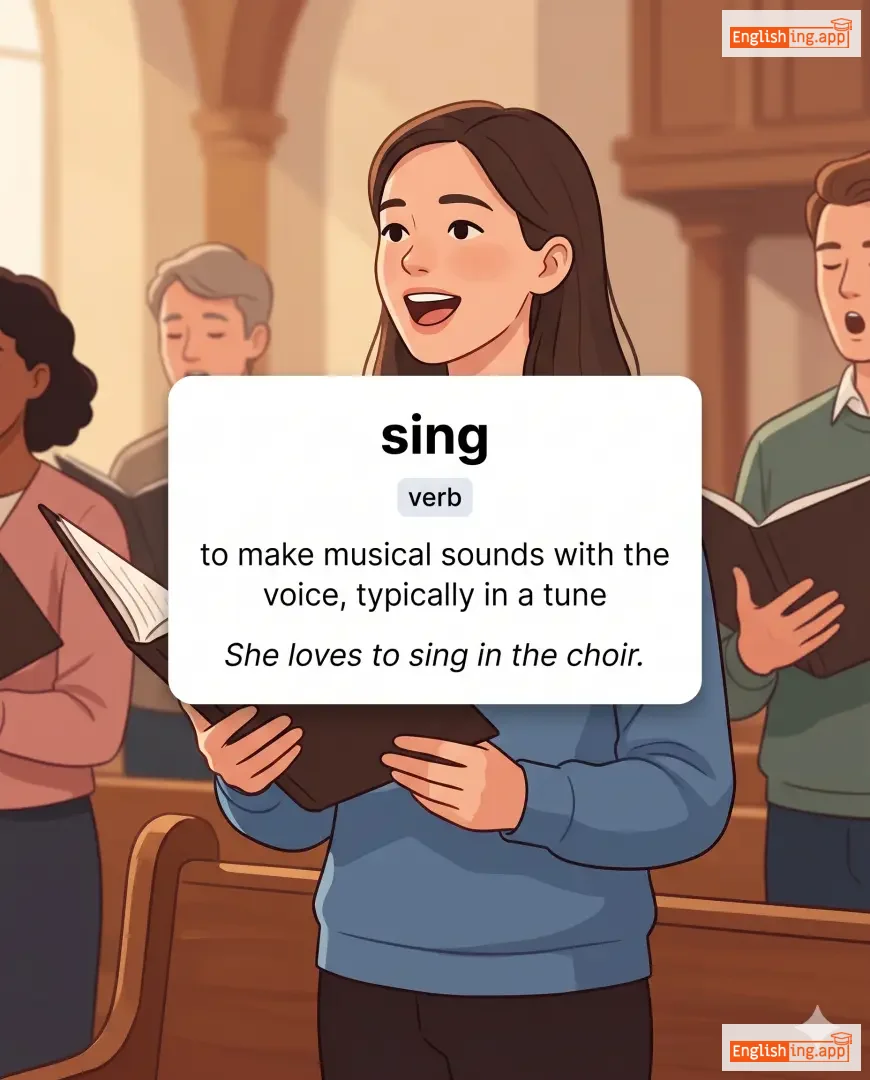
to make musical sounds with the voice, typically in a tune
••••••
|
She loves to sing in the choir.
彼女は合唱団で歌うのが好きです。
••••••
|
彼女は合唱団で歌うのが好きです。
Kanojo wa gasshoudan de utau no ga suki desu.
••••••
|
Sing your heart out
心を込めて歌う
••••••
|
to sing with great enthusiasm and emotion
••••••
|
心を込めて歌う
Kokoro o komete utau
••••••
|
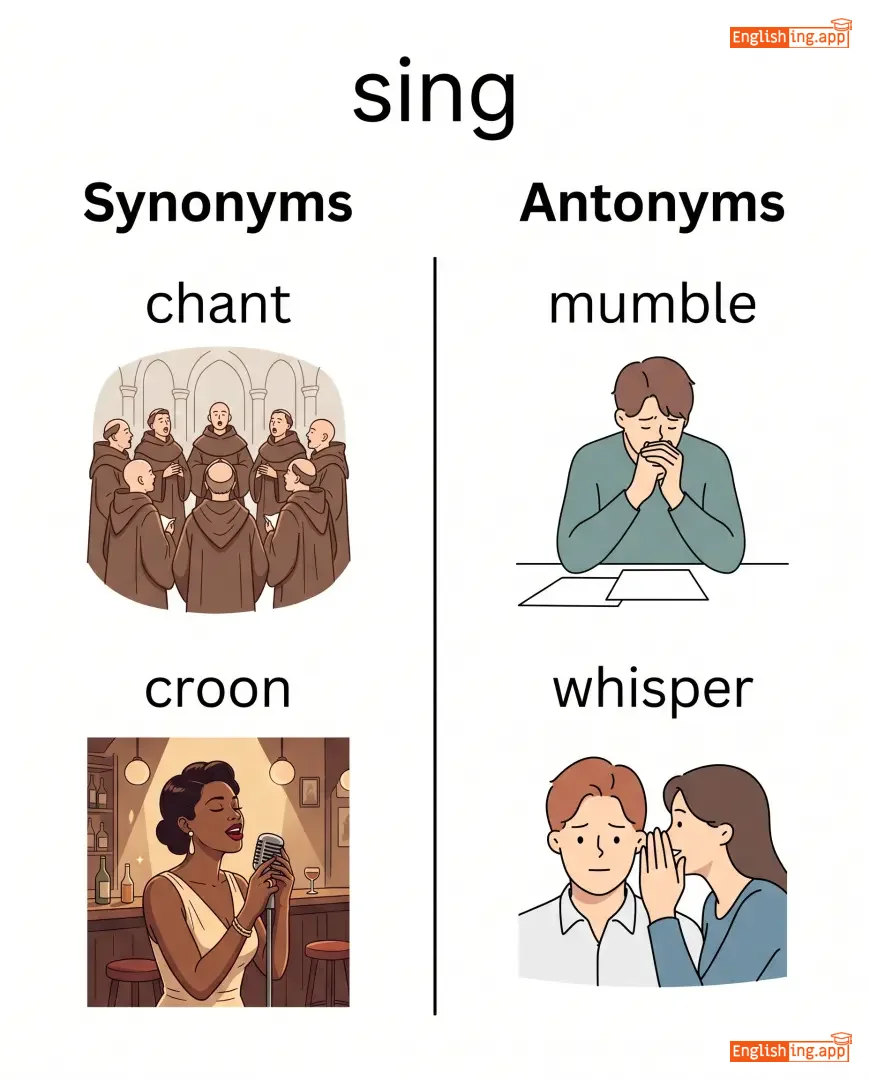
chant, croon, hum, vocalize
••••••
|
mumble, whisper
••••••
|
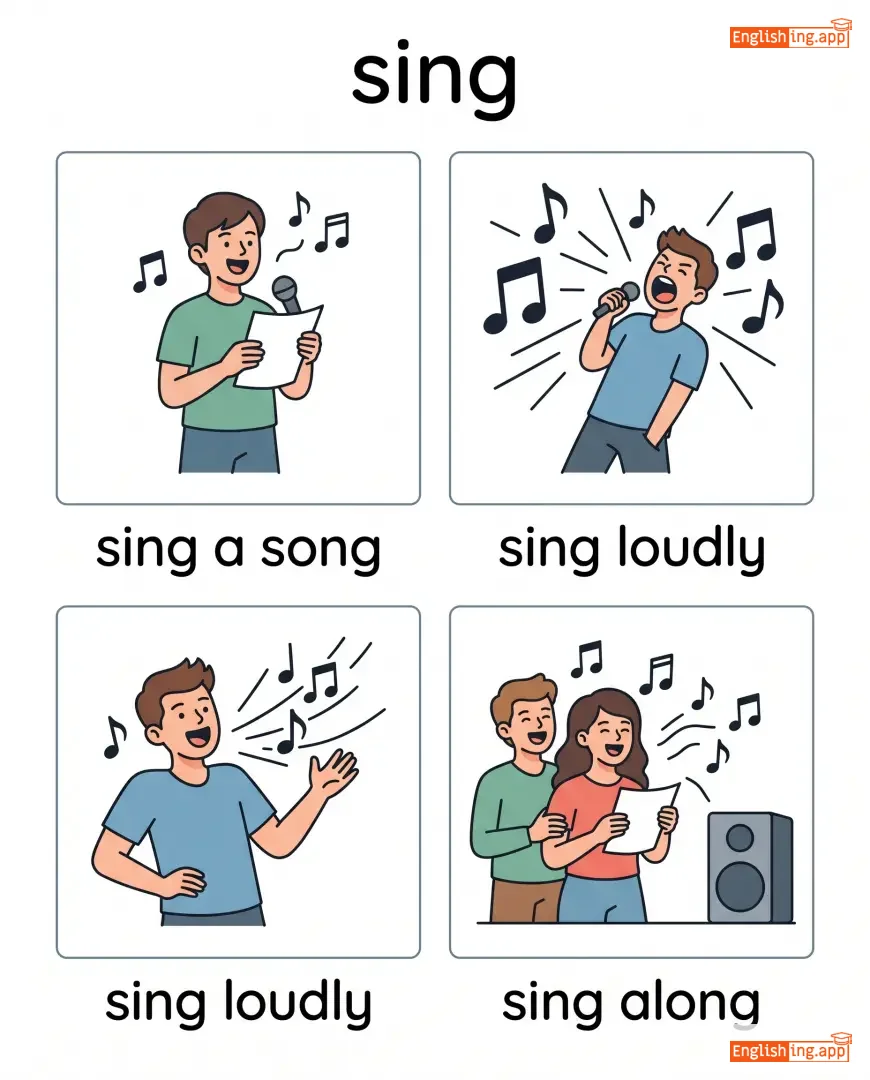
sing a song, sing loudly, sing along, sing in the choir
••••••
|
Sing as in '歌' - 歌を歌うとき、全身で感じる楽しさ!
••••••
|
|
🎤
••••••
|
/ˈsɪŋ.ər/
noun
(シンガー)
••••••
|
- •••••• |
歌手
kashu
••••••
|
- •••••• | - •••••• | - •••••• | - •••••• |
a person who sings, especially as a job or profession
••••••
|
The singer performed beautifully at the concert last night.
そのシンガーは昨晩のコンサートで素晴らしいパフォーマンスをしました。
••••••
|
そのシンガーは昨晩のコンサートで素晴らしいパフォーマンスをしました。
sono shingaa wa sakuban no konsaato de subarashii pafoomansu o shimashita.
••••••
|
- •••••• | - •••••• | - •••••• |
vocalist, performer, artist, musician
••••••
|
listener, audience member
••••••
|
professional singer, opera singer, pop singer, lead singer
••••••
|
歌手が歌うことで、すべての人々が立ち上がり、歌い始める!
••••••
|
|
1️⃣
••••••
|
/ˈsɪŋɡəl/
adjective
••••••
|
- •••••• | - •••••• | - •••••• | - •••••• | - •••••• | - •••••• |
only one; not one of several
••••••
|
She bought a single ticket for the concert. |
- •••••• |
Single handed |
done by one person alone
••••••
|
- •••••• |
individual, sole, solitary, lone
••••••
|
multiple, many
••••••
|
single ticket, single person, single item
••••••
|
No •••••• |
|
💦
••••••
|
/sɪŋk/
verb
(シンク)
••••••
|
|
沈む
shizumu
••••••
|
sank
サンク
••••••
|
sunk
サンク
••••••
|
sinks
シンクス
••••••
|
sinking
シンキング
••••••
|
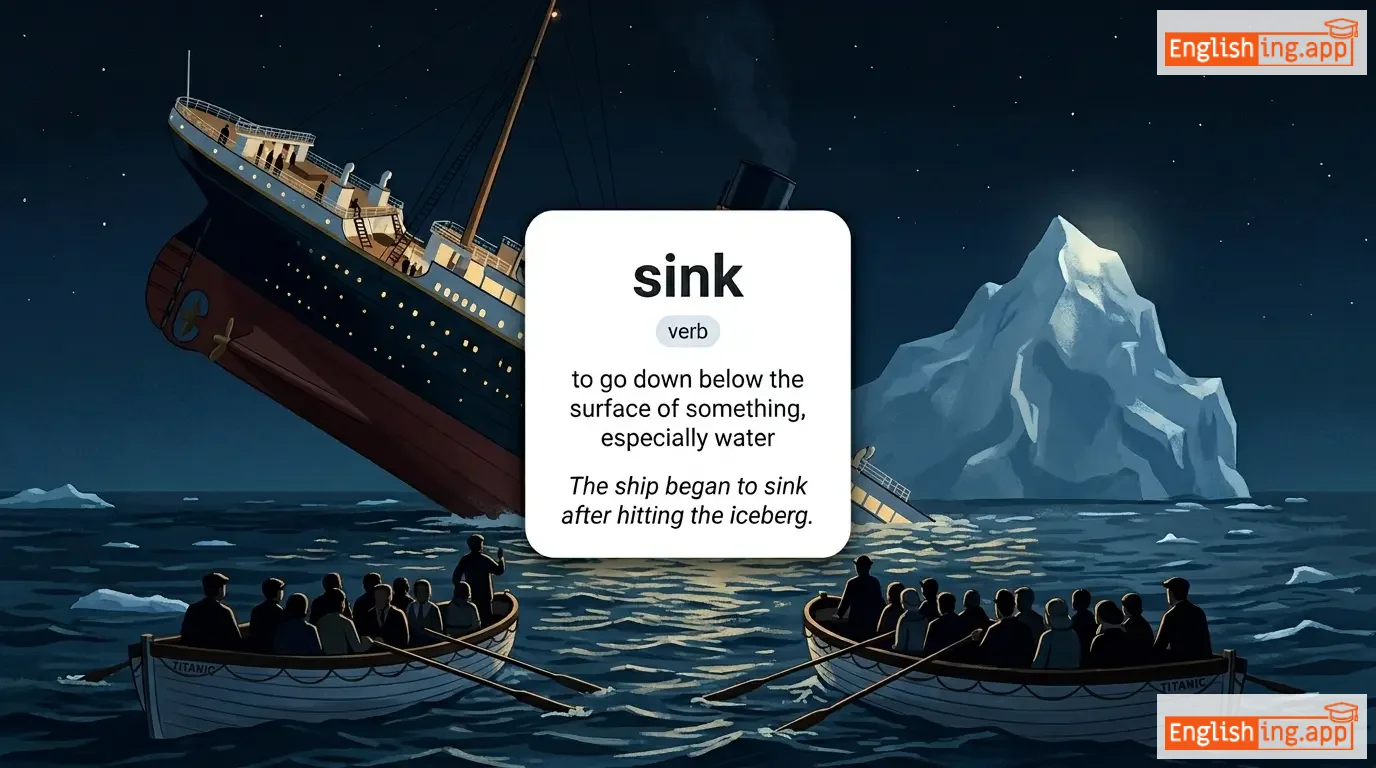
to go down below the surface of something, especially water
••••••
|
The ship began to sink after hitting the iceberg.
船は氷山に衝突した後、沈み始めました。
••••••
|
船は氷山に衝突した後、沈み始めました。
Fune wa hyōzan ni shōtotsu shita ato, shizumi hajimemashita.
••••••
|
Sink or swim
沈むか泳ぐか
••••••
|
to face a situation where one must succeed or fail based on their actions
••••••
|
沈むか泳ぐか
Shizumu ka oyogu ka
••••••
|
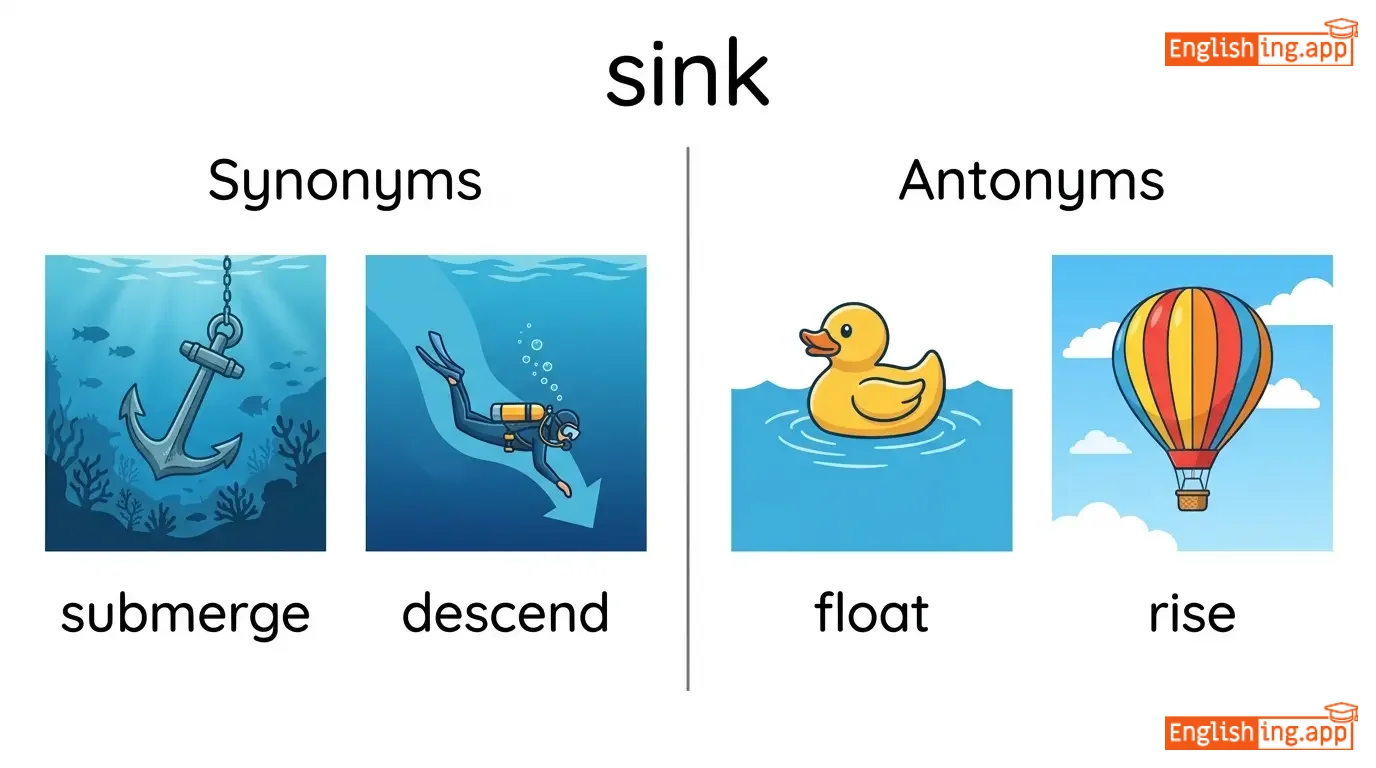
submerge, descend, drop
••••••
|
float, rise
••••••
|
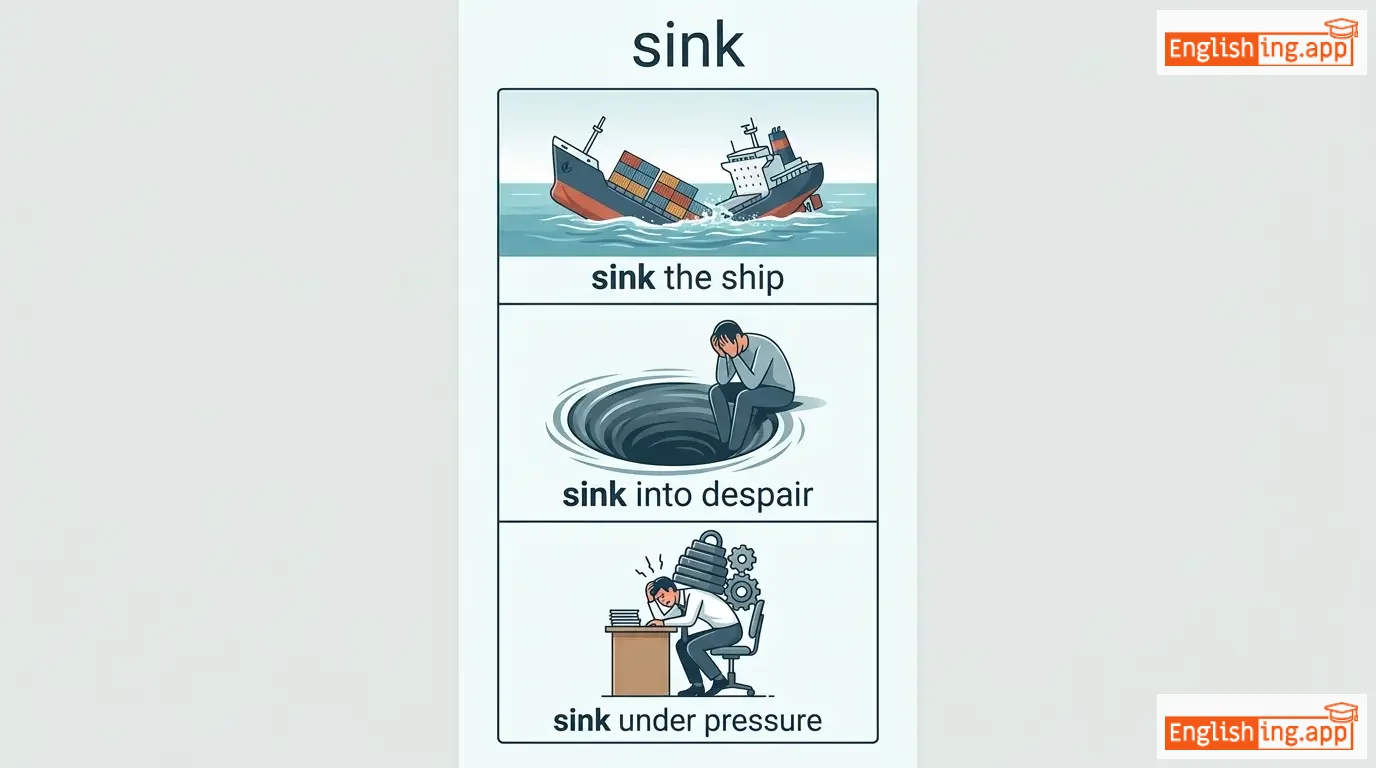
sink the ship, sink into despair, sink under pressure
••••••
|
Sink - もし‘沈んだ’ら、もう泳げない!
••••••
|
|
👨
••••••
|
/sɜːr/
noun
(サー)
••••••
|
- •••••• |
サー
sā
••••••
|
- •••••• | - •••••• | - •••••• | - •••••• |
a respectful or formal form of address used for a man, typically one of higher social status or authority
••••••
|
Sir, may I assist you with your order? |
サー、注文をお手伝いできますか?
Sā, chūmon o o-tetsudai dekimasu ka?
••••••
|
- •••••• | - •••••• | - •••••• |
mister, gentleman, lord, master
••••••
|
madam, miss
••••••
|
Sir, dear sir, Sir John, Sir Thomas
••••••
|
サー (Sā)、尊敬を示すための言葉!
••••••
|
|
👭
••••••
|
/ˈsɪstər/
noun
(シスター)
••••••
|
- •••••• |
姉 / 妹
ane / imouto
••••••
|
- •••••• | - •••••• | - •••••• | - •••••• |
a female sibling; a girl or woman in relation to other children of her parents
••••••
|
My sister is coming to visit us next week.
マイ シスター イズ カミング トゥ ビジット アス ネクスト ウィーク
••••••
|
私の姉は来週私たちに会いに来ます。
watashi no ane wa raishu watashitachi ni ai ni kimasu
••••••
|
- •••••• | - •••••• | - •••••• |
sibling, sister-in-law, female relative
••••••
|
brother
••••••
|
older sister, younger sister, sisterly bond, my sister
••••••
|
シスター (Shisuta) sounds like sister — your ‘ane’ is close at heart!
••••••
|
|
🪑
••••••
|
/sɪt/
verb
(シット)
••••••
|
- •••••• |
座る
suwaru
••••••
|
sat
サット
••••••
|
sat
サット
••••••
|
sits
シッツ
••••••
|
sitting
シッティング
••••••
|
to rest with the body supported by the buttocks, often in a chair or on the ground
••••••
|
Please sit down and relax for a while.
少し座ってリラックスしてください。
••••••
|
少し座ってリラックスしてください。
Sukoshi suwatte rirakkusu shite kudasai.
••••••
|
sit tight
じっと座って
••••••
|
to stay in one place and wait patiently
••••••
|
じっとして
jitto shite
••••••
|
perch, rest, settle, lounge
••••••
|
stand, rise
••••••
|
sit down, sit still, sit comfortably, sit on the chair
••••••
|
座ることで体が楽になり、リラックスする
••••••
|
|
🌍
••••••
|
/saɪt/
noun
(サイト)
••••••
|
- •••••• |
場所
basho
••••••
|
- •••••• | - •••••• | - •••••• | - •••••• |
a location or place, often used for a specific purpose, such as a construction site or a website
••••••
|
The construction site is ready for the next phase of the project. |
建設現場は次のプロジェクトの段階に進む準備ができています。
Kensetsu genba wa tsugi no purojekuto no dankai ni susumu junbi ga dekiteimasu.
••••••
|
- •••••• | - •••••• | - •••••• |
location, place, area, venue
••••••
|
none
••••••
|
site of the accident, construction site, development site
••••••
|
サイト (Site) は特定の場所に使われる言葉、例えばウェブサイトや建設現場に使われます。
••••••
|
|
📍
••••••
|
/ˈsɪtʃueɪtɪd/
adjective
(sɪtʃueɪtɪd)
••••••
|
- •••••• |
位置する
ichi suru
••••••
|
- •••••• | - •••••• | - •••••• | - •••••• |
located in a particular place or position
••••••
|
The hotel is situated near the beach.
ホテルはビーチの近くにあります。
••••••
|
ホテルはビーチの近くにあります。
Hoteru wa bīchi no chikaku ni arimasu.
••••••
|
- •••••• | - •••••• | - •••••• |
located, positioned, placed, found
••••••
|
lost, misplaced, absent
••••••
|
situated near, situated in, centrally situated
••••••
|
ホテルはビーチの近くに位置しています。
••••••
|
|
🌍
••••••
|
/ˌsɪtʃʊˈeɪʃən/
noun
(シチュエーション)
••••••
|
- •••••• |
状況
joukyou
••••••
|
- •••••• | - •••••• | - •••••• | - •••••• |
a set of circumstances or state of affairs at a particular time
••••••
|
The situation at work became difficult after the new policies were introduced.
新しいポリシーが導入された後、職場の状況は難しくなりました。
••••••
|
新しいポリシーが導入された後、職場の状況は難しくなりました。
Atarashii porishī ga dōnyū sareta ato, shokuba no joukyou wa muzukashiku narimashita.
••••••
|
in a tight situation
困難な状況にある
••••••
|
to be in a difficult or challenging circumstance
••••••
|
困難な状況にある
konnan na joukyou ni aru
••••••
|
condition, circumstance, state, scenario
••••••
|
none
••••••
|
critical situation, emergency situation, business situation
••••••
|
状況 (Joukyou) - どんな状況でも冷静に対処しよう!
••••••
|
|
6️⃣
••••••
|
/sɪks/
noun
(シックス)
••••••
|
- •••••• |
六
roku
••••••
|
- •••••• | - •••••• | - •••••• | - •••••• |
the number 6
••••••
|
There are six apples on the table.
テーブルにリンゴが六個あります。
••••••
|
テーブルにリンゴが六個あります。
Tēburu ni ringo ga roku ko arimasu.
••••••
|
- •••••• | - •••••• | - •••••• |
half a dozen, sextuple, sixfold
••••••
|
one
••••••
|
six o'clock, six people, six months, six days
••••••
|
Six is 'roku' in Japanese. Remember it as 'Roku apples on the table'.
••••••
|

