Получите неограниченный доступ ко всем словам с подпиской Pro
Обновить до ProПолучите неограниченный доступ ко всем предложениям с подпиской Pro
Обновить до Pro|
Эмодзи
|
Слово | Images | Перевод | Прошедшее | Причастие прошедшего времени | Третье лицо единственного числа | Герундий | Значение | Пример предложения | Перевод примера предложения | Пример выражения | Значение примера выражения | Перевод примера выражения | Синонимы | Антонимы | Коллокации | Мнемоника |
|---|---|---|---|---|---|---|---|---|---|---|---|---|---|---|---|---|---|
|
✅
••••••
|
/ʃʊd/
modal verb
(shud)
••••••
|
- •••••• |
должен
dolzhen
••••••
|
- •••••• | - •••••• | - •••••• | - •••••• |
used to indicate obligation or duty
••••••
|
You should study for your exams. |
Тебе следует учить для экзаменов.
Tebe sleduyet uchit' dlya ekzamenov.
••••••
|
- •••••• | - •••••• | - •••••• |
ought to, must, need to
••••••
|
must not, don't have to
••••••
|
should have, should not, should do
••••••
|
Should means 'dolzhen', you should do what is right!
••••••
|
|
💪
••••••
|
/ˈʃoʊldər/
noun
(shol-der)
••••••
|
- •••••• |
плечо
plecho
••••••
|
- •••••• | - •••••• | - •••••• | - •••••• |
the upper joint of the human arm and the part of the body to which it is attached
••••••
|
He hurt his shoulder while lifting weights. |
Он повредил плечо, поднимая тяжести.
On povredil plecho, podnimaya tyazhesti.
••••••
|
Shoulder the responsibility |
To accept or take on a heavy responsibility
••••••
|
Брать на себя ответственность
Brat' na sebya otvetstvennost'
••••••
|
arm, upper arm, joint, scapula
••••••
|
foot, hand, ankle
••••••
|
shoulder pain, shoulder injury, broad shoulders
••••••
|
Нести ответственность на плечах - Shoulder the burden
••••••
|
|
📢
••••••
|
/ʃaʊt/
verb
(шаут)
••••••
|
- •••••• |
кричать
krichat'
••••••
|
shouted
шаутед
••••••
|
shouted
шаутед
••••••
|
shouts
шаутс
••••••
|
shouting
шаутин
••••••
|
to say something very loudly
••••••
|
He shouted at the top of his lungs to get their attention.
Он кричал изо всех сил, чтобы привлечь их внимание.
••••••
|
Он кричал изо всех сил, чтобы привлечь их внимание.
On krichal izo vsekh sil, chtoby privlech' ikh vnimanie.
••••••
|
Shout from the rooftops
Кричать с крыш
••••••
|
To tell everyone about something in a very public way
••••••
|
Кричать на всю страну
Krichat' na vsyu stranu
••••••
|
yell, scream, holler, cry
••••••
|
whisper, mumble
••••••
|
shout loudly, shout angrily, shout for help
••••••
|
Кричите, и все услышат!
••••••
|
|
👀
••••••
|
/ʃoʊ/
verb
(шоу)
••••••
|
|
показывать
pokazyvat
••••••
|
showed
шоуэд
••••••
|
shown
шоун
••••••
|
shows
шоз
••••••
|
showing
шоуинг
••••••
|
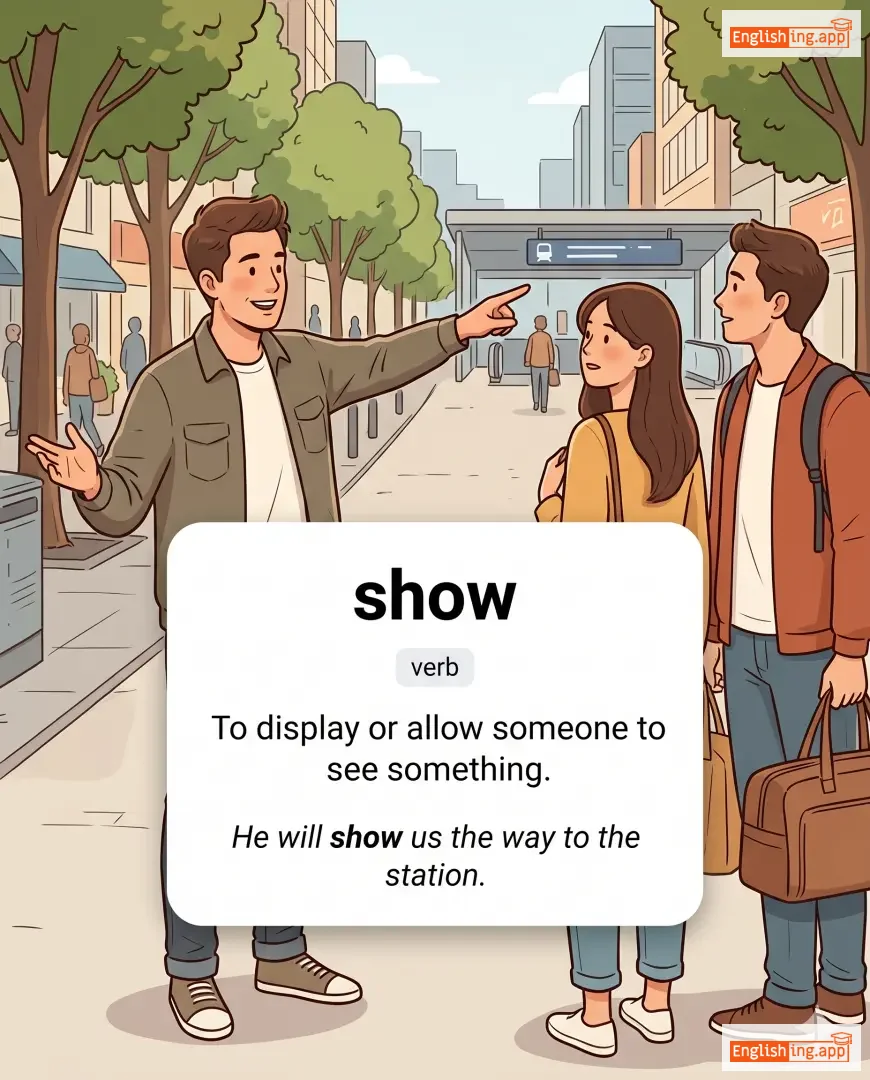
To display or allow someone to see something.
••••••
|
He will show us the way to the station.
хи вил шоу ас зэ уэй ту зэ стейшн
••••••
|
Он покажет нам дорогу к станции.
On pokazhet nam dorogu k stantsii.
••••••
|
show off
шоу оф
••••••
|
to try to impress others by displaying abilities or possessions
••••••
|
хвастаться
khvastat'sya
••••••
|
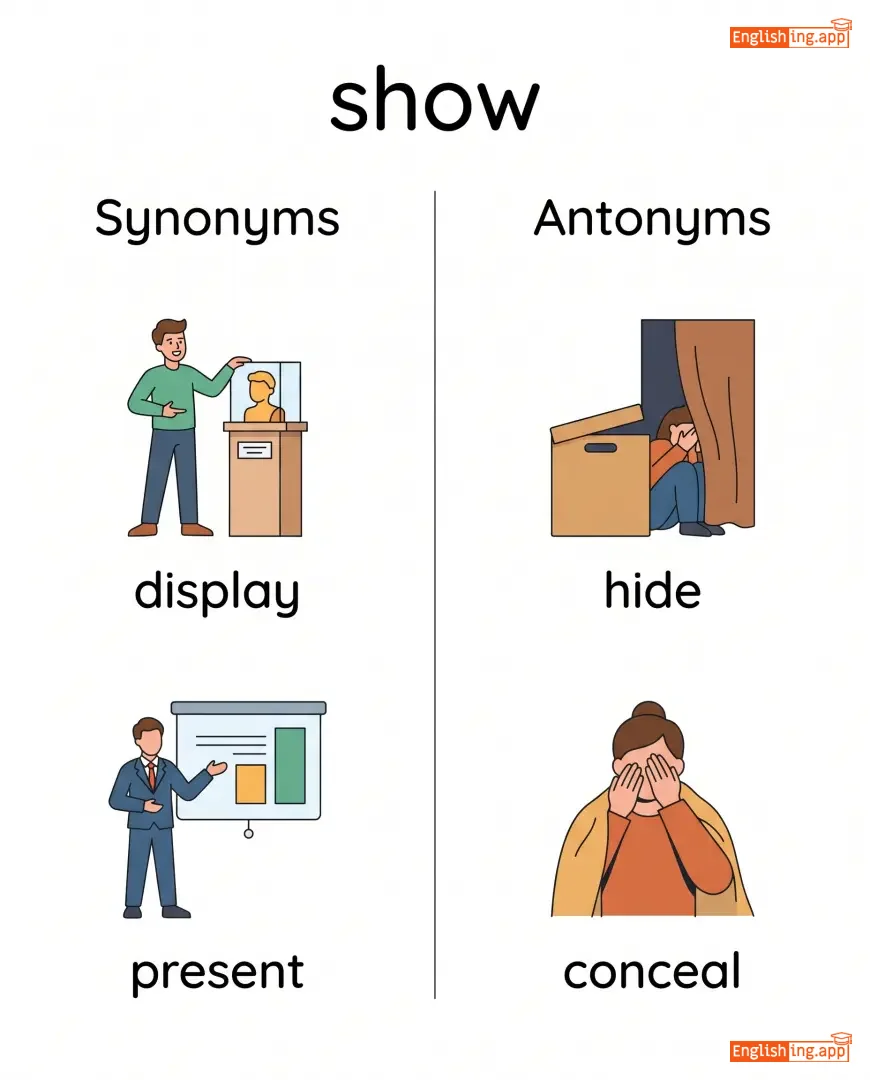
display, present, demonstrate, reveal, exhibit
••••••
|
hide, conceal, cover
••••••
|
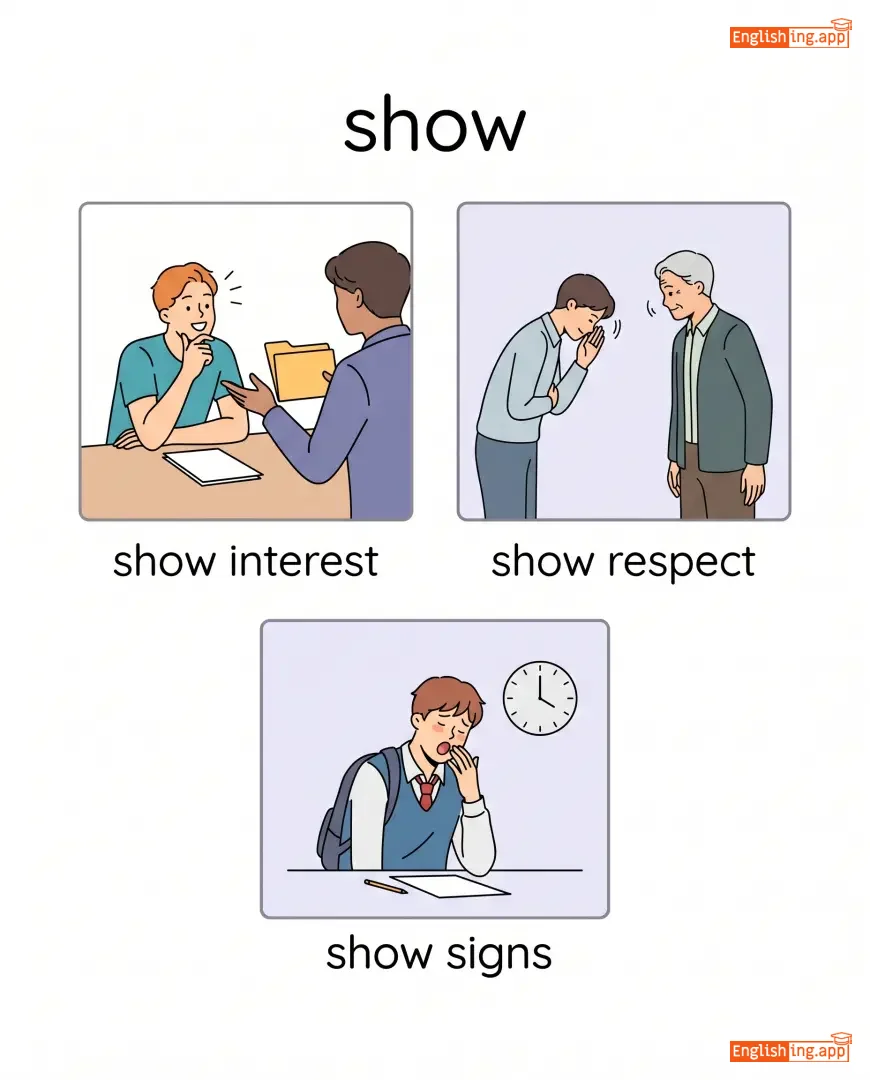
show interest, show respect, show signs, show off
••••••
|
Show означает показывать – в шоу показывают все.
••••••
|
|
🚿
••••••
|
/ˈʃaʊər/
noun
(шоуэр)
••••••
|
- •••••• |
душ; ливень
shauer
••••••
|
- •••••• | - •••••• | - •••••• | - •••••• |
a brief fall of rain or snow or a device for taking a bath or washing oneself
••••••
|
After the workout, I took a quick shower to refresh myself.
После тренировки я быстро принял душ, чтобы освежиться.
••••••
|
После тренировки я быстро принял душ, чтобы освежиться.
Posle trenirovki ya bystro prinyal dush, chtoby osvezhitsya.
••••••
|
Take a shower
Принять душ
••••••
|
To wash oneself in a shower
••••••
|
Принять душ
Prinyat dush
••••••
|
bath, rinse, wash, sprinkle
••••••
|
drought, dryness
••••••
|
take a shower, shower curtain, hot shower
••••••
|
Shower = Шоу + ДУШ: Представь маленькое русско-английское шоу прямо в душе, чтобы освежиться
••••••
|
|
📉
••••••
|
/ʃrɪŋk/
verb
(счастье)
••••••
|
|
счастье
schast'ye
••••••
|
shrank
••••••
|
shrunk
••••••
|
shrinks
••••••
|
shrinking
••••••
|
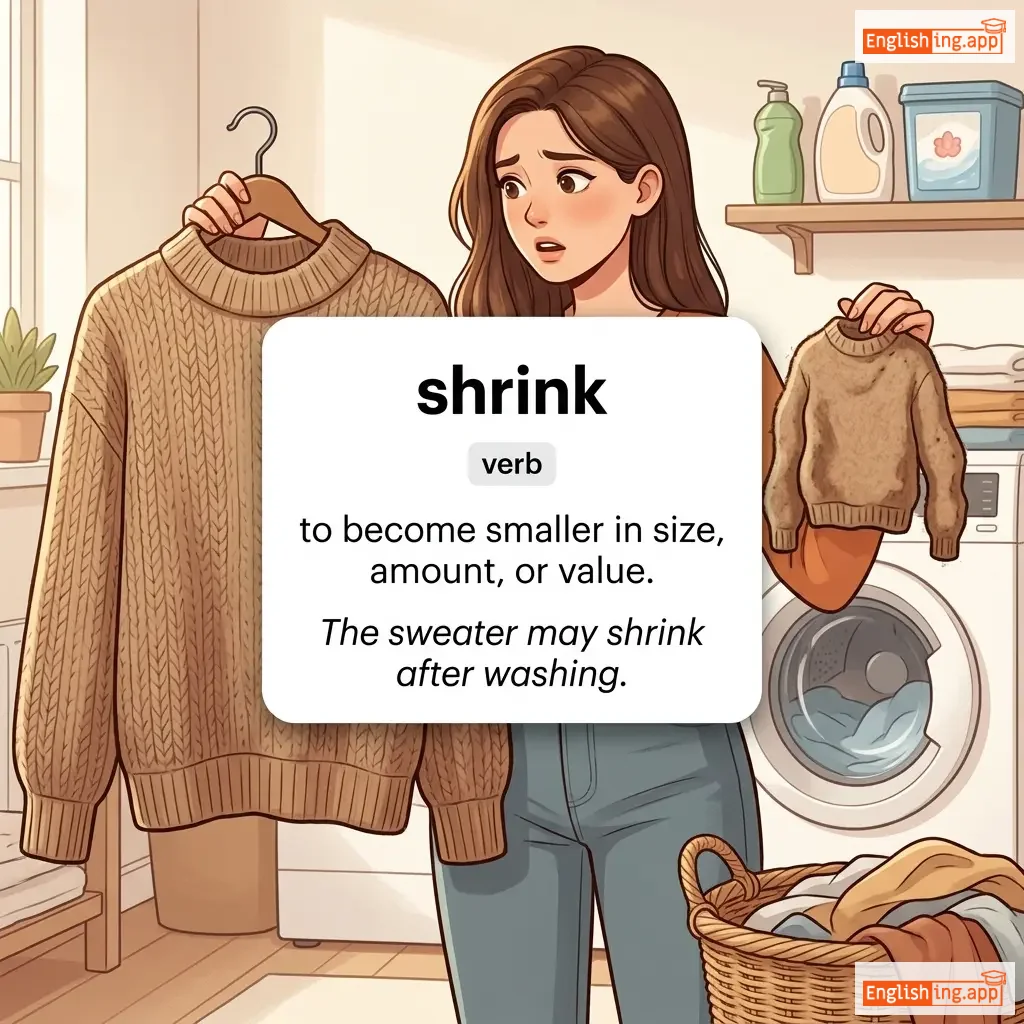
to become smaller in size, amount, or value.
••••••
|
The sweater may shrink after washing.
Она не могла скрыть своего счастья, когда получила награду.
••••••
|
Она не могла скрыть своего счастья, когда получила награду.
Ona ne mogla skryt' svoego schast'ya, kogda poluchila nagradu.
••••••
|
shrink from responsibility
поиск счастья
••••••
|
to avoid or back away from duties or obligations
••••••
|
поиск счастья
poisk schast'ya
••••••
|
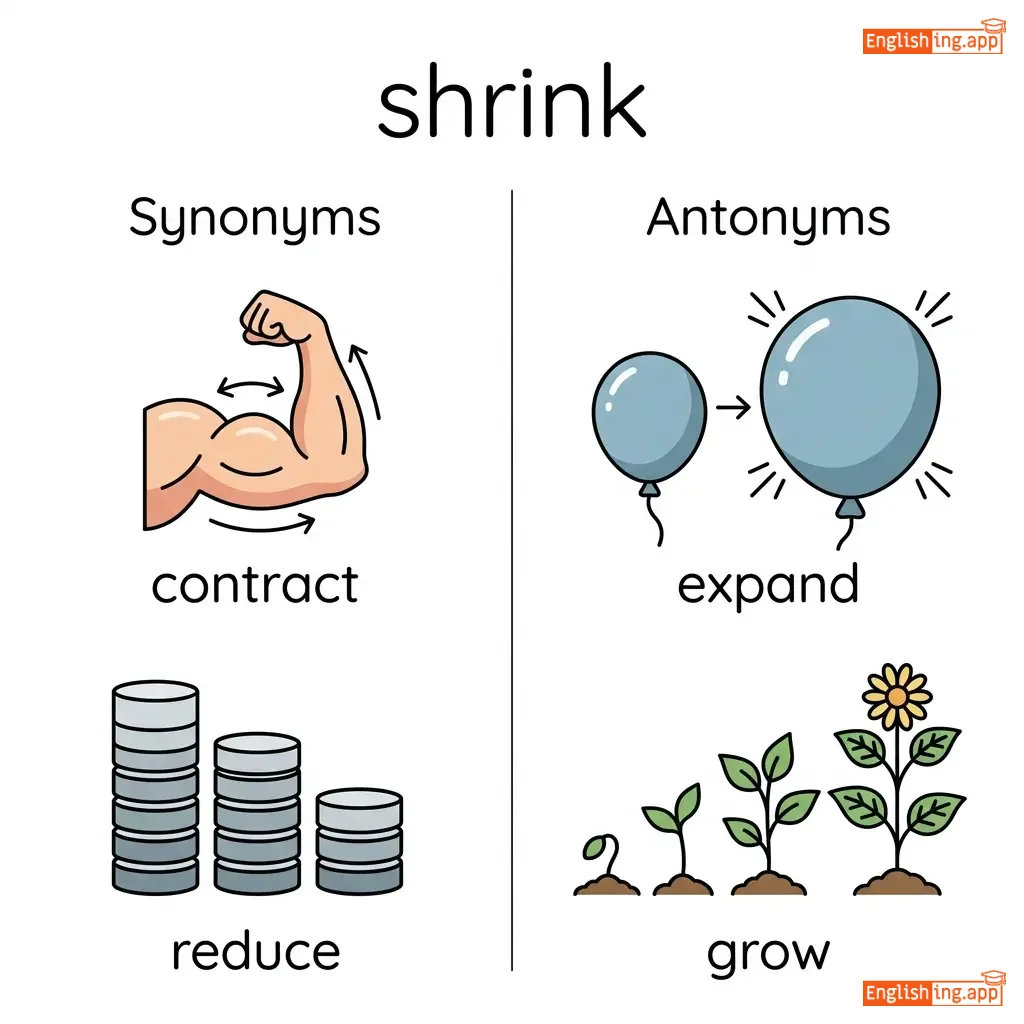
contract, reduce, lessen, diminish, condense
••••••
|
expand, grow, enlarge
••••••
|
shrink in size, shrink away, shrink back, shrink rapidly
••••••
|
Чтобы найти счастье, нужно постоянно стремиться к нему, как в поиске!
••••••
|
|
🤷
••••••
|
/ʃrʌɡ/
verb
(шраг)
••••••
|
- •••••• |
пожать плечами
pozhat plechami
••••••
|
shrugged
шрагд
••••••
|
shrugged
шрагд
••••••
|
shrugs
шрагс
••••••
|
shrugging
шрагинг
••••••
|
To raise and lower the shoulders to express uncertainty or indifference.
••••••
|
He shrugged when asked about the missing file.
Он пожал плечами, когда его спросили о потерянном файле.
••••••
|
Он пожал плечами, когда его спросили о потерянном файле.
On pozhat plechami, kogda ego sprosili o poteryannom fayle.
••••••
|
shrug off
пожать плечами
••••••
|
To treat something as unimportant or not worth worrying about.
••••••
|
игнорировать
ignorirovat'
••••••
|
dismiss, disregard, ignore, downplay
••••••
|
acknowledge, accept, emphasize
••••••
|
shrug shoulders, shrug indifferently, shrug off criticism, shrug casually
••••••
|
Пожать плечами = жестикуляция, выражающая неопределенность или безразличие.
••••••
|
|
🤐
••••••
|
/ʃʌt/
verb
(shat)
••••••
|
- •••••• |
закрыть
zakryt
••••••
|
shut
shat
••••••
|
shut
shat
••••••
|
shuts
shats
••••••
|
shutting
shating
••••••
|
to close something, especially a door or window
••••••
|
Please shut the door before you leave.
Пожалуйста, закройте дверь, прежде чем уйти.
••••••
|
Пожалуйста, закройте дверь, прежде чем уйти.
Pozhaluysta, zakroyte dver', prezhde chem uyti.
••••••
|
Shut up
Заткнись
••••••
|
A rude way of telling someone to stop talking
••••••
|
Заткнись
Zatknis'
••••••
|
close, lock, seal, fasten
••••••
|
open, unlock
••••••
|
shut the door, shut your mouth, shut the window
••••••
|
Закрой дверь, закрой все – Shut the door, shut everything.
••••••
|
|
🙈
••••••
|
/ʃaɪ/
adjective
(shai)
••••••
|
- •••••• |
застенчивый
zastenchivyy
••••••
|
- •••••• | - •••••• | - •••••• | - •••••• |
Being reserved or nervous around other people.
••••••
|
The child was too shy to speak in class. |
Ребёнок был слишком застенчив, чтобы говорить в классе.
Rebyonok byl slishkom zastenchiv, chtoby govorit' v klasse.
••••••
|
shy away |
to avoid something because of fear or lack of confidence
••••••
|
уклоняться
uklonyat'sya
••••••
|
timid, bashful, reserved, modest
••••••
|
bold, confident, outgoing
••••••
|
shy smile, shy away, shy child, shy personality
••••••
|
Застенчивый ребёнок избегает разговора в классе.
••••••
|
|
👫
••••••
|
/ˈsɪblɪŋ/
noun
(сиблинг)
••••••
|
- •••••• |
брат/сестра
brat/sestra
••••••
|
- •••••• | - •••••• | - •••••• | - •••••• |
A brother or sister.
••••••
|
She has three siblings, two brothers and one sister.
У неё три брата и сестры, два брата и одна сестра.
••••••
|
У неё три брата и сестры, два брата и одна сестра.
U nee tree brata i sestry, dva brata i odna sestra.
••••••
|
- •••••• | - •••••• | - •••••• |
brother, sister, kin, relative
••••••
|
stranger, outsider
••••••
|
sibling rivalry, younger sibling, elder sibling, sibling bond
••••••
|
Siblings на английском означает брат или сестра – как своя команда в семье.
••••••
|
|
🤒
••••••
|
/sɪk/
adjective
(сик)
••••••
|
- •••••• |
больной
bolnoy
••••••
|
- •••••• | - •••••• | - •••••• | - •••••• |
feeling unwell or suffering from illness
••••••
|
She stayed home because she was feeling sick.
ши стейд хоум бикоз ши уоз филинг сик
••••••
|
Она осталась дома, потому что чувствовала себя больной.
Ona ostalas doma potomu chto chuvstvovala sebya bolnoy
••••••
|
sick and tired
сик энд тайэрд
••••••
|
completely fed up or annoyed
••••••
|
устал и раздражён
ustal i razdrazhon
••••••
|
ill, unwell, unhealthy, nauseous, ailing
••••••
|
healthy, well, fit
••••••
|
feel sick, get sick, sick leave, sick child, sick person
••••••
|
Sick звучит как 'сик' — когда ты sick, ты больной!
••••••
|
|
➡️
••••••
|
/saɪd/
noun
(сайд)
••••••
|
- •••••• |
сторона
storona
••••••
|
- •••••• | - •••••• | - •••••• | - •••••• |
a position to the left or right of something
••••••
|
The store is on the side of the road. |
Магазин находится сбоку от дороги.
Magazin nakhoditsya sboku ot dorogi.
••••••
|
On the side |
Something extra, or not central
••••••
|
Сбоку
Sboku
••••••
|
flank, edge, border, aspect
••••••
|
center, middle
••••••
|
side of the road, side effect, side dish
••••••
|
Сторона к стороне, легко заметно.
••••••
|
|
😔
••••••
|
/saɪ/
verb
(сай)
••••••
|
- •••••• |
вздыхать
vzdykhat'
••••••
|
sighed
сайд
••••••
|
sighed
сайд
••••••
|
sighs
сайз
••••••
|
sighing
сайинг
••••••
|
to let out a long, deep breath as an expression of tiredness, relief, or sadness
••••••
|
She sighed with relief when she heard the good news.
Она вздохнула с облегчением, когда услышала хорошие новости.
••••••
|
Она вздохнула с облегчением, когда услышала хорошие новости.
Ona vzdokhnula s oblegcheniem, kogda uslyshala khoroshie novosti.
••••••
|
- •••••• | - •••••• | - •••••• |
breathe out, exhale, moan, groan
••••••
|
inhale, gasp, cheer
••••••
|
let out a sigh, deep sigh, sigh of relief, sigh with exhaustion
••••••
|
Sigh похоже на 'вздыхать', и 'вздыхать' значит то же, что и sigh
••••••
|
|
👀
••••••
|
/saɪt/
noun
(саɪт)
••••••
|
- •••••• |
зрение
zrenie
••••••
|
- •••••• | - •••••• | - •••••• | - •••••• |
the ability to see or something that is seen
••••••
|
The sight of the sunset took her breath away. |
Вид солнца унес ее дыхание.
Vid solnca unes yeje dykhanie.
••••••
|
- •••••• | - •••••• | - •••••• |
vision, view, scene, perception
••••••
|
blindness, darkness
••••••
|
beautiful sight, breathtaking sight, sight of a lifetime, wonderful sight
••••••
|
Sight - это 'зрение', которое уносит дыхание.
••••••
|
|
✍️
••••••
|
/saɪn/
verb
(साइन)
••••••
|
|
подписывать
podpisyvat'
••••••
|
signed
сайнд
••••••
|
signed
сайнд
••••••
|
signs
сайнс
••••••
|
signing
сайннинг
••••••
|
to write your name on something to show agreement or approval; to make a gesture with meaning
••••••
|
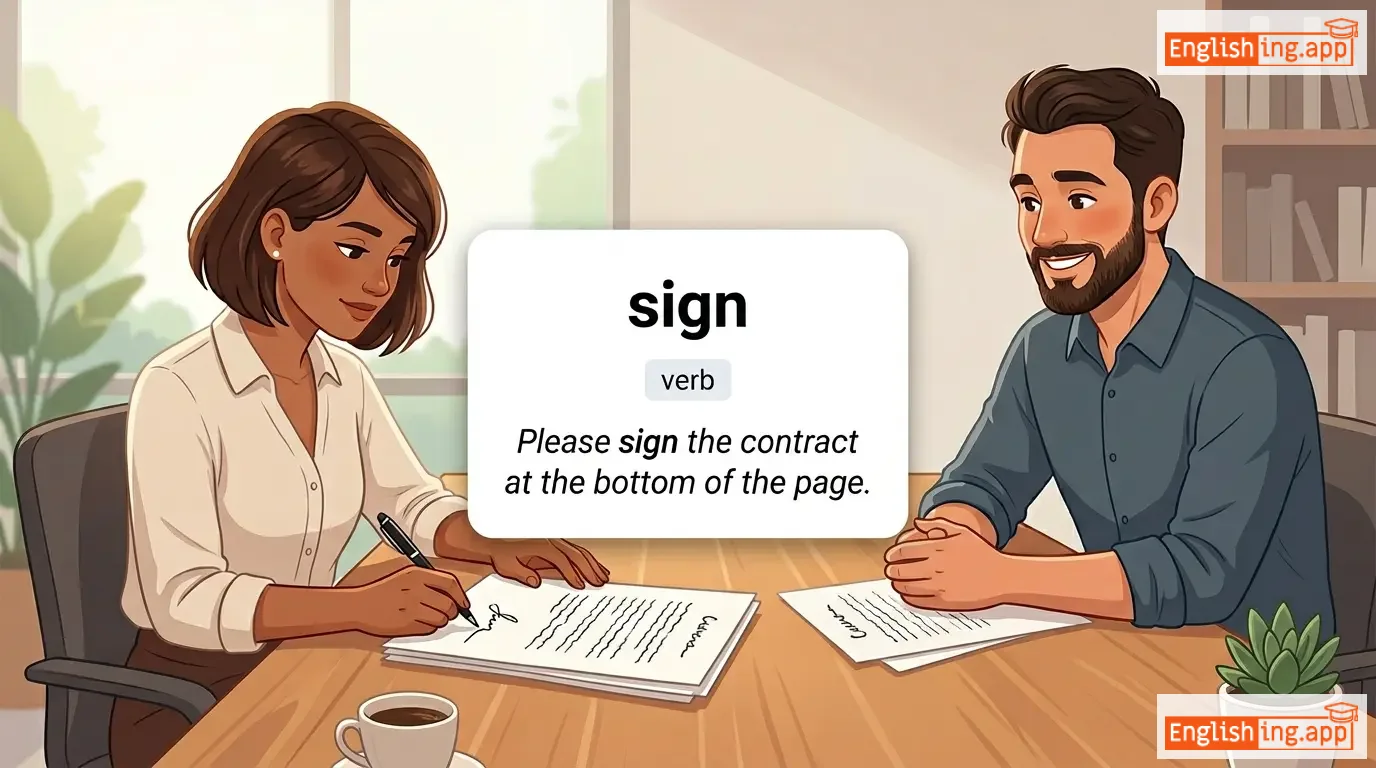
Please sign the contract at the bottom of the page.
Пожалуйста, подпишите контракт внизу страницы.
••••••
|
Пожалуйста, подпишите контракт внизу страницы.
Pozhaluysta, podpishite kontrakt vnizu stranitsy.
••••••
|
- •••••• | - •••••• | - •••••• |
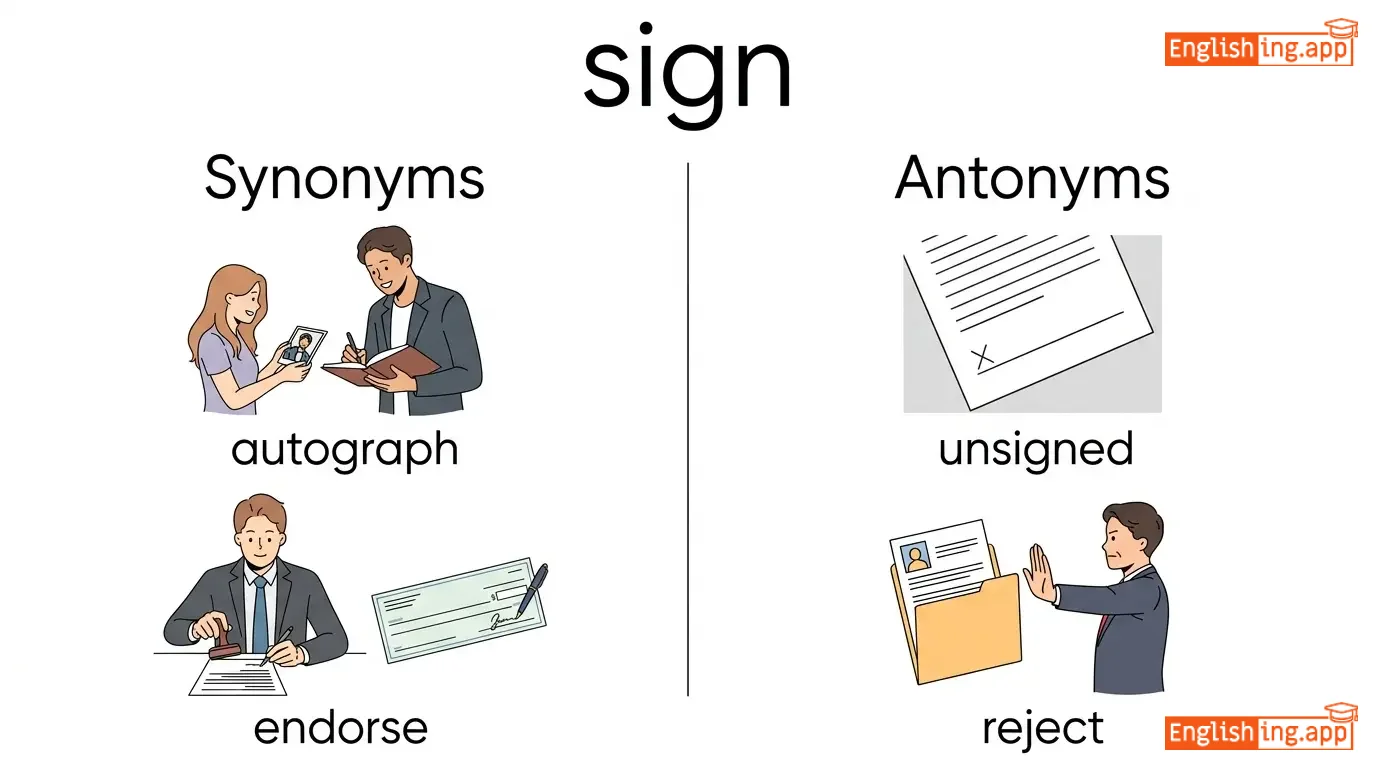
autograph, endorse, approve, gesture
••••••
|
unsigned, reject, refuse, disapprove
••••••
|
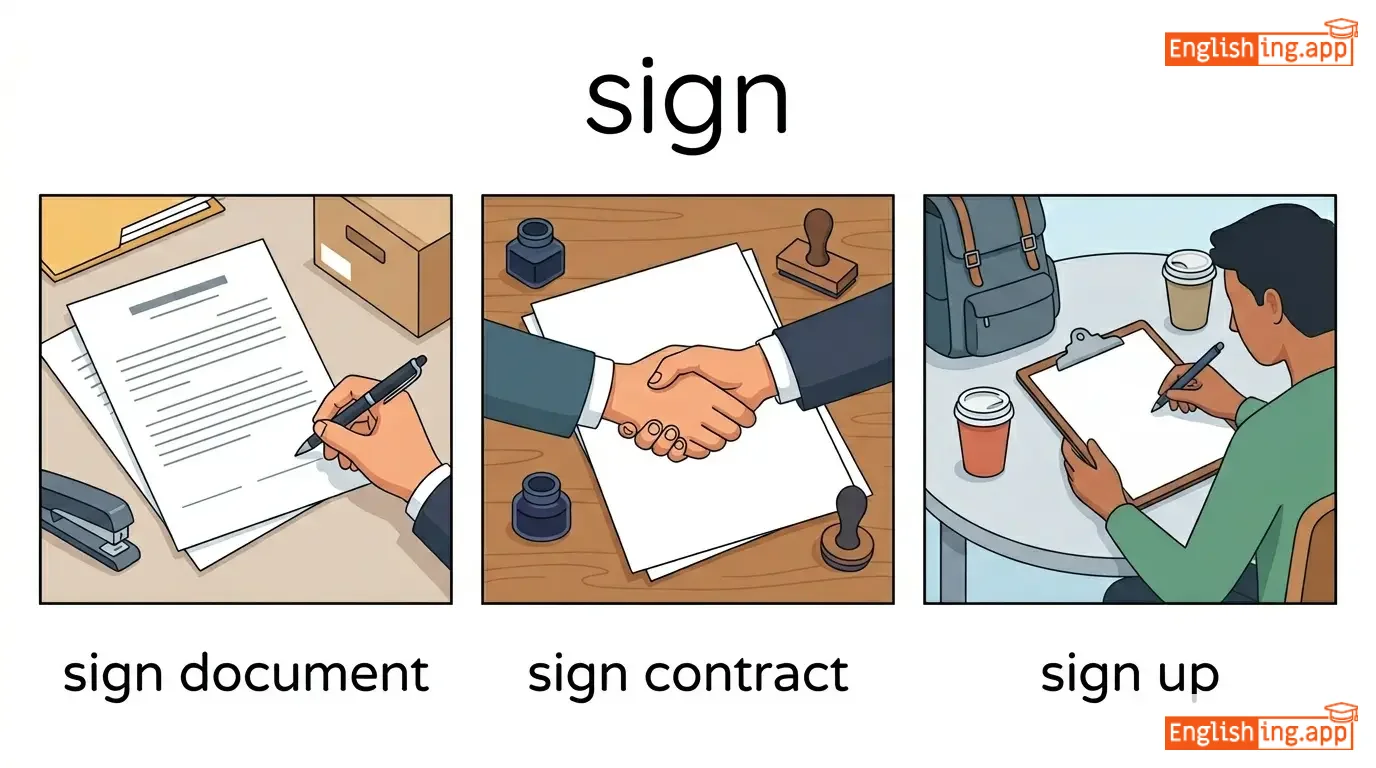
sign document, sign contract, sign up, sign off
••••••
|
Подписывать – это как поставить подпись, чтобы сказать ‘да’.
••••••
|
|
🚦
••••••
|
/ˈsɪɡnəl/
noun/verb
(сигнал)
••••••
|
- •••••• |
сигнал
signal
••••••
|
signaled
сигналил
••••••
|
signaled
сигналил
••••••
|
signals
сигналит
••••••
|
signaling
сигналить
••••••
|
a gesture, sound, or action used to convey information or instructions
••••••
|
The driver gave a hand signal before turning left.
Водитель подал знак рукой перед тем, как повернуть налево.
••••••
|
Водитель подал знак рукой перед тем, как повернуть налево.
Vodytel' podal znak rukoy pered tem, kak povernut' nalevo.
••••••
|
signal a change
дать сигнал об изменении
••••••
|
to indicate that something new is about to happen
••••••
|
дать сигнал об изменении
dat' signal ob izmenenii
••••••
|
gesture, indication, sign, cue, alert
••••••
|
silence, concealment
••••••
|
give a signal, danger signal, signal strength, signal failure
••••••
|
Сигнал = это как мигающий светофор.
••••••
|
|
✍️
••••••
|
/ˈsɪɡ.nə.tʃər/
noun
(signa-tur)
••••••
|
- •••••• |
подпись
podpis
••••••
|
- •••••• | - •••••• | - •••••• | - •••••• |
a person's name written by themselves, often as a form of identification or authorization
••••••
|
She signed the contract with her elegant signature. |
Она подписала контракт своим элегантным автографом.
Ona podpisala kontrakt svoim elegantnym avtografom.
••••••
|
signature dish |
a special meal that a chef is particularly known for
••••••
|
фирменное блюдо
firmennoye blyudo
••••••
|
autograph, sign, endorsement, mark, handwriting
••••••
|
anonymity, namelessness
••••••
|
signature style, signature dish, signature look, digital signature
••••••
|
Signature значит подписать имя – запомни ✍️ подпись значит твою личность.
••••••
|
|
📌
••••••
|
/sɪɡˈnɪfɪkəns/
noun
(signifikens)
••••••
|
- •••••• |
значимость
znachimost
••••••
|
- •••••• | - •••••• | - •••••• | - •••••• |
the quality of being important, meaningful, or worthy of attention
••••••
|
The significance of the discovery was recognized worldwide. |
Значимость открытия была признана по всему миру.
Znachimost' otkrytiya byla priznata po vsemu miru.
••••••
|
of great significance |
something very important or meaningful
••••••
|
большое значение
bol'shoye znacheniye
••••••
|
importance, meaning, value, weight, consequence
••••••
|
insignificance, triviality
••••••
|
historical significance, cultural significance, great significance, significance level
••••••
|
Significance означает значение - значимые вещи имеют значение
••••••
|
|
⭐
••••••
|
/sɪɡˈnɪfɪkənt/
adjective
(сигнификант)
••••••
|

|
значительный
znachitelnyy
••••••
|
- •••••• | - •••••• | - •••••• | - •••••• |
important, meaningful, or having a noticeable effect
••••••
|
The company made a significant investment in new technology. |
Компания сделала значительные инвестиции в новые технологии.
Kompaniya sdelala znachitel'nyye investitsii v novyye tekhnologii.
••••••
|
significant other |
a person with whom someone has an established romantic or sexual relationship
••••••
|
значительный партнер
znachitel'nyy partner
••••••
|
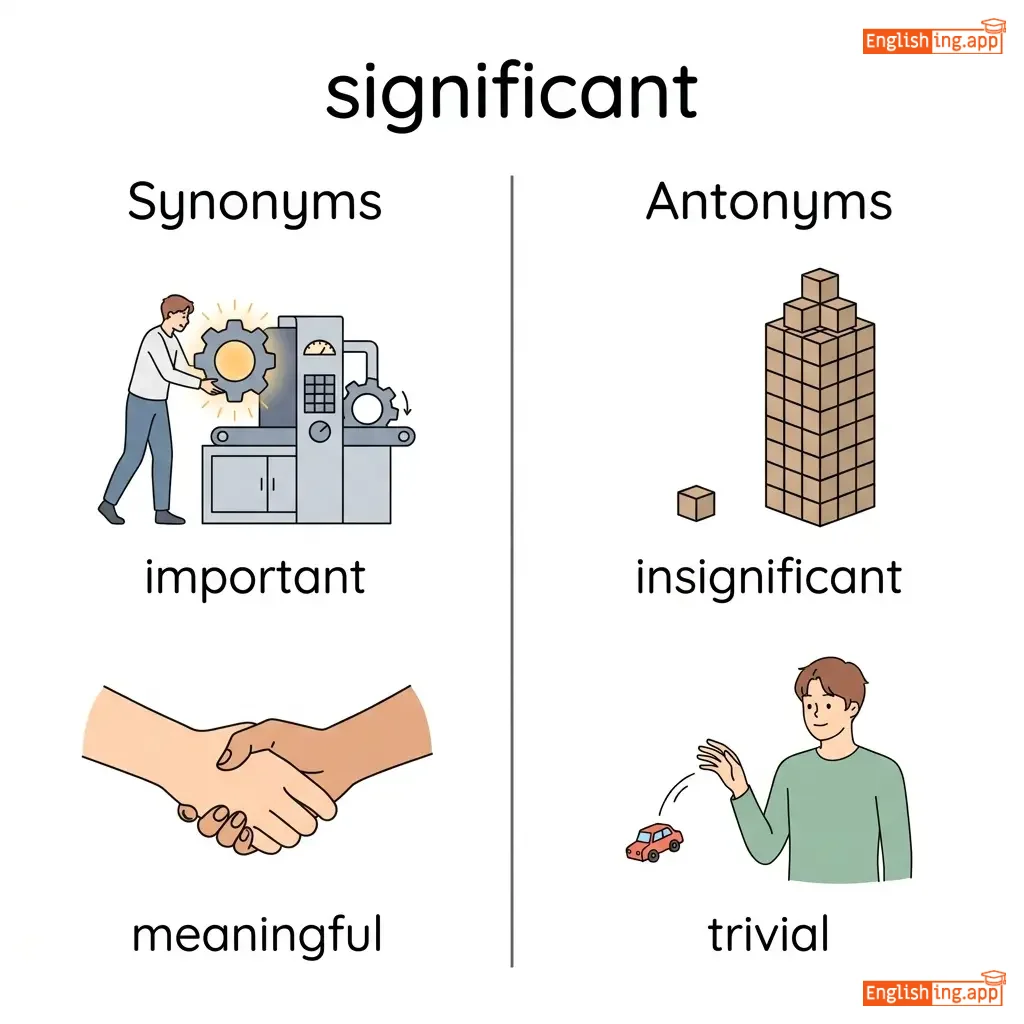
important, meaningful, considerable, notable, substantial
••••••
|
insignificant, trivial, minor
••••••
|
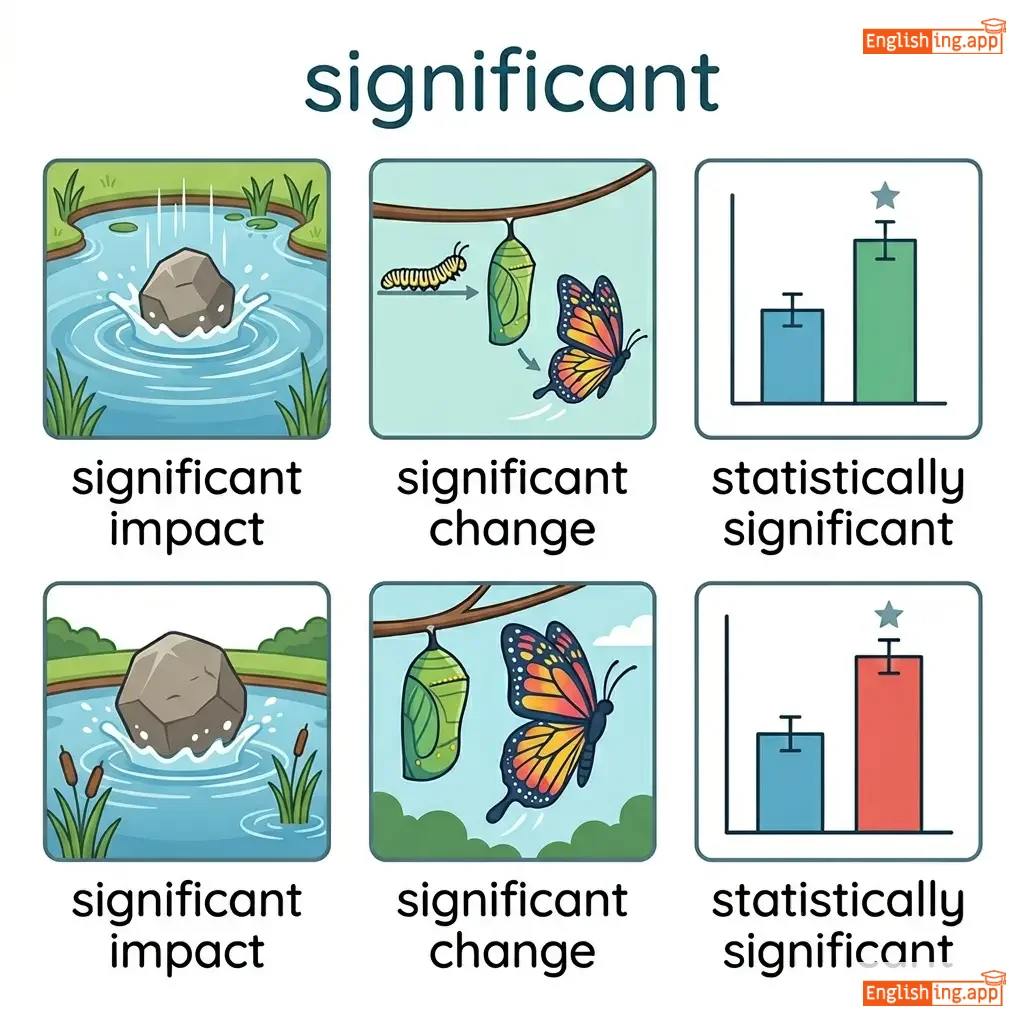
significant impact, significant change, statistically significant, significant role
••••••
|
Значительный - это важный, как значительная инвестиция компании.
••••••
|
|
📊
••••••
|
/sɪɡˈnɪfɪkəntli/
adverb
(сигнификантли)
••••••
|
- •••••• |
значительно
znachitel'no
••••••
|
- •••••• | - •••••• | - •••••• | - •••••• |
in a way that is large or important enough to have an effect
••••••
|
The economy has significantly improved over the last decade.
Экономика значительно улучшилась за последние десять лет.
••••••
|
Экономика значительно улучшилась за последние десять лет.
Ekonomika znachitel'no uluchshilas' za poslednie desyat' let.
••••••
|
- •••••• | - •••••• | - •••••• |
considerably, notably, appreciably, substantially
••••••
|
slightly, marginally, insignificantly
••••••
|
significantly improve, significantly increase, significantly change
••••••
|
Слово 'significant' в русском звучит как 'значительно'.
••••••
|
|
🤫
••••••
|
/ˈsaɪ.ləns/
noun
(sajlens)
••••••
|
|
тишина
tishina
••••••
|
- •••••• | - •••••• | - •••••• | - •••••• |
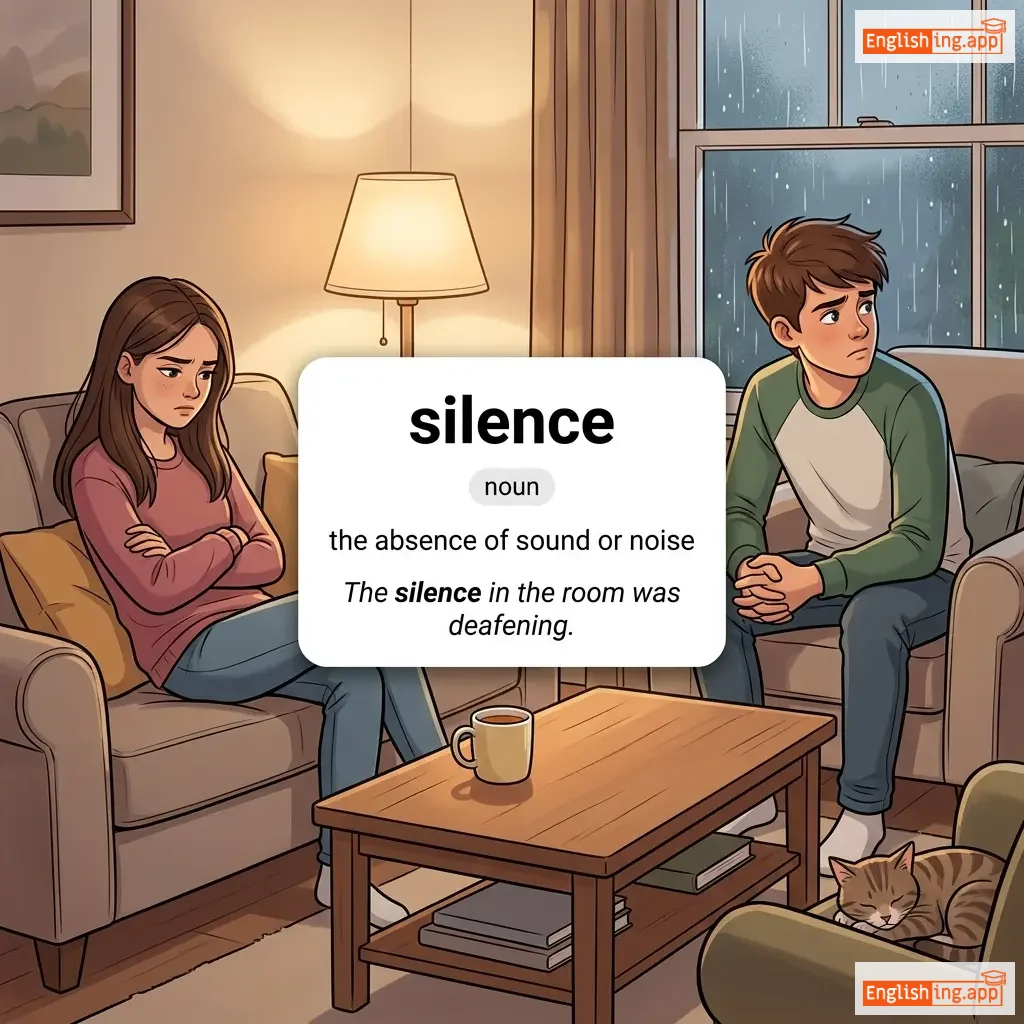
complete absence of sound; the refusal to speak or make noise
••••••
|
The teacher asked for silence during the exam. |
Учитель попросил тишину во время экзамена.
Uchitel' poprosil tishinu vo vremya ekzamena.
••••••
|
- •••••• | - •••••• | - •••••• |
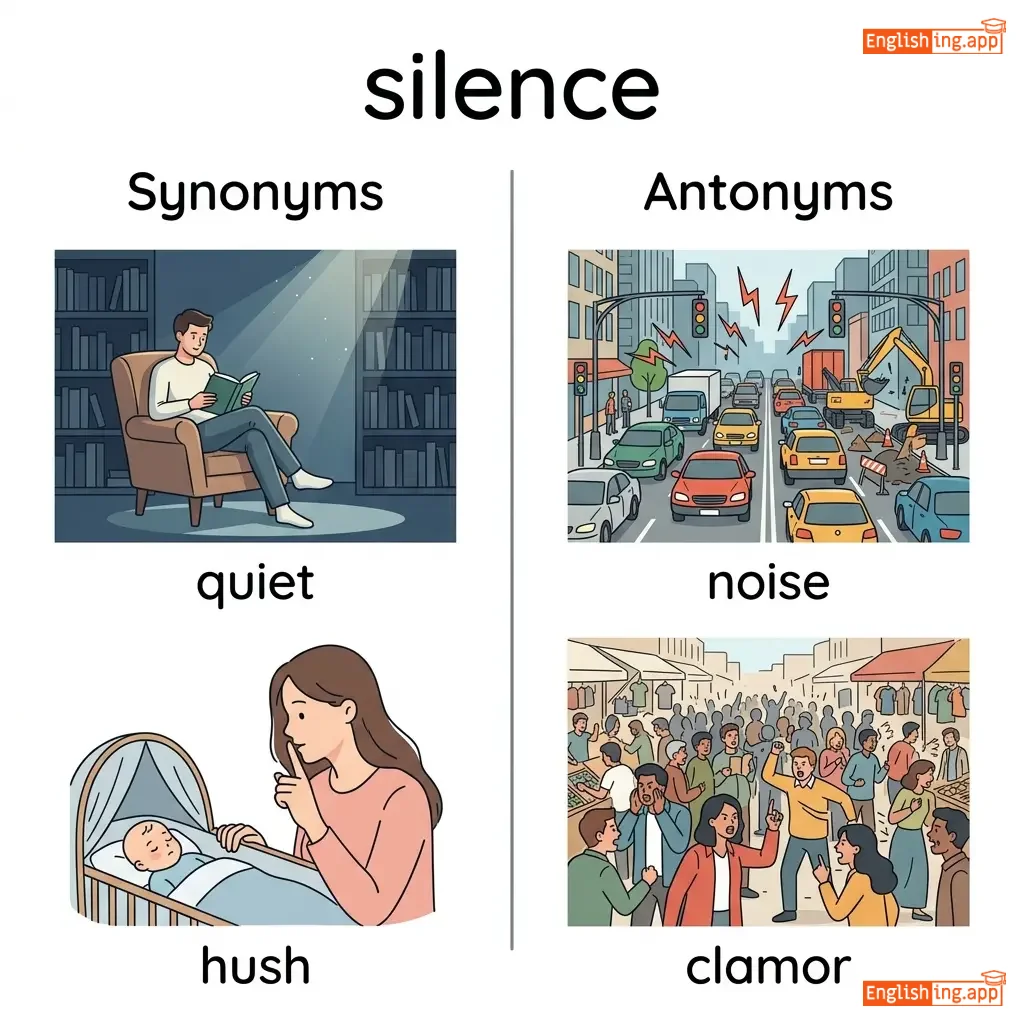
quiet, stillness, hush, calm
••••••
|
noise, sound, chatter, commotion
••••••
|
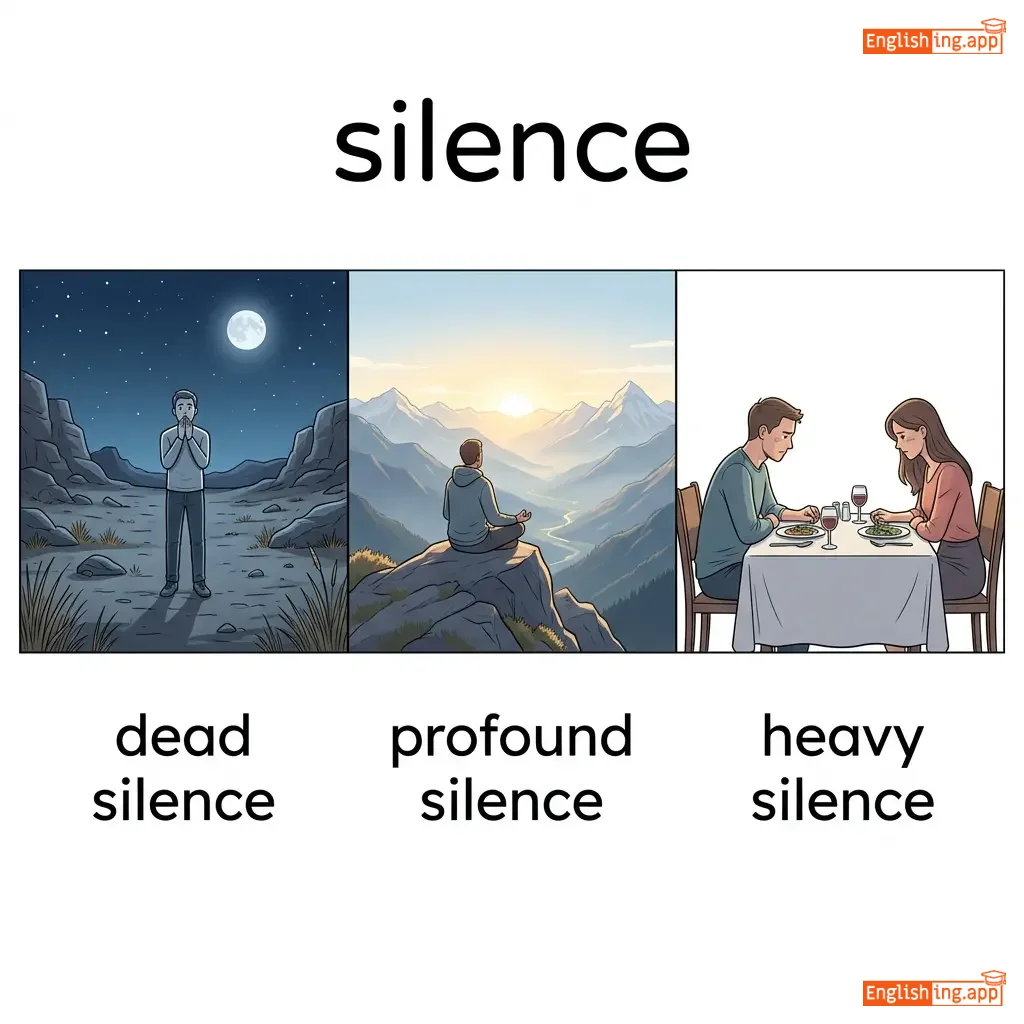
awkward silence, dead silence, moment of silence, break the silence
••••••
|
Тишина — ключ к концентрации и пониманию.
••••••
|
|
🤫
••••••
|
/ˈsaɪ.lənt/
adjective
(сайлент)
••••••
|
- •••••• |
тихий; спокойный; молчаливый
tikhiy; spokoyniy; molchaliviy
••••••
|
- •••••• | - •••••• | - •••••• | - •••••• |
making no sound; quiet; not speaking
••••••
|
The library was completely silent during study hours. |
Библиотека была полностью тихой во время учебных часов.
Biblioteka byla polnost'yu tikhoy vo vremya uchebnykh chasov
••••••
|
- •••••• | - •••••• | - •••••• |
quiet, noiseless, mute, speechless
••••••
|
noisy, loud, vocal, talkative
••••••
|
silent treatment, silent film, remain silent
••••••
|
Тишина означает спокойствие.
••••••
|
|
🤪
••••••
|
/ˈsɪli/
adjective
(сили)
••••••
|
- •••••• |
глупый
glupyy
••••••
|
- •••••• | - •••••• | - •••••• | - •••••• |
showing a lack of good sense; foolish or playful
••••••
|
He made a silly mistake on the test. |
Он сделал глупую ошибку на экзамене.
On sdelal glupuyu oshibku na ekzamene.
••••••
|
silly goose |
a playful way to call someone foolish or goofy
••••••
|
глупая утка
glupaya utka
••••••
|
foolish, goofy, childish, playful, nonsensical
••••••
|
serious, sensible, wise
••••••
|
silly mistake, silly joke, silly idea, feel silly
••••••
|
Silly означает глупый — Silly mistake означает глупая ошибка.
••••••
|
|
🥈
••••••
|
/ˈsɪl.vər/
noun
(sil-ver)
••••••
|
- •••••• |
серебро
serebro
••••••
|
- •••••• | - •••••• | - •••••• | - •••••• |
a shiny white precious metal used for making jewelry and ornaments
••••••
|
The silver ring sparkled in the sunlight.
Серебряное кольцо сверкало на солнце.
••••••
|
Серебряное кольцо сверкало на солнце.
Serebryanoe kol'tso sverkalo na solntse.
••••••
|
- •••••• | - •••••• | - •••••• |
argentum, sterling silver
••••••
|
gold, bronze
••••••
|
silver jewelry, silver coin, silver bracelet, silver necklace
••••••
|
Серебро сверкает, как кольцо из серебра.
••••••
|
|
🔄
••••••
|
/ˈsɪmɪlər/
adjective
(симилар)
••••••
|
- •••••• |
похожий
pokhozhiy
••••••
|
- •••••• | - •••••• | - •••••• | - •••••• |
Having a resemblance in appearance, character, or quantity, without being identical.
••••••
|
The twins wore similar clothes to the party. |
Близнецы носили похожую одежду на вечеринке.
Bliznetsy nosili pokhozhuyu odezhdu na vecherinke.
••••••
|
similar to |
Having a likeness or resemblance to something.
••••••
|
похожий на
pokhozhiy na
••••••
|
alike, comparable, related, akin, resembling
••••••
|
different, dissimilar, unlike
••••••
|
similar case, similar result, similar style, similar appearance
••••••
|
SIMILAR означает похожий, как слово 'похожий' на русском.
••••••
|
|
🔁
••••••
|
/ˌsɪmɪˈlærəti/
noun
(симилярити)
••••••
|
- •••••• |
сходство
skhodstvo
••••••
|
- •••••• | - •••••• | - •••••• | - •••••• |
the state of being alike or having characteristics in common
••••••
|
There is a strong similarity between the two paintings. |
Между двумя картинами существует сильное сходство.
Mezhdu dvumya kartinami sushchestvuyet sil'noye skhodstvo.
••••••
|
family similarity |
resemblance among family members
••••••
|
семейное сходство
semeynoye skhodstvo
••••••
|
likeness, resemblance, correspondence, equivalence, analogy
••••••
|
difference, dissimilarity, contrast
••••••
|
striking similarity, close similarity, family similarity, similarity score
••••••
|
Similarity → skhodstvo; помни: ‘similar faces’ означает схожесть лиц
••••••
|
|
🔄
••••••
|
/ˈsɪmɪlərli/
adverb
(sɪmɪlɛrli)
••••••
|
- •••••• |
аналогично
analogichno
••••••
|
- •••••• | - •••••• | - •••••• | - •••••• |
in a similar way
••••••
|
Similarly, we can achieve success with dedication and hard work. |
Аналогично, мы можем достичь успеха с помощью преданности и усердной работы.
Analogichno, my mozhem dostich' uspekha s pomoshch'yu predannosti i userdnoy raboty.
••••••
|
- •••••• | - •••••• | - •••••• |
alike, likewise, in the same way
••••••
|
differently, oppositely
••••••
|
similarly to, similarly minded, similarly structured
••••••
|
Similarly, like two sides of the same coin!
••••••
|
|
✨
••••••
|
/ˈsɪmpəl/
adjective
(simpl)
••••••
|
- •••••• |
простой; легкий; без сложностей
simple
••••••
|
- •••••• | - •••••• | - •••••• | - •••••• |
easy to understand or do; not complicated
••••••
|
This is a simple recipe that anyone can follow.
Это простой рецепт, который любой может следовать.
••••••
|
Это простой рецепт, который любой может следовать.
Eto prostoy retsept, kotoryy lyuboy mozhet sleduyushchiy.
••••••
|
- •••••• | - •••••• | - •••••• |
easy, basic, straightforward, uncomplicated
••••••
|
complex, complicated, difficult, intricate
••••••
|
simple task, simple solution, simple life
••••••
|
SIMPLE = простой
••••••
|
|
😊
••••••
|
/ˈsɪm.pli/
adverb
(simp-li)
••••••
|
- •••••• |
просто; только;
prosto; tol'ko;
••••••
|
- •••••• | - •••••• | - •••••• | - •••••• |
in a clear and easy way; merely; just
••••••
|
I simply wanted to help you with your homework.
Я просто хотел помочь тебе с домашним заданием.
••••••
|
Я просто хотел помочь тебе с домашним заданием.
Ya prosto hotel pomoch' tebe s domashnim zadanijem.
••••••
|
- •••••• | - •••••• | - •••••• |
merely, just, only, plainly, clearly
••••••
|
complexly, complicatedly, difficultly
••••••
|
simply put, simply stated, simply amazing, simply beautiful
••••••
|
Просто и ясно – как 'simply' на английском
••••••
|
|
🎮
••••••
|
/ˈsɪmjʊˌleɪt/
verb
(симулировать)
••••••
|
- •••••• |
симулировать
simulirovat
••••••
|
simulated
смоделированный
••••••
|
simulated
смоделированный
••••••
|
simulates
симулирует
••••••
|
simulating
симулируя
••••••
|
to imitate the appearance, character, or behavior of something; to pretend or reproduce conditions artificially
••••••
|
The pilot had to simulate an emergency landing during training.
Пилот должен был смоделировать экстренную посадку во время тренировки.
••••••
|
Пилот должен был смоделировать экстренную посадку во время тренировки.
Pilot dolzhen byl smodelirovat' ekstrennuyu posadku vo vremya trenirovki.
••••••
|
- •••••• | - •••••• | - •••••• |
imitate, mimic, reproduce, replicate, pretend
••••••
|
differ, real, genuine
••••••
|
simulate behavior, simulate conditions, simulate response, computer simulate
••••••
|
Симулятор помогает смоделировать экстренную посадку
••••••
|
|
🎮
••••••
|
/ˌsɪmjuˈleɪʃən/
noun
(симуляшн)
••••••
|
- •••••• |
симуляция
simulyatsiya
••••••
|
- •••••• | - •••••• | - •••••• | - •••••• |
the imitation of a situation or process
••••••
|
The simulation helped the students understand the complex theory. |
Симуляция помогла студентам понять сложную теорию.
Simulyatsiya pomogla studentam ponyat' slozhnuyu teoriya.
••••••
|
- •••••• | - •••••• | - •••••• |
imitation, modeling, reproduction, emulation
••••••
|
reality, actuality
••••••
|
simulation model, simulation game, flight simulation
••••••
|
Симуляция — это имитация процессов.
••••••
|
|
⏱️
••••••
|
/ˌsaɪ.məlˈteɪ.ni.əs.li/
adverb
(симультанно)
••••••
|
|
одновременно
odnovremenno
••••••
|
- •••••• | - •••••• | - •••••• | - •••••• |
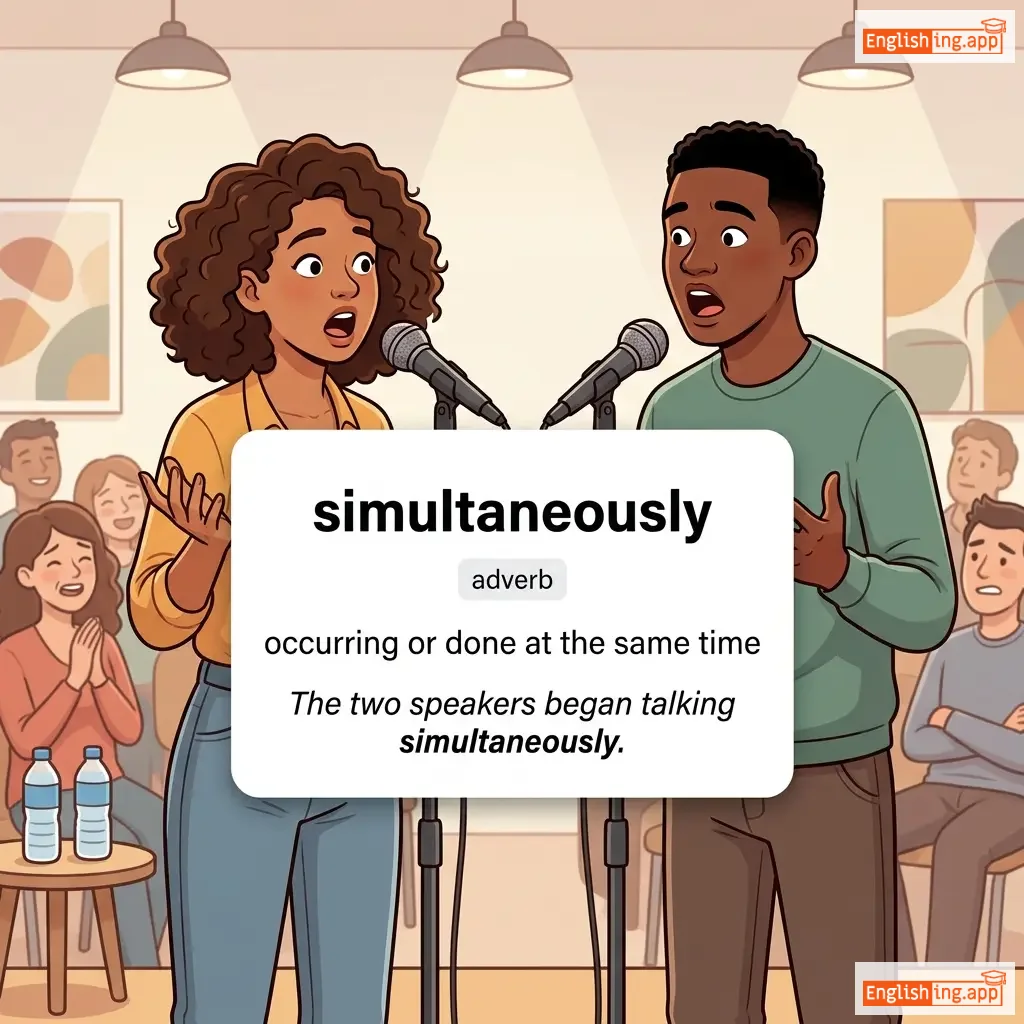
occurring or done at the same time
••••••
|
The two speakers began talking simultaneously.
Два оратора начали говорить одновременно.
••••••
|
Два оратора начали говорить одновременно.
Dva oratora nachali govorit' odnovremenno.
••••••
|
- •••••• | - •••••• | - •••••• |
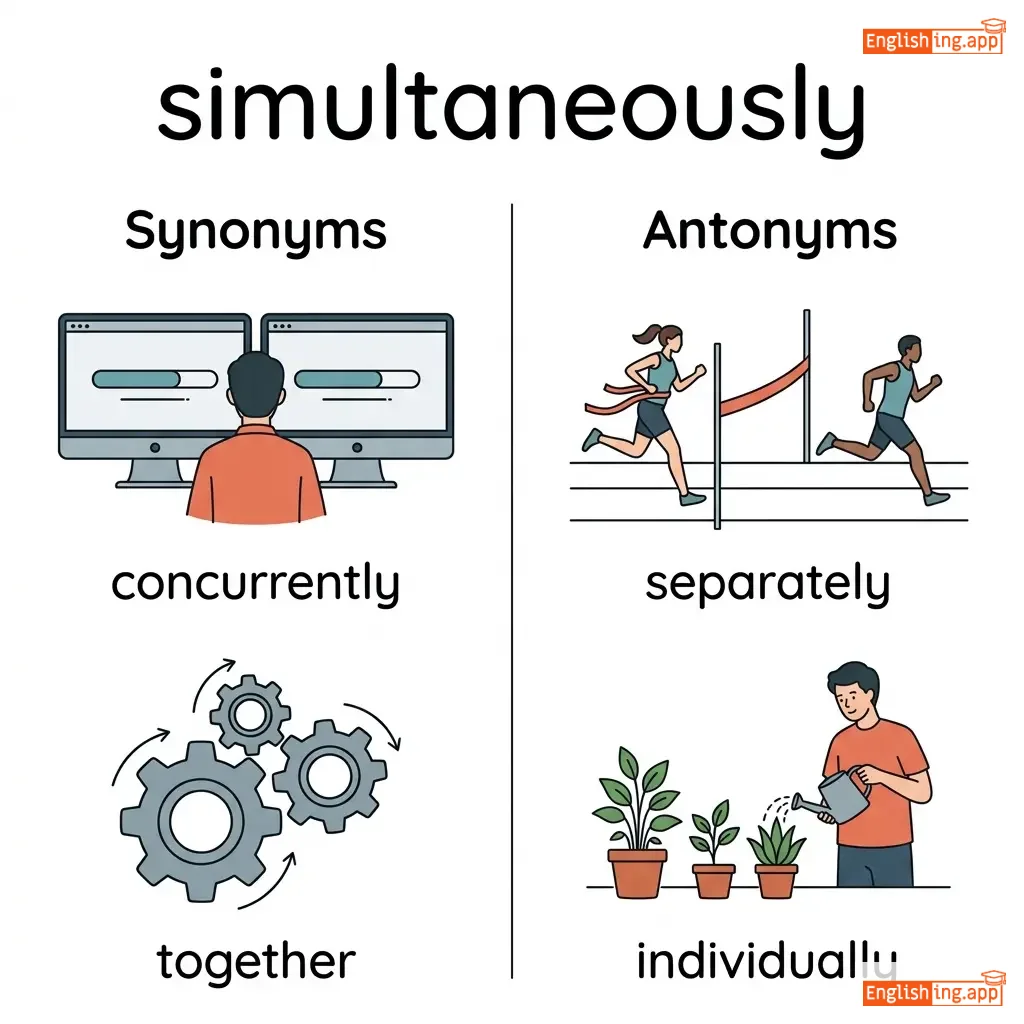
concurrently, together, synchronously, at once, in unison
••••••
|
separately, individually, consecutively
••••••
|
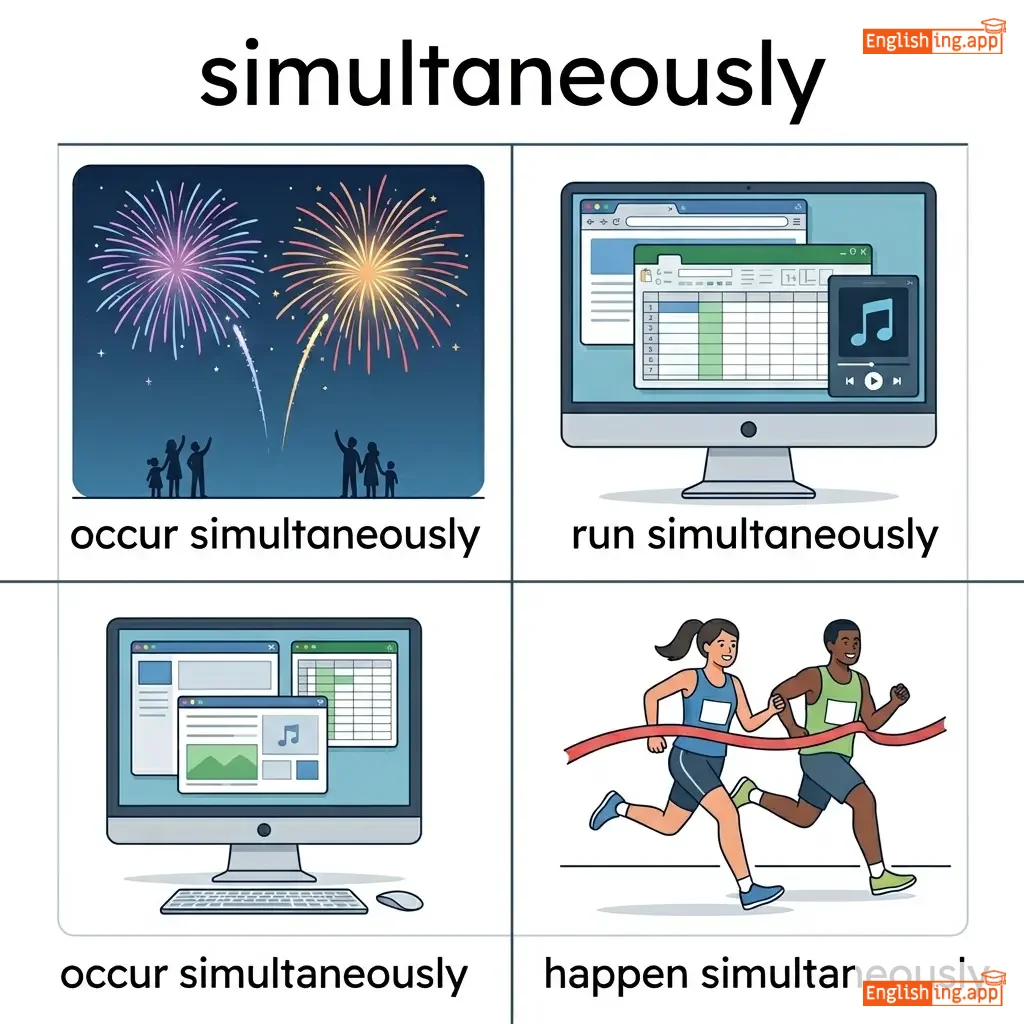
occur simultaneously, run simultaneously, happen simultaneously, work simultaneously
••••••
|
Одновременно означает в одно и то же время – два человека говорят вместе!
••••••
|
|
⚖️
••••••
|
/sɪn/
noun, verb
(син)
••••••
|
- •••••• |
грех
greh
••••••
|
sinned
синед
••••••
|
sinned
синед
••••••
|
sins
синс
••••••
|
sinning
синин
••••••
|
an immoral act considered to be a transgression against divine law; to commit an offense against religious or moral law
••••••
|
He confessed his sin to the priest.
Он исповедал свой грех священнику.
••••••
|
Он исповедал свой грех священнику.
On ispovedal svoi greh svyashchenniku.
••••••
|
fall into sin
пасть в грех
••••••
|
to commit immoral or wrong actions
••••••
|
пасть в грех
past' v grekh
••••••
|
offense, wrongdoing, crime, transgression
••••••
|
virtue, goodness, morality
••••••
|
deadly sin, confess sin, forgive sin, commit sin
••••••
|
Грех — это как 'greh', грешить
••••••
|
|
⏳
••••••
|
/sɪns/
preposition
(синс)
••••••
|
- •••••• |
с
s
••••••
|
- •••••• | - •••••• | - •••••• | - •••••• |
from a particular time in the past until now
••••••
|
I have known her since childhood. |
Я знаю её с детства.
Ya znayu yeyo s detstva.
••••••
|
- •••••• | - •••••• | - •••••• |
from, after
••••••
|
until, before
••••••
|
since childhood, since then, since yesterday
••••••
|
С детства, помни, что 'с' означает начало времени.
••••••
|
|
❤️
••••••
|
/sɪnˈsɪr/
adjective
(sin-sīr)
••••••
|
- •••••• |
искренний
iskrenniy
••••••
|
- •••••• | - •••••• | - •••••• | - •••••• |
genuine and honest; free from pretense or deceit
••••••
|
She gave a sincere apology for her mistake. |
Она извинилась искренне за свою ошибку.
Ona izvinilas' iskrenne za svoyu oshibku.
••••••
|
sincere thanks |
genuine gratitude without hidden motives
••••••
|
искренняя благодарность
iskrennyaya blagodarnost'
••••••
|
genuine, honest, heartfelt, truthful
••••••
|
insincere, fake, deceitful
••••••
|
sincere effort, sincere apology, sincere gratitude, sincere belief
••••••
|
Sincere = искренний (iskrenniy)
••••••
|
|
💌
••••••
|
/sɪnˈsɪrli/
adverb
(синсирли)
••••••
|
- •••••• |
искренне
iskrenne
••••••
|
- •••••• | - •••••• | - •••••• | - •••••• |
with genuine feelings; honestly and truly
••••••
|
I sincerely hope you recover soon.
Я sincerely надеюсь, что вы скоро поправитесь.
••••••
|
Я искренне надеюсь, что вы скоро поправитесь.
Ya iskrenne nadeyus, chto vy skoro popravites.
••••••
|
- •••••• | - •••••• | - •••••• |
honestly, genuinely, truly, faithfully, wholeheartedly
••••••
|
falsely, insincerely
••••••
|
sincerely apologize, sincerely regret, sincerely hope, sincerely wish
••••••
|
Слово 'искренне' = sincerely, помни 'искр' как spark of truth.
••••••
|
|
🎤
••••••
|
/sɪŋ/
verb
(синг)
••••••
|
|
петь
pet
••••••
|
sang
сэнг
••••••
|
sung
санг
••••••
|
sings
сингс
••••••
|
singing
сингинг
••••••
|
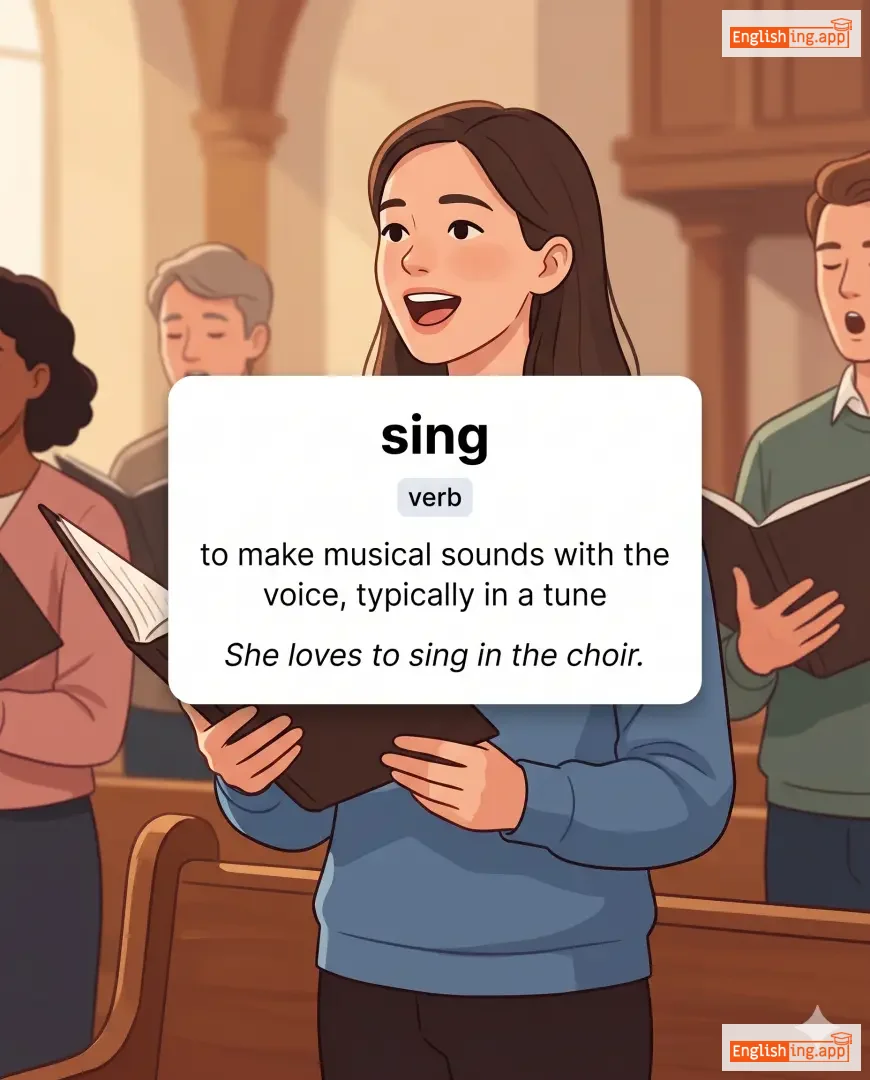
to make musical sounds with the voice, typically in a tune
••••••
|
She loves to sing in the choir.
Она любит петь в хоре.
••••••
|
Она любит петь в хоре.
Ona lyubit pet' v khore.
••••••
|
Sing your heart out
Пой от всего сердца
••••••
|
to sing with great enthusiasm and emotion
••••••
|
Пой от всего сердца
Poy ot vsego serdtsa
••••••
|
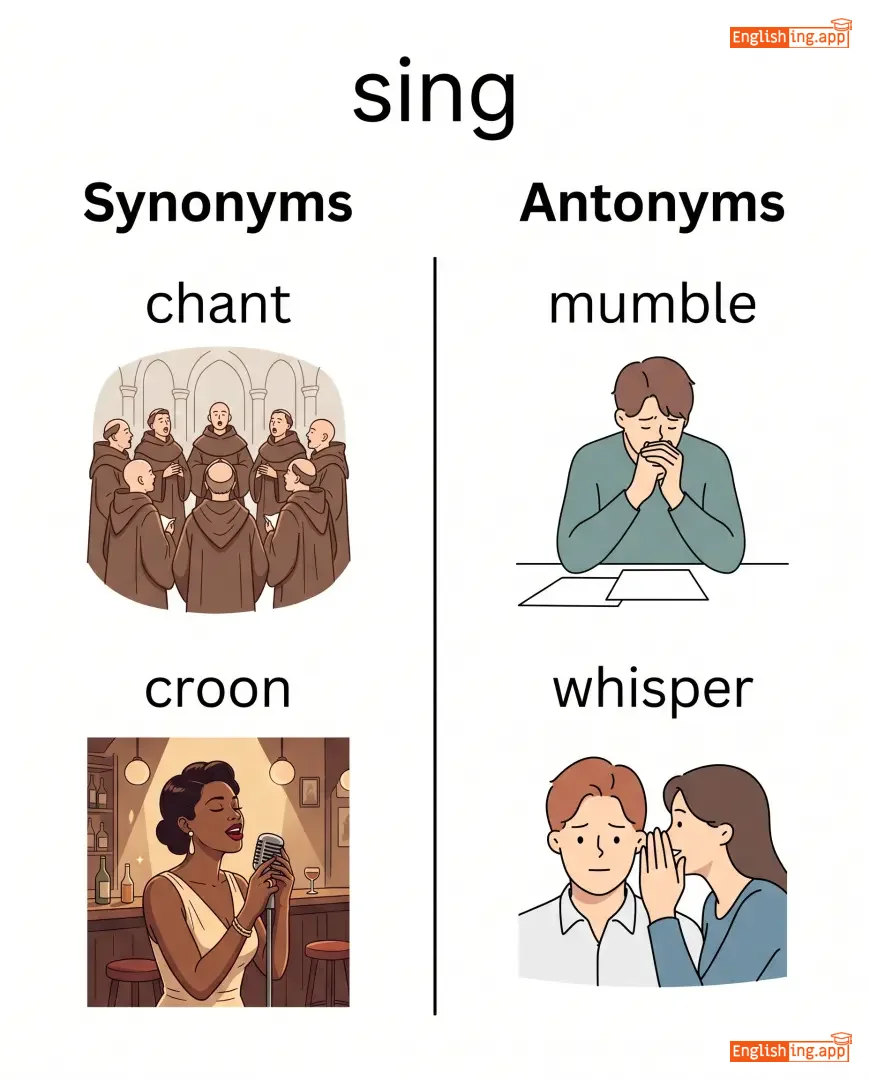
chant, croon, hum, vocalize
••••••
|
mumble, whisper
••••••
|
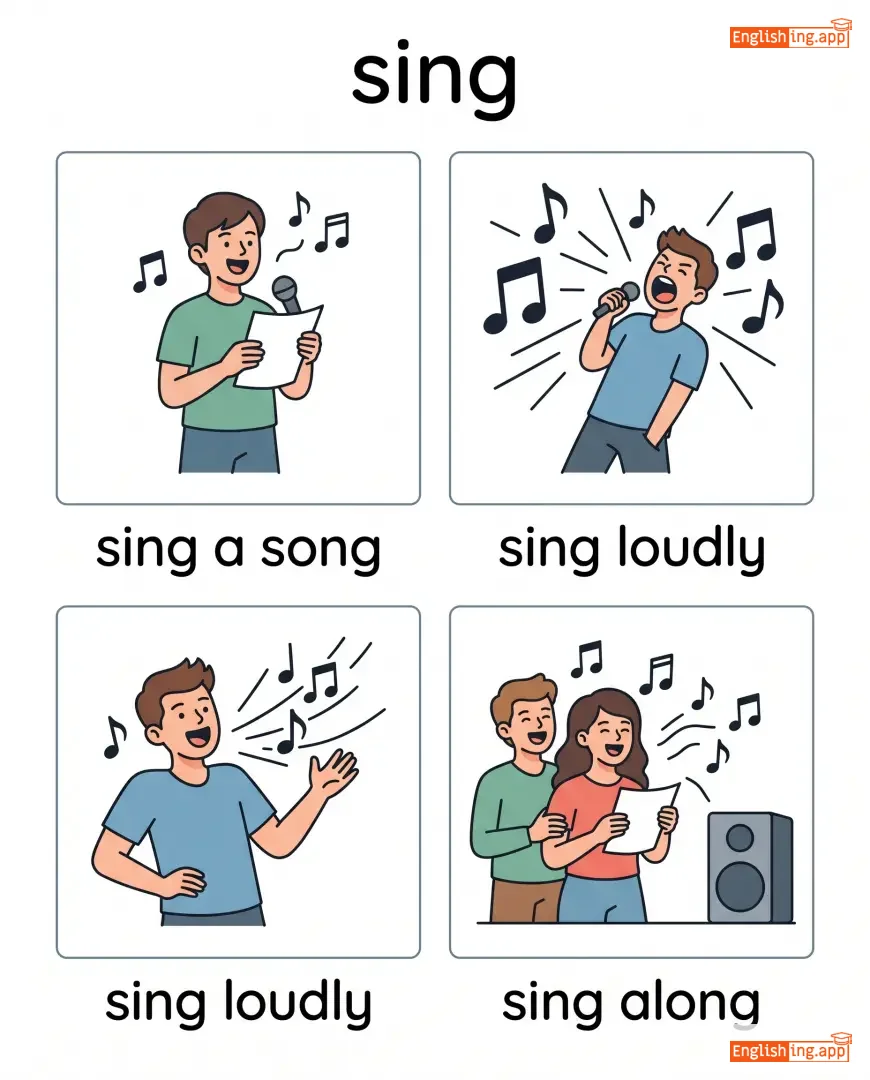
sing a song, sing loudly, sing along, sing in the choir
••••••
|
Sing as in 'Pey' - Пой с гордостью, как профессиональный певец!
••••••
|
|
🎤
••••••
|
/ˈsɪŋ.ər/
noun
(singer)
••••••
|
- •••••• |
певец
pevets
••••••
|
- •••••• | - •••••• | - •••••• | - •••••• |
a person who sings, especially as a job or profession
••••••
|
The singer performed beautifully at the concert last night.
Певец прекрасно выступил на концерте вчера вечером.
••••••
|
Певец прекрасно выступил на концерте вчера вечером.
Pevets prekrasno vystupil na kontserte vchera vecherom.
••••••
|
- •••••• | - •••••• | - •••••• |
vocalist, performer, artist, musician
••••••
|
listener, audience member
••••••
|
professional singer, opera singer, pop singer, lead singer
••••••
|
Певец поет на сцене, и все зрители аплодируют!
••••••
|
|
1️⃣
••••••
|
/ˈsɪŋɡəl/
adjective
(сингл)
••••••
|
- •••••• |
один
singl
••••••
|
- •••••• | - •••••• | - •••••• | - •••••• |
only one; not one of several
••••••
|
She bought a single ticket for the concert.
Она купила один билет на концерт.
••••••
|
Она купила один билет на концерт.
Ona kupila odin bilet na kontsert.
••••••
|
Single handed
сингл хендед
••••••
|
done by one person alone
••••••
|
одной рукой
odnoy rukoy
••••••
|
individual, sole, solitary, lone
••••••
|
multiple, many
••••••
|
single ticket, single person, single item
••••••
|
СИНГЛ = ONE; ОДИН = ODIN; EDINSTVENNYY = единственный. Представь ODIN рядом со SINGL и помни: edinstvennyy — единственный
••••••
|
|
💦
••••••
|
/sɪŋk/
verb
(синк)
••••••
|
|
тонуть
tonut'
••••••
|
sank
сэнк
••••••
|
sunk
санк
••••••
|
sinks
синкс
••••••
|
sinking
синкинг
••••••
|
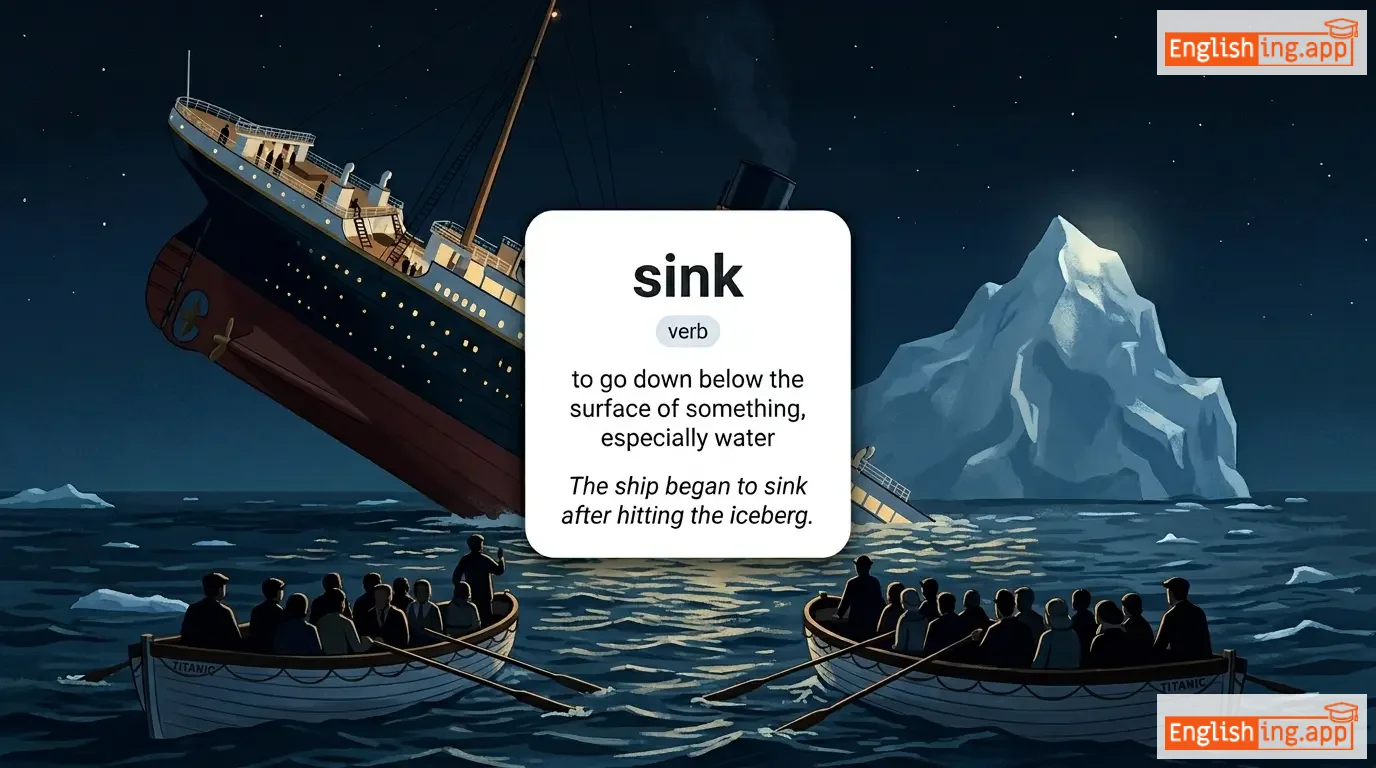
to go down below the surface of something, especially water
••••••
|
The ship began to sink after hitting the iceberg.
Корабль начал тонуть после столкновения с айсбергом.
••••••
|
Корабль начал тонуть после столкновения с айсбергом.
Korabl' nachal tonut' posle stolknoveniya s ayzbergom.
••••••
|
Sink or swim
Тонуть или плавать
••••••
|
to face a situation where one must succeed or fail based on their actions
••••••
|
Тонуть или плавать
Tonut' ili plavat'
••••••
|
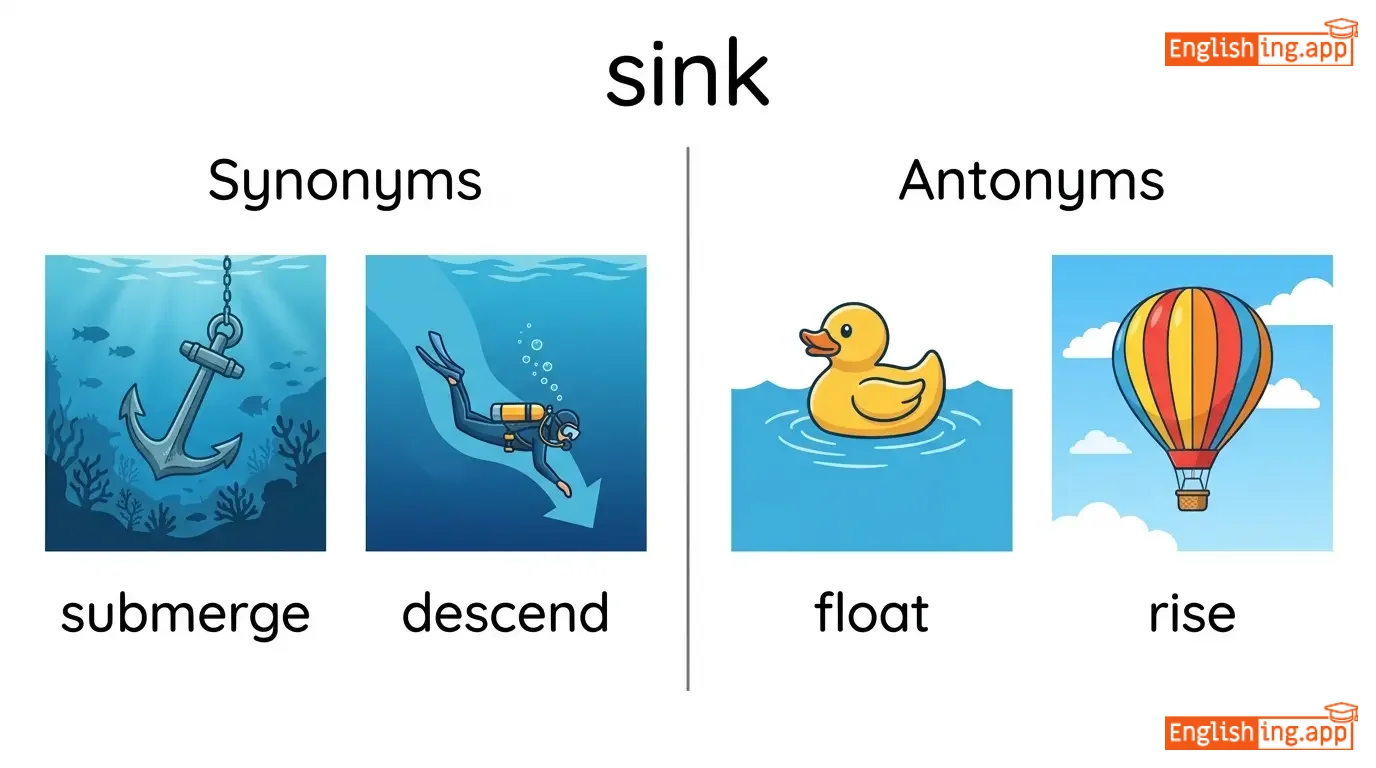
submerge, descend, drop
••••••
|
float, rise
••••••
|
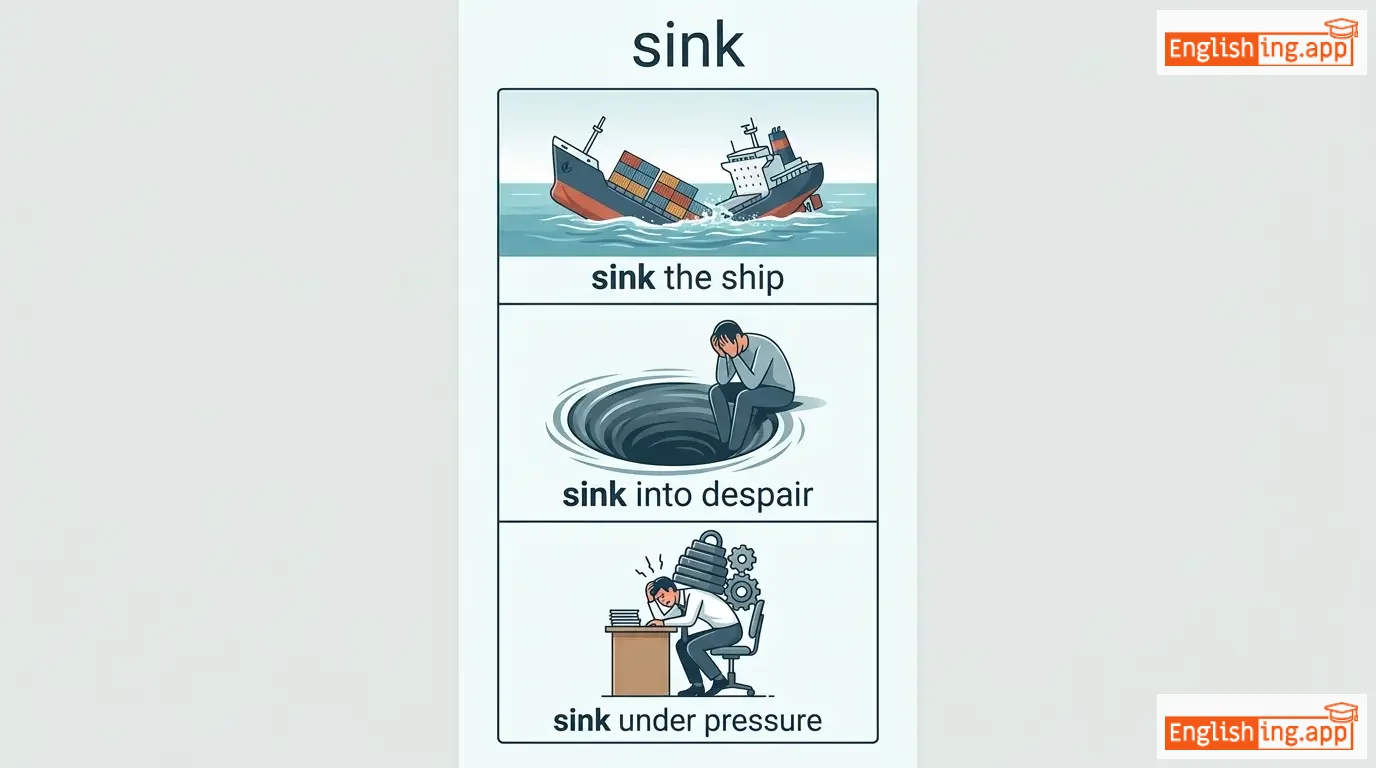
sink the ship, sink into despair, sink under pressure
••••••
|
Sink - Представь, что если ты 'тонешь', то уже не можешь плавать!
••••••
|
|
👨
••••••
|
/sɜːr/
noun
(сэр)
••••••
|
- •••••• |
сэр
ser
••••••
|
- •••••• | - •••••• | - •••••• | - •••••• |
a respectful or formal form of address used for a man, typically one of higher social status or authority
••••••
|
Sir, may I assist you with your order? |
Сэр, могу ли я помочь вам с вашим заказом?
Ser, mogu li ya pomoch' vam s vashim zakazom?
••••••
|
- •••••• | - •••••• | - •••••• |
mister, gentleman, lord, master
••••••
|
madam, miss
••••••
|
Sir, dear sir, Sir John, Sir Thomas
••••••
|
Сэр (Ser), уважение - путь к успеху!
••••••
|
|
👭
••••••
|
/ˈsɪstər/
noun
(систер)
••••••
|
- •••••• |
сестра
sestra
••••••
|
- •••••• | - •••••• | - •••••• | - •••••• |
a female sibling; a girl or woman in relation to other children of her parents
••••••
|
My sister is coming to visit us next week.
май систер из каминг ту визит ас некст вик
••••••
|
Моя сестра приедет к нам на следующей неделе.
moya sestra priedet k nam na sleduyushchey nedele
••••••
|
- •••••• | - •••••• | - •••••• |
sibling, sister-in-law, female relative
••••••
|
brother
••••••
|
older sister, younger sister, sisterly bond, my sister
••••••
|
Sestra sounds close to sister — easy link for Russian learners.
••••••
|
|
🪑
••••••
|
/sɪt/
verb
(сит)
••••••
|
- •••••• |
сидеть
sidet
••••••
|
sat
сэт
••••••
|
sat
сэт
••••••
|
sits
ситс
••••••
|
sitting
ситтинг
••••••
|
to rest with the body supported by the buttocks, often in a chair or on the ground
••••••
|
Please sit down and relax for a while.
Пожалуйста, сядьте и расслабьтесь на некоторое время.
••••••
|
Пожалуйста, сядьте и расслабьтесь на некоторое время.
Pozhaluysta, syad'te i rasslabb'tes' na nekotorye vremya.
••••••
|
sit tight
сидеть спокойно
••••••
|
to stay in one place and wait patiently
••••••
|
сидеть спокойно
siden' spokojno
••••••
|
perch, rest, settle, lounge
••••••
|
stand, rise
••••••
|
sit down, sit still, sit comfortably, sit on the chair
••••••
|
Сидеть удобно и спокойно, помни о теле.
••••••
|
|
🌍
••••••
|
/saɪt/
noun
(сайт)
••••••
|
- •••••• |
место
mesto
••••••
|
- •••••• | - •••••• | - •••••• | - •••••• |
a location or place, often used for a specific purpose, such as a construction site or a website
••••••
|
The construction site is ready for the next phase of the project. |
Строительный участок готов к следующей фазе проекта.
Stroitel'nyy uchastok gotov k sleduyushchey faze proyekt
••••••
|
- •••••• | - •••••• | - •••••• |
location, place, area, venue
••••••
|
none
••••••
|
site of the accident, construction site, development site
••••••
|
Сайт (Site) – это место, где происходят различные действия, как на сайте или строительном объекте.
••••••
|
|
📍
••••••
|
/ˈsɪtʃueɪtɪd/
adjective
(ситуэйтед)
••••••
|
- •••••• |
расположенный
raspolozhennyy
••••••
|
- •••••• | - •••••• | - •••••• | - •••••• |
located in a particular place or position
••••••
|
The hotel is situated near the beach.
отель находится рядом с пляжем.
••••••
|
Отель находится рядом с пляжем.
Otel nakhoditsya ryadom s plyazhem.
••••••
|
- •••••• | - •••••• | - •••••• |
located, positioned, placed, found
••••••
|
lost, misplaced, absent
••••••
|
situated near, situated in, centrally situated
••••••
|
Отель расположен в самом центре города.
••••••
|
|
🌍
••••••
|
/ˌsɪtʃʊˈeɪʃən/
noun
(ситуация)
••••••
|
- •••••• |
ситуация
situaciya
••••••
|
- •••••• | - •••••• | - •••••• | - •••••• |
a set of circumstances or state of affairs at a particular time
••••••
|
The situation at work became difficult after the new policies were introduced.
Ситуация на работе стала сложной после введения новых политик.
••••••
|
Ситуация на работе стала сложной после введения новых политик.
Situaciya na rabote stala slozhnoy posle vvedeniya novykh politik.
••••••
|
in a tight situation
в сложной ситуации
••••••
|
to be in a difficult or challenging circumstance
••••••
|
в сложной ситуации
v slozhnoy situacii
••••••
|
condition, circumstance, state, scenario
••••••
|
none
••••••
|
critical situation, emergency situation, business situation
••••••
|
Ситуация (Situaciya) - Спокойно, ты справишься с любой ситуацией!
••••••
|
|
6️⃣
••••••
|
/sɪks/
noun
(siks)
••••••
|
- •••••• |
шесть
shest'
••••••
|
- •••••• | - •••••• | - •••••• | - •••••• |
the number 6
••••••
|
There are six apples on the table.
На столе шесть яблок.
••••••
|
На столе шесть яблок.
Na stole shest' yablok.
••••••
|
- •••••• | - •••••• | - •••••• |
half a dozen, sextuple, sixfold
••••••
|
one
••••••
|
six o'clock, six people, six months, six days
••••••
|
Six is 'shest' in Russian. Remember it as 'Shest apples on the table'.
••••••
|

