|
絵文字
|
単語 | Images | 翻訳 | 過去 | 過去分詞 | 三人称単数 | 動名詞 | 意味 | 例文 | 例文の翻訳 | 表現例 | 表現例の意味 | 表現例の翻訳 | 同義語 | 対義語 | コロケーション | ニーモニック |
|---|---|---|---|---|---|---|---|---|---|---|---|---|---|---|---|---|---|
|
📊
••••••
|
/ɡreɪd/
noun, verb
(グレード)
••••••
|
- •••••• |
成績
seiseki
••••••
|
graded
グレードされた
••••••
|
graded
グレードされた
••••••
|
grades
グレードス
••••••
|
grading
グレーディング
••••••
|
A level of quality, rank, or performance; to assign a score or mark to work or performance.
••••••
|
The teacher graded all the papers by the weekend.
教師は週末までにすべての課題を採点しました。
••••••
|
教師は週末までにすべての課題を採点しました。
Kyōshi wa shūmatsu made ni subete no kadai o saiten shimashita.
••••••
|
make the grade
基準を満たす
••••••
|
To succeed or meet the required standard.
••••••
|
基準を満たす
kijun o mitasu
••••••
|
rank, level, mark, score, stage
••••••
|
failure, decline
••••••
|
high grade, grade level, grade point, grade paper
••••••
|
Grade という言葉は、評価のレベルを示すものです。
••••••
|
|
🎓
••••••
|
/ɡrænt/
verb
••••••
|

|
- •••••• |
granted
••••••
|
granted
••••••
|
grants
••••••
|
granting
••••••
|
To give or allow something, usually in an official or formal way.
••••••
|
The university granted him a scholarship for his excellent results. |
- •••••• |
take for granted |
To fail to appreciate the value of something or someone.
••••••
|
- •••••• |
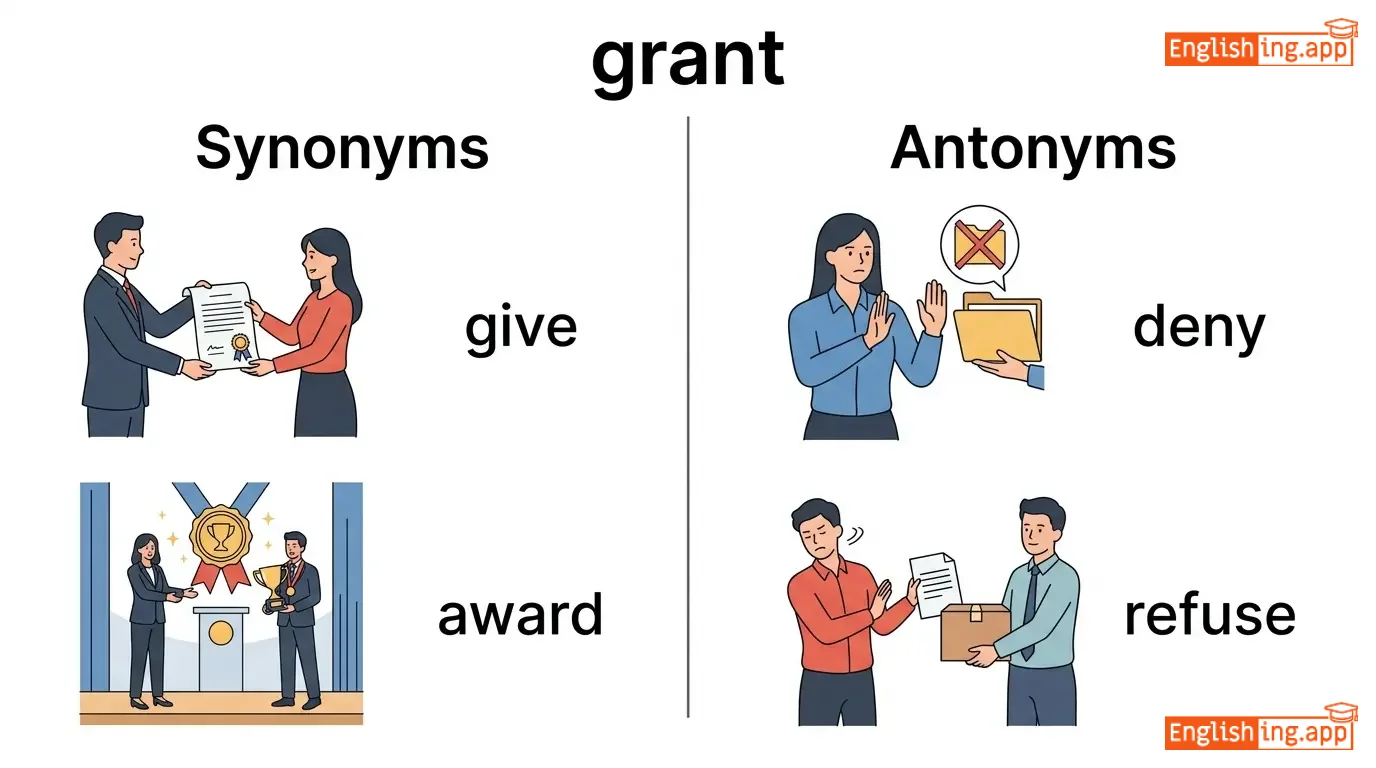
give, award, allow, permit, bestow
••••••
|
deny, refuse, withhold
••••••
|
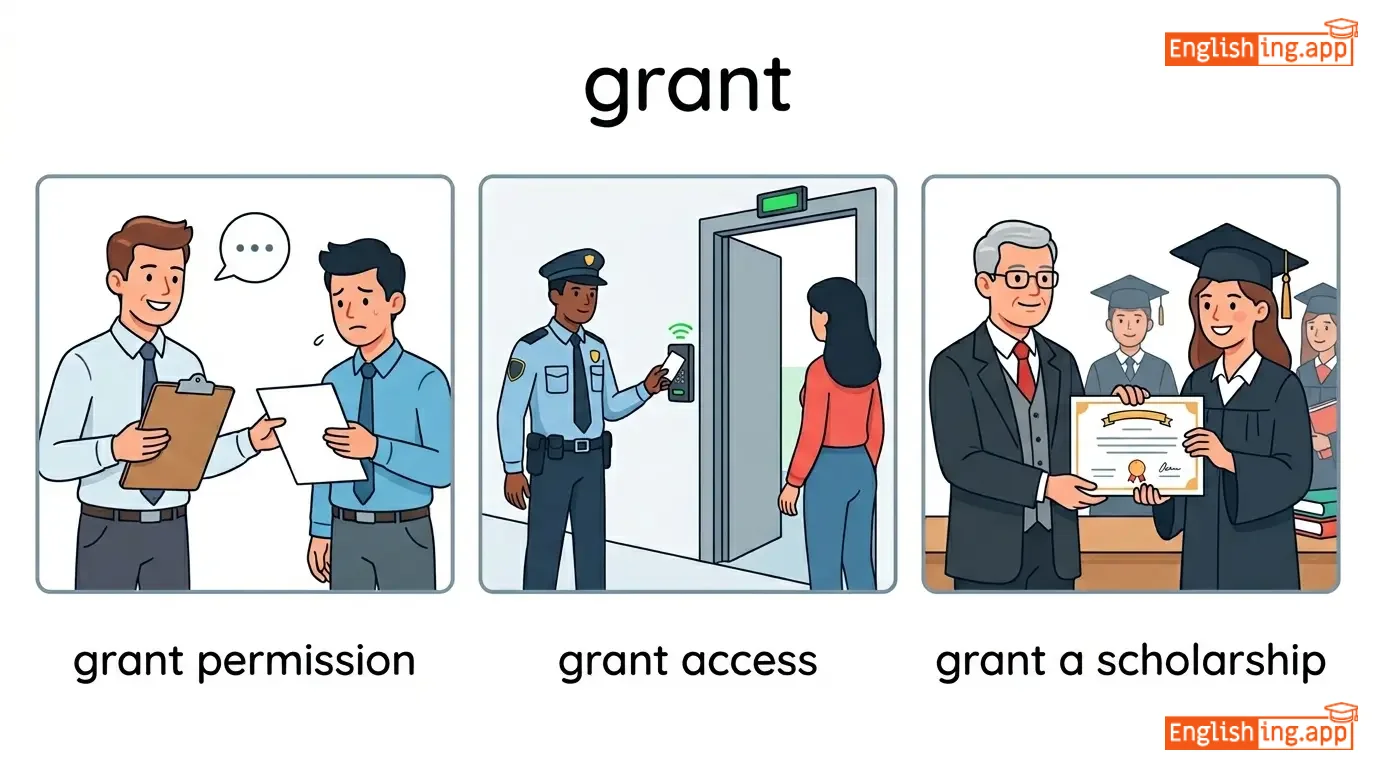
grant permission, grant access, grant a scholarship, grant a request
••••••
|
No •••••• |
|
🎨
••••••
|
/ˈɡræf.ɪk/
adjective
••••••
|
- •••••• | - •••••• | - •••••• | - •••••• | - •••••• | - •••••• |
Relating to visual art, especially involving drawing, design, or vivid description.
••••••
|
The movie contained graphic scenes of violence. |
- •••••• |
graphic details |
Explicit and vivid description of events or images, often shocking.
••••••
|
- •••••• |
illustrative, vivid, pictorial, descriptive, explicit
••••••
|
vague, dull, unclear
••••••
|
graphic design, graphic novel, graphic content, graphic details
••••••
|
No •••••• |
|
🎨
••••••
|
/ˈɡræfɪks/
noun
(グラフィックス)
••••••
|
- •••••• |
グラフィックス
gurafikkusu
••••••
|
- •••••• | - •••••• | - •••••• | - •••••• |
visual images, designs, or drawings used to convey information or artistic expression
••••••
|
The website uses stunning graphics to attract visitors. |
そのウェブサイトは訪問者を引き付けるために素晴らしいグラフィックスを使用しています。
Sono uebusaito wa hōmon-sha o hiki tsukeru tame ni subarashī gurafikkusu o shiyō shiteimasu.
••••••
|
- •••••• | - •••••• | - •••••• |
images, visuals, illustrations, designs
••••••
|
text, words
••••••
|
computer graphics, graphic design, graphic artist, digital graphics
••••••
|
グラフィックデザインのように、誰もが引き込まれるグラフィックス
••••••
|
|
✊
••••••
|
/ɡrɑːsp/
verb
(グラスプ)
••••••
|
|
しっかりとつかむまたは完全に理解する
shikkari to tsukamu matawa kanzen ni rikai suru
••••••
|
grasped
グラスプド
••••••
|
grasped
グラスプド
••••••
|
grasps
グラスプス
••••••
|
grasping
グラスピング
••••••
|
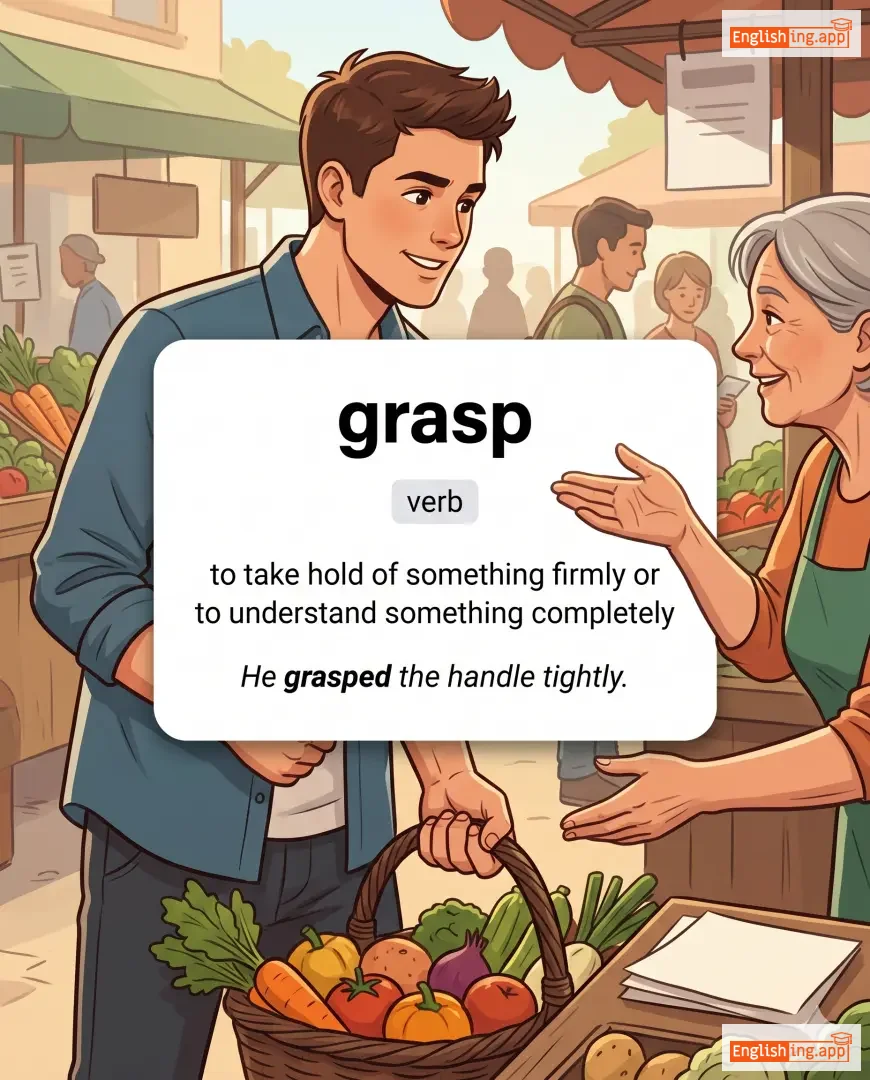
to take hold of something firmly or to understand something completely
••••••
|
He grasped the handle tightly.
彼はハンドルをしっかり握った。
••••••
|
彼はハンドルをしっかり握った。
Kare wa handoru o shikkari nigitta.
••••••
|
grasp the nettle
イラクサを掴む
••••••
|
to deal with a difficult situation with courage
••••••
|
困難な状況に勇気を持って対処する
Konnan na joukyou ni yuuki o motte taisho suru
••••••
|
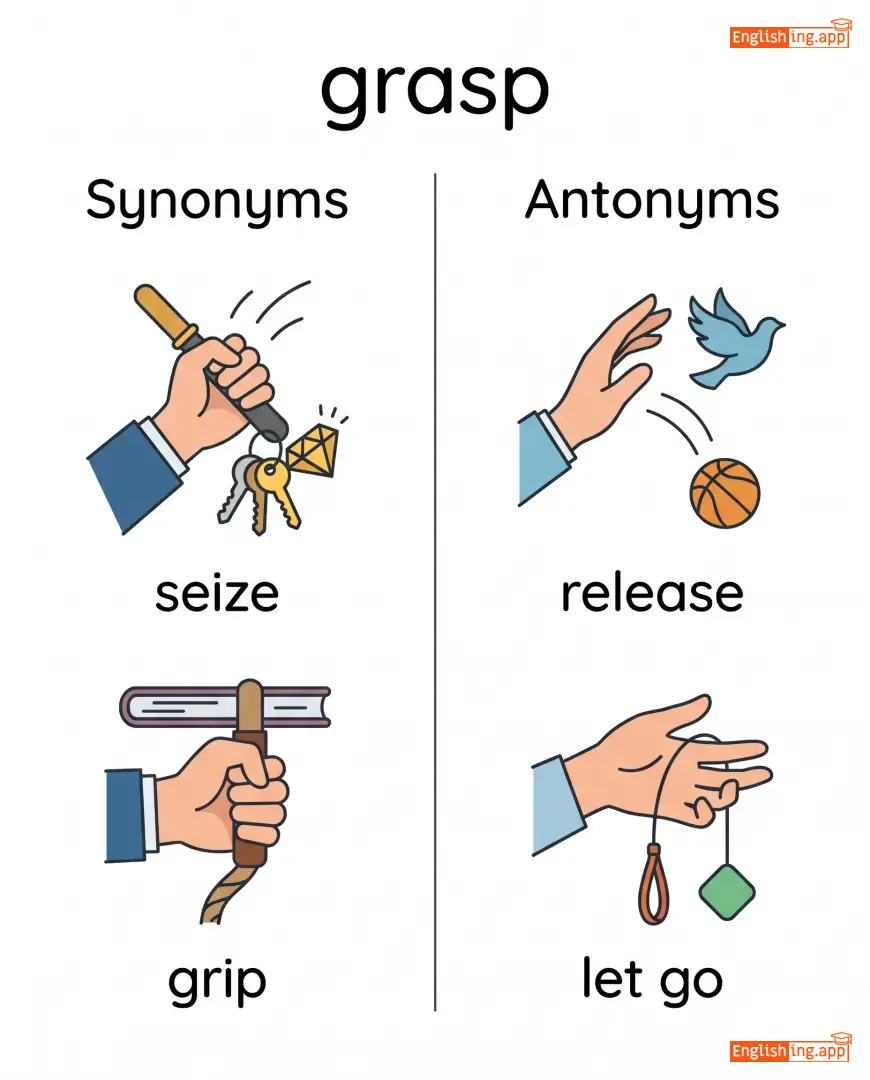
seize, grip, clutch, understand, comprehend
••••••
|
release, let go, misunderstand
••••••
|
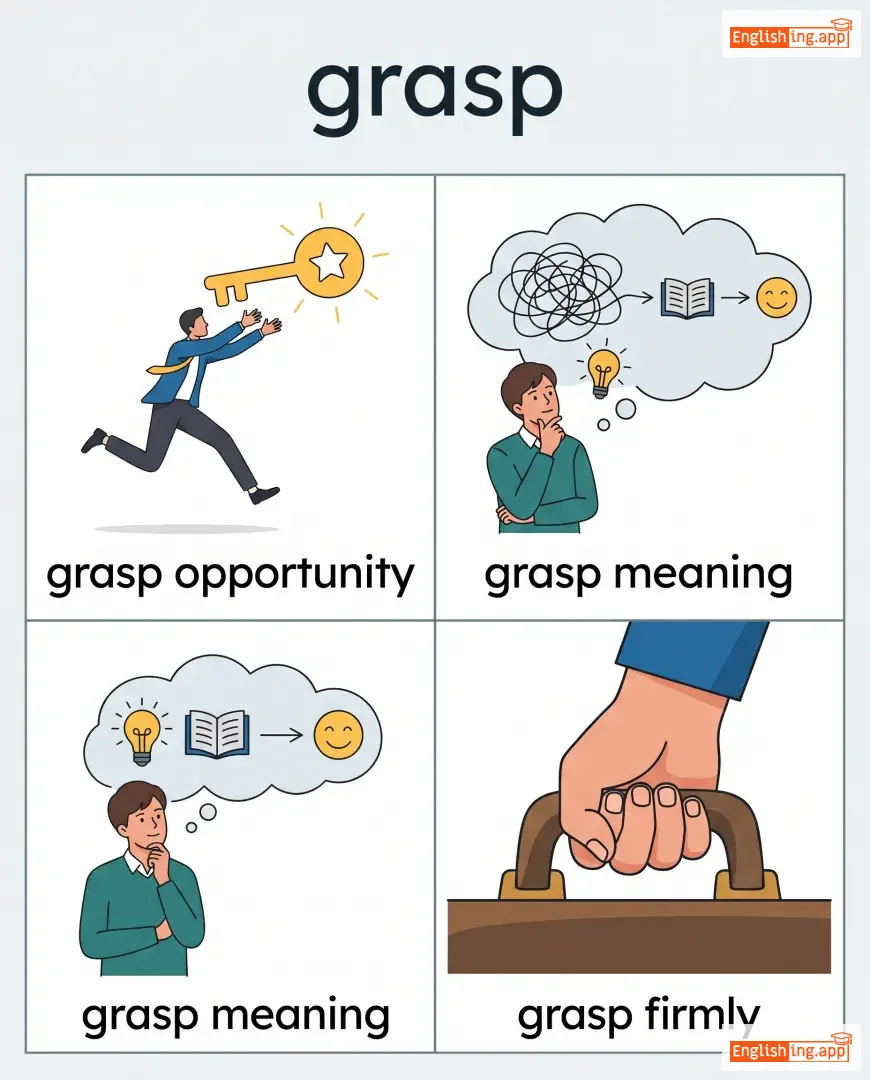
grasp opportunity, grasp meaning, grasp firmly, grasp concept
••••••
|
Grasp: しっかり握って理解しよう!
••••••
|
|
🌱
••••••
|
/ɡræs/
noun
(ハピネス)
••••••
|
- •••••• |
幸福
kōfuku
••••••
|
- •••••• | - •••••• | - •••••• | - •••••• |
plants with narrow green leaves, often covering the ground in fields or gardens
••••••
|
Children are playing on the grass. |
彼女は賞を受け取ったとき、幸せを隠すことができませんでした。
Kanojo wa shō o uketotta toki, kōfuku o kakusu koto ga dekimasen deshita.
••••••
|
the grass is always greener on the other side |
other people's situations always seem better than one's own
••••••
|
幸福を追求する
kōfuku o tsuikyū suru
••••••
|
lawn, turf, pasture, sod, herbage
••••••
|
bare ground, soil
••••••
|
green grass, cut grass, fresh grass, tall grass
••••••
|
幸福 = Happy + 福 = Happiness
••••••
|
|
🙏
••••••
|
/ˈɡreɪtfəl/
adjective
(グレイトフル)
••••••
|
- •••••• |
感謝している
kansha shiteiru
••••••
|
- •••••• | - •••••• | - •••••• | - •••••• |
feeling or showing thanks for something or someone
••••••
|
I am grateful for your help. |
私はあなたの助けに感謝しています。
Watashi wa anata no tasuke ni kansha shiteimasu.
••••••
|
grateful heart |
a feeling of deep appreciation and thankfulness
••••••
|
感謝の心
kansha no kokoro
••••••
|
thankful, appreciative, obliged, indebted, pleased
••••••
|
ungrateful, thankless, indifferent
••••••
|
grateful for, deeply grateful, grateful thanks, feel grateful
••••••
|
感謝しているとは感謝の心、いつでも感謝を忘れずに!
••••••
|
|
⚰️
••••••
|
/ɡreɪv/
noun, adjective
(グレイブ)
••••••
|
- •••••• |
墓
haka
••••••
|
- •••••• | - •••••• | - •••••• | - •••••• |
A place where someone is buried; also used to describe something serious or solemn.
••••••
|
He visited his grandfather's grave every year. |
彼は毎年祖父の墓を訪れていました。
Kare wa mainen sofu no haka o otozurete imashita.
••••••
|
turn in one's grave |
To be very upset or disturbed even after death, often used figuratively.
••••••
|
墓の中で転がる
haka no naka de korogaru
••••••
|
tomb, burial site, sepulcher, serious, solemn
••••••
|
lighthearted, trivial
••••••
|
grave danger, grave mistake, grave concern, graveyard, visit a grave
••••••
|
グレイブは墓と真剣な意味も持っています。
••••••
|
|
🪦
••••••
|
/ˈɡreɪv.jɑːrd/
noun
(グレイブヤード)
••••••
|
- •••••• |
墓地
bochi
••••••
|
- •••••• | - •••••• | - •••••• | - •••••• |
an area of land set aside for burial of the dead; a cemetery
••••••
|
The old graveyard near the church dates back to the 18th century. |
教会近くの古い墓地は18世紀にさかのぼります。
Kyōkai chikaku no furui bochi wa 18 seiki ni sakanoborimasu.
••••••
|
- •••••• | - •••••• | - •••••• |
cemetery, burial ground, necropolis, churchyard
••••••
|
birthplace, nursery, playground, living space
••••••
|
old graveyard, church graveyard, graveyard shift
••••••
|
墓地 = 安息の場所
••••••
|
|
🌍
••••••
|
/ˈɡrævəti/
noun
••••••
|
|
- •••••• | - •••••• | - •••••• | - •••••• | - •••••• |
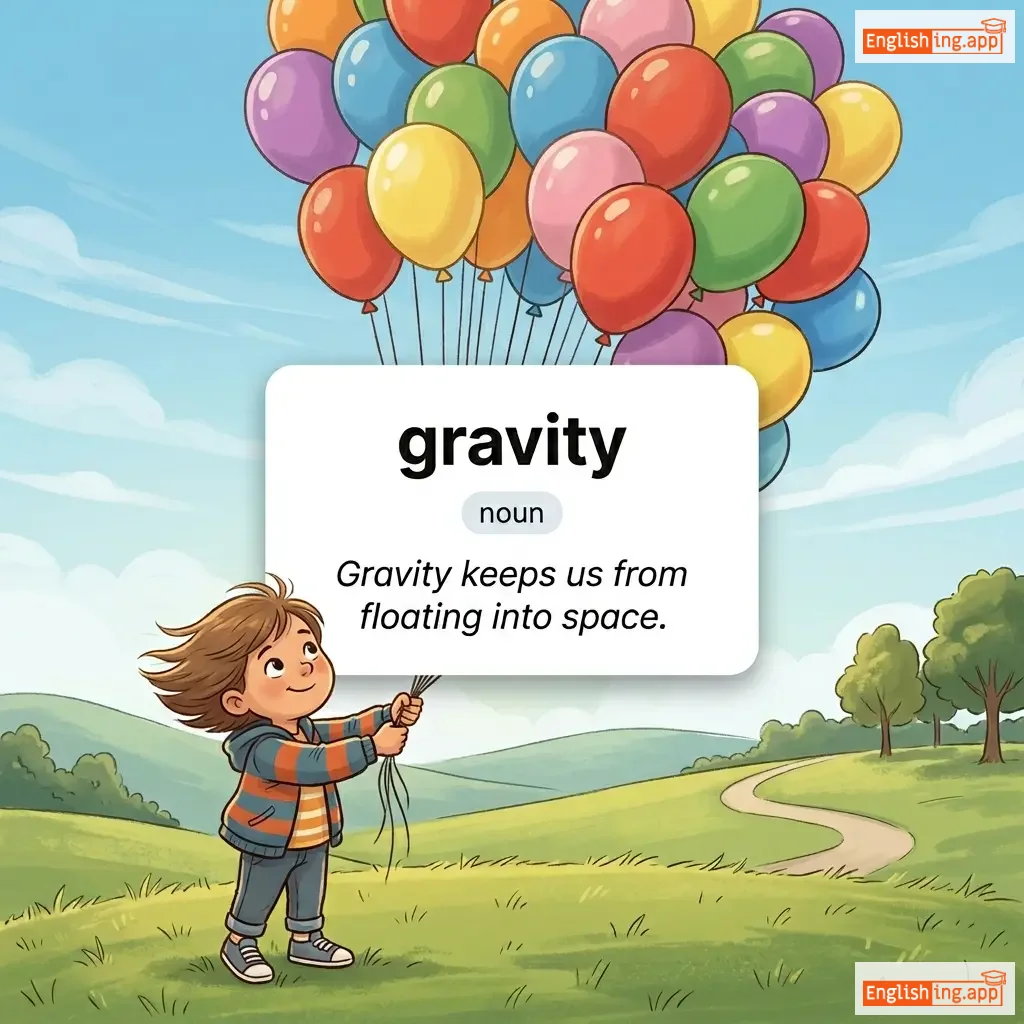
The natural force that attracts objects toward the center of the earth; seriousness or importance.
••••••
|
Gravity keeps us from floating into space. |
- •••••• |
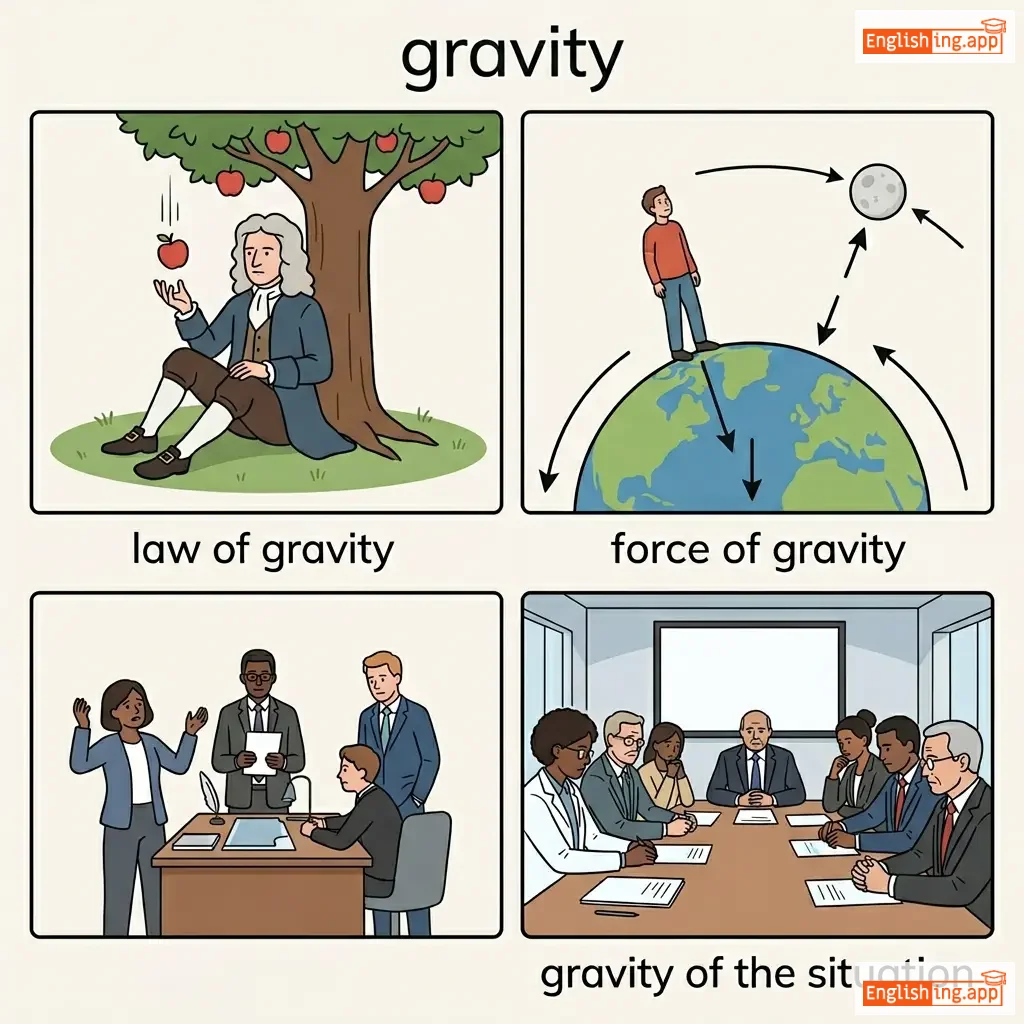
gravity of the situation |
The seriousness or importance of a situation.
••••••
|
- •••••• |
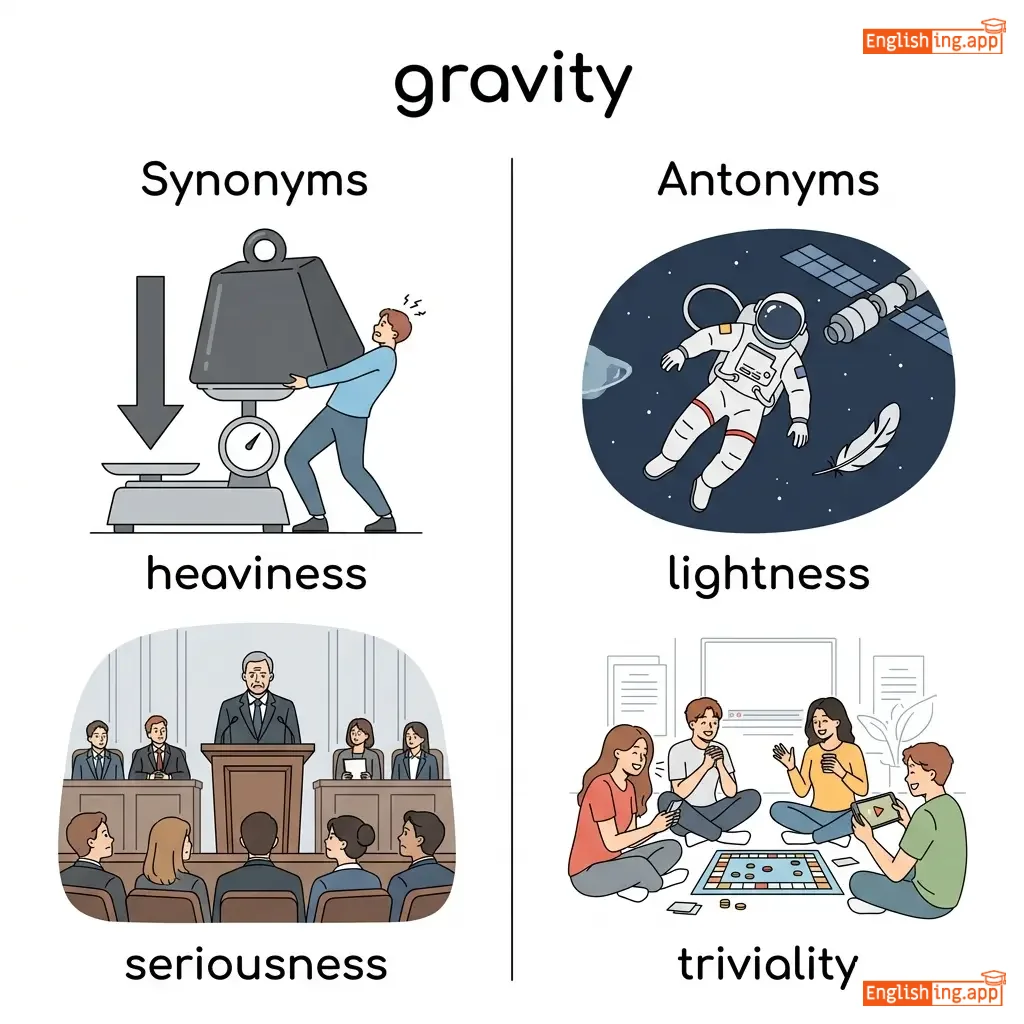
heaviness, seriousness, weight, force
••••••
|
lightness, triviality
••••••
|
law of gravity, force of gravity, gravity of the situation
••••••
|
No •••••• |
|
🌫️
••••••
|
/ɡreɪ/
adjective, noun
(ハピネス)
••••••
|
- •••••• |
幸せ
shiawase
••••••
|
- •••••• | - •••••• | - •••••• | - •••••• |
A color between black and white; also describes dull or gloomy situations.
••••••
|
The sky turned gray before the storm. |
彼女は賞を受け取ったとき、幸せを隠せなかった。
Kanojo wa shō o uketotta toki, shiawase o kakusenakatta.
••••••
|
gray area |
Something unclear or not easily classified.
••••••
|
幸せの追求
shiawase no tsuikyū
••••••
|
ashen, dull, silver, gloomy, neutral
••••••
|
bright, colorful
••••••
|
gray sky, gray hair, gray area, gray clouds, gray mood
••••••
|
幸せは心の平穏を見つけることです。
••••••
|
|
🌟
••••••
|
/ɡreɪt/
adjective
(グレート)
••••••
|
- •••••• |
素晴らしい
subarashii
••••••
|
- •••••• | - •••••• | - •••••• | - •••••• |
Of an extent, amount, or intensity considerably above average; very good or important.
••••••
|
She gave a great performance at the concert.
彼女はコンサートで素晴らしいパフォーマンスをしました。
••••••
|
彼女はコンサートで素晴らしいパフォーマンスをしました。
Kanojo wa konsāto de subarashī pafōmansu o shimashita.
••••••
|
great minds think alike
偉大な考えを持つ者は同じように考える
••••••
|
Intelligent people often have similar ideas.
••••••
|
偉大な考えを持つ者は同じように考える
Idaina kangae o motsu mono wa onaji yō ni kangaeru
••••••
|
excellent, outstanding, important, immense, huge
••••••
|
poor, small, insignificant
••••••
|
great deal, great importance, great success, great leader
••••••
|
素晴らしい=素敵!良いことをする人には素晴らしい結果が待っている。
••••••
|
|
🏆
••••••
|
/ˈɡreɪ.tɪst/
adjective (superlative)
(グレイテスト)
••••••
|
- •••••• |
最も偉大
mottomo idai
••••••
|
- •••••• | - •••••• | - •••••• | - •••••• |
The highest degree of greatness; the most outstanding or important.
••••••
|
He is considered one of the greatest leaders of all time.
彼は全時代で最も偉大なリーダーの一人と考えられています。
••••••
|
彼は全時代で最も偉大なリーダーの一人と考えられています。
Kare wa zen jidai de mottomo idaina riidaa no hitori to kangaerareteimasu.
••••••
|
the greatest of all time
歴史上最も偉大
••••••
|
Used to describe someone regarded as the best ever in a field.
••••••
|
歴史上最も偉大
rekishi jou mottomo idai
••••••
|
best, finest, top, supreme, foremost
••••••
|
least, worst
••••••
|
greatest achievement, greatest leader, greatest player, greatest strength, greatest challenge
••••••
|
Greatest は最も偉大、リーダーの象徴です。
••••••
|
|
💫
••••••
|
/ˈɡreɪtli/
adverb
(グレイトリー)
••••••
|
- •••••• |
非常に
hijou ni
••••••
|
- •••••• | - •••••• | - •••••• | - •••••• |
to a large extent or degree; very much
••••••
|
She was greatly admired by her students.
彼女は生徒たちから非常に賞賛されました。
••••••
|
彼女は生徒たちから非常に賞賛されました。
Kanojo wa seitotachi kara hijou ni shousan saremashita.
••••••
|
- •••••• | - •••••• | - •••••• |
extremely, immensely, highly, deeply, significantly
••••••
|
slightly, barely, hardly
••••••
|
greatly improve, greatly appreciate, greatly benefit, greatly influence
••••••
|
Greatly は非常に、大きな程度で!
••••••
|
|
🌿
••••••
|
/ɡriːn/
adjective
(gurin)
••••••
|
- •••••• |
緑
midori
••••••
|
- •••••• | - •••••• | - •••••• | - •••••• |
Of the color between blue and yellow in the spectrum; inexperienced or naive.
••••••
|
The garden is full of green plants. |
庭は緑の植物でいっぱいです。
Niwa wa midori no shokubutsu de ippai desu.
••••••
|
green with envy |
Extremely jealous.
••••••
|
嫉妬で緑
Shitto de midori
••••••
|
verdant, leafy, fresh, naive, inexperienced
••••••
|
dry, withered, experienced
••••••
|
green plants, green energy, green environment, green with envy
••••••
|
緑は植物のようなものです、庭にあるもののように。
••••••
|
|
🌱
••••••
|
/ˈɡriːnhaʊs/
noun
(グリーンハウス)
••••••
|
- •••••• |
温室
onshitsu
••••••
|
- •••••• | - •••••• | - •••••• | - •••••• |
a glass building used for growing plants, especially in cold climates
••••••
|
The farmers built a large greenhouse to grow tomatoes in the winter. |
農家は冬にトマトを育てるために大きな温室を建てました。
Nōka wa fuyu ni tomato o sodateru tame ni ōkina onshitsu o tatemashita.
••••••
|
- •••••• | - •••••• | - •••••• |
hothouse, conservatory, plant house
••••••
|
open field, outdoors
••••••
|
greenhouse effect, greenhouse gas, greenhouse plants, greenhouse cultivation
••••••
|
温室は植物を温かく保つ場所として有名です。
••••••
|
|
🗺️
••••••
|
/ɡrɪd/
noun
(グリッド)
••••••
|
|
グリッド
guriddo
••••••
|
- •••••• | - •••••• | - •••••• | - •••••• |
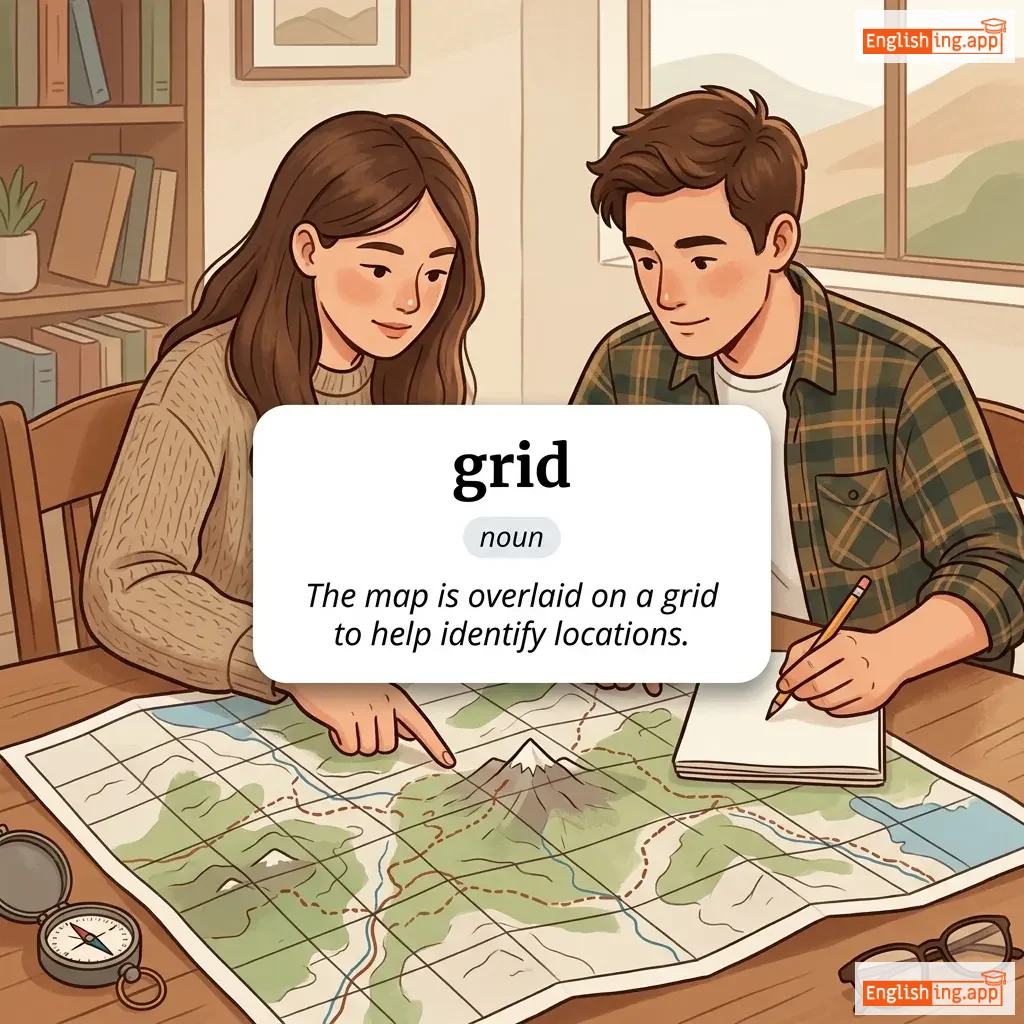
a network of lines that cross each other to form a series of squares or rectangles
••••••
|
The map is overlaid on a grid to help identify locations. |
地図は位置を特定するのに役立つようにグリッド上に重ねられています。
Chizu wa ichi o tokutei suru no ni yakudatsu yō ni guriddo-jō ni kasanerareteimasu.
••••••
|
- •••••• | - •••••• | - •••••• |
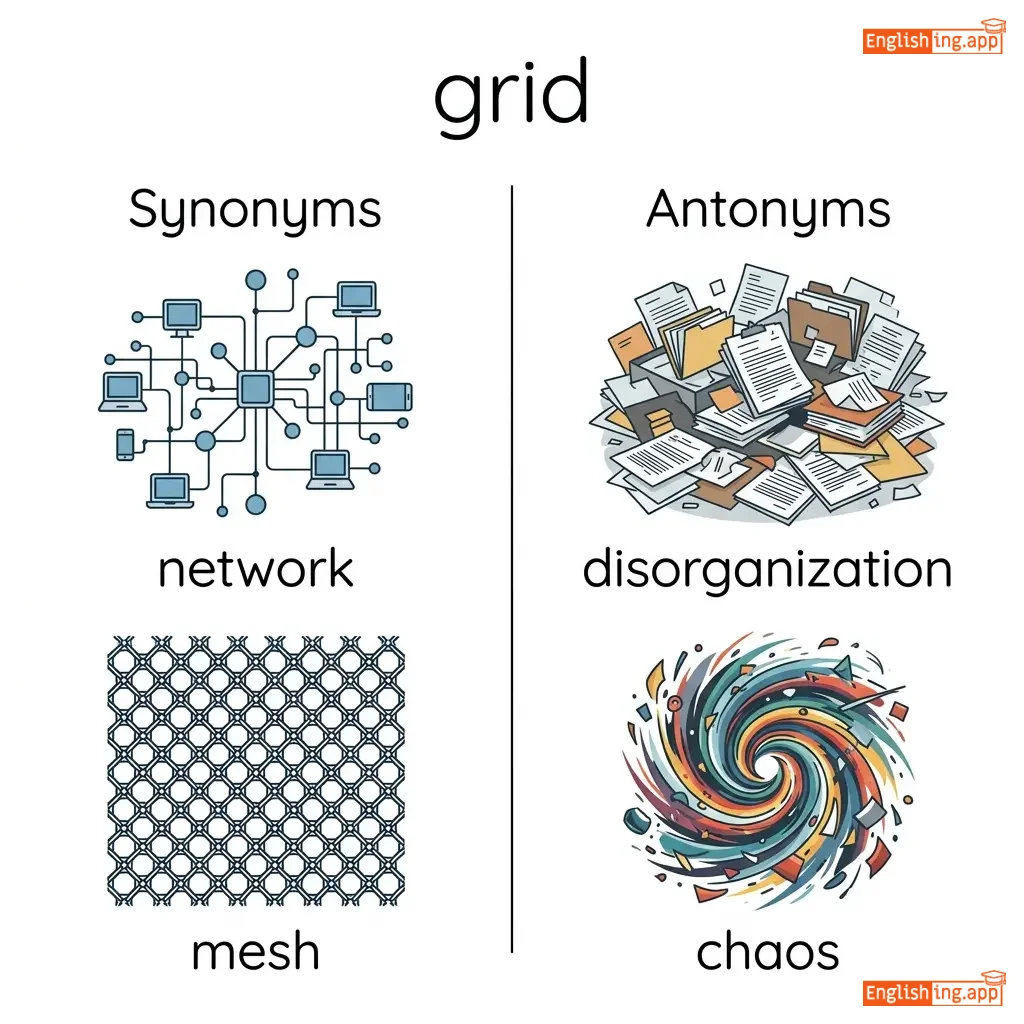
network, mesh, framework, matrix
••••••
|
disorganization, chaos
••••••
|
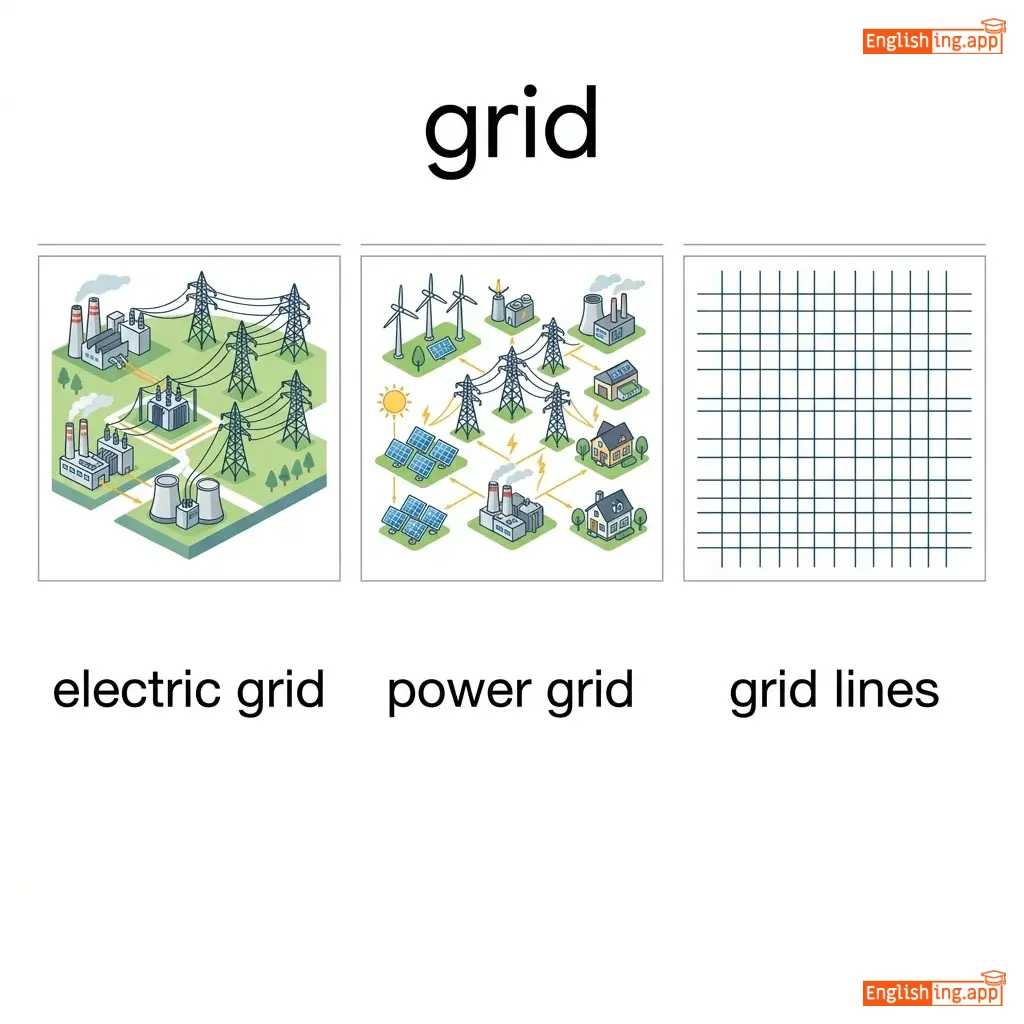
electric grid, power grid, grid lines, grid system
••••••
|
‘グリッド’は地図のように場所を特定するためのネットワーク、簡単に探せる場所を見つける手助けをします。
••••••
|
|
😢
••••••
|
/ɡriːf/
noun
(グリーフ)
••••••
|
- •••••• |
悲しみ
kanashimi
••••••
|
- •••••• | - •••••• | - •••••• | - •••••• |
Deep sorrow, especially caused by someone's death.
••••••
|
She was overcome with grief after her father's passing. |
彼女は父親の死後、悲しみに打ちひしがれていた。
Kanojo wa chichioya no shigo, kanashimi ni uchi hisigarete ita.
••••••
|
Good grief |
An exclamation expressing surprise, dismay, or annoyance.
••••••
|
なんてこった
Nante kotta
••••••
|
sorrow, sadness, anguish, heartbreak, mourning
••••••
|
joy, happiness, delight
••••••
|
deep grief, grief and sorrow, grief over loss
••••••
|
Griefは悲しみ → 結婚式で涙が流れる悲しみを想像してみてください。
••••••
|
|
😁
••••••
|
/ɡrɪn/
verb, noun
(グリン)
••••••
|
- •••••• |
歯を見せて広く笑う
ha o misete hiroku warau
••••••
|
grinned
グリンド
••••••
|
grinned
グリンド
••••••
|
grins
グリンズ
••••••
|
grinning
グリニング
••••••
|
to smile broadly, often showing teeth
••••••
|
She grinned happily at the good news.
彼女は良いニュースを聞いてうれしそうに笑った。
••••••
|
彼女は良いニュースを聞いてうれしそうに笑った。
Kanojo wa yoi nyūsu o kiite ureshisō ni waratta.
••••••
|
grin and bear it
笑って耐える
••••••
|
to endure something unpleasant with good humor
••••••
|
笑って耐える
waratte taeru
••••••
|
smile, beam, smirk, chuckle
••••••
|
frown, scowl
••••••
|
big grin, cheeky grin, wide grin, grin broadly
••••••
|
笑って耐える、笑顔で頑張る
••••••
|
|
⚙️
••••••
|
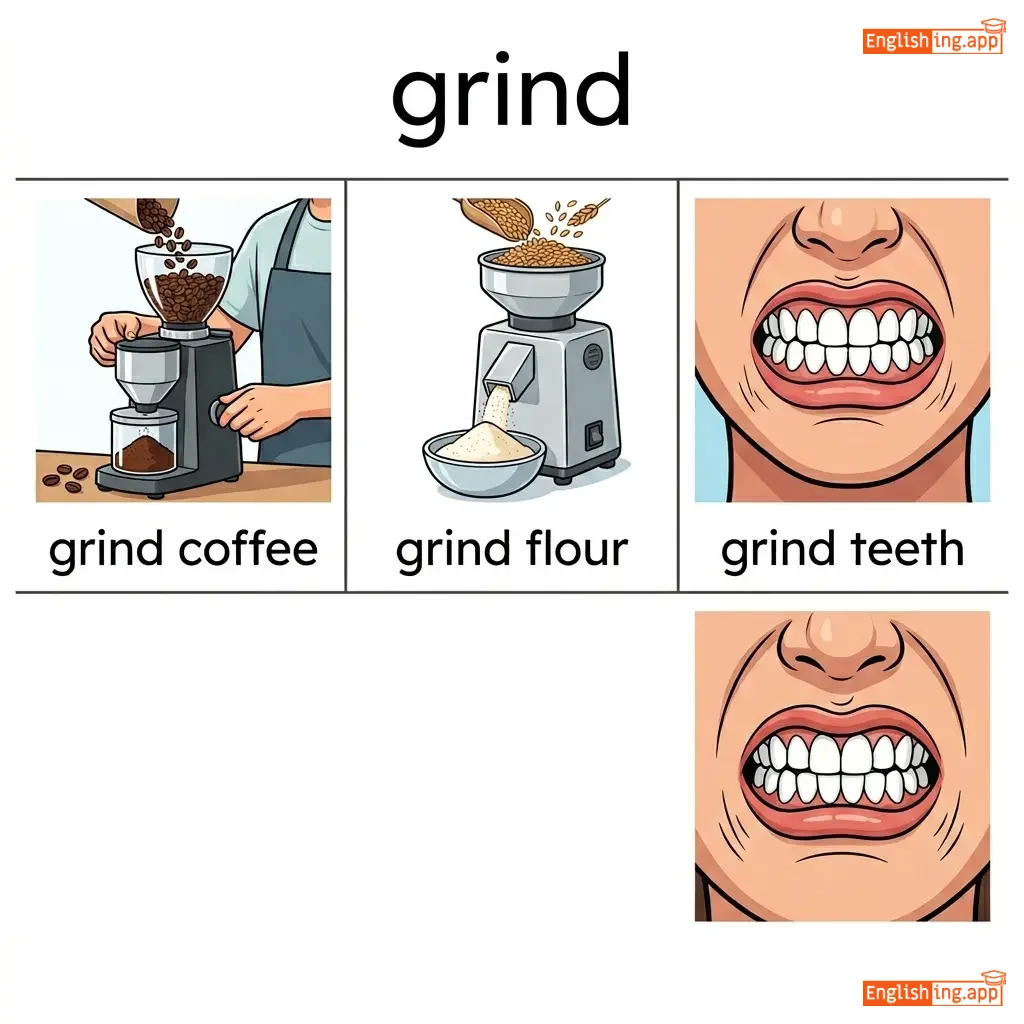
/ɡraɪnd/
verb
(guraindo)
••••••
|

|
挽く
hiku
••••••
|
ground
guraundo
••••••
|
ground
guraundo
••••••
|
grinds
guraindosu
••••••
|
grinding
guraindingu
••••••
|
to crush into small particles; to work hard
••••••
|
She grinds coffee beans every morning.
彼女は毎朝コーヒー豆を挽く。
••••••
|
彼女は毎朝コーヒー豆を挽く。
Kanojo wa mai asa kōhī mame o hiku.
••••••
|
- •••••• | - •••••• | - •••••• |
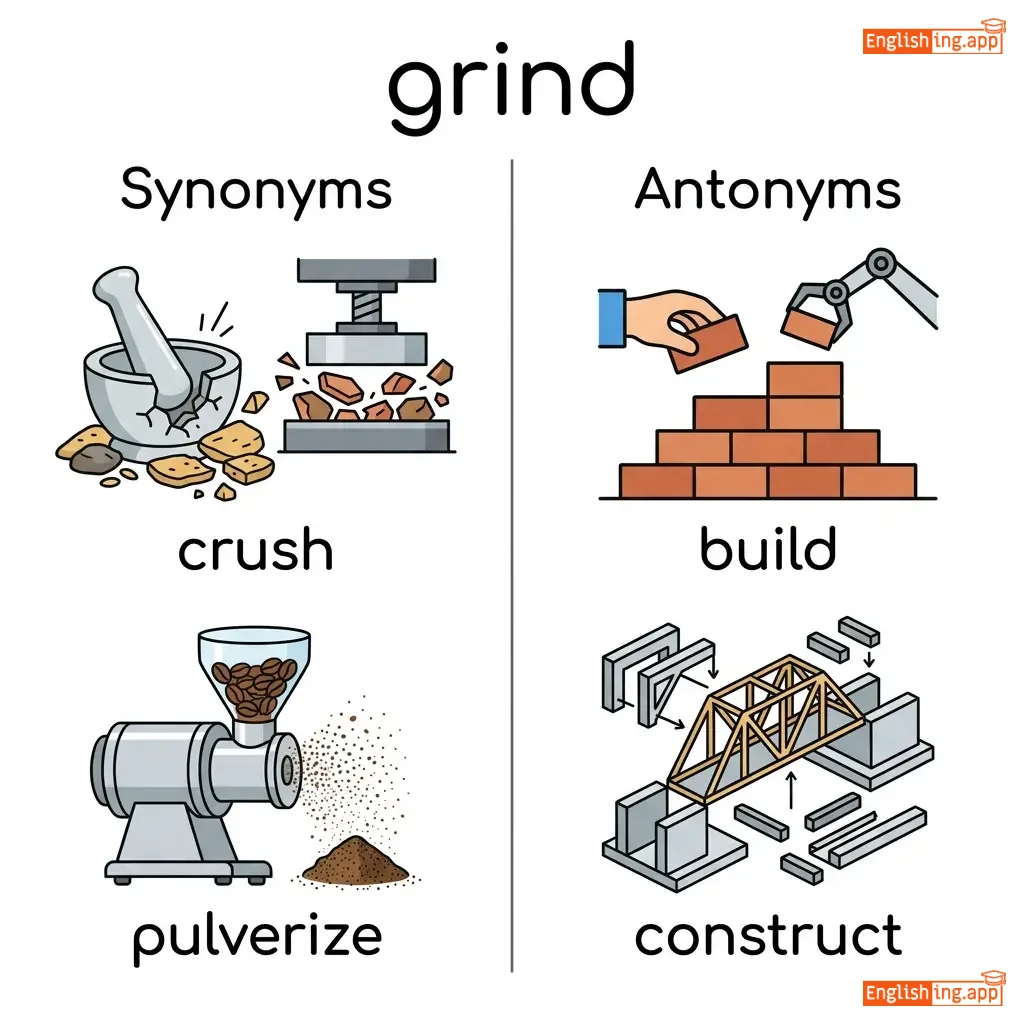
crush, mill, pulverize, work hard
••••••
|
assemble, construct, relax, rest
••••••
|
grind coffee, grind slowly, grind finely, grind daily, grind fresh
••••••
|
コーヒーを挽く、毎日がんばろう!
••••••
|
|
✊
••••••
|
/ɡrɪp/
verb
(グリップ)
••••••
|
- •••••• |
握る
nigiru
••••••
|
gripped
グリップド
••••••
|
gripped
グリップド
••••••
|
grips
グリップス
••••••
|
gripping
グリッピング
••••••
|
to hold something tightly or firmly
••••••
|
He gripped the steering wheel tightly.
彼はハンドルをしっかり握った。
••••••
|
彼はハンドルをしっかり握った。
Kare wa handoru o shikkari nigitta.
••••••
|
get a grip
グリップを取る
••••••
|
to control your emotions or behavior
••••••
|
自分をコントロールする
jibun o kontorōru suru
••••••
|
hold, grasp, clutch, seize, clasp
••••••
|
release, let go, drop
••••••
|
firm grip, lose grip, get a grip, tight grip
••••••
|
握るはグリップのようなもの — 落ちないようにしっかり握ろう!
••••••
|
|
🛒
••••••
|
/ˈɡroʊ.sər.i/
noun
(グローサリー)
••••••
|
- •••••• |
食料品店
shokuryōhinten
••••••
|
- •••••• | - •••••• | - •••••• | - •••••• |
A store that sells food and household supplies.
••••••
|
She went to the grocery to buy vegetables. |
彼女は野菜を買うために食料品店に行きました。
Kanojo wa yasai o kau tame ni shokuryōhinten ni ikimashita.
••••••
|
- •••••• | - •••••• | - •••••• |
supermarket, store, market, shop, provisions
••••••
|
none,
••••••
|
grocery store, grocery list, grocery shopping, local grocery, buy groceries
••••••
|
Grocery = 食料品店、毎日の食材を買いに行く場所。
••••••
|
|
🛒
••••••
|
/ˈɡrəʊsəri ʃɒp/
noun
(グローサリーショップ)
••••••
|
- •••••• |
食料品店
shokuryohinten
••••••
|
- •••••• | - •••••• | - •••••• | - •••••• |
a retail store where food and everyday household items are sold
••••••
|
She stopped by the grocery shop to buy vegetables and milk.
彼女は野菜と牛乳を買うためにグローサリーショップに行った。
••••••
|
彼女は野菜と牛乳を買うために食料品店に行った。
kanojo wa yasai to gyuunyuu o kau tame ni shokuryohinten ni itta
••••••
|
- •••••• | - •••••• | - •••••• |
grocery store, food shop, market, supermarket
••••••
|
non-food store, specialty shop
••••••
|
local grocery shop, small grocery shop, nearby grocery shop, grocery shop owner
••••••
|
Grocery shop は日本語で食料品店
••••••
|
|
🤢
••••••
|
/ɡroʊs/
adjective
(グロス)
••••••
|
- •••••• |
不快な / 下品な
fukai na / gehin na
••••••
|
- •••••• | - •••••• | - •••••• | - •••••• |
extremely unpleasant or disgusting; total before deductions
••••••
|
He thought the food looked gross, but it tasted fine. |
彼は食べ物が不快に見えると思ったが、味は良かった。
Kare wa tabemono ga fukai ni mieru to omotta ga, aji wa yokatta.
••••••
|
gross out |
to make someone feel disgusted
••••••
|
嫌悪感を与える
ken'okan o ataeru
••••••
|
disgusting, nasty, foul, total, overall
••••••
|
pleasant, clean, net
••••••
|
gross income, gross mistake, gross error
••••••
|
Gross は英語で不快な意味もあります(gross food)。
••••••
|
|
🌍
••••••
|
/ɡraʊnd/
noun/verb
(グラウンド)
••••••
|
- •••••• |
地面
jimen
••••••
|
grounded
グラウンデッド
••••••
|
grounded
グラウンデッド
••••••
|
grounds
グラウンズ
••••••
|
grounding
グラウンディング
••••••
|
the solid surface of the earth; to prohibit someone (often a child) from going out
••••••
|
The children played on the ground near the house.
子供たちは家の近くの地面で遊びました。
••••••
|
子供たちは家の近くの地面で遊びました。
Kodomotachi wa ie no chikaku no jimen de asobimashita.
••••••
|
on solid ground
固い地面に
••••••
|
in a safe or stable situation
••••••
|
安全または安定した状況で
anzen mata wa antei shita jōkyō de
••••••
|
earth, soil, floor, basis, foundation
••••••
|
sky, air
••••••
|
soft ground, fertile ground, grounded theory, ground rules
••••••
|
Groundは‘地面’を意味します - みんな地面で遊びます。
••••••
|
|
🏢
••••••
|
/ˈɡraʊnd flɔːr/
noun
(グラウンドフロア)
••••••
|
- •••••• |
1階
ikkai
••••••
|
- •••••• | - •••••• | - •••••• | - •••••• |
the floor of a building at ground level; the starting level of an organization or activity
••••••
|
The grocery shop is located on the ground floor of the building.
食料品店は1階にあります。
••••••
|
食料品店は1階にあります。
shokuryohinten wa ikkai ni arimasu
••••••
|
get in on the ground floor
最初から参加する
••••••
|
to become involved at the very beginning of something, especially when it has potential to succeed
••••••
|
最初から参加する
saisho kara sanka suru
••••••
|
first floor, street level, base level, entry level
••••••
|
upper floor, top floor
••••••
|
ground floor apartment, ground floor entrance, ground floor office, on the ground floor
••••••
|
groundに近い階=1階
••••••
|
|
👥
••••••
|
/ɡruːp/
noun, verb
(グループ)
••••••
|
- •••••• |
グループ
guru-pu
••••••
|
grouped
グループド
••••••
|
grouped
グループド
••••••
|
groups
グループス
••••••
|
grouping
グルーピング
••••••
|
A number of people or things considered together; to arrange things or people into categories.
••••••
|
The students formed a study group.
学生たちは勉強グループを作った。
••••••
|
学生たちは勉強グループを作った。
Gakuseitachi wa benkyou guru-pu o tsukutta.
••••••
|
group effort
グループ努力
••••••
|
A collective attempt or teamwork by multiple people.
••••••
|
グループ努力
guru-pu doryoku
••••••
|
team, cluster, party, band, collective
••••••
|
individual, single
••••••
|
group work, group project, small group, large group, group meeting
••••••
|
グループは一緒に集まる意味。WhatsAppのグループのように。
••••••
|
|
🌱
••••••
|
/ɡroʊ/
verb
(グロー)
••••••
|
|
成長する
seichou suru
••••••
|
grew
グルー
••••••
|
grown
グロン
••••••
|
grows
グロース
••••••
|
growing
グローイング
••••••
|
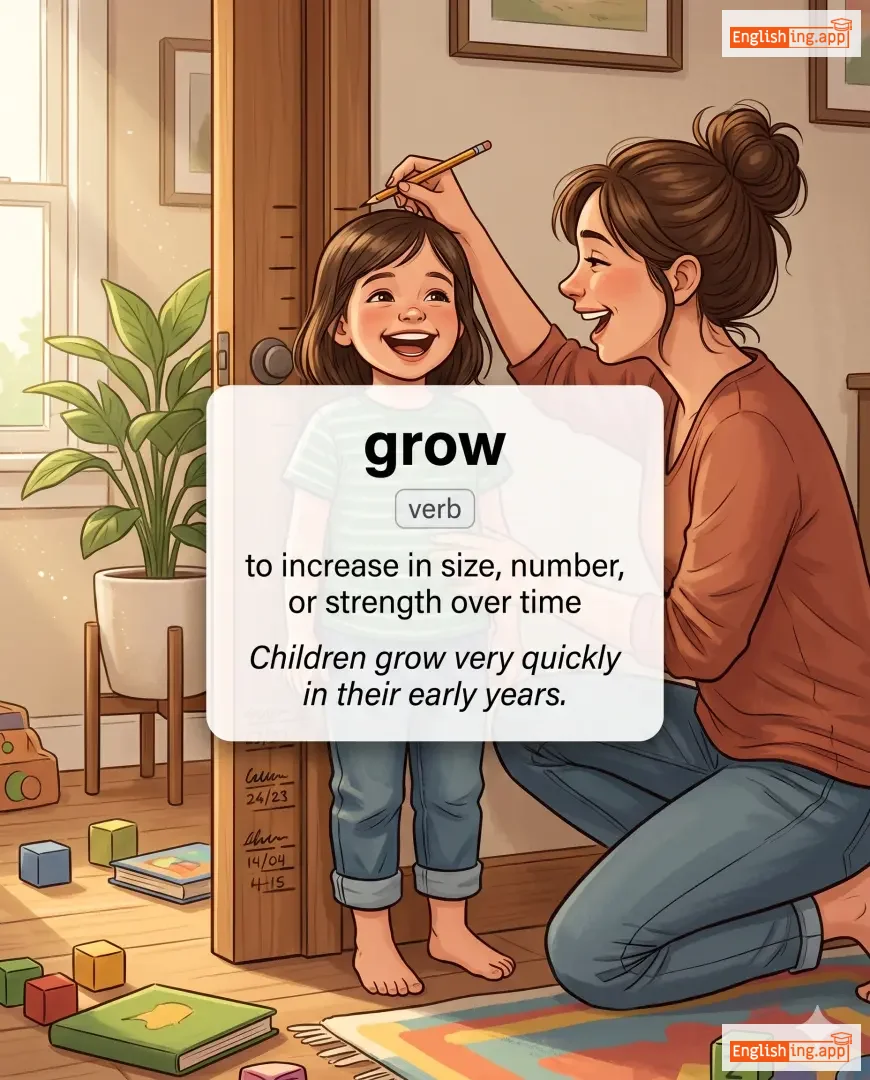
to increase in size, number, or strength over time
••••••
|
Children grow very quickly in their early years.
子供たちは非常に早く成長します。
••••••
|
子供たちは非常に早く成長します。
Kodomo-tachi wa hijou ni hayaku seichou shimasu.
••••••
|
grow on someone
誰かに成長する
••••••
|
to gradually become liked or appreciated
••••••
|
誰かに徐々に好きになる
dareka ni jojoni suki ni naru
••••••
|
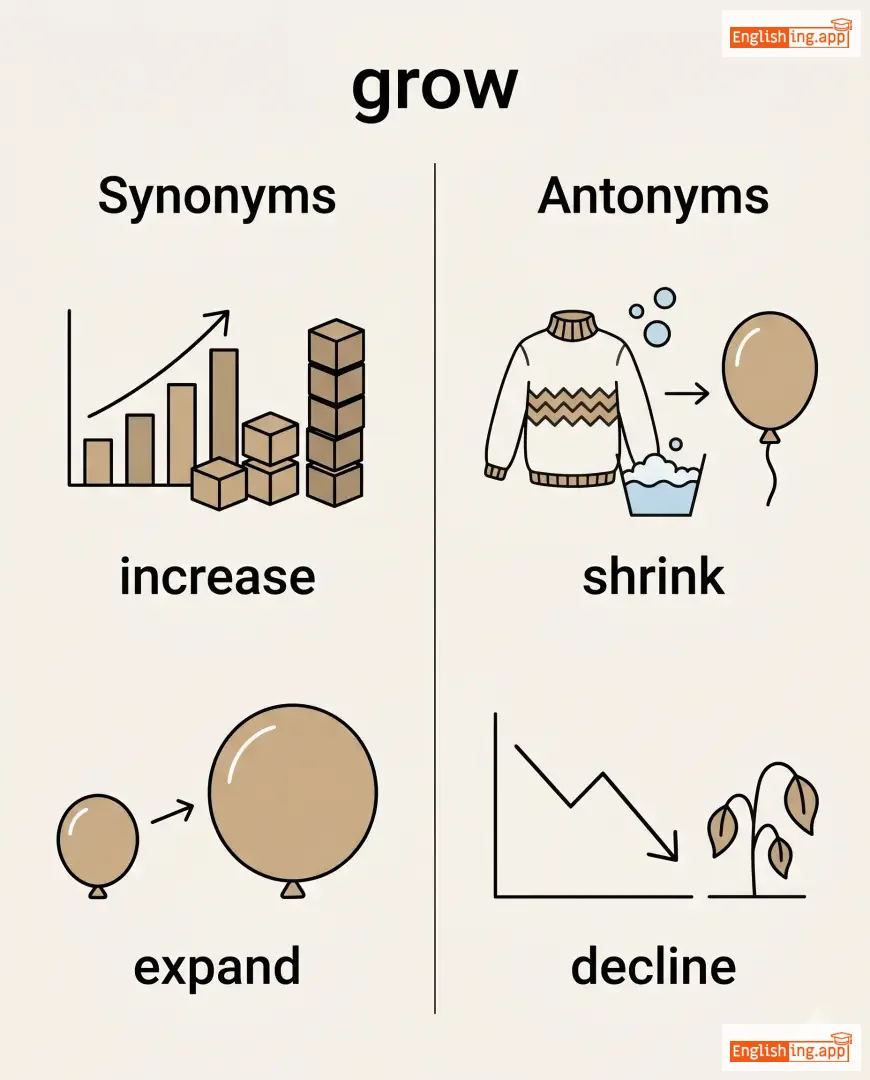
increase, expand, develop, rise, progress
••••••
|
shrink, decline, decrease
••••••
|
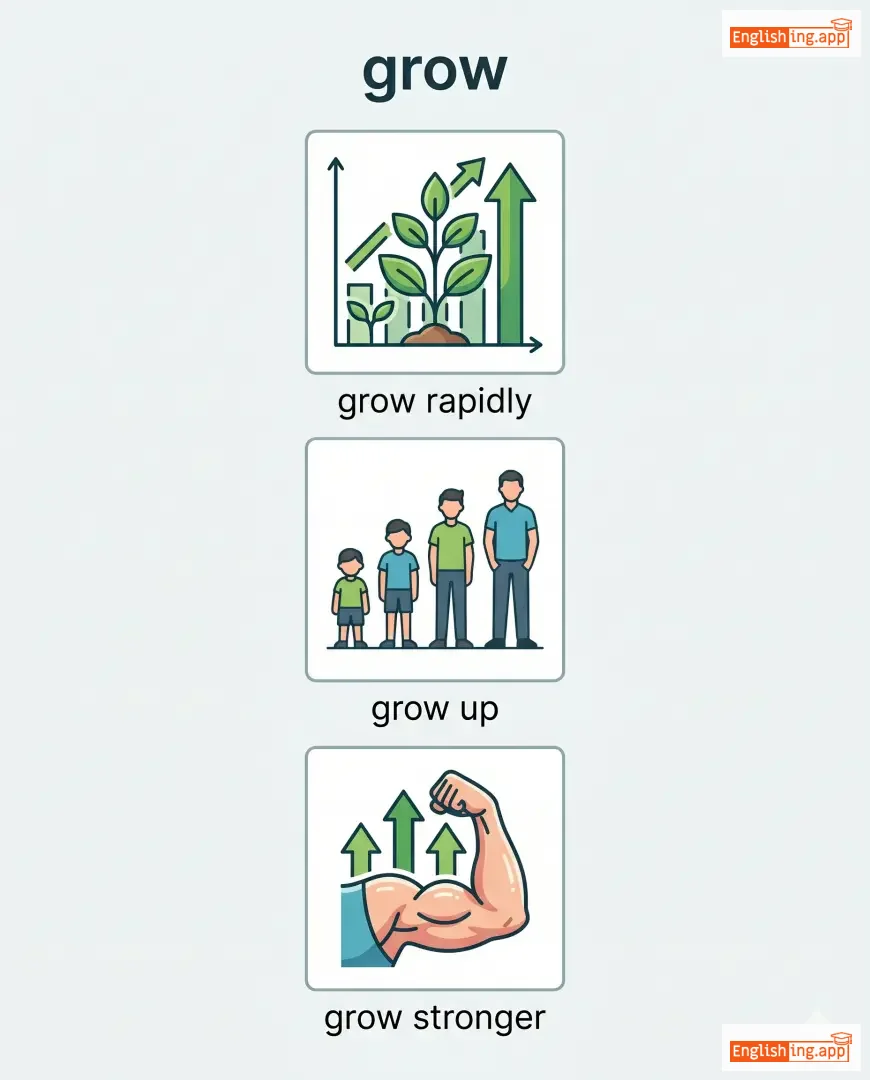
grow rapidly, grow up, grow stronger, grow business
••••••
|
木が成長するのは、時間と共に大きくなることを意味します。
••••••
|
|
🌿
••••••
|
/ˈɡroʊ.ɪŋ/
verb
(グローイング)
••••••
|
- •••••• |
増加している
zōkashite iru
••••••
|
- •••••• | - •••••• | - •••••• |
growing
グローイング
••••••
|
continuously increasing or developing
••••••
|
There is a growing demand for renewable energy.
再生可能エネルギーへの需要が増加しています。
••••••
|
再生可能エネルギーへの需要が増加しています。
Saisei kanō enerugī e no juyō ga zōka shiteimasu.
••••••
|
- •••••• | - •••••• | - •••••• |
developing, expanding, increasing, rising
••••••
|
shrinking, decreasing, declining
••••••
|
growing demand, growing concern, growing population, growing economy
••••••
|
Growingは増加しているという意味です、再生可能エネルギーの需要が増加しているのように。
••••••
|
|
📈
••••••
|
/ɡroʊθ/
noun
(グロウス)
••••••
|
|
成長
seichou
••••••
|
- •••••• | - •••••• | - •••••• | - •••••• |
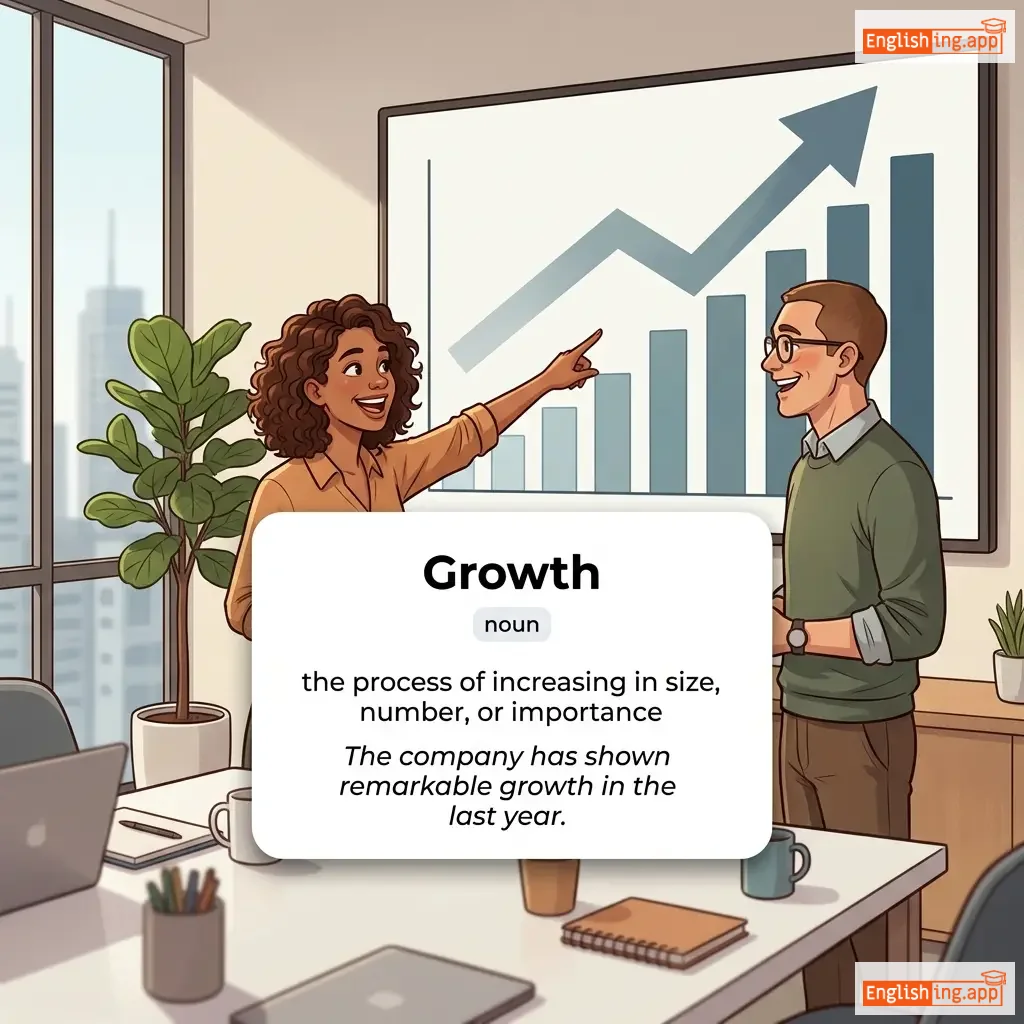
the process of increasing in size, number, or importance
••••••
|
The company has shown remarkable growth in the last year. |
その会社は昨年、顕著な成長を示しました。
Sono kaisha wa sakunen, kencho na seichou wo shimashita.
••••••
|
economic growth |
increase in a nation's production of goods and services
••••••
|
経済成長
keizai seichou
••••••
|
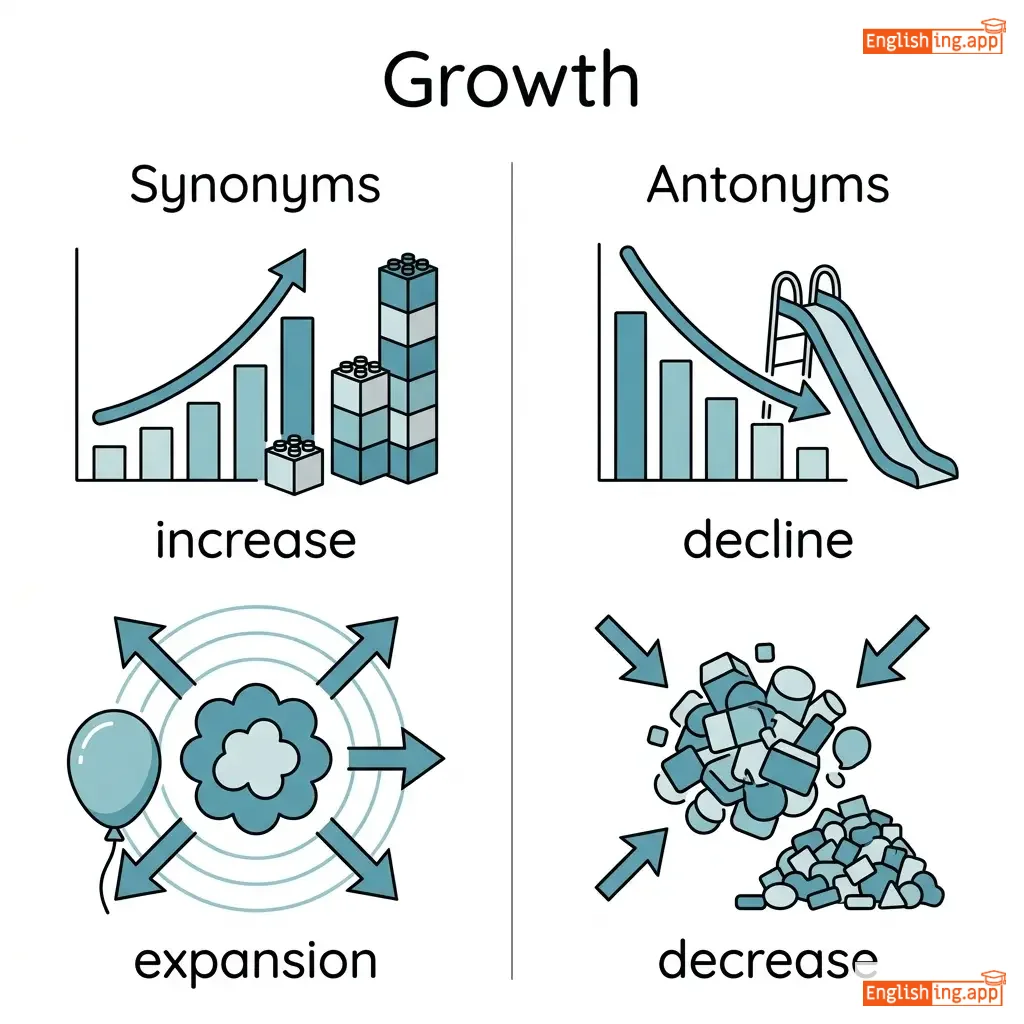
increase, expansion, rise, development
••••••
|
decline, decrease, shrinkage
••••••
|
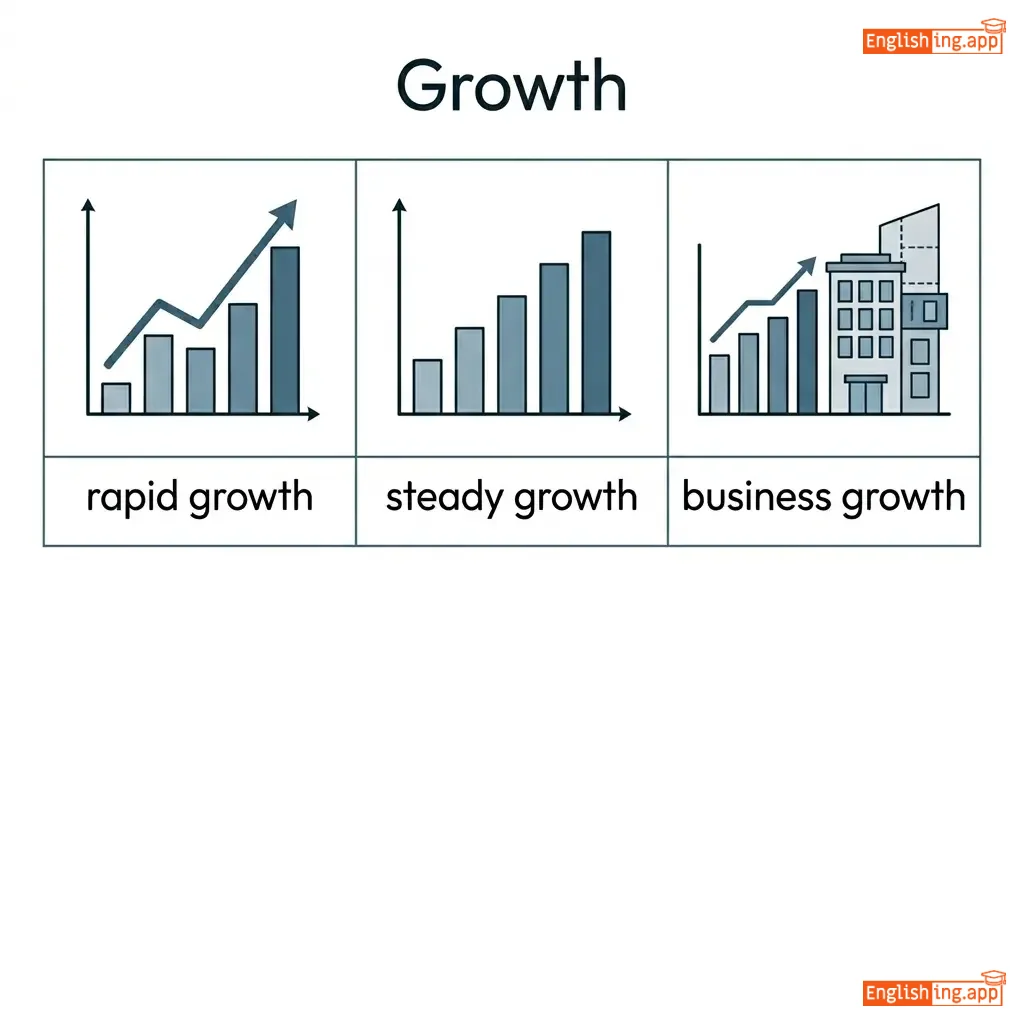
rapid growth, steady growth, business growth, growth rate
••••••
|
成長は上向きの矢印のようなものです 📈
••••••
|
|
✅
••••••
|
/ˌɡærənˈtiː/
noun/verb
••••••
|
- •••••• | - •••••• |
guaranteed
••••••
|
guaranteed
••••••
|
guarantees
••••••
|
guaranteeing
••••••
|
a formal promise or assurance, especially about the quality or durability of a product
••••••
|
The company guarantees a refund if the product is faulty. |
- •••••• |
money-back guarantee |
a promise that money will be refunded if the product is unsatisfactory
••••••
|
- •••••• |
assure, promise, warrant, pledge
••••••
|
break, deny, disclaim
••••••
|
lifetime guarantee, product guarantee, guarantee success, guarantee satisfaction
••••••
|
No •••••• |
|
🛡️
••••••
|
/ɡɑːrd/
noun/verb
(ガード)
••••••
|
|
警備員 / 守る
keibiin / mamoru
••••••
|
guarded
ガーディッド
••••••
|
guarded
ガーディッド
••••••
|
guards
ガーズ
••••••
|
guarding
ガーディング
••••••
|
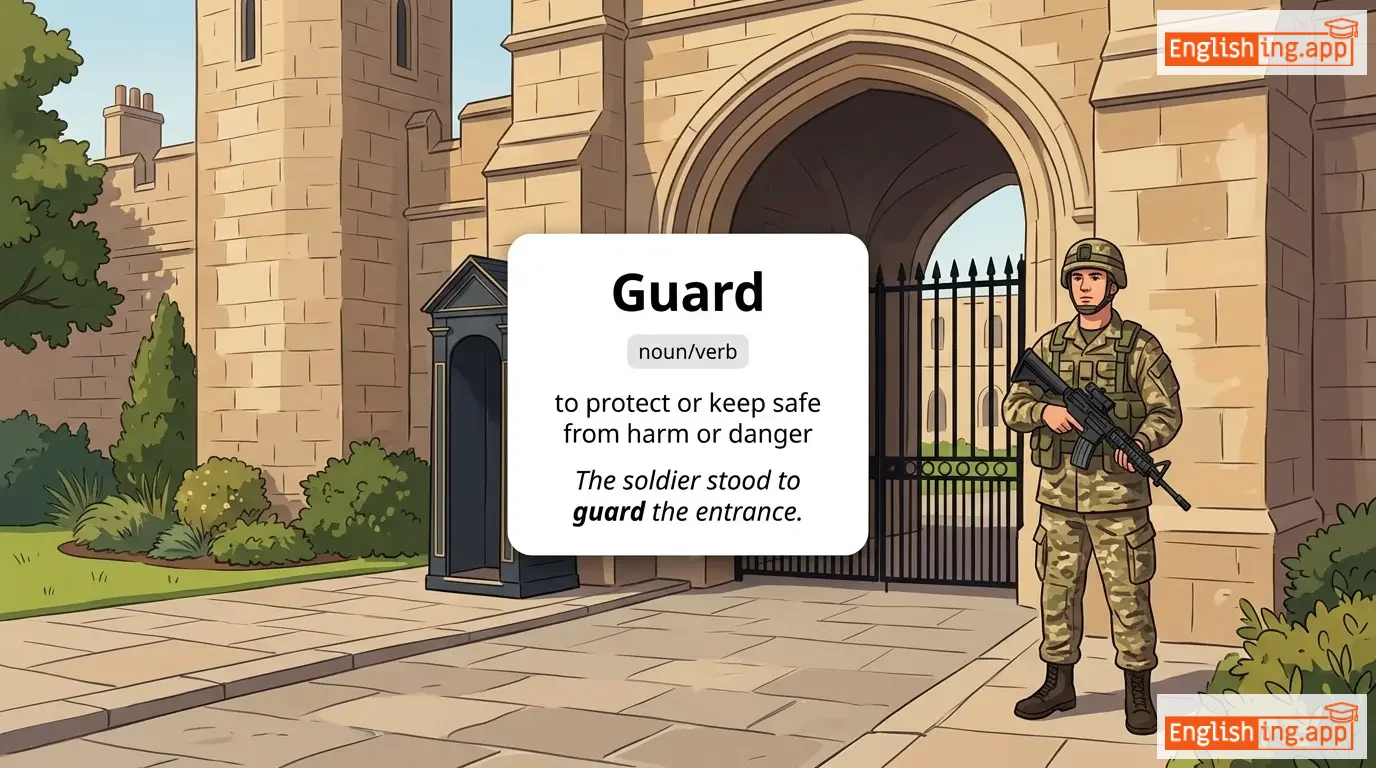
to protect or keep safe from harm or danger
••••••
|
The soldier stood to guard the entrance.
兵士は入り口を守るために立っていました。
••••••
|
兵士は入り口を守るために立っていました。
Heishi wa iriguchi o mamoru tame ni tatte imashita.
••••••
|
on guard
ガード中
••••••
|
to be watchful and alert
••••••
|
警戒中
keikaichuu
••••••
|
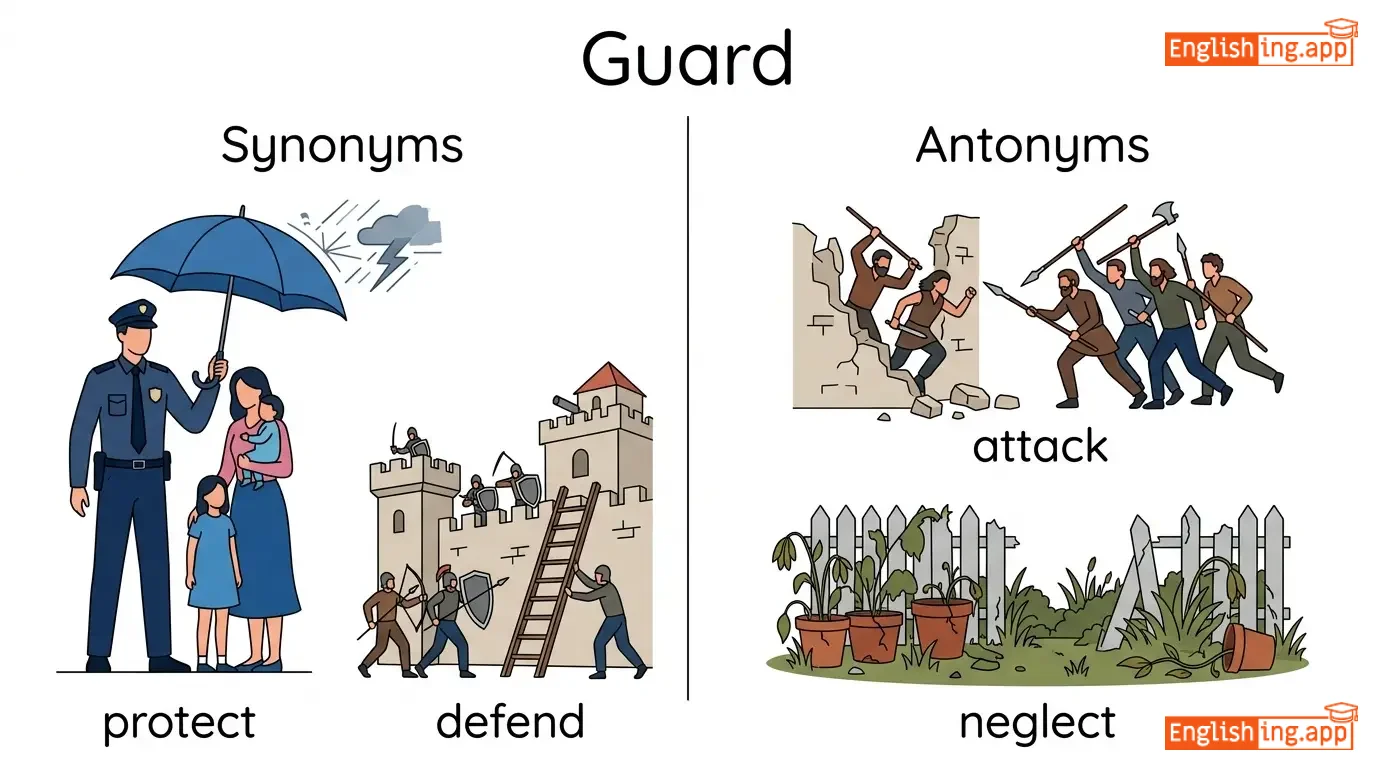
protect, defend, secure, watch
••••••
|
attack, neglect
••••••
|
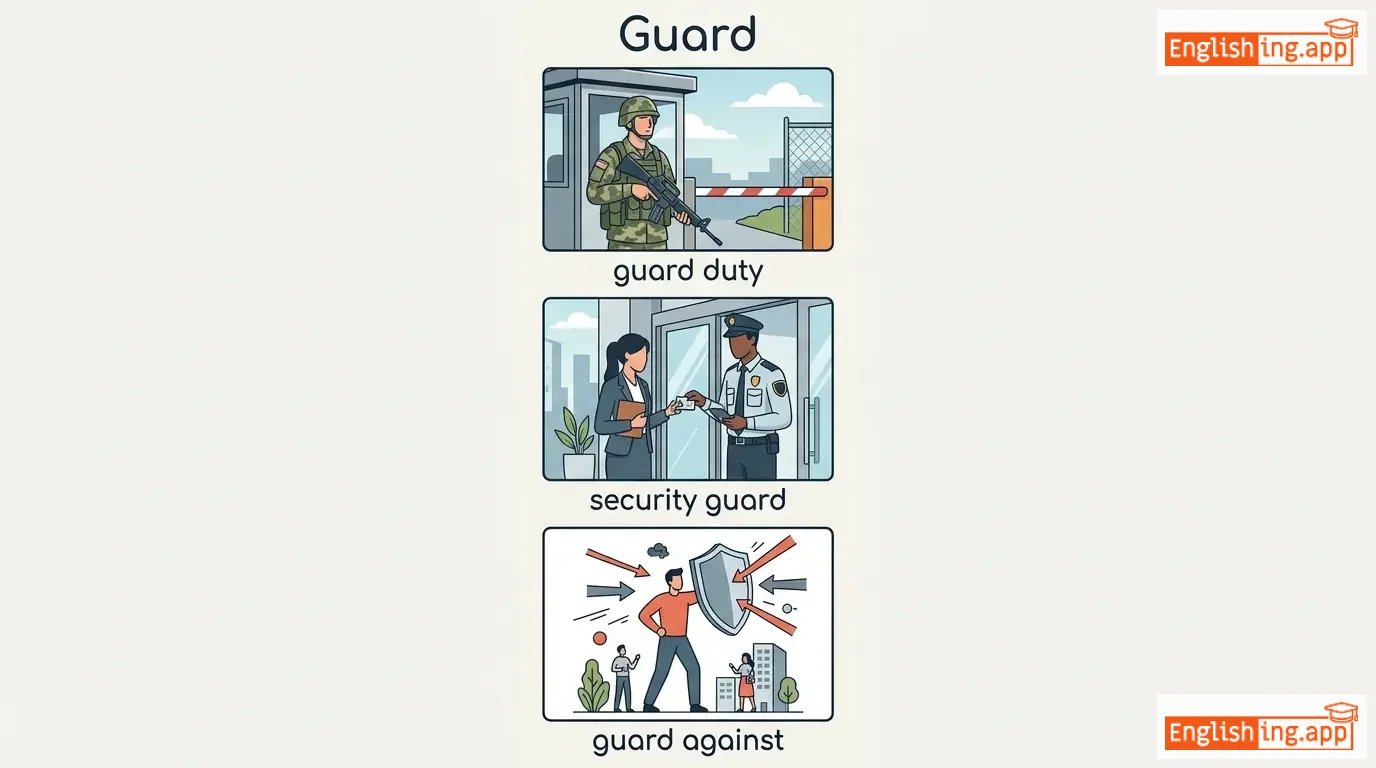
guard duty, security guard, guard against, guard entrance
••••••
|
Guardは警備員 🛡️ - 警備員は守ること
••••••
|
|
👨👩👧👦
••••••
|
/ˈɡɑːr.di.ən/
noun
(ガーディアン)
••••••
|
- •••••• |
守護者; 後見人
shugosha; kōkennin
••••••
|
- •••••• | - •••••• | - •••••• | - •••••• |
a defender, protector, or keeper; a person legally responsible for the care of someone unable to manage their own affairs
••••••
|
After her parents died, her uncle became her legal guardian and took care of her. |
両親が亡くなった後、彼女の叔父は彼女の法的な後見人となり、彼女の世話をしました。
Ryōshin ga nakunatta ato, kanojo no oji wa kanojo no hōteki na kōkennin to nari, kanojo no sewa o shimashita.
••••••
|
- •••••• | - •••••• | - •••••• |
protector, custodian, caretaker, trustee
••••••
|
ward, dependent, charge, neglector
••••••
|
legal guardian, guardian angel, appointed guardian
••••••
|
守護者は、困ったときに助けてくれる後見人のようなものです。
••••••
|
|
💥
••••••
|
/ɡəˈrɪlə/
noun
••••••
|
- •••••• | - •••••• | - •••••• | - •••••• | - •••••• | - •••••• |
a member of a small independent group taking part in irregular fighting, typically against larger forces
••••••
|
The guerrilla fighters used ambushes to attack enemy positions. |
- •••••• |
guerrilla warfare |
a form of irregular warfare in which small groups of combatants use tactics such as ambushes and sabotage
••••••
|
- •••••• |
fighter, rebel, insurgent, freedom fighter
••••••
|
soldier, patriot
••••••
|
guerrilla warfare, guerrilla tactics, guerrilla fighters, guerrilla movement
••••••
|
No •••••• |
|
🤔
••••••
|
/ɡɛs/
verb
(ゲス)
••••••
|
|
推測する
すいそくする
••••••
|
guessed
ゲスト
••••••
|
guessed
ゲスト
••••••
|
guesses
ゲセス
••••••
|
guessing
ゲッシング
••••••
|
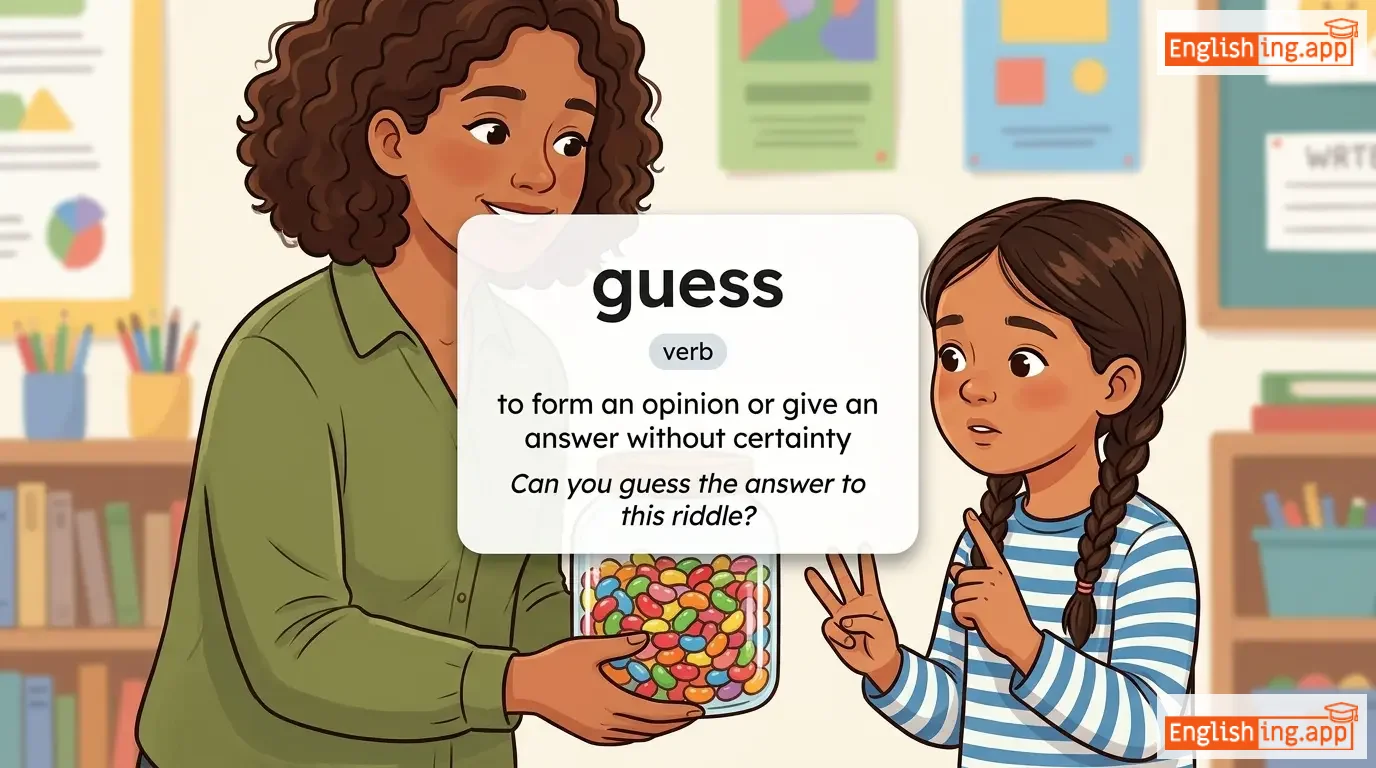
to form an opinion or give an answer without certainty
••••••
|
Can you guess the answer to this riddle?
この謎の答えを当ててみてください。
••••••
|
この謎の答えを当ててみてください。
Kono nazo no kotae o atete mite kudasai.
••••••
|
take a guess
予想してみて
••••••
|
to attempt an answer without being sure
••••••
|
予想してみて
Yosō shite mite
••••••
|
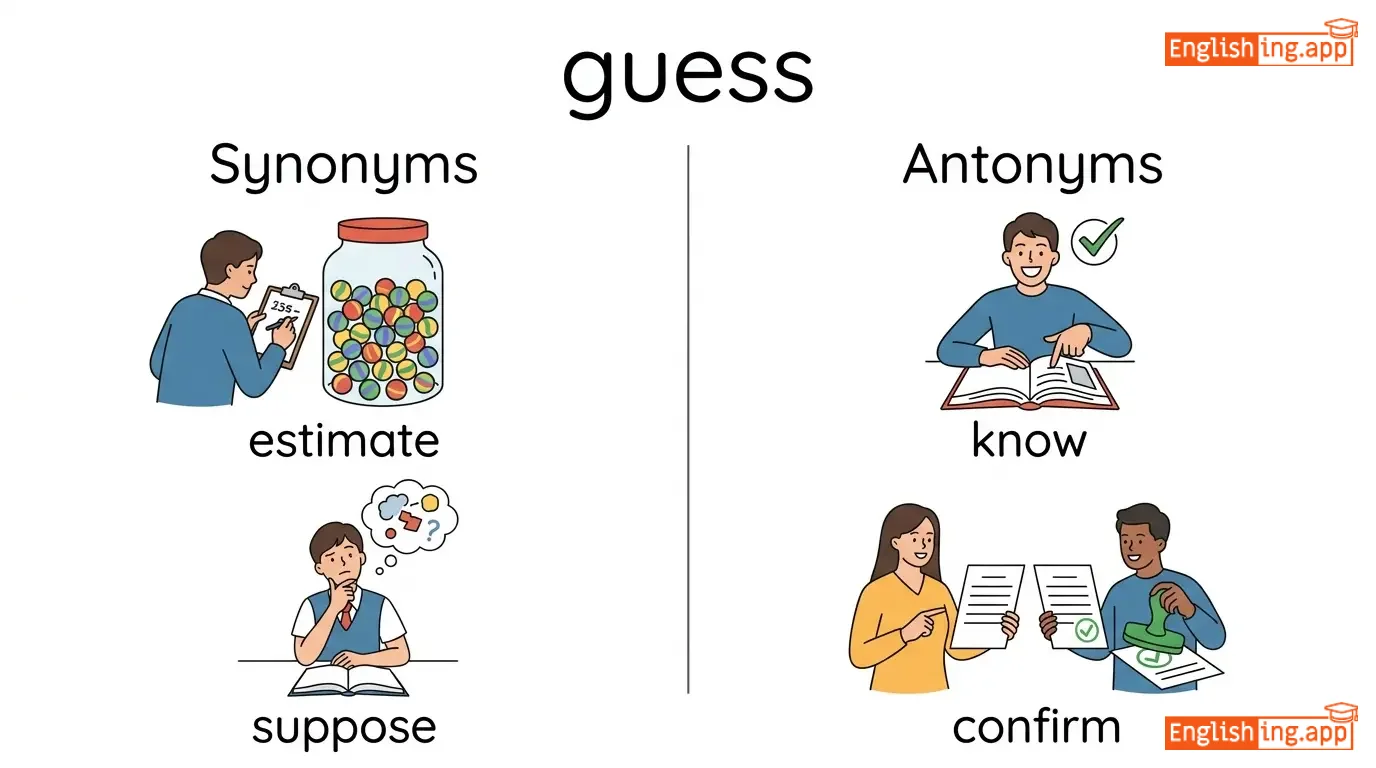
estimate, suppose, conjecture, assume, predict
••••••
|
know, confirm, determine
••••••
|
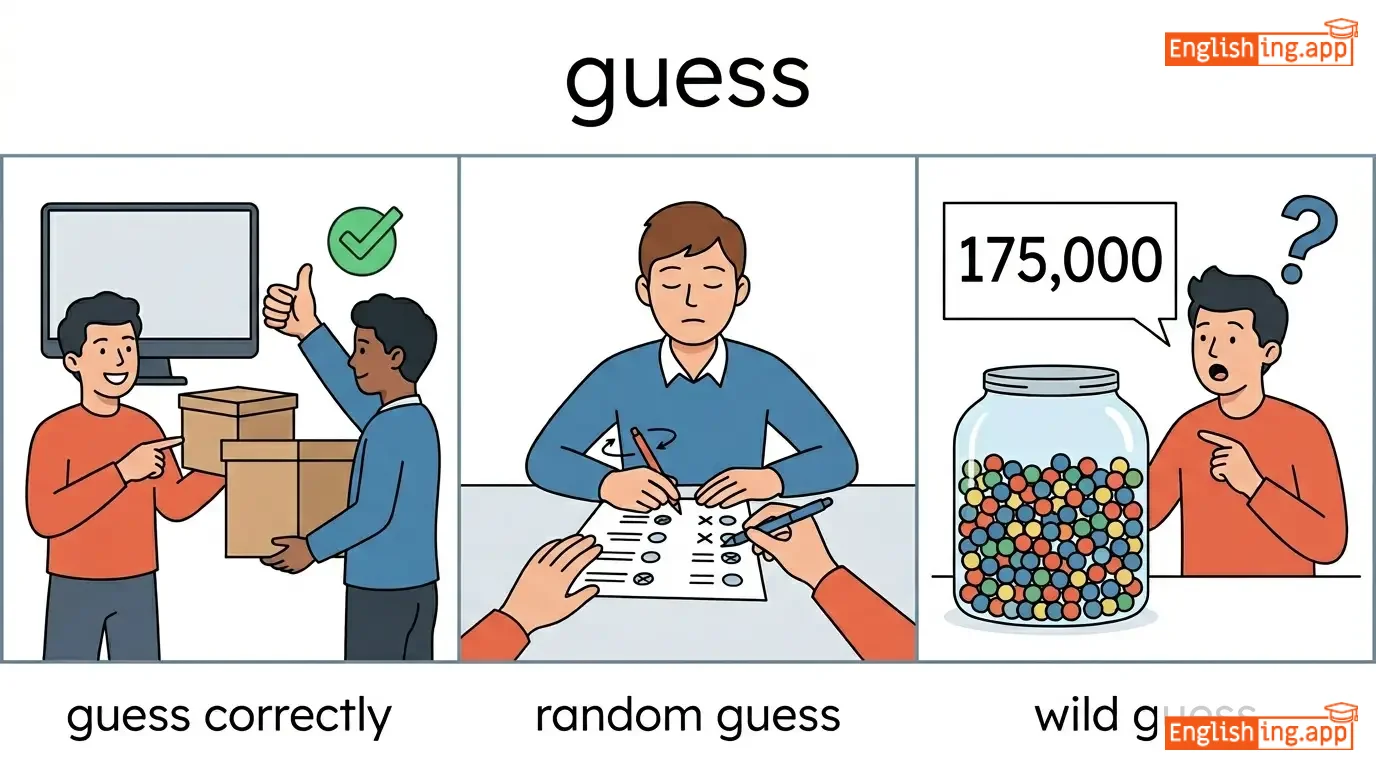
guess correctly, random guess, wild guess, guess the answer
••••••
|
Guessは‘ゲス’!予想してみる、それが鍵だ!
••••••
|
|
🎉
••••••
|
/ɡɛst/
noun
(ゲスト)
••••••
|
- •••••• |
ゲスト
gesuto
••••••
|
- •••••• | - •••••• | - •••••• | - •••••• |
a person invited to visit or stay in someone's home or attend an event
••••••
|
We welcomed our guest with a warm smile. |
私たちはゲストを温かい笑顔で迎えました。
Watashitachi wa gesuto o atatakai egao de mukaemashita.
••••••
|
guest of honor |
the most important guest at an event
••••••
|
名誉ゲスト
meiyo gesuto
••••••
|
visitor, invitee, company, lodger
••••••
|
host, resident
••••••
|
guest list, hotel guest, guest room, special guest
••••••
|
ゲスト (gesuto) は特別に歓迎される人!
••••••
|
|
🧭
••••••
|
/ˈɡaɪ.dəns/
noun
(ガイダンス)
••••••
|
- •••••• |
指導; リーダーシップ; アドバイス
shidou, rīdāshippu, adobaisu
••••••
|
- •••••• | - •••••• | - •••••• | - •••••• |
advice or information aimed at resolving a problem or difficulty; leadership or direction
••••••
|
The teacher provided valuable guidance to help students choose their career paths. |
先生は学生が自分のキャリアの道を選ぶために貴重な指導を提供しました。
Sensei wa gakusei ga jibun no kyaria no michi wo erabu tame ni kichou na shidou wo teikyō shimashita.
••••••
|
- •••••• | - •••••• | - •••••• |
direction, advice, counseling, instruction
••••••
|
confusion, misdirection, neglect, abandonment
••••••
|
career guidance, spiritual guidance, guidance counselor
••••••
|
指導は、道を指し示す光のようなものです。
••••••
|
|
🧭
••••••
|
/ɡaɪd/
verb, noun
(ハピネス)
••••••
|
|
幸福
kōfuku
••••••
|
guided
••••••
|
guided
••••••
|
guides
••••••
|
guiding
••••••
|
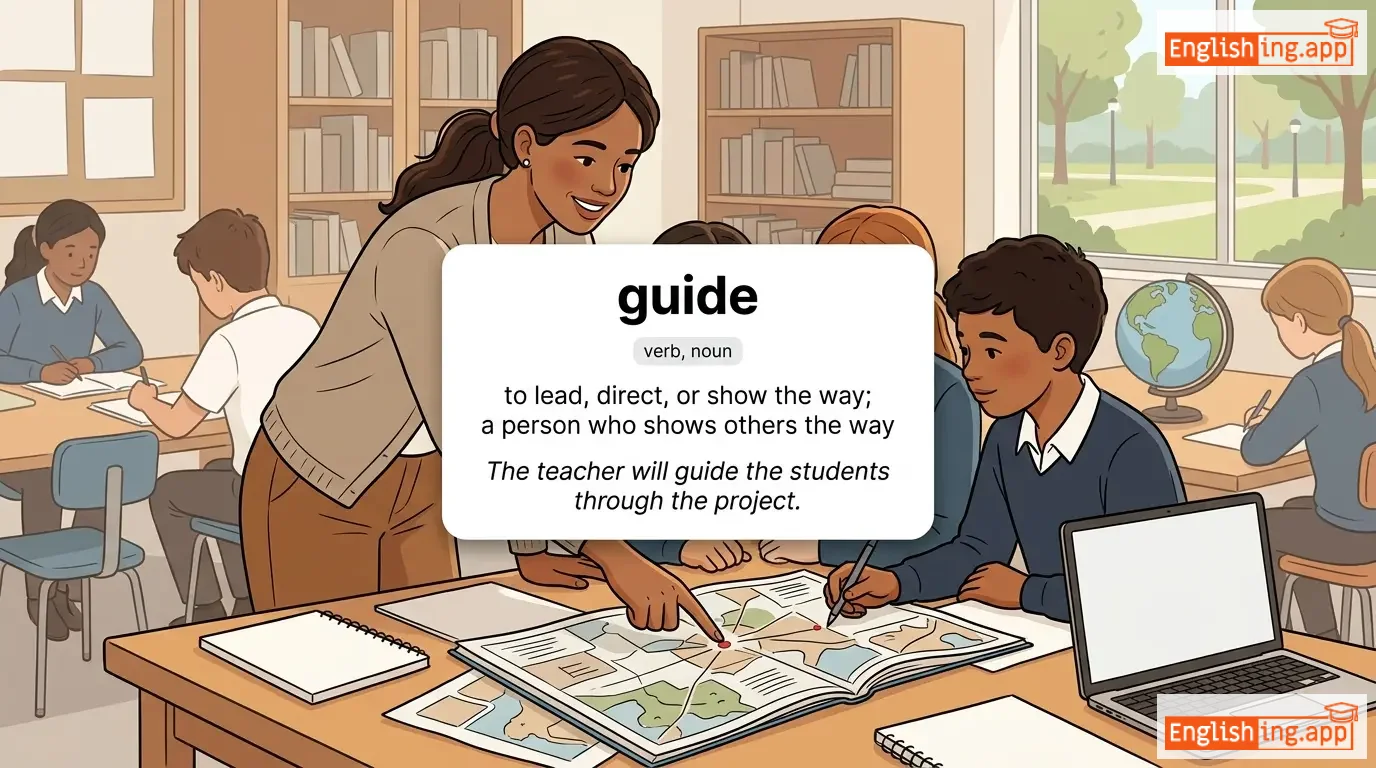
to lead, direct, or show the way; a person who shows others the way
••••••
|
The teacher will guide the students through the project. |
彼女は賞を受け取ったとき、自分の幸福を隠すことができませんでした。
Kanojo wa shō o uketotta toki, jibun no kōfuku o kakusu koto ga dekimasen deshita.
••••••
|
spiritual guide |
a person who offers wisdom or advice in spiritual matters
••••••
|
幸福の追求
kōfuku no tsuikyū
••••••
|
lead, direct, mentor, instructor, show
••••••
|
mislead, confuse, follow
••••••
|
guide book, tourist guide, guide the way, guide someone
••••••
|
幸福と happiness はどちらも人生の最高の目標です。
••••••
|
|
📑
••••••
|
/ˈɡaɪd.laɪn/
noun
(ガイドライン)
••••••
|
- •••••• |
ガイドライン
gaidorain
••••••
|
- •••••• | - •••••• | - •••••• | - •••••• |
a rule, instruction, or principle that provides direction
••••••
|
The company issued new guidelines for employee safety. |
会社は従業員の安全のために新しいガイドラインを発表しました。
Kaisha wa jūgyōin no anzen no tame ni atarashī gaidorain o happyō shimashita.
••••••
|
- •••••• | - •••••• | - •••••• |
rule, instruction, policy, principle, direction
••••••
|
chaos, disorder, lawlessness
••••••
|
safety guideline, follow guideline, official guideline, set guideline
••••••
|
ガイドラインは道しるべとなる線です。
••••••
|
|
😔
••••••
|
/ɡɪlt/
noun
(ギルト)
••••••
|
- •••••• |
罪悪感
zaiakukan
••••••
|
- •••••• | - •••••• | - •••••• | - •••••• |
A feeling of responsibility or remorse for an offense or wrongdoing
••••••
|
She felt deep guilt after lying to her friend. |
彼女は友達に嘘をついた後、深い罪悪感を感じた。
Kanojo wa tomodachi ni uso o tsuita ato, fukai zaiakukan o kanjita.
••••••
|
guilty conscience |
a feeling of guilt for wrongdoing
••••••
|
罪の意識
tsumi no ishiki
••••••
|
remorse, shame, regret, fault
••••••
|
innocence, blamelessness
••••••
|
feel guilt, deep guilt, sense of guilt
••••••
|
Guiltは日本語で '罪悪感' に変換されます。嘘をついた後に感じる重い罪悪感を想像してみてください。
••••••
|
|
😔
••••••
|
/ˈɡɪl.ti/
adjective
(ギルティ)
••••••
|
- •••••• |
有罪の
yūzai no
••••••
|
- •••••• | - •••••• | - •••••• | - •••••• |
responsible for a crime or wrongdoing; feeling shame or regret
••••••
|
He felt guilty after lying to his friend. |
彼は友達に嘘をついた後、有罪だと感じた。
Kare wa tomodachi ni uso o tsuita ato, yūzai da to kanjita.
••••••
|
plead guilty |
to formally admit in court that one has committed a crime
••••••
|
有罪を申し立てる
yūzai o mōshitate ru
••••••
|
ashamed, responsible, blameworthy, convicted
••••••
|
innocent, blameless, faultless
••••••
|
feel guilty, guilty of, guilty conscience, found guilty
••••••
|
有罪の感覚はguiltyと同じ、犯した罪を感じる。
••••••
|
|
🔫
••••••
|
/ɡʌn/
noun
(ガン)
••••••
|
- •••••• |
銃
jū
••••••
|
- •••••• | - •••••• | - •••••• | - •••••• |
a weapon that shoots bullets or other projectiles
••••••
|
The police officer carried a gun for protection. |
警察官は保護のために銃を携帯していました。
Keisatsukan wa hogo no tame ni jū o keitai shite imashita.
••••••
|
jump the gun |
to do something too soon or before the right time
••••••
|
先を越す
saki o kosu
••••••
|
firearm, pistol, rifle, revolver, weapon
••••••
|
peace, disarmament, safety
••••••
|
carry a gun, toy gun, gun control, load a gun
••••••
|
Gunは銃 — 銃を使わないと弾は発射されません。
••••••
|
|
🫃
••••••
|
/ɡʌt/
noun/verb
(ɡʌt)
••••••
|
- •••••• |
胃 / 勇気
i / yūki
••••••
|
gutted
ɡʌtɪd
••••••
|
gutted
ɡʌtɪd
••••••
|
guts
ɡʌts
••••••
|
gutting
ɡʌtɪŋ
••••••
|
The stomach or belly; also used for courage, instinct, or to remove the inside of something.
••••••
|
He had the guts to stand up for his beliefs.
彼は自分の信念を守る勇気を持っていました。
••••••
|
彼は自分の信念を守る勇気を持っていました。
Kare wa jibun no shinnen o mamoru yūki o motte imashita.
••••••
|
spill your guts
自分の内臓を吐き出す
••••••
|
To reveal personal secrets or feelings.
••••••
|
秘密を漏らす
himitsu o morasu
••••••
|
stomach, belly, courage, instinct, bravery
••••••
|
cowardice, fear
••••••
|
gut feeling, gut reaction, strong guts, gut instinct
••••••
|
Gutは胃と勇気を意味します — 勇気があればgutsもある!
••••••
|
|
👨
••••••
|
/ɡaɪ/
noun
(ガイ)
••••••
|
- •••••• |
男
otoko
••••••
|
- •••••• | - •••••• | - •••••• | - •••••• |
an informal term for a man; sometimes used to refer to a person in general
••••••
|
That guy over there is my best friend. |
あの男は私の親友です。
Ano otoko wa watashi no shinyū desu.
••••••
|
good guy |
a person who is kind and decent
••••••
|
良い男
yoi otoko
••••••
|
man, fellow, dude, chap, lad
••••••
|
woman, lady
••••••
|
that guy, some guy, young guy, nice guy, guy next door
••••••
|
Guy は男を意味します — 映画には常に良い男が登場します。
••••••
|
|
🔄
••••••
|
/ˈhæb.ɪt/
noun
(ハビット)
••••••
|
|
習慣
shūkan
••••••
|
- •••••• | - •••••• | - •••••• | - •••••• |
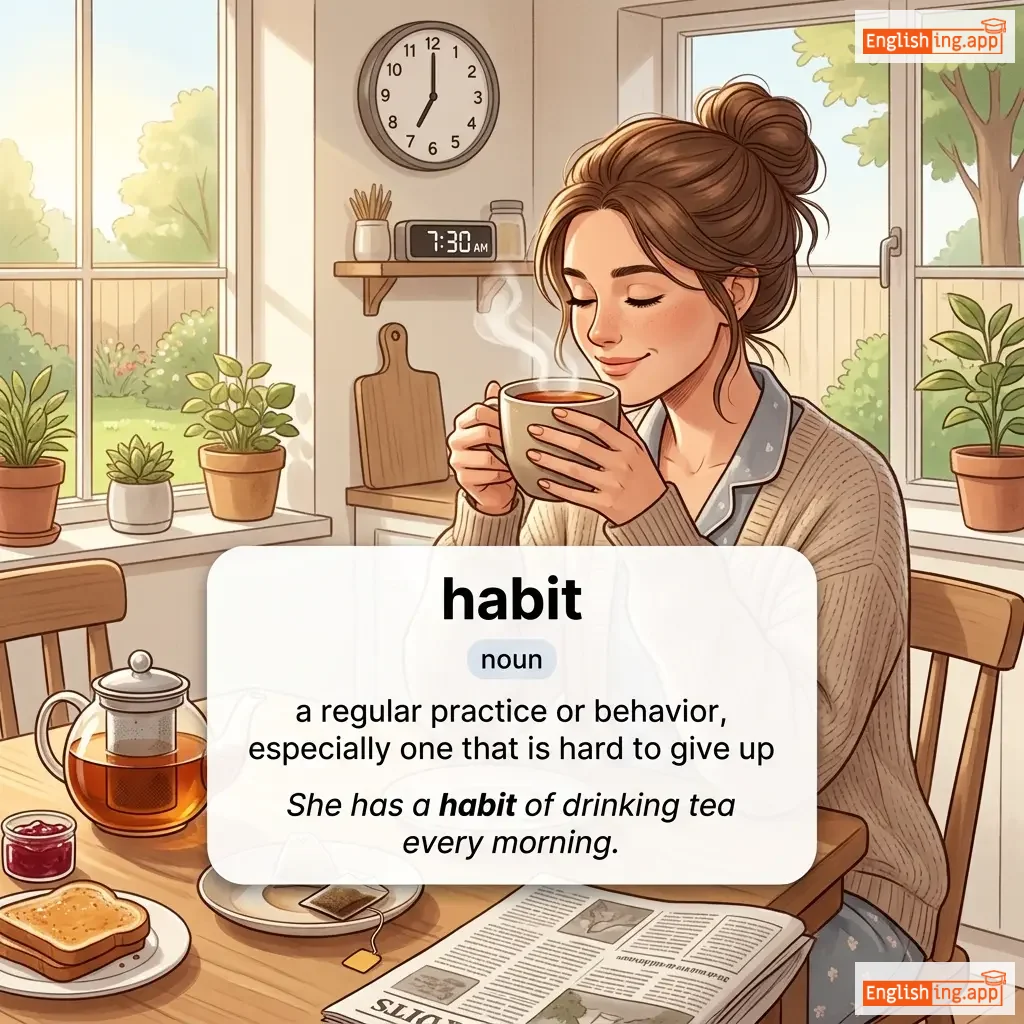
a regular practice or behavior, especially one that is hard to give up
••••••
|
She has a habit of drinking tea every morning. |
彼女は毎朝お茶を飲む習慣がある。
Kanojo wa maiasa ocha o nomu shūkan ga aru.
••••••
|
old habits die hard |
it is difficult to stop doing things that one has been doing for a long time
••••••
|
古い習慣はなかなか捨てられない
Furui shūkan wa nakaka suterarenai
••••••
|
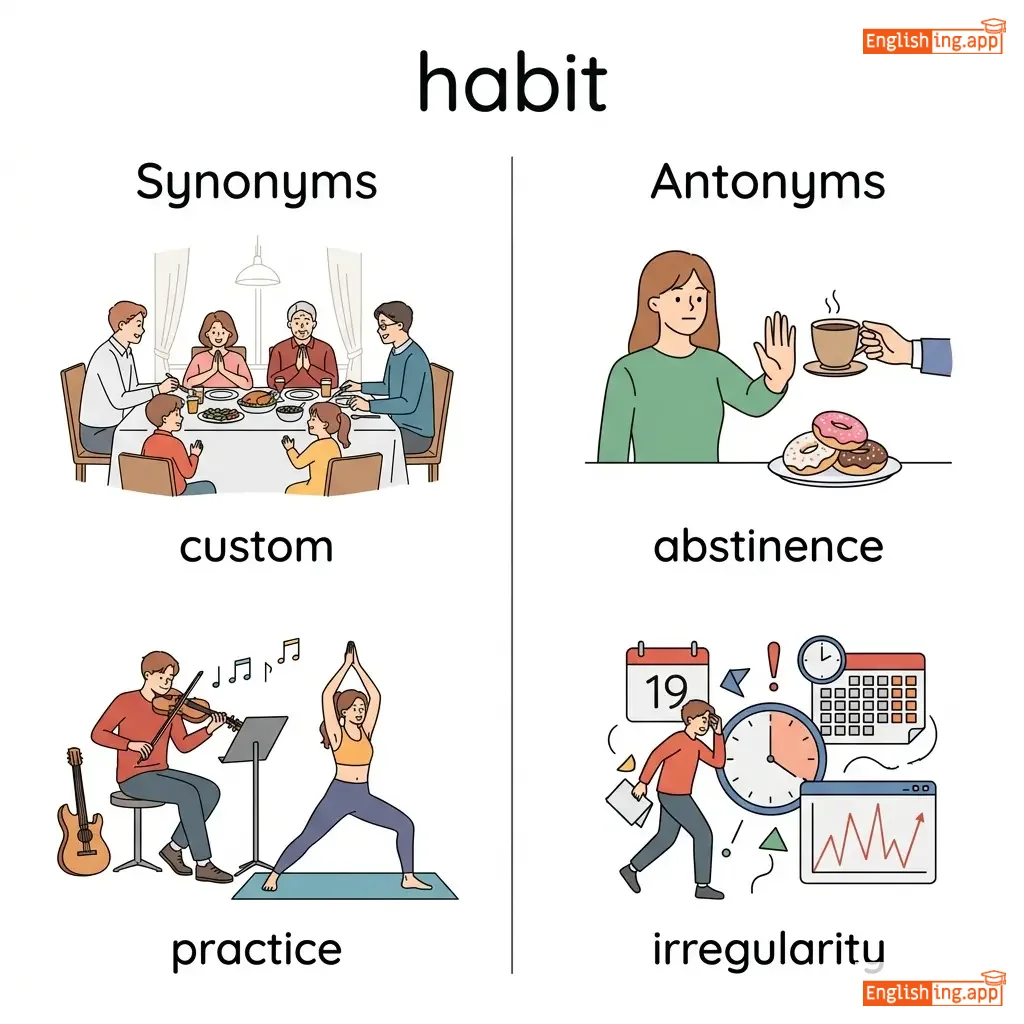
custom, practice, routine, tendency, pattern
••••••
|
abstinence, irregularity, avoidance
••••••
|
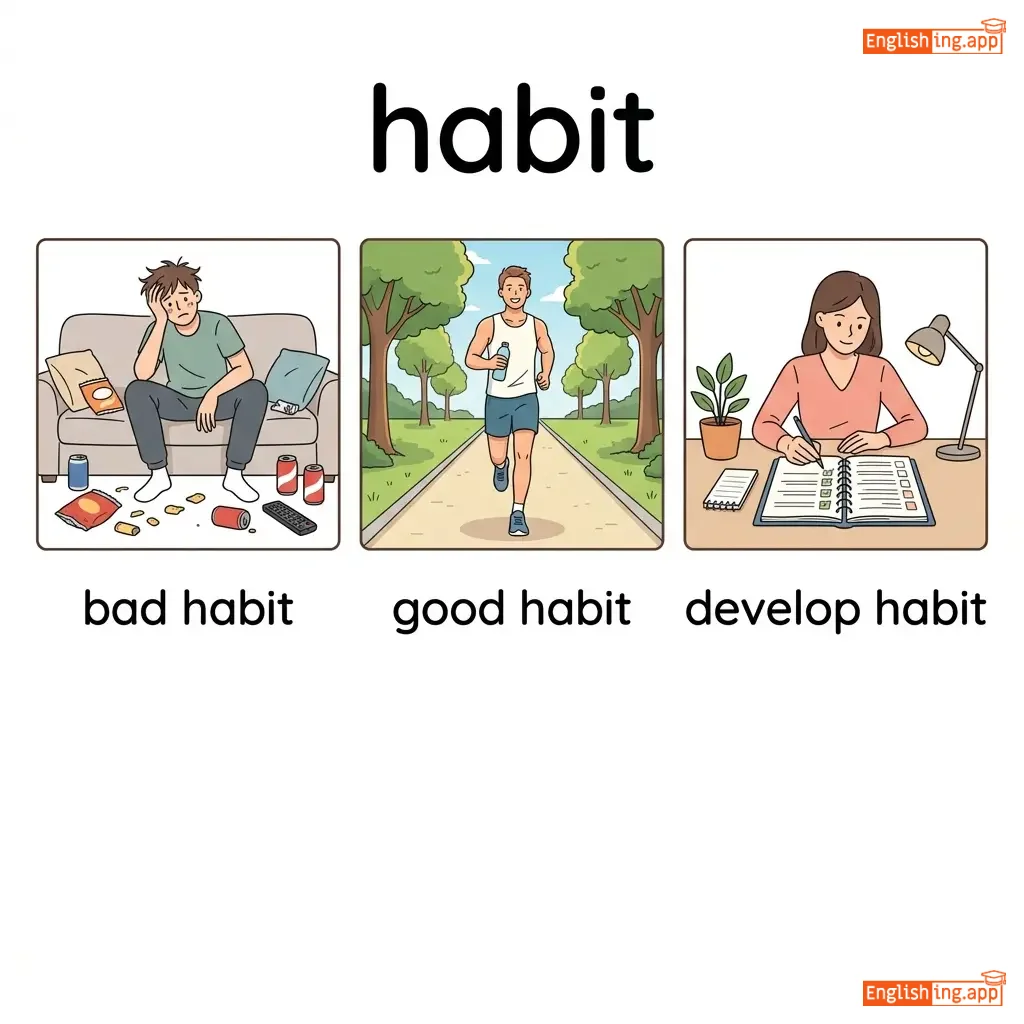
bad habit, good habit, develop habit, break habit
••••••
|
習慣を作るなら、毎日続けることが大切だ。
••••••
|
|
👨👩👧👦
••••••
|
/ˈhæbɪtənt/
noun
(ハビタント)
••••••
|
- •••••• |
住民
jūmin
••••••
|
- •••••• | - •••••• | - •••••• | - •••••• |
An inhabitant; a person or animal that lives in a particular place.
••••••
|
The habitants of the village were friendly and welcoming. |
村の住民は親切で歓迎してくれました。
Mura no jūmin wa shinsetsu de kangei shite kuremashita.
••••••
|
- •••••• | - •••••• | - •••••• |
inhabitant, resident, dweller, occupant, settler
••••••
|
visitor, outsider, stranger
••••••
|
native habitant, rural habitant, city habitant, permanent habitant
••••••
|
Habitant = Habit + ant、習慣(habit)的に住んでいる人や動物。
••••••
|
|
🌿
••••••
|
/ˈhæbɪˌtæt/
noun
(ハビタット)
••••••
|
|
生息地
seikokuchi
••••••
|
- •••••• | - •••••• | - •••••• | - •••••• |
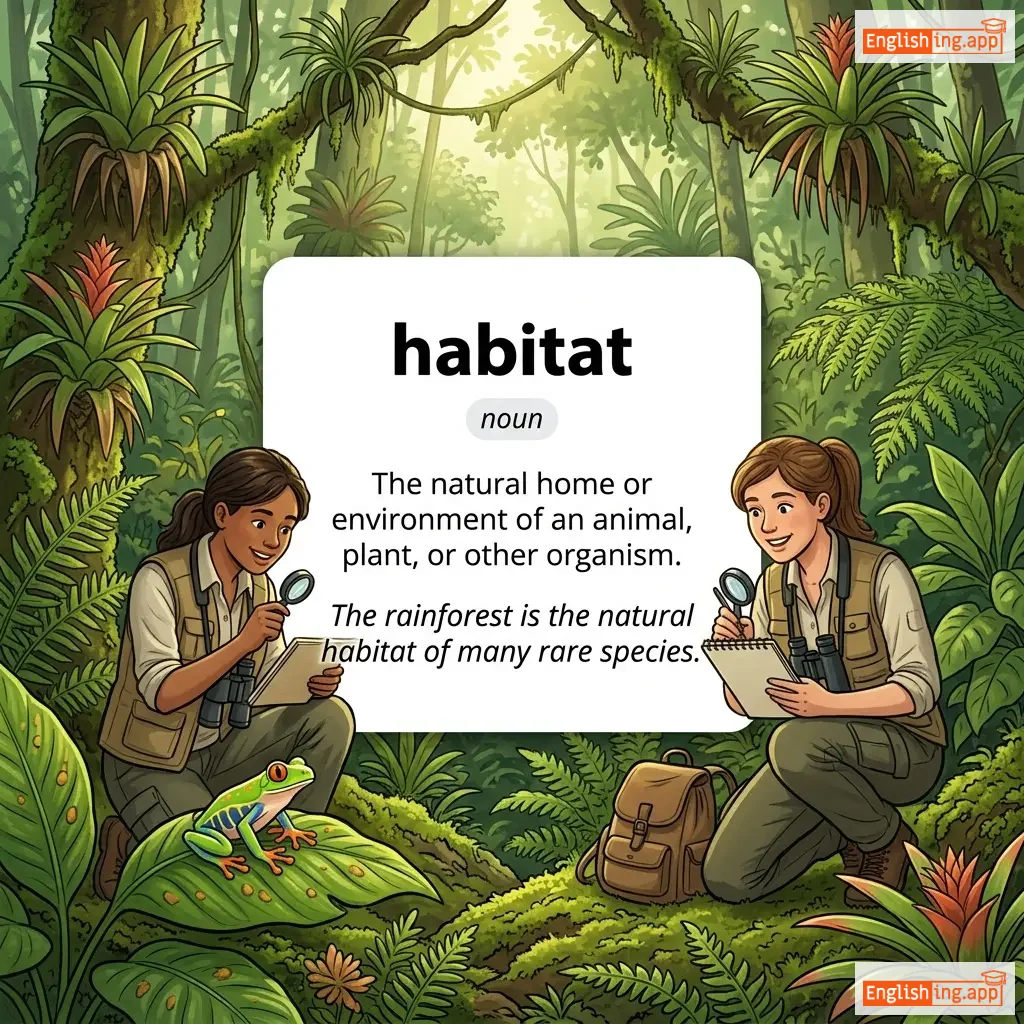
The natural home or environment of an animal, plant, or other organism.
••••••
|
The rainforest is the natural habitat of many rare species. |
熱帯雨林は多くの希少種の自然な生息地です。
Nettai urin wa ōku no kishō-shu no shizen na seikokuchi desu.
••••••
|
- •••••• | - •••••• | - •••••• |
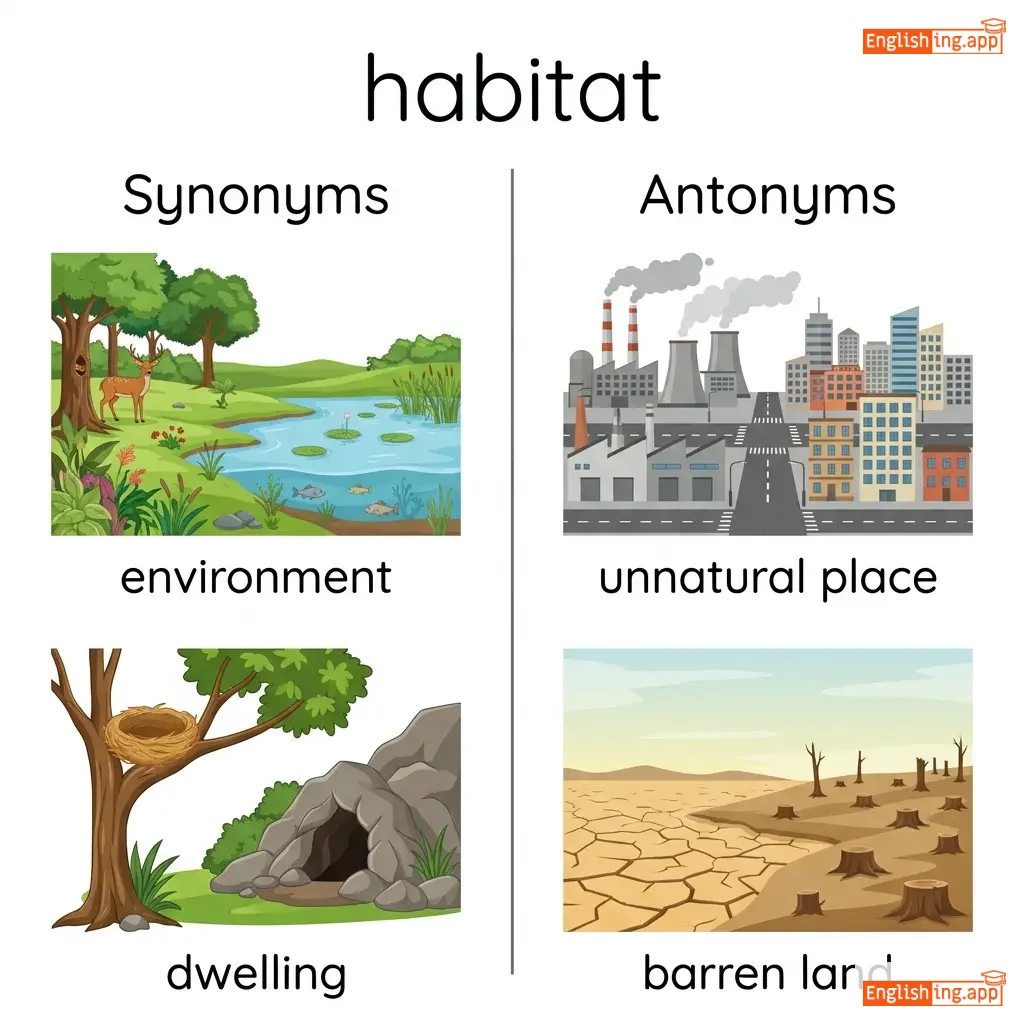
environment, dwelling, territory, ecosystem, surroundings
••••••
|
unnatural place, barren land
••••••
|
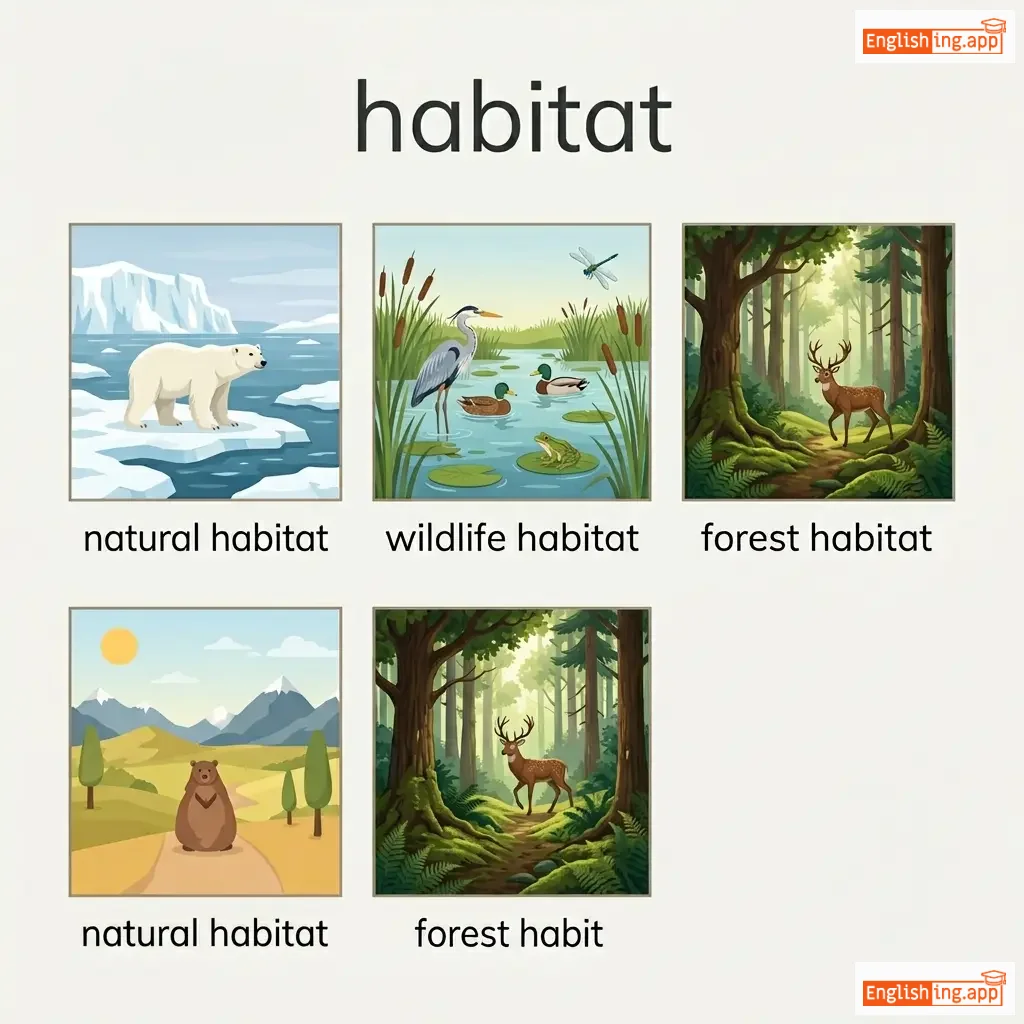
natural habitat, wildlife habitat, forest habitat, marine habitat
••••••
|
Habit + at → 生活する場所 = 生息地。
••••••
|

