Получите неограниченный доступ ко всем словам с подпиской Pro
Обновить до ProПолучите неограниченный доступ ко всем предложениям с подпиской Pro
Обновить до Pro|
Эмодзи
|
Слово | Images | Перевод | Прошедшее | Причастие прошедшего времени | Третье лицо единственного числа | Герундий | Значение | Пример предложения | Перевод примера предложения | Пример выражения | Значение примера выражения | Перевод примера выражения | Синонимы | Антонимы | Коллокации | Мнемоника |
|---|---|---|---|---|---|---|---|---|---|---|---|---|---|---|---|---|---|
|
📊
••••••
|
/ɡreɪd/
noun, verb
(грэйд)
••••••
|
- •••••• |
оценка
otsenka
••••••
|
graded
грейдед
••••••
|
graded
грейдед
••••••
|
grades
грейдс
••••••
|
grading
грейдинг
••••••
|
A level of quality, rank, or performance; to assign a score or mark to work or performance.
••••••
|
The teacher graded all the papers by the weekend.
Учитель поставил оценки всем работам к выходным.
••••••
|
Учитель поставил оценки всем работам к выходным.
Uchitel' postavil otsenki vsem rabotam k vykhodnym.
••••••
|
make the grade
пройти уровень
••••••
|
To succeed or meet the required standard.
••••••
|
достигнуть стандарта
dostignut' standarta
••••••
|
rank, level, mark, score, stage
••••••
|
failure, decline
••••••
|
high grade, grade level, grade point, grade paper
••••••
|
Grade - это оценка, которая ставится за результаты работы.
••••••
|
|
🎓
••••••
|
/ɡrænt/
verb
(грант)
••••••
|

|
предоставлять
grant
••••••
|
granted
грантид
••••••
|
granted
грантид
••••••
|
grants
грантс
••••••
|
granting
грантинг
••••••
|
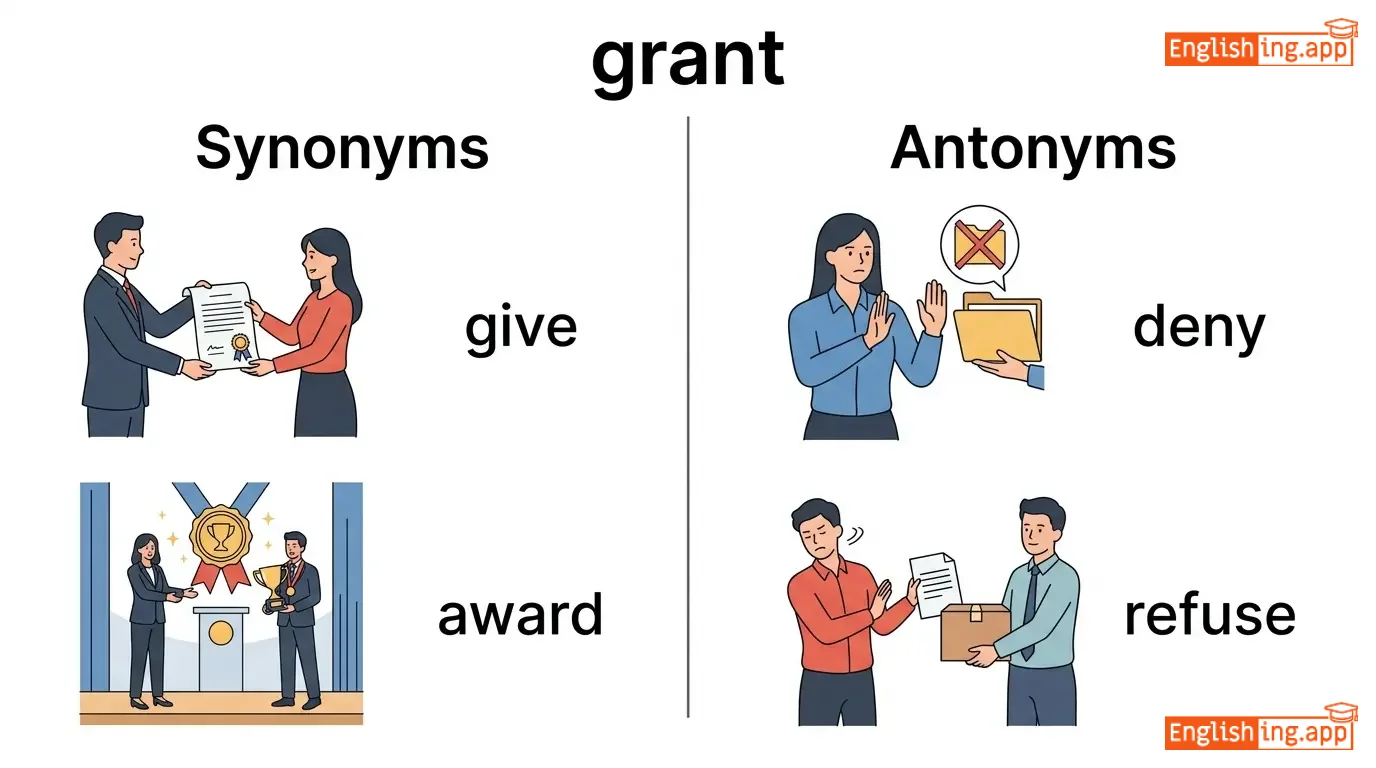
To give or allow something, usually in an official or formal way.
••••••
|
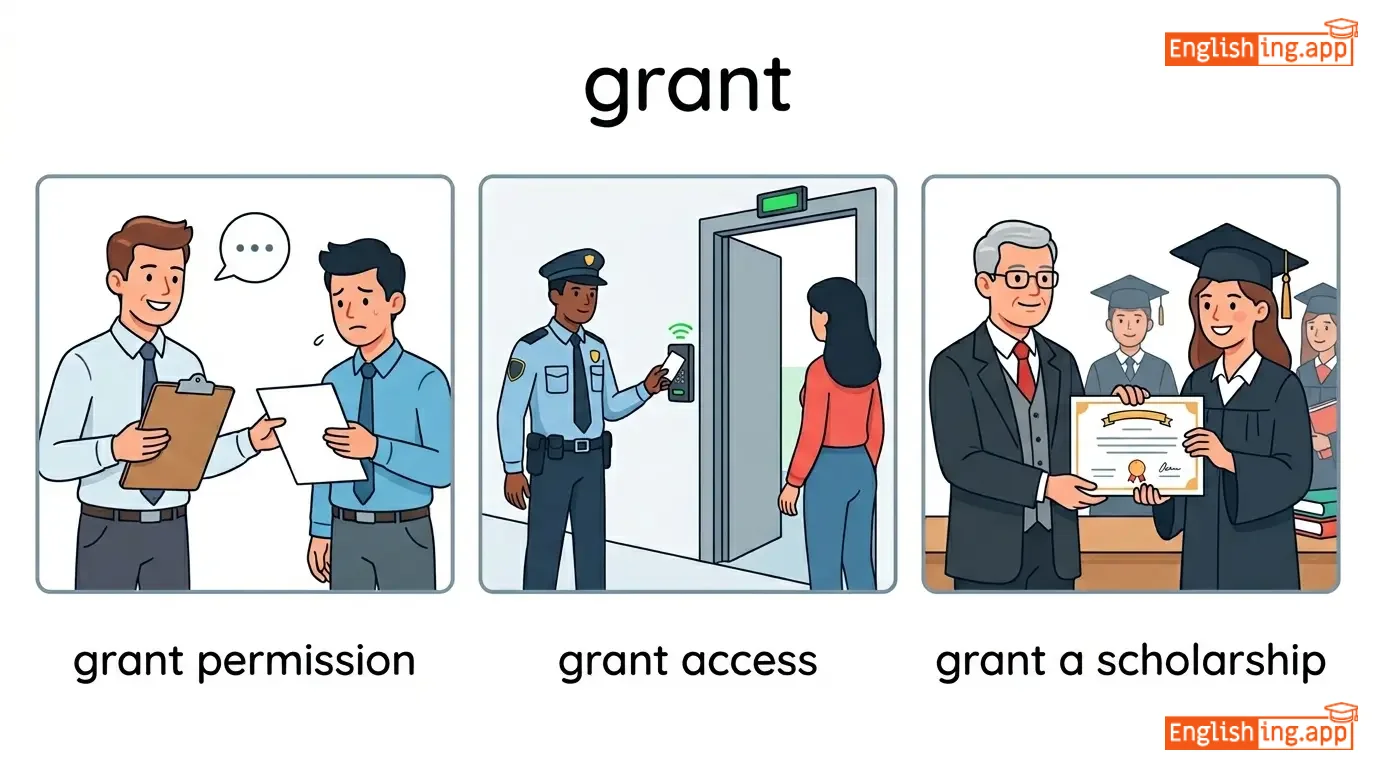
The university granted him a scholarship for his excellent results.
Университет предоставил ему стипендию за его отличные результаты.
••••••
|
Университет предоставил ему стипендию за его отличные результаты.
Universitet predostavil emu stipendiyu za ego otlichnye rezultaty.
••••••
|
take for granted
тейк фор грантид
••••••
|
To fail to appreciate the value of something or someone.
••••••
|
принимать как должное
take for granted
••••••
|
give, award, allow, permit, bestow
••••••
|
deny, refuse, withhold
••••••
|
grant permission, grant access, grant a scholarship, grant a request
••••••
|
Мнемоника: Грант = grant: give money официально — запоминай: grant значит давать
••••••
|
|
🎨
••••••
|
/ˈɡræf.ɪk/
adjective
(график)
••••••
|
- •••••• |
графический
graficheskiy
••••••
|
- •••••• | - •••••• | - •••••• | - •••••• |
Relating to visual art, especially involving drawing, design, or vivid description.
••••••
|
The movie contained graphic scenes of violence.
зе муви контейнед график сиинз ов вайолэнс.
••••••
|
В фильме были графические сцены насилия.
V fil'me byli graficheskie sceny nasiliya.
••••••
|
graphic details
график дейтейлз
••••••
|
Explicit and vivid description of events or images, often shocking.
••••••
|
графические детали
graficheskie detali
••••••
|
illustrative, vivid, pictorial, descriptive, explicit
••••••
|
vague, dull, unclear
••••••
|
graphic design, graphic novel, graphic content, graphic details
••••••
|
ГРАФИК = GRAPH + ИК, представь графический рисунок на картинке
••••••
|
|
🎨
••••••
|
/ˈɡræfɪks/
noun
(ɡræfɪks)
••••••
|
- •••••• |
графика
grafika
••••••
|
- •••••• | - •••••• | - •••••• | - •••••• |
visual images, designs, or drawings used to convey information or artistic expression
••••••
|
The website uses stunning graphics to attract visitors. |
Веб-сайт использует потрясающую графику, чтобы привлечь посетителей.
Veb-sayt ispol'zuet potryasayushchuyu grafiku, chtoby privlech' posetiteley.
••••••
|
- •••••• | - •••••• | - •••••• |
images, visuals, illustrations, designs
••••••
|
text, words
••••••
|
computer graphics, graphic design, graphic artist, digital graphics
••••••
|
Графика, как в дизайне, впечатляет всех.
••••••
|
|
✊
••••••
|
/ɡrɑːsp/
verb
(грассп)
••••••
|
|
схватить твердо или понять что-то полностью
skhvatit' tverdo ili ponyat' chto-to polnost'yu
••••••
|
grasped
грасспд
••••••
|
grasped
грасспд
••••••
|
grasps
грасспс
••••••
|
grasping
грасспинг
••••••
|
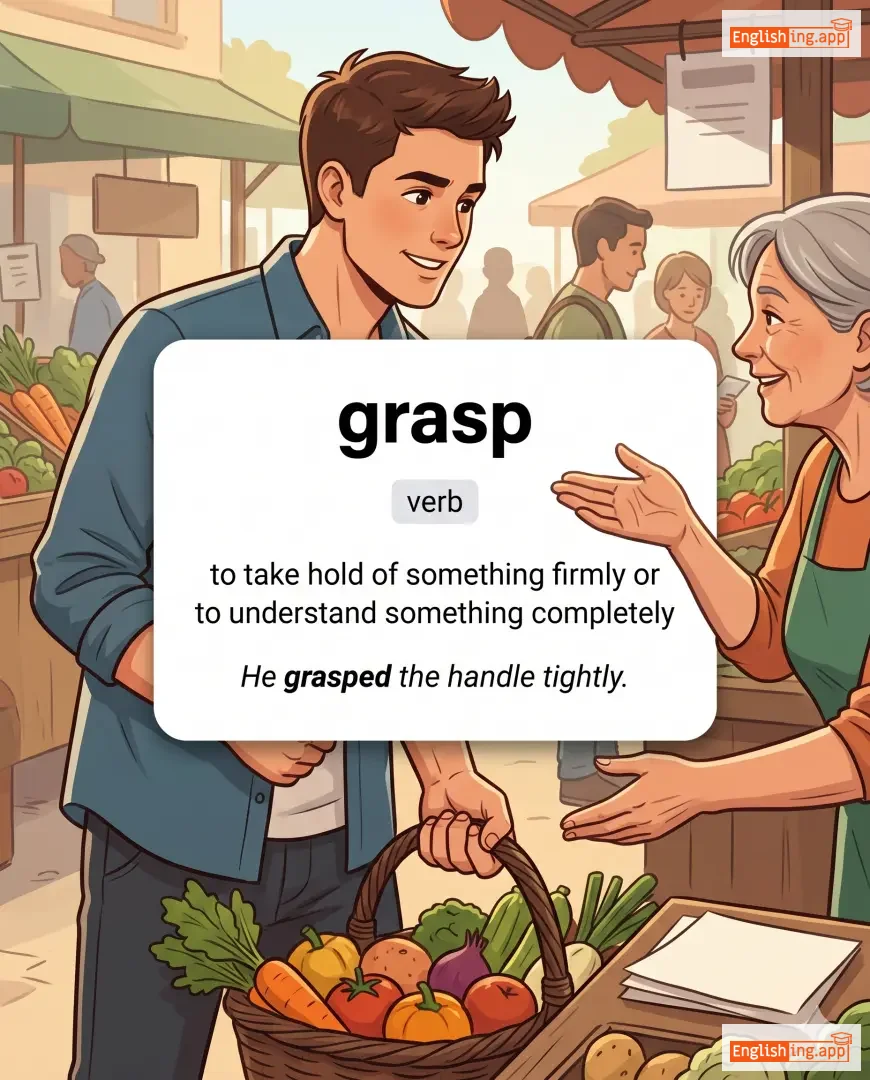
to take hold of something firmly or to understand something completely
••••••
|
He grasped the handle tightly.
Он крепко схватил ручку.
••••••
|
Он крепко схватил ручку.
On krepkо skhvatil ruchku.
••••••
|
grasp the nettle
схватить крапиву
••••••
|
to deal with a difficult situation with courage
••••••
|
Смело справляться с трудной ситуацией
Smelo spravlyat'sya s trudnoy situatsiyey
••••••
|
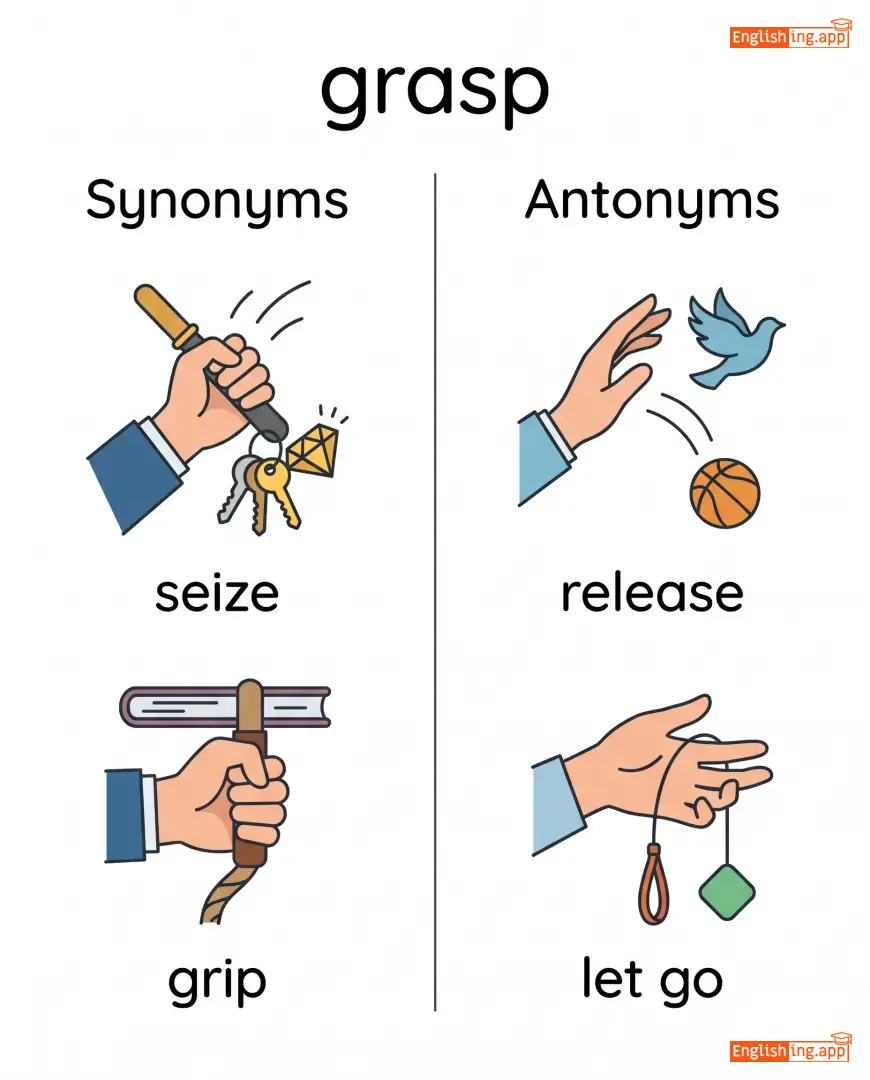
seize, grip, clutch, understand, comprehend
••••••
|
release, let go, misunderstand
••••••
|
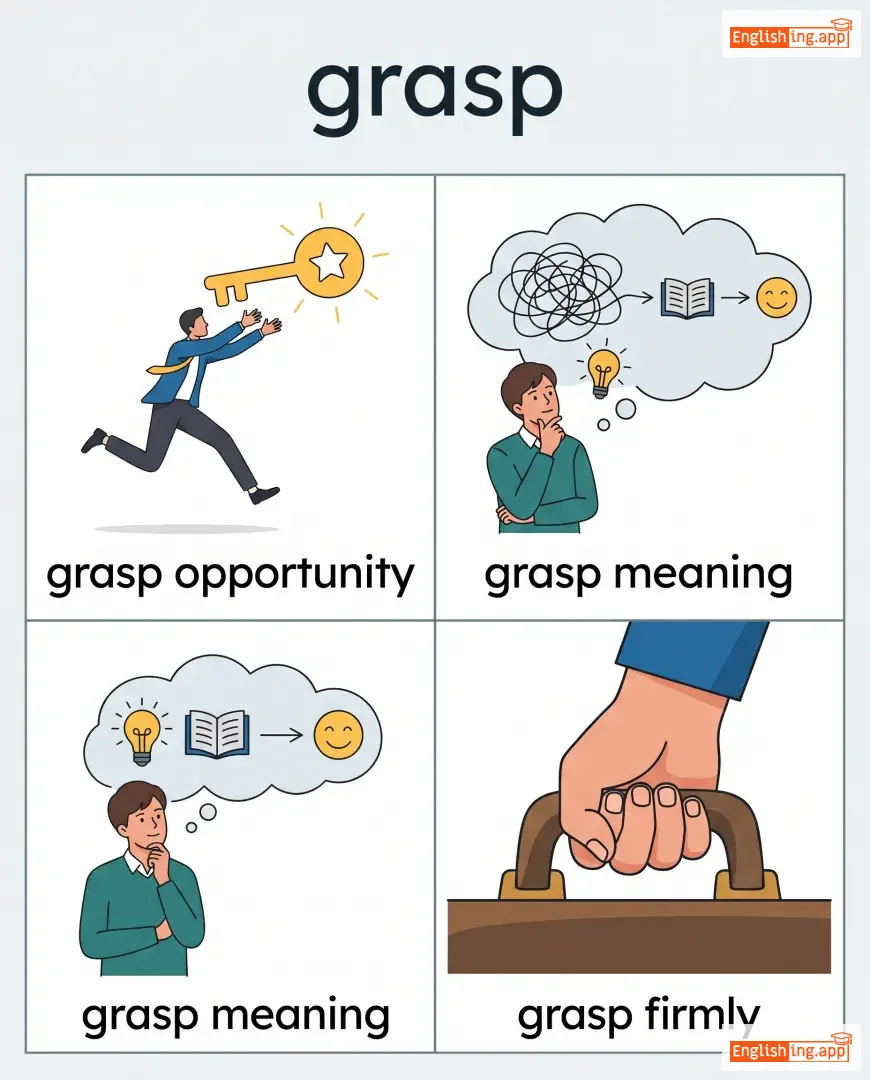
grasp opportunity, grasp meaning, grasp firmly, grasp concept
••••••
|
Grasp: крепко схватить или понять полностью!
••••••
|
|
🌱
••••••
|
/ɡræs/
noun
(хэппинесс)
••••••
|
- •••••• |
счастье
schastye
••••••
|
- •••••• | - •••••• | - •••••• | - •••••• |
plants with narrow green leaves, often covering the ground in fields or gardens
••••••
|
Children are playing on the grass. |
Она не могла скрыть своего счастья, когда получила награду.
Ona ne mogla skryt' svoego schast'ya, kogda poluchila nagradu.
••••••
|
the grass is always greener on the other side |
other people's situations always seem better than one's own
••••••
|
поиск счастья
poisk schast'ya
••••••
|
lawn, turf, pasture, sod, herbage
••••••
|
bare ground, soil
••••••
|
green grass, cut grass, fresh grass, tall grass
••••••
|
Счастье = Счастливо + Хэппи = Happiness
••••••
|
|
🙏
••••••
|
/ˈɡreɪtfəl/
adjective
(грэитфул)
••••••
|
- •••••• |
благодарный
blagodarnyy
••••••
|
- •••••• | - •••••• | - •••••• | - •••••• |
feeling or showing thanks for something or someone
••••••
|
I am grateful for your help. |
Я благодарен за твою помощь.
Ya blagodaren za tvoyu pomoshch.
••••••
|
grateful heart |
a feeling of deep appreciation and thankfulness
••••••
|
благодарное сердце
blagodarnoye serdtse
••••••
|
thankful, appreciative, obliged, indebted, pleased
••••••
|
ungrateful, thankless, indifferent
••••••
|
grateful for, deeply grateful, grateful thanks, feel grateful
••••••
|
Blagodarnyy — это когда у тебя благодарное сердце, помни быть благодарным!
••••••
|
|
⚰️
••••••
|
/ɡreɪv/
noun, adjective
(greiv)
••••••
|
- •••••• |
могила
mogila
••••••
|
- •••••• | - •••••• | - •••••• | - •••••• |
A place where someone is buried; also used to describe something serious or solemn.
••••••
|
He visited his grandfather's grave every year. |
Он посещал могилу своего деда каждый год.
On poseschal mogilu svoego deda kazhdyy god.
••••••
|
turn in one's grave |
To be very upset or disturbed even after death, often used figuratively.
••••••
|
переворачиваться в могиле
perevorachivatsya v mogile
••••••
|
tomb, burial site, sepulcher, serious, solemn
••••••
|
lighthearted, trivial
••••••
|
grave danger, grave mistake, grave concern, graveyard, visit a grave
••••••
|
Могила — это место для покоя, но также может быть связано с чем-то важным и серьезным.
••••••
|
|
🪦
••••••
|
/ˈɡreɪv.jɑːrd/
noun
(грейв-ярд)
••••••
|
- •••••• |
кладбище
kladbishche
••••••
|
- •••••• | - •••••• | - •••••• | - •••••• |
an area of land set aside for burial of the dead; a cemetery
••••••
|
The old graveyard near the church dates back to the 18th century. |
Старое кладбище рядом с церковью датируется XVIII веком.
Staroye kladbishche ryadom s tserkov'yu datiruetsya XVIII vekom.
••••••
|
- •••••• | - •••••• | - •••••• |
cemetery, burial ground, necropolis, churchyard
••••••
|
birthplace, nursery, playground, living space
••••••
|
old graveyard, church graveyard, graveyard shift
••••••
|
кладбище = место вечного покоя
••••••
|
|
🌍
••••••
|
/ˈɡrævəti/
noun
(гравити)
••••••
|
|
гравитация
gravitatsiya
••••••
|
- •••••• | - •••••• | - •••••• | - •••••• |
The natural force that attracts objects toward the center of the earth; seriousness or importance.
••••••
|
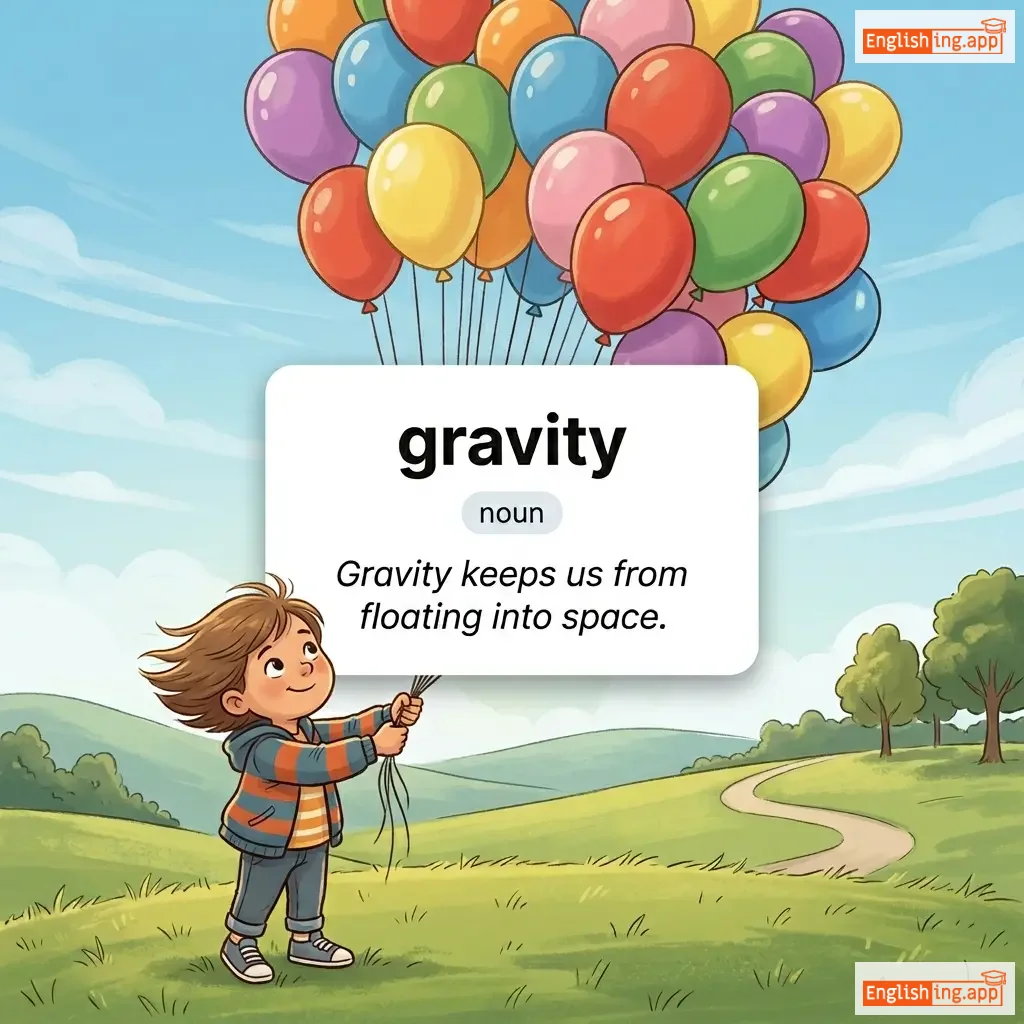
Gravity keeps us from floating into space.
Гравитация не даёт нам улететь в космос.
••••••
|
Гравитация не даёт нам улететь в космос.
Gravitatsiya ne dayot nam uletet v kosmos.
••••••
|
gravity of the situation
серьёзность ситуации
••••••
|
The seriousness or importance of a situation.
••••••
|
Серьёзность или важность ситуации.
seryoznost ili vazhnost situatsii
••••••
|
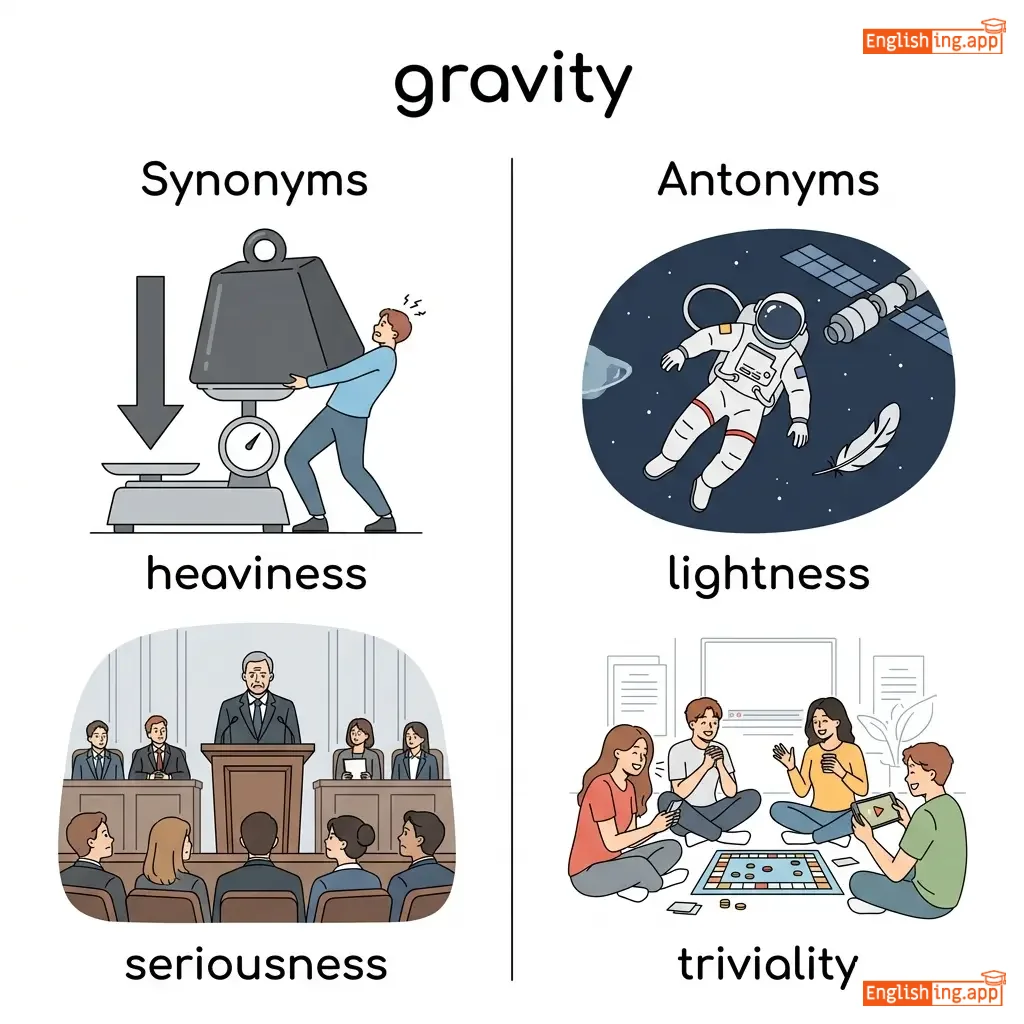
heaviness, seriousness, weight, force
••••••
|
lightness, triviality
••••••
|
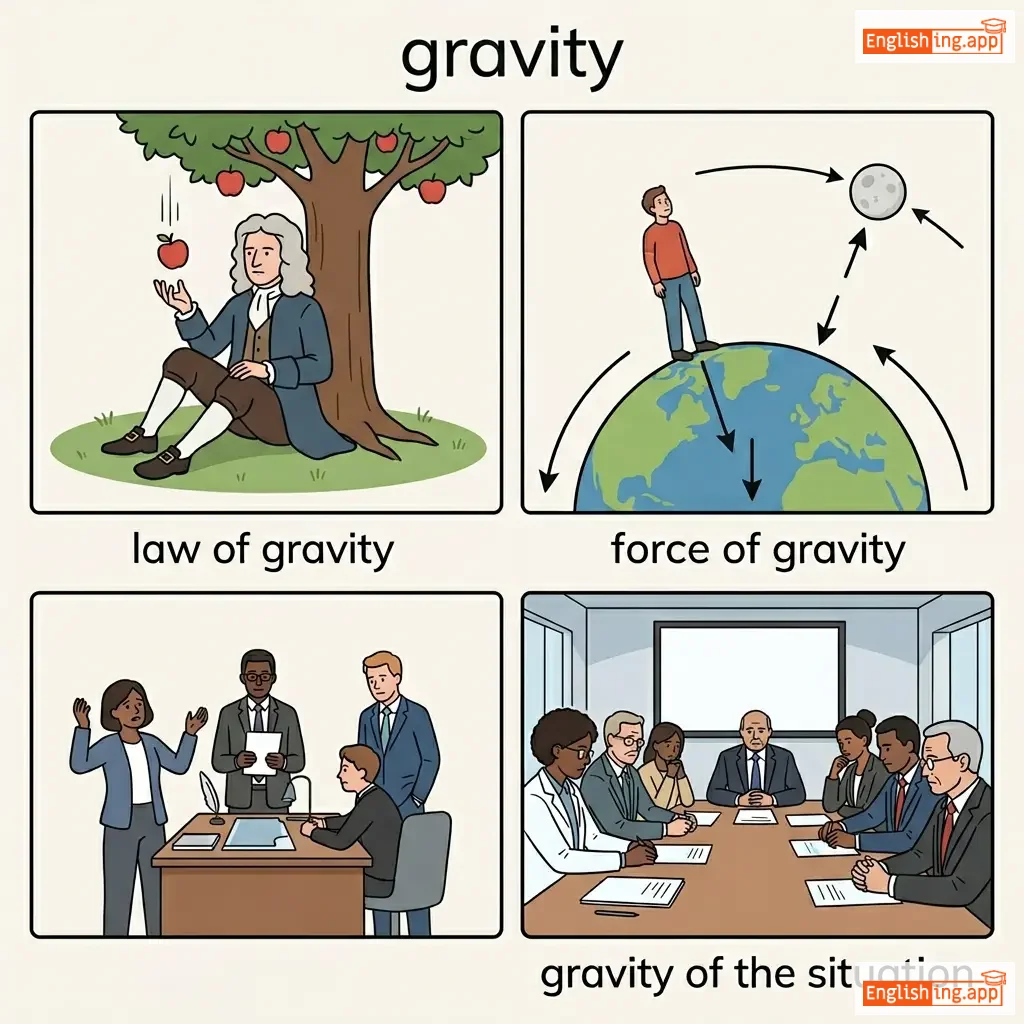
law of gravity, force of gravity, gravity of the situation
••••••
|
Гравити = gravity; keep your feet на земле, remember серьёзность ситуации.
••••••
|
|
🌫️
••••••
|
/ɡreɪ/
adjective, noun
(хэппинесс)
••••••
|
- •••••• |
счастье
schast'ye
••••••
|
- •••••• | - •••••• | - •••••• | - •••••• |
A color between black and white; also describes dull or gloomy situations.
••••••
|
The sky turned gray before the storm. |
Она не смогла скрыть своего счастья, когда получила награду.
Ona ne smogla skryt' svoego schast'ya, kogda poluchila nagradu.
••••••
|
gray area |
Something unclear or not easily classified.
••••••
|
поиск счастья
poisk schast'ya
••••••
|
ashen, dull, silver, gloomy, neutral
••••••
|
bright, colorful
••••••
|
gray sky, gray hair, gray area, gray clouds, gray mood
••••••
|
Счастье — это когда у тебя есть покой в сердце.
••••••
|
|
🌟
••••••
|
/ɡreɪt/
adjective
(greit)
••••••
|
- •••••• |
великий
velikiy
••••••
|
- •••••• | - •••••• | - •••••• | - •••••• |
Of an extent, amount, or intensity considerably above average; very good or important.
••••••
|
She gave a great performance at the concert.
Она дала отличное выступление на концерте.
••••••
|
Она дала отличное выступление на концерте.
Ona dala otlichnoe vystuplenie na koncerte.
••••••
|
great minds think alike
Великие умы думают одинаково
••••••
|
Intelligent people often have similar ideas.
••••••
|
Великие умы думают одинаково
Velikie umy dumayut odinakovo
••••••
|
excellent, outstanding, important, immense, huge
••••••
|
poor, small, insignificant
••••••
|
great deal, great importance, great success, great leader
••••••
|
Великий означает великий — запомни: Великие дела — великие умы!
••••••
|
|
🏆
••••••
|
/ˈɡreɪ.tɪst/
adjective (superlative)
(グレイテスト)
••••••
|
- •••••• |
величайший
velichayshiy
••••••
|
- •••••• | - •••••• | - •••••• | - •••••• |
The highest degree of greatness; the most outstanding or important.
••••••
|
He is considered one of the greatest leaders of all time.
Он считается одним из величайших лидеров всех времен.
••••••
|
Он считается одним из величайших лидеров всех времен.
On schitayetsya odnim iz velichayshikh liderov vsekh vremen.
••••••
|
the greatest of all time
величайший всех времен
••••••
|
Used to describe someone regarded as the best ever in a field.
••••••
|
величайший всех времен
velichayshiy vsekh vremen
••••••
|
best, finest, top, supreme, foremost
••••••
|
least, worst
••••••
|
greatest achievement, greatest leader, greatest player, greatest strength, greatest challenge
••••••
|
Greatest – величайший, самый лучший.
••••••
|
|
💫
••••••
|
/ˈɡreɪtli/
adverb
(грэйтли)
••••••
|
- •••••• |
очень
ochen
••••••
|
- •••••• | - •••••• | - •••••• | - •••••• |
to a large extent or degree; very much
••••••
|
She was greatly admired by her students.
Она была сильно восхищена своими студентами.
••••••
|
Она была сильно восхищена своими студентами.
Ona byla sil'no voskhishchena svoimi studentami.
••••••
|
- •••••• | - •••••• | - •••••• |
extremely, immensely, highly, deeply, significantly
••••••
|
slightly, barely, hardly
••••••
|
greatly improve, greatly appreciate, greatly benefit, greatly influence
••••••
|
Greatly значит очень, в значительной степени!
••••••
|
|
🌿
••••••
|
/ɡriːn/
adjective
(grin)
••••••
|
- •••••• |
зеленый
zelenyi
••••••
|
- •••••• | - •••••• | - •••••• | - •••••• |
Of the color between blue and yellow in the spectrum; inexperienced or naive.
••••••
|
The garden is full of green plants. |
Сад полон зеленых растений.
Sad polon zelyonykh rastenii.
••••••
|
green with envy |
Extremely jealous.
••••••
|
зеленый от зависти
zelenyi ot zavisti
••••••
|
verdant, leafy, fresh, naive, inexperienced
••••••
|
dry, withered, experienced
••••••
|
green plants, green energy, green environment, green with envy
••••••
|
Зеленый – как листья на деревьях в саду.
••••••
|
|
🌱
••••••
|
/ˈɡriːnhaʊs/
noun
(grinhaus)
••••••
|
- •••••• |
теплица
teplitsa
••••••
|
- •••••• | - •••••• | - •••••• | - •••••• |
a glass building used for growing plants, especially in cold climates
••••••
|
The farmers built a large greenhouse to grow tomatoes in the winter. |
Фермеры построили большую теплицу для выращивания помидоров зимой.
Fermery postroili bol'shuyu teplitsu dlya vyrashchivaniya pomidorov zimoy.
••••••
|
- •••••• | - •••••• | - •••••• |
hothouse, conservatory, plant house
••••••
|
open field, outdoors
••••••
|
greenhouse effect, greenhouse gas, greenhouse plants, greenhouse cultivation
••••••
|
Теплица — место, где растения растут тепло, даже зимой.
••••••
|
|
🗺️
••••••
|
/ɡrɪd/
noun
(грид)
••••••
|
|
сетка
setka
••••••
|
- •••••• | - •••••• | - •••••• | - •••••• |
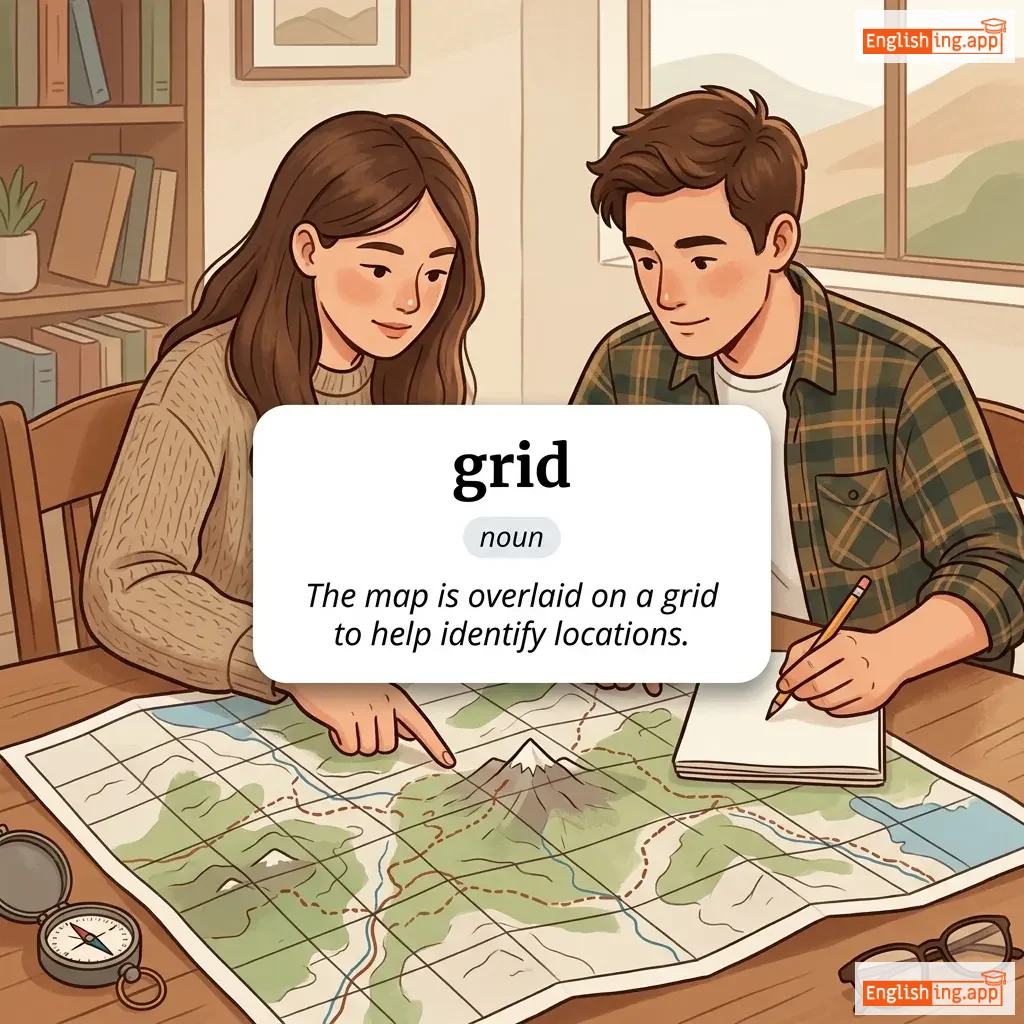
a network of lines that cross each other to form a series of squares or rectangles
••••••
|
The map is overlaid on a grid to help identify locations. |
Карта накладывается на сетку для помощи в определении местоположений.
Karta nakladyvayetsya na setku dlya pomoshchi v opredelenii mestopolozheniy.
••••••
|
- •••••• | - •••••• | - •••••• |
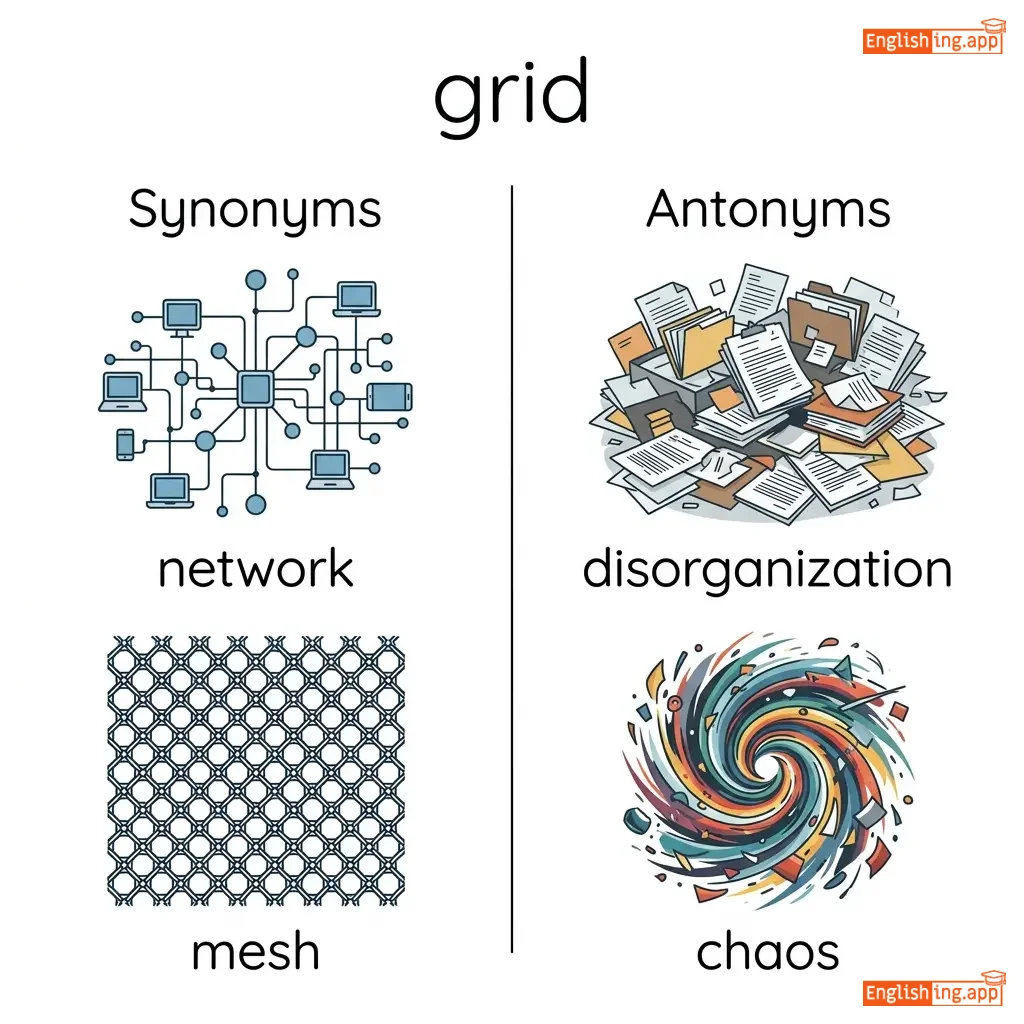
network, mesh, framework, matrix
••••••
|
disorganization, chaos
••••••
|
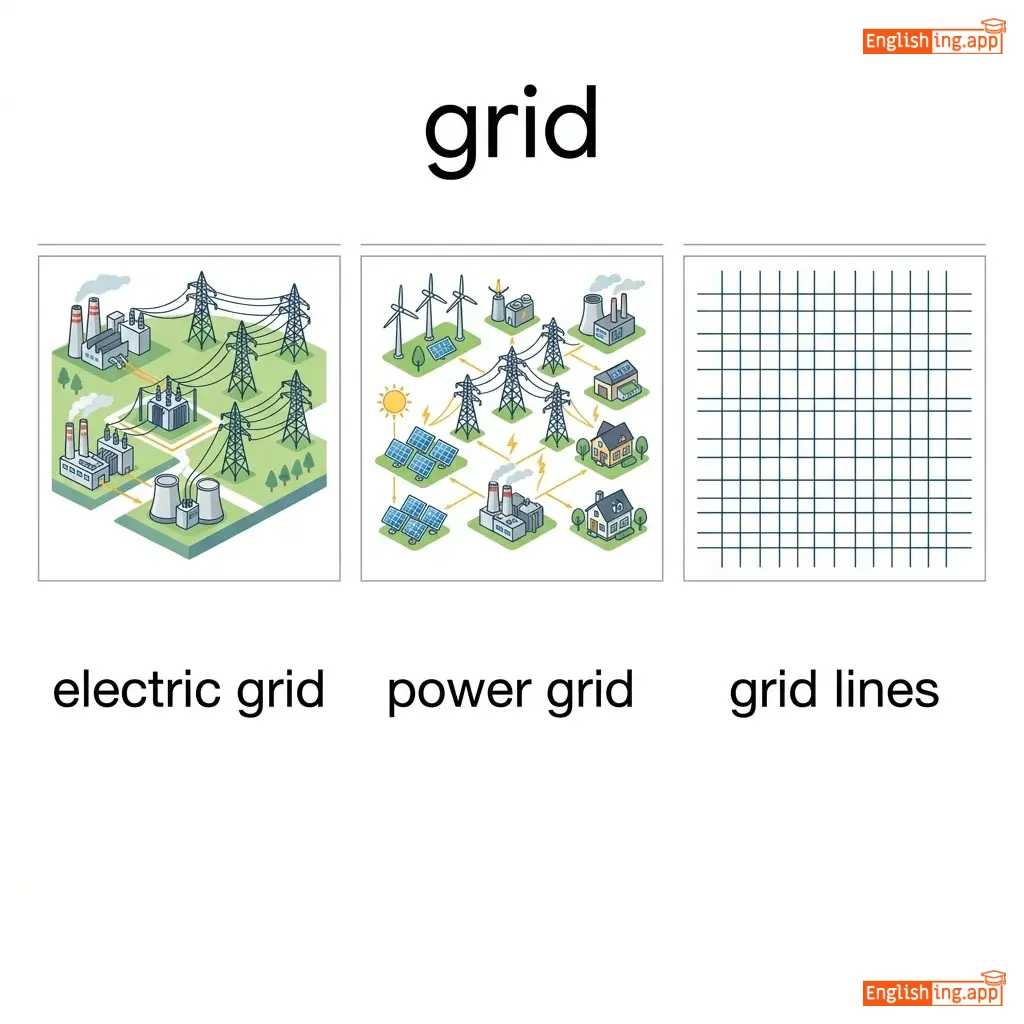
electric grid, power grid, grid lines, grid system
••••••
|
Сетка помогает точно определить местоположение, как на карте, где каждый квадрат - это точка.
••••••
|
|
😢
••••••
|
/ɡriːf/
noun
(грифф)
••••••
|
- •••••• |
горе
gore
••••••
|
- •••••• | - •••••• | - •••••• | - •••••• |
Deep sorrow, especially caused by someone's death.
••••••
|
She was overcome with grief after her father's passing. |
Она была переполнена горем после смерти своего отца.
Ona byla perepolnena gorem posle smerti svoego otca.
••••••
|
Good grief |
An exclamation expressing surprise, dismay, or annoyance.
••••••
|
Боже мой
Bozhe moy
••••••
|
sorrow, sadness, anguish, heartbreak, mourning
••••••
|
joy, happiness, delight
••••••
|
deep grief, grief and sorrow, grief over loss
••••••
|
Grief это горе → в ночной тишине горе может звучать как тоскливый звук.
••••••
|
|
😁
••••••
|
/ɡrɪn/
verb, noun
(грин)
••••••
|
- •••••• |
широко улыбаться, часто показывая зубы
shiroko ulybat'sya, chasto pokazyvaya zuby
••••••
|
grinned
гринд
••••••
|
grinned
гринд
••••••
|
grins
гринс
••••••
|
grinning
грининг
••••••
|
to smile broadly, often showing teeth
••••••
|
She grinned happily at the good news.
Она улыбнулась счастливо, услышав хорошие новости.
••••••
|
Она улыбнулась счастливо, услышав хорошие новости.
Ona ulybnulas' schastlivo, uslyshav khoroshie novosti.
••••••
|
grin and bear it
улыбнись и потерпи
••••••
|
to endure something unpleasant with good humor
••••••
|
улыбнись и потерпи
ulybnis' i poterpi
••••••
|
smile, beam, smirk, chuckle
••••••
|
frown, scowl
••••••
|
big grin, cheeky grin, wide grin, grin broadly
••••••
|
Улыбайся и терпи!
••••••
|
|
⚙️
••••••
|
/ɡraɪnd/
verb
(graind)
••••••
|

|
молоти
moloti
••••••
|
ground
ground
••••••
|
ground
ground
••••••
|
grinds
grainds
••••••
|
grinding
grinding
••••••
|
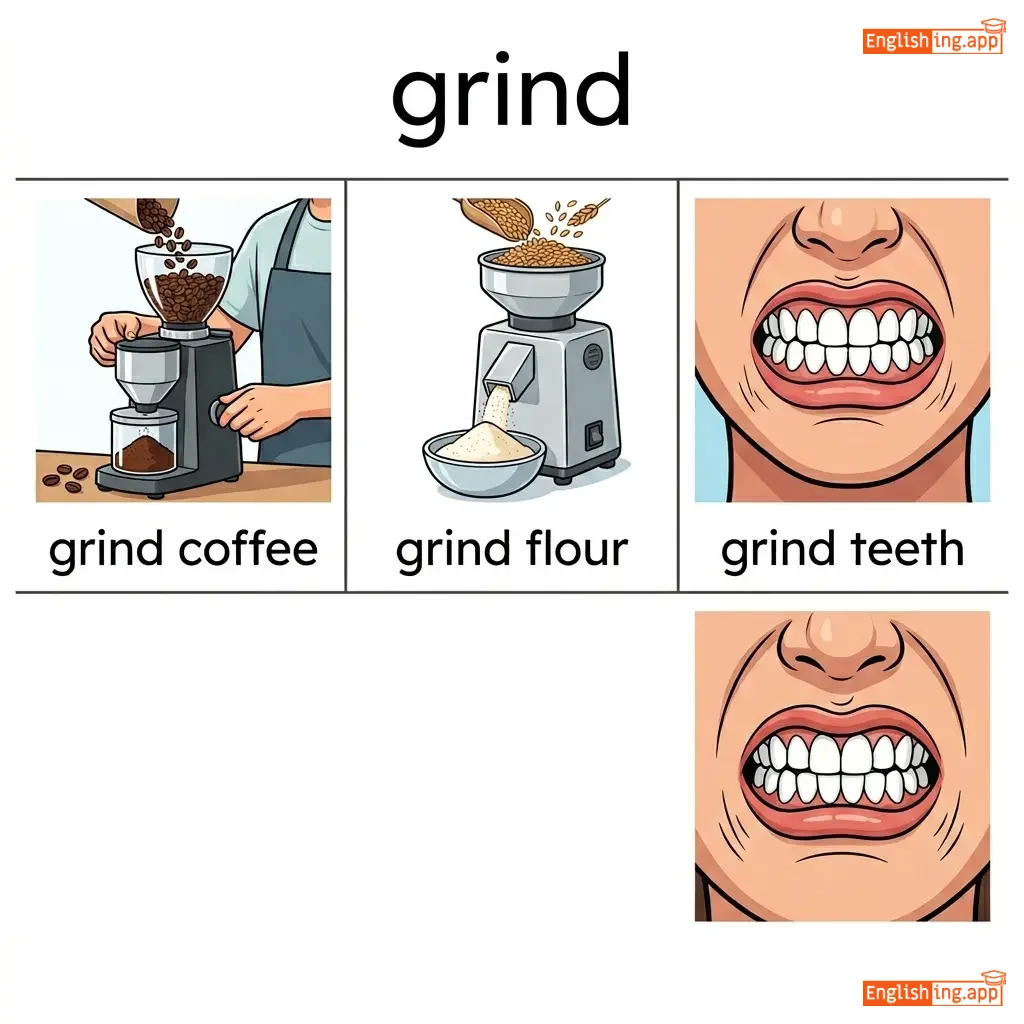
to crush into small particles; to work hard
••••••
|
She grinds coffee beans every morning.
Она молет кофейные зерна каждое утро.
••••••
|
Она молет кофейные зерна каждое утро.
Ona molet kofeynie zerno kazhdoe utro.
••••••
|
- •••••• | - •••••• | - •••••• |
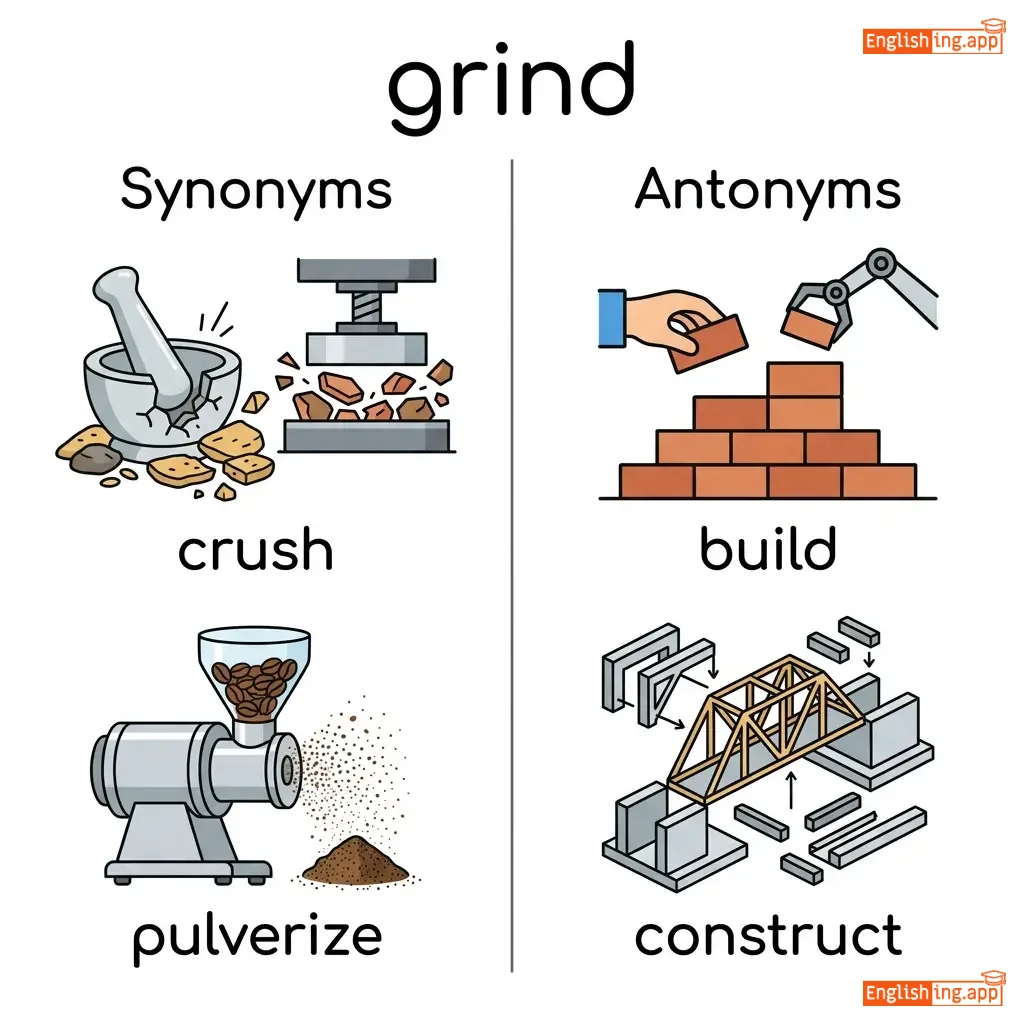
crush, mill, pulverize, work hard
••••••
|
assemble, construct, relax, rest
••••••
|
grind coffee, grind slowly, grind finely, grind daily, grind fresh
••••••
|
Молите молоток каждый день!
••••••
|
|
✊
••••••
|
/ɡrɪp/
verb
(грип)
••••••
|
- •••••• |
схватить
skhvatit
••••••
|
gripped
гриппед
••••••
|
gripped
гриппед
••••••
|
grips
грипс
••••••
|
gripping
гриппинг
••••••
|
to hold something tightly or firmly
••••••
|
He gripped the steering wheel tightly.
он крепко схватил руль.
••••••
|
он крепко схватил руль.
on krepko skhvatil rul'.
••••••
|
get a grip
взять себя в руки
••••••
|
to control your emotions or behavior
••••••
|
взять себя в руки
vzyat' sebya v ruki
••••••
|
hold, grasp, clutch, seize, clasp
••••••
|
release, let go, drop
••••••
|
firm grip, lose grip, get a grip, tight grip
••••••
|
Схватить — это как сделать Grip, ничто не упадет!
••••••
|
|
🛒
••••••
|
/ˈɡroʊ.sər.i/
noun
(гро́сери)
••••••
|
- •••••• |
продуктовый магазин
produktovyy magazin
••••••
|
- •••••• | - •••••• | - •••••• | - •••••• |
A store that sells food and household supplies.
••••••
|
She went to the grocery to buy vegetables. |
Она пошла в продуктовый магазин, чтобы купить овощи.
Ona poshla v produktovyy magazin, chtoby kupit' ovoshchi.
••••••
|
- •••••• | - •••••• | - •••••• |
supermarket, store, market, shop, provisions
••••••
|
none,
••••••
|
grocery store, grocery list, grocery shopping, local grocery, buy groceries
••••••
|
Grocery = Продуктовый магазин, где покупаем еду.
••••••
|
|
🛒
••••••
|
/ˈɡrəʊsəri ʃɒp/
noun
(гросери шоп)
••••••
|
- •••••• |
продуктовый магазин
produktovyy magazin
••••••
|
- •••••• | - •••••• | - •••••• | - •••••• |
a retail store where food and everyday household items are sold
••••••
|
She stopped by the grocery shop to buy vegetables and milk.
Она пошла в гросери шоп за продуктами.
••••••
|
Она пошла в продуктовый магазин купить овощи и молоко.
ona poshla v produktovyy magazin kupit ovoshchi i moloko
••••••
|
- •••••• | - •••••• | - •••••• |
grocery store, food shop, market, supermarket
••••••
|
non-food store, specialty shop
••••••
|
local grocery shop, small grocery shop, nearby grocery shop, grocery shop owner
••••••
|
Grocery shop — это продуктовый магазин рядом с домом
••••••
|
|
🤢
••••••
|
/ɡroʊs/
adjective
(гросс)
••••••
|
- •••••• |
отвратительный / грубый
otvratitel'nyy / gruby
••••••
|
- •••••• | - •••••• | - •••••• | - •••••• |
extremely unpleasant or disgusting; total before deductions
••••••
|
He thought the food looked gross, but it tasted fine. |
Он думал, что еда выглядит отвратительно, но на вкус она была хорошей.
On dumal, chto yeda vyglyadit otvratitel'no, no na vkus ona byla khoroshey.
••••••
|
gross out |
to make someone feel disgusted
••••••
|
вызывать отвращение
vyzyvat' otvrashcheniye
••••••
|
disgusting, nasty, foul, total, overall
••••••
|
pleasant, clean, net
••••••
|
gross income, gross mistake, gross error
••••••
|
Gross в английском языке также означает отвратительное (gross food).
••••••
|
|
🌍
••••••
|
/ɡraʊnd/
noun/verb
(graund)
••••••
|
- •••••• |
земля
zemlya
••••••
|
grounded
graundet
••••••
|
grounded
graundet
••••••
|
grounds
graunds
••••••
|
grounding
graunding
••••••
|
the solid surface of the earth; to prohibit someone (often a child) from going out
••••••
|
The children played on the ground near the house.
Дети играли на земле рядом с домом.
••••••
|
Дети играли на земле рядом с домом.
Deti igrali na zemle ryadom s domom.
••••••
|
on solid ground
на твёрдой земле
••••••
|
in a safe or stable situation
••••••
|
в безопасной или стабильной ситуации
v bezopasnoi ili stabil'noi situatsii
••••••
|
earth, soil, floor, basis, foundation
••••••
|
sky, air
••••••
|
soft ground, fertile ground, grounded theory, ground rules
••••••
|
Ground означает 'земля' - все играют на земле.
••••••
|
|
🏢
••••••
|
/ˈɡraʊnd flɔːr/
noun
(граунд флор)
••••••
|
- •••••• |
первый этаж
pervyy etazh
••••••
|
- •••••• | - •••••• | - •••••• | - •••••• |
the floor of a building at ground level; the starting level of an organization or activity
••••••
|
The grocery shop is located on the ground floor of the building.
Магазин находится на первом этаже.
••••••
|
Продуктовый магазин находится на первом этаже.
Produktovyy magazin nakhoditsya na pervom etazhe
••••••
|
get in on the ground floor
с самого начала
••••••
|
to become involved at the very beginning of something, especially when it has potential to succeed
••••••
|
с самого начала
s samogo nachala
••••••
|
first floor, street level, base level, entry level
••••••
|
upper floor, top floor
••••••
|
ground floor apartment, ground floor entrance, ground floor office, on the ground floor
••••••
|
земля = ground, поэтому первый этаж
••••••
|
|
👥
••••••
|
/ɡruːp/
noun, verb
(grup)
••••••
|
- •••••• |
группа
gruppa
••••••
|
grouped
gruped
••••••
|
grouped
gruped
••••••
|
groups
grups
••••••
|
grouping
gruping
••••••
|
A number of people or things considered together; to arrange things or people into categories.
••••••
|
The students formed a study group.
Студенты создали учебную группу.
••••••
|
Студенты создали учебную группу.
Studenty sozdayli uchebnuyu gruppu.
••••••
|
group effort
групповой труд
••••••
|
A collective attempt or teamwork by multiple people.
••••••
|
групповая работа
gruppovaya rabota
••••••
|
team, cluster, party, band, collective
••••••
|
individual, single
••••••
|
group work, group project, small group, large group, group meeting
••••••
|
Группа — это собрание, как в группе на WhatsApp.
••••••
|
|
🌱
••••••
|
/ɡroʊ/
verb
(грóу)
••••••
|
|
расти
rasti
••••••
|
grew
гру
••••••
|
grown
грон
••••••
|
grows
гроус
••••••
|
growing
гроуинг
••••••
|
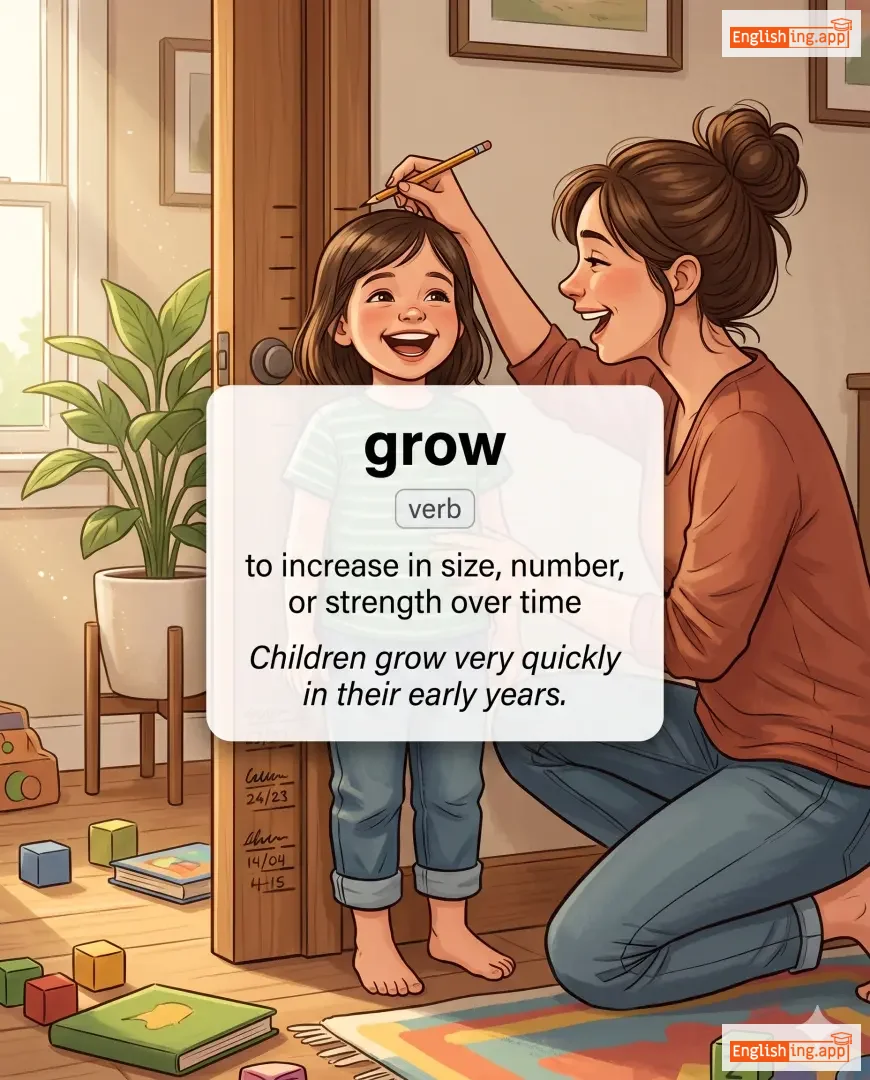
to increase in size, number, or strength over time
••••••
|
Children grow very quickly in their early years.
Дети растут очень быстро в свои первые годы.
••••••
|
Дети растут очень быстро в свои первые годы.
Deti rastut ochen' bystro v svoi pervye gody.
••••••
|
grow on someone
расти на кого-то
••••••
|
to gradually become liked or appreciated
••••••
|
постепенно стать любимым человеком
postepenno stat' lyubimym chelovekom
••••••
|
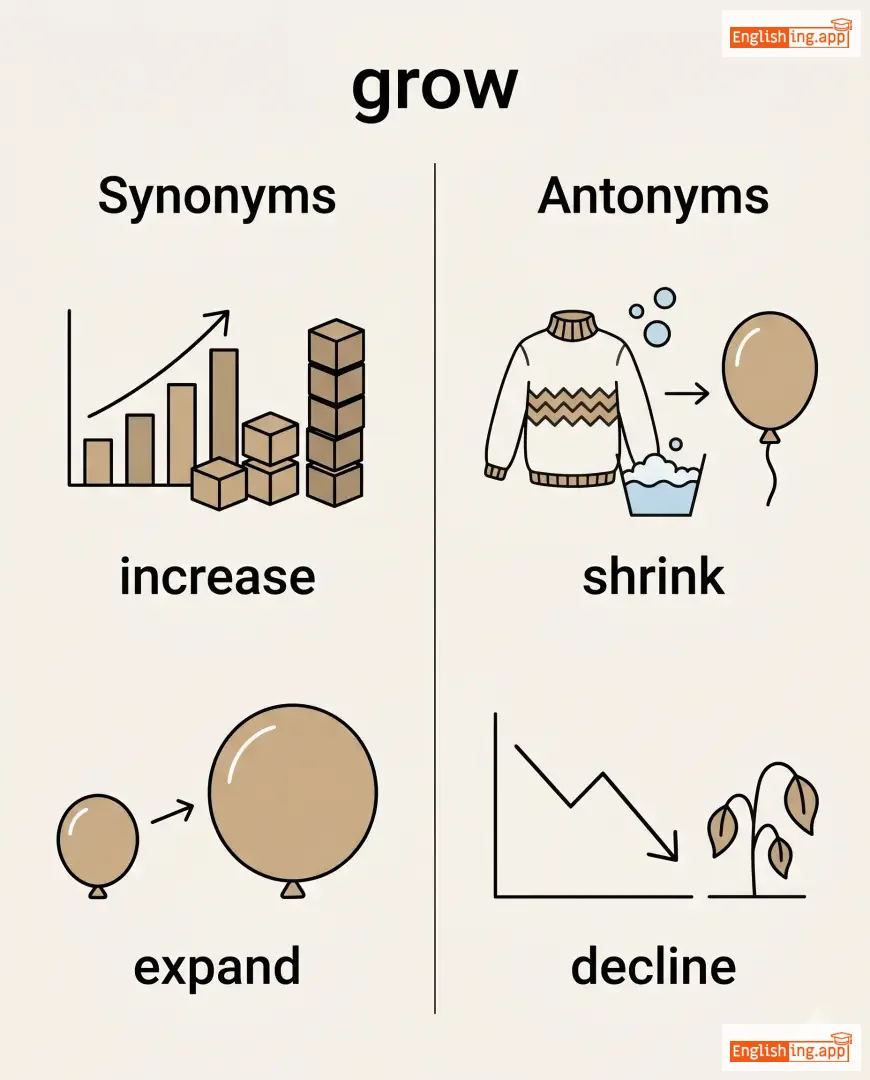
increase, expand, develop, rise, progress
••••••
|
shrink, decline, decrease
••••••
|
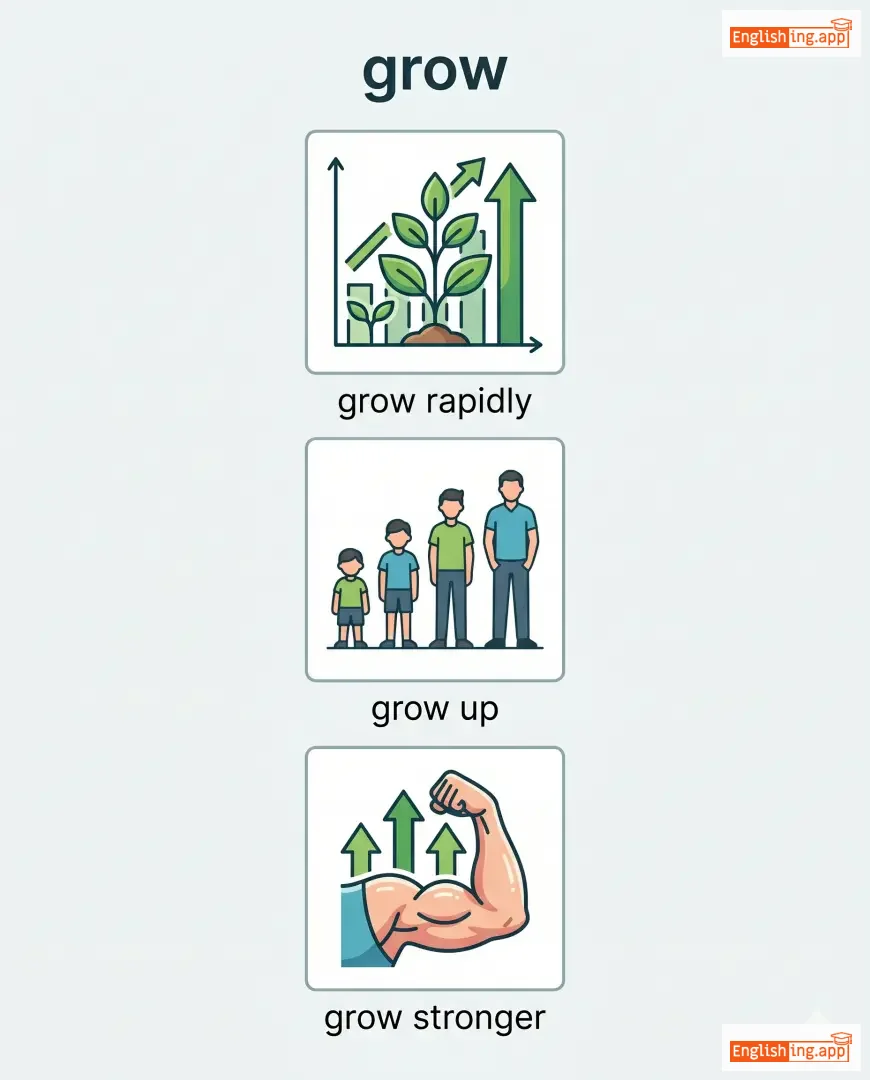
grow rapidly, grow up, grow stronger, grow business
••••••
|
Деревья растут, что означает увеличение их размера со временем.
••••••
|
|
🌿
••••••
|
/ˈɡroʊ.ɪŋ/
verb
(грóу-инг)
••••••
|
- •••••• |
растущий
rastushchiy
••••••
|
- •••••• | - •••••• | - •••••• |
growing
грóу-инг
••••••
|
continuously increasing or developing
••••••
|
There is a growing demand for renewable energy.
Существует растущий спрос на возобновляемую энергию.
••••••
|
Существует растущий спрос на возобновляемую энергию.
Sushchestvuet rastushchiy spros na vozobnovlyaemuyu energiyu.
••••••
|
- •••••• | - •••••• | - •••••• |
developing, expanding, increasing, rising
••••••
|
shrinking, decreasing, declining
••••••
|
growing demand, growing concern, growing population, growing economy
••••••
|
Growing означает растущий, как растущий спрос на энергию.
••••••
|
|
📈
••••••
|
/ɡroʊθ/
noun
(грóус)
••••••
|


|
рост
rost
••••••
|
- •••••• | - •••••• | - •••••• | - •••••• |
the process of increasing in size, number, or importance
••••••
|
The company has shown remarkable growth in the last year. |
Компания продемонстрировала значительный рост в прошлом году.
Kompaniya prodemonstrirovala znachitel'nyy rost v proshlom godu.
••••••
|
economic growth |
increase in a nation's production of goods and services
••••••
|
экономический рост
ekonomicheskiy rost
••••••
|
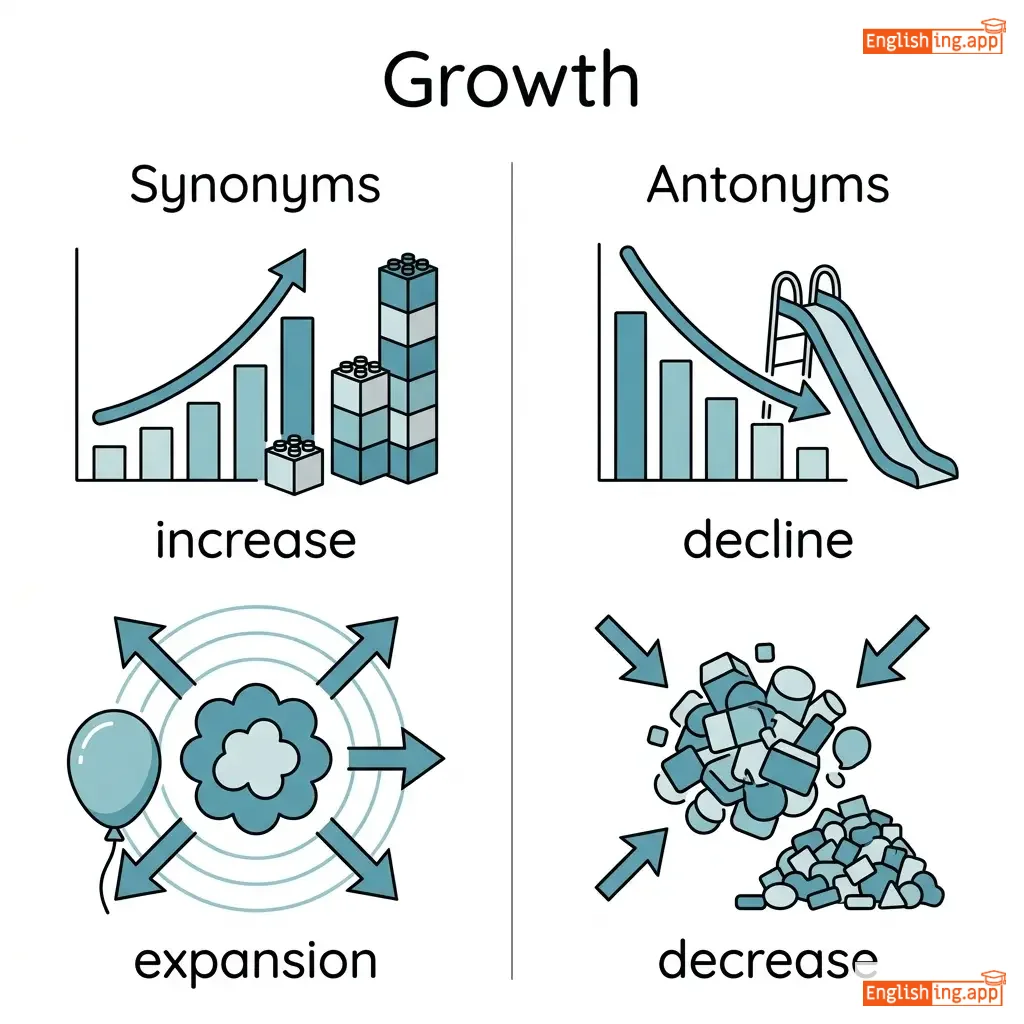
increase, expansion, rise, development
••••••
|
decline, decrease, shrinkage
••••••
|
rapid growth, steady growth, business growth, growth rate
••••••
|
Рост это когда показатели идут вверх 📈
••••••
|
|
✅
••••••
|
/ˌɡærənˈtiː/
noun/verb
(гаранти)
••••••
|
- •••••• |
гарантия
garantiya
••••••
|
guaranteed
гарантировано
••••••
|
guaranteed
гарантировано
••••••
|
guarantees
гарантирует
••••••
|
guaranteeing
гарантируя
••••••
|
a formal promise or assurance, especially about the quality or durability of a product
••••••
|
The company guarantees a refund if the product is faulty.
Компания гарантирует возврат денег, если продукт неисправен.
••••••
|
Компания гарантирует возврат денег, если продукт неисправен.
Kompaniya garantiyeit vozvrat deneg, esli produkt neispraven.
••••••
|
money-back guarantee
гарантия возврата денег
••••••
|
a promise that money will be refunded if the product is unsatisfactory
••••••
|
гарантия возврата денег
garantiya vozvrata deneg
••••••
|
assure, promise, warrant, pledge
••••••
|
break, deny, disclaim
••••••
|
lifetime guarantee, product guarantee, guarantee success, guarantee satisfaction
••••••
|
Гарантия - это как обещание вернуть деньги, если товар не подошел.
••••••
|
|
🛡️
••••••
|
/ɡɑːrd/
noun/verb
(гард)
••••••
|
|
страж / охранять
strazh / okhranyat
••••••
|
guarded
гардед
••••••
|
guarded
гардед
••••••
|
guards
гардс
••••••
|
guarding
гардинг
••••••
|
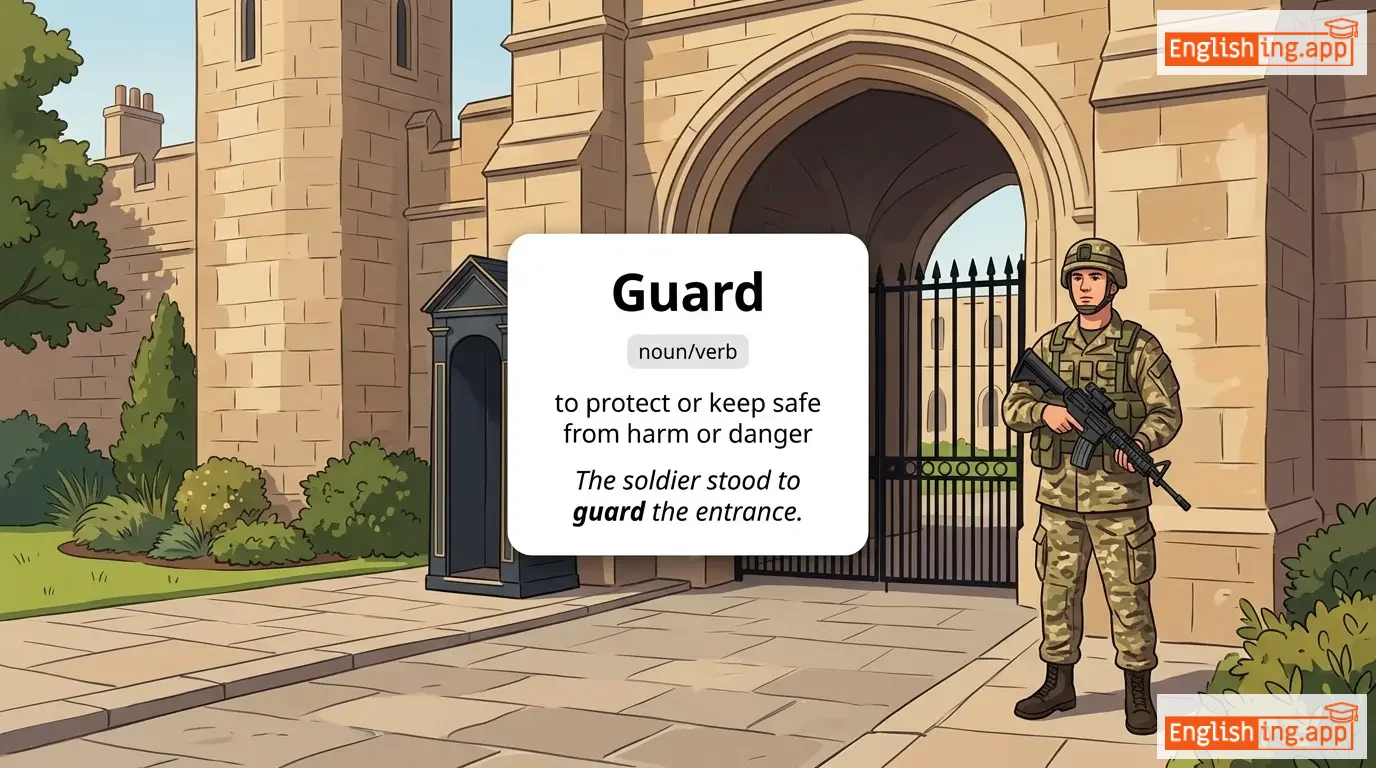
to protect or keep safe from harm or danger
••••••
|
The soldier stood to guard the entrance.
Солдат стоял, чтобы охранять вход.
••••••
|
Солдат стоял, чтобы охранять вход.
Soldat stoyal, chtoby okhranyat' vkhod.
••••••
|
on guard
на страже
••••••
|
to be watchful and alert
••••••
|
на страже
na strazhe
••••••
|
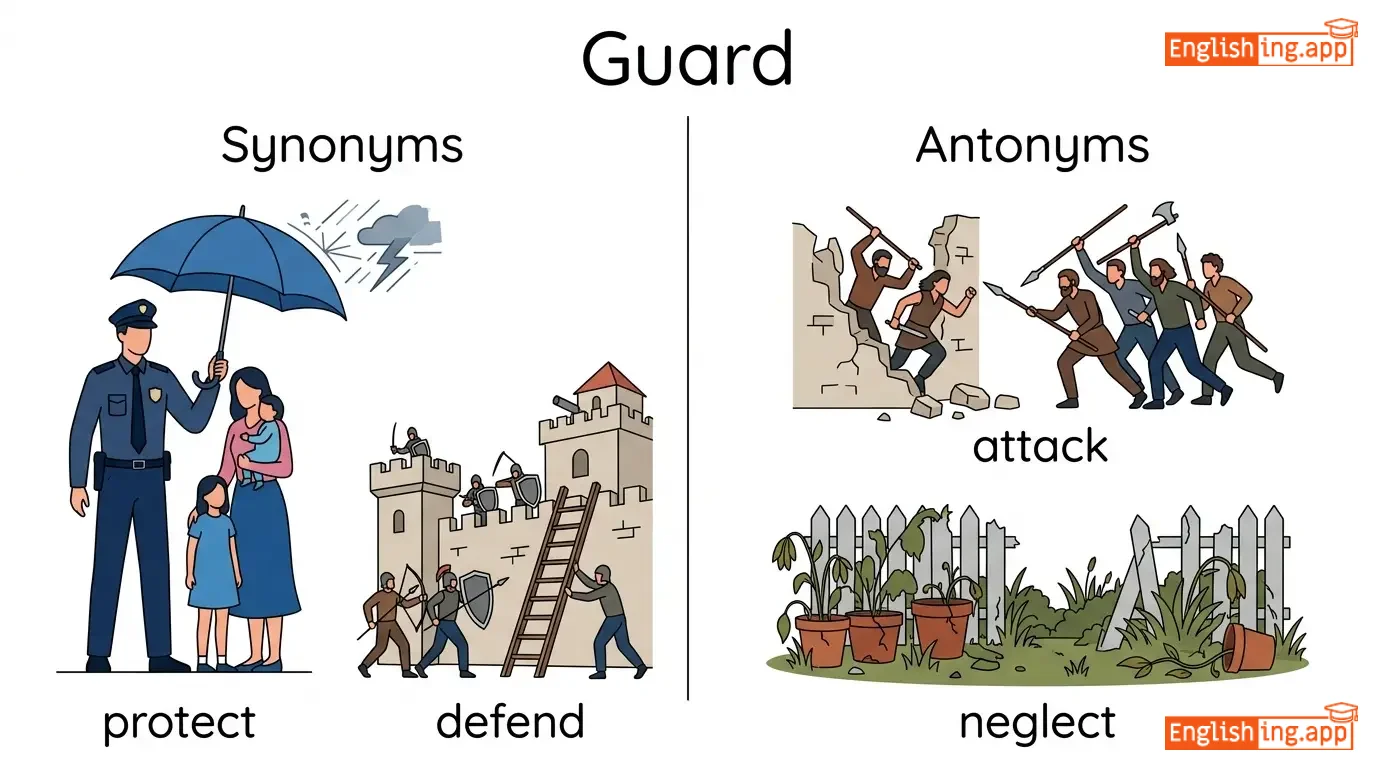
protect, defend, secure, watch
••••••
|
attack, neglect
••••••
|
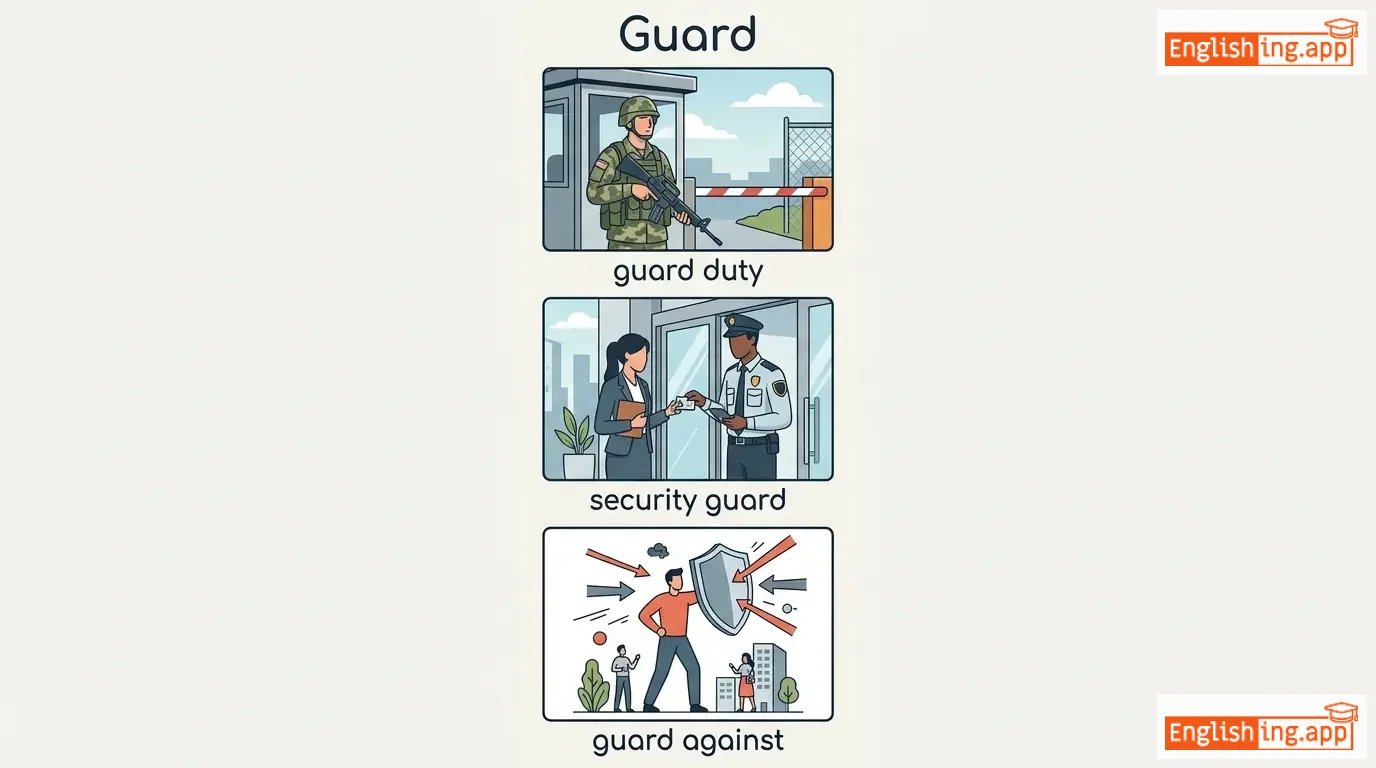
guard duty, security guard, guard against, guard entrance
••••••
|
Guard означает страж 🛡️ - Страж означает охранять
••••••
|
|
👨👩👧👦
••••••
|
/ˈɡɑːr.di.ən/
noun
(гардийан)
••••••
|
- •••••• |
опекун; страж
opekun; strazh
••••••
|
- •••••• | - •••••• | - •••••• | - •••••• |
a defender, protector, or keeper; a person legally responsible for the care of someone unable to manage their own affairs
••••••
|
After her parents died, her uncle became her legal guardian and took care of her. |
После смерти ее родителей, ее дядя стал ее законным опекуном и позаботился о ней.
Posle smerti yeye roditeley, yeye dyadya stal yeye zakonnyim opekonom i pozabotilsya o ney.
••••••
|
- •••••• | - •••••• | - •••••• |
protector, custodian, caretaker, trustee
••••••
|
ward, dependent, charge, neglector
••••••
|
legal guardian, guardian angel, appointed guardian
••••••
|
Опережающий страж — это как опекун, который всегда рядом.
••••••
|
|
💥
••••••
|
/ɡəˈrɪlə/
noun
(ɡerʲɪˈlʲa)
••••••
|
- •••••• |
партизан
partizan
••••••
|
- •••••• | - •••••• | - •••••• | - •••••• |
a member of a small independent group taking part in irregular fighting, typically against larger forces
••••••
|
The guerrilla fighters used ambushes to attack enemy positions.
Партизанские бойцы использовали засады для атаки на вражеские позиции.
••••••
|
Партизанские бойцы использовали засады для атаки на вражеские позиции.
Partizanskie boytsy ispol'zovali zasady dlya ataki na vrageskie pozitsii.
••••••
|
guerrilla warfare
партизанская война
••••••
|
a form of irregular warfare in which small groups of combatants use tactics such as ambushes and sabotage
••••••
|
партизанская война
partizanskaya voyna
••••••
|
fighter, rebel, insurgent, freedom fighter
••••••
|
soldier, patriot
••••••
|
guerrilla warfare, guerrilla tactics, guerrilla fighters, guerrilla movement
••••••
|
Партизан как партизанская война: маленькие атаки, большой эффект
••••••
|
|
🤔
••••••
|
/ɡɛs/
verb
(гес)
••••••
|
|
угадать
ugadat
••••••
|
guessed
гест
••••••
|
guessed
гест
••••••
|
guesses
гесес
••••••
|
guessing
гессинг
••••••
|
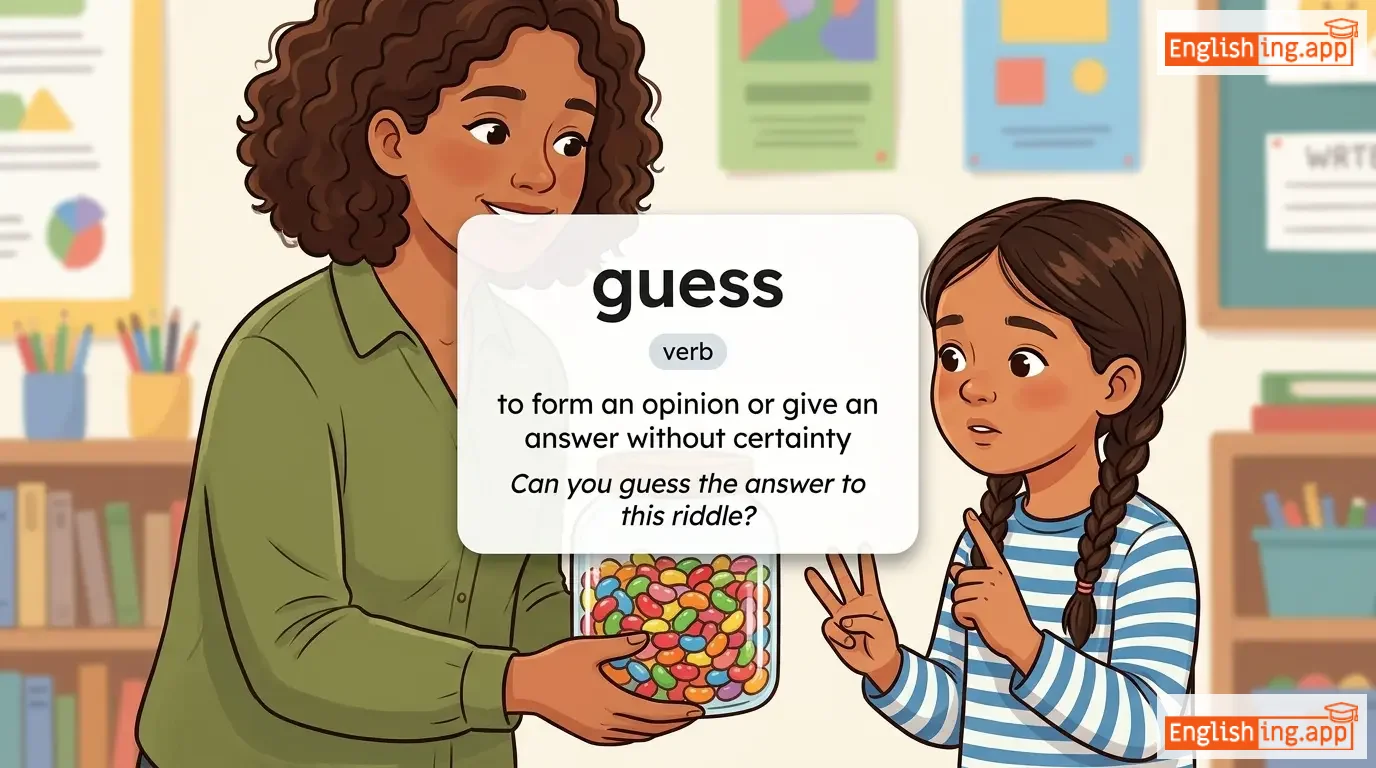
to form an opinion or give an answer without certainty
••••••
|
Can you guess the answer to this riddle?
Можешь угадать ответ на эту загадку?
••••••
|
Можешь угадать ответ на эту загадку?
Mozhesh' ugadat' otvet na etu zagadku?
••••••
|
take a guess
сделай предположение
••••••
|
to attempt an answer without being sure
••••••
|
сделай предположение
sdelay predpolozhenie
••••••
|
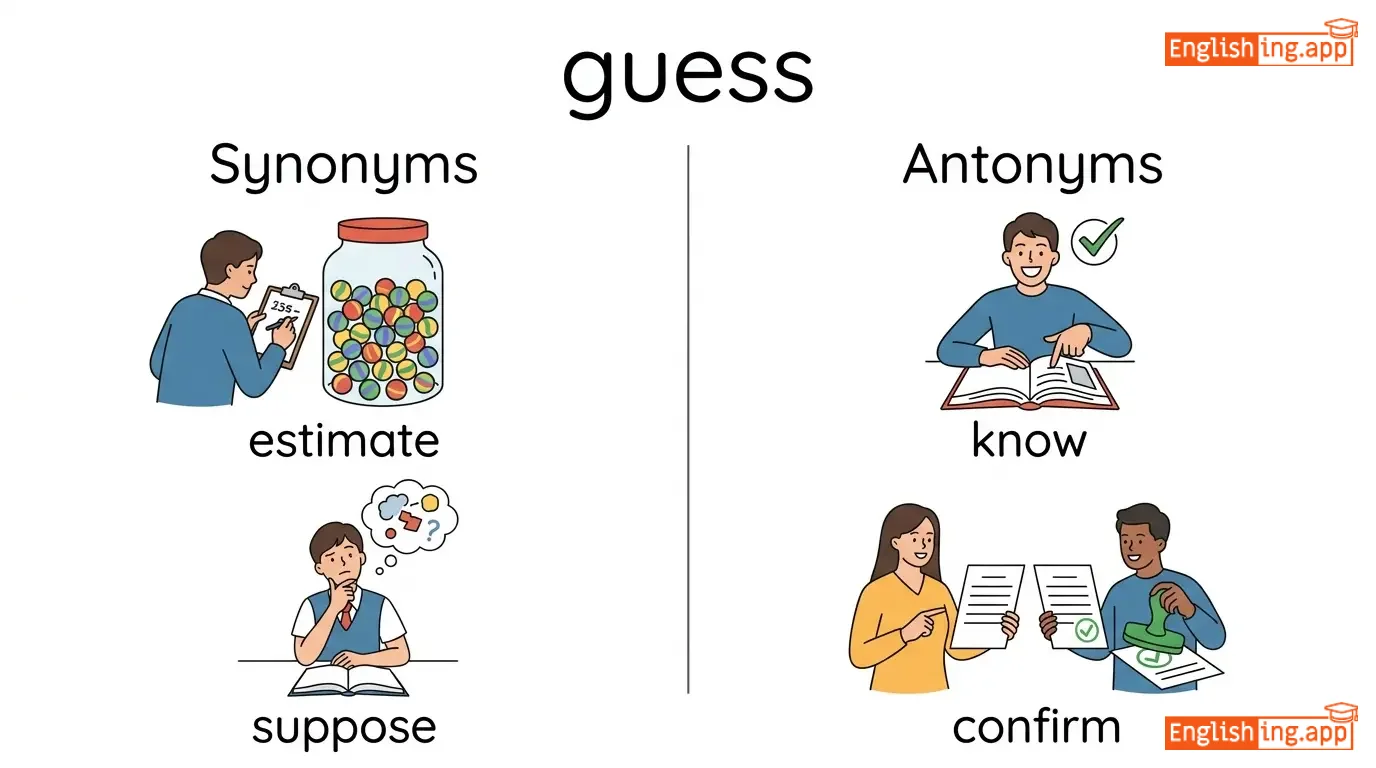
estimate, suppose, conjecture, assume, predict
••••••
|
know, confirm, determine
••••••
|
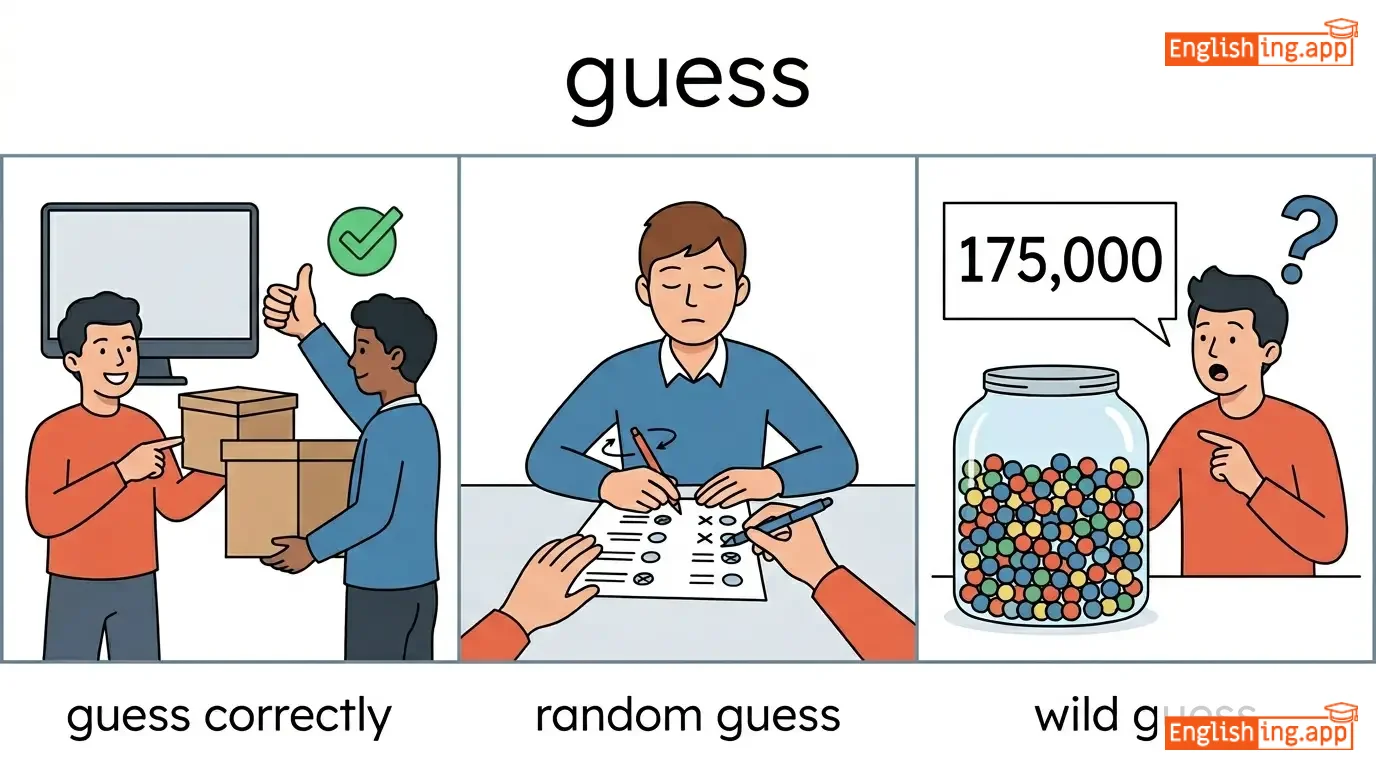
guess correctly, random guess, wild guess, guess the answer
••••••
|
Угадай, как это будет на русском – загадка для гениев!
••••••
|
|
🎉
••••••
|
/ɡɛst/
noun
(гест)
••••••
|
- •••••• |
гость
gost
••••••
|
- •••••• | - •••••• | - •••••• | - •••••• |
a person invited to visit or stay in someone's home or attend an event
••••••
|
We welcomed our guest with a warm smile. |
Мы встретили нашего гостя с тёплой улыбкой.
My vstretili nashego gostya s tyoploy ulybkoy.
••••••
|
guest of honor |
the most important guest at an event
••••••
|
почетный гость
pochetnyy gost
••••••
|
visitor, invitee, company, lodger
••••••
|
host, resident
••••••
|
guest list, hotel guest, guest room, special guest
••••••
|
Гость - это человек, которому всегда рады!
••••••
|
|
🧭
••••••
|
/ˈɡaɪ.dəns/
noun
(gaidens)
••••••
|
- •••••• |
руководство; руководство; совет
rukovodstvo, rukovodstvo, sovet
••••••
|
- •••••• | - •••••• | - •••••• | - •••••• |
advice or information aimed at resolving a problem or difficulty; leadership or direction
••••••
|
The teacher provided valuable guidance to help students choose their career paths. |
Учитель предоставил ценное руководство, чтобы помочь студентам выбрать их карьерный путь.
Uchitel' predostavil tsennoye rukovodstvo, chtoby pomoch' studentam vybrat' ikh kar'ernyy put'.
••••••
|
- •••••• | - •••••• | - •••••• |
direction, advice, counseling, instruction
••••••
|
confusion, misdirection, neglect, abandonment
••••••
|
career guidance, spiritual guidance, guidance counselor
••••••
|
Руководство - это как компас, который указывает тебе правильный путь.
••••••
|
|
🧭
••••••
|
/ɡaɪd/
verb, noun
(хэппинесс)
••••••
|
|
счастье
schast'ye
••••••
|
guided
••••••
|
guided
••••••
|
guides
••••••
|
guiding
••••••
|
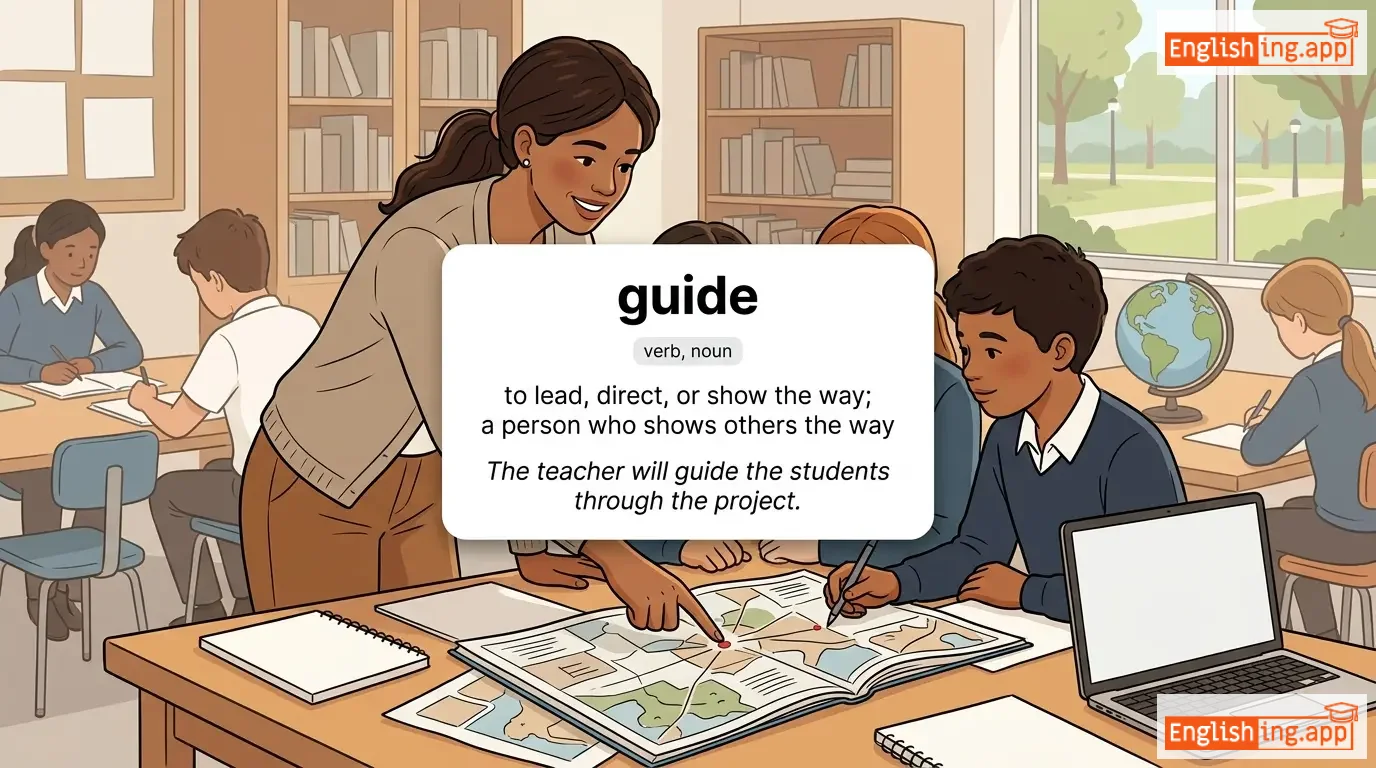
to lead, direct, or show the way; a person who shows others the way
••••••
|
The teacher will guide the students through the project. |
Она не могла скрыть своего счастья, когда получила награду.
Ona ne mogla skryt' svoego schast'ya, kogda poluchila nagradu.
••••••
|
spiritual guide |
a person who offers wisdom or advice in spiritual matters
••••••
|
поиск счастья
poisk schast'ya
••••••
|
lead, direct, mentor, instructor, show
••••••
|
mislead, confuse, follow
••••••
|
guide book, tourist guide, guide the way, guide someone
••••••
|
Счастье — это то, что каждый ищет в жизни.
••••••
|
|
📑
••••••
|
/ˈɡaɪd.laɪn/
noun
(гайдлайн)
••••••
|
- •••••• |
руководство
rukovodstvo
••••••
|
- •••••• | - •••••• | - •••••• | - •••••• |
a rule, instruction, or principle that provides direction
••••••
|
The company issued new guidelines for employee safety. |
Компания выпустила новые руководства по безопасности сотрудников.
Kompaniya vypustila novye rukovodstva po bezopasnosti sotrudnikov.
••••••
|
- •••••• | - •••••• | - •••••• |
rule, instruction, policy, principle, direction
••••••
|
chaos, disorder, lawlessness
••••••
|
safety guideline, follow guideline, official guideline, set guideline
••••••
|
Руководство – это направление для действий.
••••••
|
|
😔
••••••
|
/ɡɪlt/
noun
(гилт)
••••••
|
- •••••• |
вина
vina
••••••
|
- •••••• | - •••••• | - •••••• | - •••••• |
A feeling of responsibility or remorse for an offense or wrongdoing
••••••
|
She felt deep guilt after lying to her friend. |
Она почувствовала глубокое чувство вины после того, как солгала своей подруге.
Ona pochuvstvovala glubokoe chuvstvo viny posle togo, kak solgala svoey podruge.
••••••
|
guilty conscience |
a feeling of guilt for wrongdoing
••••••
|
винa в совести
vina v sovesti
••••••
|
remorse, shame, regret, fault
••••••
|
innocence, blamelessness
••••••
|
feel guilt, deep guilt, sense of guilt
••••••
|
Guilt — это 'вина' в русском. Представь себе, как ощущается эта вуаль вины после ошибки.
••••••
|
|
😔
••••••
|
/ˈɡɪl.ti/
adjective
(гильти)
••••••
|
- •••••• |
виновный
vinovnyy
••••••
|
- •••••• | - •••••• | - •••••• | - •••••• |
responsible for a crime or wrongdoing; feeling shame or regret
••••••
|
He felt guilty after lying to his friend. |
Он почувствовал себя виновным, солгав своему другу.
On pochuvstvoval sebya vinovnym, solgav svoemu drugu.
••••••
|
plead guilty |
to formally admit in court that one has committed a crime
••••••
|
признать себя виновным
priznat' sebya vinovnym
••••••
|
ashamed, responsible, blameworthy, convicted
••••••
|
innocent, blameless, faultless
••••••
|
feel guilty, guilty of, guilty conscience, found guilty
••••••
|
Виновный — это тот, кто чувствует вину, как guilty.
••••••
|
|
🔫
••••••
|
/ɡʌn/
noun
(gan)
••••••
|
- •••••• |
пистолет
pistolet
••••••
|
- •••••• | - •••••• | - •••••• | - •••••• |
a weapon that shoots bullets or other projectiles
••••••
|
The police officer carried a gun for protection. |
Полицейский нес пистолет для защиты.
Politseyskiy nes pistilet dlya zashchity.
••••••
|
jump the gun |
to do something too soon or before the right time
••••••
|
опережать события
operizhat' sobytiya
••••••
|
firearm, pistol, rifle, revolver, weapon
••••••
|
peace, disarmament, safety
••••••
|
carry a gun, toy gun, gun control, load a gun
••••••
|
Gun — пистолет всегда готов к выстрелу.
••••••
|
|
🫃
••••••
|
/ɡʌt/
noun/verb
(ɡʌt)
••••••
|
- •••••• |
живот / мужество
zhivot / muzhestvo
••••••
|
gutted
ɡʌtɪd
••••••
|
gutted
ɡʌtɪd
••••••
|
guts
ɡʌts
••••••
|
gutting
ɡʌtɪŋ
••••••
|
The stomach or belly; also used for courage, instinct, or to remove the inside of something.
••••••
|
He had the guts to stand up for his beliefs.
У него хватило смелости постоять за свои убеждения.
••••••
|
У него было мужество постоять за свои убеждения.
U nego bylo muzhestvo postoyat' za svoi ubezhdeniya.
••••••
|
spill your guts
вылить свои кишки
••••••
|
To reveal personal secrets or feelings.
••••••
|
раскрыть свои секреты
raskryt' svoi sekrety
••••••
|
stomach, belly, courage, instinct, bravery
••••••
|
cowardice, fear
••••••
|
gut feeling, gut reaction, strong guts, gut instinct
••••••
|
Gut означает живот или мужество — с мужеством ты имеешь guts!
••••••
|
|
👨
••••••
|
/ɡaɪ/
noun
(гай)
••••••
|
- •••••• |
парень
paren'
••••••
|
- •••••• | - •••••• | - •••••• | - •••••• |
an informal term for a man; sometimes used to refer to a person in general
••••••
|
That guy over there is my best friend. |
Тот парень там — мой лучший друг.
Tot paren' tam — moy luchshiy drug.
••••••
|
good guy |
a person who is kind and decent
••••••
|
хороший парень
khoroshiy paren'
••••••
|
man, fellow, dude, chap, lad
••••••
|
woman, lady
••••••
|
that guy, some guy, young guy, nice guy, guy next door
••••••
|
Guy — это парень — всегда есть хороший парень в фильмах.
••••••
|
|
🔄
••••••
|
/ˈhæb.ɪt/
noun
(хэбит)
••••••
|
|
привычка
privychka
••••••
|
- •••••• | - •••••• | - •••••• | - •••••• |
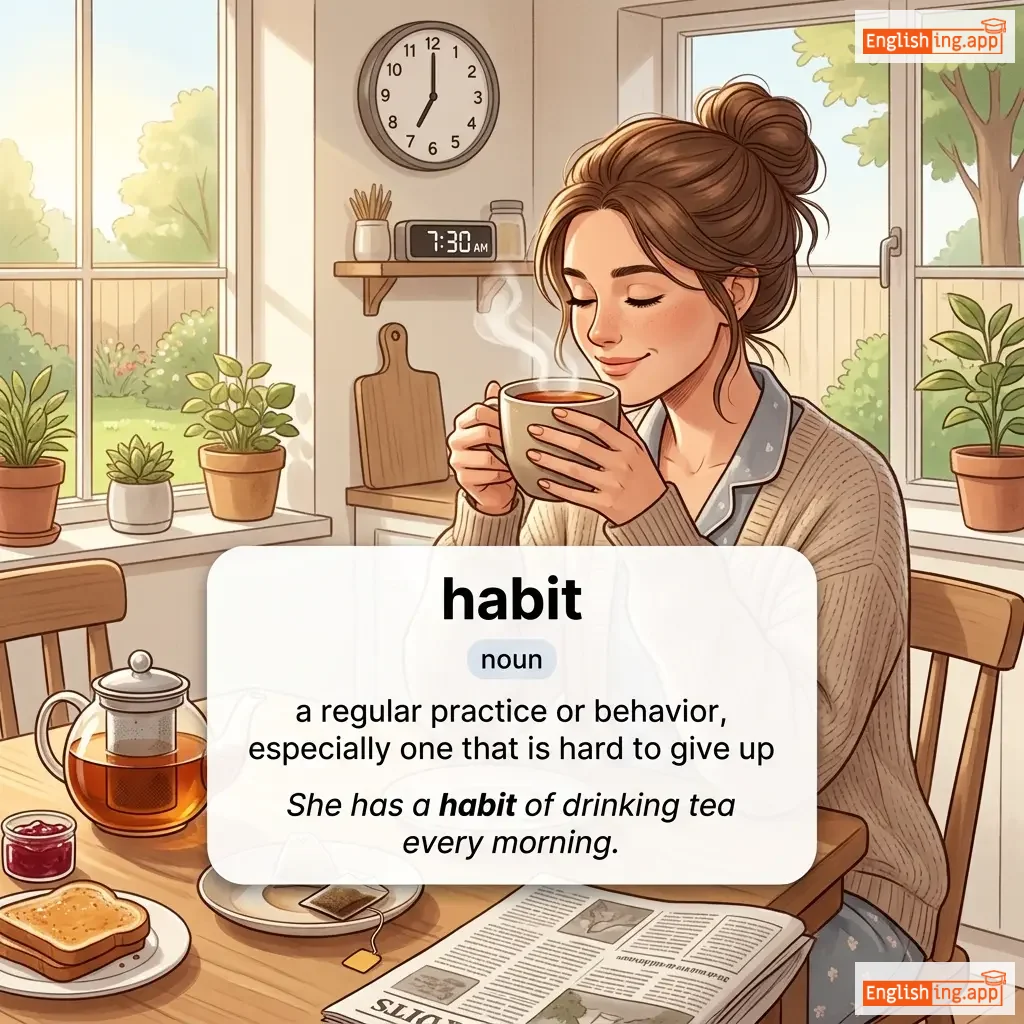
a regular practice or behavior, especially one that is hard to give up
••••••
|
She has a habit of drinking tea every morning. |
У неё есть привычка пить чай каждое утро.
U nee yest privychka pit' chai kazhdoe utro.
••••••
|
old habits die hard |
it is difficult to stop doing things that one has been doing for a long time
••••••
|
старые привычки трудно побороть
starye privychki trudno poborot'
••••••
|
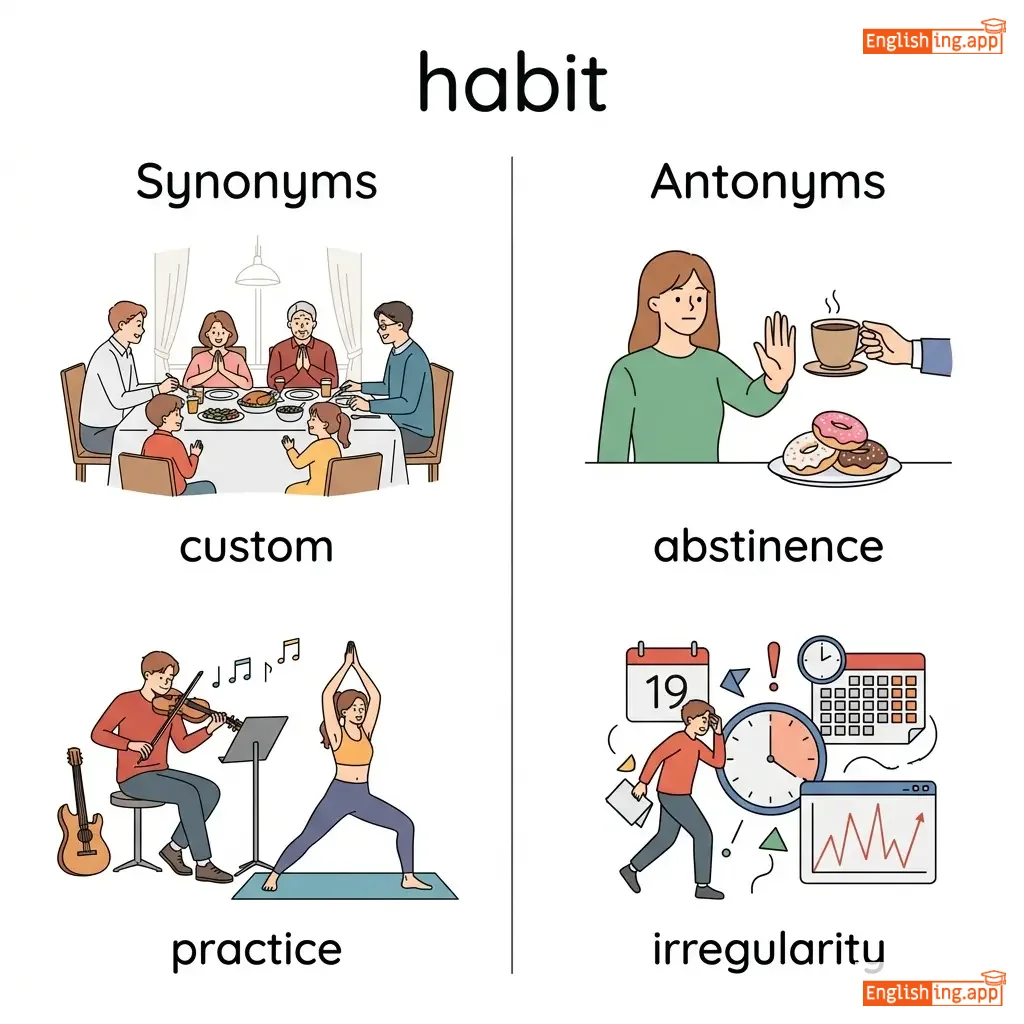
custom, practice, routine, tendency, pattern
••••••
|
abstinence, irregularity, avoidance
••••••
|
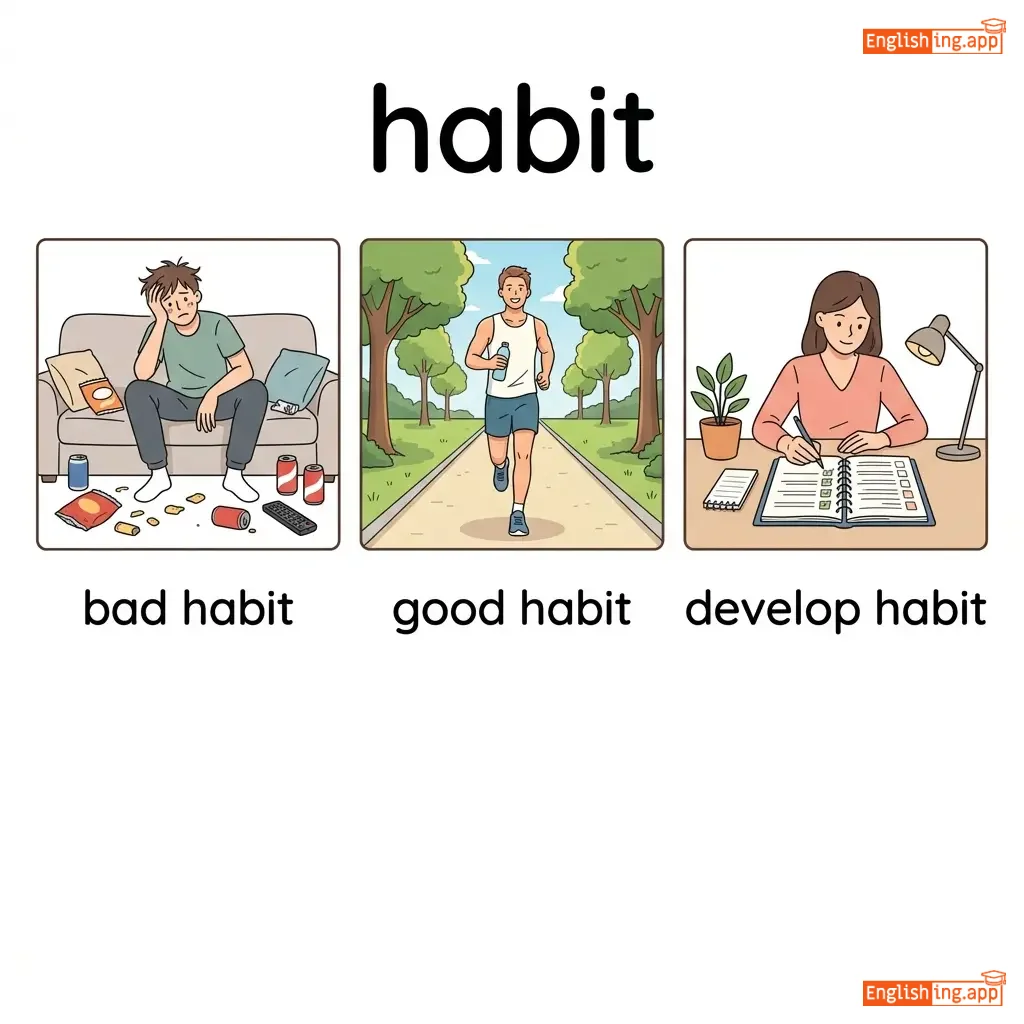
bad habit, good habit, develop habit, break habit
••••••
|
Привычка – это не просто действие, а регулярное повторение.
••••••
|
|
👨👩👧👦
••••••
|
/ˈhæbɪtənt/
noun
(хэбитэнт)
••••••
|
- •••••• |
житель
zhitel
••••••
|
- •••••• | - •••••• | - •••••• | - •••••• |
An inhabitant; a person or animal that lives in a particular place.
••••••
|
The habitants of the village were friendly and welcoming. |
Жители деревни были дружелюбными и гостеприимными.
Zhiteli derevni byli druzhelyubnymi i gostepriimnymi.
••••••
|
- •••••• | - •••••• | - •••••• |
inhabitant, resident, dweller, occupant, settler
••••••
|
visitor, outsider, stranger
••••••
|
native habitant, rural habitant, city habitant, permanent habitant
••••••
|
Habitant = Habit + ant, тот, кто по привычке (habit) живет на одном месте.
••••••
|
|
🌿
••••••
|
/ˈhæbɪˌtæt/
noun
(хабитат)
••••••
|
|
местообитание
mestoobitanie
••••••
|
- •••••• | - •••••• | - •••••• | - •••••• |
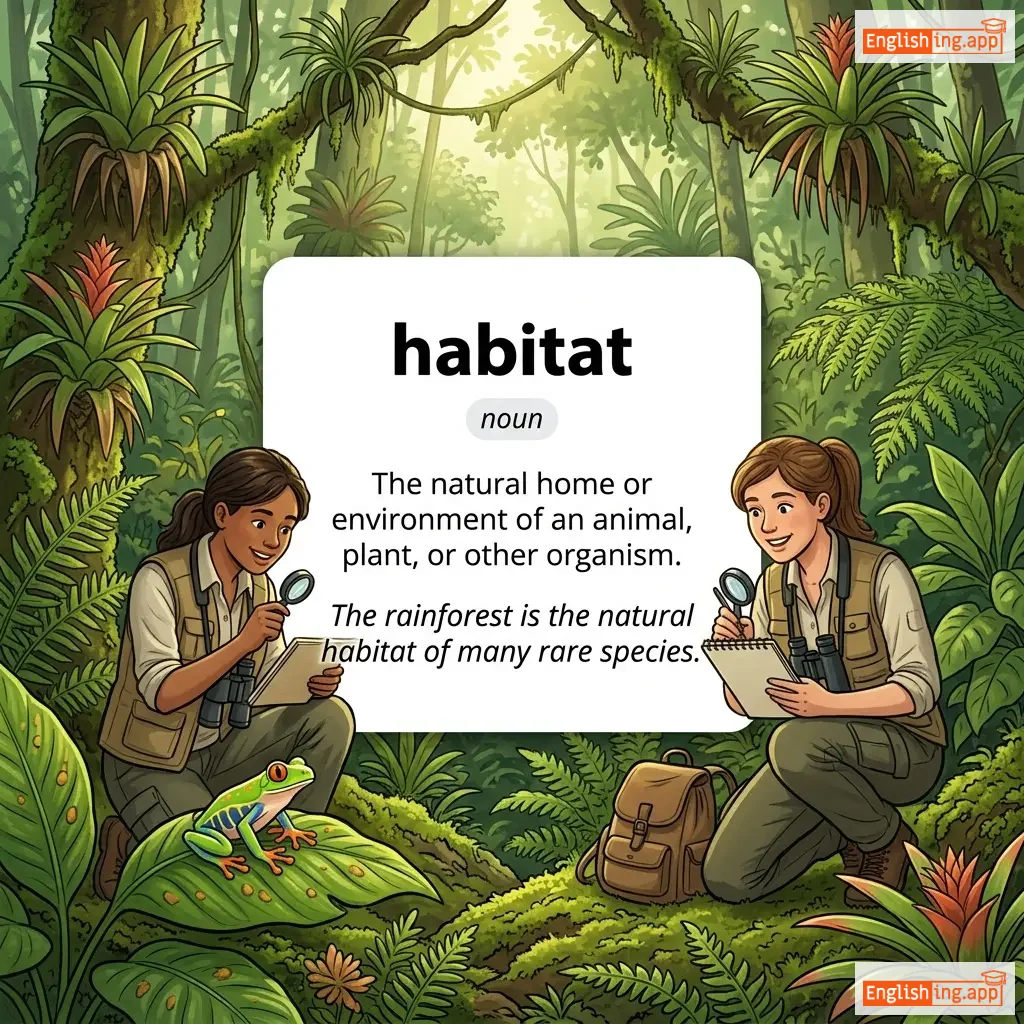
The natural home or environment of an animal, plant, or other organism.
••••••
|
The rainforest is the natural habitat of many rare species. |
Тропический лес — естественное местообитание многих редких видов.
Tropicheskiy les — yestestvennoe mestoobitanie mnogikh redkikh vidov.
••••••
|
- •••••• | - •••••• | - •••••• |
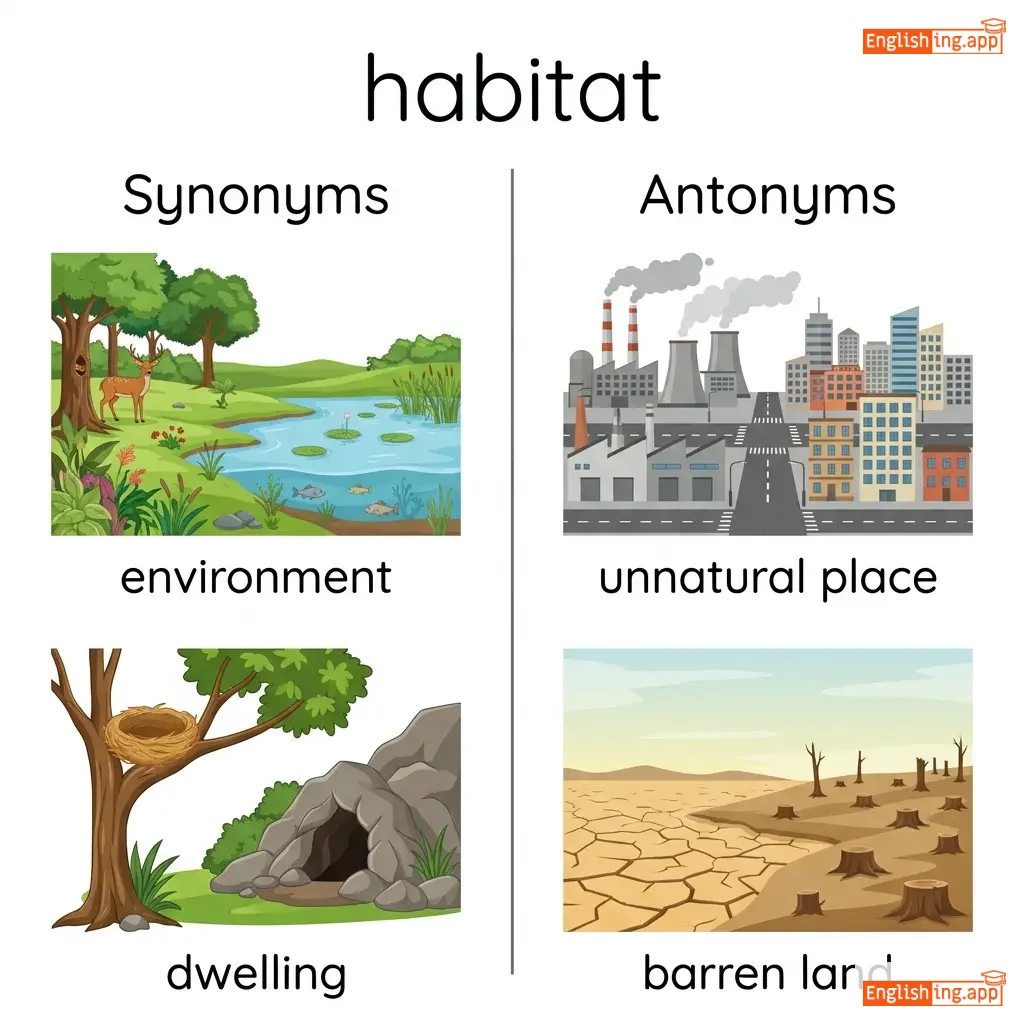
environment, dwelling, territory, ecosystem, surroundings
••••••
|
unnatural place, barren land
••••••
|
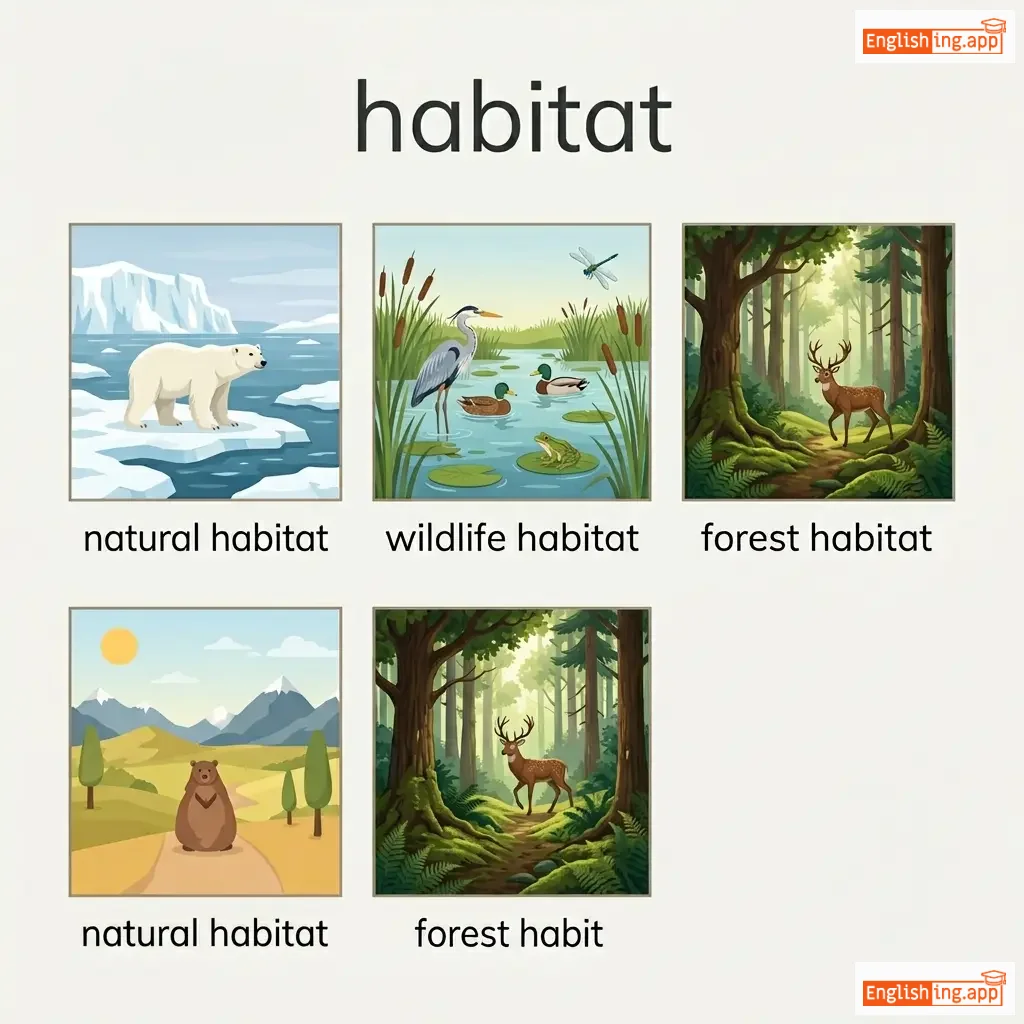
natural habitat, wildlife habitat, forest habitat, marine habitat
••••••
|
Habitat + at → место, где обитаем = местообитание.
••••••
|

