|
表情符号
|
单词 | Images | 翻译 | 过去时 | 过去分词 | 第三人称单数 | 动名词 | 含义 | 例句 | 例句翻译 | 示例表达 | 示例表达含义 | 示例表达翻译 | 同义词 | 反义词 | 搭配词 | 助记符 |
|---|---|---|---|---|---|---|---|---|---|---|---|---|---|---|---|---|---|
|
📊
••••••
|
/ɡreɪd/
noun, verb
(格雷德)
••••••
|
- •••••• |
等级
dengji
••••••
|
graded
格雷德德
••••••
|
graded
格雷德德
••••••
|
grades
格雷德斯
••••••
|
grading
格雷丁
••••••
|
A level of quality, rank, or performance; to assign a score or mark to work or performance.
••••••
|
The teacher graded all the papers by the weekend.
老师在周末之前批改了所有的作业。
••••••
|
老师在周末之前批改了所有的作业。
Lǎoshī zài zhōumò zhīqián pīgǎi le suǒyǒu de zuòyè.
••••••
|
make the grade
达标
••••••
|
To succeed or meet the required standard.
••••••
|
达成标准
dacheng biaozhun
••••••
|
rank, level, mark, score, stage
••••••
|
failure, decline
••••••
|
high grade, grade level, grade point, grade paper
••••••
|
Grade 就是评估一个人的表现,类似成绩单中的分数。
••••••
|
|
🎓
••••••
|
/ɡrænt/
verb
••••••
|

|
- •••••• |
granted
••••••
|
granted
••••••
|
grants
••••••
|
granting
••••••
|
To give or allow something, usually in an official or formal way.
••••••
|
The university granted him a scholarship for his excellent results. |
- •••••• |
take for granted |
To fail to appreciate the value of something or someone.
••••••
|
- •••••• |
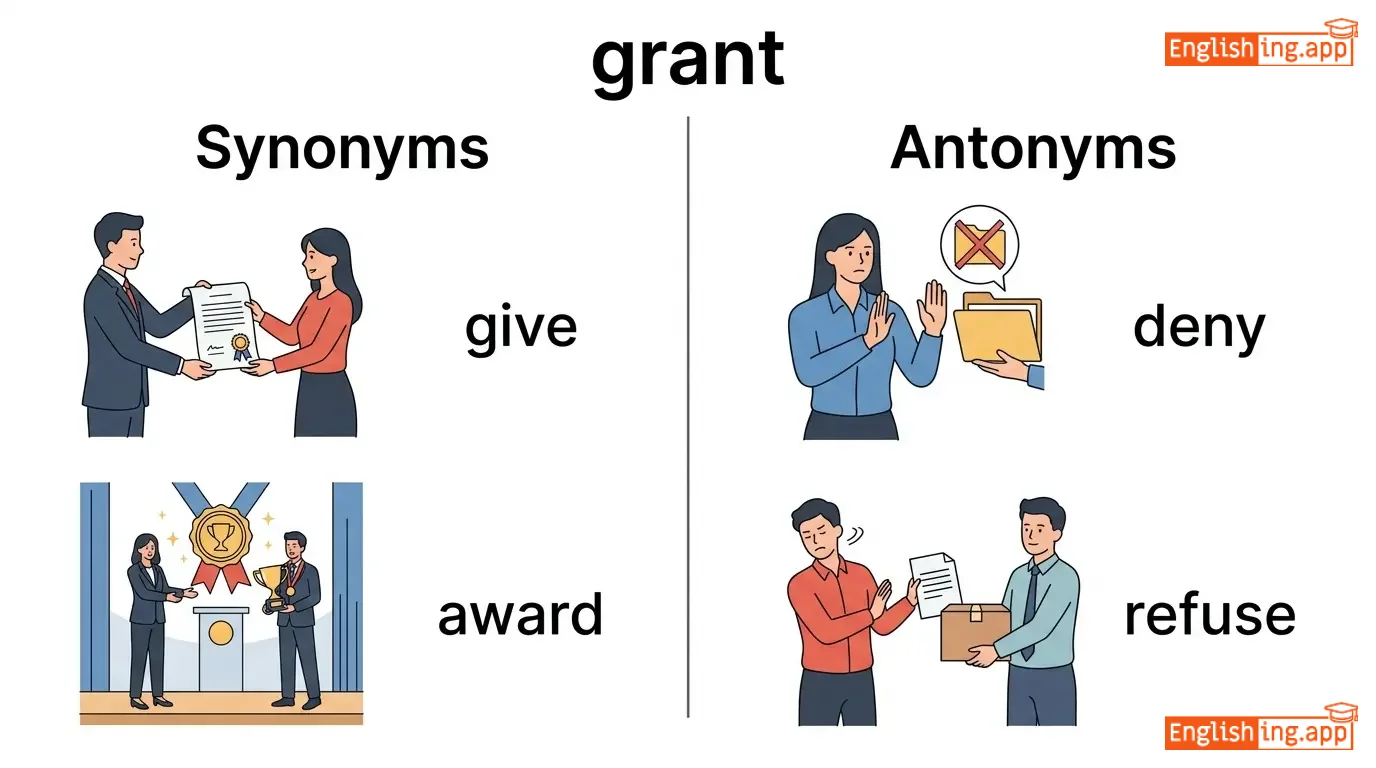
give, award, allow, permit, bestow
••••••
|
deny, refuse, withhold
••••••
|
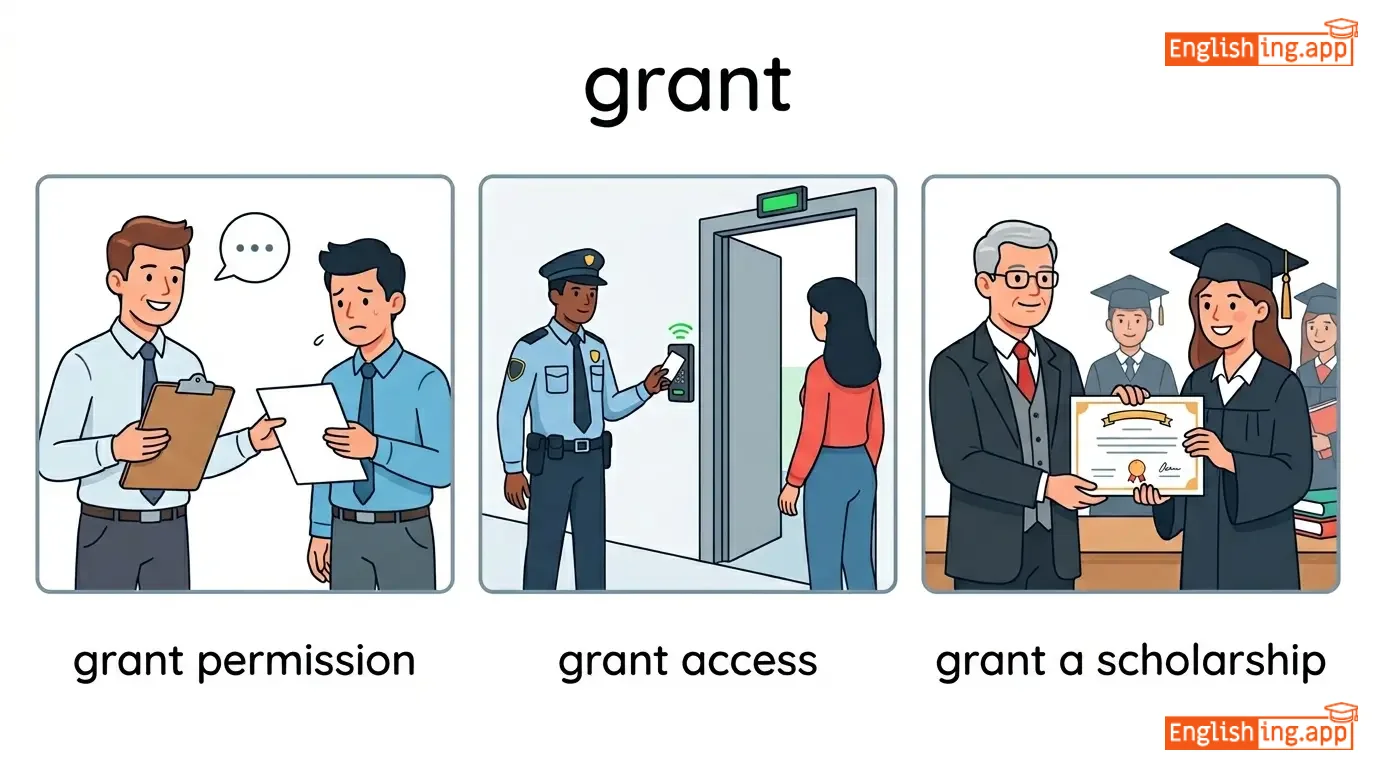
grant permission, grant access, grant a scholarship, grant a request
••••••
|
No •••••• |
|
🎨
••••••
|
/ˈɡræf.ɪk/
adjective
••••••
|
- •••••• | - •••••• | - •••••• | - •••••• | - •••••• | - •••••• |
Relating to visual art, especially involving drawing, design, or vivid description.
••••••
|
The movie contained graphic scenes of violence. |
- •••••• |
graphic details |
Explicit and vivid description of events or images, often shocking.
••••••
|
- •••••• |
illustrative, vivid, pictorial, descriptive, explicit
••••••
|
vague, dull, unclear
••••••
|
graphic design, graphic novel, graphic content, graphic details
••••••
|
No •••••• |
|
🎨
••••••
|
/ˈɡræfɪks/
noun
(ɡræfɪks)
••••••
|
- •••••• |
图形
tuxing
••••••
|
- •••••• | - •••••• | - •••••• | - •••••• |
visual images, designs, or drawings used to convey information or artistic expression
••••••
|
The website uses stunning graphics to attract visitors. |
该网站使用令人惊叹的图形来吸引访客。
Gāi wǎngzhàn shǐyòng lìng rén jīngtàn de túxíng lái xīyǐn fǎngkè.
••••••
|
- •••••• | - •••••• | - •••••• |
images, visuals, illustrations, designs
••••••
|
text, words
••••••
|
computer graphics, graphic design, graphic artist, digital graphics
••••••
|
图形设计的图形让每个人都感到震撼
••••••
|
|
✊
••••••
|
/ɡrɑːsp/
verb
(grasp)
••••••
|
|
牢牢抓住或完全理解
lao lao zhua zhu huo wan quan li jie
••••••
|
grasped
grasped
••••••
|
grasped
grasped
••••••
|
grasps
grasps
••••••
|
grasping
grasping
••••••
|
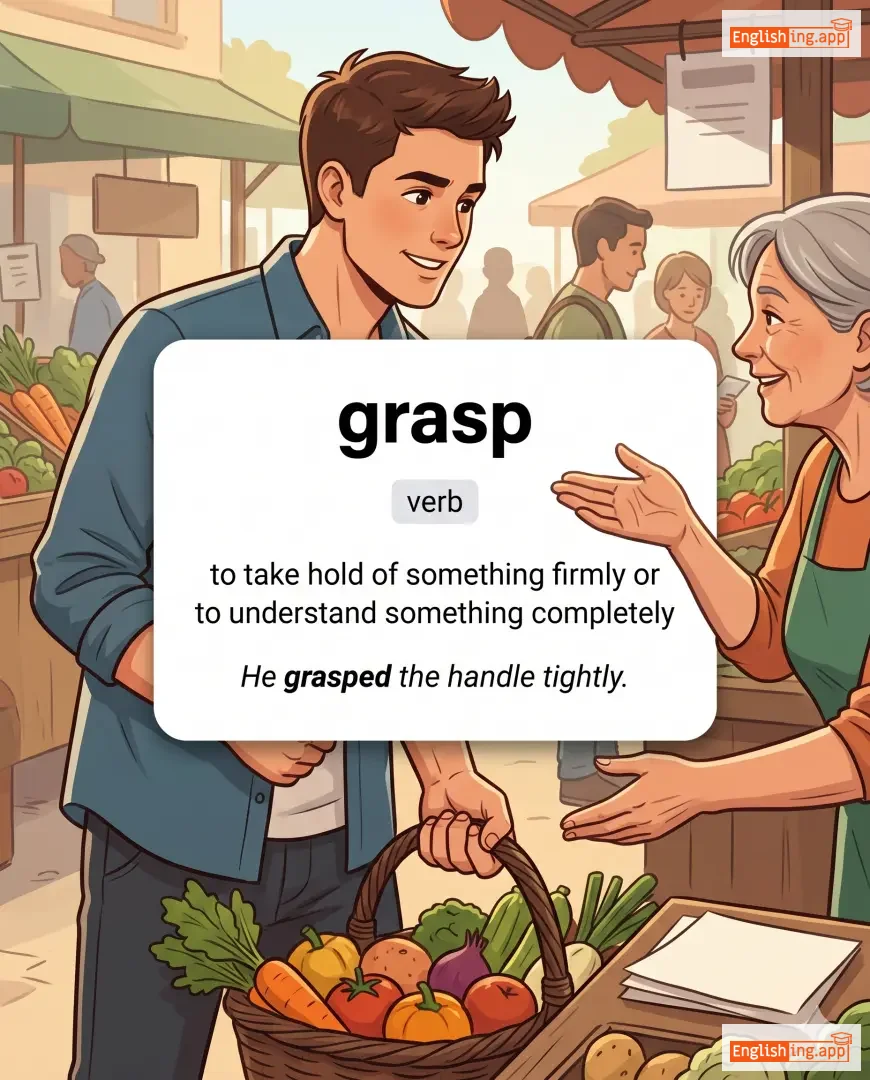
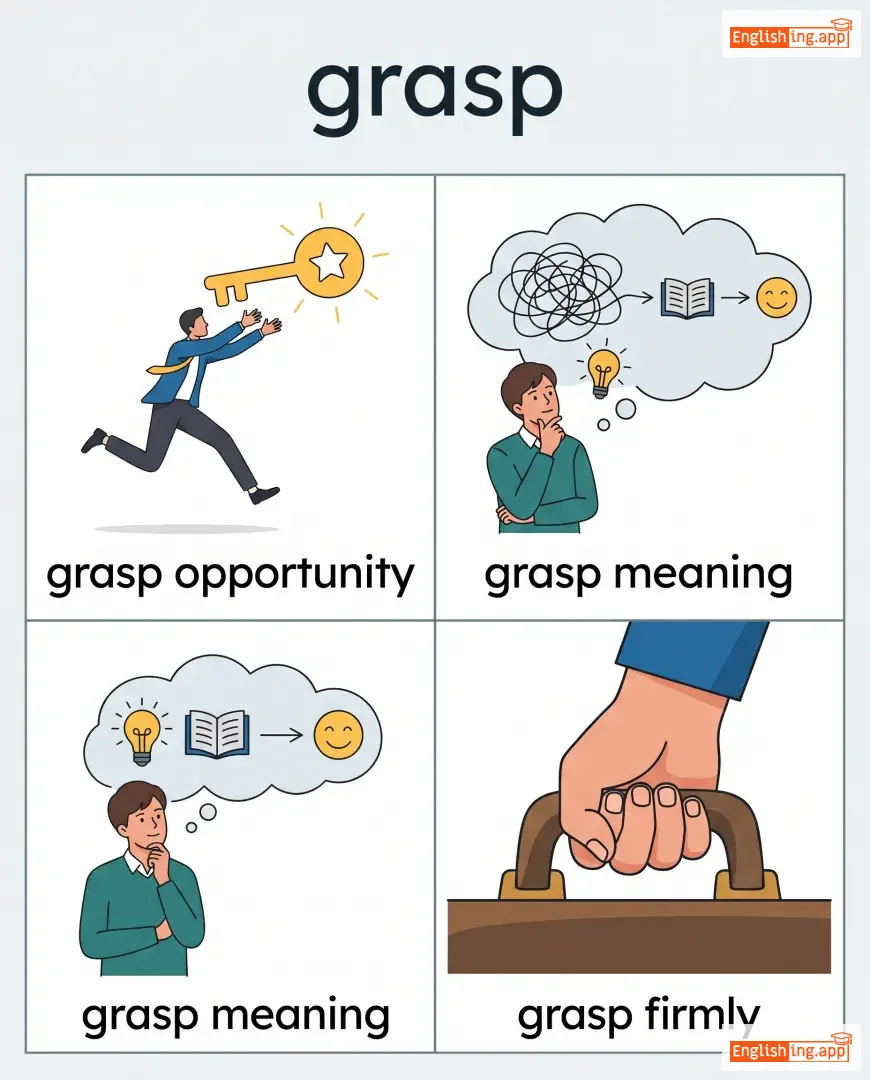
to take hold of something firmly or to understand something completely
••••••
|
He grasped the handle tightly.
他紧紧抓住了把手。
••••••
|
他紧紧抓住了把手。
Ta jin jin zhua zhu le ba shou.
••••••
|
grasp the nettle
抓住荨麻
••••••
|
to deal with a difficult situation with courage
••••••
|
勇敢地应对困难局面
Yong gan di ying dui kun nan ju mian
••••••
|
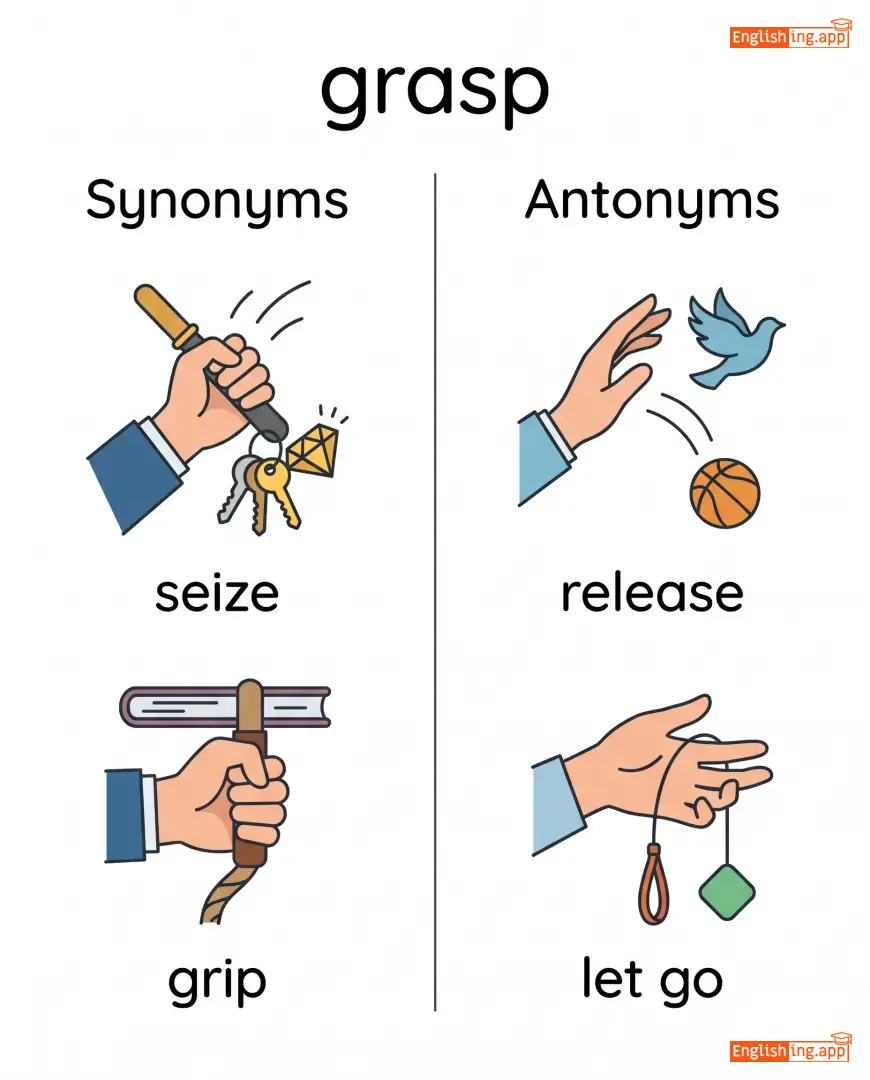
seize, grip, clutch, understand, comprehend
••••••
|
release, let go, misunderstand
••••••
|
grasp opportunity, grasp meaning, grasp firmly, grasp concept
••••••
|
Grasp: 紧紧抓住或完全理解!
••••••
|
|
🌱
••••••
|
/ɡræs/
noun
(海皮尼斯)
••••••
|
- •••••• |
幸福
xingfu
••••••
|
- •••••• | - •••••• | - •••••• | - •••••• |
plants with narrow green leaves, often covering the ground in fields or gardens
••••••
|
Children are playing on the grass. |
当她获得奖项时,她无法隐藏自己的幸福。
Dāng tā huòdé jiǎngxiàng shí, tā wúfǎ yǐncáng zìjǐ de xìngfú.
••••••
|
the grass is always greener on the other side |
other people's situations always seem better than one's own
••••••
|
追求幸福
zhuīqiú xìngfú
••••••
|
lawn, turf, pasture, sod, herbage
••••••
|
bare ground, soil
••••••
|
green grass, cut grass, fresh grass, tall grass
••••••
|
幸福 = Happy + 福 = Happiness
••••••
|
|
🙏
••••••
|
/ˈɡreɪtfəl/
adjective
(格雷特福尔)
••••••
|
- •••••• |
感激的
gǎnjī de
••••••
|
- •••••• | - •••••• | - •••••• | - •••••• |
feeling or showing thanks for something or someone
••••••
|
I am grateful for your help. |
我对你的帮助感激不尽。
Wǒ duì nǐ de bāngzhù gǎnjī bù jìn.
••••••
|
grateful heart |
a feeling of deep appreciation and thankfulness
••••••
|
感激的心
gǎnjī de xīn
••••••
|
thankful, appreciative, obliged, indebted, pleased
••••••
|
ungrateful, thankless, indifferent
••••••
|
grateful for, deeply grateful, grateful thanks, feel grateful
••••••
|
感激的意思是感激的心,记住要常怀感激之情!
••••••
|
|
⚰️
••••••
|
/ɡreɪv/
noun, adjective
(guī)
••••••
|
- •••••• |
坟墓
fénmù
••••••
|
- •••••• | - •••••• | - •••••• | - •••••• |
A place where someone is buried; also used to describe something serious or solemn.
••••••
|
He visited his grandfather's grave every year. |
他每年都会去拜访他祖父的坟墓。
Tā měi nián dōu huì qù bàifǎng tā zǔfù de fénmù.
••••••
|
turn in one's grave |
To be very upset or disturbed even after death, often used figuratively.
••••••
|
在坟墓里翻身
zài fénmù lǐ fān shēn
••••••
|
tomb, burial site, sepulcher, serious, solemn
••••••
|
lighthearted, trivial
••••••
|
grave danger, grave mistake, grave concern, graveyard, visit a grave
••••••
|
坟墓是休息的地方,但也可以意味着严重的事情。
••••••
|
|
🪦
••••••
|
/ˈɡreɪv.jɑːrd/
noun
(ɡuì fáng)
••••••
|
- •••••• |
墓地
mùdì
••••••
|
- •••••• | - •••••• | - •••••• | - •••••• |
an area of land set aside for burial of the dead; a cemetery
••••••
|
The old graveyard near the church dates back to the 18th century. |
靠近教堂的老墓地可以追溯到18世纪。
Kàojìn jiàotáng de lǎo mùdì kěyǐ zhuī sù dào 18 shìjì.
••••••
|
- •••••• | - •••••• | - •••••• |
cemetery, burial ground, necropolis, churchyard
••••••
|
birthplace, nursery, playground, living space
••••••
|
old graveyard, church graveyard, graveyard shift
••••••
|
墓地 = 永恒的安息之地
••••••
|
|
🌍
••••••
|
/ˈɡrævəti/
noun
••••••
|
|
- •••••• | - •••••• | - •••••• | - •••••• | - •••••• |
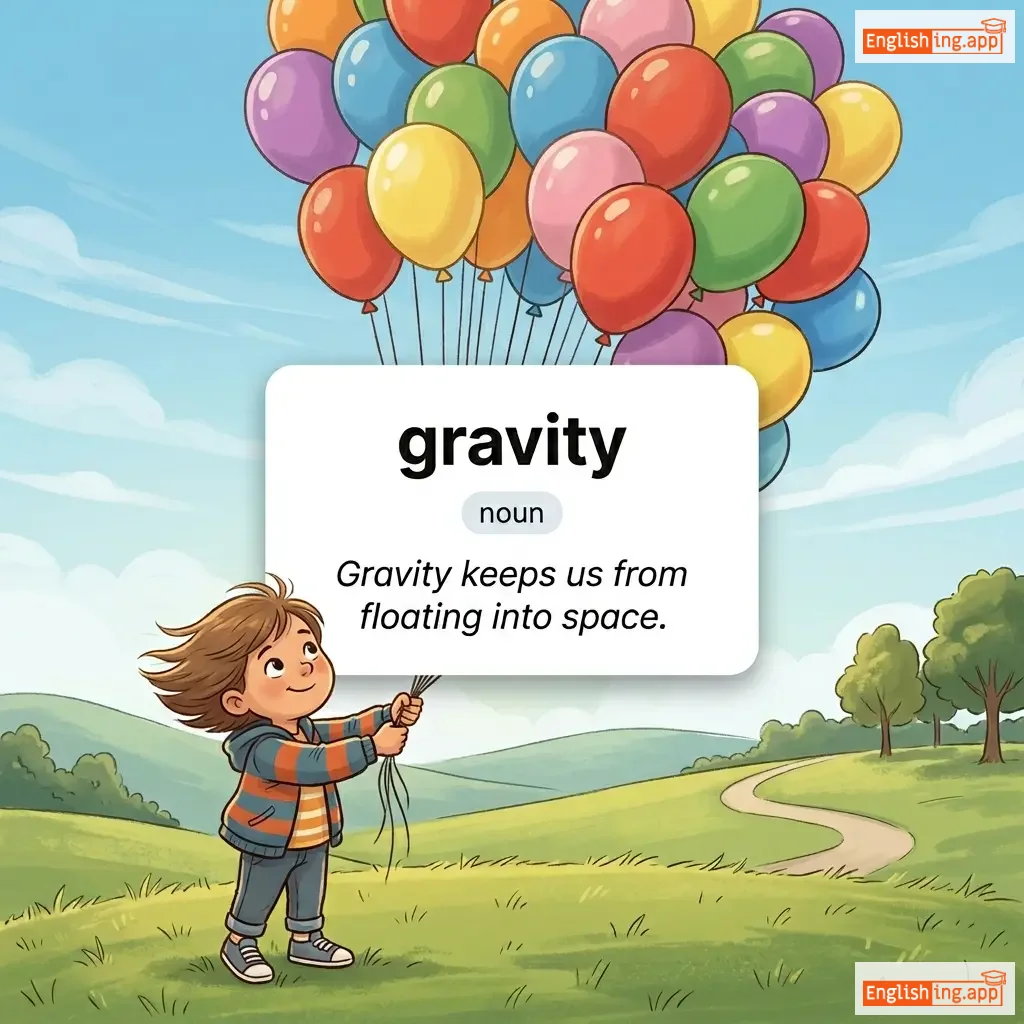
The natural force that attracts objects toward the center of the earth; seriousness or importance.
••••••
|
Gravity keeps us from floating into space. |
- •••••• |
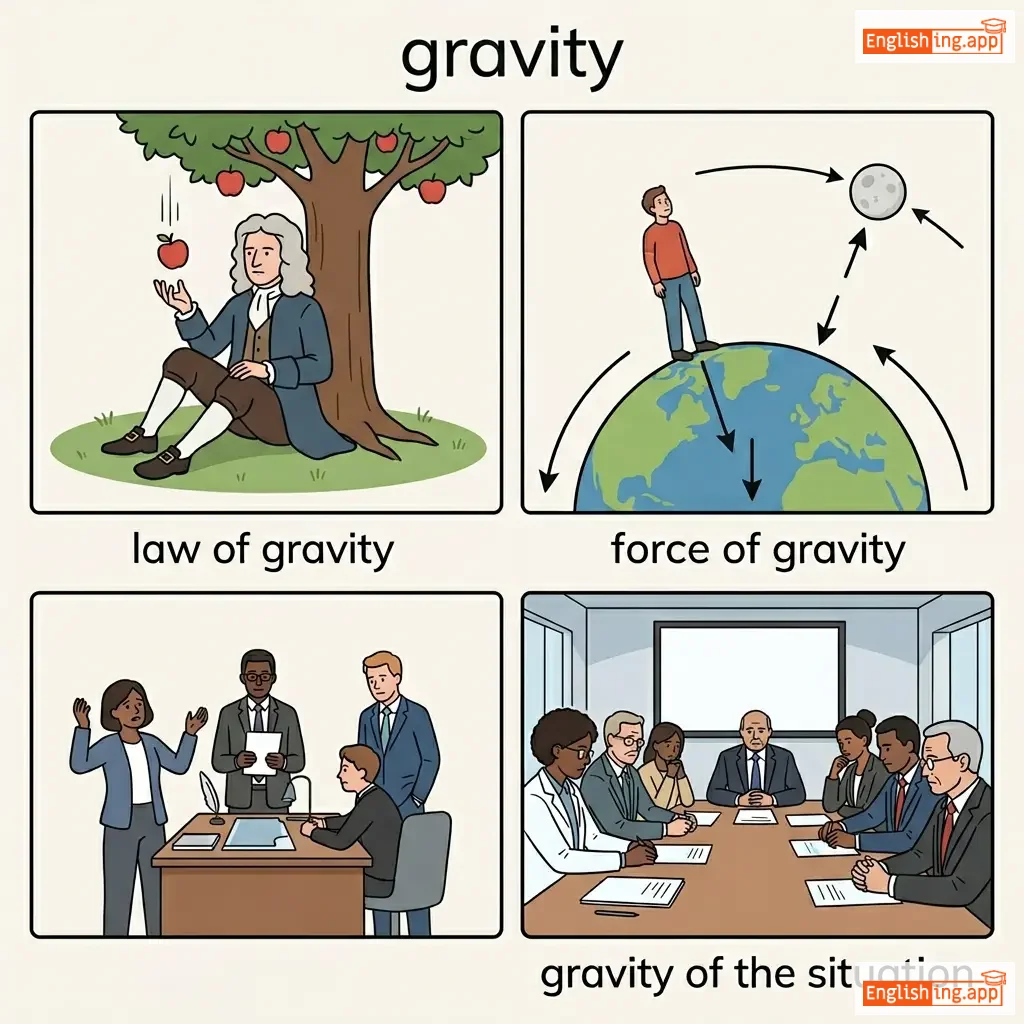
gravity of the situation |
The seriousness or importance of a situation.
••••••
|
- •••••• |
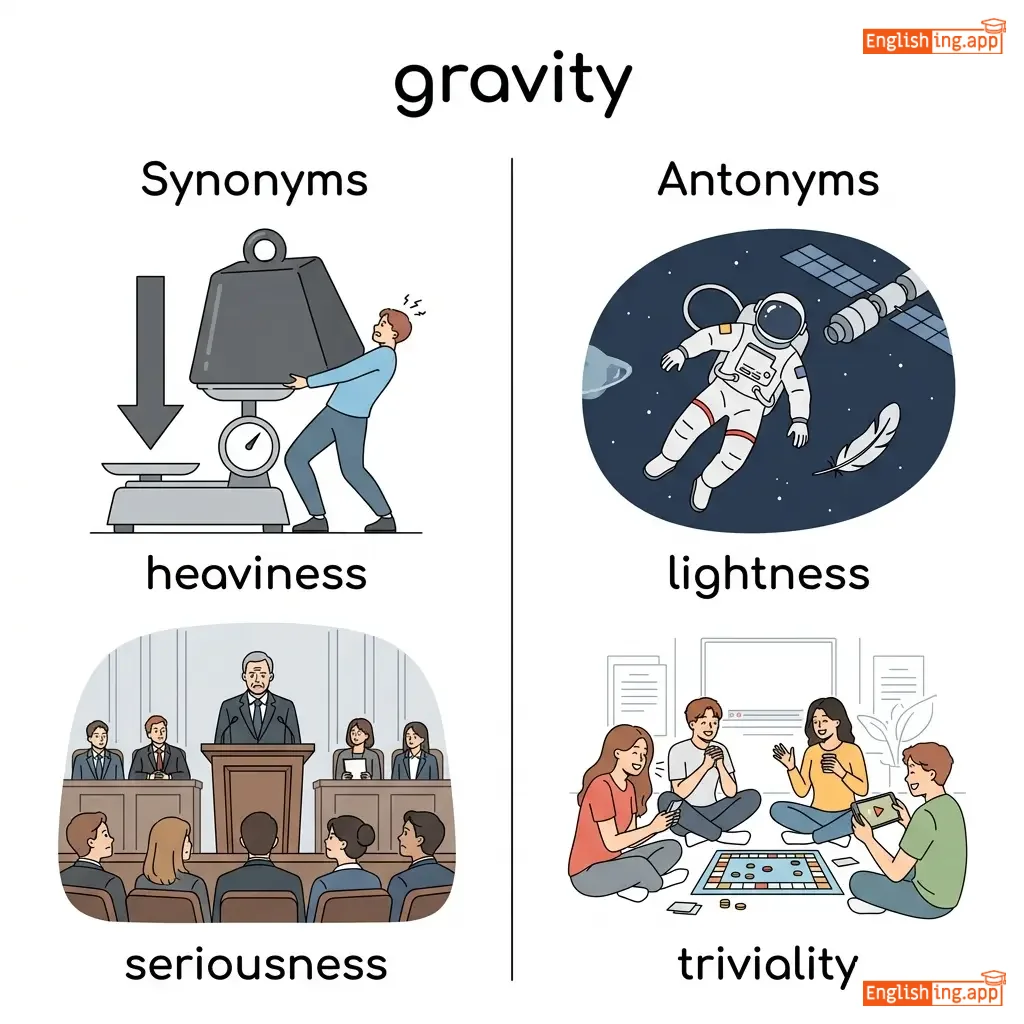
heaviness, seriousness, weight, force
••••••
|
lightness, triviality
••••••
|
law of gravity, force of gravity, gravity of the situation
••••••
|
No •••••• |
|
🌫️
••••••
|
/ɡreɪ/
adjective, noun
(happiness)
••••••
|
- •••••• |
幸福
xìngfú
••••••
|
- •••••• | - •••••• | - •••••• | - •••••• |
A color between black and white; also describes dull or gloomy situations.
••••••
|
The sky turned gray before the storm. |
她在获得奖项时无法掩饰她的幸福。
Tā zài huòdé jiǎngxiàng shí wúfǎ yǎnshì tā de xìngfú.
••••••
|
gray area |
Something unclear or not easily classified.
••••••
|
追求幸福
zhuīqiú xìngfú
••••••
|
ashen, dull, silver, gloomy, neutral
••••••
|
bright, colorful
••••••
|
gray sky, gray hair, gray area, gray clouds, gray mood
••••••
|
幸福是找到内心的平静。
••••••
|
|
🌟
••••••
|
/ɡreɪt/
adjective
(guì)
••••••
|
- •••••• |
伟大
wěidà
••••••
|
- •••••• | - •••••• | - •••••• | - •••••• |
Of an extent, amount, or intensity considerably above average; very good or important.
••••••
|
She gave a great performance at the concert.
她在音乐会上的表现非常出色。
••••••
|
她在音乐会上的表现非常出色。
Tā zài yīnyuè huì shàng de biǎoxiàn fēicháng chūsè.
••••••
|
great minds think alike
伟大的头脑总是想法相似
••••••
|
Intelligent people often have similar ideas.
••••••
|
伟大的头脑总是想法相似
Wěidà de tóunǎo zǒng shì xiǎngfǎ xiāngsì
••••••
|
excellent, outstanding, important, immense, huge
••••••
|
poor, small, insignificant
••••••
|
great deal, great importance, great success, great leader
••••••
|
伟大就是伟大,记住:伟大的事情总是值得尊敬!
••••••
|
|
🏆
••••••
|
/ˈɡreɪ.tɪst/
adjective (superlative)
(グレイテスト)
••••••
|
- •••••• |
最伟大
zui wei da
••••••
|
- •••••• | - •••••• | - •••••• | - •••••• |
The highest degree of greatness; the most outstanding or important.
••••••
|
He is considered one of the greatest leaders of all time.
他被认为是所有时代最伟大的领导人之一。
••••••
|
他被认为是所有时代最伟大的领导人之一。
Tā bèi rènwéi shì suǒyǒu shídài zuì wěidà de lǐngdǎo rén zhī yī.
••••••
|
the greatest of all time
历史上最伟大
••••••
|
Used to describe someone regarded as the best ever in a field.
••••••
|
历史上最伟大
lìshǐ shàng zuì wěidà
••••••
|
best, finest, top, supreme, foremost
••••••
|
least, worst
••••••
|
greatest achievement, greatest leader, greatest player, greatest strength, greatest challenge
••••••
|
Greatest 是最伟大,是领导者的象征。
••••••
|
|
💫
••••••
|
/ˈɡreɪtli/
adverb
(格雷特利)
••••••
|
- •••••• |
非常
feichang
••••••
|
- •••••• | - •••••• | - •••••• | - •••••• |
to a large extent or degree; very much
••••••
|
She was greatly admired by her students.
她深受学生们的喜爱。
••••••
|
她深受学生们的喜爱。
Ta shen shou xueshengmen de xihuan.
••••••
|
- •••••• | - •••••• | - •••••• |
extremely, immensely, highly, deeply, significantly
••••••
|
slightly, barely, hardly
••••••
|
greatly improve, greatly appreciate, greatly benefit, greatly influence
••••••
|
Greatly 表示非常,大程度上!
••••••
|
|
🌿
••••••
|
/ɡriːn/
adjective
(gǔlín)
••••••
|
- •••••• |
绿色
lüse
••••••
|
- •••••• | - •••••• | - •••••• | - •••••• |
Of the color between blue and yellow in the spectrum; inexperienced or naive.
••••••
|
The garden is full of green plants. |
花园里满是绿色的植物。
Huāyuán lǐ mǎn shì lǜsè de zhíwù.
••••••
|
green with envy |
Extremely jealous.
••••••
|
绿眼睛的嫉妒
lǜ yǎnjīng de jídù
••••••
|
verdant, leafy, fresh, naive, inexperienced
••••••
|
dry, withered, experienced
••••••
|
green plants, green energy, green environment, green with envy
••••••
|
绿色代表植物,就像花园里的那些。
••••••
|
|
🌱
••••••
|
/ˈɡriːnhaʊs/
noun
(guīnhàosī)
••••••
|
- •••••• |
温室
wenshi
••••••
|
- •••••• | - •••••• | - •••••• | - •••••• |
a glass building used for growing plants, especially in cold climates
••••••
|
The farmers built a large greenhouse to grow tomatoes in the winter. |
农民们建造了一个大温室,用来在冬天种植番茄。
Nóngmínmen jiànzàole yīgè dà wēnshì, yòng lái zài dōngtiān zhòngzhí fānqié.
••••••
|
- •••••• | - •••••• | - •••••• |
hothouse, conservatory, plant house
••••••
|
open field, outdoors
••••••
|
greenhouse effect, greenhouse gas, greenhouse plants, greenhouse cultivation
••••••
|
温室中的植物像在温暖的地方一样生长。
••••••
|
|
🗺️
••••••
|
/ɡrɪd/
noun
(格栅)
••••••
|
|
网格
wangge
••••••
|
- •••••• | - •••••• | - •••••• | - •••••• |
a network of lines that cross each other to form a series of squares or rectangles
••••••
|
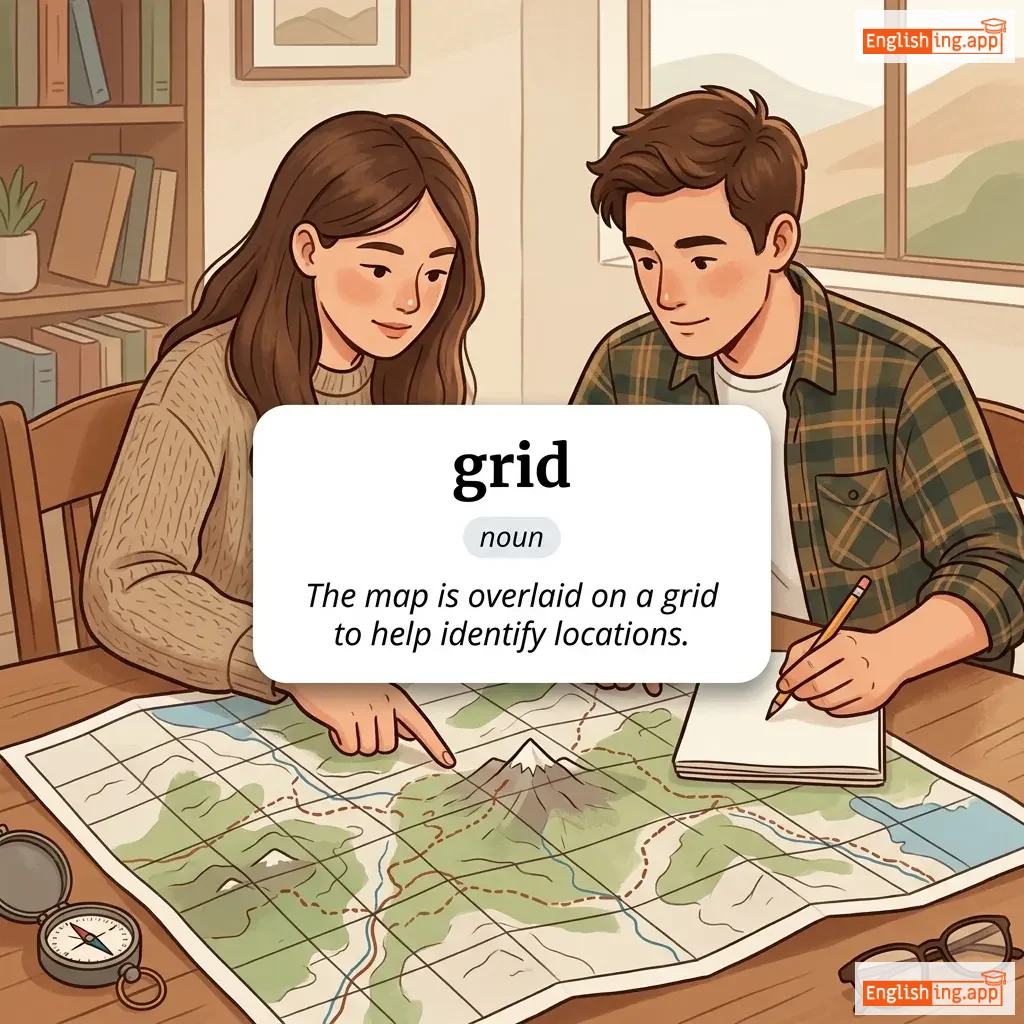
The map is overlaid on a grid to help identify locations. |
地图被叠加在网格上,以帮助识别位置。
Ditu bei diejia zai wangge shang, yi bangzhu shibie weizhi.
••••••
|
- •••••• | - •••••• | - •••••• |
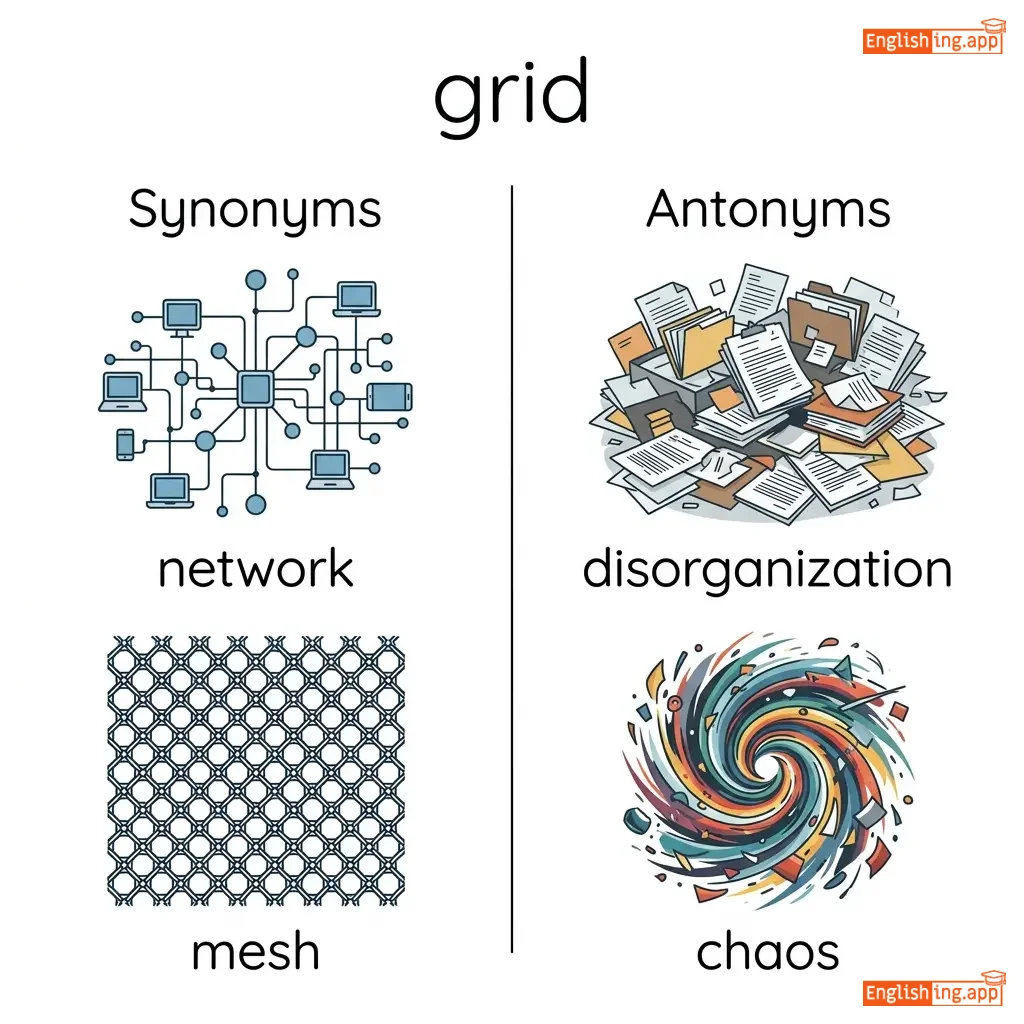
network, mesh, framework, matrix
••••••
|
disorganization, chaos
••••••
|
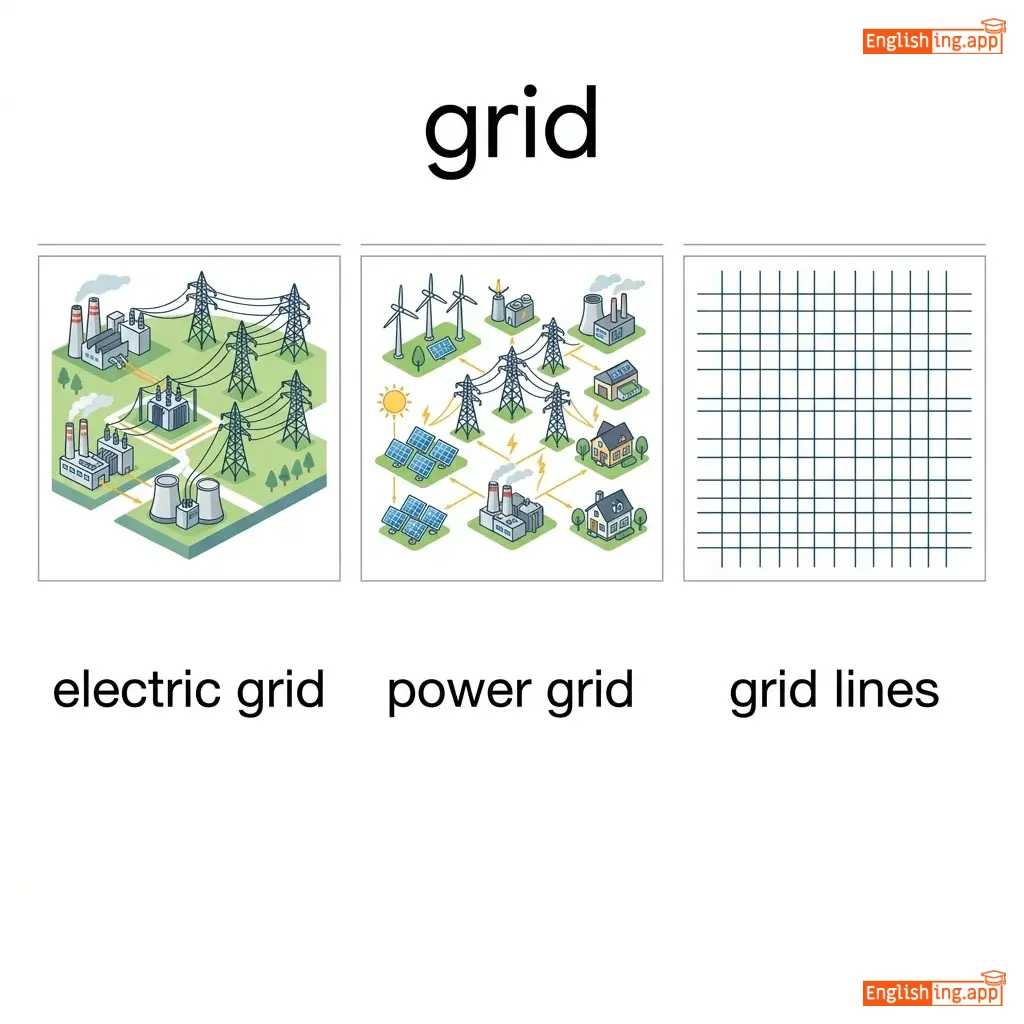
electric grid, power grid, grid lines, grid system
••••••
|
‘网格’就像是一个帮助你定位位置的网络,帮助你精确找出地方。
••••••
|
|
😢
••••••
|
/ɡriːf/
noun
(grief)
••••••
|
- •••••• |
悲伤
bēishāng
••••••
|
- •••••• | - •••••• | - •••••• | - •••••• |
Deep sorrow, especially caused by someone's death.
••••••
|
She was overcome with grief after her father's passing. |
她在父亲去世后充满了悲伤。
Tā zài fùqīn qùshì hòu chōngmǎnle bēishāng.
••••••
|
Good grief |
An exclamation expressing surprise, dismay, or annoyance.
••••••
|
天哪
Tiān nǎ
••••••
|
sorrow, sadness, anguish, heartbreak, mourning
••••••
|
joy, happiness, delight
••••••
|
deep grief, grief and sorrow, grief over loss
••••••
|
Grief表示悲伤 → 想象在丧葬仪式上,所有人都沉浸在悲伤之中。
••••••
|
|
😁
••••••
|
/ɡrɪn/
verb, noun
(格林)
••••••
|
- •••••• |
露出牙齿笑,通常是开心的笑
lùchū yáchǐ xiào, tōngcháng shì kāixīn de xiào
••••••
|
grinned
格林德
••••••
|
grinned
格林德
••••••
|
grins
格林斯
••••••
|
grinning
格林宁
••••••
|
to smile broadly, often showing teeth
••••••
|
She grinned happily at the good news.
她高兴地露出牙齿笑着听到好消息。
••••••
|
她高兴地露出牙齿笑着听到好消息。
Tā gāoxìng de lùchū yáchǐ xiào zhe tīng dào hǎo xiāoxī.
••••••
|
grin and bear it
微笑并忍受
••••••
|
to endure something unpleasant with good humor
••••••
|
微笑并忍受
wēixiào bìng rěnshòu
••••••
|
smile, beam, smirk, chuckle
••••••
|
frown, scowl
••••••
|
big grin, cheeky grin, wide grin, grin broadly
••••••
|
微笑并忍受,不愉快也微笑
••••••
|
|
⚙️
••••••
|
/ɡraɪnd/
verb
(gū lěi)
••••••
|

|
磨碎
mó suì
••••••
|
ground
gū lěi
••••••
|
ground
gū lěi
••••••
|
grinds
gū lěi
••••••
|
grinding
gū lěi
••••••
|
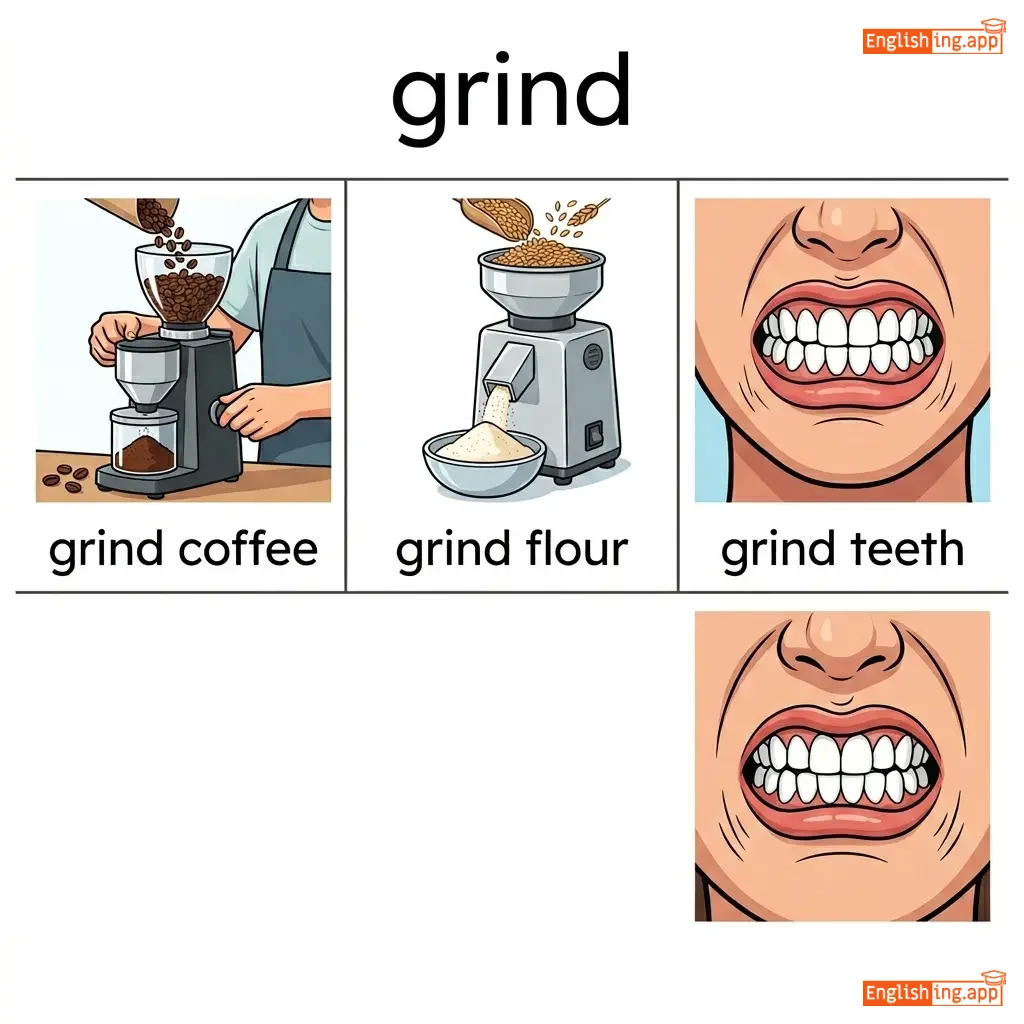
to crush into small particles; to work hard
••••••
|
She grinds coffee beans every morning.
她每天早晨磨咖啡豆。
••••••
|
她每天早晨磨咖啡豆。
Tā měitiān zǎochén mó kāfēi dòu.
••••••
|
- •••••• | - •••••• | - •••••• |
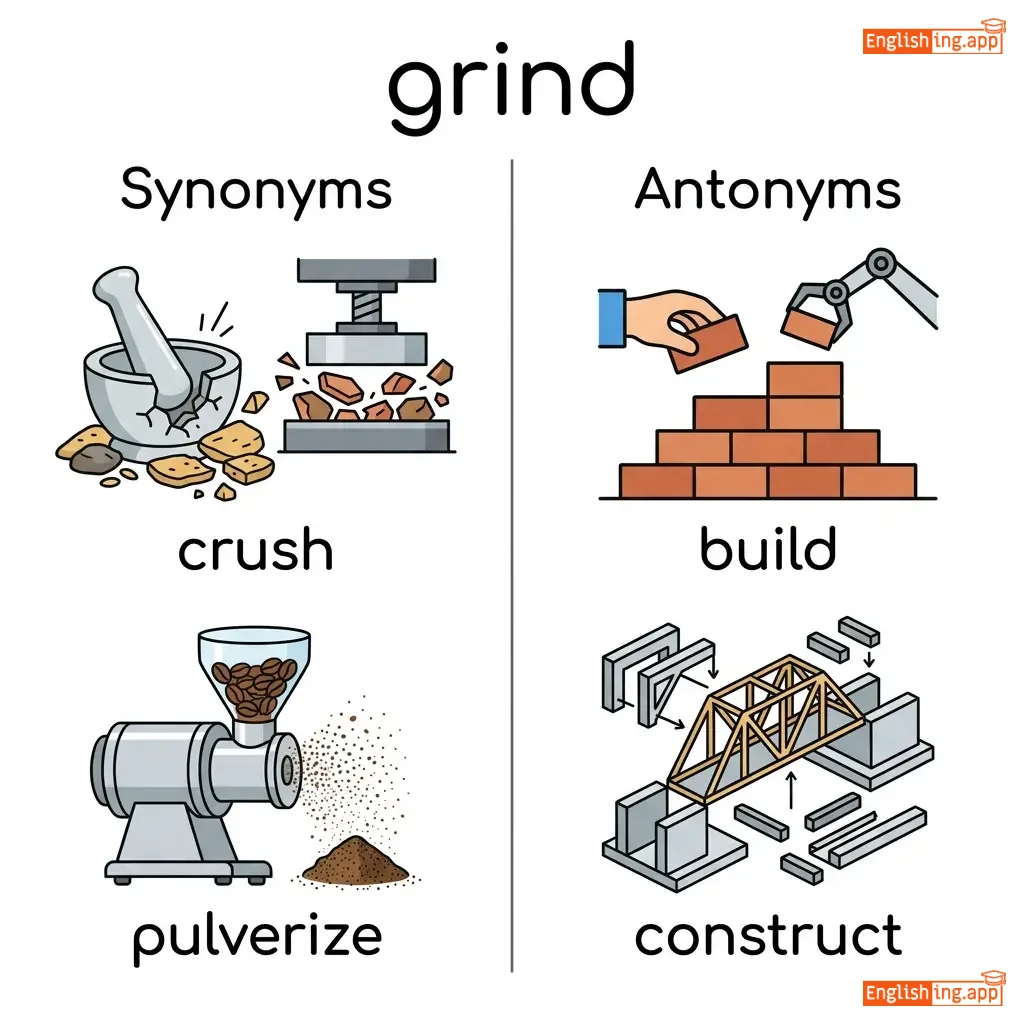
crush, mill, pulverize, work hard
••••••
|
assemble, construct, relax, rest
••••••
|
grind coffee, grind slowly, grind finely, grind daily, grind fresh
••••••
|
每天磨豆,直到磨成完美的咖啡!
••••••
|
|
✊
••••••
|
/ɡrɪp/
verb
(grip)
••••••
|
- •••••• |
抓住
zhuazhu
••••••
|
gripped
gripped
••••••
|
gripped
gripped
••••••
|
grips
grips
••••••
|
gripping
gripping
••••••
|
to hold something tightly or firmly
••••••
|
He gripped the steering wheel tightly.
他紧握着方向盘。
••••••
|
他紧握着方向盘。
Tā jǐn wò zhe fāngxiàng pán.
••••••
|
get a grip
掌握自己
••••••
|
to control your emotions or behavior
••••••
|
掌握自己
zhǎngwò zìjǐ
••••••
|
hold, grasp, clutch, seize, clasp
••••••
|
release, let go, drop
••••••
|
firm grip, lose grip, get a grip, tight grip
••••••
|
抓住就像做Grip — 不会掉!
••••••
|
|
🛒
••••••
|
/ˈɡroʊ.sər.i/
noun
(格罗瑟里)
••••••
|
- •••••• |
杂货店
záhuò diàn
••••••
|
- •••••• | - •••••• | - •••••• | - •••••• |
A store that sells food and household supplies.
••••••
|
She went to the grocery to buy vegetables. |
她去杂货店买蔬菜。
Tā qù záhuò diàn mǎi shūcài.
••••••
|
- •••••• | - •••••• | - •••••• |
supermarket, store, market, shop, provisions
••••••
|
none,
••••••
|
grocery store, grocery list, grocery shopping, local grocery, buy groceries
••••••
|
Grocery = 杂货店,购买日常必需品的地方。
••••••
|
|
🛒
••••••
|
/ˈɡrəʊsəri ʃɒp/
noun
(格罗瑟里 商店)
••••••
|
- •••••• |
杂货店
zahuodian
••••••
|
- •••••• | - •••••• | - •••••• | - •••••• |
a retail store where food and everyday household items are sold
••••••
|
She stopped by the grocery shop to buy vegetables and milk.
她去杂货店买蔬菜和牛奶。
••••••
|
她去杂货店买蔬菜和牛奶。
ta qu zahuodian mai shucai he niunai
••••••
|
- •••••• | - •••••• | - •••••• |
grocery store, food shop, market, supermarket
••••••
|
non-food store, specialty shop
••••••
|
local grocery shop, small grocery shop, nearby grocery shop, grocery shop owner
••••••
|
Grocery shop 就是买菜的杂货店
••••••
|
|
🤢
••••••
|
/ɡroʊs/
adjective
(格罗斯)
••••••
|
- •••••• |
恶心的 / 粗俗的
èxīn de / cūsú de
••••••
|
- •••••• | - •••••• | - •••••• | - •••••• |
extremely unpleasant or disgusting; total before deductions
••••••
|
He thought the food looked gross, but it tasted fine. |
他觉得食物看起来恶心,但味道还不错。
Tā juéde shíwù kàn qǐlái èxīn, dàn wèidào hái bùcuò.
••••••
|
gross out |
to make someone feel disgusted
••••••
|
让人恶心
ràng rén èxīn
••••••
|
disgusting, nasty, foul, total, overall
••••••
|
pleasant, clean, net
••••••
|
gross income, gross mistake, gross error
••••••
|
Gross 也可以表示令人恶心的(gross food)。
••••••
|
|
🌍
••••••
|
/ɡraʊnd/
noun/verb
(guó)
••••••
|
- •••••• |
地面
dìmian
••••••
|
grounded
guó dé
••••••
|
grounded
guó dé
••••••
|
grounds
guó
••••••
|
grounding
guó ing
••••••
|
the solid surface of the earth; to prohibit someone (often a child) from going out
••••••
|
The children played on the ground near the house.
孩子们在靠近房子的地方玩耍。
••••••
|
孩子们在靠近房子的地方玩耍。
Háizimen zài kàojìn fángzi de dìfāng wánshuǎ.
••••••
|
on solid ground
在坚实的地面上
••••••
|
in a safe or stable situation
••••••
|
在安全或稳定的情况
zài ānquán huò wěndìng de qíngkuàng
••••••
|
earth, soil, floor, basis, foundation
••••••
|
sky, air
••••••
|
soft ground, fertile ground, grounded theory, ground rules
••••••
|
Ground代表‘地面’ - 每个人都玩在地面上。
••••••
|
|
🏢
••••••
|
/ˈɡraʊnd flɔːr/
noun
(格朗德 弗洛)
••••••
|
- •••••• |
一楼
yi lou
••••••
|
- •••••• | - •••••• | - •••••• | - •••••• |
the floor of a building at ground level; the starting level of an organization or activity
••••••
|
The grocery shop is located on the ground floor of the building.
杂货店在一楼。
••••••
|
杂货店在一楼。
zahuo dian zai yi lou
••••••
|
get in on the ground floor
从一开始就参与
••••••
|
to become involved at the very beginning of something, especially when it has potential to succeed
••••••
|
从一开始就参与
cong yi kaishi jiu canyu
••••••
|
first floor, street level, base level, entry level
••••••
|
upper floor, top floor
••••••
|
ground floor apartment, ground floor entrance, ground floor office, on the ground floor
••••••
|
ground=地面,一楼就在地面
••••••
|
|
👥
••••••
|
/ɡruːp/
noun, verb
(grou-p)
••••••
|
- •••••• |
小组
xiaozu
••••••
|
grouped
gruped
••••••
|
grouped
gruped
••••••
|
groups
grups
••••••
|
grouping
gruping
••••••
|
A number of people or things considered together; to arrange things or people into categories.
••••••
|
The students formed a study group.
学生们组成了一个学习小组。
••••••
|
学生们组成了一个学习小组。
Xueshengmen zucheng le yi ge xuexi xiaozu.
••••••
|
group effort
集体努力
••••••
|
A collective attempt or teamwork by multiple people.
••••••
|
集体努力
jiti nuli
••••••
|
team, cluster, party, band, collective
••••••
|
individual, single
••••••
|
group work, group project, small group, large group, group meeting
••••••
|
小组意味着一个集合,就像在 WhatsApp 小组里。
••••••
|
|
🌱
••••••
|
/ɡroʊ/
verb
(格罗)
••••••
|
|
成长
chengzhang
••••••
|
grew
格鲁
••••••
|
grown
格龙
••••••
|
grows
格罗斯
••••••
|
growing
格洛因
••••••
|
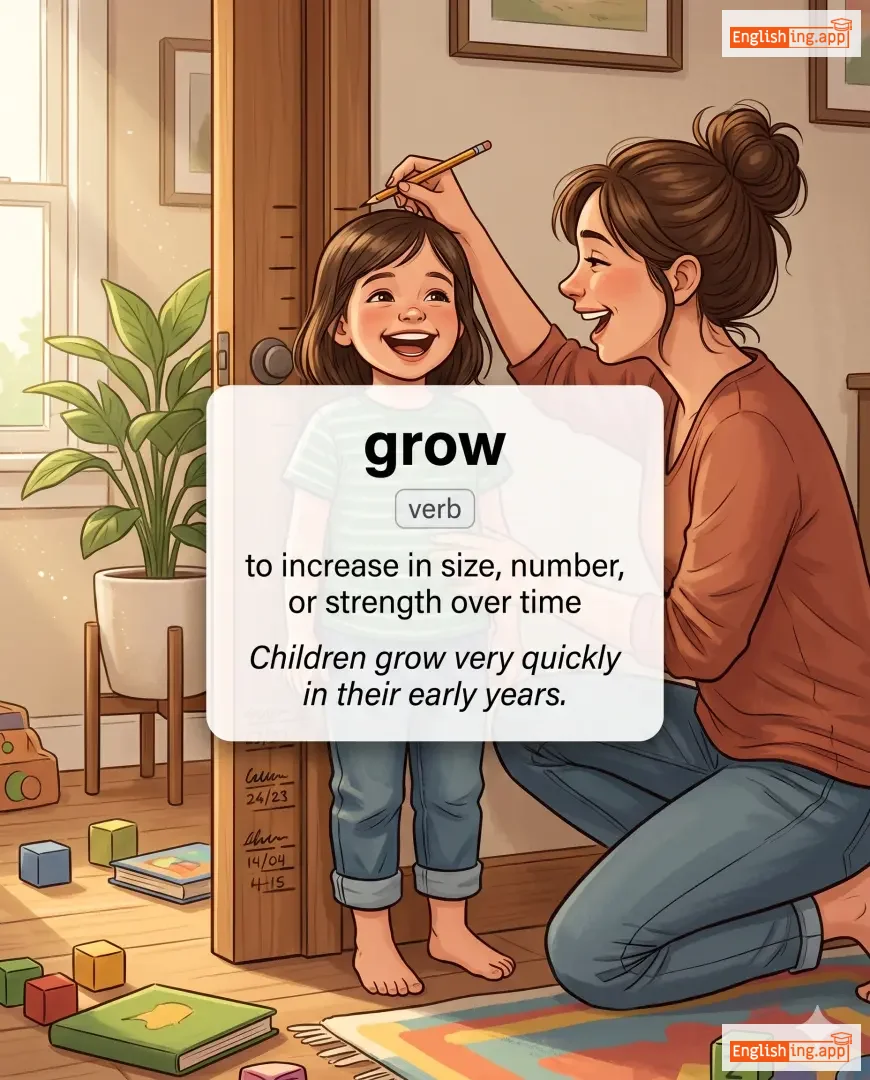
to increase in size, number, or strength over time
••••••
|
Children grow very quickly in their early years.
孩子们在他们的早年成长得非常快。
••••••
|
孩子们在他们的早年成长得非常快。
Haizimen zai tamen de zaonian chengzhang de feichang kuai.
••••••
|
grow on someone
在某人身上成长
••••••
|
to gradually become liked or appreciated
••••••
|
逐渐变得受欢迎
zhujian biande shou huanying
••••••
|
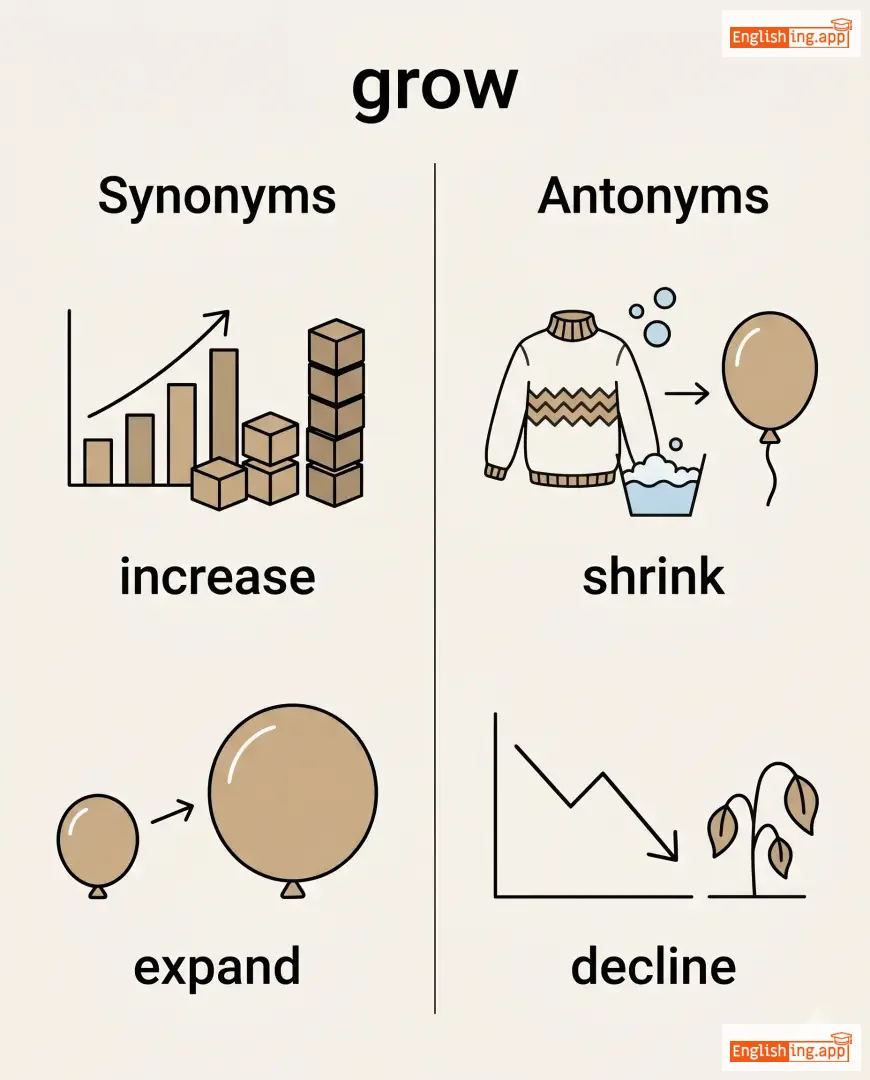
increase, expand, develop, rise, progress
••••••
|
shrink, decline, decrease
••••••
|
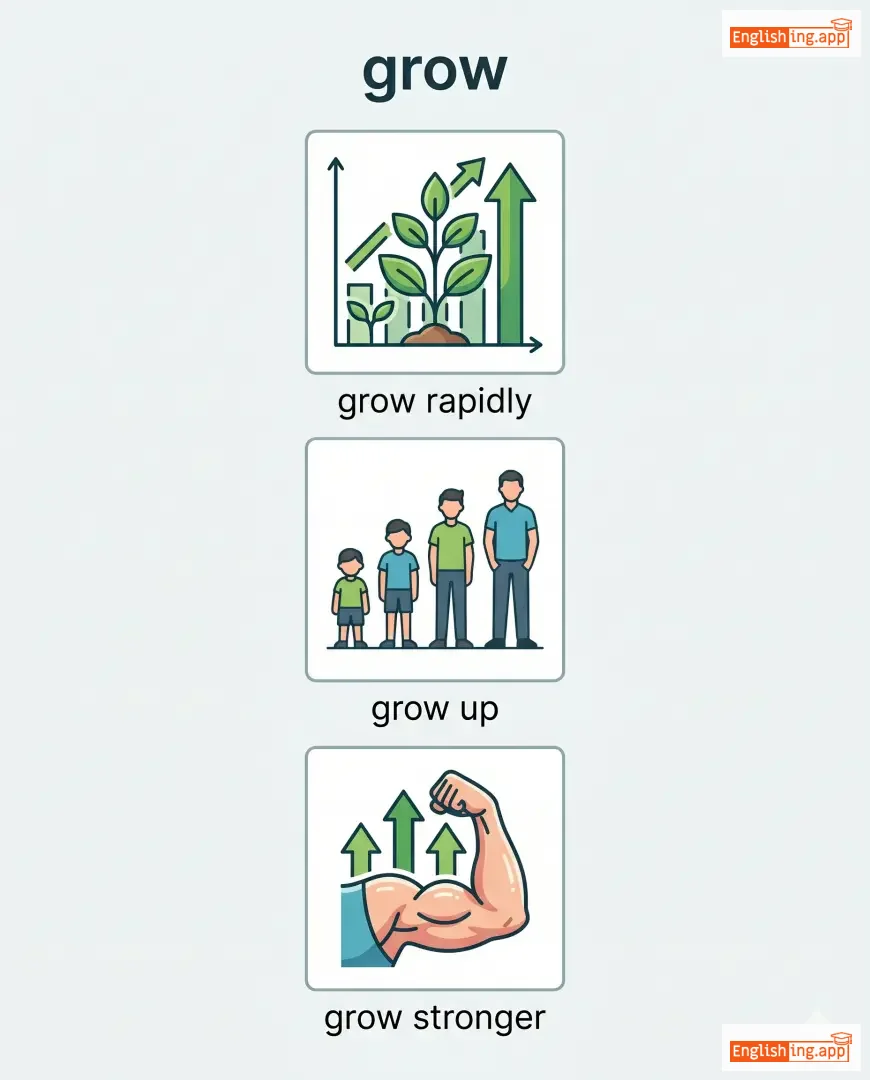
grow rapidly, grow up, grow stronger, grow business
••••••
|
树木成长,意味着树木随着时间变大。
••••••
|
|
🌿
••••••
|
/ˈɡroʊ.ɪŋ/
verb
(格罗英)
••••••
|
- •••••• |
增长
zēngzhǎng
••••••
|
- •••••• | - •••••• | - •••••• |
growing
格罗英
••••••
|
continuously increasing or developing
••••••
|
There is a growing demand for renewable energy.
对可再生能源的需求正在增长。
••••••
|
对可再生能源的需求正在增长。
Duì kě zàishēng néngyuán de xūqiú zhèngzài zēngzhǎng.
••••••
|
- •••••• | - •••••• | - •••••• |
developing, expanding, increasing, rising
••••••
|
shrinking, decreasing, declining
••••••
|
growing demand, growing concern, growing population, growing economy
••••••
|
Growing意味着增长,像需求增长一样。
••••••
|
|
📈
••••••
|
/ɡroʊθ/
noun
(gǔròu)
••••••
|

|
增长
zēngzhǎng
••••••
|
- •••••• | - •••••• | - •••••• | - •••••• |
the process of increasing in size, number, or importance
••••••
|
The company has shown remarkable growth in the last year. |
公司在去年表现出了显著的增长。
Gōngsī zài qùnián biǎoxiàn chūle xiǎnzhù de zēngzhǎng.
••••••
|
economic growth |
increase in a nation's production of goods and services
••••••
|
经济增长
jīngjì zēngzhǎng
••••••
|
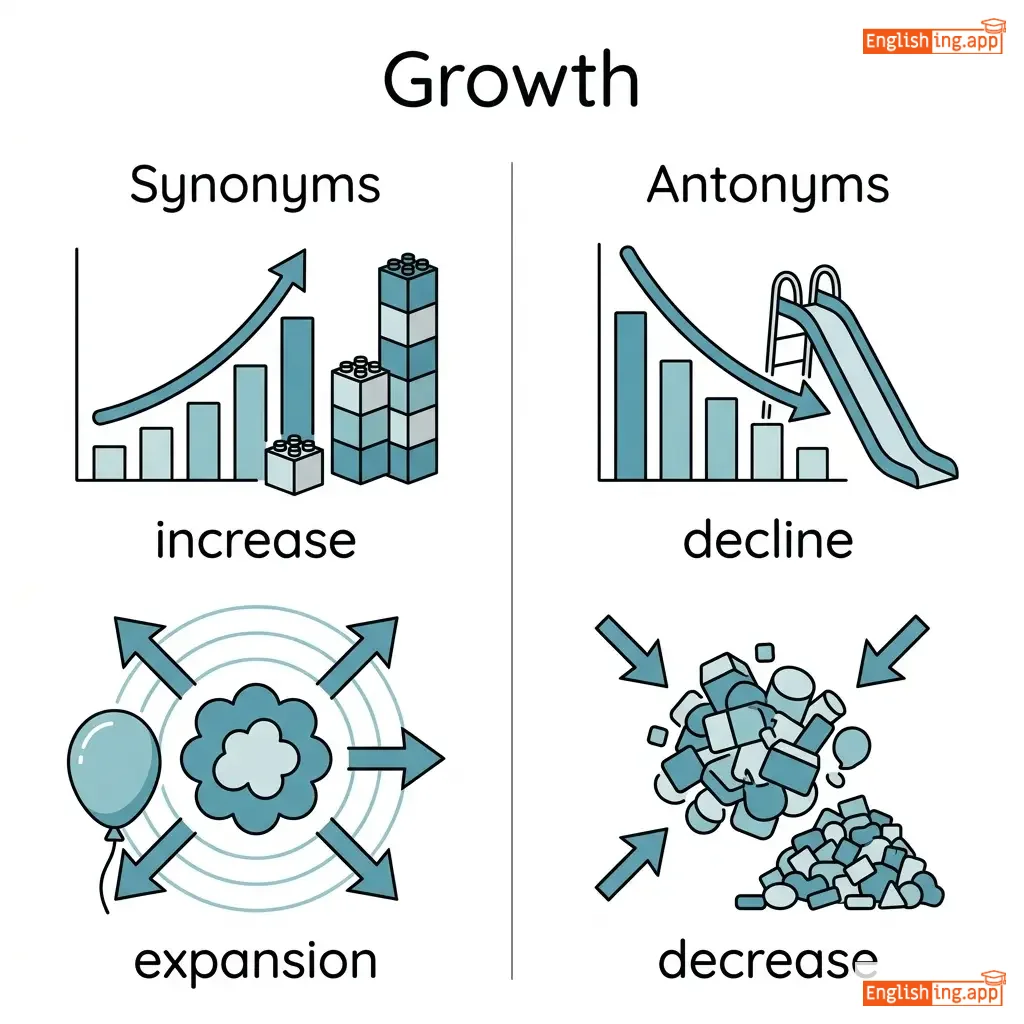
increase, expansion, rise, development
••••••
|
decline, decrease, shrinkage
••••••
|
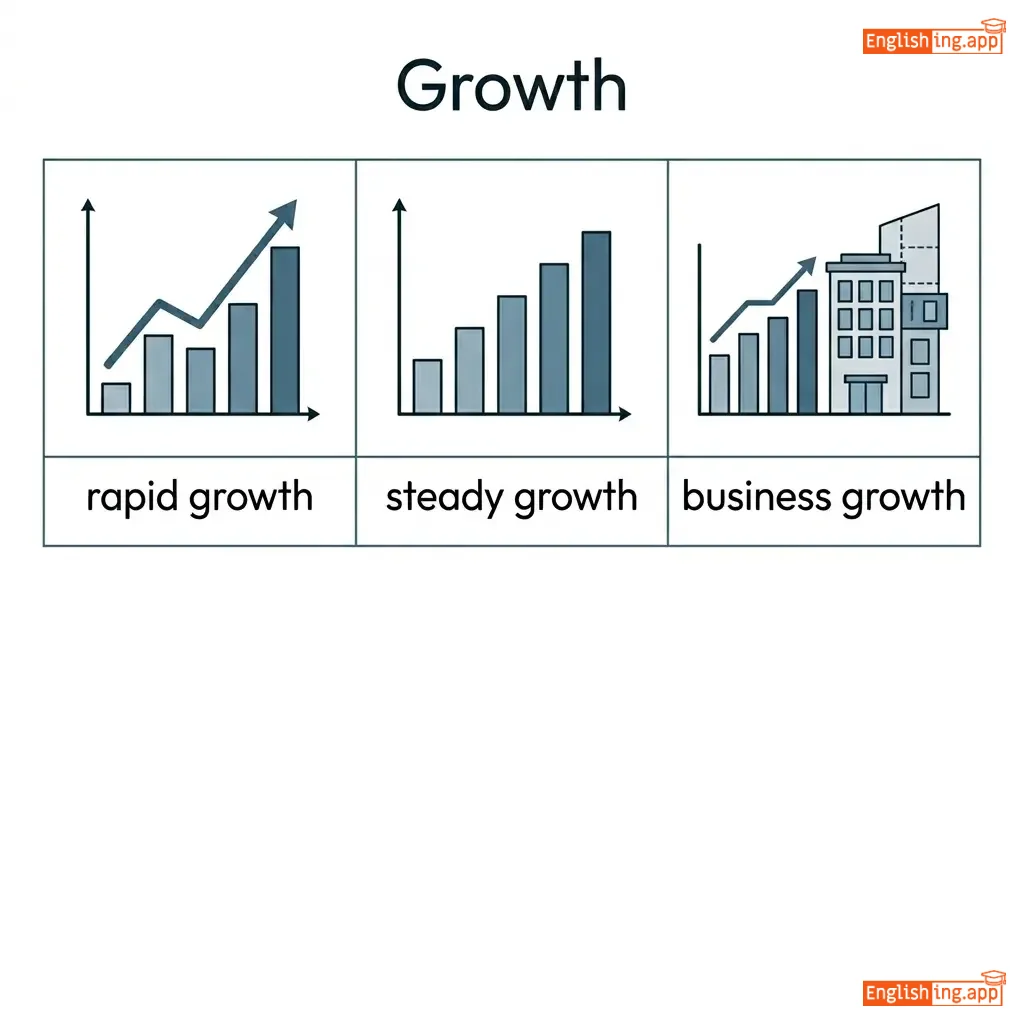
rapid growth, steady growth, business growth, growth rate
••••••
|
增长就像一个箭头指向上方 📈
••••••
|
|
✅
••••••
|
/ˌɡærənˈtiː/
noun/verb
••••••
|
- •••••• | - •••••• |
guaranteed
••••••
|
guaranteed
••••••
|
guarantees
••••••
|
guaranteeing
••••••
|
a formal promise or assurance, especially about the quality or durability of a product
••••••
|
The company guarantees a refund if the product is faulty. |
- •••••• |
money-back guarantee |
a promise that money will be refunded if the product is unsatisfactory
••••••
|
- •••••• |
assure, promise, warrant, pledge
••••••
|
break, deny, disclaim
••••••
|
lifetime guarantee, product guarantee, guarantee success, guarantee satisfaction
••••••
|
No •••••• |
|
🛡️
••••••
|
/ɡɑːrd/
noun/verb
(守卫)
••••••
|

|
守卫 / 保卫
shǒuwèi / bǎowèi
••••••
|
guarded
守卫过
••••••
|
guarded
守卫过
••••••
|
guards
守卫着
••••••
|
guarding
守卫
••••••
|
to protect or keep safe from harm or danger
••••••
|
The soldier stood to guard the entrance.
士兵站着守卫入口。
••••••
|
士兵站着守卫入口。
Shìbīng zhànzhe shǒuwèi rùkǒu.
••••••
|
on guard
警戒
••••••
|
to be watchful and alert
••••••
|
警戒
jǐngjiè
••••••
|
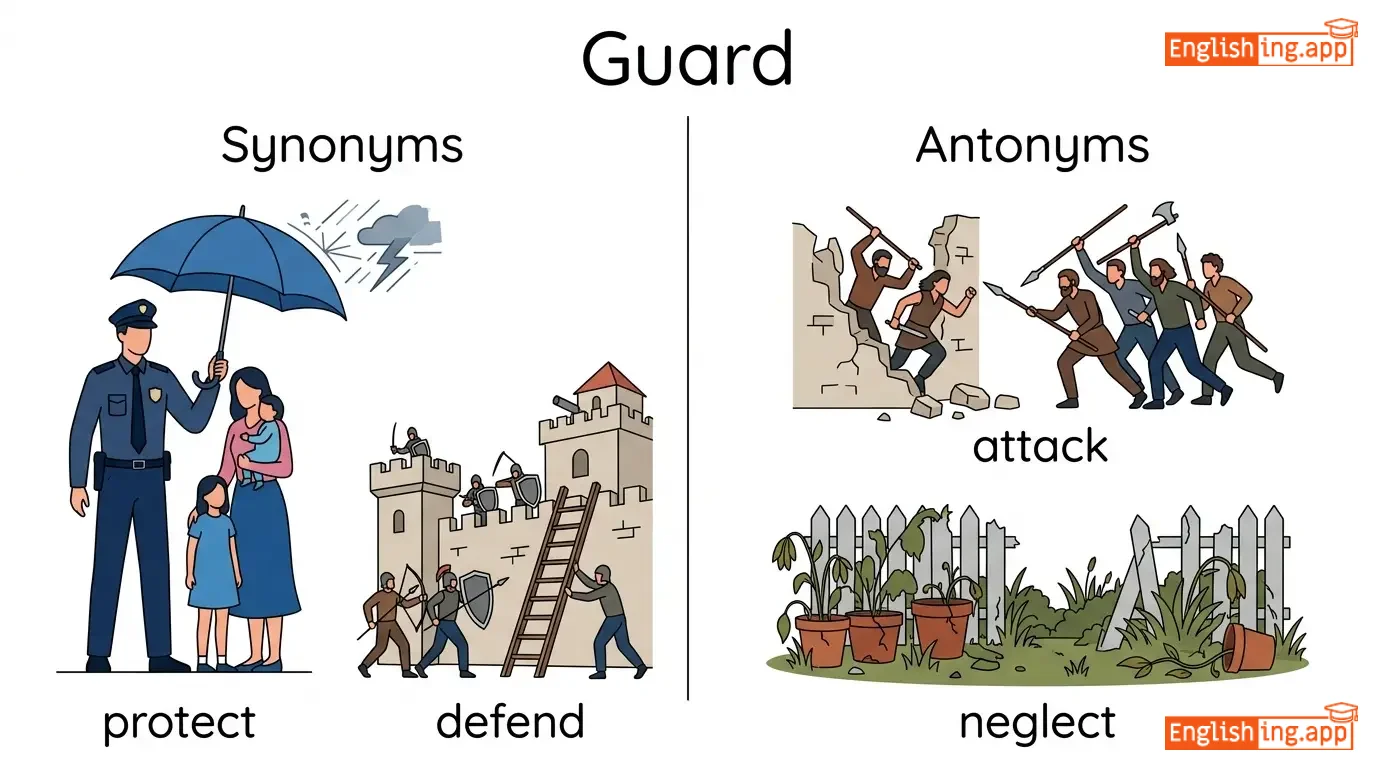
protect, defend, secure, watch
••••••
|
attack, neglect
••••••
|
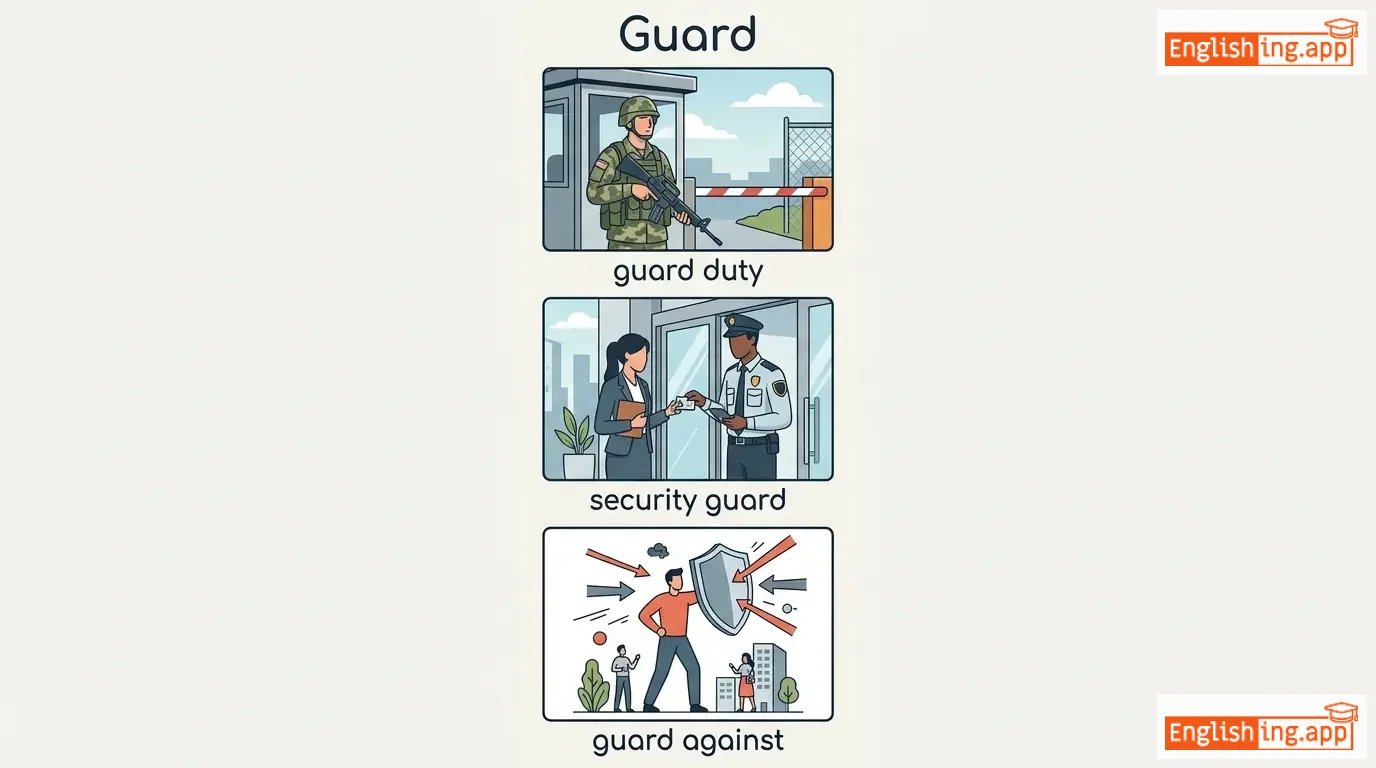
guard duty, security guard, guard against, guard entrance
••••••
|
Guard意味着守卫 🛡️ - 守卫意味着保护
••••••
|
|
👨👩👧👦
••••••
|
/ˈɡɑːr.di.ən/
noun
(监护人)
••••••
|
- •••••• |
监护人; 守护者
jiānhùrén; shǒuhù zhě
••••••
|
- •••••• | - •••••• | - •••••• | - •••••• |
a defender, protector, or keeper; a person legally responsible for the care of someone unable to manage their own affairs
••••••
|
After her parents died, her uncle became her legal guardian and took care of her. |
在她的父母去世后,她的叔叔成为了她的法定监护人,并照顾了她。
Zài tā de fùmǔ qùshì hòu, tā de shūshu chéngwéile tā de fǎdìng jiānhùrén, bìng zhàogùle tā.
••••••
|
- •••••• | - •••••• | - •••••• |
protector, custodian, caretaker, trustee
••••••
|
ward, dependent, charge, neglector
••••••
|
legal guardian, guardian angel, appointed guardian
••••••
|
监护人就像守护者一样,总是在你需要时提供保护。
••••••
|
|
💥
••••••
|
/ɡəˈrɪlə/
noun
••••••
|
- •••••• | - •••••• | - •••••• | - •••••• | - •••••• | - •••••• |
a member of a small independent group taking part in irregular fighting, typically against larger forces
••••••
|
The guerrilla fighters used ambushes to attack enemy positions. |
- •••••• |
guerrilla warfare |
a form of irregular warfare in which small groups of combatants use tactics such as ambushes and sabotage
••••••
|
- •••••• |
fighter, rebel, insurgent, freedom fighter
••••••
|
soldier, patriot
••••••
|
guerrilla warfare, guerrilla tactics, guerrilla fighters, guerrilla movement
••••••
|
No •••••• |
|
🤔
••••••
|
/ɡɛs/
verb
(盖斯)
••••••
|
|
猜测
cāicè
••••••
|
guessed
盖斯特
••••••
|
guessed
盖斯特
••••••
|
guesses
盖塞斯
••••••
|
guessing
盖辛
••••••
|
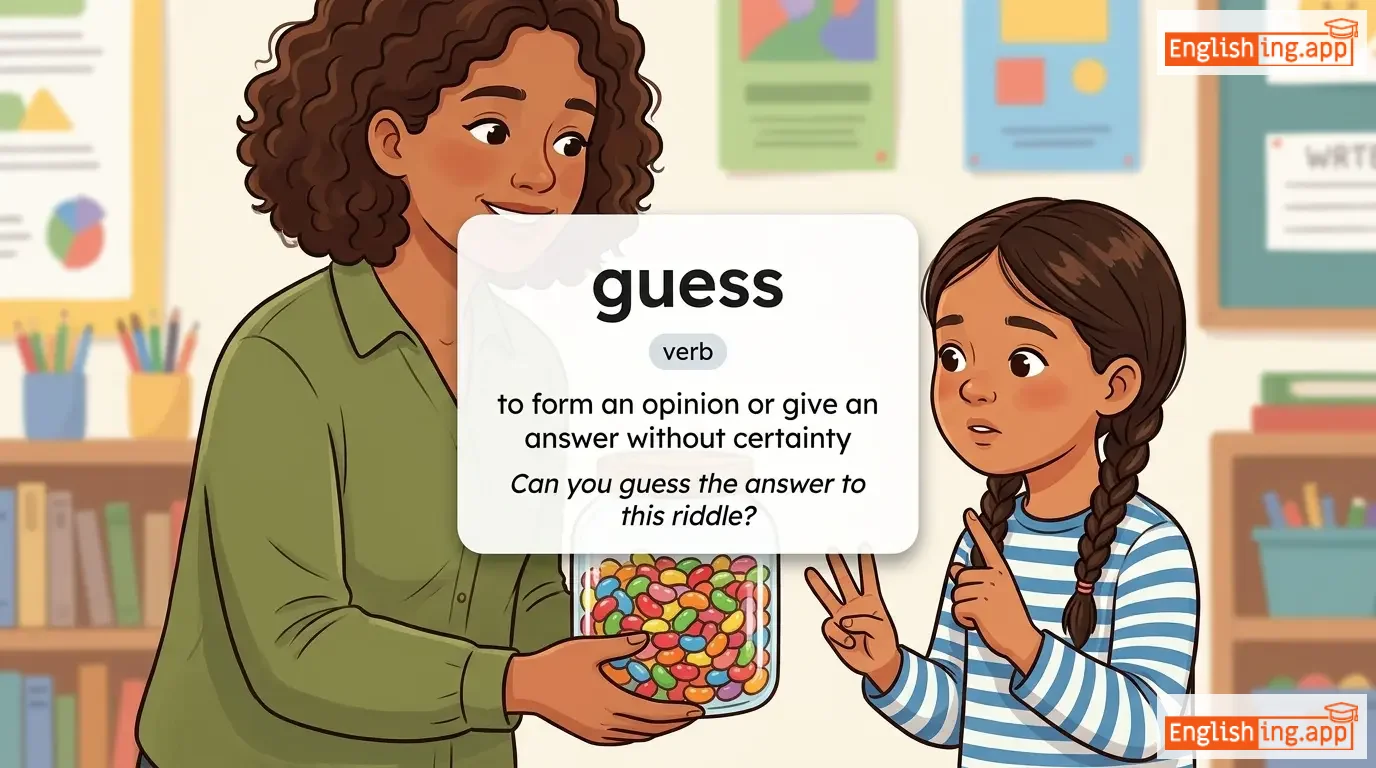
to form an opinion or give an answer without certainty
••••••
|
Can you guess the answer to this riddle?
你能猜出这个谜语的答案吗?
••••••
|
你能猜出这个谜语的答案吗?
Nǐ néng cāi chū zhège míyǔ de dá'àn ma?
••••••
|
take a guess
猜猜看
••••••
|
to attempt an answer without being sure
••••••
|
猜猜看
Cāi cāi kàn
••••••
|
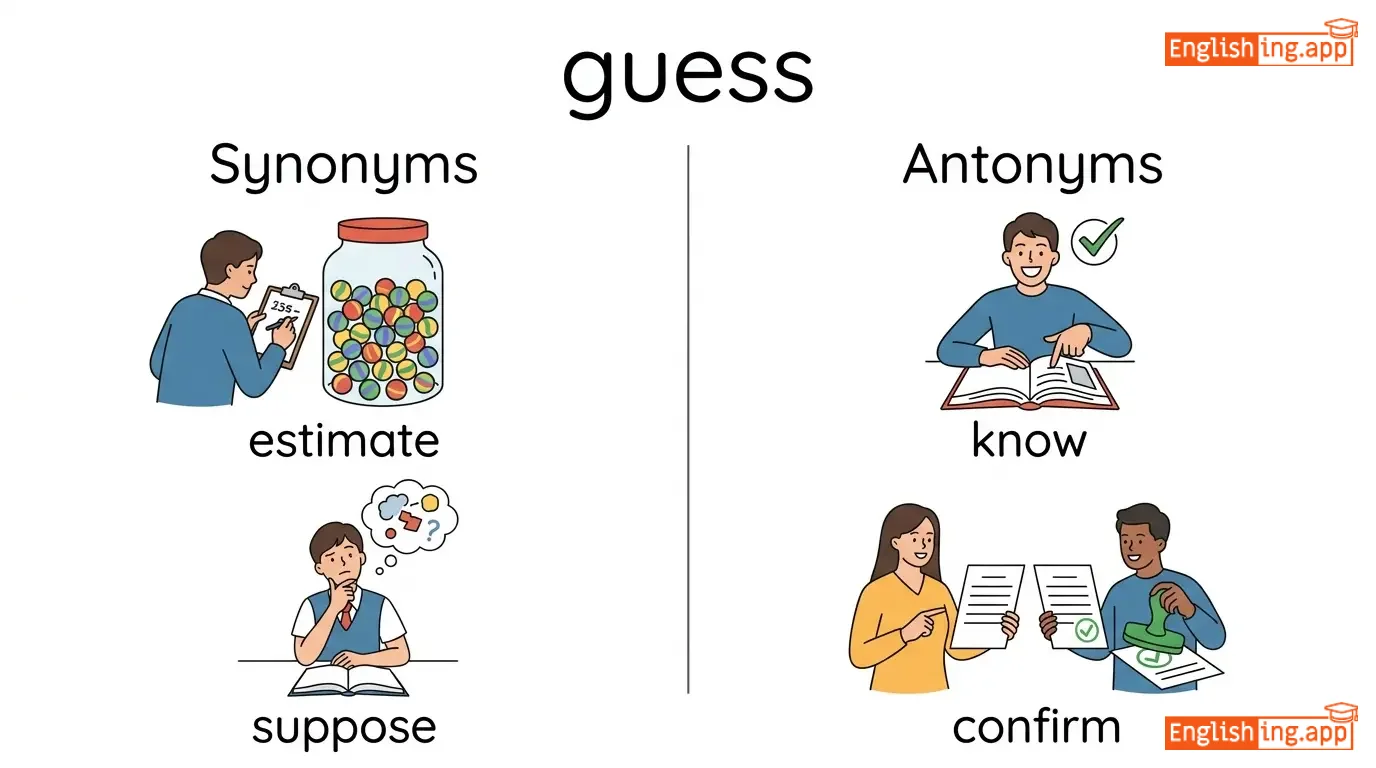
estimate, suppose, conjecture, assume, predict
••••••
|
know, confirm, determine
••••••
|
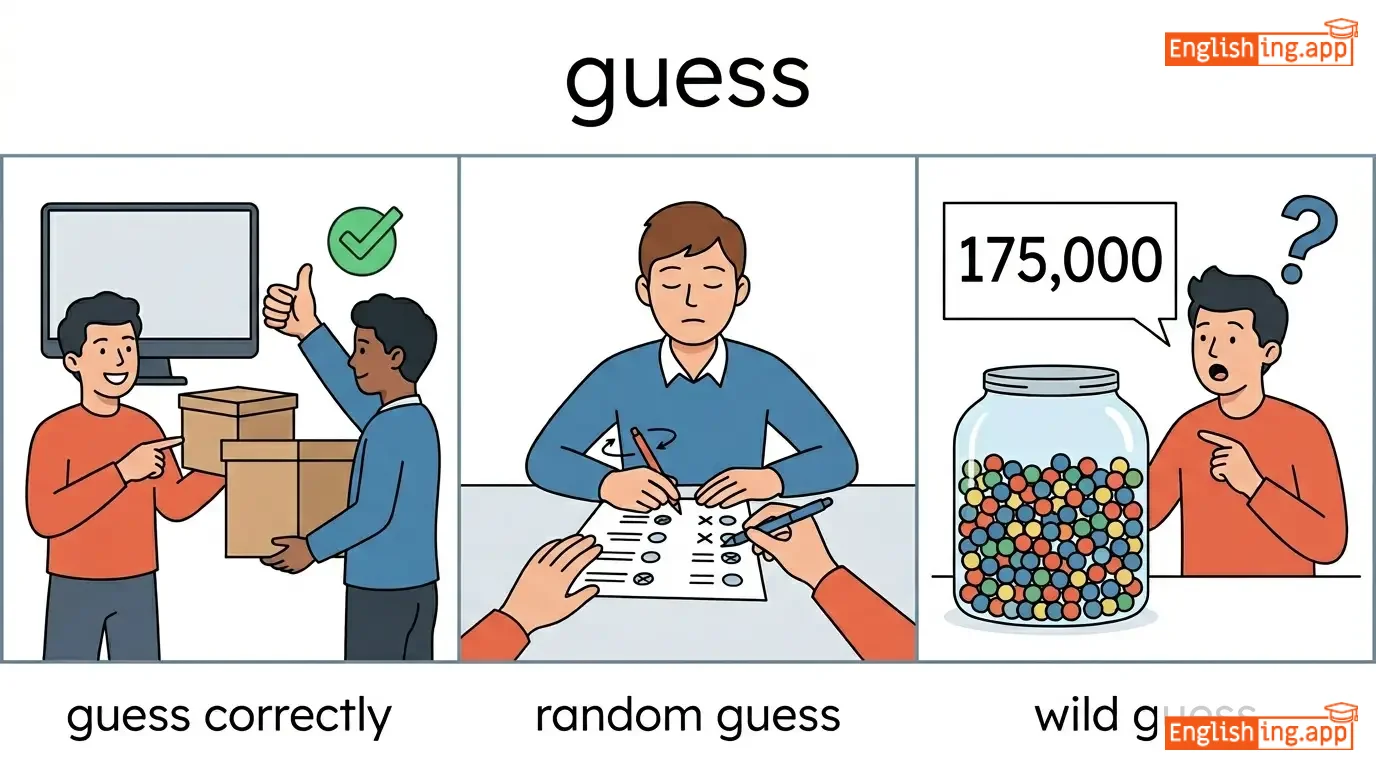
guess correctly, random guess, wild guess, guess the answer
••••••
|
Guess,像‘盖斯’,猜测答案,简单明了!
••••••
|
|
🎉
••••••
|
/ɡɛst/
noun
(gè sī tè)
••••••
|
- •••••• |
客人
kè rén
••••••
|
- •••••• | - •••••• | - •••••• | - •••••• |
a person invited to visit or stay in someone's home or attend an event
••••••
|
We welcomed our guest with a warm smile. |
我们用温暖的微笑欢迎了我们的客人。
Wǒmen yòng wēnnuǎn de wēixiào huānyíngle wǒmen de kèrén.
••••••
|
guest of honor |
the most important guest at an event
••••••
|
荣誉客人
róngyù kè rén
••••••
|
visitor, invitee, company, lodger
••••••
|
host, resident
••••••
|
guest list, hotel guest, guest room, special guest
••••••
|
客人 (kè rén) 就是特别被欢迎的嘉宾!
••••••
|
|
🧭
••••••
|
/ˈɡaɪ.dəns/
noun
(gǎidēngsī)
••••••
|
- •••••• |
指导; 领导; 建议
zhidao, lingdao, jianyi
••••••
|
- •••••• | - •••••• | - •••••• | - •••••• |
advice or information aimed at resolving a problem or difficulty; leadership or direction
••••••
|
The teacher provided valuable guidance to help students choose their career paths. |
老师提供了宝贵的指导,帮助学生选择他们的职业道路。
laoshi tigong le baokuo de zhidao, bangzhu xuesheng xuanze tamen de zhiye daolu.
••••••
|
- •••••• | - •••••• | - •••••• |
direction, advice, counseling, instruction
••••••
|
confusion, misdirection, neglect, abandonment
••••••
|
career guidance, spiritual guidance, guidance counselor
••••••
|
指导就像手把手引导你走向成功的道路。
••••••
|
|
🧭
••••••
|
/ɡaɪd/
verb, noun
(海皮尼斯)
••••••
|
|
幸福
xìng fú
••••••
|
guided
••••••
|
guided
••••••
|
guides
••••••
|
guiding
••••••
|
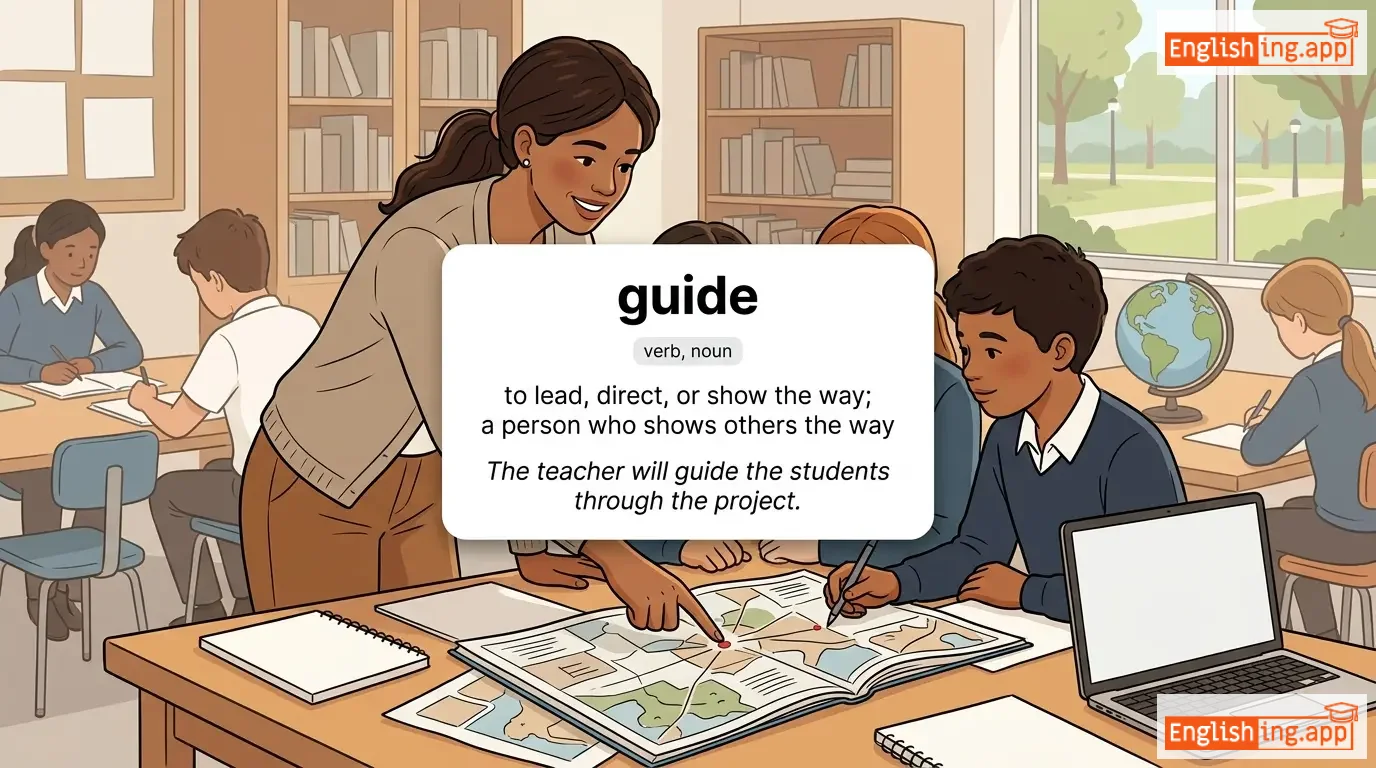
to lead, direct, or show the way; a person who shows others the way
••••••
|
The teacher will guide the students through the project. |
当她获得奖项时,她无法掩饰自己的幸福。
Dāng tā huò dé jiǎng xiàng shí, tā wú fǎ yǎn shì zì jǐ de xìng fú.
••••••
|
spiritual guide |
a person who offers wisdom or advice in spiritual matters
••••••
|
追求幸福
zhuī qiú xìng fú
••••••
|
lead, direct, mentor, instructor, show
••••••
|
mislead, confuse, follow
••••••
|
guide book, tourist guide, guide the way, guide someone
••••••
|
幸福就像 happiness,是我们每个人都在追求的东西。
••••••
|
|
📑
••••••
|
/ˈɡaɪd.laɪn/
noun
(ɡaɪdlaɪn)
••••••
|
- •••••• |
指导方针
zhǐdǎo fāngzhēn
••••••
|
- •••••• | - •••••• | - •••••• | - •••••• |
a rule, instruction, or principle that provides direction
••••••
|
The company issued new guidelines for employee safety. |
公司发布了新的员工安全指导方针。
Gōngsī fābùle xīn de yuángōng ānquán zhǐdǎo fāngzhēn.
••••••
|
- •••••• | - •••••• | - •••••• |
rule, instruction, policy, principle, direction
••••••
|
chaos, disorder, lawlessness
••••••
|
safety guideline, follow guideline, official guideline, set guideline
••••••
|
指导方针 – 就像一条给你方向的线。
••••••
|
|
😔
••••••
|
/ɡɪlt/
noun
(gilt)
••••••
|
- •••••• |
罪恶感
zuì è gǎn
••••••
|
- •••••• | - •••••• | - •••••• | - •••••• |
A feeling of responsibility or remorse for an offense or wrongdoing
••••••
|
She felt deep guilt after lying to her friend. |
她在撒谎后感到深深的罪恶感。
Tā zài sāhuǎng hòu gǎndào shēnshēn de zuì è gǎn.
••••••
|
guilty conscience |
a feeling of guilt for wrongdoing
••••••
|
负罪感
fù zuì gǎn
••••••
|
remorse, shame, regret, fault
••••••
|
innocence, blamelessness
••••••
|
feel guilt, deep guilt, sense of guilt
••••••
|
Guilt 转换为 '罪恶感' 在中文里,想象你内心感受到的沉重罪恶感。
••••••
|
|
😔
••••••
|
/ˈɡɪl.ti/
adjective
(吉尔蒂)
••••••
|
- •••••• |
有罪的
yǒuzuì de
••••••
|
- •••••• | - •••••• | - •••••• | - •••••• |
responsible for a crime or wrongdoing; feeling shame or regret
••••••
|
He felt guilty after lying to his friend. |
他在对朋友撒谎后感到有罪。
Tā zài duì péngyǒu sāhuǎng hòu gǎndào yǒuzuì.
••••••
|
plead guilty |
to formally admit in court that one has committed a crime
••••••
|
认罪
rènzuì
••••••
|
ashamed, responsible, blameworthy, convicted
••••••
|
innocent, blameless, faultless
••••••
|
feel guilty, guilty of, guilty conscience, found guilty
••••••
|
有罪的就是那种内疚的感觉,就像guilty一样。
••••••
|
|
🔫
••••••
|
/ɡʌn/
noun
(gān)
••••••
|
- •••••• |
枪
qiāng
••••••
|
- •••••• | - •••••• | - •••••• | - •••••• |
a weapon that shoots bullets or other projectiles
••••••
|
The police officer carried a gun for protection. |
警察为保护自己携带了枪。
Jǐngchá wèi bǎohù zìjǐ xiédài le qiāng.
••••••
|
jump the gun |
to do something too soon or before the right time
••••••
|
抢先一步
qiǎngxiān yī bù
••••••
|
firearm, pistol, rifle, revolver, weapon
••••••
|
peace, disarmament, safety
••••••
|
carry a gun, toy gun, gun control, load a gun
••••••
|
Gun, 就是枪,随时准备发射。
••••••
|
|
🫃
••••••
|
/ɡʌt/
noun/verb
(ɡʌt)
••••••
|
- •••••• |
胃 / 勇气
wèi / yǒngqì
••••••
|
gutted
ɡʌtɪd
••••••
|
gutted
ɡʌtɪd
••••••
|
guts
ɡʌts
••••••
|
gutting
ɡʌtɪŋ
••••••
|
The stomach or belly; also used for courage, instinct, or to remove the inside of something.
••••••
|
He had the guts to stand up for his beliefs.
他有勇气捍卫自己的信念。
••••••
|
他有勇气捍卫自己的信念。
Tā yǒu yǒngqì hànwèi zìjǐ de xìnniàn.
••••••
|
spill your guts
倾诉心声
••••••
|
To reveal personal secrets or feelings.
••••••
|
倾诉心声
qīngsù xīnshēng
••••••
|
stomach, belly, courage, instinct, bravery
••••••
|
cowardice, fear
••••••
|
gut feeling, gut reaction, strong guts, gut instinct
••••••
|
Gut意味着胃和勇气 — 有勇气就有guts!
••••••
|
|
👨
••••••
|
/ɡaɪ/
noun
(gài)
••••••
|
- •••••• |
家伙
jiāhuo
••••••
|
- •••••• | - •••••• | - •••••• | - •••••• |
an informal term for a man; sometimes used to refer to a person in general
••••••
|
That guy over there is my best friend. |
那边的家伙是我最好的朋友。
Nà biān de jiāhuo shì wǒ zuì hǎo de péngyǒu.
••••••
|
good guy |
a person who is kind and decent
••••••
|
好家伙
hǎo jiāhuo
••••••
|
man, fellow, dude, chap, lad
••••••
|
woman, lady
••••••
|
that guy, some guy, young guy, nice guy, guy next door
••••••
|
Guy 意思是家伙 — 电影里总有一个好家伙。
••••••
|
|
🔄
••••••
|
/ˈhæb.ɪt/
noun
(习惯)
••••••
|
|
习惯
xíguàn
••••••
|
- •••••• | - •••••• | - •••••• | - •••••• |
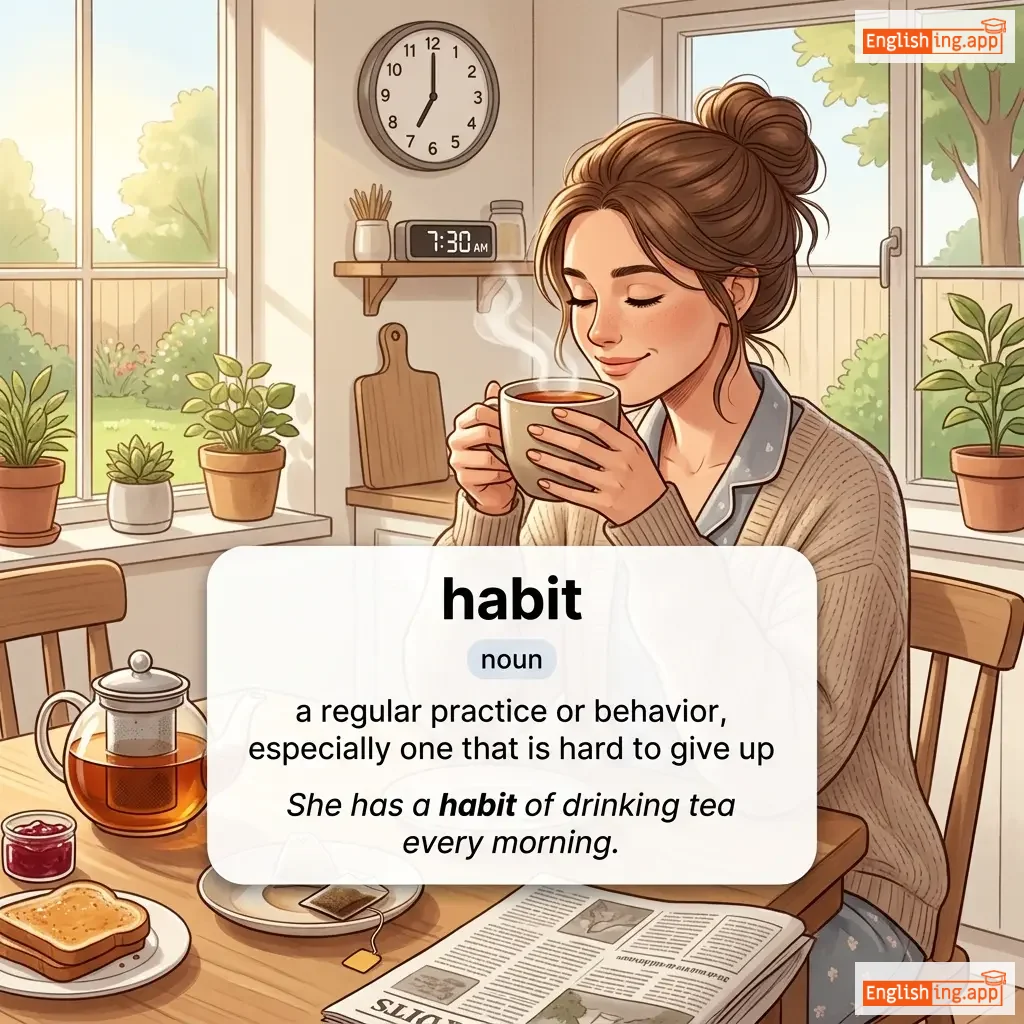
a regular practice or behavior, especially one that is hard to give up
••••••
|
She has a habit of drinking tea every morning. |
她每天早上都有喝茶的习惯。
Tā měitiān zǎoshàng dōu yǒu hē chá de xíguàn.
••••••
|
old habits die hard |
it is difficult to stop doing things that one has been doing for a long time
••••••
|
陈年旧习难改
chénnián jiùxí nán gǎi
••••••
|
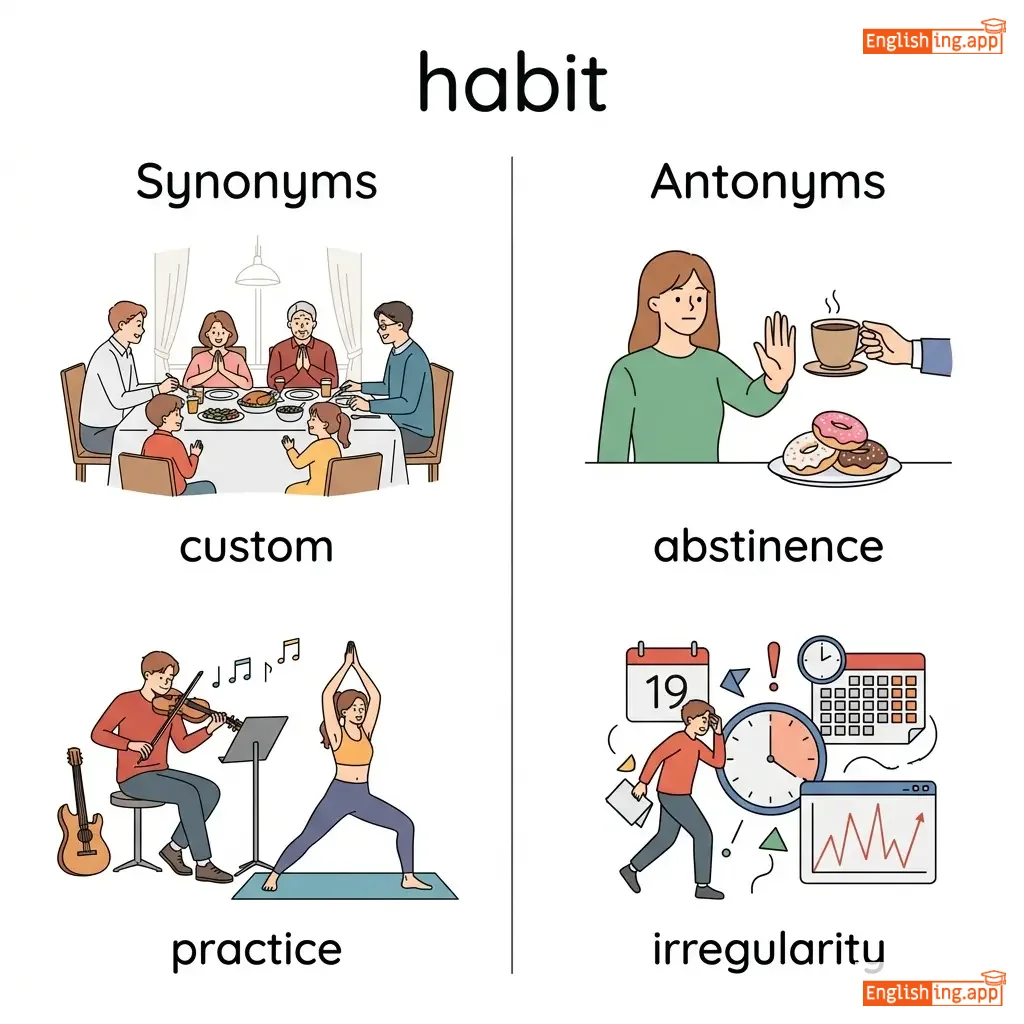
custom, practice, routine, tendency, pattern
••••••
|
abstinence, irregularity, avoidance
••••••
|
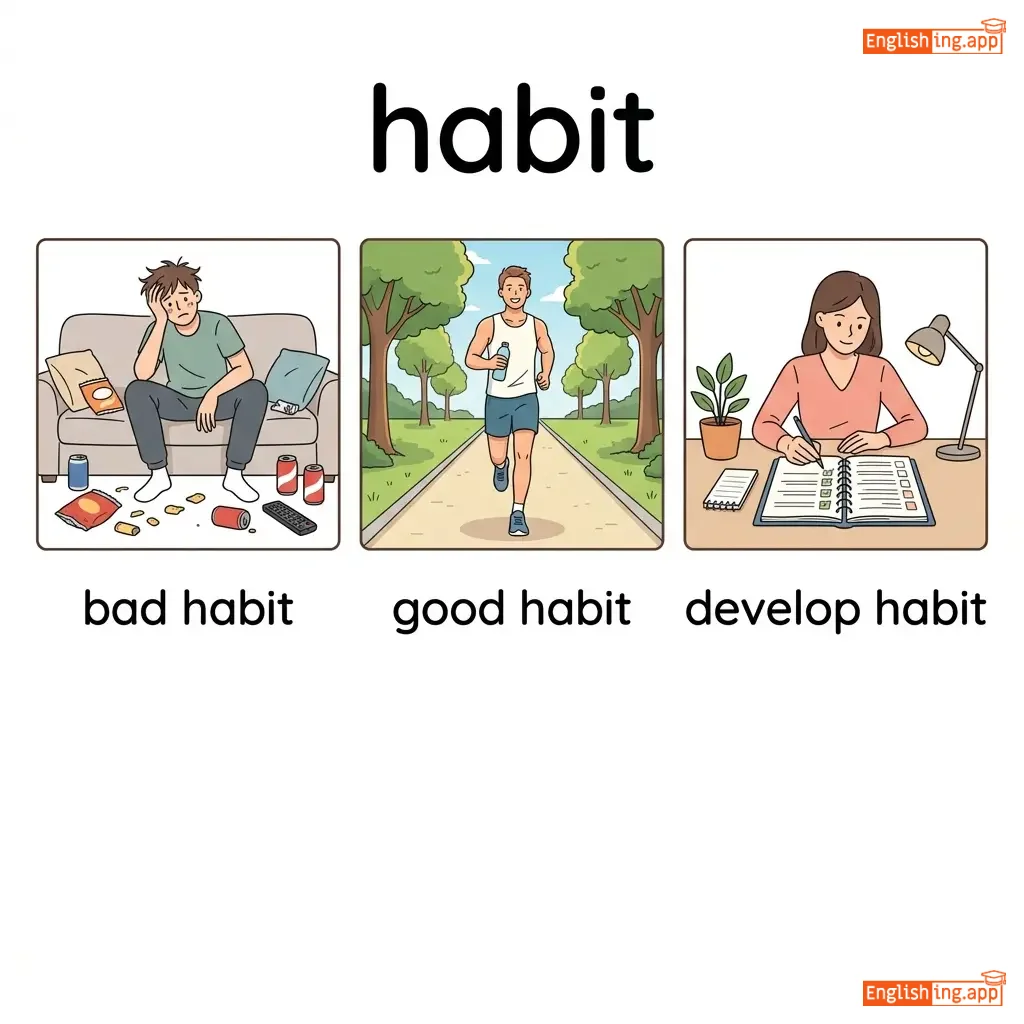
bad habit, good habit, develop habit, break habit
••••••
|
习惯是一个重复的过程,越做越习惯。
••••••
|
|
👨👩👧👦
••••••
|
/ˈhæbɪtənt/
noun
(hàbìtènt)
••••••
|
- •••••• |
居民
jūmín
••••••
|
- •••••• | - •••••• | - •••••• | - •••••• |
An inhabitant; a person or animal that lives in a particular place.
••••••
|
The habitants of the village were friendly and welcoming. |
村庄的居民友好而热情。
Cūnzhuāng de jūmín yǒuhǎo ér rèqíng.
••••••
|
- •••••• | - •••••• | - •••••• |
inhabitant, resident, dweller, occupant, settler
••••••
|
visitor, outsider, stranger
••••••
|
native habitant, rural habitant, city habitant, permanent habitant
••••••
|
Habitant = Habit + ant, 就是有习惯(habit)的人或动物,生活在一个地方。
••••••
|
|
🌿
••••••
|
/ˈhæbɪˌtæt/
noun
(栖息地)
••••••
|
|
栖息地
qixi di
••••••
|
- •••••• | - •••••• | - •••••• | - •••••• |
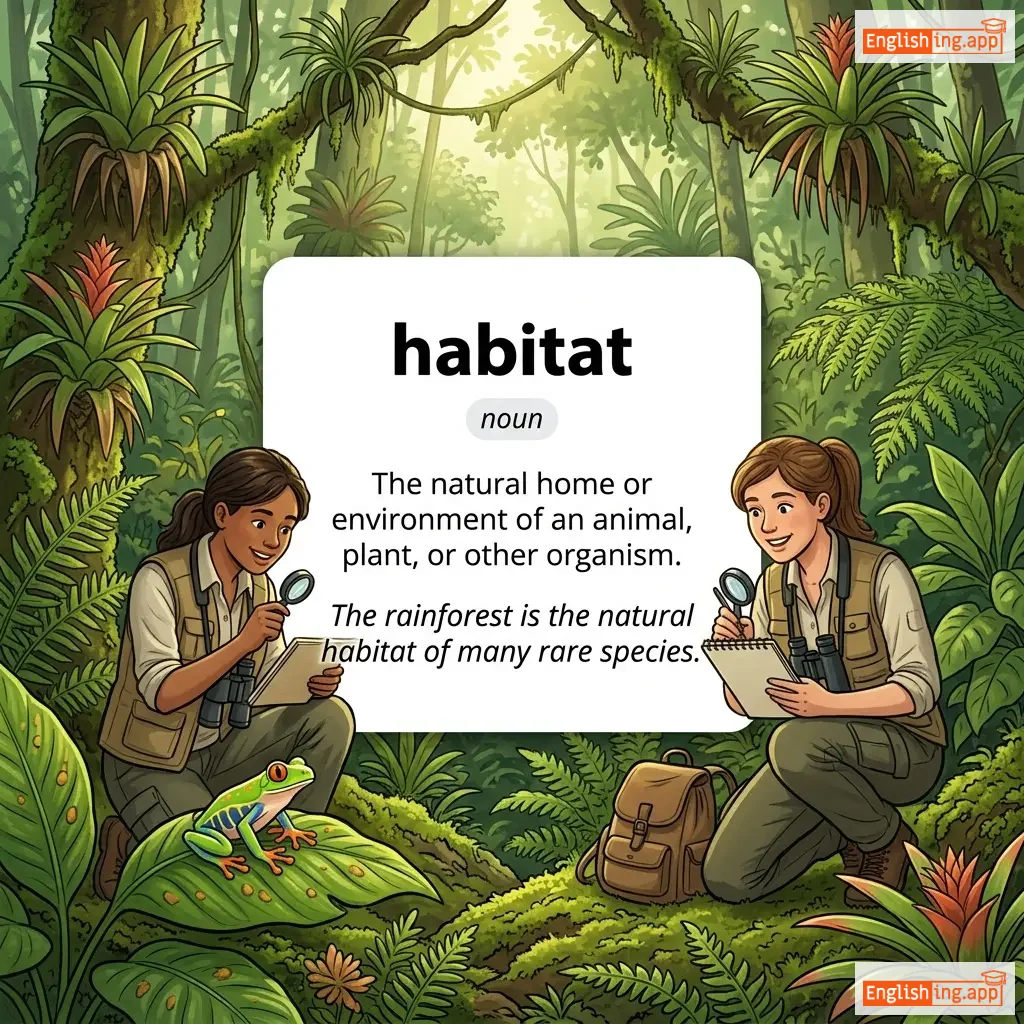
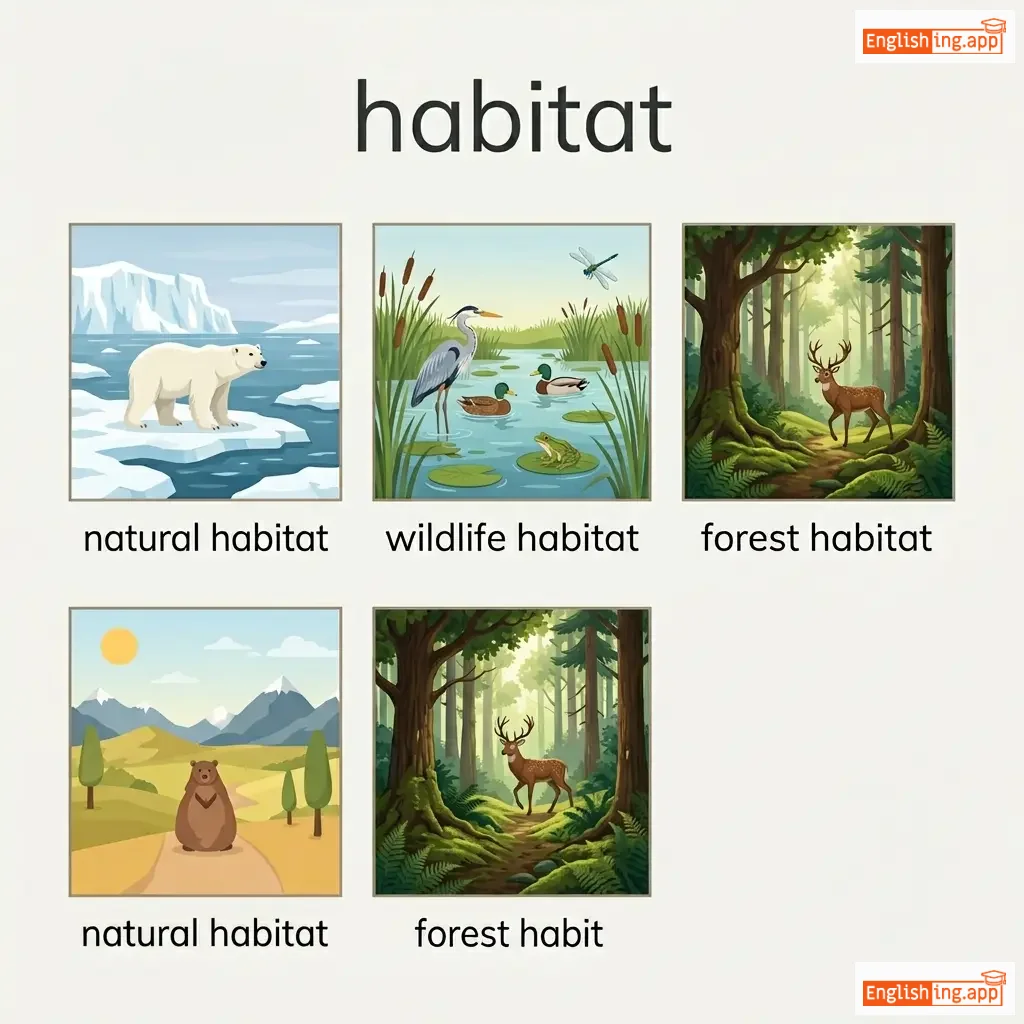
The natural home or environment of an animal, plant, or other organism.
••••••
|
The rainforest is the natural habitat of many rare species. |
热带雨林是许多稀有物种的自然栖息地。
Redai yulin shi xu duo xiyou wuzhong de ziran qixi di.
••••••
|
- •••••• | - •••••• | - •••••• |
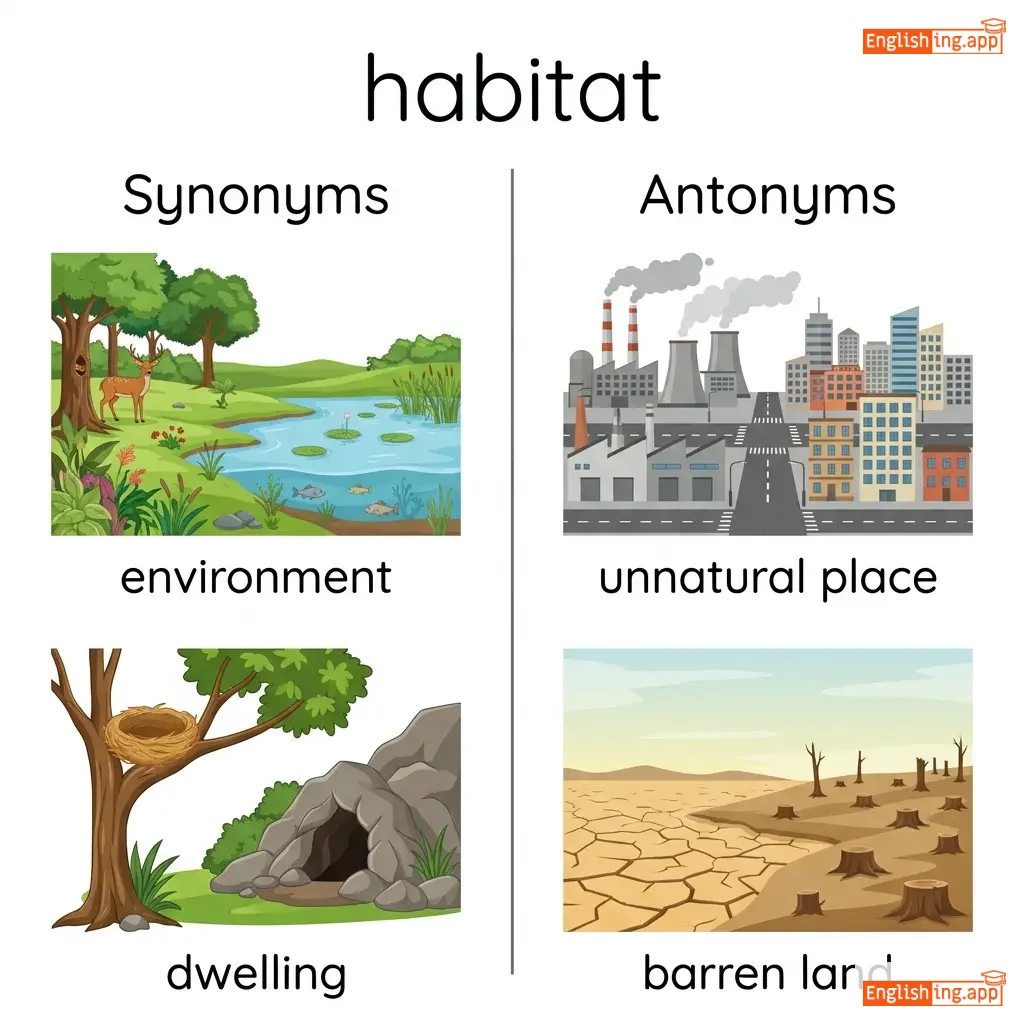
environment, dwelling, territory, ecosystem, surroundings
••••••
|
unnatural place, barren land
••••••
|
natural habitat, wildlife habitat, forest habitat, marine habitat
••••••
|
Habit + at → 动物栖息的地方 = 栖息地。
••••••
|

