|
絵文字
|
単語 | Images | 翻訳 | 過去 | 過去分詞 | 三人称単数 | 動名詞 | 意味 | 例文 | 例文の翻訳 | 表現例 | 表現例の意味 | 表現例の翻訳 | 同義語 | 対義語 | コロケーション | ニーモニック |
|---|---|---|---|---|---|---|---|---|---|---|---|---|---|---|---|---|---|
|
🎓
••••••
|
/ˈklɑːsmeɪt/
noun
(クラスメート)
••••••
|
- •••••• |
同級生
dokyusei
••••••
|
- •••••• | - •••••• | - •••••• | - •••••• |
a person who is in the same class or course of study as another
••••••
|
I met one of my old classmates at the university event.
アイ メット ワン オブ マイ オールド クラスメートズ アット ザ ユニバーシティ イベント。
••••••
|
大学のイベントで昔の同級生に会いました。
daigaku no ibento de mukashi no dokyusei ni aimashita
••••••
|
- •••••• | - •••••• | - •••••• |
schoolmate, peer, fellow student, class fellow
••••••
|
enemy, stranger
••••••
|
old classmate, former classmate, close classmate, classmate reunion
••••••
|
class + mate = クラスの友だち → 同級生
••••••
|
|
🏫
••••••
|
/ˈklæsˌruːm/
noun
(kurasurūmu)
••••••
|
- •••••• |
教室
kyōshitsu
••••••
|
- •••••• | - •••••• | - •••••• | - •••••• |
A room in which classes are held in a school or college.
••••••
|
The teacher entered the classroom and greeted the students. |
先生は教室に入って、生徒たちに挨拶しました。
Sensei wa kyōshitsu ni haitte, seito-tachi ni aisatsu shimashita.
••••••
|
empty classroom |
A classroom with no students or teacher inside.
••••••
|
空教室
kū kyōshitsu
••••••
|
lecture room, study room, hall, learning space
••••••
|
playground, office
••••••
|
classroom activities, classroom management, classroom environment, classroom learning
••••••
|
教室は classroom 🏫、勉強する場所です。
••••••
|
|
🧹
••••••
|
/kliːn/
verb
(クリーン)
••••••
|
- •••••• |
掃除する
souji suru
••••••
|
cleaned
クリーンド
••••••
|
cleaned
クリーンド
••••••
|
cleans
クリーンズ
••••••
|
cleaning
クリーニング
••••••
|
To make something free from dirt, marks, or mess.
••••••
|
She cleaned the kitchen before the guests arrived.
彼女はゲストが到着する前にキッチンを掃除しました。
••••••
|
彼女はゲストが到着する前にキッチンを掃除しました。
Kanojo wa gesuto ga tōchaku suru mae ni kicchin o sōji shimashita.
••••••
|
clean slate
きれいなスタート
••••••
|
A fresh start without any past problems.
••••••
|
きれいなスタート
kirei na sutāto
••••••
|
wash, scrub, wipe, tidy, purify
••••••
|
dirty, pollute, soil
••••••
|
clean room, clean clothes, clean water, clean environment
••••••
|
Clean は掃除するという意味です — 🧽 '掃除する' で何もかもきれいになります。
••••••
|
|
🧹
••••••
|
/klɪr/
verb
(kuria)
••••••
|
|
片付ける
katadzukeru
••••••
|
cleared
kuried
••••••
|
cleared
kuried
••••••
|
clears
kurias
••••••
|
clearing
kuriingu
••••••
|
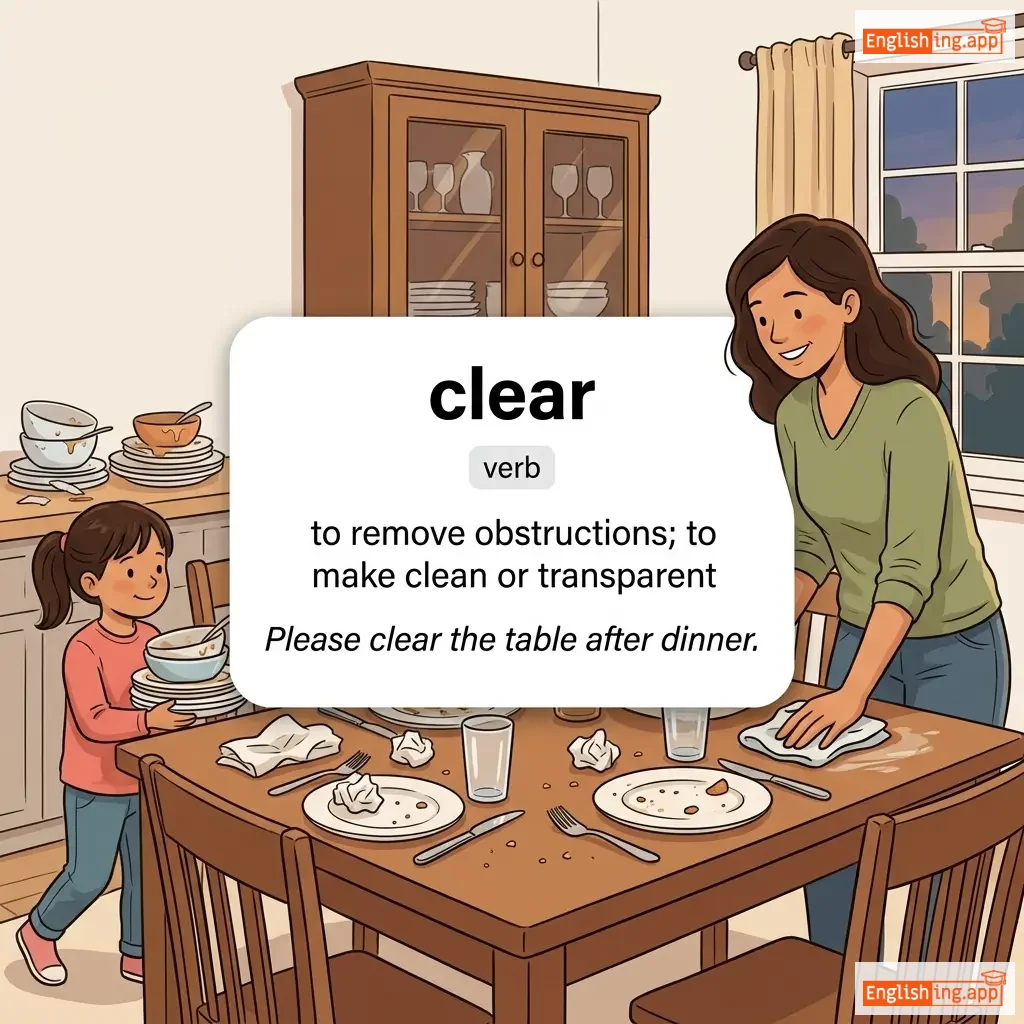
to remove obstructions; to make clean or transparent
••••••
|
Please clear the table after dinner.
夕食後にテーブルを片付けてください。
••••••
|
夕食後にテーブルを片付けてください。
Yuushokugo ni teeburu wo katadzukete kudasai.
••••••
|
- •••••• | - •••••• | - •••••• |
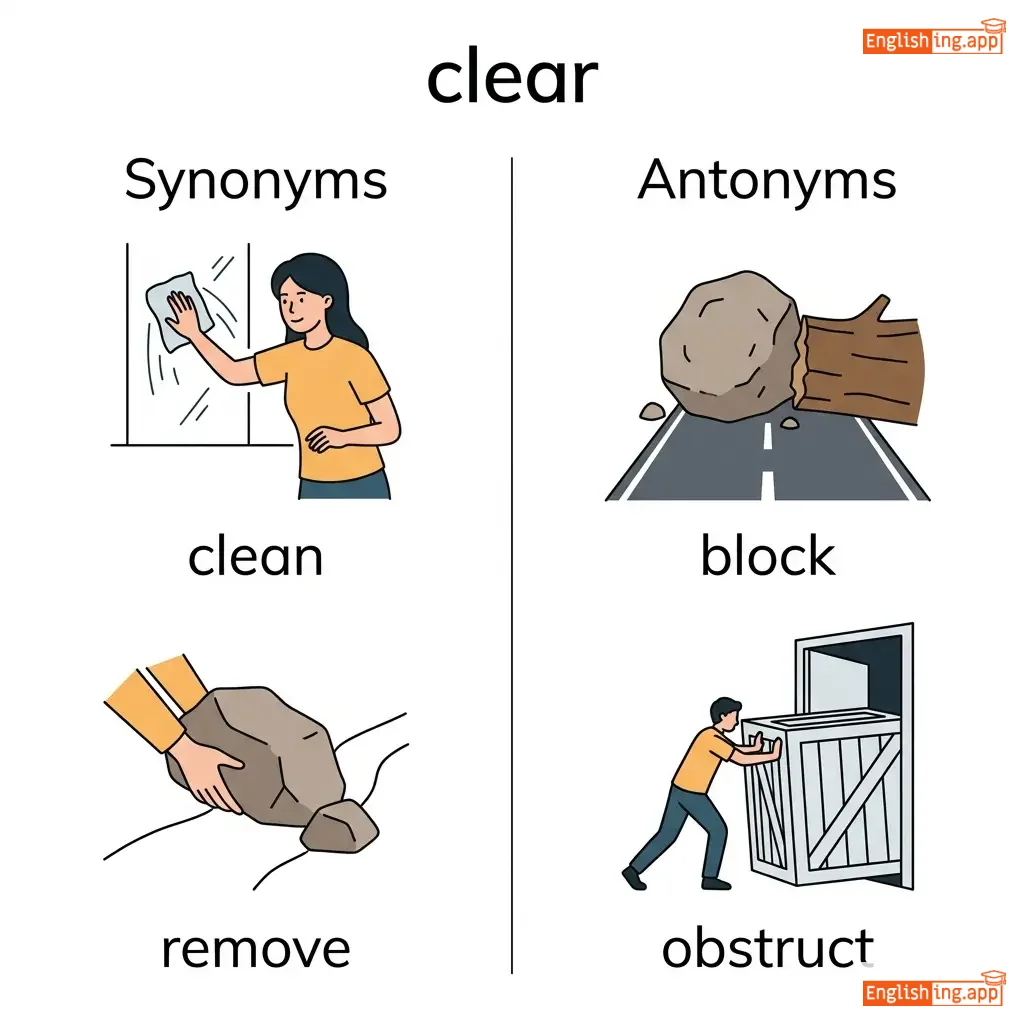
clean, remove, empty, tidy
••••••
|
block, obstruct, dirty, clutter
••••••
|
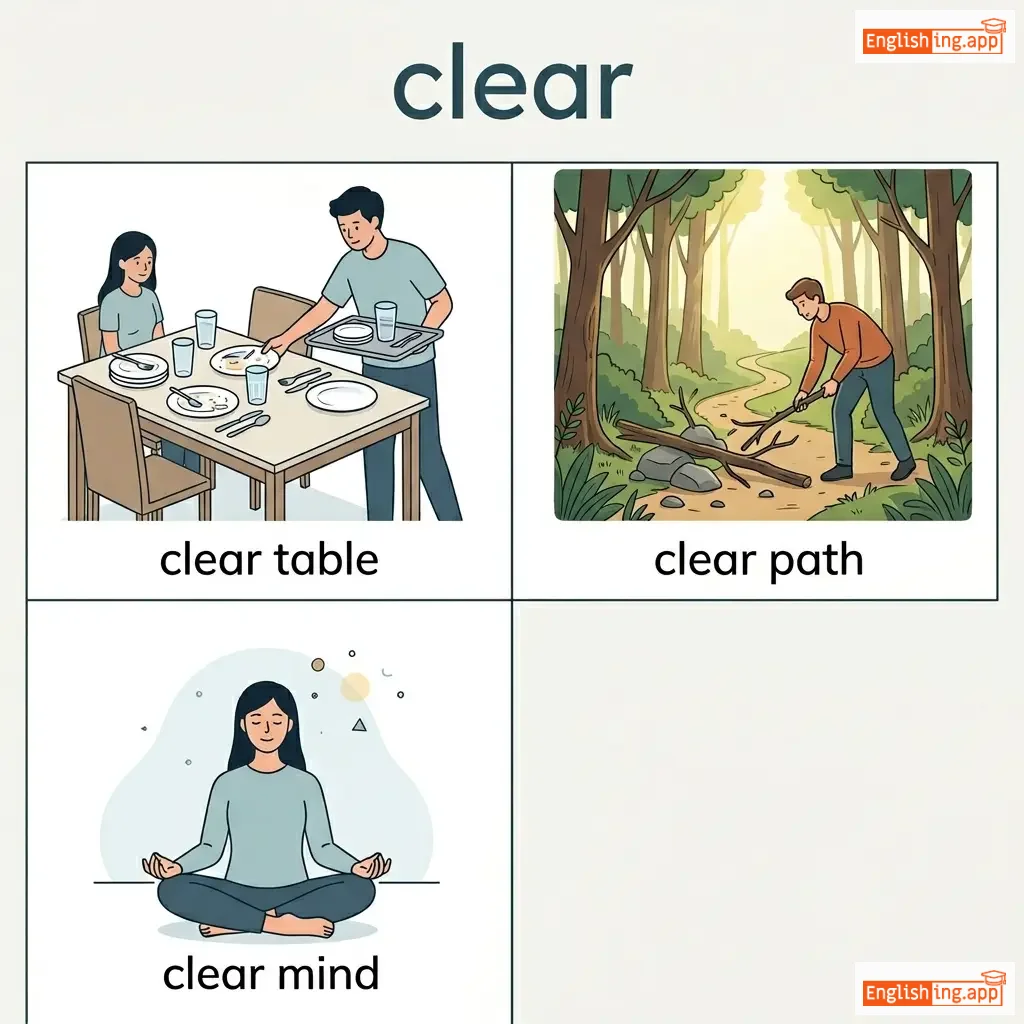
clear table, clear path, clear mind, clear sky, clear water, clear debt
••••••
|
Clear the table like clearing away the clutter in your life
••••••
|
|
🔍
••••••
|
/ˈklɪrli/
adverb
(kurirī)
••••••
|
- •••••• |
はっきりと
hakkiri to
••••••
|
- •••••• | - •••••• | - •••••• | - •••••• |
In a way that is easy to perceive, understand, or see.
••••••
|
She spoke clearly so that everyone could understand. |
彼女はみんなが理解できるように、はっきりと話した。
Kanojo wa minna ga rikai dekiru yō ni, hakkiri to hanashita.
••••••
|
- •••••• | - •••••• | - •••••• |
plainly, distinctly, obviously, transparently
••••••
|
vaguely, unclearly
••••••
|
speak clearly, see clearly, think clearly, explain clearly
••••••
|
Clearly はっきりと 🔍 — 'はっきりと話すと、皆がはっきりと理解します。'
••••••
|
|
🗂️
••••••
|
/klɑːrk/
noun
(クラーク)
••••••
|
- •••••• |
職員
shokuin
••••••
|
- •••••• | - •••••• | - •••••• | - •••••• |
A person employed in an office or bank to keep records, accounts, and undertake other routine administrative duties.
••••••
|
The clerk helped me find the correct form. |
職員は私が正しいフォームを見つけるのを手伝ってくれました。
Shokuin wa watashi ga tadashii fōmu wo mitsukeru no wo tetsudatte kuremashita.
••••••
|
- •••••• | - •••••• | - •••••• |
assistant, cashier, teller, secretary, bookkeeper
••••••
|
manager, employer
••••••
|
office clerk, bank clerk, sales clerk, law clerk
••••••
|
職員は事務所で書類を管理する人です。
••••••
|
|
🧠
••••••
|
/ˈklɛvər/
adjective
(クレバー)
••••••
|
- •••••• |
賢い, すばらしい
kashikoi, subarashii
••••••
|
- •••••• | - •••••• | - •••••• | - •••••• |
Quick to understand, learn, and devise ideas or solutions; intelligent.
••••••
|
She is clever enough to solve the puzzle quickly.
彼女はそのパズルを素早く解くのに十分賢いです。
••••••
|
彼女はそのパズルを素早く解くのに十分賢いです。
kanojo wa sono pazuru o subayaku toku no ni jūbun kashikoi desu.
••••••
|
clever trick
巧妙なトリック
••••••
|
A smart or ingenious method to achieve something.
••••••
|
巧妙なトリック
kōmyō na torikku
••••••
|
smart, intelligent, bright, witty, sharp
••••••
|
dull, foolish, stupid
••••••
|
clever idea, clever trick, clever solution, clever child
••••••
|
Clever は 'クレバーな猫' 🐱 いつも解決策を見つけます。
••••••
|
|
👤
••••••
|
/ˈklaɪənt/
noun
(クライアント)
••••••
|
- •••••• |
クライアント
kuraianto
••••••
|
- •••••• | - •••••• | - •••••• | - •••••• |
A person or organization using the services of a professional or company.
••••••
|
The lawyer met with her client to discuss the case. |
弁護士はクライアントと会ってケースを話し合った
bengoshi wa kuraianto to atte kēsu o hanashiatta
••••••
|
client base |
The group of clients a company serves.
••••••
|
クライアントベース
kuraianto bēsu
••••••
|
customer, patron, consumer, buyer
••••••
|
seller, provider
••••••
|
client meeting, client relationship, client support, client base
••••••
|
クライアント = いつもサービスを受ける人
••••••
|
|
⛰️
••••••
|
/klɪf/
noun
(クリフ)
••••••
|
- •••••• |
崖
gake
••••••
|
- •••••• | - •••••• | - •••••• | - •••••• |
a high, steep face of rock or earth
••••••
|
The waves crashed against the bottom of the cliff. |
波は崖の底にぶつかりました。
Nami wa gake no soko ni butsukarimashita.
••••••
|
on the edge of a cliff |
in a very dangerous or risky situation
••••••
|
非常に危険なまたはリスクのある状況にいること
Hijō ni kiken na matawa risuku no aru jōkyō ni iru koto
••••••
|
precipice, bluff, escarpment, rock face
••••••
|
valley, plain
••••••
|
high cliff, sea cliff, steep cliff, rocky cliff
••••••
|
崖は、崖を意味します。もし崖から落ちたら、'人生'が危険にさらされる!
••••••
|
|
🌦️
••••••
|
/ˈklaɪ.mət/
noun
(くらいめっと)
••••••
|
|
気候
kikou
••••••
|
- •••••• | - •••••• | - •••••• | - •••••• |
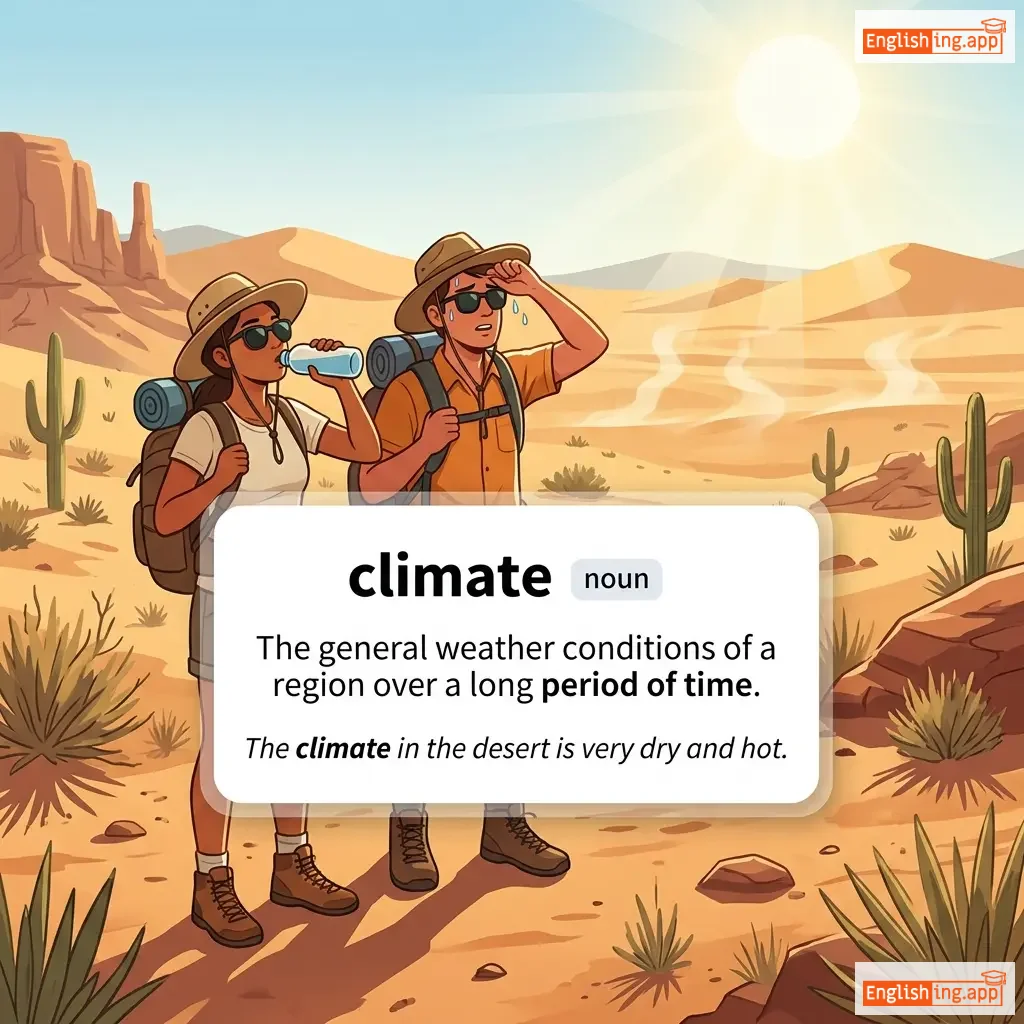
The general weather conditions of a region over a long period of time.
••••••
|
The climate in the desert is very dry and hot. |
砂漠の気候は非常に乾燥していて、暑いです。
Sabaku no kikou wa hijō ni kansō shite ite, atsui desu.
••••••
|
climate change |
Long-term alteration of temperature and typical weather patterns in a place.
••••••
|
気候変動
kikou hendou
••••••
|
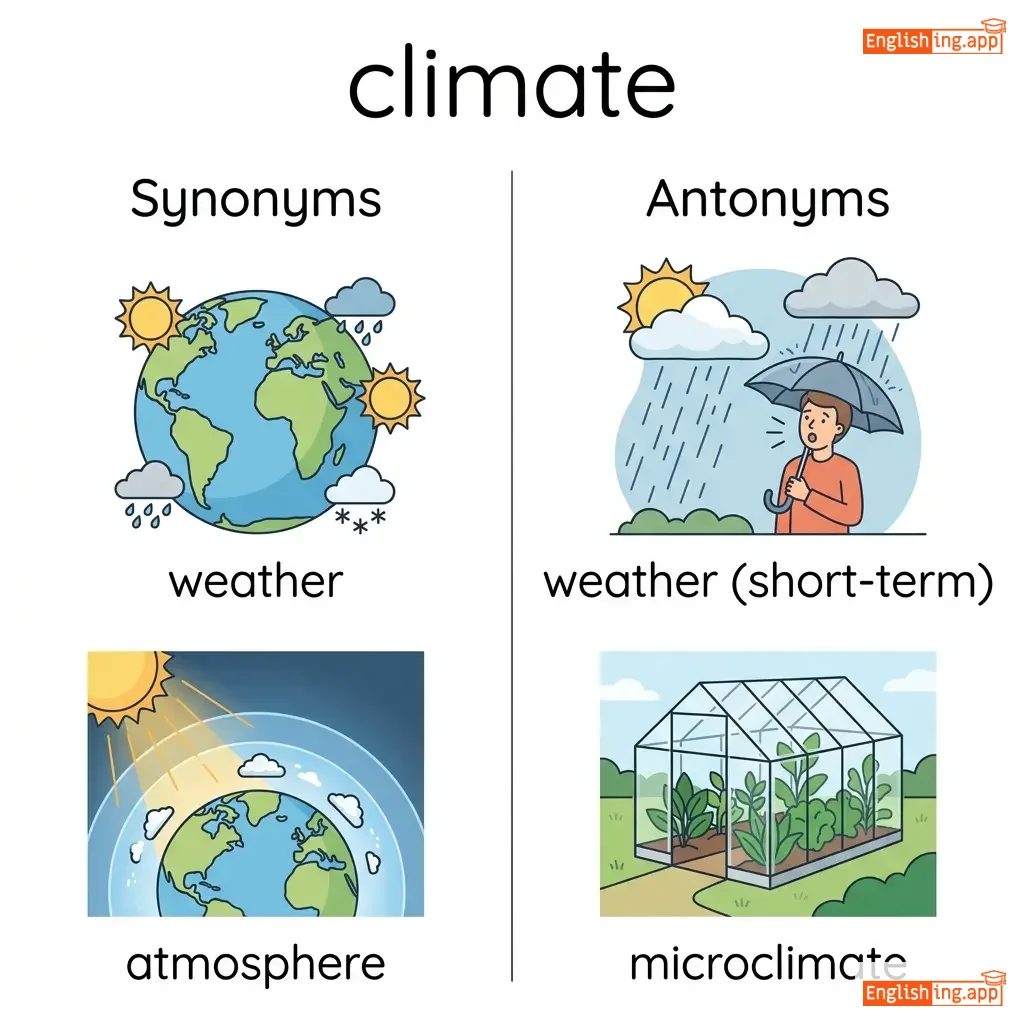
weather, atmosphere, environment, conditions, surroundings
••••••
|
weather (short-term), microclimate
••••••
|
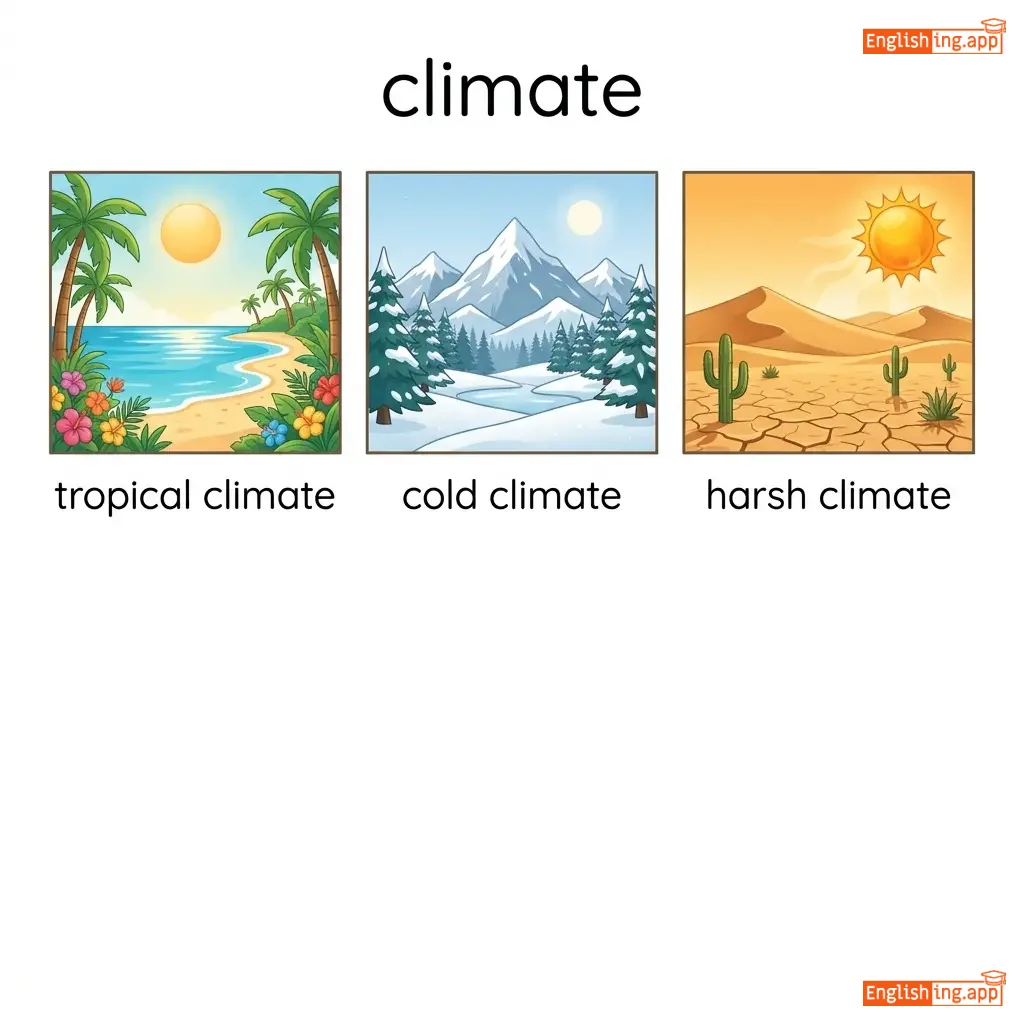
tropical climate, cold climate, harsh climate, political climate, climate change
••••••
|
気候 = 地球の変化を感じる。
••••••
|
|
🧗
••••••
|
/klaɪm/
verb
(クライム)
••••••
|
|
登る
noboru
••••••
|
climbed
クライムド
••••••
|
climbed
クライムド
••••••
|
climbs
クライムス
••••••
|
climbing
クライミング
••••••
|
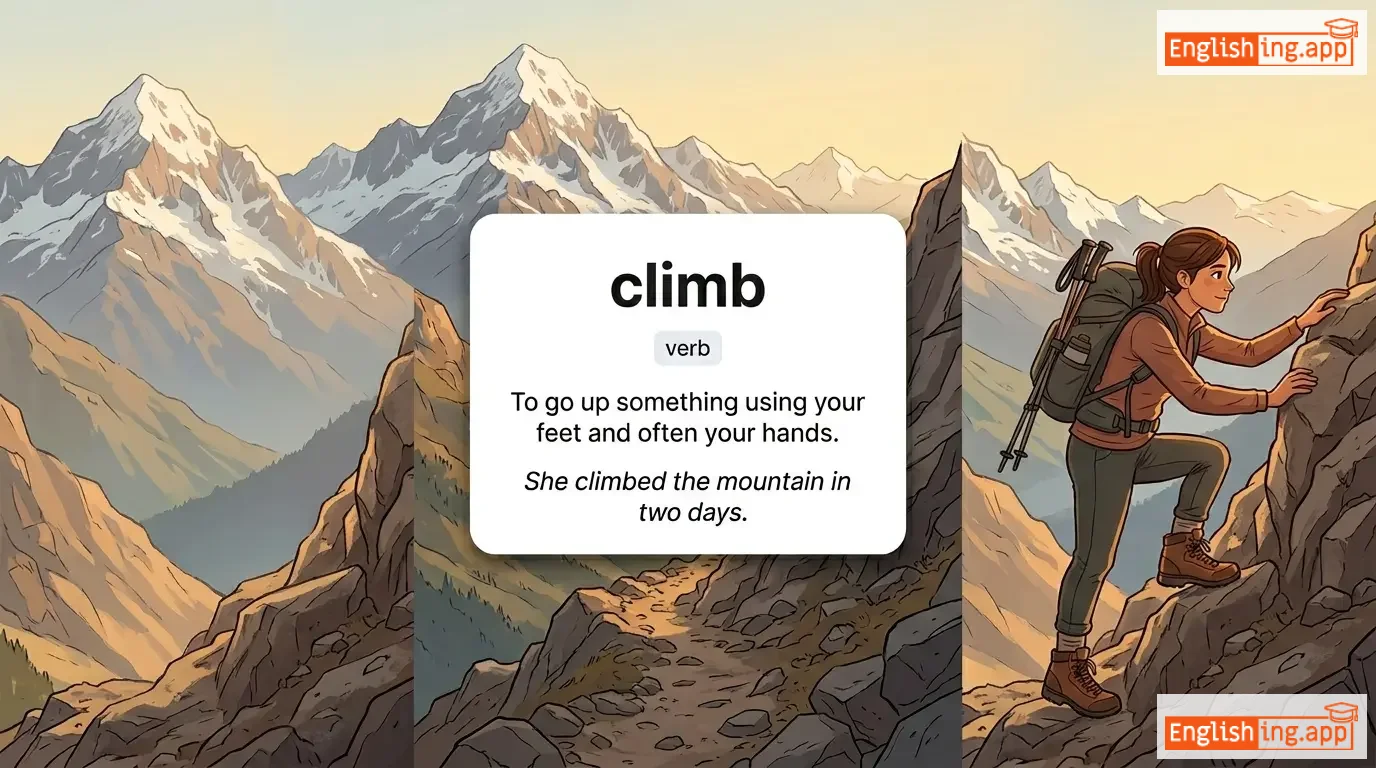
To go up something using your feet and often your hands.
••••••
|
She climbed the mountain in two days.
彼女は二日で山を登った。
••••••
|
彼女は二日で山を登った。
Kanojo wa futsuka de yama o nobotta.
••••••
|
climb the ladder
梯子を登る
••••••
|
To make progress in a career or social hierarchy.
••••••
|
梯子を登る
Hashigo o noboru
••••••
|
ascend, scale, mount, rise, go up
••••••
|
descend, fall, drop
••••••
|
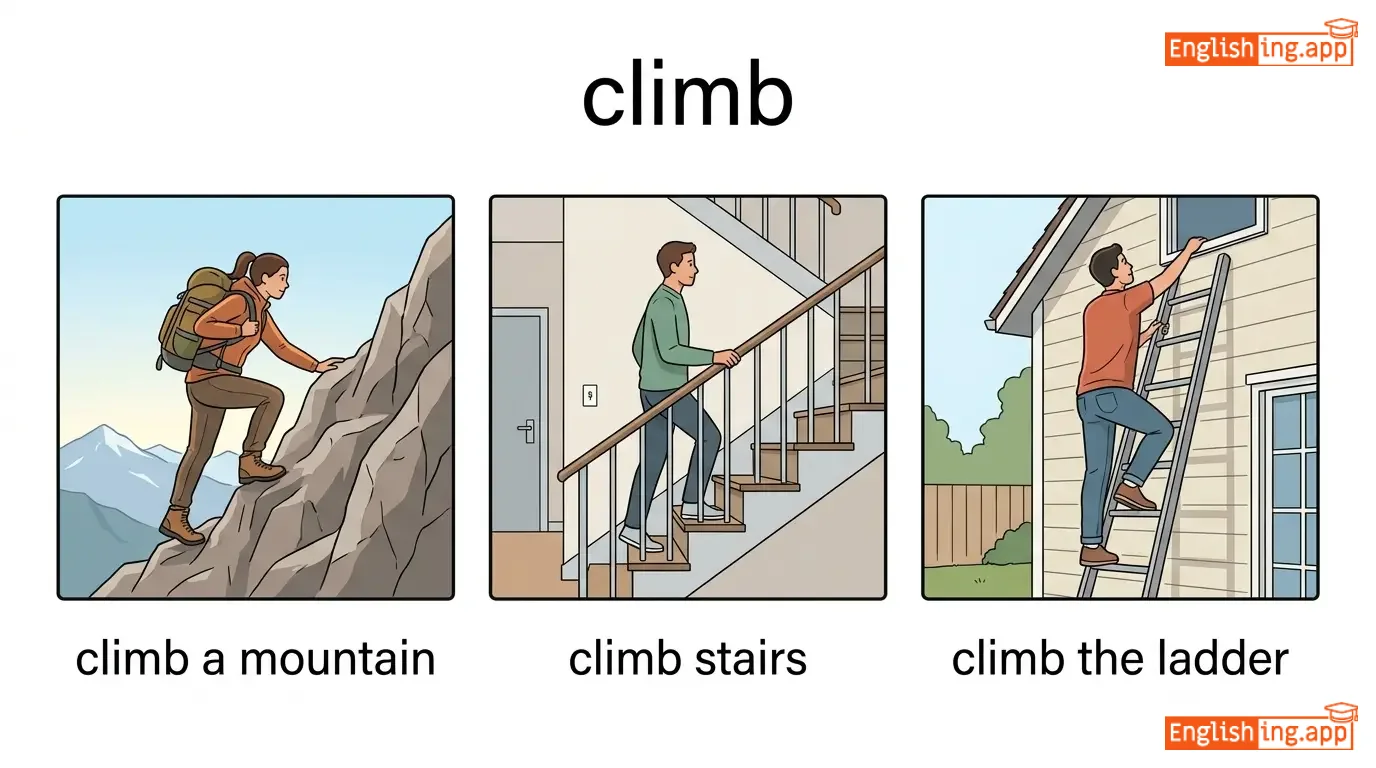
climb a mountain, climb stairs, climb the ladder, climb high, climb up
••••••
|
登るは上へ行くこと、梯子を登るのは成功への一歩だ!
••••••
|
|
🤗
••••••
|
/klɪŋ/
verb
(幸せ)
••••••
|
- •••••• |
幸せ
shiawase
••••••
|
clung
••••••
|
clung
••••••
|
clings
••••••
|
clinging
••••••
|
to hold on tightly to someone or something
••••••
|
The child clung to his mother in fear.
彼女は賞を受け取ったとき、幸せを隠せなかった。
••••••
|
彼女は賞を受け取ったとき、幸せを隠せなかった。
Kanojo wa shō o uketotta toki, shiawase o kakusenakatta.
••••••
|
cling to hope
幸せを追い求める
••••••
|
to continue believing that something will happen even when it seems unlikely
••••••
|
幸せを追い求める
shiawase o oimotomeru
••••••
|
grip, hold, grasp, stick, attach
••••••
|
release, let go, detach
••••••
|
cling to, cling tightly, cling together, cling on
••••••
|
幸せは心の平和と満足感から来る。
••••••
|
|
🏥
••••••
|
/ˈklɪn.ɪk/
noun
(クリニック)
••••••
|
- •••••• |
クリニック
kurinikku
••••••
|
- •••••• | - •••••• | - •••••• | - •••••• |
A place where people receive medical treatment without staying overnight.
••••••
|
She went to the clinic for a health check-up.
彼女は健康診断のためにクリニックに行った。
••••••
|
彼女は健康診断のためにクリニックに行った。
Kanojo wa kenkō shindan no tame ni kurinikku ni itta.
••••••
|
- •••••• | - •••••• | - •••••• |
hospital, infirmary, dispensary, medical center
••••••
|
home, outdoors
••••••
|
health clinic, dental clinic, free clinic, community clinic
••••••
|
クリニックで健康診断を受けるけれど、泊まる必要はない。
••••••
|
|
🩺
••••••
|
/ˈklɪn.ɪ.kəl/
adjective
(クリニカル)
••••••
|
- •••••• |
臨床的
rinshōteki
••••••
|
- •••••• | - •••••• | - •••••• | - •••••• |
Related to the observation and treatment of patients rather than theoretical study.
••••••
|
The doctor conducted a clinical examination. |
医師は臨床検査を行った。
Ishi wa rinshō kensa o okonatta.
••••••
|
clinical trial |
A research study to test new medical treatments on patients.
••••••
|
臨床試験
rinshō shiken
••••••
|
medical, diagnostic, therapeutic, scientific
••••••
|
theoretical, emotional
••••••
|
clinical examination, clinical trial, clinical diagnosis, clinical practice
••••••
|
臨床は病院で行われる診療に関連、臨床試験で新治療法を試す。
••••••
|
|
✂️
••••••
|
/klɪp/
verb, noun
••••••
|
- •••••• | - •••••• |
clipped
••••••
|
clipped
••••••
|
clips
••••••
|
clipping
••••••
|
to cut or trim something; a short extract from a film, broadcast, or recording
••••••
|
She clipped the coupon from the newspaper. |
- •••••• |
clip along |
to move quickly and energetically
••••••
|
- •••••• |
cut, trim, snip, shorten, extract
••••••
|
extend, lengthen, add
••••••
|
clip a coupon, video clip, paper clip, clip wings
••••••
|
No •••••• |
|
⏰
••••••
|
/klɒk/
noun
(kurokku)
••••••
|
- •••••• |
時計
tokei
••••••
|
- •••••• | - •••••• | - •••••• | - •••••• |
An instrument used to measure and show time.
••••••
|
The clock on the wall shows the correct time. |
壁の時計は正しい時間を示しています。
Kabe no tokei wa tadashī jikan o shimeshiteimasu.
••••••
|
around the clock |
All day and all night without stopping.
••••••
|
24時間
24 jikan
••••••
|
timepiece, watch, timer, chronometer
••••••
|
timelessness
••••••
|
alarm clock, wall clock, digital clock, clock tower, clock face
••••••
|
時計は時間を知らせる。忘れずにいつも見て!
••••••
|
|
🚪
••••••
|
/kloʊz/ (verb), /kloʊs/ (adjective)
verb, adjective
(kurozu)
••••••
|
- •••••• |
閉じる, 近い
tojiru, chikai
••••••
|
closed
kurozudo
••••••
|
closed
kurozudo
••••••
|
closes
kurozezu
••••••
|
closing
kurojingu
••••••
|
To shut something (verb); near in space or relationship (adjective).
••••••
|
Please close the door when you leave.
出かけるときはドアを閉めてください。
••••••
|
出かけるときはドアを閉めてください。
dekakeru toki wa doa o shimete kudasai.
••••••
|
close call
接近した電話
••••••
|
A narrow escape from danger or trouble.
••••••
|
ギリギリの脱出
girigiri no dasshutsu
••••••
|
shut, seal, end, nearby, intimate
••••••
|
open, distant
••••••
|
close the door, close relationship, close attention, close friend
••••••
|
Closeは '閉じる' ドアを閉じる 🚪 — ドアを閉じる。
••••••
|
|
🔍
••••••
|
/ˈkloʊsli/
adverb
(ˈhæpinəs)
••••••
|
- •••••• |
幸せ
shiawase
••••••
|
- •••••• | - •••••• | - •••••• | - •••••• |
in a way that is very near in space, time, or relationship; carefully and attentively
••••••
|
The detective examined the evidence closely. |
彼女は賞を受け取ったとき、自分の幸せを隠すことができなかった。
Kanojo wa shō o uketotta toki, jibun no shiawase o kakusu koto ga dekinakatta.
••••••
|
watch closely |
to observe with great attention
••••••
|
幸せの追求
shiawase no tsuikyū
••••••
|
carefully, attentively, nearly, intently, minutely
••••••
|
carelessly, distantly
••••••
|
closely related, watch closely, follow closely, work closely
••••••
|
幸せは‘しあわせ’のように、すべてを喜ばせるものです!
••••••
|
|
➡️
••••••
|
/ˈkloʊsər/
adjective, noun
(kurōzā)
••••••
|
- •••••• |
もっと近く, 終了者
motto chikaku, shūryōsha
••••••
|
- •••••• | - •••••• | - •••••• | - •••••• |
more near in distance or relationship; someone or something that concludes an activity
••••••
|
She moved closer to the window. |
彼女は窓にもっと近づきました。
Kanojo wa mado ni motto chikadukimashita.
••••••
|
come closer |
move nearer
••••••
|
もっと近づいて
motto chikadzuite
••••••
|
nearer, adjacent, nearby, intimate
••••••
|
farther, distant
••••••
|
closer look, closer relationship, move closer, closer examination
••••••
|
Closerはもっと近くという意味—友達と一緒にいると関係がもっと深くなる。
••••••
|
|
🚪
••••••
|
/ˈklɒzɪt/
noun
(クローゼット)
••••••
|
- •••••• |
クローゼット
kurōzetto
••••••
|
- •••••• | - •••••• | - •••••• | - •••••• |
a small room or enclosed space used for storing clothes or other things
••••••
|
She keeps her winter coats in the closet near the door. |
彼女は冬のコートをドアの近くのクローゼットに保管しています。
kanojo wa fuyu no kōto o doa no chikaku no kurōzetto ni hokan shiteimasu.
••••••
|
skeleton in the closet |
a hidden and embarrassing secret from someone's past
••••••
|
クローゼットの中のガイコツ
kurōzetto no naka no gaikotsu
••••••
|
wardrobe, cupboard, locker, storage, cabinet
••••••
|
open space, exposure
••••••
|
walk-in closet, linen closet, broom closet, closet door
••••••
|
クローゼットは衣服をしまう場所、秘密を隠す場所でもある!
••••••
|
|
❌
••••••
|
/ˈkloʊʒər/
noun
(kurouzhaa)
••••••
|
- •••••• |
閉鎖
heisa
••••••
|
- •••••• | - •••••• | - •••••• | - •••••• |
the action or process of closing something, or the sense of finality or resolution.
••••••
|
The closure of the company left many employees without jobs.
会社の閉鎖により、多くの従業員が職を失いました。
••••••
|
会社の閉鎖により、多くの従業員が職を失いました。
Kaisha no heisa ni yori, ooku no juugyoin ga shoku o ushinai mashita.
••••••
|
- •••••• | - •••••• | - •••••• |
closure, termination, end, conclusion
••••••
|
opening, start, beginning
••••••
|
business closure, closure of a chapter, closure of an event
••••••
|
In Japanese, 'heisa' means closure, like sealing things off.
••••••
|
|
🧵
••••••
|
/klɒθ/
noun
(クロス)
••••••
|
- •••••• |
布
nuno
••••••
|
- •••••• | - •••••• | - •••••• | - •••••• |
fabric or material made by weaving or knitting fibers
••••••
|
The table was covered with a white cloth. |
テーブルは白い布で覆われていました。
Tēburu wa shiroi nuno de ōwarete imashita.
••••••
|
cut from the same cloth |
having similar qualities or characteristics
••••••
|
同じ布から切り取られた
Onaji nuno kara kiritorareta
••••••
|
fabric, textile, material, drapery, fiber
••••••
|
metal, plastic
••••••
|
piece of cloth, silk cloth, cotton cloth, cleaning cloth
••••••
|
Cloth は布 — 衣服は布でできています!
••••••
|
|
👕
••••••
|
/kloʊð/
verb
(クローズ)
••••••
|
|
服を着せる
fuku o kiseru
••••••
|
clothed
クローズド
••••••
|
clothed
クローズド
••••••
|
clothes
クローズ
••••••
|
clothing
クロージング
••••••
|
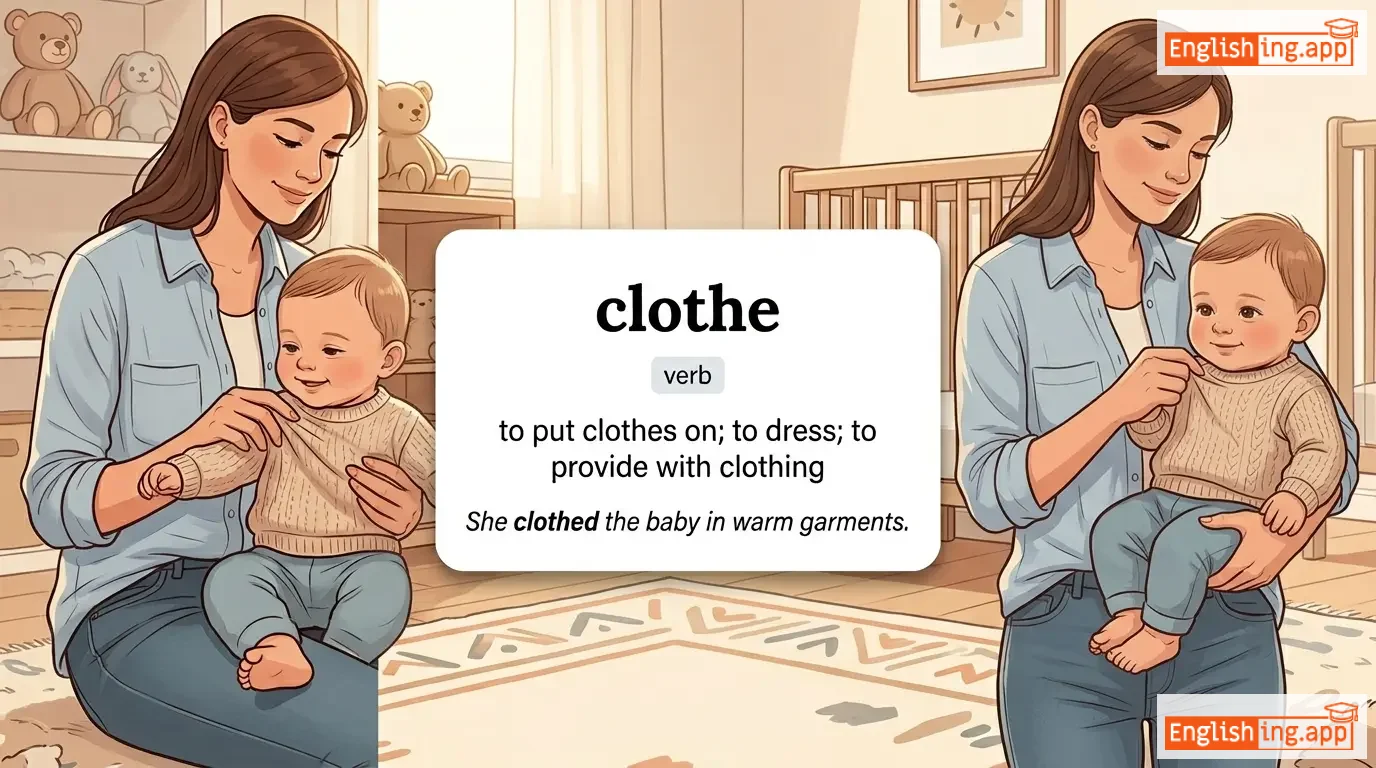
to put clothes on; to dress; to provide with clothing
••••••
|
She clothed the baby in warm garments.
彼女は赤ちゃんを暖かい服で着せました。
••••••
|
彼女は赤ちゃんを暖かい服で着せました。
Kanojo wa akachan o atatakai fuku de kisemashita.
••••••
|
- •••••• | - •••••• | - •••••• |
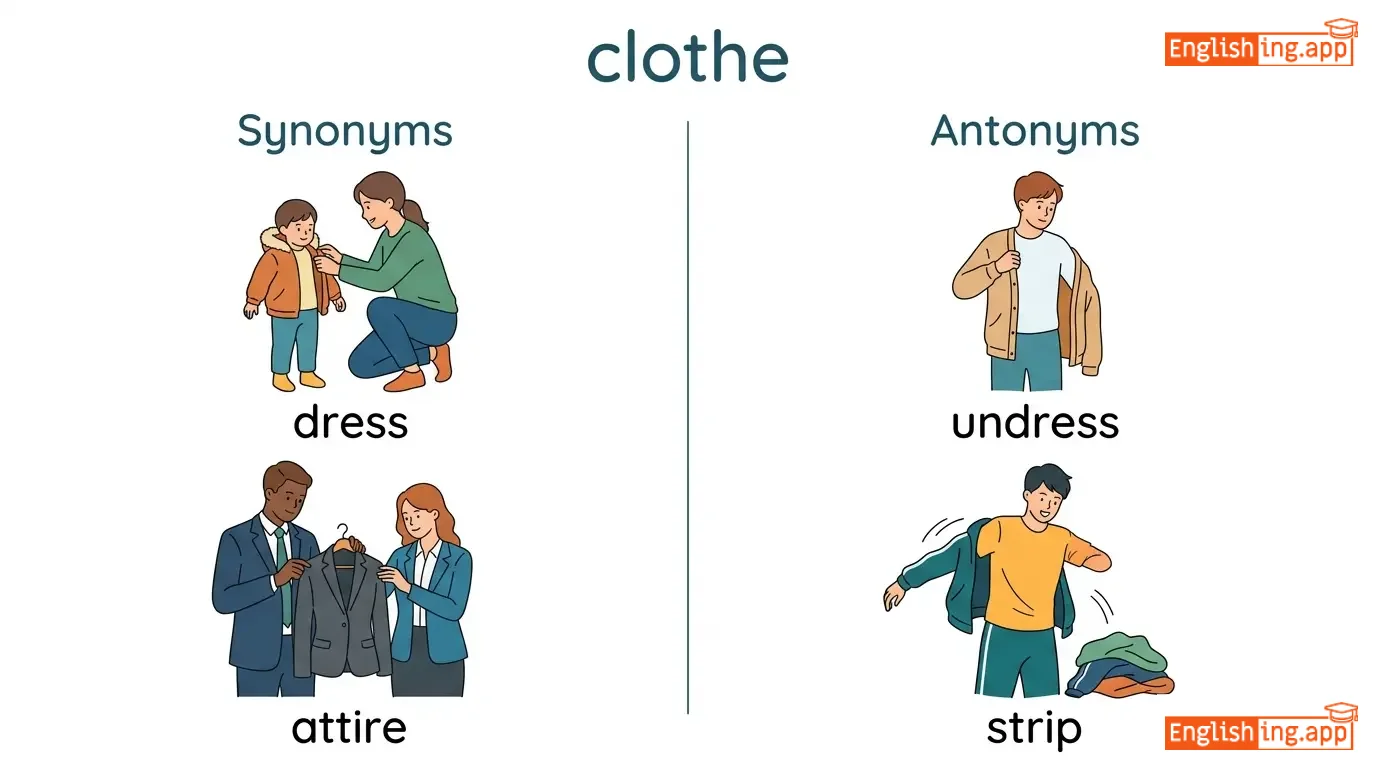
dress, attire, outfit, garb
••••••
|
undress, strip, uncover, disrobe
••••••
|
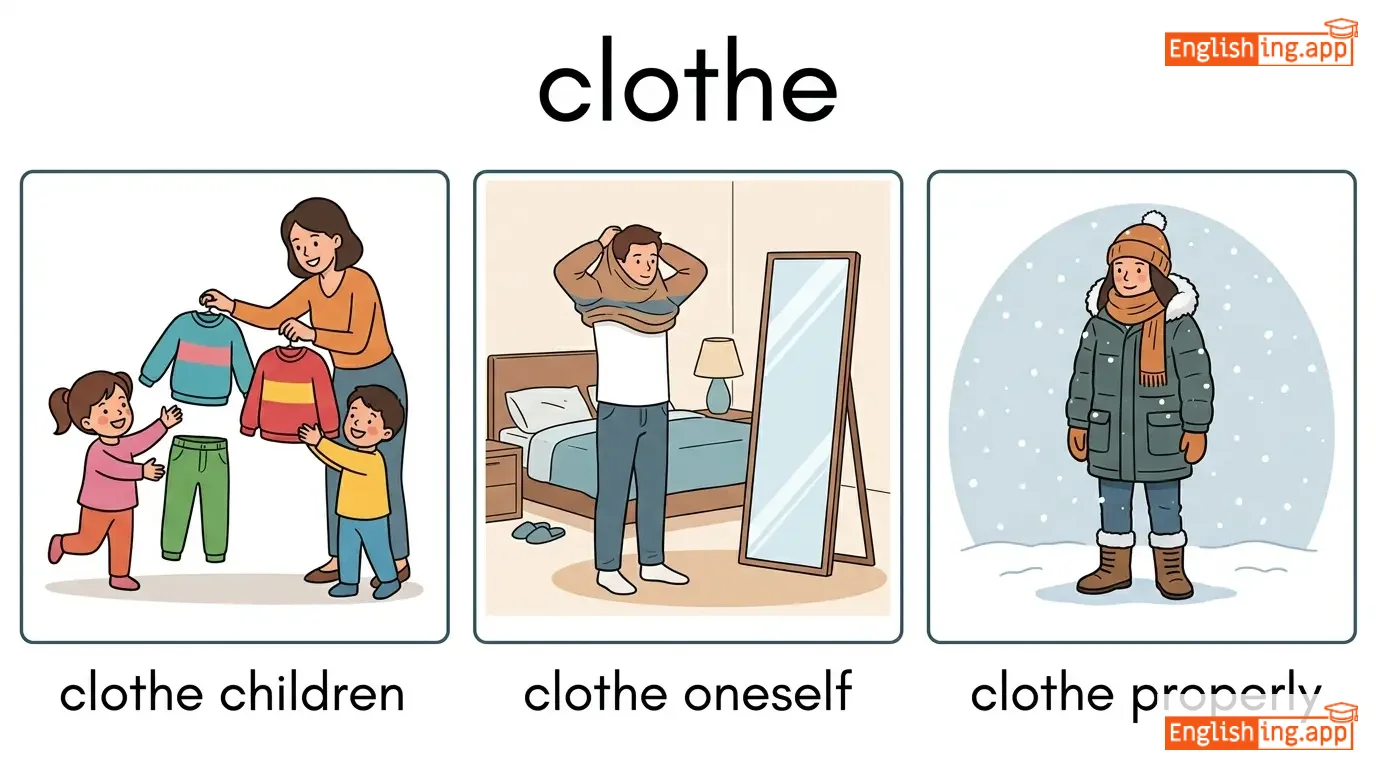
clothe children, clothe oneself, clothe properly, clothe warmly, clothe modestly
••••••
|
Japanese: 服を着せる – 'Fuku o kiseru' means to clothe, think of it as 'dressing someone'.
••••••
|
|
☁️
••••••
|
/klaʊd/
noun, verb
(kuraudo)
••••••
|
- •••••• |
雲
kumo
••••••
|
clouded
kuraudedo
••••••
|
clouded
kuraudedo
••••••
|
clouds
kuraudsu
••••••
|
clouding
kuraodingu
••••••
|
a visible mass of condensed water vapor in the sky; to make something less clear
••••••
|
Dark clouds gathered before the storm.
嵐の前に暗い雲が集まった。
••••••
|
嵐の前に暗い雲が集まった。
Arashi no mae ni kurai kumo ga atsumatta.
••••••
|
head in the clouds
雲の中の頭
••••••
|
to be absent-minded or daydreaming
••••••
|
雲の中の頭
kumo no naka no atama
••••••
|
mist, fog, vapor, gloom
••••••
|
clarity, sunshine
••••••
|
dark cloud, storm cloud, cloud computing, cloud cover
••••••
|
Cloudは雲を意味します—クラウドサービスのように、空にデータを保存している雲を想像してください。
••••••
|
|
🏏
••••••
|
/klʌb/
noun
(クラブ)
••••••
|
- •••••• |
クラブ
kurabu
••••••
|
- •••••• | - •••••• | - •••••• | - •••••• |
an organization of people with a common interest; also a place for social gatherings or entertainment
••••••
|
He joined the local tennis club to meet new people. |
彼は新しい人々に会うために地元のテニスクラブに参加しました。
Kare wa atarashii hitobito ni au tame ni jimoto no tenisu kurabu ni sanka shimashita.
••••••
|
in the club |
to be part of a group with shared membership or experience
••••••
|
クラブで
kurabu de
••••••
|
association, group, society, organization, team
••••••
|
individual, outsider
••••••
|
sports club, social club, night club, join a club, club member
••••••
|
クラブは'サッカークラブ'のようにみんなで一緒に遊ぶ場所です。
••••••
|
|
🕵️
••••••
|
/kluː/
noun
(クルー)
••••••
|
- •••••• |
手がかり
tegakari
••••••
|
- •••••• | - •••••• | - •••••• | - •••••• |
a piece of evidence or information used in the detection of a crime or solving a puzzle
••••••
|
The detective found a clue near the window.
探偵は窓の近くで手がかりを見つけました。
••••••
|
探偵は窓の近くで手がかりを見つけました。
Tantei wa mado no chikaku de tegakari o mitsukemashita.
••••••
|
not have a clue
まったく手がかりがない
••••••
|
to have no knowledge or understanding about something
••••••
|
手がかりが全くない
Tegakari ga mattaku nai
••••••
|
hint, indication, evidence, lead, suggestion
••••••
|
confusion, mystery
••••••
|
give a clue, important clue, clue to the mystery, search for clues
••••••
|
Clueは手がかり – 犯罪解決の手助けとなる。
••••••
|
|
🍇
••••••
|
/ˈklʌstər/
noun
(クラスター)
••••••
|
- •••••• |
クラスター
kurasutā
••••••
|
- •••••• | - •••••• | - •••••• | - •••••• |
a group of similar things or people positioned close together
••••••
|
The grapes grew in a tight cluster. |
ぶどうは密なクラスターで成長した。
Budō wa mitsu na kurasutā de seichō shita.
••••••
|
a cluster of stars |
a group of stars appearing close together in the sky
••••••
|
星のクラスター
Hoshi no kurasutā
••••••
|
group, bunch, collection, set, gathering
••••••
|
individual, single
••••••
|
cluster of buildings, cluster of stars, cluster together, form a cluster
••••••
|
Cluster はクラスター、ぶどうがクラスターで育つように。
••••••
|
|
🏀
••••••
|
/koʊtʃ/
noun/verb
(コーチ)
••••••
|
|
コーチ
kōchi
••••••
|
coached
コーチド
••••••
|
coached
コーチド
••••••
|
coaches
コーチズ
••••••
|
coaching
コーチング
••••••
|
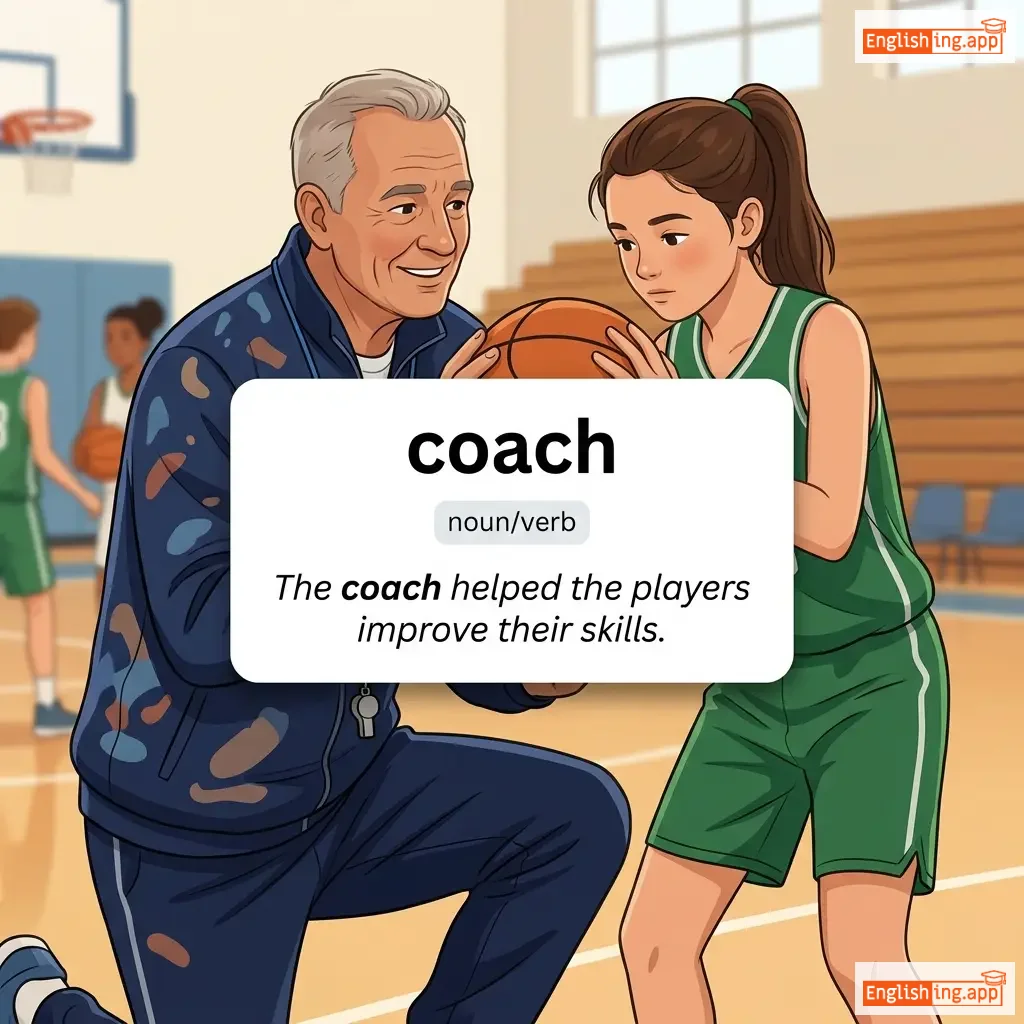
a person who trains or instructs others in a sport or skill; or to give training to someone
••••••
|
The coach helped the players improve their skills.
コーチは選手たちのスキル向上を助けました。
••••••
|
コーチは選手たちのスキル向上を助けました。
Kōchi wa senshu-tachi no sukiru kōjō o tasukemashita.
••••••
|
coach up
トレーニングする
••••••
|
to provide intensive training and guidance
••••••
|
誰かをトレーニングする
dareka o torēningu suru
••••••
|
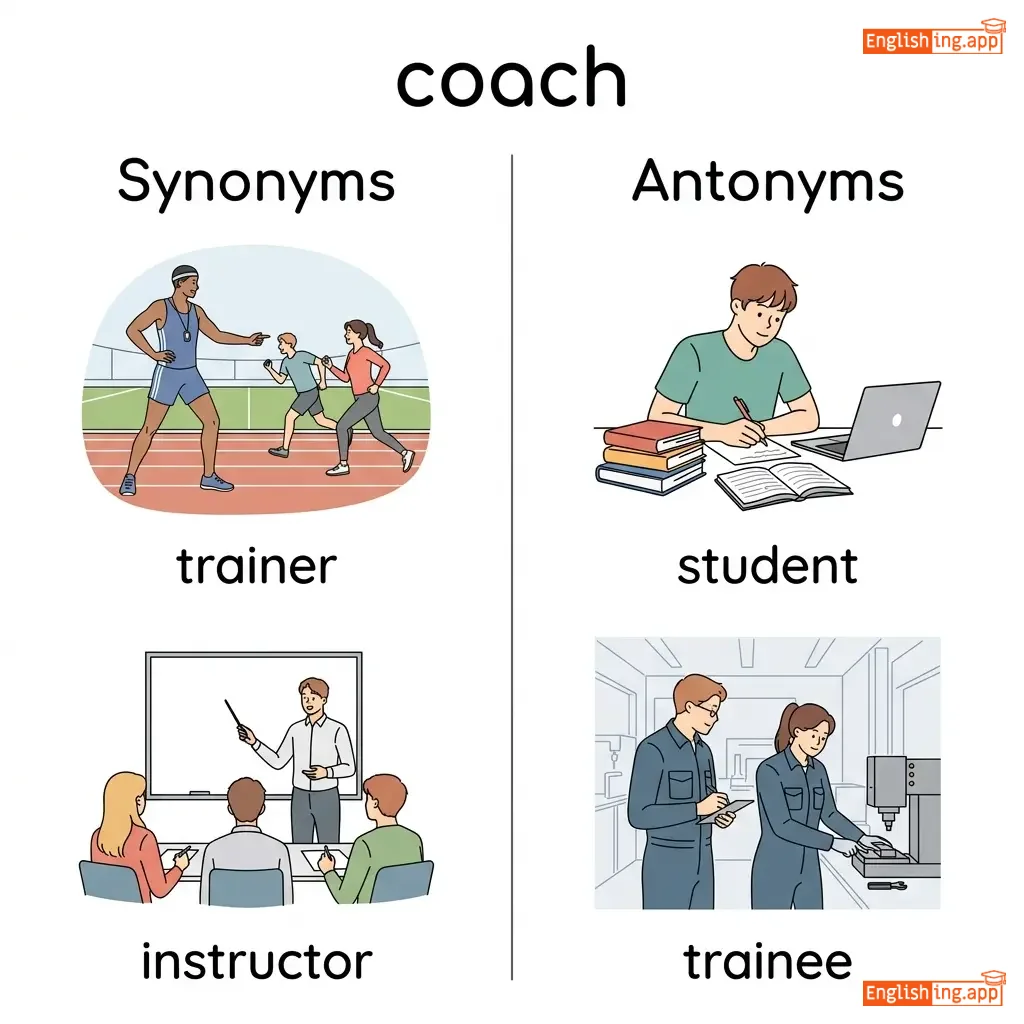
trainer, instructor, mentor, tutor, guide
••••••
|
student, trainee
••••••
|
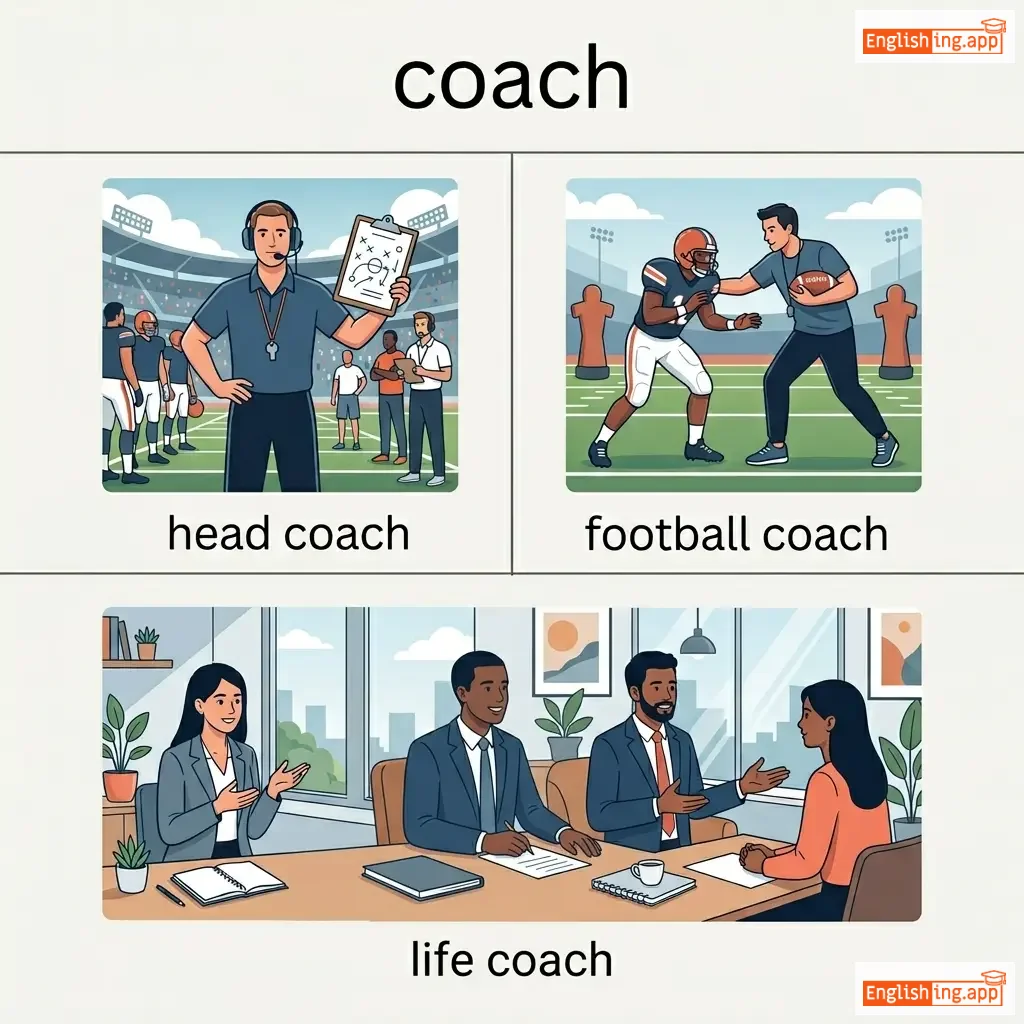
head coach, football coach, life coach, coach a team, coach professionally
••••••
|
コーチ - サッカーのコーチが選手たちをトレーニングするように。
••••••
|
|
🪨
••••••
|
/koʊl/
noun
(kōru)
••••••
|
- •••••• |
石炭
sekitan
••••••
|
- •••••• | - •••••• | - •••••• | - •••••• |
a black or dark brown rock used as fuel, formed from decomposed plant matter
••••••
|
The factory still uses coal as its main source of energy. |
工場は依然として石炭を主要なエネルギー源として使用しています。
Kōjō wa izen toshite sekitan o shuyō na enerugī gen toshite shiyō shiteimasu.
••••••
|
carry coals to Newcastle |
to do something that is unnecessary or redundant
••••••
|
ニューカッスルに石炭を運ぶ
Nyūkassuru ni sekitan o hakobu
••••••
|
charcoal, fuel, lignite, anthracite
••••••
|
gas, oil
••••••
|
burn coal, coal mine, coal industry, coal power, coal reserves
••••••
|
石炭は石炭です。暖を取るために炉に石炭を入れるようなものです。
••••••
|
|
🤝
••••••
|
/ˌkoʊəˈlɪʃən/
noun
(kəʊəˈlɪʃən)
••••••
|
- •••••• |
連立
renritsu
••••••
|
- •••••• | - •••••• | - •••••• | - •••••• |
a temporary alliance of distinct parties, persons, or states for joint action
••••••
|
Several parties formed a coalition to pass the new law. |
いくつかの政党が新しい法律を通すために連立を組んだ。
Ikutsuka no seitō ga atarashī hōritsu o tōsu tame ni renritsu o kunda.
••••••
|
coalition government |
a government formed by the cooperation of multiple political parties
••••••
|
連立政府
renritsu seifu
••••••
|
alliance, union, partnership, federation, bloc
••••••
|
division, separation, disunity
••••••
|
form a coalition, political coalition, coalition partners, coalition forces
••••••
|
連立は異なるグループが協力して目標を達成することです。
••••••
|
|
🌊
••••••
|
/koʊst/
noun, verb
(kōsuto)
••••••
|
- •••••• |
海岸
kaigan
••••••
|
coasted
kōsuto shita
••••••
|
coasted
kōsuto shita
••••••
|
coasts
kōsuto suru
••••••
|
coasting
kōsuto suru
••••••
|
noun: the land along the edge of the sea; verb: to move easily without effort or power
••••••
|
They walked along the coast enjoying the sea breeze.
彼らは海風を楽しみながら海岸を歩いていました。
••••••
|
彼らは海風を楽しみながら海岸を歩いていました。
Karera wa umikaze wo tanoshimi nagara kaigan wo aruiteimashita.
••••••
|
coast is clear
海岸はクリアです
••••••
|
a situation is safe or free of obstacles
••••••
|
状況はクリアです
jōkyō wa kuria desu
••••••
|
shore, seashore, beach, glide, drift
••••••
|
inland, struggle, resistance
••••••
|
coastal area, east coast, coast guard, coast along
••••••
|
海岸を歩くのは簡単だ。
••••••
|
|
🌊
••••••
|
/ˈkəʊstəl/
adjective
(コースタル)
••••••
|
- •••••• |
海岸の
kaigan no
••••••
|
- •••••• | - •••••• | - •••••• | - •••••• |
relating to or near a coast or shoreline
••••••
|
They built a resort in a coastal area. |
彼らは海岸の地域にリゾートを建てました。
Karera wa kaigan no chiiki ni rizōto o tatemashita.
••••••
|
- •••••• | - •••••• | - •••••• |
marine, seaside, shore, littoral, oceanfront
••••••
|
inland, interior
••••••
|
coastal area, coastal city, coastal erosion, coastal region
••••••
|
Coastalは海に関連している意味 — 海岸の 🏖️
••••••
|
|
🧥
••••••
|
/koʊt/
noun/verb
(ハピネス)
••••••
|
- •••••• |
幸福
kōfuku
••••••
|
coated
••••••
|
coated
••••••
|
coats
••••••
|
coating
••••••
|
an outer garment worn outdoors, or a layer covering something
••••••
|
She wore a red coat to keep warm in the winter. |
彼女は賞を受け取ったとき、自分の幸福を隠せませんでした。
Kanojo wa shō o uketotta toki, jibun no kōfuku o kakusemasen deshita.
••••••
|
coat of paint |
a single layer of paint applied to a surface
••••••
|
幸福を追求する
kōfuku o tsuikyū suru
••••••
|
jacket, cloak, covering, overcoat, layer
••••••
|
undress, expose
••••••
|
winter coat, fur coat, coat of paint, coat pocket
••••••
|
幸福 (kōfuku) は充実した気持ちを表す — happiness
••••••
|
|
🍸
••••••
|
/ˈkɒkˌteɪl/
noun
(カクテル)
••••••
|
- •••••• |
カクテル
kakuteru
••••••
|
- •••••• | - •••••• | - •••••• | - •••••• |
a mixed drink typically containing alcohol and other ingredients.
••••••
|
She ordered a cocktail at the bar. |
彼女はバーでカクテルを注文した。
Kanojo wa bā de kakuteru o chuumon shita.
••••••
|
- •••••• | - •••••• | - •••••• |
drink, mix, beverage, concoction
••••••
|
water, soft drink
••••••
|
cocktail party, cocktail hour, cocktail recipe
••••••
|
カクテル—楽しさを一杯に!
••••••
|
|
💻
••••••
|
/koʊd/
noun/verb
(コード)
••••••
|
- •••••• |
コード
kōdo
••••••
|
coded
コーディッド
••••••
|
coded
コーディッド
••••••
|
codes
コードス
••••••
|
coding
コーディング
••••••
|
a system of words, letters, or symbols used to represent information or instructions
••••••
|
He wrote a code to solve the problem on the computer.
彼はコンピュータで問題を解決するためのコードを書きました。
••••••
|
彼はコンピュータで問題を解決するためのコードを書きました。
Kare wa konpyūta de mondai o kaiketsu suru tame no kōdo o kakimashita.
••••••
|
secret code
秘密のコード
••••••
|
a hidden or encrypted system of communication
••••••
|
秘密のコード
himitsu no kōdo
••••••
|
cipher, program, script, rules, law
••••••
|
plain text, chaos
••••••
|
write code, code of conduct, code breaker, secret code
••••••
|
コード (kōdo) = コンピュータの指示
••••••
|
|
☕
••••••
|
/ˈkɔːfi/
noun
(ハピネス)
••••••
|
- •••••• |
幸せ
shiawase
••••••
|
- •••••• | - •••••• | - •••••• | - •••••• |
a hot drink made from roasted and ground coffee beans
••••••
|
I drink a cup of coffee every morning.
彼女は賞を受け取ったとき、幸せを隠せなかった。
••••••
|
彼女は賞を受け取ったとき、幸せを隠せなかった。
Kanojo wa shō o uketotta toki, shiawase o kakusenakatta.
••••••
|
coffee break
幸せの追求
••••••
|
a short rest period when people drink coffee
••••••
|
幸せの追求
Shiawase no tsuikyū
••••••
|
espresso, latte, cappuccino, brew, java
••••••
|
tea, water
••••••
|
cup of coffee, black coffee, coffee shop, coffee break
••••••
|
幸せ = 微笑みと共に人生が豊かになる。
••••••
|
|
🧠
••••••
|
/ˈkɒɡnətɪv/
adjective
(コグニティブ)
••••••
|
|
認知的
ninchiteki
••••••
|
- •••••• | - •••••• | - •••••• | - •••••• |
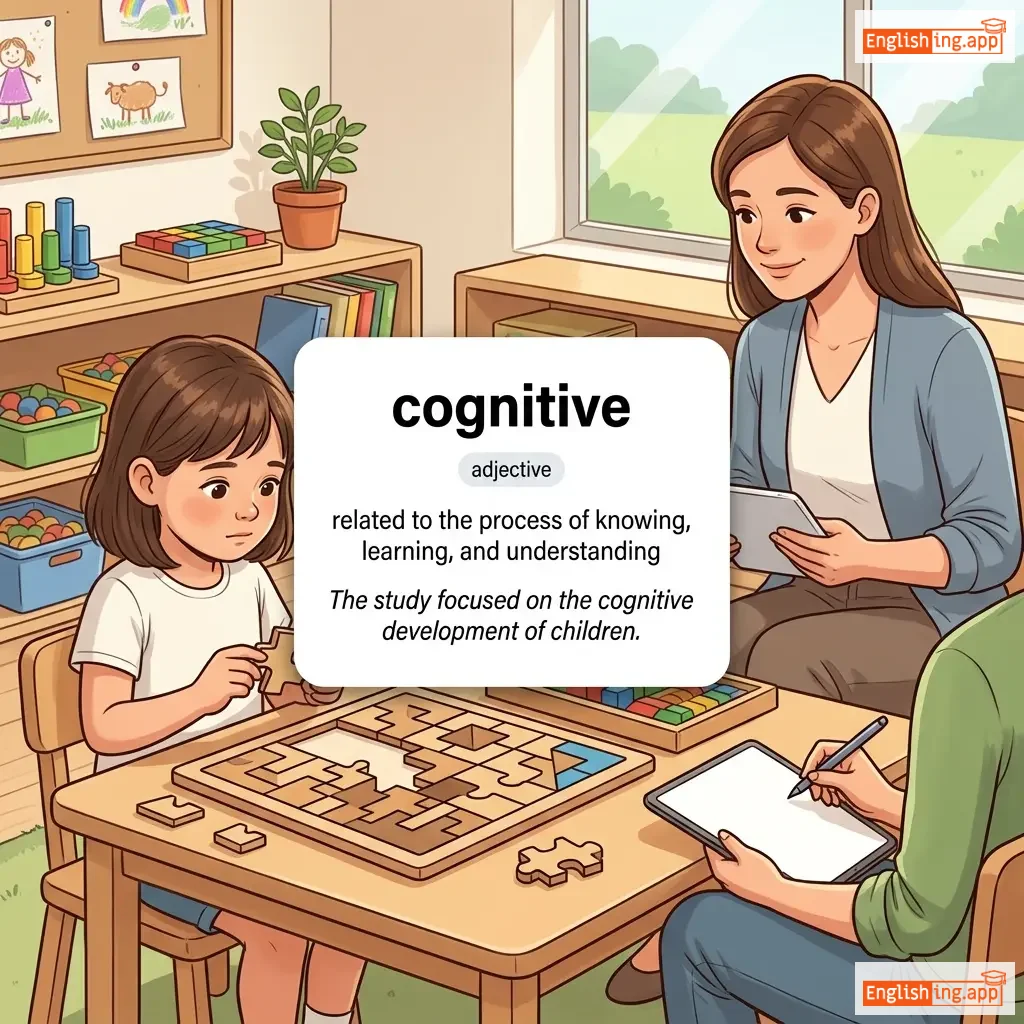
related to the process of knowing, learning, and understanding
••••••
|
The study focused on the cognitive development of children. |
この研究は子供の認知的発達に焦点を当てていました。
Kono kenkyū wa kodomo no ninchiteki hattatsu ni shōten o atete imashita.
••••••
|
- •••••• | - •••••• | - •••••• |
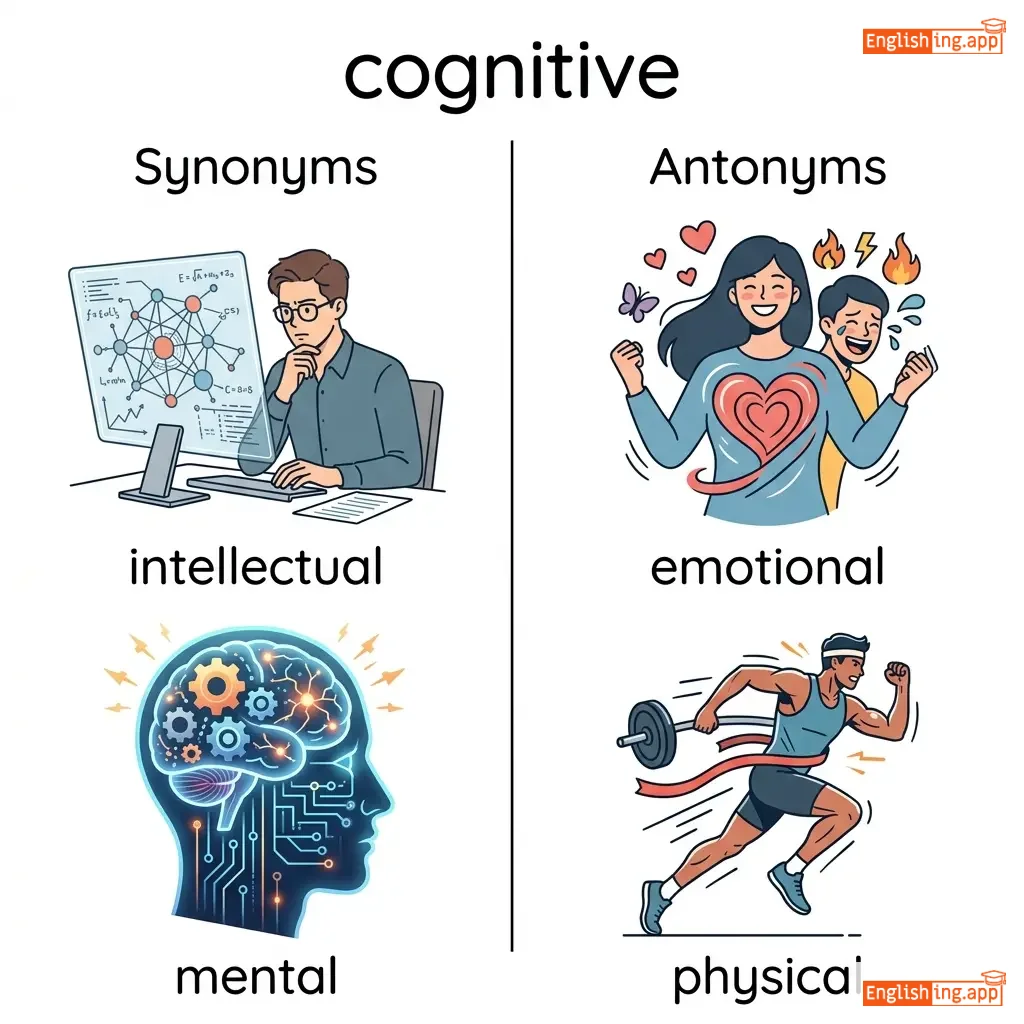
intellectual, mental, psychological, rational
••••••
|
emotional, physical, unconscious
••••••
|
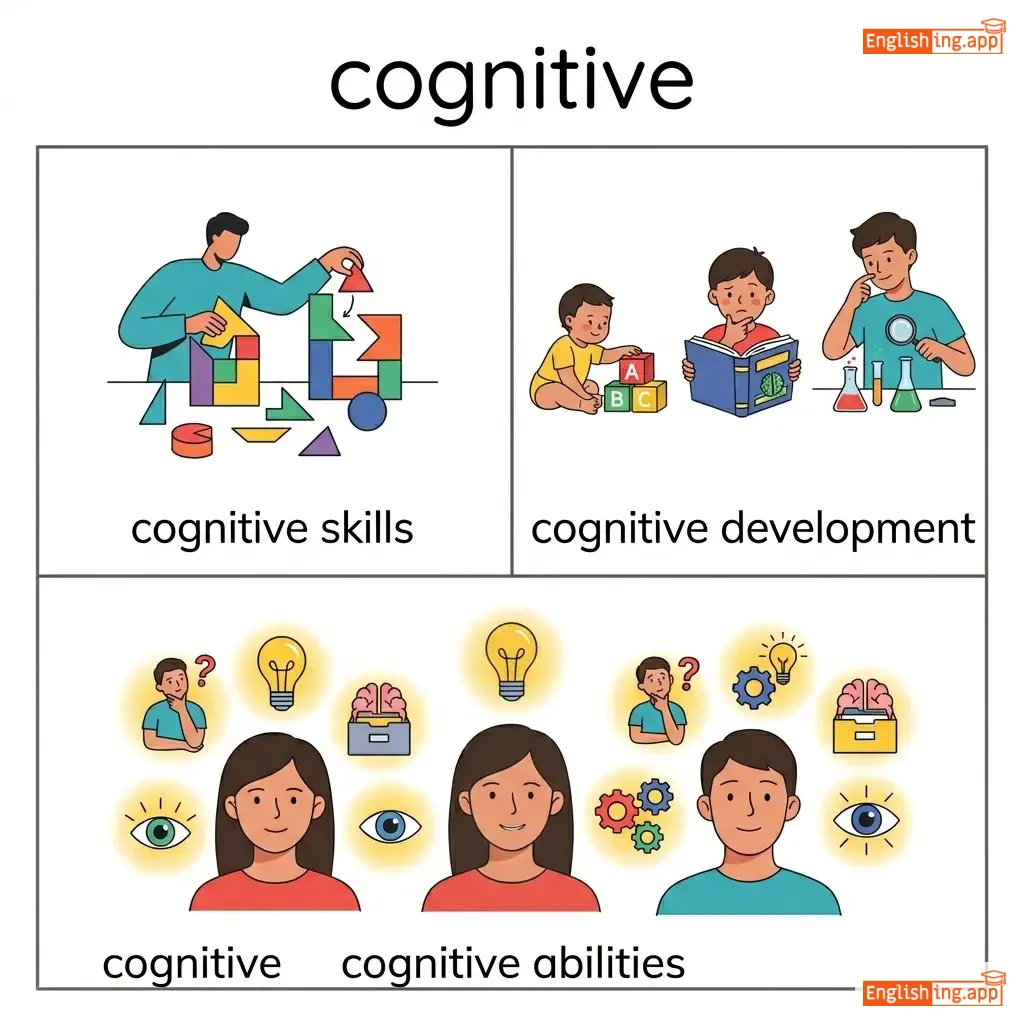
cognitive skills, cognitive development, cognitive abilities
••••••
|
Cognitive = Brain related, 認知的 = 知識と学びに関連 🧠
••••••
|
|
🪙
••••••
|
/kɔɪn/
noun, verb
••••••
|
- •••••• | - •••••• |
coined
••••••
|
coined
••••••
|
coins
••••••
|
coining
••••••
|
A flat piece of metal used as money; as a verb, to invent a new word or phrase.
••••••
|
The government decided to coin a new term for the program. |
- •••••• |
coin a phrase |
To invent or create a new expression
••••••
|
- •••••• |
currency, money, cash, token
••••••
|
bill, note
••••••
|
coin money, coin a phrase, coin collection, coin toss
••••••
|
No •••••• |
|
⏰
••••••
|
/ˌkoʊ.ɪnˈsaɪd/
verb
(コインサイド)
••••••
|
- •••••• |
一致する
icchi suru
••••••
|
coincided
コインサイデッド
••••••
|
coincided
コインサイデッド
••••••
|
coincides
コインサイドズ
••••••
|
coinciding
コインサイディング
••••••
|
To occur at the same time or to be in agreement.
••••••
|
The meeting coincided with her birthday.
会議は彼女の誕生日と一致しました。
••••••
|
会議は彼女の誕生日と一致しました。
Kaigi wa kanojo no tanjōbi to itchi shimashita.
••••••
|
- •••••• | - •••••• | - •••••• |
concur, agree, match, correspond
••••••
|
differ, clash, disagree
••••••
|
coincide with, events coincide, dates coincide
••••••
|
一致するは、二つの出来事が同じ時に起こることを意味します。
••••••
|
|
🎲
••••••
|
/koʊˈɪnsɪdəns/
noun
(コインシデンス)
••••••
|
- •••••• |
偶然
guuzen
••••••
|
- •••••• | - •••••• | - •••••• | - •••••• |
A remarkable or surprising occurrence of events at the same time by chance.
••••••
|
It was pure coincidence that we met at the airport.
空港で会ったのは完全に偶然でした。
••••••
|
空港で会ったのは完全に偶然でした。
Kuukou de atta no wa kanzen ni guuzen deshita.
••••••
|
by coincidence
偶然に
••••••
|
happening by chance, not by planning
••••••
|
偶然に
guuzen ni
••••••
|
chance, accident, serendipity, fluke, happenstance
••••••
|
intention, design, plan
••••••
|
strange coincidence, mere coincidence, pure coincidence, by coincidence
••••••
|
Coin で偶然を想起
••••••
|
|
❄️
••••••
|
/koʊld/
adjective/noun
(kōld)
••••••
|
- •••••• |
寒い
samui
••••••
|
- •••••• | - •••••• | - •••••• | - •••••• |
having a low temperature; lacking warmth
••••••
|
It was so cold outside that she wore two jackets. |
外はとても寒かったので、彼女はジャケットを二枚着ました。
Soto wa totemo samukatta node, kanojo wa jaketto o nimai kimashita.
••••••
|
catch a cold |
to become sick with a minor illness affecting the nose and throat
••••••
|
風邪をひく
kaze o hiku
••••••
|
chilly, icy, frosty, freezing, cool
••••••
|
hot, warm
••••••
|
cold weather, catch a cold, cold drink, cold wind
••••••
|
COLDは寒い意味です❄️ - 寒さは風邪をひかせる (kaze o hiku)
••••••
|
|
🤝
••••••
|
/kəˈlæbəreɪt/
verb
(コラボレート)
••••••
|

|
共同作業する
kyoudou sagyou suru
••••••
|
collaborated
コラボレーテッド
••••••
|
collaborated
コラボレーテッド
••••••
|
collaborates
コラボレーツ
••••••
|
collaborating
コラボレーティング
••••••
|
To work jointly with others, especially on an intellectual or creative project.
••••••
|
The two companies decided to collaborate on a new project.
二つの会社は新しいプロジェクトでコラボレートすることに決めました。
••••••
|
二つの会社は新しいプロジェクトでコラボレートすることに決めました。
Futatsu no kaisha wa atarashii purojekuto de korabo-re-to suru koto ni kimemashita.
••••••
|
collaborate with
誰かとコラボレートする
••••••
|
to work together with someone
••••••
|
誰かと一緒に働く
dareka to issho ni hataraku
••••••
|
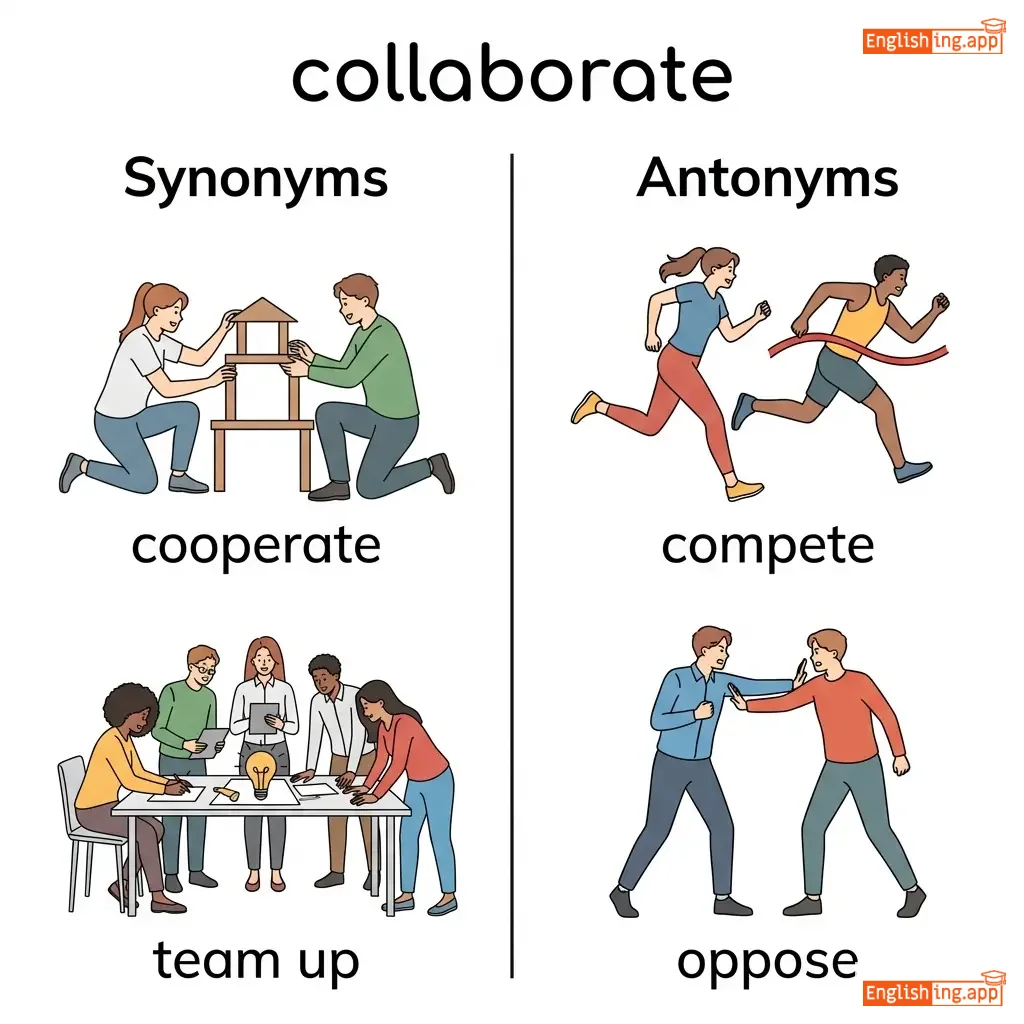
cooperate, team up, work together, join forces, partner
••••••
|
compete, oppose, resist
••••••
|
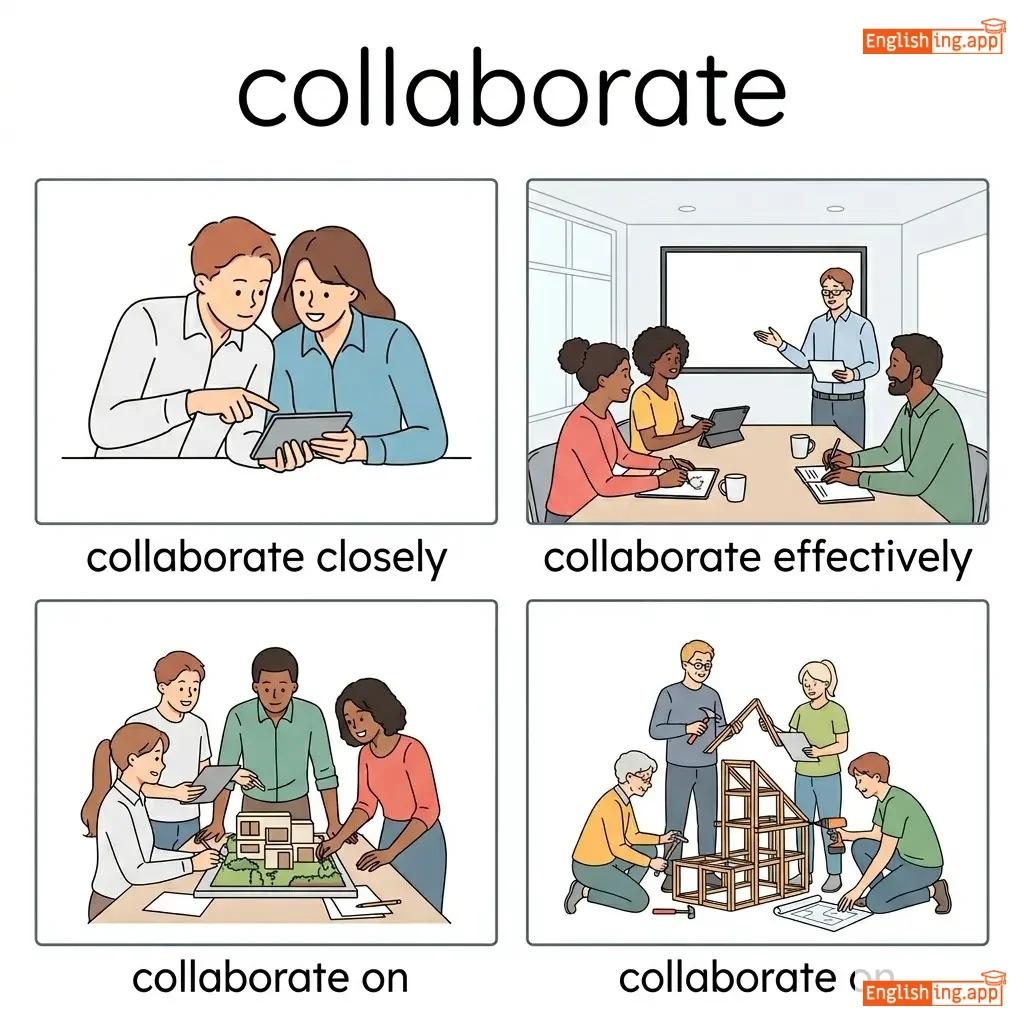
collaborate closely, collaborate effectively, collaborate on, collaborate with
••••••
|
コラボレートは、他の人と一緒に創造的なプロジェクトをすることです。
••••••
|
|
🤝
••••••
|
/kəˌlæbəˈreɪʃən/
noun
(koraborēshon)
••••••
|

|
協力
kyōryoku
••••••
|
- •••••• | - •••••• | - •••••• | - •••••• |
the action of working together with others to produce or achieve something
••••••
|
The project was a result of close collaboration between two companies. |
このプロジェクトは二つの企業間の密接な協力の結果でした。
Kono purojekuto wa futatsu no kigyōkan no missetsu na kyōryoku no kekka deshita.
••••••
|
in collaboration with |
working together with someone or an organization
••••••
|
〜と協力して
〜to kyōryoku shite
••••••
|
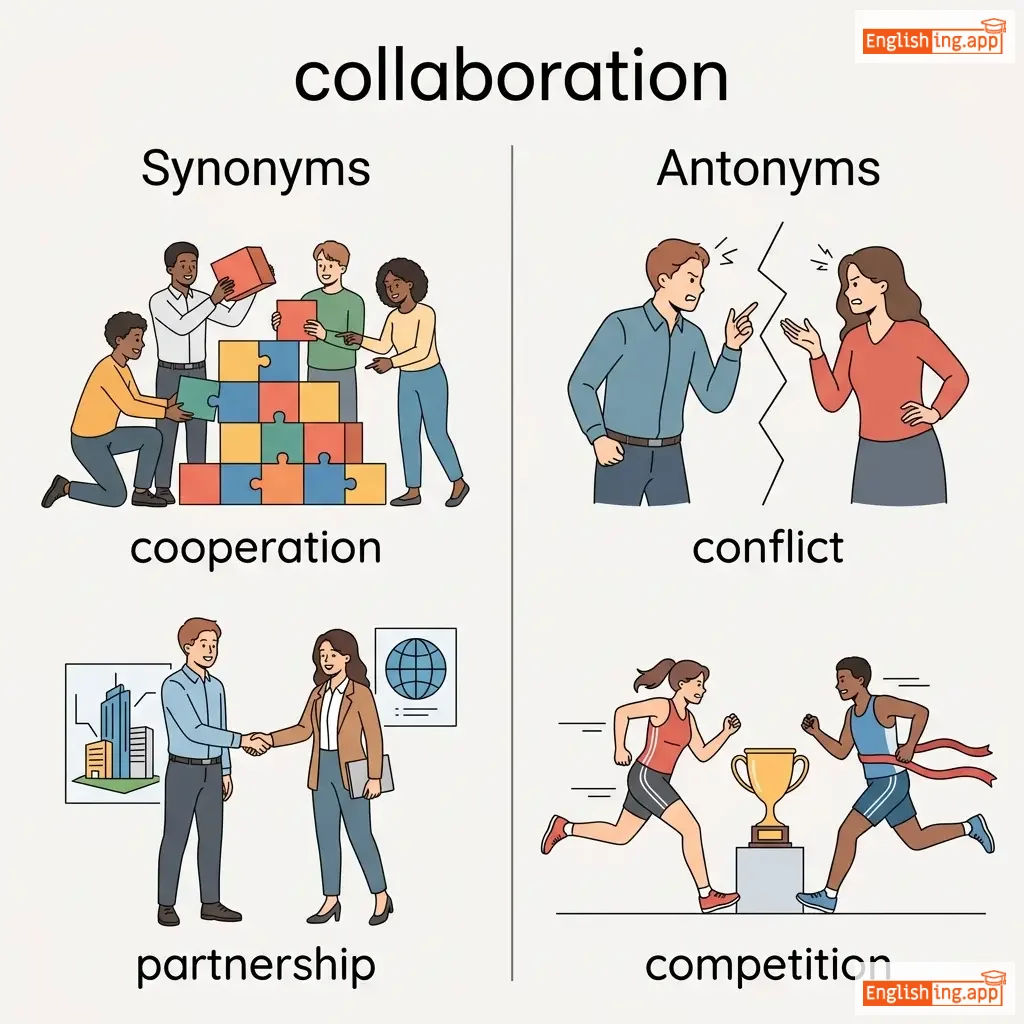
cooperation, partnership, teamwork, alliance, association
••••••
|
conflict, competition
••••••
|
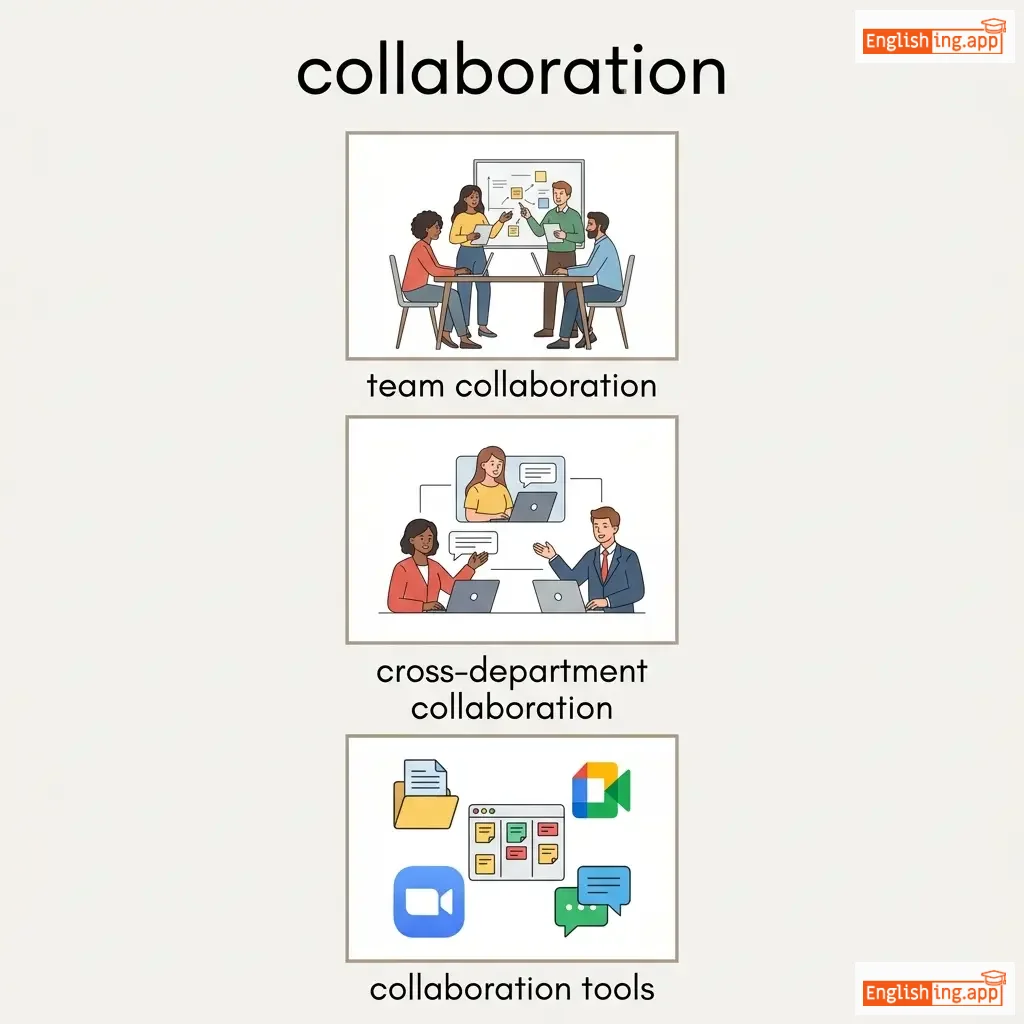
team collaboration, cross-department collaboration, collaboration tools, creative collaboration
••••••
|
Co + labor = 一緒に働く → 協力はチームワークを意味します 🤝
••••••
|
|
🏚️
••••••
|
/kəˈlæps/
verb
(コラプス)
••••••
|
- •••••• |
崩壊する
hōkai suru
••••••
|
collapsed
コラプスド
••••••
|
collapsed
コラプスド
••••••
|
collapses
コラプセス
••••••
|
collapsing
コラプシング
••••••
|
to fall down or inward suddenly; to break down completely
••••••
|
The old building collapsed after the earthquake.
古い建物は地震後に崩壊しました。
••••••
|
古い建物は地震後に崩壊しました。
Furui tatemono wa jishin-go ni hōkai shimashita.
••••••
|
collapse under pressure
プレッシャーで崩壊する
••••••
|
to fail or give way when faced with stress or difficulties
••••••
|
プレッシャーで崩壊する
Pureshā de hōkai suru
••••••
|
fall, crumble, cave in, break down, disintegrate
••••••
|
stand, rise, succeed
••••••
|
building collapse, collapse suddenly, collapse completely, collapse under pressure
••••••
|
崩壊するは壊れるように崩れること
••••••
|
|
👔
••••••
|
/ˈkɒliːɡ/
noun
(コリーグ)
••••••
|
- •••••• |
同僚
dōryō
••••••
|
- •••••• | - •••••• | - •••••• | - •••••• |
a person with whom one works, especially in a profession or business
••••••
|
She invited her colleagues to the office party. |
彼女はオフィスパーティーに同僚を招待しました。
Kanojo wa ofisu pātii ni dōryō o shōtai shimashita.
••••••
|
colleague at work |
a fellow worker in the same organization
••••••
|
職場の同僚
shokuba no dōryō
••••••
|
coworker, associate, partner, teammate, companion
••••••
|
opponent, rival
••••••
|
close colleague, trusted colleague, senior colleague, colleague at work
••••••
|
Colleagueは同僚という意味で、仕事の仲間を指します。
••••••
|
|
📦
••••••
|
/kəˈlekt/
verb
(コレクト)
••••••
|
|
集める
atsumeru
••••••
|
collected
コレクテッド
••••••
|
collected
コレクテッド
••••••
|
collects
コレクツ
••••••
|
collecting
コレクティング
••••••
|
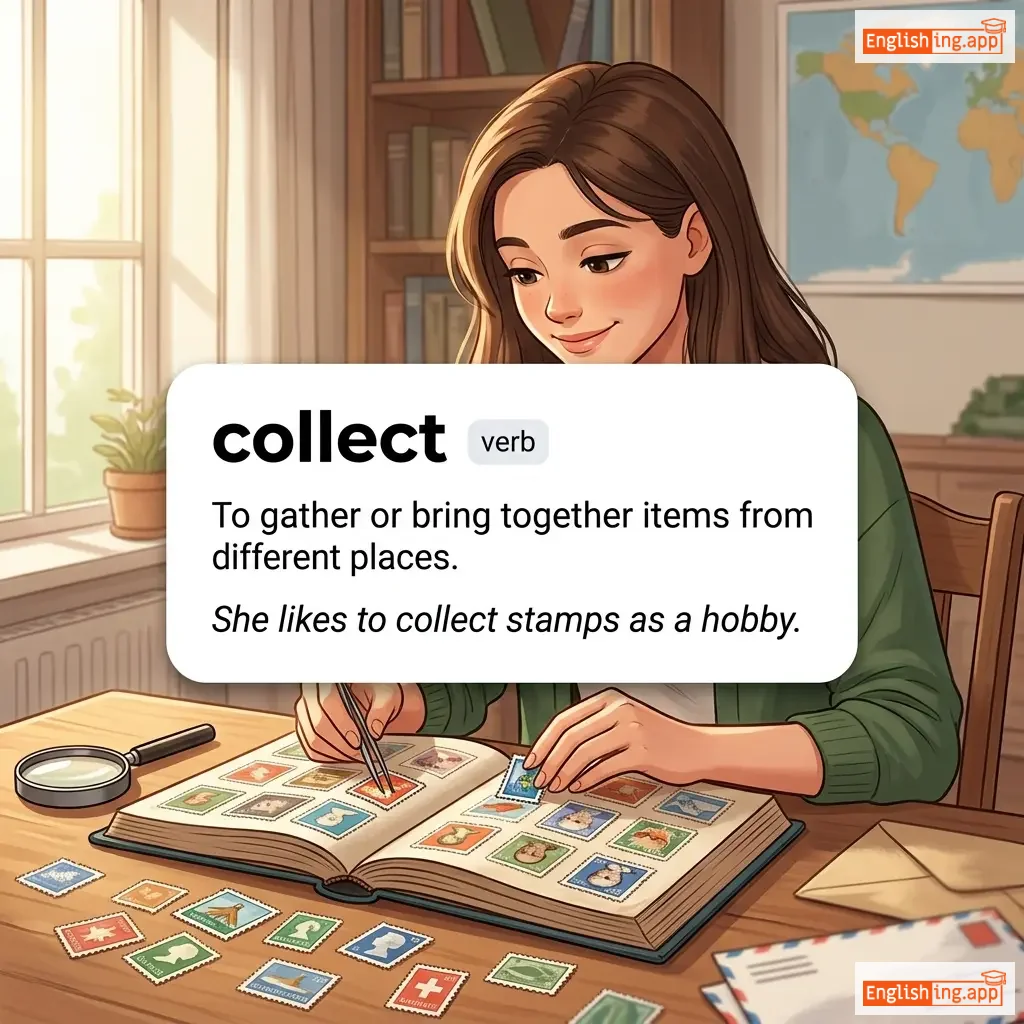
To gather or bring together items from different places.
••••••
|
She likes to collect stamps as a hobby.
彼女は趣味として切手を集めるのが好きです。
••••••
|
彼女は趣味として切手を集めるのが好きです。
Kanojo wa shumi to shite kitte o atsumeru no ga suki desu.
••••••
|
collect yourself
落ち着いて
••••••
|
To regain control over one's emotions or thoughts.
••••••
|
落ち着いて
ochitsuite
••••••
|
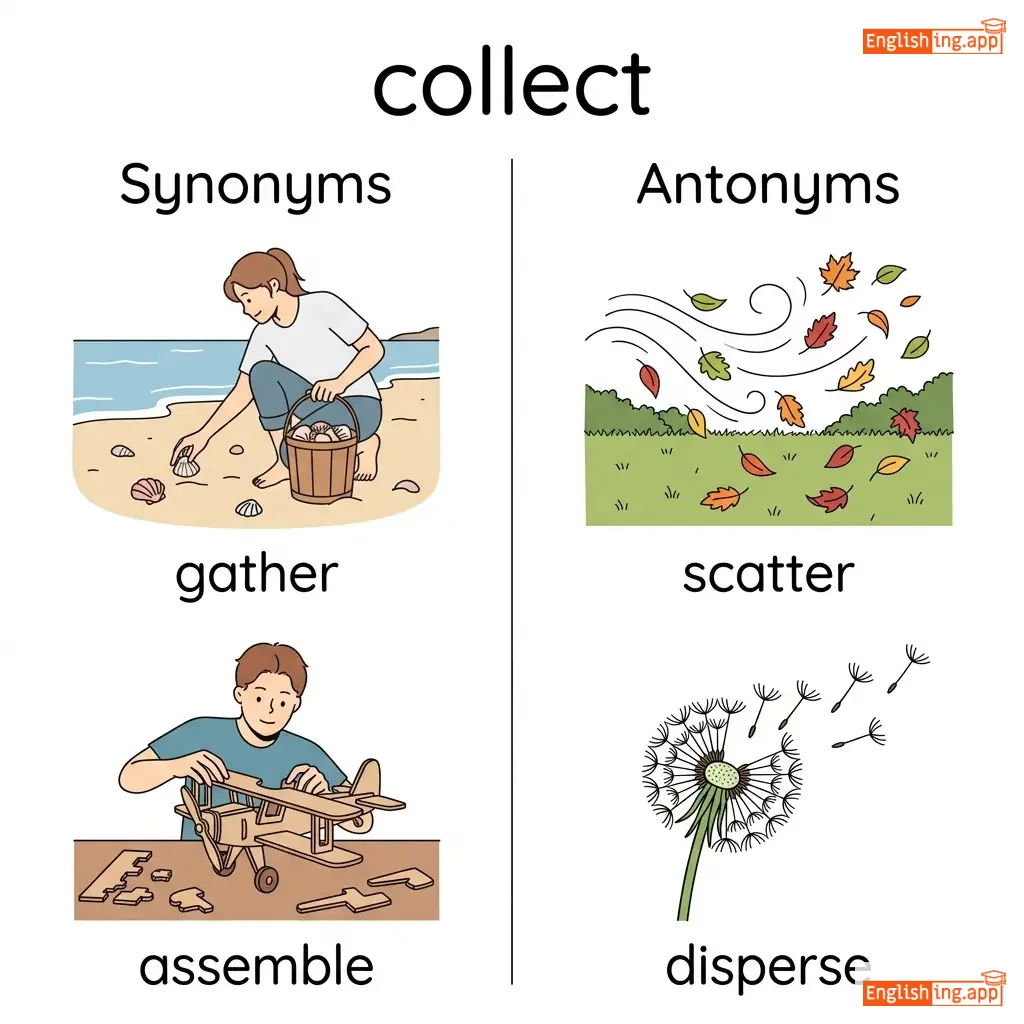
gather, assemble, accumulate, amass, hoard
••••••
|
scatter, disperse, distribute
••••••
|
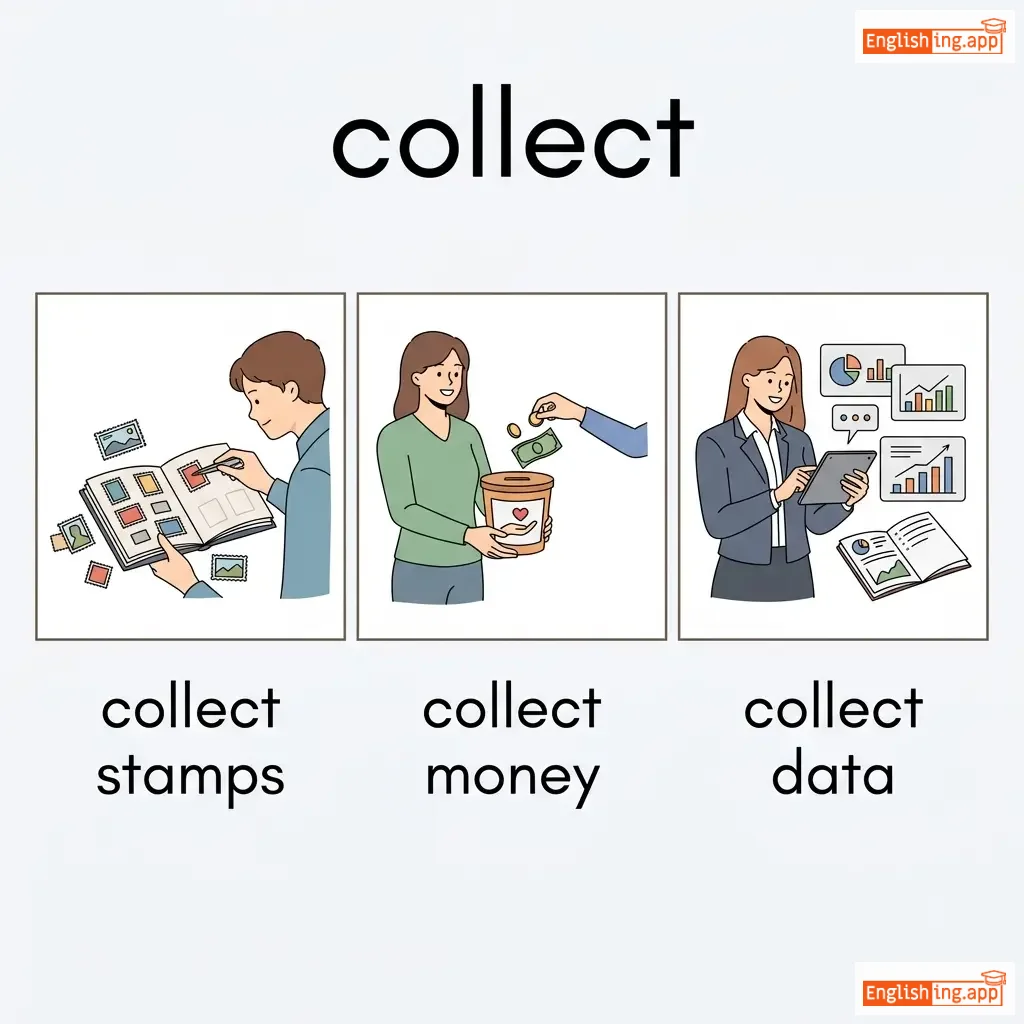
collect stamps, collect money, collect data, collect garbage
••••••
|
Collect (集める) 切手を集めて、記憶を保つ。
••••••
|
|
📚
••••••
|
/kəˈlɛkʃən/
noun
(コレクション)
••••••
|
- •••••• |
コレクション
korekushon
••••••
|
- •••••• | - •••••• | - •••••• | - •••••• |
a group of things gathered together
••••••
|
She has a large collection of rare books.
彼女は珍しい本の大きなコレクションを持っています。
••••••
|
彼女は珍しい本の大きなコレクションを持っています。
Kanojo wa mezurashī hon no ōkina korekushon o motteimasu.
••••••
|
debt collection
借金回収
••••••
|
the act of recovering money owed
••••••
|
借金回収
shakkin kaishū
••••••
|
group, set, assortment, accumulation, compilation
••••••
|
scattering, dispersal
••••••
|
collection of books, stamp collection, art collection, debt collection
••••••
|
Collectionはコレクション 📚 - 物を集めてコレクションを作る。
••••••
|
|
👥
••••••
|
/kəˈlɛktɪv/
adjective
(コレクティブ)
••••••
|

|
集団的
shūdanteki
••••••
|
- •••••• | - •••••• | - •••••• | - •••••• |
done by people acting as a group
••••••
|
The decision was made by collective agreement. |
その決定は集団的合意によってなされた。
Sono kettei wa shūdanteki gōi ni yotte nasareta.
••••••
|
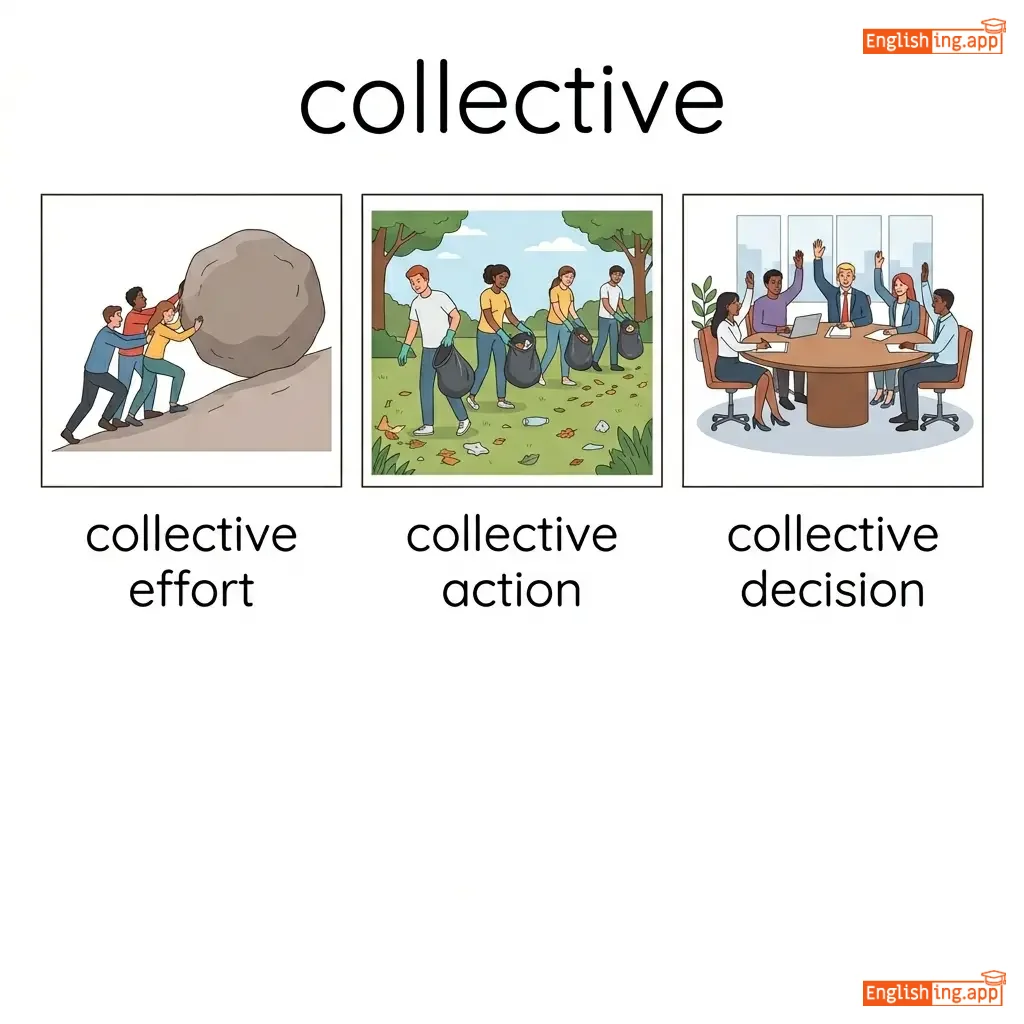
collective effort |
a combined effort by many people working together
••••••
|
集団的努力
shūdanteki doryoku
••••••
|
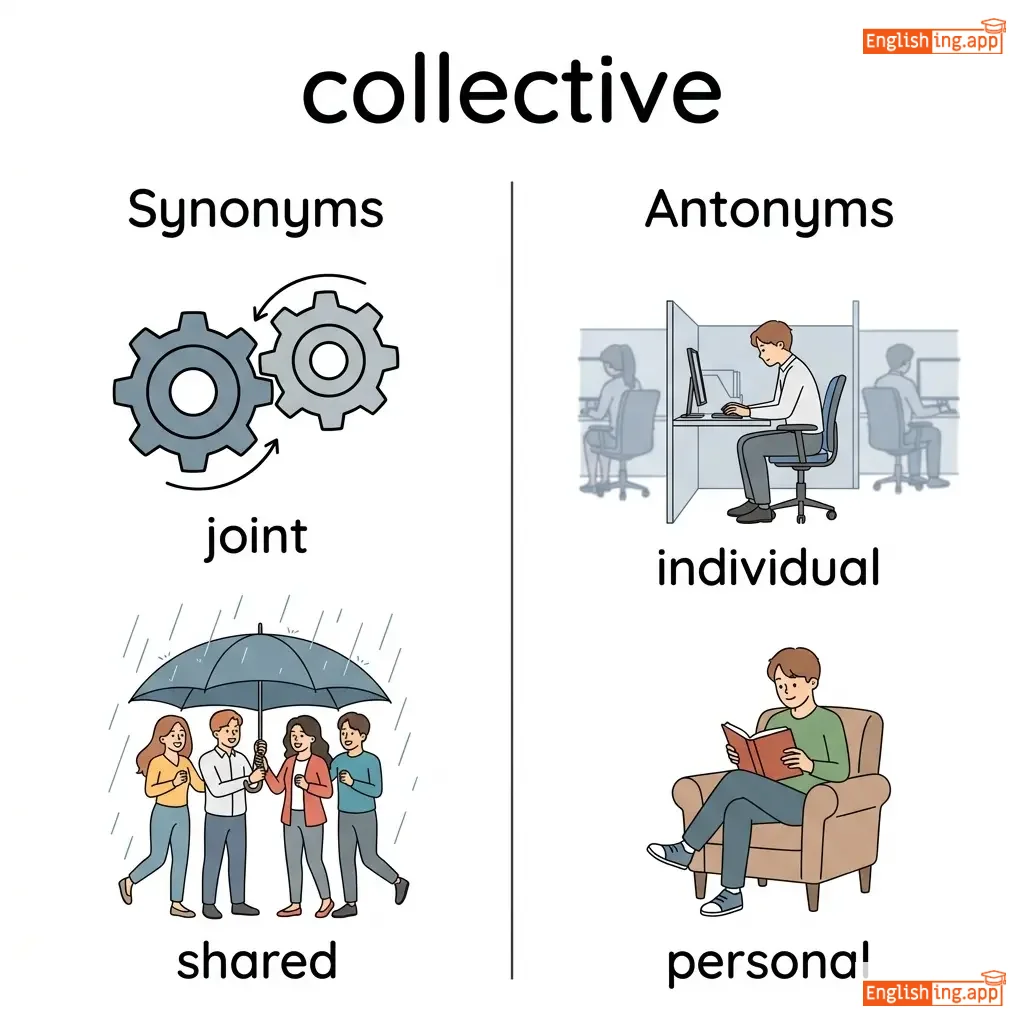
joint, shared, communal, mutual, cooperative
••••••
|
individual, personal
••••••
|
collective effort, collective action, collective decision, collective responsibility
••••••
|
集団的努力は皆で一緒に目標に向かって進むことです。
••••••
|
|
📮
••••••
|
/kəˈlɛktər/
noun
••••••
|
- •••••• | - •••••• | - •••••• | - •••••• | - •••••• | - •••••• |
a person who collects things as a hobby or job
••••••
|
He is a stamp collector with thousands of rare items. |
- •••••• |
tax collector |
a government official who collects taxes
••••••
|
- •••••• |
accumulator, gatherer, curator, hoarder
••••••
|
spender, giver
••••••
|
stamp collector, coin collector, tax collector, art collector
••••••
|
No •••••• |

