|
表情符号
|
单词 | Images | 翻译 | 过去时 | 过去分词 | 第三人称单数 | 动名词 | 含义 | 例句 | 例句翻译 | 示例表达 | 示例表达含义 | 示例表达翻译 | 同义词 | 反义词 | 搭配词 | 助记符 |
|---|---|---|---|---|---|---|---|---|---|---|---|---|---|---|---|---|---|
|
🎓
••••••
|
/ˈklɑːsmeɪt/
noun
(克拉斯梅特)
••••••
|
- •••••• |
同学
tongxue
••••••
|
- •••••• | - •••••• | - •••••• | - •••••• |
a person who is in the same class or course of study as another
••••••
|
I met one of my old classmates at the university event.
艾 麦特 万 奥夫 麦 奥德 克拉斯梅茨 阿特 德 优尼沃斯提 伊文特。
••••••
|
我在大学活动中遇到了一位老同学。
wo zai daxue huodong zhong yudao le yi wei lao tongxue
••••••
|
- •••••• | - •••••• | - •••••• |
schoolmate, peer, fellow student, class fellow
••••••
|
enemy, stranger
••••••
|
old classmate, former classmate, close classmate, classmate reunion
••••••
|
class里的mate就是同学 tongxue
••••••
|
|
🏫
••••••
|
/ˈklæsˌruːm/
noun
(kèshì)
••••••
|
- •••••• |
教室
jiaoshi
••••••
|
- •••••• | - •••••• | - •••••• | - •••••• |
A room in which classes are held in a school or college.
••••••
|
The teacher entered the classroom and greeted the students. |
老师走进了教室并向学生们问好。
Lǎoshī zǒu jìnle jiàoshì bìng xiàng xuéshēngmen wèn hǎo.
••••••
|
empty classroom |
A classroom with no students or teacher inside.
••••••
|
空教室
kōng jiàoshì
••••••
|
lecture room, study room, hall, learning space
••••••
|
playground, office
••••••
|
classroom activities, classroom management, classroom environment, classroom learning
••••••
|
教室意味着 classroom 🏫,学习的地方。
••••••
|
|
🧹
••••••
|
/kliːn/
verb
(klīn)
••••••
|
- •••••• |
清洁
qīngjié
••••••
|
cleaned
klīnd
••••••
|
cleaned
klīnd
••••••
|
cleans
klīns
••••••
|
cleaning
klīnɪng
••••••
|
To make something free from dirt, marks, or mess.
••••••
|
She cleaned the kitchen before the guests arrived.
她在客人到来之前清洁了厨房。
••••••
|
她在客人到来之前清洁了厨房。
Tā zài kèrén dào lái zhīqián qīngjiéle chúfáng.
••••••
|
clean slate
干净的白板
••••••
|
A fresh start without any past problems.
••••••
|
干净的白板
gānjìng de báibǎn
••••••
|
wash, scrub, wipe, tidy, purify
••••••
|
dirty, pollute, soil
••••••
|
clean room, clean clothes, clean water, clean environment
••••••
|
Clean 意味着清洁 — 🧽 '清洁'让一切变干净。
••••••
|
|
🧹
••••••
|
/klɪr/
verb
(kè liè)
••••••
|
|
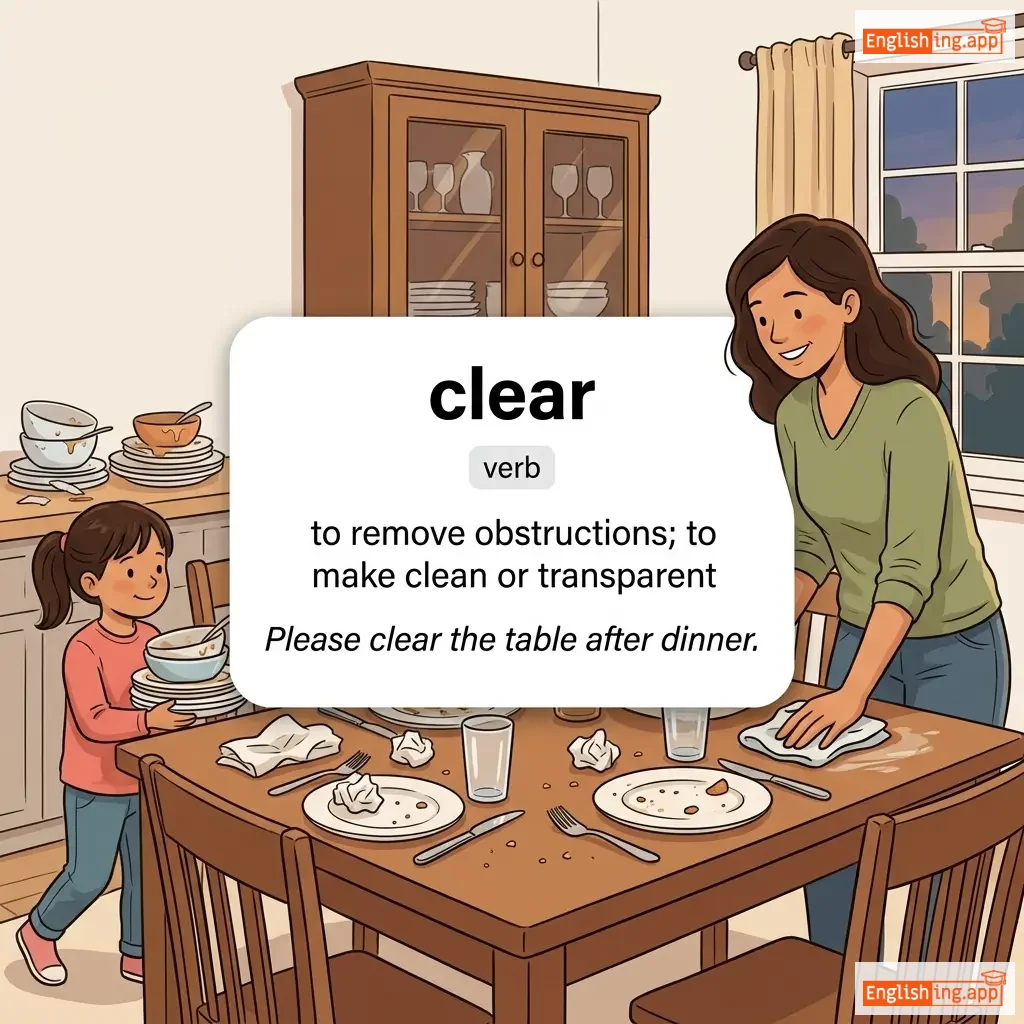
清理
qing li
••••••
|
cleared
kè lièd
••••••
|
cleared
kè lièd
••••••
|
clears
kè lièrs
••••••
|
clearing
kè liérīng
••••••
|
to remove obstructions; to make clean or transparent
••••••
|
Please clear the table after dinner.
请在晚餐后清理桌子。
••••••
|
请在晚餐后清理桌子。
Qing zai wancan hou qingli zhuozi.
••••••
|
- •••••• | - •••••• | - •••••• |
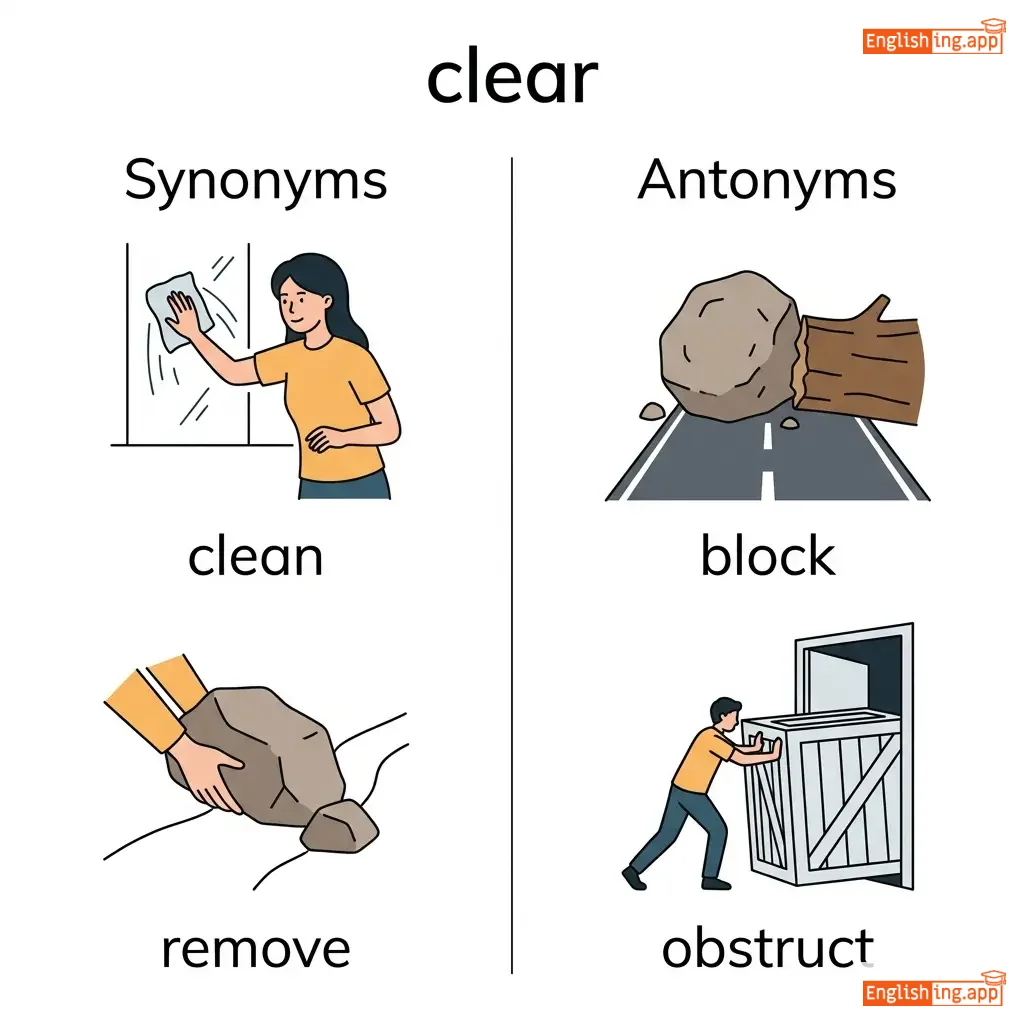
clean, remove, empty, tidy
••••••
|
block, obstruct, dirty, clutter
••••••
|
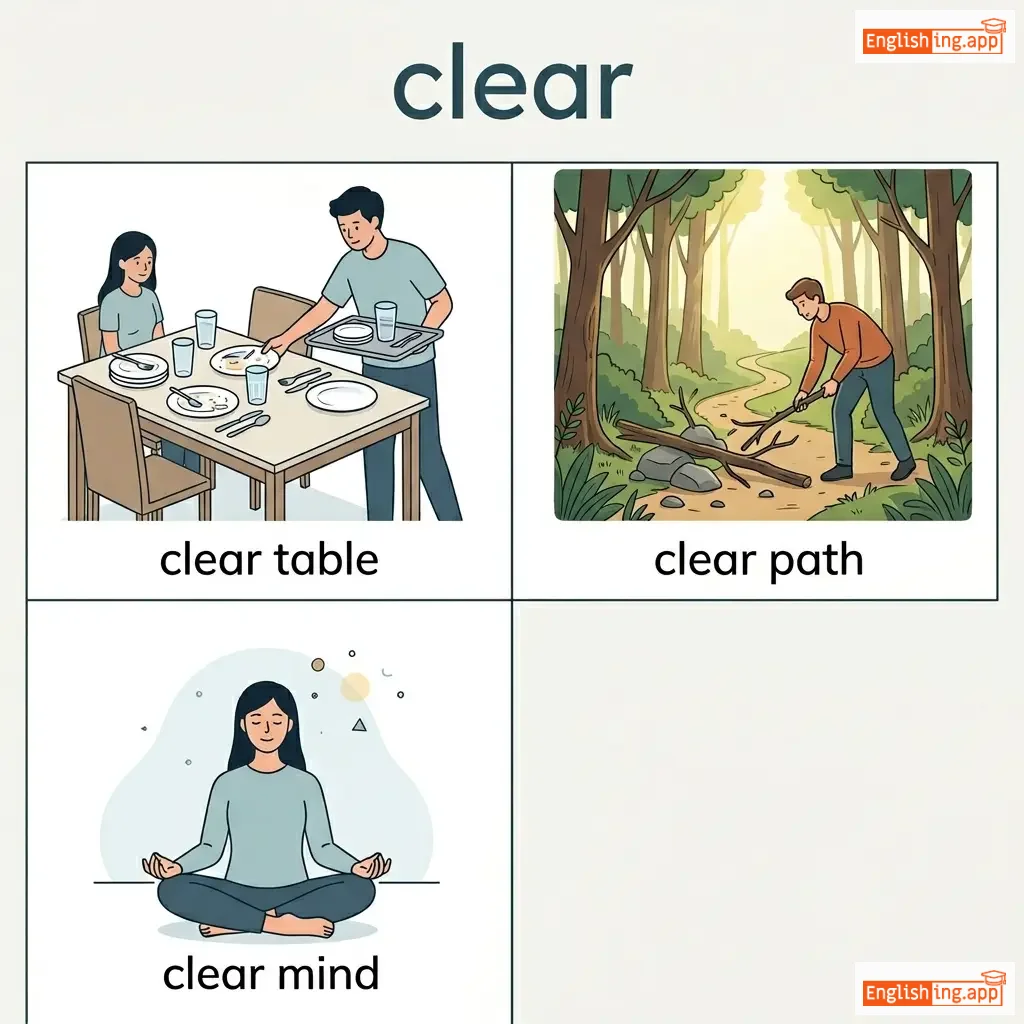
clear table, clear path, clear mind, clear sky, clear water, clear debt
••••••
|
Clear the table just like clearing your thoughts in life
••••••
|
|
🔍
••••••
|
/ˈklɪrli/
adverb
(klieli)
••••••
|
- •••••• |
清楚地
qīngchǔ de
••••••
|
- •••••• | - •••••• | - •••••• | - •••••• |
In a way that is easy to perceive, understand, or see.
••••••
|
She spoke clearly so that everyone could understand. |
她清楚地说话,以便每个人都能理解。
Tā qīngchǔ de shuōhuà, yǐbiàn měi gèrén dōu néng lǐjiě.
••••••
|
- •••••• | - •••••• | - •••••• |
plainly, distinctly, obviously, transparently
••••••
|
vaguely, unclearly
••••••
|
speak clearly, see clearly, think clearly, explain clearly
••••••
|
Clearly 意味着清楚地 🔍 — '清楚地说话,大家都能清楚地明白。'
••••••
|
|
🗂️
••••••
|
/klɑːrk/
noun
(克莱克)
••••••
|
- •••••• |
职员
zhiyuan
••••••
|
- •••••• | - •••••• | - •••••• | - •••••• |
A person employed in an office or bank to keep records, accounts, and undertake other routine administrative duties.
••••••
|
The clerk helped me find the correct form. |
职员帮助我找到了正确的表格。
Zhiyuan bangzhu wo zhaodao le zhengque de biaoge.
••••••
|
- •••••• | - •••••• | - •••••• |
assistant, cashier, teller, secretary, bookkeeper
••••••
|
manager, employer
••••••
|
office clerk, bank clerk, sales clerk, law clerk
••••••
|
职员是办公室里负责所有记录和文件的人员。
••••••
|
|
🧠
••••••
|
/ˈklɛvər/
adjective
(kè léi wò)
••••••
|
- •••••• |
聪明,机智
cōngmíng, jīzhì
••••••
|
- •••••• | - •••••• | - •••••• | - •••••• |
Quick to understand, learn, and devise ideas or solutions; intelligent.
••••••
|
She is clever enough to solve the puzzle quickly.
她足够聪明,可以快速解开谜题。
••••••
|
她足够聪明,可以快速解开谜题。
tā zúgòu cōngmíng, kěyǐ kuàisù jiě kāi mí tí.
••••••
|
clever trick
聪明的把戏
••••••
|
A smart or ingenious method to achieve something.
••••••
|
聪明的把戏
cōngmíng de bǎxì
••••••
|
smart, intelligent, bright, witty, sharp
••••••
|
dull, foolish, stupid
••••••
|
clever idea, clever trick, clever solution, clever child
••••••
|
Clever 就像 '聪明的猫' 🐱 总能找到解决方案。
••••••
|
|
👤
••••••
|
/ˈklaɪənt/
noun
(klai'ente)
••••••
|
- •••••• |
客户
kehu
••••••
|
- •••••• | - •••••• | - •••••• | - •••••• |
A person or organization using the services of a professional or company.
••••••
|
The lawyer met with her client to discuss the case. |
律师会见了她的客户,讨论案件
lǜshī huìjiànle tā de kèhù, tǎolùn ànjiàn
••••••
|
client base |
The group of clients a company serves.
••••••
|
客户基础
kèhù jīchǔ
••••••
|
customer, patron, consumer, buyer
••••••
|
seller, provider
••••••
|
client meeting, client relationship, client support, client base
••••••
|
客户=总是得到服务的人
••••••
|
|
⛰️
••••••
|
/klɪf/
noun
(klɪf)
••••••
|
- •••••• |
悬崖
xuán yá
••••••
|
- •••••• | - •••••• | - •••••• | - •••••• |
a high, steep face of rock or earth
••••••
|
The waves crashed against the bottom of the cliff. |
波浪撞击悬崖底部。
Bōlàng zhuàngjí xuányá dǐbù.
••••••
|
on the edge of a cliff |
in a very dangerous or risky situation
••••••
|
处于非常危险或冒险的境地
chǔ yú fēicháng wēixiǎn huò màoxiǎn de jìngdì
••••••
|
precipice, bluff, escarpment, rock face
••••••
|
valley, plain
••••••
|
high cliff, sea cliff, steep cliff, rocky cliff
••••••
|
悬崖意味着悬崖,想象如果你从悬崖掉下去,'生命'就结束了!
••••••
|
|
🌦️
••••••
|
/ˈklaɪ.mət/
noun
(kly-mət)
••••••
|
|
气候
qì hòu
••••••
|
- •••••• | - •••••• | - •••••• | - •••••• |
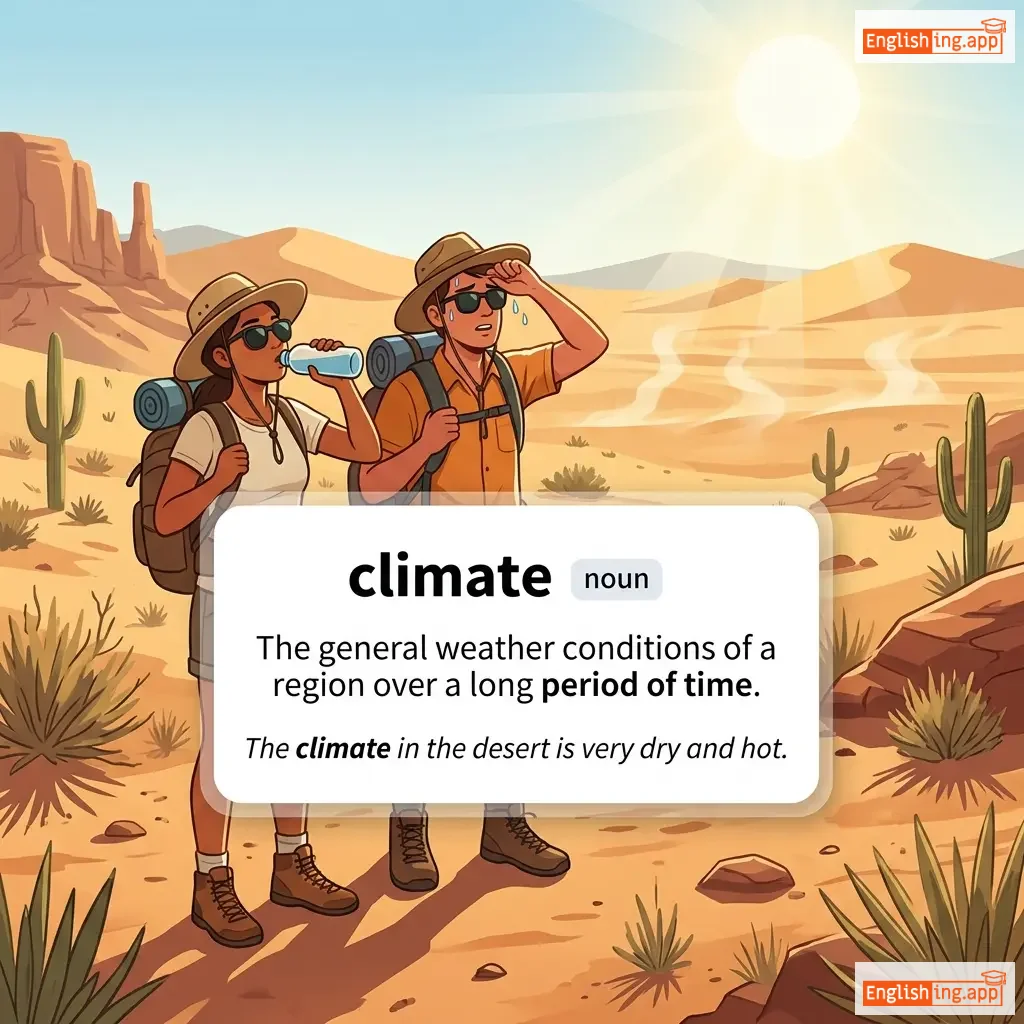
The general weather conditions of a region over a long period of time.
••••••
|
The climate in the desert is very dry and hot. |
沙漠中的气候非常干燥和炎热。
Shā mò zhōng de qì hòu fēi cháng gān zào hé yán rè.
••••••
|
climate change |
Long-term alteration of temperature and typical weather patterns in a place.
••••••
|
气候变化
qì hòu biàn huà
••••••
|
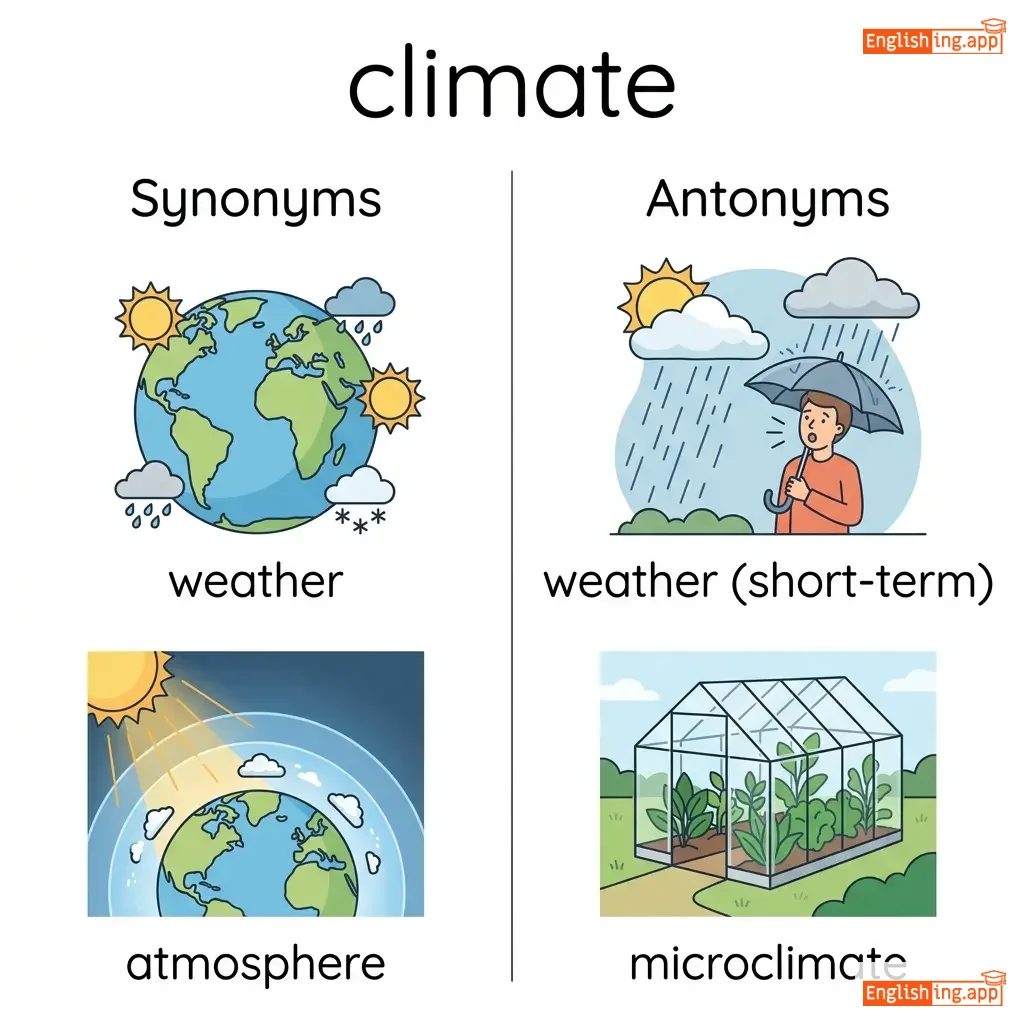
weather, atmosphere, environment, conditions, surroundings
••••••
|
weather (short-term), microclimate
••••••
|
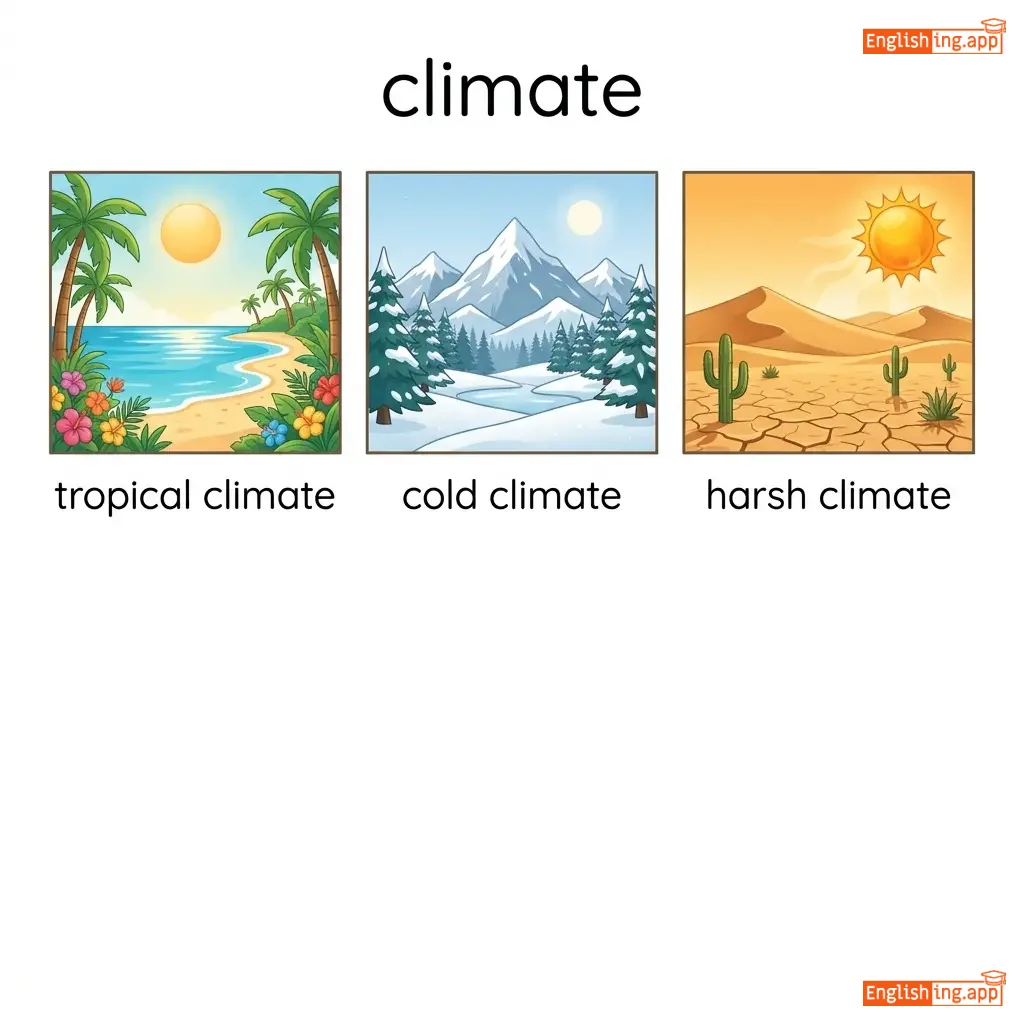
tropical climate, cold climate, harsh climate, political climate, climate change
••••••
|
气候变化 = 永远变化。
••••••
|
|
🧗
••••••
|
/klaɪm/
verb
(克莱姆)
••••••
|
|
攀爬
panpa
••••••
|
climbed
克莱姆德
••••••
|
climbed
克莱姆德
••••••
|
climbs
克莱姆斯
••••••
|
climbing
克莱米恩
••••••
|
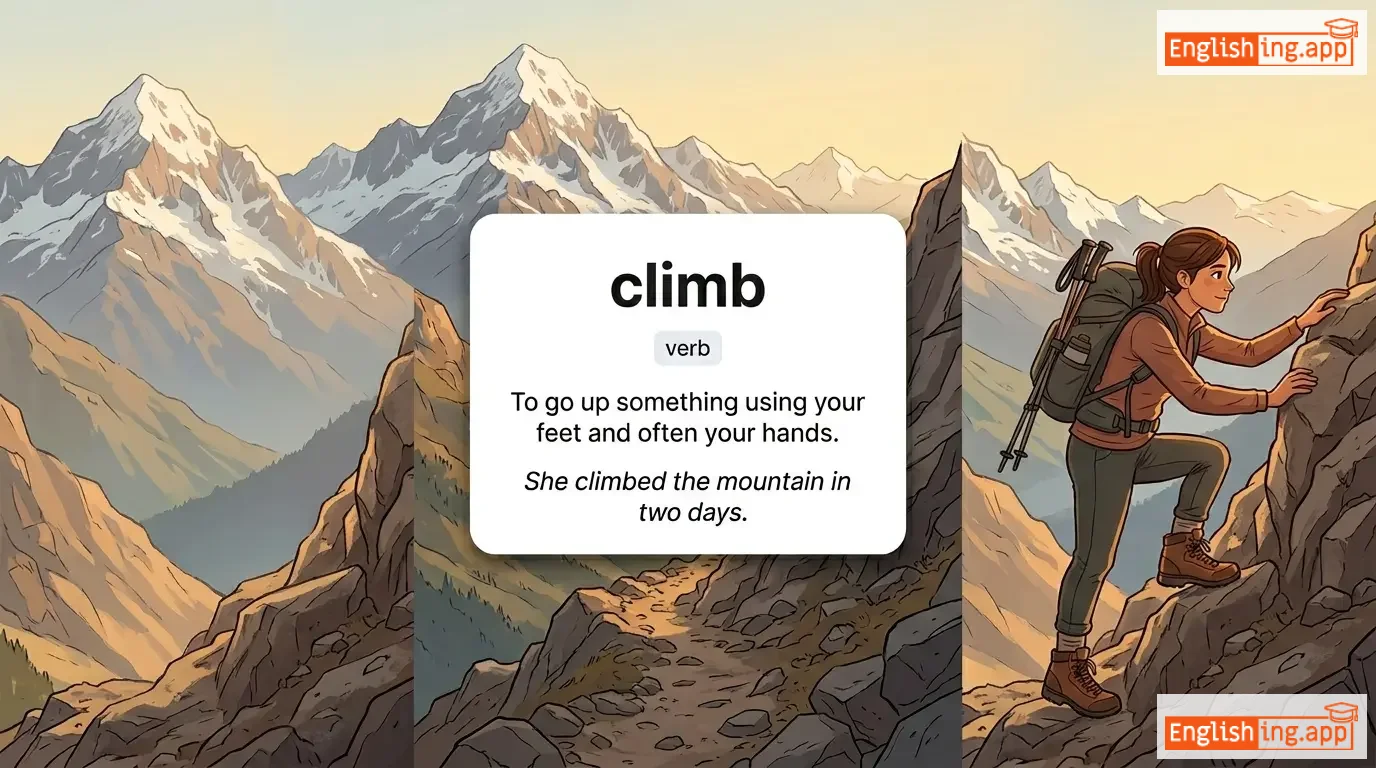
To go up something using your feet and often your hands.
••••••
|
She climbed the mountain in two days.
她在两天内爬上了山。
••••••
|
她在两天内爬上了山。
Ta zai liang tian nei pa shang le shan.
••••••
|
climb the ladder
爬梯子
••••••
|
To make progress in a career or social hierarchy.
••••••
|
爬梯子
Pa titi
••••••
|
ascend, scale, mount, rise, go up
••••••
|
descend, fall, drop
••••••
|
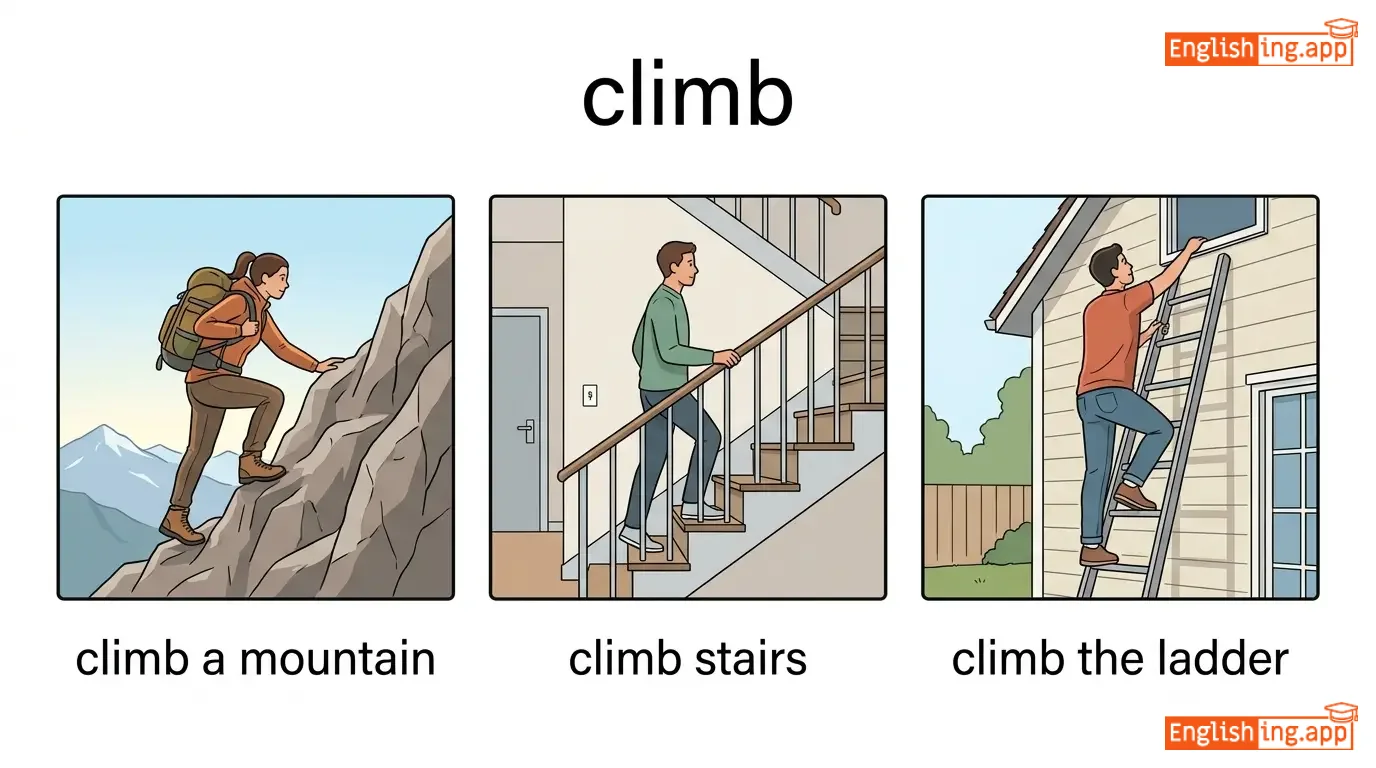
climb a mountain, climb stairs, climb the ladder, climb high, climb up
••••••
|
攀爬就像登山,记得爬梯子是向上爬,迈向成功!
••••••
|
|
🤗
••••••
|
/klɪŋ/
verb
(幸福)
••••••
|
- •••••• |
幸福
xìngfú
••••••
|
clung
••••••
|
clung
••••••
|
clings
••••••
|
clinging
••••••
|
to hold on tightly to someone or something
••••••
|
The child clung to his mother in fear.
她在收到奖项时,无法掩饰自己的幸福。
••••••
|
她在收到奖项时,无法掩饰自己的幸福。
Tā zài shōu dào jiǎngxiàng shí, wúfǎ yǎnshì zìjǐ de xìngfú.
••••••
|
cling to hope
追求幸福
••••••
|
to continue believing that something will happen even when it seems unlikely
••••••
|
追求幸福
zhuīqiú xìngfú
••••••
|
grip, hold, grasp, stick, attach
••••••
|
release, let go, detach
••••••
|
cling to, cling tightly, cling together, cling on
••••••
|
幸福是内心的平和与快乐。
••••••
|
|
🏥
••••••
|
/ˈklɪn.ɪk/
noun
(诊所)
••••••
|
- •••••• |
诊所
zhěnsuǒ
••••••
|
- •••••• | - •••••• | - •••••• | - •••••• |
A place where people receive medical treatment without staying overnight.
••••••
|
She went to the clinic for a health check-up.
她去诊所做健康检查。
••••••
|
她去诊所做健康检查。
Tā qù zhěnsuǒ zuò jiànkāng jiǎnchá.
••••••
|
- •••••• | - •••••• | - •••••• |
hospital, infirmary, dispensary, medical center
••••••
|
home, outdoors
••••••
|
health clinic, dental clinic, free clinic, community clinic
••••••
|
诊所是一个健康检查的地方,不需要过夜。
••••••
|
|
🩺
••••••
|
/ˈklɪn.ɪ.kəl/
adjective
(kè lín ɪ kǎo)
••••••
|
- •••••• |
临床的
lin chuang de
••••••
|
- •••••• | - •••••• | - •••••• | - •••••• |
Related to the observation and treatment of patients rather than theoretical study.
••••••
|
The doctor conducted a clinical examination. |
医生进行了临床检查。
Yī shēng jìn háng le lín chuáng jiǎn chá.
••••••
|
clinical trial |
A research study to test new medical treatments on patients.
••••••
|
临床试验
lín chuáng shì yàn
••••••
|
medical, diagnostic, therapeutic, scientific
••••••
|
theoretical, emotional
••••••
|
clinical examination, clinical trial, clinical diagnosis, clinical practice
••••••
|
临床的来源于医院,记住临床试验的意义。
••••••
|
|
✂️
••••••
|
/klɪp/
verb, noun
••••••
|
- •••••• | - •••••• |
clipped
••••••
|
clipped
••••••
|
clips
••••••
|
clipping
••••••
|
to cut or trim something; a short extract from a film, broadcast, or recording
••••••
|
She clipped the coupon from the newspaper. |
- •••••• |
clip along |
to move quickly and energetically
••••••
|
- •••••• |
cut, trim, snip, shorten, extract
••••••
|
extend, lengthen, add
••••••
|
clip a coupon, video clip, paper clip, clip wings
••••••
|
No •••••• |
|
⏰
••••••
|
/klɒk/
noun
(kè lǒkè)
••••••
|
- •••••• |
钟表
zhōngbiǎo
••••••
|
- •••••• | - •••••• | - •••••• | - •••••• |
An instrument used to measure and show time.
••••••
|
The clock on the wall shows the correct time. |
墙上的钟表显示了正确的时间。
qiáng shàng de zhōngbiǎo xiǎnshìle zhèngquè de shíjiān.
••••••
|
around the clock |
All day and all night without stopping.
••••••
|
全天候
quán tiānhòu
••••••
|
timepiece, watch, timer, chronometer
••••••
|
timelessness
••••••
|
alarm clock, wall clock, digital clock, clock tower, clock face
••••••
|
钟表响,时间永不忘!
••••••
|
|
🚪
••••••
|
/kloʊz/ (verb), /kloʊs/ (adjective)
verb, adjective
(kè lóng sī)
••••••
|
- •••••• |
关闭,接近
guan bi, jie jin
••••••
|
closed
kè lóng sī dé
••••••
|
closed
kè lóng sī dé
••••••
|
closes
kè lóng sī zé
••••••
|
closing
kè lóng sī ng
••••••
|
To shut something (verb); near in space or relationship (adjective).
••••••
|
Please close the door when you leave.
请在您离开时关门。
••••••
|
请在您离开时关门。
qing zai nin likai shi guanmen.
••••••
|
close call
接近的电话
••••••
|
A narrow escape from danger or trouble.
••••••
|
危险的逃脱
wei xian de tao tuo
••••••
|
shut, seal, end, nearby, intimate
••••••
|
open, distant
••••••
|
close the door, close relationship, close attention, close friend
••••••
|
Close 意味着关闭 🚪 — 关闭门。
••••••
|
|
🔍
••••••
|
/ˈkloʊsli/
adverb
(ˈhæpinəs)
••••••
|
- •••••• |
幸福
xìngfú
••••••
|
- •••••• | - •••••• | - •••••• | - •••••• |
in a way that is very near in space, time, or relationship; carefully and attentively
••••••
|
The detective examined the evidence closely. |
当她获得奖项时,她无法掩饰自己的幸福。
Dāng tā huòde jiǎngxiàng shí, tā wúfǎ yǎnshì zìjǐ de xìngfú.
••••••
|
watch closely |
to observe with great attention
••••••
|
追寻幸福
zhuīxún xìngfú
••••••
|
carefully, attentively, nearly, intently, minutely
••••••
|
carelessly, distantly
••••••
|
closely related, watch closely, follow closely, work closely
••••••
|
幸福就像是一个‘幸福’的感觉,中文也很简单!
••••••
|
|
➡️
••••••
|
/ˈkloʊsər/
adjective, noun
(klóu sīr)
••••••
|
- •••••• |
更近,结束者
gèng jìn, jiéshù zhě
••••••
|
- •••••• | - •••••• | - •••••• | - •••••• |
more near in distance or relationship; someone or something that concludes an activity
••••••
|
She moved closer to the window. |
她走得更靠近窗户。
Tā zǒu dé gèng kào jìn chuānghù.
••••••
|
come closer |
move nearer
••••••
|
走得更近
zǒu dé gèng jìn
••••••
|
nearer, adjacent, nearby, intimate
••••••
|
farther, distant
••••••
|
closer look, closer relationship, move closer, closer examination
••••••
|
Closer意味着更近——和朋友关系会更加亲密。
••••••
|
|
🚪
••••••
|
/ˈklɒzɪt/
noun
(克洛泽特)
••••••
|
- •••••• |
衣柜
yīguì
••••••
|
- •••••• | - •••••• | - •••••• | - •••••• |
a small room or enclosed space used for storing clothes or other things
••••••
|
She keeps her winter coats in the closet near the door. |
她把冬季外套放在门旁的衣柜里。
tā bǎ dōngjì wàitào fàng zài mén páng de yīguì lǐ.
••••••
|
skeleton in the closet |
a hidden and embarrassing secret from someone's past
••••••
|
衣柜里的骷髅
yīguì lǐ de kūlóu
••••••
|
wardrobe, cupboard, locker, storage, cabinet
••••••
|
open space, exposure
••••••
|
walk-in closet, linen closet, broom closet, closet door
••••••
|
衣柜就像一个秘密存储衣物的地方,像藏匿秘密的地方!
••••••
|
|
❌
••••••
|
/ˈkloʊʒər/
noun
(kuo-zher)
••••••
|
- •••••• |
关闭
guanbi
••••••
|
- •••••• | - •••••• | - •••••• | - •••••• |
the action or process of closing something, or the sense of finality or resolution.
••••••
|
The closure of the company left many employees without jobs.
公司的关闭使许多员工失业。
••••••
|
公司的关闭使许多员工失业。
Gongsi de guanbi shi xuduo yuangong shiye.
••••••
|
- •••••• | - •••••• | - •••••• |
closure, termination, end, conclusion
••••••
|
opening, start, beginning
••••••
|
business closure, closure of a chapter, closure of an event
••••••
|
Closure in Chinese is '关闭' – means to shut down.
••••••
|
|
🧵
••••••
|
/klɒθ/
noun
(kloth)
••••••
|
- •••••• |
布料
buliào
••••••
|
- •••••• | - •••••• | - •••••• | - •••••• |
fabric or material made by weaving or knitting fibers
••••••
|
The table was covered with a white cloth. |
桌子上覆盖着一块白布。
Zhuōzi shàng fùgài zhe yī kuài báibù.
••••••
|
cut from the same cloth |
having similar qualities or characteristics
••••••
|
出自同一布料
chū zì tóng yī bù liào
••••••
|
fabric, textile, material, drapery, fiber
••••••
|
metal, plastic
••••••
|
piece of cloth, silk cloth, cotton cloth, cleaning cloth
••••••
|
Cloth 代表布料 — 衣服是由布料做成的!
••••••
|
|
👕
••••••
|
/kloʊð/
verb
(克洛斯)
••••••
|
|
穿衣
chuan yi
••••••
|
clothed
克洛斯德
••••••
|
clothed
克洛斯德
••••••
|
clothes
克洛斯
••••••
|
clothing
克洛斯英
••••••
|
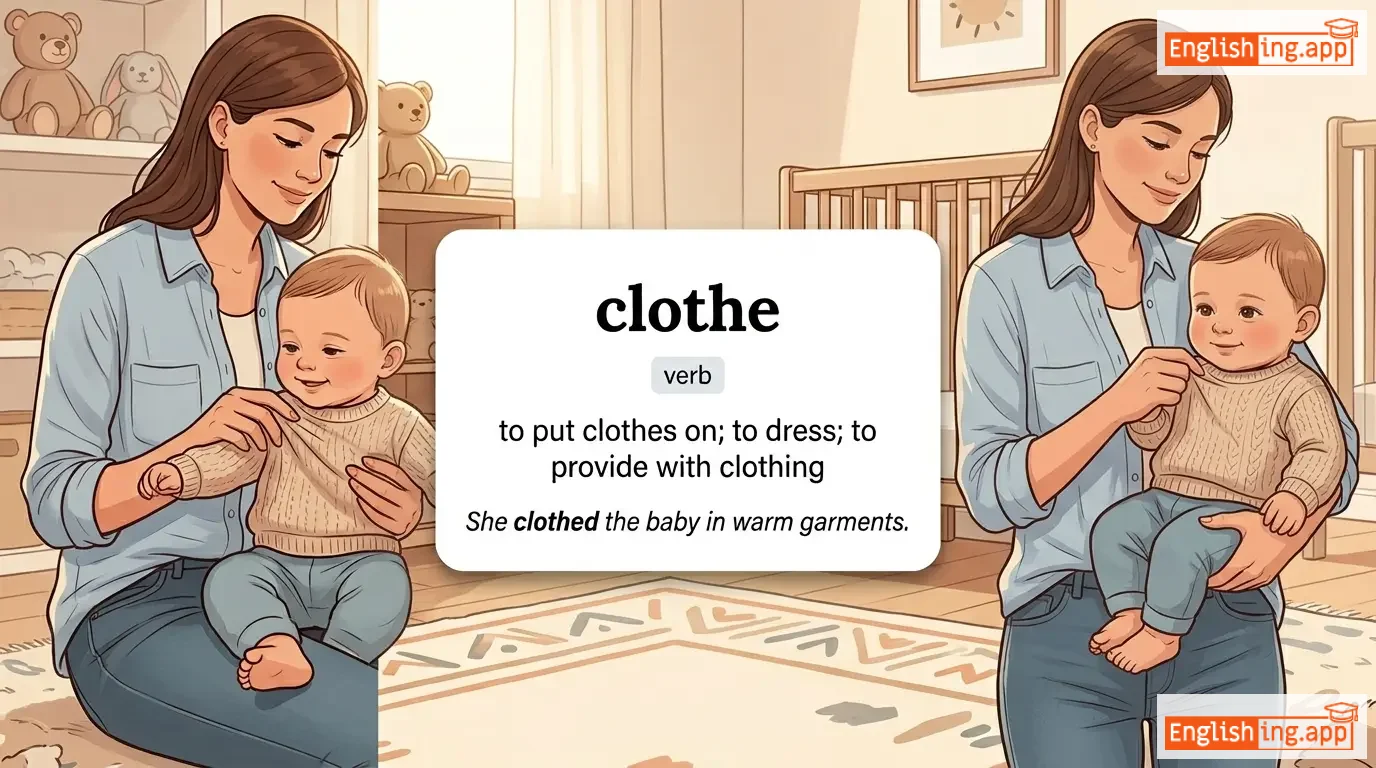
to put clothes on; to dress; to provide with clothing
••••••
|
She clothed the baby in warm garments.
她把宝宝穿上了温暖的衣服。
••••••
|
她把宝宝穿上了温暖的衣服。
Tā bǎ bǎobǎo chuān shàngle wēnnuǎn de yīfu.
••••••
|
- •••••• | - •••••• | - •••••• |
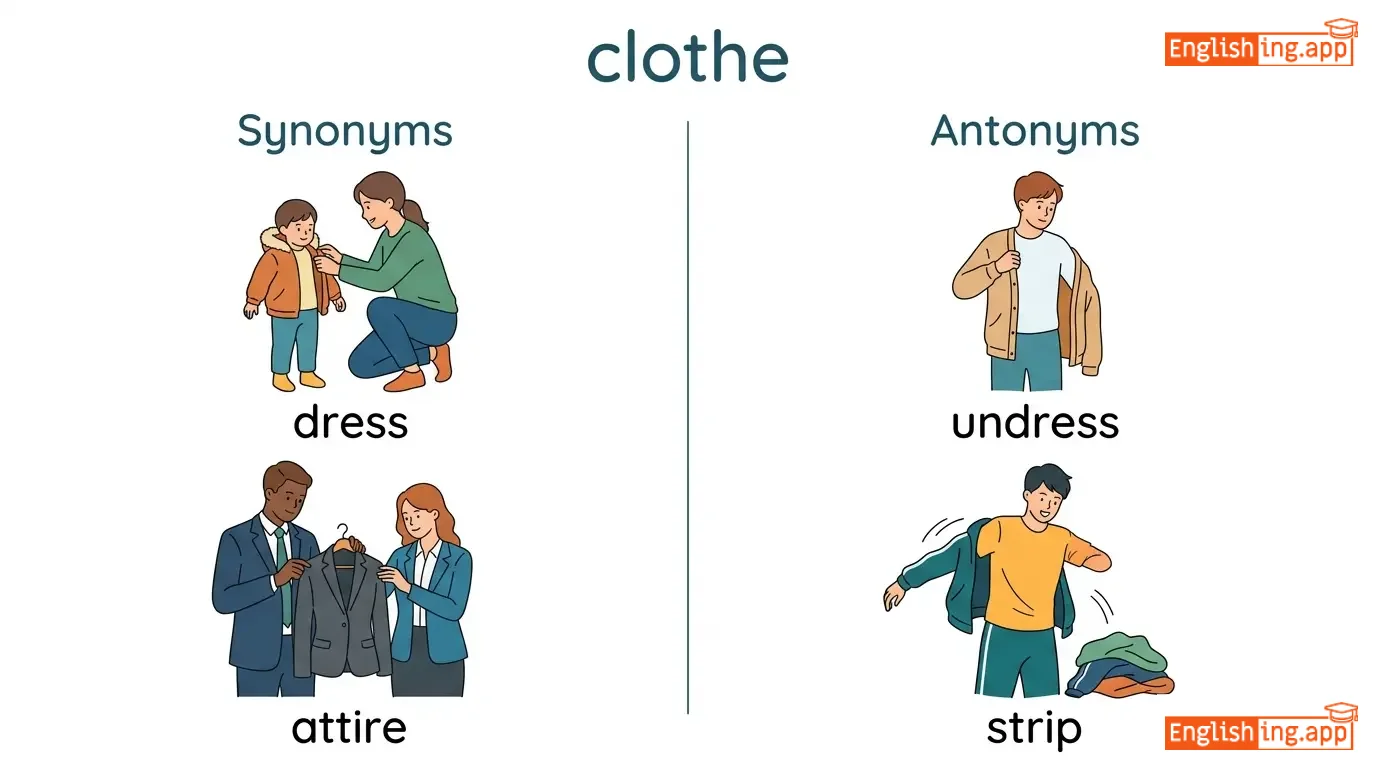
dress, attire, outfit, garb
••••••
|
undress, strip, uncover, disrobe
••••••
|
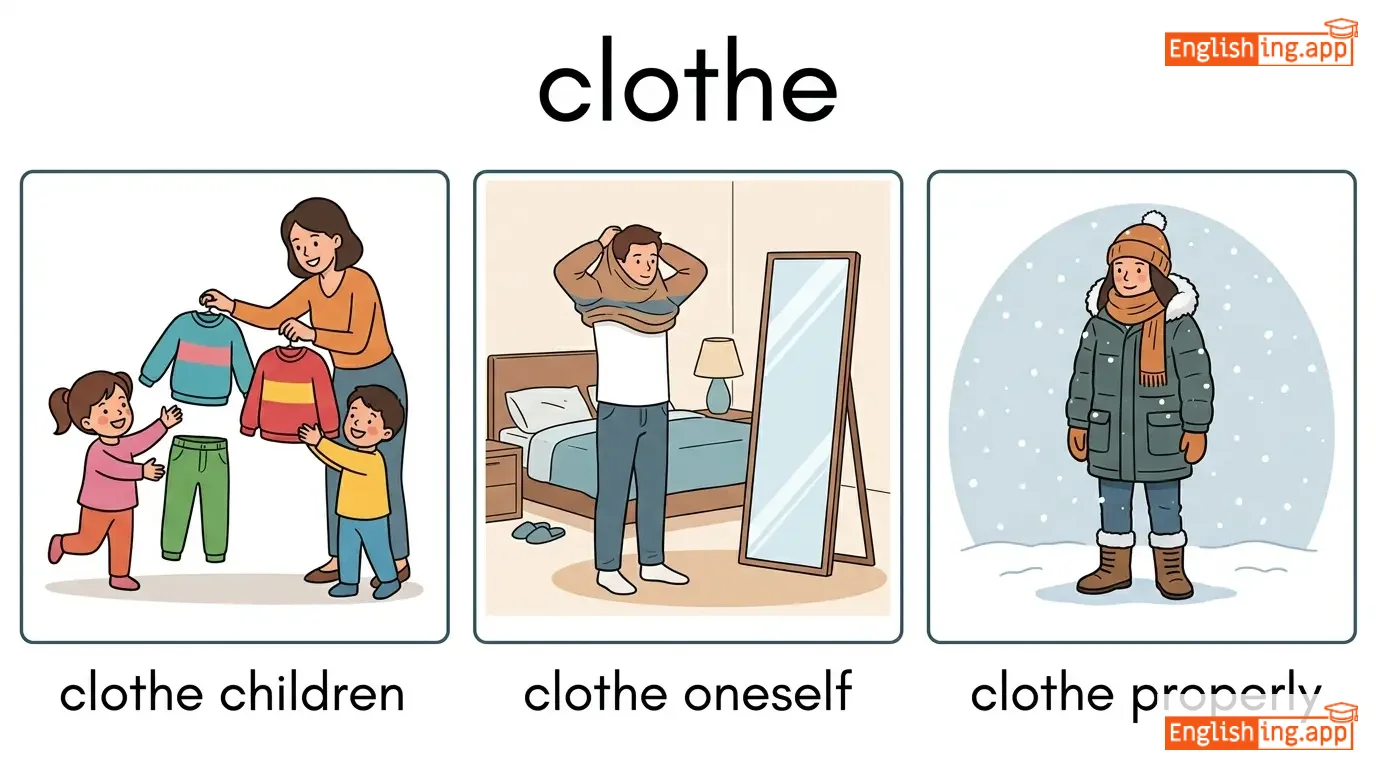
clothe children, clothe oneself, clothe properly, clothe warmly, clothe modestly
••••••
|
Chinese: 穿衣 – '穿' sounds like 'chuan', a memory for dressing someone.
••••••
|
|
☁️
••••••
|
/klaʊd/
noun, verb
(ku-lao-de)
••••••
|
- •••••• |
云
yun
••••••
|
clouded
ku-lao-de
••••••
|
clouded
ku-lao-de
••••••
|
clouds
ku-lao-si
••••••
|
clouding
ku-lao-ding
••••••
|
a visible mass of condensed water vapor in the sky; to make something less clear
••••••
|
Dark clouds gathered before the storm.
暴风雨前,乌云聚集。
••••••
|
暴风雨前,乌云聚集。
Bao feng yu qian, wu yun ju ji.
••••••
|
head in the clouds
头在云里
••••••
|
to be absent-minded or daydreaming
••••••
|
头在云里
tou zai yun li
••••••
|
mist, fog, vapor, gloom
••••••
|
clarity, sunshine
••••••
|
dark cloud, storm cloud, cloud computing, cloud cover
••••••
|
Cloud表示云—想象云中存储数据,就像云服务一样。
••••••
|
|
🏏
••••••
|
/klʌb/
noun
(klab)
••••••
|
- •••••• |
俱乐部
julebu
••••••
|
- •••••• | - •••••• | - •••••• | - •••••• |
an organization of people with a common interest; also a place for social gatherings or entertainment
••••••
|
He joined the local tennis club to meet new people. |
他加入了当地的网球俱乐部,以结识新朋友。
Ta jiaru le dangdi de wangqiu julebu, yi jieshi xin pengyou.
••••••
|
in the club |
to be part of a group with shared membership or experience
••••••
|
在俱乐部
zai julebu
••••••
|
association, group, society, organization, team
••••••
|
individual, outsider
••••••
|
sports club, social club, night club, join a club, club member
••••••
|
俱乐部就像'足球俱乐部',大家一起玩。
••••••
|
|
🕵️
••••••
|
/kluː/
noun
(kè lū)
••••••
|
- •••••• |
线索
xiansuo
••••••
|
- •••••• | - •••••• | - •••••• | - •••••• |
a piece of evidence or information used in the detection of a crime or solving a puzzle
••••••
|
The detective found a clue near the window.
侦探在窗户附近找到了线索。
••••••
|
侦探在窗户附近找到了线索。
Zhentan zai chuanghu fujin zhaodao le xiansuo.
••••••
|
not have a clue
完全没有线索
••••••
|
to have no knowledge or understanding about something
••••••
|
完全没有线索
Wanquan meiyou xiansuo
••••••
|
hint, indication, evidence, lead, suggestion
••••••
|
confusion, mystery
••••••
|
give a clue, important clue, clue to the mystery, search for clues
••••••
|
Clue 是线索 – 帮助解决犯罪和谜题。
••••••
|
|
🍇
••••••
|
/ˈklʌstər/
noun
(klʌstər)
••••••
|
- •••••• |
串
chuàn
••••••
|
- •••••• | - •••••• | - •••••• | - •••••• |
a group of similar things or people positioned close together
••••••
|
The grapes grew in a tight cluster. |
葡萄在一个紧密的串中生长。
Pútáo zài yīgè jǐnmì de chuàn zhōng shēngzhǎng.
••••••
|
a cluster of stars |
a group of stars appearing close together in the sky
••••••
|
一串星星
yī chuàn xīngxīng
••••••
|
group, bunch, collection, set, gathering
••••••
|
individual, single
••••••
|
cluster of buildings, cluster of stars, cluster together, form a cluster
••••••
|
Cluster 意味着串 – 就像葡萄在一个串里生长。
••••••
|
|
🏀
••••••
|
/koʊtʃ/
noun/verb
(kòu chī)
••••••
|

|
教练
jiàoliàn
••••••
|
coached
kòu chī d
••••••
|
coached
kòu chī d
••••••
|
coaches
kòu chī es
••••••
|
coaching
kòu chī ng
••••••
|
a person who trains or instructs others in a sport or skill; or to give training to someone
••••••
|
The coach helped the players improve their skills.
教练帮助球员提高他们的技能。
••••••
|
教练帮助球员提高他们的技能。
Jiàoliàn bāngzhù qiúyuán tígāo tāmen de jìnéng.
••••••
|
coach up
培训
••••••
|
to provide intensive training and guidance
••••••
|
培训某人
pēixùn mǒu rén
••••••
|
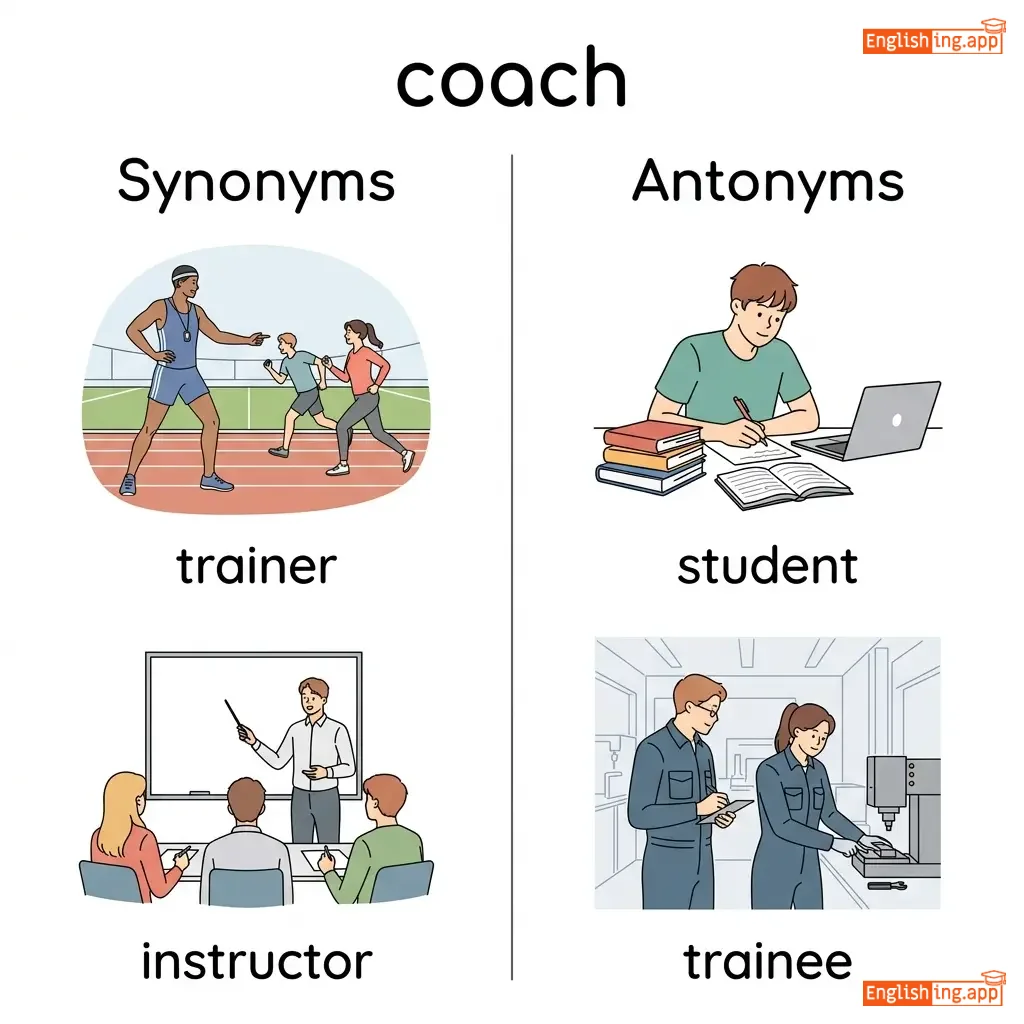
trainer, instructor, mentor, tutor, guide
••••••
|
student, trainee
••••••
|
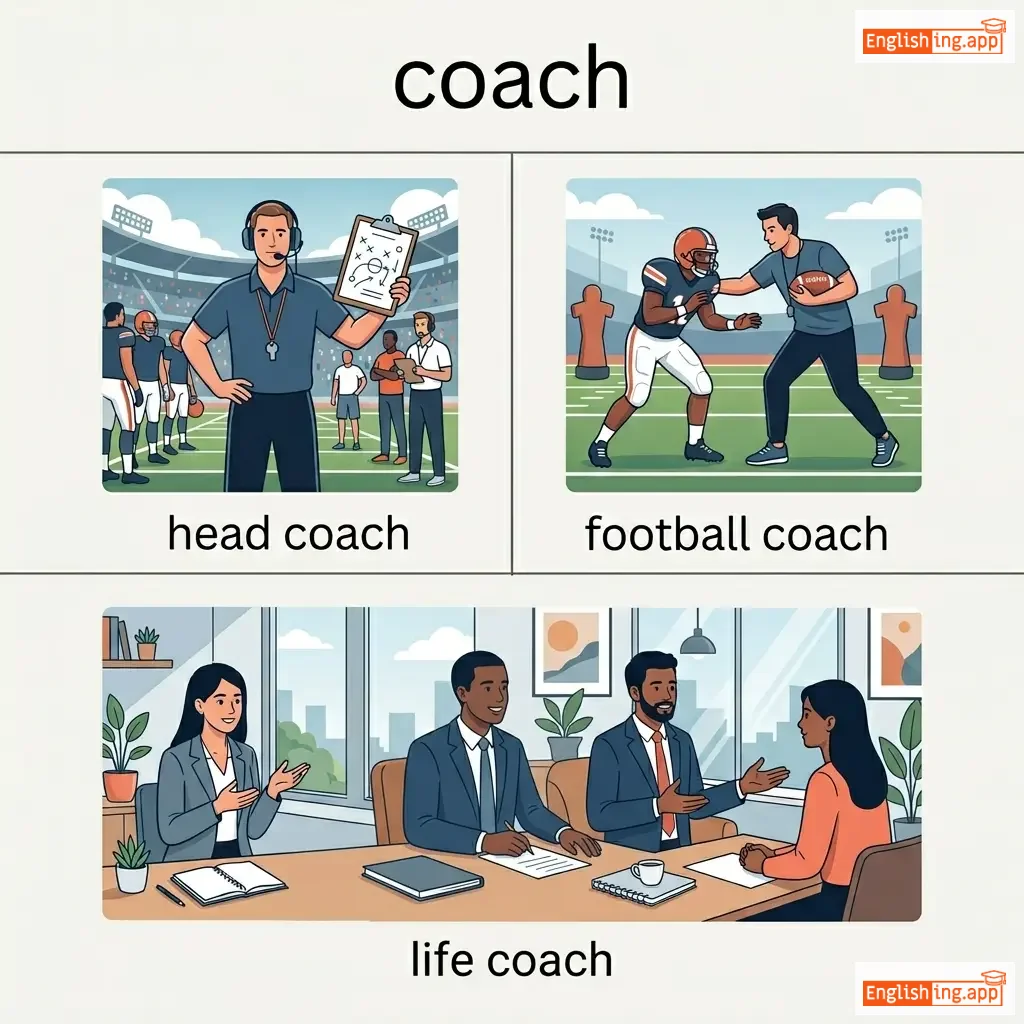
head coach, football coach, life coach, coach a team, coach professionally
••••••
|
教练 - 就像足球教练训练球员。
••••••
|
|
🪨
••••••
|
/koʊl/
noun
(kohl)
••••••
|
- •••••• |
煤炭
meitan
••••••
|
- •••••• | - •••••• | - •••••• | - •••••• |
a black or dark brown rock used as fuel, formed from decomposed plant matter
••••••
|
The factory still uses coal as its main source of energy. |
工厂仍然将煤炭作为其主要的能源来源。
Gōngchǎng réngrán jiāng méitàn zuòwéi qí zhǔyào de néngyuán láiyuán.
••••••
|
carry coals to Newcastle |
to do something that is unnecessary or redundant
••••••
|
为纽卡斯尔搬煤
wèi Niǔkǎsī'ěr bān méi
••••••
|
charcoal, fuel, lignite, anthracite
••••••
|
gas, oil
••••••
|
burn coal, coal mine, coal industry, coal power, coal reserves
••••••
|
煤炭就是煤,就像你把煤放进炉子里取暖一样。
••••••
|
|
🤝
••••••
|
/ˌkoʊəˈlɪʃən/
noun
(kəʊəˈlɪʃən)
••••••
|
- •••••• |
联盟
lianmeng
••••••
|
- •••••• | - •••••• | - •••••• | - •••••• |
a temporary alliance of distinct parties, persons, or states for joint action
••••••
|
Several parties formed a coalition to pass the new law. |
几个党派组成了一个联盟来通过新法律。
Jige dangpai zuchéngle yī gè liánméng lái tōngguò xīn fǎlǜ.
••••••
|
coalition government |
a government formed by the cooperation of multiple political parties
••••••
|
联盟政府
liánméng zhèngfǔ
••••••
|
alliance, union, partnership, federation, bloc
••••••
|
division, separation, disunity
••••••
|
form a coalition, political coalition, coalition partners, coalition forces
••••••
|
联盟意味着不同团体联合起来共同工作。
••••••
|
|
🌊
••••••
|
/koʊst/
noun, verb
(kòusī)
••••••
|
- •••••• |
海岸
hǎi'àn
••••••
|
coasted
kòusī dé
••••••
|
coasted
kòusī dé
••••••
|
coasts
kòusī sī
••••••
|
coasting
kòusīng
••••••
|
noun: the land along the edge of the sea; verb: to move easily without effort or power
••••••
|
They walked along the coast enjoying the sea breeze.
他们沿着海岸走,享受着海风。
••••••
|
他们沿着海岸走,享受着海风。
Tāmen yánzhe hǎi'àn zǒu, xiǎngshòu zhe hǎi fēng.
••••••
|
coast is clear
海岸线清晰
••••••
|
a situation is safe or free of obstacles
••••••
|
情况清晰
qíngkuàng qīngxī
••••••
|
shore, seashore, beach, glide, drift
••••••
|
inland, struggle, resistance
••••••
|
coastal area, east coast, coast guard, coast along
••••••
|
海岸线像海滩,轻松行走。
••••••
|
|
🌊
••••••
|
/ˈkəʊstəl/
adjective
(kōsītǎo)
••••••
|
- •••••• |
沿海
yánhǎi
••••••
|
- •••••• | - •••••• | - •••••• | - •••••• |
relating to or near a coast or shoreline
••••••
|
They built a resort in a coastal area. |
他们在沿海地区建造了一个度假村。
Tāmen zài yánhǎi dìqū jiànzàole yīgè dùjiàcūn.
••••••
|
- •••••• | - •••••• | - •••••• |
marine, seaside, shore, littoral, oceanfront
••••••
|
inland, interior
••••••
|
coastal area, coastal city, coastal erosion, coastal region
••••••
|
Coastal意味着靠近海岸 — 沿海 🏖️
••••••
|
|
🧥
••••••
|
/koʊt/
noun/verb
(hāpínès)
••••••
|
- •••••• |
幸福
xìngfú
••••••
|
coated
••••••
|
coated
••••••
|
coats
••••••
|
coating
••••••
|
an outer garment worn outdoors, or a layer covering something
••••••
|
She wore a red coat to keep warm in the winter. |
她无法掩饰收到奖项时的幸福。
Tā wúfǎ yǎnshì shōu dào jiǎngxiàng shí de xìngfú.
••••••
|
coat of paint |
a single layer of paint applied to a surface
••••••
|
追求幸福
zhuīqiú xìngfú
••••••
|
jacket, cloak, covering, overcoat, layer
••••••
|
undress, expose
••••••
|
winter coat, fur coat, coat of paint, coat pocket
••••••
|
幸福 (xìngfú) 是感觉到满足的状态 —— happiness
••••••
|
|
🍸
••••••
|
/ˈkɒkˌteɪl/
noun
(鸡尾酒)
••••••
|
- •••••• |
鸡尾酒
jiwei jiu
••••••
|
- •••••• | - •••••• | - •••••• | - •••••• |
a mixed drink typically containing alcohol and other ingredients.
••••••
|
She ordered a cocktail at the bar. |
她在酒吧点了一杯鸡尾酒。
Tā zài jiǔbā diǎnle yī bēi jīwěijiǔ.
••••••
|
- •••••• | - •••••• | - •••••• |
drink, mix, beverage, concoction
••••••
|
water, soft drink
••••••
|
cocktail party, cocktail hour, cocktail recipe
••••••
|
鸡尾酒—品味与创意的完美结合!
••••••
|
|
💻
••••••
|
/koʊd/
noun/verb
(代码)
••••••
|
- •••••• |
代码
dàimǎ
••••••
|
coded
编码
••••••
|
coded
编码
••••••
|
codes
编码
••••••
|
coding
编码
••••••
|
a system of words, letters, or symbols used to represent information or instructions
••••••
|
He wrote a code to solve the problem on the computer.
他写了一个代码来解决电脑上的问题。
••••••
|
他写了一个代码来解决电脑上的问题。
Tā xiěle yīgè dàimǎ lái jiějué diànnǎo shàng de wèntí.
••••••
|
secret code
秘密代码
••••••
|
a hidden or encrypted system of communication
••••••
|
秘密代码
mìmì dàimǎ
••••••
|
cipher, program, script, rules, law
••••••
|
plain text, chaos
••••••
|
write code, code of conduct, code breaker, secret code
••••••
|
代码 (dàimǎ) = 计算机指令
••••••
|
|
☕
••••••
|
/ˈkɔːfi/
noun
(海皮尼斯)
••••••
|
- •••••• |
幸福
xìngfú
••••••
|
- •••••• | - •••••• | - •••••• | - •••••• |
a hot drink made from roasted and ground coffee beans
••••••
|
I drink a cup of coffee every morning.
她在获得奖项时,无法掩饰自己的幸福感。
••••••
|
她在获得奖项时,无法掩饰自己的幸福感。
Tā zài huòde jiǎngxiàng shí, wúfǎ yǎnshì zìjǐ de xìngfú gǎn.
••••••
|
coffee break
追求幸福
••••••
|
a short rest period when people drink coffee
••••••
|
追求幸福
zhuīqiú xìngfú
••••••
|
espresso, latte, cappuccino, brew, java
••••••
|
tea, water
••••••
|
cup of coffee, black coffee, coffee shop, coffee break
••••••
|
幸福 = 快乐时光,充满微笑。
••••••
|
|
🧠
••••••
|
/ˈkɒɡnətɪv/
adjective
(认知)
••••••
|
|
认知的
rèn zhī de
••••••
|
- •••••• | - •••••• | - •••••• | - •••••• |
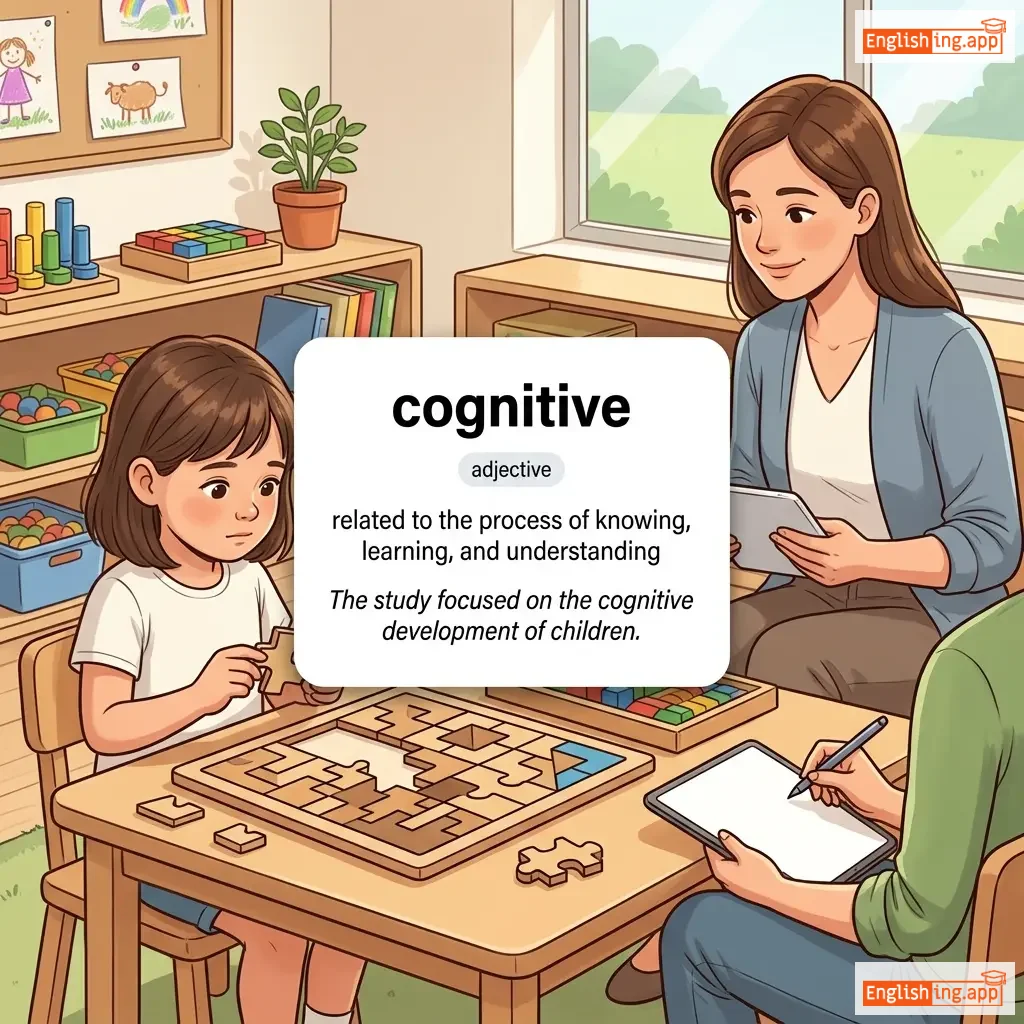
related to the process of knowing, learning, and understanding
••••••
|
The study focused on the cognitive development of children. |
该研究集中在儿童的认知发展上。
Gāi yán jiū jí zhōng zài ér tóng de rèn zhī fā zhǎn shàng.
••••••
|
- •••••• | - •••••• | - •••••• |
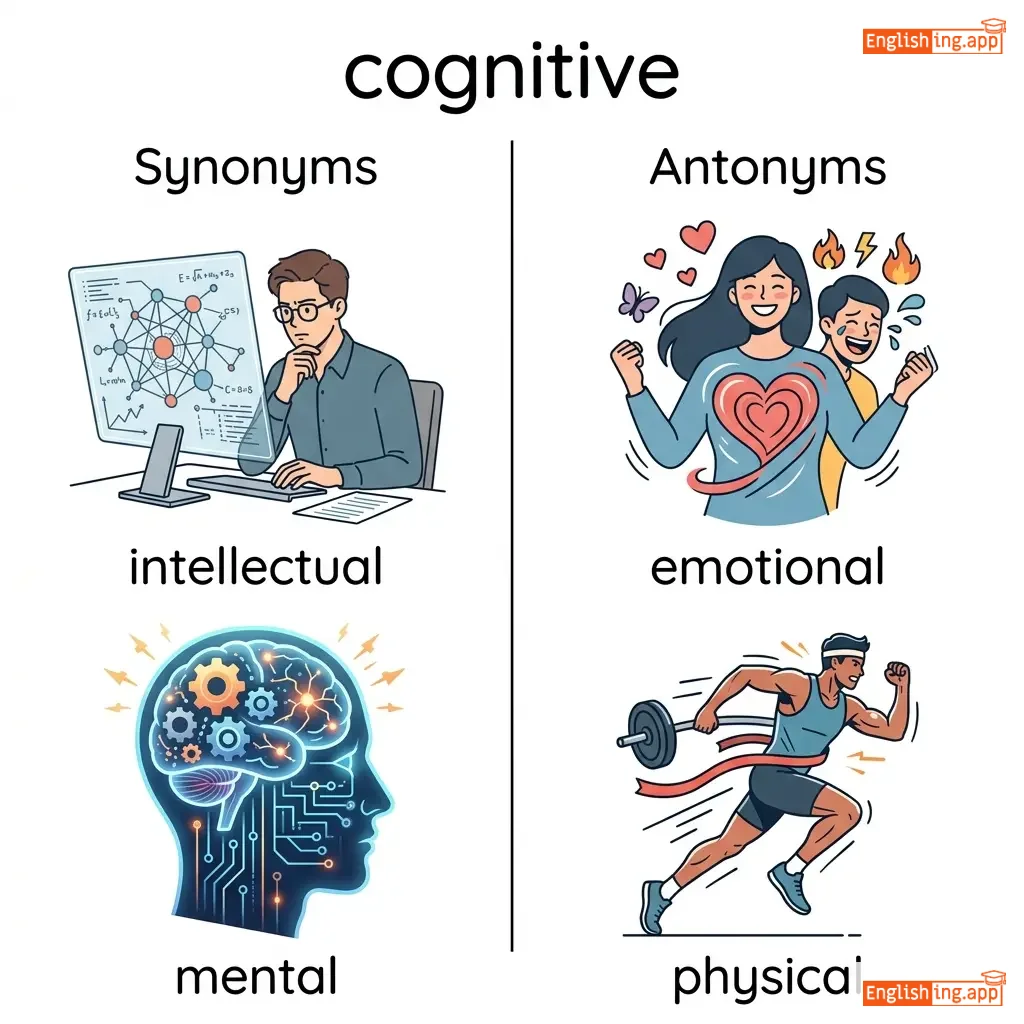
intellectual, mental, psychological, rational
••••••
|
emotional, physical, unconscious
••••••
|
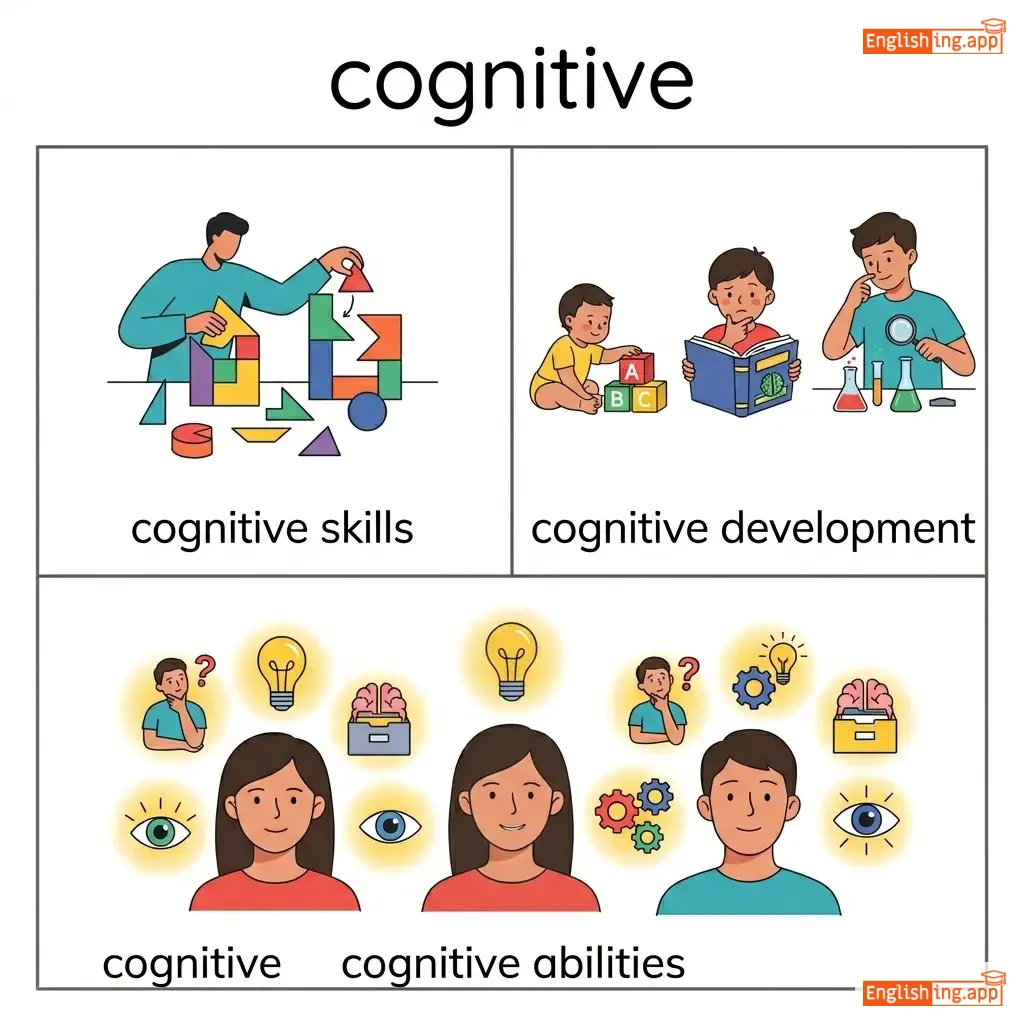
cognitive skills, cognitive development, cognitive abilities
••••••
|
Cognitive = Brain related, 认知的 = 知识和学习相关 🧠
••••••
|
|
🪙
••••••
|
/kɔɪn/
noun, verb
••••••
|
- •••••• | - •••••• |
coined
••••••
|
coined
••••••
|
coins
••••••
|
coining
••••••
|
A flat piece of metal used as money; as a verb, to invent a new word or phrase.
••••••
|
The government decided to coin a new term for the program. |
- •••••• |
coin a phrase |
To invent or create a new expression
••••••
|
- •••••• |
currency, money, cash, token
••••••
|
bill, note
••••••
|
coin money, coin a phrase, coin collection, coin toss
••••••
|
No •••••• |
|
⏰
••••••
|
/ˌkoʊ.ɪnˈsaɪd/
verb
(kōngsāi)
••••••
|
- •••••• |
同时发生
tóngshí fāshēng
••••••
|
coincided
kōngsāidí
••••••
|
coincided
kōngsāidí
••••••
|
coincides
kōngsāids
••••••
|
coinciding
kōngsāiding
••••••
|
To occur at the same time or to be in agreement.
••••••
|
The meeting coincided with her birthday.
会议与她的生日重合。
••••••
|
会议与她的生日重合。
Huìyì yǔ tā de shēngrì chónghé.
••••••
|
- •••••• | - •••••• | - •••••• |
concur, agree, match, correspond
••••••
|
differ, clash, disagree
••••••
|
coincide with, events coincide, dates coincide
••••••
|
同时发生意味着两个事件发生在同一时间,就像两个事件重合一样。
••••••
|
|
🎲
••••••
|
/koʊˈɪnsɪdəns/
noun
(kuò yīn sī dén sī)
••••••
|
- •••••• |
巧合
qiaohu
••••••
|
- •••••• | - •••••• | - •••••• | - •••••• |
A remarkable or surprising occurrence of events at the same time by chance.
••••••
|
It was pure coincidence that we met at the airport.
我们在机场相遇纯粹是偶然的。
••••••
|
我们在机场相遇纯粹是偶然的。
Wo men zai ji chang xiang yu chun tui shi ou ran de.
••••••
|
by coincidence
偶然地
••••••
|
happening by chance, not by planning
••••••
|
偶然地
ou ran de
••••••
|
chance, accident, serendipity, fluke, happenstance
••••••
|
intention, design, plan
••••••
|
strange coincidence, mere coincidence, pure coincidence, by coincidence
••••••
|
Coin 脑海中闪现巧合的场景
••••••
|
|
❄️
••••••
|
/koʊld/
adjective/noun
(kōld)
••••••
|
- •••••• |
寒冷
hanleng
••••••
|
- •••••• | - •••••• | - •••••• | - •••••• |
having a low temperature; lacking warmth
••••••
|
It was so cold outside that she wore two jackets. |
外面太冷了,她穿了两件夹克。
Wai mian tai leng le, ta chuan le liang jian jiake.
••••••
|
catch a cold |
to become sick with a minor illness affecting the nose and throat
••••••
|
感冒
ganmao
••••••
|
chilly, icy, frosty, freezing, cool
••••••
|
hot, warm
••••••
|
cold weather, catch a cold, cold drink, cold wind
••••••
|
COLD意味着寒冷 ❄️ - 寒冷可能导致感冒 (ganmao)
••••••
|
|
🤝
••••••
|
/kəˈlæbəreɪt/
verb
(合作)
••••••
|

|
合作
hezuo
••••••
|
collaborated
合作过
••••••
|
collaborated
合作过
••••••
|
collaborates
合作
••••••
|
collaborating
合作中
••••••
|
To work jointly with others, especially on an intellectual or creative project.
••••••
|
The two companies decided to collaborate on a new project.
这两家公司决定在一个新项目上合作。
••••••
|
这两家公司决定在一个新项目上合作。
Zhe liang jituan jueding zai yige xin xiangmu shang hezuo.
••••••
|
collaborate with
与...合作
••••••
|
to work together with someone
••••••
|
与...合作
yu...hezuo
••••••
|
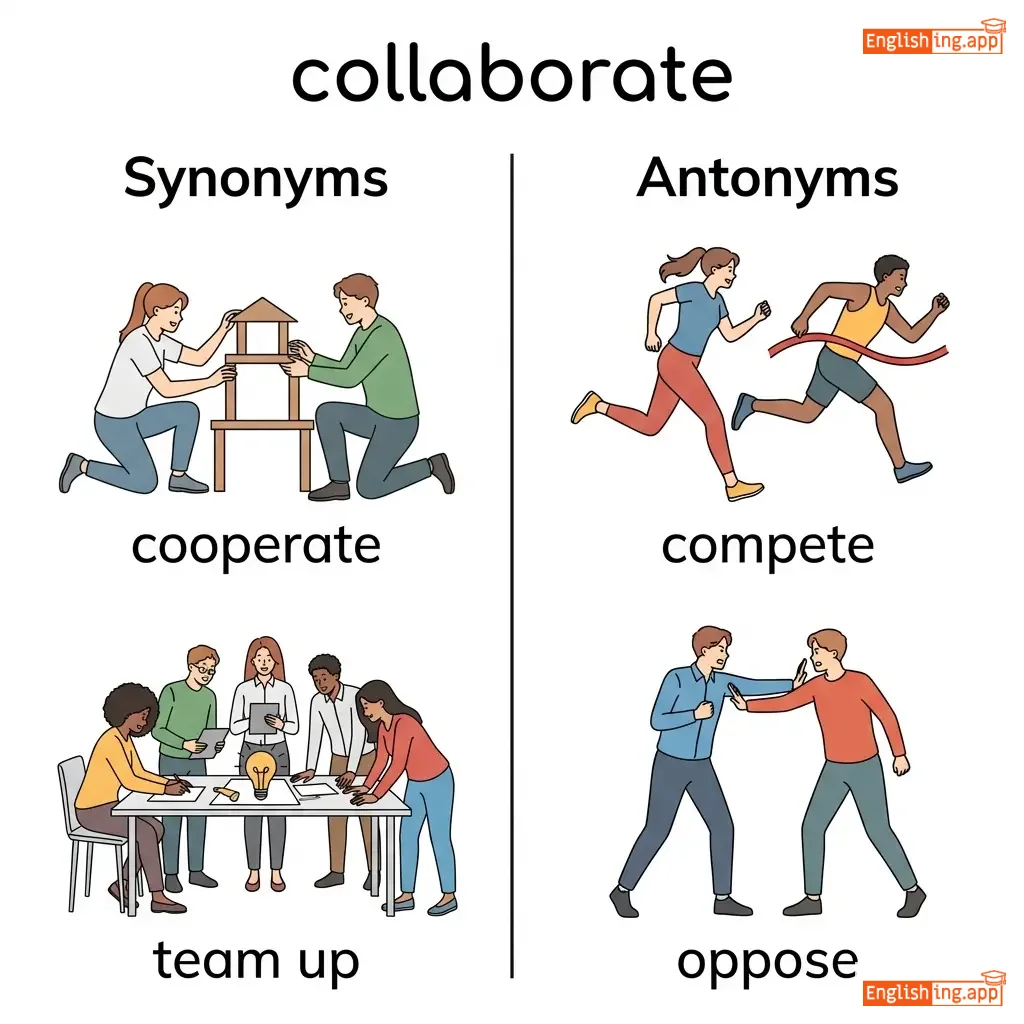
cooperate, team up, work together, join forces, partner
••••••
|
compete, oppose, resist
••••••
|
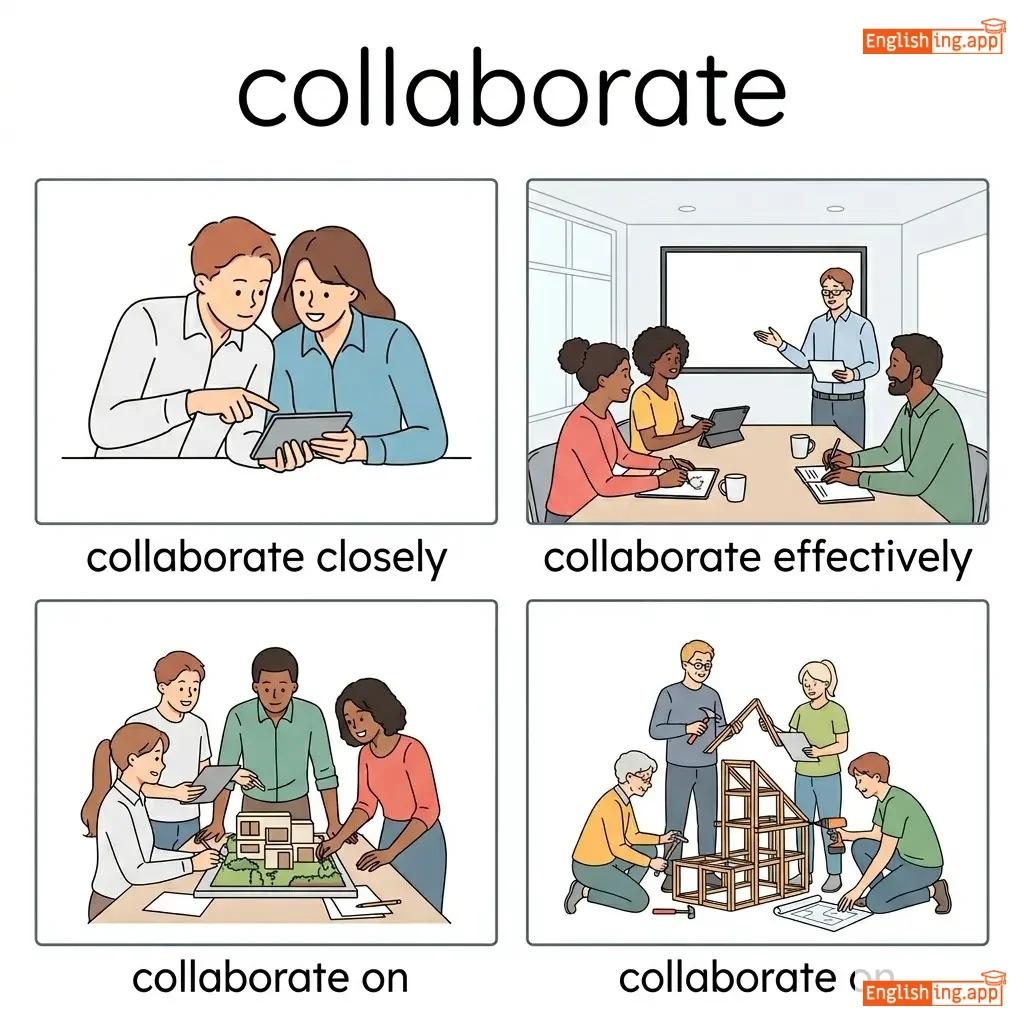
collaborate closely, collaborate effectively, collaborate on, collaborate with
••••••
|
合作就像与他人共同完成一个创意项目。
••••••
|
|
🤝
••••••
|
/kəˌlæbəˈreɪʃən/
noun
(kēlābóluòxìn)
••••••
|

|
合作
hezuo
••••••
|
- •••••• | - •••••• | - •••••• | - •••••• |
the action of working together with others to produce or achieve something
••••••
|
The project was a result of close collaboration between two companies. |
该项目是两家公司之间密切合作的结果。
Gāi xiàngmù shì liǎng jiā gōngsī zhī jiān mìqiè hézuò de jiéguǒ.
••••••
|
in collaboration with |
working together with someone or an organization
••••••
|
与...合作
yǔ... hézuò
••••••
|
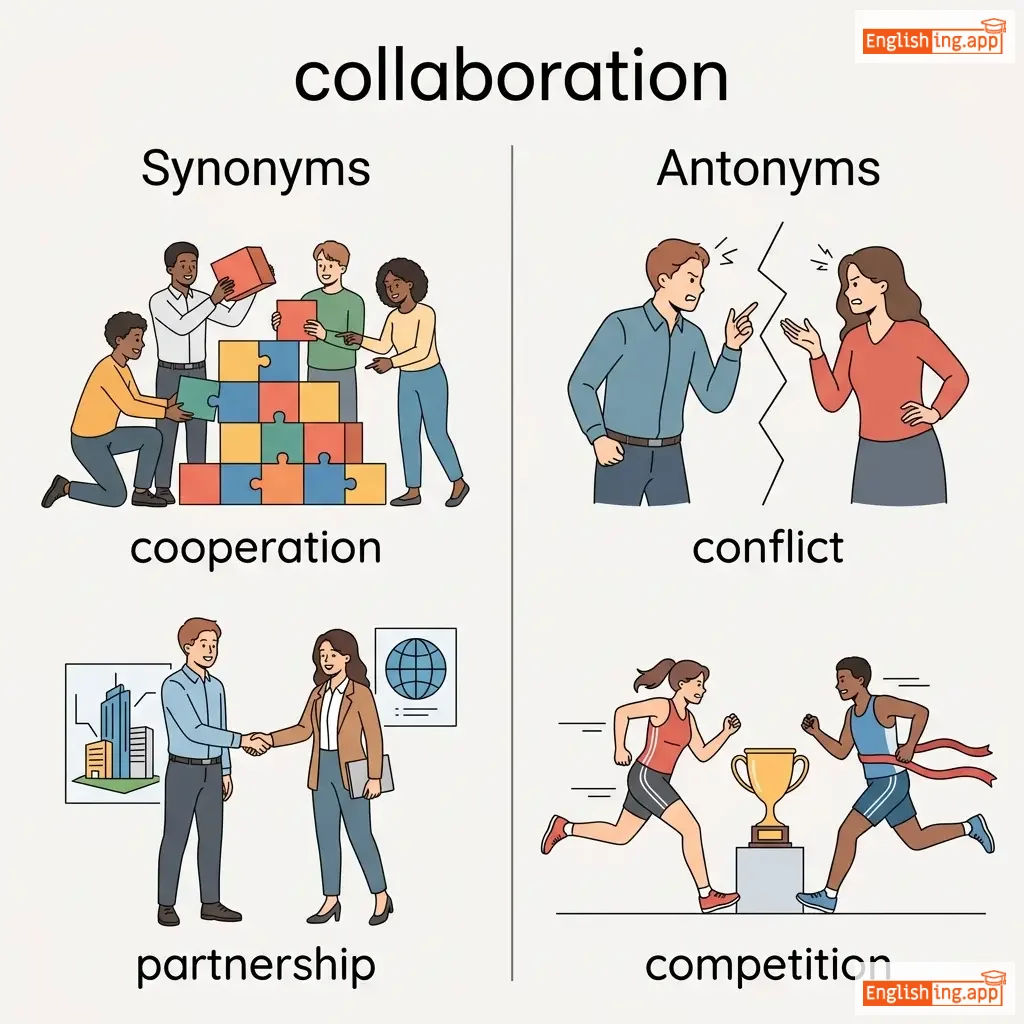
cooperation, partnership, teamwork, alliance, association
••••••
|
conflict, competition
••••••
|
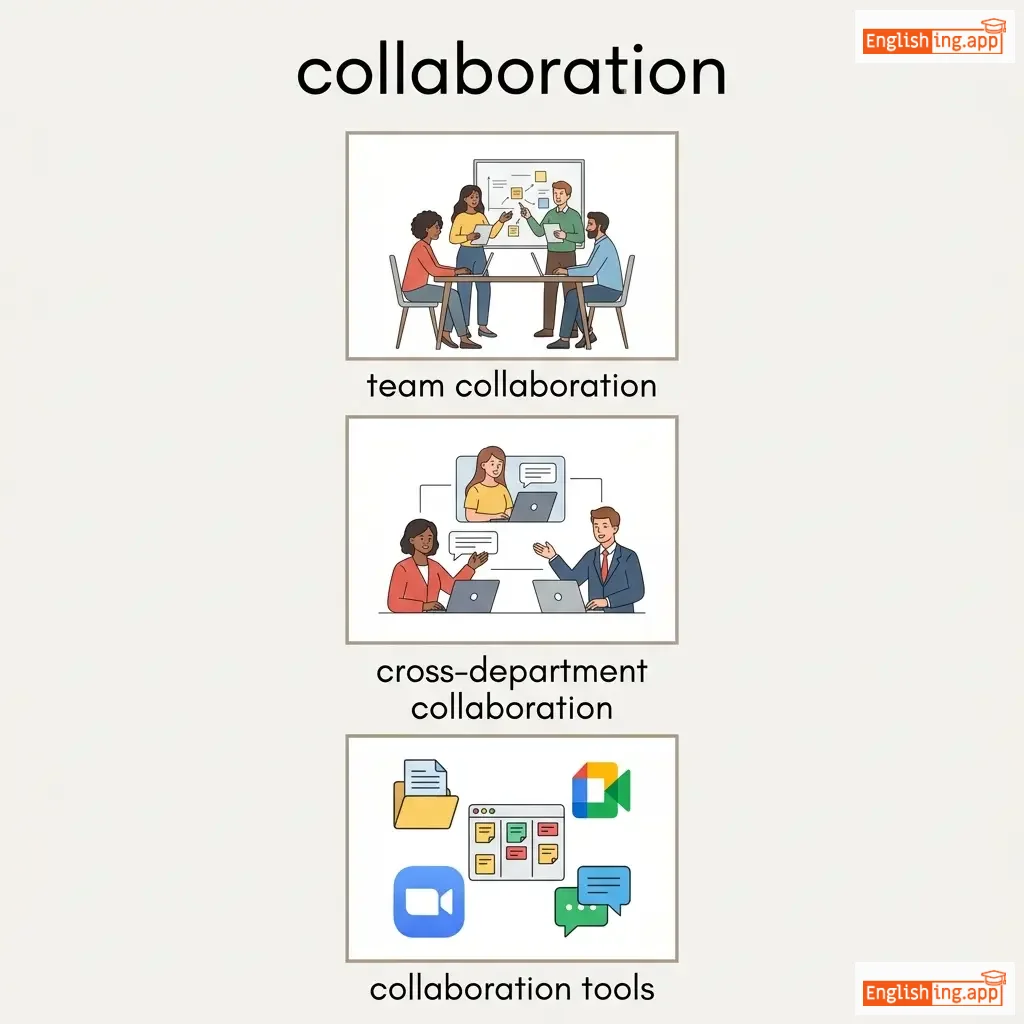
team collaboration, cross-department collaboration, collaboration tools, creative collaboration
••••••
|
Co + labor = 一起工作 → Collaboration 意味着团队合作 🤝
••••••
|
|
🏚️
••••••
|
/kəˈlæps/
verb
(kè lǎ pǔ sī)
••••••
|
- •••••• |
崩塌
bēng tā
••••••
|
collapsed
kè lǎ pǔ sī dé
••••••
|
collapsed
kè lǎ pǔ sī dé
••••••
|
collapses
kè lǎ pǔ sī zhe
••••••
|
collapsing
kè lǎ pǔ sī zhōng
••••••
|
to fall down or inward suddenly; to break down completely
••••••
|
The old building collapsed after the earthquake.
老建筑在地震后倒塌了。
••••••
|
老建筑在地震后倒塌了。
Lǎo jiànzhú zài dìzhèn hòu dǎotā le.
••••••
|
collapse under pressure
在压力下倒塌
••••••
|
to fail or give way when faced with stress or difficulties
••••••
|
在压力下倒塌
Zài yālì xià dǎotā
••••••
|
fall, crumble, cave in, break down, disintegrate
••••••
|
stand, rise, succeed
••••••
|
building collapse, collapse suddenly, collapse completely, collapse under pressure
••••••
|
崩塌就像在压力下倒塌
••••••
|
|
👔
••••••
|
/ˈkɒliːɡ/
noun
(kólìgé)
••••••
|
- •••••• |
同事
tongshi
••••••
|
- •••••• | - •••••• | - •••••• | - •••••• |
a person with whom one works, especially in a profession or business
••••••
|
She invited her colleagues to the office party. |
她邀请了她的同事参加办公室聚会。
Ta yaoqing le ta de tongshi canjia bàngōngshì jùhuì.
••••••
|
colleague at work |
a fellow worker in the same organization
••••••
|
工作中的同事
gongzuo zhong de tongshi
••••••
|
coworker, associate, partner, teammate, companion
••••••
|
opponent, rival
••••••
|
close colleague, trusted colleague, senior colleague, colleague at work
••••••
|
Colleague 意思是同事,所有的同事就是在工作中一起的伙伴。
••••••
|
|
📦
••••••
|
/kəˈlekt/
verb
(kólèkt)
••••••
|

|
收集
shōují
••••••
|
collected
kólèkted
••••••
|
collected
kólèkted
••••••
|
collects
kólèkts
••••••
|
collecting
kólèkting
••••••
|
To gather or bring together items from different places.
••••••
|
She likes to collect stamps as a hobby.
她喜欢作为爱好收集邮票。
••••••
|
她喜欢作为爱好收集邮票。
Tā xǐhuān zuòwéi àihào shōují yóupiào.
••••••
|
collect yourself
冷静一下
••••••
|
To regain control over one's emotions or thoughts.
••••••
|
冷静一下
lěngjìng yīxià
••••••
|
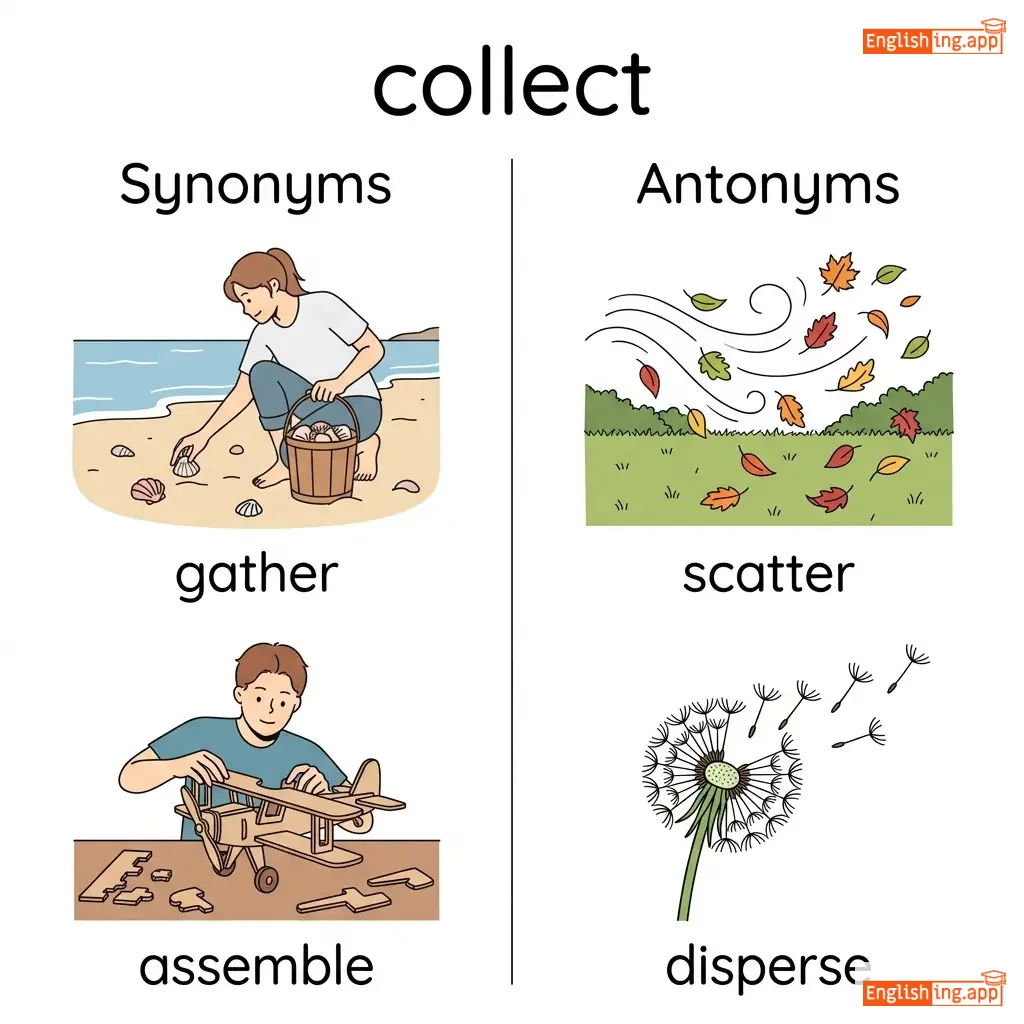
gather, assemble, accumulate, amass, hoard
••••••
|
scatter, disperse, distribute
••••••
|
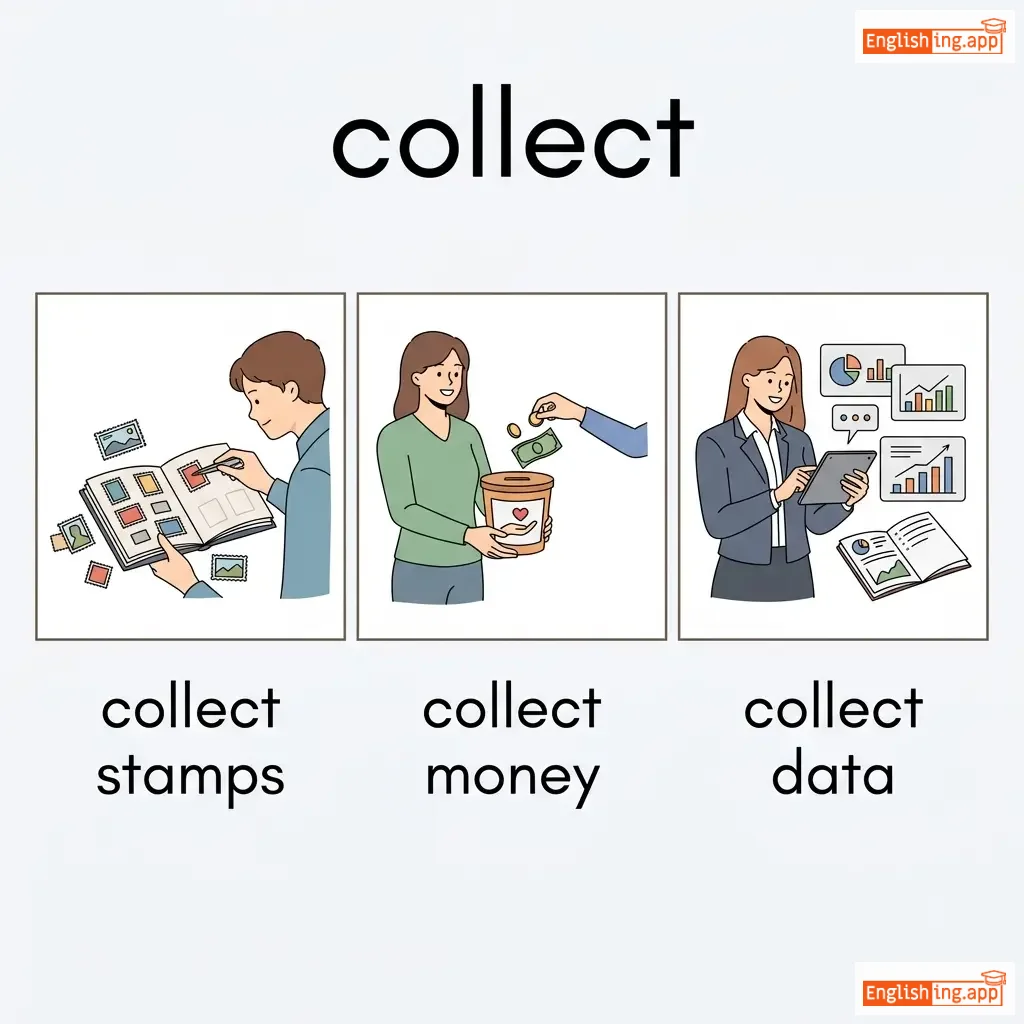
collect stamps, collect money, collect data, collect garbage
••••••
|
Collect (收集) 所有邮票和回忆。
••••••
|
|
📚
••••••
|
/kəˈlɛkʃən/
noun
(收集)
••••••
|
- •••••• |
收藏
shōují
••••••
|
- •••••• | - •••••• | - •••••• | - •••••• |
a group of things gathered together
••••••
|
She has a large collection of rare books.
她有一个很大的珍稀书籍收藏。
••••••
|
她有一个很大的珍稀书籍收藏。
Tā yǒu yīgè hěn dà zhēn xī shūjí shōucáng.
••••••
|
debt collection
债务催收
••••••
|
the act of recovering money owed
••••••
|
债务催收
zhài wù cuī shōu
••••••
|
group, set, assortment, accumulation, compilation
••••••
|
scattering, dispersal
••••••
|
collection of books, stamp collection, art collection, debt collection
••••••
|
Collection的意思是收藏 📚 - 把东西收集起来就是一个收藏。
••••••
|
|
👥
••••••
|
/kəˈlɛktɪv/
adjective
(kəˈlɛktɪv)
••••••
|

|
集体的
jítǐ de
••••••
|
- •••••• | - •••••• | - •••••• | - •••••• |
done by people acting as a group
••••••
|
The decision was made by collective agreement. |
这个决定是通过集体协议做出的。
Zhège juédìng shì tōngguò jítǐ xiéyì zuòchū de.
••••••
|
collective effort |
a combined effort by many people working together
••••••
|
集体努力
jítǐ nǔlì
••••••
|
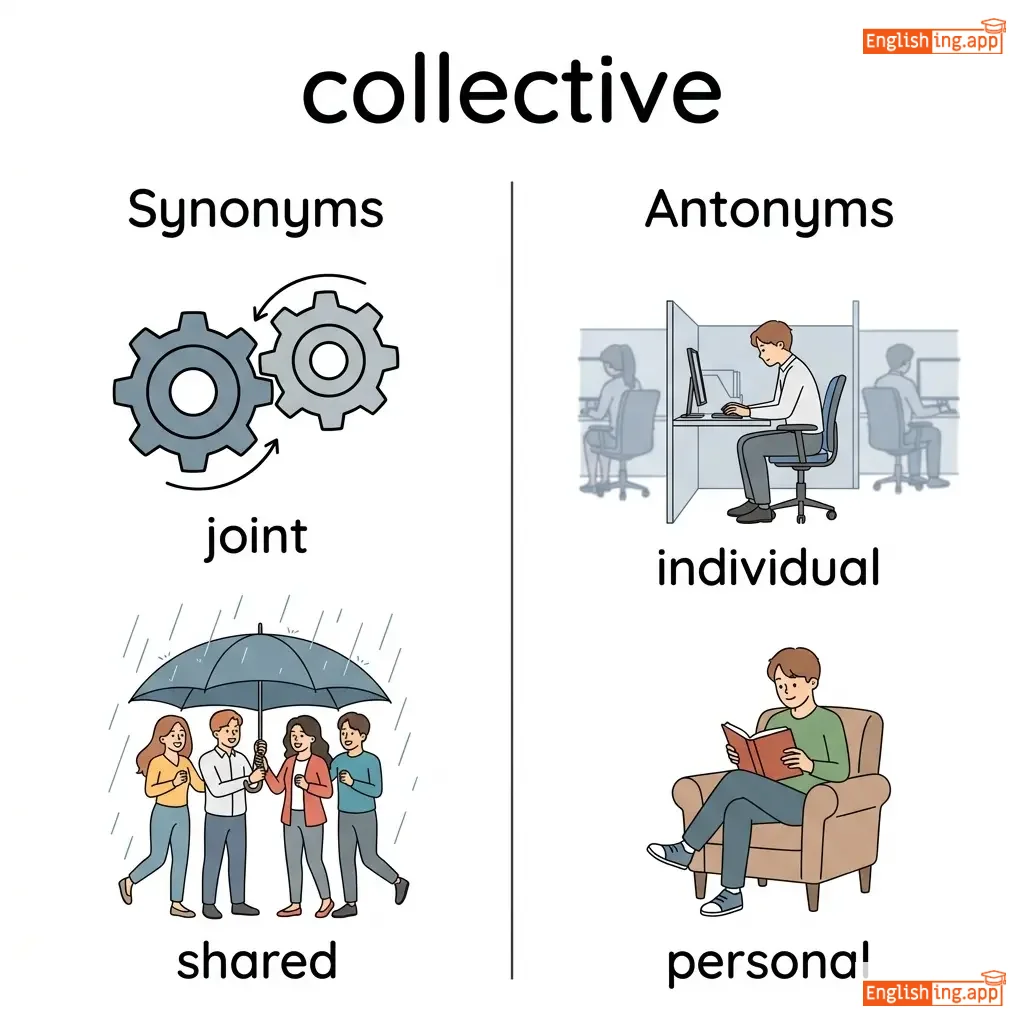
joint, shared, communal, mutual, cooperative
••••••
|
individual, personal
••••••
|
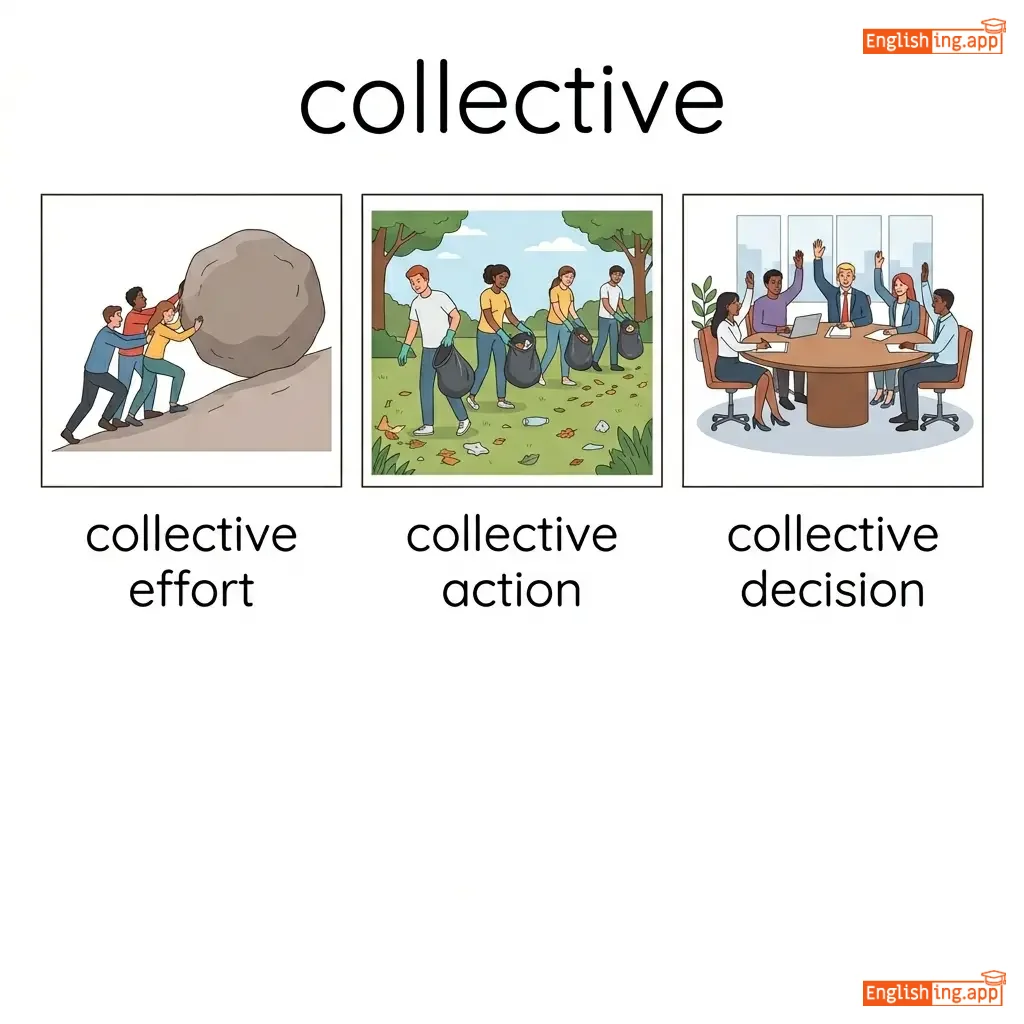
collective effort, collective action, collective decision, collective responsibility
••••••
|
集体努力意味着大家齐心协力。
••••••
|
|
📮
••••••
|
/kəˈlɛktər/
noun
••••••
|
- •••••• | - •••••• | - •••••• | - •••••• | - •••••• | - •••••• |
a person who collects things as a hobby or job
••••••
|
He is a stamp collector with thousands of rare items. |
- •••••• |
tax collector |
a government official who collects taxes
••••••
|
- •••••• |
accumulator, gatherer, curator, hoarder
••••••
|
spender, giver
••••••
|
stamp collector, coin collector, tax collector, art collector
••••••
|
No •••••• |

