Vocabularios

Descubra, aprenda y domine el vocabulario en inglés

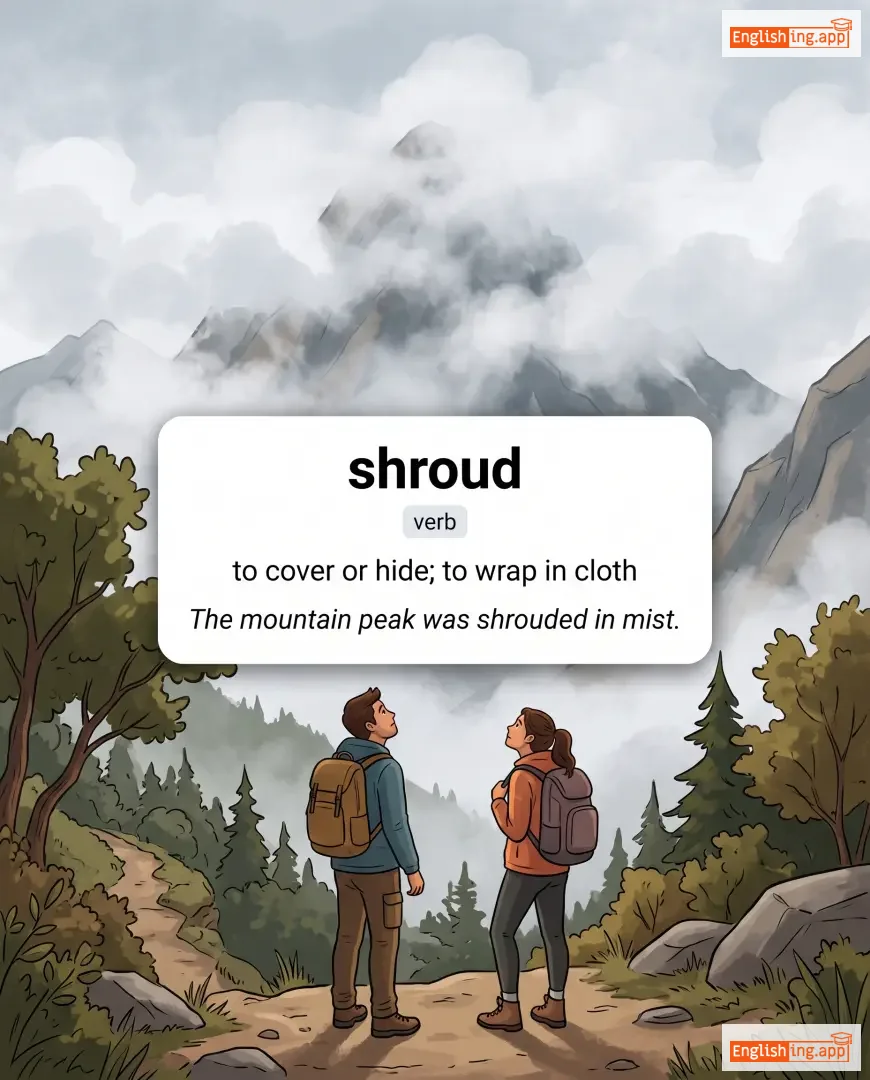
shroud definition card — visual illustration of the meaning
verb
/ʃraʊd/
envolver (envolver)

to cover or hide; to wrap in cloth

"The mountain peak was shrouded in mist."

"La cima de la montaña estaba envuelta en niebla." (La cima de la montaña estaba envuelta en niebla.)
verb
/ʃrʌɡ/
encogerse de hombros (encogerse de hombros)

To raise and lower the shoulders to express uncertainty or indifference.

"He shrugged when asked about the missing file."

"Él se encogió de hombros cuando le preguntaron sobre el archivo perdido." (Él se encogió de hombros cuando le preguntaron sobre el archivo perdido.)
verb
/ʃʌk/
pelar (pelar)

To remove the outer covering, such as the husk of corn or shell of shellfish.

"She learned how to shuck oysters quickly."

"Ella aprendió a pelar ostras rápidamente." (Ella aprendió a pelar ostras rápidamente.)
verb
/ˈʃʌdər/
temblar (temblar)

to tremble or shake suddenly, often due to fear, cold, or strong emotion

"She shuddered at the thought of walking alone in the dark forest."

"Ella se estremeció al pensar en caminar sola en el oscuro bosque." (Ella se estremeció al pensar en caminar sola en el oscuro bosque.)
verb
/ˈʃʌfəl/
caminar arrastrando los pies / mezclar (caminar arrastrando los pies / mezclar)

to walk by dragging one's feet along or without lifting them fully; to mix or rearrange

"He shuffled the cards before dealing them."

"Él barajó las cartas antes de repartirlas." (El barajó las cartas antes de repartirlas.)
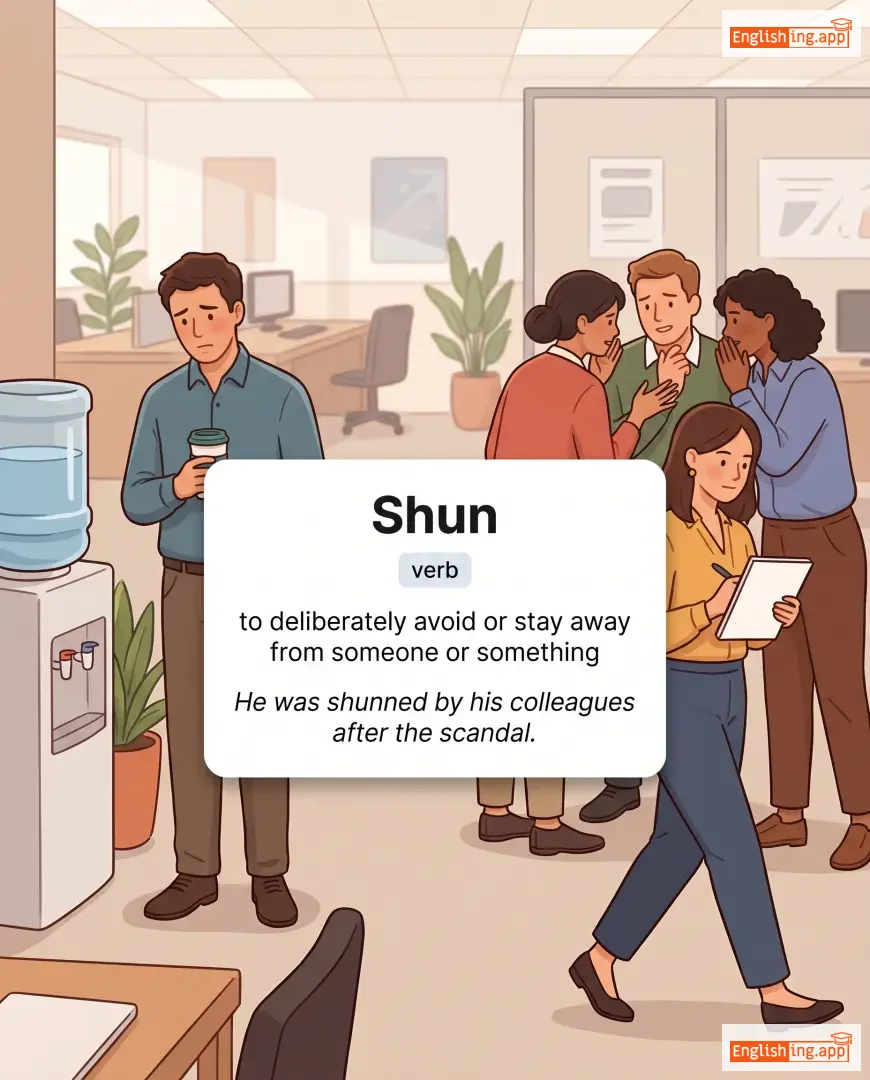
Shun definition card — visual illustration of the meaning
verb
/ʃʌn/
rechazar (rechazar)

to deliberately avoid or stay away from someone or something

"He was shunned by his colleagues after the scandal."

"Fue rechazado por sus colegas después del escándalo." (Fue rechazado por sus colegas después del escándalo.)
verb
/ʃʌnt/
desviar (desviar)

to move or turn aside; to push or divert from one track to another

"The train was shunted onto a different track."

"El tren fue desviado a otra vía." (El tren fue desviado a otra via.)
verb
/ʃʌt/
cerrar (cerrar)

to close something, especially a door or window

"Please shut the door before you leave."

"Por favor, cierra la puerta antes de irte." (Por favor, cierra la puerta antes de irte.)
noun
/ˈʃʌtəl/
vehículo que viaja regularmente entre dos lugares (vehiculo que viaja regularmente entre dos lugares)

a vehicle or craft that travels regularly between two places.

"The airport shuttle runs every 30 minutes."

"El servicio de transporte del aeropuerto circula cada 30 minutos." (El servicio de transporte del aeropuerto circula cada 30 minutos.)
adjective
/ʃaɪ/
tímido (timido)

Being reserved or nervous around other people.

"The child was too shy to speak in class."

"El niño era demasiado tímido para hablar en clase." (El niño era demasiado tímido para hablar en clase.)
noun
/ˈʃaɪstər/
estafador (estafador)

a person, especially a lawyer, who uses unscrupulous or dishonest methods

"The businessman was exposed as a shyster who cheated clients."

"El hombre de negocios fue expuesto como un estafador que engañaba a los clientes." (El hombre de negocios fue expuesto como un estafador que engañaba a los clientes.)
noun
/ˈsɪbɪləns/
sonido susurrante (sonido susurrante)

A hissing or hushing sound, especially in speech with 's' or 'sh'.

"The poet used sibilance to create a soft, hissing effect in the verse."

"El poeta usó la sibilancia para crear un efecto suave de siseo en el verso." (El poeta uso la sibilancia para crear un efecto suave de siseo en el verso.)
adjective
/ˈsɪbɪlənt/
con sonido sibilante (con sonido sibilante)

Making or characterized by a hissing sound.

"The word 'snake' starts with a sibilant sound."

"La palabra 'snake' comienza con un sonido sibilante." (La palabra 'snake' comienza con un sonido sibilante.)
verb
/ˈsɪbəleɪt/
pronunciar con silbido (pronunciar con silbido)

To pronounce with a hissing sound.

"The actor sibilated his lines for dramatic effect."

"El actor pronunció sus líneas con un silbido para un efecto dramático." (El actor pronuncio sus lineas con un silbido para un efecto dramatico.)
noun
/ˈsɪblɪŋ/
hermano/a (hermano/a)

A brother or sister.

"She has three siblings, two brothers and one sister."

"Ella tiene tres hermanos, dos hermanos y una hermana." (Ella tiene tres hermanos, dos hermanos y una hermana.)
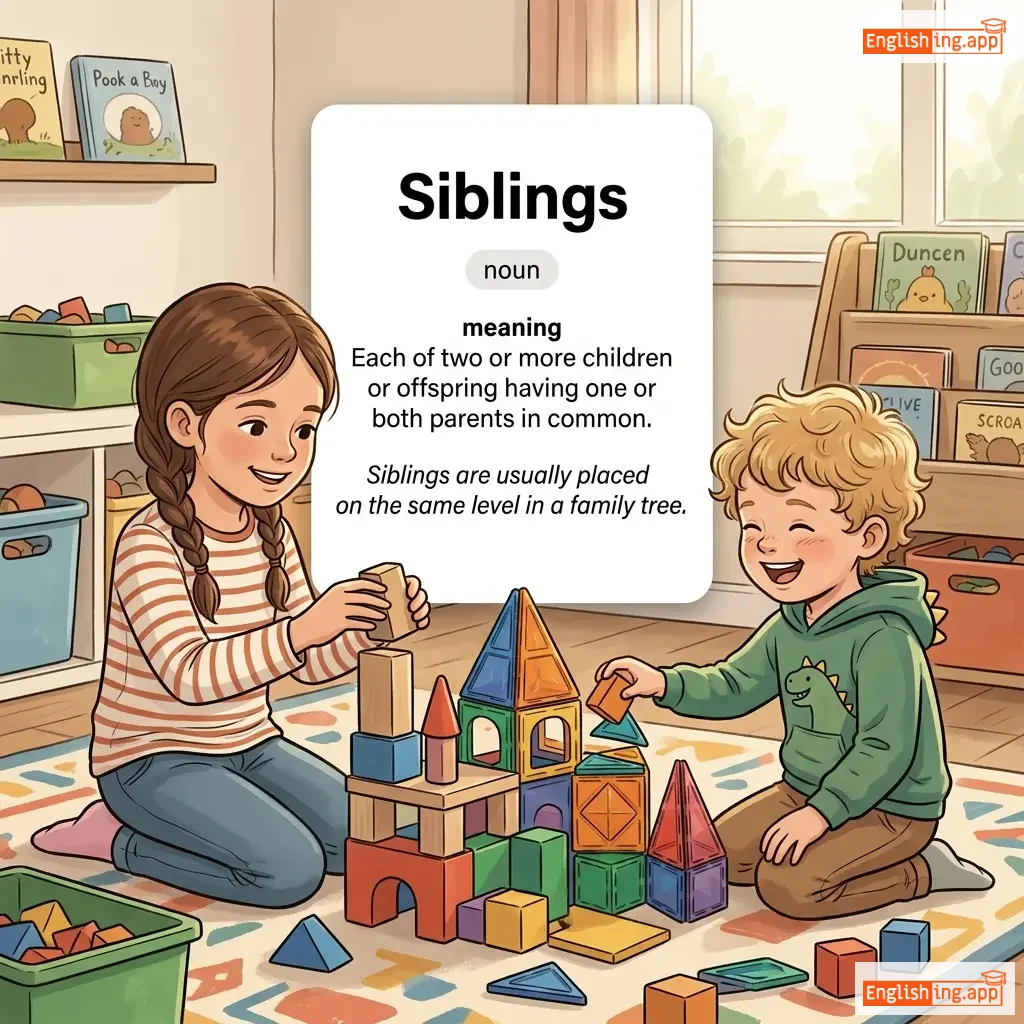
Siblings definition card — visual illustration of the meaning
noun
ˈsɪblɪŋz
hermanos (hermanos)

Each of two or more children or offspring having one or both parents in common.

"Siblings are usually placed on the same level in a family tree."

"Los hermanos generalmente están en el mismo nivel en el árbol genealógico de la familia." (Los hermanos generalmente estan en el mismo nivel en el arbol genealogico de la familia.)
adjective
/ˈsɪbɪlaɪn/
sibila (sibila)

Prophetic, mysterious, or cryptic in meaning.

"The old woman gave a sibylline warning about the future."

"La anciana dio una advertencia sibila sobre el futuro." (La anciana dio una advertencia sibila sobre el futuro.)
adjective
/sɪk/
enfermo (enfermo)

feeling unwell or suffering from illness

"She stayed home because she was feeling sick."

"Ella se quedó en casa porque se sentía enferma." (Eya se kedo en kasa porque se sentia enferma)
noun
/ˈsɪk.əl/
hoz (hoz)

a tool with a curved metal blade and short handle used for cutting grain crops

"The farmer harvested wheat using a traditional sickle."

"El agricultor cosechó trigo usando una hoz tradicional." (El agricultor cosechó trigo usando una hoz tradicional.)
adjective
/ˈsɪk.li/
débil; enfermizo; pálido (debil)

weak and unhealthy; prone to illness; appearing weak or pale

"The sickly child needed extra care and attention."

"El niño enfermizo necesitaba atención y cuidados especiales." (El nino enfermizo necesitaba atencion y cuidados especiales)
noun
/ˈsɪk.nəs/
enfermedad; dolencia (enfermedad; dolencia)

the state of being ill; a disease or illness

"She took time off work due to sickness."

"Ella tomó tiempo libre del trabajo debido a la enfermedad." (Ella tomó tiempo libre del trabajo debido a la enfermedad.)
noun
/saɪd/
lado (lado)

a position to the left or right of something

"The store is on the side of the road."

"La tienda está en el lado de la carretera." (La tienda esta en el lado de la carretera.)
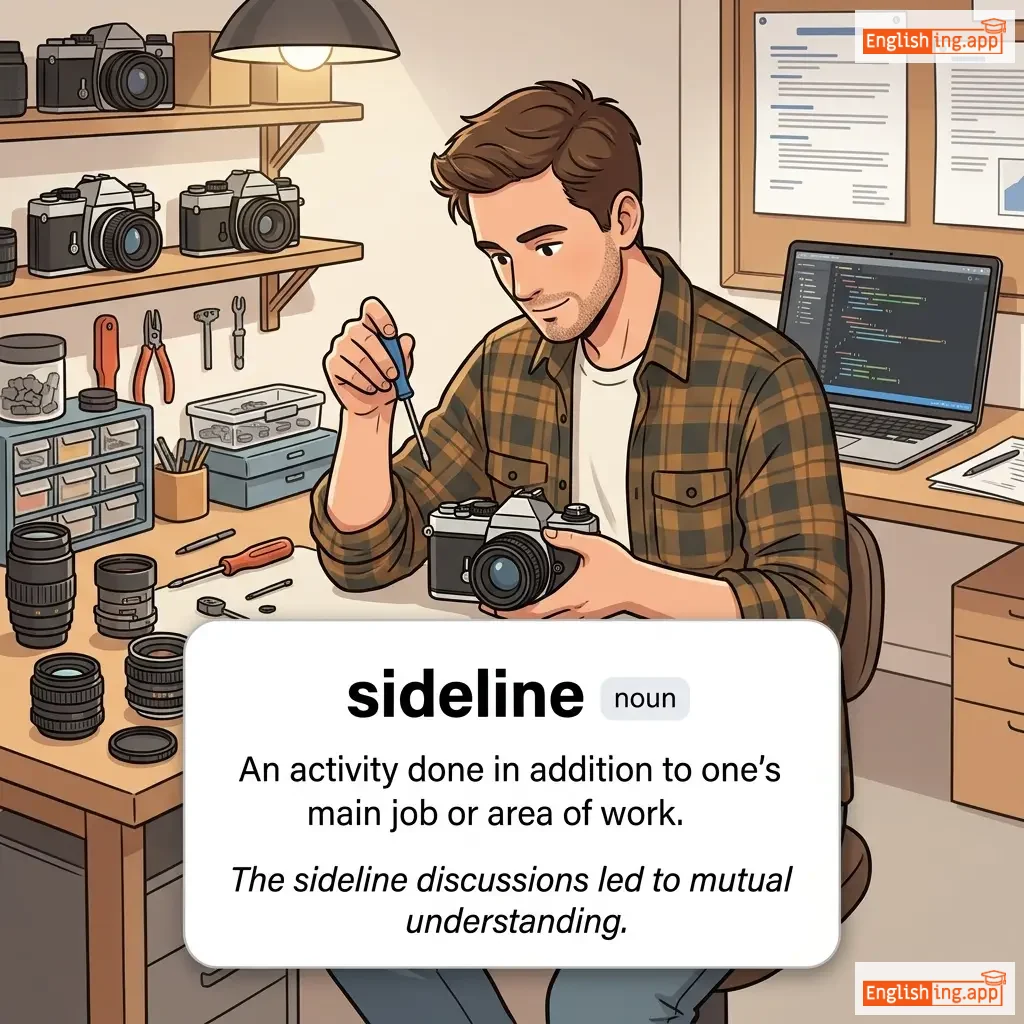
sideline definition card — visual illustration of the meaning
noun
/ˈsaɪd.laɪn/
actividad secundaria (actividad secundaria)

An activity done in addition to one's main job or area of work.

"The sideline discussions led to mutual understanding."

"Las discusiones secundarias llevaron a una comprensión mutua." (Las discusiones secundarias llevaron a una comprensión mutua.)
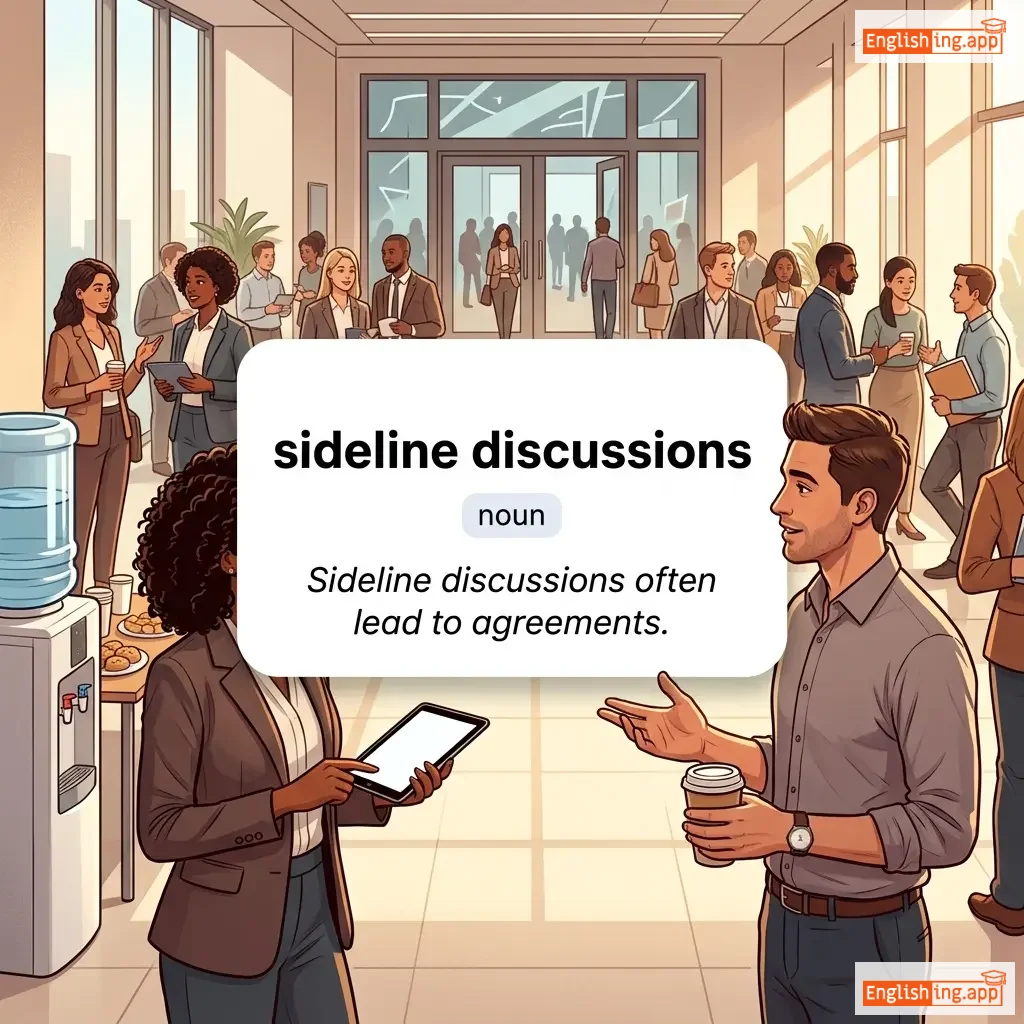
sideline discussions definition card — visual illustration of the meaning
noun
/ˈsaɪd.laɪn dɪˈskʌʃənz/
discusiones secundarias (discusiones secundarias)

Informal or secondary conversations that occur outside the main agenda of a formal meeting.

"Sideline discussions often lead to agreements."

"Las discusiones secundarias a menudo conducen a acuerdos." (Las discusiones secundarias a menudo conducen a acuerdos.)
adjective, adverb
/ˈsaɪdlɔːŋ/
mirada oblicua (mirada obliqua)

Directed to the side; indirect, furtive, or not straightforward.

"She gave him a sidelong glance across the room."

"Ella le lanzó una mirada oblicua a través de la habitación." (Ella le lanzo una mirada oblicua a traves de la habitacion.)
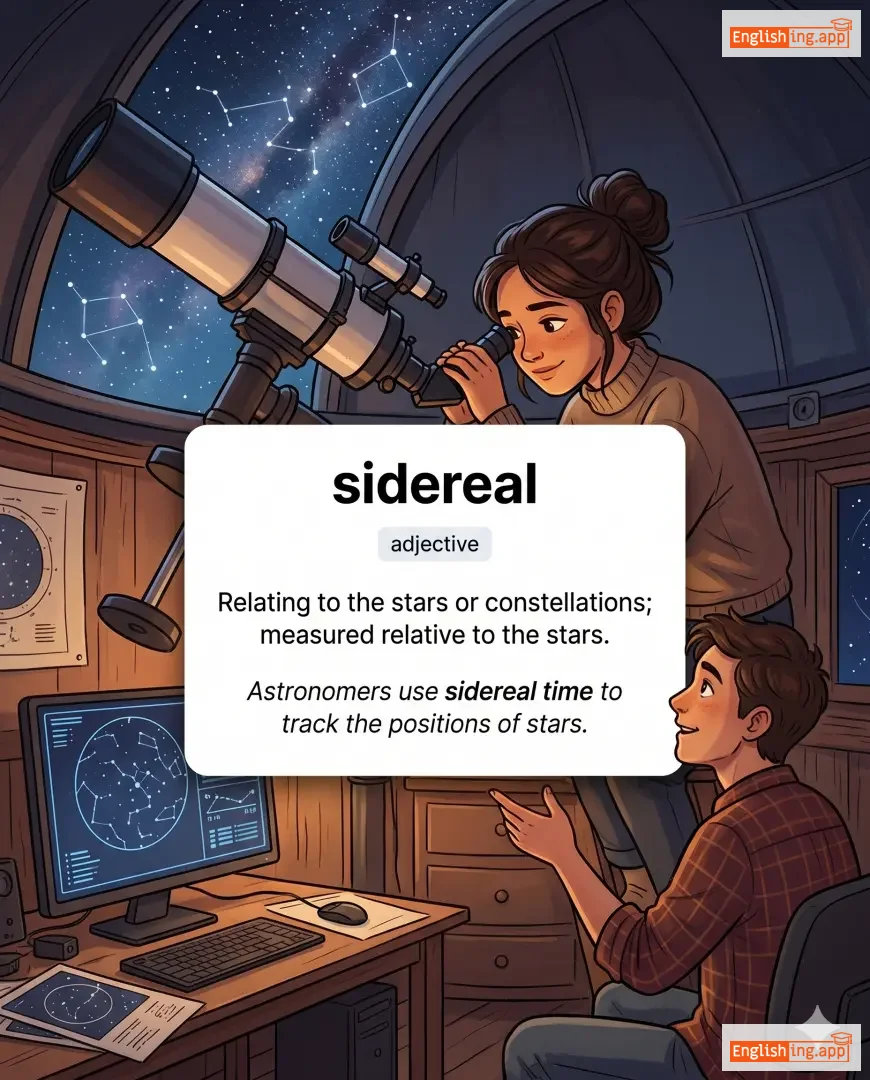
sidereal definition card — visual illustration of the meaning
adjective
/saɪˈdɪəriəl/
sideral (sideral)

Relating to the stars or constellations; measured relative to the stars.

"Astronomers use sidereal time to track the positions of stars."

"Los astrónomos usan el tiempo sideral para rastrear las posiciones de las estrellas." (Los astrónomos usan el tiempo sideral para rastrear las posiciones de las estrellas.)
verb
/ˈsaɪdˌstɛp/
eludir (eludir)

To avoid something by stepping aside; to evade a problem or question indirectly.

"The politician tried to sidestep the difficult question."

"El político intentó eludir la difícil pregunta." (El político intentó eludir la difícil pregunta.)
verb
/ˈsaɪdˌtræk/
desviar (desviar)

To distract from the main subject or activity.

"She was sidetracked by an unexpected phone call."

"Ella se desvió por una llamada telefónica inesperada." (Ella se desvió por una llamada telefónica inesperada.)
noun
/ˈsaɪdˌwɔːk/
acera (acera)

a paved path for pedestrians at the side of a street.

"Children were playing on the sidewalk."

"Los niños estaban jugando en la acera." (Los niños estaban jugando en la acera.)
noun
/siːdʒ/
asedio (asedio)

A military operation in which a place is surrounded to force its surrender.

"The castle fell after a long siege."

"El castillo cayó después de un largo asedio." (El castillo cayo despues de un largo asedio.)
Sierra Club definition card — visual illustration of the meaning
noun
/siˈɛrə klʌb/
Sierra Club (Sierra Club)

An American environmental organization founded in 1892 by John Muir, focused on promoting conservation of the natural environment by influencing public policy decisions.

"John Muir founded the Sierra Club in 1892 to protect wild areas."

"John Muir fundó el Sierra Club en 1892 para proteger áreas salvajes." (John Muir fundo el Sierra Club en 1892 para proteger areas salvajes.)
noun
/sɪv/
colador (colador)

a utensil with a mesh or perforated bottom, used for straining or sifting

"She used a sieve to strain the pasta."

"Ella usó un colador para colar la pasta." (Ella usó un colador para colar la pasta.)
noun
/siːdʒ/
asedio (asedio)

a military operation to capture a place by surrounding it and cutting off supplies

"The siege of the castle lasted for three months."

"El asedio del castillo duró tres meses." (El asedio del castillo duró tres meses.)
verb
/sɪft/
tamizar / examinar cuidadosamente (tamizar / examinar cuidadosamente)

to separate or sort through carefully, often using a sieve or by examining closely

"She sifted the flour before adding it to the cake mixture."

"Ella tamizó la harina antes de agregarla a la mezcla del pastel." (Ella tamizó la harina antes de agregarla a la mezcla del pastel.)
verb
/saɪ/
suspirar (suspirar)

to let out a long, deep breath as an expression of tiredness, relief, or sadness

"She sighed with relief when she heard the good news."

"Ella suspiró de alivio cuando escuchó las buenas noticias." (Ella suspiró de alivio cuando escuchó las buenas noticias.)
noun
/saɪt/
vista (vista)

the ability to see or something that is seen

"The sight of the sunset took her breath away."

"La vista del atardecer le quitó el aliento." (La vista del atardecer le quitó el aliento.)
👁️‍🗨️

Sightless (saitles)

adjective
/ˈsaɪt.ləs/
ciego; sin visión (ciego; sin vision)

unable to see; blind; lacking vision

"The sightless man navigated the street with his guide dog."

"El hombre ciego navegó por la calle con su perro guía." (El hombre ciego navego por la calle con su perro guia)
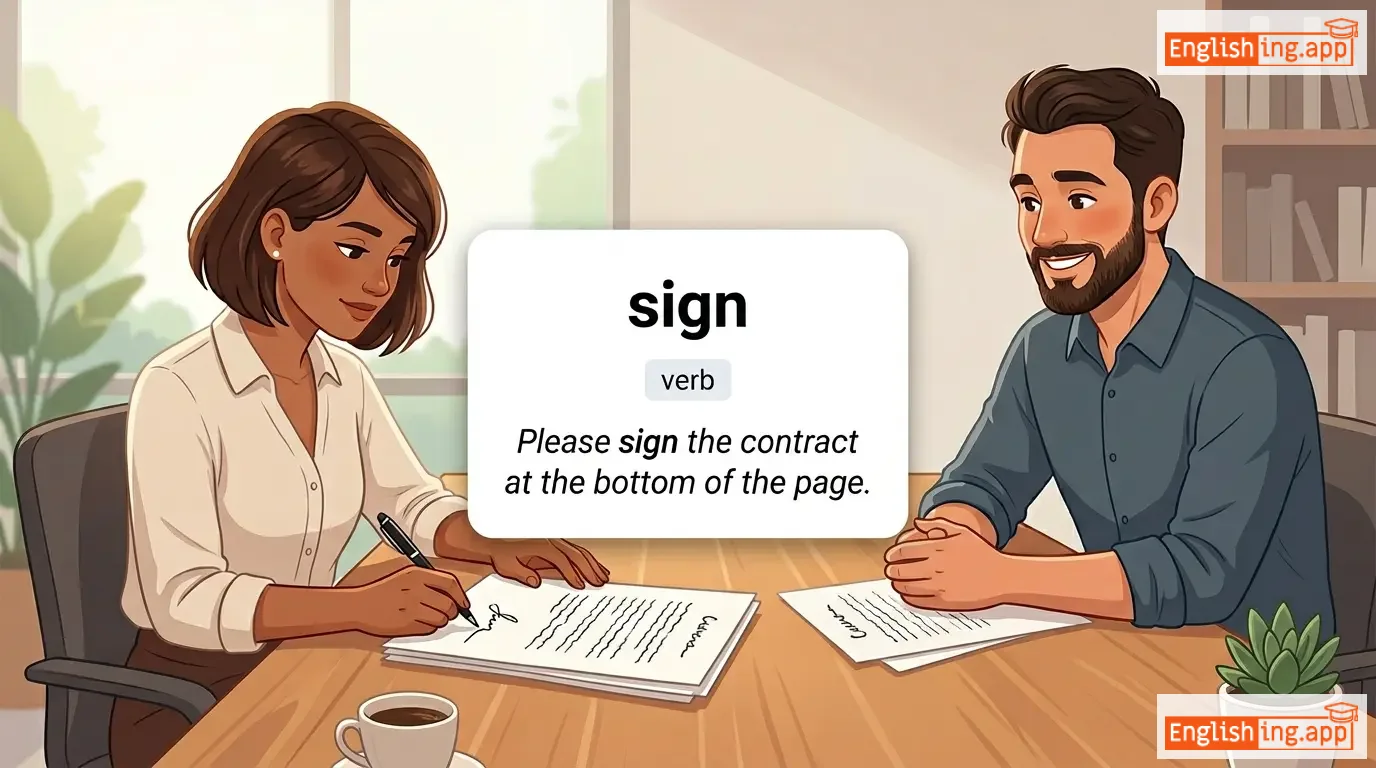
sign definition card — visual illustration of the meaning
noun
/saɪn/
señal (senal)

a symbol, mark, or gesture that conveys information or instructions

"The sign on the door said 'Closed for lunch'."

"El cartel en la puerta decía 'Cerrado por almuerzo'." (El cartel en la puerta decia 'Cerrado por almuerzo'.)
noun/verb
/ˈsɪɡnəl/
señal (senal)

a gesture, sound, or action used to convey information or instructions

"The driver gave a hand signal before turning left."

"El conductor dio una señal con la mano antes de girar a la izquierda." (El conductor dio una senal con la mano antes de girar a la izquierda.)
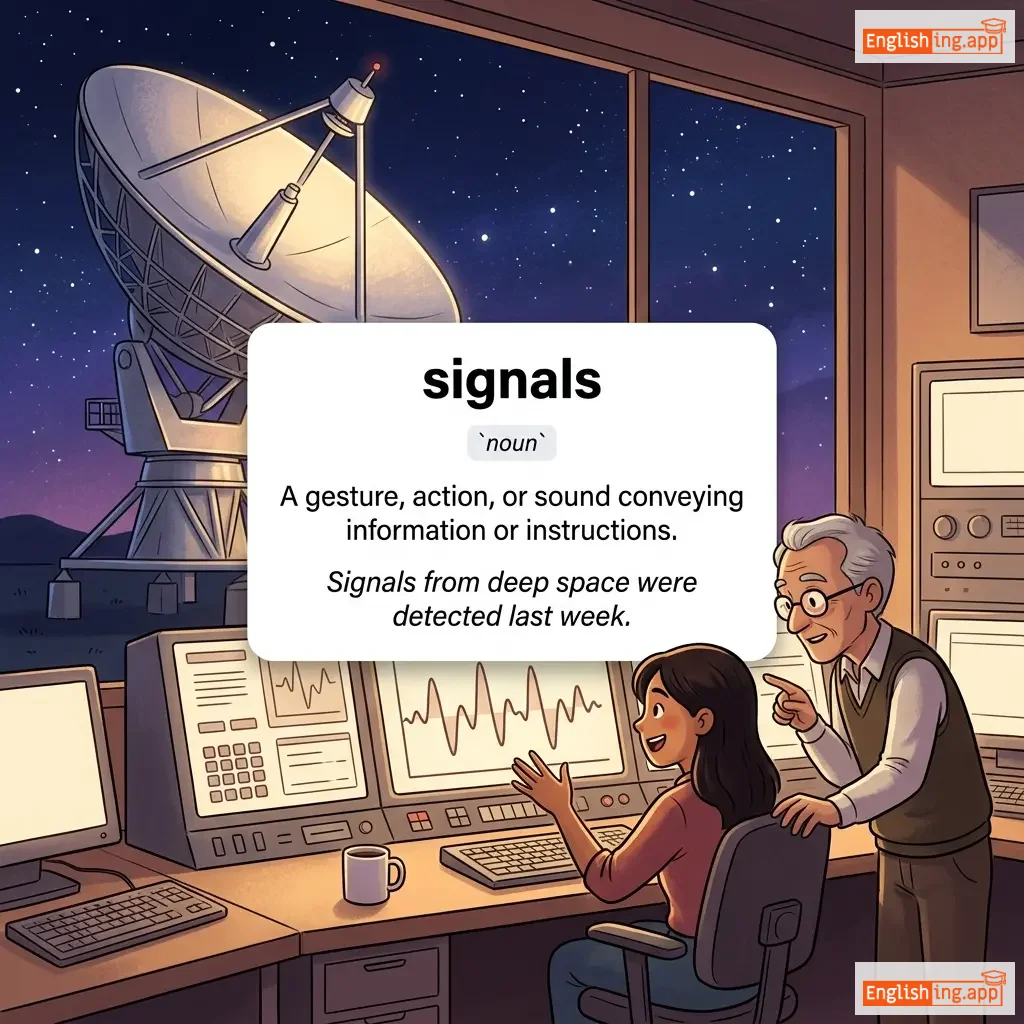
signals definition card — visual illustration of the meaning
noun
/ˈsɪɡ.nəlz/
señales (senyales)

A gesture, action, or sound conveying information or instructions.

"Signals from deep space were detected last week."

"Se detectaron señales del espacio profundo la semana pasada." (Se detectaron señales del espacio profundo la semana pasada.)
noun
/ˈsɪɡ.nə.tʃər/
firma (firma)

a person's name written by themselves, often as a form of identification or authorization

"She signed the contract with her elegant signature."

"Ella firmó el contrato con su elegante firma." (Ella firmó el contrato con su elegante firma.)
noun
/sɪɡˈnɪfɪkəns/
importancia (importancia)

the quality of being important, meaningful, or worthy of attention

"The significance of the discovery was recognized worldwide."

"La importancia del descubrimiento fue reconocida a nivel mundial." (La importancia del descubrimiento fue reconocida a nivel mundial.)
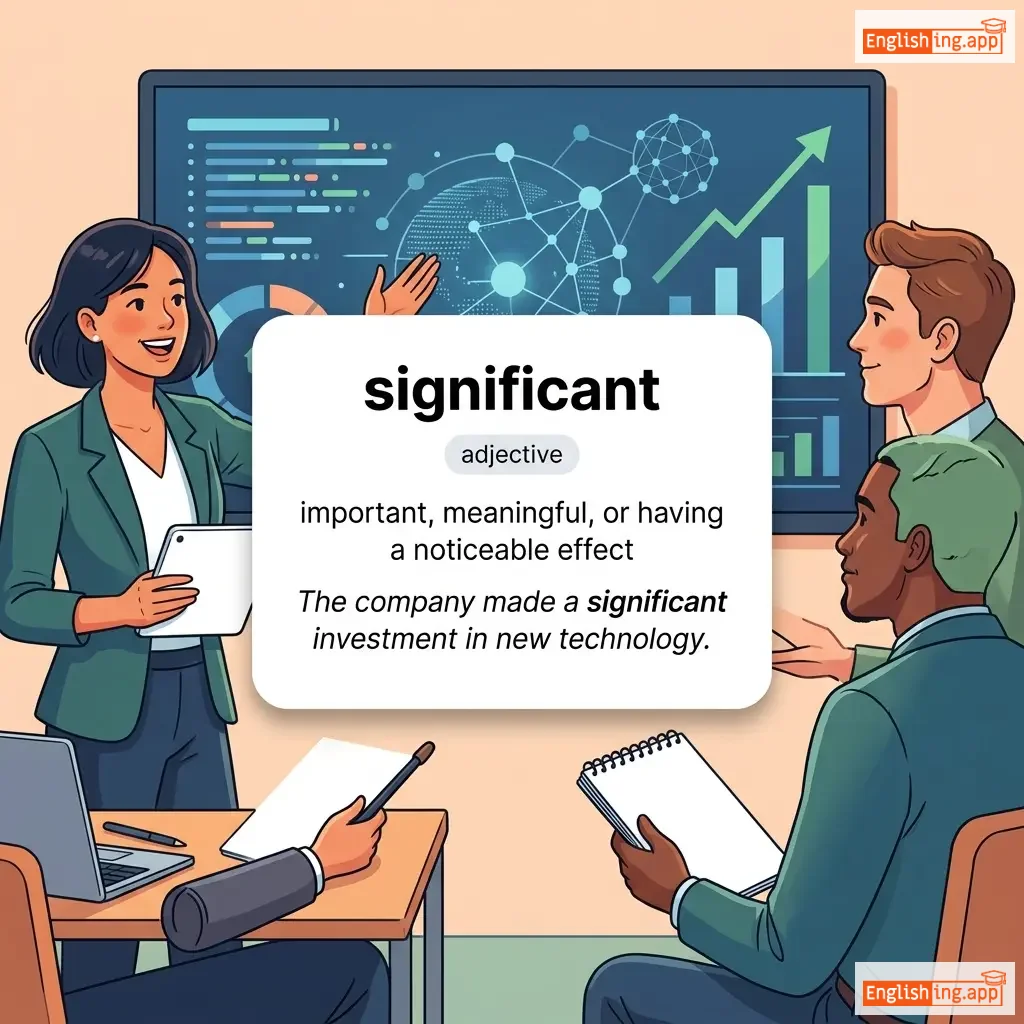
significant definition card — visual illustration of the meaning
adjective
/sɪɡˈnɪfɪkənt/
significativo (significativo)

important, meaningful, or having a noticeable effect

"The company made a significant investment in new technology."

"La empresa hizo una inversión significativa en nueva tecnología." (La empresa hizo una inversion significativa en nueva tecnologia.)
adverb
/sɪɡˈnɪfɪkəntli/
significativamente (significativamente)

in a way that is large or important enough to have an effect

"The economy has significantly improved over the last decade."

"La economía ha mejorado significativamente en la última década." (La economía ha mejorado significativamente en la última década.)
noun
/ˌsɪɡnɪfɪˈkeɪʃən/
significado (significado)

the meaning or sense conveyed by a word, action, or symbol

"The signification of the gesture was misunderstood."

"El significado del gesto fue malinterpretado." (El significado del gesto fue malinterpretado.)
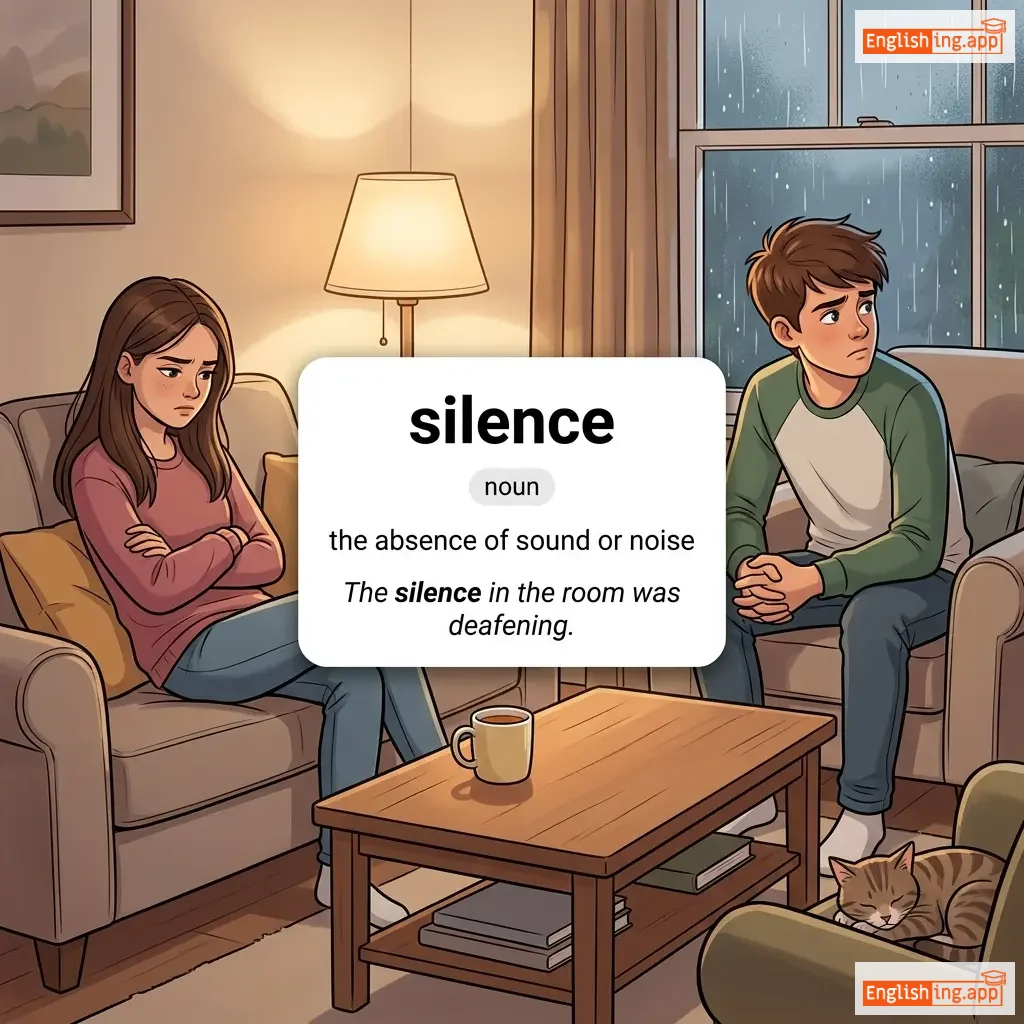
silence definition card — visual illustration of the meaning
noun
/ˈsaɪləns/
silencio (silencio)

the absence of sound or noise

"The silence in the room was deafening."

"El silencio en la habitación era ensordecedor." (El silencio en la habitacion era ensordecedor.)
adjective
/ˈsaɪlənt/
silencioso (silensioso)

not speaking or making noise

"The room was silent as everyone waited for the announcement."

"La habitación estaba silenciosa mientras todos esperaban el anuncio." (La habitacion estaba silenciosa mientras todos esperaban el anuncio.)
noun
/sɪlk/
seda (seda)

a fine, smooth fabric made from the threads produced by silkworms

"The dress was made of pure silk."

"El vestido estaba hecho de seda pura." (El vestido estaba hecho de seda pura.)
noun
/sɪlk klɔːθ/
tela de seda (tela de seda)

fabric made from natural fibers produced by silkworms

"The bride wore a beautiful dress made of silk cloth."

"La novia llevaba un hermoso vestido hecho de tela de seda." (La novia llevaba un hermoso vestido hecho de tela de seda.)
noun
/ˈsɪlk.wɜːrm/
gusano de seda (gusano de seda)

the caterpillar of a moth that produces silk fibers used to make silk fabric

"Silkworms feed on mulberry leaves to produce silk."

"Los gusanos de seda se alimentan de hojas de morera para producir seda." (Los gusanos de seda se alimentan de hojas de morera para producir seda.)