

翻訳
過去
過去分詞
三人称単数
動名詞
意味
例文
例文の翻訳
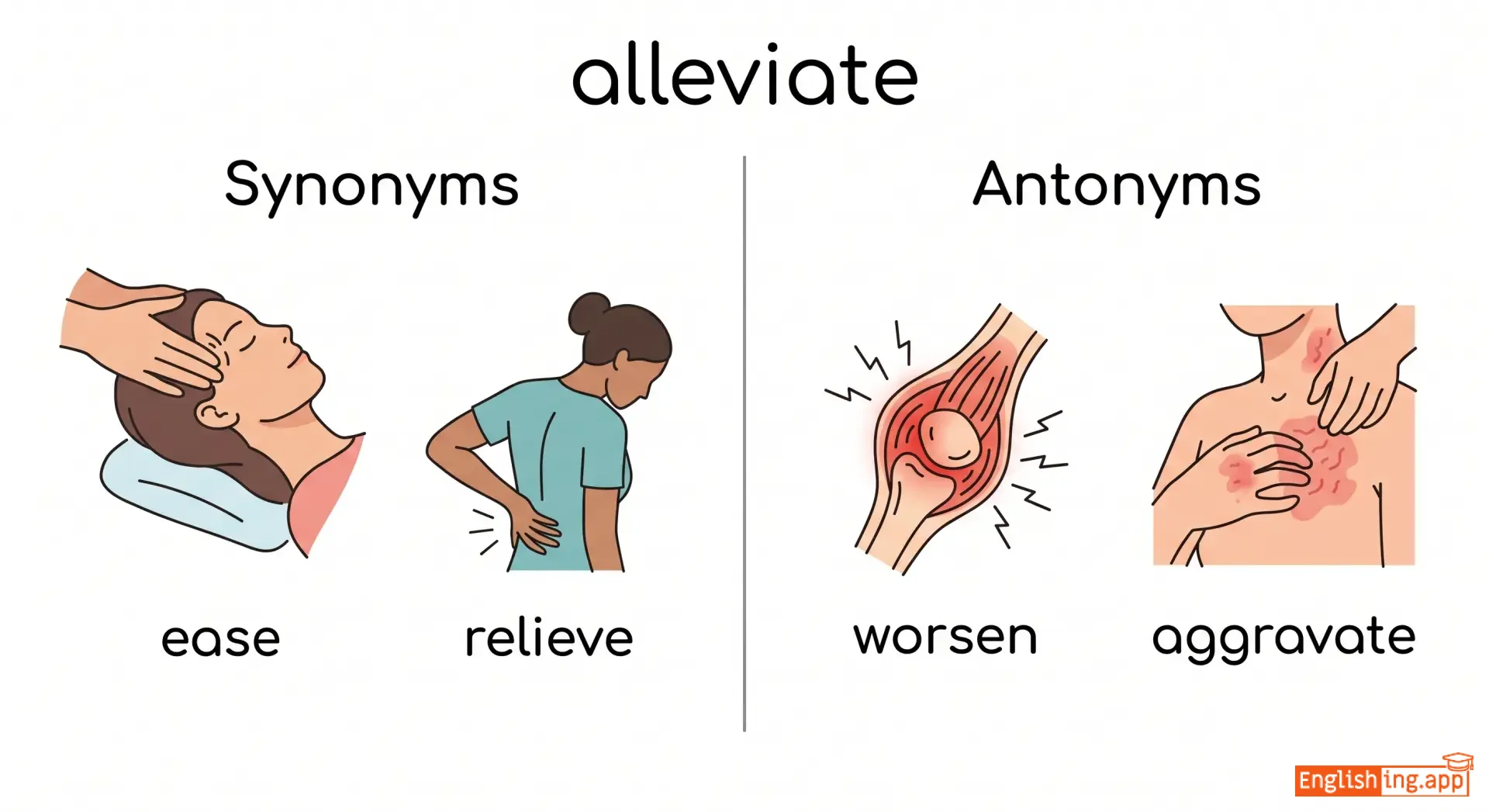
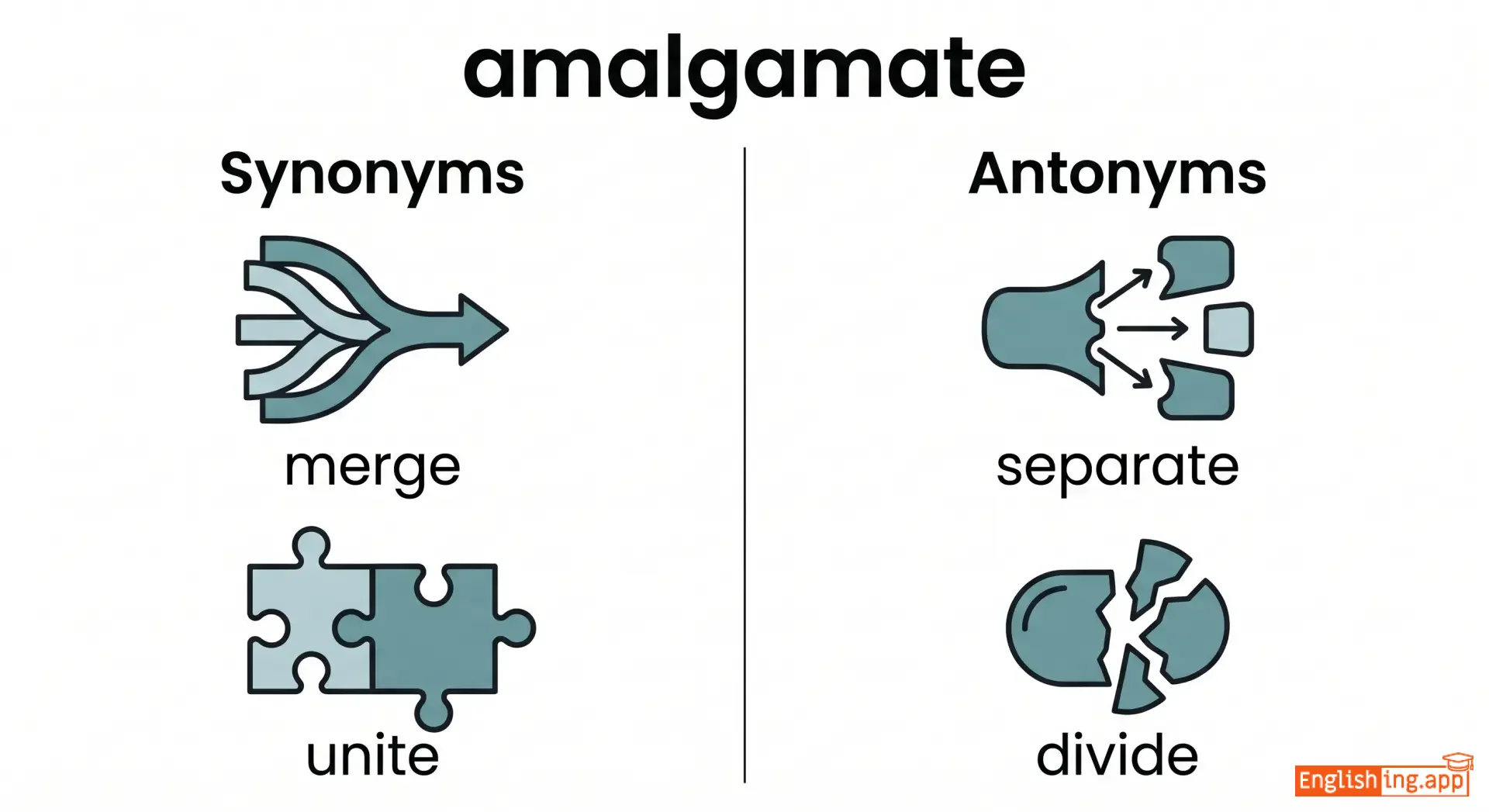
同義語
対義語
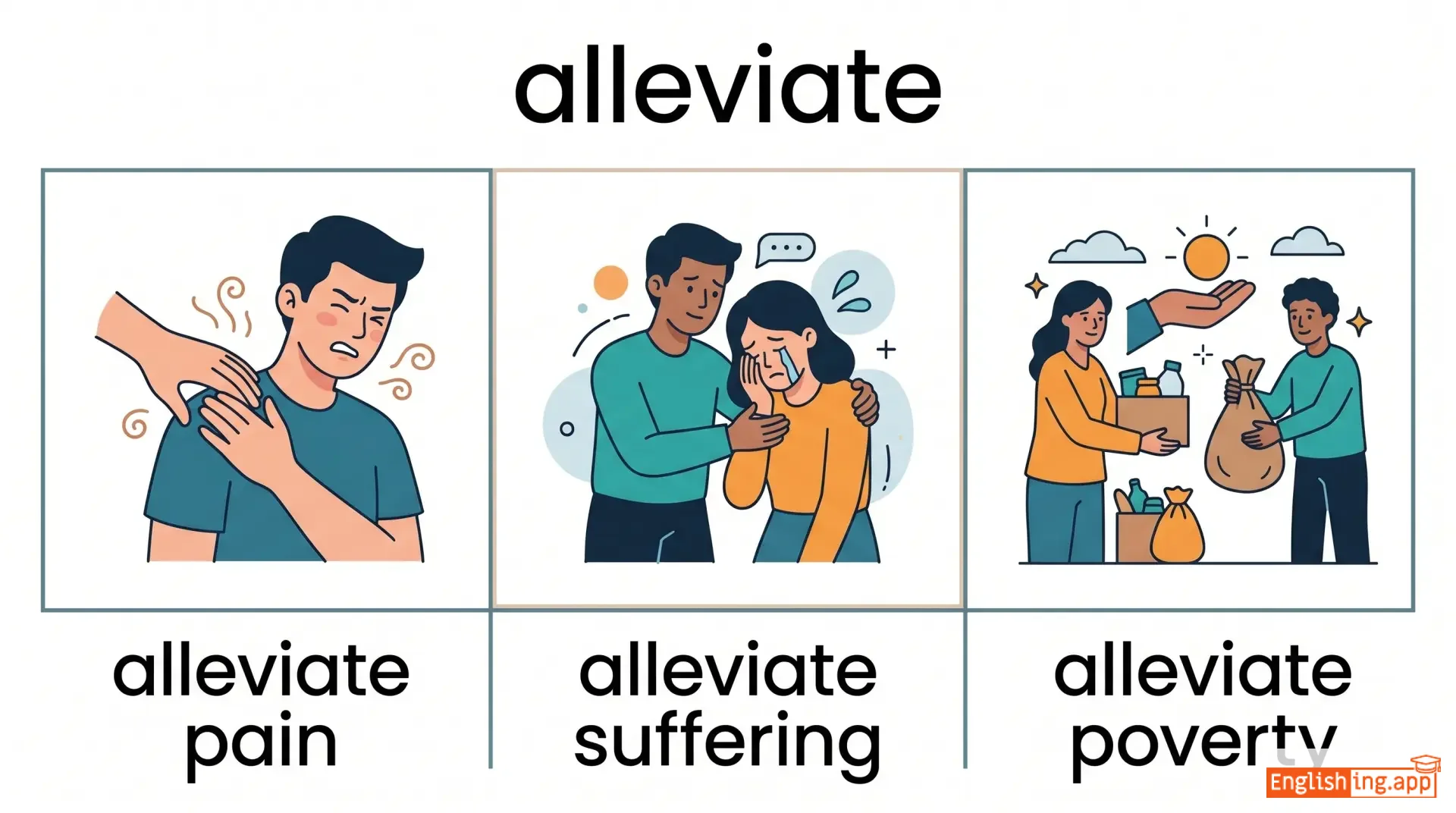
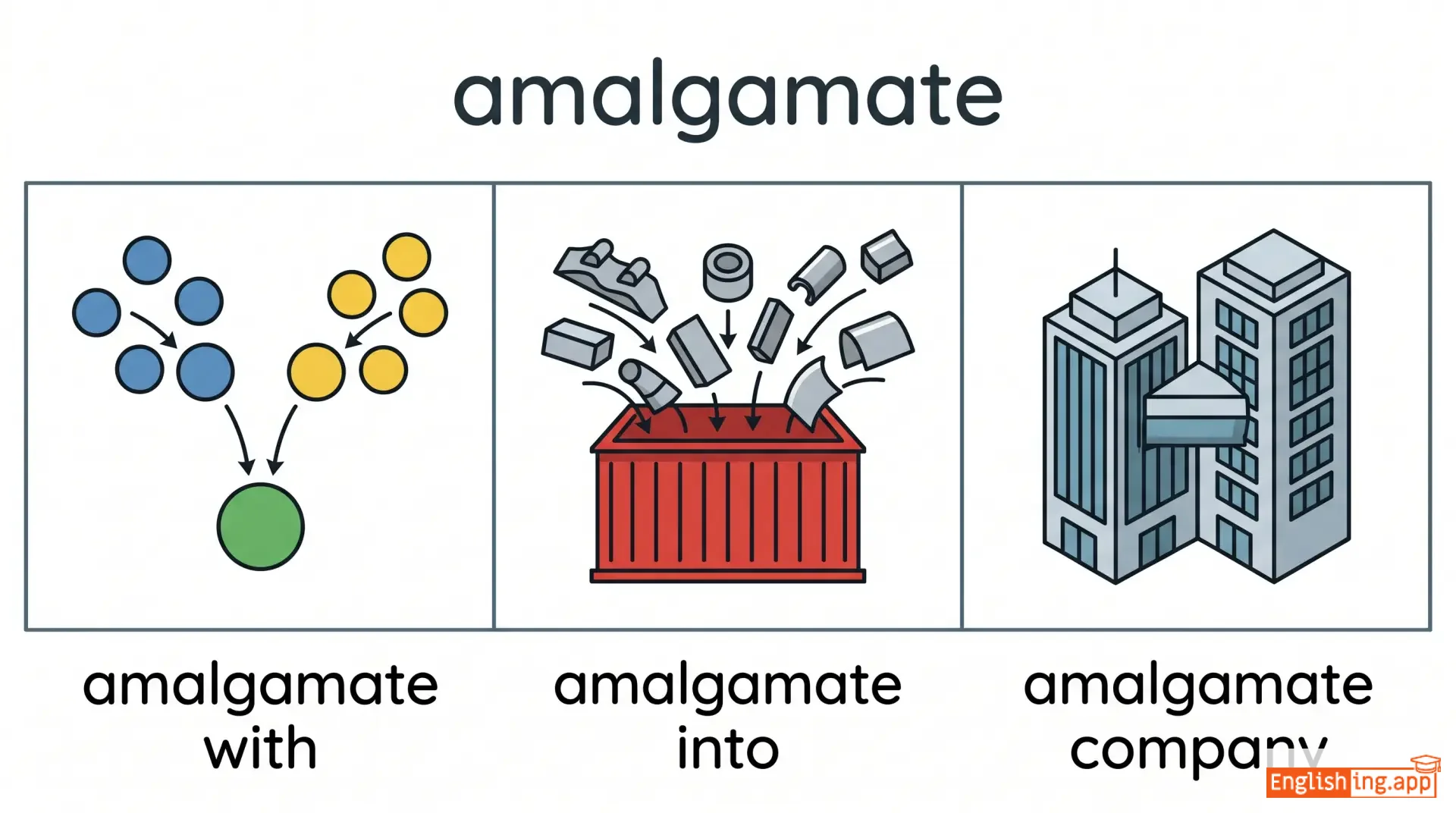
コロケーション
ニーモニック
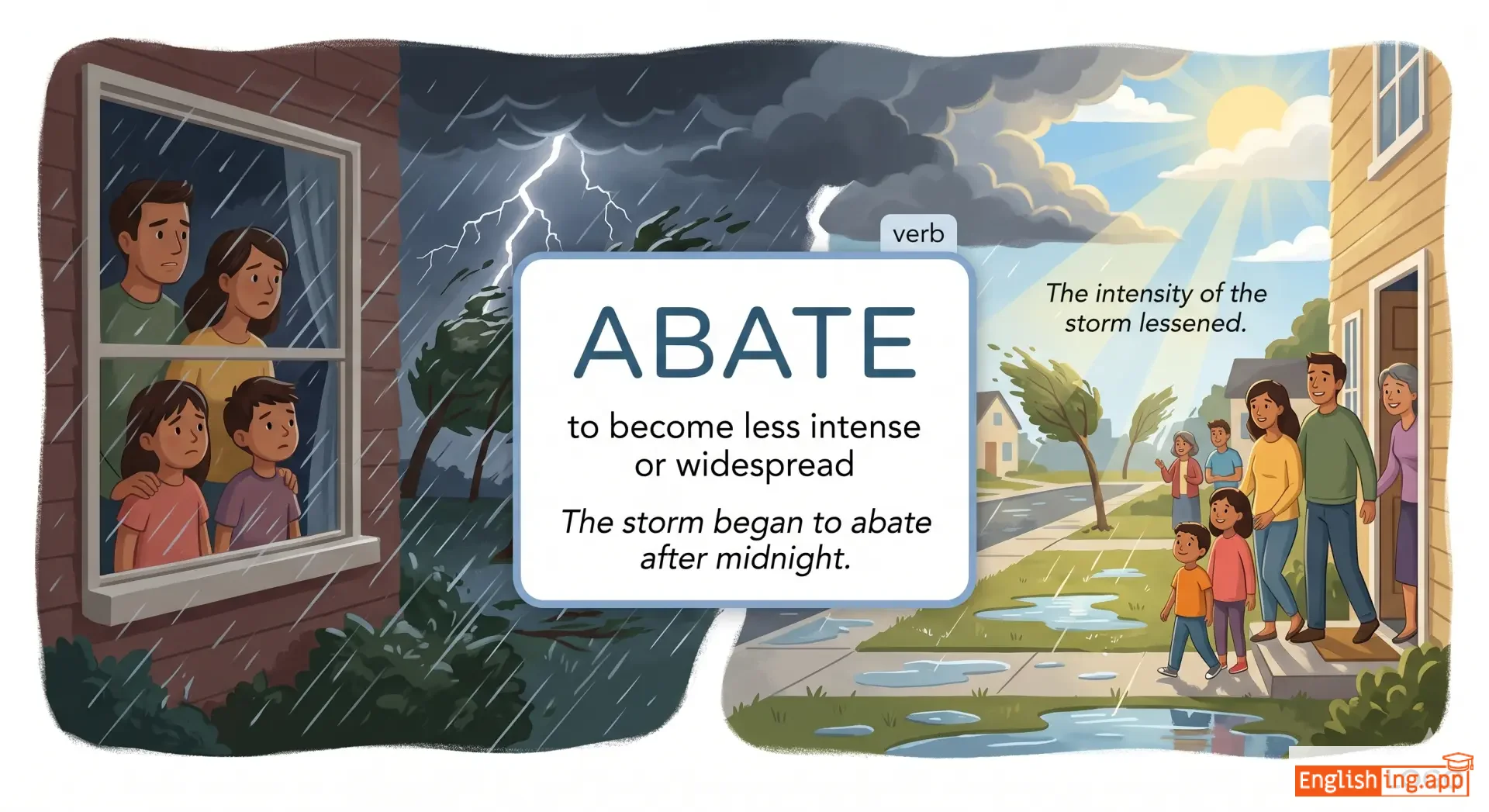






Swipe left or right, or use the buttons. Tap image to zoom.
例文の翻訳
単語
Lesson 1Lesson 1 - マスクトグル
|
絵文字
|
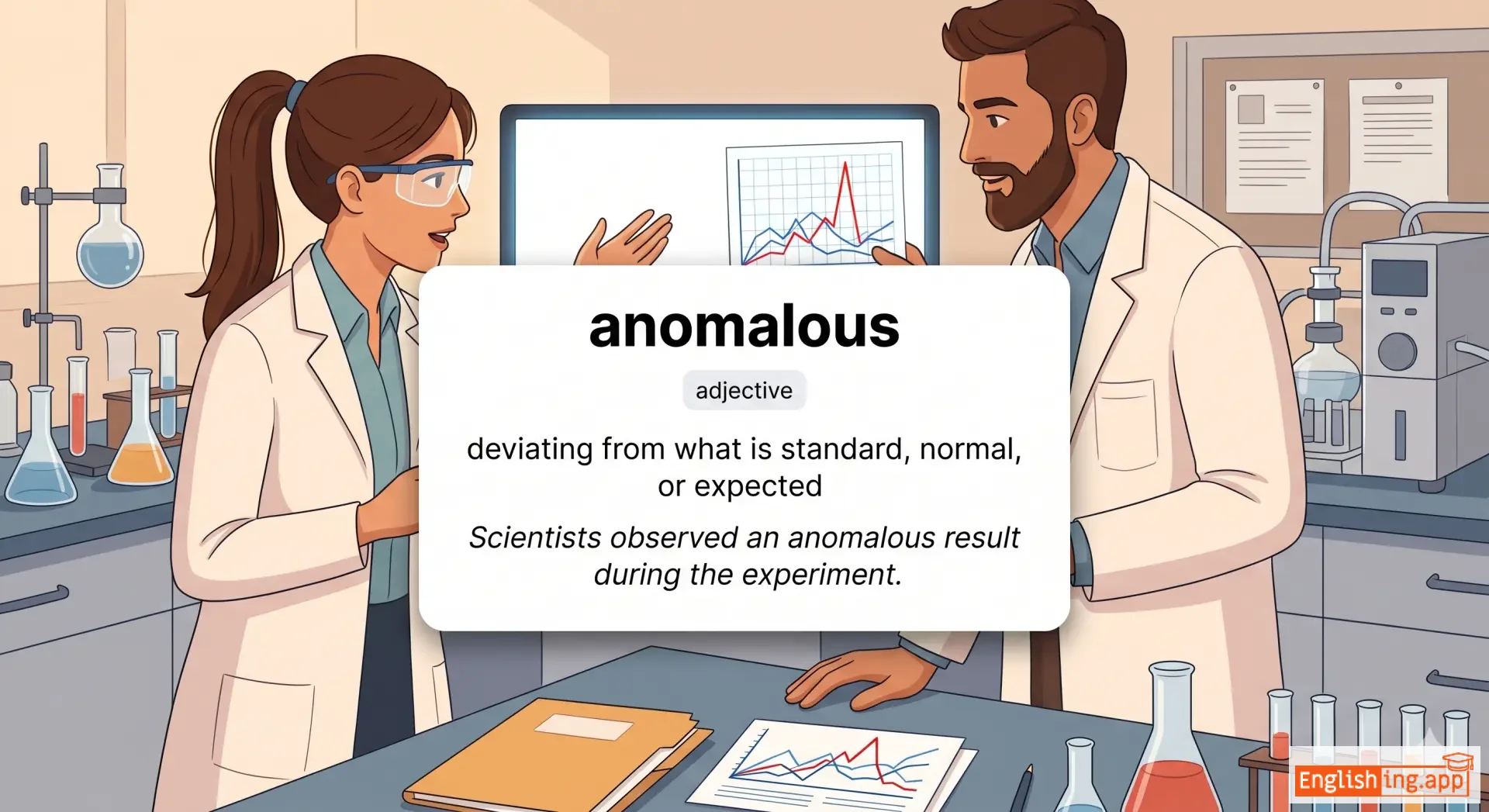
単語 | Images | 翻訳 | 過去 | 過去分詞 | 三人称単数 | 動名詞 | 意味 | 例文 | 例文の翻訳 | 表現例 | 表現例の意味 | 表現例の翻訳 | 同義語 | 対義語 | コロケーション | ニーモニック |
|---|---|---|---|---|---|---|---|---|---|---|---|---|---|---|---|---|---|
|
#1
🌧️
|
/əˈbeɪt/
verb
(アベイト)
••••••
|
|
減少する
genshō suru
••••••
|
abated
アベイテッド
••••••
|
abated
アベイテッド
••••••
|
abates
アベイツ
••••••
|
abating
アベイティング
••••••
|
to become less intense or widespread
••••••
|
The storm began to abate after midnight.
嵐は真夜中に弱まり始めました。
••••••
|
嵐は真夜中に弱まり始めました。
Arashi wa mayonaka ni yowamari hajimemashita.
••••••
|
- •••••• | - •••••• | - •••••• |
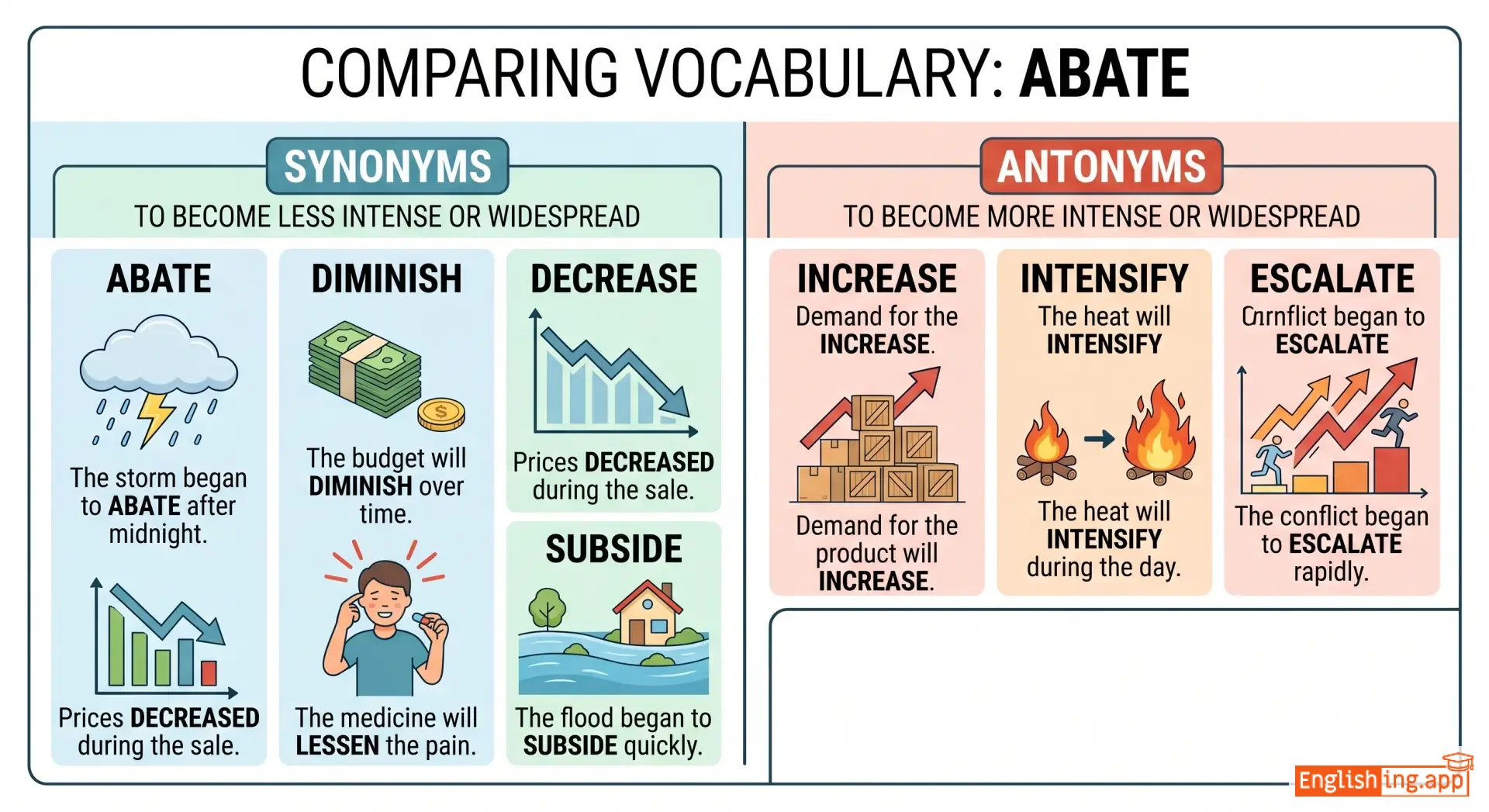
diminish, decrease, lessen, subside
••••••
|
increase, intensify, escalate
••••••
|
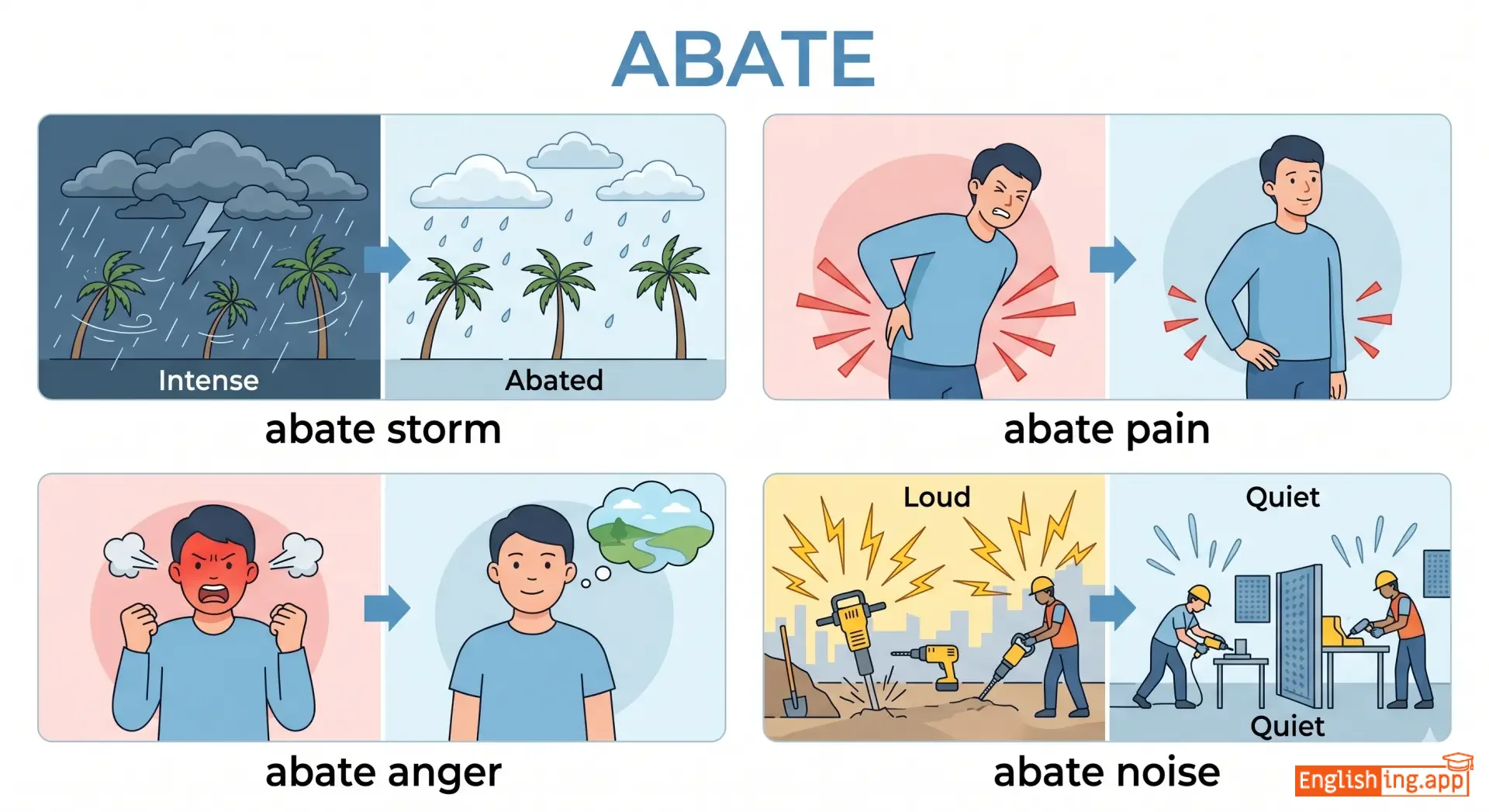
abate storm, abate pain, abate anger, abate noise
••••••
|
No •••••• |
|
#2
⚠️
|
/ˈæb.ə.rənt/
adjective
(アベラント)
••••••
|
|
異常
ijou
••••••
|
- •••••• | - •••••• | - •••••• | - •••••• |
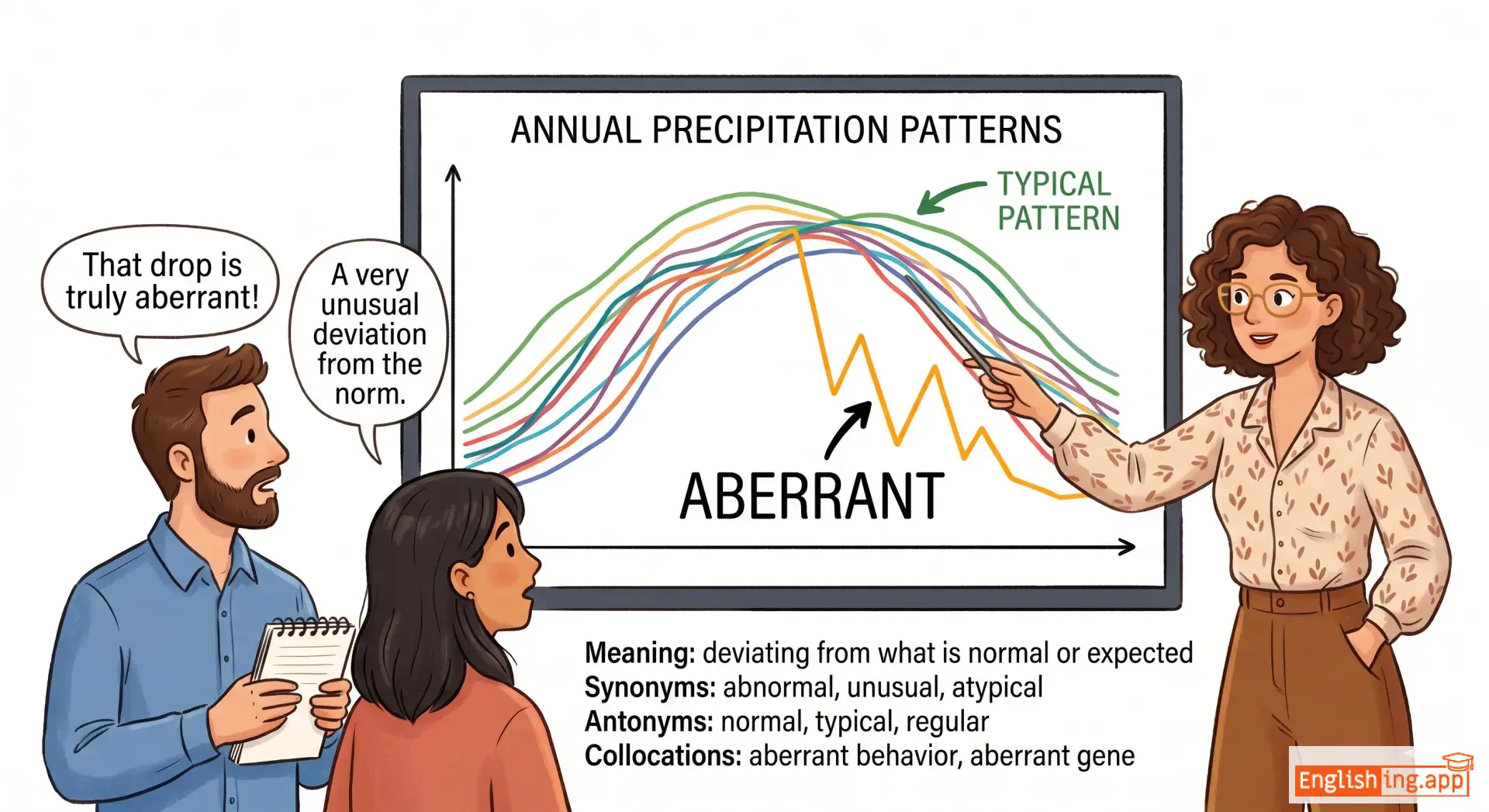
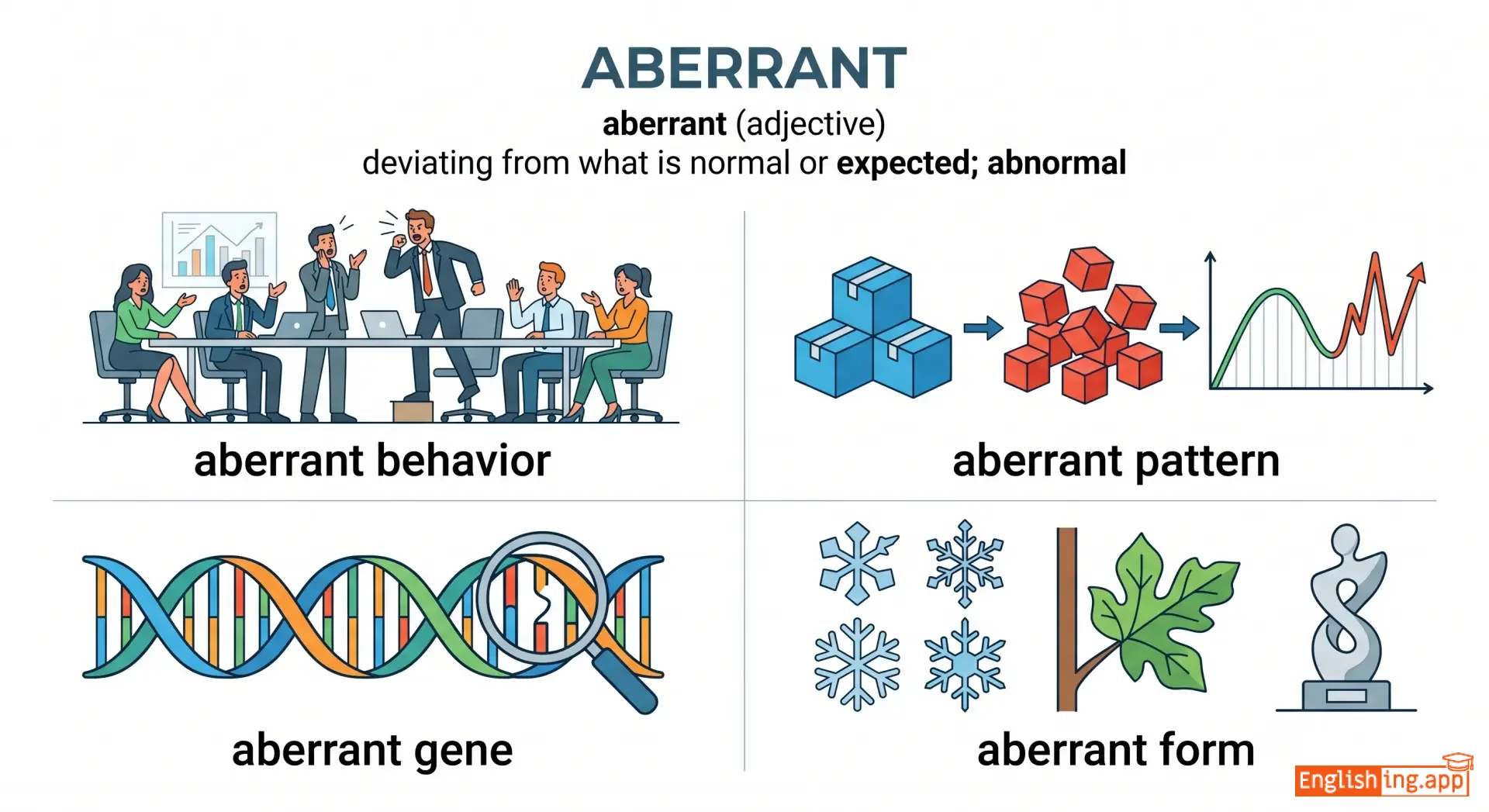
deviating from what is normal or expected; abnormal
••••••
|
His aberrant behavior shocked everyone at the meeting.
彼の異常な行動は会議で誰もが驚かせた。
••••••
|
彼の異常な行動は会議で誰もが驚かせた。
Kare no ijou na koudou wa kaigi de dare mo ga odorokaseta.
••••••
|
- •••••• | - •••••• | - •••••• |
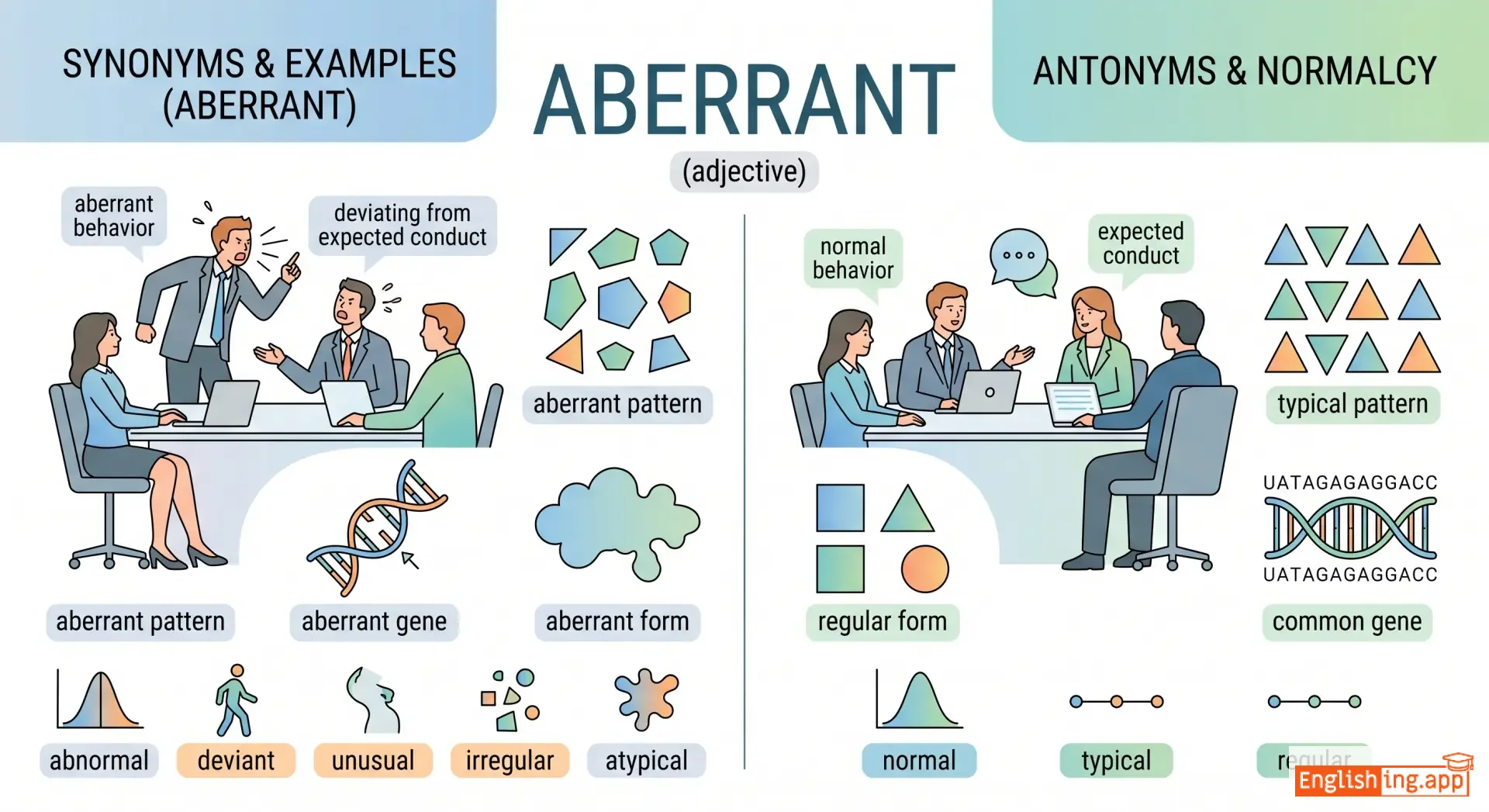
abnormal, deviant, unusual, irregular, atypical
••••••
|
normal, typical, regular
••••••
|
aberrant behavior, aberrant pattern, aberrant gene, aberrant form
••••••
|
Aberrantは異常を意味します、覚えておいてください - 異常 + 迷子 = 異常な道
••••••
|
|
#3
⏸️
|
/əˈbeɪəns/
noun
(abeiansu)
••••••
|
|
一時的な保留
ichiji-teki na horyu
••••••
|
- •••••• | - •••••• | - •••••• | - •••••• |
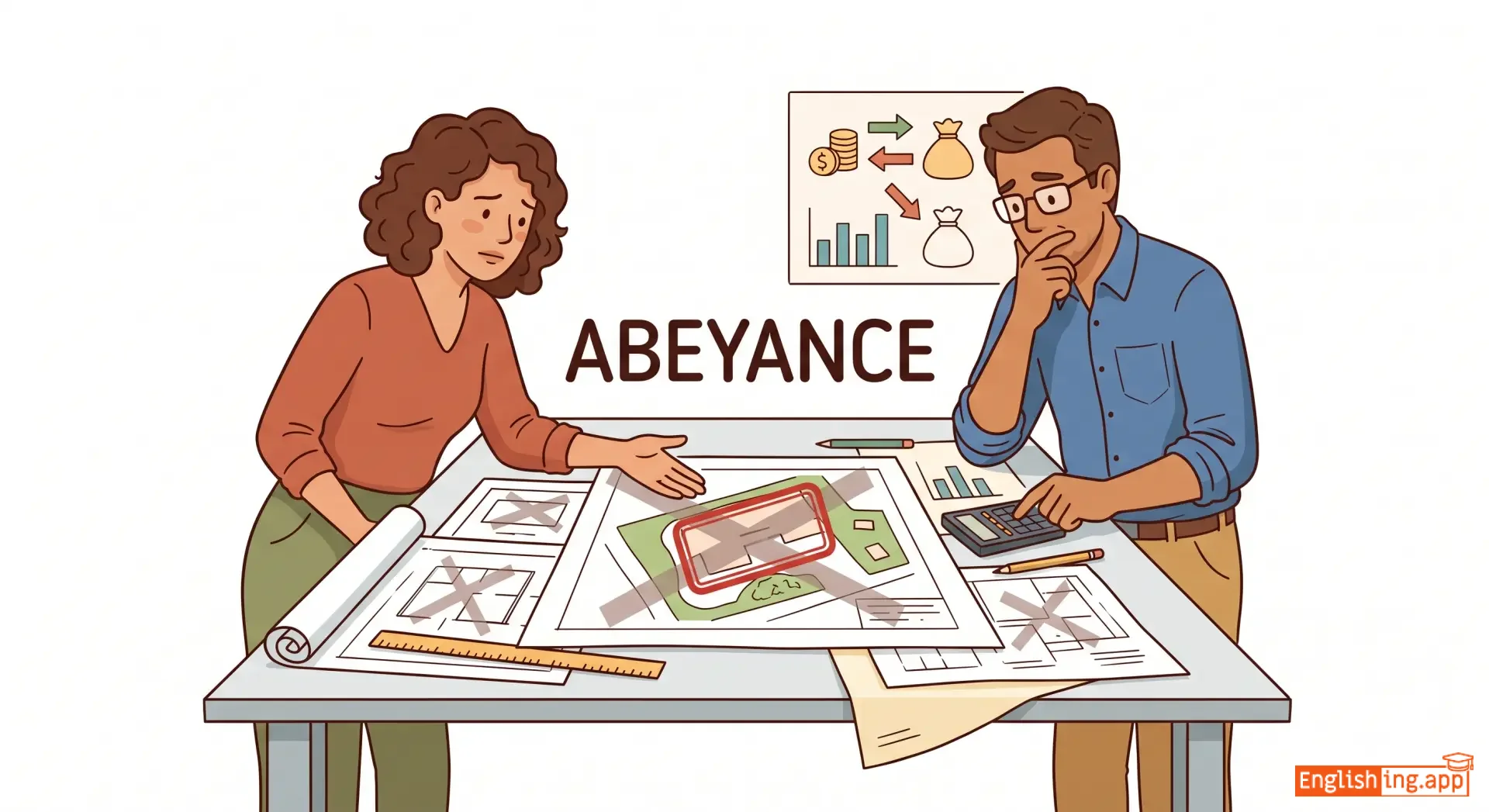
a state of temporary suspension or inactivity
••••••
|
The project was held in abeyance until funds became available.
そのプロジェクトは資金が利用可能になるまで保留されていました。
••••••
|
そのプロジェクトは資金が利用可能になるまで保留されていました。
Sono purojekuto wa shikin ga riyou kanou ni naru made horyu sarete imashita.
••••••
|
- •••••• | - •••••• | - •••••• |
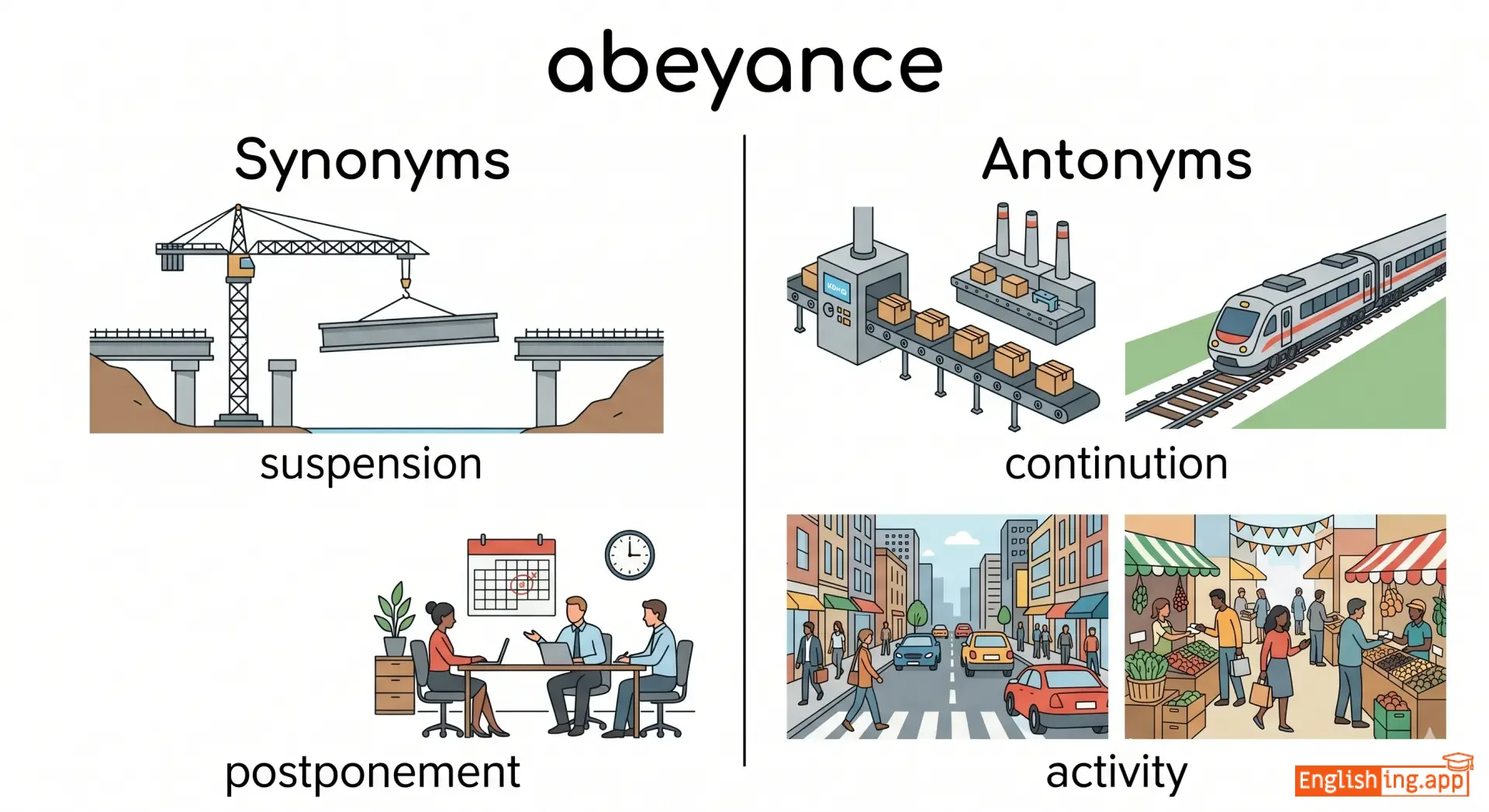
suspension, postponement, delay, dormancy
••••••
|
continuation, activity
••••••
|
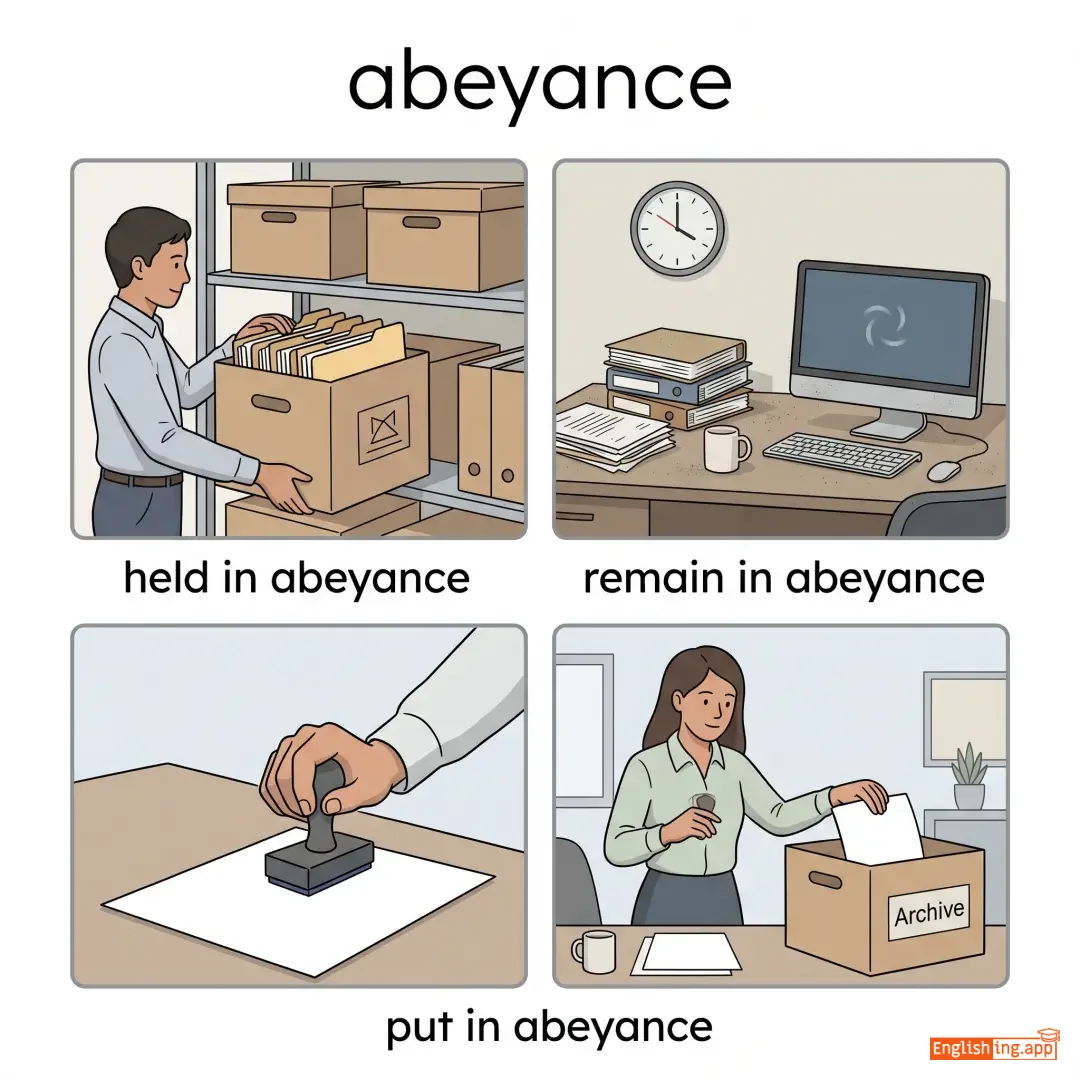
held in abeyance, remain in abeyance, put in abeyance
••••••
|
A BAY 一時的に保留されました - abeyance は保留を意味します
••••••
|
|
#4
🏃♂️
|
/əbˈskɒnd/
verb
(アブスコンド)
••••••
|
|
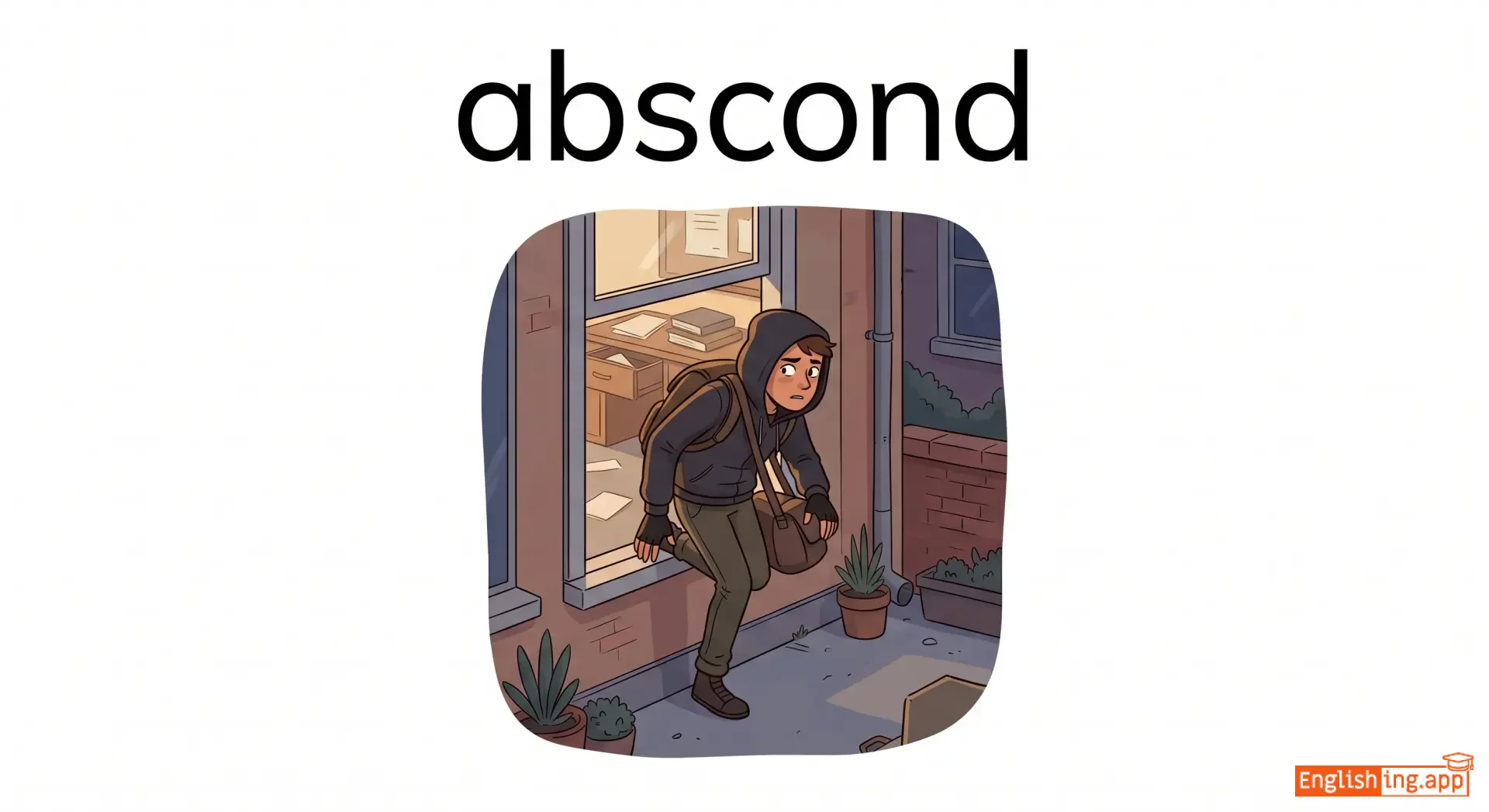
密かに逃げる
hisokani nigeru
••••••
|
absconded
アブスコンドッド
••••••
|
absconded
アブスコンドッド
••••••
|
absconds
アブスコンズ
••••••
|
absconding
アブスコンドイング
••••••
|
to leave secretly and quickly, often to avoid arrest or punishment
••••••
|
The thief tried to abscond with the stolen jewelry.
泥棒は盗まれた宝石を持って逃げようとした。
••••••
|
泥棒は盗まれた宝石を持って逃げようとした。
Dorobo wa nusumareta houseki wo motte nigeyou to shita.
••••••
|
abscond with
アブスコンド ウィズ
••••••
|
to take something secretly and escape
••••••
|
何かを持って逃げる
nanika wo motte nigeru
••••••
|
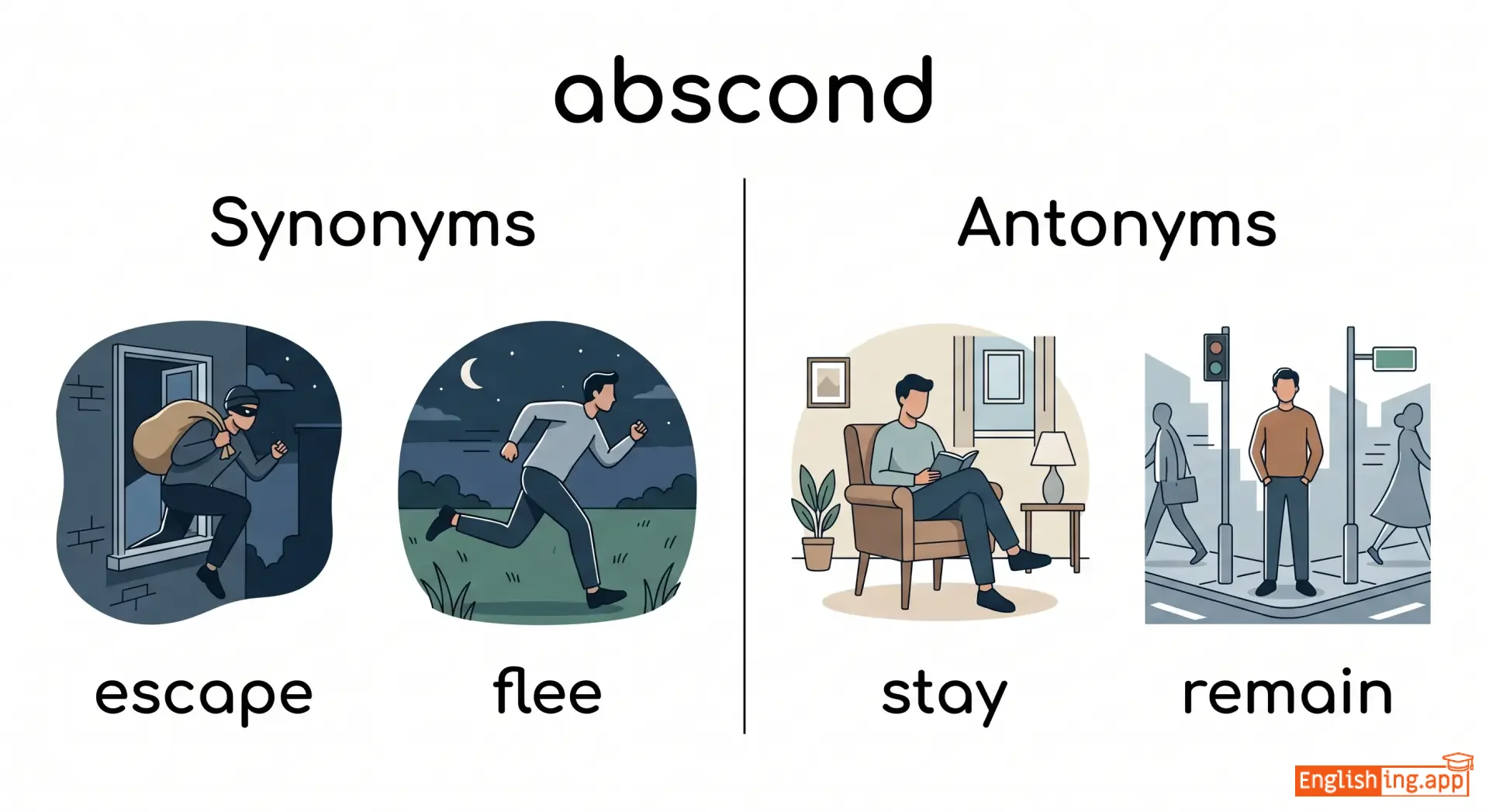
escape, flee, run away, vanish, bolt
••••••
|
stay, remain, appear
••••••
|
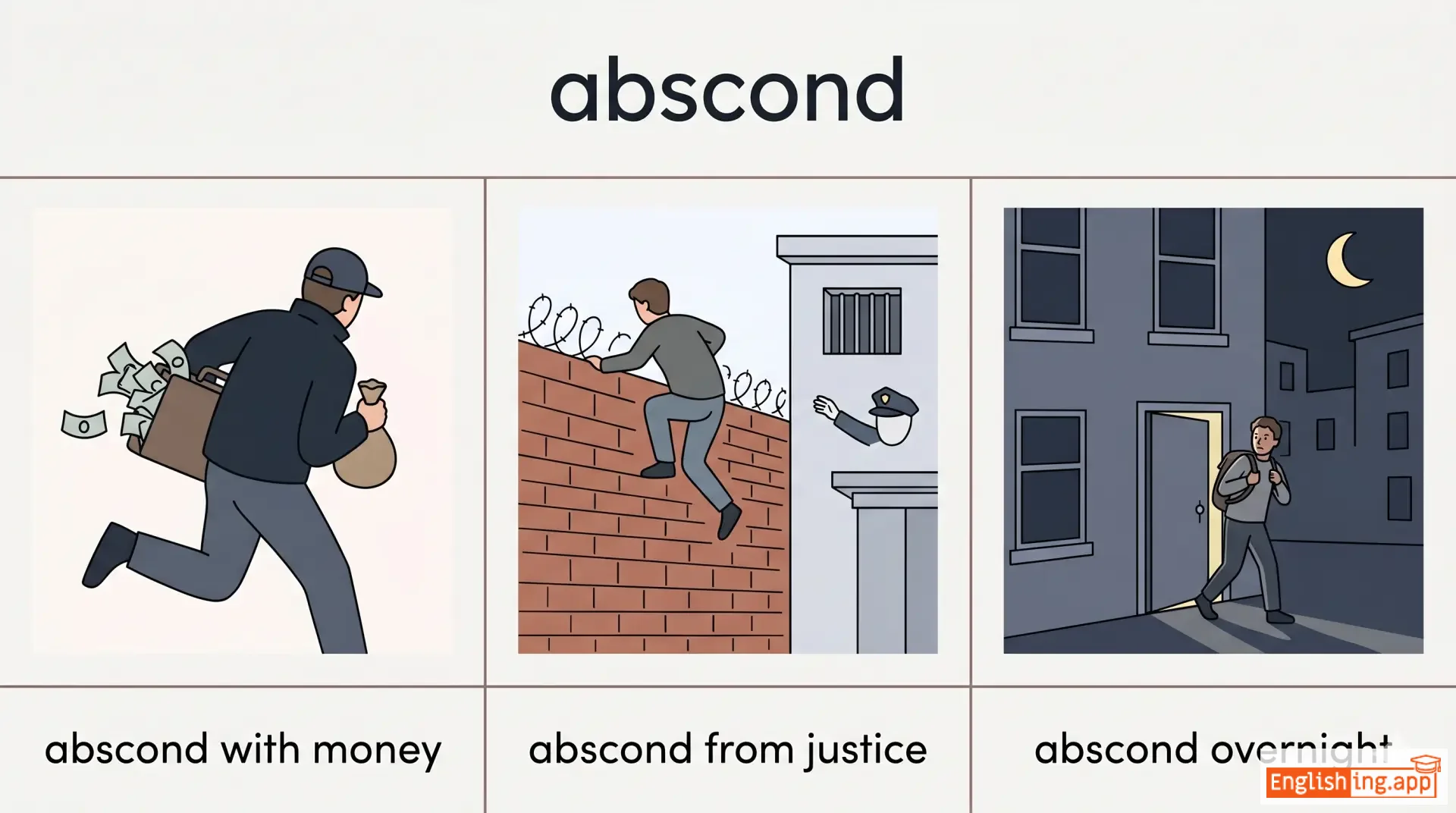
abscond with money, abscond from justice, abscond overnight
••••••
|
Abscond = ABsent + sCOND = 急いで密かに逃げる
••••••
|
|
#5
🍵
|
/æbˈstiːmiəs/
adjective
••••••
|
|
- •••••• | - •••••• | - •••••• | - •••••• | - •••••• |
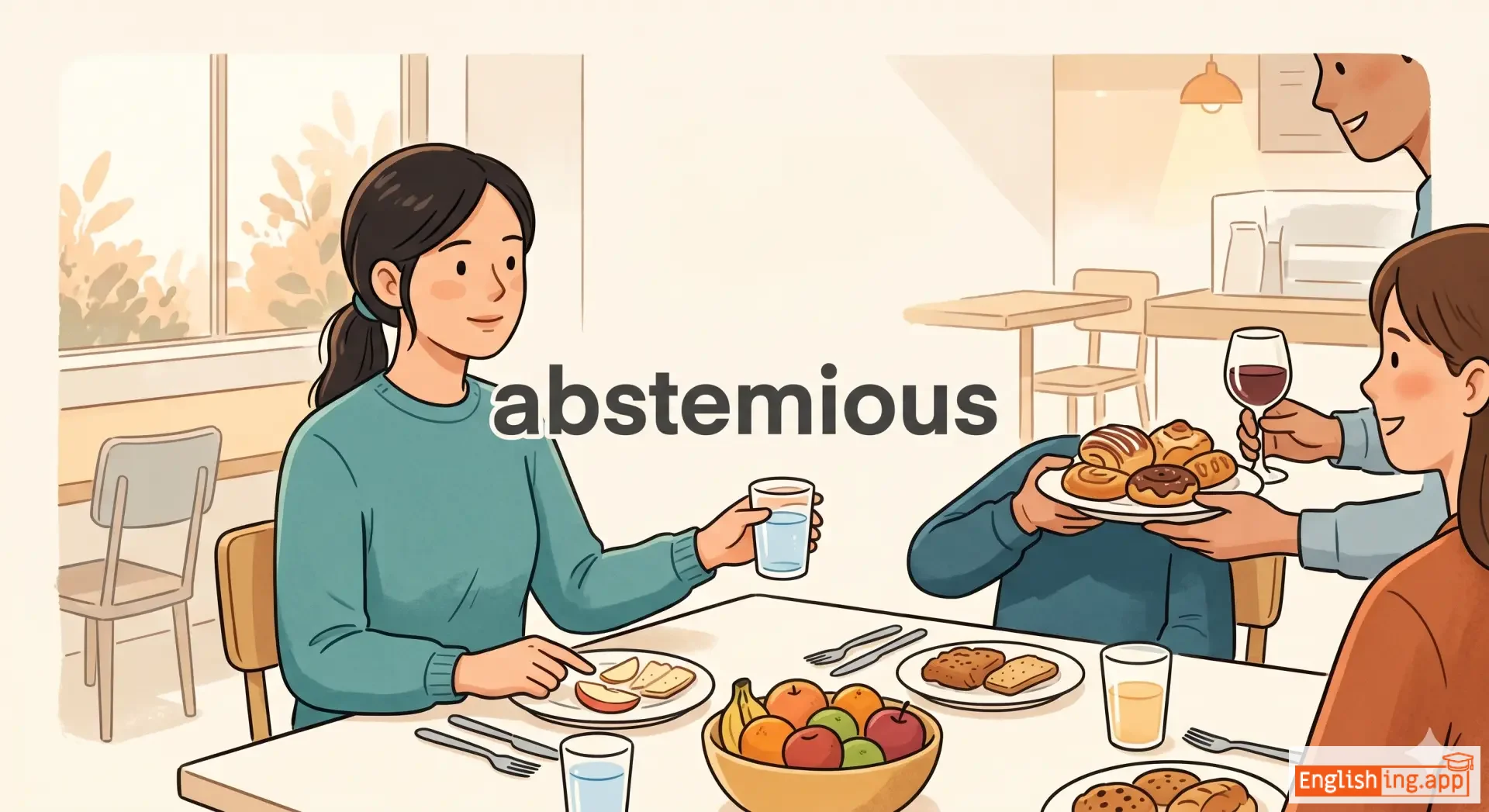
not self-indulgent, especially when eating and drinking; moderate or sparing in consumption
••••••
|
She lived an abstemious lifestyle, avoiding excesses of all kinds. |
- •••••• |
abstemious habits |
the practice of moderate and restrained consumption
••••••
|
- •••••• |
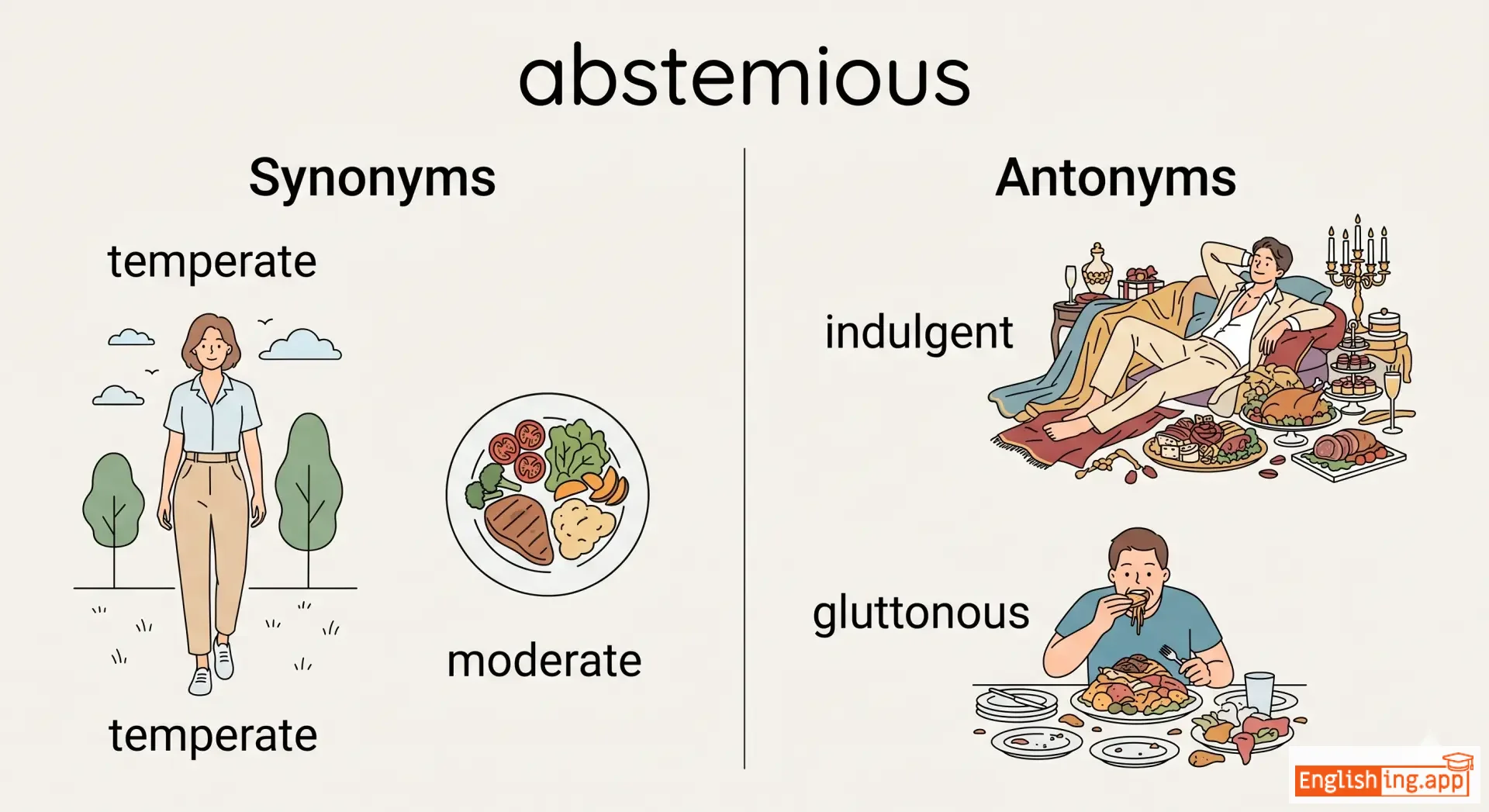
temperate, moderate, restrained, austere, ascetic
••••••
|
indulgent, gluttonous, excessive
••••••
|
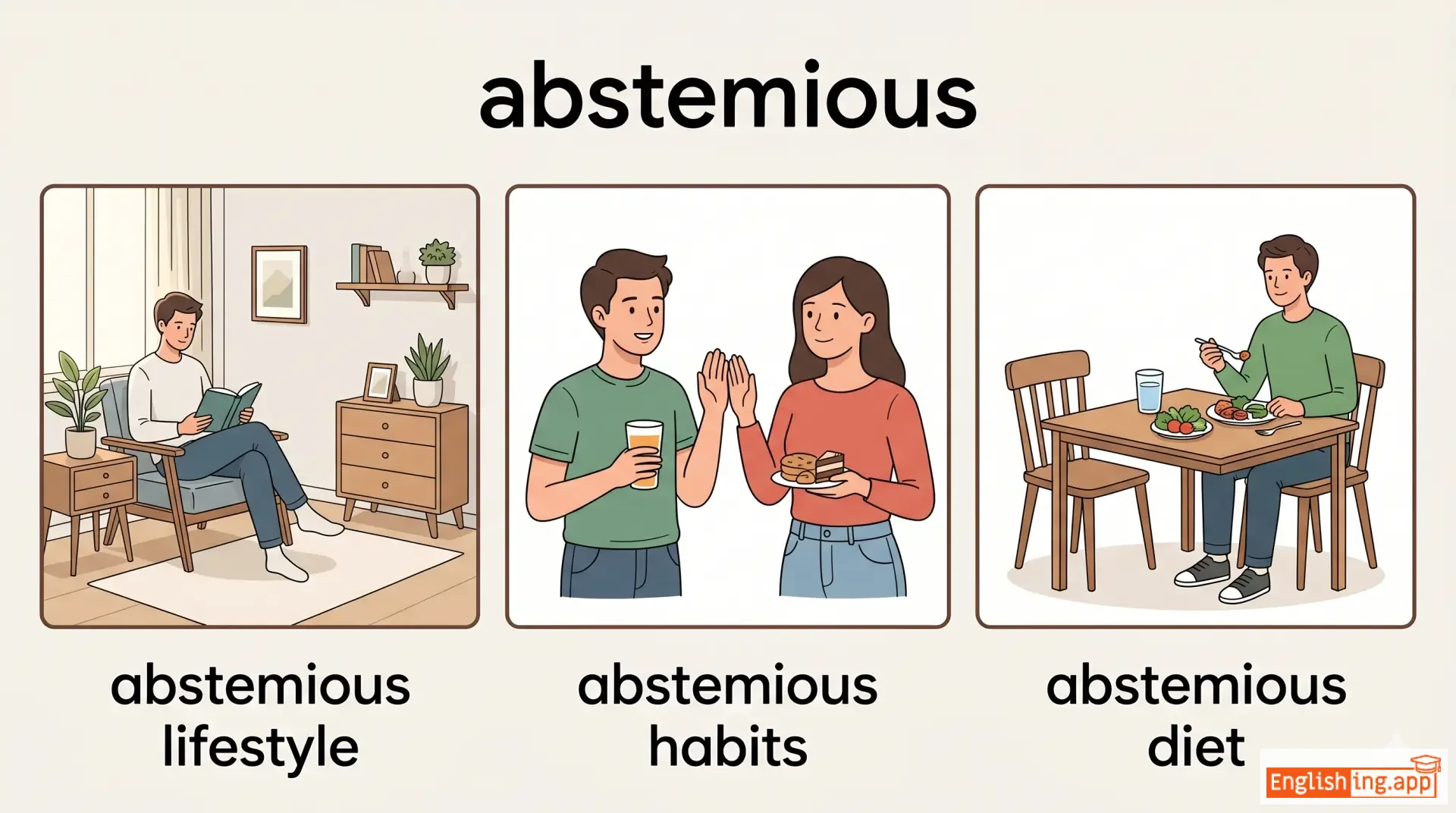
abstemious lifestyle, abstemious habits, abstemious diet, abstemious person
••••••
|
No •••••• |
|
#6
⚠️
|
/ədˈmɒnɪʃ/
verb
(admonish)
••••••
|
|
注意する / 叱る
chūi suru / shikaru
••••••
|
admonished
admonished
••••••
|
admonished
admonished
••••••
|
admonishes
admonishes
••••••
|
admonishing
admonishing
••••••
|
to warn or reprimand someone firmly; to advise or urge earnestly
••••••
|
The teacher admonished the students for being late.
The teacher admonished the students for being late.
••••••
|
先生は遅刻した生徒を注意しました。
Sensei wa chikoku shita seito o chūi shimashita.
••••••
|
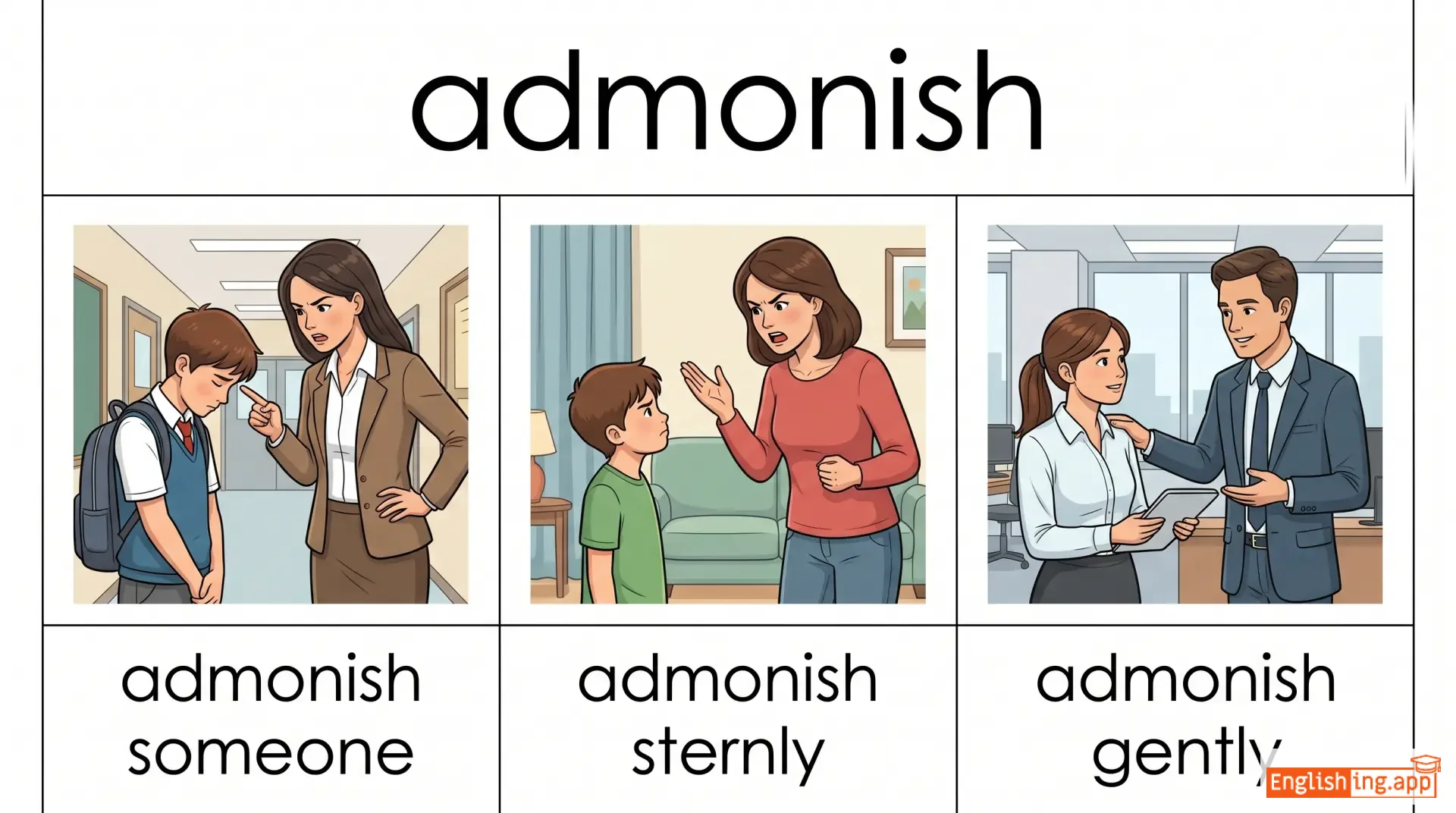
admonish someone gently
admonish someone gently
••••••
|
to caution someone in a mild or kind manner
••••••
|
優しく注意する
Yasashiku chūi suru
••••••
|
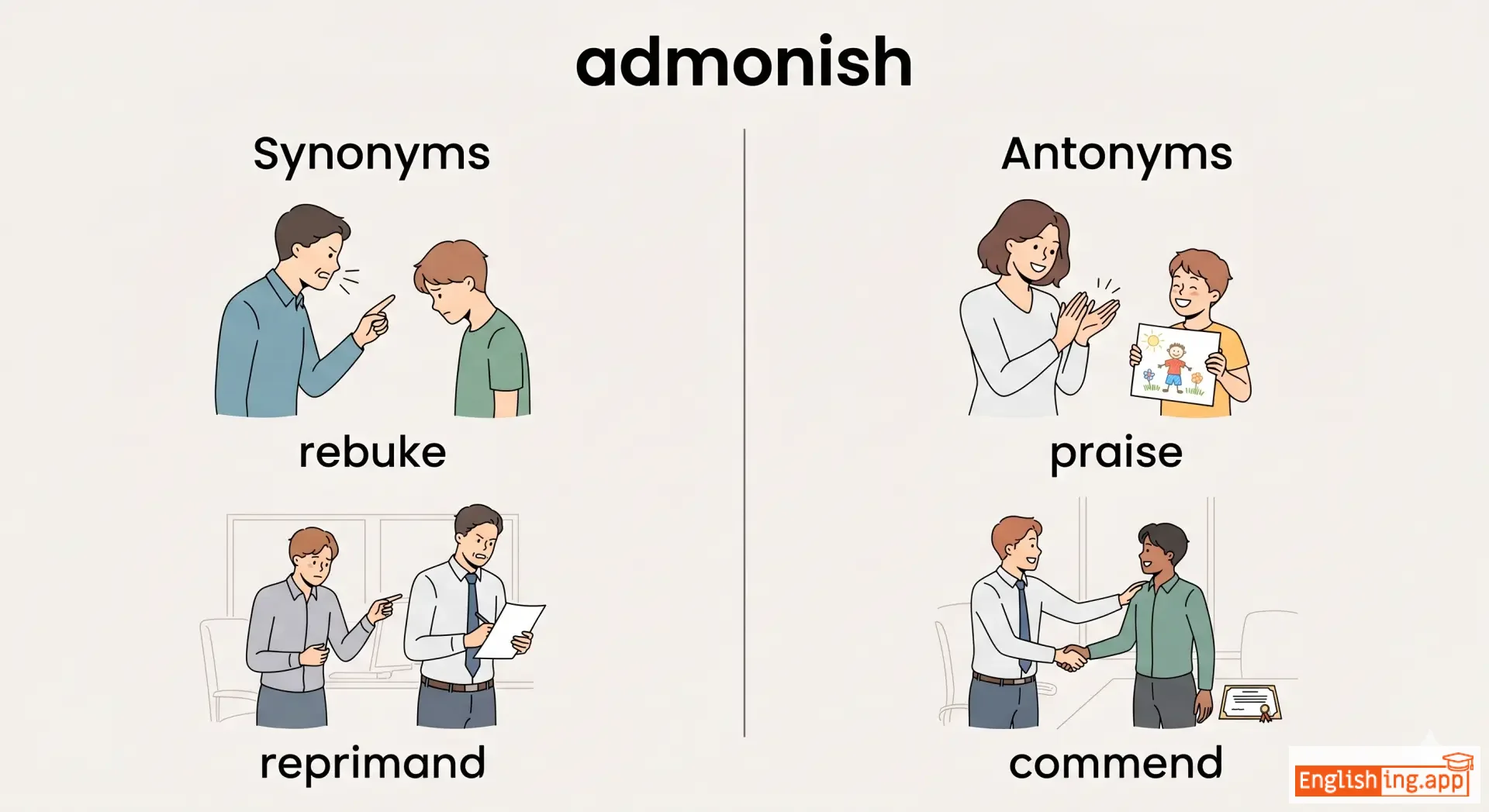
rebuke, reprimand, scold, caution, warn
••••••
|
praise, commend, approve
••••••
|
admonish someone, admonish sternly, admonish gently, admonish for behavior
••••••
|
注意するは‘注意’(chūi)と‘叱る’(shikaru)の組み合わせで警告すること!
••••••
|
|
#7
🥛
|
/əˈdʌltəreɪt/
verb
(アダルテレート)
••••••
|
|
不正混入
fusei konnyū
••••••
|
adulterated
アダルテレイティッド
••••••
|
adulterated
アダルテレイティッド
••••••
|
adulterates
アダルテレイツ
••••••
|
adulterating
アダルテレイティング
••••••
|
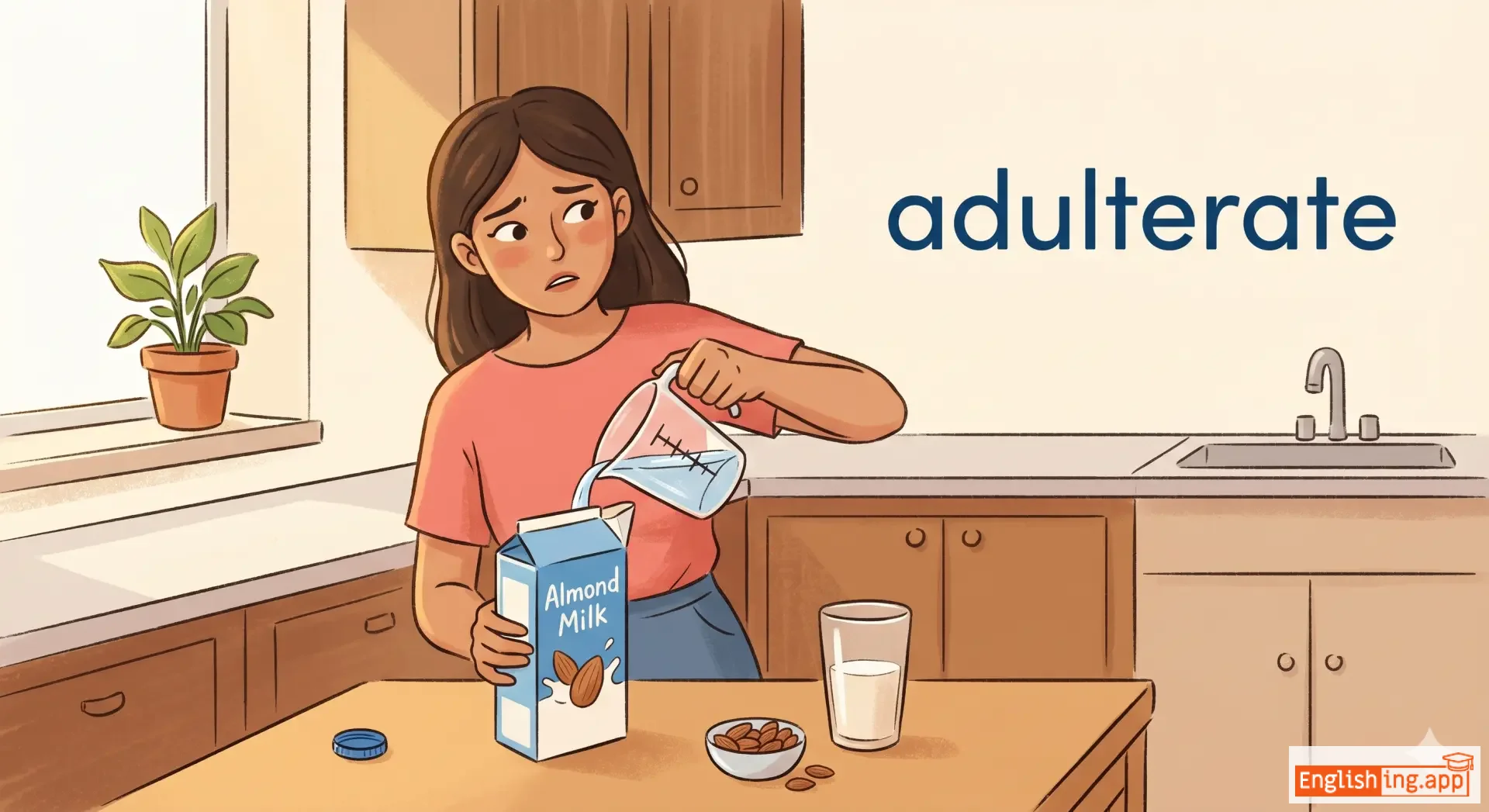
to make something poorer in quality by adding another substance, usually of lower quality
••••••
|
The company was fined for adulterating its products with cheap chemicals.
その会社は安価な化学物質で製品をアダルテレートしたため、罰金を科せられました。
••••••
|
その会社は安価な化学物質で製品をアダルテレートしたため、罰金を科せられました。
Sono kaisha wa anka na kagaku busshitsu de seihin o adarutereito shita tame, bakkin o kase raremashita.
••••••
|
- •••••• | - •••••• | - •••••• |
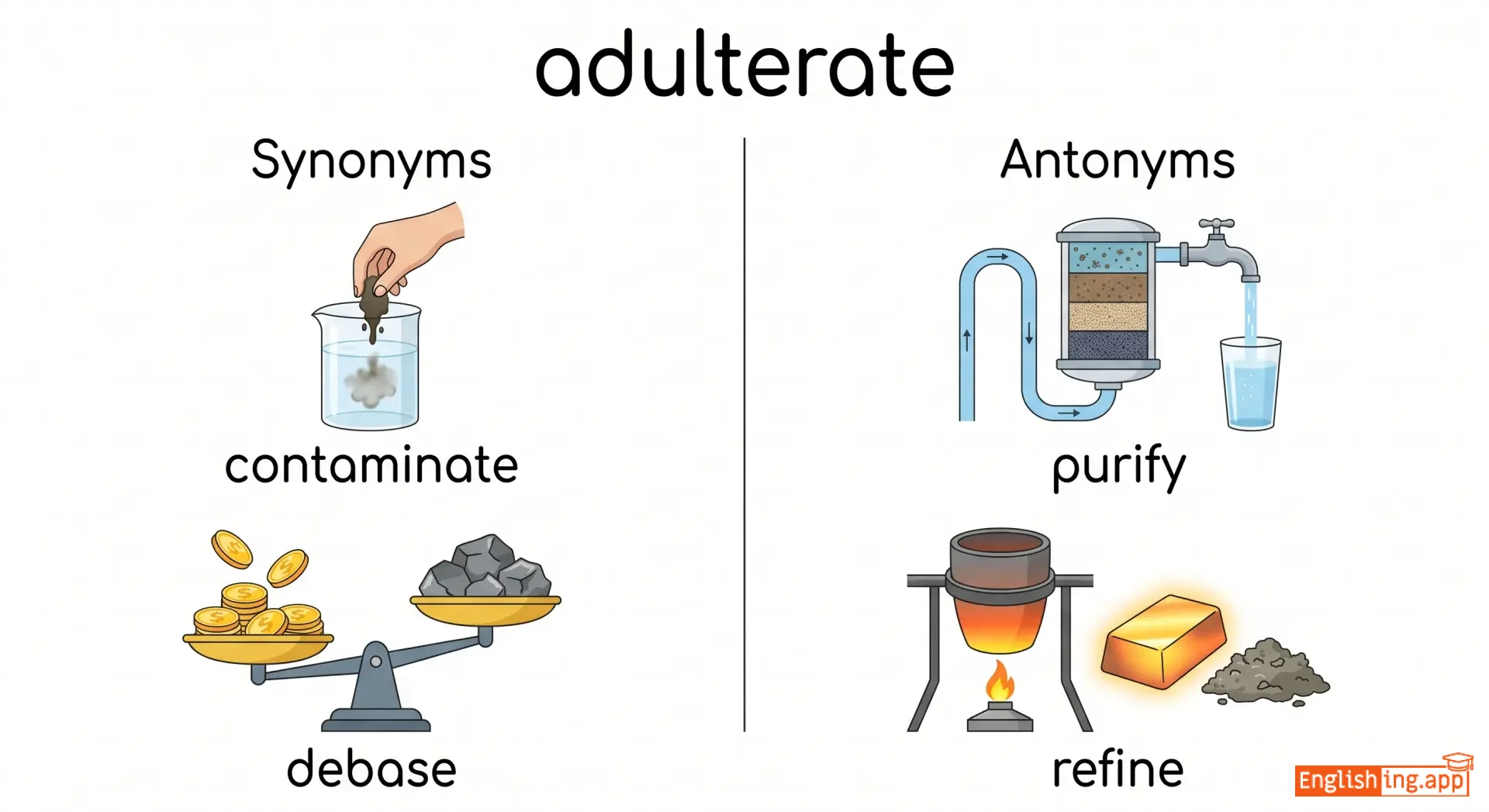
contaminate, debase, dilute, taint, spoil
••••••
|
purify, refine, cleanse
••••••
|
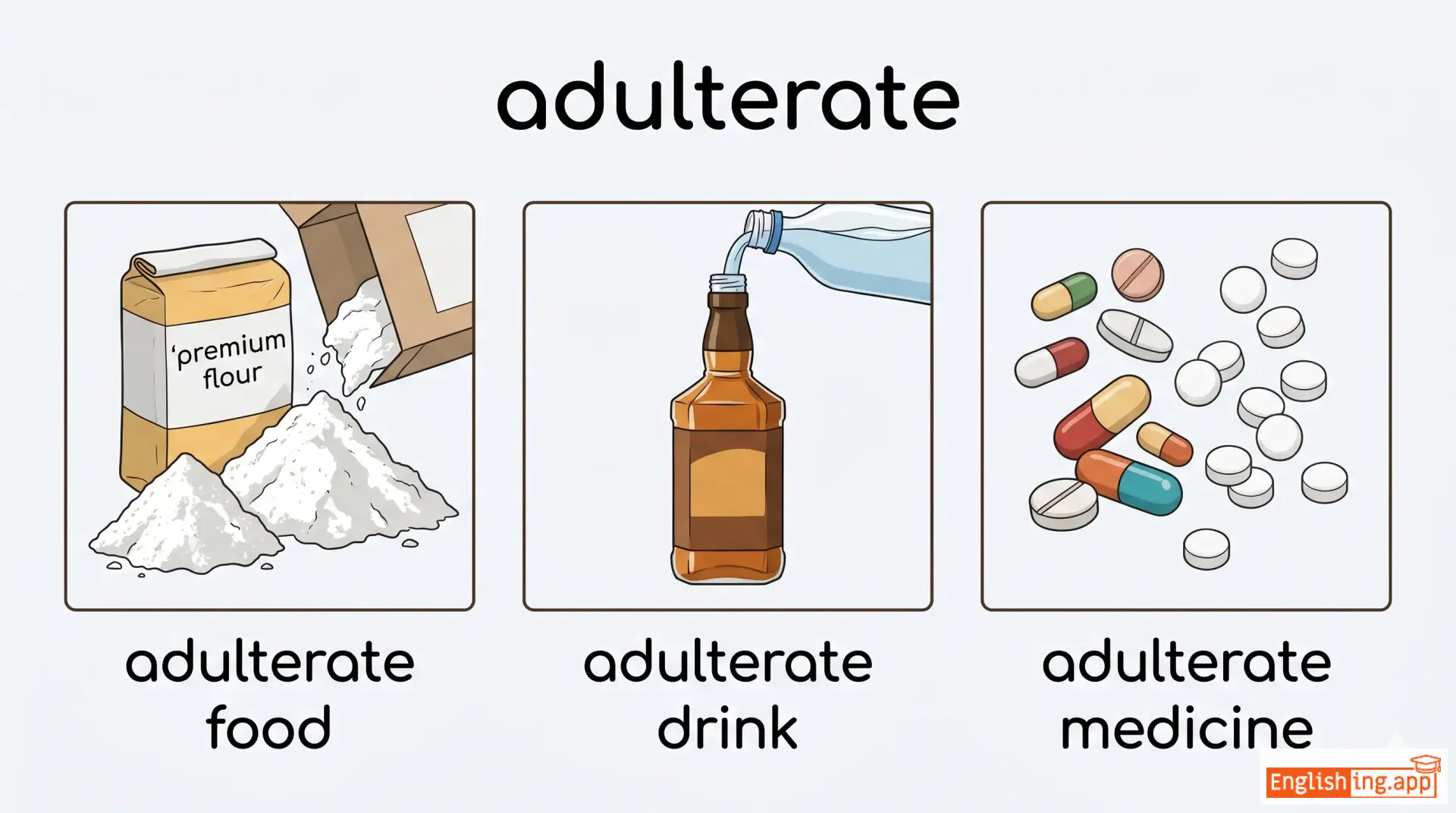
adulterate food, adulterate drink, adulterate medicine
••••••
|
アダルトレートは不正に混入すること - adulterate = 不正混入
••••••
|
|
#8
🎨
|
/ɛsˈθɛtɪk/
adjective
(エステティック)
••••••
|
|
美的
biteki
••••••
|
- •••••• | - •••••• | - •••••• | - •••••• |
concerned with beauty or the appreciation of beauty
••••••
|
The room was decorated in an aesthetic style that pleased everyone.
部屋はエステティックなスタイルで装飾され、全員が喜びました。
••••••
|
部屋は美的なスタイルで装飾され、全員が喜びました。
Heya wa biteki na sutairu de sōshoku sare, zen'in ga yorokobimashita.
••••••
|
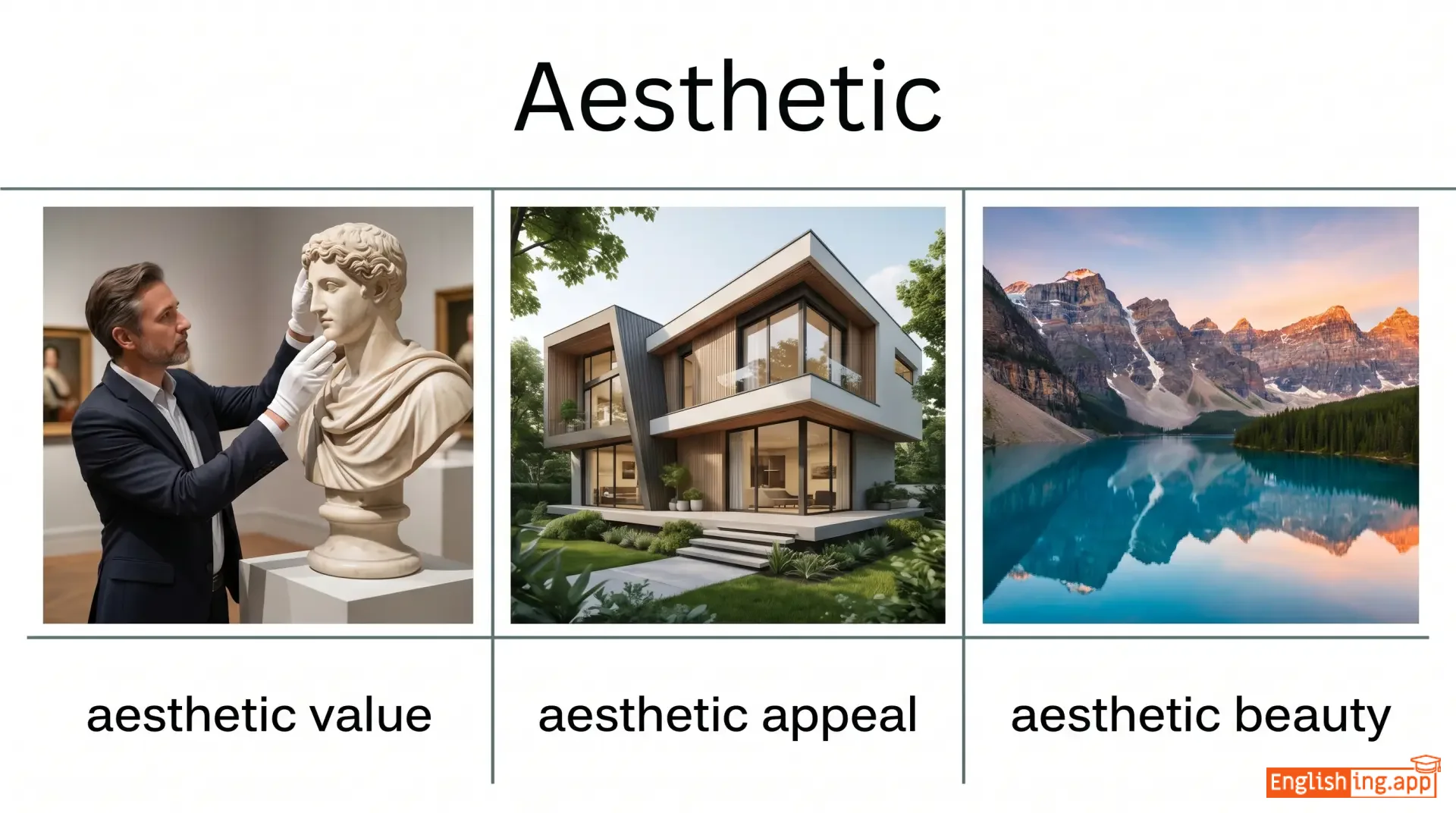
aesthetic appeal
エステティックな魅力
••••••
|
the quality of being visually attractive
••••••
|
美的魅力
biteki miryoku
••••••
|
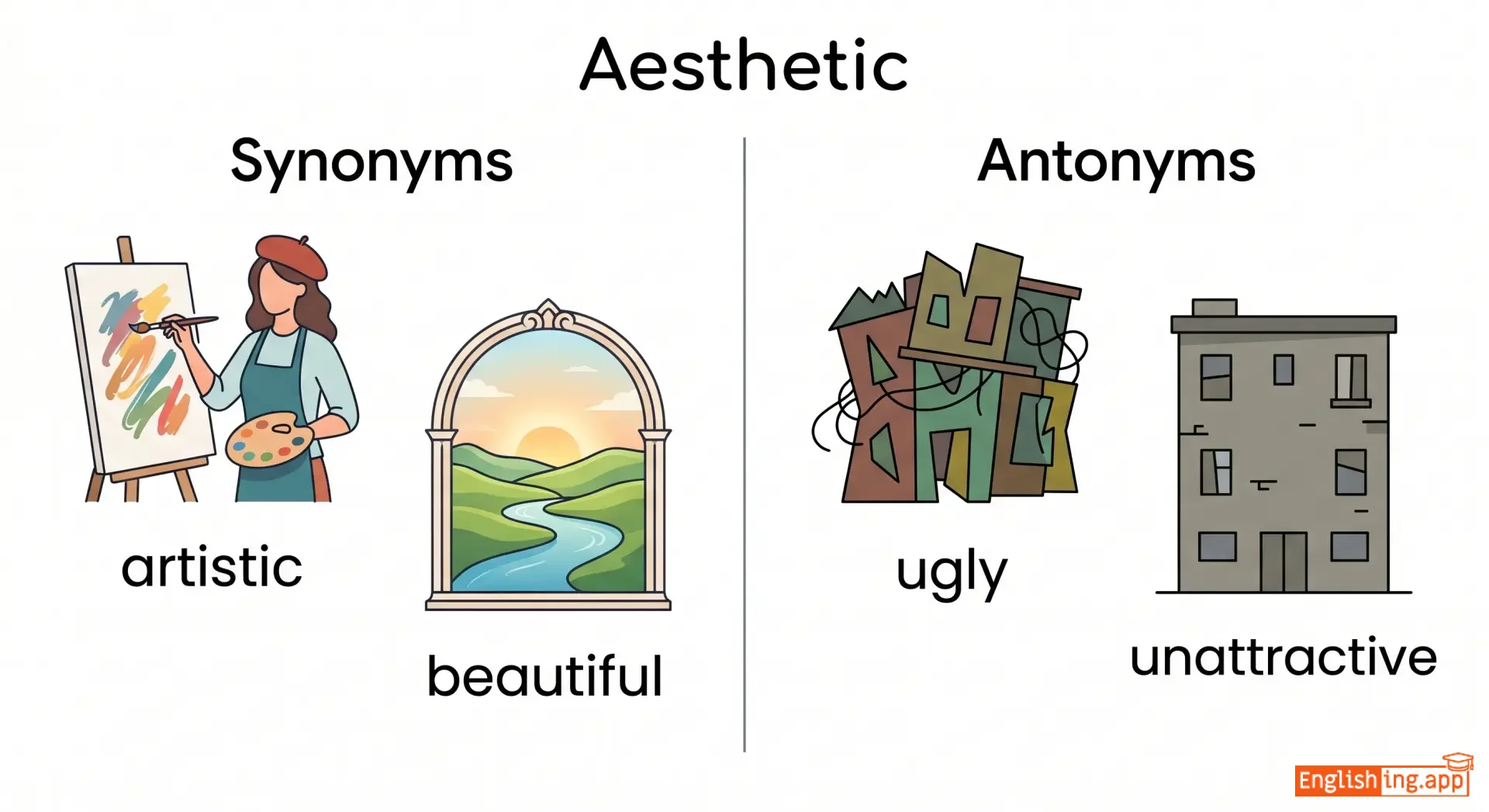
artistic, beautiful, elegant, tasteful
••••••
|
ugly, unattractive, plain
••••••
|
aesthetic value, aesthetic appeal, aesthetic beauty, aesthetic design
••••••
|
Aestheticは美しさを意味しますので、美的も美しさに関連しています。
••••••
|
|
#9
➕
|
/ˈæɡ.rɪ.ɡət/ (noun/adjective), /ˈæɡ.rɪ.ɡeɪt/ (verb)
noun, verb, adjective
(アグリゲート)
••••••
|
|
集合体, 総体
shūgōtai, sōtai
••••••
|
aggregated
アグリゲイテッド
••••••
|
aggregated
アグリゲイテッド
••••••
|
aggregates
アグリゲイツ
••••••
|
aggregating
アグリゲイティング
••••••
|
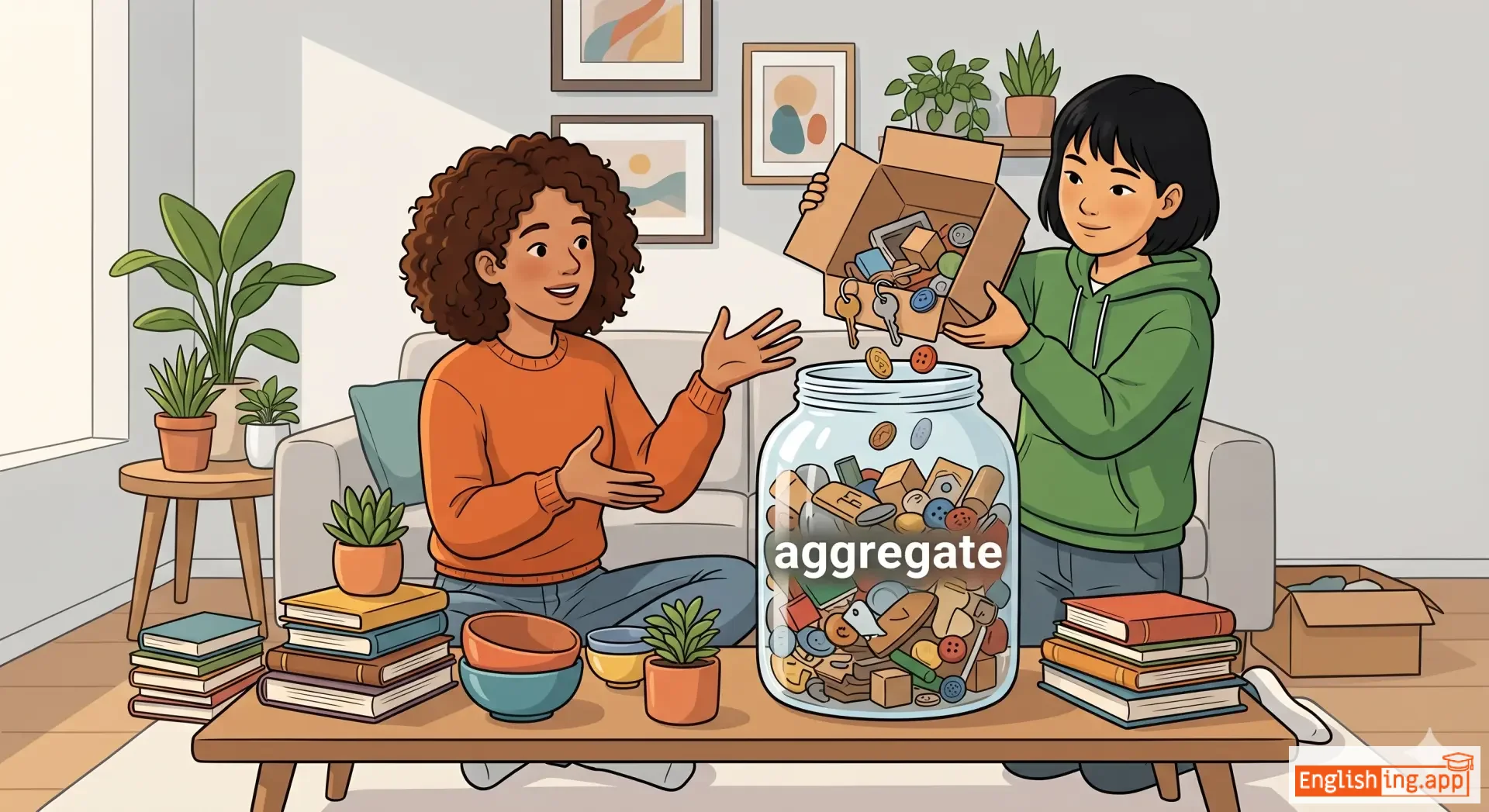
A whole formed by combining several elements; to combine into a total.
••••••
|
The data was aggregated to provide a clearer picture of the market.
データは市場のより明確な画像を提供するために集約されました。
••••••
|
データは市場のより明確な画像を提供するために集約されました。
Dēta wa shijō no yori meikaku na gazō o teikyō suru tame ni shūyaku saremashita.
••••••
|
- •••••• | - •••••• | - •••••• |
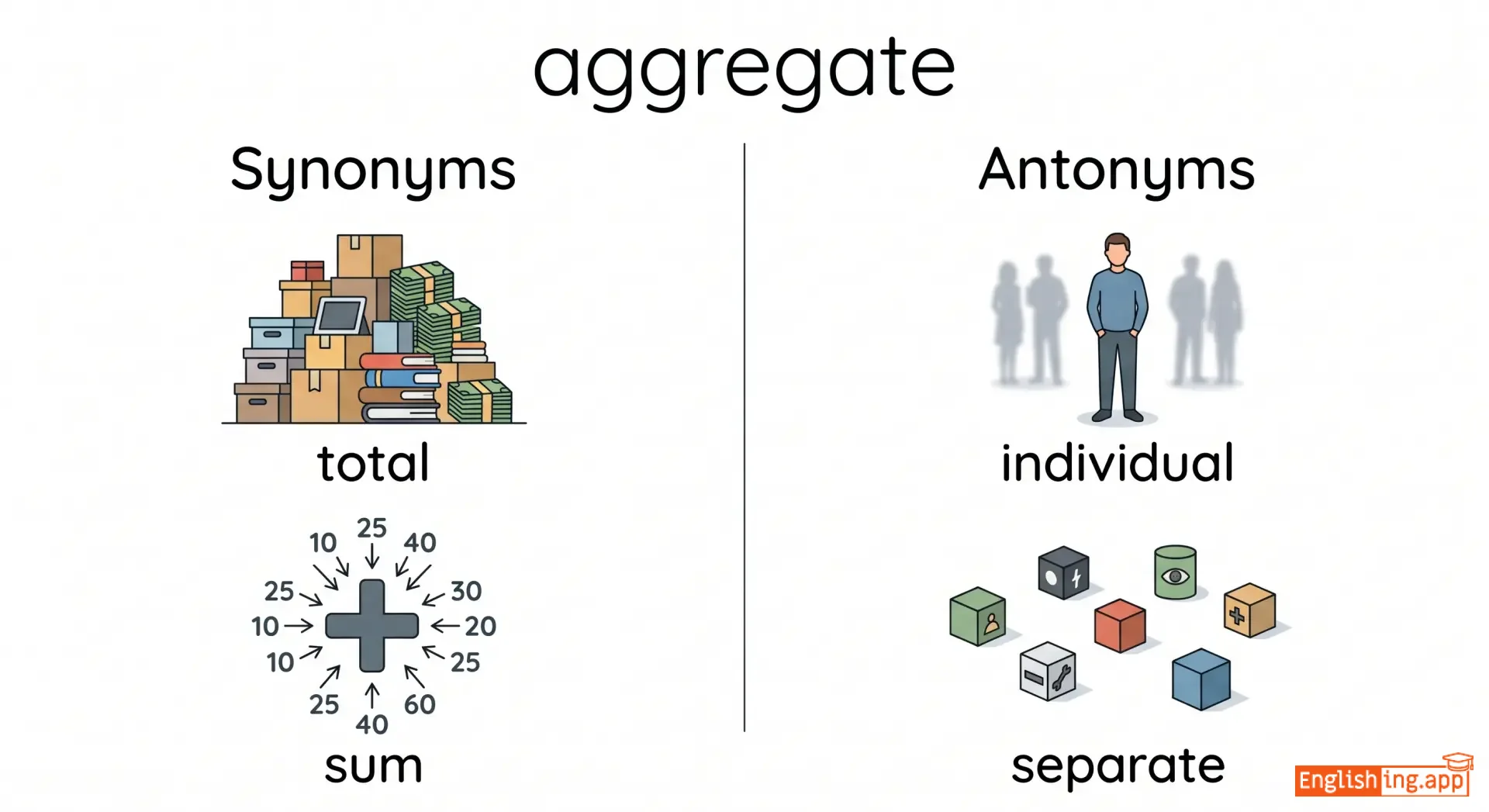
total, sum, collection, accumulate
••••••
|
individual, separate, divide
••••••
|
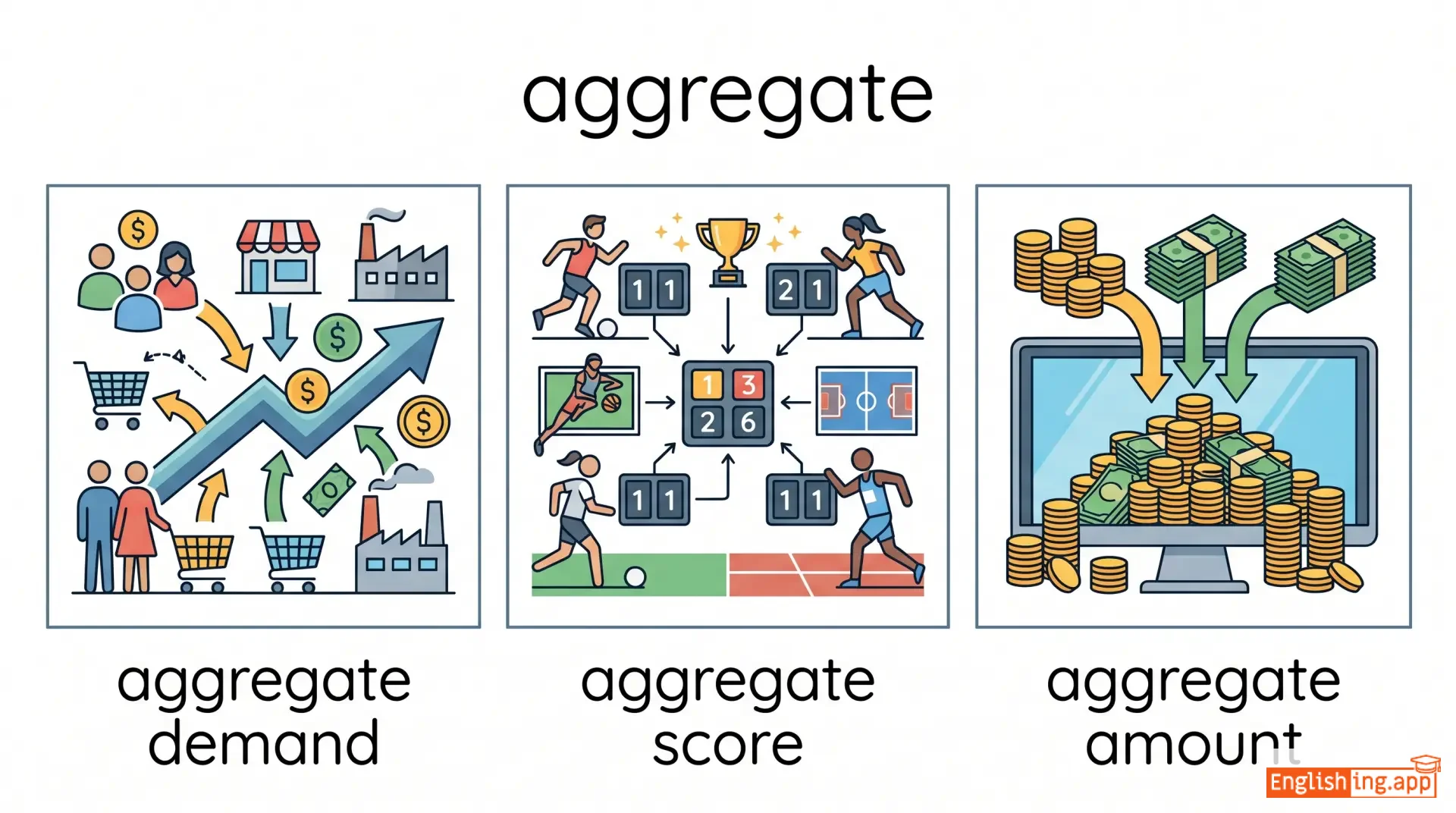
aggregate demand, aggregate score, aggregate amount, aggregate data
••••••
|
Aggregateはすべてを一緒にして大きな集合体を作ることです。
••••••
|
|
#10
⚡
|
/əˈlæk.rə.ti/
noun
(アラクリティ)
••••••
|
|
機敏
alacrity
••••••
|
- •••••• | - •••••• | - •••••• | - •••••• |
Cheerful willingness, eagerness, or readiness to do something.
••••••
|
She accepted the invitation with alacrity. |
彼女は喜んで招待を受け入れました。
Kanojo wa yorokonde shōtai o ukeiremashita.
••••••
|
- •••••• | - •••••• | - •••••• |
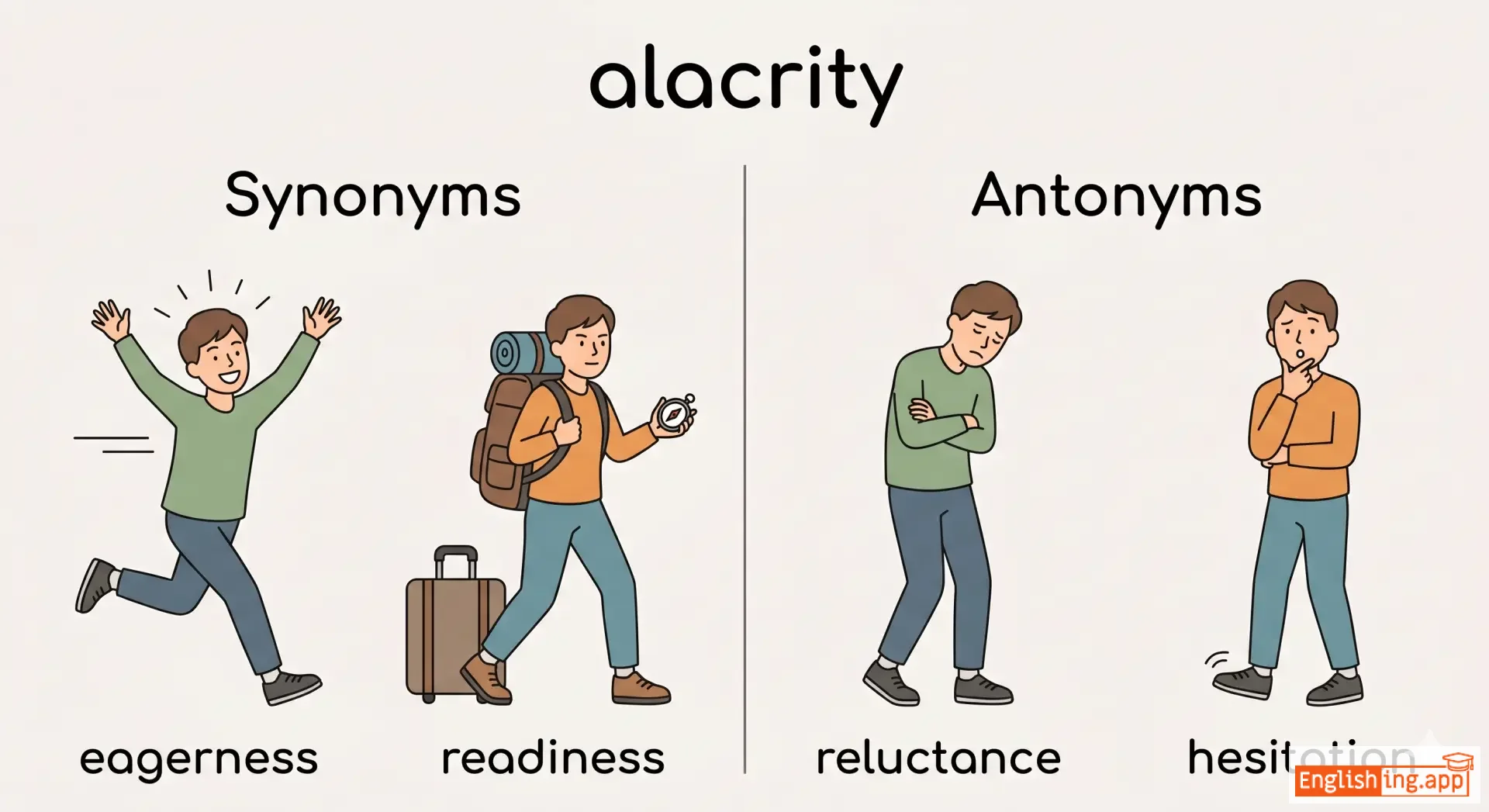
eagerness, readiness, enthusiasm, willingness, promptness
••••••
|
reluctance, hesitation, unwillingness
••••••
|
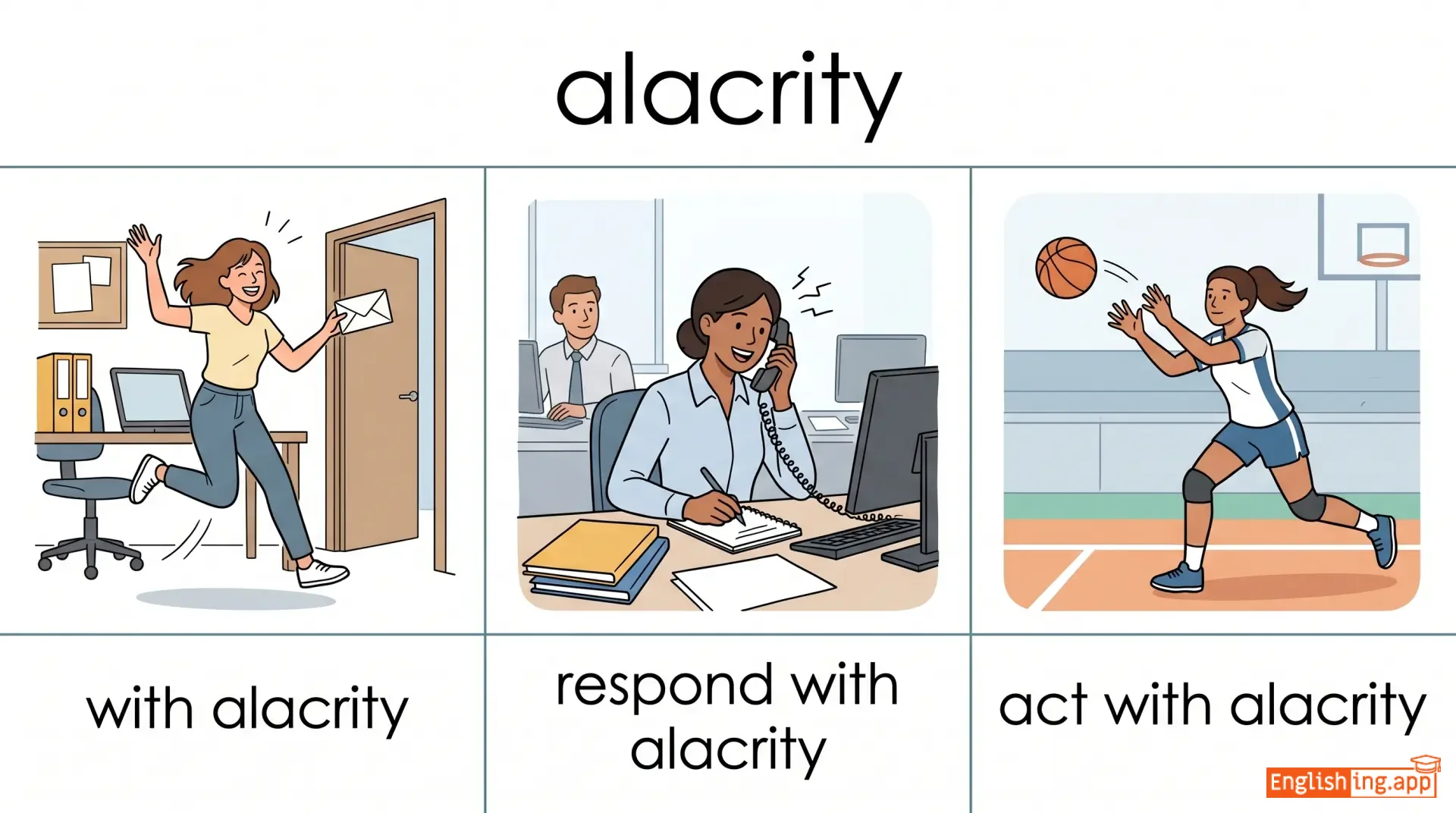
with alacrity, respond with alacrity, act with alacrity
••••••
|
Alacrityは「電光」のように素早い行動を意味します。
••••••
|
|
#11
💊
|
/əˈliːvieɪt/
verb
(アリビエイト)
••••••
|
|
和らげる
yawarageru
••••••
|
alleviated
アリビエイテッド
••••••
|
alleviated
アリビエイテッド
••••••
|
alleviates
アリビエイツ
••••••
|
alleviating
アリビエイティング
••••••
|
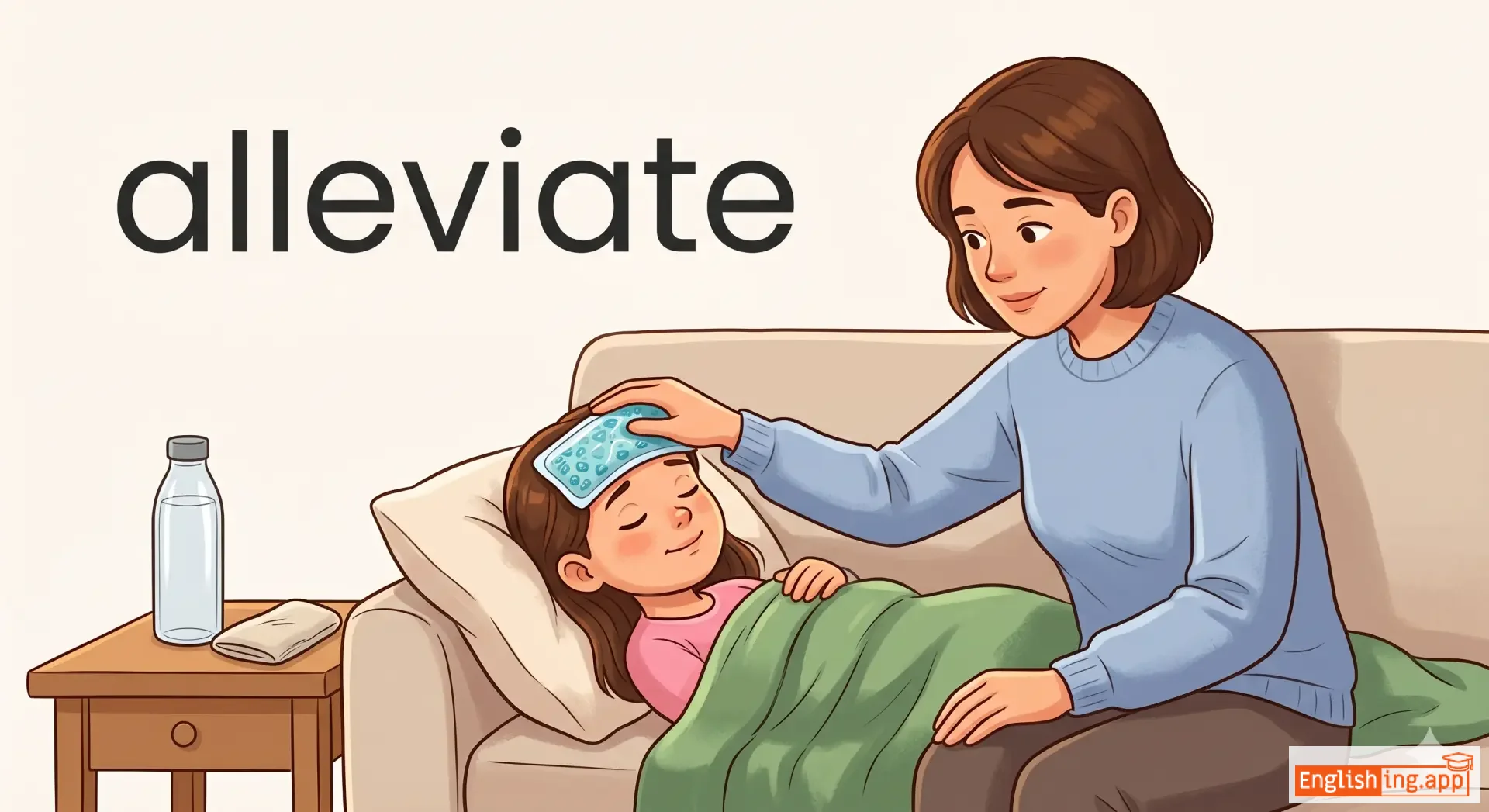
to make suffering, pain, or a problem less severe
••••••
|
The medicine helped alleviate her headache.
その薬は頭痛を軽減するのに役立ちました。
••••••
|
その薬は頭痛を軽減するのに役立ちました。
Sono kusuri wa zutsuu o keigen suru no ni yakudachimashita.
••••••
|
alleviate suffering
苦しみを軽減する
••••••
|
to reduce someone's suffering
••••••
|
苦しみを軽減する
kurushimi o keigen suru
••••••
|
ease, relieve, lessen, mitigate, reduce
••••••
|
worsen, aggravate, intensify
••••••
|
alleviate pain, alleviate suffering, alleviate poverty, alleviate symptoms
••••••
|
Yawarageru は痛みを和らげることを意味します (和らげる)。
••••••
|
|
#12
🔗
|
/əˈmælɡəmeɪt/
verb
(アマルガメイト)
••••••
|
|
合併する
gappei suru
••••••
|
amalgamated
アマルガメイテッド
••••••
|
amalgamated
アマルガメイテッド
••••••
|
amalgamates
アマルガメイツ
••••••
|
amalgamating
アマルガメイティング
••••••
|
to combine or unite to form one organization or structure; to merge
••••••
|
The two companies decided to amalgamate their operations.
二つの会社は運営を合併することを決定しました。
••••••
|
二つの会社は運営を合併することを決定しました。
Futatsu no kaisha wa un'ei o gappei suru koto o kettei shimashita.
••••••
|
- •••••• | - •••••• | - •••••• |
merge, combine, unite, blend
••••••
|
separate, divide, split, isolate
••••••
|
amalgamate companies, amalgamate operations, successfully amalgamate, amalgamate resources, amalgamate efforts
••••••
|
合併する = merge to combine
••••••
|
|
#13
❓
|
/æmˈbɪɡjuəs/
adjective
(アンビギュアス)
••••••
|
|
曖昧な
aimai na
••••••
|
- •••••• | - •••••• | - •••••• | - •••••• |
Open to more than one interpretation; unclear or uncertain.
••••••
|
His answer was so ambiguous that no one understood his real opinion. |
彼の答えは非常に曖昧で、誰も彼の本当の意見を理解できませんでした。
Kare no kotae wa hijō ni aimai de, dare mo kare no hontō no iken o rikai dekimasen deshita.
••••••
|
ambiguous statement |
a statement that can be interpreted in more than one way
••••••
|
曖昧な声明
aimai na seimei
••••••
|
unclear, vague, uncertain, equivocal, obscure
••••••
|
clear, definite, explicit
••••••
|
ambiguous statement, ambiguous meaning, ambiguous situation, ambiguous terms
••••••
|
Ambulanceの音は曖昧で、救急車のサイレンのように混乱を引き起こします。
••••••
|
|
#14
⚖️
|
/æmˈbɪvələns/
noun
(アンビバレンス)
••••••
|
|
相反感情
sōhan kanjō
••••••
|
- •••••• | - •••••• | - •••••• | - •••••• |
The state of having mixed feelings or contradictory ideas about something.
••••••
|
He felt ambivalence about moving to a new city. |
彼は新しい都市に引っ越すことについて相反感情を抱いていました。
kare wa atarashī toshi ni hikkosu koto ni tsuite sōhan kanjō o daite imashita.
••••••
|
- •••••• | - •••••• | - •••••• |
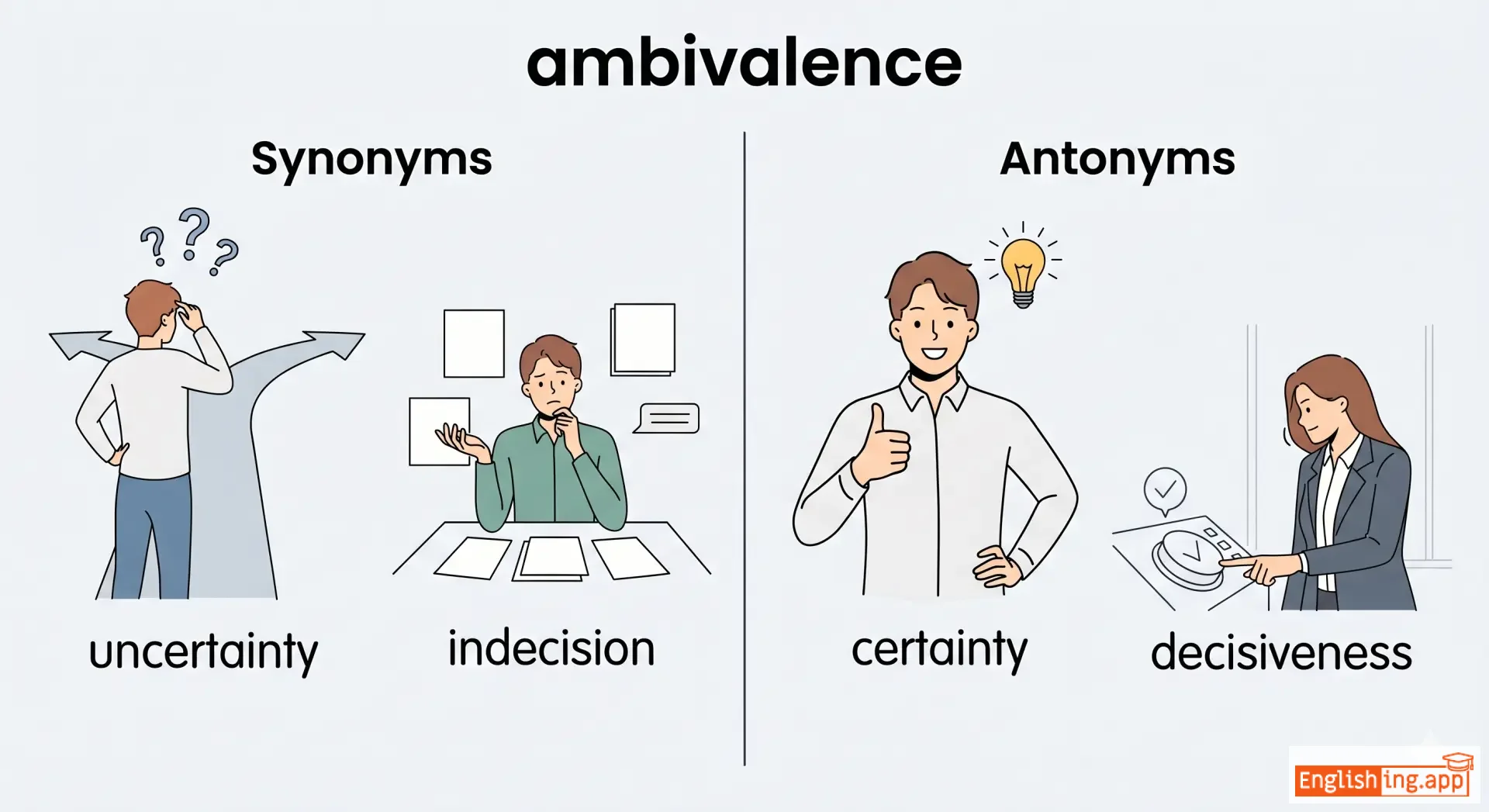
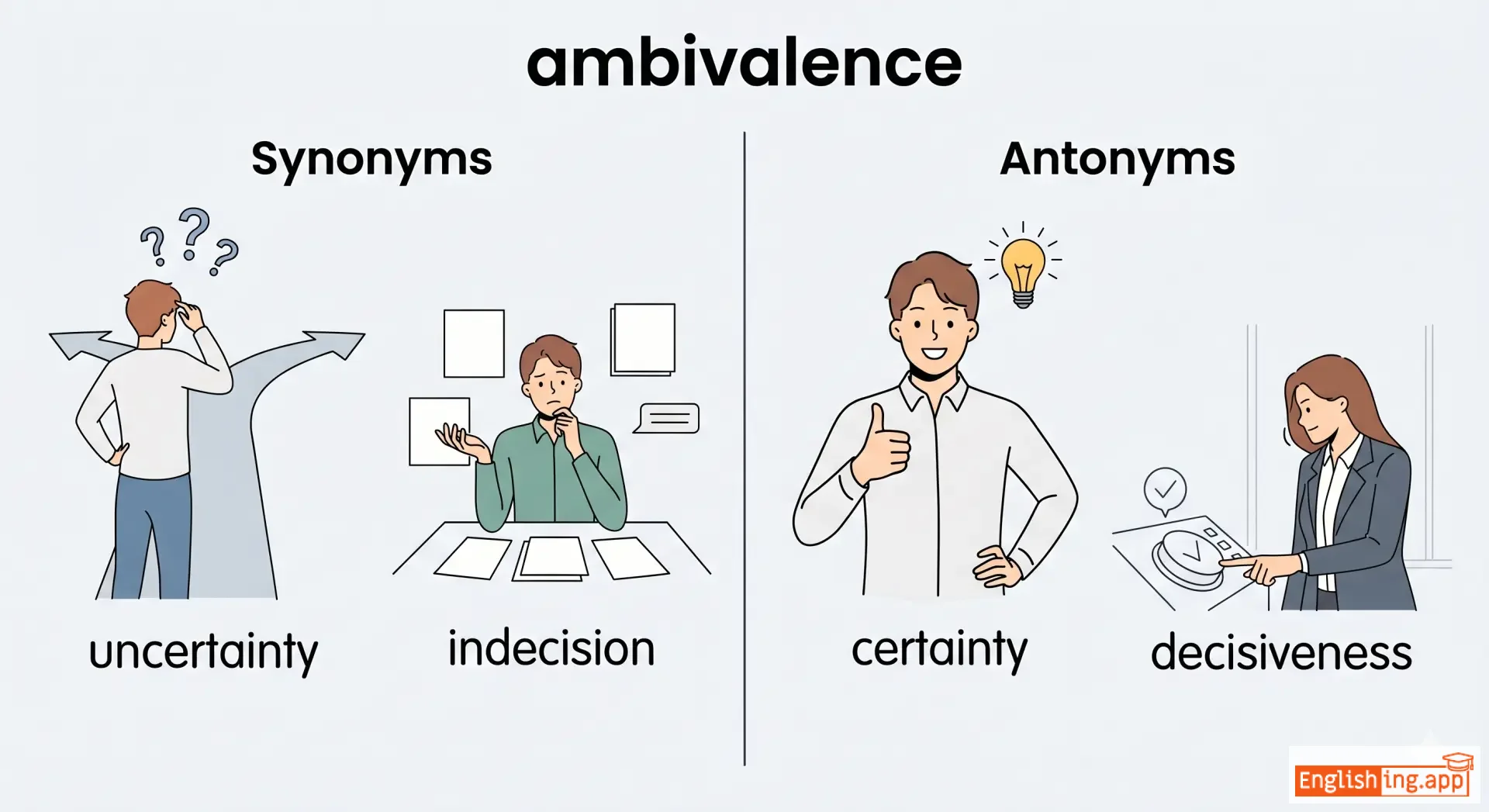
uncertainty, indecision, doubt, hesitation
••••••
|
certainty, decisiveness, clarity
••••••
|
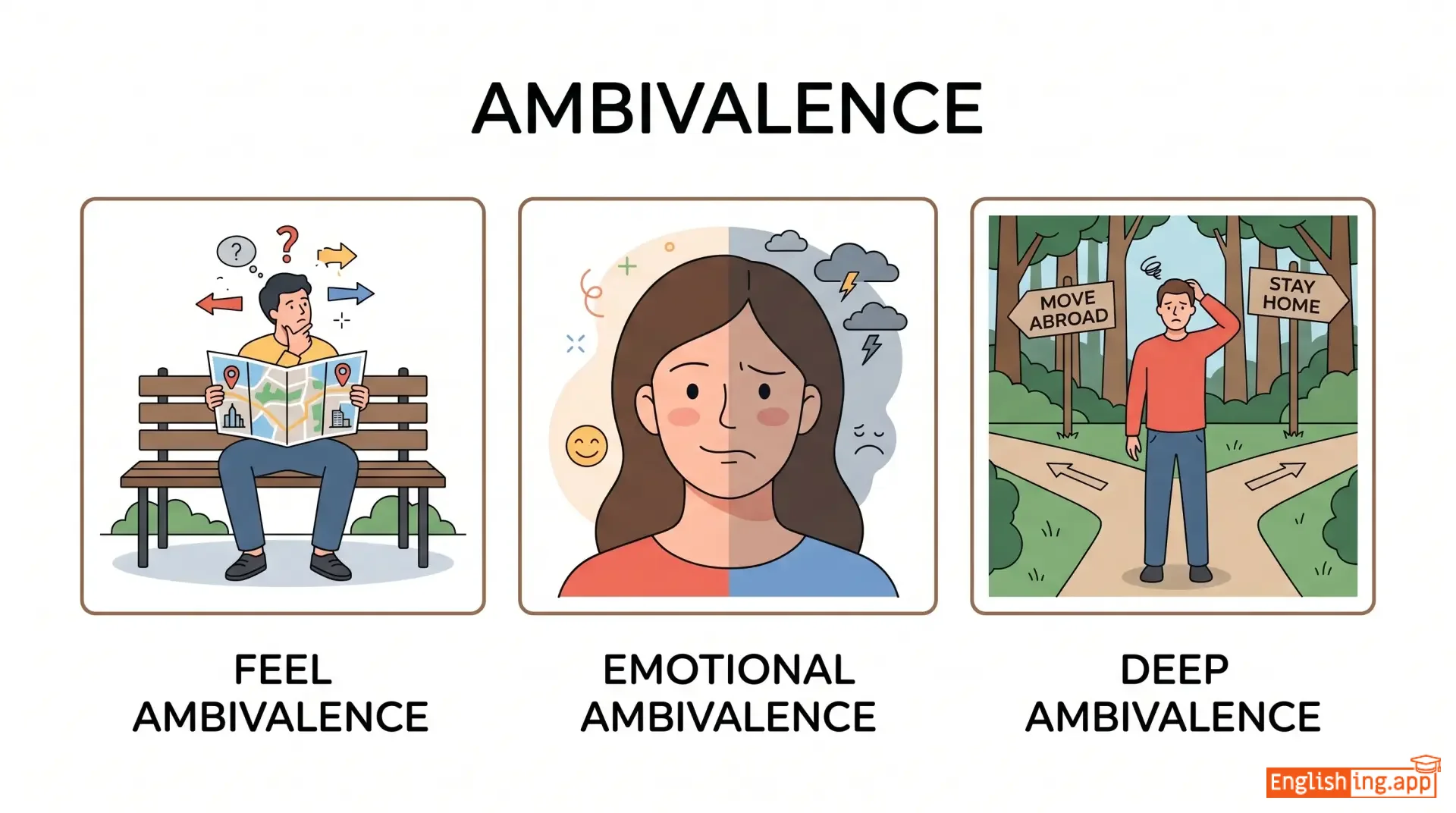
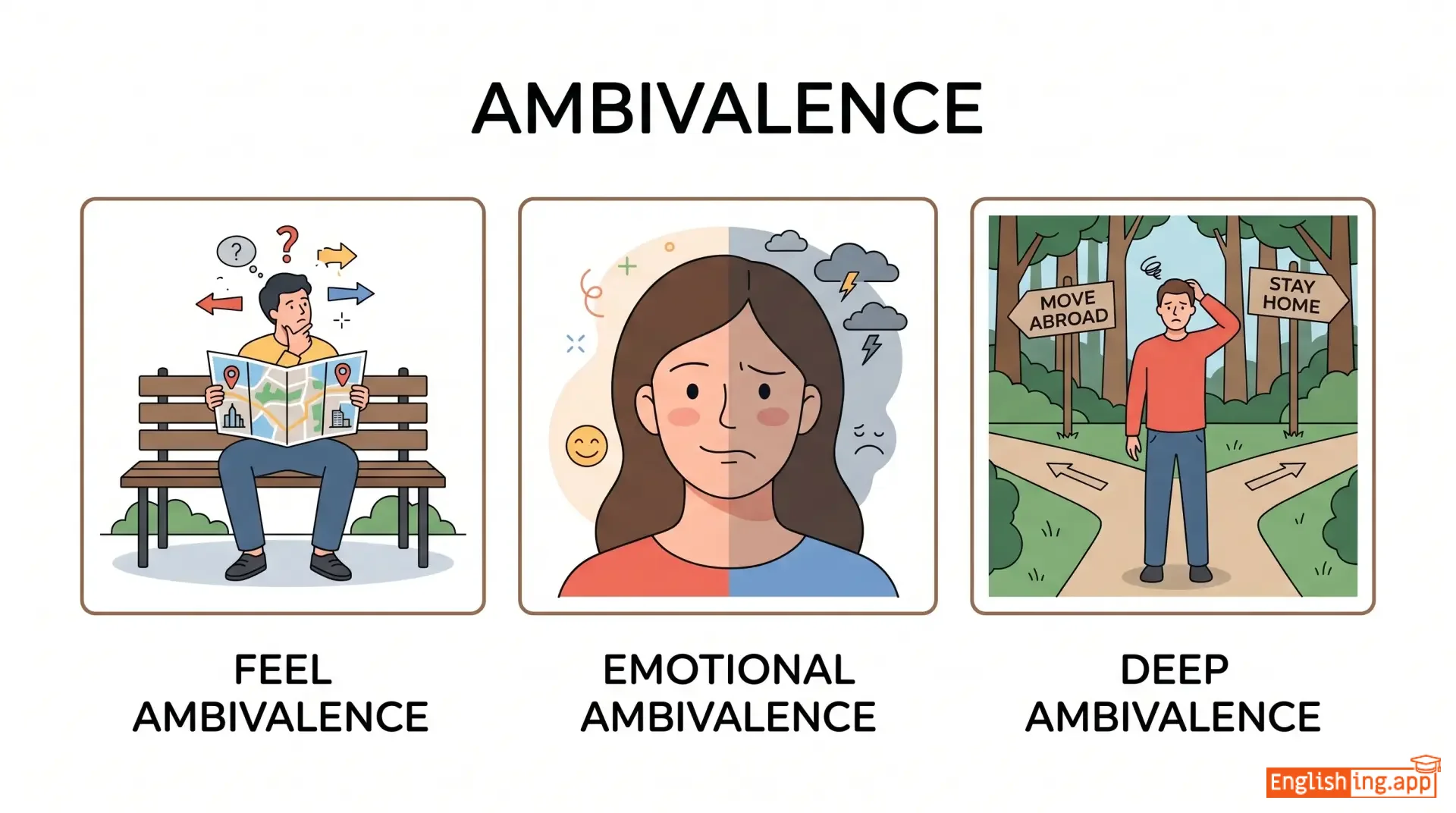
feel ambivalence, emotional ambivalence, deep ambivalence
••••••
|
救急車の中で相反感情が恐れと希望の間に感じられる。
••••••
|
|
#15
🔧
|
/əˈmiːliəreɪt/
verb
(ハピネス)
••••••
|
|
幸福
kōfuku
••••••
|
ameliorated
••••••
|
ameliorated
••••••
|
ameliorates
••••••
|
ameliorating
••••••
|
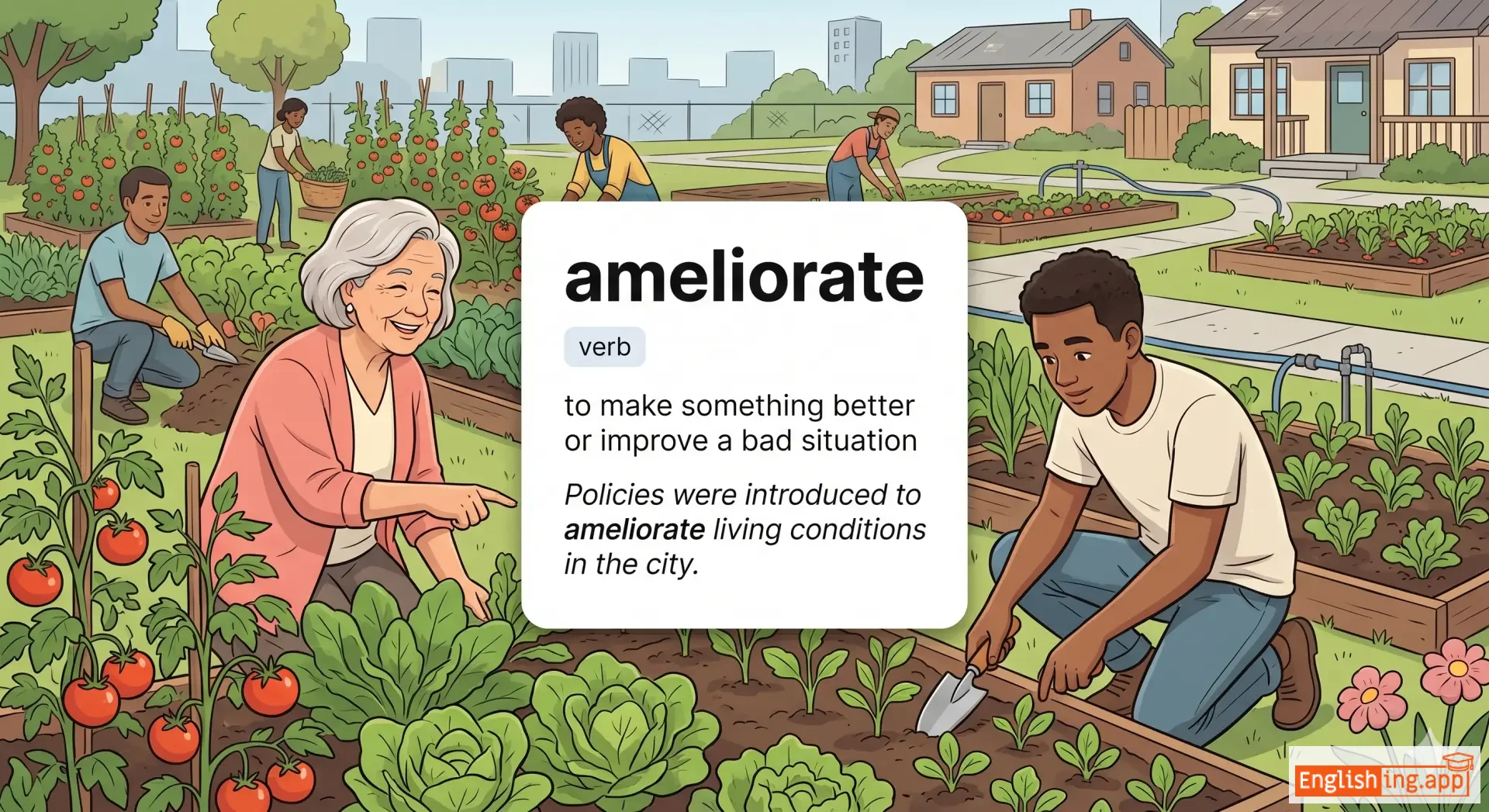
to make something better or improve a bad situation
••••••
|
Policies were introduced to ameliorate living conditions in the city. |
都市の生活条件を改善するための政策が導入されました。
Toshi no seikatsu jōken o kaizen suru tame no seisaku ga dōnyū saremashita.
••••••
|
ameliorate the situation |
to improve a problematic or difficult condition
••••••
|
状況を改善する
jōkyō o kaizen suru
••••••
|
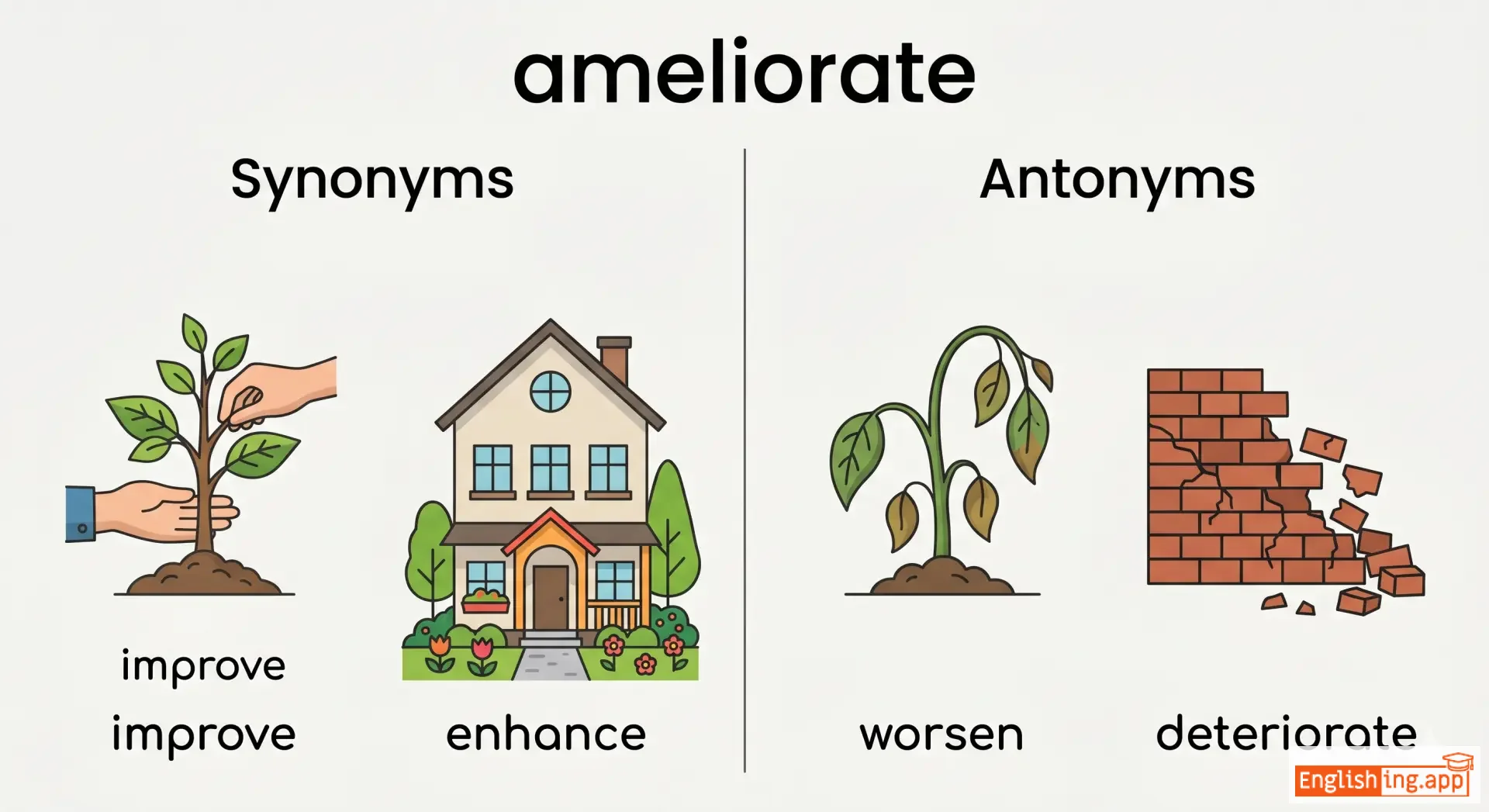
improve, enhance, upgrade, better, reform
••••••
|
worsen, deteriorate, aggravate
••••••
|
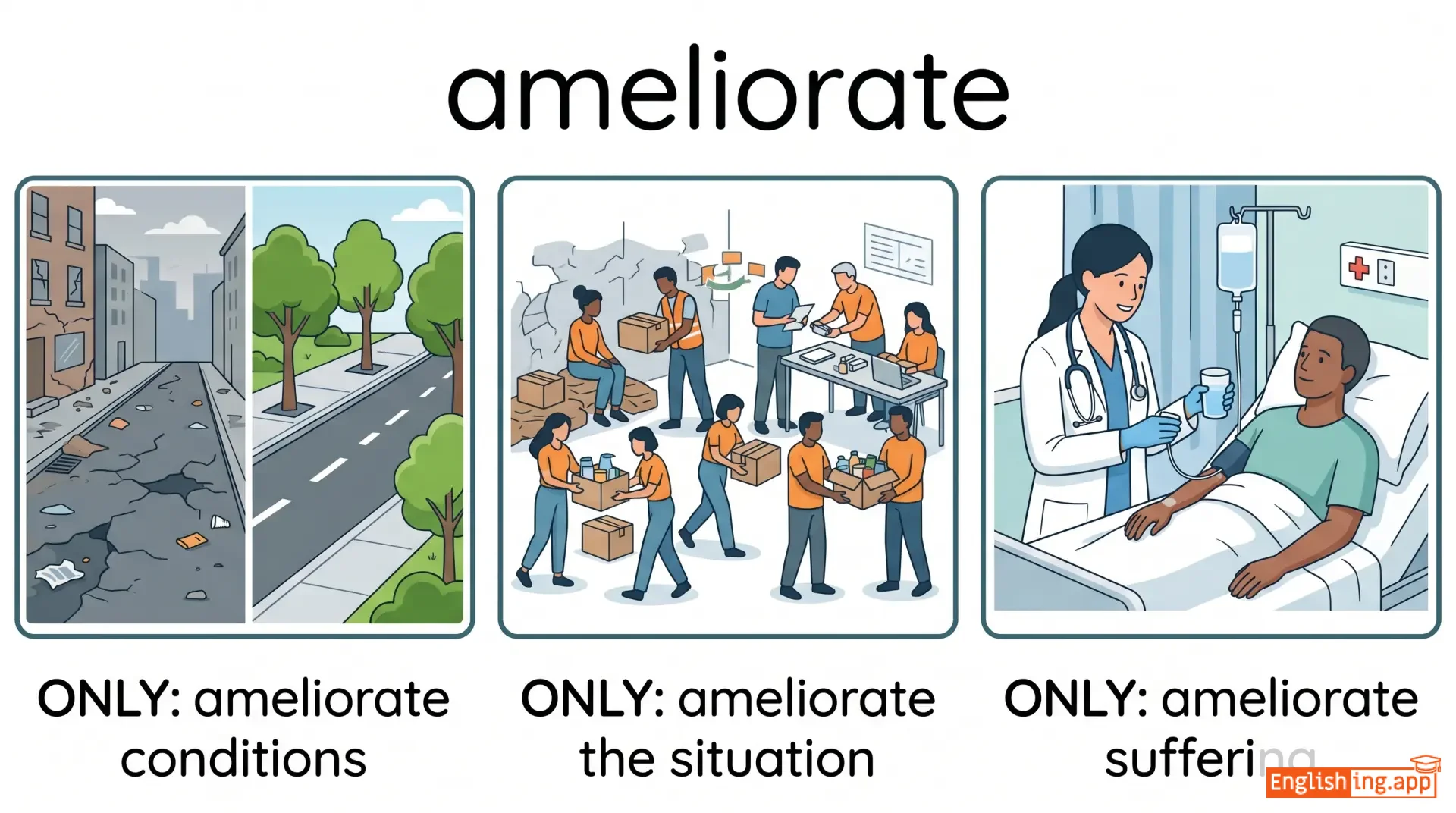
ameliorate conditions, ameliorate the situation, ameliorate suffering, ameliorate poverty
••••••
|
幸福 (kōfuku) は状況が改善されたときに感じます。
••••••
|
|
#16
⌛
|
/əˈnækrəˌnɪzəm/
noun
••••••
|
|
- •••••• | - •••••• | - •••••• | - •••••• | - •••••• |
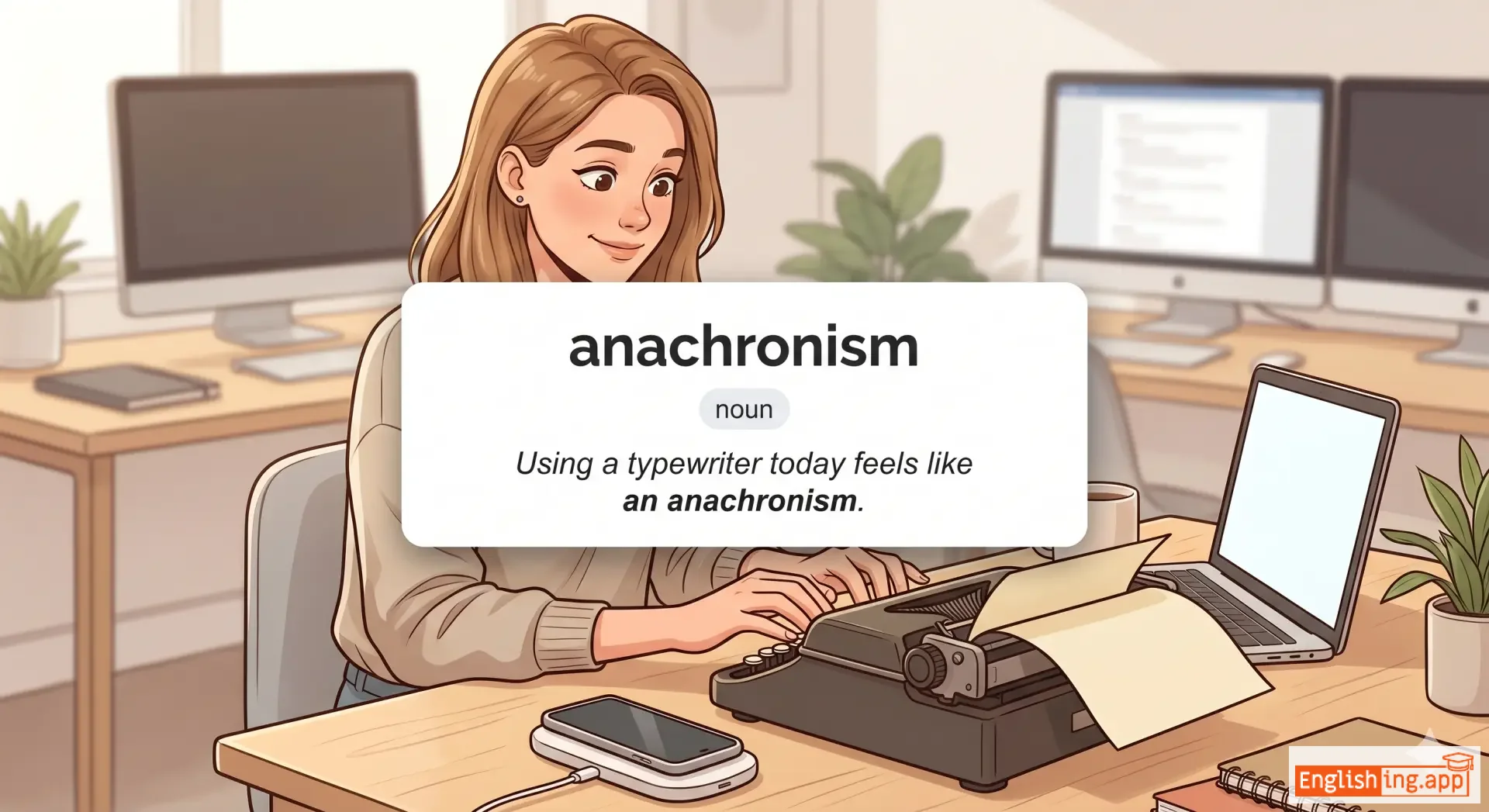
something that is out of its proper time period, especially something old-fashioned in a modern context
••••••
|
Using a typewriter today feels like an anachronism. |
- •••••• | - •••••• | - •••••• | - •••••• |
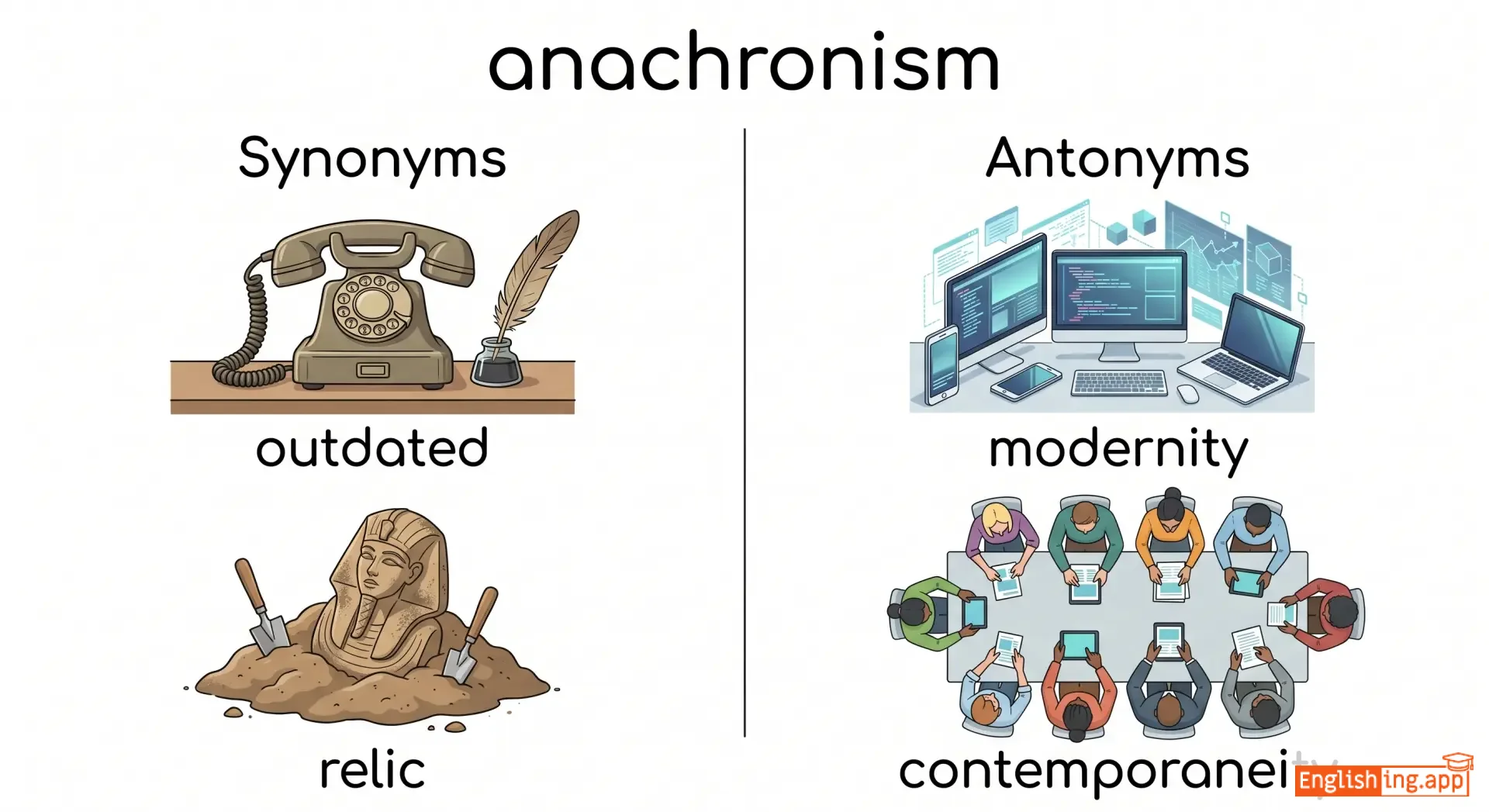
outdated, relic, antiquated, obsolete
••••••
|
modernity, contemporaneity, relevance
••••••
|
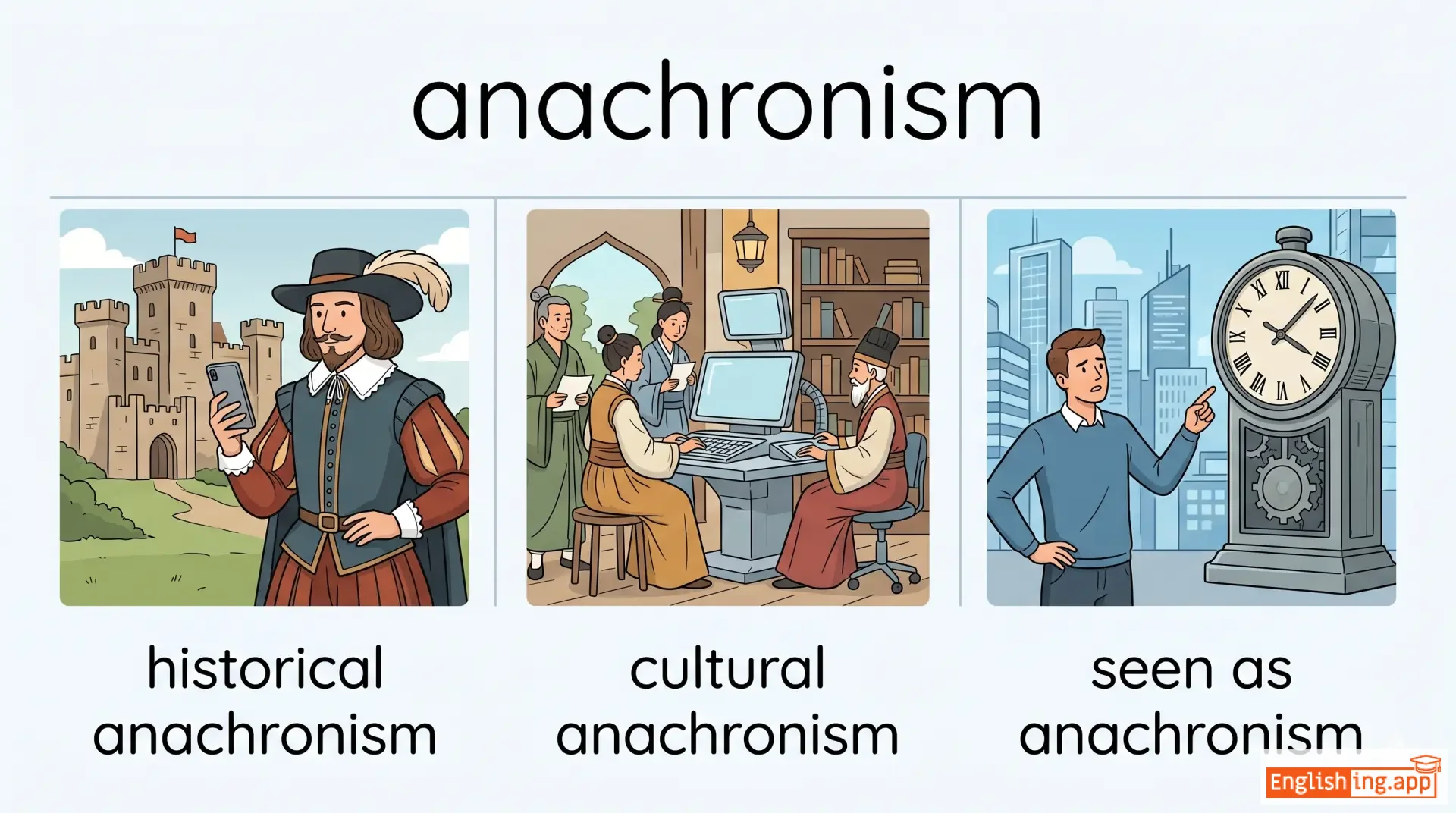
historical anachronism, cultural anachronism, seen as anachronism
••••••
|
No •••••• |
|
#17
🔗
|
/əˈnæləɡəs/
adjective
••••••
|
|
- •••••• | - •••••• | - •••••• | - •••••• | - •••••• |
Comparable in certain respects, typically in a way that makes clearer the nature of the things compared.
••••••
|
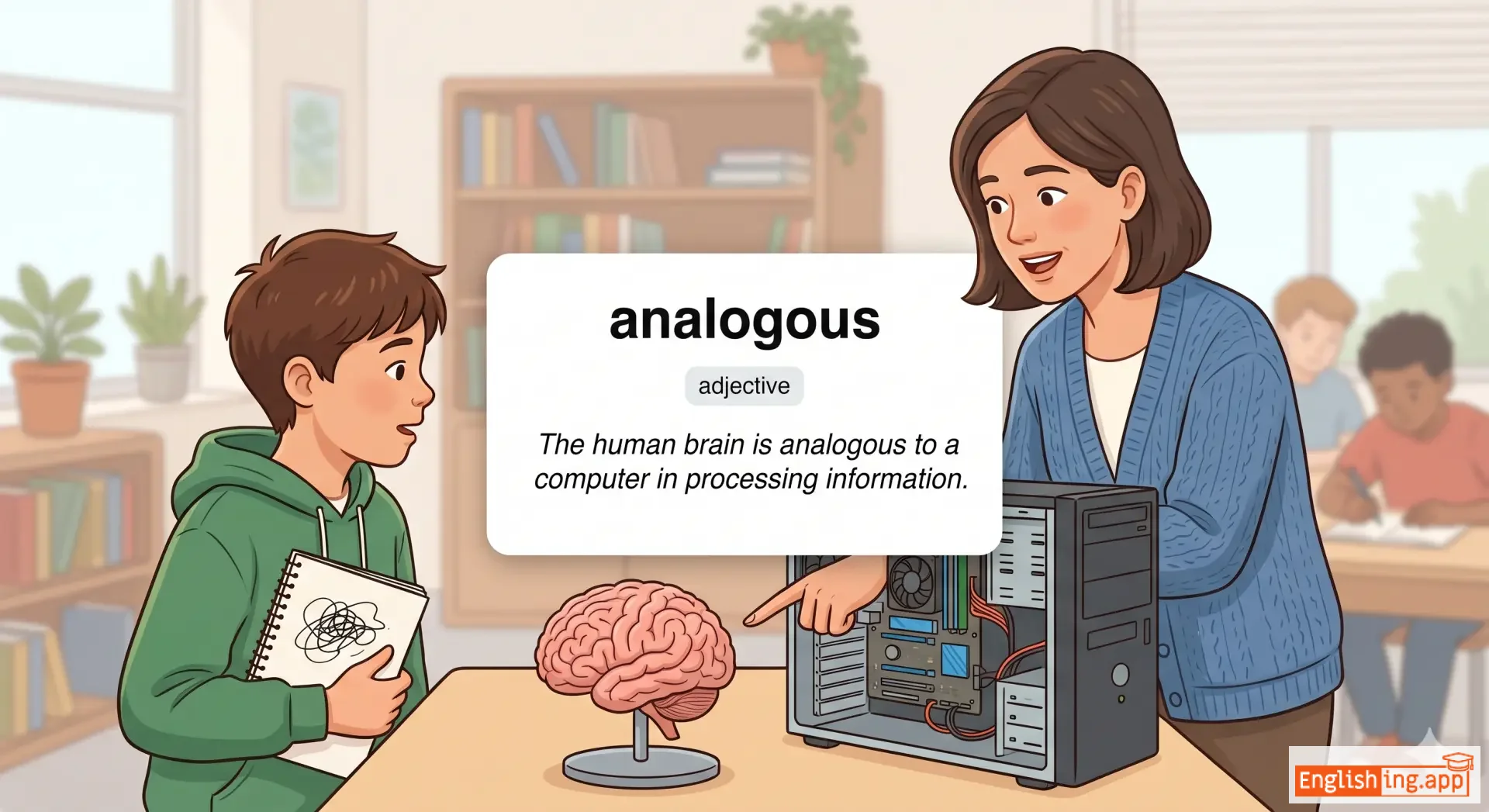
The human brain is analogous to a computer in processing information. |
- •••••• | - •••••• | - •••••• | - •••••• |
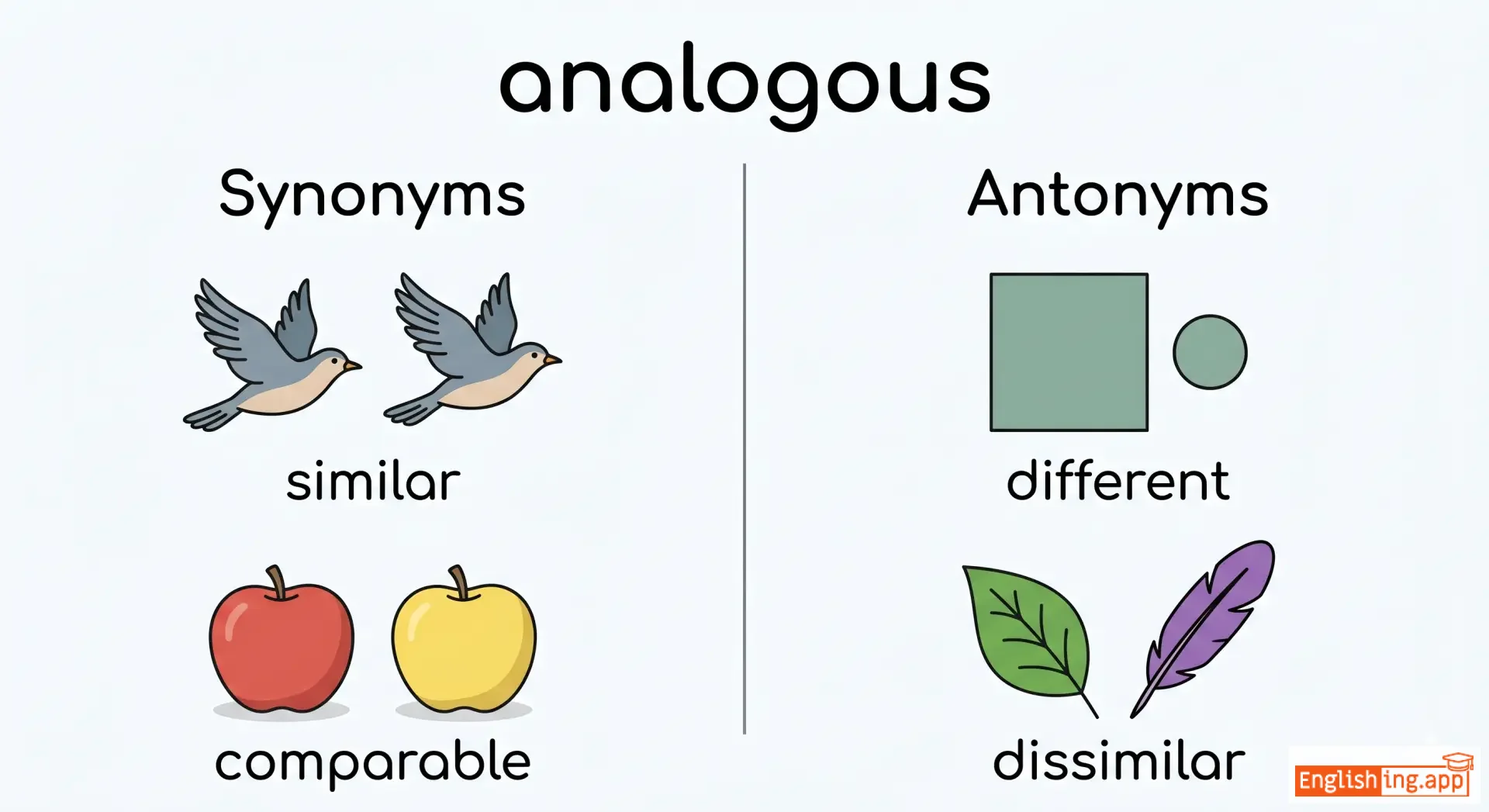
similar, comparable, alike, equivalent
••••••
|
different, dissimilar, unrelated
••••••
|
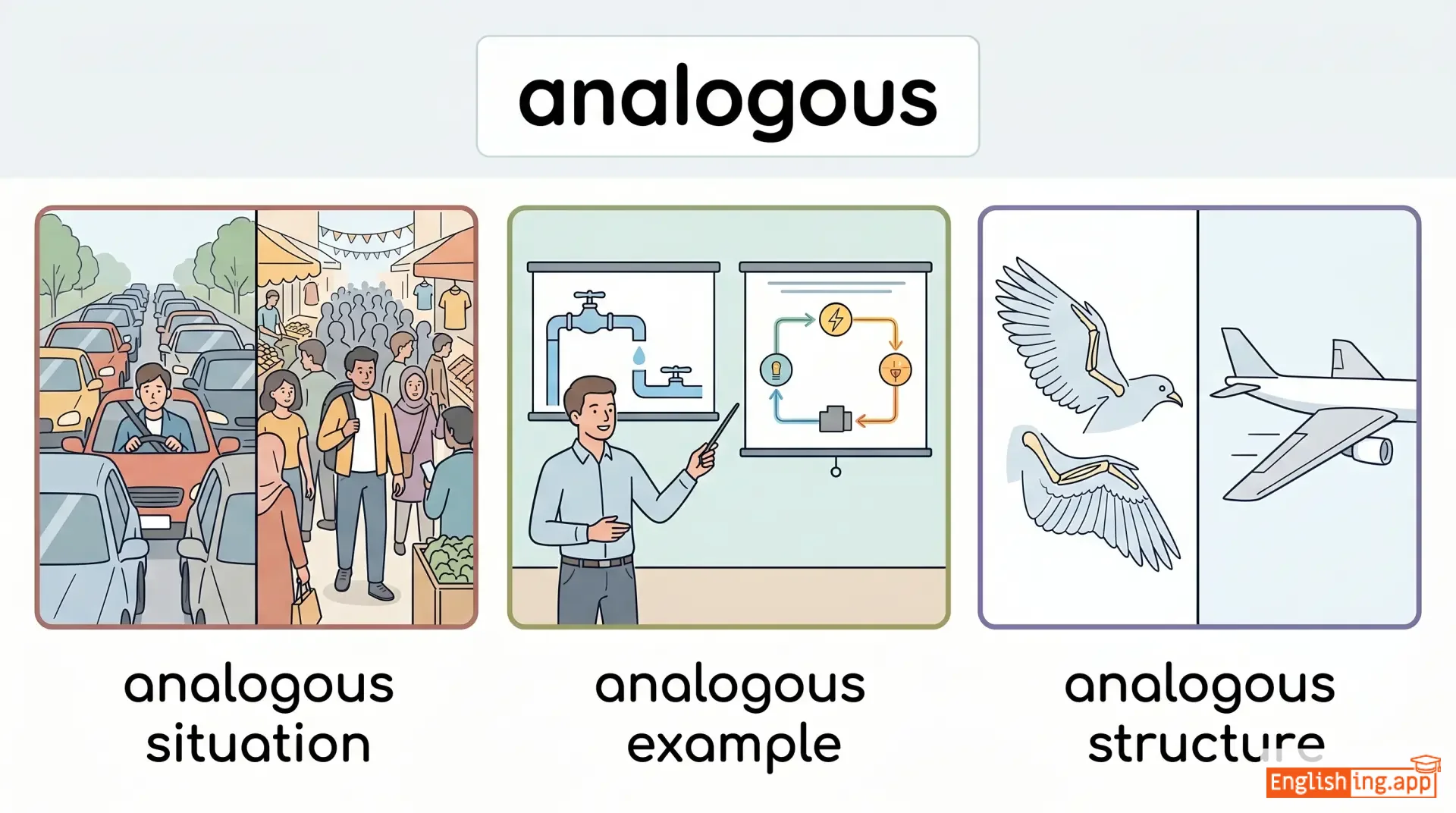
analogous situation, analogous example, analogous structure
••••••
|
No •••••• |
|
#18
⚠️
|
/ˈænərki/
noun
(anākī)
••••••
|
|
無政府状態
museifu jōtai
••••••
|
- •••••• | - •••••• | - •••••• | - •••••• |
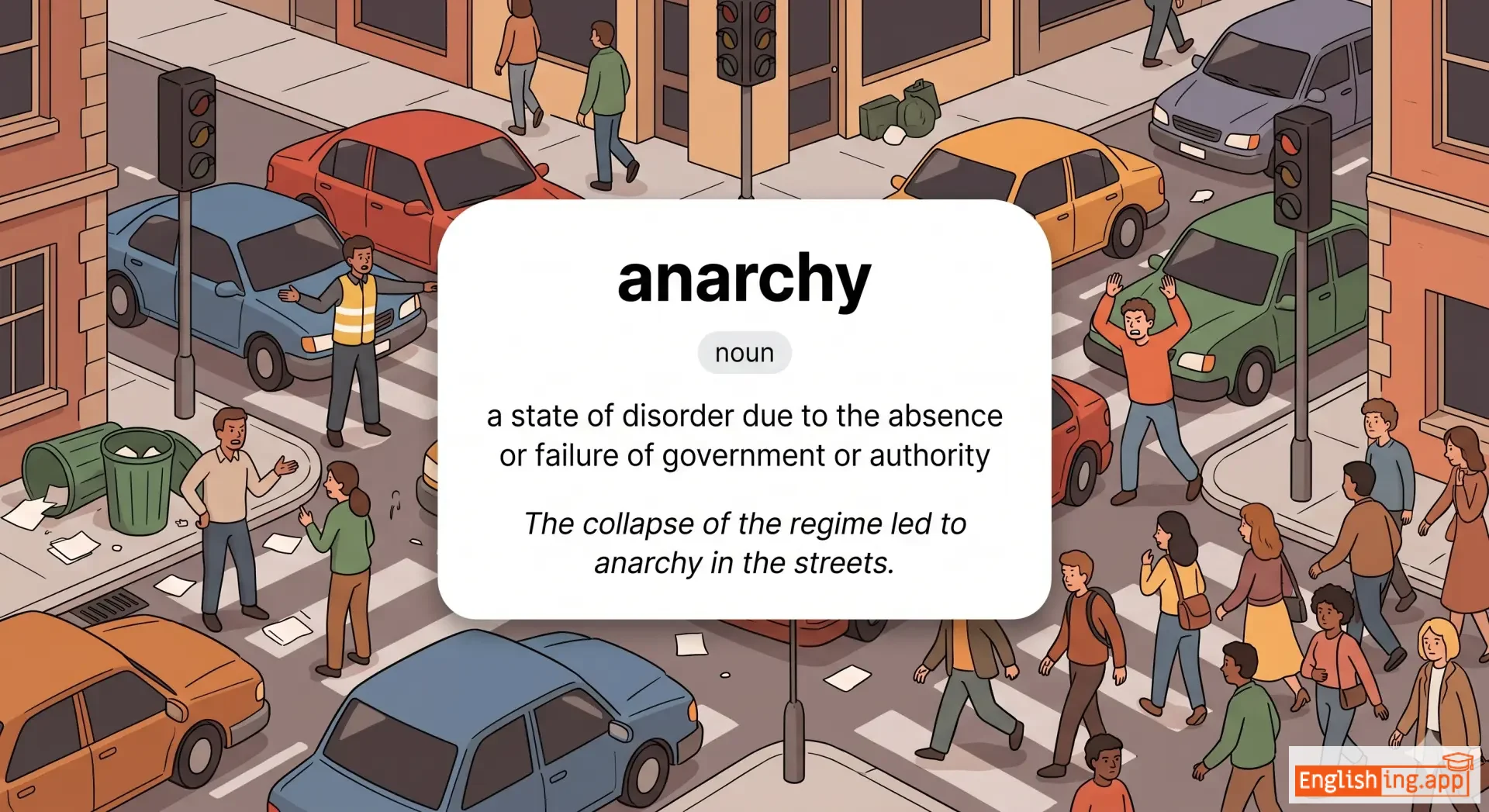
a state of disorder due to the absence or failure of government or authority
••••••
|
The collapse of the regime led to anarchy in the streets. |
政権の崩壊は街中に無政府状態を引き起こした。
Seiken no hōkai wa machi-jū ni museifu jōtai o hikiokoshita.
••••••
|
- •••••• | - •••••• | - •••••• |
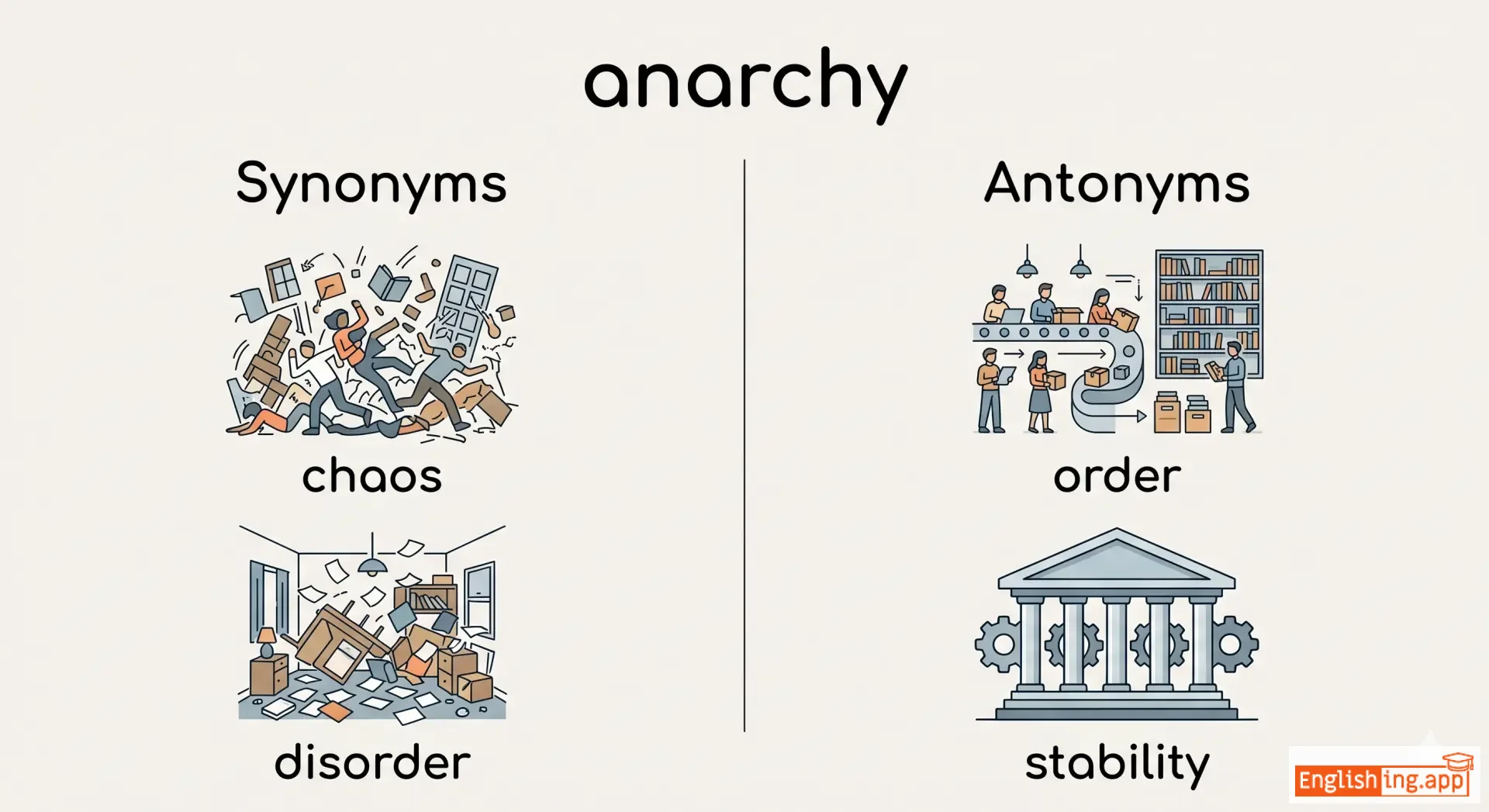
chaos, disorder, lawlessness, turmoil
••••••
|
order, stability, control
••••••
|
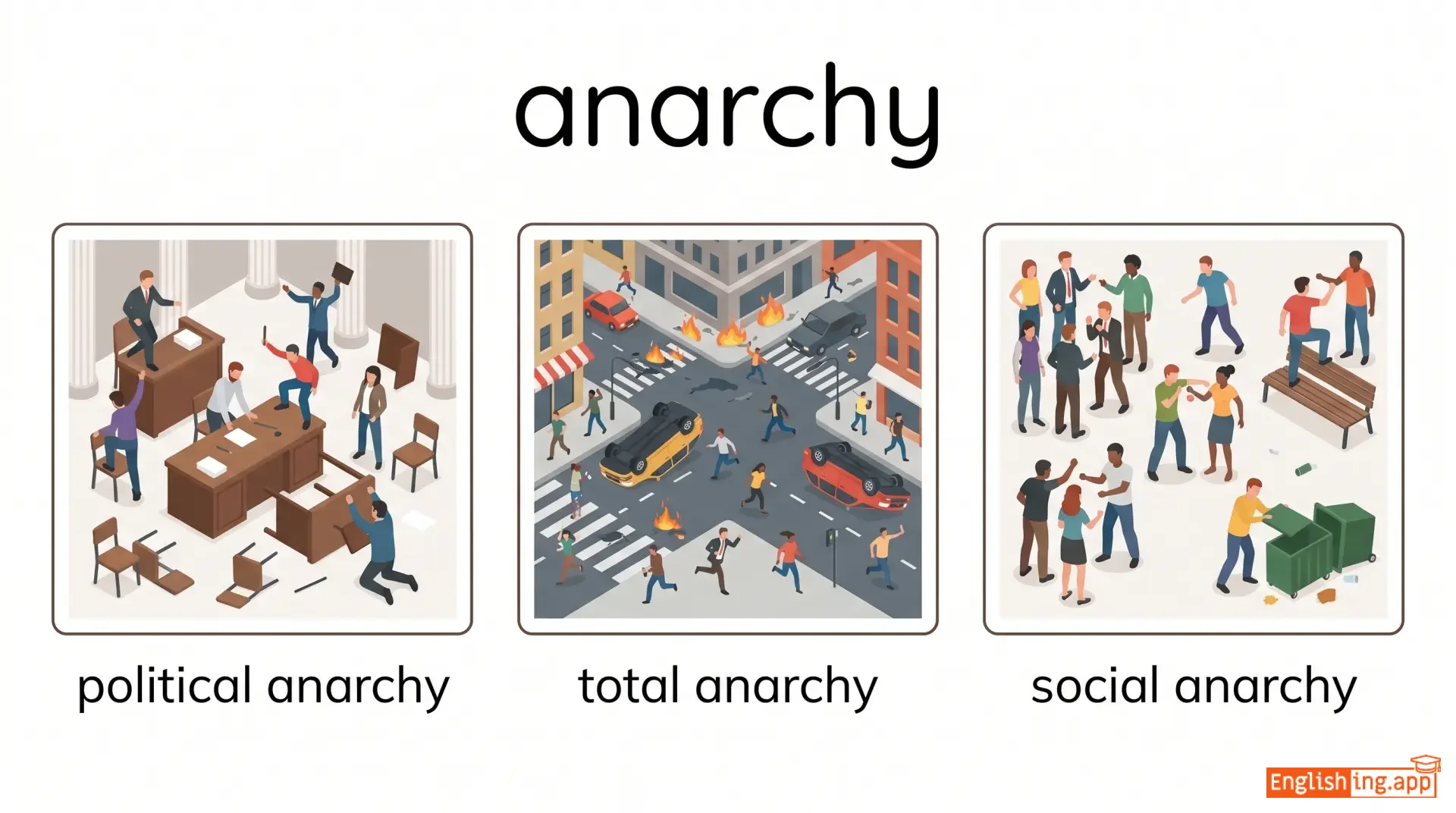
political anarchy, total anarchy, social anarchy
••••••
|
Anarchy = 'anākī' - 政府なしで、街は混乱だらけ。
••••••
|
|
#19
⚠️
|
/əˈnɒmələs/
adjective
(アノマラス)
••••••
|
|
異常
ijou
••••••
|
- •••••• | - •••••• | - •••••• | - •••••• |
deviating from what is standard, normal, or expected
••••••
|
Scientists observed an anomalous result during the experiment.
科学者たちは実験中に異常な結果を観察しました。
••••••
|
科学者たちは実験中に異常な結果を観察しました。
Kagakusha-tachi wa jikken-chuu ni ijou na kekka o kansatsu shimashita.
••••••
|
- •••••• | - •••••• | - •••••• |
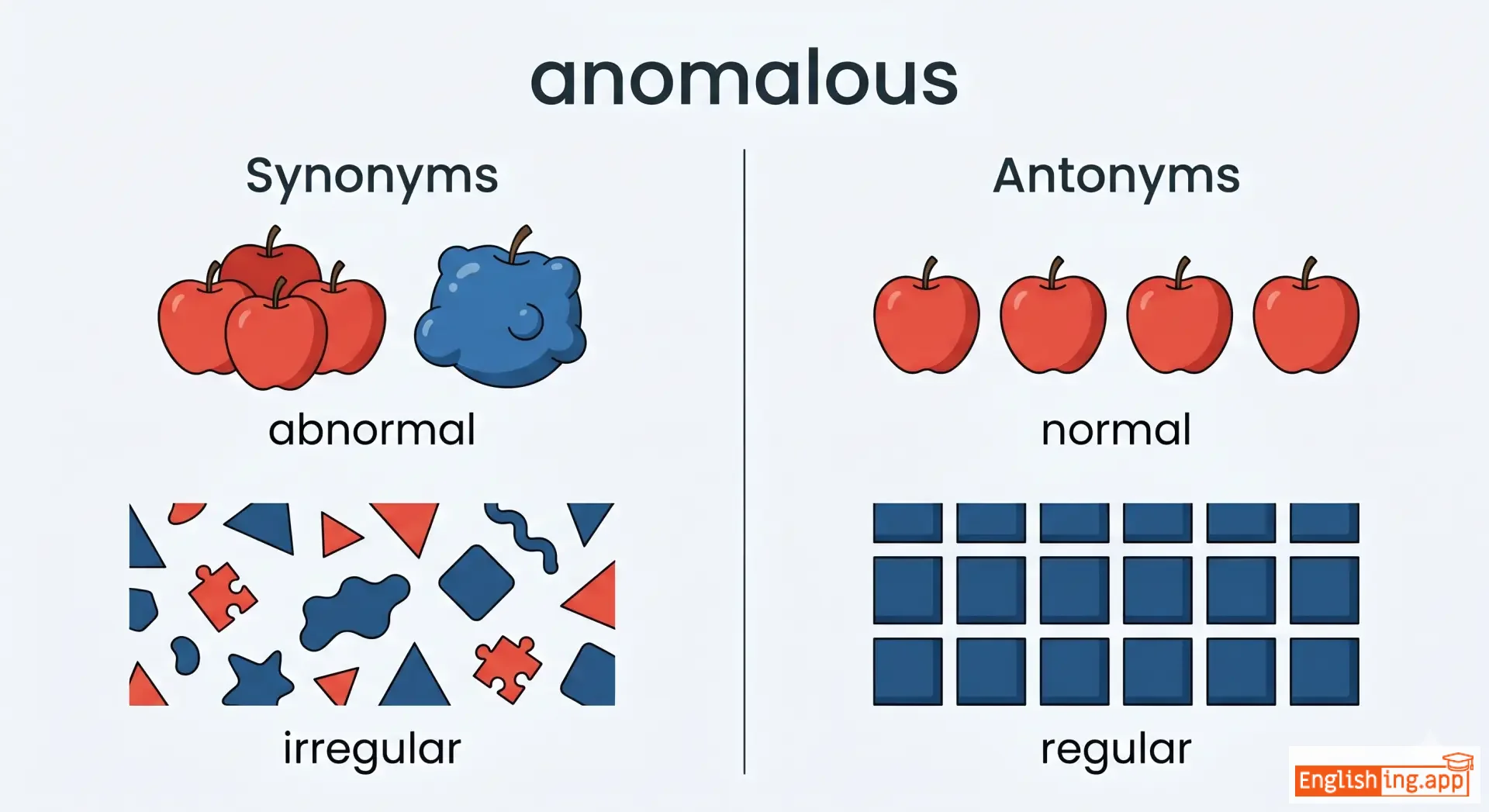
abnormal, irregular, unusual, atypical, deviant
••••••
|
normal, regular, standard
••••••
|
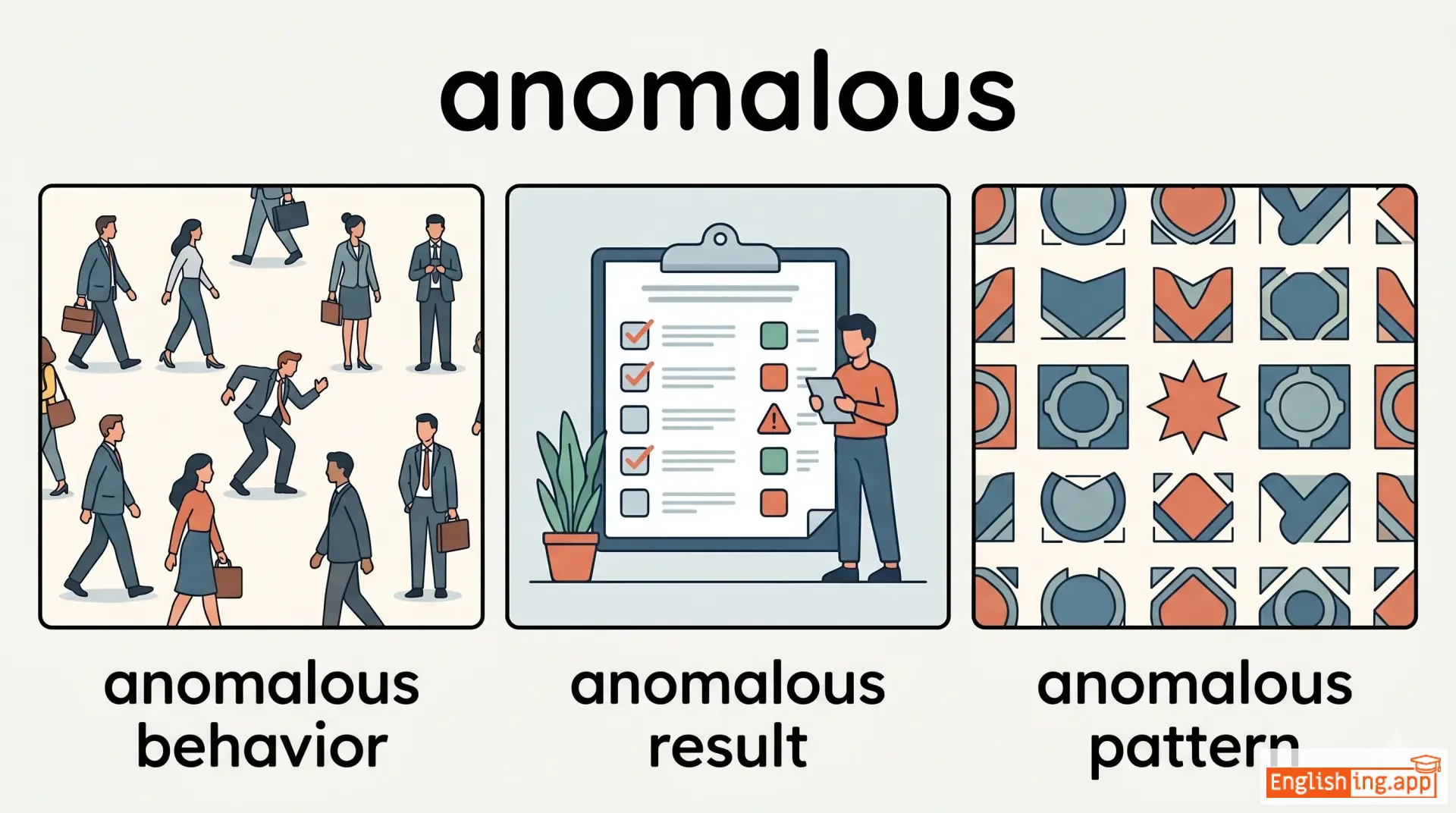
anomalous behavior, anomalous result, anomalous pattern, anomalous situation
••••••
|
Anomalousは異常を意味します—Think 'A normal' but it’s different.
••••••
|
|
#20
😤
|
/ænˈtɪpəθi/
noun
(アンチパシー)
••••••
|
|
アンチパシー
anchipashī
••••••
|
- •••••• | - •••••• | - •••••• | - •••••• |
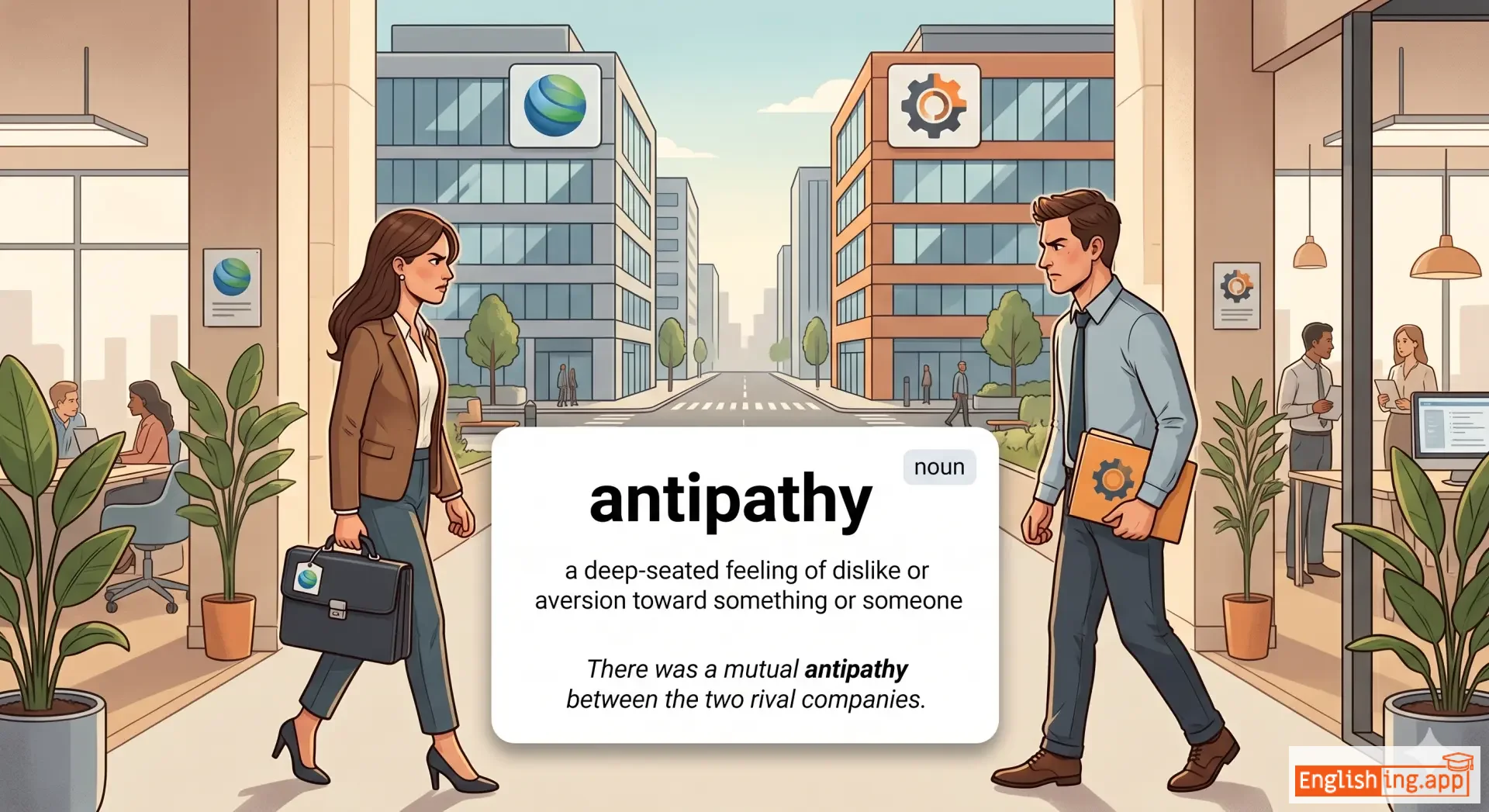
a deep-seated feeling of dislike or aversion toward something or someone
••••••
|
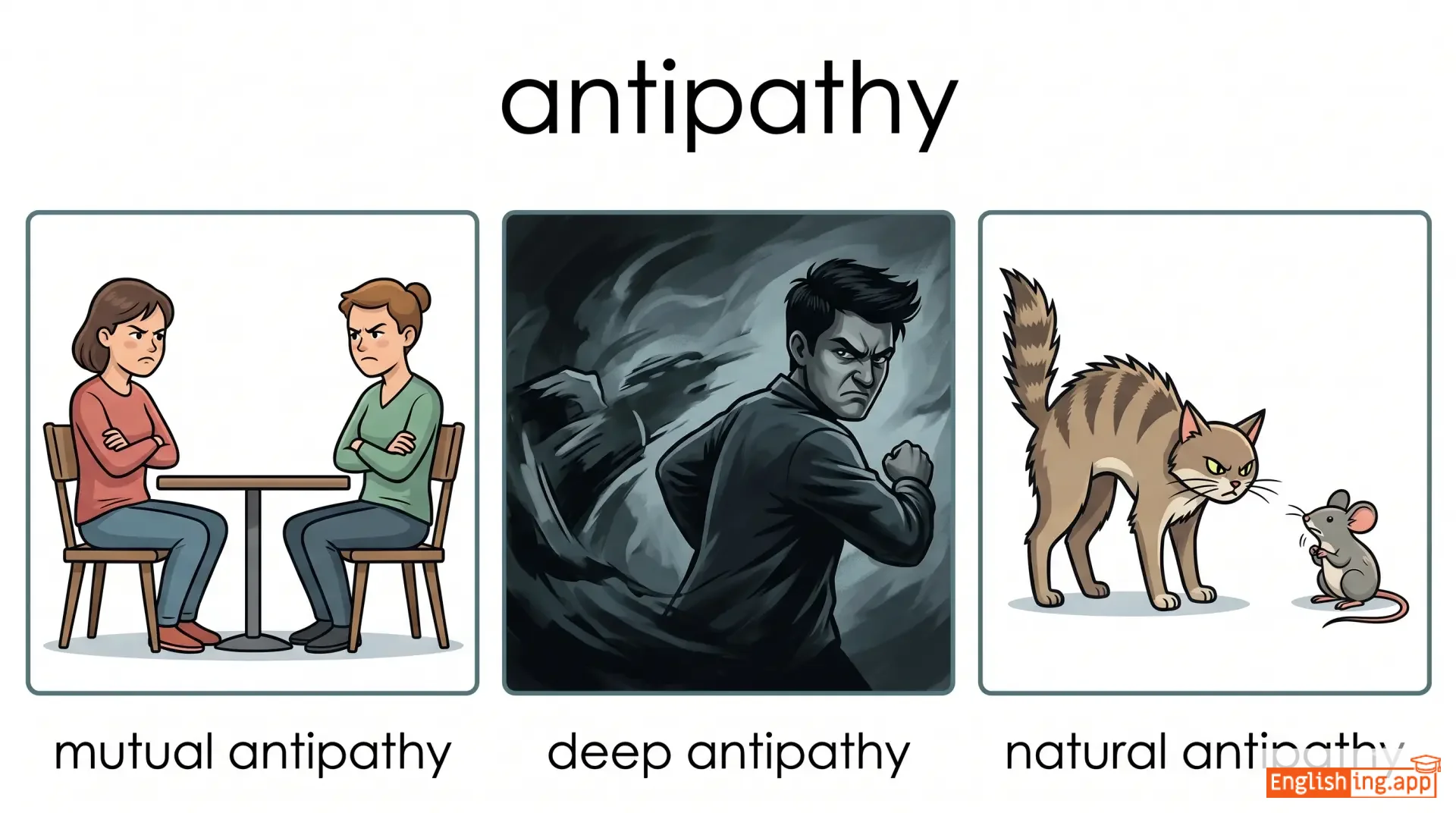
There was a mutual antipathy between the two rival companies. |
二つの競争する企業の間に相互のアンチパシーがありました。
Futatsu no kyōsō suru kigyō no aida ni sōgo no anchipashī ga arimashita.
••••••
|
natural antipathy |
an inherent or instinctive dislike
••••••
|
自然なアンチパシー
shizen na anchipashī
••••••
|
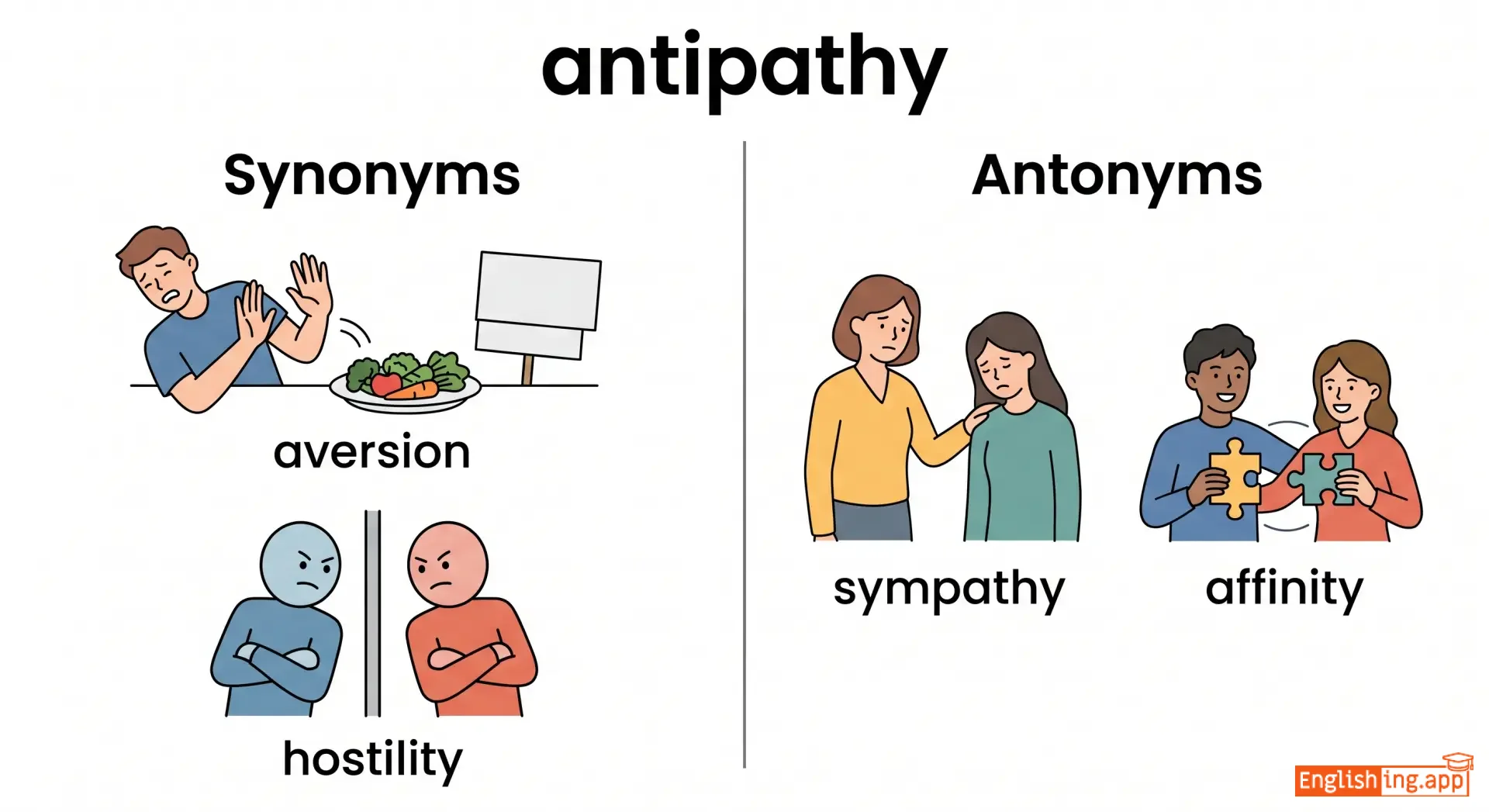
aversion, hostility, dislike, animosity, repugnance
••••••
|
sympathy, affinity, fondness
••••••
|
mutual antipathy, deep antipathy, natural antipathy, feel antipathy, antipathy toward
••••••
|
ANTI-PATHYはANTI道を意味し、アンチパシー(anchipashī)は逆の道を行くことを意味します!
••••••
|
|
#21
😑
|
/ˈæpəθi/
noun
(アパシー)
••••••
|
|
無関心
mukanshin
••••••
|
- •••••• | - •••••• | - •••••• | - •••••• |
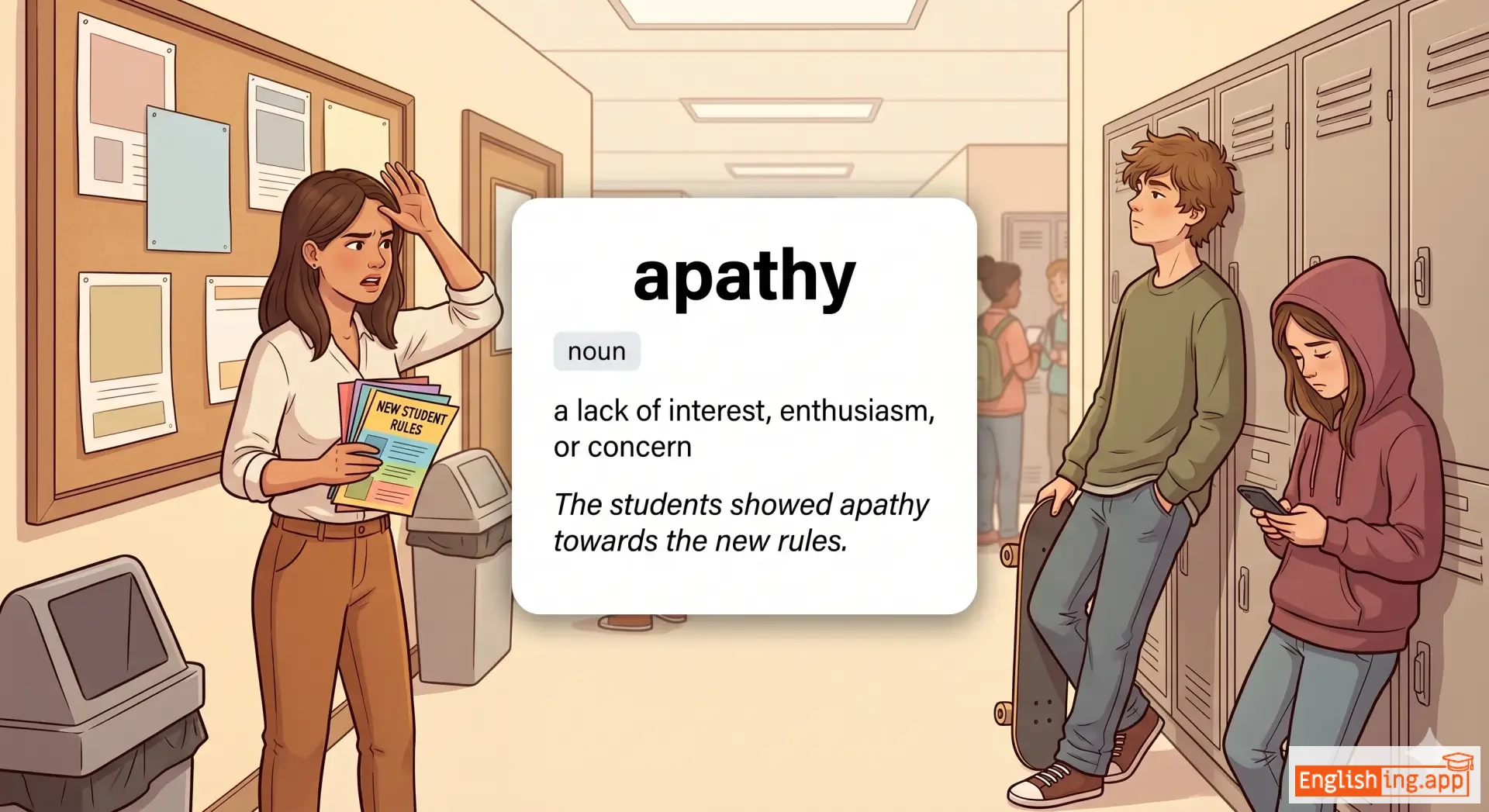
a lack of interest, enthusiasm, or concern
••••••
|
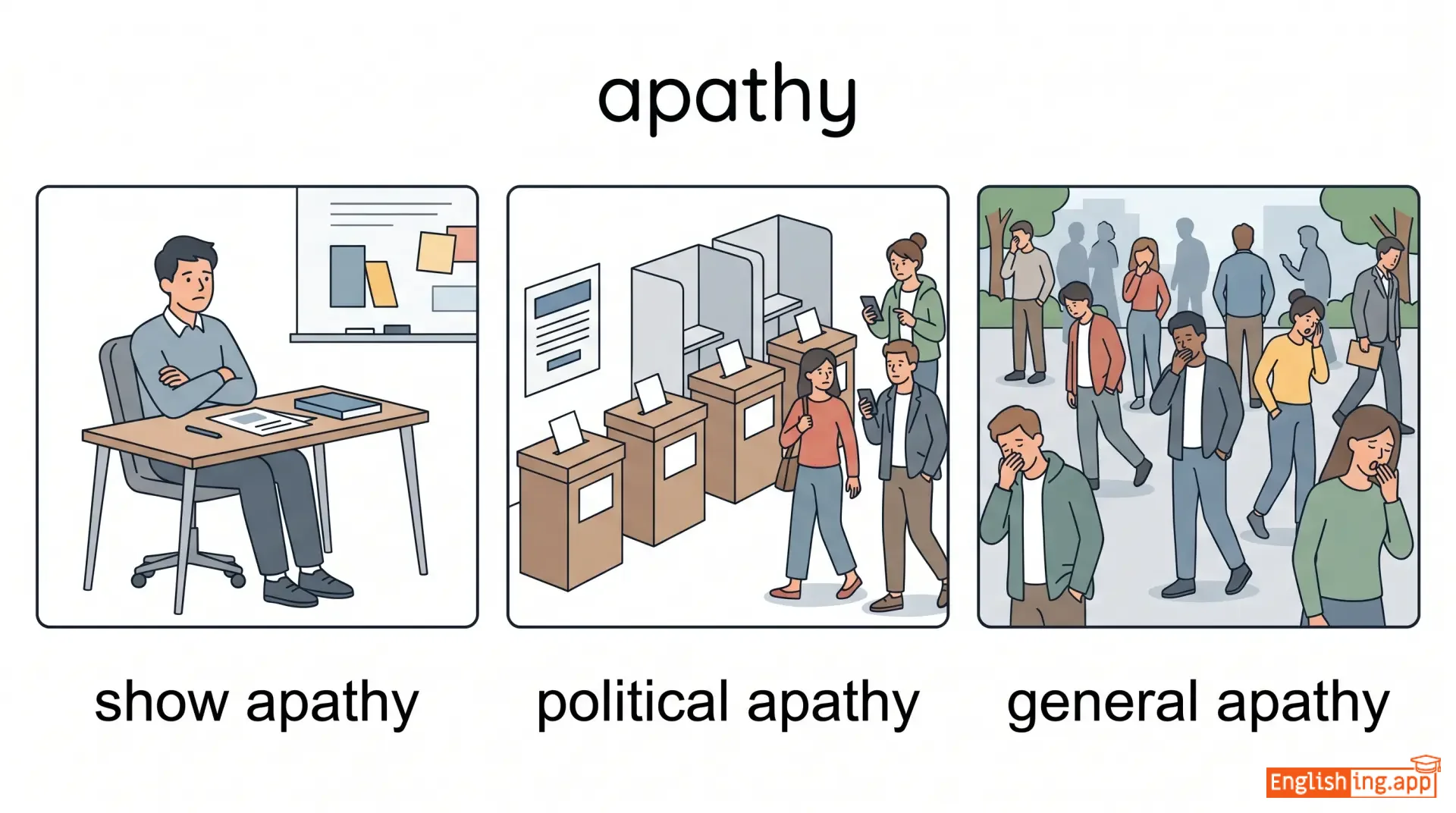
The students showed apathy towards the new rules. |
学生たちは新しいルールに無関心を示しました。
Gakusei-tachi wa atarashī rūru ni mukanshin o shimeshimashita.
••••••
|
- •••••• | - •••••• | - •••••• |
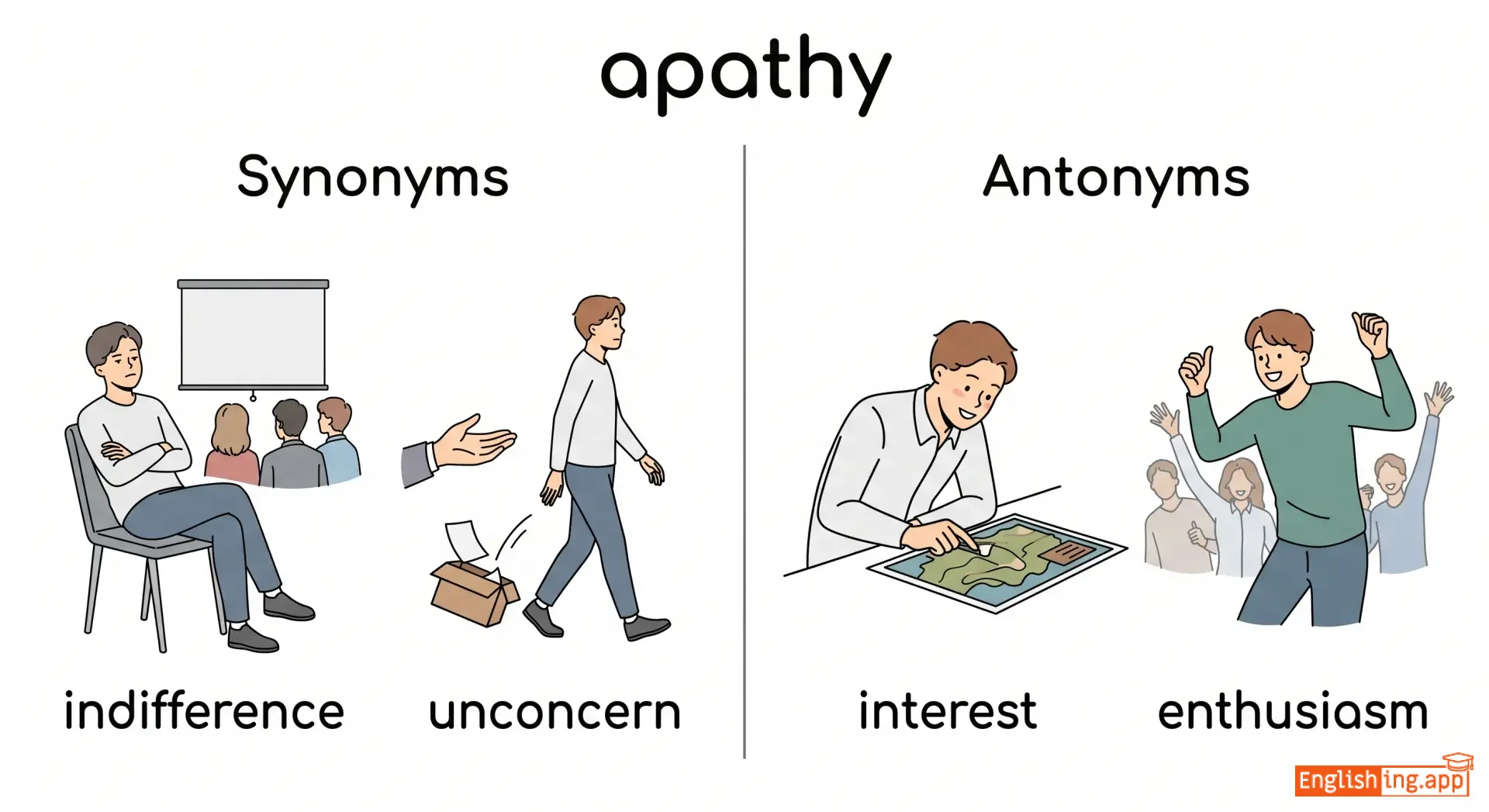
indifference, unconcern, detachment, passivity
••••••
|
interest, enthusiasm, passion
••••••
|
show apathy, political apathy, general apathy, apathy towards
••••••
|
Apathy は無関心を意味し、何も気にしないこと。
••••••
|
|
#22
🤲
|
/əˈpiːz/
verb
(アピース)
••••••
|
|
なだめる / 満たす
nadameru / mitasu
••••••
|
appeased
アピースド
••••••
|
appeased
アピースド
••••••
|
appeases
アピースズ
••••••
|
appeasing
アピースイング
••••••
|
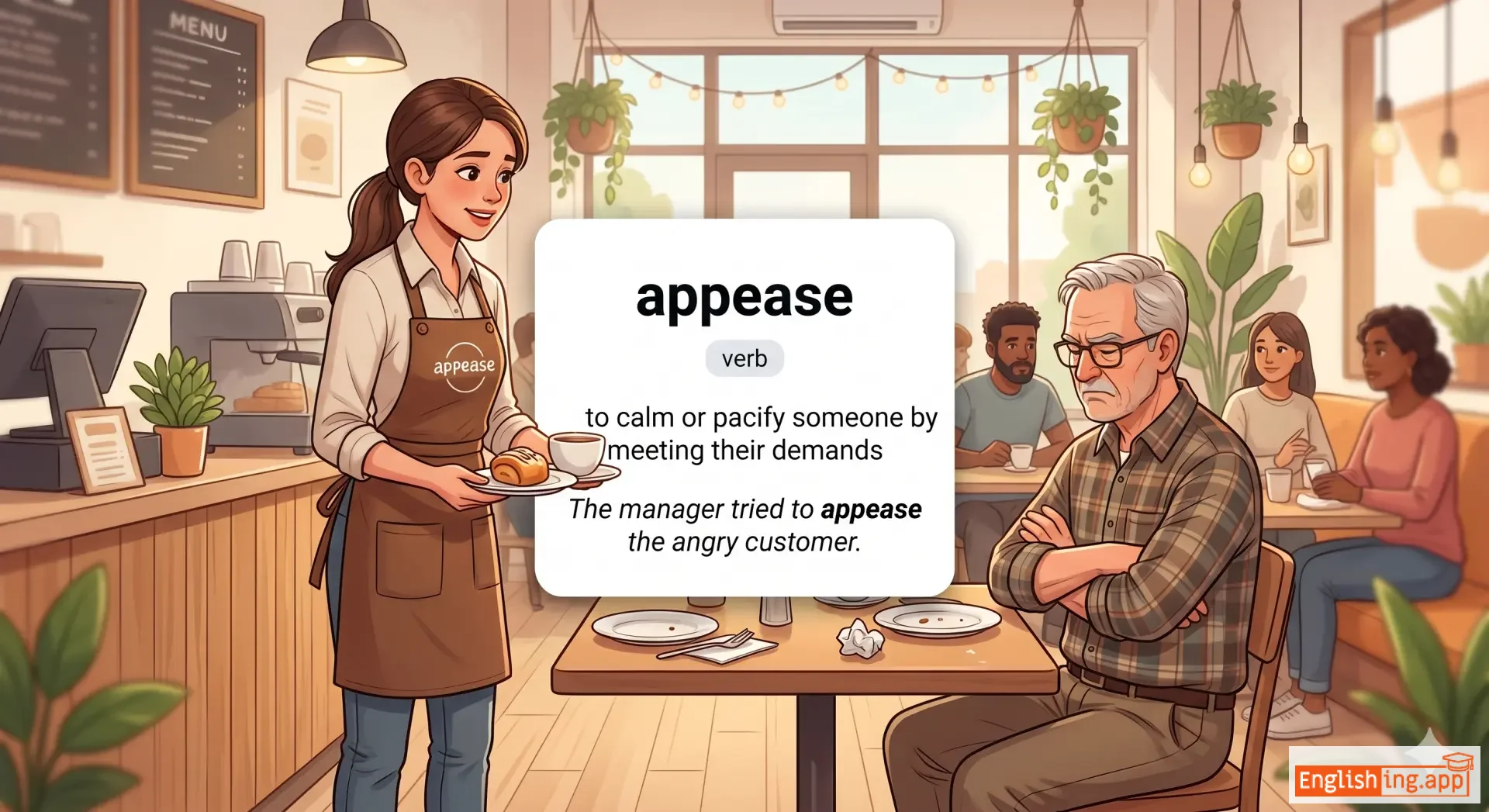
to calm or pacify someone by meeting their demands
••••••
|
The manager tried to appease the angry customer.
マネージャーは怒っている顧客をなだめようとしました。
••••••
|
マネージャーは怒っている顧客をなだめようとしました。
Manējā wa okotte iru kokyaku o nadameyō to shimashita.
••••••
|
appease someone's anger
誰かの怒りをなだめる
••••••
|
to reduce someone's anger by satisfying them
••••••
|
誰かの怒りをなだめる
dareka no ikari o nadameru
••••••
|
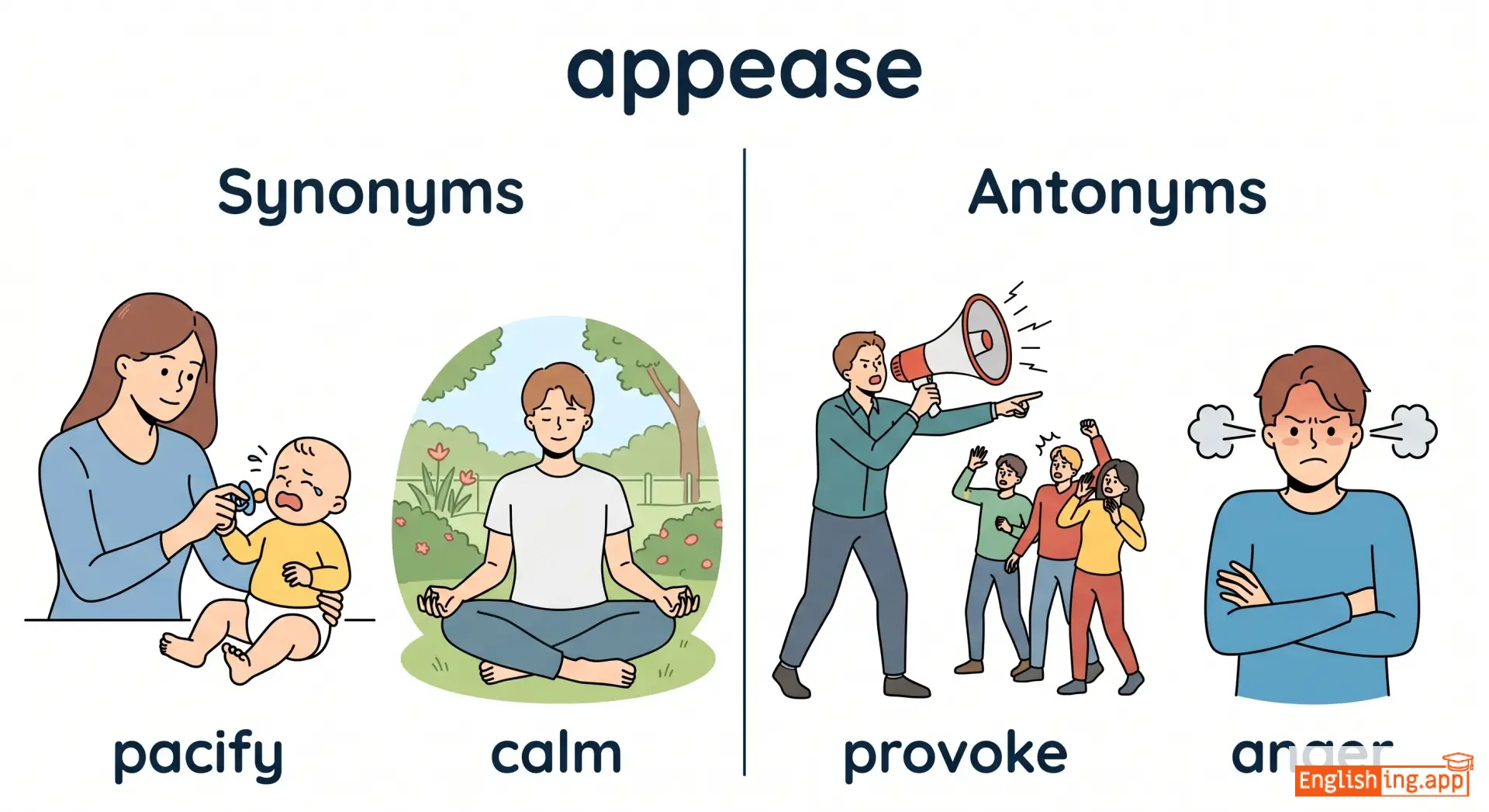
pacify, calm, satisfy, placate, soothe
••••••
|
provoke, anger, agitate
••••••
|
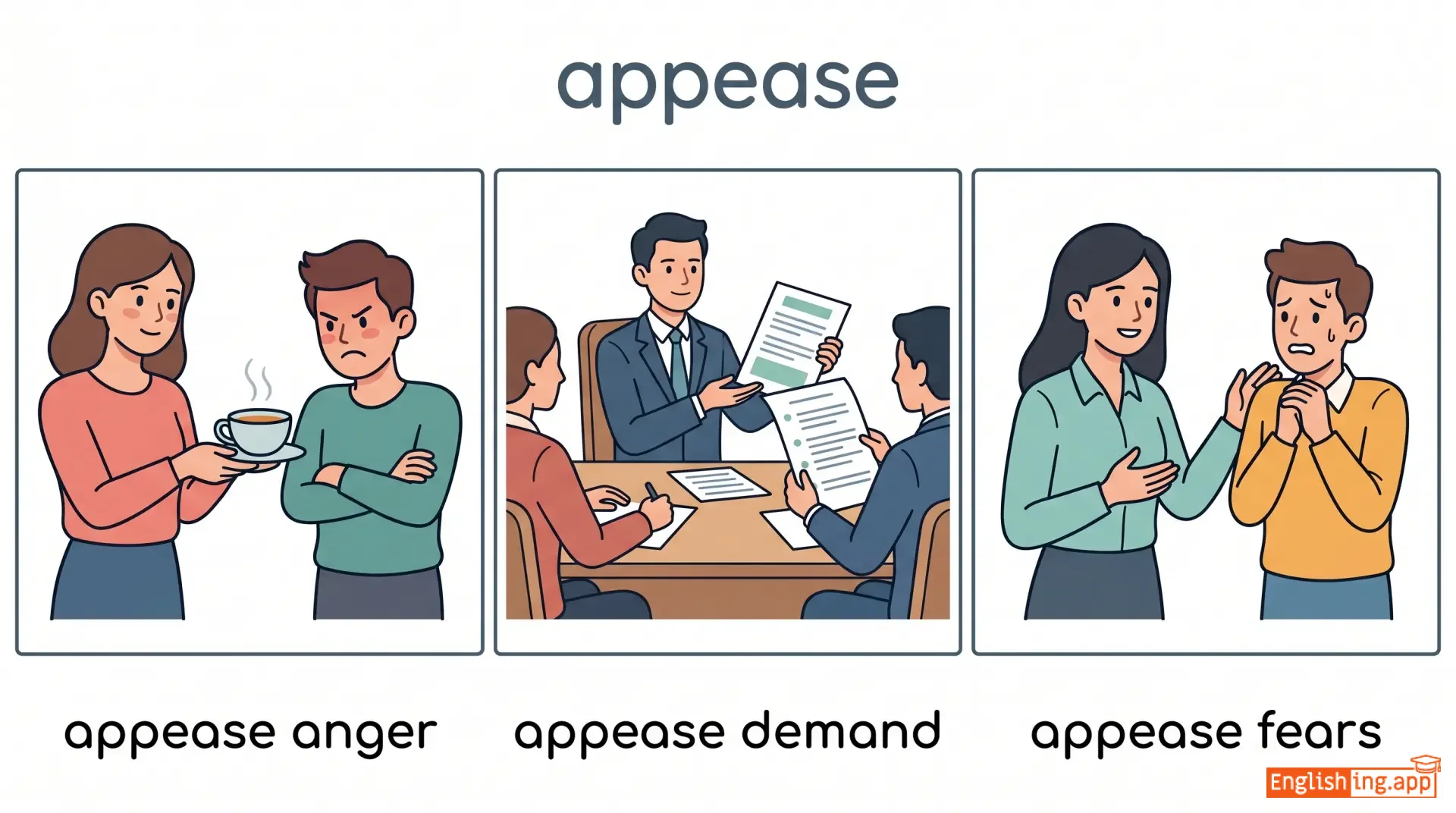
appease anger, appease demand, appease fears
••••••
|
Appeaseはなだめる意味です、‘Peace’をもたらすためになだめる必要があることを想像してください。
••••••
|
|
#23
📢
|
/əˈpraɪz/
verb
(apraizu)
••••••
|
|
知らせる
shiraseru
••••••
|
apprised
apuraizudo
••••••
|
apprised
apuraizudo
••••••
|
apprises
apuraizesu
••••••
|
apprising
apraizingu
••••••
|
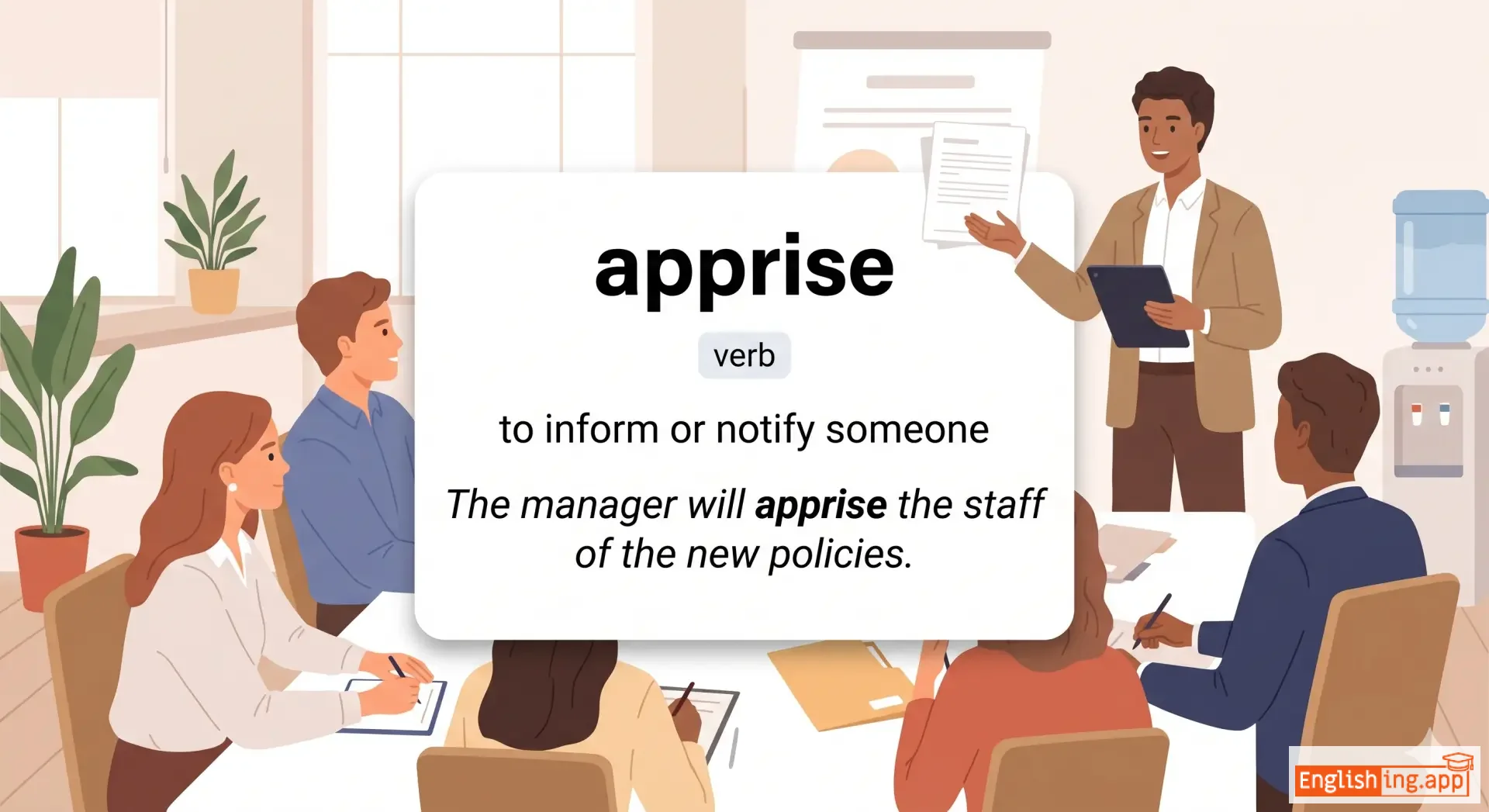
to inform or notify someone
••••••
|
The manager will apprise the staff of the new policies.
マネージャーはスタッフに新しい方針について知らせます。
••••••
|
マネージャーはスタッフに新しい方針について知らせます。
Manejā wa sutaffu ni atarashī hōshin ni tsuite shirasemasu.
••••••
|
keep apprised
情報を維持する
••••••
|
to keep informed about something
••••••
|
情報を維持する
jōhō o iji suru
••••••
|
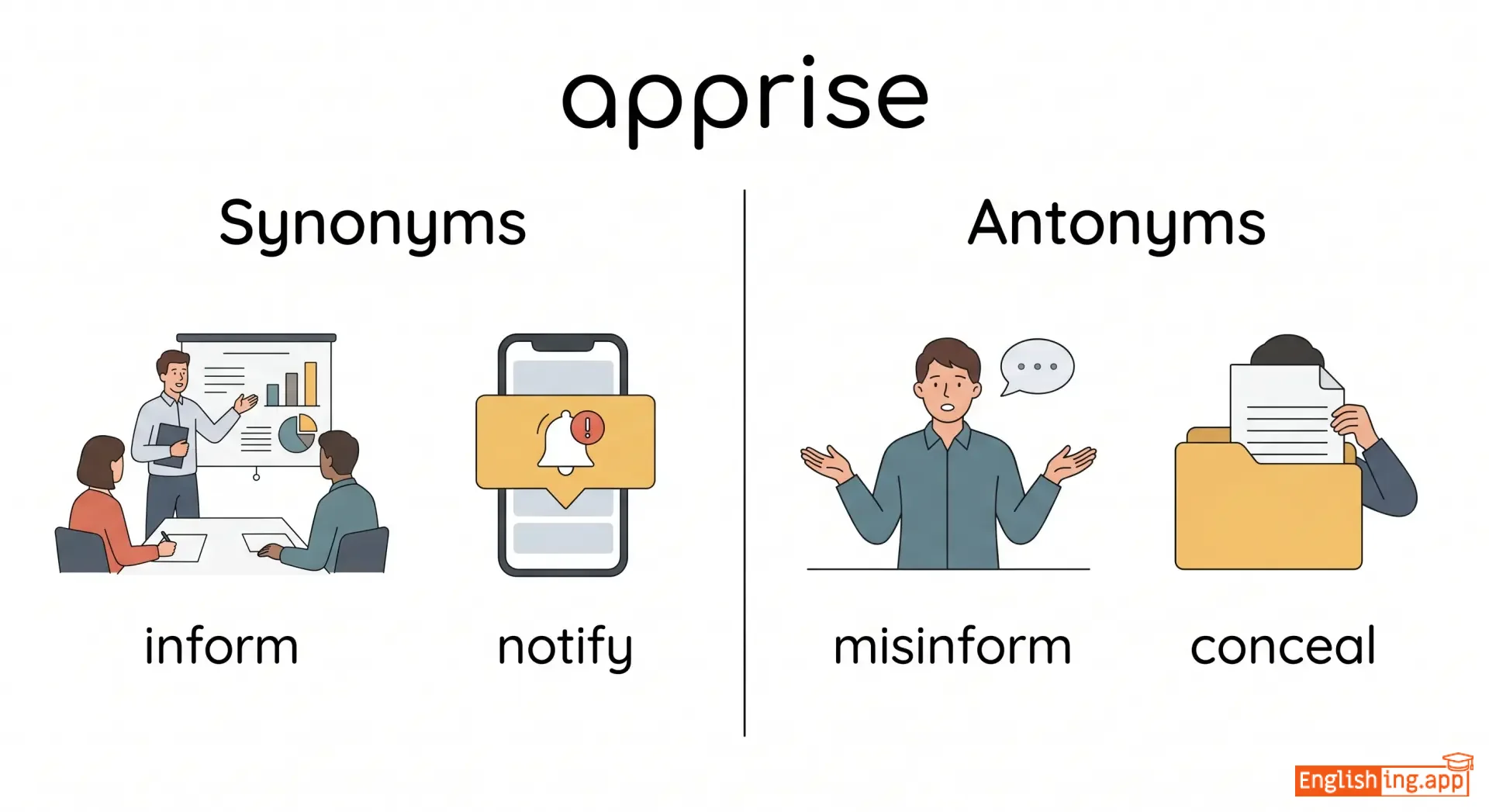
inform, notify, brief, update, advise
••••••
|
misinform, conceal
••••••
|
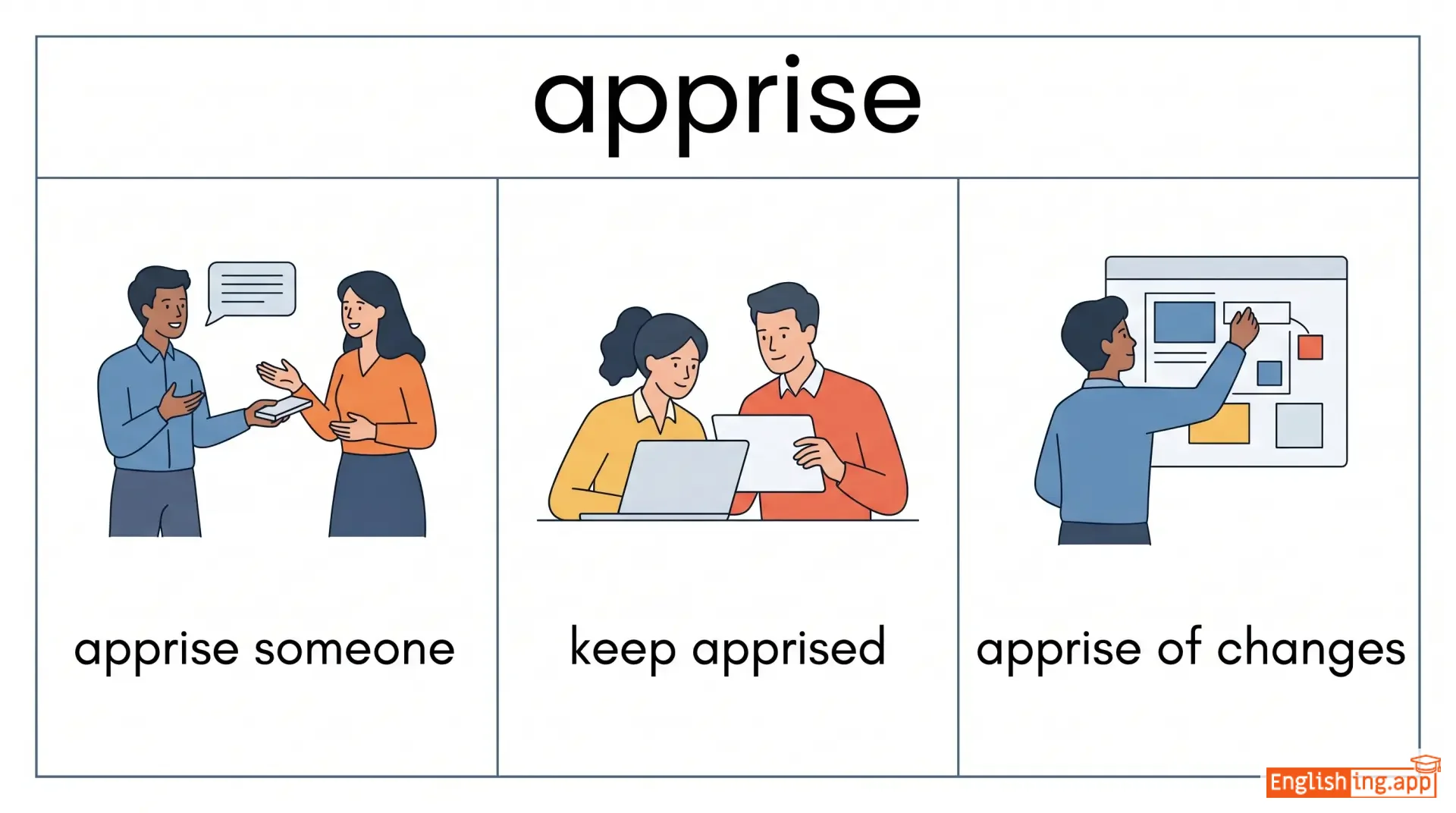
apprise someone, keep apprised, apprise of changes
••••••
|
Apprise は情報を'prise'する—更新を知らせる
••••••
|
|
#24
👍
|
/ˌæprəˈbeɪʃən/
noun
(アプロベーション)
••••••
|
|
承認 / 賞賛
shōnin / shōsan
••••••
|
- •••••• | - •••••• | - •••••• | - •••••• |
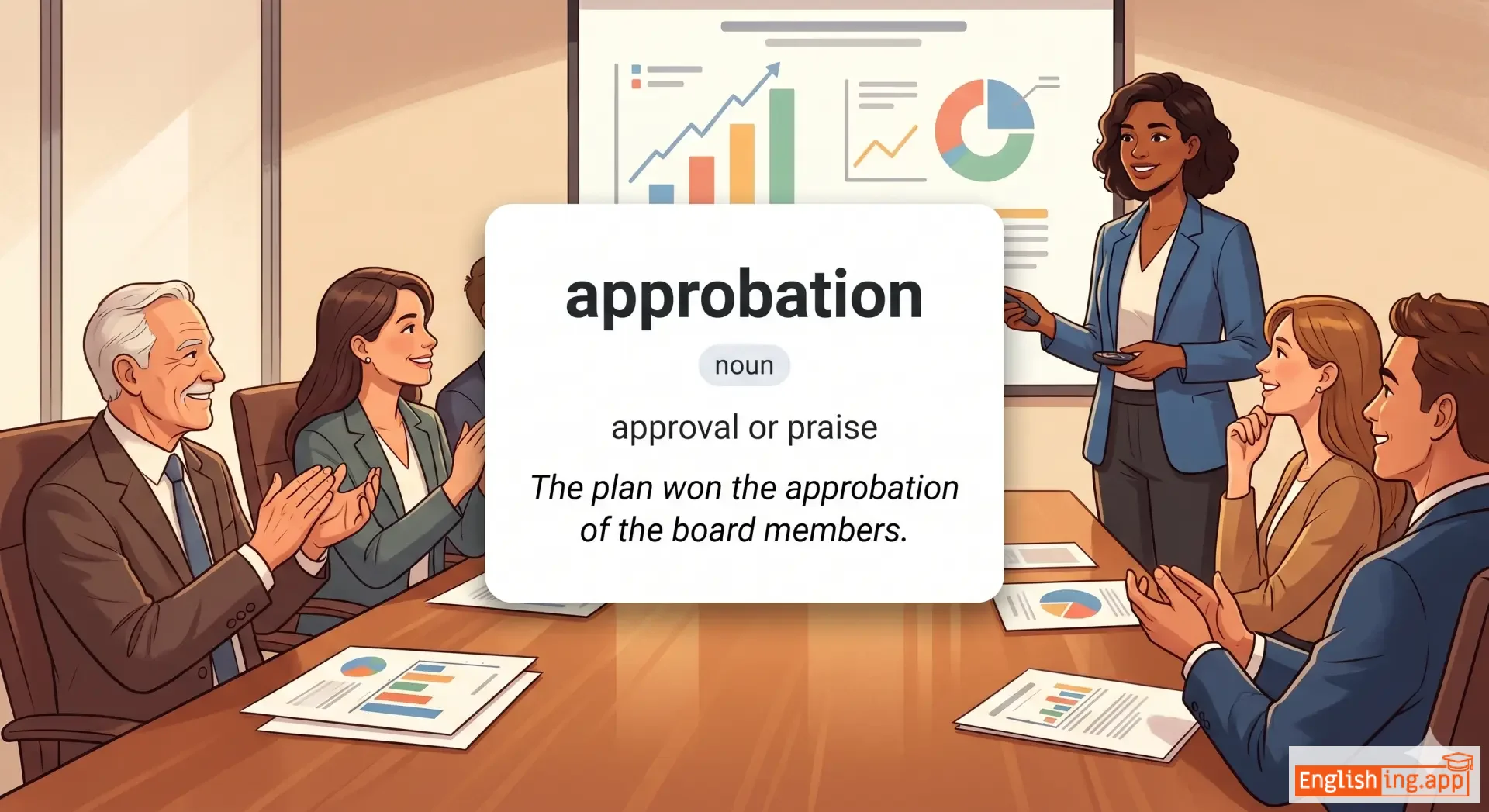
approval or praise
••••••
|
The plan won the approbation of the board members.
その計画は理事会メンバーの承認を得ました。
••••••
|
その計画は理事会メンバーの承認を得ました。
Sono keikaku wa rijikai menbā no shōnin o emashita.
••••••
|
- •••••• | - •••••• | - •••••• |
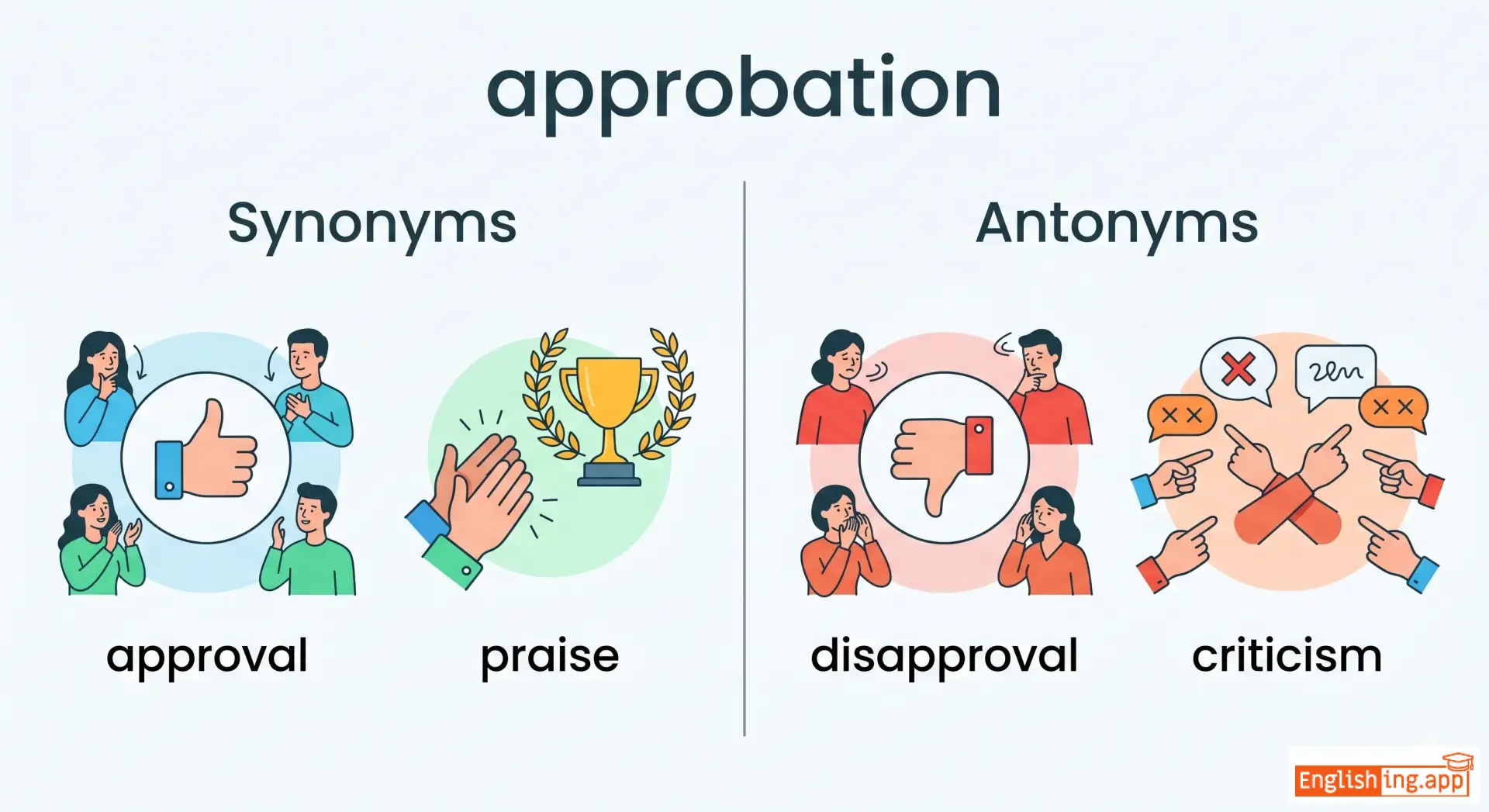
approval, praise, endorsement, admiration, recognition
••••••
|
disapproval, criticism, rejection
••••••
|
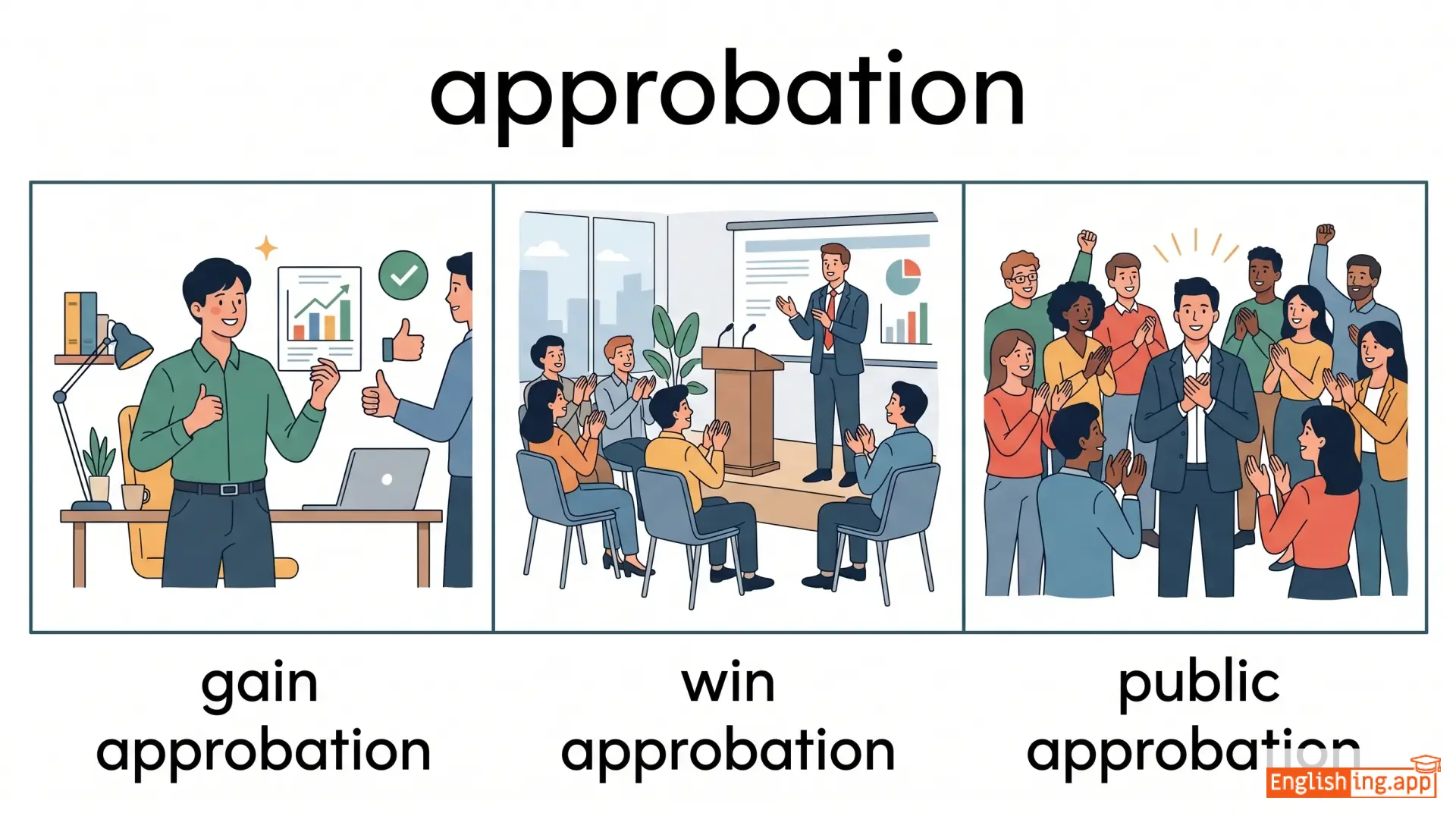
gain approbation, win approbation, public approbation, official approbation
••••••
|
Approbation は approval を意味します—app 承認を得ると、みんな幸せになります。
••••••
|
|
#25
✔️
|
/əˈproʊpriət/ (adj), /əˈproʊprieɪt/ (verb)
adjective, verb
(アプロプリエイト)
••••••
|
|
適切 / 取る
tekisetsu / toru
••••••
|
appropriated
アプロプリエイテッド
••••••
|
appropriated
アプロプリエイテッド
••••••
|
appropriates
アプロプリエイツ
••••••
|
appropriating
アプロプリエイティング
••••••
|
suitable or proper in the circumstances (adj); to take something for one’s own use, often without permission (verb)
••••••
|
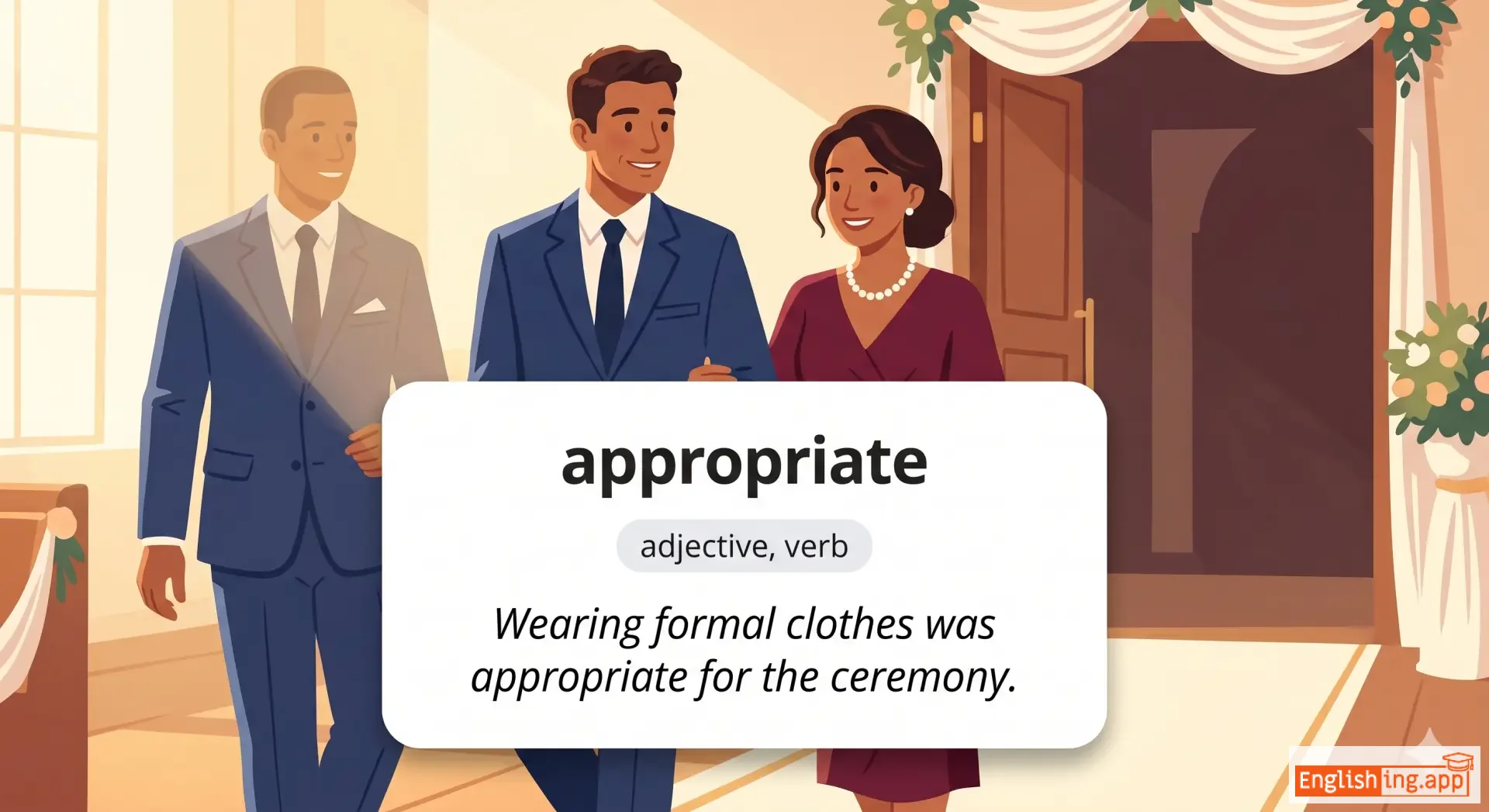
Wearing formal clothes was appropriate for the ceremony.
フォーマルな服を着ることはその儀式には適切でした。
••••••
|
フォーマルな服を着ることはその儀式には適切でした。
Fōmaru na fuku o kiru koto wa sono gishiki ni wa tekisetsu deshita.
••••••
|
- •••••• | - •••••• | - •••••• |
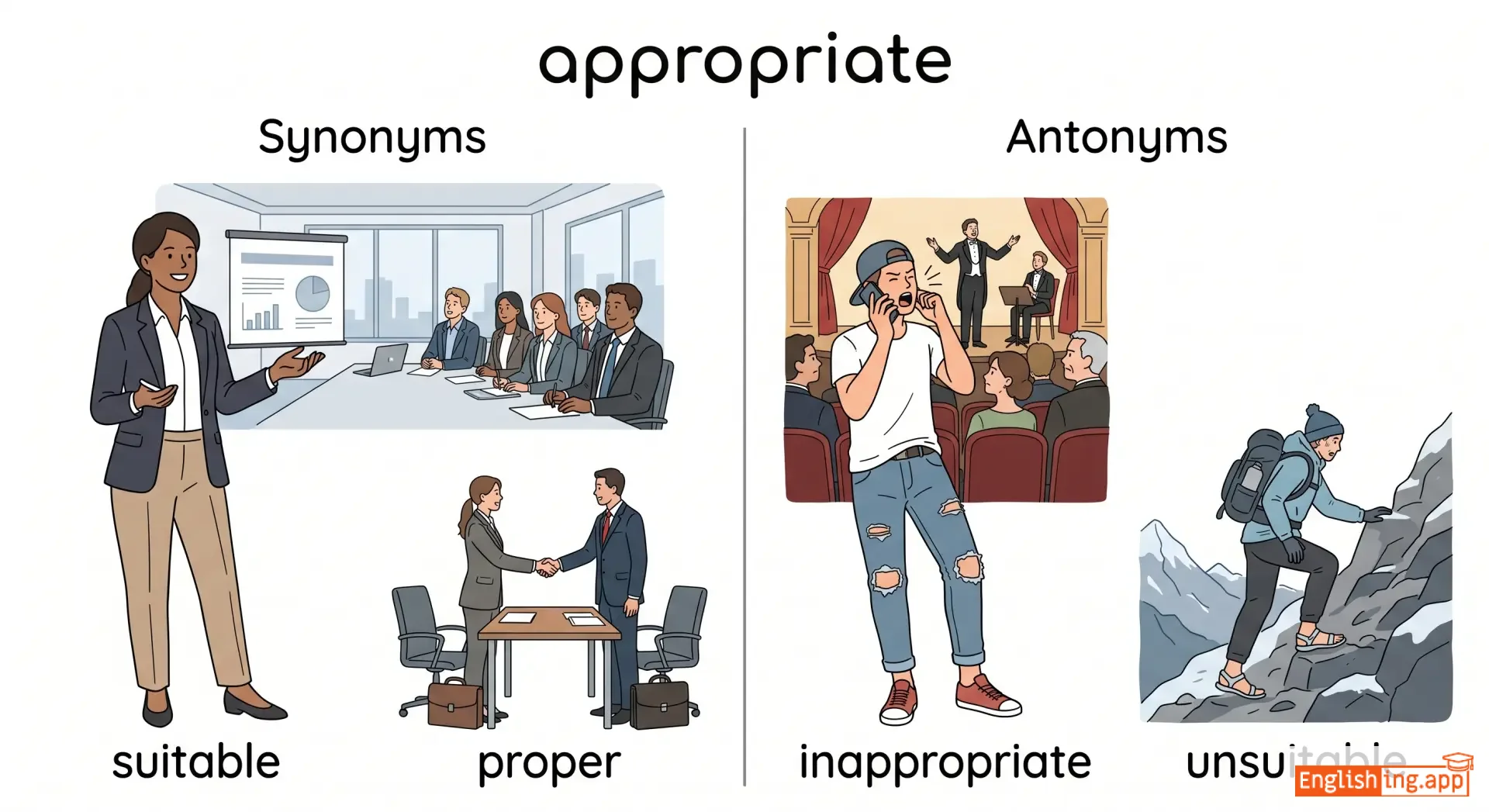
suitable, proper, fitting, apt, seize
••••••
|
inappropriate, unsuitable
••••••
|
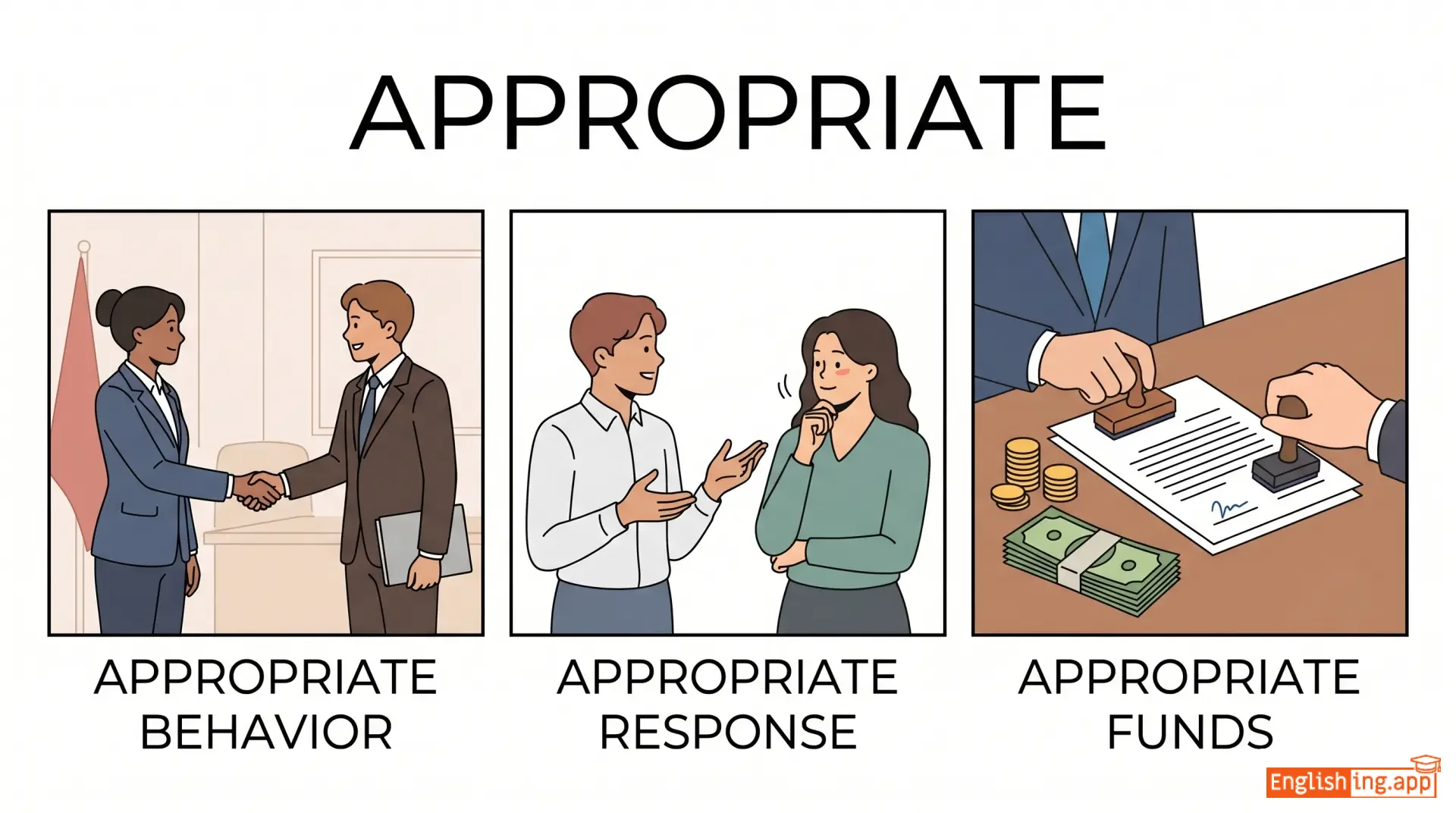
appropriate behavior, appropriate response, appropriate funds, culturally appropriate
••••••
|
Appropriate は適切—状況に合ったもの、時には許可なく取ることもある。
••••••
|
Vocabulary Quiz
Test your vocabulary by matching words with their translations or meanings.
Login to take the quiz
Comments (0)
Share your thoughts and join the discussion.
Join the discussion by logging in
Login to CommentNo comments yet
Be the first to share your thoughts!