

翻訳
過去
過去分詞
三人称単数
動名詞
意味
例文
例文の翻訳
同義語
対義語
コロケーション
ニーモニック
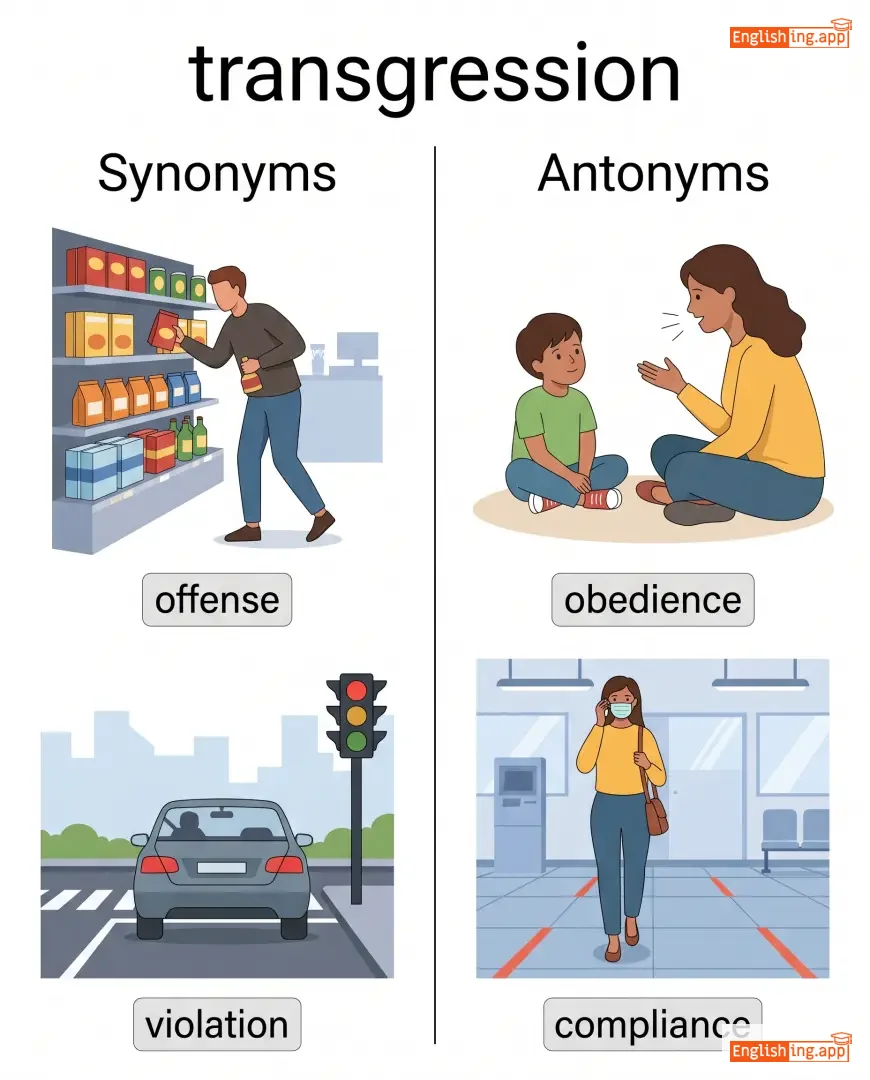
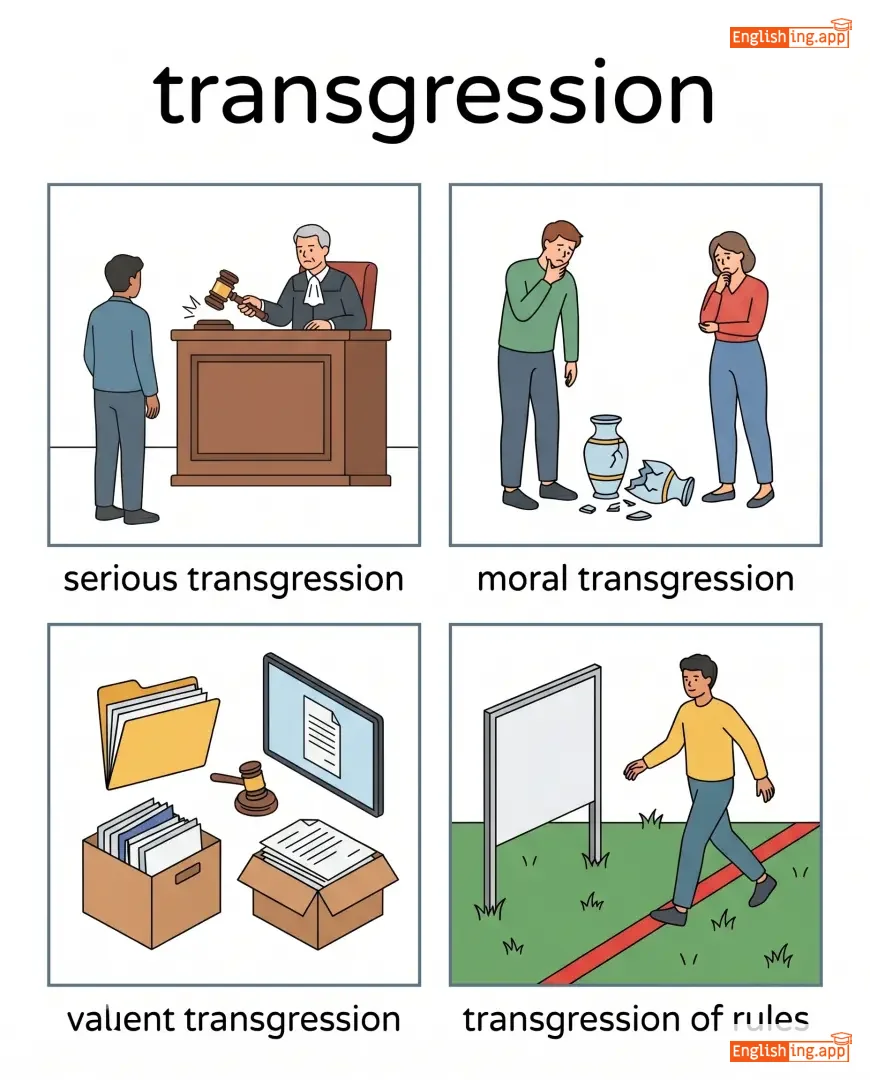
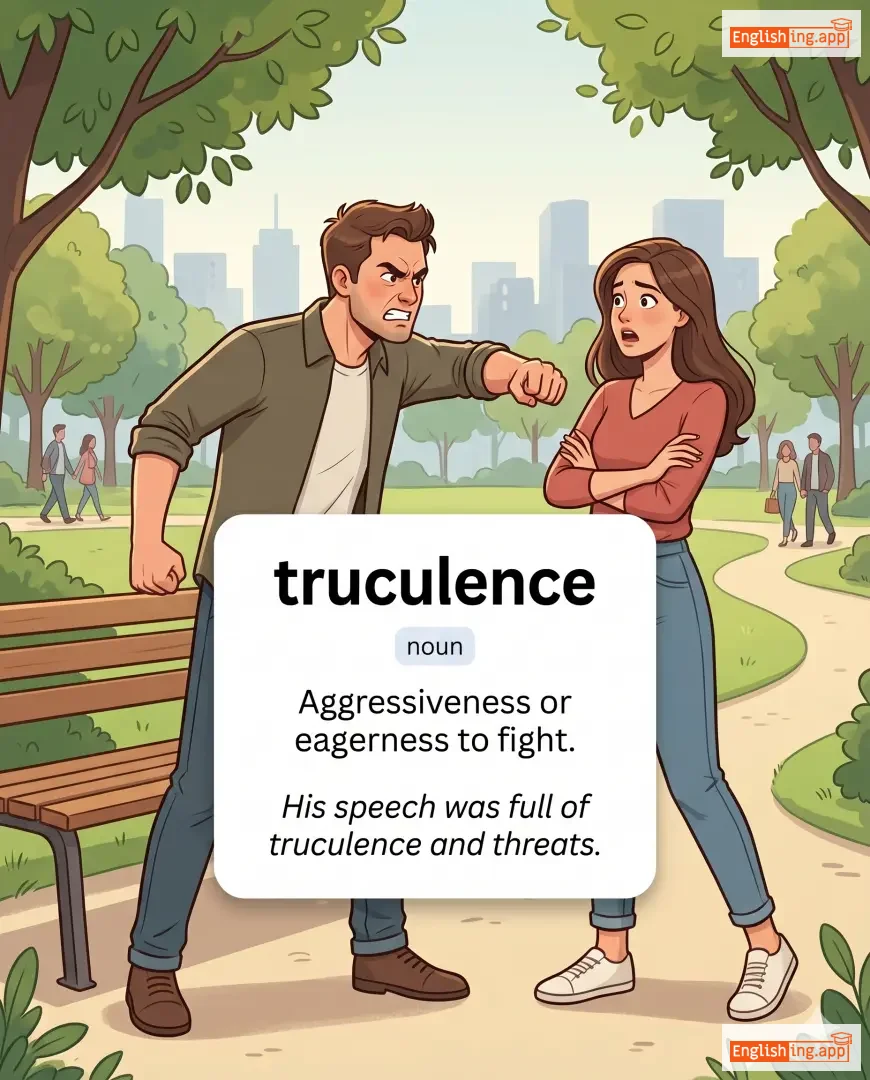
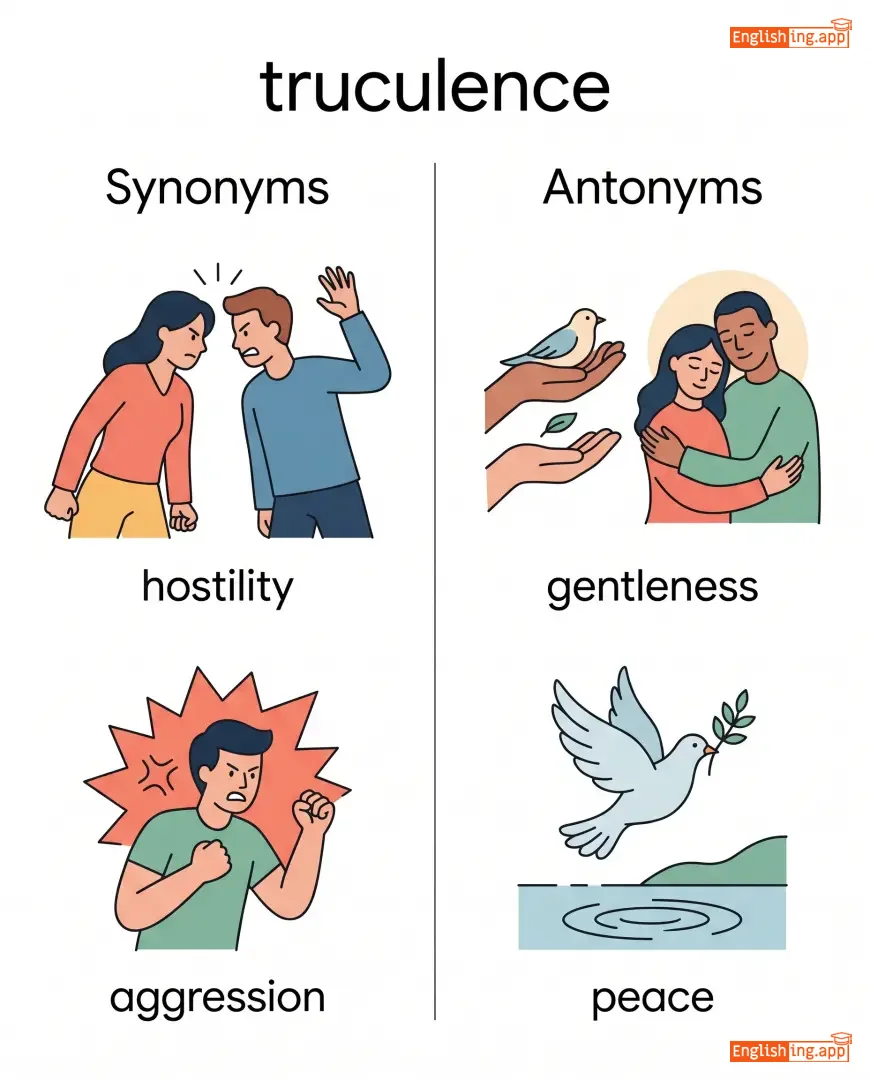


Swipe left or right, or use the buttons. Tap image to zoom.
例文の翻訳
単語
Lesson 13Lesson 13 - マスクトグル
|
絵文字
|
単語 | Images | 翻訳 | 過去 | 過去分詞 | 三人称単数 | 動名詞 | 意味 | 例文 | 例文の翻訳 | 表現例 | 表現例の意味 | 表現例の翻訳 | 同義語 | 対義語 | コロケーション | ニーモニック |
|---|---|---|---|---|---|---|---|---|---|---|---|---|---|---|---|---|---|
|
#301
⏳
|
/stɪnt/
noun
(日本語)
••••••
|
|
短期の仕事
tanki no shigoto
••••••
|
- •••••• | - •••••• | - •••••• | - •••••• |
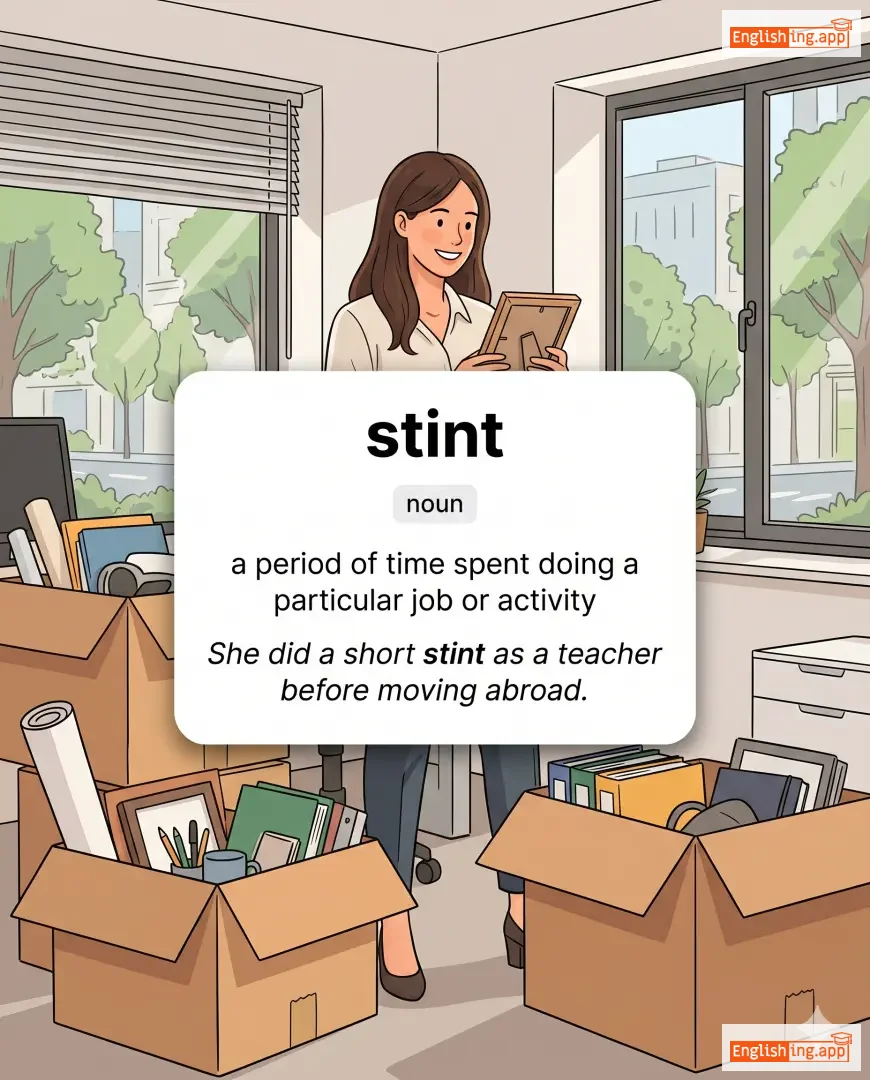
a period of time spent doing a particular job or activity
••••••
|
She did a short stint as a teacher before moving abroad.
彼女は海外に移住する前に短期間の教師として働きました。
••••••
|
彼女は海外に移住する前に短期間の教師として働きました。
Kanojo wa kaigai ni ijū suru mae ni tanki no kyōshi toshite hatarakimashita.
••••••
|
- •••••• | - •••••• | - •••••• |
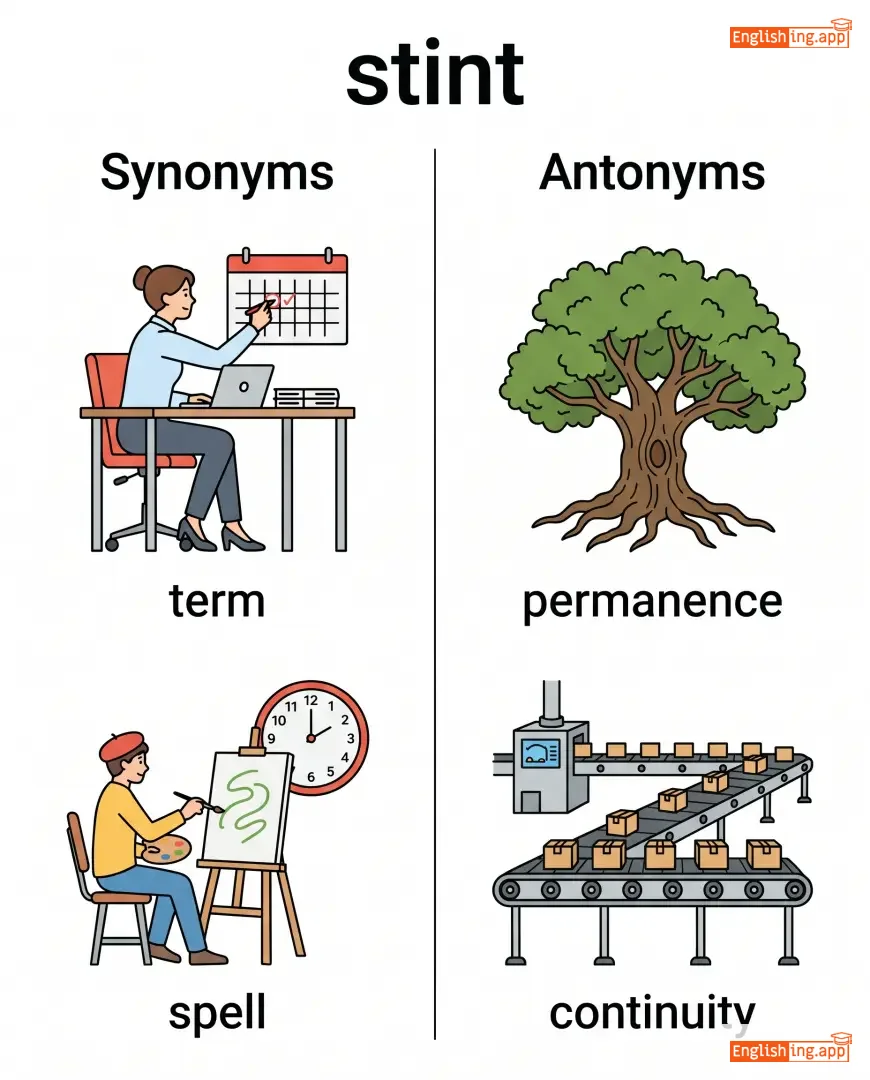
term, spell, period, stretch, service
••••••
|
permanence, continuity
••••••
|
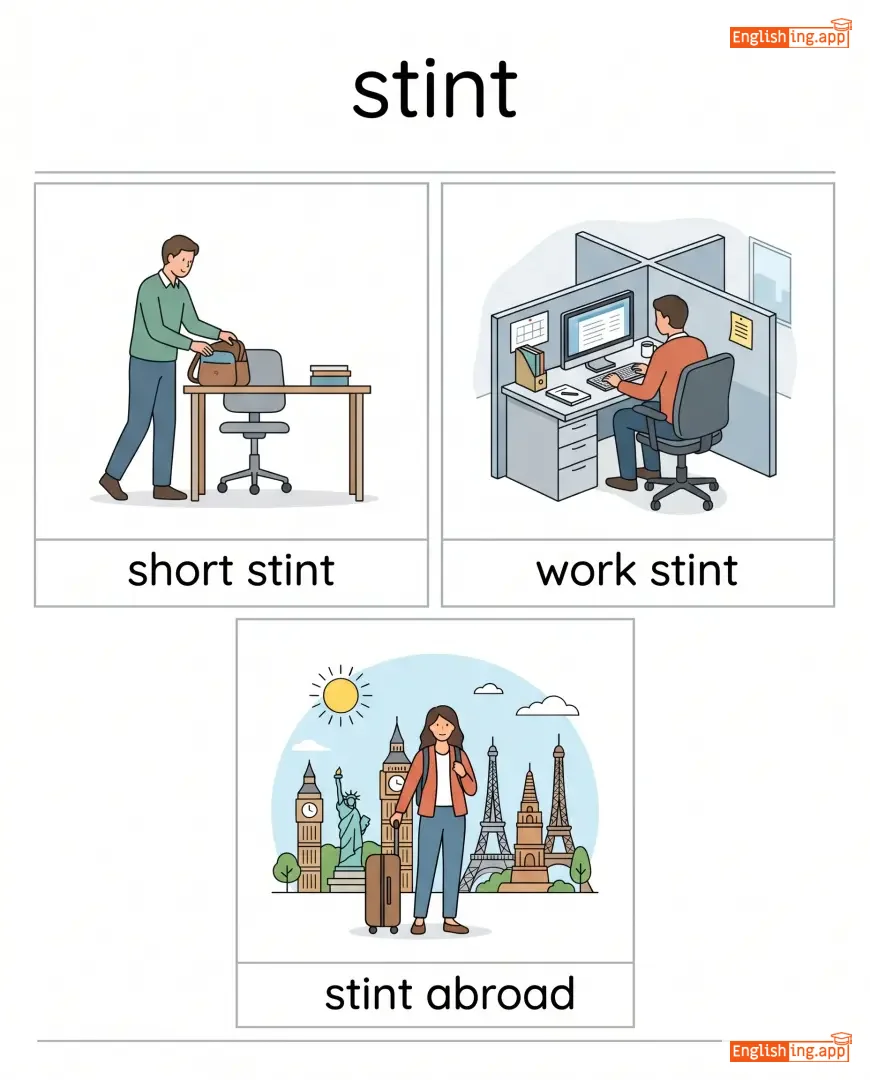
short stint, work stint, stint abroad, stint in service
••••••
|
Stint - 短期間の仕事、短い時間に働く
••••••
|
|
#302
📜
|
/ˈstɪp.jʊ.leɪt/
verb
(スティピュレイト)
••••••
|
|
規定する
kitei suru
••••••
|
stipulated
スティピュレイテッド
••••••
|
stipulated
スティピュレイテッド
••••••
|
stipulates
スティピュレイツ
••••••
|
stipulating
スティピュレイティング
••••••
|
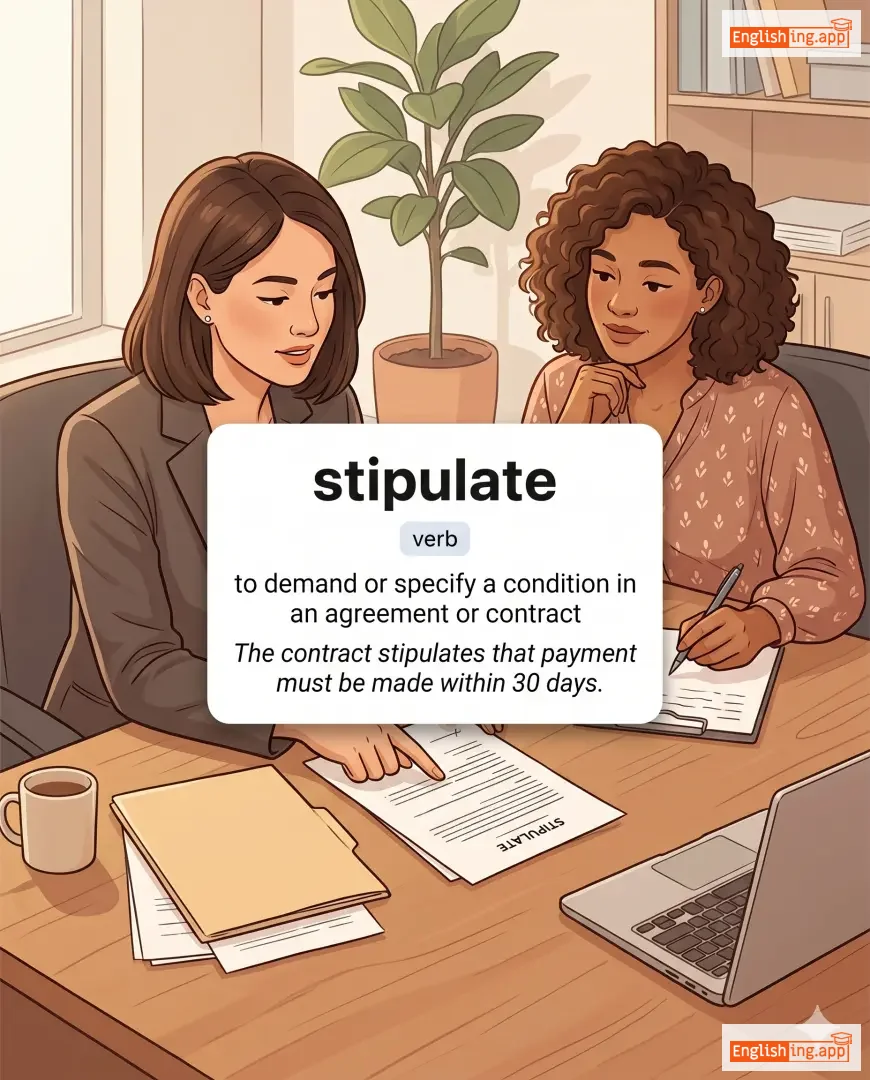
to demand or specify a condition in an agreement or contract
••••••
|
The contract stipulates that payment must be made within 30 days.
契約書には、支払いは30日以内に行われるべきであると明記されています。
••••••
|
契約書には、支払いは30日以内に行われるべきであると明記されています。
Keiyakusho ni wa, shiharai wa 30 nichi inai ni okonawareru beki de aru to meiki sareteimasu.
••••••
|
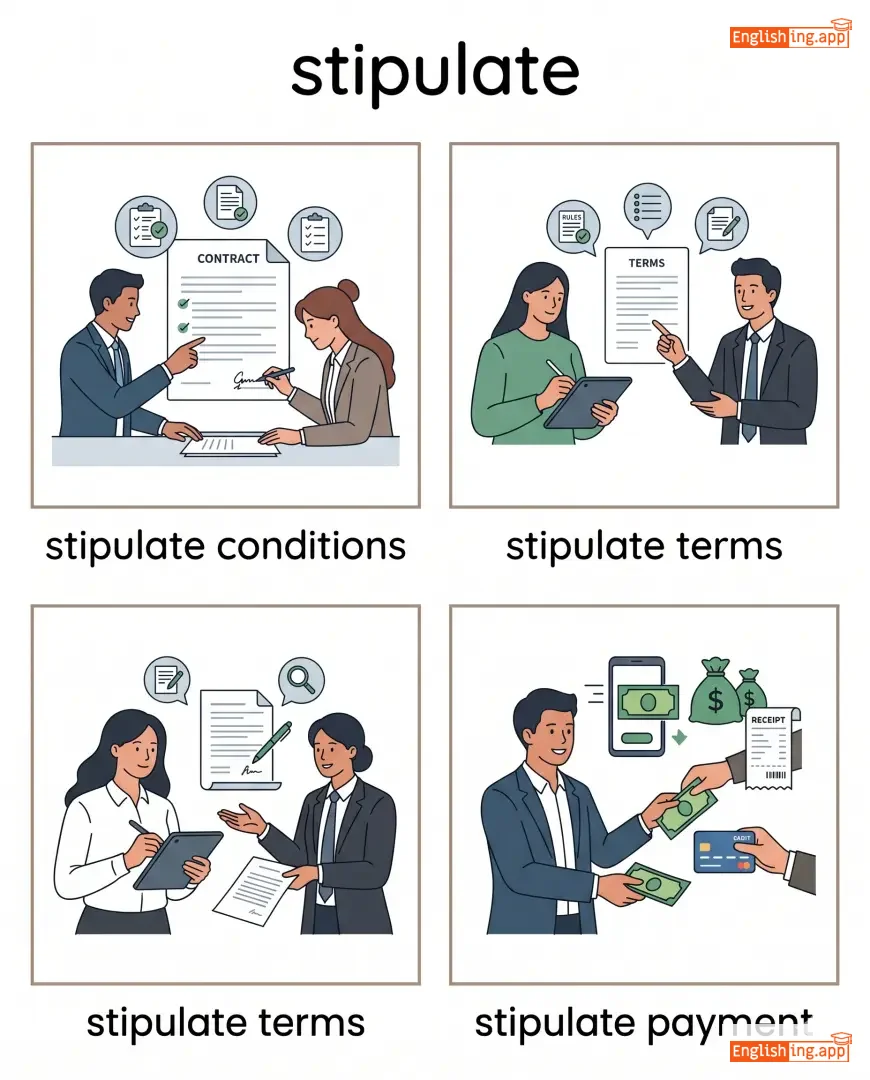
stipulate terms
条件を明記する
••••••
|
to formally specify conditions in an agreement
••••••
|
条件を明記する
jouken wo meiki suru
••••••
|
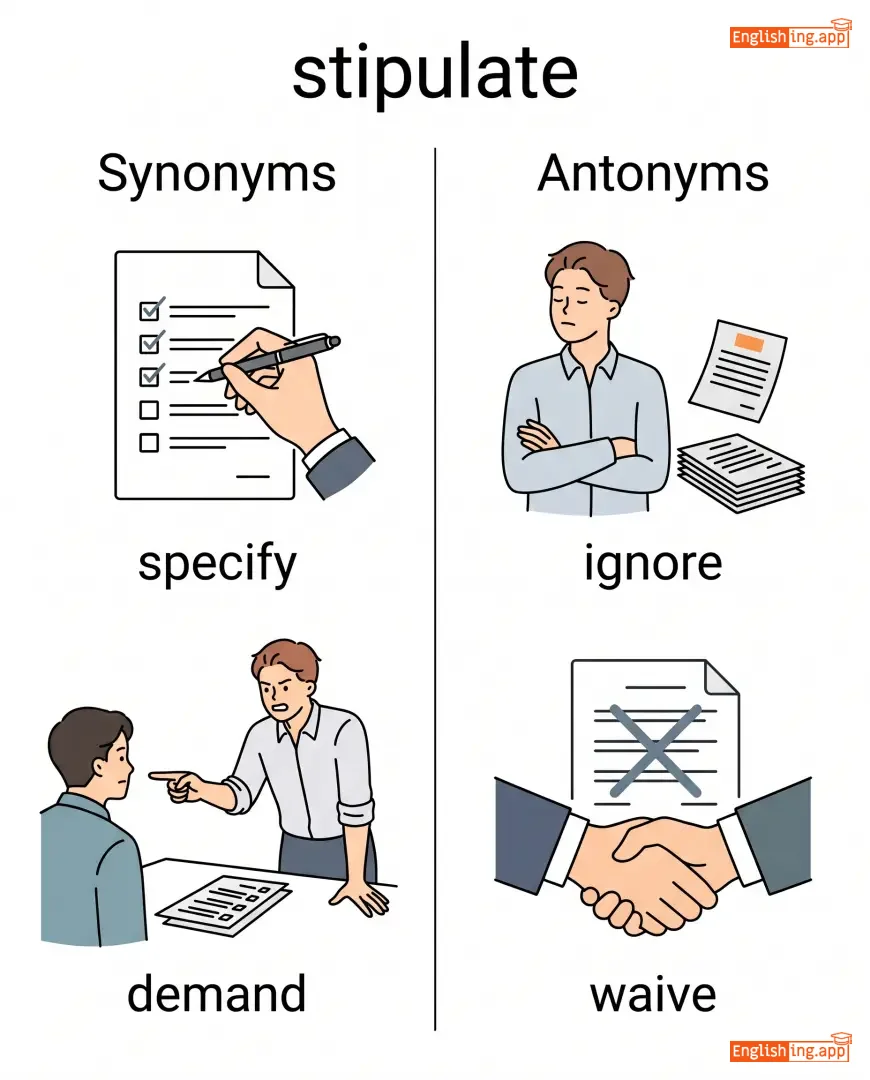
specify, demand, require, prescribe, condition
••••••
|
ignore, waive, overlook
••••••
|
stipulate conditions, stipulate terms, stipulate payment, stipulate requirement
••••••
|
stipulate = 契約に条件を規定する
••••••
|
|
#303
🪵
|
/ˈstɒlɪd/
adjective
(ストリッド)
••••••
|
|
冷静な、無表情な
reisei na, muhyoujou na
••••••
|
- •••••• | - •••••• | - •••••• | - •••••• |
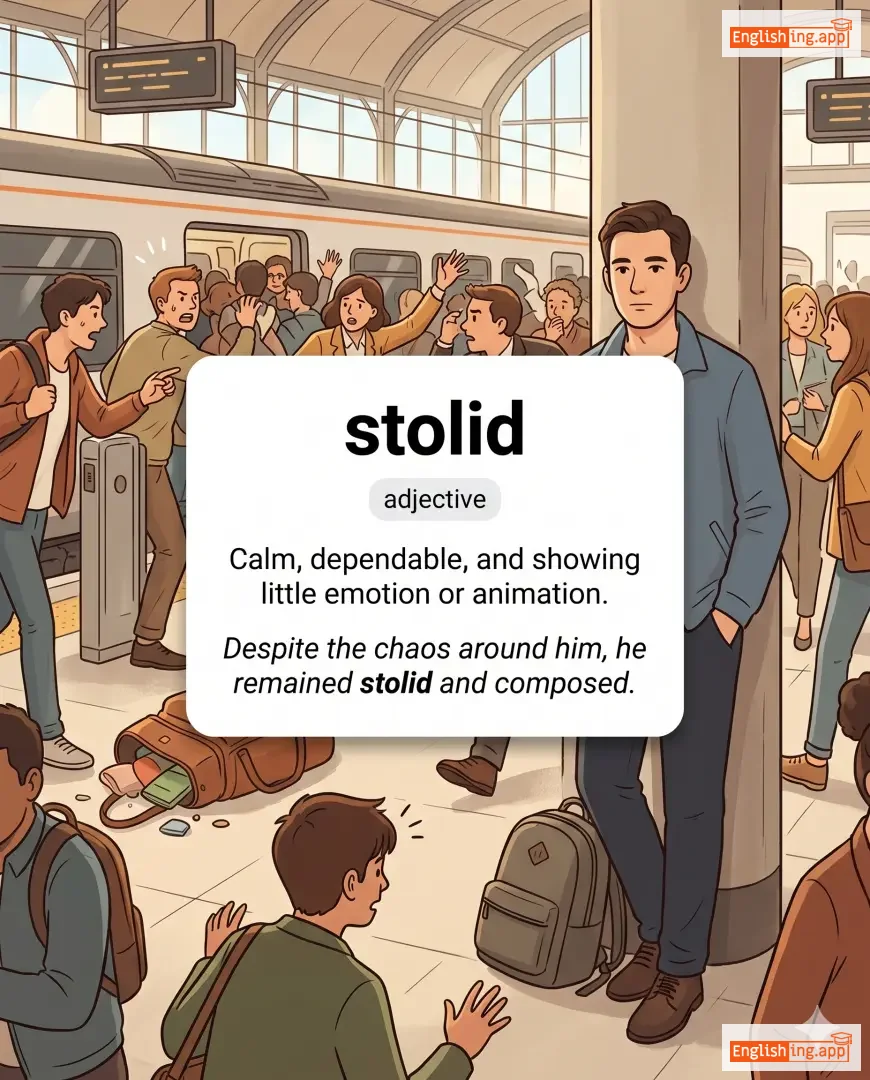
Calm, dependable, and showing little emotion or animation.
••••••
|
Despite the chaos around him, he remained stolid and composed.
ディスパイト ザ カオス アラウンド ヒム, ヒ リメインド ストリッド アンド コンポーズド。
••••••
|
周りの混乱にもかかわらず、彼は冷静で落ち着いていました。
Mawari no konran ni mo kakawarazu, kare wa reisei de ochitsuite imashita.
••••••
|
- •••••• | - •••••• | - •••••• |
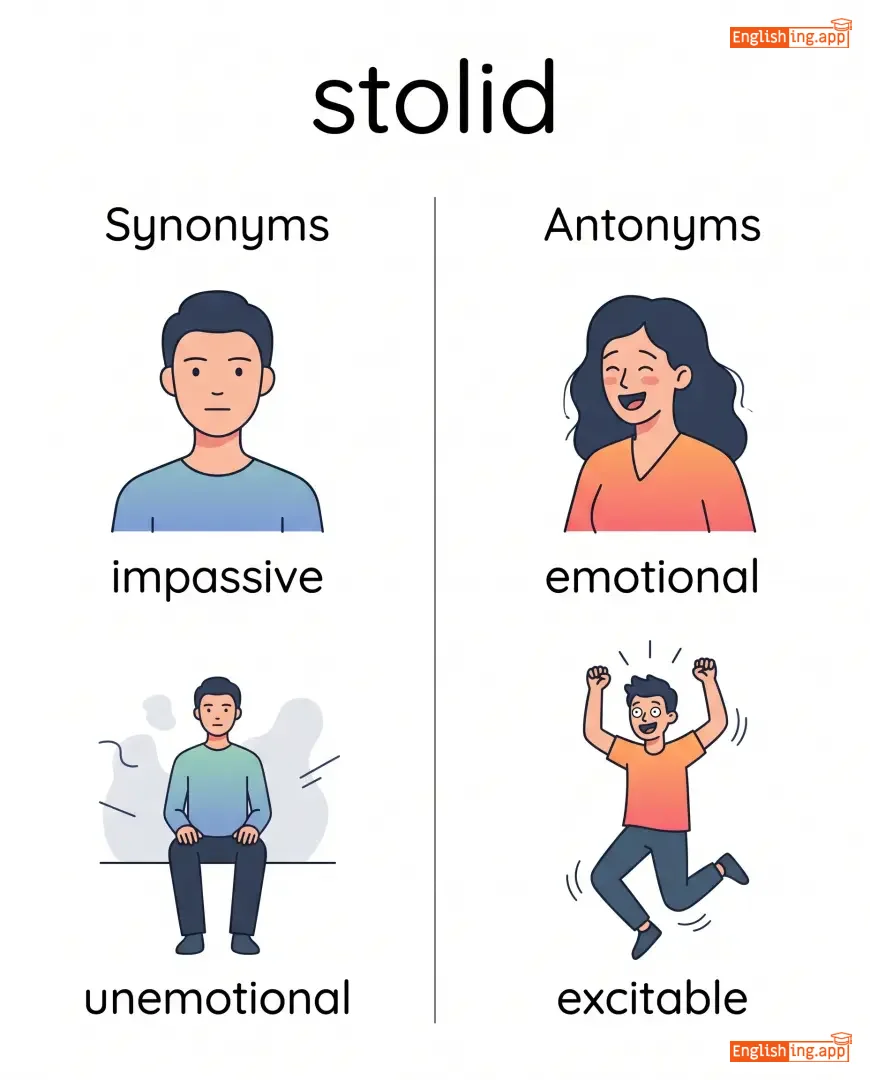
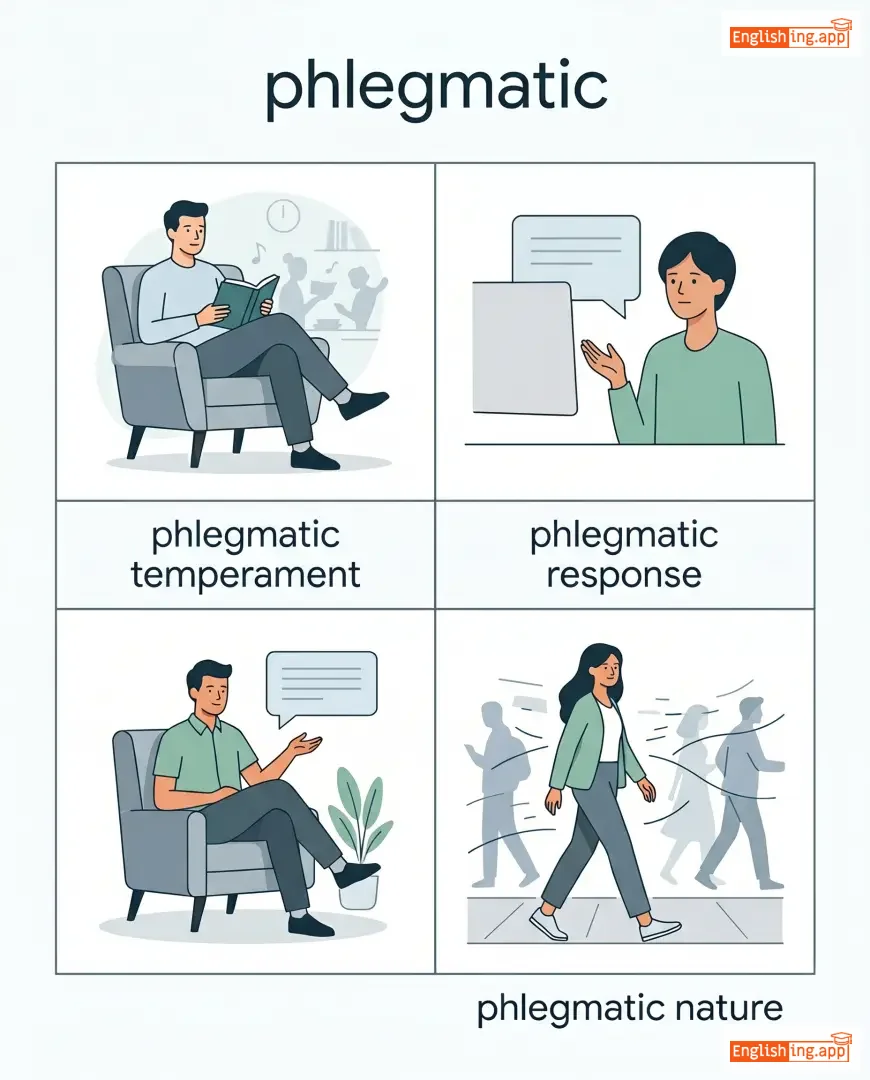
impassive, unemotional, phlegmatic, placid, steady
••••••
|
emotional, excitable, expressive
••••••
|
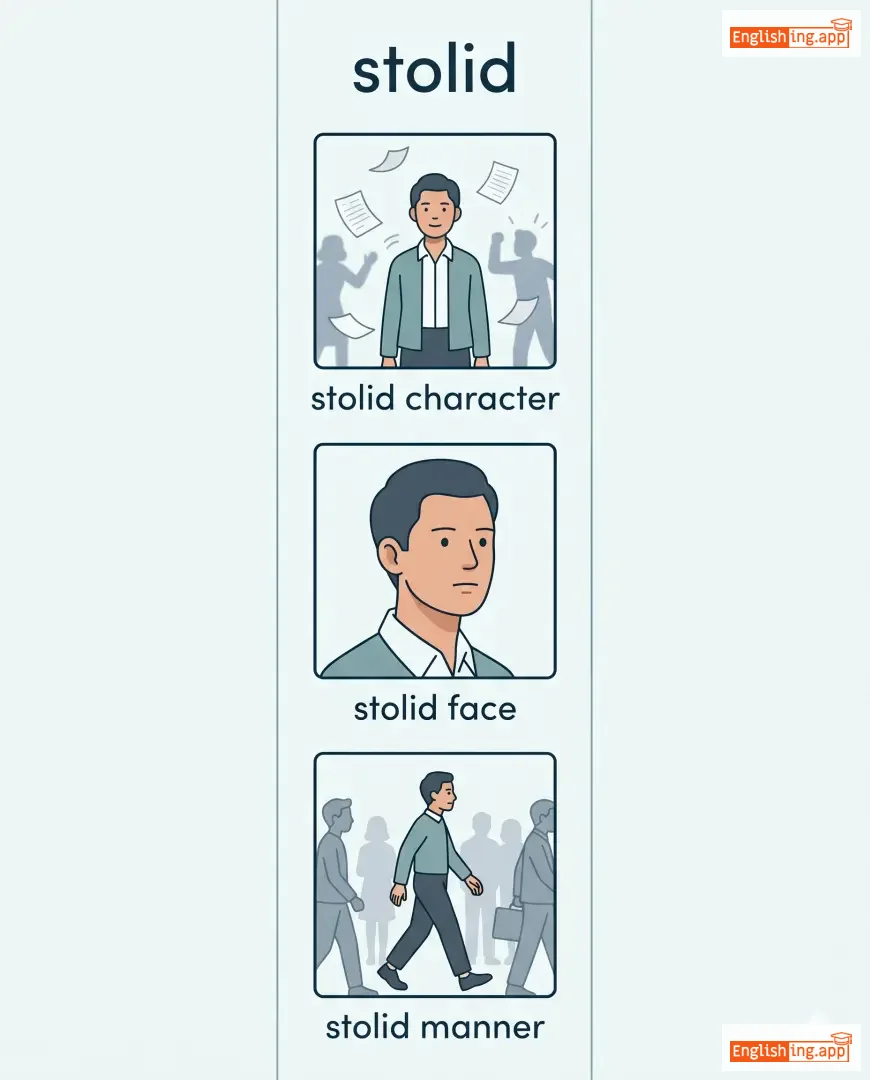
stolid character, stolid face, stolid manner, stolid calm
••••••
|
Stolid – 冷静な人は感情を見せない。
••••••
|
|
#304
📏
|
/ˈstraɪ.eɪ.tɪd/
adjective
(esutaiaeteddo)
••••••
|
|
縞目模様の
kamome moyou no
••••••
|
- •••••• | - •••••• | - •••••• | - •••••• |
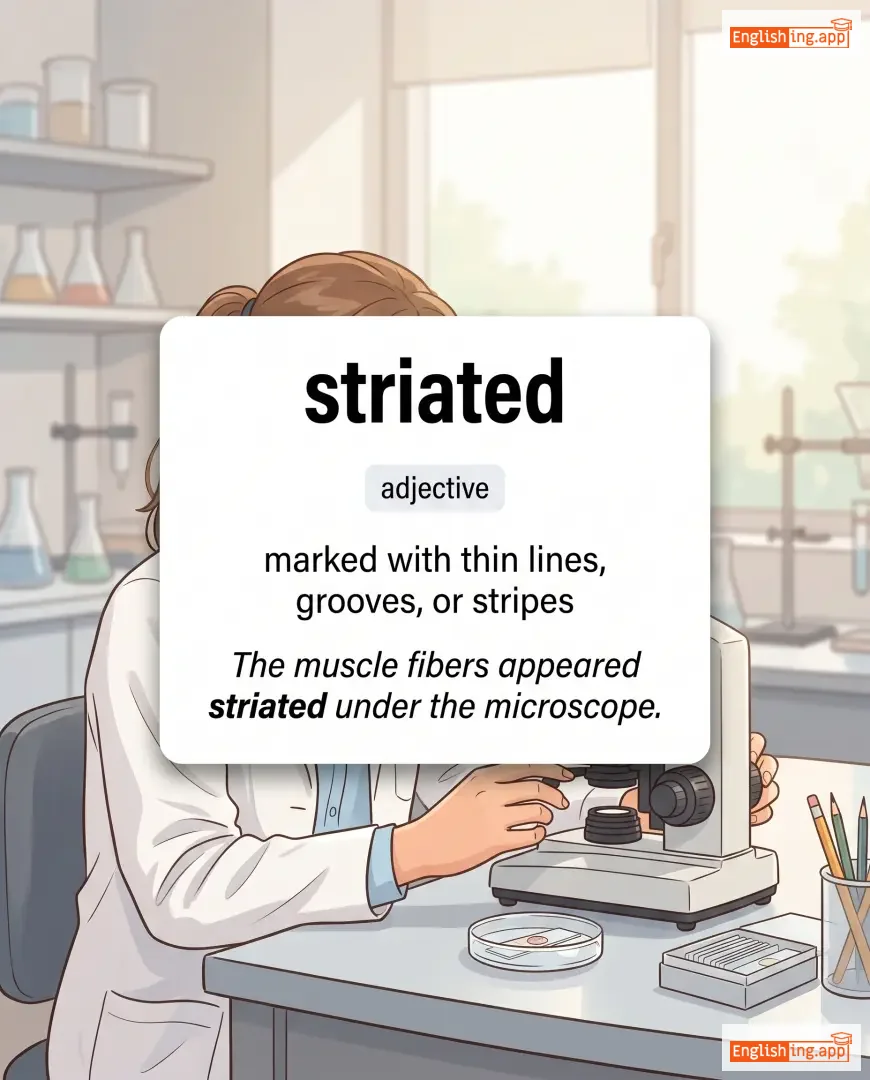
marked with thin lines, grooves, or stripes
••••••
|
The muscle fibers appeared striated under the microscope. |
顕微鏡で筋肉の繊維が縞目模様のように見えました。
Kenbikyo de kinniku no sen'i ga kamome moyou no you ni miemashita.
••••••
|
- •••••• | - •••••• | - •••••• |
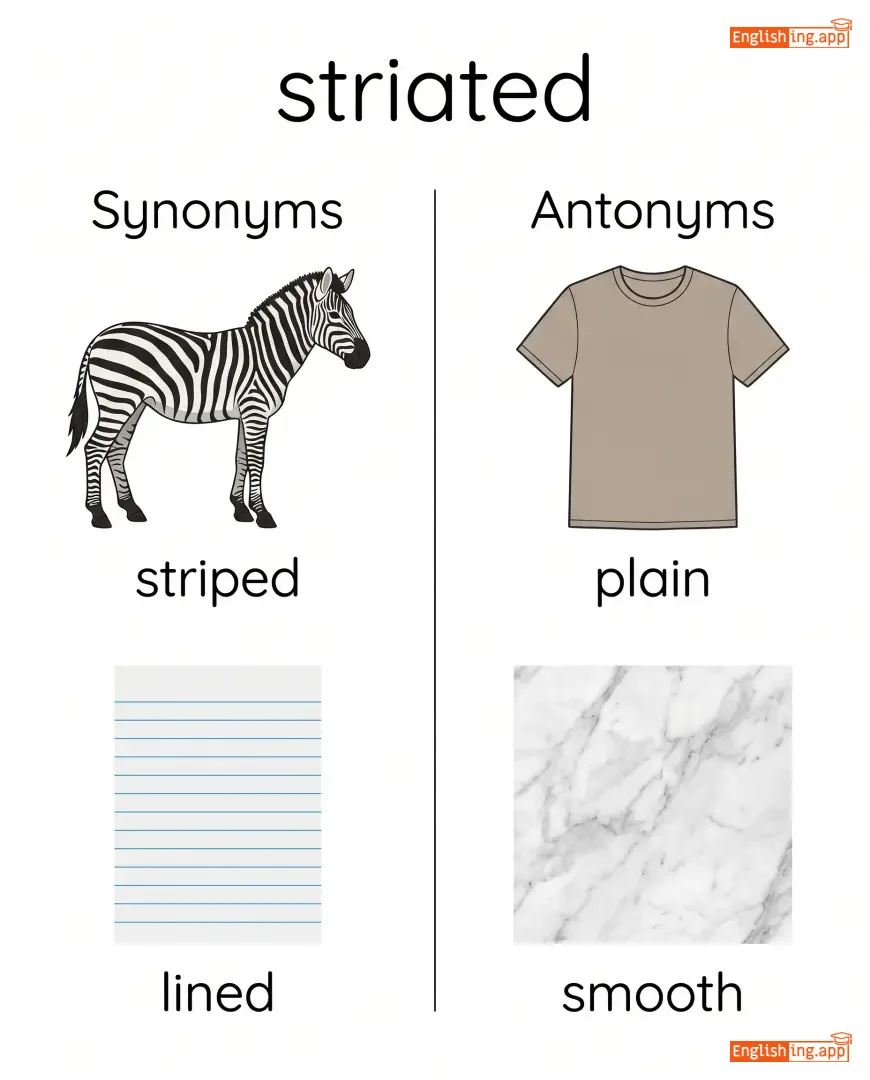
striped, lined, grooved, banded
••••••
|
plain, smooth
••••••
|
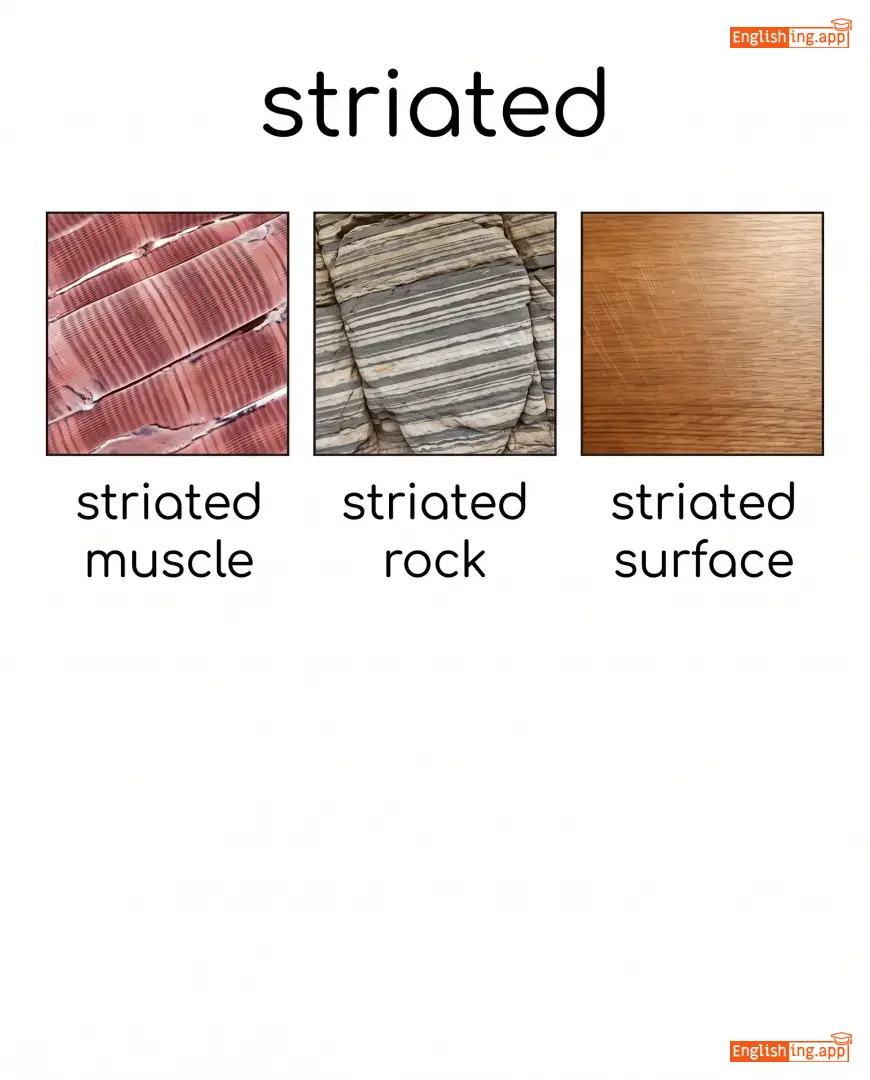
striated muscle, striated rock, striated surface, striated pattern
••••••
|
Striatedは、縞模様のようなもの、例えばゼブラのようなものです。
••••••
|
|
#305
🚶♂️
|
/strʌt/
verb
(ストラット)
••••••
|
|
堂々と歩く
dōdō to aruku
••••••
|
strutted
ストラッテッド
••••••
|
strutted
ストラッテッド
••••••
|
struts
ストラッツ
••••••
|
strutting
ストラッティング
••••••
|
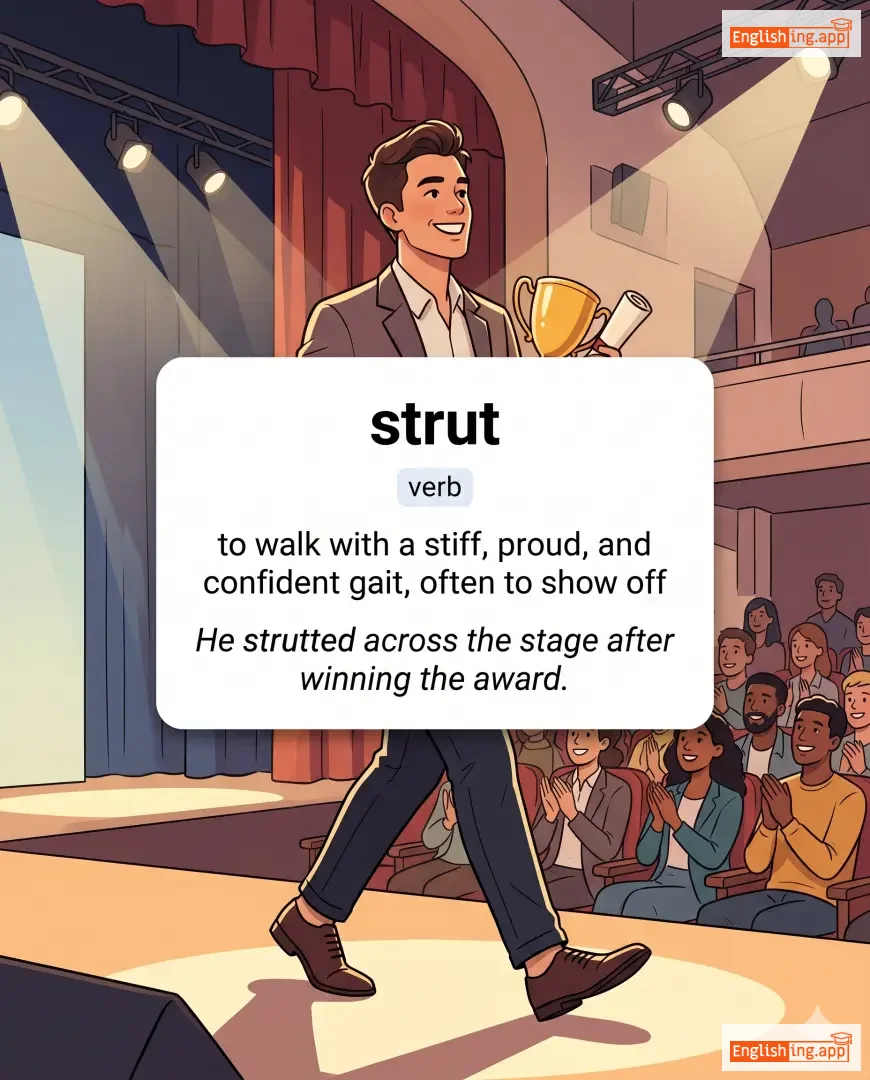
to walk with a stiff, proud, and confident gait, often to show off
••••••
|
He strutted across the stage after winning the award.
彼は賞を受賞後、誇らしげにステージを歩いた。
••••••
|
彼は賞を受賞後、誇らしげにステージを歩いた。
Kare wa shō o jushōgo, hokorashige ni sutēji o aruita.
••••••
|
strut one's stuff
自分の能力を披露する
••••••
|
to show one's abilities, skills, or confidence proudly
••••••
|
自分のスキルを誇示する
Jibun no sukiru o koji suru
••••••
|
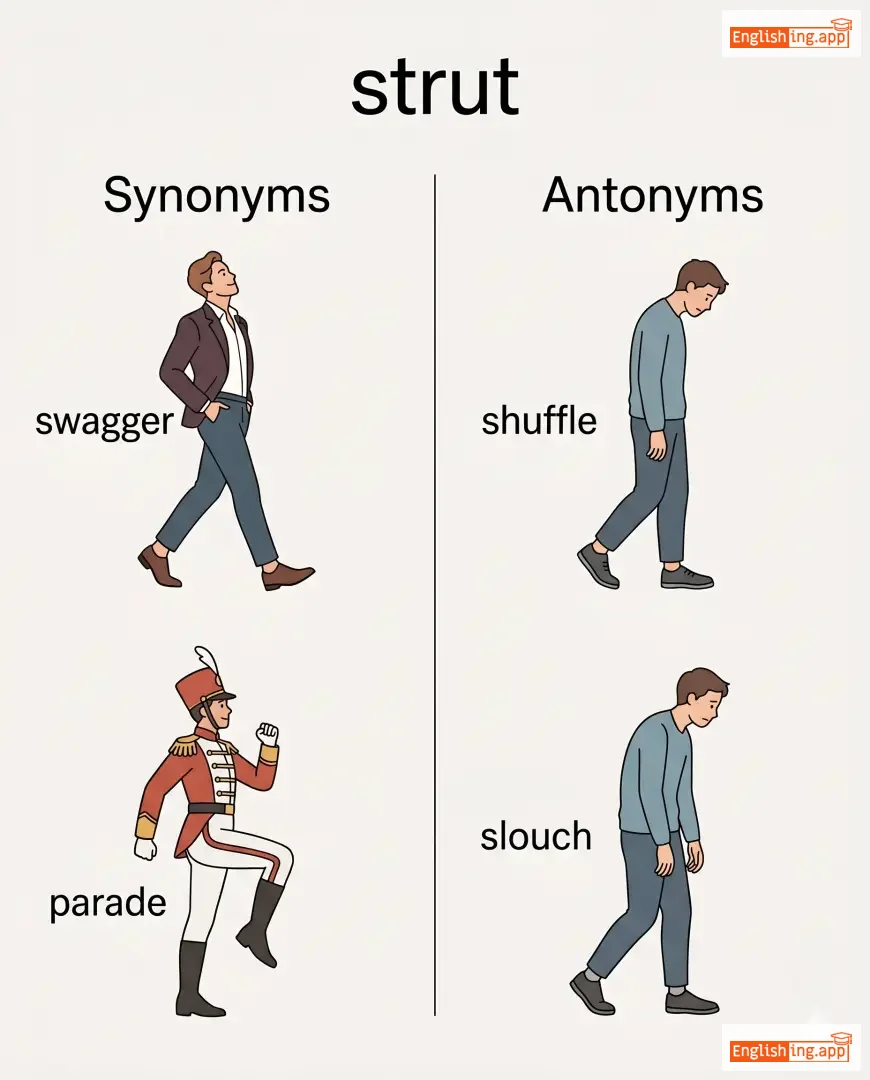
swagger, parade, flaunt, prance, show off
••••••
|
shuffle, slouch
••••••
|
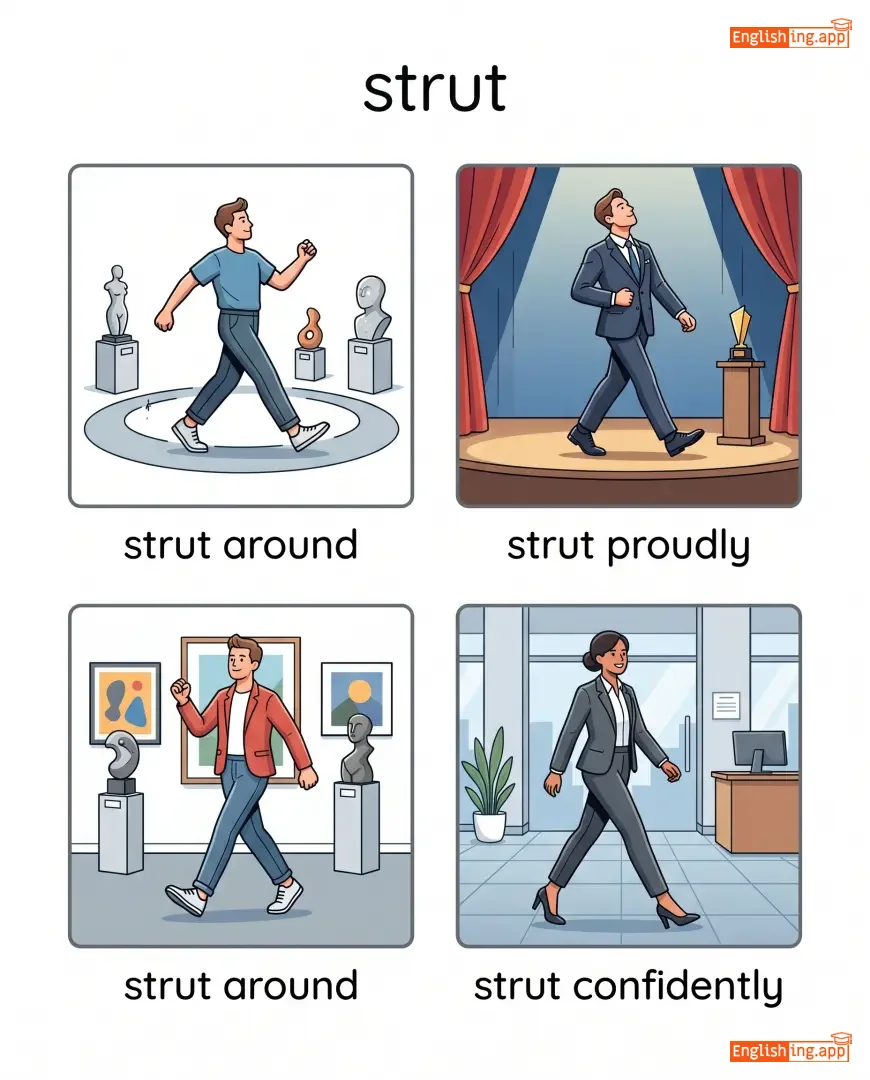
strut around, strut proudly, strut confidently, strut across
••••••
|
Strutは堂々と歩くことです
••••••
|
|
#306
📜
|
/səˈpiːnə/
noun, verb
(サブピーナ)
••••••
|
|
召喚状
shokanjo
••••••
|
subpoenaed
サブピーナド
••••••
|
subpoenaed
サブピーナド
••••••
|
subpoenas
サブピーネス
••••••
|
subpoenaing
サブピーニング
••••••
|
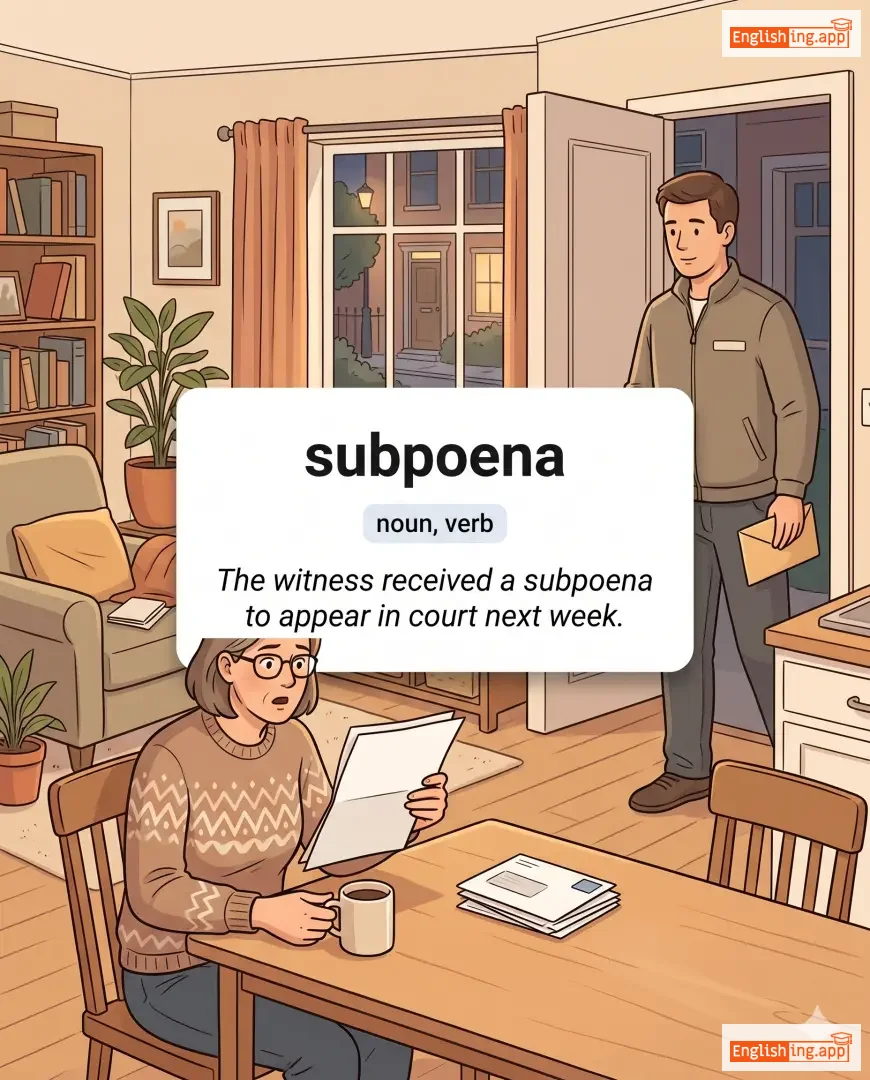
a legal document ordering someone to attend court; to summon someone with such a document
••••••
|
The witness received a subpoena to appear in court next week.
証人は来週法廷に出廷するためのサブピーナを受け取った。
••••••
|
証人は来週法廷に出廷するための召喚状を受け取った。
Shōnin wa raishū hōtei ni shuttei suru tame no shōkanjō o uketotta.
••••••
|
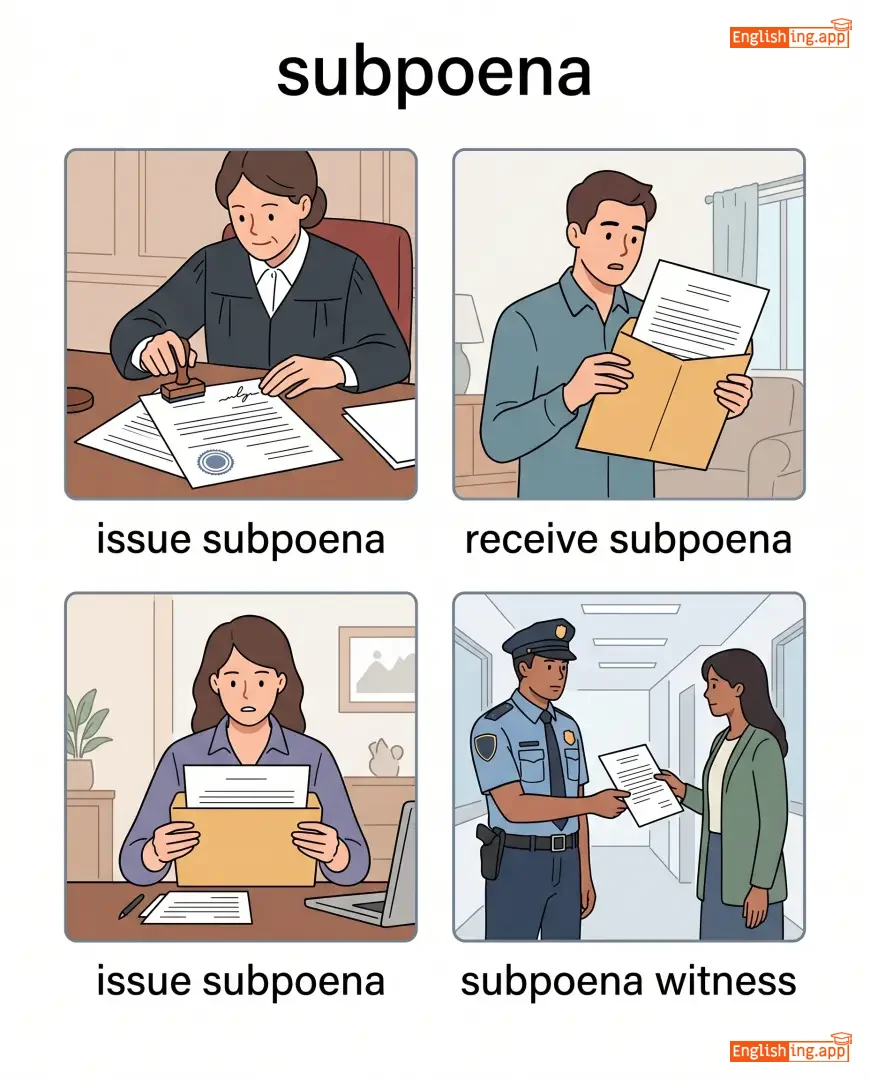
issue a subpoena
サブピーナを発行する
••••••
|
to formally send a legal order for someone to appear in court
••••••
|
召喚状を発行する
shōkanjō o hakkō suru
••••••
|
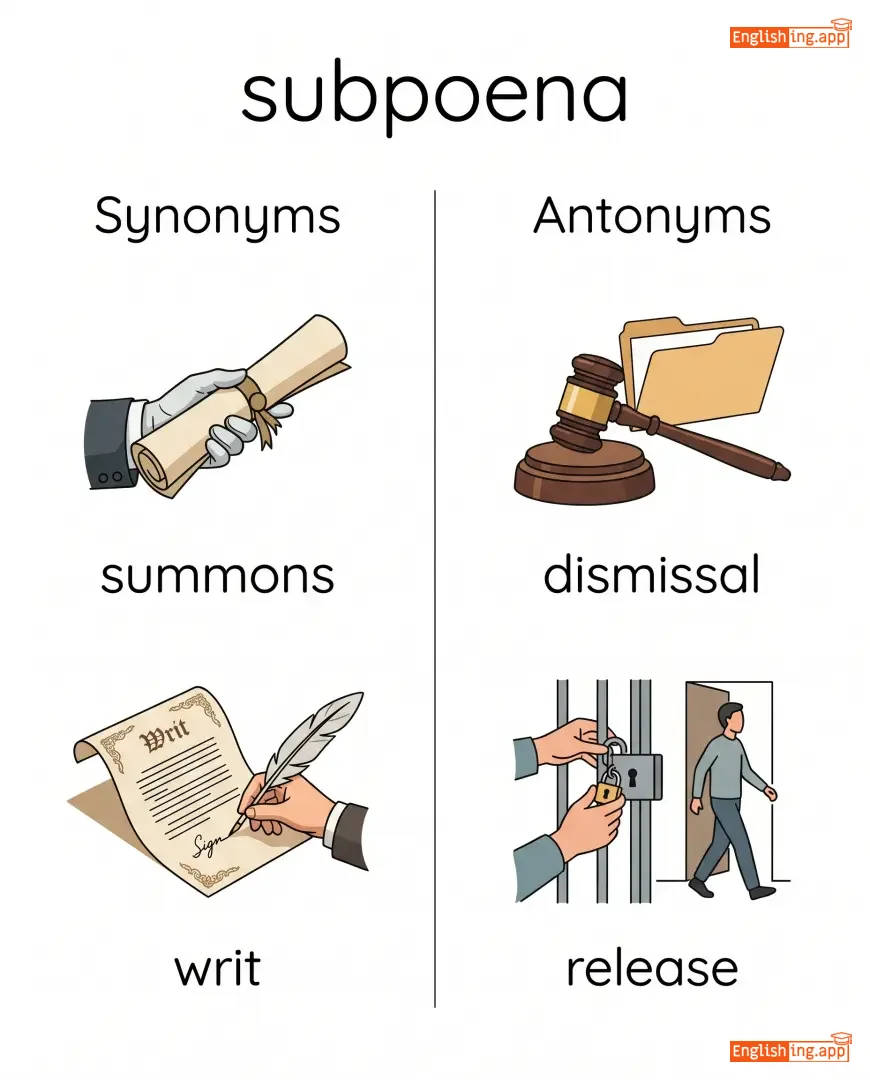
summons, writ, court order, mandate
••••••
|
dismissal, release
••••••
|
issue subpoena, receive subpoena, subpoena witness, subpoena records
••••••
|
Subpoenaは'サブ'下で'ピーナ'罰です - 裁判所に行かないと罰があるので、召喚状です。
••••••
|
|
#307
🌊
|
/səbˈsaɪd/
verb
(サブサイド)
••••••
|
|
収束する
shūsoku suru
••••••
|
subsided
サブサイデッド
••••••
|
subsided
サブサイデッド
••••••
|
subsides
サブサイダス
••••••
|
subsiding
サブサイディング
••••••
|
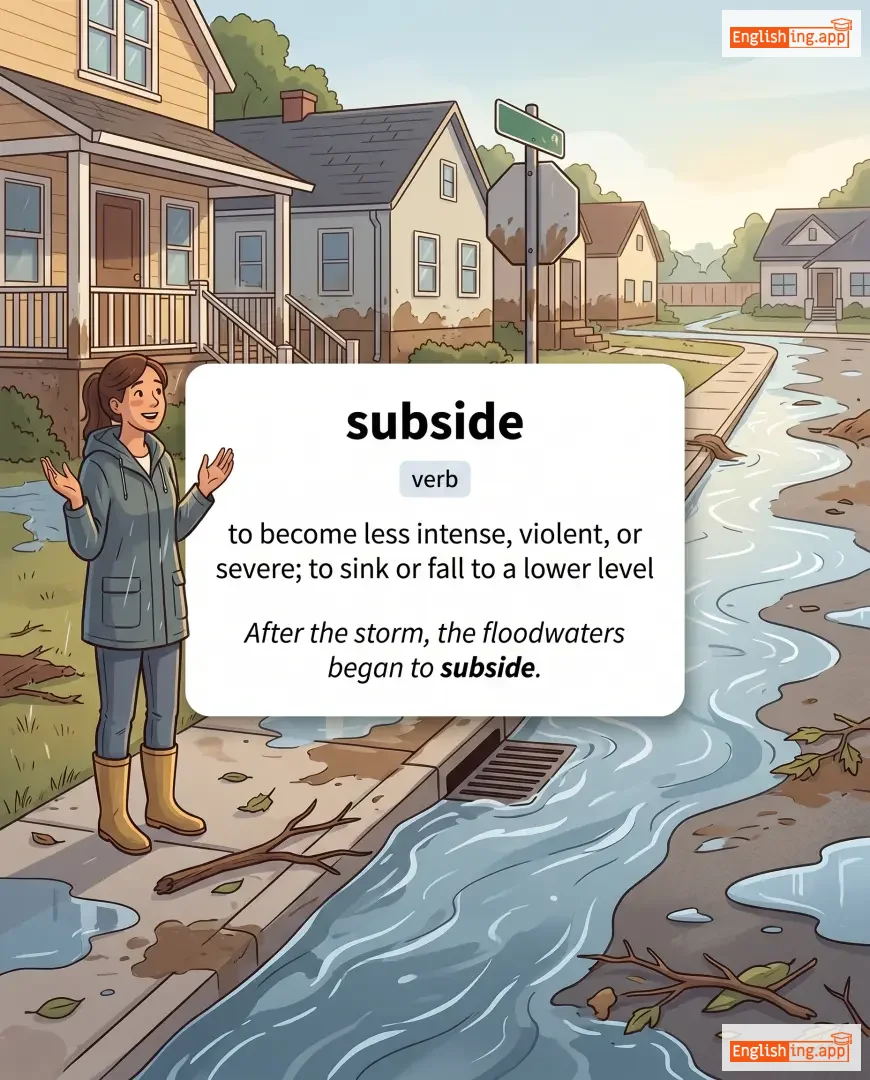
to become less intense, violent, or severe; to sink or fall to a lower level
••••••
|
After the storm, the floodwaters began to subside.
嵐の後、洪水は収束し始めました。
••••••
|
嵐の後、洪水は収束し始めました。
arashi no ato, kōzui wa shūsoku shi hajimemashita.
••••••
|
- •••••• | - •••••• | - •••••• |
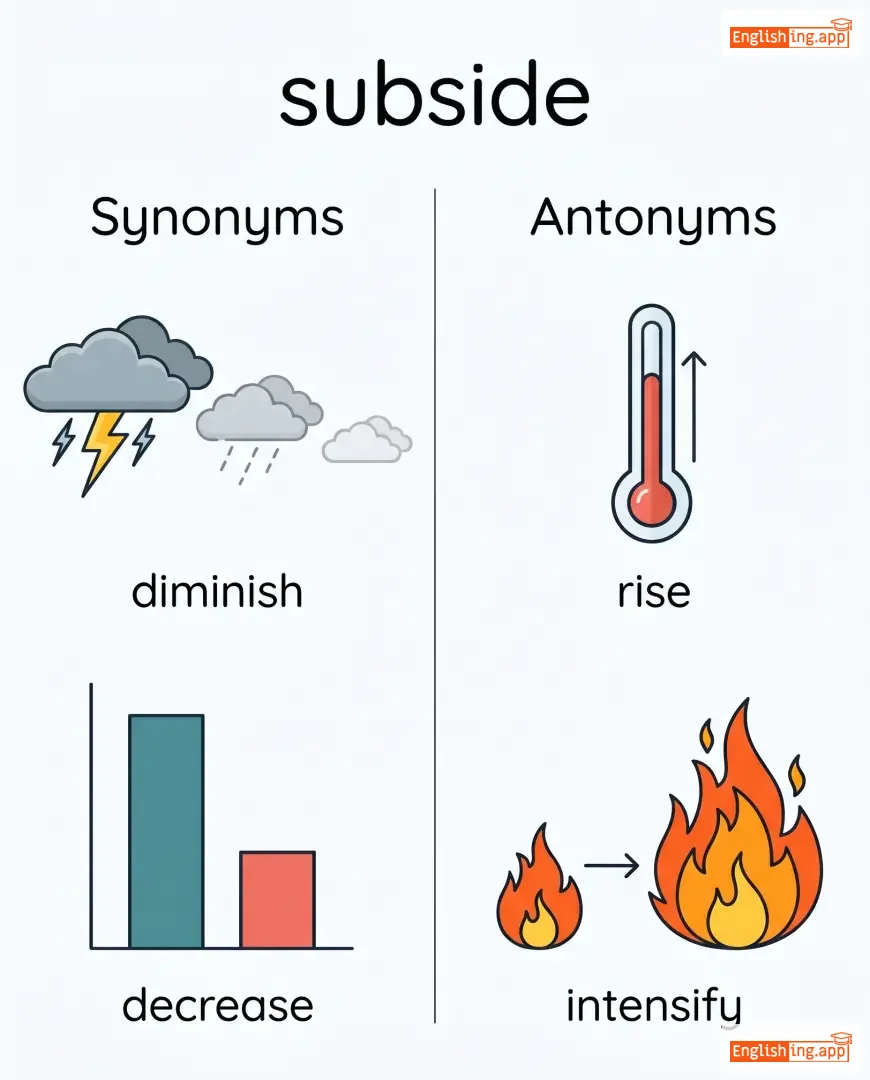
diminish, decrease, abate, recede, lessen
••••••
|
rise, intensify, increase
••••••
|
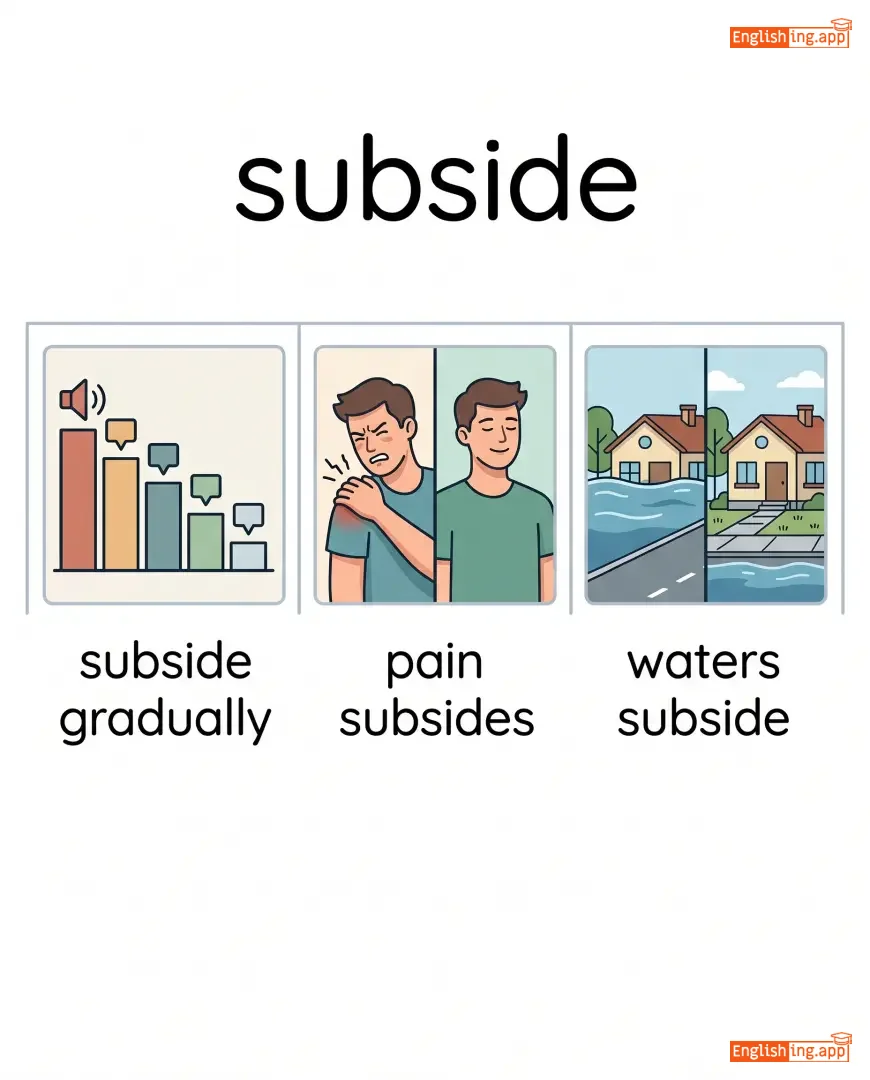
subside gradually, pain subsides, waters subside, anger subsides
••••••
|
Subsideは水位が下がること、嵐が収まるようなものです。
••••••
|
|
#308
⚖️
|
/səbˈstænʃieɪt/
verb
(サブスタンシエイト)
••••••
|
|
立証する
ricchou suru
••••••
|
substantiated
サブスタンシエイテッド
••••••
|
substantiated
サブスタンシエイテッド
••••••
|
substantiates
サブスタンシエイツ
••••••
|
substantiating
サブスタンシエイティング
••••••
|
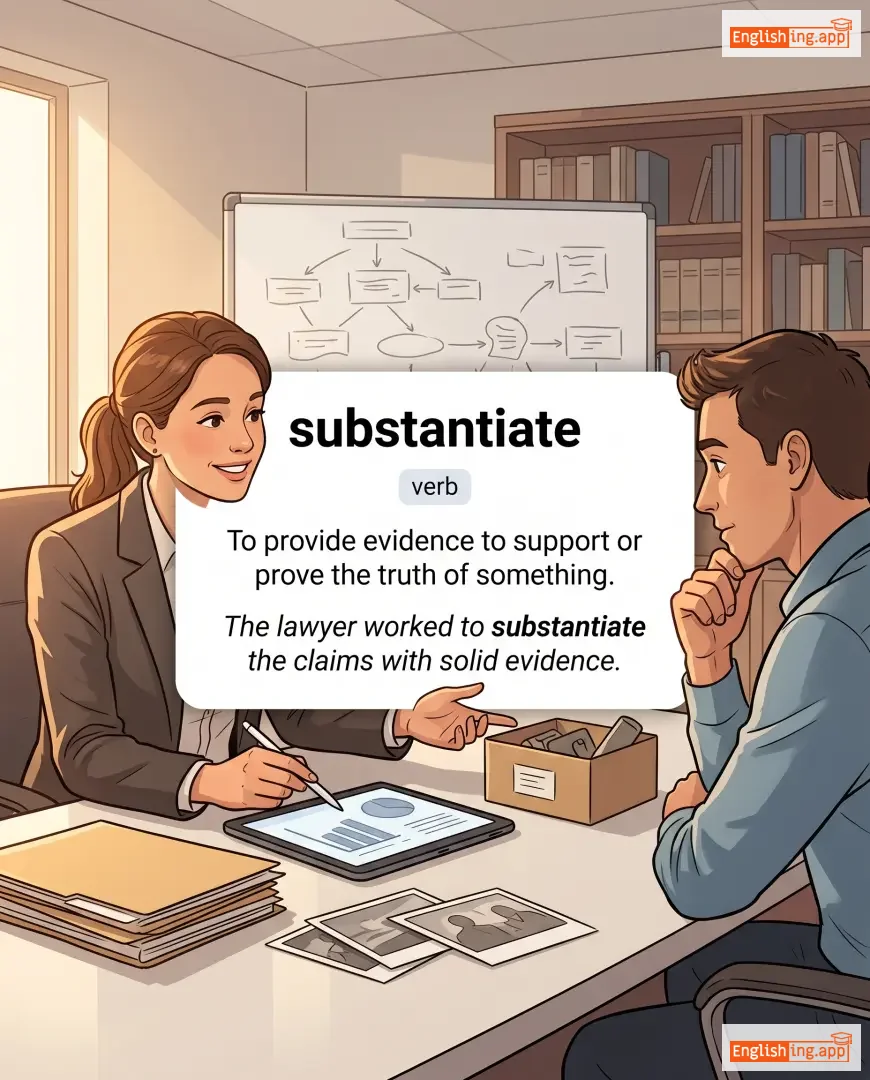
To provide evidence to support or prove the truth of something.
••••••
|
The lawyer worked to substantiate the claims with solid evidence.
弁護士は確かな証拠でその主張を立証しようとしました。
••••••
|
弁護士は確かな証拠でその主張を立証しようとしました。
Bengoshi wa tashikana shōko de sono shuchō o risshō shiyou to shimashita.
••••••
|
- •••••• | - •••••• | - •••••• |
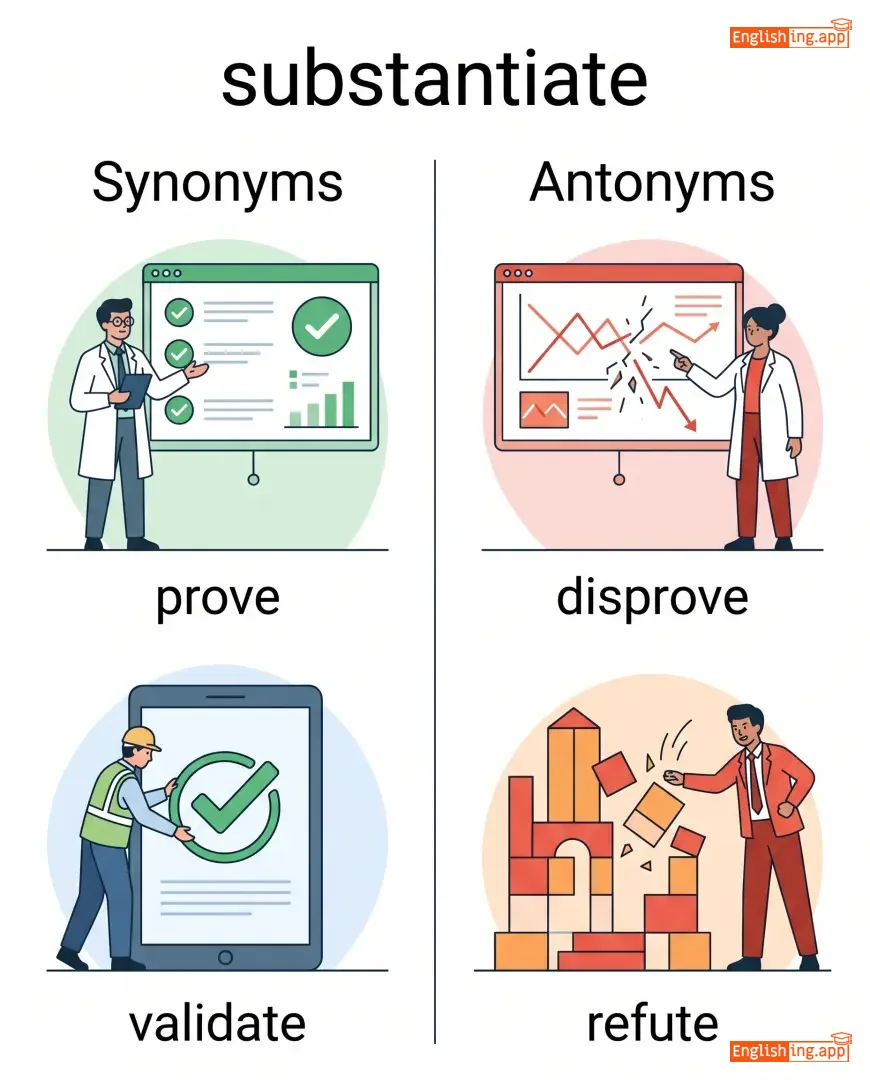
prove, validate, confirm, support, demonstrate
••••••
|
disprove, refute, contradict
••••••
|
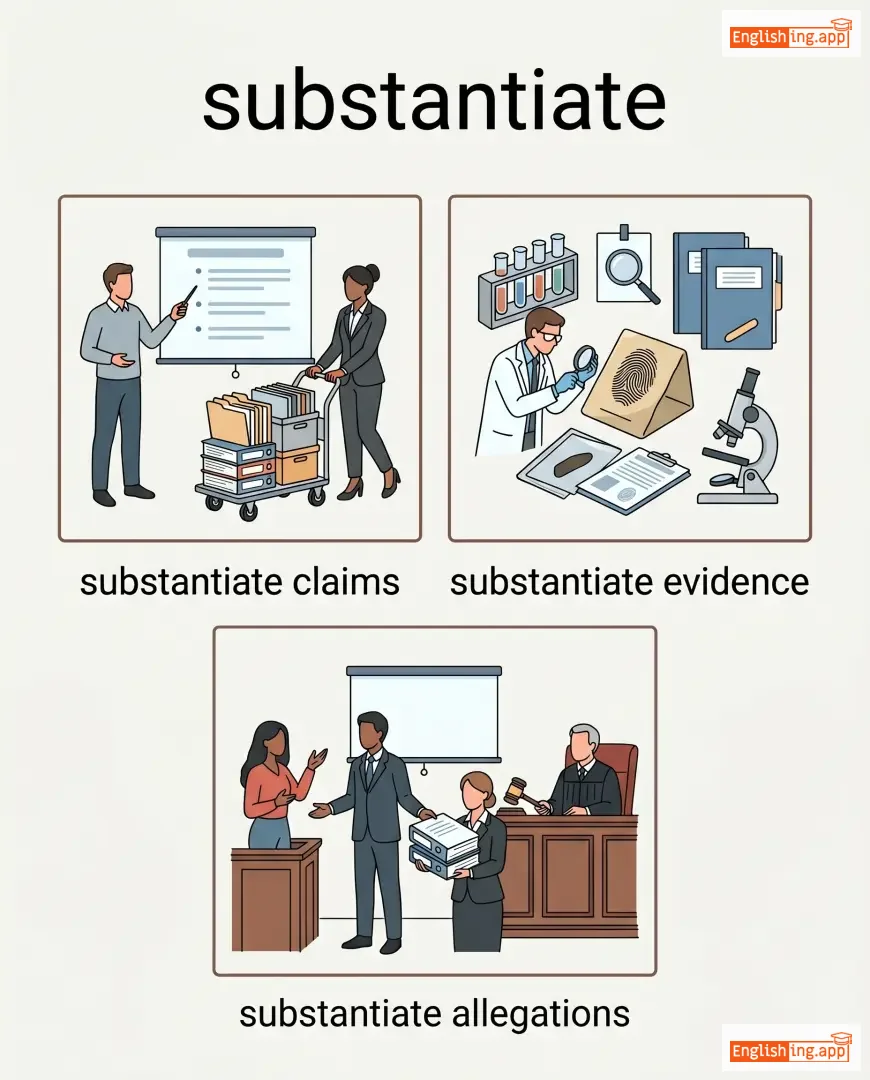
substantiate claims, substantiate evidence, substantiate allegations, substantiate argument
••••••
|
Substance (substance) は何かを立証するために役立つ。
••••••
|
|
#309
🔄
|
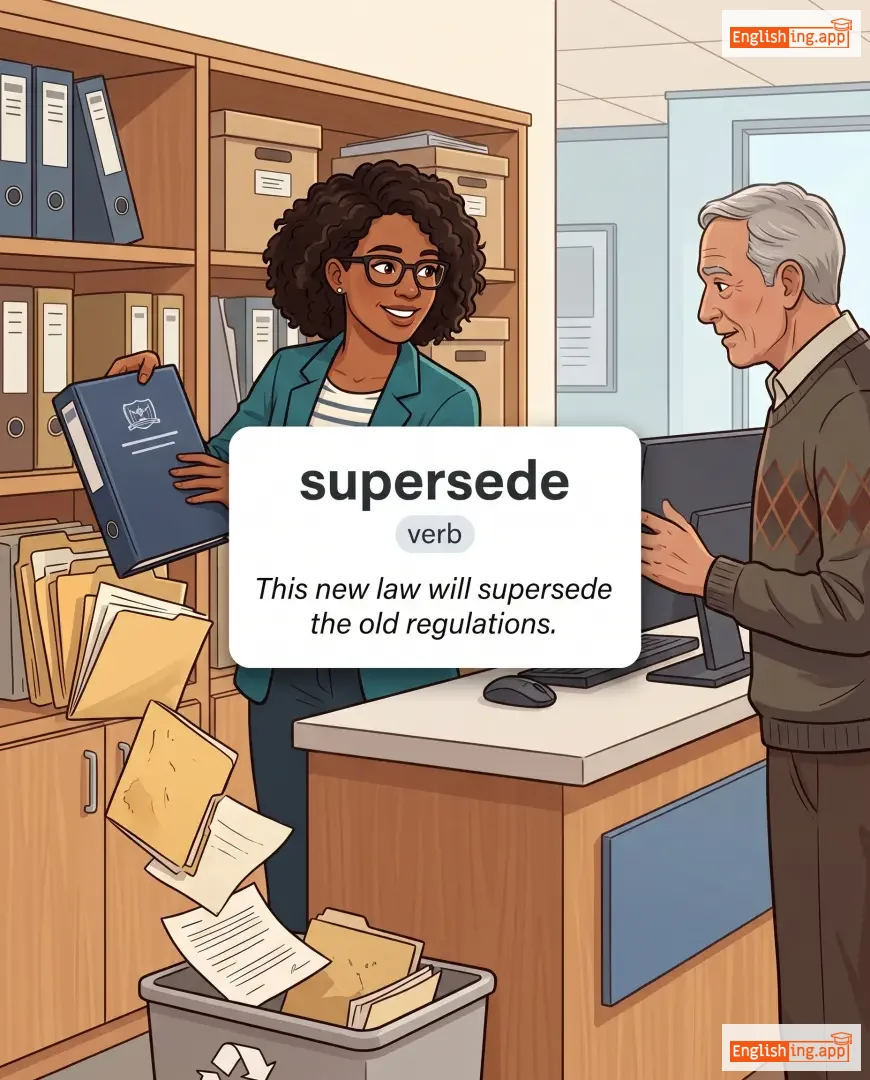
/ˌsuːpərˈsiːd/
verb
(スーパシード)
••••••
|
|
置き換える
okikaeru
••••••
|
superseded
スーパシーデッド
••••••
|
superseded
スーパシーデッド
••••••
|
supersedes
スーパシーズ
••••••
|
superseding
スーパシーディング
••••••
|
To replace or take the place of something because it is more modern or effective.
••••••
|
This new law will supersede the old regulations.
この新しい法律は古い規則を置き換えます。
••••••
|
この新しい法律は古い規則を置き換えます。
Kono atarashī hōritsu wa furui kisoku o okikaemasu.
••••••
|
- •••••• | - •••••• | - •••••• |
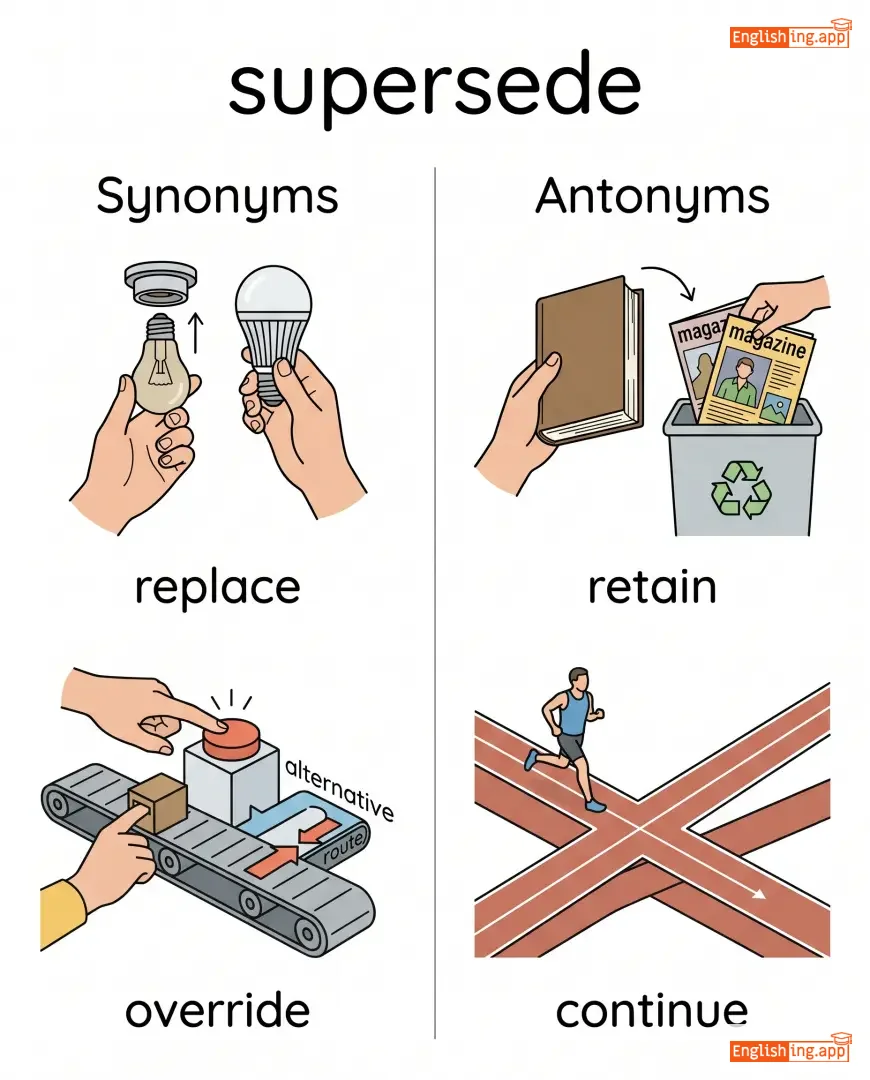
replace, override, overrule, succeed, displace
••••••
|
retain, continue, maintain
••••••
|
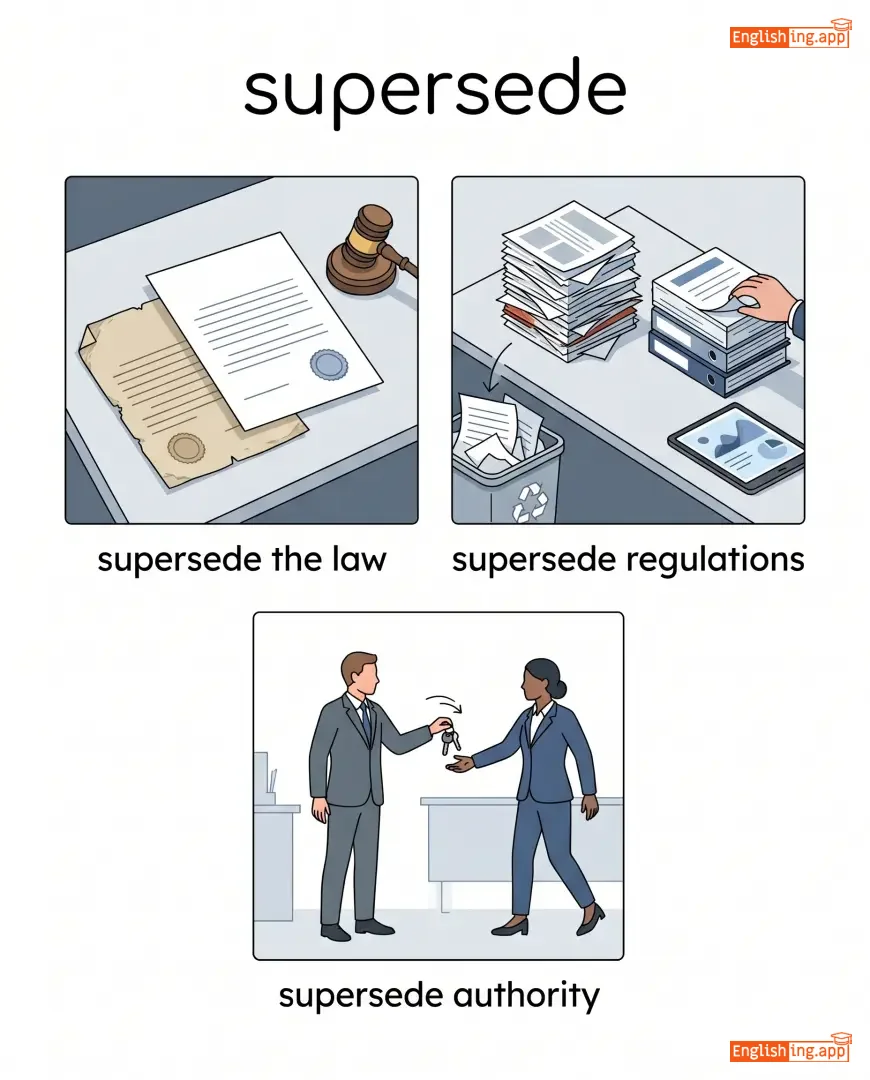
supersede the law, supersede regulations, supersede authority, supersede role
••••••
|
Super + seat で古いものを置き換える、それがsupersedeです。
••••••
|
|
#310
🤔
|
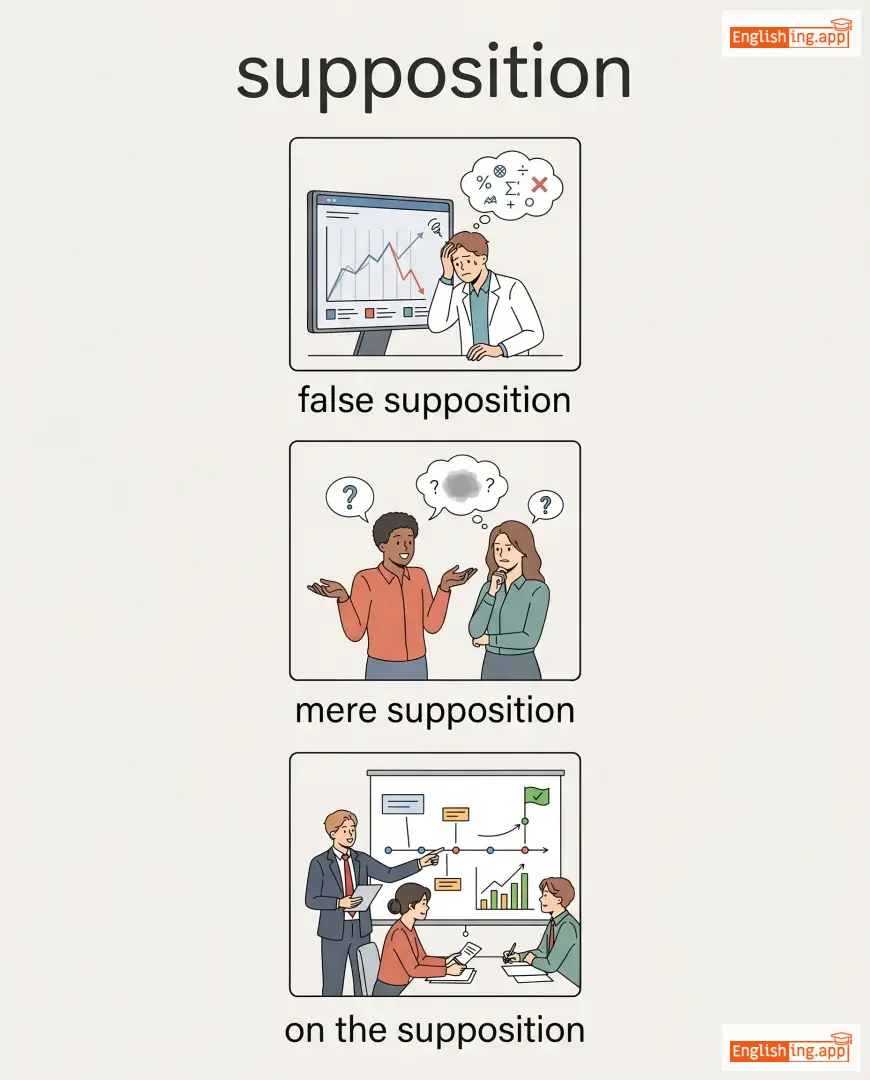
/ˌsʌpəˈzɪʃən/
noun
(サポジション)
••••••
|
|
仮定
katei
••••••
|
- •••••• | - •••••• | - •••••• | - •••••• |
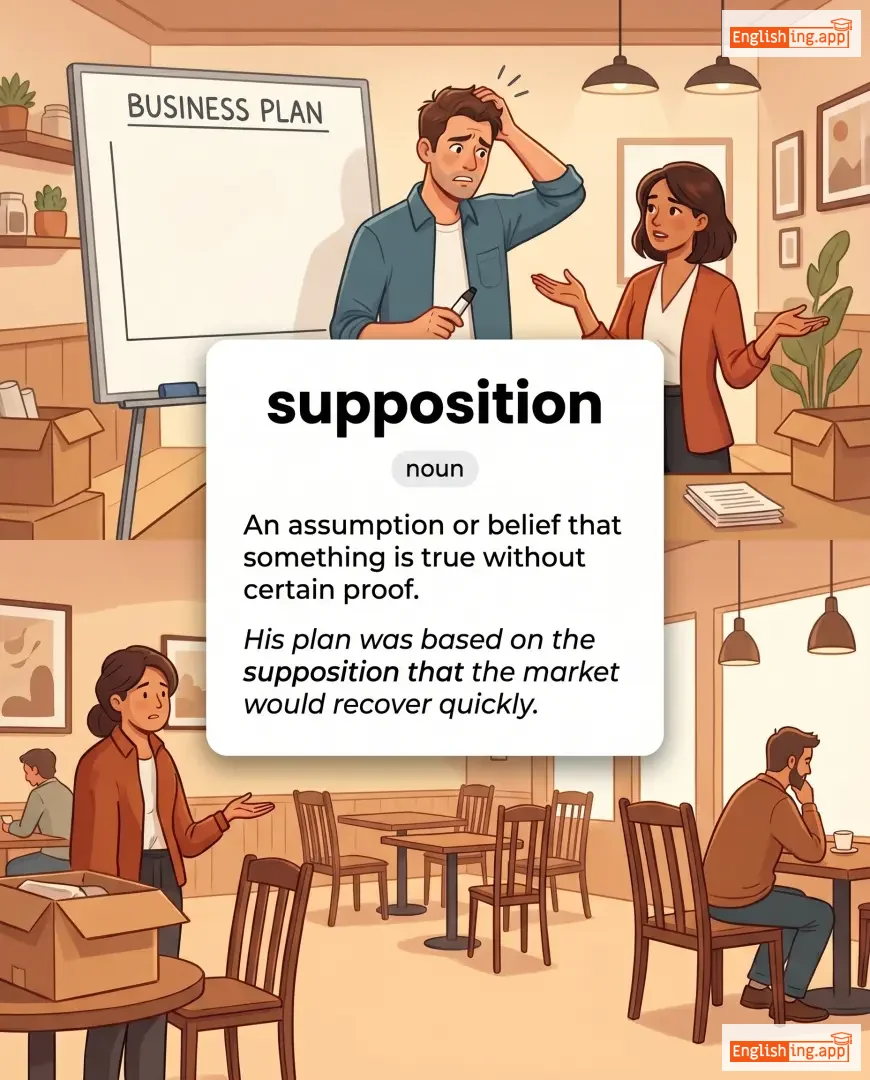
An assumption or belief that something is true without certain proof.
••••••
|
His plan was based on the supposition that the market would recover quickly. |
彼の計画は、市場がすぐに回復するという仮定に基づいていました。
Kare no keikaku wa, shijō ga sugu ni kaifuku suru to iu katei ni motozuite imashita.
••••••
|
on the supposition that |
Based on the assumption that something is true
••••••
|
仮定に基づいて
katei ni motozuite
••••••
|
assumption, presumption, hypothesis, belief, conjecture
••••••
|
fact, certainty, truth
••••••
|
false supposition, mere supposition, on the supposition, mistaken supposition
••••••
|
Supposition = Suppose + tion = 仮定, 'suppose' を使って仮定するイメージ
••••••
|
|
#311
🤫
|
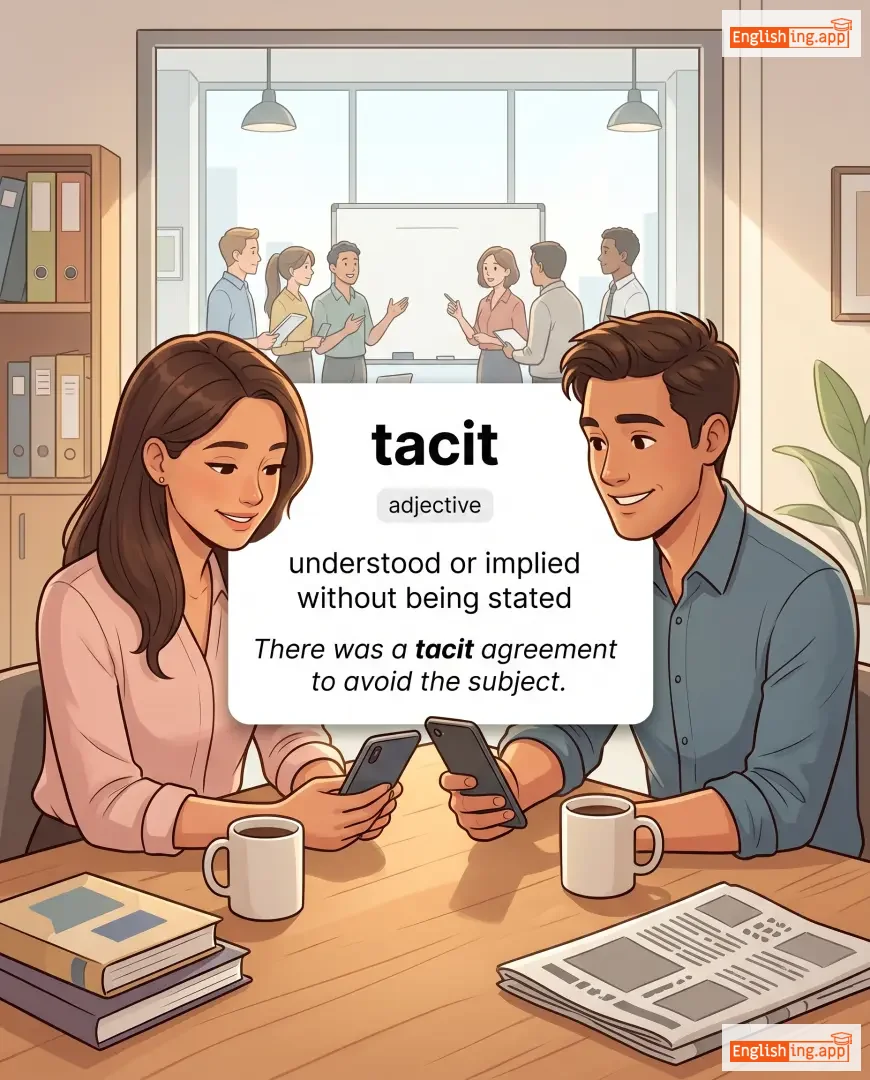
/ˈtæsɪt/
adjective
(タシット)
••••••
|
|
暗黙の了解
anmoku no ryōkai
••••••
|
- •••••• | - •••••• | - •••••• | - •••••• |
understood or implied without being stated
••••••
|
There was a tacit agreement to avoid the subject. |
そのテーマを避けるために暗黙の了解があった。
Sono tēma o yokeru tame ni anmoku no ryōkai ga atta.
••••••
|
tacit agreement |
an unspoken understanding between people
••••••
|
暗黙の了解
anmoku no ryōkai
••••••
|
implicit, unspoken, understood, silent
••••••
|
explicit, stated, expressed
••••••
|
tacit consent, tacit approval, tacit understanding
••••••
|
Tacit は、言葉にしなくても理解できる暗黙の了解のようなものです。
••••••
|
|
#312
↔️
|
/tænˈdʒɛnʃəl/
adjective
(タンジェンシャル)
••••••
|
|
接線の
sessenn no
••••••
|
- •••••• | - •••••• | - •••••• | - •••••• |
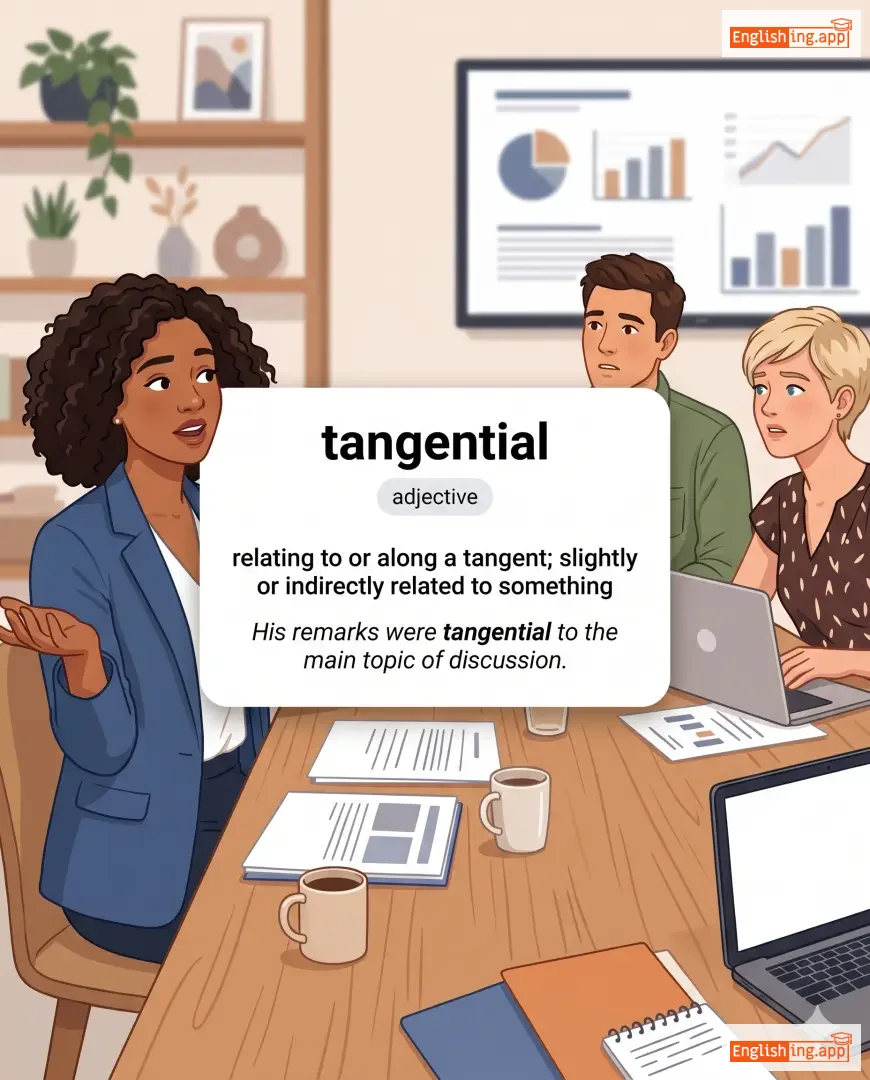
relating to or along a tangent; slightly or indirectly related to something
••••••
|
His remarks were tangential to the main topic of discussion.
彼のコメントは議論の主要なトピックには関連していなかった。
••••••
|
彼のコメントは議論の主要なトピックには関連していなかった。
Kare no komento wa giron no shuyōna topikku ni wa kanren shite inakatta.
••••••
|
- •••••• | - •••••• | - •••••• |
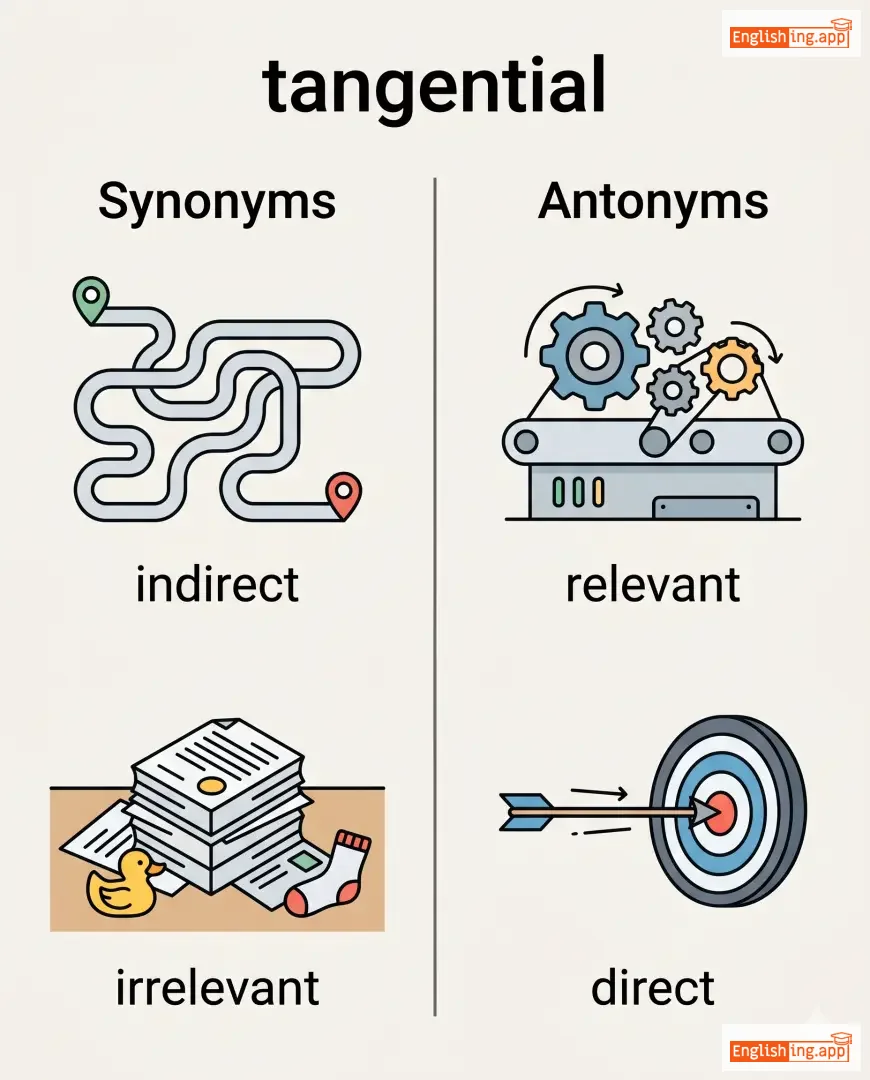
indirect, irrelevant, peripheral, secondary
••••••
|
relevant, direct
••••••
|
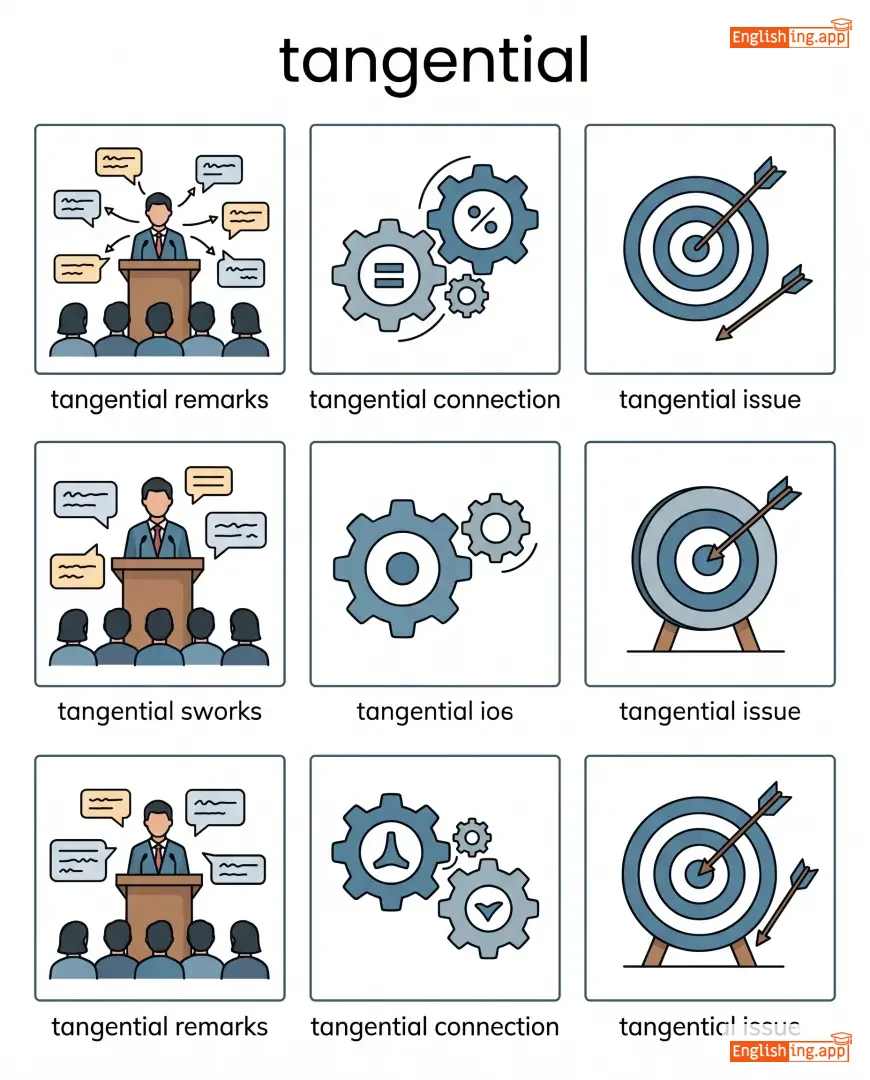
tangential remarks, tangential connection, tangential issue
••••••
|
接線の = トピックに少し関係しているが、主なものではない。
••••••
|
|
#313
🕸️
|
/ˈtɛn.ju.əs/
adjective
(テニュアス)
••••••
|
|
弱い / 薄い
yowai / usui
••••••
|
- •••••• | - •••••• | - •••••• | - •••••• |
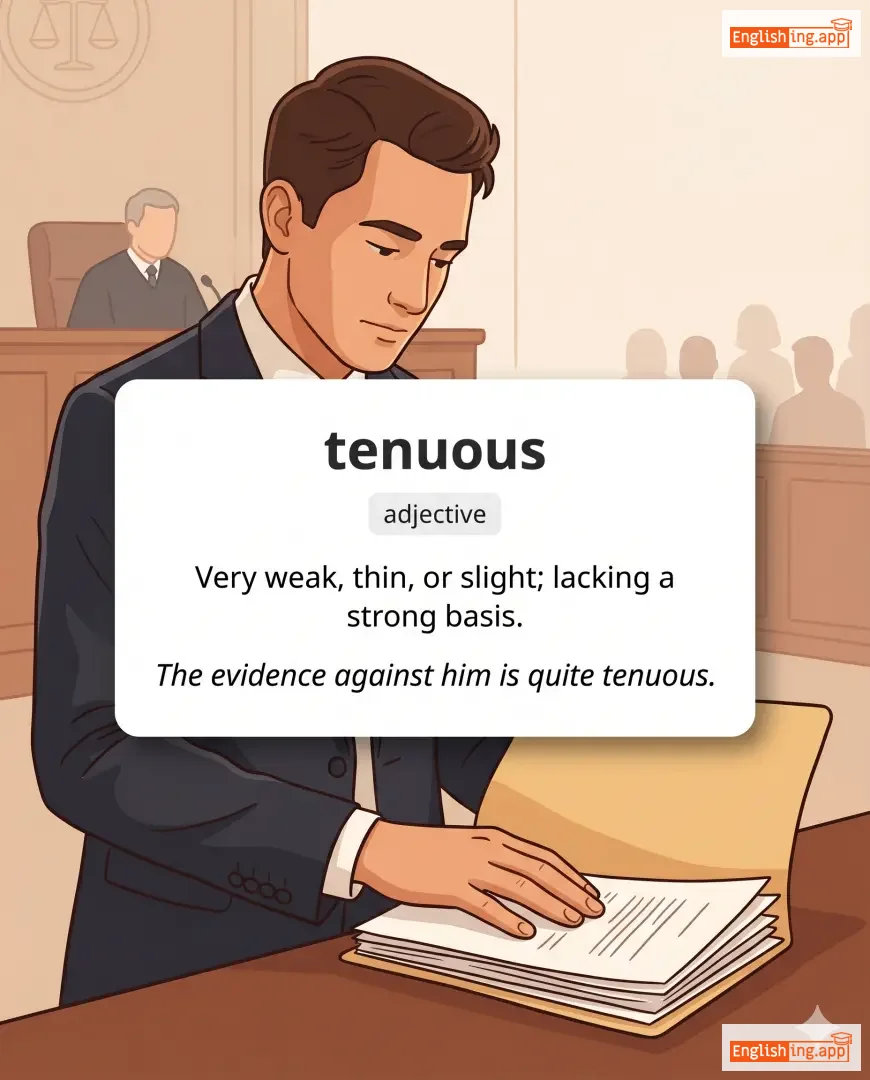
Very weak, thin, or slight; lacking a strong basis.
••••••
|
The evidence against him is quite tenuous.
彼に対する証拠はかなり弱いです。
••••••
|
彼に対する証拠はかなり弱いです。
Kare ni taisuru shōko wa kanari yowai desu.
••••••
|
- •••••• | - •••••• | - •••••• |
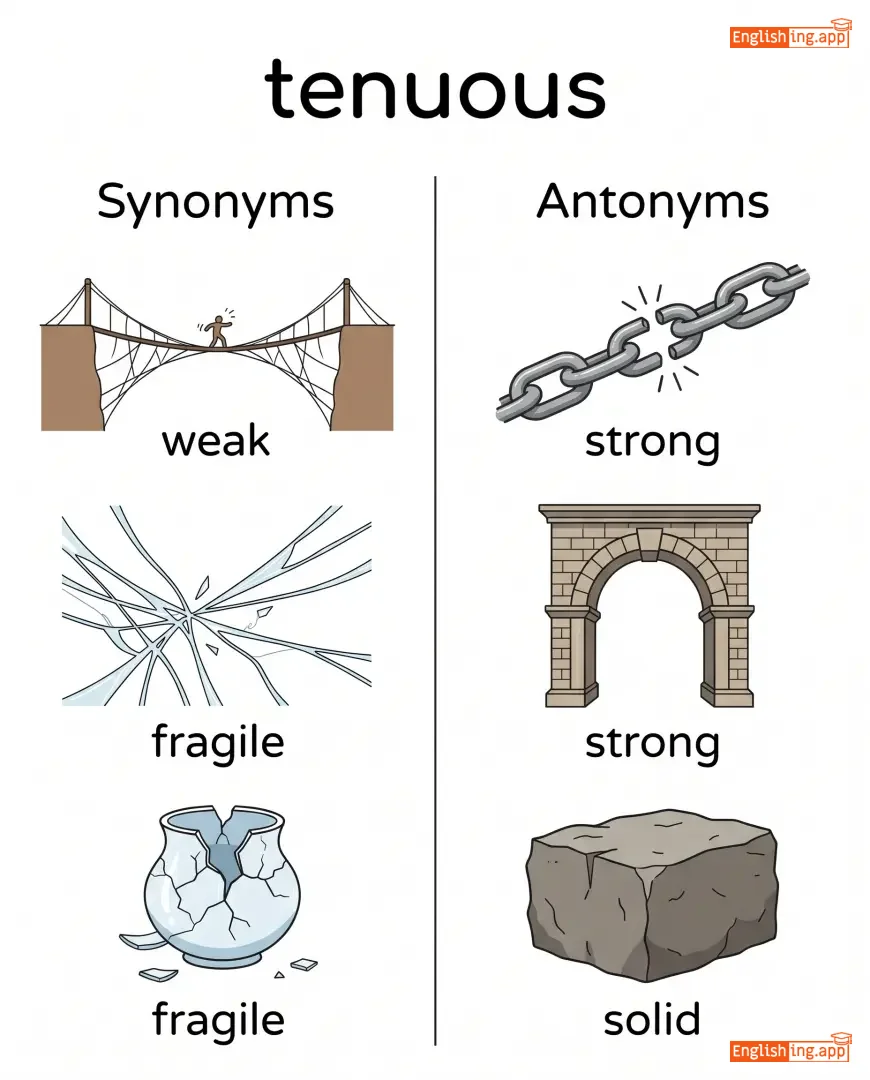
weak, fragile, thin, slight, insubstantial
••••••
|
strong, solid, firm
••••••
|
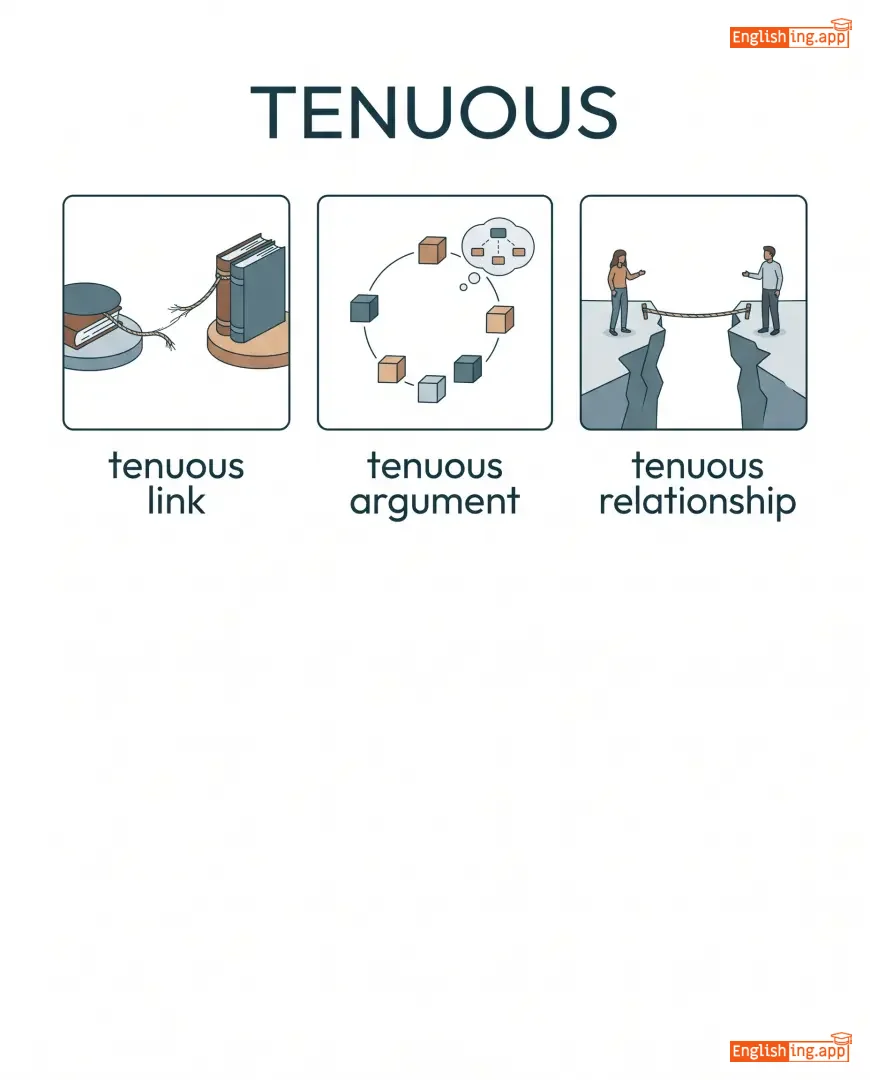
tenuous link, tenuous argument, tenuous relationship, tenuous connection
••••••
|
Tenuousは非常に弱い基盤を意味します。
••••••
|
|
#314
🗯️
|
/taɪˈreɪd/
noun
(タイレード)
••••••
|
|
激しい非難
hageshii hinan
••••••
|
- •••••• | - •••••• | - •••••• | - •••••• |
a long, angry, or critical speech
••••••
|
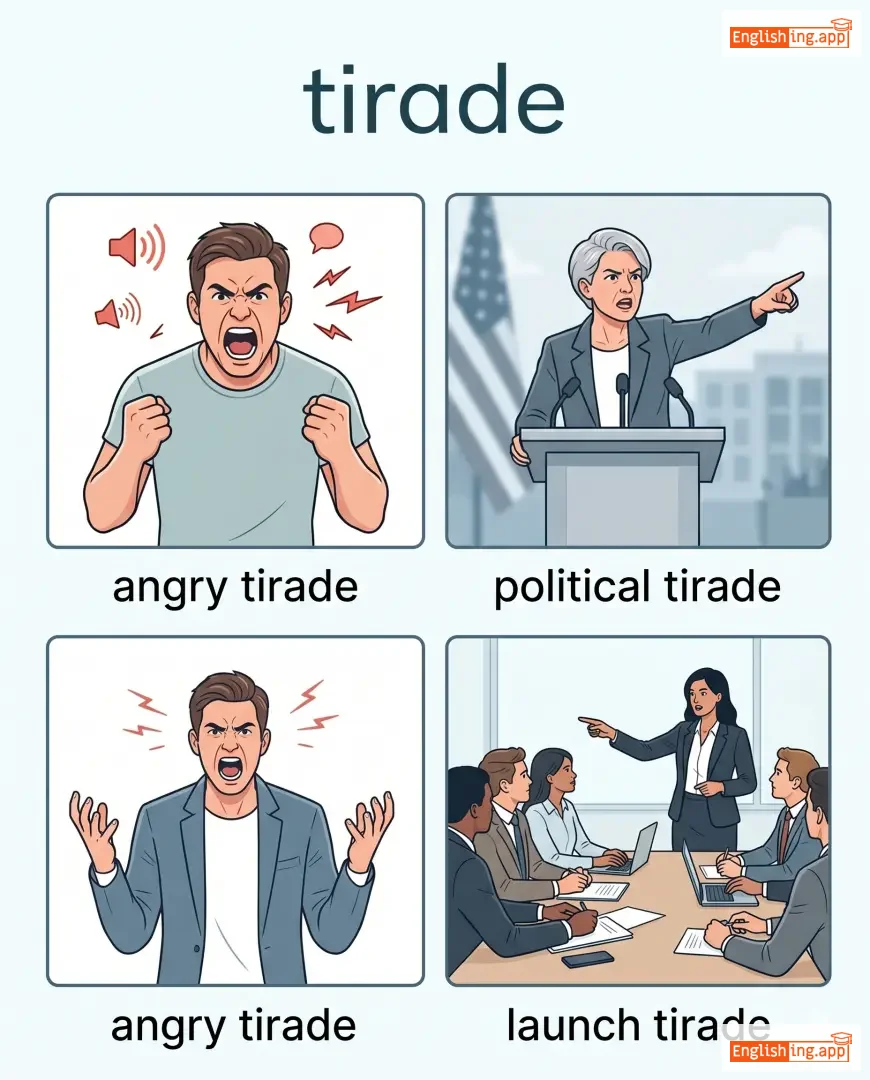
The manager launched into a tirade about poor performance.
マネージャーは低いパフォーマンスについて長い激しい演説を行った。
••••••
|
マネージャーは低いパフォーマンスについて長い激しい演説を行った。
Manējā wa hikui pafōmansu ni tsuite nagai hageshī enzetsu o okonatta.
••••••
|
- •••••• | - •••••• | - •••••• |
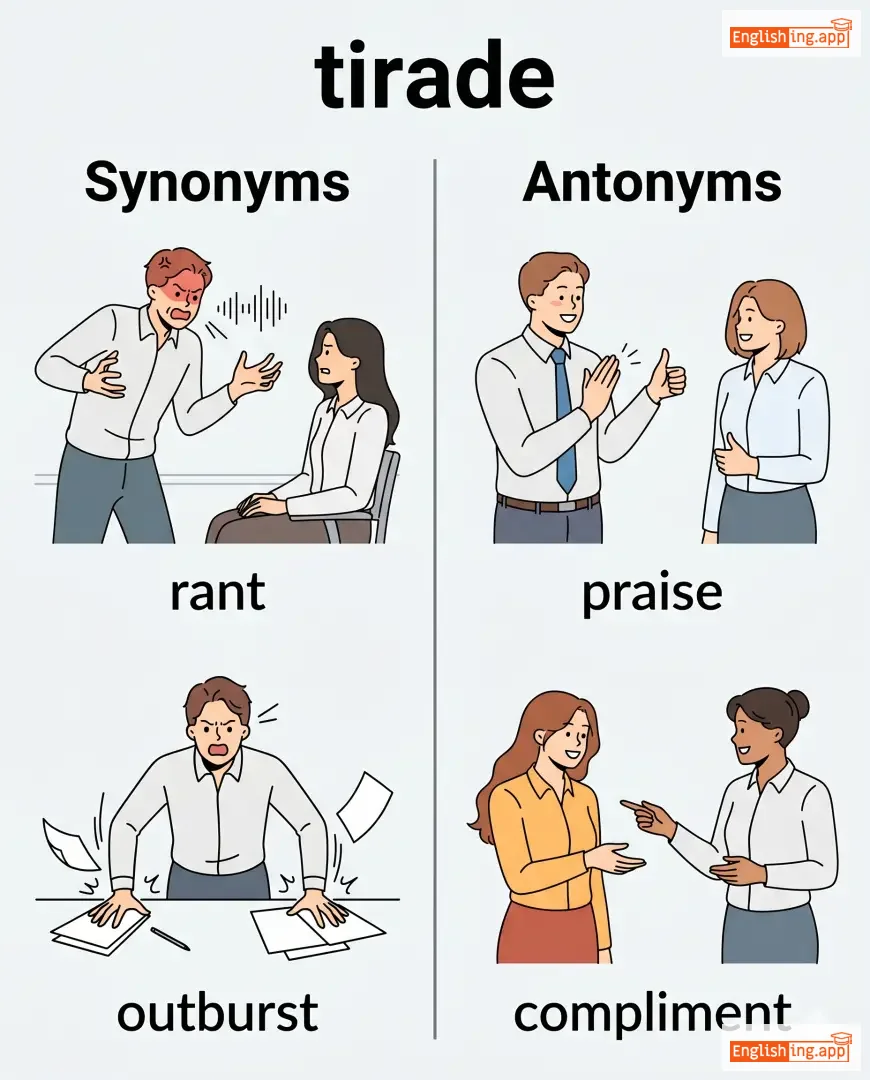
rant, outburst, diatribe, harangue, lecture
••••••
|
praise, compliment
••••••
|
angry tirade, political tirade, launch tirade, endless tirade
••••••
|
Tirade は鋭い矢のような激しい非難の演説です。
••••••
|
|
#315
🛌
|
/ˈtɔːrpər/
noun
(トルポー)
••••••
|
|
昏睡
torpor
••••••
|
- •••••• | - •••••• | - •••••• | - •••••• |
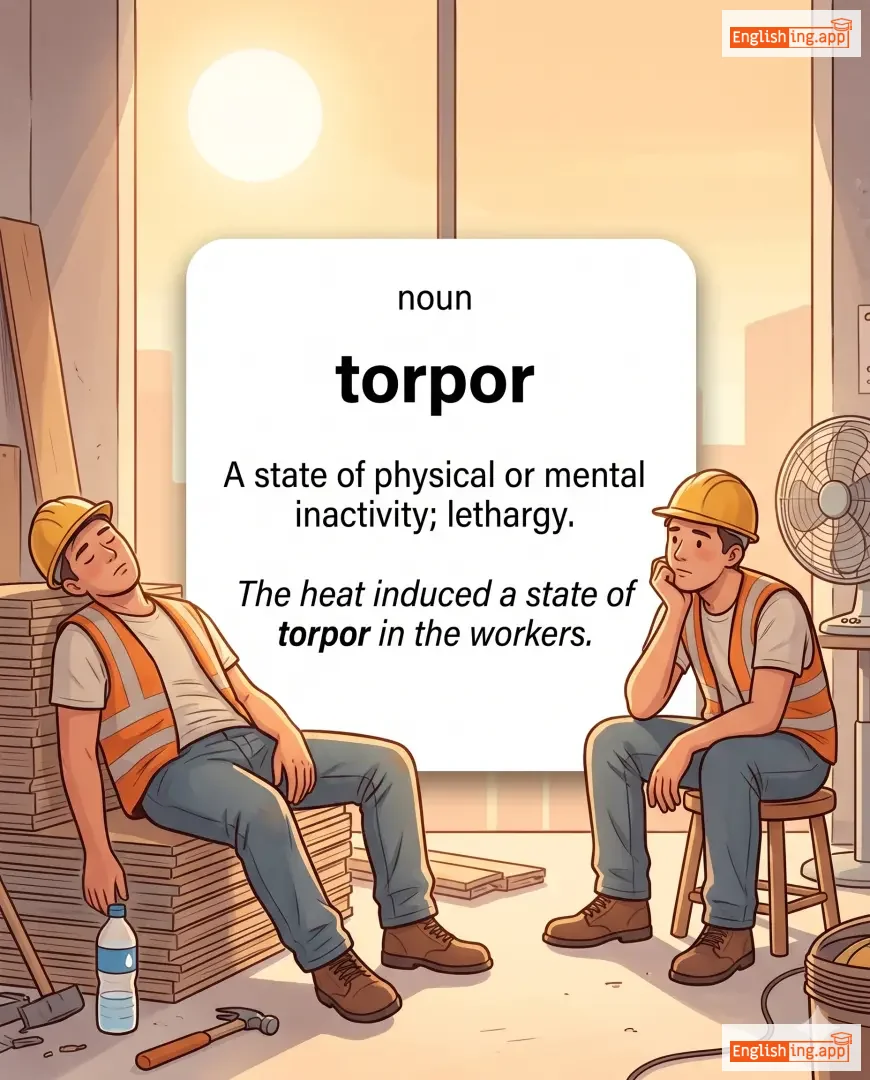
A state of physical or mental inactivity; lethargy.
••••••
|
The heat induced a state of torpor in the workers. |
暑さは労働者に昏睡状態を引き起こした。
Atsusa wa roudousha ni konsui joutai wo hikiokoshita.
••••••
|
sink into torpor |
to gradually become inactive or sluggish
••••••
|
昏睡に陥る
konsui ni ochiru
••••••
|
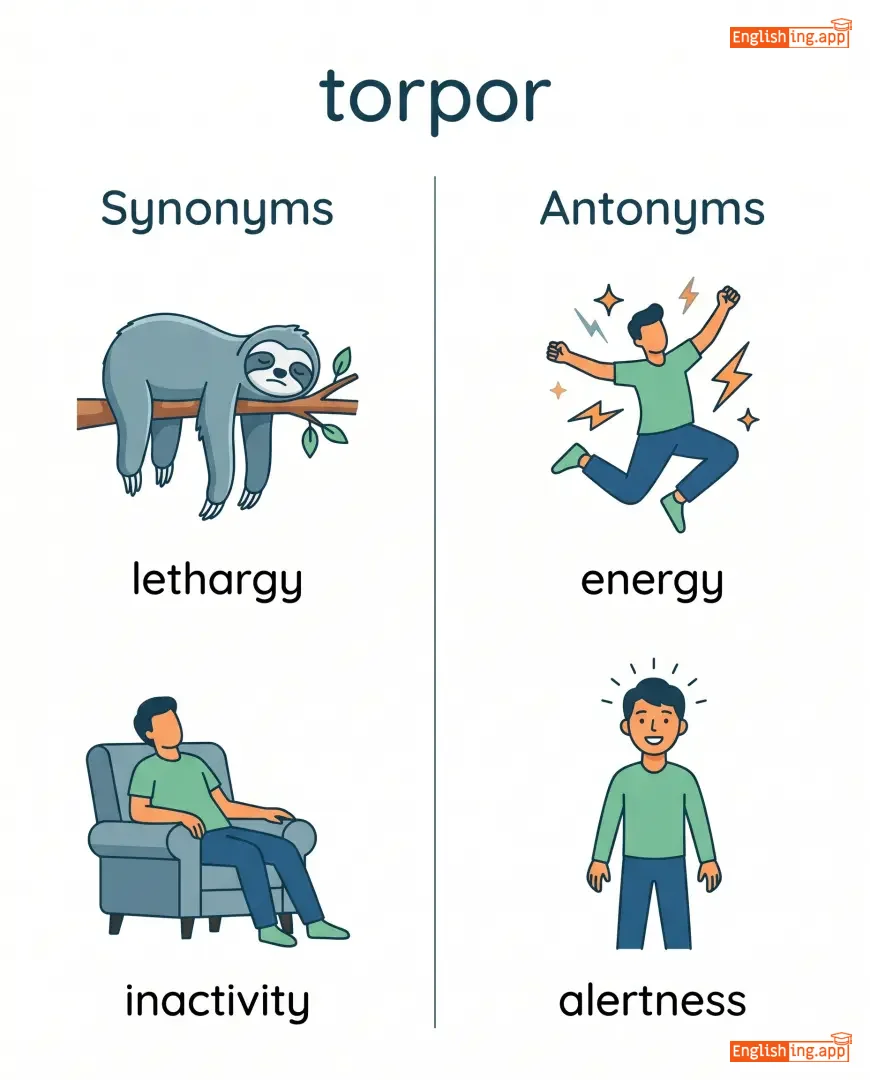
lethargy, inactivity, apathy, sluggishness
••••••
|
energy, alertness, activity
••••••
|
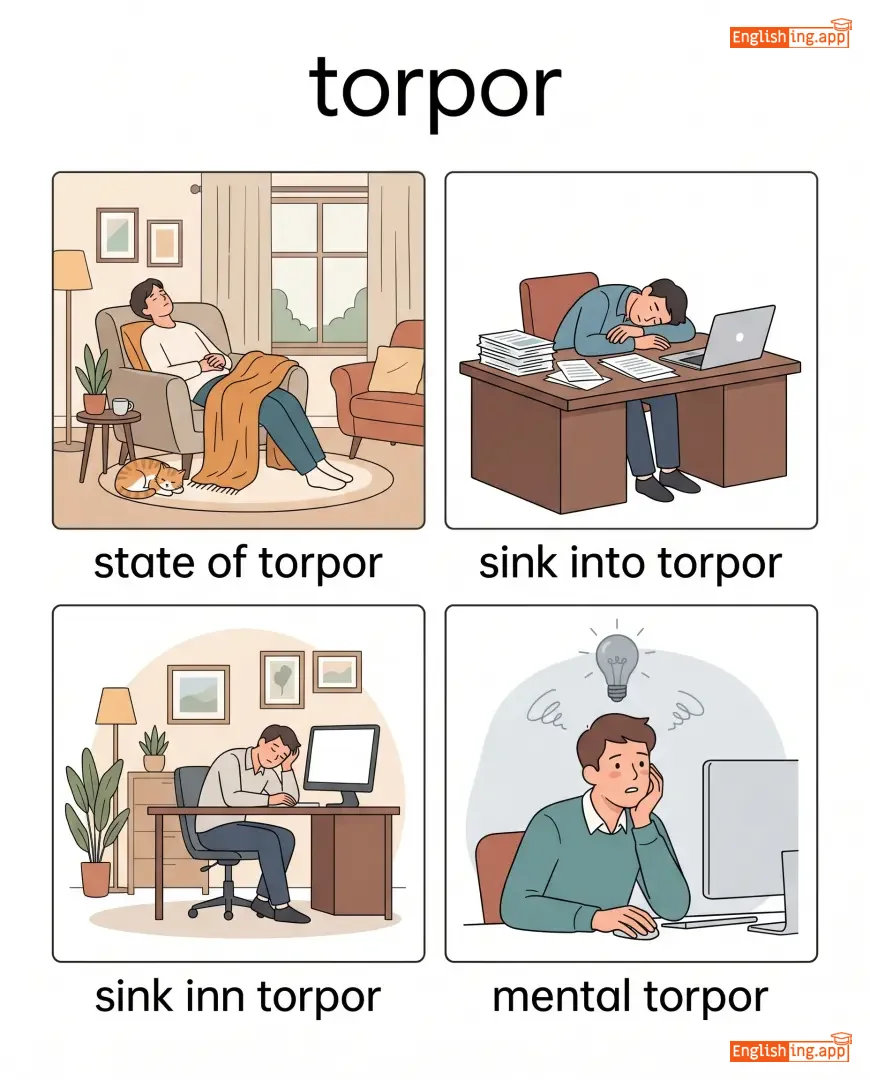
state of torpor, sink into torpor, mental torpor, torpor induced
••••••
|
Torpor - トルポー - エネルギーがない状態で、けだるさ。
••••••
|
|
#316
🌀
|
/ˈtɔːrtʃuəs/
adjective
(トーチュアス)
••••••
|
- •••••• |
曲がりくねった, 複雑
magarikunetta, fukuzatsu
••••••
|
- •••••• | - •••••• | - •••••• | - •••••• |
Full of twists and turns; excessively complex or complicated.
••••••
|
The tortuous mountain road made driving very difficult. |
曲がりくねった山道が運転を非常に難しくした。
Magarikunetta yamamichi ga unten o hijō ni muzukashiku shita.
••••••
|
- •••••• | - •••••• | - •••••• |
winding, twisting, convoluted, complex, meandering
••••••
|
straight, direct, simple
••••••
|
tortuous path, tortuous route, tortuous reasoning, tortuous journey
••••••
|
Tortuous は曲がりくねった道 – 複雑な道
••••••
|
|
#317
🙂
|
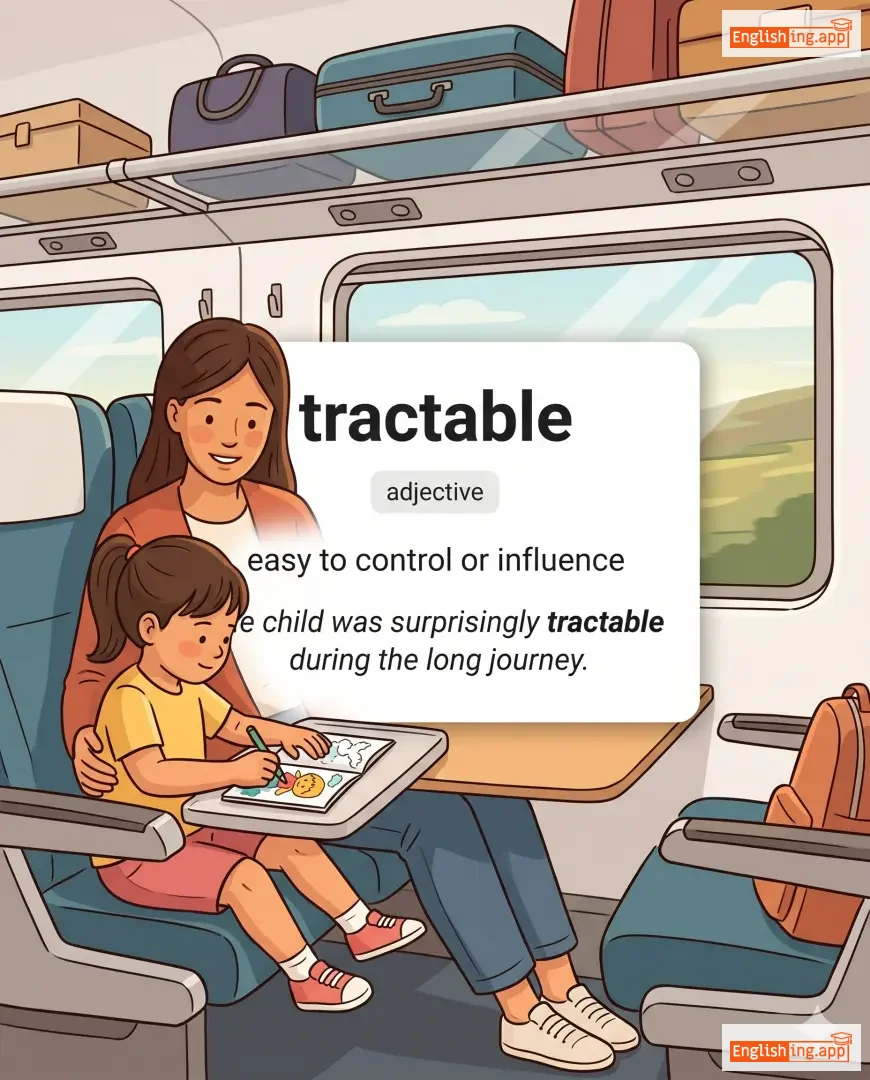
/ˈtræktəbəl/
adjective
(トラクトブル)
••••••
|
|
制御可能または影響を与えることができる
seigyo kanou mata wa eikyou wo ataeru koto ga dekiru
••••••
|
- •••••• | - •••••• | - •••••• | - •••••• |
easy to control or influence
••••••
|
The child was surprisingly tractable during the long journey.
その子供は長い旅の間、驚くほどトラクトブルだった。
••••••
|
その子供は長い旅の間、驚くほど制御可能だった。
Sono kodomo wa nagai tabi no aida, odoroku hodo seigyo kanou datta.
••••••
|
- •••••• | - •••••• | - •••••• |
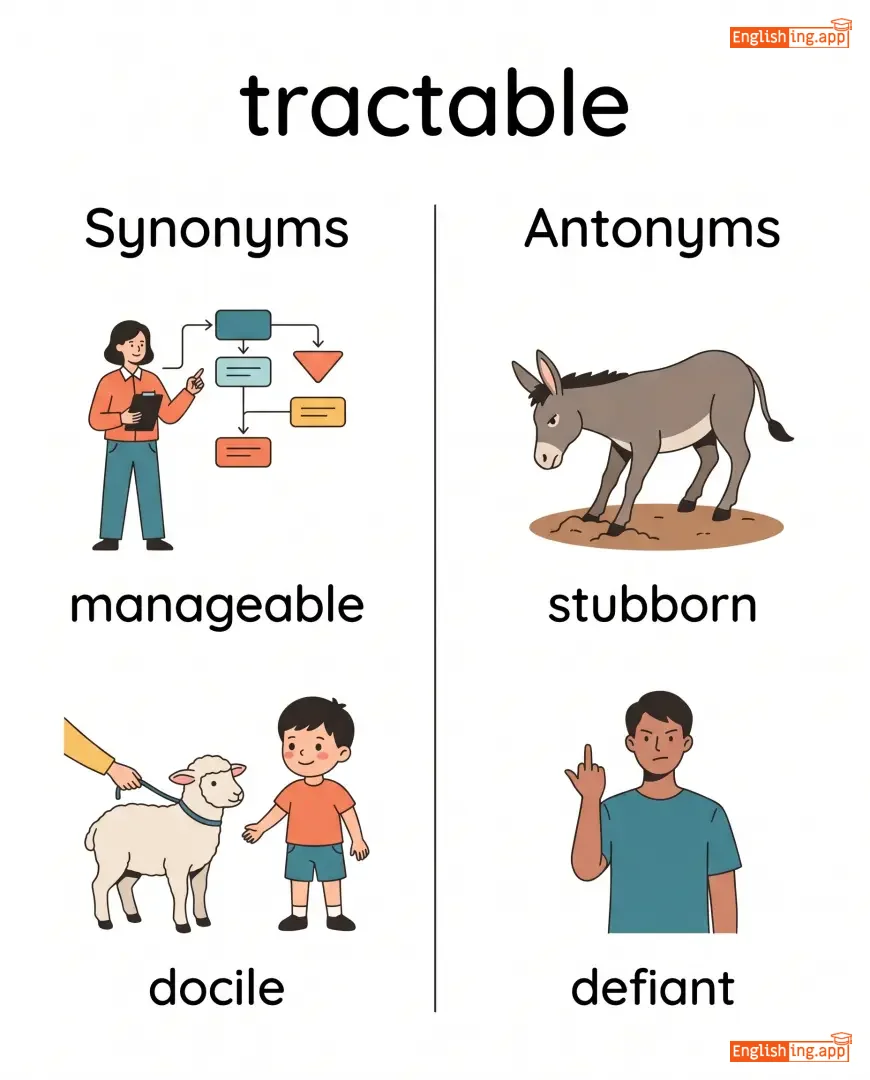
manageable, docile, obedient, compliant
••••••
|
stubborn, defiant, unmanageable
••••••
|
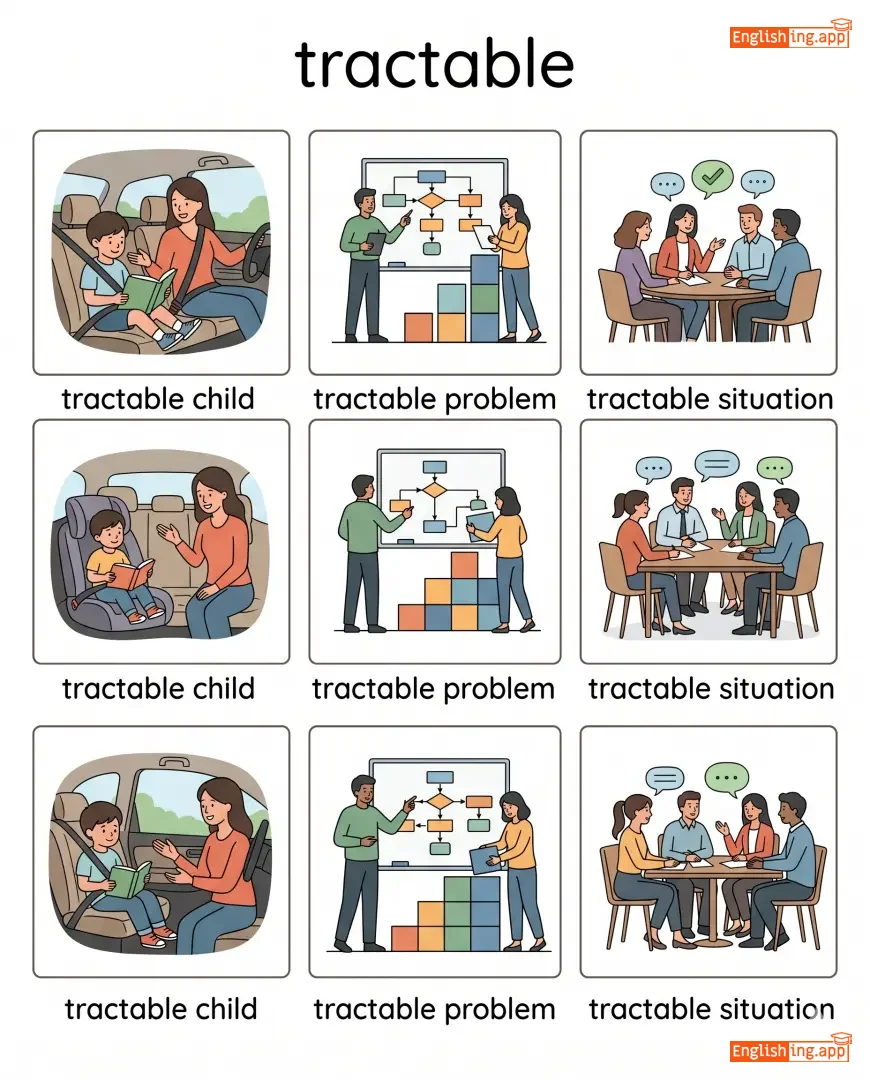
tractable child, tractable problem, tractable situation
••••••
|
Tractable は、長い旅行の間に簡単に制御できる子供のようです。
••••••
|
|
#318
⚖️
|
/trænsˈɡrɛʃən/
noun
(トランスグレッション)
••••••
|
|
違反, 罪
ihan, tsumi
••••••
|
- •••••• | - •••••• | - •••••• | - •••••• |
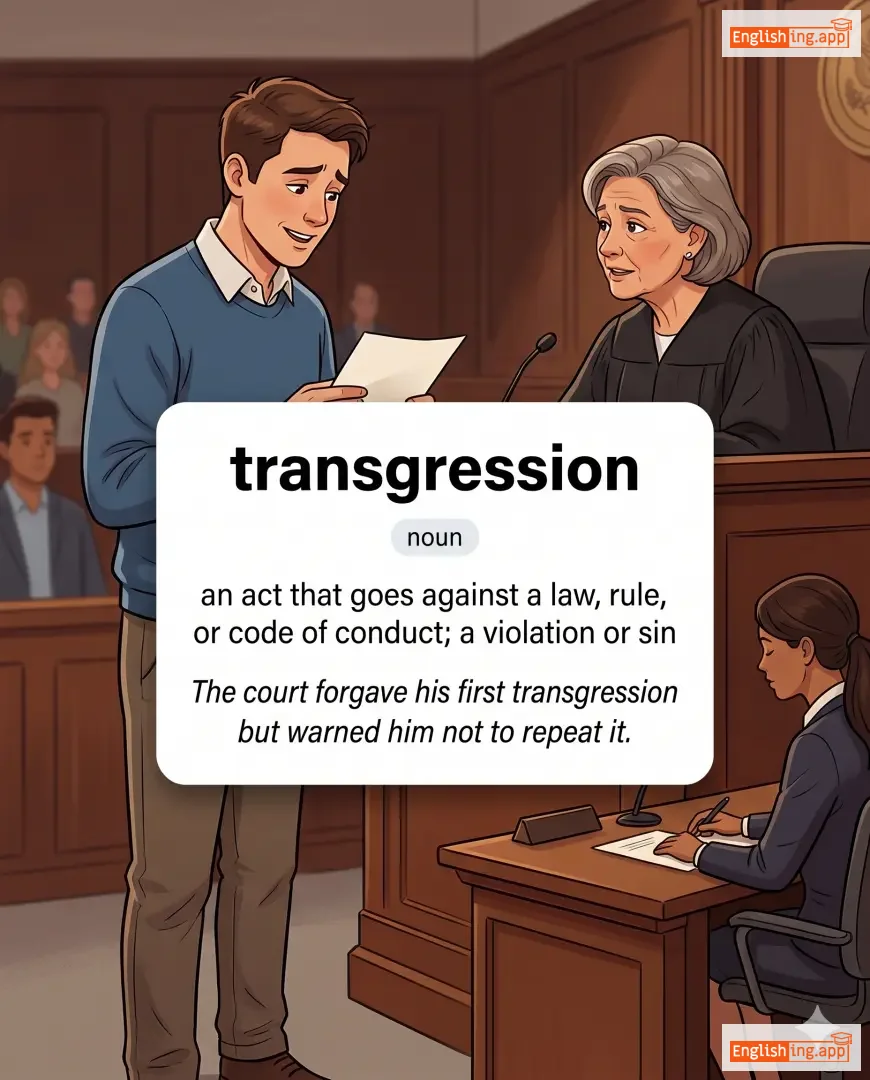
an act that goes against a law, rule, or code of conduct; a violation or sin
••••••
|
The court forgave his first transgression but warned him not to repeat it. |
裁判所は彼の最初の違反を許しましたが、再発を警告しました。
Saibansho wa kare no saisho no ihan o yurushimashita ga, sai hātsu o keikoku shimashita.
••••••
|
- •••••• | - •••••• | - •••••• |
offense, violation, sin, crime, wrongdoing
••••••
|
obedience, compliance
••••••
|
serious transgression, moral transgression, transgression of rules, forgive transgression
••••••
|
Transgressionとは、規則を破ることで、グレース(grace)を失うようなものです。
••••••
|
|
#319
😡
|
/ˈtrʌk.jʊ.ləns/
noun
(トラキュレンス)
••••••
|
|
好戦的
kousenteki
••••••
|
- •••••• | - •••••• | - •••••• | - •••••• |
Aggressiveness or eagerness to fight.
••••••
|
His speech was full of truculence and threats. |
彼の演説は好戦的で脅しに満ちていた。
Kare no enzetsu wa kousenteki de odoshi ni michite ita.
••••••
|
- •••••• | - •••••• | - •••••• |
hostility, aggression, belligerence, combativeness
••••••
|
gentleness, peace, friendliness
••••••
|
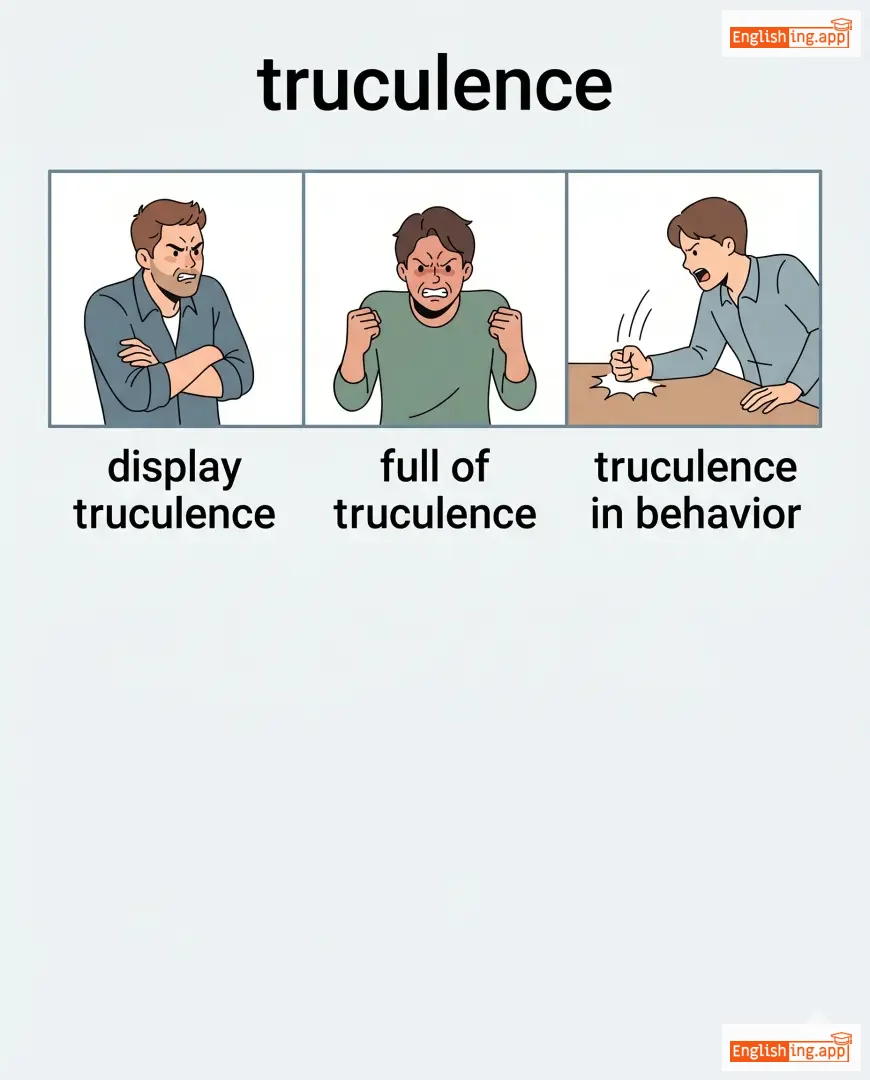
display truculence, full of truculence, truculence in behavior
••••••
|
Truculenceは好戦的という意味—トラックのクラクションが鳴ると、みんな怒ることを覚えておいて。
••••••
|
|
#320
⚖️
|
/ˈvæsɪleɪt/
verb
(ハピネス)
••••••
|
|
幸せ
shiawase
••••••
|
vacillated
••••••
|
vacillated
••••••
|
vacillates
••••••
|
vacillating
••••••
|
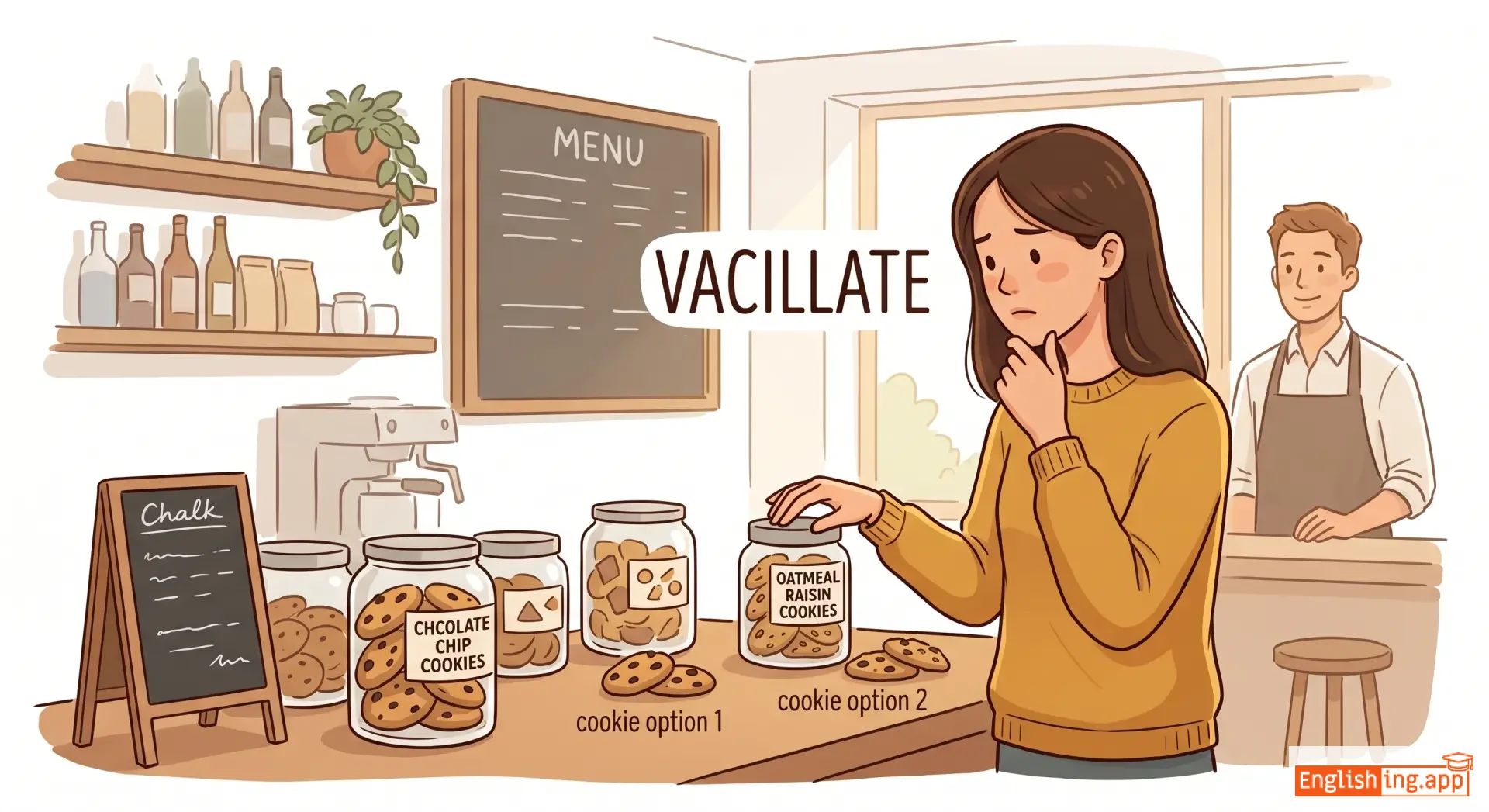
to waver between different opinions or actions; be indecisive
••••••
|
He vacillated between studying law and becoming a writer.
彼女は賞を受け取ったとき、自分の幸せを隠すことができませんでした。
••••••
|
彼女は賞を受け取ったとき、自分の幸せを隠すことができませんでした。
Kanojo wa shō o uketotta toki, jibun no shiawase o kakusu koto ga dekimasen deshita.
••••••
|
vacillate between
幸せを追求する
••••••
|
to keep changing your mind between two choices
••••••
|
幸せを追求する
shiawase o tsuikyū suru
••••••
|
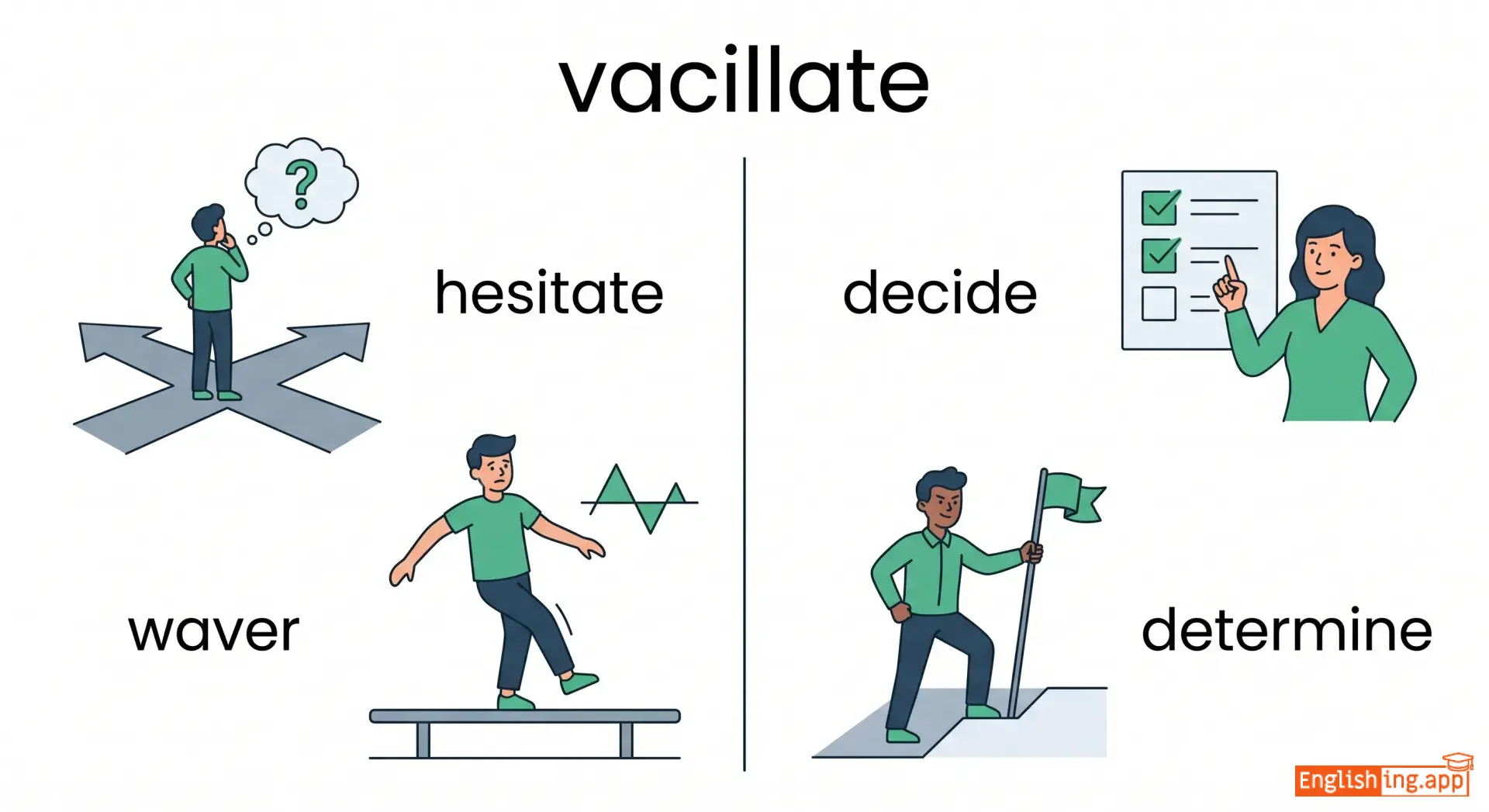
hesitate, waver, dither, fluctuate
••••••
|
decide, determine, resolve
••••••
|
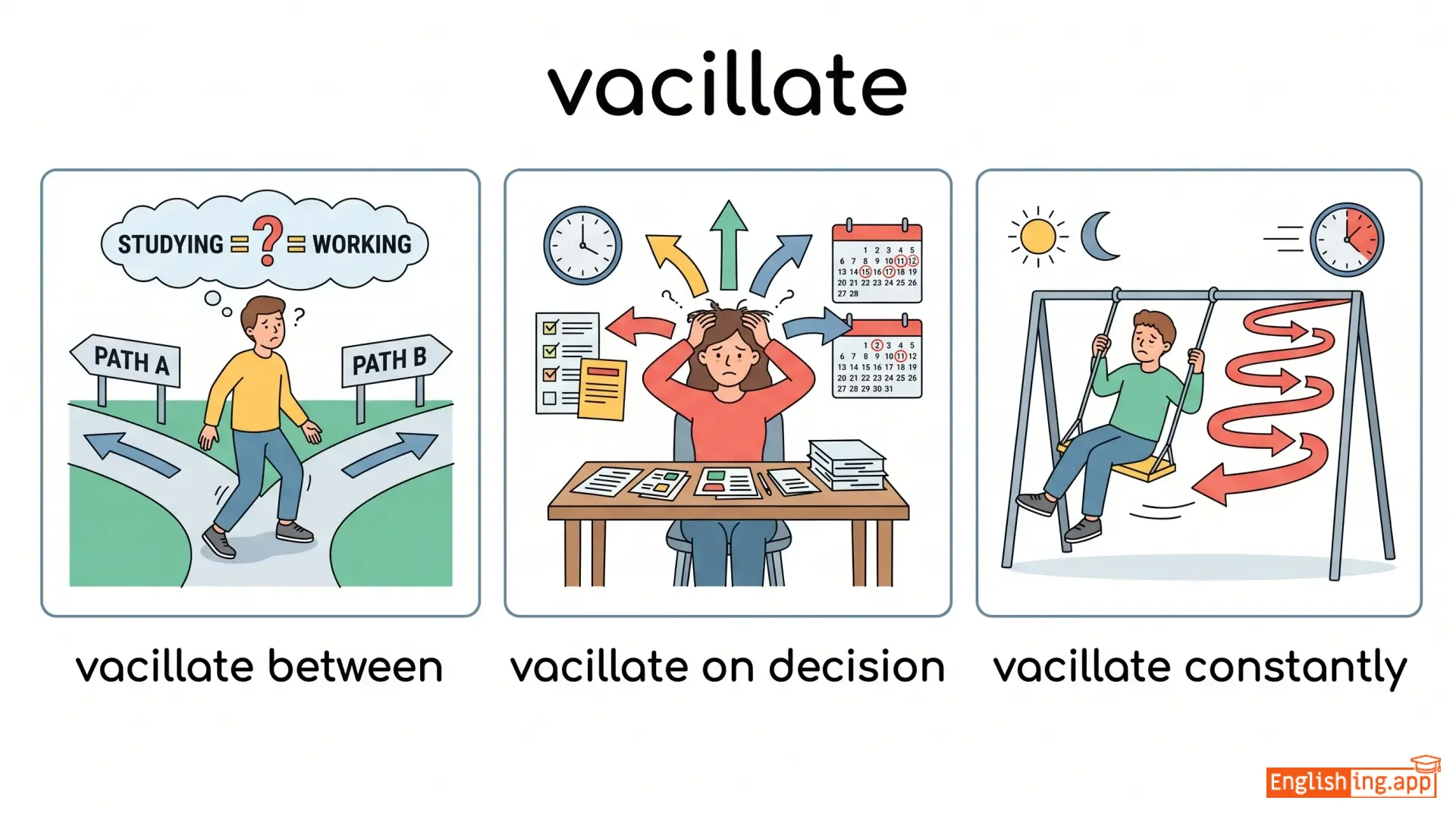
vacillate between, vacillate on decision, vacillate constantly
••••••
|
幸せは追い求めるもの、忘れずに追いかけましょう!
••••••
|
|
#321
🙏
|
/ˈvɛnəˌreɪt/
verb
(ベネレート)
••••••
|
|
敬う
uyamau
••••••
|
venerated
ベネレイテッド
••••••
|
venerated
ベネレイテッド
••••••
|
venerates
ベネレイツ
••••••
|
venerating
ベネレイティング
••••••
|
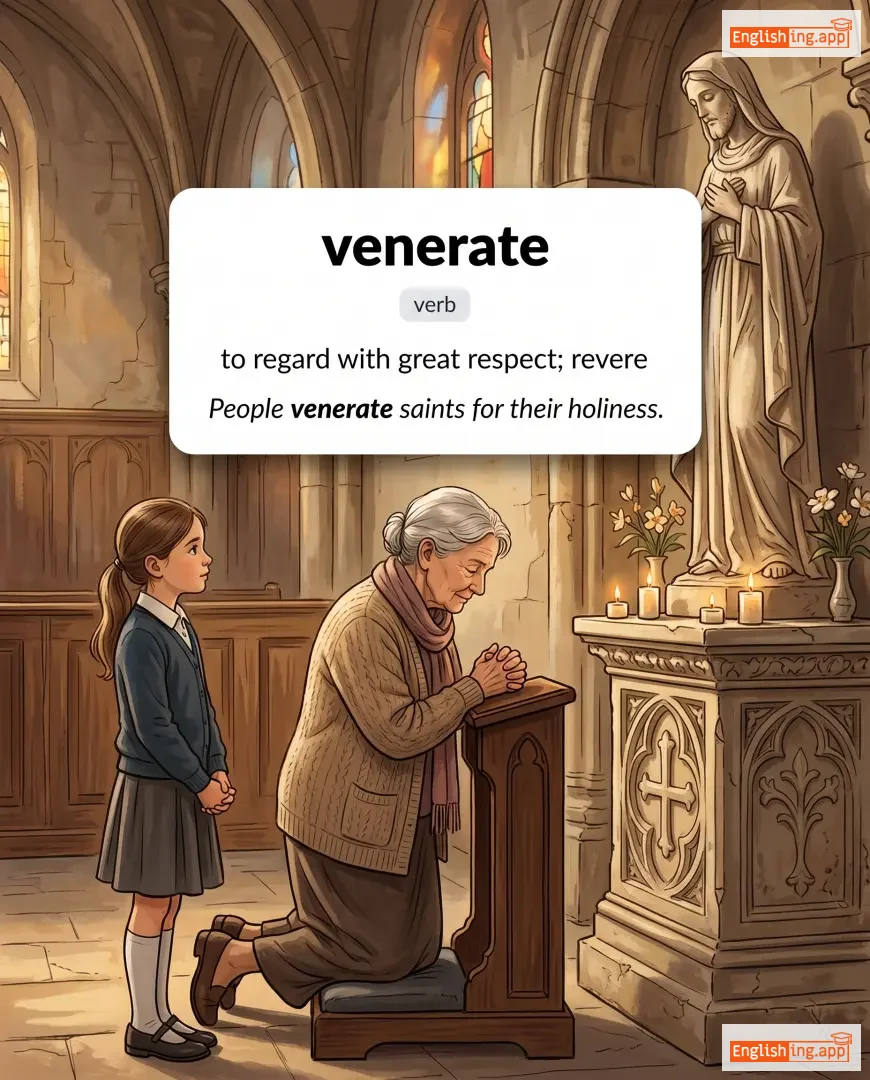
to regard with great respect; revere
••••••
|
People venerate saints for their holiness.
人々はその聖性のために聖人を敬う。
••••••
|
人々はその聖性のために聖人を敬う。
Hitobito wa sono seisei no tame ni seijin o uyamau.
••••••
|
to venerate the ground someone walks on
誰かが歩く地面を敬う
••••••
|
to admire or respect someone deeply
••••••
|
誰かが歩く地面を敬う
Dareka ga aruku jimen o uyamau
••••••
|
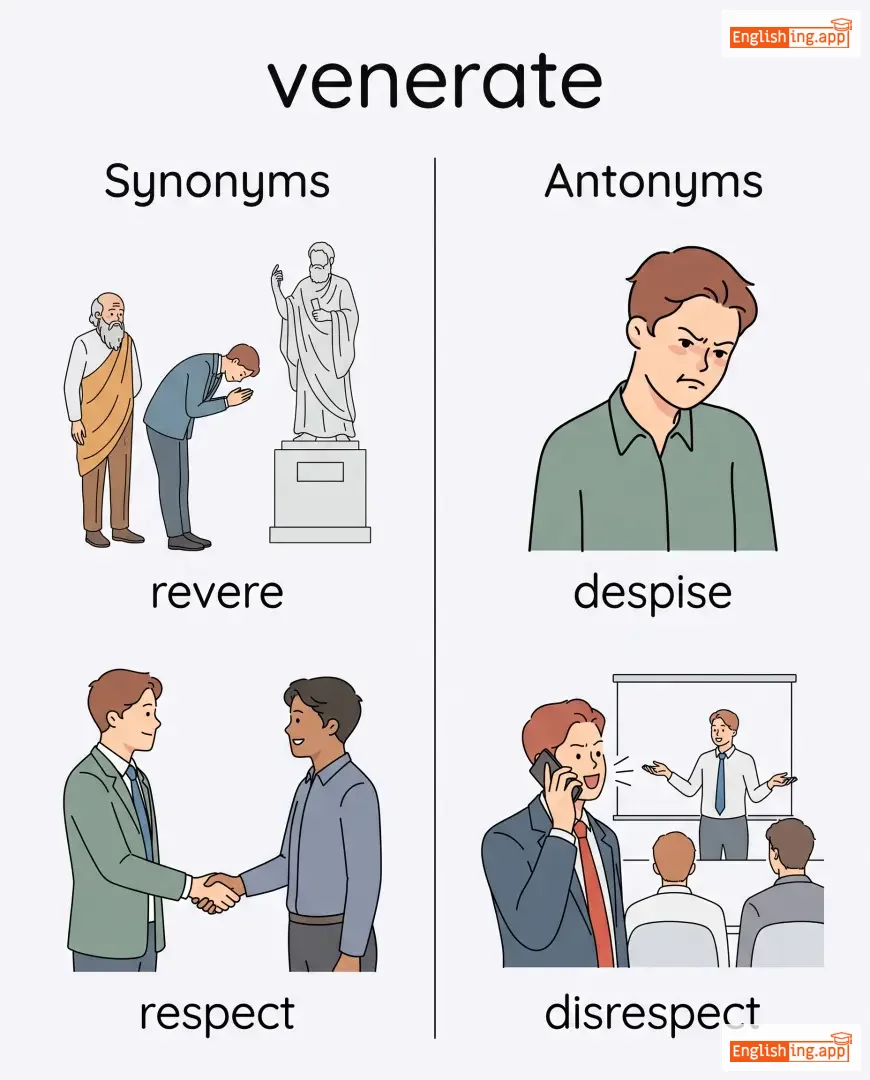
revere, respect, honor, admire, esteem
••••••
|
despise, disrespect, dishonor
••••••
|
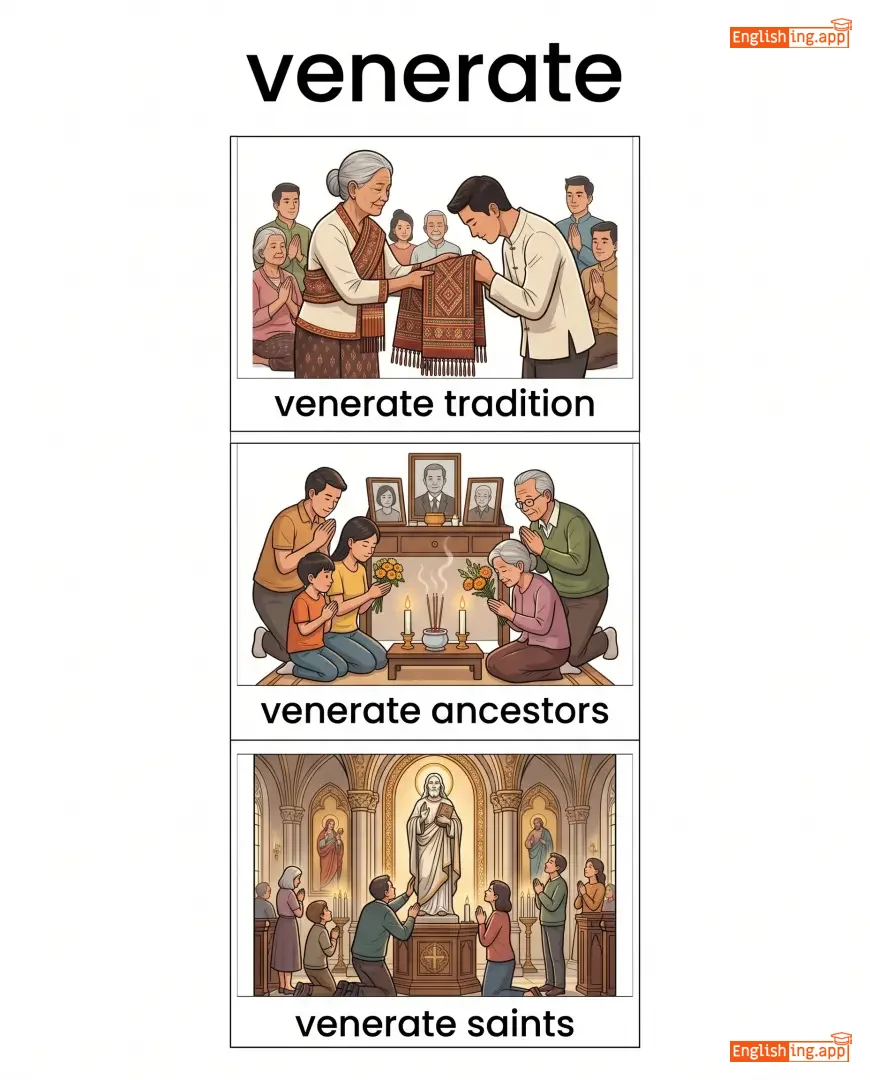
venerate tradition, venerate ancestors, venerate saints, venerate the memory
••••••
|
ベネレート:歩く地面に敬意を払うように。
••••••
|
|
#322
🗣️
|
/vəˈreɪʃəs/
adjective
(ヴェレイシャス)
••••••
|
|
誠実な
seijitsuna
••••••
|
- •••••• | - •••••• | - •••••• | - •••••• |
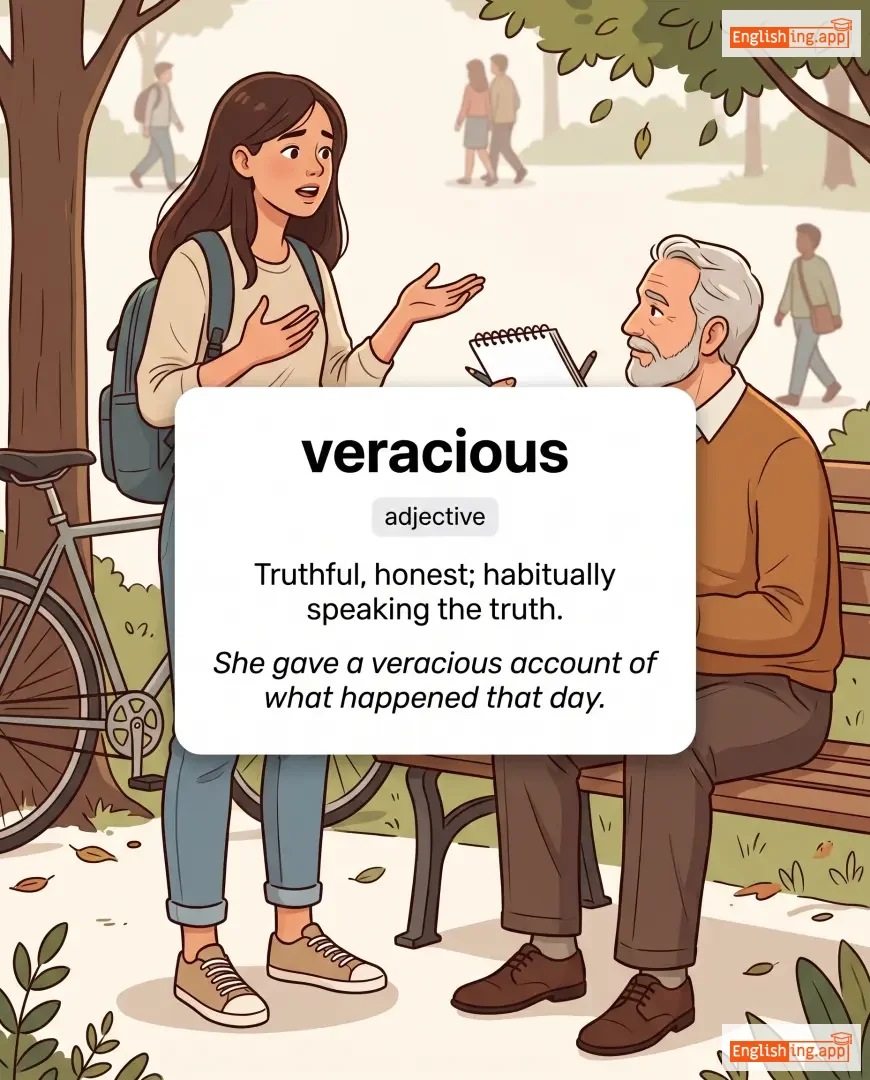
Truthful, honest; habitually speaking the truth.
••••••
|
She gave a veracious account of what happened that day. |
彼女はその日の出来事について誠実な説明をしました。
Kanojo wa sono hi no dekigoto ni tsuite seijitsuna setsumei o shimashita.
••••••
|
- •••••• | - •••••• | - •••••• |
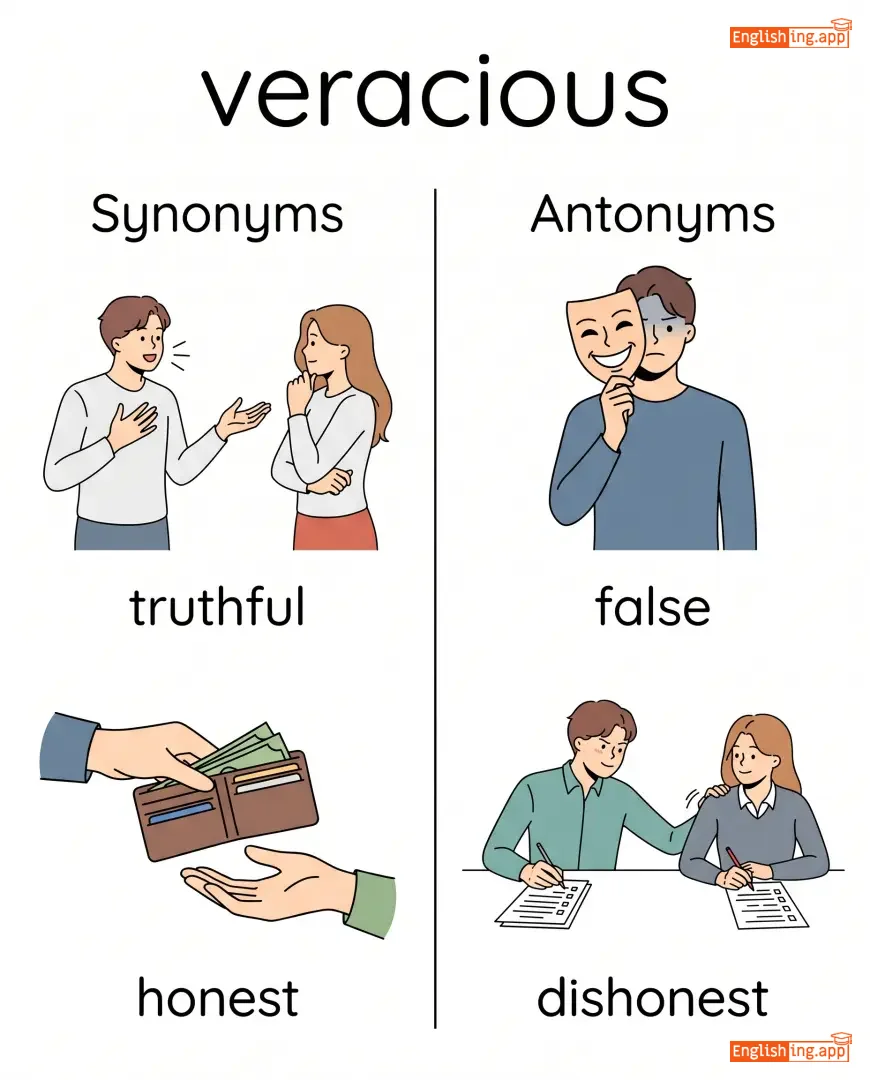
truthful, honest, accurate, genuine, sincere
••••••
|
false, dishonest, lying
••••••
|
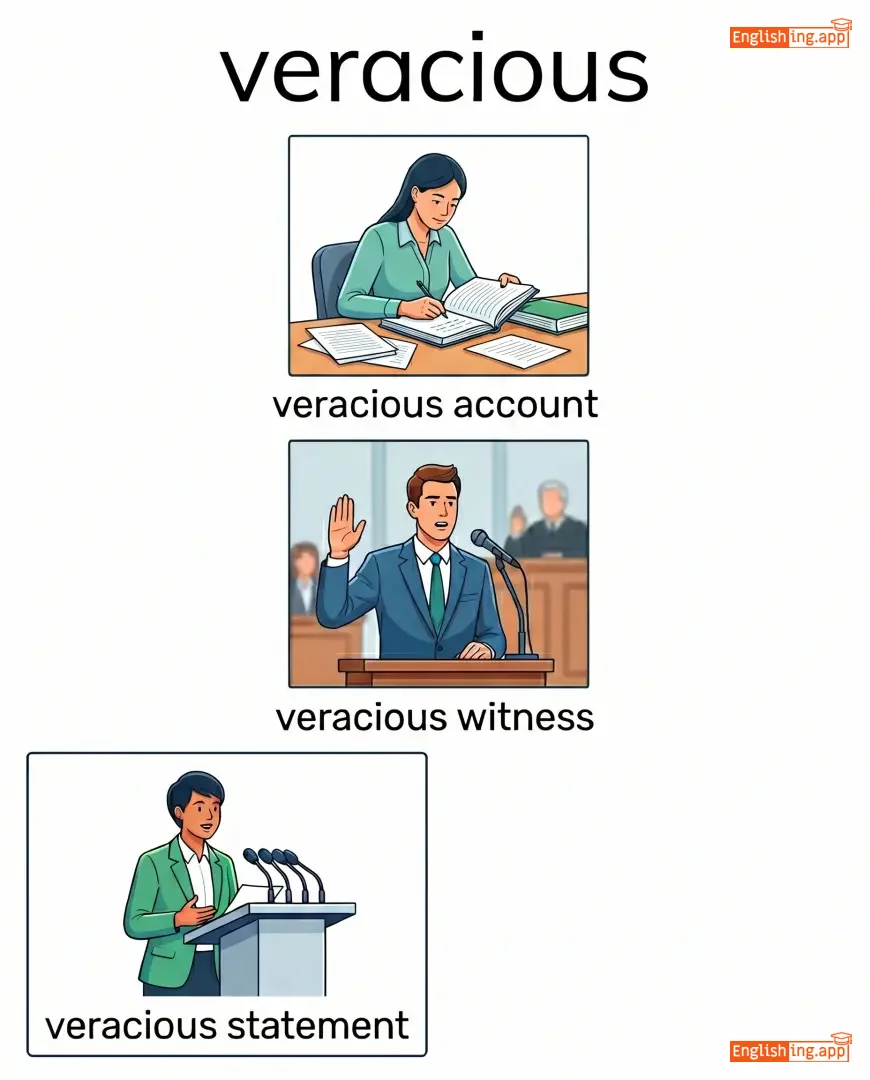
veracious account, veracious witness, veracious statement
••••••
|
誠実なは '正直' と関連し、常に真実を語ることを意味します。
••••••
|
|
#323
🗣️
|
/vɜːrˈboʊs/
adjective
(バーボス)
••••••
|
|
冗長
jōchō
••••••
|
- •••••• | - •••••• | - •••••• | - •••••• |
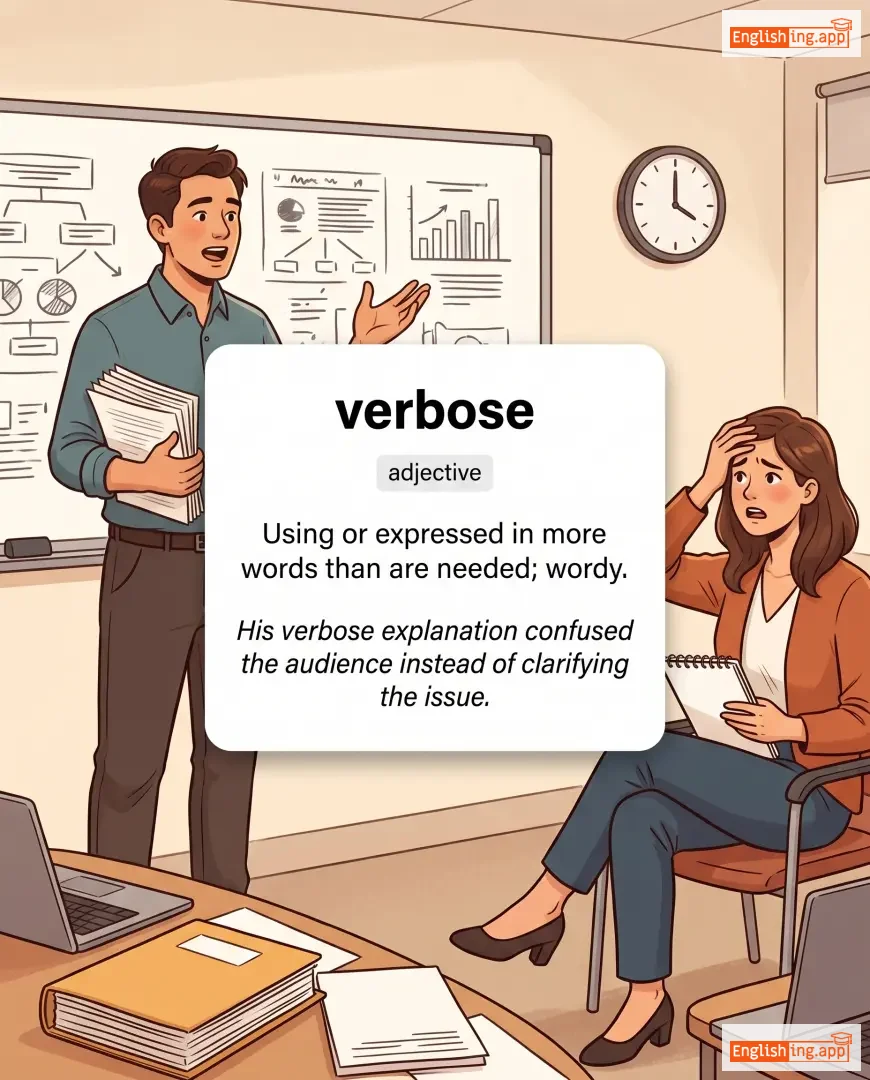
Using or expressed in more words than are needed; wordy.
••••••
|
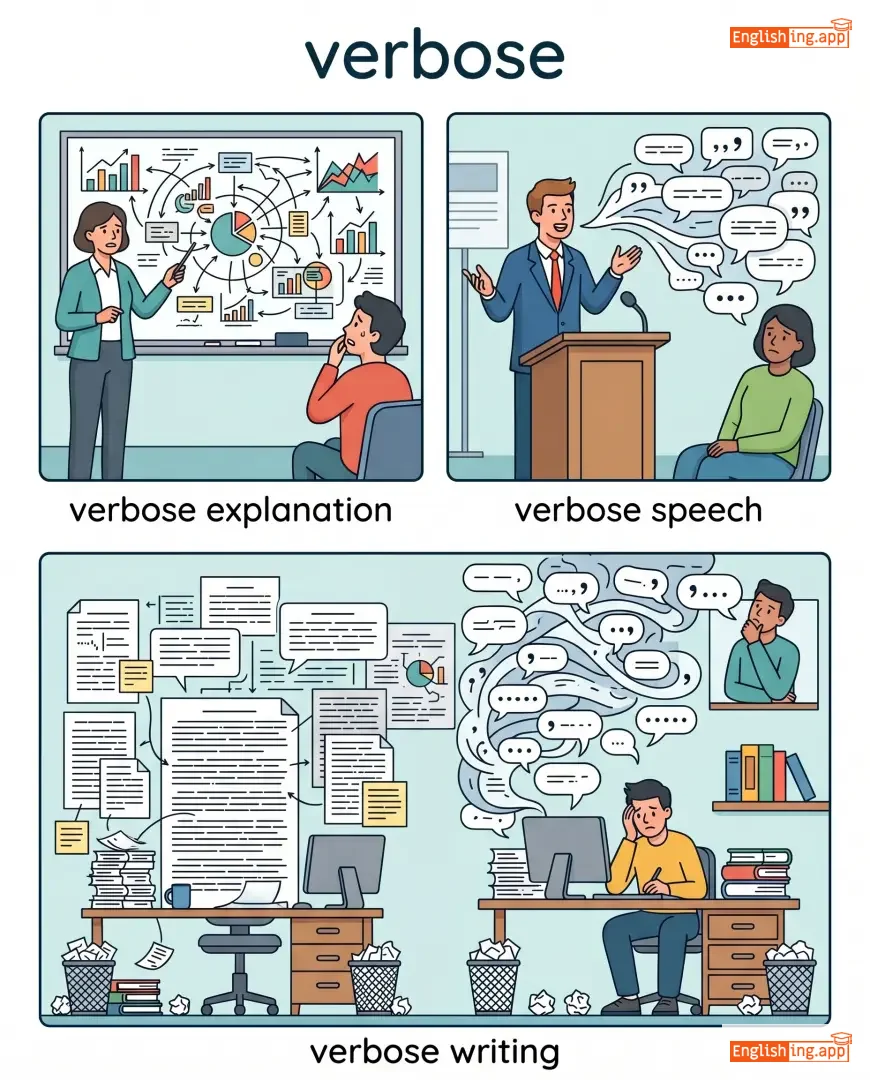
His verbose explanation confused the audience instead of clarifying the issue. |
彼の冗長な説明は、問題を明確にするどころか、聴衆を混乱させました。
Kare no jōchō na setsumei wa, mondai o meikaku ni suru dokoro ka, chōshū o konran sasemashita.
••••••
|
- •••••• | - •••••• | - •••••• |
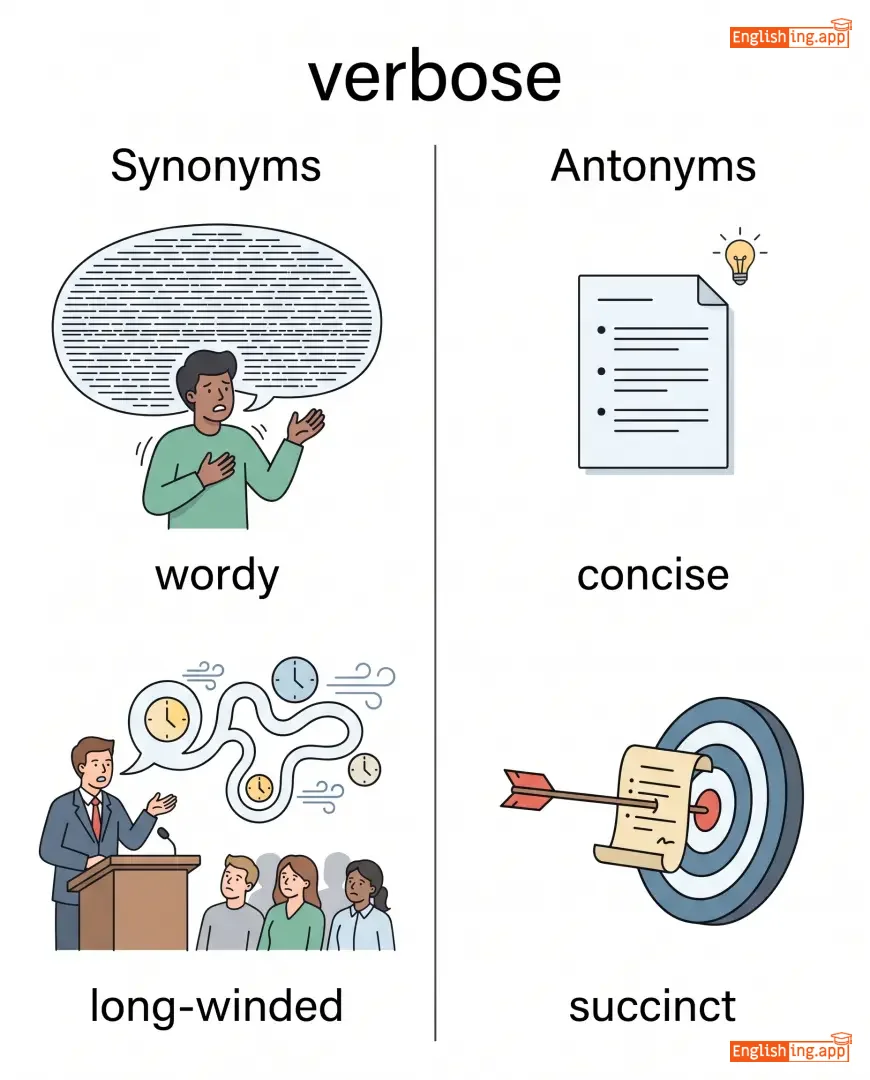
wordy, long-winded, prolix, talkative, rambling
••••••
|
concise, succinct, brief
••••••
|
verbose explanation, verbose speech, verbose writing, verbose description
••••••
|
冗長 (jōchō) + 言葉 (kotoba) = 言葉が多い
••••••
|
|
#324
🌱
|
/ˈvaɪəbl̩/
adjective
(vaiburu)
••••••
|
|
実行可能な
jikkō kanō na
••••••
|
- •••••• | - •••••• | - •••••• | - •••••• |
capable of working successfully or able to survive
••••••
|
They need a viable business plan to attract investors.
投資家を引き付けるために実行可能なビジネスプランが必要です。
••••••
|
投資家を引き付けるために実行可能なビジネスプランが必要です。
Tōshika o hikitsukeru tame ni jikkō kanō na bijinesu puran ga hitsuyō desu.
••••••
|
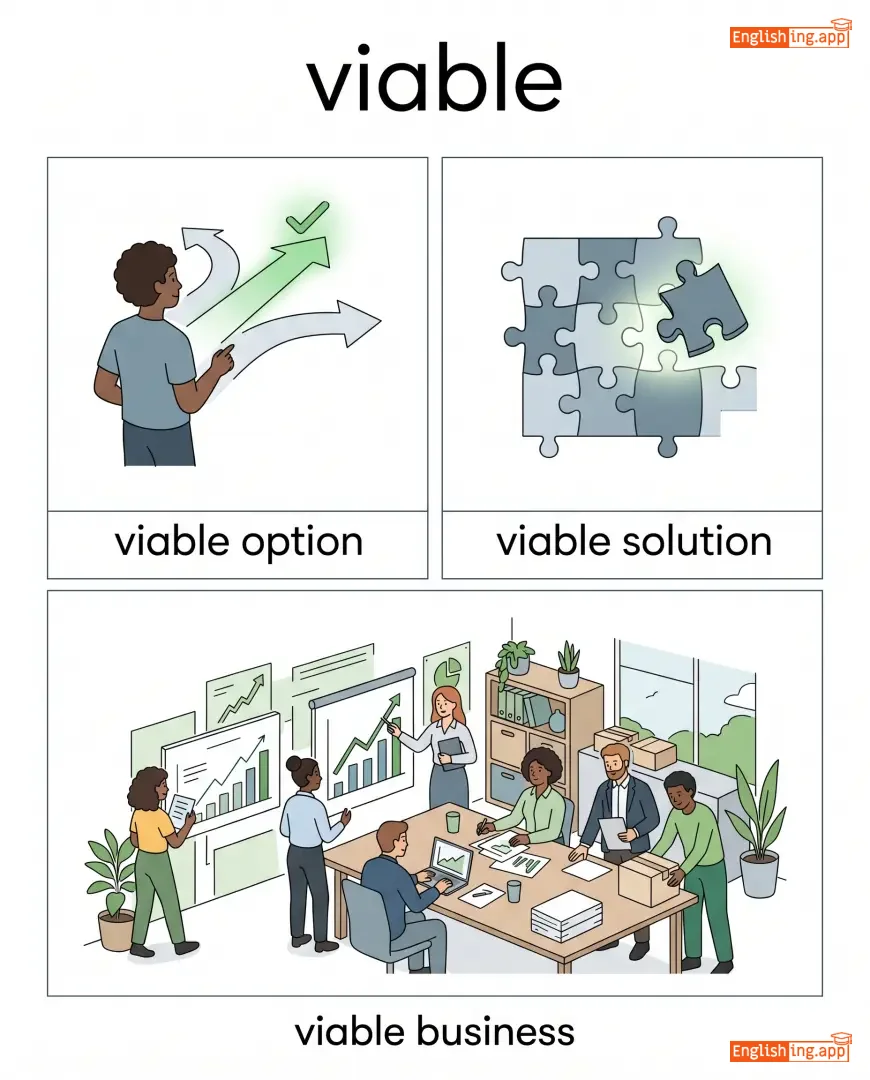
viable option
実行可能な選択肢
••••••
|
a choice that is practical and can work successfully
••••••
|
実行可能な選択肢
jikkō kanō na sentakushi
••••••
|
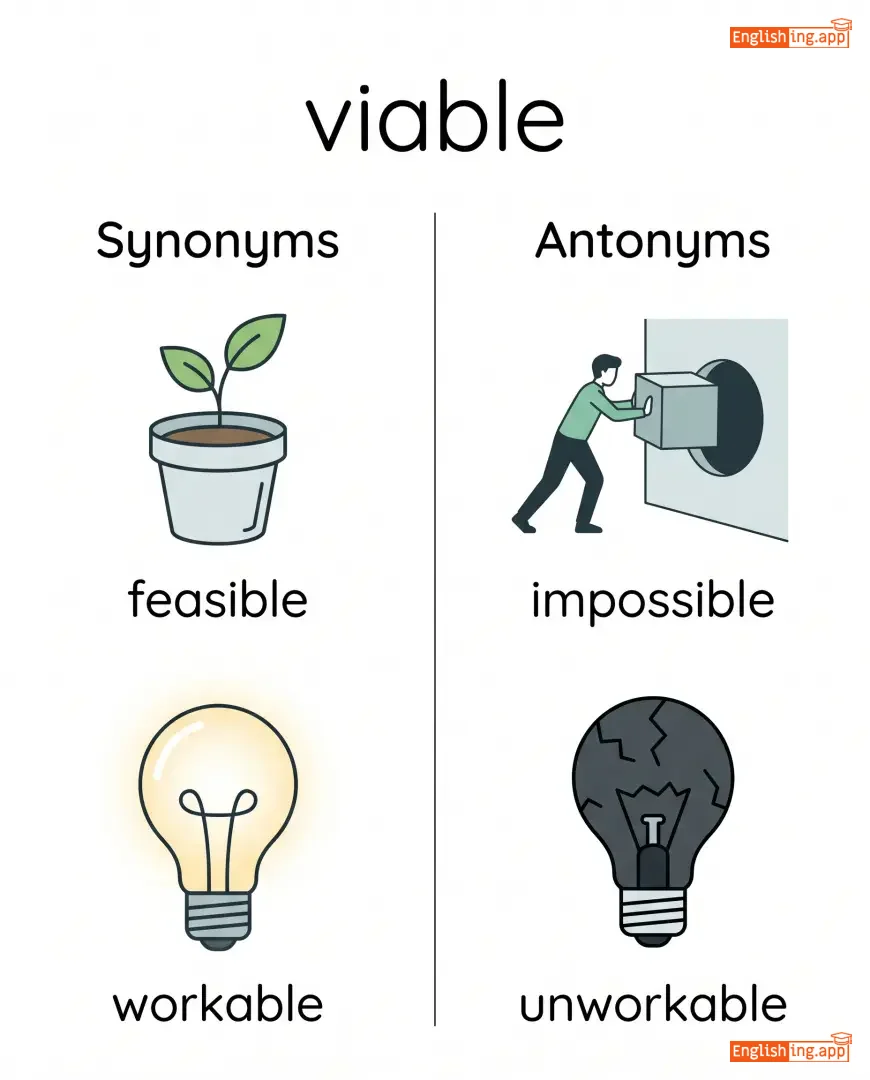
feasible, workable, practical, possible, sustainable
••••••
|
impossible, unworkable, impractical
••••••
|
viable option, viable solution, viable business, economically viable
••••••
|
実行可能なものは、条件が整えば成功する 🌱
••••••
|
|
#325
🍯
|
/ˈvɪskəs/
adjective
(ビスカス)
••••••
|
|
粘性の
nensei no
••••••
|
- •••••• | - •••••• | - •••••• | - •••••• |
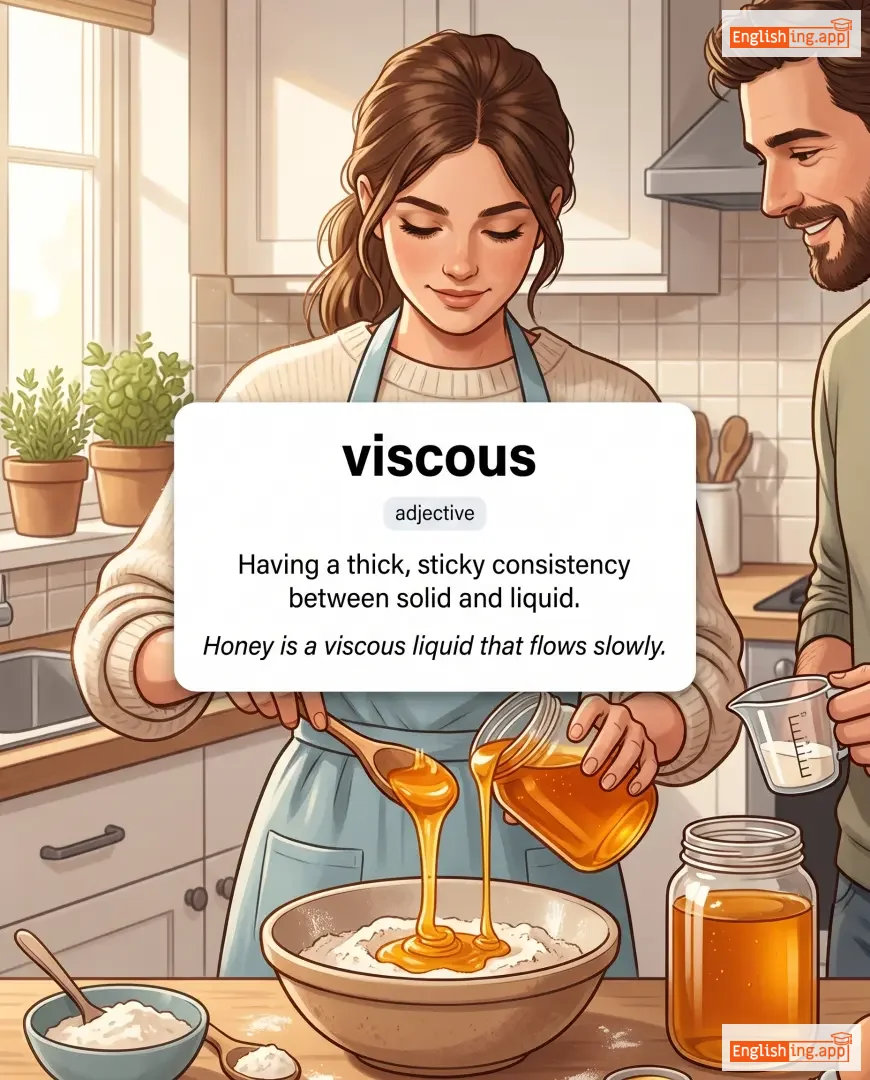
Having a thick, sticky consistency between solid and liquid.
••••••
|
Honey is a viscous liquid that flows slowly. |
蜂蜜は遅く流れる粘性の液体です。
Hachimitsu wa osoku nagareru nensei no ekitai desu.
••••••
|
- •••••• | - •••••• | - •••••• |
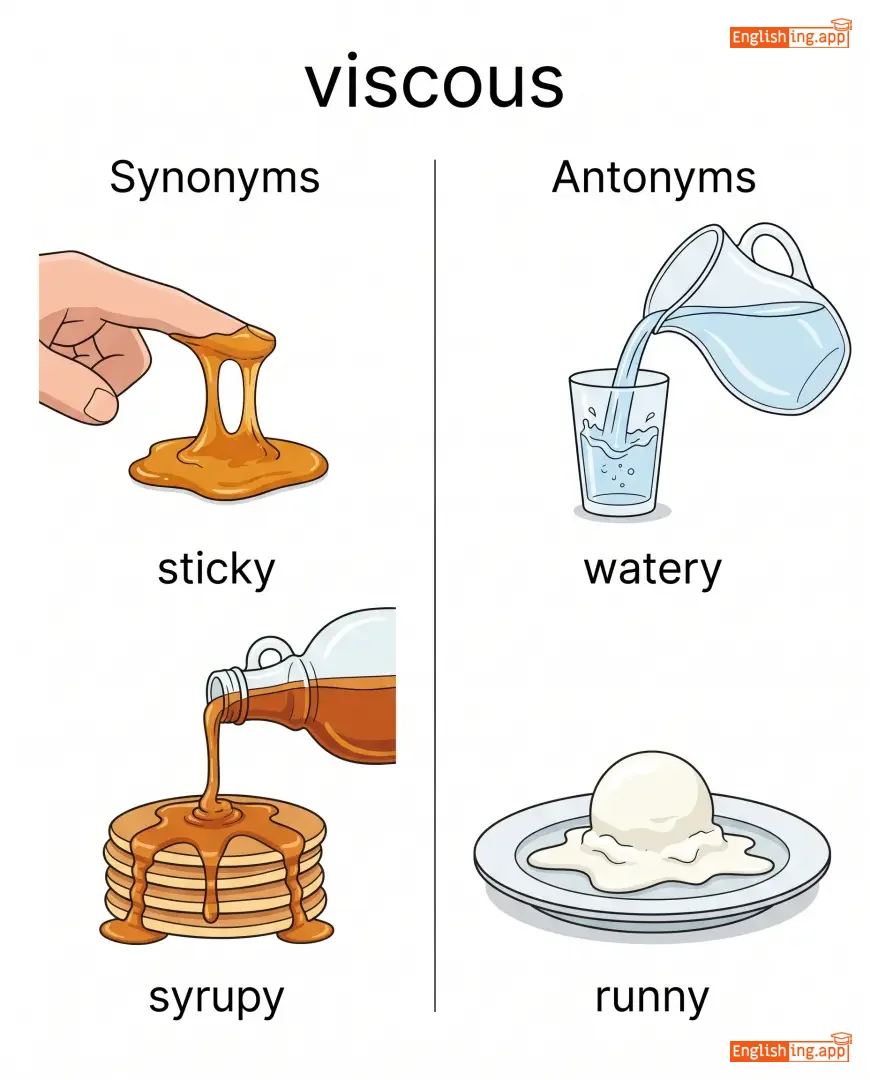
sticky, syrupy, thick, gooey
••••••
|
watery, runny, thin
••••••
|
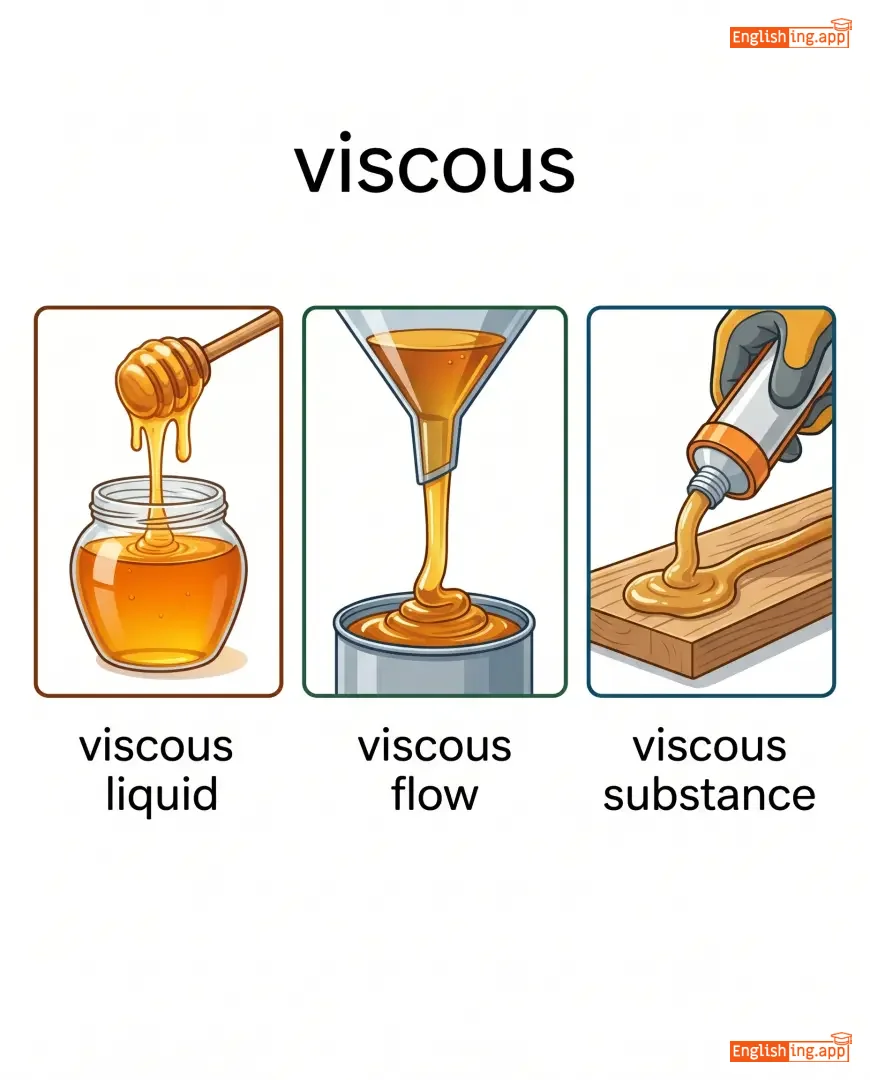
viscous liquid, viscous flow, viscous substance
••••••
|
粘性は蜂蜜のように粘着質、'粘性の蜂蜜'を覚えて。
••••••
|
|
#326
😡
|
/vɪˈtjuːpərətɪv/
adjective
(ヴィチュペラティヴ)
••••••
|
|
悪口な
warukuchi na
••••••
|
- •••••• | - •••••• | - •••••• | - •••••• |
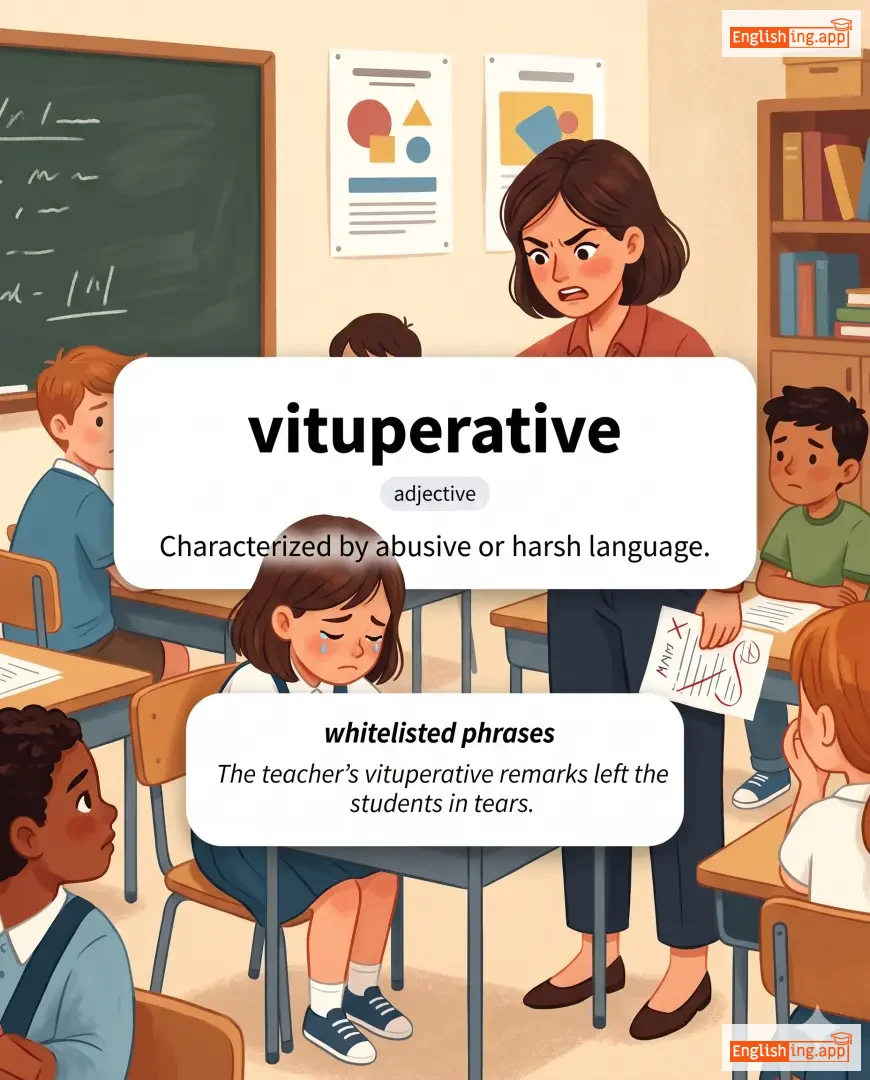
Characterized by abusive or harsh language.
••••••
|
The teacher’s vituperative remarks left the students in tears. |
教師の悪口な言葉が学生たちを涙で満たしました。
Kyōshi no warukuchi na kotoba ga gakusei-tachi o namida de mitashimashita.
••••••
|
- •••••• | - •••••• | - •••••• |
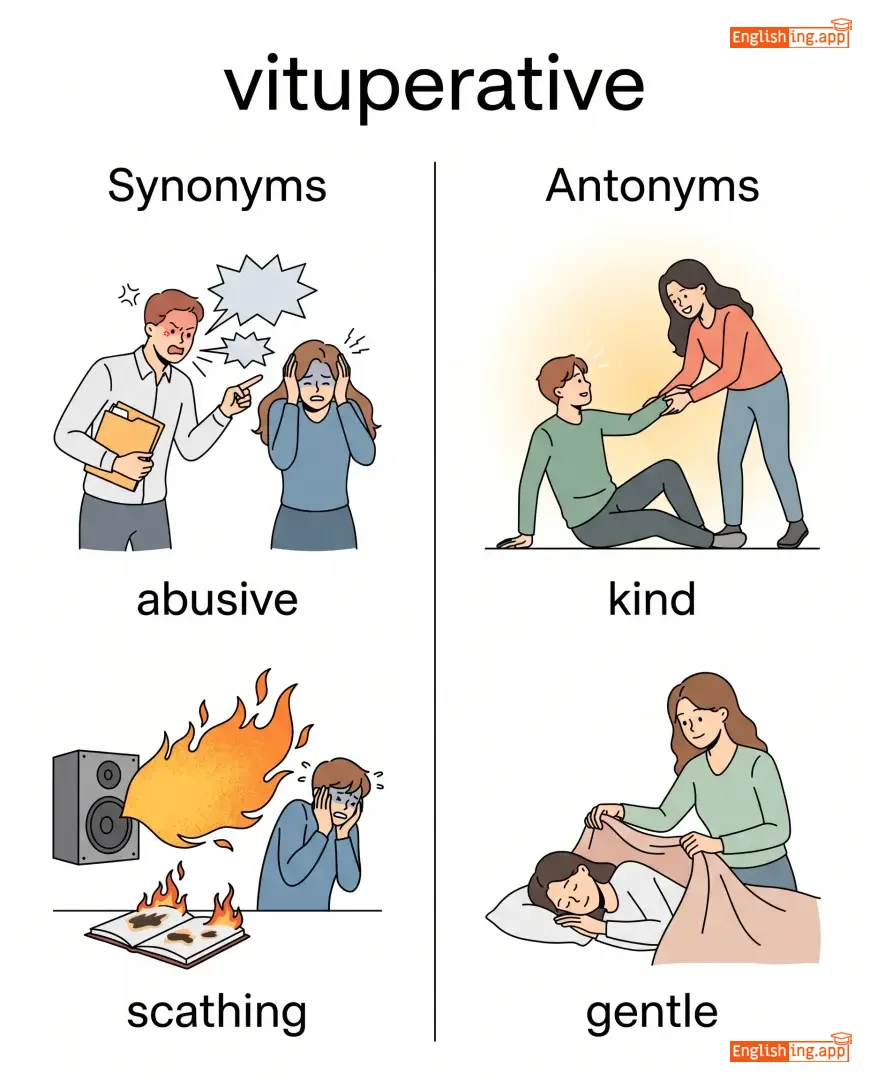
abusive, scathing, insulting, harsh
••••••
|
kind, gentle, respectful
••••••
|
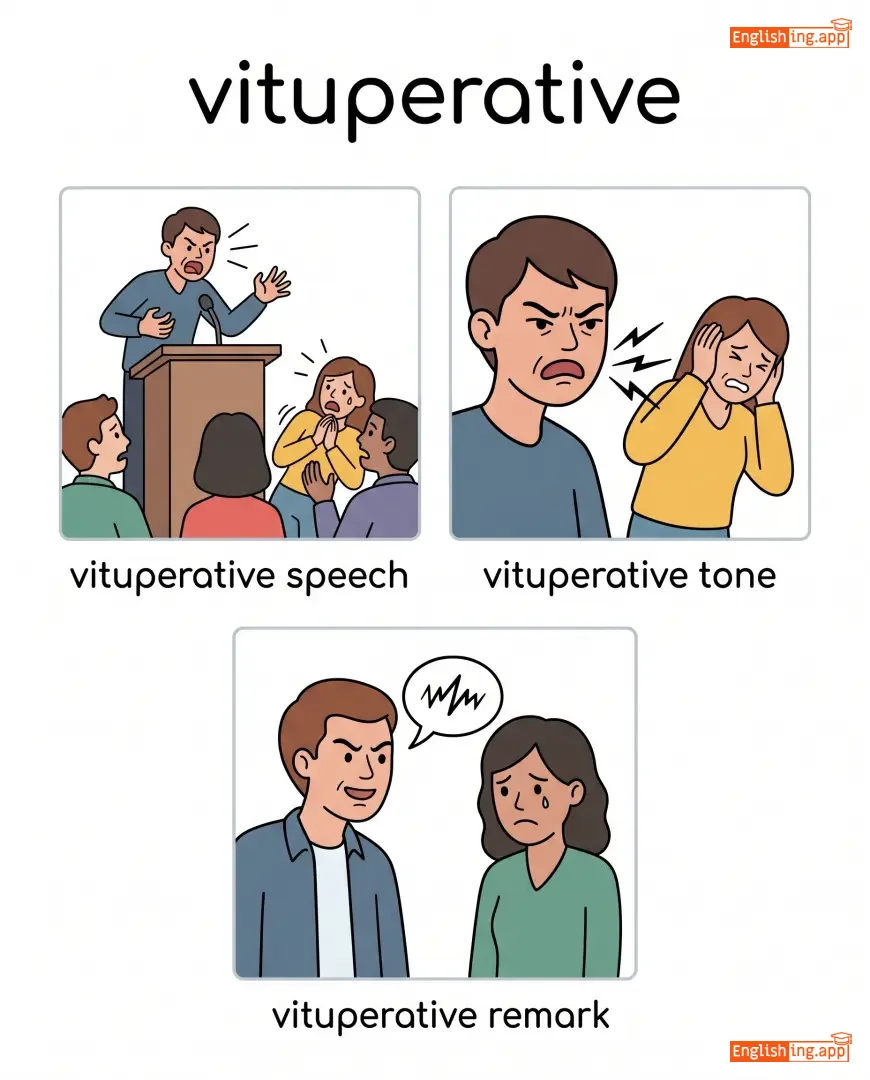
vituperative speech, vituperative tone, vituperative remark
••••••
|
Vituperative とは、まるで VIP が怒っているような侮辱的な言葉です。
••••••
|
|
#327
⚡
|
/ˈvɑːlətl/
adjective
(ヴォラタイル)
••••••
|
|
変動しやすい
hendou shiyasui
••••••
|
- •••••• | - •••••• | - •••••• | - •••••• |
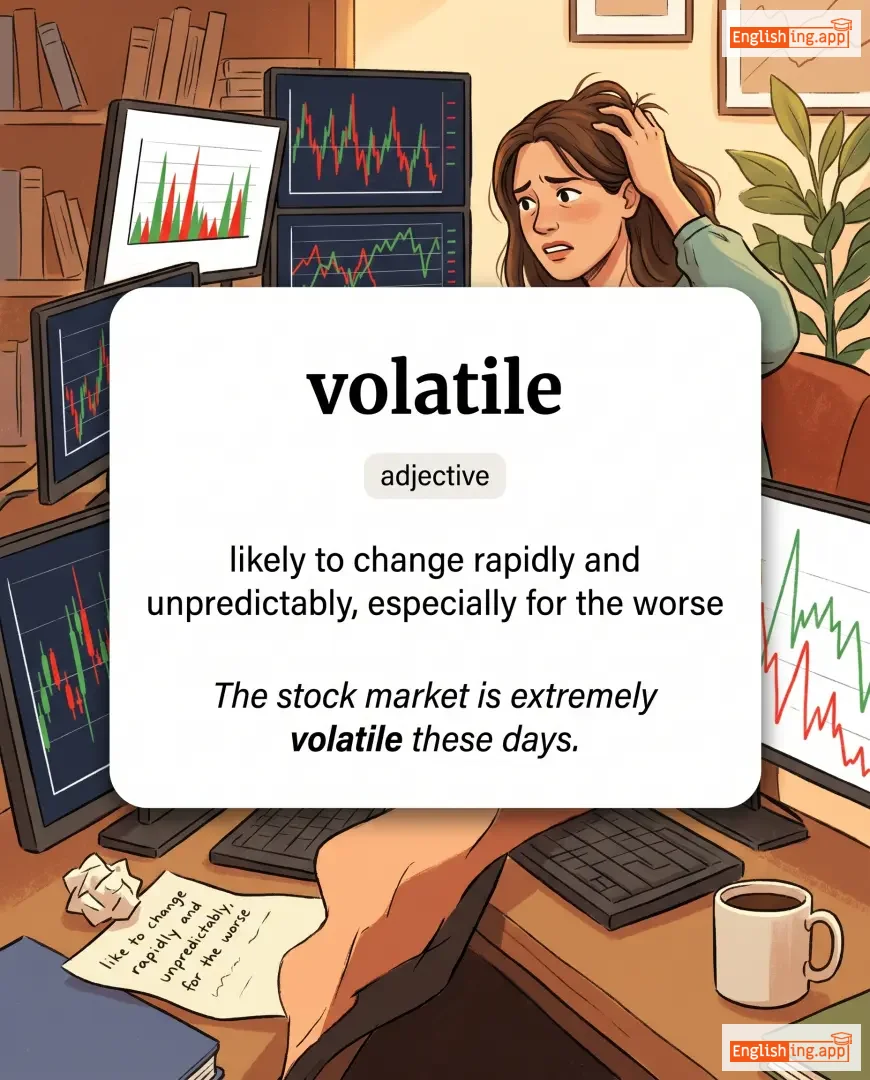
likely to change rapidly and unpredictably, especially for the worse
••••••
|
The stock market is extremely volatile these days. |
株式市場は最近非常に変動しやすいです。
Kabushiki shijō wa saikin hijō ni hendō shiyasui desu.
••••••
|
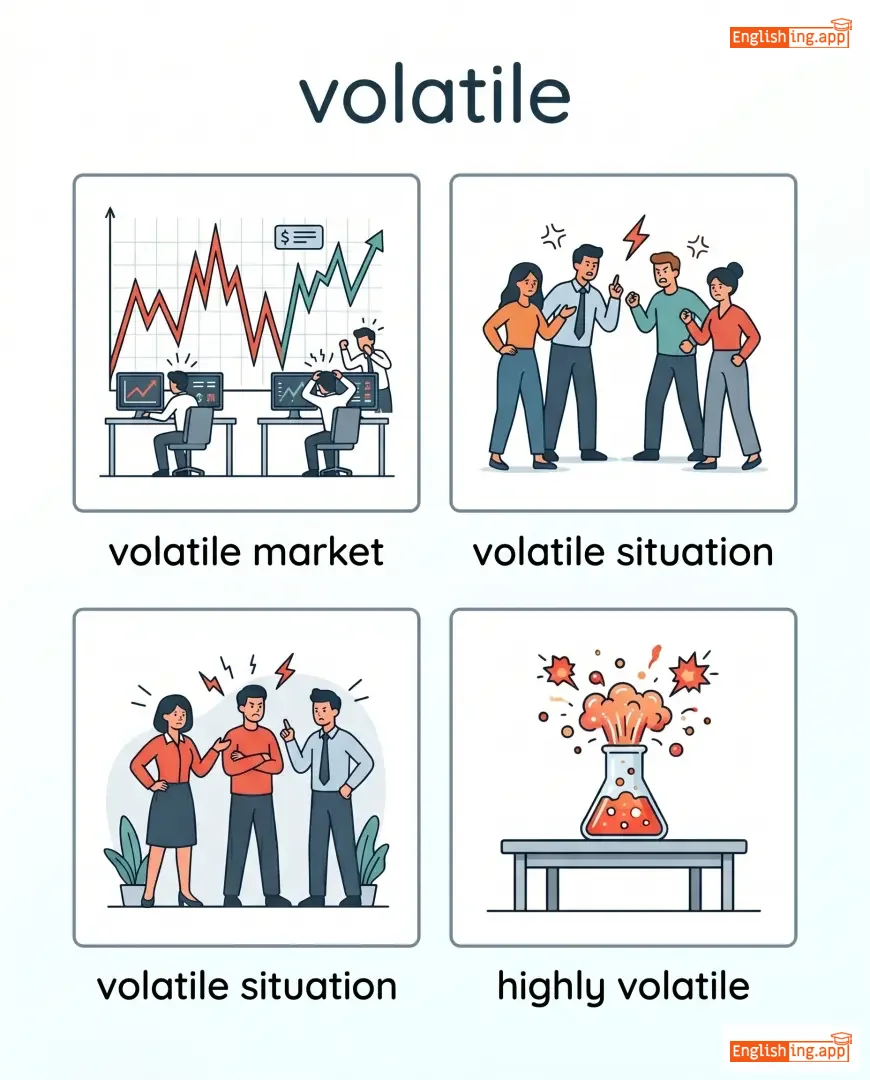
volatile situation |
a situation that is unstable and likely to change suddenly
••••••
|
変動する状況
hendou suru jōkyō
••••••
|
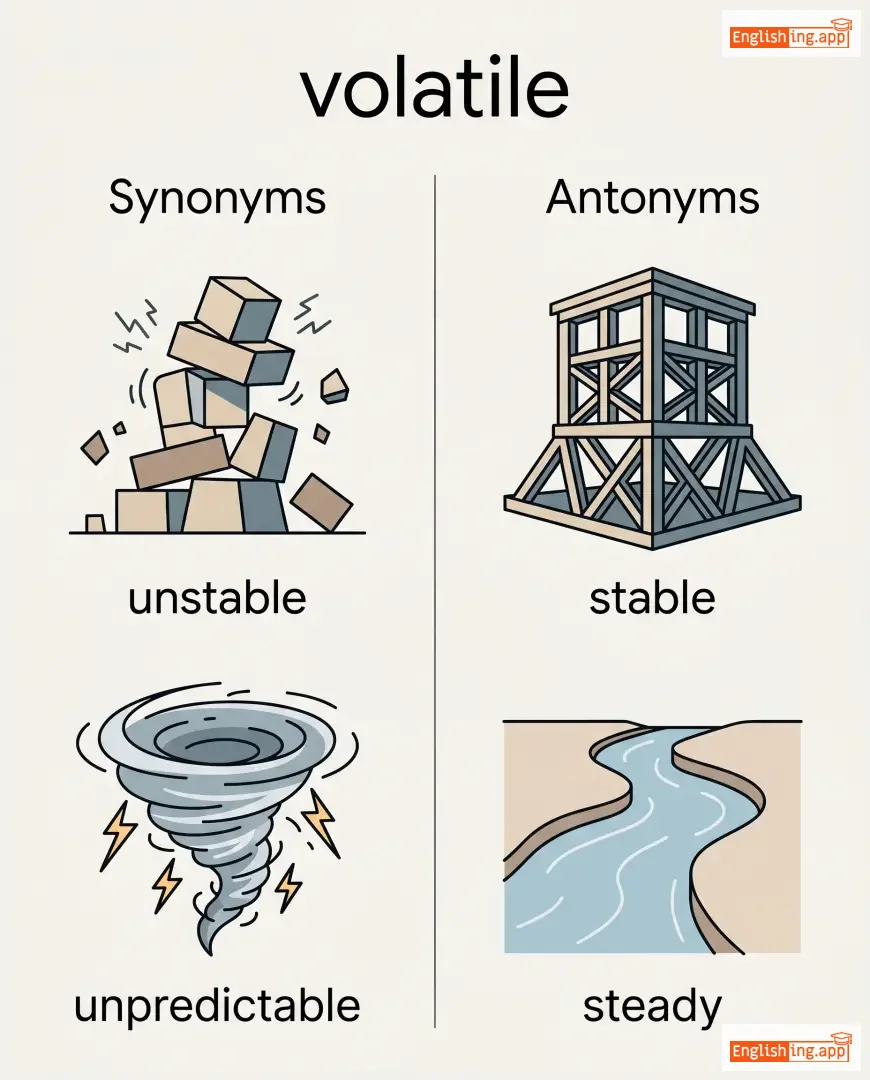
unstable, unpredictable, explosive, fickle
••••••
|
stable, steady, consistent
••••••
|
volatile market, volatile situation, highly volatile
••••••
|
変動するマーケットのように、ヴォラタイルは変化が早い。
••••••
|
|
#328
✅
|
/ˈwɒrəntɪd/
adjective/verb
(warranted)
••••••
|
|
正当化された
seitouka sareta
••••••
|
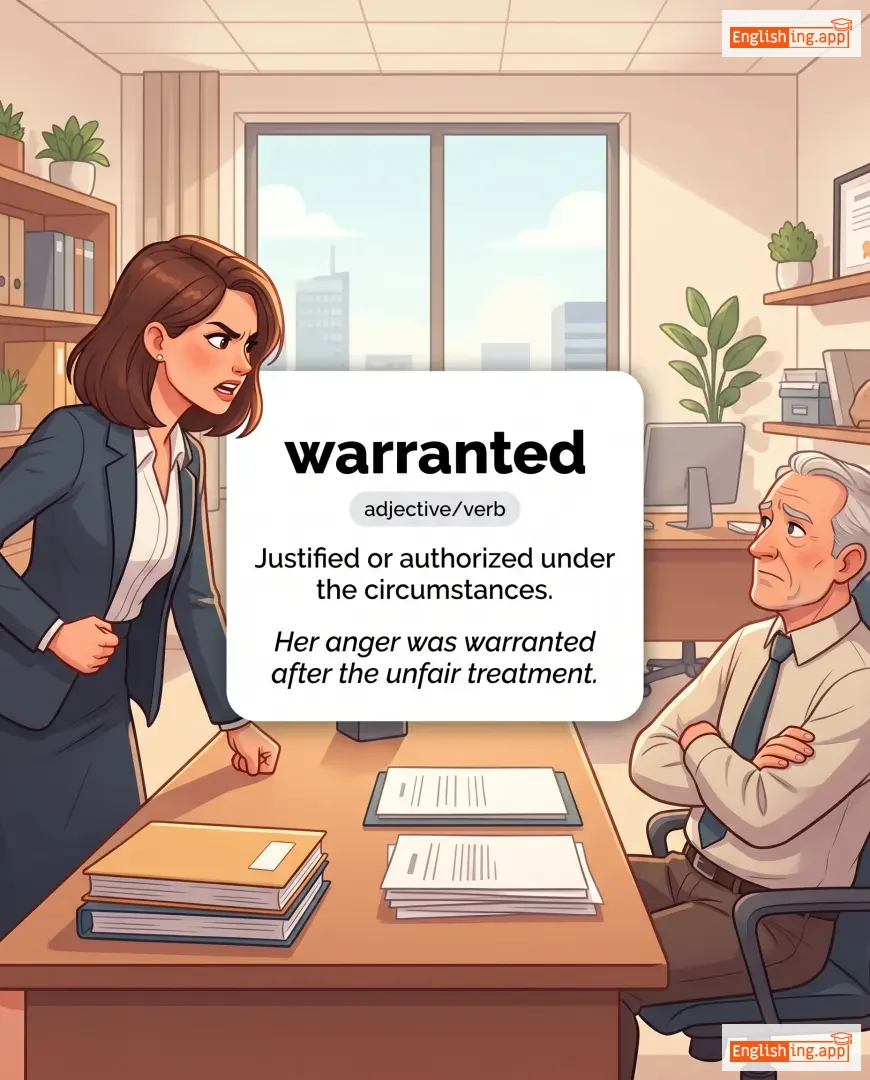
warranted
warranted
••••••
|
warranted
warranted
••••••
|
- •••••• | - •••••• |
Justified or authorized under the circumstances.
••••••
|
Her anger was warranted after the unfair treatment.
不公平な扱いの後、彼女の怒りは正当化されていました。
••••••
|
不公平な扱いの後、彼女の怒りは正当化されていました。
Fukouhei na atsukai no ato, kanojo no ikari wa seitouka sarete imashita.
••••••
|
- •••••• | - •••••• | - •••••• |
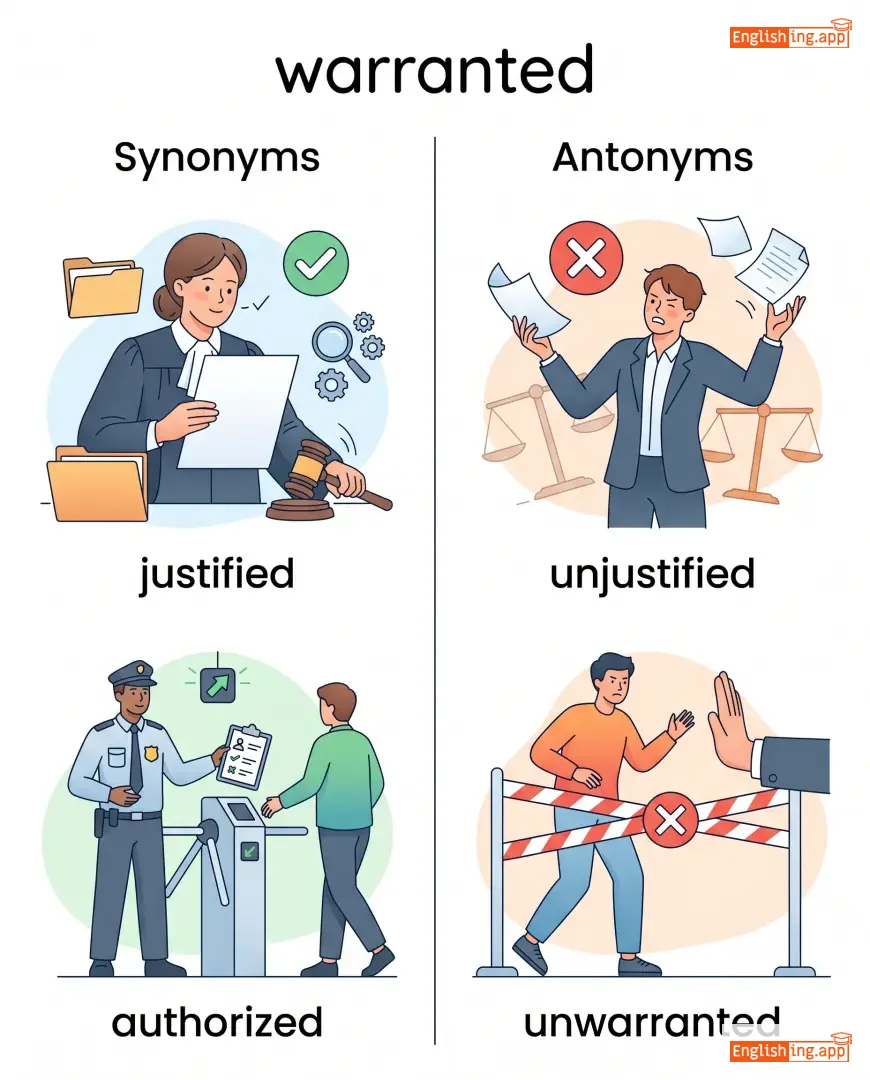
justified, authorized, reasonable, valid
••••••
|
unjustified, unwarranted, invalid
••••••
|
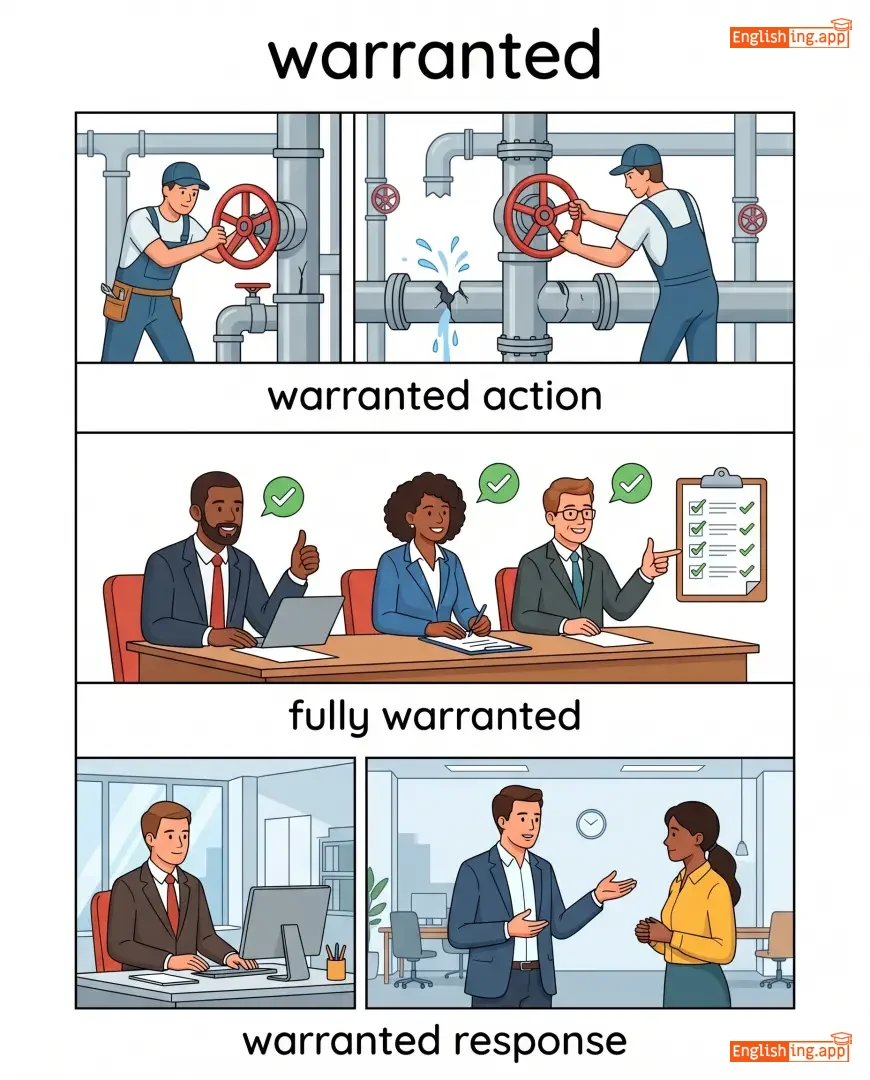
warranted action, fully warranted, warranted response, legally warranted
••••••
|
正当であれば、それは WARRANTED ✅
••••••
|
|
#329
👀
|
/ˈweəri/
adjective
(ウェアリ)
••••••
|
|
用心深い
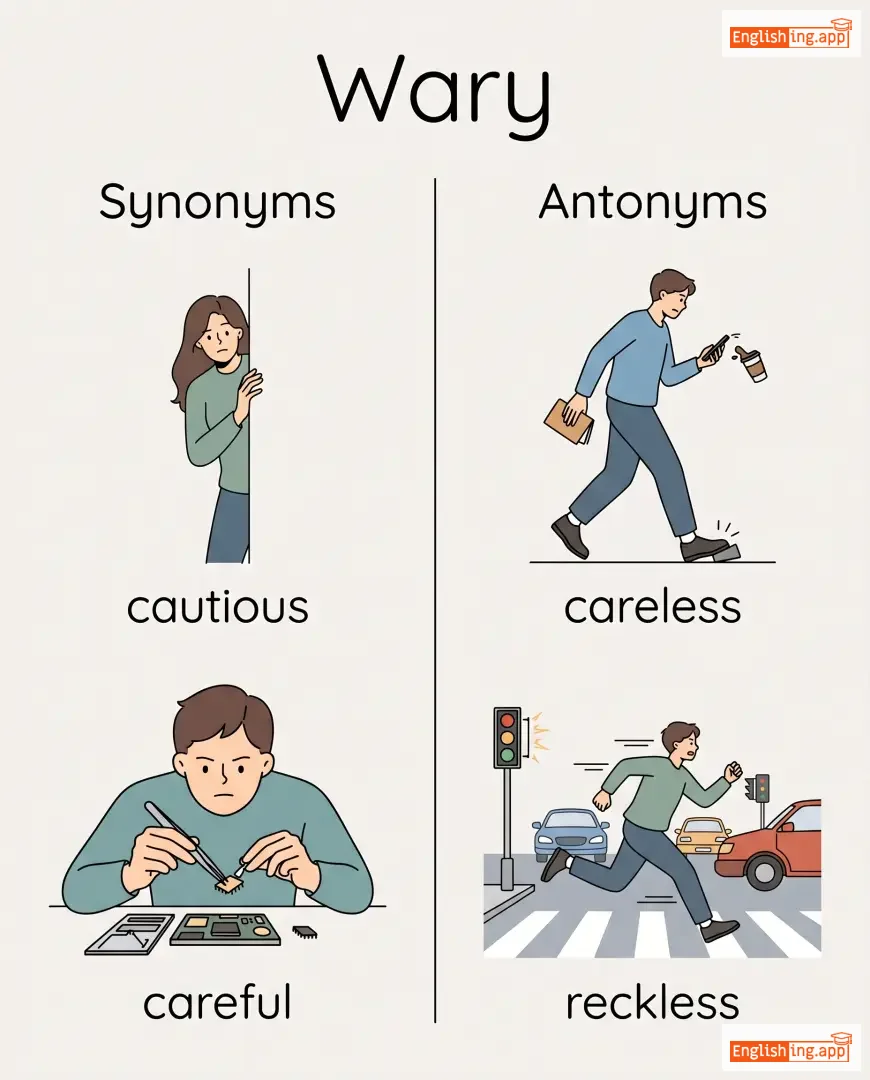
wary
••••••
|
- •••••• | - •••••• | - •••••• | - •••••• |
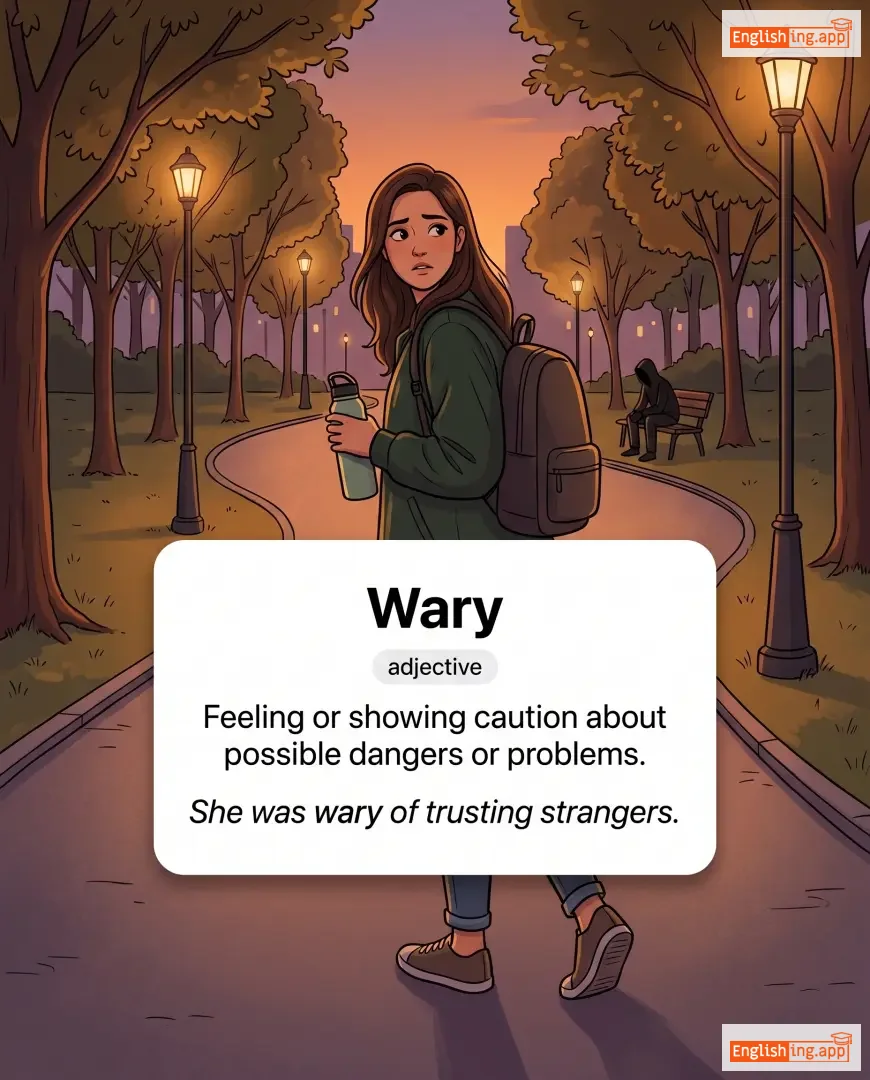
Feeling or showing caution about possible dangers or problems.
••••••
|
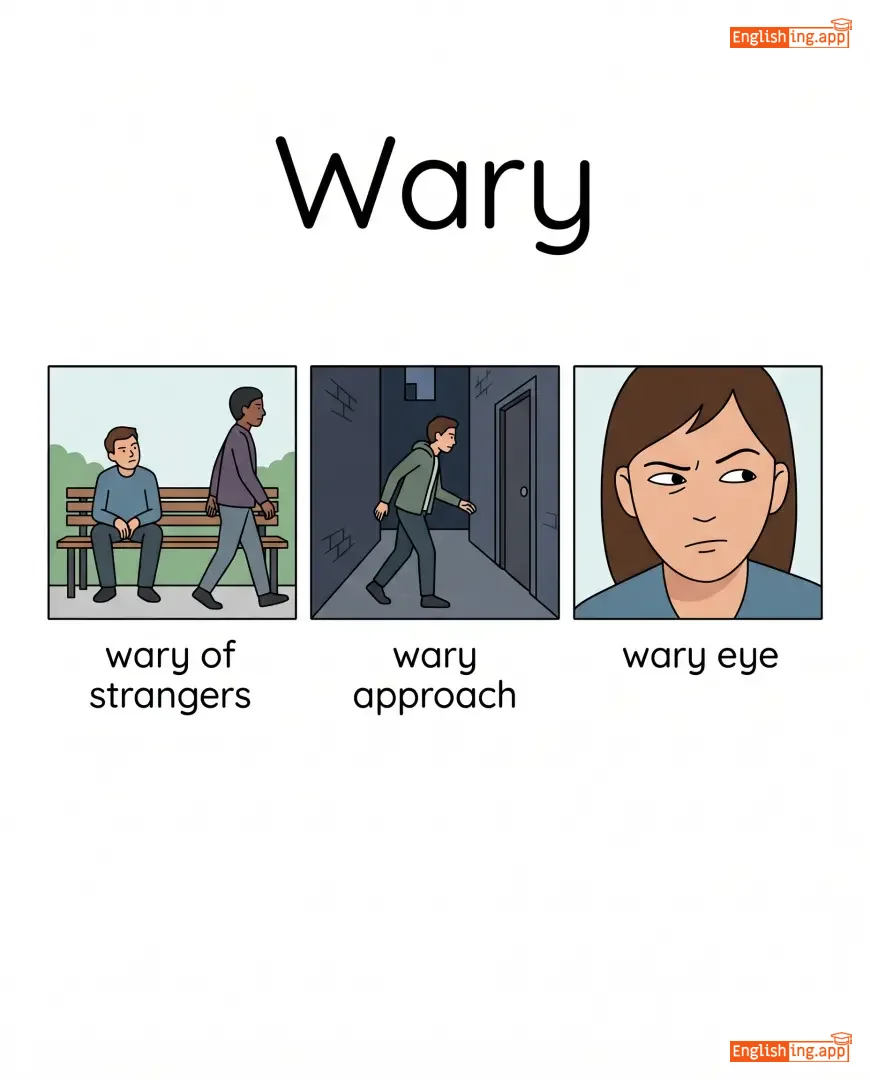
She was wary of trusting strangers. |
彼女は見知らぬ人を信じることに用心深かった。
Kanojo wa mishiranu hito o shinjiru koto ni yōjinbukatta.
••••••
|
wary eye |
A cautious and watchful look
••••••
|
用心深い目
Yōjinbukai me
••••••
|
cautious, careful, alert, suspicious, vigilant
••••••
|
careless, reckless, unwary
••••••
|
wary of strangers, wary approach, wary eye, be wary
••••••
|
Wary = Very 用心深い – 'wary' はいつも慎重であることを意味します!
••••••
|
|
#330
🌊
|
/ˈwɛltər/
verb
(ウェルター)
••••••
|
|
混乱の中で転がる
konran no naka de korogaru
••••••
|
weltered
ウェルタード
••••••
|
weltered
ウェルタード
••••••
|
welters
ウェルターズ
••••••
|
weltering
ウェルタリング
••••••
|
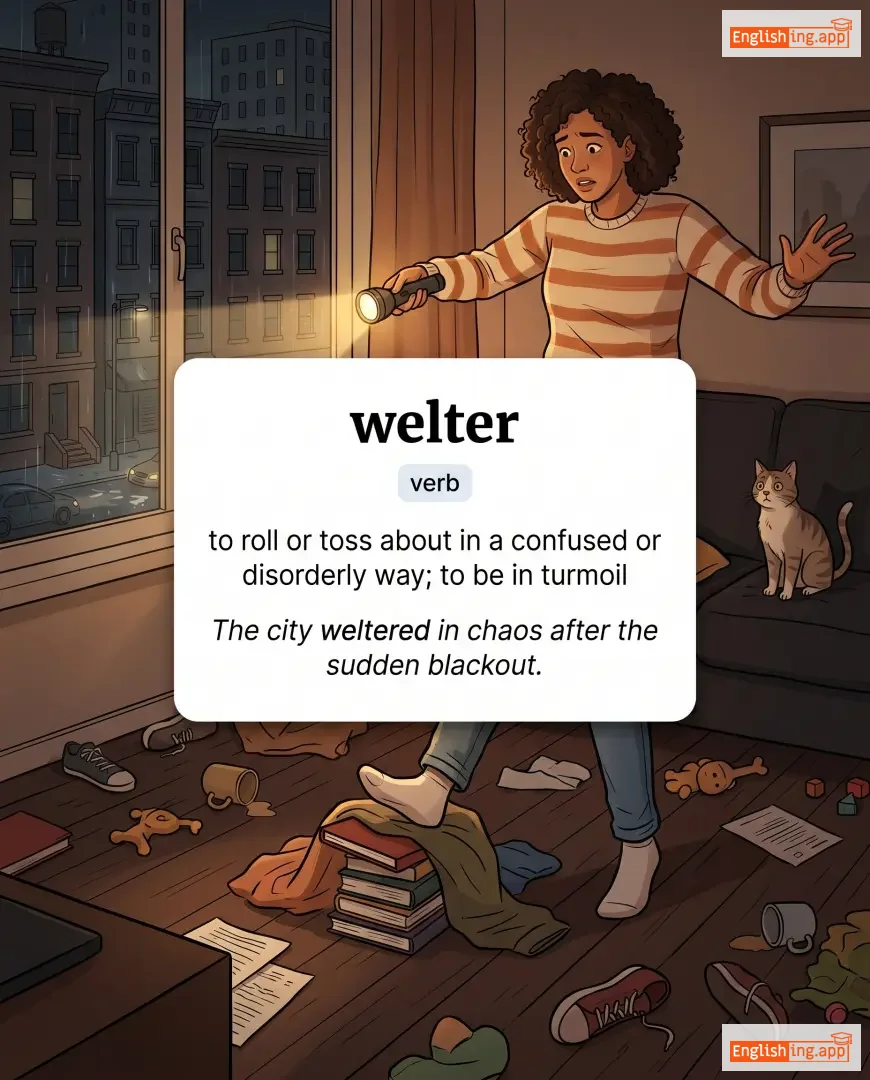
to roll or toss about in a confused or disorderly way; to be in turmoil
••••••
|
The city weltered in chaos after the sudden blackout.
突然の停電後、都市は混乱の中に沈んだ。
••••••
|
突然の停電後、都市は混乱の中に沈んだ。
Totsuzen no teiden go, toshi wa konran no naka ni shizunda.
••••••
|
- •••••• | - •••••• | - •••••• |
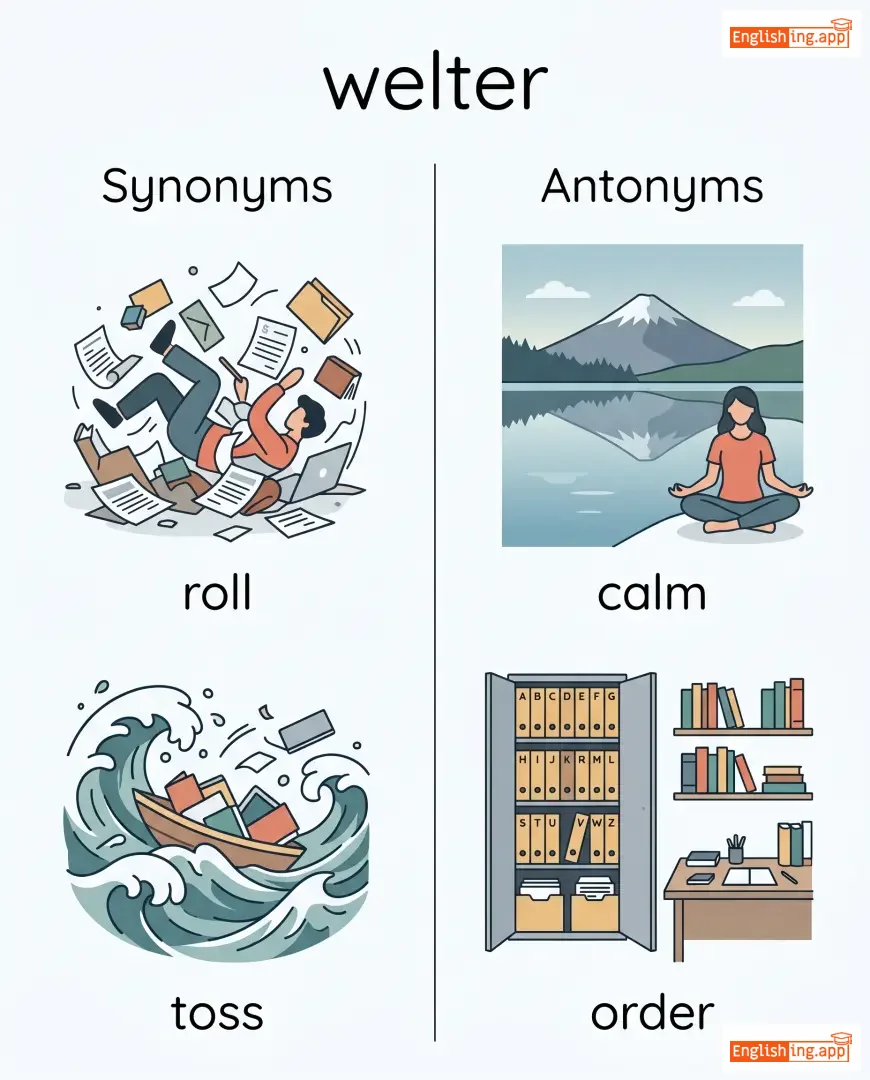
roll, toss, wallow, flounder, writhe
••••••
|
calm, order, stability
••••••
|
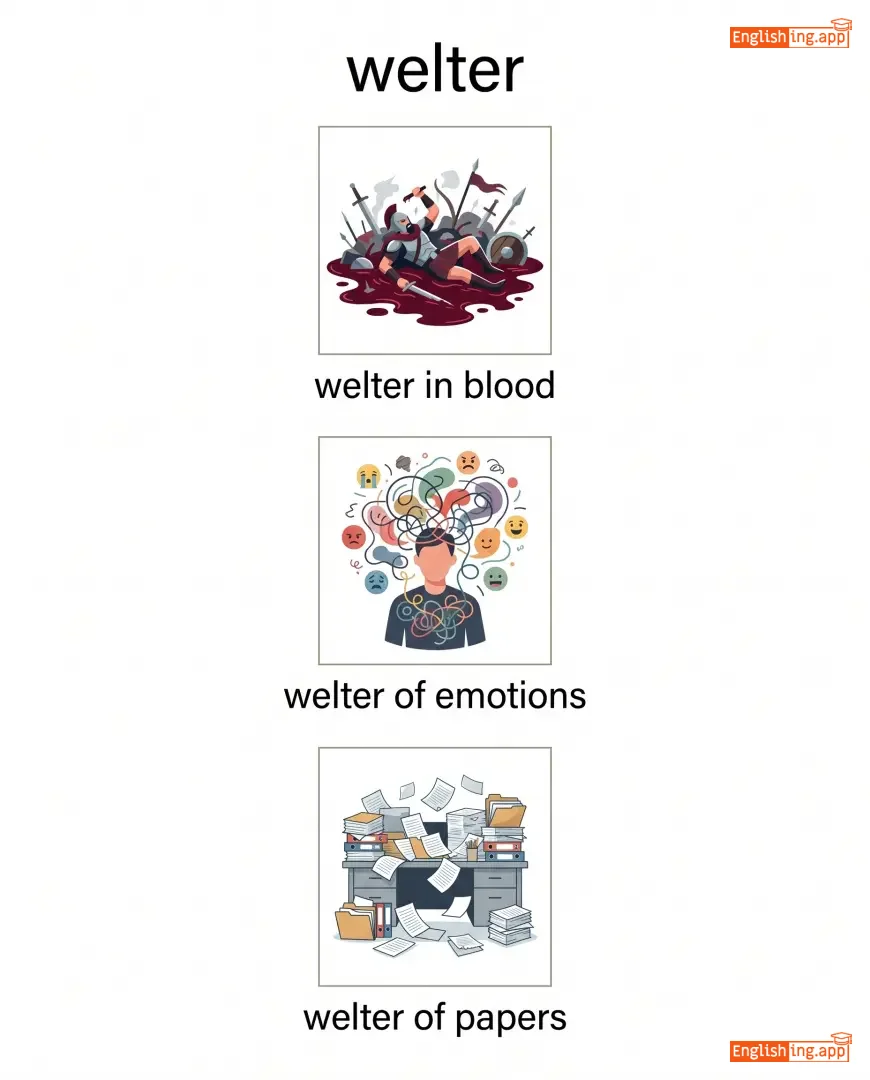
welter in blood, welter of emotions, welter of papers
••••••
|
Well ter (welter) はすべてを混乱させる。
••••••
|
|
#331
🎭
|
/ˈwɪm.zɪ.kəl/
adjective
(wīmusikaru)
••••••
|
|
風変わりな; 奇妙な
fūkawari na; kimyō na
••••••
|
- •••••• | - •••••• | - •••••• | - •••••• |
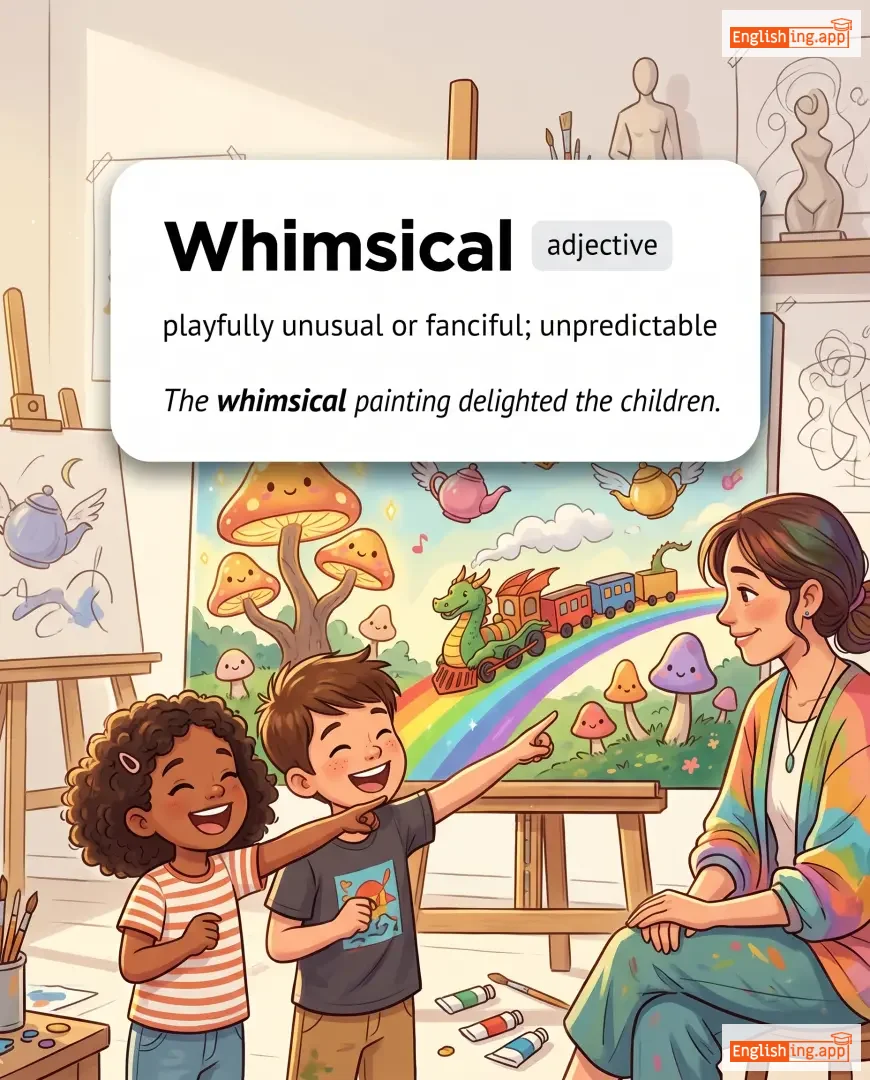
playfully quaint or fanciful, especially in an appealing and amusing way
••••••
|
The artist created whimsical sculptures that delighted children.
アーティストは子供たちを喜ばせる奇抜な彫刻を作りました。
••••••
|
アーティストは子供たちを喜ばせる奇抜な彫刻を作りました。
Ātisuto wa kodomotachi o yorokobaseru kibatsu na chōkoku o tsukurimashita.
••••••
|
- •••••• | - •••••• | - •••••• |
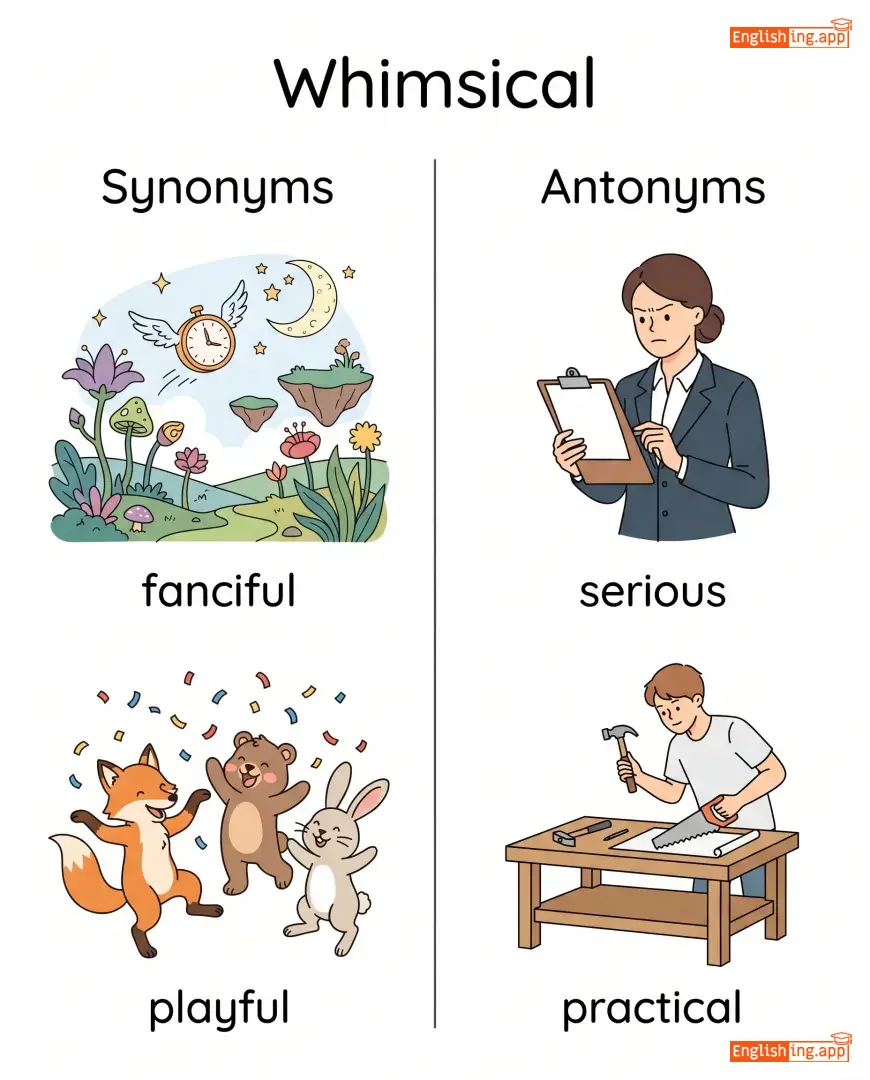
fanciful, playful, quirky, imaginative
••••••
|
serious, solemn, practical, realistic
••••••
|
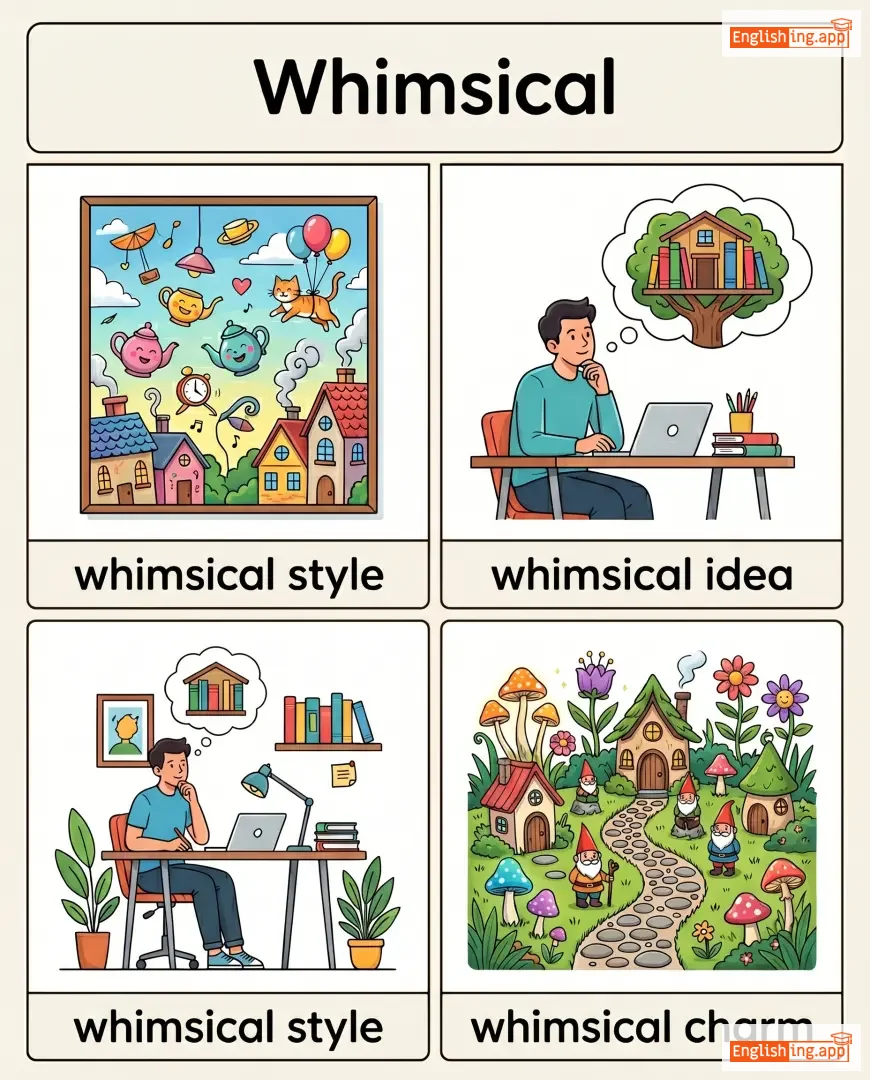
whimsical character, whimsical design, whimsical story
••••••
|
Imagine a whimsical artist making playful and quirky sculptures for kids!
••••••
|
|
#332
⚔️
|
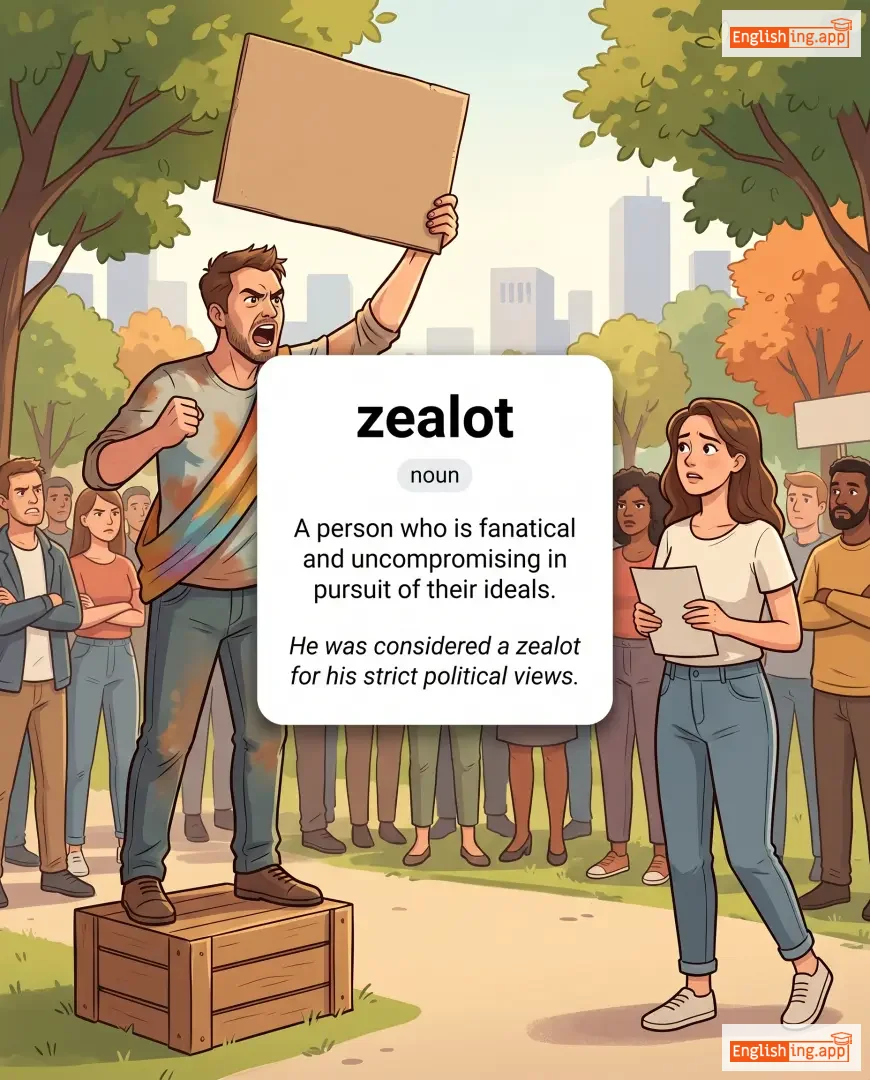
/ˈzel.ət/
noun
(ゼロット)
••••••
|
|
狂信者
kyoushinsha
••••••
|
- •••••• | - •••••• | - •••••• | - •••••• |
A person who is fanatical and uncompromising in pursuit of their ideals.
••••••
|
He was considered a zealot for his strict political views. |
彼は厳格な政治的見解のため、狂信者と見なされていました。
Kare wa genkaku na seijiteki kenkai no tame, kyoushinsha to minasa rete imashita.
••••••
|
- •••••• | - •••••• | - •••••• |
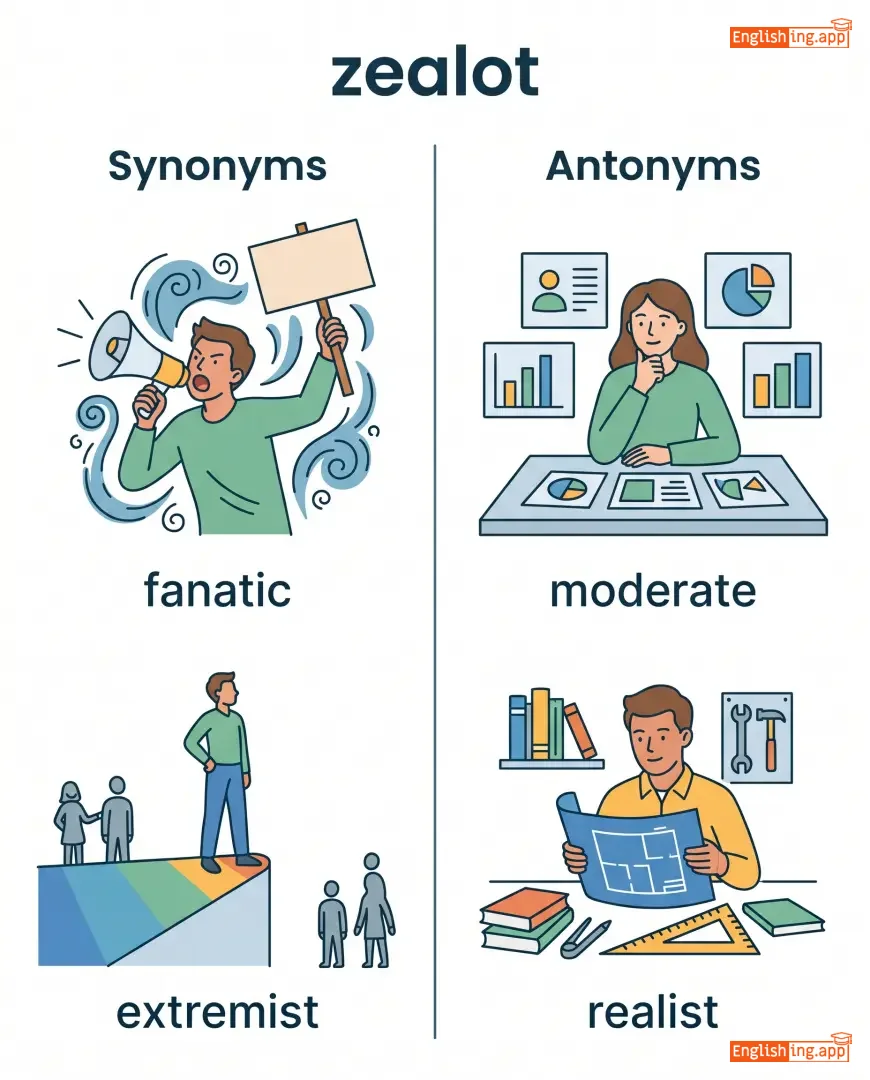
fanatic, extremist, radical, enthusiast
••••••
|
moderate, realist
••••••
|
religious zealot, political zealot, zealot group
••••••
|
ZeaLOTは多くの熱意を意味し、zealotは狂信者を意味します。
••••••
|
Vocabulary Quiz
Test your vocabulary by matching words with their translations or meanings.
Login to take the quiz
Comments (0)
Share your thoughts and join the discussion.
Join the discussion by logging in
Login to CommentNo comments yet
Be the first to share your thoughts!