|
絵文字
|
単語 | Images | 翻訳 | 過去 | 過去分詞 | 三人称単数 | 動名詞 | 意味 | 例文 | 例文の翻訳 | 表現例 | 表現例の意味 | 表現例の翻訳 | 同義語 | 対義語 | コロケーション | ニーモニック |
|---|---|---|---|---|---|---|---|---|---|---|---|---|---|---|---|---|---|
|
🎀
••••••
|
/taɪ/
verb
(tai)
••••••
|
|
結ぶ
musubu
••••••
|
tied
taido
••••••
|
tied
taido
••••••
|
ties
taizu
••••••
|
tying
taingu
••••••
|
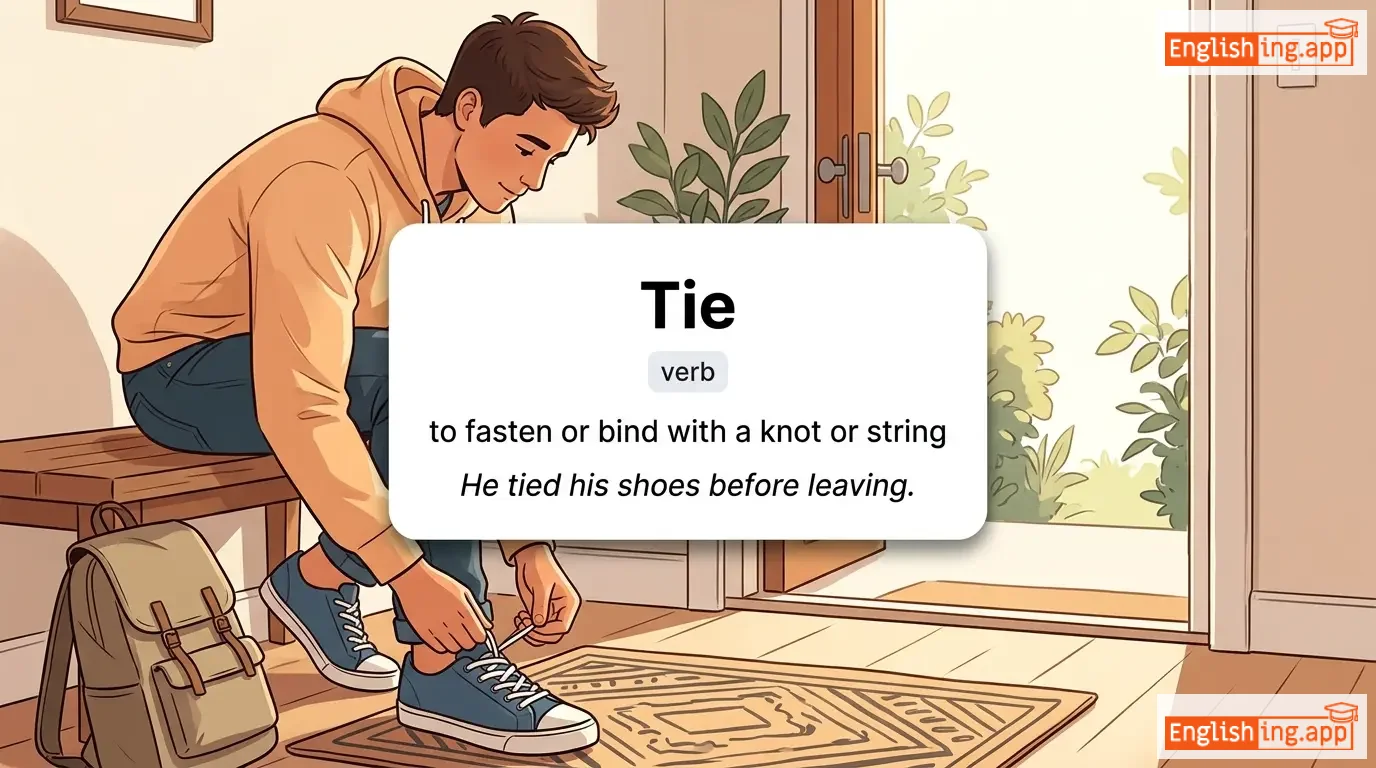
to fasten or bind with a knot or string
••••••
|
He tied his shoes before leaving.
彼は出かける前に靴を結びました。
••••••
|
彼は出かける前に靴を結びました。
Kare wa dekakeru mae ni kutsu o musubimashita.
••••••
|
tie the knot
結婚の誓い
••••••
|
to get married
••••••
|
結婚する
kekkon suru
••••••
|
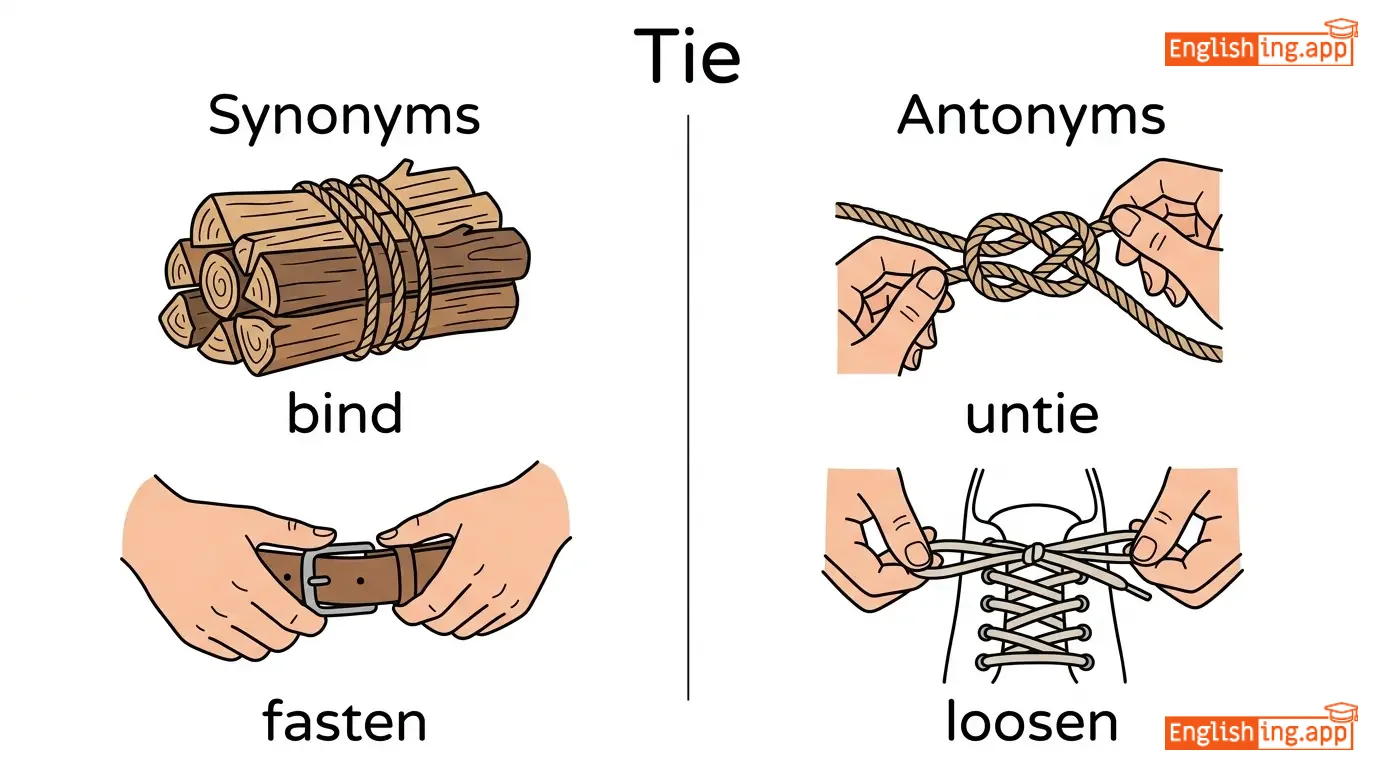
bind, fasten, knot, secure
••••••
|
untie, loosen
••••••
|
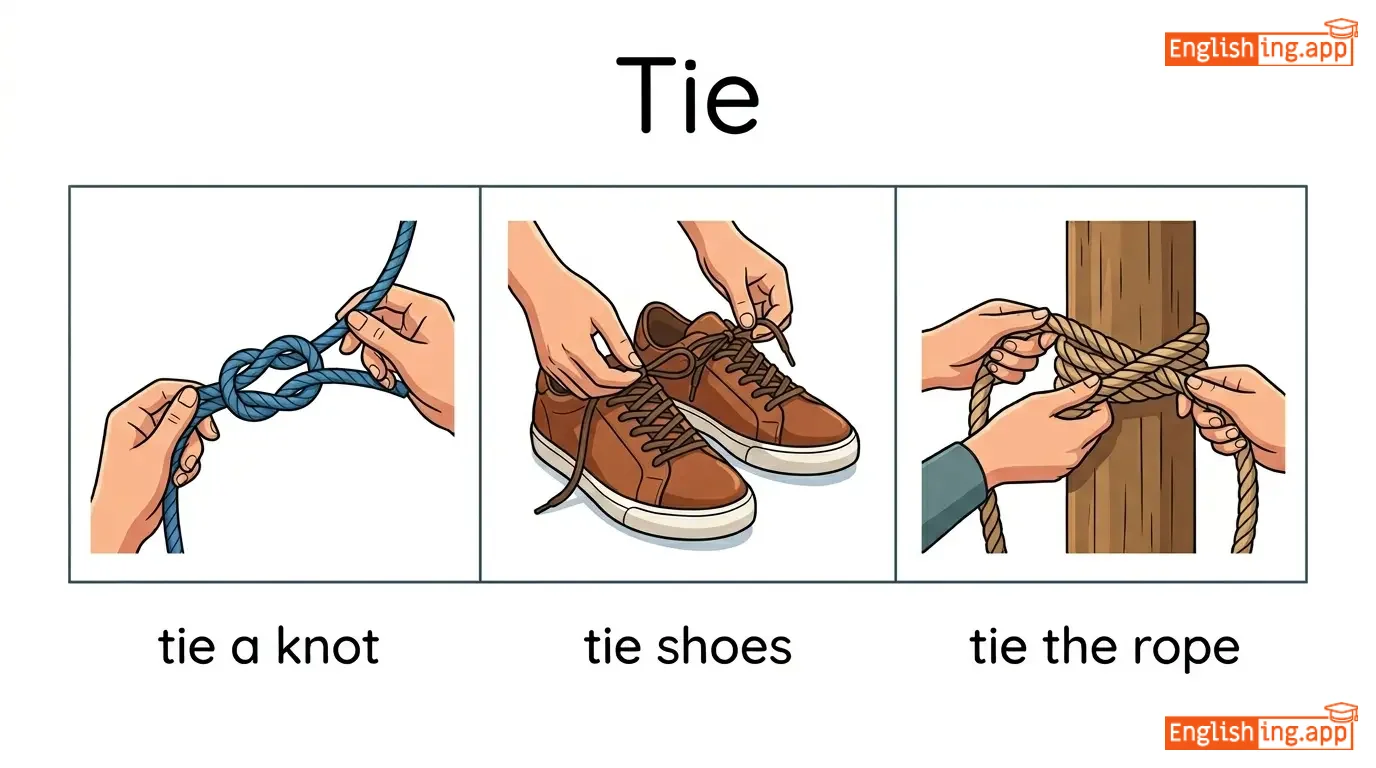
tie a knot, tie shoes, tie the rope
••••••
|
結び目を作って、結婚の誓いを立てよう!
••••••
|
|
🪢
••••••
|
/taɪt/
adjective
(タイト)
••••••
|
- •••••• |
きつい
kitsui
••••••
|
- •••••• | - •••••• | - •••••• | - •••••• |
firmly held in place, not loose or slack
••••••
|
The knot was too tight to untie. |
結び目は解けないほどきつかった。
Musubime wa tokenai hodo kitsukatta.
••••••
|
- •••••• | - •••••• | - •••••• |
firm, secure, stiff, taut
••••••
|
loose, slack
••••••
|
tight grip, tight fit, tight knot
••••••
|
きつい (tight) 結びつけておこう!
••••••
|
|
🔩
••••••
|
/ˈtaɪtən/
verb
(タイテン)
••••••
|
|
締める
shimeru
••••••
|
tightened
タイテンド
••••••
|
tightened
タイテンド
••••••
|
tightens
タイテンズ
••••••
|
tightening
タイテニング
••••••
|
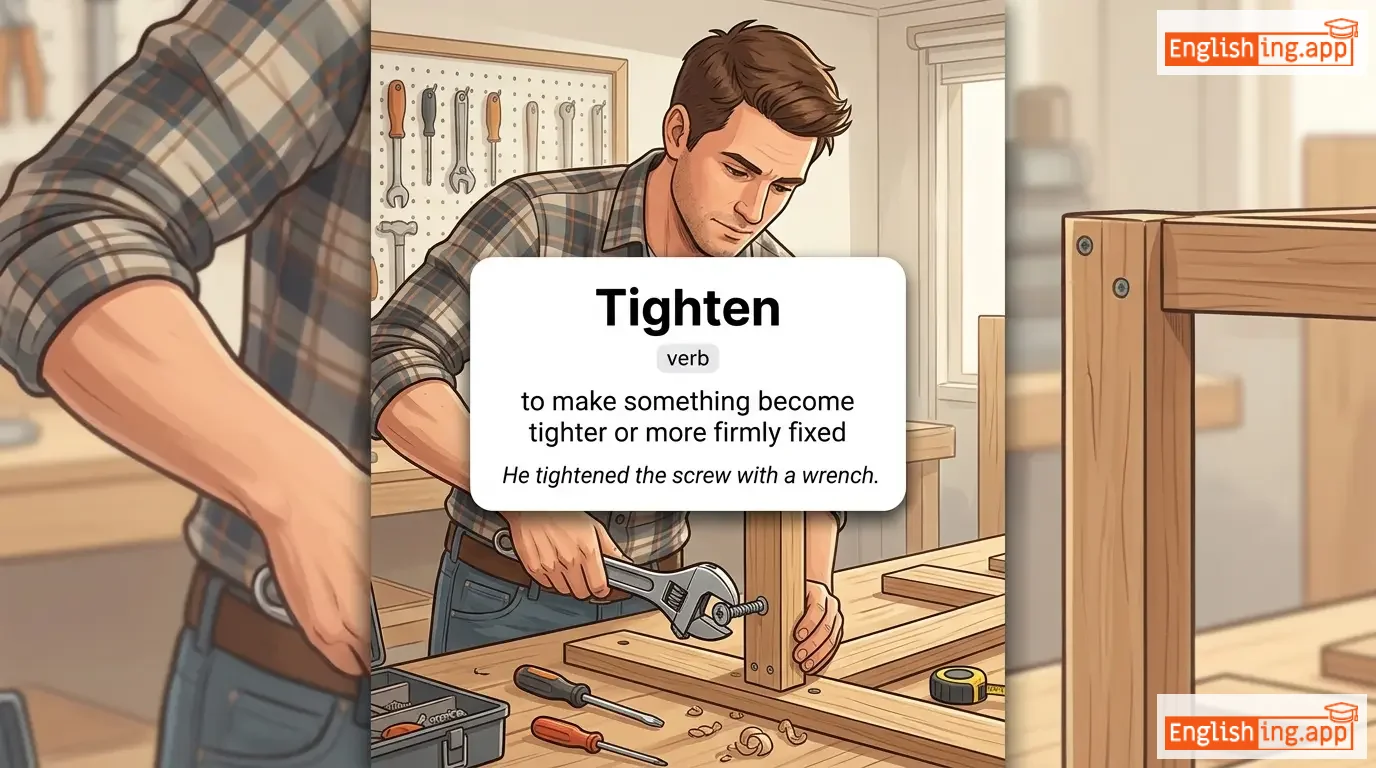
to make something become tighter or more firmly fixed
••••••
|
He tightened the screw with a wrench.
彼はレンチでネジを締めました。
••••••
|
彼はレンチでネジを締めました。
Kare wa renchi de neji o shimemashita.
••••••
|
tighten one's belt
ベルトを締める
••••••
|
to spend less money; to be more economical
••••••
|
ベルトを締める
beruto o shimeru
••••••
|
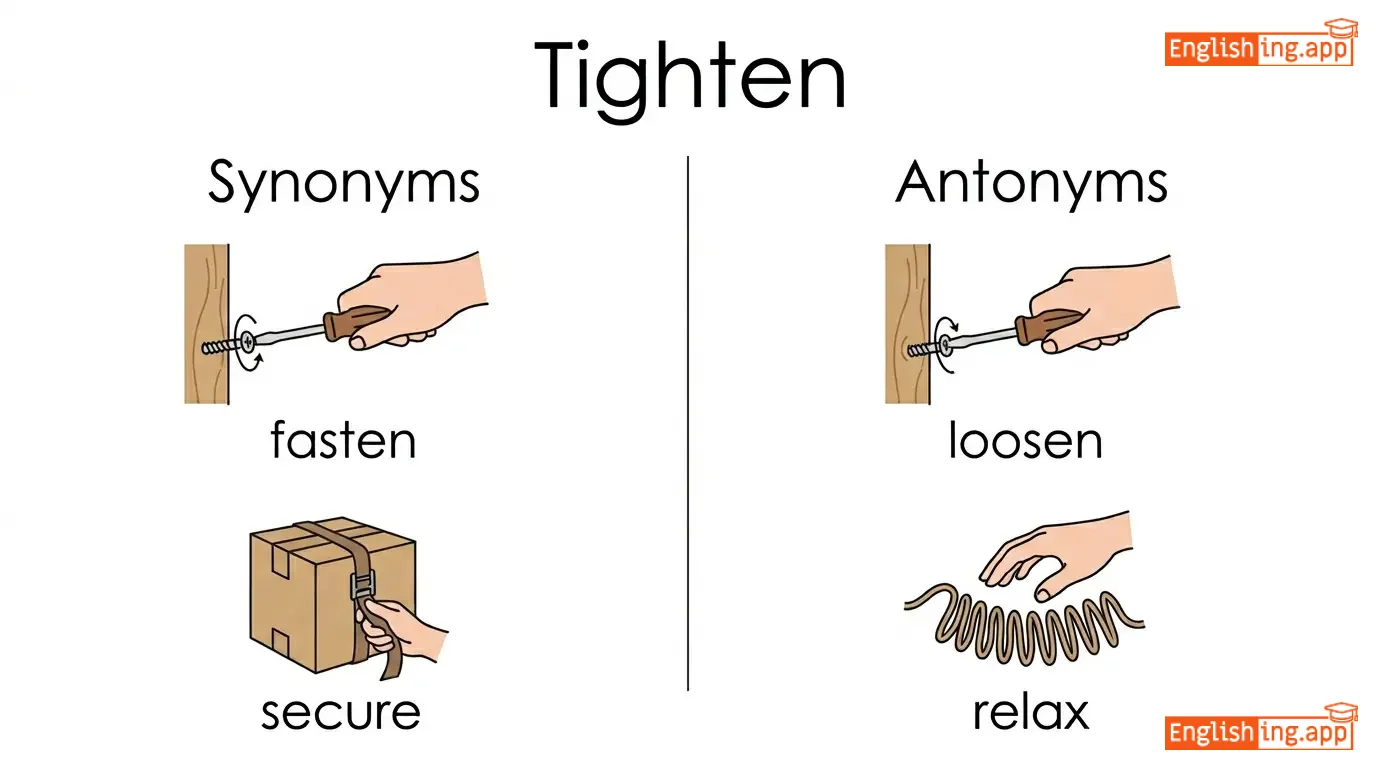
fasten, secure, stiffen, contract, strengthen
••••••
|
loosen, relax, slacken
••••••
|
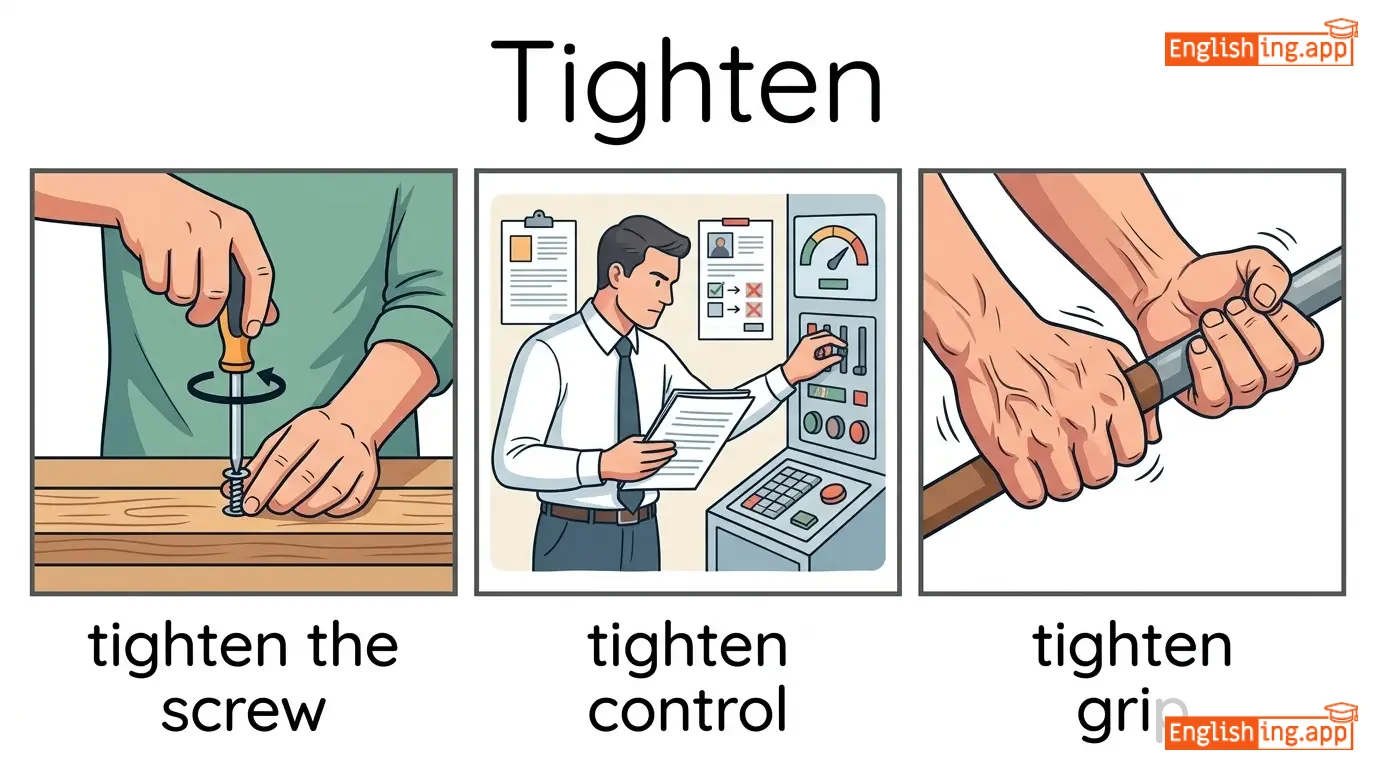
tighten the screw, tighten control, tighten grip, tighten security
••••••
|
締める (tight) とは、さらにきつくすることを意味します 🔩
••••••
|
|
🤏
••••••
|
/ˈtaɪtli/
adverb
(taitori)
••••••
|
- •••••• |
しっかり; 強く
shikkari; tsuyoku
••••••
|
- •••••• | - •••••• | - •••••• | - •••••• |
in a tight manner; firmly; securely
••••••
|
Hold the rope tightly so you don't fall.
ロープをしっかり持って、落ちないようにします。
••••••
|
ロープをしっかり持って、落ちないようにします。
Ropu wo shikkari motte, ochinai you ni shimasu.
••••••
|
- •••••• | - •••••• | - •••••• |
firmly, securely, closely, strongly
••••••
|
loosely, weakly, gently, lightly
••••••
|
hold tightly, grip tightly, packed tightly
••••••
|
ロープをしっかり持つことで、落ちるのを防ぎます。
••••••
|
|
⏰
••••••
|
/tɪl/
preposition
(ティル)
••••••
|
- •••••• |
まで
made
••••••
|
- •••••• | - •••••• | - •••••• | - •••••• |
up to the time of; until
••••••
|
She waited till midnight for his call.
彼女は彼の電話を夜中まで待ちました。
••••••
|
彼女は彼の電話を夜中まで待ちました。
Kanojo wa kare no denwa o yonaka made machimashita.
••••••
|
- •••••• | - •••••• | - •••••• |
until, up to, before, pending
••••••
|
after, since
••••••
|
till now, till late, till tomorrow, wait till
••••••
|
Till は 'まで' を意味します — 夜中まで電話を待つ。
••••••
|
|
🌲
••••••
|
/ˈtɪmbər/
noun
(ティンバー)
••••••
|
- •••••• |
木材
mokuzai
••••••
|
- •••••• | - •••••• | - •••••• | - •••••• |
wood prepared for use in building and carpentry
••••••
|
The house was built entirely from local timber. |
その家は完全に地元の木材で作られていました。
Sono ie wa kanzen ni jimoto no mokuzai de tsukurarete imashita.
••••••
|
shiver me timbers |
an expression of surprise or astonishment
••••••
|
驚きやびっくりの表現
odoroki ya bikkuri no hyōgen
••••••
|
wood, lumber, logs, planks, beam
••••••
|
metal, concrete
••••••
|
timber industry, timber house, cut timber, timber supply
••••••
|
Timberは木材を意味します 🌲 — ‘Timber house’ は木の家を意味します。
••••••
|
|
⏰
••••••
|
/taɪm/
noun
(taimu)
••••••
|
- •••••• |
時間
jikan
••••••
|
- •••••• | - •••••• | - •••••• | - •••••• |
a measured or measurable period during which an action, process, or condition exists or continues
••••••
|
I don’t have enough time to finish the project. |
私はプロジェクトを終わらせるための十分な時間がありません。
Watashi wa purojekuto o owaraseru tame no juubun na jikan ga arimasen.
••••••
|
- •••••• | - •••••• | - •••••• |
moment, duration, period, interval
••••••
|
eternity, infinity
••••••
|
spend time, waste time, save time, take time
••••••
|
JIKAN (time) is like a river that never stops!
••••••
|
|
⏰
••••••
|
/ˈtaɪmli/
adjective
(タイムリー)
••••••
|
- •••••• |
適時の
tekiji no
••••••
|
- •••••• | - •••••• | - •••••• | - •••••• |
Done or occurring at a favorable or useful time; opportune.
••••••
|
Her timely advice helped me avoid a big mistake.
ハー タイムリー アドバイス ヘルプド ミー アボイド ア ビッグ ミステイク。
••••••
|
彼女の適時の助言は、私が大きな間違いを避けるのに役立った。
kanojo no tekiji no jogen wa watashi ga ookina machigai o sakeru no ni yakudatta.
••••••
|
timely intervention
タイムリー インターベンション
••••••
|
An action taken at the right moment to prevent harm or improve a situation
••••••
|
適時の介入
tekiji no kainyu
••••••
|
prompt, punctual, appropriate, suitable, convenient
••••••
|
late, delayed, untimely
••••••
|
timely manner, timely advice, timely response, timely action
••••••
|
Timely sounds like 'time-ly' → in Japanese 'タイムリー' means done at the right time.
••••••
|
|
📅
••••••
|
/ˈtaɪm.teɪ.bəl/
noun
(タイムテーブル)
••••••
|
- •••••• |
時刻表
jikokuhyō
••••••
|
- •••••• | - •••••• | - •••••• | - •••••• |
a schedule showing planned activities or events at particular times
••••••
|
Please check the train timetable for departure times.
電車の時刻表で出発時刻を確認してください。
••••••
|
電車の時刻表で出発時刻を確認してください。
Densha no jikokuhyō de shuppatsu jikoku o kakunin shite kudasai.
••••••
|
- •••••• | - •••••• | - •••••• |
schedule, agenda, program, itinerary
••••••
|
spontaneity, improvisation
••••••
|
train timetable, school timetable, bus timetable
••••••
|
時刻表であなたの予定を組み立ててください!
••••••
|
|
⏰
••••••
|
/ˈtaɪmɪŋ/
noun
(タイミング)
••••••
|
- •••••• |
タイミング
taimingu
••••••
|
- •••••• | - •••••• | - •••••• | - •••••• |
the choice, judgment, or control of when something should be done
••••••
|
Good timing is essential in business negotiations. |
ビジネス交渉では、良いタイミングが重要です。
bijinesu kōshō dewa, yoi taimingu ga jūyō desu.
••••••
|
perfect timing |
doing something at exactly the right moment
••••••
|
完璧なタイミング
kanpeki na taimingu
••••••
|
scheduling, coordination, planning, arrangement, rhythm
••••••
|
delay, misjudgment
••••••
|
good timing, bad timing, timing issue, timing control
••••••
|
Time + ing = Timing ⏰ — 完璧なタイミングを見逃さない!
••••••
|
|
🥫
••••••
|
/tɪn/
noun
(ティン)
••••••
|
- •••••• |
スズ
suzu
••••••
|
- •••••• | - •••••• | - •••••• | - •••••• |
a metal container; a chemical element (Sn)
••••••
|
She bought a tin of biscuits from the store.
彼女は店でビスケットの缶を買った。
••••••
|
彼女は店でビスケットの缶を買った。
Kanojo wa mise de bisuketto no kan o katta.
••••••
|
in a tin
缶の中で
••••••
|
packed or contained in a tin container
••••••
|
缶の中で
kan no naka de
••••••
|
can, container, box, metal case
••••••
|
plastic container, bag
••••••
|
tin can, tin foil, tin box, tin of cookies
••••••
|
スズ (suzu) = tin, 覚えやすい金属。
••••••
|
|
🐭
••••••
|
/ˈtaɪ.ni/
adjective
(タイニー)
••••••
|
- •••••• |
とても小さい; 小さな
totemo chiisai; chiisana
••••••
|
- •••••• | - •••••• | - •••••• | - •••••• |
extremely small in size or amount
••••••
|
The baby bird was tiny and helpless.
ザ ベイビー バード ワズ タイニー アンド ヘルプレス。
••••••
|
その小さな鳥はとても小さくて無力でした。
Sono chiisana tori wa totemo chiisakute muryoku deshita.
••••••
|
- •••••• | - •••••• | - •••••• |
small, miniature, microscopic, minute, little
••••••
|
huge, enormous, gigantic, massive, large
••••••
|
tiny house, tiny amount, tiny details, tiny steps
••••••
|
Tiny in Japanese is 'とても小さい', just think of a tiny little Japanese bird!
••••••
|
|
💡
••••••
|
/tɪp/
noun
(ティップ)
••••••
|
- •••••• |
アドバイス
adobaisu
••••••
|
- •••••• | - •••••• | - •••••• | - •••••• |
a small but useful piece of advice
••••••
|
I received a tip on how to improve my presentation. |
プレゼンテーションを改善する方法についてアドバイスをもらいました。
Purezentēshon o kaizen suru hōhō ni tsuite adobaisu o moraimashita.
••••••
|
- •••••• | - •••••• | - •••••• |
hint, suggestion, advice, clue
••••••
|
misguidance
••••••
|
give a tip, follow a tip, valuable tip
••••••
|
Remember the tip of your pen for clear writing!
••••••
|
|
🚗
••••••
|
/taɪər/
noun
(タイヤ)
••••••
|
- •••••• |
タイヤ
taiya
••••••
|
- •••••• | - •••••• | - •••••• | - •••••• |
a rubber covering around a wheel
••••••
|
The car’s tire burst on the highway.
車のタイヤが高速道路でパンクした。
••••••
|
車のタイヤが高速道路でパンクした。
Kuruma no taiya ga kōsokudōro de panku shita.
••••••
|
- •••••• | - •••••• | - •••••• |
wheel, rubber, rim
••••••
|
- •••••• |
flat tire, spare tire, tire pressure
••••••
|
タイヤは車をスムーズに走らせます!
••••••
|
|
😴
••••••
|
/taɪəd/
adjective
(タイアード)
••••••
|
- •••••• |
疲れた
tsukareta
••••••
|
- •••••• | - •••••• | - •••••• | - •••••• |
feeling exhausted; in need of sleep or rest
••••••
|
I am too tired to continue working.
私は仕事を続けるには疲れすぎています。
••••••
|
私は仕事を続けるには疲れすぎています。
Watashi wa shigoto o tsudzukeru ni wa tsukare sugiteimasu.
••••••
|
- •••••• | - •••••• | - •••••• |
exhausted, weary, fatigued, drained, worn out
••••••
|
energetic, refreshed, alert, vigorous, rested
••••••
|
tired eyes, tired voice, feel tired, getting tired
••••••
|
疲れた = 仕事の後、疲れた身体
••••••
|
|
😴
••••••
|
/ˈtaɪə.səm/
adjective
(タイアサム)
••••••
|
- •••••• |
疲れる; 退屈な
tsukareru; taikutsu na
••••••
|
- •••••• | - •••••• | - •••••• | - •••••• |
causing weariness or boredom; tedious
••••••
|
The long lecture was tiresome and repetitive. |
長い講義は疲れさせ、繰り返しが多かった。
Nagai kōgi wa tsukaresase, kurikaeshi ga ōkatta.
••••••
|
- •••••• | - •••••• | - •••••• |
boring, tedious, wearisome, dull
••••••
|
interesting, exciting, engaging, stimulating
••••••
|
tiresome task, tiresome journey, tiresome work
••••••
|
疲れや退屈を連想し、この言葉を覚えましょう。
••••••
|
|
😫
••••••
|
/ˈtaɪərɪŋ/
adjective
(タイリング)
••••••
|
- •••••• |
疲れる
tsukareru
••••••
|
- •••••• | - •••••• | - •••••• | - •••••• |
causing someone to feel exhausted or in need of rest
••••••
|
The long journey was extremely tiring.
長い旅は非常にタイリングだった。
••••••
|
長い旅は非常に疲れるものだった。
Nagai tabi wa hijou ni tsukareru mono datta
••••••
|
- •••••• | - •••••• | - •••••• |
exhausting, fatiguing, draining, wearying
••••••
|
refreshing, invigorating
••••••
|
tiring day, tiring task, tiring journey
••••••
|
疲れる = tiring; remember 'tsukareru' makes you tired after travel
••••••
|
|
🧻
••••••
|
/ˈtɪʃ.uː/
noun
(ティッシュ)
••••••
|
- •••••• |
ティッシュ
tisshu
••••••
|
- •••••• | - •••••• | - •••••• | - •••••• |
a piece of soft absorbent paper or fabric
••••••
|
She used a tissue to wipe her nose. |
彼女はティッシュで鼻を拭きました。
Kanojo wa tisshu de hana o fukimashita.
••••••
|
- •••••• | - •••••• | - •••••• |
paper, napkin, cloth, handkerchief
••••••
|
none
••••••
|
tissue paper, facial tissue, soft tissue
••••••
|
ティッシュで鼻を拭く - Tissue for wiping your nose
••••••
|
|
📖
••••••
|
/ˈtaɪ.təl/
noun
(タイトル)
••••••
|
- •••••• |
タイトル; 地位; 称号
taitoru
••••••
|
- •••••• | - •••••• | - •••••• | - •••••• |
the name of a book, movie, or other work; a word used before someone's name to show rank or status
••••••
|
The title of the book is very interesting. |
その本のタイトルはとても興味深いです。
Sono hon no taitoru wa totemo kyōmi bukai desu
••••••
|
- •••••• | - •••••• | - •••••• |
heading, name, caption, designation
••••••
|
subtitle, content, body
••••••
|
book title, job title, movie title
••••••
|
本のタイトルは本を区別するために必要です、まるで王の称号のように。
••••••
|
|
➡️
••••••
|
/tuː/
preposition
(トゥ)
••••••
|
- •••••• |
に
ni
••••••
|
- •••••• | - •••••• | - •••••• | - •••••• |
used for expressing motion or direction
••••••
|
She is going to the market.
彼女は市場に行く。
••••••
|
彼女は市場に行く。
Kanojo wa ichiba ni iku.
••••••
|
- •••••• | - •••••• | - •••••• |
toward, towards, in the direction of
••••••
|
from
••••••
|
go to, travel to, turn to
••••••
|
To - 君は (kimi wa) 行く - You go
••••••
|
|
🚬
••••••
|
/təˈbækoʊ/
noun
(タバコ)
••••••
|
- •••••• |
タバコ
tabako
••••••
|
- •••••• | - •••••• | - •••••• | - •••••• |
a plant grown for its leaves, which are used in making cigarettes and cigars
••••••
|
He stopped smoking tobacco after his health scare. |
健康問題後にタバコをやめた。
Kenkō mondai go ni tabako o yameta.
••••••
|
- •••••• | - •••••• | - •••••• |
cigarettes, cigars, nicotine
••••••
|
none
••••••
|
tobacco leaves, tobacco smoke, chewing tobacco
••••••
|
タバコ = タバコで作ったタバコ
••••••
|
|
📅
••••••
|
/təˈdeɪ/
noun, adverb
(トゥデイ)
••••••
|
- •••••• |
今日
kyou
••••••
|
- •••••• | - •••••• | - •••••• | - •••••• |
on this present day
••••••
|
She has a meeting today.
彼女は今日会議があります。
••••••
|
彼女は今日会議があります。
Kanojo wa kyou kaigi ga arimasu.
••••••
|
here today, gone tomorrow
今日ここ、明日去る
••••••
|
something temporary or short-lived
••••••
|
今日ここ、明日去る
Kyou koko, ashita saru
••••••
|
now, currently, presently, nowadays
••••••
|
yesterday, tomorrow
••••••
|
today only, happening today, today morning, today evening
••••••
|
今日、今日は今日 - 今日を忘れないで
••••••
|
|
🦶
••••••
|
/toʊ/
noun
(トウ)
••••••
|
- •••••• |
足の指
ashi no yubi
••••••
|
- •••••• | - •••••• | - •••••• | - •••••• |
any of the five digits at the end of the human foot
••••••
|
He injured his toe while playing football. |
彼はサッカーをしているときに足の指を怪我しました。
Kare wa sakkaa wo shite iru toki ni ashi no yubi wo kega shimashita.
••••••
|
- •••••• | - •••••• | - •••••• |
foot, digit, appendage
••••••
|
none
••••••
|
toe injury, big toe, pinky toe
••••••
|
Toe = 足の指、サッカーで足の指をけが。
••••••
|
|
🤝
••••••
|
/təˈɡeðər/
adverb
(トゥギャザー)
••••••
|
- •••••• |
一緒に
issho ni
••••••
|
- •••••• | - •••••• | - •••••• | - •••••• |
with each other; in unity; at the same time
••••••
|
We should work together to solve this problem.
この問題を解決するために一緒に働くべきです。
••••••
|
この問題を解決するために一緒に働くべきです。
Kono mondai o kaiketsu suru tame ni issho ni hataraku beki desu.
••••••
|
- •••••• | - •••••• | - •••••• |
jointly, collectively, unitedly
••••••
|
separately, apart, alone
••••••
|
work together, come together, live together
••••••
|
In Japanese, '一緒に' means 'together,' and is pronounced 'issho ni.'
••••••
|
|
🚽
••••••
|
/ˈtɔɪlət/
noun
(トイレ)
••••••
|
- •••••• |
トイレ
toire
••••••
|
- •••••• | - •••••• | - •••••• | - •••••• |
a fixture used for the disposal of human waste
••••••
|
The public toilet was clean and well maintained. |
公衆トイレは清潔でよく手入れされていました。
Koushu toire wa seiketsu de yoku teire sarete imashita.
••••••
|
- •••••• | - •••••• | - •••••• |
lavatory, restroom, bathroom, washroom, loo
••••••
|
kitchen, bedroom
••••••
|
public toilet, flush toilet, toilet paper, toilet seat
••••••
|
トイレ 🚽, 日本語でも‘トイレ’だよ!
••••••
|
|
🤲
••••••
|
/ˈtɒlərəns/
noun
(tōreransu)
••••••
|
- •••••• |
寛容
kan'yō
••••••
|
- •••••• | - •••••• | - •••••• | - •••••• |
The ability or willingness to accept or endure differences, behaviors, or opinions without hostility.
••••••
|
Her tolerance for different cultures impressed everyone. |
彼女の異文化への寛容さは、皆を感心させました。
Kanojo no ibunka e no kan'yō-sa wa, mina o kanshin sasemashita.
••••••
|
zero tolerance |
A policy of not allowing any violation of rules or standards.
••••••
|
ゼロ寛容
zero kan'yō
••••••
|
acceptance, patience, endurance, open-mindedness, leniency
••••••
|
intolerance, rejection, prejudice
••••••
|
cultural tolerance, religious tolerance, show tolerance, promote tolerance
••••••
|
寛容は他者を受け入れること、敵意を持たないこと。
••••••
|
|
😐
••••••
|
/ˈtɒləreɪt/
verb
(トレレート)
••••••
|
|
容認する
yōnin suru
••••••
|
tolerated
トレレイテッド
••••••
|
tolerated
トレレイテッド
••••••
|
tolerates
トレレイツ
••••••
|
tolerating
トレレイティング
••••••
|
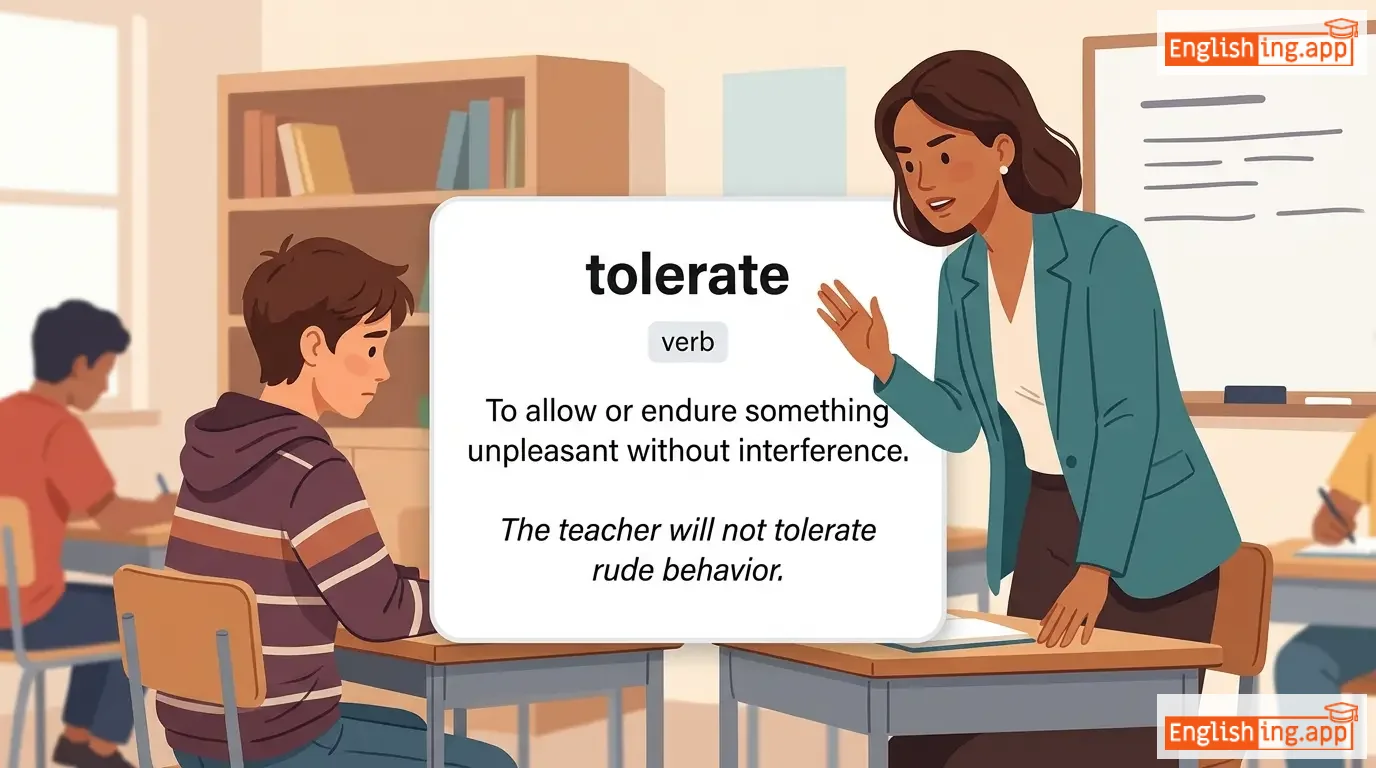
To allow or endure something unpleasant without interference.
••••••
|
The teacher will not tolerate rude behavior.
教師は失礼な行動を許容しません。
••••••
|
教師は失礼な行動を許容しません。
Kyōshi wa shitsurei na kōdō o kyoyō shimasen.
••••••
|
tolerate no nonsense
馬鹿げたことを許容しない
••••••
|
To be strict and not allow foolish or improper behavior.
••••••
|
馬鹿げたことを許容しない
bakageta koto o kyoyō shinai
••••••
|
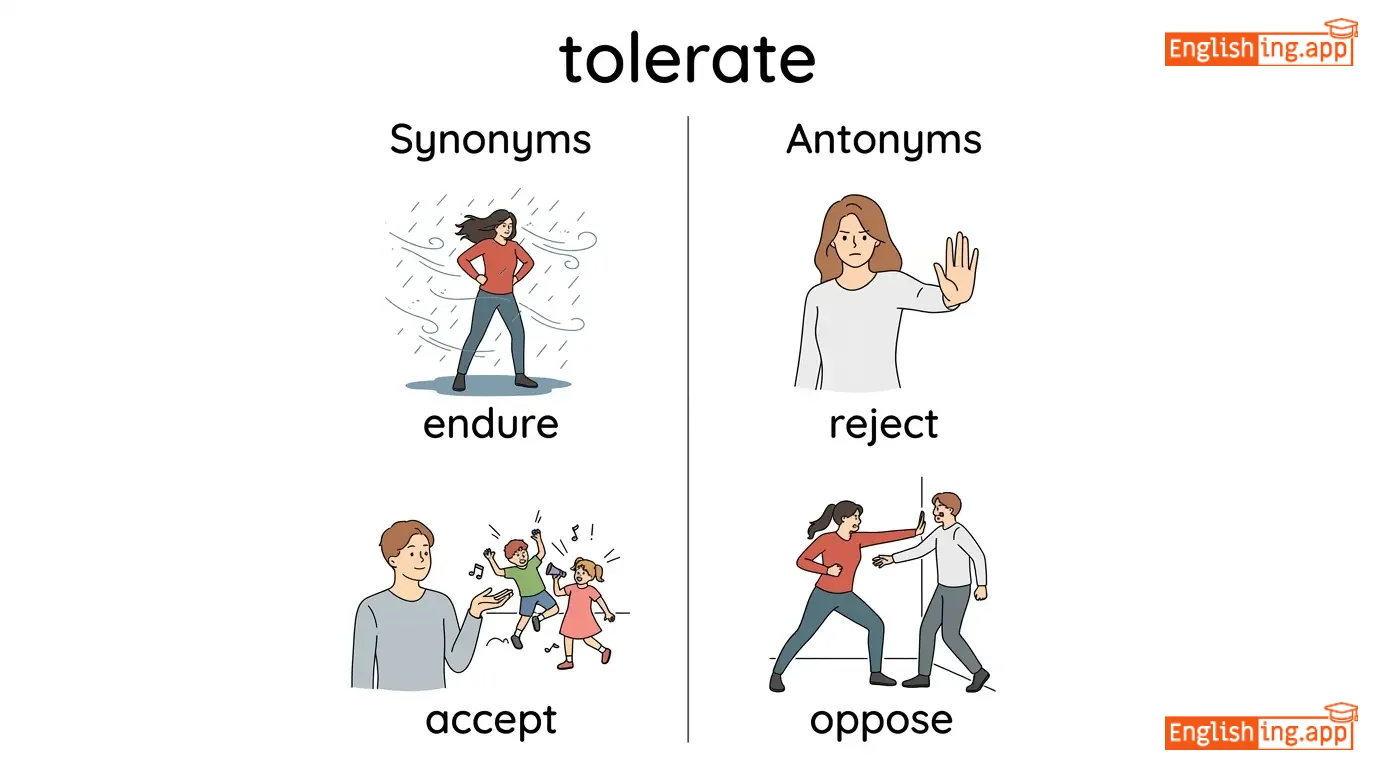
endure, accept, allow, permit, withstand
••••••
|
reject, oppose, forbid
••••••
|
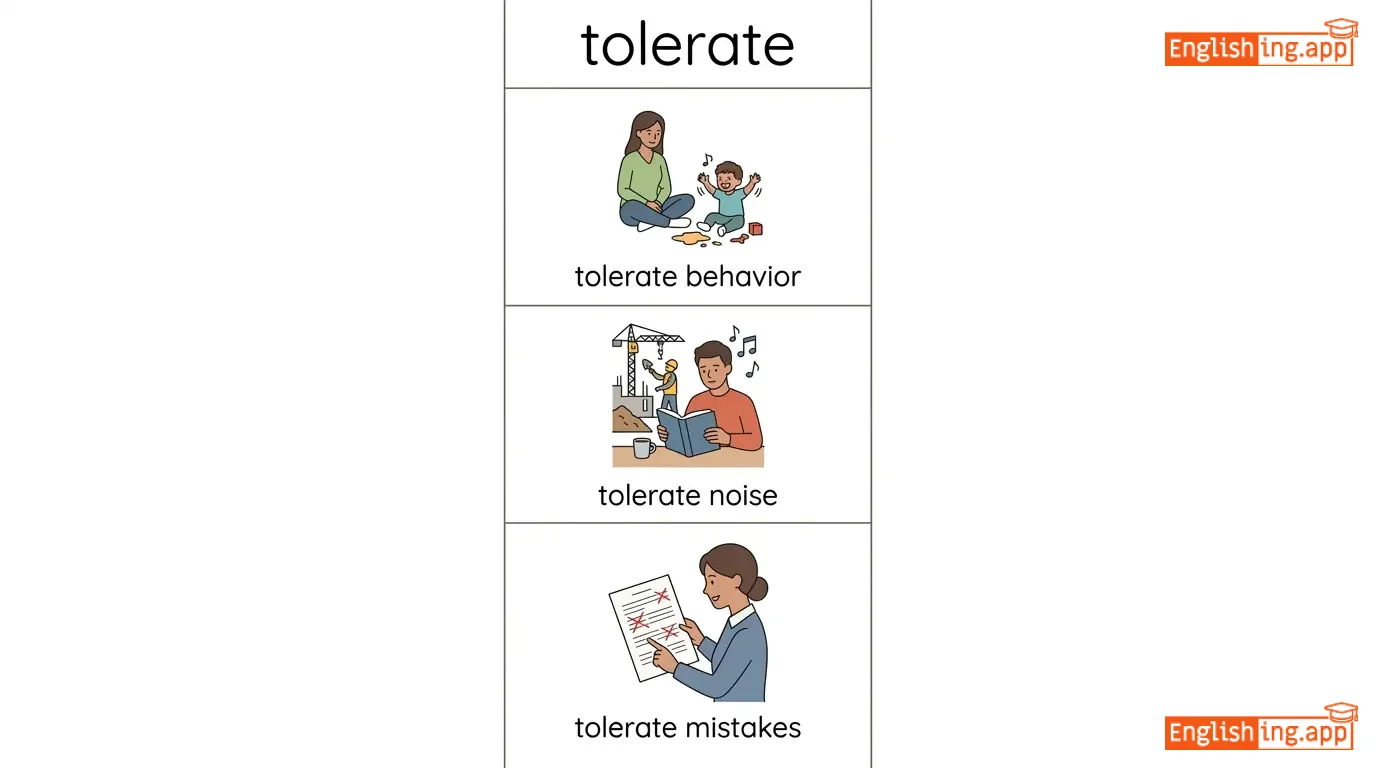
tolerate behavior, tolerate noise, tolerate mistakes, refuse to tolerate
••••••
|
教師は失礼な行動を許容しません
••••••
|
|
💰
••••••
|
/toʊl/
noun
(トール)
••••••
|
- •••••• |
通行料 / 損害
tsūkō-ryō / songai
••••••
|
- •••••• | - •••••• | - •••••• | - •••••• |
A charge payable for using a road or bridge; also the extent of damage or suffering caused by something.
••••••
|
The flood took a heavy toll on the village.
洪水は村に大きな被害を与えました。
••••••
|
洪水は村に大きな損害を与えました。
kōzui wa mura ni ōkina songai o ataemashita.
••••••
|
take a toll
通行料を取る
••••••
|
To cause harm, damage, or suffering over time.
••••••
|
損害を与える
songai o ataeru
••••••
|
fee, charge, cost, damage, burden
••••••
|
relief, benefit
••••••
|
pay toll, heavy toll, death toll, take a toll
••••••
|
Tollは通行料を払わなければ、損害があることを意味します。 (take a toll)
••••••
|
|
🍅
••••••
|
/təˈmeɪtoʊ/
noun
(トマト)
••••••
|
- •••••• |
トマト
tomato
••••••
|
- •••••• | - •••••• | - •••••• | - •••••• |
a red or yellowish fruit that is typically eaten as a vegetable
••••••
|
I added some tomato to the salad. |
サラダにトマトを少し加えました。
Sarada ni tomato o sukoshi kuwaemashita.
••••••
|
- •••••• | - •••••• | - •••••• |
fruit, vegetable, berry
••••••
|
none
••••••
|
tomato sauce, tomato soup, tomato paste
••••••
|
トマトは「明日」のように聞こえるので、明日トマトを食べることを想像してみて!
••••••
|
|
📆
••••••
|
/təˈmɒroʊ/
adverb
(トゥモロー)
••••••
|
- •••••• |
明日
ashita
••••••
|
- •••••• | - •••••• | - •••••• | - •••••• |
on the day after today; in the future
••••••
|
Tomorrow we will visit the museum. |
明日、私たちは博物館を訪れます。
Ashita, watashitachi wa hakubutsukan o otozuremasu.
••••••
|
- •••••• | - •••••• | - •••••• |
next day, following day
••••••
|
today, yesterday
••••••
|
tomorrow morning, by tomorrow, tomorrow's meeting
••••••
|
明日は今日の次の日です
••••••
|
|
🛻
••••••
|
/tʌn/
noun
(トン)
••••••
|
- •••••• |
トン
ton
••••••
|
- •••••• | - •••••• | - •••••• | - •••••• |
A unit of weight equal to 2,000 pounds (US) or 1,000 kilograms (metric); a large amount of something
••••••
|
The truck carried a ton of apples to the market.
トラックは市場に1トンのリンゴを運んだ。
••••••
|
トラックは市場に1トンのリンゴを運んだ。
Torakku wa ichiton no ringo wo hakonda.
••••••
|
a ton of
1トン
••••••
|
a large amount of something
••••••
|
1トン
ichiton
••••••
|
load, heap, mass, bulk, weight
••••••
|
none, little
••••••
|
ton of bricks, ton of work, a ton of money
••••••
|
Picture a 'トン' of sushi rice in Japan.
••••••
|
|
🎶
••••••
|
/toʊn/
noun, verb
(トーン)
••••••
|
- •••••• |
トーン
tōn
••••••
|
- •••••• | - •••••• |
tones
トーンズ
••••••
|
toning
トーニング
••••••
|
the general character or attitude of a place, piece of writing, situation, etc.
••••••
|
The tone of the letter was very formal.
手紙のトーンは非常にフォーマルでした。
••••••
|
手紙のトーンは非常にフォーマルでした。
Tegami no tōn wa hijō ni fōmaru deshita.
••••••
|
- •••••• | - •••••• | - •••••• |
style, manner, attitude, approach
••••••
|
discord, harshness
••••••
|
tone of voice, tone of conversation, tone of the message
••••••
|
Tone in music is like the tone in your voice!
••••••
|
|
👅
••••••
|
/tʌŋ/
noun
(タング)
••••••
|
- •••••• |
舌
shita
••••••
|
- •••••• | - •••••• | - •••••• | - •••••• |
a fleshy muscular organ in the mouth used for tasting, swallowing, and speaking
••••••
|
She stuck out her tongue playfully. |
彼女は遊び心で舌を出しました。
Kanojo wa asobigokoro de shita o dashimashita.
••••••
|
Cat got your tongue? |
used when someone is unexpectedly silent or unable to speak
••••••
|
猫があなたの舌を取ったのですか?
Neko ga anata no shita o totta no desu ka?
••••••
|
mouth, speech organ, language
••••••
|
none
••••••
|
tongue tied, tongue twister, tongue of a shoe
••••••
|
舌は味を感じるために使われます、まるで猫が静かにしているように。
••••••
|
|
🌙
••••••
|
/təˈnaɪt/
adverb
(トゥナイト)
••••••
|
- •••••• |
今晩
konban
••••••
|
- •••••• | - •••••• | - •••••• | - •••••• |
during the night of today; this evening
••••••
|
Tonight we are going to watch a movie. |
今晩映画を見に行きます。
Konban eiga wo mi ni ikimasu.
••••••
|
- •••••• | - •••••• | - •••••• |
this evening, this night
••••••
|
this morning, last night
••••••
|
tonight's show, see you tonight, tonight only
••••••
|
今晩映画、忘れられない時間。
••••••
|
|
😔
••••••
|
/tuː/
adverb
(トゥー)
••••••
|
- •••••• |
過ぎる
sugiru
••••••
|
- •••••• | - •••••• | - •••••• | - •••••• |
to a higher degree than is desirable, permissible, or possible
••••••
|
She is too tired to continue working. |
彼女は働き続けるには疲れすぎている。
Kanojo wa hatarakitsuzukeru ni wa tsukaresugite iru.
••••••
|
too good to be true |
something that seems so perfect that it is hard to believe it is real
••••••
|
信じられないほど良い
Shinjirarenai hodo yoi
••••••
|
excessively, overly, extremely, very
••••••
|
barely, slightly, moderately
••••••
|
too much, too late, too many, too hard
••••••
|
お茶を飲みすぎると'過ぎる'くらい眠くなる – お茶を飲みすぎると'過ぎる'くらい疲れる。
••••••
|
|
🔧
••••••
|
/tuːl/
noun
(ツール)
••••••
|
- •••••• |
道具
dōgu
••••••
|
- •••••• | - •••••• | - •••••• | - •••••• |
a device or implement used to carry out a particular function
••••••
|
He used a hammer as a tool to fix the chair. |
彼は椅子を修理するためにハンマーを道具として使いました。
Kare wa isu o shūri suru tame ni hanmā o dōgu toshite tsukaimashita.
••••••
|
- •••••• | - •••••• | - •••••• |
instrument, device, gadget, implement
••••••
|
toy, decoration
••••••
|
power tool, hand tool, tool kit, garden tool
••••••
|
Tools help you ‘tool’ your way through problems – 道具は問題を解決するのに役立ちます。
••••••
|
|
🦷
••••••
|
/tuːθ/
noun
(トゥース)
••••••
|
- •••••• |
歯
ha
••••••
|
- •••••• | - •••••• | - •••••• | - •••••• |
each of the hard, pointed structures in the mouth used for biting and chewing food
••••••
|
He has a toothache and needs to see the dentist. |
彼は歯が痛いので、歯医者に行かなければならない。
Kare wa ha ga itai node, haisha ni ikanakereba naranai.
••••••
|
a tooth for a tooth |
an eye for an eye; retribution
••••••
|
歯をためて歯を返す
Ha wo tamete ha wo kaesu
••••••
|
fang, molar, incisor, canine
••••••
|
gum
••••••
|
toothbrush, tooth paste, tooth decay, tooth fairy
••••••
|
歯の痛みは耐えられない – 歯 = 痛み
••••••
|
|
🔝
••••••
|
/tɒp/
noun
(トップ)
••••••
|
- •••••• |
頂上
choujou
••••••
|
- •••••• | - •••••• | - •••••• | - •••••• |
the highest or uppermost point, part, or surface of something
••••••
|
The book is on the top shelf.
その本は上の棚にあります。
••••••
|
その本は上の棚にあります。
Sono hon wa ue no tana ni arimasu.
••••••
|
top of the world
世界の頂上
••••••
|
feeling extremely happy or successful
••••••
|
世界の頂上
Sekai no choujou
••••••
|
summit, peak, pinnacle, apex
••••••
|
bottom, base
••••••
|
top priority, top scorer, top rated, top of the list
••••••
|
Top of the world, where happiness reaches – 世界の頂上、幸福が届く場所。
••••••
|
|
💬
••••••
|
/ˈtɒpɪk/
noun
(トピック)
••••••
|
- •••••• |
トピック
topikku
••••••
|
- •••••• | - •••••• | - •••••• | - •••••• |
a subject of conversation, discussion, or writing
••••••
|
The topic of the meeting was company expansion. |
会議のトピックは会社の拡張についてでした。
Kaigi no topikku wa kaisha no kakuchou ni tsuite deshita.
••••••
|
- •••••• | - •••••• | - •••••• |
subject, theme, issue, matter
••••••
|
digression, aside
••••••
|
discussion topic, popular topic, hot topic, main topic
••••••
|
Topics make discussions tick – トピックが議論を盛り上げる。
••••••
|
|
🔦
••••••
|
/tɔːrtʃ/
noun
(トーチ)
••••••
|
- •••••• |
懐中電灯/松明
kaichu dento taimatsu
••••••
|
- •••••• | - •••••• | - •••••• | - •••••• |
a portable electric lamp powered by batteries; a flaming stick used for light
••••••
|
Use the torch to find your way in the dark.
暗闇の中で道を見つけるには、トーチを使いましょう。
••••••
|
暗闇の中で道を見つけるには、トーチを使いましょう。
kurayami no naka de michi o mitsukeru ni wa, tochi o tsukaimashou.
••••••
|
- •••••• | - •••••• | - •••••• |
flashlight, lamp, beacon
••••••
|
darkness, blackout
••••••
|
electric torch, pocket torch, torch light, shine the torch
••••••
|
Tochi lights the night kaichu dento shines bright
••••••
|
|
🌪️
••••••
|
/tɔːrˈneɪdoʊ/
noun
(トルネード)
••••••
|
- •••••• |
竜巻
tatsumaki
••••••
|
- •••••• | - •••••• | - •••••• | - •••••• |
a rapidly rotating column of air in contact with the ground and clouds, often destructive
••••••
|
The tornado destroyed several houses in the village. |
竜巻は村のいくつかの家を破壊した
Tatsumaki wa mura no ikutsu ka no ie o hakai shita
••••••
|
- •••••• | - •••••• | - •••••• |
twister, cyclone, whirlwind, storm
••••••
|
calm, stillness
••••••
|
violent tornado, tornado warning, tornado path, tornado damage
••••••
|
竜巻 - すべてが回転して壊れる
••••••
|
|
🐢
••••••
|
/ˈtɔːr.təs/
noun
(トータス)
••••••
|
- •••••• |
カメ
kame
••••••
|
- •••••• | - •••••• | - •••••• | - •••••• |
A slow-moving land reptile with a hard shell.
••••••
|
The tortoise slowly crossed the garden.
トータスはゆっくり庭を横切った
••••••
|
カメはゆっくり庭を横切った。
Kame wa yukkuri niwa o yokotta.
••••••
|
slow as a tortoise
亀のように遅い
••••••
|
very slow
••••••
|
亀のように遅い
kame no you ni osoi
••••••
|
terrapin, chelonian, testudine, shelled reptile
••••••
|
hare, rabbit
••••••
|
tortoise shell, tortoise race, tortoise pace
••••••
|
カメ 'kame' を思い浮かべて、ゆっくり歩くことを想像する
••••••
|
|
😣
••••••
|
/ˈtɔːtʃər/
noun
(トーチャー)
••••••
|
- •••••• |
拷問
goumon
••••••
|
- •••••• | - •••••• | - •••••• | - •••••• |
the action or practice of inflicting severe pain on someone as a punishment or to force them to do something
••••••
|
He was subjected to torture during the interrogation.
彼は尋問中に拷問を受けました。
••••••
|
彼は尋問中に拷問を受けました。
Kare wa shinmon-chuu ni goumon o ukemashita.
••••••
|
- •••••• | - •••••• | - •••••• |
torment, agony, suffering, pain
••••••
|
comfort, relief
••••••
|
subject to torture, torture methods, inflicted torture
••••••
|
拷問は痛みと支配の方法です。
••••••
|
|
🎲
••••••
|
/tɔs/
verb
(トス)
••••••
|
- •••••• |
軽く投げる
karuku nageru
••••••
|
tossed
トスド
••••••
|
tossed
トスド
••••••
|
tosses
トスズ
••••••
|
tossing
トスイング
••••••
|
To throw something lightly or casually; to move or turn suddenly.
••••••
|
He tossed the keys onto the table.
彼は鍵をテーブルに投げた。
••••••
|
彼は鍵をテーブルに投げた。
Kare wa kagi wo teeburu ni nageta.
••••••
|
toss and turn
寝返りを打つ
••••••
|
to move around restlessly in bed without being able to sleep
••••••
|
寝返りを打つ
Negairi wo utsu
••••••
|
throw, fling, pitch, hurl
••••••
|
catch, hold, retain
••••••
|
toss a coin, toss away, toss out, toss salad
••••••
|
Tossはサッカーのコイン投げのように、ボールを投げることです。
••••••
|
|
🧮
••••••
|
/ˈtoʊ.təl/
adjective, noun, verb
(トータル)
••••••
|
- •••••• |
合計
goukei
••••••
|
totaled
トータルド
••••••
|
totaled
トータルド
••••••
|
totals
トータルス
••••••
|
totaling
トータリング
••••••
|
the whole amount; complete
••••••
|
The total cost was too high.
合計費用は高すぎました。
••••••
|
合計費用は高すぎました。
Goukei hiyou wa takasugimashita.
••••••
|
a total loss
完全な損失
••••••
|
completely destroyed or ruined
••••••
|
完全な損失
kanzen na sonshitsu
••••••
|
whole, complete, sum, entire
••••••
|
partial, incomplete
••••••
|
total cost, total amount, total failure, grand total
••••••
|
Total は全てを意味します – Total は合計のことです。
••••••
|
|
💯
••••••
|
/ˈtoʊtəli/
adverb
(トータリー)
••••••
|
- •••••• |
完全に
kanzen ni
••••••
|
- •••••• | - •••••• | - •••••• | - •••••• |
completely; entirely; absolutely
••••••
|
I totally agree with your opinion. |
私はあなたの意見に完全に同意します。
Watashi wa anata noiken ni kanzen ni doui shimasu.
••••••
|
- •••••• | - •••••• | - •••••• |
completely, entirely, absolutely
••••••
|
partially, partly, incompletely
••••••
|
totally different, totally wrong, totally agree
••••••
|
完全に同意することは、何も漏らさない!
••••••
|
|
👆
••••••
|
/tʌtʃ/
verb
(タッチ)
••••••
|
|
触れる
fureru
••••••
|
touched
タッチド
••••••
|
touched
タッチド
••••••
|
touches
タッチズ
••••••
|
touching
タッチング
••••••
|
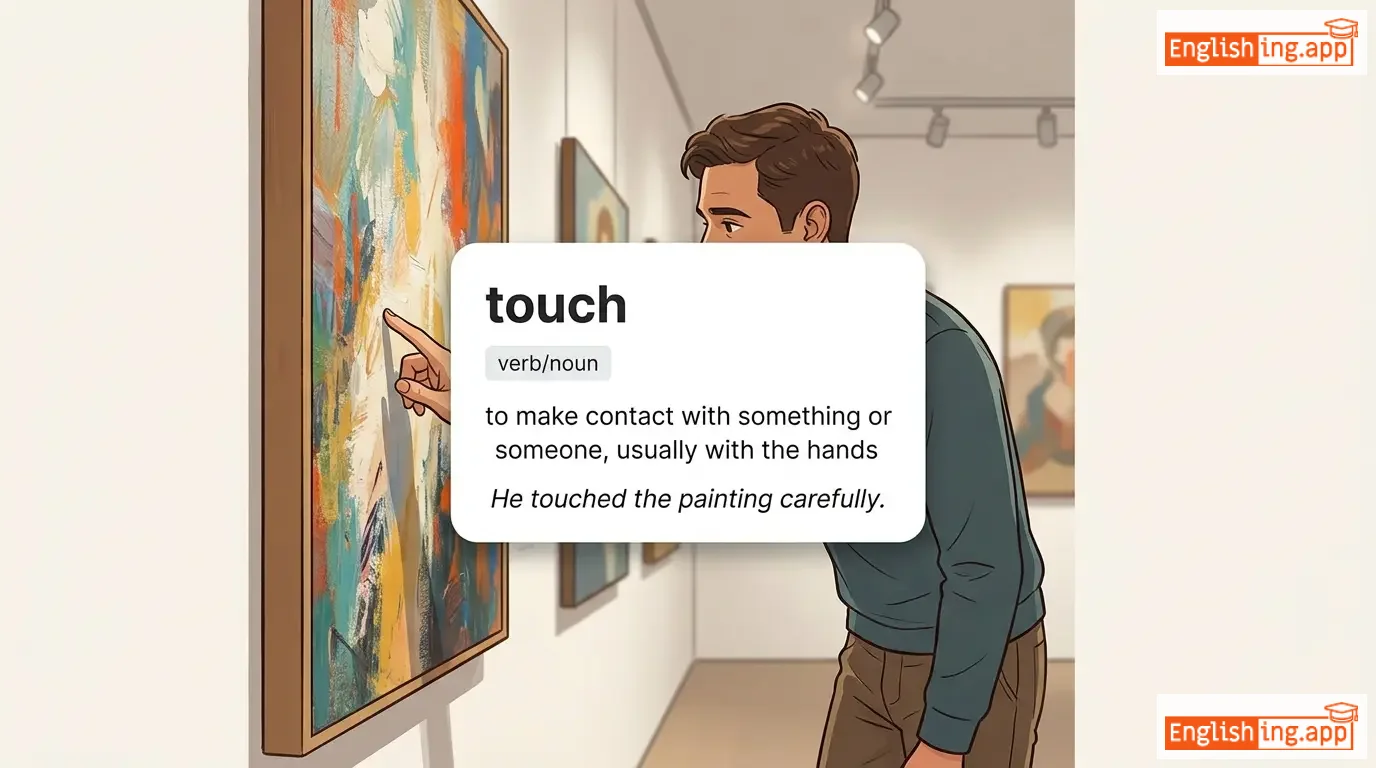
to put your hand or finger on something; to make physical contact
••••••
|
Please don't touch the wet paint.
塗りたてのペンキに触れないでください。
••••••
|
塗りたてのペンキに触れないでください。
Nuritāte no penki ni furenai de kudasai.
••••••
|
- •••••• | - •••••• | - •••••• |
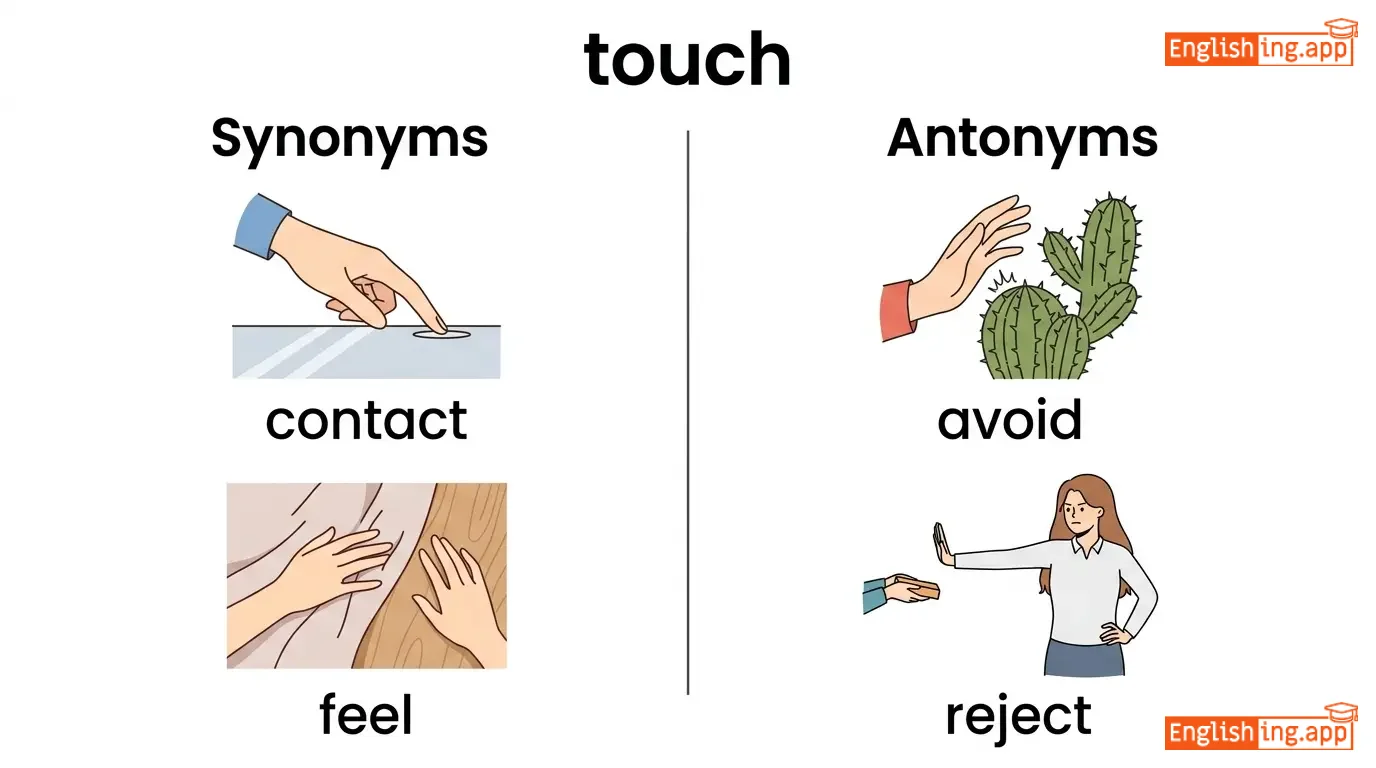
feel, handle, contact, brush
••••••
|
avoid, miss
••••••
|
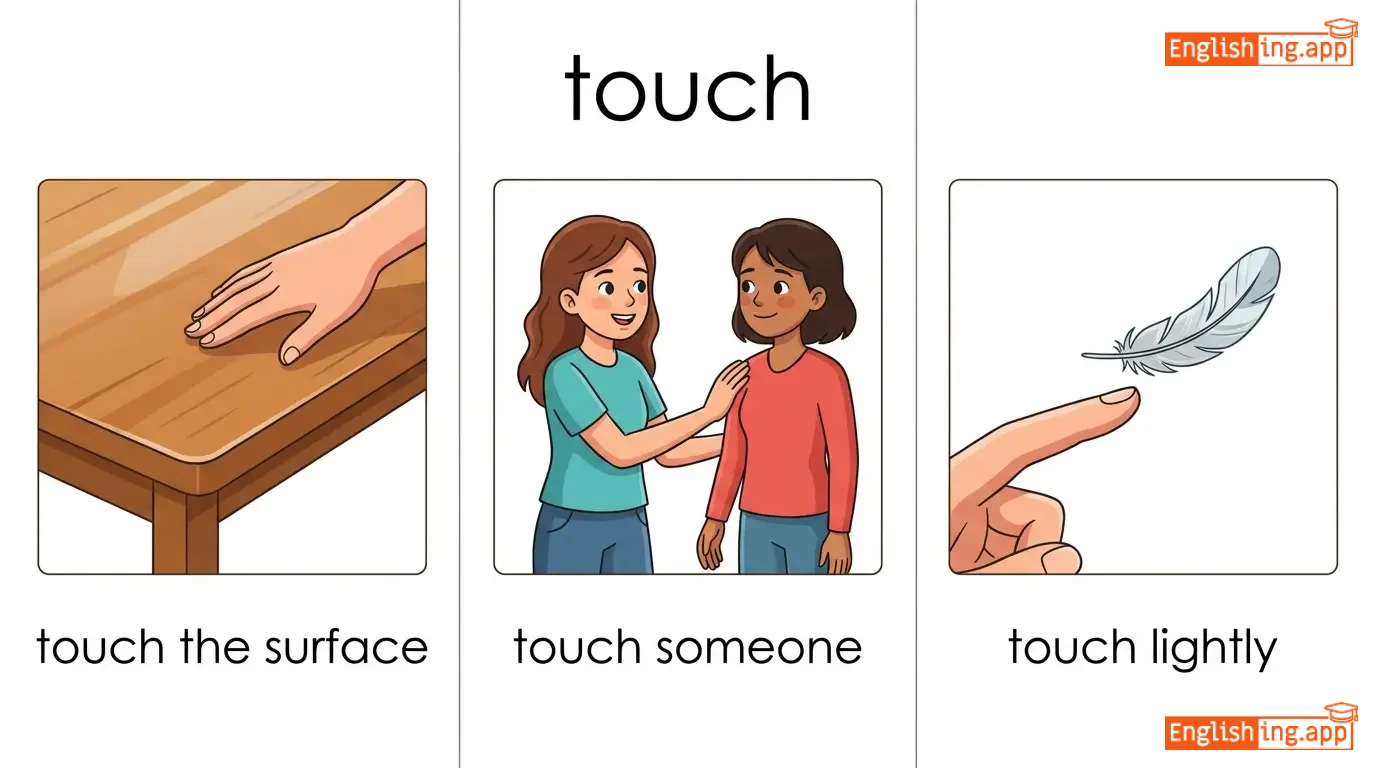
touch screen, touch gently, lose touch, get in touch
••••••
|
Fureru means to touch and create a mark!
••••••
|
|
💪
••••••
|
/tʌf/
adjective
(taf)
••••••
|
- •••••• |
頑丈
ganjou
••••••
|
- •••••• | - •••••• | - •••••• | - •••••• |
strong, durable, and difficult to break or deal with
••••••
|
He had a tough day at work. |
彼は仕事で厳しい一日を過ごしました。
Kare wa shigoto de kibishii ichinichi o sugoshimashita.
••••••
|
tough luck |
a phrase used to express sympathy for someone's unfortunate situation
••••••
|
不運
fuun
••••••
|
hard, durable, strong, resilient
••••••
|
soft, weak
••••••
|
tough decision, tough time, tough job
••••••
|
岩のように頑丈!
••••••
|
|
🧳
••••••
|
/tʊr/
noun/verb
(ツアー)
••••••
|

|
ツアー
tsuaa
••••••
|
toured
ツアード
••••••
|
toured
ツアード
••••••
|
tours
ツアーズ
••••••
|
touring
ツアリング
••••••
|
a journey or trip, often for pleasure, during which you visit different places
••••••
|
They went on a tour of Europe last summer.
彼らは昨年の夏にヨーロッパツアーに行きました。
••••••
|
彼らは昨年の夏にヨーロッパツアーに行きました。
Karera wa sakunen no natsu ni Yōroppa tsuaa ni ikimashita.
••••••
|
grand tour
グランドツアー
••••••
|
an extended journey through Europe, traditionally taken by wealthy young men in the past
••••••
|
グランドツアー
gurando tsuaa
••••••
|
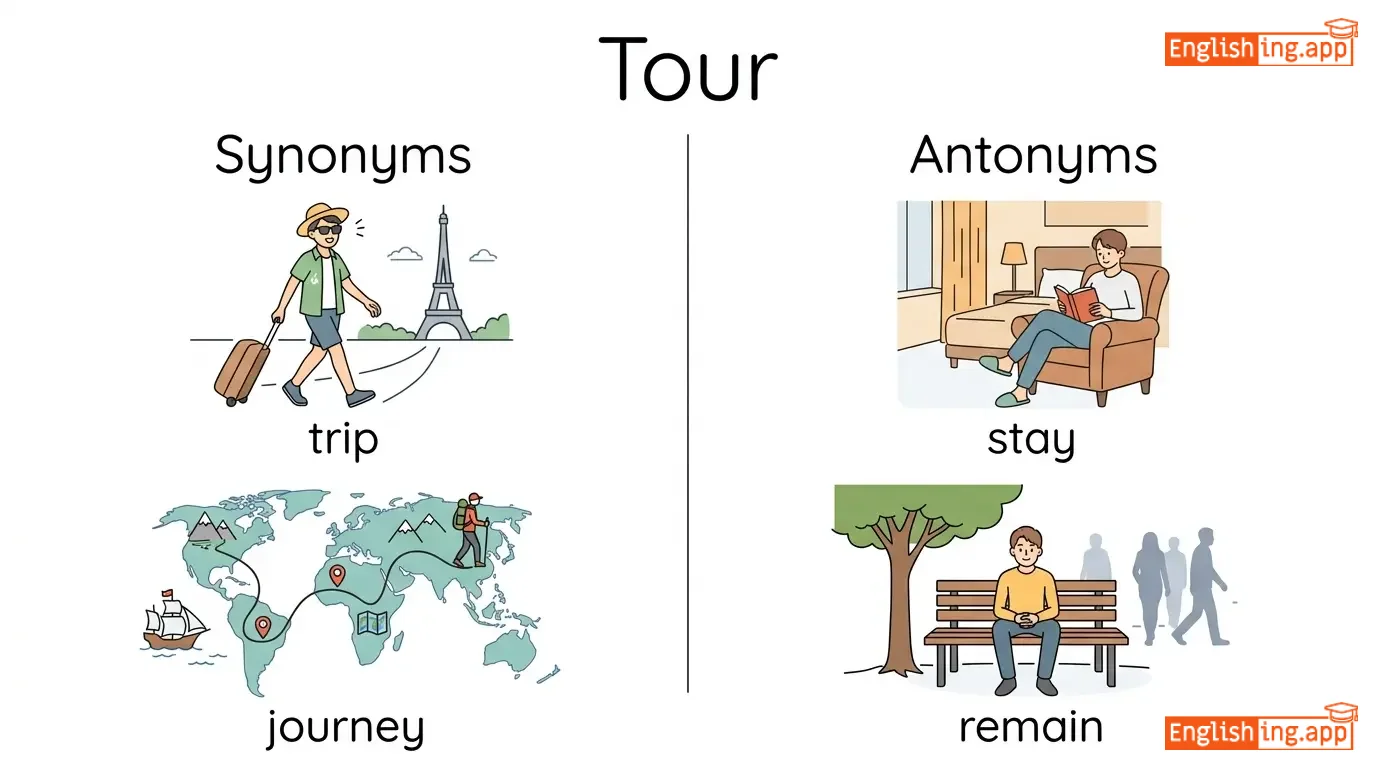
trip, journey, excursion, voyage, travel
••••••
|
stay, remain
••••••
|
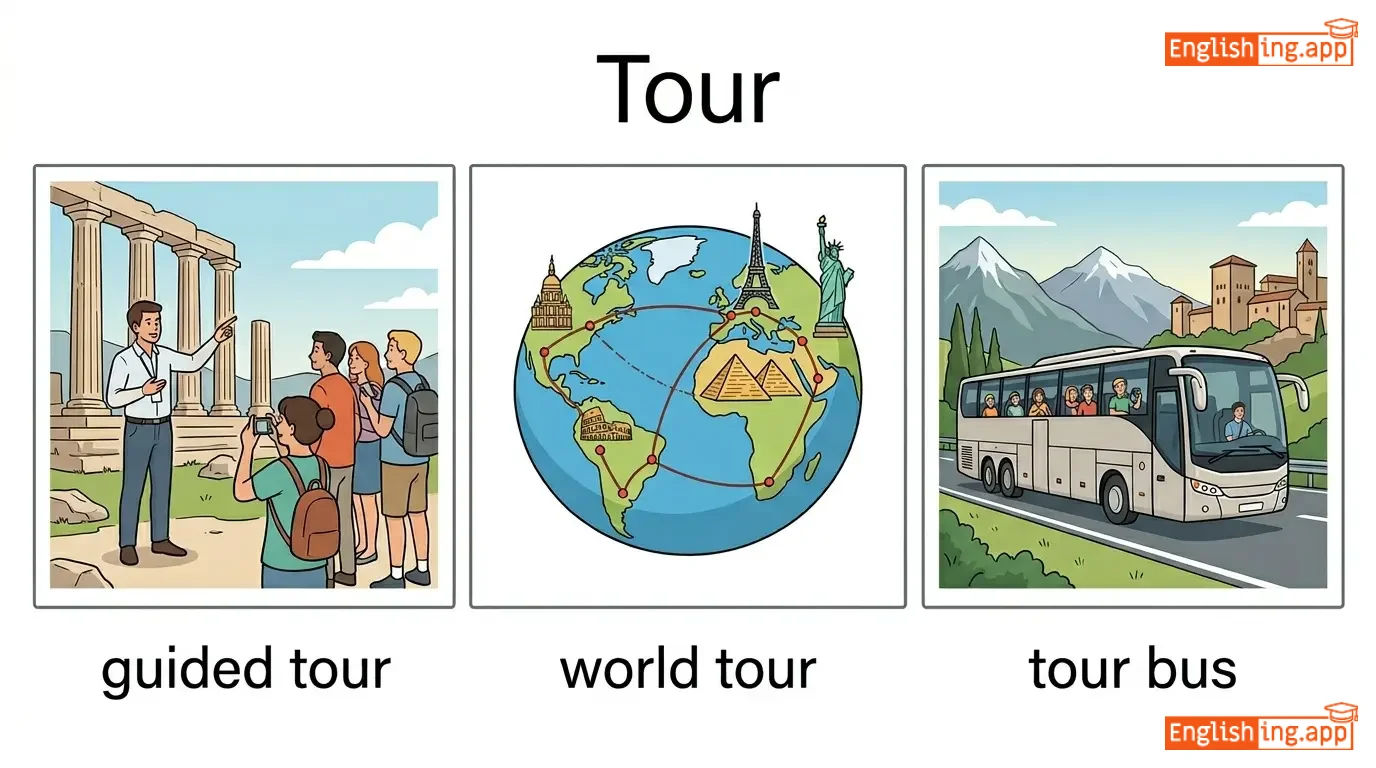
guided tour, world tour, tour bus, tour guide, cultural tour
••••••
|
Tourはツアーのこと — ツアーで新しい場所に行こう
••••••
|
|
🏆
••••••
|
/ˈtʊənəmənt/
noun
(トーナメント)
••••••
|
|
トーナメント
tōnamento
••••••
|
- •••••• | - •••••• | - •••••• | - •••••• |
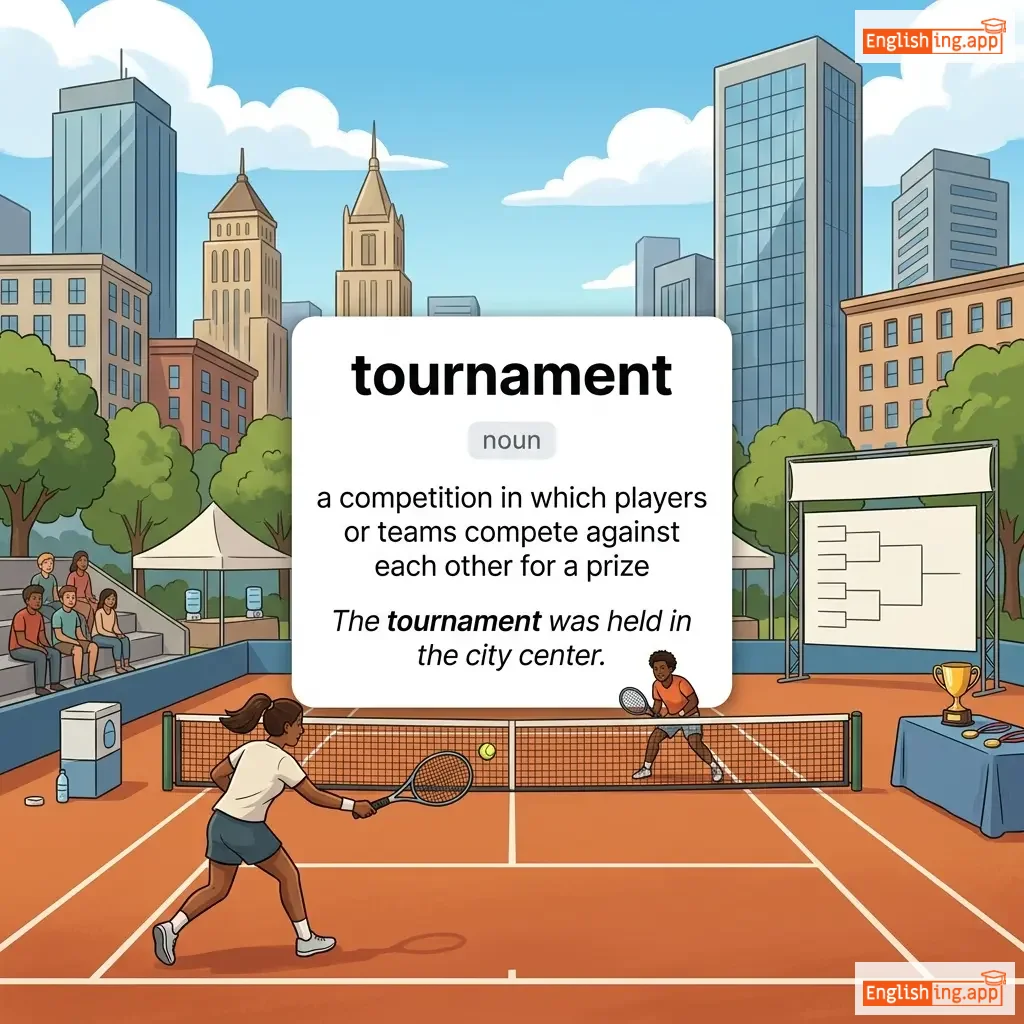
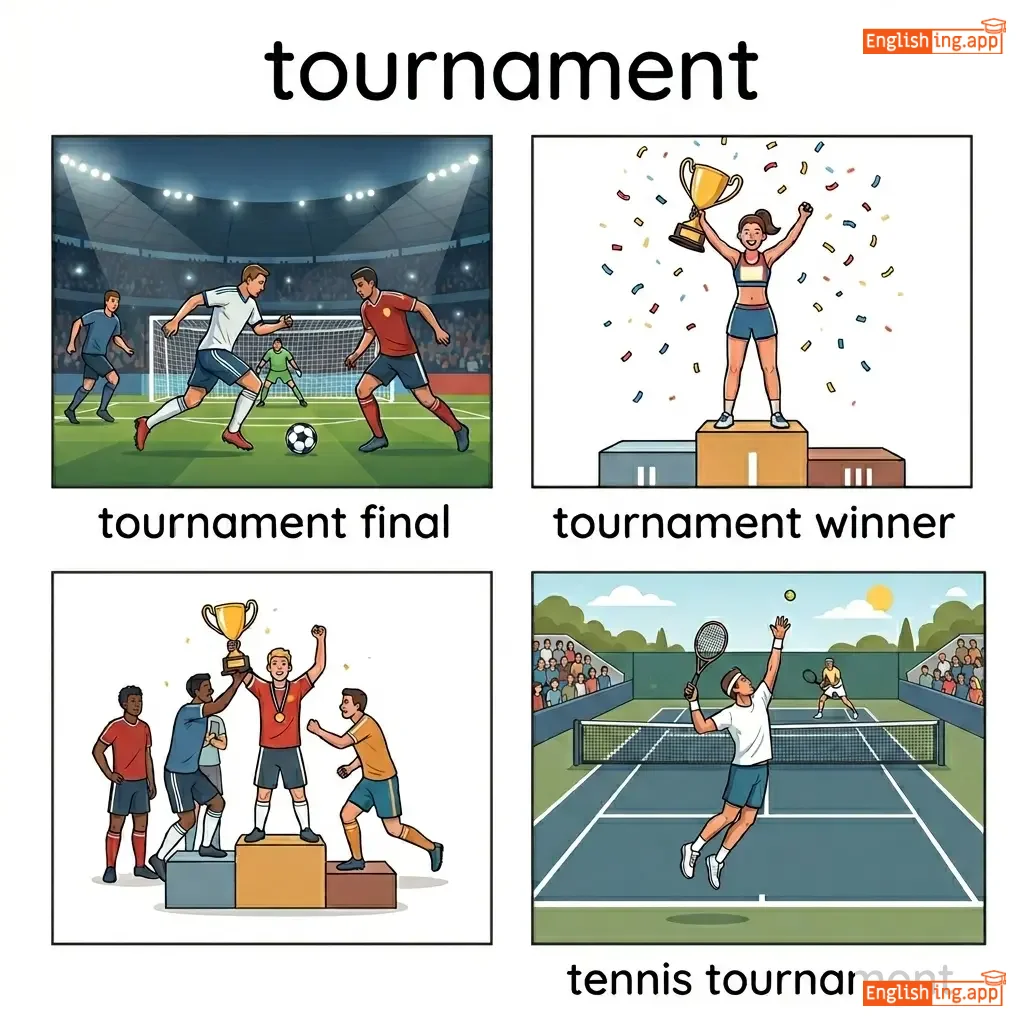
a competition in which players or teams compete against each other for a prize
••••••
|
The tournament was held in the city center. |
トーナメントは市内中心部で開催されました。
Tōnamento wa shinai chūshinbu de kaisai saremashita.
••••••
|
- •••••• | - •••••• | - •••••• |
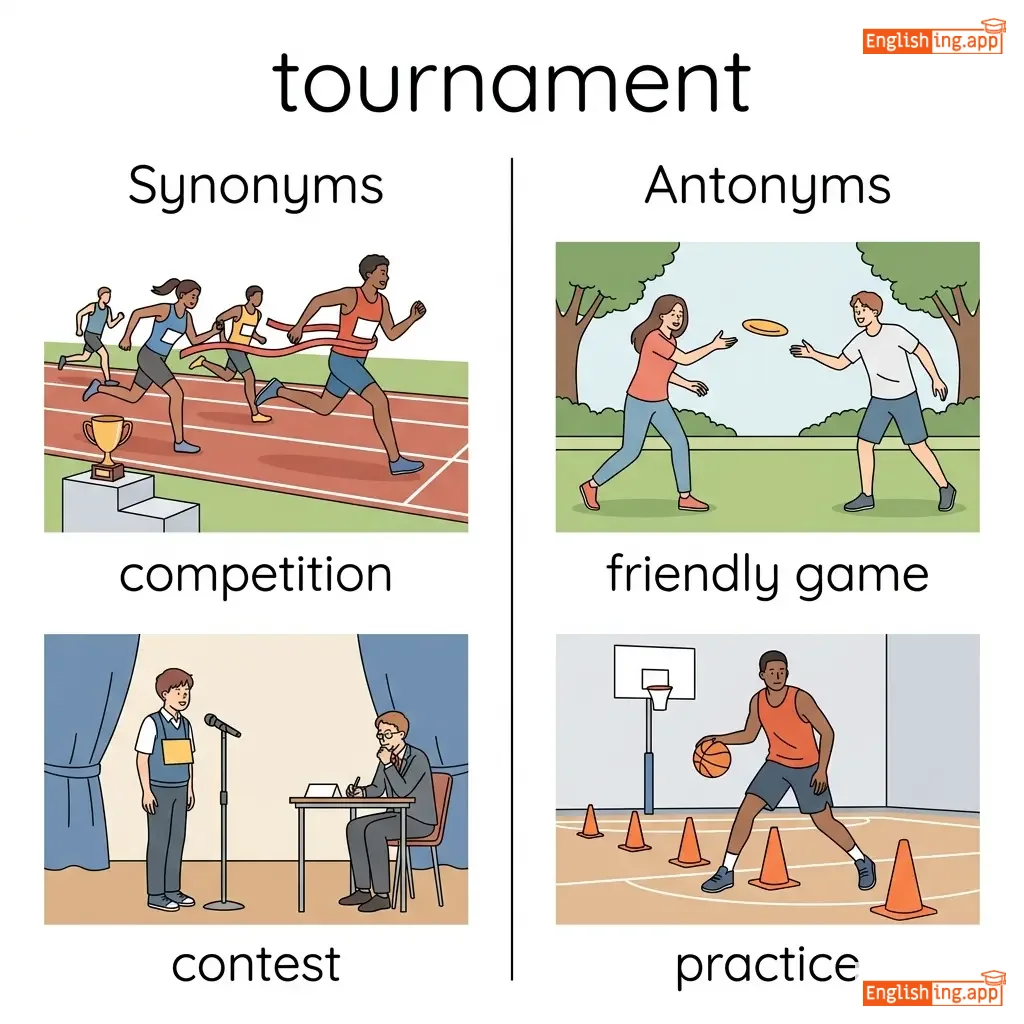
competition, contest, match, championship
••••••
|
friendly game
••••••
|
tournament final, tournament winner, tennis tournament
••••••
|
トーナメントは、賞品をかけて競う競技会です!
••••••
|

