|
絵文字
|
単語 | Images | 翻訳 | 過去 | 過去分詞 | 三人称単数 | 動名詞 | 意味 | 例文 | 例文の翻訳 | 表現例 | 表現例の意味 | 表現例の翻訳 | 同義語 | 対義語 | コロケーション | ニーモニック |
|---|---|---|---|---|---|---|---|---|---|---|---|---|---|---|---|---|---|
|
💪
••••••
|
/ðəmˈsɛlvz/
pronoun
(ðəmˈsɛlvz)
••••••
|
- •••••• |
自分で
jibun de
••••••
|
- •••••• | - •••••• | - •••••• | - •••••• |
used to emphasize the subject of the sentence or to refer to the subject doing something to itself
••••••
|
They fixed the problem themselves. |
彼らは自分で問題を解決しました。
Karera wa jibun de mondai o kaiketsu shimashita.
••••••
|
- •••••• | - •••••• | - •••••• |
themselves alone, personally, independently
••••••
|
none
••••••
|
do it themselves, solve it themselves, they themselves
••••••
|
自分で (jibun de) は自分の力で問題を解決
••••••
|
|
⏳
••••••
|
/ðɛn/
adverb
(zen)
••••••
|
- •••••• |
それから
sorekara
••••••
|
- •••••• | - •••••• | - •••••• | - •••••• |
at that time; next in order of time or place
••••••
|
We went to the park, and then we had lunch.
公園に行って、その後昼食をとりました。
••••••
|
公園に行って、その後昼食をとりました。
Kōen ni itte, sono ato chūshoku o torimashita.
••••••
|
back then
その時
••••••
|
used to refer to a time in the past
••••••
|
その時
sono toki
••••••
|
afterward, subsequently, later, next
••••••
|
before
••••••
|
then what, then go, then what happened
••••••
|
それから (then) 過去の時間を思い出すために
••••••
|
|
📚
••••••
|
/θiˈɒlədʒi/
noun
(神学)
••••••
|
- •••••• |
神学
shingaku
••••••
|
- •••••• | - •••••• | - •••••• | - •••••• |
The study of the nature of God and religious beliefs.
••••••
|
She is pursuing a degree in theology at the university. |
彼女は大学で神学の学位を取得しています。
Kanojo wa daigaku de shingaku no gakui o shutsudō shiteimasu.
••••••
|
- •••••• | - •••••• | - •••••• |
divinity, religious studies, doctrine, belief system
••••••
|
atheism, secularism
••••••
|
theology course, theology degree, theology department, theology student
••••••
|
Theoは神、logyは学問、だから神学は神の学問です。
••••••
|
|
💡
••••••
|
/ˌθiːəˈrɛtɪkl/
adjective
(θɪəˈrɛtɪkəl)
••••••
|
- •••••• |
理論的
riron-teki
••••••
|
- •••••• | - •••••• | - •••••• | - •••••• |
Concerned with or based on theory rather than practical application.
••••••
|
The idea remains largely theoretical without real-world evidence. |
そのアイデアは実際の証拠がなくても、主に理論的なものとして残ります。
Sono aidea wa jissai no shouko ga nakute mo, omoni riron-teki na mono toshite nokorimasu.
••••••
|
- •••••• | - •••••• | - •••••• |
abstract, conceptual, hypothetical, speculative
••••••
|
practical, applied
••••••
|
theoretical framework, theoretical knowledge, theoretical approach, purely theoretical
••••••
|
理論的は頭の中にあるアイデア、実証がない — ただの電球💡。
••••••
|
|
📖
••••••
|
/ˈθiːəri/
noun
(セオリー)
••••••
|
- •••••• |
理論
riron
••••••
|
- •••••• | - •••••• | - •••••• | - •••••• |
An explanation of an idea or principle based on facts, reasoning, and evidence.
••••••
|
Einstein's theory of relativity changed the way we understand physics.
アインシュタインの相対性理論は、物理学の理解方法を変えました。
••••••
|
アインシュタインの相対性理論は、物理学の理解方法を変えました。
Ainshutain no sōtaisei riron wa, butsurigaku no rikai hōhō o kaemashita.
••••••
|
in theory
理論上
••••••
|
something that is true according to principles, though it may not work in practice
••••••
|
理論上
riron jō
••••••
|
hypothesis, concept, idea, principle, doctrine
••••••
|
fact, reality, practice
••••••
|
scientific theory, political theory, in theory, theory of evolution
••••••
|
理論 (riron) は単なるセオリーではなく、物事を説明するための構造です。
••••••
|
|
🧠
••••••
|
/ˈθɛrəpɪst/
noun
(セラピスト)
••••••
|
- •••••• |
セラピスト
serapisuto
••••••
|
- •••••• | - •••••• | - •••••• | - •••••• |
a person trained to provide treatment or counseling for physical or mental health
••••••
|
The therapist helped him overcome his anxiety.
セラピストは彼の不安を克服する手助けをしました。
••••••
|
セラピストは彼の不安を克服する手助けをしました。
Serapisuto wa kare no fuan o kokufuku suru tedasuke o shimashita.
••••••
|
speech therapist
言語療法士
••••••
|
a specialist who helps people improve their speech
••••••
|
言語療法士
gengo ryōhō-shi
••••••
|
counselor, psychologist, healer, advisor, psychiatrist
••••••
|
patient, client
••••••
|
physical therapist, speech therapist, professional therapist, family therapist
••••••
|
セラピスト — あなたを助ける人、心と体の健康のための専門家。
••••••
|
|
💆♀️
••••••
|
/ˈθɛrəpi/
noun
(セラピー)
••••••
|


|
セラピー
serapii
••••••
|
- •••••• | - •••••• | - •••••• | - •••••• |
treatment intended to relieve or heal a disorder
••••••
|
She is receiving therapy for her injury.
彼女は怪我のためにセラピーを受けています。
••••••
|
彼女は怪我のためにセラピーを受けています。
Kanojo wa kega no tame ni serapii o uketeimasu.
••••••
|
- •••••• | - •••••• | - •••••• |
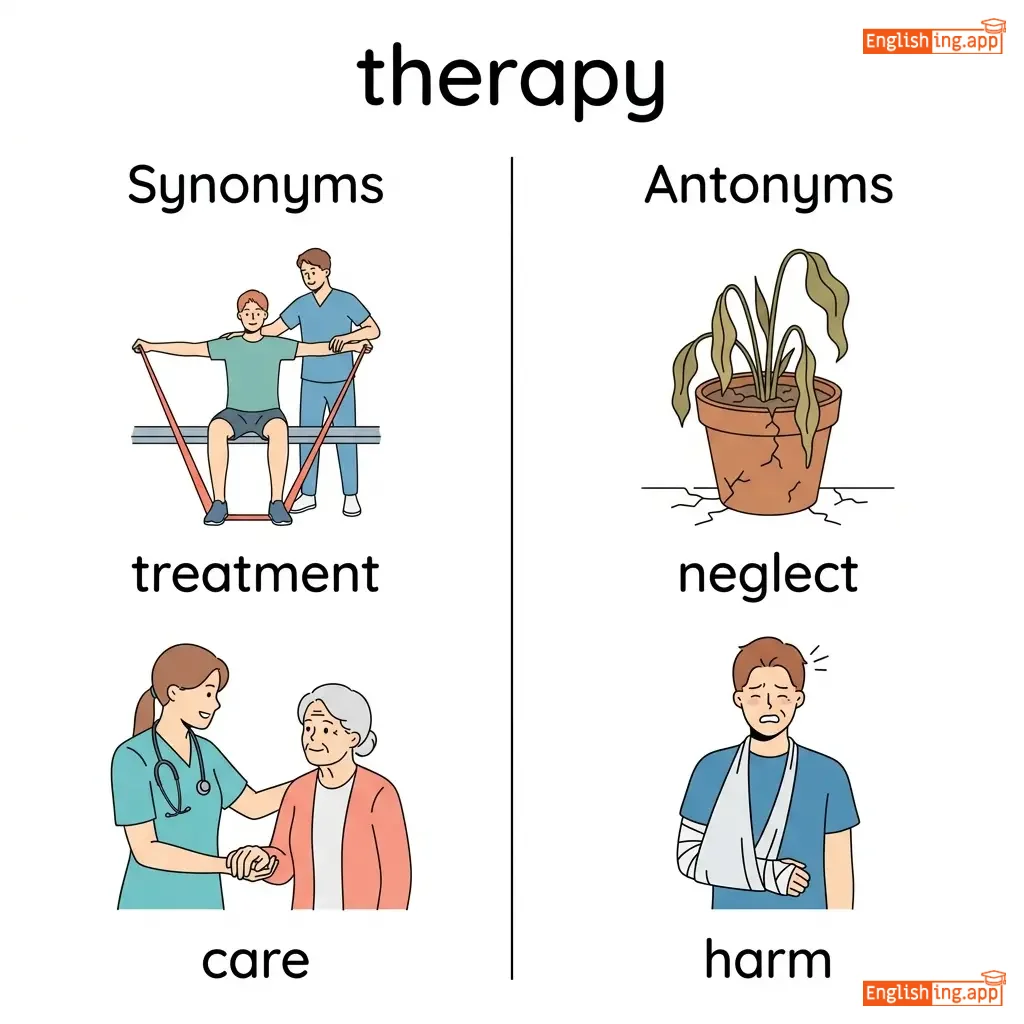
treatment, care, healing, rehabilitation
••••••
|
neglect, harm
••••••
|
physical therapy, therapy session, receive therapy
••••••
|
セラピー (therapy) は身体と心を癒す助けになります
••••••
|
|
👉
••••••
|
/ðeər/
adverb
(ðeər)
••••••
|
- •••••• |
そこ
soko
••••••
|
- •••••• | - •••••• | - •••••• | - •••••• |
in or at that place; to that place
••••••
|
I will meet you there at 5 PM. |
私は午後5時にそこであなたに会います。
Watashi wa gogo 5-ji ni soko de anata ni aimasu.
••••••
|
- •••••• | - •••••• | - •••••• |
over there, in that place, at that location
••••••
|
here, nowhere, everywhere
••••••
|
over there, right there, out there
••••••
|
そこでは午後5時に会います。
••••••
|
|
⏳
••••••
|
/ðɛrˈæftər/
adverb
(ゼアアフター)
••••••
|
- •••••• |
その後
sono go
••••••
|
- •••••• | - •••••• | - •••••• | - •••••• |
from that time on
••••••
|
He moved to Canada and thereafter started a new life. |
彼はカナダに引っ越し、その後新しい人生を始めました。
Kare wa Kanada ni hikkoshi, sono go atarashii jinsei o hajimemashita.
••••••
|
- •••••• | - •••••• | - •••••• |
afterward, subsequently, later, following
••••••
|
before, earlier
••••••
|
thereafter began, thereafter continued, thereafter followed
••••••
|
Thereafter- その後 - Think of the time after a significant event.
••••••
|
|
➡️
••••••
|
/ˌðɛərˈbaɪ/
adverb
(デアバイ)
••••••
|
- •••••• |
それによって;
sore ni yotte
••••••
|
- •••••• | - •••••• | - •••••• | - •••••• |
as a result of that; by that means
••••••
|
He worked hard and thereby achieved success. |
彼は一生懸命働き、それによって成功を収めました。
kare wa isshoukenmei hataraki, sore ni yotte seikou o osamemashita.
••••••
|
- •••••• | - •••••• | - •••••• |
thus, consequently, therefore, hence
••••••
|
nevertheless, however, nonetheless
••••••
|
thereby achieving, thereby creating, thereby ensuring
••••••
|
努力して成功を収める、それによって達成される。
••••••
|
|
🔗
••••••
|
/ˈðɛərˌfɔr/
adverb
(ゼアフォー)
••••••
|
- •••••• |
したがって
shitagatte
••••••
|
- •••••• | - •••••• | - •••••• | - •••••• |
for that reason; consequently
••••••
|
It was raining, therefore we stayed inside.
It was raining, therefore we stayed inside.
••••••
|
雨が降っていたので、私たちは中にいました。
Ame ga futteita node, watashitachi wa naka ni imashita.
••••••
|
- •••••• | - •••••• | - •••••• |
thus, hence, consequently, accordingly
••••••
|
nevertheless, however, nonetheless
••••••
|
therefore conclude, therefore decide, therefore recommend
••••••
|
したがって、すべての結果には理由がある。
••••••
|
|
👥
••••••
|
/ðiːz/
pronoun
(ðiz)
••••••
|
- •••••• |
これら
korera
••••••
|
- •••••• | - •••••• | - •••••• | - •••••• |
used to refer to things or people that are near or present
••••••
|
These are my friends. |
これらは私の友達です。
Korera wa watashi no tomodachi desu.
••••••
|
- •••••• | - •••••• | - •••••• |
this, those, such
••••••
|
those
••••••
|
these things, these people, these books
••••••
|
These things are close to me - これらのものは私の近くにあります。
••••••
|
|
📚
••••••
|
/ˈθiːsɪs/
noun
(テーシス)
••••••
|
- •••••• |
テーシス
teshisu
••••••
|
- •••••• | - •••••• | - •••••• | - •••••• |
A long piece of writing on a particular subject, usually for a degree at a university.
••••••
|
She spent two years writing her doctoral thesis. |
彼女は博士論文を書くのに2年を費やしました。
Kanojo wa hakase ronbun o kaku no ni 2-nen o tsuiyashimashita.
••••••
|
antithesis |
The direct opposite of something; a contrasting idea.
••••••
|
対立命題
Tairitsu meidai
••••••
|
dissertation, paper, essay, study, research
••••••
|
fact, proof
••••••
|
doctoral thesis, master's thesis, write a thesis, defend a thesis
••••••
|
テーシスは大学の学位を得るために書くべき📚大きな本です。
••••••
|
|
👫
••••••
|
/ðeɪ/
pronoun
(ðeɪ)
••••••
|
- •••••• |
彼ら
karera
••••••
|
- •••••• | - •••••• | - •••••• | - •••••• |
used to refer to people or things previously mentioned or easily identified
••••••
|
They are going to the park. |
彼らは公園に行きます。
Karera wa kōen ni ikimasu.
••••••
|
- •••••• | - •••••• | - •••••• |
them, those, these
••••••
|
I, we
••••••
|
they are, they have, they will
••••••
|
They are our friends - 彼らは私たちの友達です。
••••••
|
|
📚
••••••
|
/θɪk/
adjective
(ハピネス)
••••••
|
- •••••• |
厚い
atsui
••••••
|
- •••••• | - •••••• | - •••••• | - •••••• |
having a large distance between two sides; not thin
••••••
|
The book was so thick it took weeks to finish. |
その本はとても厚くて、終わらせるのに数週間かかりました。
Sono hon wa totemo atsukute, owaraseru noni suushukan kakarimashita.
••••••
|
thick and thin |
through good times and bad
••••••
|
厚みと薄さ
atsumi to ususa
••••••
|
dense, heavy, wide, bulky
••••••
|
thin, slim, narrow
••••••
|
thick book, thick wall, thick hair, thick fog
••••••
|
Thickは厚いという意味で、厚い本のようにたくさんのページがあります
••••••
|
|
📏
••••••
|
/ˈθɪk.nəs/
noun
(シックネス)
••••••
|
- •••••• |
厚さ
atsusa
••••••
|
- •••••• | - •••••• | - •••••• | - •••••• |
The measure of how thick or dense something is
••••••
|
The thickness of the book made it hard to carry.
その本の厚さのため、持ち運びが大変だった。
••••••
|
その本の厚さのため、持ち運びが大変だった。
sono hon no atsusa no tame, mochi hakobi ga taihen datta.
••••••
|
in the thick of
イン ザ シック オブ
••••••
|
deeply involved in a situation or activity
••••••
|
ど真ん中で
domannaka de
••••••
|
density, width, depth, heft, bulk
••••••
|
thinness, slenderness
••••••
|
layer thickness, thickness gauge, thickness measurement
••••••
|
厚さ (atsusa) = thickness, 厚い (atsui) = thick
••••••
|
|
🦹♂️
••••••
|
/θiːf/
noun
(θiːf)
••••••
|
- •••••• |
泥棒
dorobo
••••••
|
- •••••• | - •••••• | - •••••• | - •••••• |
a person who steals things from others
••••••
|
The thief was caught stealing from the jewelry store. |
泥棒は宝石店で盗んでいるところを捕まえられました。
Dorobo wa housekiten de nusundeiru tokoro wo tsukamaeraremashita.
••••••
|
- •••••• | - •••••• | - •••••• |
robber, burglar, criminal
••••••
|
police, protector, guard
••••••
|
car thief, pickpocket thief, professional thief
••••••
|
泥棒(dorobo)は物を盗む人という意味です。
••••••
|
|
📏
••••••
|
/θɪn/
adjective
(θin)
••••••
|
- •••••• |
薄い; 細い
usui; hosoi
••••••
|
- •••••• | - •••••• | - •••••• | - •••••• |
having little thickness; not thick; slender
••••••
|
She wore a thin jacket in the cold weather.
彼女は寒い天気で薄いジャケットを着ていました。
••••••
|
彼女は寒い天気で薄いジャケットを着ていました。
kanojo wa samui tenki de usui jaketto o kite imashita
••••••
|
- •••••• | - •••••• | - •••••• |
slender, slim, narrow, skinny
••••••
|
thick, fat, wide, broad
••••••
|
thin layer, thin ice, thin air, thin line
••••••
|
薄いと細い — 紙のように薄い。
••••••
|
|
📦
••••••
|
/θɪŋ/
noun
(θɪŋ)
••••••
|
- •••••• |
物
mono
••••••
|
- •••••• | - •••••• | - •••••• | - •••••• |
an object, idea, or matter that is being referred to or dealt with
••••••
|
This is the thing I was looking for. |
これは私が探していた物です。
Kore wa watashi ga sagashite ita mono desu.
••••••
|
- •••••• | - •••••• | - •••••• |
item, object, matter, article
••••••
|
nothing, nonentity
••••••
|
the thing, a thing, important thing, one thing
••••••
|
Think of a 'thing' as a 'mono' (物) that you always find somewhere.
••••••
|
|
🤔
••••••
|
/θɪŋk/
verb
(think)
••••••
|
|
考える
kangaeru
••••••
|
thought
thot
••••••
|
thought
thot
••••••
|
thinks
thinkz
••••••
|
thinking
thinking
••••••
|
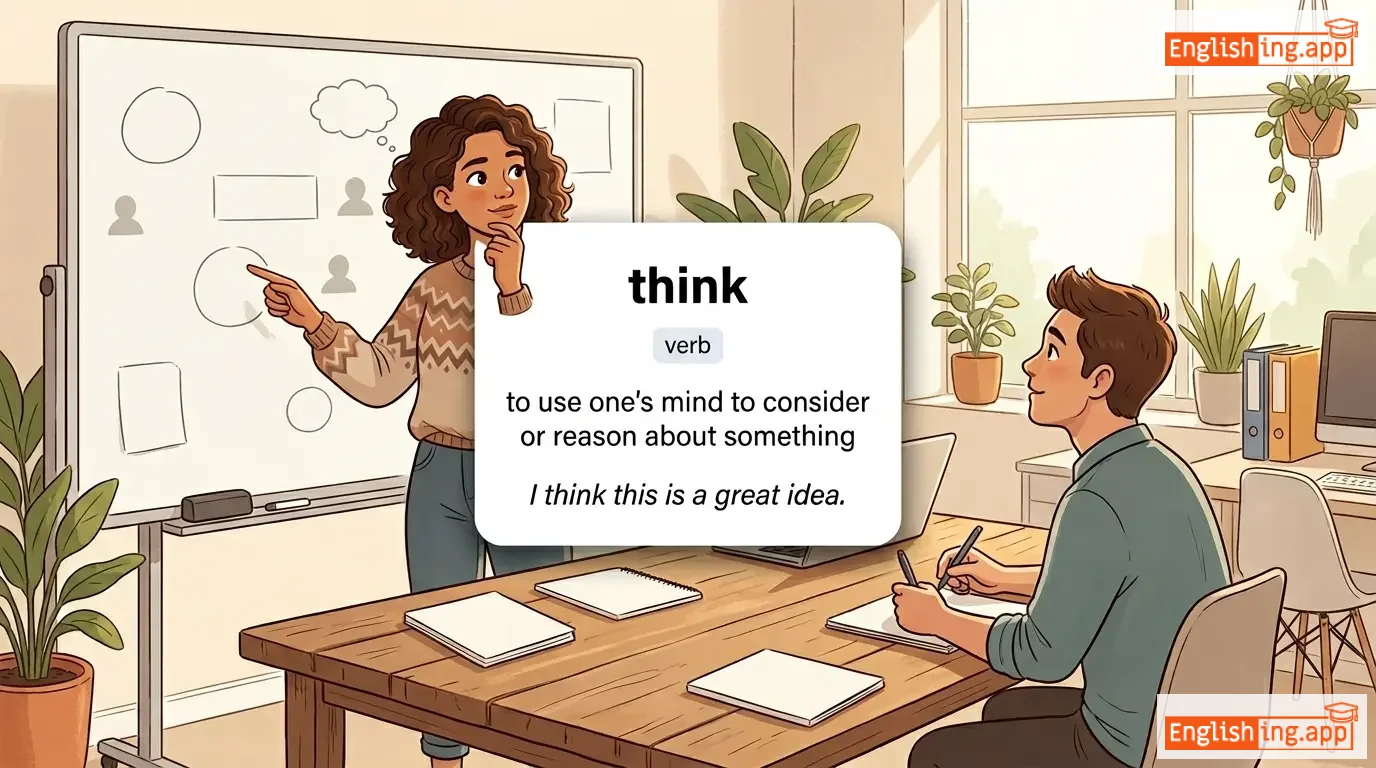
to use one's mind to consider or reason about something
••••••
|
I think this is a great idea.
私はこれが素晴らしいアイデアだと思います。
••••••
|
私はこれが素晴らしいアイデアだと思います。
Watashi wa kore ga subarashī aidea da to omoimasu.
••••••
|
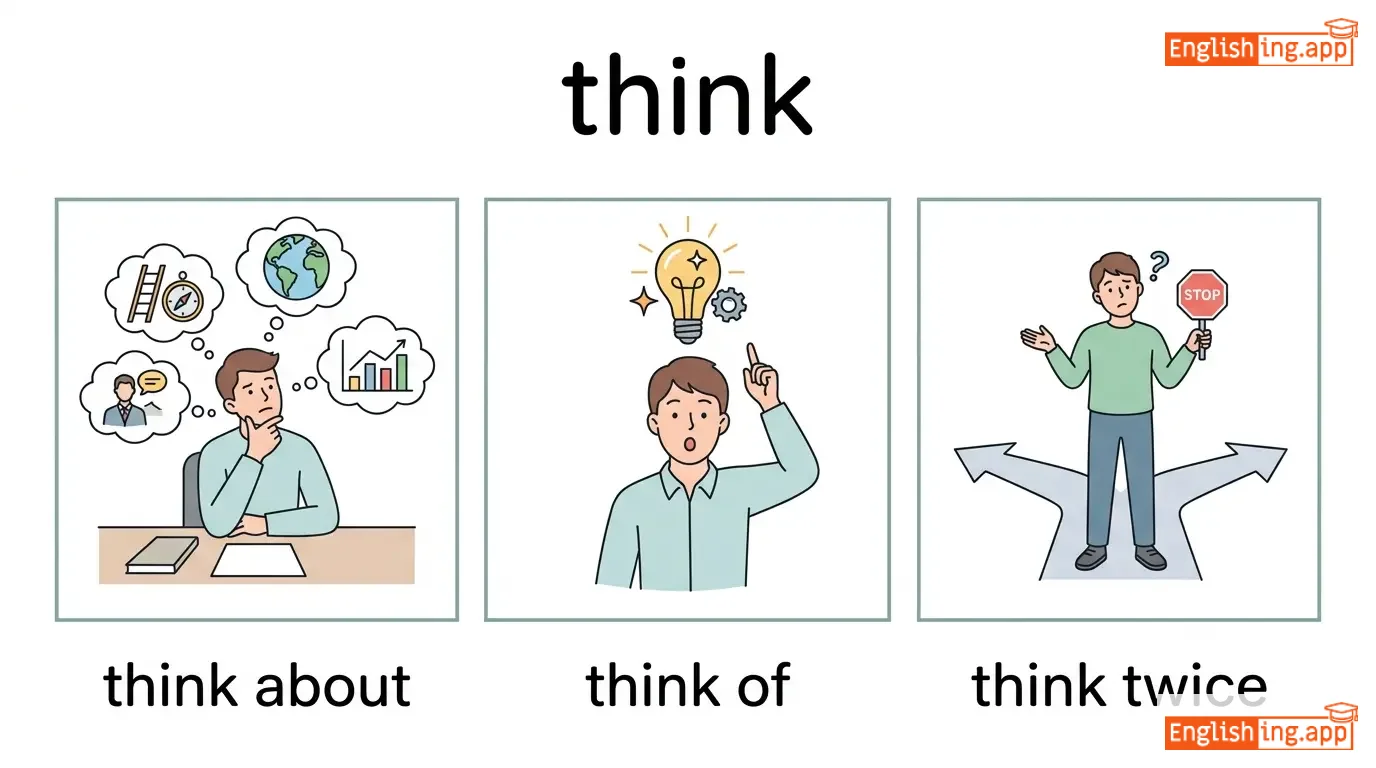
Think twice
二度考えろ
••••••
|
Consider something carefully before making a decision
••••••
|
二度考えろ
Nido kangaero
••••••
|
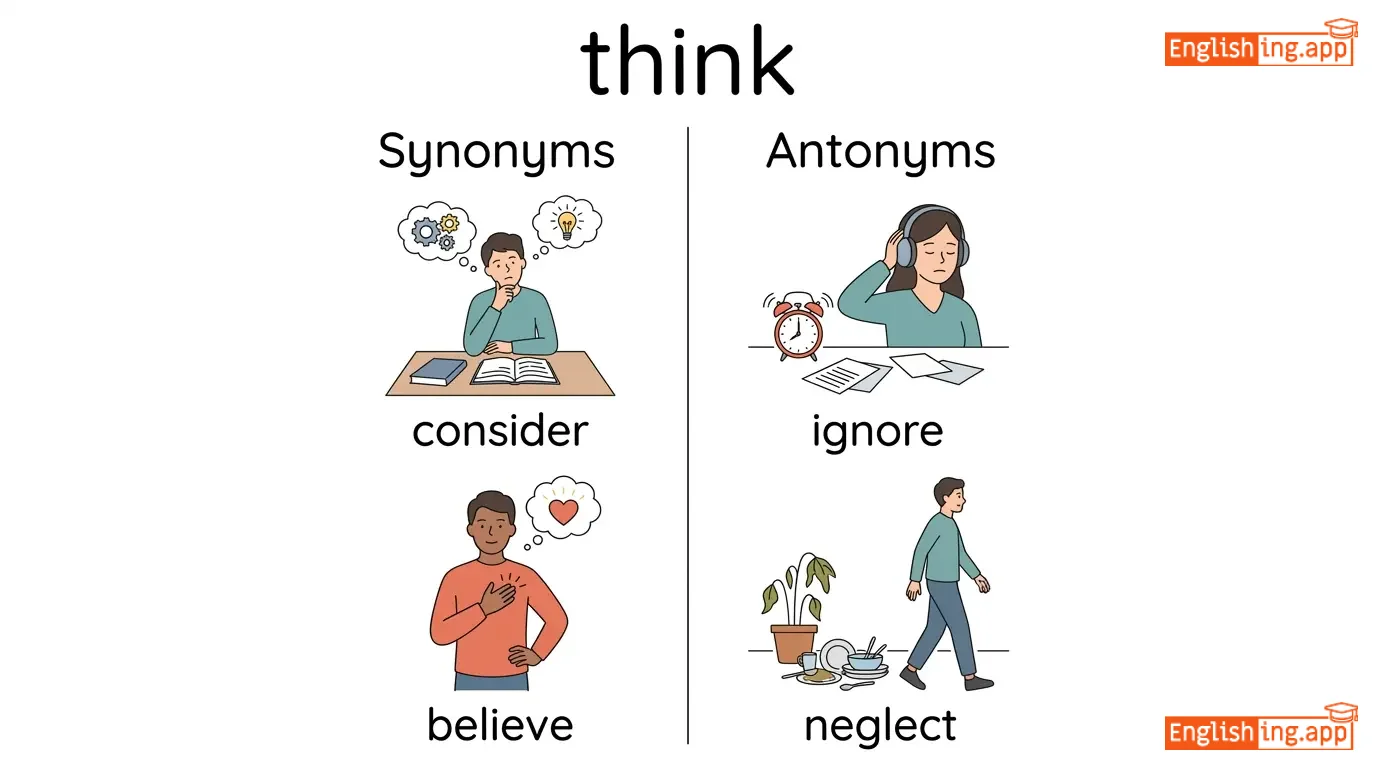
consider, believe, reflect, ponder
••••••
|
ignore, neglect
••••••
|
think about, think of, think twice, think hard
••••••
|
考えることは、心をリフレッシュして最適な選択を見つけるための鍵です。
••••••
|
|
💭
••••••
|
/ˈθɪŋ.kə.bəl/
adjective
(シンカブル)
••••••
|
- •••••• |
考えられる
kangaerareru
••••••
|
- •••••• | - •••••• | - •••••• | - •••••• |
Capable of being imagined or conceived; possible to consider or believe
••••••
|
It is hard to believe that such an outcome is even thinkable.
そのような結果が考えられるとは信じがたい。
••••••
|
そのような結果が考えられるとは信じがたい。
Sono you na kekka ga kangaerareru to wa shinjigatai
••••••
|
- •••••• | - •••••• | - •••••• |
conceivable, imaginable, possible, plausible
••••••
|
unimaginable, impossible, inconceivable
••••••
|
barely thinkable, hardly thinkable, easily thinkable
••••••
|
Thinkable = 考えられる (kangaerareru)
••••••
|
|
💭
••••••
|
/ˈθɪŋkɪŋ/
noun
(ˈθɪŋkɪŋ)
••••••
|
- •••••• |
考え
kangae
••••••
|
- •••••• | - •••••• | - •••••• | - •••••• |
the process of considering or reasoning about something
••••••
|
Her thinking was clear and precise. |
彼女の考えは明確で正確でした。
Kanojo no kangae wa meikaku de seikaku deshita.
••••••
|
- •••••• | - •••••• | - •••••• |
thought, contemplation, reflection, reasoning
••••••
|
ignorance, confusion
••••••
|
critical thinking, logical thinking, abstract thinking
••••••
|
In Japanese, '考え' means thinking, like putting ideas together in your mind.
••••••
|
|
3️⃣
••••••
|
/θɜrd/
adjective
(サード)
••••••
|
- •••••• |
三番目
sanbanme
••••••
|
- •••••• | - •••••• | - •••••• | - •••••• |
constituting number three in a sequence
••••••
|
She finished in third place. |
彼女は三番目に終わった。
Kanojo wa sanbanme ni owatta.
••••••
|
- •••••• | - •••••• | - •••••• |
thirdly, tertiary, trinal
••••••
|
first, second
••••••
|
third place, third time, third attempt
••••••
|
「三番目」のメダル(🥉)を思い出してください。
••••••
|
|
📖
••••••
|
/ðɪs/
pronoun
(ディス)
••••••
|
- •••••• |
これ
kore
••••••
|
- •••••• | - •••••• | - •••••• | - •••••• |
used to refer to a person or thing that is close or near in space, time, or thought
••••••
|
This is my favorite book. |
これは私のお気に入りの本です。
Kore wa watashi no okiniiri no hon desu.
••••••
|
- •••••• | - •••••• | - •••••• |
this one, here, these
••••••
|
that, those
••••••
|
this book, this place, this idea
••••••
|
これ (kore) はあなたの近くにあるものを指すときに使います。
••••••
|
|
🔍
••••••
|
/ˈθʌroʊ/
adjective
(セロー)
••••••
|
- •••••• |
徹底的な, 詳細な
tettai-tekina, shousaina
••••••
|
- •••••• | - •••••• | - •••••• | - •••••• |
complete with regard to every detail; not superficial or partial
••••••
|
The report was thorough and well-researched. |
そのレポートは徹底的で、十分に調査されていました。
sono repōto wa tettai-teki de, juubun ni chousa sarete imashita.
••••••
|
thorough check |
a detailed and complete examination
••••••
|
徹底的な検査
tettai-teki na kensa
••••••
|
complete, detailed, exhaustive, comprehensive, meticulous
••••••
|
incomplete, careless, superficial
••••••
|
thorough analysis, thorough research, thorough cleaning, thorough understanding
••••••
|
セローは thorough です、全てが徹底的に調べられる
••••••
|
|
✅
••••••
|
/ˈθʌrəli/
adverb
(thōrli)
••••••
|
- •••••• |
徹底的に; 完全に;
tetteiteki ni; kanzen ni;
••••••
|
- •••••• | - •••••• | - •••••• | - •••••• |
completely; entirely; in a thorough manner
••••••
|
She thoroughly cleaned the entire house before the guests arrived.
彼女はゲストが到着する前に家全体を徹底的に掃除しました。
••••••
|
彼女はゲストが到着する前に家全体を徹底的に掃除しました。
Kanojo wa gesuto ga tōchaku suru mae ni ie zentai o tetteiteki ni sōji shimashita.
••••••
|
- •••••• | - •••••• | - •••••• |
completely, entirely, fully, totally, utterly
••••••
|
partially, incompletely, superficially, hastily
••••••
|
thoroughly cleaned, thoroughly examined, thoroughly enjoyed
••••••
|
完璧に掃除して、すべてきれいにする。
••••••
|
|
👢
••••••
|
/ðoʊz/
pronoun
(ðoʊz)
••••••
|
- •••••• |
それら
sorera
••••••
|
- •••••• | - •••••• | - •••••• | - •••••• |
used to refer to people or things that are far away or distant in space, time, or thought
••••••
|
Those are the shoes I want. |
それらは私が欲しい靴です。
Sorera wa watashi ga hoshī kutsu desu.
••••••
|
- •••••• | - •••••• | - •••••• |
those ones, those people, those things
••••••
|
this, these
••••••
|
those shoes, those days, those people
••••••
|
遠くの 'それら' (sorera)
••••••
|
|
🌧️
••••••
|
/ðoʊ/
conjunction
(zō)
••••••
|
- •••••• |
それでも
soredemo
••••••
|
- •••••• | - •••••• | - •••••• | - •••••• |
used to introduce a fact that makes the main statement of the sentence seem surprising or unexpected
••••••
|
Though it was raining, they still went outside. |
雨が降っていたにもかかわらず、彼らは外に出た。
Ame ga futte ita ni mo kakawarazu, karera wa soto ni deta.
••••••
|
- •••••• | - •••••• | - •••••• |
although, however, but
••••••
|
because, since
••••••
|
though difficult, though tired, though happy
••••••
|
'それでも' (soredemo) 雨が降っていても外に出る
••••••
|
|
💭
••••••
|
/θɔːt/
noun
(ソート)
••••••
|
- •••••• |
考え
kangae
••••••
|
- •••••• | - •••••• | - •••••• | - •••••• |
an idea or opinion produced by thinking or considering something
••••••
|
She had a sudden thought about the future. |
彼女は未来についての突然の考えを持っていた。
Kanojo wa mirai ni tsuite no totsuzen no kangae o motte ita.
••••••
|
- •••••• | - •••••• | - •••••• |
idea, notion, belief, concept
••••••
|
ignorance, uncertainty
••••••
|
deep thought, quick thought, passing thought
••••••
|
'考え' (kangae) は突然浮かぶ
••••••
|
|
💭
••••••
|
/ˈθɔːtˌproʊvɪkɪŋ/
adjective
(ソート-プロヴォーキング)
••••••
|
- •••••• |
考えさせる
kangae saseru
••••••
|
- •••••• | - •••••• | - •••••• | - •••••• |
stimulating careful consideration or thought
••••••
|
The movie was deeply thought-provoking and left a lasting impression. |
その映画は深く考えさせられ、永続的な印象を残しました。
Sono eiga wa fukaku kangae saserare, eizoku-teki na inshō o nokoshimashita.
••••••
|
- •••••• | - •••••• | - •••••• |
stimulating, insightful, profound, reflective
••••••
|
unthoughtful, shallow
••••••
|
thought-provoking question, thought-provoking film, thought-provoking book
••••••
|
考えさせる - This movie will make you think long after!
••••••
|
|
💭
••••••
|
/ˈθɔːtfəl/
adjective
(sōtofuru)
••••••
|
- •••••• |
思慮深い
shiryo kai
••••••
|
- •••••• | - •••••• | - •••••• | - •••••• |
showing careful consideration or attention
••••••
|
She gave a thoughtful response to every question asked.
彼女はすべての質問に対して思慮深い回答をしました。
••••••
|
彼女はすべての質問に対して思慮深い回答をしました。
Kanojo wa subete no shitsumon ni taishite shiryo kai kotae o shimashita.
••••••
|
- •••••• | - •••••• | - •••••• |
considerate, reflective, kind, caring
••••••
|
thoughtless, inconsiderate
••••••
|
thoughtful gesture, thoughtful comment, thoughtful gift
••••••
|
思慮深い - Thoughtful answers show care and attention!
••••••
|
|
💯
••••••
|
/ˈθaʊzənd/
noun
(ˈθaʊzənd)
••••••
|
- •••••• |
千
sen
••••••
|
- •••••• | - •••••• | - •••••• | - •••••• |
the number equal to 10 hundred or 1,000
••••••
|
There were a thousand people at the concert. |
コンサートには千人がいました。
Konsāto ni wa sen-nin ga imashita.
••••••
|
- •••••• | - •••••• | - •••••• |
kilo, grand
••••••
|
one, few
••••••
|
thousand dollars, thousand people, thousand years
••••••
|
千人が歌うコンサート (Sennin ga utau konsāto)
••••••
|
|
🧵
••••••
|
/θred/
noun
(スレッド)
••••••
|
- •••••• |
糸
ito
••••••
|
- •••••• | - •••••• | - •••••• | - •••••• |
a long, thin strand of cotton, nylon, or other fibers used for sewing
••••••
|
She used a red thread to sew the torn button back on. |
彼女は赤い糸を使って壊れたボタンを縫い直しました。
Kanojo wa akai ito o tsukatte kowareta botan o nuinokoshimashita.
••••••
|
hang by a thread |
to be in a very dangerous or uncertain situation
••••••
|
糸のようにぶら下がる
Ito no you ni burasagaru
••••••
|
fiber, string, filament, yarn, strand
••••••
|
rope, wire
••••••
|
cotton thread, lose the thread, follow the thread, silver thread
••••••
|
Threadは糸を意味する — Facebookスレッドで会話が糸のように繋がっています!
••••••
|
|
⚠️
••••••
|
/θrɛt/
noun
(スレット)
••••••
|
- •••••• |
脅威, 危険
kyōi, kiken
••••••
|
- •••••• | - •••••• | - •••••• | - •••••• |
A statement or action indicating intent to cause harm or danger.
••••••
|
The letter contained a threat against the company.
手紙には会社に対する脅威が含まれていた。
••••••
|
手紙には会社に対する脅威が含まれていた。
Tegami ni wa kaisha ni taisuru kyōi ga fukumarete ita.
••••••
|
make a threat
脅威をかける
••••••
|
To express an intention to harm or cause problems.
••••••
|
脅威をかける
kyōi o kakeru
••••••
|
danger, menace, intimidation, warning, risk
••••••
|
safety, protection, assurance
••••••
|
serious threat, direct threat, pose a threat
••••••
|
脅威 = Kyōi—電話の脅威
••••••
|
|
⚠️
••••••
|
/ˈθretən/
verb
(zuren)
••••••
|
|
脅す
odosu
••••••
|
threatened
zurened
••••••
|
threatened
zurened
••••••
|
threatens
zurens
••••••
|
threatening
zureningu
••••••
|
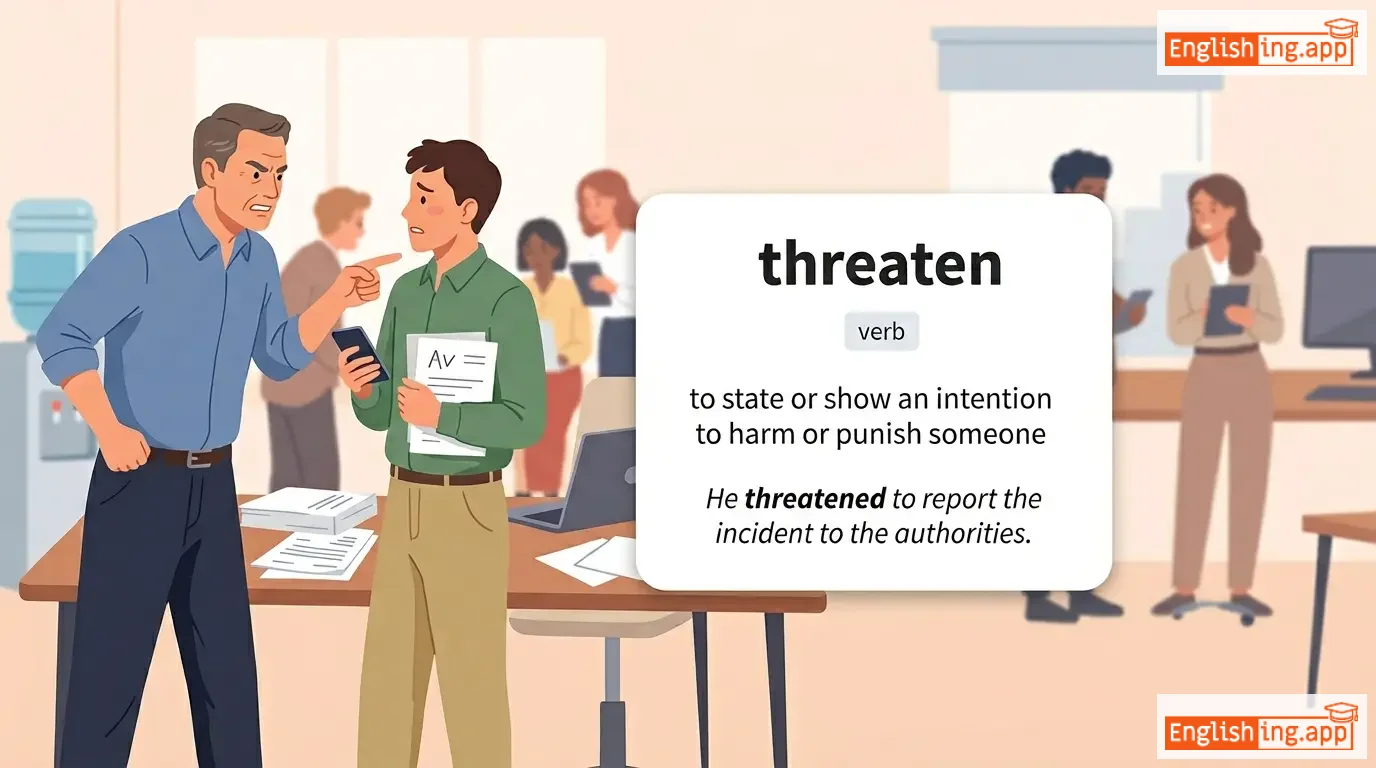
to express an intention to harm or punish someone; to be likely to cause harm
••••••
|
The storm clouds threaten to bring heavy rain tonight.
嵐の雲は今夜激しい雨をもたらすと脅かしています。
••••••
|
嵐の雲は今夜激しい雨をもたらすと脅かしています。
Arashi no kumo wa konya hageshii ame wo motarasu to odokashiteimasu.
••••••
|
- •••••• | - •••••• | - •••••• |
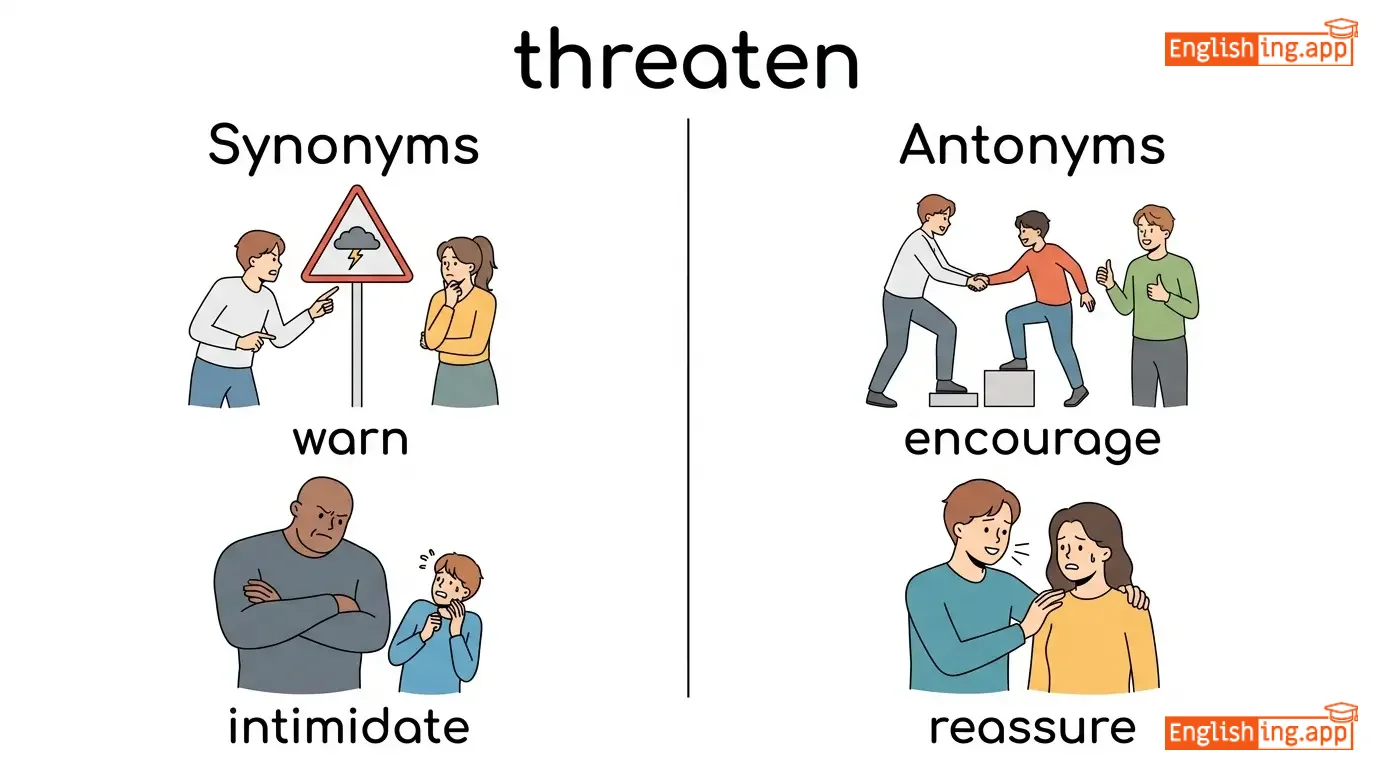
menace, intimidate, warn, endanger
••••••
|
protect, defend, reassure, comfort
••••••
|
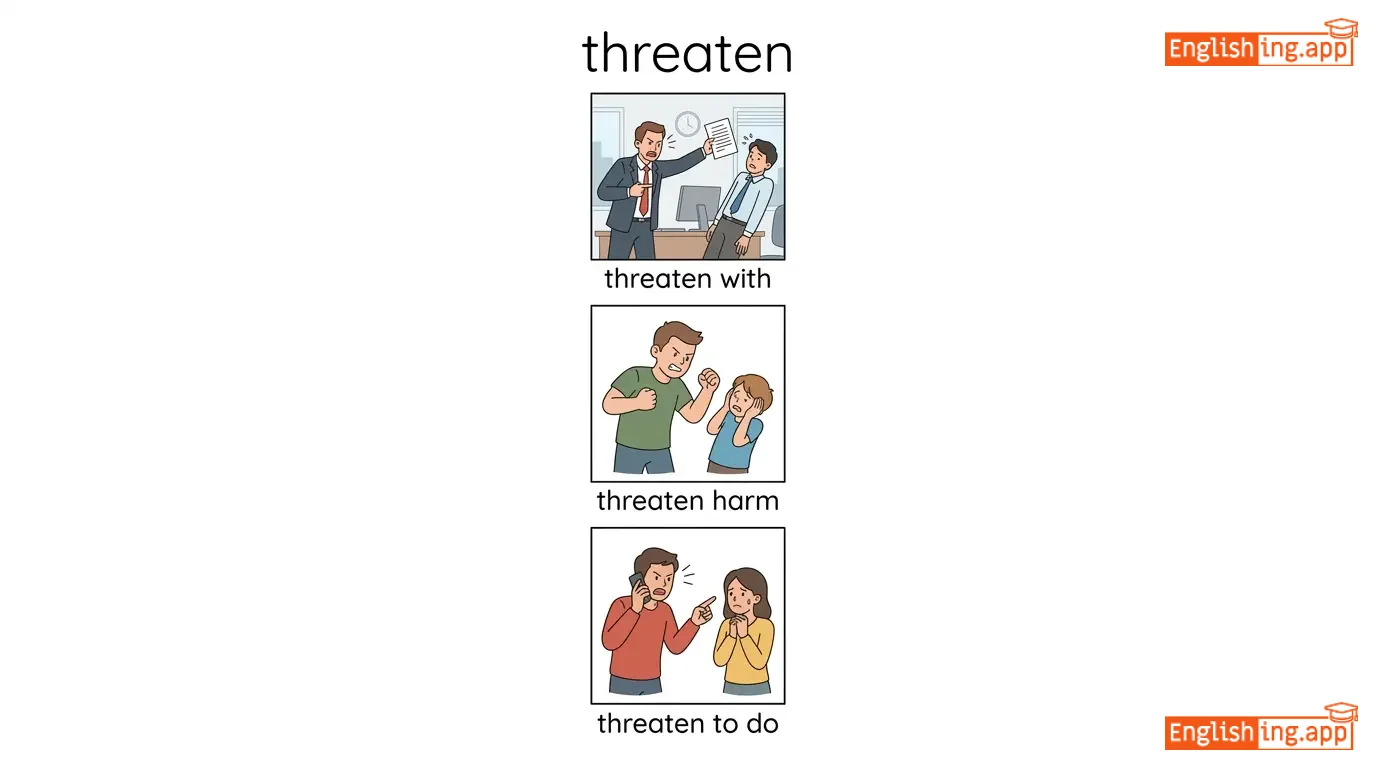
threaten to, threaten with, threaten someone, pose a threat
••••••
|
脅す = おどす, だから怖い
••••••
|
|
⚡
••••••
|
/ˈθret.ən.ɪŋ/
adjective
(スレッティニング)
••••••
|
- •••••• |
脅威的な; 威圧的な
kyouiteki na; iatsuteki na
••••••
|
- •••••• | - •••••• | - •••••• | - •••••• |
expressing a threat; menacing; intimidating
••••••
|
The dark clouds looked threatening before the storm. |
嵐の前に暗い雲が脅威的に見えた。
Arashi no mae ni kurai kumo ga kyouiteki ni mieta.
••••••
|
- •••••• | - •••••• | - •••••• |
menacing, intimidating, ominous, dangerous
••••••
|
reassuring, comforting, peaceful, safe
••••••
|
threatening behavior, threatening letter, threatening gesture, threatening tone
••••••
|
In Japanese, '脅威的' is similar to 'threatening'.
••••••
|
|
3️⃣
••••••
|
/θriː/
numeral
(スリー)
••••••
|
- •••••• |
三
san
••••••
|
- •••••• | - •••••• | - •••••• | - •••••• |
the number equivalent to the sum of two and one
••••••
|
She has three dogs at home. |
彼女は家に三匹の犬を飼っています。
Kanojo wa ie ni sanbiki no inu o katteimasu.
••••••
|
- •••••• | - •••••• | - •••••• |
threefold, triple
••••••
|
none
••••••
|
three times, three people, three years
••••••
|
三は三人家族の中で幸運な数字です
••••••
|
|
🚪
••••••
|
/ˈθreʃ.həʊld/
noun
(スレッショルド)
••••••
|
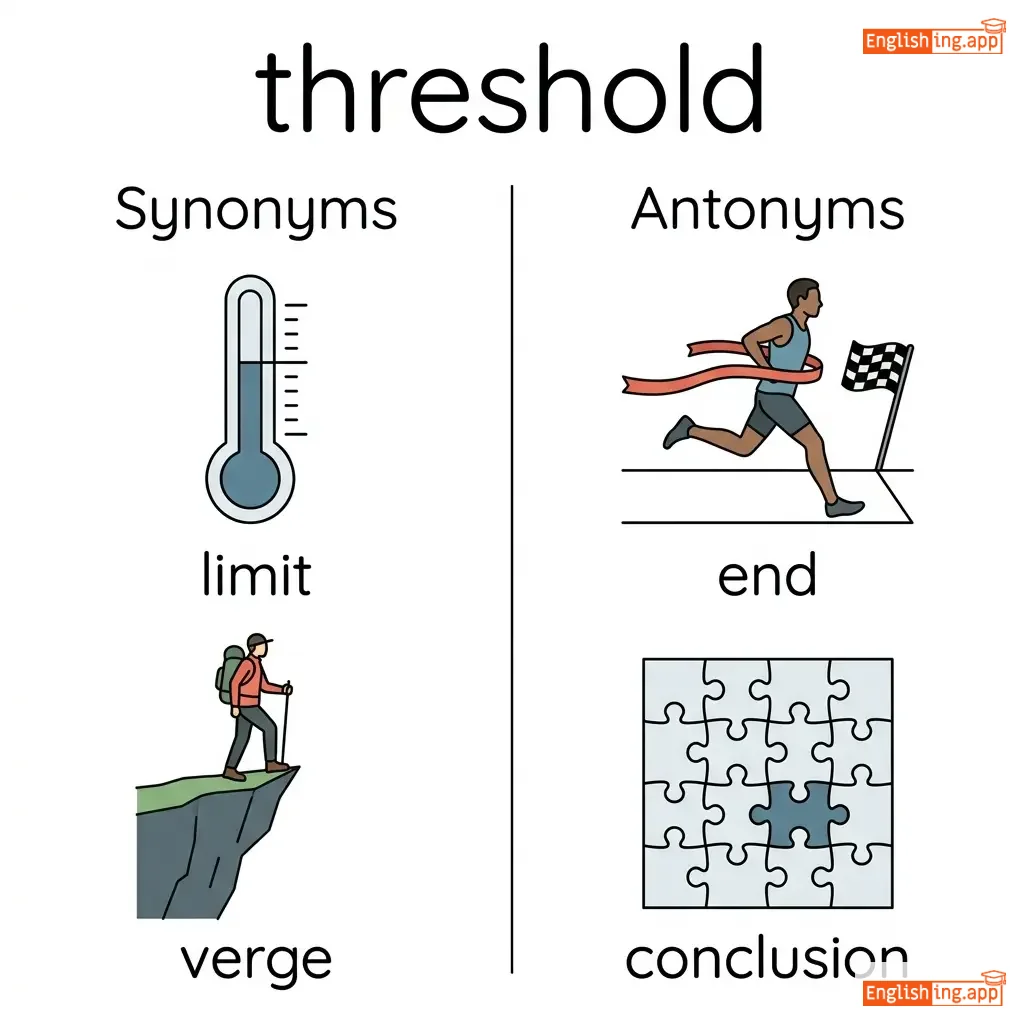
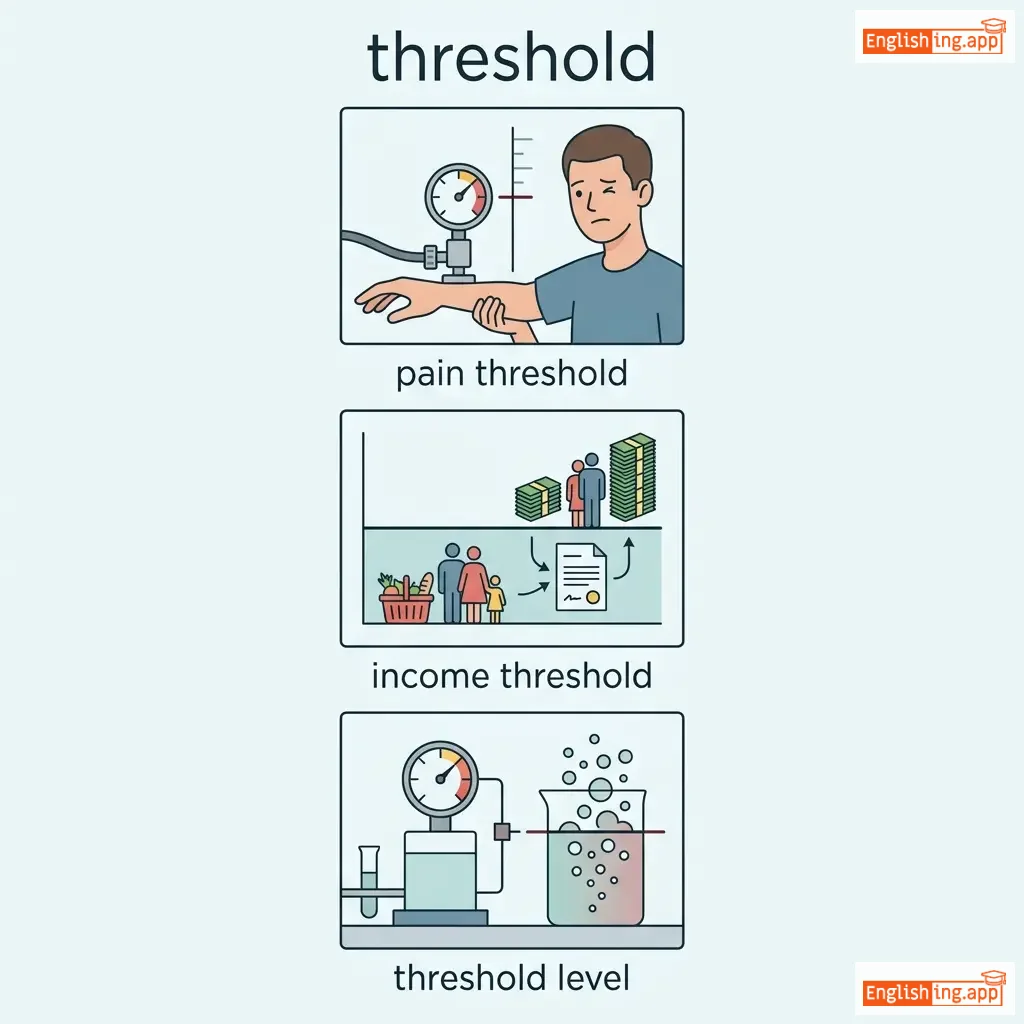
|
しきい
shiki
••••••
|
- •••••• | - •••••• | - •••••• | - •••••• |
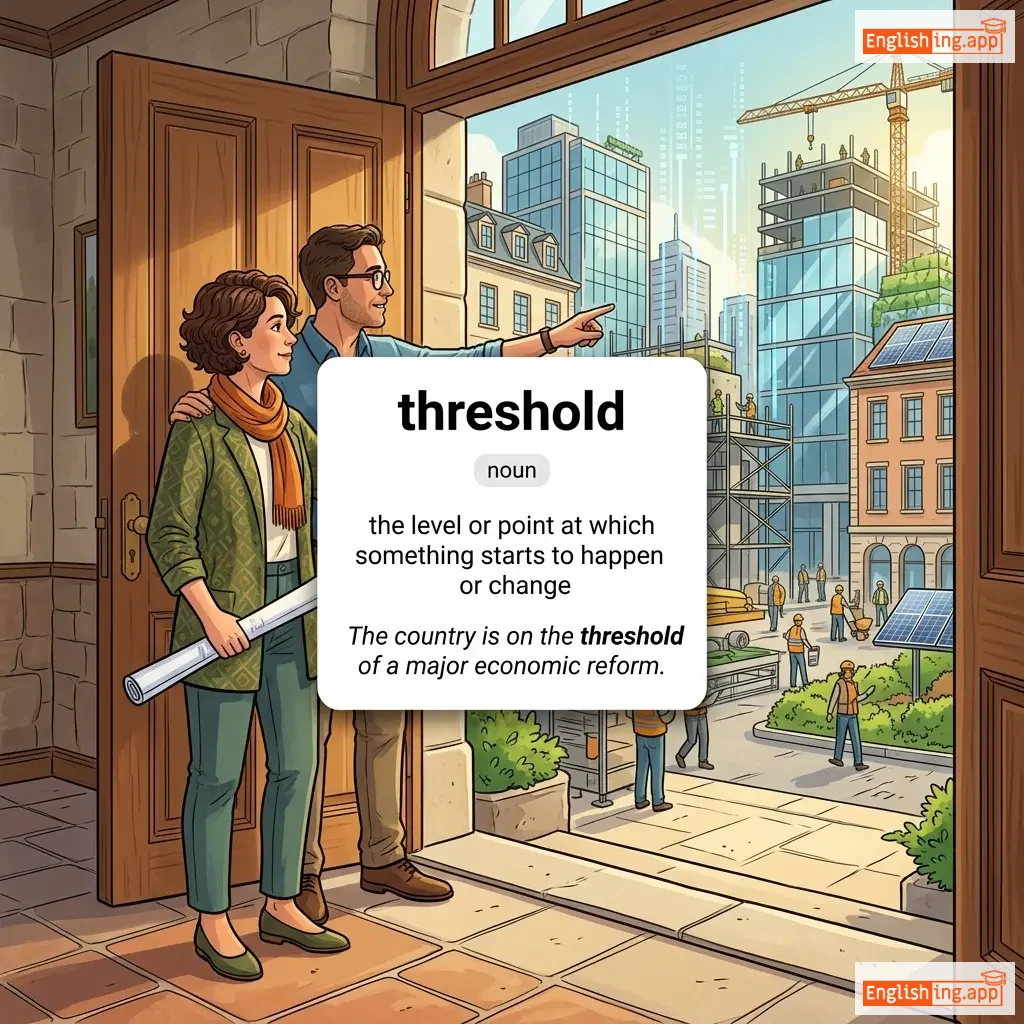
the level or point at which something starts to happen or change
••••••
|
The country is on the threshold of a major economic reform. |
その国は重要な経済改革のしきいにあります。
Sono kuni wa juuyou na keizai kaikaku no shikai ni arimasu.
••••••
|
cross the threshold |
to begin a new phase or experience
••••••
|
- •••••• |
limit, verge, brink, gateway, entry
••••••
|
end, conclusion
••••••
|
pain threshold, income threshold, threshold level, at the threshold
••••••
|
しきいは新しい段階の始まりの瞬間です。
••••••
|
|
😄
••••••
|
/θrɪld/
adjective
(スリルド)
••••••
|
- •••••• |
興奮した
koufun shita
••••••
|
- •••••• | - •••••• | - •••••• | - •••••• |
extremely happy or excited
••••••
|
She was thrilled with the surprise party. |
彼女はサプライズパーティーに興奮していた。
Kanojo wa sapuraizu pātii ni koufun shite ita.
••••••
|
- •••••• | - •••••• | - •••••• |
excited, elated, overjoyed, delighted
••••••
|
disappointed, unhappy
••••••
|
thrilled with, thrilled to, thrilled by
••••••
|
'Thrilled' は興奮と幸せな状態を示す言葉!
••••••
|
|
🌱
••••••
|
/θraɪv/
verb
••••••
|
- •••••• | - •••••• |
thrived
••••••
|
thrived
••••••
|
thrives
••••••
|
thriving
••••••
|
to grow, develop, or be successful
••••••
|
Small businesses can thrive with proper support. |
- •••••• |
thrive on |
to enjoy or be energized by something, especially a challenge
••••••
|
- •••••• |
flourish, prosper, succeed, grow, advance
••••••
|
fail, decline, collapse
••••••
|
thrive on challenges, thrive in business, thrive under pressure, thrive in environment
••••••
|
No •••••• |
|
🗣️
••••••
|
/θroʊt/
noun
(θroʊt)
••••••
|
- •••••• |
喉
koro
••••••
|
- •••••• | - •••••• | - •••••• | - •••••• |
the front part of the neck, containing the pharynx and larynx
••••••
|
He felt a lump in his throat while speaking. |
彼は話しているときに喉にしこりを感じました。
Kare wa hanashite iru toki ni nodo ni shikori o kanjimashita.
••••••
|
- •••••• | - •••••• | - •••••• |
neck, gullet
••••••
|
none
••••••
|
sore throat, clear your throat
••••••
|
Throat = nodo, 声と音の源。
••••••
|
|
➡️
••••••
|
/θruː/
preposition
(スルー)
••••••
|
- •••••• |
通過
tsuuka
••••••
|
- •••••• | - •••••• | - •••••• | - •••••• |
moving in one side and out the other side of something
••••••
|
The train passed through the tunnel.
列車はトンネルを通過しました。
••••••
|
列車はトンネルを通過しました。
Ressha wa tonneru o tsuuka shimashita.
••••••
|
- •••••• | - •••••• | - •••••• |
across, past, beyond, into
••••••
|
none
••••••
|
go through, pass through, walk through
••••••
|
Through sounds like crossing a bridge, moving from one side to the other.
••••••
|
|
🌍
••••••
|
/θruːˈaʊt/
preposition
(スルーアウト)
••••••
|
- •••••• |
通して
tōshite
••••••
|
- •••••• | - •••••• | - •••••• | - •••••• |
in every part of a place or during the whole time of an event
••••••
|
She worked throughout the night. |
彼女は一晩中働き続けた。
Kanojo wa hitobanjuu hatarakitsudzuketa.
••••••
|
- •••••• | - •••••• | - •••••• |
all over, everywhere, during, across
••••••
|
none
••••••
|
throughout the day, throughout the country
••••••
|
Throughout = 時間を越えて、止まらずに。
••••••
|
|
🏈
••••••
|
/θroʊ/
verb
(スロー)
••••••
|
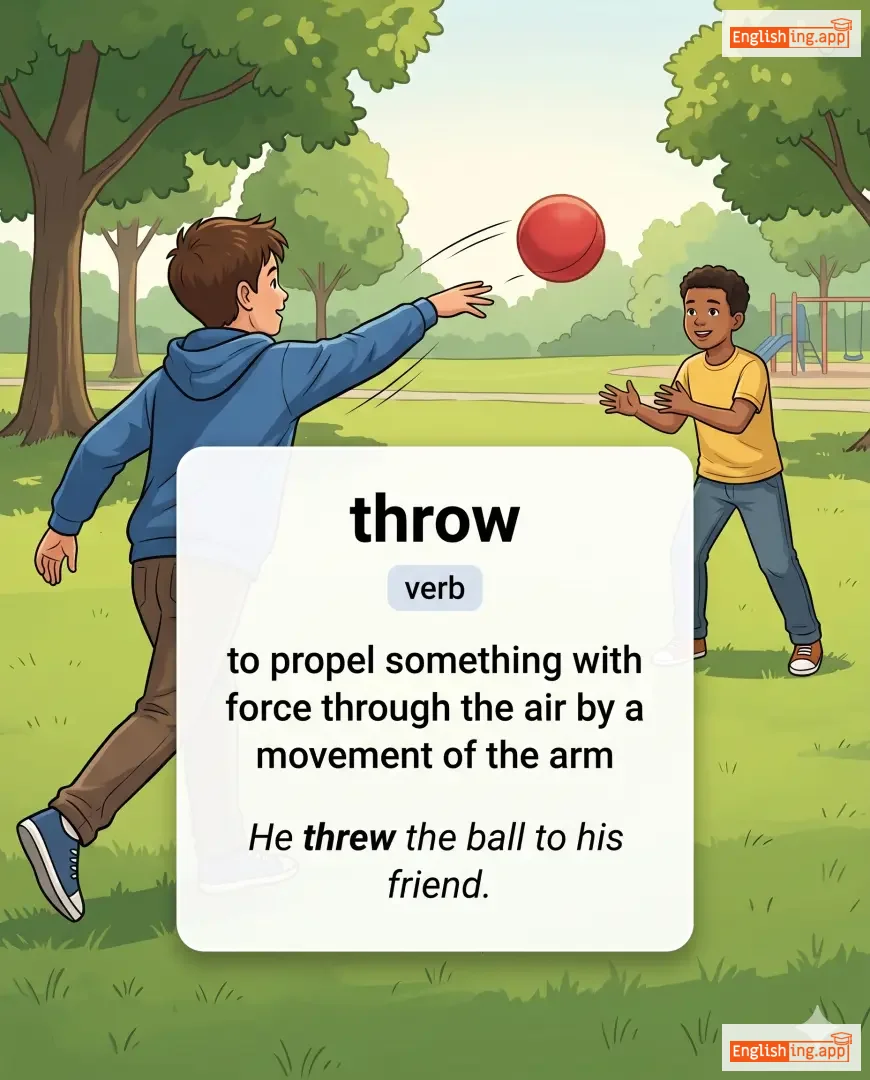
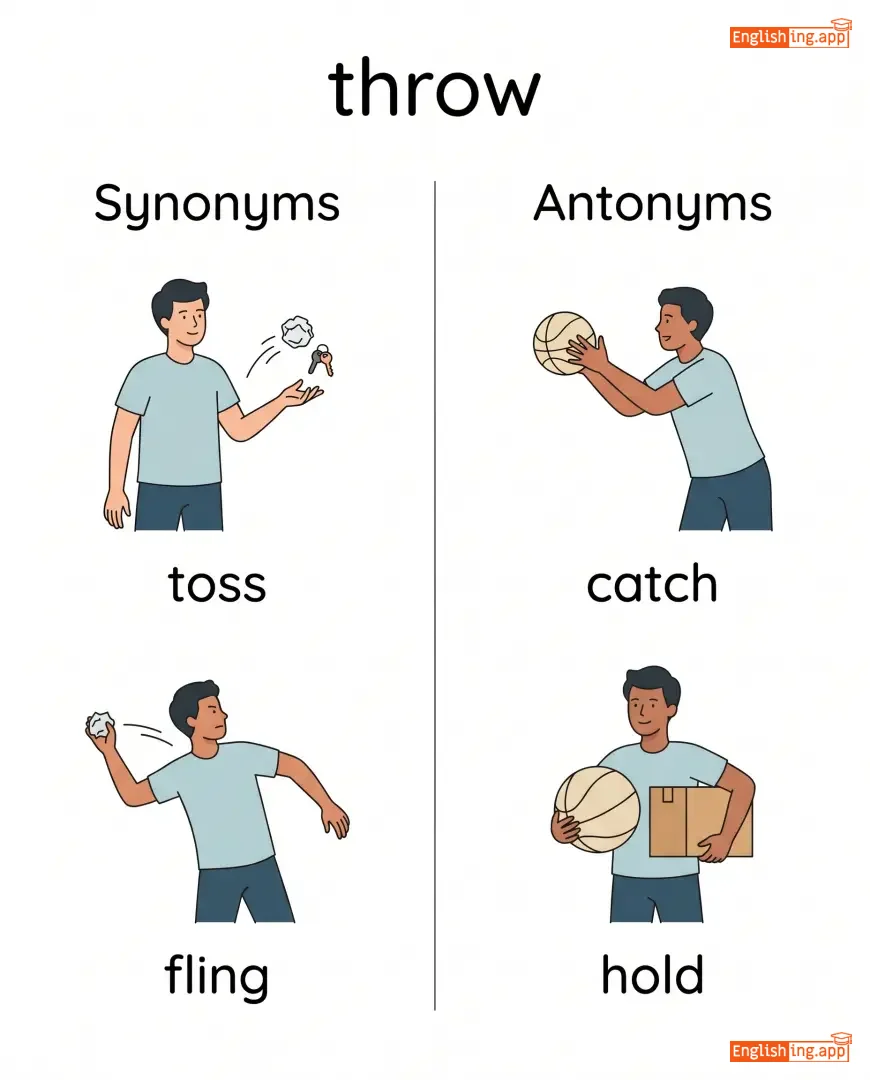
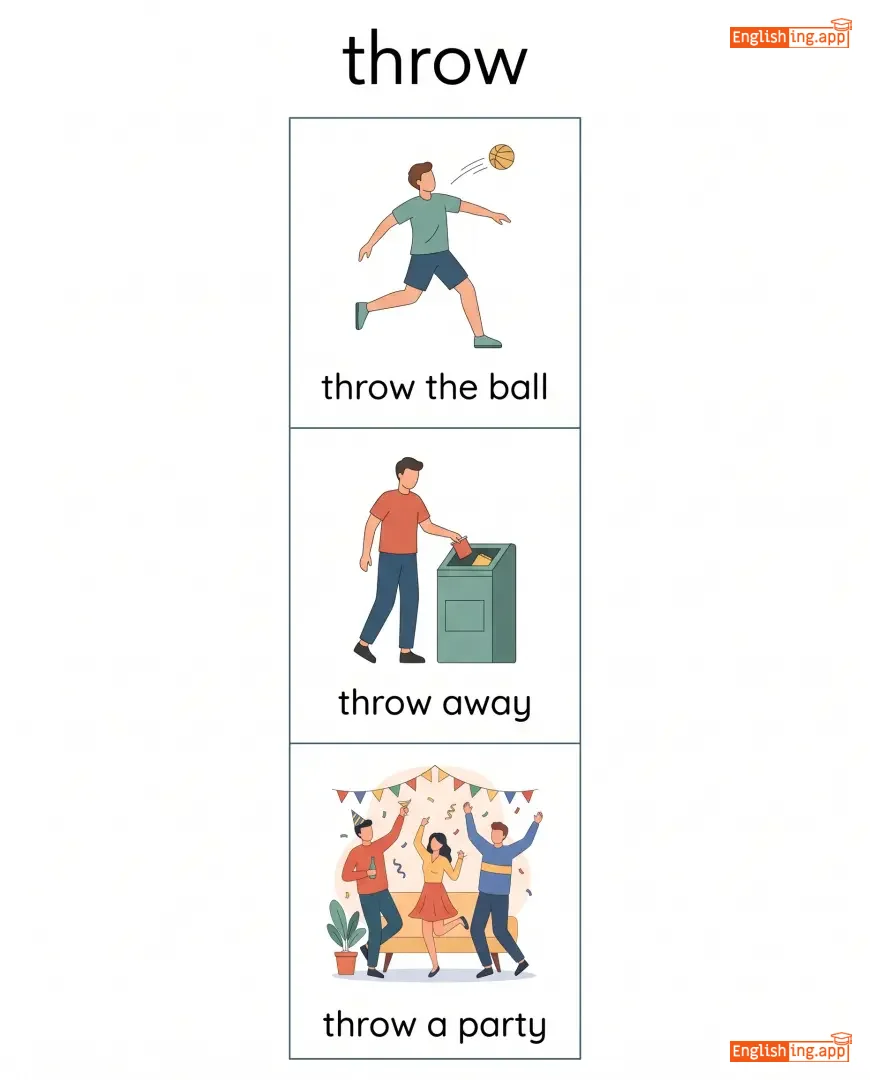
|
投げる
nageru
••••••
|
threw
スルー
••••••
|
thrown
スローン
••••••
|
throws
スローズ
••••••
|
throwing
スローイング
••••••
|
to propel something with force through the air by a movement of the arm
••••••
|
He threw the ball to his friend.
彼は友達にボールを投げました。
••••••
|
彼は友達にボールを投げました。
Kare wa tomodachi ni bōru o nage mashita.
••••••
|
throw in the towel
タオルを投げる
••••••
|
to give up or admit defeat
••••••
|
諦める
akirameru
••••••
|
toss, fling, hurl, chuck
••••••
|
catch, hold
••••••
|
throw the ball, throw away, throw a party
••••••
|
ボールを投げて、最良の投げ方をしよう!
••••••
|
|
👍
••••••
|
/θʌm/
noun
(θʌm)
••••••
|
- •••••• |
親指
oyayubi
••••••
|
- •••••• | - •••••• | - •••••• | - •••••• |
the short, thick finger on the side of the hand, used for gripping and holding things
••••••
|
He gave a thumbs-up to show his approval. |
彼は承認を示すために親指を上げました。
Kare wa shounin o shimesu tame ni oyayubi o agemashita.
••••••
|
rule of thumb |
a general principle or rule based on experience or practice rather than theory
••••••
|
親指の法則
oyayubi no housoku
••••••
|
digit, finger, appendage, joint, extremity
••••••
|
toe, palm
••••••
|
thumb up, thumb down, rule of thumb, suck your thumb, raise your thumb
••••••
|
親指を見せて、ルールを覚えよう👍
••••••
|
|
📅
••••••
|
/ˈθɜːrzdeɪ/
noun
(サーズデイ)
••••••
|
- •••••• |
木曜日
mokuyoubi
••••••
|
- •••••• | - •••••• | - •••••• | - •••••• |
The fifth day of the week, following Wednesday and preceding Friday.
••••••
|
We have a meeting scheduled for Thursday.
木曜日に会議が予定されています。
••••••
|
木曜日に会議が予定されています。
mokuyoubi ni kaigi ga yotei sareteimasu.
••••••
|
- •••••• | - •••••• | - •••••• |
week day, midweek day, workday
••••••
|
weekend, holiday
••••••
|
Thursday morning, Thursday night, every Thursday, next Thursday, last Thursday
••••••
|
Moku means wood, think Thursday as Wood day.
••••••
|
|
➡️
••••••
|
/ðʌs/
adverb
(ðʌs)
••••••
|
- •••••• |
このように
kono you ni
••••••
|
- •••••• | - •••••• | - •••••• | - •••••• |
as a result or consequence of something previously stated
••••••
|
He was late, thus he missed the meeting. |
彼は遅れたので、このように会議を欠席しました。
Kare wa okureta node, kono you ni kaigi o kesseki shimashita.
••••••
|
- •••••• | - •••••• | - •••••• |
therefore, hence, accordingly, so
••••••
|
however, nevertheless
••••••
|
thus far, thus far as, thus it is
••••••
|
このようにして、解決策を見つけよう。
••••••
|
|
🎫
••••••
|
/ˈtɪkɪt/
noun
(チケット)
••••••
|
- •••••• |
チケット
chiketto
••••••
|
- •••••• | - •••••• | - •••••• | - •••••• |
a small piece of paper or card that gives the holder a right to access a service or event
••••••
|
He bought a ticket to the concert. |
彼はコンサートのチケットを買いました。
Kare wa konsāto no chiketto o kaimashita.
••••••
|
- •••••• | - •••••• | - •••••• |
pass, voucher, stub, coupon
••••••
|
no ticket
••••••
|
buy a ticket, ticket for, concert ticket
••••••
|
チケットがあれば、コンサートに入れる!
••••••
|
|
🌊
••••••
|
/taɪd/
noun
(taɪd)
••••••
|
- •••••• |
潮の干満
shio no kanman
••••••
|
- •••••• | - •••••• | - •••••• | - •••••• |
the regular rise and fall of the sea caused by the moon and sun's gravity; a powerful flow or movement
••••••
|
The fisherman waited for the tide to come in. |
漁師は潮の干満が来るのを待っていました。
Gyoshi wa shio no kanman ga kuru no o matte imashita.
••••••
|
turn the tide |
to cause a reversal of fortune or change in direction
••••••
|
潮流を変える
chōryū o kaeru
••••••
|
current, flow, surge, stream, wave
••••••
|
ebb, stillness, stagnation
••••••
|
high tide, low tide, rising tide, ebb tide
••••••
|
潮の干満 = 海の周期的な変化 - 潮の干満は時間とともに繰り返し来る。
••••••
|
|
🧹
••••••
|
/ˈtaɪ.di/
adjective
(taidi)
••••••
|
- •••••• |
整頓された; 清潔な
seiton sareta; seiketsu na
••••••
|
- •••••• | - •••••• | - •••••• | - •••••• |
arranged neatly and in order; clean and organized
••••••
|
She keeps her room very tidy and organized. |
彼女は自分の部屋を非常に整頓されていて清潔に保っています。
Kanojo wa jibun no heya o hijō ni seiton sarete ite seiketsu ni tamotsutteimasu.
••••••
|
- •••••• | - •••••• | - •••••• |
neat, organized, orderly, clean
••••••
|
messy, untidy, disorganized, chaotic
••••••
|
tidy room, tidy up, tidy appearance, keep tidy
••••••
|
Tidy = タイディ = たい = 体 (body organized) and 'デ' = で (neatly).
••••••
|

