|
絵文字
|
単語 | Images | 翻訳 | 過去 | 過去分詞 | 三人称単数 | 動名詞 | 意味 | 例文 | 例文の翻訳 | 表現例 | 表現例の意味 | 表現例の翻訳 | 同義語 | 対義語 | コロケーション | ニーモニック |
|---|---|---|---|---|---|---|---|---|---|---|---|---|---|---|---|---|---|
|
😷
••••••
|
/peɪl/
adjective
(ペイル)
••••••
|
- •••••• |
青白い; 淡い; 弱い
peiru
••••••
|
- •••••• | - •••••• | - •••••• | - •••••• |
having a light color; lacking brightness or vividness; weak or faint
••••••
|
She looked pale after being sick for a week. |
彼女は1週間病気で、青白く見えた。
kanojo wa isshukan byouki de, aoiroku mieta
••••••
|
- •••••• | - •••••• | - •••••• |
white, colorless, wan, ashen, faded
••••••
|
bright, vivid, rosy, colorful, flushed
••••••
|
pale face, pale skin, pale light, turn pale, look pale
••••••
|
病気で顔が青白くなることは、弱っている証拠です。
••••••
|
|
🇵🇸
••••••
|
/pælɛˈstɪnɪən/
adjective
(パレスチナの)
••••••
|
- •••••• |
パレスチナの
paresuchina no
••••••
|
- •••••• | - •••••• | - •••••• | - •••••• |
relating to Palestine or its people
••••••
|
The Palestinian people have a rich cultural heritage. |
パレスチナの人々は豊かな文化遺産を持っています。
Paresuchina no hitobito wa yutakana bunka isan o motteimasu.
••••••
|
- •••••• | - •••••• | - •••••• |
Arab, Middle Eastern, Palestinian Arab
••••••
|
Israeli, Jewish
••••••
|
Palestinian territories, Palestinian refugees, Palestinian leader
••••••
|
パレスチナの人々の豊かな文化遺産を覚えておこう。
••••••
|
|
🤲
••••••
|
/pɑːm/
noun
(パーム)
••••••
|
- •••••• |
手のひら / ヤシの木
te no hira / yashi no ki
••••••
|
- •••••• | - •••••• | - •••••• | - •••••• |
the inner surface of the hand; also a tropical tree with large leaves
••••••
|
He placed the coin in the palm of her hand. |
彼はコインを彼女の手のひらに置いた。
Kare wa koin o kanojo no te no hira ni oita.
••••••
|
grease someone's palm |
to bribe someone
••••••
|
誰かの手のひらに油を塗る
dareka no te no hira ni abura o nuru
••••••
|
hand, inside hand, palm tree, leaf
••••••
|
backhand, dorsal hand
••••••
|
palm tree, palm oil, open palm, palm reading
••••••
|
手のひらは手の内側で、ヤシの木は大きな葉を持つ熱帯の木
••••••
|
|
🍳
••••••
|
/pæn/
noun, verb
(パン)
••••••
|
- •••••• |
フライパン, 鍋
furaipan, nabe
••••••
|
panned
パンデ
••••••
|
panned
パンデ
••••••
|
pans
パンス
••••••
|
panning
パンニング
••••••
|
a shallow container used for cooking; also means to criticize severely (verb)
••••••
|
She cooked the eggs in a frying pan.
彼女はフライパンで卵を調理した。
••••••
|
彼女はフライパンで卵を調理した。
Kanojo wa furaipan de tamago o chōri shita.
••••••
|
pan out
パンアウと
••••••
|
to turn out or result in a certain way
••••••
|
うまくいく
umaku iku
••••••
|
frying pan, skillet, criticize, roast
••••••
|
praise, compliment
••••••
|
frying pan, pan out, pan for gold, roasting pan
••••••
|
フライパンを使うように、計画も'pan out'するようにする
••••••
|
|
🪑
••••••
|
/ˈpænəl/
noun
(パネル)
••••••
|
- •••••• |
パネル, 審査員グループ
paneru, shinsain gurūpu
••••••
|
- •••••• | - •••••• | - •••••• | - •••••• |
a group of people gathered to discuss, judge, or advise on a particular topic
••••••
|
The panel of judges announced the winner of the competition. |
審査員のパネルはコンテストの優勝者を発表しました。
Shinsain no paneru wa kontesuto no yūshōsha o happyō shimashita.
••••••
|
- •••••• | - •••••• | - •••••• |
committee, board, jury, group, council
••••••
|
individual, person
••••••
|
panel discussion, expert panel, panel of judges, solar panel
••••••
|
Panelは重要な話題を議論するグループです。
••••••
|
|
😱
••••••
|
/ˈpænɪk/
noun/verb
(ハピネス)
••••••
|
- •••••• |
幸福
kōfuku
••••••
|
panicked
••••••
|
panicked
••••••
|
panics
••••••
|
panicking
••••••
|
a sudden overwhelming fear or anxiety causing irrational behavior
••••••
|
The crowd panicked when the fire alarm went off. |
彼女は賞を受け取ったとき、幸せを隠すことができませんでした。
Kanojo wa shō o uketotta toki, kōfuku o kakusu koto ga dekimasen deshita.
••••••
|
panic attack |
a sudden episode of intense fear or anxiety
••••••
|
幸福の追求
kōfuku no tsuikyū
••••••
|
fear, alarm, dread, hysteria, terror
••••••
|
calm, composure, tranquility
••••••
|
panic attack, mass panic, cause panic, widespread panic
••••••
|
幸福とは、心が満たされ、穏やかな気持ちで包まれることです。
••••••
|
|
👖
••••••
|
/pænt/
noun
(パンツ)
••••••
|
- •••••• |
パンツ
pantsu
••••••
|
- •••••• | - •••••• | - •••••• | - •••••• |
a piece of clothing worn from the waist down, covering both legs separately
••••••
|
He wore a pair of blue pants to the party.
彼はパーティーに青いパンツを履いていった。
••••••
|
彼はパーティーに青いパンツを履いていった。
Kare wa pātii ni aoi pantsu o haite itta.
••••••
|
- •••••• | - •••••• | - •••••• |
trousers, slacks, jeans, leggings
••••••
|
shorts, skirt
••••••
|
wear pants, pair of pants, tight pants
••••••
|
パンツは足を守ります - Pants protect the legs!
••••••
|
|
👨👧
••••••
|
/ˈpɑːpə/
noun
(パパ)
••••••
|
- •••••• |
お父さん
otousan
••••••
|
- •••••• | - •••••• | - •••••• | - •••••• |
an informal or affectionate term for one’s father
••••••
|
Papa is picking me up from school today.
パパは今日学校に迎えに来る。
••••••
|
パパは今日学校に迎えに来る。
papa wa kyou gakkou ni mukae ni kuru
••••••
|
papa bear
パパベア
••••••
|
a father who is very protective of his family
••••••
|
パパベア
papa bea
••••••
|
dad, daddy, father, pa, pop
••••••
|
mother, mom, mama
••••••
|
love papa, ask papa, papa and mama, papa bear
••••••
|
パパ = Papa, どちらも同じ音
••••••
|
|
📄
••••••
|
/ˈpeɪpər/
noun
(ペーパー)
••••••
|
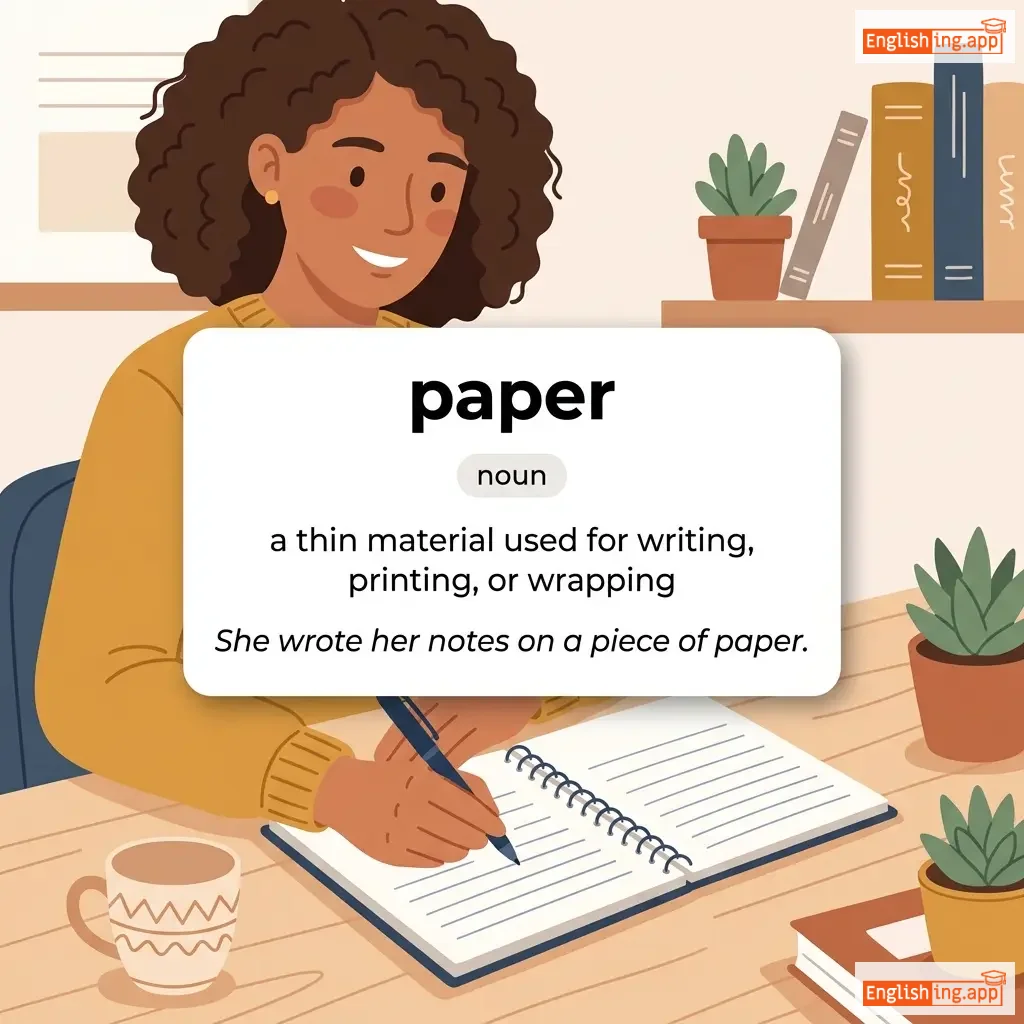
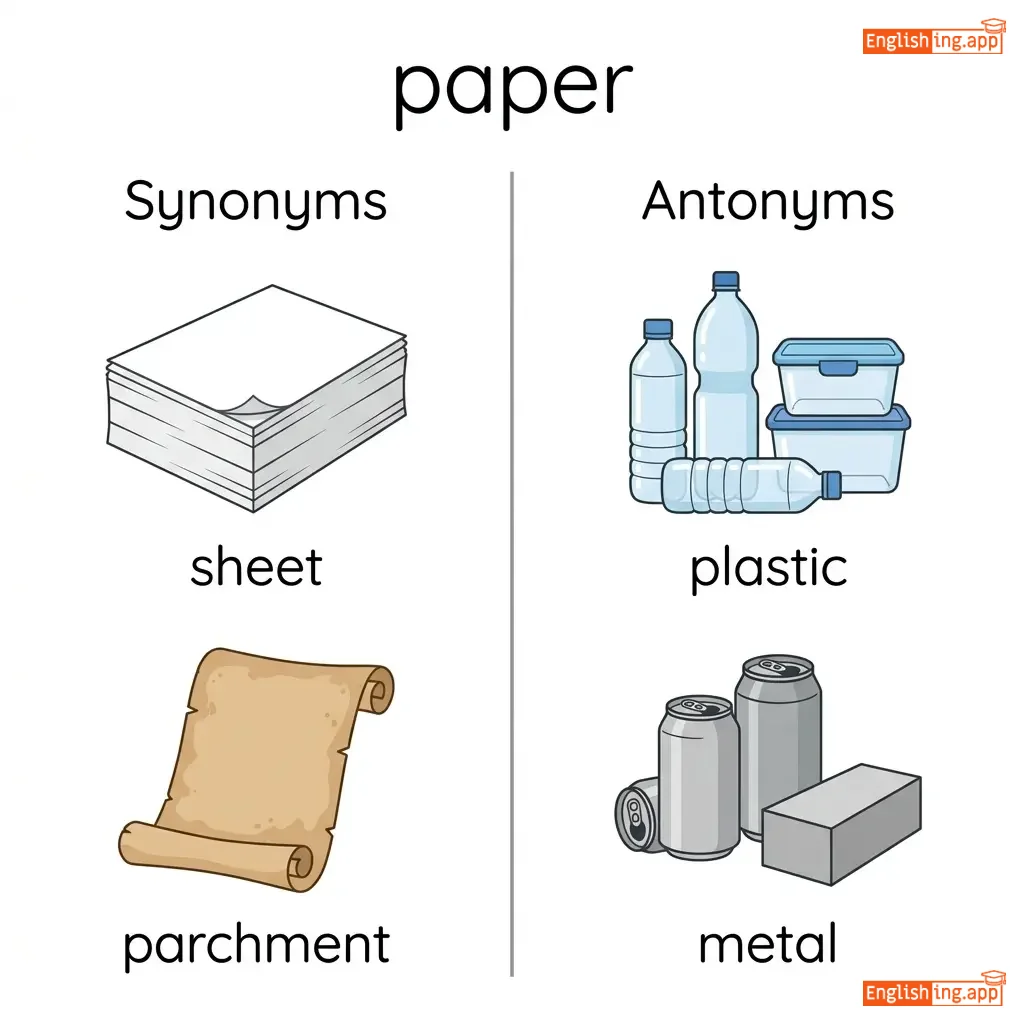
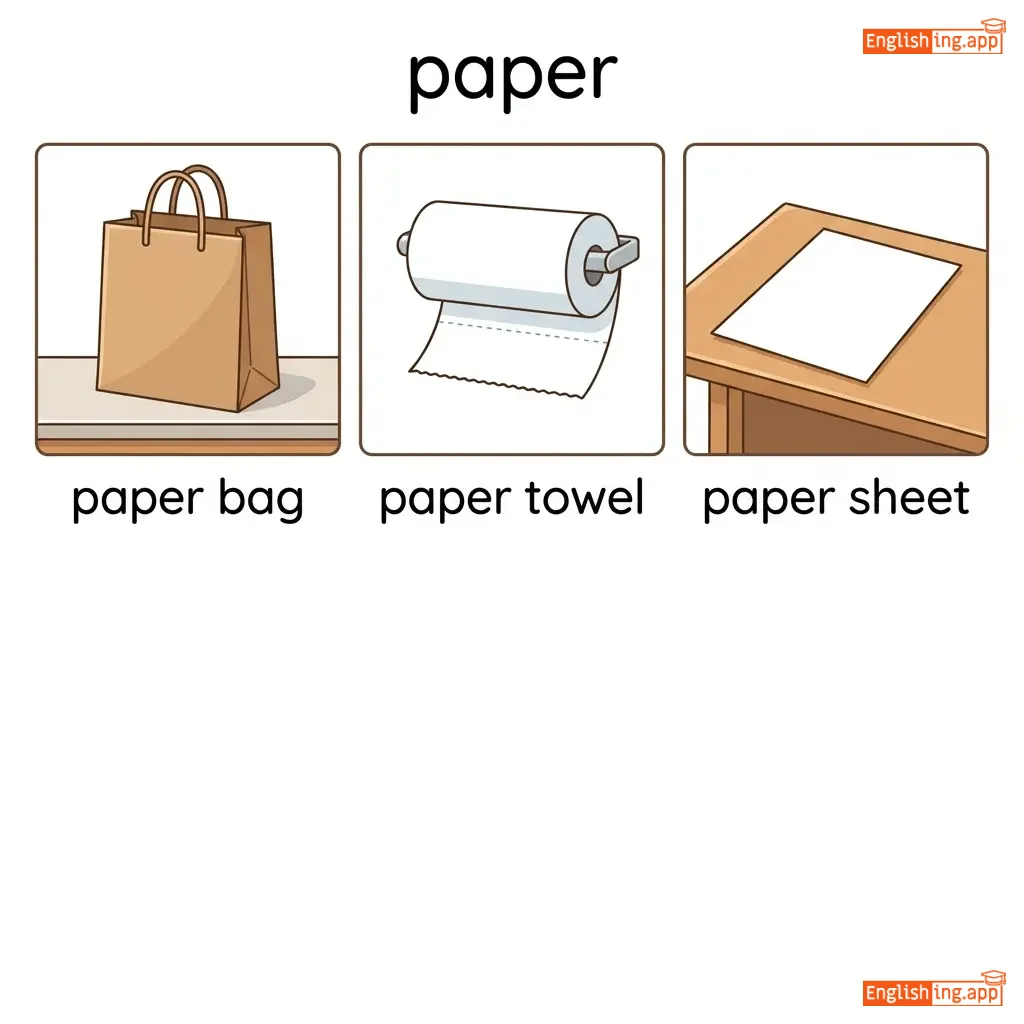
|
紙
kami
••••••
|
- •••••• | - •••••• | - •••••• | - •••••• |
a thin material used for writing, printing, or wrapping
••••••
|
She wrote her notes on a piece of paper. |
彼女は紙にメモを書いた。
Kanojo wa kami ni memo o kaita.
••••••
|
- •••••• | - •••••• | - •••••• |
sheet, parchment, document, material
••••••
|
plastic, metal
••••••
|
paper bag, paper towel, paper sheet, paper clip
••••••
|
紙で書こう - Remember paper is for writing!
••••••
|
|
🎖️
••••••
|
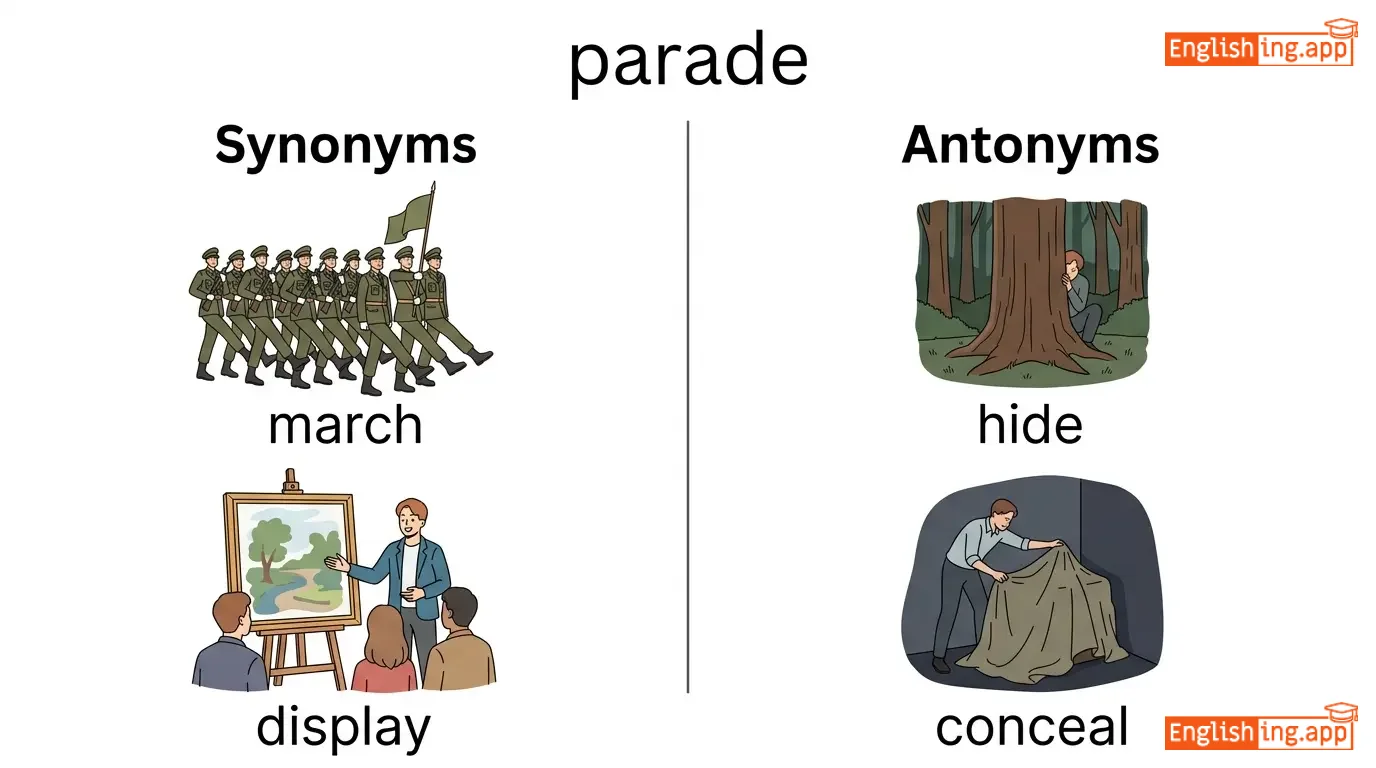
/pəˈreɪd/
verb
(パレード)
••••••
|
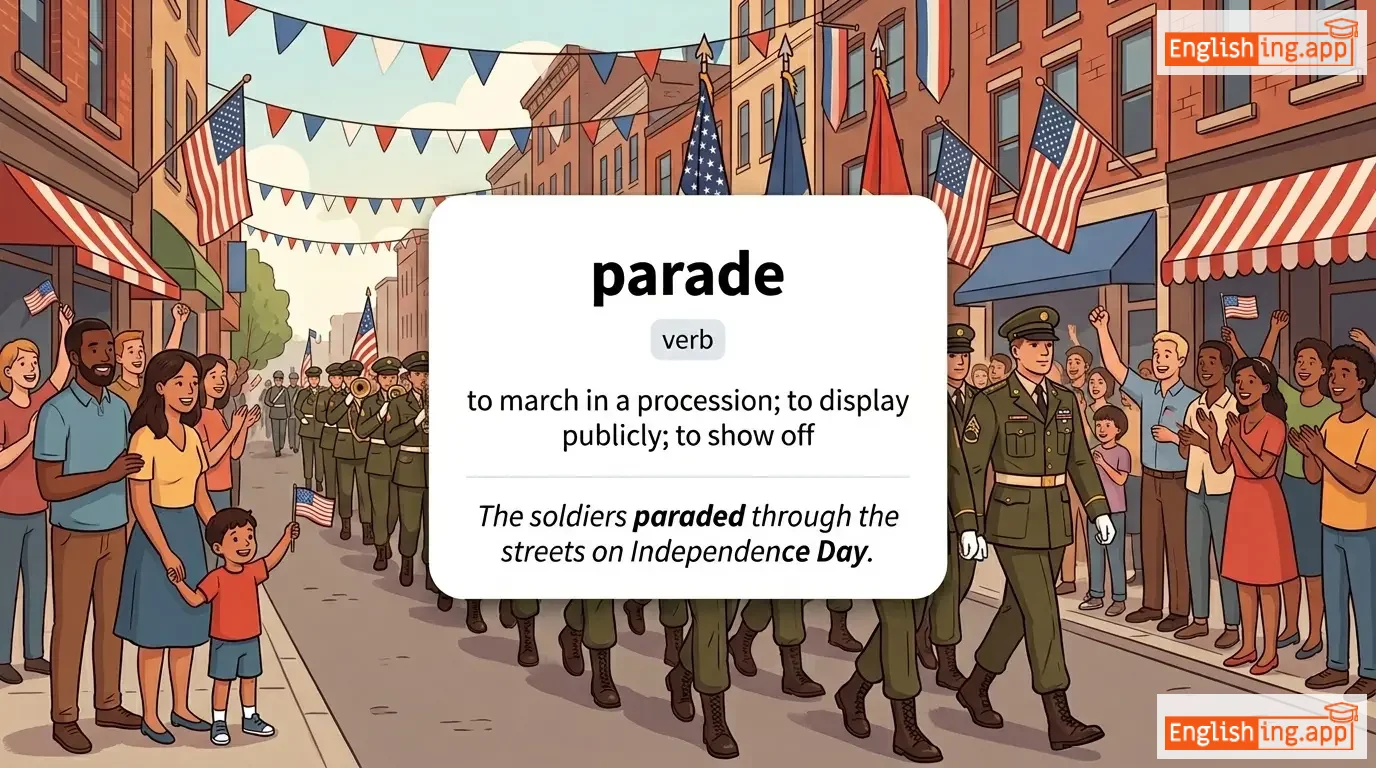
|
パレードする, 公開する
parēdo suru, kōkai suru
••••••
|
paraded
パレードした
••••••
|
paraded
パレードした
••••••
|
parades
パレードします
••••••
|
parading
パレードしている
••••••
|
to march in a procession; to display publicly; to show off
••••••
|
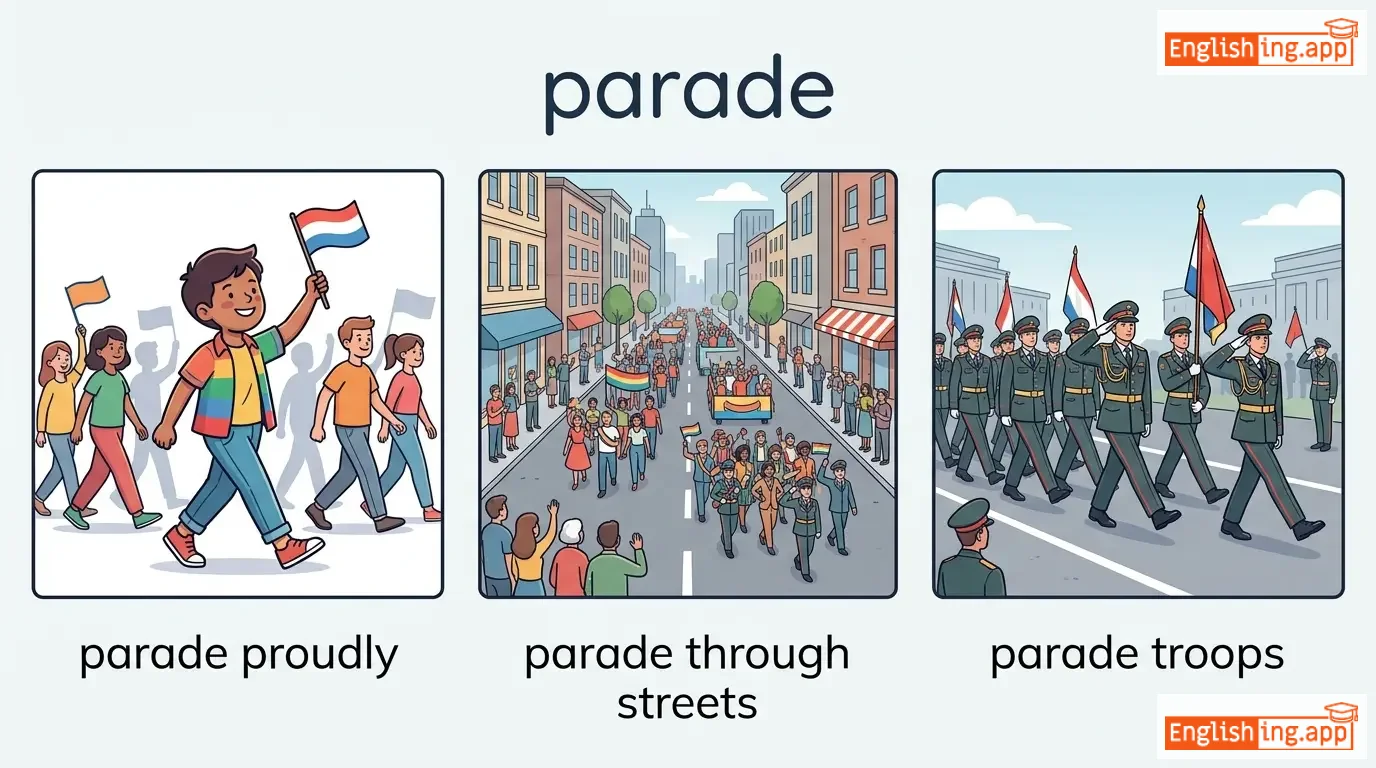
The soldiers paraded through the streets on Independence Day.
独立記念日に兵士たちが通りでパレードした。
••••••
|
独立記念日に兵士たちが通りでパレードした。
Dokuritsu kinenbi ni heishitachi ga tōri de parēdo shita.
••••••
|
- •••••• | - •••••• | - •••••• |
march, display, show, demonstrate
••••••
|
hide, conceal, withdraw, retreat
••••••
|
parade proudly, parade through streets, parade troops, parade around, parade success
••••••
|
兵士たちはパレードをして、見る人々に力を示す。
••••••
|
|
➖
••••••
|
/ˈpærəˌlɛl/
noun, adjective, verb
••••••
|
- •••••• | - •••••• |
paralleled
••••••
|
paralleled
••••••
|
parallels
••••••
|
paralleling
••••••
|
Lines, objects, or events that are side by side and never meet; similarity or comparison.
••••••
|
The road runs parallel to the railway. |
- •••••• |
draw a parallel |
to make a comparison between two things
••••••
|
- •••••• |
equivalent, similar, analogous, comparable
••••••
|
divergent, different, separate
••••••
|
parallel lines, parallel universe, parallel development, parallel computing
••••••
|
No •••••• |
|
📏
••••••
|
/pəˈræmɪtər/
noun
(パラメーター)
••••••
|
- •••••• |
パラメーター
parametaa
••••••
|
- •••••• | - •••••• | - •••••• | - •••••• |
a limit, boundary, or measurable factor that defines or determines something
••••••
|
We need to set clear parameters for this project. |
このプロジェクトのために明確なパラメーターを設定する必要があります。
Kono purojekuto no tame ni meikaku na parametaa o settei suru hitsuyou ga arimasu.
••••••
|
- •••••• | - •••••• | - •••••• |
boundary, limit, guideline, criterion, specification
••••••
|
unlimited, boundless, unrestricted
••••••
|
set parameters, define parameters, within parameters, strict parameters
••••••
|
パラメーターとは限界のこと、パラメーターを設定しなければ何も機能しません。
••••••
|
|
👪
••••••
|
/ˈpɛərənt/
noun
(ペアレント)
••••••
|
- •••••• |
親
oya
••••••
|
- •••••• | - •••••• | - •••••• | - •••••• |
a mother or father of a person or animal
••••••
|
Both of his parents are teachers. |
彼の両親は教師です。
Kare no ryōshin wa kyōshi desu.
••••••
|
- •••••• | - •••••• | - •••••• |
guardian, mother, father, caretaker
••••••
|
child, offspring
••••••
|
parent-child relationship, single parent, working parents
••••••
|
Parents protect - They guide you through life like a compass.
••••••
|
|
👨👩👧
••••••
|
/pəˈrɛntəl/
adjective
(ペアレンタル)
••••••
|
- •••••• |
親に関連する
oya ni kanren suru
••••••
|
- •••••• | - •••••• | - •••••• | - •••••• |
relating to a parent or parents; characteristic of a mother or father
••••••
|
Parental guidance is important for a child's development. |
子供の成長には親のガイダンスが重要です。
Kodomo no seichō ni wa oya no gaidansu ga jūyō desu.
••••••
|
parental control |
a feature that allows parents to restrict what their children can access
••••••
|
親の管理
oya no kanri
••••••
|
maternal, paternal, caregiving, protective, nurturing
••••••
|
childish, immature
••••••
|
parental guidance, parental love, parental control, parental support
••••••
|
Parent は親を意味し、parental は親に関連する — 例えば parental care。
••••••
|
|
⛪
••••••
|
/ˈpærɪʃ/
noun
(パリッシュ)
••••••
|
- •••••• |
教区
kyōku
••••••
|
- •••••• | - •••••• | - •••••• | - •••••• |
A local church community or the area served by a parish church.
••••••
|
The parish gathered for Sunday service. |
教区は日曜礼拝のために集まりました。
kyōku wa nichiyō reihai no tame ni atsumarimashita.
••••••
|
parish pump |
relating to local or narrow-minded politics
••••••
|
ローカル政治
rōkaru seiji
••••••
|
church community, congregation, district, diocese
••••••
|
secular community
••••••
|
parish church, parish priest, parish community, parish council
••••••
|
Parishは教区を意味します—牧師は常に地域の教会コミュニティと一緒に働きます。
••••••
|
|
🏞️
••••••
|
/pɑːrk/
noun
(パーク)
••••••
|
- •••••• |
パーク
pāku
••••••
|
- •••••• | - •••••• | - •••••• | - •••••• |
a large public area of land with grass, trees, and paths, where people can walk or relax
••••••
|
The children were playing in the park.
子供たちは公園で遊んでいました。
••••••
|
子供たちは公園で遊んでいました。
Kodomotachi wa kōen de asonde imashita.
••••••
|
- •••••• | - •••••• | - •••••• |
green space, playground, garden, recreation area
••••••
|
building, office
••••••
|
city park, park bench, park your car
••••••
|
公園は平和を見つける場所です。自然に囲まれて公園を歩くことを想像してみてください。
••••••
|
|
🚗
••••••
|
/ˈpɑːrkɪŋ/
noun
(パーキング)
••••••
|
- •••••• |
駐車場
chūshajō
••••••
|
- •••••• | - •••••• | - •••••• | - •••••• |
the action or practice of leaving a vehicle in a particular place for a period of time
••••••
|
There was no available parking near the restaurant. |
レストランの近くには駐車場がありませんでした。
Resutoran no chikaku ni wa chūshajō ga arimasen deshita.
••••••
|
- •••••• | - •••••• | - •••••• |
car park, garage, lot, space
••••••
|
no parking, tow-away zone
••••••
|
parking lot, parking space, parking ticket, street parking
••••••
|
駐車場に車を停めること、それがパーキングの意味です。
••••••
|
|
🏛️
••••••
|
/ˌpɑːrləˈmɛntri/
adjective
(パーラメンタリー)
••••••
|
- •••••• |
議会の
gikai no
••••••
|
- •••••• | - •••••• | - •••••• | - •••••• |
relating to a parliament or its members; relating to a system of government with parliamentary authority
••••••
|
The country follows a parliamentary form of government.
ザ カントリー フォローズ ア パーラメンタリー フォーム オブ ガバメント。
••••••
|
その国は議会制の政府を採用している。
Sono kuni wa gikaisei no seifu o saiyo shite iru
••••••
|
parliamentary system
パーラメンタリー・システム
••••••
|
a system of government in which the executive derives its legitimacy from the legislature
••••••
|
議会制度
gikai seido
••••••
|
legislative, congressional, governmental, representative
••••••
|
presidential, autocratic
••••••
|
parliamentary system, parliamentary democracy, parliamentary debate, parliamentary election
••••••
|
Parliamentary=議会(gikai)に関係する形容詞
••••••
|
|
🧩
••••••
|
/pɑːrt/
noun
(パート)
••••••
|
- •••••• |
部分
bubun
••••••
|
- •••••• | - •••••• | - •••••• | - •••••• |
a piece or segment of something
••••••
|
She gave me a part of her chocolate.
彼女は私にチョコレートの一部をくれました。
••••••
|
彼女は私にチョコレートの一部をくれました。
Kanojo wa watashi ni chokorēto no ichibu o kuremashita.
••••••
|
- •••••• | - •••••• | - •••••• |
section, segment, portion, piece
••••••
|
whole, entirety
••••••
|
part of, take part, play a part, a part of the whole
••••••
|
部分は一部を意味し、チョコレートの一部のように使います。
••••••
|
|
🧩
••••••
|
/ˈpɑːrʃəl/
adjective
(pāshiaru)
••••••
|
- •••••• |
部分的な、偏った
bubun-teki na, katagatta
••••••
|
- •••••• | - •••••• | - •••••• | - •••••• |
existing only in part; biased toward one side
••••••
|
The report gave a partial view of the situation.
レポートは状況の部分的な見解を示しました。
••••••
|
レポートは状況の部分的な見解を示しました。
Repōto wa jōkyō no bubun-teki na kenkai o shimeshimashita.
••••••
|
partial to
部分的に
••••••
|
to show favor or preference for someone or something
••••••
|
~に偏っている
~ni katagatte iru
••••••
|
incomplete, biased, limited, fragmentary
••••••
|
complete, impartial, unbiased
••••••
|
partial view, partial payment, partial solution, partiality towards
••••••
|
Partial は不完全、そして日本語で部分的なまたは偏ったという意味です。
••••••
|
|
🧩
••••••
|
/ˈpɑrʃəli/
adverb
(パーシャリー)
••••••
|
- •••••• |
部分的に; 完全ではない;
bubun-teki ni; kanzen de wa nai;
••••••
|
- •••••• | - •••••• | - •••••• | - •••••• |
to some extent; not completely; incompletely
••••••
|
The building was only partially destroyed in the fire.
その建物は火事で部分的に破壊されました。
••••••
|
その建物は火事で部分的に破壊されました。
Sono tatemono wa kaji de bubun-teki ni hakai saremashita.
••••••
|
- •••••• | - •••••• | - •••••• |
partly, incompletely, somewhat, to some degree
••••••
|
completely, totally, entirely, fully
••••••
|
partially completed, partially visible, partially damaged
••••••
|
部分的には完全ではない
••••••
|
|
🧑🤝🧑
••••••
|
/pɑːrˈtɪsɪpənt/
noun
(パーティシパント)
••••••
|
- •••••• |
参加者
sankasha
••••••
|
- •••••• | - •••••• | - •••••• | - •••••• |
a person who takes part in an event or activity
••••••
|
Each participant received a certificate after the workshop.
各参加者はワークショップ後に証明書を受け取りました。
••••••
|
各参加者はワークショップ後に証明書を受け取りました。
Kaku sankasha wa wākushoppu go ni shōmeisho o uketorimashita.
••••••
|
active participant
積極的な参加者
••••••
|
someone who takes an active role in an activity
••••••
|
積極的な参加者
sekkyokuteki na sankasha
••••••
|
attendee, entrant, contestant, member, player
••••••
|
observer, spectator
••••••
|
active participant, workshop participant, study participant
••••••
|
Participant → 参加する → 活動に参加する人が参加者です。
••••••
|
|
🙋
••••••
|
/pɑːrˈtɪsɪpeɪt/
verb
(パーティシペイト)
••••••
|
|
参加する
sanka suru
••••••
|
participated
パーティシペイテッド
••••••
|
participated
パーティシペイテッド
••••••
|
participates
パーティシペイツ
••••••
|
participating
パーティシペイティング
••••••
|
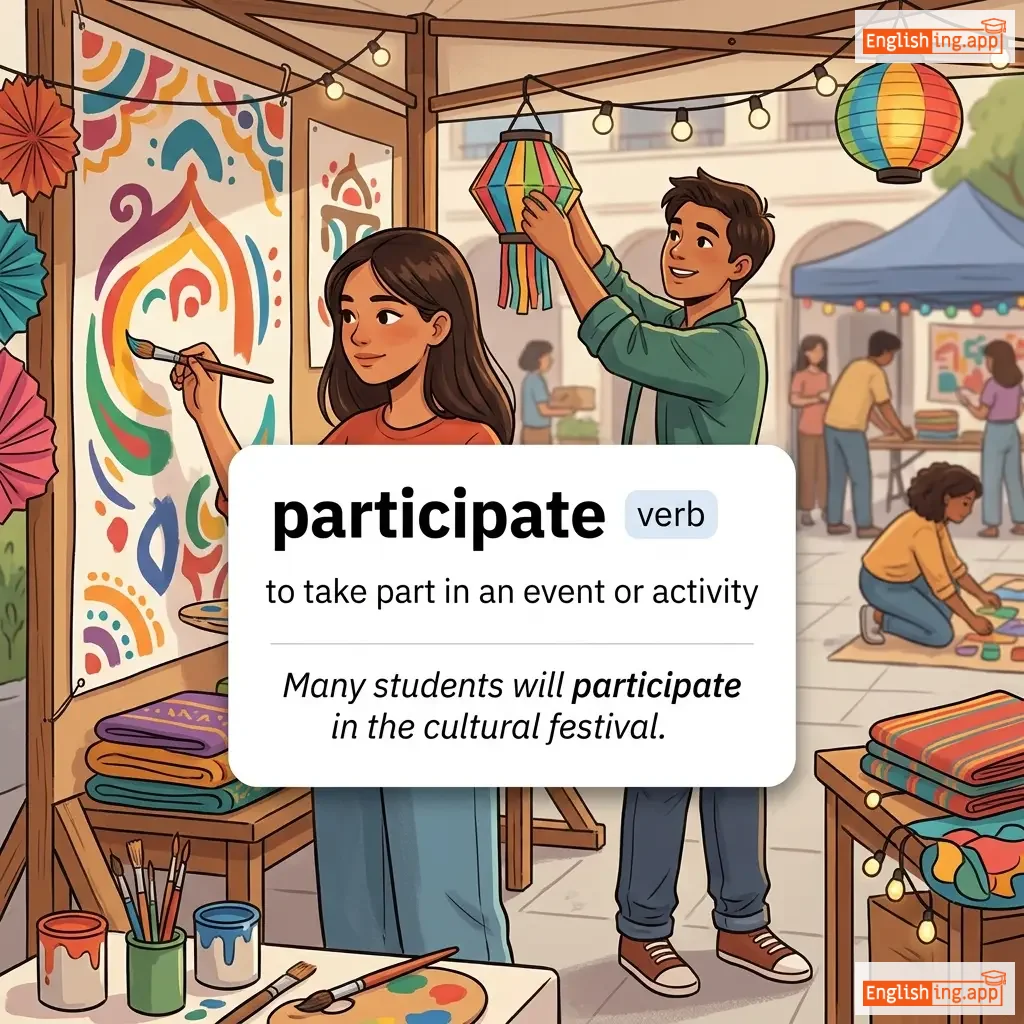
to take part in an event or activity
••••••
|
Many students will participate in the cultural festival.
多くの学生が文化祭に参加する予定です。
••••••
|
多くの学生が文化祭に参加する予定です。
Ōku no gakusei ga bunkasai ni sanka suru yotei desu.
••••••
|
participate in
参加する
••••••
|
to take part in something
••••••
|
参加する
sanka suru
••••••
|
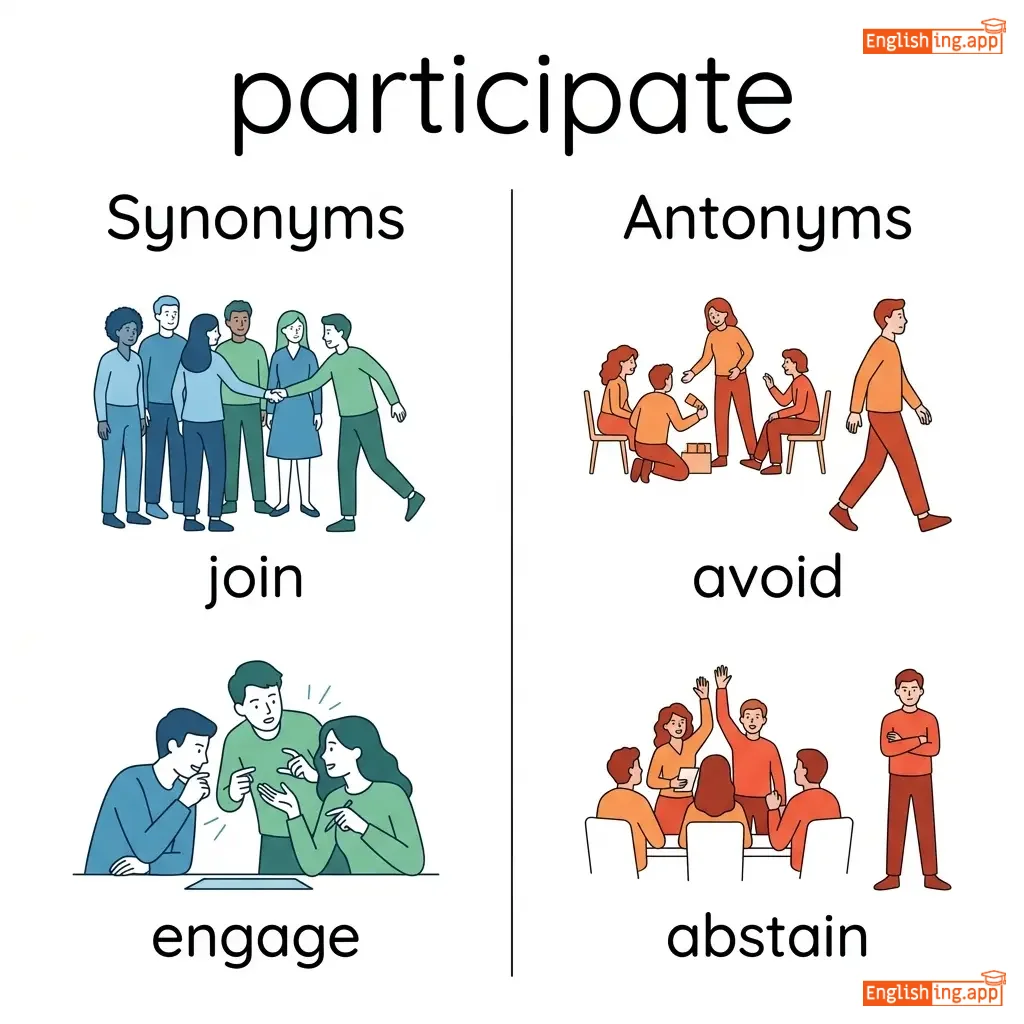
join, engage, take part, involve, contribute
••••••
|
avoid, abstain
••••••
|
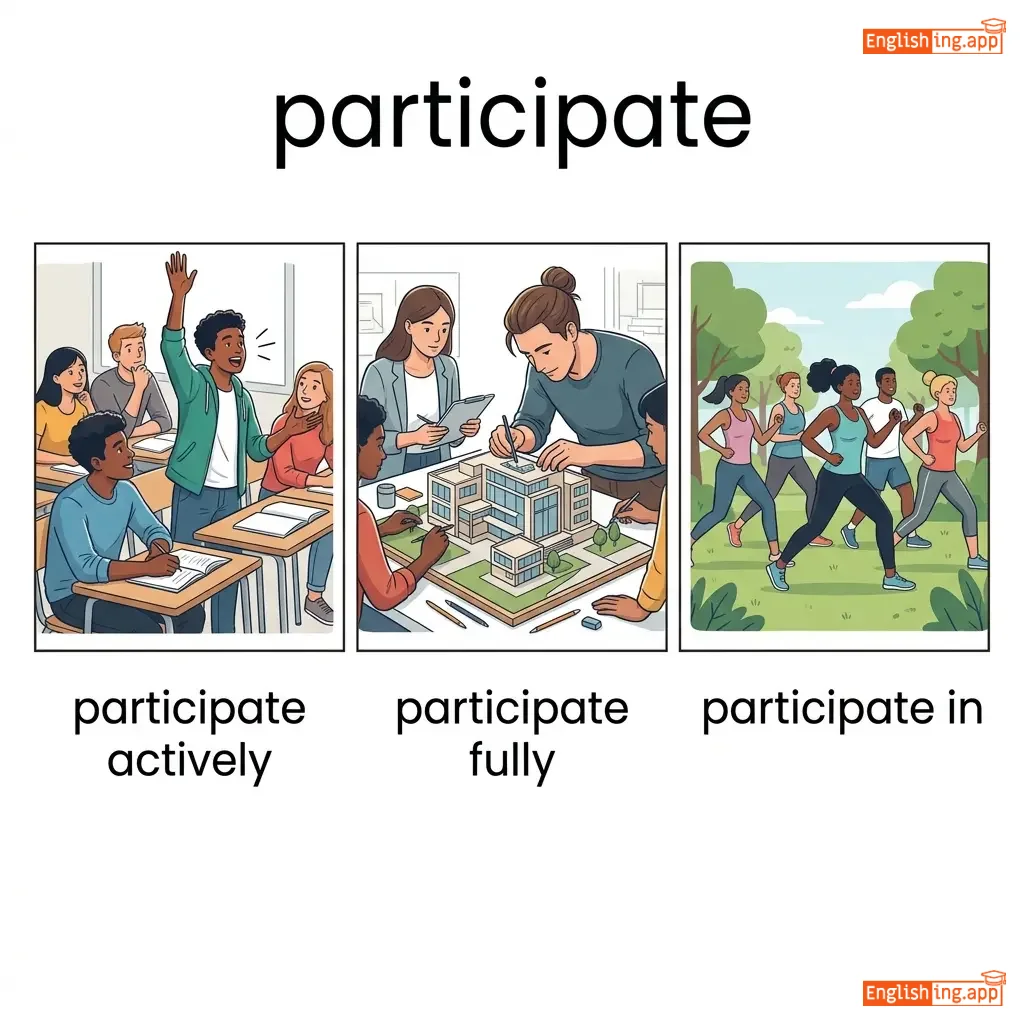
participate actively, participate fully, participate in
••••••
|
Participateは参加する意味 → 参加する。
••••••
|
|
🙋♀️
••••••
|
/pɑːrˌtɪsɪˈpeɪʃən/
noun
(パーティシペーション)
••••••
|
- •••••• |
参加
sanka
••••••
|
- •••••• | - •••••• | - •••••• | - •••••• |
the action of taking part in something
••••••
|
Her participation in the competition was commendable. |
彼女の競技会への参加は称賛に値しました。
Kanojo no kyogikai e no sanka wa shousan ni atai shimashita.
••••••
|
- •••••• | - •••••• | - •••••• |
involvement, engagement, contribution, attendance
••••••
|
disengagement, absence
••••••
|
active participation, full participation, participation in, encourage participation
••••••
|
参加は日本語で参加です、競技に参加する意味です!
••••••
|
|
🎯
••••••
|
/pərˈtɪk.jʊ.lər/
adjective
(パーティキュラー)
••••••
|
- •••••• |
特別
tokubetsu
••••••
|
- •••••• | - •••••• | - •••••• | - •••••• |
specific or special; distinct from others
••••••
|
He is very particular about his diet.
彼は自分の食事に非常にこだわりがあります。
••••••
|
彼は自分の食事に非常にこだわりがあります。
Kare wa jibun no shokuji ni hijou ni kodawari ga arimasu.
••••••
|
in particular
特に
••••••
|
especially or particularly
••••••
|
特に
toku ni
••••••
|
specific, distinct, unique, special, detailed
••••••
|
general, common, ordinary
••••••
|
particular reason, particular case, particular interest, particular order
••••••
|
パーティキュラー – 特別なもの、パーティーのようにユニーク。
••••••
|
|
⭐
••••••
|
/pɑːrˈtɪkjʊləli/
adverb
(パーティキュラリー)
••••••
|
- •••••• |
特に
tokuni
••••••
|
- •••••• | - •••••• | - •••••• | - •••••• |
to a higher degree than is usual or expected
••••••
|
She is particularly fond of Italian food. |
彼女は特にイタリア料理が好きです。
Kanojo wa tokuni Itaria ryōri ga suki desu.
••••••
|
- •••••• | - •••••• | - •••••• |
especially, notably, specifically, uniquely
••••••
|
generally, ordinarily
••••••
|
particularly interested, particularly good, particularly important
••••••
|
特に、通常よりもさらに好きなことがある時に使います。
••••••
|
|
🤝
••••••
|
/ˈpɑːtnər/
noun
(パートナー)
••••••
|
- •••••• |
パートナー
pa-tona
••••••
|
- •••••• | - •••••• | - •••••• | - •••••• |
a person who shares or is associated with another in some action or endeavor
••••••
|
She is my business partner in the new venture. |
彼女は私の新しい事業でのビジネスパートナーです。
Kanojo wa watashi no atarashii jigyo de no bijinesu pa-tona desu.
••••••
|
- •••••• | - •••••• | - •••••• |
associate, colleague, collaborator, companion
••••••
|
enemy, opponent, adversary
••••••
|
business partner, life partner, partner in crime
••••••
|
Think of a 'PART' of a 'business' that partners with others
••••••
|
|
🤝
••••••
|
/ˈpɑːtnəʃɪp/
noun
(パートナーシップ)
••••••
|
- •••••• |
パートナーシップ
pātonāshippu
••••••
|
- •••••• | - •••••• | - •••••• | - •••••• |
the state of being a partner or a group of partners
••••••
|
Our partnership has helped both companies grow.
私たちのパートナーシップは、両社の成長に役立ちました。
••••••
|
私たちのパートナーシップは、両社の成長に役立ちました。
Watashitachi no pātonāshippu wa, ryōsha no seichō ni yakudachimashita.
••••••
|
- •••••• | - •••••• | - •••••• |
alliance, cooperation, collaboration, association
••••••
|
separation, rivalry, conflict
••••••
|
business partnership, successful partnership, partnership agreement
••••••
|
'PART' を一緒に成長する企業の一部として考えてください
••••••
|
|
🏃♂️
••••••
|
/pæs/
verb
••••••
|
- •••••• | - •••••• |
passed
••••••
|
passed
••••••
|
passes
••••••
|
passing
••••••
|
to move past or beyond something
••••••
|
He passed the test with flying colors. |
- •••••• |
pass the buck |
to shift responsibility to someone else
••••••
|
- •••••• |
move, go by, advance, transfer
••••••
|
stop, block, hinder
••••••
|
pass a test, pass by, pass on, pass away
••••••
|
No •••••• |
|
🚪
••••••
|
/ˈpæsɪdʒ/
noun
(パッセージ)
••••••
|
- •••••• |
狭い通路; 断片/引用; 一つの状態や場所から他の場所へ移動するプロセス
semai tōro; danpen/inyō; hitotsu no jōtai ya basho kara hoka no basho e idō suru purosezu
••••••
|
- •••••• | - •••••• | - •••••• | - •••••• |
a narrow way through or between; a section of text or music; the process of moving from one state or place to another
••••••
|
The narrow passage led from the courtyard to the library. |
狭い通路は中庭から図書館へと続いていた。
semai tōro wa nakaniwa kara toshokan e to tsudzuite ita.
••••••
|
rite of passage |
a significant event marking a transition in a person’s life
••••••
|
成人の儀式
seijin no gishiki
••••••
|
corridor, hallway, excerpt, segment, transition
••••••
|
blockage, dead end, whole
••••••
|
passage of time, narrow passage, a passage from the novel, safe passage
••••••
|
‘Passage’ のための通路を見つけ、人生の過渡期を迎えよう!
••••••
|
|
🧳
••••••
|
/ˈpæs.ən.dʒər/
noun
(ペッセンダー)
••••••
|
- •••••• |
乗客
jōkyaku
••••••
|
- •••••• | - •••••• | - •••••• | - •••••• |
A person who travels in a vehicle but is not driving it
••••••
|
The bus can carry thirty passengers.
バスは30人の乗客を運ぶことができます。
••••••
|
バスは30人の乗客を運ぶことができます。
Basu wa sanjūnin no jōkyaku o hakobu koto ga dekimasu.
••••••
|
- •••••• | - •••••• | - •••••• |
traveler, rider, commuter
••••••
|
driver, pilot, operator
••••••
|
passenger seat, airline passenger, passenger train, passenger car
••••••
|
乗客は車を運転しない旅行者です。
••••••
|
|
⏳
••••••
|
/ˈpæsɪŋ/
noun
(パッシング)
••••••
|
- •••••• |
通過, 死
tsuuka, shi
••••••
|
- •••••• | - •••••• | - •••••• | - •••••• |
the act of moving past something or the end of someone's life
••••••
|
The passing of the leader was a great loss for the nation. |
リーダーの死は国にとって大きな損失でした。
Rīdā no shi wa kuni ni totte ōkina sonshitsu deshita.
••••••
|
in passing |
mentioned casually or briefly
••••••
|
通りすがりに
toorisugari ni
••••••
|
departure, death, transition, movement
••••••
|
arrival, birth
••••••
|
passing away, passing time, passing phase, passing car
••••••
|
Passing away は死ぬことを意味します — 例えば‘His passing made everyone sad’.
••••••
|
|
❤️
••••••
|
/ˈpæʃ.ən/
noun
(パッション)
••••••
|
- •••••• |
情熱
jounetsu
••••••
|
- •••••• | - •••••• | - •••••• | - •••••• |
strong enthusiasm or excitement for something; intense emotion or feeling
••••••
|
Her passion for music led her to become a professional singer.
音楽への情熱が、彼女をプロの歌手に導いた。
••••••
|
音楽への情熱が彼女をプロの歌手に導いた。
ongaku e no jounetsu ga kanojo wo puro no kashu ni michibiita.
••••••
|
- •••••• | - •••••• | - •••••• |
enthusiasm, fervor, zeal, love
••••••
|
indifference, apathy, coldness, disinterest
••••••
|
burning passion, passion for music, passionate about
••••••
|
Imagine a glowing パッション fire labeled 情熱 guiding you toward your dream stage
••••••
|
|
🔥
••••••
|
/ˈpæʃənət/
adjective
(パッションネット)
••••••
|
- •••••• |
情熱的な
jōnetsuteki na
••••••
|
- •••••• | - •••••• | - •••••• | - •••••• |
showing or caused by strong feelings or a strong belief
••••••
|
He is passionate about environmental conservation.
彼は環境保護に情熱を注いでいます。
••••••
|
彼は環境保護に情熱を注いでいます。
Kare wa kankyō hogo ni jōnetsu o sosogiteimasu.
••••••
|
- •••••• | - •••••• | - •••••• |
enthusiastic, fervent, zealous, eager
••••••
|
apathetic, indifferent
••••••
|
passionate about, passionate about something, passionate supporter
••••••
|
Passionate = 行動の中で感情が生き生きと燃える、熱い献身。
••••••
|
|
🧘
••••••
|
/ˈpæsɪv/
adjective
(パッシブ)
••••••
|
- •••••• |
受動的; (文法) 受動態
judōteki; (bunpō) judōtai
••••••
|
- •••••• | - •••••• | - •••••• | - •••••• |
not actively responding or participating; in grammar, denoting the voice in which the subject undergoes the action
••••••
|
Instead of taking charge, he remained passive during the meeting. |
会議では責任を取る代わりに、彼は受動的なままでした。
Kaigi de wa sekinin o toru kawari ni, kare wa judōteki na mama deshita.
••••••
|
passive voice |
a grammatical construction where the subject is acted upon
••••••
|
受動態
judōtai
••••••
|
inactive, submissive, unresponsive, compliant, receptive
••••••
|
active, assertive, dynamic
••••••
|
passive income, passive resistance, passive investor, passive role, passive voice
••••••
|
受動的 → ‘パッシブ’ → 何もしない、ただ結果を受け取る。
••••••
|
|
🛂
••••••
|
/ˈpɑːsˌpɔːrt/
noun
(パスポート)
••••••
|
- •••••• |
パスポート
pasupooto
••••••
|
- •••••• | - •••••• | - •••••• | - •••••• |
an official government document that identifies a person and allows them to travel internationally
••••••
|
She renewed her passport before traveling abroad.
シー リニューズ ハー パスポート ビフォア トラベリング アブロード。
••••••
|
彼女は海外旅行の前にパスポートを更新した。
kanojo wa kaigai ryokou no mae ni pasupooto o koushin shita
••••••
|
passport to success
サクセス への パスポート
••••••
|
something that enables or guarantees success
••••••
|
成功へのパスポート
seikou e no pasupooto
••••••
|
travel document, identity document, pass, visa booklet
••••••
|
ban, restriction
••••••
|
valid passport, foreign passport, passport control, passport application
••••••
|
パス+ポート=国境を通過する鍵
••••••
|
|
🔑
••••••
|
/ˈpɑːswɜːd/
noun
(パスワード)
••••••
|
- •••••• |
パスワード
pasuwādo
••••••
|
- •••••• | - •••••• | - •••••• | - •••••• |
a secret word or phrase used to gain access to something
••••••
|
Make sure your password is strong and unique.
あなたのパスワードが強力でユニークであることを確認してください。
••••••
|
あなたのパスワードが強力でユニークであることを確認してください。
Anata no pasuwādo ga kyōryoku de yunikude aru koto o kakunin shite kudasai.
••••••
|
- •••••• | - •••••• | - •••••• |
PIN, passcode, access code, secret code
••••••
|
public key
••••••
|
password manager, password protection, change password
••••••
|
Password = Pass the word, keep it secret.
••••••
|
|
⏳
••••••
|
/pɑːst/
noun/adjective/preposition
(パスト)
••••••
|
- •••••• |
過去
kako
••••••
|
- •••••• | - •••••• | - •••••• | - •••••• |
the time before the present; gone by in time
••••••
|
He often thinks about his past mistakes. |
彼はよく自分の過去の誤りを考えます。
Kare wa yoku jibun no kako no ayamari o kangaemasu.
••••••
|
let bygones be bygones |
to forget past conflicts and move on
••••••
|
過去を忘れる
kako o wasureru
••••••
|
history, former, previous, bygone
••••••
|
future, present
••••••
|
past mistakes, past events, past experience, past life
••••••
|
Past – 過去はすでに過ぎ去ったものです。
••••••
|
|
📋
••••••
|
/peɪst/
verb, noun
(ペイスト)
••••••
|

|
貼る
haru
••••••
|
pasted
ペイステッド
••••••
|
pasted
ペイステッド
••••••
|
pastes
ペイツ
••••••
|
pasting
ペイスティング
••••••
|
to stick or attach something using a soft, moist substance; also a thick, soft, moist substance itself
••••••
|
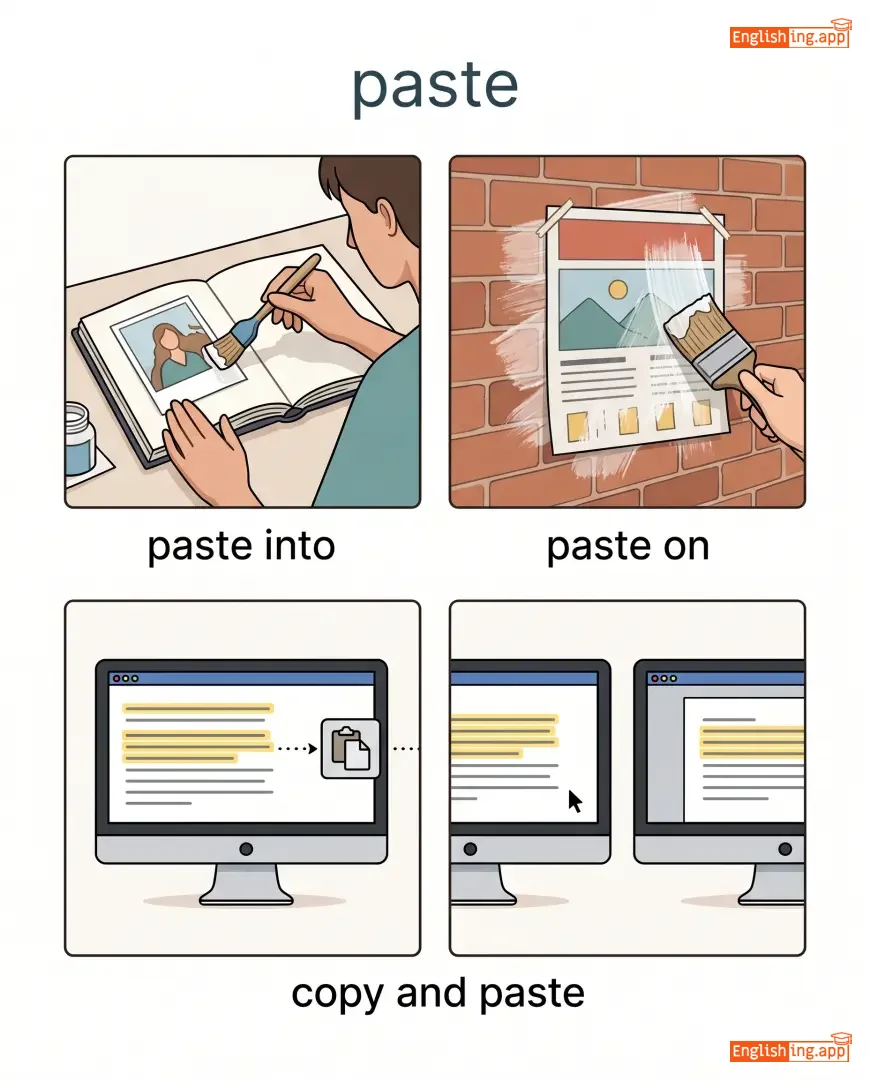
She pasted the picture into her notebook.
彼女はノートに写真を貼り付けた。
••••••
|
彼女はノートに写真を貼り付けた。
Kanojo wa nōto ni shashin o haritsuketa.
••••••
|
copy and paste
コピーアンドペースト
••••••
|
to duplicate text or images from one place and put them in another using software commands
••••••
|
コピーアンドペースト
kopī ando pēsu
••••••
|
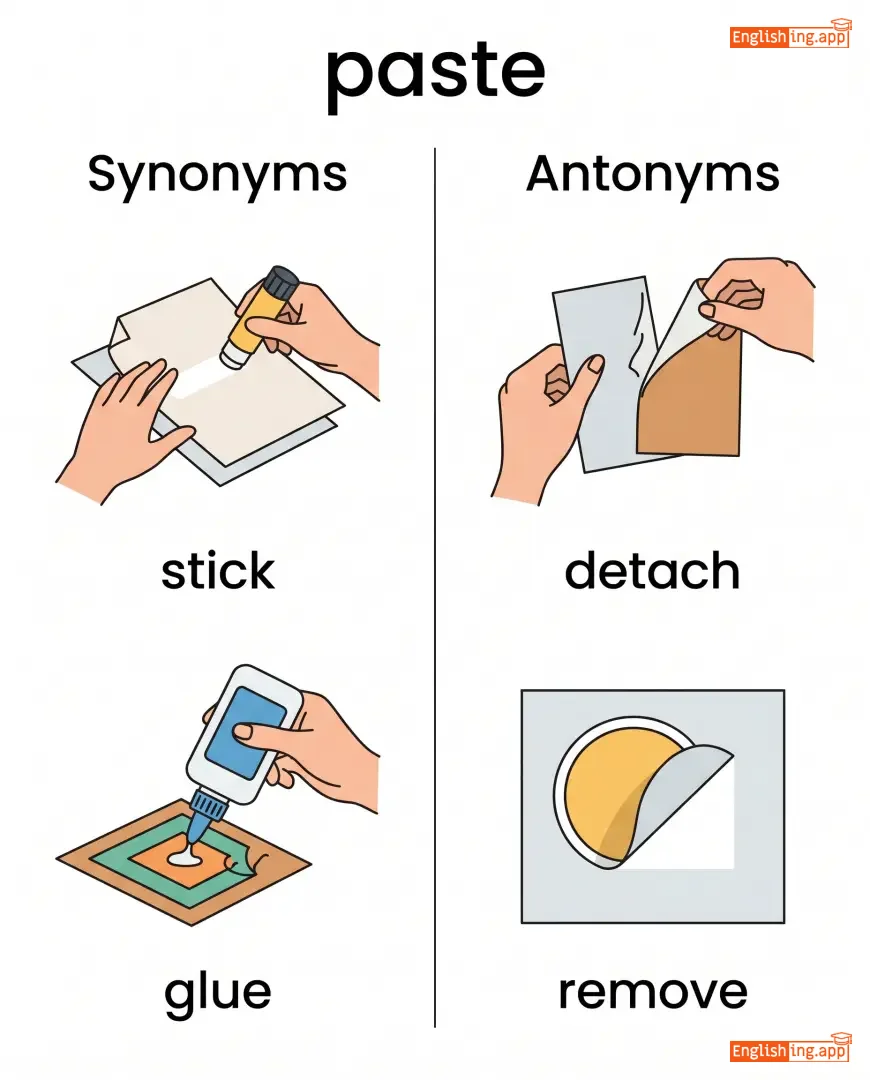
stick, glue, affix, attach, insert
••••••
|
detach, remove, separate
••••••
|
paste into, paste on, copy and paste, paste image
••••••
|
Pasteは貼る意味 - コンピュータでコピーして貼り付ける時のように。
••••••
|
|
⛪
••••••
|
/ˈpæstər/
noun
(パスター)
••••••
|
- •••••• |
牧師
bokushi
••••••
|
- •••••• | - •••••• | - •••••• | - •••••• |
a minister in charge of a Christian church or congregation
••••••
|
The pastor delivered a heartfelt sermon on compassion.
牧師は思いやりのある説教をしました。
••••••
|
牧師は思いやりのある説教をしました。
Bokushi wa omoiyari no aru sekkyou o shimashita.
••••••
|
- •••••• | - •••••• | - •••••• |
minister, priest, clergyman, reverend, preacher
••••••
|
layman, atheist, follower
••••••
|
pastor of the church, senior pastor, youth pastor, church pastor
••••••
|
牧師が教会で説教する — ‘pastor’ はキリスト教のリーダー ⛪
••••••
|
|
🩹
••••••
|
/pætʃ/
noun
(パッチ)
••••••
|
- •••••• |
パッチ
patch
••••••
|
- •••••• | - •••••• | - •••••• | - •••••• |
a small piece of material used to mend a hole; a small area of something different
••••••
|
She sewed a patch over the hole in her jeans. |
彼女はジーンズの穴にパッチを縫い付けました。
Kanojo wa jīnzu no ana ni patchi o nuitsukemashita.
••••••
|
- •••••• | - •••••• | - •••••• |
repair, mend, piece, cover
••••••
|
hole, tear, damage, opening
••••••
|
eye patch, sew patch, cloth patch
••••••
|
ジーンズの穴を修理するために使うパッチ。
••••••
|
|
🛤️
••••••
|
/pæθ/
noun
(パス)
••••••
|
- •••••• |
小道
komichi
••••••
|
- •••••• | - •••••• | - •••••• | - •••••• |
a way or track laid down for walking or made by continual treading
••••••
|
She walked along the narrow path through the forest.
彼女は森の中の狭い道を歩きました。
••••••
|
彼女は森の中の狭い道を歩きました。
Kanojo wa mori no naka no semai michi wo arukimashita.
••••••
|
- •••••• | - •••••• | - •••••• |
route, trail, track, way
••••••
|
obstacle, block, barrier
••••••
|
narrow path, walking path, dirt path, clear path
••••••
|
小道 (path) 進むと新しい世界が広がる!
••••••
|
|
🧘
••••••
|
/ˈpeɪ.ʃəns/
noun
(ペイシェンス)
••••••
|
|
忍耐
nintai
••••••
|
- •••••• | - •••••• | - •••••• | - •••••• |
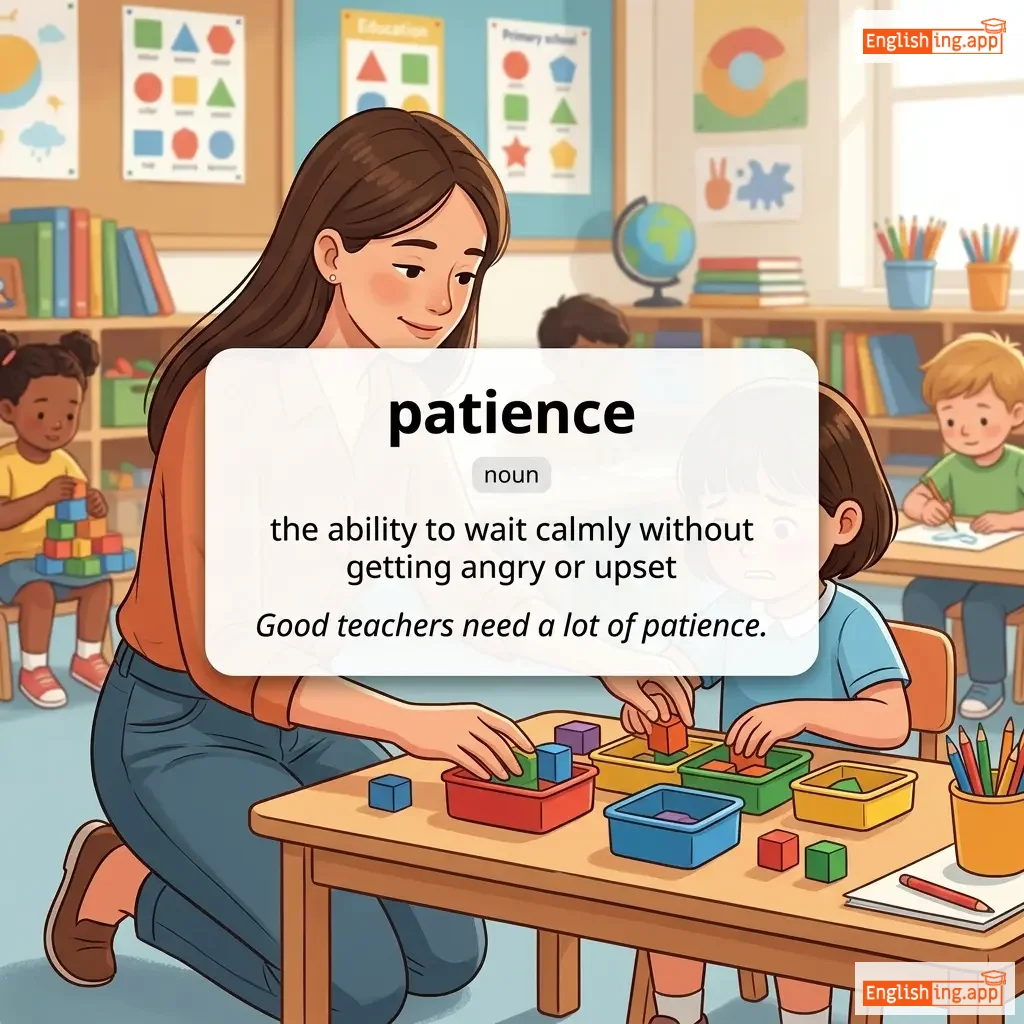
the ability to wait calmly without getting angry or upset
••••••
|
Good teachers need a lot of patience. |
良い教師は多くの忍耐を必要とします。
Yoi kyōshi wa ōku no nintai o hitsuyō to shimasu.
••••••
|
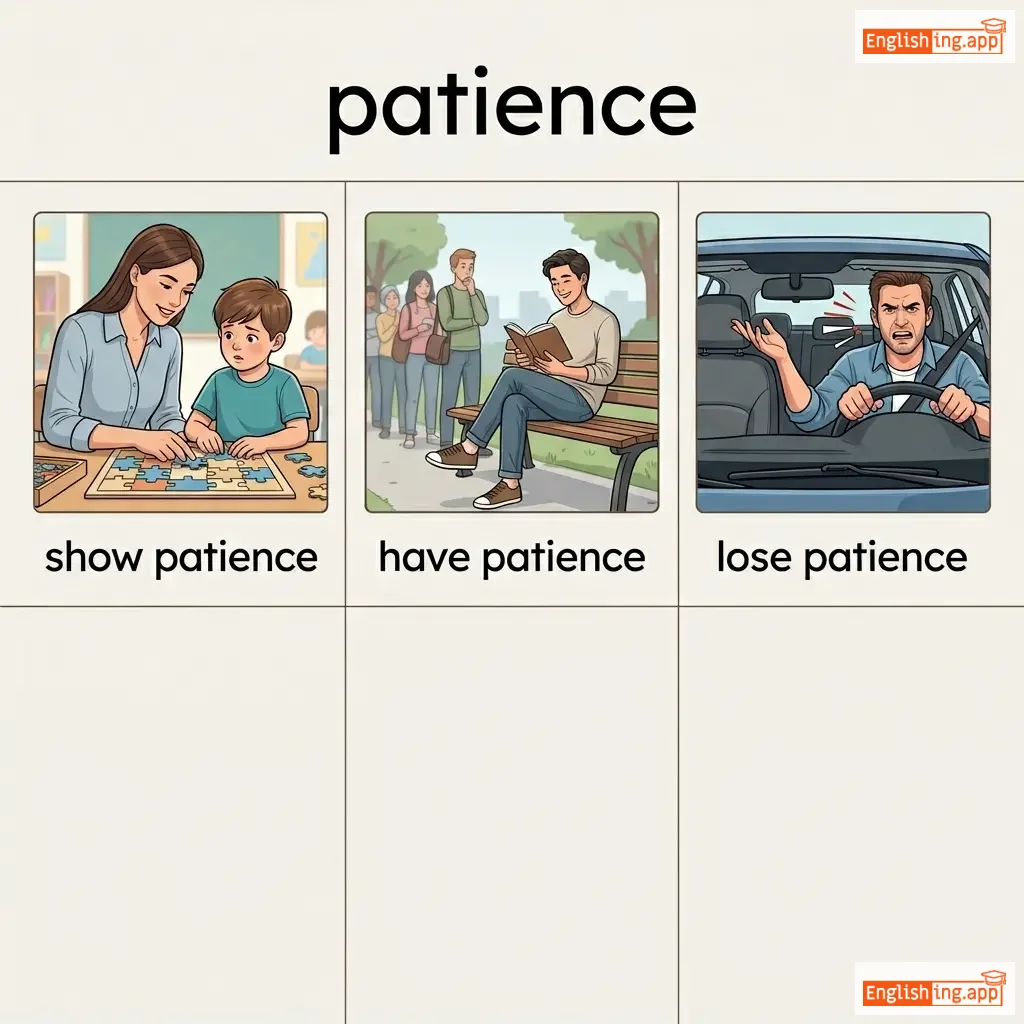
lose patience |
to become annoyed because of delay or difficulty
••••••
|
忍耐を失う
nintai o ushinau
••••••
|
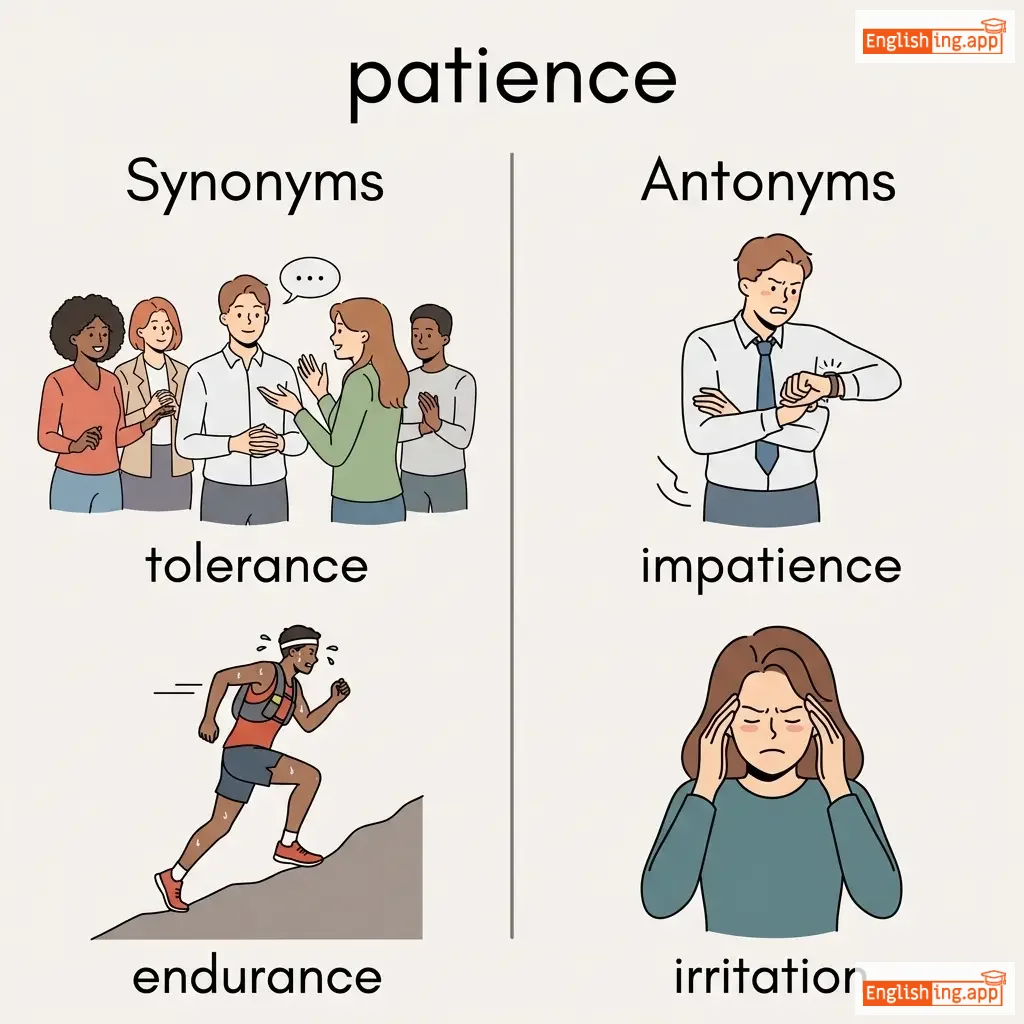
tolerance, endurance, calmness, perseverance, forbearance
••••••
|
impatience, irritation, frustration
••••••
|
show patience, have patience, lose patience, test patience
••••••
|
忍耐は、静かに待っている患者のようです。
••••••
|
|
🧘♀️
••••••
|
/ˈpeɪʃənt/
adjective
••••••
|
- •••••• | - •••••• | - •••••• | - •••••• | - •••••• | - •••••• |
able to accept or tolerate delays, problems, or suffering without becoming annoyed or anxious
••••••
|
She remained patient despite the long wait. |
- •••••• |
patience is a virtue |
the ability to wait calmly without becoming angry or upset is a valuable trait
••••••
|
- •••••• |
tolerant, calm, composed, understanding
••••••
|
impatient, anxious, irritable
••••••
|
remain patient, patient demeanor, patient attitude
••••••
|
No •••••• |
|
🚓
••••••
|
/pəˈtroʊl/
verb
(パトロール)
••••••
|
- •••••• |
パトロールする
patorōru suru
••••••
|
patrolled
パトロールした
••••••
|
patrolled
パトロールした
••••••
|
patrols
パトロールする
••••••
|
patrolling
パトロールしている
••••••
|
to move around an area to watch or guard it
••••••
|
The police patrol the streets at night to ensure safety.
警察は夜に街をパトロールして安全を確保しています。
••••••
|
警察は夜に街をパトロールして安全を確保しています。
Keisatsu wa yoru ni machi o patorōru shite anzen o kakuho shiteimasu.
••••••
|
on patrol
パトロール中
••••••
|
engaged in patrolling duties
••••••
|
パトロール中
patorōru-chū
••••••
|
guard, watch, monitor, inspect, survey
••••••
|
ignore, neglect, overlook
••••••
|
police patrol, border patrol, night patrol, patrol car
••••••
|
Patrol は巡回を意味する — **パトロール** する 🚓
••••••
|
|
💰
••••••
|
/ˈpeɪtrən/
noun
(ペイトロン)
••••••
|
- •••••• |
後援者
kouensha
••••••
|
- •••••• | - •••••• | - •••••• | - •••••• |
a person who gives financial or other support to a person, organization, or cause
••••••
|
The library is supported by generous patrons. |
図書館は寛大な後援者によって支えられています。
Toshokan wa kandai na kouensha ni yotte sasaerareteimasu.
••••••
|
patron saint |
a saint regarded as a special protector of a person or place
••••••
|
守護聖人
shugo seijin
••••••
|
supporter, sponsor, benefactor, backer, donor
••••••
|
opponent, detractor, enemy
••••••
|
regular patron, loyal patron, art patron, patron of the arts
••••••
|
Patron は 'pay-tron' の意味 — 支援者 💰
••••••
|
|
🎨
••••••
|
/ˈpæt.ən/
(パターン)
••••••
|
- •••••• |
模様 / パターン
moyou / patān
••••••
|
- •••••• | - •••••• | - •••••• | - •••••• |
A repeated decorative design or a regular way in which something happens or is done.
••••••
|
The dress had a beautiful floral pattern.
そのドレスには美しい花柄のパターンがありました。
••••••
|
そのドレスには美しい花柄のパターンがありました。
Sono doresu ni wa utsukushī hanagara no patān ga arimashita.
••••••
|
follow a pattern
パターンに従う
••••••
|
to behave or occur in a regular or predictable way
••••••
|
パターンに従う
patān ni shitagau
••••••
|
design, motif, style, arrangement, sequence
••••••
|
disorder, chaos
••••••
|
pattern recognition, repeating pattern, unique pattern, pattern of behavior
••••••
|
Pattern = パターン, ドレスの花柄のパターンのように。
••••••
|

