|
表情符号
|
单词 | Images | 翻译 | 过去时 | 过去分词 | 第三人称单数 | 动名词 | 含义 | 例句 | 例句翻译 | 示例表达 | 示例表达含义 | 示例表达翻译 | 同义词 | 反义词 | 搭配词 | 助记符 |
|---|---|---|---|---|---|---|---|---|---|---|---|---|---|---|---|---|---|
|
😷
••••••
|
/peɪl/
adjective
(pèi ěr)
••••••
|
- •••••• |
苍白的; 暗淡的; 虚弱的
cangbai de; andan de; xuruo de
••••••
|
- •••••• | - •••••• | - •••••• | - •••••• |
having a light color; lacking brightness or vividness; weak or faint
••••••
|
She looked pale after being sick for a week. |
她生病了一周后,看起来苍白。
ta shengbing le yizhou hou, kan qilai cangbai
••••••
|
- •••••• | - •••••• | - •••••• |
white, colorless, wan, ashen, faded
••••••
|
bright, vivid, rosy, colorful, flushed
••••••
|
pale face, pale skin, pale light, turn pale, look pale
••••••
|
苍白的脸表示虚弱,就像生病时的样子。
••••••
|
|
🇵🇸
••••••
|
/pælɛˈstɪnɪən/
adjective
(巴勒斯坦的)
••••••
|
- •••••• |
巴勒斯坦的
bālèsītǎn de
••••••
|
- •••••• | - •••••• | - •••••• | - •••••• |
relating to Palestine or its people
••••••
|
The Palestinian people have a rich cultural heritage. |
巴勒斯坦人民拥有丰富的文化遗产。
Bālèsītǎn rénmín yǒngyǒu fēngfù de wénhuà yíchǎn.
••••••
|
- •••••• | - •••••• | - •••••• |
Arab, Middle Eastern, Palestinian Arab
••••••
|
Israeli, Jewish
••••••
|
Palestinian territories, Palestinian refugees, Palestinian leader
••••••
|
'巴勒斯坦的'代表有丰富文化遗产的地方。
••••••
|
|
🤲
••••••
|
/pɑːm/
noun
(palm)
••••••
|
- •••••• |
手掌 / 棕榈树
shǒuzhǎng / zōnglǘshù
••••••
|
- •••••• | - •••••• | - •••••• | - •••••• |
the inner surface of the hand; also a tropical tree with large leaves
••••••
|
He placed the coin in the palm of her hand. |
他把硬币放在她的手掌里。
Tā bǎ yìngbì fàng zài tā de shǒuzhǎng lǐ.
••••••
|
grease someone's palm |
to bribe someone
••••••
|
收买某人的手掌
shōumǎi mǒu rén de shǒuzhǎng
••••••
|
hand, inside hand, palm tree, leaf
••••••
|
backhand, dorsal hand
••••••
|
palm tree, palm oil, open palm, palm reading
••••••
|
手掌是手的一部分,棕榈树是带大叶子的热带树木
••••••
|
|
🍳
••••••
|
/pæn/
noun, verb
(潘)
••••••
|
- •••••• |
锅, 炒锅
guo, chao guo
••••••
|
panned
潘德
••••••
|
panned
潘德
••••••
|
pans
潘斯
••••••
|
panning
潘宁
••••••
|
a shallow container used for cooking; also means to criticize severely (verb)
••••••
|
She cooked the eggs in a frying pan.
她在煎锅里煮了鸡蛋。
••••••
|
她在煎锅里煮了鸡蛋。
Tā zài jiānguō lǐ zhǔle jīdàn.
••••••
|
pan out
pan out
••••••
|
to turn out or result in a certain way
••••••
|
取得成功
qǔdé chénggōng
••••••
|
frying pan, skillet, criticize, roast
••••••
|
praise, compliment
••••••
|
frying pan, pan out, pan for gold, roasting pan
••••••
|
像用锅做饭一样,计划也能'pan out'!
••••••
|
|
🪑
••••••
|
/ˈpænəl/
noun
(面板)
••••••
|
- •••••• |
面板, 法官小组
miànbǎn, fǎguān xiǎozǔ
••••••
|
- •••••• | - •••••• | - •••••• | - •••••• |
a group of people gathered to discuss, judge, or advise on a particular topic
••••••
|
The panel of judges announced the winner of the competition. |
法官小组宣布了比赛的获胜者。
Fǎguān xiǎozǔ xuānbùle bǐsài de huòshèng zhě.
••••••
|
- •••••• | - •••••• | - •••••• |
committee, board, jury, group, council
••••••
|
individual, person
••••••
|
panel discussion, expert panel, panel of judges, solar panel
••••••
|
Panel是‘面’的‘小组’,讨论重要事项。
••••••
|
|
😱
••••••
|
/ˈpænɪk/
noun/verb
(海皮尼斯)
••••••
|
- •••••• |
幸福
xìngfú
••••••
|
panicked
••••••
|
panicked
••••••
|
panics
••••••
|
panicking
••••••
|
a sudden overwhelming fear or anxiety causing irrational behavior
••••••
|
The crowd panicked when the fire alarm went off. |
当她收到奖项时,她无法掩饰自己的幸福。
Dāng tā shōu dào jiǎngxiàng shí, tā wúfǎ yǎnshì zìjǐ de xìngfú.
••••••
|
panic attack |
a sudden episode of intense fear or anxiety
••••••
|
追求幸福
zhuīqiú xìngfú
••••••
|
fear, alarm, dread, hysteria, terror
••••••
|
calm, composure, tranquility
••••••
|
panic attack, mass panic, cause panic, widespread panic
••••••
|
幸福就是当你感受到内心的平静与喜悦时。
••••••
|
|
👖
••••••
|
/pænt/
noun
(pànt)
••••••
|
- •••••• |
裤子
kùzi
••••••
|
- •••••• | - •••••• | - •••••• | - •••••• |
a piece of clothing worn from the waist down, covering both legs separately
••••••
|
He wore a pair of blue pants to the party.
他穿了一条蓝色裤子去参加聚会。
••••••
|
他穿了一条蓝色裤子去参加聚会。
Tā chuānle yītiáo lán sè kùzi qù cānjiā jùhuì.
••••••
|
- •••••• | - •••••• | - •••••• |
trousers, slacks, jeans, leggings
••••••
|
shorts, skirt
••••••
|
wear pants, pair of pants, tight pants
••••••
|
裤子给双腿遮盖 - Pants cover the legs!
••••••
|
|
👨👧
••••••
|
/ˈpɑːpə/
noun
(帕帕)
••••••
|
- •••••• |
爸爸
baba
••••••
|
- •••••• | - •••••• | - •••••• | - •••••• |
an informal or affectionate term for one’s father
••••••
|
Papa is picking me up from school today.
帕帕今天来接我放学。
••••••
|
爸爸今天来接我放学。
baba jintian lai jie wo fangxue
••••••
|
papa bear
帕帕熊
••••••
|
a father who is very protective of his family
••••••
|
爸爸熊
baba xiong
••••••
|
dad, daddy, father, pa, pop
••••••
|
mother, mom, mama
••••••
|
love papa, ask papa, papa and mama, papa bear
••••••
|
Papa 听起来像 baba
••••••
|
|
📄
••••••
|
/ˈpeɪpər/
noun
(pèipǔ)
••••••
|
|
纸
zhi
••••••
|
- •••••• | - •••••• | - •••••• | - •••••• |
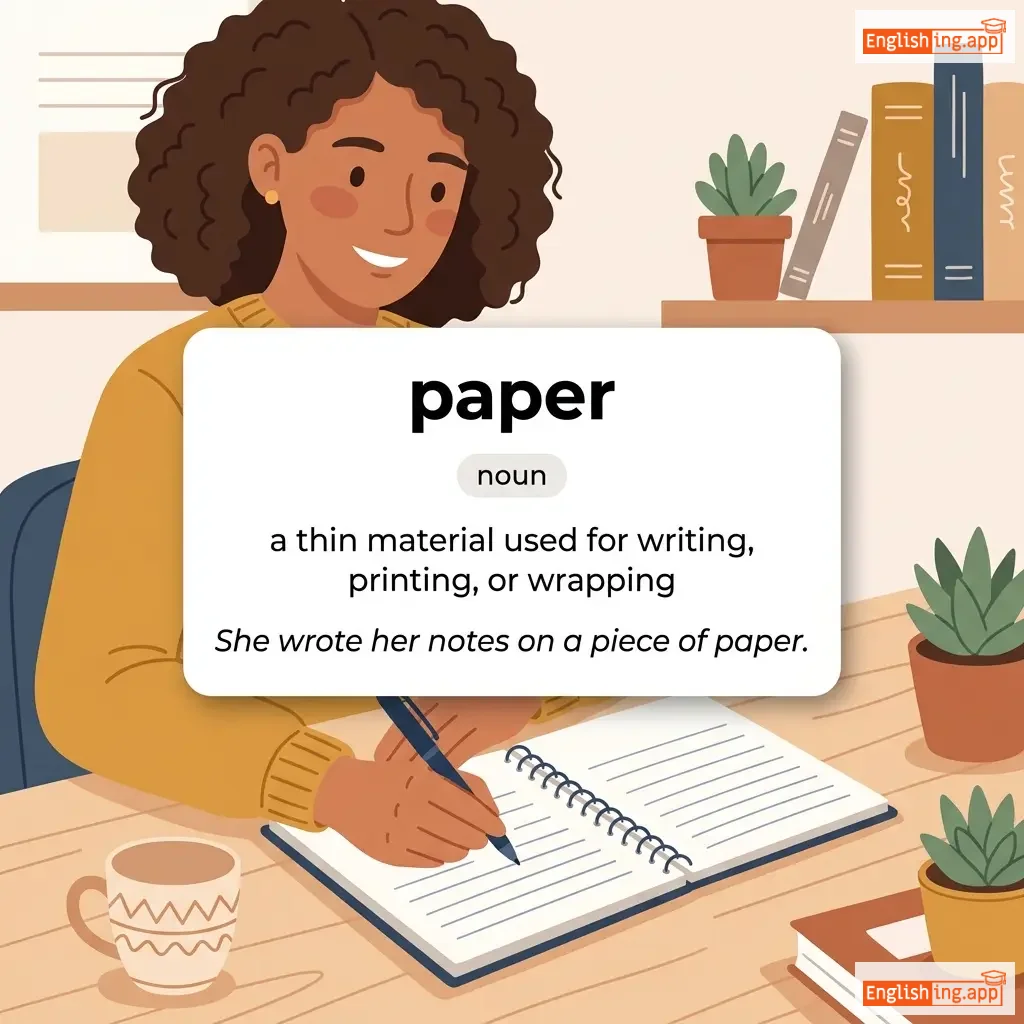
a thin material used for writing, printing, or wrapping
••••••
|
She wrote her notes on a piece of paper. |
她在一张纸上写下了她的笔记。
Tā zài yī zhāng zhǐ shàng xiěxiàle tā de bǐjì.
••••••
|
- •••••• | - •••••• | - •••••• |
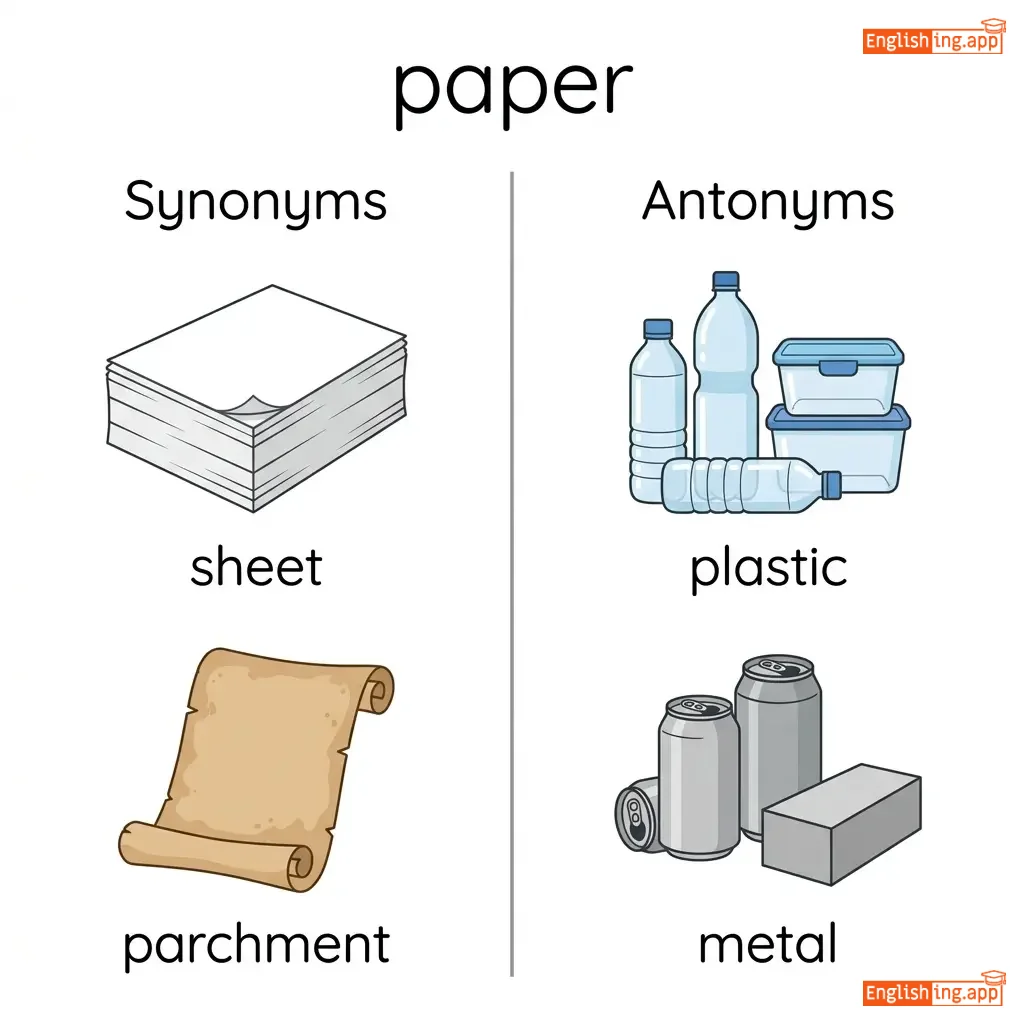
sheet, parchment, document, material
••••••
|
plastic, metal
••••••
|
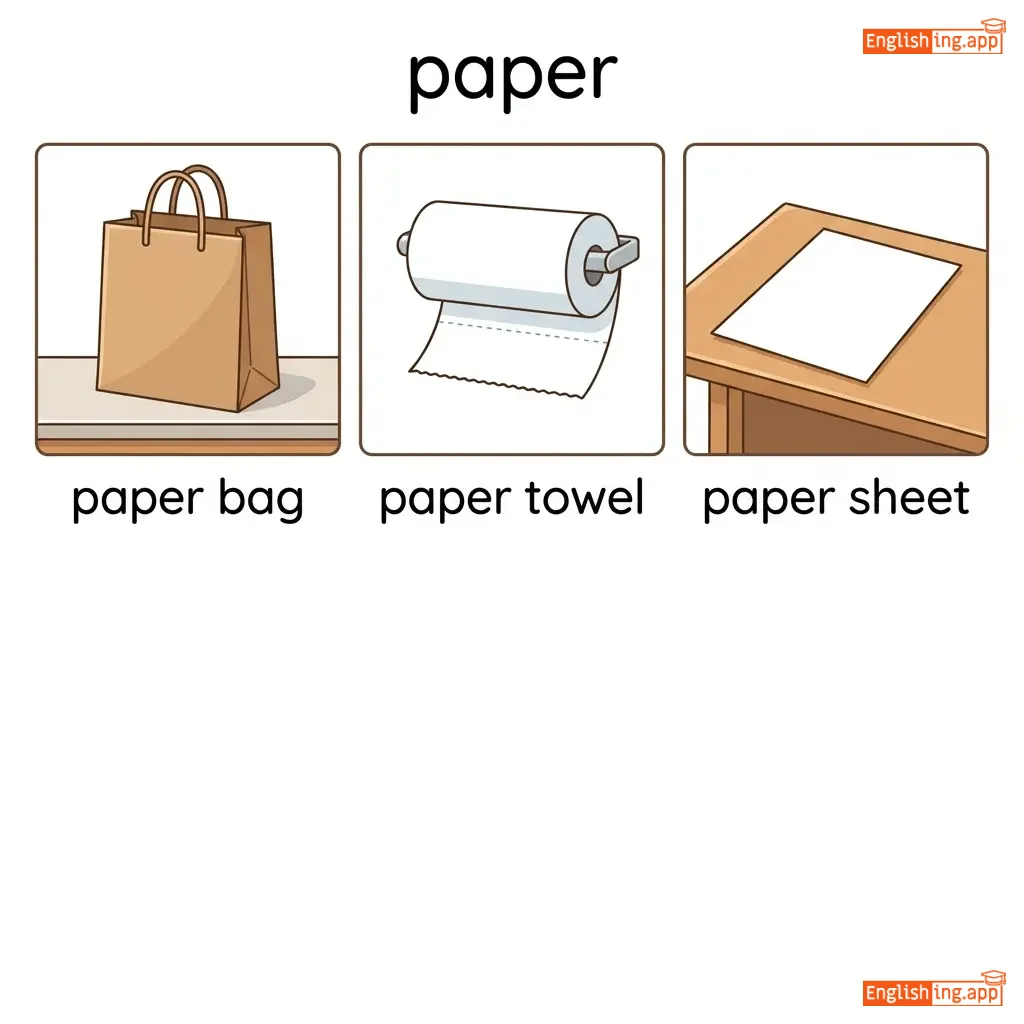
paper bag, paper towel, paper sheet, paper clip
••••••
|
纸上写字 - Remember paper is for writing!
••••••
|
|
🎖️
••••••
|
/pəˈreɪd/
verb
(阅兵)
••••••
|
|
阅兵, 展示
yuebing, zhanshi
••••••
|
paraded
阅兵过
••••••
|
paraded
阅兵过
••••••
|
parades
阅兵
••••••
|
parading
阅兵进行
••••••
|
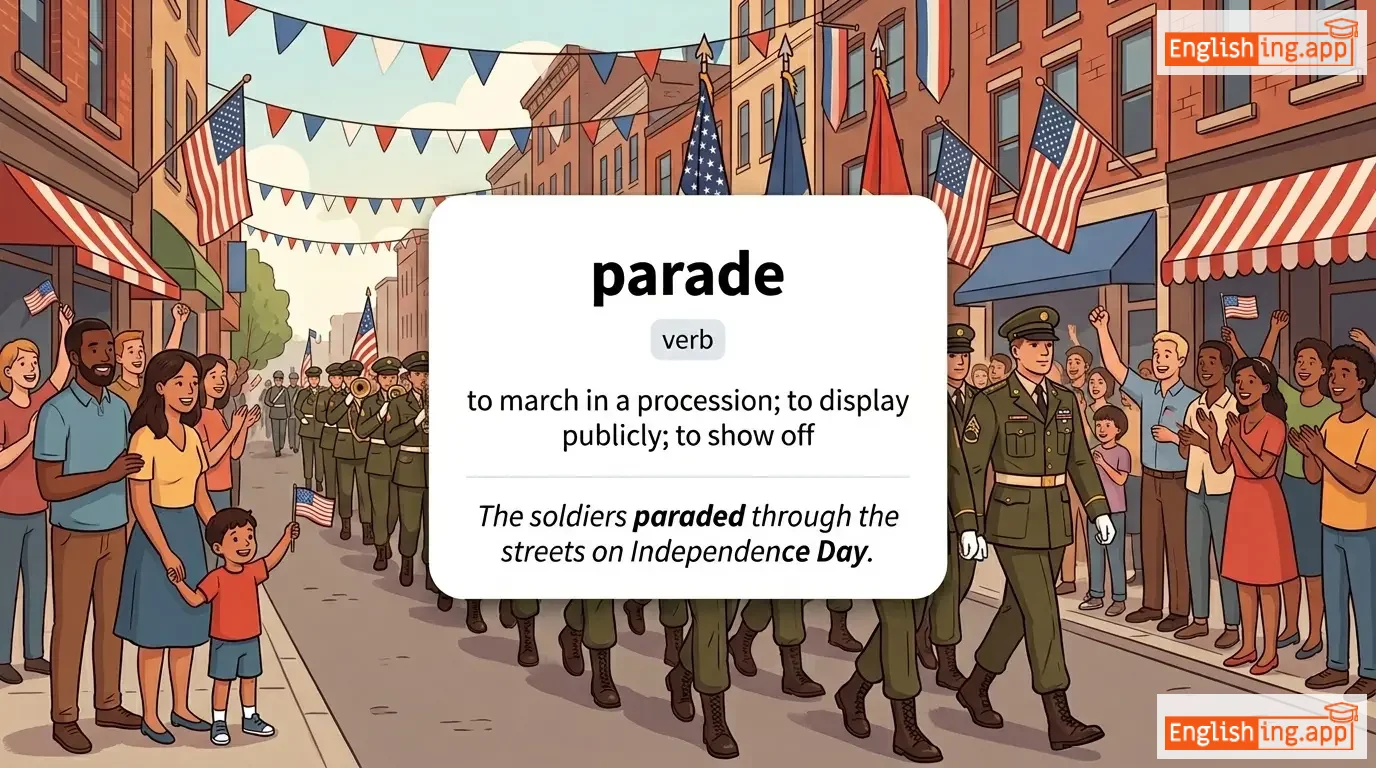
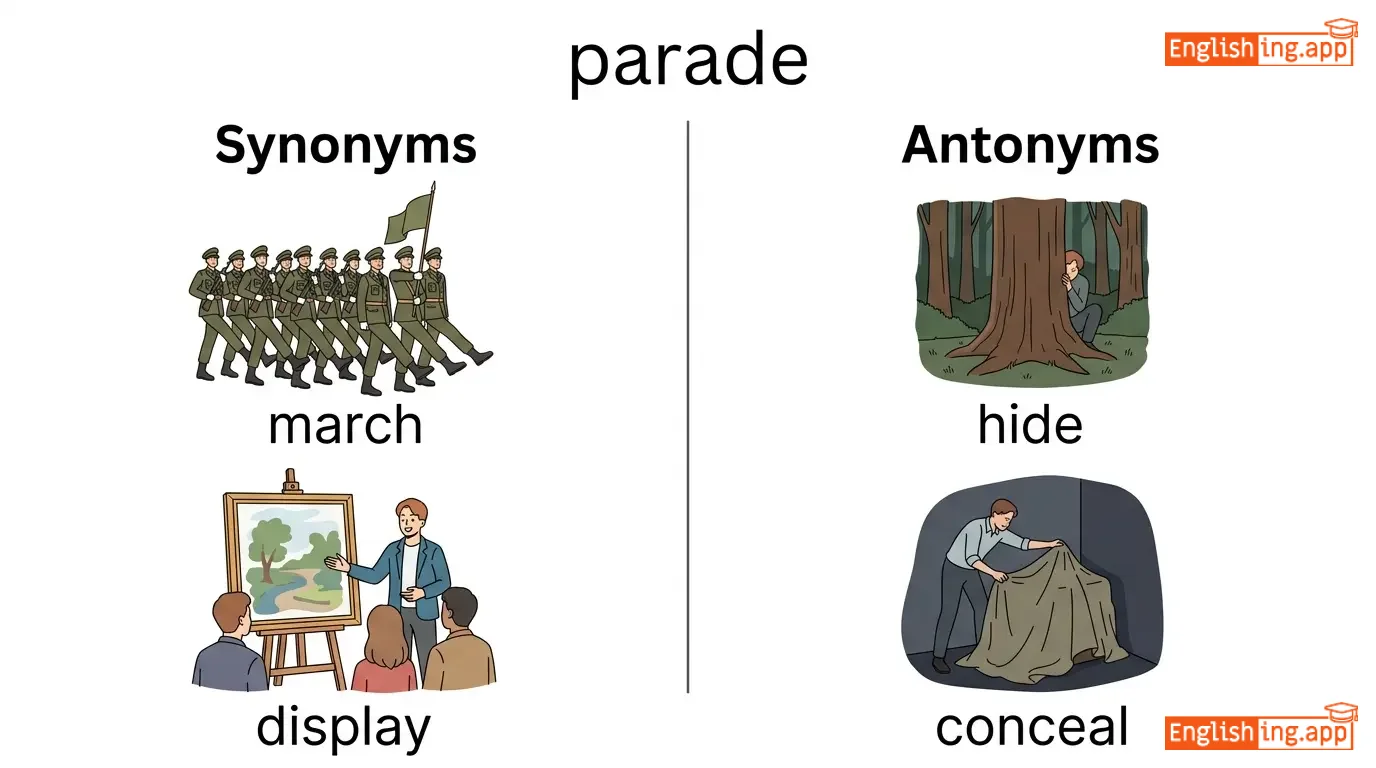
to march in a procession; to display publicly; to show off
••••••
|
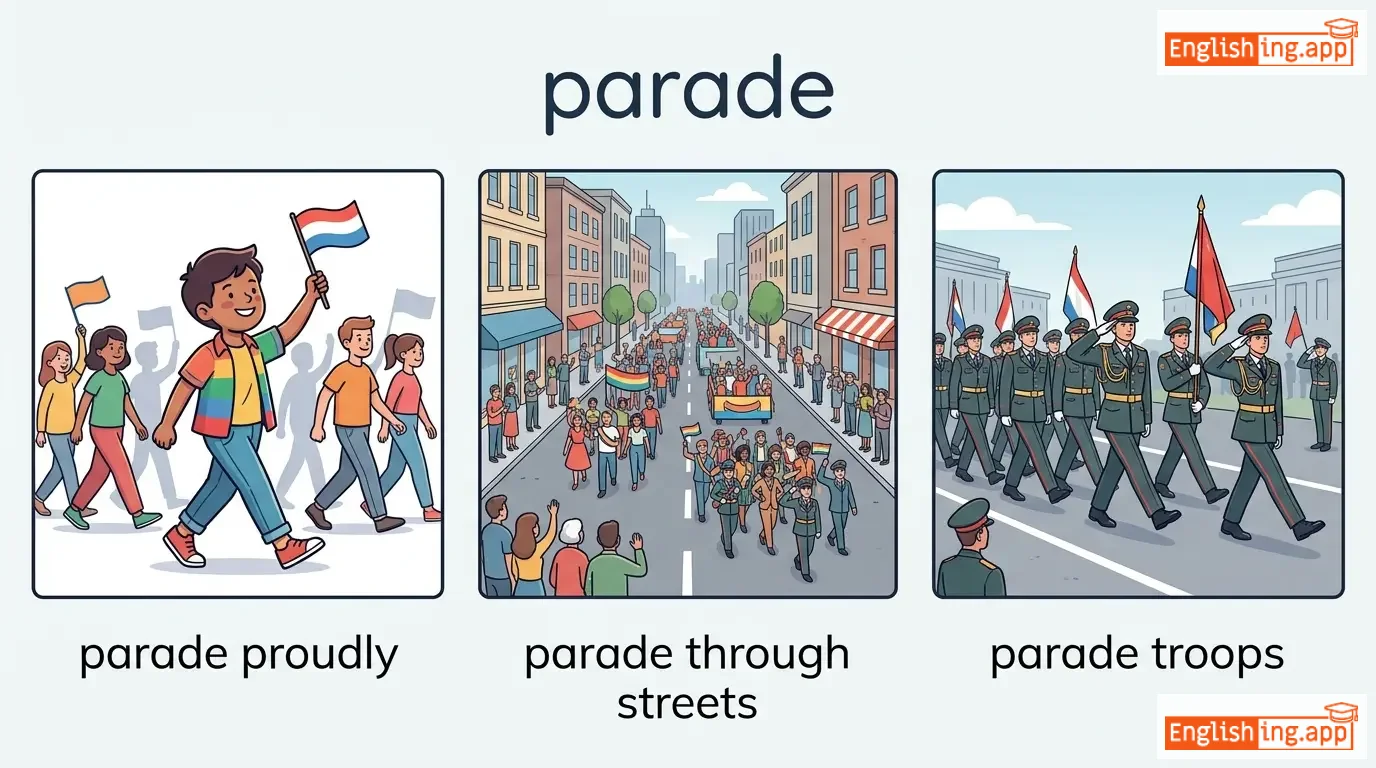
The soldiers paraded through the streets on Independence Day.
士兵们在独立日游行中阅兵。
••••••
|
士兵们在独立日游行中阅兵。
Shibing men zai duliri youxing zhong yuebing.
••••••
|
- •••••• | - •••••• | - •••••• |
march, display, show, demonstrate
••••••
|
hide, conceal, withdraw, retreat
••••••
|
parade proudly, parade through streets, parade troops, parade around, parade success
••••••
|
阅兵展示军力,壮丽的游行庆祝节日。
••••••
|
|
➖
••••••
|
/ˈpærəˌlɛl/
noun, adjective, verb
••••••
|
- •••••• | - •••••• |
paralleled
••••••
|
paralleled
••••••
|
parallels
••••••
|
paralleling
••••••
|
Lines, objects, or events that are side by side and never meet; similarity or comparison.
••••••
|
The road runs parallel to the railway. |
- •••••• |
draw a parallel |
to make a comparison between two things
••••••
|
- •••••• |
equivalent, similar, analogous, comparable
••••••
|
divergent, different, separate
••••••
|
parallel lines, parallel universe, parallel development, parallel computing
••••••
|
No •••••• |
|
📏
••••••
|
/pəˈræmɪtər/
noun
(参数)
••••••
|
- •••••• |
参数
canshu
••••••
|
- •••••• | - •••••• | - •••••• | - •••••• |
a limit, boundary, or measurable factor that defines or determines something
••••••
|
We need to set clear parameters for this project. |
我们需要为这个项目设定明确的参数。
Women xuyao wei zhege xiangmu sheding mingque de canshu.
••••••
|
- •••••• | - •••••• | - •••••• |
boundary, limit, guideline, criterion, specification
••••••
|
unlimited, boundless, unrestricted
••••••
|
set parameters, define parameters, within parameters, strict parameters
••••••
|
参数是定义界限,就像没有设置参数一样,什么也做不成。
••••••
|
|
👪
••••••
|
/ˈpɛərənt/
noun
(父母)
••••••
|
- •••••• |
父母
fùmǔ
••••••
|
- •••••• | - •••••• | - •••••• | - •••••• |
a mother or father of a person or animal
••••••
|
Both of his parents are teachers. |
他的父母是教师。
Tā de fùmǔ shì jiàoshī.
••••••
|
- •••••• | - •••••• | - •••••• |
guardian, mother, father, caretaker
••••••
|
child, offspring
••••••
|
parent-child relationship, single parent, working parents
••••••
|
Parents care - They are your life's protectors.
••••••
|
|
👨👩👧
••••••
|
/pəˈrɛntəl/
adjective
(父母的)
••••••
|
- •••••• |
与父母相关的
yu fumu xiangguan de
••••••
|
- •••••• | - •••••• | - •••••• | - •••••• |
relating to a parent or parents; characteristic of a mother or father
••••••
|
Parental guidance is important for a child's development. |
父母的指导对孩子的成长很重要。
Fumu de zhidao dui haizi de chengzhang hen zhongyao.
••••••
|
parental control |
a feature that allows parents to restrict what their children can access
••••••
|
家长控制
jiāzhǎng kòngzhì
••••••
|
maternal, paternal, caregiving, protective, nurturing
••••••
|
childish, immature
••••••
|
parental guidance, parental love, parental control, parental support
••••••
|
Parent 意味着父母,parental 意味着与父母相关 — 比如 parental care。
••••••
|
|
⛪
••••••
|
/ˈpærɪʃ/
noun
(帕里什)
••••••
|
- •••••• |
教区
jiàoqū
••••••
|
- •••••• | - •••••• | - •••••• | - •••••• |
A local church community or the area served by a parish church.
••••••
|
The parish gathered for Sunday service. |
教区成员为周日的服务聚集在一起。
jiàoqū chéngyuán wèi zhōurì de fúwù jùjí zài yīqǐ.
••••••
|
parish pump |
relating to local or narrow-minded politics
••••••
|
地方政治
dìfāng zhèngzhì
••••••
|
church community, congregation, district, diocese
••••••
|
secular community
••••••
|
parish church, parish priest, parish community, parish council
••••••
|
Parish代表教区区域——牧师总是与当地教堂社区合作。
••••••
|
|
🏞️
••••••
|
/pɑːrk/
noun
(公园)
••••••
|
- •••••• |
公园
gongyuan
••••••
|
- •••••• | - •••••• | - •••••• | - •••••• |
a large public area of land with grass, trees, and paths, where people can walk or relax
••••••
|
The children were playing in the park.
孩子们在公园里玩耍。
••••••
|
孩子们在公园里玩耍。
Haizimen zai gongyuan li wan shua.
••••••
|
- •••••• | - •••••• | - •••••• |
green space, playground, garden, recreation area
••••••
|
building, office
••••••
|
city park, park bench, park your car
••••••
|
公园是你找到平静的地方——想象在公园里走,周围是大自然。
••••••
|
|
🚗
••••••
|
/ˈpɑːrkɪŋ/
noun
(停车)
••••••
|
- •••••• |
停车场
tingchechang
••••••
|
- •••••• | - •••••• | - •••••• | - •••••• |
the action or practice of leaving a vehicle in a particular place for a period of time
••••••
|
There was no available parking near the restaurant. |
餐厅附近没有空停车位。
Cāntīng fùjìn méiyǒu kōng tíngchē wèi.
••••••
|
- •••••• | - •••••• | - •••••• |
car park, garage, lot, space
••••••
|
no parking, tow-away zone
••••••
|
parking lot, parking space, parking ticket, street parking
••••••
|
停车就是把车停到一个固定的地方,记住停车时车子会停下来。
••••••
|
|
🏛️
••••••
|
/ˌpɑːrləˈmɛntri/
adjective
(帕拉门塔瑞)
••••••
|
- •••••• |
议会的
yihui de
••••••
|
- •••••• | - •••••• | - •••••• | - •••••• |
relating to a parliament or its members; relating to a system of government with parliamentary authority
••••••
|
The country follows a parliamentary form of government.
泽 康垂 佛洛兹 阿 帕拉门塔瑞 政府 形式。
••••••
|
这个国家实行议会制政府。
Zhege guojia shixing yihuizhi zhengfu
••••••
|
parliamentary system
parliamentary system
••••••
|
a system of government in which the executive derives its legitimacy from the legislature
••••••
|
议会制度
yihui zhidu
••••••
|
legislative, congressional, governmental, representative
••••••
|
presidential, autocratic
••••••
|
parliamentary system, parliamentary democracy, parliamentary debate, parliamentary election
••••••
|
Parliamentary 就是议会的—议会制度记住它
••••••
|
|
🧩
••••••
|
/pɑːrt/
noun
(part)
••••••
|
- •••••• |
部分
bùfen
••••••
|
- •••••• | - •••••• | - •••••• | - •••••• |
a piece or segment of something
••••••
|
She gave me a part of her chocolate.
她给了我她巧克力的一部分。
••••••
|
她给了我她巧克力的一部分。
Tā gěile wǒ tā qiǎokèlì de yī bùfen.
••••••
|
- •••••• | - •••••• | - •••••• |
section, segment, portion, piece
••••••
|
whole, entirety
••••••
|
part of, take part, play a part, a part of the whole
••••••
|
部分意味着一片,就像巧克力的一部分。
••••••
|
|
🧩
••••••
|
/ˈpɑːrʃəl/
adjective
(pāshì'ěr)
••••••
|
- •••••• |
部分的,偏袒的
bùfen de, piāntǎn de
••••••
|
- •••••• | - •••••• | - •••••• | - •••••• |
existing only in part; biased toward one side
••••••
|
The report gave a partial view of the situation.
报告给出了部分视图。
••••••
|
报告给出了部分视图。
Bàogào gěi chūle bùfen shìtú.
••••••
|
partial to
偏袒
••••••
|
to show favor or preference for someone or something
••••••
|
对...偏袒
duì...piāntǎn
••••••
|
incomplete, biased, limited, fragmentary
••••••
|
complete, impartial, unbiased
••••••
|
partial view, partial payment, partial solution, partiality towards
••••••
|
Partial 意味着不完整,中文翻译部分的或偏袒的。
••••••
|
|
🧩
••••••
|
/ˈpɑrʃəli/
adverb
(pāshíyàlì)
••••••
|
- •••••• |
部分地; 不完全地;
bùfen de; bù wánquán de;
••••••
|
- •••••• | - •••••• | - •••••• | - •••••• |
to some extent; not completely; incompletely
••••••
|
The building was only partially destroyed in the fire.
这座建筑在火灾中仅部分被摧毁。
••••••
|
这座建筑在火灾中仅部分被摧毁。
Zhè zuò jiànzhú zài huǒzāi zhōng jǐn bùfen bèi cuīhuǐ.
••••••
|
- •••••• | - •••••• | - •••••• |
partly, incompletely, somewhat, to some degree
••••••
|
completely, totally, entirely, fully
••••••
|
partially completed, partially visible, partially damaged
••••••
|
部分的含义是不完全的
••••••
|
|
🧑🤝🧑
••••••
|
/pɑːrˈtɪsɪpənt/
noun
(pātíxípiāntè)
••••••
|
- •••••• |
参与者
canyu zhe
••••••
|
- •••••• | - •••••• | - •••••• | - •••••• |
a person who takes part in an event or activity
••••••
|
Each participant received a certificate after the workshop.
每位参与者在工作坊结束后收到了证书。
••••••
|
每位参与者在工作坊结束后收到了证书。
Měi wèi cān yù zhě zài gōng zuò fāng jié shù hòu shōu dào le zhèng shū.
••••••
|
active participant
积极参与者
••••••
|
someone who takes an active role in an activity
••••••
|
积极参与者
jī jí cān yù zhě
••••••
|
attendee, entrant, contestant, member, player
••••••
|
observer, spectator
••••••
|
active participant, workshop participant, study participant
••••••
|
Participant就像参与 → 参与活动的人是参与者。
••••••
|
|
🙋
••••••
|
/pɑːrˈtɪsɪpeɪt/
verb
(帕尔蒂西佩特)
••••••
|
|
参加
cānjiā
••••••
|
participated
帕尔蒂西佩特德
••••••
|
participated
帕尔蒂西佩特德
••••••
|
participates
帕尔蒂西佩特斯
••••••
|
participating
帕尔蒂西佩廷
••••••
|
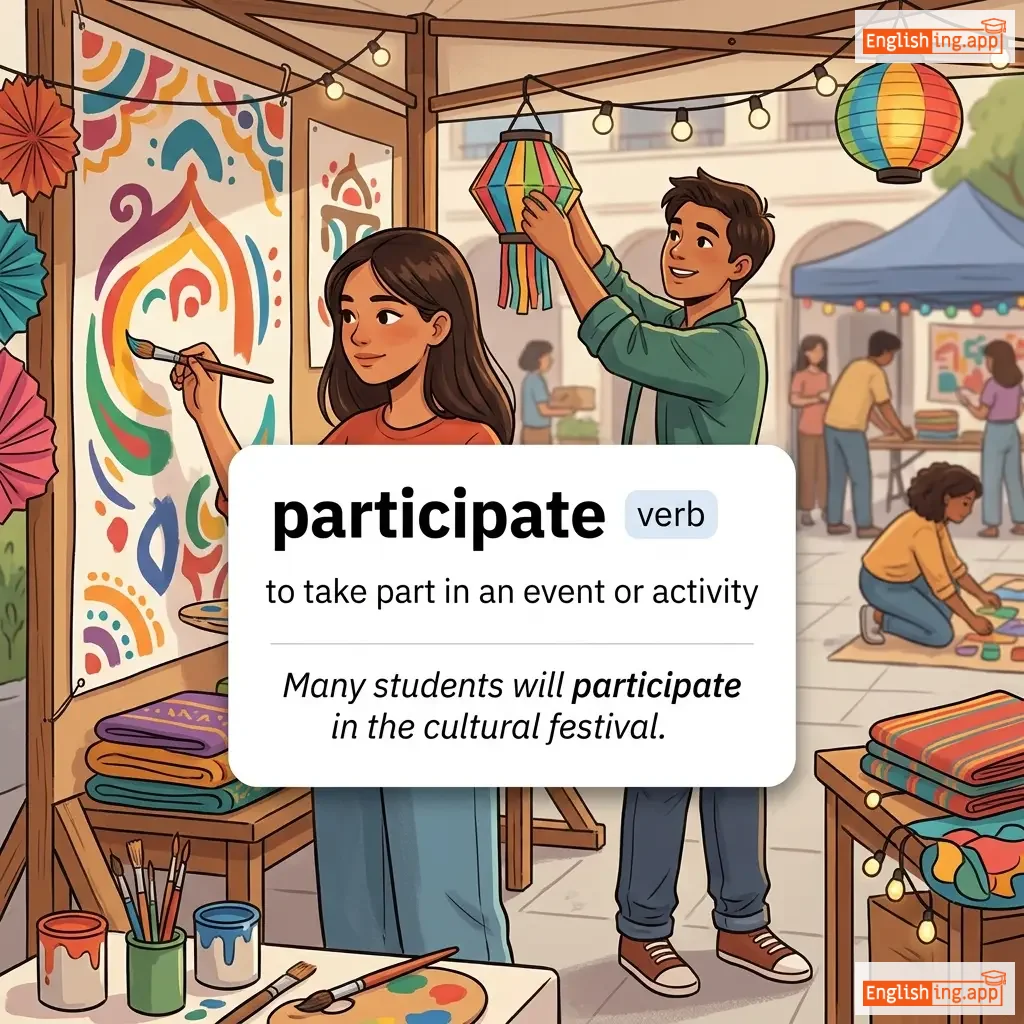
to take part in an event or activity
••••••
|
Many students will participate in the cultural festival.
许多学生将参加文化节。
••••••
|
许多学生将参加文化节。
Xǔduō xuéshēng jiāng cānjiā wénhuà jié.
••••••
|
participate in
参加
••••••
|
to take part in something
••••••
|
参加
cānjiā
••••••
|
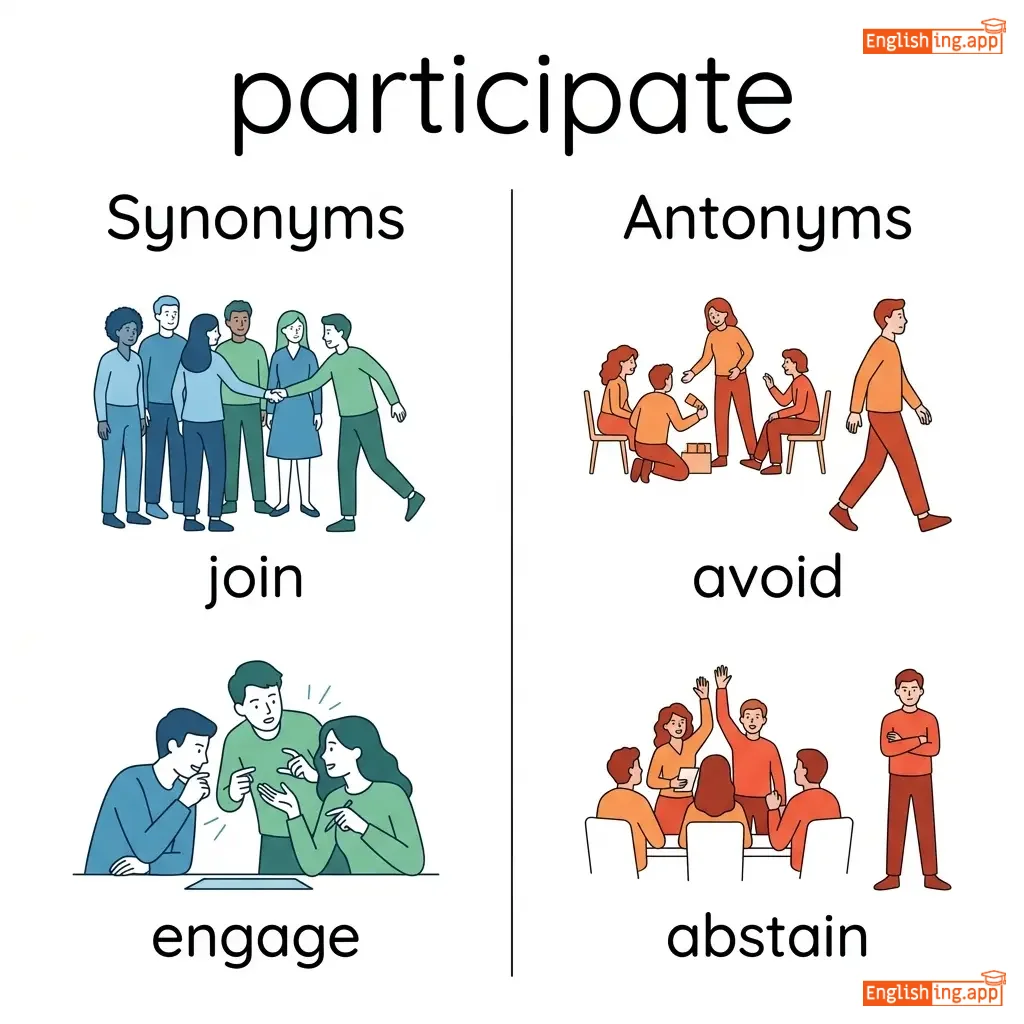
join, engage, take part, involve, contribute
••••••
|
avoid, abstain
••••••
|
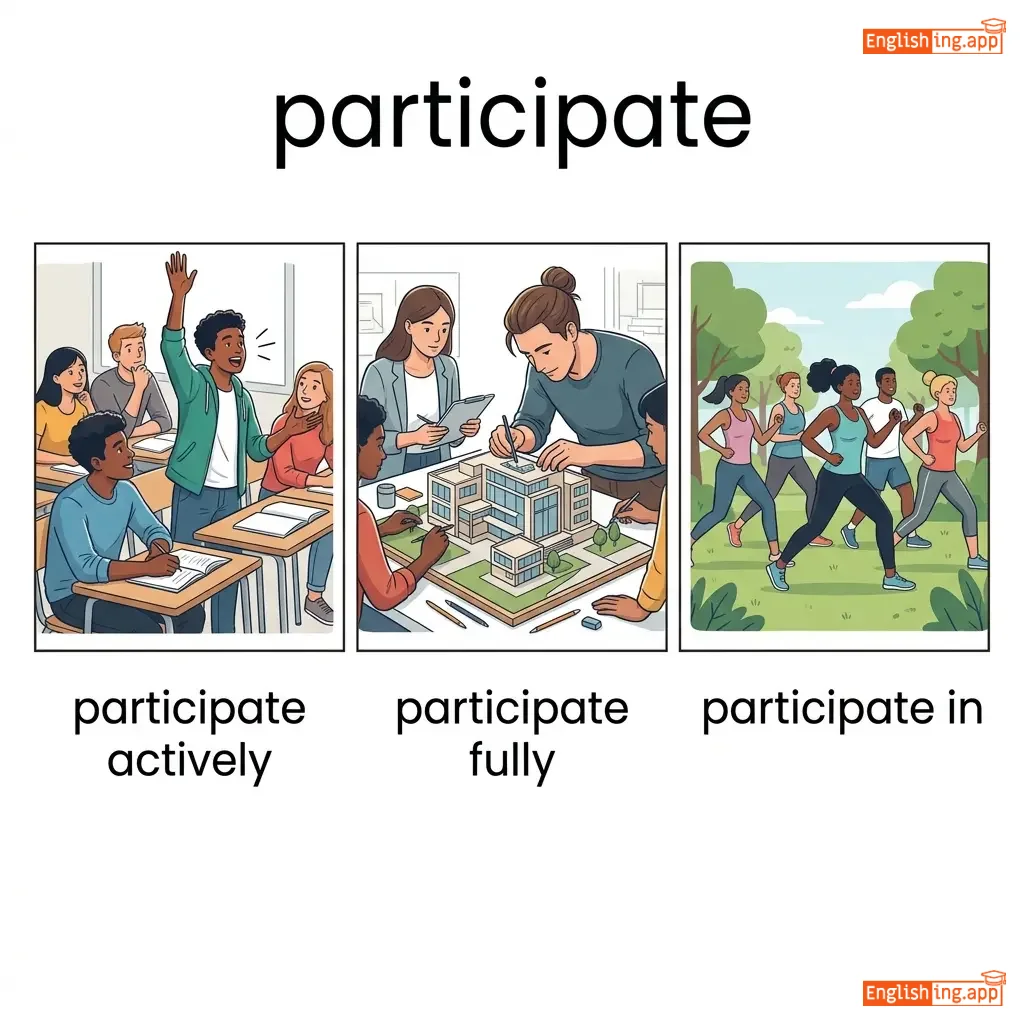
participate actively, participate fully, participate in
••••••
|
Participate意味着参加 → 参加。
••••••
|
|
🙋♀️
••••••
|
/pɑːrˌtɪsɪˈpeɪʃən/
noun
(参与)
••••••
|
- •••••• |
参与
can yu
••••••
|
- •••••• | - •••••• | - •••••• | - •••••• |
the action of taking part in something
••••••
|
Her participation in the competition was commendable. |
她在比赛中的参与值得称赞。
Ta zai bisai zhong de canyu zhide chengzan.
••••••
|
- •••••• | - •••••• | - •••••• |
involvement, engagement, contribution, attendance
••••••
|
disengagement, absence
••••••
|
active participation, full participation, participation in, encourage participation
••••••
|
参与在中文是参与,像在比赛中参与的意思!
••••••
|
|
🎯
••••••
|
/pərˈtɪk.jʊ.lər/
adjective
(帕尔提库拉尔)
••••••
|
- •••••• |
特别
tebie
••••••
|
- •••••• | - •••••• | - •••••• | - •••••• |
specific or special; distinct from others
••••••
|
He is very particular about his diet.
他对自己的饮食非常挑剔。
••••••
|
他对自己的饮食非常挑剔。
Ta dui ziji de yinshi feichang tiaoti.
••••••
|
in particular
特别是
••••••
|
especially or particularly
••••••
|
特别是
tebie shi
••••••
|
specific, distinct, unique, special, detailed
••••••
|
general, common, ordinary
••••••
|
particular reason, particular case, particular interest, particular order
••••••
|
帕尔提库拉尔像特别的东西,是非常特别的。
••••••
|
|
⭐
••••••
|
/pɑːrˈtɪkjʊləli/
adverb
(帕尔蒂库拉利)
••••••
|
- •••••• |
特别地
tèbié de
••••••
|
- •••••• | - •••••• | - •••••• | - •••••• |
to a higher degree than is usual or expected
••••••
|
She is particularly fond of Italian food. |
她特别喜欢意大利菜。
Tā tèbié xǐhuān Yìdàlì cài.
••••••
|
- •••••• | - •••••• | - •••••• |
especially, notably, specifically, uniquely
••••••
|
generally, ordinarily
••••••
|
particularly interested, particularly good, particularly important
••••••
|
特别地意味着比常规更多,像特别喜欢某样东西!
••••••
|
|
🤝
••••••
|
/ˈpɑːtnər/
noun
(合作伙伴)
••••••
|
- •••••• |
合作伙伴
hezuo huoban
••••••
|
- •••••• | - •••••• | - •••••• | - •••••• |
a person who shares or is associated with another in some action or endeavor
••••••
|
She is my business partner in the new venture. |
她是我在这个新项目中的商业合作伙伴。
Ta shi wo zai zhege xin xiangmu zhong de shangye hezuo huoban.
••••••
|
- •••••• | - •••••• | - •••••• |
associate, colleague, collaborator, companion
••••••
|
enemy, opponent, adversary
••••••
|
business partner, life partner, partner in crime
••••••
|
Think of a 'PART' of a 'business' that partners with others
••••••
|
|
🤝
••••••
|
/ˈpɑːtnəʃɪp/
noun
(伙伴关系)
••••••
|
- •••••• |
合作伙伴关系
hezuo huoban guanxi
••••••
|
- •••••• | - •••••• | - •••••• | - •••••• |
the state of being a partner or a group of partners
••••••
|
Our partnership has helped both companies grow.
我们的伙伴关系帮助了两家公司增长。
••••••
|
我们的伙伴关系帮助了两家公司增长。
Wo men de hezuo huoban guanxi bangzhu le liang jia gongsi zengzhang.
••••••
|
- •••••• | - •••••• | - •••••• |
alliance, cooperation, collaboration, association
••••••
|
separation, rivalry, conflict
••••••
|
business partnership, successful partnership, partnership agreement
••••••
|
想象 'PART' 作为一个一起成长的公司的一部分
••••••
|
|
🏃♂️
••••••
|
/pæs/
verb
••••••
|
- •••••• | - •••••• |
passed
••••••
|
passed
••••••
|
passes
••••••
|
passing
••••••
|
to move past or beyond something
••••••
|
He passed the test with flying colors. |
- •••••• |
pass the buck |
to shift responsibility to someone else
••••••
|
- •••••• |
move, go by, advance, transfer
••••••
|
stop, block, hinder
••••••
|
pass a test, pass by, pass on, pass away
••••••
|
No •••••• |
|
🚪
••••••
|
/ˈpæsɪdʒ/
noun
(通道)
••••••
|
- •••••• |
狭窄的通道; 片段/引用; 从一个状态或地方到另一个的过程
xiázhǎi de tōngdào; piàn duàn/yǐn yòng; cóng yī gè zhuàngtài huò dìfāng dào lìng yī gè de guòchéng
••••••
|
- •••••• | - •••••• | - •••••• | - •••••• |
a narrow way through or between; a section of text or music; the process of moving from one state or place to another
••••••
|
The narrow passage led from the courtyard to the library. |
狭窄的通道从庭院通向图书馆。
xiázhǎi de tōngdào cóng tíngyuàn tōngxiàng túshūguǎn.
••••••
|
rite of passage |
a significant event marking a transition in a person’s life
••••••
|
成年礼
chéngnián lǐ
••••••
|
corridor, hallway, excerpt, segment, transition
••••••
|
blockage, dead end, whole
••••••
|
passage of time, narrow passage, a passage from the novel, safe passage
••••••
|
通过‘passage’到达新的生活阶段!
••••••
|
|
🧳
••••••
|
/ˈpæs.ən.dʒər/
noun
(pǎ-sèng-zhè)
••••••
|
- •••••• |
乘客
chéngkè
••••••
|
- •••••• | - •••••• | - •••••• | - •••••• |
A person who travels in a vehicle but is not driving it
••••••
|
The bus can carry thirty passengers.
公交车可以载三十名乘客。
••••••
|
公交车可以载三十名乘客。
Gōngjiāo chē kěyǐ zài sānshí míng chéngkè.
••••••
|
- •••••• | - •••••• | - •••••• |
traveler, rider, commuter
••••••
|
driver, pilot, operator
••••••
|
passenger seat, airline passenger, passenger train, passenger car
••••••
|
乘客是在车上旅行的人。
••••••
|
|
⏳
••••••
|
/ˈpæsɪŋ/
noun
(passing)
••••••
|
- •••••• |
经过, 死亡
jingguo, siwang
••••••
|
- •••••• | - •••••• | - •••••• | - •••••• |
the act of moving past something or the end of someone's life
••••••
|
The passing of the leader was a great loss for the nation. |
领导人的去世对国家是一个巨大的损失。
Lingdaoren de qushi dui guojia shi yige juda de sunshi.
••••••
|
in passing |
mentioned casually or briefly
••••••
|
顺便提到
shunbian tidao
••••••
|
departure, death, transition, movement
••••••
|
arrival, birth
••••••
|
passing away, passing time, passing phase, passing car
••••••
|
Passing away 意味着去世 — 比如‘His passing made everyone sad’.
••••••
|
|
❤️
••••••
|
/ˈpæʃ.ən/
noun
(帕西恩)
••••••
|
- •••••• |
热情
paxien
••••••
|
- •••••• | - •••••• | - •••••• | - •••••• |
strong enthusiasm or excitement for something; intense emotion or feeling
••••••
|
Her passion for music led her to become a professional singer.
她对音乐的热情促使她成为一名职业歌手。
••••••
|
她对音乐的热情促使她成为一名职业歌手。
Ta dui yin yue de re qing cushi ta cheng wei yi ming zhiye geshou
••••••
|
- •••••• | - •••••• | - •••••• |
enthusiasm, fervor, zeal, love
••••••
|
indifference, apathy, coldness, disinterest
••••••
|
burning passion, passion for music, passionate about
••••••
|
Passion 就是 热情 on the heart, 想象 一盏 lit 灯 照亮 the stage.
••••••
|
|
🔥
••••••
|
/ˈpæʃənət/
adjective
(pæʃənət)
••••••
|
- •••••• |
热情的
rèqíng de
••••••
|
- •••••• | - •••••• | - •••••• | - •••••• |
showing or caused by strong feelings or a strong belief
••••••
|
He is passionate about environmental conservation.
他对环境保护充满热情。
••••••
|
他对环境保护充满热情。
Tā duì huánjìng bǎohù chōngmǎn rèqíng.
••••••
|
- •••••• | - •••••• | - •••••• |
enthusiastic, fervent, zealous, eager
••••••
|
apathetic, indifferent
••••••
|
passionate about, passionate about something, passionate supporter
••••••
|
Passionate = 情感转化为行动,充满热忱的奉献。
••••••
|
|
🧘
••••••
|
/ˈpæsɪv/
adjective
(pàxīf)
••••••
|
- •••••• |
被动; (语法) 被动语态
bèidòng; (yǔfǎ) bèidòng yǔtài
••••••
|
- •••••• | - •••••• | - •••••• | - •••••• |
not actively responding or participating; in grammar, denoting the voice in which the subject undergoes the action
••••••
|
Instead of taking charge, he remained passive during the meeting. |
他在会议中没有采取主导,而是保持被动。
Tā zài huìyì zhōng méiyǒu cǎiqǔ zhǔdǎo, ér shì bǎochí bèidòng.
••••••
|
passive voice |
a grammatical construction where the subject is acted upon
••••••
|
被动语态
bèidòng yǔtài
••••••
|
inactive, submissive, unresponsive, compliant, receptive
••••••
|
active, assertive, dynamic
••••••
|
passive income, passive resistance, passive investor, passive role, passive voice
••••••
|
被动,像‘pàxīf’ → 不主动,接受结果。
••••••
|
|
🛂
••••••
|
/ˈpɑːsˌpɔːrt/
noun
(护照)
••••••
|
- •••••• |
护照
huzhao
••••••
|
- •••••• | - •••••• | - •••••• | - •••••• |
an official government document that identifies a person and allows them to travel internationally
••••••
|
She renewed her passport before traveling abroad.
她 在 出国 前 更新 了 她 的 护照。
••••••
|
她在出国前更新了她的护照。
ta zai chuguo qian gengxin le ta de huzhao
••••••
|
passport to success
成功 的 护照
••••••
|
something that enables or guarantees success
••••••
|
成功的通行证
chenggong de tongxingzheng
••••••
|
travel document, identity document, pass, visa booklet
••••••
|
ban, restriction
••••••
|
valid passport, foreign passport, passport control, passport application
••••••
|
护照=保护+照明,出国要靠它
••••••
|
|
🔑
••••••
|
/ˈpɑːswɜːd/
noun
(密码)
••••••
|
- •••••• |
密码
mima
••••••
|
- •••••• | - •••••• | - •••••• | - •••••• |
a secret word or phrase used to gain access to something
••••••
|
Make sure your password is strong and unique.
确保您的密码强大且独特。
••••••
|
确保您的密码强大且独特。
Que sure nín de mìmǎ qiángdà qiě dútè.
••••••
|
- •••••• | - •••••• | - •••••• |
PIN, passcode, access code, secret code
••••••
|
public key
••••••
|
password manager, password protection, change password
••••••
|
Password = Pass the word, keep it secret.
••••••
|
|
⏳
••••••
|
/pɑːst/
noun/adjective/preposition
(pā sī tè)
••••••
|
- •••••• |
过去
guo qu
••••••
|
- •••••• | - •••••• | - •••••• | - •••••• |
the time before the present; gone by in time
••••••
|
He often thinks about his past mistakes. |
他经常想起自己的过去错误。
Tā jīngcháng xiǎngqǐ zìjǐ de guòqù cuòwù.
••••••
|
let bygones be bygones |
to forget past conflicts and move on
••••••
|
让过去的过去
ràng guòqù de guòqù
••••••
|
history, former, previous, bygone
••••••
|
future, present
••••••
|
past mistakes, past events, past experience, past life
••••••
|
Past – 过去的时间早已过去,忘记吧!
••••••
|
|
📋
••••••
|
/peɪst/
verb, noun
(pèisī)
••••••
|

|
粘贴
zhāntiē
••••••
|
pasted
pèisīduō
••••••
|
pasted
pèisīduō
••••••
|
pastes
pèisī
••••••
|
pasting
pèisīng
••••••
|
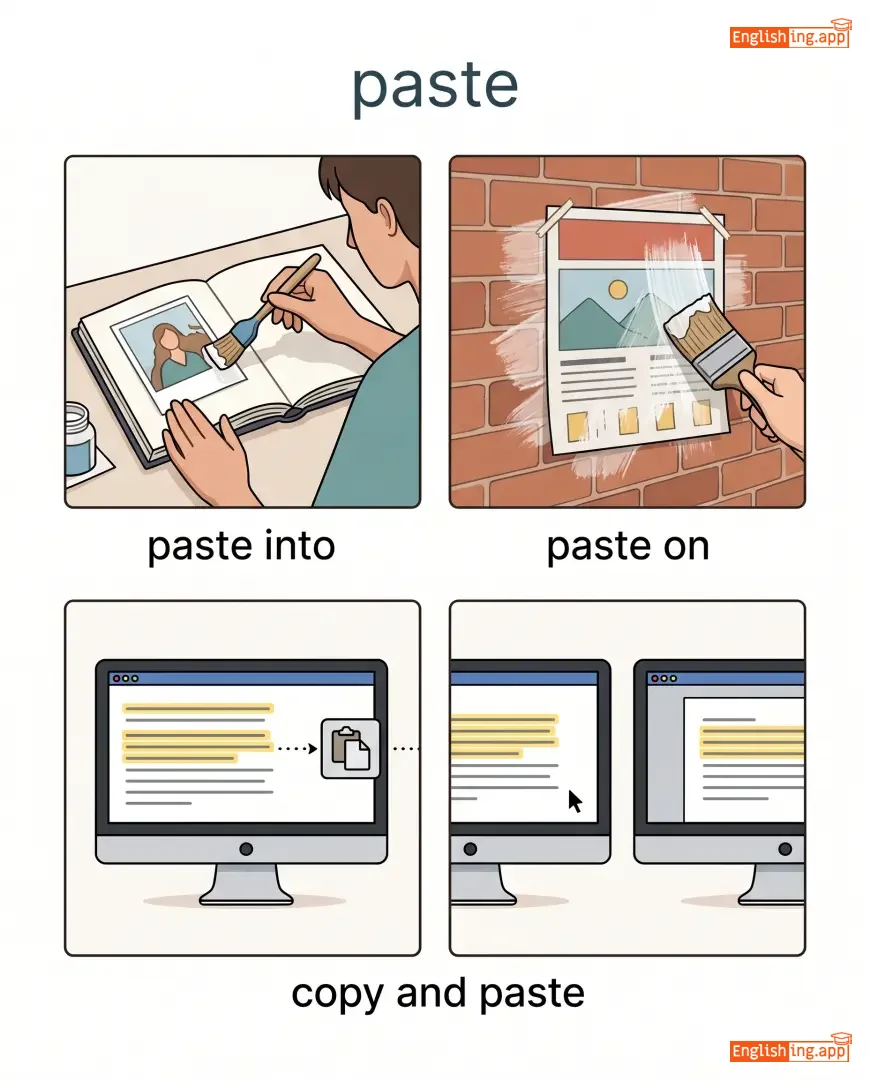
to stick or attach something using a soft, moist substance; also a thick, soft, moist substance itself
••••••
|
She pasted the picture into her notebook.
她把照片粘在了她的笔记本里。
••••••
|
她把照片粘在了她的笔记本里。
Tā bǎ zhàopiàn zhāntiē zài le tā de bǐjìběn lǐ.
••••••
|
copy and paste
复制和粘贴
••••••
|
to duplicate text or images from one place and put them in another using software commands
••••••
|
复制和粘贴
fùzhì hé zhāntiē
••••••
|
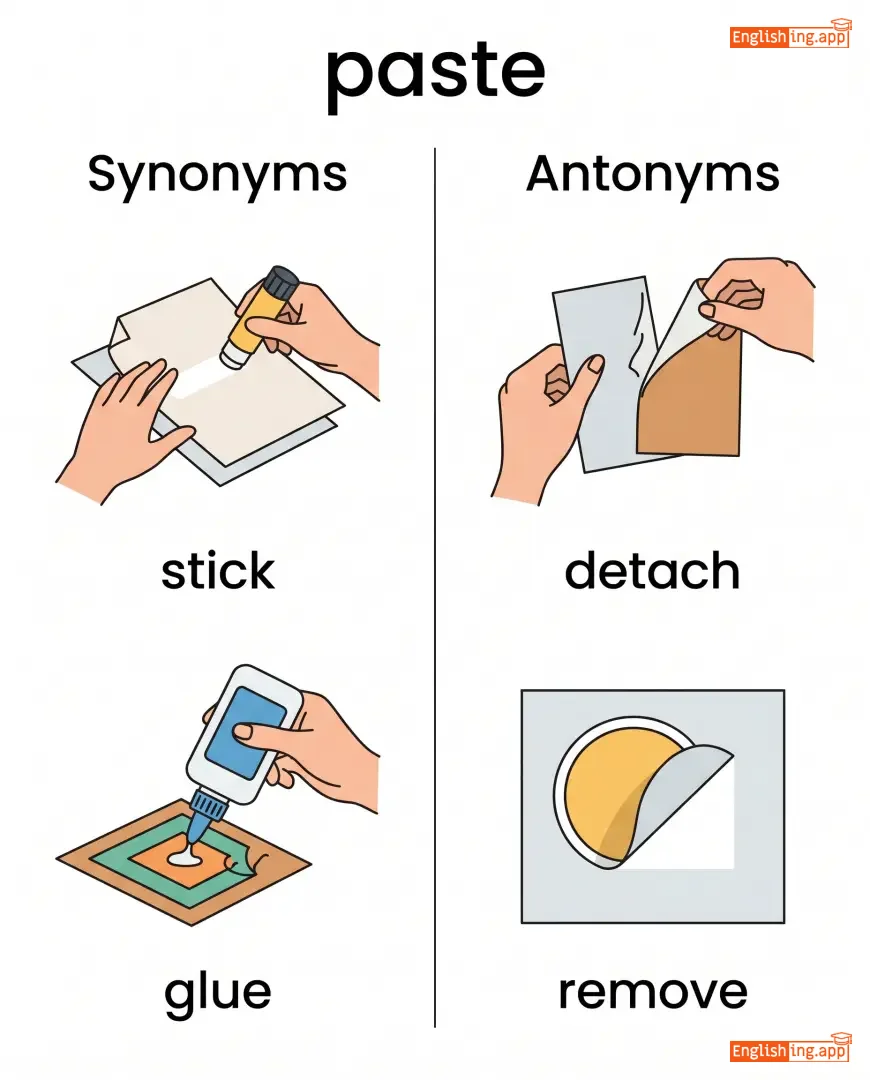
stick, glue, affix, attach, insert
••••••
|
detach, remove, separate
••••••
|
paste into, paste on, copy and paste, paste image
••••••
|
Paste 就是粘贴,就像在计算机上复制和粘贴一样。
••••••
|
|
⛪
••••••
|
/ˈpæstər/
noun
(牧师)
••••••
|
- •••••• |
牧师
mùshī
••••••
|
- •••••• | - •••••• | - •••••• | - •••••• |
a minister in charge of a Christian church or congregation
••••••
|
The pastor delivered a heartfelt sermon on compassion.
牧师讲了一场充满同情的讲道。
••••••
|
牧师讲了一场充满同情的讲道。
Mùshī jiǎngle yī chǎng chōngmǎn tóngqíng de jiǎngdào.
••••••
|
- •••••• | - •••••• | - •••••• |
minister, priest, clergyman, reverend, preacher
••••••
|
layman, atheist, follower
••••••
|
pastor of the church, senior pastor, youth pastor, church pastor
••••••
|
牧师在教堂讲道 — ‘Pastor’ 就是传教的牧师 ⛪
••••••
|
|
🩹
••••••
|
/pætʃ/
noun
(pǎtí)
••••••
|
- •••••• |
补丁
bǔdīng
••••••
|
- •••••• | - •••••• | - •••••• | - •••••• |
a small piece of material used to mend a hole; a small area of something different
••••••
|
She sewed a patch over the hole in her jeans. |
她在她的牛仔裤上的洞上缝了一个补丁。
Tā zài tā de niúzǎikù shàng de dòng shàng fèng le yīgè bǔdīng.
••••••
|
- •••••• | - •••••• | - •••••• |
repair, mend, piece, cover
••••••
|
hole, tear, damage, opening
••••••
|
eye patch, sew patch, cloth patch
••••••
|
补丁可以想象为修补衣物的小片,修补牛仔裤的洞。
••••••
|
|
🛤️
••••••
|
/pæθ/
noun
(路径)
••••••
|
- •••••• |
小径
xiaojing
••••••
|
- •••••• | - •••••• | - •••••• | - •••••• |
a way or track laid down for walking or made by continual treading
••••••
|
She walked along the narrow path through the forest.
她沿着森林中的小径走。
••••••
|
她沿着森林中的小径走。
Ta yanzhe senlin zhong de xiaojing zou.
••••••
|
- •••••• | - •••••• | - •••••• |
route, trail, track, way
••••••
|
obstacle, block, barrier
••••••
|
narrow path, walking path, dirt path, clear path
••••••
|
小径 (path) 走向森林的尽头!
••••••
|
|
🧘
••••••
|
/ˈpeɪ.ʃəns/
noun
(péi shén sī)
••••••
|
|
耐心
naixin
••••••
|
- •••••• | - •••••• | - •••••• | - •••••• |
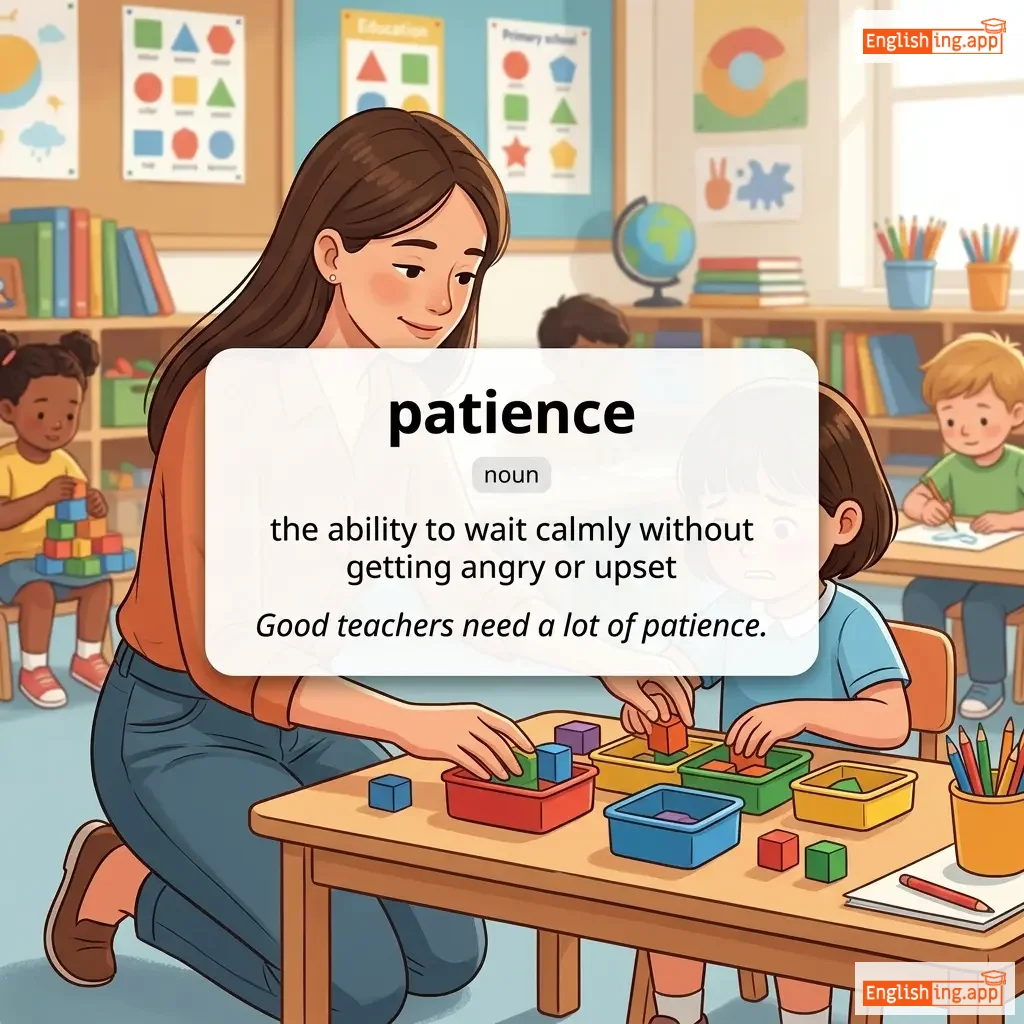
the ability to wait calmly without getting angry or upset
••••••
|
Good teachers need a lot of patience. |
好老师需要很多耐心。
Hao laoshi xuyao henduo naixin.
••••••
|
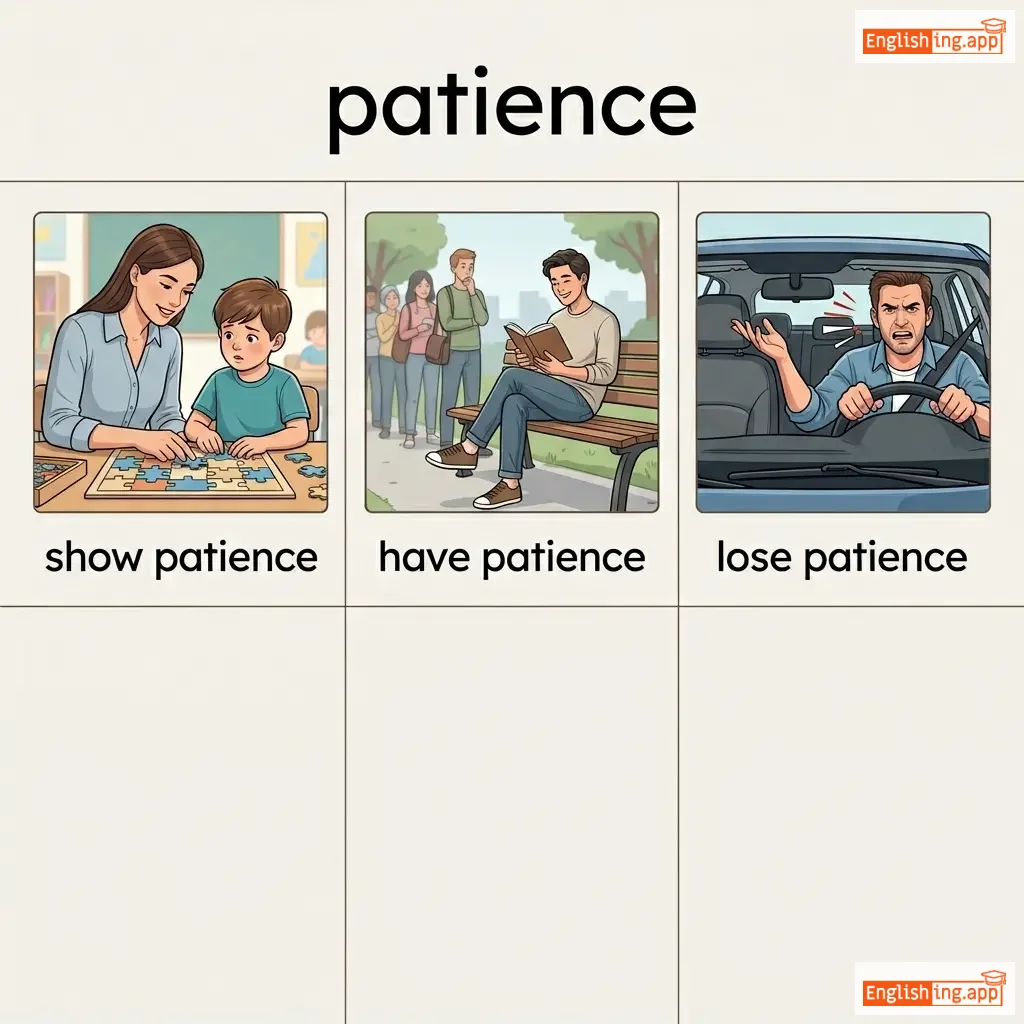
lose patience |
to become annoyed because of delay or difficulty
••••••
|
失去耐心
shiqu naixin
••••••
|
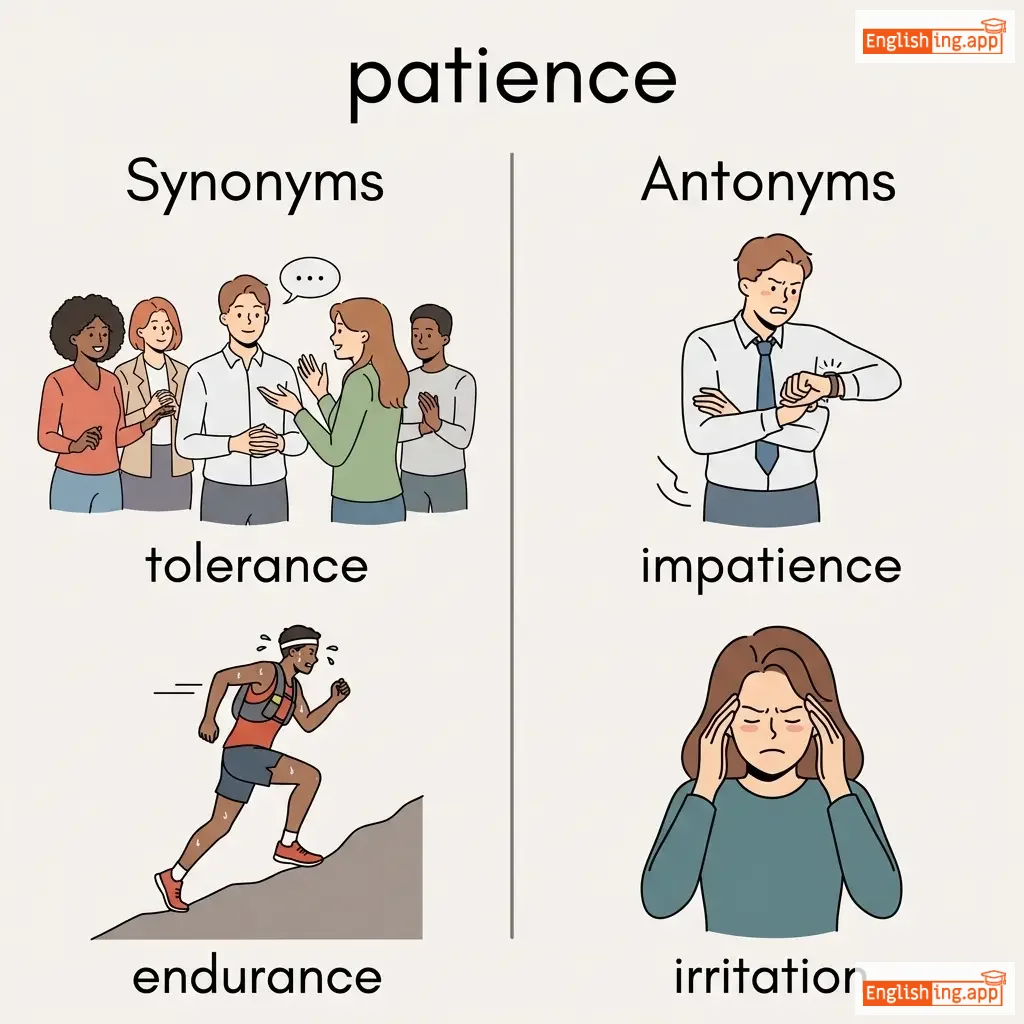
tolerance, endurance, calmness, perseverance, forbearance
••••••
|
impatience, irritation, frustration
••••••
|
show patience, have patience, lose patience, test patience
••••••
|
耐心就像一个病人安静等待治疗。
••••••
|
|
🧘♀️
••••••
|
/ˈpeɪʃənt/
adjective
••••••
|
- •••••• | - •••••• | - •••••• | - •••••• | - •••••• | - •••••• |
able to accept or tolerate delays, problems, or suffering without becoming annoyed or anxious
••••••
|
She remained patient despite the long wait. |
- •••••• |
patience is a virtue |
the ability to wait calmly without becoming angry or upset is a valuable trait
••••••
|
- •••••• |
tolerant, calm, composed, understanding
••••••
|
impatient, anxious, irritable
••••••
|
remain patient, patient demeanor, patient attitude
••••••
|
No •••••• |
|
🚓
••••••
|
/pəˈtroʊl/
verb
(巡逻)
••••••
|
- •••••• |
巡逻
xúnluó
••••••
|
patrolled
巡逻过
••••••
|
patrolled
巡逻过
••••••
|
patrols
巡逻
••••••
|
patrolling
巡逻中
••••••
|
to move around an area to watch or guard it
••••••
|
The police patrol the streets at night to ensure safety.
警察晚上巡逻街道以确保安全。
••••••
|
警察晚上巡逻街道以确保安全。
Jǐngchá wǎnshàng xúnluó jiēdào yǐ quèbǎo ānquán.
••••••
|
on patrol
在巡逻
••••••
|
engaged in patrolling duties
••••••
|
在巡逻
zài xúnluó
••••••
|
guard, watch, monitor, inspect, survey
••••••
|
ignore, neglect, overlook
••••••
|
police patrol, border patrol, night patrol, patrol car
••••••
|
Patrol 意味着巡逻 — **巡逻** 街道 🚓
••••••
|
|
💰
••••••
|
/ˈpeɪtrən/
noun
(pèi-tron)
••••••
|
- •••••• |
赞助人
zànzhùrén
••••••
|
- •••••• | - •••••• | - •••••• | - •••••• |
a person who gives financial or other support to a person, organization, or cause
••••••
|
The library is supported by generous patrons. |
图书馆得到了慷慨的赞助人支持。
Túshūguǎn dédàole kāngkǎi de zànzhùrén zhīchí.
••••••
|
patron saint |
a saint regarded as a special protector of a person or place
••••••
|
守护圣人
shǒuhù shèngrén
••••••
|
supporter, sponsor, benefactor, backer, donor
••••••
|
opponent, detractor, enemy
••••••
|
regular patron, loyal patron, art patron, patron of the arts
••••••
|
Patron 就是 'pay-tron' — 赞助人 💰
••••••
|
|
🎨
••••••
|
/ˈpæt.ən/
(pàtēn)
••••••
|
- •••••• |
图案 / 模式
tú'àn / móshì
••••••
|
- •••••• | - •••••• | - •••••• | - •••••• |
A repeated decorative design or a regular way in which something happens or is done.
••••••
|
The dress had a beautiful floral pattern.
这件裙子有一个美丽的花卉图案。
••••••
|
这件裙子有一个美丽的花卉图案。
Zhè jiàn qúnzi yǒu yī gè měilì de huāhuì tú'àn.
••••••
|
follow a pattern
遵循一个图案
••••••
|
to behave or occur in a regular or predictable way
••••••
|
遵循一个图案
zūn xún yī gè tú'àn
••••••
|
design, motif, style, arrangement, sequence
••••••
|
disorder, chaos
••••••
|
pattern recognition, repeating pattern, unique pattern, pattern of behavior
••••••
|
Pattern = 图案, 就像裙子上的花卉图案。
••••••
|

