|
絵文字
|
単語 | Images | 翻訳 | 過去 | 過去分詞 | 三人称単数 | 動名詞 | 意味 | 例文 | 例文の翻訳 | 表現例 | 表現例の意味 | 表現例の翻訳 | 同義語 | 対義語 | コロケーション | ニーモニック |
|---|---|---|---|---|---|---|---|---|---|---|---|---|---|---|---|---|---|
|
🙌
••••••
|
/heɪl/
verb
(ヘイル)
••••••
|
- •••••• |
呼ぶ / 賞賛する
yobu / shōsan suru
••••••
|
hailed
ヘイルド
••••••
|
hailed
ヘイルド
••••••
|
hails
ヘイルズ
••••••
|
hailing
ヘイリング
••••••
|
To call out to attract attention or to praise enthusiastically.
••••••
|
The athlete was hailed as a hero after the victory.
アスリートは勝利後にヒーローとして称賛されました。
••••••
|
アスリートは勝利後にヒーローとして称賛されました。
Asurīto wa shōri go ni hīrō to shite shōsan saremashita.
••••••
|
hail a taxi
タクシーを呼ぶ
••••••
|
to signal and stop a taxi to get a ride
••••••
|
タクシーを呼ぶ
takushī o yobu
••••••
|
greet, call, acclaim, praise, salute
••••••
|
ignore, condemn, dismiss
••••••
|
hail a taxi, hail as a hero, hail the decision, hail enthusiastically
••••••
|
Hail = 人を賞賛したり、タクシーを呼ぶ
••••••
|
|
💇
••••••
|
/hɛər/
noun
(ヘア)
••••••
|
- •••••• |
髪
kami
••••••
|
- •••••• | - •••••• | - •••••• | - •••••• |
the fine threads growing from the skin of humans and animals
••••••
|
She has long, black hair. |
彼女は長くて黒い髪を持っています。
Kanojo wa nagakute kuroi kami o motteimasu.
••••••
|
let your hair down |
to relax and enjoy yourself without worrying
••••••
|
髪をおろす
kami o orosu
••••••
|
locks, strands, tresses, mane
••••••
|
baldness, bald head
••••••
|
long hair, curly hair, cut hair, hair color
••••••
|
髪 (kami) = Hair, 髪の毛は日本でヘア
••••••
|
|
💇
••••••
|
/ˈheəkʌt/
noun
(ヘアカット)
••••••
|
- •••••• |
散髪
sanpatsu
••••••
|
- •••••• | - •••••• | - •••••• | - •••••• |
the act or style of cutting hair
••••••
|
I got a haircut before the wedding.
アイ ガット ア ヘアカット ビフォー ザ ウェディング
••••••
|
私は結婚式の前に散髪しました。
watashi wa kekkonshiki no mae ni sanpatsu shimashita
••••••
|
get a haircut
ゲット ア ヘアカット
••••••
|
to have one’s hair cut
••••••
|
散髪する
sanpatsu suru
••••••
|
trim, hairstyle, cut, hairdo
••••••
|
growth, neglect
••••••
|
get a haircut, short haircut, new haircut, haircut style
••••••
|
ヘアカット = 散髪
••••••
|
|
💇
••••••
|
/ˈheəˌkʌtər/
noun
(ヘアカッター)
••••••
|
- •••••• |
理髪師
rihatsushi
••••••
|
- •••••• | - •••••• | - •••••• | - •••••• |
a person whose job is to cut and style hair; barber or hairdresser
••••••
|
The haircutter gave me a neat and stylish haircut.
ヘアカッターがきれいなヘアカットをしてくれた
••••••
|
理髪師がきれいに髪を切ってくれた。
rihatsushi ga kirei ni kami o kitte kureta
••••••
|
- •••••• | - •••••• | - •••••• |
barber, hairdresser, stylist, coiffeur
••••••
|
client, customer
••••••
|
professional haircutter, local haircutter, skilled haircutter
••••••
|
haircutter = ヘアを切る理髪師
••••••
|
|
💇
••••••
|
/ˈherˌdrɛsər/
noun
(ヘアドレッサー)
••••••
|
- •••••• |
美容師
biyoshi
••••••
|
- •••••• | - •••••• | - •••••• | - •••••• |
a person whose job is to cut, style, and treat hair
••••••
|
The hairdresser gave me a stylish haircut before the wedding.
ザ ヘアドレッサー ガヴ ミー ア スタイリッシュ ヘアカット。
••••••
|
美容師は結婚式の前に私におしゃれな髪型をしてくれました。
Biyoshi wa kekkonshiki no mae ni watashi ni oshare na kamigata o shite kuremashita
••••••
|
- •••••• | - •••••• | - •••••• |
hairstylist, barber, stylist, hair stylist
••••••
|
client, customer
••••••
|
professional hairdresser, local hairdresser, visit a hairdresser, hairdresser salon
••••••
|
Hair をドレスアップ → ヘアドレッサー
••••••
|
|
½
••••••
|
/hæf/
noun, adjective
(ハーフ)
••••••
|
- •••••• |
半分
hanbun
••••••
|
- •••••• | - •••••• | - •••••• | - •••••• |
one of two equal parts of something
••••••
|
He ate half of the cake. |
彼はケーキの半分を食べました。
Kare wa keeki no hanbun o tabemashita.
••••••
|
half-hearted |
without much effort or enthusiasm
••••••
|
中途半端
chuuto hanpa
••••••
|
portion, part, piece, division
••••••
|
whole, complete
••••••
|
half price, half hour, half life, half way
••••••
|
Halfは半分、ケーキを二つに分けると半分 = half
••••••
|
|
↔️
••••••
|
/ˌhæfˈweɪ/
adverb
(ハーフウェイ)
••••••
|
- •••••• |
途中で
tochū de
••••••
|
- •••••• | - •••••• | - •••••• | - •••••• |
at or to a point equal in distance between two points
••••••
|
We met halfway between the two towns. |
私たちは二つの町の間の途中で会いました。
Watashitachi wa futatsu no machi no aida no tochū de aimashita.
••••••
|
meet halfway |
to compromise or find a middle ground
••••••
|
妥協する
dakyō suru
••••••
|
in the middle, midway, partway, center
••••••
|
completely, fully
••••••
|
halfway point, halfway through, halfway house, meet halfway
••••••
|
途中で = 途中の道で会う、妥協して途中で会いましょう!
••••••
|
|
🏛️
••••••
|
/hɔːl/
noun
(ホール)
••••••
|
- •••••• |
ホール
hōru
••••••
|
- •••••• | - •••••• | - •••••• | - •••••• |
a large room or building for public gatherings, events, or passage
••••••
|
The graduation ceremony was held in the university hall.
卒業式は大学のホールで行われました。
••••••
|
卒業式は大学のホールで行われました。
Sotsugyō-shiki wa daigaku no hōru de okonaware mashita.
••••••
|
hall of fame
名誉の殿堂
••••••
|
a group or place honoring distinguished people
••••••
|
名誉の殿堂
meiyo no dendō
••••••
|
auditorium, chamber, corridor, passage, lobby
••••••
|
room, cubicle
••••••
|
lecture hall, concert hall, dining hall, entrance hall
••••••
|
ホール (hōru) は大きな場所で、大学のホールと同じです。思い出して、名誉の殿堂。
••••••
|
|
🛑
••••••
|
/hɔːlt/
verb
(ハルト)
••••••
|
- •••••• |
停止する
teishi suru
••••••
|
halted
ハルテッド
••••••
|
halted
ハルテッド
••••••
|
halts
ハルツ
••••••
|
halting
ハルティング
••••••
|
to stop or bring to a stop
••••••
|
The train suddenly halted at the station.
電車は駅で突然止まりました。
••••••
|
電車は駅で突然止まりました。
Densha wa eki de totsuzen tomarimashita.
••••••
|
- •••••• | - •••••• | - •••••• |
stop, cease, terminate, freeze
••••••
|
start, begin, continue
••••••
|
halt operations, halt progress, halt movement
••••••
|
Haltは英語で停止を意味し、日本語では停止する
••••••
|
|
🔨
••••••
|
/ˈhæmər/
noun, verb
••••••
|
- •••••• | - •••••• |
hammered
••••••
|
hammered
••••••
|
hammers
••••••
|
hammering
••••••
|
a tool with a heavy metal head used for breaking things or driving in nails; to hit something forcefully with a hammer or similar object.
••••••
|
He used a hammer to fix the broken chair. |
- •••••• |
hammer out |
to work out the details of something through discussion and effort
••••••
|
- •••••• |
mallet, pound, strike, beat, smash
••••••
|
caress, stroke
••••••
|
hammer blow, hammer strike, hammer nails, hammer out, hammer away
••••••
|
No •••••• |
|
🤚
••••••
|
/hænd/
noun, verb
••••••
|
- •••••• | - •••••• |
handed
••••••
|
handed
••••••
|
hands
••••••
|
handing
••••••
|
the part of the body at the end of the arm used for holding things
••••••
|
She raised her hand to ask a question. |
- •••••• |
in safe hands |
being looked after by someone competent and reliable
••••••
|
- •••••• |
palm, fist, grip, hold
••••••
|
foot, neglect
••••••
|
shake hands, hand in, hand out, raise hand
••••••
|
No •••••• |
|
✋
••••••
|
/ˈhænd.fʊl/
noun
(ハンドフル)
••••••
|
- •••••• |
ひと握り
hito nigiri
••••••
|
- •••••• | - •••••• | - •••••• | - •••••• |
the amount of something that can be held in one hand; a small number
••••••
|
She took a handful of nuts. |
彼女はひと握りのナッツを取った。
kanojo wa hito nigiri no nattsu o totta.
••••••
|
a handful |
a small number of people or things; someone difficult to manage
••••••
|
少数の人々や物;扱いにくい人
shōsū no hitobito ya mono; atsukai nikui hito
••••••
|
few, small amount, little, portion
••••••
|
many, plenty
••••••
|
a handful of, only a handful, just a handful
••••••
|
ひと握りで簡単に覚えられる
••••••
|
|
🪟
••••••
|
/ˈhændl̩/
noun, verb
(ハンドル)
••••••
|
|
取っ手 / 扱う
totte / atsukau
••••••
|
handled
ハンドルド
••••••
|
handled
ハンドルド
••••••
|
handles
ハンドルズ
••••••
|
handling
ハンドリング
••••••
|
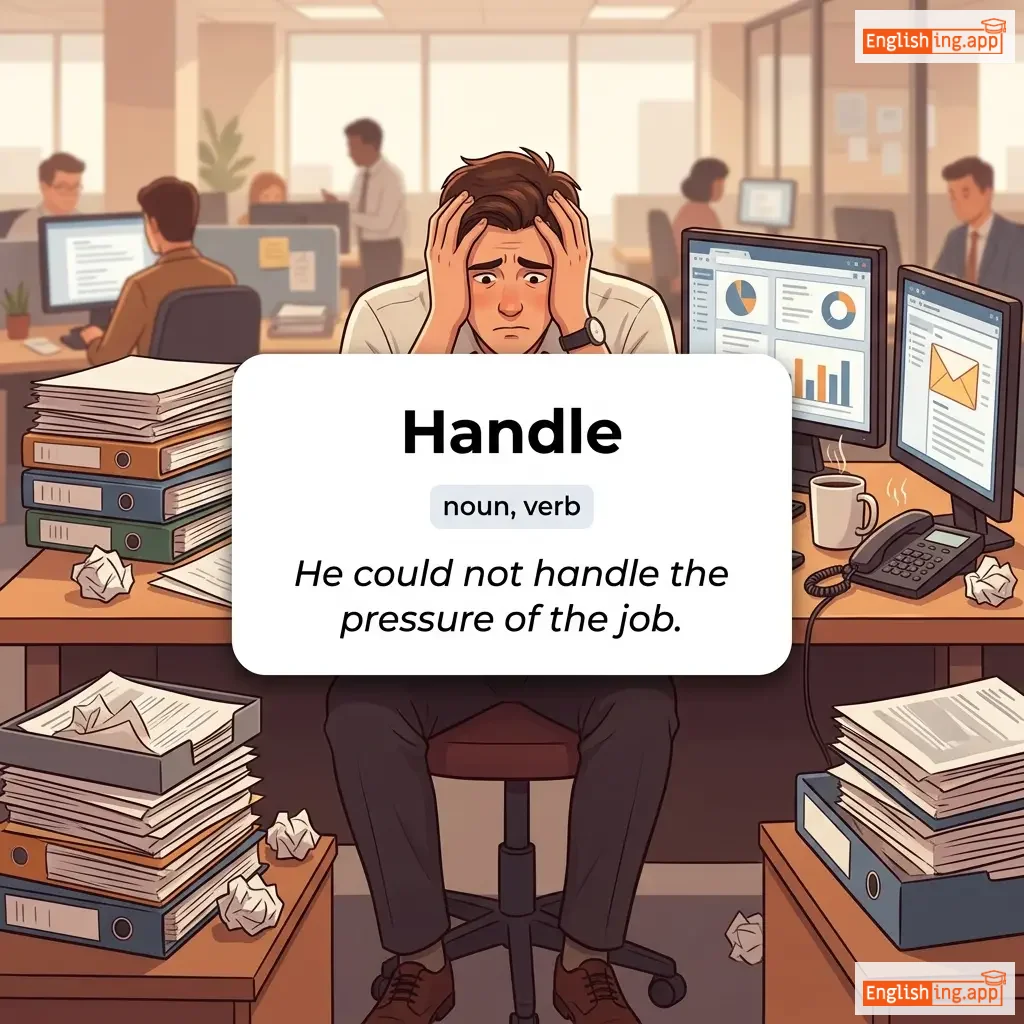
the part of an object designed to be held in the hand; to deal with or manage a situation
••••••
|
He could not handle the pressure of the job.
彼は仕事のプレッシャーをうまく扱えなかった。
••••••
|
彼は仕事のプレッシャーをうまく扱えなかった。
Kare wa shigoto no puresshā wo umaku atsukaenakatta.
••••••
|
fly off the handle
かっとなる
••••••
|
to suddenly become very angry
••••••
|
突然激怒する
totsuzen gekido suru
••••••
|
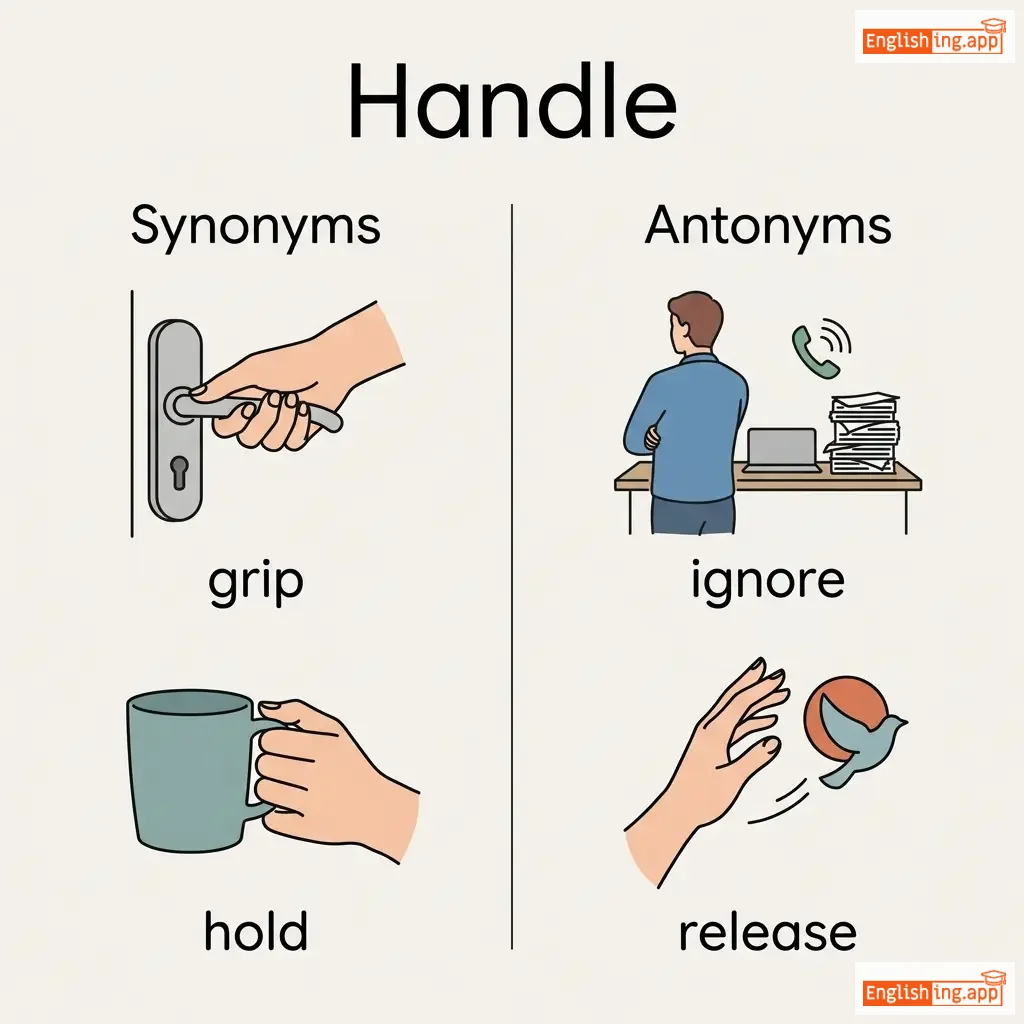
grip, hold, control, manage
••••••
|
ignore, release
••••••
|
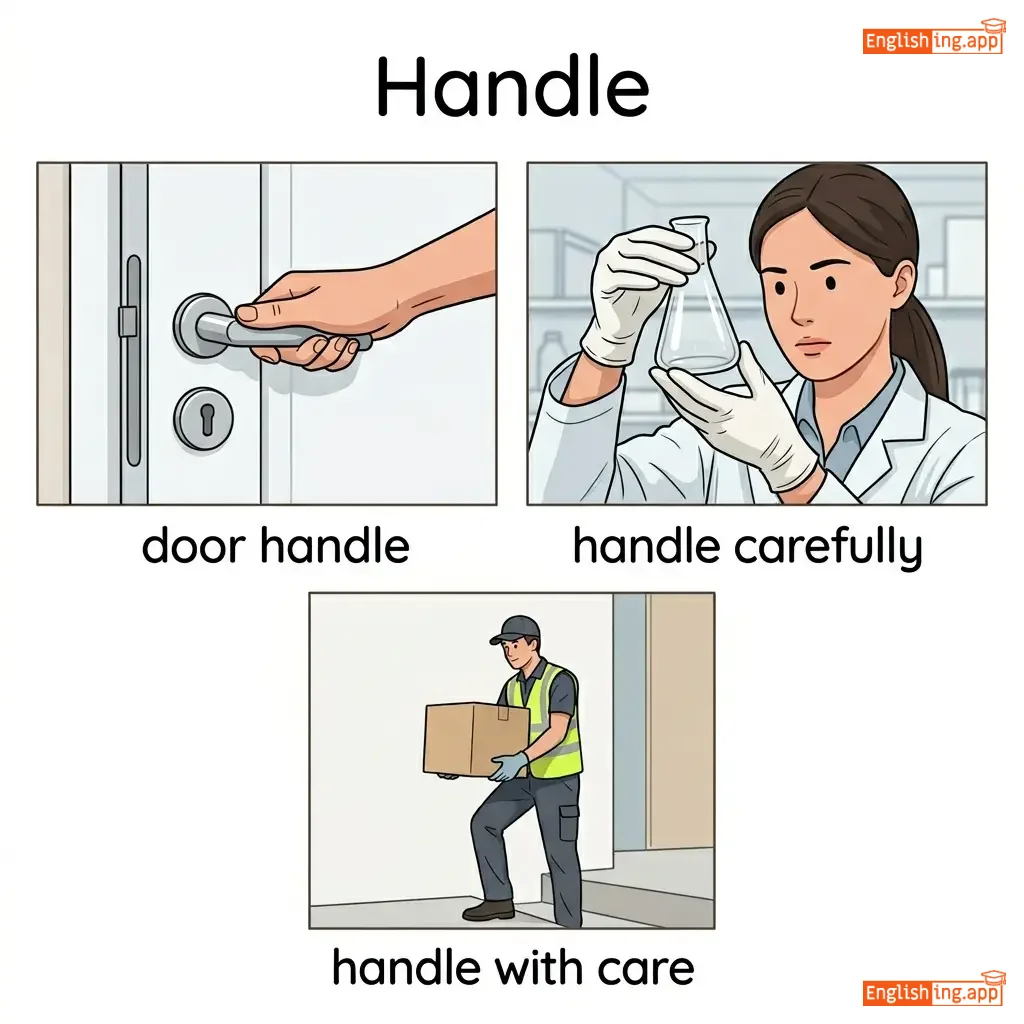
door handle, handle carefully, handle with care
••••••
|
取っ手 - 手で取るから取っ手、難しい状況を扱う
••••••
|
|
🤲
••••••
|
/ˈhændlɪŋ/
noun
(ハンドリング)
••••••
|
- •••••• |
取り扱い
toriatsukai
••••••
|
- •••••• | - •••••• | - •••••• | - •••••• |
the act of managing or dealing with something or someone
••••••
|
His handling of the situation was impressive. |
その状況の取り扱いは印象的でした。
Sono jōkyō no toriatsukai wa inshō-teki deshita.
••••••
|
- •••••• | - •••••• | - •••••• |
management, administration, control, supervision
••••••
|
mismanagement, neglect
••••••
|
handling a crisis, handling an issue, handling customers
••••••
|
取り扱いを覚えておくと、効果的に状況を管理できます。
••••••
|
|
😎
••••••
|
/ˈhæn.səm/
adjective
••••••
|
- •••••• | - •••••• | - •••••• | - •••••• | - •••••• | - •••••• |
attractive in appearance, usually referring to men; also can mean generous or impressive in size.
••••••
|
He looked very handsome in his new suit. |
- •••••• |
handsome reward |
a large or generous reward
••••••
|
- •••••• |
attractive, good-looking, striking, dashing, elegant
••••••
|
ugly, unattractive, plain
••••••
|
handsome man, handsome reward, handsome profit, look handsome
••••••
|
No •••••• |
|
🛠️
••••••
|
/ˈhændi/
adjective
(handi)
••••••
|
- •••••• |
使いやすい
tsukaiyasui
••••••
|
- •••••• | - •••••• | - •••••• | - •••••• |
convenient to use or easily accessible; skillful with the hands
••••••
|
This pocket knife is very handy when you go camping. |
このポケットナイフはキャンプの時に非常に便利です。
Kono poketto naifu wa kyanpu no toki ni hijou ni benri desu.
••••••
|
handy with |
skilled or capable in using something
••••••
|
得意
tokui
••••••
|
useful, convenient, practical, accessible, skillful
••••••
|
useless, inconvenient, clumsy
••••••
|
come in handy, very handy, handy tool, handy guide
••••••
|
Handy は使いやすい、手のようにどんな時でも使える。
••••••
|
|
🖼️
••••••
|
/hæŋ/
verb
••••••
|
|
- •••••• |
hung
••••••
|
hung
••••••
|
hangs
••••••
|
hanging
••••••
|
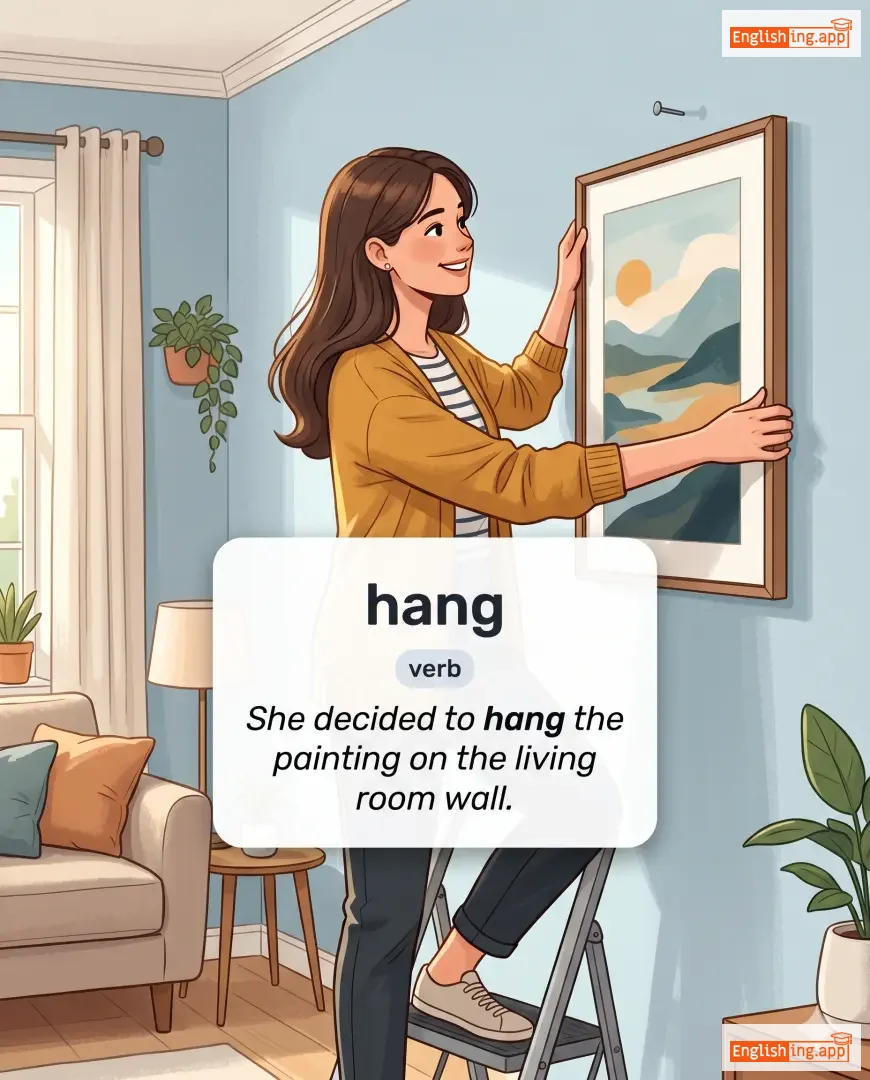
to suspend or attach something from above so that it moves freely or is supported
••••••
|
She decided to hang the painting on the living room wall. |
- •••••• |
hang in there |
used to encourage someone to persevere through a difficult time
••••••
|
- •••••• |
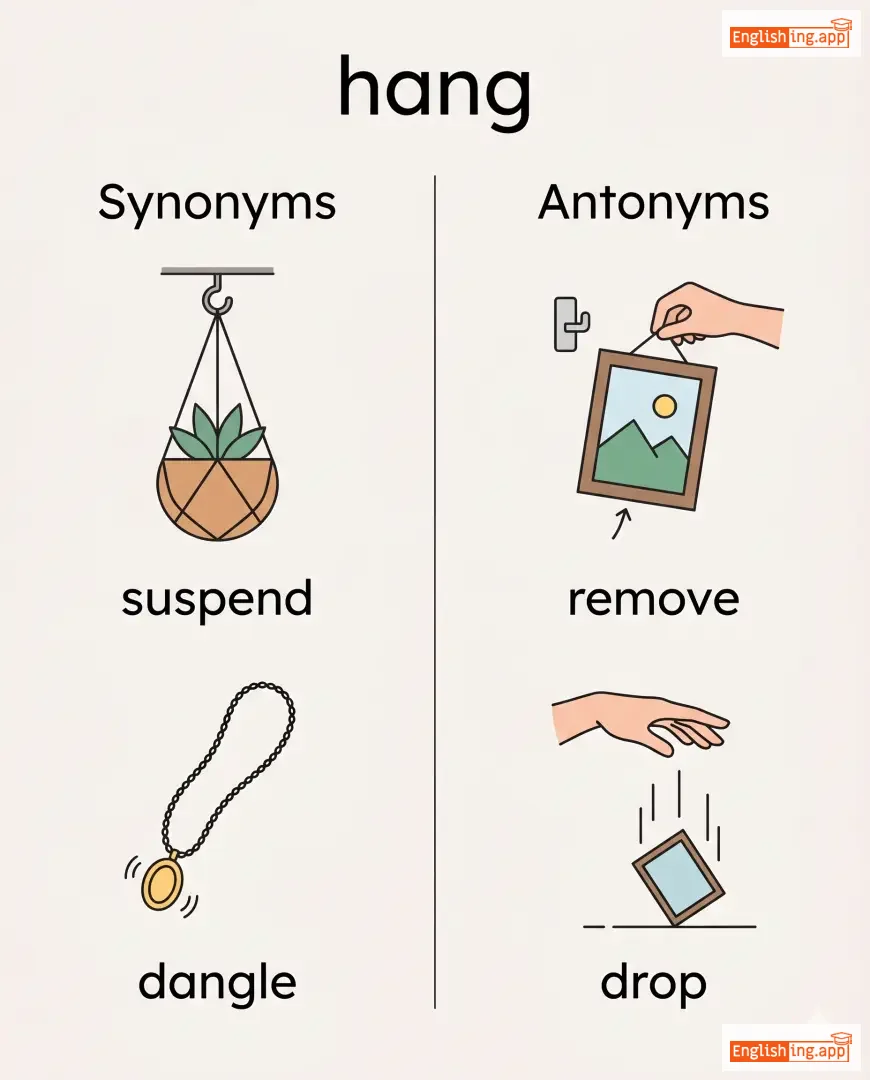
suspend, dangle, attach, display, drape
••••••
|
remove, drop, take down
••••••
|
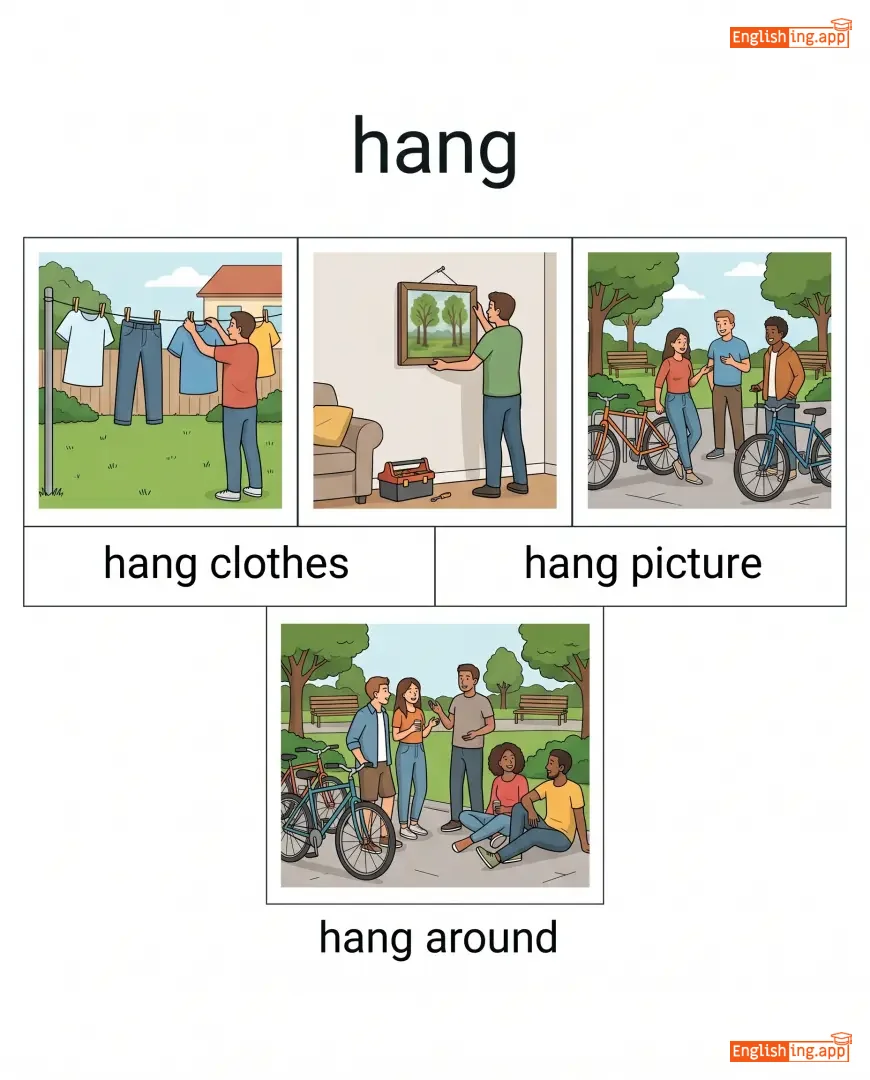
hang clothes, hang picture, hang around, hang up
••••••
|
No •••••• |
|
👕
••••••
|
/ˈhæŋ.ər/
noun
(ハンガー)
••••••
|
- •••••• |
ハンガー
hangā
••••••
|
- •••••• | - •••••• | - •••••• | - •••••• |
a shaped piece of wood, plastic, or metal with a hook at the top, used to hang up clothes
••••••
|
She hung her dress on a wooden hanger to prevent it from getting wrinkled. |
彼女はドレスがしわにならないように木のハンガーに掛けました。
Kanojo wa doresu ga shiwa ni naranai yō ni ki no hangā ni kakemashita.
••••••
|
- •••••• | - •••••• | - •••••• |
clothes hanger, coat hanger, garment hook, clothing rack
••••••
|
floor, bed, chair, drawer
••••••
|
wire hanger, wooden hanger, plastic hanger
••••••
|
No •••••• |
|
✨
••••••
|
/ˈhæpən/
verb
(ハピネス)
••••••
|
- •••••• |
起こる
okoru
••••••
|
happened
ハピネスト
••••••
|
happened
ハピネスト
••••••
|
happens
ハピネス
••••••
|
happening
ハピニング
••••••
|
to take place or occur, usually by chance
••••••
|
Accidents can happen at any time.
事故はいつでも起こり得ます。
••••••
|
事故はいつでも起こり得ます。
Jiko wa itsu demo okoriemasu.
••••••
|
what happens, happens
起こることは起こる
••••••
|
an expression used to accept events as they occur without worry
••••••
|
起こることは起こる
Okoru koto wa okoru
••••••
|
occur, take place, transpire, arise, ensue
••••••
|
prevent, stop, avoid
••••••
|
happen suddenly, happen accidentally, happen again, happen quickly
••••••
|
HAPPENは何かが突然起こる可能性があることを意味します。
••••••
|
|
😊
••••••
|
/ˈhæpɪli/
adverb
(ハピリー)
••••••
|
- •••••• |
幸せに
shiawase ni
••••••
|
- •••••• | - •••••• | - •••••• | - •••••• |
in a happy manner; with pleasure or satisfaction
••••••
|
The children played happily in the garden. |
子供たちは庭で幸せに遊びました。
Kodomotachi wa niwa de shiawase ni asobimashita.
••••••
|
- •••••• | - •••••• | - •••••• |
joyfully, cheerfully, gladly, merrily
••••••
|
sadly, unhappily
••••••
|
live happily, happily married, smile happily, happily ever after
••••••
|
Happy + ly は幸せに行動することを意味します - 例えば 😊 子供たちは幸せに遊んでいます。
••••••
|
|
😊
••••••
|
/ˈhæpinəs/
noun
(ハピネス)
••••••
|

|
幸せ
shiawase
••••••
|
- •••••• | - •••••• | - •••••• | - •••••• |
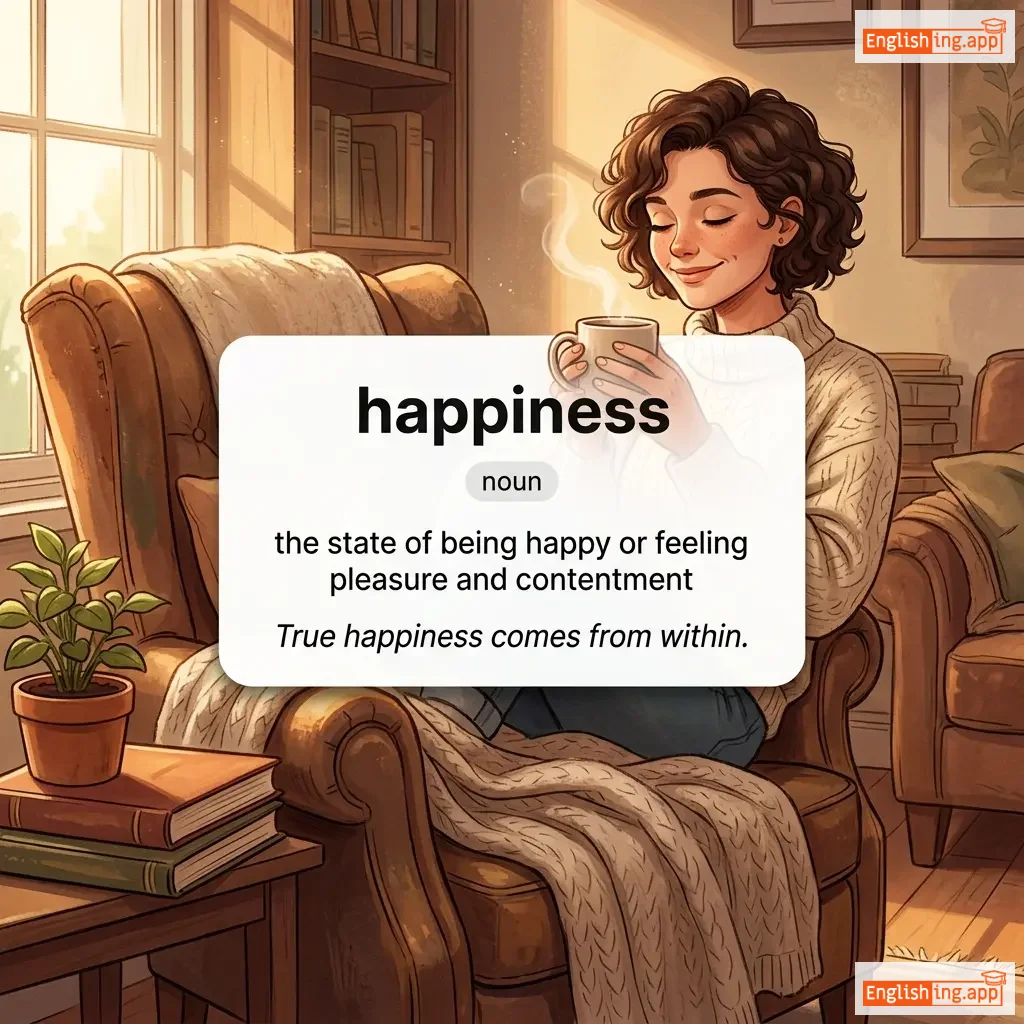
the state of being happy or feeling pleasure and contentment
••••••
|
True happiness comes from within. |
本当の幸せは内面から来る。
Hontō no shiawase wa naimen kara kuru.
••••••
|
pursuit of happiness |
the right or effort to seek personal fulfillment or joy
••••••
|
幸せの追求
shiawase no tsuikyū
••••••
|
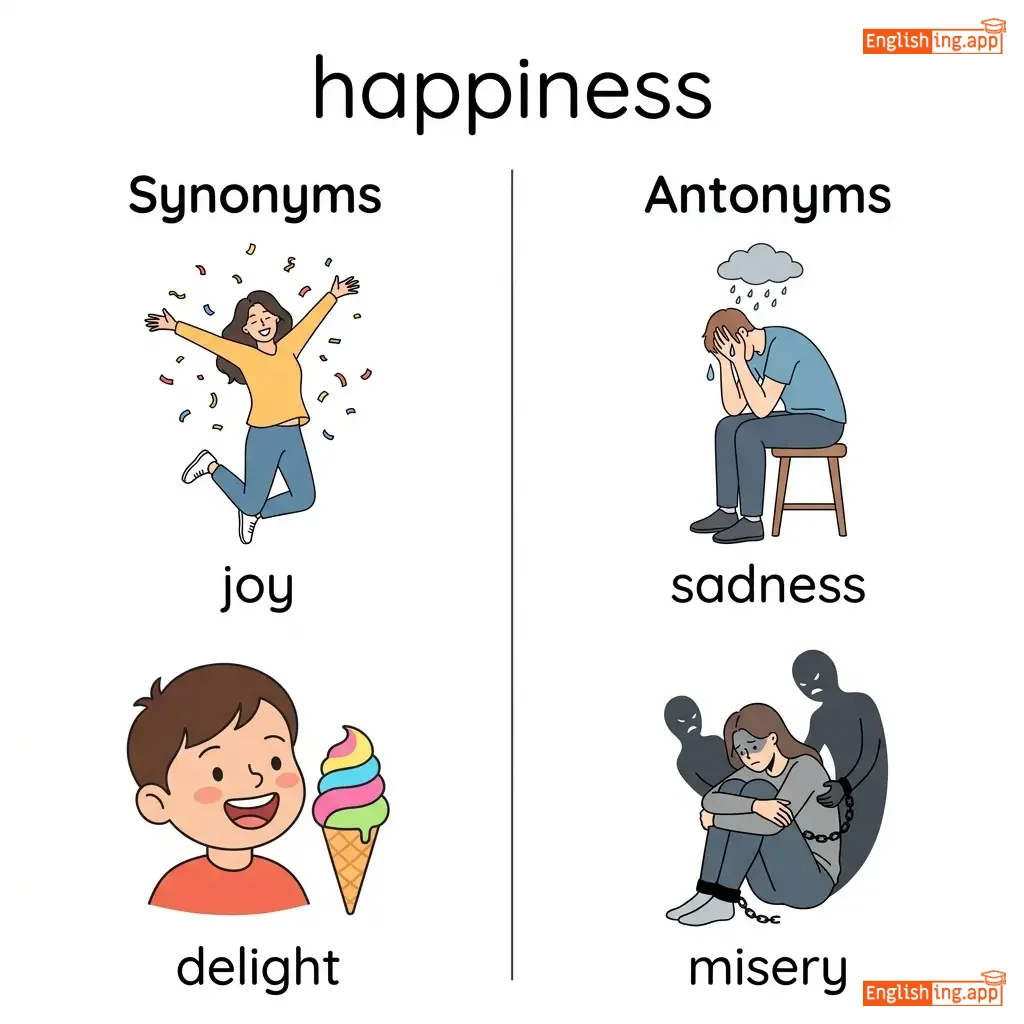
joy, delight, bliss, contentment, pleasure
••••••
|
sadness, misery, unhappiness
••••••
|
true happiness, bring happiness, pursue happiness, happiness and peace
••••••
|
幸せは心の平穏で、すべてが明るくなるようなもの 🌸
••••••
|
|
😀
••••••
|
/ˈhæpi/
adjective
(happiness)
••••••
|
- •••••• |
幸せ
shiawase
••••••
|
- •••••• | - •••••• | - •••••• | - •••••• |
feeling or showing pleasure, contentment, or joy
••••••
|
She was very happy to receive the gift. |
彼女はプレゼントをもらってとても幸せでした。
Kanojo wa purezento o moratte totemo shiawase deshita.
••••••
|
happy hour |
a period when drinks are sold at reduced prices
••••••
|
ハッピーアワー
happī awā
••••••
|
joyful, cheerful, delighted, pleased, content
••••••
|
sad, unhappy, miserable
••••••
|
feel happy, look happy, happy moment, happy life
••••••
|
Happy = 幸せ 😊 - 覚えておいて、私たちは幸せなときに 'I am HAPPY!' と言います
••••••
|
|
🚫
••••••
|
/həˈræsmənt/
noun
(ハラスメント)
••••••
|
- •••••• |
嫌がらせ
iyagarase
••••••
|
- •••••• | - •••••• | - •••••• | - •••••• |
aggressive pressure or intimidation; unwanted and repeated behavior causing discomfort
••••••
|
The company has a strict policy against workplace harassment.
その会社には職場でのハラスメントに対する厳しいポリシーがあります。
••••••
|
その会社には職場でのハラスメントに対する厳しいポリシーがあります。
Sono kaisha ni wa shokuba de no harasumento ni taisuru kibishii porishī ga arimasu.
••••••
|
sexual harassment
性的ハラスメント
••••••
|
unwanted sexual behavior that causes offense or humiliation
••••••
|
性的ハラスメント
seiteki harasumento
••••••
|
bullying, abuse, intimidation, persecution, annoyance
••••••
|
support, respect
••••••
|
workplace harassment, verbal harassment, sexual harassment, report harassment
••••••
|
Harassmentは嫌なこと — だからharassmentは繰り返し嫌なことです。
••••••
|
|
⚓
••••••
|
/ˈhɑːr.bər/
noun
(ハーバー)
••••••
|
- •••••• |
港
minato
••••••
|
- •••••• | - •••••• | - •••••• | - •••••• |
a place on the coast where vessels may find shelter; a place of safety or refuge
••••••
|
The fishing boats returned safely to the harbour before the storm hit the coastline. |
漁船は嵐が海岸を襲う前に安全に港に戻りました。
Gyosen wa arashi ga kaigan o osou mae ni anzen ni minato ni modorimashita.
••••••
|
- •••••• | - •••••• | - •••••• |
port, haven, marina, dock
••••••
|
open sea, storm, danger, exposure
••••••
|
safe harbour, natural harbour, harbour master
••••••
|
港は船の避難所のような、安全な場所です。
••••••
|
|
💪
••••••
|
/hɑːrd/
adjective
(ハード)
••••••
|
- •••••• |
硬い
katai
••••••
|
- •••••• | - •••••• | - •••••• | - •••••• |
solid, firm, or difficult to do or endure
••••••
|
The exam was very hard for most students. |
試験はほとんどの学生にとって非常に難しかった。
Shiken wa hotondo no gakusei ni totte hijou ni muzukashikatta.
••••••
|
hard nut to crack |
a difficult problem or person to deal with
••••••
|
難しい問題
muzukashii mondai
••••••
|
difficult, tough, rigid, strong, firm
••••••
|
easy, soft, simple
••••••
|
work hard, hard time, hard decision, hard life
••••••
|
Hardは固い、難しい、例えば難しい問題のように。
••••••
|
|
😅
••••••
|
/ˈhɑːd.li/
adverb
(hādori)
••••••
|
- •••••• |
ほとんどない; ほぼない; ほとんど信じられない
hotondo nai; hobo nai; hotondo shinjirarenai
••••••
|
- •••••• | - •••••• | - •••••• | - •••••• |
scarcely; barely; almost not at all
••••••
|
I could hardly believe what I was seeing. |
私は見たものをほとんど信じることができませんでした。
Watashi wa mita mono o hotondo shinjiru koto ga dekimasen deshita.
••••••
|
- •••••• | - •••••• | - •••••• |
barely, scarcely, rarely, seldom
••••••
|
easily, completely, fully, certainly
••••••
|
hardly ever, hardly any, hardly believe, hardly possible
••••••
|
Imagine something so hard to believe, like seeing it in a dream!
••••••
|
|
💻
••••••
|
/ˈhɑːrdˌwɛr/
noun
(ハードウェア)
••••••
|
- •••••• |
ハードウェア
hardware
••••••
|
- •••••• | - •••••• | - •••••• | - •••••• |
the physical parts of a computer or electronic system, such as the monitor, keyboard, and processor
••••••
|
The company upgraded its computer hardware to improve performance. |
会社はパフォーマンスを向上させるためにコンピュータのハードウェアをアップグレードしました。
Kaisha wa pafōmansu o kōjōsaseru tame ni konpyūta no hādowea o appurēdo shimashita.
••••••
|
hardware store |
a shop that sells tools, equipment, and building materials
••••••
|
ハードウェアストア
hādowea sutoa
••••••
|
equipment, machinery, device, apparatus, components
••••••
|
software, application, program
••••••
|
computer hardware, hardware components, upgrade hardware, hardware store
••••••
|
ハードウェアは触れるもの、ソフトウェアは見えないもの。
••••••
|
|
🐰
••••••
|
/heə(r)/
noun
(ヘア)
••••••
|
- •••••• |
野ウサギ
no usagi
••••••
|
- •••••• | - •••••• | - •••••• | - •••••• |
a fast-running long-eared mammal that resembles a large rabbit
••••••
|
The hare quickly ran across the field.
その野ウサギはフィールドを素早く走りました。
••••••
|
その野ウサギはフィールドを素早く走りました。
Sono no usagi wa fīrudo o subayaku hashirimashita
••••••
|
- •••••• | - •••••• | - •••••• |
rabbit, bunny
••••••
|
tortoise
••••••
|
wild hare, hare and hounds, march hare
••••••
|
Hare in English sounds like 'ヘア' in Japanese, and '野ウサギ' means wild hare
••••••
|
|
⚠️
••••••
|
/hɑːrm/
verb
(ハーム)
••••••
|
|
害
gai
••••••
|
harmed
ハームド
••••••
|
harmed
ハームド
••••••
|
harms
ハームズ
••••••
|
harming
ハーミング
••••••
|
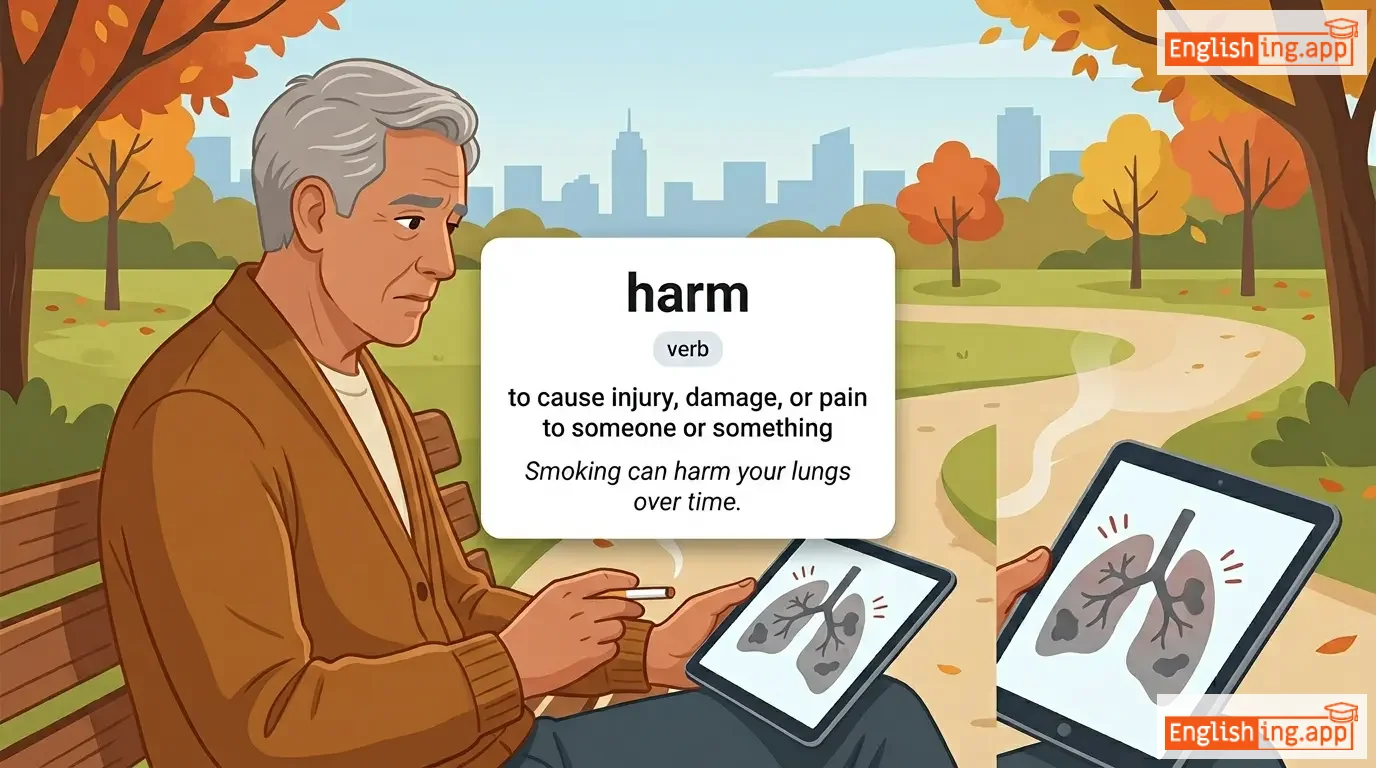
to cause injury, damage, or pain to someone or something
••••••
|
Smoking can harm your lungs over time.
喫煙は時間が経つにつれてあなたの肺に害を与える可能性があります。
••••••
|
喫煙は時間が経つにつれてあなたの肺に害を与える可能性があります。
Kitsuen wa jikan ga tatsu ni tsurete anata no hai ni gai o ataeru kanousei ga arimasu.
••••••
|
no harm done
害はありませんでした
••••••
|
used to say that no damage or injury has occurred
••••••
|
害はありませんでした
gai wa arimasen deshita
••••••
|
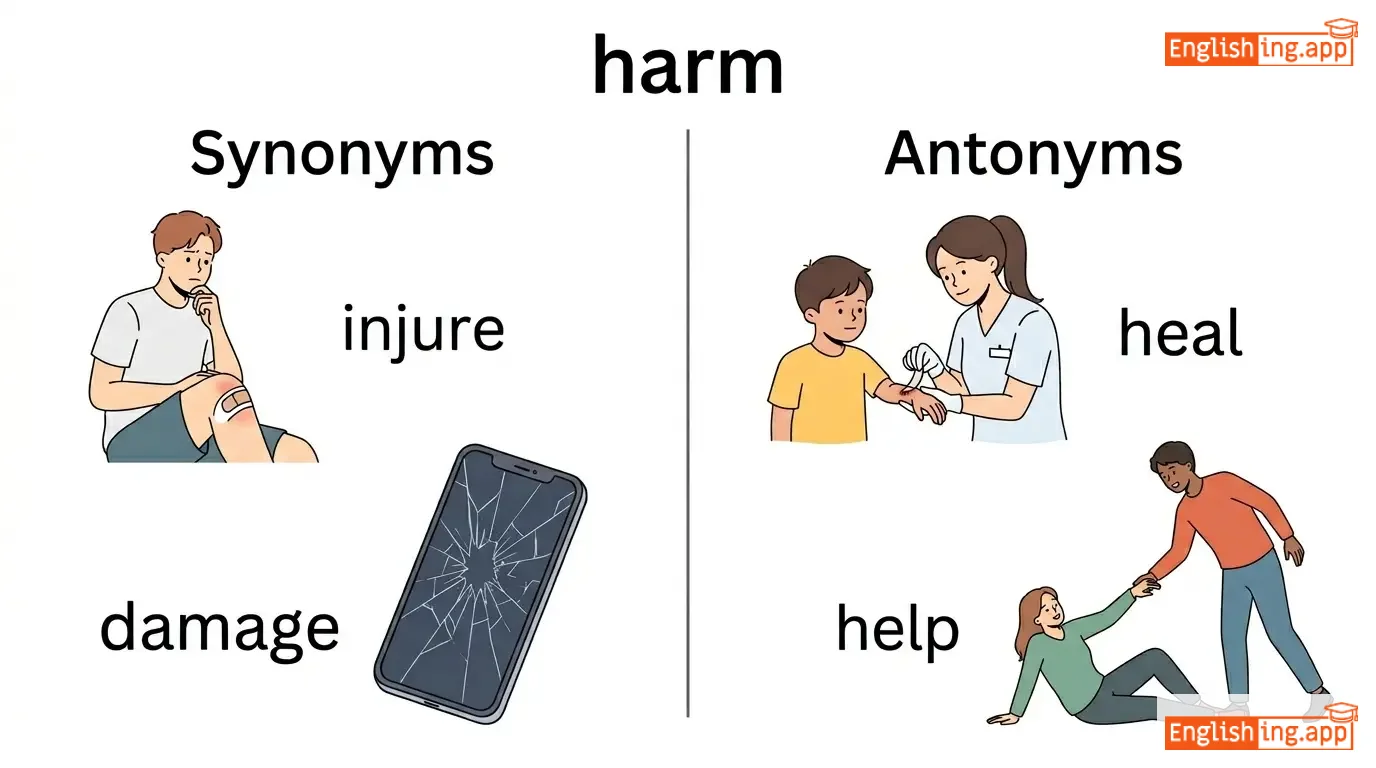
injure, damage, hurt, wound, impair
••••••
|
heal, help, repair
••••••
|
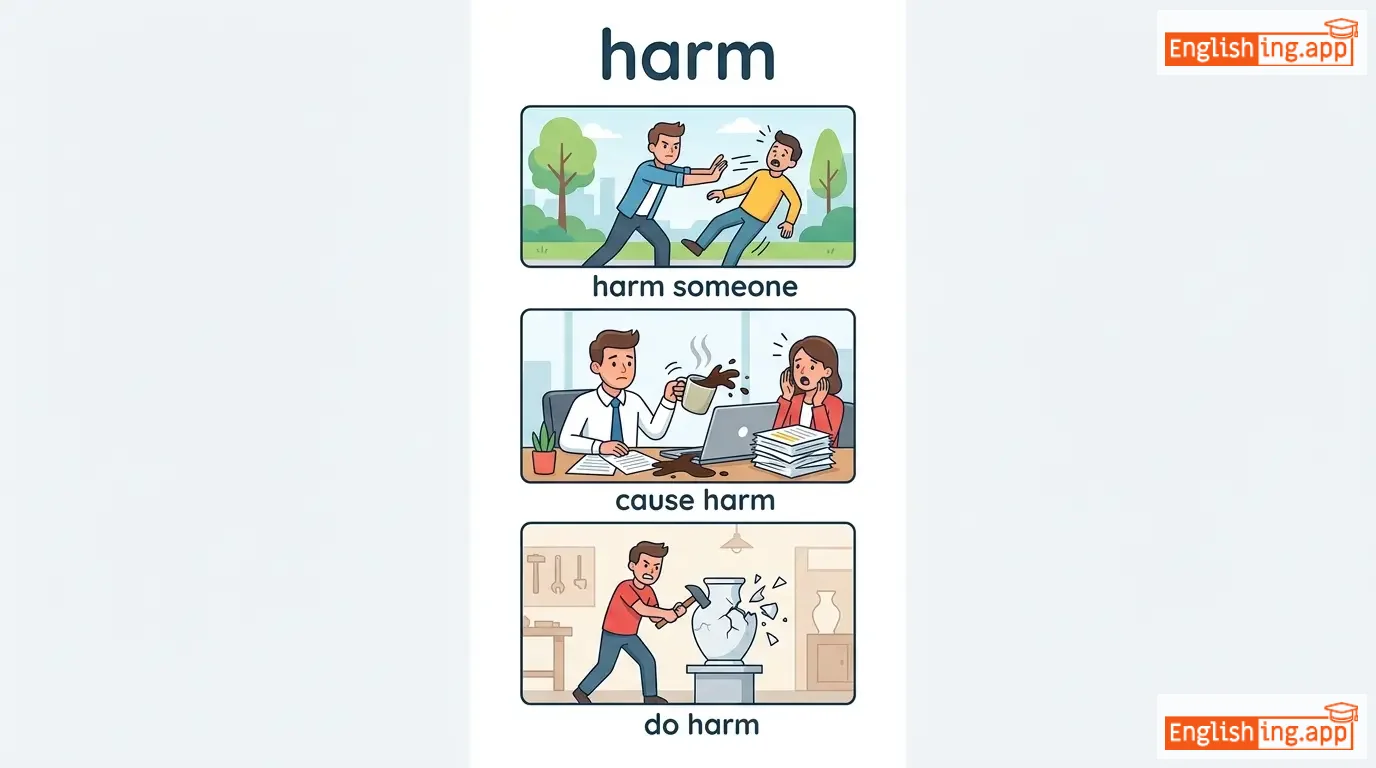
harm someone, cause harm, do harm, physical harm
••••••
|
HARMは害を意味します — 他人を傷つけることは、あなた自身にも害を与えることを覚えておいてください!
••••••
|
|
☠️
••••••
|
/ˈhɑːrmfəl/
adjective
(ハームフル)
••••••
|
- •••••• |
有害な
yūgaina
••••••
|
- •••••• | - •••••• | - •••••• | - •••••• |
causing or likely to cause harm; damaging
••••••
|
Smoking is harmful to your health. |
喫煙は健康に有害です。
Kitsuen wa kenko ni yūgaina desu.
••••••
|
- •••••• | - •••••• | - •••••• |
damaging, dangerous, detrimental, destructive
••••••
|
harmless, beneficial, helpful, safe
••••••
|
harmful effects, harmful chemicals, harmful substances
••••••
|
有害な is a direct match to 'harmful'.
••••••
|
|
🕊️
••••••
|
/ˈhɑːrmləs/
adjective
(ハームレス)
••••••
|
- •••••• |
無害な; 無実の; 安全な
mugai na; mujitsu no; anzen na
••••••
|
- •••••• | - •••••• | - •••••• | - •••••• |
not able or likely to cause harm; innocent; safe
••••••
|
The snake looks dangerous but it's actually harmless. |
ヘビは危険に見えるが、実際には無害だ。
Hebi wa kiken ni mieru ga, jissai ni wa mugai da.
••••••
|
- •••••• | - •••••• | - •••••• |
safe, innocent, benign, non-toxic
••••••
|
harmful, dangerous, toxic, destructive
••••••
|
harmless fun, harmless joke, harmless bacteria
••••••
|
'Mugai' in Japanese sounds like 'no harm' (harmless).
••••••
|
|
🎶
••••••
|
/ˈhɑːrməni/
noun
(ハーモニー)
••••••
|
|
調和
chouwa
••••••
|
- •••••• | - •••••• | - •••••• | - •••••• |
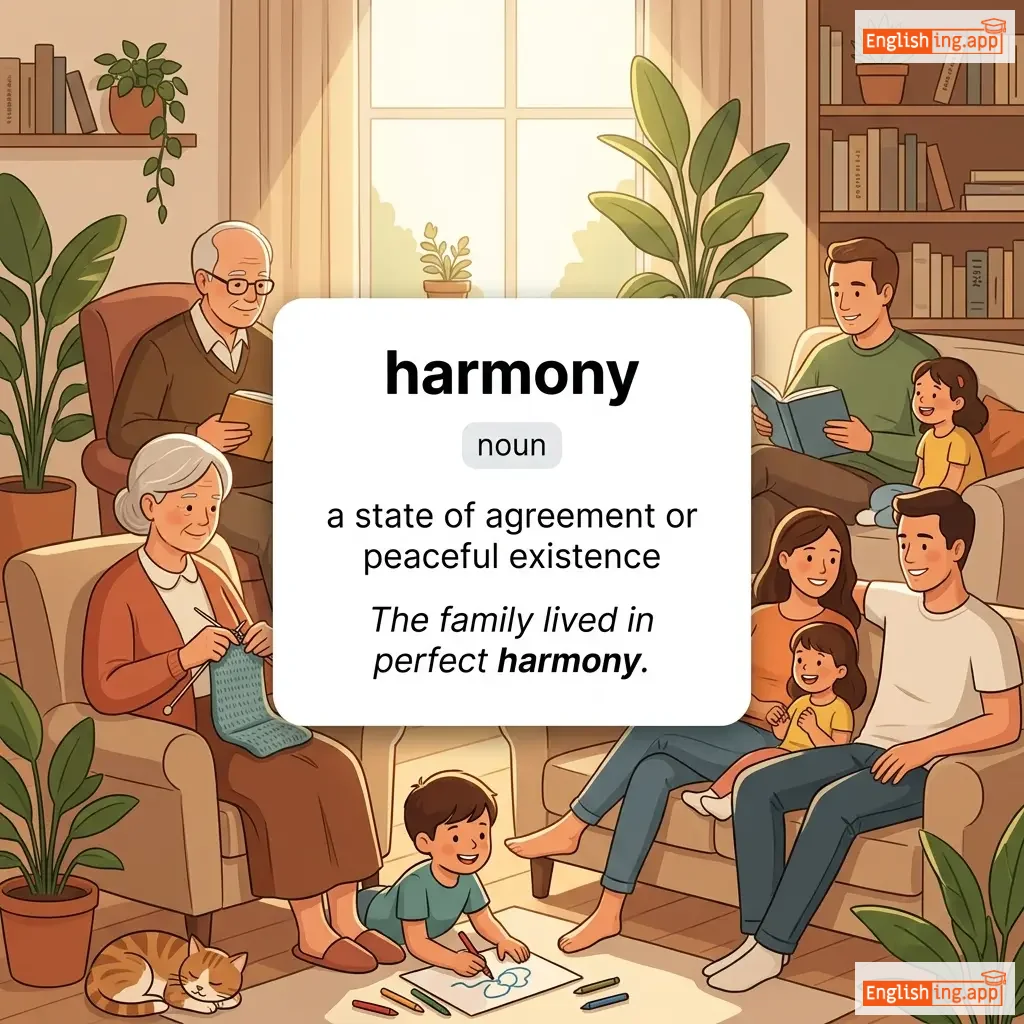
a state of agreement or peaceful existence
••••••
|
The family lived in perfect harmony. |
その家族は完全な調和の中で暮らしていました。
Sono kazoku wa kanzen na chouwa no naka de kurashite imashita.
••••••
|
in harmony with |
to be in agreement or consistent with
••••••
|
〜と調和して
〜to chouwa shite
••••••
|
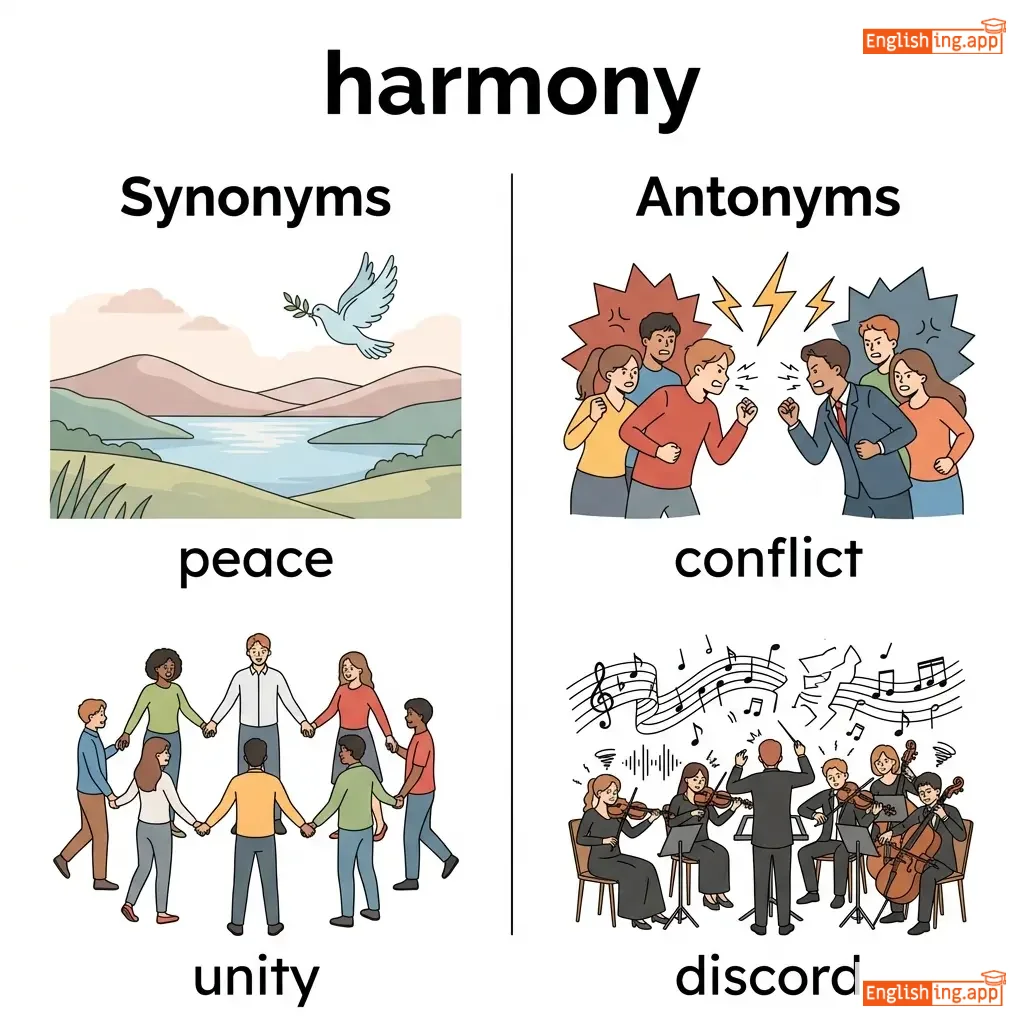
peace, unity, agreement, concord, balance
••••••
|
conflict, discord, chaos
••••••
|
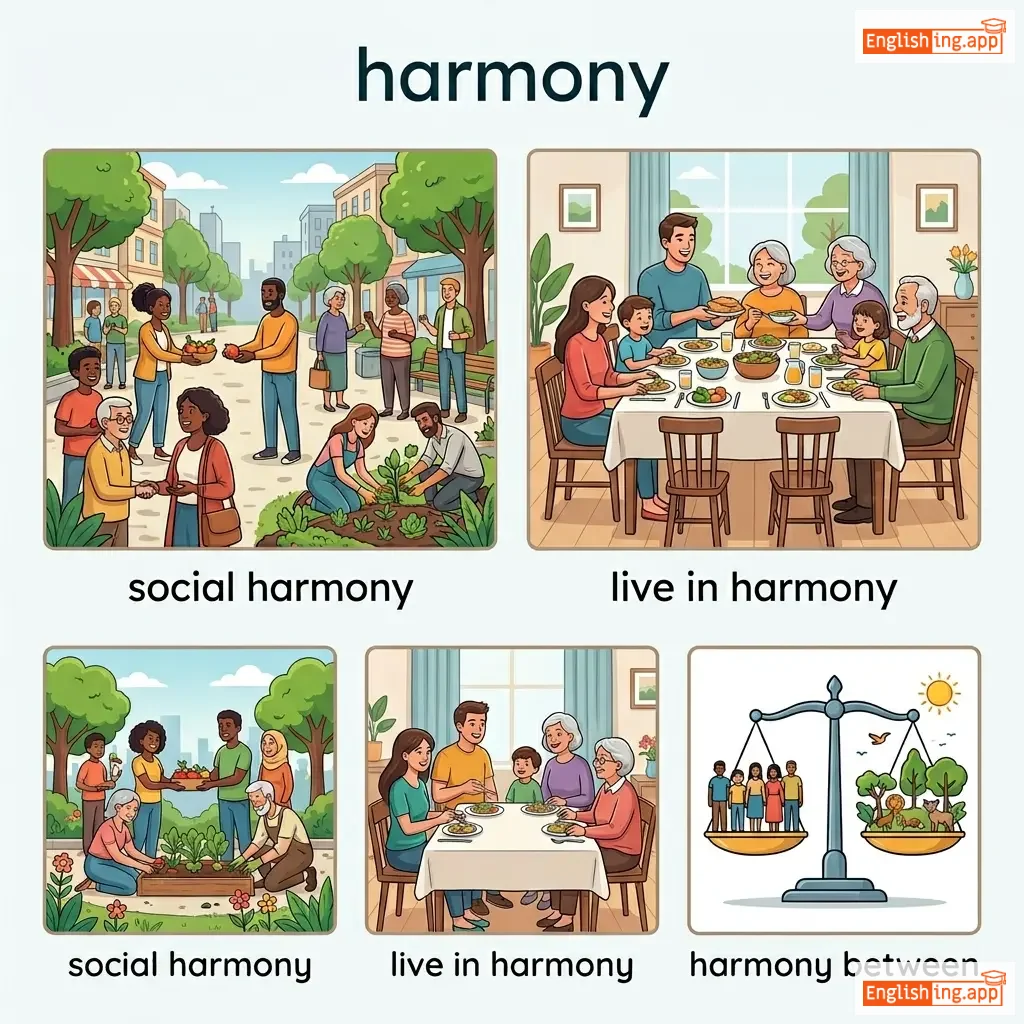
social harmony, live in harmony, harmony between
••••••
|
調和は、オーケストラで楽器が一緒に演奏するようなものです。
••••••
|
|
❄️
••••••
|
/hɑːrʃ/
adjective
(ハーシュ)
••••••
|
- •••••• |
厳しい
kibishii
••••••
|
- •••••• | - •••••• | - •••••• | - •••••• |
Unpleasantly rough or severe in sound, taste, conditions, or treatment.
••••••
|
The teacher's harsh tone frightened the students. |
先生の厳しい口調が生徒たちを驚かせた。
Sensei no kibishii kuchou ga seitotachi wo odokaseta.
••••••
|
harsh reality |
The unpleasant truth of a situation.
••••••
|
厳しい現実
Kibishii genjitsu
••••••
|
severe, stern, rough, cruel, brutal
••••••
|
gentle, mild, soft
••••••
|
harsh criticism, harsh reality, harsh conditions, harsh treatment
••••••
|
厳しい (kibishii) 冬の冷たさのような現実。
••••••
|
|
🌾
••••••
|
/ˈhɑːrvɪst/
noun
(ハーヴェスト)
••••••
|
- •••••• |
収穫
shūkaku
••••••
|
- •••••• | - •••••• | - •••••• | - •••••• |
the process or period of gathering crops
••••••
|
Farmers are busy during the rice harvest season. |
農家は米の収穫の季節に忙しい。
Nōka wa kome no shūkaku no kisetsu ni isogashī.
••••••
|
reap the harvest |
to enjoy the results of your efforts
••••••
|
努力の成果を享受する
doryoku no seika o kyōju suru
••••••
|
crop, yield, gathering, reaping, produce
••••••
|
sowing, planting, loss
••••••
|
harvest season, rice harvest, good harvest, harvest time
••••••
|
収穫は努力の成果を収集すること 🌾
••••••
|
|
👒
••••••
|
/hæt/
noun
(ハット)
••••••
|
- •••••• |
帽子
bōshi
••••••
|
- •••••• | - •••••• | - •••••• | - •••••• |
a shaped covering for the head, often with a brim
••••••
|
He wore a black hat to the party. |
彼はパーティーに黒い帽子をかぶっていった。
Kare wa pātii ni kuroi bōshi o kabutte itta.
••••••
|
to wear many hats |
to have many roles or responsibilities
••••••
|
多くの役割や責任を持つ
ōku no yakuwari ya sekinin o motsu
••••••
|
cap, headgear, helmet, bonnet
••••••
|
barehead
••••••
|
wear a hat, take off hat, straw hat, cowboy hat
••••••
|
Hatは日本語で帽子です。頭にかぶるものです。
••••••
|
|
💔
••••••
|
/heɪt/
verb
••••••
|
|
- •••••• |
hated
••••••
|
hated
••••••
|
hates
••••••
|
hating
••••••
|
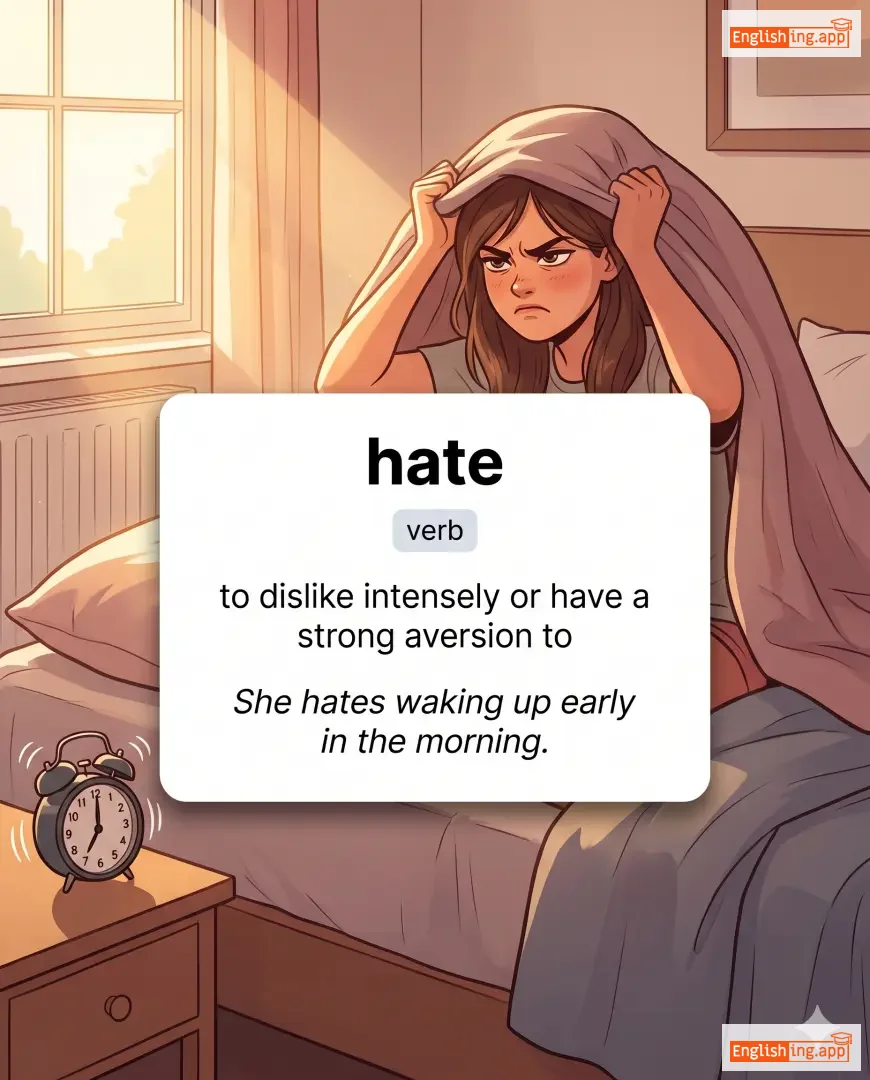
to dislike intensely or have a strong aversion to
••••••
|
She hates waking up early in the morning. |
- •••••• |
love to hate |
something disliked but still talked about often
••••••
|
- •••••• |
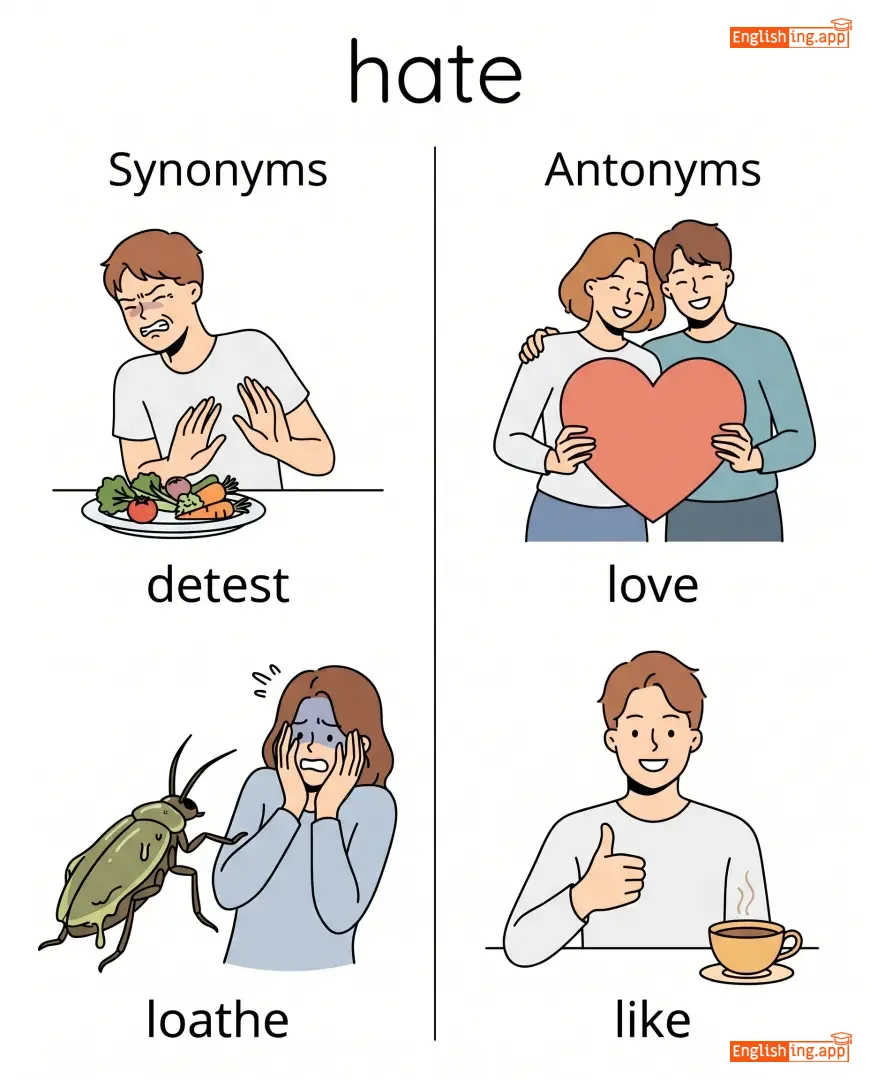
detest, loathe, despise, abhor
••••••
|
love, like, adore
••••••
|
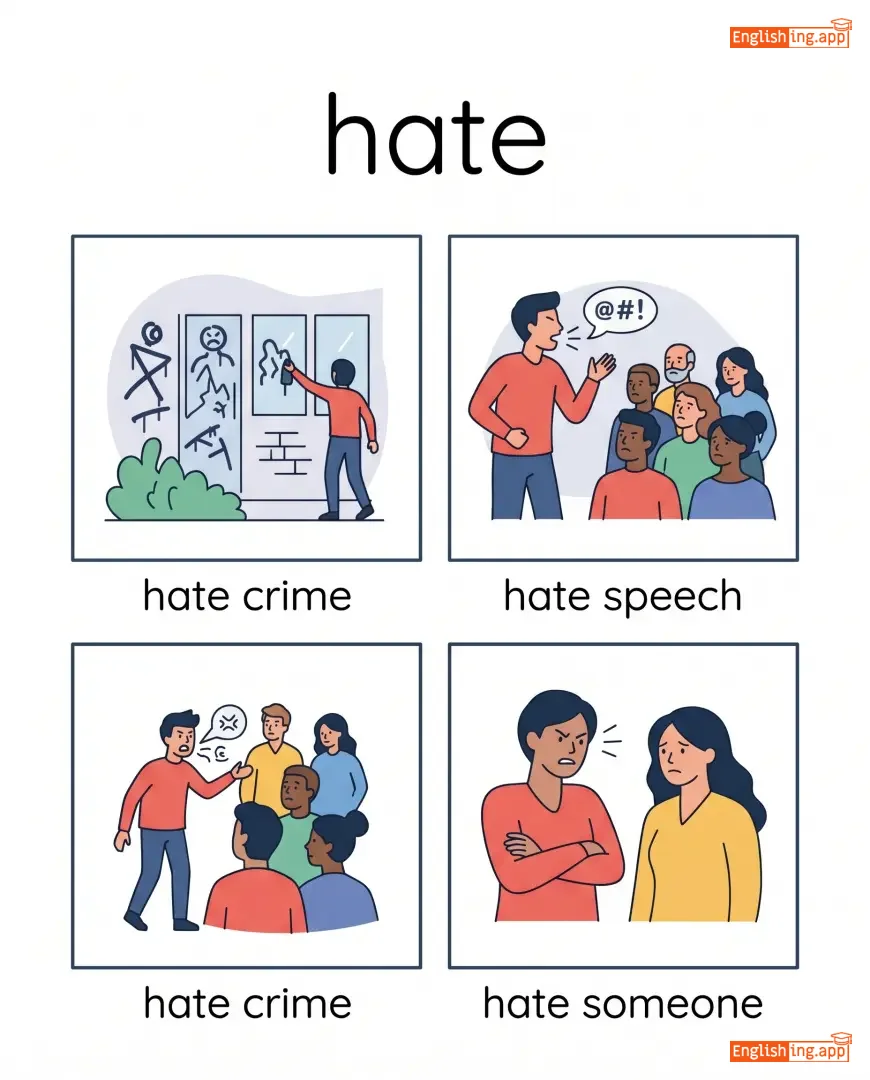
hate crime, hate speech, hate someone
••••••
|
No •••••• |
|
😡
••••••
|
/ˈheɪt.fəl/
adjective
(ヘイトフル)
••••••
|
- •••••• |
憎しみの
nikushimi no
••••••
|
- •••••• | - •••••• | - •••••• | - •••••• |
causing or deserving hatred; extremely unpleasant or offensive
••••••
|
His hateful comments hurt everyone's feelings.
彼の憎しみを込めたコメントは皆の感情を傷つけました。
••••••
|
彼の憎しみを込めたコメントは皆の感情を傷つけました。
Kare no nikushimi wo kometa komento wa minna no kanjou wo kizutsukemashita.
••••••
|
- •••••• | - •••••• | - •••••• |
detestable, loathsome, odious, abhorrent
••••••
|
lovable, pleasant, agreeable, likeable
••••••
|
hateful behavior, hateful speech, hateful attitude
••••••
|
憎しみの (nikushimi no) と hateful は同じ意味です。
••••••
|
|
😡
••••••
|
/ˈheɪ.trəd/
noun
(ヘイトレッド)
••••••
|
- •••••• |
憎悪
zōo
••••••
|
- •••••• | - •••••• | - •••••• | - •••••• |
intense dislike or ill will; a feeling of strong aversion
••••••
|
His hatred for injustice motivated him to become a human rights lawyer. |
不正義に対する彼の憎悪は、彼を人権弁護士にさせました。
Fuseigi ni taisuru kare no zōo wa, kare o jinken bengoshi ni sasemashita.
••••••
|
- •••••• | - •••••• | - •••••• |
loathing, animosity, hostility, resentment
••••••
|
love, affection, admiration, fondness
••••••
|
deep hatred, racial hatred, hatred towards
••••••
|
憎悪 = 強い嫌悪感
••••••
|
|
👻
••••••
|
/hɔːnt/
verb
••••••
|
|
- •••••• |
haunted
••••••
|
haunted
••••••
|
haunts
••••••
|
haunting
••••••
|
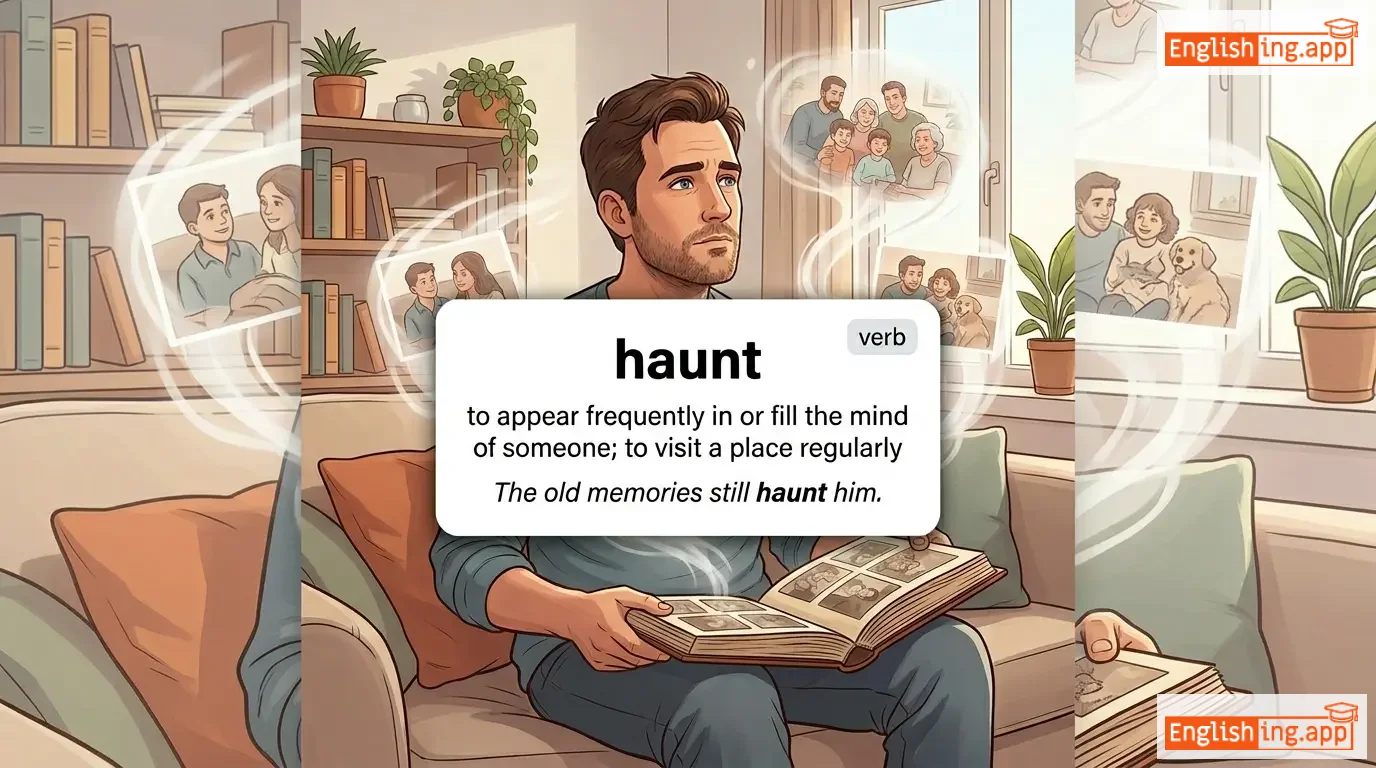
to appear frequently in or fill the mind of someone; to visit a place regularly
••••••
|
The old memories still haunt him. |
- •••••• |
haunt one's dreams |
to repeatedly trouble or disturb someone mentally
••••••
|
- •••••• |
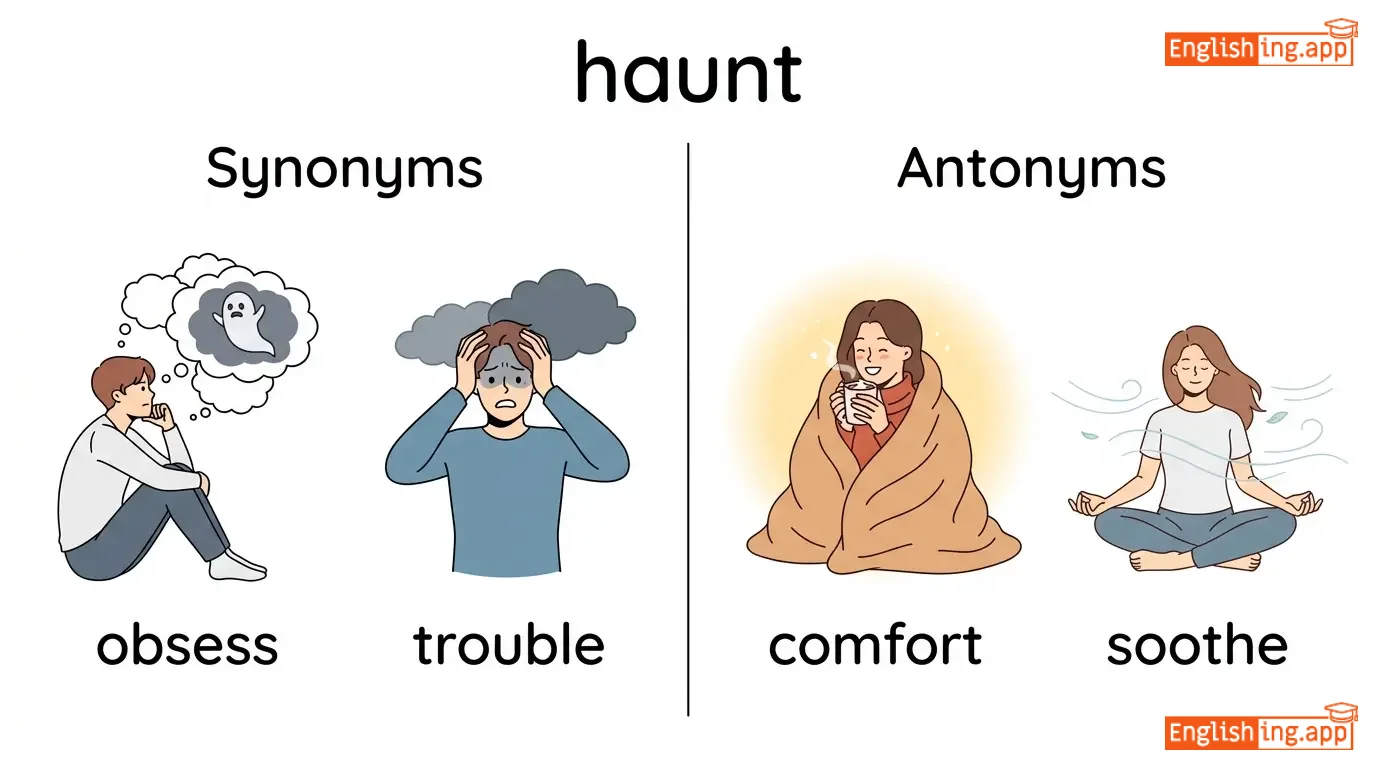
obsess, trouble, torment, visit, linger
••••••
|
comfort, soothe, forget
••••••
|
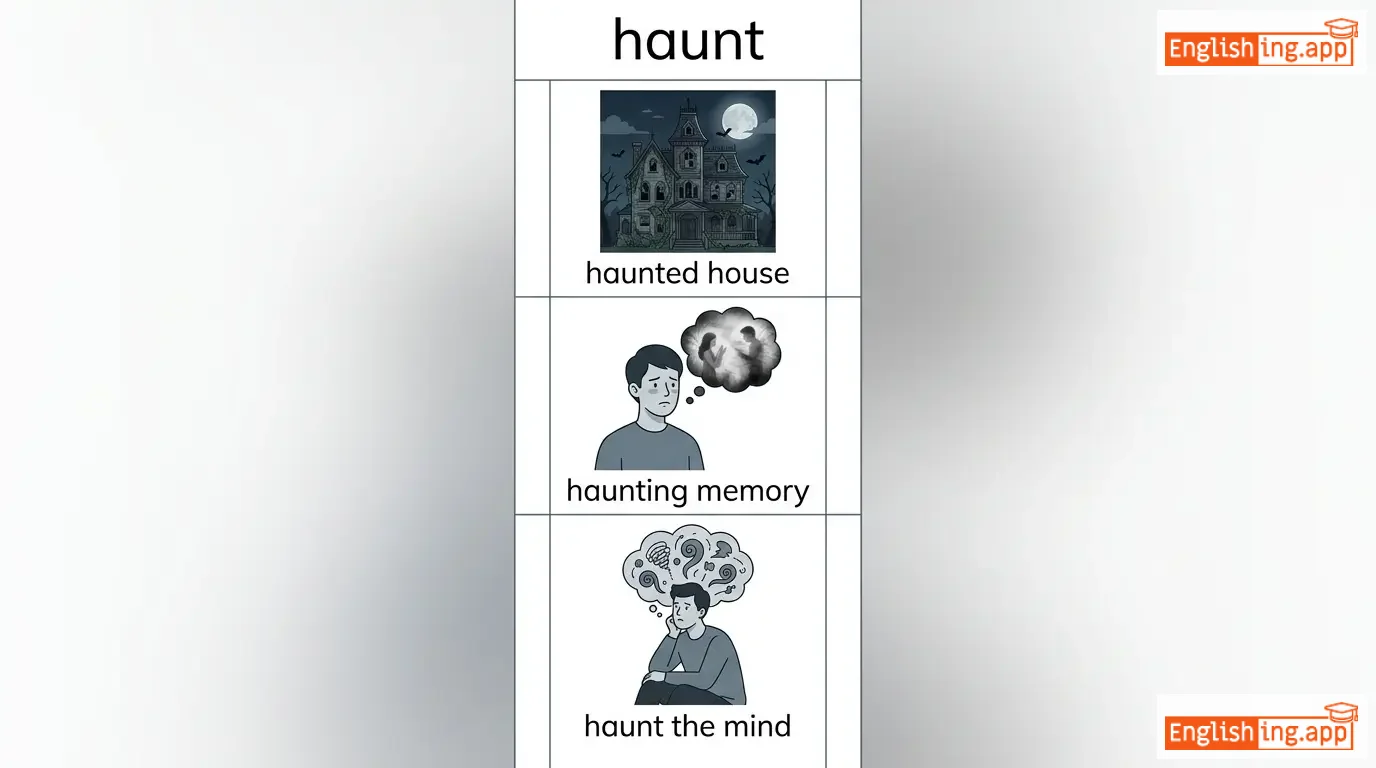
haunted house, haunting memory, haunt the mind, old haunt
••••••
|
No •••••• |
|
🙌
••••••
|
/hæv/
verb
(ハヴ)
••••••
|
- •••••• |
持っている
motte iru
••••••
|
had
ハッド
••••••
|
had
ハッド
••••••
|
has
ハズ
••••••
|
having
ハヴィング
••••••
|
to possess, own, or hold
••••••
|
They have three children.
彼らは三人の子供がいます。
••••••
|
彼らは三人の子供がいます。
Karera wa sannin no kodomo ga imasu.
••••••
|
have a good time
良い時間を過ごす
••••••
|
to enjoy oneself
••••••
|
良い時間を過ごす
Yoi jikan o sugosu
••••••
|
own, possess, hold, contain
••••••
|
lack, want
••••••
|
have fun, have dinner, have time, have a look
••••••
|
Haveは持っていること、'私は持っている'と言うように - I have it!
••••••
|
|
🐄
••••••
|
/heɪ/
noun
(ヘイ)
••••••
|
- •••••• |
干し草
hoshigusa
••••••
|
- •••••• | - •••••• | - •••••• | - •••••• |
grass that has been cut, dried, and stored for use as animal feed
••••••
|
The cows were eating hay in the barn. |
牛たちは納屋で干し草を食べていました。
Ushitachi wa noya de hoshigusa o tabete imashita.
••••••
|
make hay while the sun shines |
take advantage of a good opportunity while it lasts
••••••
|
日が照っている間に干し草を作る
Hi ga tette iru aida ni hoshigusa o tsukuru
••••••
|
fodder, straw, dried grass, silage, forage
••••••
|
grain, seed
••••••
|
bale of hay, hay field, haystack, dry hay
••••••
|
HAYは干し草を意味します 🐄 — 'ヘイ、牛!'と言うと、干し草を食べに来ます!
••••••
|
|
⚠️
••••••
|
/ˈhæzərd/
noun
(ハザード)
••••••
|
- •••••• |
危険
kiken
••••••
|
- •••••• | - •••••• | - •••••• | - •••••• |
A danger or risk.
••••••
|
Wet floors are a common hazard in the workplace.
濡れた床は職場でよくある危険です。
••••••
|
濡れた床は職場でよくある危険です。
Nureta yuka wa shokuba de yoku aru kiken desu.
••••••
|
at your own hazard
自分の責任で
••••••
|
at your own risk or responsibility
••••••
|
自分の責任で
Jibun no sekinin de
••••••
|
danger, risk, threat, peril, menace
••••••
|
safety, security, protection
••••••
|
fire hazard, safety hazard, health hazard, potential hazard
••••••
|
Hazardは危険を意味します、警告サイン⚠️を見たら注意しましょう。
••••••
|
|
👨
••••••
|
/hiː/
pronoun
(hi)
••••••
|
- •••••• |
彼 (男性)
kare (dansei)
••••••
|
- •••••• | - •••••• | - •••••• | - •••••• |
used to refer to a male person or animal already mentioned or easily identified
••••••
|
He is my best friend. |
彼は私の親友です。
Kare wa watashi no shin'yū desu.
••••••
|
- •••••• | - •••••• | - •••••• |
the man, that person, him
••••••
|
she, her
••••••
|
he said, he was, he went, he did
••••••
|
Heは彼 (男性)を意味します。HE-ro (ヒーロー)は通常男性です。
••••••
|
|
👤
••••••
|
/hɛd/
noun, verb
(ヘッド)
••••••
|
- •••••• |
頭 / リーダー
atama / rīdā
••••••
|
headed
ヘッディッド
••••••
|
headed
ヘッディッド
••••••
|
heads
ヘッズ
••••••
|
heading
ヘディング
••••••
|
The upper part of the human body or to lead or be in charge of something.
••••••
|
She turned her head to look out the window.
彼女は窓の外を見るために頭を回した。
••••••
|
彼女は窓の外を見るために頭を回した。
kanojo wa mado no soto o miru tame ni atama o mawaseta.
••••••
|
head over heels
頭から足元まで
••••••
|
completely in love
••••••
|
完全に恋に落ちる
kanzen ni koi ni ochiru
••••••
|
chief, leader, boss, director, skull
••••••
|
follower, subordinate
••••••
|
head of department, head office, head a team, shake your head
••••••
|
ヘッドは頭を意味します。頭から足元までが完全に恋に落ちるという意味です。
••••••
|
|
🤕
••••••
|
/ˈhɛdeɪk/
noun
(heɪdɛɪk)
••••••
|
- •••••• |
頭痛
zutsū
••••••
|
- •••••• | - •••••• | - •••••• | - •••••• |
a continuous pain in the head; something that causes worry or difficulty
••••••
|
Too much screen time can give you a terrible headache. |
長時間画面を見ることはひどい頭痛を引き起こす可能性があります。
chōjikan gamen o miru koto wa hidoi zutsū o hikiokosu kanōsei ga arimasu.
••••••
|
a real headache |
something that causes a lot of trouble or difficulty
••••••
|
本当の頭痛
hontō no zutsū
••••••
|
migraine, pain, nuisance, problem, discomfort
••••••
|
relief, comfort
••••••
|
severe headache, splitting headache, cause a headache, suffer from headache
••••••
|
Head ache は頭に ache (痛み) – 頭痛を覚えておいて!
••••••
|
|
📰
••••••
|
/ˈhɛdˌlaɪn/
noun
(ヘッドライン)
••••••
|
- •••••• |
見出し
midashi
••••••
|
- •••••• | - •••••• | - •••••• | - •••••• |
The title of a newspaper article printed in large letters.
••••••
|
The scandal made front-page headlines.
そのスキャンダルはフロントページのヘッドラインになった。
••••••
|
そのスキャンダルはフロントページの見出しになった。
Sono sukyandaru wa furonto pēji no midashi ni natta.
••••••
|
grab the headlines
注目を集める
••••••
|
to attract public attention
••••••
|
注目を集める
Chūmoku o atsumeru
••••••
|
title, heading, banner, caption, news
••••••
|
detail, footnote
••••••
|
front-page headline, news headline, headline story, write a headline
••••••
|
見出し = 新聞の大きなタイトル = 見出し
••••••
|
|
🏢
••••••
|
/ˈhɛdˌkwɔːrtərz/
noun
(ヘッドクォーターズ)
••••••
|
- •••••• |
本社
honsha
••••••
|
- •••••• | - •••••• | - •••••• | - •••••• |
The main office or center of operations of an organization.
••••••
|
The company’s headquarters is located in New York. |
その会社の本社はニューヨークにあります。
Sono kaisha no honsha wa Nyūyōku ni arimasu.
••••••
|
- •••••• | - •••••• | - •••••• |
main office, center, base, hub, command post
••••••
|
branch, outpost
••••••
|
corporate headquarters, police headquarters, company headquarters, military headquarters
••••••
|
Headquarters = head + quarters → 本社、企業の中心となる場所。
••••••
|

