Получите неограниченный доступ ко всем словам с подпиской Pro
Обновить до ProПолучите неограниченный доступ ко всем предложениям с подпиской Pro
Обновить до Pro|
Эмодзи
|
Слово | Images | Перевод | Прошедшее | Причастие прошедшего времени | Третье лицо единственного числа | Герундий | Значение | Пример предложения | Перевод примера предложения | Пример выражения | Значение примера выражения | Перевод примера выражения | Синонимы | Антонимы | Коллокации | Мнемоника |
|---|---|---|---|---|---|---|---|---|---|---|---|---|---|---|---|---|---|
|
🙌
••••••
|
/heɪl/
verb
(хейл)
••••••
|
- •••••• |
звать / приветствовать
zvat' / privetstvovat'
••••••
|
hailed
хейлд
••••••
|
hailed
хейлд
••••••
|
hails
хейлс
••••••
|
hailing
хейлинг
••••••
|
To call out to attract attention or to praise enthusiastically.
••••••
|
The athlete was hailed as a hero after the victory.
Атлета приветствовали как героя после победы.
••••••
|
Атлета приветствовали как героя после победы.
Atleta privetstvovali kak geroja posle pobedy.
••••••
|
hail a taxi
поймать такси
••••••
|
to signal and stop a taxi to get a ride
••••••
|
поймать такси
poimat' taksi
••••••
|
greet, call, acclaim, praise, salute
••••••
|
ignore, condemn, dismiss
••••••
|
hail a taxi, hail as a hero, hail the decision, hail enthusiastically
••••••
|
Hail = звать или приветствовать с восхищением
••••••
|
|
💇
••••••
|
/hɛər/
noun
(хэр)
••••••
|
- •••••• |
волосы
volosy
••••••
|
- •••••• | - •••••• | - •••••• | - •••••• |
the fine threads growing from the skin of humans and animals
••••••
|
She has long, black hair. |
У нее длинные черные волосы.
U nee dlinnyye chernyye volosy.
••••••
|
let your hair down |
to relax and enjoy yourself without worrying
••••••
|
распусти волосы
raspusti volosy
••••••
|
locks, strands, tresses, mane
••••••
|
baldness, bald head
••••••
|
long hair, curly hair, cut hair, hair color
••••••
|
Волосы = Hair, волосы на голове
••••••
|
|
💇
••••••
|
/ˈheəkʌt/
noun
(хэакат)
••••••
|
- •••••• |
стрижка
strizhka
••••••
|
- •••••• | - •••••• | - •••••• | - •••••• |
the act or style of cutting hair
••••••
|
I got a haircut before the wedding.
ай гот э хэакат бифор зе веддинг
••••••
|
Я сделал стрижку перед свадьбой.
ya sdelal strizhku pered svadboy
••••••
|
get a haircut
гет э хэакат
••••••
|
to have one’s hair cut
••••••
|
сделать стрижку
sdelat strizhku
••••••
|
trim, hairstyle, cut, hairdo
••••••
|
growth, neglect
••••••
|
get a haircut, short haircut, new haircut, haircut style
••••••
|
Haircut = стрижка, как в салоне
••••••
|
|
💇
••••••
|
/ˈheəˌkʌtər/
noun
(хэркаттер)
••••••
|
- •••••• |
парикмахер
parikmakher
••••••
|
- •••••• | - •••••• | - •••••• | - •••••• |
a person whose job is to cut and style hair; barber or hairdresser
••••••
|
The haircutter gave me a neat and stylish haircut.
хэркаттер гев ми э нит хэркат
••••••
|
Парикмахер сделал мне хорошую стрижку.
parikmakher sdelal mne khoroshuyu strizhku
••••••
|
- •••••• | - •••••• | - •••••• |
barber, hairdresser, stylist, coiffeur
••••••
|
client, customer
••••••
|
professional haircutter, local haircutter, skilled haircutter
••••••
|
haircutter = парикмахер режет hair
••••••
|
|
💇
••••••
|
/ˈherˌdrɛsər/
noun
(хэадрессер)
••••••
|
- •••••• |
парикмахер
parikmakher
••••••
|
- •••••• | - •••••• | - •••••• | - •••••• |
a person whose job is to cut, style, and treat hair
••••••
|
The hairdresser gave me a stylish haircut before the wedding.
Зэ хэадрессер гэв ми э стайлиш хэакат бифор зэ вэддинг.
••••••
|
Парикмахер сделал мне стильную стрижку перед свадьбой.
Parikmakher sdelal mne stilnuyu strizhku pered svadboy
••••••
|
- •••••• | - •••••• | - •••••• |
hairstylist, barber, stylist, hair stylist
••••••
|
client, customer
••••••
|
professional hairdresser, local hairdresser, visit a hairdresser, hairdresser salon
••••••
|
Парик = волосы → парикмахер
••••••
|
|
½
••••••
|
/hæf/
noun, adjective
(хэлф)
••••••
|
- •••••• |
половина
polovina
••••••
|
- •••••• | - •••••• | - •••••• | - •••••• |
one of two equal parts of something
••••••
|
He ate half of the cake. |
Он съел половину торта.
On syel polovinu torta.
••••••
|
half-hearted |
without much effort or enthusiasm
••••••
|
половинчатый
polovinchatiy
••••••
|
portion, part, piece, division
••••••
|
whole, complete
••••••
|
half price, half hour, half life, half way
••••••
|
Half это половина, представь, что ты делишь торт, половина = half
••••••
|
|
↔️
••••••
|
/ˌhæfˈweɪ/
adverb
(khæfwe)
••••••
|
- •••••• |
на полпути
na polputi
••••••
|
- •••••• | - •••••• | - •••••• | - •••••• |
at or to a point equal in distance between two points
••••••
|
We met halfway between the two towns. |
Мы встретились на полпути между двумя городами.
My vstretilis' na polputi mezhdu dvumya gorodami.
••••••
|
meet halfway |
to compromise or find a middle ground
••••••
|
найти компромисс
nayti kompromiss
••••••
|
in the middle, midway, partway, center
••••••
|
completely, fully
••••••
|
halfway point, halfway through, halfway house, meet halfway
••••••
|
Полпути — мы встречаемся на пути компромисса.
••••••
|
|
🏛️
••••••
|
/hɔːl/
noun
(хол)
••••••
|
- •••••• |
зал
zal
••••••
|
- •••••• | - •••••• | - •••••• | - •••••• |
a large room or building for public gatherings, events, or passage
••••••
|
The graduation ceremony was held in the university hall.
Церемония вручения дипломов состоялась в зале университета.
••••••
|
Церемония вручения дипломов состоялась в зале университета.
Tseremoniya vrucheniya diplomov sostoyalas' v zale universiteta.
••••••
|
hall of fame
Зал славы
••••••
|
a group or place honoring distinguished people
••••••
|
Зал славы
Zal slavy
••••••
|
auditorium, chamber, corridor, passage, lobby
••••••
|
room, cubicle
••••••
|
lecture hall, concert hall, dining hall, entrance hall
••••••
|
зал (zal) - как большая комната для всех. Помните, как зал славы для выдающихся людей.
••••••
|
|
🛑
••••••
|
/hɔːlt/
verb
(халт)
••••••
|
- •••••• |
остановить
ostanovit
••••••
|
halted
халтед
••••••
|
halted
халтед
••••••
|
halts
халтс
••••••
|
halting
халтинг
••••••
|
to stop or bring to a stop
••••••
|
The train suddenly halted at the station.
Поезд внезапно остановился на станции.
••••••
|
Поезд внезапно остановился на станции.
Poyezd vnezapno ostanovilsya na stantsii.
••••••
|
- •••••• | - •••••• | - •••••• |
stop, cease, terminate, freeze
••••••
|
start, begin, continue
••••••
|
halt operations, halt progress, halt movement
••••••
|
Halt на английском - это остановить на русском
••••••
|
|
🔨
••••••
|
/ˈhæmər/
noun, verb
••••••
|
- •••••• | - •••••• |
hammered
••••••
|
hammered
••••••
|
hammers
••••••
|
hammering
••••••
|
a tool with a heavy metal head used for breaking things or driving in nails; to hit something forcefully with a hammer or similar object.
••••••
|
He used a hammer to fix the broken chair. |
- •••••• |
hammer out |
to work out the details of something through discussion and effort
••••••
|
- •••••• |
mallet, pound, strike, beat, smash
••••••
|
caress, stroke
••••••
|
hammer blow, hammer strike, hammer nails, hammer out, hammer away
••••••
|
No •••••• |
|
🤚
••••••
|
/hænd/
noun, verb
(хэнд)
••••••
|
- •••••• |
рука
ruka
••••••
|
handed
хэндед
••••••
|
handed
хэндед
••••••
|
hands
хэндс
••••••
|
handing
хэндɪнг
••••••
|
the part of the body at the end of the arm used for holding things
••••••
|
She raised her hand to ask a question.
ши рэйзд хер хэнд ту аск э квесчн.
••••••
|
Она подняла руку, чтобы задать вопрос.
Ona podnyala ruku, chtoby zadat' vopros.
••••••
|
in safe hands
ин сейф хэндс
••••••
|
being looked after by someone competent and reliable
••••••
|
в надежных руках
v nadezhnykh rukakh
••••••
|
palm, fist, grip, hold
••••••
|
foot, neglect
••••••
|
shake hands, hand in, hand out, raise hand
••••••
|
‘Ruka’ на русском – значит рука на английском, держите вещи в руке!
••••••
|
|
✋
••••••
|
/ˈhænd.fʊl/
noun
(хэндфул)
••••••
|
- •••••• |
горсть
gorst'
••••••
|
- •••••• | - •••••• | - •••••• | - •••••• |
the amount of something that can be held in one hand; a small number
••••••
|
She took a handful of nuts. |
Она взяла горсть орехов.
Ona vzyala gorst' orekhov.
••••••
|
a handful |
a small number of people or things; someone difficult to manage
••••••
|
небольшое количество людей или вещей; кого-то трудно контролировать
nebol'shoe kolichestvo lyudei ili veshchei; kogo-to trudno kontrolirovat'
••••••
|
few, small amount, little, portion
••••••
|
many, plenty
••••••
|
a handful of, only a handful, just a handful
••••••
|
горсть в руке, легко запомнить
••••••
|
|
🪟
••••••
|
/ˈhændl̩/
noun, verb
(хэндл)
••••••
|

|
рукоятка / справляться
rukoyatka / spravlyatsya
••••••
|
handled
хэндлд
••••••
|
handled
хэндлд
••••••
|
handles
хэндлс
••••••
|
handling
хэндлинг
••••••
|
the part of an object designed to be held in the hand; to deal with or manage a situation
••••••
|
He could not handle the pressure of the job.
Он не смог справиться с давлением на работе.
••••••
|
Он не смог справиться с давлением на работе.
On ne smog spravitsya s davleniem na rabote.
••••••
|
fly off the handle
выходить из себя
••••••
|
to suddenly become very angry
••••••
|
вспыхнуть от злости
vspykhnut' ot zlosti
••••••
|
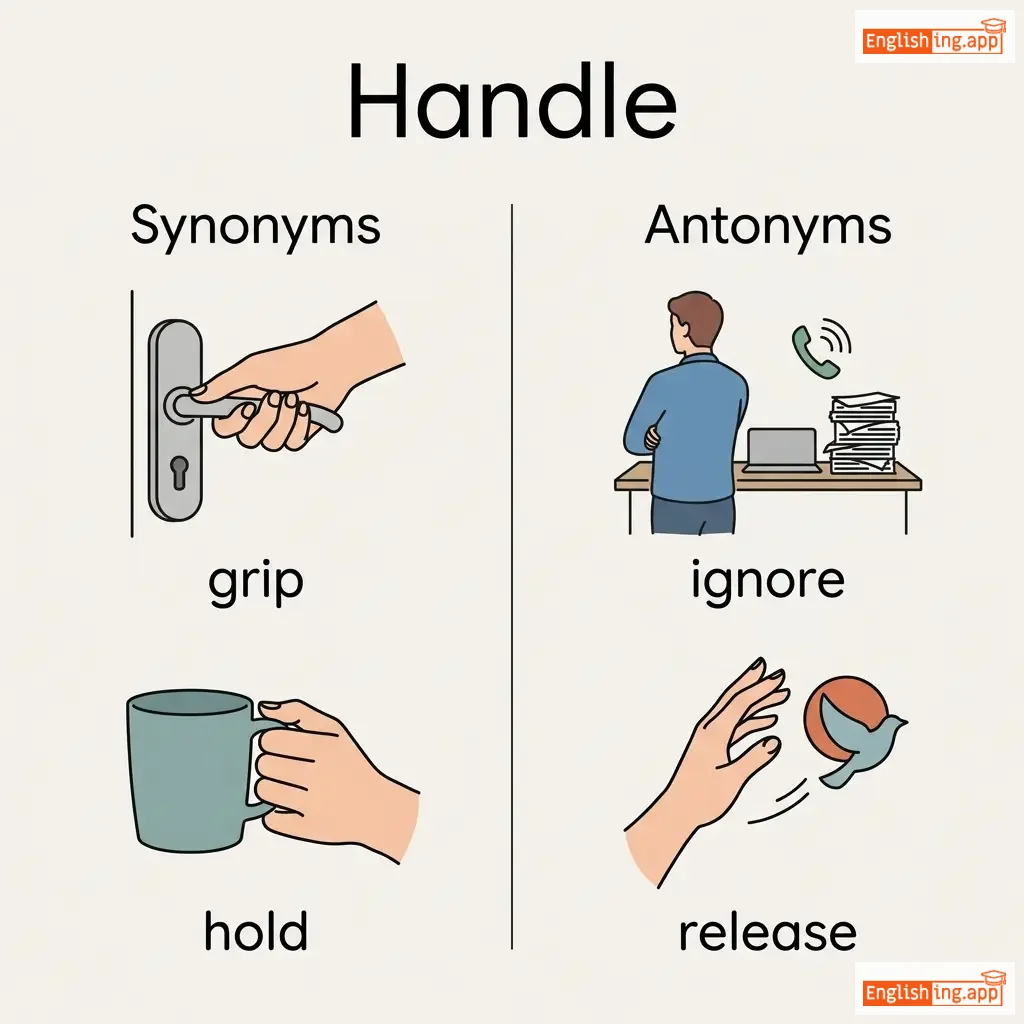
grip, hold, control, manage
••••••
|
ignore, release
••••••
|
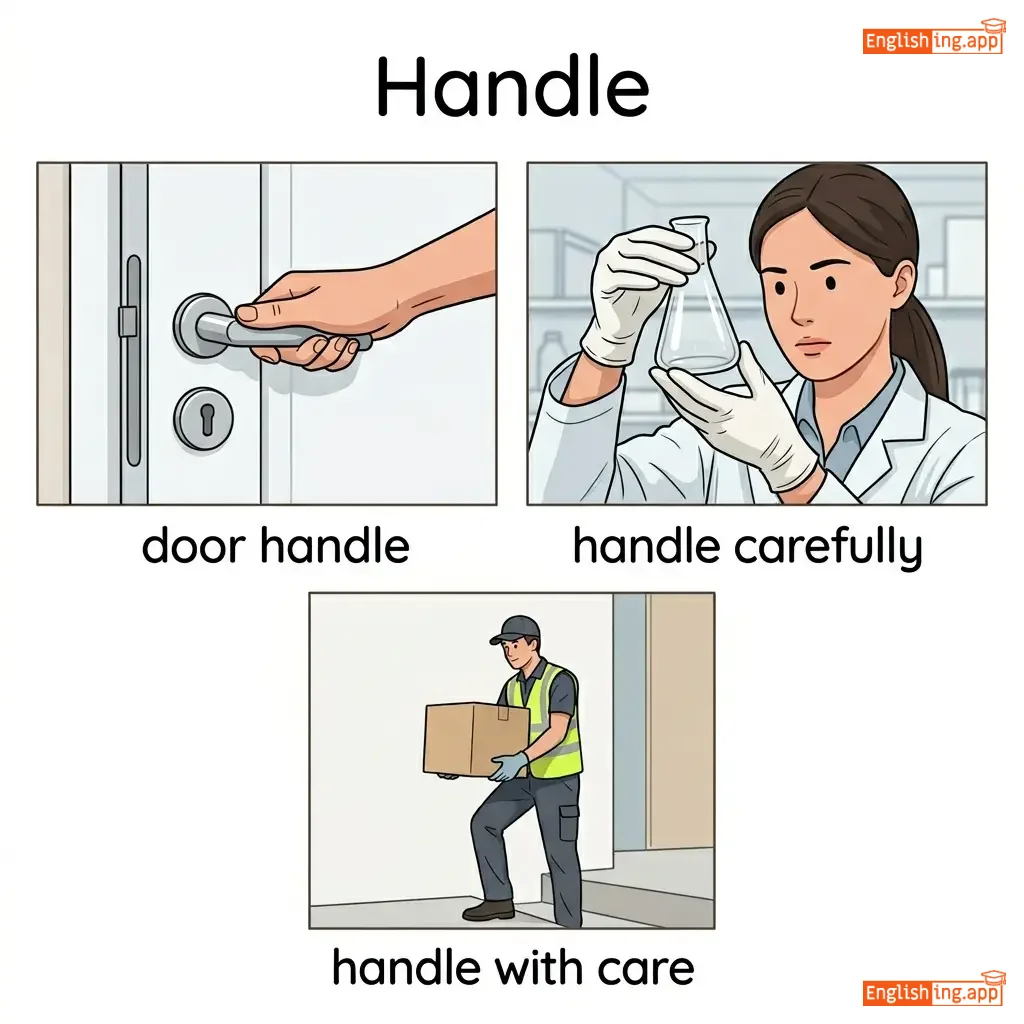
door handle, handle carefully, handle with care
••••••
|
Rukoyatka - вспоминайте, что вы держите рукоятку для управления
••••••
|
|
🤲
••••••
|
/ˈhændlɪŋ/
noun
(хэндлинг)
••••••
|
- •••••• |
обработка
obrabotka
••••••
|
- •••••• | - •••••• | - •••••• | - •••••• |
the act of managing or dealing with something or someone
••••••
|
His handling of the situation was impressive. |
Его обработка ситуации была впечатляющей.
Ego obrabotka situatsii byla vpechatlyayushchey.
••••••
|
- •••••• | - •••••• | - •••••• |
management, administration, control, supervision
••••••
|
mismanagement, neglect
••••••
|
handling a crisis, handling an issue, handling customers
••••••
|
Запомни обработку, когда нужно эффективно справиться с ситуацией.
••••••
|
|
😎
••••••
|
/ˈhæn.səm/
adjective
(счастье)
••••••
|
- •••••• |
счастье
schastye
••••••
|
- •••••• | - •••••• | - •••••• | - •••••• |
attractive in appearance, usually referring to men; also can mean generous or impressive in size.
••••••
|
He looked very handsome in his new suit.
Она не могла скрыть своего счастья, когда получила награду.
••••••
|
Она не могла скрыть своего счастья, когда получила награду.
Ona ne mogla skryt' svoego schast'ya, kogda poluchila nagradu.
••••••
|
handsome reward
поиск счастья
••••••
|
a large or generous reward
••••••
|
поиск счастья
poisk schast'ya
••••••
|
attractive, good-looking, striking, dashing, elegant
••••••
|
ugly, unattractive, plain
••••••
|
handsome man, handsome reward, handsome profit, look handsome
••••••
|
Чтобы найти счастье, начни с улыбки.
••••••
|
|
🛠️
••••••
|
/ˈhændi/
adjective
(hendi)
••••••
|
- •••••• |
удобный в использовании
udobnyy v ispol'zovanii
••••••
|
- •••••• | - •••••• | - •••••• | - •••••• |
convenient to use or easily accessible; skillful with the hands
••••••
|
This pocket knife is very handy when you go camping. |
Этот карманный нож очень полезен, когда вы отправляетесь в поход.
Etot karmannyy nozh ochen' polezen, kogda vy otpravlyayetes' v pokhod.
••••••
|
handy with |
skilled or capable in using something
••••••
|
умелый
umelyy
••••••
|
useful, convenient, practical, accessible, skillful
••••••
|
useless, inconvenient, clumsy
••••••
|
come in handy, very handy, handy tool, handy guide
••••••
|
Handy - это как руки, которые всегда под рукой, легко доступные.
••••••
|
|
🖼️
••••••
|
/hæŋ/
verb
••••••
|
|
- •••••• |
hung
••••••
|
hung
••••••
|
hangs
••••••
|
hanging
••••••
|
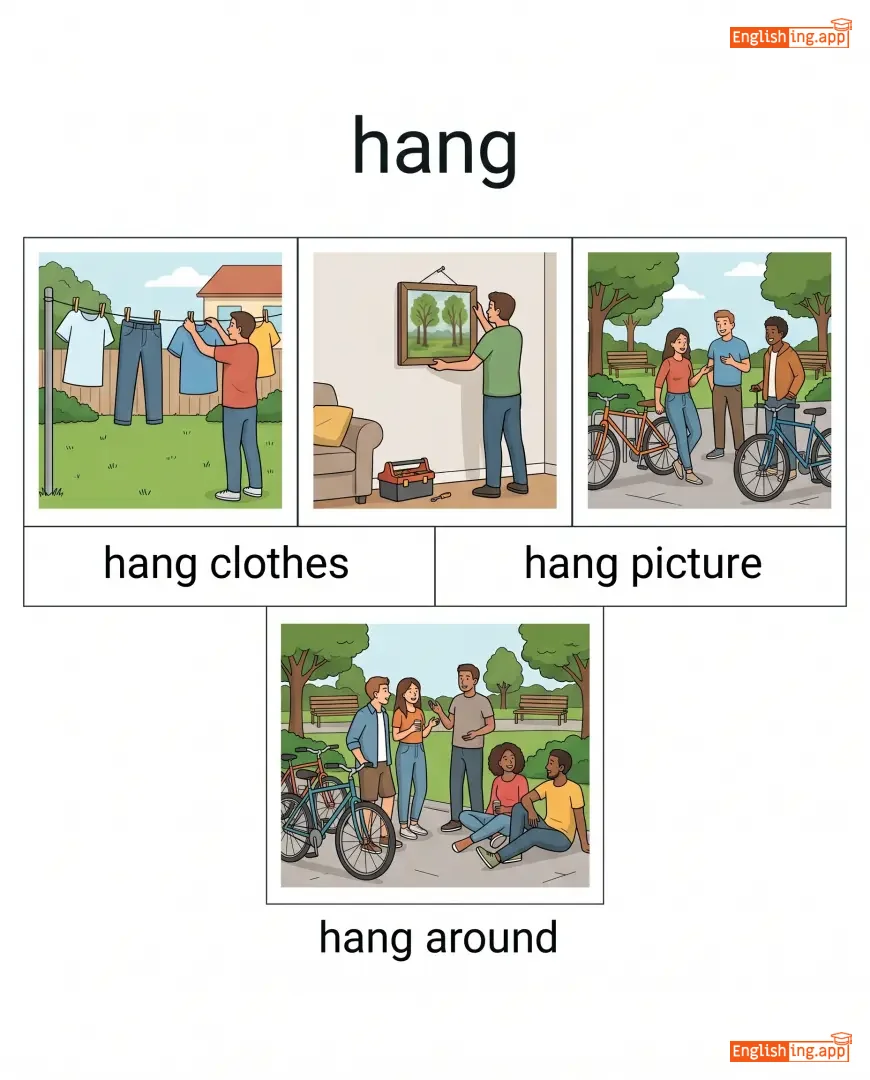
to suspend or attach something from above so that it moves freely or is supported
••••••
|
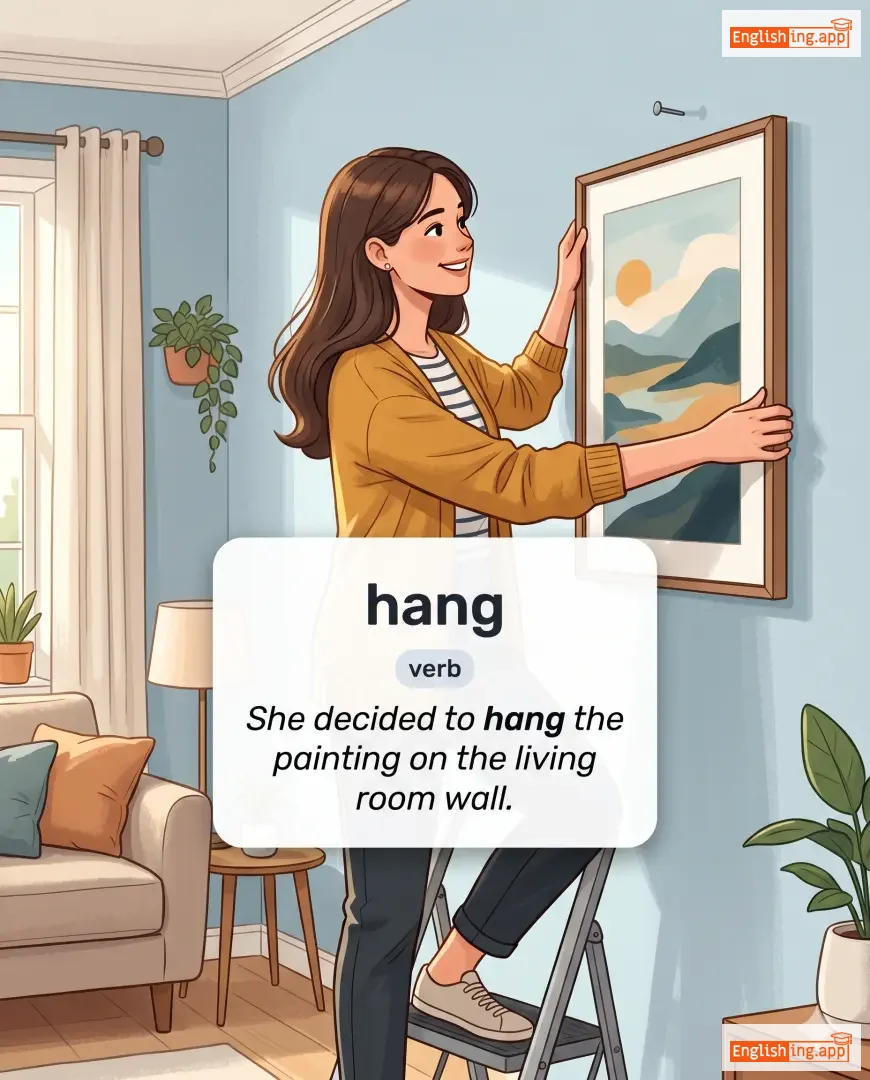
She decided to hang the painting on the living room wall. |
- •••••• |
hang in there |
used to encourage someone to persevere through a difficult time
••••••
|
- •••••• |
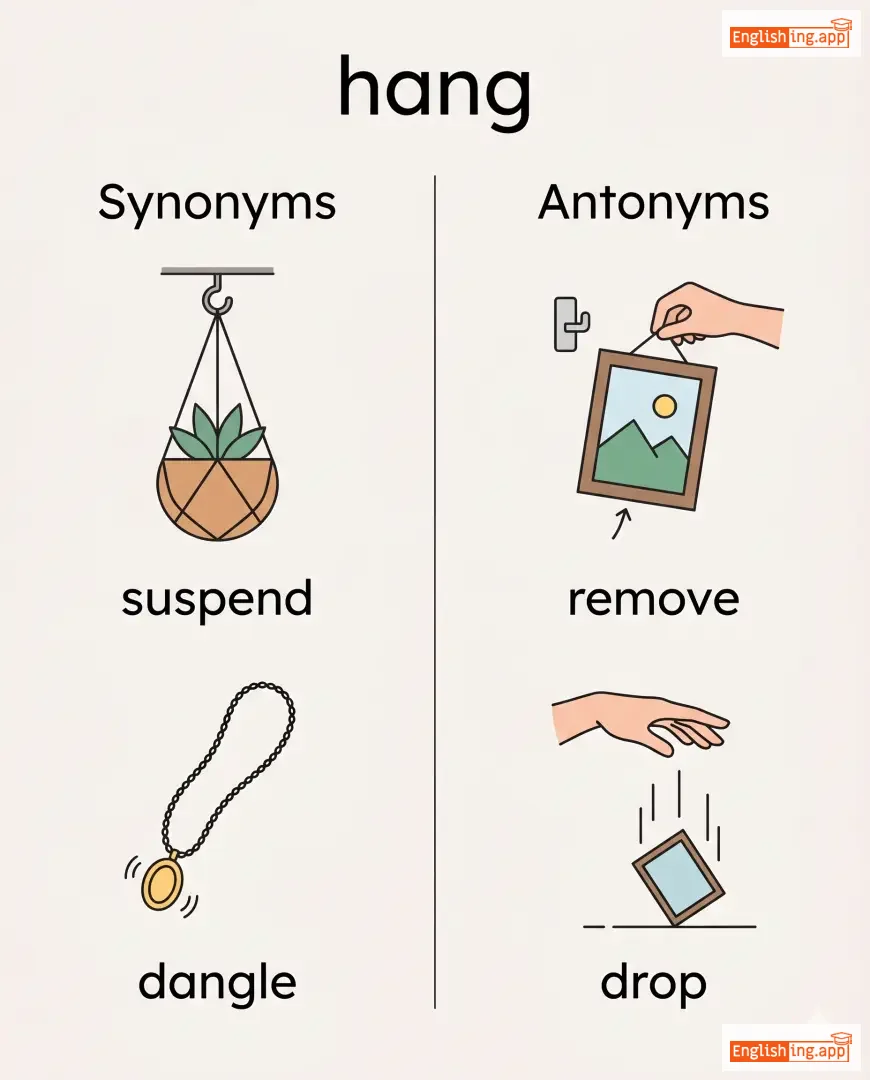
suspend, dangle, attach, display, drape
••••••
|
remove, drop, take down
••••••
|
hang clothes, hang picture, hang around, hang up
••••••
|
No •••••• |
|
👕
••••••
|
/ˈhæŋ.ər/
noun
(ˈhæŋɡər)
••••••
|
- •••••• |
вешалка
veshalka
••••••
|
- •••••• | - •••••• | - •••••• | - •••••• |
a shaped piece of wood, plastic, or metal with a hook at the top, used to hang up clothes
••••••
|
She hung her dress on a wooden hanger to prevent it from getting wrinkled. |
Она повесила свое платье на деревянную вешалку, чтобы оно не помялось.
Ona povesila svoe plat'ye na derevyannuyu veshalku, chtoby ono ne pomyalos'.
••••••
|
- •••••• | - •••••• | - •••••• |
clothes hanger, coat hanger, garment hook, clothing rack
••••••
|
floor, bed, chair, drawer
••••••
|
wire hanger, wooden hanger, plastic hanger
••••••
|
No •••••• |
|
✨
••••••
|
/ˈhæpən/
verb
(хэпэн)
••••••
|
- •••••• |
случаться
sluchatsya
••••••
|
happened
хэпэнд
••••••
|
happened
хэпэнд
••••••
|
happens
хэпэнс
••••••
|
happening
хэпэнинг
••••••
|
to take place or occur, usually by chance
••••••
|
Accidents can happen at any time.
Аварии могут произойти в любое время.
••••••
|
Аварии могут случиться в любое время.
Avarii mogut sluchitsya v lyuboye vremya.
••••••
|
what happens, happens
что происходит, то происходит
••••••
|
an expression used to accept events as they occur without worry
••••••
|
что происходит, то происходит
chto proiskhodit, to proiskhodit
••••••
|
occur, take place, transpire, arise, ensue
••••••
|
prevent, stop, avoid
••••••
|
happen suddenly, happen accidentally, happen again, happen quickly
••••••
|
HAPPEN означает что-то, что может произойти неожиданно, как несчастный случай.
••••••
|
|
😊
••••••
|
/ˈhæpɪli/
adverb
(хэппили)
••••••
|
- •••••• |
счастливо
schastlivo
••••••
|
- •••••• | - •••••• | - •••••• | - •••••• |
in a happy manner; with pleasure or satisfaction
••••••
|
The children played happily in the garden. |
Дети играли счастливо в саду.
Deti igrali schastlivo v sadu.
••••••
|
- •••••• | - •••••• | - •••••• |
joyfully, cheerfully, gladly, merrily
••••••
|
sadly, unhappily
••••••
|
live happily, happily married, smile happily, happily ever after
••••••
|
Happy + ly означает действовать счастливо - как когда 😊 дети играют счастливо.
••••••
|
|
😊
••••••
|
/ˈhæpinəs/
noun
(хэппинесс)
••••••
|

|
счастье
schast'ye
••••••
|
- •••••• | - •••••• | - •••••• | - •••••• |
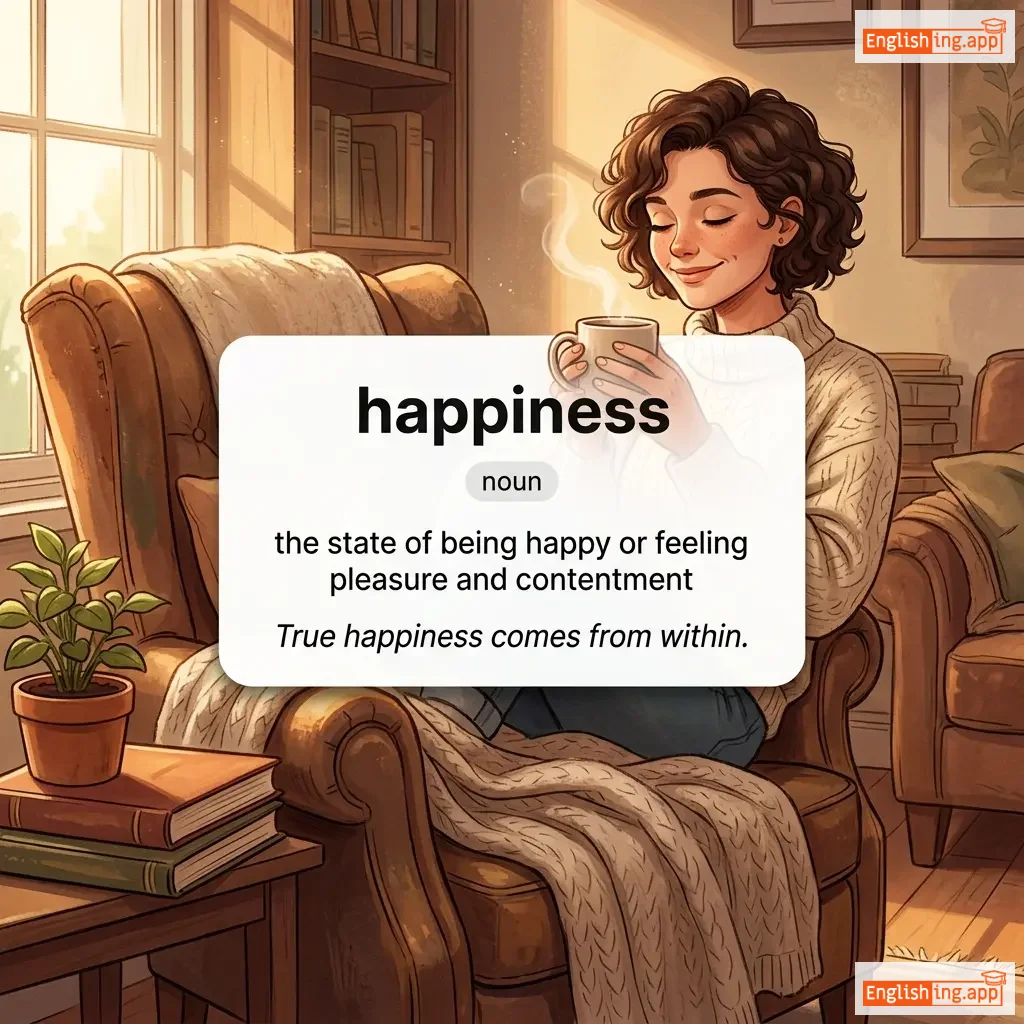
the state of being happy or feeling pleasure and contentment
••••••
|
True happiness comes from within. |
Настоящее счастье приходит изнутри.
Nastoyashcheye schast'ye prikhodit iznutri.
••••••
|
pursuit of happiness |
the right or effort to seek personal fulfillment or joy
••••••
|
поиск счастья
poisk schast'ya
••••••
|
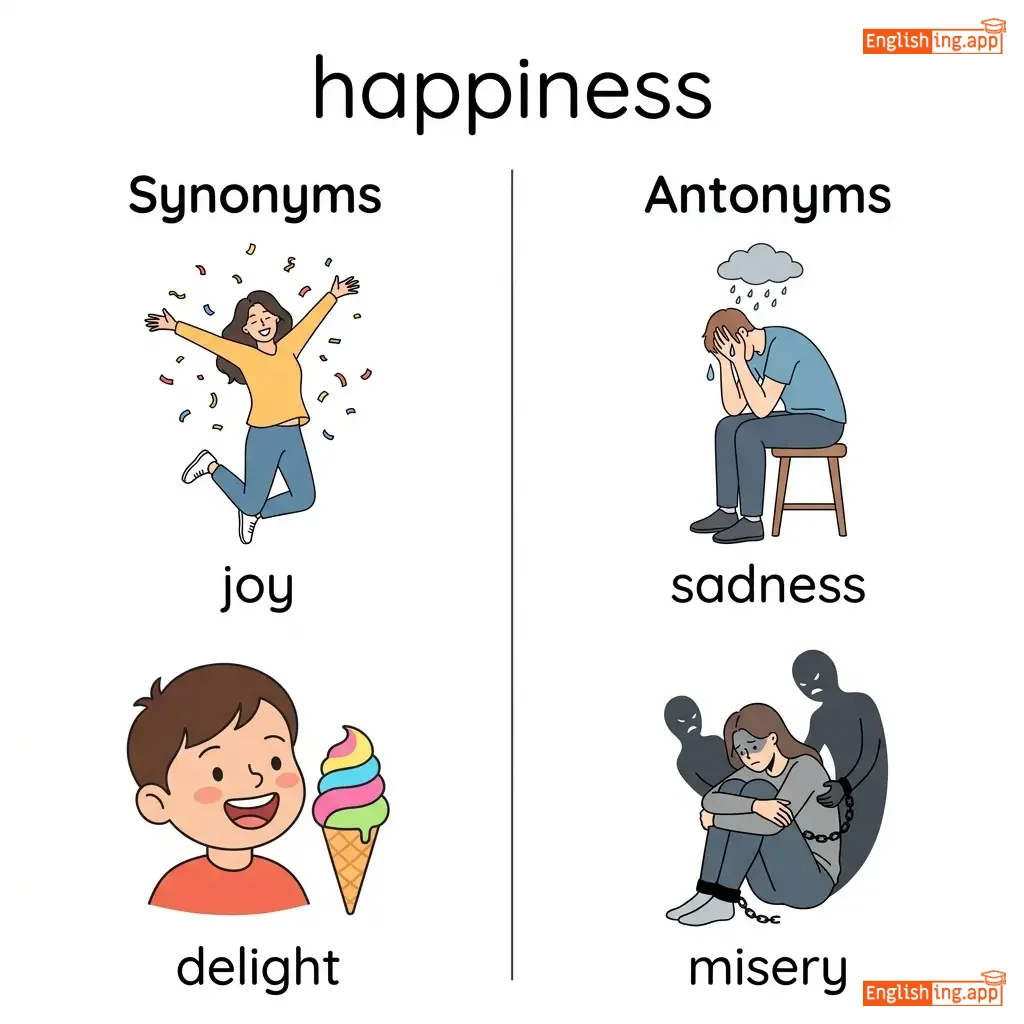
joy, delight, bliss, contentment, pleasure
••••••
|
sadness, misery, unhappiness
••••••
|
true happiness, bring happiness, pursue happiness, happiness and peace
••••••
|
Счастье — это как внутренняя гармония, когда всё вокруг становится светлым ☀️
••••••
|
|
😀
••••••
|
/ˈhæpi/
adjective
(khappiness)
••••••
|
- •••••• |
счастье
schastye
••••••
|
- •••••• | - •••••• | - •••••• | - •••••• |
feeling or showing pleasure, contentment, or joy
••••••
|
She was very happy to receive the gift. |
Она была очень счастлива получить подарок.
Ona byla ochen' schastliva poluchit' podarok.
••••••
|
happy hour |
a period when drinks are sold at reduced prices
••••••
|
счастливый час
schastlivyy chas
••••••
|
joyful, cheerful, delighted, pleased, content
••••••
|
sad, unhappy, miserable
••••••
|
feel happy, look happy, happy moment, happy life
••••••
|
Happy = счастье 😊 - Помни, когда мы счастливы, мы говорим 'I am HAPPY!'
••••••
|
|
🚫
••••••
|
/həˈræsmənt/
noun
(хэрасмэнт)
••••••
|
- •••••• |
домогательство
domogatiel'stvo
••••••
|
- •••••• | - •••••• | - •••••• | - •••••• |
aggressive pressure or intimidation; unwanted and repeated behavior causing discomfort
••••••
|
The company has a strict policy against workplace harassment.
Компания имеет строгую политику против домогательств на рабочем месте.
••••••
|
Компания имеет строгую политику против домогательств на рабочем месте.
Kompaniya imeet stroguyu politiku protiv domogatel'stv na rabochem meste.
••••••
|
sexual harassment
сексуальные домогательства
••••••
|
unwanted sexual behavior that causes offense or humiliation
••••••
|
сексуальные домогательства
seksual'nye domogatel'stva
••••••
|
bullying, abuse, intimidation, persecution, annoyance
••••••
|
support, respect
••••••
|
workplace harassment, verbal harassment, sexual harassment, report harassment
••••••
|
Domogatsya znači terorizirati – domogatel'stvo znači terorizirati neprestano.
••••••
|
|
⚓
••••••
|
/ˈhɑːr.bər/
noun
(хар-бор)
••••••
|
- •••••• |
гавань
gavan'
••••••
|
- •••••• | - •••••• | - •••••• | - •••••• |
a place on the coast where vessels may find shelter; a place of safety or refuge
••••••
|
The fishing boats returned safely to the harbour before the storm hit the coastline. |
Рыболовные лодки безопасно вернулись в гавань до того, как буря ударила по побережью.
Rybolovnyye lodki bezopasno vernulis' v gavan' do togo, kak burya udarila po poberez'yu.
••••••
|
- •••••• | - •••••• | - •••••• |
port, haven, marina, dock
••••••
|
open sea, storm, danger, exposure
••••••
|
safe harbour, natural harbour, harbour master
••••••
|
Гавань - это безопасное место, как 'гавань' для судов.
••••••
|
|
💪
••••••
|
/hɑːrd/
adjective
(хард)
••••••
|
- •••••• |
трудный
trudnyy
••••••
|
- •••••• | - •••••• | - •••••• | - •••••• |
solid, firm, or difficult to do or endure
••••••
|
The exam was very hard for most students. |
Экзамен был очень трудным для большинства студентов.
Ekzamen byl ochen' trudnym dlya bol'shinstva studentov.
••••••
|
hard nut to crack |
a difficult problem or person to deal with
••••••
|
трудный орешек
trudnyy oreshyek
••••••
|
difficult, tough, rigid, strong, firm
••••••
|
easy, soft, simple
••••••
|
work hard, hard time, hard decision, hard life
••••••
|
Hard означает трудный, как трудный орешек.
••••••
|
|
😅
••••••
|
/ˈhɑːd.li/
adverb
(khardli)
••••••
|
- •••••• |
едва ли; едва; почти не
yedva li; yedva; pochti ne
••••••
|
- •••••• | - •••••• | - •••••• | - •••••• |
scarcely; barely; almost not at all
••••••
|
I could hardly believe what I was seeing. |
Я едва ли мог поверить тому, что я видел.
Ya yedva li mog poverit' tomu, chto ya videl.
••••••
|
- •••••• | - •••••• | - •••••• |
barely, scarcely, rarely, seldom
••••••
|
easily, completely, fully, certainly
••••••
|
hardly ever, hardly any, hardly believe, hardly possible
••••••
|
Imagine you're so surprised by something, you can barely believe your own eyes!
••••••
|
|
💻
••••••
|
/ˈhɑːrdˌwɛr/
noun
(хардвер)
••••••
|
- •••••• |
аппаратное обеспечение
apparatnoe obespechenie
••••••
|
- •••••• | - •••••• | - •••••• | - •••••• |
the physical parts of a computer or electronic system, such as the monitor, keyboard, and processor
••••••
|
The company upgraded its computer hardware to improve performance. |
Компания обновила аппаратное обеспечение своего компьютера для улучшения производительности.
Kompaniya obnovila apparatnoe obespechenie svoego komp'yutera dlya uluchsheniya proizvoditel'nosti.
••••••
|
hardware store |
a shop that sells tools, equipment, and building materials
••••••
|
магазин аппаратного обеспечения
magazin apparatnogo obespecheniya
••••••
|
equipment, machinery, device, apparatus, components
••••••
|
software, application, program
••••••
|
computer hardware, hardware components, upgrade hardware, hardware store
••••••
|
Аппаратное обеспечение — это то, что ты можешь потрогать, как клавиатура или монитор.
••••••
|
|
🐰
••••••
|
/heə(r)/
noun
(khyer)
••••••
|
- •••••• |
заяц
zayats
••••••
|
- •••••• | - •••••• | - •••••• | - •••••• |
a fast-running long-eared mammal that resembles a large rabbit
••••••
|
The hare quickly ran across the field.
Заяц быстро пробежал через поле.
••••••
|
Заяц быстро пробежал через поле.
Zayats bystro probezhal cherez pole
••••••
|
- •••••• | - •••••• | - •••••• |
rabbit, bunny
••••••
|
tortoise
••••••
|
wild hare, hare and hounds, march hare
••••••
|
Hare in English sounds like 'khyer', and in Russian, 'заяц' means hare
••••••
|
|
⚠️
••••••
|
/hɑːrm/
verb
(харм)
••••••
|
|
вредить
vredit
••••••
|
harmed
хармд
••••••
|
harmed
хармд
••••••
|
harms
хармс
••••••
|
harming
харминг
••••••
|
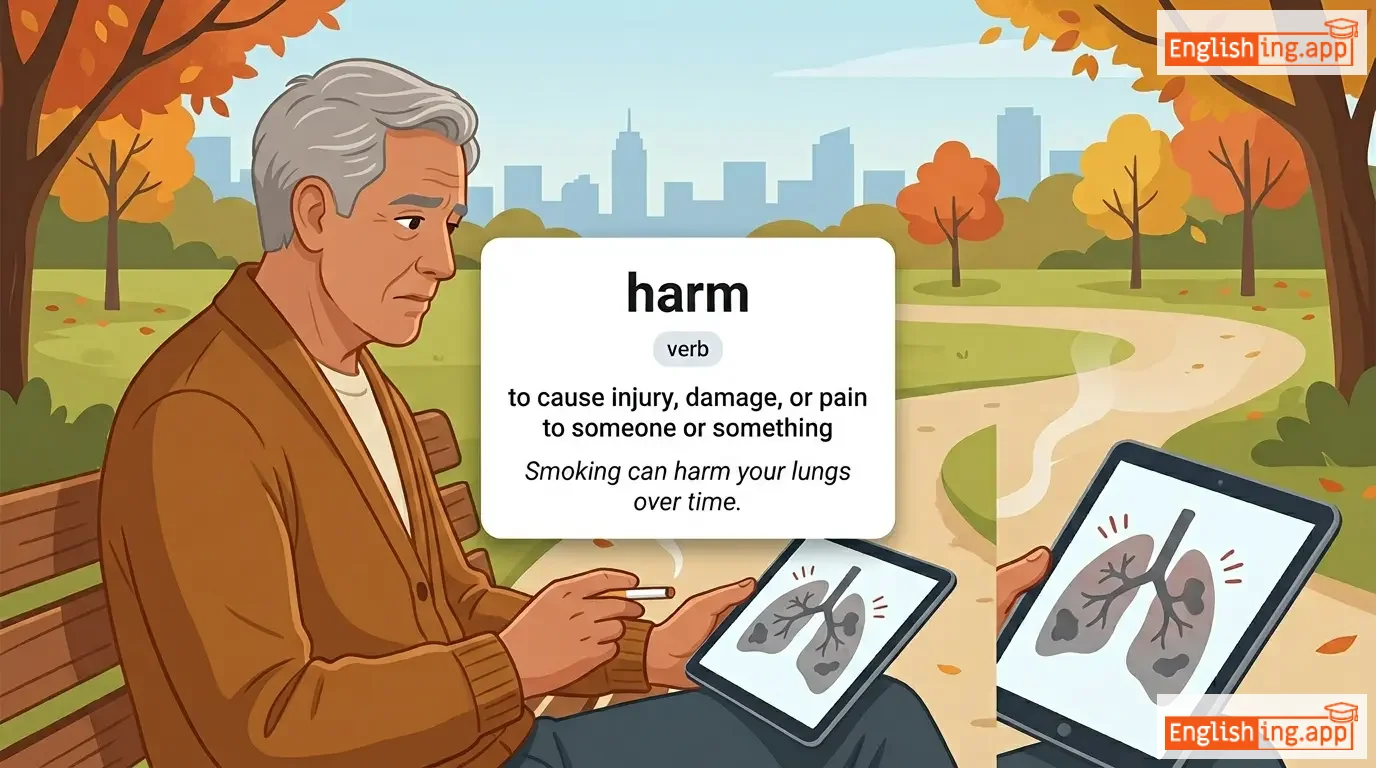
to cause injury, damage, or pain to someone or something
••••••
|
Smoking can harm your lungs over time.
Курение может повредить ваши легкие со временем.
••••••
|
Курение может повредить ваши легкие со временем.
Kurenie mozhet povredit' vashi legkiye so vremenem.
••••••
|
no harm done
никакого вреда не причинено
••••••
|
used to say that no damage or injury has occurred
••••••
|
никакого вреда не причинено
nikakogo vreda ne prichineno
••••••
|
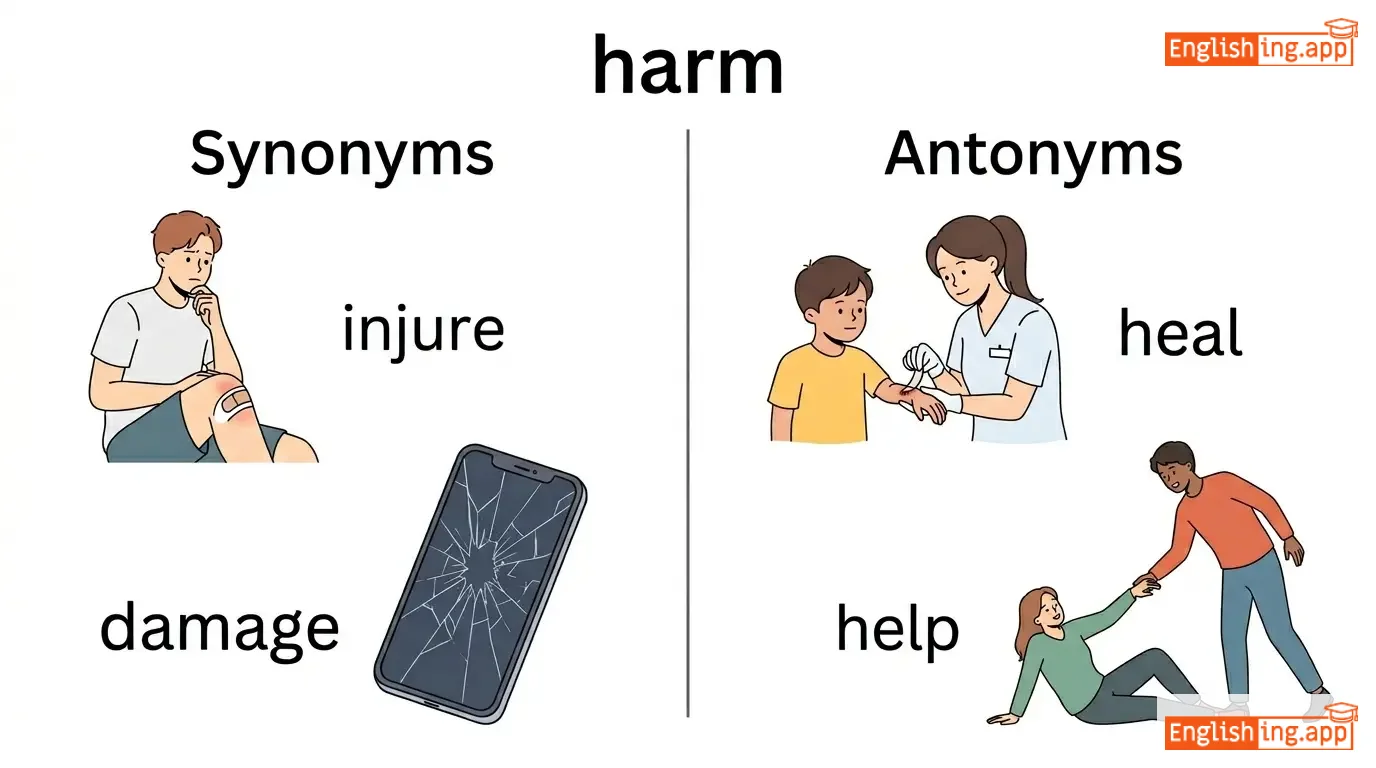
injure, damage, hurt, wound, impair
••••••
|
heal, help, repair
••••••
|
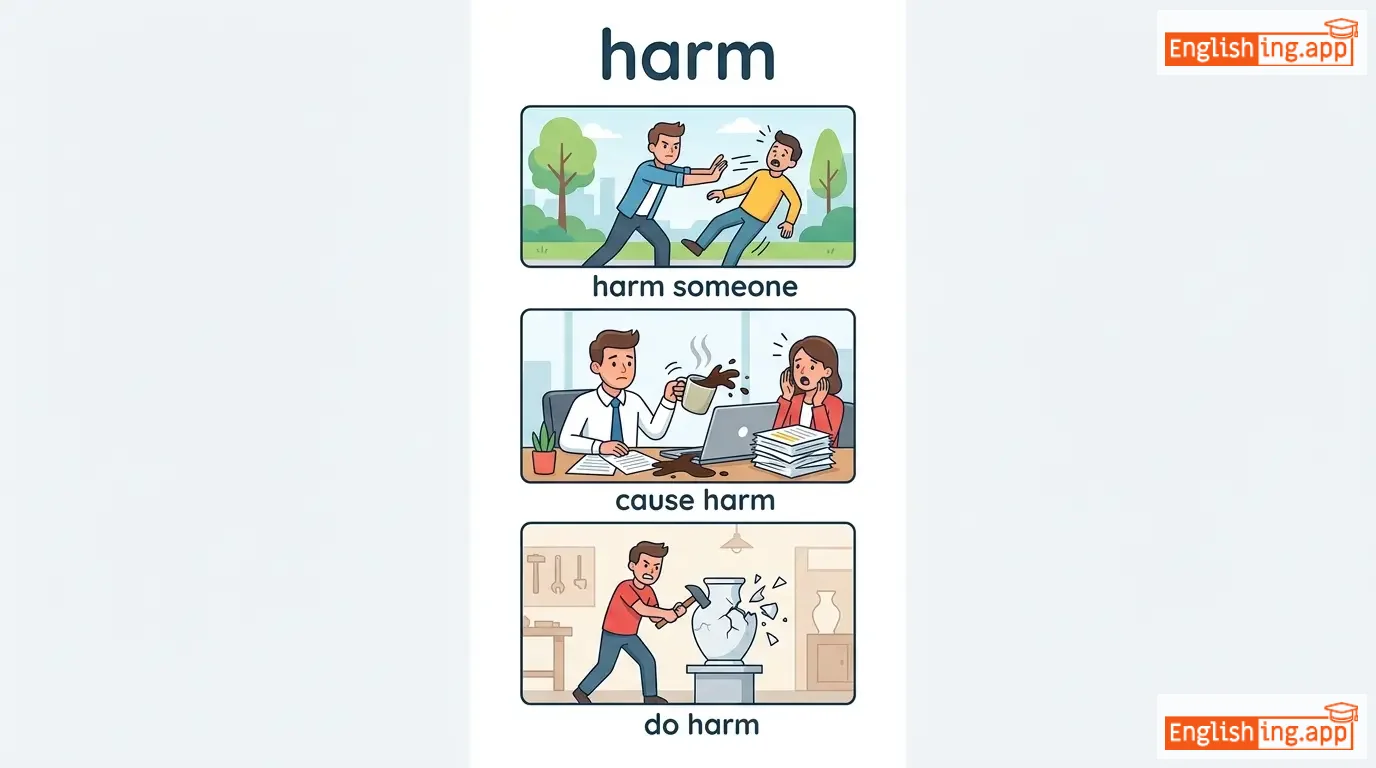
harm someone, cause harm, do harm, physical harm
••••••
|
HARM означает вредить — помни, вредить другим может повредить и тебе!
••••••
|
|
☠️
••••••
|
/ˈhɑːrmfəl/
adjective
(хармфул)
••••••
|
- •••••• |
вредный
vrednyy
••••••
|
- •••••• | - •••••• | - •••••• | - •••••• |
causing or likely to cause harm; damaging
••••••
|
Smoking is harmful to your health. |
Курение вредно для вашего здоровья.
Kurenie vredno dlya vashego zdorov'ya.
••••••
|
- •••••• | - •••••• | - •••••• |
damaging, dangerous, detrimental, destructive
••••••
|
harmless, beneficial, helpful, safe
••••••
|
harmful effects, harmful chemicals, harmful substances
••••••
|
Вредный - слово похоже на 'вред', что значит делать что-то плохое.
••••••
|
|
🕊️
••••••
|
/ˈhɑːrmləs/
adjective
(хɑːрмлэс)
••••••
|
- •••••• |
безвредный; невинный; безопасный
bezvrednyy; nevinnyy; bezopasnyy
••••••
|
- •••••• | - •••••• | - •••••• | - •••••• |
not able or likely to cause harm; innocent; safe
••••••
|
The snake looks dangerous but it's actually harmless. |
Змея выглядит опасной, но на самом деле она безвредна.
Zmeýa vyhlyadit opasnoy, no na samom dele ona bezvredna.
••••••
|
- •••••• | - •••••• | - •••••• |
safe, innocent, benign, non-toxic
••••••
|
harmful, dangerous, toxic, destructive
••••••
|
harmless fun, harmless joke, harmless bacteria
••••••
|
In Russian, 'bezvrednyy' sounds like 'no harm' (harmless).
••••••
|
|
🎶
••••••
|
/ˈhɑːrməni/
noun
(хармония)
••••••
|
|
гармония
garmoniya
••••••
|
- •••••• | - •••••• | - •••••• | - •••••• |
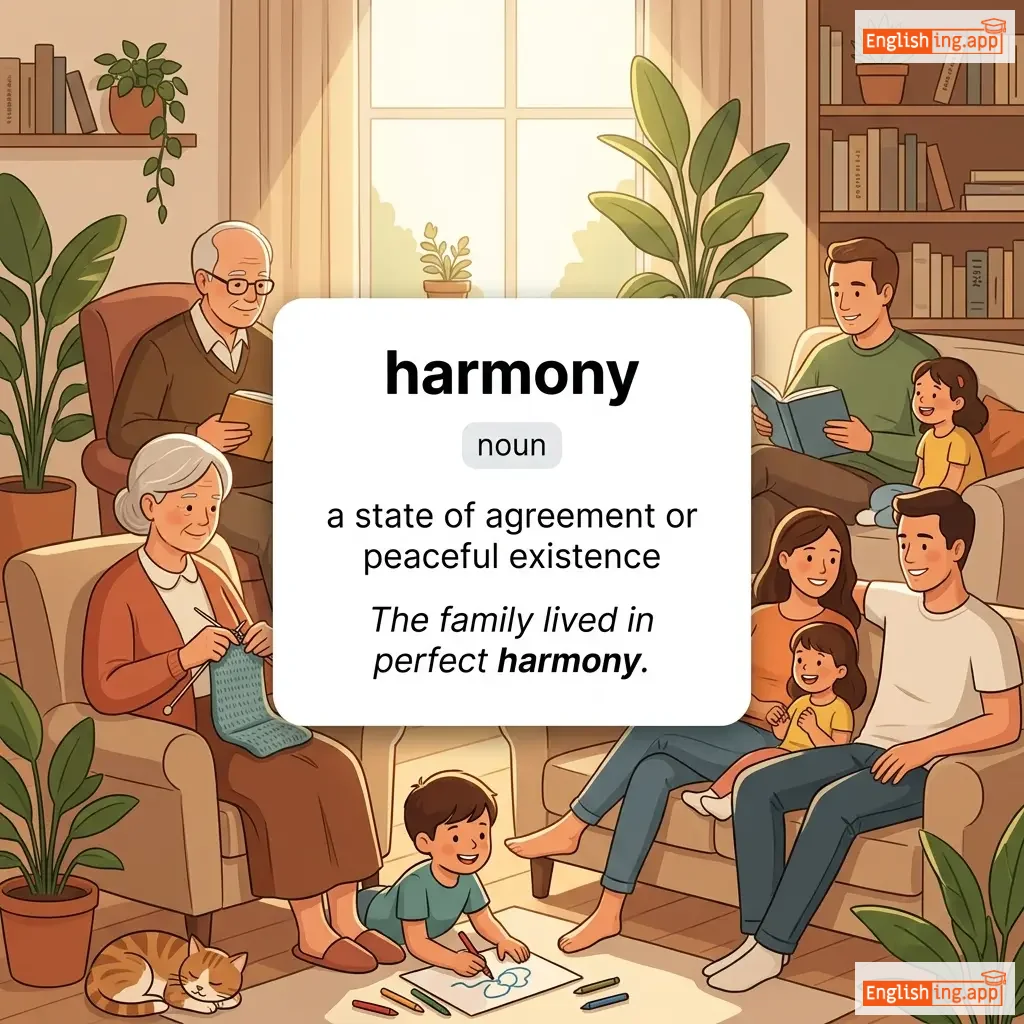
a state of agreement or peaceful existence
••••••
|
The family lived in perfect harmony. |
Семья жила в полной гармонии.
Sem'ya zhila v polnoy garmoniya.
••••••
|
in harmony with |
to be in agreement or consistent with
••••••
|
в гармонии с
v garmoniya s
••••••
|
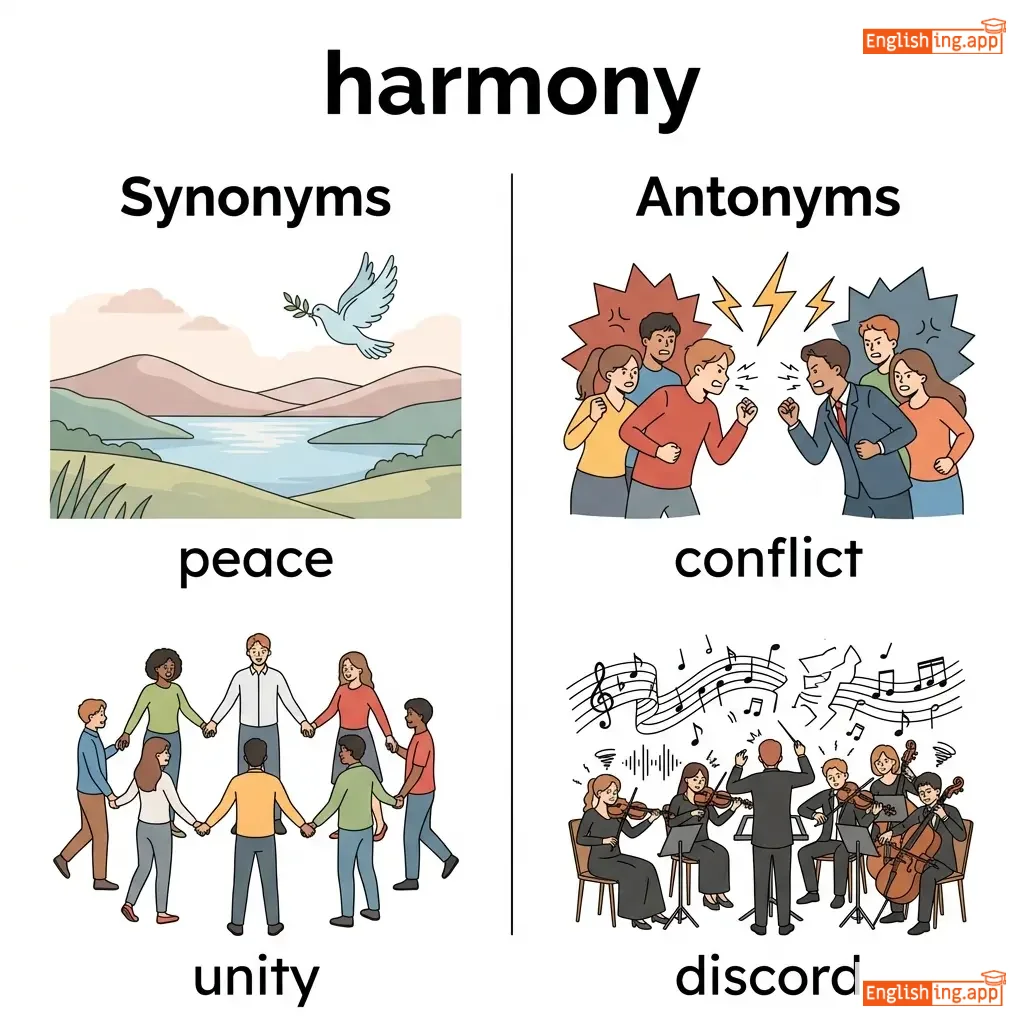
peace, unity, agreement, concord, balance
••••••
|
conflict, discord, chaos
••••••
|
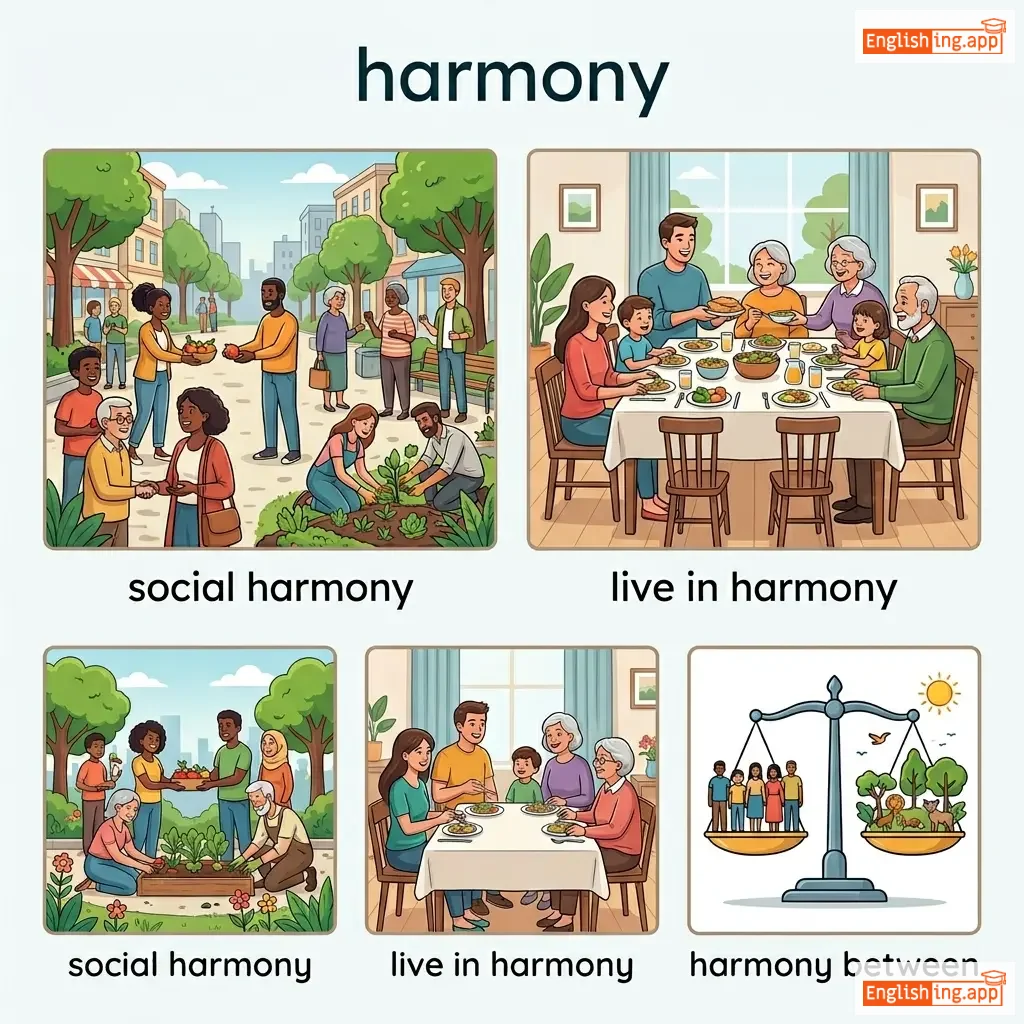
social harmony, live in harmony, harmony between
••••••
|
Гармония - это как ансамбль, где все инструменты играют в унисон.
••••••
|
|
❄️
••••••
|
/hɑːrʃ/
adjective
(харш)
••••••
|
- •••••• |
жесткий
zhestkiy
••••••
|
- •••••• | - •••••• | - •••••• | - •••••• |
Unpleasantly rough or severe in sound, taste, conditions, or treatment.
••••••
|
The teacher's harsh tone frightened the students. |
Жесткий тон учителя напугал студентов.
Zhestkiy ton uchitelya napugal studentov.
••••••
|
harsh reality |
The unpleasant truth of a situation.
••••••
|
жестокая реальность
zhestokaya real'nost'
••••••
|
severe, stern, rough, cruel, brutal
••••••
|
gentle, mild, soft
••••••
|
harsh criticism, harsh reality, harsh conditions, harsh treatment
••••••
|
Жесткий (zhestkiy) холод — как зимний шторм.
••••••
|
|
🌾
••••••
|
/ˈhɑːrvɪst/
noun
(хɑːрвɪст)
••••••
|
- •••••• |
урожай
urozhay
••••••
|
- •••••• | - •••••• | - •••••• | - •••••• |
the process or period of gathering crops
••••••
|
Farmers are busy during the rice harvest season. |
Фермеры заняты во время сезона уборки риса.
Fermery zanyaty vo vremya sezona uborki risa.
••••••
|
reap the harvest |
to enjoy the results of your efforts
••••••
|
пожинать плоды труда
pozhinat plody truda
••••••
|
crop, yield, gathering, reaping, produce
••••••
|
sowing, planting, loss
••••••
|
harvest season, rice harvest, good harvest, harvest time
••••••
|
Урожай — это сбор плодов твоего труда 🌾
••••••
|
|
👒
••••••
|
/hæt/
noun
(хэт)
••••••
|
- •••••• |
шляпа
shlyapa
••••••
|
- •••••• | - •••••• | - •••••• | - •••••• |
a shaped covering for the head, often with a brim
••••••
|
He wore a black hat to the party. |
Он надел черную шляпу на вечеринку.
On nadel chernuyu shlyapu na vecherinku.
••••••
|
to wear many hats |
to have many roles or responsibilities
••••••
|
иметь много ролей или обязанностей
imet' mnogo roley ili obyazannostey
••••••
|
cap, headgear, helmet, bonnet
••••••
|
barehead
••••••
|
wear a hat, take off hat, straw hat, cowboy hat
••••••
|
Hat - это шляпа, которая носится на голове.
••••••
|
|
💔
••••••
|
/heɪt/
verb
(hjetnes)
••••••
|
|
ненавидеть
nenavidet
••••••
|
hated
hjeted
••••••
|
hated
hjeted
••••••
|
hates
hjets
••••••
|
hating
hjeting
••••••
|
to dislike intensely or have a strong aversion to
••••••
|
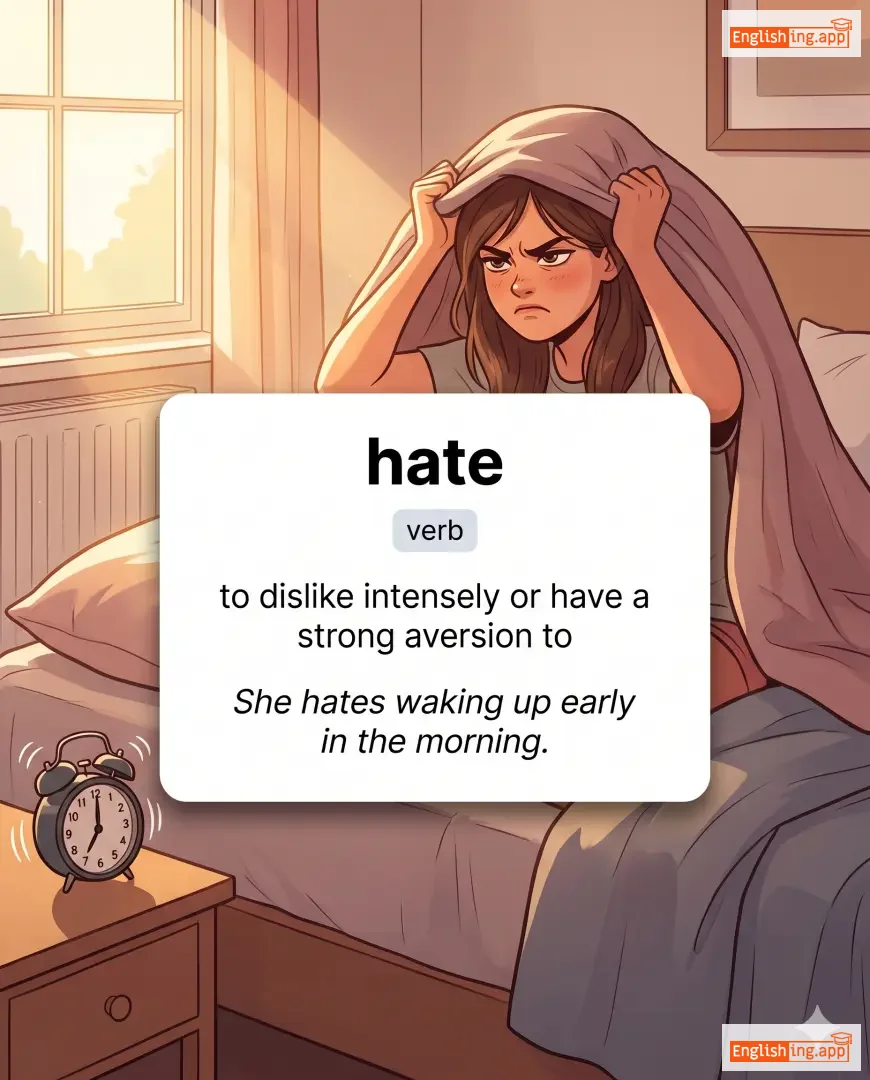
She hates waking up early in the morning.
Она ненавидит вставать рано утром.
••••••
|
Она ненавидит вставать рано утром.
Ona nenavidit vstavat' rano utrom.
••••••
|
love to hate
любить ненавидеть
••••••
|
something disliked but still talked about often
••••••
|
любить ненавидеть
lyubit' nenavidet'
••••••
|
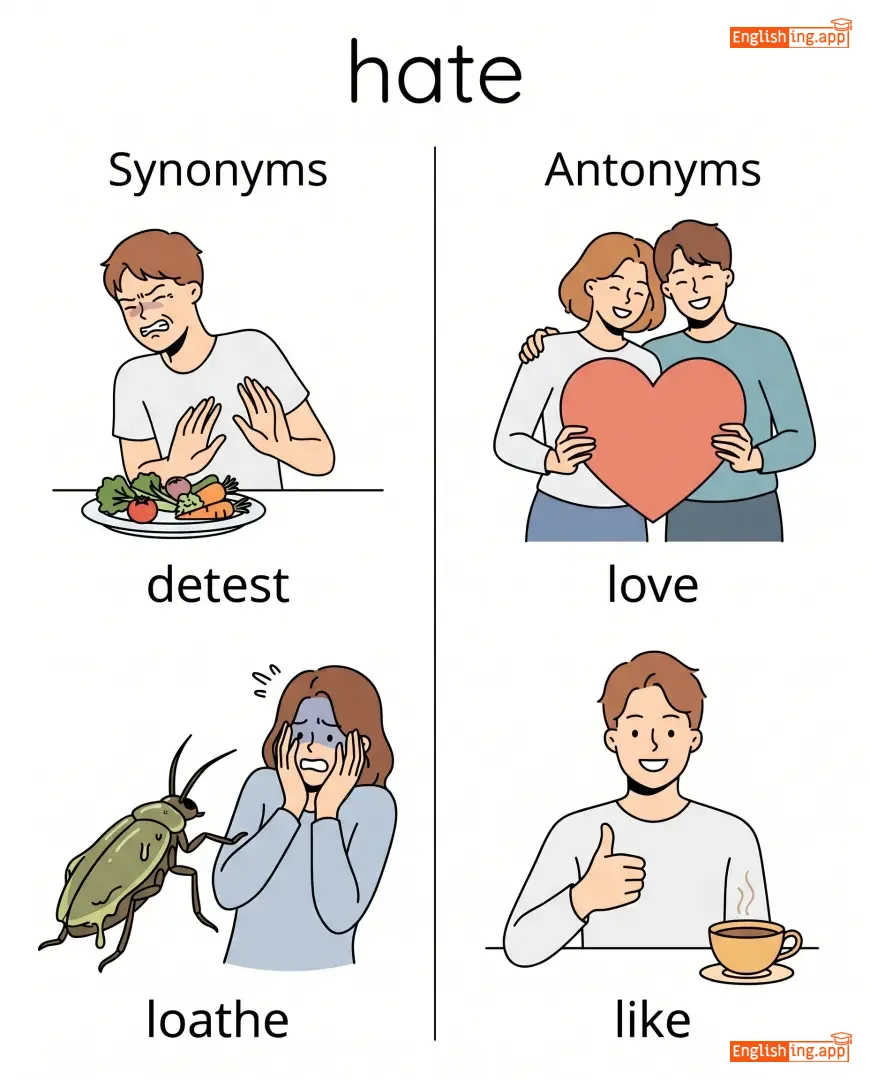
detest, loathe, despise, abhor
••••••
|
love, like, adore
••••••
|
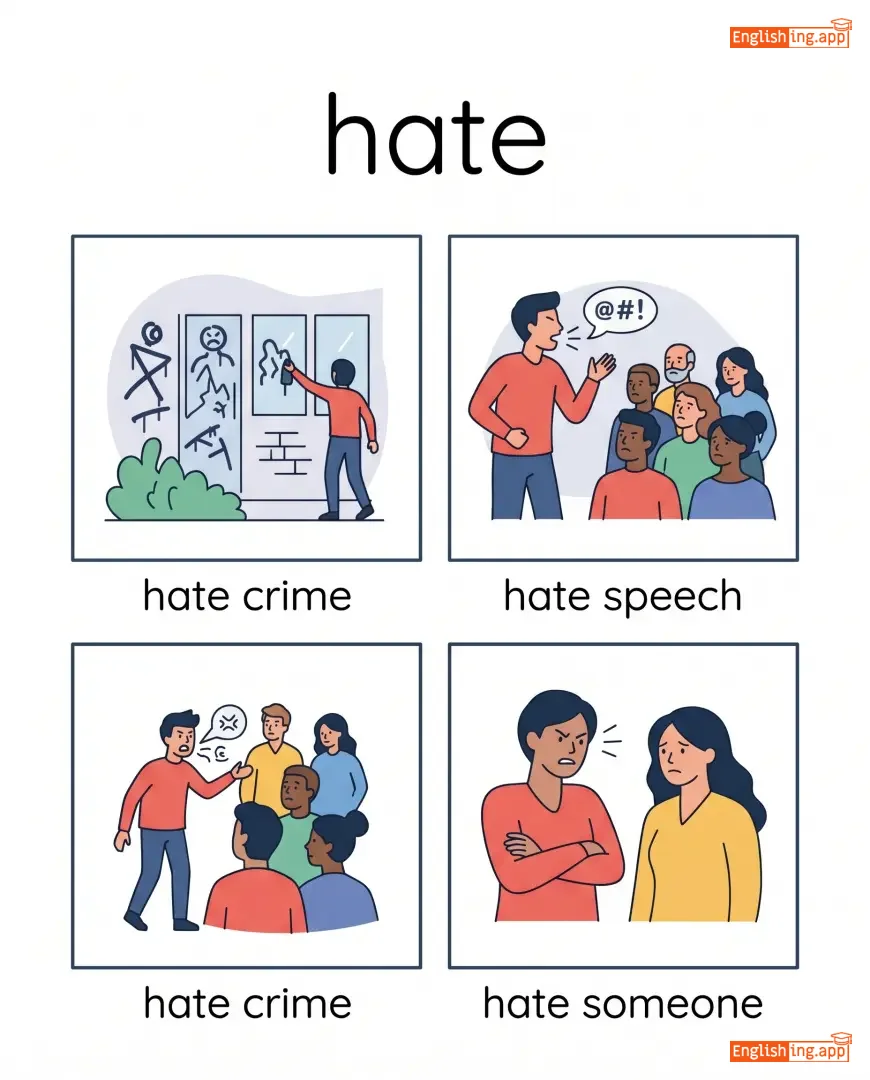
hate crime, hate speech, hate someone
••••••
|
Ненавидеть - это как вегетарианец, не любящий мясо, но всё равно его обсуждает.
••••••
|
|
😡
••••••
|
/ˈheɪt.fəl/
adjective
(hejtful)
••••••
|
- •••••• |
Ненавистный
nenavistny
••••••
|
- •••••• | - •••••• | - •••••• | - •••••• |
causing or deserving hatred; extremely unpleasant or offensive
••••••
|
His hateful comments hurt everyone's feelings.
Его ненавистные комментарии ранили чувства всех.
••••••
|
Его ненавистные комментарии ранили чувства всех.
Yego nenavistnye kommentarii ranili chuvstva vsekh.
••••••
|
- •••••• | - •••••• | - •••••• |
detestable, loathsome, odious, abhorrent
••••••
|
lovable, pleasant, agreeable, likeable
••••••
|
hateful behavior, hateful speech, hateful attitude
••••••
|
Ненавистный и hateful — это почти одно и то же.
••••••
|
|
😡
••••••
|
/ˈheɪ.trəd/
noun
(хэтред)
••••••
|
- •••••• |
ненависть
nenavist'
••••••
|
- •••••• | - •••••• | - •••••• | - •••••• |
intense dislike or ill will; a feeling of strong aversion
••••••
|
His hatred for injustice motivated him to become a human rights lawyer. |
Его ненависть к несправедливости побудила его стать адвокатом по правам человека.
Yego nenavist' k nespravedlivosti pobudila yego stat' advokatom po pravam cheloveka.
••••••
|
- •••••• | - •••••• | - •••••• |
loathing, animosity, hostility, resentment
••••••
|
love, affection, admiration, fondness
••••••
|
deep hatred, racial hatred, hatred towards
••••••
|
Ненависть = сильное отвращение
••••••
|
|
👻
••••••
|
/hɔːnt/
verb
(хаунт)
••••••
|
|
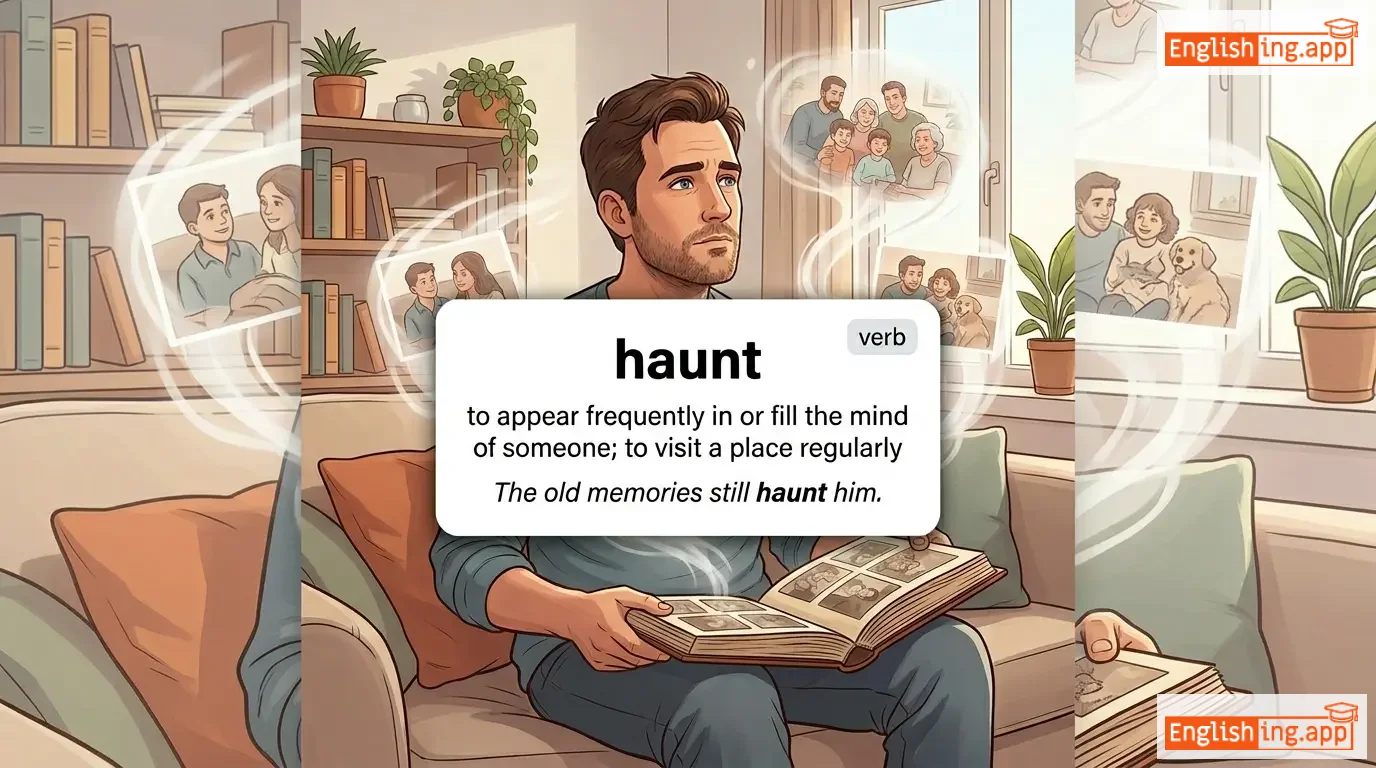
появляться часто или заполнять ум человека
poyavlyat'sya chasto ili zapolnyat' um cheloveka
••••••
|
haunted
хаунтед
••••••
|
haunted
хаунтед
••••••
|
haunts
хаунтс
••••••
|
haunting
хаунтинг
••••••
|
to appear frequently in or fill the mind of someone; to visit a place regularly
••••••
|
The old memories still haunt him.
старые воспоминания все еще преследуют его.
••••••
|
Старые воспоминания все еще его преследуют.
Starye vospominaniya vse eshche ego presleduyut.
••••••
|
haunt one's dreams
преследовать чьи-то мечты
••••••
|
to repeatedly trouble or disturb someone mentally
••••••
|
преследовать чьи-то мечты
presledovat' ch'ye-to mechty
••••••
|
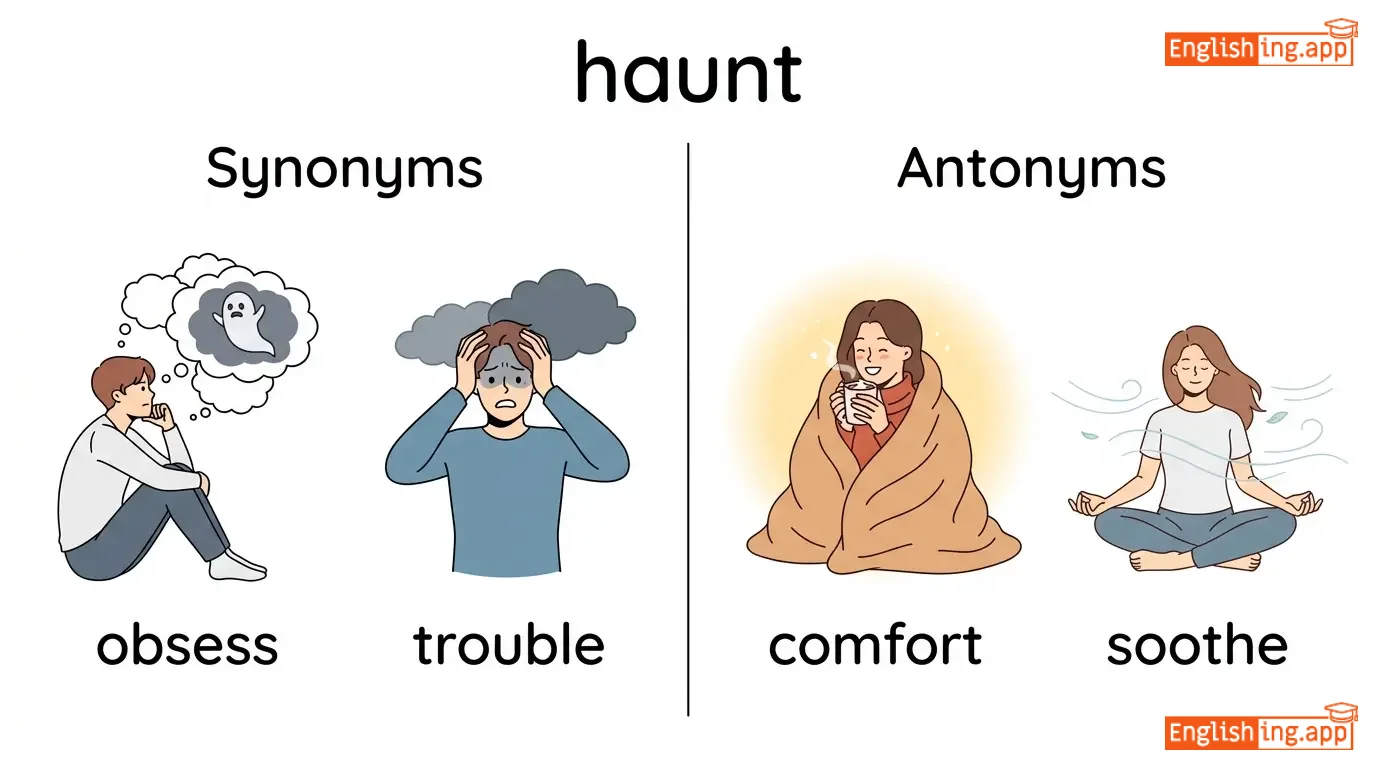
obsess, trouble, torment, visit, linger
••••••
|
comfort, soothe, forget
••••••
|
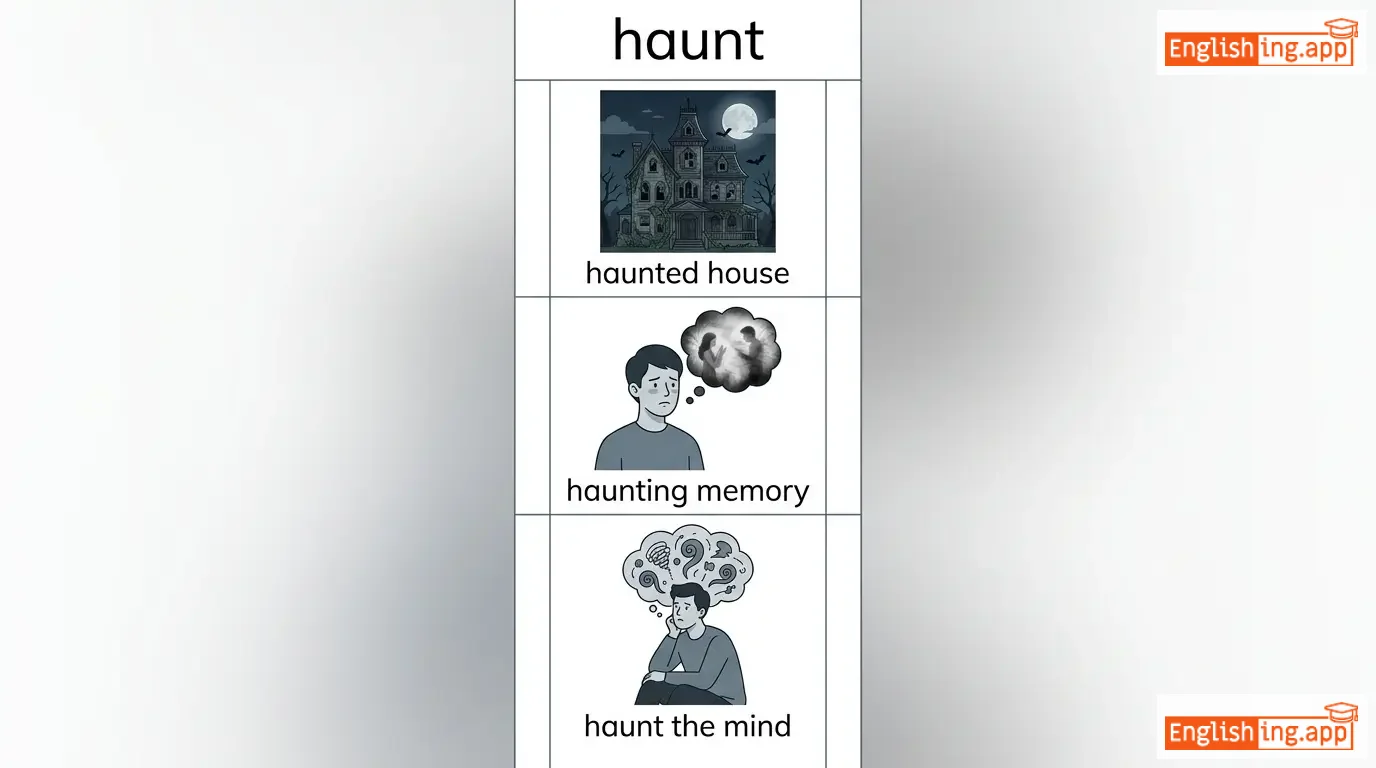
haunted house, haunting memory, haunt the mind, old haunt
••••••
|
Haunt означает преследовать—представь, как призрак преследует тебя.
••••••
|
|
🙌
••••••
|
/hæv/
verb
(hev)
••••••
|
- •••••• |
иметь
imet'
••••••
|
had
hed
••••••
|
had
hed
••••••
|
has
hez
••••••
|
having
heving
••••••
|
to possess, own, or hold
••••••
|
They have three children.
U nih est' tree detey.
••••••
|
У них есть три ребенка.
U nikh est' tree detey.
••••••
|
have a good time
imets' khoroshee vremya
••••••
|
to enjoy oneself
••••••
|
хорошо проводить время
khorosho provodit' vremya
••••••
|
own, possess, hold, contain
••••••
|
lack, want
••••••
|
have fun, have dinner, have time, have a look
••••••
|
Have - это иметь, как мы говорим 'у меня есть' - I have it!
••••••
|
|
🐄
••••••
|
/heɪ/
noun
(хэй)
••••••
|
- •••••• |
сено
seno
••••••
|
- •••••• | - •••••• | - •••••• | - •••••• |
grass that has been cut, dried, and stored for use as animal feed
••••••
|
The cows were eating hay in the barn. |
Коровы ели сено в амбаре.
Korovy yeli seno v ambare.
••••••
|
make hay while the sun shines |
take advantage of a good opportunity while it lasts
••••••
|
делать сено, пока солнце светит
delat' seno, poka solntse svetit
••••••
|
fodder, straw, dried grass, silage, forage
••••••
|
grain, seed
••••••
|
bale of hay, hay field, haystack, dry hay
••••••
|
HAY означает сено 🐄 — помни, 'Эй, корова!' и она пойдет есть сено!
••••••
|
|
⚠️
••••••
|
/ˈhæzərd/
noun
(хэзард)
••••••
|
- •••••• |
опасность
opasnost
••••••
|
- •••••• | - •••••• | - •••••• | - •••••• |
A danger or risk.
••••••
|
Wet floors are a common hazard in the workplace.
Мокрые полы — это общая опасность на рабочем месте.
••••••
|
Мокрые полы — это общая опасность на рабочем месте.
Mokrye poly — eto obshchaya opasnost' na rabochem meste.
••••••
|
at your own hazard
на ваш риск
••••••
|
at your own risk or responsibility
••••••
|
на ваш риск
na vash risk
••••••
|
danger, risk, threat, peril, menace
••••••
|
safety, security, protection
••••••
|
fire hazard, safety hazard, health hazard, potential hazard
••••••
|
Hazard означает опасность, как предупреждающий знак ⚠️, будьте осторожны.
••••••
|
|
👨
••••••
|
/hiː/
pronoun
(хи)
••••••
|
- •••••• |
он (мужской род)
on (muzhskoy rod)
••••••
|
- •••••• | - •••••• | - •••••• | - •••••• |
used to refer to a male person or animal already mentioned or easily identified
••••••
|
He is my best friend. |
Он мой лучший друг.
On moy luchshiy drug.
••••••
|
- •••••• | - •••••• | - •••••• |
the man, that person, him
••••••
|
she, her
••••••
|
he said, he was, he went, he did
••••••
|
He означает он (мужской род), как HE-ro (Герой), который обычно мужской.
••••••
|
|
👤
••••••
|
/hɛd/
noun, verb
(голова)
••••••
|
- •••••• |
голова / глава
golova / glava
••••••
|
headed
возглавил
••••••
|
headed
возглавил
••••••
|
heads
возглавляет
••••••
|
heading
возглавляя
••••••
|
The upper part of the human body or to lead or be in charge of something.
••••••
|
She turned her head to look out the window.
Она повернула голову, чтобы посмотреть в окно.
••••••
|
Она повернула голову, чтобы посмотреть в окно.
Ona povernula golovu, chtoby posmotret' v okno.
••••••
|
head over heels
по уши влюблен
••••••
|
completely in love
••••••
|
по уши влюблен
po ushi vlyublen
••••••
|
chief, leader, boss, director, skull
••••••
|
follower, subordinate
••••••
|
head of department, head office, head a team, shake your head
••••••
|
Голова означает голову, и по уши влюблен означает быть полностью влюбленным.
••••••
|
|
🤕
••••••
|
/ˈhɛdeɪk/
noun
(heɪdɛɪk)
••••••
|
- •••••• |
головная боль
golovnaya bol
••••••
|
- •••••• | - •••••• | - •••••• | - •••••• |
a continuous pain in the head; something that causes worry or difficulty
••••••
|
Too much screen time can give you a terrible headache. |
Слишком много времени за экраном может вызвать у вас сильную головную боль.
Slishkom mnogo vremeni za ekranom mozhet vyzvat u vas sil'nuyu golovnuyu bol'.
••••••
|
a real headache |
something that causes a lot of trouble or difficulty
••••••
|
настоящая головная боль
nastoyashchaya golovnaya bol'
••••••
|
migraine, pain, nuisance, problem, discomfort
••••••
|
relief, comfort
••••••
|
severe headache, splitting headache, cause a headache, suffer from headache
••••••
|
Head ache означает ache (боль) в голове – запомни головную боль!
••••••
|
|
📰
••••••
|
/ˈhɛdˌlaɪn/
noun
(хэдлайн)
••••••
|
- •••••• |
заголовок
zagolovok
••••••
|
- •••••• | - •••••• | - •••••• | - •••••• |
The title of a newspaper article printed in large letters.
••••••
|
The scandal made front-page headlines.
Этот скандал стал главной новостью.
••••••
|
Этот скандал стал заголовком первой страницы.
Etot skandal stal zagolovkom pervoy stranitsy.
••••••
|
grab the headlines
попасть в заголовки
••••••
|
to attract public attention
••••••
|
привлечь внимание общественности
privlech' vnimanie obshchestvennosti
••••••
|
title, heading, banner, caption, news
••••••
|
detail, footnote
••••••
|
front-page headline, news headline, headline story, write a headline
••••••
|
Заголовок = строка на главной странице = заголовок.
••••••
|
|
🏢
••••••
|
/ˈhɛdˌkwɔːrtərz/
noun
(хэдквартэрз)
••••••
|
- •••••• |
главный офис
glavnyy ofis
••••••
|
- •••••• | - •••••• | - •••••• | - •••••• |
The main office or center of operations of an organization.
••••••
|
The company’s headquarters is located in New York. |
Главный офис компании находится в Нью-Йорке.
Glavnyy ofis kompanii nakhoditsya v N'yu-Yorke.
••••••
|
- •••••• | - •••••• | - •••••• |
main office, center, base, hub, command post
••••••
|
branch, outpost
••••••
|
corporate headquarters, police headquarters, company headquarters, military headquarters
••••••
|
Headquarters = head + quarters → главный офис, основное место работы.
••••••
|

