|
絵文字
|
単語 | Images | 翻訳 | 過去 | 過去分詞 | 三人称単数 | 動名詞 | 意味 | 例文 | 例文の翻訳 | 表現例 | 表現例の意味 | 表現例の翻訳 | 同義語 | 対義語 | コロケーション | ニーモニック |
|---|---|---|---|---|---|---|---|---|---|---|---|---|---|---|---|---|---|
|
🌿
••••••
|
/beər/
adjective
(ベア)
••••••
|
- •••••• |
裸
hadaka
••••••
|
- •••••• | - •••••• | - •••••• | - •••••• |
not covered by any clothing or decoration; simple and without addition
••••••
|
He walked on the beach with bare feet. |
彼は裸足でビーチを歩いた。
Kare wa hadashi de bīchi o aruita.
••••••
|
bare essentials |
only the most necessary items or facts
••••••
|
裸の必需品
hadaka no hitsujuhin
••••••
|
naked, uncovered, exposed, plain, simple
••••••
|
covered, clothed, decorated
••••••
|
bare hands, bare feet, bare minimum, bare skin
••••••
|
Bare は裸を意味します — 例えば bare body は裸の体を意味します。覚えておいてください:Bear は裸足で歩けません!
••••••
|
|
😅
••••••
|
/ˈber.li/
adverb
(ベアリー)
••••••
|
- •••••• |
かろうじて; ちょうど; ほとんどない
karōjite, chōdo, hotondo nai
••••••
|
- •••••• | - •••••• | - •••••• | - •••••• |
scarcely; only just; almost not
••••••
|
I barely passed the exam.
私はかろうじて試験に合格しました。
••••••
|
私はかろうじて試験に合格しました。
Watashi wa karōjite shiken ni gōkaku shimashita.
••••••
|
- •••••• | - •••••• | - •••••• |
scarcely, hardly, just, merely
••••••
|
abundantly, completely, fully, entirely
••••••
|
barely visible, barely audible, barely survive, barely enough
••••••
|
In Japanese, barely passing is just enough.
••••••
|
|
🪶
••••••
|
/ˈbɛərnəs/
noun
(ベアネス)
••••••
|
- •••••• |
裸の状態
hada no joutai
••••••
|
- •••••• | - •••••• | - •••••• | - •••••• |
the state of being bare or uncovered; lack of decoration, warmth, or concealment
••••••
|
The bareness of the room made it feel cold and unwelcoming.
ザ ベアネス オブ ザ ルーム メイド イット フィール コールド アンド アンウェルカミング。
••••••
|
部屋の裸の状態が冷たく居心地の悪い感じを与えた。
heya no hada no joutai ga tsumetakaku igokochi no warui kanji o ataeta
••••••
|
in all its bareness
イン オール イッツ ベアネス
••••••
|
without any attempt to hide or decorate; in its plain, exposed state
••••••
|
ありのままの姿で
ari no mama no sugata de
••••••
|
nakedness, emptiness, starkness, simplicity, exposure
••••••
|
richness, fullness, ornamentation
••••••
|
sheer bareness, stark bareness, bareness of the land, emotional bareness
••••••
|
Bare(ベア)= 裸、だから bareness = 裸の状態。
••••••
|
|
🤝
••••••
|
/ˈbɑːrɡən/
noun, verb
(バーゲイン)
••••••
|

|
取引 / お得な買い物
torihiki / otoku na kaimono
••••••
|
bargained
バーゲインド
••••••
|
bargained
バーゲインド
••••••
|
bargains
バーゲインズ
••••••
|
bargaining
バーゲイニング
••••••
|
an agreement between two or more parties; something bought at a good price
••••••
|
We managed to get the car at a real bargain.
私たちは本当に良いバーゲンで車を手に入れました。
••••••
|
私たちは本当に良いバーゲンで車を手に入れました。
Watashitachi wa hontou ni yoi baagen de kuruma o te ni iremashita.
••••••
|
strike a bargain
取引をする
••••••
|
to reach an agreement
••••••
|
取引をする
torihiki o suru
••••••
|
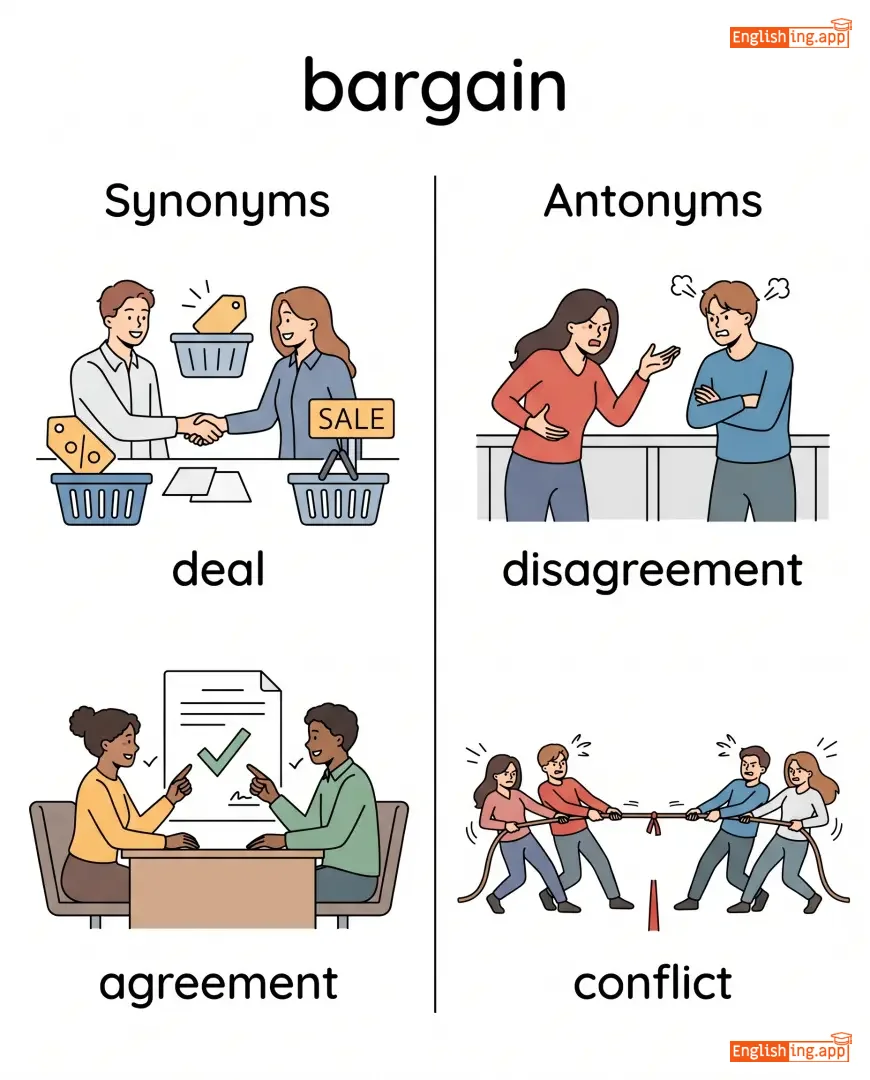
deal, agreement, contract, negotiation, offer
••••••
|
disagreement, conflict, refusal
••••••
|
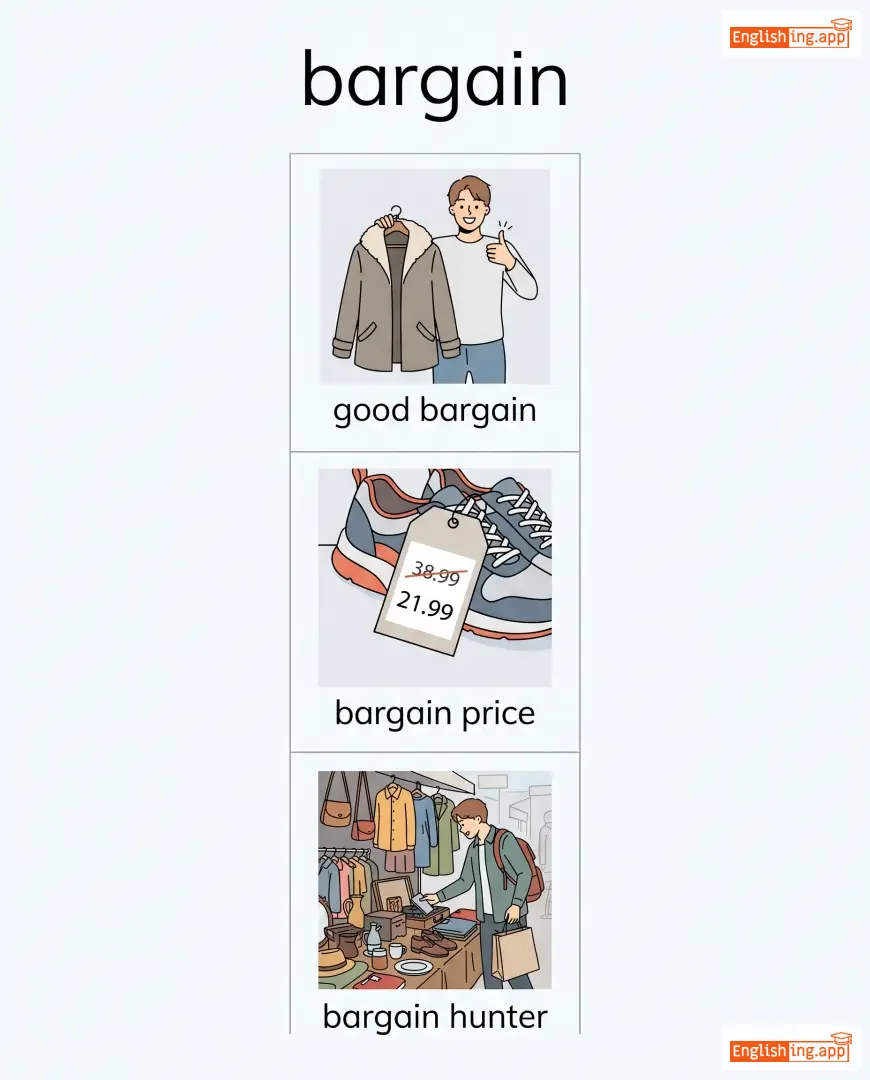
good bargain, bargain price, bargain hunter, strike a bargain
••••••
|
Bargain は 'バー'と 'ゲイン' の繰り返し — 安く得ること。
••••••
|
|
🐕
••••••
|
/bɑːrk/
verb
(バーク)
••••••
|
|
吠える
hoeru
••••••
|
barked
バークド
••••••
|
barked
バークド
••••••
|
barks
バークス
••••••
|
barking
バーキング
••••••
|
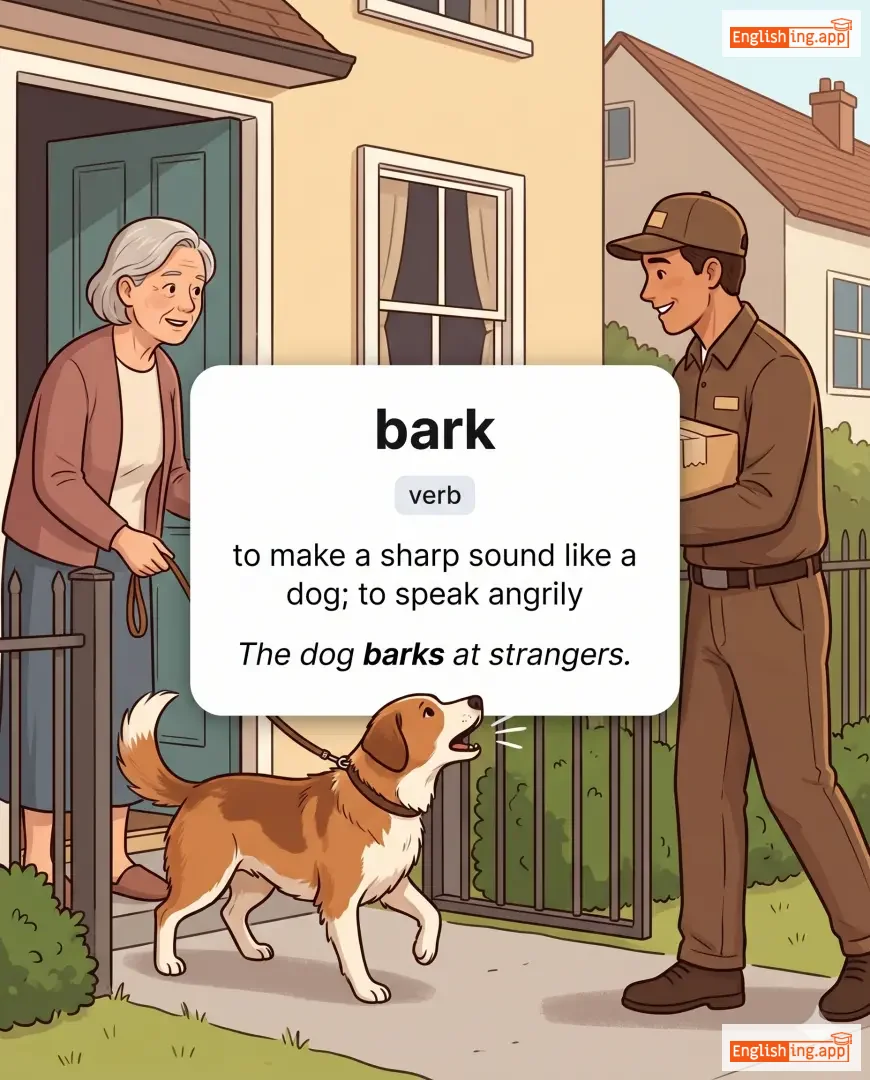
to make a sharp sound like a dog; to speak angrily
••••••
|
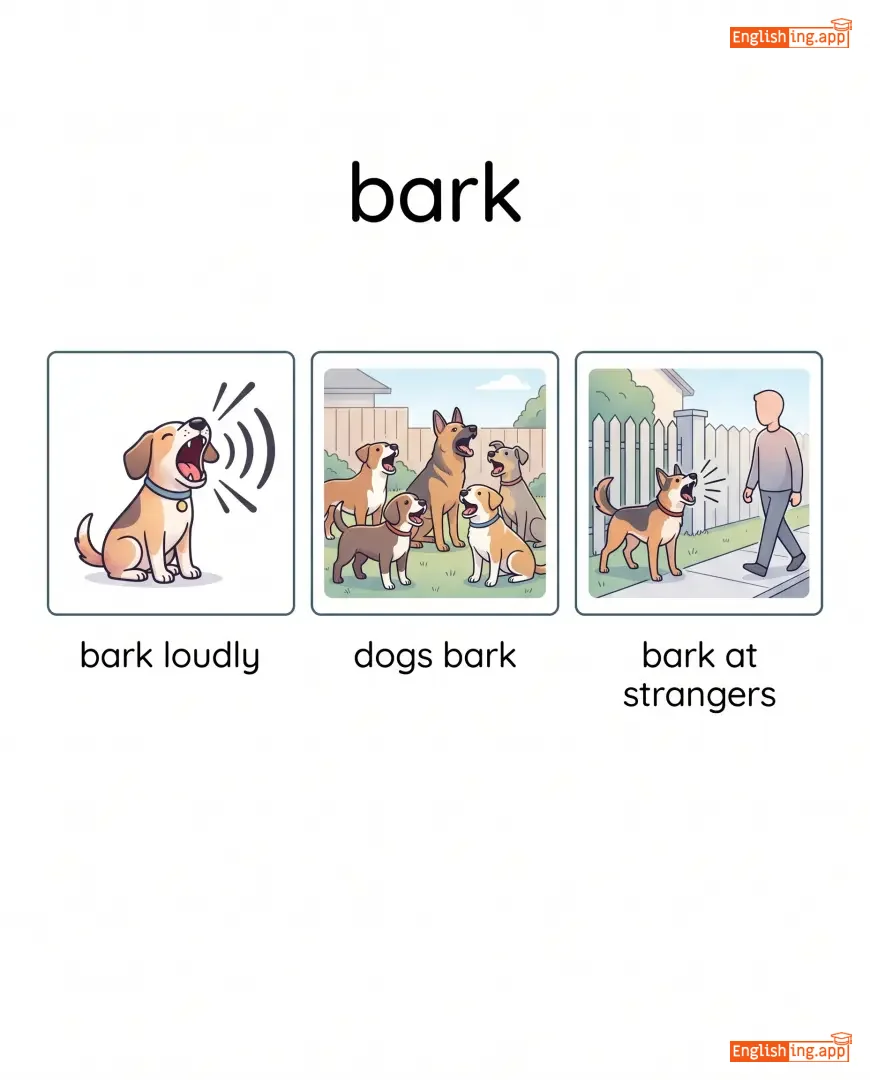
The dog barks at strangers.
ザ・ドッグ・バークス・アット・ストレンジャーズ。
••••••
|
犬は見知らぬ人に吠える。
Inu wa mishiranu hito ni hoeru.
••••••
|
- •••••• | - •••••• | - •••••• |
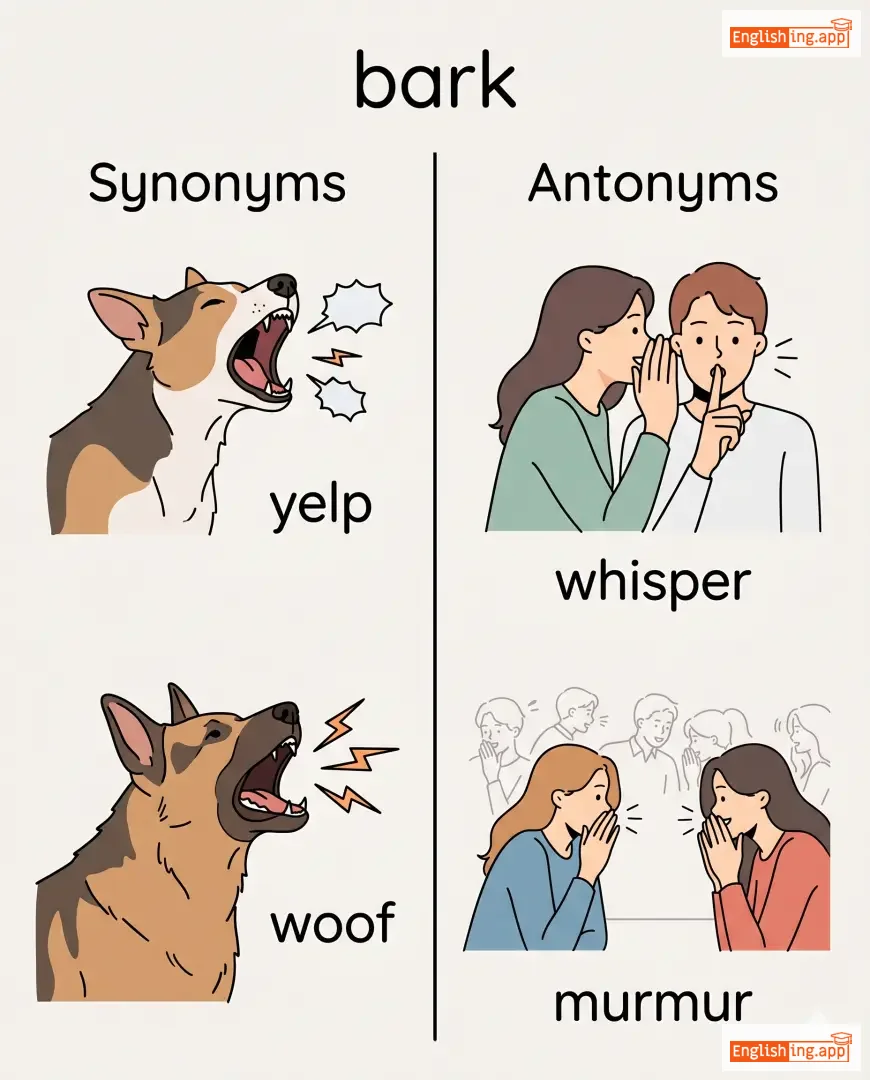
yelp, woof, snap, shout
••••••
|
whisper, murmur, silence
••••••
|
bark loudly, dogs bark, bark at strangers, bark orders
••••••
|
犬は怒って吠える
••••••
|
|
🛢️
••••••
|
/ˈbærəl/
noun
(バレル)
••••••
|
- •••••• |
大樽
o-taru
••••••
|
- •••••• | - •••••• | - •••••• | - •••••• |
a large cylindrical container used to hold liquids
••••••
|
The wine was stored in a wooden barrel. |
ワインは木製の大樽に保管されていた。
Wain wa mokusei no o-taru ni hokan sarete ita.
••••••
|
over a barrel |
in a helpless or difficult situation
••••••
|
困難な状況で
Konnan na joukyou de
••••••
|
cask, drum, keg, container
••••••
|
bottle, flask
••••••
|
oil barrel, wooden barrel, barrel of wine, barrel full
••••••
|
Barrel は大樽を意味し、ワイン用の大きな樽を想像してください。
••••••
|
|
🚧
••••••
|
/ˌbærɪˈkeɪd/
noun/verb
(バリケード)
••••••
|
- •••••• |
バリケード
barikēdo
••••••
|
barricaded
バリケードされた
••••••
|
barricaded
バリケードされた
••••••
|
barricades
バリケードする
••••••
|
barricading
バリケードしている
••••••
|
a barrier erected to block or defend against movement; to block a passage with obstacles
••••••
|
Protesters built a barricade across the street.
抗議者たちは通りにバリケードを作った。
••••••
|
抗議者たちは通りにバリケードを作った。
Kōgisha-tachi wa tōri ni barikēdo o tsukutta.
••••••
|
- •••••• | - •••••• | - •••••• |
barrier, blockade, obstacle, obstruction, fortification
••••••
|
opening, passage, clearance
••••••
|
erect a barricade, block with a barricade, barricade the street
••••••
|
バリケード = バリア + Cade, 通りを塞ぐ
••••••
|
|
🚧
••••••
|
/ˈbæriər/
noun
(バリア)
••••••
|
|
障壁
shōheki
••••••
|
- •••••• | - •••••• | - •••••• | - •••••• |
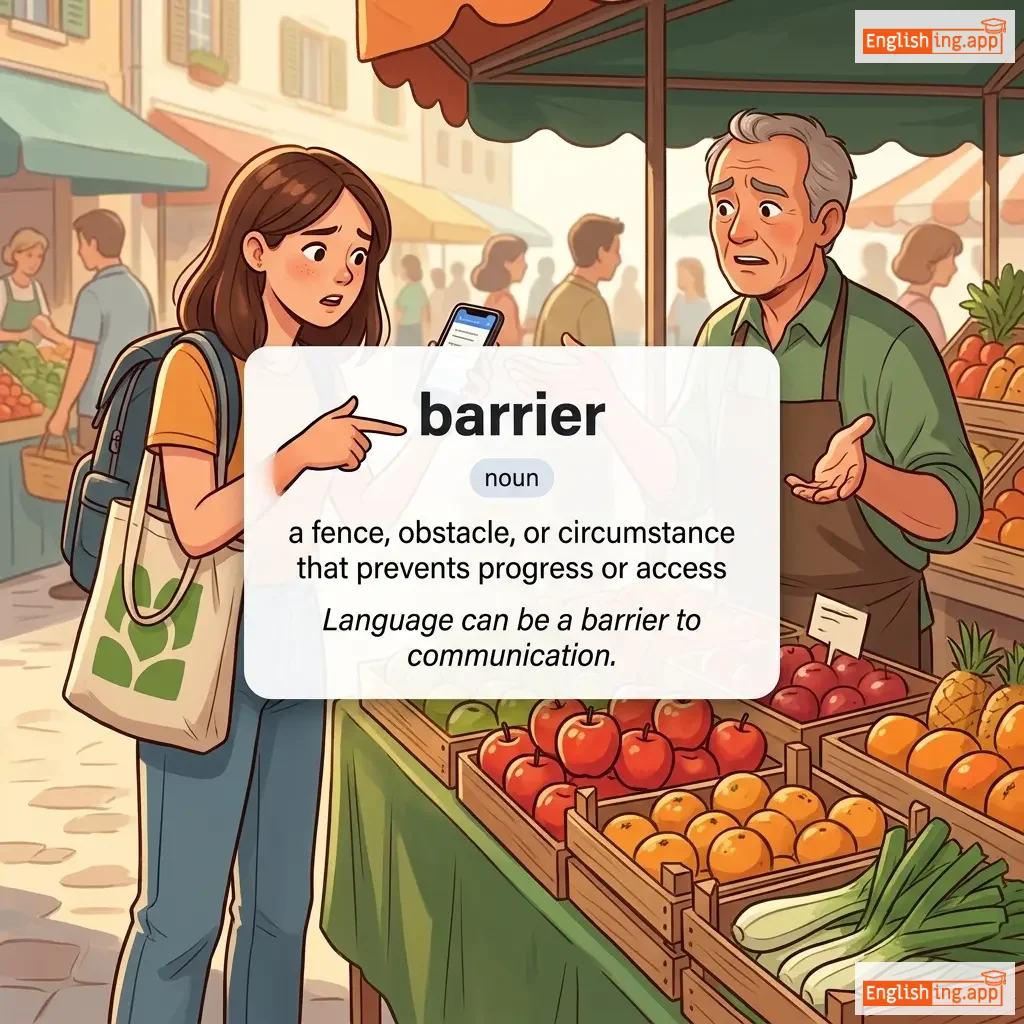
a fence, obstacle, or circumstance that prevents progress or access
••••••
|
Language can be a barrier to communication.
言語はコミュニケーションの障壁となることがあります。
••••••
|
言語はコミュニケーションの障壁となることがあります。
Gengo wa komyunikēshon no shōheki to naru koto ga arimasu.
••••••
|
break down barriers
障壁を打破する
••••••
|
to remove obstacles that prevent progress or understanding
••••••
|
障壁を打破する
shōheki o daga suru
••••••
|
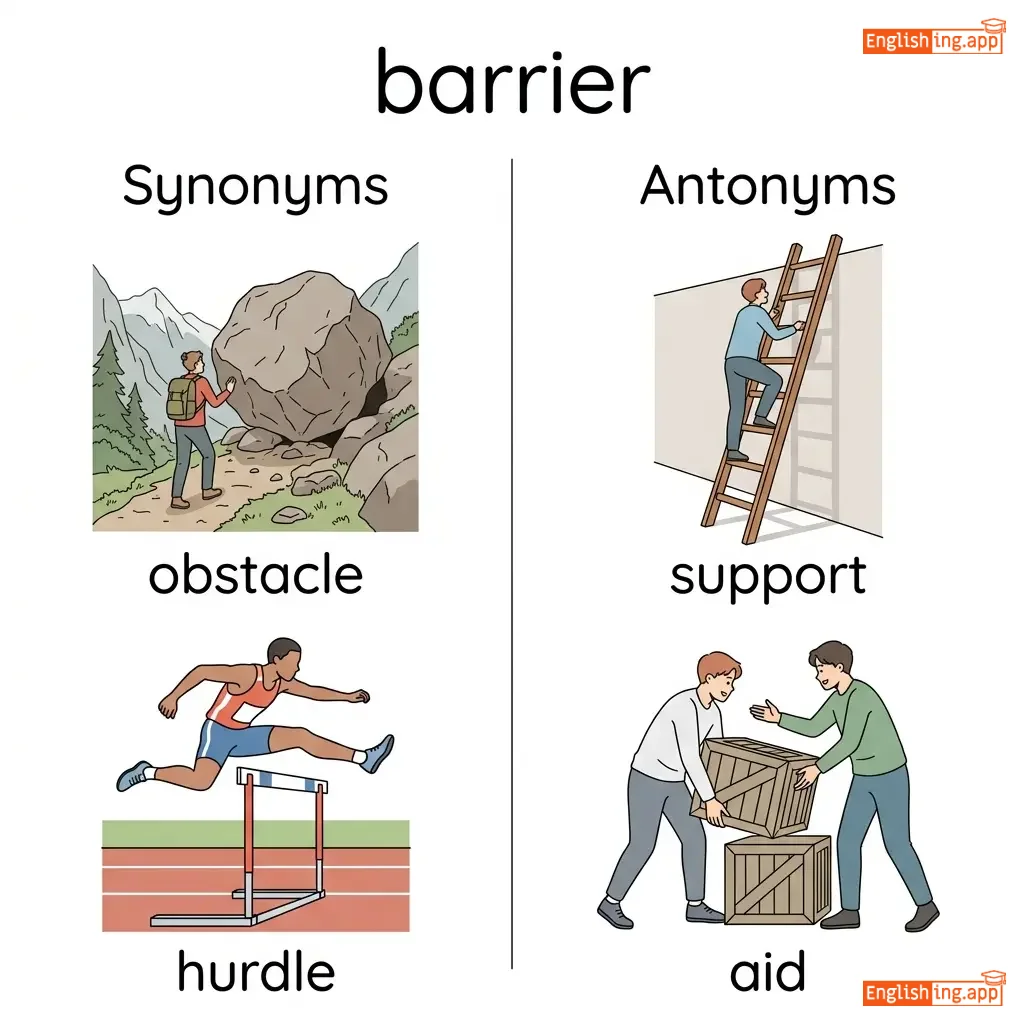
obstacle, hurdle, fence, block, hindrance
••••••
|
support, aid
••••••
|
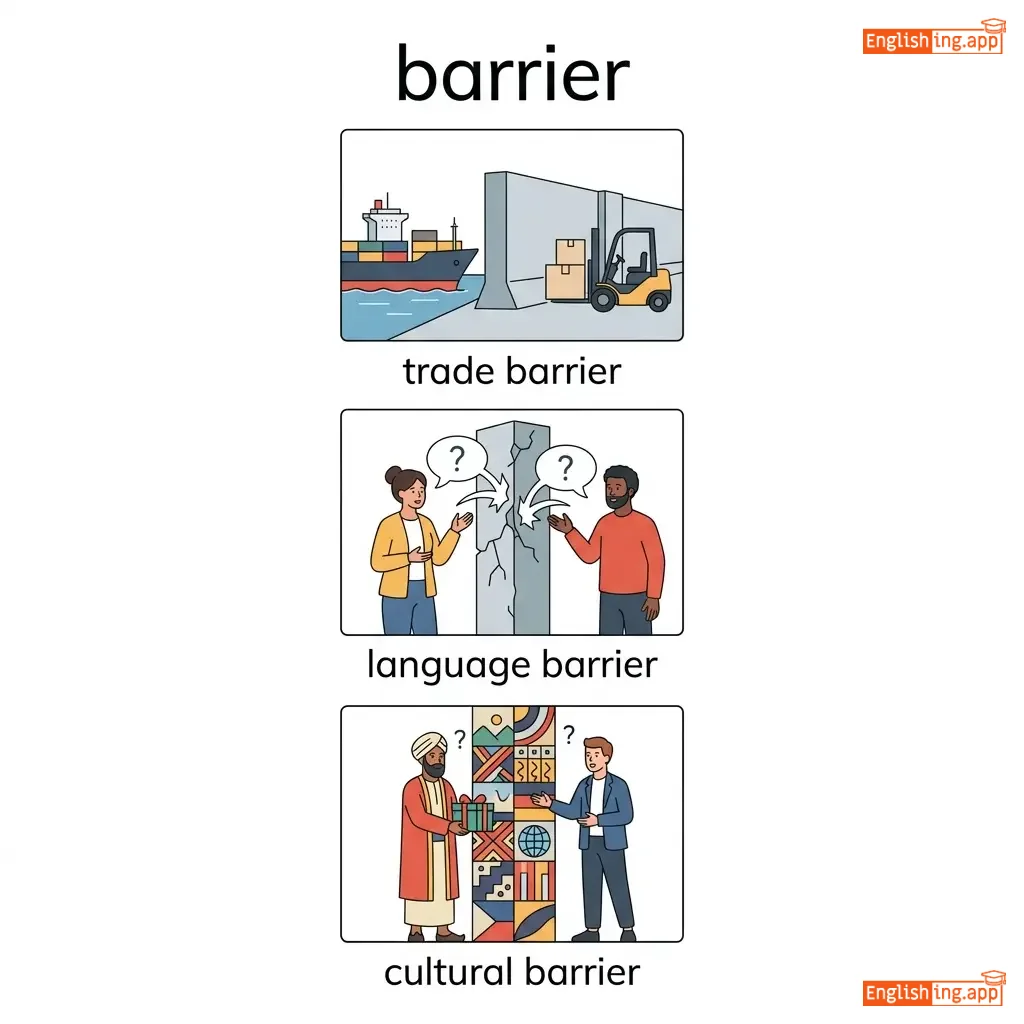
trade barrier, language barrier, cultural barrier, physical barrier
••••••
|
障壁とは障害物、道路に障壁があると車が止まります。
••••••
|
|
🔄
••••••
|
/ˈbɑːrtər/
verb
••••••
|
- •••••• | - •••••• |
bartered
••••••
|
bartered
••••••
|
barters
••••••
|
bartering
••••••
|
To exchange goods or services without using money.
••••••
|
They bartered their crops for handmade tools. |
- •••••• |
barter system |
An economic system where goods or services are exchanged directly without money.
••••••
|
- •••••• |
trade, exchange, swap, deal
••••••
|
buy, sell
••••••
|
barter goods, barter system, barter trade, barter exchange
••••••
|
No •••••• |
|
🏛️
••••••
|
/beɪs/
noun, verb
(ベース)
••••••
|
|
基盤
kiban
••••••
|
based
ベースド
••••••
|
based
ベースド
••••••
|
bases
ベーセス
••••••
|
basing
ベーシング
••••••
|
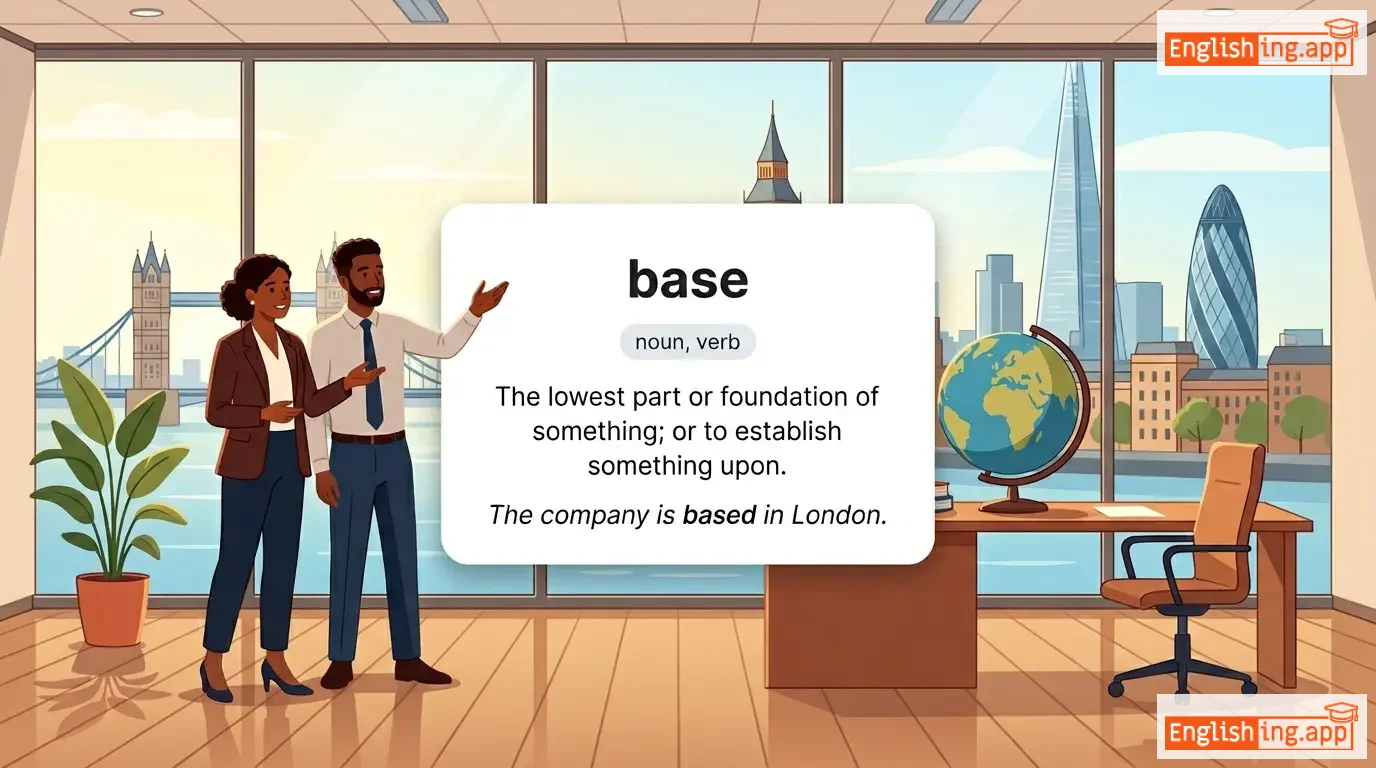
The lowest part or foundation of something; or to establish something upon.
••••••
|
The company is based in London.
その会社はロンドンに拠点を置いています。
••••••
|
その会社はロンドンに拠点を置いています。
Sono kaisha wa Rondon ni kyoten o oiteimasu.
••••••
|
base on
ベース オン
••••••
|
To use as a foundation or starting point.
••••••
|
基盤に基づく
kiban ni motozuku
••••••
|
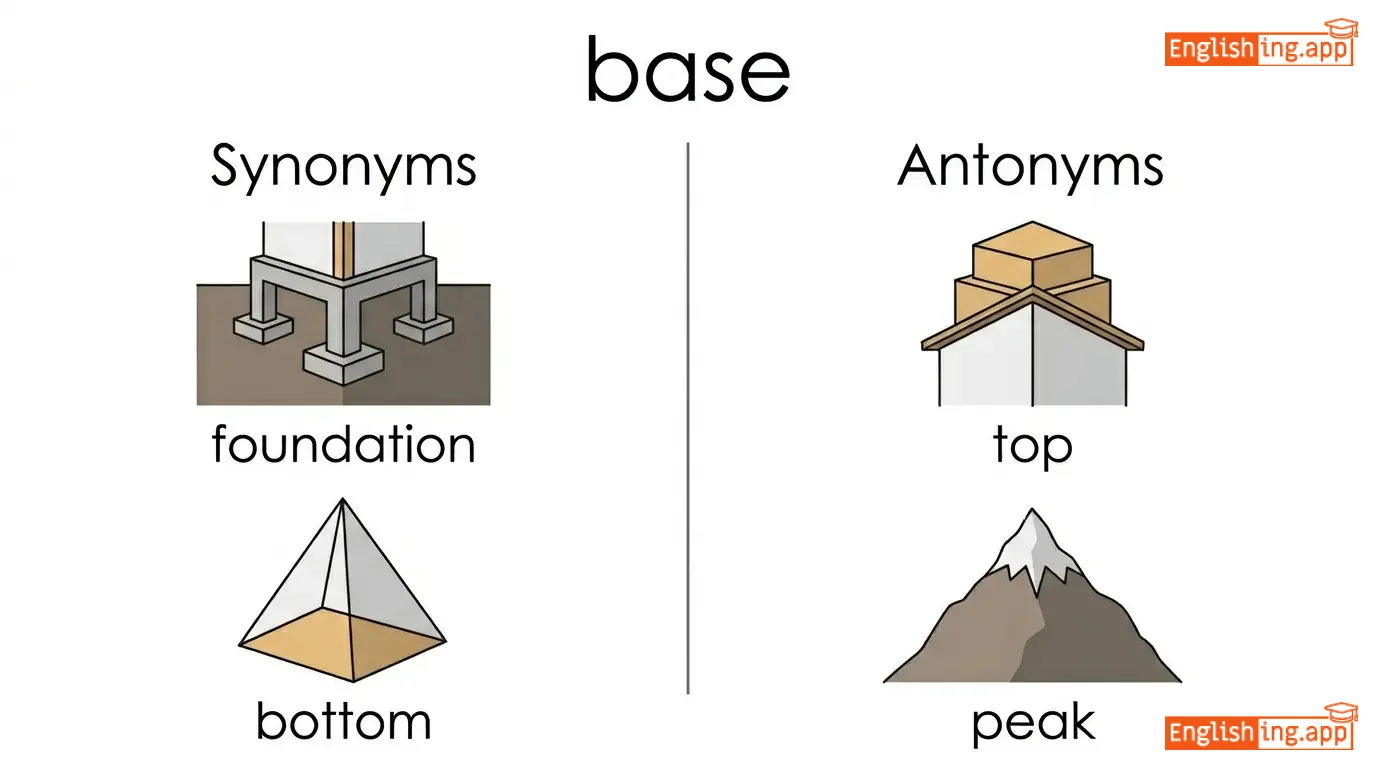
foundation, bottom, support, root, ground
••••••
|
top, peak
••••••
|
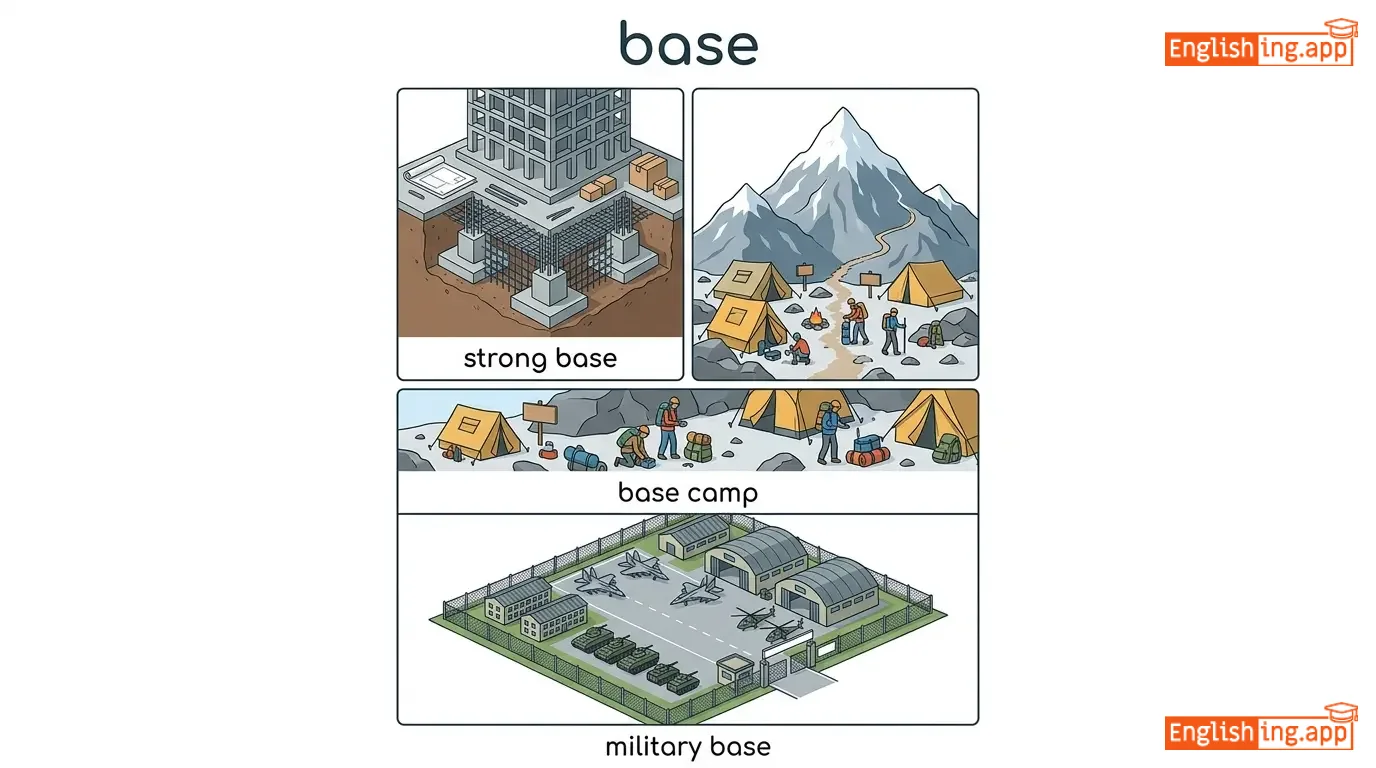
strong base, base camp, military base, based on, base level
••••••
|
基盤は'基盤'を意味します—すべての家には強い'基盤'があります。
••••••
|
|
⚾
••••••
|
/ˈbeɪsˌbɔːl/
noun
(ベースボール)
••••••
|
- •••••• |
ベースボール
bēsubōru
••••••
|
- •••••• | - •••••• | - •••••• | - •••••• |
a sport in which two teams try to score runs by hitting a ball and running around bases
••••••
|
He loves watching baseball games on TV. |
彼はテレビで野球の試合を見るのが好きです。
Kare wa terebi de yakyū no shiai o miru no ga suki desu.
••••••
|
- •••••• | - •••••• | - •••••• |
sport, game, pastime
••••••
|
work, chore
••••••
|
baseball game, baseball bat, baseball team, baseball player
••••••
|
ベースボールはスポーツを意味します; 'ベースを打って走って得点'を想像して
••••••
|
|
🏠
••••••
|
/ˈbeɪs.mənt/
noun
(ベースメント)
••••••
|
- •••••• |
地下室
chikashitsu
••••••
|
- •••••• | - •••••• | - •••••• | - •••••• |
the lowest floor of a building, typically below ground level
••••••
|
We store old furniture in the basement. |
古い家具は地下室に保管されています。
Furui kagu wa chikashitsu ni hokan sareteimasu.
••••••
|
- •••••• | - •••••• | - •••••• |
cellar, underground floor, lower level
••••••
|
attic, top floor, upper level
••••••
|
basement apartment, basement stairs, basement storage
••••••
|
地下室はいつもひんやりしている
••••••
|
|
🔑
••••••
|
/ˈbeɪsɪk/
adjective
(ベーシック)
••••••
|
- •••••• |
基本的
kibanteki
••••••
|
- •••••• | - •••••• | - •••••• | - •••••• |
forming the most important or simplest part of something
••••••
|
She taught me the basic rules of chess. |
彼女は私にチェスの基本的なルールを教えてくれました。
Kanojo wa watashi ni chesu no kibanteki na ruuru wo oshiete kuremashita.
••••••
|
back to basics |
returning to simple, fundamental principles
••••••
|
基本に戻る
kibun ni modoru
••••••
|
fundamental, essential, primary, simple, elementary
••••••
|
advanced, complex, secondary
••••••
|
basic knowledge, basic needs, basic rules, basic skills
••••••
|
Basicは基本的という意味; 'basic needs = 基本的なニーズ'を覚えておこう。
••••••
|
|
🔑
••••••
|
/ˈbeɪsɪkli/
adverb
(ベーシックリー)
••••••
|
- •••••• |
基本的に
kihon teki ni
••••••
|
- •••••• | - •••••• | - •••••• | - •••••• |
in the most important or fundamental way; essentially
••••••
|
Basically, the project was a success despite some small issues. |
基本的に、いくつかの小さな問題があったにもかかわらず、そのプロジェクトは成功でした。
Kihon teki ni, ikutsuka no chiisana mondai ga atta ni mo kakawarazu, sono purojekuto wa seikou deshita.
••••••
|
- •••••• | - •••••• | - •••••• |
essentially, fundamentally, primarily, essentially, in essence
••••••
|
complicatedly, secondarily
••••••
|
basically true, basically correct, basically simple, basically sound
••••••
|
Basically は基本的に重要なこと - 基本的に
••••••
|
|
🏗️
••••••
|
/ˈbeɪsɪs/
noun
(ベイシス)
••••••
|
- •••••• |
基礎
kiso
••••••
|
- •••••• | - •••••• | - •••••• | - •••••• |
the underlying support or foundation for an idea, argument, or process
••••••
|
Trust is the basis of any strong relationship. |
信頼は強い関係の基礎です。
Shinrai wa tsuyoi kankei no kiso desu.
••••••
|
on a daily basis |
happening every day
••••••
|
日常的に
nichijō-teki ni
••••••
|
foundation, ground, principle, root, support
••••••
|
top, surface
••••••
|
form the basis, strong basis, legal basis, daily basis
••••••
|
基礎は基盤 (kiso) - 建物の基盤のように
••••••
|
|
☀️
••••••
|
/bæsk/
verb
••••••
|
|
- •••••• |
basked
••••••
|
basked
••••••
|
basks
••••••
|
basking
••••••
|
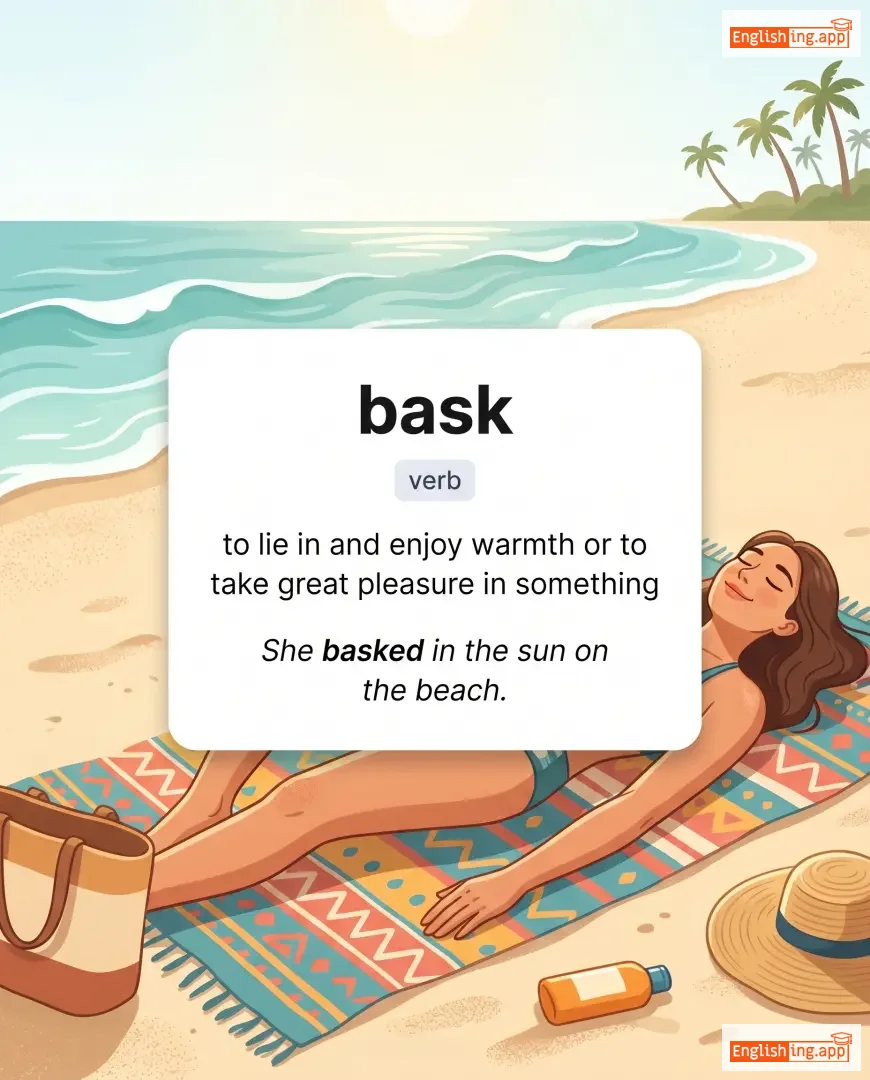
to lie in and enjoy warmth or to take great pleasure in something
••••••
|
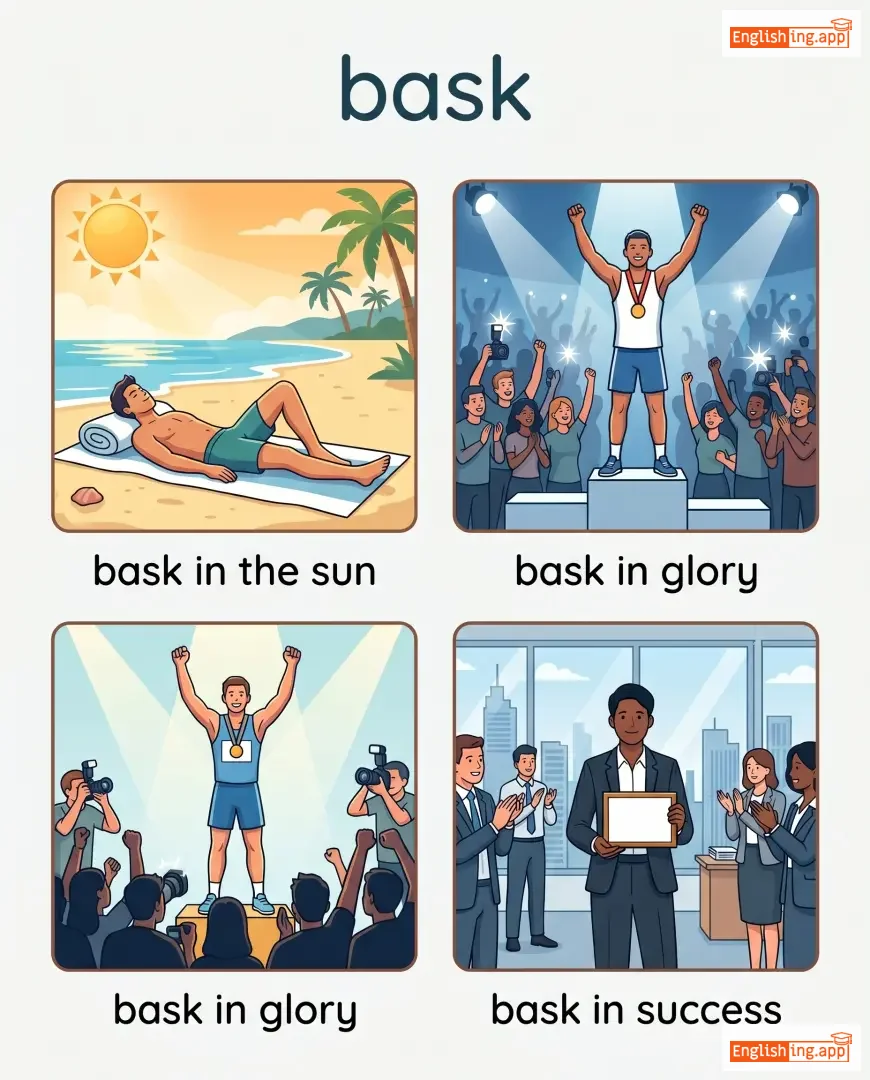
She basked in the sun on the beach. |
- •••••• |
bask in glory |
to enjoy the praise or admiration received for an achievement
••••••
|
- •••••• |
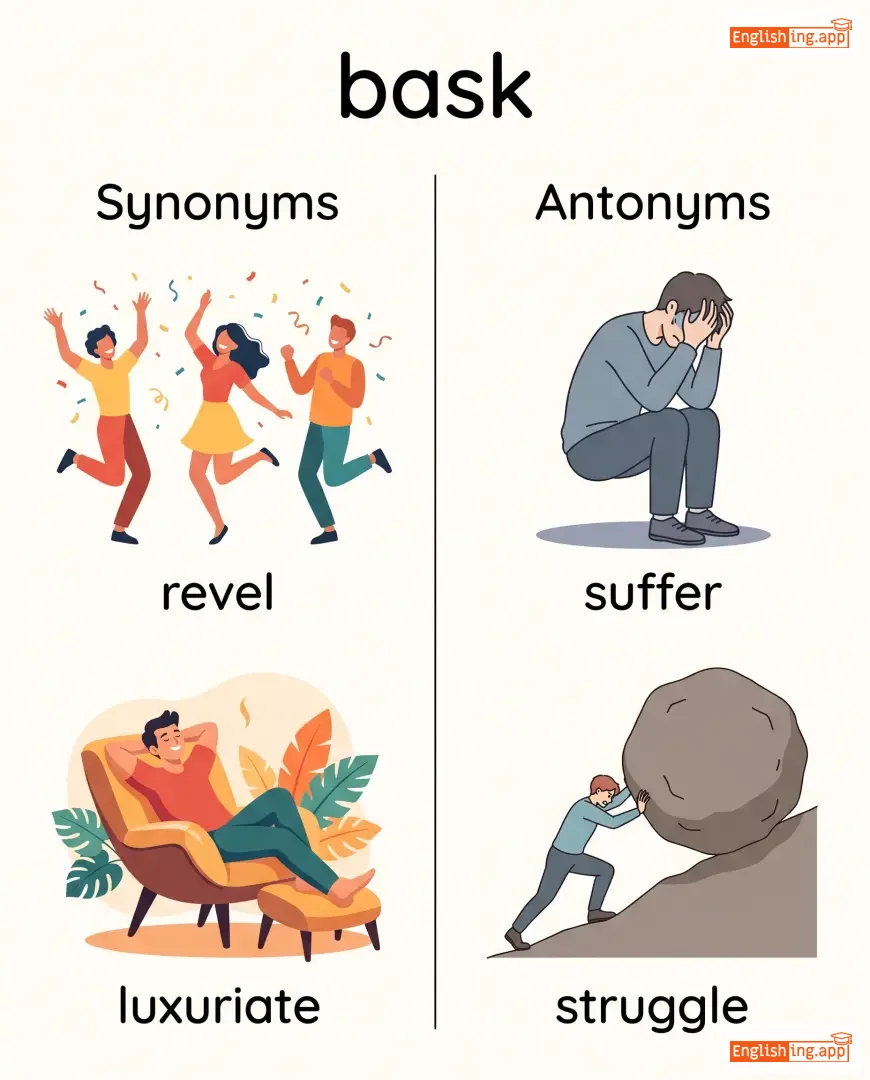
revel, luxuriate, delight, enjoy, relax
••••••
|
suffer, struggle, endure
••••••
|
bask in the sun, bask in glory, bask in success, bask in attention
••••••
|
No •••••• |
|
🧺
••••••
|
/ˈbæskɪt/
noun
(バスケット)
••••••
|
- •••••• |
かご
kago
••••••
|
- •••••• | - •••••• | - •••••• | - •••••• |
a container made of woven materials used for carrying or storing things
••••••
|
She carried the apples in a basket. |
彼女はバスケットにリンゴを入れて運んだ。
Kanojo wa basuketto ni ringo o irete hakonda.
••••••
|
don’t put all your eggs in one basket |
don’t risk everything on a single venture
••••••
|
すべての卵を一つのかごに入れないで
Subete no tamago o hitotsu no kago ni irenaide
••••••
|
container, hamper, bin, receptacle
••••••
|
floor, ground
••••••
|
shopping basket, fruit basket, picnic basket, basket case
••••••
|
Basket とはかご (kago) - ピクニックの時にかごに食べ物を入れる
••••••
|
|
🎸
••••••
|
/beɪs/
noun
(ベース)
••••••
|
- •••••• |
低い男性の声 / ベースギター
hikui dansei no koe / bēsu gitā
••••••
|
- •••••• | - •••••• | - •••••• | - •••••• |
the lowest adult male singing voice; also, low-frequency sounds in music or a type of fish
••••••
|
He played the bass guitar at the concert.
彼はコンサートでベースギターを弾いた。
••••••
|
彼はコンサートでベースギターを弾いた。
Kare wa konsāto de bēsu gitā o hīta.
••••••
|
- •••••• | - •••••• | - •••••• |
low voice, deep tone, baritone, subwoofer
••••••
|
treble, soprano
••••••
|
bass guitar, bass line, bass sound, bass singer
••••••
|
‘Bass’ は ‘base’ に似ていて、下という意味です — それで低い音が出ます。
••••••
|
|
😡
••••••
|
/ˈbæstərd/
noun/adjective
(バスタード)
••••••
|
- •••••• |
私生児
shiseiji
••••••
|
- •••••• | - •••••• | - •••••• | - •••••• |
a child born to unmarried parents (offensive); also used informally as an insult or to describe something unpleasant
••••••
|
He called him a bastard in anger. |
彼は怒りで彼をバスタードと呼んだ。
Kare wa ikari de kare o basutādo to yonda.
••••••
|
poor bastard |
an unfortunate or pitiable person
••••••
|
可哀想な私生児
kawaisō na shiseiji
••••••
|
illegitimate child, scoundrel, rogue, jerk
••••••
|
legitimate child, gentleman
••••••
|
call someone a bastard, poor bastard, lucky bastard
••••••
|
‘Best hard’を使ってバスタードを覚える – 不正な人生が最も辛い。
••••••
|
|
🧩
••••••
|
/ˈbæstərdaɪz/
verb
(バスターダイズ)
••••••
|
- •••••• |
歪める
yugameru
••••••
|
bastardized
バスターダイズド
••••••
|
bastardized
バスターダイズド
••••••
|
bastardizes
バスターダイズズ
••••••
|
bastardizing
バスターダイジング
••••••
|
to corrupt or debase something by altering it from its original form; to change in a way that reduces quality or purity
••••••
|
Critics argue that the remake bastardized the original novel.
批評家たちはそのリメイクが原作をバスターダイズしたと言っている。
••••••
|
批評家たちはそのリメイクが原作を歪めたと言っている。
hihyoka tachi wa sono rimeiku ga gensaku o yugameta to itte iru
••••••
|
- •••••• | - •••••• | - •••••• |
corrupt, debase, distort, adulterate, pervert
••••••
|
preserve, purify, refine
••••••
|
bastardize a language, bastardize a tradition, bastardize the original, culturally bastardized
••••••
|
バスターダイズ = 歪める → badに変える
••••••
|
|
🏏
••••••
|
/bæt/
verb
(ベット)
••••••
|
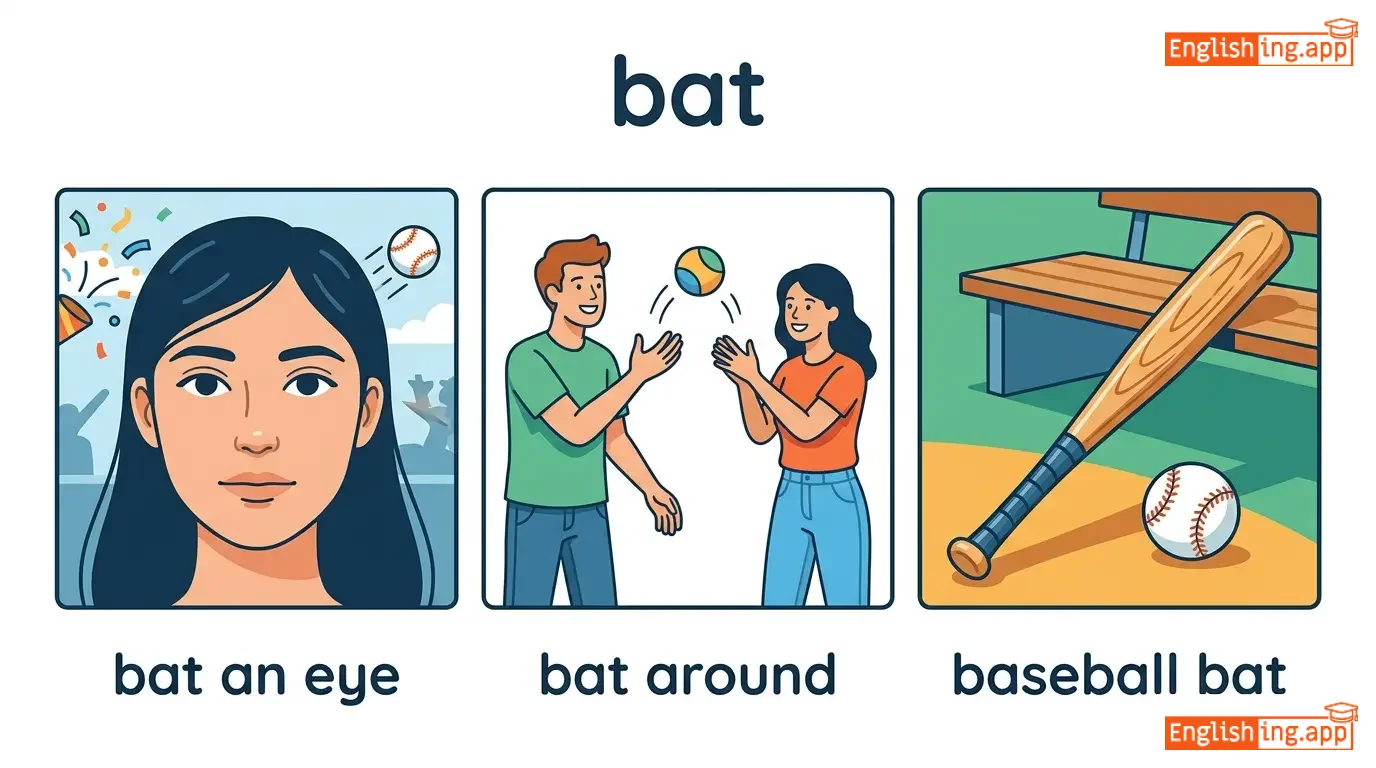
|
バットで打つ
batto de utsu
••••••
|
batted
ベットッド
••••••
|
batted
ベットッド
••••••
|
bats
ベッツ
••••••
|
batting
ベッティング
••••••
|
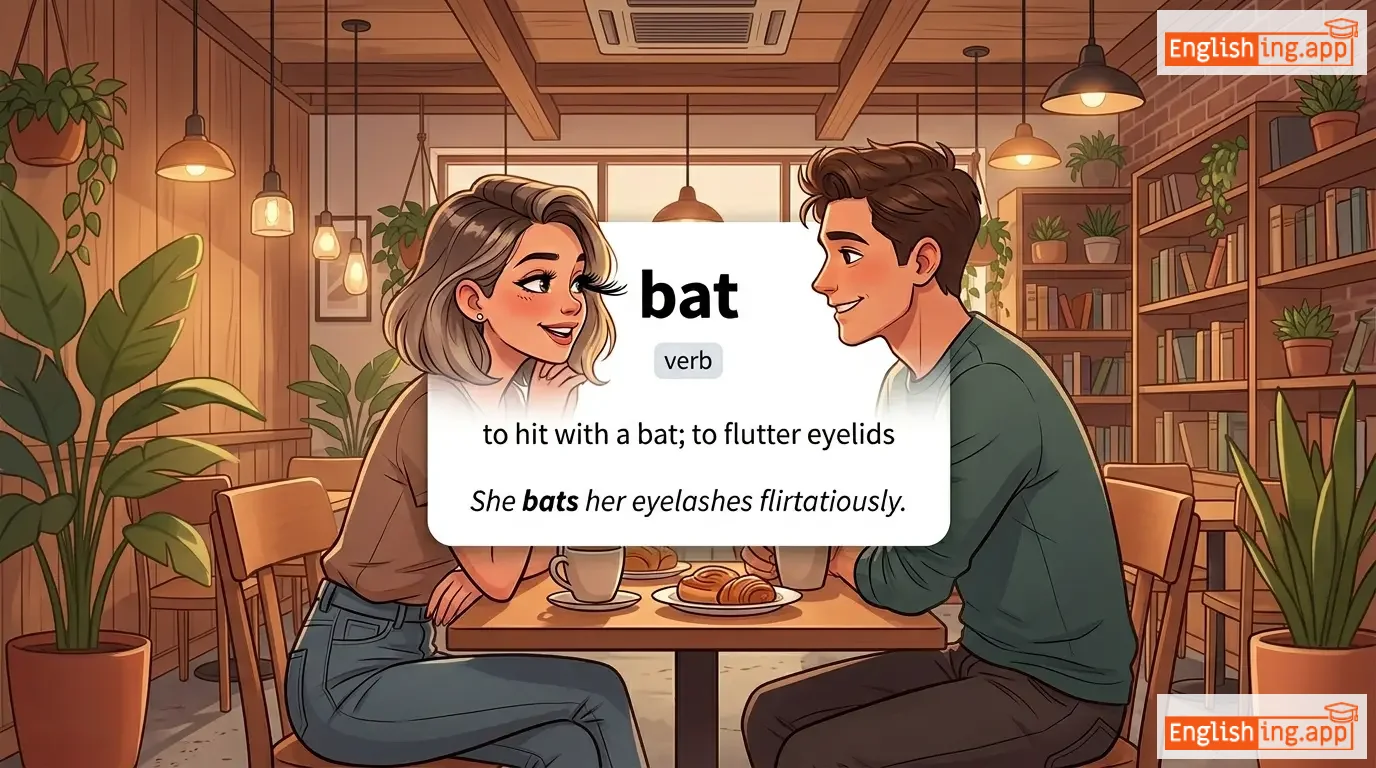
to hit with a bat; to flutter eyelids
••••••
|
She bats her eyelashes flirtatiously.
彼女は魅力的にまばたきしている。
••••••
|
彼女は魅力的にまばたきしている。
Kanojo wa miryokuteki ni mabataki shite iru.
••••••
|
- •••••• | - •••••• | - •••••• |
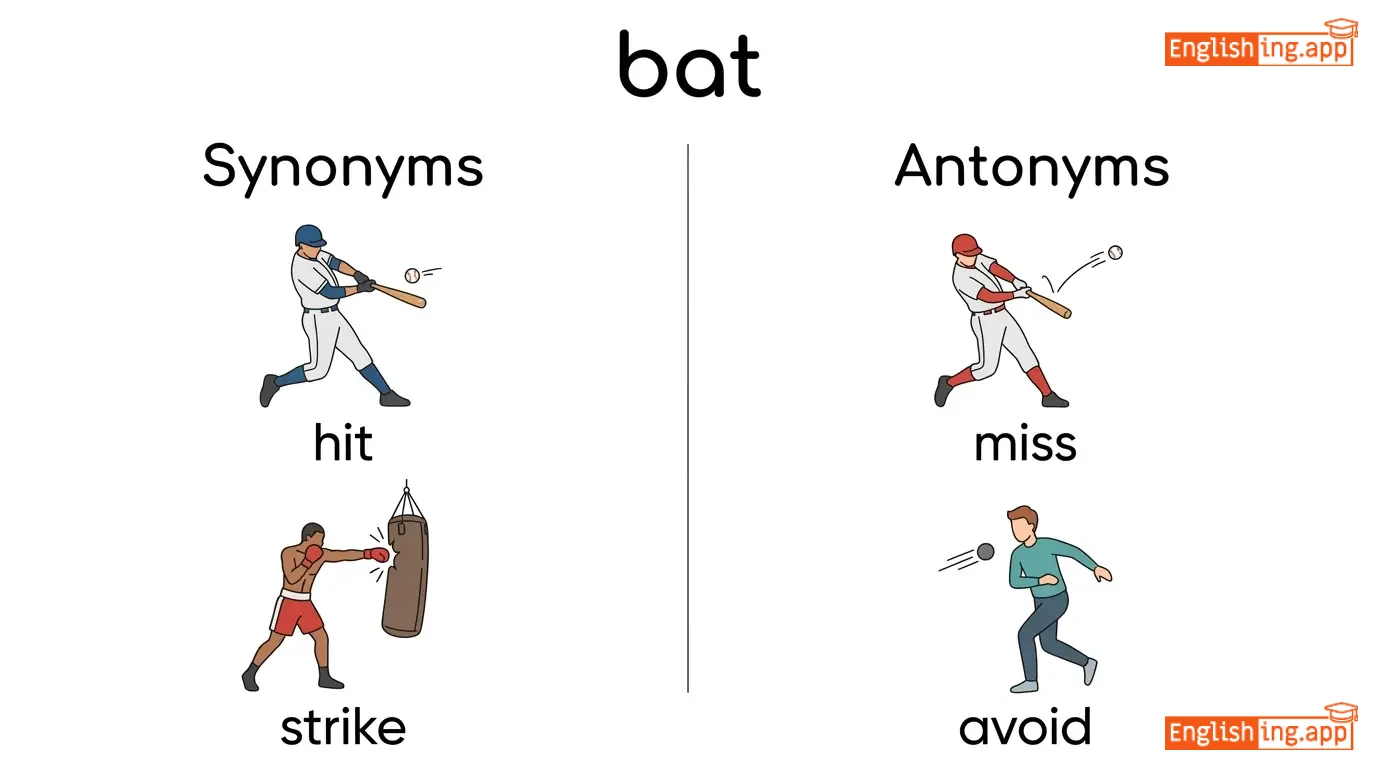
hit, strike, flutter, wink
••••••
|
miss, avoid
••••••
|
bat an eye, bat around, baseball bat, cricket bat, bat the ball
••••••
|
野球でバットで打つように、映画のスターのようにまばたきする。
••••••
|
|
🛁
••••••
|
/bɑːθ/
noun
(バス)
••••••
|
- •••••• |
お風呂
ofuro
••••••
|
- •••••• | - •••••• | - •••••• | - •••••• |
an act of washing the body in water; or the container used for this purpose
••••••
|
She took a long bath after work. |
彼女は仕事の後で長いお風呂に入りました。
Kanojo wa shigoto no ato de nagai ofuro ni hairimashita.
••••••
|
throw the baby out with the bathwater |
to lose something valuable while trying to get rid of something unwanted
••••••
|
お風呂の水で赤ちゃんを捨てる
ofuro no mizu de akachan o suteru
••••••
|
wash, soak, shower, cleaning
••••••
|
dirt, filth
••••••
|
take a bath, hot bath, bubble bath, bath tub
••••••
|
Bath はお風呂を意味します — Bath を持って、体がきれいになります!
••••••
|
|
🛁
••••••
|
/beɪð/
verb
(beɪð)
••••••
|
|
入浴
nyuuyoku
••••••
|
bathed
bæθd
••••••
|
bathed
bæθd
••••••
|
bathes
bæθs
••••••
|
bathing
bæθɪŋ
••••••
|
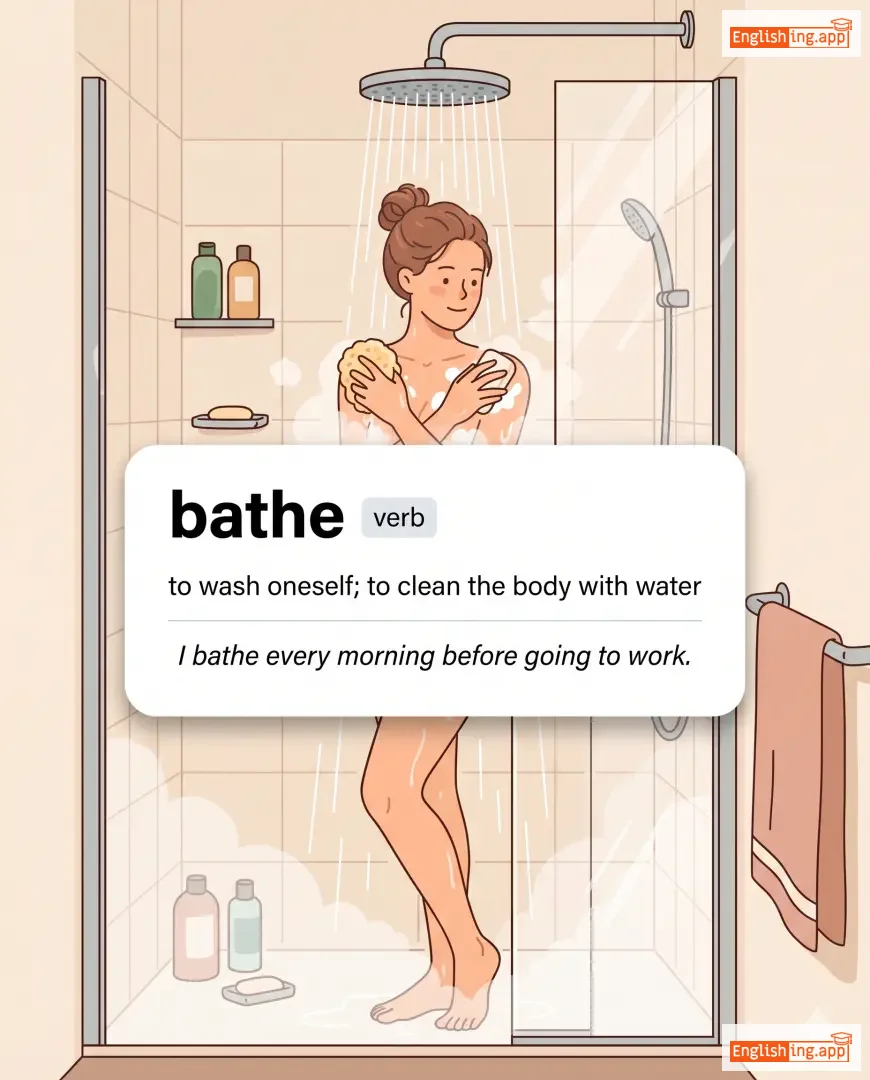
to wash oneself; to clean the body with water
••••••
|
I bathe every morning before going to work.
私は毎朝、仕事に行く前にお風呂に入ります。
••••••
|
私は毎朝、仕事に行く前にお風呂に入ります。
Watashi wa maiasa, shigoto ni iku mae ni ofuro ni hairimasu
••••••
|
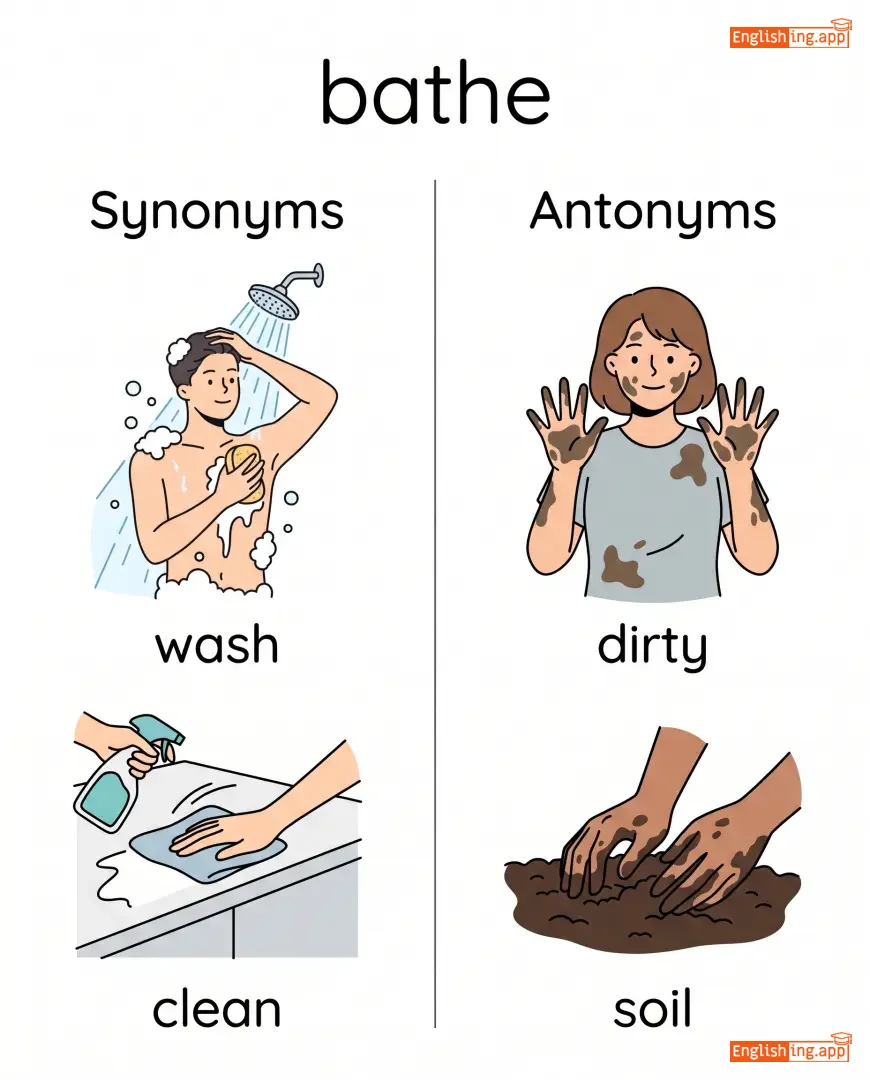
- •••••• | - •••••• | - •••••• |
wash, clean, shower, cleanse
••••••
|
dirty, soil, stain, contaminate
••••••
|
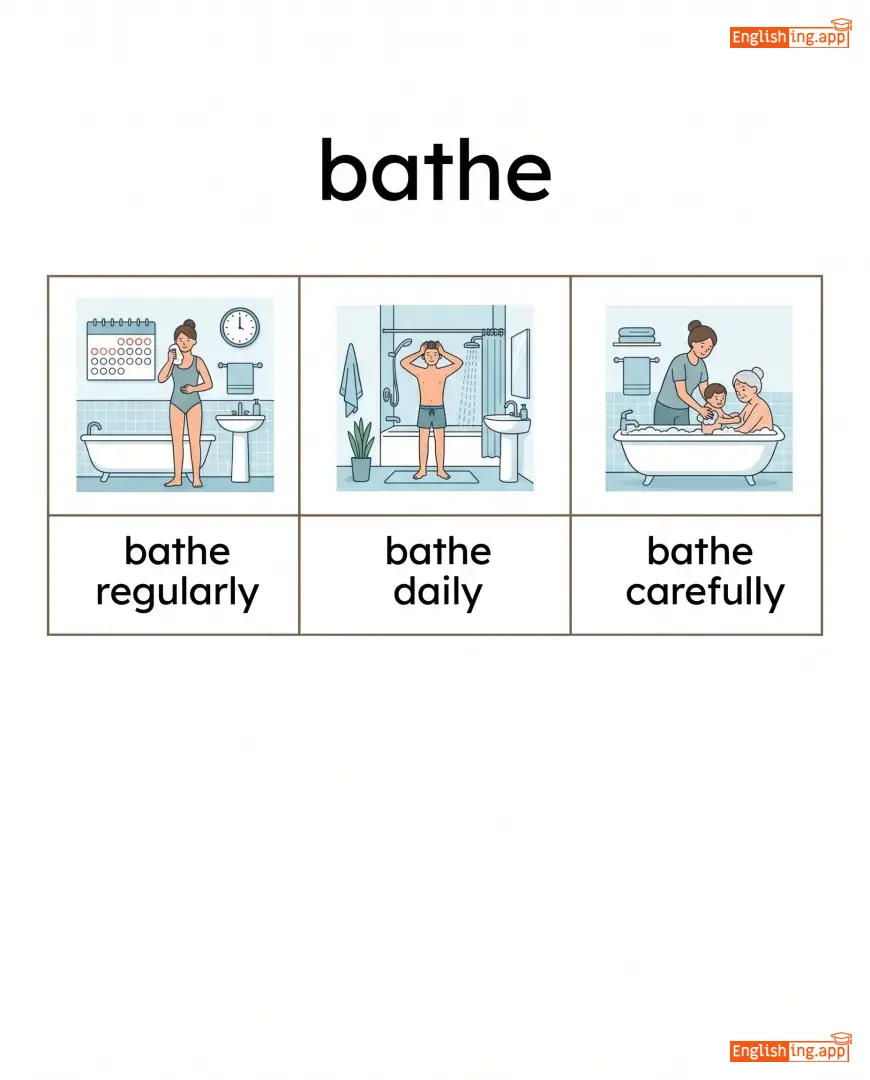
bathe regularly, bathe daily, bathe carefully, bathe in water, bathe the baby
••••••
|
Morning baths help you refresh and get ready for work.
••••••
|
|
🚽
••••••
|
/ˈbɑːθruːm/
noun
(バスルーム)
••••••
|
- •••••• |
バスルーム
basurūmu
••••••
|
- •••••• | - •••••• | - •••••• | - •••••• |
a room containing a toilet and usually a sink or shower
••••••
|
The bathroom is on the second floor. |
バスルームは2階にあります。
Basurūmu wa nikai ni arimasu.
••••••
|
- •••••• | - •••••• | - •••••• |
washroom, restroom, lavatory, toilet
••••••
|
kitchen, living room
••••••
|
clean bathroom, bathroom door, bathroom sink, bathroom floor
••••••
|
Bath + Room = お風呂やトイレのある部屋
••••••
|
|
🔋
••••••
|
/ˈbætəri/
noun
(バッテリー)
••••••
|
- •••••• |
バッテリー
batterī
••••••
|
- •••••• | - •••••• | - •••••• | - •••••• |
A device that stores and provides electrical energy; also refers to a group of similar things or repeated blows.
••••••
|
The phone battery ran out after a long day. |
電話のバッテリーは長い一日の後に切れました。
Denwa no batterī wa nagai ichinichi no ato ni kiremashita.
••••••
|
assault and battery |
a legal term for physical attack and violence
••••••
|
暴行とバッテリー
bōkō to batterī
••••••
|
cell, accumulator, power pack, storage unit
••••••
|
charger, power outage
••••••
|
car battery, rechargeable battery, battery life, battery pack
••••••
|
バッテリーが切れたら、もう動かない、まるで暴行を受けたかのように止まる。
••••••
|
|
⚔️
••••••
|
/ˈbætəl/
noun/verb
(バトル)
••••••
|
- •••••• |
戦い
tatakai
••••••
|
battled
バトルド
••••••
|
battled
バトルド
••••••
|
battles
バトルズ
••••••
|
battling
バトリング
••••••
|
A fight between armed forces or a struggle to achieve or resist something.
••••••
|
The soldiers prepared for the final battle.
兵士たちは最終決戦の準備をしました。
••••••
|
兵士たちは最終決戦の準備をしました。
Heishi-tachi wa saishū kessen no junbi o shimashita.
••••••
|
fight an uphill battle
困難な戦いを戦う
••••••
|
to struggle against great difficulties
••••••
|
困難な戦いを戦う
konnan na tatakai o tatakau
••••••
|
fight, conflict, clash, war, struggle
••••••
|
peace, truce
••••••
|
win a battle, lose a battle, fierce battle, battle against
••••••
|
Battle は戦いを意味します。ゲームでバット(bat)で戦うように。
••••••
|
|
⚔️
••••••
|
/ˈbætəlˌfiːld/
noun
(バトルフィールド)
••••••
|
- •••••• |
戦場
senjō
••••••
|
- •••••• | - •••••• | - •••••• | - •••••• |
a place where a battle is fought
••••••
|
The battlefield was covered with the remnants of the fight. |
戦場は戦いの残骸で覆われていた。
Senjō wa tatakai no zangai de ōwarete ita.
••••••
|
- •••••• | - •••••• | - •••••• |
combat zone, war zone, arena, field of battle
••••••
|
peace, safety, tranquility
••••••
|
fight on the battlefield, battlefield strategy, battlefield tactics
••••••
|
戦 (Sen) 場 (Jō) - Battle in the field
••••••
|
|
🌊
••••••
|
/beɪ/
noun
(ベ)
••••••
|
- •••••• |
湾
wan
••••••
|
- •••••• | - •••••• | - •••••• | - •••••• |
a broad inlet of the sea where the land curves inward
••••••
|
The ship anchored safely in the bay. |
船は湾内で安全にアンカーを下ろしました。
Fune wa wan-nai de anzen ni ankā o oroshimashita.
••••••
|
keep at bay |
to prevent something or someone from approaching or having an effect
••••••
|
遠ざける
tōzakeru
••••••
|
inlet, gulf, cove, harbor, lagoon
••••••
|
mountain, hill
••••••
|
sandy bay, beautiful bay, fishing bay, bay area
••••••
|
Bay of Bengalを覚えておいて — ‘ベ’は湾を意味します 🌊
••••••
|
|
✨
••••••
|
/biː/
verb
(ビー)
••••••
|
- •••••• |
である
dearu
••••••
|
was/were
ワズ/ワー
••••••
|
been
ビーン
••••••
|
is
イズ
••••••
|
being
ビーイング
••••••
|
To exist, to occur, or to have a particular quality.
••••••
|
She wants to be a doctor.
彼女は医者になりたい。
••••••
|
彼女は医者になりたい。
Kanojo wa isha ni naritai.
••••••
|
to be or not to be
あるいは死ぬか
••••••
|
a famous phrase about existence and life
••••••
|
あるいは死ぬか
aruiwa shinu ka
••••••
|
exist, live, happen, occur
••••••
|
cease, die
••••••
|
be happy, be late, be ready, be a teacher
••••••
|
Be はであるを意味します。'B' (be) は始まりの音です。
••••••
|
|
🏖️
••••••
|
/biːtʃ/
noun
(ビーチ)
••••••
|
- •••••• |
ビーチ
bi-chi
••••••
|
- •••••• | - •••••• | - •••••• | - •••••• |
An area of sand or small stones beside the sea or a lake.
••••••
|
They spent the day relaxing on the beach. |
彼らはビーチでリラックスして一日を過ごしました。
Karera wa bi-chi de rirakkusu shite ichinichi o sugoshimashita.
••••••
|
beach bum |
a person who spends a lot of time at the beach without working
••••••
|
ビーチ好き
bi-chi suki
••••••
|
seashore, coast, shoreline, seaside
••••••
|
mountain, desert
••••••
|
sandy beach, go to the beach, beach holiday, beach umbrella
••••••
|
ビーチは beach の意味 - 'ビーチ' で皆がリラックスする場所を覚えよう。
••••••
|
|
🔆
••••••
|
/biːm/
noun
(bīmu)
••••••
|
- •••••• |
光線 / 梁
kōsen / ryō
••••••
|
- •••••• | - •••••• | - •••••• | - •••••• |
a ray or shaft of light; a long piece of wood or metal used to support weight
••••••
|
A beam of sunlight entered through the window.
一筋の光線が窓から入ってきた。
••••••
|
一筋の光線が窓から入ってきた。
Hitosuji no kōsen ga mado kara haitte kita.
••••••
|
beam with joy
喜びで輝く
••••••
|
to smile broadly because of happiness
••••••
|
喜びで輝く
Yorokobi de kagayaku
••••••
|
ray, shaft, gleam, light, support
••••••
|
shadow, gloom
••••••
|
sunlight beam, laser beam, beam of light, wooden beam
••••••
|
光線が差し込み、あなたの笑顔は beam のように輝く。
••••••
|
|
🫘
••••••
|
/biːn/
noun
(ビーン)
••••••
|
- •••••• |
豆
mame
••••••
|
- •••••• | - •••••• | - •••••• | - •••••• |
A seed that is eaten as a vegetable or used to make food products.
••••••
|
She cooked a pot of bean soup. |
彼女は豆のスープを一鍋作った。
Kanojo wa mame no suupu o hitonabe tsukutta.
••••••
|
spill the beans |
to reveal a secret
••••••
|
秘密を漏らす
Himitsu o morasu
••••••
|
legume, pulse, seed, vegetable
••••••
|
meat, grain
••••••
|
coffee bean, bean soup, green bean, baked beans
••••••
|
豆は 'bean' を意味します - 'Spill the beans' は秘密を漏らすこと、まるで豆が鍋からこぼれ落ちるように。
••••••
|
|
🐻
••••••
|
/bɛər/
verb, noun
(ベア)
••••••
|
|
耐える / クマ
taeru / kuma
••••••
|
bore
ボア
••••••
|
borne
ボーン
••••••
|
bears
ベアーズ
••••••
|
bearing
ベアリング
••••••
|
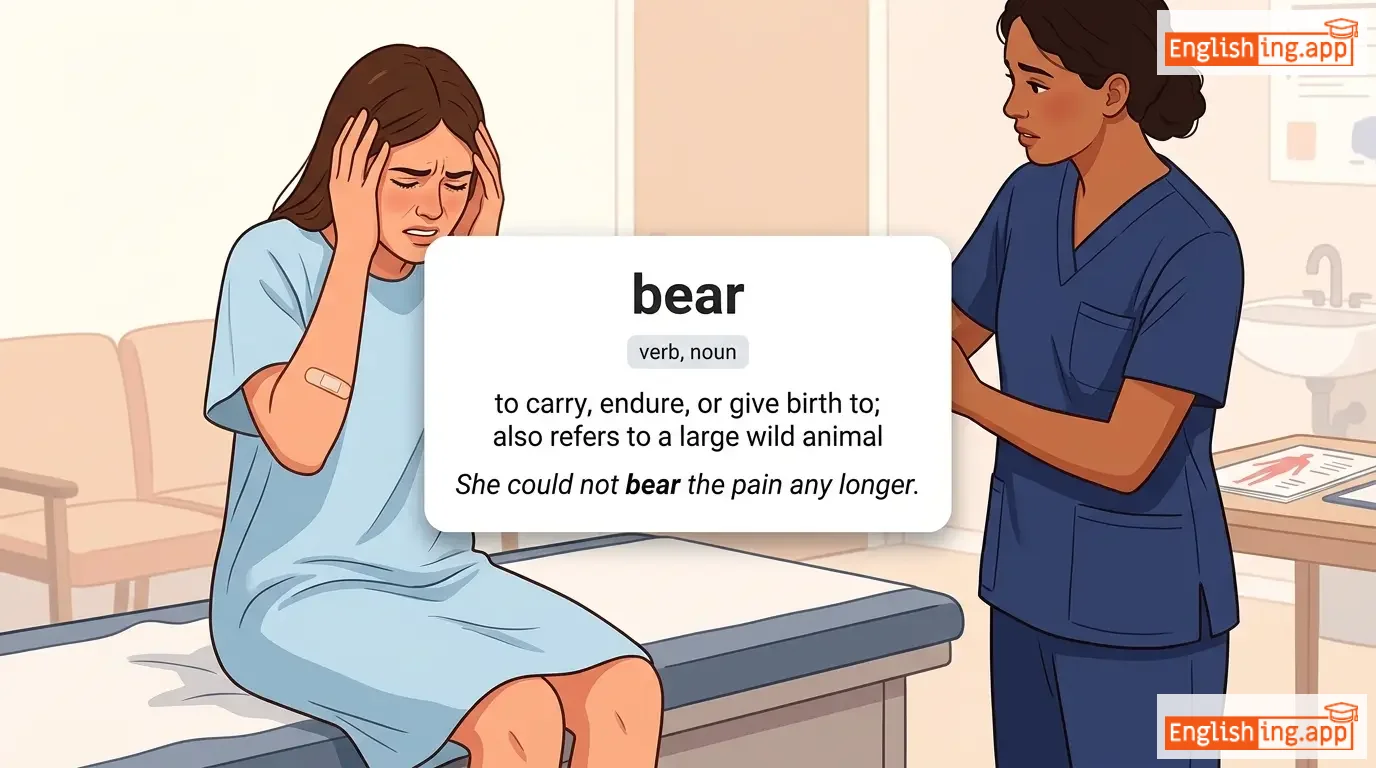
to carry, endure, or give birth to; also refers to a large wild animal
••••••
|
She could not bear the pain any longer.
彼女はもはや痛みを耐えられなかった。
••••••
|
彼女はもはや痛みを耐えられなかった。
Kanojo wa mohaya itami o taerarenakatta.
••••••
|
bear in mind
心に留める
••••••
|
to remember or consider something
••••••
|
心に留める
Kokoro ni tomeru
••••••
|
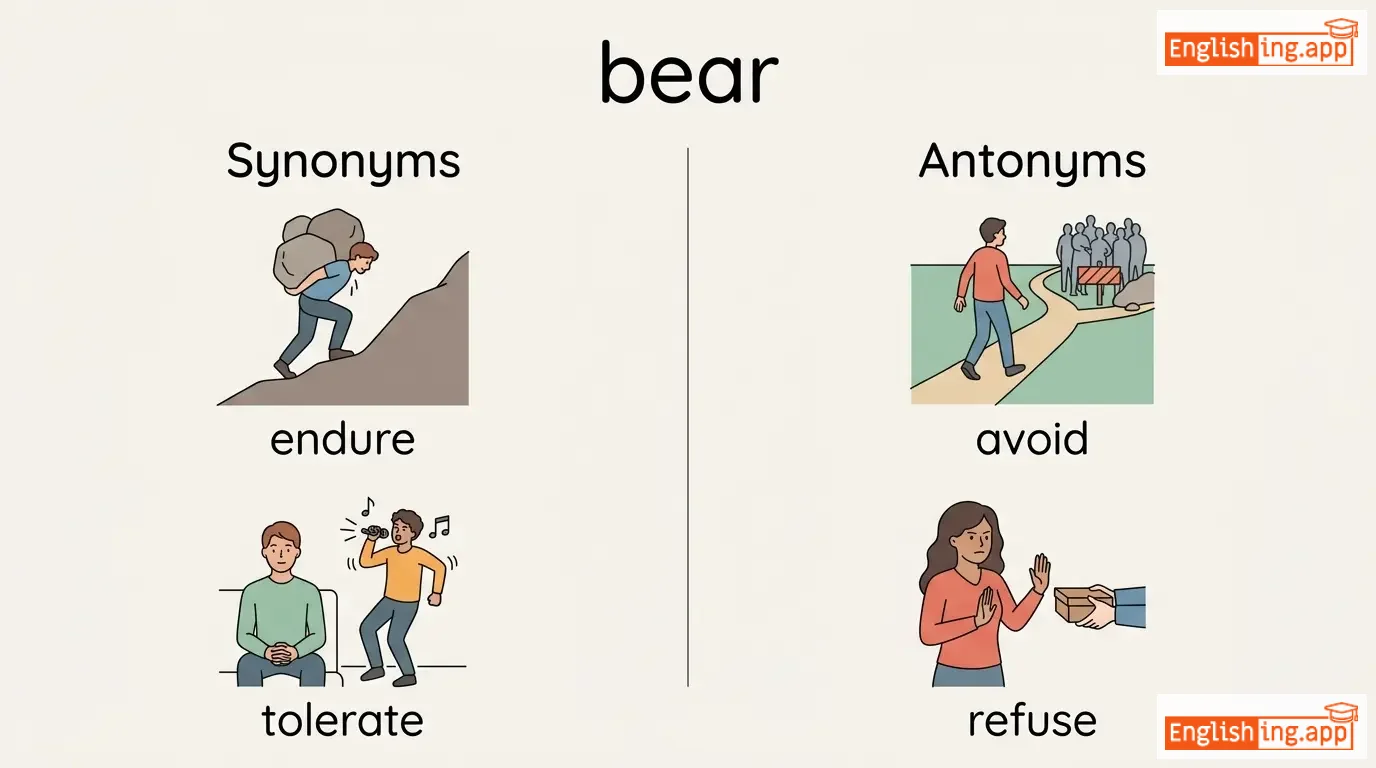
endure, tolerate, carry, support, sustain
••••••
|
avoid, refuse, deny
••••••
|
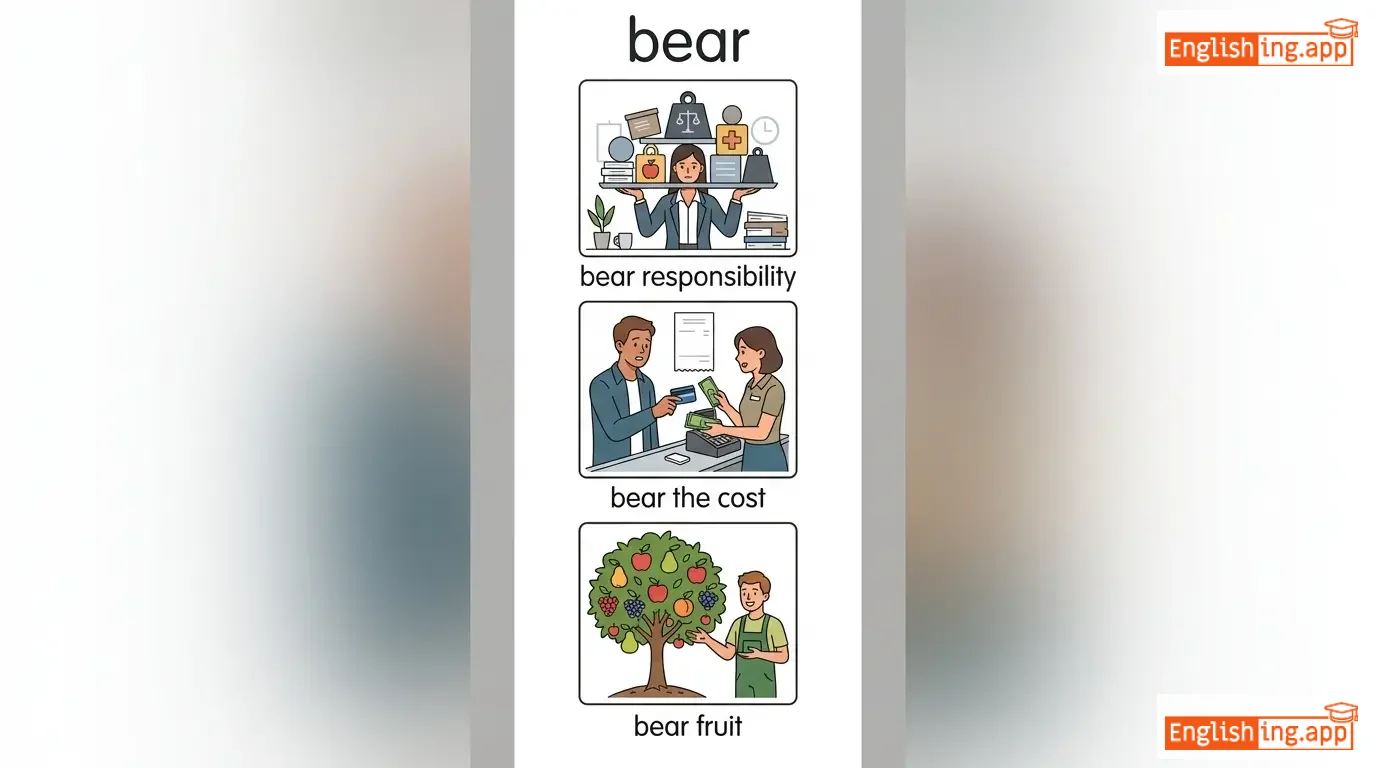
bear responsibility, bear the cost, bear fruit, bear in mind
••••••
|
Bear 🐻 はクマを意味しますが、bear the pain は痛みを耐えることを意味します。クマも耐えることを覚えておいてください!
••••••
|
|
🧔
••••••
|
/bɪəd/
noun
••••••
|
- •••••• | - •••••• | - •••••• | - •••••• | - •••••• | - •••••• |
the hair growing on the lower part of a man's face
••••••
|
He decided to grow a beard during his vacation. |
- •••••• |
beard the lion in his den |
to confront someone powerful or dangerous in their own territory
••••••
|
- •••••• |
facial hair, whiskers, goatee, stubble
••••••
|
clean-shaven, bare face
••••••
|
long beard, thick beard, grow a beard, trim beard
••••••
|
No •••••• |
|
🐅
••••••
|
/biːst/
noun
(ビースト)
••••••
|
- •••••• |
獣 / 動物
kemono / dōbutsu
••••••
|
- •••••• | - •••••• | - •••••• | - •••••• |
a large or dangerous animal; a cruel or brutal person
••••••
|
The lion is known as the king of beasts.
ライオンは獣の王として知られています。
••••••
|
ライオンは獣の王として知られています。
Raion wa kemono no ō toshite shirareteimasu.
••••••
|
beauty and the beast
美女と野獣
••••••
|
used to describe two very different people or things, one beautiful and one ugly or fierce
••••••
|
美女と野獣
Bijo to yaju
••••••
|
animal, brute, monster, creature, savage
••••••
|
human, angel
••••••
|
wild beast, ferocious beast, king of beasts, mythical beast
••••••
|
Beast とは獣 — ‘ビースト’ は‘大きくて危険’と思い出す 🦁
••••••
|
|
🥁
••••••
|
/biːt/
verb
(ビート)
••••••
|
|
打つ, 打ち勝つ
utsu, uchi katsu
••••••
|
beat
ビート
••••••
|
beaten
ビートン
••••••
|
beats
ビーツ
••••••
|
beating
ビーティング
••••••
|
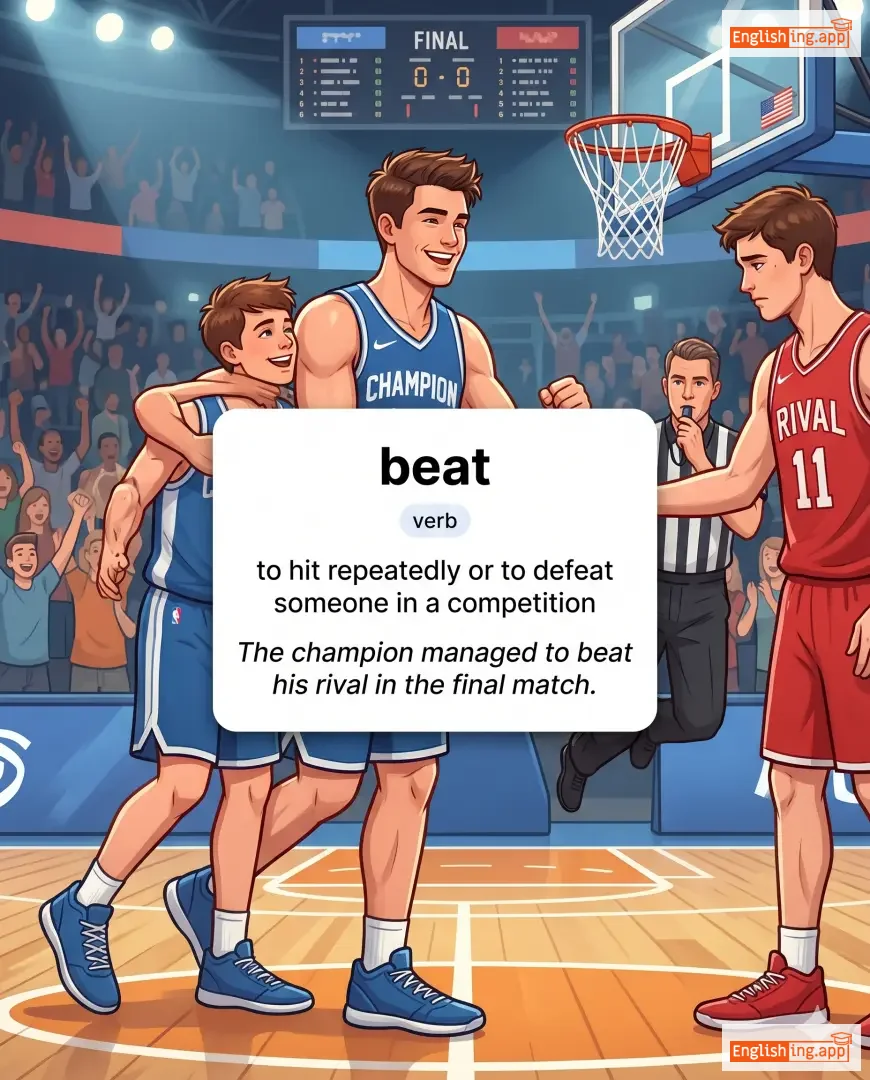
to hit repeatedly or to defeat someone in a competition
••••••
|
The champion managed to beat his rival in the final match.
チャンピオンは決勝戦でライバルを打ち負かすことができました。
••••••
|
チャンピオンは決勝戦でライバルを打ち負かすことができました。
Champiyon wa kesshōsen de raibaru o uchi makasu koto ga dekimashita.
••••••
|
beat around the bush
森の中で話を避ける
••••••
|
to avoid talking about the main point
••••••
|
重要な点を避ける
jūyōna ten o sakeru
••••••
|
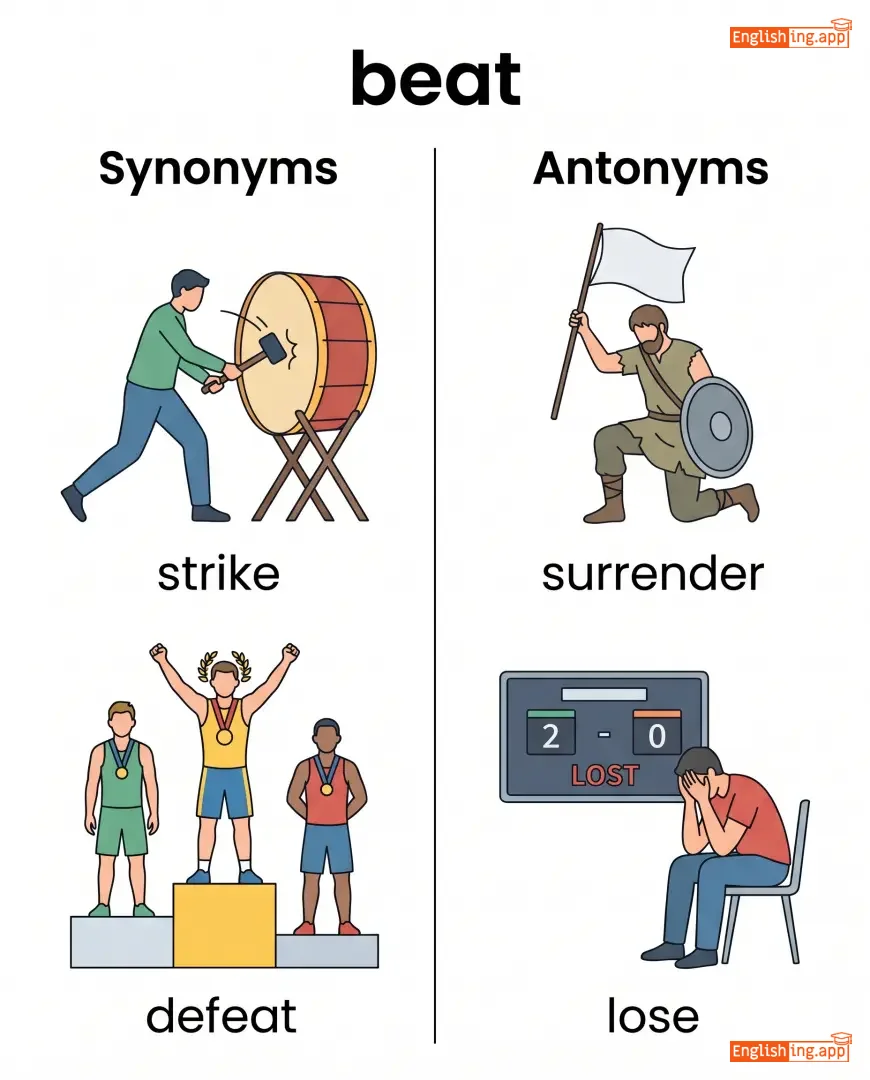
strike, defeat, thrash, overcome
••••••
|
surrender, lose
••••••
|
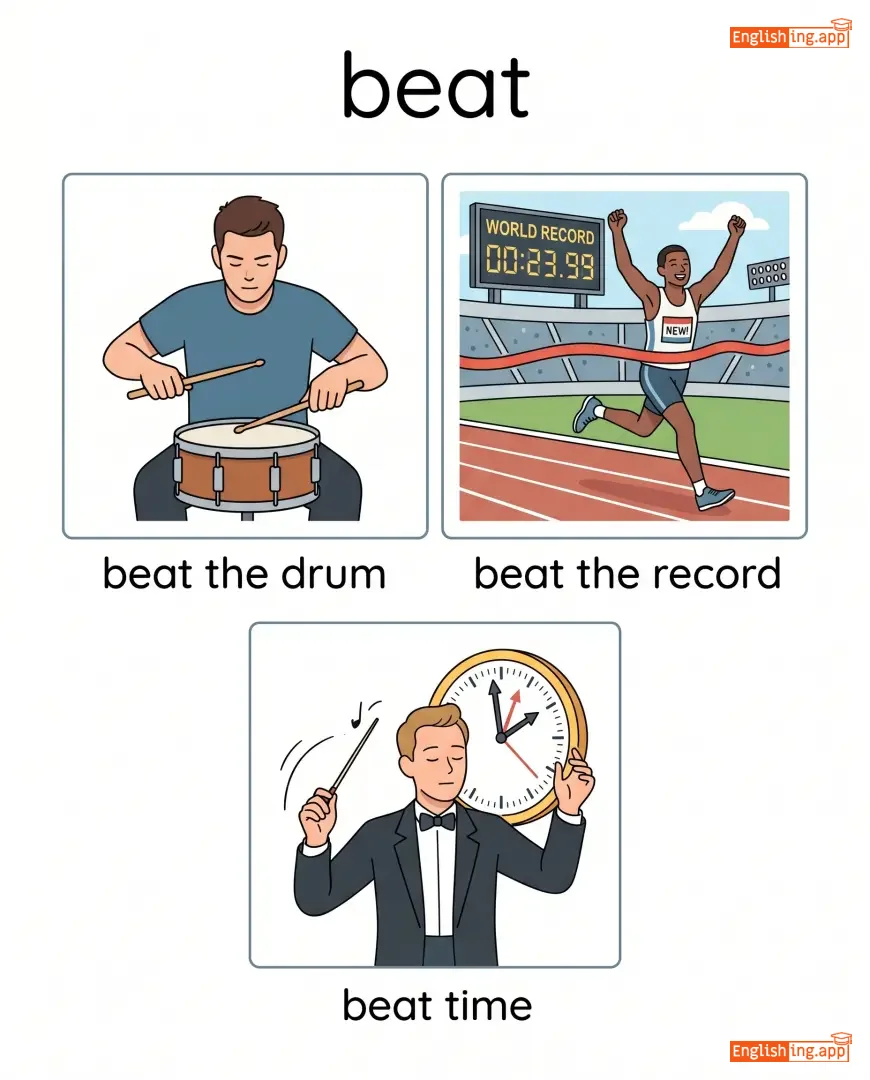
beat the drum, beat the record, beat time
••••••
|
ビートは打つだけでなく、競技で勝つことも意味します。
••••••
|
|
🙏
••••••
|
/biˈætɪfaɪ/
verb
(ビーティファイ)
••••••
|
|
列聖
ressai
••••••
|
beatified
ビーティファイド
••••••
|
beatified
ビーティファイド
••••••
|
beatifies
ビーティファイズ
••••••
|
beatifying
ビーティファイング
••••••
|
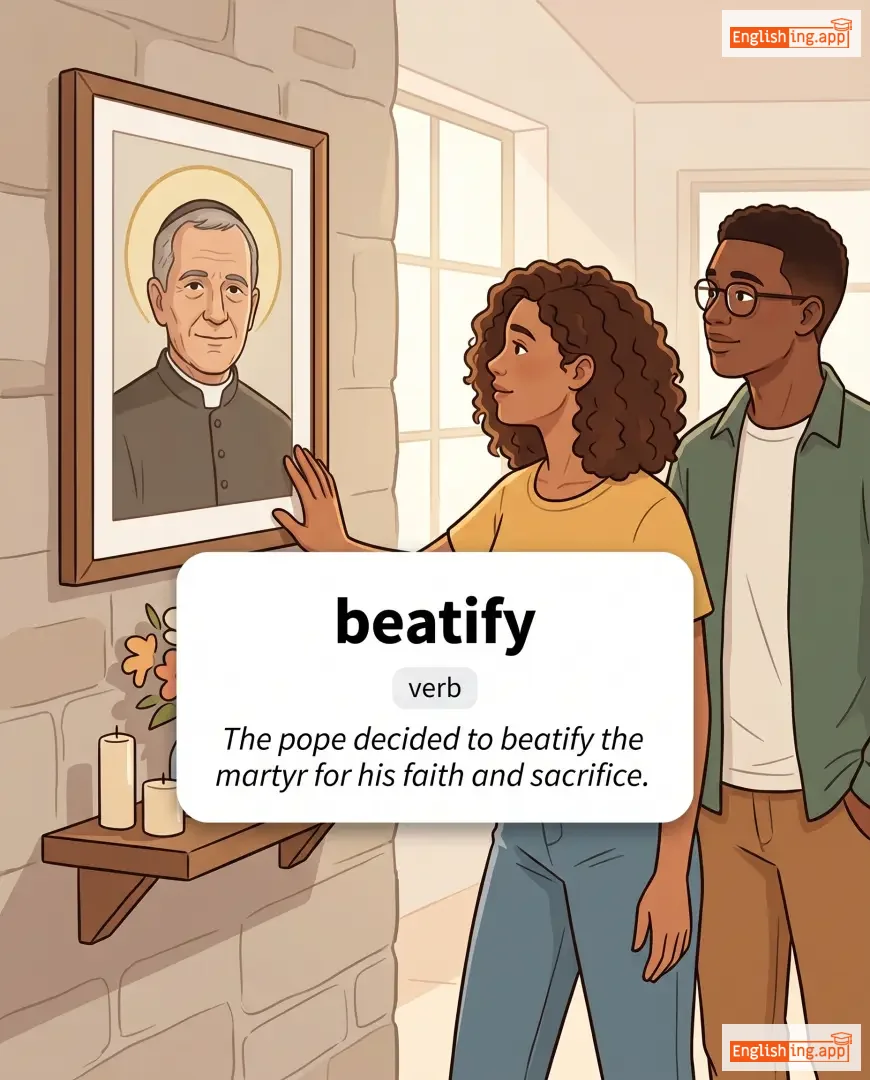
to make blessed or holy, especially in the Roman Catholic Church, to declare a deceased person to be among the blessed
••••••
|
The pope decided to beatify the martyr for his faith and sacrifice.
教皇はその信仰と犠牲により、殉教者をビーティファイすることを決定しました。
••••••
|
教皇はその信仰と犠牲により、殉教者をビーティファイすることを決定しました。
Kyōkō wa sono shinkō to gisei ni yori, junkyōsha o beatify suru koto o kettei shimashita.
••••••
|
- •••••• | - •••••• | - •••••• |
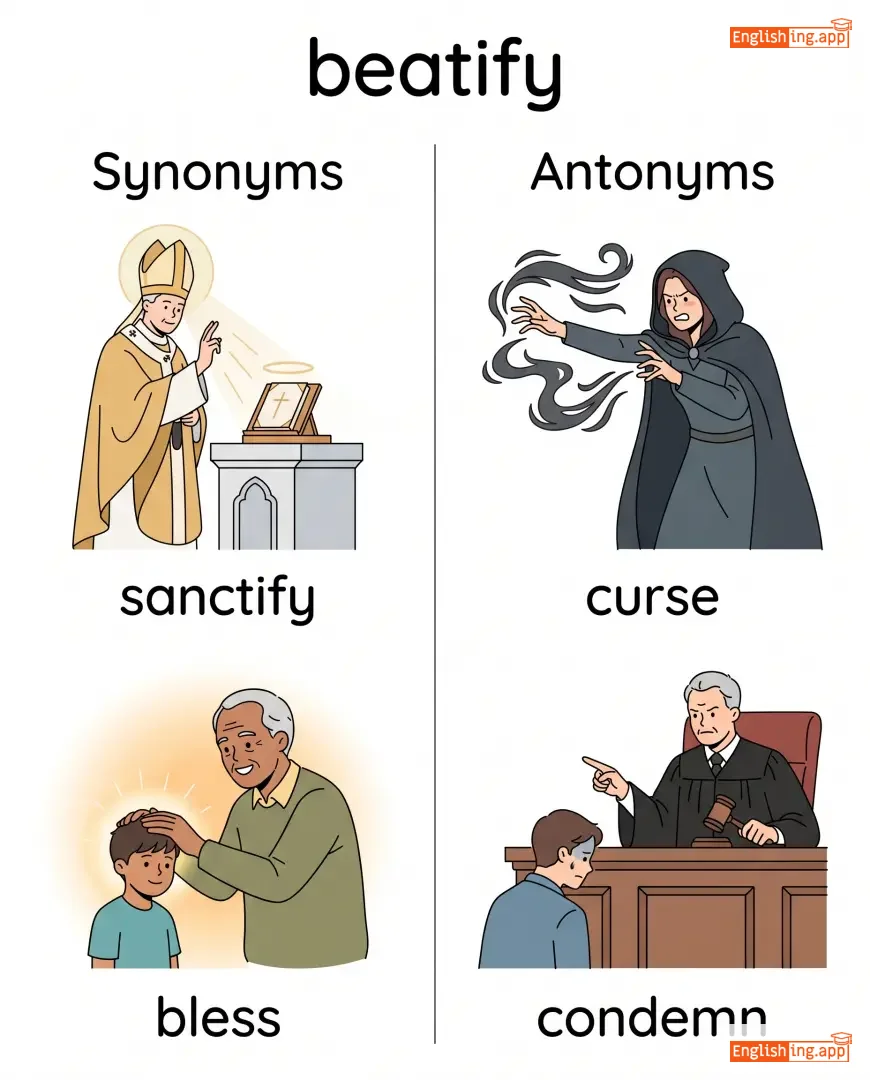
sanctify, bless, hallow, consecrate, exalt
••••••
|
curse, condemn, desecrate
••••••
|
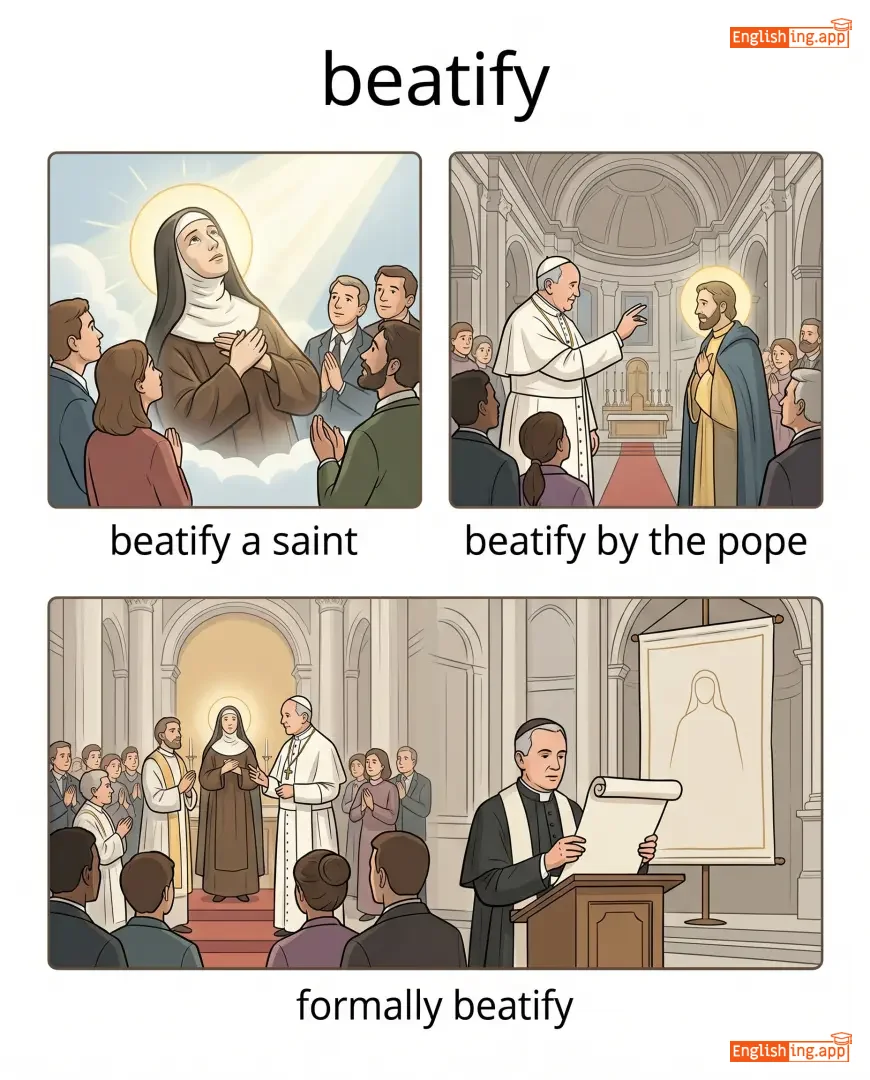
beatify a saint, beatify by the pope, formally beatify
••••••
|
ビーティファイは最終的に聖人を認定すること。教皇は殉教者を列聖する。
••••••
|
|
🌸
••••••
|
/ˈbjuː.tɪ.fəl/
adjective
(ビューティフル)
••••••
|
- •••••• |
美しい
utsukushii
••••••
|
- •••••• | - •••••• | - •••••• | - •••••• |
pleasing to the senses or mind; very attractive
••••••
|
The garden looked beautiful in the morning sunlight. |
庭は朝の陽光の中で美しく見えました。
Niwa wa asa no yōkō no naka de utsukushiku miemashita.
••••••
|
beautiful inside and out |
describing someone as both physically attractive and kind-hearted
••••••
|
内外美しい
naigai utsukushii
••••••
|
lovely, pretty, gorgeous, stunning, attractive
••••••
|
ugly, unattractive
••••••
|
beautiful view, beautiful smile, beautiful day
••••••
|
Beautiful = 美しい = 魅力的
••••••
|
|
🌸
••••••
|
/ˈbjuːtɪfəli/
adverb
(ビューティフリー)
••••••
|
- •••••• |
美しく
utsukushiku
••••••
|
- •••••• | - •••••• | - •••••• | - •••••• |
in a beautiful or pleasing manner; excellently or skillfully
••••••
|
She sang beautifully at the concert.
シー サング ビューティフリー アット ザ コンサート
••••••
|
彼女はコンサートで美しく歌った。
kanojo wa konsaato de utsukushiku utatta
••••••
|
beautifully done
ビューティフリー ダン
••••••
|
performed very well; executed with great skill
••••••
|
見事にやった
migoto ni yatta
••••••
|
gracefully, attractively, elegantly, wonderfully, superbly
••••••
|
ugly, poorly, awkwardly
••••••
|
beautifully designed, beautifully written, beautifully performed, beautifully decorated
••••••
|
美しい (beautiful) → 美しく (beautifully)
••••••
|
|
✨
••••••
|
/ˈbjuːtɪfaɪ/
verb
(ビューティファイ)
••••••
|
- •••••• |
美化する
bika suru
••••••
|
beautified
ビューティファイド
••••••
|
beautified
ビューティファイド
••••••
|
beautifies
ビューティファイズ
••••••
|
beautifying
ビューティファイング
••••••
|
to make something more beautiful or attractive
••••••
|
The city plans to beautify the old park with trees and lights.
ザ シティ プランズ トゥ ビューティファイ ジ オールド パーク ウィズ ツリーズ アンド ライツ
••••••
|
その都市は木や照明で古い公園を美化する計画です。
sono toshi wa ki ya shoumei de furui kouen o bika suru keikaku desu
••••••
|
- •••••• | - •••••• | - •••••• |
adorn, embellish, enhance, decorate, prettify
••••••
|
uglify, mar, deface
••••••
|
beautify the city, beautify a space, beautify surroundings, beautify nature
••••••
|
美化(びか) = beauty化する → beautify
••••••
|
|
🌸
••••••
|
/ˈbjuːti/
noun
(ビューティ)
••••••
|
- •••••• |
美しさ
utsukushisa
••••••
|
- •••••• | - •••••• | - •••••• | - •••••• |
a combination of qualities that please the senses or mind
••••••
|
The beauty of the sunset took her breath away. |
夕日の美しさは彼女の息をのませた。
Yuuhi no utsukushisa wa kanojo no iki o nomaseta.
••••••
|
beauty is in the eye of the beholder |
different people have different opinions about what is beautiful
••••••
|
美しさは見る者の目にある
Utsukushisa wa miru mono no me ni aru
••••••
|
attractiveness, charm, elegance, loveliness, grace
••••••
|
ugliness, plainness, dullness
••••••
|
inner beauty, natural beauty, beauty contest, beauty products
••••••
|
Beauty = 美しさ 💐, 覚えておいて、美しさは誰が見ているかに依存する。
••••••
|
|
🌊
••••••
|
/bɪˈkɑːm/
verb
(bikalm)
••••••
|
- •••••• |
落ち着かせる
ochitsukaseru
••••••
|
becalmed
bikalmd
••••••
|
becalmed
bikalmd
••••••
|
becalms
bikalms
••••••
|
becalming
bikalming
••••••
|
to make calm or still; to deprive a sailing vessel of wind
••••••
|
The captain tried to becalm the anxious crew.
キャプテンは不安な乗組員を落ち着かせようとした。
••••••
|
キャプテンは不安な乗組員を落ち着かせようとした。
Kyaputen wa fuan na norikumiin o ochitsukaseyou to shita.
••••••
|
- •••••• | - •••••• | - •••••• |
soothe, pacify, quiet, settle, still
••••••
|
agitate, disturb, excite
••••••
|
becalm the sea, becalm the crew, becalm the mind
••••••
|
Be + Calm = Becalm, つまり落ち着かせる
••••••
|
|
🔗
••••••
|
/bɪˈkɔːz/
conjunction
(bikozu)
••••••
|
- •••••• |
だから
dakara
••••••
|
- •••••• | - •••••• | - •••••• | - •••••• |
for the reason that; since
••••••
|
He stayed home because it was raining. |
彼は雨が降っていたので家にいた。
Kare wa ame ga futte ita node ie ni ita.
••••••
|
- •••••• | - •••••• | - •••••• |
since, as, due to, owing to
••••••
|
despite, although
••••••
|
because of you, just because, because of the rain
••••••
|
Becauseはだからという意味です🔗。Causeは理由という意味!
••••••
|
|
👋
••••••
|
/ˈbɛkən/
verb
(ベコン)
••••••
|
- •••••• |
手招きする
temaneki suru
••••••
|
beckoned
ベコンド
••••••
|
beckoned
ベコンド
••••••
|
beckons
ベコンズ
••••••
|
beckoning
ベコニング
••••••
|
to signal or call someone to come closer, often with a gesture; to attract or invite
••••••
|
She beckoned him to come closer with a wave of her hand.
シー ベコンド ヒム トゥ カム クローサー ウィズ ア ウェイブ オブ ハー ハンド。
••••••
|
彼女は手を振って彼に近くへ来るよう合図した。
kanojo wa te o futte kare ni chikaku e kuru you aizushita
••••••
|
beckon to
ベコン トゥ
••••••
|
to invite or attract someone toward something
••••••
|
〜を誘う
o sasou
••••••
|
signal, summon, call, motion, entice
••••••
|
repel, deter, discourage
••••••
|
beckon someone over, beckon with a hand, beckon closer, beckon invitingly
••••••
|
Beckon=ベッと来い、と手招きする感じ
••••••
|
|
🌱
••••••
|
/bɪˈkʌm/
verb
(bikamu)
••••••
|
- •••••• |
なる
naru
••••••
|
became
bikemu
••••••
|
become
bikamu
••••••
|
becomes
bikamus
••••••
|
becoming
bikamingu
••••••
|
to begin to be; to develop into
••••••
|
He became a successful doctor after years of hard work.
彼は何年もの努力の末、成功した医者になった。
••••••
|
彼は何年もの努力の末、成功した医者になった。
Kare wa nan-nen mono doryoku no sue, seikou shita isha ni natta.
••••••
|
become a reality
bikamu a riariti
••••••
|
to actually happen
••••••
|
現実になる
genjitsu ni naru
••••••
|
turn into, grow into, evolve, develop
••••••
|
cease, stop, remain
••••••
|
become famous, become aware, become clear, become friends
••••••
|
Become 🌱 は「なる」という意味です。小さな種がゆっくりと大きな木に成長するように。
••••••
|
|
🛏️
••••••
|
/bɛd/
noun
••••••
|
- •••••• | - •••••• | - •••••• | - •••••• | - •••••• | - •••••• |
a piece of furniture for sleeping or resting on
••••••
|
She lay down on the bed and fell asleep quickly. |
- •••••• |
make your bed |
to arrange or tidy your bed after getting up
••••••
|
- •••••• |
couch, mattress, cot, bunk
••••••
|
floor, ground
••••••
|
go to bed, make the bed, bed sheet, hospital bed
••••••
|
No •••••• |

