Получите неограниченный доступ ко всем словам с подпиской Pro
Обновить до ProПолучите неограниченный доступ ко всем предложениям с подпиской Pro
Обновить до Pro|
Эмодзи
|
Слово | Images | Перевод | Прошедшее | Причастие прошедшего времени | Третье лицо единственного числа | Герундий | Значение | Пример предложения | Перевод примера предложения | Пример выражения | Значение примера выражения | Перевод примера выражения | Синонимы | Антонимы | Коллокации | Мнемоника |
|---|---|---|---|---|---|---|---|---|---|---|---|---|---|---|---|---|---|
|
🌿
••••••
|
/beər/
adjective
(бэр)
••••••
|
- •••••• |
голый
goly
••••••
|
- •••••• | - •••••• | - •••••• | - •••••• |
not covered by any clothing or decoration; simple and without addition
••••••
|
He walked on the beach with bare feet. |
Он шел по пляжу босыми ногами.
On shel po plyazhu bosymi nogami.
••••••
|
bare essentials |
only the most necessary items or facts
••••••
|
необходимое минимум
neobkhodimoe minimum
••••••
|
naked, uncovered, exposed, plain, simple
••••••
|
covered, clothed, decorated
••••••
|
bare hands, bare feet, bare minimum, bare skin
••••••
|
Bare означает голый — как bare body означает голое тело. Помни: Bear не может ходить босым!
••••••
|
|
😅
••••••
|
/ˈber.li/
adverb
(бэрли)
••••••
|
- •••••• |
едва; только что; почти нет
yedva, tol'ko chto, pochti net
••••••
|
- •••••• | - •••••• | - •••••• | - •••••• |
scarcely; only just; almost not
••••••
|
I barely passed the exam.
Я едва сдал экзамен.
••••••
|
Я едва сдал экзамен.
Ya yedva sdal ekzamen.
••••••
|
- •••••• | - •••••• | - •••••• |
scarcely, hardly, just, merely
••••••
|
abundantly, completely, fully, entirely
••••••
|
barely visible, barely audible, barely survive, barely enough
••••••
|
Imagine passing by a hair's breadth, barely enough.
••••••
|
|
🪶
••••••
|
/ˈbɛərnəs/
noun
(бэарнес)
••••••
|
- •••••• |
нагота
nagota
••••••
|
- •••••• | - •••••• | - •••••• | - •••••• |
the state of being bare or uncovered; lack of decoration, warmth, or concealment
••••••
|
The bareness of the room made it feel cold and unwelcoming.
Зе бэарнес оф зе рум мэйд ит фил коулд энд анвэлкаминг.
••••••
|
Нагота комнаты делала её холодной и неприветливой.
Nagota komnaty delala ee kholodnoy i nepriyvetlivoy
••••••
|
in all its bareness
ин ол итс бэарнес
••••••
|
without any attempt to hide or decorate; in its plain, exposed state
••••••
|
во всей своей наготе
vo vsey svoey nagote
••••••
|
nakedness, emptiness, starkness, simplicity, exposure
••••••
|
richness, fullness, ornamentation
••••••
|
sheer bareness, stark bareness, bareness of the land, emotional bareness
••••••
|
Bare звучит как ‘бар’ без всего — значит нагота.
••••••
|
|
🤝
••••••
|
/ˈbɑːrɡən/
noun, verb
(баргин)
••••••
|

|
сделка / выгодная покупка
sdelka / vigodnaya pokupka
••••••
|
bargained
баргейнд
••••••
|
bargained
баргейнд
••••••
|
bargains
баргинс
••••••
|
bargaining
баргининг
••••••
|
an agreement between two or more parties; something bought at a good price
••••••
|
We managed to get the car at a real bargain.
Нам удалось купить машину по настоящей выгодной цене.
••••••
|
Нам удалось купить машину по настоящей выгодной цене.
Nam udalos' kupit' mashinu po nastoyashchey vigodnoy tsene.
••••••
|
strike a bargain
заключить сделку
••••••
|
to reach an agreement
••••••
|
заключить сделку
zaklyuchit' sdelku
••••••
|
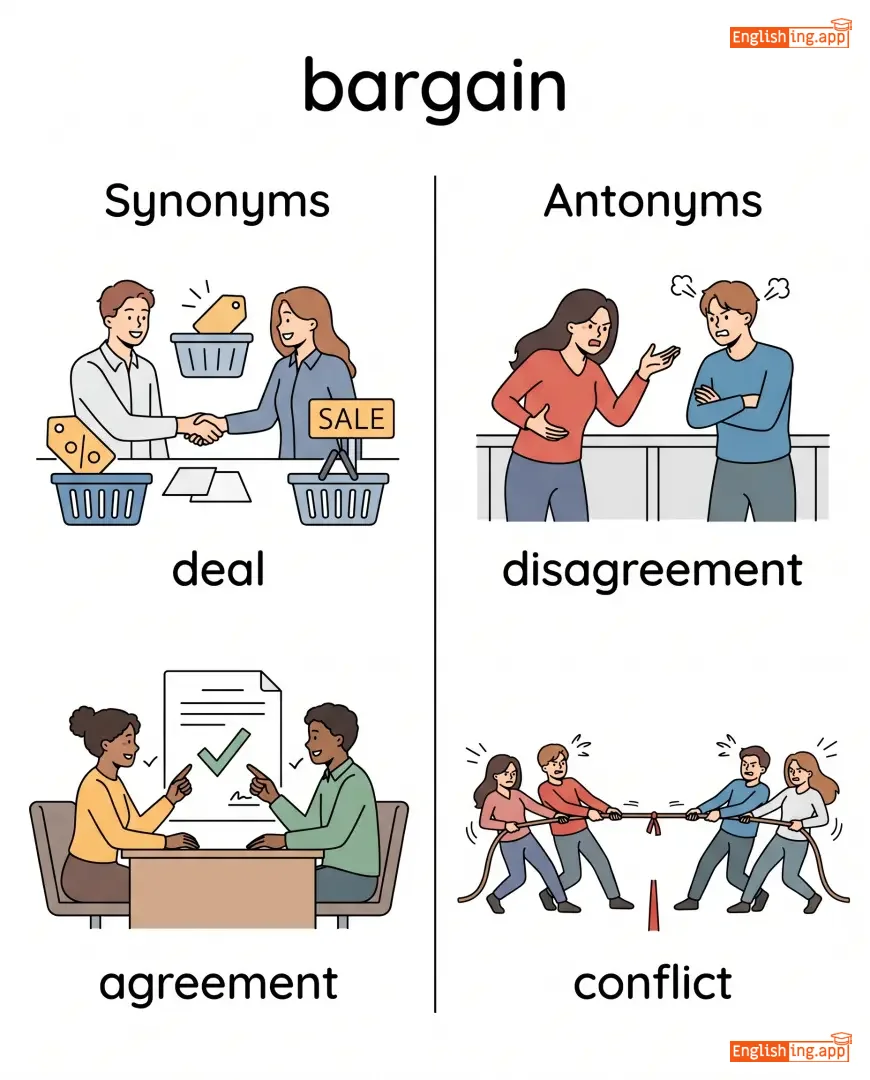
deal, agreement, contract, negotiation, offer
••••••
|
disagreement, conflict, refusal
••••••
|
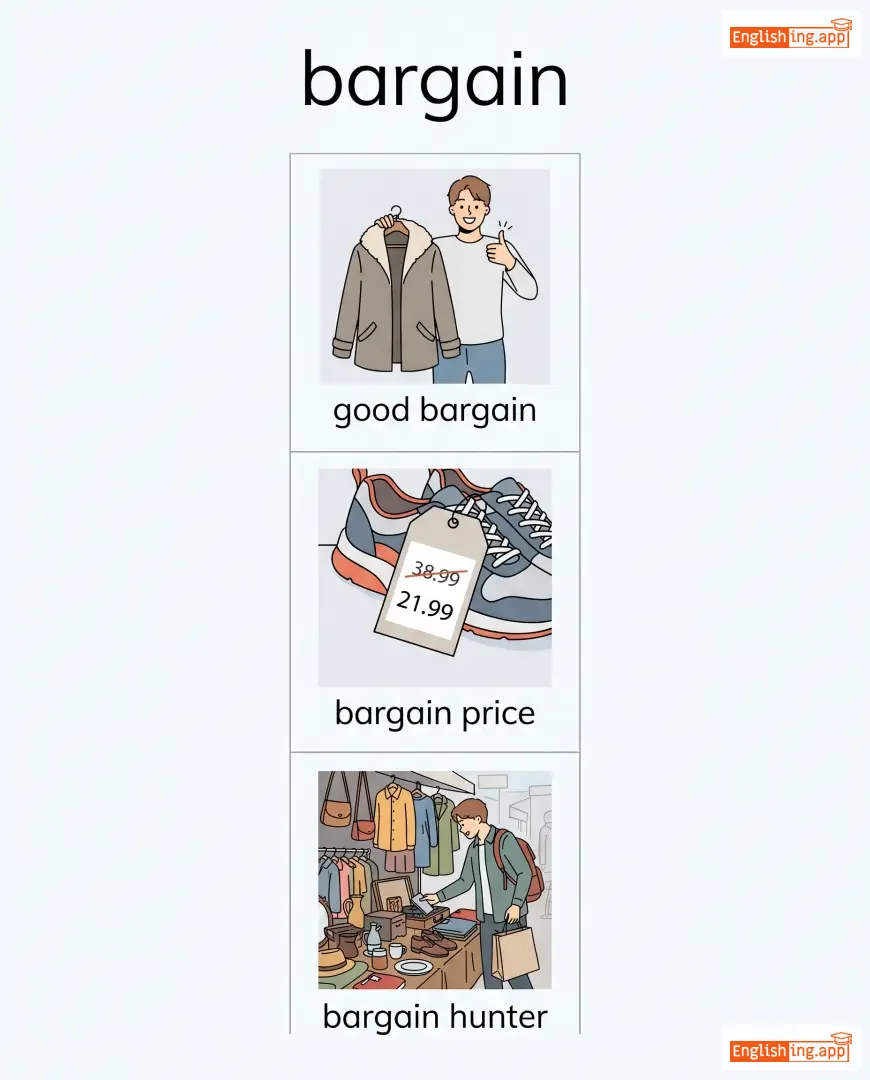
good bargain, bargain price, bargain hunter, strike a bargain
••••••
|
Bargain — это когда вы выигрываете сделку по выгодной цене.
••••••
|
|
🐕
••••••
|
/bɑːrk/
verb
(барк)
••••••
|
|
лаять
layat'
••••••
|
barked
баркед
••••••
|
barked
баркед
••••••
|
barks
баркс
••••••
|
barking
баркинг
••••••
|
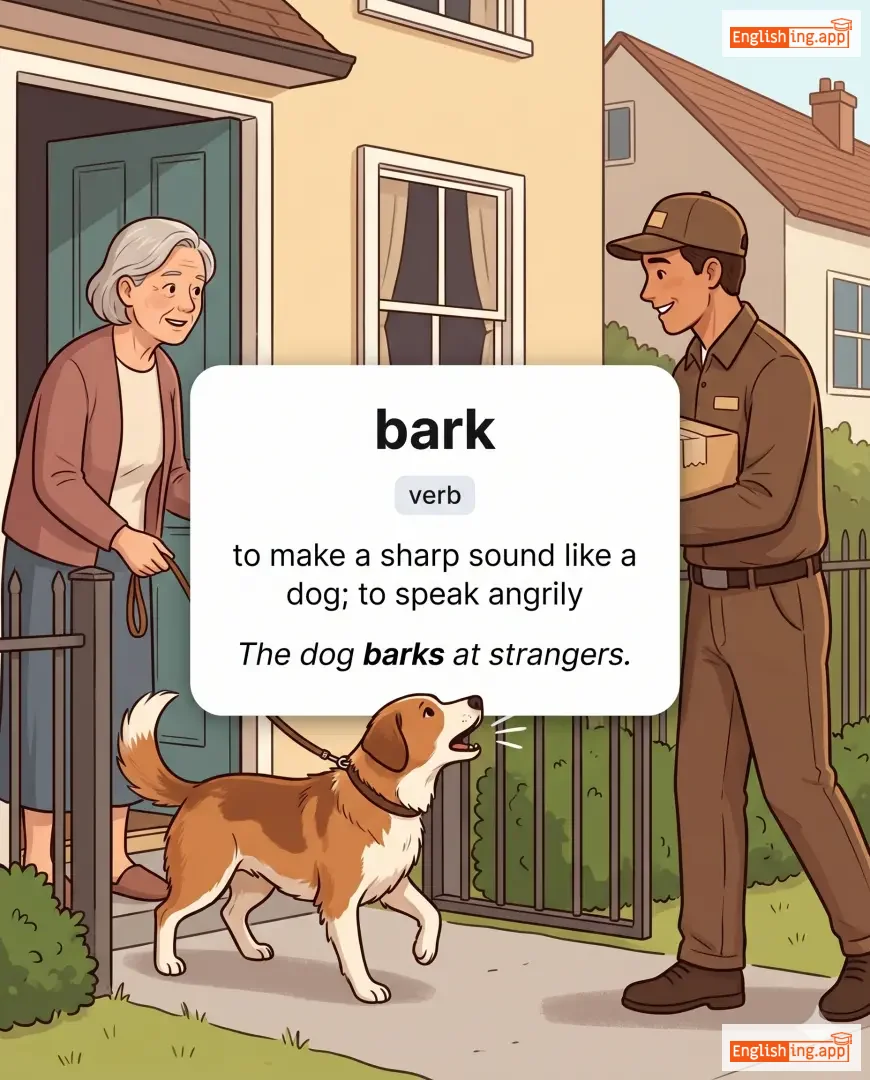
to make a sharp sound like a dog; to speak angrily
••••••
|
The dog barks at strangers.
The dog barks at strangers.
••••••
|
Собака лает на незнакомцев.
Sobaka layet na neznakomtsev.
••••••
|
- •••••• | - •••••• | - •••••• |
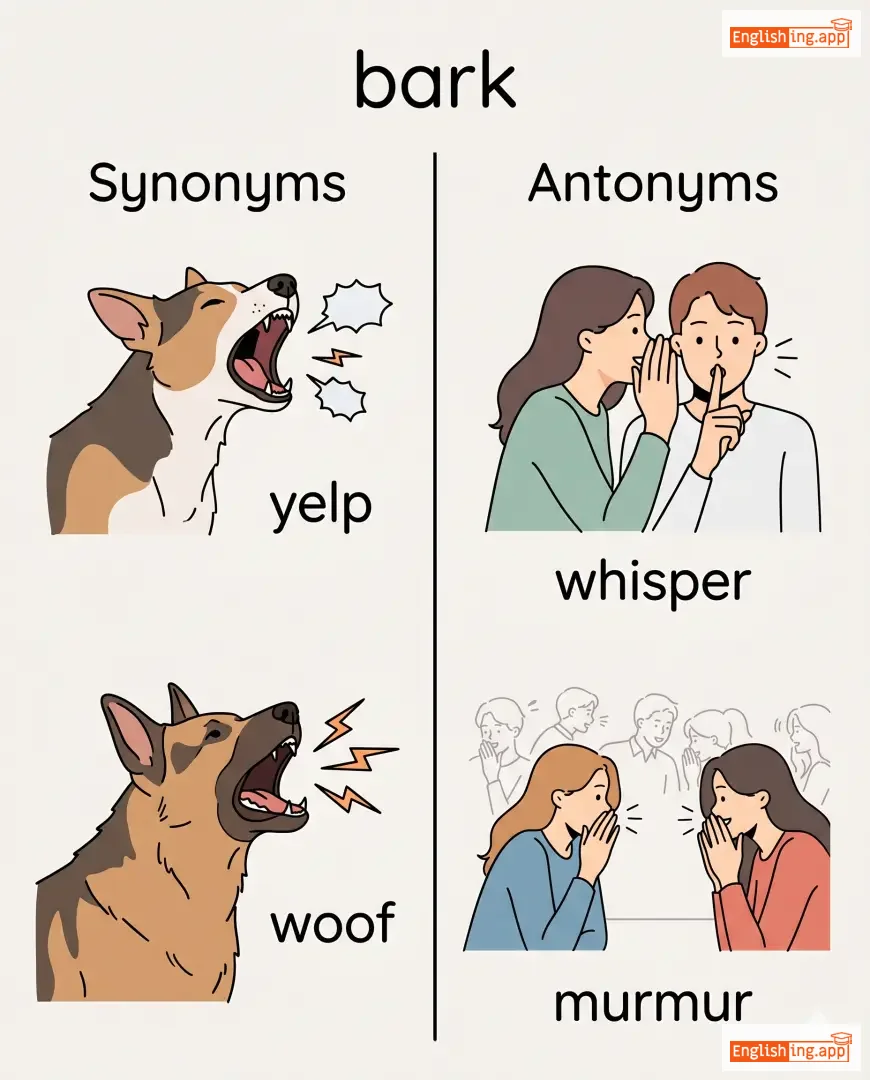
yelp, woof, snap, shout
••••••
|
whisper, murmur, silence
••••••
|
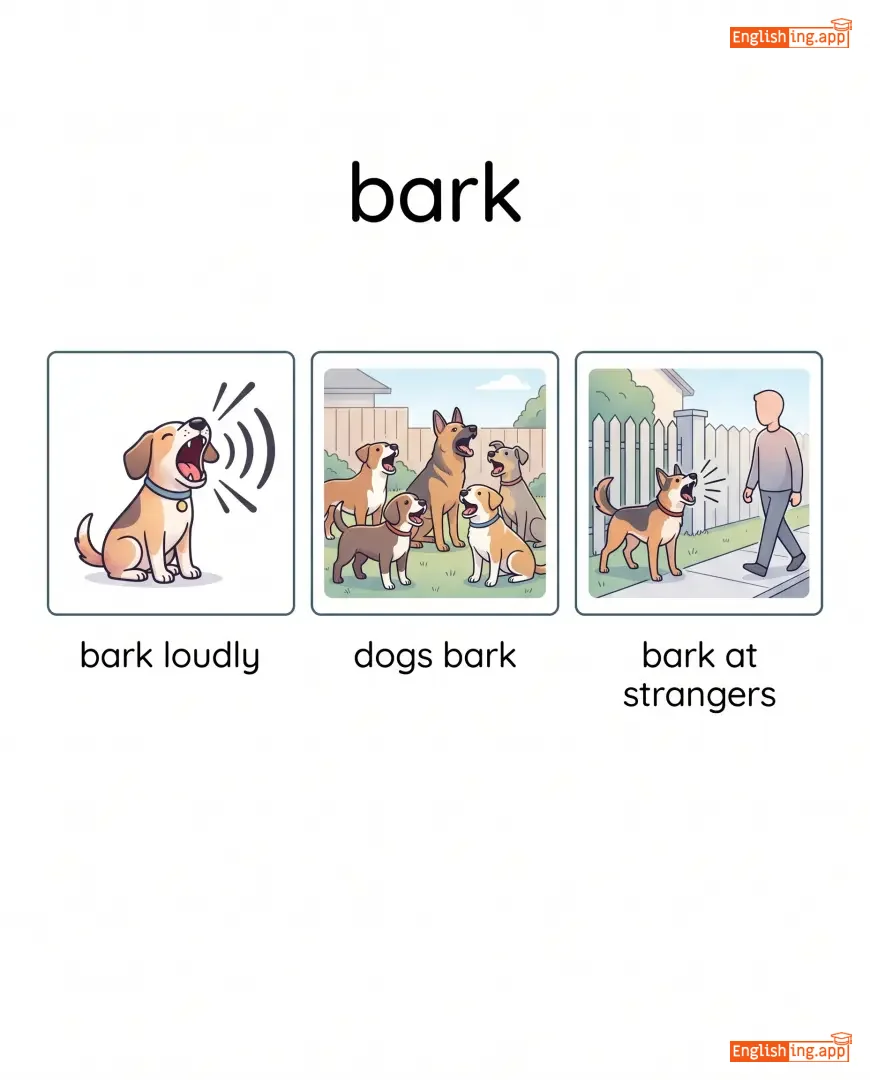
bark loudly, dogs bark, bark at strangers, bark orders
••••••
|
Собака лает, когда злится.
••••••
|
|
🛢️
••••••
|
/ˈbærəl/
noun
(берл)
••••••
|
- •••••• |
большая бочка
bolshaya bochka
••••••
|
- •••••• | - •••••• | - •••••• | - •••••• |
a large cylindrical container used to hold liquids
••••••
|
The wine was stored in a wooden barrel. |
Вино было хранено в деревянной бочке.
Vino bylo khranenno v derevyannoy bochke.
••••••
|
over a barrel |
in a helpless or difficult situation
••••••
|
в трудной ситуации
v trudnoy situatsii
••••••
|
cask, drum, keg, container
••••••
|
bottle, flask
••••••
|
oil barrel, wooden barrel, barrel of wine, barrel full
••••••
|
Barrel это большая бочка, представь бочку для вина.
••••••
|
|
🚧
••••••
|
/ˌbærɪˈkeɪd/
noun/verb
(баррикада)
••••••
|
- •••••• |
баррикада
barrikada
••••••
|
barricaded
баррикадировал
••••••
|
barricaded
баррикадировал
••••••
|
barricades
баррикадирует
••••••
|
barricading
баррикадировать
••••••
|
a barrier erected to block or defend against movement; to block a passage with obstacles
••••••
|
Protesters built a barricade across the street.
Протестующие построили баррикаду через улицу.
••••••
|
Протестующие построили баррикаду через улицу.
Protestuyushchie postroili barrikadu cherez ulitsu.
••••••
|
- •••••• | - •••••• | - •••••• |
barrier, blockade, obstacle, obstruction, fortification
••••••
|
opening, passage, clearance
••••••
|
erect a barricade, block with a barricade, barricade the street
••••••
|
Баррикада = Барьер + Када, блокировать дорогу
••••••
|
|
🚧
••••••
|
/ˈbæriər/
noun
(bariér)
••••••
|
|
барьер
bar'yer
••••••
|
- •••••• | - •••••• | - •••••• | - •••••• |
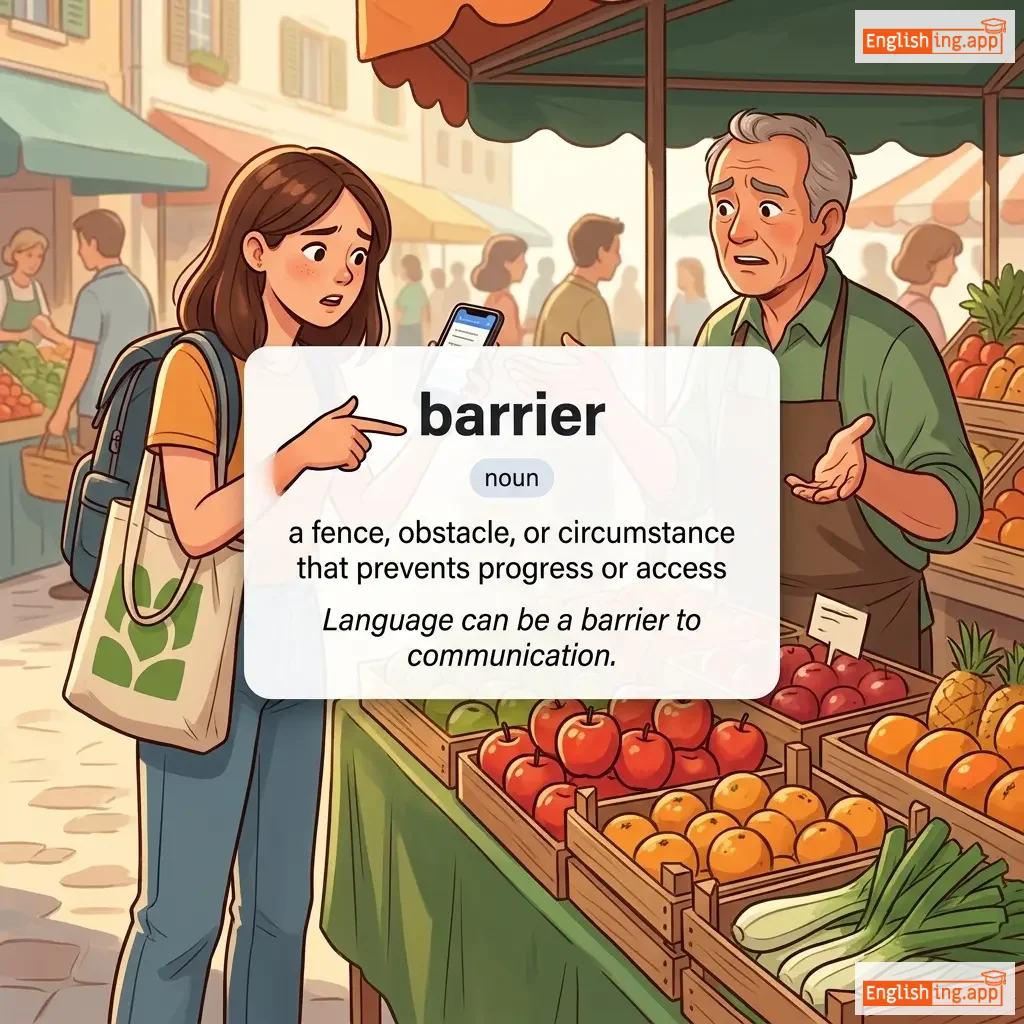
a fence, obstacle, or circumstance that prevents progress or access
••••••
|
Language can be a barrier to communication.
Язык может быть барьером для общения.
••••••
|
Язык может быть барьером для общения.
Yazyk mozhet byt' bar'yerom dlya obshcheniya.
••••••
|
break down barriers
ломать барьеры
••••••
|
to remove obstacles that prevent progress or understanding
••••••
|
ломать барьеры
lomat' bar'ery
••••••
|
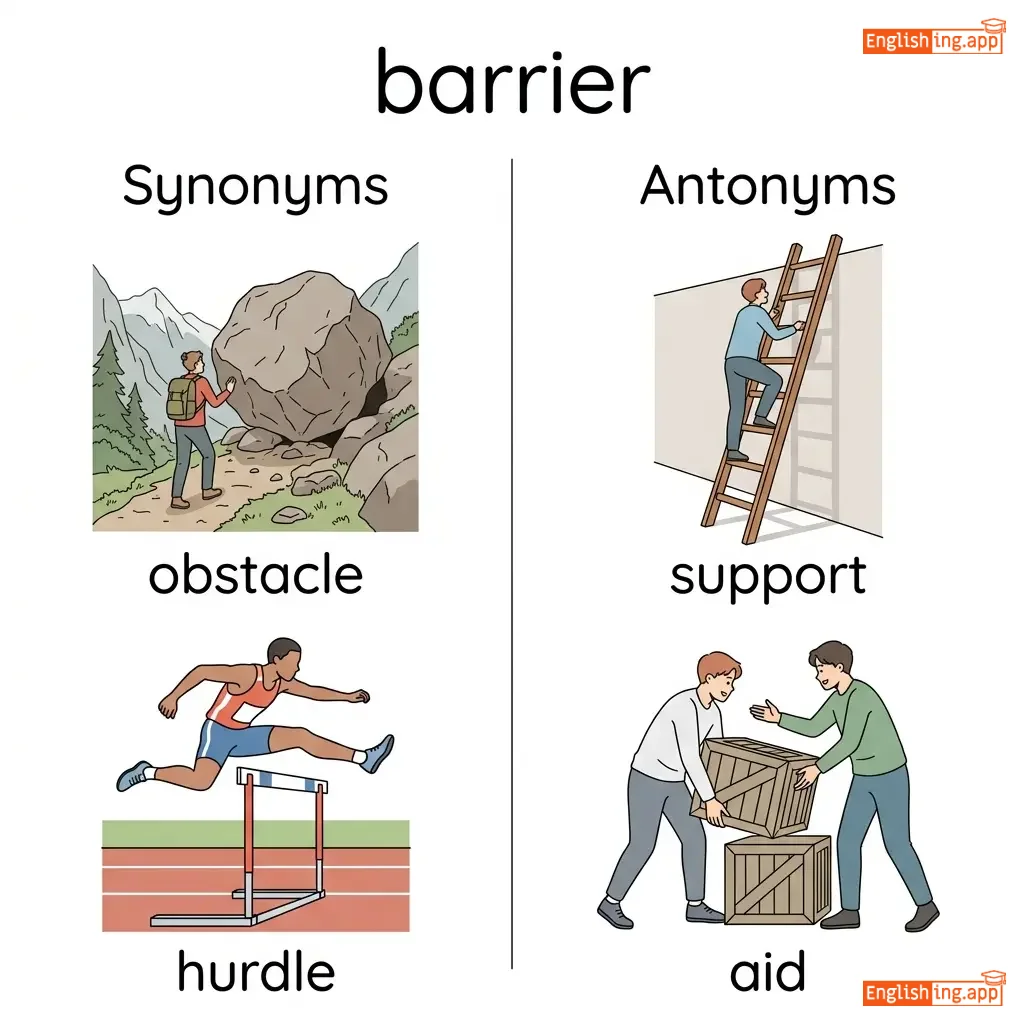
obstacle, hurdle, fence, block, hindrance
••••••
|
support, aid
••••••
|
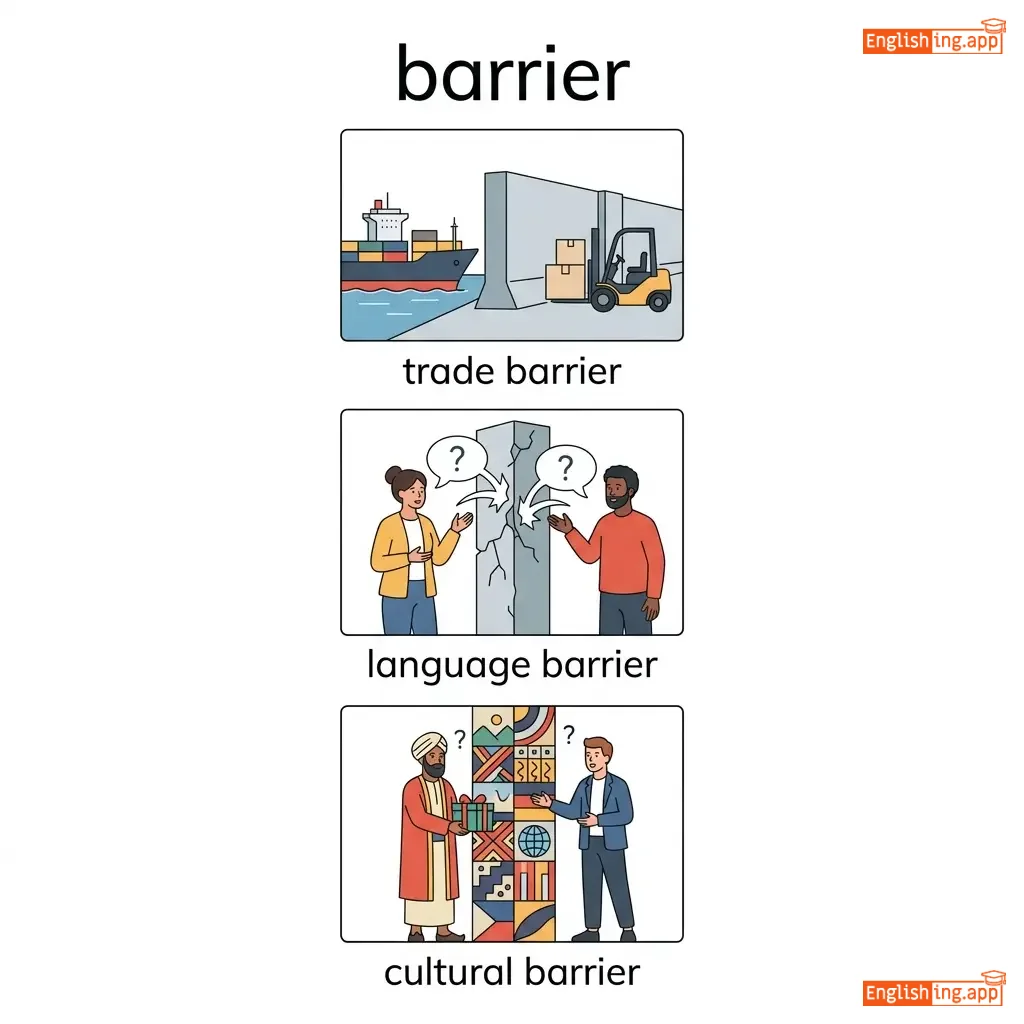
trade barrier, language barrier, cultural barrier, physical barrier
••••••
|
Барьер означает препятствие, как барьер на дороге, который останавливает автомобили.
••••••
|
|
🔄
••••••
|
/ˈbɑːrtər/
verb
(бартер)
••••••
|
- •••••• |
бартер
barter
••••••
|
bartered
бартерд
••••••
|
bartered
бартерд
••••••
|
barters
бартерз
••••••
|
bartering
бартеринг
••••••
|
To exchange goods or services without using money.
••••••
|
They bartered their crops for handmade tools.
Зэй бартерд зэр кропс фор хэндмэйд тулз.
••••••
|
Они обменяли свои урожаи на инструменты ручной работы.
Oni obmenyali svoi urozhai na instrumenty ruchnoy raboty.
••••••
|
barter system
бартер систем
••••••
|
An economic system where goods or services are exchanged directly without money.
••••••
|
Бартерная система
barternaya sistema
••••••
|
trade, exchange, swap, deal
••••••
|
buy, sell
••••••
|
barter goods, barter system, barter trade, barter exchange
••••••
|
Бартер bar ter: на рынке barters as if you see bar ter words schon with no money; запомни: bar ter = бартер, обмен без денег.
••••••
|
|
🏛️
••••••
|
/beɪs/
noun, verb
(bès)
••••••
|
|
основа
osnova
••••••
|
based
bèst
••••••
|
based
bèst
••••••
|
bases
bèses
••••••
|
basing
bèsing
••••••
|
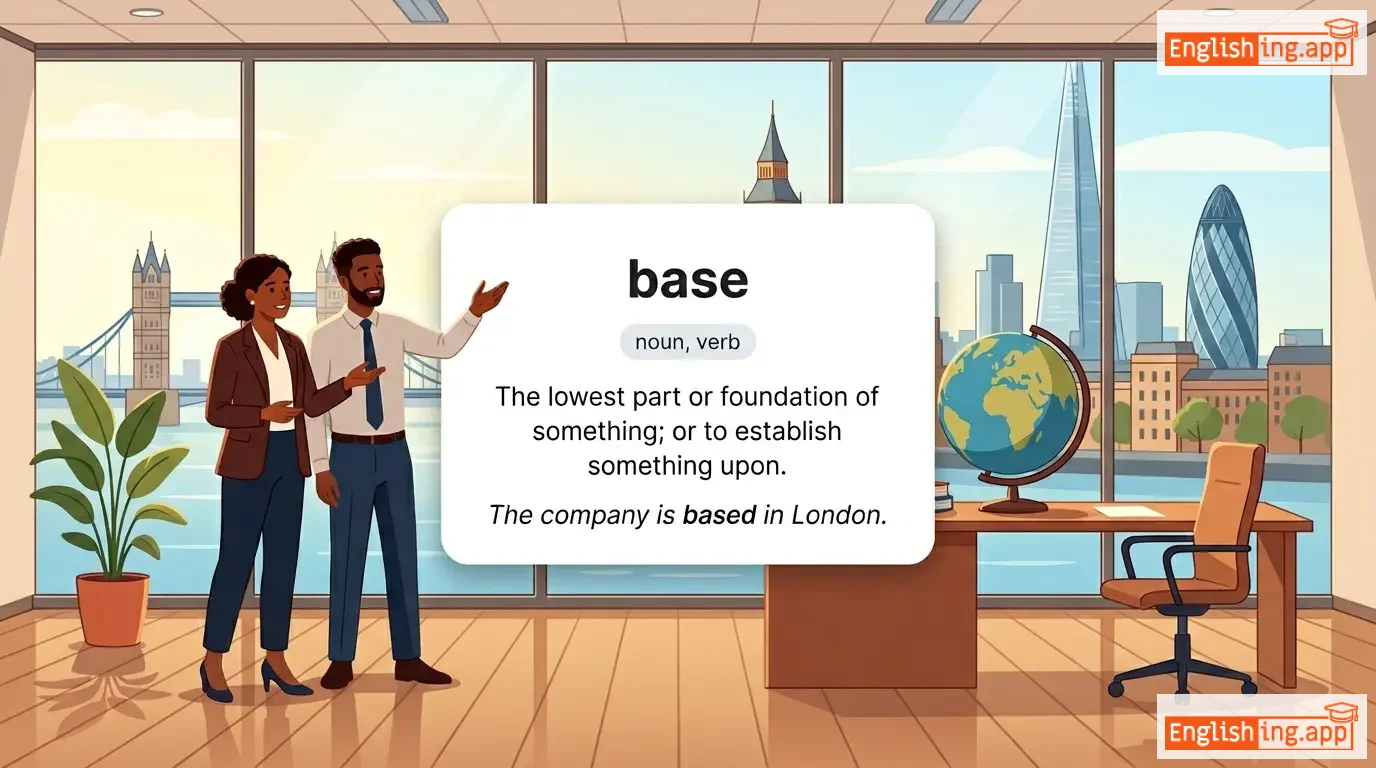
The lowest part or foundation of something; or to establish something upon.
••••••
|
The company is based in London.
Компания базируется в Лондоне.
••••••
|
Компания базируется в Лондоне.
Kompaniya baziruyetsya v Londone.
••••••
|
base on
основываться на
••••••
|
To use as a foundation or starting point.
••••••
|
основываться на
osnovyvatsya na
••••••
|
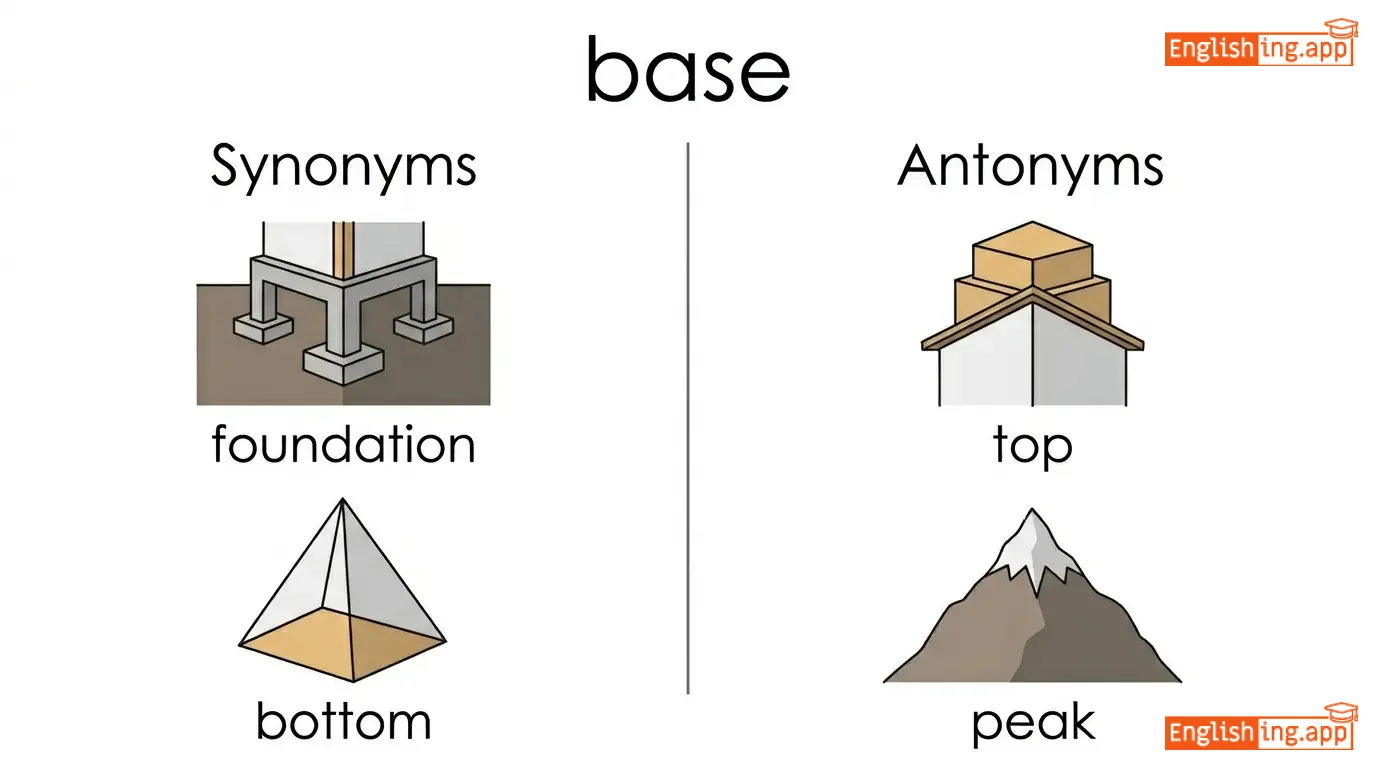
foundation, bottom, support, root, ground
••••••
|
top, peak
••••••
|
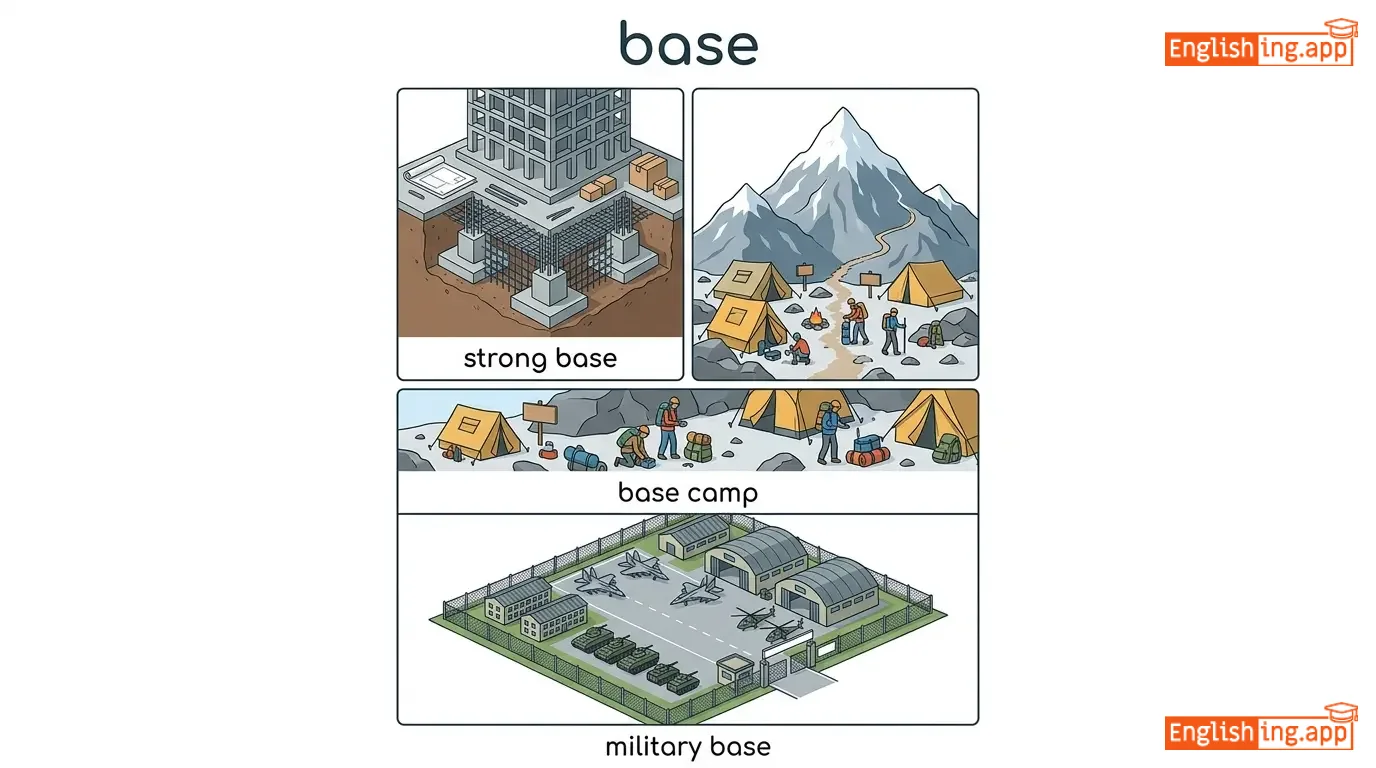
strong base, base camp, military base, based on, base level
••••••
|
Osnova na russkom oznachaet 'osnovu', i u kazhdogo doma est' nadezhnaya 'osnova'.
••••••
|
|
⚾
••••••
|
/ˈbeɪsˌbɔːl/
noun
(бейсбол)
••••••
|
- •••••• |
бейсбол
beysbol
••••••
|
- •••••• | - •••••• | - •••••• | - •••••• |
a sport in which two teams try to score runs by hitting a ball and running around bases
••••••
|
He loves watching baseball games on TV. |
Он любит смотреть игры по бейсболу по телевизору.
On lyubit smotret' igry po beysbolu po televizeru.
••••••
|
- •••••• | - •••••• | - •••••• |
sport, game, pastime
••••••
|
work, chore
••••••
|
baseball game, baseball bat, baseball team, baseball player
••••••
|
Baseball - это спорт; представляй, как 'базу бьешь, бежишь'
••••••
|
|
🏠
••••••
|
/ˈbeɪs.mənt/
noun
(beysment)
••••••
|
- •••••• |
подвал
podval
••••••
|
- •••••• | - •••••• | - •••••• | - •••••• |
the lowest floor of a building, typically below ground level
••••••
|
We store old furniture in the basement. |
Мы храним старую мебель в подвале.
My khranim staruyu mebel' v podvale.
••••••
|
- •••••• | - •••••• | - •••••• |
cellar, underground floor, lower level
••••••
|
attic, top floor, upper level
••••••
|
basement apartment, basement stairs, basement storage
••••••
|
В подвале всегда темно и прохладно
••••••
|
|
🔑
••••••
|
/ˈbeɪsɪk/
adjective
(бэйсик)
••••••
|
- •••••• |
основной
osnovnoy
••••••
|
- •••••• | - •••••• | - •••••• | - •••••• |
forming the most important or simplest part of something
••••••
|
She taught me the basic rules of chess. |
Она научила меня основным правилам шахмат.
Ona nauchila menya osnovnym pravilaam shahmat.
••••••
|
back to basics |
returning to simple, fundamental principles
••••••
|
вернуться к основам
vernut'sya k osnovam
••••••
|
fundamental, essential, primary, simple, elementary
••••••
|
advanced, complex, secondary
••••••
|
basic knowledge, basic needs, basic rules, basic skills
••••••
|
Basic означает основной; помни 'basic needs = основные потребности'.
••••••
|
|
🔑
••••••
|
/ˈbeɪsɪkli/
adverb
(базисно)
••••••
|
- •••••• |
основным образом
osnovnym obrazom
••••••
|
- •••••• | - •••••• | - •••••• | - •••••• |
in the most important or fundamental way; essentially
••••••
|
Basically, the project was a success despite some small issues. |
Основным образом проект был успешным, несмотря на некоторые мелкие проблемы.
Osnovnym obrazom proyekt byl uspeshnym, nesmotrya na nekotorye melkie problemy.
••••••
|
- •••••• | - •••••• | - •••••• |
essentially, fundamentally, primarily, essentially, in essence
••••••
|
complicatedly, secondarily
••••••
|
basically true, basically correct, basically simple, basically sound
••••••
|
Basically это основное, значит основным образом.
••••••
|
|
🏗️
••••••
|
/ˈbeɪsɪs/
noun
(бейсис)
••••••
|
- •••••• |
основа
osnova
••••••
|
- •••••• | - •••••• | - •••••• | - •••••• |
the underlying support or foundation for an idea, argument, or process
••••••
|
Trust is the basis of any strong relationship. |
Доверие - основа любых сильных отношений.
Doverye - osnova lyubykh sil'nykh otnosheniy.
••••••
|
on a daily basis |
happening every day
••••••
|
ежедневно
ezhednevno
••••••
|
foundation, ground, principle, root, support
••••••
|
top, surface
••••••
|
form the basis, strong basis, legal basis, daily basis
••••••
|
Основа значит база (osnova) - как база у здания
••••••
|
|
☀️
••••••
|
/bæsk/
verb
••••••
|
|
- •••••• |
basked
••••••
|
basked
••••••
|
basks
••••••
|
basking
••••••
|
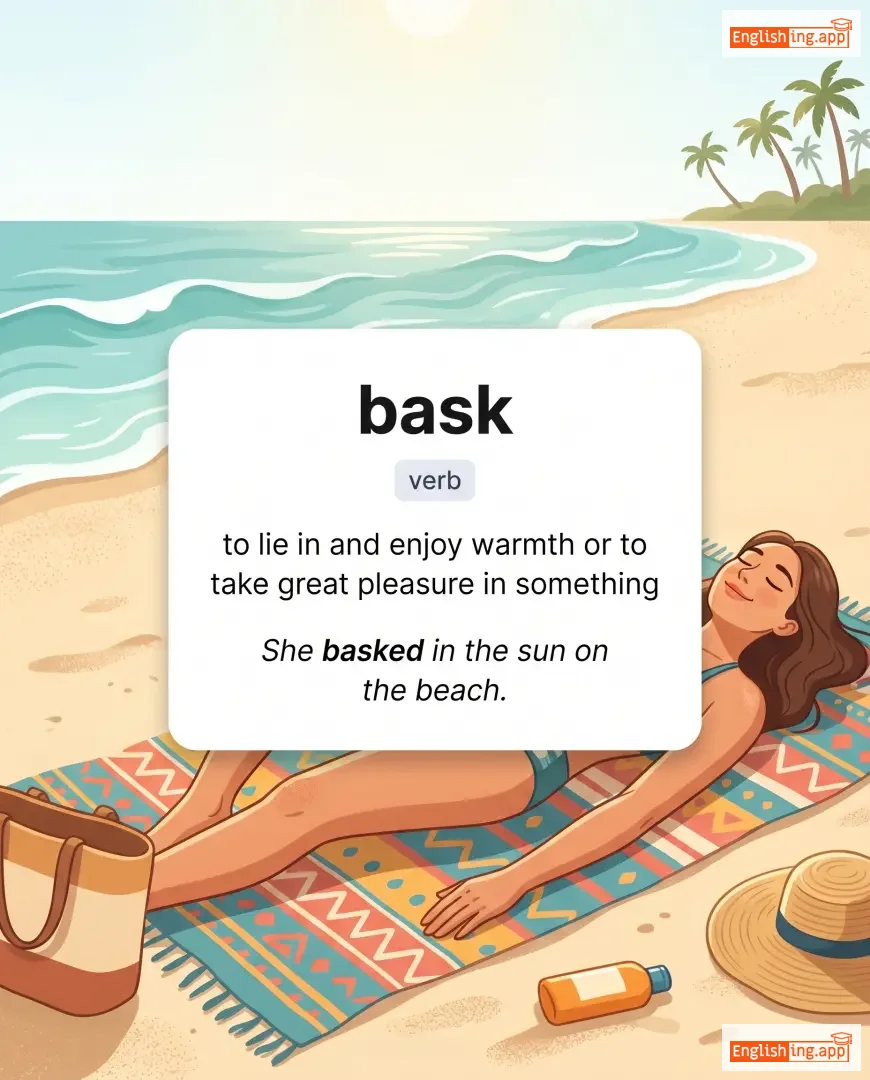
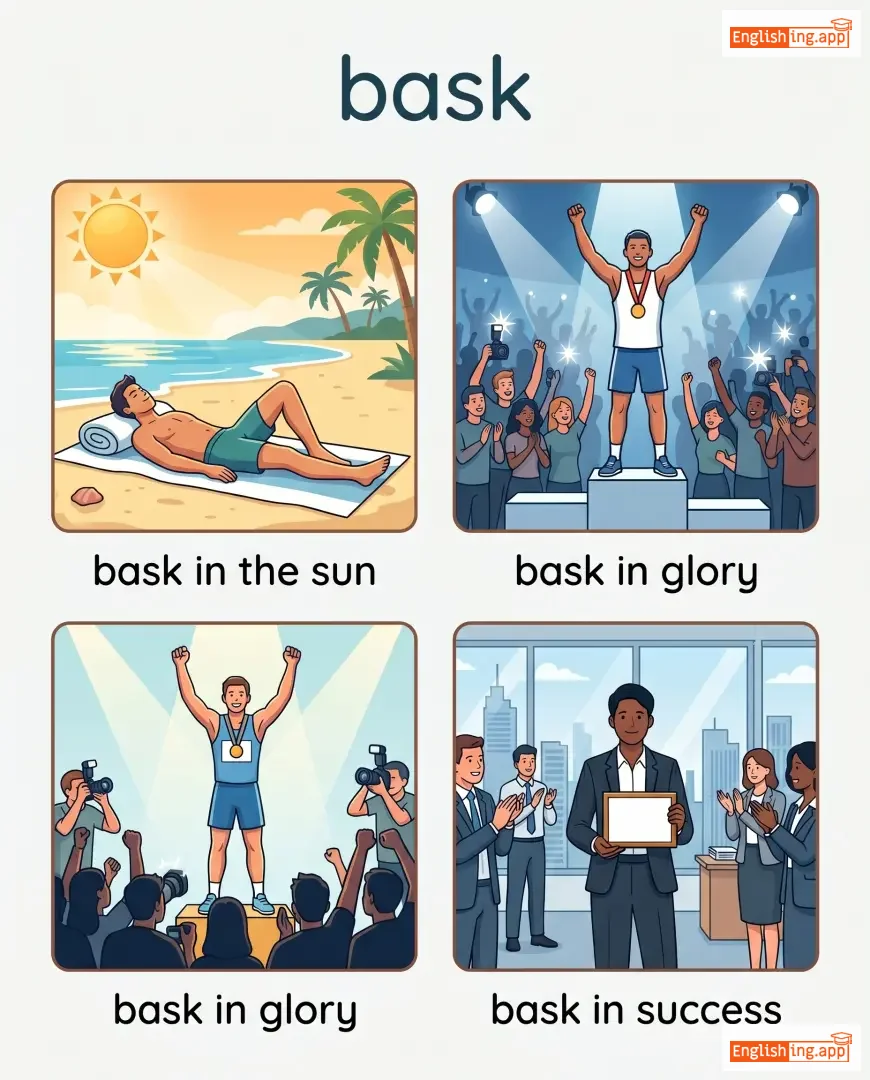
to lie in and enjoy warmth or to take great pleasure in something
••••••
|
She basked in the sun on the beach. |
- •••••• |
bask in glory |
to enjoy the praise or admiration received for an achievement
••••••
|
- •••••• |
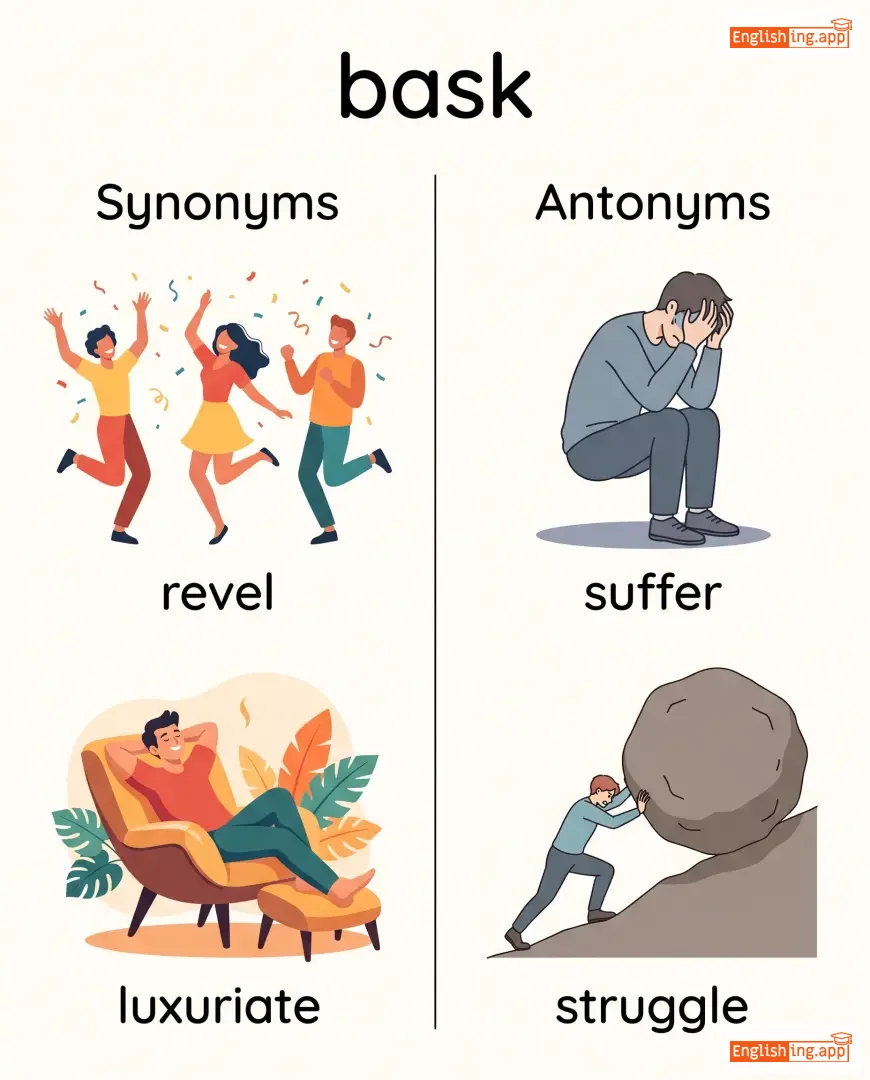
revel, luxuriate, delight, enjoy, relax
••••••
|
suffer, struggle, endure
••••••
|
bask in the sun, bask in glory, bask in success, bask in attention
••••••
|
No •••••• |
|
🧺
••••••
|
/ˈbæskɪt/
noun
(баскет)
••••••
|
- •••••• |
корзина
korzina
••••••
|
- •••••• | - •••••• | - •••••• | - •••••• |
a container made of woven materials used for carrying or storing things
••••••
|
She carried the apples in a basket. |
Она несла яблоки в корзине.
Ona nesla yabloki v korzine.
••••••
|
don’t put all your eggs in one basket |
don’t risk everything on a single venture
••••••
|
не кладите все яйца в одну корзину
ne kladite vse yaytsa v odnu korzinu
••••••
|
container, hamper, bin, receptacle
••••••
|
floor, ground
••••••
|
shopping basket, fruit basket, picnic basket, basket case
••••••
|
Basket - это корзина (korzina) - например, когда кладешь фрукты в корзину на пикник
••••••
|
|
🎸
••••••
|
/beɪs/
noun
(бэс)
••••••
|
- •••••• |
низкий мужской голос / бас-гитара
nizkiy muzhskoy golos / bas-gitara
••••••
|
- •••••• | - •••••• | - •••••• | - •••••• |
the lowest adult male singing voice; also, low-frequency sounds in music or a type of fish
••••••
|
He played the bass guitar at the concert.
Он играл на бас-гитаре на концерте.
••••••
|
Он играл на бас-гитаре на концерте.
On igral na bas-gitare na koncerte.
••••••
|
- •••••• | - •••••• | - •••••• |
low voice, deep tone, baritone, subwoofer
••••••
|
treble, soprano
••••••
|
bass guitar, bass line, bass sound, bass singer
••••••
|
Слово 'bass' похоже на 'base', что означает низ — поэтому глубокий голос.
••••••
|
|
😡
••••••
|
/ˈbæstərd/
noun/adjective
(бастар)
••••••
|
- •••••• |
ублюдок
ublyudok
••••••
|
- •••••• | - •••••• | - •••••• | - •••••• |
a child born to unmarried parents (offensive); also used informally as an insult or to describe something unpleasant
••••••
|
He called him a bastard in anger. |
Он назвал его ублюдком от ярости.
On nazval ego ublyudkom ot yarosti.
••••••
|
poor bastard |
an unfortunate or pitiable person
••••••
|
бедный ублюдок
bednyy ublyudok
••••••
|
illegitimate child, scoundrel, rogue, jerk
••••••
|
legitimate child, gentleman
••••••
|
call someone a bastard, poor bastard, lucky bastard
••••••
|
Слово ублюдок запоминается с ‘best hard’ – нелегитимная жизнь самая тяжёлая.
••••••
|
|
🧩
••••••
|
/ˈbæstərdaɪz/
verb
(бастардайз)
••••••
|
- •••••• |
искажать
iskazhat
••••••
|
bastardized
бастардайзд
••••••
|
bastardized
бастардайзд
••••••
|
bastardizes
бастардайзес
••••••
|
bastardizing
бастардайзинг
••••••
|
to corrupt or debase something by altering it from its original form; to change in a way that reduces quality or purity
••••••
|
Critics argue that the remake bastardized the original novel.
Критики считают, что ремейк исказил оригинал.
••••••
|
Критики считают, что ремейк исказил оригинал.
Kritiki schitayut chto remake iskazil original
••••••
|
- •••••• | - •••••• | - •••••• |
corrupt, debase, distort, adulterate, pervert
••••••
|
preserve, purify, refine
••••••
|
bastardize a language, bastardize a tradition, bastardize the original, culturally bastardized
••••••
|
Bastardize = искажать → сделать плохо
••••••
|
|
🏏
••••••
|
/bæt/
verb
(бэт)
••••••
|
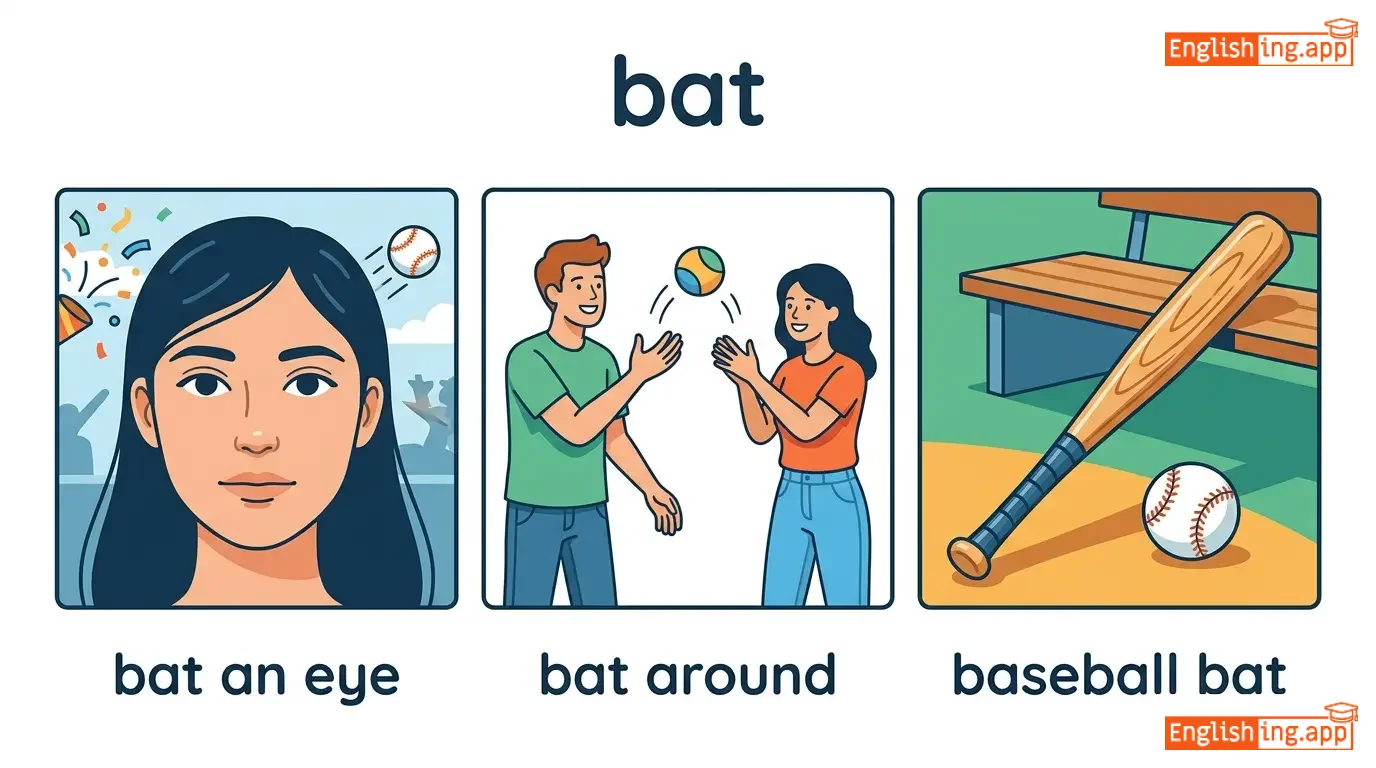
|
бить битой
bit' bitoy
••••••
|
batted
бэтэд
••••••
|
batted
бэтэд
••••••
|
bats
бэтс
••••••
|
batting
бэтинг
••••••
|
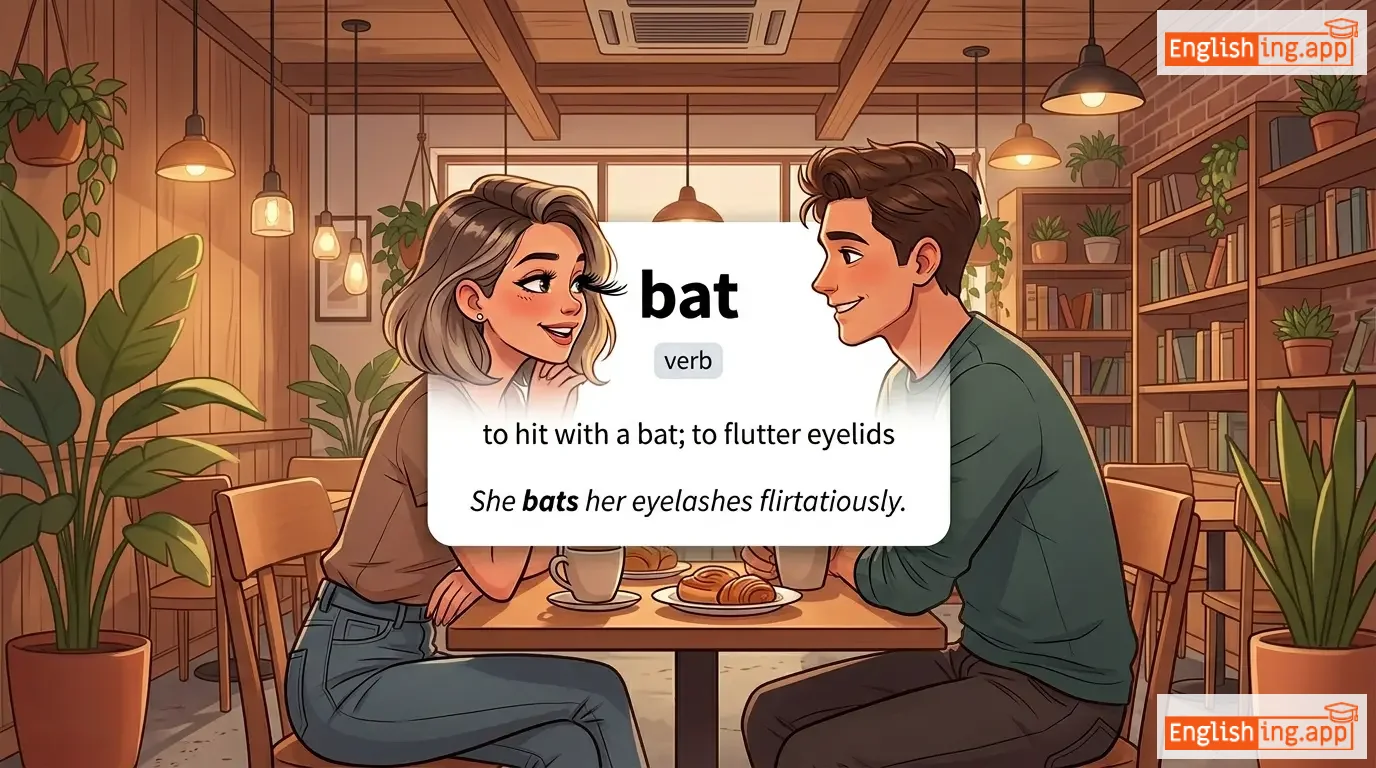
to hit with a bat; to flutter eyelids
••••••
|
She bats her eyelashes flirtatiously.
Она кокетливо моргает ресницами.
••••••
|
Она кокетливо моргает ресницами.
Ona koketlivo morgaet resnitsami.
••••••
|
- •••••• | - •••••• | - •••••• |
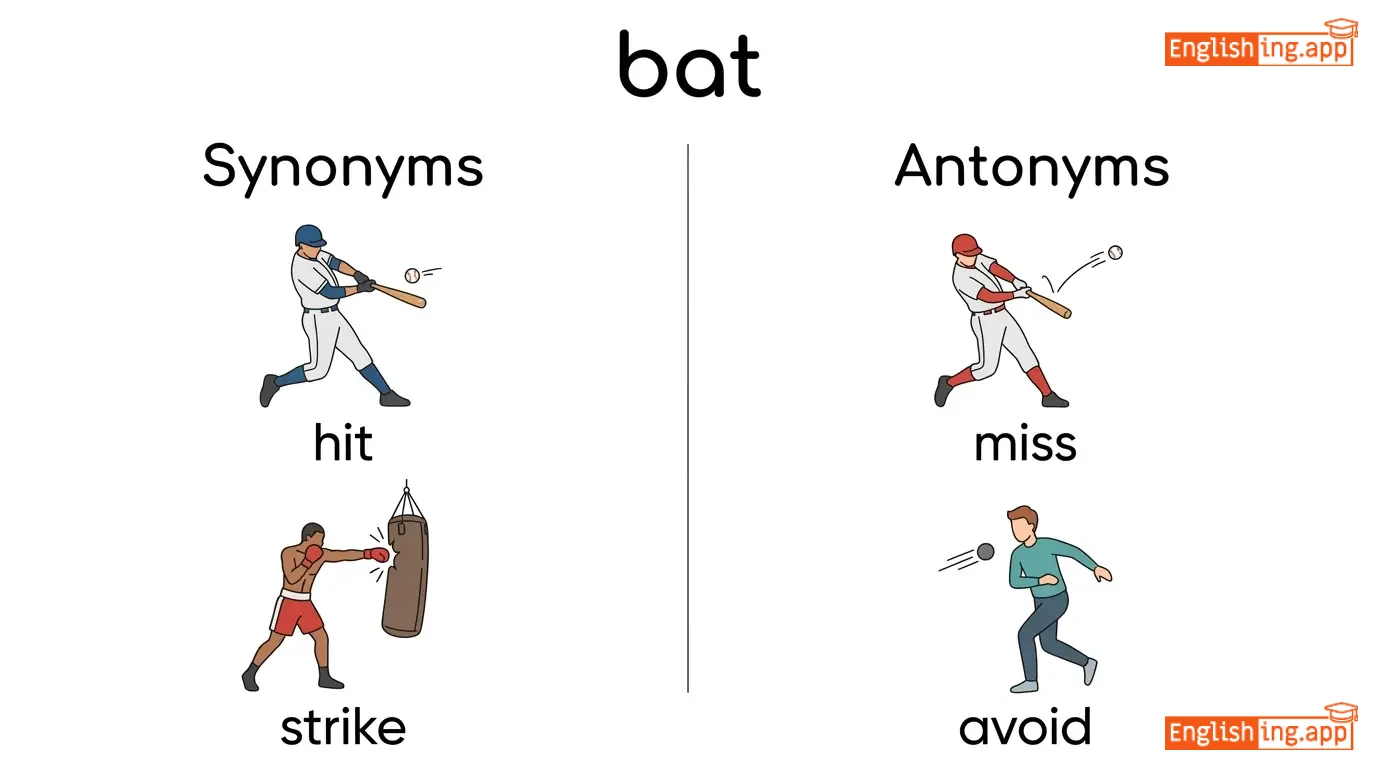
hit, strike, flutter, wink
••••••
|
miss, avoid
••••••
|
bat an eye, bat around, baseball bat, cricket bat, bat the ball
••••••
|
Бить битой, как в бейсболе, и моргать глазами как актриса.
••••••
|
|
🛁
••••••
|
/bɑːθ/
noun
(бæθ)
••••••
|
- •••••• |
ванна
vanna
••••••
|
- •••••• | - •••••• | - •••••• | - •••••• |
an act of washing the body in water; or the container used for this purpose
••••••
|
She took a long bath after work. |
Она приняла длинную ванну после работы.
Ona prinяла dlinuyu vannu posle raboty.
••••••
|
throw the baby out with the bathwater |
to lose something valuable while trying to get rid of something unwanted
••••••
|
выкинуть младенца с водой из ванны
vykidnut' mladentsa s vodoy iz vannы
••••••
|
wash, soak, shower, cleaning
••••••
|
dirt, filth
••••••
|
take a bath, hot bath, bubble bath, bath tub
••••••
|
Bath означает ванна — возьми Bath, и тело будет чистым!
••••••
|
|
🛁
••••••
|
/beɪð/
verb
(beɪð)
••••••
|
|
купаться
kupat'sya
••••••
|
bathed
bæθd
••••••
|
bathed
bæθd
••••••
|
bathes
bæθs
••••••
|
bathing
bæθɪŋ
••••••
|
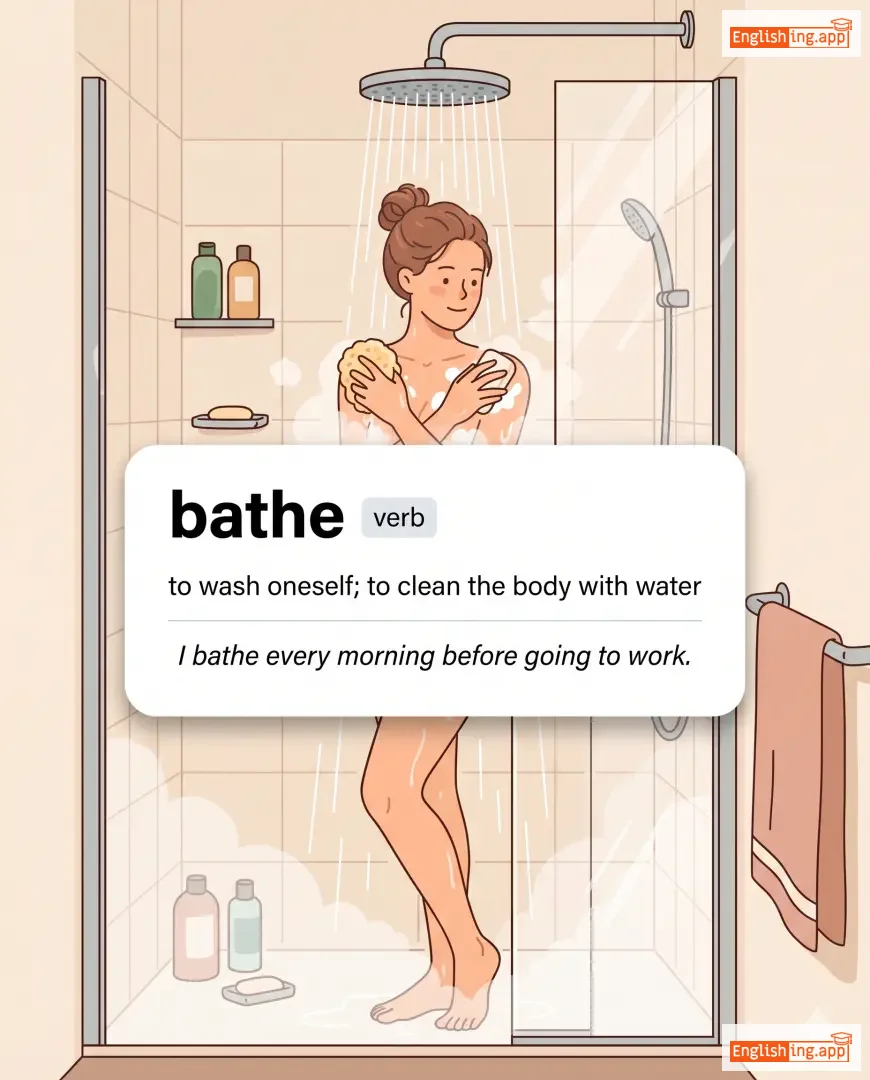
to wash oneself; to clean the body with water
••••••
|
I bathe every morning before going to work.
Я принимаю душ каждое утро перед тем, как идти на работу.
••••••
|
Я принимаю душ каждое утро перед тем, как идти на работу.
Ya prinimayu dush kazhdoe utro pered tem, kak idti na rabotu
••••••
|
- •••••• | - •••••• | - •••••• |
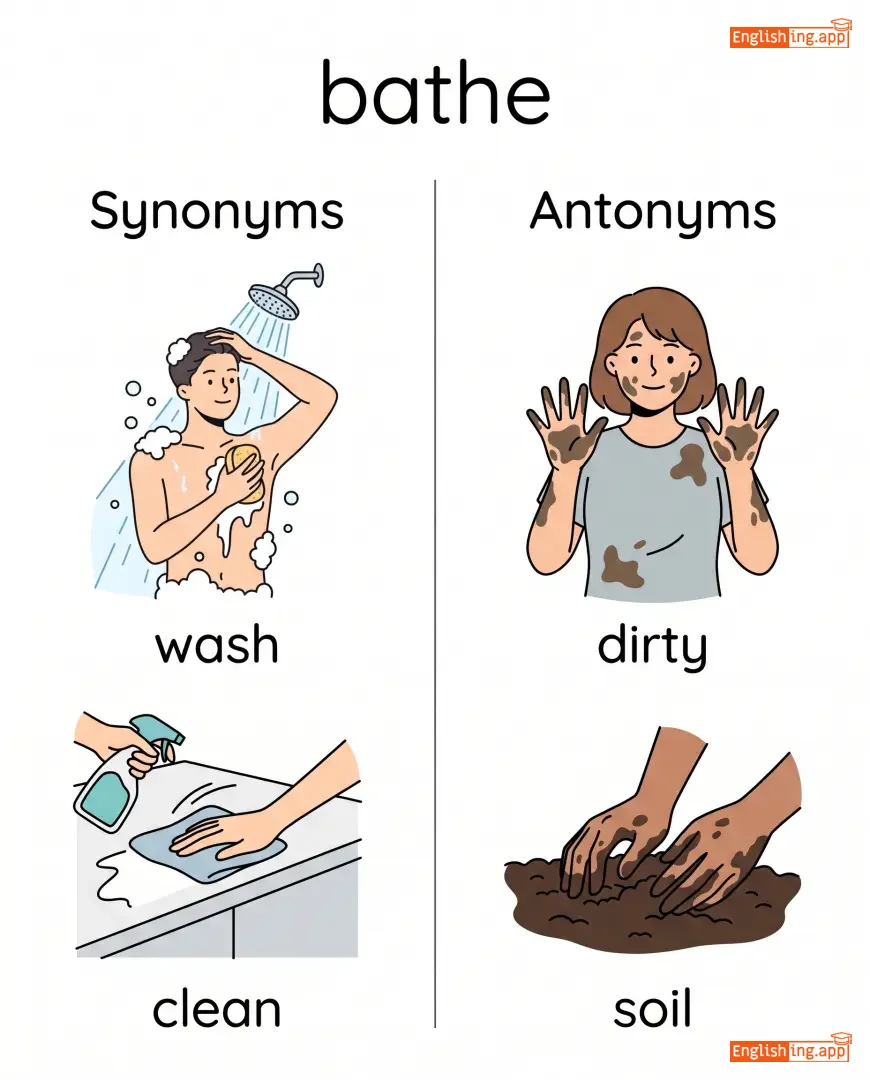
wash, clean, shower, cleanse
••••••
|
dirty, soil, stain, contaminate
••••••
|
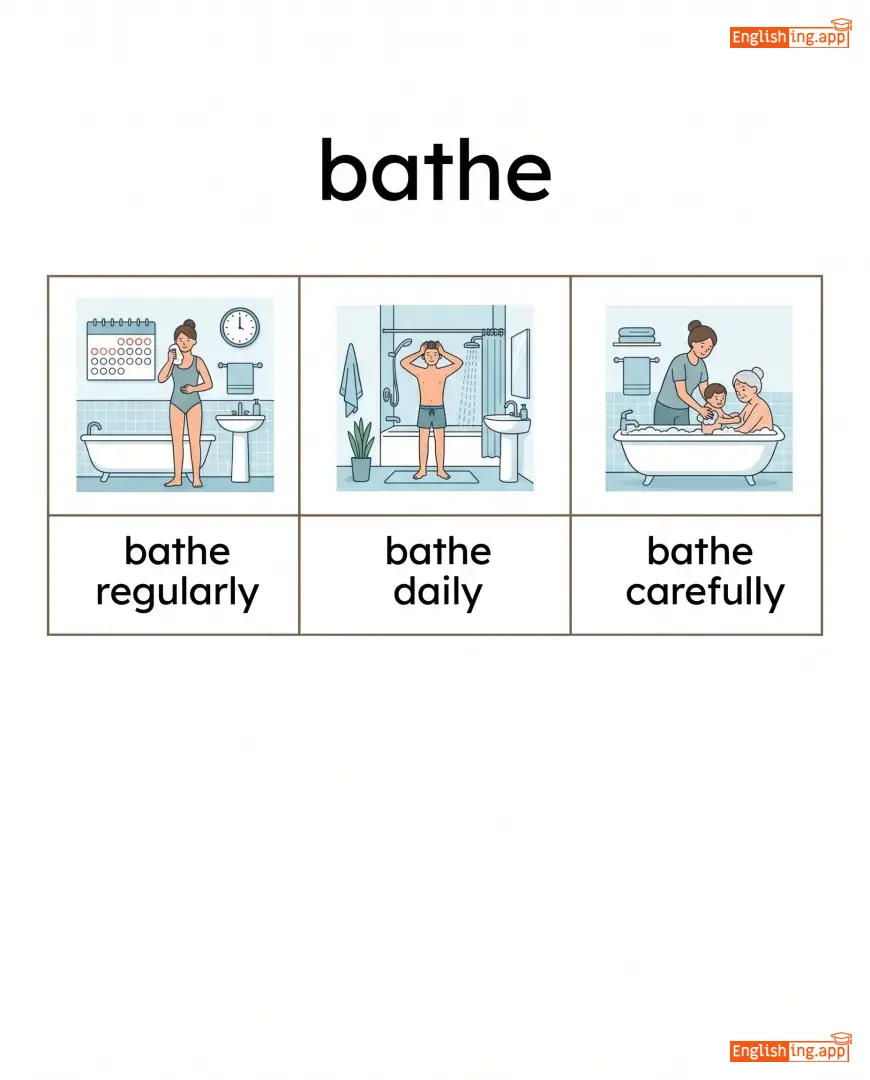
bathe regularly, bathe daily, bathe carefully, bathe in water, bathe the baby
••••••
|
A bath in the morning keeps you fresh and ready for the day.
••••••
|
|
🚽
••••••
|
/ˈbɑːθruːm/
noun
(бæθрум)
••••••
|
- •••••• |
ванная комната
vannaya komnata
••••••
|
- •••••• | - •••••• | - •••••• | - •••••• |
a room containing a toilet and usually a sink or shower
••••••
|
The bathroom is on the second floor. |
Ванная комната на втором этаже.
Vannaya komnata na vtorom etazhe.
••••••
|
- •••••• | - •••••• | - •••••• |
washroom, restroom, lavatory, toilet
••••••
|
kitchen, living room
••••••
|
clean bathroom, bathroom door, bathroom sink, bathroom floor
••••••
|
Van + Naya Komnata = Место для душа или туалета
••••••
|
|
🔋
••••••
|
/ˈbætəri/
noun
(bæteri)
••••••
|
- •••••• |
батарея
batareya
••••••
|
- •••••• | - •••••• | - •••••• | - •••••• |
A device that stores and provides electrical energy; also refers to a group of similar things or repeated blows.
••••••
|
The phone battery ran out after a long day. |
Аккумулятор телефона разрядился после долгого дня.
Akkumulyator telefona razryadilsya posle dolgogo dnya.
••••••
|
assault and battery |
a legal term for physical attack and violence
••••••
|
нападение и батарея
napadenie i batareya
••••••
|
cell, accumulator, power pack, storage unit
••••••
|
charger, power outage
••••••
|
car battery, rechargeable battery, battery life, battery pack
••••••
|
Когда батарея разряжается, все останавливается, как и при физическом нападении.
••••••
|
|
⚔️
••••••
|
/ˈbætəl/
noun/verb
(бэтл)
••••••
|
- •••••• |
битва
bitva
••••••
|
battled
бэтлд
••••••
|
battled
бэтлд
••••••
|
battles
бэтлс
••••••
|
battling
бэтлинг
••••••
|
A fight between armed forces or a struggle to achieve or resist something.
••••••
|
The soldiers prepared for the final battle.
Солдаты готовились к последней битве.
••••••
|
Солдаты готовились к последней битве.
Soldaty gotovilis' k posledney bitve.
••••••
|
fight an uphill battle
вести трудную битву
••••••
|
to struggle against great difficulties
••••••
|
вести трудную битву
vesti trudnuyu bitvu
••••••
|
fight, conflict, clash, war, struggle
••••••
|
peace, truce
••••••
|
win a battle, lose a battle, fierce battle, battle against
••••••
|
Battle означает битва, как когда ты сражаешься с помощью биты (bat).
••••••
|
|
⚔️
••••••
|
/ˈbætəlˌfiːld/
noun
(бэтлфилд)
••••••
|
- •••••• |
поле битвы
pole bitvy
••••••
|
- •••••• | - •••••• | - •••••• | - •••••• |
a place where a battle is fought
••••••
|
The battlefield was covered with the remnants of the fight. |
Поле битвы было покрыто остатками боя.
Pole bitvy bylo pokryto ostatkami boya.
••••••
|
- •••••• | - •••••• | - •••••• |
combat zone, war zone, arena, field of battle
••••••
|
peace, safety, tranquility
••••••
|
fight on the battlefield, battlefield strategy, battlefield tactics
••••••
|
Поле битвы, как место для боевых действий
••••••
|
|
🌊
••••••
|
/beɪ/
noun
(бе)
••••••
|
- •••••• |
залив
zaliv
••••••
|
- •••••• | - •••••• | - •••••• | - •••••• |
a broad inlet of the sea where the land curves inward
••••••
|
The ship anchored safely in the bay. |
Корабль безопасно встал на якорь в заливе.
Korabl' bezopasno vstal na yakor' v zalive.
••••••
|
keep at bay |
to prevent something or someone from approaching or having an effect
••••••
|
держать на расстоянии
derzhat' na rasstoyanii
••••••
|
inlet, gulf, cove, harbor, lagoon
••••••
|
mountain, hill
••••••
|
sandy bay, beautiful bay, fishing bay, bay area
••••••
|
Bay of Bengal помните — 'бе' означает залив 🌊
••••••
|
|
✨
••••••
|
/biː/
verb
(bi)
••••••
|
- •••••• |
быть
byt
••••••
|
was/were
byl/byli
••••••
|
been
byl
••••••
|
is
est
••••••
|
being
byv
••••••
|
To exist, to occur, or to have a particular quality.
••••••
|
She wants to be a doctor.
Она хочет стать врачом.
••••••
|
Она хочет стать врачом.
Ona khochet stat' vrachom.
••••••
|
to be or not to be
быть или не быть
••••••
|
a famous phrase about existence and life
••••••
|
быть или не быть
byt' ili ne byt'
••••••
|
exist, live, happen, occur
••••••
|
cease, die
••••••
|
be happy, be late, be ready, be a teacher
••••••
|
Be означает быть, как 'B' (be) в начале быть.
••••••
|
|
🏖️
••••••
|
/biːtʃ/
noun
(bich)
••••••
|
- •••••• |
пляж
plyazh
••••••
|
- •••••• | - •••••• | - •••••• | - •••••• |
An area of sand or small stones beside the sea or a lake.
••••••
|
They spent the day relaxing on the beach. |
Они провели день, расслабляясь на пляже.
Oni proveli den', rasslablyayas' na plyazhe.
••••••
|
beach bum |
a person who spends a lot of time at the beach without working
••••••
|
любитель пляжа
lyubitel' plyazha
••••••
|
seashore, coast, shoreline, seaside
••••••
|
mountain, desert
••••••
|
sandy beach, go to the beach, beach holiday, beach umbrella
••••••
|
Пляж означает beach - помни, на 'пляже' все отдыхают.
••••••
|
|
🔆
••••••
|
/biːm/
noun
(bim)
••••••
|
- •••••• |
луч / балка
luch / balka
••••••
|
- •••••• | - •••••• | - •••••• | - •••••• |
a ray or shaft of light; a long piece of wood or metal used to support weight
••••••
|
A beam of sunlight entered through the window.
Луч света вошел в окно.
••••••
|
Луч света вошел в окно.
Luch sveta voshel v okno.
••••••
|
beam with joy
Сиять от радости
••••••
|
to smile broadly because of happiness
••••••
|
Сиять от радости
Siyat' ot radosti
••••••
|
ray, shaft, gleam, light, support
••••••
|
shadow, gloom
••••••
|
sunlight beam, laser beam, beam of light, wooden beam
••••••
|
Луч света ярко светит, и твоя улыбка сияет как beam счастья.
••••••
|
|
🫘
••••••
|
/biːn/
noun
(bīn)
••••••
|
- •••••• |
фасоль
fasol
••••••
|
- •••••• | - •••••• | - •••••• | - •••••• |
A seed that is eaten as a vegetable or used to make food products.
••••••
|
She cooked a pot of bean soup. |
Она приготовила кастрюлю фасолевого супа.
Ona prigotovila kastryulyu fasolevogo supa.
••••••
|
spill the beans |
to reveal a secret
••••••
|
выдать секрет
vydat' sekret
••••••
|
legume, pulse, seed, vegetable
••••••
|
meat, grain
••••••
|
coffee bean, bean soup, green bean, baked beans
••••••
|
Фасоль значит 'bean' - 'Spill the beans' означает раскрыть секрет, как фасоль выплескивается из кастрюли.
••••••
|
|
🐻
••••••
|
/bɛər/
verb, noun
(бер)
••••••
|
|
выносить / медведь
vynosit / medved
••••••
|
bore
бор
••••••
|
borne
борн
••••••
|
bears
беарс
••••••
|
bearing
беаринг
••••••
|
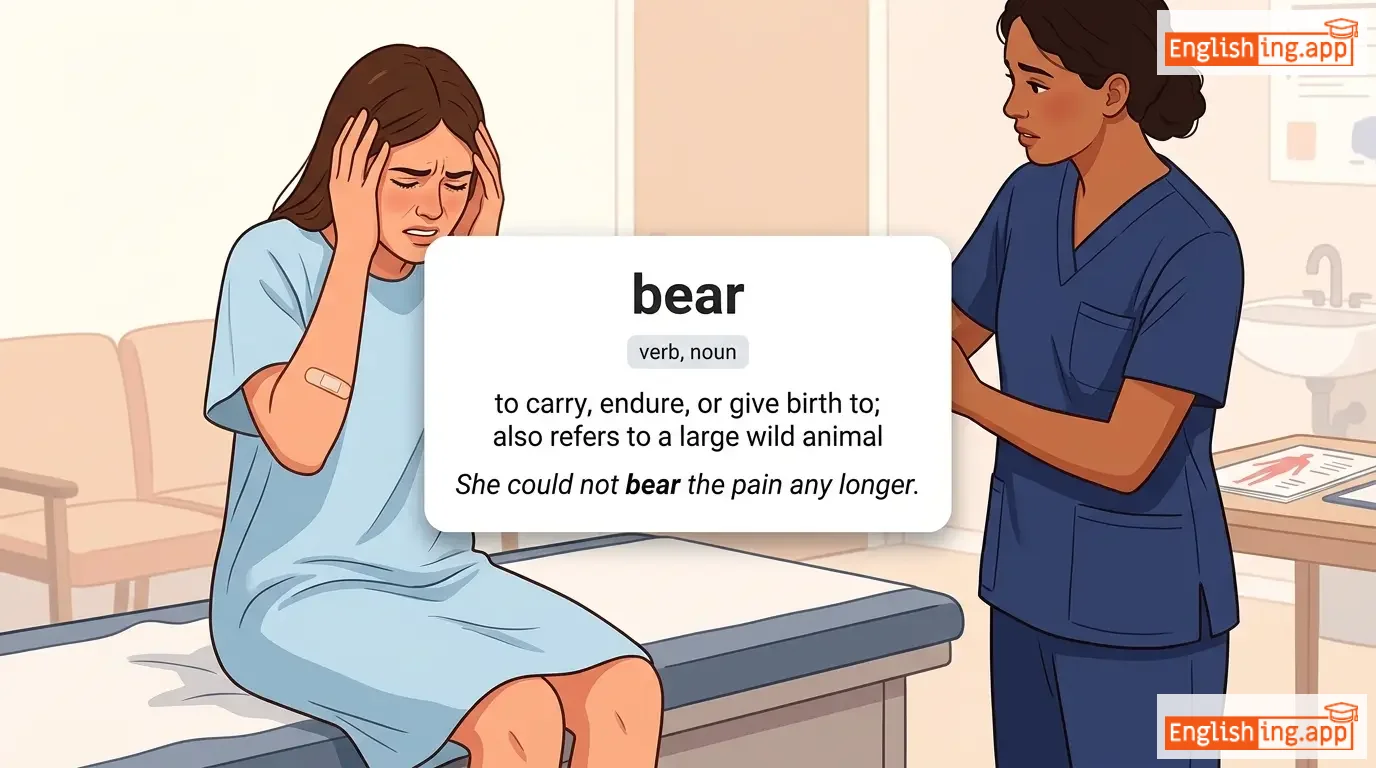
to carry, endure, or give birth to; also refers to a large wild animal
••••••
|
She could not bear the pain any longer.
Она больше не могла терпеть боль.
••••••
|
Она больше не могла терпеть боль.
Ona bol'she ne mogla terpet' bol'.
••••••
|
bear in mind
иметь в виду
••••••
|
to remember or consider something
••••••
|
иметь в виду
imet' v vidu
••••••
|
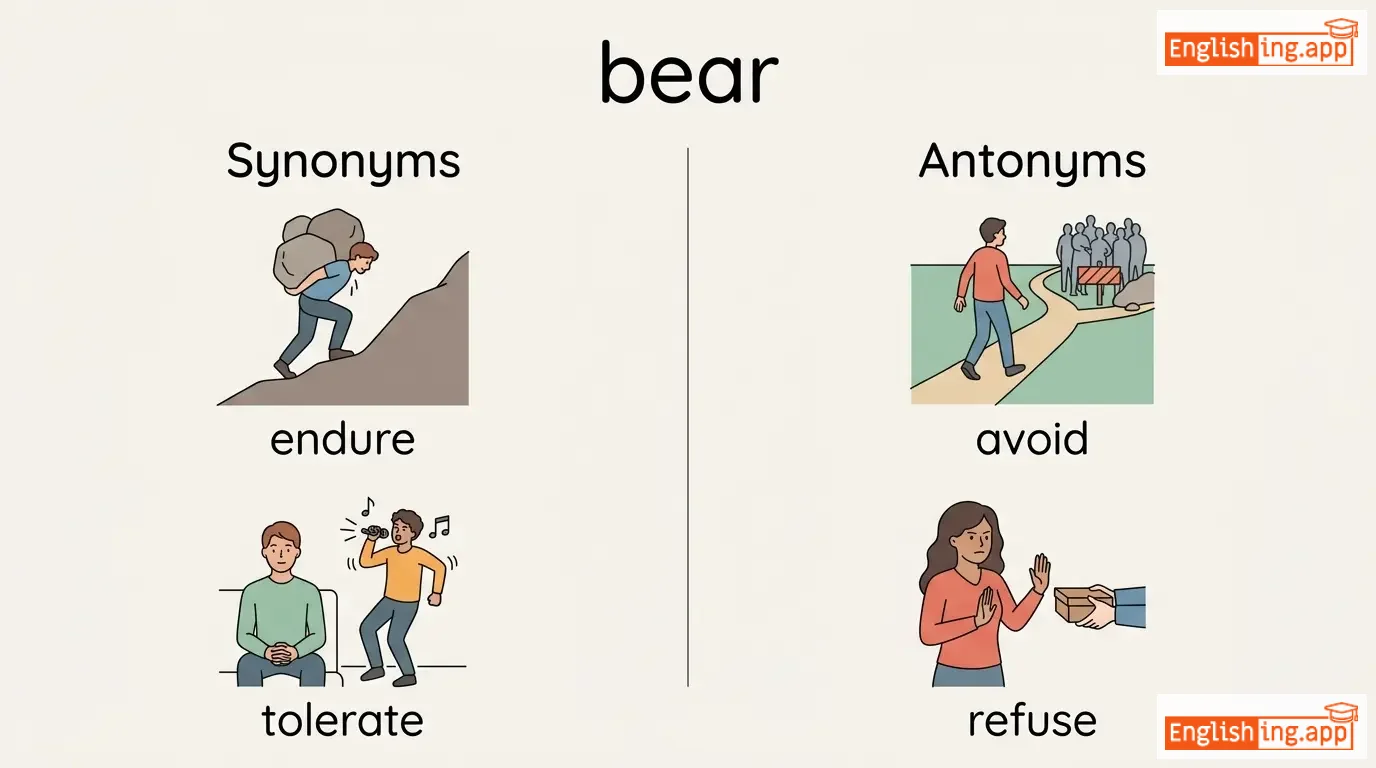
endure, tolerate, carry, support, sustain
••••••
|
avoid, refuse, deny
••••••
|
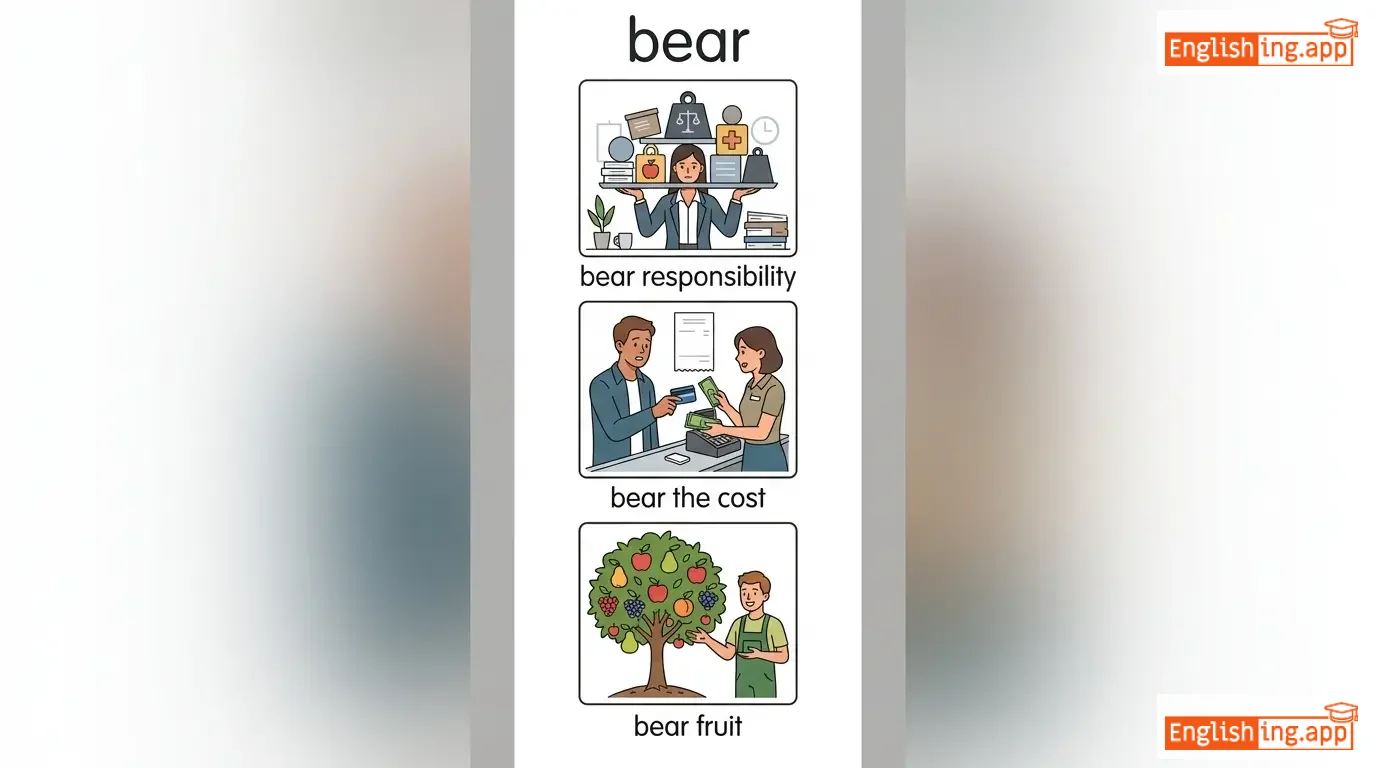
bear responsibility, bear the cost, bear fruit, bear in mind
••••••
|
Bear 🐻 означает медведь, но bear the pain означает терпеть боль. Помни, что медведи тоже многое терпят.
••••••
|
|
🧔
••••••
|
/bɪəd/
noun
(happiness)
••••••
|
- •••••• |
счастье
schast'ye
••••••
|
- •••••• | - •••••• | - •••••• | - •••••• |
the hair growing on the lower part of a man's face
••••••
|
He decided to grow a beard during his vacation.
Она не могла скрыть своего счастья, когда получила награду.
••••••
|
Она не могла скрыть своего счастья, когда получила награду.
Ona ne mogla skryt' svoego schast'ya, kogda poluchila nagradu.
••••••
|
beard the lion in his den
поиск счастья
••••••
|
to confront someone powerful or dangerous in their own territory
••••••
|
поиск счастья
poisk schast'ya
••••••
|
facial hair, whiskers, goatee, stubble
••••••
|
clean-shaven, bare face
••••••
|
long beard, thick beard, grow a beard, trim beard
••••••
|
Счастье — это то, что ты делишь с другими — чем больше отдаешь, тем больше его!
••••••
|
|
🐅
••••••
|
/biːst/
noun
(бист)
••••••
|
- •••••• |
зверь / животное
zver' / zhivotnoe
••••••
|
- •••••• | - •••••• | - •••••• | - •••••• |
a large or dangerous animal; a cruel or brutal person
••••••
|
The lion is known as the king of beasts.
Лев известен как король зверей.
••••••
|
Лев известен как король зверей.
Lev izvesten kak korol' zverej.
••••••
|
beauty and the beast
Красота и чудовище
••••••
|
used to describe two very different people or things, one beautiful and one ugly or fierce
••••••
|
красота и чудовище
krasota i chudovishche
••••••
|
animal, brute, monster, creature, savage
••••••
|
human, angel
••••••
|
wild beast, ferocious beast, king of beasts, mythical beast
••••••
|
Beast значит зверь — ‘бист’ напоминает ‘большой и жестокий’ 🦁
••••••
|
|
🥁
••••••
|
/biːt/
verb
(бит)
••••••
|
|
бить, побеждать
bit', pobezhdat'
••••••
|
beat
бит
••••••
|
beaten
битен
••••••
|
beats
битс
••••••
|
beating
битинг
••••••
|
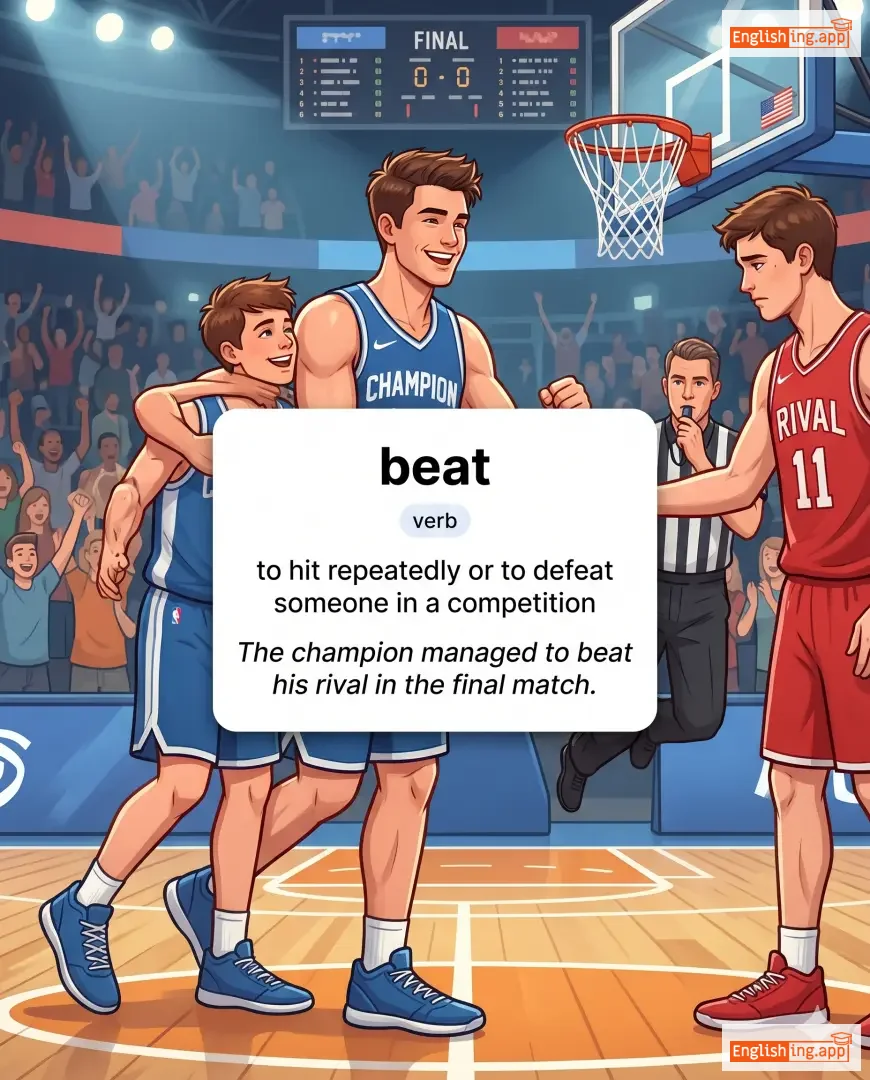
to hit repeatedly or to defeat someone in a competition
••••••
|
The champion managed to beat his rival in the final match.
Чемпион смог победить своего соперника в финальном матче.
••••••
|
Чемпион смог победить своего соперника в финальном матче.
Chempion smog pobedit' svoego sopernika v final'nom matche.
••••••
|
beat around the bush
ходить вокруг да около
••••••
|
to avoid talking about the main point
••••••
|
избегать говорить о главном
izbegat' govorit' o glavnom
••••••
|
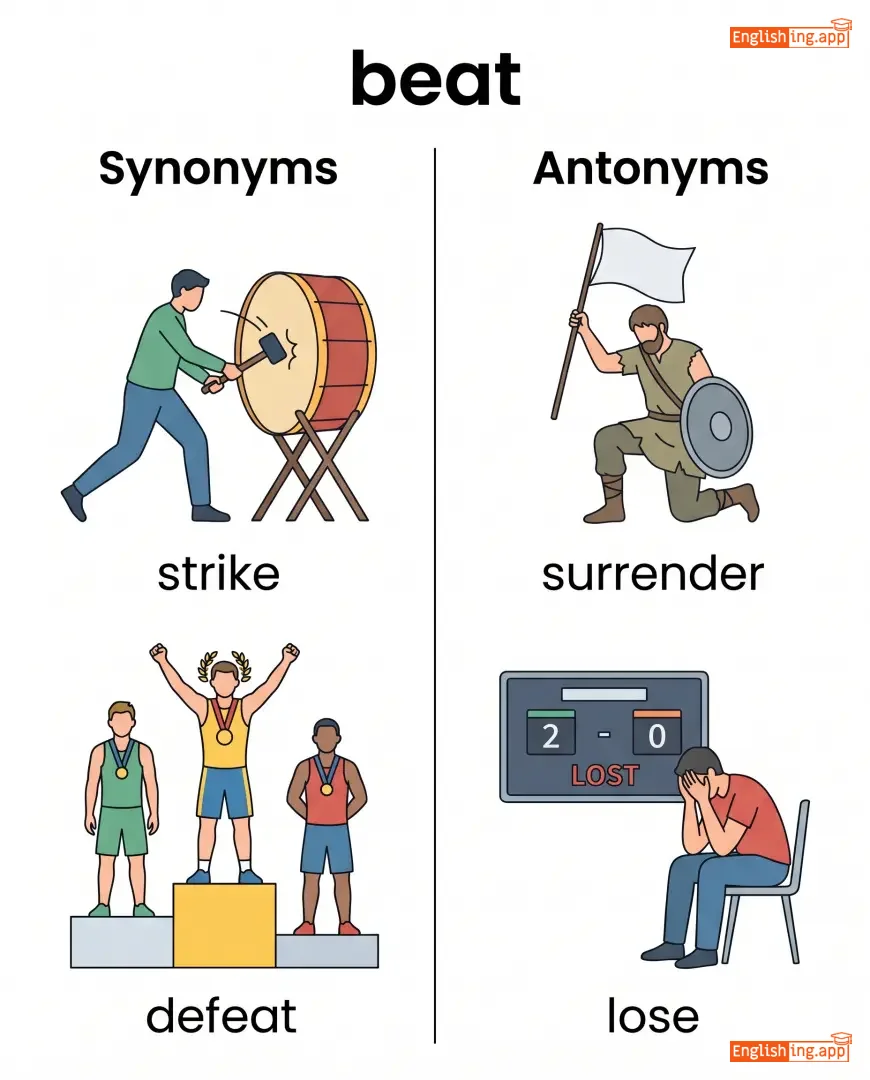
strike, defeat, thrash, overcome
••••••
|
surrender, lose
••••••
|
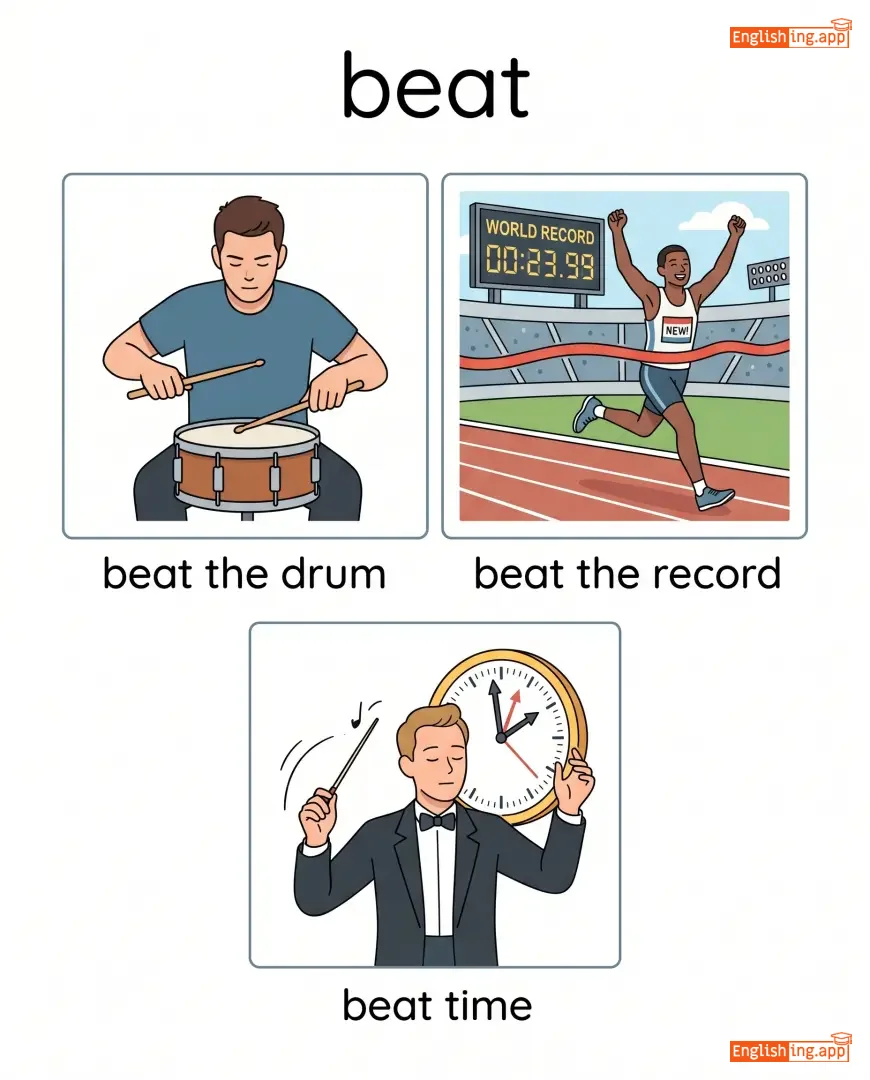
beat the drum, beat the record, beat time
••••••
|
Бить для победы, как барабан, который поражает противника.
••••••
|
|
🙏
••••••
|
/biˈætɪfaɪ/
verb
(битифай)
••••••
|
|
беатифицировать
beatificirovat
••••••
|
beatified
битифайд
••••••
|
beatified
битифайд
••••••
|
beatifies
битифайз
••••••
|
beatifying
битифайинг
••••••
|
to make blessed or holy, especially in the Roman Catholic Church, to declare a deceased person to be among the blessed
••••••
|
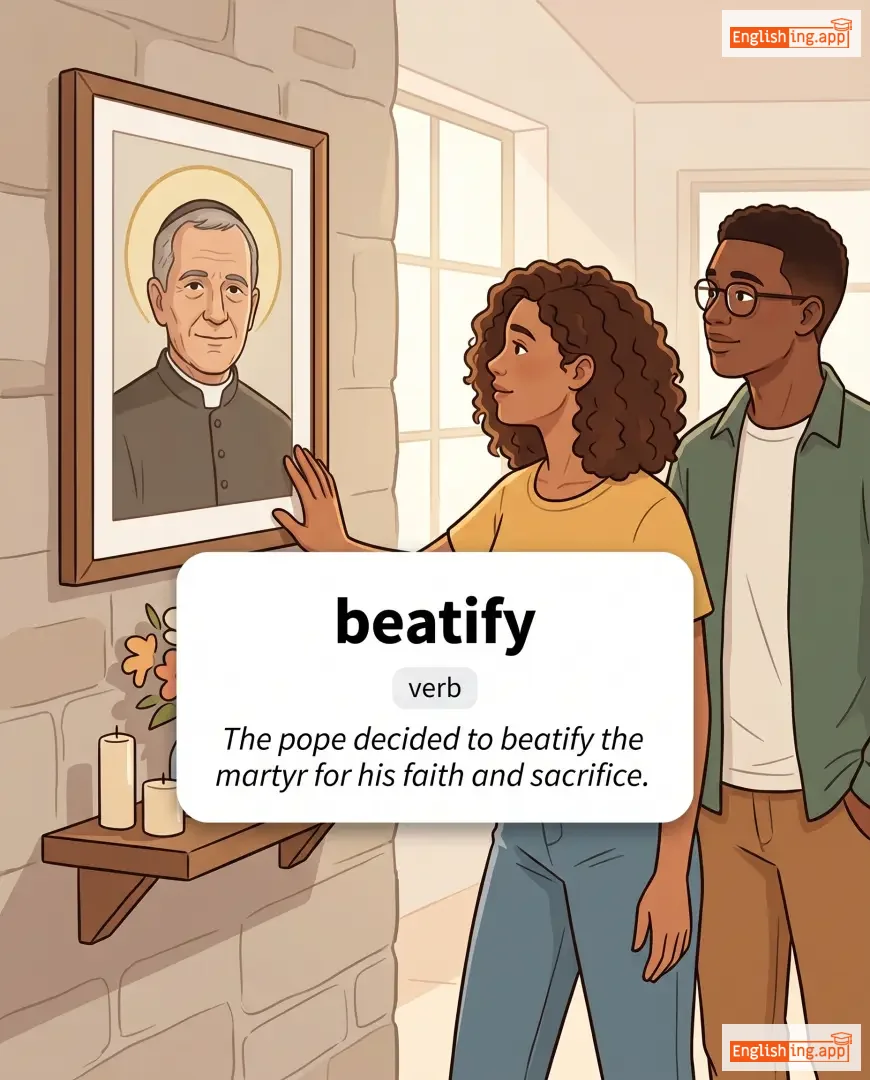
The pope decided to beatify the martyr for his faith and sacrifice.
Папа решил беатифицировать мученика за его веру и жертву.
••••••
|
Папа решил беатифицировать мученика за его веру и жертву.
Papa reshil beatificirovat' muchenika za ego veru i zhertvu.
••••••
|
- •••••• | - •••••• | - •••••• |
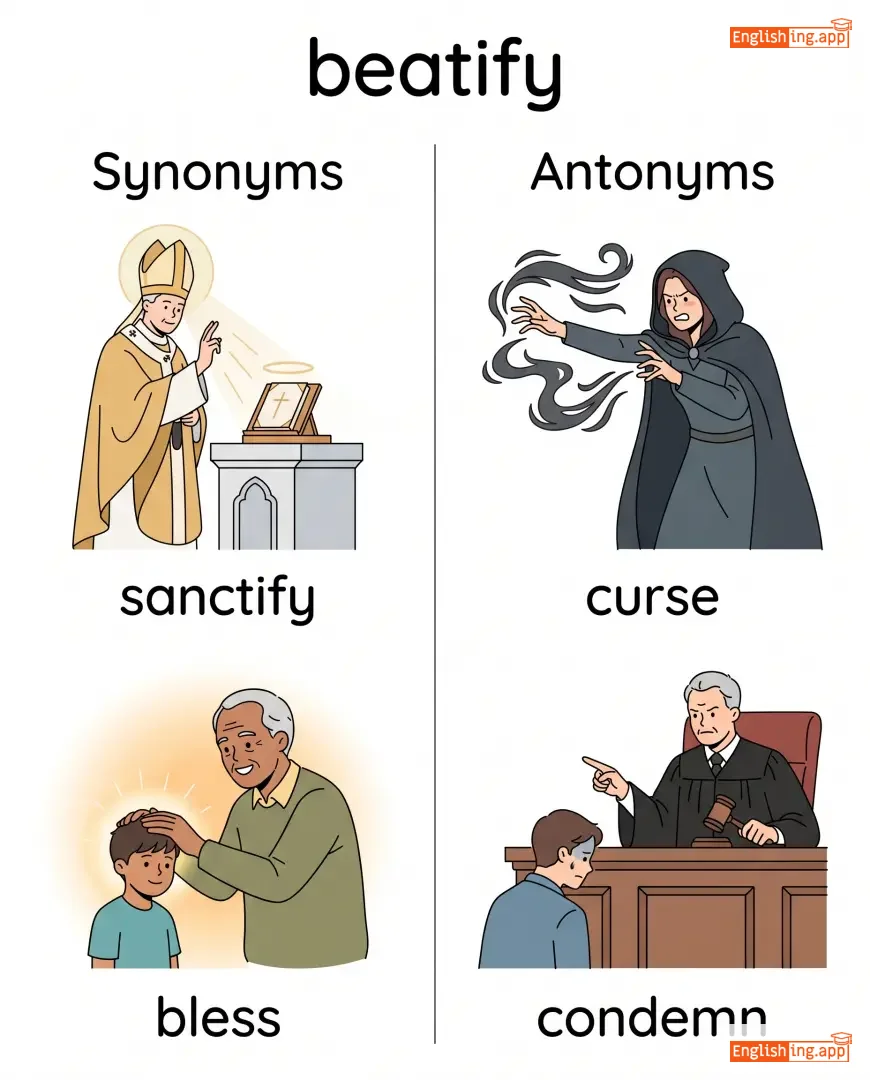
sanctify, bless, hallow, consecrate, exalt
••••••
|
curse, condemn, desecrate
••••••
|
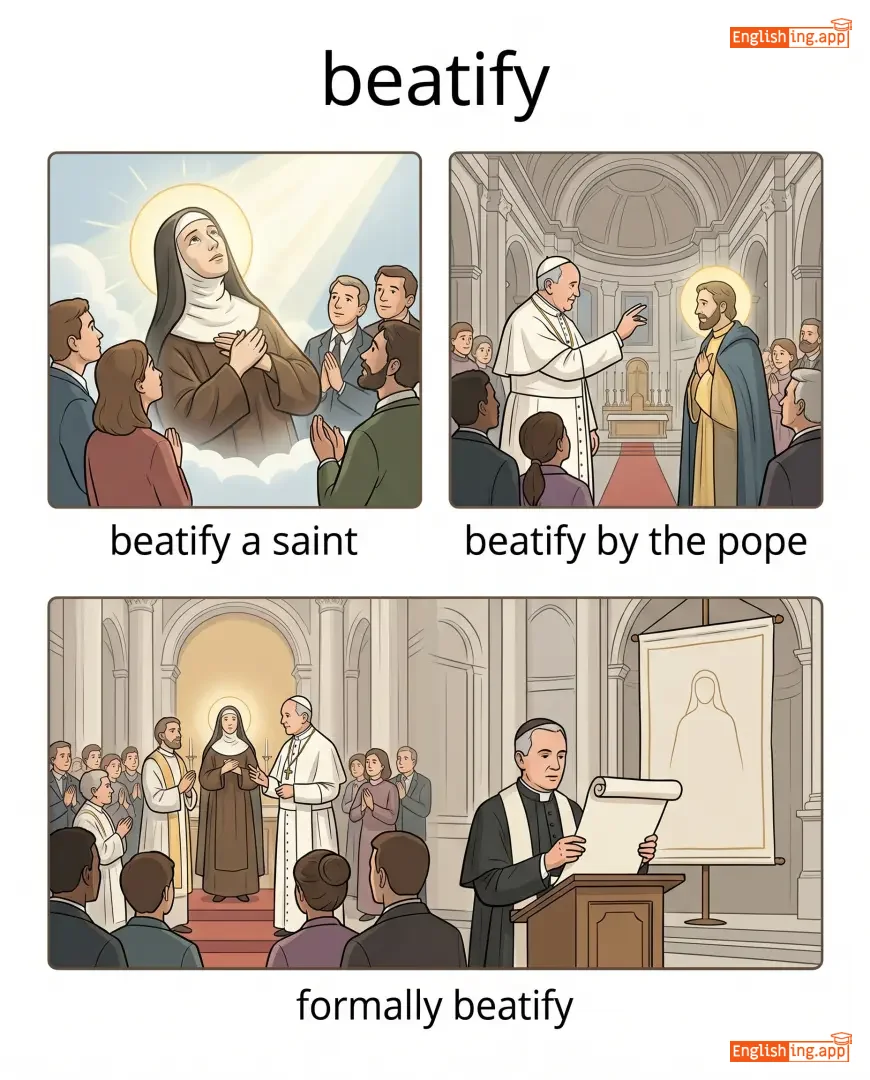
beatify a saint, beatify by the pope, formally beatify
••••••
|
Беатифицировать - это как финал святости. Папа обьявляет мученика святым.
••••••
|
|
🌸
••••••
|
/ˈbjuː.tɪ.fəl/
adjective
(бьюːтифул)
••••••
|
- •••••• |
красивый
krasivyy
••••••
|
- •••••• | - •••••• | - •••••• | - •••••• |
pleasing to the senses or mind; very attractive
••••••
|
The garden looked beautiful in the morning sunlight. |
Сад выглядел красивым на утреннем солнечном свете.
Sad vyglyadel krasivym na utrehnem solnechnom svete.
••••••
|
beautiful inside and out |
describing someone as both physically attractive and kind-hearted
••••••
|
красивый изнутри и снаружи
krasivyy iznutri i snaruzhi
••••••
|
lovely, pretty, gorgeous, stunning, attractive
••••••
|
ugly, unattractive
••••••
|
beautiful view, beautiful smile, beautiful day
••••••
|
Beautiful = Красивый = Привлекательный
••••••
|
|
🌸
••••••
|
/ˈbjuːtɪfəli/
adverb
(бьютифули)
••••••
|
- •••••• |
красиво
krasivo
••••••
|
- •••••• | - •••••• | - •••••• | - •••••• |
in a beautiful or pleasing manner; excellently or skillfully
••••••
|
She sang beautifully at the concert.
ши сэнг бьютифули эт зэ концерт
••••••
|
Она красиво пела на концерте.
ona krasivo pela na kontserte
••••••
|
beautifully done
бьютифули дан
••••••
|
performed very well; executed with great skill
••••••
|
отлично сделано
otlichno sdelano
••••••
|
gracefully, attractively, elegantly, wonderfully, superbly
••••••
|
ugly, poorly, awkwardly
••••••
|
beautifully designed, beautifully written, beautifully performed, beautifully decorated
••••••
|
Красиво = beautiful/beautifully
••••••
|
|
✨
••••••
|
/ˈbjuːtɪfaɪ/
verb
(бьютифай)
••••••
|
- •••••• |
украшать
ukrashat
••••••
|
beautified
бьютифайд
••••••
|
beautified
бьютифайд
••••••
|
beautifies
бьютифайз
••••••
|
beautifying
бьютифайинг
••••••
|
to make something more beautiful or attractive
••••••
|
The city plans to beautify the old park with trees and lights.
зе сити плэнз ту бьютифай зи олд парк уиз триз энд лайтс
••••••
|
Город планирует украсить старый парк деревьями и огнями.
Gorod planiruet ukrasit staryi park derevyami i ognyami
••••••
|
- •••••• | - •••••• | - •••••• |
adorn, embellish, enhance, decorate, prettify
••••••
|
uglify, mar, deface
••••••
|
beautify the city, beautify a space, beautify surroundings, beautify nature
••••••
|
beauty = красиво, beautify = делать красиво
••••••
|
|
🌸
••••••
|
/ˈbjuːti/
noun
(бьюти)
••••••
|
- •••••• |
красота
krasota
••••••
|
- •••••• | - •••••• | - •••••• | - •••••• |
a combination of qualities that please the senses or mind
••••••
|
The beauty of the sunset took her breath away. |
Красота заката поразила её.
Krasota zakata porazila yeyo.
••••••
|
beauty is in the eye of the beholder |
different people have different opinions about what is beautiful
••••••
|
красота в глазах смотрящего
krasota v glazakh smotryashchego
••••••
|
attractiveness, charm, elegance, loveliness, grace
••••••
|
ugliness, plainness, dullness
••••••
|
inner beauty, natural beauty, beauty contest, beauty products
••••••
|
Beauty = красота 💖, помни, что красиво, зависит от того, кто смотрит.
••••••
|
|
🌊
••••••
|
/bɪˈkɑːm/
verb
(bikalm)
••••••
|
- •••••• |
успокаивать
uspokajivat
••••••
|
becalmed
bikalmd
••••••
|
becalmed
bikalmd
••••••
|
becalms
bikalms
••••••
|
becalming
bikalming
••••••
|
to make calm or still; to deprive a sailing vessel of wind
••••••
|
The captain tried to becalm the anxious crew.
Капитан пытался успокоить беспокойную команду.
••••••
|
Капитан пытался успокоить беспокойную команду.
Kapitan pytalsya uspokoit' bespokoĭnuĭ komanduy.
••••••
|
- •••••• | - •••••• | - •••••• |
soothe, pacify, quiet, settle, still
••••••
|
agitate, disturb, excite
••••••
|
becalm the sea, becalm the crew, becalm the mind
••••••
|
Be + Calm = Becalm, значит успокаивать
••••••
|
|
🔗
••••••
|
/bɪˈkɔːz/
conjunction
(bɪkɔːz)
••••••
|
- •••••• |
потому что
potomu chto
••••••
|
- •••••• | - •••••• | - •••••• | - •••••• |
for the reason that; since
••••••
|
He stayed home because it was raining. |
Он остался дома, потому что шёл дождь.
On ostalsya doma, potomu chto shol dozhd'.
••••••
|
- •••••• | - •••••• | - •••••• |
since, as, due to, owing to
••••••
|
despite, although
••••••
|
because of you, just because, because of the rain
••••••
|
Because значит потому что 🔗. Запомни Cause — причина!
••••••
|
|
👋
••••••
|
/ˈbɛkən/
verb
(бекэн)
••••••
|
- •••••• |
манить
manit
••••••
|
beckoned
бекэнд
••••••
|
beckoned
бекэнд
••••••
|
beckons
бекэнз
••••••
|
beckoning
бекэнинг
••••••
|
to signal or call someone to come closer, often with a gesture; to attract or invite
••••••
|
She beckoned him to come closer with a wave of her hand.
Ши бекэнд хим ту кам клоузер уиз э вейв ов хёр хэнд.
••••••
|
Она поманила его подойти ближе рукой.
ona pomanila ego podoiti blizhe rukoi
••••••
|
beckon to
бекэн ту
••••••
|
to invite or attract someone toward something
••••••
|
манить к
manit k
••••••
|
signal, summon, call, motion, entice
••••••
|
repel, deter, discourage
••••••
|
beckon someone over, beckon with a hand, beckon closer, beckon invitingly
••••••
|
Beckon = ‘бек’ как жест рукой — манить
••••••
|
|
🌱
••••••
|
/bɪˈkʌm/
verb
(bikäm)
••••••
|
- •••••• |
стать
stat
••••••
|
became
bikém
••••••
|
become
bikäm
••••••
|
becomes
bikämz
••••••
|
becoming
bikäming
••••••
|
to begin to be; to develop into
••••••
|
He became a successful doctor after years of hard work.
Он стал успешным врачом после многих лет упорной работы.
••••••
|
Он стал успешным врачом после многих лет упорной работы.
On stal uspeshnym vrachom posle mnogikh let upornoy raboty.
••••••
|
become a reality
bikäm a riálity
••••••
|
to actually happen
••••••
|
стать реальностью
stat' real'nost'yu
••••••
|
turn into, grow into, evolve, develop
••••••
|
cease, stop, remain
••••••
|
become famous, become aware, become clear, become friends
••••••
|
Become 🌱 означает стать. Как маленькое семечко, которое медленно превращается в большое дерево.
••••••
|
|
🛏️
••••••
|
/bɛd/
noun
(бэд)
••••••
|
- •••••• |
кровать
bed
••••••
|
- •••••• | - •••••• | - •••••• | - •••••• |
a piece of furniture for sleeping or resting on
••••••
|
She lay down on the bed and fell asleep quickly.
Она легла на кровать и быстро заснула.
••••••
|
Она легла на кровать и быстро заснула.
Ona legla na krovat i bystro zasnula.
••••••
|
make your bed
мейк ёр бед
••••••
|
to arrange or tidy your bed after getting up
••••••
|
застелать постель
zastelat postel
••••••
|
couch, mattress, cot, bunk
••••••
|
floor, ground
••••••
|
go to bed, make the bed, bed sheet, hospital bed
••••••
|
БЭД на кровать: bed means кровать. запомни как звучит и пишется
••••••
|

