Vocabulaires

Découvrez, apprenez et maîtrisez le vocabulaire anglais

adjective
/ˈwɪəri/
fatigué (fatigue)

feeling or showing extreme tiredness, especially as a result of exertion or lack of sleep

"After the long journey, she felt weary and wanted to rest."

"Après le long voyage, elle se sentait fatiguée et voulait se reposer." (Apres le long voyage, elle se sentait fatiguee et voulait se reposer.)
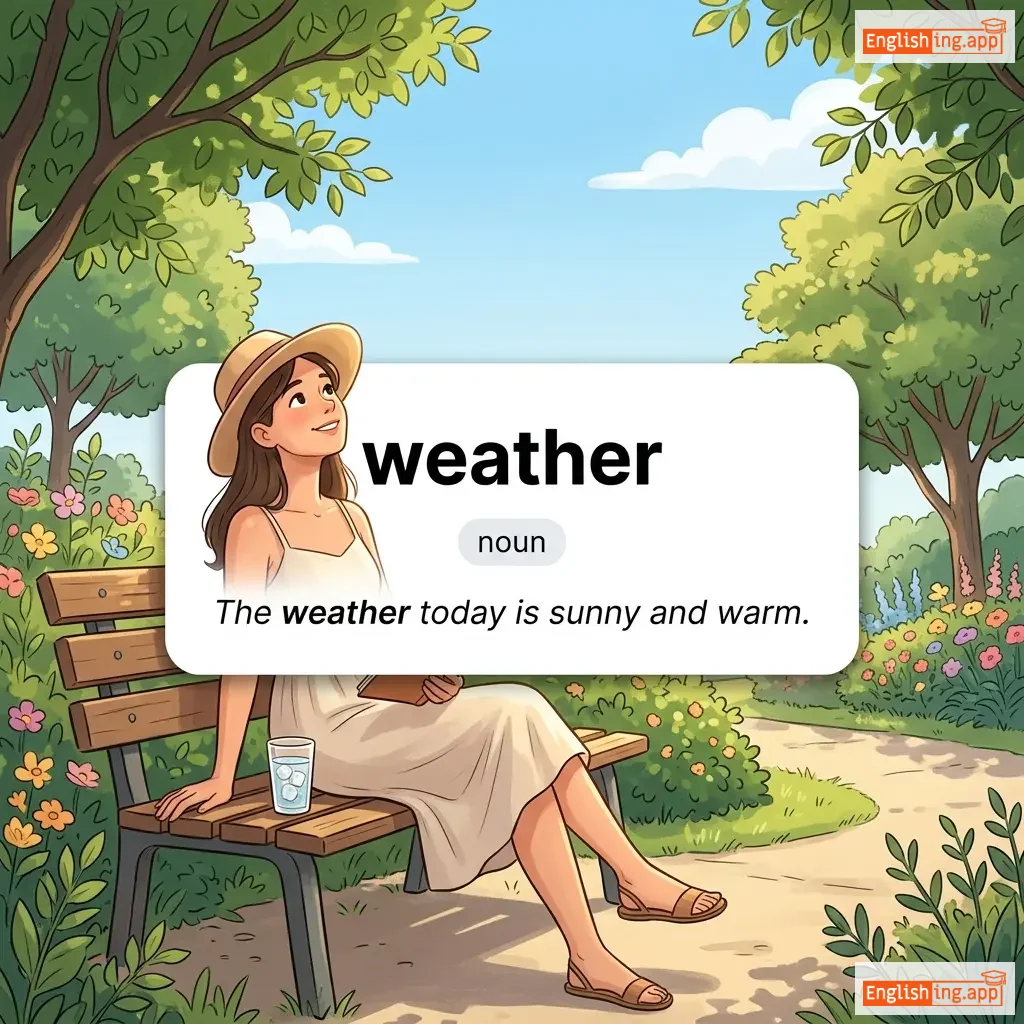
weather definition card — visual illustration of the meaning
noun
/ˈwɛðər/
temps (temps)

the state of the atmosphere at a particular place and time in terms of heat, cloudiness, dryness, sunshine, wind, rain, etc.

"The weather today is sunny and warm."

"Le temps aujourd'hui est ensoleillé et chaud." (Le temps aujourd'hui est ensoleille et chaud.)
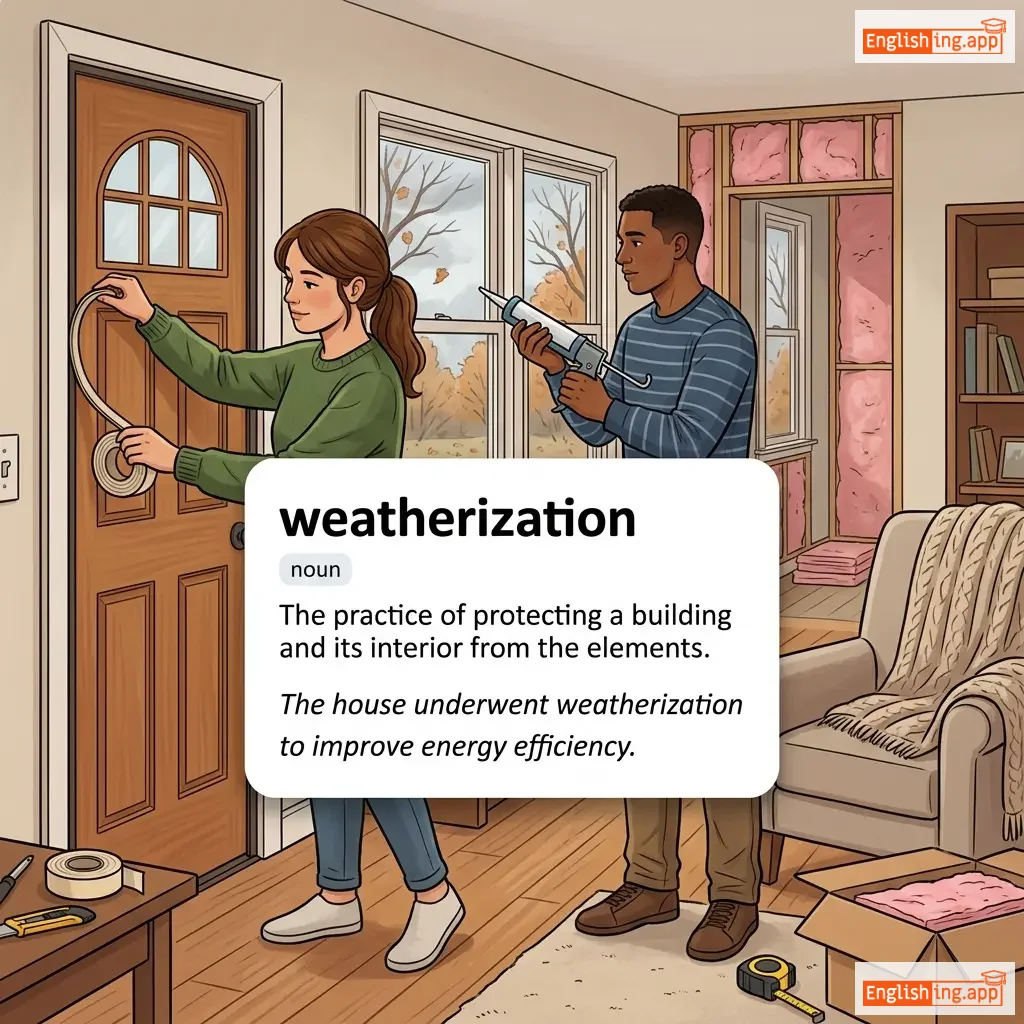
weatherization definition card — visual illustration of the meaning
noun
ˌwɛðəraɪˈzeɪʃən
météo-optimisation (meteo-optimisation)

The practice of protecting a building and its interior from the elements.

"The house underwent weatherization to improve energy efficiency."

"La maison a subi une opération de météo-optimisation pour améliorer l'efficacité énergétique." (La maison a subi une opération de météo-optimisation pour améliorer l'efficacité énergétique.)
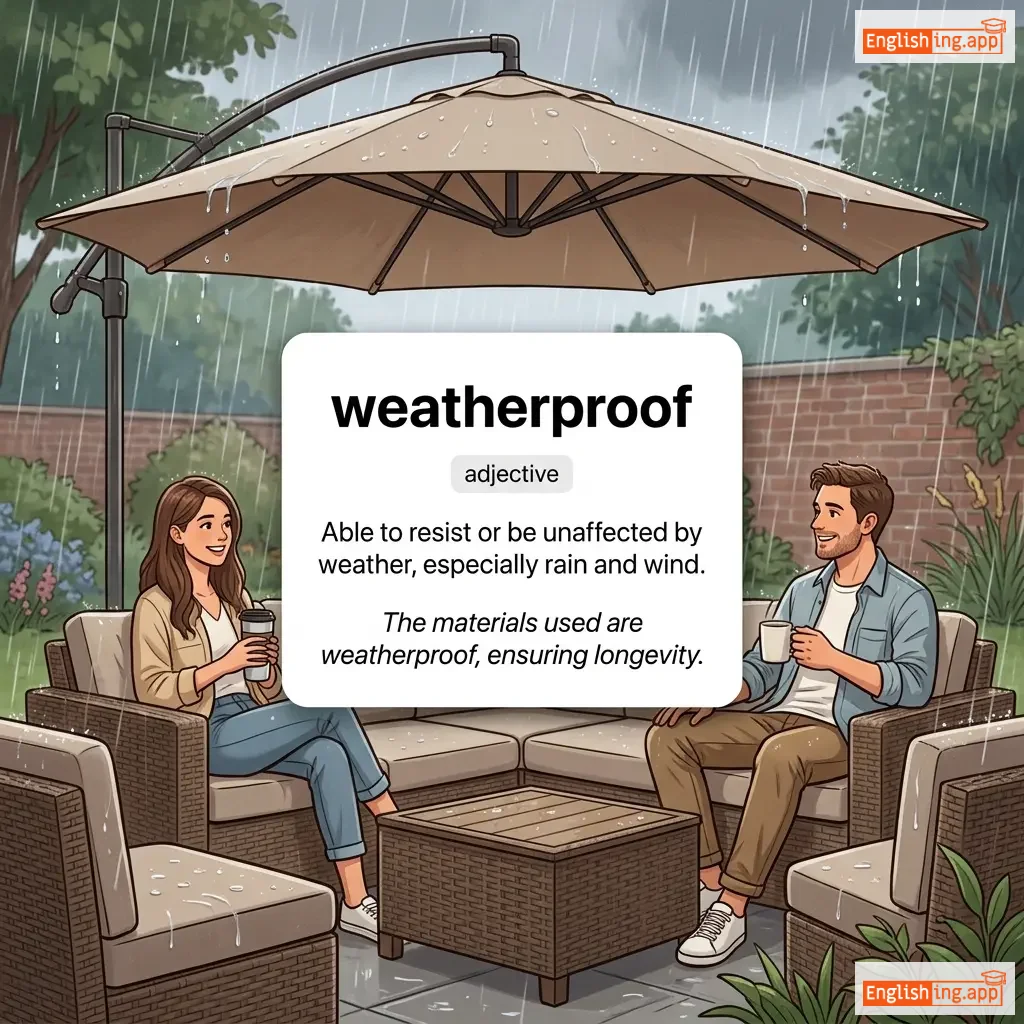
weatherproof definition card — visual illustration of the meaning
adjective
ˈwɛðərpruːf
résistant aux intempéries (résistant aux intempéries)

Able to resist or be unaffected by weather, especially rain and wind.

"The materials used are weatherproof, ensuring longevity."

"Les matériaux utilisés sont résistants aux intempéries, assurant une longévité." (Les matériaux utilisés sont résistants aux intempéries, assurant une longévité.)
verb
/wiːv/
tisser (tisser)

to make cloth by interlacing threads or to combine elements into a whole

"She weaves beautiful patterns on her loom."

"Elle tisse de beaux motifs sur son métier à tisser." (Elle tisse de beaux motifs sur son métier à tisser.)
noun
/ˈwiː.vər/
tisserand (tee-seh-rahnd)

a person who makes cloth by interlacing threads on a loom

"The skilled weaver created intricate patterns on the silk fabric."

"Le tisserand habile a créé des motifs complexes sur le tissu en soie." (Le tee-seh-rahnd abile a cree des motifs complexes sur le tissu en soie.)
noun
/ˈwiː.vər bɜːd/
oiseau tisserand (oiseau tisserand)

a small bird that builds elaborate woven nests from grass and twigs

"The weaver bird skillfully constructs its intricate nest."

"L'oiseau tisserand construit habilement son nid complexe" (L'oiseau tisserand construit habilement son nid complexe)
🕸️

web (web)

noun
/wɛb/
toile d'araignée (web)

a network of fine threads spun by a spider or a complex interconnected system

"The spider spun a large web in the corner of the room."

"L araignee a tisse une grande toile dans le coin de la piece." (L araignee a tisse une grande toile dans le coin de la piece)
verb
/wɛd/
se marier (se marier)

to marry someone; to enter into a marriage

"They decided to wed in a small ceremony by the beach."

"Ils ont décidé de se marier lors d'une petite cérémonie à la plage." (Ils ont décidé de se marier lors d'une petite cérémonie à la plage.)
noun
/ˈwed.lɒk/
mariage (mariage)

the state of being married; matrimony

"They have been happily united in wedlock for twenty years."

"Ils sont unis heureux dans le mariage depuis vingt ans." (Ils sont unis heureux dans le mariage depuis vingt ans.)
noun
/ˈwɛdɪŋ/
mariage (mariage)

a marriage ceremony, especially considered as including the associated celebrations

"They are planning a wedding in the summer."

"Ils prévoient un mariage cet été." (Ils prévoient un mariage cet été.)
noun
/wedʒ/
coin; caler; fendre (koin; kaler; fendre)

a triangular piece of wood or metal used for splitting or securing; a piece of cheese or cake

"He used a wooden wedge to split the log into smaller pieces."

"Il a utilisé un coin en bois pour fendre le tronc en morceaux plus petits." (Il a utilisé un coin en bois pour fendre le tronc en morceaux plus petits.)
noun
/ˈwɛnzdeɪ/
mercredi (mercredi)

the fourth day of the week, following Tuesday and preceding Thursday

"The meeting has been scheduled for Wednesday afternoon."

"La réunion est prévue pour mercredi après-midi." (la reunion est prevue pour mercredi apres-midi)
adjective
/wiː/
très petit (tres petit)

very small in size; tiny

"She gave me a wee smile before leaving."

"Elle m'a donné un petit sourire avant de partir." (Elle m'a donne un petit sourire avant de partir.)
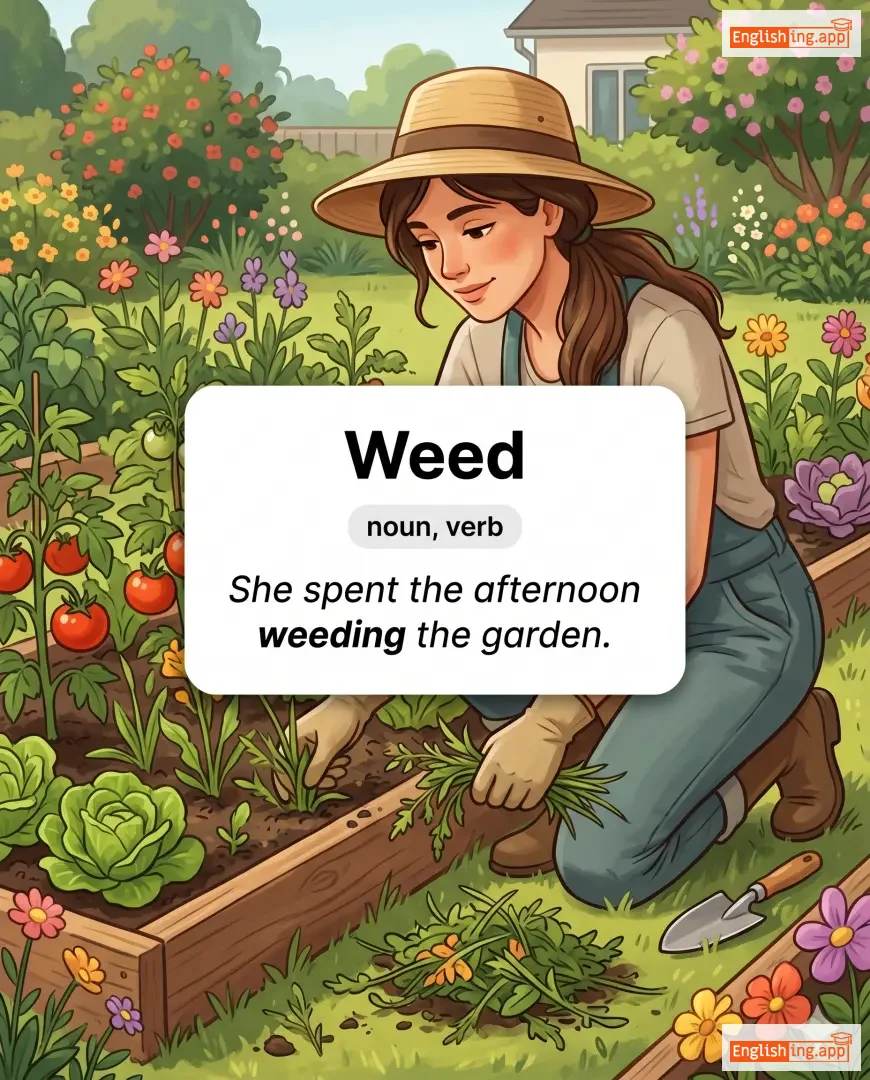
Weed definition card — visual illustration of the meaning
noun, verb
/wiːd/
mauvaise herbe (mauvaise herbe)

a wild plant growing where it is not wanted, especially among crops; to remove such plants

"She spent the afternoon weeding the garden."

"Elle a passé l'après-midi à désherber le jardin." (Elle a passé l'après-midi à désherber le jardin.)
noun
/wiːk/
semaine (semaine)

a period of seven days

"I will finish the project by the end of the week."

"Je finirai le projet d'ici la fin de la semaine." (Je finirai le projet d'ici la fin de la semaine.)
noun
/ˈwiːkˌɛnd/
fin de semaine (fin de semaine)

the end of the week, typically regarded as Saturday and Sunday

"They are planning a trip for the weekend."

"Ils prévoient un voyage pour le week-end." (Ils prévoient un voyage pour le week-end.)
adjective
/ˈwiːkli/
hebdomadaire (hebdomadaire)

occurring or done every week

"We have a weekly meeting on Mondays."

"Nous avons une réunion hebdomadaire le lundi." (Nous avons une reunion hebdomadaire le lundi.)
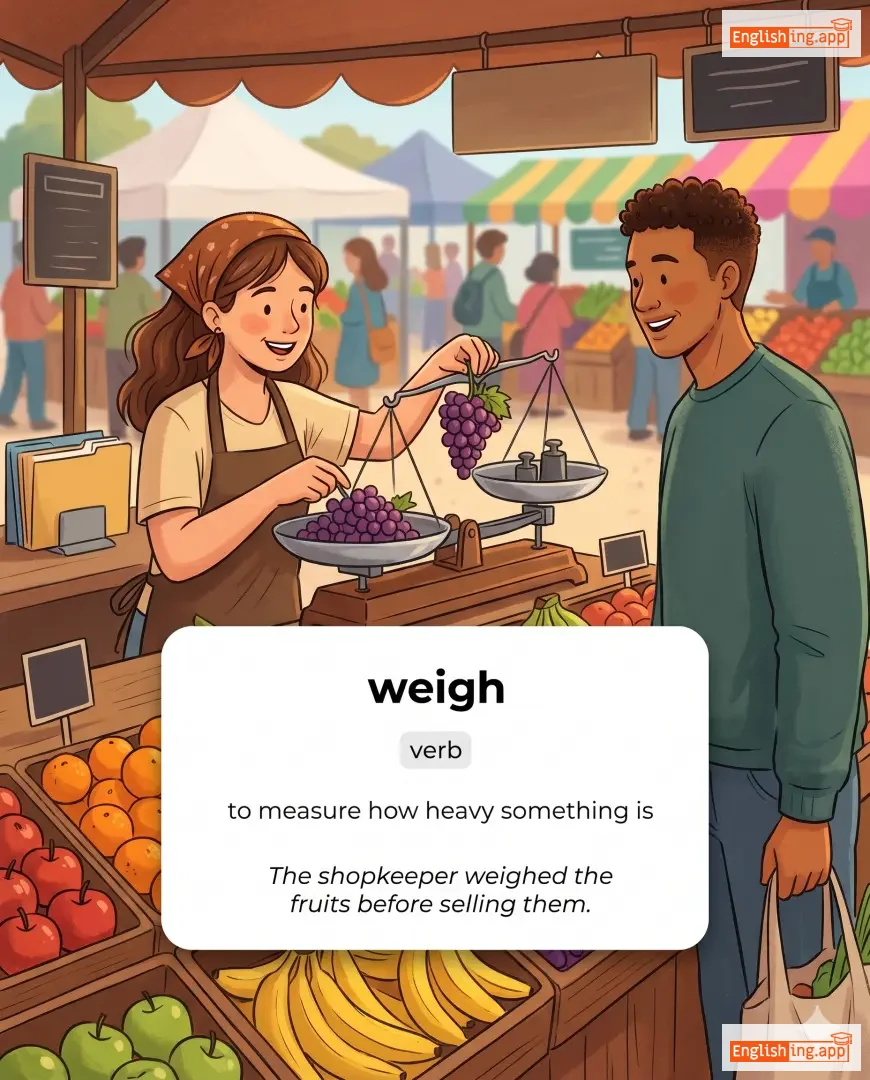
weigh definition card — visual illustration of the meaning
verb
/weɪ/
peser (peser)

to measure how heavy something is

"The shopkeeper weighed the fruits before selling them."

"Le commerçant a pesé les fruits avant de les vendre." (Le commerçant a pesé les fruits avant de les vendre.)
noun
/weɪt/
poids (poid)

a measure of how heavy something is

"The weight of the package was 10 kilograms."

"Le poids du paquet était de 10 kilogrammes." (Le poids du paquet était de 10 kilogrammes.)
noun
/ˈweɪtˌlɪftɪŋ/
haltérophilie (halterophilie)

the sport or activity of lifting heavy weights to build strength and muscle

"Weightlifting requires discipline, proper technique, and consistent training."

"L’haltérophilie demande de la discipline et une bonne technique." (L halterophilie demande de la discipline et une bonne technique)
adjective
/wɪrd/
bizarre (bizarre)

suggesting something supernatural or very strange; unusual

"The movie had a weird ending that nobody expected."

"Le film avait une fin bizarre que personne n'attendait." (Le film avait une fin bizarre que personne n'attendait.)
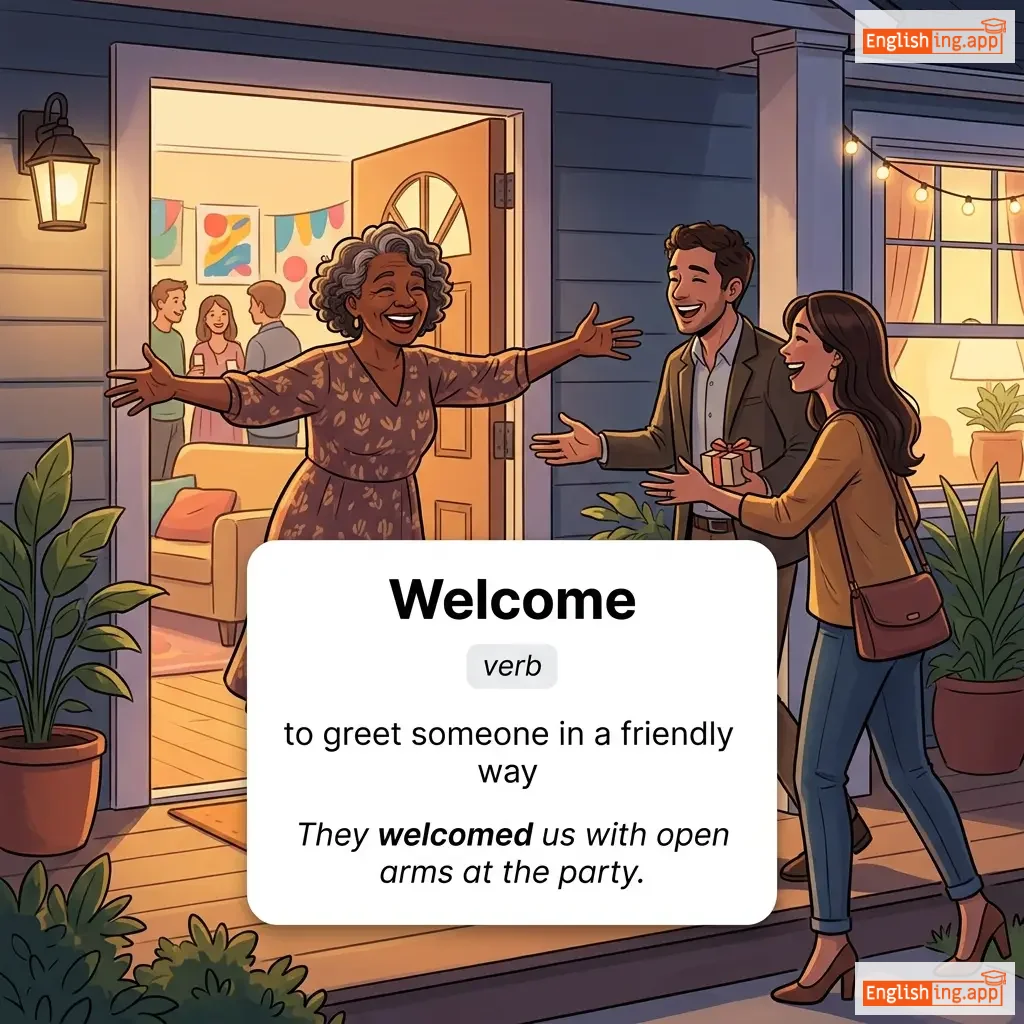
Welcome definition card — visual illustration of the meaning
verb
/ˈwɛlkəm/
accueil (accueil)

to greet someone in a friendly way

"They welcomed us with open arms at the party."

"Ils nous ont accueillis à bras ouverts à la fête." (Ils nous ont accueillis à bras ouverts à la fête.)
noun
/ˈwɛlfɛr/
bien-être (bien-etre)

the health, happiness, and fortunes of a person or group

"The government provides welfare to low-income families."

"Le gouvernement fournit du bien-être aux familles à faibles revenus." (Le gouvernement fournit du bien-être aux familles à faibles revenus.)
noun
/ˈwɛlkɪn/
ciel (ciel)

The sky, the heavens, or the upper air.

"The eagle soared high into the welkin."

"L'aigle a volé haut dans le ciel." (L'aigle a volé haut dans le ciel.)
adverb
/wɛl/
bien (bien)

in a good or satisfactory way

"She did well in her exams."

"Elle a bien réussi ses examens." (Elle a bien réussi ses examens.)
adjective
/ˌwel bɪˈheɪvd/
bien élevé (bien eleve)

conducting oneself in a proper and polite manner; showing good manners

"The children were well-behaved during the ceremony."

"Les enfants se comportaient bien pendant la cérémonie." (Les enfants se comportaient bien pendant la ceremony.)
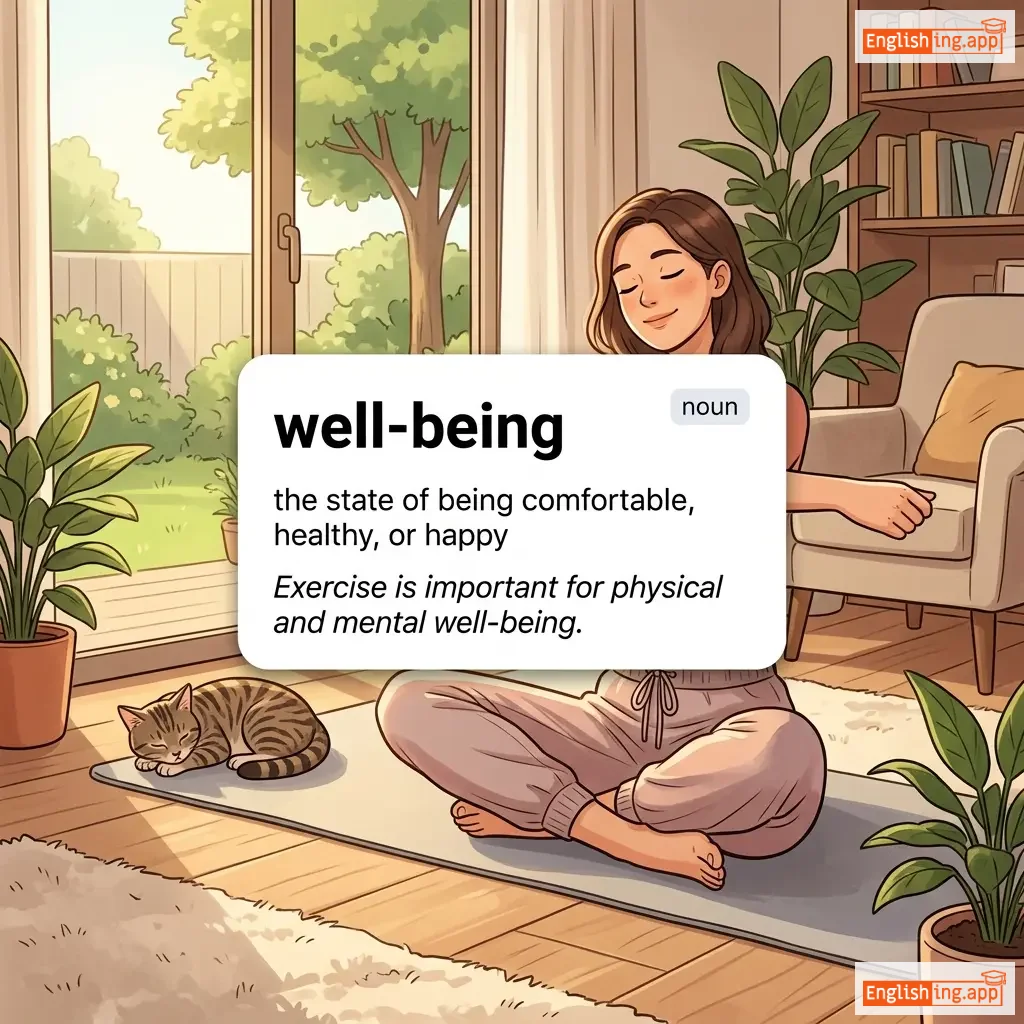
well-being definition card — visual illustration of the meaning
noun
/ˌwelˈbiːɪŋ/
bien-être (bien-etre)

the state of being comfortable, healthy, or happy

"Exercise is important for physical and mental well-being."

"L'exercice est important pour le bien-être physique et mental." (L'exercice est important pour le bien-etre physique et mental.)
adjective
/ˌwɛlˈbrɛd/
bien élevé (bien eleve)

Having or showing good manners; properly raised.

"She is a well-bred young lady with excellent manners."

"C'est une jeune femme bien élevée avec d'excellentes manières." (C'est une jeune femme bien élevée avec d'excellentes manières.)
noun
/ˈwɛlˌduːər/
bienfaiteur (bienfaiteur)

A person who does good deeds; a benefactor.

"The community praised the well-doer for his charity."

"La communauté a félicité le bienfaiteur pour sa charité." (La communauté a félicité le bienfaiteur pour sa charité.)
adjective
/ˌwel ˈdʌn/
bien fait; bien cuit (bien fait; bien cuit)

performed skillfully and successfully; cooked thoroughly

"The project was well-done and impressed everyone."

"Le projet a été bien fait et a impressionné tout le monde." (Le projet a été bien fait et a impressionné tout le monde.)
adjective
/ˌwelˈnoʊn/
célèbre (celebres)

known by many people; famous or recognized

"He is a well-known actor in his country."

"Il est un acteur célèbre dans son pays." (Il est un acteur célèbre dans son pays.)
adjective
/ˌwɛl tə ˈduː/
richissime (richissime)

Prosperous, wealthy, or financially comfortable.

"They belong to a well-to-do family in the city."

"Ils font partie d'une famille riche dans la ville." (Ils font partie d'une famille riche dans la ville.)
noun
/ˈwel.wɪʃ.ər/
bienfaiteur (bienfaiteur)

a person who desires happiness or success for another

"Many well-wishers came to congratulate her on her graduation."

"De nombreux bienfaiteurs sont venus la féliciter pour sa remise de diplôme." (De nombreux bienfaiteurs sont venus la féliciter pour sa remise de diplôme.)
noun
/wɛlt/
marque (marque)

A raised mark on the skin, usually from a blow or allergic reaction.

"He had a red welt on his arm after the bee sting."

"Il avait une marque rouge sur son bras après la piqûre d'abeille." (Il avait une marque rouge sur son bras apres la piqure d'abeille.)
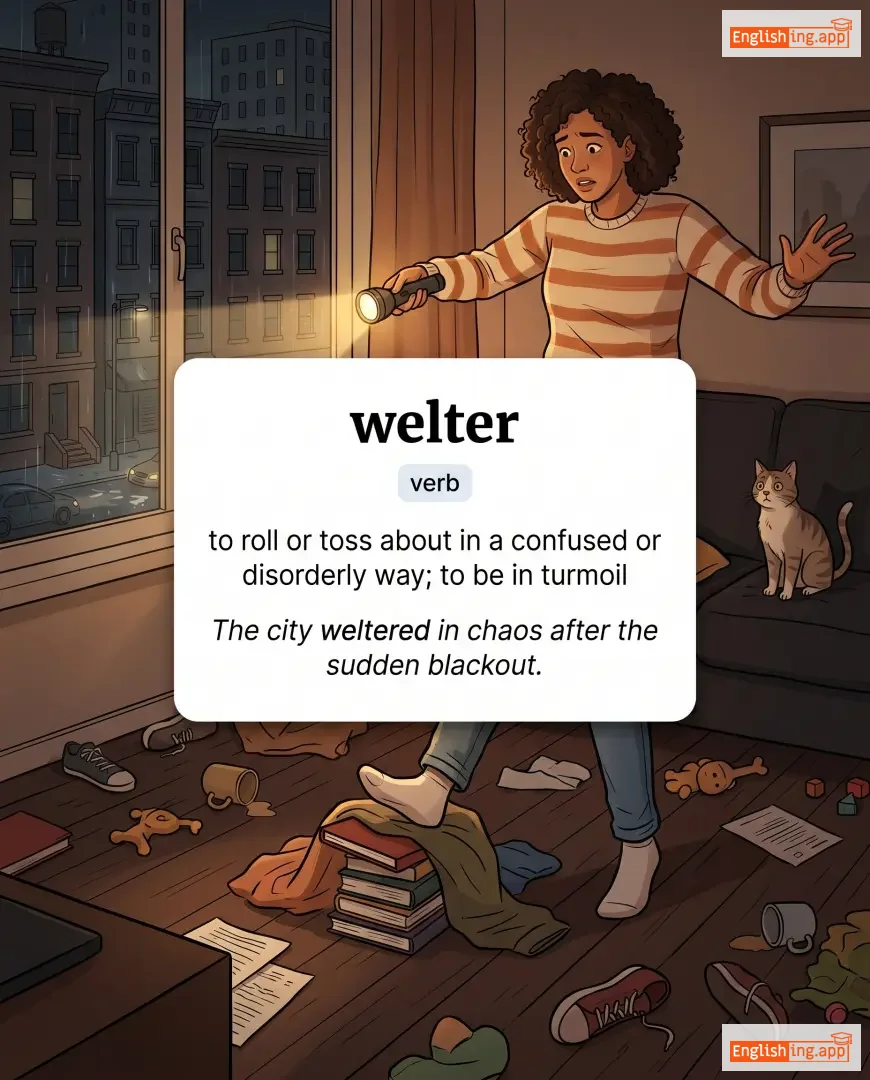
welter definition card — visual illustration of the meaning
verb
/ˈwɛltər/
tourner dans le chaos (tourner dans le chaos)

to roll or toss about in a confused or disorderly way; to be in turmoil

"The city weltered in chaos after the sudden blackout."

"La ville a été plongée dans le chaos après la panne soudaine." (La ville a été plongée dans le chaos après la panne soudaine.)
noun
/wɛst/
ouest (ouest)

the direction to the left of the north and to the right of the south, typically associated with the sunset

"The sun sets in the west."

"Le soleil se couche à l'ouest." (Le soleil se couche a l'ouest.)
adjective
/ˈwɛstərn/
occidental (occidental)

relating to or characteristic of the West, especially Europe and the Americas

"She loves western music and culture."

"Elle adore la musique et la culture occidentales." (Elle adore la musique et la culture occidentales.)
adjective
/wɛt/
mouillé (mouille)

covered with, or saturated with liquid (usually water)

"The ground is wet after the rain."

"Le sol est mouillé après la pluie." (Le sol est mouillé après la pluie.)
noun
/weɪl/
baleine (ba-len)

a very large marine mammal that lives in the ocean

"We saw a huge whale swimming near the boat."

"Nous avons vu une énorme baleine nager près du bateau." (Nous avons vu une énorme baleine nager près du bateau.)
pronoun
/wɒt/
quoi (koi)

used to ask for information about something

"What is your name?"

"Quel est ton nom ?" (Quel est ton nom ?)
🤷‍♂️

whatever (watever)

pronoun
/wɒtˈɛvər/
quoi que ce soit (kwa ke sə swa)

used to refer to anything or everything that is of the type mentioned

"You can choose whatever you like."

"Tu peux choisir ce que tu veux." (Tu peux choisir ce que tu veux.)
adverb
/wɒtˈsəʊɛvər/
pas du tout (pa du tu)

used for emphasis after a negative statement to mean 'at all'

"She has no interest in the matter whatsoever."

"Elle n'a aucun intérêt dans cette affaire, pas du tout." (Elle n'a aucun intérêt dans cette affaire, pas du tout.)
noun
/wiːt/
blé (ble)

a cereal plant whose grain is used to make flour for bread and other foods

"Farmers harvested the wheat in early summer."

"Les agriculteurs ont récolté le blé au début de l'été." (Les agriculteurs ont récolté le blé au début de l'été.)
verb
/ˈwiːdəl/
flatter pour convaincre (flatter pour convaincre)

to persuade or coax someone by using flattery or smooth talk

"She managed to wheedle extra pocket money from her father."

"Elle a réussi à obtenir de l'argent de poche supplémentaire de son père." (Elle a réussi à obtenir de l'argent de poche supplémentaire de son père.)
noun
/wiːl/
roue (roue)

a circular object that revolves on an axle and is used to move or carry things

"The wheel of the car broke down on the way."

"La roue de la voiture s'est cassée en chemin." (La roue de la voiture s'est cassée en chemin.)
noun
/ˈwiːltʃeər/
fauteuil roulant (fauteuil roulant)

a chair with wheels, used by people who cannot walk easily or at all

"The hospital provided a wheelchair for the injured patient."

"L'hôpital a fourni un fauteuil roulant pour le patient blessé." (L'hôpital a fourni un fauteuil roulant pour le patient blessé.)
noun
/wɛlp/
chiot (chiot)

a young offspring of a dog or other carnivorous mammal; sometimes used to mean an impudent young person

"The farmer found a wolf whelp hiding near the barn."

"Le fermier a trouvé un chiot de loup caché près de la grange." (Le fermier a trouvé un chiot de loup caché près de la grange.)
adverb
/wɛn/
quand (kand)

at what time

"Do you know when the train leaves?"

"Sais-tu quand le train part ?" (Sais-tu quand le train part ?)
adverb
/wɛnˈɛvər/
quand cela arrive (quand cela arrive)

at any time, or whenever it happens

"You can call me whenever you want."

"Tu peux m'appeler quand tu veux." (Tu peux m'appeler quand tu veux.)