Vocabulaires

Découvrez, apprenez et maîtrisez le vocabulaire anglais

👩‍🏫

Teacher (ticher)

noun
/ˈtiːtʃər/
enseignant (enseignant)

a person who teaches, especially in a school

"Mr. Smith is the teacher of the math class."

"M. Smith est l'enseignant de la classe de mathématiques." (M. Smith est l'enseignant de la classe de mathématiques.)
noun
/ˈtiːtʃɪŋ/
enseignement (enseignement)

the profession or practice of teaching

"Teaching is a noble profession."

"L'enseignement est une profession noble." (L'enseignement est une profession noble.)
noun
/tiːm/
équipe (équipe)

a group of people working together towards a common goal

"Our team won the match after a great effort."

"Notre équipe a gagné le match après un grand effort." (Notre équipe a gagné le match après un grand effort.)
noun
/ˈtiːmmeɪt/
coéquipier (coequipier)

a member of the same team

"He congratulated his teammate after scoring the goal."

"Il a félicité son coéquipier après avoir marqué le but." (Il a felicité son coequipier apres avoir marqué le but.)
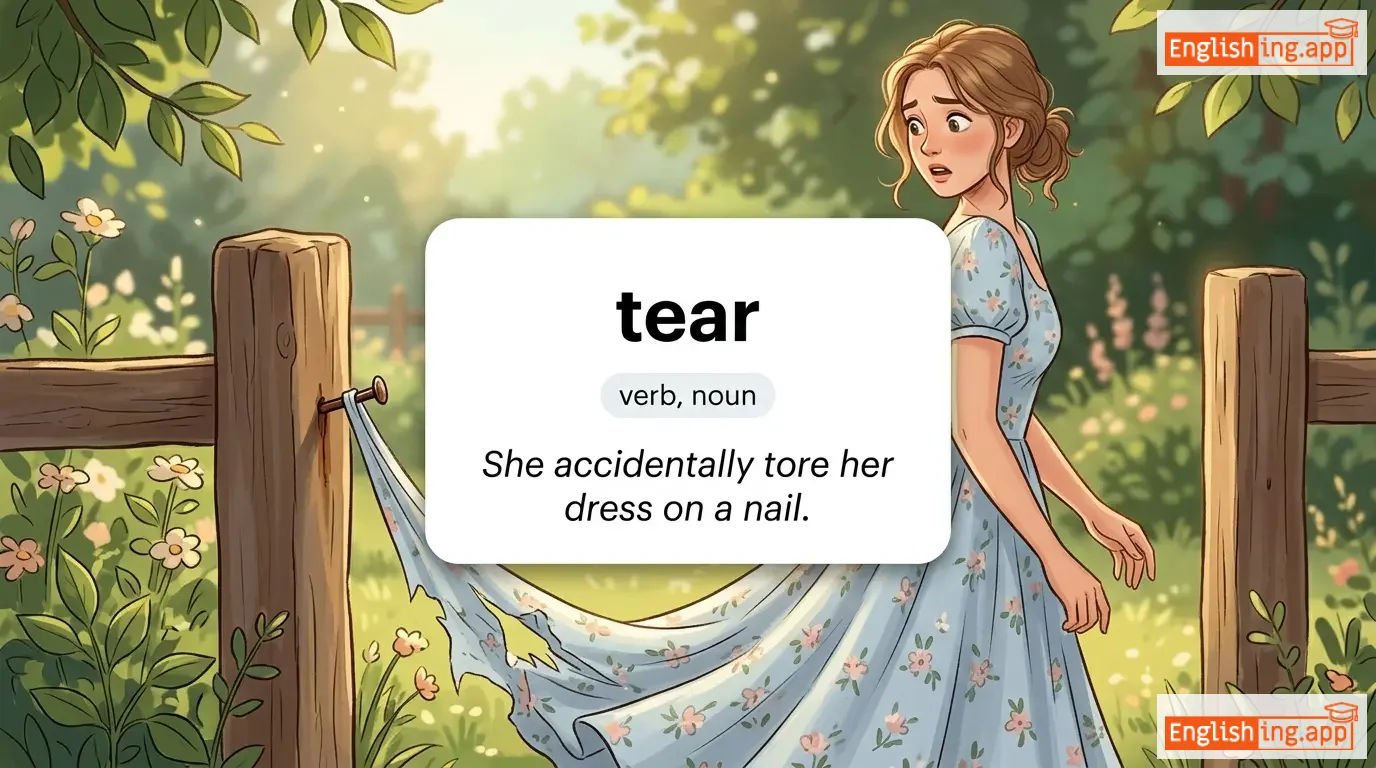
tear definition card — visual illustration of the meaning
verb, noun
/tɪər/ (noun: liquid) /tɛər/ (verb: rip)
larme / déchirer (larme / dechirer)

As a verb: to pull apart or rip something. As a noun: a drop of clear salty liquid produced by glands in your eyes.

"She accidentally tore her dress on a nail."

"Elle a accidentellement déchiré sa robe avec un clou." (Elle a accidentellement déchiré sa robe avec un clou.)
adjective
/ˈtɪərfəl/
en larmes; incliné à pleurer (en larmes; incline a pleurer)

expressing or showing sadness and sorrow; inclined to weep

"She gave a tearful goodbye to her friends at the airport."

"Elle a fait ses adieux en pleurant à ses amis à l'aéroport." (Elle a fait ses adieux en pleurant à ses amis à l'aéroport.)
verb
/tiːz/
taquiner (taquiner)

to make fun of someone in a playful or unkind way

"Children often tease their younger siblings playfully."

"Les enfants se moquent souvent de leurs frères et sœurs plus jeunes de manière ludique." (Les enfants se moquent souvent de leurs frères et sœurs plus jeunes de manière ludique.)
noun
/ˈtiːspuːn/
bonheur (bonheur)

a small spoon used for stirring drinks or eating soft foods, or for measuring small amounts of ingredients.

"Add a teaspoon of sugar to the tea."

"Elle ne pouvait pas cacher son bonheur quand elle a reçu le prix." (Elle ne pouvait pas cacher son bonheur quand elle a reçu le prix.)
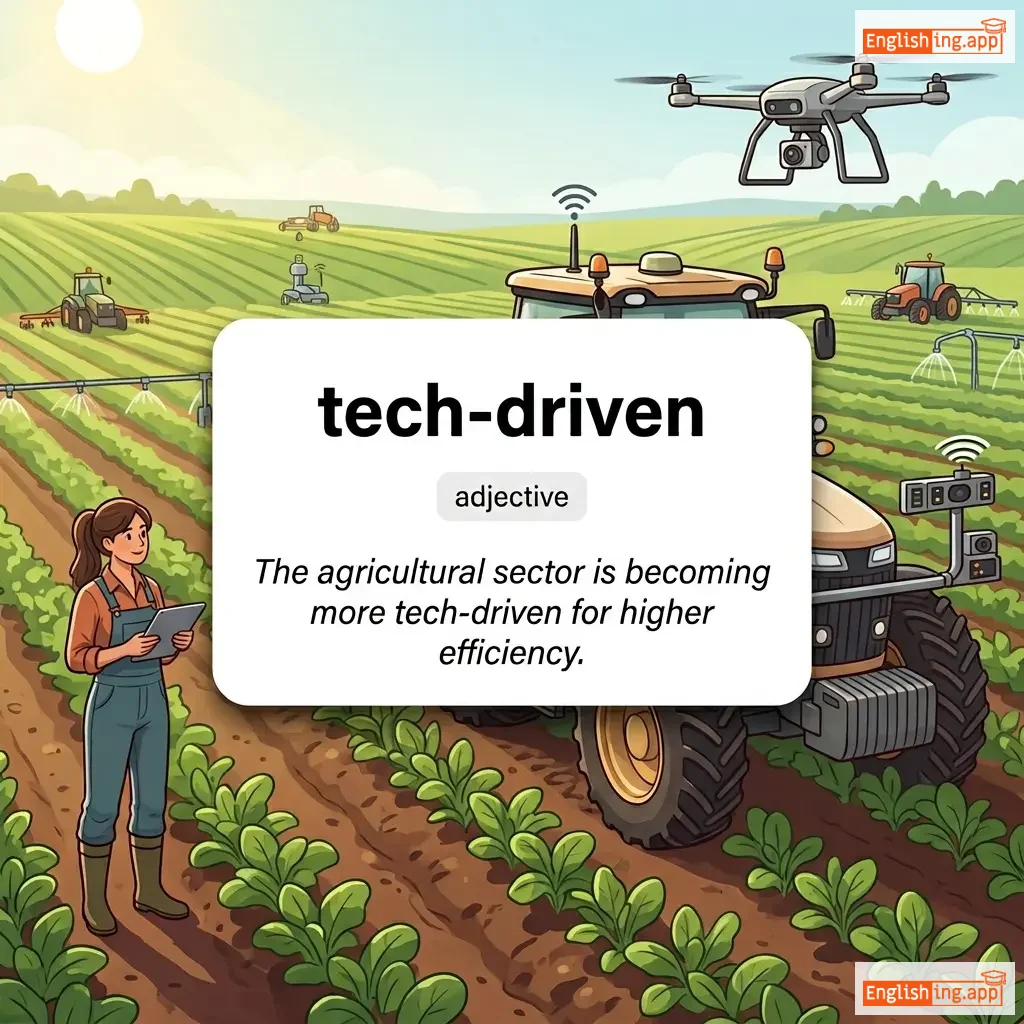
tech-driven definition card — visual illustration of the meaning
adjective
/tɛk ˈdrɪv.ən/
alimenté par la technologie (alimente par la technologie)

Powered or guided by technology; dependent on technological advancement for operation.

"The agricultural sector is becoming more tech-driven for higher efficiency."

"Le secteur agricole devient de plus en plus axé sur la technologie pour une efficacité accrue." (Le secteur agricole devient de plus en plus axe sur la technologie pour une efficacite accrue.)
noun
/ˈtɛknɪk/
technique (technique)

A method, skill, or art in a particular field, especially in the arts or sciences.

"The artist’s technic in watercolor impressed the judges."

"La technique de l'artiste en aquarelle a impressionné les juges." (La technique de l'artiste en aquarelle a impressionne les juges.)
adjective
/ˈtɛknɪkəl/
technique (technique)

relating to a specific subject, art, or craft, or its techniques.

"He has a technical background in engineering."

"Il a un passé technique en génie." (Il a un passé technique en génie.)
noun
/ˌtɛknɪˈkæləti/
technicalité (technicalite)

A small detail of law, rule, or procedure; a minor point that affects an outcome.

"The case was dismissed on a technicality."

"L'affaire a été rejetée pour une question de technicité." (L'affaire a ete rejete pour une question de technicalite.)
noun
/tɛkˈnɪʃən/
technicien (technicien)

a person skilled in the practical aspects of a particular science, art, or job

"The technician repaired the computer within an hour."

"Le technicien a réparé l'ordinateur en une heure." (Le technicien a réparé l'ordinateur en une heure.)
noun
/tɛkˈniːk/
technique (technique)

A particular way of carrying out a task, especially with skill.

"She learned a new breathing technique in yoga class."

"Elle a appris une nouvelle technique de respiration dans le cours de yoga." (Elle a appris une nouvelle technique de respiration dans le cours de yoga.)
noun
/tɛkˈnɒɡrəfi/
technographie (technographie)

the descriptive study or writing about the practical arts, technologies, or technical methods of a society

"The anthropologist specialized in technography to understand indigenous tool-making traditions."

"L'anthropologue s'est spécialisé en technographie pour comprendre les traditions autochtones de fabrication d'outils." (L'anthropologue s'est specialise en technographie pour comprendre les traditions autochtones de fabrication d'outils.)
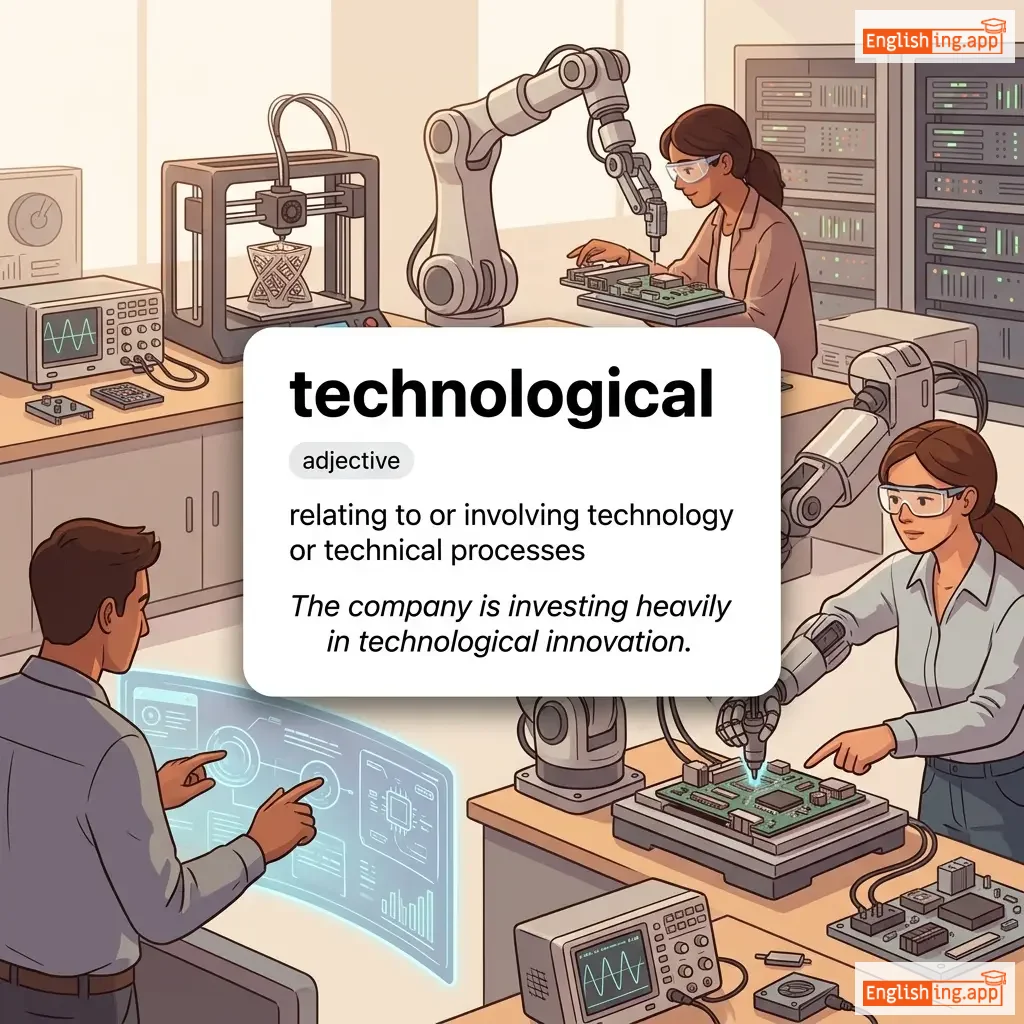
technological definition card — visual illustration of the meaning
adjective
/ˌteknəˈlɒdʒɪkəl/
technologique (teknolozhik)

relating to or involving technology or technical processes

"The company is investing heavily in technological innovation."

"L'entreprise investit massivement dans l'innovation technologique." (lentreprise investit massivement dans linnovation technologique)
technological advancement definition card — visual illustration of the meaning
noun
/tekˈnɒl.ə.dʒɪ.kəl ədˈvɑːns.mənt/
avancée technologique (avancee technologique)

Progress or improvement in technology that leads to better solutions or capabilities.

"Technological advancement is revolutionizing healthcare."

"L'avancée technologique révolutionne les soins de santé." (L'avancee technologique revolutionne les soins de sante.)
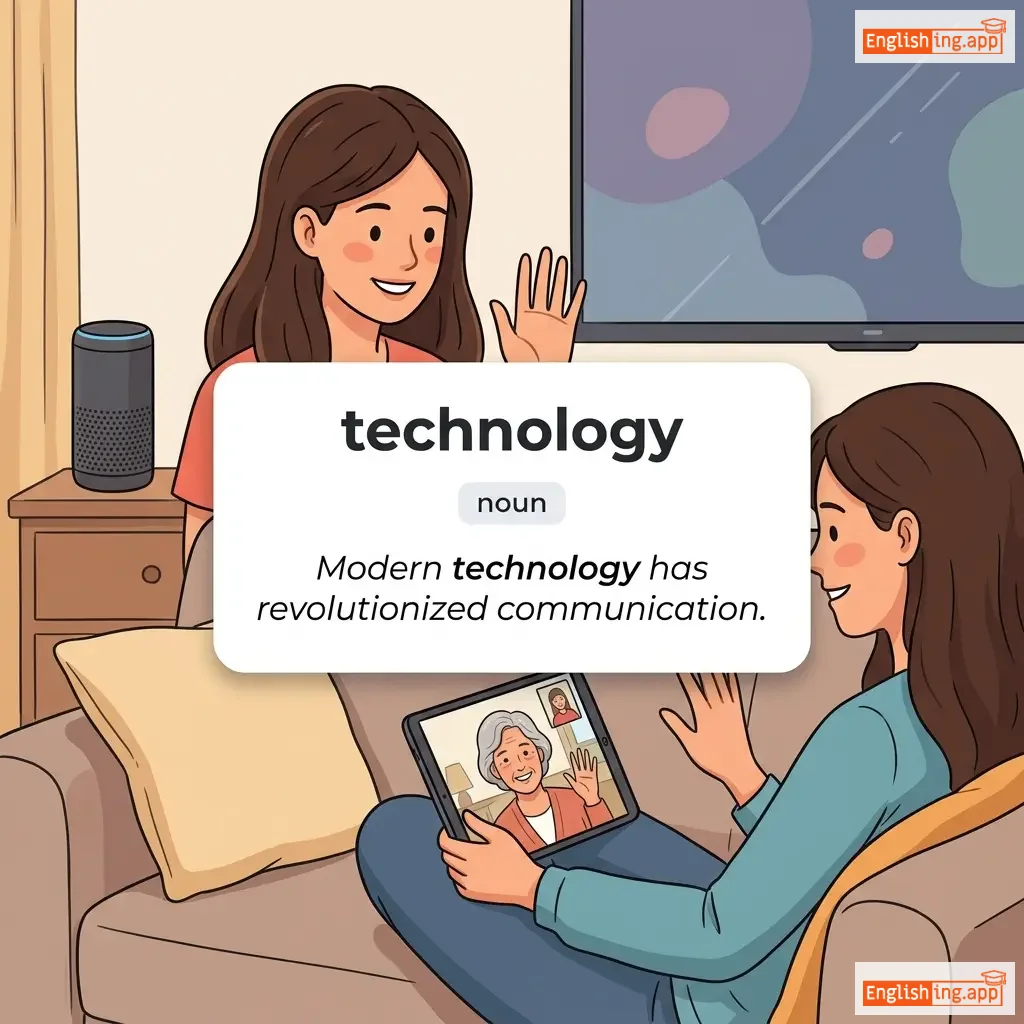
technology definition card — visual illustration of the meaning
noun
/tɛkˈnɒlədʒi/
technologie (technologie)

the application of scientific knowledge for practical purposes, especially in industry

"Modern technology has revolutionized communication."

"La technologie moderne a révolutionné la communication." (La technologie moderne a revolutionne la communication.)
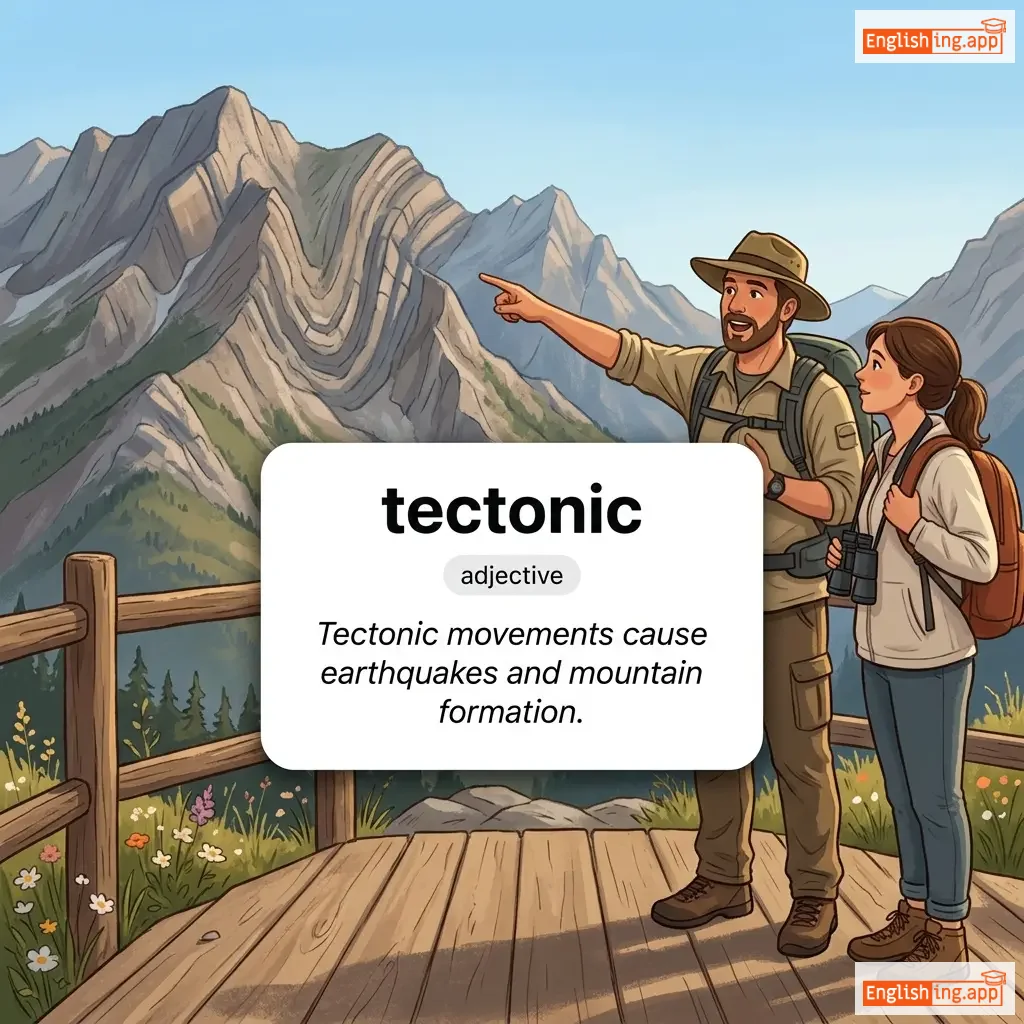
tectonic definition card — visual illustration of the meaning
adjective
/tɛkˈtɑː.nɪk/
tectonique (tectonique)

Relating to the structure of the earth's crust and the large-scale processes that take place within it.

"Tectonic movements cause earthquakes and mountain formation."

"Les mouvements tectoniques causent des tremblements de terre et la formation des montagnes." (Les mouvements tectoniques causent des tremblements de terre et la formation des montagnes.)
adjective
/ˈtiːdiəs/
ennuyeux (ennuyeux)

too long, slow, or dull; tiresome or monotonous

"Filling out endless forms can be a tedious task."

"Remplir des formulaires sans fin peut être une tâche ennuyeuse." (Remplir des formulaires sans fin peut être une tâche ennuyeuse.)
noun
/ˈtiːdiəm/
tedium (tedium)

the state of being tedious; monotony or boredom

"The tedium of long meetings often drains motivation."

"Le tedium des longues réunions épuise souvent la motivation." (Le tedium des longues réunions épuise souvent la motivation.)
verb
/tiːm/
abonder (abonder)

to be full of or swarming with

"The forest teems with wildlife."

"La forêt est pleine de faune." (La forêt est pleine de faune.)
adjective
/ˈtiːmɪŋ/
bondé (bonde)

full of or swarming with things or people

"The market was teeming with shoppers."

"Le marché était bondé de clients." (Le marché était bondé de clients.)
🧑‍🦱

teen (tineur)

noun
/tiːn/
adolescent (adolescent)

a person aged between 13 and 19 years.

"He's a teenager who loves sports."

"Il est un adolescent qui aime le sport." (Il est un adolescent qui aime le sport.)
🧑‍🎓

teenage (tinéj)

adjective
/ˈtiːnˌeɪdʒ/
adolescent (adolescent)

relating to or characteristic of people aged between 13 and 19 years old

"She spent her teenage years in a small town."

"Elle a passé ses années adolescentes dans une petite ville." (Elle a passé ses années adolescentes dans une petite ville.)
noun
/ˈtiːneɪdʒər/
adolescent (adolescent)

a person aged between 13 and 19 years.

"Teenagers often enjoy hanging out with friends."

"Les adolescents aiment souvent passer du temps avec leurs amis." (Les adolescents aiment souvent passer du temps avec leurs amis.)
verb
/ˈtiːtər/
vaciller (vaciller)

to move or balance unsteadily; to wobble

"The glass began to teeter on the edge of the table."

"Le verre a commencé à vaciller sur le bord de la table." (Le verre a commence a vaciller sur le bord de la table.)
noun
/tiːˈtoʊtəlɪzəm/
abstinence totale d'alcool (abstinence totale d'alcool)

the practice or principle of abstaining completely from alcoholic drinks

"He practiced teetotalism throughout his life."

"Il a pratiqué le teetotalisme toute sa vie." (Il a pratique le teetotalisme toute sa vie.)
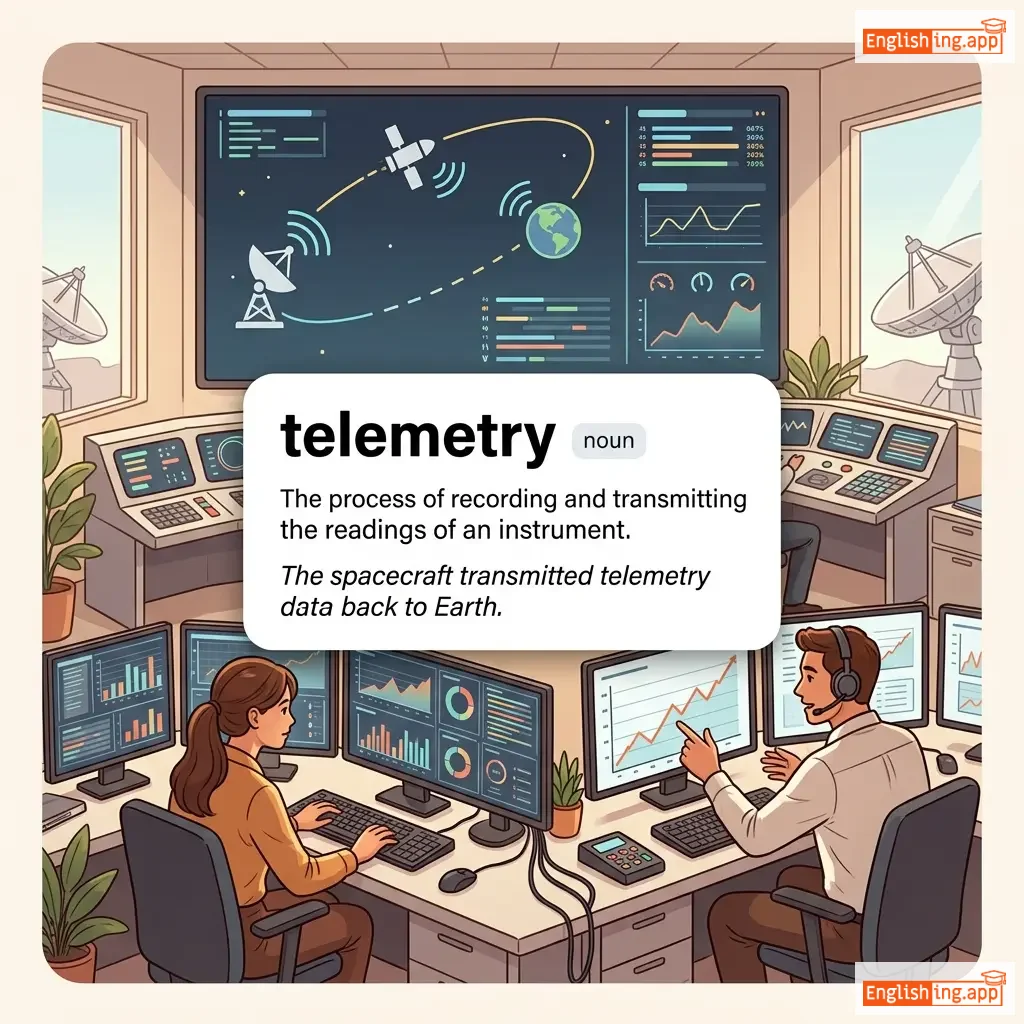
telemetry definition card — visual illustration of the meaning
noun
ˈtɛlɪˌmɛtri
télémétrie (telemetrie)

The process of recording and transmitting the readings of an instrument.

"The spacecraft transmitted telemetry data back to Earth."

"Le vaisseau spatial a transmis les données de télémétrie à la Terre." (Le vaisseau spatial a transmis les données de télémétrie à la Terre.)
noun
/ˌtɛliˈɒlədʒi/
téléologie (teleologie)

the explanation of phenomena by the purpose they serve rather than by cause

"Aristotle is often associated with the concept of teleology in philosophy."

"Aristote est souvent associé au concept de téléologie en philosophie." (Aristote est souvent associe au concept de teleologie en philosophie.)
noun
/təˈlɛpəθi/
télépathie (telepathie)

the supposed communication of thoughts or ideas by means other than the known senses

"The twins claimed to share telepathy with each other."

"Les jumeaux ont prétendu partager une télépathie entre eux." (Les jumeaux ont pretendu partager une telepathie entre eux.)
noun
/ˈtɛlɪfəʊn/
téléphone (telephone)

a system for transmitting voices over a distance using wire or radio, typically for communication.

"I need to make a telephone call to my friend."

"J'ai besoin de passer un appel téléphonique à mon ami." (J'ai besoin de passer un appel téléphonique à mon ami.)
noun
/təˈlɛfəni/
téléphonie (telephonie)

the technology and systems for transmitting voice over distances by telephone

"Modern telephony has evolved to include internet-based calls."

"La téléphonie moderne a évolué pour inclure les appels basés sur Internet." (La telephonie moderne a evolue pour inclure les appels bases sur Internet.)
noun
/ˈtɛlɪˌskoʊp/
télescope (telescope)

An optical instrument used to make distant objects appear closer and larger by collecting and focusing light.

"The astronomer used a telescope to observe the distant planets."

"L'astronome a utilisé un télescope pour observer les planètes lointaines." (L'astronome a utilise un telescope pour observer les planetes lointaines.)
noun
/ˈtɛlɪˌvɪʒən/
télévision (television)

a device that receives television signals and displays them on a screen

"I like to watch the news on television."

"J'aime regarder les informations à la télévision." (Jaime regarder les informations a la television)
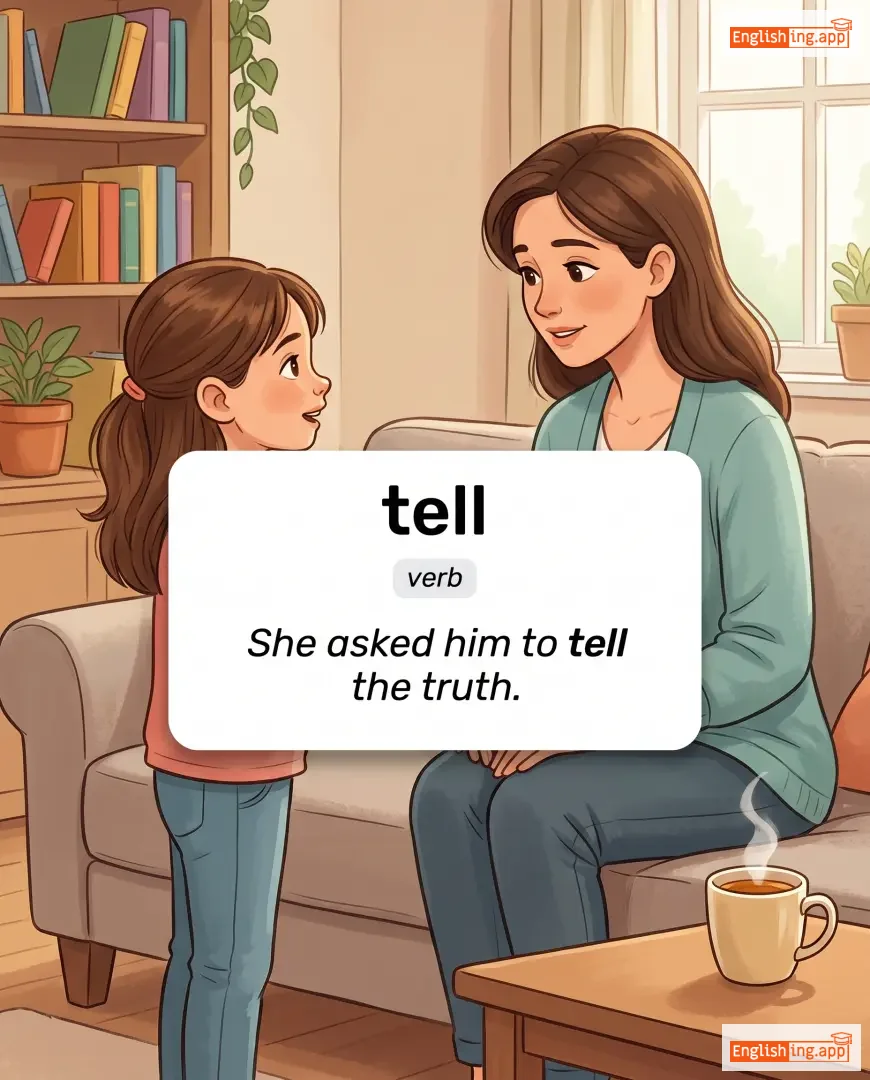
tell definition card — visual illustration of the meaning
verb
/tɛl/
dire (dire)

to communicate information, give an account of something, or instruct someone to do something

"She asked him to tell the truth."

"Elle lui a demandé de dire la vérité." (Elle lui a demande de dire la verite.)
noun
/ˈtɛl.ər/
caissier; narrateur (caissier; narrateur)

A person who counts and manages money at a bank; a person who tells or relates something

"The bank teller counted the cash carefully before handing it over."

"Le caissier de la banque a compté l'argent avec soin avant de le remettre." (Le caissier de la banque a compte l'argent avec soin avant de le remettre.)
adjective
/ˈtɛlɪŋ/
révélateur (revelateur)

Revealing something significant or giving important information.

"Her silence was more telling than words."

"Son silence en disait plus que des mots." (Son silence en disait plus que des mots.)
adjective
/ˈtɛlˌteɪl/
révélateur (revelateur)

Revealing something that is usually hidden; giving away a secret or clue.

"The telltale signs of fatigue were visible on his face."

"Les signes révélateurs de fatigue étaient visibles sur son visage." (Les signes révélateurs de fatigue étaient visibles sur son visage.)
adjective
/ˌtɛmɪˈrɛəriəs/
téméraire (temeraire)

Reckless or rash; showing a lack of caution.

"It was a temerarious decision to cross the river during the storm."

"C'était une décision téméraire de traverser la rivière pendant la tempête." (C'était une décision téméraire de traverser la rivière pendant la tempête.)
noun
/təˈmɛrɪti/
témérité (temerite)

Excessive confidence or boldness; audacity.

"He had the temerity to challenge the professor’s argument."

"Il a eu la témérité de défier l'argument du professeur." (Il a eu la temerite de defier l'argument du professeur.)
verb
/ˈtɛmpər/
tempérer (temprer)

to moderate, soften, or tone down something; also to strengthen by heat treatment (as in metal).

"She tried to temper her criticism with kindness."

"Elle a essayé de tempérer sa critique avec de la gentillesse." (Elle a essaye de temperer sa critique avec de la gentillesse.)
noun
/ˈtɛmpərəmənt/
tempérament (temperament)

a person's characteristic mood, disposition, or nature.

"He has a calm temperament that makes him a good leader."

"Il a un tempérament calme qui fait de lui un bon leader." (Il a un tempérament calme qui fait de lui un bon leader.)
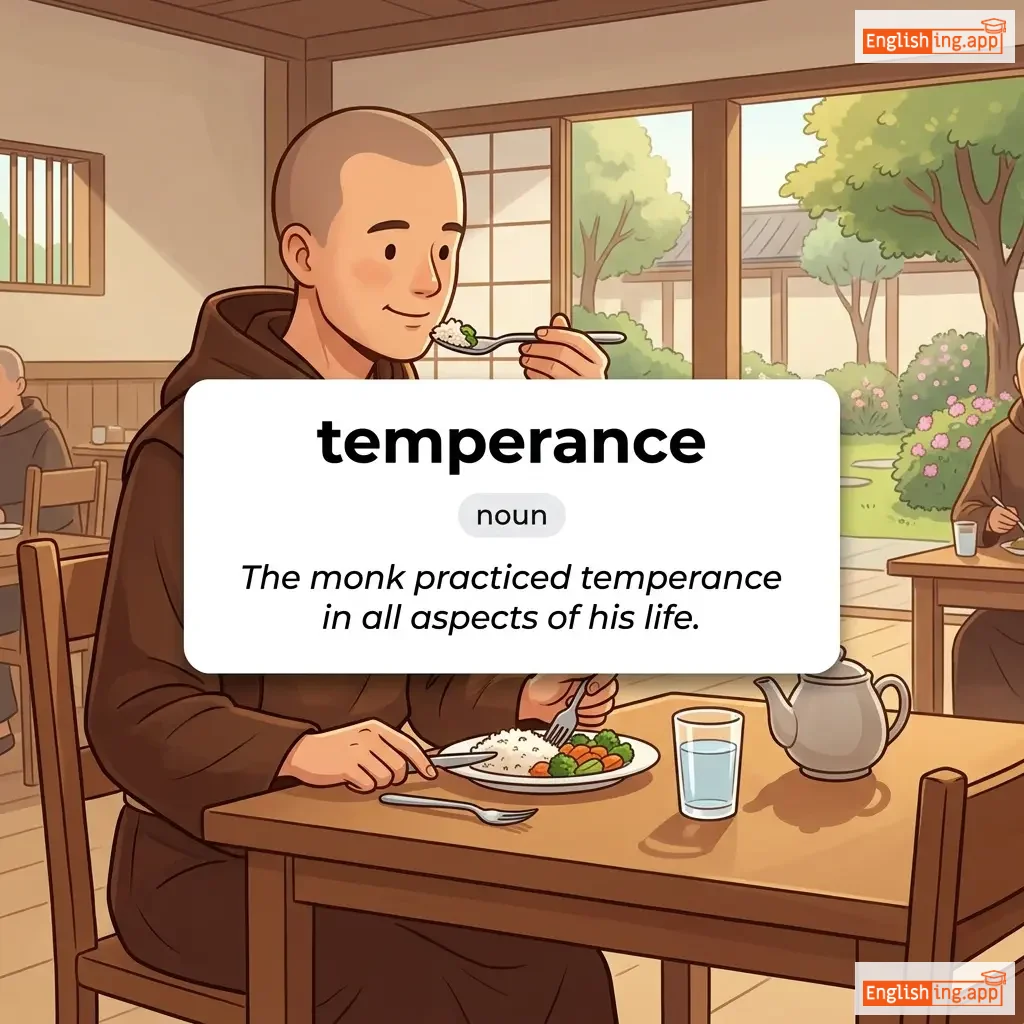
temperance definition card — visual illustration of the meaning
noun
/ˈtɛmpərəns/
tempérance (temprans)

moderation in action, thought, or feeling; restraint, especially regarding alcohol.

"The monk practiced temperance in all aspects of his life."

"Le moine pratiquait la tempérance dans tous les aspects de sa vie." (Le moine pratiquait la temperance dans tous les aspects de sa vie.)
adjective
/ˈtɛmpərət/
tempéré (tempere)

showing moderation or self-restraint; also describing mild climate.

"He is known for his temperate behavior even in stressful situations."

"Il est connu pour son comportement tempéré même dans des situations stressantes." (Il est connu pour son comportement tempéré même dans des situations stressantes.)
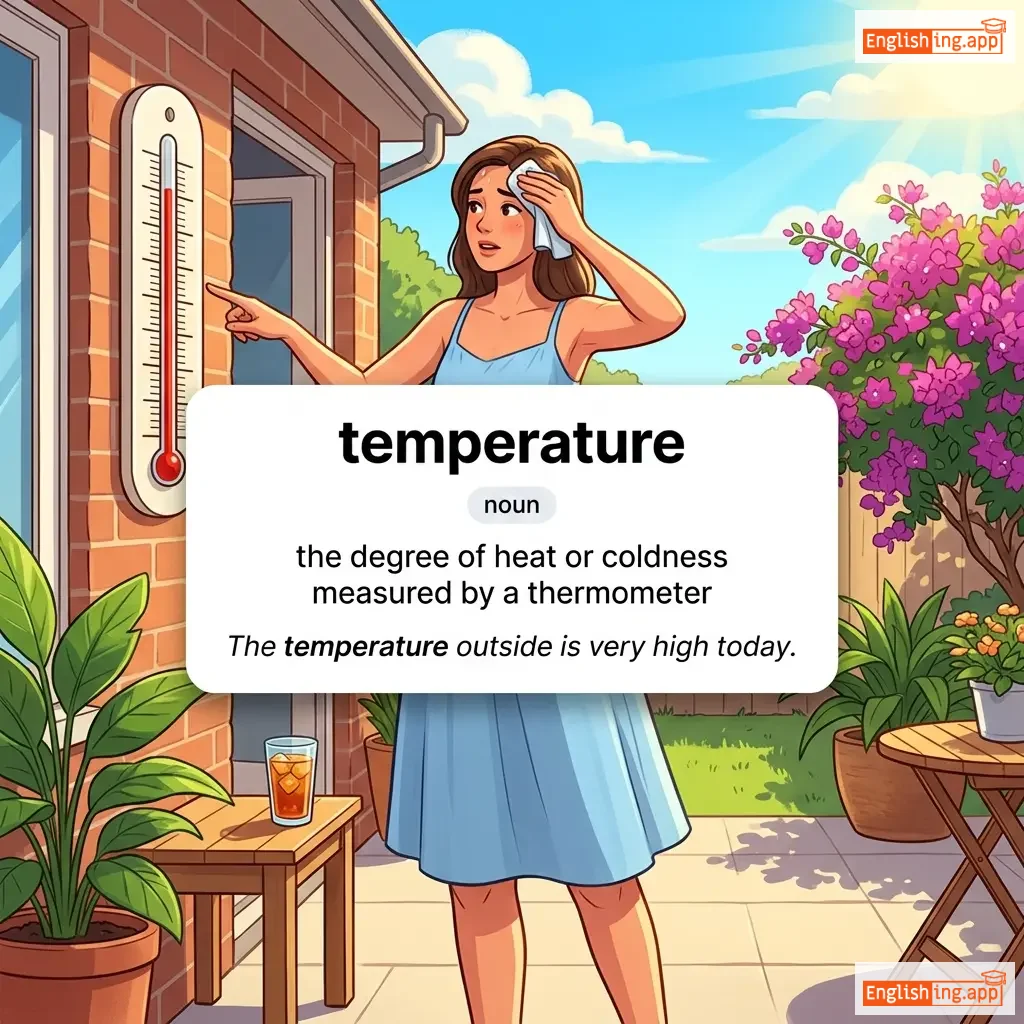
temperature definition card — visual illustration of the meaning
noun
/ˈtɛmpərətʃər/
température (température)

the degree of heat or coldness measured by a thermometer

"The temperature outside is very high today."

"La température extérieure est très élevée aujourd'hui." (La température extérieure est très élevée aujourd'hui.)
adjective
/ˈtɛmpərd/
temperé (tempere)

having a specified temper or disposition; strengthened or moderated.

"She gave a tempered response to the criticism."

"Elle a donné une réponse tempérée à la critique." (Elle a donne une reponse temperee a la critique.)
noun
/ˈtem.pɪst/
tempête (tempete)

a violent storm with strong winds; a state of great disturbance or tumult

"The sailors struggled to navigate through the fierce tempest."

"Les marins ont lutté pour naviguer à travers la tempête furieuse." (Les marins ont lutté pour naviguer à travers la tempête furieuse.)
adjective
/tɛmˈpɛstjuəs/
tempétueux, agité (tempetueux, agite)

Characterized by strong and turbulent emotions or stormy conditions.

"Their tempestuous relationship often swung between love and anger."

"Leurs relations tempétueuses oscillaient souvent entre l'amour et la colère." (Leurs relations tempetueuses oscillaient souvent entre l'amour et la colere.)
noun
/ˈtɛmpəl/
temple (temple)

a building used for the worship of a god or gods

"They visited an ancient temple during their trip to India."

"Ils ont visité un ancien temple pendant leur voyage en Inde." (Ils ont visité un ancien temple pendant leur voyage en Inde.)