Vocabulaires

Découvrez, apprenez et maîtrisez le vocabulaire anglais

noun
/ˌsætɪsˈfækʃən/
satisfaction (satisfaction)

the feeling of being pleased or content with something

"Her satisfaction with the results was evident."

"Sa satisfaction des résultats était évidente." (Sa satisfaction des resultats etait evidente.)
adjective
/ˈsæt.ɪs.fæk.tər.i/
satisfaisant (satisfaisant)

acceptable; meeting requirements; adequate

"The test results were satisfactory."

"Les résultats du test étaient satisfaisants." (les résultats du test étaient satisfaisants.)
adjective
/ˈsætɪsfaɪd/
satisfait (satisfait)

Pleased or content with what has been achieved or received.

"He felt satisfied after finishing his project."

"Il se sentait satisfait après avoir terminé son projet." (Il se sentait satisfait après avoir terminé son projet.)
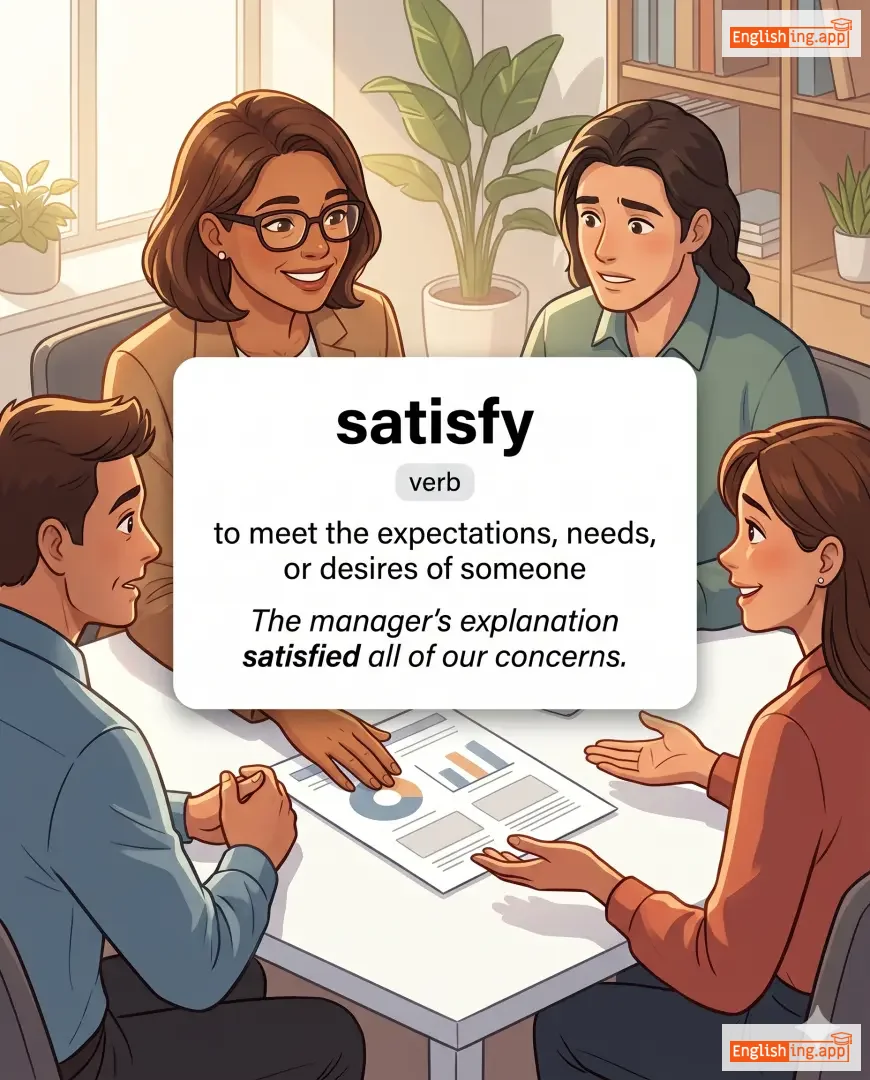
satisfy definition card — visual illustration of the meaning
verb
/ˈsætɪsfaɪ/
satisfaire (satisfair)

to meet the expectations, needs, or desires of someone

"The manager's explanation satisfied all of our concerns."

"L'explication du manager a satisfait toutes nos préoccupations." (L'explication du manager a satisfait toutes nos préoccupations.)
noun
/ˈsætræp/
satrape (satrape)

a governor of a province in ancient Persia; also used figuratively for a subordinate ruler

"The king appointed a satrap to oversee the distant province."

"Le roi nomma un satrape pour superviser la province éloignée." (Le roi nomma un satrape pour superviser la province éloignée.)
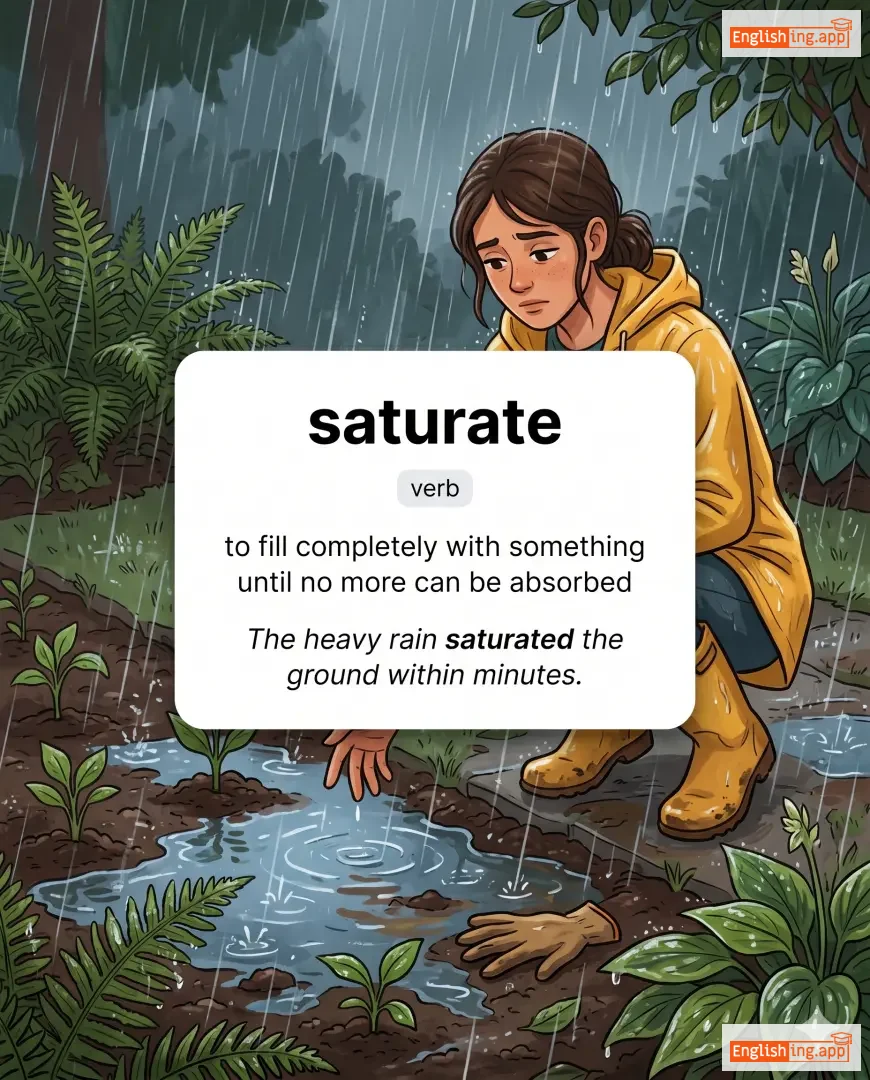
saturate definition card — visual illustration of the meaning
verb
/ˈsætʃəˌreɪt/
saturer (saturer)

to fill completely with something until no more can be absorbed

"The heavy rain saturated the ground within minutes."

"La forte pluie a saturé le sol en quelques minutes." (La forte pluie a saturé le sol en quelques minutes.)
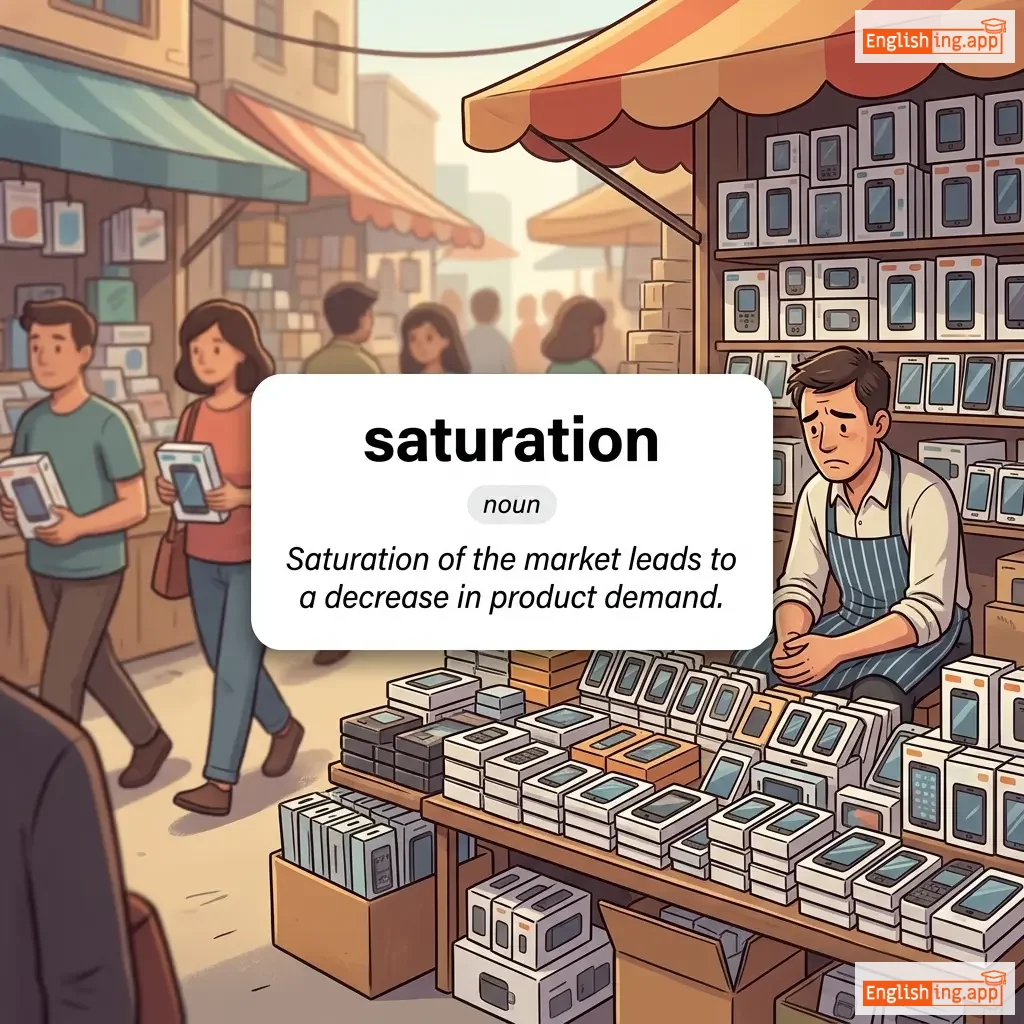
saturation definition card — visual illustration of the meaning
noun
/ˌsætʃəˈreɪʃən/
saturation (saturation)

The state or process that occurs when no more of something can be absorbed, combined with, or added.

"Saturation of the market leads to a decrease in product demand."

"La saturation du marché entraîne une diminution de la demande de produits." (La saturation du marche entraine une diminution de la demande de produits.)
noun
/ˈsætərdeɪ/
samedi (samedi)

The day of the week between Friday and Sunday; traditionally the sixth day of the week

"We are going to the beach on Saturday."

"Nous allons à la plage samedi." (Nous allons a la plage samedi.)
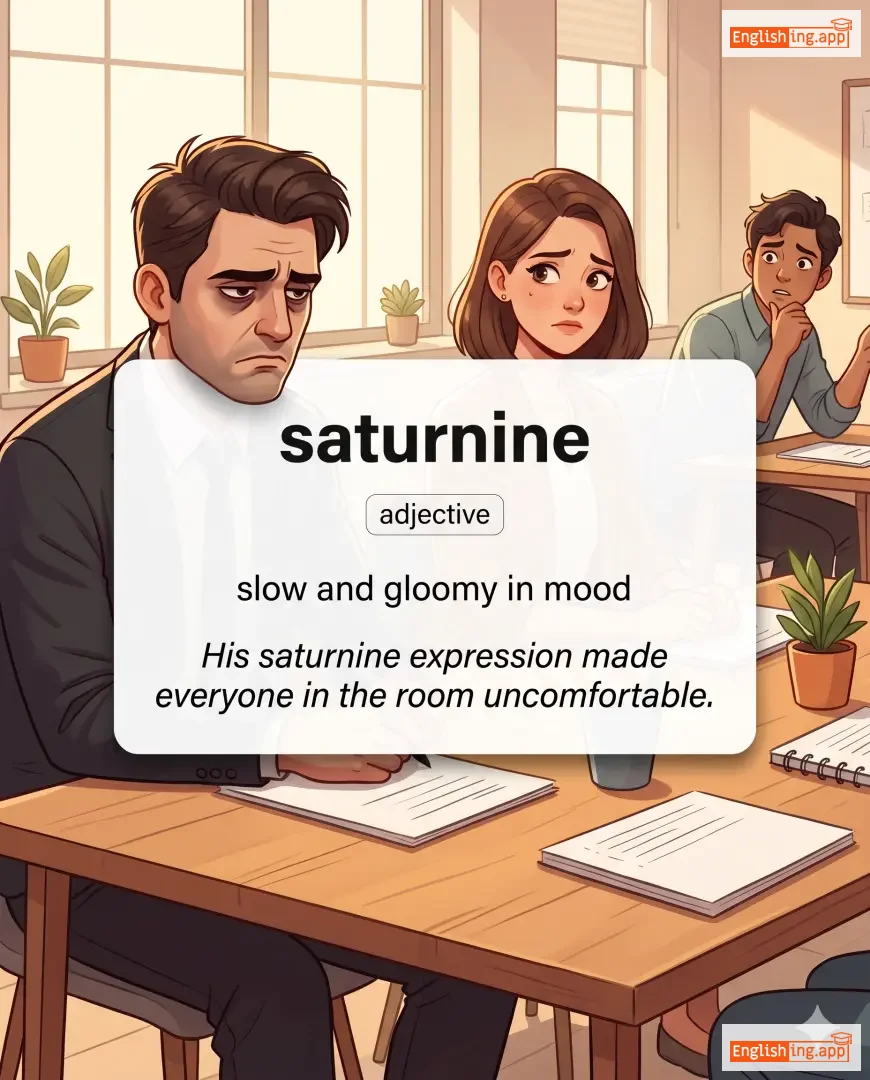
saturnine definition card — visual illustration of the meaning
adjective
/ˈsætərˌnaɪn/
saturnien (saturnien)

slow and gloomy in mood

"His saturnine expression made everyone in the room uncomfortable."

"Son expression saturnienne rendait tout le monde dans la pièce mal à l'aise." (Son expression saturnienne rendait tout le monde dans la piece mal a l'aise.)
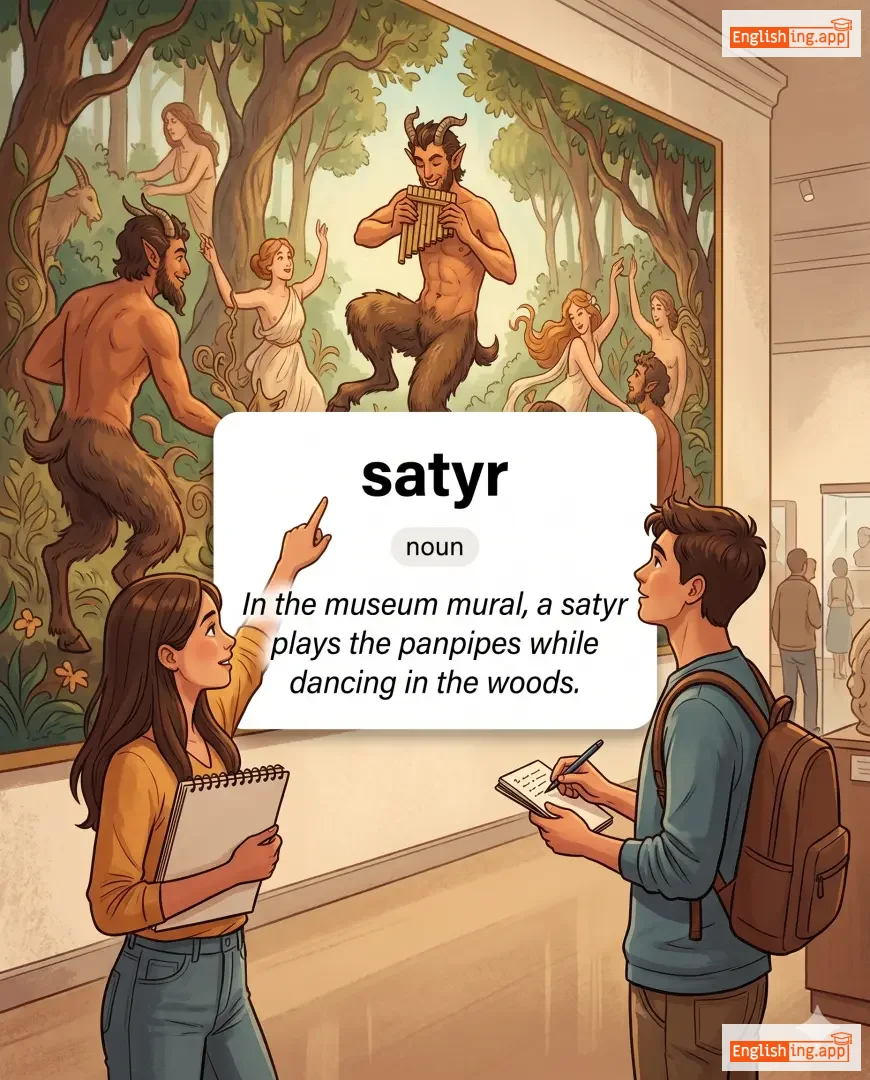
satyr definition card — visual illustration of the meaning
noun
/ˈsætər/
bonheur (bonheur)

a creature from Greek mythology depicted as a lustful being, often half-man and half-goat; by extension, a lecherous man

"In the museum mural, a satyr plays the panpipes while dancing in the woods."

"Elle n'a pas pu cacher son bonheur lorsqu'elle a reçu le prix." (Elle n'a pas pu cacher son bonheur lorsqu'elle a recu le prix.)
noun
/sɔːs/
sauce (sauce)

a liquid or semi-liquid substance used to add flavor to food

"She added some tomato sauce to the pasta."

"Elle a ajouté de la sauce tomate à ses pâtes." (Elle a ajoute de la sauce tomate a ses pates.)
adjective
/ˈsɔːsi/
effronté (effronte)

Boldly rude, cheeky, or playfully disrespectful.

"The child gave a saucy reply to his teacher."

"L'enfant a donné une réponse effrontée à son professeur." (L'enfant a donné une réponse effrontée à son professeur.)
verb
/ˈsɔːntər/
se promener lentement (se promener lentement)

to walk in a slow, relaxed manner without hurry or effort

"We sauntered along the riverside, stopping now and then to watch the boats."

"Nous avons flâné le long de la rivière, nous arrêtant de temps en temps pour observer les bateaux." (Nous avons flâné le long de la rivière, nous arrêtant de temps en temps pour observer les bateaux.)
adjective
/ˈsævɪdʒ/
sauvage (sauvage)

fierce, violent, or uncontrolled; cruel or brutal

"The storm brought savage winds that tore branches from the trees."

"La tempête a apporté des vents sauvages qui ont arraché des branches des arbres." (La tempête a apporté des vents sauvages qui ont arraché des branches des arbres.)
noun
/səˈvænə/
savane (avec des arbres éparpillés) (savane (avec des arbres eparpilles))

a grassy plain with scattered trees, typical of tropical and subtropical regions

"Giraffes browsed on acacia trees across the wide savanna."

"Les girafes broutaient sur les arbres d'acacia à travers la large savane." (Les girafes broutaient sur les arbres d'acacia a travers la large savane.)
noun
/səˈvɑːnt/
bonheur (bonheur)

a learned person, especially a distinguished scientist or scholar; sometimes used in the phrase ‘savant syndrome’ for someone with exceptional abilities alongside developmental differences

"The conference keynote was delivered by a linguistic savant who studies endangered languages."

"Elle ne pouvait cacher sa bonheur lorsqu'elle a reçu le prix." (Elle ne pouvait cacher sa bonheur lorsqu'elle a reçu le prix.)
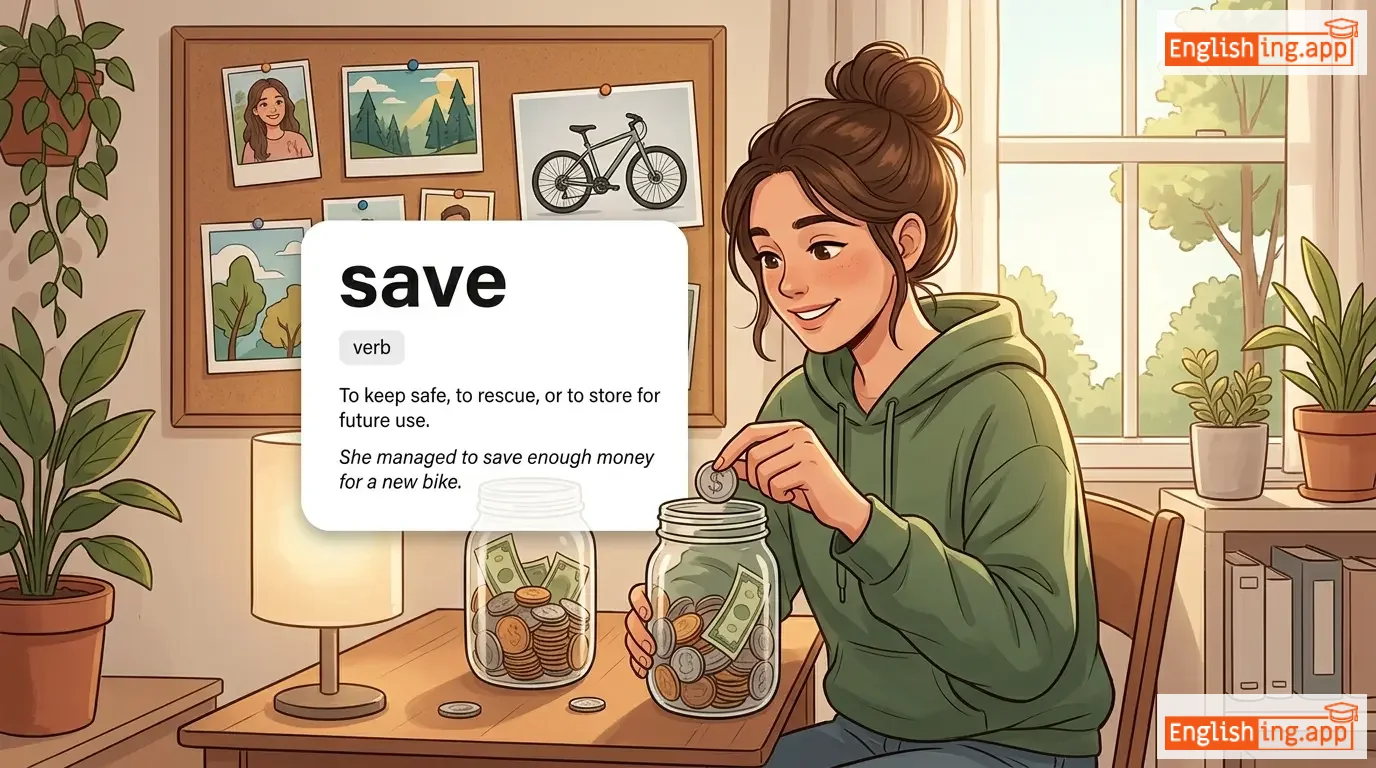
save definition card — visual illustration of the meaning
verb
/seɪv/
sauver / économiser (sauver / economiser)

To keep safe, to rescue, or to store for future use.

"She managed to save enough money for a new bike."

"Elle a réussi à économiser assez d'argent pour un nouveau vélo." (Elle a reussi à economiser assez d'argent pour un nouveau vélo.)
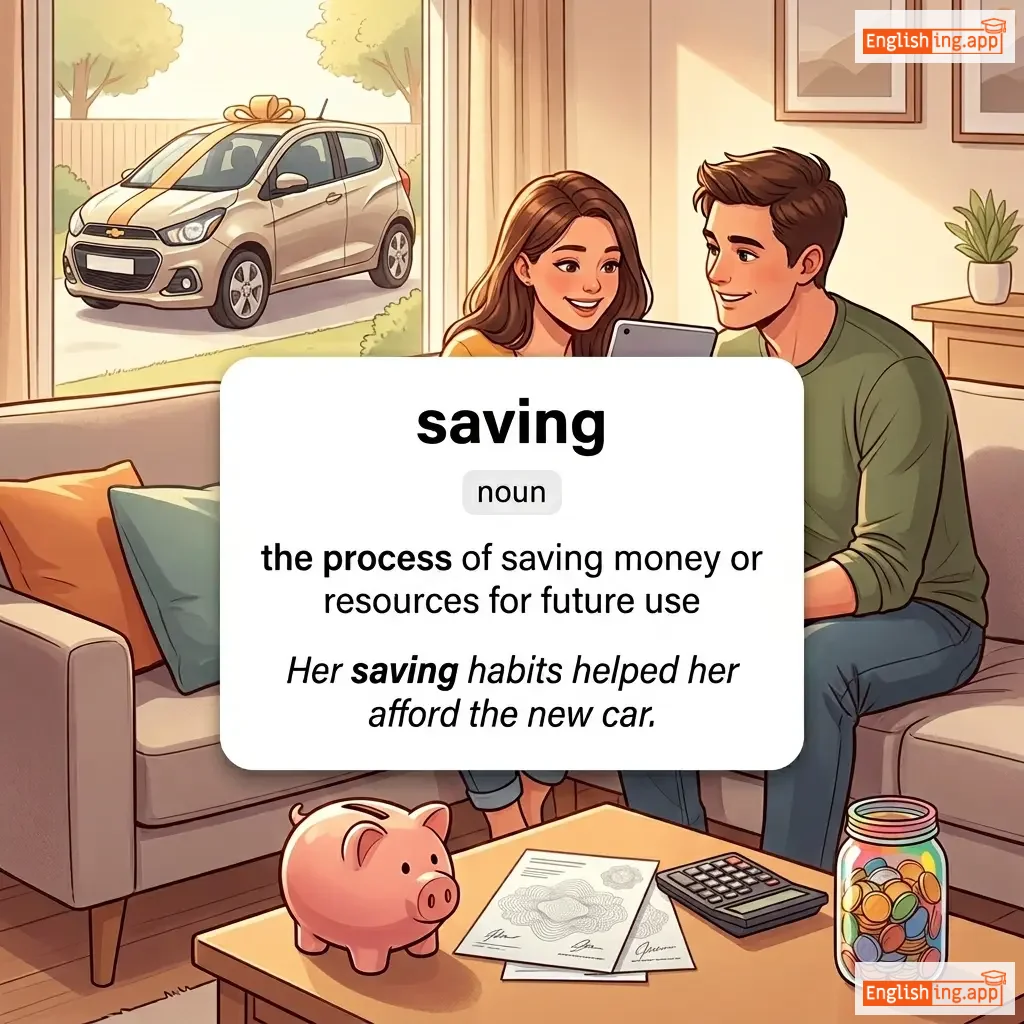
saving definition card — visual illustration of the meaning
noun
/ˈseɪvɪŋ/
épargne (epargn)

the process of saving money or resources for future use

"Her saving habits helped her afford the new car."

"Ses habitudes d'épargne l'ont aidée à acheter la nouvelle voiture." (Ses habitudes d'epargne l'ont aidée à acheter la nouvelle voiture.)
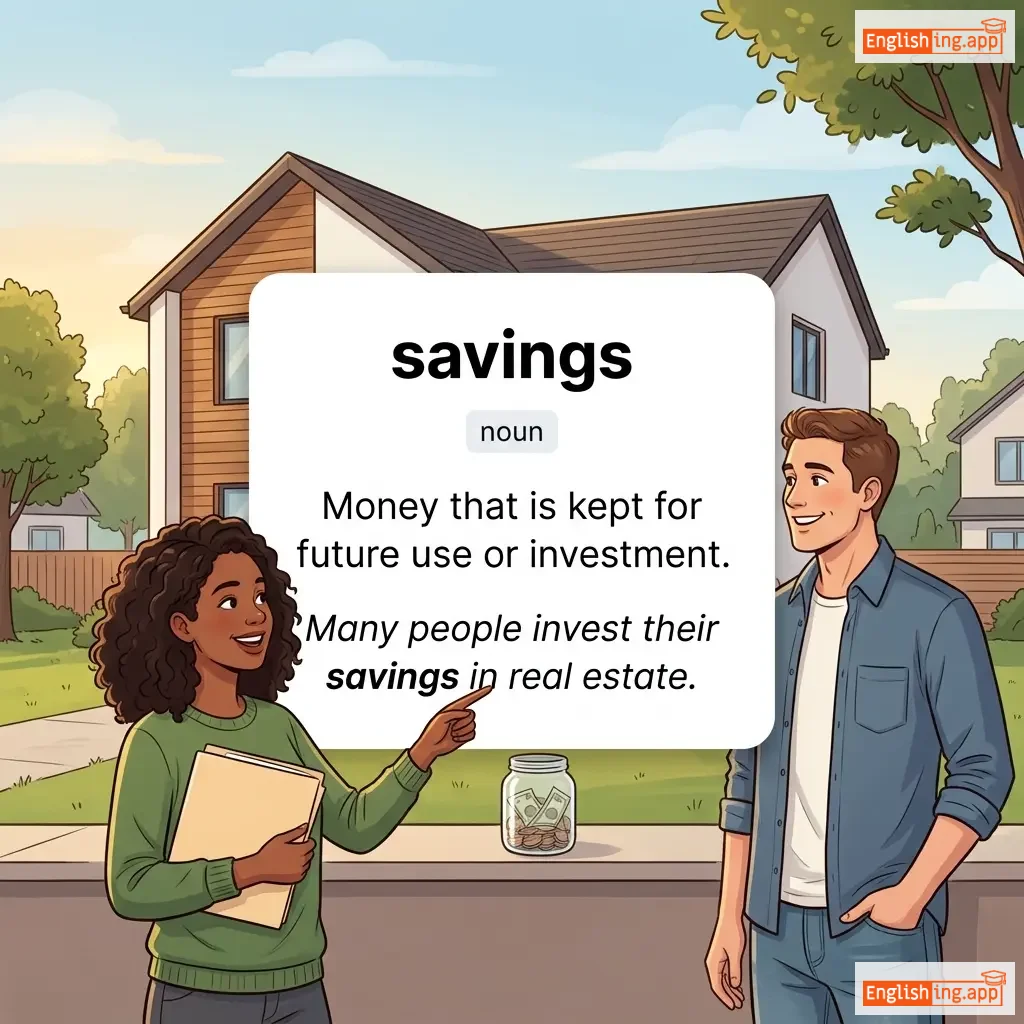
savings definition card — visual illustration of the meaning
noun
ˈseɪ.vɪŋz
économies (economies)

Money that is kept for future use or investment.

"Many people invest their savings in real estate."

"Beaucoup de gens investissent leurs économies dans l'immobilier." (Beaucoup de gens investissent leurs économies dans l'immobilier.)
noun
/ˌsæv.wɑːr ˈfeər/
habileté sociale (habilite socia)

The ability to act or speak appropriately in social situations; polished social skills.

"She handled the delicate situation with remarkable savoir-faire."

"Elle a géré la situation délicate avec un remarquable savoir-faire." (Elle a géré la situation délicate avec un remarquable savoir-faire.)
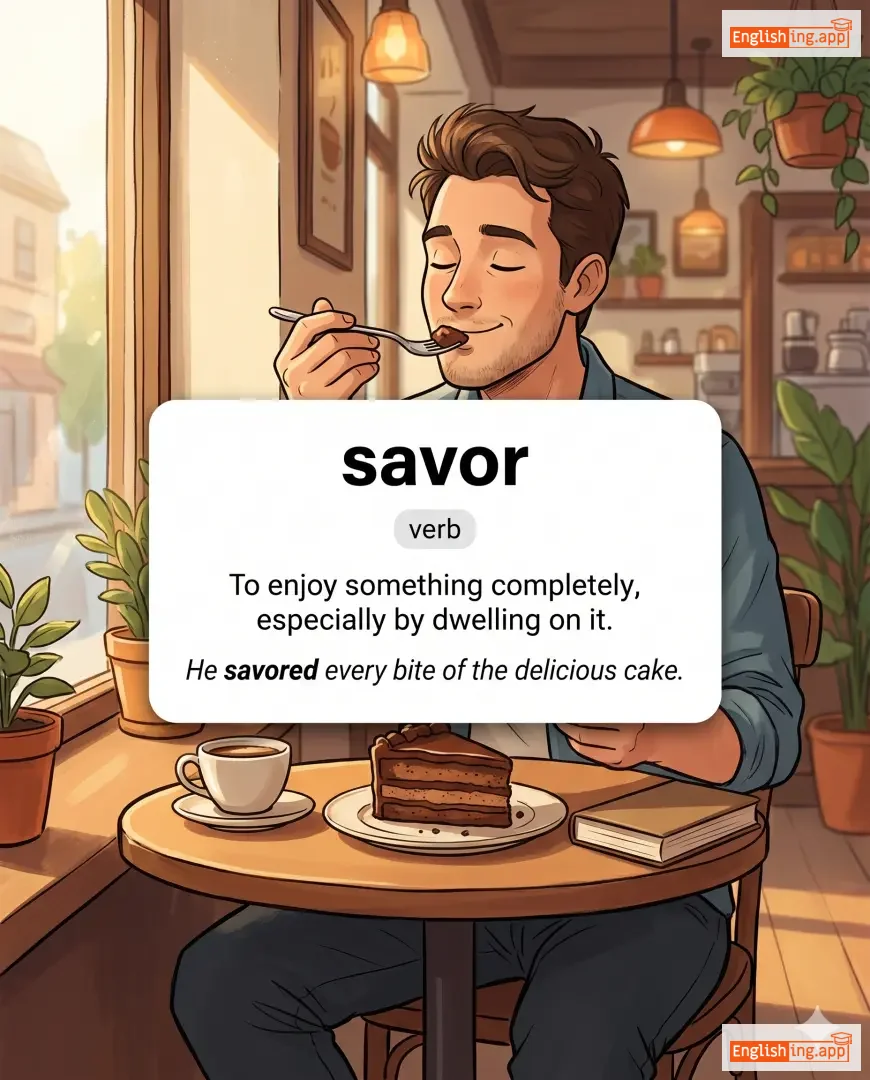
savor definition card — visual illustration of the meaning
verb
/ˈseɪ.vər/
savourer pleinement (savourer pleinement)

To enjoy something completely, especially by dwelling on it.

"He savored every bite of the delicious cake."

"Il savoura chaque bouchée du délicieux gâteau." (Il savoura chaque bouchée du délicieux gâteau.)
adjective
/ˈseɪ.vər.i/
savoureux (salé ou épicé) (savoureux (sale ou epice))

Having a pleasant salty or spicy taste; morally acceptable.

"The restaurant serves a variety of savory dishes."

"Le restaurant sert une variété de plats savoureux." (Le restaurant sert une variete de plats savoureux.)
adjective
/ˈsæv.i/
astucieux, sage (astucieux, sage)

Having practical knowledge and the ability to make good judgments.

"She is a tech-savvy entrepreneur."

"Elle est une entrepreneure experte en technologie." (Elle est une entrepreneure experte en technologie.)
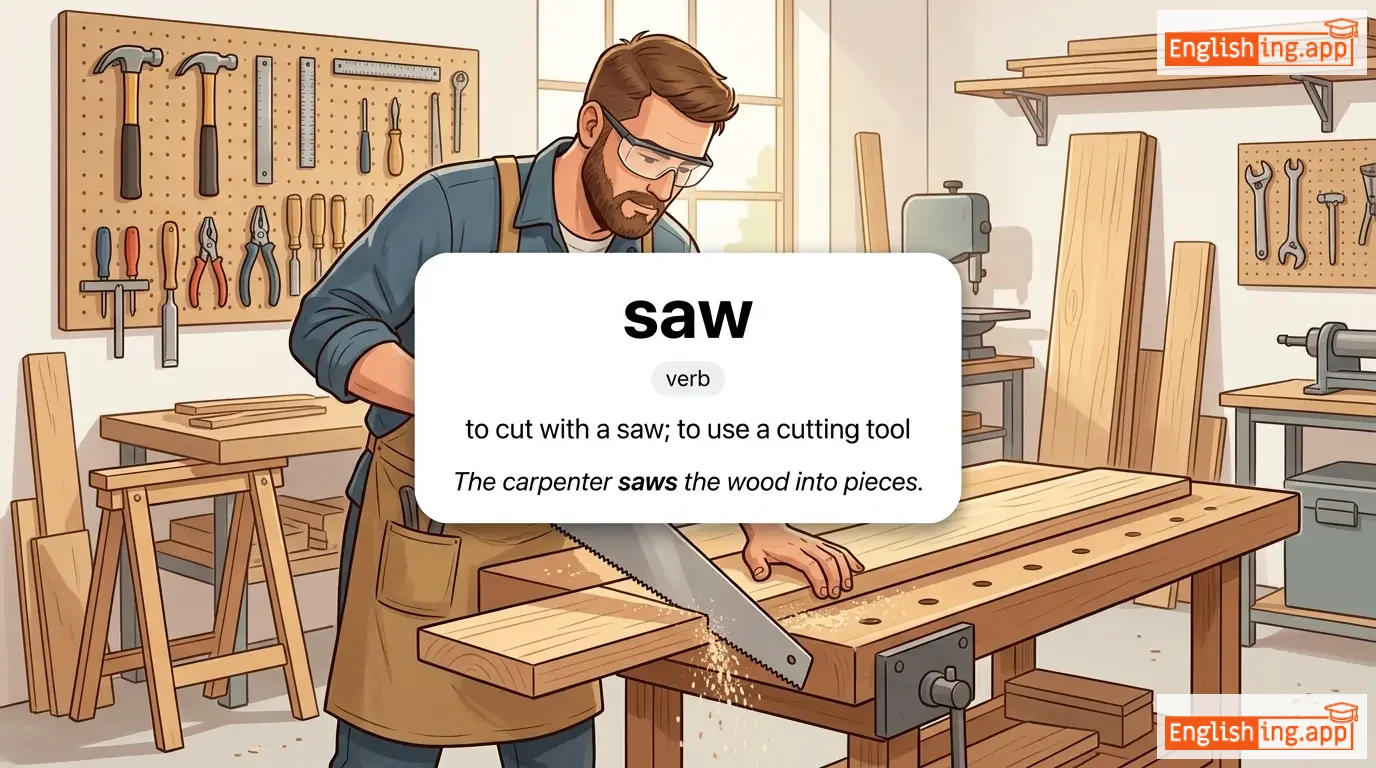
saw definition card — visual illustration of the meaning
noun
/sɔː/
scie (scie)

a tool with a sharp blade used for cutting wood or other materials

"He used a saw to cut the wooden plank."

"Il a utilisé une scie pour couper la planche en bois." (Il a utilisé une scie pour couper la planche en bois.)
noun
/ˈsɔː.dər/
flatterie; discours flatteur (flatterie; discours flatteur)

flattering or wheedling talk; soft soap

"His sawder couldn't convince anyone of his sincerity."

"Sa flatterie n'a pas pu convaincre qui que ce soit de sa sincérité." (Sa flatterie n'a pas pu convaincre qui que ce soit de sa sincerite.)
noun
/ˈsɔː.dʌst/
sciure (sciure)

The tiny particles of wood produced by sawing or sanding.

"The floor was covered with sawdust from the carpentry work."

"Le sol était couvert de sciure provenant du travail de menuiserie." (Le sol était couvert de sciure provenant du travail de menuiserie.)
noun
/ˈsɔːjər/
scieur (scieur)

a person who saws wood, especially as an occupation

"The skilled sawyer cut the logs into planks."

"Le scieur habile a coupé les bûches en planches." (Le scieur habile a coupé les bûches en planches)
noun
/ˈsæksəfoʊn/
saxophone (saxophone)

a wind musical instrument with a curved metal body and a single reed mouthpiece

"The jazz musician played a beautiful solo on his saxophone."

"Le musicien de jazz a joué un magnifique solo sur son saxophone." (Le musicien de jazz a joue un magnifique solo sur son saxophone.)
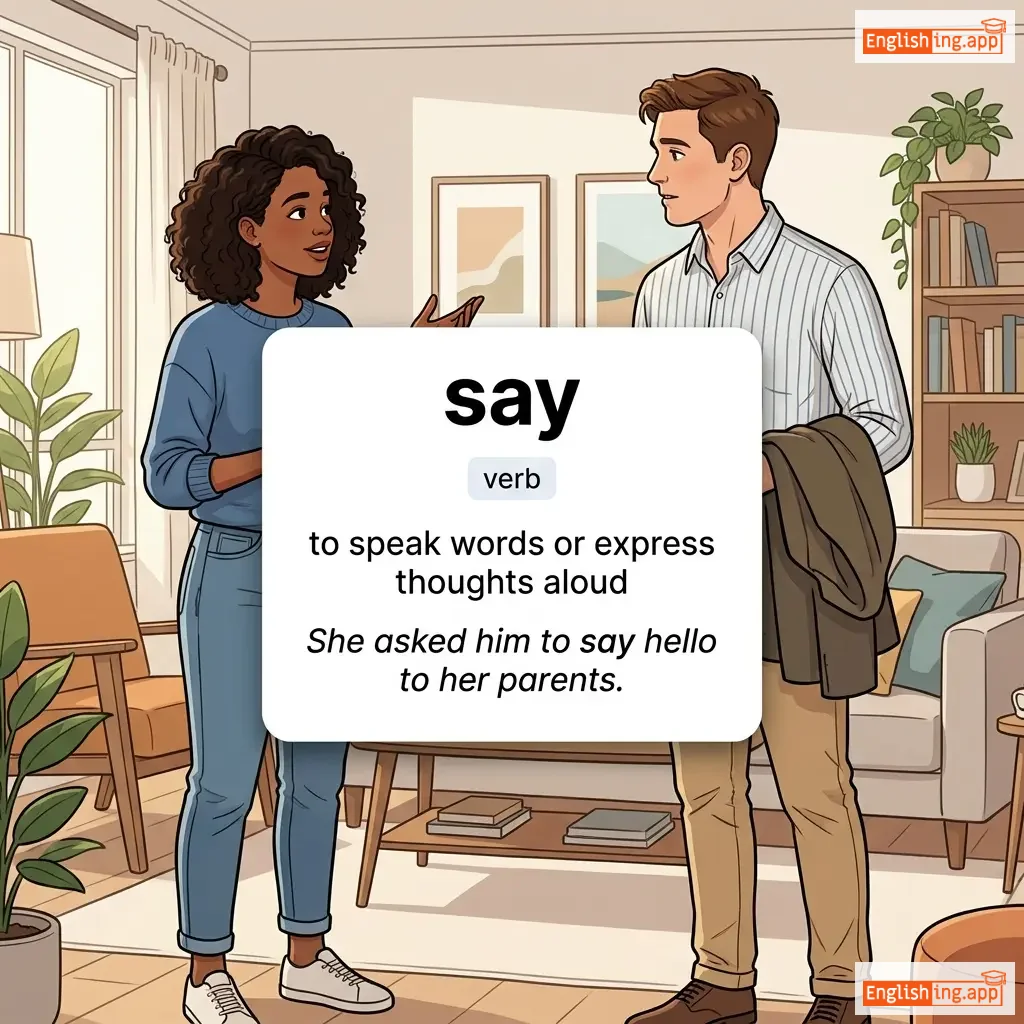
say definition card — visual illustration of the meaning
🗣️

say (sé)

verb
/seɪ/
dire (dire)

to speak words or express thoughts aloud

"She asked him to say hello to her parents."

"Elle lui a demandé de dire bonjour à ses parents." (Elle lui a demandé de dire bonjour à ses parents.)
noun
/ˈseɪ.ɪŋ/
proverbe (proverbe)

a well-known phrase that expresses something true about life; a proverb

"There's an old saying that practice makes perfect."

"Il y a un vieux proverbe qui dit que c'est la pratique qui rend parfait." (Il y a un vieux proverbe qui dit que c'est la pratique qui rend parfait.)
noun
/ˈskæb.ərd/
fourreau (fourreau)

A sheath for the blade of a sword or dagger, typically made of leather or metal.

"The knight drew his sword from the scabbard."

"Le chevalier a sorti son épée du fourreau." (Le chevalier a sorti son épée du fourreau.)
noun
/ˈskeɪ.biːz/
gale (gale)

a contagious skin disease caused by mites that causes intense itching

"The doctor diagnosed him with scabies after examining the rash."

"Le médecin lui a diagnostiqué la gale après avoir examiné l'éruption." (Le médecin lui a diagnostiqué la gale après avoir examiné l'éruption.)
noun
/skæd/
scad poisson (scad poisson)

A type of fish of the jack family; also informally means a large number or quantity.

"The fisherman caught a scad in the net."

"Le pêcheur a attrapé un scad dans le filet." (Le pecheur a attrape un scad dans le filet.)
noun (plural, informal)
/skædz/
des tas (des tas)

A large number or quantity of something (informal).

"She has scads of friends in the city."

"Elle a des tas d'amis en ville." (Elle a des tas d'amis en ville.)
noun
/ˈskæf.əʊld/
échafaud (echafaud)

A temporary platform used to support workers and materials during the construction or repair of a building.

"The workers stood on the scaffold to paint the building."

"Les travailleurs se tenaient sur l'échafaud pour peindre le bâtiment." (Les travailleurs se tenaient sur l'échafaud pour peindre le bâtiment.)
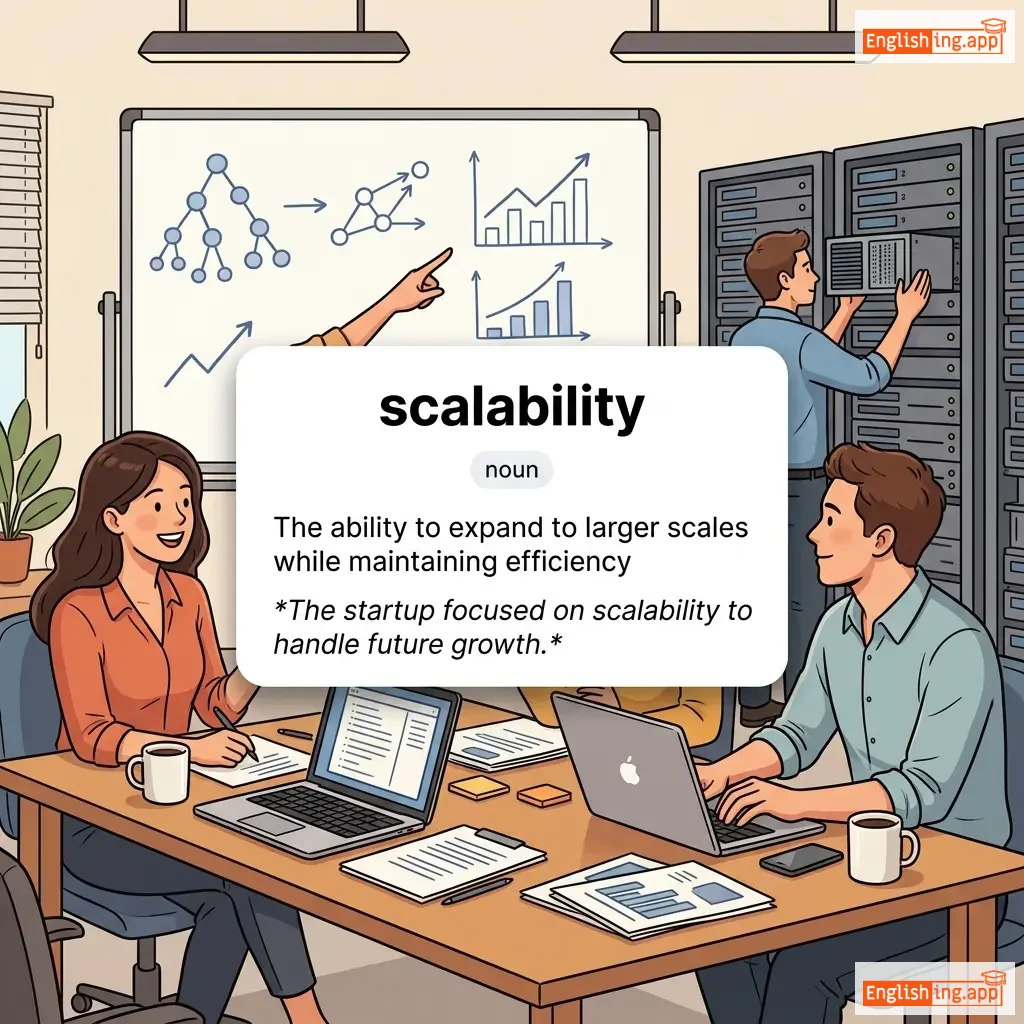
scalability definition card — visual illustration of the meaning
noun
/ˌskeɪ.ləˈbɪl.ə.ti/
scalabilité (scalabilite)

The ability to expand to larger scales while maintaining efficiency

"The startup focused on scalability to handle future growth."

"La startup s'est concentrée sur la scalabilité pour gérer la croissance future." (La startup s'est concentree sur la scalabilite pour gerer la croissance future.)
noun/verb
/skeɪl/
échelle / augmenter en taille (echelle / augmenter en taille)

A system of ordered marks used for measurement; also means to climb or to adjust in size.

"The company plans to scale its operations globally."

"L'entreprise prévoit d'étendre ses opérations à l'échelle mondiale." (L'entreprise prevoit d'etendre ses operations a l'echelle mondiale.)
noun
/ˈskælpəl/
scalpel (scalpel)

A small and extremely sharp bladed instrument used for surgery and dissection.

"The surgeon carefully used a scalpel to make the first incision."

"Le chirurgien a soigneusement utilisé un scalpel pour faire la première incision." (Le chirurgien a soigneusement utilise un scalpel pour faire la premiere incision.)
adjective
/ˈskeɪ.li/
écailleux (écailleux)

covered with scales; having a rough surface like scales

"The fish has scaly skin."

"Le poisson a une peau écailleuse." (Le poisson a une peau écailleuse.)
verb
/skæn/
bonheur (bonheur)

To look at something carefully or quickly; to digitally copy or capture an image or document.

"She scanned the document before sending it by email."

"Elle n'a pas pu cacher son bonheur lorsqu'elle a reçu le prix." (Elle n'a pas pu cacher son bonheur lorsqu'elle a reçu le prix.)
noun
/ˈskændəl/
scandale (scandale)

an event or action that causes public outrage or damage to one's reputation

"The politician's affair became a public scandal."

"L'affaire du politicien est devenue un scandale public." (L'affaire du politicien est devenue un scandale public.)
adjective
/skænt/
insuffisant (insuffisant)

Barely sufficient or inadequate in amount, degree, or quantity.

"There was scant evidence to support the claim."

"Il y avait peu de preuves pour soutenir la demande." (Il y avait peu de preuves pour soutenir la demande.)
adjective
/ˈskænti/
insuffisant (insuffisant)

Small in quantity; insufficient or meager.

"The refugees survived on scanty food supplies."

"Les réfugiés ont survécu avec des provisions de nourriture insuffisantes." (Les réfugiés ont survécu avec des provisions de nourriture insuffisantes.)
noun
/ˈskeɪpˌɡoʊt/
bouc émissaire (bouc emissaïr)

A person who is unfairly blamed for problems, mistakes, or faults of others.

"He became the scapegoat for the company’s financial troubles."

"Il est devenu le bouc émissaire des problèmes financiers de l'entreprise." (Il est devenu le bouc emissaïre des problemes financiers de l'entreprise.)
noun
/skɑːr/
cicatrice (cicatrice)

a mark left on the skin after a wound has healed; lasting emotional damage

"The accident left a permanent scar on his forehead."

"L'accident a laissé une cicatrice permanente sur son front." (L'accident a laisse une cicatrice permanente sur son front.)
adjective
/skɛərs/
rare (rare)

insufficient in quantity; hard to find

"Water was scarce during the long drought."

"L'eau était rare pendant la longue sécheresse." (L'eau était rare pendant la longue sécheresse.)
adverb
/ˈskeəs.li/
à peine; difficilement; juste un peu (a peine; difficilement; juste un peu)

hardly; barely; only just

"I could scarcely believe my eyes."

"Je pouvais à peine croire mes yeux." (Je pouvais a peine croire mes yeux.)
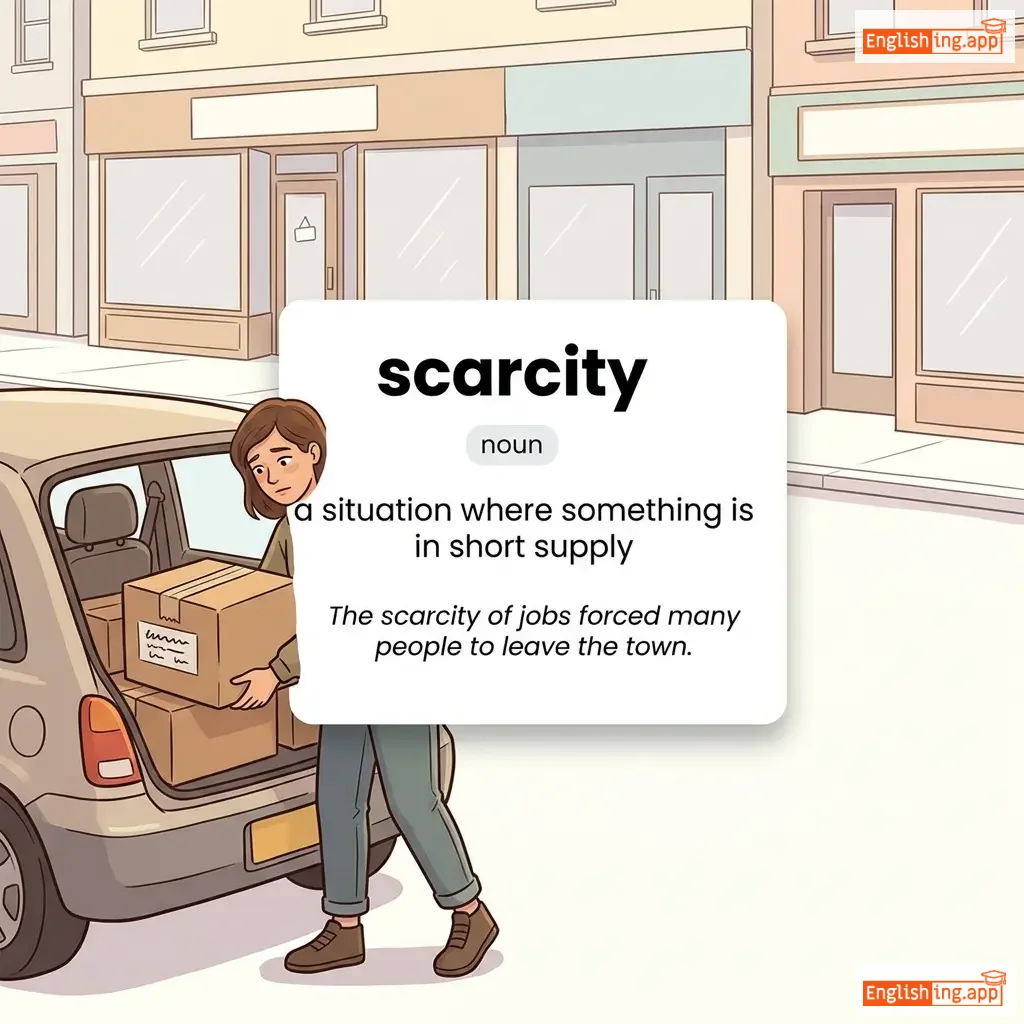
scarcity definition card — visual illustration of the meaning
noun
/ˈskɛərsəti/
rareté (rarete)

a situation where something is in short supply

"The scarcity of jobs forced many people to leave the town."

"La rareté des emplois a forcé de nombreuses personnes à quitter la ville." (La rareté des emplois a forcé de nombreuses personnes à quitter la ville.)
verb
/skeər/
effrayer (effrayer)

to frighten someone or make them feel afraid

"The loud noise scared the baby."

"Le bruit fort a effrayé le bébé." (Le bruit fort a effrayé le bébé.)
adjective
/skɛrd/
effrayé (effraye)

feeling afraid or worried

"She was scared of the dark."

"Elle avait peur de l'obscurité." (Elle avait peur de l'obscurité.)