Vocabulaires

Découvrez, apprenez et maîtrisez le vocabulaire anglais

noun
/ˈnoʊzˌɡeɪ/
bouquet de fleurs (bouquet de fleurs)

a small bunch of flowers, typically given as a gift or carried for decoration

"She carried a nosegay of fresh roses to the ceremony."

"Elle a porté un bouquet de roses fraîches à la cérémonie." (Elle a porte un bouquet de roses fraiches a la ceremonie.)
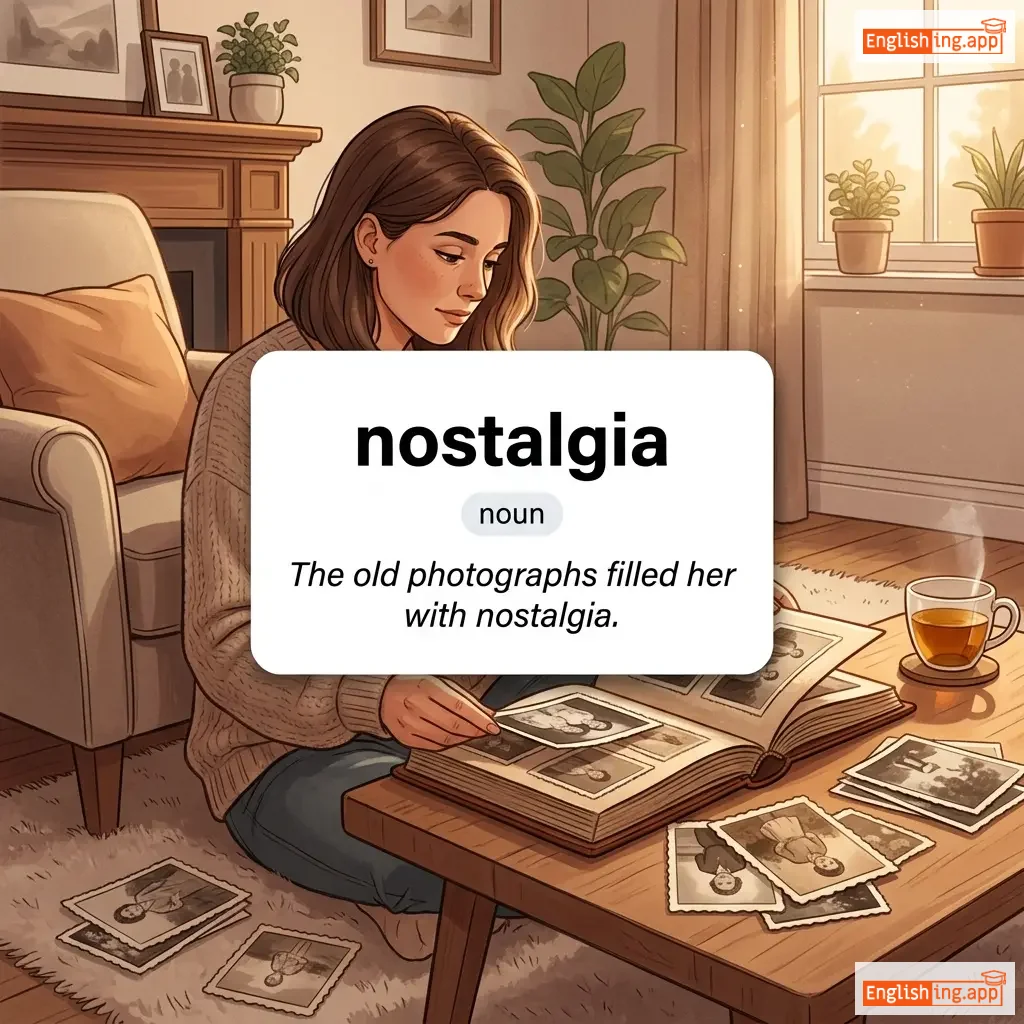
nostalgia definition card — visual illustration of the meaning
noun
/nəˈstældʒə/
nostalgie (nostalgie)

a sentimental longing for the past, often for a period or place with happy memories

"The old photographs filled her with nostalgia."

"Les vieilles photographies la remplissaient de nostalgie." (Les vieilles photographies la remplissaient de nostalgie.)
noun
/ˈnɒs.trɪl/
narine (narine)

either of the two openings in the nose through which air passes

"The doctor checked each nostril for any blockage."

"Le médecin a vérifié chaque narine à la recherche de toute obstruction." (Le médecin a vérifié chaque narine à la recherche de toute obstruction.)
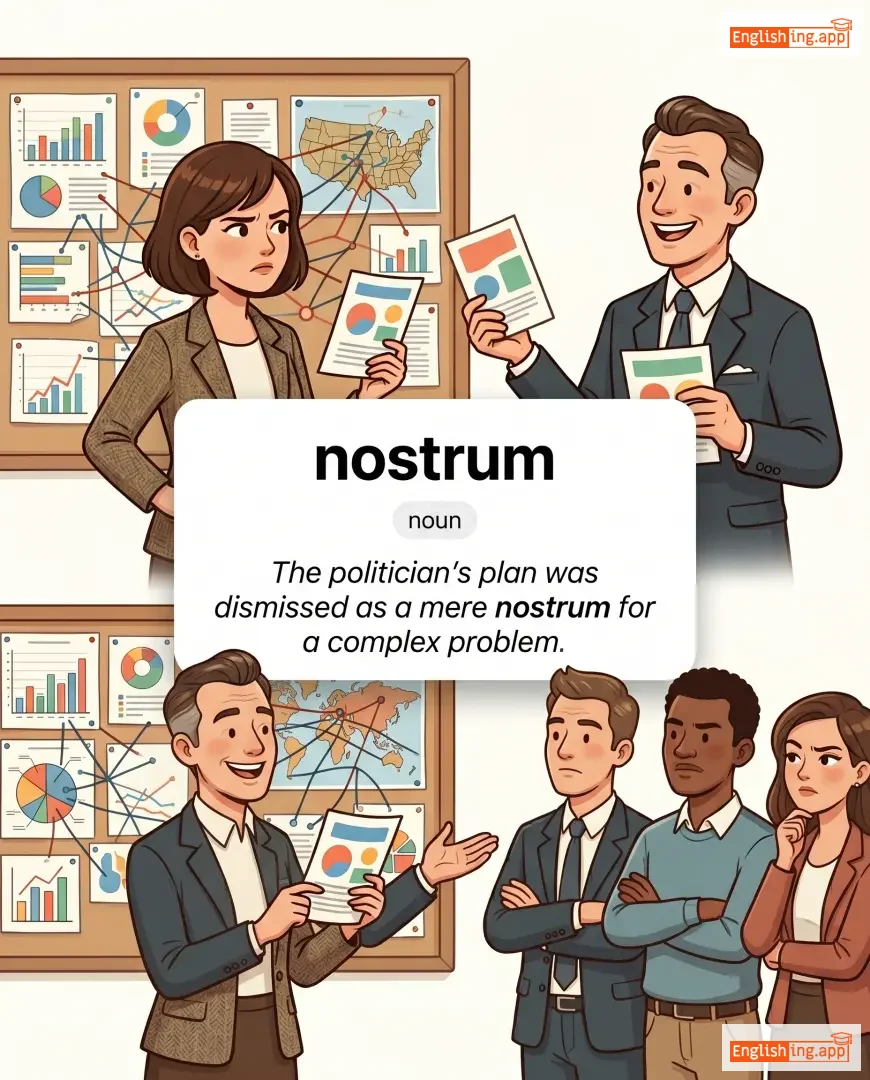
nostrum definition card — visual illustration of the meaning
noun
/ˈnɑːstrəm/
remède inefficace (remède inefficace)

a medicine or remedy, especially one that is not considered effective; a questionable solution

"The politician’s plan was dismissed as a mere nostrum for a complex problem."

"Le plan du politicien a été rejeté comme un simple remède pour un problème complexe." (Le plan du politicien a été rejeté comme un simple remède pour un problème complexe.)
adverb
/nɒt/
non (non)

used to make a word or phrase negative

"I do not like spicy food."

"Je n'aime pas la nourriture épicée." (Je n'aime pas la nourriture épicée.)
adjective
/ˈnoʊtəbl/
remarquable (remarquable)

worthy of attention or notice; remarkable

"She made a notable contribution to the project."

"Elle a fait une contribution notable au projet." (Elle a fait une contribution notable au projet.)
adverb
/ˈnoʊtəbli/
remarquablement (remarquablement)

used to indicate something worthy of attention or significant

"She is notably talented in painting."

"Elle est remarquablement talentueuse en peinture." (Elle est remarquablement talentueuse en peinture.)
noun
/noʊˈteɪʃən/
notation (notation)

A system of symbols or signs used to represent information, especially in mathematics or music.

"The teacher explained the notation used in the algebra equations."

"Le professeur a expliqué la notation utilisée dans les équations algébriques." (Le professeur a explique la notation utilisee dans les equations algebriques.)
noun
/nɑːtʃ/
encoche (encoche)

A small cut or groove on the edge or surface of something; a level or degree of achievement.

"He carved a notch on the stick to mark the days."

"Il a fait une encoche sur le bâton pour marquer les jours." (Il a fait une encoche sur le bâton pour marquer les jours.)
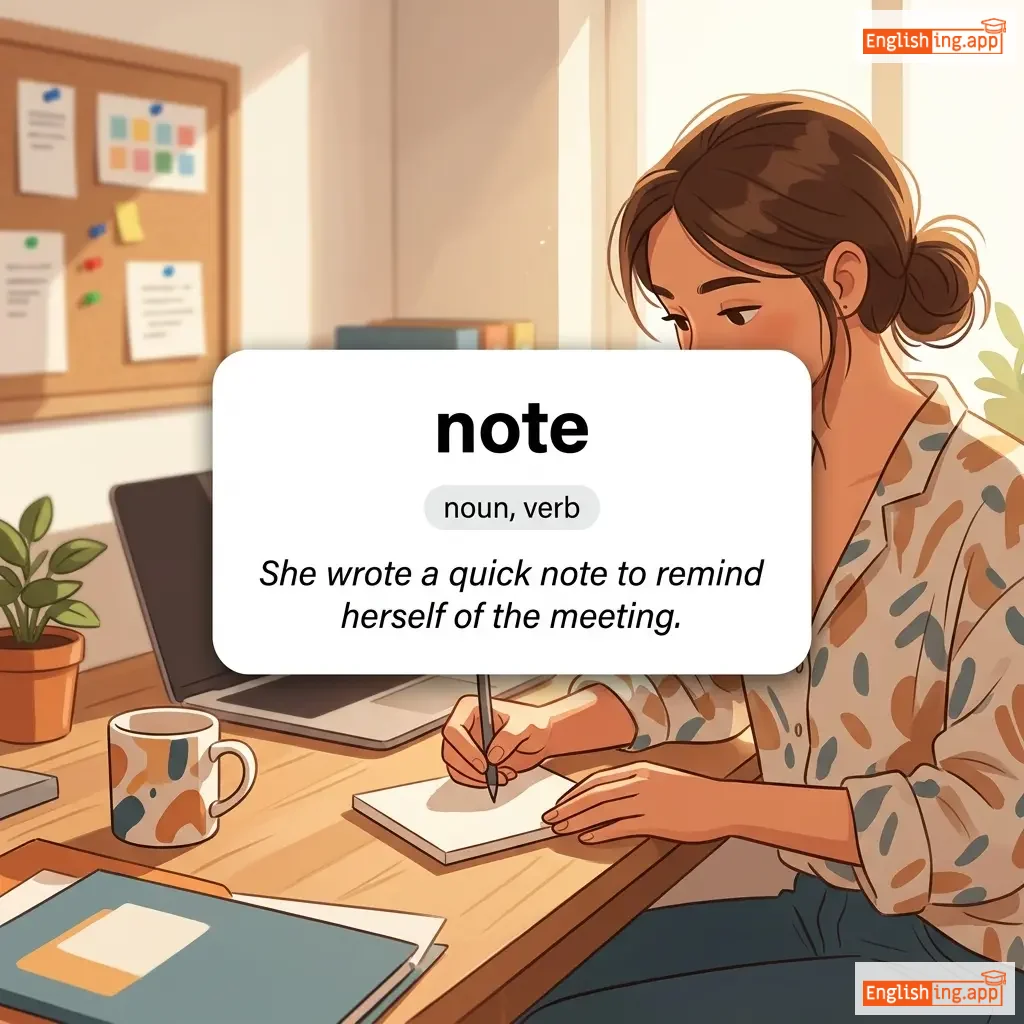
note definition card — visual illustration of the meaning
noun, verb
/noʊt/
note (note)

a brief record of facts, topics, or thoughts written down; to observe or remark upon something

"She wrote a quick note to remind herself of the meeting."

"Elle a écrit une note rapide pour se souvenir de la réunion." (Elle a écrit une note rapide pour se souvenir de la réunion.)
noun
/ˈnoʊtbʊk/
carnet (karnay)

a small book with blank or ruled pages for writing notes; also a portable computer

"She opened her notebook to jot down some ideas."

"Elle a ouvert son carnet pour noter quelques idees." (Elle a ouvert son carnet pour noter quelques idees.)
adjective, verb
/ˈnoʊtɪd/
renommé (renomme)

well known or famous; written down or observed

"He is a noted author in the field of history."

"Il est un auteur renommé dans le domaine de l'histoire." (Il est un auteur renommé dans le domaine de l'histoire.)
pronoun
/ˈnʌθɪŋ/
rien (rien)

not anything; no thing

"She has nothing to worry about."

"Elle n'a rien à craindre." (Elle n'a rien à craindre.)
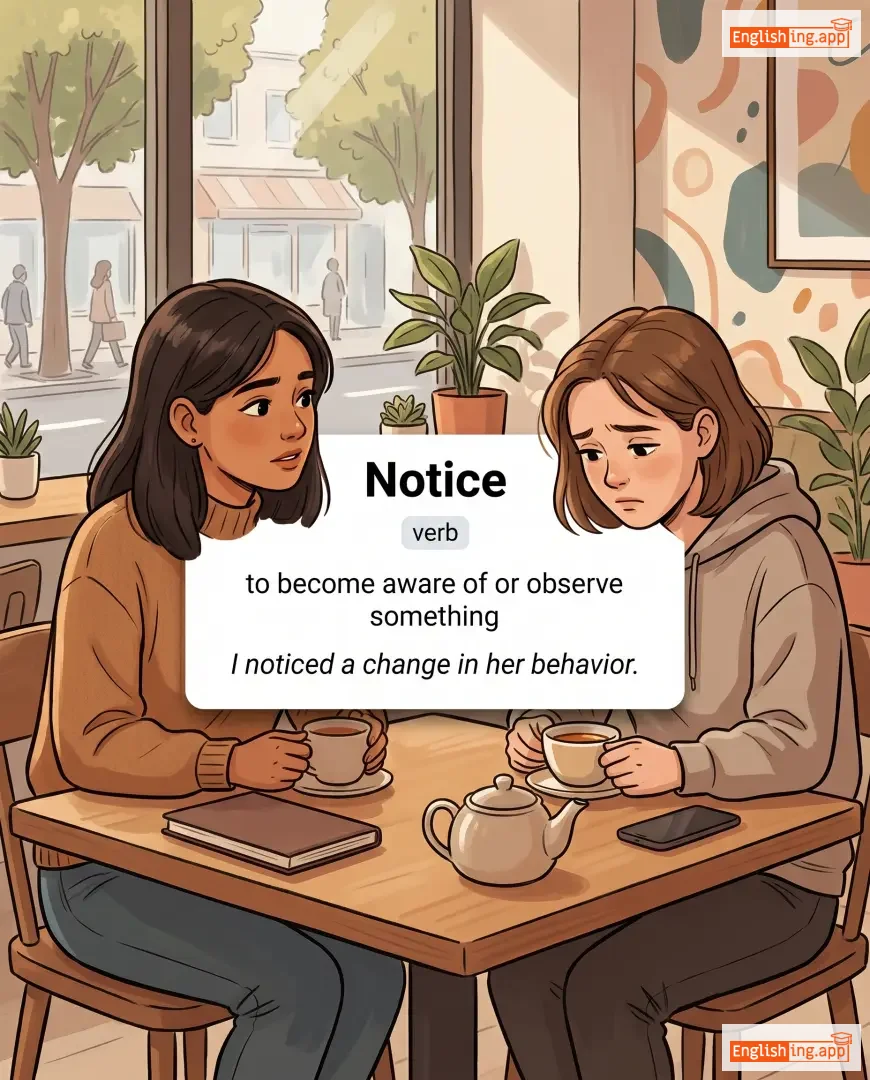
Notice definition card — visual illustration of the meaning
noun
/ˈnoʊtɪs/
avis (avis)

a written or printed announcement or notification

"He gave me a notice about the meeting."

"Il m'a donné un avis sur la réunion." (Il m'a donné un avis sur la réunion.)
adjective
/ˈnoʊtɪsəbl/
remarquable (remarquable)

Easily seen, observed, or recognized.

"There was a noticeable improvement in her performance."

"Il y a eu une amélioration notable dans sa performance." (Il y a eu une amélioration notable dans sa performance.)
noun
/ˌnəʊtɪfɪˈkeɪʃən/
notification (notification)

an official or formal notice or message informing someone of something; an alert delivered by a system or device

"You will receive a notification when your application is approved."

"Vous recevrez une notification lorsque votre demande sera approuvée." (vous recevrez une notification lorsque votre demande sera approuvee)
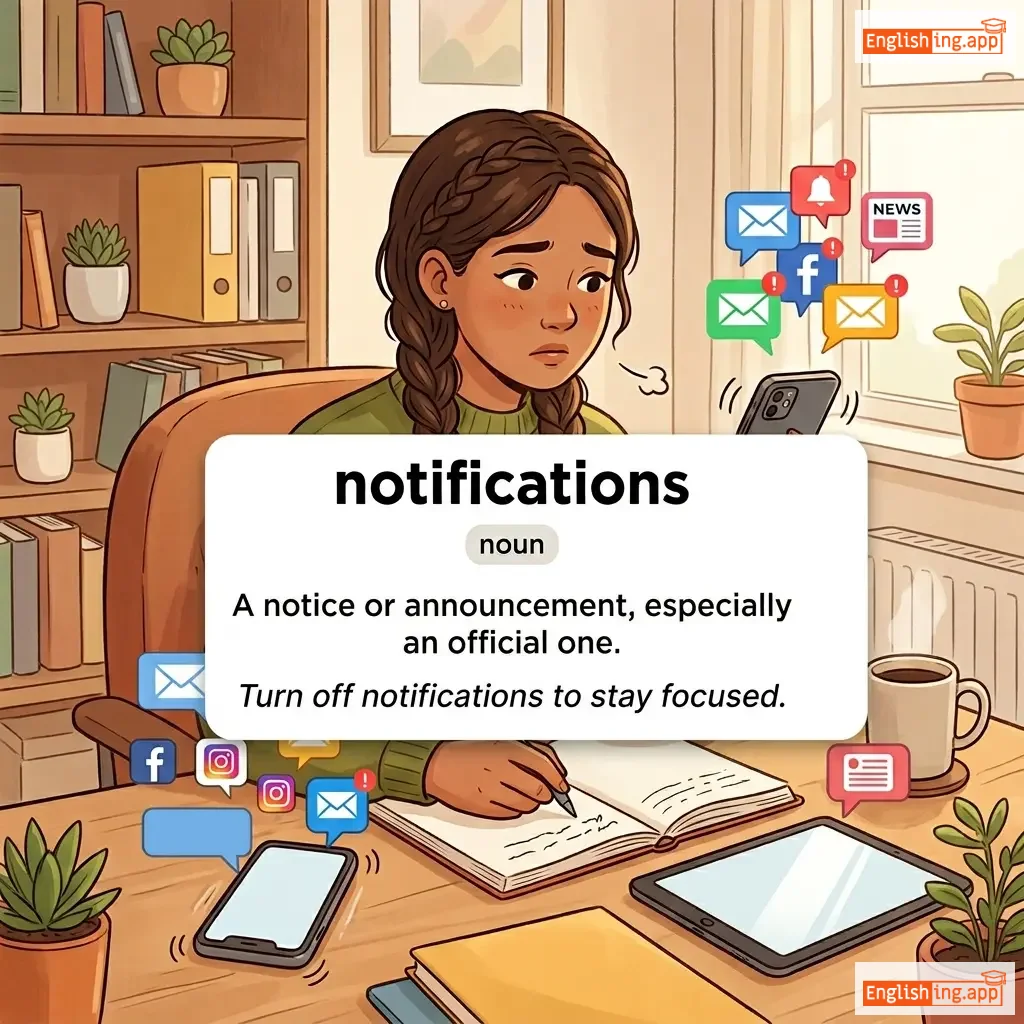
notifications definition card — visual illustration of the meaning
noun
/ˌnoʊtɪfɪˈkeɪʃənz/
notifications (notifications)

A notice or announcement, especially an official one.

"Turn off notifications to stay focused."

"Désactivez les notifications pour rester concentré." (Désactivez les notifications pour rester concentré.)
verb
/ˈnoʊtɪfaɪ/
informer (informer)

to inform someone officially about something

"The manager will notify the staff about the schedule change."

"Le manager informera le personnel du changement d'horaire." (Le manager informera le personnel du changement d'horaire.)
noun
/ˈnoʊʃən/
notion (notion)

An idea, belief, or concept about something.

"He had a vague notion of what she wanted."

"Il avait une idée floue de ce qu'elle voulait." (Il avait une idee floue de ce qu'elle voulait.)
noun
/ˌnoʊtəˈraɪəti/
notoriété (notoriete)

The state of being famous or well-known for something bad.

"The criminal gained notoriety for his daring escapes."

"Le criminel a gagné de la notoriété pour ses évasions audacieuses." (Le criminel a gagné de la notoriété pour ses évasions audacieuses.)
adjective
/nəˈtɔːriəs/
notoire (notoir)

Famous or well-known for something bad or undesirable

"The area is notorious for its high crime rate."

"Cette région est notoire pour son taux de criminalité élevé." (Cette region est notoire pour son taux de criminalite eleve.)
preposition/adverb/conjunction
/ˌnɒtwɪθˈstændɪŋ/
nonobstant (nonobstant)

In spite of; despite

"Notwithstanding the challenges, the team completed the project."

"Nonobstant les défis, l'équipe a terminé le projet." (Nonobstant les défis, l'équipe a terminé le projet.)
verb
/ˈnʌrɪʃ/
nourrir (nourrir)

To provide with food or other substances necessary for growth, health, and good condition

"Good books nourish the mind."

"Les bons livres nourrissent l'esprit." (Les bons livres nourrissent l'esprit.)
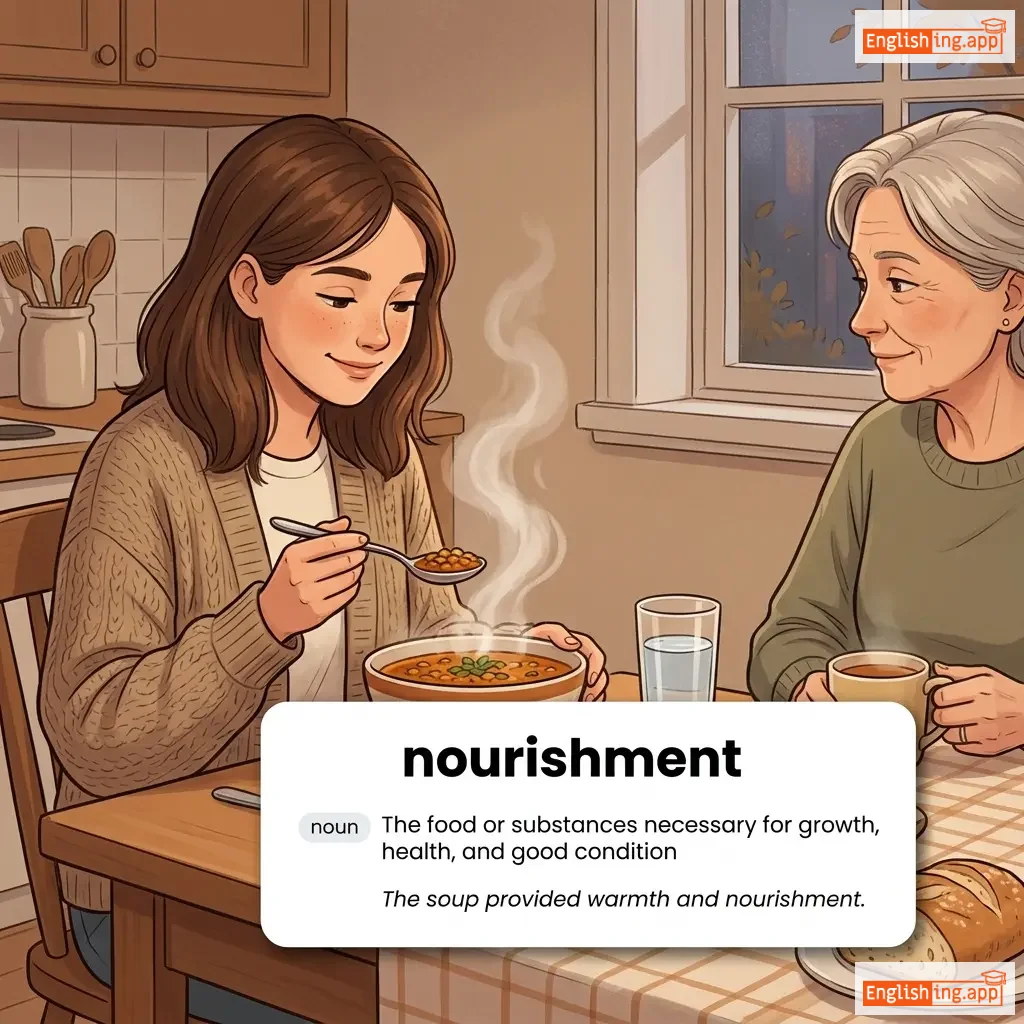
nourishment definition card — visual illustration of the meaning
noun
/ˈnʌrɪʃmənt/
nourriture (nourriture)

The food or substances necessary for growth, health, and good condition

"The soup provided warmth and nourishment."

"La soupe a apporté de la chaleur et de la nutrition." (La soupe a apporté de la chaleur et de la nutrition.)
noun
/ˈnoʊvə/
nova (une étoile montrant une augmentation soudaine de luminosité, puis revenant lentement à son état d'origine) (nova)

A star showing a sudden large increase in brightness and then slowly returning to its original state

"Astronomers observed a bright nova in the sky."

"Les astronomes ont observé une nova brillante dans le ciel." (Les astronomes ont observe une nova brillante dans le ciel.)
noun/adjective
/ˈnɒvəl/
roman / nouveau (roman / nouveau)

A long fictional narrative; also something new or unusual.

"She spent the weekend reading a historical novel."

"Elle a passé le week-end à lire un roman historique." (Elle a passe le weekend a lire un roman historique.)
noun
/ˈnɒvəlɪst/
romancier (romancier)

a person who writes novels

"The novelist spent years writing his new book."

"Le romancier a passé des années à écrire son nouveau livre." (Le romancier a passé des années à écrire son nouveau livre.)
noun
/ˌnɒvəˈlɛt/
novellette (novellette)

A short novel or long short story.

"The author published a novellette as a preview of her upcoming series."

"L'auteur a publié une novellette en avant-première de sa prochaine série." (L'auteur a publié une novellette en avant-première de sa prochaine série.)
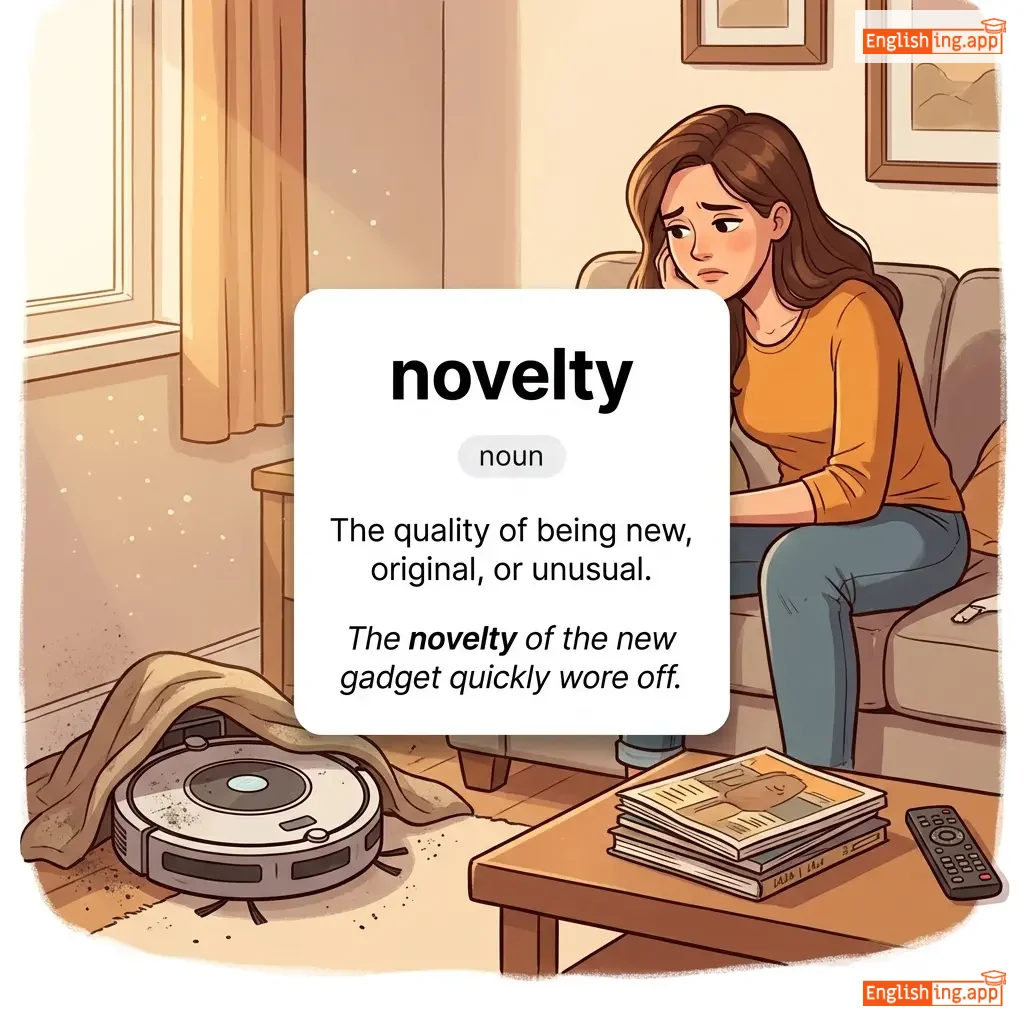
novelty definition card — visual illustration of the meaning
noun
/ˈnɒvəlti/
nouveauté (nouveaute)

The quality of being new, original, or unusual.

"The novelty of the new gadget quickly wore off."

"La nouveauté du nouveau gadget s'est vite estompée." (La nouveaute du nouveau gadget s'est vite estompee.)
noun
/noʊˈvɛmbər/
novembre (novembre)

the eleventh month of the year in the Gregorian calendar

"November is often cool and quiet before winter begins."

"Novembre est souvent frais et calme avant le début de l’hiver." (novembre est souvent frais et calme avant le debut de l hiver)
noun
/ˈnɒvɪs/
novice (novice)

A person new to or inexperienced in a field or activity.

"He is still a novice at playing the guitar."

"Il est encore un novice en jouant de la guitare." (Il est encore un novice en jouant de la guitare.)
adverb
/naʊ/
maintenant (maintenant)

at the present moment or time

"I am studying now."

"Je suis en train d'étudier maintenant." (Je suis en train d'étudier maintenant.)
adverb
/ˈnaʊədeɪz/
De nos jours; actuellement (de no jour)

at the present time; in these times

"Now-a-days, people prefer online shopping."

"De nos jours, les gens préfèrent les achats en ligne." (De nos jours, les gens preferent les achats en ligne.)
adverb
/ˈnaʊədeɪz/
de nos jours (de no jour)

At the present time; in contrast with the past.

"Nowadays, many people prefer shopping online."

"De nos jours, beaucoup de gens préfèrent faire leurs achats en ligne." (De nos jours, beaucoup de gens préfèrent faire leurs achats en ligne.)
adverb
/ˈnoʊˌwɛr/
nulle part (nulle part)

in or to no place; not anywhere

"The missing keys were nowhere to be found."

"Les clés perdues étaient nulle part à trouver." (Les clés perdues étaient nulle part à trouver.)
adjective
/ˈnɑːkʃəs/
nocif (nocif)

harmful, poisonous, or very unpleasant

"The factory released noxious fumes into the air."

"L'usine a libéré des fumées nocives dans l'air." (L'usine a libéré des fumées nocives dans l'air.)
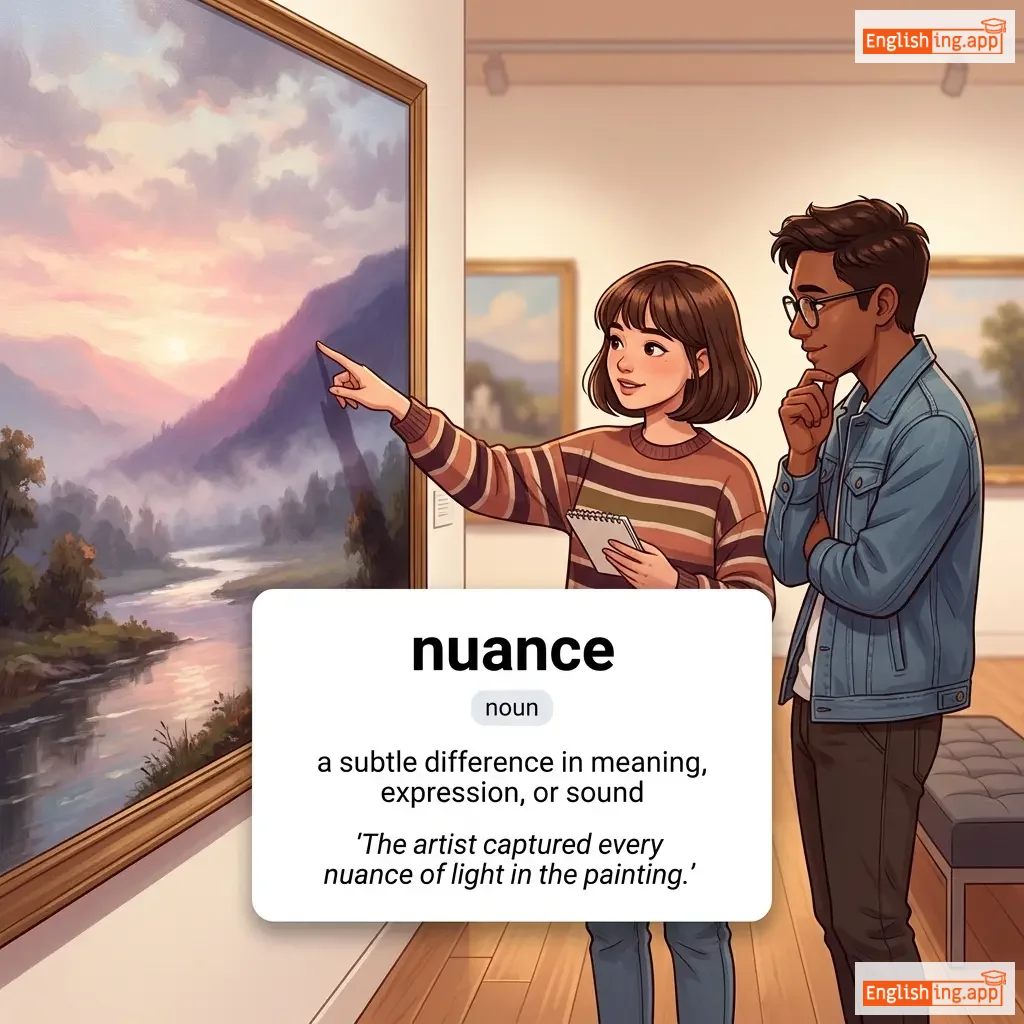
nuance definition card — visual illustration of the meaning
noun
/ˈnuːˌɑːns/
nuance (nuance)

a subtle difference in meaning, expression, or sound

"The artist captured every nuance of light in the painting."

"L'artiste a capturé chaque nuance de lumière dans la peinture." (L'artiste a capture chaque nuance de lumiere dans la peinture.)
adjective
ˈnuː.ɑːnst
nuancé (nuancé)

Characterized by subtle shades of meaning or expression; having or characterized by subtle and often appealingly complex qualities.

"His argument was nuanced and well-structured."

"Son argument était nuancé et bien structuré." (Son argument était nuancé et bien structuré.)
adjective
/ˈnjuːbaɪl/
nubile (nubile)

of a young woman, sexually mature and suitable for marriage

"The village was celebrating the festival with its nubile maidens dancing."

"Le village célébrait le festival avec ses jeunes filles nubiles dansant." (Le village célébrait le festival avec ses jeunes filles nubiles dansant.)
adjective
/ˈnuːkliər/
nucléaire (nucleaire)

relating to the nucleus of an atom or to nuclear energy

"The country is developing nuclear energy."

"Le pays développe de l'énergie nucléaire." (Le pays developpe de l'energie nucleaire.)
verb
/ˈnuːkliˌeɪt/
nucléaire (nucleaire)

to form into a nucleus or bring together into a central part

"The droplets began to nucleate around tiny particles in the air."

"Les gouttes ont commencé à se nucléer autour des petites particules dans l'air." (Les gouttes ont commencé à se nucléer autour des petites particules dans l'air.)
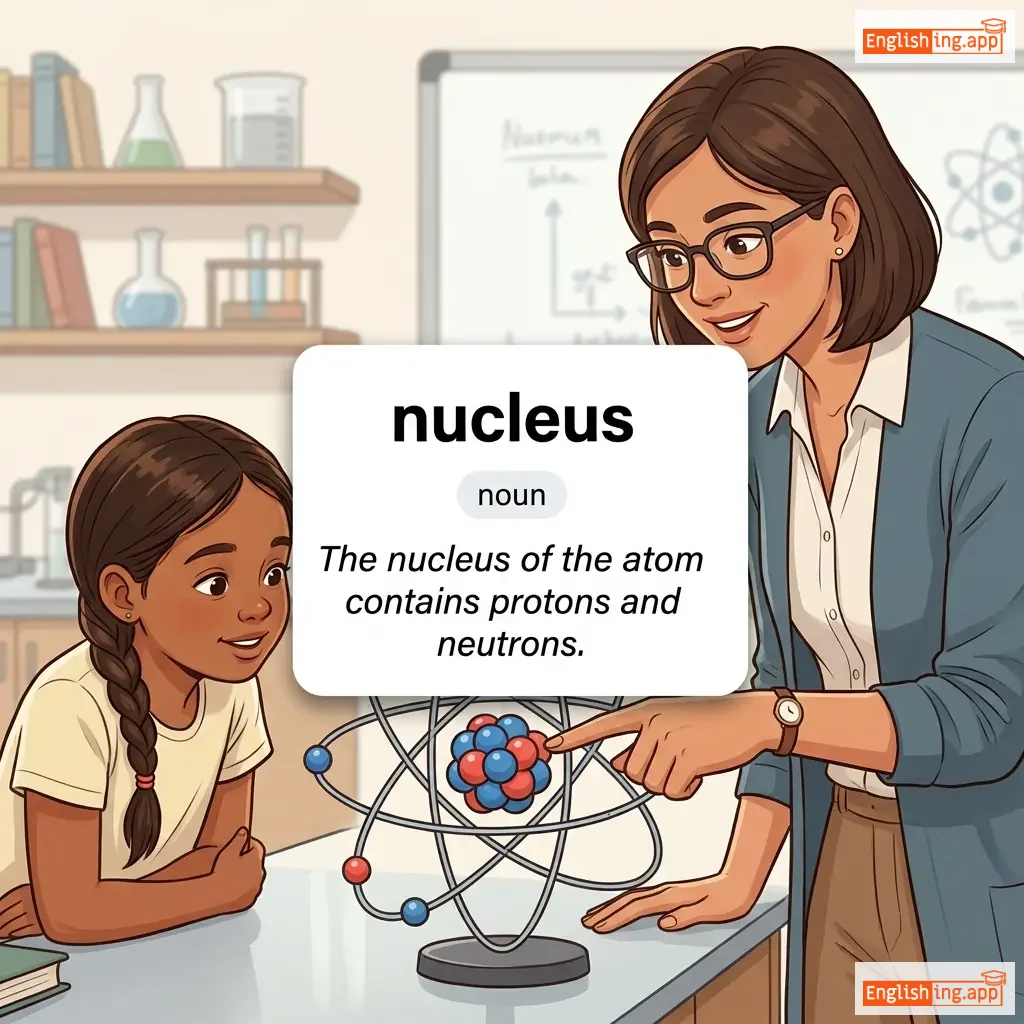
nucleus definition card — visual illustration of the meaning
noun
/ˈnjuː.kli.əs/
noyau (noyau)

The central and most important part of something, forming the basis for its activity and growth; in biology, the central part of a cell.

"The nucleus of the atom contains protons and neutrons."

"Le noyau de l'atome contient des protons et des neutrons." (Le noyau de l'atome contient des protons et des neutrons.)
adjective
/nuːd/
nu (nu)

Wearing no clothes; naked.

"The artist painted a nude model."

"L'artiste a peint un modèle nu." (L'artiste a peint un modele nu.)
verb
/nʌdʒ/
coup de coude (cou de koude)

To push someone gently, usually with your elbow, in order to attract attention.

"She nudged him to be quiet during the meeting."

"Elle lui donna un coup de coude pour qu'il se taise pendant la réunion." (Elle lui donna un coup de coude pour kil se taise pendant la réunion.)
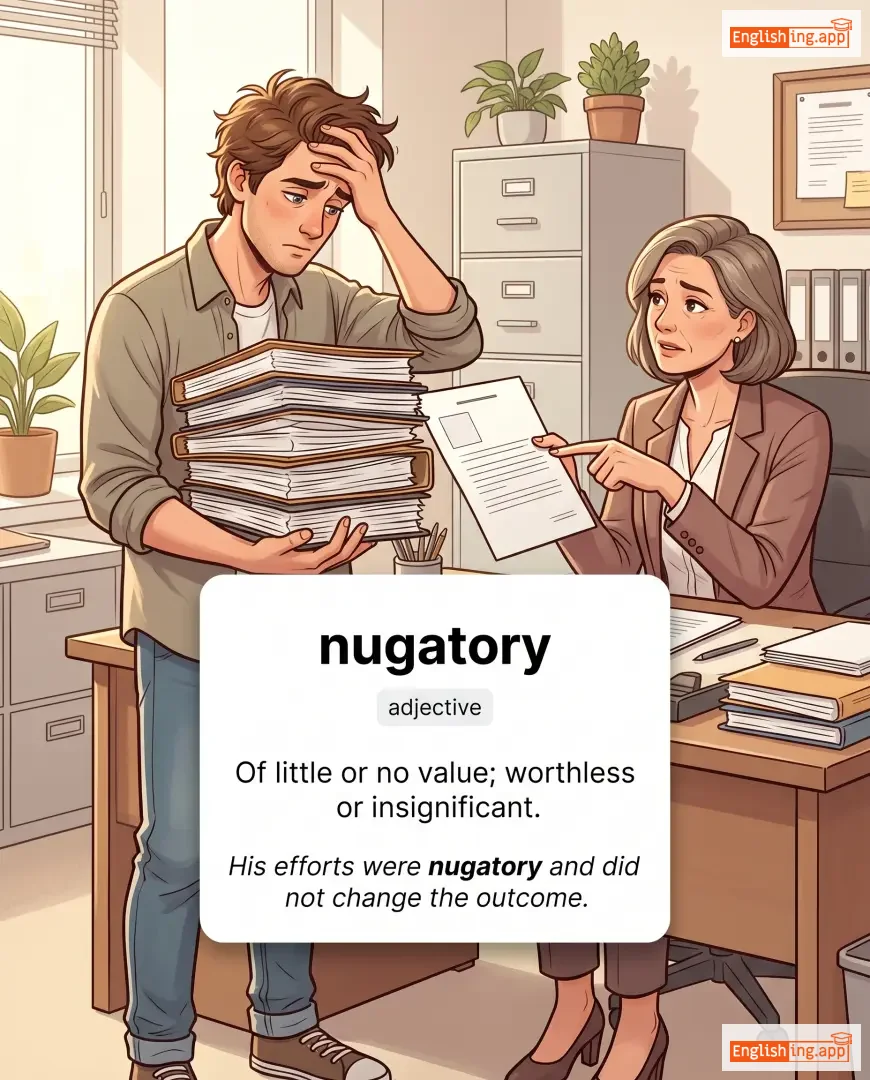
nugatory definition card — visual illustration of the meaning
adjective
/ˈnjuː.ɡə.tɔːr.i/
futile (futile)

Of little or no value; worthless or insignificant.

"His efforts were nugatory and did not change the outcome."

"Ses efforts étaient futiles et n'ont pas changé le résultat." (Ses efforts etaient futiles et n'ont pas change le resultat.)
noun
/ˈnjuː.səns/
nuisance (nuisance)

A person, thing, or situation that causes inconvenience or annoyance.

"The loud construction noise was a nuisance to the neighbors."

"Le bruit fort de la construction était une nuisance pour les voisins." (Le bruit fort de la construction etait une nuisance pour les voisins.)
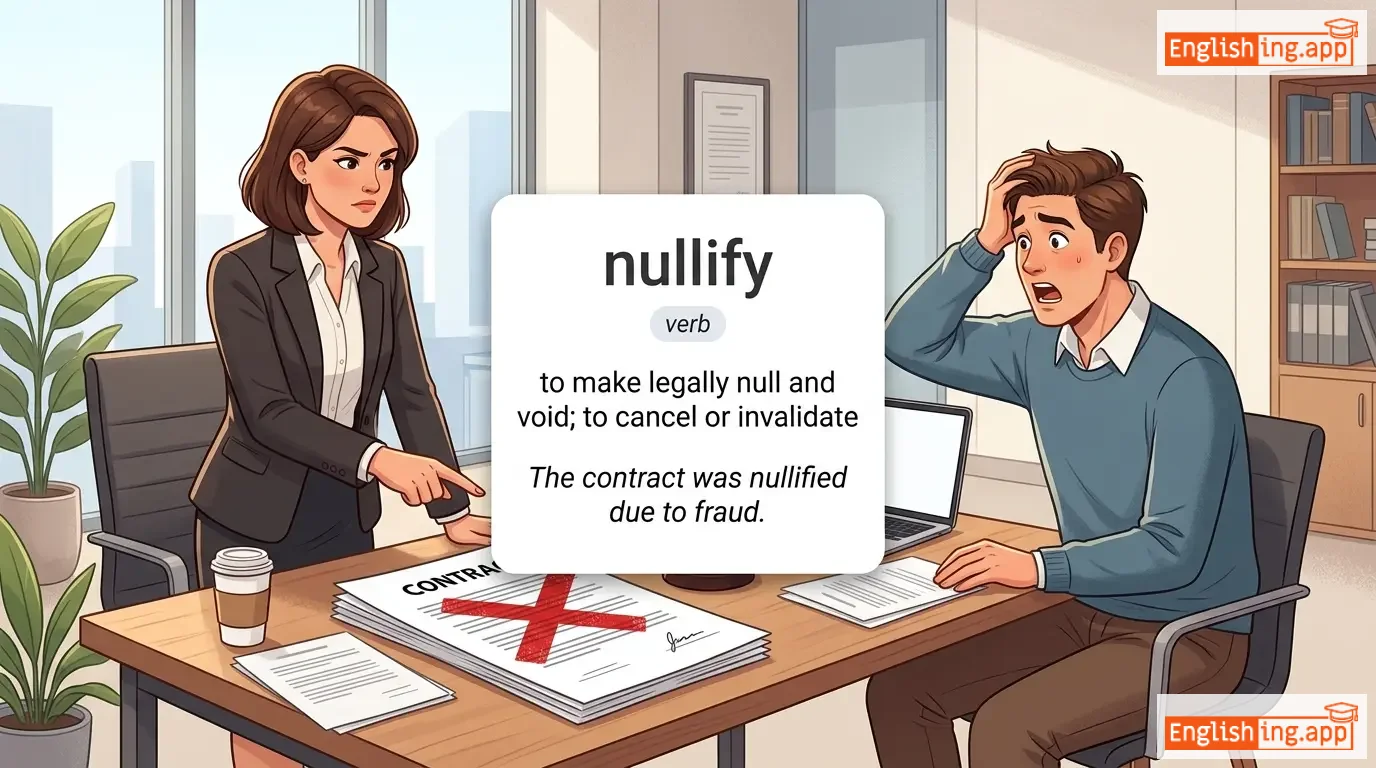
nullify definition card — visual illustration of the meaning
verb
/ˈnʌlɪfaɪ/
annuler (annuler)

to make legally null and void; to cancel or invalidate

"The contract was nullified due to fraud."

"Le contrat a été annulé en raison de fraude." (Le contrat a été annulé en raison de fraude.)
noun
/ˈnʌmbər/
numéro (numero)

a mathematical value used to count, measure, or label

"She gave me her phone number."

"Elle m'a donné son numéro de téléphone." (Elle m'a donné son numéro de téléphone.)
adjective
/ˈnjuː.mər.ə.bəl/
comptable; numérable (comptable; numérable)

capable of being counted; countable

"The stars in the sky are not numerable."

"Les étoiles dans le ciel ne sont pas numérables." (Les étoiles dans le ciel ne sont pas numérables.)
noun
/ˌnjuːməˈreɪʃən/
numération (numeration)

the action or process of counting or assigning numbers

"The teacher explained the basics of numeration to the students."

"L'enseignant a expliqué les bases de la numération aux étudiants." (L'enseignant a explique les bases de la numeration aux etudiants.)