Vocabulaires

Découvrez, apprenez et maîtrisez le vocabulaire anglais

noun
/ˈlæn.sɪt/
couteau chirurgical (couteau chirurgical)

a small, sharp, two-edged surgical knife used for making small incisions

"The doctor used a lancet to prick the patient’s finger for a blood test."

"Le médecin a utilisé un lancet pour piquer le doigt du patient pour un test sanguin." (Le medecin a utilise un lancet pour piquer le doigt du patient pour un test sanguin.)
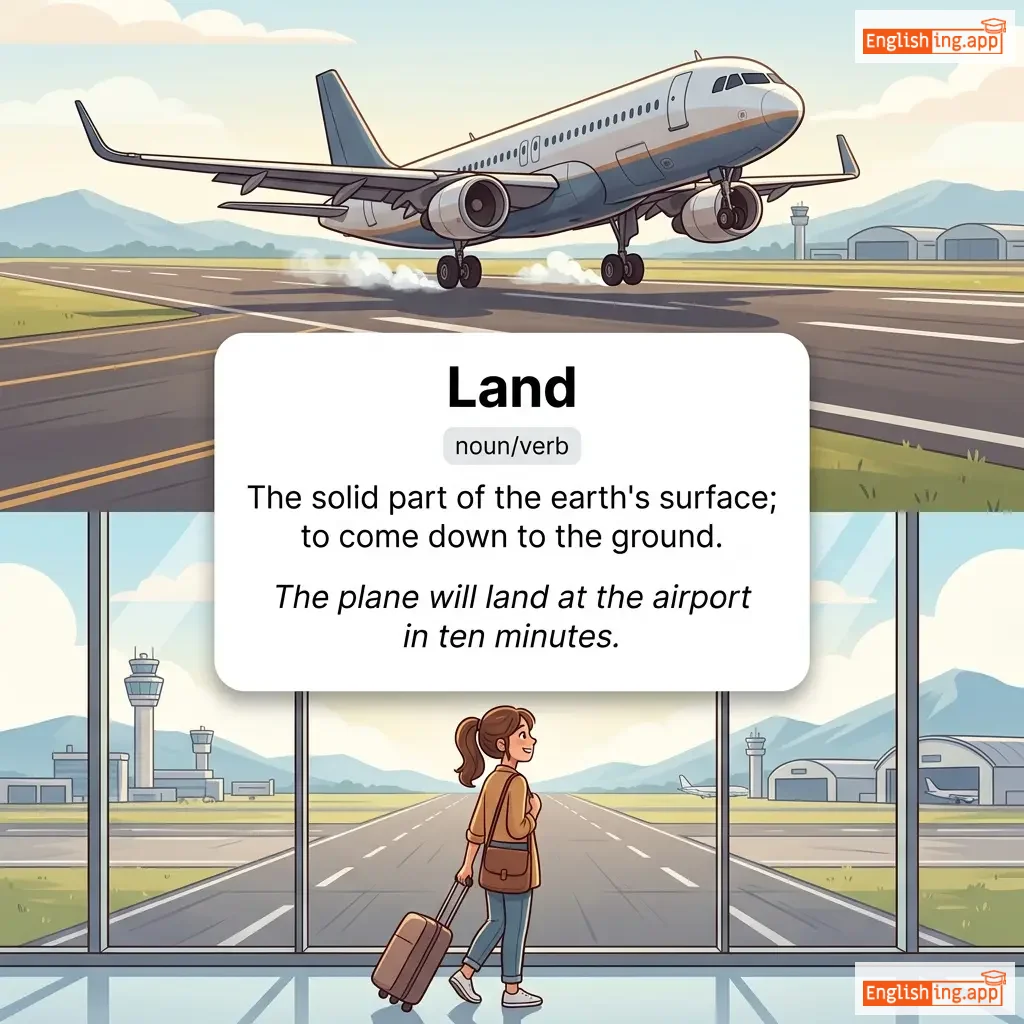
Land definition card — visual illustration of the meaning
noun/verb
/lænd/
terre / atterrir (terre / atterrir)

The solid part of the earth's surface; to come down to the ground.

"The plane will land at the airport in ten minutes."

"L'avion atterrira à l'aéroport dans dix minutes." (L'avion atterrira a l'aeroport dans dix minutes.)
noun
/ˈlænd.lɔːrd/
propriétaire (proprietaire)

a person who owns property and rents it to tenants

"The landlord collected the monthly rent from all tenants."

"Le propriétaire a collecté le loyer mensuel de tous les locataires." (Le propriétaire a collecté le loyer mensuel de tous les locataires.)
noun
/ˈlænd.fɪl/
décharge (decharge)

a site where waste material is buried under the ground

"The city built a new landfill to manage its growing waste problem."

"La ville a construit une nouvelle décharge pour gérer son problème croissant de déchets." (La ville a construit une nouvelle décharge pour gérer son problème croissant de déchets.)
noun
/ˈlændˌhoʊl.dər/
propriétaire foncier (propriétaire foncier)

a person who owns land, especially in large amounts

"The landholder leased part of his property to local farmers."

"Le propriétaire foncier a loué une partie de sa propriété à des agriculteurs locaux." (Le propriétaire foncier a loué une partie de sa propriété à des agriculteurs locaux.)
noun
/ˈlændɪŋ/
atterrissage (atterrissage)

the act of coming down to the ground or a surface from the air

"The plane made a smooth landing on the runway."

"L'avion a effectué un atterrissage en douceur sur la piste." (L'avion a effectué un atterrissage en douceur sur la piste.)
noun
/ˈlænd.leɪ.di/
propriétaire (propriétaire)

a woman who rents out land, a building, or accommodation; a female property owner

"The friendly landlady provided fresh towels and showed us around the apartment."

"La propriétaire sympathique a fourni des serviettes fraîches et nous a fait visiter l'appartement." (La propriétaire sympathique a fourni des serviettes fraîches et nous a fait visiter l'appartement.)
noun
/ˈlændlɔːrd/
propriétaire (proprietaire)

A person who owns and rents out land, buildings, or accommodation.

"The landlord increased the rent for all tenants this year."

"Le propriétaire a augmenté le loyer pour tous les locataires cette année." (Le propriétaire a augmenté le loyer pour tous les locataires cette année.)
landmark definition card — visual illustration of the meaning
noun
/ˈlændmɑːrk/
repère (reper)

A recognizable object or structure that serves as a point of reference, or an event marking an important stage.

"The Eiffel Tower is a famous landmark in Paris."

"La tour Eiffel est un repère célèbre à Paris." (La tour Eiffel est un repère célèbre à Paris.)
noun
/ˈlændskeɪp/
paysage (paysage)

All the visible features of an area of land, often considered in terms of their aesthetic appeal.

"The mountain landscape was breathtaking."

"Le paysage de la montagne était à couper le souffle." (Le paysage de la montagne était à couper le souffle.)
noun
/ˈlænd.slaɪd/
glissement de terrain (glissement de terrain)

a collapse of a mass of earth or rock from a mountain or cliff; an overwhelming victory in an election

"Heavy rains triggered a massive landslide that blocked the mountain highway."

"De fortes pluies ont provoqué un énorme glissement de terrain qui a bloqué la route de montagne." (de fortes pluies ont provoque un enorme glissement de terrain qui a bloque la route de montagne.)
noun
/leɪn/
chemin (chemin)

a narrow road or path, often in the countryside or for specific traffic

"They walked down a quiet country lane."

"Ils marchaient sur un chemin de campagne tranquille." (Ils marchaient sur un chemin de campagne tranquille.)
noun
/læŋ'ɡʊər/
langour (langour)

a long-tailed monkey found in Asia, especially India and Southeast Asia

"The langoor was sitting on the tree branch eating fruits."

"Le langur était assis sur la branche de l'arbre en train de manger des fruits." (Le langur était assis sur la branche de l'arbre en train de manger des fruits.)
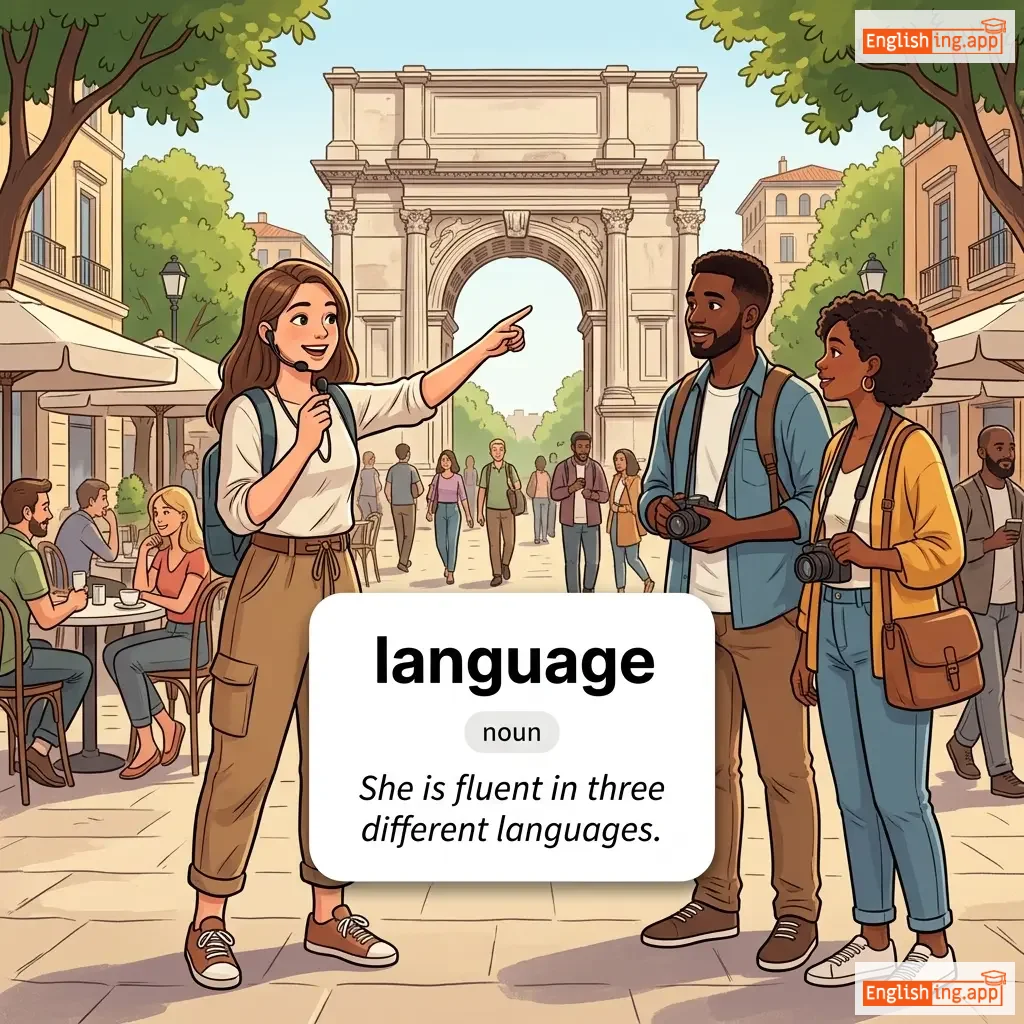
language definition card — visual illustration of the meaning
noun
/ˈlæŋɡwɪdʒ/
langue (langue)

the system of communication used by a particular community, including spoken and written words

"She is fluent in three different languages."

"Elle parle couramment trois langues différentes." (Elle parle couramment trois langues différentes.)
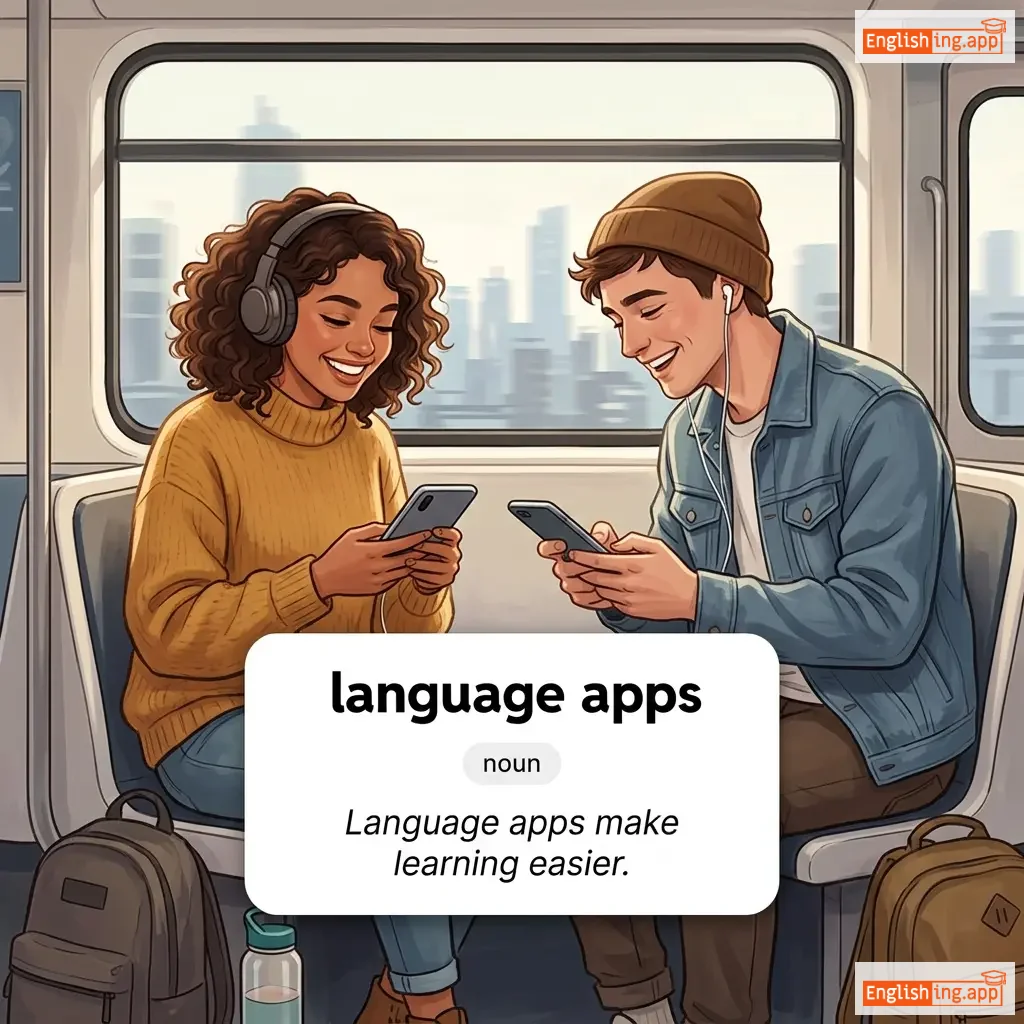
language apps definition card — visual illustration of the meaning
noun
ˈlæŋɡwɪdʒ æps
applications linguistiques (applications linguistiques)

Mobile or computer applications designed to help users learn new languages through interactive lessons and exercises.

"Language apps make learning easier."

"Les applications linguistiques rendent l'apprentissage plus facile." (Les applications linguistiques rendent l'apprentissage plus facile.)
adjective
/ˈlæŋɡwɪd/
languide (languide)

Displaying or having a disinclination for physical exertion; weak or faint.

"He gave a languid wave before leaving the room."

"Il fit un geste languissant avant de quitter la pièce." (Il fit un geste languissant avant de quitter la pièce.)
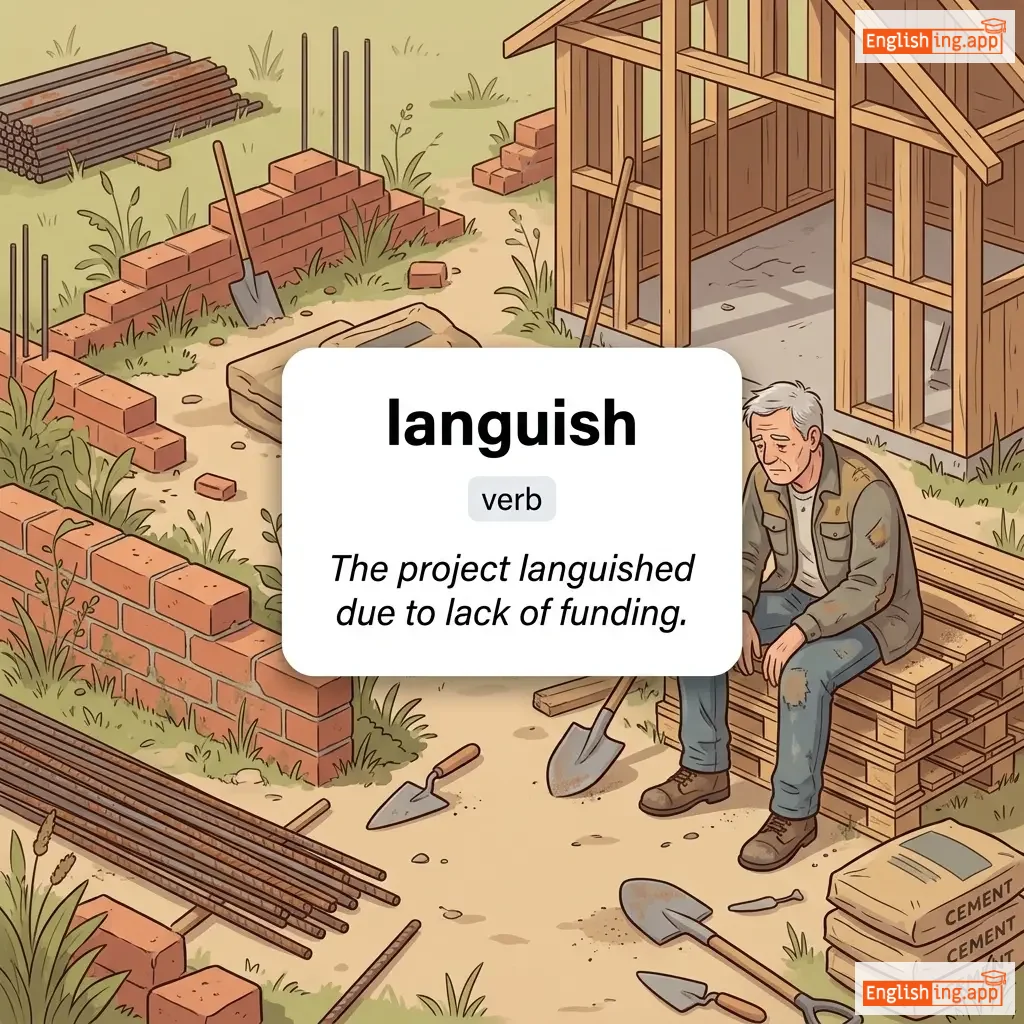
languish definition card — visual illustration of the meaning
verb
/ˈlæŋɡwɪʃ/
dépérir / rester négligé (deperir / rester neglige)

To become weak or feeble; to suffer neglect or remain in an unpleasant situation for a long time.

"The project languished due to lack of funding."

"Le projet a dépéri faute de financement." (Le projet a deperi faute de financement.)
noun
/ˈlæŋɡər/
langueur (langueur)

A state of tiredness, inertia, or dreamy relaxation.

"The hot afternoon filled her with languor."

"L'après-midi chaud l'a remplie de langueur." (L'après-midi chaud l'a remplie de langueur.)
adjective
/læŋk/
grand et maigre (grand et maigre)

Tall, thin, and often awkward in appearance.

"The lank teenager towered over his classmates."

"Le jeune grand et maigre dominait ses camarades de classe." (Le jeune grand et maigre dominait ses camarades de classe.)
noun
/lænˈtɑː.nə/
lantana (lantana)

a tropical flowering plant with clusters of small colorful flowers

"The lantana flowers attract butterflies to the garden."

"Les fleurs de lantana attirent les papillons dans le jardin." (Les fleurs de lantana attirent les papillons dans le jardin.)
noun
/ˈlæn.tərn/
lanterne (lanterne)

a portable lamp with a protective covering, often used outdoors

"We carried a lantern during our camping trip."

"Nous avons emporté une lanterne pendant notre voyage de camping." (Nous avons emporté une lanterne pendant notre voyage de camping.)
noun/verb
/læp/
bonheur (bonheur)

As noun: the flat area between the waist and knees of a seated person; As verb: to drink liquid with the tongue.

"The child sat on her mother's lap."

"Elle ne pouvait pas cacher son bonheur lorsqu'elle a reçu le prix." (Elle ne pouvait pas cacher son bonheur lorsqu'elle a reçu le prix.)
noun/adjective
/ˈlæpɪˌdɛri/
lapidaire (lapidaire)

As noun: a person who cuts, polishes, or engraves precious stones; As adjective: relating to such work.

"The museum displayed lapidary tools used in ancient times."

"Le musée a exposé des outils lapidaires utilisés dans les temps anciens." (Le musée a exposé des outils lapidaires utilisés dans les temps anciens.)
noun/verb
/læps/
erreur (erreur)

As noun: a temporary failure or slip; As verb: to end or fall into disuse.

"She apologized for her lapse in judgment."

"Elle s'est excusée pour son lapsus de jugement." (Elle s'est excusée pour son lapsus de jugement.)
noun
/ˈlɑːrsəni/
vol (vol)

The unlawful taking of personal property with intent to deprive the rightful owner of it.

"He was arrested for committing larceny at the store."

"Il a été arrêté pour avoir commis un vol dans le magasin." (Il a été arrêté pour avoir commis un vol dans le magasin.)
noun
/ˈlɑːrdər/
garde-manger (garde-manger)

A place, such as a pantry, where food is stored.

"The larder was full of fresh bread and cheese."

"Le garde-manger était plein de pain frais et de fromage." (Le garde-manger était plein de pain frais et de fromage.)
adjective
/lɑrdʒ/
grand (gran)

big in size, amount, or number

"They live in a large house near the river."

"Ils vivent dans une grande maison près de la rivière." (Ils vivent dans une grande maison près de la rivière.)
adjective
/lɑːrdʒ skeɪl/
grande échelle (grande echelle)

involving a large number or quantity, or covering a large area

"The company is planning a large-scale expansion into international markets."

"L'entreprise prévoit une expansion à grande échelle sur les marchés internationaux." (L'entreprise prevoit une expansion a grande echelle sur les marches internationaux.)
adverb
/ˈlɑːrdʒli/
principalement (principalement)

to a great extent; mostly or mainly

"The success of the project was largely due to teamwork."

"Le succès du projet était principalement dû au travail d'équipe." (Le succès du projet était principalement dû au travail d'équipe.)
noun
/lɑːrˈʒes/
générosité (generosite)

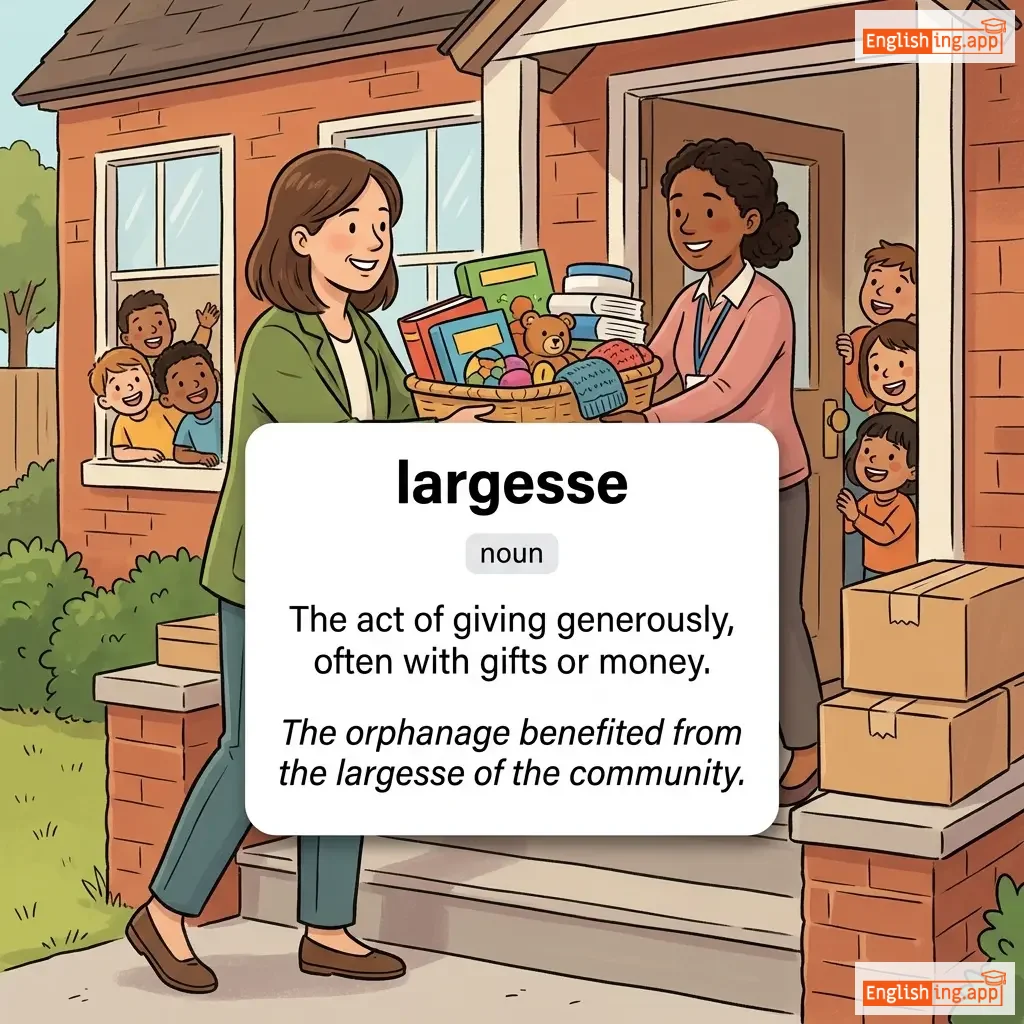
Generosity in giving gifts or money.

"The foundation survived thanks to the largess of wealthy donors."

"La fondation a survécu grâce à la générosité des donateurs fortunés." (La fondation a survécu grâce à la générosité des donateurs fortunés.)
largesse definition card — visual illustration of the meaning
noun
/lɑːrˈʒɛs/
largesse (largesse)

The act of giving generously, often with gifts or money.

"The orphanage benefited from the largesse of the community."

"L'orphelinat a bénéficié de la largesse de la communauté." (L'orphelinat a bénéficié de la largesse de la communauté.)
noun
/ˈlæriət/
lasso (lasso)

A long rope with a noose at one end used to catch animals such as cattle or horses.

"The cowboy threw his lariat to catch the stray horse."

"Le cow-boy a lancé son lasso pour attraper le cheval errant." (Le cow-boy a lancé son lasso pour attraper le cheval errant.)
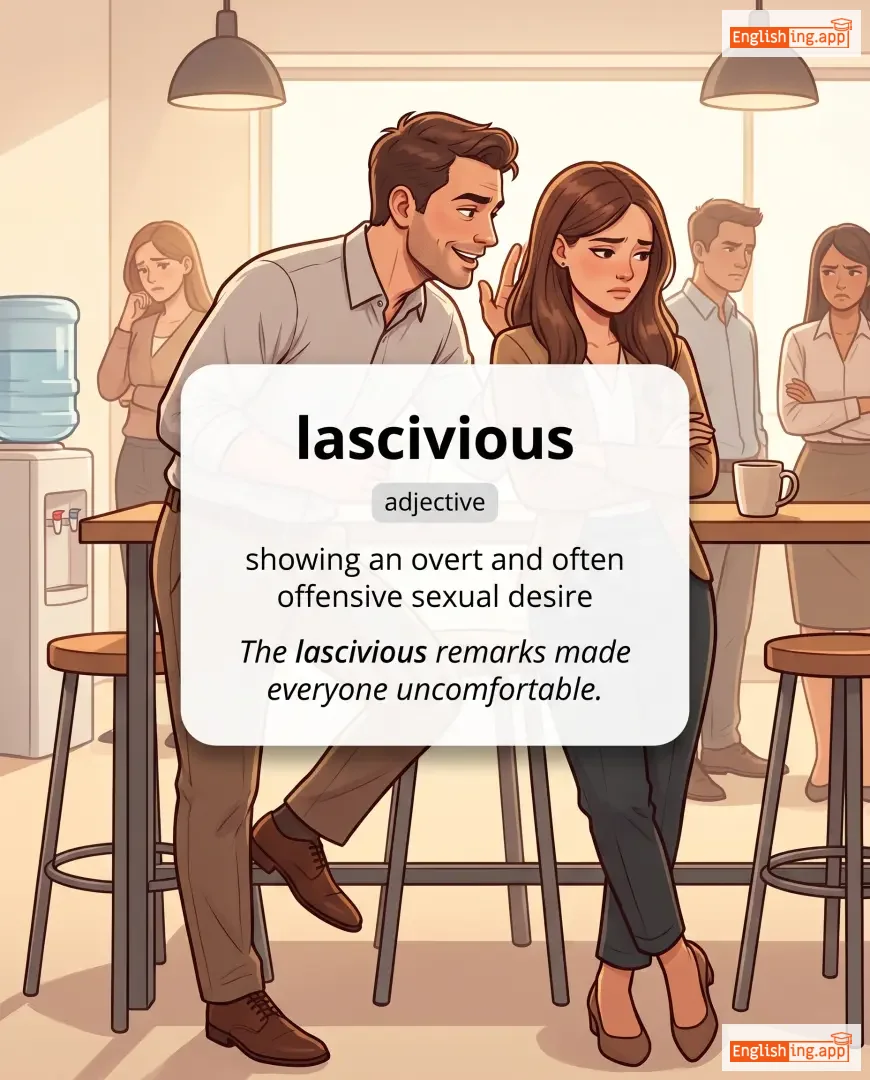
lascivious definition card — visual illustration of the meaning
adjective
/ləˈsɪviəs/
lascif (lascif)

showing an overt and often offensive sexual desire

"The lascivious remarks made everyone uncomfortable."

"Les remarques lascives ont mis tout le monde mal à l'aise." (Les remarques lascives ont mis tout le monde mal à l'aise.)
noun
/ˈleɪzər/
laser (laser)

a device that emits a concentrated beam of light

"The doctor used a laser to perform eye surgery."

"Le médecin a utilisé un laser pour effectuer une chirurgie oculaire." (Le médecin a utilisé un laser pour effectuer une chirurgie oculaire.)
verb
/læʃ/
fouetter/attacher (fouetter/attacher)

to strike with a whip or to fasten tightly

"The sailor lashed the rope to the mast."

"Le marin a attaché la corde au mât." (Le marin a attache la corde au mat.)
noun
/ˈlæsi/
jeune fille (jeune fille)

a young girl (informal, mainly Scottish)

"The old man greeted the little lassie warmly."

"Le vieil homme a salué la petite fille chaleureusement." (Le vieil homme a salué la petite fille chaleureusement.)
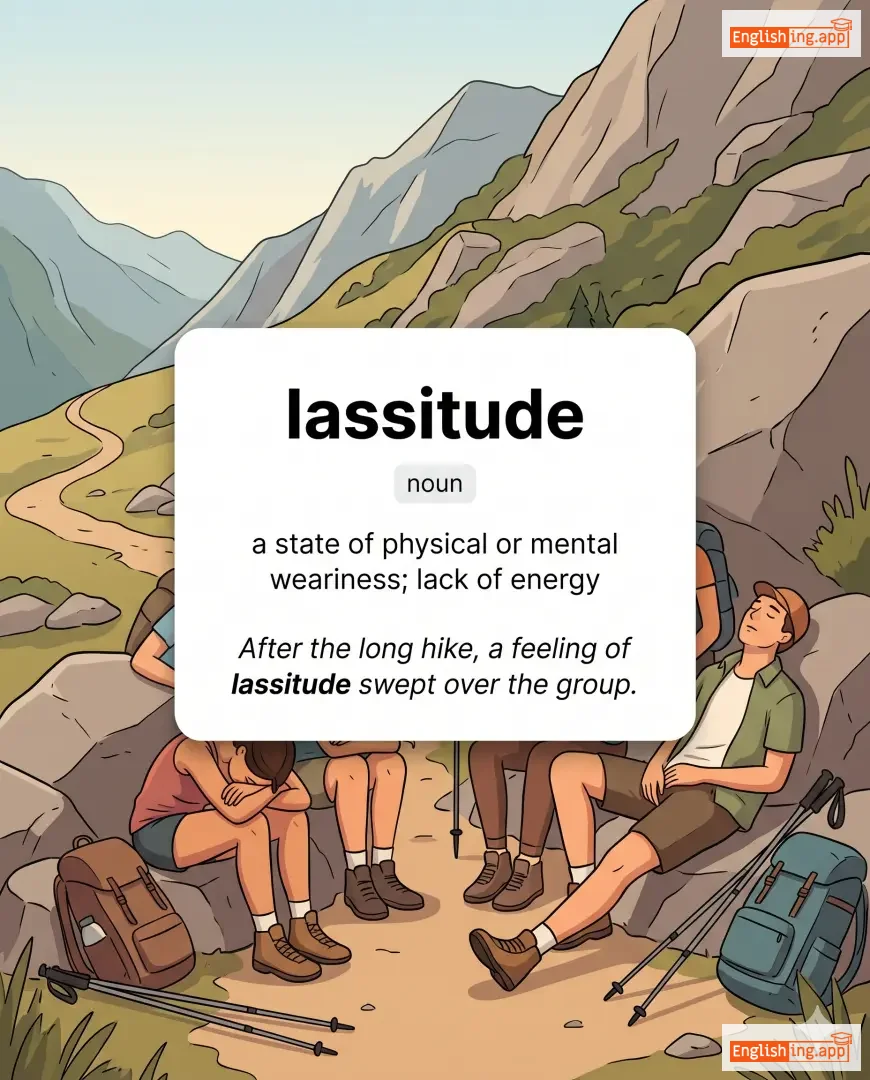
lassitude definition card — visual illustration of the meaning
noun
/ˈlæsɪtjuːd/
lassitude (lassitude)

a state of physical or mental weariness; lack of energy

"After the long hike, a feeling of lassitude swept over the group."

"Après la longue randonnée, un sentiment de lassitude a envahi le groupe." (Apres la longue randonnee, un sentiment de lassitude a envahi le groupe.)
noun/verb
/læˈsuː/
lasso (lasso)

a rope with a loop used to catch animals; to catch with such a rope

"The cowboy lassoed the horse quickly."

"Le cowboy a lassoé le cheval rapidement." (Le cowboy a lassoé le cheval rapidement.)
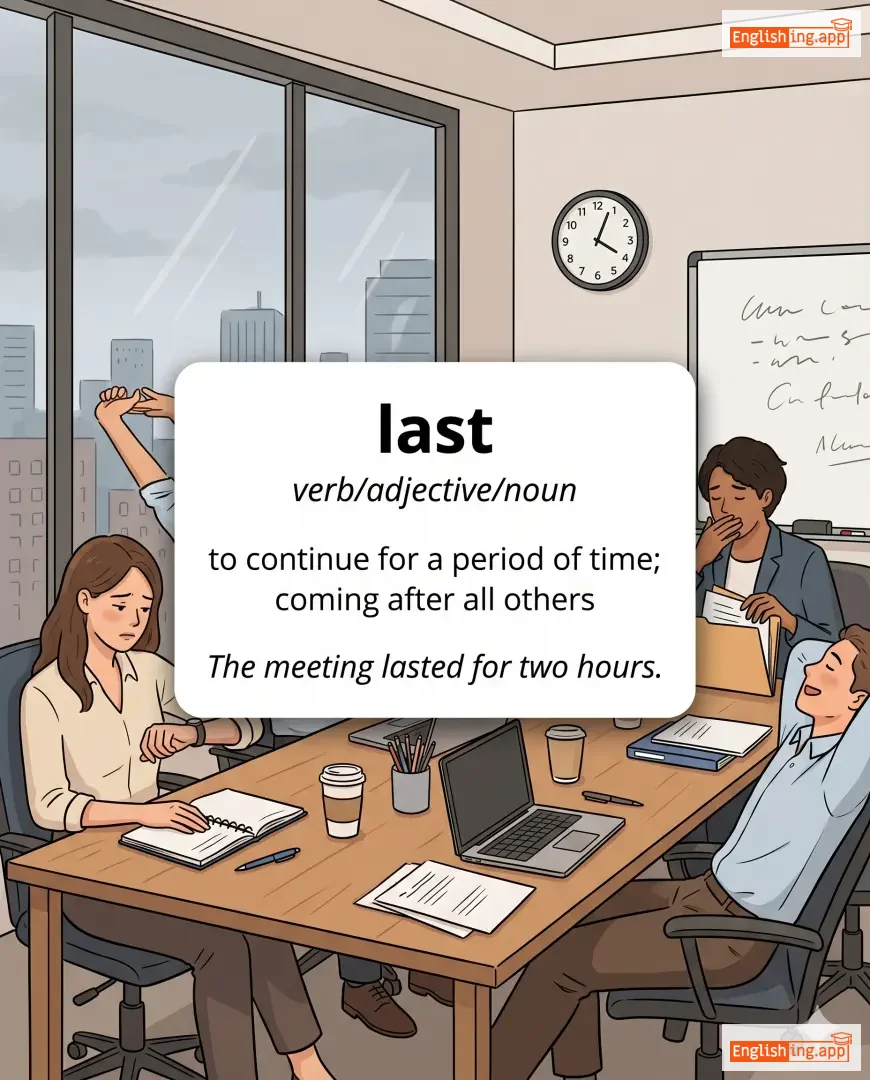
last definition card — visual illustration of the meaning
verb/adjective/noun
/læst/
durer / dernier (durer / dernier)

to continue for a period of time; coming after all others

"The meeting lasted for two hours."

"La réunion a duré deux heures." (La reunion a dure deux heures.)
adjective
/ˈlæstɪŋ/
durable; permanent (durable; permanent)

enduring for a long time; permanent; durable

"Their friendship had a lasting impact on both their lives."

"Leurs amitiés ont eu un impact durable sur leur vie." (Leurs amitiés ont eu un impact durable sur leur vie.)
verb
/lætʃ/
fermer avec un loquet (fermer avec un loquet)

to fasten or close something with a latch

"She latched the door before leaving the house."

"Elle a fermé la porte avec le loquet avant de quitter la maison." (Elle a fermé la porte avec le loquet avant de quitter la maison.)
adjective/adverb
/leɪt/
en retard (en retard)

arriving, happening, or done after the expected time

"He arrived late to the meeting."

"Il est arrivé en retard à la réunion." (Il est arrive en retard a la reunion.)
adverb
/ˈleɪtli/
récemment (recentement)

recently; during a period of time not long ago

"I haven’t seen her much lately."

"Je ne l'ai pas beaucoup vue récemment." (Je ne l'ai pas beaucoup vue récemment.)
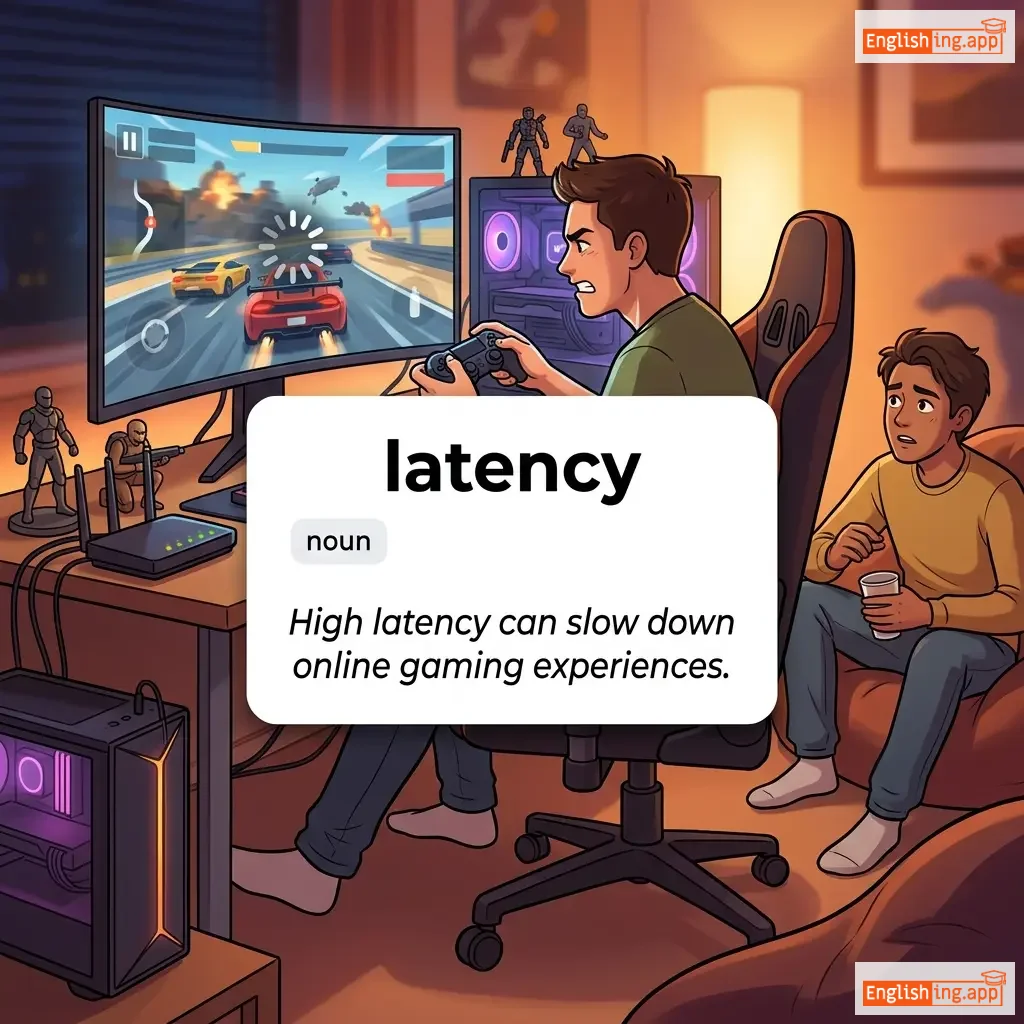
latency definition card — visual illustration of the meaning
noun
/ˈleɪtənsi/
latence (latens)

The delay before a transfer of data begins following an instruction for its transfer.

"High latency can slow down online gaming experiences."

"Une latence élevée peut ralentir l'expérience de jeu en ligne." (Une latence élevée peut ralentir l'expérience de jeu en ligne.)
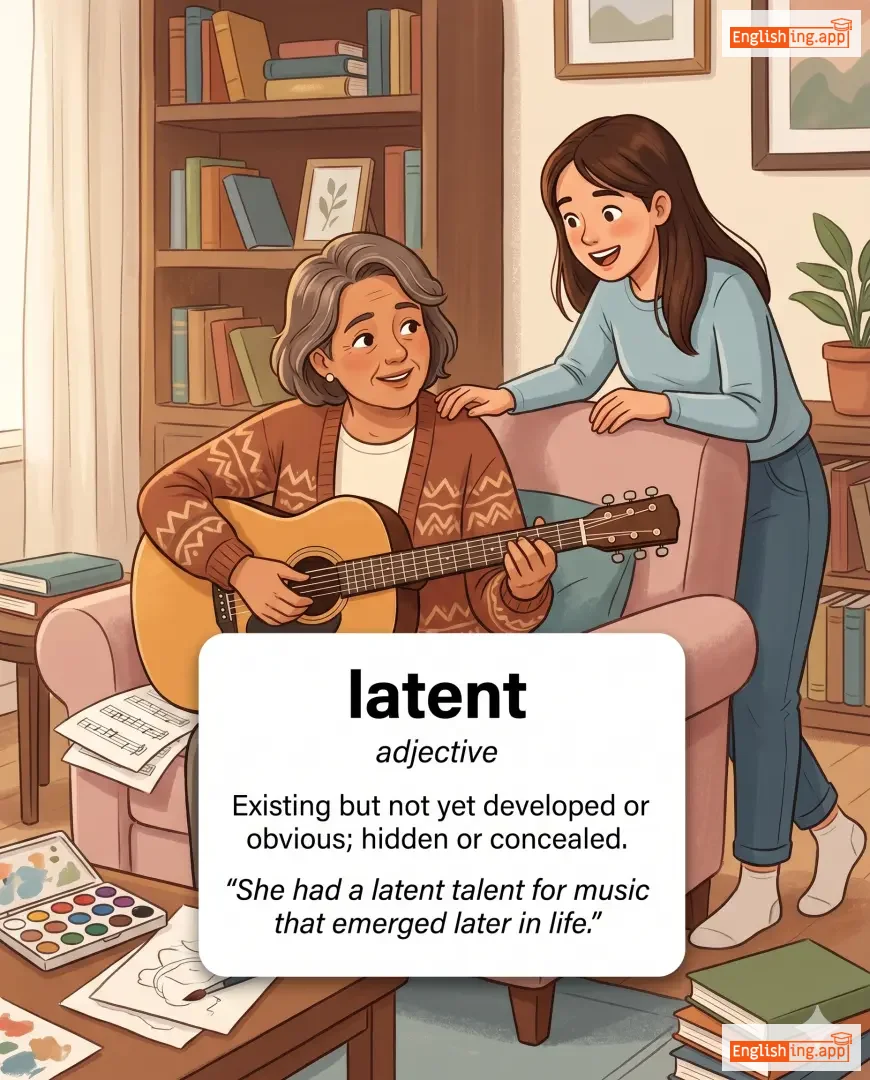
latent definition card — visual illustration of the meaning
adjective
/ˈleɪtənt/
latent (latent)

Existing but not yet developed or obvious; hidden or concealed.

"She had a latent talent for music that emerged later in life."

"Elle avait un talent latent pour la musique qui a émergé plus tard dans sa vie." (Elle avait un talent latent pour la musique qui a émergé plus tard dans sa vie.)
adverb
/ˈleɪtər/
plus tard (plus tard)

At a time subsequent to a reference time; afterwards.

"We will discuss the details later."

"Nous discuterons des détails plus tard." (Nous discuterons des détails plus tard.)
adjective
/ˈlætərəl/
latéral (lateral)

Relating to the side or sideways movement.

"The football player made a quick lateral pass."

"Le joueur de football a fait une passe latérale rapide." (Le joueur de football a fait une passe latérale rapide.)
adjective
/ˈleɪtɪst/
le plus récent (le plus recent)

most recent in time; newest available

"She shared the latest updates with the team."

"Elle a partagé les mises à jour les plus récentes avec l’équipe." (elle a partage les mises a jour les plus recentes avec l equipe)
noun
/leɪð/
tour (tour)

A machine for shaping wood, metal, or other material by rotating it against a cutting tool.

"The carpenter used a lathe to shape the wooden bowl."

"Le menuisier a utilisé un tour pour façonner le bol en bois." (Le menuisier a utilise un tour pour faconner le bol en bois.)
noun/adjective
/ˈlætɪn/
latin (latin)

the language of ancient Rome; relating to Latin culture or language

"Many English words are derived from Latin."

"De nombreux mots anglais proviennent du latin." (De nombreux mots anglais proviennent du latin.)