Vocabulaires

Découvrez, apprenez et maîtrisez le vocabulaire anglais

noun
/ˈtʃæpəl/
chapelle (chapelle)

A small church or a room used for Christian worship, often within a larger building.

"The couple got married in a small countryside chapel."

"Le couple s'est marié dans une petite chapelle à la campagne." (Le couple s'est marie dans une petite chapelle a la campagne.)
🧑‍🤝‍🧑

chaperon (chaperon)

noun
/ˈʃæpəroʊn/
accompagnateur (accompagnateur)

An older person who accompanies and supervises young people in social situations.

"The teacher acted as a chaperon during the school dance."

"L'enseignant a agi en tant qu'accompagnateur pendant le bal scolaire." (L'enseignant a agi en tant qu'accompagnateur pendant le bal scolaire.)
noun
/ˈtʃæplɪn/
aumônier (aumonier)

A member of the clergy attached to a private chapel, institution, hospital, or military unit.

"The army chaplain offered prayers before the battle."

"L'aumônier de l'armée a offert des prières avant la bataille." (L'aumonier de l'armee a offre des prieres avant la bataille.)
noun
/ˈtʃæptər/
chapitre (chapitre)

A main division of a book or a period in someone's life.

"I just finished the first chapter of the novel."

"Je viens de terminer le premier chapitre du roman." (Je viens de terminer le premier chapitre du roman.)
verb
/tʃɑːr/
brûler (bruler)

To burn or scorch something so that it becomes blackened.

"The cook accidentally charred the steak."

"Le cuisinier a accidentellement brûlé le steak." (Le cuisinier a accidentellement brûlé le steak.)
noun
/ˈkærəktər/
caractère (caractere)

the mental and moral qualities distinctive to an individual; a person in a story or play

"The main character in the novel learns an important lesson."

"Le personnage principal dans le roman apprend une leçon importante." (Le personnage principal dans le roman apprend une leçon importante.)
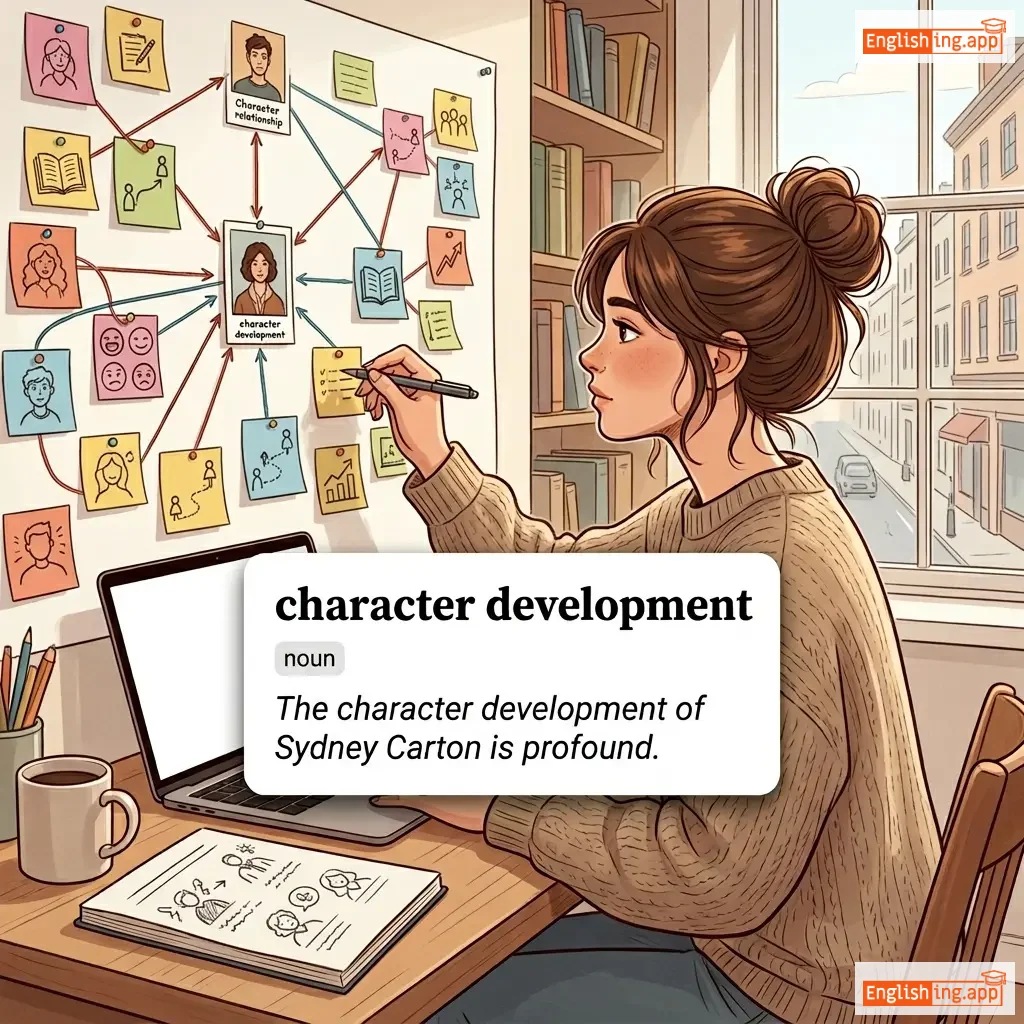
character development definition card — visual illustration of the meaning
noun
ˈkærɪktər dɪˈvɛləpmənt
développement de personnage (developpement de personnage)

The process of creating a believable character in fiction by giving the character depth and personality.

"The character development of Sydney Carton is profound."

"Le développement de personnage de Sydney Carton est profond." (Le développement de personnage de Sydney Carton est profond.)
noun/adjective
/ˌkærəktəˈrɪstɪk/
caractéristique (caracteristique)

A distinguishing quality or feature of a person, place, or thing.

"Kindness is a characteristic of true leadership."

"La gentillesse est une caractéristique du vrai leadership." (La gentillesse est une caracteristique du vrai leadership.)
verb
/ˈkærəktəraɪz/
caractériser (caracteriser)

to describe or portray the distinctive features or qualities of someone or something

"The author characterizes the hero as brave and selfless."

"L'auteur caractérise le héros comme courageux et désintéressé." (L'auteur caractérise le héros comme courageux et désintéressé.)
noun
/ʃəˈreɪd/
farce, jeu de mimes (farce, jeu de mimes)

an absurd pretense or act intended to deceive; also a word-guessing game

"The trial was nothing more than a political charade."

"Le procès n'était rien d'autre qu'une farce politique." (Le proces n'etait rien d'autre qu'une farce politique.)
verb
/tʃɑːrdʒ/
facturer/accuser (facturer/accuser)

to demand payment; to formally accuse; to rush forward aggressively

"The store charges extra for home delivery."

"Le magasin prélève un supplément pour la livraison à domicile." (Le magasin prélève un supplément pour la livraison à domicile.)
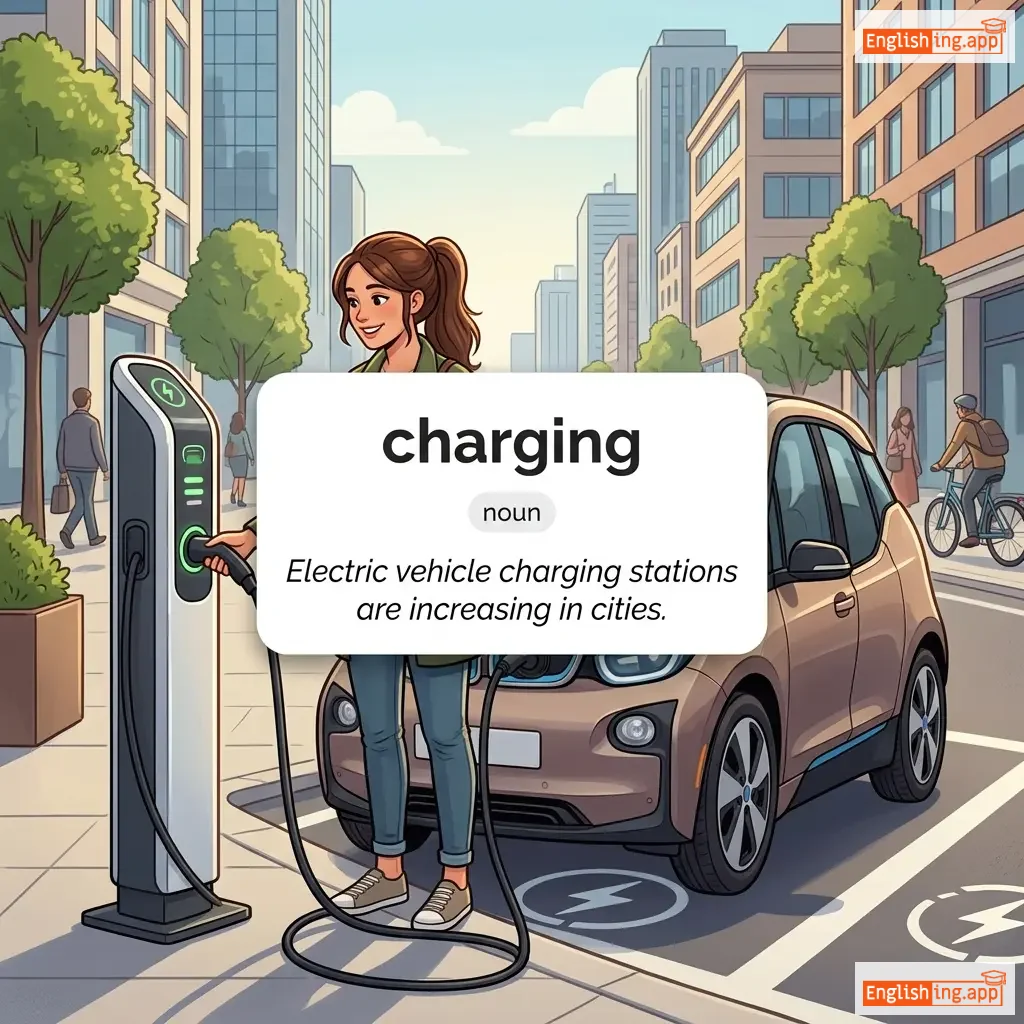
charging definition card — visual illustration of the meaning
noun
ˈtʃɑː.dʒɪŋ
charge (sharj)

The process of supplying electrical energy to recharge a battery or power source.

"Electric vehicle charging stations are increasing in cities."

"Les stations de recharge de véhicules électriques augmentent dans les villes." (Le station de recharg de vehicule electrique augment dans le ville)
noun
/ˈtʃæriət/
char de guerre (char de guerre)

an ancient horse-drawn vehicle used in warfare and racing

"The warrior rode his chariot into battle with great courage."

"Le guerrier monta son char de guerre avec un grand courage." (Le guerrier monta son char de guerre avec un grand courage)
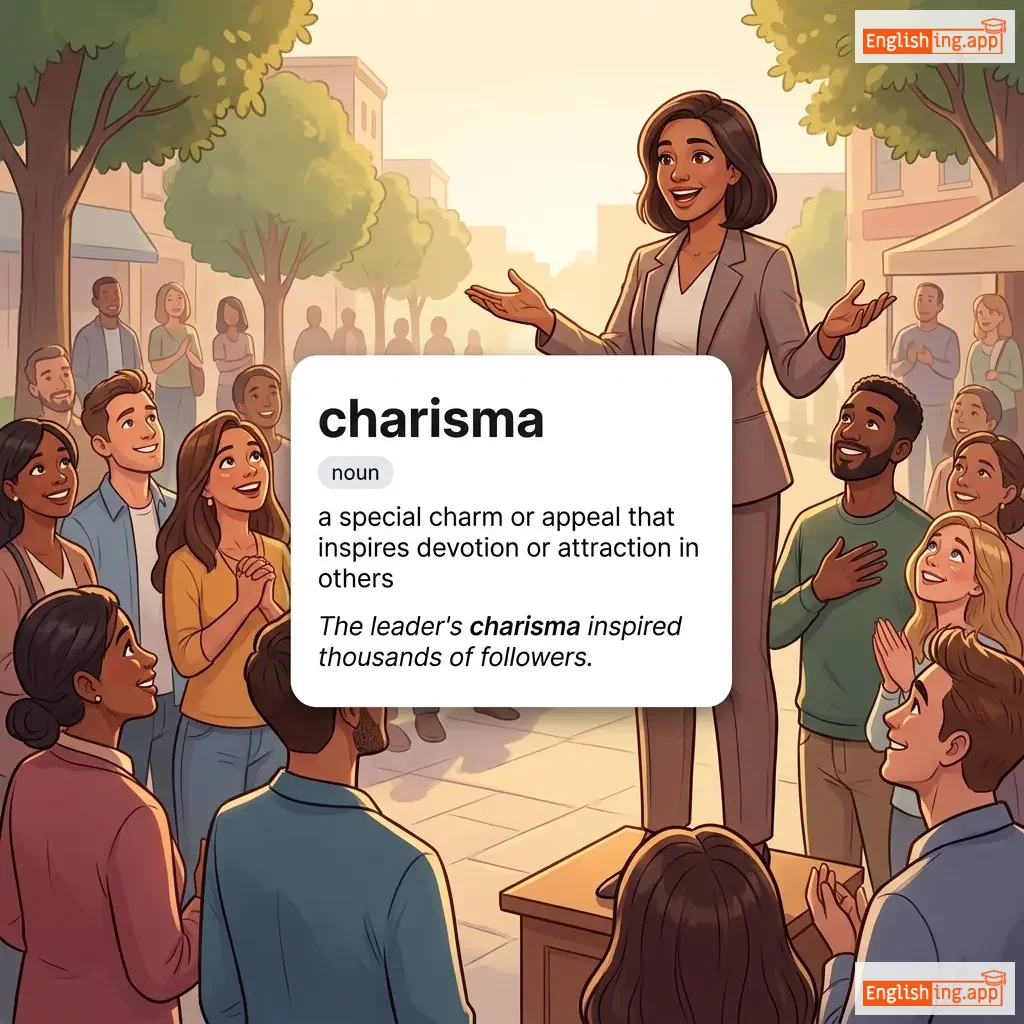
charisma definition card — visual illustration of the meaning
noun
/kəˈrɪzmə/
charisme (charisme)

a special charm or appeal that inspires devotion or attraction in others

"The leader's charisma inspired thousands of followers."

"Le charisme du leader a inspiré des milliers de suiveurs." (Le charisme du leader a inspiré des milliers de suiveurs.)
adjective
/ˈtʃær.ɪ.tə.bəl/
charitable; généreux; bienveillant (charitable; généreux; bienveillant)

generous in giving to those in need; showing kindness

"She is known for her charitable work in the community."

"Elle est connue pour son travail charitable dans la communauté." (Elle est connue pour son travail charitable dans la communauté.)
noun
/ˈtʃærəti/
charité / organisation caritative (charite / organisation caritative)

an organization set up to provide help and raise money for those in need; kindness and tolerance in judging others

"The charity raised funds to support homeless families."

"La charité a collecté des fonds pour soutenir les familles sans abri." (La charite a collecte des fonds pour soutenir les familles sans abri.)
noun
/ˈʃɑːrlətən/
charlatan (charlatan)

a person who pretends to have knowledge or skills that they do not really possess; a fraud

"The so-called healer was exposed as a charlatan."

"Le soi-disant guérisseur a été exposé comme un charlatan." (Le soi-disant guérisseur a été exposé comme un charlatan.)
noun/verb
/tʃɑːrm/
charme, fascination (charme, fascination)

the power or quality of delighting or attracting others; to attract or please greatly

"Her smile never fails to charm everyone around her."

"Son sourire ne cesse de charmer tous ceux qui l'entourent." (Son sourire ne cesse de charmer tous ceux qui l'entourent.)
adjective
/ˈtʃɑːr.mɪŋ/
charmant (charmant)

Very pleasing or delightful in a way that attracts people.

"The village is full of charming little houses."

"Le village est plein de petites maisons charmantes." (Le village est plein de petites maisons charmantes.)
noun
/tʃɑːrt/
graphique (graphique)

a sheet of information in the form of a table, graph, or diagram

"The teacher used a chart to explain the statistics."

"L'enseignant a utilisé un graphique pour expliquer les statistiques." (L'enseignant a utilise un graphique pour expliquer les statistiques.)
noun/verb
/ˈtʃɑːrtər/
charte / location (charte / location)

a written document granting rights or privileges; to hire a vehicle or vessel for temporary use

"The company decided to charter a bus for the trip."

"La société a décidé de louer un bus pour le voyage." (La société a décidé de louer un bus pour le voyage.)
adjective
/ˈtʃɛəri/
prudent (prudent)

cautious or wary about doing something

"She was chary of investing in the new business venture."

"Elle était prudente à investir dans la nouvelle entreprise." (Elle était prudente à investir dans la nouvelle entreprise.)
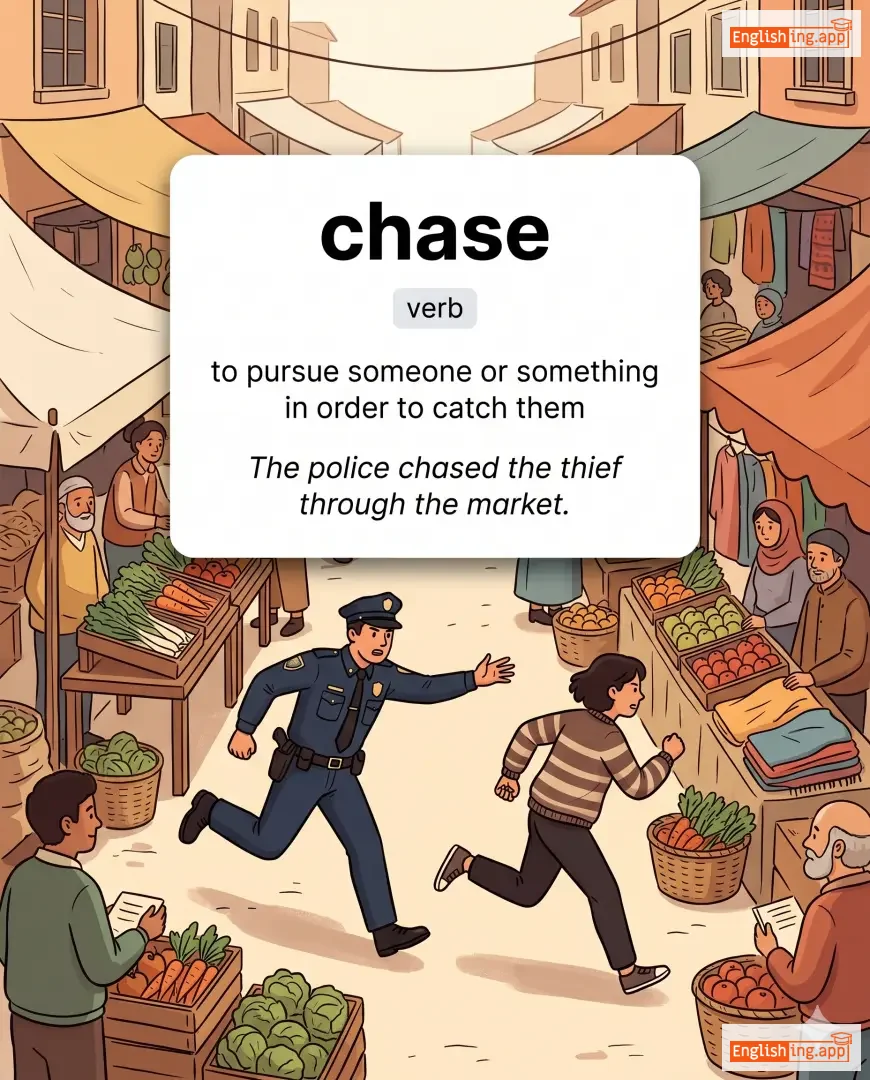
chase definition card — visual illustration of the meaning
🏃‍♂️

chase (tchès)

verb
/tʃeɪs/
poursuivre (poursuivre)

to pursue someone or something in order to catch them

"The police chased the thief through the market."

"La police a poursuivi le voleur à travers le marché." (La police a poursuivi le voleur à travers le marché.)
noun
/ˈkæzəm/
fissure / grande différence (fissure / grande difference)

a deep fissure in the earth's surface or a wide difference between people or ideas

"There was a great chasm between the two political parties."

"Il y avait une grande fissure entre les deux partis politiques." (Il y avait une grande fissure entre les deux partis politiques.)
noun
/ˈʃæsi/
châssis du véhicule (chassis du vehicule)

the base frame of a vehicle or other wheeled machine

"The mechanic examined the car's chassis for damage."

"Le mécanicien a examiné le châssis de la voiture pour détecter des dommages." (Le mecanicien a examine le chassis de la voiture pour detecter des dommages.)
adjective
/tʃeɪst/
chaste (chaste)

abstaining from sexual relations; pure or simple in style

"She lived a chaste life devoted to her faith."

"Elle a vécu une vie chaste dédiée à sa foi." (Elle a vécu une vie chaste dédiée à sa foi.)
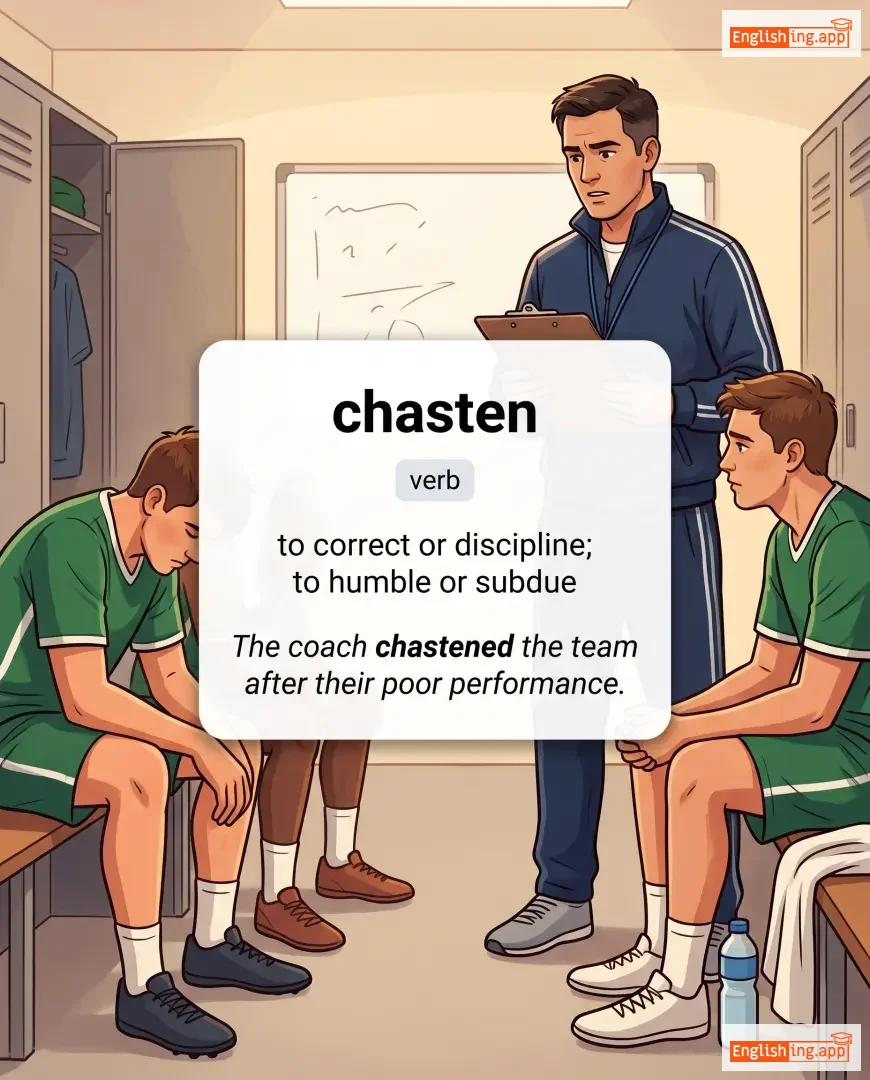
chasten definition card — visual illustration of the meaning
verb
/ˈtʃeɪ.sən/
châtier / soumettre (châtier / soumettre)

to correct or discipline; to humble or subdue

"The coach chastened the team after their poor performance."

"L'entraîneur a châtié l'équipe après leur mauvaise performance." (L'entraîneur a châtié l'équipe après leur mauvaise performance.)
verb
/tʃæsˈtaɪz/
critiquer sévèrement / punir sévèrement (kritiker severamente / punir severamente)

to criticize or punish severely

"The teacher chastised the student for being late."

"Le professeur a sévèrement réprimandé l'étudiant pour son retard." (Le professeur a sévèrement réprimandé l'étudiant pour son retard.)
noun
/ˈtʃæs.tə.ti/
chasteté (chastete)

the state of refraining from sexual activity; purity

"The monk took a vow of chastity."

"Le moine a pris un vœu de chasteté." (Le moine a pris un vœu de chasteté.)
noun; verb
/tʃæt/
discussion (discussion)

an informal conversation; to talk in a friendly, informal way

"We had a long chat after dinner."

"Nous avons eu une longue discussion après le dîner." (nous avons eu une longue discussion apres le diner)
noun
/ʃæˈtoʊ/
château français (chateau francais)

a large French country house or castle

"They stayed in a beautiful chateau in France."

"Ils sont restés dans un magnifique château en France." (Ils sont restes dans un magnifique chateau en France.)
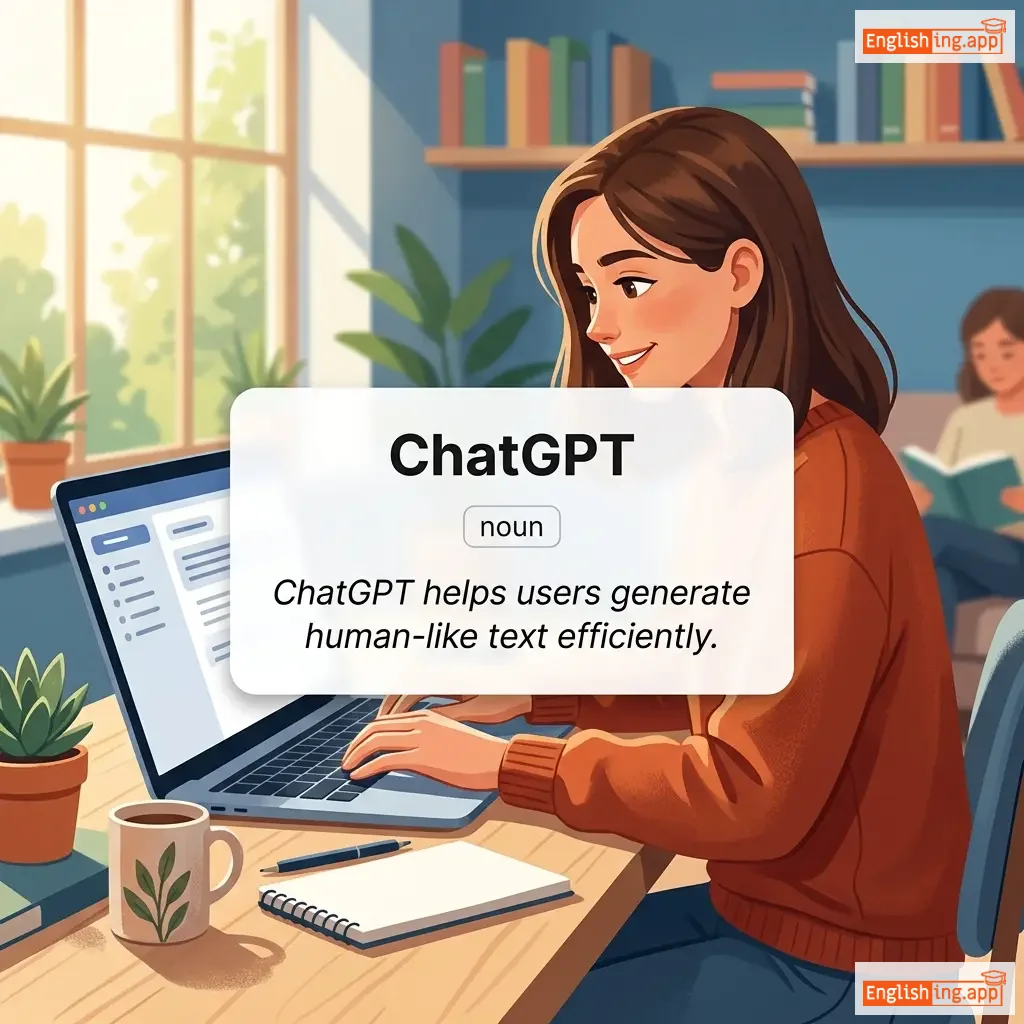
ChatGPT definition card — visual illustration of the meaning
noun
ˈtʃæt.dʒiː.piː.tiː
Un modèle d'intelligence artificielle basé sur le langage (ChatGPT)

A language-based artificial intelligence model designed for conversational interactions.

"ChatGPT helps users generate human-like text efficiently."

"ChatGPT aide les utilisateurs à générer du texte semblable à celui d'un humain de manière efficace." (ChatGPT aide les utilisateurs a generer du texte semblable a celui d'un humain de maniere efficace.)
noun
/ˈtʃæt.əl/
bien meuble / propriété personnelle (bien meuble / propriete personnelle)

a personal possession; historically, movable property including slaves

"In the past, slaves were considered the chattel of their owners."

"Dans le passé, les esclaves étaient considérés comme la propriété personnelle de leurs propriétaires." (Dans le passe, les esclaves etaient considers comme la propriete personnelle de leurs proprietaires.)
noun
/ˈʃoʊ.vəˌnɪz.əm/

Excessive or prejudiced support for one's own cause, group, or gender, often with contempt for others.

"The company's culture was criticized for promoting male chauvinism."

noun
/ˈʃoʊ.və.nɪst/
personne excessivement partiale (personne excessivement partiale)

A person displaying excessive or prejudiced loyalty to a group, cause, or gender.

"He was labeled a chauvinist after his remarks about women in the workplace."

"Il a été étiqueté comme choviniste après ses remarques sur les femmes au travail." (Il a été étiqueté comme choviniste après ses remarques sur les femmes au travail.)
adjective
/ˌʃoʊ.vəˈnɪs.tɪk/
chauviniste (chauviniste)

Displaying or characterized by excessive or prejudiced loyalty or support, especially towards one's own gender or group.

"His chauvinistic attitude alienated many of his female colleagues."

"Son attitude chauviniste a aliéné beaucoup de ses collègues féminines." (Son attitude chauviniste a aliéné beaucoup de ses collègues féminines.)
adjective
/tʃiːp/
bon marché (bon marche)

low in cost; inexpensive

"This shop sells clothes at very cheap prices."

"Ce magasin vend des vêtements à des prix très bon marché." (Ce magasin vend des vetements a des prix tres bon marche.)
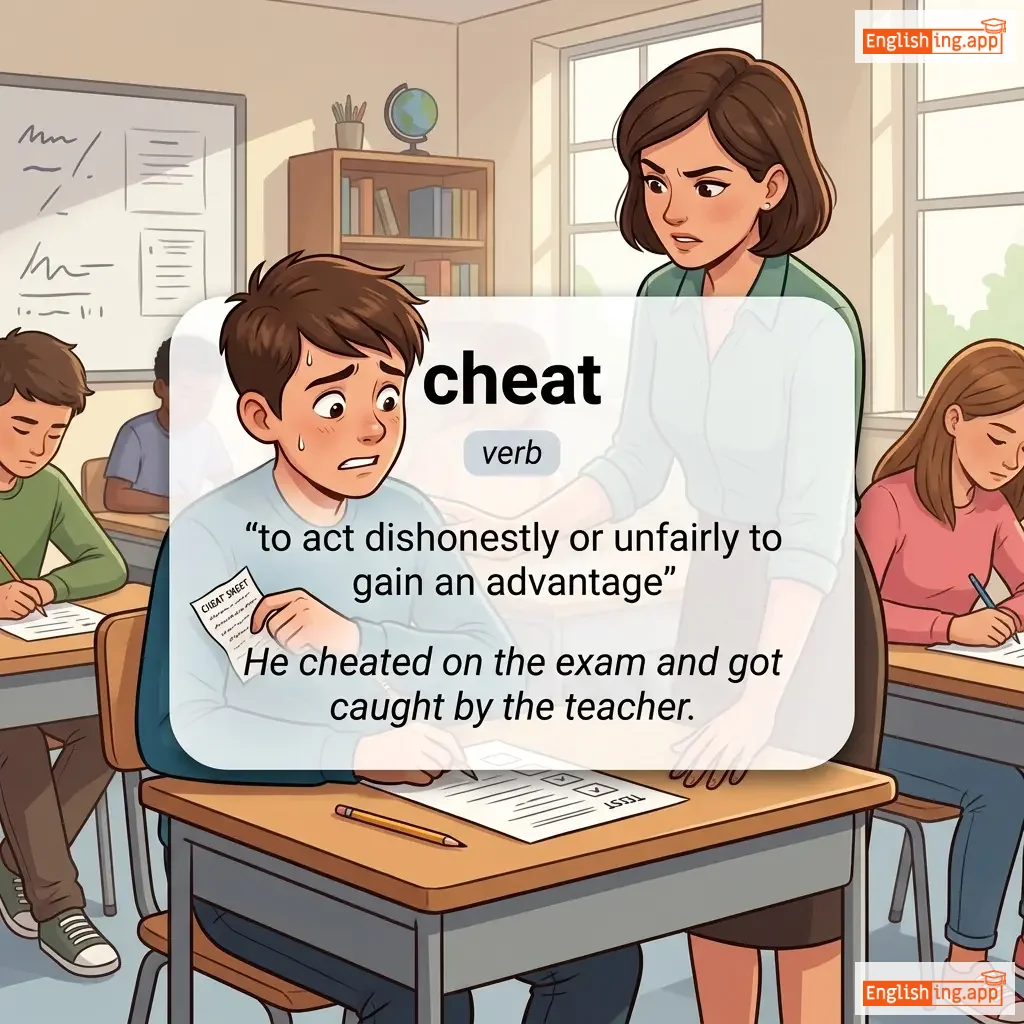
cheat definition card — visual illustration of the meaning
verb
/tʃiːt/
bonheur (bonheur)

to act dishonestly or unfairly to gain an advantage

"He cheated on the exam and got caught by the teacher."

"Elle n'a pas pu cacher son bonheur lorsqu'elle a reçu le prix." (Elle n'a pas pu cacher son bonheur lorsqu'elle a reçu le prix.)
noun
/ˈtʃiːtər/
tricheur (tricheur)

a person who cheats or acts dishonestly to gain an advantage

"He was caught and labeled as a cheater during the exam."

"Il a été traité de tricheur pendant l'examen." (Il a ete traite de tricheur pendant lexamen)
verb, noun
/tʃɛk/
vérifier (verifier)

To examine, inspect, or verify something; also a written order to a bank to pay money.

"Please check the report before submitting it."

"Veuillez vérifier le rapport avant de le soumettre." (Veuillez vérifier le rapport avant de le soumettre.)
adjective
/ˈtʃɛk.ərd/
à carreaux (a carreaux)

Having a pattern of alternating squares of different colors; also describing a past full of ups and downs or varied experiences.

"He had a checkered career with many highs and lows."

"Il a eu une carrière à carreaux avec de nombreux hauts et bas." (Il a eu une carrière à carreaux avec de nombreux hauts et bas.)
noun
/tʃiːk/
joue (joue)

either side of the face below the eye; impudent boldness

"She kissed him on the cheek."

"Elle l'a embrassé sur la joue." (Elle l'a embrassé sur la joue.)
verb
/tʃɪər/
acclamer (aclamer)

to shout in encouragement or support; to make someone feel happier

"The fans cheered loudly when their team scored a goal."

"Les supporters ont acclamé bruyamment lorsque leur équipe a marqué un but." (Les supporters ont acclamé bruyamment lorsque leur équipe a marqué un but.)
adjective
/ˈtʃɪə.fəl/
joyeux; optimiste; plein de joie (joyeux; optimiste; plein de joie)

happy and optimistic; full of joy and good spirits; bright and lively

"She has a cheerful personality that brightens everyone's day."

"Elle a une personnalité joyeuse qui illumine la journée de tout le monde." (Elle a une personnalité joyeuse qui illumine la journée de tout le monde.)
adverb
/ˈtʃɪəfəli/
joyeusement (joyeusement)

in a happy and positive manner; with visible good spirits

"She greeted everyone cheerfully despite the long day."

"Elle a salué tout le monde joyeusement malgré la longue journée." (Elle a salue tout le monde joyeusement malgre la longue journee)
adjective
/ˈtʃɪə.ləs/
triste; morne; sans joie (triste; morne; san joie)

lacking happiness or comfort; gloomy; depressing; without cheer

"The old house looked cheerless and abandoned in the winter rain."

"La vieille maison paraissait triste et abandonnée sous la pluie hivernale." (La vieille maison paraissait triste et abandonnée sous la pluie hivernale.)
noun
/tʃiːz/
fromage (fromaj)

a dairy product made from curdled or cultured milk

"She sliced some cheese for the sandwich."

"Elle a tranché un peu de fromage pour le sandwich." (Elle a tranche un peu de fromage pour le sandwich.)
adjective
/ˈtʃiːzi/
bon marché/excessivement sentimental (bon marché/excessivement sentimental)

tacky, overly sentimental, or cheap in quality

"The movie was funny but a bit too cheesy."

"Le film était drôle, mais un peu trop kitsch." (Le film était drôle, mais un peu trop kitsch.)
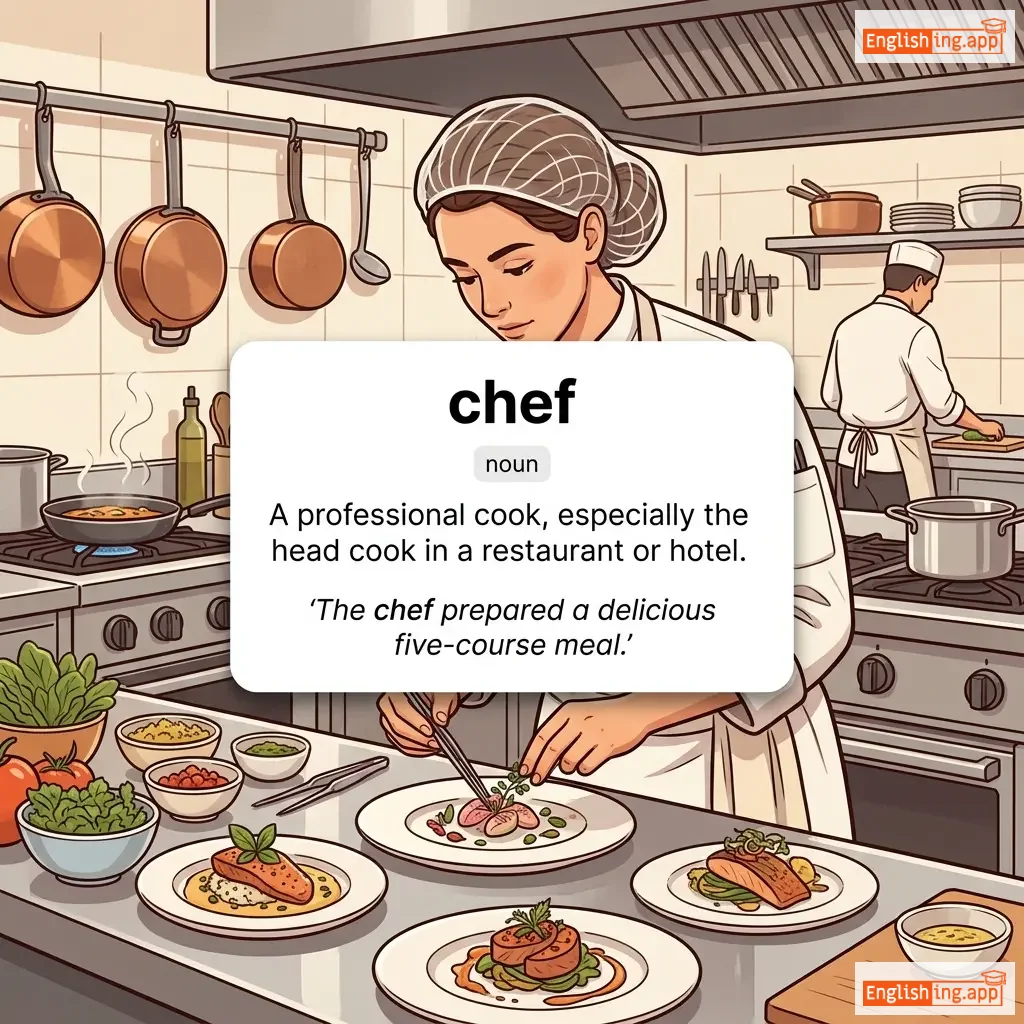
chef definition card — visual illustration of the meaning
👨‍🍳

chef (chef)

noun
/ʃɛf/
chef (shef)

A professional cook, especially the head cook in a restaurant or hotel.

"The chef prepared a delicious five-course meal."

"Le chef a preparé un delicieux repas de cinq plats." (Le chef a prepare un delicieux repas de cinq plats)
noun
/ˈkɛmɪkəl/
substance chimique (substance chimique)

a substance produced by or used in a chemical process

"The factory releases harmful chemicals into the river."

"L'usine libère des substances chimiques nocives dans la rivière." (L'usine libere des substances chimiques nocives dans la riviere.)