Vocabularios

Descubra, aprenda y domine el vocabulario en inglés

adverb
/ˈmeɪbi/
tal vez (tal vez)

used to express possibility or uncertainty

"Maybe we will go to the park tomorrow."

"Tal vez vayamos al parque mañana." (Tal vez vayamos al parque mañana.)
noun
/ˈmeɪhɛm/
caos (kaos)

Violent or extreme disorder; chaos and destruction.

"The protest turned into mayhem when the crowd clashed with the police."

"La protesta se convirtió en caos cuando la multitud chocó con la policía." (La protesta se convirtió en kaos cuando la multitud chocó con la policía.)
noun
/ˈmeɪər/
alcalde (alcalde)

The elected head of a city, town, or municipality.

"The mayor announced a new policy to improve public transport."

"El alcalde anunció una nueva política para mejorar el transporte público." (El alcalde anunció una nueva política para mejorar el transporte público.)
noun
/meɪz/
laberinto (laberinto)

A complex network of paths or passages that are difficult to navigate.

"Tourists often get lost in the maze of narrow streets in the old city."

"Los turistas a menudo se pierden en el laberinto de calles estrechas del casco antiguo." (Los turistas a menudo se pierden en el laberinto de calles estrechas del casco antiguo.)
pronoun
/miː/
me (me)

Used by a speaker to refer to themselves as the object of a verb or preposition.

"She gave me a beautiful gift."

"Ella me dio un regalo hermoso." (Ella me dio un regalo hermoso.)
noun
/miːd/
hidromiel (hidromiel)

An alcoholic drink made from fermented honey and water.

"The Vikings were known to drink large amounts of mead during feasts."

"Los vikingos eran conocidos por beber grandes cantidades de hidromiel durante los banquetes." (Los vikingos eran conocidos por beber grandes cantidades de hidromiel durante los banquetes.)
noun
/ˈmedoʊ/
pradera (medo)

A piece of grassland, especially one used for hay

"The cows grazed peacefully in the green meadow."

"Las vacas pastaban tranquilamente en la pradera verde." (Las vacas pastaban tranquilamente en la pradera verde.)
adjective
/ˈmiːɡər/
escaso (escaso)

Lacking in quantity or quality; inadequate.

"He could barely survive on his meager salary."

"Él apenas podía sobrevivir con su escaso salario." (Él apenas podía sobrevivir con su escaso salario.)
noun
/miːl/
felicidad (felicidad)

An occasion when food is eaten, or the food that is eaten on such an occasion.

"We had a delicious meal at the restaurant."

"No pudo ocultar su felicidad cuando recibió el premio." (No pudo ocultar su felicidad cuando recibió el premio.)
adjective
/ˈmiːli ˌmaʊðd/
hipócrita (hipocrita)

Unwilling to speak directly and honestly; insincere or evasive in speech.

"The manager gave a mealy-mouthed excuse instead of admitting the mistake."

"El gerente dio una excusa hipócrita en lugar de admitir el error." (El gerente dio una excusa hipocrita en lugar de admitir el error.)
adjective
/ˈmiːliˌmaʊðd/
hablar de manera evasiva (hablar de manera evasiva)

not willing to speak directly and honestly; evasive in speech

"The politician gave a mealymouthed response to the tough question."

"El político dio una respuesta evasiva a la pregunta difícil." (El politico dio una respuesta evasiva a la pregunta dificil.)
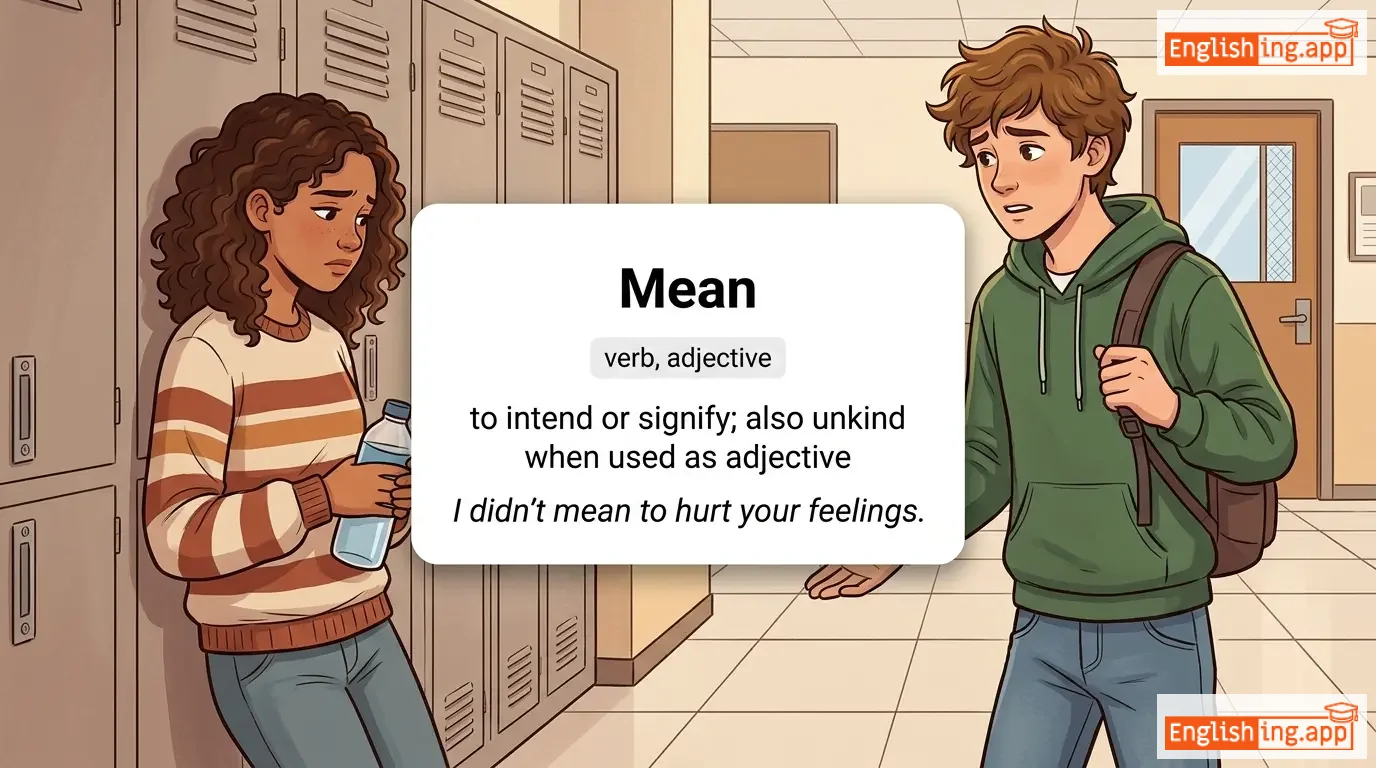
Mean definition card — visual illustration of the meaning
verb, adjective
/miːn/
significar / intención (significar / intencion)

to intend or signify; also unkind when used as adjective

"I didn’t mean to hurt your feelings."

"No quise herir tus sentimientos." (No quise herir tus sentimientos.)
verb, noun
/miˈændər/
deambular (deambular)

to wander aimlessly or follow a winding course

"We meandered through the old streets of the city."

"Deambulamos por las antiguas calles de la ciudad." (Deambulamos por las antiguas calles de la ciudad.)
noun
/ˈmiːnɪŋ/
significado (significado)

The definition, purpose, or significance of something.

"The meaning of the word is explained in the dictionary."

"El significado de la palabra está explicado en el diccionario." (El significado de la palabra esta explicado en el diccionario.)
adjective
/ˈmiːnɪŋfəl/
significativo (significativo)

having purpose, value, or significance

"He gave a meaningful smile before leaving the room."

"Él dio una sonrisa significativa antes de salir de la habitación." (El dio una sonrisa significativa antes de salir de la habitacion.)
adjective
/ˈmiː.nɪŋ.ləs/
sin sentido; sin propósito; irrelevante (sin sentido; sin proposito; irrelevante)

without purpose; having no significance; pointless

"The data became meaningless without proper context."

"Los datos se volvieron sin sentido sin el contexto adecuado." (Los datos se volvieron sin sentido sin el contexto adecuado.)
noun
/ˈmiːnnəs/
maldad; avaricia (mines)

The quality of being unkind, spiteful, or unfair; stinginess

"His meanness towards the poor children shocked everyone in the neighborhood."

"Su maldad hacia los niños pobres sorprendió a todos en el vecindario." (Su maldad hacia los niños pobres sorprendió a todos en el vecindario.)
noun
/miːnz/
medios; recursos; forma; (means)

An action or system by which a result is achieved; financial resources

"They don't have the means to afford such an expensive vacation."

"No tienen los medios para costear unas vacaciones tan caras." (no tienen los medios para costear unas vacaciones tan caras.)
noun/adverb
/ˈmiːnˌtaɪm/
mientras tanto (mientras tanto)

the period of time between two events; meanwhile

"The train will be late, so in the meantime let's have some tea."

"El tren llegará tarde, así que mientras tanto tomemos un té." (El tren llegará tarde, así que mientras tanto tomemos un té.)
adverb
/ˈmiːnˌwaɪl/
mientras tanto (mientras tanto)

At the same time; in the intervening period.

"She was cooking dinner; meanwhile, I set the table."

"Ella estaba cocinando la cena; mientras tanto, yo puse la mesa." (Ella estaba cocinando la cena; mientras tanto, yo puse la mesa.)
adjective
/ˈmiːzli/
insignificante (insignificante)

contemptibly small or insignificant

"He was paid a measly sum for the hard work."

"Le pagaron una suma insignificante por el arduo trabajo." (Le pagaron una suma insignificante por el arduo trabajo.)
adjective
/ˈmeʒ.ər.ə.bəl/
medible; cuantificable (medible; cuantificable)

able to be measured; quantifiable

"The project's success was measurable by increased sales."

"El éxito del proyecto fue medible por el aumento de ventas." (El exito del proyecto fue medible por el aumento de ventas.)
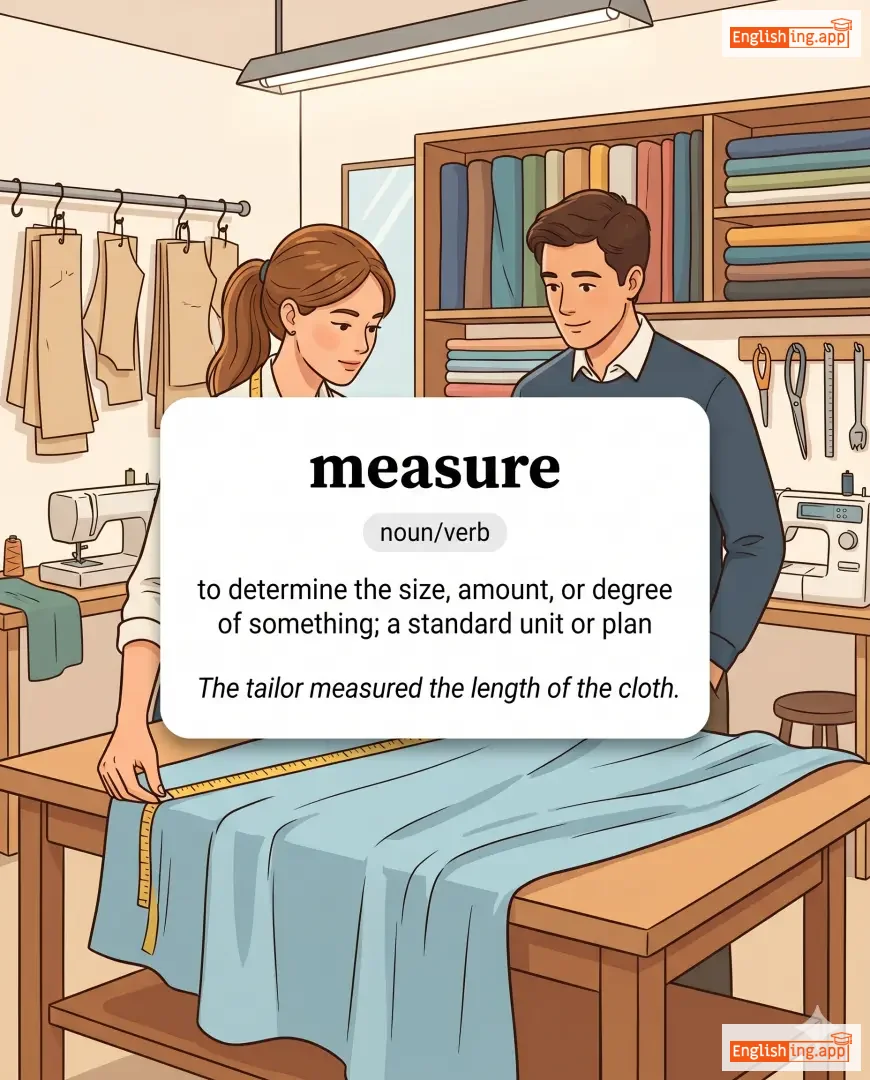
measure definition card — visual illustration of the meaning
noun/verb
/ˈmɛʒər/
medir / medida (medir / medida)

to determine the size, amount, or degree of something; a standard unit or plan

"The tailor measured the length of the cloth."

"El sastre midió la longitud de la tela." (El sastre midio la longitud de la tela.)
adjective
/ˈmɛʒərd/
medido (medido)

carefully considered and deliberate

"She spoke in a calm, measured tone."

"Ella habló en un tono calmado y medido." (Ella habló en un tono calmado y medido.)
noun
/ˈmeʒərmənt/
medición (medicion)

the size, length, or amount of something, as determined by measuring

"The tailor took my waist measurement before stitching the suit."

"El sastre tomó la medida de mi cintura antes de coser el traje." (El sastre tomo la medida de mi cintura antes de coser el traje.)
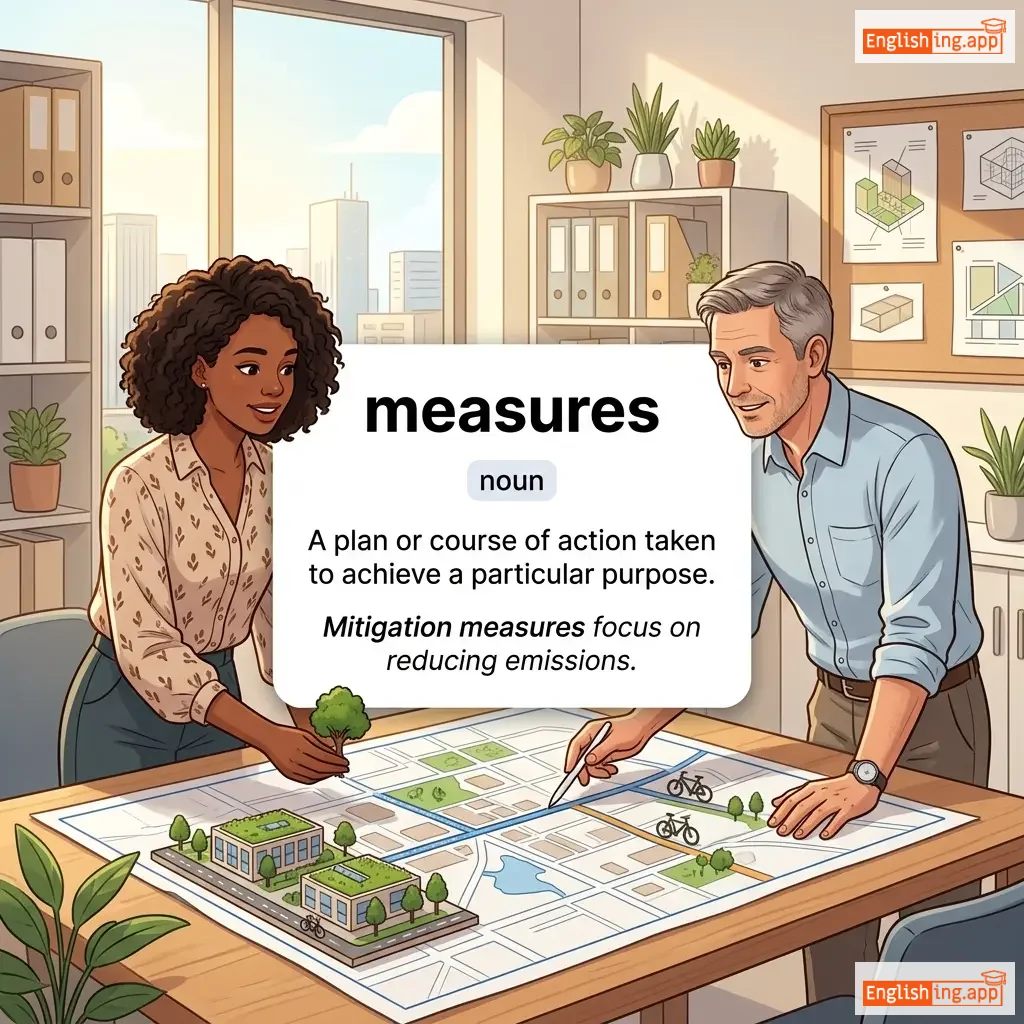
measures definition card — visual illustration of the meaning
noun
ˈmeʒ.ərz
medidas (medidas)

A plan or course of action taken to achieve a particular purpose.

"Mitigation measures focus on reducing emissions."

"Las medidas de mitigación se enfocan en reducir las emisiones." (Las medidas de mitigación se enfocan en reducir las emisiones.)
noun
/miːt/
carne (karne)

the flesh of animals used as food

"She bought fresh meat from the market."

"Ella compró carne fresca en el mercado." (Ella compro carne fresca en el mercado.)
noun
/məˈkænɪk/
mecánico (mecanico)

a person who repairs and maintains machines or vehicles

"The mechanic fixed the engine in less than an hour."

"El mecánico arregló el motor en menos de una hora." (El mecanico arreglo el motor en menos de una hora.)
adjective
/məˈkænɪkəl/
felicidad (felicidad)

relating to machines or the way they work

"She has a good understanding of mechanical systems."

"Ella no podía esconder su felicidad cuando recibió el premio." (Ella no podía esconder su felicidad cuando recibió el premio.)
noun
/məˈkænɪks/
mecánica (mecanica)

the branch of physics concerned with the motion of objects and the forces acting on them; also refers to the practical details of how something works

"He studied the mechanics of the machine before fixing it."

"Estudió la mecánica de la máquina antes de repararla." (Estudio la mecanica de la maquina antes de repararla.)
noun
/ˈmɛkəˌnɪzəm/
mecanismo (mecanismo)

A system of parts working together in a machine; a process or technique for achieving something.

"The mechanism of the clock stopped working after years of use."

"El mecanismo del reloj dejó de funcionar después de años de uso." (El mecanismo del reloj dejó de funcionar después de años de uso.)
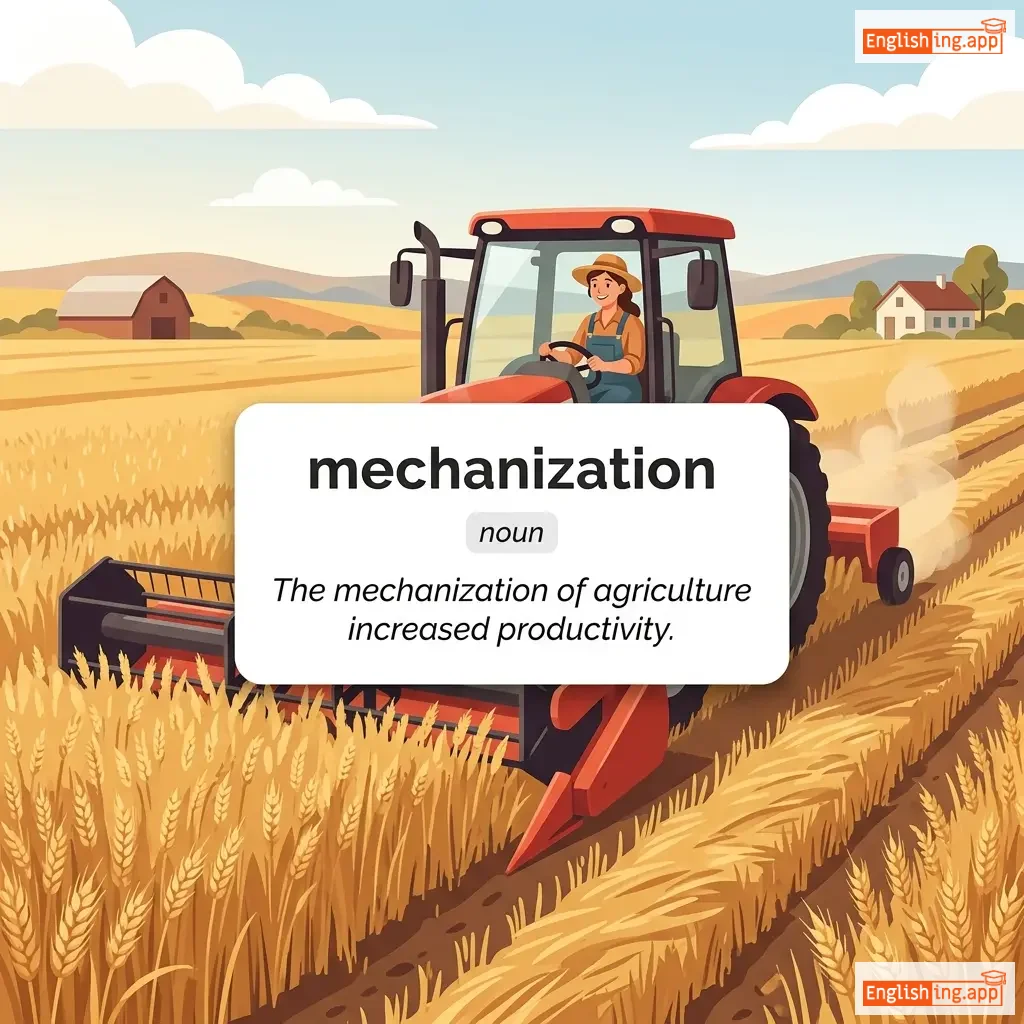
mechanization definition card — visual illustration of the meaning
noun
ˌmɛk.ə.nɪˈzeɪ.ʃən
mecanización (mecanizacion)

The use of machines in agriculture or industry to increase production efficiency.

"The mechanization of agriculture increased productivity."

"La mecanización de la agricultura aumentó la productividad." (La mecanizacion de la agricultura aumento la productividad.)
noun
/ˈmɛdəl/
medalla (medalla)

a piece of metal given as an award for achievement

"She won a gold medal in the 100-meter race."

"Ganó una medalla de oro en la carrera de 100 metros." (Gano una medalla de oro en la carrera de 100 metros.)
noun
/məˈdæliən/
medallón (medallon)

a large medal or decorative piece, often worn as jewelry or used in architecture

"She wore a gold medallion around her neck."

"Ella llevaba un medallón de oro alrededor de su cuello." (Ella llevaba un medallón de oro alrededor de su cuello.)
verb
/ˈmɛdəl/
interferir en algo que no te concierne (interferir en algo que no te concierne)

to interfere in something that is not one's concern

"He always tries to meddle in other people’s business."

"Él siempre intenta interferir en los asuntos de los demás." (Él siempre intenta interferir en los asuntos de los demás.)
adjective
/ˈmɛdəlsəm/
entrometido (entrometido)

fond of interfering in other people’s affairs

"She found her neighbor to be meddlesome and annoying."

"Encontró a su vecino entrometido y molesto." (Encontro a su vecino entrometido y molesto.)
noun
/ˈmiːdiə/
medios (medios)

the main means of mass communication such as newspapers, television, radio, and the internet

"The story quickly spread across the media."

"La historia se difundió rápidamente en los medios." (La historia se difundio rapidamente en los medios.)
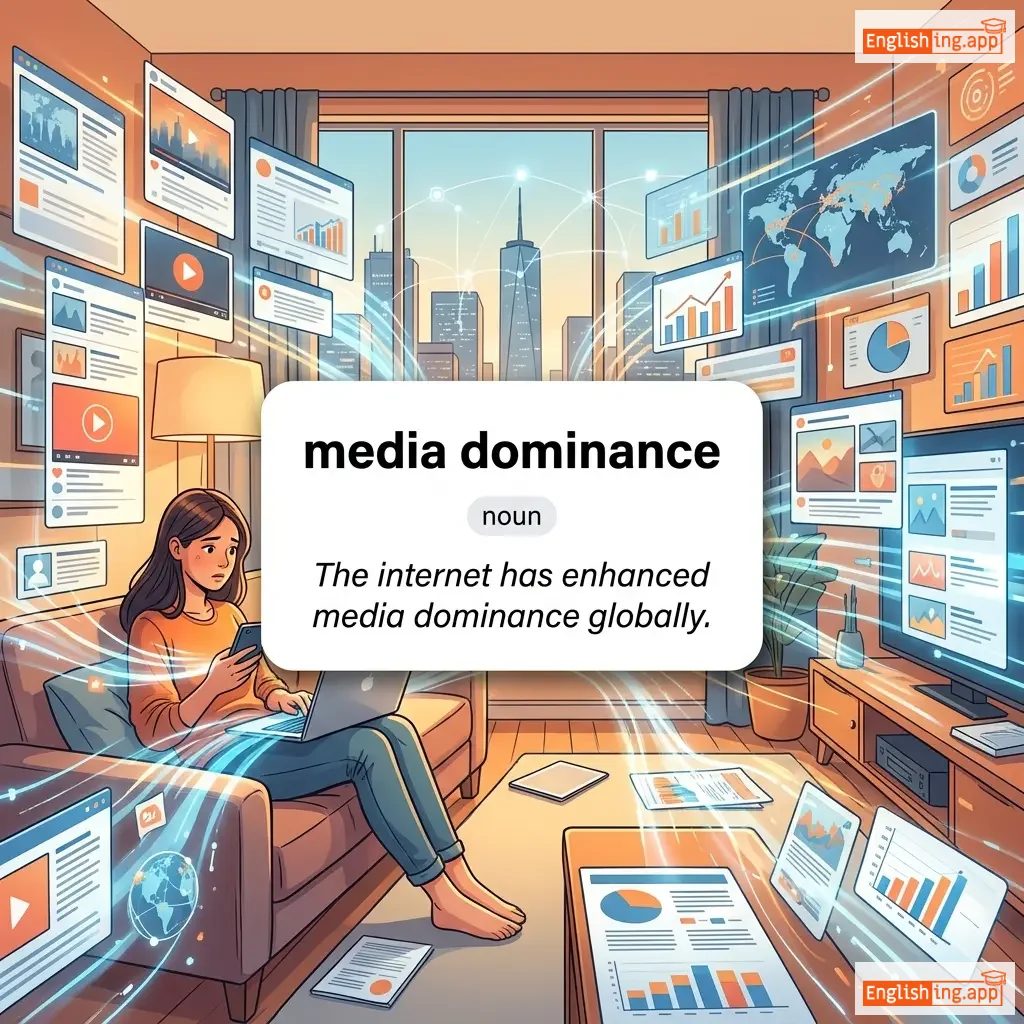
media dominance definition card — visual illustration of the meaning
noun
ˈmiːdiə ˈdɒmɪnəns
dominio de los medios (dominio de los medios)

The control and powerful influence that media has over communication and information distribution in society.

"The internet has enhanced media dominance globally."

"Internet ha aumentado el dominio de los medios a nivel mundial." (Internet ha aumentado el dominio de los medios a nivel mundial.)
adjective
/ˌmed.iˈiː.vəl/
medieval (mediéval)

relating to the Middle Ages; medieval

"The castle displayed mediaeval architecture and design."

"El castillo mostraba arquitectura y diseño medieval." (El castillo mostraba arquitectura y diseño medieval.)
adjective
/ˈmiː.di.əl/
medial (medial)

Situated in or pertaining to the middle; located toward the midline of the body or structure.

"The medial side of the knee is more prone to injury."

"La parte medial de la rodilla es más propensa a lesiones." (La parte medial de la rodilla es más propensa a lesiones.)
verb
/ˈmiː.di.eɪt/
mediar (mediar)

To act as an intermediary in bringing about agreement or reconciliation between parties.

"She was asked to mediate between the two companies."

"Le pidieron mediar entre las dos empresas." (Le pidieron mediar entre las dos empresas.)
mediation definition card — visual illustration of the meaning
noun
/ˌmiːdɪˈeɪʃən/
mediación (mediacion)

Intervention between parties to promote reconciliation, settlement, or compromise.

"The mediation helped resolve the conflict between the two teams."

"La mediación ayudó a resolver el conflicto entre los dos equipos." (La mediacion ayudo a resolver el conflicto entre los dos equipos.)
mediative definition card — visual illustration of the meaning
adjective
/ˈmiː.di.eɪ.tɪv/
relacionado con la mediación (relacionado con la mediación)

Related to mediation, helping to resolve conflicts through diplomatic means.

"His mediative skills helped resolve the conflict."

"Sus habilidades mediadoras ayudaron a resolver el conflicto." (Sus habilidades mediadoras ayudaron a resolver el conflicto.)
noun
/ˈmiːdieɪtər/
mediador (mediador)

A person who attempts to make people involved in a conflict agree

"The United Nations often acts as a mediator in international disputes."

"Las Naciones Unidas a menudo actúan como mediador en disputas internacionales." (Las Naciones Unidas a menudo actúan como mediador en disputas internacionales.)
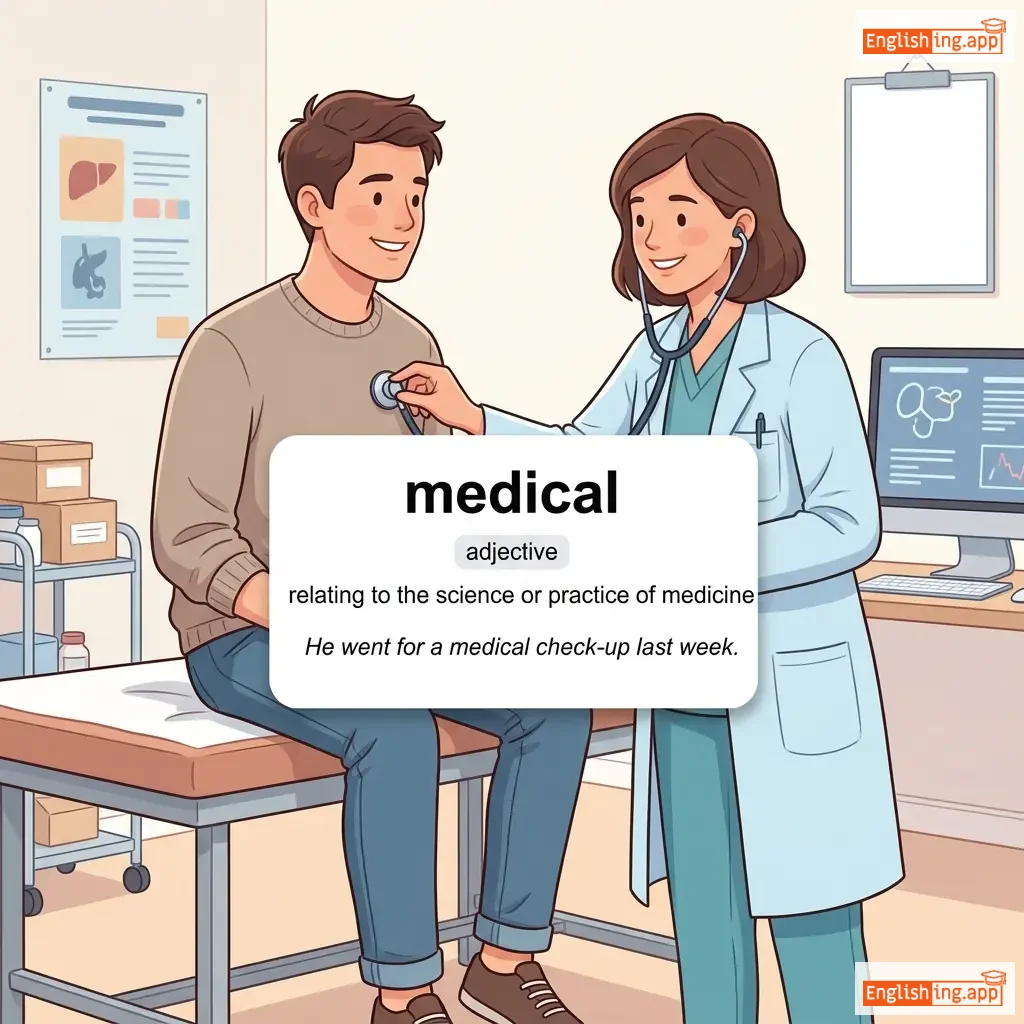
medical definition card — visual illustration of the meaning
adjective
/ˈmedɪkəl/
médico (mediko)

relating to the science or practice of medicine

"He went for a medical check-up last week."

"Fue a un chequeo médico la semana pasada." (Fue a un chequeo médico la semana pasada.)
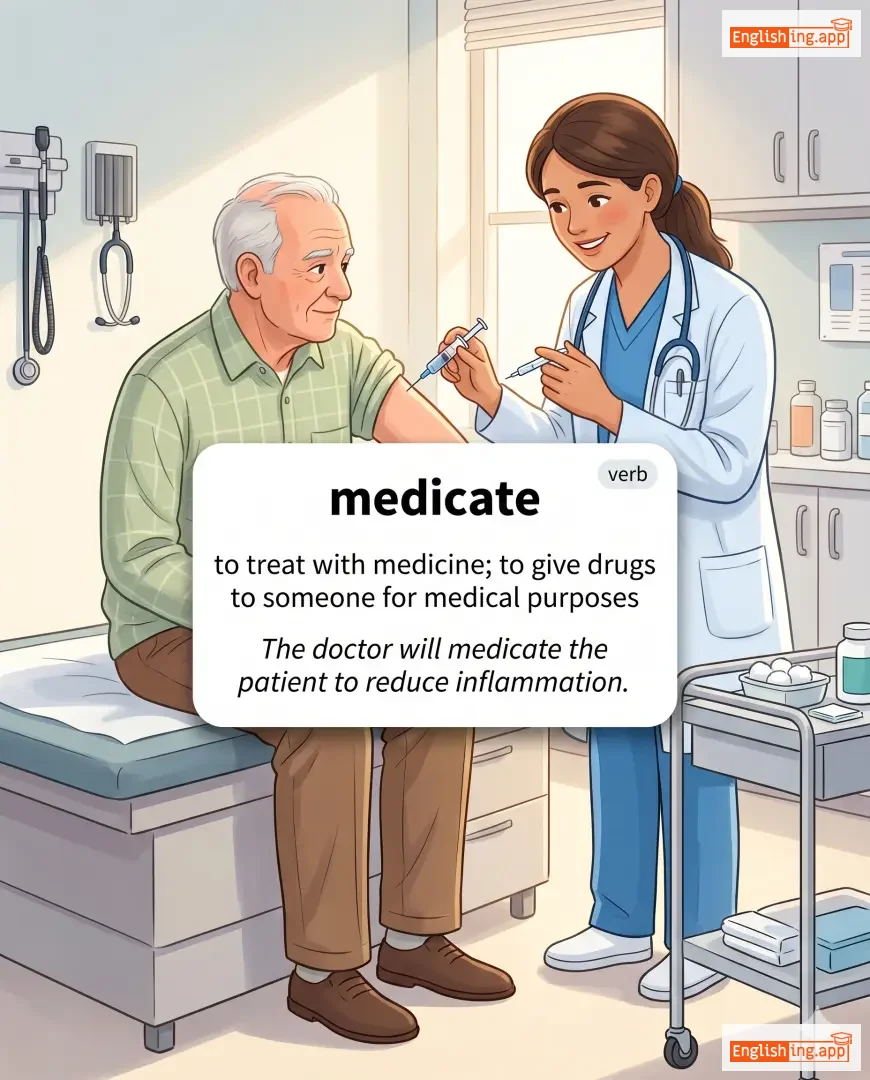
medicate definition card — visual illustration of the meaning
verb
/ˈmedɪkeɪt/
medicar (medicar)

to treat with medicine; to give drugs to someone for medical purposes

"The doctor will medicate the patient to reduce inflammation."

"El doctor medicará al paciente para reducir la inflamación." (El doctor medicará al paciente para reducir la inflamación.)
noun
/ˌmedɪˈkeɪʃən/
medicación (medicacion)

a drug or other form of medicine used to treat or prevent disease

"The doctor prescribed medication for his headache."

"El doctor recetó medicación para su dolor de cabeza." (El doctor receto medicacion para su dolor de cabeza.)
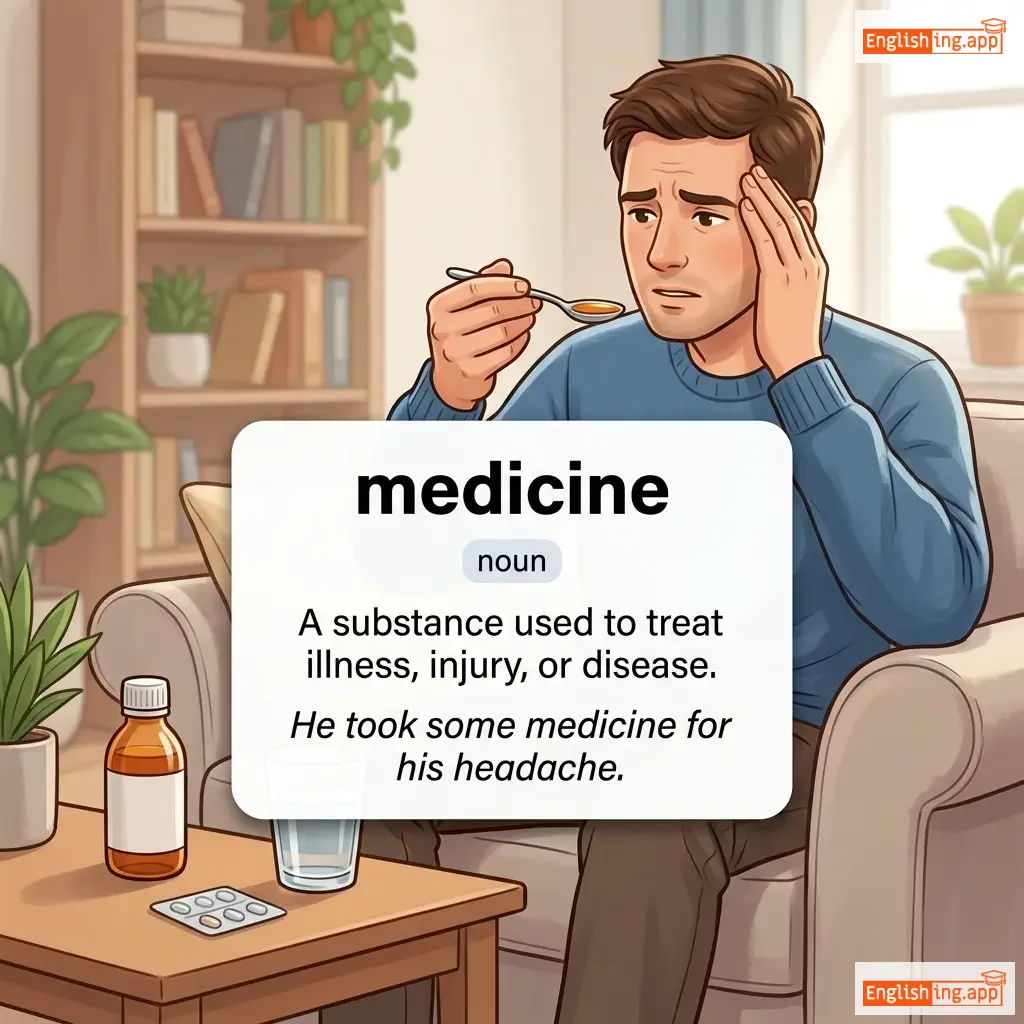
medicine definition card — visual illustration of the meaning
noun
/ˈmed.ɪ.sən/
medicina (medicina)

A substance used to treat illness, injury, or disease.

"He took some medicine for his headache."

"Tomó algo de medicina para su dolor de cabeza." (Tomó algo de medicina para su dolor de cabeza.)
adjective
/ˌmiː.diˈiː.vəl/
medieval (medieval)

Relating to the Middle Ages, the period in European history from about the 5th to the 15th century.

"The castle is a famous medieval monument."

"El castillo es un famoso monumento medieval." (El castillo es un famoso monumento medieval.)
adjective
/ˌmiː.diˈoʊ.kər/
mediocre (mediocre)

Of only average quality; not very good.

"The movie was entertaining but overall mediocre."

"La película era entretenida, pero en general mediocre." (La pelicula era entretenida, pero en general mediocre.)