Vocabularios

Descubra, aprenda y domine el vocabulario en inglés

noun, verb
/fɔːrd/
vado (vado)

A shallow place in a river where one can cross; to cross a river at such a place.

"The travelers decided to ford the river at dawn."

"Los viajeros decidieron cruzar el río por un vado al amanecer." (Los viajeros decidieron cruzar el río por un vado al amanecer.)
noun
/ˈfɔːrˌbɛər/
antepasado (antepasado)

An ancestor, especially one who lived a long time ago.

"He often speaks of his forebears with great respect."

"Él habla a menudo de sus antepasados con mucho respeto." (Él habla a menudo de sus antepasados con mucho respeto.)
noun
/ˈfɔːrˌbɛərz/
antepasados (antepasados)

Ancestors or people in previous generations from whom one is descended.

"We must honor the traditions of our forebears."

"Debemos honrar las tradiciones de nuestros antepasados." (Debemos honrar las tradiciones de nuestros antepasados.)
verb
/fɔːrˈboʊd/
presagiar (presagiar)

To predict or have a strong inner feeling of a future misfortune or evil.

"Dark clouds forebode a coming storm."

"Las nubes oscuras presagian una tormenta venidera." (Las nubes oscuras presagian una tormenta venidera.)
noun/adjective
/fɔːrˈboʊdɪŋ/
presagio ominoso (presagio ominoso)

A feeling that something bad will happen; ominous.

"She felt a deep sense of foreboding as she entered the abandoned house."

"Ella sintió una profunda sensación de presagio ominoso al entrar en la casa abandonada." (Ella sintió una profunda sensación de presagio ominoso al entrar en la casa abandonada.)
noun/verb
/ˈfɔːrkæst/
pronóstico (pronostico)

To predict future events, especially weather or economic trends.

"The weather office forecast heavy rain for tomorrow."

"La oficina meteorológica pronosticó lluvia fuerte para mañana." (La oficina meteorológica pronosticó lluvia fuerte para mañana.)
noun
/ˈfoʊksl/
castillo de proa (castillo de proa)

The forward part of a ship below the deck, traditionally used as living quarters for the crew.

"The sailors gathered in the forecastle after their shift."

"Los marineros se reunieron en el castillo de proa después de su turno." (Los marineros se reunieron en el castillo de proa después de su turno.)
verb
/fɔːrˈkloʊz/
embargar (embargar)

to take possession of a property due to the owner's failure to keep up mortgage payments

"The bank decided to foreclose on the property after months of missed payments."

"El banco decidió embargar la propiedad después de meses de pagos perdidos." (El banco decidió embargar la propiedad después de meses de pagos perdidos.)
noun
/fɔːrˈkloʊʒər/
embargo hipotecario (embargo hipotecario)

The legal process by which a lender takes control of a property from a borrower who has failed to make payments.

"The family lost their home due to foreclosure after missing several mortgage payments."

"La familia perdió su casa debido al embargo hipotecario después de no pagar varias cuotas de la hipoteca." (La familia perdió su casa debido al embargo hipotecario después de no pagar varias cuotas de la hipoteca.)
noun
/ˈfɔːrkɔːrt/
patio (patio)

an open area in front of a large building, especially a petrol station or hotel

"The car was parked in the hotel forecourt."

"El coche estaba estacionado en el patio del hotel." (El coche estaba estacionado en el patio del hotel.)
noun
/ˈfɔːrˌfɑːðər/
antepasado (antepasado)

an ancestor, especially one who was part of an earlier generation of a family or nation

"Our forefathers fought for independence."

"Nuestros antepasados lucharon por la independencia." (Nuestros antepasados lucharon por la independencia.)
verb
/fɔːrˈɡoʊ/
renunciar (renunciar)

to decide not to do or have something pleasant or valuable

"She decided to forego dessert to maintain her diet."

"Ella decidió renunciar al postre para mantener su dieta." (Ella decidió renunciar al postre para mantener su dieta.)
noun
/ˈfɔːrɡraʊnd/
primer plano (primer plano)

the part of a scene that is nearest to and in front of the viewer

"The flowers in the foreground brightened the picture."

"Las flores en el primer plano iluminaron la imagen." (Las flores en el primer plano iluminaron la imagen.)
noun
/ˈfɔːrˌhɛd/ or /ˈfɔːrɪd/
frente (frente)

The part of the face above the eyebrows.

"She wiped the sweat from her forehead."

"Ella se secó el sudor de la frente." (Ella se secó el sudor de la frente.)
adjective
/ˈfɔːrən/ or /ˈfɑːrən/
extranjero (extranjero)

Belonging to or coming from another country.

"She loves studying foreign languages."

"A ella le encanta estudiar lenguas extranjeras." (A ella le encanta estudiar lenguas extranjeras.)
noun
/ˈfɔːrənər/ or /ˈfɑːrənər/
extranjero (extranjero)

A person from another country.

"The city welcomes every foreigner with kindness."

"La ciudad recibe a cada extranjero con amabilidad." (La ciudad recibe a cada extranjero con amabilidad.)
verb
/fɔːrˈdʒʌdʒ/
juzgar por adelantado (juzgar por adelantado)

To judge beforehand without adequate information.

"It is unfair to forejudge someone without knowing the facts."

"Es injusto juzgar a alguien sin conocer los hechos." (Es injusto juzgar a alguien sin conocer los hechos.)
noun
/ˈfɔːrˌnɑːlɪdʒ/
preconocimiento (preconocimiento)

Awareness of something before it happens or exists.

"The prophet claimed to have foreknowledge of the event."

"El profeta afirmó tener preconocimiento del evento." (El profeta afirmó tener preconocimiento del evento.)
noun
/ˈfɔːrmən/
persona encargada de un grupo de trabajadores, especialmente en una fábrica o en una obra de construcción (persona encargada de un grupo de trabajadores, especialmente en una fábrica o en una obra de construcción)

a person in charge of a group of workers, especially in a factory or construction site

"The foreman supervised the workers on the construction site."

"El capataz supervisó a los trabajadores en el sitio de construcción." (El capataz supervisó a los trabajadores en el sitio de construcción.)
adjective
/ˈfɔːrmoʊst/
principal (principal)

most important; leading; first in rank or position

"She is one of the foremost experts in the field."

"Ella es una de las principales expertas en el campo." (Ella es una de las principales expertas en el campo.)
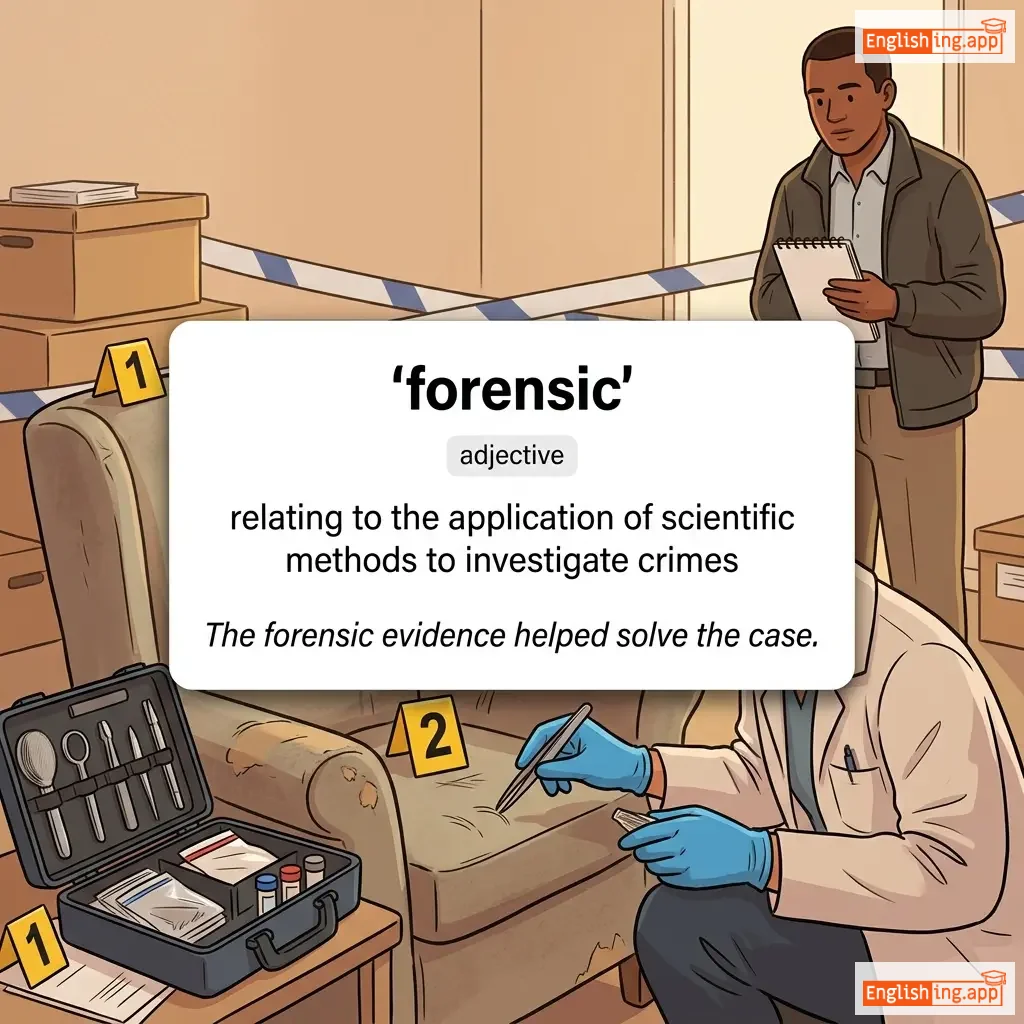
forensic definition card — visual illustration of the meaning
adjective
/fəˈrɛnsɪk/
forense (forense)

relating to the application of scientific methods to investigate crimes

"The forensic evidence helped solve the case."

"La evidencia forense ayudó a resolver el caso." (La evidencia forense ayudo a resolver el caso.)
verb
/ˌfɔːrɔːrˈdeɪn/
predestinar (predestinar)

to determine or decree something in advance; to predestine

"Some believe that our lives are foreordained by fate."

"Algunos creen que nuestras vidas están predestinadas por el destino." (Algunos creen que nuestras vidas están predestinadas por el destino.)
noun
/ˌfɔːrɔːrdɪˈneɪʃən/
preordenación (preordenacion)

the act of determining something in advance; predestination

"The doctrine of foreordination suggests that events are fixed by divine will."

"La doctrina de la preordenación sugiere que los eventos están fijados por la voluntad divina." (La doctrina de la preordenacion sugiere que los eventos estan fijados por la voluntad divina.)
noun
/ˈfɔːrˌpiːk/
camarote de proa (camarote de proa)

The compartment in the forward part of a ship, often used for storage.

"The sailors stored extra ropes in the forepeak."

"Los marineros guardaron cuerdas extra en el camarote de proa." (Los marineros guardaron cuerdas extra en el camarote de proa.)
🏃‍♂️

forerun (forerán)

verb
/ˌfɔːrˈrʌn/
predecer (predecer)

To go before; to precede in time, place, or action.

"Dark clouds often forerun a storm."

"Las nubes oscuras a menudo preceden una tormenta." (Las nubes oscuras a menudo preceden una tormenta.)
noun
/ˈfɔːrˌrʌnər/
precursor (precursor)

A person or thing that comes before another; a predecessor or harbinger.

"The Wright brothers were the forerunners of modern aviation."

"Los hermanos Wright fueron los precursores de la aviación moderna." (Los hermanos Wright fueron los precursores de la aviación moderna.)
noun
/ˈfɔːrˌseɪl/
vela de proa (vela de proa)

The principal sail set on the foremast of a sailing vessel.

"The crew adjusted the foresail to catch the wind."

"La tripulación ajustó la vela de proa para capturar el viento." (La tripulacion ajusto la vela de proa para capturar el viento.)
verb
/fɔːrˈsiː/
prever (prever)

To be aware of beforehand; to predict or expect.

"She could foresee the challenges ahead."

"Ella podía prever los desafíos por delante." (Ella podía prever los desafíos por delante.)
adjective
/fɔːrˈsiːəbl/
previsible (previsible)

Able to be predicted or expected in advance

"The company is unlikely to make changes in the foreseeable future."

"Es poco probable que la empresa realice cambios en el futuro previsible." (Es poco probable que la empresa realice cambios en el futuro previsible.)
verb
/fɔːrˈʃædoʊ/
presagiar (presagiar)

To indicate or suggest something that will happen in the future

"Dark clouds foreshadowed an approaching storm."

"Las nubes oscuras presagiaron una tormenta inminente." (Las nubes oscuras presagiaron una tormenta inminente.)
noun
/ˈfɔːrʃɔːr/
orilla (orilla)

The part of the shore between the high and low tide marks

"Children were playing on the foreshore, collecting shells."

"Los niños estaban jugando en la orilla, recogiendo conchas." (Los ninos estaban jugando en la orilla, recogiendo conchas.)
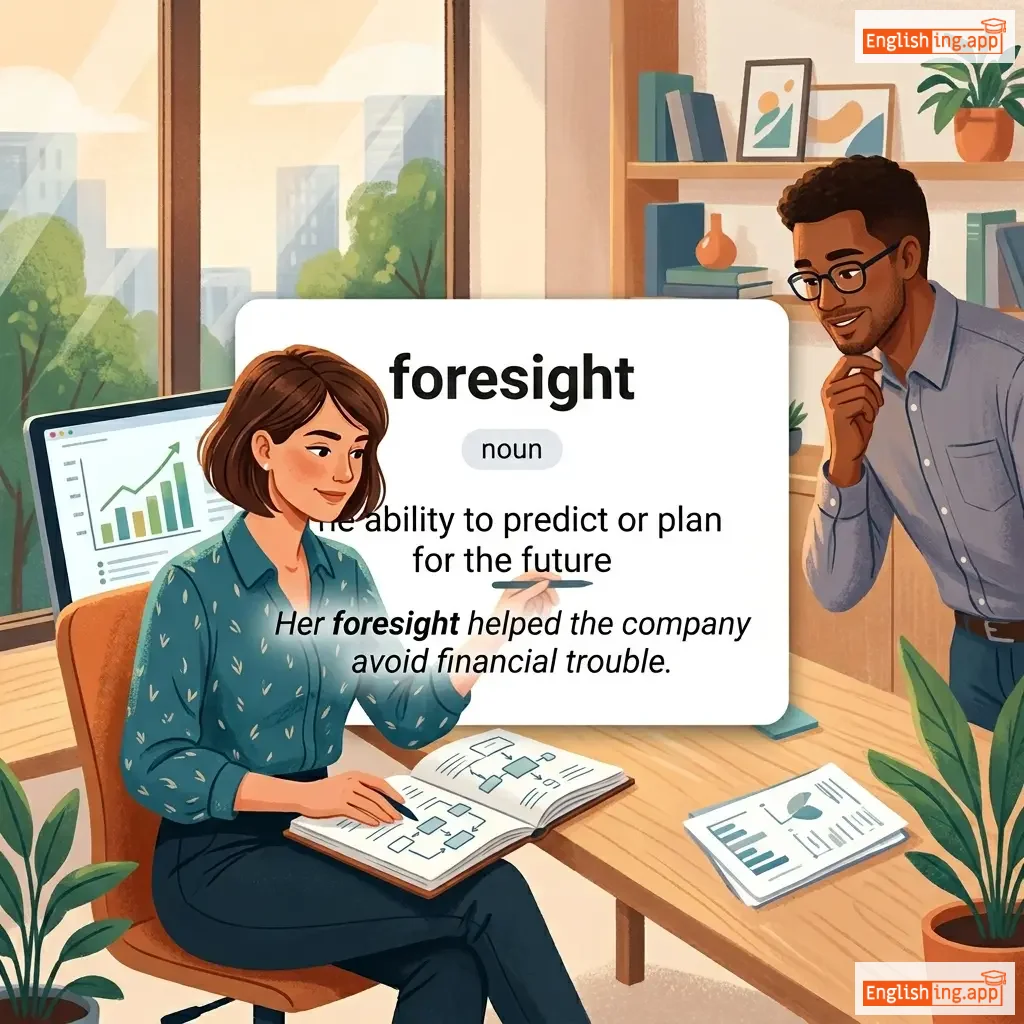
foresight definition card — visual illustration of the meaning
noun
/ˈfɔːrsaɪt/
previsión (prevision)

The ability to predict or plan for the future

"Her foresight helped the company avoid financial trouble."

"Su previsión ayudó a la empresa a evitar problemas financieros." (Su previsión ayudó a la empresa a evitar problemas financieros.)
noun
/ˈfɔːrɪst/
bosque (boske)

A large area covered chiefly with trees and undergrowth.

"They went hiking in the forest."

"Fueron a hacer senderismo en el bosque." (Fueron a hacer senderismo en el bosque.)
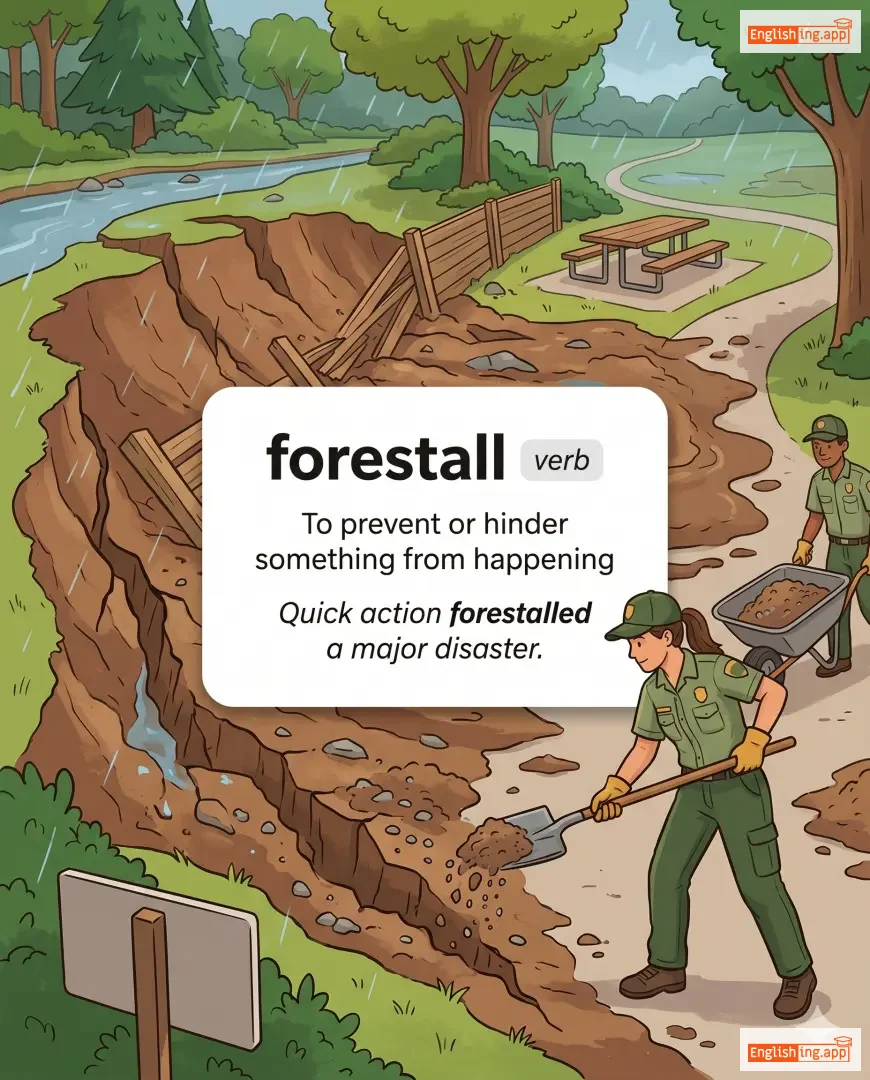
forestall definition card — visual illustration of the meaning
verb
/fɔːrˈstɔːl/
evitar (evitar)

To prevent or hinder something from happening

"Quick action forestalled a major disaster."

"La acción rápida evitó un gran desastre." (La acción rápida evitó un gran desastre.)
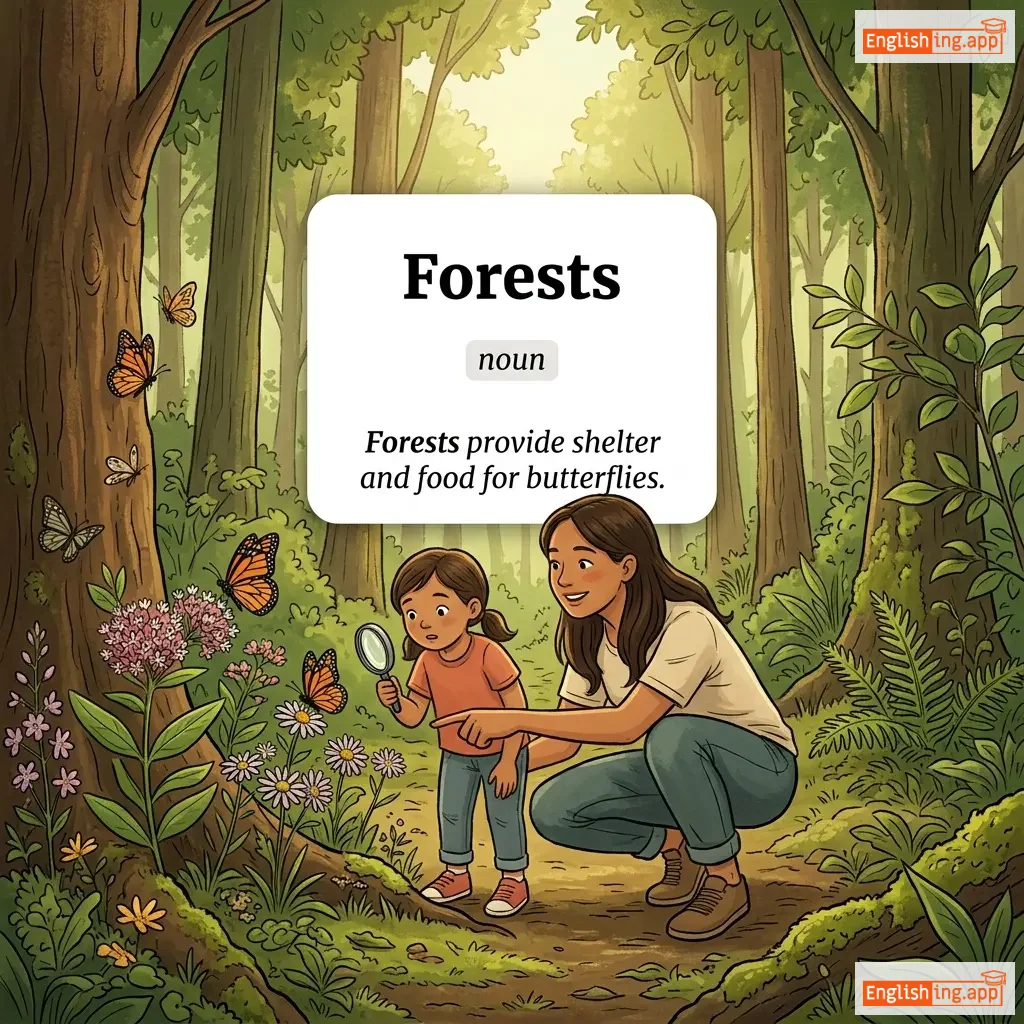
Forests definition card — visual illustration of the meaning
noun
ˈfɔːrɪsts
bosques (boskes)

Large areas covered with trees and undergrowth, providing natural habitats for wildlife.

"Forests provide shelter and food for butterflies."

"Los bosques proporcionan refugio y alimento para las mariposas." (Los bosques proporcionan refugio y alimento para las mariposas.)
verb
/fɔːrˈtɛl/
predecir (predecir)

to predict or announce something before it happens

"The old man claimed he could foretell the future."

"El anciano afirmó que podía predecir el futuro." (El anciano afirmó que podía predecir el futuro.)
noun
/ˈfɔːrˌθɔːt/
previsión (prevision)

careful consideration of what will be necessary or may happen in the future

"With a little forethought, we could have avoided the problem."

"Con un poco de previsión, podríamos haber evitado el problema." (Con un poco de prevision, podriamos haber evitado el problema.)
adverb
/fɔːrˈɛvər/
para siempre (para siempre)

For all future time; for always.

"She promised to love him forever."

"Ella prometió amarlo para siempre." (Ella prometió amarlo para siempre.)
noun
/ˈfɔːrwɜːrd/
prólogo (prologo)

a short introduction at the beginning of a book, typically written by someone other than the author

"The foreword of the book was written by a famous historian."

"El prólogo del libro fue escrito por un historiador famoso." (El prologo del libro fue escrito por un historiador famoso.)
verb
/ˈfɔːrfɪt/
perder, renunciar como penalización (perder, renunciar como penalizacion)

to lose or give up something, usually as a penalty for wrongdoing

"He had to forfeit the match after breaking the rules."

"Tuvo que perder el partido después de romper las reglas." (Tuvo que perder el partido despues de romper las reglas.)
verb
/fɔːrˈfɛnd/
proteger, defender, evitar (proteger, defender, evitar)

to protect or defend against something undesirable; to prevent

"May good fortune forfend any danger from our journey."

"Que la buena fortuna proteja contra cualquier peligro en nuestro viaje." (Que la buena fortuna proteja contra cualquier peligro en nuestro viaje.)
verb
/fɔːrdʒ/
forjar, falsificar (forjar, falsificar)

to create or shape something, often with effort or skill; also to counterfeit or fake something

"The blacksmith forged a strong sword from the iron."

"El herrero forjó una espada fuerte con el hierro." (El herrero forjó una espada fuerte con el hierro.)
noun
/ˈfɔːrdʒər/
falsificador (falsificador)

a person who makes fake documents, artworks, or signatures

"The police arrested a forger who had been selling counterfeit paintings."

"La policía arrestó a un falsificador que había estado vendiendo pinturas falsas." (La policía arrestó a un falsificador que había estado vendiendo pinturas falsas.)
noun
/ˈfɔːrdʒəri/
falsificación (falsificacion)

the crime of making fake documents, money, or artworks

"The bank detected a forgery in the signature on the cheque."

"El banco detectó una falsificación en la firma del cheque." (El banco detectó una falsificación en la firma del cheque.)
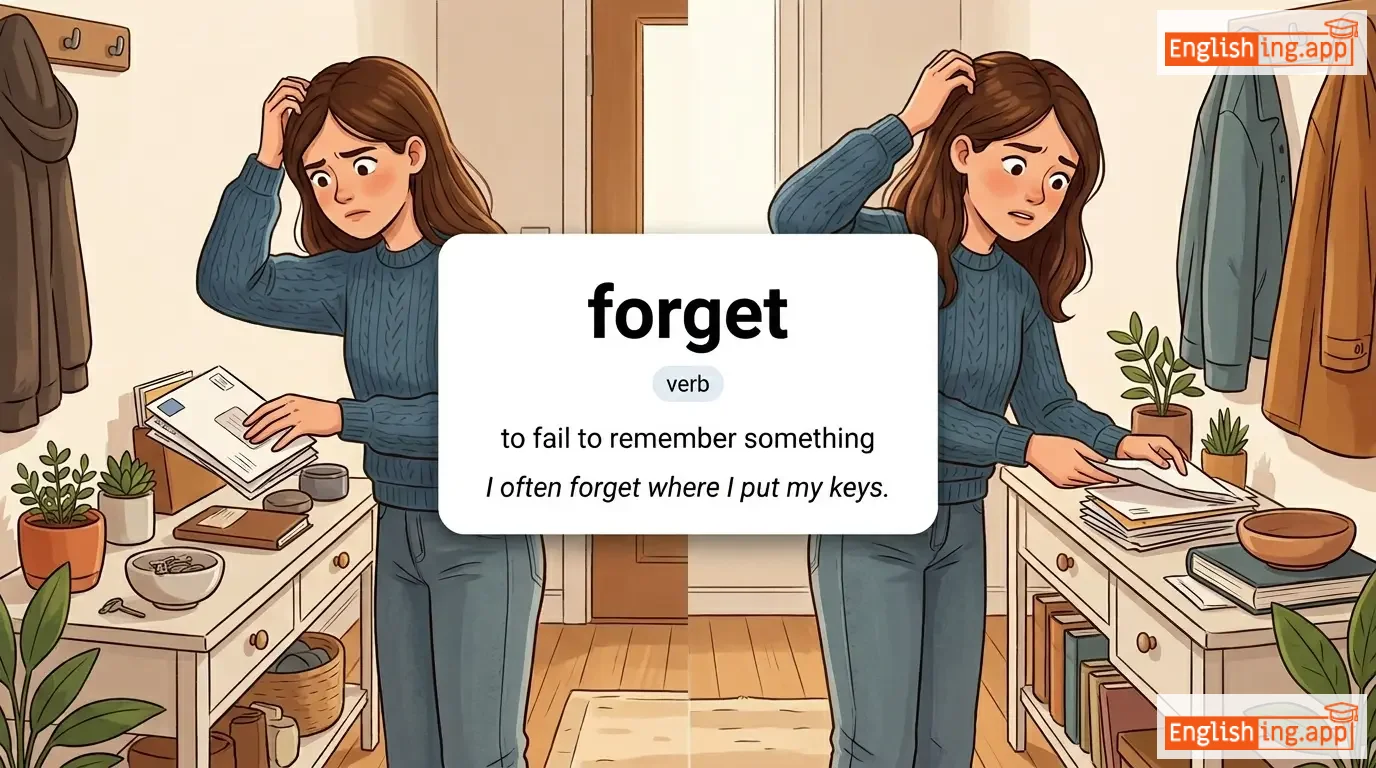
forget definition card — visual illustration of the meaning
verb
/fəˈɡɛt/
olvidar (olvidar)

to fail to remember something

"I often forget where I put my keys."

"A menudo olvido dónde puse mis llaves." (A menudo olvido dónde puse mis llaves.)
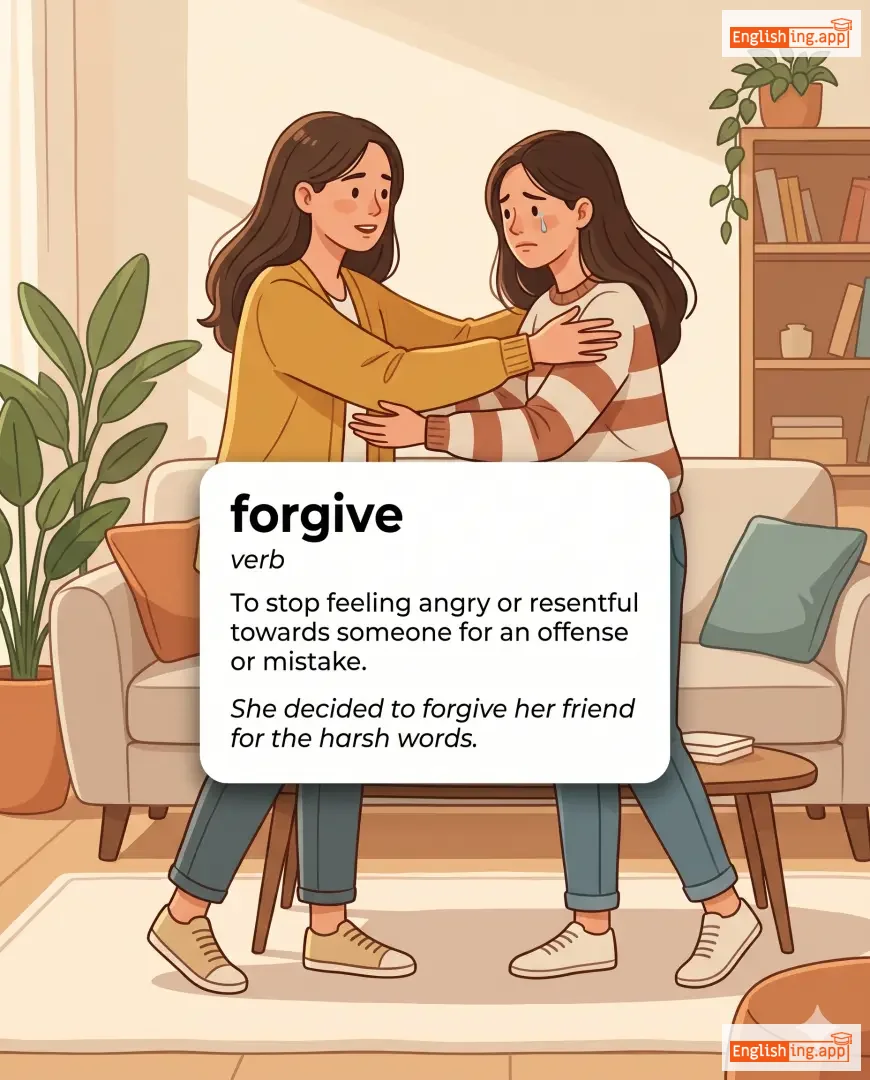
forgive definition card — visual illustration of the meaning
verb
/fərˈɡɪv/
perdonar (perdonar)

To stop feeling angry or resentful towards someone for an offense or mistake.

"She decided to forgive her friend for the harsh words."

"Ella decidió perdonar a su amigo por las palabras duras." (Ella decidió perdonar a su amigo por las palabras duras.)
adjective
/fəˈɡɪv.ɪŋ/
perdonador (perdonador)

ready and willing to forgive; merciful; lenient

"She has a forgiving nature and rarely holds grudges."

"Ella tiene una naturaleza perdonadora y rara vez guarda rencor." (Ella tiene una naturaleza perdonadora y rara vez guarda rencor.)
verb
/fɔːrˈɡoʊ/
renunciar (renunciar)

to decide not to do or have something

"She decided to forgo dessert to maintain her diet."

"Ella decidió renunciar al postre para mantener su dieta." (Ella decidió renunciar al postre para mantener su dieta.)
noun
/fɔːk/
tenedor (tenedor)

a tool with two or more prongs used for eating or serving food

"He ate his salad with a fork."

"Él comió su ensalada con un tenedor." (Él comió su ensalada con un tenedor.)
adjective
/fərˈlɔːrn/
desamparado, triste (desamparado, triste)

extremely sad, lonely, or abandoned

"The abandoned puppy looked so forlorn in the rain."

"El cachorro abandonado se veía tan triste bajo la lluvia." (El cachorro abandonado se veía tan triste bajo la lluvia.)