From Failure to Success
ナディアは job を失った。彼女の boss は sales loss のせいで彼女を fired した。"あなたは task に failed しました," と boss は言った。"私たちは losses をもたらす employees を雇い続けることはできません。"\n\n彼女は打ちのめされた。彼女の career は終わったように思え、income はなくなり、salary も消えた。"私は failed した," 彼女は思った。"私は failure だ。"\n\nしかしナディアは capable だった。彼女は諦めないと決めた。"新しい jobs に apply しなきゃ," 彼女は思った。"私は skilled だし、また earn できる。"\n\n彼女はあらゆるところに applying した。どんな job の募集にも、どんなチャンスにも挑戦した。しかし拒否の連続だった。"十分に skilled ではない," ある人は言った。"capable ではない," と他の人は言った。\n\n数か月が過ぎ、彼女の貯金は尽きかけた。"もしかしたら私は本当に failure なのかも," 彼女は暗い気持ちで思った。だがそのとき、彼女は思い出した。\n\n"Failure は終わりじゃない," 彼女は自分に言い聞かせた。"私は一度 failed したけど、successful にもなれる。正しい job、正しい boss、そして正しいチャンスが必要なだけ。"\n\nそしてある日、小さなスタートアップが誰かを hire したいと言った。Salary は低かったが、彼らは skilled sales の人を求めていた。"私たちは小さい会社で、losses を経験しました," オーナーは言った。"でも tasks をこなせる capable employees が必要です。"\n\nナディアは applied した。"私は以前 failed したことがあります," 彼女は正直に言った。"でもその failure から学びました。私は capable で、skilled です。もう fail しません。"\n\n彼らは彼女を hired した。最初の月は厳しかった。Tasks は難しく、sales の目標は不可能に見えた。しかしナディアは他のどの employee よりも懸命に働いた。\n\nやがて結果が出始めた。彼女の sales は改善し、会社の loss は減少した。彼女の boss は気づいた。"あなたは素晴らしい tasks をこなしている," と言った。"あなたはとても capable だ。"\n\n6か月後、ナディアはトップの sales パフォーマーになった。会社は loss から利益に転じた。彼女の boss は電話をかけた。"あなたに bonus をあげます," と発表した。"そして salary も上げます。あなたは最も successful employee です。"\n\nナディアは信じられなかった。fired され、failing し、loss と failure を経験した彼女が、今では success に到達し、良い income を得て、successful になったのだ。\n\n"私が failed したとき," 彼女は後のセミナーで語った。"boss fired されたとき、job と income を失ったとき、私は career が終わったと思った。自分は capable ではない、永遠の failure だと思った。でも一度 failing したからといって failure になるわけではないと学んだ。大切なのは再び apply すること。私は無数の jobs に applied した。少ない salary を earn しても構わないと思い、より難しい tasks を引き受け、skilled で capable だと証明した。誰かが私を hire してくれたとき、私は全力を尽くした。すべての task、すべての sales コール、すべての挑戦に向き合った。確かに losses もあり、failed することもあった。しかし最終的に私は successful になった。今では良い income を earn し、bonus を得て、素晴らしい boss と優秀な employees と働いている。だから、もしあなたが fired され、fail し、loss に直面しても、それは終わりではない。あなたは capable で skilled だ。applying を続け、努力を続け、failure に自分を定義させないで。正しい job は必ずある。正しい boss があなたを hire してくれる。チャンスはやってくる。そのときは自分が capable で successful であることを示せ。losses を成果に、failures を学びに、tasks を達成に変えろ。あなたは earn でき、成功でき、価値ある employee になれる。Career は短距離走ではなくマラソンだ。1度の failure で終わりではない。前へ進み続ければ、success を見つけられる。"\n\n数年後、ナディアは自分の会社を設立した。彼女は hire capable な人々を雇うことを忘れなかった。完璧でなくてもいいと知っていた。かつて failed した employees が最も successful になることを理解していた。彼女は良い salary、公平な bonus、難しいが達成可能な tasks を与えた。会社には浮き沈みがあり、losses もあったが、skilled で capable employees がいたおかげで常に successful だった。そして新しい人を hired するたびに、employee failed した task を見るたびに、sales loss に直面するたびに、彼女は自分の旅を思い出した。fired され、failure となり、無限に applying し、やっと hired され、再び earning し、successful になった日々。その記憶が彼女を謙虚にし、優しくし、常に二度目のチャンスを信じさせた。
|
絵文字
|
単語 | Images | 翻訳 | 過去 | 過去分詞 | 三人称単数 | 動名詞 | 意味 | 例文 | 例文の翻訳 | 表現例 | 表現例の意味 | 表現例の翻訳 | 同義語 | 対義語 | コロケーション | ニーモニック |
|---|---|---|---|---|---|---|---|---|---|---|---|---|---|---|---|---|---|
|
📄
••••••
|
/əˈplaɪ/
verb
(apurai)
••••••
|
- •••••• |
申請する / 適用する
shinsei suru / tekiyou suru
••••••
|
applied
apuraido
••••••
|
applied
apuraido
••••••
|
applies
apuraizu
••••••
|
applying
apuraiingu
••••••
|
to make a formal request for something; to put into practice
••••••
|
He decided to apply for the scholarship.
彼は奨学金の申請を決めた。
••••••
|
彼は奨学金の申請を決めた。
Kare wa shougakukin no shinsei wo kimeta.
••••••
|
apply oneself
自分に適用する
••••••
|
to make a serious effort to do something
••••••
|
一生懸命努力する
isshoukenmei doryoku suru
••••••
|
request, use, implement, employ, submit
••••••
|
ignore, neglect
••••••
|
apply for a job, apply pressure, apply rules, apply cream
••••••
|
Applyは申請するという意味 — 申請することでチャンスが広がります。
••••••
|
|
💰
••••••
|
/ˈbəʊnəs/
noun
(ボーナス)
••••••
|
- •••••• |
ボーナス
bōnasu
••••••
|
- •••••• | - •••••• | - •••••• | - •••••• |
an extra payment or reward given in addition to what is usual or expected.
••••••
|
Employees received a year-end bonus for their hard work.
従業員はその努力に対して年末のボーナスを受け取った。
••••••
|
従業員はその努力に対して年末のボーナスを受け取った。
Jūgyōin wa sono doryoku ni taishite nenmatsu no bōnasu o uketotta.
••••••
|
added bonus
追加のボーナス
••••••
|
an extra benefit or advantage.
••••••
|
追加の利益
tsuika no rieki
••••••
|
reward, incentive, gift, premium, perk
••••••
|
penalty, deduction
••••••
|
year-end bonus, performance bonus, cash bonus, annual bonus
••••••
|
Bonus – これは良い仕事に対する追加の報酬!
••••••
|
|
👨💼
••••••
|
/bɒs/
noun
(ボス)
••••••
|
- •••••• |
ボス
bosu
••••••
|
- •••••• | - •••••• | - •••••• | - •••••• |
a person who is in charge of a worker, group, or organization
••••••
|
Her boss gave her a new project to complete. |
彼女のボスは彼女に新しいプロジェクトを任せた。
Kanojo no bosu wa kanojo ni atarashī purojekuto o makaseta.
••••••
|
like a boss |
to do something with confidence and authority
••••••
|
ボスのように
bosu no yō ni
••••••
|
manager, supervisor, chief, head, leader
••••••
|
employee, worker, subordinate
••••••
|
boss at work, strict boss, talk to the boss, boss of the company
••••••
|
ボスは常に決断力と自信を持ってチームを引っ張る人物です。
••••••
|
|
💪
••••••
|
/ˈkeɪpəbl/
adjective
(ケイパブル)
••••••
|
- •••••• |
能力がある
nōryoku ga aru
••••••
|
- •••••• | - •••••• | - •••••• | - •••••• |
having the ability, fitness, or quality necessary to do something
••••••
|
She is capable of handling difficult situations calmly. |
彼女は困難な状況を冷静に処理できる能力があります。
Kanojo wa konnan na jōkyō o reisei ni shori dekiru nōryoku ga arimasu.
••••••
|
capable of |
having the ability or capacity to do something
••••••
|
能力がある
nōryoku ga aru
••••••
|
able, competent, skilled, qualified, proficient
••••••
|
incapable, unfit, incompetent
••••••
|
capable leader, capable hands, fully capable, highly capable
••••••
|
能力があるとは、英語でいう capable に相当する。
••••••
|
|
💼
••••••
|
/kəˈrɪər/
noun, verb
(カリヤー)
••••••
|
- •••••• |
キャリア / 職業
kyaria / shokugyo
••••••
|
careered
カリヤード
••••••
|
careered
カリヤード
••••••
|
careers
カリヤーズ
••••••
|
careering
カリヤリング
••••••
|
As a noun: a person’s course of professional life; as a verb: to move swiftly and in an uncontrolled way.
••••••
|
She built a successful career in medicine.
彼女は医学の分野で成功したキャリアを築いた。
••••••
|
彼女は医学の分野で成功したキャリアを築いた。
Kanojo wa igaku no bunya de seikou shita kyaria wo kizuita.
••••••
|
career path
キャリアパス
••••••
|
The course of one's professional life or progress.
••••••
|
キャリアパス
kyaria pasu
••••••
|
profession, occupation, vocation, livelihood, calling
••••••
|
idleness, unemployment, joblessness
••••••
|
career development, career path, career opportunity, career growth
••••••
|
Careerは仕事を通して生きること → Carry your life through work = キャリア
••••••
|
|
💵
••••••
|
/ɜːrn/
verb
(アーン)
••••••
|

|
稼ぐ
kasegu
••••••
|
earned
アーンド
••••••
|
earned
アーンド
••••••
|
earns
アーンズ
••••••
|
earning
アーニング
••••••
|
To receive money or reward in return for work or service.
••••••
|
She worked hard to earn enough money for college.
彼女は大学のために十分なお金を稼ぐために一生懸命働いた。
••••••
|
彼女は大学のために十分なお金を稼ぐために一生懸命働いた。
Kanojo wa daigaku no tame ni jūbun na okane o kasegu tame ni isshōkenmei hataraita.
••••••
|
earn a living
生計を立てる
••••••
|
To make enough money to support oneself financially.
••••••
|
生計を立てる
seikei o tateru
••••••
|
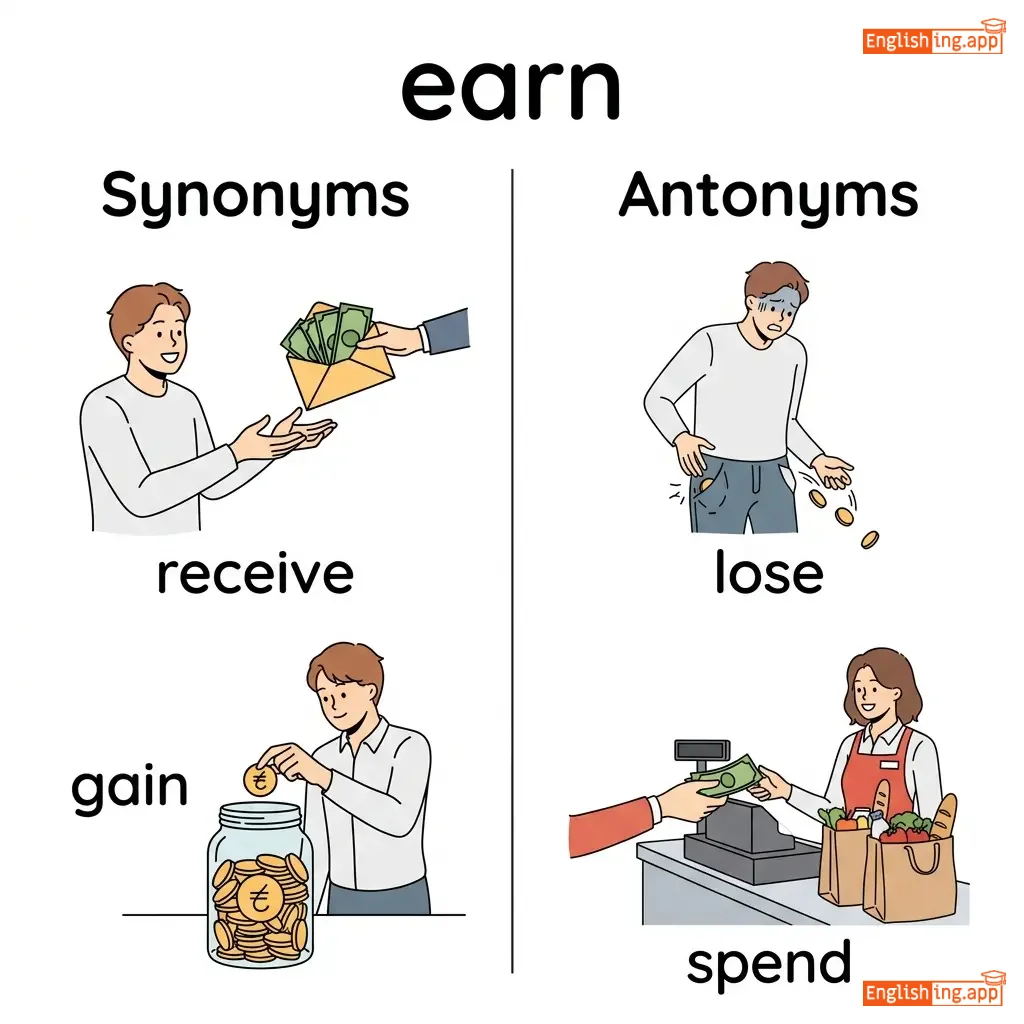
receive, gain, obtain, secure, acquire
••••••
|
lose, spend, forfeit
••••••
|
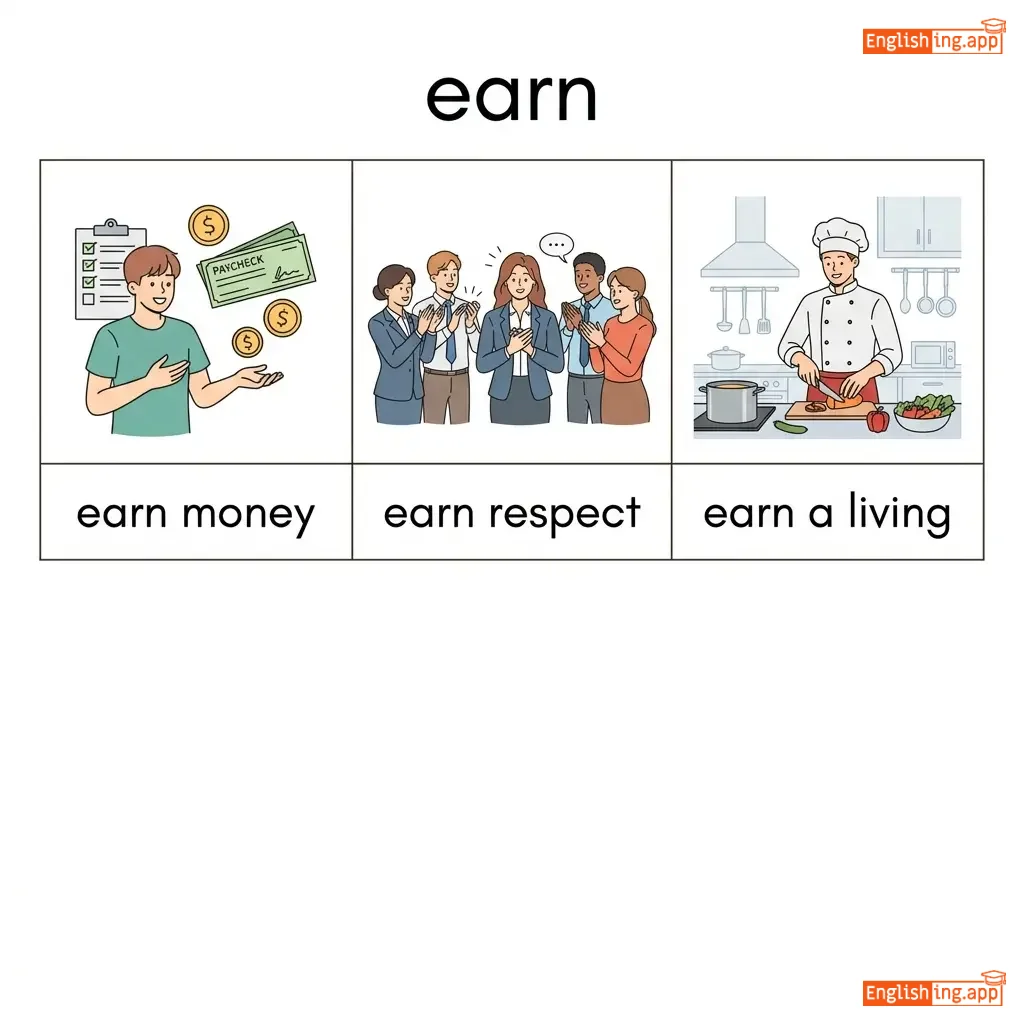
earn money, earn respect, earn a living, earn interest
••••••
|
Earnは'稼ぐ'という意味 - 一生懸命働いて稼ぐ。
••••••
|
|
👩💼
••••••
|
/ɛmˈplɔɪ.iː/
noun
(エンプラロイ)
••••••
|
- •••••• |
従業員
jūgyōin
••••••
|
- •••••• | - •••••• | - •••••• | - •••••• |
A person who works for an organization or company in return for payment.
••••••
|
The company values each employee's contribution to its success. |
会社は各従業員の成功への貢献を重視しています。
Kaisha wa kaku jūgyōin no seikō e no kōken o jūshi shiteimasu.
••••••
|
model employee |
An ideal worker who performs duties responsibly and well.
••••••
|
模範従業員
mohan jūgyōin
••••••
|
worker, staff member, team member, personnel, laborer
••••••
|
employer, boss
••••••
|
loyal employee, new employee, company employee, hire employee
••••••
|
従業員は会社で働く人、'従業'と社員が同じ意味です。
••••••
|
|
❌
••••••
|
/feɪl/
verb
(フェイル)
••••••
|
- •••••• |
失敗する
shippai suru
••••••
|
failed
フェイルド
••••••
|
failed
フェイルド
••••••
|
fails
フェイルズ
••••••
|
failing
フェイリング
••••••
|
To be unsuccessful in achieving a goal or expectation.
••••••
|
He failed the driving test.
彼は運転試験に失敗した。
••••••
|
彼は運転試験に失敗した。
Kare wa unten shiken ni shippai shita.
••••••
|
fail miserably
ひどく失敗する
••••••
|
to fail completely and badly
••••••
|
完全に失敗する
kanzen ni shippai suru
••••••
|
lose, flop, collapse, fall short, break down
••••••
|
succeed, achieve, pass
••••••
|
fail exam, fail test, fail to act, fail miserably
••••••
|
試験に失敗する時に‘あなたは失敗した’と言われるような感じ。
••••••
|
|
❌
••••••
|
/feɪld/
adjective
(feirudo)
••••••
|
- •••••• |
失敗した
shippai shita
••••••
|
- •••••• | - •••••• | - •••••• | - •••••• |
not successful in achieving a desired result
••••••
|
The project failed to meet the expectations.
プロジェクトは期待に応えることができませんでした。
••••••
|
プロジェクトは期待に応えることができませんでした。
Purojekuto wa kitai ni kotaeru koto ga dekimasen deshita.
••••••
|
- •••••• | - •••••• | - •••••• |
unsuccessful, defeated, unaccomplished, flawed
••••••
|
successful, victorious, accomplished
••••••
|
failed attempt, failed project, failed test
••••••
|
失敗したプロジェクトは成功しない
••••••
|
|
❌
••••••
|
/ˈfeɪljər/
noun
(フェイリヤー)
••••••
|
- •••••• |
失敗
shippai
••••••
|
- •••••• | - •••••• | - •••••• | - •••••• |
The lack of success in doing or achieving something.
••••••
|
The project was considered a failure due to poor planning. |
プロジェクトは不十分な計画のため失敗と見なされました。
Purojekuto wa fujūbun na keikaku no tame shippai to minasaremashita.
••••••
|
trial and error |
A method of solving problems by trying different solutions until one works.
••••••
|
試行錯誤
shikou sakugo
••••••
|
defeat, breakdown, collapse, disaster, fiasco
••••••
|
success, achievement, victory
••••••
|
complete failure, business failure, engine failure, failure rate
••••••
|
失敗は、すべてを試した結果だと思う – '失敗'を思い出して!
••••••
|
|
🔥
••••••
|
/ˈfaɪər/
noun/verb
(ファイア)
••••••
|
- •••••• |
火 / 解雇する
hi / kaiko suru
••••••
|
fired
ファイアード
••••••
|
fired
ファイアード
••••••
|
fires
ファイアーズ
••••••
|
firing
ファイアリング
••••••
|
the phenomenon of combustion, or to dismiss someone from a job
••••••
|
The company decided to fire two employees last week.
その会社は先週二人の社員を解雇することを決定しました。
••••••
|
その会社は先週二人の社員を解雇することを決定しました。
Sono kaisha wa senshū futari no shain o kaiko suru koto o kettei shimashita.
••••••
|
play with fire
火遊びをする
••••••
|
to take dangerous risks
••••••
|
火遊びをする
hi asobi o suru
••••••
|
blaze, flame, ignite, dismiss, sack
••••••
|
extinguish, hire
••••••
|
start a fire, put out fire, fire alarm, fire someone
••••••
|
火は危険で、解雇されることも危険です。
••••••
|
|
👔
••••••
|
/ˈhaɪə(r)/
verb
(ハイヤー)
••••••
|

|
雇う
katsu
••••••
|
hired
ハイヤード
••••••
|
hired
ハイヤード
••••••
|
hires
ハイヤーズ
••••••
|
hiring
ハイヤリング
••••••
|
to employ someone for a job or task
••••••
|
The company decided to hire more staff this year.
その会社は今年、より多くのスタッフを雇うことを決定しました。
••••••
|
その会社は今年、より多くのスタッフを雇うことを決定しました。
Sono kaisha wa kotoshi, yori ōku no sutaffu o yatō koto o kettei shimashita.
••••••
|
hire and fire
雇って解雇する
••••••
|
to employ and dismiss workers frequently
••••••
|
雇って解雇する
yatte kaiko suru
••••••
|
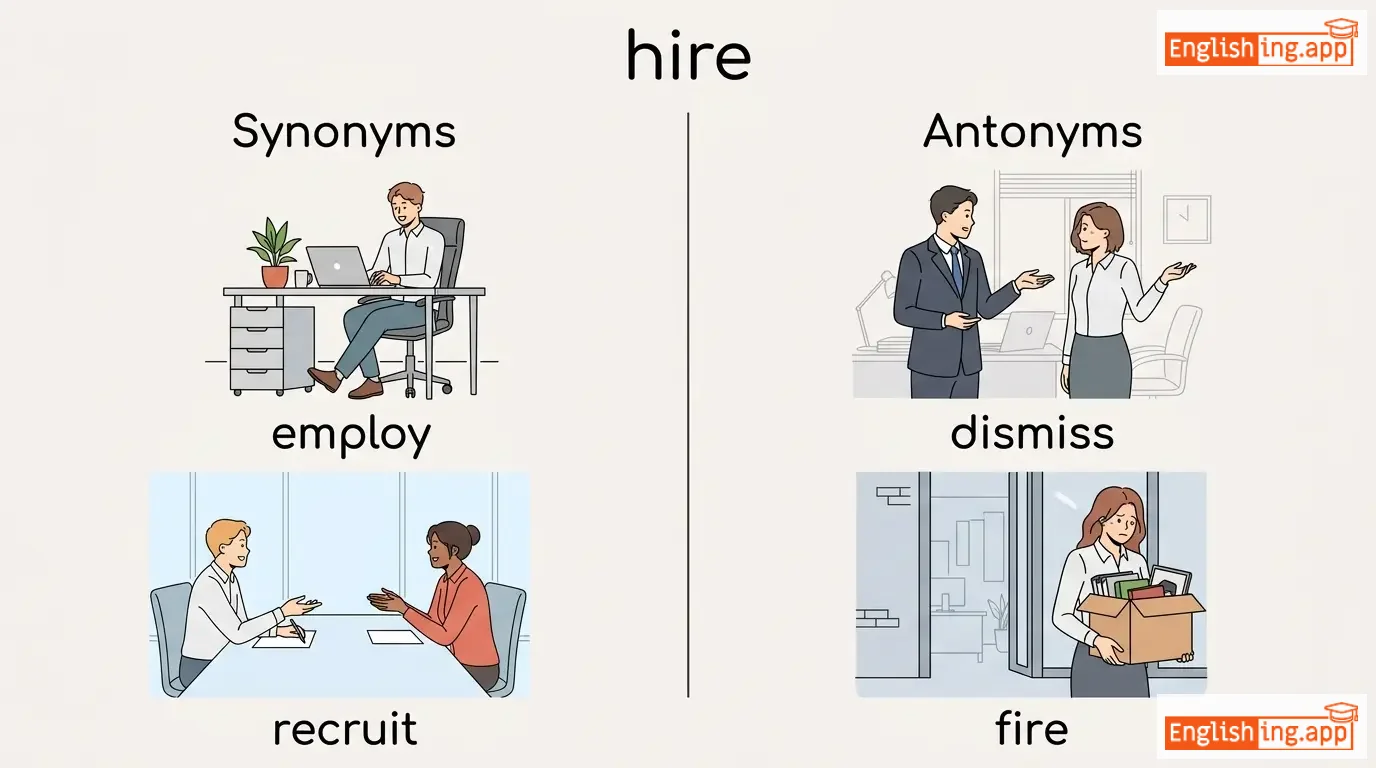
employ, recruit, appoint, engage, contract
••••••
|
dismiss, fire, discharge
••••••
|
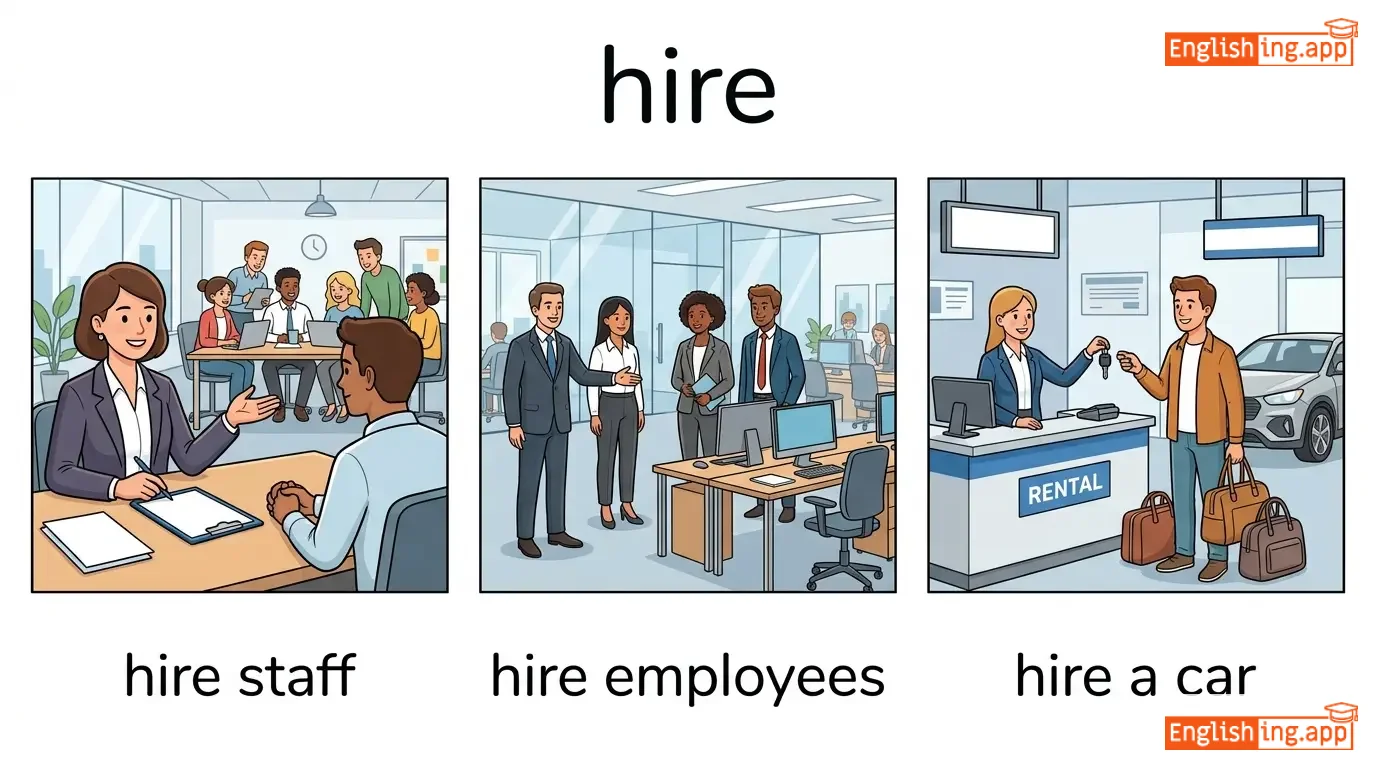
hire staff, hire employees, hire a car, hire services
••••••
|
雇うは新しい人材をチームに迎えるようなものです。
••••••
|
|
💰
••••••
|
/ˈɪnkʌm/
noun
(inkamu)
••••••
|
- •••••• |
収入
shūnyū
••••••
|
- •••••• | - •••••• | - •••••• | - •••••• |
money received for work or through investments
••••••
|
His monthly income is enough to support his family. |
彼の月収は家族を支えるのに十分です。
Kare no gekkyū wa kazoku o sasaeru no ni jūbun desu.
••••••
|
fixed income |
a regular and steady amount of income
••••••
|
固定収入
kotei shūnyū
••••••
|
earnings, revenue, salary, wages, profit
••••••
|
expense, loss
••••••
|
income tax, income level, income growth
••••••
|
In+Come — 収入が安定して入ってくる
••••••
|
|
💼
••••••
|
/dʒɑb/
verb
(ジョブ)
••••••
|

|
仕事
shigoto
••••••
|
jobbed
ジョブド
••••••
|
jobbed
ジョブド
••••••
|
jobs
ジョブズ
••••••
|
jobbing
ジョビング
••••••
|
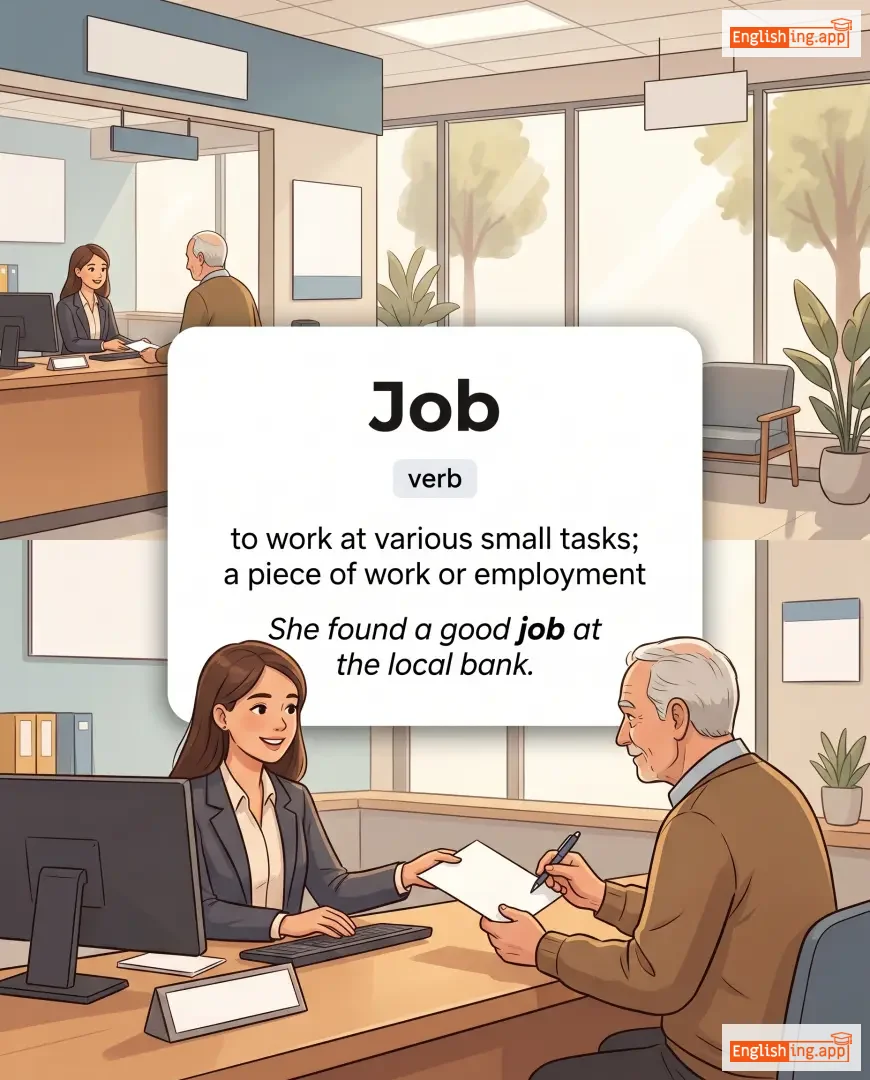
to work at various small tasks; a piece of work or employment
••••••
|
She found a good job at the local bank.
彼女は地元の銀行で良い仕事を見つけました。
••••••
|
彼女は地元の銀行で良い仕事を見つけました。
Kanojo wa jimoto no ginkō de yoi shigoto o mitsukemashita.
••••••
|
- •••••• | - •••••• | - •••••• |
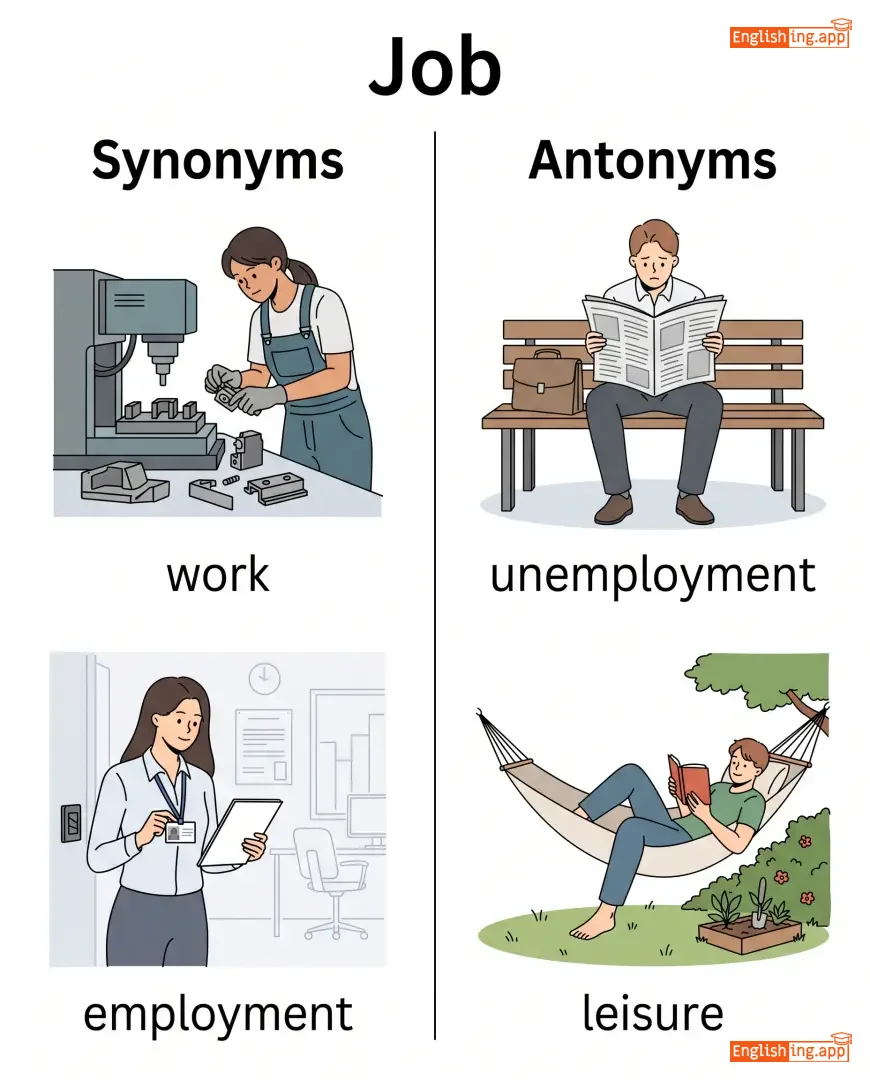
work, employment, occupation, position, task
••••••
|
unemployment, leisure, rest, vacation
••••••
|
find job, good job, new job, dream job
••••••
|
仕事(shigoto)は毎日続く大切なものです。
••••••
|
|
📉
••••••
|
/lɒs/
noun
(ロス)
••••••
|
- •••••• |
損失
sonshitsu
••••••
|
- •••••• | - •••••• | - •••••• | - •••••• |
The state of no longer having something or someone; the harm resulting from losing.
••••••
|
The company suffered a huge financial loss last year. |
その会社は昨年、大きな財務的損失を被った。
Sono kaisha wa sakunen, ōkina zaimuteki sonshitsu o kōmotta.
••••••
|
at a loss |
to be puzzled or uncertain about what to do
••••••
|
損失
sonshitsu
••••••
|
damage, defeat, failure, decline, misfortune
••••••
|
gain, profit, success
••••••
|
suffer a loss, financial loss, at a loss, loss of life
••••••
|
損失は損失を意味し、📉 お金を失う時のように。
••••••
|
|
💰
••••••
|
/ˈsæl.ər.i/
noun
(サラリー)
••••••
|
- •••••• |
給料
kyūryō
••••••
|
- •••••• | - •••••• | - •••••• | - •••••• |
a fixed regular payment, typically paid on a monthly basis
••••••
|
She receives a good salary for her work as a teacher. |
彼女は教師としての仕事に対して良い給料を受け取っています。
Kanojo wa kyōshi to shite no shigoto ni taishite yoi kyūryō o uketotte imasu
••••••
|
- •••••• | - •••••• | - •••••• |
wage, pay, income, earnings
••••••
|
debt, expense, cost
••••••
|
annual salary, monthly salary, basic salary, gross salary
••••••
|
Japanese '給料' (kyūryō) helps you remember salary as a regular monthly payment.
••••••
|
|
📊
••••••
|
/seɪlz/
noun
••••••
|
- •••••• | - •••••• | - •••••• | - •••••• | - •••••• | - •••••• |
activities related to selling products or services
••••••
|
The company saw a significant increase in sales during the holiday season. |
- •••••• | - •••••• | - •••••• | - •••••• |
transactions, trade, business, commerce
••••••
|
purchase, buying
••••••
|
increase sales, sales target, boost sales, sales figures
••••••
|
No •••••• |
|
🎯
••••••
|
/skɪld/
adjective
(スキルド)
••••••
|
- •••••• |
熟練
jukuren
••••••
|
- •••••• | - •••••• | - •••••• | - •••••• |
having the ability, experience, or training to do something well
••••••
|
She is a highly skilled surgeon with years of experience.
彼女は長年の経験を持つ高い技術を持つ外科医です。
••••••
|
彼女は長年の経験を持つ高い技術を持つ外科医です。
Kanojo wa naganen no keiken o motsu takai gijutsu o motsu gekai desu.
••••••
|
skilled labor
熟練労働
••••••
|
work that requires specialized training or expertise
••••••
|
熟練労働
jukuren roudou
••••••
|
talented, expert, proficient, capable, competent
••••••
|
unskilled, inexperienced, amateur
••••••
|
skilled worker, skilled labor, highly skilled, skilled professional
••••••
|
Skilledは熟練を意味します - 熟練している人はそのスキルを持っている人です。
••••••
|
|
💼
••••••
|
/səkˈsɛsfəl/
adjective
(səkˈsɛsfəl)
••••••
|
- •••••• |
成功した
seikou shita
••••••
|
- •••••• | - •••••• | - •••••• | - •••••• |
having achieved success; having attained wealth, position, or honor
••••••
|
He is a successful businessman. |
彼は成功したビジネスマンです。
Kare wa seikou shita bijinesuman desu.
••••••
|
successful career |
a career in which one achieves prosperity and recognition
••••••
|
成功したキャリア
seikou shita kyaria
••••••
|
prosperous, accomplished, thriving, victorious, effective
••••••
|
unsuccessful, failing, defeated
••••••
|
successful career, successful attempt, successful person, successful strategy
••••••
|
成功したは成功のこと — テストに合格したら成功する
••••••
|
|
📝
••••••
|
/tɑːsk/
noun
(タスク)
••••••
|
- •••••• |
タスク
tasuku
••••••
|
- •••••• | - •••••• | - •••••• | - •••••• |
a piece of work or duty to be done
••••••
|
He completed the task before the deadline.
彼は締め切り前にタスクを完了しました。
••••••
|
彼は締め切り前にタスクを完了しました。
Kare wa shimekiri mae ni tasuku o kanryou shimashita.
••••••
|
- •••••• | - •••••• | - •••••• |
job, duty, assignment, chore
••••••
|
neglect, inactivity
••••••
|
complete a task, task manager, important task
••••••
|
TASK - 毎日やらなければならない小さな 'タスク' を想像してみてください。
••••••
|

