|
絵文字
|
単語 | Images | 翻訳 | 過去 | 過去分詞 | 三人称単数 | 動名詞 | 意味 | 例文 | 例文の翻訳 | 表現例 | 表現例の意味 | 表現例の翻訳 | 同義語 | 対義語 | コロケーション | ニーモニック |
|---|---|---|---|---|---|---|---|---|---|---|---|---|---|---|---|---|---|
|
😠
••••••
|
/ˈruːdli/
adverb
(ルードリー)
••••••
|
- •••••• |
失礼に
shitsurei ni
••••••
|
- •••••• | - •••••• | - •••••• | - •••••• |
in an impolite or discourteous manner
••••••
|
He rudely interrupted the speaker during the presentation.
ヒー・ルードリー・インタラプティッド・ザ・スピーカー・デュアリング・ザ・プレゼンテーション。
••••••
|
彼はプレゼン中に話者を失礼に遮った。
Kare wa purezen chuu ni washa o shitsurei ni saegitta.
••••••
|
- •••••• | - •••••• | - •••••• |
impolitely, discourteously, harshly, abruptly
••••••
|
politely, courteously, kindly, respectfully
••••••
|
rudely interrupted, rudely awakened, rudely dismissed
••••••
|
Rude = 失礼 (shitsurei); Rudely = 失礼に (shitsurei ni) — just add ‘ni’!
••••••
|
|
💔
••••••
|
/ˈruːɪn/
verb
(ルイン)
••••••
|
- •••••• |
破壊する
hakai suru
••••••
|
ruined
ルインド
••••••
|
ruined
ルインド
••••••
|
ruins
ルインス
••••••
|
ruining
ルイニング
••••••
|
to destroy or severely damage something so that it no longer works or is of no use.
••••••
|
Heavy rain ruined the wedding decorations.
大雨が結婚式の装飾を台無しにした。
••••••
|
大雨が結婚式の装飾を台無しにした。
Ōame ga kekkonshiki no sōshoku o dainashi ni shita.
••••••
|
go to ruin
破滅に向かう
••••••
|
to deteriorate or be destroyed over time
••••••
|
破滅に向かう
hametsu ni mukau
••••••
|
destroy, wreck, spoil, devastate, damage
••••••
|
build, repair, restore
••••••
|
ruin plans, ruin life, ruin relationship, ruin reputation
••••••
|
破壊の行く先は、何も残らない破滅です。
••••••
|
|
📏
••••••
|
/ruːl/
noun
(rūru)
••••••
|
- •••••• |
規則
kisei
••••••
|
- •••••• | - •••••• | - •••••• | - •••••• |
an accepted principle or instruction that states what is allowed or what must be done.
••••••
|
There are strict rules about safety in the lab. |
実験室には安全に関する厳しい規則があります。
jikken-shitsu ni wa anzen ni kansuru kibishī kisei ga arimasu.
••••••
|
break the rules |
to disobey or violate the rules
••••••
|
規則を破る
kisei o yaburu
••••••
|
law, regulation, guideline, command, principle
••••••
|
chaos, freedom, disorder
••••••
|
follow the rule, make a rule, strict rule, basic rule
••••••
|
規則を破ったら、学校からアウト!
••••••
|
|
👑
••••••
|
/ˈruːlər/
noun
(ルーラー)
••••••
|
- •••••• |
支配者; 定規
shihai sha; jougi
••••••
|
- •••••• | - •••••• | - •••••• | - •••••• |
A person who governs or controls a country; a straight-edged tool used for measuring or drawing lines
••••••
|
The ruler drew a straight line on the paper while the king was a powerful ruler of his kingdom.
ルーラーは紙にまっすぐな線を引き、王は自分の王国の強力な支配者でした。
••••••
|
ルーラーは紙にまっすぐな線を引き、王は自分の王国の強力な支配者でした。
Ruraa wa kami ni massugu na sen wo hiki, ou wa jibun no oukoku no kyouryoku na shihaisha deshita.
••••••
|
rule of thumb
経験則
••••••
|
A general principle based on experience rather than a strict rule
••••••
|
経験則
keikensoku
••••••
|
sovereign, monarch, leader, measuring stick, guide
••••••
|
subject, citizen, follower
••••••
|
absolute ruler, pencil ruler, steel ruler, ruler of the country
••••••
|
ルーラー 👑 = 支配者または測定用の定規。
••••••
|
|
⚖️
••••••
|
/ˈruːlɪŋ/
noun
(ルーリング)
••••••
|
- •••••• |
判決
hanketsu
••••••
|
- •••••• | - •••••• | - •••••• | - •••••• |
an official decision made by a judge or authority.
••••••
|
The court’s ruling favored the defendant. |
裁判所の判決は被告に有利でした。
Saibansho no hanketsu wa hikoku ni yūri deshita.
••••••
|
ruling party |
the political party currently in power
••••••
|
与党
yutō
••••••
|
decision, verdict, judgment, decree, resolution
••••••
|
appeal, reversal
••••••
|
court ruling, final ruling, government ruling, new ruling
••••••
|
裁判官が判決 (ruling) を下し、運命が決まった!
••••••
|
|
🗣️
••••••
|
/ˈruːmər/
noun
(ルーマー)
••••••
|
- •••••• |
噂
uwasa
••••••
|
- •••••• | - •••••• | - •••••• | - •••••• |
a currently circulating story or report of uncertain or doubtful truth.
••••••
|
There’s a rumor that the company will merge next year. |
来年、会社が合併するという噂があります。
Rainen, kaisha ga gappei suru to iu uwasa ga arimasu.
••••••
|
spread a rumor |
to share unverified information with others
••••••
|
噂を広める
uwasa o hiromeru
••••••
|
gossip, hearsay, speculation, talk, buzz
••••••
|
fact, truth, confirmation
••••••
|
false rumor, spread rumor, rumor mill, wild rumor
••••••
|
噂は広がるのが速い、まるで風のように。
••••••
|
|
🗣️
••••••
|
/ˈruːmər/
noun
(ルーマー)
••••••
|
- •••••• |
噂; ゴシップ; ニュース
rūmā
••••••
|
- •••••• | - •••••• | - •••••• | - •••••• |
a currently circulating story or report of uncertain or doubtful truth; gossip
••••••
|
There's a rumour that the company will close next month.
会社が来月閉鎖されるという噂があります。
••••••
|
会社が来月閉鎖されるという噂があります。
kaisha ga raigetsu heisa sareru to iu uwasa ga arimasu
••••••
|
- •••••• | - •••••• | - •••••• |
gossip, hearsay, speculation, whisper
••••••
|
fact, truth, certainty, confirmation
••••••
|
spread rumour, false rumour, rumour mill
••••••
|
Rūmā in Japanese sounds like 'rumor' and reminds us of the gossip word 'goshippu'.
••••••
|
|
🏃
••••••
|
/rʌn/
verb
(ハピネス)
••••••
|

|
幸福
kōfuku
••••••
|
ran
••••••
|
run
••••••
|
runs
••••••
|
running
••••••
|
to move swiftly on foot by taking steps faster than walking
••••••
|
He runs every morning to stay fit. |
彼女は賞を受け取ったとき、自分の幸福を隠せなかった。
Kanojo wa shō o uketotta toki, jibun no kōfuku o kakusenakatta.
••••••
|
run out of time |
to have no more time left to complete something
••••••
|
幸福の追求
kōfuku no tsuikyū
••••••
|
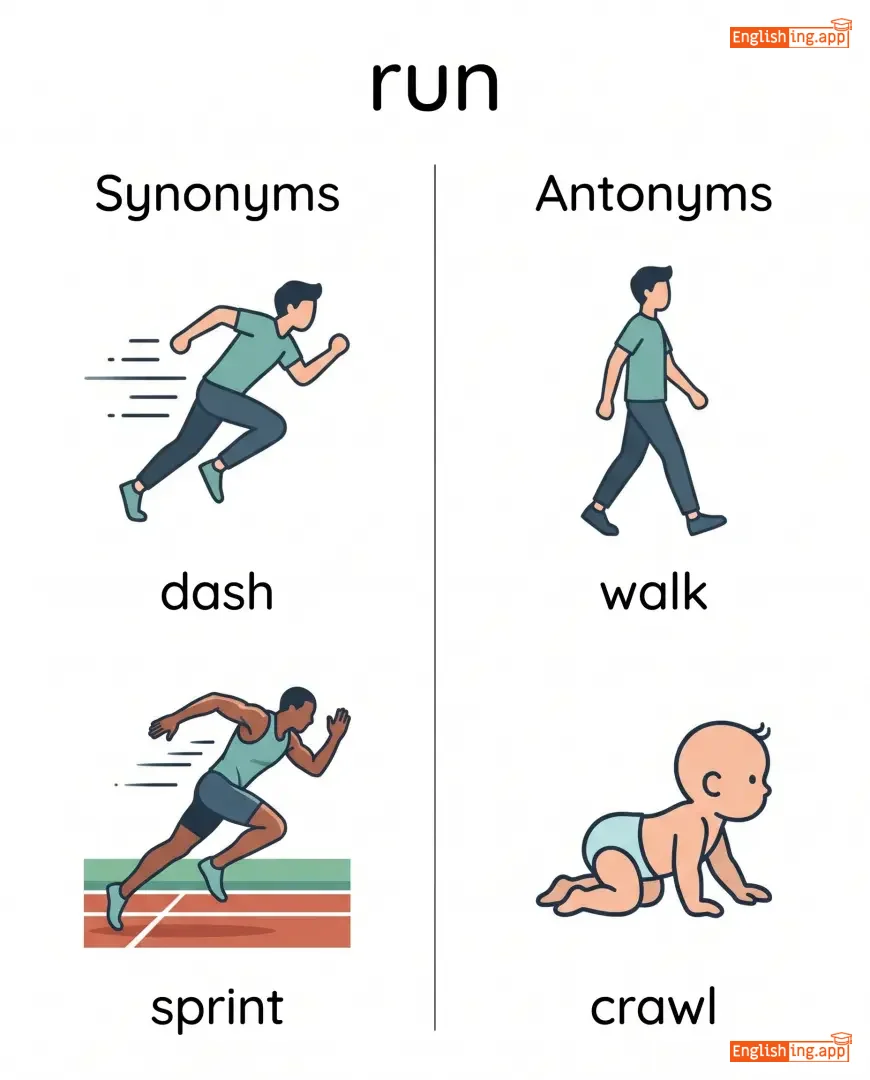
dash, sprint, jog, race, hurry
••••••
|
walk, crawl, stop
••••••
|
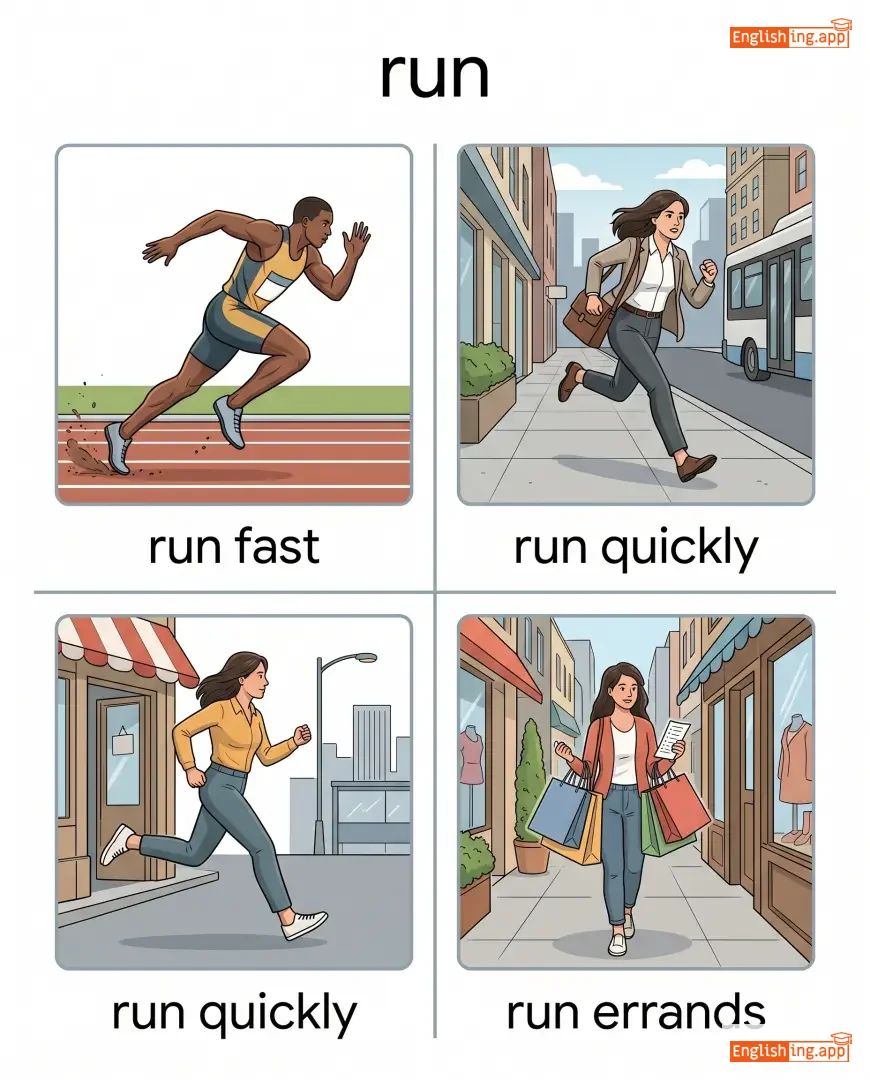
run fast, run quickly, run errands, run away, run business
••••••
|
幸福は人生の最高の贈り物です。
••••••
|
|
🏃♂️
••••••
|
/ˈrʌnɪŋ/
noun
(ランニング)
••••••
|
- •••••• |
ランニング
ranningu
••••••
|
- •••••• | - •••••• | - •••••• |
running
ランニング
••••••
|
the action or sport of running
••••••
|
Running every morning keeps me healthy.
ランニングエブリーモーニングキープスミーヘルシー。
••••••
|
毎朝ランニングをすると健康が保たれます。
Maiasa ranningu wo suru to kenko ga tamararemasu.
••••••
|
in the long run
インザロングラン
••••••
|
after a long time; eventually
••••••
|
長い目で見ると
nagai mede miru to
••••••
|
jogging, sprinting, racing, exercise
••••••
|
resting, walking
••••••
|
go running, enjoy running, long-distance running, running shoes
••••••
|
Runningはランニングを意味する — ランニングして'ing'に到達する!
••••••
|
|
🌾
••••••
|
/ˈrʊərəl/
adjective
(ララル)
••••••
|
- •••••• |
田舎の
inaka no
••••••
|
- •••••• | - •••••• | - •••••• | - •••••• |
relating to the countryside rather than the town
••••••
|
He prefers the peaceful life of a rural village. |
彼は田舎の村で静かな生活を好む。
Kare wa inaka no mura de shizuka na seikatsu o konomu.
••••••
|
rural development |
improvement of the countryside areas
••••••
|
田舎の発展
inaka no hatten
••••••
|
countryside, pastoral, rustic, provincial
••••••
|
urban, city
••••••
|
rural area, rural life, rural economy, rural community
••••••
|
Ruralは田舎を意味します。‘ラル’という音で静かな村を思い浮かべてください。
••••••
|
|
🏃
••••••
|
/rʌʃ/
verb
(ラッシュ)
••••••
|
- •••••• |
急ぐ
isogu
••••••
|
rushed
ラッシュド
••••••
|
rushed
ラッシュド
••••••
|
rushes
ラッシュズ
••••••
|
rushing
ラッシング
••••••
|
to move or act with great speed or urgency
••••••
|
She had to rush to the meeting to make it on time.
彼女は会議に時間通りに到着するために急がなければならなかった。
••••••
|
彼女は会議に時間通りに到着するために急がなければならなかった。
Kanojo wa kaigi ni jikan dōri ni tōchaku suru tame ni isoganakereba naranakatta.
••••••
|
rush hour
ラッシュアワー
••••••
|
the time when traffic is heaviest, usually when people are going to or leaving work
••••••
|
ラッシュアワー
rasshu awā
••••••
|
hurry, race, speed, accelerate
••••••
|
slow down, delay, dawdle
••••••
|
rush to, rush in, rush hour, rush through
••••••
|
急がないで、ラッシュアワーが来ているよ!- Don’t rush, rush hour is coming!
••••••
|
|
🇷🇺
••••••
|
/ˈrʌʃən/
adjective
••••••
|
- •••••• | - •••••• | - •••••• | - •••••• | - •••••• | - •••••• |
relating to Russia, its people, or its language
••••••
|
She is studying the Russian language at university. |
- •••••• | - •••••• | - •••••• | - •••••• |
Russian Federation, Slavonic, Eastern European
••••••
|
- •••••• |
Russian language, Russian culture, Russian literature
••••••
|
No •••••• |
|
📦
••••••
|
/sæk/
verb
(sak)
••••••
|
- •••••• |
解雇する
kaiko suru
••••••
|
sacked
sakt
••••••
|
sacked
sakt
••••••
|
sacks
saks
••••••
|
sacking
saking
••••••
|
to dismiss from a job; to put something in a sack
••••••
|
The company sacked him for poor performance.
会社は業績不良で彼を解雇しました。
••••••
|
会社は業績不良で彼を解雇しました。
Kaisha wa gyōseki furyō de kare o kaiko shimashita.
••••••
|
- •••••• | - •••••• | - •••••• |
fire, dismiss, discharge, terminate
••••••
|
hire, employ, recruit, appoint
••••••
|
sack employee, get the sack, sack someone, sack goods
••••••
|
Sack = 解雇された、または何かを袋に入れる。
••••••
|
|
🙏
••••••
|
/ˈseɪkrɪd/
adjective
(セイクリッド)
••••••
|
- •••••• |
神聖な
shinsei na
••••••
|
- •••••• | - •••••• | - •••••• | - •••••• |
connected with God or a religion and considered holy or deserving respect
••••••
|
The temple is a sacred place for the community.
その寺院は地域社会にとって神聖な場所です。
••••••
|
その寺院は地域社会にとって神聖な場所です。
Sono jiin wa chiikishakai ni totte shinsei na basho desu.
••••••
|
sacred cow
神聖な牛
••••••
|
something considered immune from criticism or questioning
••••••
|
神聖な牛
shinsei na ushi
••••••
|
holy, divine, blessed, revered
••••••
|
profane, secular, unholy
••••••
|
sacred place, sacred duty, sacred text, sacred tradition
••••••
|
Sacred は神聖な意味、神聖な場所や神聖な牛のように。
••••••
|
|
🕯️
••••••
|
/ˈsækrɪfaɪs/
noun, verb
••••••
|

|
- •••••• |
sacrificed
••••••
|
sacrificed
••••••
|
sacrifices
••••••
|
sacrificing
••••••
|
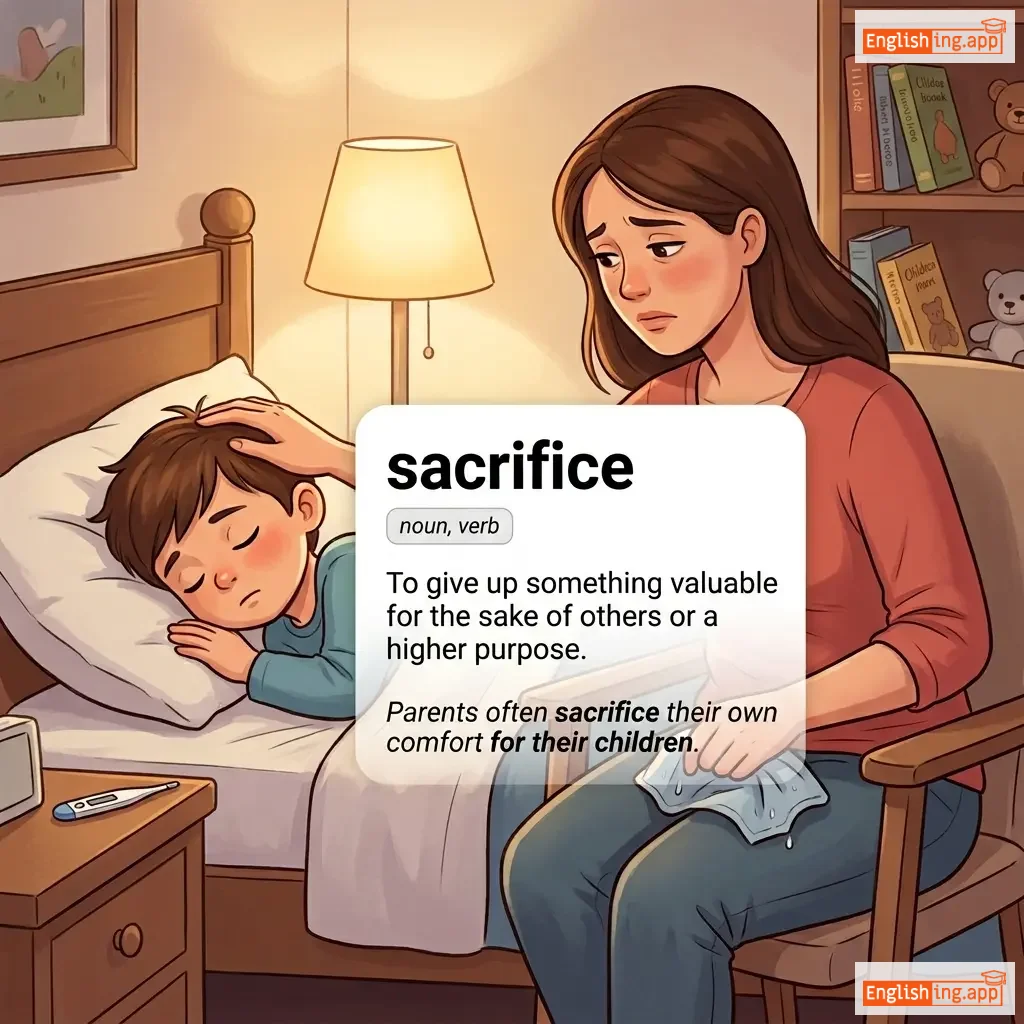
To give up something valuable for the sake of others or a higher purpose.
••••••
|
Parents often sacrifice their own comfort for their children. |
- •••••• |
make a sacrifice |
to give up something important for the benefit of others
••••••
|
- •••••• |
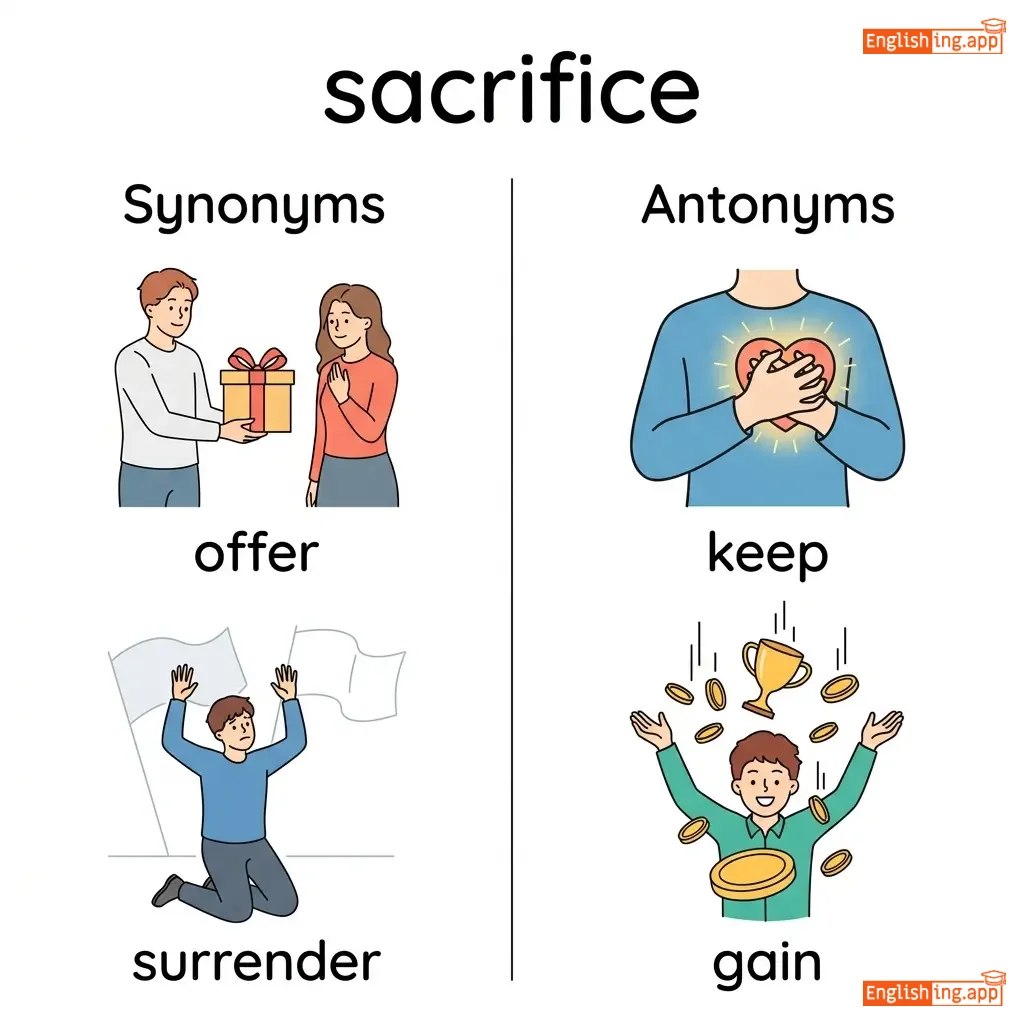
offer, surrender, relinquish, devotion, giving up
••••••
|
keep, gain, selfishness
••••••
|
make a sacrifice, ultimate sacrifice, personal sacrifice, sacrifice for
••••••
|
No •••••• |
|
😢
••••••
|
/sæd/
adjective
(サッド)
••••••
|
- •••••• |
悲しい
kanashii
••••••
|
- •••••• | - •••••• | - •••••• | - •••••• |
feeling or showing sorrow; unhappy
••••••
|
She felt sad after hearing the bad news. |
悪いニュースを聞いて、彼女は悲しい気持ちになった。
Warui nyūsu wo kiite, kanojo wa kanashii kimochi ni natta.
••••••
|
sad but true |
something that is unfortunate but factual
••••••
|
悲しいけど、真実
kanashii kedo, shinjitsu
••••••
|
unhappy, sorrowful, depressed, gloomy
••••••
|
happy, joyful, cheerful
••••••
|
sad face, sad story, feel sad, sad news
••••••
|
Sad は悲しい意味—悪いニュースを聞くと悲しくなる。
••••••
|
|
😢
••••••
|
/ˈsædli/
adverb
(サドリー)
••••••
|
- •••••• |
悲しそうに
kanashisou ni
••••••
|
- •••••• | - •••••• | - •••••• | - •••••• |
in a sorrowful or unhappy manner
••••••
|
She sadly waved goodbye as the train departed.
彼女は電車が出発するとき、悲しそうに手を振った。
••••••
|
彼女は電車が出発するとき、悲しそうに手を振った。
Kanojo wa densha ga shuppatsu suru toki, kanashisou ni te o futta.
••••••
|
sadly ever after
悲しい末永く
••••••
|
used ironically to indicate a disappointing ending
••••••
|
悲しい末永く
kanashii suenagaku
••••••
|
unhappily, sorrowfully, regretfully, mournfully
••••••
|
happily, joyfully
••••••
|
sadly missed, sadly disappointed, sadly mistaken
••••••
|
Kanashisou ni = sadly、簡単に覚えられる。
••••••
|
|
😢
••••••
|
/ˈsæd.nəs/
noun
(サッドネス)
••••••
|
- •••••• |
悲しみ、哀しみ、痛み
kanashimi, kanashimi, itami
••••••
|
- •••••• | - •••••• | - •••••• | - •••••• |
feeling of sorrow, unhappiness, or grief
••••••
|
Her sadness was evident after hearing the bad news.
悪いニュースを聞いた後、彼女の悲しみは明らかでした。
••••••
|
悪いニュースを聞いた後、彼女の悲しみは明らかでした。
Warui nyūsu o kiita ato, kanojo no kanashimi wa akiraka deshita.
••••••
|
- •••••• | - •••••• | - •••••• |
sorrow, grief, melancholy, depression
••••••
|
happiness, joy, cheerfulness, delight
••••••
|
deep sadness, overwhelming sadness, sadness and grief
••••••
|
悲しみは悪いニュースから
••••••
|
|
🔒
••••••
|
/seɪf/
noun
(セーフ)
••••••
|
- •••••• |
金庫; 保護
kinko; hogo
••••••
|
- •••••• | - •••••• | - •••••• | - •••••• |
secure container for storing valuables; protection from danger
••••••
|
He kept his important documents in the office safe. |
彼は重要な書類をオフィスの金庫に保管していました。
Kare wa juuyou na shorui o ofisu no kinko ni hokan shite imashita.
••••••
|
- •••••• | - •••••• | - •••••• |
vault, strongbox, security, protection
••••••
|
danger, risk, threat, unsafe
••••••
|
bank safe, fire safe, combination safe, safe deposit
••••••
|
金庫(kinko)は、保護を提供します。
••••••
|
|
🛡️
••••••
|
/ˈseɪfli/
adverb
(セーフリー)
••••••
|
- •••••• |
安全に
anzen ni
••••••
|
- •••••• | - •••••• | - •••••• | - •••••• |
in a way that is not dangerous or likely to cause harm
••••••
|
The children crossed the road safely. |
子供たちは安全に道路を渡りました。
Kodomotachi wa anzen ni dōro o watarimashita.
••••••
|
safe and sound |
unharmed and in good condition
••••••
|
無事で健康
buji de kenkō
••••••
|
securely, harmlessly, cautiously, carefully
••••••
|
dangerously, recklessly
••••••
|
arrive safely, drive safely, travel safely, safely return
••••••
|
Safely は安全に — シートベルトをして、安全に運転しているようなものです!
••••••
|
|
⚠️
••••••
|
/ˈseɪf.ti/
noun
(セーフティ)
••••••
|
- •••••• |
安全
anzen
••••••
|
- •••••• | - •••••• | - •••••• | - •••••• |
condition of being protected from danger, risk, or injury
••••••
|
The company prioritizes workplace safety above all else. |
その会社は職場の安全を最優先しています。
Sono kaisha wa shokuba no anzen o sai yūsen shiteimasu
••••••
|
- •••••• | - •••••• | - •••••• |
security, protection, welfare, well-being
••••••
|
danger, hazard, risk, peril
••••••
|
safety measures, public safety, safety regulations, road safety
••••••
|
安全 = Safety, 安全な場所にいることが一番安全
••••••
|
|
⛵
••••••
|
/seɪl/
verb
(seiru)
••••••
|
- •••••• |
帆を使って旅行する
ho wo tsukatte ryokou suru
••••••
|
sailed
seirudo
••••••
|
sailed
seirudo
••••••
|
sails
seirusu
••••••
|
sailing
seiringu
••••••
|
to travel on water in a boat or ship using sails or by wind power
••••••
|
They sailed across the Atlantic Ocean last summer.
彼らは昨年の夏、アトランティックオーシャンを渡りました。
••••••
|
彼らは昨年の夏、アトランティックオーシャンを渡りました。
Karera wa sakunen no natsu, Atorantikku Ōshan wo watarimashita.
••••••
|
set sail
出航する
••••••
|
to begin a journey by sea
••••••
|
航海を始める
kōkai wo hajimeru
••••••
|
navigate, voyage, cruise, drift, glide
••••••
|
anchor, dock
••••••
|
sail away, sail across, sail on, sail through
••••••
|
Sailは‘帆を使って航海する’という意味です —「海から出て行こう」と想像して、旅が始まります!
••••••
|
|
⛵
••••••
|
/ˈseɪ.lɪŋ/
noun, verb
(セーリング)
••••••
|
- •••••• |
帆走
hansou
••••••
|
sailed
セールド
••••••
|
sailed
セールド
••••••
|
sails
セールス
••••••
|
sailing
セーリング
••••••
|
The act of traveling in a boat or ship using sails; the sport or activity of navigating a boat with sails.
••••••
|
We went sailing on the lake during the summer.
私たちは夏に湖でセーリングをしました。
••••••
|
私たちは夏に湖で帆走をしました。
Watashitachi wa natsu ni mizuumi de hansou wo shimashita
••••••
|
plain sailing
順調なセーリング
••••••
|
something that is easy and without problems
••••••
|
順調な帆走
junchou na hansou
••••••
|
boating, yachting, navigating, cruising
••••••
|
anchoring, docking
••••••
|
sailing boat, sailing trip, sailing club, sailing race
••••••
|
Visualize 'セーリング' as effortless 'hansou' across a Japanese lake.
••••••
|
|
⛵
••••••
|
/ˈseɪ.lər/
noun
(seirā)
••••••
|
- •••••• |
船員
sen'in
••••••
|
- •••••• | - •••••• | - •••••• | - •••••• |
a person who works on a ship or boat; a member of a navy
••••••
|
The experienced sailor navigated the ship through the storm.
経験豊富なセイラーが嵐を乗り越えて船を操縦した。
••••••
|
経験豊富な船員が嵐を乗り越えて船を操縦した。
Keiken hōfu na sen'in ga arashi o norikoete fune o sōjū shita.
••••••
|
- •••••• | - •••••• | - •••••• |
seaman, mariner, seafarer
••••••
|
landlubber, passenger
••••••
|
experienced sailor, navy sailor, merchant sailor
••••••
|
Sailor – 'Sen'in' is the Japanese word for sailor, think of a sailor navigating through the sea!
••••••
|
|
😇
••••••
|
/seɪnt/
noun
(セイント)
••••••
|
- •••••• |
聖人として認められた人物; とても親切で忍耐強い人物
seijin toshite mitomerareta jinbutsu; totemo shinsetsu de nintaizuyoi jinbutsu
••••••
|
- •••••• | - •••••• | - •••••• | - •••••• |
person recognized as holy or virtuous; very kind or patient person
••••••
|
Mother Teresa was declared a saint by the Catholic Church.
マザー・テレサはカトリック教会によって聖人と宣言されました。
••••••
|
マザー・テレサはカトリック教会によって聖人と宣言されました。
mazaa teresa wa katorikku kyoukai ni yotte seijin to sengen saremashita.
••••••
|
- •••••• | - •••••• | - •••••• |
holy person, martyr, angel, paragon
••••••
|
sinner, devil, villain, criminal
••••••
|
patron saint, saint's day, canonized saint
••••••
|
聖人は教会から認定されます
••••••
|
|
❤️
••••••
|
/seɪk/
noun
(seik)
••••••
|
- •••••• |
ため
tame
••••••
|
- •••••• | - •••••• | - •••••• | - •••••• |
for the purpose or reason of something
••••••
|
He did it for the sake of his family.
彼は家族のためにそれをしました。
••••••
|
彼は家族のためにそれをしました。
Kare wa kazoku no tame ni sore o shimashita.
••••••
|
for the sake of
のために
••••••
|
for the purpose of achieving something
••••••
|
のために
no tame ni
••••••
|
purpose, reason, benefit, interest
••••••
|
hindrance, obstacle, disadvantage
••••••
|
for the sake of, for the sake of love, for the sake of peace
••••••
|
Sake-家族のために - 家族のためにそれをしよう!
••••••
|
|
🥗
••••••
|
/ˈsæləd/
noun
(サラダ)
••••••
|
- •••••• |
サラダ
sarada
••••••
|
- •••••• | - •••••• | - •••••• | - •••••• |
a dish consisting of various ingredients, typically including vegetables, which are usually mixed with a dressing
••••••
|
She made a fresh salad with lettuce, tomatoes, and cucumbers. |
彼女はレタス、トマト、きゅうりを使って新鮮なサラダを作りました。
Kanojo wa retasu, tomato, kyūri o tsukatte shinsen na sarada o tsukurimashita.
••••••
|
- •••••• | - •••••• | - •••••• |
greens, vegetable dish, mixed vegetables, side dish
••••••
|
main course, meat, protein
••••••
|
fresh salad, Caesar salad, green salad, vegetable salad
••••••
|
サラダは(レタス、トマト)で作られます。 (Salad is made with lettuce, tomatoes)
••••••
|
|
💰
••••••
|
/ˈsæl.ər.i/
noun
(サラリー)
••••••
|
- •••••• |
給料
kyūryō
••••••
|
- •••••• | - •••••• | - •••••• | - •••••• |
a fixed regular payment, typically paid on a monthly basis
••••••
|
She receives a good salary for her work as a teacher. |
彼女は教師としての仕事に対して良い給料を受け取っています。
Kanojo wa kyōshi to shite no shigoto ni taishite yoi kyūryō o uketotte imasu
••••••
|
- •••••• | - •••••• | - •••••• |
wage, pay, income, earnings
••••••
|
debt, expense, cost
••••••
|
annual salary, monthly salary, basic salary, gross salary
••••••
|
Japanese '給料' (kyūryō) helps you remember salary as a regular monthly payment.
••••••
|
|
💸
••••••
|
/seɪl/
noun
(セール)
••••••
|
- •••••• |
販売
hanbai
••••••
|
- •••••• | - •••••• | - •••••• | - •••••• |
the exchange of a commodity for money; the action of selling something
••••••
|
The store is having a sale on winter clothing. |
その店は冬物衣料のセールを行っています。
Sono mise wa fuyu-mono iryō no sēru o okonatteimasu.
••••••
|
- •••••• | - •••••• | - •••••• |
transaction, deal, exchange, bargain
••••••
|
purchase, buy
••••••
|
clearance sale, hold a sale, end of season sale
••••••
|
Saleは商品を割引価格で販売する行為を意味します。
••••••
|
|
🧂
••••••
|
/sɔːlt/
noun
(ソルト)
••••••
|
- •••••• |
塩
shio
••••••
|
- •••••• | - •••••• | - •••••• | - •••••• |
white crystalline substance used for seasoning food; sodium chloride
••••••
|
Please add some salt to the soup to enhance its flavor.
風味を引き立てるために、スープに塩を少し加えてください。
••••••
|
風味を引き立てるために、スープに塩を少し加えてください。
fuumi o hikitatete tame ni, suupu ni shio o sukoshi kuwaete kudasai.
••••••
|
- •••••• | - •••••• | - •••••• |
sodium chloride, table salt
••••••
|
sweet
••••••
|
table salt, sea salt, rock salt, pinch of salt, salty taste
••••••
|
Shio on the shore says Flavor up
••••••
|
|
➖
••••••
|
/seɪm/
adjective
(セイム)
••••••
|
- •••••• |
同じ
onaji
••••••
|
- •••••• | - •••••• | - •••••• | - •••••• |
identical; not different or changed
••••••
|
We wore the same dress at the party. |
私たちはパーティーで同じドレスを着ていました。
Watashitachi wa pātii de onaji doresu o kite imashita.
••••••
|
same old story |
a situation that is familiar and often disappointing
••••••
|
いつもの話
itsumono hanashi
••••••
|
identical, equal, similar, alike
••••••
|
different, distinct, varied
••••••
|
same time, same day, same place, same dress
••••••
|
Sameは同じ意味—同じもの、いつでも同じ!
••••••
|
|
🔬
••••••
|
/ˈsæm.pəl/
noun
(サンプル)
••••••
|
- •••••• |
サンプル
sanpuru
••••••
|
- •••••• | - •••••• | - •••••• | - •••••• |
a small part taken as an example of the whole; a specimen
••••••
|
The doctor took a blood sample for testing.
医師はテストのために血液サンプルを取った。
••••••
|
医師はテストのために血液サンプルを取った。
Ishi wa tesuto no tame ni ketsueki sanpuru wo totta.
••••••
|
- •••••• | - •••••• | - •••••• |
specimen, example, instance, model
••••••
|
whole, entirety, complete set
••••••
|
blood sample, free sample, sample size, random sample
••••••
|
サンプルは全体の一部として理解する。
••••••
|
|
⚖️
••••••
|
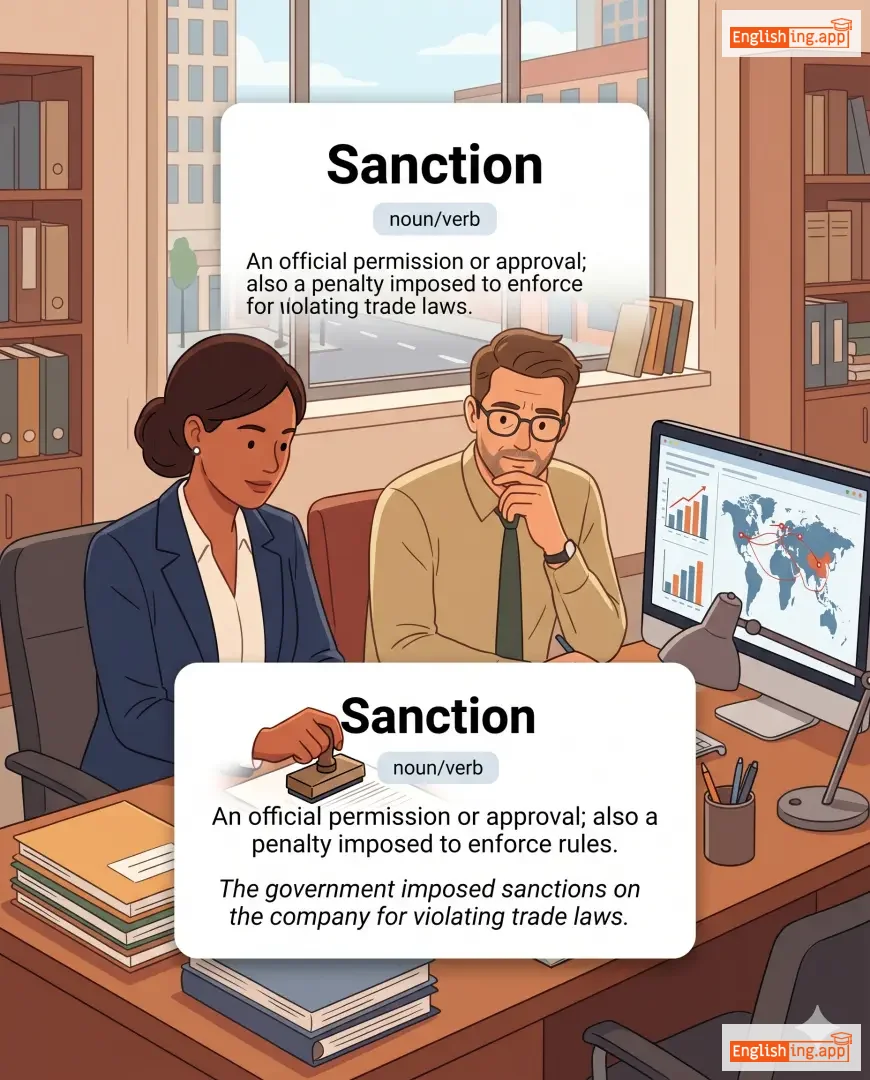
/ˈsæŋkʃən/
noun/verb
••••••
|
|
- •••••• |
sanctioned
••••••
|
sanctioned
••••••
|
sanctions
••••••
|
sanctioning
••••••
|
An official permission or approval; also a penalty imposed to enforce rules.
••••••
|
The government imposed sanctions on the company for violating trade laws. |
- •••••• |
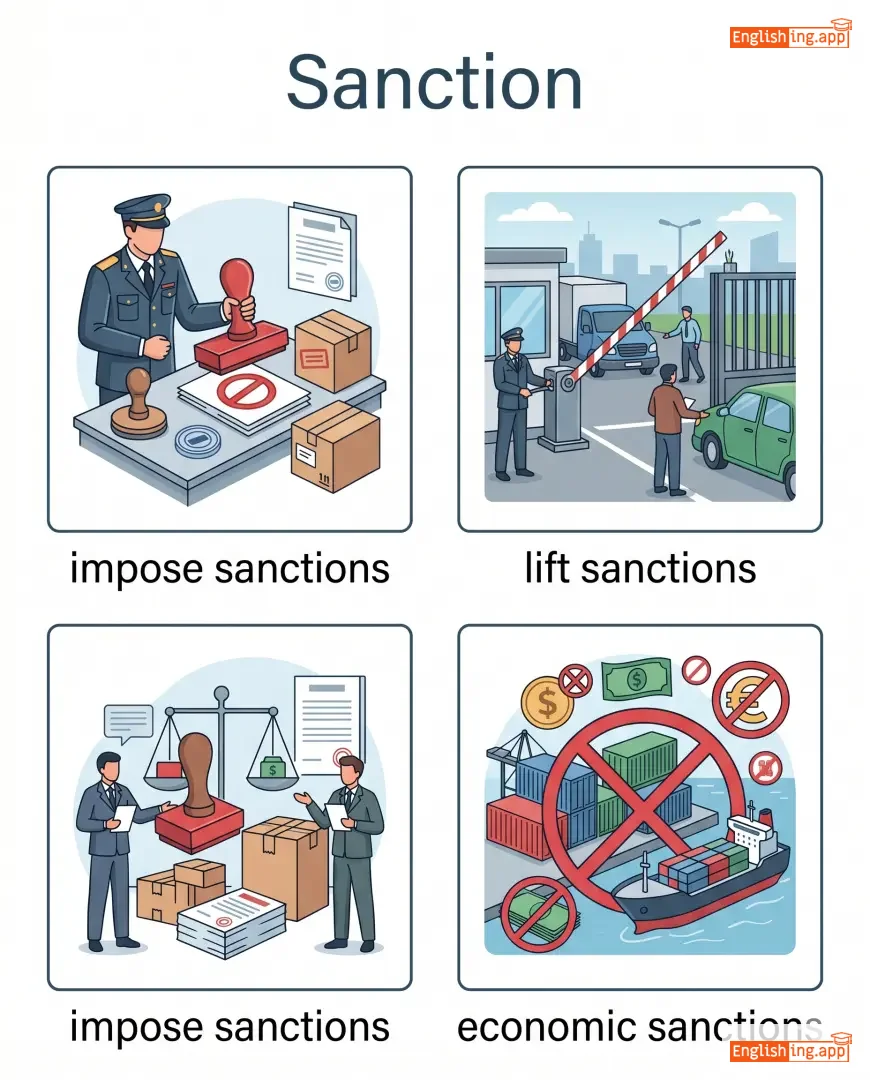
economic sanctions |
penalties imposed by one country on another to enforce international law
••••••
|
- •••••• |
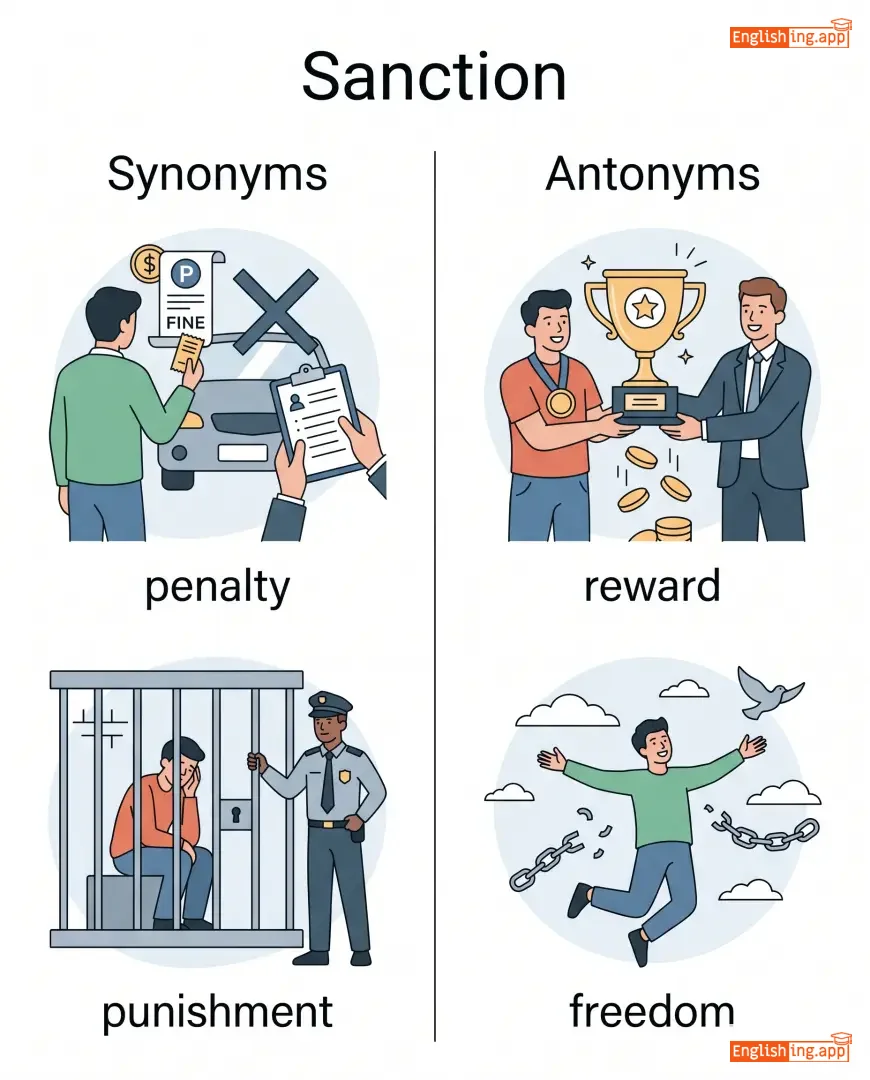
penalty, punishment, approval, authorization, restriction
••••••
|
reward, freedom, allowance
••••••
|
impose sanctions, lift sanctions, economic sanctions, trade sanctions
••••••
|
No •••••• |
|
🏖️
••••••
|
/sænd/
noun
(ハピネス)
••••••
|
- •••••• |
幸せ
shiawase
••••••
|
- •••••• | - •••••• | - •••••• | - •••••• |
Small loose grains of crushed rock, found on beaches and deserts.
••••••
|
Children built castles out of sand on the beach. |
彼女は賞を受け取ったとき、幸せを隠せなかった。
Kanojo wa shō o uketotta toki, shiawase o kakusenakatta.
••••••
|
bury one's head in the sand |
To ignore or avoid a problem.
••••••
|
幸せを求める
Shiawase o motomeru
••••••
|
grit, sediment, particles, silica, soil
••••••
|
rock, stone
••••••
|
grain of sand, desert sand, sand dunes, wet sand
••••••
|
幸せは喜びである - 幸せを求めるとき、簡単に覚えられる。
••••••
|
|
🥪
••••••
|
/ˈsændwɪtʃ/
noun
(サンドイッチ)
••••••
|
- •••••• |
サンドイッチ
sandoicchi
••••••
|
- •••••• | - •••••• | - •••••• | - •••••• |
two pieces of bread with food such as meat, cheese, or salad between them
••••••
|
I made a chicken sandwich for lunch. |
私は昼食にチキンサンドイッチを作りました。
Watashi wa chūshoku ni chikin sandoicchi o tsukurimashita.
••••••
|
caught in a sandwich |
to be trapped between two people or situations
••••••
|
二人または二つの状況に挟まれている
futari matawa futatsu no jōkyō ni hasamarete iru
••••••
|
snack, sub, burger, roll, toastie
••••••
|
meal, feast
••••••
|
chicken sandwich, cheese sandwich, sandwich shop, eat a sandwich
••••••
|
サンドイッチは二枚のパンの間に何かが挟まれていることを意味します — まるでサンドイッチの中に挟まれているような感じ!
••••••
|
|
🛰️
••••••
|
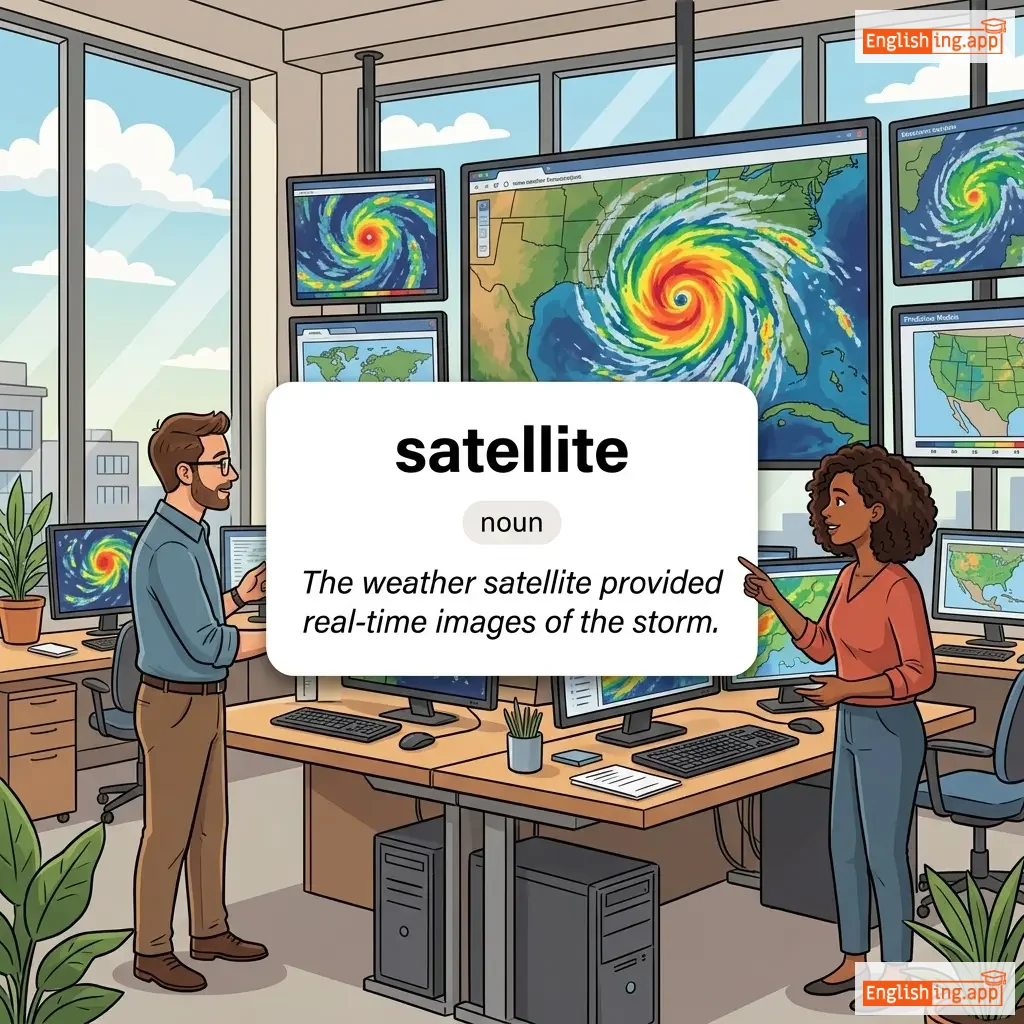
/ˈsætəlaɪt/
noun
(サテライト)
••••••
|
|
衛星
eisei
••••••
|
- •••••• | - •••••• | - •••••• | - •••••• |
An artificial body placed in orbit around the earth or another planet to collect information or for communication.
••••••
|
The weather satellite provided real-time images of the storm. |
気象衛星は嵐のリアルタイム画像を提供しました。
Kishou eisei wa arashi no riaru taimu gazou wo teikyoushimashita.
••••••
|
satellite office |
A smaller office located separately from the main headquarters.
••••••
|
衛星オフィス
eisei ofisu
••••••
|
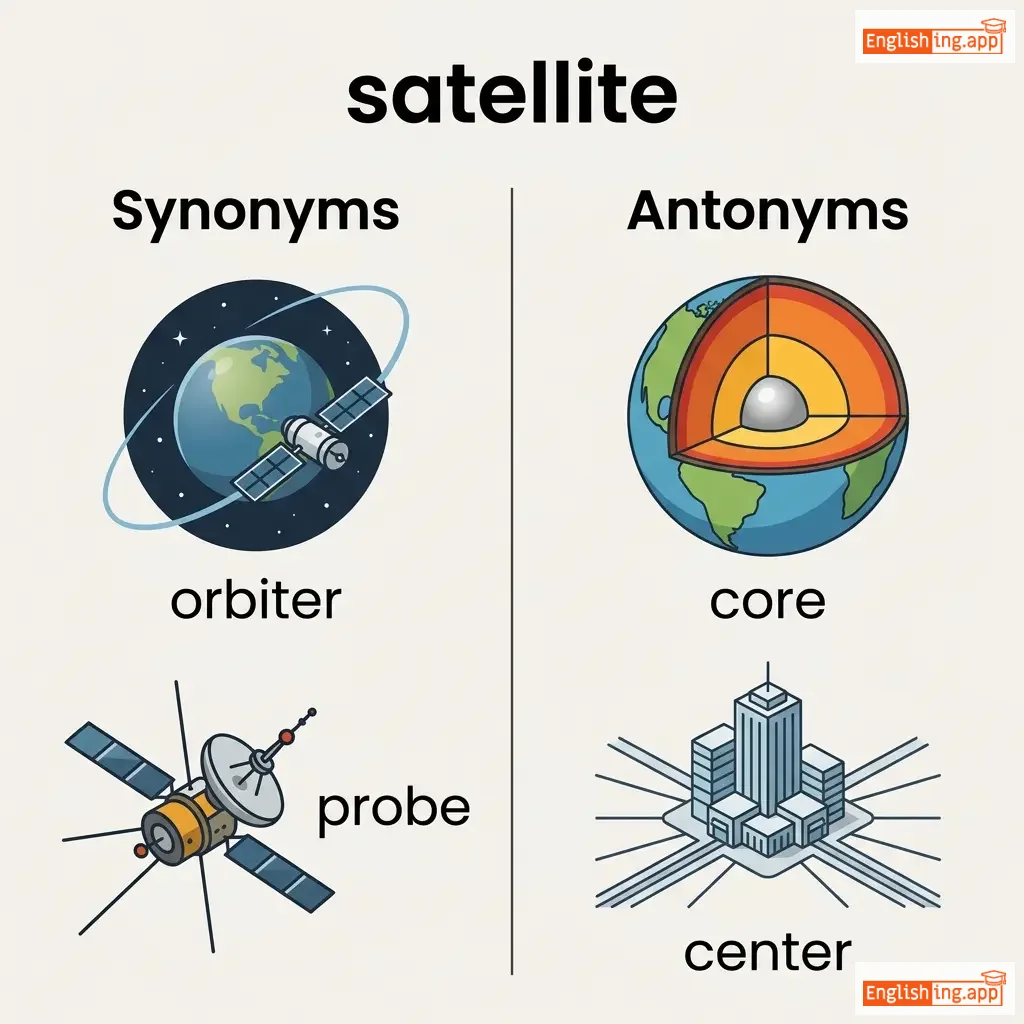
orbiter, probe, spacecraft, moon, companion
••••••
|
core, center
••••••
|
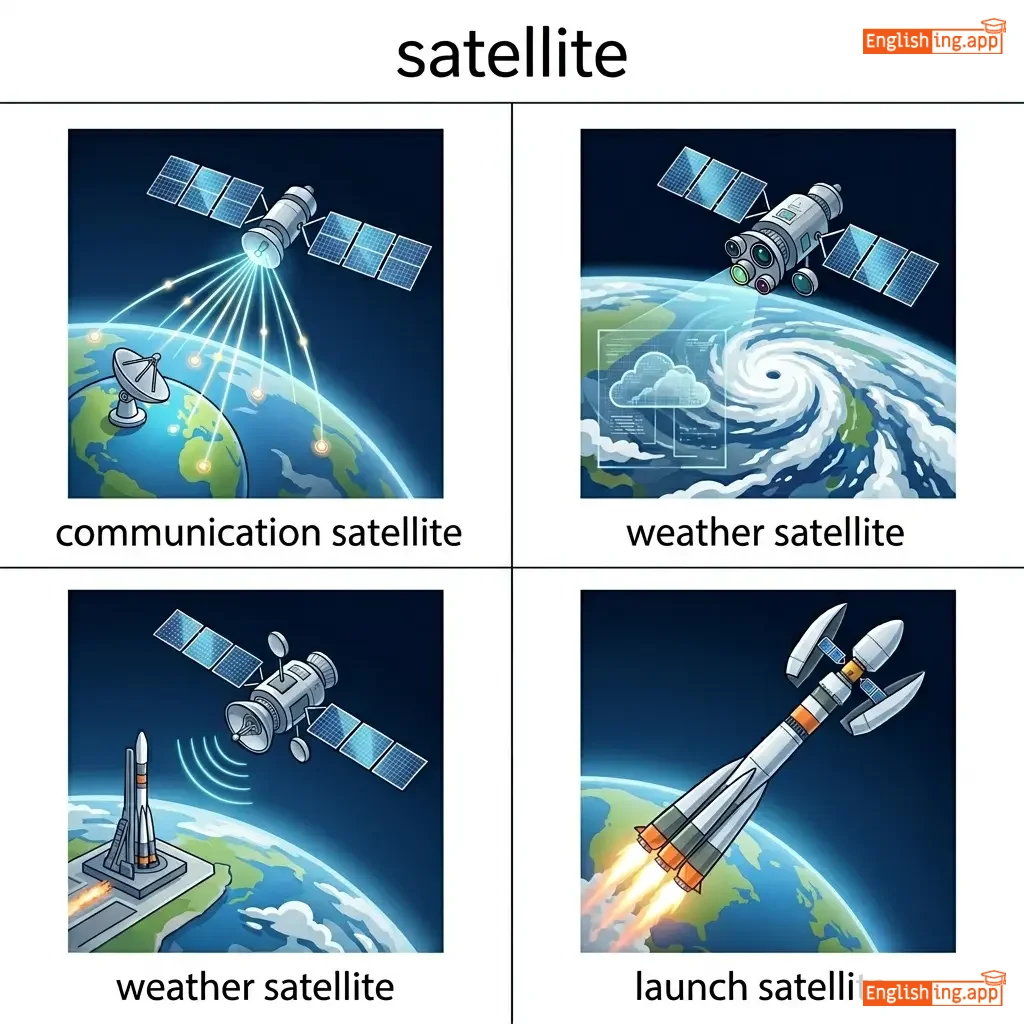
communication satellite, weather satellite, launch satellite, satellite dish
••••••
|
サテライト 🛰️ はいつも地球の周りを回り、頭の中でもそのように回ります。
••••••
|
|
😊
••••••
|
/ˌsæt.ɪsˈfæk.ʃən/
noun
(サティスファクション)
••••••
|
- •••••• |
満足
manzoku
••••••
|
- •••••• | - •••••• | - •••••• | - •••••• |
fulfillment of one's wishes, expectations, or needs
••••••
|
She felt great satisfaction after completing the project. |
プロジェクトを完成させた後、彼女は大きな満足感を感じました。
Purojekuto o kansei saseta ato, kanojo wa ōkina manzokukan o kanjimashita.
••••••
|
- •••••• | - •••••• | - •••••• |
contentment, fulfillment, pleasure, gratification
••••••
|
dissatisfaction, disappointment, frustration
••••••
|
job satisfaction, customer satisfaction, personal satisfaction
••••••
|
Manzoku in Japanese is the satisfaction after finishing a goal!
••••••
|
|
😊
••••••
|
/ˈsætɪsfaɪd/
adjective
(サティスファイド)
••••••
|
- •••••• |
満足
manzoku
••••••
|
- •••••• | - •••••• | - •••••• | - •••••• |
Pleased or content with what has been achieved or received.
••••••
|
He felt satisfied after finishing his project. |
彼はプロジェクトを終えた後、満足していると感じた。
Kare wa purojekuto o oeta ato, manzoku shiteiru to kanjita.
••••••
|
satisfied customer |
A customer who is happy with the service or product.
••••••
|
満足した顧客
manzoku shita kokyaku
••••••
|
content, pleased, fulfilled, gratified
••••••
|
dissatisfied, unhappy, displeased
••••••
|
satisfied with, fully satisfied, satisfied customer, satisfied smile
••••••
|
Satisfied は 'Sat' + 'is' + 'fine' → すべてがうまくいったので彼は満足していました。
••••••
|
|
😊
••••••
|
/ˈsætɪsfaɪ/
verb
(satisfai)
••••••
|
|
満たす
mitasu
••••••
|
satisfied
satisfaito
••••••
|
satisfied
satisfaito
••••••
|
satisfies
satisfai
••••••
|
satisfying
satisfaiingu
••••••
|
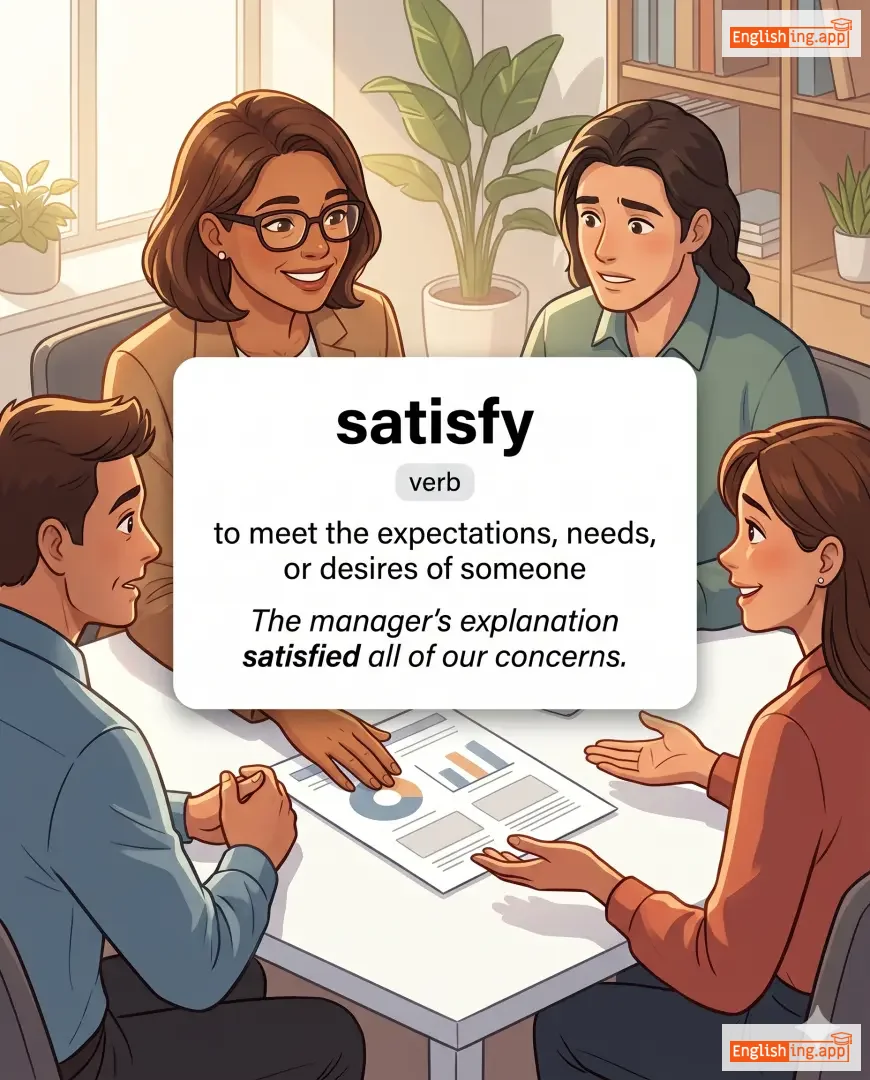
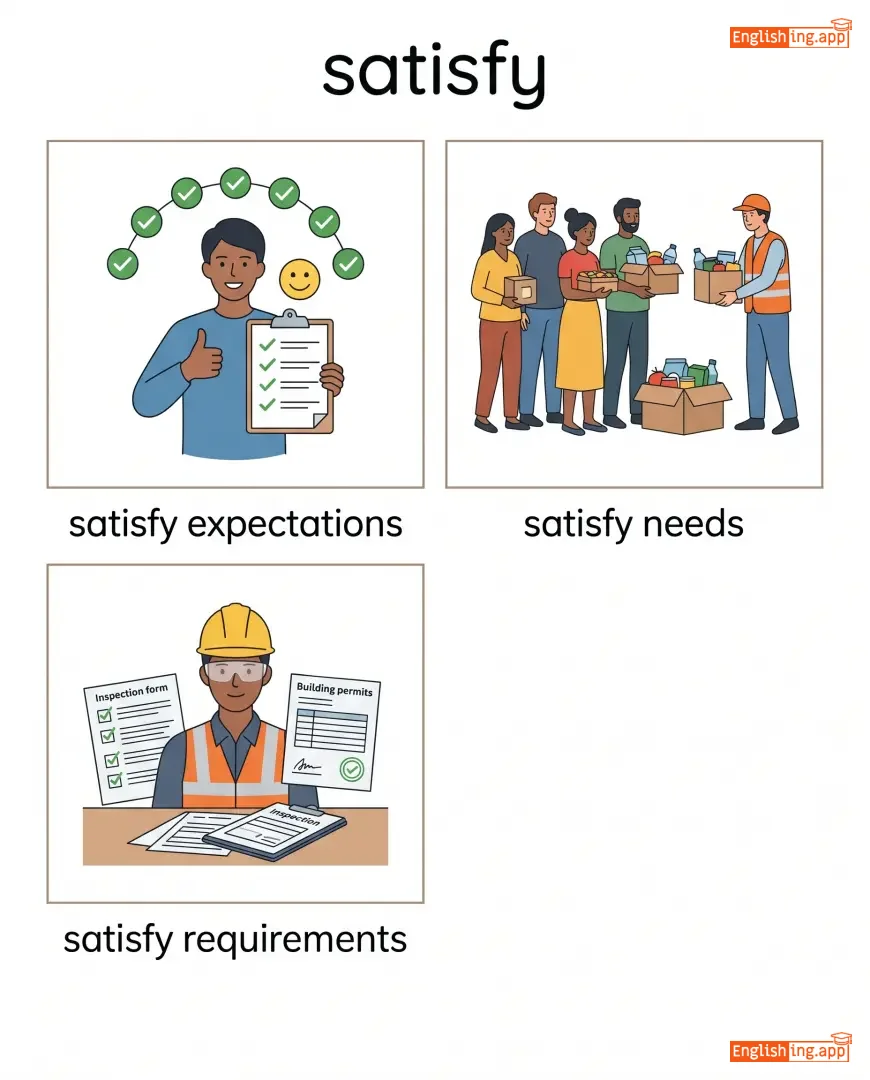
to fulfill the desires, expectations, or needs of someone; to make content
••••••
|
The delicious meal satisfied our hunger completely.
美味しい食事が私たちの空腹を完全に満たしました。
••••••
|
美味しい食事が私たちの空腹を完全に満たしました。
Oishii shokuji ga watashitachi no kuufuku wo kanzen ni mitashimashita.
••••••
|
- •••••• | - •••••• | - •••••• |
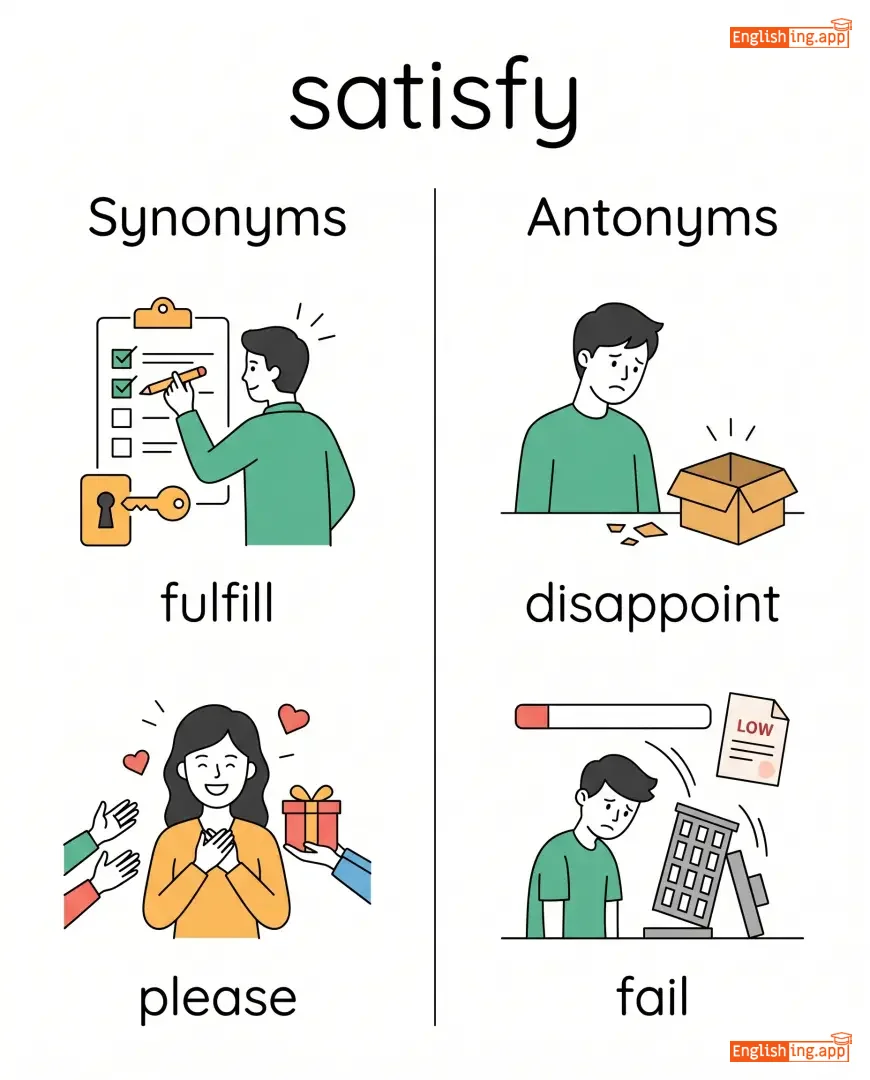
fulfill, please, gratify, content
••••••
|
disappoint, frustrate, dissatisfy, displease
••••••
|
satisfy need, satisfy customer, satisfy requirement, fully satisfy
••••••
|
満たす料理で空腹を解消しよう!
••••••
|
|
📅
••••••
|
/ˈsætərdeɪ/
noun
(サタデー)
••••••
|
- •••••• |
土曜日
doyoubi
••••••
|
- •••••• | - •••••• | - •••••• | - •••••• |
The day of the week between Friday and Sunday; traditionally the sixth day of the week
••••••
|
We are going to the beach on Saturday.
私たちは土曜日にビーチに行きます。
••••••
|
私たちは土曜日にビーチに行きます。
Watashitachi wa doyoubi ni biichi ni ikimasu.
••••••
|
Saturday night special
土曜の夜のスペシャル
••••••
|
An inexpensive or improvised firearm; also refers to casual activities done on Saturday night
••••••
|
土曜の夜のスペシャル
Doyou no yoru no supesharu
••••••
|
weekend day, Sabbath, sixth day, weekend
••••••
|
Monday, weekday
••••••
|
Saturday morning, Saturday night, next Saturday, every Saturday
••••••
|
Doyoubi is Saturday, remember 'Do' = earth like the day
••••••
|
|
🥄
••••••
|
/sɔːs/
noun
(ソース)
••••••
|
- •••••• |
ソース
soosu
••••••
|
- •••••• | - •••••• | - •••••• | - •••••• |
a liquid or semi-liquid substance served with food to add moisture and flavor
••••••
|
She added tomato sauce to her pasta.
彼女はパスタにトマトソースを加えた。
••••••
|
彼女はパスタにトマトソースを加えた。
Kanojo wa pasuta ni tomato soosu o kuwaeta.
••••••
|
- •••••• | - •••••• | - •••••• |
gravy, dressing, condiment
••••••
|
dry seasoning, solid food
••••••
|
tomato sauce, soy sauce, hot sauce, pasta sauce, sauce bottle
••••••
|
トマトソースをパスタに加えることで、味が引き立ちます!
••••••
|
|
💾
••••••
|
/seɪv/
verb
(セイヴ)
••••••
|
|
救う / 保存する
sukuu / hozon suru
••••••
|
saved
セイヴド
••••••
|
saved
セイヴド
••••••
|
saves
セイヴス
••••••
|
saving
セイヴィング
••••••
|
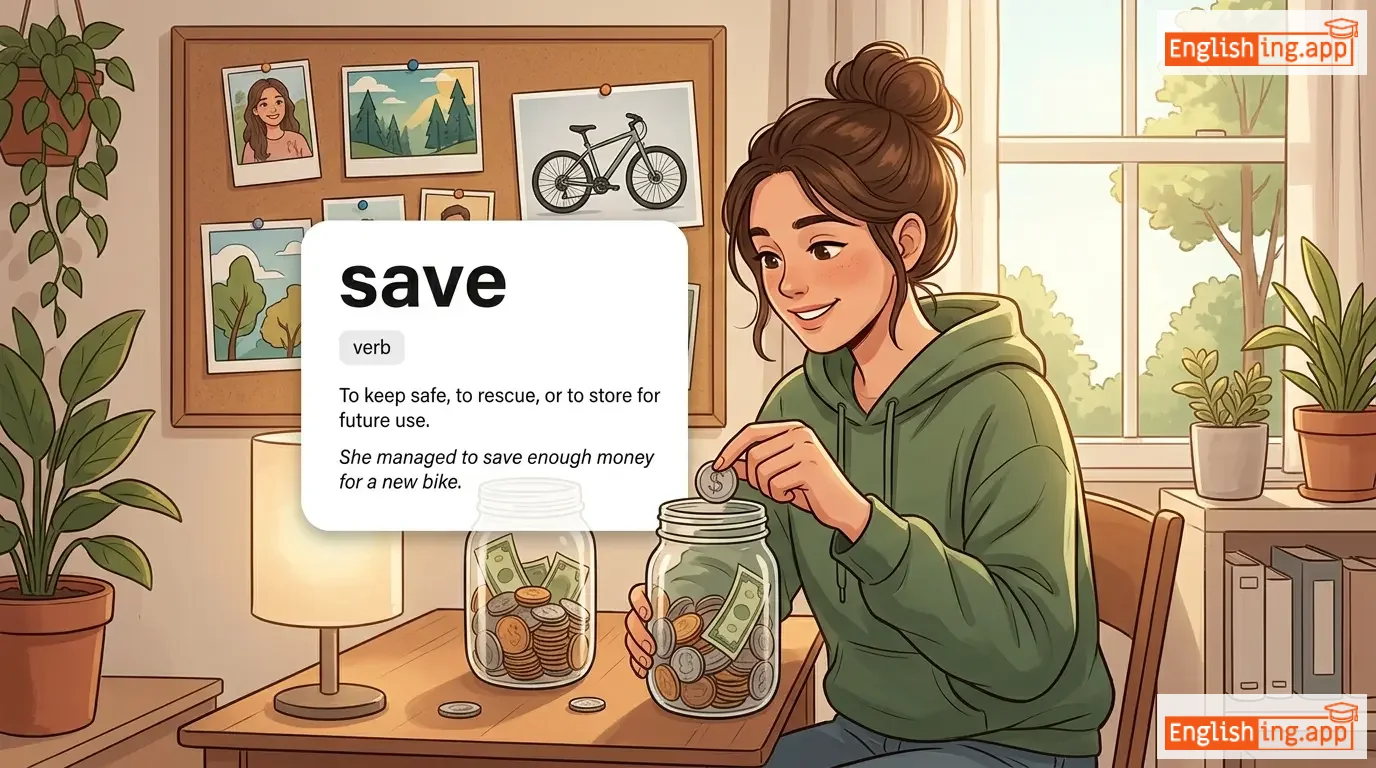
To keep safe, to rescue, or to store for future use.
••••••
|
She managed to save enough money for a new bike.
シー マネージド トゥ セイヴ イナフ マネー フォー ア ニュー バイク。
••••••
|
彼女は新しい自転車のために十分なお金を貯めることができた。
Kanojo wa atarashī jitensha no tame ni jūbun na okane o tameru koto ga dekita.
••••••
|
save the day
セイヴ ザ デイ
••••••
|
To prevent failure or disaster at the last moment.
••••••
|
その日を救う
sono hi o sukū
••••••
|
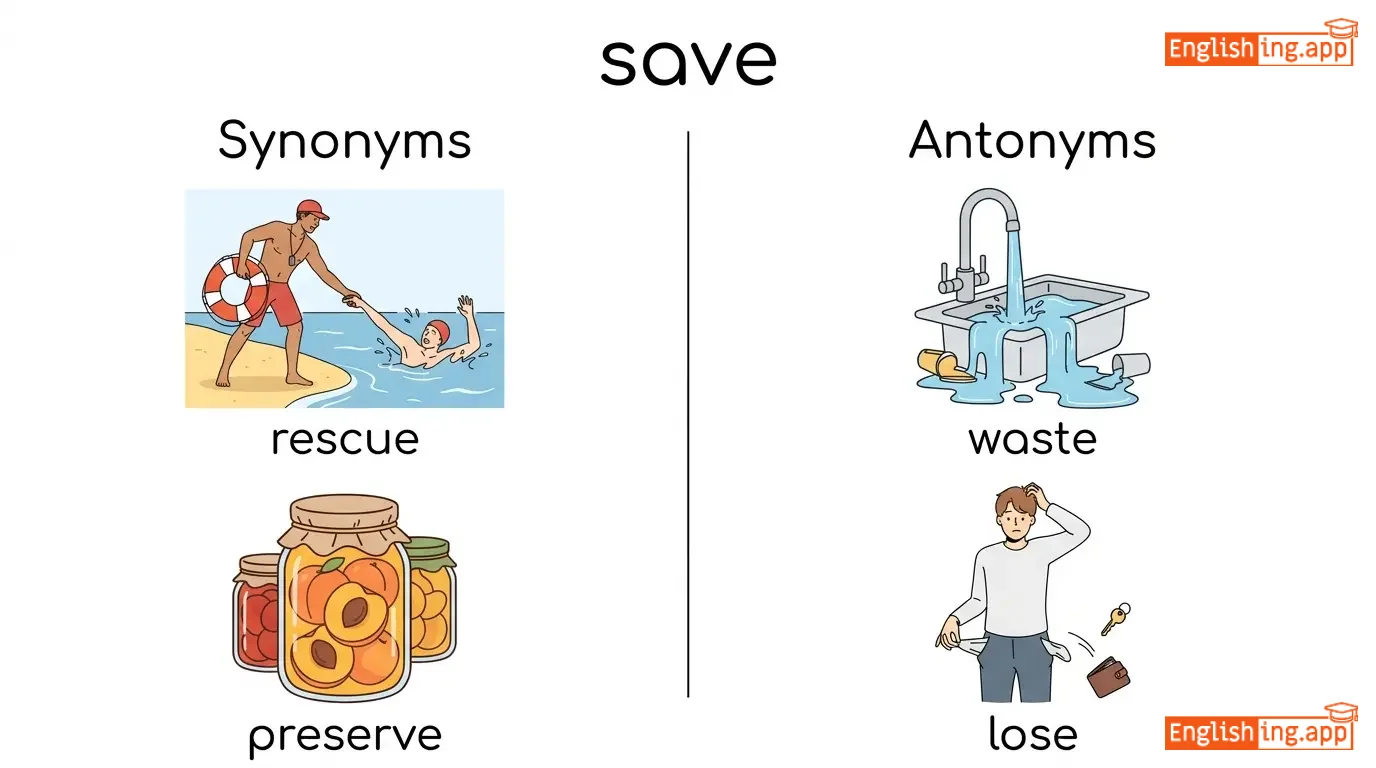
rescue, preserve, protect, conserve, store
••••••
|
waste, lose, spend
••••••
|
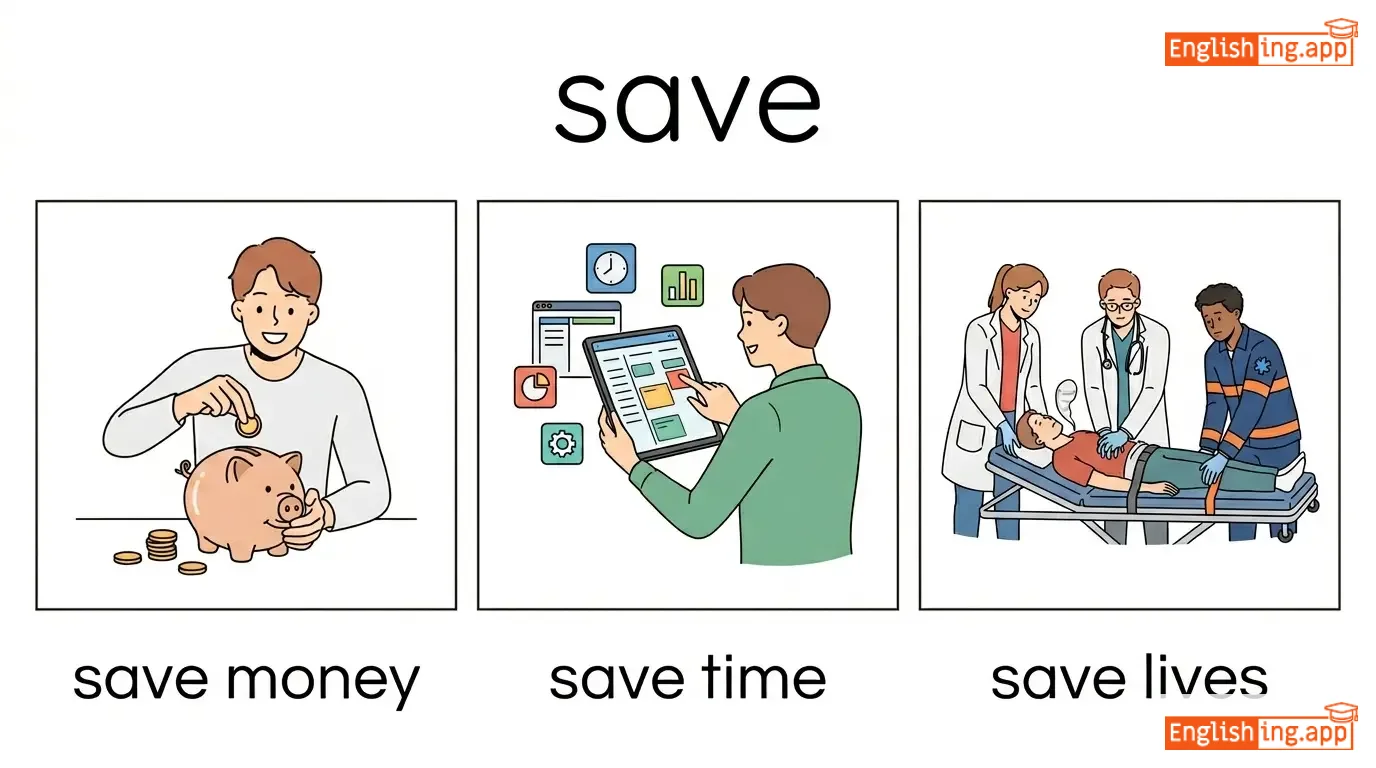
save money, save time, save lives, save energy
••••••
|
Saveはコンピュータでファイルを保存するようなものです。救うまたは保存する。
••••••
|
|
💰
••••••
|
/ˈseɪvɪŋ/
noun
(セイヴィング)
••••••
|
|
貯金
chokin
••••••
|
- •••••• | - •••••• | - •••••• | - •••••• |
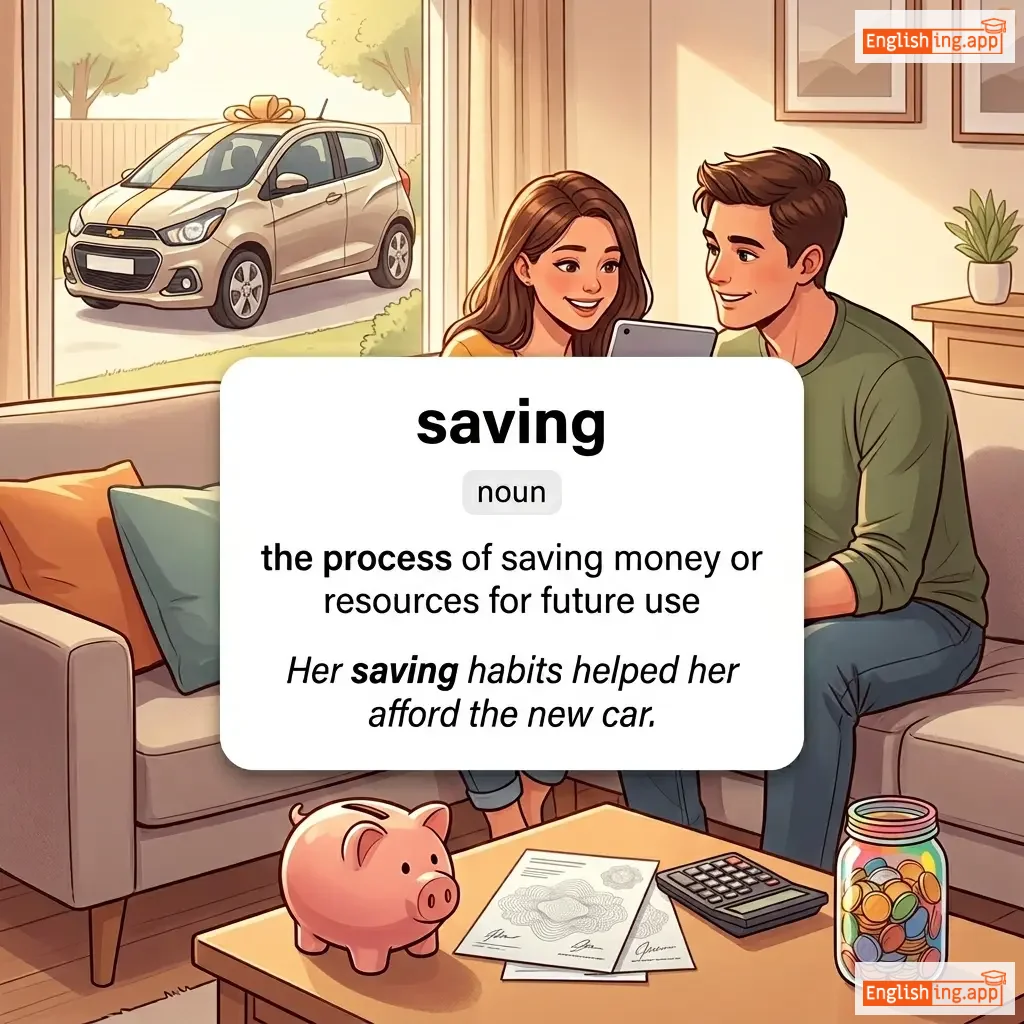
the process of saving money or resources for future use
••••••
|
Her saving habits helped her afford the new car. |
彼女の貯金習慣は新しい車を買うのに役立ちました。
Kanojo no chokin shūkan wa atarashī kuruma o kau no ni yakudachimashita.
••••••
|
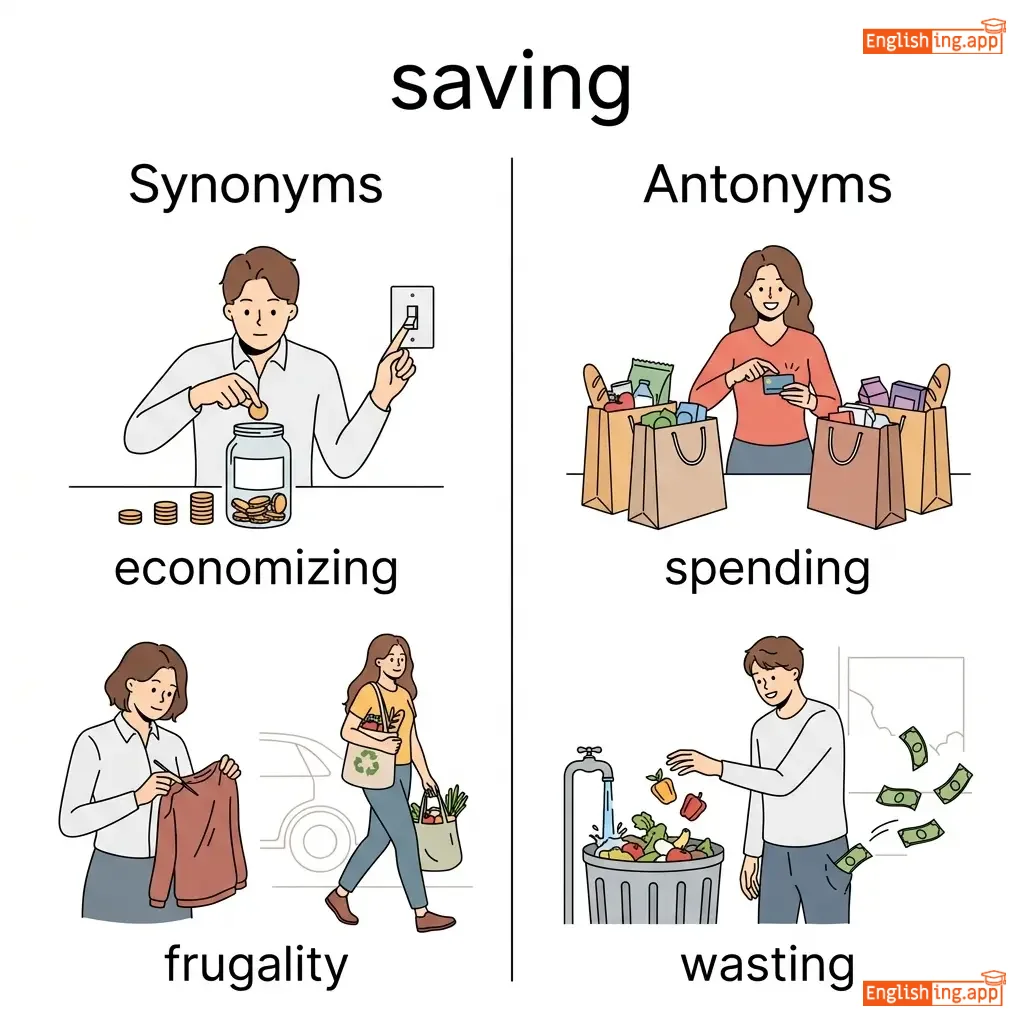
- •••••• | - •••••• | - •••••• |
economizing, frugality, saving money, thrift
••••••
|
spending, wasting, squandering
••••••
|
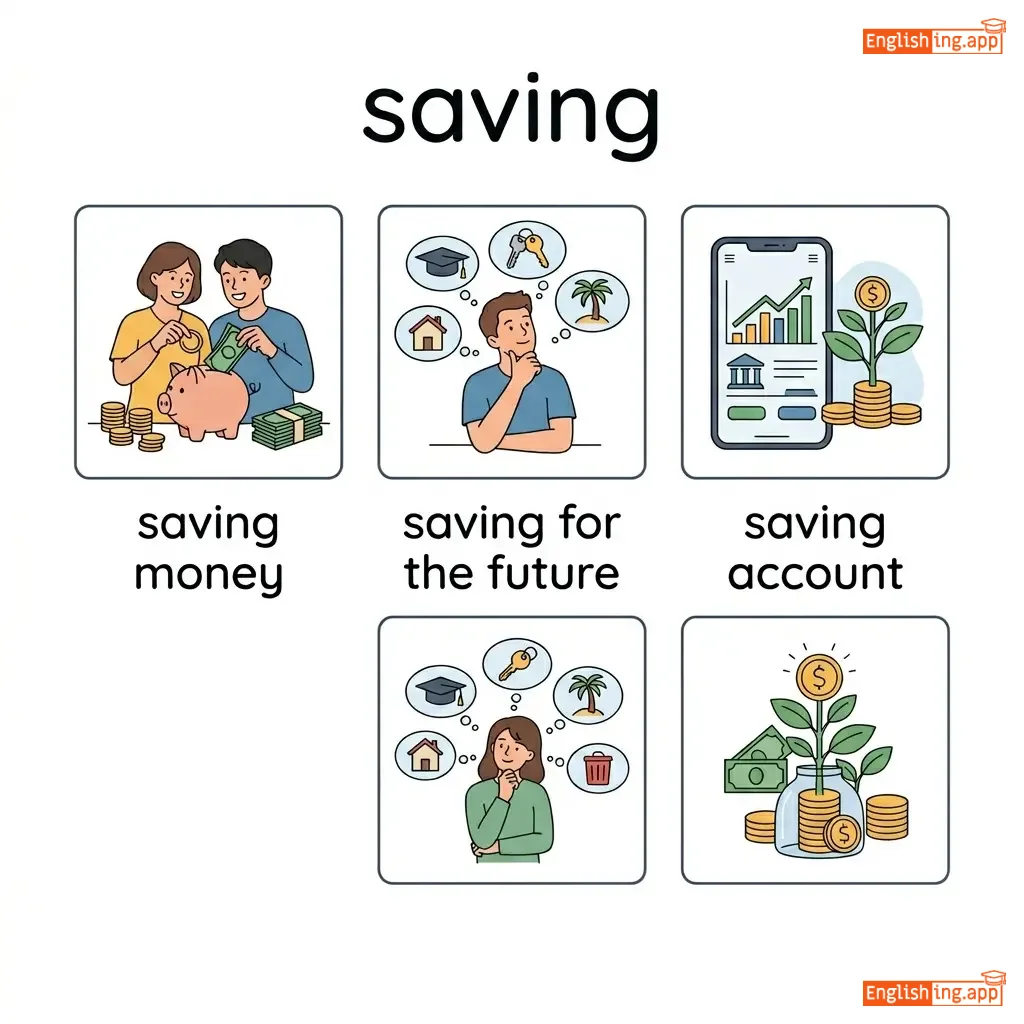
saving money, saving for the future, saving account
••••••
|
貯金して未来に備えよう - 節約して理想の生活を手に入れよう
••••••
|
|
💬
••••••
|
/seɪ/
verb
(セイ)
••••••
|

|
言う
iu
••••••
|
said
セイド
••••••
|
said
セイド
••••••
|
says
セイズ
••••••
|
saying
セイイング
••••••
|
to speak words; to express something in words
••••••
|
She said hello to me.
シー セイド ハロー トゥー ミー。
••••••
|
彼女は私にハローと言った。
Kanojo wa watashi ni haro to itta.
••••••
|
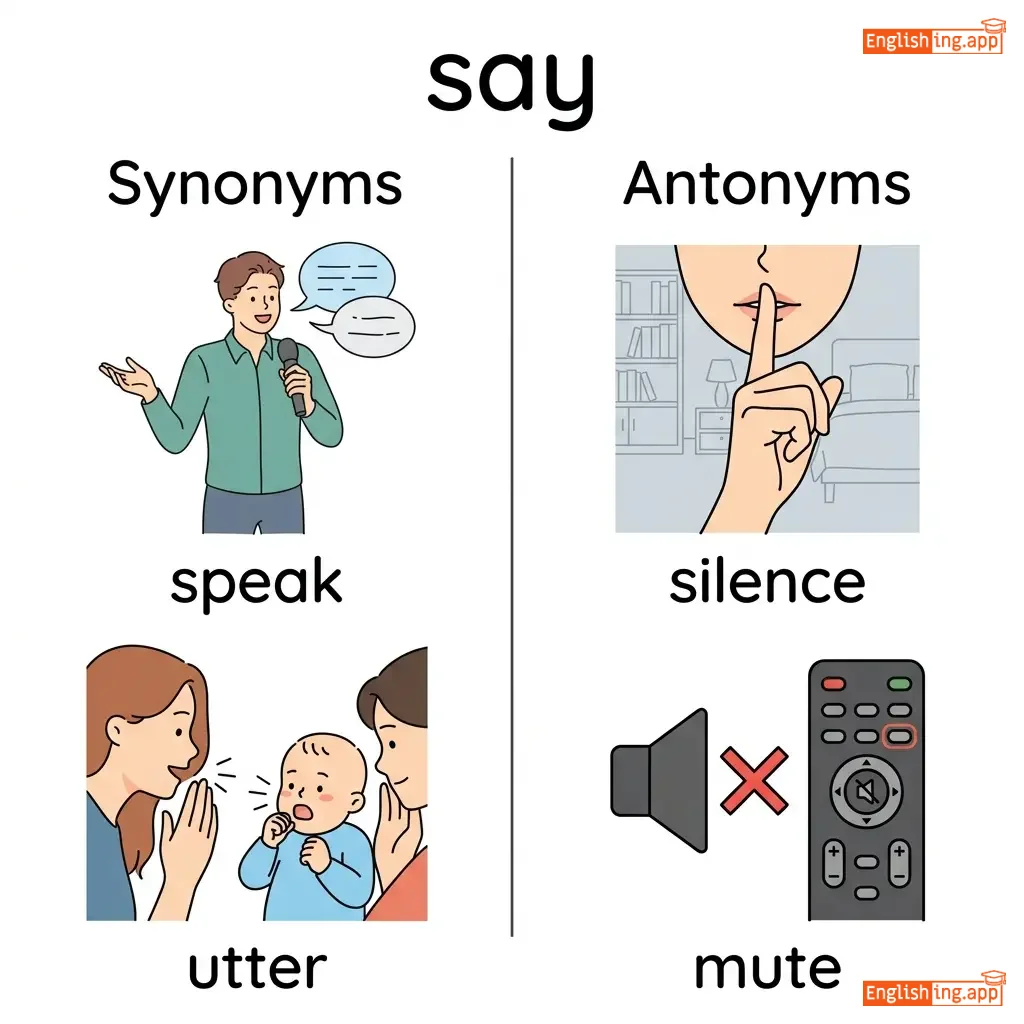
- •••••• | - •••••• | - •••••• |
speak, tell, express, utter
••••••
|
listen, hear, remain silent
••••••
|
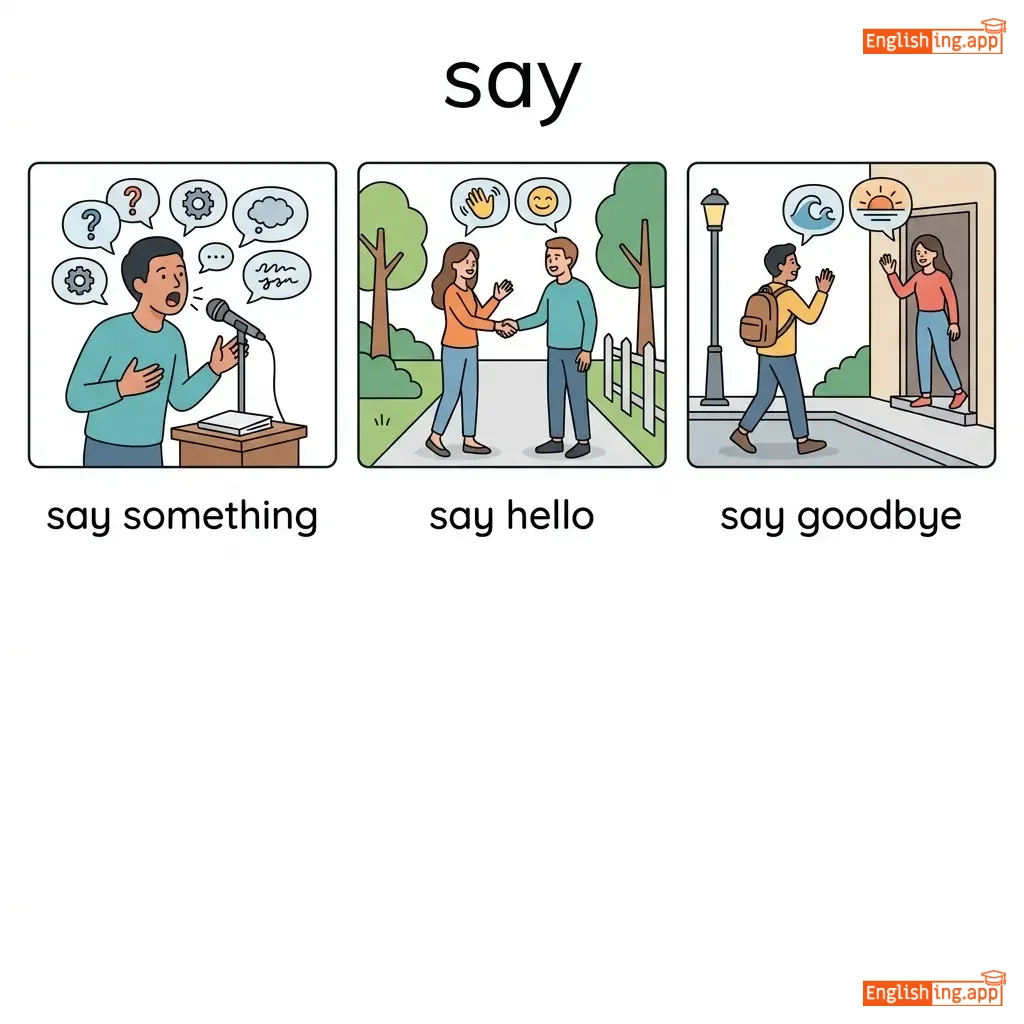
say hello, say goodbye, say something, say yes, say no, say please
••••••
|
In Japanese, 'iu' (言う) sounds like 'you'—when you say something, you 'iu' it.
••••••
|
|
📏
••••••
|
/skeɪl/
noun/verb
(スケール)
••••••
|
- •••••• |
スケール / サイズ調整
sukēru / saizu chōsei
••••••
|
scaled
スケールド
••••••
|
scaled
スケールド
••••••
|
scales
スケールズ
••••••
|
scaling
スケーリング
••••••
|
A system of ordered marks used for measurement; also means to climb or to adjust in size.
••••••
|
The company plans to scale its operations globally.
その会社は世界規模で事業を拡大する予定です。
••••••
|
その会社は世界規模で事業を拡大する予定です。
Sono kaisha wa sekaikibo de jigyō o kakudai suru yotei desu.
••••••
|
tip the scales
天秤を傾ける
••••••
|
to influence the outcome of a situation
••••••
|
天秤を傾ける
tenbin o katamukeru
••••••
|
measure, climb, grade, ratio, expand
••••••
|
shrink, reduce, decrease
••••••
|
scale up, scale down, scale of measurement, scale a mountain
••••••
|
スケールは測定やサイズ調整を意味します—スケール = サイズコントロールを覚えておきましょう。
••••••
|
|
😱
••••••
|
/ˈskændəl/
noun
(スキャンダル)
••••••
|
- •••••• |
スキャンダル
sukyandaru
••••••
|
- •••••• | - •••••• | - •••••• | - •••••• |
an event or action that causes public outrage or damage to one's reputation
••••••
|
The politician's affair became a public scandal. |
その政治家の不倫は公然のスキャンダルとなった。
Sono seijika no fukin wa kouzen no sukyandaru to natta.
••••••
|
a scandalous affair |
an affair that causes a lot of public outrage
••••••
|
スキャンダラスな関係
sukyandarasuna kankei
••••••
|
controversy, disgrace, outrage, shame
••••••
|
honor, respect
••••••
|
public scandal, political scandal, media scandal, financial scandal
••••••
|
Scandal—like scanning everything—watch out for people knowing your secrets!
••••••
|
|
😱
••••••
|
/skeər/
verb
(sukēa)
••••••
|
- •••••• |
怖がらせる
kowagaraseru
••••••
|
scared
osoreta
••••••
|
scared
osoreta
••••••
|
scares
osoreteimasu
••••••
|
scaring
osoreru
••••••
|
to frighten someone or make them feel afraid
••••••
|
The loud noise scared the baby.
大きな音が赤ちゃんを怖がらせた。
••••••
|
大きな音が赤ちゃんを怖がらせた。
Ōkina oto ga akachan o kowagaraseta.
••••••
|
scare the hell out of
ひどく怖がらせる
••••••
|
to frighten someone very badly
••••••
|
誰かをひどく怖がらせる
dareka o hidoku kowagaraseru
••••••
|
frighten, terrify, startle, alarm, shock
••••••
|
comfort, calm, reassure
••••••
|
scare off, scare away, big scare, sudden scare
••••••
|
Scareは怖がらせる — 恐怖映画で怖がった想像をしてみて!
••••••
|

