|
表情符号
|
单词 | Images | 翻译 | 过去时 | 过去分词 | 第三人称单数 | 动名词 | 含义 | 例句 | 例句翻译 | 示例表达 | 示例表达含义 | 示例表达翻译 | 同义词 | 反义词 | 搭配词 | 助记符 |
|---|---|---|---|---|---|---|---|---|---|---|---|---|---|---|---|---|---|
|
😠
••••••
|
/ˈruːdli/
adverb
(鲁德利)
••••••
|
- •••••• |
无礼地
wuli de
••••••
|
- •••••• | - •••••• | - •••••• | - •••••• |
in an impolite or discourteous manner
••••••
|
He rudely interrupted the speaker during the presentation.
他鲁德利打断了演讲者的发言。
••••••
|
他在演讲期间无礼地打断了发言者。
Ta zai yanjiang qijian wuli de da duan le fayan zhe.
••••••
|
- •••••• | - •••••• | - •••••• |
impolitely, discourteously, harshly, abruptly
••••••
|
politely, courteously, kindly, respectfully
••••••
|
rudely interrupted, rudely awakened, rudely dismissed
••••••
|
Rude sounds like 鲁 (Lu) → 无礼地 means rudely
••••••
|
|
💔
••••••
|
/ˈruːɪn/
verb
(ruīn)
••••••
|
- •••••• |
毁坏
huǐ huài
••••••
|
ruined
ruìnd
••••••
|
ruined
ruìnd
••••••
|
ruins
ruīns
••••••
|
ruining
ruīníng
••••••
|
to destroy or severely damage something so that it no longer works or is of no use.
••••••
|
Heavy rain ruined the wedding decorations.
暴雨毁坏了婚礼装饰。
••••••
|
暴雨毁坏了婚礼装饰。
Bàoyǔ huǐhuài le hūnlǐ zhuāngshì.
••••••
|
go to ruin
走向毁灭
••••••
|
to deteriorate or be destroyed over time
••••••
|
走向毁灭
zǒu xiàng huǐ miè
••••••
|
destroy, wreck, spoil, devastate, damage
••••••
|
build, repair, restore
••••••
|
ruin plans, ruin life, ruin relationship, ruin reputation
••••••
|
记住,任何事物没有照顾会被毁坏,变成废墟。
••••••
|
|
📏
••••••
|
/ruːl/
noun
(rù'ěr)
••••••
|
- •••••• |
规则
guīzé
••••••
|
- •••••• | - •••••• | - •••••• | - •••••• |
an accepted principle or instruction that states what is allowed or what must be done.
••••••
|
There are strict rules about safety in the lab. |
实验室里有严格的安全规则。
shíyànshì lǐ yǒu yángé de ānquán guīzé.
••••••
|
break the rules |
to disobey or violate the rules
••••••
|
打破规则
dǎpò guīzé
••••••
|
law, regulation, guideline, command, principle
••••••
|
chaos, freedom, disorder
••••••
|
follow the rule, make a rule, strict rule, basic rule
••••••
|
打破规则,你就被学校踢出去!
••••••
|
|
👑
••••••
|
/ˈruːlər/
noun
(鲁勒)
••••••
|
- •••••• |
统治者; 尺子
tongzhi zhe; chizi
••••••
|
- •••••• | - •••••• | - •••••• | - •••••• |
A person who governs or controls a country; a straight-edged tool used for measuring or drawing lines
••••••
|
The ruler drew a straight line on the paper while the king was a powerful ruler of his kingdom.
鲁勒在纸上画了一条直线,而国王是他王国的强大统治者。
••••••
|
鲁勒在纸上画了一条直线,而国王是他王国的强大统治者。
Lu le zai zhi shang hua le yi tiao zhi xian, er guo wang shi ta wang guo de qiang da tong zhi zhe.
••••••
|
rule of thumb
经验法则
••••••
|
A general principle based on experience rather than a strict rule
••••••
|
经验法则
jingyan faze
••••••
|
sovereign, monarch, leader, measuring stick, guide
••••••
|
subject, citizen, follower
••••••
|
absolute ruler, pencil ruler, steel ruler, ruler of the country
••••••
|
鲁勒 👑 = 统治者或测量尺。
••••••
|
|
⚖️
••••••
|
/ˈruːlɪŋ/
noun
(ruling)
••••••
|
- •••••• |
裁决
caijue
••••••
|
- •••••• | - •••••• | - •••••• | - •••••• |
an official decision made by a judge or authority.
••••••
|
The court’s ruling favored the defendant. |
法院的裁决对被告有利。
fayuan de caijue dui beigao youli.
••••••
|
ruling party |
the political party currently in power
••••••
|
执政党
zhizhengdang
••••••
|
decision, verdict, judgment, decree, resolution
••••••
|
appeal, reversal
••••••
|
court ruling, final ruling, government ruling, new ruling
••••••
|
法官做出裁决 (ruling),命运就此定了!
••••••
|
|
🗣️
••••••
|
/ˈruːmər/
noun
(rúmó)
••••••
|
- •••••• |
谣言
yaoyan
••••••
|
- •••••• | - •••••• | - •••••• | - •••••• |
a currently circulating story or report of uncertain or doubtful truth.
••••••
|
There’s a rumor that the company will merge next year. |
有传闻说公司明年将合并。
yǒu chuánwén shuō gōngsī míngnián jiāng hébìng.
••••••
|
spread a rumor |
to share unverified information with others
••••••
|
传播谣言
chuánbō yáoyán
••••••
|
gossip, hearsay, speculation, talk, buzz
••••••
|
fact, truth, confirmation
••••••
|
false rumor, spread rumor, rumor mill, wild rumor
••••••
|
谣言像风一样迅速传播。
••••••
|
|
🗣️
••••••
|
/ˈruːmər/
noun
(流言)
••••••
|
- •••••• |
流言; 八卦; 新闻
liúyán
••••••
|
- •••••• | - •••••• | - •••••• | - •••••• |
a currently circulating story or report of uncertain or doubtful truth; gossip
••••••
|
There's a rumour that the company will close next month.
有传言说公司将在下个月关闭。
••••••
|
有传言说公司将在下个月关闭。
yǒu chuányán shuō gōngsī jiāng zài xià gè yuè guānbì
••••••
|
- •••••• | - •••••• | - •••••• |
gossip, hearsay, speculation, whisper
••••••
|
fact, truth, certainty, confirmation
••••••
|
spread rumour, false rumour, rumour mill
••••••
|
Liúyán sounds like 'liu' (flow) and 'yan' (word), making it easy to remember as gossip.
••••••
|
|
🏃
••••••
|
/rʌn/
verb
(海皮尼斯)
••••••
|

|
幸福
xingfu
••••••
|
ran
••••••
|
run
••••••
|
runs
••••••
|
running
••••••
|
to move swiftly on foot by taking steps faster than walking
••••••
|
He runs every morning to stay fit. |
当她收到奖项时,她无法掩饰自己的幸福。
Dāng tā shōudào jiǎngxiàng shí, tā wúfǎ yǎnshì zìjǐ de xìngfú.
••••••
|
run out of time |
to have no more time left to complete something
••••••
|
追寻幸福
zhuīxún xìngfú
••••••
|
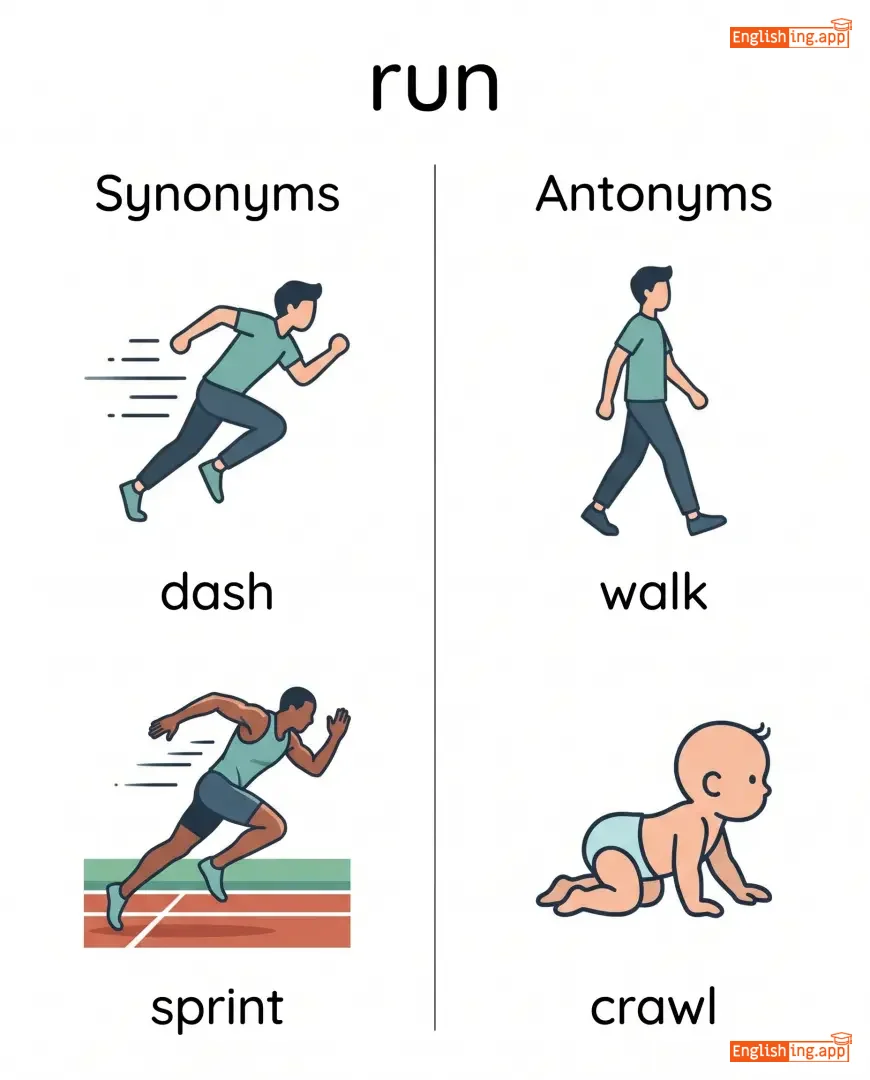
dash, sprint, jog, race, hurry
••••••
|
walk, crawl, stop
••••••
|
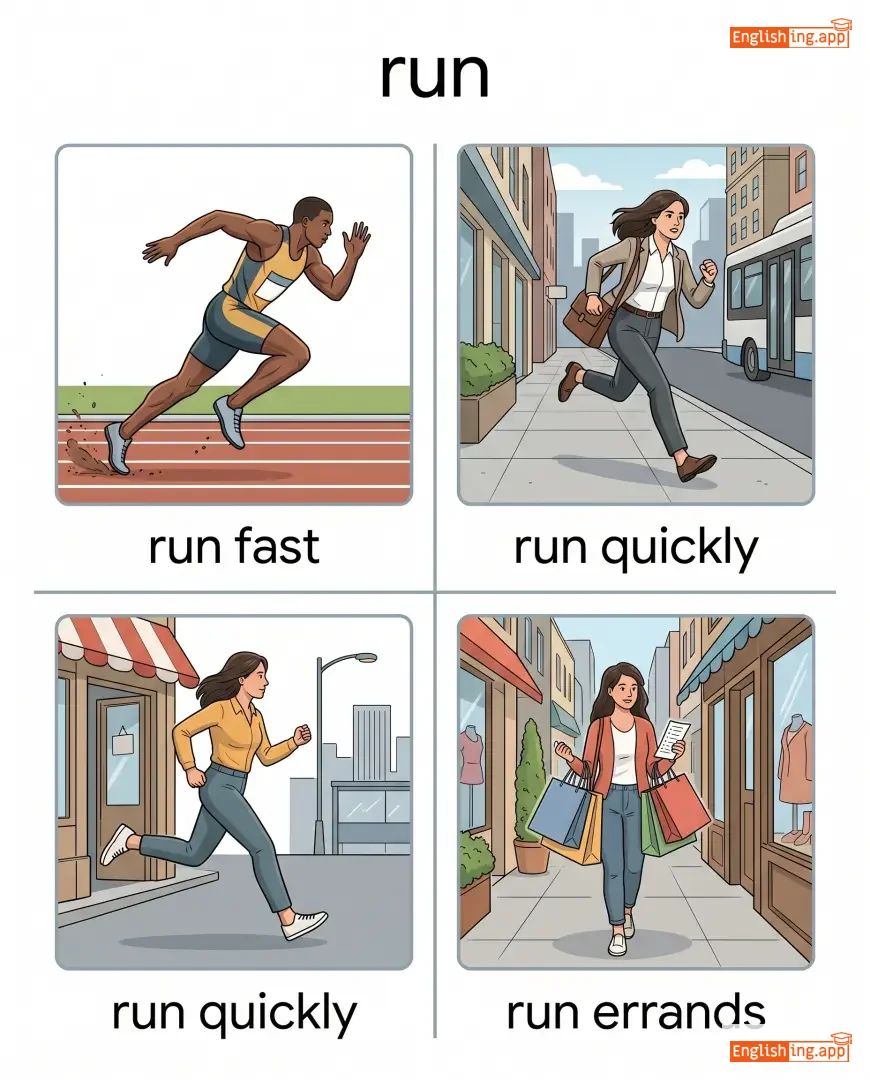
run fast, run quickly, run errands, run away, run business
••••••
|
幸福 = 快乐的感觉
••••••
|
|
🏃♂️
••••••
|
/ˈrʌnɪŋ/
noun
(rʌnɪŋ)
••••••
|
- •••••• |
跑步
paobu
••••••
|
- •••••• | - •••••• | - •••••• |
running
rʌnɪŋ
••••••
|
the action or sport of running
••••••
|
Running every morning keeps me healthy.
Running every morning keeps me healthy.
••••••
|
每天早晨跑步保持我健康。
Meitian zaocheng paobu baochi wo jiankang.
••••••
|
in the long run
in the long run
••••••
|
after a long time; eventually
••••••
|
从长远来看
cong changyuan laikan
••••••
|
jogging, sprinting, racing, exercise
••••••
|
resting, walking
••••••
|
go running, enjoy running, long-distance running, running shoes
••••••
|
Running意味着跑步 — 跑步直到你到达'ing'!
••••••
|
|
🌾
••••••
|
/ˈrʊərəl/
adjective
(乡村的)
••••••
|
- •••••• |
乡村的
xiangcun de
••••••
|
- •••••• | - •••••• | - •••••• | - •••••• |
relating to the countryside rather than the town
••••••
|
He prefers the peaceful life of a rural village. |
他更喜欢乡村村庄宁静的生活。
Tā gèng xǐhuān xiāngcūn cūnzhuāng níngjìng de shēnghuó.
••••••
|
rural development |
improvement of the countryside areas
••••••
|
乡村发展
xiāngcūn fāzhǎn
••••••
|
countryside, pastoral, rustic, provincial
••••••
|
urban, city
••••••
|
rural area, rural life, rural economy, rural community
••••••
|
Rural代表乡村,想象一个寂静的乡村,而城市充满了喧嚣。
••••••
|
|
🏃
••••••
|
/rʌʃ/
verb
(rash)
••••••
|
- •••••• |
匆忙
cōngmáng
••••••
|
rushed
rasht
••••••
|
rushed
rasht
••••••
|
rushes
rashes
••••••
|
rushing
rushing
••••••
|
to move or act with great speed or urgency
••••••
|
She had to rush to the meeting to make it on time.
她必须赶紧去会议才能准时到达。
••••••
|
她必须赶紧去会议才能准时到达。
Tā bìxū gǎnjǐn qù huìyì cáinéng zhǔnshí dào dá.
••••••
|
rush hour
高峰时段
••••••
|
the time when traffic is heaviest, usually when people are going to or leaving work
••••••
|
高峰时段
gāofēng shíduàn
••••••
|
hurry, race, speed, accelerate
••••••
|
slow down, delay, dawdle
••••••
|
rush to, rush in, rush hour, rush through
••••••
|
不要匆忙,高峰时段来了!- Don’t rush, rush hour is coming!
••••••
|
|
🇷🇺
••••••
|
/ˈrʌʃən/
adjective
••••••
|
- •••••• | - •••••• | - •••••• | - •••••• | - •••••• | - •••••• |
relating to Russia, its people, or its language
••••••
|
She is studying the Russian language at university. |
- •••••• | - •••••• | - •••••• | - •••••• |
Russian Federation, Slavonic, Eastern European
••••••
|
- •••••• |
Russian language, Russian culture, Russian literature
••••••
|
No •••••• |
|
📦
••••••
|
/sæk/
verb
(sākè)
••••••
|
- •••••• |
解雇
jiěgù
••••••
|
sacked
sākèd
••••••
|
sacked
sākèd
••••••
|
sacks
sākè sī
••••••
|
sacking
sākèng
••••••
|
to dismiss from a job; to put something in a sack
••••••
|
The company sacked him for poor performance.
公司因为表现不佳解雇了他。
••••••
|
公司因为表现不佳解雇了他。
Gōngsī yīnwèi biǎoxiàn bù jiā jiěgù le tā.
••••••
|
- •••••• | - •••••• | - •••••• |
fire, dismiss, discharge, terminate
••••••
|
hire, employ, recruit, appoint
••••••
|
sack employee, get the sack, sack someone, sack goods
••••••
|
Sack = 被解雇,或者把东西放进袋子里。
••••••
|
|
🙏
••••••
|
/ˈseɪkrɪd/
adjective
(赛克瑞德)
••••••
|
- •••••• |
神圣的
shensheng de
••••••
|
- •••••• | - •••••• | - •••••• | - •••••• |
connected with God or a religion and considered holy or deserving respect
••••••
|
The temple is a sacred place for the community.
寺庙是社区的圣地。
••••••
|
寺庙是社区的圣地。
Sìmiào shì shèqū de shèngdì.
••••••
|
sacred cow
神圣的牛
••••••
|
something considered immune from criticism or questioning
••••••
|
神圣的牛
shénshèng de niú
••••••
|
holy, divine, blessed, revered
••••••
|
profane, secular, unholy
••••••
|
sacred place, sacred duty, sacred text, sacred tradition
••••••
|
Sacred 意味着神圣的,就像神圣的地方或神圣的牛。
••••••
|
|
🕯️
••••••
|
/ˈsækrɪfaɪs/
noun, verb
••••••
|


|
- •••••• |
sacrificed
••••••
|
sacrificed
••••••
|
sacrifices
••••••
|
sacrificing
••••••
|
To give up something valuable for the sake of others or a higher purpose.
••••••
|
Parents often sacrifice their own comfort for their children. |
- •••••• |
make a sacrifice |
to give up something important for the benefit of others
••••••
|
- •••••• |
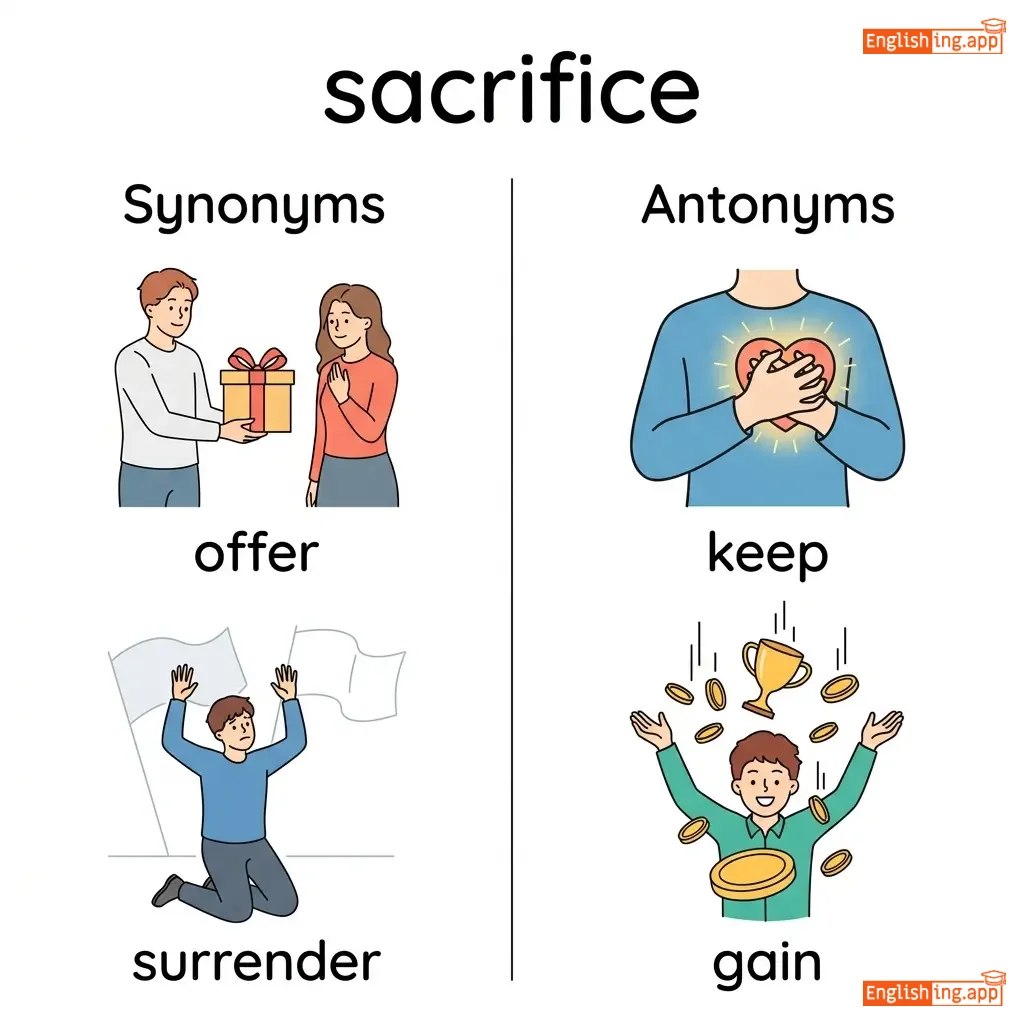
offer, surrender, relinquish, devotion, giving up
••••••
|
keep, gain, selfishness
••••••
|
make a sacrifice, ultimate sacrifice, personal sacrifice, sacrifice for
••••••
|
No •••••• |
|
😢
••••••
|
/sæd/
adjective
(萨德)
••••••
|
- •••••• |
伤心
shangxin
••••••
|
- •••••• | - •••••• | - •••••• | - •••••• |
feeling or showing sorrow; unhappy
••••••
|
She felt sad after hearing the bad news. |
听到坏消息后,她感到伤心。
Tīng dào huài xiāoxī hòu, tā gǎndào shāngxīn.
••••••
|
sad but true |
something that is unfortunate but factual
••••••
|
伤心但真实
shāngxīn dàn zhēnshí
••••••
|
unhappy, sorrowful, depressed, gloomy
••••••
|
happy, joyful, cheerful
••••••
|
sad face, sad story, feel sad, sad news
••••••
|
Sad 意味着伤心—当你听到坏消息时,你会伤心。
••••••
|
|
😢
••••••
|
/ˈsædli/
adverb
(萨德利)
••••••
|
- •••••• |
悲伤地
beishang de
••••••
|
- •••••• | - •••••• | - •••••• | - •••••• |
in a sorrowful or unhappy manner
••••••
|
She sadly waved goodbye as the train departed.
火车开走时,她悲伤地挥手告别。
••••••
|
火车开走时,她悲伤地挥手告别。
Huoche kaizou shi, ta beishang de huishou gaobie.
••••••
|
sadly ever after
悲伤地永远之后
••••••
|
used ironically to indicate a disappointing ending
••••••
|
悲伤地永远之后
beishang de yongyuan zhihou
••••••
|
unhappily, sorrowfully, regretfully, mournfully
••••••
|
happily, joyfully
••••••
|
sadly missed, sadly disappointed, sadly mistaken
••••••
|
Beishang de = sadly,记住“悲伤”。
••••••
|
|
😢
••••••
|
/ˈsæd.nəs/
noun
(sādnes)
••••••
|
- •••••• |
悲伤,痛苦,忧郁
bēishāng, tòngkǔ, yōuyù
••••••
|
- •••••• | - •••••• | - •••••• | - •••••• |
feeling of sorrow, unhappiness, or grief
••••••
|
Her sadness was evident after hearing the bad news.
她听到坏消息后,她的悲伤显而易见。
••••••
|
她听到坏消息后,她的悲伤显而易见。
Tā tīngdào huài xiāoxī hòu, tā de bēishāng xiǎn'ér yìjiàn.
••••••
|
- •••••• | - •••••• | - •••••• |
sorrow, grief, melancholy, depression
••••••
|
happiness, joy, cheerfulness, delight
••••••
|
deep sadness, overwhelming sadness, sadness and grief
••••••
|
悲伤来自坏消息
••••••
|
|
🔒
••••••
|
/seɪf/
noun
(sāi fū)
••••••
|
- •••••• |
保险箱; 保护
bǎoxiǎn xiāng; bǎohù
••••••
|
- •••••• | - •••••• | - •••••• | - •••••• |
secure container for storing valuables; protection from danger
••••••
|
He kept his important documents in the office safe. |
他把重要文件放在办公室的保险箱里。
Tā bǎ zhòngyào wénjiàn fàng zài bàngōngshì de bǎoxiǎn xiāng lǐ.
••••••
|
- •••••• | - •••••• | - •••••• |
vault, strongbox, security, protection
••••••
|
danger, risk, threat, unsafe
••••••
|
bank safe, fire safe, combination safe, safe deposit
••••••
|
像保险箱一样,它提供保护,像防止危险一样。
••••••
|
|
🛡️
••••••
|
/ˈseɪfli/
adverb
(séifēi)
••••••
|
- •••••• |
安全地
ānquán de
••••••
|
- •••••• | - •••••• | - •••••• | - •••••• |
in a way that is not dangerous or likely to cause harm
••••••
|
The children crossed the road safely. |
孩子们安全地过了马路。
Háizimen ānquán de guòle mǎlù.
••••••
|
safe and sound |
unharmed and in good condition
••••••
|
安全无恙
ānquán wú yàng
••••••
|
securely, harmlessly, cautiously, carefully
••••••
|
dangerously, recklessly
••••••
|
arrive safely, drive safely, travel safely, safely return
••••••
|
Safely 就是安全地——就像你系上安全带开车一样!
••••••
|
|
⚠️
••••••
|
/ˈseɪf.ti/
noun
(sāi fēi tī)
••••••
|
- •••••• |
安全
anquan
••••••
|
- •••••• | - •••••• | - •••••• | - •••••• |
condition of being protected from danger, risk, or injury
••••••
|
The company prioritizes workplace safety above all else. |
公司将工作场所的安全置于一切之上。
Gōngsī jiāng gōngzuò chǎngsuǒ de ānquán zhì yú yīqiè zhī shàng
••••••
|
- •••••• | - •••••• | - •••••• |
security, protection, welfare, well-being
••••••
|
danger, hazard, risk, peril
••••••
|
safety measures, public safety, safety regulations, road safety
••••••
|
安全 = Safety, 在安全中你是最安全的
••••••
|
|
⛵
••••••
|
/seɪl/
verb
(seil)
••••••
|
- •••••• |
扬帆旅行
yang fan lvxing
••••••
|
sailed
seild
••••••
|
sailed
seild
••••••
|
sails
seils
••••••
|
sailing
seiling
••••••
|
to travel on water in a boat or ship using sails or by wind power
••••••
|
They sailed across the Atlantic Ocean last summer.
他们去年夏天横渡了大西洋。
••••••
|
他们去年夏天横渡了大西洋。
tamen qunian xiatian hengdu le daxiyang.
••••••
|
set sail
起航
••••••
|
to begin a journey by sea
••••••
|
启航
qihang
••••••
|
navigate, voyage, cruise, drift, glide
••••••
|
anchor, dock
••••••
|
sail away, sail across, sail on, sail through
••••••
|
Sail 意味着‘乘帆航行’,想象一下‘海风把我吹走’,航行开始了!
••••••
|
|
⛵
••••••
|
/ˈseɪ.lɪŋ/
noun, verb
(赛灵)
••••••
|
- •••••• |
帆船运动
fanchuan yundong
••••••
|
sailed
赛尔德
••••••
|
sailed
赛尔德
••••••
|
sails
赛尔斯
••••••
|
sailing
赛灵
••••••
|
The act of traveling in a boat or ship using sails; the sport or activity of navigating a boat with sails.
••••••
|
We went sailing on the lake during the summer.
我们夏天在湖上去赛灵。
••••••
|
我们夏天在湖上去帆船运动。
Women xiatian zai hu shang qu fanchuan yundong
••••••
|
plain sailing
顺利航行
••••••
|
something that is easy and without problems
••••••
|
顺利航行
shunli hangxing
••••••
|
boating, yachting, navigating, cruising
••••••
|
anchoring, docking
••••••
|
sailing boat, sailing trip, sailing club, sailing race
••••••
|
Picture '赛灵' as smooth 'fanchuan yundong' across a Chinese lake.
••••••
|
|
⛵
••••••
|
/ˈseɪ.lər/
noun
(sailor)
••••••
|
- •••••• |
水手
shuǐ shǒu
••••••
|
- •••••• | - •••••• | - •••••• | - •••••• |
a person who works on a ship or boat; a member of a navy
••••••
|
The experienced sailor navigated the ship through the storm.
经验丰富的水手驾船穿越风暴。
••••••
|
经验丰富的水手驾船穿越风暴。
jīng yàn fēng fù de shuǐ shǒu jià chuán chuān yuè fēng bào.
••••••
|
- •••••• | - •••••• | - •••••• |
seaman, mariner, seafarer
••••••
|
landlubber, passenger
••••••
|
experienced sailor, navy sailor, merchant sailor
••••••
|
Sailor – 'Shuǐ shǒu' is the Chinese word for sailor, think of a sailor navigating through a storm!
••••••
|
|
😇
••••••
|
/seɪnt/
noun
(圣)
••••••
|
- •••••• |
被认为圣洁或道德的人;非常友善或有耐心的人
bèi rènwéi shèngjié huò dàodé de rén; fēicháng yǒushàn huò yǒu nàixīn de rén
••••••
|
- •••••• | - •••••• | - •••••• | - •••••• |
person recognized as holy or virtuous; very kind or patient person
••••••
|
Mother Teresa was declared a saint by the Catholic Church.
特雷莎修女被天主教教会宣布为圣人。
••••••
|
特雷莎修女被天主教教会宣布为圣人。
tè léi shā xiū nǚ bèi tiān zhǔ jiào jiào huì xuān bù wéi shèng rén.
••••••
|
- •••••• | - •••••• | - •••••• |
holy person, martyr, angel, paragon
••••••
|
sinner, devil, villain, criminal
••••••
|
patron saint, saint's day, canonized saint
••••••
|
圣人由教会宣布并认可
••••••
|
|
❤️
••••••
|
/seɪk/
noun
(seik)
••••••
|
- •••••• |
利益
lìyì
••••••
|
- •••••• | - •••••• | - •••••• | - •••••• |
for the purpose or reason of something
••••••
|
He did it for the sake of his family.
他是为了家人的利益这么做的。
••••••
|
他是为了家人的利益这么做的。
Tā shì wèile jiārén de lìyì zhème zuò de.
••••••
|
for the sake of
为了
••••••
|
for the purpose of achieving something
••••••
|
为了
wèi le
••••••
|
purpose, reason, benefit, interest
••••••
|
hindrance, obstacle, disadvantage
••••••
|
for the sake of, for the sake of love, for the sake of peace
••••••
|
Sake-为了家人的利益 - 做这件事是为了家人的利益!
••••••
|
|
🥗
••••••
|
/ˈsæləd/
noun
(沙拉)
••••••
|
- •••••• |
沙拉
shala
••••••
|
- •••••• | - •••••• | - •••••• | - •••••• |
a dish consisting of various ingredients, typically including vegetables, which are usually mixed with a dressing
••••••
|
She made a fresh salad with lettuce, tomatoes, and cucumbers. |
她用生菜、番茄和黄瓜做了一个新鲜的沙拉。
Tā yòng shēngcài, fānqié hé huángguā zuòle yīgè xīnxiān de shālā.
••••••
|
- •••••• | - •••••• | - •••••• |
greens, vegetable dish, mixed vegetables, side dish
••••••
|
main course, meat, protein
••••••
|
fresh salad, Caesar salad, green salad, vegetable salad
••••••
|
沙拉是由(生菜,番茄)做成的。 (Salad is made with lettuce, tomatoes)
••••••
|
|
💰
••••••
|
/ˈsæl.ər.i/
noun
(sæləri)
••••••
|
- •••••• |
薪水
xīn shuǐ
••••••
|
- •••••• | - •••••• | - •••••• | - •••••• |
a fixed regular payment, typically paid on a monthly basis
••••••
|
She receives a good salary for her work as a teacher. |
她作为教师的工作,得到了很好的薪水。
Tā zuòwéi jiàoshī de gōngzuò, dédàole hěn hǎo de xīn shuǐ
••••••
|
- •••••• | - •••••• | - •••••• |
wage, pay, income, earnings
••••••
|
debt, expense, cost
••••••
|
annual salary, monthly salary, basic salary, gross salary
••••••
|
Chinese '薪水' (xīn shuǐ) connects directly to salary, easy for monthly payments.
••••••
|
|
💸
••••••
|
/seɪl/
noun
(seɪl)
••••••
|
- •••••• |
促销
cùxiāo
••••••
|
- •••••• | - •••••• | - •••••• | - •••••• |
the exchange of a commodity for money; the action of selling something
••••••
|
The store is having a sale on winter clothing. |
商店正在进行冬季衣物的促销。
Shāngdiàn zhèngzài jìnxíng dōngjì yīwù de cùxiāo.
••••••
|
- •••••• | - •••••• | - •••••• |
transaction, deal, exchange, bargain
••••••
|
purchase, buy
••••••
|
clearance sale, hold a sale, end of season sale
••••••
|
Sale意味着商品的促销,特别是打折的冬季衣物。
••••••
|
|
🧂
••••••
|
/sɔːlt/
noun
(萨尔特)
••••••
|
- •••••• |
盐
salt
••••••
|
- •••••• | - •••••• | - •••••• | - •••••• |
white crystalline substance used for seasoning food; sodium chloride
••••••
|
Please add some salt to the soup to enhance its flavor.
请在汤里再加一些盐以提升风味。
••••••
|
请在汤里再加一些盐以提升风味。
qing zai tang li zai jia yi xie yan yi ti sheng feng wei
••••••
|
- •••••• | - •••••• | - •••••• |
sodium chloride, table salt
••••••
|
sweet
••••••
|
table salt, sea salt, rock salt, pinch of salt, salty taste
••••••
|
Salt 萨尔特: 想象 a chef in the kitchen shouting '萨尔特' as he sprinkles 食盐, 让 flavor pop 每一口
••••••
|
|
➖
••••••
|
/seɪm/
adjective
(seim)
••••••
|
- •••••• |
相同
xiangtong
••••••
|
- •••••• | - •••••• | - •••••• | - •••••• |
identical; not different or changed
••••••
|
We wore the same dress at the party. |
我们在派对上穿了相同的衣服。
Wǒmen zài pàiduì shàng chuānle xiāngtóng de yīfu.
••••••
|
same old story |
a situation that is familiar and often disappointing
••••••
|
老一套的故事
lǎo yī tào de gùshì
••••••
|
identical, equal, similar, alike
••••••
|
different, distinct, varied
••••••
|
same time, same day, same place, same dress
••••••
|
Same意味着相同—就像每次都是一样的!
••••••
|
|
🔬
••••••
|
/ˈsæm.pəl/
noun
(xiǎn-tí)
••••••
|
- •••••• |
样本
yangben
••••••
|
- •••••• | - •••••• | - •••••• | - •••••• |
a small part taken as an example of the whole; a specimen
••••••
|
The doctor took a blood sample for testing.
医生取了一个血液样本进行测试。
••••••
|
医生取了一个血液样本进行测试。
Yisheng qule yige xueye yangben jinxing ceshi.
••••••
|
- •••••• | - •••••• | - •••••• |
specimen, example, instance, model
••••••
|
whole, entirety, complete set
••••••
|
blood sample, free sample, sample size, random sample
••••••
|
样本作为整体的一部分进行理解。
••••••
|
|
⚖️
••••••
|
/ˈsæŋkʃən/
noun/verb
••••••
|
|
- •••••• |
sanctioned
••••••
|
sanctioned
••••••
|
sanctions
••••••
|
sanctioning
••••••
|
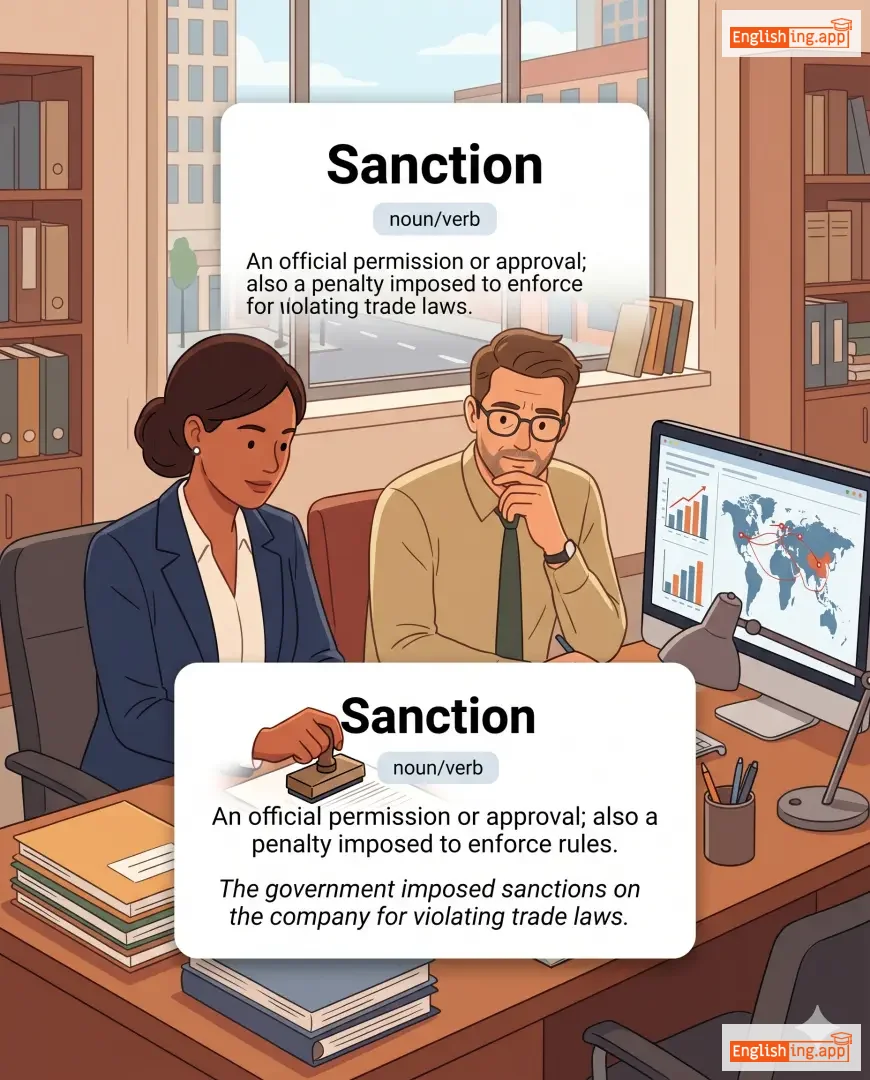
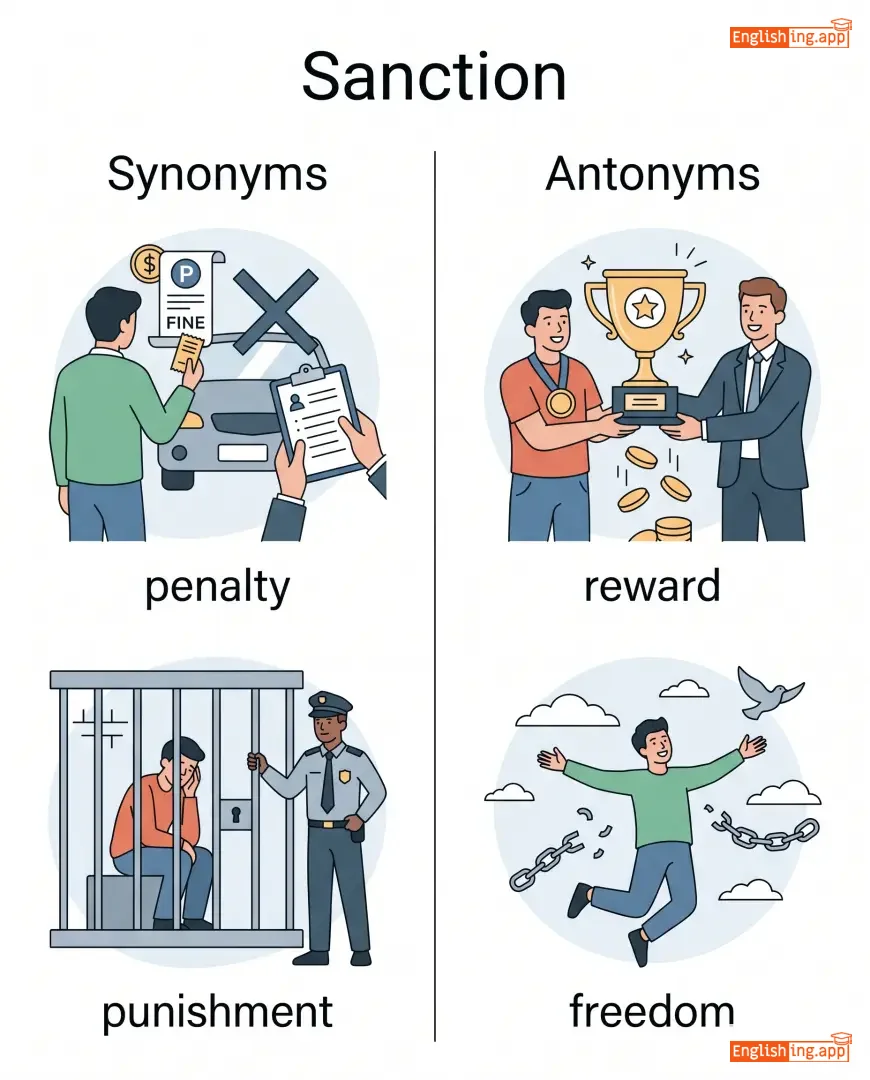
An official permission or approval; also a penalty imposed to enforce rules.
••••••
|
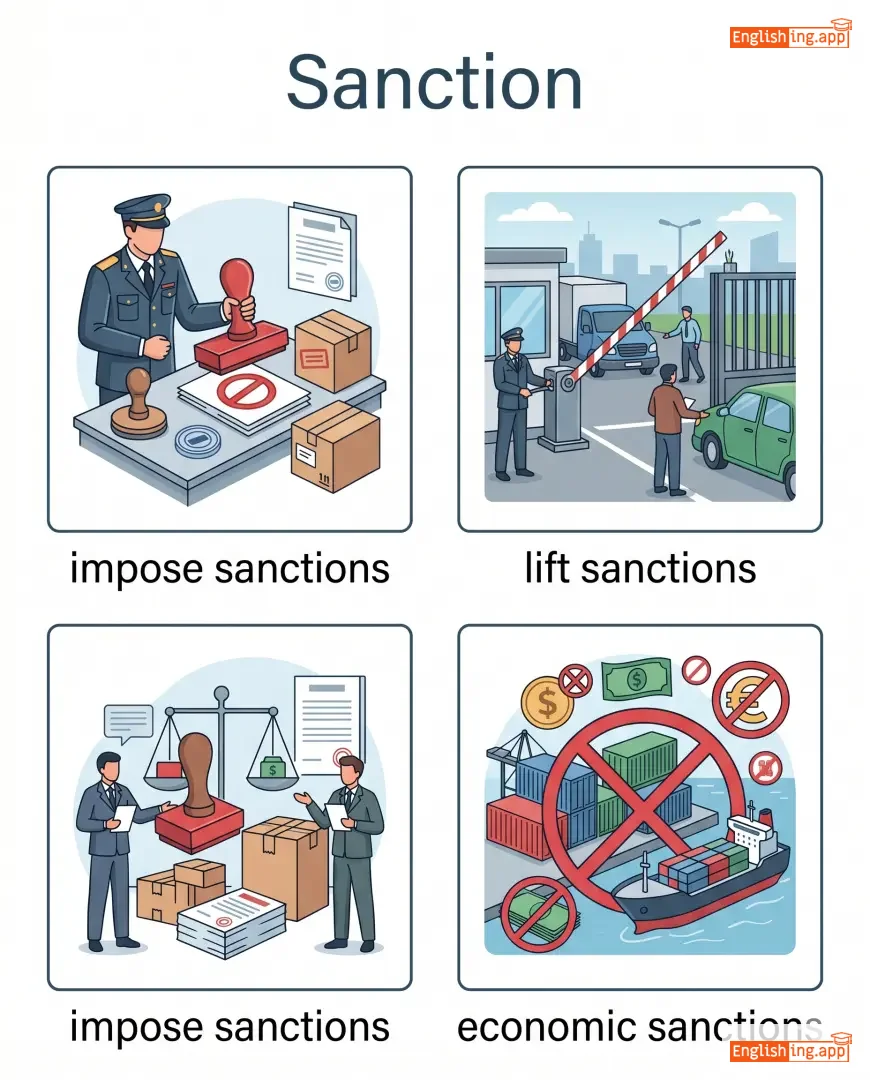
The government imposed sanctions on the company for violating trade laws. |
- •••••• |
economic sanctions |
penalties imposed by one country on another to enforce international law
••••••
|
- •••••• |
penalty, punishment, approval, authorization, restriction
••••••
|
reward, freedom, allowance
••••••
|
impose sanctions, lift sanctions, economic sanctions, trade sanctions
••••••
|
No •••••• |
|
🏖️
••••••
|
/sænd/
noun
(海皮尼斯)
••••••
|
- •••••• |
幸福
xìngfú
••••••
|
- •••••• | - •••••• | - •••••• | - •••••• |
Small loose grains of crushed rock, found on beaches and deserts.
••••••
|
Children built castles out of sand on the beach. |
当她收到奖项时,她无法掩饰自己的幸福。
Dāng tā shōu dào jiǎngxiàng shí, tā wúfǎ yǎnshì zìjǐ de xìngfú.
••••••
|
bury one's head in the sand |
To ignore or avoid a problem.
••••••
|
追寻幸福
Zhuīxún xìngfú
••••••
|
grit, sediment, particles, silica, soil
••••••
|
rock, stone
••••••
|
grain of sand, desert sand, sand dunes, wet sand
••••••
|
幸福意味着快乐 - 当你寻找幸福时很容易记住。
••••••
|
|
🥪
••••••
|
/ˈsændwɪtʃ/
noun
(三明治)
••••••
|
- •••••• |
三明治
sanmingzhi
••••••
|
- •••••• | - •••••• | - •••••• | - •••••• |
two pieces of bread with food such as meat, cheese, or salad between them
••••••
|
I made a chicken sandwich for lunch. |
我做了一个鸡肉三明治作为午餐。
Wǒ zuòle yīgè jīròu sānmíngzhì zuòwéi wǔcān.
••••••
|
caught in a sandwich |
to be trapped between two people or situations
••••••
|
被困在两个人或两种情况下
bèi kùn zài liǎng gè rén huò liǎng zhǒng qíngkuàng xià
••••••
|
snack, sub, burger, roll, toastie
••••••
|
meal, feast
••••••
|
chicken sandwich, cheese sandwich, sandwich shop, eat a sandwich
••••••
|
三明治意味着两片面包之间夹着东西——想象一下你被夹在其中,像三明治的夹心一样!
••••••
|
|
🛰️
••••••
|
/ˈsætəlaɪt/
noun
(卫星)
••••••
|

|
卫星
weixing
••••••
|
- •••••• | - •••••• | - •••••• | - •••••• |
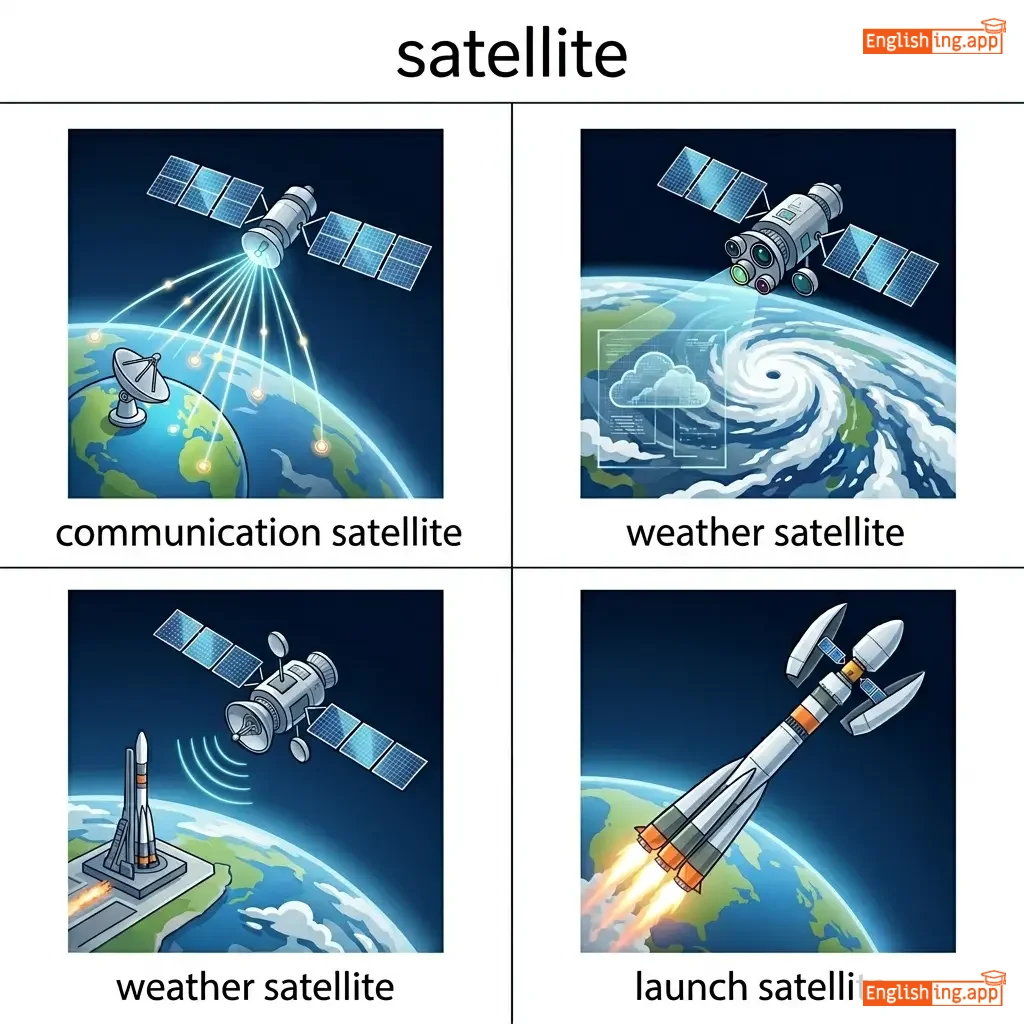
An artificial body placed in orbit around the earth or another planet to collect information or for communication.
••••••
|
The weather satellite provided real-time images of the storm. |
气象卫星提供了风暴的实时图像。
Qixiang weixing tigongle fengbao de shishi tupian.
••••••
|
satellite office |
A smaller office located separately from the main headquarters.
••••••
|
卫星办公室
weixing bangongshi
••••••
|
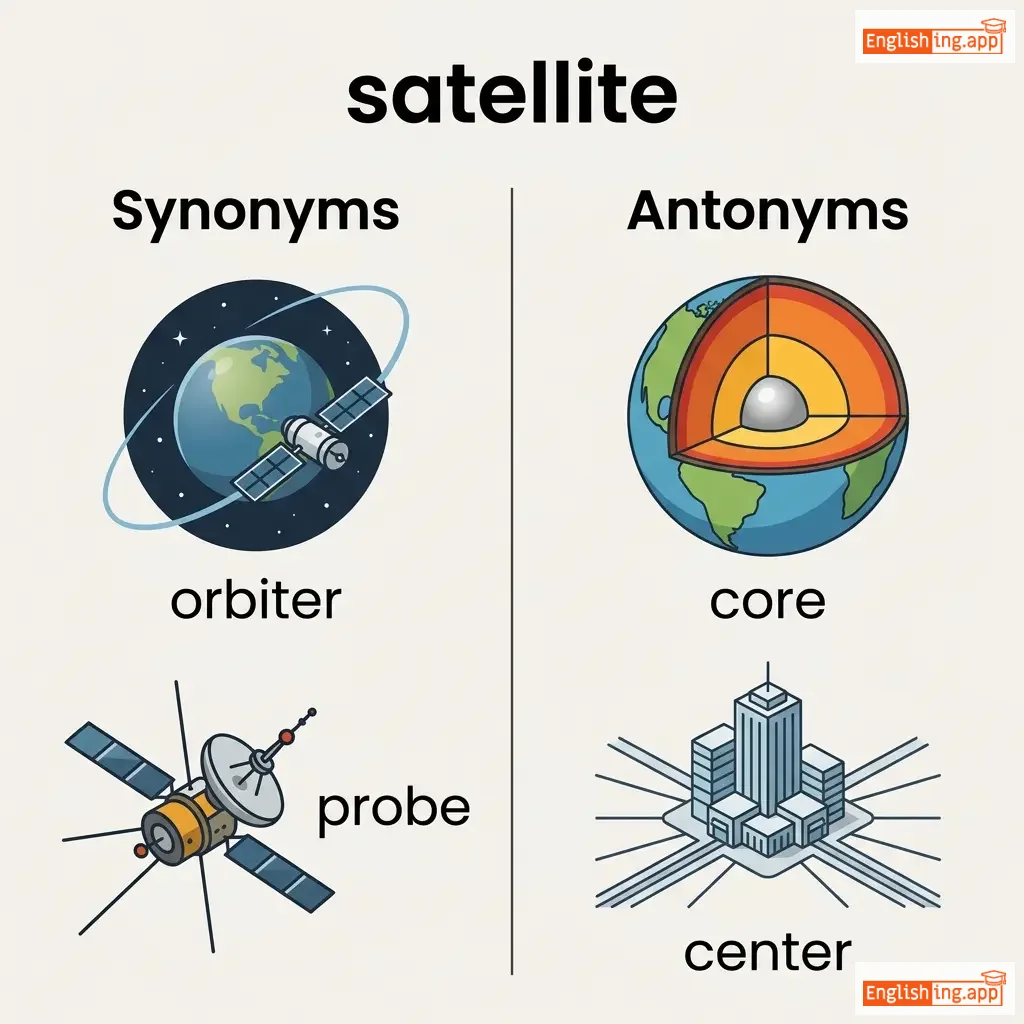
orbiter, probe, spacecraft, moon, companion
••••••
|
core, center
••••••
|
communication satellite, weather satellite, launch satellite, satellite dish
••••••
|
卫星 🛰️ 总是绕着地球转,就像这个词一样在你脑海里旋转。
••••••
|
|
😊
••••••
|
/ˌsæt.ɪsˈfæk.ʃən/
noun
(满意)
••••••
|
- •••••• |
满足
mǎnzú
••••••
|
- •••••• | - •••••• | - •••••• | - •••••• |
fulfillment of one's wishes, expectations, or needs
••••••
|
She felt great satisfaction after completing the project. |
她在完成项目后感到极大的满足。
Tā zài wánchéng xiàngmù hòu gǎndào jí dà de mǎnzú.
••••••
|
- •••••• | - •••••• | - •••••• |
contentment, fulfillment, pleasure, gratification
••••••
|
dissatisfaction, disappointment, frustration
••••••
|
job satisfaction, customer satisfaction, personal satisfaction
••••••
|
Mǎnzú in Chinese is the satisfaction you feel after fulfilling something!
••••••
|
|
😊
••••••
|
/ˈsætɪsfaɪd/
adjective
(sàtìsfaìd)
••••••
|
- •••••• |
满意
mǎnyì
••••••
|
- •••••• | - •••••• | - •••••• | - •••••• |
Pleased or content with what has been achieved or received.
••••••
|
He felt satisfied after finishing his project. |
完成项目后,他感到满意。
Wánchéng xiàngmù hòu, tā gǎndào mǎnyì.
••••••
|
satisfied customer |
A customer who is happy with the service or product.
••••••
|
满意的客户
mǎnyì de kèhù
••••••
|
content, pleased, fulfilled, gratified
••••••
|
dissatisfied, unhappy, displeased
••••••
|
satisfied with, fully satisfied, satisfied customer, satisfied smile
••••••
|
Satisfied 就是 'Sat' + 'is' + 'fine' → 因为一切都很好,他感到满意。
••••••
|
|
😊
••••••
|
/ˈsætɪsfaɪ/
verb
(satisfai)
••••••
|

|
满足
manzu
••••••
|
satisfied
satisfeito
••••••
|
satisfied
satisfeito
••••••
|
satisfies
satisfaites
••••••
|
satisfying
satisfaire
••••••
|
to fulfill the desires, expectations, or needs of someone; to make content
••••••
|
The delicious meal satisfied our hunger completely.
美味的食物完全满足了我们的饥饿。
••••••
|
美味的食物完全满足了我们的饥饿。
Měiwèi de shíwù wánquán mǎnzúle wǒmen de jī'è.
••••••
|
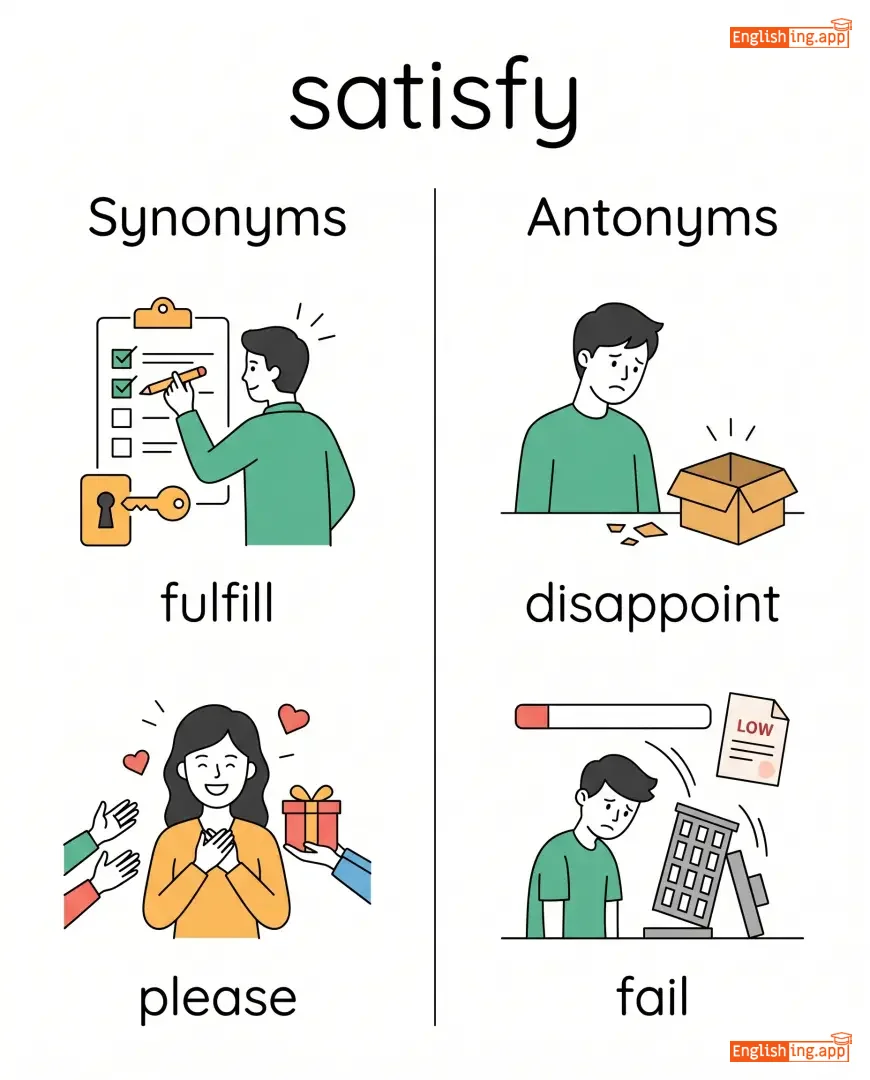
- •••••• | - •••••• | - •••••• |
fulfill, please, gratify, content
••••••
|
disappoint, frustrate, dissatisfy, displease
••••••
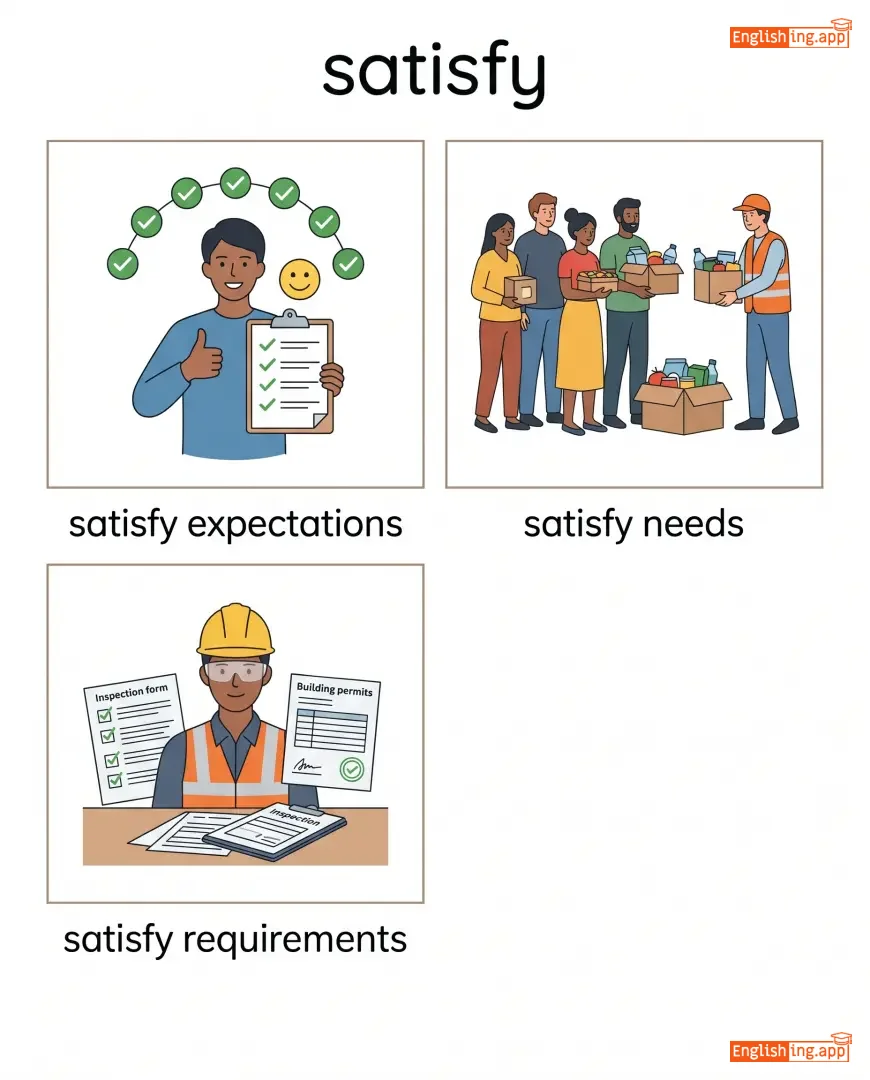
|
satisfy need, satisfy customer, satisfy requirement, fully satisfy
••••••
|
用美味的食物满足你的饥饿感!
••••••
|
|
📅
••••••
|
/ˈsætərdeɪ/
noun
(萨特迪)
••••••
|
- •••••• |
星期六
xingqi liu
••••••
|
- •••••• | - •••••• | - •••••• | - •••••• |
The day of the week between Friday and Sunday; traditionally the sixth day of the week
••••••
|
We are going to the beach on Saturday.
我们星期六去海滩。
••••••
|
我们星期六去海滩。
Wo men xingqi liu qu haitan.
••••••
|
Saturday night special
星期六晚特别活动
••••••
|
An inexpensive or improvised firearm; also refers to casual activities done on Saturday night
••••••
|
星期六晚特别活动
xingqi liu wan tebie huodong
••••••
|
weekend day, Sabbath, sixth day, weekend
••••••
|
Monday, weekday
••••••
|
Saturday morning, Saturday night, next Saturday, every Saturday
••••••
|
Xingqi liu is Saturday, liu=6, sixth day
••••••
|
|
🥄
••••••
|
/sɔːs/
noun
(酱)
••••••
|
- •••••• |
酱
jiang
••••••
|
- •••••• | - •••••• | - •••••• | - •••••• |
a liquid or semi-liquid substance served with food to add moisture and flavor
••••••
|
She added tomato sauce to her pasta.
她在她的意大利面上加了番茄酱。
••••••
|
她在她的意大利面上加了番茄酱。
Ta zai ta de yidali mian shang jia le fanqie jiang.
••••••
|
- •••••• | - •••••• | - •••••• |
gravy, dressing, condiment
••••••
|
dry seasoning, solid food
••••••
|
tomato sauce, soy sauce, hot sauce, pasta sauce, sauce bottle
••••••
|
想象把番茄酱加到意大利面上,味道更丰富!
••••••
|
|
💾
••••••
|
/seɪv/
verb
(seɪv)
••••••
|

|
拯救 / 存储
zhěngjiù / cúnchú
••••••
|
saved
seɪvd
••••••
|
saved
seɪvd
••••••
|
saves
seɪvz
••••••
|
saving
seɪvɪŋ
••••••
|
To keep safe, to rescue, or to store for future use.
••••••
|
She managed to save enough money for a new bike.
ʃi ˈmænɪdʒd tə seɪv ɪˈnʌf ˈmʌni fɔr ə nuː baɪk.
••••••
|
她成功地为一辆新自行车存够了钱。
Tā chénggōng de wèi yī liàng xīn zìxíngchē cún gòu le qián.
••••••
|
save the day
seɪv ðə deɪ
••••••
|
To prevent failure or disaster at the last moment.
••••••
|
拯救一天
zhěngjiù yītiān
••••••
|
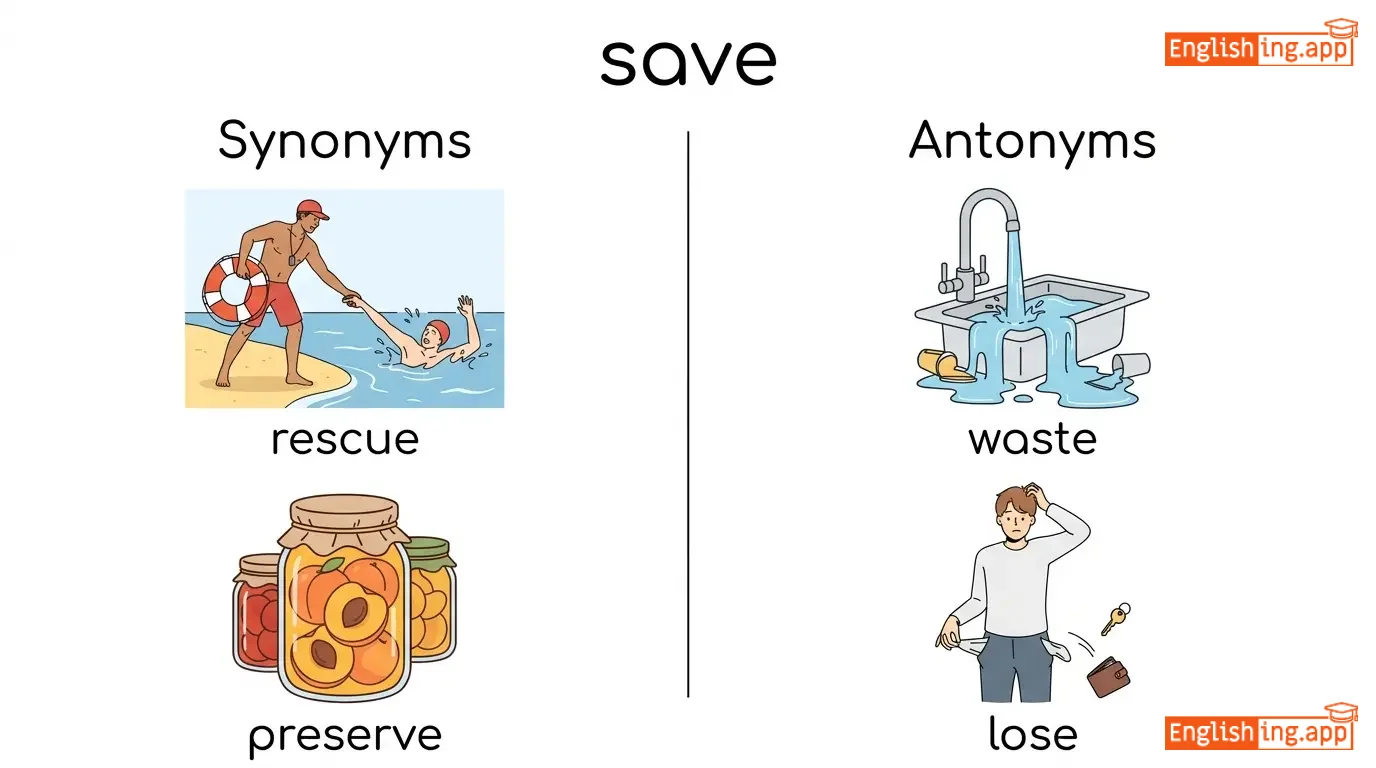
rescue, preserve, protect, conserve, store
••••••
|
waste, lose, spend
••••••
|
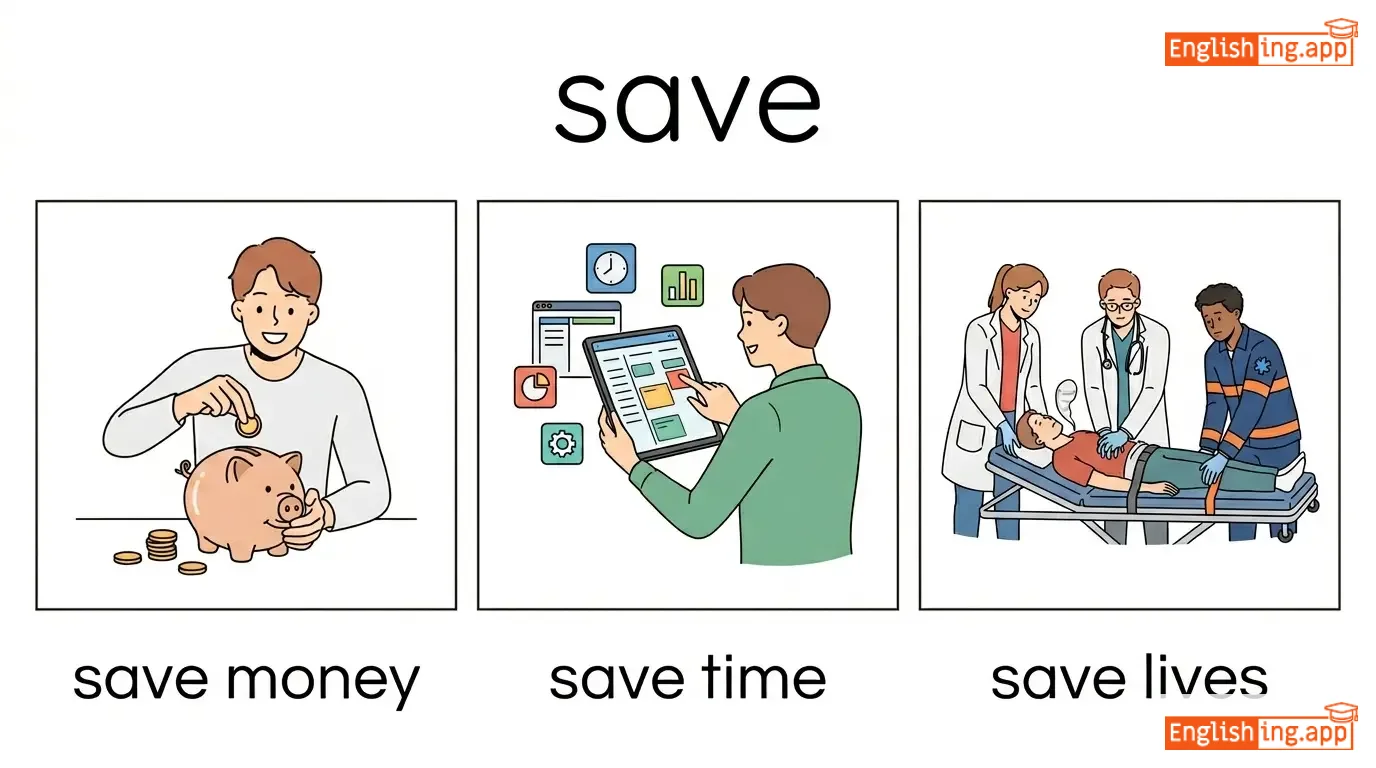
save money, save time, save lives, save energy
••••••
|
Save就像是保存按钮。拯救或存储
••••••
|
|
💰
••••••
|
/ˈseɪvɪŋ/
noun
(séiwīng)
••••••
|
|
储蓄
chǔxù
••••••
|
- •••••• | - •••••• | - •••••• | - •••••• |
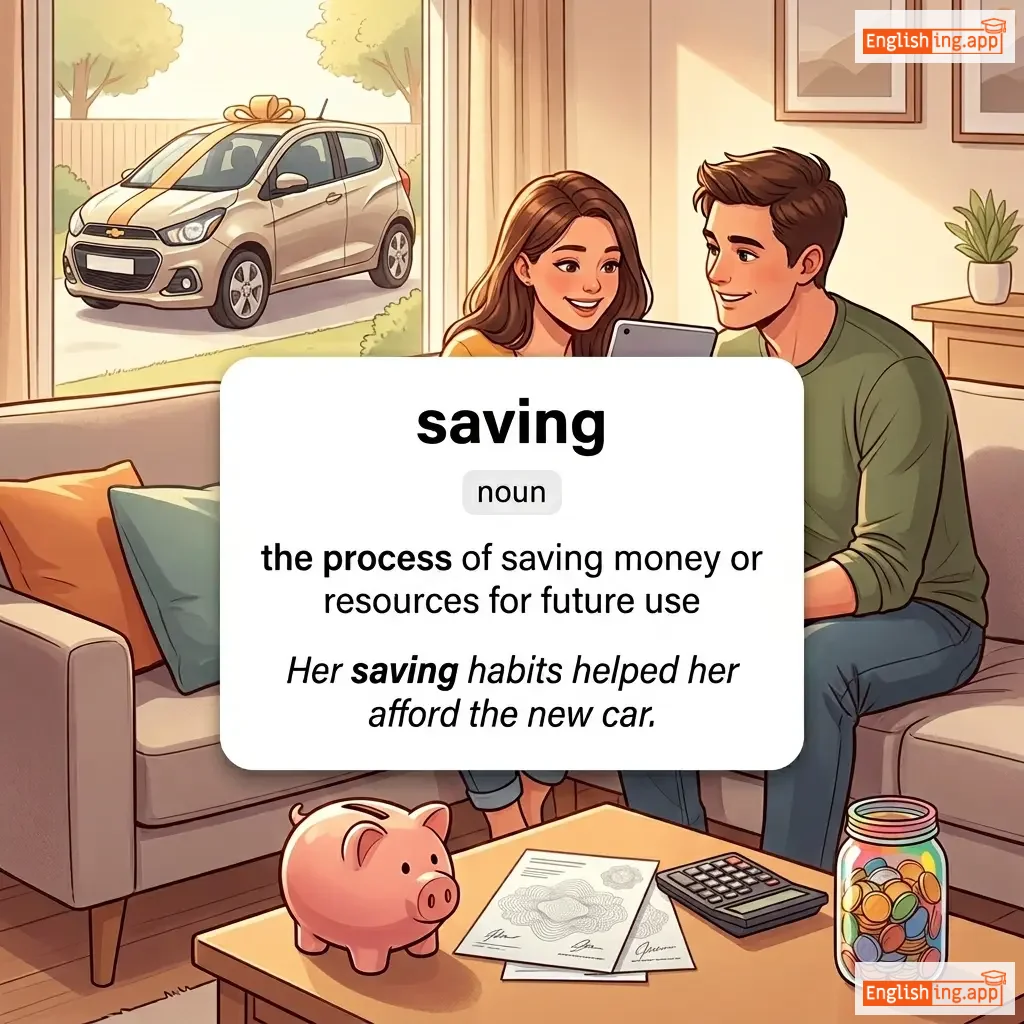
the process of saving money or resources for future use
••••••
|
Her saving habits helped her afford the new car. |
她的储蓄习惯帮助她买到了新车。
Ta de chuxu xiguan bangzhu ta maidaole xinn che.
••••••
|
- •••••• | - •••••• | - •••••• |
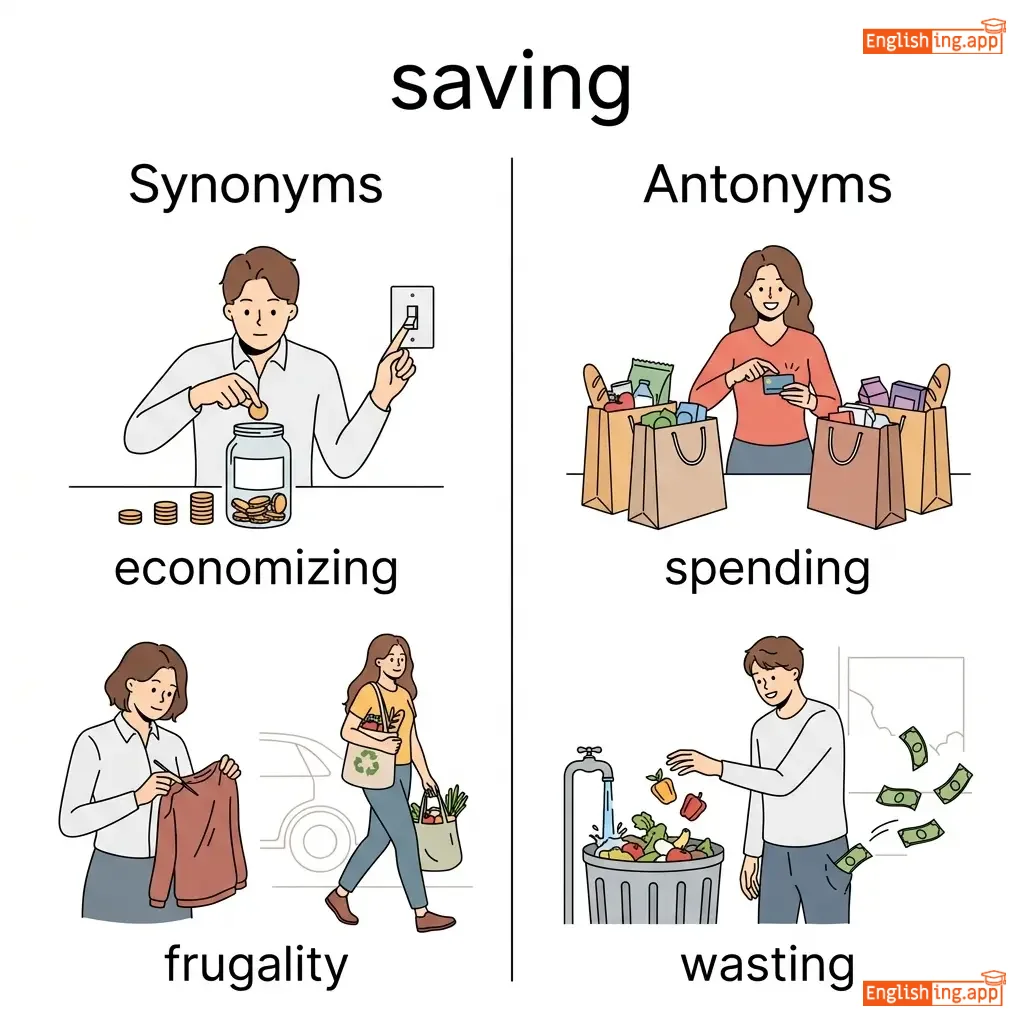
economizing, frugality, saving money, thrift
••••••
|
spending, wasting, squandering
••••••
|
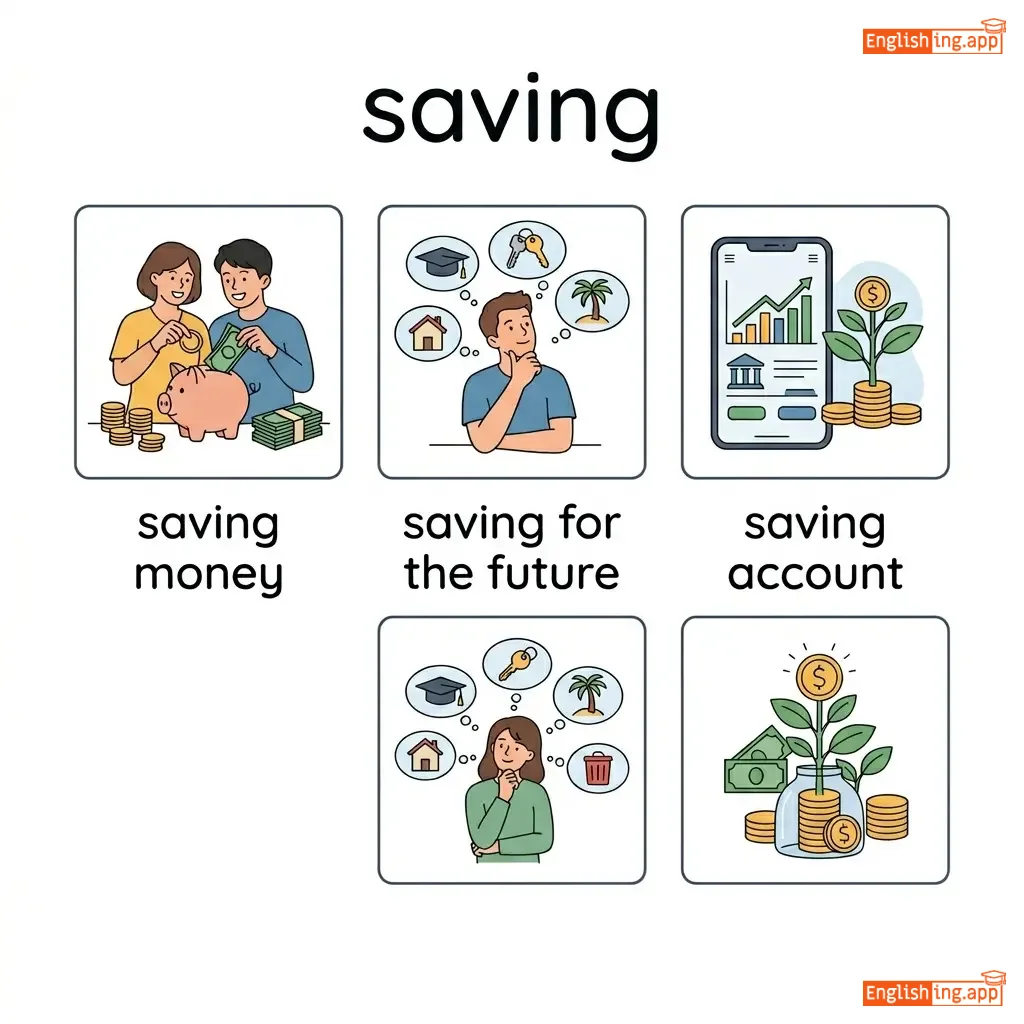
saving money, saving for the future, saving account
••••••
|
储蓄为未来储备 - 储蓄可以帮你买到心仪的东西!
••••••
|
|
💬
••••••
|
/seɪ/
verb
(赛)
••••••
|

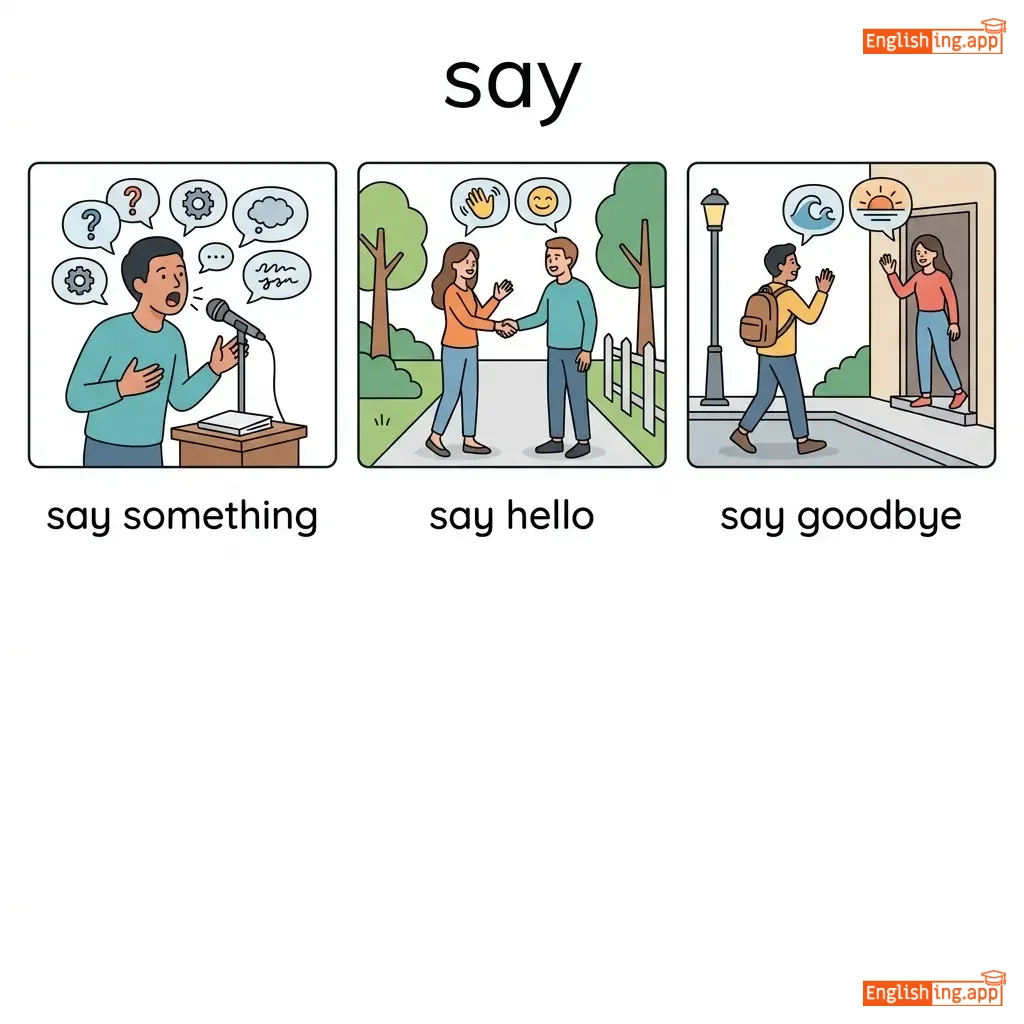
|
说
shuo
••••••
|
said
赛德
••••••
|
said
赛德
••••••
|
says
赛斯
••••••
|
saying
赛英
••••••
|
to speak words; to express something in words
••••••
|
She said hello to me.
她赛的哈罗吐米。
••••••
|
她对我说了你好。
Ta dui wo shuo le ni hao.
••••••
|
- •••••• | - •••••• | - •••••• |
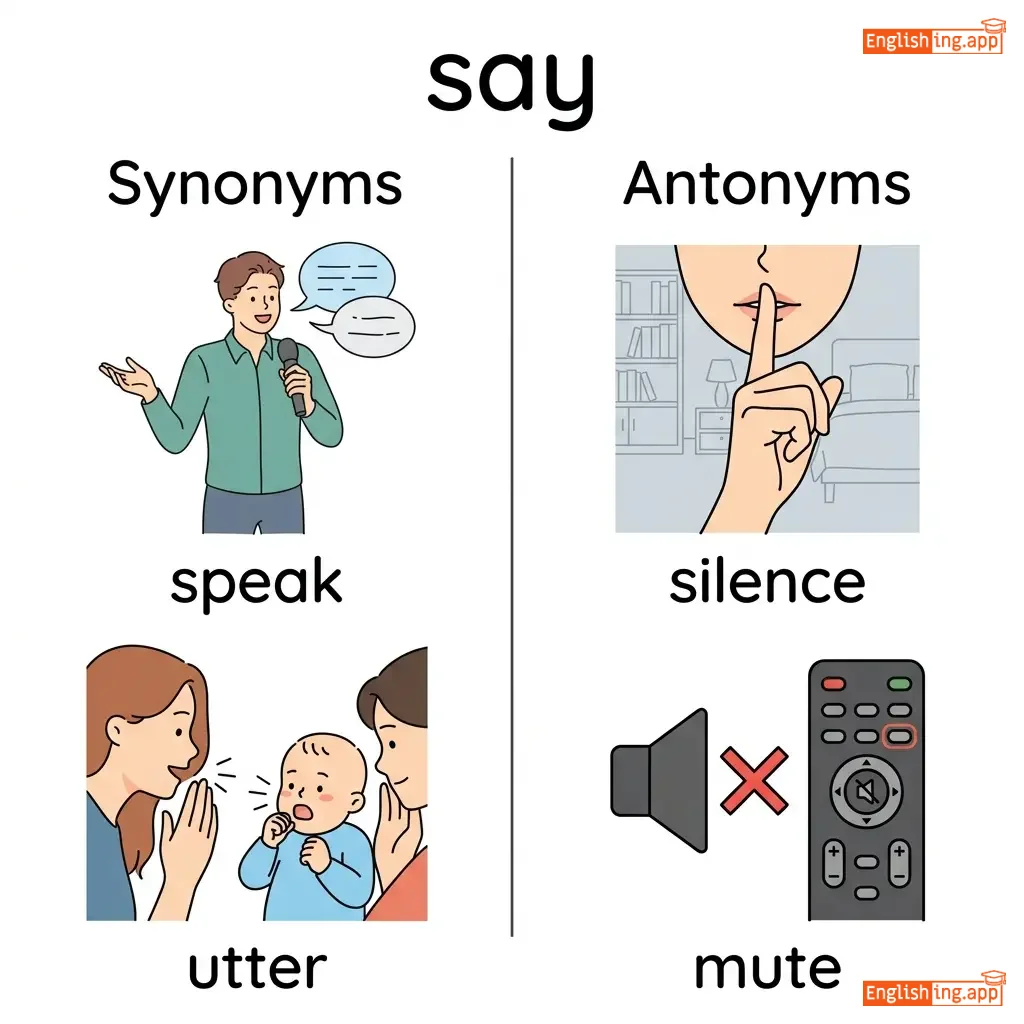
speak, tell, express, utter
••••••
|
listen, hear, remain silent
••••••
|
say hello, say goodbye, say something, say yes, say no, say please
••••••
|
In Chinese, 'shuo' sounds short like 'say'—both mean to speak words.
••••••
|
|
📏
••••••
|
/skeɪl/
noun/verb
(尺度)
••••••
|
- •••••• |
刻度 / 调整大小
kèdù / tiáozhěng dàxiǎo
••••••
|
scaled
扩大
••••••
|
scaled
扩大
••••••
|
scales
扩大
••••••
|
scaling
扩大中
••••••
|
A system of ordered marks used for measurement; also means to climb or to adjust in size.
••••••
|
The company plans to scale its operations globally.
公司计划全球扩展其业务。
••••••
|
公司计划全球扩展其业务。
Gōngsī jìhuà quánqiú kuòzhǎn qí yèwù.
••••••
|
tip the scales
倾斜天平
••••••
|
to influence the outcome of a situation
••••••
|
倾斜天平
qīngxié tiānpíng
••••••
|
measure, climb, grade, ratio, expand
••••••
|
shrink, reduce, decrease
••••••
|
scale up, scale down, scale of measurement, scale a mountain
••••••
|
刻度意味着测量或调整大小—记住,刻度 = 大小控制。
••••••
|
|
😱
••••••
|
/ˈskændəl/
noun
(丑闻)
••••••
|
- •••••• |
丑闻
chou wen
••••••
|
- •••••• | - •••••• | - •••••• | - •••••• |
an event or action that causes public outrage or damage to one's reputation
••••••
|
The politician's affair became a public scandal. |
那位政治家的私 affair 成为了公共丑闻。
Na wei zhengzhi jia de si affair cheng wei le gong gong chou wen.
••••••
|
a scandalous affair |
an affair that causes a lot of public outrage
••••••
|
丑闻的 affair
chou wen de affair
••••••
|
controversy, disgrace, outrage, shame
••••••
|
honor, respect
••••••
|
public scandal, political scandal, media scandal, financial scandal
••••••
|
Scandal—it spreads like a 'scan'—people know everything about you!
••••••
|
|
😱
••••••
|
/skeər/
verb
(sikeer)
••••••
|
- •••••• |
恐吓
kǒnghè
••••••
|
scared
xīngyà
••••••
|
scared
xīngyà
••••••
|
scares
xīngyà
••••••
|
scaring
xīngyà
••••••
|
to frighten someone or make them feel afraid
••••••
|
The loud noise scared the baby.
dà yīn xiǎng shī shìxìng xiǎo nǚ hái.
••••••
|
大声的噪音把婴儿吓坏了。
dà shēng de zàoyīn bǎ yīng'ér xiàhuài le.
••••••
|
scare the hell out of
xiǎng kǒu fā xiào
••••••
|
to frighten someone very badly
••••••
|
把某人吓得半死
bǎ mǒu rén xià de bàn sǐ
••••••
|
frighten, terrify, startle, alarm, shock
••••••
|
comfort, calm, reassure
••••••
|
scare off, scare away, big scare, sudden scare
••••••
|
Scare 代表‘恐吓’——想象你看恐怖片被吓到!
••••••
|

