|
絵文字
|
単語 | Images | 翻訳 | 過去 | 過去分詞 | 三人称単数 | 動名詞 | 意味 | 例文 | 例文の翻訳 | 表現例 | 表現例の意味 | 表現例の翻訳 | 同義語 | 対義語 | コロケーション | ニーモニック |
|---|---|---|---|---|---|---|---|---|---|---|---|---|---|---|---|---|---|
|
🧹
••••••
|
/rɪd/
verb
(リッド)
••••••
|
- •••••• |
取り除く
torinozoku
••••••
|
rid
リッド
••••••
|
rid
リッド
••••••
|
rids
リッズ
••••••
|
ridding
リディング
••••••
|
to remove or get rid of something
••••••
|
I need to rid the house of all the clutter.
家の中のすべてのゴミを取り除く必要があります。
••••••
|
家の中のすべてのゴミを取り除く必要があります。
Ie no naka no subete no gomi o torinozoku hitsuyou ga arimasu.
••••••
|
- •••••• | - •••••• | - •••••• |
remove, eliminate, discard, clear
••••••
|
keep, retain, maintain
••••••
|
rid of, rid the house, rid oneself
••••••
|
Rid (取り除く) それは家のゴミを取り除くことです。
••••••
|
|
🚴
••••••
|
/raɪd/
verb
(raid)
••••••
|
- •••••• |
乗る/ライディング
noru/raidingu
••••••
|
rode
rōdo
••••••
|
ridden
riden
••••••
|
rides
raidozu
••••••
|
riding
raidingu
••••••
|
to travel on or in a vehicle; to sit on and control a horse
••••••
|
She likes to ride her bicycle to work.
彼女は自転車で仕事に行くのが好きです。
••••••
|
彼女は自転車で仕事に行くのが好きです。
Kanojo wa jitensha de shigoto ni iku no ga suki desu.
••••••
|
- •••••• | - •••••• | - •••••• |
travel, journey, mount, drive
••••••
|
walk, dismount, get off
••••••
|
ride a bike, ride horseback, ride the wave, ride safely, ride together
••••••
|
自転車を乗って仕事に行こう
••••••
|
|
🤣
••••••
|
/rɪˈdɪkjʊləs/
adjective
(リディキュラス)
••••••
|
- •••••• |
馬鹿げた
bakageta
••••••
|
- •••••• | - •••••• | - •••••• | - •••••• |
Deserving mockery; absurd or unreasonable.
••••••
|
The idea of flying pigs is ridiculous. |
飛ぶ豚のアイデアは馬鹿げている。
Tobu buta no aidea wa bakageteiru.
••••••
|
look ridiculous |
Appear very silly or absurd.
••••••
|
馬鹿げて見える
bakagete mieru
••••••
|
absurd, laughable, ludicrous, silly, preposterous
••••••
|
reasonable, sensible, serious
••••••
|
utterly ridiculous, seem ridiculous, look ridiculous
••••••
|
馬鹿げたは笑いの対象、意味不明なことです。
••••••
|
|
🔫
••••••
|
/ˈraɪfəl/
noun
••••••
|
- •••••• | - •••••• | - •••••• | - •••••• | - •••••• | - •••••• |
a type of long-barreled gun designed for accurate shooting
••••••
|
The hunter carried a rifle to catch game. |
- •••••• | - •••••• | - •••••• | - •••••• |
gun, firearm, musket, carbine
••••••
|
knife, bow
••••••
|
hunting rifle, sniper rifle, rifle shot
••••••
|
No •••••• |
|
✅
••••••
|
/raɪt/
noun, adjective, adverb
(ライト)
••••••
|
- •••••• |
権利
kenri
••••••
|
- •••••• | - •••••• | - •••••• | - •••••• |
something that is morally good, fair, or just; or a legal/entitled claim
••••••
|
Everyone has the right to free speech. |
誰もが自由な言論の権利を持っています。
Daremo ga jiyuu na genron no kenri o motteimasu.
••••••
|
human rights |
basic rights and freedoms that belong to every person
••••••
|
人権
jinken
••••••
|
justice, fairness, entitlement, claim
••••••
|
wrong, injustice
••••••
|
right to vote, right decision, human rights, right direction
••••••
|
権利は正義と法であり、✅ すべては権利によって正当化されます。
••••••
|
|
🔔
••••••
|
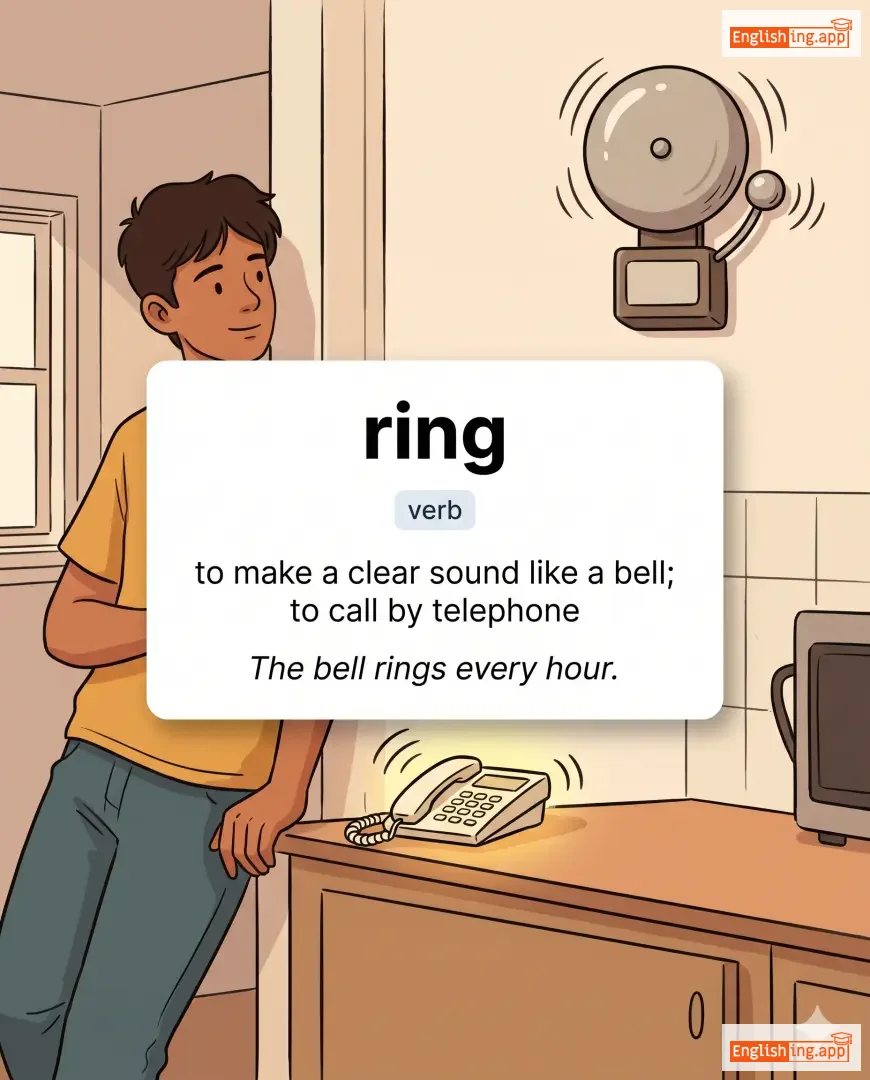
/rɪŋ/
verb
(リング)
••••••
|
|
鳴る
naru
••••••
|
rang
ラング
••••••
|
rung
ラング
••••••
|
rings
リングス
••••••
|
ringing
リングイング
••••••
|
to make a clear sound like a bell; to call by telephone
••••••
|
The bell rings every hour.
鐘は毎時鳴る。
••••••
|
鐘は毎時鳴る。
Kane wa maiji naru.
••••••
|
- •••••• | - •••••• | - •••••• |
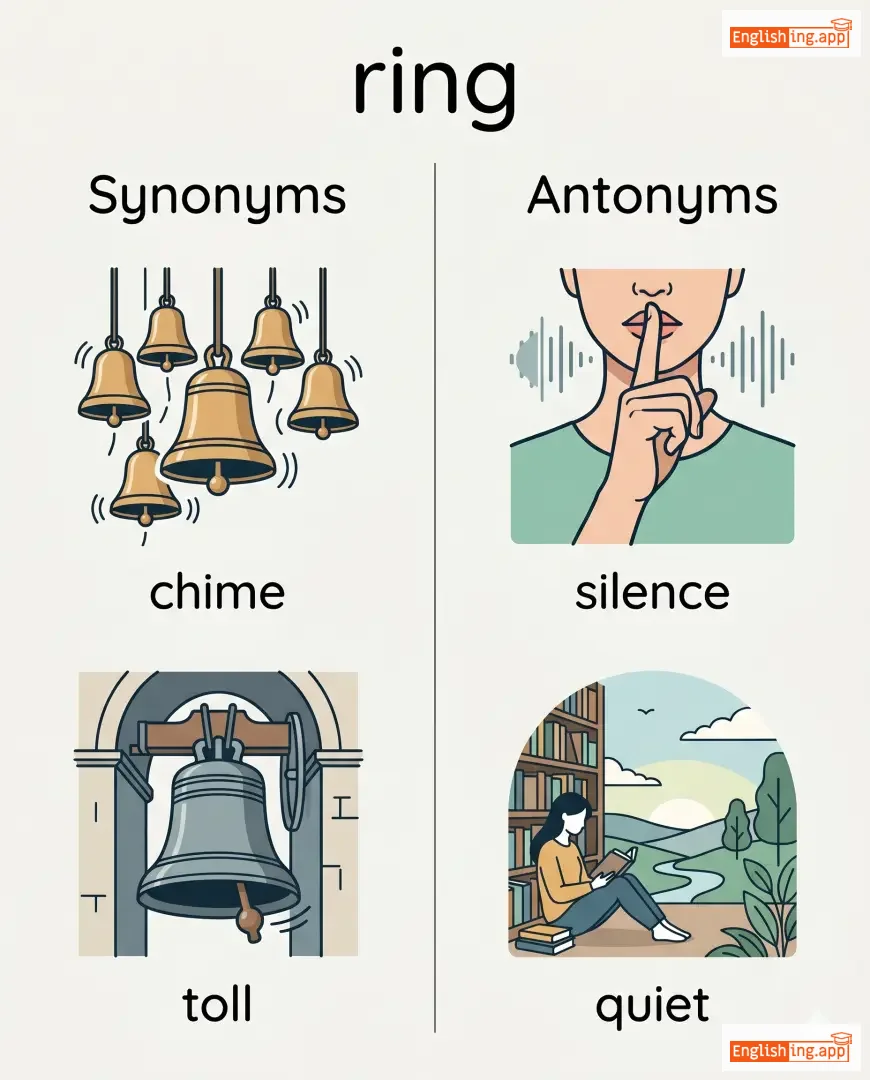
chime, toll, call, sound
••••••
|
silence, quiet, mute
••••••
|
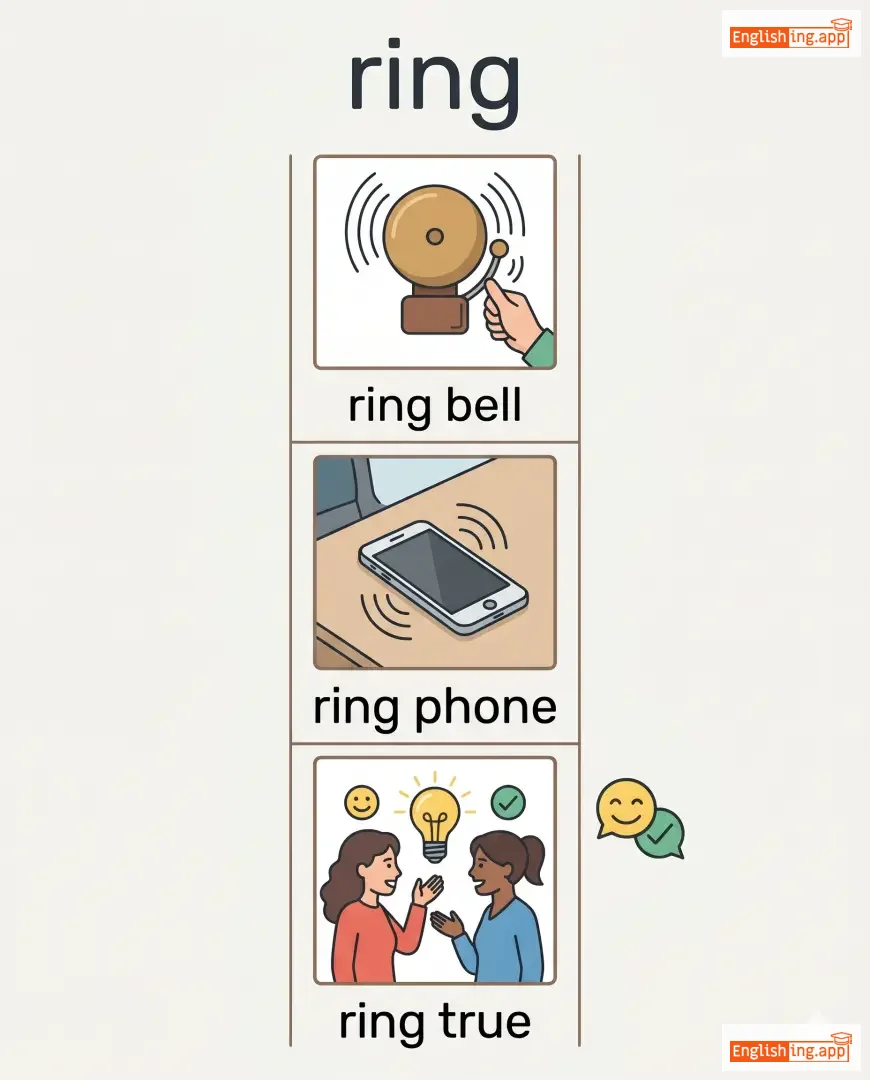
ring bell, ring phone, ring true, engagement ring
••••••
|
Imagine hearing the sound of a bell '鳴る' every hour.
••••••
|
|
🔥
••••••
|
/ˈraɪət/
noun
(rai-otto)
••••••
|
- •••••• |
暴動
boudou
••••••
|
- •••••• | - •••••• | - •••••• | - •••••• |
a violent disturbance by a crowd
••••••
|
The protest turned into a violent riot. |
抗議は暴力的な暴動に変わった。
Kougi wa bouryokuteki na boudou ni kawatta.
••••••
|
run riot |
to act without control or restraint
••••••
|
制御を失う
seigyo o ushinau
••••••
|
uproar, disturbance, revolt, chaos, uprising
••••••
|
peace, order
••••••
|
violent riot, riot police, start a riot, riot broke out
••••••
|
Riotは制御を失うことを意味する - 暴動はすべてが制御できなくなる瞬間に始まる。
••••••
|
|
✂️
••••••
|
/rɪp/
verb
(リップ)
••••••
|
- •••••• |
裂ける
sakeru
••••••
|
ripped
リップド
••••••
|
ripped
リップド
••••••
|
rips
リップス
••••••
|
ripping
リッピング
••••••
|
to tear something quickly or violently
••••••
|
He accidentally ripped his shirt on the fence.
彼はフェンスでシャツをうっかり裂けてしまいました。
••••••
|
彼はフェンスでシャツをうっかり裂けてしまいました。
Kare wa fensu de shatsu o ukkari sakete shimaimashita.
••••••
|
rip off
rip off
••••••
|
to cheat someone by charging too much
••••••
|
騙す
damasu
••••••
|
tear, split, shred, cut, slash
••••••
|
sew, repair, mend
••••••
|
rip open, rip apart, rip through, rip off
••••••
|
Ripは裂ける音です、衣服に注意して!
••••••
|
|
🌅
••••••
|
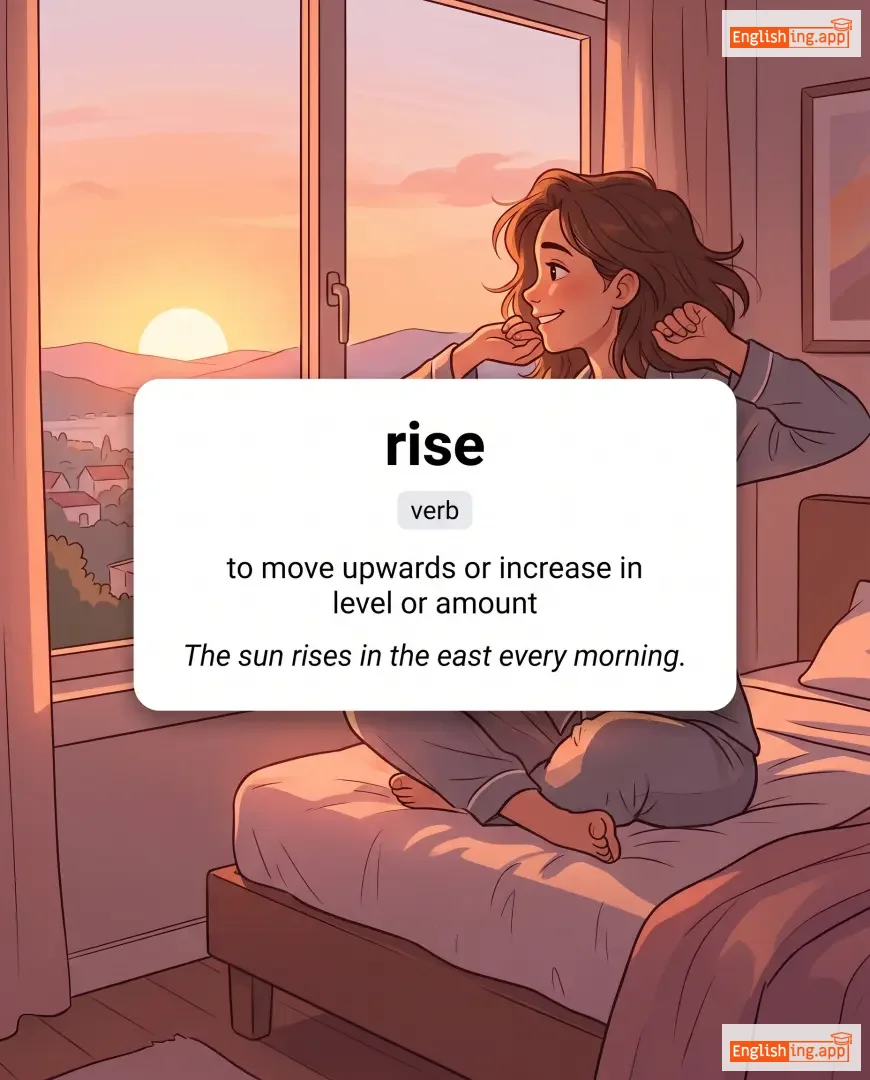
/raɪz/
verb
••••••
|
|
- •••••• |
rose
••••••
|
risen
••••••
|
rises
••••••
|
rising
••••••
|
to move upwards or increase in level or amount
••••••
|
The sun rises in the east every morning. |
- •••••• |
rise and shine |
to wake up and become active, usually in the morning
••••••
|
- •••••• |
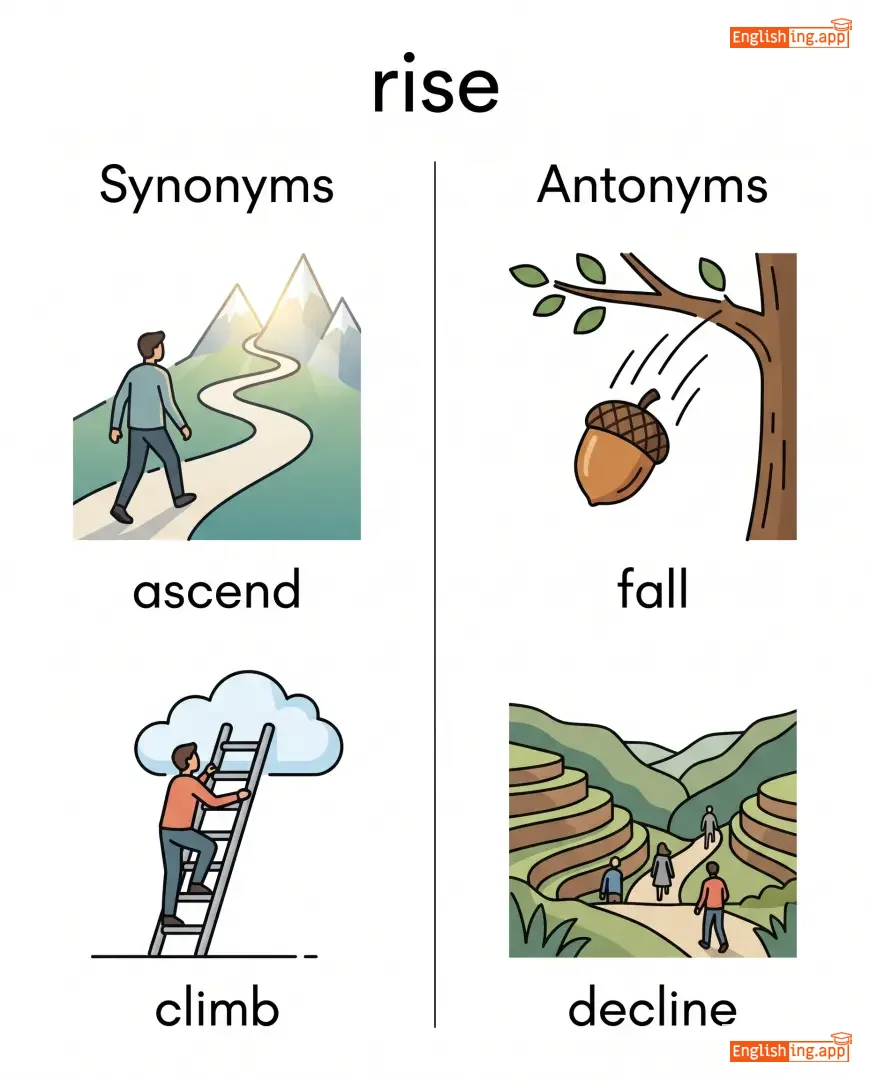
ascend, climb, grow, soar
••••••
|
fall, decline, drop
••••••
|
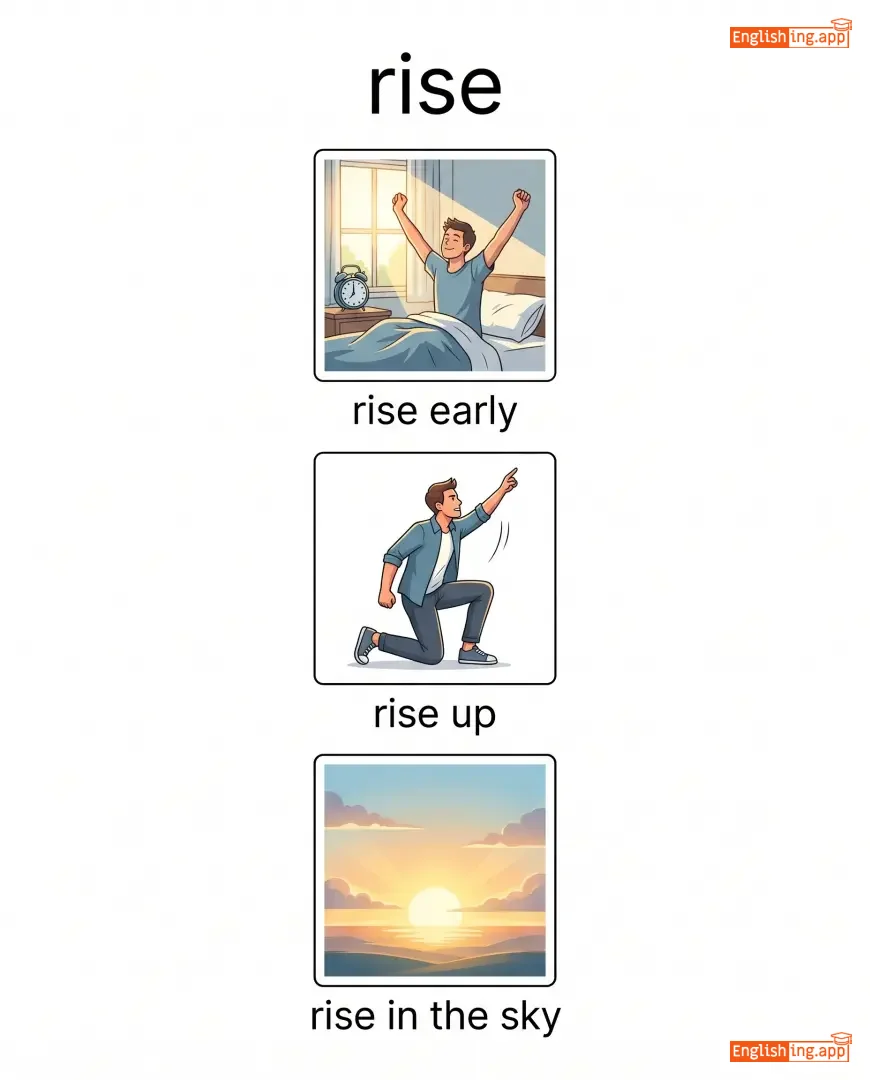
rise early, rise up, rise in the sky, rise to the occasion
••••••
|
No •••••• |
|
⚠️
••••••
|
/rɪsk/
verb
(risk)
••••••
|
|
リスクを取る
risuku o toru
••••••
|
risked
risked
••••••
|
risked
risked
••••••
|
risks
risks
••••••
|
risking
risking
••••••
|
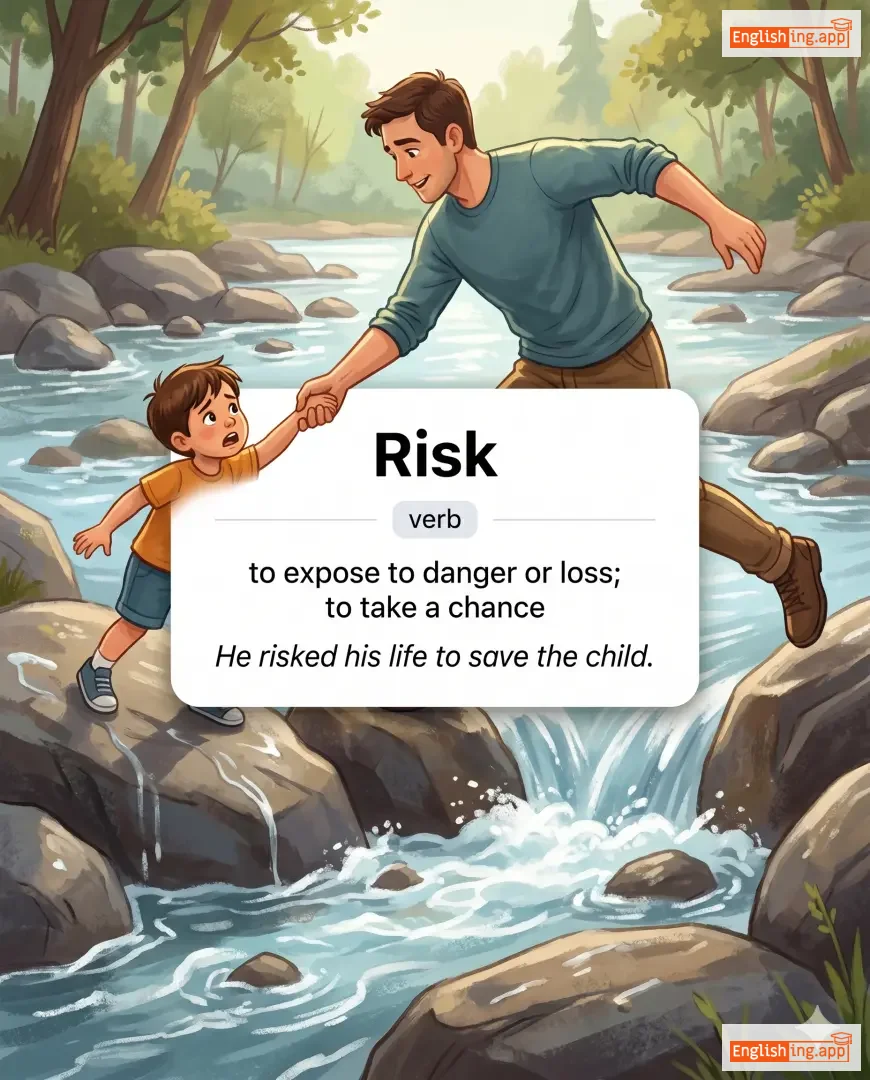
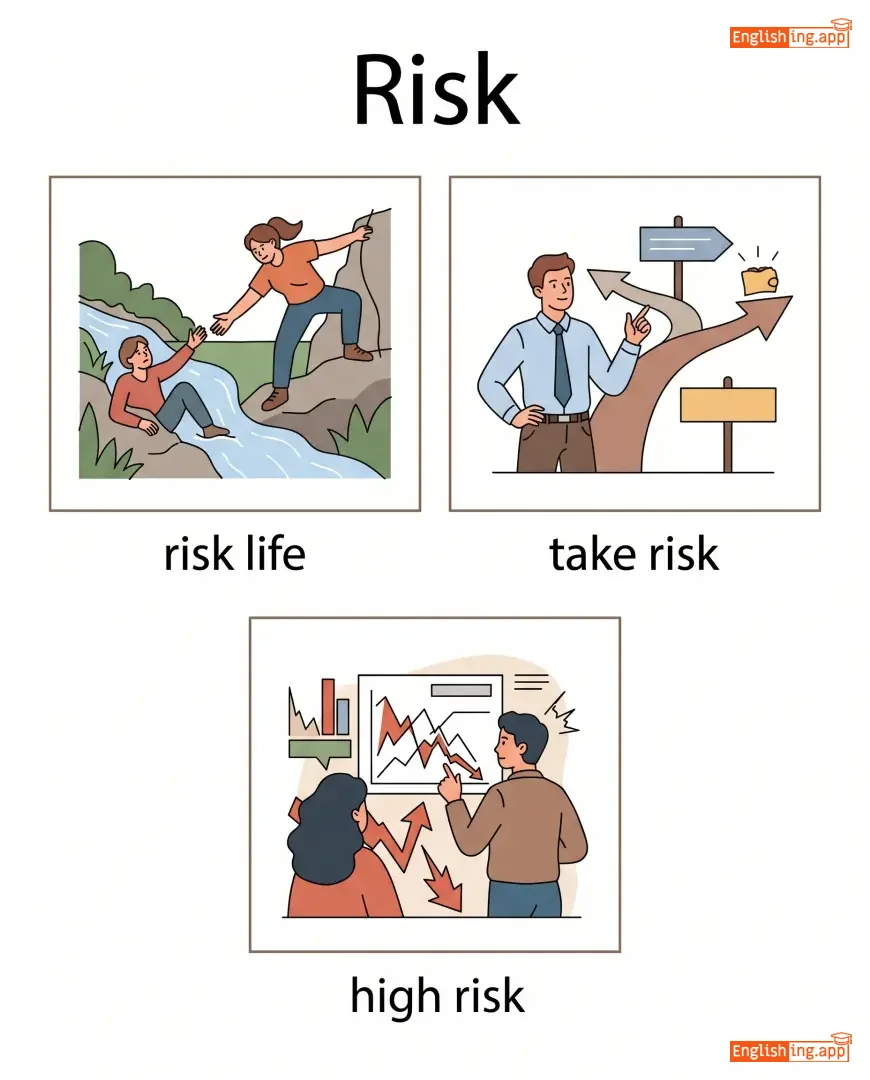
to expose to danger or loss; to take a chance
••••••
|
He risked his life to save the child.
彼は子供を救うために命を懸けた。
••••••
|
彼は子供を救うために命を懸けた。
Kare wa kodomo o sukuu tame ni inochi o kaketa.
••••••
|
- •••••• | - •••••• | - •••••• |
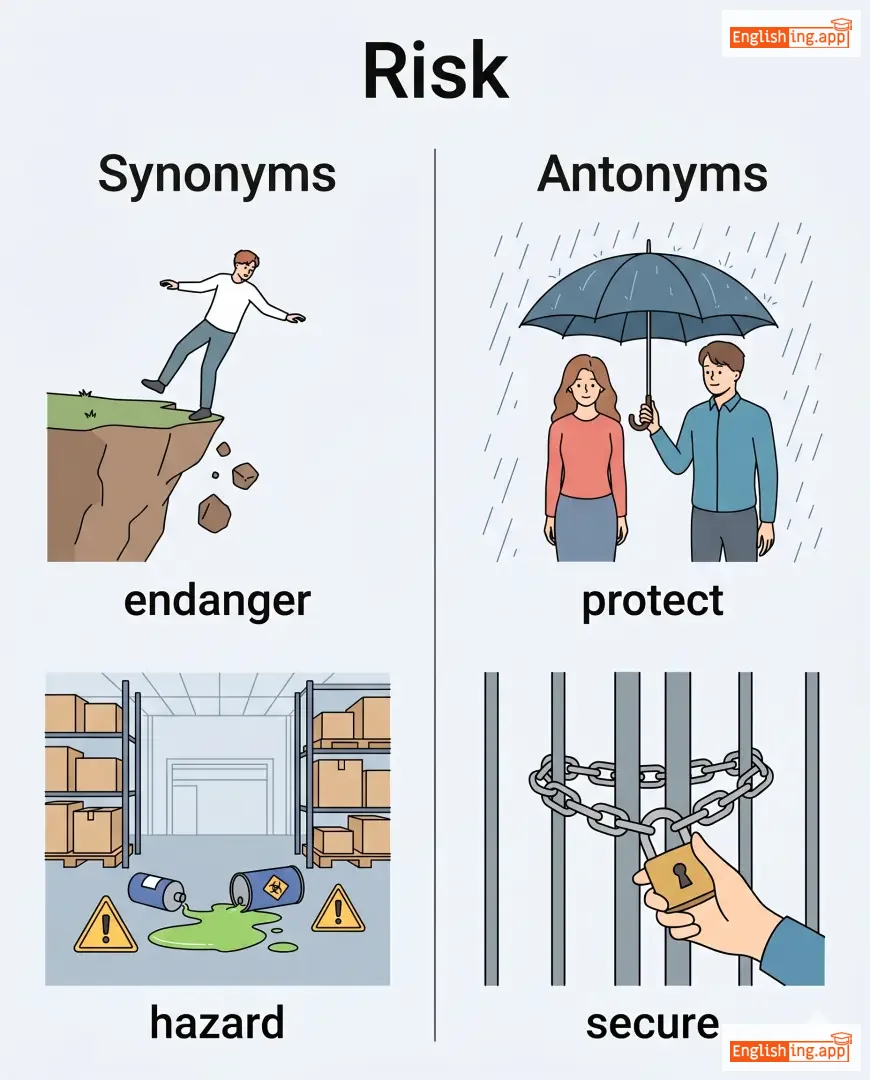
endanger, hazard, jeopardize, venture
••••••
|
protect, secure, safeguard, preserve
••••••
|
risk life, take risk, high risk, risk everything
••••••
|
リスクを取ることは、未来を切り開くための鍵となる。
••••••
|
|
⚠️
••••••
|
/ˈrɪski/
adjective
••••••
|
- •••••• | - •••••• | - •••••• | - •••••• | - •••••• | - •••••• |
Involving the possibility of danger, harm, or loss
••••••
|
Investing in that startup is risky but could bring high rewards. |
- •••••• |
take a risky move |
to make a decision that involves significant risk
••••••
|
- •••••• |
dangerous, hazardous, uncertain, precarious, unsafe
••••••
|
safe, secure, certain
••••••
|
risky business, risky decision, risky move, risky investment
••••••
|
No •••••• |
|
🕯️
••••••
|
/ˈrɪtʃ.u.əl/
noun
••••••
|
- •••••• |
幸福
kōfuku
••••••
|
- •••••• | - •••••• | - •••••• | - •••••• |
a set of fixed actions and sometimes words performed regularly, especially as part of a ceremony or religion
••••••
|
Morning coffee has become a daily ritual for him. |
彼女は賞を受け取ったとき、自分の幸せを隠すことができませんでした。
Kanojo wa shō o uketotta toki, jibun no kōfuku o kakusu koto ga dekimasen deshita.
••••••
|
go through the ritual |
to perform the usual routine or formal steps
••••••
|
幸せを追い求める
shiawase o oi motomeru
••••••
|
ceremony, tradition, custom, rite, practice
••••••
|
chaos, informality
••••••
|
religious ritual, morning ritual, wedding ritual, daily ritual
••••••
|
幸福 – 幸せを追い求める人生は、明るい未来への道を開きます。🌸😊
••••••
|
|
⚔️
••••••
|
/ˈraɪvəl/
noun, verb
(raivaru)
••••••
|
- •••••• |
ライバル
raibaru
••••••
|
rivaled
raibaru
••••••
|
rivaled
raibaru
••••••
|
rivals
raibaru
••••••
|
rivaling
raibaringu
••••••
|
a person or thing competing with another for the same goal or superiority in the same field
••••••
|
The two companies are fierce rivals in the smartphone market.
二つの企業はスマートフォン市場で激しいライバルです。
••••••
|
二つの企業はスマートフォン市場で激しいライバルです。
Futatsu no kigyo wa sumātofon shijō de hageshī raibaru desu.
••••••
|
arch rival
アーチライバル
••••••
|
a main and long-standing opponent
••••••
|
主要ライバル
shuyō raibaru
••••••
|
competitor, opponent, challenger, adversary, foe
••••••
|
ally, partner, supporter
••••••
|
main rival, business rival, political rival, sports rival
••••••
|
Rivalという単語は日本語のライバルと似ていて、競争相手を意味します。
••••••
|
|
🏞️
••••••
|
/ˈrɪv.ər/
noun
(リバー)
••••••
|
- •••••• |
川
kawa
••••••
|
- •••••• | - •••••• | - •••••• | - •••••• |
a large natural stream of water flowing in a channel to the sea, a lake, or another river
••••••
|
The river flows through the valley and into the ocean.
川は谷を流れ、海に注ぎ込む。
••••••
|
川は谷を流れ、海に注ぎ込む。
Kawa wa tani o nagare, umi ni sosogikomu.
••••••
|
- •••••• | - •••••• | - •••••• |
stream, waterway, watercourse, brook
••••••
|
desert, drought, dryness
••••••
|
river bank, river mouth, cross the river, river valley
••••••
|
川 - Imagine a river flowing in Japan, called 'kawa' in Japanese.
••••••
|
|
🛣️
••••••
|
/roʊd/
noun
(ロード)
••••••
|
- •••••• |
道路
douro
••••••
|
- •••••• | - •••••• | - •••••• | - •••••• |
a wide way leading from one place to another
••••••
|
We drove along the road to the village. |
私たちは村に向かってその道路を運転していました。
Watashitachi wa mura ni mukatte sono douro o unten shite imashita.
••••••
|
- •••••• | - •••••• | - •••••• |
street, avenue, lane, highway
••••••
|
trail, path
••••••
|
paved road, open road, country road, main road
••••••
|
道路は車のためのものです (douro wa kuruma no tame no mono desu) - Roads are for cars.
••••••
|
|
🦹♂️
••••••
|
/rɑːb/
verb
(ロブ)
••••••
|
- •••••• |
強盗する
gōtō suru
••••••
|
robbed
ロブド
••••••
|
robbed
ロブド
••••••
|
robs
ロブス
••••••
|
robbing
ロビング
••••••
|
to steal money or property from a person or place; to commit robbery
••••••
|
The thief tried to rob the bank last night.
泥棒は昨晩銀行を強盗しようとしました。
••••••
|
泥棒は昨晩銀行を強盗しようとしました。
Dorobō wa sakuban ginkō o gōtō shiyō to shimashita.
••••••
|
- •••••• | - •••••• | - •••••• |
steal, burgle, loot, plunder
••••••
|
give, donate, return, restore
••••••
|
rob a bank, rob someone blind, rob of opportunity, armed robbery
••••••
|
強盗は銀行を襲う泥棒のようなものです。
••••••
|
|
🦹
••••••
|
/ˈrɒbər/
noun
(ロバー)
••••••
|
- •••••• |
強盗
goutou
••••••
|
- •••••• | - •••••• | - •••••• | - •••••• |
a person who steals property from others, often using force or threat
••••••
|
The robber was caught after a quick police chase.
ザ ロバー ワズ コート アフター ア クイック ポリス チェイス。
••••••
|
素早い警察の追跡の後、強盗は捕まった。
Subayai keisatsu no tsuiseki no ato, goutou wa tsukamatta
••••••
|
armed robber
アームド ロバー
••••••
|
a robber who uses or carries a weapon during the crime
••••••
|
武装強盗
busou goutou
••••••
|
thief, burglar, bandit, mugger, looter
••••••
|
victim, law-abider, protector
••••••
|
bank robber, armed robber, masked robber, serial robber, robber gang
••••••
|
Robber = 強盗、ロバーが奪う
••••••
|
|
💣
••••••
|
/ˈrɒbəɹi/
noun
(ロバリー)
••••••
|
- •••••• |
強盗
gōtō
••••••
|
- •••••• | - •••••• | - •••••• | - •••••• |
the crime of stealing from someone or somewhere using force or threat
••••••
|
The police are investigating the robbery at the local store. |
警察は地元の店での強盗事件を調査しています。
Keisatsu wa jimoto no mise de no gōtō jiken o chōsa shiteimasu.
••••••
|
- •••••• | - •••••• | - •••••• |
theft, burglary, heist, mugging
••••••
|
donation, charity
••••••
|
armed robbery, robbery attempt, robbery suspect
••••••
|
Robbers commit robbery—'G' is for '強盗' in Japanese.
••••••
|
|
💪
••••••
|
/roʊˈbʌst/
adjective
(ロバスト)
••••••
|
|
丈夫
jōbu
••••••
|
- •••••• | - •••••• | - •••••• | - •••••• |
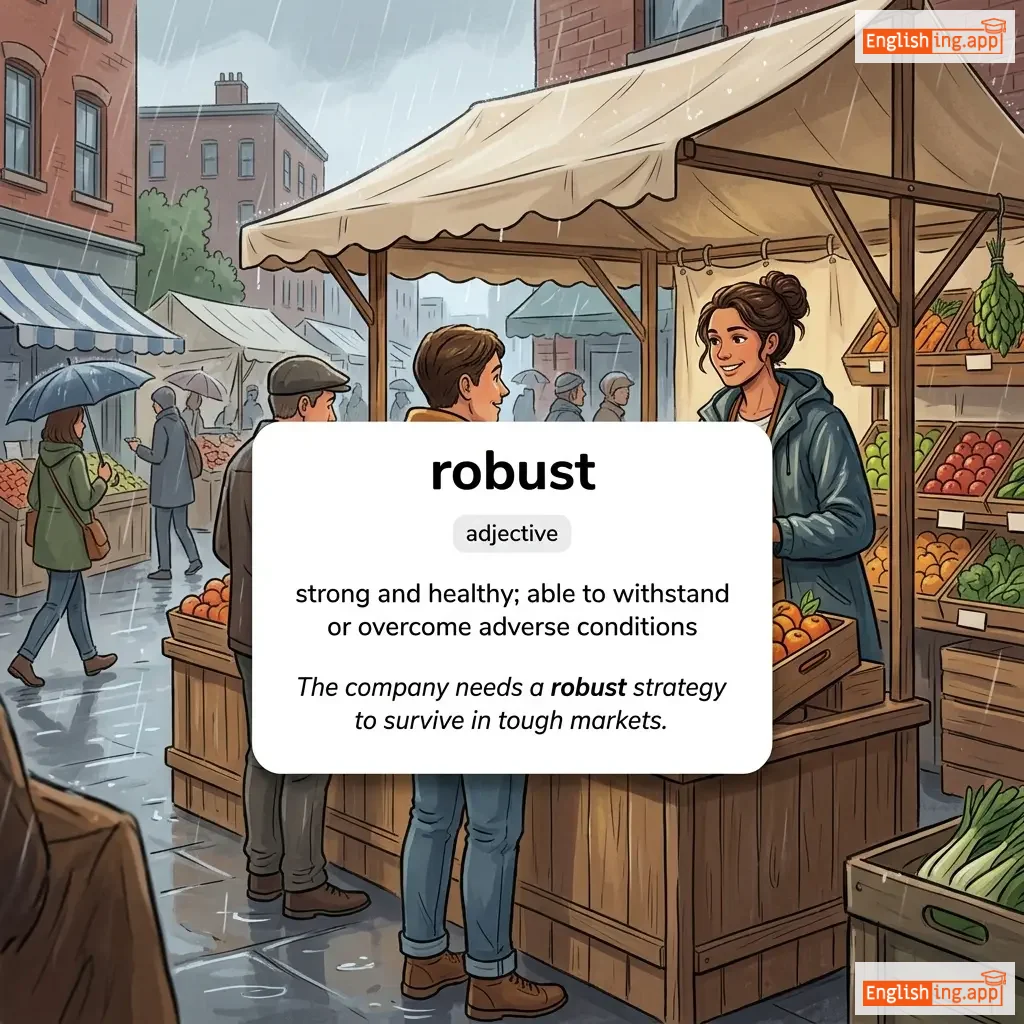
strong and healthy; able to withstand or overcome adverse conditions
••••••
|
The company needs a robust strategy to survive in tough markets. |
その会社は厳しい市場で生き残るために丈夫な戦略が必要です。
Sono kaisha wa kibishī shijō de ikinokoru tame ni jōbu na senryaku ga hitsuyō desu.
••••••
|
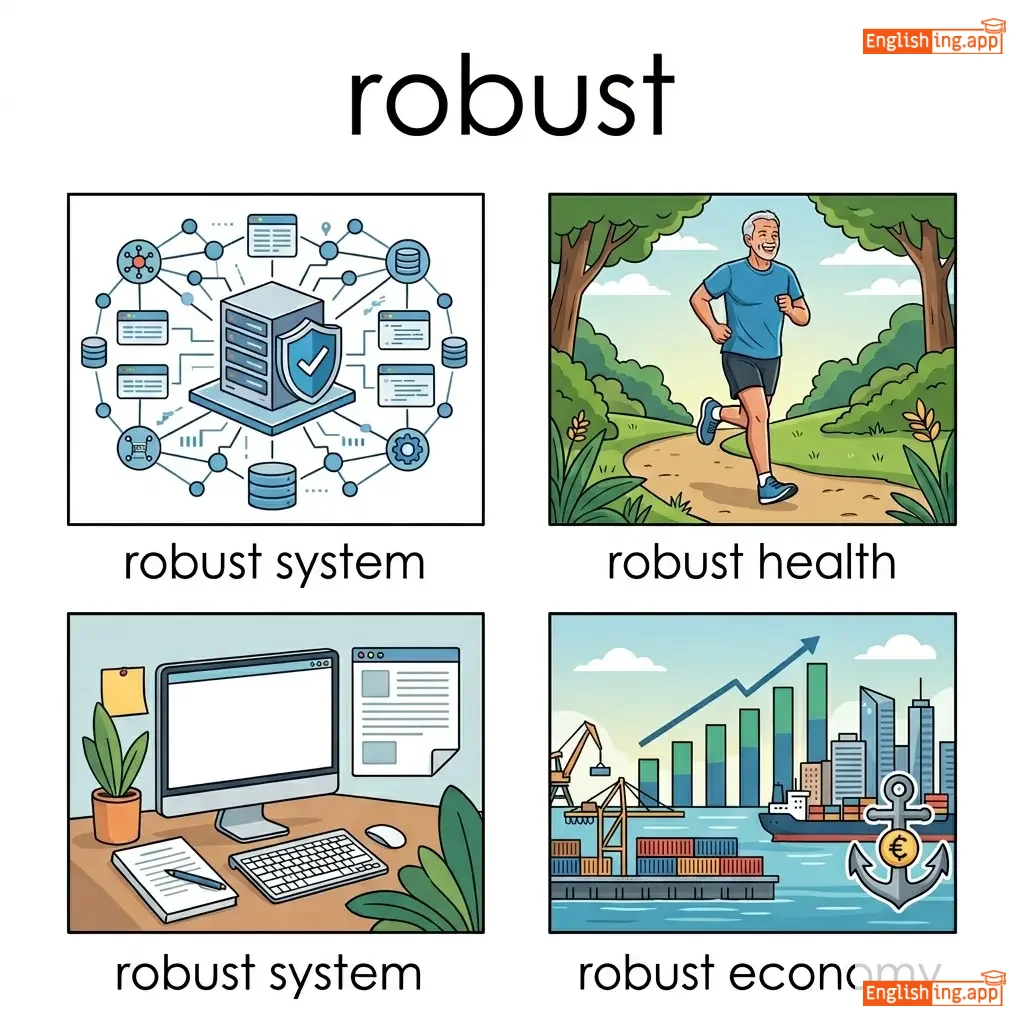
robust health |
a state of being very strong and healthy
••••••
|
丈夫な健康
jōbu na kenkō
••••••
|
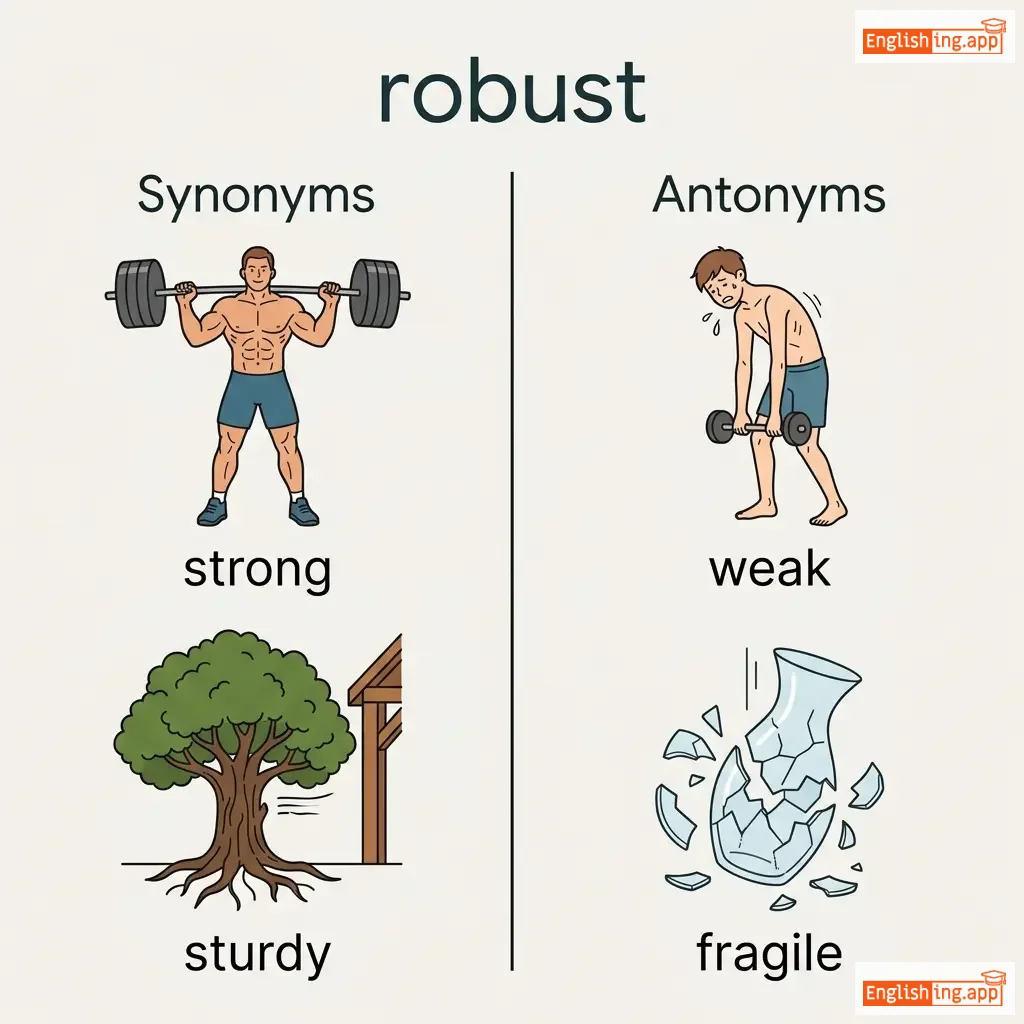
strong, sturdy, resilient, vigorous
••••••
|
weak, fragile
••••••
|
robust system, robust health, robust economy, robust design
••••••
|
Robustは丈夫💪 — ロボットも丈夫だから!
••••••
|
|
🪨
••••••
|
/rɒk/
noun
(rokku)
••••••
|
- •••••• |
岩石
ganseki
••••••
|
- •••••• | - •••••• | - •••••• | - •••••• |
a large, solid piece of mineral matter
••••••
|
The mountain was made of solid rock. |
その山は固い岩石でできていました。
Sono yama wa katai ganseki de dekiteimashita.
••••••
|
- •••••• | - •••••• | - •••••• |
stone, boulder, pebble, cliff
••••••
|
sand, soil
••••••
|
rock formation, hard rock, rock face, climb a rock
••••••
|
岩石は山にたくさんあります (Ganseki wa yama ni takusan arimasu) - Rocks are abundant in the mountains.
••••••
|
|
🚀
••••••
|
/ˈrɒkɪt/
noun, verb
(幸せ)
••••••
|
- •••••• |
幸せ
shiawase
••••••
|
rocketed
••••••
|
rocketed
••••••
|
rockets
••••••
|
rocketing
••••••
|
a missile or vehicle propelled by a rocket engine; to increase or move very quickly
••••••
|
The company’s profits rocketed after the new product launch. |
彼女は賞を受け取ったとき、幸せを隠せませんでした。
Kanojo wa shō o uketotta toki, shiawase o kakusemasen deshita.
••••••
|
skyrocket |
to rise or increase rapidly
••••••
|
幸せの追求
shiawase no tsuikyū
••••••
|
missile, spacecraft, soar, surge, escalate
••••••
|
fall, drop, decline
••••••
|
rocket launch, rocket engine, rocket speed, rocket science
••••••
|
幸せは、私たちが探し続ける宝物のようなものです!
••••••
|
|
🪄
••••••
|
/rɒd/
noun
(ロッド)
••••••
|
- •••••• |
金属または木材の細長い棒
kinzoku mata wa mokuzai no hosonagai bō
••••••
|
- •••••• | - •••••• | - •••••• | - •••••• |
a thin straight bar, especially of metal or wood
••••••
|
He used an iron rod to support the structure. |
彼は構造を支えるために鉄のロッドを使いました。
Kare wa kōzō o sasaeru tame ni tetsu no roddo o tsukaimashita.
••••••
|
spare the rod and spoil the child |
if you don’t discipline children, they will become spoiled
••••••
|
棒を使わなければ子供は甘やかされる
Bō o tsukawanakereba kodomo wa amayakasareru
••••••
|
bar, stick, pole, shaft, staff
••••••
|
flex, curve
••••••
|
fishing rod, iron rod, measuring rod, curtain rod
••••••
|
Rodは鉄棒を意味します。鉄棒がなければ構造は立ちません。しつけがなければ子供も育ちません。
••••••
|
|
🎭
••••••
|
/roʊl/
noun
(ロール)
••••••
|
- •••••• |
役割
yakuwari
••••••
|
- •••••• | - •••••• | - •••••• | - •••••• |
a part or function of something
••••••
|
Her role in the project was crucial. |
彼女のプロジェクトでの役割は重要でした。
Kanojo no purojekuto de no yakuwari wa juuyou deshita.
••••••
|
- •••••• | - •••••• | - •••••• |
part, function, position, job
••••••
|
non-entity, spectator
••••••
|
play a role, important role, leadership role, major role
••••••
|
役割は物語の中でのあなたの役目です。
••••••
|
|
⚽
••••••
|
/roʊl/
verb
(ロール)
••••••
|
- •••••• |
転がる
korogaru
••••••
|
rolled
ロールド
••••••
|
rolled
ロールド
••••••
|
rolls
ロールズ
••••••
|
rolling
ローリング
••••••
|
to move by turning over and over on an axis
••••••
|
She rolled the ball down the hill.
彼女はボールを丘の下に転がしました。
••••••
|
彼女はボールを丘の下に転がしました。
Kanojo wa booru o oka no shita ni korogashimashita.
••••••
|
- •••••• | - •••••• | - •••••• |
turn, spin, twist, rotate
••••••
|
stop, stand still
••••••
|
roll over, roll out, roll up
••••••
|
ボールが丘を転がるとき、'roll'の意味は日本語で'転がる'だと覚えてください。
••••••
|
|
💞
••••••
|
/roʊˈmæns/
noun
(ロマンス)
••••••
|
- •••••• |
ロマンス、愛
romansh, ai
••••••
|
- •••••• | - •••••• | - •••••• | - •••••• |
a feeling of love, especially one that is exciting and mysterious
••••••
|
Their romance began during a summer trip to Paris.
彼らのロマンスはパリへの夏の旅行中に始まりました。
••••••
|
彼らのロマンスはパリへの夏の旅行中に始まりました。
Karera no romansh wa Pari e no natsu no ryokou-chuu ni hajimarimashita.
••••••
|
a whirlwind romance
嵐のようなロマンス
••••••
|
a romantic relationship that develops very quickly
••••••
|
非常に速く発展する恋愛関係
Hijou ni hayaku hatten suru ren'ai kankei
••••••
|
love, affection, passion, relationship, courtship
••••••
|
hatred, indifference, dislike
••••••
|
romance novel, true romance, secret romance, romantic relationship
••••••
|
ローマ(Rome)で始まるロマンチックな愛が、ロマンス(romance)です。
••••••
|
|
💕
••••••
|
/roʊˈmæn.tɪk/
adjective
(ロマンチック)
••••••
|
- •••••• |
ロマンチック
romanchikku
••••••
|
- •••••• | - •••••• | - •••••• | - •••••• |
relating to love; idealistic; dreamy
••••••
|
They enjoyed a romantic dinner by candlelight.
彼らはろうそくの光でロマンチックなディナーを楽しんでいました。
••••••
|
彼らはろうそくの光でロマンチックなディナーを楽しんでいました。
Karera wa rousoku no hikari de romanchikku na dinā o tanoshinde imashita.
••••••
|
- •••••• | - •••••• | - •••••• |
loving, passionate, sentimental, dreamy
••••••
|
practical, realistic, unromantic, prosaic
••••••
|
romantic dinner, romantic movie, romantic relationship
••••••
|
ロマンチック = 愛とキャンドルライト
••••••
|
|
🏠
••••••
|
/ruːf/
noun
(ルーフ)
••••••
|
- •••••• |
屋根
yane
••••••
|
- •••••• | - •••••• | - •••••• | - •••••• |
the top covering of a building or vehicle
••••••
|
The roof of the house needs to be repaired. |
家の屋根は修理が必要です。
Ie no yane wa shuuri ga hitsuyou desu.
••••••
|
- •••••• | - •••••• | - •••••• |
ceiling, canopy, covering, lid
••••••
|
floor, ground
••••••
|
roof top, flat roof, roof repair
••••••
|
屋根がしっかりしていれば、雨も安心して過ごせるよ!
••••••
|
|
🛏️
••••••
|
/ruːm/
noun
(ルーム)
••••••
|
- •••••• |
部屋
heya
••••••
|
- •••••• | - •••••• | - •••••• | - •••••• |
A space within a building enclosed by walls, floor, and ceiling
••••••
|
She decorated her room with bright colors.
シー デコレーテッド ハー ルーム ウィズ ブライト カラーズ
••••••
|
彼女は明るい色で自分の部屋を飾りました。
kanojo wa akarui iro de jibun no heya o kazarimashita
••••••
|
room for improvement
ルーム フォー インプルーブメント
••••••
|
possibility or opportunity for making something better
••••••
|
改善の余地
kaizen no yochi
••••••
|
space, chamber, area, compartment, apartment
••••••
|
hall, outdoors
••••••
|
living room, bedroom, hotel room, empty room
••••••
|
Room → 部屋 heya — think of a neat Japanese room with tatami mats.
••••••
|
|
🌱
••••••
|
/ruːt/
noun
(ルート)
••••••
|
- •••••• |
根; 起源; 基本原因; ルート
ne; kigen; kihon gen'in; rūto
••••••
|
- •••••• | - •••••• | - •••••• | - •••••• |
the part of a plant that grows underground; the basic cause, source, or origin of something
••••••
|
We need to find the root of this problem to solve it permanently.
この問題の根本原因を見つけて、永続的に解決する必要があります。
••••••
|
この問題の根本原因を見つけて、永続的に解決する必要があります。
Kono mondai no konpon gen'in o mitsukete, eizoku-teki ni kaiketsu suru hitsuyō ga arimasu.
••••••
|
- •••••• | - •••••• | - •••••• |
source, origin, basis, foundation
••••••
|
branch, leaf, effect, result
••••••
|
root cause, tree root, root of the problem
••••••
|
In Japanese, 'ルート' (rūto) refers to the root of something, just like the root of a plant that grows under the soil.
••••••
|
|
🪢
••••••
|
/roʊp/
noun
(ロープ)
••••••
|
- •••••• |
ロープ
roopu
••••••
|
- •••••• | - •••••• | - •••••• | - •••••• |
a strong, thick cord made of twisted fibers or strands
••••••
|
The climbers used a rope to scale the mountain.
登山者は山を登るためにロープを使いました。
••••••
|
登山者は山を登るためにロープを使いました。
Tozan-sha wa yama wo noboru tame ni roopu wo tsukaimashita.
••••••
|
- •••••• | - •••••• | - •••••• |
cord, string, line, cable
••••••
|
thread, wire
••••••
|
climbing rope, rope ladder, jump rope
••••••
|
登山のためのロープ、'rope'を思い出してください
••••••
|
|
🌹
••••••
|
/roʊz/
noun
(ローズ)
••••••
|
- •••••• |
バラ
bara
••••••
|
- •••••• | - •••••• | - •••••• | - •••••• |
a fragrant flower with thorny stems, typically red, pink, white, or yellow
••••••
|
She gave me a beautiful red rose for Valentine's Day.
シー ガブ ミー ア ビューティフル レッド ローズ フォー バレンタインズ デー。
••••••
|
彼女はバレンタインデーに私に美しい赤いバラをくれました。
kanojo wa barentainde ni watashi ni utsukushii akai bara o kuremashita
••••••
|
- •••••• | - •••••• | - •••••• |
flower, bloom, blossom
••••••
|
weed, thorn
••••••
|
red rose, rose garden, rose petals, rose bouquet
••••••
|
In Japanese, ‘bara’ sounds soft and elegant – just like a rose.
••••••
|
|
🍎
••••••
|
/rɒt/
verb
(ロット)
••••••
|
|
腐る
kuzuru
••••••
|
rotted
ロテッド
••••••
|
rotted
ロテッド
••••••
|
rots
ロッツ
••••••
|
rotting
ロッティング
••••••
|
to decay or decompose; to become corrupt
••••••
|
The fruit will rot if left in the sun.
果物は日光に当たると腐ります。
••••••
|
果物は日光に当たると腐ります。
Kudamono wa nikkou ni ataru to kusarimasu
••••••
|
- •••••• | - •••••• | - •••••• |
decay, decompose, spoil, putrefy
••••••
|
preserve, fresh, maintain, conserve
••••••
|
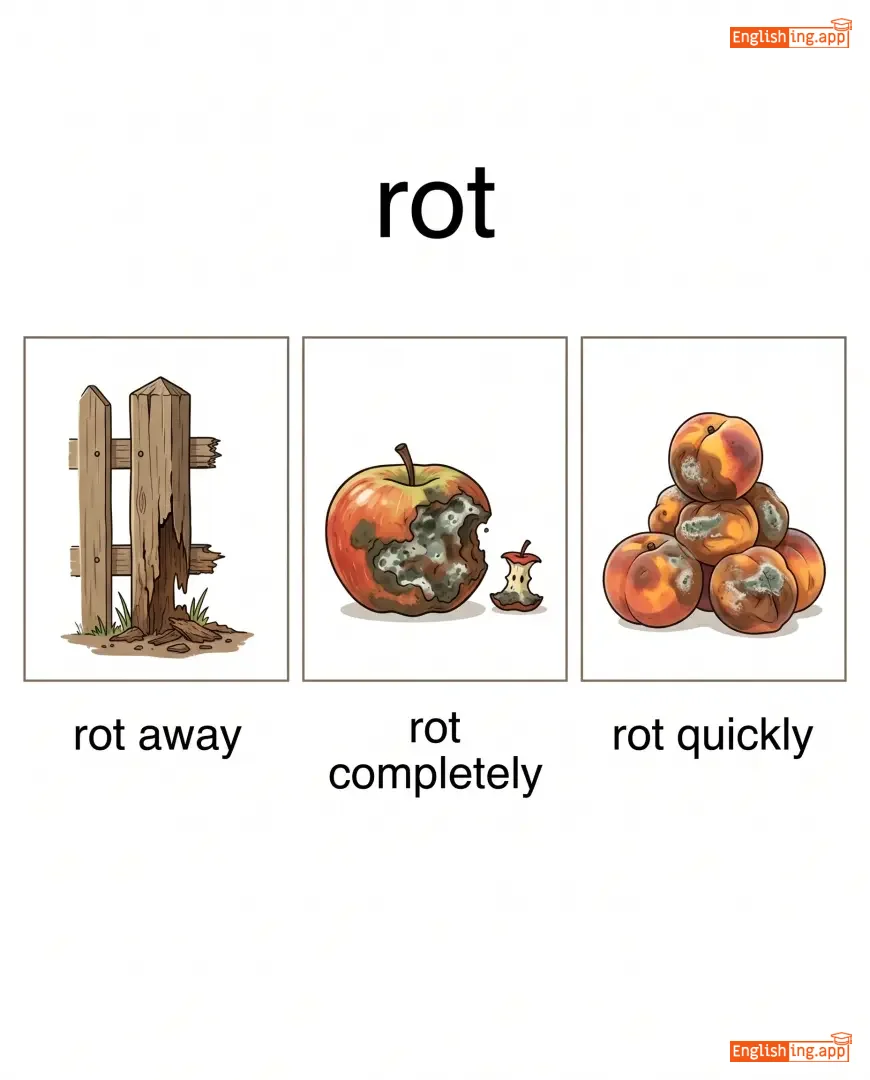
rot away, rot completely, rot quickly, rot slowly, rot in storage
••••••
|
果物を日光に放置すると、腐敗が進みます。
••••••
|
|
🔄
••••••
|
/ˈroʊ.teɪt/
verb
(回転する)
••••••
|
- •••••• |
回転する
kaiten suru
••••••
|
rotated
回転した
••••••
|
rotated
回転した
••••••
|
rotates
回転する
••••••
|
rotating
回転している
••••••
|
to turn around a central point or axis
••••••
|
The Earth rotates on its axis once every 24 hours.
地球は24時間ごとに自転します。
••••••
|
地球は24時間ごとに自転します。
Chikyū wa 24 jikan goto ni jiten shimasu.
••••••
|
rotate the crops
作物を回転させる
••••••
|
to change the type of crop grown in a field to maintain soil fertility
••••••
|
作物を回転させる
sakumotsu o kaiten saseru
••••••
|
spin, turn, revolve, whirl, pivot
••••••
|
stand, remain, stay
••••••
|
rotate slowly, rotate daily, rotate crops, rotate position
••••••
|
車のホイールが回転する - 回転するは回すこと
••••••
|
|
🔄
••••••
|
/roʊˈteɪʃən/
noun
(ro-tei-shon)
••••••
|
- •••••• |
回転; 回転運動; 自転
kaiten; kaiten undō; jiten
••••••
|
- •••••• | - •••••• | - •••••• | - •••••• |
the action of rotating around an axis or center; a single turn
••••••
|
The Earth's rotation takes 24 hours to complete.
地球の回転は24時間かかります。
••••••
|
地球の回転は24時間かかります。
Chikyū no kaiten wa 24 jikan kakarimasu.
••••••
|
- •••••• | - •••••• | - •••••• |
turning, spinning, revolution, orbit
••••••
|
stillness, stability, stagnation
••••••
|
crop rotation, job rotation, axis of rotation
••••••
|
地球が回転するのを想像してください
••••••
|
|
🪨
••••••
|
/rʌf/
adjective
(rafu)
••••••
|
- •••••• |
ざらざらした; 荒い; 厳しい
zarazara shita; arai; kibishii
••••••
|
- •••••• | - •••••• | - •••••• | - •••••• |
having an uneven surface; not smooth; harsh
••••••
|
The rough surface of the rock hurt my hands.
岩石のざらざらした表面が私の手を傷つけました。
••••••
|
岩石のざらざらした表面が私の手を傷つけました。
Ganseki no zarazara shita hyōmen ga watashi no te o kizu tsukemashita.
••••••
|
- •••••• | - •••••• | - •••••• |
coarse, uneven, harsh, bumpy
••••••
|
smooth, soft, gentle, even
••••••
|
rough surface, rough sea, rough draft
••••••
|
何かがざらざらしていて、触ると痛いとき、それは厳しいことを意味します。
••••••
|
|
📊
••••••
|
/ˈrʌfli/
adverb
(ラフリー)
••••••
|
- •••••• |
おおよそ; 粗暴または暴力的な方法で
ooyoso; sobou matawa bouryokuteki na houhou de
••••••
|
- •••••• | - •••••• | - •••••• | - •••••• |
approximately; in a harsh or violent way
••••••
|
The project will take roughly three months to complete. |
このプロジェクトはおおよそ3ヶ月かかります。
Kono purojekuto wa ooyoso san kagetsu kakarimasu.
••••••
|
- •••••• | - •••••• | - •••••• |
approximately, about, around, harshly
••••••
|
exactly, precisely, gently, smoothly
••••••
|
roughly speaking, roughly equivalent, roughly estimated
••••••
|
Roughly, imagine the rough path to get to it.
••••••
|
|
🔵
••••••
|
/raʊnd/
adjective
(ラウンド)
••••••
|
- •••••• |
丸い
marui
••••••
|
- •••••• | - •••••• | - •••••• | - •••••• |
having a circular shape; shaped like a sphere or disk
••••••
|
The table was round and had a smooth surface.
テーブルは丸くて、滑らかな表面がありました。
••••••
|
テーブルは丸くて、滑らかな表面がありました。
Tēburu wa marukute, namerakana hyōmen ga arimashita.
••••••
|
- •••••• | - •••••• | - •••••• |
circular, spherical, disk-shaped, globular
••••••
|
square, rectangular
••••••
|
round table, round shape, round object, round hole
••••••
|
丸いものはよく転がる!
••••••
|
|
🛣️
••••••
|
/ruːt/
noun
••••••
|
- •••••• | - •••••• | - •••••• | - •••••• | - •••••• | - •••••• |
a way or course taken to get from one place to another
••••••
|
The best route to the airport is through the highway. |
- •••••• | - •••••• | - •••••• | - •••••• |
path, way, road, course
••••••
|
obstacle, detour
••••••
|
route map, take a route, preferred route, scenic route
••••••
|
No •••••• |
|
🔁
••••••
|
/ruːˈtiːn/
noun
(ルーチン)
••••••
|
|
ルーチン、定期的に行われる行動の順序
rūchin, teikiteki ni okonawareru kōdō no junjo
••••••
|
- •••••• | - •••••• | - •••••• | - •••••• |
a sequence of actions regularly followed; a fixed program
••••••
|
She follows a strict morning routine before work. |
彼女は仕事の前に厳格な朝のルーチンを守っています。
Kanojo wa shigoto no mae ni genkaku na asa no rūchin o mamotteimasu.
••••••
|
break the routine |
to do something different from one's usual habits
••••••
|
ルーチンを破る
rūchin o yaburu
••••••
|
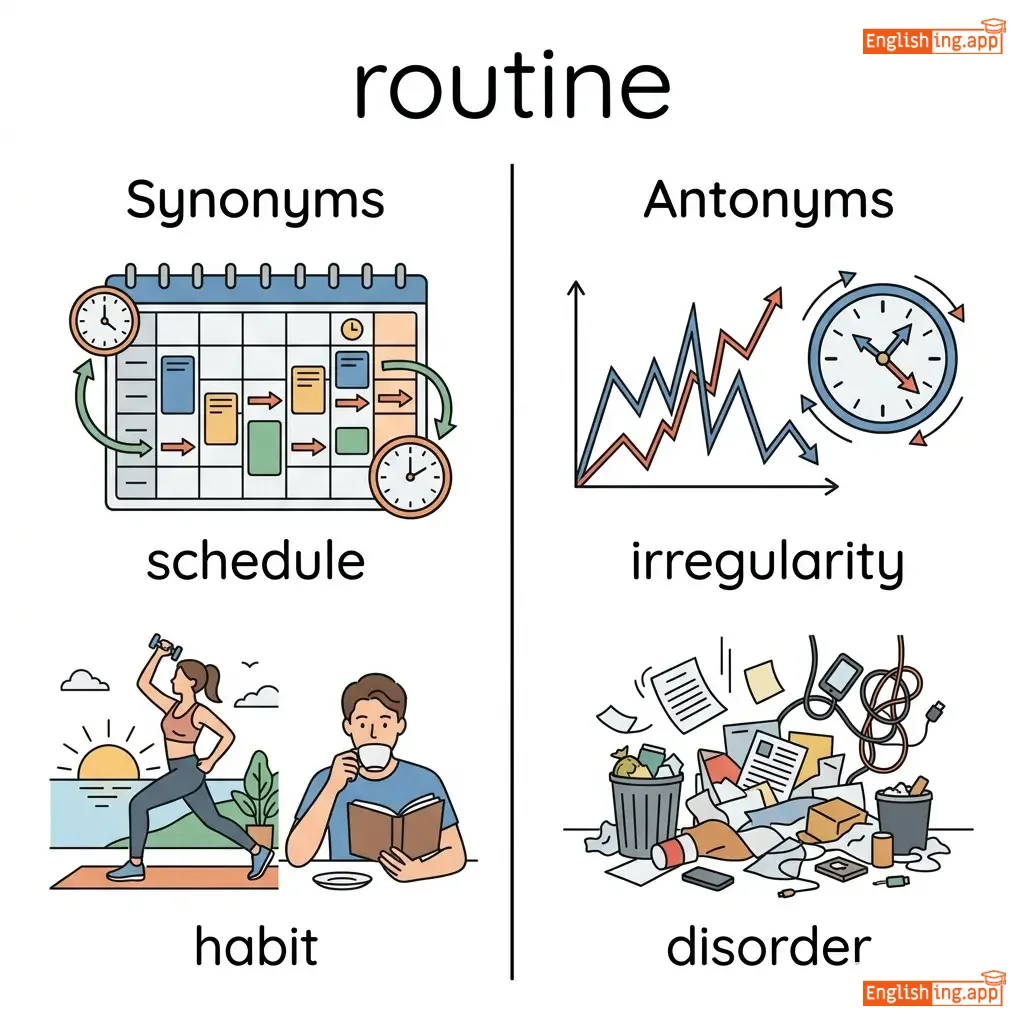
schedule, habit, pattern, procedure, practice
••••••
|
irregularity, disorder, spontaneity
••••••
|
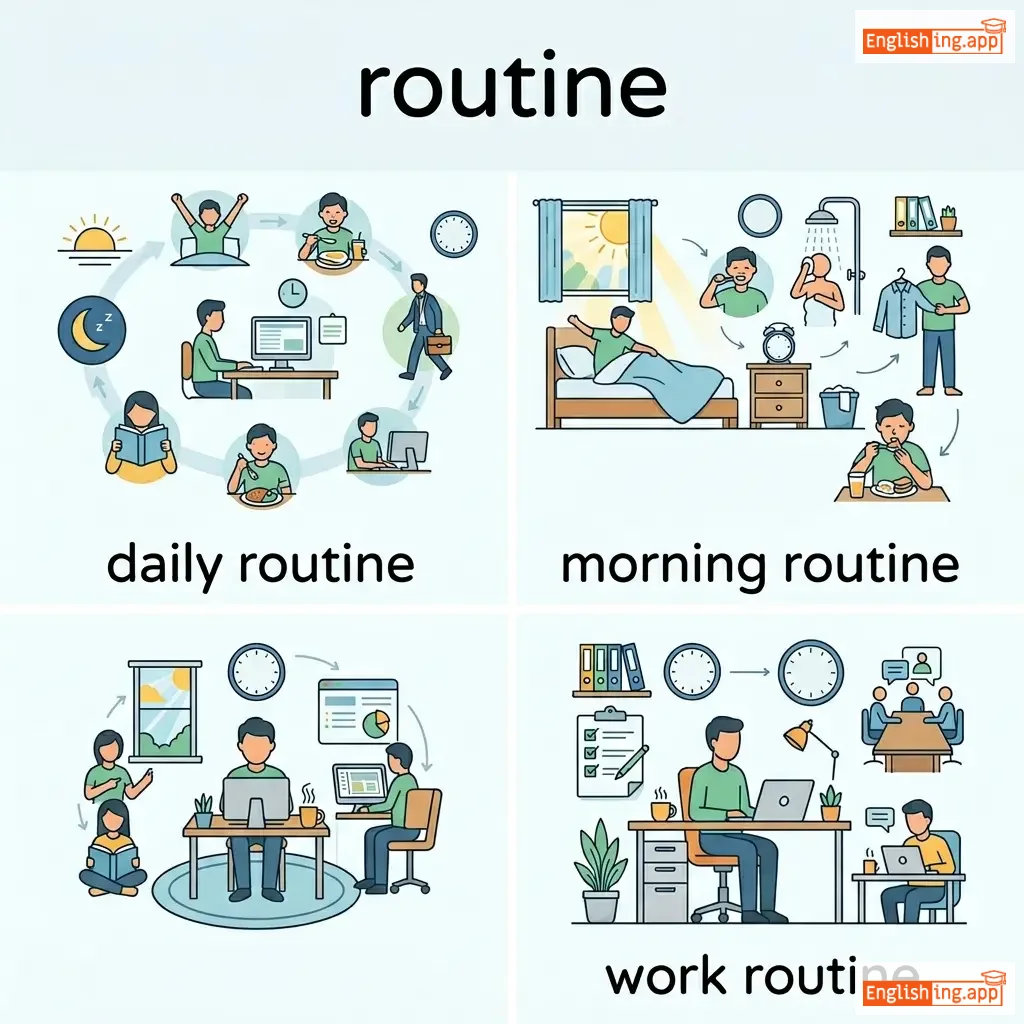
daily routine, morning routine, work routine, routine check
••••••
|
ルーチンは毎日の決まったプラン、それを守ることで習慣になる
••••••
|
|
🚣
••••••
|
/raʊ/ (argument), /roʊ/ (line of things)
noun, verb
(ロウ)
••••••
|
- •••••• |
列 / 争い
retsu / arasoi
••••••
|
rowed
ロウド
••••••
|
rowed
ロウド
••••••
|
rows
ロウズ
••••••
|
rowing
ロウイング
••••••
|
A line of things or people; also, a noisy quarrel; to propel a boat with oars.
••••••
|
They had a loud row about money.
彼らはお金について大声で争いました。
••••••
|
彼らはお金について大声で争いました。
Karera wa okane ni tsuite ōgoe de arasoi mashita.
••••••
|
a row to hoe
難しい仕事
••••••
|
a difficult task or responsibility to deal with
••••••
|
難しい仕事
muzukashī shigoto
••••••
|
line, series, quarrel, fight, paddle
••••••
|
agreement, harmony
••••••
|
row of seats, row a boat, loud row
••••••
|
Row を列または争いとして: 'Row' は並びか、喧嘩のこと。
••••••
|
|
👑
••••••
|
/ˈrɔɪəl/
adjective
(ロイヤル)
••••••
|
- •••••• |
王室の
ōshitsu no
••••••
|
- •••••• | - •••••• | - •••••• | - •••••• |
relating to a king, queen, or other member of a royal family
••••••
|
They attended a royal ceremony at the palace. |
彼らは宮殿での王室の儀式に参加しました。
Karera wa kyūden de no ōshitsu no gishiki ni sanka shimashita.
••••••
|
royal treatment |
exceptionally good or special treatment
••••••
|
王室の待遇
ōshitsu no taigū
••••••
|
regal, majestic, noble, grand, kingly
••••••
|
common, ordinary, humble
••••••
|
royal family, royal palace, royal wedding, royal decree
••••••
|
Royalは‘王室の’という意味です—‘王様の椅子’のように特別です。
••••••
|
|
👐
••••••
|
/rʌb/
verb
(ラブ)
••••••
|
|
擦る
suru
••••••
|
rubbed
ラブド
••••••
|
rubbed
ラブド
••••••
|
rubs
ラブズ
••••••
|
rubbing
ラビング
••••••
|
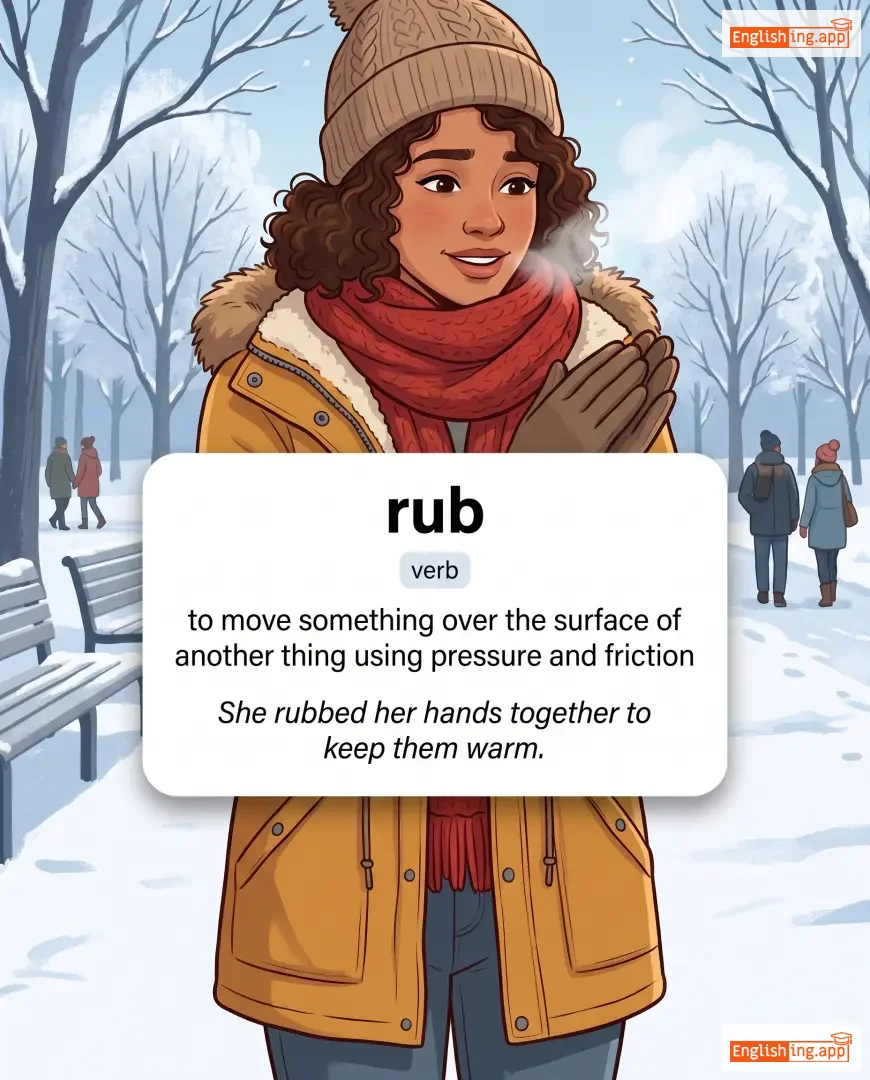
to move something over the surface of another thing using pressure and friction
••••••
|
She rubbed her hands together to keep them warm.
彼女は手をこすり合わせて暖かさを保っていました。
••••••
|
彼女は手をこすり合わせて暖かさを保っていました。
Kanojo wa te o kosuri awasete atatakasa o tamotte imashita.
••••••
|
rub salt in the wound
傷口に塩を擦り込む
••••••
|
to make a bad situation even worse
••••••
|
傷口に塩を擦り込む
Kizuguchi ni shio o surikomu
••••••
|
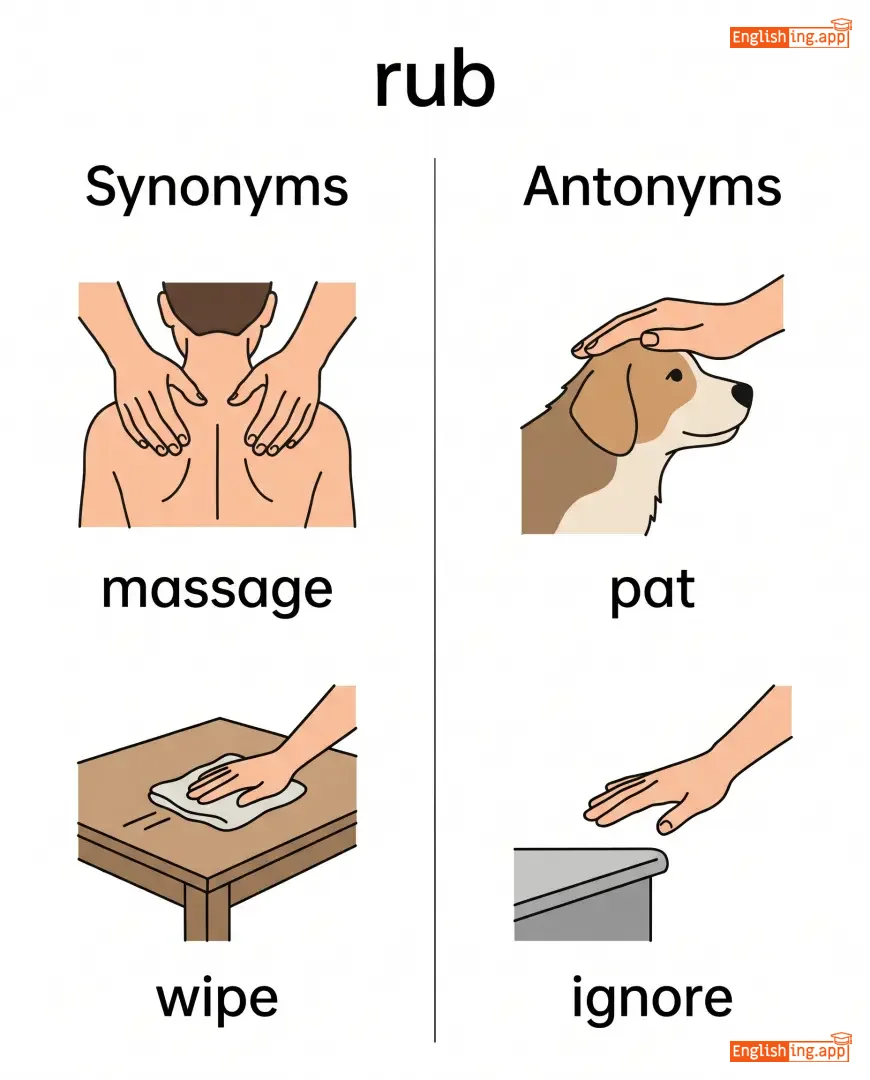
massage, wipe, polish, scrub, stroke
••••••
|
pat, ignore, leave
••••••
|
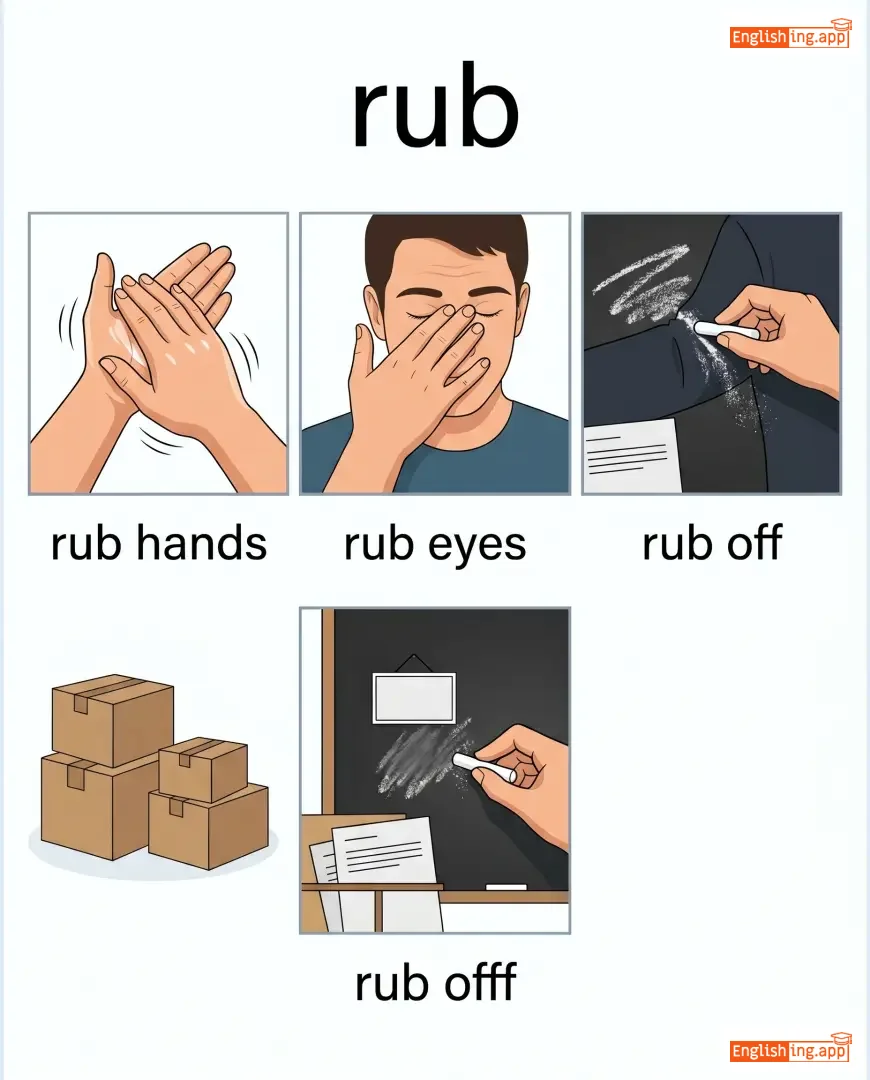
rub hands, rub eyes, rub off, rub out
••••••
|
Rubは擦る意味です — 擦ってピカピカにしましょう。
••••••
|
|
🧤
••••••
|
/ˈrʌbər/
noun
(ハピネス)
••••••
|
- •••••• |
幸福
kōfuku
••••••
|
- •••••• | - •••••• | - •••••• | - •••••• |
a tough elastic substance made from the latex of tropical plants or synthetically, used for making tires, boots, and other products.
••••••
|
The tires are made of natural rubber. |
彼女は賞を受け取ったとき、自分の幸福を隠すことができませんでした。
Kanojo wa shō o uketotta toki, jibun no kōfuku o kakusu koto ga dekimasen deshita.
••••••
|
rubber meets the road |
the point at which a theory or idea is tested in practice
••••••
|
幸福の追求
kōfuku no tsuikyū
••••••
|
elastic, latex, polymer, gum, elastomer
••••••
|
metal, stone, plastic
••••••
|
rubber band, rubber gloves, rubber boots, rubber factory
••••••
|
幸福は心の中で育まれる温かい光のようなものです。
••••••
|
|
🗑️
••••••
|
/ˈrʌbɪʃ/
noun
(ラビッシュ)
••••••
|
- •••••• |
ゴミ
gomi
••••••
|
- •••••• | - •••••• | - •••••• | - •••••• |
Waste material or unwanted things; something worthless
••••••
|
He threw the broken toys into the rubbish bin. |
彼は壊れたおもちゃをゴミ箱に捨てました。
Kare wa kowareta omocha o gomibako ni sutemashita.
••••••
|
talk rubbish |
to speak nonsense
••••••
|
無駄話をする
mudabanashi o suru
••••••
|
trash, garbage, litter, junk, waste
••••••
|
treasure, valuables
••••••
|
rubbish bin, collect rubbish, throw rubbish, rubbish talk
••••••
|
Rubbish はゴミ、ゴミはゴミ箱に捨てられる!
••••••
|
|
🙄
••••••
|
/ruːd/
adjective
(ルード)
••••••
|
- •••••• |
失礼
shitsurei
••••••
|
- •••••• | - •••••• | - •••••• | - •••••• |
Not having or showing respect; impolite
••••••
|
It was rude of him to interrupt the conversation. |
会話を遮るのは失礼です。
kaigi o saegiru no wa shitsurei desu.
••••••
|
rude awakening |
an unpleasant surprise or realization
••••••
|
失礼な目覚め
shitsurei na mezame
••••••
|
impolite, disrespectful, offensive, insolent, unmannerly
••••••
|
polite, respectful, courteous
••••••
|
rude behavior, rude comment, rude awakening, rude interruption
••••••
|
Rudeと失礼は同じ意味
••••••
|

