|
絵文字
|
単語 | Images | 翻訳 | 過去 | 過去分詞 | 三人称単数 | 動名詞 | 意味 | 例文 | 例文の翻訳 | 表現例 | 表現例の意味 | 表現例の翻訳 | 同義語 | 対義語 | コロケーション | ニーモニック |
|---|---|---|---|---|---|---|---|---|---|---|---|---|---|---|---|---|---|
|
💼
••••••
|
/ˈlaɪv.li.θʊd/
noun
(ライヴリフッド)
••••••
|
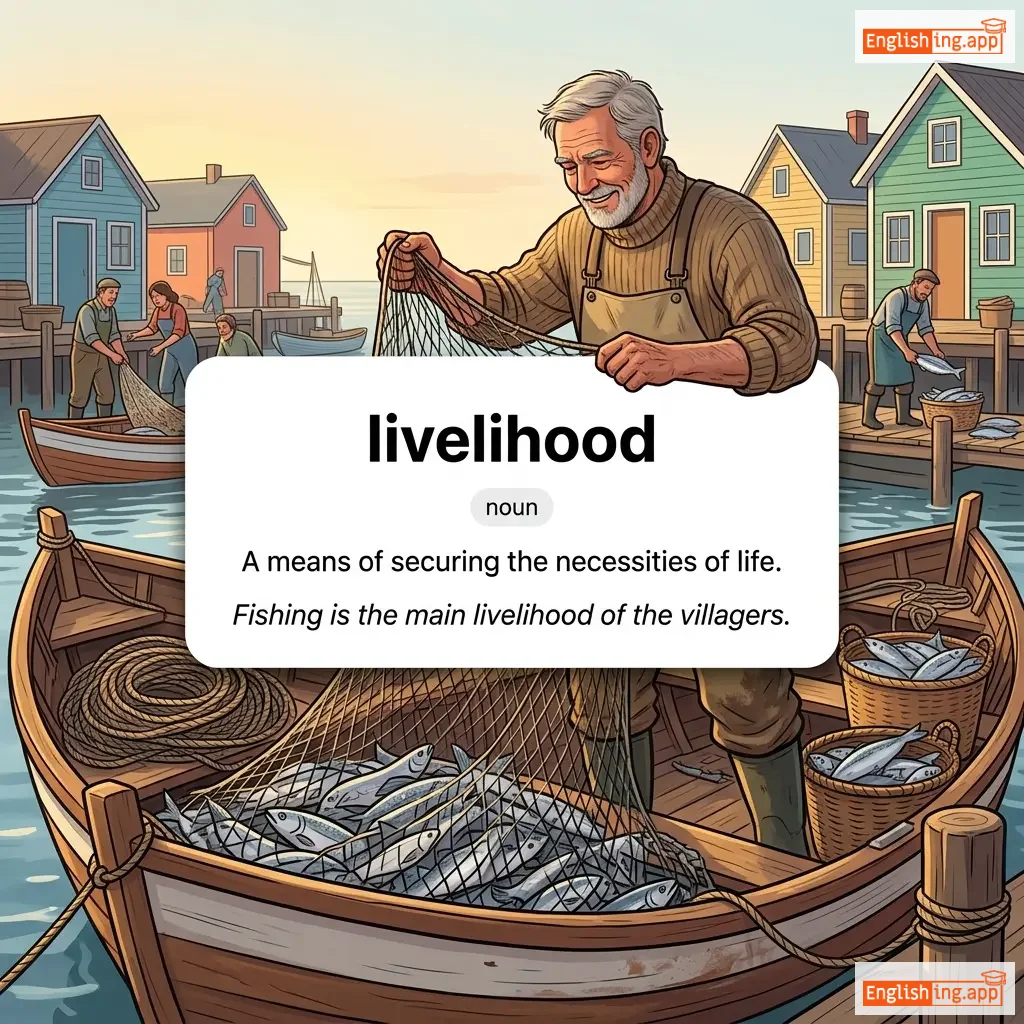
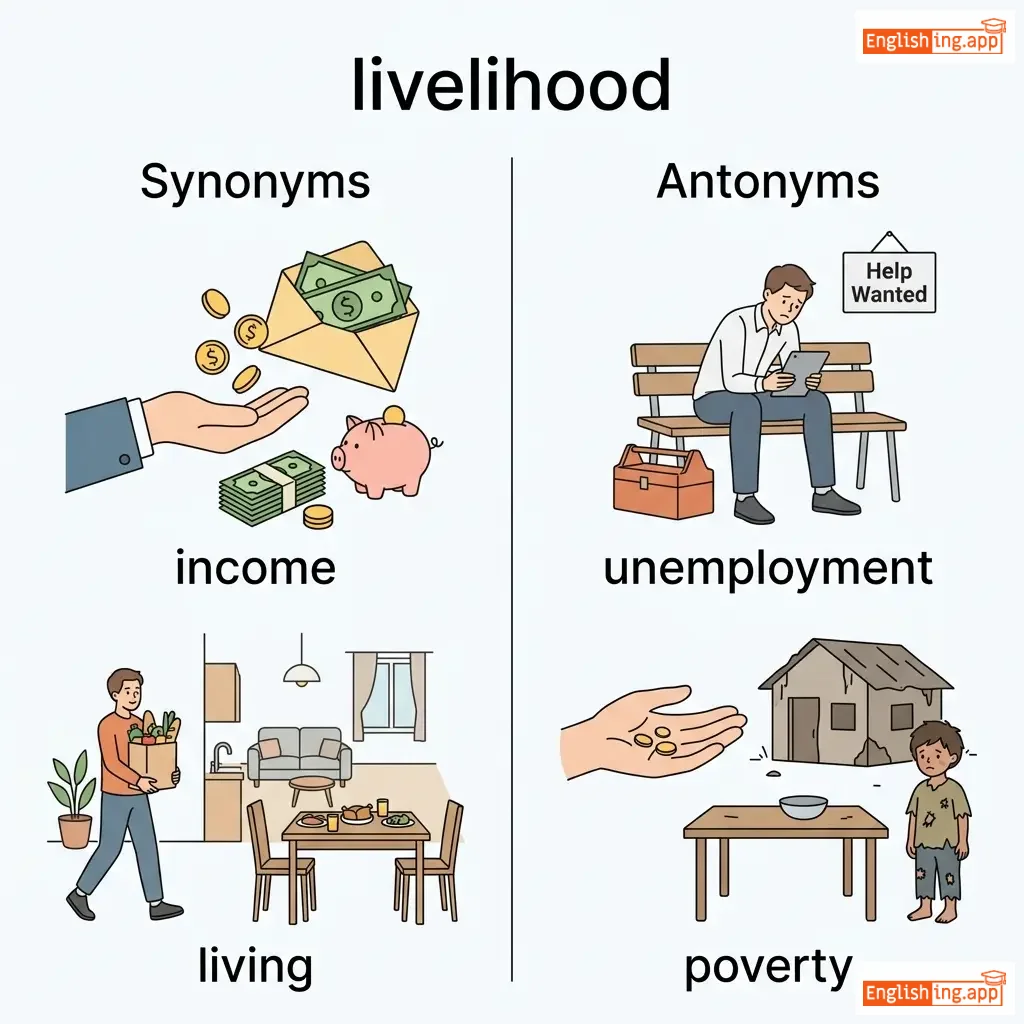
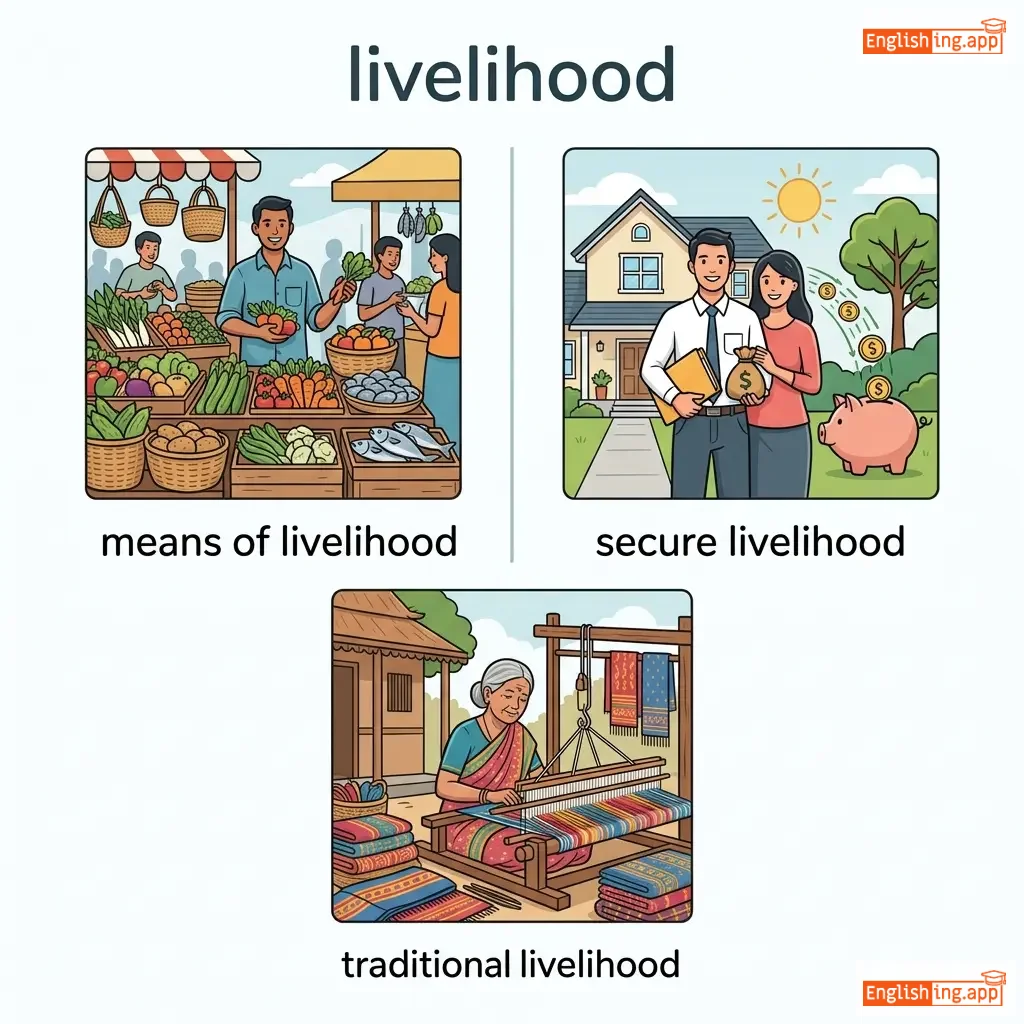
|
生計
seikei
••••••
|
- •••••• | - •••••• | - •••••• | - •••••• |
a means of securing the necessities of life; the work that provides income to support oneself and family
••••••
|
Fishing is their main source of livelihood. |
漁業は彼らの主な生計源です。
gyogyo wa karera no omona seikei gen desu.
••••••
|
- •••••• | - •••••• | - •••••• |
living, subsistence, income, occupation
••••••
|
unemployment, poverty
••••••
|
earn livelihood, source of livelihood, sustainable livelihood
••••••
|
‘生計’は生活を支えるための手段、例えば漁業がその役割を果たしています。
••••••
|
|
🫀
••••••
|
/ˈlɪvər/
noun
(liver)
••••••
|
- •••••• |
肝臓
kanzou
••••••
|
- •••••• | - •••••• | - •••••• | - •••••• |
a large organ in the body that cleans the blood and produces bile to help digest food.
••••••
|
The liver plays a vital role in removing toxins from the body. |
肝臓は体から毒素を取り除く重要な役割を果たします。
kanzou wa karada kara dokuso o torinozoku juuyou na yakuwari o hatashimasu.
••••••
|
liver disease |
a medical condition affecting the liver
••••••
|
肝臓病
kanzoubyou
••••••
|
organ, gland, viscus, hepatic organ
••••••
|
none
••••••
|
healthy liver, liver disease, liver function, liver transplant
••••••
|
肝臓は血液を浄化する、生命を支える重要な臓器。
••••••
|
|
🦎
••••••
|
/ˈlɪzərd/
noun
(リザード)
••••••
|
- •••••• |
とかげ
tokage
••••••
|
- •••••• | - •••••• | - •••••• | - •••••• |
A small reptile with a long body, four legs, and a tail, often found on walls or in gardens.
••••••
|
A lizard crawled across the wall. |
とかげが壁を這っていました。
Tokage ga kabe wo hatte imashita.
••••••
|
lounge lizard |
A man who frequents bars and clubs, often looking for women.
••••••
|
ラウンジとかげ
Raunji tokage
••••••
|
gecko, reptile, skink, iguana
••••••
|
mammal, bird
••••••
|
garden lizard, wall lizard, desert lizard, lizard species
••••••
|
Lizard はとかげを意味します - 壁を這う‘tick-tick’を聞けば覚えられるでしょう。
••••••
|
|
📦
••••••
|
/loʊd/
noun/verb
(ロウド)
••••••
|
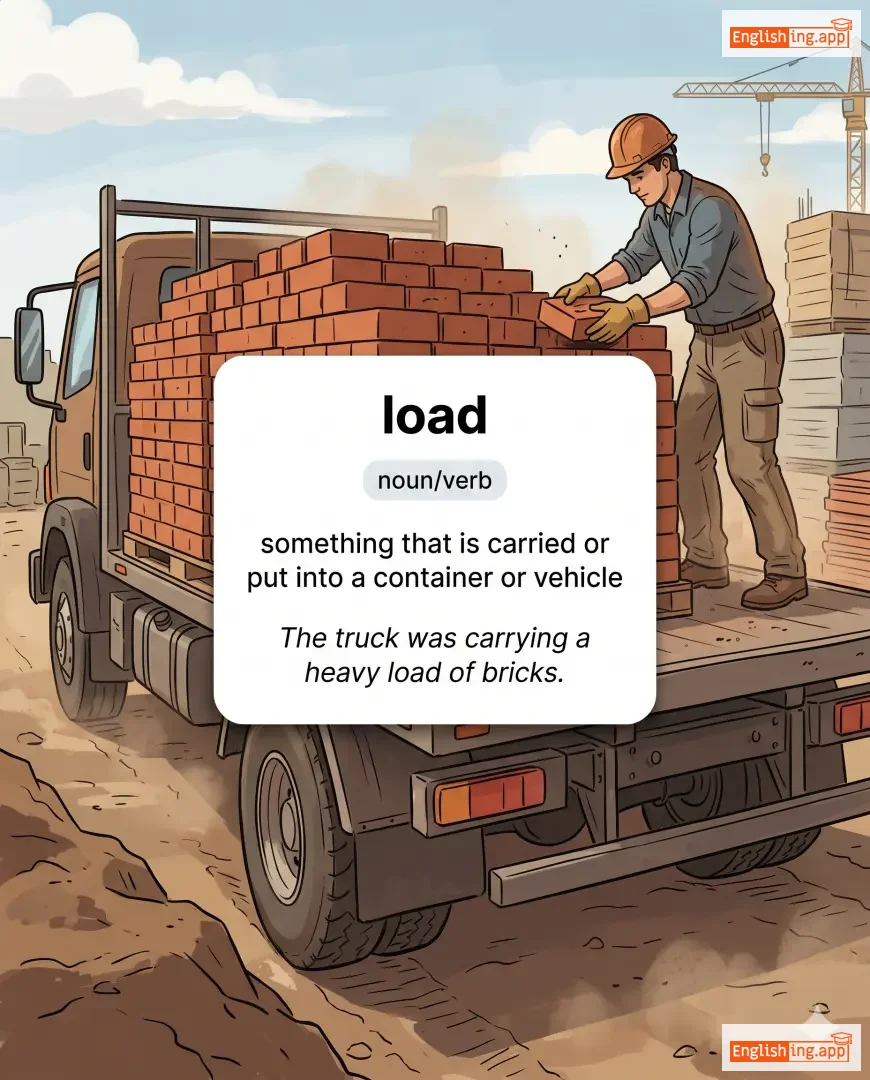
|
荷物
nimotsu
••••••
|
loaded
ロウデッド
••••••
|
loaded
ロウデッド
••••••
|
loads
ロウズ
••••••
|
loading
ロウディング
••••••
|
something that is carried or put into a container or vehicle
••••••
|
The truck was carrying a heavy load of bricks.
トラックは重い荷物を運んでいました。
••••••
|
トラックは重い荷物を運んでいました。
torakku wa omoi nimotsu o hakonde imashita.
••••••
|
take a load off
荷を下ろす
••••••
|
to sit down and relax
••••••
|
リラックスする
rirakkusu suru
••••••
|
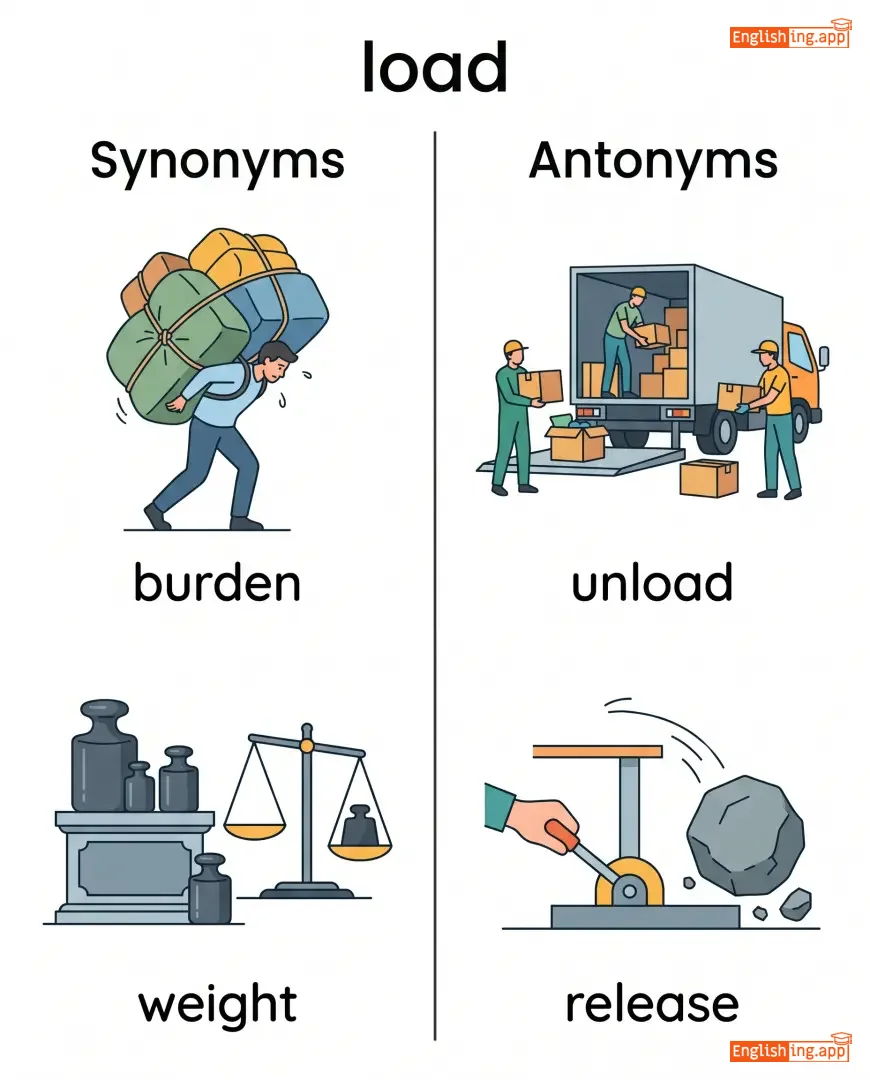
burden, weight, cargo, freight, shipment
••••••
|
unload, release, lighten
••••••
|
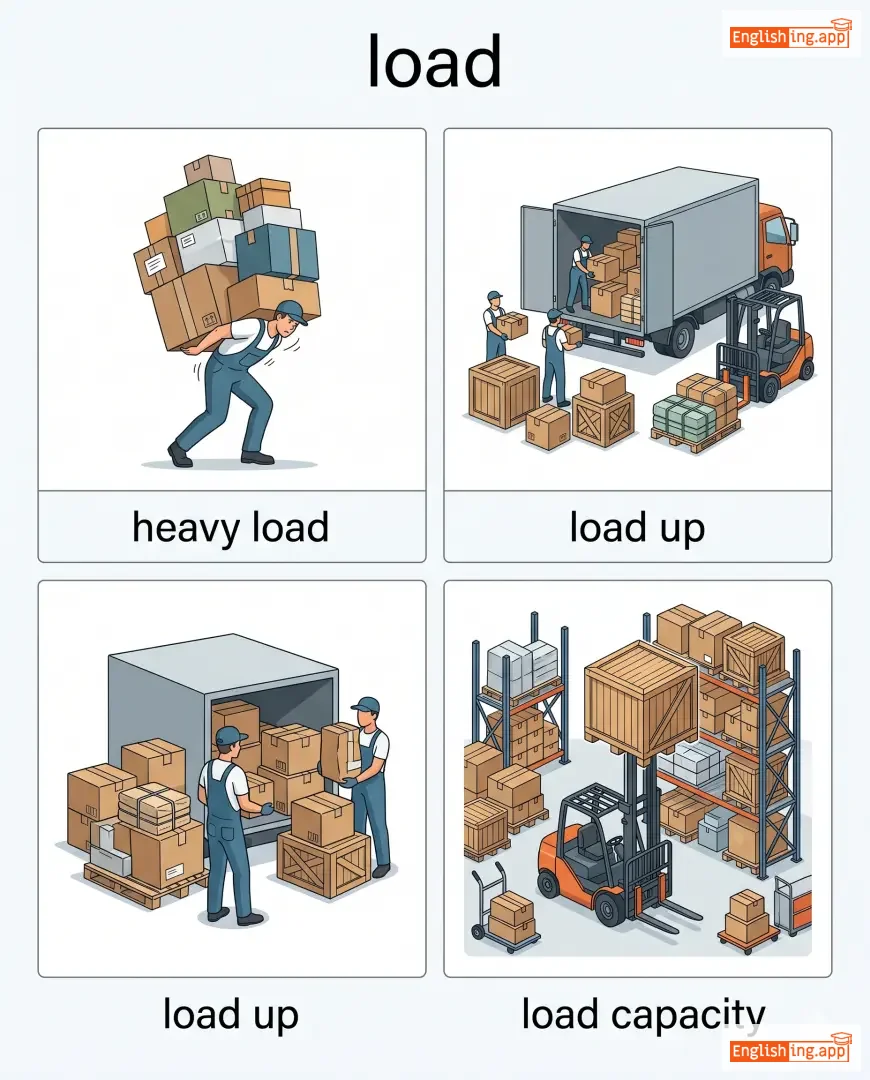
heavy load, load up, load capacity, full load
••••••
|
荷物とは、コンピュータが多くのデータを処理しているとき、重く感じるものです。
••••••
|
|
💰
••••••
|
/loʊn/
noun
(ローン)
••••••
|
- •••••• |
ローン
ron
••••••
|
- •••••• | - •••••• | - •••••• | - •••••• |
money that is borrowed and expected to be paid back with interest
••••••
|
She took a loan from the bank to buy a house. |
彼女は家を買うために銀行からローンを借りました。
kanojo wa ie o kau tame ni ginkou kara ron o karimashita.
••••••
|
loan shark |
a person who lends money at very high interest rates
••••••
|
高利貸し
kourigashi
••••••
|
credit, advance, debt, mortgage
••••••
|
repayment, settlement
••••••
|
take a loan, bank loan, student loan, repay a loan
••••••
|
Loanはローン、'ローンで車を買う'のような感じ。
••••••
|
|
🏢
••••••
|
/ˈlɒbi/
noun
(ロビー)
••••••
|
- •••••• |
ロビー
robī
••••••
|
- •••••• | - •••••• | - •••••• | - •••••• |
a large open area near the entrance of a building; also a group trying to influence decisions.
••••••
|
We met the manager in the hotel lobby before the meeting. |
会議の前にホテルのロビーでマネージャーに会いました。
Kaigi no mae ni hoteru no robī de manējā ni aimashita.
••••••
|
political lobby |
a group that seeks to influence government policy
••••••
|
政治的ロビー活動
seijiteki robī katsudō
••••••
|
hall, foyer, reception, entrance, corridor
••••••
|
exterior, outside
••••••
|
hotel lobby, corporate lobby, lobby area, political lobby
••••••
|
ロビーはホテルの入り口に近い広い空間、会議の前に待つ場所。
••••••
|
|
📍
••••••
|
/ˈloʊkəl/
adjective/noun
(ローカル)
••••••
|
- •••••• |
地元
jimoto
••••••
|
- •••••• | - •••••• | - •••••• | - •••••• |
relating to a particular area or neighborhood
••••••
|
We prefer buying fruits from the local market. |
私たちは地元の市場で果物を買うのが好きです。
Watashitachi wa jimoto no ichiba de kudamono o kau no ga suki desu.
••••••
|
go local |
to support nearby or community-based products or services
••••••
|
ローカルに行こう
rōkaru ni ikō
••••••
|
regional, nearby, community, native, domestic
••••••
|
global, foreign, distant
••••••
|
local community, local business, local government, local area
••••••
|
Localは地元の意味で、地元の市場のようなものです。
••••••
|
|
📍
••••••
|
/loʊˈkeɪt/
verb
(ロケート)
••••••
|
- •••••• |
位置を特定する
ichi wo tokutei suru
••••••
|
located
ロケーテッド
••••••
|
located
ロケーテッド
••••••
|
locates
ロケーツ
••••••
|
locating
ロケーティング
••••••
|
to find the exact position or place of something
••••••
|
They managed to locate the missing keys under the couch.
彼らはソファの下で失われた鍵を見つけることに成功しました。
••••••
|
彼らはソファの下で失われた鍵を見つけることに成功しました。
Karera wa sofa no shita de ushinawareta kagi wo mitsukeru koto ni seikou shimashita.
••••••
|
locate oneself
自分をロケートする
••••••
|
to identify one's own position or situation
••••••
|
自分を位置付ける
jibun wo ichizukeru
••••••
|
find, discover, detect, identify, pinpoint
••••••
|
lose, miss, overlook
••••••
|
locate the source, locate the problem, difficult to locate, locate exactly
••••••
|
ロケートは 'Location' と似ており、場所を見つけることを思い出させます。
••••••
|
|
📍
••••••
|
/loʊˈkeɪʃən/
noun
(ロケーション)
••••••
|
- •••••• |
場所
basho
••••••
|
- •••••• | - •••••• | - •••••• | - •••••• |
a particular place or position
••••••
|
This cafe is in a beautiful location near the lake.
このカフェは湖の近くの素晴らしいロケーションにあります。
••••••
|
このカフェは湖の近くの素晴らしい場所にあります。
Kono kafe wa mizuumi no chikaku no subarashī basho ni arimasu.
••••••
|
on location
ロケーションで
••••••
|
filming at the actual site instead of a studio
••••••
|
現場で
genba de
••••••
|
place, site, spot, area, venue
••••••
|
displacement, absence
••••••
|
prime location, shooting location, remote location, exact location
••••••
|
場所 = 何かがある場所
••••••
|
|
🔒
••••••
|
/lɒk/
verb, noun
(ロック)
••••••
|
|
鍵、ロックする
kagi, rokku suru
••••••
|
locked
ロックド
••••••
|
locked
ロックド
••••••
|
locks
ロックス
••••••
|
locking
ロッキング
••••••
|
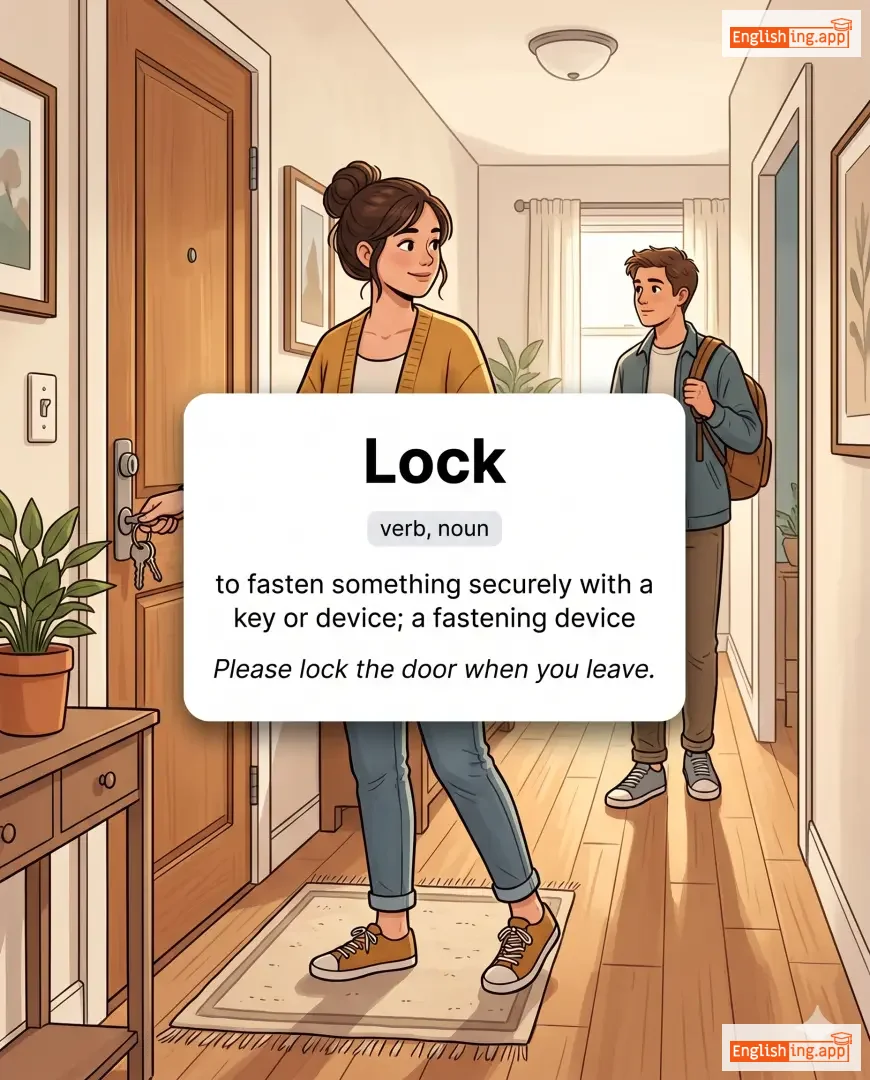
to fasten something securely with a key or device; a fastening device
••••••
|
Please lock the door when you leave.
出かけるときはドアをロックしてください。
••••••
|
出かけるときはドアをロックしてください。
dekakeru toki wa doa o rokku shite kudasai.
••••••
|
lock horns
ロックホルンズ
••••••
|
to become involved in conflict or argument
••••••
|
争いに巻き込まれる
arasoi ni makikomareru
••••••
|
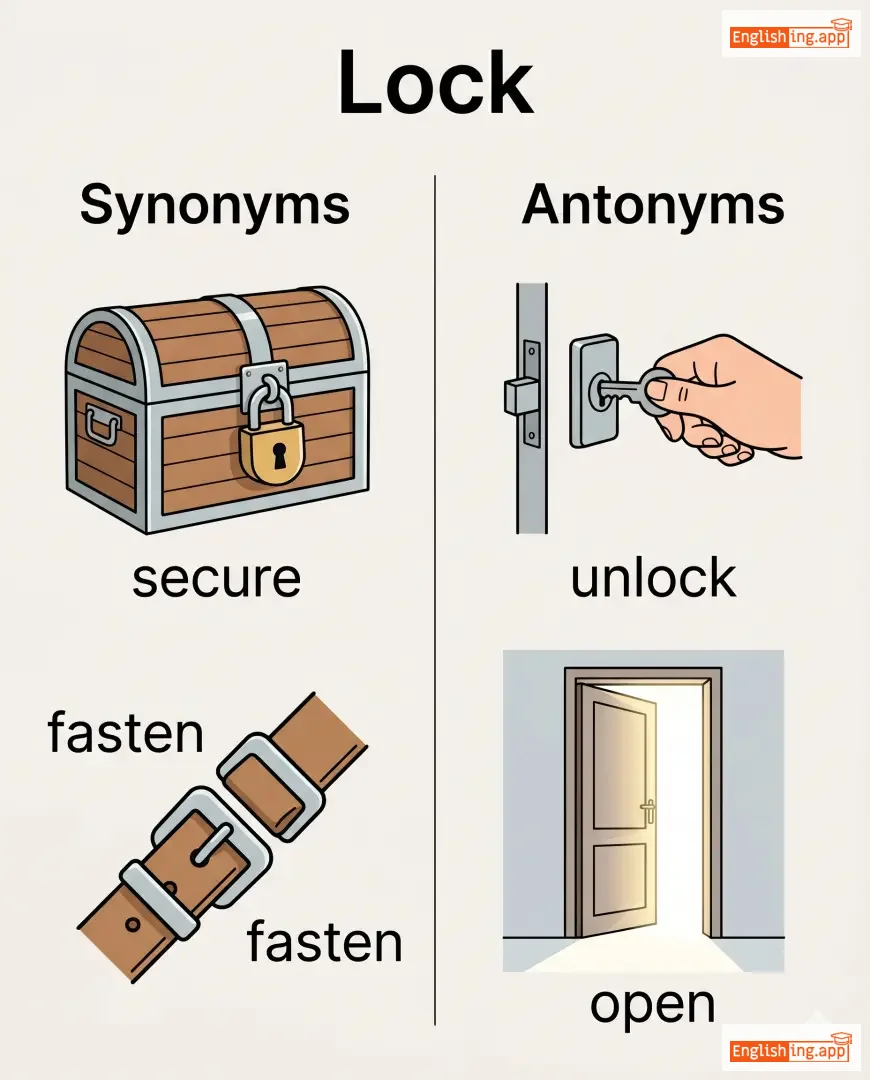
secure, fasten, latch, seal
••••••
|
unlock, open
••••••
|
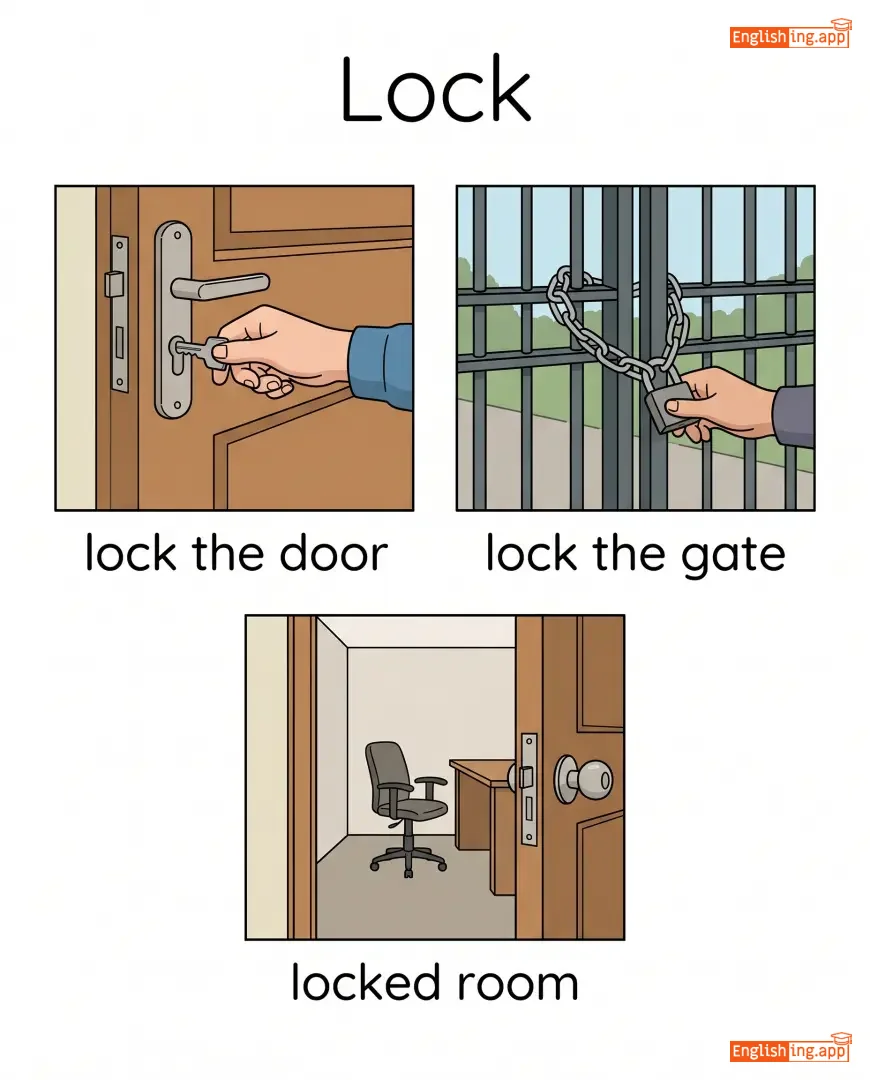
lock the door, lock the gate, locked room, lock securely
••••••
|
Lockはドアを閉じる、鍵でドアを守ること
••••••
|
|
🌲
••••••
|
/lɒɡ/
noun, verb
(ログ)
••••••
|
|
丸太, 記録
maruta, kiroku
••••••
|
logged
ログイン
••••••
|
logged
ログイン
••••••
|
logs
ログス
••••••
|
logging
ログギング
••••••
|
A part of the trunk or a large branch of a tree that has fallen or been cut off; also to record information systematically.
••••••
|
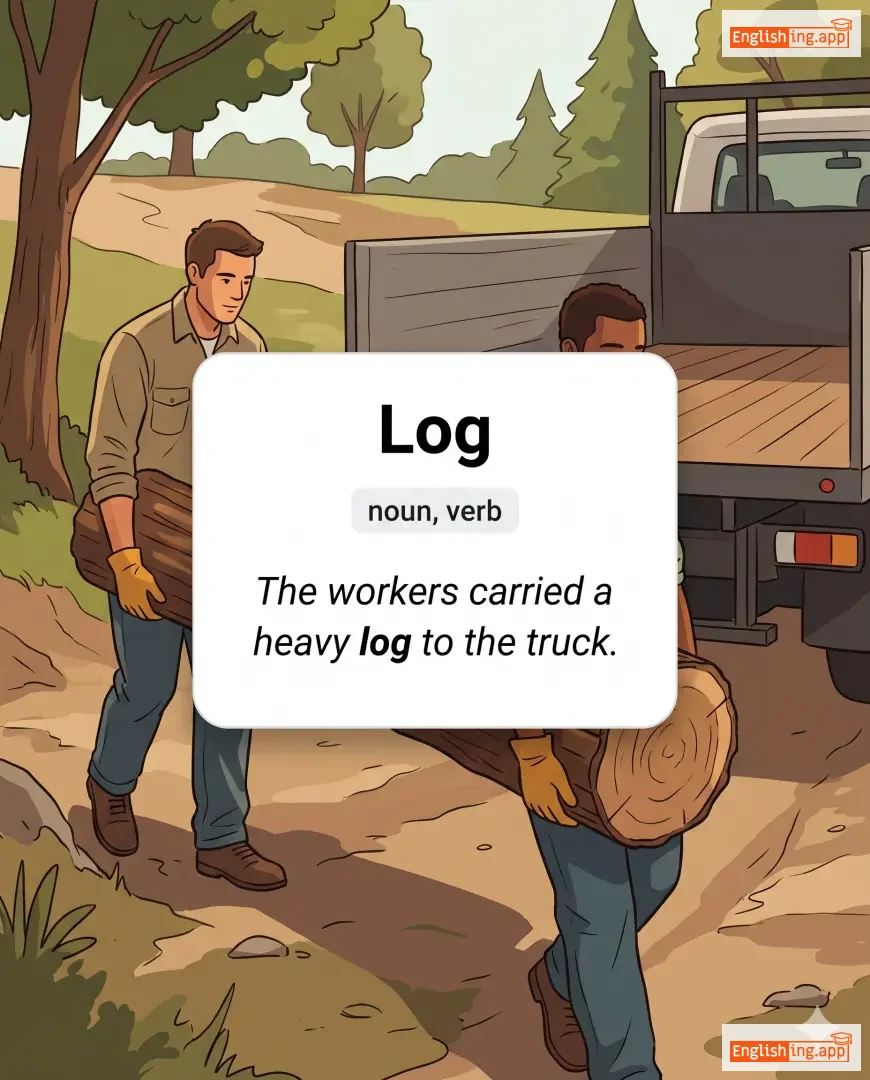
The workers carried a heavy log to the truck.
作業員は重い丸太をトラックに運びました。
••••••
|
作業員は重い丸太をトラックに運びました。
Sagyouin wa omoi maruta o torakku ni hakobimashita.
••••••
|
sleep like a log
丸太のように寝る
••••••
|
to sleep very deeply and soundly
••••••
|
丸太のように寝る
maruta no you ni neru
••••••
|
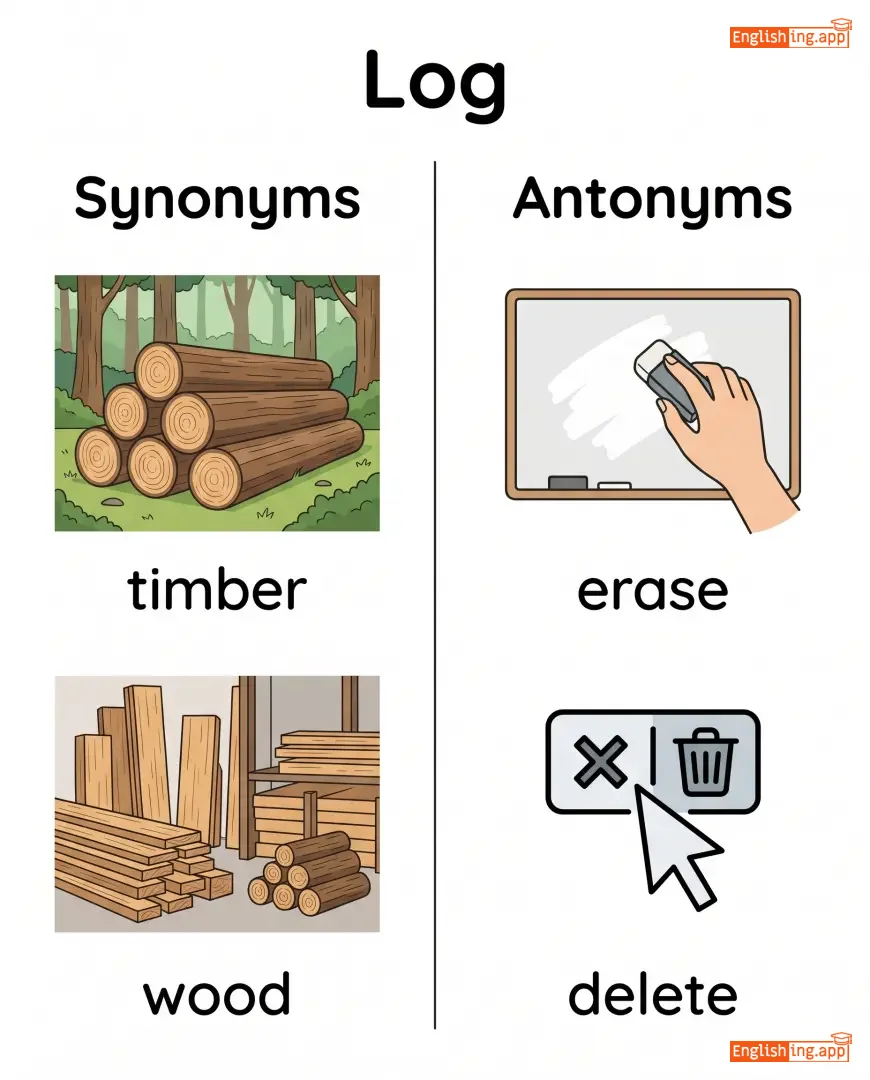
timber, wood, record, register, journal
••••••
|
erase, delete
••••••
|
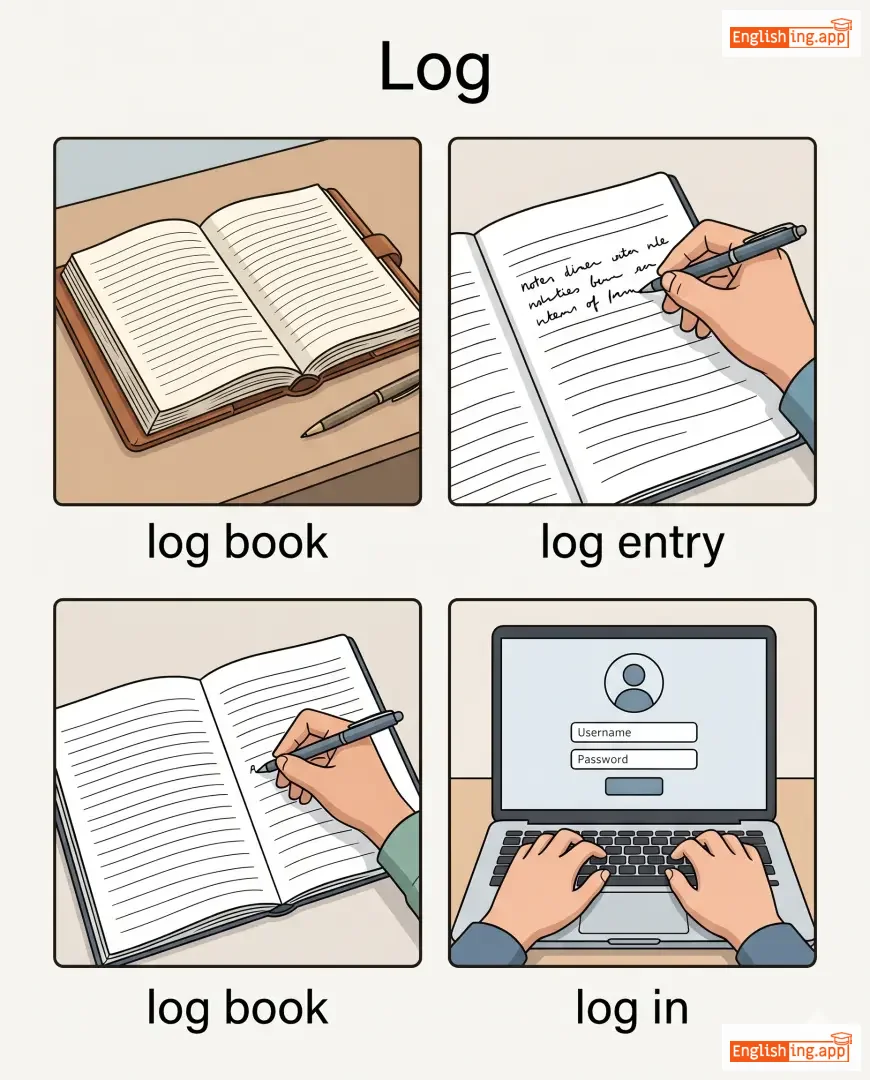
log book, log entry, log in, log data
••••••
|
Log (log) は丸太を意味し、ログイン (login) は記録を残すことです。
••••••
|
|
🧠
••••••
|
/ˈlɒdʒɪk/
noun
(ロジック)
••••••
|
- •••••• |
論理
ronri
••••••
|
- •••••• | - •••••• | - •••••• | - •••••• |
Reasoning conducted or assessed according to strict principles of validity.
••••••
|
Her argument was based on sound logic.
彼女の主張は論理に基づいていました。
••••••
|
彼女の主張は論理に基づいていました。
Kanojo no shucho wa ronri ni motozuite imashita.
••••••
|
twist the logic
論理をねじ曲げる
••••••
|
to manipulate reasoning to suit one’s purpose
••••••
|
論理をねじ曲げる
ronri o nejimageru
••••••
|
reasoning, rationale, argument, sense, judgment
••••••
|
nonsense, illogic, irrationality
••••••
|
sound logic, formal logic, logic puzzle, logic gate
••••••
|
Logicは合理的な推論を意味する; 日本語ではそれも'論理'です。覚えておいて、'論理'は同じ意味です。
••••••
|
|
🖼️
••••••
|
/ˈləʊɡəʊ/
noun
••••••
|
- •••••• | - •••••• | - •••••• | - •••••• | - •••••• | - •••••• |
a symbol or other small design adopted by an organization to identify its products, uniform, vehicles, etc.
••••••
|
The company's logo was redesigned to reflect its new image. |
- •••••• | - •••••• | - •••••• | - •••••• |
emblem, symbol, trademark, insignia
••••••
|
plain, generic
••••••
|
company logo, brand logo, business logo, new logo
••••••
|
No •••••• |
|
😔
••••••
|
/ˈloʊnli/
adjective
(ロンリー)
••••••
|
- •••••• |
孤独
kodoku
••••••
|
- •••••• | - •••••• | - •••••• | - •••••• |
feeling sad because one has no friends or company.
••••••
|
He felt lonely after moving to a new city. |
彼は新しい街に引っ越した後、孤独を感じました。
Kare wa atarashī machi ni hikkoshita ato, kodoku o kanjimashita.
••••••
|
lonely heart |
a person who feels emotionally isolated or unloved
••••••
|
孤独な心
kodoku na kokoro
••••••
|
isolated, alone, solitary, desolate, sad
••••••
|
friendly, sociable, connected
••••••
|
feel lonely, become lonely, lonely night, lonely person
••••••
|
Lonelyは孤独を意味します、孤独な心のように。
••••••
|
|
📏
••••••
|
/lɔːŋ/
adjective
(ロング)
••••••
|
- •••••• |
長い
nagai
••••••
|
- •••••• | - •••••• | - •••••• | - •••••• |
Measuring a great distance from end to end; lasting for a large amount of time.
••••••
|
They waited a long time for the train. |
彼らは電車を長い時間待っていました。
Karera wa densha wo nagai jikan matte imashita.
••••••
|
in the long run |
After a long period of time; eventually.
••••••
|
長い目で見て
nagai me de mite
••••••
|
lengthy, extended, prolonged, tall
••••••
|
short, brief
••••••
|
long time, long road, long journey, long hair
••••••
|
Longは長いを意味します — 長い道を歩くイメージ。
••••••
|
|
⌛
••••••
|
/ˈlɒŋ ˈstændɪŋ/
adjective
(ロング・スタンディング)
••••••
|
- •••••• |
長期的な
choukiteki na
••••••
|
- •••••• | - •••••• | - •••••• | - •••••• |
having existed or continued for a long period of time
••••••
|
They have a long-standing relationship with their suppliers. |
彼らは供給業者との長期的な関係を持っています。
Karera wa kyoukyuu gyousha to no choukiteki na kankei wo motteimasu.
••••••
|
- •••••• | - •••••• | - •••••• |
enduring, lasting, persistent, perpetual
••••••
|
temporary, fleeting
••••••
|
long-standing tradition, long-standing relationship, long-standing issue
••••••
|
長期的な関係は時間とともに強くなる。
••••••
|
|
⏳
••••••
|
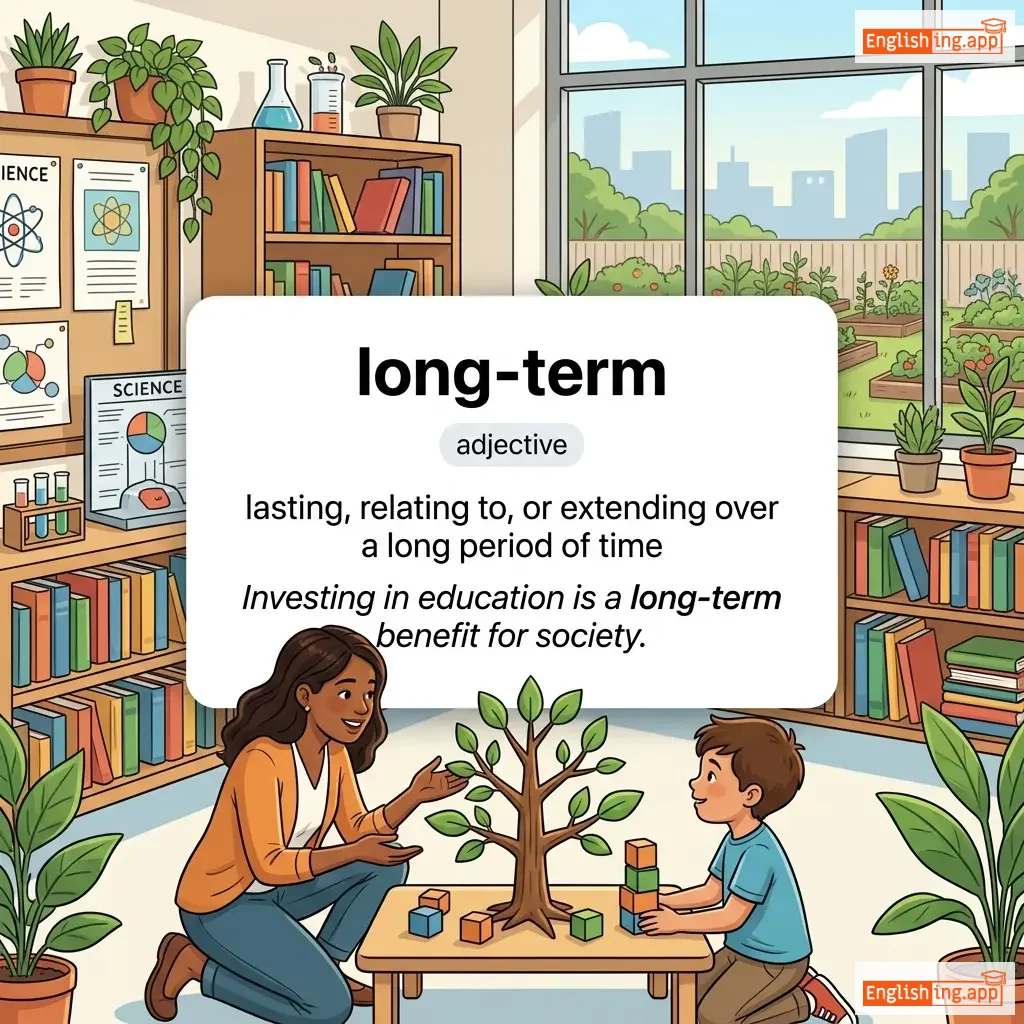
/ˌlɔːŋ ˈtɜːrm/
adjective
(ロングターム)
••••••
|
|
長期的
chouki teki
••••••
|
- •••••• | - •••••• | - •••••• | - •••••• |
lasting, relating to, or extending over a long period of time
••••••
|
Investing in education is a long-term benefit for society. |
教育への投資は社会にとって長期的な利益です。
Kyouiku e no toushi wa shakai ni totte chouki teki na rieki desu.
••••••
|
- •••••• | - •••••• | - •••••• |
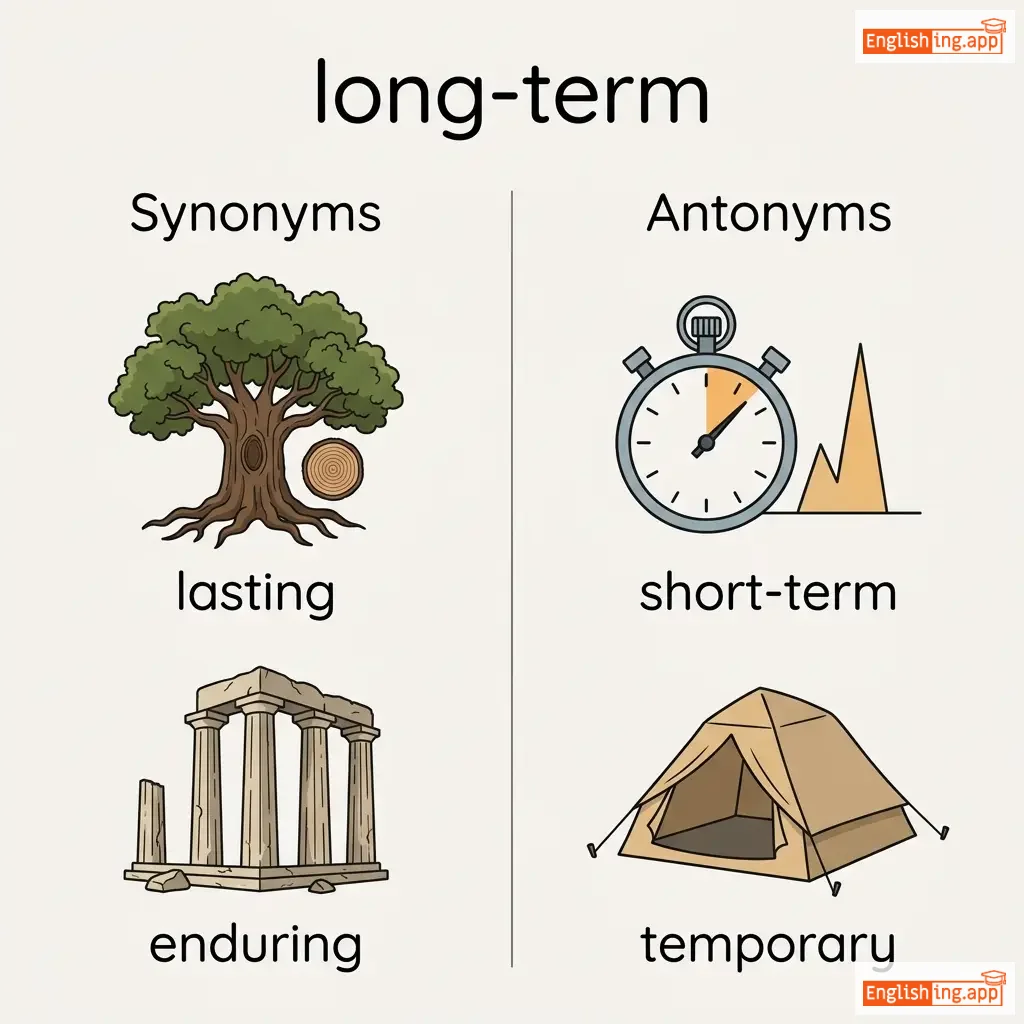
lasting, enduring, sustained, prolonged
••••••
|
short-term, temporary
••••••
|
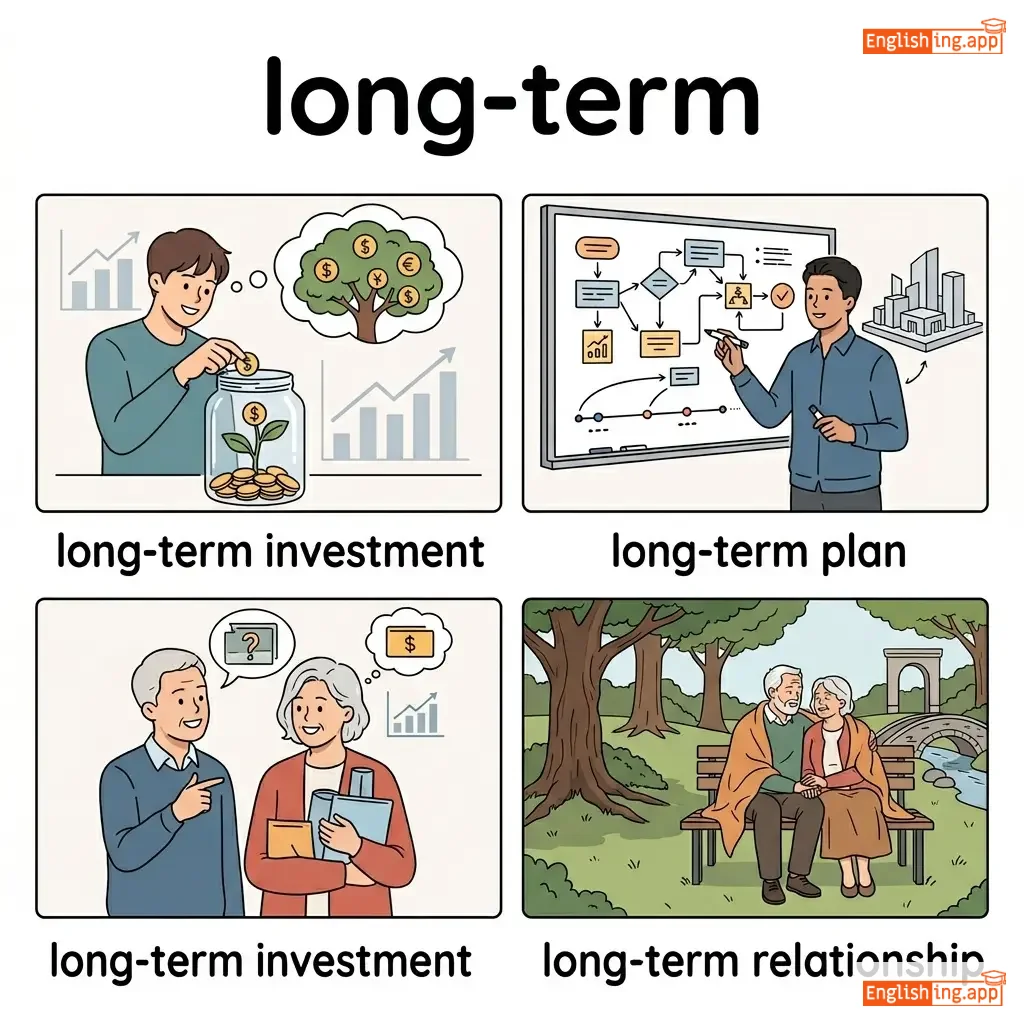
long-term investment, long-term plan, long-term relationship, long-term impact
••••••
|
長期的な投資は安定した利益 - 安定した未来のための投資
••••••
|
|
⏳
••••••
|
/ˈlɒŋ taɪm/
adjective, adverb
(ロングタイム)
••••••
|
- •••••• |
長年の
naganen no
••••••
|
- •••••• | - •••••• | - •••••• | - •••••• |
lasting or existing for a long period of time; having continued for many years
••••••
|
She is a long-time friend of my family.
シー イズ ア ロングタイム フレンド オブ マイ ファミリー。
••••••
|
彼女は私の家族の長年の友人です。
kanojo wa watashi no kazoku no naganen no yuujin desu
••••••
|
long-time no see
ロングタイム ノー シー
••••••
|
used when greeting someone you have not seen for a long time
••••••
|
久しぶり
hisashiburi
••••••
|
longstanding, enduring, established, extended, chronic
••••••
|
recent, short-term, brief
••••••
|
long-time friend, long-time member, long-time supporter, long-time resident
••••••
|
long-time = 長い time → 長年の
••••••
|
|
👀
••••••
|
/lʊk/
(ルック)
••••••
|
- •••••• |
見る
miru
••••••
|
looked
ルックド
••••••
|
looked
ルックド
••••••
|
looks
ルックス
••••••
|
looking
ルキング
••••••
|
to direct one's gaze in a particular direction
••••••
|
She looked out the window at the rain.
彼女は窓から雨を見ていた。
••••••
|
彼女は窓から雨を見ていた。
Kanojo wa mado kara ame o miteita.
••••••
|
look up to
尊敬する
••••••
|
to admire or respect someone
••••••
|
尊敬する
sonkei suru
••••••
|
glance, gaze, stare, observe, watch
••••••
|
ignore, overlook
••••••
|
look at, look for, look into, look after, look forward to
••••••
|
見る (look) ことで世界が広がる。
••••••
|
|
🫶
••••••
|
/lʊk ˈɑːftər/
phrasal verb
(ルック アフター)
••••••
|
- •••••• |
世話をする
sewa o suru
••••••
|
looked after
ルックド アフター
••••••
|
looked after
ルックド アフター
••••••
|
looks after
ルックス アフター
••••••
|
looking after
ルッキング アフター
••••••
|
to take care of someone or something; to be responsible for someone’s well-being
••••••
|
She looks after her younger brother while their parents are at work.
シー ルックス アフター ハー ヤンガー ブラザー ワイル ゼア ペアレンツ アー アット ワーク
••••••
|
両親が仕事の間、彼女は弟の世話をする。
Ryoushin ga shigoto no aida, kanojo wa otouto no sewa o suru
••••••
|
look after yourself
ルック アフター ユアセルフ
••••••
|
take care of your own health and safety
••••••
|
体に気をつけて
karada ni ki o tsukete
••••••
|
take care of, care for, tend, mind, supervise
••••••
|
neglect, abandon, ignore
••••••
|
look after children, look after patients, look after the house, look after someone well
••••••
|
LOOK AFTER = 世話、誰かをよく見るイメージ
••••••
|
|
🌩️
••••••
|
/luːm/
verb
••••••
|
- •••••• | - •••••• |
loomed
••••••
|
loomed
••••••
|
looms
••••••
|
looming
••••••
|
to appear as a large, often frightening or unclear shape, usually something threatening or about to happen
••••••
|
Dark clouds loomed over the city, signaling an approaching storm. |
- •••••• |
loom large |
to be of great importance or concern
••••••
|
- •••••• |
emerge, appear, threaten, overshadow, hover
••••••
|
fade, disappear, vanish
••••••
|
loom large, loom ahead, storm looms, crisis looms
••••••
|
No •••••• |
|
🔁
••••••
|
/luːp/
noun
(ループ)
••••••
|
- •••••• |
ループ, 輪
rūpu, wa
••••••
|
- •••••• | - •••••• | - •••••• | - •••••• |
a shape produced by a curve that bends around and crosses itself
••••••
|
The string formed a neat loop around the package.
糸はパッケージの周りにきれいなループを作りました。
••••••
|
糸はパッケージの周りにきれいなループを作りました。
Ito wa pakkēji no mawari ni kireina rūpu o tsukurimashita.
••••••
|
in the loop
ループ内にいる
••••••
|
to be informed or included in communication
••••••
|
ループ内にいる
rūpu-nai ni iru
••••••
|
circle, ring, coil, curve, twist
••••••
|
line, straight, break
••••••
|
infinite loop, feedback loop, closed loop, data loop
••••••
|
ループは繰り返し回ること—無限ループのように、常に回り続ける 🔁
••••••
|
|
🪛
••••••
|
/luːs/
adjective
(ルーズ)
••••••
|
- •••••• |
緩い
yurui
••••••
|
- •••••• | - •••••• | - •••••• | - •••••• |
not firmly or tightly fixed in place
••••••
|
The screw is loose and needs tightening.
ネジが緩んでいて、締め直す必要があります。
••••••
|
ネジが緩んでいて、締め直す必要があります。
Neji ga yurunde ite, shime naosu hitsuyou ga arimasu.
••••••
|
cut loose
切り離す
••••••
|
to behave freely and without control
••••••
|
自由に振る舞う
jiyuu ni furumau
••••••
|
slack, free, unfastened, detached
••••••
|
tight, secure
••••••
|
loose clothing, loose ends, loose screw
••••••
|
緩いは、ゆるんでいるときに使う言葉、ネジがゆるんでいるときのように
••••••
|
|
😞
••••••
|
/luːz/
verb
(ハピネス)
••••••
|
|
幸福
kōfuku
••••••
|
lost
••••••
|
lost
••••••
|
loses
••••••
|
losing
••••••
|
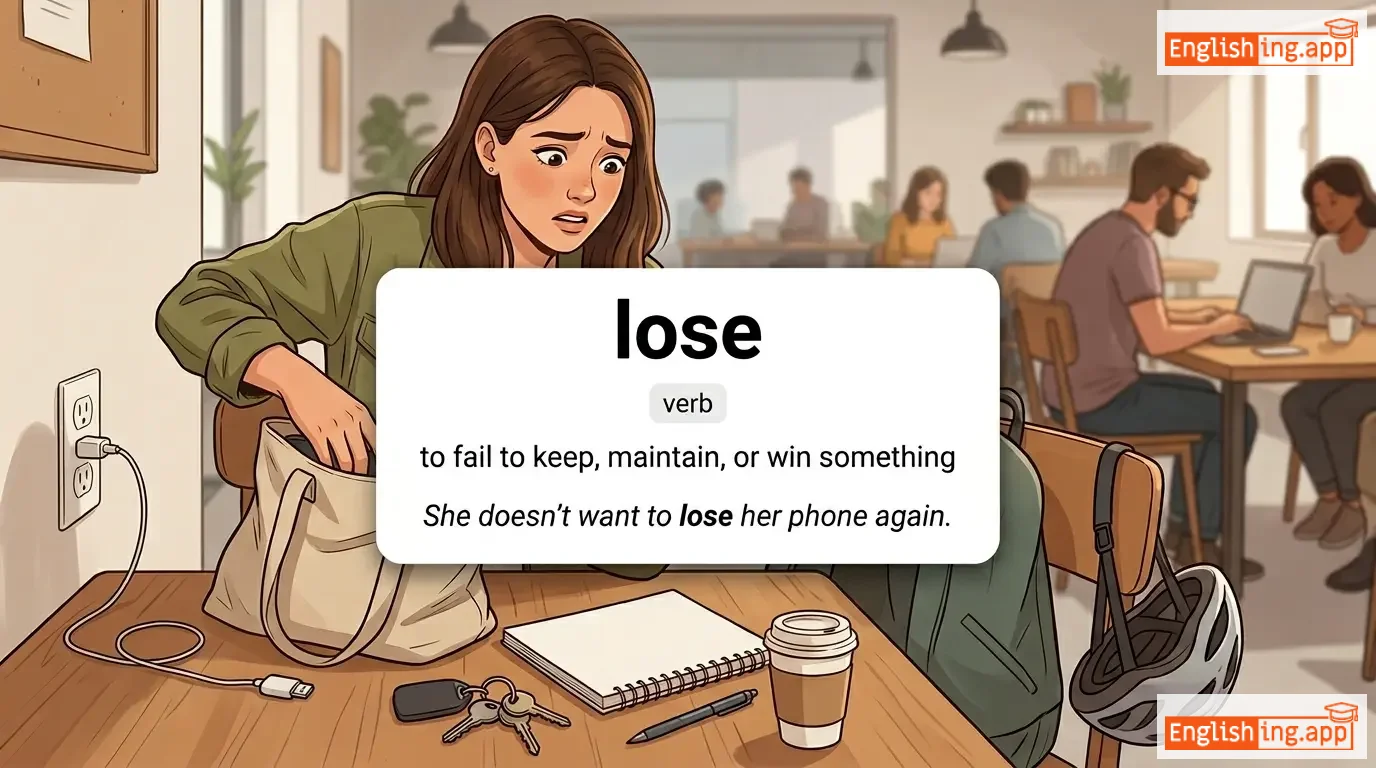
to fail to keep, maintain, or win something
••••••
|
She doesn’t want to lose her phone again.
彼女は賞を受け取ったとき、幸せを隠すことができませんでした。
••••••
|
彼女は賞を受け取ったとき、幸せを隠すことができませんでした。
Kanojo wa shō o uketotta toki, kōfuku o kakusu koto ga dekimasen deshita.
••••••
|
lose track
幸福の追求
••••••
|
to fail to keep informed or aware of something
••••••
|
幸福の追求
kōfuku no tsuikyū
••••••
|
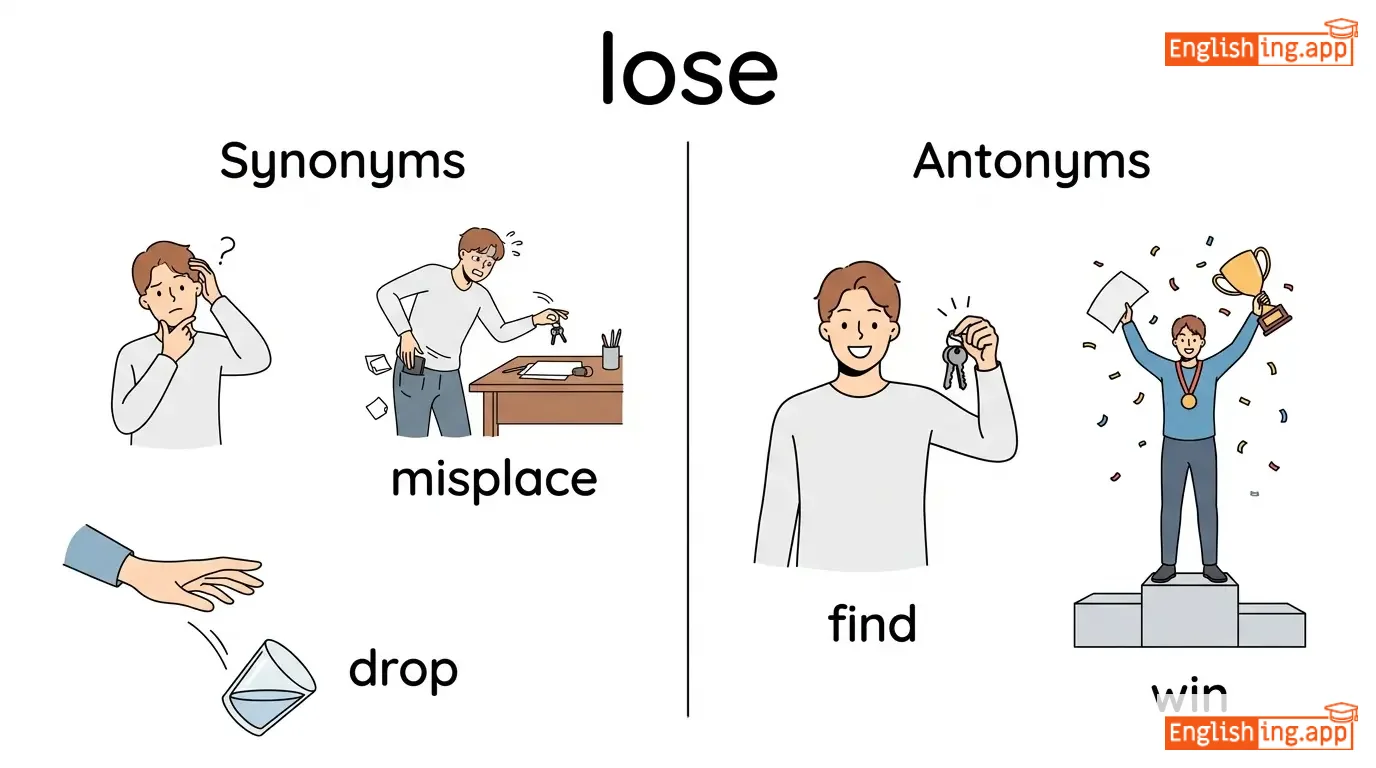
misplace, drop, forfeit, miss
••••••
|
find, win, gain
••••••
|
lose weight, lose a game, lose hope, lose control
••••••
|
幸福は自分の中にあり、探し続けることで見つかる宝物のようです。
••••••
|
|
📉
••••••
|
/lɒs/
noun
(ロス)
••••••
|
- •••••• |
損失
sonshitsu
••••••
|
- •••••• | - •••••• | - •••••• | - •••••• |
The state of no longer having something or someone; the harm resulting from losing.
••••••
|
The company suffered a huge financial loss last year. |
その会社は昨年、大きな財務的損失を被った。
Sono kaisha wa sakunen, ōkina zaimuteki sonshitsu o kōmotta.
••••••
|
at a loss |
to be puzzled or uncertain about what to do
••••••
|
損失
sonshitsu
••••••
|
damage, defeat, failure, decline, misfortune
••••••
|
gain, profit, success
••••••
|
suffer a loss, financial loss, at a loss, loss of life
••••••
|
損失は損失を意味し、📉 お金を失う時のように。
••••••
|
|
🧭
••••••
|
/lɒst/
verb/adjective
(ロスト)
••••••
|
- •••••• |
失われた
ushinawareta
••••••
|
lost
ロスト
••••••
|
lost
ロスト
••••••
|
loses
ローズ
••••••
|
losing
ローズィング
••••••
|
Unable to find the way; no longer in possession of something.
••••••
|
He lost his keys and couldn’t enter the house.
彼は鍵を失い、家に入れませんでした。
••••••
|
彼は鍵を失い、家に入れませんでした。
Kare wa kagi o ushinai, ie ni iremasen deshita.
••••••
|
lost cause
失われた原因
••••••
|
a hopeless situation with no chance of success
••••••
|
失われた原因
Ushinawareta gen'in
••••••
|
gone, misplaced, vanished, defeated
••••••
|
found, recovered, won
••••••
|
get lost, lost keys, lost opportunity, feel lost
••••••
|
Lost = 失われた、例えば Lost 携帯 = 失われた携帯。
••••••
|
|
📦
••••••
|
/lɒt/
noun
(ロット)
••••••
|
- •••••• |
たくさん
takusan
••••••
|
- •••••• | - •••••• | - •••••• | - •••••• |
A large number or amount; a group or portion.
••••••
|
She bought a lot of books at the fair.
彼女はフェアでたくさんの本を買いました。
••••••
|
彼女はフェアでたくさんの本を買いました。
Kanojo wa fea de takusan no hon o kaimashita.
••••••
|
cast one's lot with
自分の運命を誰かに託す
••••••
|
to join or support a person or group
••••••
|
自分の運命を誰かに託す
Jibun no unmei o dareka ni takusu
••••••
|
batch, group, quantity, portion, set
••••••
|
few, little, scarcity
••••••
|
a lot of, whole lot, parking lot, building lot
••••••
|
Lot はたくさん、例えば宝くじでたくさんの番号があります。
••••••
|
|
🎟️
••••••
|
/ˈlɒtəri/
noun
(宝くじ)
••••••
|
- •••••• |
宝くじ
takara kuji
••••••
|
- •••••• | - •••••• | - •••••• | - •••••• |
A means of raising money by selling numbered tickets and giving prizes to the holders of numbers drawn at random.
••••••
|
He won a car in the national lottery. |
彼は全国宝くじで車を当てた。
Kare wa zenkoku takara kuji de kuruma o ateta.
••••••
|
win the lottery |
to achieve something extremely fortunate or unlikely
••••••
|
宝くじに当たる
takara kuji ni ataru
••••••
|
raffle, sweepstake, jackpot, gamble, draw
••••••
|
certainty, guarantee, assurance
••••••
|
national lottery, lottery ticket, win lottery, lottery draw
••••••
|
Lottery 🎟️ は運試しのゲームです — 日本語でも '宝くじ' と言います。
••••••
|
|
🔊
••••••
|
/laʊd/
adjective/adverb
(ラウド)
••••••
|
- •••••• |
大きい
ookii
••••••
|
- •••••• | - •••••• | - •••••• | - •••••• |
Producing or capable of producing much noise.
••••••
|
The music was too loud to concentrate. |
音楽はあまりにも大きすぎて、集中できませんでした。
Ongaku wa amari ni mo ookisugite, shuuchuu dekimasen deshita.
••••••
|
loud and clear |
understood perfectly without any doubt
••••••
|
大きくてはっきり
ookikute hakkiri
••••••
|
noisy, boisterous, deafening, clamorous
••••••
|
quiet, silent, soft
••••••
|
speak loud, loud noise, loud voice, loud music
••••••
|
Loudは、スピーカーのように大きな音を出すことです。
••••••
|
|
🔊
••••••
|
/ˈlaʊdli/
adverb
(ラウドリー)
••••••
|
- •••••• |
大声で
oogoe de
••••••
|
- •••••• | - •••••• | - •••••• | - •••••• |
in a way that produces a lot of sound; with a high volume
••••••
|
He spoke loudly so everyone in the room could hear him.
ヒー スポーク ラウドリー ソー エブリワン イン ザ ルーム クッド ヒア ヒム
••••••
|
彼はみんなに聞こえるように大声で話した。
kare wa minna ni kikoeru you ni oogoe de hanashita
••••••
|
laugh loudly
大声で笑う
••••••
|
to laugh with a strong and clear sound
••••••
|
大声で笑う
oogoe de warau
••••••
|
noisily, loudly, audibly, boisterously, clamourously
••••••
|
quietly, softly, silently
••••••
|
speak loudly, shout loudly, laugh loudly, play music loudly
••••••
|
LOUD = 大声, loudly = 大声で
••••••
|
|
❤️
••••••
|
/lʌv/
verb
(ラヴ)
••••••
|
|
愛
ai
••••••
|
loved
ラヴド
••••••
|
loved
ラヴド
••••••
|
loves
ラヴス
••••••
|
loving
ラヴィング
••••••
|
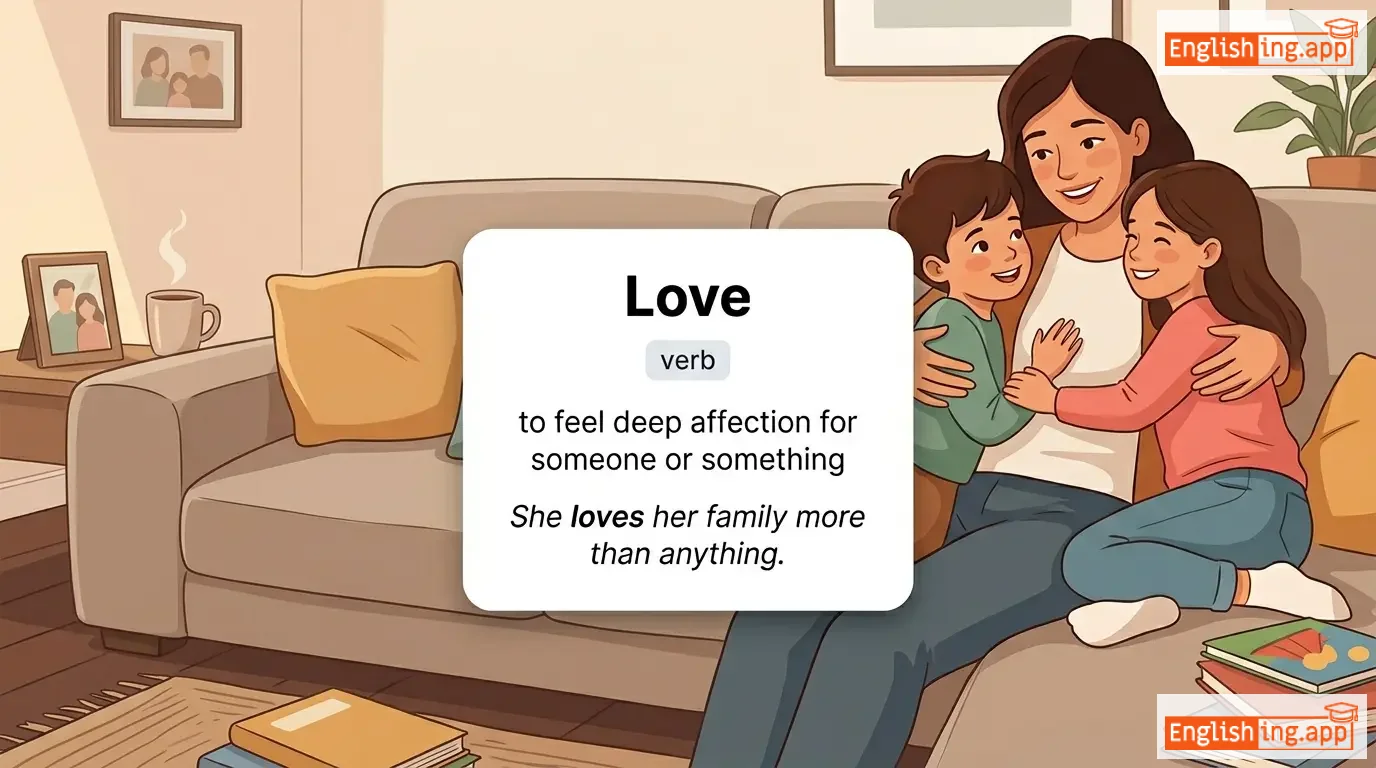
to feel deep affection for someone or something
••••••
|
She loves her family more than anything.
彼女は家族を何よりも愛している。
••••••
|
彼女は家族を何よりも愛している。
Kanojo wa kazoku wo nani yori mo aishiteiru.
••••••
|
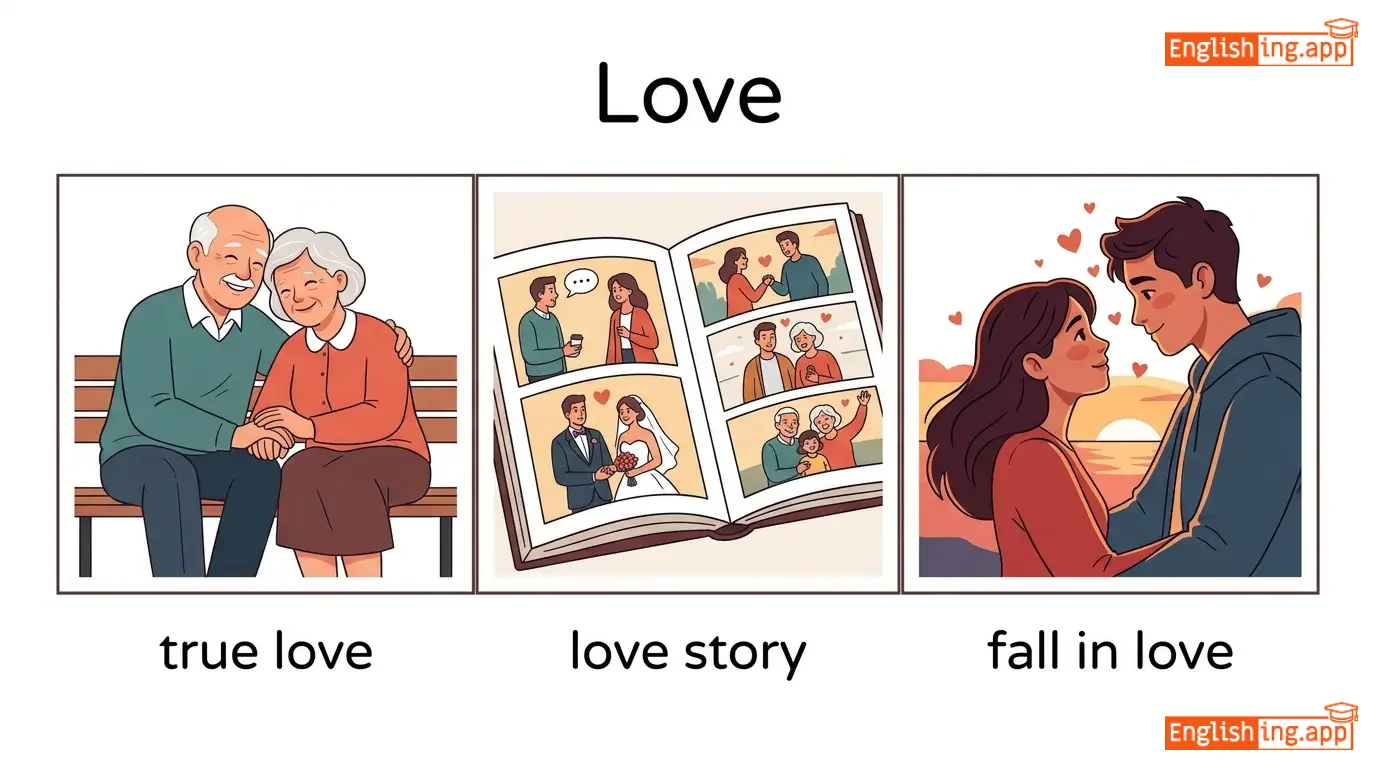
fall in love
恋に落ちる
••••••
|
to begin to feel romantic affection
••••••
|
恋に落ちる
koi ni ochiru
••••••
|
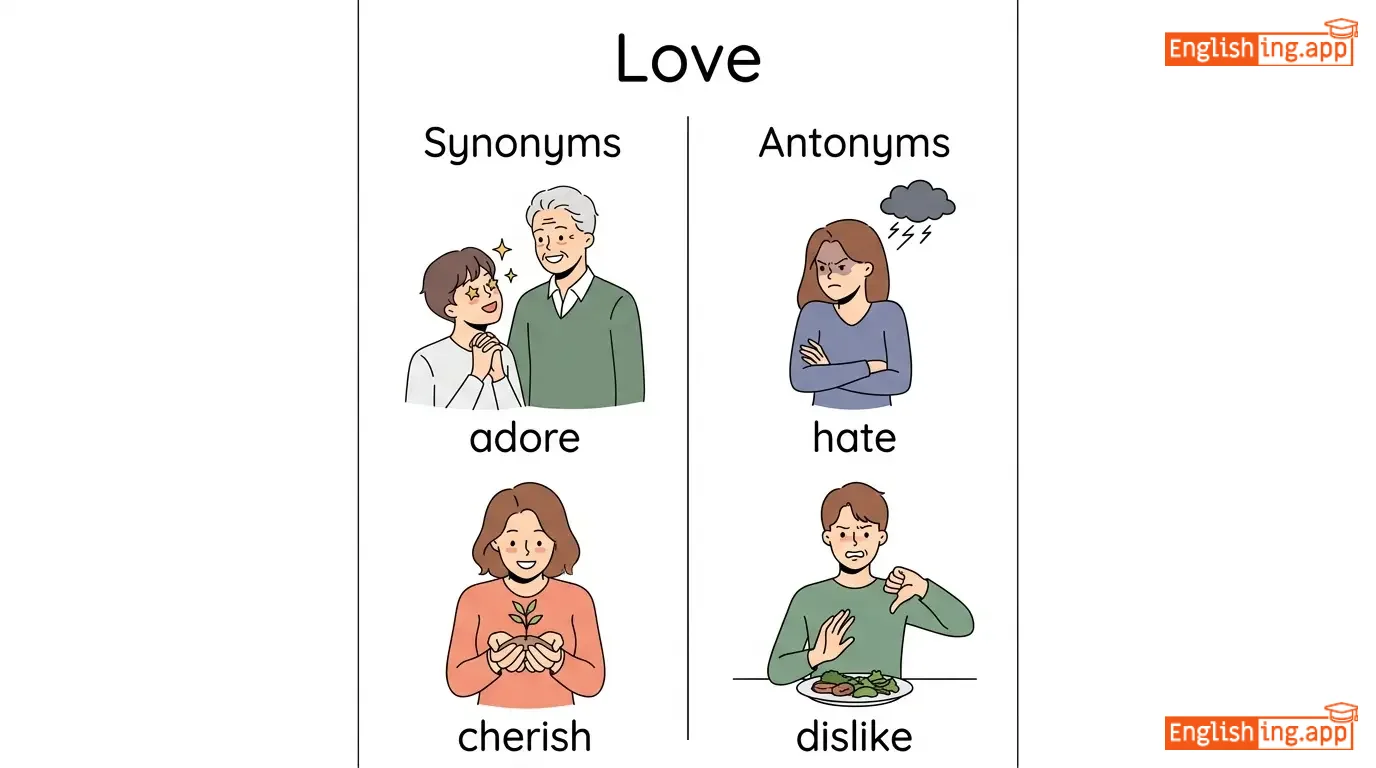
adore, cherish, like, care for, value
••••••
|
hate, dislike
••••••
|
true love, love story, fall in love, love deeply
••••••
|
LOVE = 愛 (ai) in Japanese.
••••••
|
|
🌸
••••••
|
/ˈlʌvli/
adjective
(ラヴリー)
••••••
|
- •••••• |
素晴らしい
subarashii
••••••
|
- •••••• | - •••••• | - •••••• | - •••••• |
Delightful or very pleasing; beautiful.
••••••
|
It was a lovely evening by the beach. |
それは海辺での素晴らしい夕べでした。
Sore wa umibe de no subarashī yūbe deshita.
••••••
|
lovely day |
an especially pleasant or enjoyable day
••••••
|
素晴らしい日
subarashī hi
••••••
|
beautiful, charming, delightful, pleasant, adorable
••••••
|
ugly, unpleasant, hideous
••••••
|
lovely evening, lovely person, lovely smile, lovely place
••••••
|
LovelyはLove + lyで、素晴らしく美しい意味です。
••••••
|
|
❤️
••••••
|
/ˈlʌvər/
noun
(ラヴァー)
••••••
|
- •••••• |
恋人
koibito
••••••
|
- •••••• | - •••••• | - •••••• | - •••••• |
a person who is in a romantic relationship or has strong affection for someone
••••••
|
She met her lover at the café every evening. |
彼女は毎晩カフェで恋人と会っていました。
Kanojo wa maiban kafe de koibito to attemashita.
••••••
|
star-crossed lovers |
two people in love whose relationship is doomed or faces difficulties
••••••
|
星に運命を決められた恋人たち
Hoshi ni unmei o kimerareta koibito-tachi
••••••
|
partner, beloved, admirer, sweetheart, companion
••••••
|
enemy, foe
••••••
|
secret lover, true lover, old lover, lover boy
••••••
|
Lover は恋人 - 愛はすべてを乗り越えます
••••••
|
|
⬇️
••••••
|
/loʊ/
adjective
(ロー)
••••••
|
- •••••• |
低い
hikui
••••••
|
- •••••• | - •••••• | - •••••• | - •••••• |
Small in amount, degree, or position; not high.
••••••
|
The river is at its lowest level in years. |
その川は何年も最も低いレベルにあります。
Sono kawa wa nannen mo mottomo hikui reberu ni arimasu.
••••••
|
low profile |
avoiding public attention or staying unnoticed
••••••
|
低いプロフィール
hikui purofairu
••••••
|
small, slight, short, minimal, weak
••••••
|
high, tall, strong
••••••
|
low price, low level, low energy, low profile
••••••
|
Lowは低いという意味です — 矢印 ⬇️ は下に向かっています。
••••••
|
|
⬇️
••••••
|
/ˈloʊər/
verb
(ロウアー)
••••••
|
- •••••• |
下げる
sageru
••••••
|
lowered
ロウアード
••••••
|
lowered
ロウアード
••••••
|
lowers
ロウアーズ
••••••
|
lowering
ロウアリング
••••••
|
to move something to a lower position or to reduce
••••••
|
The company decided to lower the prices.
会社は価格を引き下げることを決定しました。
••••••
|
会社は価格を引き下げることを決定しました。
Kaisha wa kakaku o hikisageru koto o kettei shimashita.
••••••
|
lower the bar
バーを下げる
••••••
|
to reduce standards or expectations
••••••
|
バーを下げる
Bā o sageru
••••••
|
reduce, decrease, drop, lessen
••••••
|
raise, increase, elevate
••••••
|
lower prices, lower costs, lower level, lower voice
••••••
|
下げるとは、期待を下げることで、すべてを簡単にすることです。
••••••
|
|
🤍
••••••
|
/ˈlɔɪəl/
adjective
(ロイヤル)
••••••
|
- •••••• |
忠実, 忠誠
chūjitsu, chūsei
••••••
|
- •••••• | - •••••• | - •••••• | - •••••• |
showing firm and constant support or allegiance to someone or something
••••••
|
She remained loyal to her friends even in hard times. |
彼女は困難な時でも友人に忠実であり続けた。
Kanojo wa konnan na toki demo yūjin ni chūjitsu de aritsuzuketa.
••••••
|
loyal to the core |
completely devoted and faithful
••••••
|
芯から忠実
shin kara chūjitsu
••••••
|
faithful, devoted, trustworthy, reliable, dedicated
••••••
|
disloyal, unfaithful, untrustworthy
••••••
|
loyal customer, loyal friend, loyal supporter, loyal employee
••••••
|
Loyal = love + royal — 王様のように忠実 👑
••••••
|
|
🫶
••••••
|
/ˈlɔɪəlti/
noun
(ロイヤルティ)
••••••
|
- •••••• |
忠誠
chūsei
••••••
|
- •••••• | - •••••• | - •••••• | - •••••• |
a strong feeling of support or allegiance
••••••
|
His loyalty to the company earned him great respect. |
彼の会社への忠誠心は、彼に大きな尊敬をもたらしました。
Kare no kaisha e no chūseishin wa, kare ni ōkina sonkei o motarashimashita.
••••••
|
swear loyalty |
to formally promise to be faithful or devoted
••••••
|
忠誠を誓う
chūsei o chikau
••••••
|
faithfulness, devotion, allegiance, dedication, reliability
••••••
|
betrayal, treachery, disloyalty
••••••
|
customer loyalty, brand loyalty, loyalty program, demonstrate loyalty
••••••
|
忠誠は約束、信頼の証!
••••••
|
|
🍀
••••••
|
/lʌk/
noun
••••••
|
- •••••• | - •••••• | - •••••• | - •••••• | - •••••• | - •••••• |
success or failure apparently brought by chance rather than through one’s actions
••••••
|
He had the luck to find a good job quickly. |
- •••••• |
good luck |
a wish for success or fortune
••••••
|
- •••••• |
fortune, chance, fate, destiny
••••••
|
misfortune, bad luck
••••••
|
good luck, bad luck, stroke of luck, bring luck
••••••
|
No •••••• |
|
🍀
••••••
|
/ˈlʌki/
adjective
(ラッキー)
••••••
|
- •••••• |
運が良い
un ga yoi
••••••
|
- •••••• | - •••••• | - •••••• | - •••••• |
having good fortune or favorable circumstances
••••••
|
She felt lucky to have such supportive friends. |
彼女はそのような支えてくれる友達がいてラッキーだと感じていた。
Kanojo wa sonoyouna sasaete kureru tomodachi ga ite rakkii da to kanjite ita.
••••••
|
lucky break |
an unexpected opportunity or good fortune
••••••
|
運命の一発
unmei no ippatsu
••••••
|
fortunate, blessed, favored, charmed
••••••
|
unlucky, unfortunate
••••••
|
lucky chance, lucky day, lucky number, lucky star
••••••
|
Luckyは運が良いという意味 — 運が良ければ、人生はうまくいく
••••••
|
|
🧳
••••••
|
/ˈlʌɡ.ɪdʒ/
noun
(luggage)
••••••
|
- •••••• |
荷物
nimotsu
••••••
|
- •••••• | - •••••• | - •••••• | - •••••• |
suitcases or other bags in which to pack personal belongings for traveling
••••••
|
Please check your luggage at the airport counter. |
空港のカウンターで荷物をチェックしてください。
Kūkō no kauntā de nimotsu o chekku shite kudasai.
••••••
|
- •••••• | - •••••• | - •••••• |
baggage, suitcase, bags, belongings
••••••
|
emptiness, bare hands
••••••
|
carry luggage, check luggage, lost luggage
••••••
|
荷物 (nimotsu) is what you pack your travel essentials in.
••••••
|
|
🥪
••••••
|
/lʌntʃ/
noun
(ランチ)
••••••
|
- •••••• |
昼食
chuushoku
••••••
|
- •••••• | - •••••• | - •••••• | - •••••• |
a meal eaten in the middle of the day
••••••
|
We usually have lunch at 1 p.m. |
私たちは通常、午後1時にランチを食べます。
Watashitachi wa tsuujou, gogo 1-ji ni ranchi o tabemasu.
••••••
|
out to lunch |
not paying attention or unaware of what is happening
••••••
|
ぼんやりしている
bonyari shiteiru
••••••
|
midday meal, brunch, tiffin, repast
••••••
|
dinner, supper
••••••
|
have lunch, lunch break, business lunch, packed lunch
••••••
|
ランチは昼食のこと—ランチを食べなければ、集中できません。
••••••
|
|
🫁
••••••
|
/lʌŋ/
noun
(lʌŋ)
••••••
|
- •••••• |
肺
hai
••••••
|
- •••••• | - •••••• | - •••••• | - •••••• |
Either of the two organs in the chest that are responsible for breathing and exchanging oxygen and carbon dioxide.
••••••
|
Smoking can seriously damage your lungs. |
喫煙はあなたの肺に深刻なダメージを与える可能性があります。
Kitsuen wa anata no hai ni shinkoku na damēji o ataeru kanōsei ga arimasu.
••••••
|
burst a lung |
to make a huge effort, usually physically
••••••
|
全力を尽くす
zenryoku o tsukusu
••••••
|
respiratory organ, pulmonary organ, chest organ, airway, breathing organ
••••••
|
heart, liver
••••••
|
lung cancer, lung disease, lung capacity, lung infection
••••••
|
Lungは『肺』を意味します。呼吸できない時、あなたは『肺』が必要です。
••••••
|
|
🎤
••••••
|
/ˈlɪrɪk/
noun
(リリック)
••••••
|
- •••••• |
歌詞
kashi
••••••
|
- •••••• | - •••••• | - •••••• | - •••••• |
the words of a song or a short poem that expresses personal feelings
••••••
|
She memorized every lyric of her favorite song. |
彼女はお気に入りの歌の歌詞をすべて覚えていました。
Kanojo wa okiniiri no uta no kashi o subete oboeteimashita.
••••••
|
lyric poetry |
poetry that expresses personal emotions or thoughts
••••••
|
抒情詩
shujōshi
••••••
|
song words, verse, poetry, lines
••••••
|
prose, silence
••••••
|
song lyric, write lyrics, lyric poetry, memorize lyrics
••••••
|
歌詞(kashi)はリリックと同じ、覚えやすい!
••••••
|
|
⚙️
••••••
|
/məˈʃiːn/
noun
(マシーン)
••••••
|
- •••••• |
機械
kikai
••••••
|
- •••••• | - •••••• | - •••••• | - •••••• |
A device with moving parts that uses energy to perform a particular task.
••••••
|
This washing machine is very efficient. |
この洗濯機は非常に効率的です。
Kono sentakuki wa hijō ni kōritsutekidesu.
••••••
|
well-oiled machine |
something that runs smoothly and efficiently
••••••
|
うまく油を差した機械
umaku abura o sashita kikai
••••••
|
device, apparatus, engine, mechanism, equipment
••••••
|
manual work, handwork
••••••
|
washing machine, sewing machine, machine learning, machine parts
••••••
|
機械 = 完璧に動作する装置
••••••
|
|
⚙️
••••••
|
/məˈʃiː.nər.i/
noun
••••••
|
- •••••• | - •••••• | - •••••• | - •••••• | - •••••• | - •••••• |
machines collectively, or the parts of a machine; also, the system or process by which something works
••••••
|
The factory invested in new machinery to increase production. |
- •••••• |
the machinery of government |
the system and processes by which a government operates
••••••
|
- •••••• |
equipment, apparatus, mechanism, device
••••••
|
manual work, handcraft
••••••
|
heavy machinery, industrial machinery, modern machinery
••••••
|
No •••••• |
|
😡
••••••
|
/mæd/
adjective
(マッド)
••••••
|
- •••••• |
怒っている / 狂っている
okotteiru / kurutteiru
••••••
|
- •••••• | - •••••• | - •••••• | - •••••• |
Very angry, insane, or foolish.
••••••
|
She was mad at her brother for breaking the vase. |
彼女は兄が花瓶を壊したことで怒っていた。
Kanojo wa ani ga kabin o kowashita koto de okotteita.
••••••
|
mad as a hatter |
completely crazy
••••••
|
帽子屋のように狂っている
Bōshiya no yō ni kurutteiru
••••••
|
angry, furious, insane, crazy, irate
••••••
|
calm, sane
••••••
|
mad at, go mad, mad idea, mad world
••••••
|
Mad は怒りや狂気を意味し、誰かが怒りで制御を失うときの状態です。
••••••
|
|
📖
••••••
|
/ˈmæɡəziːn/
noun
(マガジン)
••••••
|
- •••••• |
雑誌
zasshi
••••••
|
- •••••• | - •••••• | - •••••• | - •••••• |
A periodical publication containing articles, photographs, and advertisements.
••••••
|
She bought a fashion magazine at the store. |
彼女は店でファッション雑誌を買いました。
Kanojo wa mise de fasshon zasshi o kaimashita.
••••••
|
- •••••• | - •••••• | - •••••• |
journal, periodical, publication, digest, paper
••••••
|
book, novel
••••••
|
fashion magazine, magazine article, magazine cover, magazine subscription
••••••
|
Magazine は雑誌、店でファッション雑誌を買おう。
••••••
|

