|
表情符号
|
单词 | Images | 翻译 | 过去时 | 过去分词 | 第三人称单数 | 动名词 | 含义 | 例句 | 例句翻译 | 示例表达 | 示例表达含义 | 示例表达翻译 | 同义词 | 反义词 | 搭配词 | 助记符 |
|---|---|---|---|---|---|---|---|---|---|---|---|---|---|---|---|---|---|
|
💼
••••••
|
/ˈlaɪv.li.θʊd/
noun
(lái wù lì hū dé)
••••••
|
|
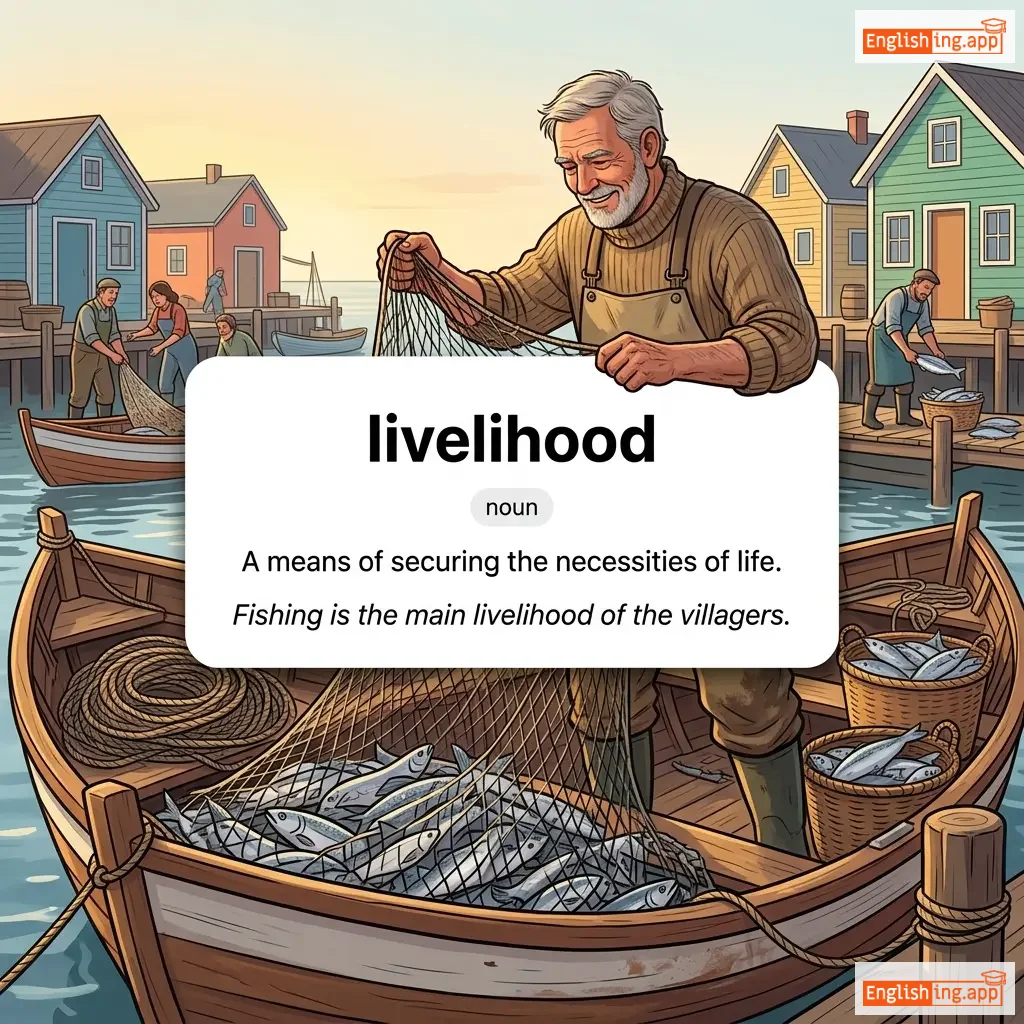
生计
shengji
••••••
|
- •••••• | - •••••• | - •••••• | - •••••• |
a means of securing the necessities of life; the work that provides income to support oneself and family
••••••
|
Fishing is their main source of livelihood. |
捕鱼是他们的主要生计来源。
bǔ yú shì tāmen de zhǔyào shēngjì láiyuán.
••••••
|
- •••••• | - •••••• | - •••••• |
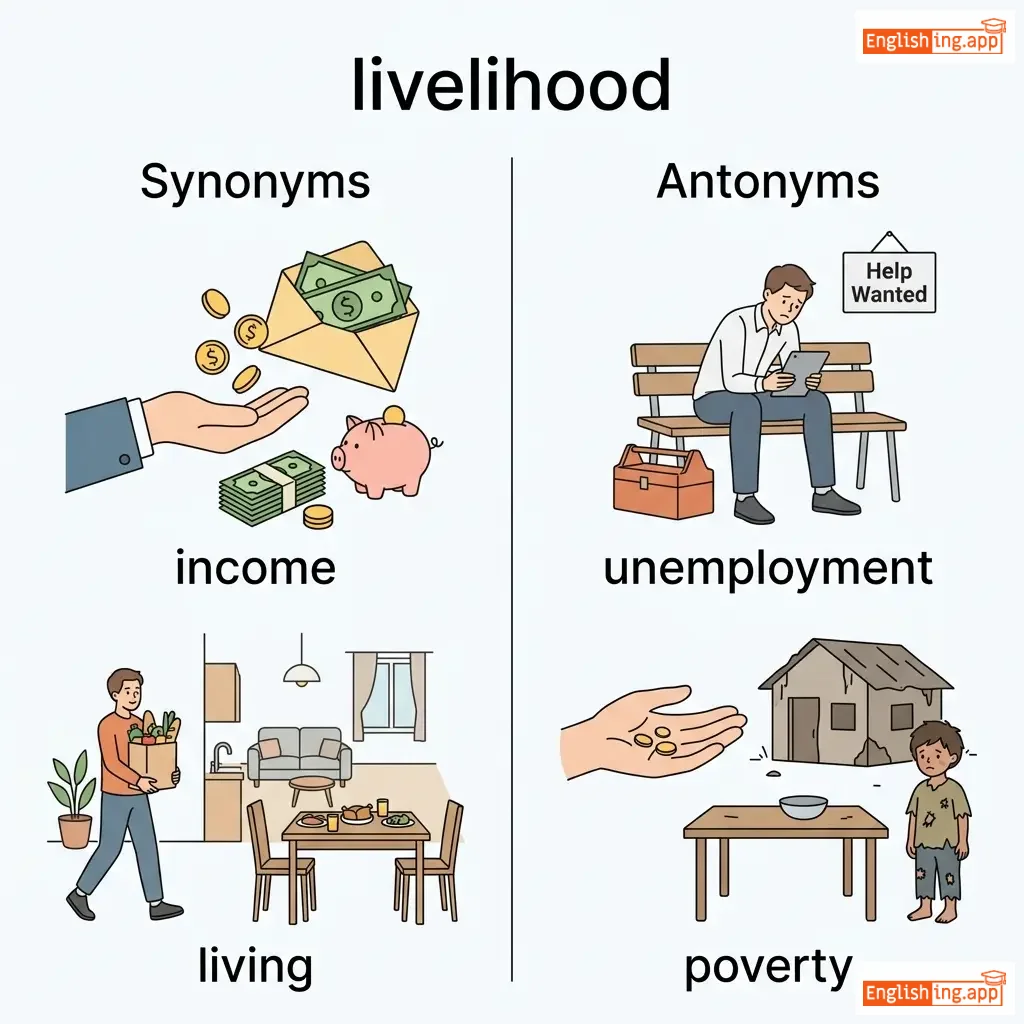
living, subsistence, income, occupation
••••••
|
unemployment, poverty
••••••
|
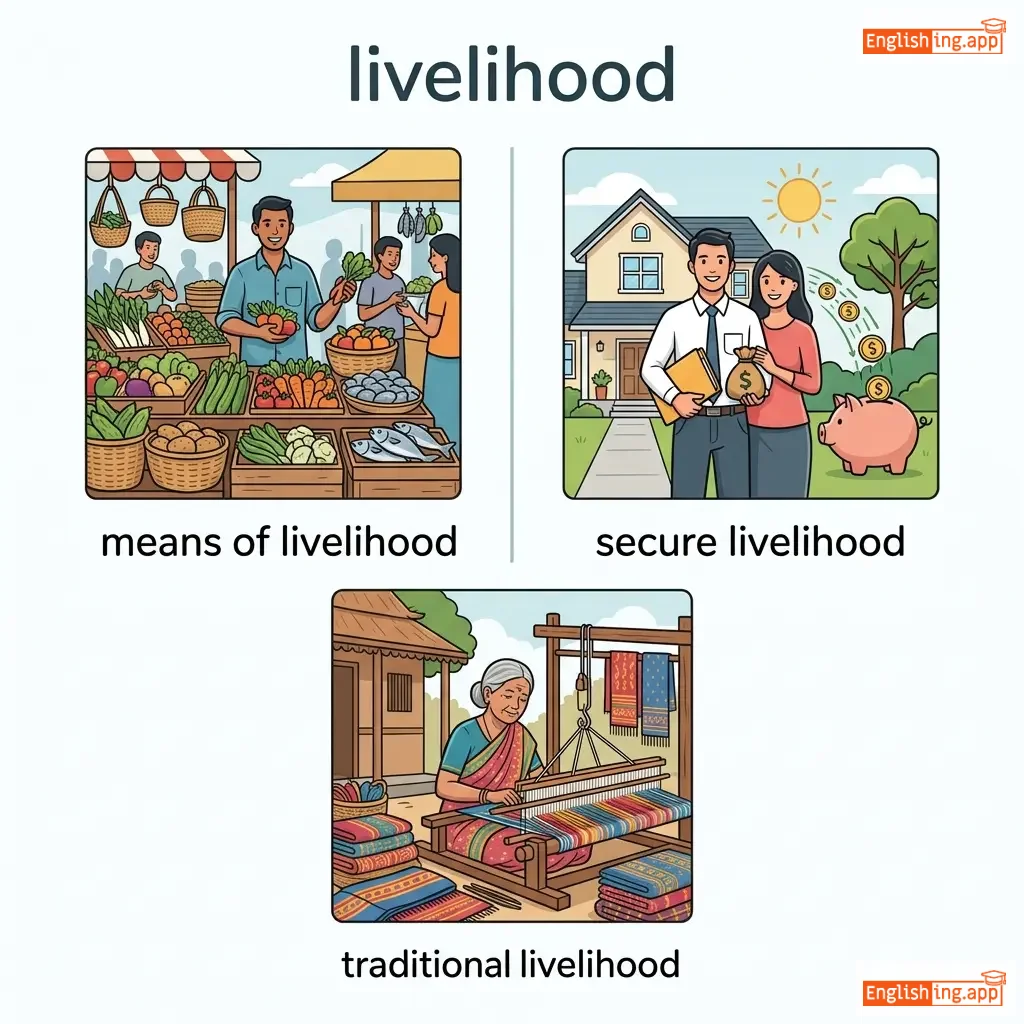
earn livelihood, source of livelihood, sustainable livelihood
••••••
|
‘生计’就是养活家人,比如捕鱼作为生计来源。
••••••
|
|
🫀
••••••
|
/ˈlɪvər/
noun
(liver)
••••••
|
- •••••• |
肝脏
ganzang
••••••
|
- •••••• | - •••••• | - •••••• | - •••••• |
a large organ in the body that cleans the blood and produces bile to help digest food.
••••••
|
The liver plays a vital role in removing toxins from the body. |
肝脏在清除体内毒素中起着至关重要的作用。
ganzang zai qingchu tinei dushu zhong qizhe zhiguanzhongyao de zuoyong.
••••••
|
liver disease |
a medical condition affecting the liver
••••••
|
肝脏疾病
ganzang jibing
••••••
|
organ, gland, viscus, hepatic organ
••••••
|
none
••••••
|
healthy liver, liver disease, liver function, liver transplant
••••••
|
肝脏是生命的过滤器,帮助清除毒素。
••••••
|
|
🦎
••••••
|
/ˈlɪzərd/
noun
(蜥蜴)
••••••
|
- •••••• |
壁虎
bìhǔ
••••••
|
- •••••• | - •••••• | - •••••• | - •••••• |
A small reptile with a long body, four legs, and a tail, often found on walls or in gardens.
••••••
|
A lizard crawled across the wall. |
一只壁虎沿着墙爬行。
Yī zhī bìhǔ yánzhe qiáng páxíng.
••••••
|
lounge lizard |
A man who frequents bars and clubs, often looking for women.
••••••
|
酒吧壁虎
jiǔbā bìhǔ
••••••
|
gecko, reptile, skink, iguana
••••••
|
mammal, bird
••••••
|
garden lizard, wall lizard, desert lizard, lizard species
••••••
|
Lizard 意味着壁虎 - 听到夜晚壁虎爬墙时的‘tick-tick’,你会记住的。
••••••
|
|
📦
••••••
|
/loʊd/
noun/verb
(loud)
••••••
|
|
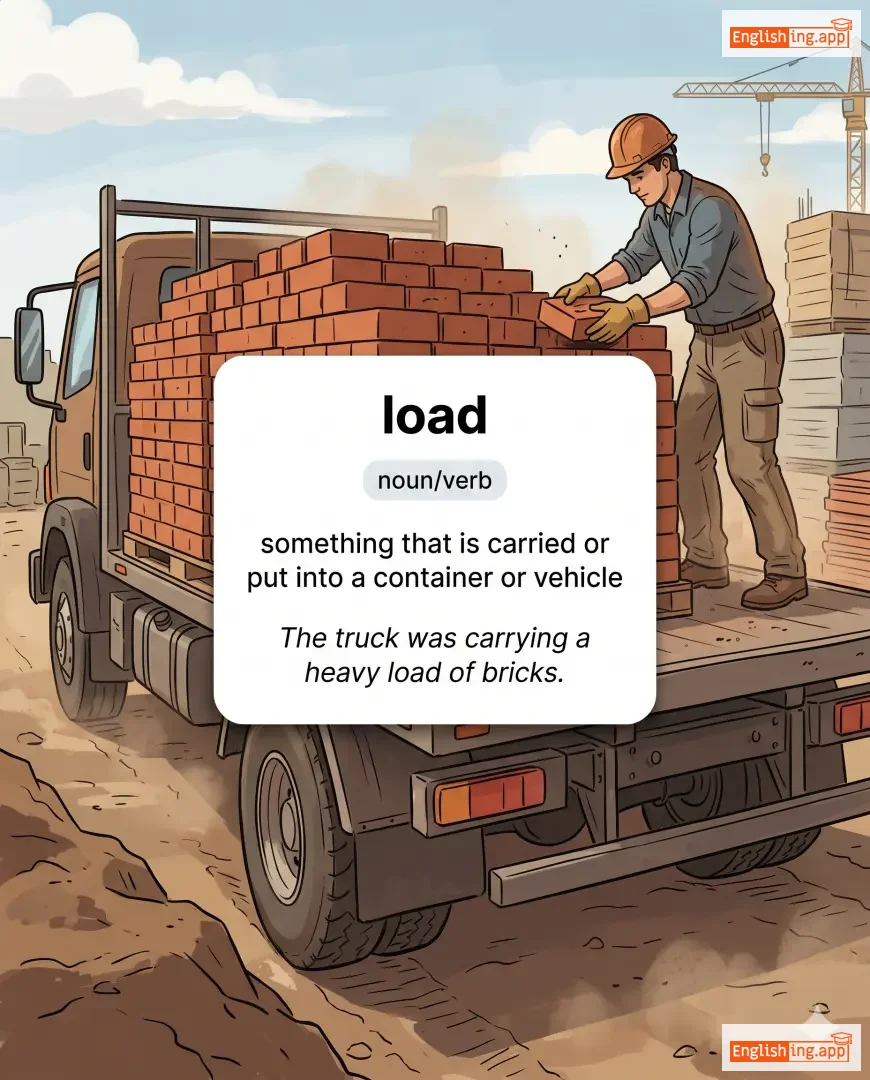
载重
zàizhòng
••••••
|
loaded
louded
••••••
|
loaded
louded
••••••
|
loads
louds
••••••
|
loading
louding
••••••
|
something that is carried or put into a container or vehicle
••••••
|
The truck was carrying a heavy load of bricks.
卡车正在运输一载重的砖块。
••••••
|
卡车正在运输一载重的砖块。
kǎchē zhèngzài yùnshū yī zàizhòng de zhuānkuài.
••••••
|
take a load off
放下负担
••••••
|
to sit down and relax
••••••
|
放松一下
fàngsōng yīxià
••••••
|
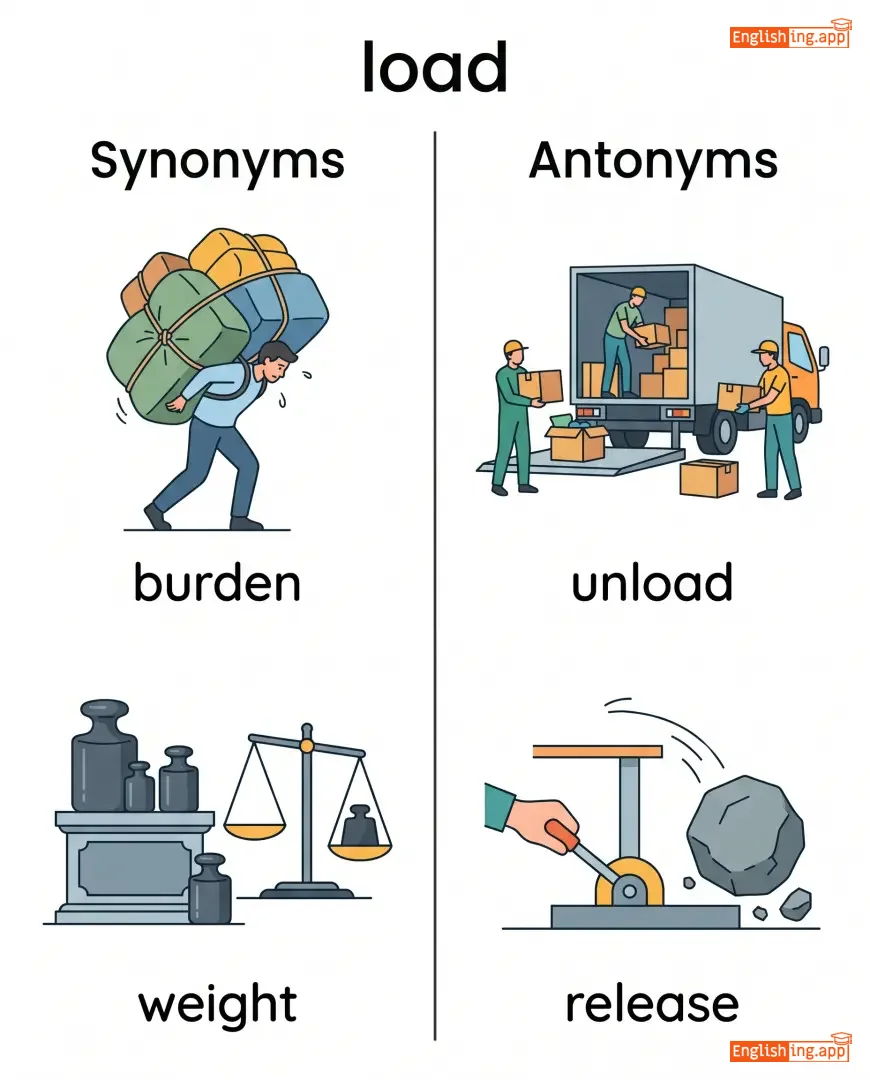
burden, weight, cargo, freight, shipment
••••••
|
unload, release, lighten
••••••
|
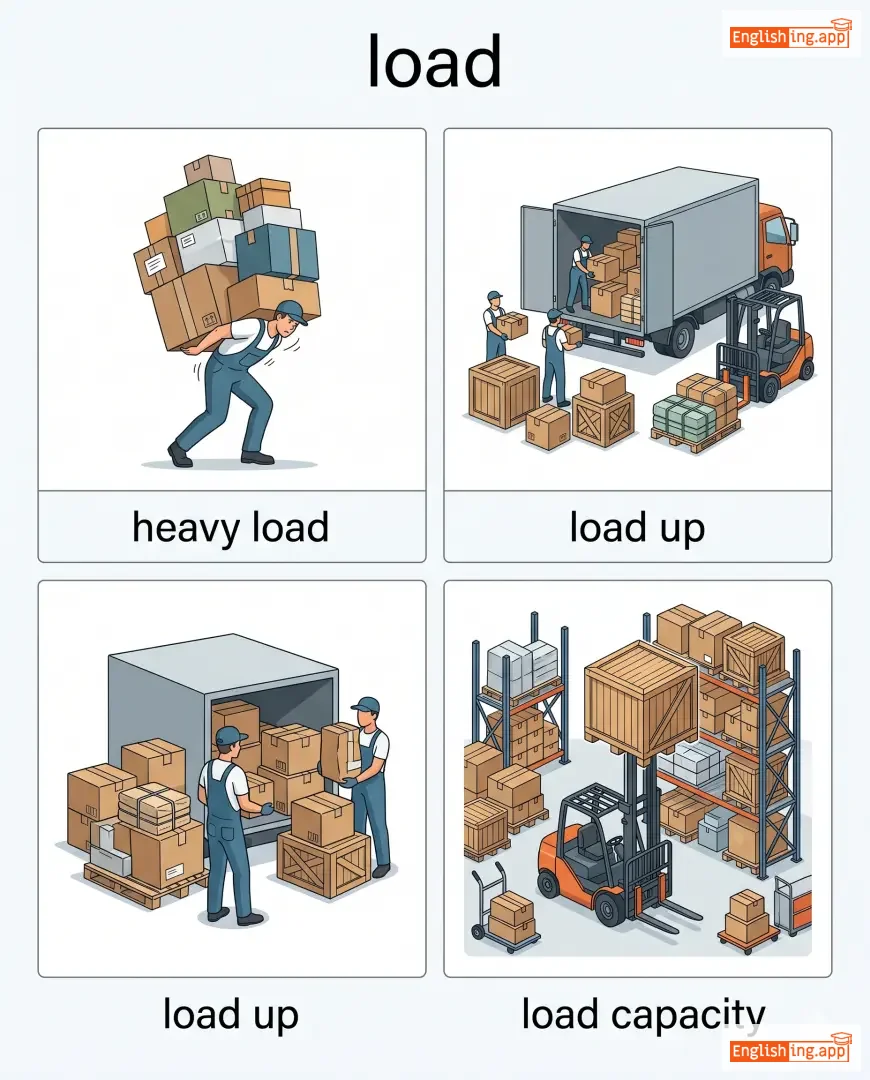
heavy load, load up, load capacity, full load
••••••
|
载重,像是当电脑卡住时,你在等待它加载完。
••••••
|
|
💰
••••••
|
/loʊn/
noun
(贷款)
••••••
|
- •••••• |
贷款
daikuan
••••••
|
- •••••• | - •••••• | - •••••• | - •••••• |
money that is borrowed and expected to be paid back with interest
••••••
|
She took a loan from the bank to buy a house. |
她从银行借了贷款买房。
ta cong yinhang jie le daikuan mai fang.
••••••
|
loan shark |
a person who lends money at very high interest rates
••••••
|
高利贷
gaolidai
••••••
|
credit, advance, debt, mortgage
••••••
|
repayment, settlement
••••••
|
take a loan, bank loan, student loan, repay a loan
••••••
|
Loan是贷款,就像'借款买车'。
••••••
|
|
🏢
••••••
|
/ˈlɒbi/
noun
(lòubì)
••••••
|
- •••••• |
大堂
datang
••••••
|
- •••••• | - •••••• | - •••••• | - •••••• |
a large open area near the entrance of a building; also a group trying to influence decisions.
••••••
|
We met the manager in the hotel lobby before the meeting. |
我们在会议前在酒店的大堂见到了经理。
women zai huiyi qian zai jiudian de datang jiandao le jingli.
••••••
|
political lobby |
a group that seeks to influence government policy
••••••
|
政治游说团体
zhengzhi youshuo tuanti
••••••
|
hall, foyer, reception, entrance, corridor
••••••
|
exterior, outside
••••••
|
hotel lobby, corporate lobby, lobby area, political lobby
••••••
|
大堂就像是酒店里等候开会的地方。
••••••
|
|
📍
••••••
|
/ˈloʊkəl/
adjective/noun
(本地)
••••••
|
- •••••• |
本地
bendi
••••••
|
- •••••• | - •••••• | - •••••• | - •••••• |
relating to a particular area or neighborhood
••••••
|
We prefer buying fruits from the local market. |
我们更喜欢从本地市场购买水果。
Wǒmen gèng xǐhuān cóng běndì shìchǎng gòumǎi shuǐguǒ.
••••••
|
go local |
to support nearby or community-based products or services
••••••
|
支持本地
zhīchí bendi
••••••
|
regional, nearby, community, native, domestic
••••••
|
global, foreign, distant
••••••
|
local community, local business, local government, local area
••••••
|
Local意味着本地,像本地市场一样。
••••••
|
|
📍
••••••
|
/loʊˈkeɪt/
verb
(洛凯特)
••••••
|
- •••••• |
定位
duiwei
••••••
|
located
洛凯特德
••••••
|
located
洛凯特德
••••••
|
locates
洛凯特斯
••••••
|
locating
洛凯特英
••••••
|
to find the exact position or place of something
••••••
|
They managed to locate the missing keys under the couch.
他们成功地在沙发下找到丢失的钥匙。
••••••
|
他们成功地在沙发下找到丢失的钥匙。
Tāmen chénggōng de zài shāfā xià zhǎodào diūshī de yàoshi.
••••••
|
locate oneself
定位自己
••••••
|
to identify one's own position or situation
••••••
|
定位自己
dìngwèi zìjǐ
••••••
|
find, discover, detect, identify, pinpoint
••••••
|
lose, miss, overlook
••••••
|
locate the source, locate the problem, difficult to locate, locate exactly
••••••
|
定位就像 'Location' 的音,让我们联想到寻找一个地方.
••••••
|
|
📍
••••••
|
/loʊˈkeɪʃən/
noun
(lokétion)
••••••
|
- •••••• |
位置
weizhi
••••••
|
- •••••• | - •••••• | - •••••• | - •••••• |
a particular place or position
••••••
|
This cafe is in a beautiful location near the lake.
这个咖啡馆位于湖边的一个美丽的位置。
••••••
|
这个咖啡馆位于湖边的一个美丽的位置。
Zhège kāfēi guǎn wèiyú hú biān de yīgè měilì de wèizhì.
••••••
|
on location
在现场
••••••
|
filming at the actual site instead of a studio
••••••
|
在现场
zài xiànchǎng
••••••
|
place, site, spot, area, venue
••••••
|
displacement, absence
••••••
|
prime location, shooting location, remote location, exact location
••••••
|
位置 = 事物所在的地方
••••••
|
|
🔒
••••••
|
/lɒk/
verb, noun
(lòk)
••••••
|
|
锁,锁定
suǒ, suǒ dìng
••••••
|
locked
lòk dé
••••••
|
locked
lòk dé
••••••
|
locks
lòk sī
••••••
|
locking
lòk ing
••••••
|
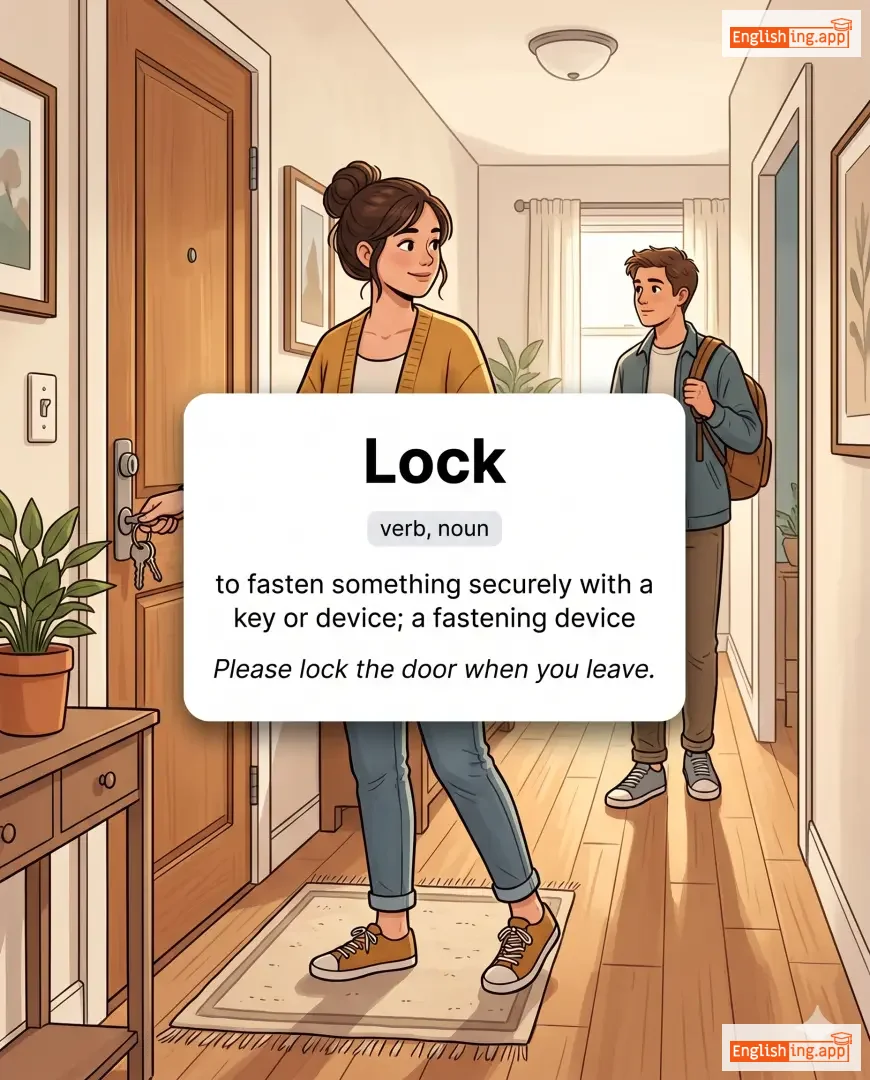
to fasten something securely with a key or device; a fastening device
••••••
|
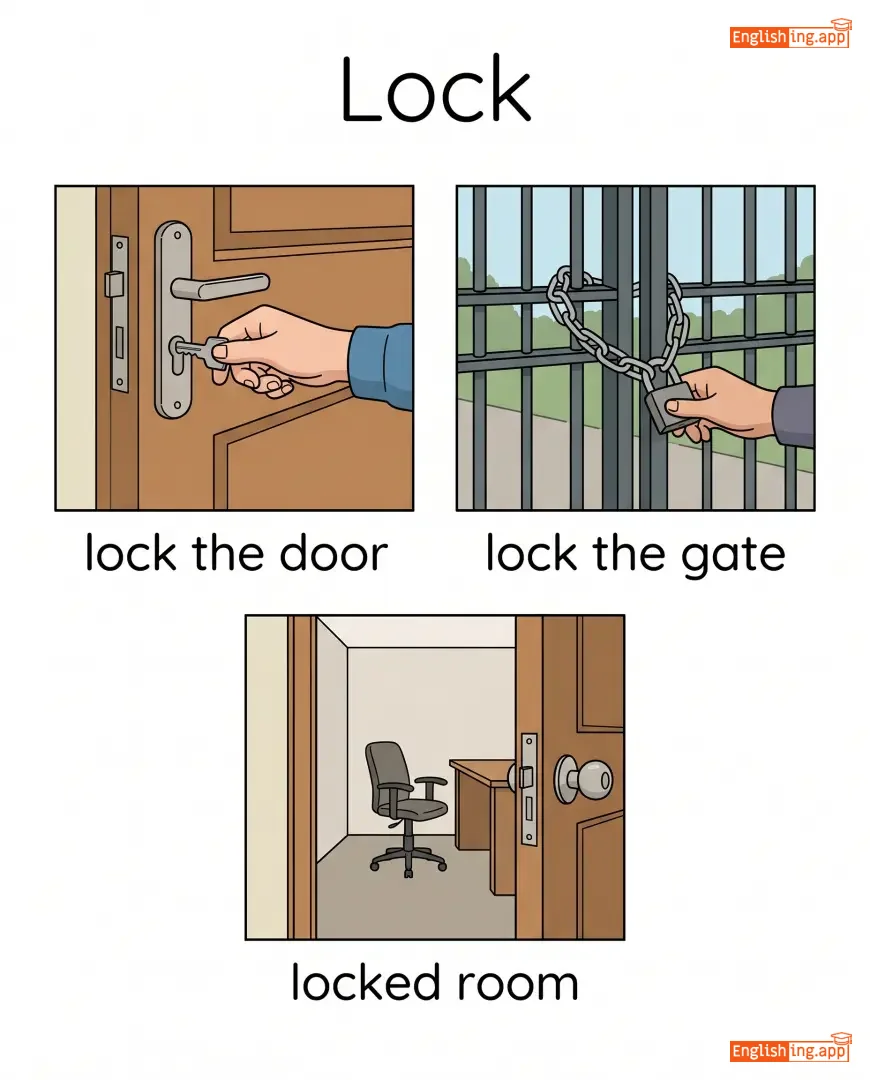
Please lock the door when you leave.
请在离开时锁好门。
••••••
|
请在离开时锁好门。
qǐng zài líkāi shí suǒ hǎo mén.
••••••
|
lock horns
锁 horns
••••••
|
to become involved in conflict or argument
••••••
|
进入冲突
jìnrù chōngtú
••••••
|
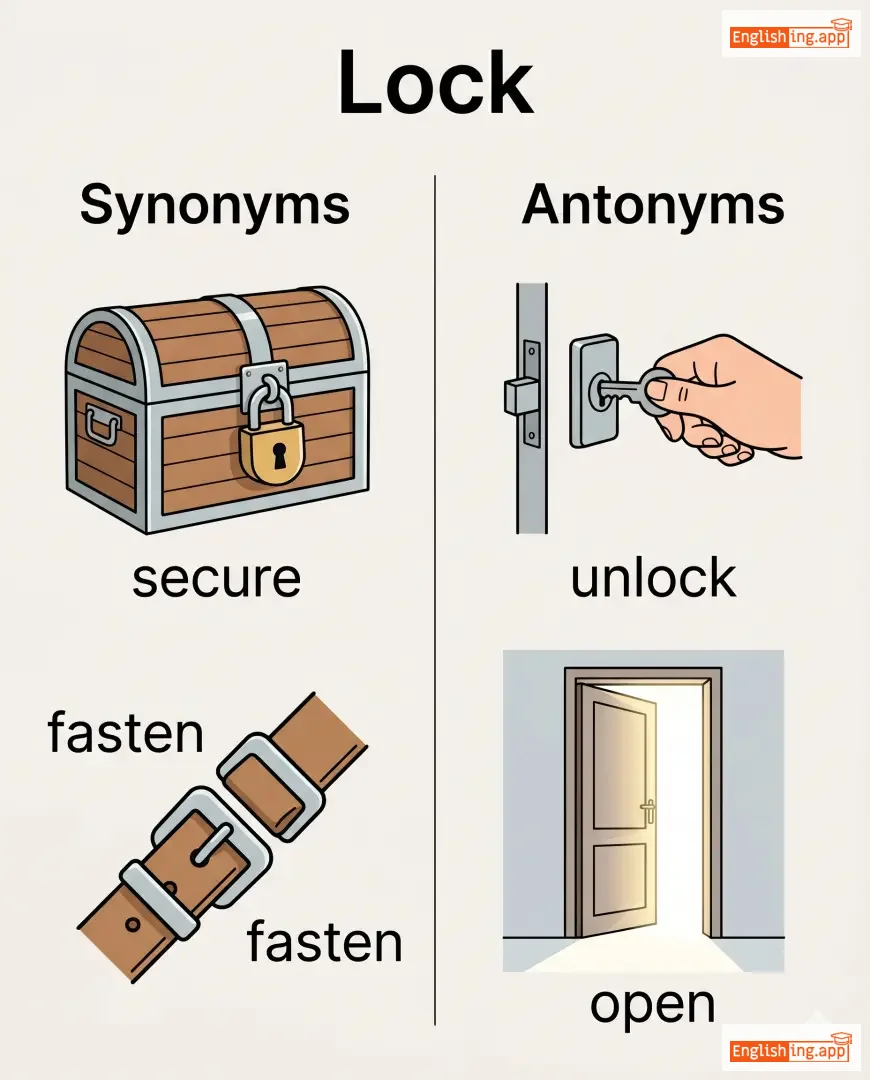
secure, fasten, latch, seal
••••••
|
unlock, open
••••••
|
lock the door, lock the gate, locked room, lock securely
••••••
|
Lock意思是锁上门,像是使用锁来保护门
••••••
|
|
🌲
••••••
|
/lɒɡ/
noun, verb
(log)
••••••
|
|
原木, 记录
yuánmù, jìlù
••••••
|
logged
登录
••••••
|
logged
登录
••••••
|
logs
日志
••••••
|
logging
登录
••••••
|
A part of the trunk or a large branch of a tree that has fallen or been cut off; also to record information systematically.
••••••
|
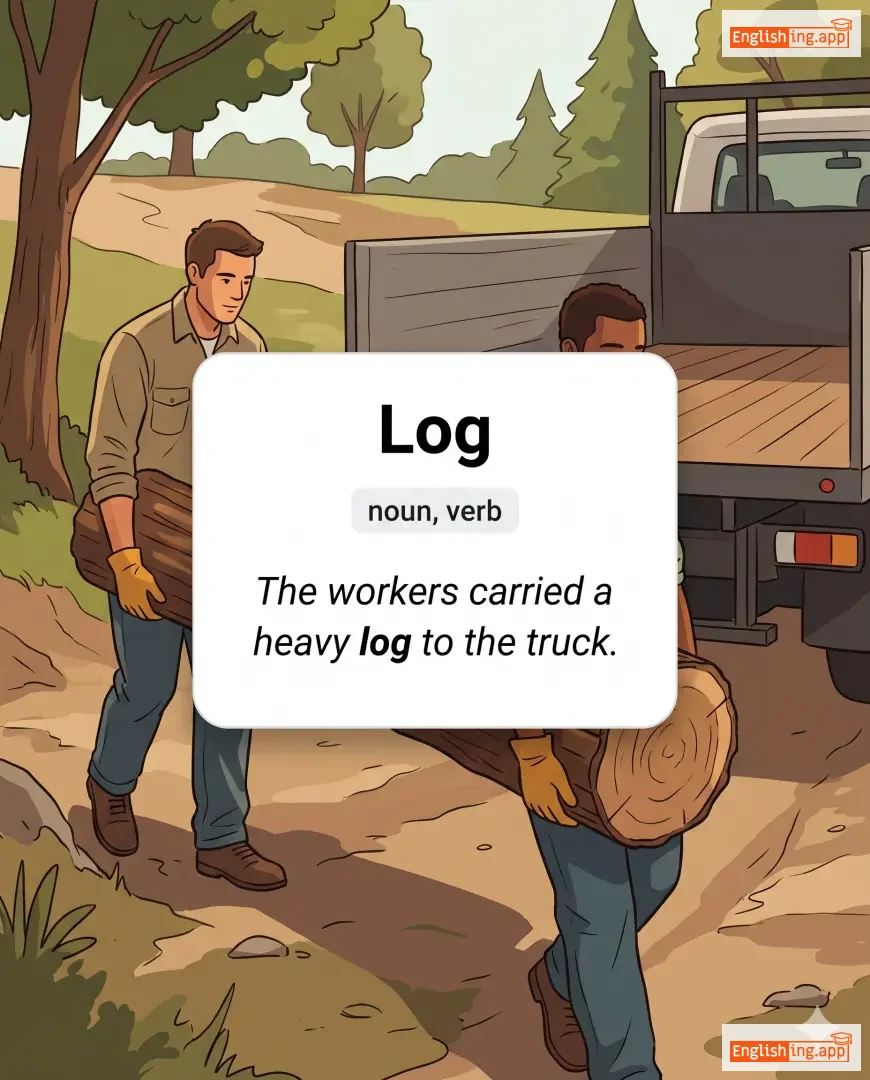
The workers carried a heavy log to the truck.
工人们将一根重木头搬到卡车上。
••••••
|
工人们将一根重木头搬到卡车上。
Gōngrénmen jiāng yī gēn zhòng mùtou bān dào kǎchē shàng.
••••••
|
sleep like a log
像木头一样睡觉
••••••
|
to sleep very deeply and soundly
••••••
|
像木头一样睡觉
xiàng mùtou yīyàng shuìjiào
••••••
|
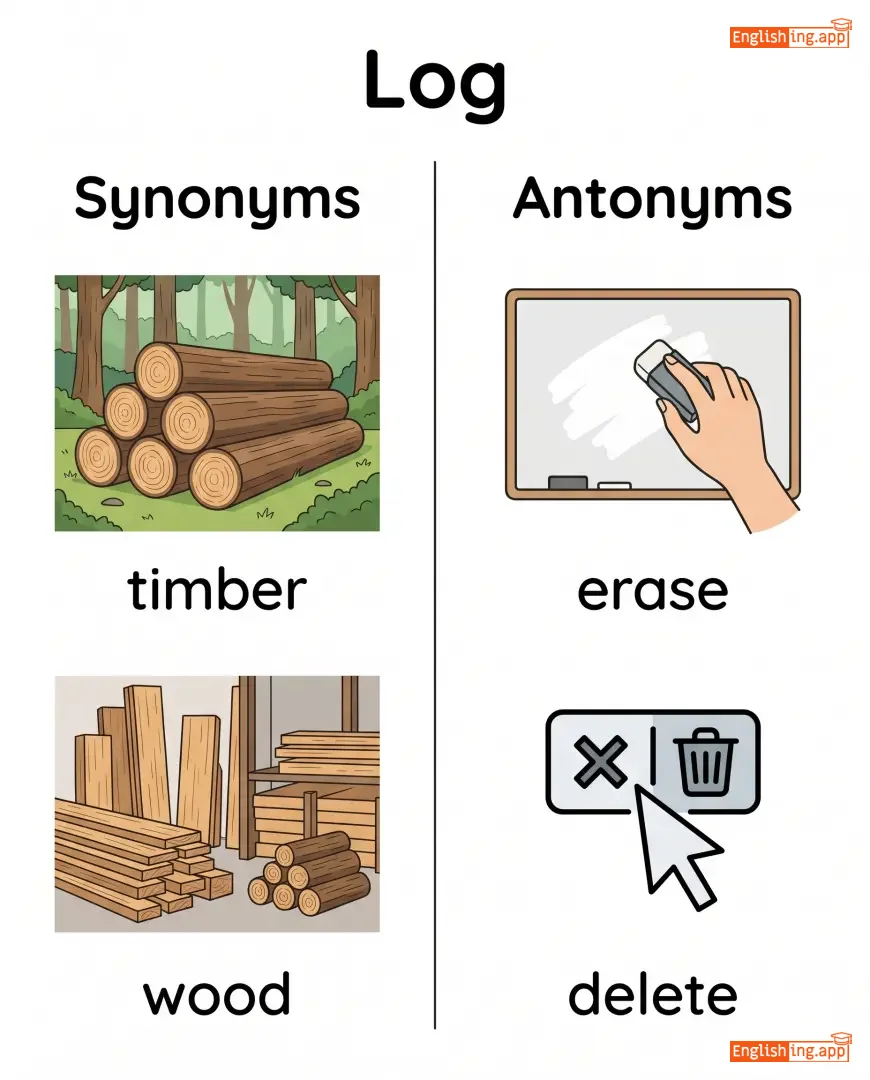
timber, wood, record, register, journal
••••••
|
erase, delete
••••••
|
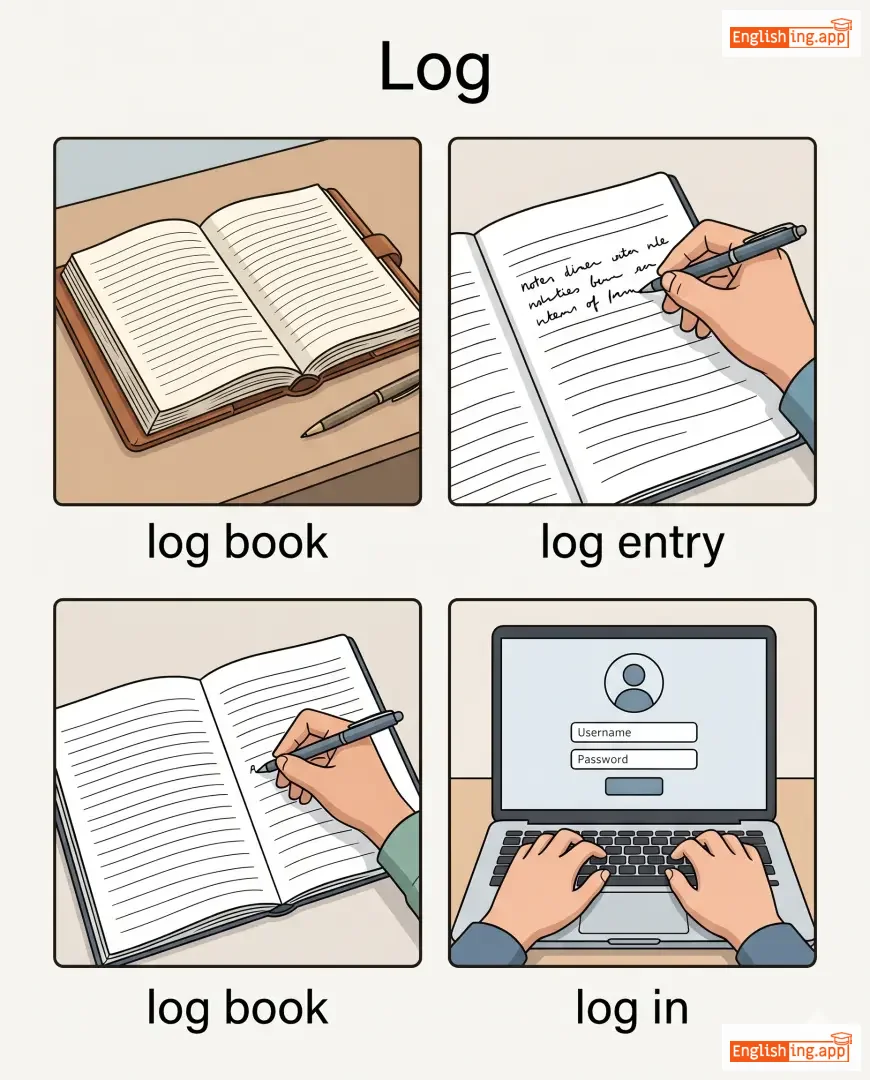
log book, log entry, log in, log data
••••••
|
Log (log) 是原木,登录 (login) 时会记录信息。
••••••
|
|
🧠
••••••
|
/ˈlɒdʒɪk/
noun
(逻辑)
••••••
|
- •••••• |
逻辑
luoji
••••••
|
- •••••• | - •••••• | - •••••• | - •••••• |
Reasoning conducted or assessed according to strict principles of validity.
••••••
|
Her argument was based on sound logic.
她的论点基于严密的逻辑。
••••••
|
她的论点基于严密的逻辑。
Ta de lundian jiyu yanmi de luoji.
••••••
|
twist the logic
扭曲逻辑
••••••
|
to manipulate reasoning to suit one’s purpose
••••••
|
扭曲逻辑
niuxi luoji
••••••
|
reasoning, rationale, argument, sense, judgment
••••••
|
nonsense, illogic, irrationality
••••••
|
sound logic, formal logic, logic puzzle, logic gate
••••••
|
逻辑意味着合理推理; 中文中它也是'逻辑'。记住,'逻辑'就是逻辑。
••••••
|
|
🖼️
••••••
|
/ˈləʊɡəʊ/
noun
••••••
|
- •••••• | - •••••• | - •••••• | - •••••• | - •••••• | - •••••• |
a symbol or other small design adopted by an organization to identify its products, uniform, vehicles, etc.
••••••
|
The company's logo was redesigned to reflect its new image. |
- •••••• | - •••••• | - •••••• | - •••••• |
emblem, symbol, trademark, insignia
••••••
|
plain, generic
••••••
|
company logo, brand logo, business logo, new logo
••••••
|
No •••••• |
|
😔
••••••
|
/ˈloʊnli/
adjective
(lónglí)
••••••
|
- •••••• |
孤独
gūdú
••••••
|
- •••••• | - •••••• | - •••••• | - •••••• |
feeling sad because one has no friends or company.
••••••
|
He felt lonely after moving to a new city. |
他在搬到新城市后感到孤独。
Tā zài bān dào xīn chéngshì hòu gǎndào gūdú.
••••••
|
lonely heart |
a person who feels emotionally isolated or unloved
••••••
|
孤独的心
gūdú de xīn
••••••
|
isolated, alone, solitary, desolate, sad
••••••
|
friendly, sociable, connected
••••••
|
feel lonely, become lonely, lonely night, lonely person
••••••
|
Lonely意味着孤独,就像孤独的心。
••••••
|
|
📏
••••••
|
/lɔːŋ/
adjective
(long)
••••••
|
- •••••• |
长
chang
••••••
|
- •••••• | - •••••• | - •••••• | - •••••• |
Measuring a great distance from end to end; lasting for a large amount of time.
••••••
|
They waited a long time for the train. |
他们等了很长时间才等到火车。
tamen deng le hen chang shi jian cai deng dao huo che.
••••••
|
in the long run |
After a long period of time; eventually.
••••••
|
从长远来看
cong chang yuan lai kan
••••••
|
lengthy, extended, prolonged, tall
••••••
|
short, brief
••••••
|
long time, long road, long journey, long hair
••••••
|
Long 意味着长 — 想象一根长长的绳子。
••••••
|
|
⌛
••••••
|
/ˈlɒŋ ˈstændɪŋ/
adjective
(long-standing)
••••••
|
- •••••• |
长期的
changqi de
••••••
|
- •••••• | - •••••• | - •••••• | - •••••• |
having existed or continued for a long period of time
••••••
|
They have a long-standing relationship with their suppliers. |
他们与供应商之间有着长期的合作关系。
Tāmen yǔ gōngyìng shāng zhī jiān yǒuzhe chángqī de hézuò guānxi.
••••••
|
- •••••• | - •••••• | - •••••• |
enduring, lasting, persistent, perpetual
••••••
|
temporary, fleeting
••••••
|
long-standing tradition, long-standing relationship, long-standing issue
••••••
|
长期的关系随着时间的推移而变得更强。
••••••
|
|
⏳
••••••
|
/ˌlɔːŋ ˈtɜːrm/
adjective
(lóng tèrn)
••••••
|
|
长期的
changqi de
••••••
|
- •••••• | - •••••• | - •••••• | - •••••• |
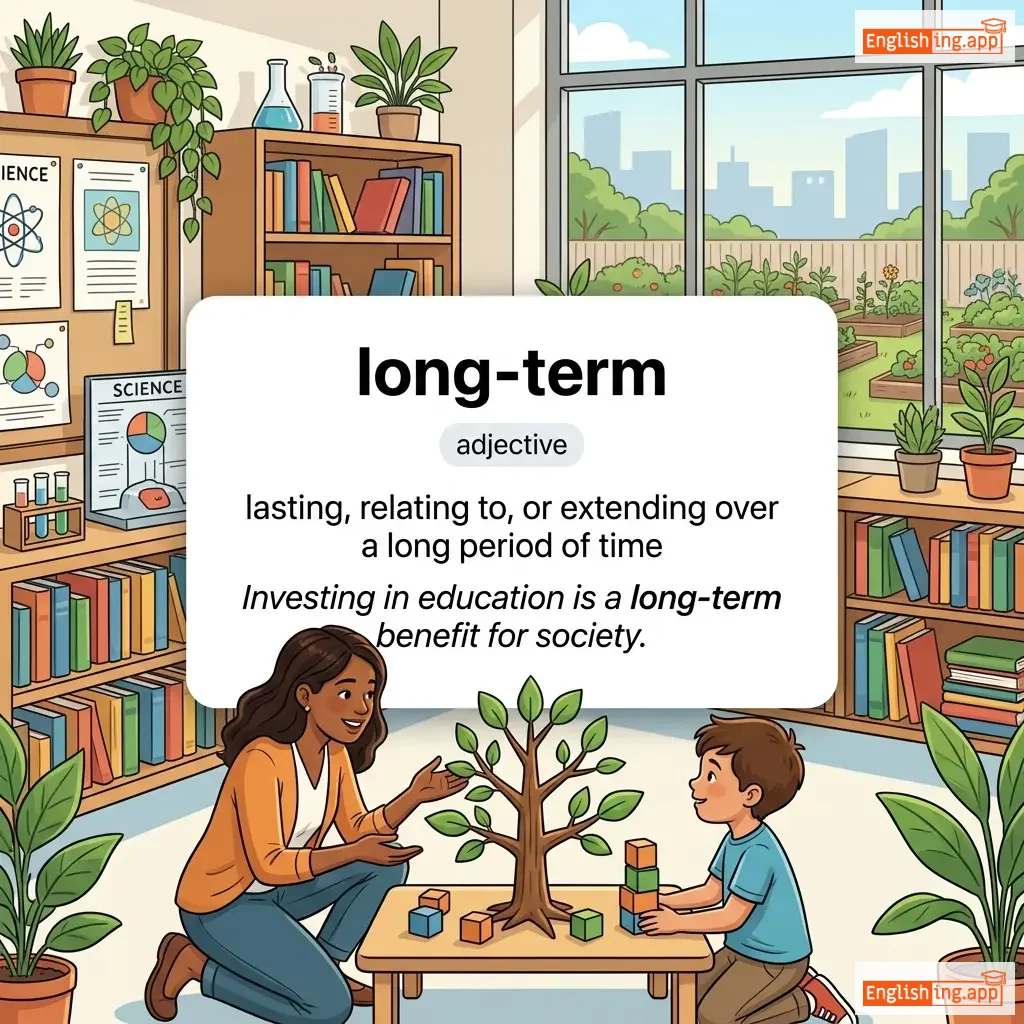
lasting, relating to, or extending over a long period of time
••••••
|
Investing in education is a long-term benefit for society. |
投资教育是社会的长期利益。
Touzi jiaoyu shi shehui de changqi liyu.
••••••
|
- •••••• | - •••••• | - •••••• |
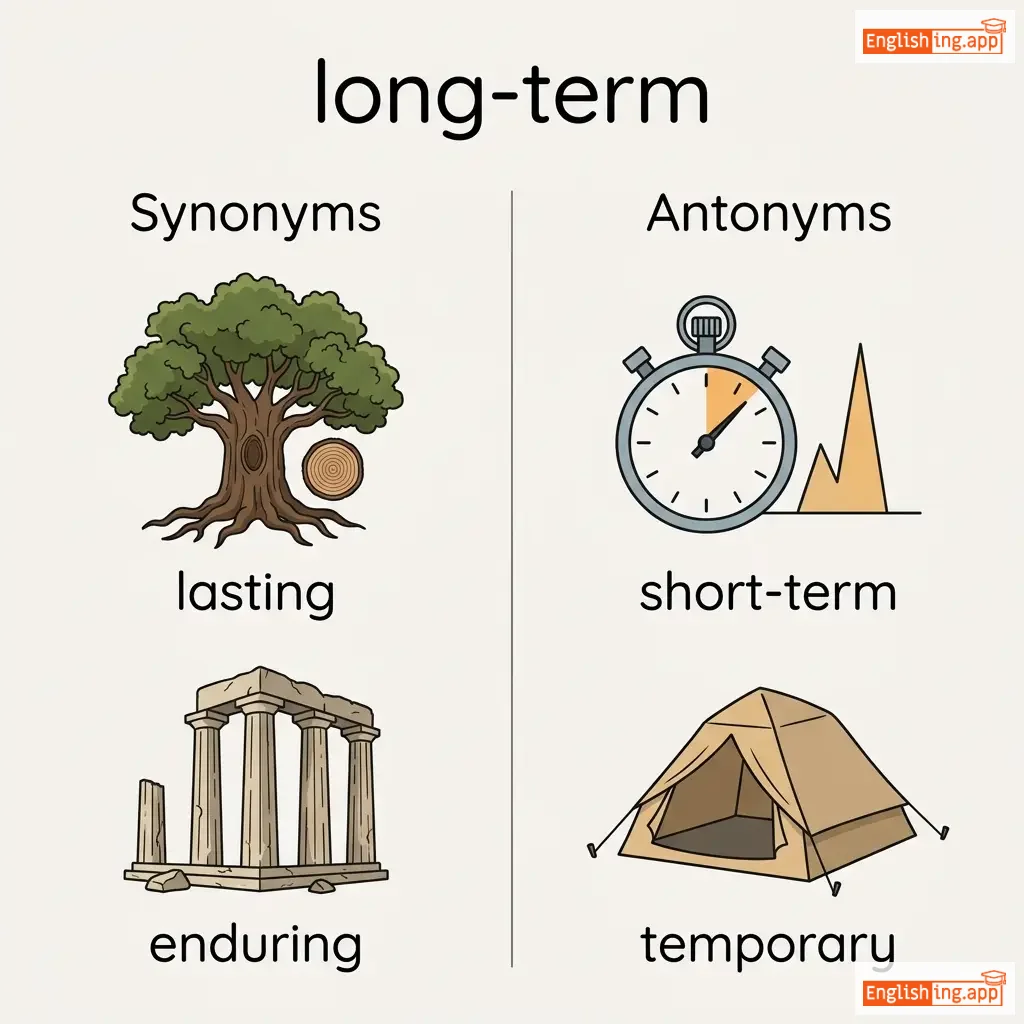
lasting, enduring, sustained, prolonged
••••••
|
short-term, temporary
••••••
|
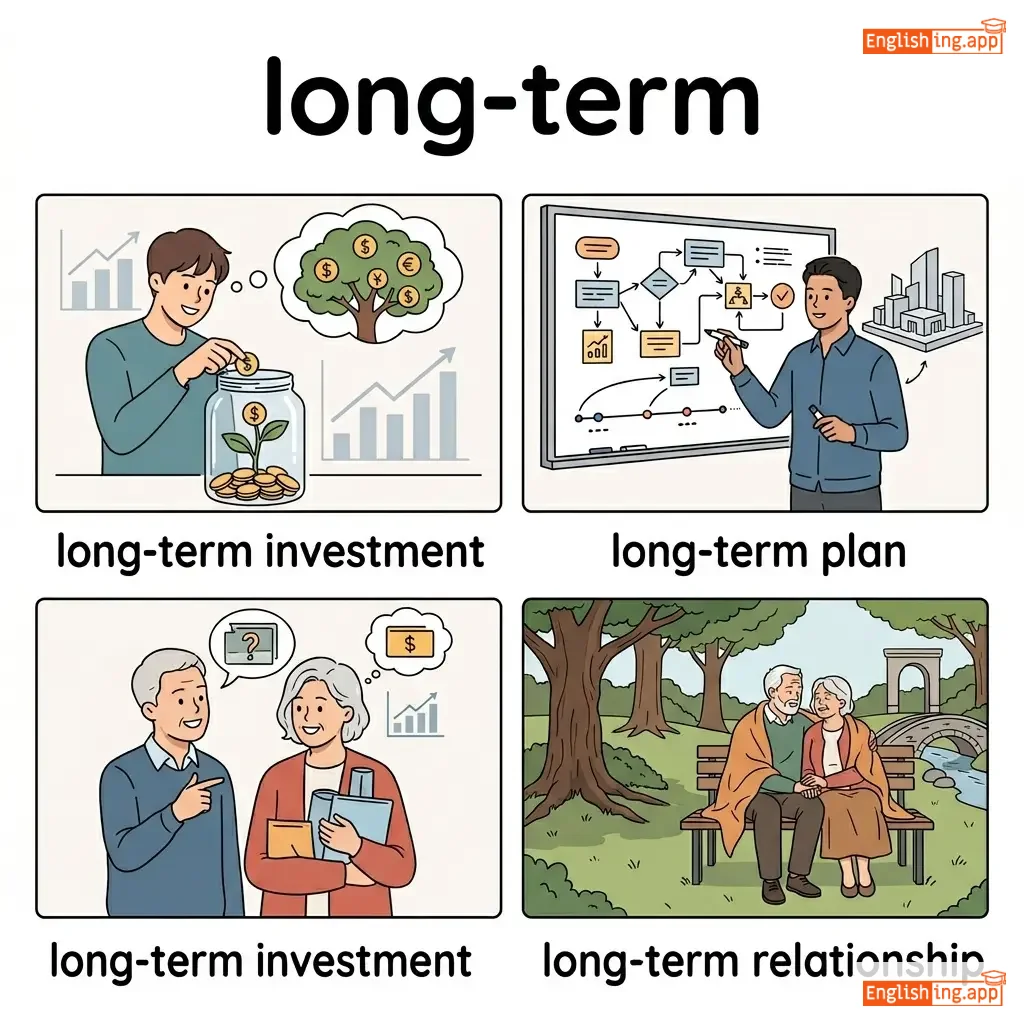
long-term investment, long-term plan, long-term relationship, long-term impact
••••••
|
长期的意味着稳定的回报 - 长期投资带来长期利益
••••••
|
|
⏳
••••••
|
/ˈlɒŋ taɪm/
adjective, adverb
(朗-泰姆)
••••••
|
- •••••• |
长期的
changqi de
••••••
|
- •••••• | - •••••• | - •••••• | - •••••• |
lasting or existing for a long period of time; having continued for many years
••••••
|
She is a long-time friend of my family.
西 伊兹 阿 朗-泰姆 朋友。
••••••
|
她是我家长期的朋友。
ta shi wo jia changqi de pengyou
••••••
|
long-time no see
朗-泰姆 诺 西
••••••
|
used when greeting someone you have not seen for a long time
••••••
|
好久不见
hao jiu bu jian
••••••
|
longstanding, enduring, established, extended, chronic
••••••
|
recent, short-term, brief
••••••
|
long-time friend, long-time member, long-time supporter, long-time resident
••••••
|
long-time = 长期
••••••
|
|
👀
••••••
|
/lʊk/
(luk)
••••••
|
- •••••• |
看
kan
••••••
|
looked
lukd
••••••
|
looked
lukd
••••••
|
looks
luks
••••••
|
looking
luking
••••••
|
to direct one's gaze in a particular direction
••••••
|
She looked out the window at the rain.
她看向窗外的雨。
••••••
|
她看向窗外的雨。
Ta kanxiang chuangwai de yu.
••••••
|
look up to
仰望
••••••
|
to admire or respect someone
••••••
|
崇拜
chongbai
••••••
|
glance, gaze, stare, observe, watch
••••••
|
ignore, overlook
••••••
|
look at, look for, look into, look after, look forward to
••••••
|
看 (look) 可以看到所有东西。
••••••
|
|
🫶
••••••
|
/lʊk ˈɑːftər/
phrasal verb
(路克 阿夫特)
••••••
|
- •••••• |
照顾
zhaogu
••••••
|
looked after
路克特 阿夫特
••••••
|
looked after
路克特 阿夫特
••••••
|
looks after
路克斯 阿夫特
••••••
|
looking after
路克英 阿夫特
••••••
|
to take care of someone or something; to be responsible for someone’s well-being
••••••
|
She looks after her younger brother while their parents are at work.
西 路克斯 阿夫特 哈 扬格 布拉泽 怀尔 泽尔 佩伦茨 阿尔 艾特 沃克
••••••
|
父母上班时,她照顾弟弟。
Fumu shangban shi, ta zhaogu didi
••••••
|
look after yourself
路克 阿夫特 约塞尔夫
••••••
|
take care of your own health and safety
••••••
|
照顾好自己
zhaogu hao ziji
••••••
|
take care of, care for, tend, mind, supervise
••••••
|
neglect, abandon, ignore
••••••
|
look after children, look after patients, look after the house, look after someone well
••••••
|
LOOK AFTER = 照顾,用眼睛和心一起照看
••••••
|
|
🌩️
••••••
|
/luːm/
verb
••••••
|
- •••••• | - •••••• |
loomed
••••••
|
loomed
••••••
|
looms
••••••
|
looming
••••••
|
to appear as a large, often frightening or unclear shape, usually something threatening or about to happen
••••••
|
Dark clouds loomed over the city, signaling an approaching storm. |
- •••••• |
loom large |
to be of great importance or concern
••••••
|
- •••••• |
emerge, appear, threaten, overshadow, hover
••••••
|
fade, disappear, vanish
••••••
|
loom large, loom ahead, storm looms, crisis looms
••••••
|
No •••••• |
|
🔁
••••••
|
/luːp/
noun
(lùp)
••••••
|
- •••••• |
圈,环
quan, huan
••••••
|
- •••••• | - •••••• | - •••••• | - •••••• |
a shape produced by a curve that bends around and crosses itself
••••••
|
The string formed a neat loop around the package.
绳子在包裹周围形成了一个整齐的环。
••••••
|
绳子在包裹周围形成了一个整齐的环。
Shéngzi zài bāoguǒ zhōuwéi xíngchéngle yīgè zhěngqí de huán.
••••••
|
in the loop
在圈内
••••••
|
to be informed or included in communication
••••••
|
保持在圈内
bǎochí zài quān nèi
••••••
|
circle, ring, coil, curve, twist
••••••
|
line, straight, break
••••••
|
infinite loop, feedback loop, closed loop, data loop
••••••
|
圈就像一个不断重复的循环,像是保持在圈内 🔁
••••••
|
|
🪛
••••••
|
/luːs/
adjective
(lús)
••••••
|
- •••••• |
松
song
••••••
|
- •••••• | - •••••• | - •••••• | - •••••• |
not firmly or tightly fixed in place
••••••
|
The screw is loose and needs tightening.
螺丝松动,需要紧固。
••••••
|
螺丝松动,需要紧固。
Luosi songdong, xuyao jingu.
••••••
|
cut loose
切断
••••••
|
to behave freely and without control
••••••
|
自由地行为
zizhu de xingwei
••••••
|
slack, free, unfastened, detached
••••••
|
tight, secure
••••••
|
loose clothing, loose ends, loose screw
••••••
|
松意味着不紧,它像松动的螺丝,容易掉下来。
••••••
|
|
😞
••••••
|
/luːz/
verb
(海皮尼斯)
••••••
|
|
幸福
xingfu
••••••
|
lost
••••••
|
lost
••••••
|
loses
••••••
|
losing
••••••
|
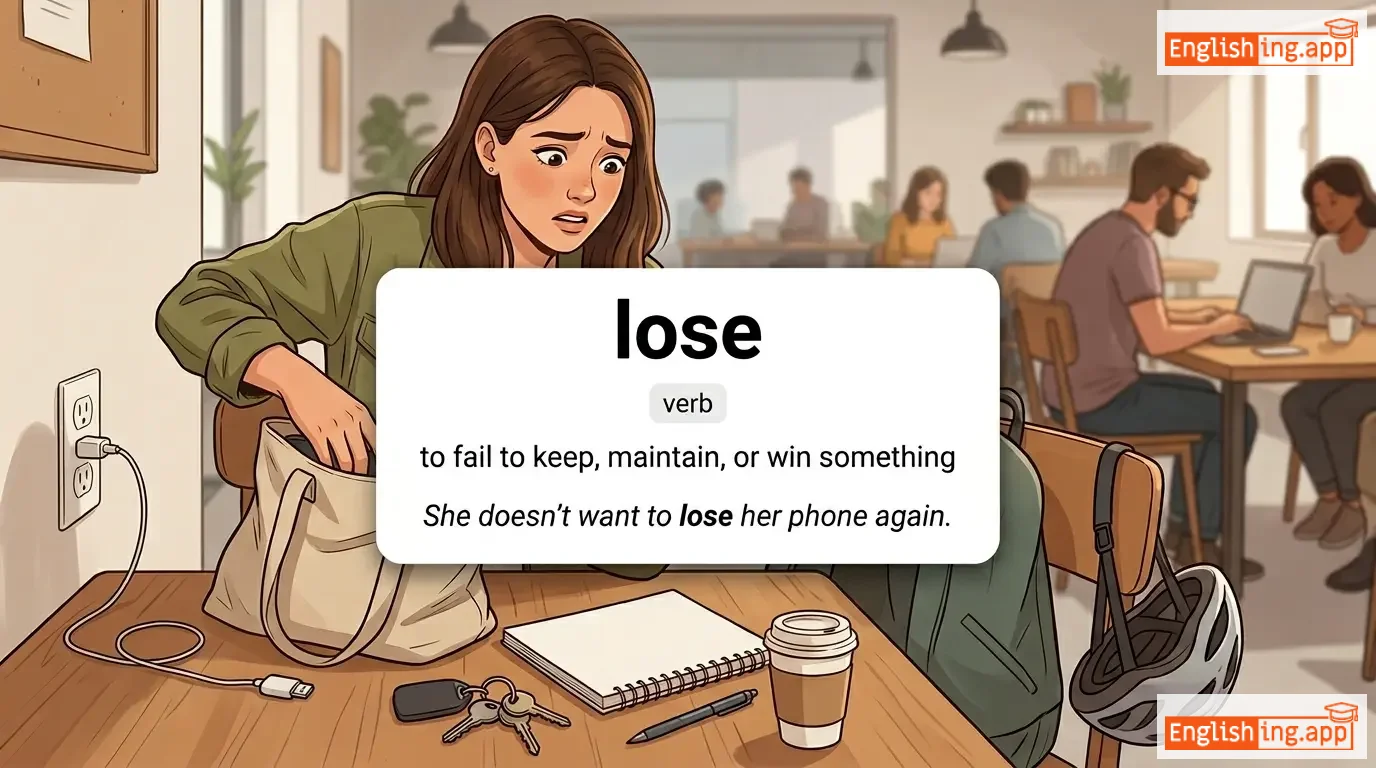
to fail to keep, maintain, or win something
••••••
|
She doesn’t want to lose her phone again.
她在获得奖项时无法掩饰自己的快乐。
••••••
|
她在获得奖项时无法掩饰自己的快乐。
Tā zài huòdé jiǎngxiàng shí wúfǎ yǎnshì zìjǐ de kuàilè.
••••••
|
lose track
追求幸福
••••••
|
to fail to keep informed or aware of something
••••••
|
追求幸福
zhuīqiú xìngfú
••••••
|
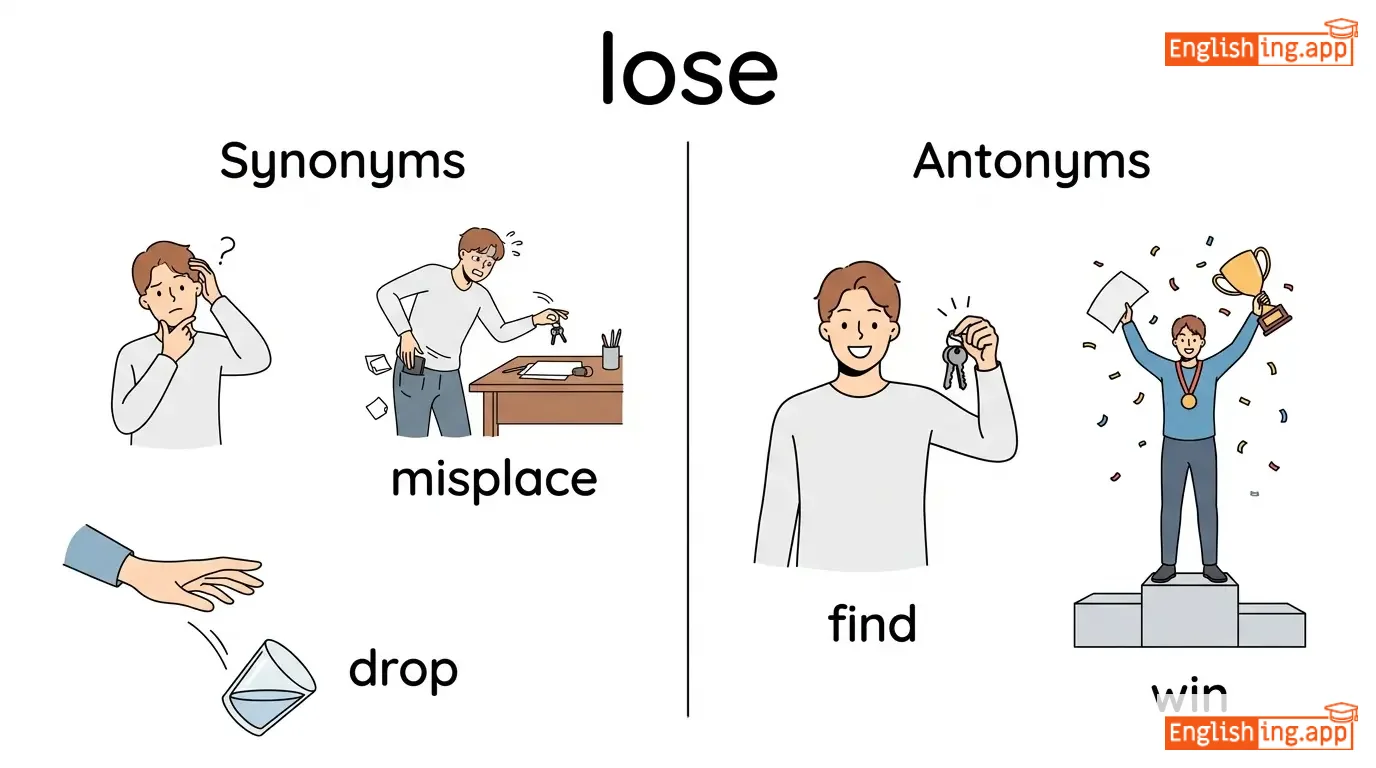
misplace, drop, forfeit, miss
••••••
|
find, win, gain
••••••
|
lose weight, lose a game, lose hope, lose control
••••••
|
幸福就像寻找宝藏,越找越能感到心中的平静。
••••••
|
|
📉
••••••
|
/lɒs/
noun
(lòu sī)
••••••
|
- •••••• |
损失
sǔn shī
••••••
|
- •••••• | - •••••• | - •••••• | - •••••• |
The state of no longer having something or someone; the harm resulting from losing.
••••••
|
The company suffered a huge financial loss last year. |
公司去年遭受了巨大的财务损失。
Gōngsī qùnián zāoshòu le jùdà de cáiwù sǔnhài.
••••••
|
at a loss |
to be puzzled or uncertain about what to do
••••••
|
损失
sǔn shī
••••••
|
damage, defeat, failure, decline, misfortune
••••••
|
gain, profit, success
••••••
|
suffer a loss, financial loss, at a loss, loss of life
••••••
|
损失意味着损失,像是📉 你失去了钱。
••••••
|
|
🧭
••••••
|
/lɒst/
verb/adjective
(洛斯特)
••••••
|
- •••••• |
丢失
diū shī
••••••
|
lost
洛斯特
••••••
|
lost
洛斯特
••••••
|
loses
失落
••••••
|
losing
失落
••••••
|
Unable to find the way; no longer in possession of something.
••••••
|
He lost his keys and couldn’t enter the house.
他丢失了钥匙,无法进入房子。
••••••
|
他丢失了钥匙,无法进入房子。
Tā diū shī le yàoshi, wúfǎ jìnrù fángzi.
••••••
|
lost cause
失落的原因
••••••
|
a hopeless situation with no chance of success
••••••
|
失落的原因
shī luò de yuányīn
••••••
|
gone, misplaced, vanished, defeated
••••••
|
found, recovered, won
••••••
|
get lost, lost keys, lost opportunity, feel lost
••••••
|
Lost = 丢失,像 Lost 手机 = 丢失手机。
••••••
|
|
📦
••••••
|
/lɒt/
noun
(lot)
••••••
|
- •••••• |
许多
xuduo
••••••
|
- •••••• | - •••••• | - •••••• | - •••••• |
A large number or amount; a group or portion.
••••••
|
She bought a lot of books at the fair.
她在集市上买了很多书。
••••••
|
她在集市上买了很多书。
Ta zai jishi shang mai le henduo shu.
••••••
|
cast one's lot with
把自己的命运交给某人
••••••
|
to join or support a person or group
••••••
|
把自己的命运交给某人
Ba ziji de mingyun jiao gei mou ren
••••••
|
batch, group, quantity, portion, set
••••••
|
few, little, scarcity
••••••
|
a lot of, whole lot, parking lot, building lot
••••••
|
Lot表示很多,比如彩票中的许多号码。
••••••
|
|
🎟️
••••••
|
/ˈlɒtəri/
noun
(彩票)
••••••
|
- •••••• |
彩票
caipiao
••••••
|
- •••••• | - •••••• | - •••••• | - •••••• |
A means of raising money by selling numbered tickets and giving prizes to the holders of numbers drawn at random.
••••••
|
He won a car in the national lottery. |
他在全国彩票中赢得了一辆车。
Ta zai quanguo caipiao zhong yingde le yi liang che.
••••••
|
win the lottery |
to achieve something extremely fortunate or unlikely
••••••
|
赢得彩票
yingde caipiao
••••••
|
raffle, sweepstake, jackpot, gamble, draw
••••••
|
certainty, guarantee, assurance
••••••
|
national lottery, lottery ticket, win lottery, lottery draw
••••••
|
Lottery 🎟️ 是运气的游戏 — 中文也叫 '彩票'。
••••••
|
|
🔊
••••••
|
/laʊd/
adjective/adverb
(laʊd)
••••••
|
- •••••• |
响亮
xiangliang
••••••
|
- •••••• | - •••••• | - •••••• | - •••••• |
Producing or capable of producing much noise.
••••••
|
The music was too loud to concentrate. |
音乐太响了,无法集中注意力。
Yīnyuè tài xiǎngle, wúfǎ jízhōng zhùyì lì.
••••••
|
loud and clear |
understood perfectly without any doubt
••••••
|
清晰响亮
qīngxī xiǎngliàng
••••••
|
noisy, boisterous, deafening, clamorous
••••••
|
quiet, silent, soft
••••••
|
speak loud, loud noise, loud voice, loud music
••••••
|
Loud 就像喇叭一样发出响亮的声音
••••••
|
|
🔊
••••••
|
/ˈlaʊdli/
adverb
(劳德利)
••••••
|
- •••••• |
大声地
dasheng de
••••••
|
- •••••• | - •••••• | - •••••• | - •••••• |
in a way that produces a lot of sound; with a high volume
••••••
|
He spoke loudly so everyone in the room could hear him.
he spok laodeli so evriwan in ze rum kud hir him
••••••
|
他大声地说话,让房间里的人都能听见。
ta dasheng de shuohua rang fangjian li de ren dou neng tingjian
••••••
|
laugh loudly
大声笑
••••••
|
to laugh with a strong and clear sound
••••••
|
大声笑
dasheng xiao
••••••
|
noisily, loudly, audibly, boisterously, clamourously
••••••
|
quietly, softly, silently
••••••
|
speak loudly, shout loudly, laugh loudly, play music loudly
••••••
|
大声 = loud, 大声地 = loudly
••••••
|
|
❤️
••••••
|
/lʌv/
verb
(lʌv)
••••••
|


|
爱
ai
••••••
|
loved
loved
••••••
|
loved
loved
••••••
|
loves
loves
••••••
|
loving
loving
••••••
|
to feel deep affection for someone or something
••••••
|
She loves her family more than anything.
她爱她的家人比任何东西都多。
••••••
|
她比任何东西都更爱她的家人。
Ta bi ren he dongxi dou geng ai ta de jiaren.
••••••
|
fall in love
坠入爱河
••••••
|
to begin to feel romantic affection
••••••
|
坠入爱河
zhui ru ai he
••••••
|
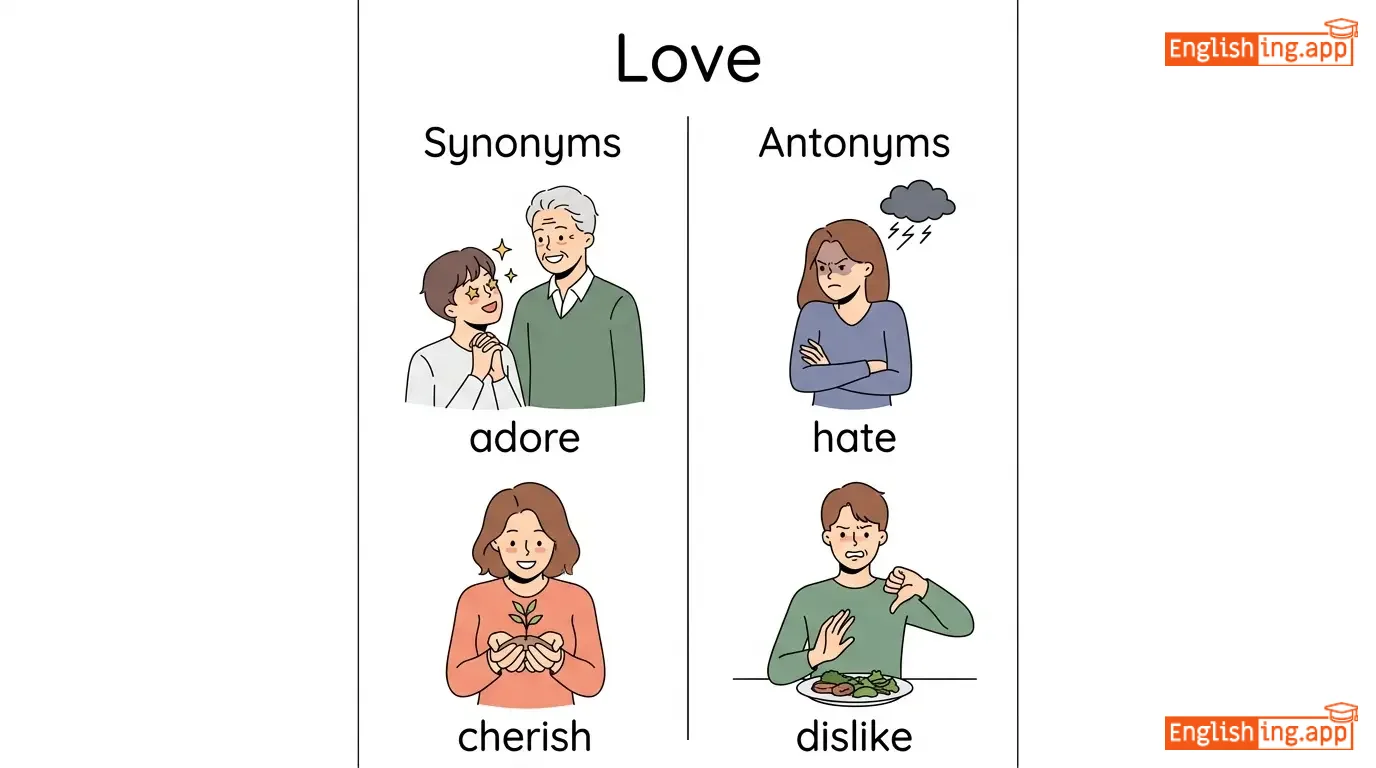
adore, cherish, like, care for, value
••••••
|
hate, dislike
••••••
|
true love, love story, fall in love, love deeply
••••••
|
LOVE在中文中是爱(ai)。
••••••
|
|
🌸
••••••
|
/ˈlʌvli/
adjective
(lʌvli)
••••••
|
- •••••• |
可爱
ke ai
••••••
|
- •••••• | - •••••• | - •••••• | - •••••• |
Delightful or very pleasing; beautiful.
••••••
|
It was a lovely evening by the beach. |
这是一个美丽的傍晚,在海滩上。
Zhè shì yīgè měilì de bàngwǎn, zài hǎitān shàng.
••••••
|
lovely day |
an especially pleasant or enjoyable day
••••••
|
美好的一天
měihǎo de yītiān
••••••
|
beautiful, charming, delightful, pleasant, adorable
••••••
|
ugly, unpleasant, hideous
••••••
|
lovely evening, lovely person, lovely smile, lovely place
••••••
|
Lovely是Love + ly,意味着可爱和美丽。
••••••
|
|
❤️
••••••
|
/ˈlʌvər/
noun
(lʌvər)
••••••
|
- •••••• |
情人
qíngrén
••••••
|
- •••••• | - •••••• | - •••••• | - •••••• |
a person who is in a romantic relationship or has strong affection for someone
••••••
|
She met her lover at the café every evening. |
她每天晚上都在咖啡馆与她的情人见面。
Tā měitiān wǎnshàng dōu zài kāfēi guǎn yǔ tā de qíngrén jiànmiàn.
••••••
|
star-crossed lovers |
two people in love whose relationship is doomed or faces difficulties
••••••
|
命中注定的恋人
Mìngzhōng zhùdìng de liànrén
••••••
|
partner, beloved, admirer, sweetheart, companion
••••••
|
enemy, foe
••••••
|
secret lover, true lover, old lover, lover boy
••••••
|
Lover 是情人 - 爱情的每一段都值得期待
••••••
|
|
⬇️
••••••
|
/loʊ/
adjective
(lóu)
••••••
|
- •••••• |
低
dī
••••••
|
- •••••• | - •••••• | - •••••• | - •••••• |
Small in amount, degree, or position; not high.
••••••
|
The river is at its lowest level in years. |
这条河已经多年处于最低水平。
Zhè tiáo hé yǐjīng duō nián chǔyú zuì dī shuǐpíng.
••••••
|
low profile |
avoiding public attention or staying unnoticed
••••••
|
低调
dīdiào
••••••
|
small, slight, short, minimal, weak
••••••
|
high, tall, strong
••••••
|
low price, low level, low energy, low profile
••••••
|
Low 意味着低 — 记住,箭头 ⬇️ 指向下方。
••••••
|
|
⬇️
••••••
|
/ˈloʊər/
verb
(lóu'ěr)
••••••
|
- •••••• |
降低
jiàng dī
••••••
|
lowered
lóu'ěr'd
••••••
|
lowered
lóu'ěr'd
••••••
|
lowers
lóu'ěr's
••••••
|
lowering
lóu'ěr'ɪng
••••••
|
to move something to a lower position or to reduce
••••••
|
The company decided to lower the prices.
公司决定降低价格。
••••••
|
公司决定降低价格。
Gōngsī juédìng jiàngdī jiàgé.
••••••
|
lower the bar
降低标准
••••••
|
to reduce standards or expectations
••••••
|
降低标准
jiàngdī biāozhǔn
••••••
|
reduce, decrease, drop, lessen
••••••
|
raise, increase, elevate
••••••
|
lower prices, lower costs, lower level, lower voice
••••••
|
降低就像是减少期望,让一切变得更容易。
••••••
|
|
🤍
••••••
|
/ˈlɔɪəl/
adjective
(洛亚尔)
••••••
|
- •••••• |
忠诚, 忠实
zhōngchéng, zhōngshí
••••••
|
- •••••• | - •••••• | - •••••• | - •••••• |
showing firm and constant support or allegiance to someone or something
••••••
|
She remained loyal to her friends even in hard times. |
即使在困难时期,她也始终对朋友们忠诚。
jíshǐ zài kùnnán shíqī, tā yě shǐzhōng duì péngyǒu men zhōngchéng.
••••••
|
loyal to the core |
completely devoted and faithful
••••••
|
忠诚到底
zhōngchéng dào dǐ
••••••
|
faithful, devoted, trustworthy, reliable, dedicated
••••••
|
disloyal, unfaithful, untrustworthy
••••••
|
loyal customer, loyal friend, loyal supporter, loyal employee
••••••
|
Loyal = love + royal — 像国王一样忠诚 👑
••••••
|
|
🫶
••••••
|
/ˈlɔɪəlti/
noun
(luóyǎ'ěrti)
••••••
|
- •••••• |
忠诚
zhōngchéng
••••••
|
- •••••• | - •••••• | - •••••• | - •••••• |
a strong feeling of support or allegiance
••••••
|
His loyalty to the company earned him great respect. |
他对公司的忠诚为他赢得了极大的尊敬。
Tā duì gōngsī de zhōngchéng wèi tā yíngdéle jí dà de zūnjìng.
••••••
|
swear loyalty |
to formally promise to be faithful or devoted
••••••
|
宣誓忠诚
xuānshì zhōngchéng
••••••
|
faithfulness, devotion, allegiance, dedication, reliability
••••••
|
betrayal, treachery, disloyalty
••••••
|
customer loyalty, brand loyalty, loyalty program, demonstrate loyalty
••••••
|
忠诚就像是对信任的承诺,一生一世的诺言!
••••••
|
|
🍀
••••••
|
/lʌk/
noun
••••••
|
- •••••• | - •••••• | - •••••• | - •••••• | - •••••• | - •••••• |
success or failure apparently brought by chance rather than through one’s actions
••••••
|
He had the luck to find a good job quickly. |
- •••••• |
good luck |
a wish for success or fortune
••••••
|
- •••••• |
fortune, chance, fate, destiny
••••••
|
misfortune, bad luck
••••••
|
good luck, bad luck, stroke of luck, bring luck
••••••
|
No •••••• |
|
🍀
••••••
|
/ˈlʌki/
adjective
(lucky)
••••••
|
- •••••• |
幸运的
xingyun de
••••••
|
- •••••• | - •••••• | - •••••• | - •••••• |
having good fortune or favorable circumstances
••••••
|
She felt lucky to have such supportive friends. |
她觉得自己很幸运,拥有如此支持她的朋友。
Ta juede ziji hen xingyun, yongyou ruci zhichi ta de pengyou.
••••••
|
lucky break |
an unexpected opportunity or good fortune
••••••
|
幸运的突破
xingyun de tupoq
••••••
|
fortunate, blessed, favored, charmed
••••••
|
unlucky, unfortunate
••••••
|
lucky chance, lucky day, lucky number, lucky star
••••••
|
Lucky意味着幸运的 — 如果你幸运,生活就会变得更好
••••••
|
|
🧳
••••••
|
/ˈlʌɡ.ɪdʒ/
noun
(luggage)
••••••
|
- •••••• |
行李
xingli
••••••
|
- •••••• | - •••••• | - •••••• | - •••••• |
suitcases or other bags in which to pack personal belongings for traveling
••••••
|
Please check your luggage at the airport counter. |
请在机场柜台检查您的行李。
qǐng zài jīchǎng guìtái jiǎnchá nín de xínglǐ.
••••••
|
- •••••• | - •••••• | - •••••• |
baggage, suitcase, bags, belongings
••••••
|
emptiness, bare hands
••••••
|
carry luggage, check luggage, lost luggage
••••••
|
行李 (xingli) is used to carry your personal belongings when traveling.
••••••
|
|
🥪
••••••
|
/lʌntʃ/
noun
(lunch)
••••••
|
- •••••• |
午餐
wucan
••••••
|
- •••••• | - •••••• | - •••••• | - •••••• |
a meal eaten in the middle of the day
••••••
|
We usually have lunch at 1 p.m. |
我们通常在下午1点吃午餐。
Women tongchang zai xiawu 1 dian chi wucan.
••••••
|
out to lunch |
not paying attention or unaware of what is happening
••••••
|
心不在焉
xin bu zai yan
••••••
|
midday meal, brunch, tiffin, repast
••••••
|
dinner, supper
••••••
|
have lunch, lunch break, business lunch, packed lunch
••••••
|
午餐意味着中午吃的饭——如果不吃,你的注意力会分散。
••••••
|
|
🫁
••••••
|
/lʌŋ/
noun
(lʌŋ)
••••••
|
- •••••• |
肺
fei
••••••
|
- •••••• | - •••••• | - •••••• | - •••••• |
Either of the two organs in the chest that are responsible for breathing and exchanging oxygen and carbon dioxide.
••••••
|
Smoking can seriously damage your lungs. |
吸烟会严重损害你的肺部。
Xiyan hui yanzhong sunhai nide feibu.
••••••
|
burst a lung |
to make a huge effort, usually physically
••••••
|
拼尽全力
pin jin quanli
••••••
|
respiratory organ, pulmonary organ, chest organ, airway, breathing organ
••••••
|
heart, liver
••••••
|
lung cancer, lung disease, lung capacity, lung infection
••••••
|
Lung 意思是 '肺部',当你无法呼吸时,你需要 '肺部'。
••••••
|
|
🎤
••••••
|
/ˈlɪrɪk/
noun
(lìlìkè)
••••••
|
- •••••• |
歌词
gēcí
••••••
|
- •••••• | - •••••• | - •••••• | - •••••• |
the words of a song or a short poem that expresses personal feelings
••••••
|
She memorized every lyric of her favorite song. |
她记住了她最喜欢的歌曲的每一首歌词。
Tā jì zhùle tā zuì xǐhuān de gēqǔ de měi yī shǒu gēcí.
••••••
|
lyric poetry |
poetry that expresses personal emotions or thoughts
••••••
|
抒情诗
shūqíng shī
••••••
|
song words, verse, poetry, lines
••••••
|
prose, silence
••••••
|
song lyric, write lyrics, lyric poetry, memorize lyrics
••••••
|
歌词(gēcí)就是歌的文字,也叫抒情诗(shūqíng shī),记住它很容易!
••••••
|
|
⚙️
••••••
|
/məˈʃiːn/
noun
(mǎ-qīn)
••••••
|
- •••••• |
机器
jiqi
••••••
|
- •••••• | - •••••• | - •••••• | - •••••• |
A device with moving parts that uses energy to perform a particular task.
••••••
|
This washing machine is very efficient. |
这台洗衣机非常高效。
Zhè tái xǐyījī fēicháng gāoxiào.
••••••
|
well-oiled machine |
something that runs smoothly and efficiently
••••••
|
运转良好的机器
yùn zhuǎn liáng hǎo de jīqì
••••••
|
device, apparatus, engine, mechanism, equipment
••••••
|
manual work, handwork
••••••
|
washing machine, sewing machine, machine learning, machine parts
••••••
|
机器让一切都井井有条。
••••••
|
|
⚙️
••••••
|
/məˈʃiː.nər.i/
noun
••••••
|
- •••••• | - •••••• | - •••••• | - •••••• | - •••••• | - •••••• |
machines collectively, or the parts of a machine; also, the system or process by which something works
••••••
|
The factory invested in new machinery to increase production. |
- •••••• |
the machinery of government |
the system and processes by which a government operates
••••••
|
- •••••• |
equipment, apparatus, mechanism, device
••••••
|
manual work, handcraft
••••••
|
heavy machinery, industrial machinery, modern machinery
••••••
|
No •••••• |
|
😡
••••••
|
/mæd/
adjective
(mad)
••••••
|
- •••••• |
生气 / 疯狂
shengqi / fengkuang
••••••
|
- •••••• | - •••••• | - •••••• | - •••••• |
Very angry, insane, or foolish.
••••••
|
She was mad at her brother for breaking the vase. |
她因弟弟打破花瓶而生气。
Ta yin didi dapokhua ping er shengqi.
••••••
|
mad as a hatter |
completely crazy
••••••
|
疯狂如疯帽子
fengkuang ru fengmaozi
••••••
|
angry, furious, insane, crazy, irate
••••••
|
calm, sane
••••••
|
mad at, go mad, mad idea, mad world
••••••
|
Mad 在中文中意味着愤怒或疯狂,就像当一个人失去控制时。
••••••
|
|
📖
••••••
|
/ˈmæɡəziːn/
noun
(杂志)
••••••
|
- •••••• |
杂志
zázhì
••••••
|
- •••••• | - •••••• | - •••••• | - •••••• |
A periodical publication containing articles, photographs, and advertisements.
••••••
|
She bought a fashion magazine at the store. |
她在商店买了一本时尚杂志。
Tā zài shāngdiàn mǎile yī běn shíshàng zázhì.
••••••
|
- •••••• | - •••••• | - •••••• |
journal, periodical, publication, digest, paper
••••••
|
book, novel
••••••
|
fashion magazine, magazine article, magazine cover, magazine subscription
••••••
|
Magazine 就是杂志, 在商店买时尚杂志。
••••••
|

