|
絵文字
|
単語 | Images | 翻訳 | 過去 | 過去分詞 | 三人称単数 | 動名詞 | 意味 | 例文 | 例文の翻訳 | 表現例 | 表現例の意味 | 表現例の翻訳 | 同義語 | 対義語 | コロケーション | ニーモニック |
|---|---|---|---|---|---|---|---|---|---|---|---|---|---|---|---|---|---|
|
📚
••••••
|
/ˈlaɪ.brɛr.i/
noun
(ライブラリー)
••••••
|
- •••••• |
図書館
tosyokan
••••••
|
- •••••• | - •••••• | - •••••• | - •••••• |
A building or room containing collections of books, periodicals, and sometimes other materials for people to read or borrow.
••••••
|
She spent the afternoon studying in the library. |
彼女は図書館で午後を勉強して過ごしました。
Kanojo wa tosyokan de gogo o benkyou shite sugoshimashita.
••••••
|
library of knowledge |
A large collection of information or wisdom.
••••••
|
知識の宝庫
chishiki no houko
••••••
|
book collection, archive, repository, reading room, information center
••••••
|
bookstore, marketplace
••••••
|
public library, digital library, library card, library staff
••••••
|
図書館 - たくさんの本が集まっている場所。
••••••
|
|
📜
••••••
|
/ˈlaɪsəns/
noun, verb
(ライセンス)
••••••
|
- •••••• |
ライセンス / 許可
raizensu / kyoka
••••••
|
licensed
ライセンスド
••••••
|
licensed
ライセンスド
••••••
|
licenses
ライセンスズ
••••••
|
licensing
ライセンスイング
••••••
|
A legal permission to do something (noun); to grant such permission (verb).
••••••
|
You must have a driving license to operate a car legally.
車を合法的に運転するためには運転免許が必要です。
••••••
|
車を合法的に運転するためには運転免許が必要です。
Kuruma o gōhōteki ni unten suru tame ni wa unten menkyo ga hitsuyō desu.
••••••
|
poetic license
詩的ライセンス
••••••
|
Freedom to depart from facts or rules for artistic effect.
••••••
|
詩的ライセンス
shiteki raizensu
••••••
|
permit, authorization, certificate, sanction
••••••
|
restriction, prohibition
••••••
|
driving license, business license, software license, license agreement
••••••
|
ライセンスは、法律に従って行動する許可です。
••••••
|
|
🥫
••••••
|
/lɪd/
noun
(リッド)
••••••
|
- •••••• |
ふた
futa
••••••
|
- •••••• | - •••••• | - •••••• | - •••••• |
a cover for the top of a container
••••••
|
She closed the lid tightly on the jar. |
彼女は瓶のふたをしっかりと閉めました。
Kanojo wa bin no futa o shikkari to shimemashita.
••••••
|
keep a lid on |
to control or limit something
••••••
|
制御する
seigyo suru
••••••
|
cover, cap, top, seal, closure
••••••
|
opening, uncover
••••••
|
jar lid, pot lid, plastic lid, lift the lid
••••••
|
ふたがすべてを制御します、まるでlidのように!
••••••
|
|
🤥
••••••
|
/laɪ/
verb
(ライ)
••••••
|

|
嘘をつく
uso o tsuku
••••••
|
lied
ライド
••••••
|
lied
ライド
••••••
|
lies
ライズ
••••••
|
lying
ライング
••••••
|
To make a false statement with the intention to deceive.
••••••
|
He lied about his age to get the job.
ヒー ライド アバウト ヒズ エイジ トゥ ゲット ザ ジョブ。
••••••
|
彼は仕事を得るために年齢について嘘をついた。
Kare wa shigoto o eru tame ni nenrei ni tsuite uso o tsuita.
••••••
|
white lie
ホワイト ライ
••••••
|
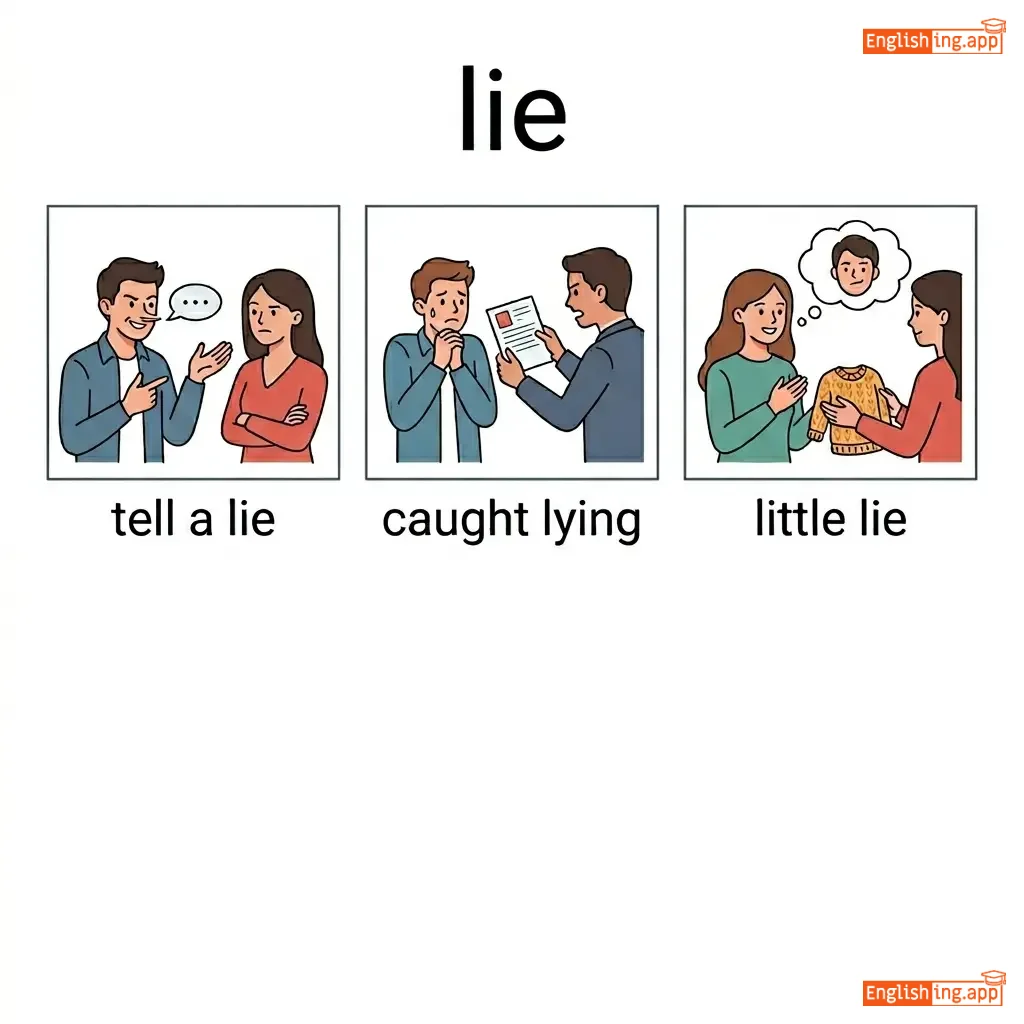
A harmless or small lie told to avoid hurting someone.
••••••
|
白い嘘
Shiroi uso
••••••
|
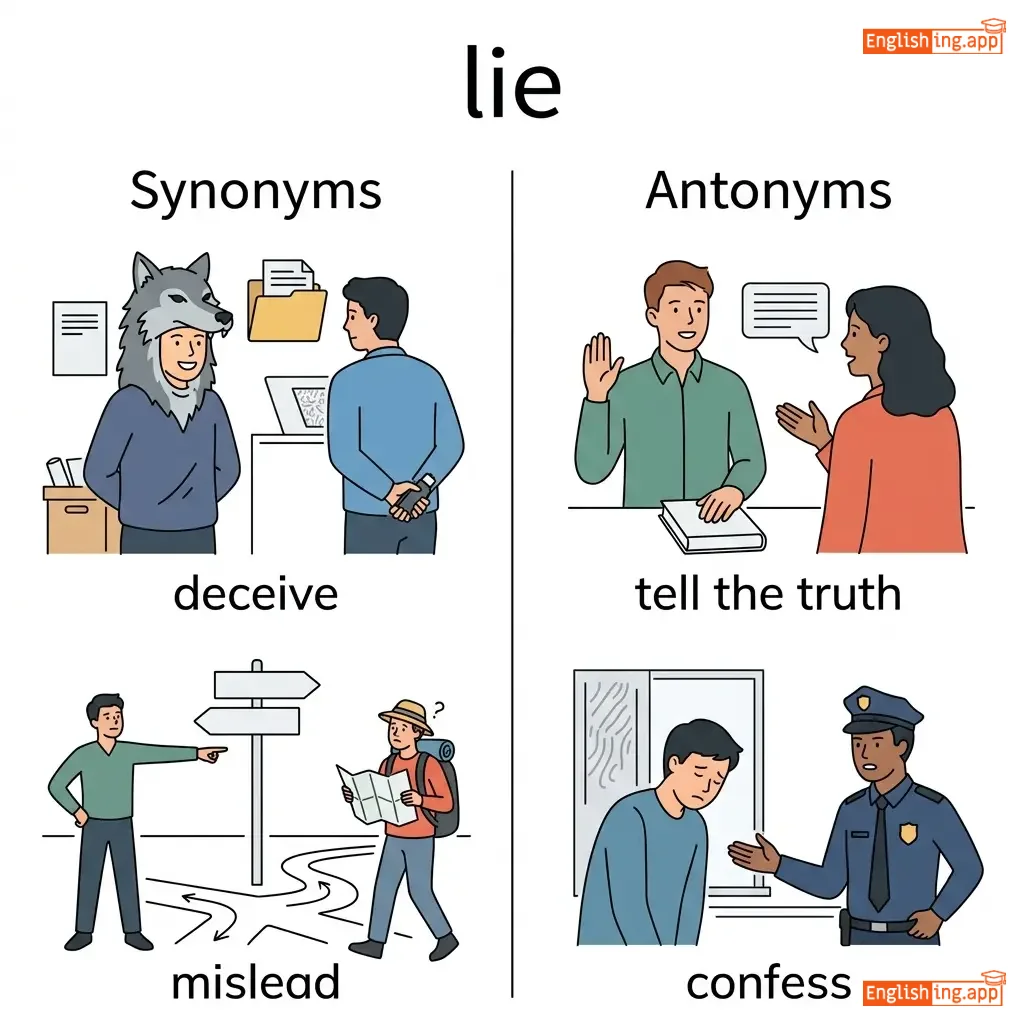
deceive, mislead, fib, falsify, invent
••••••
|
tell the truth, confess
••••••
|
tell a lie, caught lying, little lie, big lie
••••••
|
Lie (嘘をつく) は嘘をつくことです。
••••••
|
|
🤥
••••••
|
/ˈlaɪər/
noun
(ライアー)
••••••
|
- •••••• |
嘘つき
usotsuki
••••••
|
- •••••• | - •••••• | - •••••• | - •••••• |
a person who tells lies; an alternative spelling of liar
••••••
|
No one trusted him because he was known as a habitual lier.
ノー ワン トラスティド ヒム ビコーズ ヒー ワズ ノウン アズ ア ハビチュアル ライアー。
••••••
|
彼は常習的な嘘つきだったので、誰も彼を信用しなかった。
kare wa shuushuuteki na usotsuki datta node dare mo kare o shinyou shinakatta
••••••
|
- •••••• | - •••••• | - •••••• |
liar, deceiver, fibber, falsifier, prevaricator
••••••
|
truth-teller, honest person, truthteller
••••••
|
habitual lier, known lier, proven lier
••••••
|
Lier はカタカナで ライアー、つまり 嘘つき。
••••••
|
|
🌱
••••••
|
/laɪf/
noun
(ライフ)
••••••
|
- •••••• |
生命
seimei
••••••
|
- •••••• | - •••••• | - •••••• | - •••••• |
The existence of an individual human being or animal.
••••••
|
Life is full of challenges and opportunities. |
生命は挑戦と機会に満ちています。
Seimei wa chōsen to kikai ni michiteimasu.
••••••
|
circle of life |
The natural cycle of birth, growth, death, and renewal.
••••••
|
生命のサイクル
Seimei no saikuru
••••••
|
existence, living, vitality, being, survival
••••••
|
death, end
••••••
|
daily life, life expectancy, life experience, life span
••••••
|
人生は挑戦の連続で、勝者だけが生き残る。
••••••
|
|
♾️
••••••
|
/ˈlaɪf.lɒŋ/
adjective
(ライフロング)
••••••
|
- •••••• |
生涯
shōgai
••••••
|
- •••••• | - •••••• | - •••••• | - •••••• |
Lasting or existing for the whole of a person's life.
••••••
|
They remained lifelong friends.
彼らは生涯の友人でした。
••••••
|
彼らは生涯の友人でした。
Karera wa shōgai no yūjin deshita.
••••••
|
lifelong learner
生涯学習者
••••••
|
Someone who continuously seeks knowledge throughout life
••••••
|
生涯学習者
shōgai gakushūsha
••••••
|
permanent, enduring, lasting, eternal, abiding
••••••
|
temporary, short-term, momentary
••••••
|
lifelong friend, lifelong dream, lifelong passion, lifelong habit
••••••
|
LIFE + LONG = 生涯 (shōgai)。
••••••
|
|
🏖️
••••••
|
/ˈlaɪf.staɪl/
noun
(ライフスタイル)
••••••
|
- •••••• |
ライフスタイル
raifusutairu
••••••
|
- •••••• | - •••••• | - •••••• | - •••••• |
The way in which a person or group lives, including habits, attitudes, and possessions.
••••••
|
A healthy lifestyle includes regular exercise and a balanced diet.
健康的なライフスタイルには、定期的な運動とバランスの取れた食事が含まれます。
••••••
|
健康的なライフスタイルには、定期的な運動とバランスの取れた食事が含まれます。
Kenko teki na raifusutairu ni wa, teikitekina undo to baransu no toreta shokuji ga fukumaremasu.
••••••
|
lavish lifestyle
贅沢なライフスタイル
••••••
|
A luxurious way of living with expensive habits.
••••••
|
贅沢なライフスタイル
Zeitaku na raifusutairu
••••••
|
way of life, living, habits, routine, manner
••••••
|
hardship, poverty
••••••
|
modern lifestyle, healthy lifestyle, urban lifestyle, simple lifestyle
••••••
|
Lifestyle = life + style, 生活様式。
••••••
|
|
⌛
••••••
|
/ˈlaɪf.taɪm/
noun
(ライフタイム)
••••••
|
- •••••• |
生涯
shougai
••••••
|
- •••••• | - •••••• | - •••••• | - •••••• |
The duration of a person's life or the existence of something.
••••••
|
She achieved more in her lifetime than most people dream of.
彼女は自分のライフタイムで、ほとんどの人が夢見る以上のことを達成した。
••••••
|
彼女は自分の生涯で、ほとんどの人が夢見る以上のことを達成した。
Kanojo wa jibun no shougai de, hotondo no hito ga yumemiru ijou no koto o tassei shita.
••••••
|
once in a lifetime
一生に一度
••••••
|
Something that is very rare and unlikely to happen again
••••••
|
一生に一度
Isshou ni ichido
••••••
|
existence, lifespan, duration, era, age
••••••
|
moment, instant, second
••••••
|
lifetime achievement, lifetime experience, in a lifetime, over a lifetime
••••••
|
LIFE + TIME = 生涯.
••••••
|
|
🛗
••••••
|
/lɪft/
verb
(リフト)
••••••
|
- •••••• |
持ち上げる
mochiageru
••••••
|
lifted
リフテッド
••••••
|
lifted
リフテッド
••••••
|
lifts
リフツ
••••••
|
lifting
リフティング
••••••
|
To raise something to a higher position or level.
••••••
|
He lifted the heavy box with ease.
彼は重い箱を簡単に持ち上げました。
••••••
|
彼は簡単に重い箱を持ち上げました。
Kare wa kantan ni omoi hako o mochiagemashita.
••••••
|
lift your spirits
気分を上げる
••••••
|
To make someone feel happier or more cheerful.
••••••
|
気分を上げる
Kibun o ageru
••••••
|
raise, elevate, hoist, boost, uplift
••••••
|
lower, drop
••••••
|
lift weights, lift a ban, lift up, lift out
••••••
|
箱を持ち上げるように、気分も持ち上げることができる。
••••••
|
|
💡
••••••
|
/laɪt/
noun, verb, adjective
(ライト)
••••••
|
|
光
hikari
••••••
|
lit
リット
••••••
|
lit
リット
••••••
|
lights
ライツ
••••••
|
lighting
ライティング
••••••
|
The natural agent that makes things visible; to illuminate or make something start burning.
••••••
|
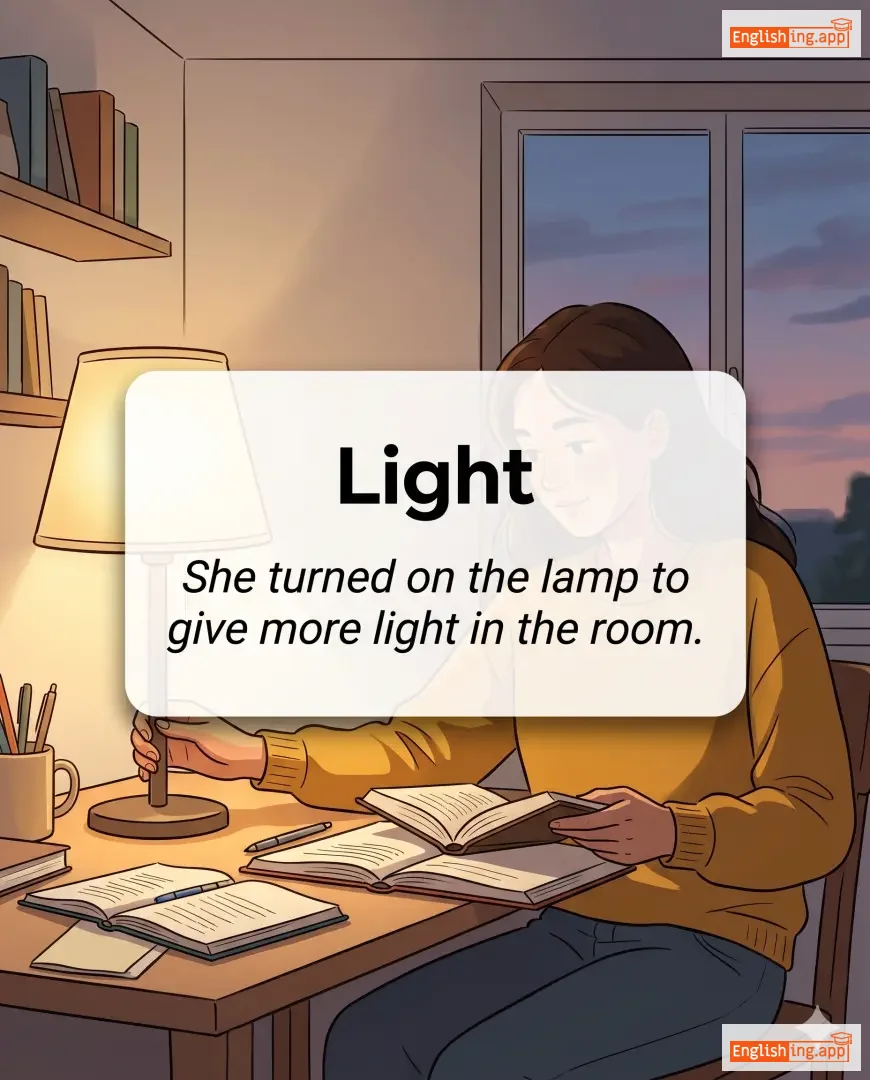
She turned on the lamp to give more light in the room.
彼女は部屋にもっと光を入れるためにランプをつけました。
••••••
|
彼女は部屋にもっと光を入れるためにランプをつけました。
Kanojo wa heya ni motto hikari wo ireru tame ni ranpu wo tsukemashita.
••••••
|
see the light
光を見る
••••••
|
to finally understand or realize something clearly
••••••
|
最終的に理解する
Saishū-teki ni rikai suru
••••••
|
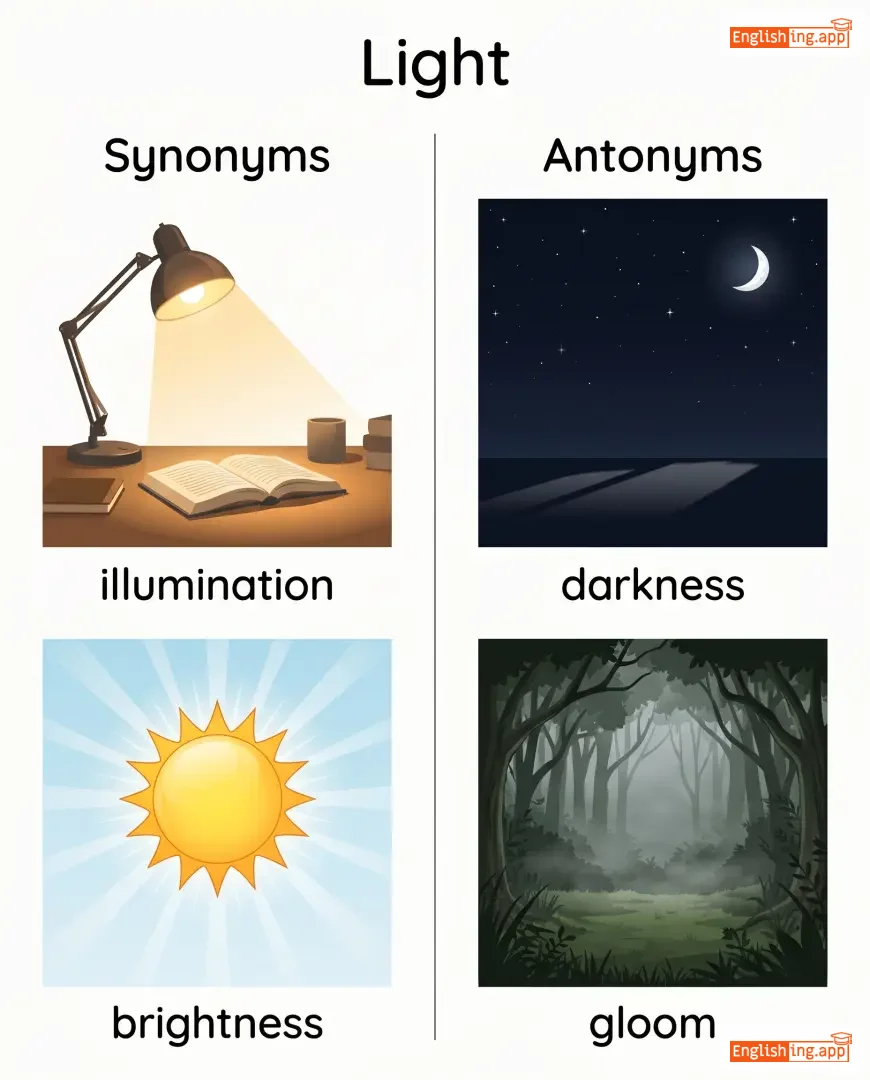
illumination, brightness, radiance, glow, shine
••••••
|
darkness, gloom, shadow
••••••
|
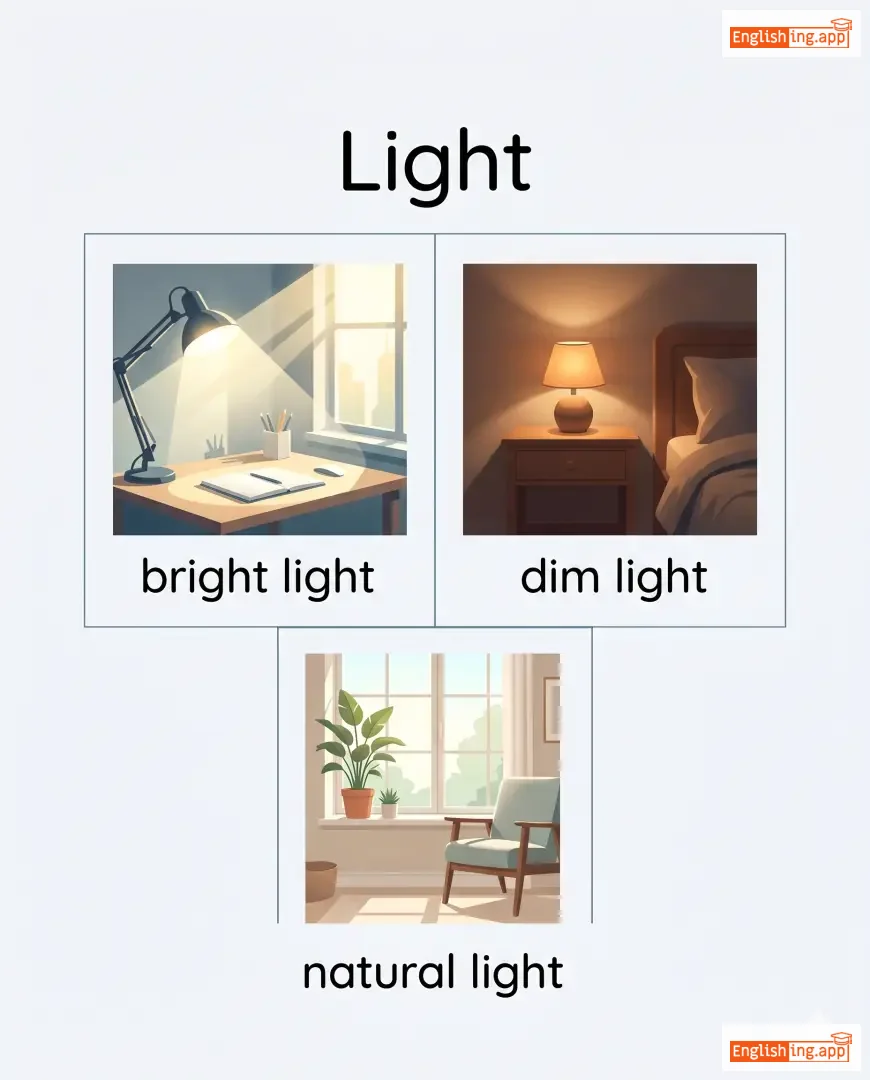
bright light, dim light, natural light, artificial light
••••••
|
光は照らすことを意味し、光が点くと暗闇が消えます。
••••••
|
|
💡
••••••
|
/ˈlaɪtən/
verb
(ライトン)
••••••
|
- •••••• |
明るくする;和らげる
akaruku suru; yawarageru
••••••
|
lightened
ライトンド
••••••
|
lightened
ライトンド
••••••
|
lightens
ライトンズ
••••••
|
lightening
ライトニング
••••••
|
to make something brighter or less dark; to make something less heavy or serious
••••••
|
A joke can lighten the mood during a tense meeting.
ア ジョーク キャン ライトン ザ ムード デューリング ア テンス ミーティング
••••••
|
冗談は緊張した会議の雰囲気を和らげることができる。
joudan wa kinchou shita kaigi no funiki o yawarageru koto ga dekiru
••••••
|
lighten up
ライトン アップ
••••••
|
to relax and stop being so serious or worried
••••••
|
気楽にして
kiraku ni shite
••••••
|
brighten, illuminate, ease, relieve, cheer
••••••
|
darken, burden, depress
••••••
|
lighten the mood, lighten the load, lighten up, lighten hair
••••••
|
ライト(light)=明るい → lighten=明るくする。
••••••
|
|
💡
••••••
|
/ˈlaɪtɪŋ/
noun
(raitingu)
••••••
|
- •••••• |
照明
shoumei
••••••
|
- •••••• | - •••••• | - •••••• | - •••••• |
the arrangement or use of light in a place; the act of providing light
••••••
|
The lighting in the restaurant created a warm and cozy atmosphere.
レストランの照明は、暖かく快適な雰囲気を作り出しました。
••••••
|
レストランの照明は、暖かく快適な雰囲気を作り出しました。
Resutoran no shōmei wa, atatakai kaiteki na fun'iki o tsukuridashimashita.
••••••
|
- •••••• | - •••••• | - •••••• |
illumination, brightness, radiance, light, glow
••••••
|
darkness, shadow
••••••
|
soft lighting, stage lighting, indoor lighting, lighting design
••••••
|
Lightingと照明は光を意味します。
••••••
|
|
🪶
••••••
|
/ˈlaɪtli/
adverb
(ライトリー)
••••••
|
- •••••• |
軽く
karuku
••••••
|
- •••••• | - •••••• | - •••••• | - •••••• |
gently or with little force or weight
••••••
|
She touched the baby’s hand lightly.
シー タッチド ザ ベイビーズ ハンド ライトリー。
••••••
|
彼女は赤ちゃんの手を軽く触れた。
Kanojo wa akachan no te o karuku fureta.
••••••
|
take lightly
テイク ライトリー
••••••
|
to treat something as not serious or important
••••••
|
軽く扱う
karuku atsukau
••••••
|
gently, softly, delicately, mildly
••••••
|
heavily, strongly, seriously
••••••
|
speak lightly, step lightly, take lightly, touch lightly
••••••
|
Lightは軽い意味、だからlightlyは軽く何かをするという意味です。
••••••
|
|
👍
••••••
|
/laɪk/
verb, preposition
(ライク)
••••••
|
|
好き
suki
••••••
|
liked
ライクド
••••••
|
liked
ライクド
••••••
|
likes
ライクス
••••••
|
liking
ライキング
••••••
|
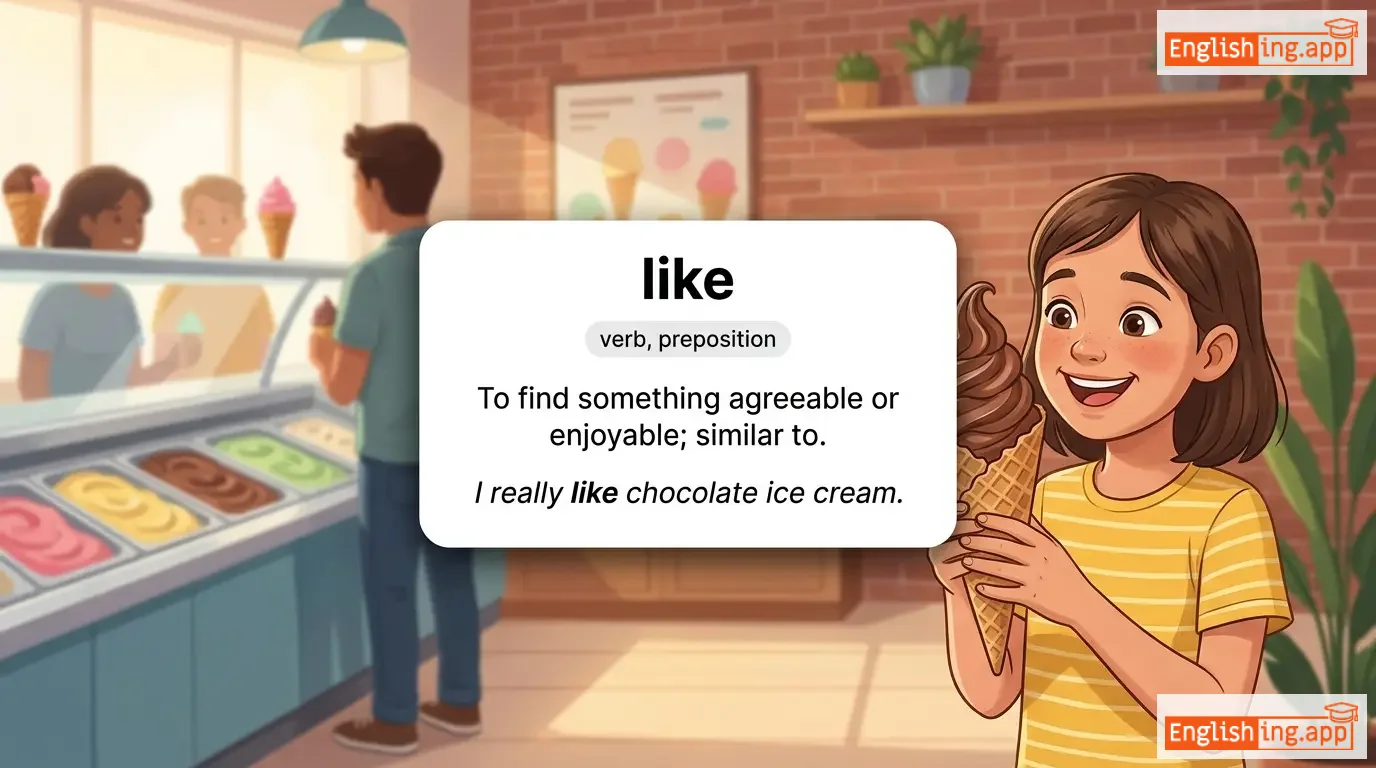
To find something agreeable or enjoyable; similar to.
••••••
|
I really like chocolate ice cream.
私は本当にチョコレートアイスクリームが好きです。
••••••
|
私は本当にチョコレートアイスクリームが好きです。
Watashi wa hontōni chokorēto aisukurīmu ga suki desu.
••••••
|
like father, like son
父に似て息子に似る
••••••
|
children often resemble their parents in behavior or character
••••••
|
父に似て息子に似る
Chichi ni nite musuko ni miru
••••••
|
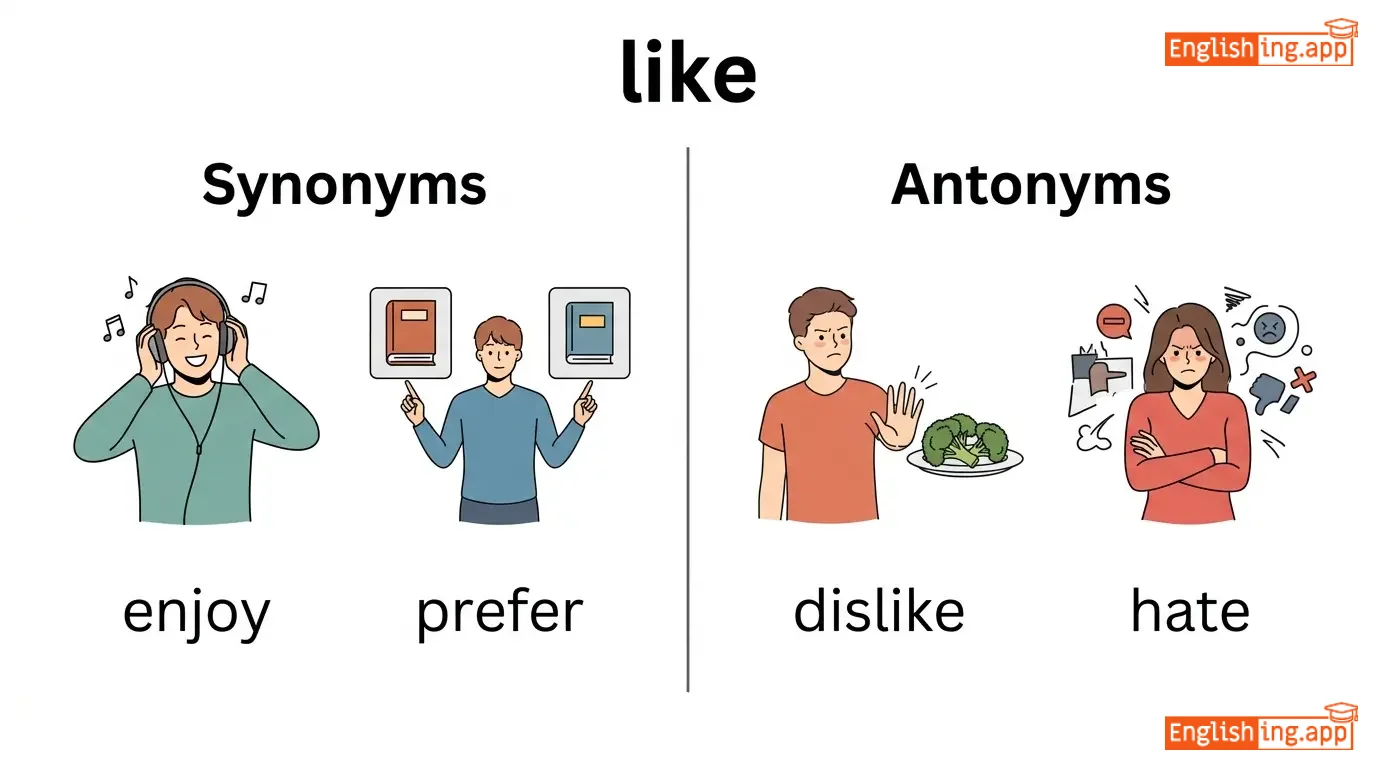
enjoy, prefer, love, admire, appreciate
••••••
|
dislike, hate, detest
••••••
|
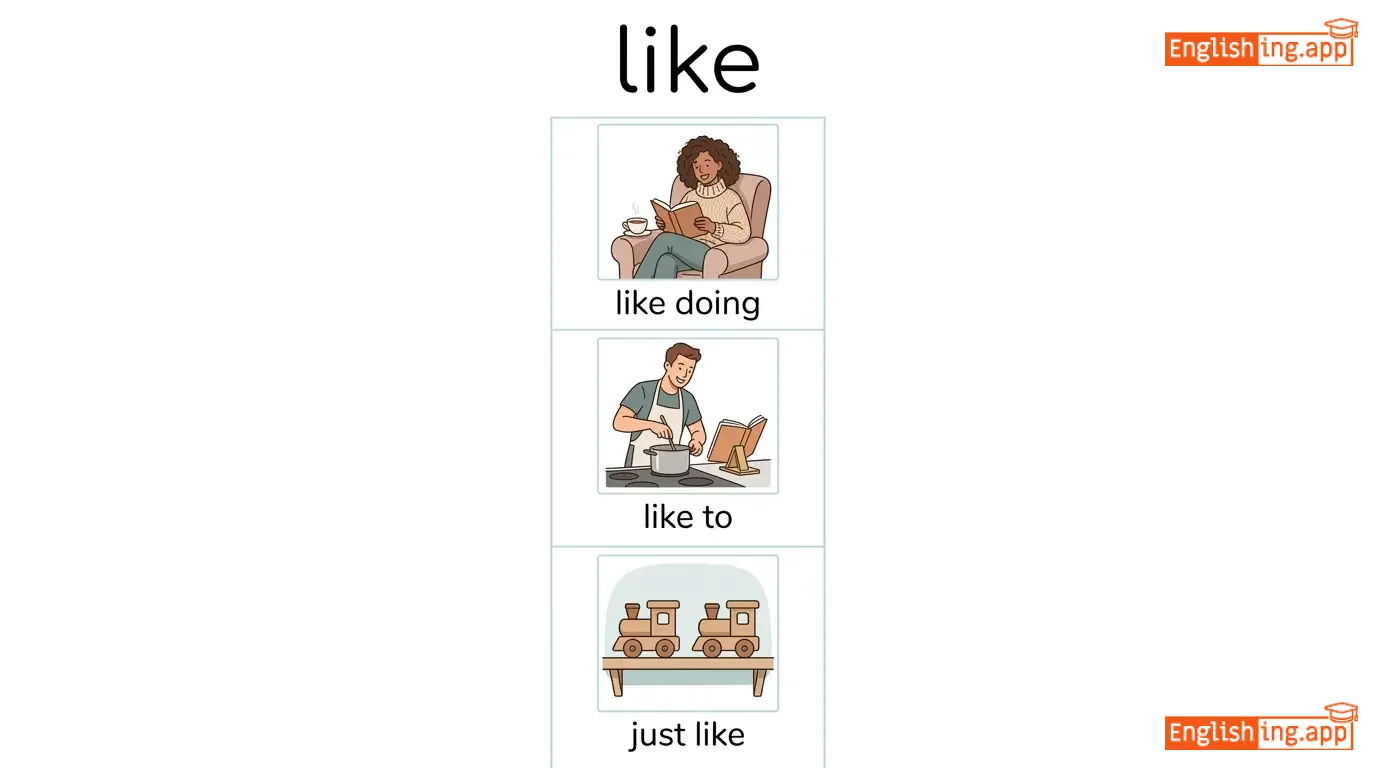
like doing, like to, just like, feel like
••••••
|
Facebookで「いいね」を押すことは好きと言うことです。
••••••
|
|
🎲
••••••
|
/ˈlaɪ.kli.hʊd/
noun
(ライクリフッド)
••••••
|
- •••••• |
可能性
kanousei
••••••
|
- •••••• | - •••••• | - •••••• | - •••••• |
the chance or probability of something happening
••••••
|
There is a strong likelihood of rain tomorrow. |
明日、雨が降る可能性が高いです。
Ashita, ame ga furu kanousei ga takai desu.
••••••
|
in all likelihood |
almost certainly; very probably
••••••
|
ほぼ確実に
hobo kakujitsuni
••••••
|
probability, chance, prospect, possibility
••••••
|
impossibility, certainty
••••••
|
likelihood of success, strong likelihood, in all likelihood
••••••
|
Likelihood = Like + Hood – 好きなら、それは起こる可能性が高い
••••••
|
|
☔
••••••
|
/ˈlaɪk.li/
adjective
(laikli)
••••••
|
- •••••• |
可能性が高い
kanousei ga takai
••••••
|
- •••••• | - •••••• | - •••••• | - •••••• |
probable or expected to happen
••••••
|
It is likely to rain this evening. |
今晩雨が降る可能性が高いです。
Konban ame ga furu kanousei ga takai desu.
••••••
|
as likely as not |
something is more likely than unlikely to happen
••••••
|
ありそうでなさそう
arisou de nasasou
••••••
|
probable, possible, expected, plausible
••••••
|
unlikely, doubtful
••••••
|
likely outcome, most likely, highly likely, not likely
••••••
|
Likelyは高い可能性を示し、'可能性が高い'です。
••••••
|
|
↔️
••••••
|
/ˈlaɪk.waɪz/
adverb
(ライクワイズ)
••••••
|
- •••••• |
同様に; 同じように; 似たように
dōyō ni; onaji yō ni; nita yō ni
••••••
|
- •••••• | - •••••• | - •••••• | - •••••• |
in the same way; also; similarly
••••••
|
She studied hard for the exam, and her brother did likewise.
彼女は試験のために一生懸命勉強し、彼女の兄も同様にしました。
••••••
|
彼女は試験のために一生懸命勉強し、彼女の兄も同様にしました。
Kanojo wa shiken no tame ni isshōkenmei benkyō shi, kanojo no ani mo dōyō ni shimashita.
••••••
|
- •••••• | - •••••• | - •••••• |
similarly, also, too, equally
••••••
|
differently, otherwise, conversely
••••••
|
do likewise, think likewise, act likewise
••••••
|
Picture a pair of siblings doing things the same way, both achieving success.
••••••
|
|
🦵
••••••
|
/lɪm/
noun
(リム)
••••••
|
- •••••• |
手足
tezoku
••••••
|
- •••••• | - •••••• | - •••••• | - •••••• |
an arm or leg of a person or animal; a large branch of a tree
••••••
|
He broke a limb while climbing the tree. |
彼は木に登るときに手足を折った。
Kare wa ki ni noboru toki ni tezoku o otta.
••••••
|
out on a limb |
in a risky or vulnerable position
••••••
|
危険な位置にいる
kiken na ichi ni iru
••••••
|
arm, leg, branch, extension
••••••
|
trunk, core
••••••
|
upper limb, lower limb, tree limb, limb injury
••••••
|
Limbは手足を意味します — ‘limber’を覚えておいてください、それは柔軟性があることを意味します、あなたの手足は簡単に動きます。
••••••
|
|
🚧
••••••
|
/ˈlɪmɪt/
noun, verb
(リミット)
••••••
|
- •••••• |
限界
genkai
••••••
|
limited
リミテッド
••••••
|
limited
リミテッド
••••••
|
limits
リミッツ
••••••
|
limiting
リミッティング
••••••
|
A point or level beyond which something does not or may not extend; to restrict.
••••••
|
You should limit the amount of sugar you eat.
あなたは食べる砂糖の量を制限すべきです。
••••••
|
あなたは食べる砂糖の量を制限すべきです。
Anata wa taberu satou no ryou wo seigen subeki desu.
••••••
|
know your limits
自分の限界を知る
••••••
|
to understand your own abilities or boundaries
••••••
|
自分の限界を知る
Jibun no genkai wo shiru
••••••
|
restriction, boundary, cap, end, maximum
••••••
|
freedom, allowance, expansion
••••••
|
set a limit, beyond the limit, speed limit, limit access
••••••
|
Limitは限界を意味し、試験での単語制限のように使われます。
••••••
|
|
⛔
••••••
|
/ˌlɪmɪˈteɪʃən/
noun
(リミテーション)
••••••
|
|
制限
seigen
••••••
|
- •••••• | - •••••• | - •••••• | - •••••• |
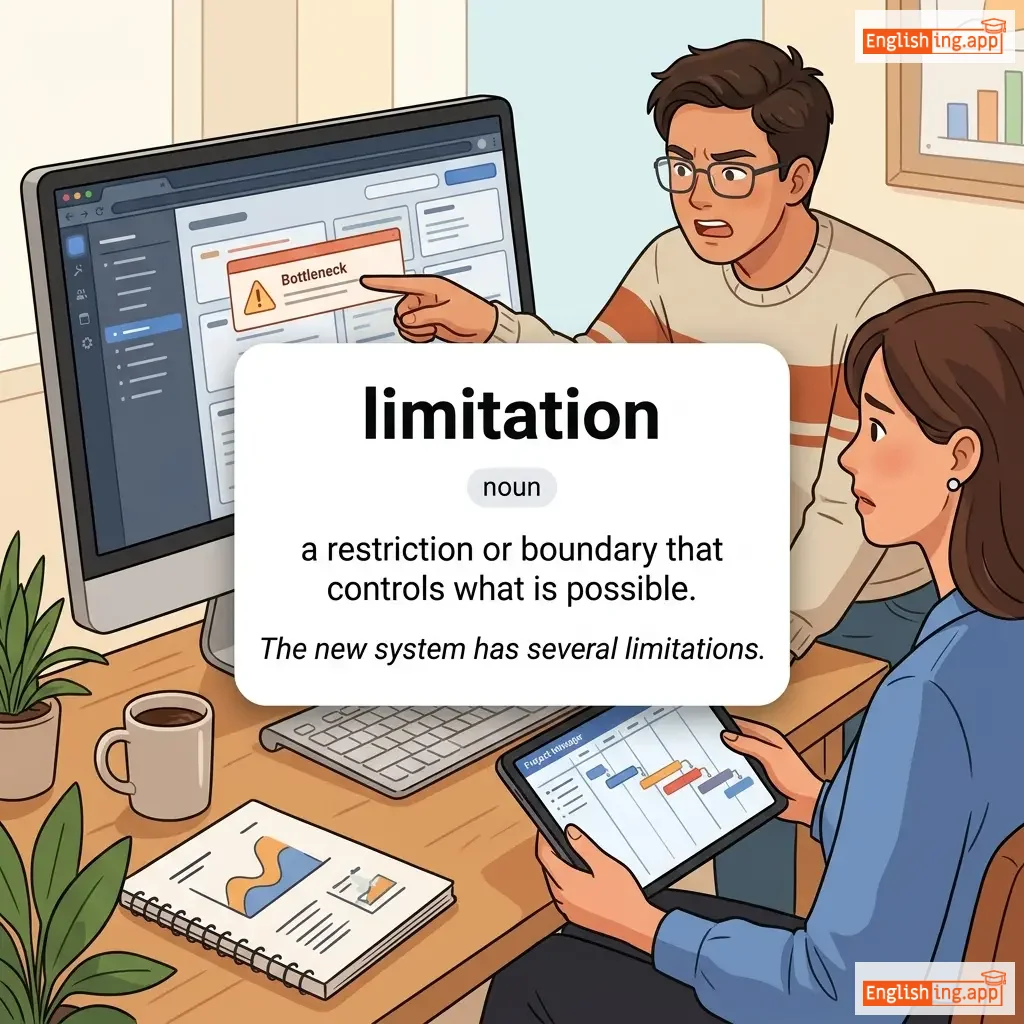
a restriction or boundary that controls what is possible.
••••••
|
The new system has several limitations. |
新しいシステムにはいくつかの制限があります。
Atarashii shisutemu ni wa ikutsuka no seigen ga arimasu.
••••••
|
know your limitations |
be aware of your own weaknesses or boundaries.
••••••
|
自分の制限を知る
jibun no seigen wo shiru
••••••
|
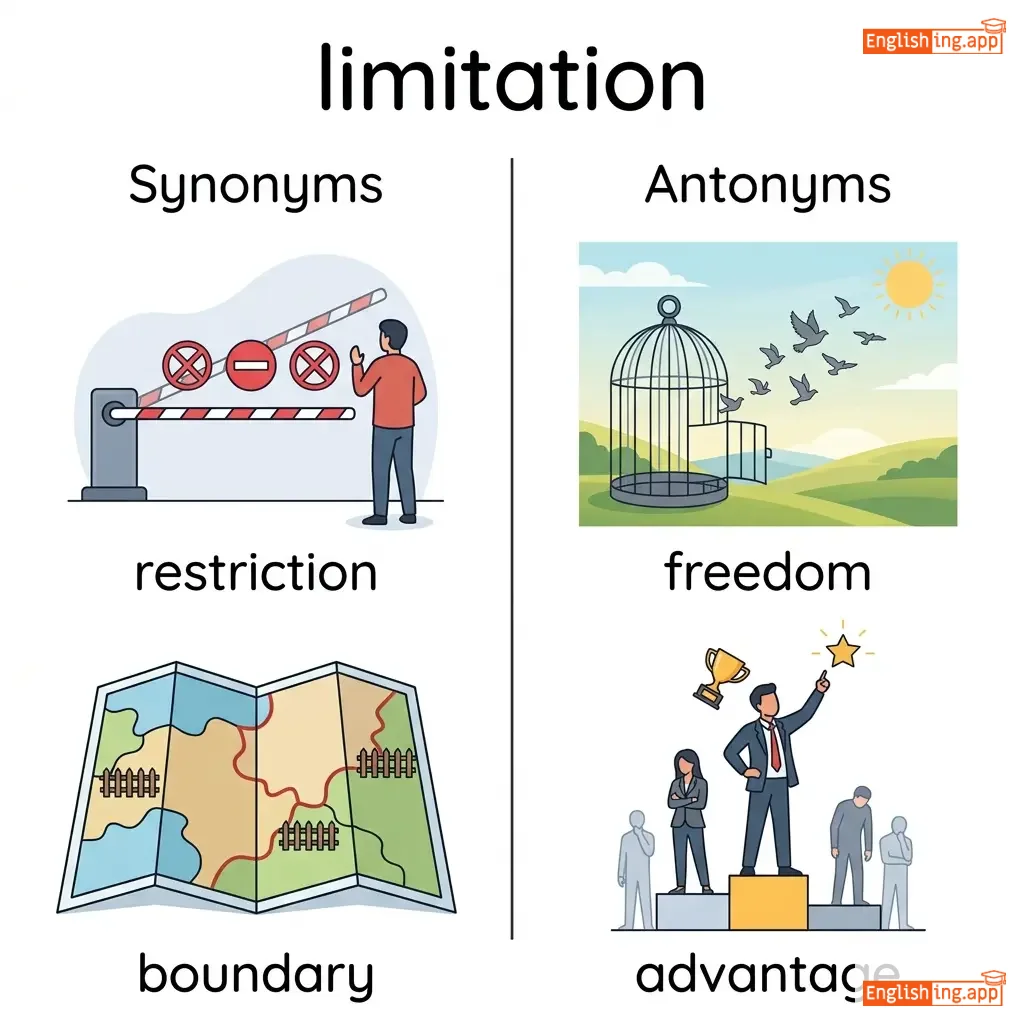
restriction, boundary, constraint, drawback, shortcoming
••••••
|
freedom, advantage, strength
••••••
|
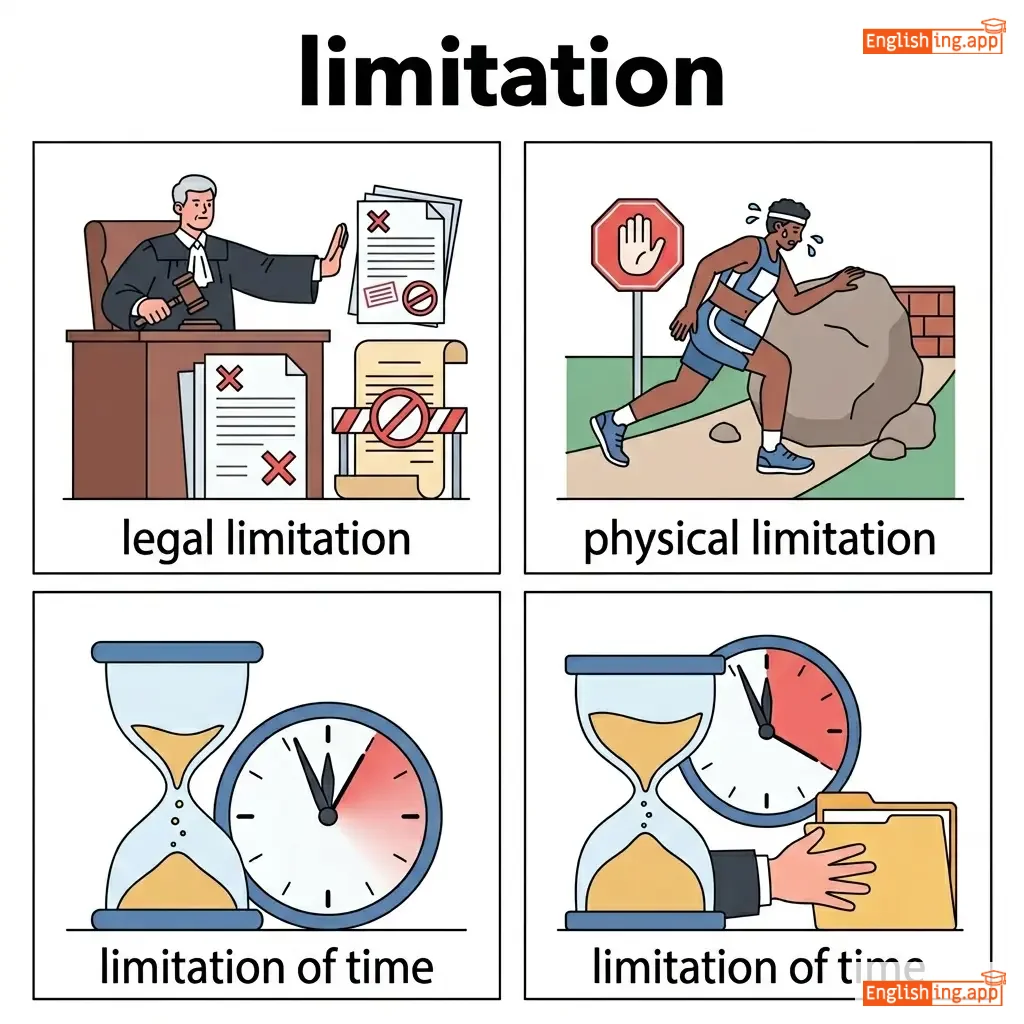
legal limitation, physical limitation, limitation of time, limitation on rights
••••••
|
制限は‘limit’から派生した言葉で、境界を意味します。
••••••
|
|
⏳
••••••
|
/ˈlɪmɪtɪd/
adjective
(リミテッド)
••••••
|
- •••••• |
限定された
gentei sareta
••••••
|
- •••••• | - •••••• | - •••••• | - •••••• |
Restricted in size, amount, or extent; not great in number or ability.
••••••
|
Tickets for the concert are limited. |
コンサートのチケットは限定されています。
Konsaato no chiketto wa gentei sarete imasu.
••••••
|
limited edition |
a product produced in small quantities and available for a short time
••••••
|
限定版
gentei ban
••••••
|
restricted, finite, scarce, confined
••••••
|
unlimited, abundant, infinite
••••••
|
limited access, limited time, limited resources, limited edition
••••••
|
Limitedは限定された、例えばモバイルパッケージの限定インターネットのように。
••••••
|
|
📏
••••••
|
/laɪn/
noun, verb
(lain)
••••••
|
- •••••• |
ライン
rain
••••••
|
lined
laind
••••••
|
lined
laind
••••••
|
lines
lainz
••••••
|
lining
laiing
••••••
|
A long narrow mark or band; a row of people or things; to cover the inside surface of something.
••••••
|
People waited in a long line outside the theater.
人々は劇場の外で長い列を作って待っていた。
••••••
|
人々は劇場の外で長い列を作って待っていた。
Hitobito wa gekijou no soto de nagai retsu o tsukutte matte ita.
••••••
|
toe the line
ラインを守る
••••••
|
to conform to rules or standards
••••••
|
ルールを守る
ruuru o mamoru
••••••
|
row, queue, streak, boundary, stripe
••••••
|
gap, emptiness, space
••••••
|
straight line, waiting line, line up, draw a line
••••••
|
ライン: 映画館で並ぶ時を思い出す
••••••
|
|
📋
••••••
|
/ˈlaɪnʌp/
noun; verb
(ラインアップ)
••••••
|
- •••••• |
ラインアップ;並べる
rainappu; naraberu
••••••
|
lined up
ラインドアップ
••••••
|
lined up
ラインドアップ
••••••
|
lines up
ラインズアップ
••••••
|
lining up
ライニングアップ
••••••
|
a group or arrangement of people or things in a line; to arrange people or things in a row or planned order
••••••
|
The coach announced the team line-up before the match.
コーチは試合前にラインアップを発表した
••••••
|
コーチは試合前にチームのラインアップを発表した。
kochi wa shiai mae ni chiimu no rainappu o happyou shita
••••••
|
line-up changes
ラインアップ変更
••••••
|
changes made to the arrangement or selection of people or things
••••••
|
ラインアップ変更
rainappu henkou
••••••
|
arrangement, queue, roster, formation, lineup
••••••
|
disorder, chaos
••••••
|
team line-up, starting line-up, line-up announced, line up people, line up chairs
••••••
|
LINE + UP = 並んで準備 → ラインアップ
••••••
|
|
📏
••••••
|
/ˈlɪniər/
adjective
(リニア)
••••••
|
- •••••• |
線形
senkei
••••••
|
- •••••• | - •••••• | - •••••• | - •••••• |
Arranged in or extending along a straight line.
••••••
|
The artist used linear perspective in his drawings. |
アーティストは彼の絵に線形透視を使用しました。
Ātisuto wa kare no e ni senkei tōshi o shiyō shimashita.
••••••
|
linear thinking |
A step-by-step way of reasoning in a straight sequence.
••••••
|
線形思考
senkei shikō
••••••
|
straight, direct, sequential, aligned
••••••
|
circular, random, nonlinear
••••••
|
linear perspective, linear function, linear equation
••••••
|
線形 = 線 → まるで直線 📏
••••••
|
|
⏳
••••••
|
/ˈlɪŋ.ɡər/
verb
(リンガー)
••••••
|
|
長居する
nagai suru
••••••
|
lingered
リンガード
••••••
|
lingered
リンガード
••••••
|
lingers
リンガーズ
••••••
|
lingering
リンガリング
••••••
|
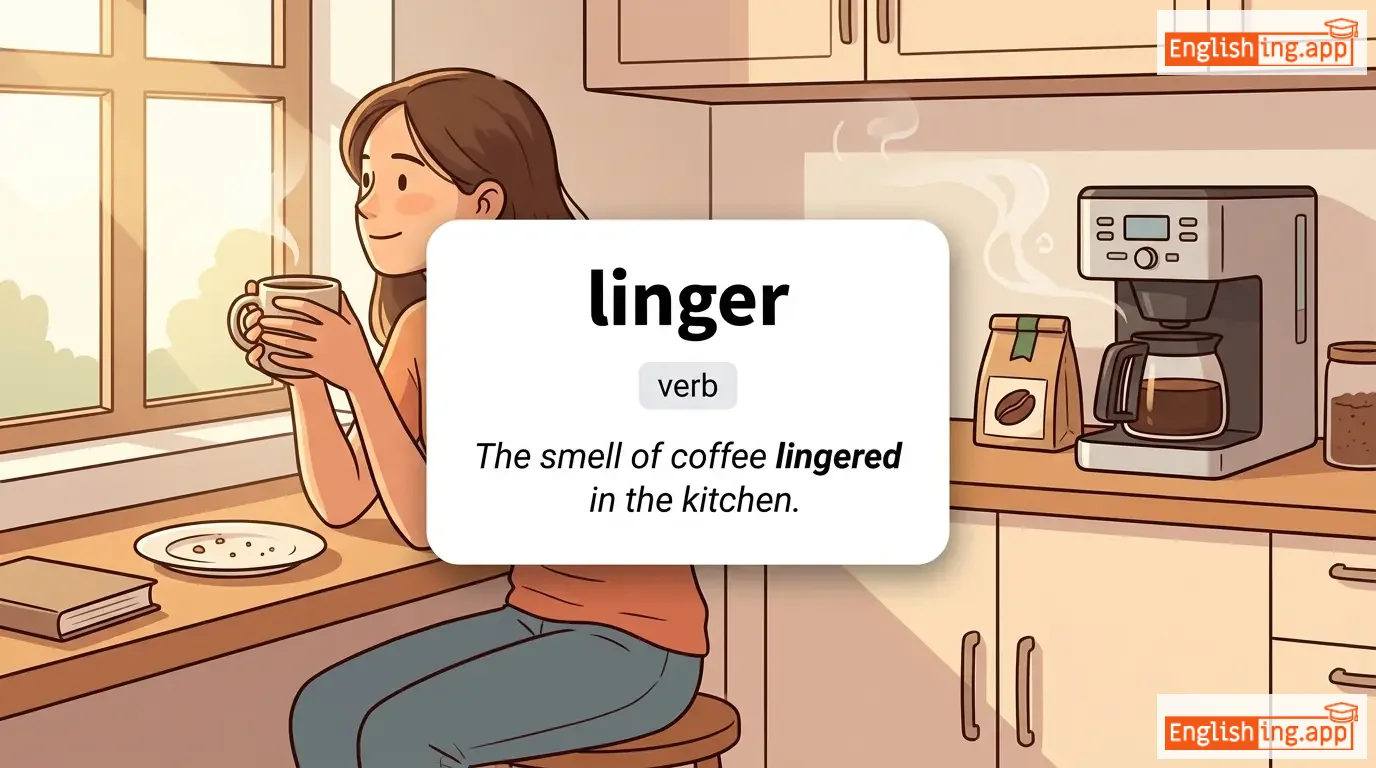
To stay in a place longer than necessary, often because of unwillingness to leave.
••••••
|
The smell of coffee lingered in the kitchen.
コーヒーの匂いはキッチンに長く linger していた。
••••••
|
コーヒーの匂いはキッチンに長く linger していた。
Kōhī no nioi wa kitchin ni nagaku linger shiteita.
••••••
|
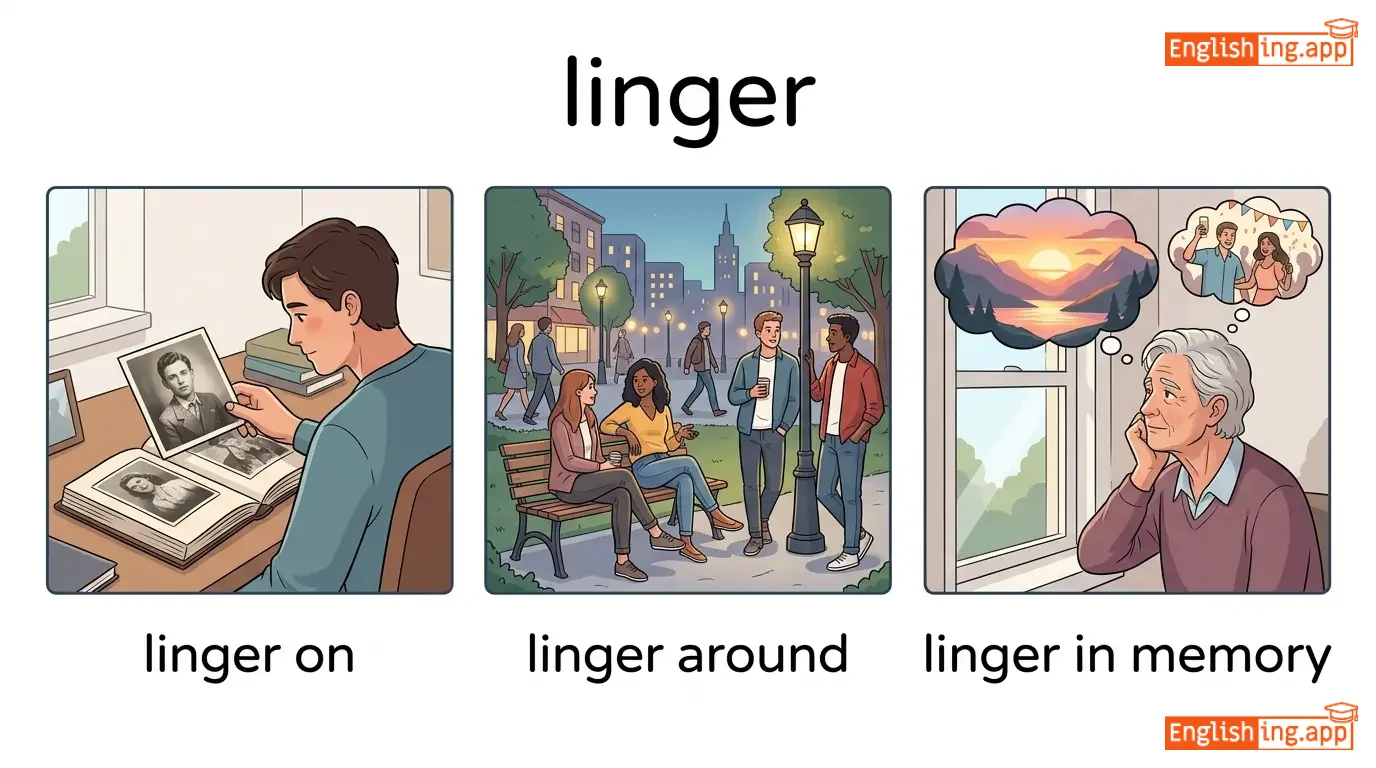
linger on
linger on
••••••
|
To remain for a long time, especially longer than expected.
••••••
|
長居する
nagai suru
••••••
|
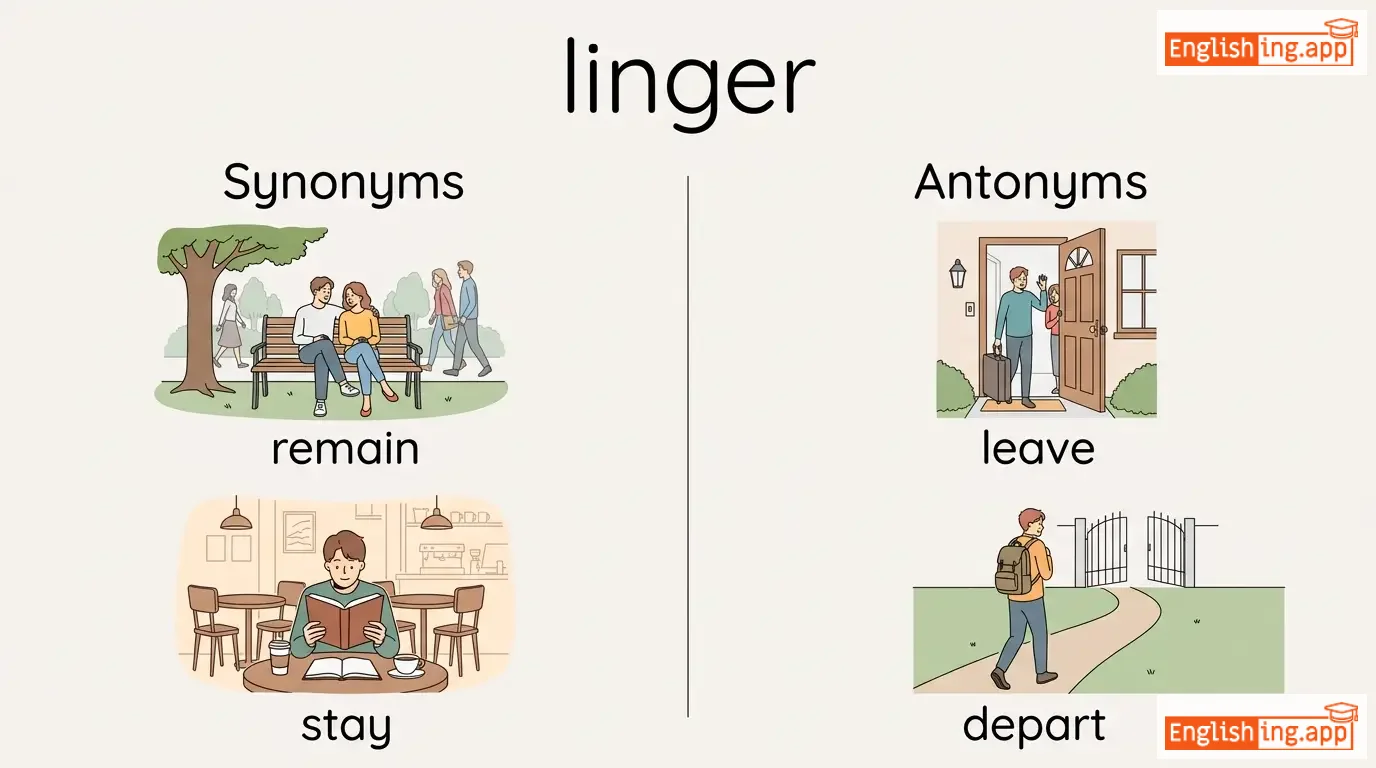
remain, stay, persist, wait, dawdle
••••••
|
leave, depart, vanish
••••••
|
linger on, linger around, linger in memory, linger over
••••••
|
Linger = 長居する、でもまだ行かないで。
••••••
|
|
🔗
••••••
|
/lɪŋk/
noun, verb
(リンク)
••••••
|
- •••••• |
リンク
link
••••••
|
linked
リンクド
••••••
|
linked
リンクド
••••••
|
links
リンクス
••••••
|
linking
リンクイング
••••••
|
a connection between two things; to connect or associate
••••••
|
The article includes a link to the official website.
記事には公式ウェブサイトへのリンクが含まれています。
••••••
|
記事には公式ウェブサイトへのリンクが含まれています。
Kiji ni wa kōshiki webusaito e no link ga fukumareteimasu.
••••••
|
missing link
欠落したリンク
••••••
|
an important connection that is needed to complete something
••••••
|
欠落したリンク
ketsuraku shita link
••••••
|
connection, tie, relation, bond, association
••••••
|
separation, break, disconnection
••••••
|
strong link, direct link, missing link, link to
••••••
|
🔗 Linkは接続の意味。日本語でも 'リンク' という言葉を使う。
••••••
|
|
🦁
••••••
|
/ˈlaɪən/
noun
(ライオン)
••••••
|
- •••••• |
ライオン
raion
••••••
|
- •••••• | - •••••• | - •••••• | - •••••• |
a large wild animal of the cat family that lives in Africa and Asia, known as the king of the jungle
••••••
|
The lion roared loudly in the distance.
ライオンは遠くで大きな声で吠えました。
••••••
|
ライオンは遠くで大きな声で吠えました。
Raion wa tōku de ōkina koe de hoemashita.
••••••
|
lion’s share
ライオンの分け前
••••••
|
the largest portion of something
••••••
|
ライオンの取り分
Raion no toribun
••••••
|
big cat, panthera leo, beast, predator
••••••
|
prey, deer
••••••
|
male lion, lion cub, pride of lions, lion roar
••••••
|
ライオンはジャングルの王 🦁 - ライオンはいつも最大の取り分を得る!
••••••
|
|
👄
••••••
|
/lɪp/
noun
(リップ)
••••••
|
- •••••• |
唇
kuchin
••••••
|
- •••••• | - •••••• | - •••••• | - •••••• |
either of the two soft edges of the mouth
••••••
|
She smiled and bit her lower lip nervously. |
彼女は笑い、緊張して下唇をかんだ。
Kanojo wa warai, kinchou shite shita kuchin wo kanda.
••••••
|
bite your lip |
to keep from saying something or showing emotion
••••••
|
唇をかむ
kuchin wo kamu
••••••
|
mouth edge, rim, border, edge
••••••
|
interior, inside
••••••
|
lower lip, upper lip, lip balm, lip movement
••••••
|
👄 Lipは唇です – リップクリームで唇をケア!
••••••
|
|
💧
••••••
|
/ˈlɪkwɪd/
noun
(rikuwido)
••••••
|
- •••••• |
液体
ekitai
••••••
|
- •••••• | - •••••• | - •••••• | - •••••• |
a substance that flows freely but is of constant volume, having a consistency like water or oil.
••••••
|
Water is a clear liquid that is essential for life. |
水は生命にとって不可欠な透明な液体です。
Mizu wa seimei ni totte fukaketsu na tōmei na ekitai desu.
••••••
|
liquid assets |
cash or assets easily convertible to cash
••••••
|
流動資産
ryūdō shisan
••••••
|
fluid, solution, melt, juice, drink
••••••
|
solid, gas
••••••
|
liquid form, liquid crystal, liquid soap, liquid nitrogen
••••••
|
液体は水のように流れ、現金のように変換できるもの。
••••••
|
|
📋
••••••
|
/lɪst/
noun, verb
••••••
|
- •••••• | - •••••• |
listed
••••••
|
listed
••••••
|
lists
••••••
|
listing
••••••
|
A series of names, items, or tasks written or printed together; also, to record or register items in such a way.
••••••
|
She wrote a shopping list before going to the market. |
- •••••• |
hit list |
A list of people or things targeted for attention, often negatively.
••••••
|
- •••••• |
catalog, register, inventory, roll, record
••••••
|
disorder, jumble, mess
••••••
|
shopping list, guest list, to list items, to be listed
••••••
|
No •••••• |
|
👂
••••••
|
/ˈlɪs.ən/
verb
(リスン)
••••••
|
|
聞く
kiku
••••••
|
listened
リスンド
••••••
|
listened
リスンド
••••••
|
listens
リスンズ
••••••
|
listening
リスニング
••••••
|
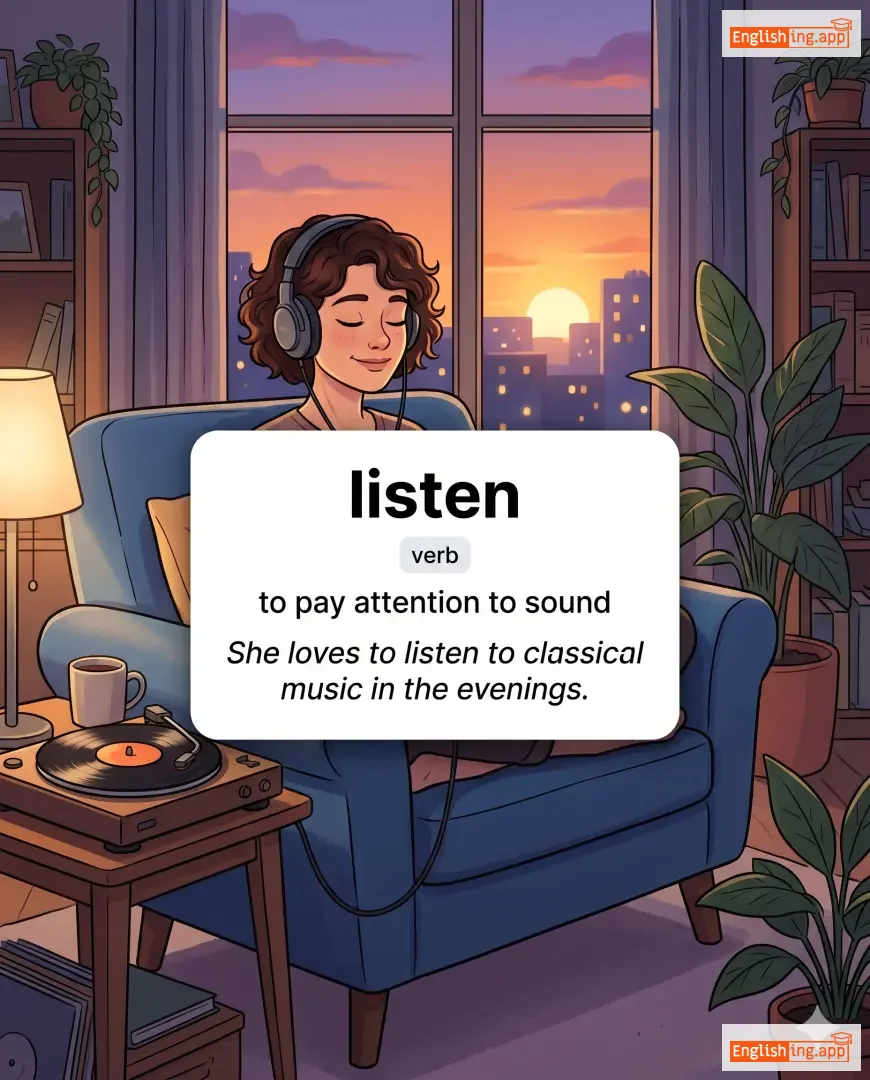
to pay attention to sound
••••••
|
She loves to listen to classical music in the evenings.
彼女は夕方にクラシック音楽を聞くのが好きです。
••••••
|
彼女は夕方にクラシック音楽を聞くのが好きです。
Kanojo wa yūgata ni kurashikku ongaku o kiku no ga suki desu.
••••••
|
listen up
聞いて
••••••
|
used to tell people to pay attention
••••••
|
聞いて
kiite
••••••
|
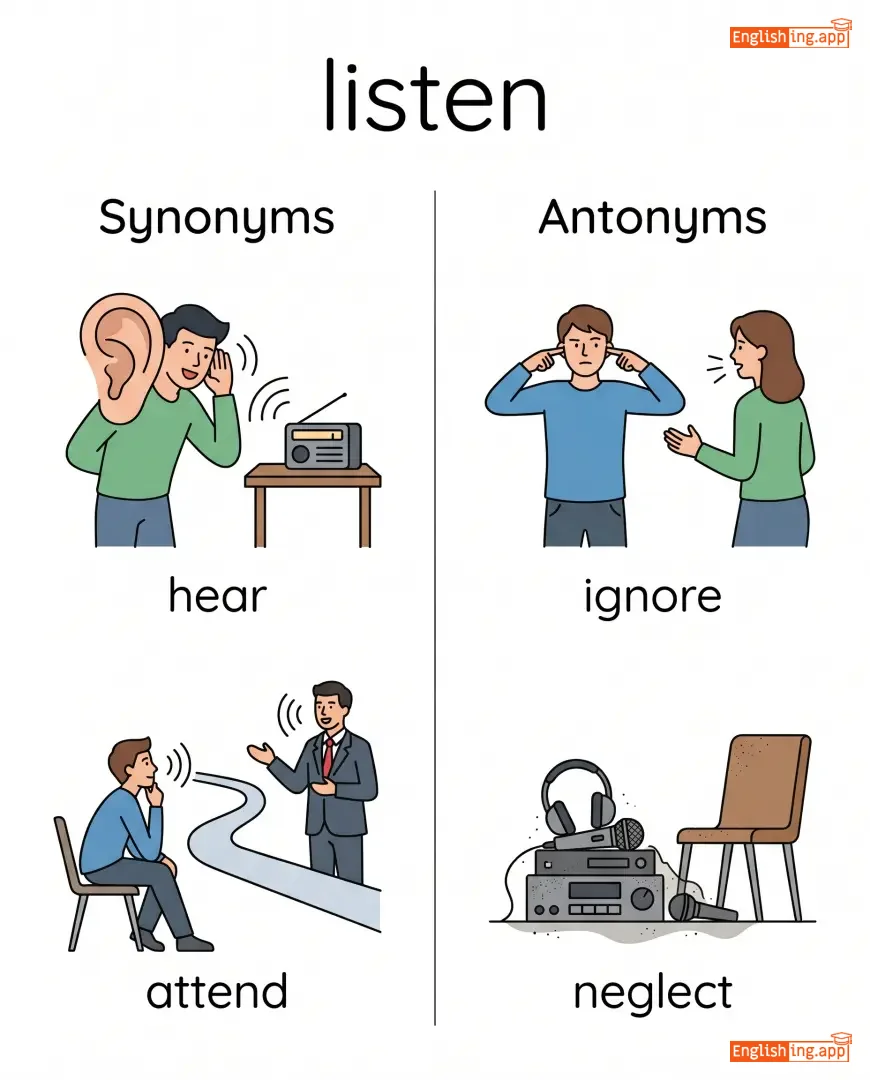
hear, attend, heed, concentrate, pay attention
••••••
|
ignore, neglect, disregard
••••••
|
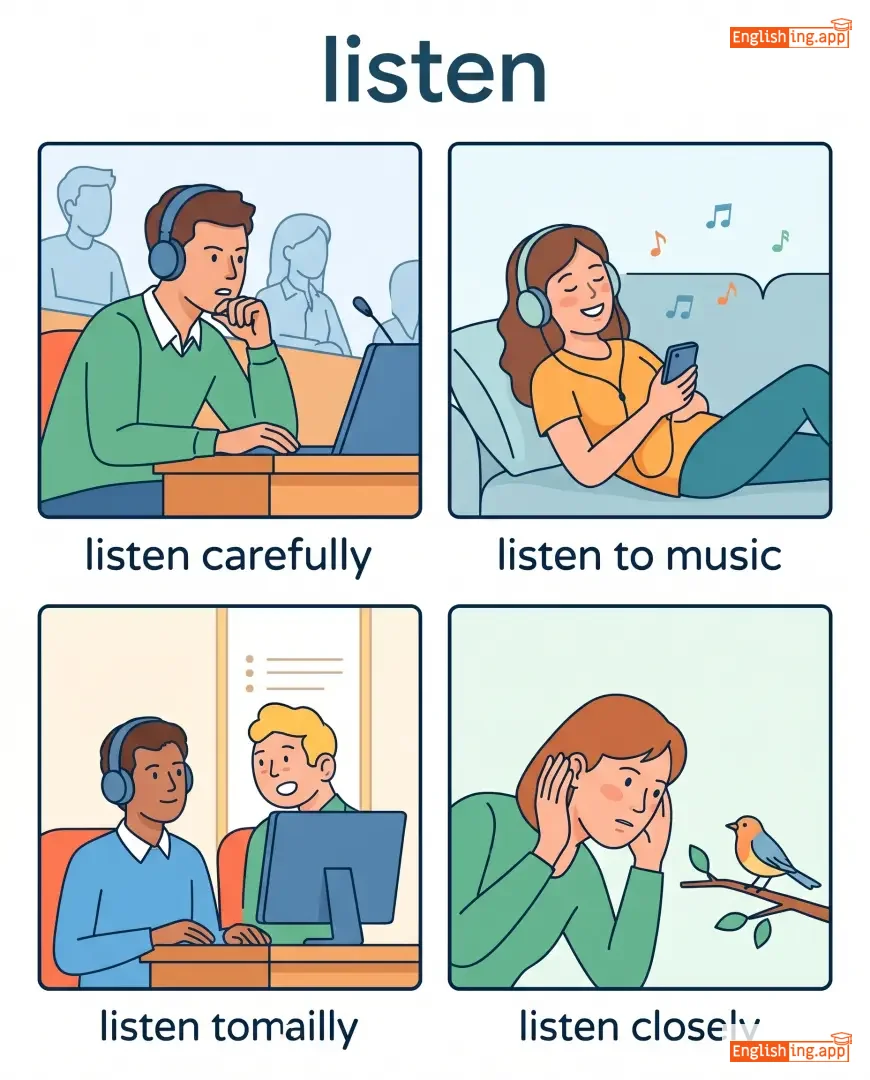
listen carefully, listen to music, listen closely, listen in
••••••
|
👂 Listen は聞く – ママの声を聞いて!
••••••
|
|
📋
••••••
|
/ˈlɪstɪŋ/
noun
(リスティング)
••••••
|
- •••••• |
リスト
risuto
••••••
|
- •••••• | - •••••• | - •••••• | - •••••• |
a series of items or names written or printed in a specific order
••••••
|
The listing of available jobs was updated daily. |
利用可能な仕事のリストは毎日更新されていました。
Riyou kanou na shigoto no risuto wa mainichi kōshin sarete imashita.
••••••
|
- •••••• | - •••••• | - •••••• |
catalog, register, inventory, directory
••••••
|
removal, deletion, omission
••••••
|
job listing, price listing, product listing, guest listing
••••••
|
リストを作成するように、リスティングはリストを作ることを意味します - Listing means to make a list
••••••
|
|
💧
••••••
|
/ˈlɪtə(r)/
noun
••••••
|
- •••••• | - •••••• | - •••••• | - •••••• | - •••••• | - •••••• |
a metric unit of volume equal to one cubic decimeter
••••••
|
The recipe calls for two liters of water. |
- •••••• | - •••••• | - •••••• | - •••••• |
liter, litre, measure, volume
••••••
|
dry, empty
••••••
|
liter of water, liter of milk, one liter, two liters
••••••
|
No •••••• |
|
📖
••••••
|
/ˈlɪtərəsi/
noun
(リテラシー)
••••••
|
- •••••• |
識字能力
shikiji nōryoku
••••••
|
- •••••• | - •••••• | - •••••• | - •••••• |
the ability to read and write
••••••
|
Literacy programs help reduce poverty in rural areas. |
識字プログラムは、農村地域の貧困を減らすのに役立ちます。
Shikiji puroguramu wa, nōson chiiki no hinkon o herasu no ni yakudachimasu.
••••••
|
digital literacy |
the ability to use digital technology effectively
••••••
|
デジタルリテラシー
dejitaru riterashī
••••••
|
education, knowledge, learning, scholarship
••••••
|
illiteracy, ignorance
••••••
|
literacy rate, promote literacy, literacy program, literacy skills
••••••
|
リテラシー - 文字を読む能力
••••••
|
|
🔍
••••••
|
/ˈlɪtərəli/
adverb
(リテラリー)
••••••
|
- •••••• |
文字通り
mojidoori
••••••
|
- •••••• | - •••••• | - •••••• | - •••••• |
in a literal manner or sense; exactly
••••••
|
He was literally running for three hours without stopping. |
彼は文字通り3時間休まずに走り続けていた。
Kare wa mojidoori san jikan yasumazu ni hashiri tsuzukete ita.
••••••
|
- •••••• | - •••••• | - •••••• |
exactly, precisely, actually, really
••••••
|
figuratively, metaphorically
••••••
|
literally true, literally impossible, literally happened
••••••
|
文字通りは文字通りの意味です – '正確に'と言うようなもの!
••••••
|
|
📚
••••••
|
/ˈlɪtərɛri/
adjective
(リテラリー)
••••••
|
- •••••• |
文学的
bungakuteki
••••••
|
- •••••• | - •••••• | - •••••• | - •••••• |
concerning the writing, study, or content of literature
••••••
|
She is a well-known figure in the literary world.
彼女は文学界でよく知られた人物です。
••••••
|
彼女は文学界でよく知られた人物です。
Kanojo wa bungaku kai de yoku shirareta jinbutsu desu.
••••••
|
literary genius
文学の天才
••••••
|
a person with outstanding creative talent in literature
••••••
|
文学の天才
bungaku no tensai
••••••
|
bookish, cultured, scholarly, learned
••••••
|
illiterate, uneducated
••••••
|
literary world, literary work, literary career, literary criticism
••••••
|
📚 Literaryは文学的を意味します。文学から来ています。
••••••
|
|
📚
••••••
|
/ˈlɪt.ər.ət/
adjective
(リテレート)
••••••
|
- •••••• |
識字; 教育を受けた; 良い教育を受けた
ritereeto
••••••
|
- •••••• | - •••••• | - •••••• | - •••••• |
able to read and write; educated; well-educated
••••••
|
She is a very literate person who reads extensively.
彼女は非常に教育を受けた人で、広範囲に読書をします。
••••••
|
彼女は非常に教育を受けた人で、広範囲に読書をします。
kanojo wa hijō ni kyōiku o uketa hito de, kōhanni dokusho o shimasu.
••••••
|
- •••••• | - •••••• | - •••••• |
educated, learned, scholarly, well-read
••••••
|
illiterate, uneducated, ignorant
••••••
|
literate society, computer literate, financially literate
••••••
|
Literate = 読書と教育
••••••
|
|
📚
••••••
|
/ˈlɪtərətʃər/
noun
(リテラチャー)
••••••
|
- •••••• |
文学
bungaku
••••••
|
- •••••• | - •••••• | - •••••• | - •••••• |
written works, especially those considered of superior or lasting artistic merit
••••••
|
He studied English literature at university. |
彼は大学で英文学を学びました。
Kare wa daigaku de eibungaku o manabimashita.
••••••
|
classic literature |
literary works of enduring value and recognition
••••••
|
古典文学
koten bungaku
••••••
|
writing, works, prose, poetry, composition
••••••
|
illiterature, ignorance
••••••
|
English literature, world literature, modern literature, study literature
••••••
|
Literature - '文学'は永遠の‘文字’の美しさ
••••••
|
|
🧴
••••••
|
/ˈliːtər/
noun
(リットル)
••••••
|
- •••••• |
リットル
ritturu
••••••
|
- •••••• | - •••••• | - •••••• | - •••••• |
a metric unit of volume equal to 1,000 cubic centimeters; commonly used to measure liquids
••••••
|
She bought a litre of milk from the shop.
彼女は1リットルの牛乳を買いました。
••••••
|
彼女は店で1リットルの牛乳を買いました。
kanojo wa mise de 1 rittoru no gyuunyuu o kaimashita
••••••
|
per litre
リットルあたり
••••••
|
for each litre as a unit of measurement
••••••
|
リットルあたり
ritturu atari
••••••
|
liter, litre (UK), l, L
••••••
|
millilitre, drop
••••••
|
litre of water, one litre bottle, per litre, half litre
••••••
|
リットル = litre, カタカナでそのまま
••••••
|
|
🗑️
••••••
|
/ˈlɪtər/
noun/verb
(リッター)
••••••
|
- •••••• |
ゴミ
gomi
••••••
|
littered
リッタード
••••••
|
littered
リッタード
••••••
|
litters
リッターズ
••••••
|
littering
リッティング
••••••
|
rubbish or waste left lying in a public place; to make a place untidy by leaving rubbish
••••••
|
The park was full of litter after the festival.
祭りの後、公園はゴミでいっぱいだった。
••••••
|
祭りの後、公園はゴミでいっぱいだった。
Matsuri no ato, kouen wa gomi de ippai datta.
••••••
|
litter the streets
街にゴミを捨てる
••••••
|
to throw rubbish on the roads
••••••
|
街にゴミを捨てる
Machi ni gomi wo suteru
••••••
|
trash, rubbish, debris, garbage
••••••
|
cleanliness, tidiness
••••••
|
litter problem, litter bin, litter the streets, litter laws
••••••
|
Litterはゴミを意味する—街にゴミを捨てる
••••••
|
|
🐭
••••••
|
/ˈlɪtl/
adjective
(リトル)
••••••
|
- •••••• |
小さい
chiisai
••••••
|
- •••••• | - •••••• | - •••••• | - •••••• |
Small in size, amount, or degree.
••••••
|
He drank a little water before going to bed. |
彼は寝る前に少し水を飲んだ。
Kare wa neru mae ni sukoshi mizu o nonda.
••••••
|
every little helps |
Even a small amount of help is useful.
••••••
|
小さな助けでも役立つ
Chiisana tasuke demo yakudatsu
••••••
|
small, tiny, slight, minor, modest
••••••
|
large, big, huge
••••••
|
a little bit, little chance, little time, little boy
••••••
|
Littleは小さいという意味 — 小さい (little) ねずみ。
••••••
|
|
🏡
••••••
|
/lɪv/
verb
(リヴ)
••••••
|
|
住む
sumu
••••••
|
lived
リヴド
••••••
|
lived
リヴド
••••••
|
lives
リヴス
••••••
|
living
リヴィング
••••••
|
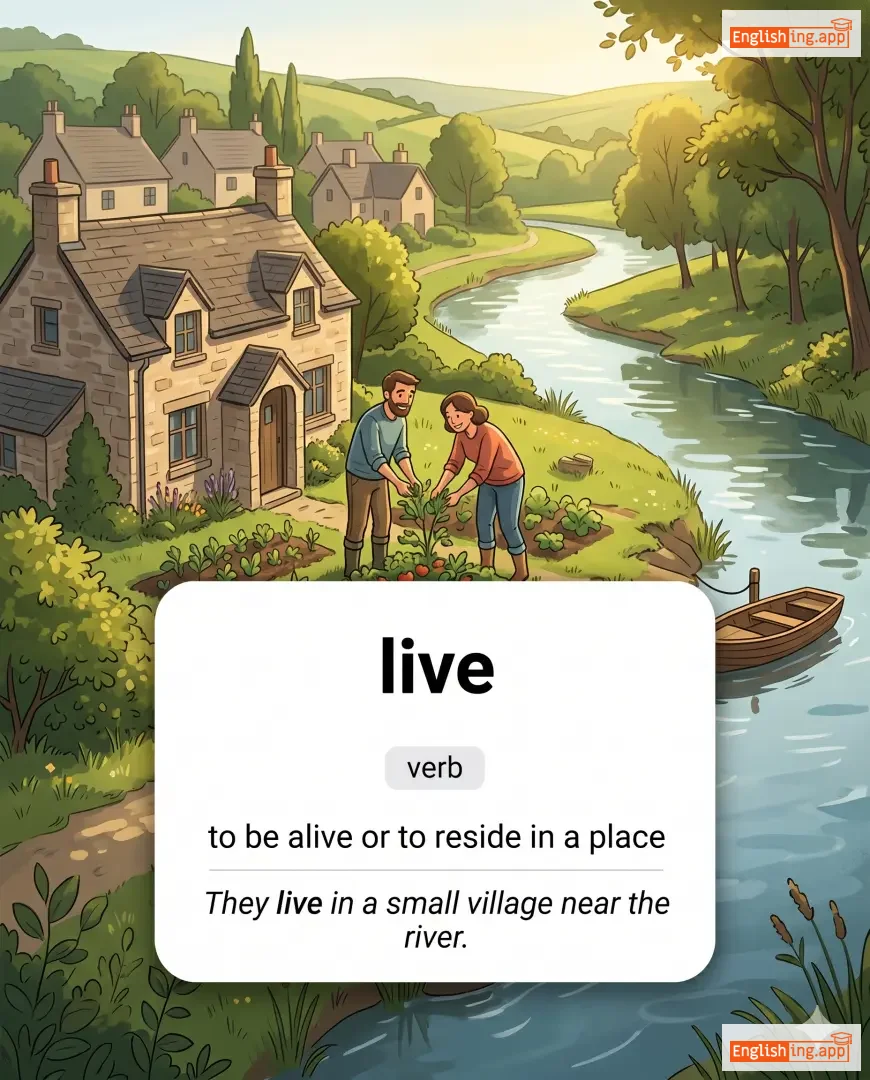
to be alive or to reside in a place
••••••
|
They live in a small village near the river.
彼らは川の近くの小さな村に住んでいます。
••••••
|
彼らは川の近くの小さな村に住んでいます。
Karera wa kawa no chikaku no chiisana mura ni sundeimasu.
••••••
|
live and let live
リヴ・アンド・レット・リヴ
••••••
|
to tolerate others' behavior and expect them to tolerate yours
••••••
|
生きることを許し、他人にも生きさせる
Ikiru koto o yurushi, tanin ni mo ikisaseru
••••••
|
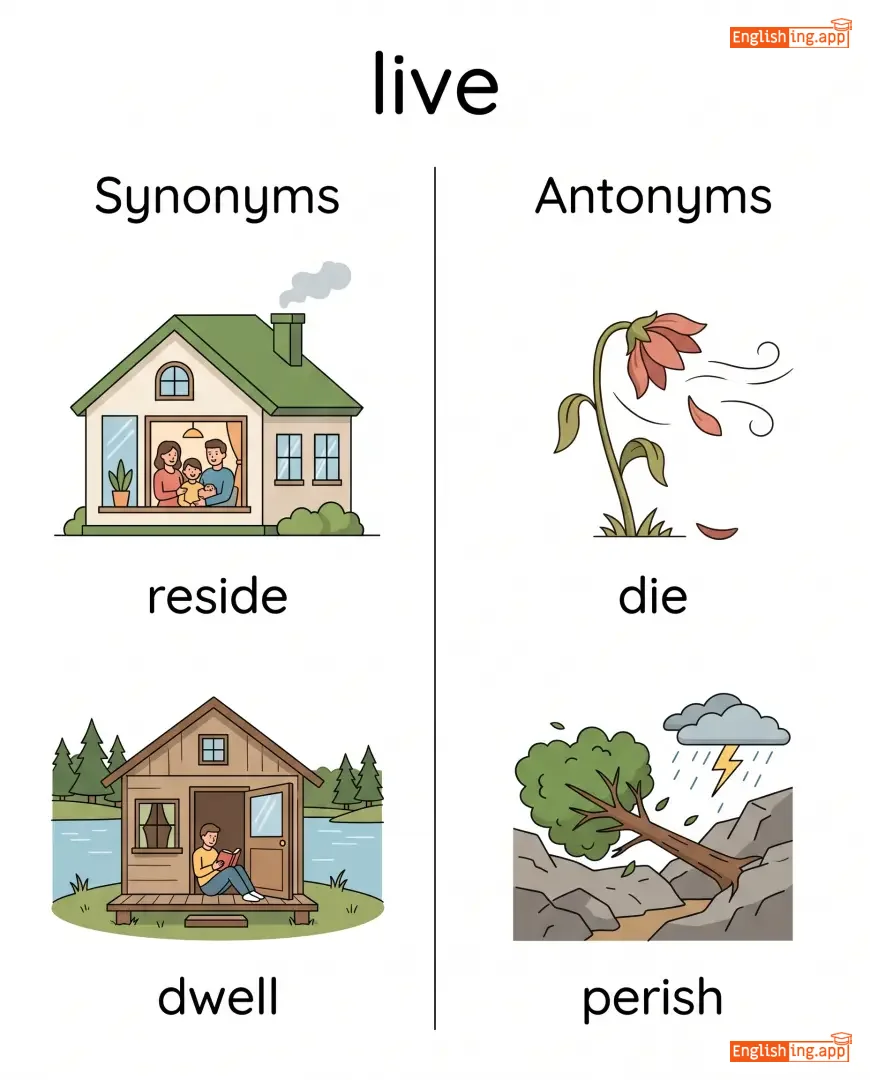
reside, dwell, exist, inhabit, survive
••••••
|
die, perish
••••••
|
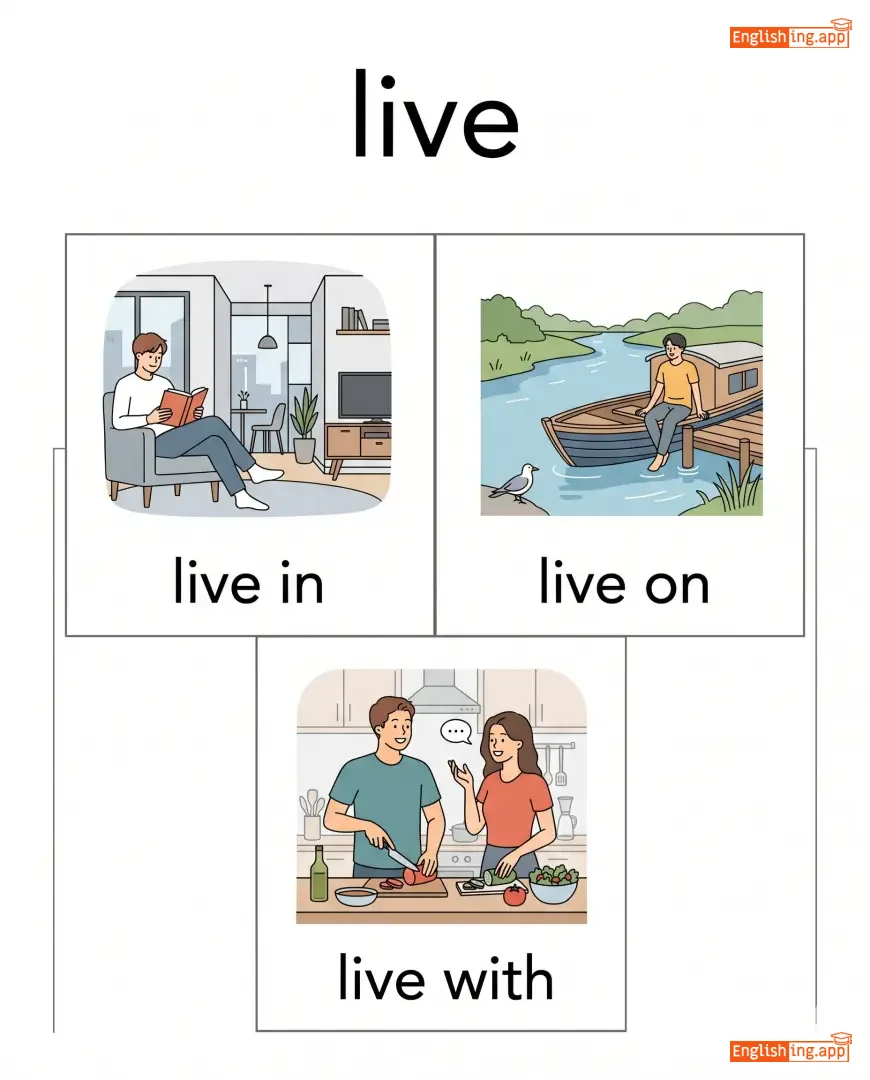
live in, live on, live with, live happily, live abroad
••••••
|
Liveは生きるという意味で、'ライブショー'のようにリアルタイムで何かを見ることです。
••••••
|
|
🌱
••••••
|
/ˈlɪvɪŋ/
noun/adjective
(リビング)
••••••
|
- •••••• |
生活 / 生計
seikatsu / seikei
••••••
|
- •••••• | - •••••• | - •••••• | - •••••• |
the state of being alive; or a way of earning money
••••••
|
He makes his living as a teacher. |
彼は教師として生計を立てています。
Kare wa kyoushi to shite seikei wo tateteimasu.
••••••
|
cost of living |
the amount of money needed to maintain a certain standard of life
••••••
|
生活費
seikatsuhi
••••••
|
existence, livelihood, earnings, occupation
••••••
|
death, nonexistence
••••••
|
living standard, living being, living conditions, cost of living
••••••
|
Living は生活や生計を意味します、'リビングルーム' のように、そこに住んでいる人々。
••••••
|

