|
表情符号
|
单词 | Images | 翻译 | 过去时 | 过去分词 | 第三人称单数 | 动名词 | 含义 | 例句 | 例句翻译 | 示例表达 | 示例表达含义 | 示例表达翻译 | 同义词 | 反义词 | 搭配词 | 助记符 |
|---|---|---|---|---|---|---|---|---|---|---|---|---|---|---|---|---|---|
|
📚
••••••
|
/ˈlaɪ.brɛr.i/
noun
(lái.bù.liō tè.kè)
••••••
|
- •••••• |
图书馆
tú shū guǎn
••••••
|
- •••••• | - •••••• | - •••••• | - •••••• |
A building or room containing collections of books, periodicals, and sometimes other materials for people to read or borrow.
••••••
|
She spent the afternoon studying in the library. |
她在图书馆度过了下午。
Tā zài tú shū guǎn dùguòle xiàwǔ.
••••••
|
library of knowledge |
A large collection of information or wisdom.
••••••
|
知识宝库
zhīshì bǎokù
••••••
|
book collection, archive, repository, reading room, information center
••••••
|
bookstore, marketplace
••••••
|
public library, digital library, library card, library staff
••••••
|
图书馆(Tú shū guǎn)- 就是一个包含大量书籍的地方。
••••••
|
|
📜
••••••
|
/ˈlaɪsəns/
noun, verb
(lái xīn sī)
••••••
|
- •••••• |
许可证 / 许可
xǔkě zhèng / xǔkě
••••••
|
licensed
lái xīn sī dé
••••••
|
licensed
lái xīn sī dé
••••••
|
licenses
lái xīn sī sī
••••••
|
licensing
lái xīn sī xìng
••••••
|
A legal permission to do something (noun); to grant such permission (verb).
••••••
|
You must have a driving license to operate a car legally.
您必须拥有驾驶执照才能合法开车。
••••••
|
您必须拥有驾驶执照才能合法开车。
Nín bìxū yǒngyǒu jiàshǐ zhízhào cáinéng héfǎ kāichē.
••••••
|
poetic license
诗意许可
••••••
|
Freedom to depart from facts or rules for artistic effect.
••••••
|
诗意许可
shīyì xǔkě
••••••
|
permit, authorization, certificate, sanction
••••••
|
restriction, prohibition
••••••
|
driving license, business license, software license, license agreement
••••••
|
许可证意味着你可以合法地做事
••••••
|
|
🥫
••••••
|
/lɪd/
noun
(lid)
••••••
|
- •••••• |
盖子
gàizi
••••••
|
- •••••• | - •••••• | - •••••• | - •••••• |
a cover for the top of a container
••••••
|
She closed the lid tightly on the jar. |
她紧紧地盖上了瓶盖。
Tā jǐn jǐn de gài shàngle pínggài.
••••••
|
keep a lid on |
to control or limit something
••••••
|
控制住
kòngzhì zhù
••••••
|
cover, cap, top, seal, closure
••••••
|
opening, uncover
••••••
|
jar lid, pot lid, plastic lid, lift the lid
••••••
|
盖子控制一切,像lid一样!
••••••
|
|
🤥
••••••
|
/laɪ/
verb
(lai)
••••••
|

|
说谎
shuo huang
••••••
|
lied
laid
••••••
|
lied
laid
••••••
|
lies
laiz
••••••
|
lying
laing
••••••
|
To make a false statement with the intention to deceive.
••••••
|
He lied about his age to get the job.
hi laid abaut his eyj tu get de job.
••••••
|
他为了得到这份工作,说谎了自己的年龄。
Ta wei le dedao zhe fen gongzuo, shuo huang le ziji de nianling.
••••••
|
white lie
whaait lai
••••••
|
A harmless or small lie told to avoid hurting someone.
••••••
|
善意的谎言
Shan yi de huangyan
••••••
|
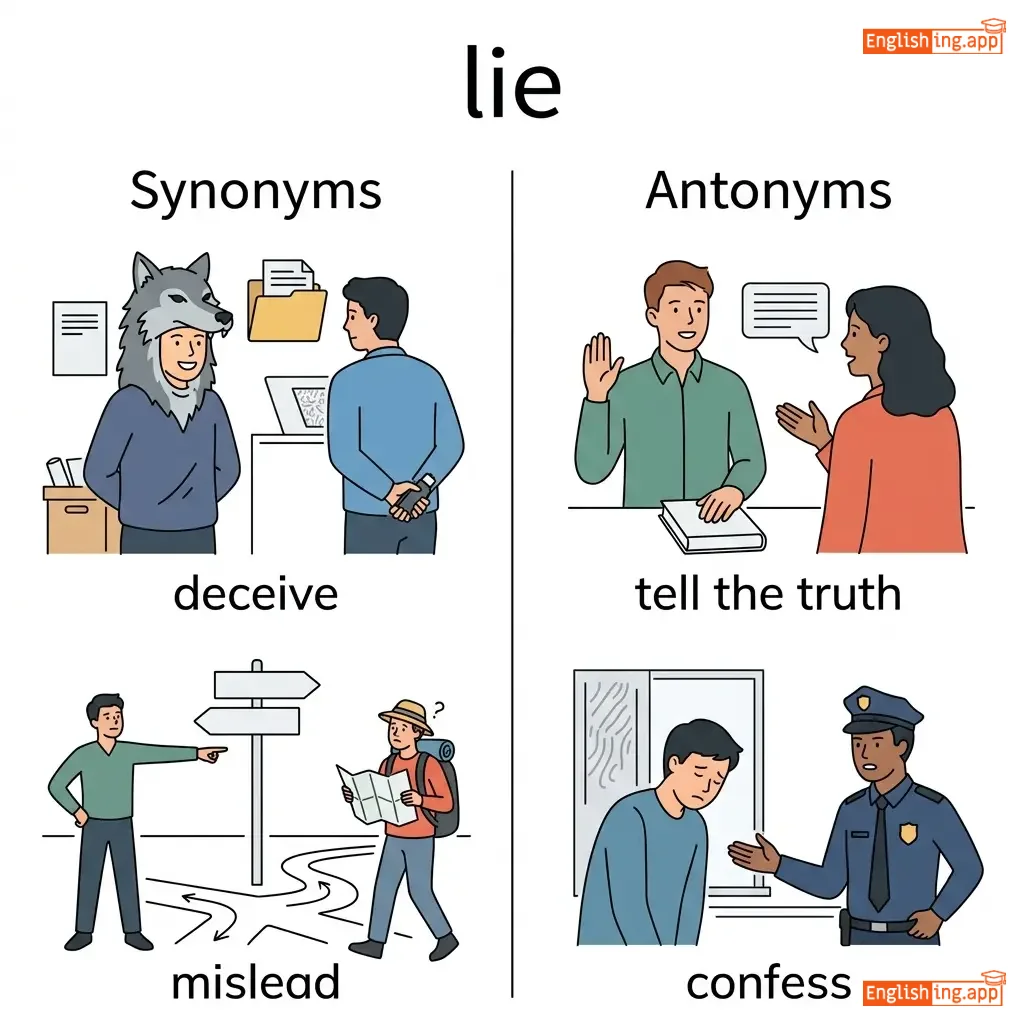
deceive, mislead, fib, falsify, invent
••••••
|
tell the truth, confess
••••••
|
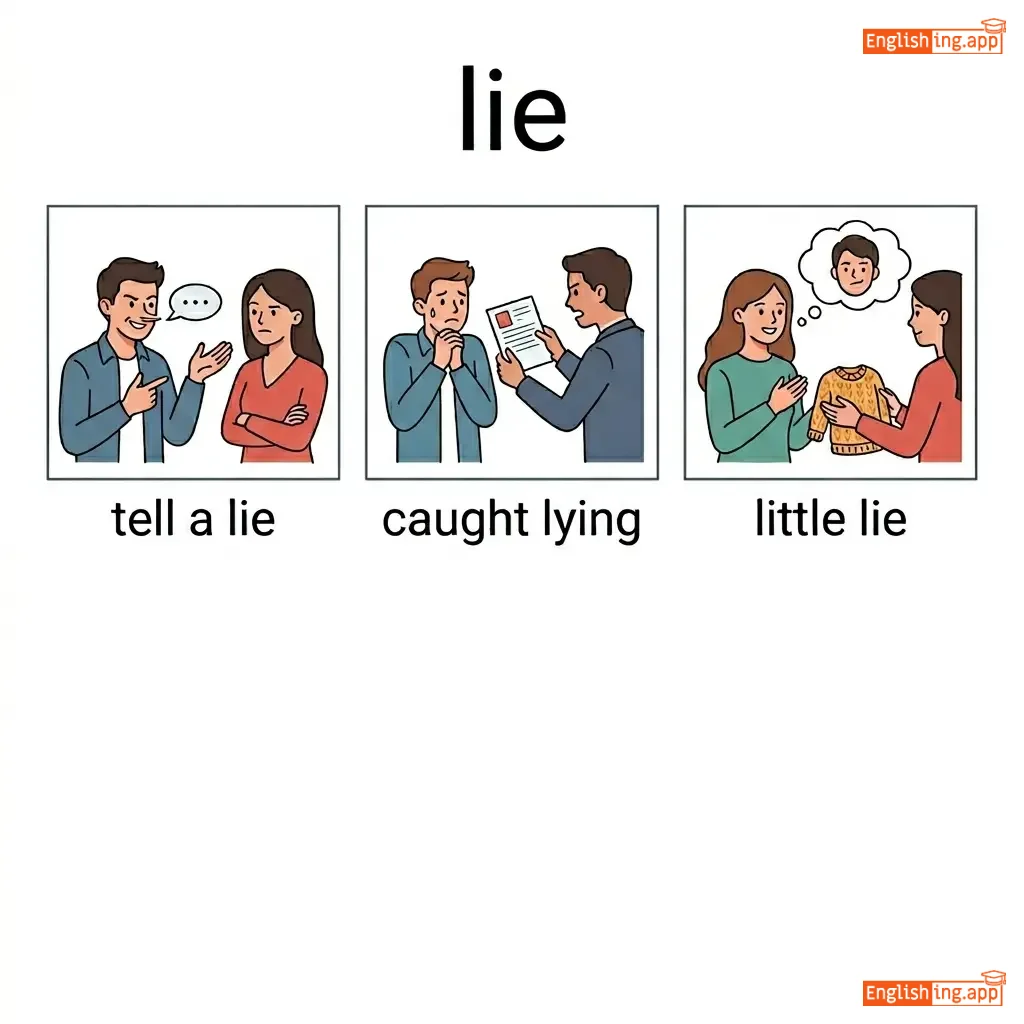
tell a lie, caught lying, little lie, big lie
••••••
|
Lie (说谎) 就是说不是真的事情。
••••••
|
|
🤥
••••••
|
/ˈlaɪər/
noun
(莱尔)
••••••
|
- •••••• |
说谎者
shuohuangzhe
••••••
|
- •••••• | - •••••• | - •••••• | - •••••• |
a person who tells lies; an alternative spelling of liar
••••••
|
No one trusted him because he was known as a habitual lier.
诺 万 特拉斯特德 希姆 比考兹 希 沃兹 诺恩 阿兹 阿 哈比丘尔 莱尔。
••••••
|
因为他是个惯常的说谎者,所以没人信任他。
yinwei ta shi ge guanchang de shuohuangzhe suoyi meiren xinren ta
••••••
|
- •••••• | - •••••• | - •••••• |
liar, deceiver, fibber, falsifier, prevaricator
••••••
|
truth-teller, honest person, truthteller
••••••
|
habitual lier, known lier, proven lier
••••••
|
Lier 听起来像 liar,就是 说谎者。
••••••
|
|
🌱
••••••
|
/laɪf/
noun
(lái fú)
••••••
|
- •••••• |
生命
shengming
••••••
|
- •••••• | - •••••• | - •••••• | - •••••• |
The existence of an individual human being or animal.
••••••
|
Life is full of challenges and opportunities. |
生命充满了挑战和机会。
Shēngmìng chōngmǎnle tiǎozhàn hé jīhuì.
••••••
|
circle of life |
The natural cycle of birth, growth, death, and renewal.
••••••
|
生命的循环
Shēngmìng de xúnhuán
••••••
|
existence, living, vitality, being, survival
••••••
|
death, end
••••••
|
daily life, life expectancy, life experience, life span
••••••
|
生命是我们每个人的故事,永不停歇。
••••••
|
|
♾️
••••••
|
/ˈlaɪf.lɒŋ/
adjective
(laɪflɒŋ)
••••••
|
- •••••• |
终生
zhōngshēng
••••••
|
- •••••• | - •••••• | - •••••• | - •••••• |
Lasting or existing for the whole of a person's life.
••••••
|
They remained lifelong friends.
他们是终生的朋友。
••••••
|
他们是终生的朋友。
Tāmen shì zhōngshēng de péngyǒu.
••••••
|
lifelong learner
终生学习者
••••••
|
Someone who continuously seeks knowledge throughout life
••••••
|
终生学习者
zhōngshēng xuéxí zhě
••••••
|
permanent, enduring, lasting, eternal, abiding
••••••
|
temporary, short-term, momentary
••••••
|
lifelong friend, lifelong dream, lifelong passion, lifelong habit
••••••
|
LIFE + LONG = 终生的 (终生)。
••••••
|
|
🏖️
••••••
|
/ˈlaɪf.staɪl/
noun
(laifstail)
••••••
|
- •••••• |
生活方式
shenghuo fangshi
••••••
|
- •••••• | - •••••• | - •••••• | - •••••• |
The way in which a person or group lives, including habits, attitudes, and possessions.
••••••
|
A healthy lifestyle includes regular exercise and a balanced diet.
健康的生活方式包括定期锻炼和均衡饮食。
••••••
|
健康的生活方式包括定期锻炼和均衡饮食。
Jiankang de shenghuo fangshi baokuo dingqi duanlian he junheng yinshi.
••••••
|
lavish lifestyle
奢华的生活方式
••••••
|
A luxurious way of living with expensive habits.
••••••
|
奢华的生活方式
Shehua de shenghuo fangshi
••••••
|
way of life, living, habits, routine, manner
••••••
|
hardship, poverty
••••••
|
modern lifestyle, healthy lifestyle, urban lifestyle, simple lifestyle
••••••
|
Lifestyle = life + style, 生活的方式。
••••••
|
|
⌛
••••••
|
/ˈlaɪf.taɪm/
noun
(laiftaim)
••••••
|
- •••••• |
一生
yisheng
••••••
|
- •••••• | - •••••• | - •••••• | - •••••• |
The duration of a person's life or the existence of something.
••••••
|
She achieved more in her lifetime than most people dream of.
她在一生中取得的成就,超出了大多数人的梦想。
••••••
|
她在一生中取得的成就,超出了大多数人的梦想。
Ta zai yisheng zhong qude de chengjiu, chaochule daduoshu ren de mengxiang.
••••••
|
once in a lifetime
一生中一次
••••••
|
Something that is very rare and unlikely to happen again
••••••
|
一生中一次
Yisheng zhong yici
••••••
|
existence, lifespan, duration, era, age
••••••
|
moment, instant, second
••••••
|
lifetime achievement, lifetime experience, in a lifetime, over a lifetime
••••••
|
LIFE + TIME = 一生.
••••••
|
|
🛗
••••••
|
/lɪft/
verb
(lɪft)
••••••
|
- •••••• |
举起
juqi
••••••
|
lifted
lɪftɪd
••••••
|
lifted
lɪftɪd
••••••
|
lifts
lɪfts
••••••
|
lifting
lɪftɪŋ
••••••
|
To raise something to a higher position or level.
••••••
|
He lifted the heavy box with ease.
他轻松地抬起了重箱子。
••••••
|
他轻松地抬起了重箱子。
Ta qingsong de taqi le zhong xiangzi.
••••••
|
lift your spirits
提升你的精神
••••••
|
To make someone feel happier or more cheerful.
••••••
|
提升精神
Tisheng jingshen
••••••
|
raise, elevate, hoist, boost, uplift
••••••
|
lower, drop
••••••
|
lift weights, lift a ban, lift up, lift out
••••••
|
举起重物的动作,也可以提升精神。
••••••
|
|
💡
••••••
|
/laɪt/
noun, verb, adjective
(lait)
••••••
|
|
光
guang
••••••
|
lit
lit
••••••
|
lit
lit
••••••
|
lights
lits
••••••
|
lighting
laiting
••••••
|
The natural agent that makes things visible; to illuminate or make something start burning.
••••••
|
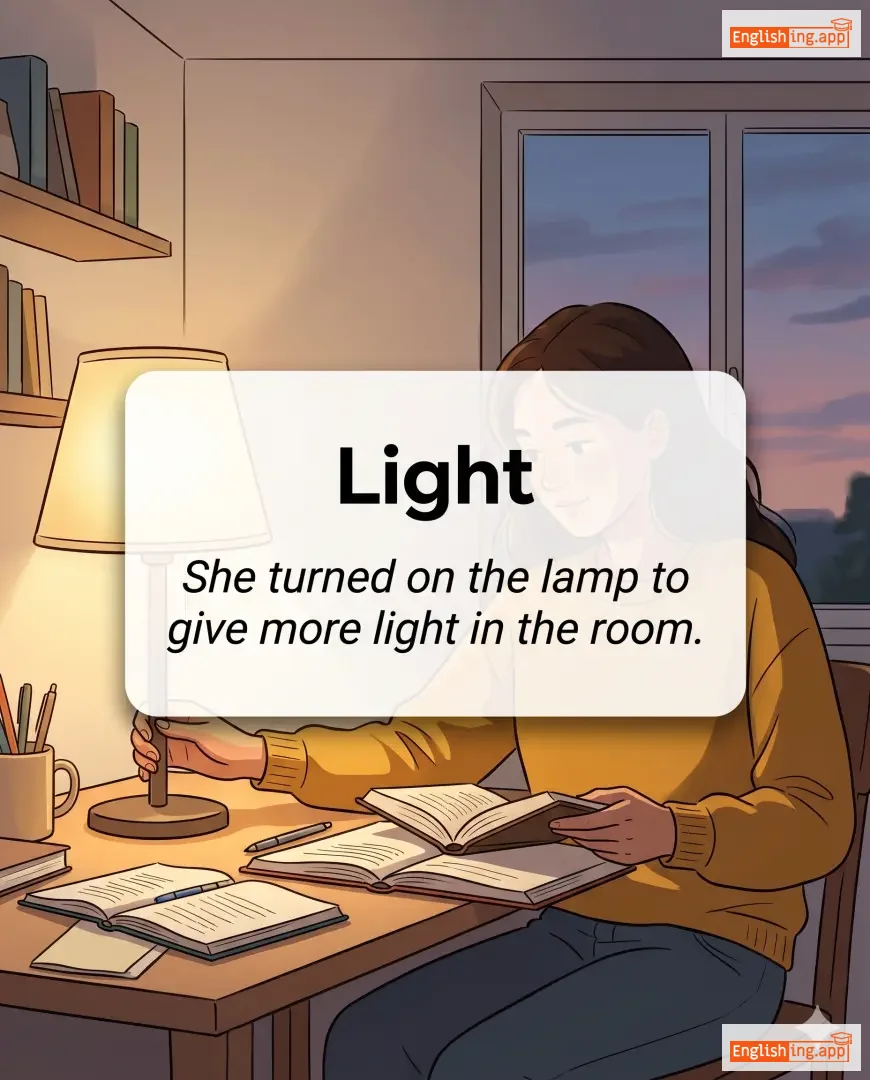
She turned on the lamp to give more light in the room.
她打开灯以提供更多的光线。
••••••
|
她打开灯以提供更多的光线。
Tā dǎkāi dēng yǐ tígōng gèng duō de guāngxiàn.
••••••
|
see the light
看到光
••••••
|
to finally understand or realize something clearly
••••••
|
最终明白
zuìzhōng míngbái
••••••
|
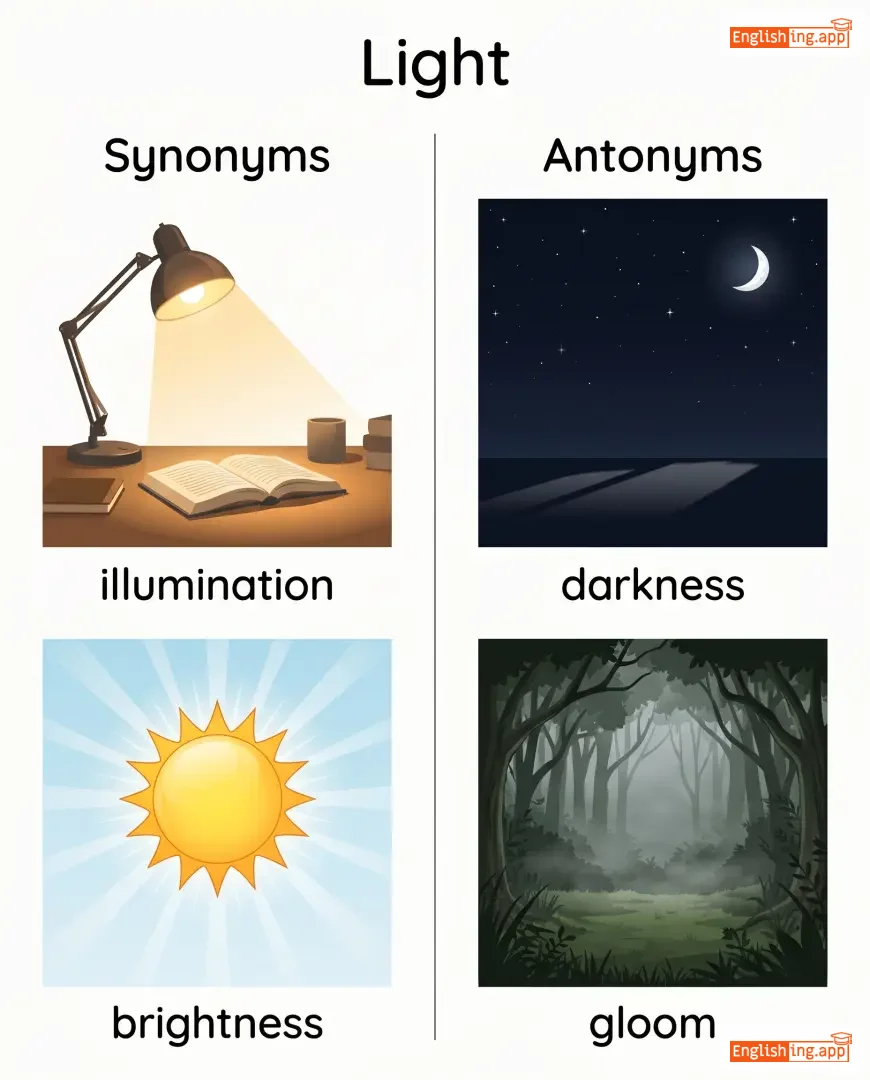
illumination, brightness, radiance, glow, shine
••••••
|
darkness, gloom, shadow
••••••
|
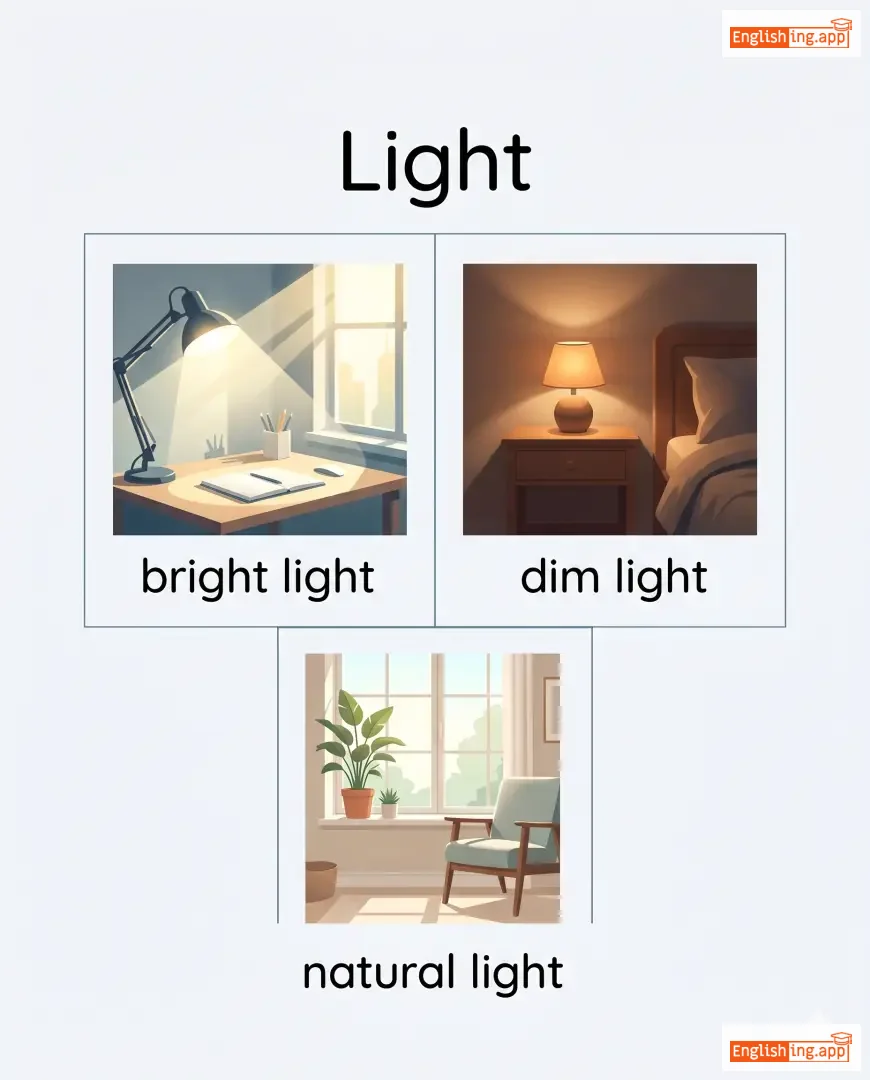
bright light, dim light, natural light, artificial light
••••••
|
光代表照亮,当光亮起来,黑暗就消失了。
••••••
|
|
💡
••••••
|
/ˈlaɪtən/
verb
(莱滕)
••••••
|
- •••••• |
使变亮;缓和
shi bian liang; huan he
••••••
|
lightened
莱滕德
••••••
|
lightened
莱滕德
••••••
|
lightens
莱滕兹
••••••
|
lightening
莱滕宁
••••••
|
to make something brighter or less dark; to make something less heavy or serious
••••••
|
A joke can lighten the mood during a tense meeting.
阿 周克 肯 莱滕 德 木德 杜润 阿 滕斯 米廷
••••••
|
一个笑话可以缓和紧张会议的气氛。
yi ge xiaohua keyi huanhe jinzhang huiyi de qifen
••••••
|
lighten up
莱滕 阿普
••••••
|
to relax and stop being so serious or worried
••••••
|
放轻松
fang qing song
••••••
|
brighten, illuminate, ease, relieve, cheer
••••••
|
darken, burden, depress
••••••
|
lighten the mood, lighten the load, lighten up, lighten hair
••••••
|
亮(light)一点,就是 lighten.
••••••
|
|
💡
••••••
|
/ˈlaɪtɪŋ/
noun
(laiting)
••••••
|
- •••••• |
照明
zhaoming
••••••
|
- •••••• | - •••••• | - •••••• | - •••••• |
the arrangement or use of light in a place; the act of providing light
••••••
|
The lighting in the restaurant created a warm and cozy atmosphere.
餐厅的灯光创造了温暖而舒适的氛围。
••••••
|
餐厅的灯光创造了温暖而舒适的氛围。
Canting de dengguang chuangzao le wennuan er shushi de fenwei.
••••••
|
- •••••• | - •••••• | - •••••• |
illumination, brightness, radiance, light, glow
••••••
|
darkness, shadow
••••••
|
soft lighting, stage lighting, indoor lighting, lighting design
••••••
|
Lighting 就是照明,表示提供光源。
••••••
|
|
🪶
••••••
|
/ˈlaɪtli/
adverb
(lài tè lì)
••••••
|
- •••••• |
轻轻地
qīngqīng de
••••••
|
- •••••• | - •••••• | - •••••• | - •••••• |
gently or with little force or weight
••••••
|
She touched the baby’s hand lightly.
shī tǎchd ðə béibǐz hǎnd lài tè lì.
••••••
|
她轻轻地触摸了宝宝的手。
Tā qīngqīng de chùmōle bǎobǎo de shǒu.
••••••
|
take lightly
tèik lài tè lì
••••••
|
to treat something as not serious or important
••••••
|
轻松看待
qīngsōng kàndài
••••••
|
gently, softly, delicately, mildly
••••••
|
heavily, strongly, seriously
••••••
|
speak lightly, step lightly, take lightly, touch lightly
••••••
|
Light意味着轻的,所以lightly意味着轻松地做某事。
••••••
|
|
👍
••••••
|
/laɪk/
verb, preposition
(laɪk)
••••••
|
|
喜欢
xǐ huān
••••••
|
liked
laɪkt
••••••
|
liked
laɪkt
••••••
|
likes
laɪks
••••••
|
liking
laɪkɪŋ
••••••
|
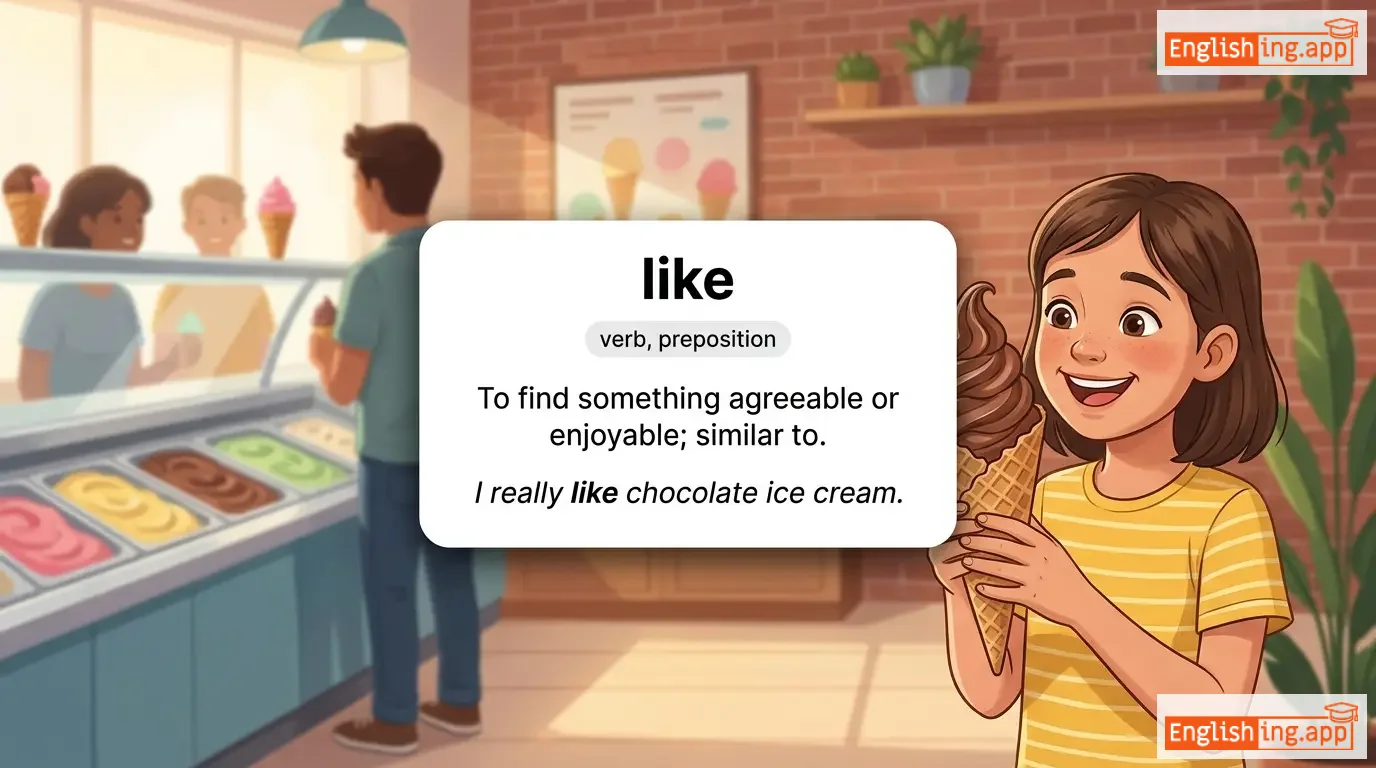
To find something agreeable or enjoyable; similar to.
••••••
|
I really like chocolate ice cream.
我真的喜欢巧克力冰淇淋。
••••••
|
我真的喜欢巧克力冰淇淋。
Wǒ zhēn de xǐ huān qiǎo kè lì bīng qí lín.
••••••
|
like father, like son
有其父必有其子
••••••
|
children often resemble their parents in behavior or character
••••••
|
有其父必有其子
Yǒu qí fù bì yǒu qí zǐ
••••••
|
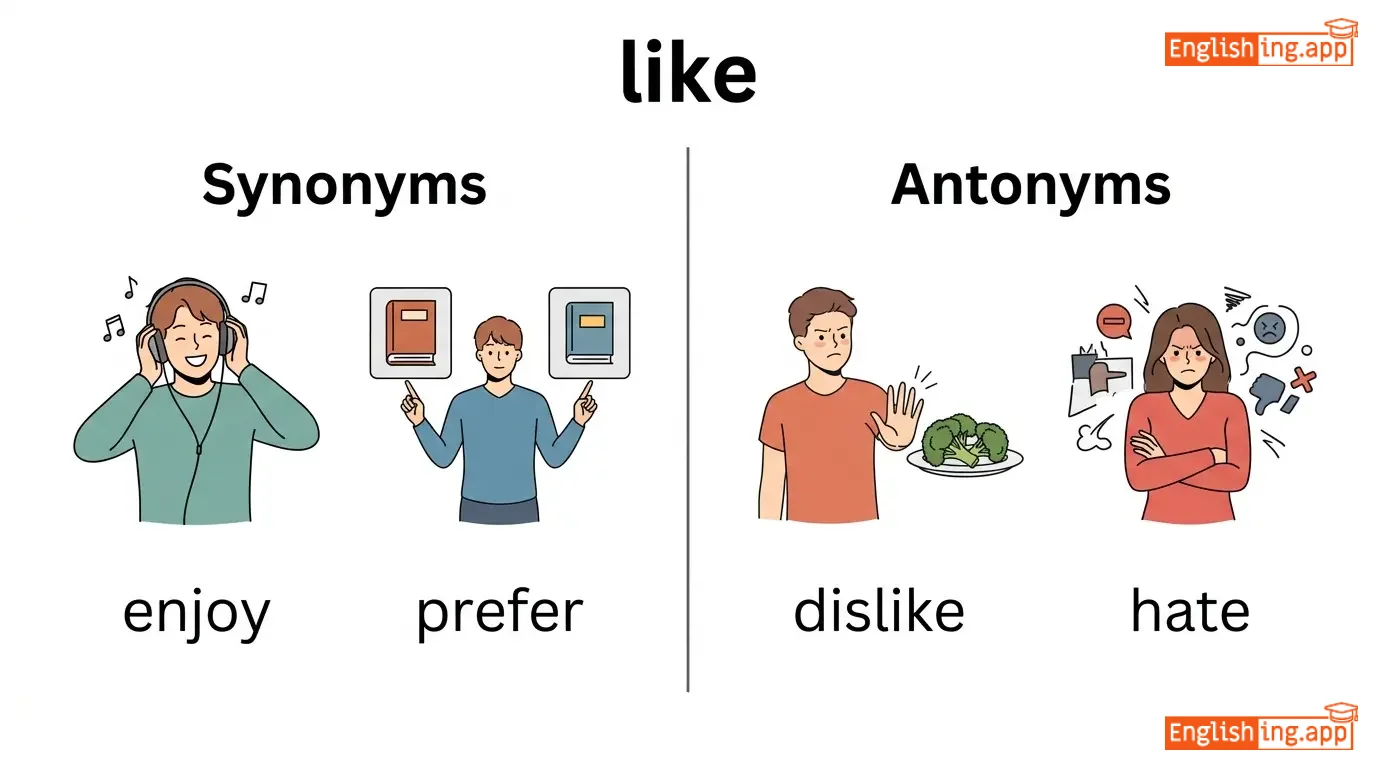
enjoy, prefer, love, admire, appreciate
••••••
|
dislike, hate, detest
••••••
|
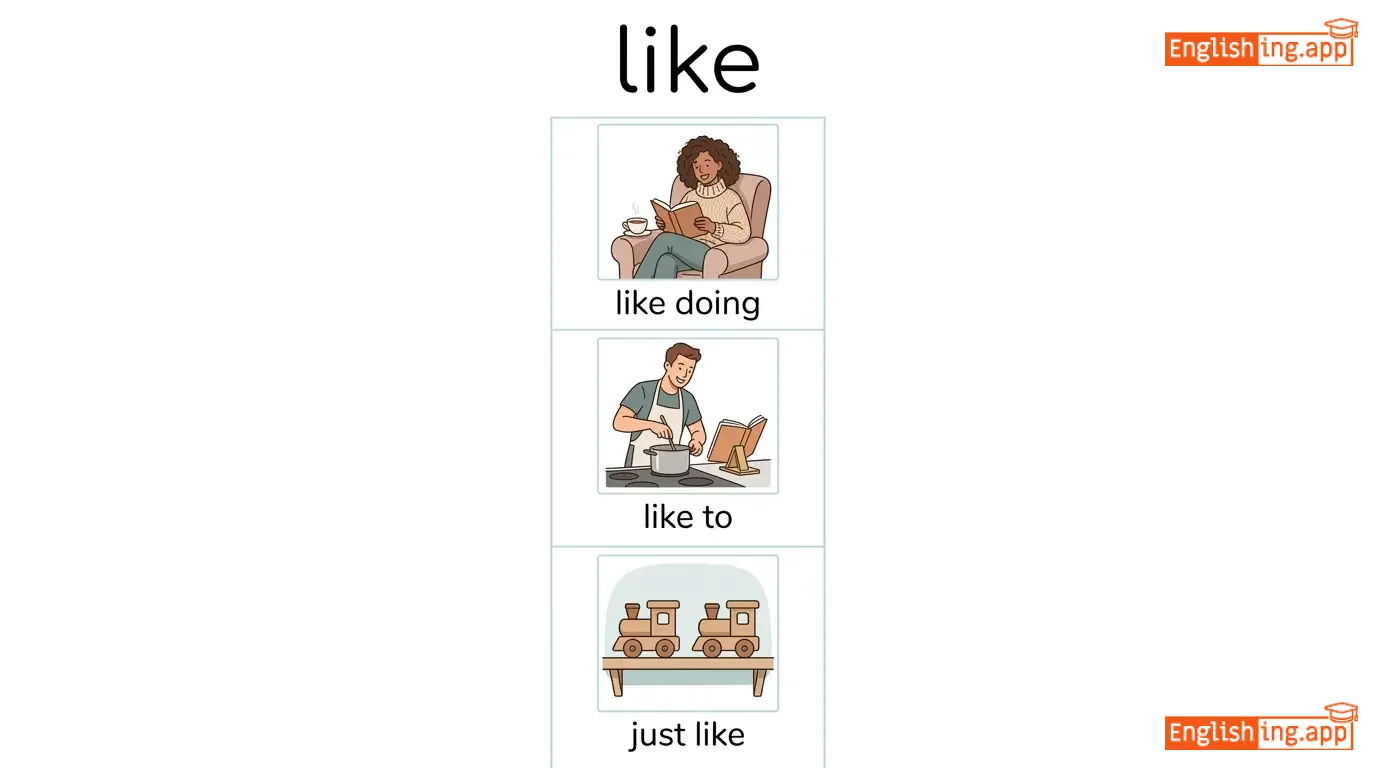
like doing, like to, just like, feel like
••••••
|
在Facebook上,点赞就等于喜欢。
••••••
|
|
🎲
••••••
|
/ˈlaɪ.kli.hʊd/
noun
(lài kè lì hù dé)
••••••
|
- •••••• |
可能性
kenengxing
••••••
|
- •••••• | - •••••• | - •••••• | - •••••• |
the chance or probability of something happening
••••••
|
There is a strong likelihood of rain tomorrow. |
明天有很大的降雨可能性。
Mingtian you hendà de jiangyu kenengxing.
••••••
|
in all likelihood |
almost certainly; very probably
••••••
|
在很大可能下
zai hendà kenengxia
••••••
|
probability, chance, prospect, possibility
••••••
|
impossibility, certainty
••••••
|
likelihood of success, strong likelihood, in all likelihood
••••••
|
Likelihood = Like + Hood – 如果喜欢,它很可能发生
••••••
|
|
☔
••••••
|
/ˈlaɪk.li/
adjective
(làikè lì)
••••••
|
- •••••• |
可能
kěnéng
••••••
|
- •••••• | - •••••• | - •••••• | - •••••• |
probable or expected to happen
••••••
|
It is likely to rain this evening. |
今晚可能会下雨。
Jīn wǎn kěnéng huì xià yǔ.
••••••
|
as likely as not |
something is more likely than unlikely to happen
••••••
|
比不可能更可能
bǐ bù kěnéng gèng kěnéng
••••••
|
probable, possible, expected, plausible
••••••
|
unlikely, doubtful
••••••
|
likely outcome, most likely, highly likely, not likely
••••••
|
Likely意味着某件事有可能发生,因此就是'可能'.
••••••
|
|
↔️
••••••
|
/ˈlaɪk.waɪz/
adverb
(laɪk.waɪz)
••••••
|
- •••••• |
同样地; 也; 类似地
tóng yàng de; yě; lèi sì de
••••••
|
- •••••• | - •••••• | - •••••• | - •••••• |
in the same way; also; similarly
••••••
|
She studied hard for the exam, and her brother did likewise.
她为考试努力学习,她的哥哥也做了同样的事情。
••••••
|
她为考试努力学习,她的哥哥也做了同样的事情。
Tā wèi kǎoshì nǔlì xuéxí, tā de gēgē yě zuò le tóngyàng de shìqíng.
••••••
|
- •••••• | - •••••• | - •••••• |
similarly, also, too, equally
••••••
|
differently, otherwise, conversely
••••••
|
do likewise, think likewise, act likewise
••••••
|
Imagine two people accomplishing the same task through the same effort.
••••••
|
|
🦵
••••••
|
/lɪm/
noun
(limb)
••••••
|
- •••••• |
肢体
zhīti
••••••
|
- •••••• | - •••••• | - •••••• | - •••••• |
an arm or leg of a person or animal; a large branch of a tree
••••••
|
He broke a limb while climbing the tree. |
他在爬树时摔断了一只肢体。
Tā zài pá shù shí shuāi duànle yī zhī zhīti.
••••••
|
out on a limb |
in a risky or vulnerable position
••••••
|
处于危险位置
chǔ yú wēixiǎn wèizhì
••••••
|
arm, leg, branch, extension
••••••
|
trunk, core
••••••
|
upper limb, lower limb, tree limb, limb injury
••••••
|
Limb意思是肢体,记住‘limber’,意味着灵活,就像你的肢体可以轻松地移动。
••••••
|
|
🚧
••••••
|
/ˈlɪmɪt/
noun, verb
(限制)
••••••
|
- •••••• |
限制
xianzhi
••••••
|
limited
有限
••••••
|
limited
有限
••••••
|
limits
限制
••••••
|
limiting
限制
••••••
|
A point or level beyond which something does not or may not extend; to restrict.
••••••
|
You should limit the amount of sugar you eat.
你应该限制你吃的糖的数量。
••••••
|
你应该限制你吃的糖的数量。
Ni yinggai xianzhi ni chi de tang de shuliang.
••••••
|
know your limits
了解你的极限
••••••
|
to understand your own abilities or boundaries
••••••
|
了解你的极限
liaojie nide jixian
••••••
|
restriction, boundary, cap, end, maximum
••••••
|
freedom, allowance, expansion
••••••
|
set a limit, beyond the limit, speed limit, limit access
••••••
|
Limit意味着限制,就像考试中的字数限制。
••••••
|
|
⛔
••••••
|
/ˌlɪmɪˈteɪʃən/
noun
(limiteishen)
••••••
|
|
限制
xianzhi
••••••
|
- •••••• | - •••••• | - •••••• | - •••••• |
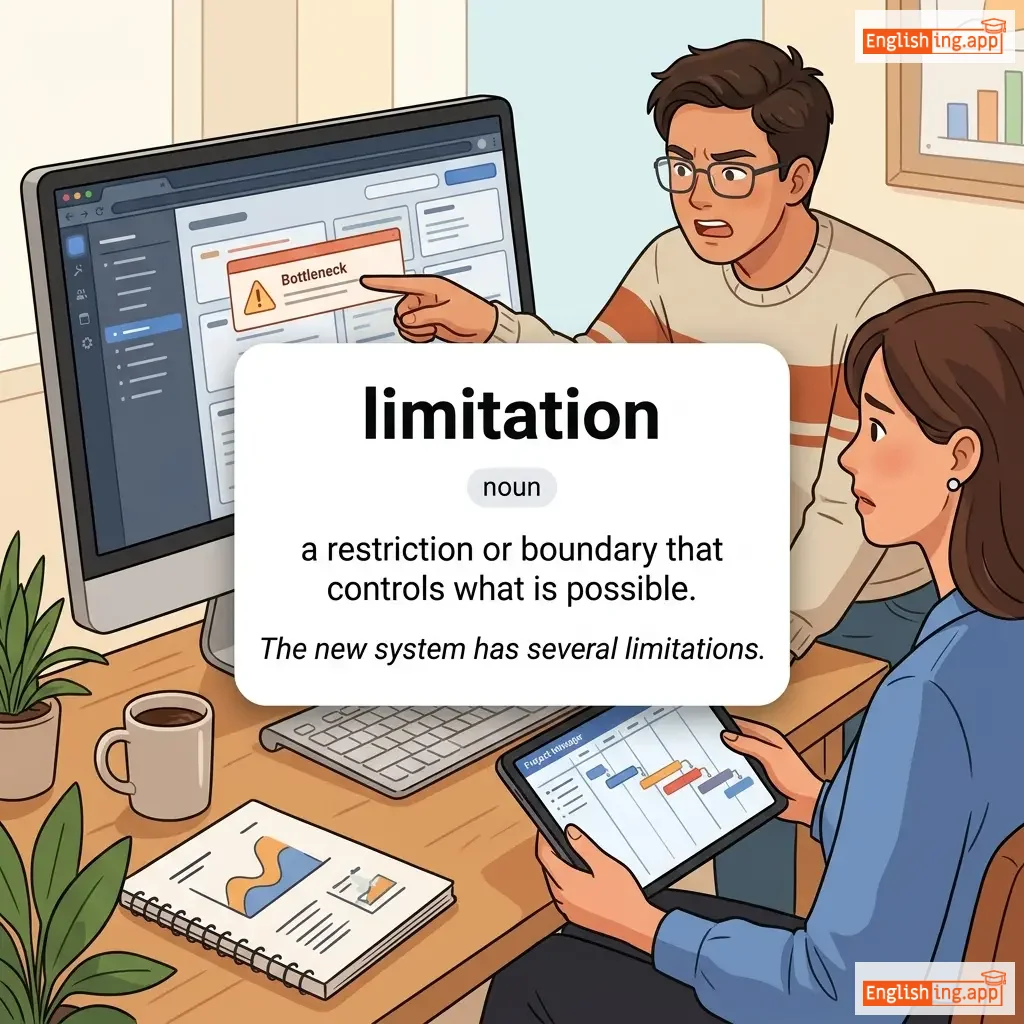
a restriction or boundary that controls what is possible.
••••••
|
The new system has several limitations. |
新系统有几个限制。
Xin xitong you ji ge xianzhi.
••••••
|
know your limitations |
be aware of your own weaknesses or boundaries.
••••••
|
了解你的限制
liaojie nide xianzhi
••••••
|
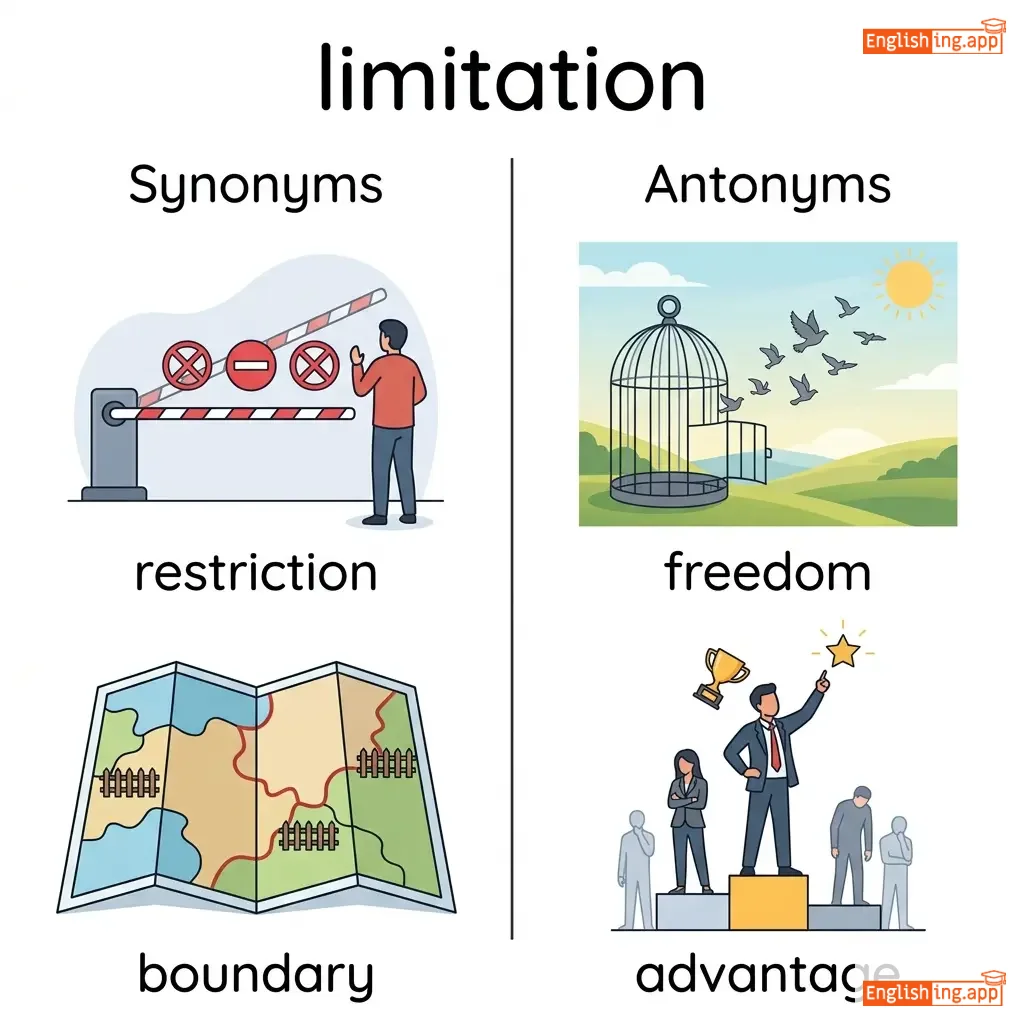
restriction, boundary, constraint, drawback, shortcoming
••••••
|
freedom, advantage, strength
••••••
|
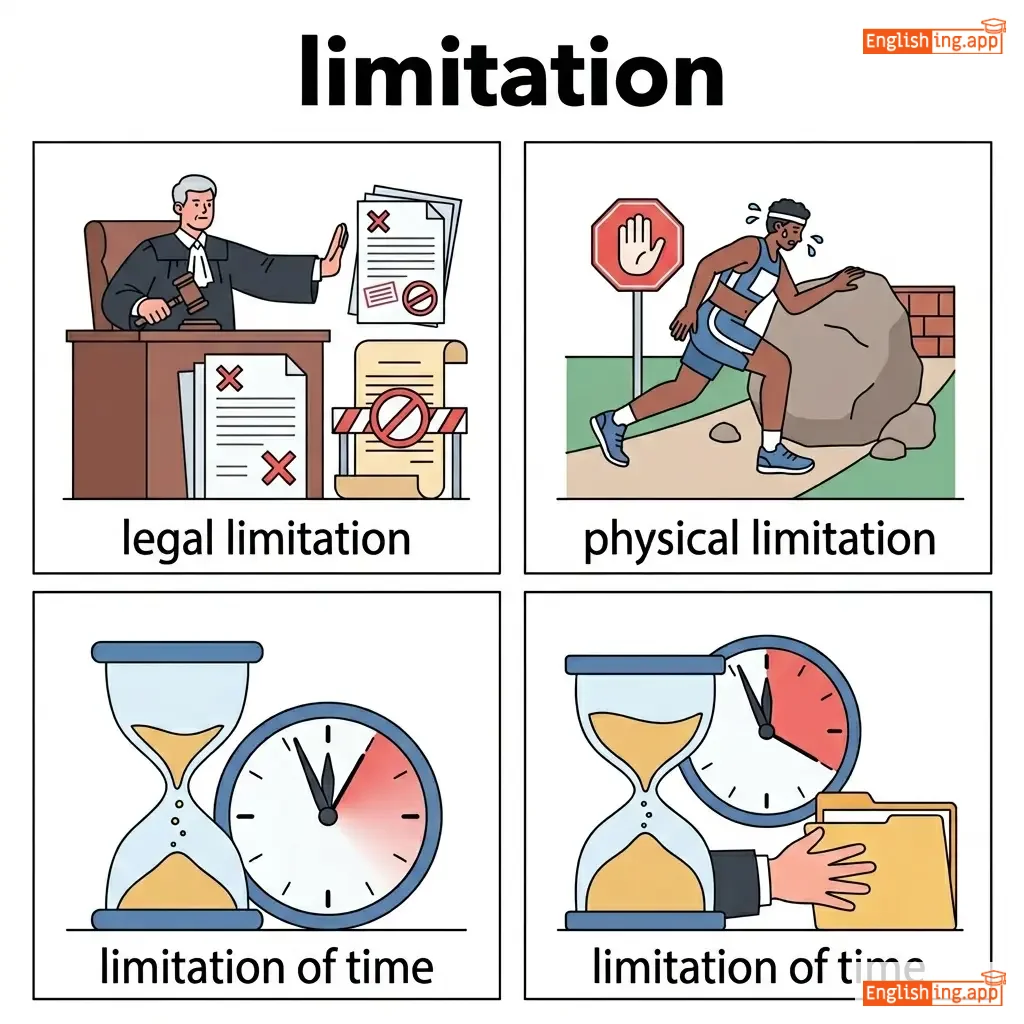
legal limitation, physical limitation, limitation of time, limitation on rights
••••••
|
限制和‘limit’有关系,意味着边界或约束。
••••••
|
|
⏳
••••••
|
/ˈlɪmɪtɪd/
adjective
(限制的)
••••••
|
- •••••• |
有限的
youxian de
••••••
|
- •••••• | - •••••• | - •••••• | - •••••• |
Restricted in size, amount, or extent; not great in number or ability.
••••••
|
Tickets for the concert are limited. |
音乐会的票是有限的。
Yinyuehui de piao shi youxian de.
••••••
|
limited edition |
a product produced in small quantities and available for a short time
••••••
|
限量版
xianliang ban
••••••
|
restricted, finite, scarce, confined
••••••
|
unlimited, abundant, infinite
••••••
|
limited access, limited time, limited resources, limited edition
••••••
|
Limited意味着有限,如手机套餐中的有限流量。
••••••
|
|
📏
••••••
|
/laɪn/
noun, verb
(lài'n)
••••••
|
- •••••• |
线
xian
••••••
|
lined
lái'nd
••••••
|
lined
lái'nd
••••••
|
lines
lài'nz
••••••
|
lining
làiing
••••••
|
A long narrow mark or band; a row of people or things; to cover the inside surface of something.
••••••
|
People waited in a long line outside the theater.
人们在剧院外排着长队等候。
••••••
|
人们在剧院外排着长队等候。
Renmen zai juyuan wai paizhe changdui denghou.
••••••
|
toe the line
遵守规则
••••••
|
to conform to rules or standards
••••••
|
遵守规定
zunshou guiding
••••••
|
row, queue, streak, boundary, stripe
••••••
|
gap, emptiness, space
••••••
|
straight line, waiting line, line up, draw a line
••••••
|
线:记住排队在电影中的顺序!
••••••
|
|
📋
••••••
|
/ˈlaɪnʌp/
noun; verb
(莱恩阿普)
••••••
|
- •••••• |
阵容;排成一列
zhenrong; paicheng yi lie
••••••
|
lined up
莱恩德阿普
••••••
|
lined up
莱恩德阿普
••••••
|
lines up
莱恩兹阿普
••••••
|
lining up
莱宁阿普
••••••
|
a group or arrangement of people or things in a line; to arrange people or things in a row or planned order
••••••
|
The coach announced the team line-up before the match.
教练在比赛前宣布了阵容
••••••
|
教练在比赛前宣布了球队阵容。
jiaolian zai bisai qian xuanchu le qiudui zhenrong
••••••
|
line-up changes
line-up changes
••••••
|
changes made to the arrangement or selection of people or things
••••••
|
阵容变化
zhenrong bianhua
••••••
|
arrangement, queue, roster, formation, lineup
••••••
|
disorder, chaos
••••••
|
team line-up, starting line-up, line-up announced, line up people, line up chairs
••••••
|
LINE 是排队,UP 是准备好 → 阵容
••••••
|
|
📏
••••••
|
/ˈlɪniər/
adjective
(línèir)
••••••
|
- •••••• |
线性
xianxing
••••••
|
- •••••• | - •••••• | - •••••• | - •••••• |
Arranged in or extending along a straight line.
••••••
|
The artist used linear perspective in his drawings. |
艺术家在他的画作中使用了线性透视。
Yìshùjiā zài tā de huàzuò zhōng shǐyòngle xiànxìng tòushì.
••••••
|
linear thinking |
A step-by-step way of reasoning in a straight sequence.
••••••
|
线性思维
xiànxìng sīwéi
••••••
|
straight, direct, sequential, aligned
••••••
|
circular, random, nonlinear
••••••
|
linear perspective, linear function, linear equation
••••••
|
线性 = 线 → 如一条直线 📏
••••••
|
|
⏳
••••••
|
/ˈlɪŋ.ɡər/
verb
(林格)
••••••
|
|
逗留
dòu liú
••••••
|
lingered
林格德
••••••
|
lingered
林格德
••••••
|
lingers
林格斯
••••••
|
lingering
林格瑞
••••••
|
To stay in a place longer than necessary, often because of unwillingness to leave.
••••••
|
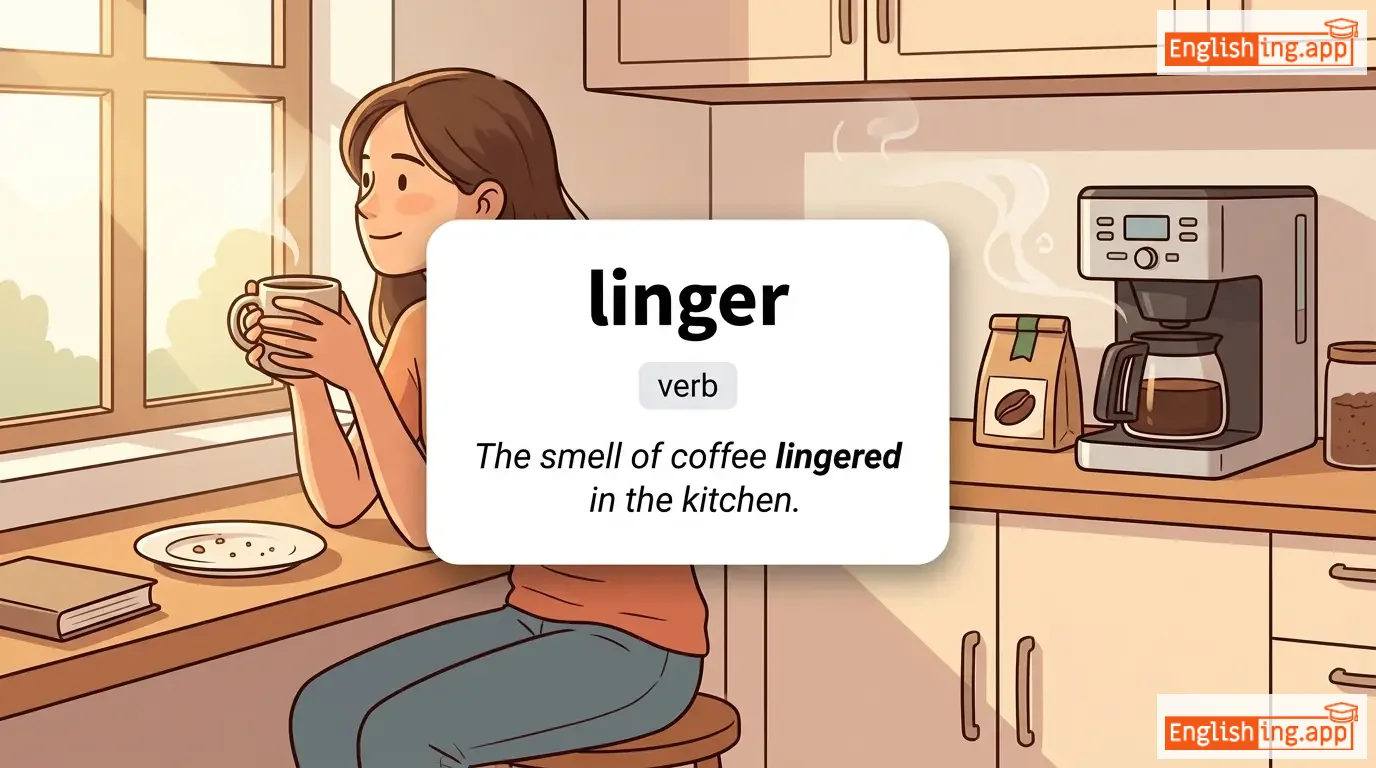
The smell of coffee lingered in the kitchen.
咖啡的气味在厨房里 linger 了很久。
••••••
|
咖啡的气味在厨房里 linger 了很久。
Kāfēi de qìwèi zài chúfáng lǐ linger le hěnjiǔ.
••••••
|
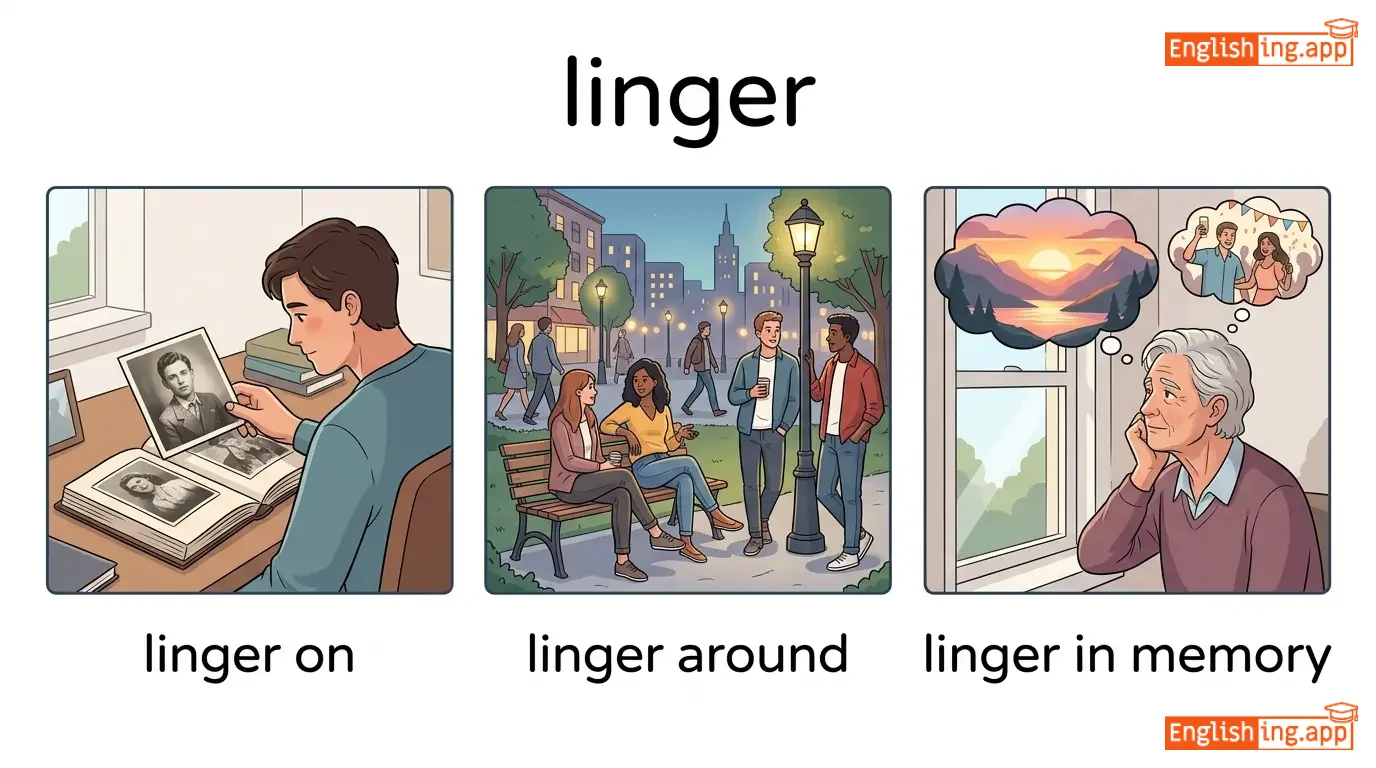
linger on
linger on
••••••
|
To remain for a long time, especially longer than expected.
••••••
|
逗留
dòu liú
••••••
|
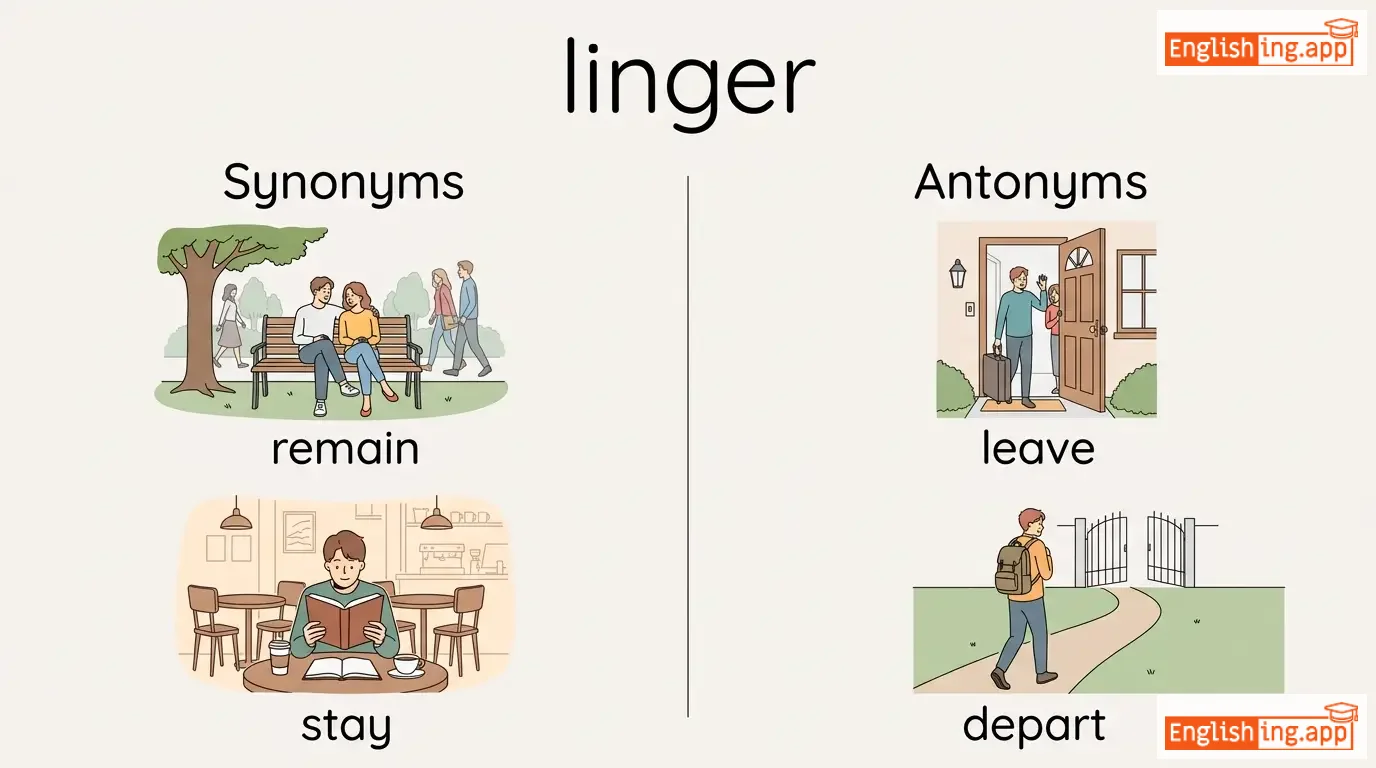
remain, stay, persist, wait, dawdle
••••••
|
leave, depart, vanish
••••••
|
linger on, linger around, linger in memory, linger over
••••••
|
Linger = 逗留,意味着不急于离开。
••••••
|
|
🔗
••••••
|
/lɪŋk/
noun, verb
(链接)
••••••
|
- •••••• |
连接
lianjie
••••••
|
linked
链接
••••••
|
linked
链接
••••••
|
links
链接
••••••
|
linking
链接
••••••
|
a connection between two things; to connect or associate
••••••
|
The article includes a link to the official website.
文章包含指向官方网站的链接。
••••••
|
文章包含指向官方网站的链接。
wenzhang baokuo zhixiang guanfang wangzhan de lianjie.
••••••
|
missing link
缺失的环节
••••••
|
an important connection that is needed to complete something
••••••
|
缺失的环节
queshi de huanjie
••••••
|
connection, tie, relation, bond, association
••••••
|
separation, break, disconnection
••••••
|
strong link, direct link, missing link, link to
••••••
|
🔗 链接意味着连接,和英文中的 'link' 相同。
••••••
|
|
🦁
••••••
|
/ˈlaɪən/
noun
(lái'ēn)
••••••
|
- •••••• |
狮子
shizi
••••••
|
- •••••• | - •••••• | - •••••• | - •••••• |
a large wild animal of the cat family that lives in Africa and Asia, known as the king of the jungle
••••••
|
The lion roared loudly in the distance.
狮子在远处大声咆哮。
••••••
|
狮子在远处大声咆哮。
Shizi zai yuanchu dasheng paoxiao.
••••••
|
lion’s share
狮子分享
••••••
|
the largest portion of something
••••••
|
狮子的份额
Shizide fen'e
••••••
|
big cat, panthera leo, beast, predator
••••••
|
prey, deer
••••••
|
male lion, lion cub, pride of lions, lion roar
••••••
|
狮子是丛林之王 🦁 - 记住,狮子总是占据最大份额!
••••••
|
|
👄
••••••
|
/lɪp/
noun
(lip)
••••••
|
- •••••• |
嘴唇
zuǐchún
••••••
|
- •••••• | - •••••• | - •••••• | - •••••• |
either of the two soft edges of the mouth
••••••
|
She smiled and bit her lower lip nervously. |
她微笑着紧张地咬了下嘴唇。
Tā wéixiào zhe jǐnzhāng de yǎo le xià zuǐchún.
••••••
|
bite your lip |
to keep from saying something or showing emotion
••••••
|
咬嘴唇
yǎo zuǐchún
••••••
|
mouth edge, rim, border, edge
••••••
|
interior, inside
••••••
|
lower lip, upper lip, lip balm, lip movement
••••••
|
👄 Lip 代表嘴唇 – 嘴唇上抹口红,别忘记了!
••••••
|
|
💧
••••••
|
/ˈlɪkwɪd/
noun
(lìkuí de)
••••••
|
- •••••• |
液体
yètǐ
••••••
|
- •••••• | - •••••• | - •••••• | - •••••• |
a substance that flows freely but is of constant volume, having a consistency like water or oil.
••••••
|
Water is a clear liquid that is essential for life. |
水是一种清澈的液体,对于生命至关重要。
Shuǐ shì yī zhǒng qīngchè de yètǐ, duìyú shēngmìng zhìguān zhòngyào.
••••••
|
liquid assets |
cash or assets easily convertible to cash
••••••
|
流动资产
liúdòng zīchǎn
••••••
|
fluid, solution, melt, juice, drink
••••••
|
solid, gas
••••••
|
liquid form, liquid crystal, liquid soap, liquid nitrogen
••••••
|
液体像水流动,简单转换像现金一样。
••••••
|
|
📋
••••••
|
/lɪst/
noun, verb
••••••
|
- •••••• | - •••••• |
listed
••••••
|
listed
••••••
|
lists
••••••
|
listing
••••••
|
A series of names, items, or tasks written or printed together; also, to record or register items in such a way.
••••••
|
She wrote a shopping list before going to the market. |
- •••••• |
hit list |
A list of people or things targeted for attention, often negatively.
••••••
|
- •••••• |
catalog, register, inventory, roll, record
••••••
|
disorder, jumble, mess
••••••
|
shopping list, guest list, to list items, to be listed
••••••
|
No •••••• |
|
👂
••••••
|
/ˈlɪs.ən/
verb
(lìsēn)
••••••
|

|
听
tīng
••••••
|
listened
lìsēnd
••••••
|
listened
lìsēnd
••••••
|
listens
lìsēns
••••••
|
listening
lìsēnɪnɡ
••••••
|
to pay attention to sound
••••••
|
She loves to listen to classical music in the evenings.
她喜欢在晚上听古典音乐。
••••••
|
她喜欢在晚上听古典音乐。
Tā xǐhuān zài wǎnshàng tīng gǔdiǎn yīnyuè.
••••••
|
listen up
注意听
••••••
|
used to tell people to pay attention
••••••
|
注意听
zhùyì tīng
••••••
|
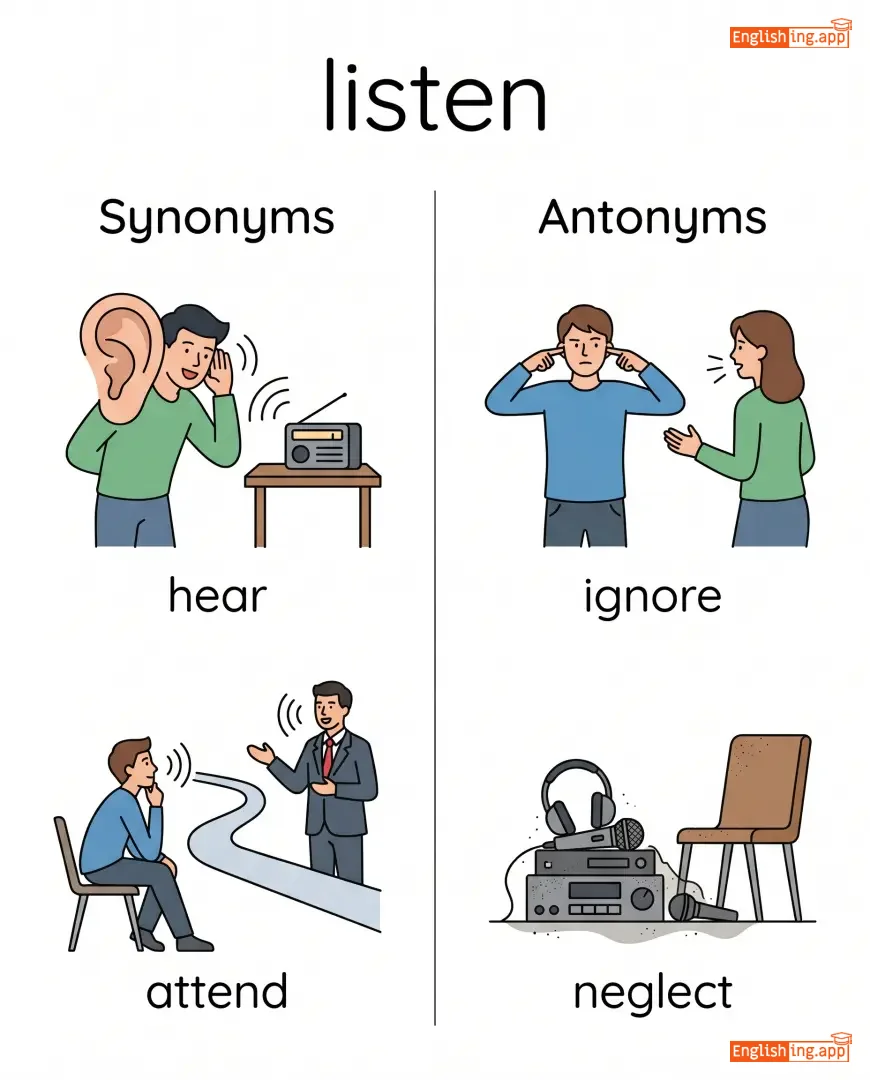
hear, attend, heed, concentrate, pay attention
••••••
|
ignore, neglect, disregard
••••••
|
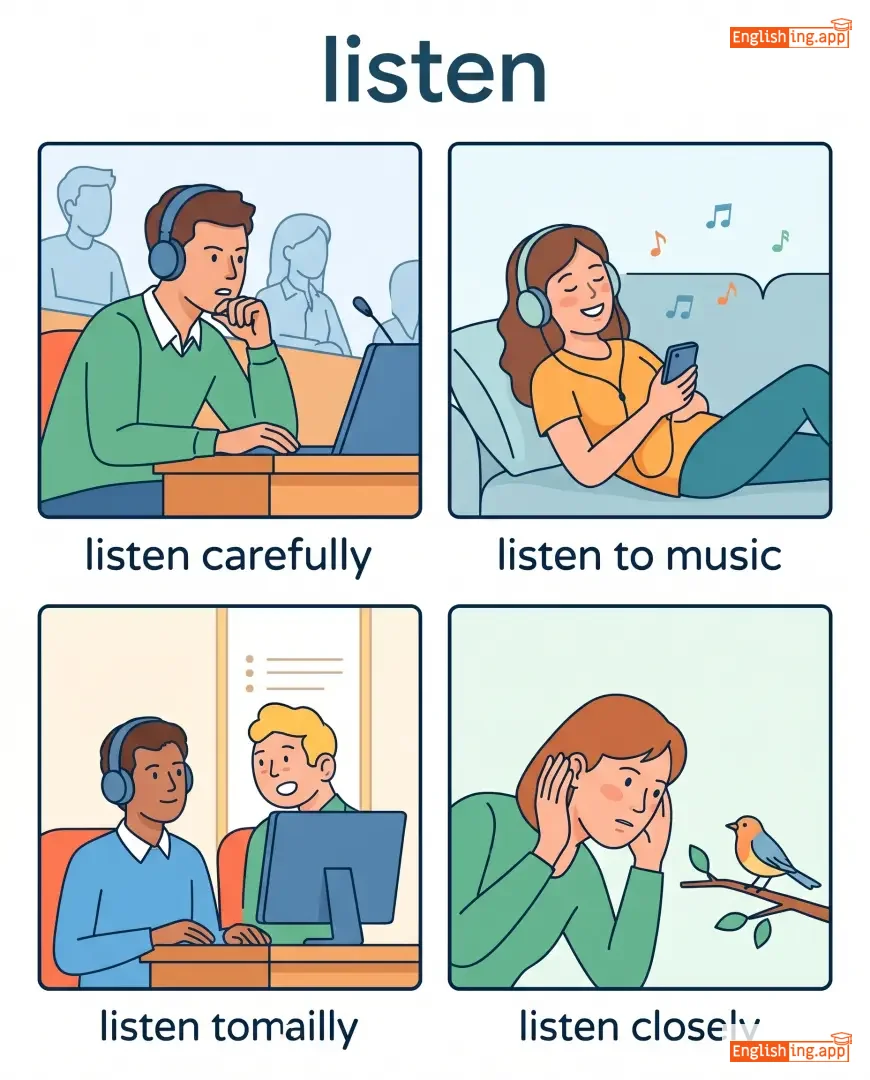
listen carefully, listen to music, listen closely, listen in
••••••
|
👂 Listen 意思是听 – 听妈妈说话!
••••••
|
|
📋
••••••
|
/ˈlɪstɪŋ/
noun
(lìstīng)
••••••
|
- •••••• |
列表
liebie
••••••
|
- •••••• | - •••••• | - •••••• | - •••••• |
a series of items or names written or printed in a specific order
••••••
|
The listing of available jobs was updated daily. |
可用职位的列表每天都会更新。
Keyong zhiwei de liebie mei tian dou hui gengxin.
••••••
|
- •••••• | - •••••• | - •••••• |
catalog, register, inventory, directory
••••••
|
removal, deletion, omission
••••••
|
job listing, price listing, product listing, guest listing
••••••
|
就像列表一样,创建自己的列表 - Listing means to make a list
••••••
|
|
💧
••••••
|
/ˈlɪtə(r)/
noun
••••••
|
- •••••• | - •••••• | - •••••• | - •••••• | - •••••• | - •••••• |
a metric unit of volume equal to one cubic decimeter
••••••
|
The recipe calls for two liters of water. |
- •••••• | - •••••• | - •••••• | - •••••• |
liter, litre, measure, volume
••••••
|
dry, empty
••••••
|
liter of water, liter of milk, one liter, two liters
••••••
|
No •••••• |
|
📖
••••••
|
/ˈlɪtərəsi/
noun
(lǐtèrèsī)
••••••
|
- •••••• |
识字率
shízì lǜ
••••••
|
- •••••• | - •••••• | - •••••• | - •••••• |
the ability to read and write
••••••
|
Literacy programs help reduce poverty in rural areas. |
识字率项目帮助减少农村地区的贫困。
Shízì lǜ xiàngmù bāngzhù jiǎnshǎo nóngcūn dìqū de pínkùn.
••••••
|
digital literacy |
the ability to use digital technology effectively
••••••
|
数字识字
shùzì shízì
••••••
|
education, knowledge, learning, scholarship
••••••
|
illiteracy, ignorance
••••••
|
literacy rate, promote literacy, literacy program, literacy skills
••••••
|
识字 - 学会读写
••••••
|
|
🔍
••••••
|
/ˈlɪtərəli/
adverb
(字面上)
••••••
|
- •••••• |
字面上
zimian shang
••••••
|
- •••••• | - •••••• | - •••••• | - •••••• |
in a literal manner or sense; exactly
••••••
|
He was literally running for three hours without stopping. |
他字面上跑了三个小时没有停下来。
Ta zimian shang pao le san ge xiaoshi mei you ting xiala lai.
••••••
|
- •••••• | - •••••• | - •••••• |
exactly, precisely, actually, really
••••••
|
figuratively, metaphorically
••••••
|
literally true, literally impossible, literally happened
••••••
|
字面上意味着字面意义 – 就像说'准确'!
••••••
|
|
📚
••••••
|
/ˈlɪtərɛri/
adjective
(文学的)
••••••
|
- •••••• |
文学的
wenxuede
••••••
|
- •••••• | - •••••• | - •••••• | - •••••• |
concerning the writing, study, or content of literature
••••••
|
She is a well-known figure in the literary world.
她是文学界的知名人物。
••••••
|
她是文学界的知名人物。
Tā shì wénxué jiè de zhīmíng rénwù.
••••••
|
literary genius
文学天才
••••••
|
a person with outstanding creative talent in literature
••••••
|
文学天才
wénxué tiāncái
••••••
|
bookish, cultured, scholarly, learned
••••••
|
illiterate, uneducated
••••••
|
literary world, literary work, literary career, literary criticism
••••••
|
📚 Literary意味着文学的–来自文学。
••••••
|
|
📚
••••••
|
/ˈlɪt.ər.ət/
adjective
(利特雷特)
••••••
|
- •••••• |
文盲; 有教育的; 受过良好教育的
literet
••••••
|
- •••••• | - •••••• | - •••••• | - •••••• |
able to read and write; educated; well-educated
••••••
|
She is a very literate person who reads extensively.
她是一个非常有文化的人,广泛阅读。
••••••
|
她是一个非常有文化的人,广泛阅读。
tā shì yīgè fēicháng yǒu wénhuà de rén, guǎngfàn yuèdú.
••••••
|
- •••••• | - •••••• | - •••••• |
educated, learned, scholarly, well-read
••••••
|
illiterate, uneducated, ignorant
••••••
|
literate society, computer literate, financially literate
••••••
|
Literate = 教育和阅读能力强
••••••
|
|
📚
••••••
|
/ˈlɪtərətʃər/
noun
(lǐtèrùchā)
••••••
|
- •••••• |
文学
wenxue
••••••
|
- •••••• | - •••••• | - •••••• | - •••••• |
written works, especially those considered of superior or lasting artistic merit
••••••
|
He studied English literature at university. |
他在大学学习了英语文学。
Tā zài dàxué xuéxí le yīngyǔ wénxué.
••••••
|
classic literature |
literary works of enduring value and recognition
••••••
|
经典文学
jīngdiǎn wénxué
••••••
|
writing, works, prose, poetry, composition
••••••
|
illiterature, ignorance
••••••
|
English literature, world literature, modern literature, study literature
••••••
|
Literature - '文学' 就是深刻的‘文字’艺术作品
••••••
|
|
🧴
••••••
|
/ˈliːtər/
noun
(升)
••••••
|
- •••••• |
升
sheng
••••••
|
- •••••• | - •••••• | - •••••• | - •••••• |
a metric unit of volume equal to 1,000 cubic centimeters; commonly used to measure liquids
••••••
|
She bought a litre of milk from the shop.
她买了一升牛奶。
••••••
|
她从商店买了一升牛奶。
ta cong shangdian mai le yi sheng niunai
••••••
|
per litre
每升
••••••
|
for each litre as a unit of measurement
••••••
|
每升
mei sheng
••••••
|
liter, litre (UK), l, L
••••••
|
millilitre, drop
••••••
|
litre of water, one litre bottle, per litre, half litre
••••••
|
升 = sheng, sounds like 'share' of liquid
••••••
|
|
🗑️
••••••
|
/ˈlɪtər/
noun/verb
(litter)
••••••
|
- •••••• |
垃圾
laji
••••••
|
littered
littered
••••••
|
littered
littered
••••••
|
litters
litters
••••••
|
littering
littering
••••••
|
rubbish or waste left lying in a public place; to make a place untidy by leaving rubbish
••••••
|
The park was full of litter after the festival.
节日过后,公园里满是垃圾。
••••••
|
节日过后,公园里满是垃圾。
Jieri guo hou, gongyuan li man shi laji.
••••••
|
litter the streets
把垃圾丢在街上
••••••
|
to throw rubbish on the roads
••••••
|
把垃圾丢在街上
Ba laji diu zai jie shang
••••••
|
trash, rubbish, debris, garbage
••••••
|
cleanliness, tidiness
••••••
|
litter problem, litter bin, litter the streets, litter laws
••••••
|
Litter意味着垃圾—把垃圾丢在街上
••••••
|
|
🐭
••••••
|
/ˈlɪtl/
adjective
(lìtl)
••••••
|
- •••••• |
小的
xiao de
••••••
|
- •••••• | - •••••• | - •••••• | - •••••• |
Small in size, amount, or degree.
••••••
|
He drank a little water before going to bed. |
他在上床前喝了一点水。
Tā zài shàng chuáng qián hē le yī diǎn shuǐ.
••••••
|
every little helps |
Even a small amount of help is useful.
••••••
|
每一小步都有帮助
měi yī xiǎo bù dōu yǒu bāng zhù
••••••
|
small, tiny, slight, minor, modest
••••••
|
large, big, huge
••••••
|
a little bit, little chance, little time, little boy
••••••
|
Little 意味着小 — 小 (little) 猫咪。
••••••
|
|
🏡
••••••
|
/lɪv/
verb
(līf)
••••••
|
|
生活
shenghuo
••••••
|
lived
lìvde
••••••
|
lived
lìvde
••••••
|
lives
lìves
••••••
|
living
lìving
••••••
|
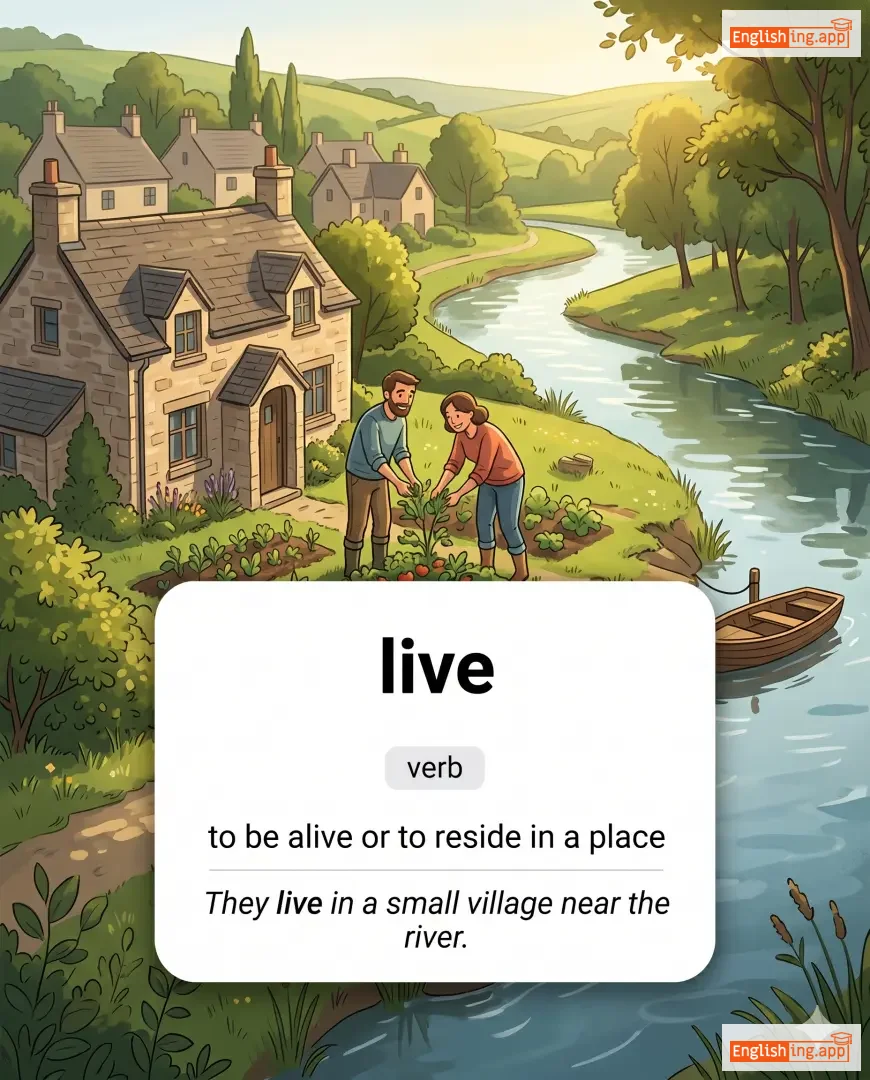
to be alive or to reside in a place
••••••
|
They live in a small village near the river.
他们住在河边的一个小村庄里。
••••••
|
他们住在河边的一个小村庄里。
Tāmen zhù zài hé biān de yī gè xiǎo cūnzhuāng lǐ.
••••••
|
live and let live
活着让活着
••••••
|
to tolerate others' behavior and expect them to tolerate yours
••••••
|
活着让活着
Huózhe ràng huózhe
••••••
|
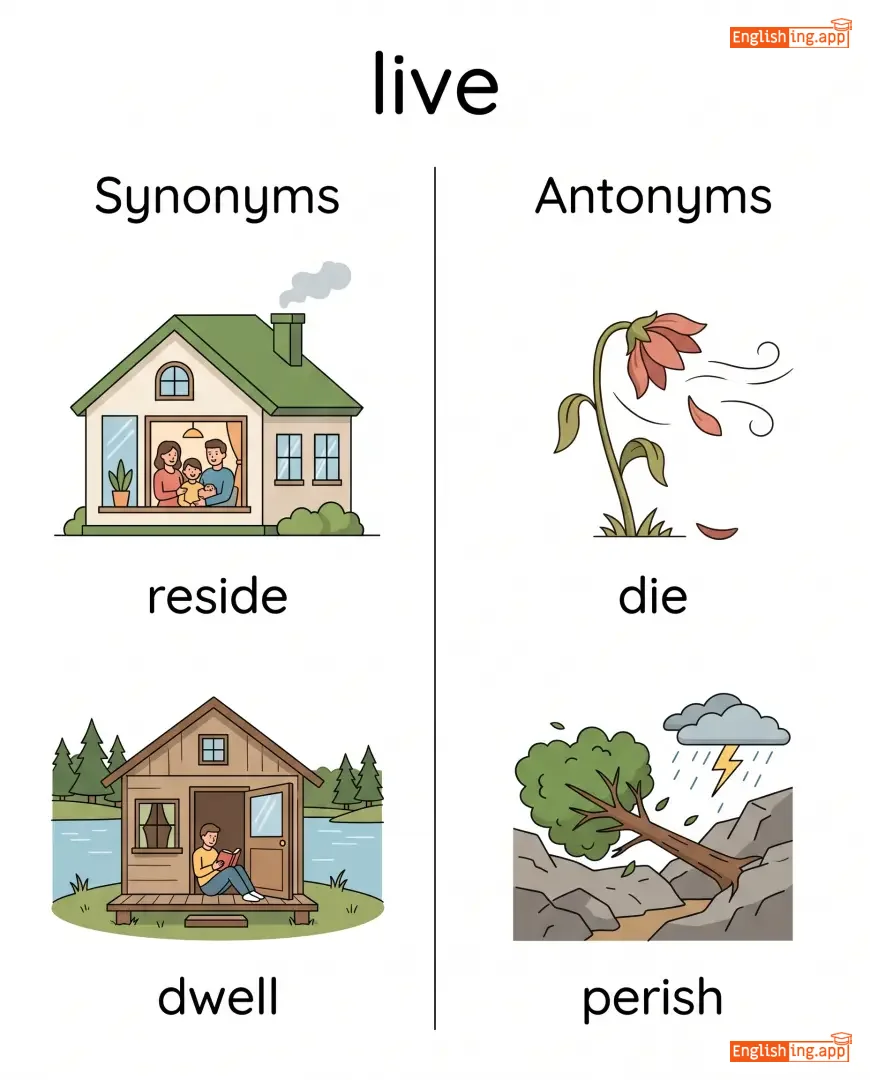
reside, dwell, exist, inhabit, survive
••••••
|
die, perish
••••••
|
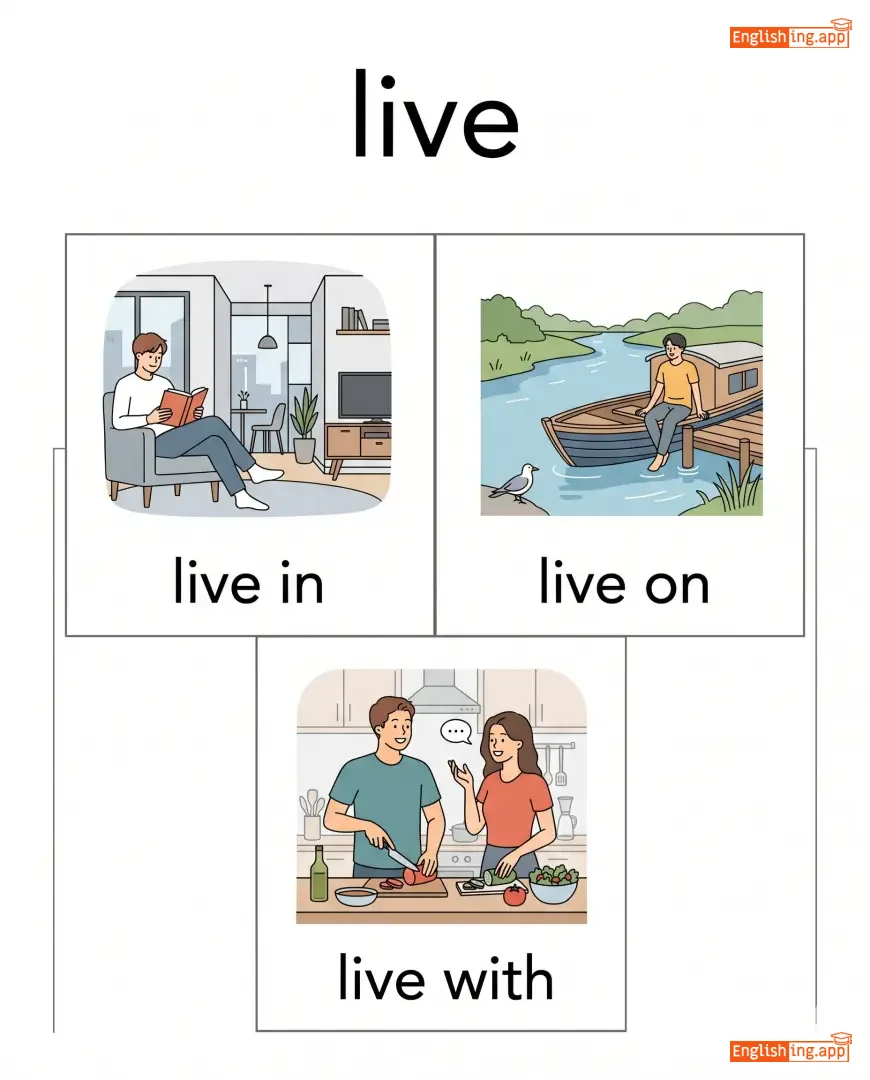
live in, live on, live with, live happily, live abroad
••••••
|
Live意味着生活,就像看'直播',看到的是实时的生活。
••••••
|
|
🌱
••••••
|
/ˈlɪvɪŋ/
noun/adjective
(lì vīng)
••••••
|
- •••••• |
生活 / 生计
shenghuo / shengji
••••••
|
- •••••• | - •••••• | - •••••• | - •••••• |
the state of being alive; or a way of earning money
••••••
|
He makes his living as a teacher. |
他以教师的身份谋生。
Ta yi jiaoshi de shenfen mingsheng.
••••••
|
cost of living |
the amount of money needed to maintain a certain standard of life
••••••
|
生活成本
shenghuo chengben
••••••
|
existence, livelihood, earnings, occupation
••••••
|
death, nonexistence
••••••
|
living standard, living being, living conditions, cost of living
••••••
|
Living 代表生活或生计,就像在 '客厅' 中生活的人。
••••••
|

