|
絵文字
|
単語 | Images | 翻訳 | 過去 | 過去分詞 | 三人称単数 | 動名詞 | 意味 | 例文 | 例文の翻訳 | 表現例 | 表現例の意味 | 表現例の翻訳 | 同義語 | 対義語 | コロケーション | ニーモニック |
|---|---|---|---|---|---|---|---|---|---|---|---|---|---|---|---|---|---|
|
🤾
••••••
|
/dʒʌmp/
verb
••••••
|
|
- •••••• |
jumped
••••••
|
jumped
••••••
|
jumps
••••••
|
jumping
••••••
|
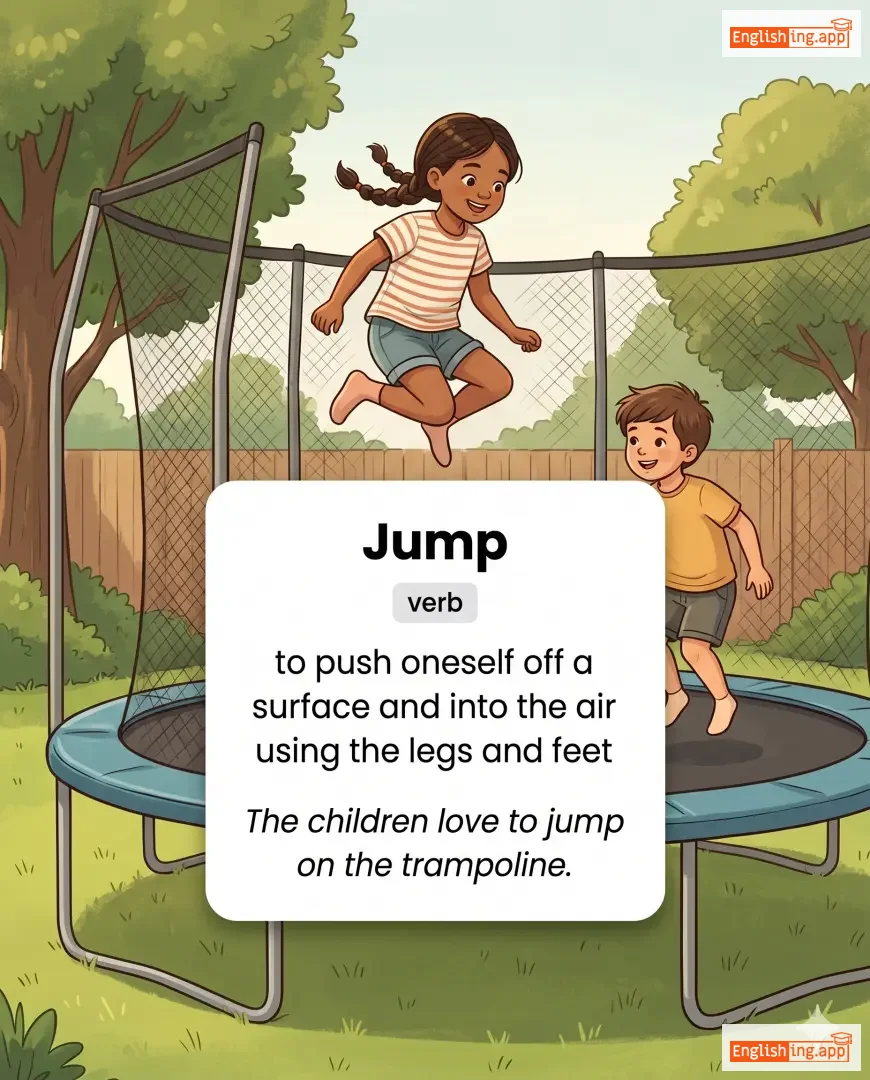
to push oneself off a surface and into the air using the legs and feet
••••••
|
The children love to jump on the trampoline. |
- •••••• |
jump the gun |
to act before the proper time
••••••
|
- •••••• |
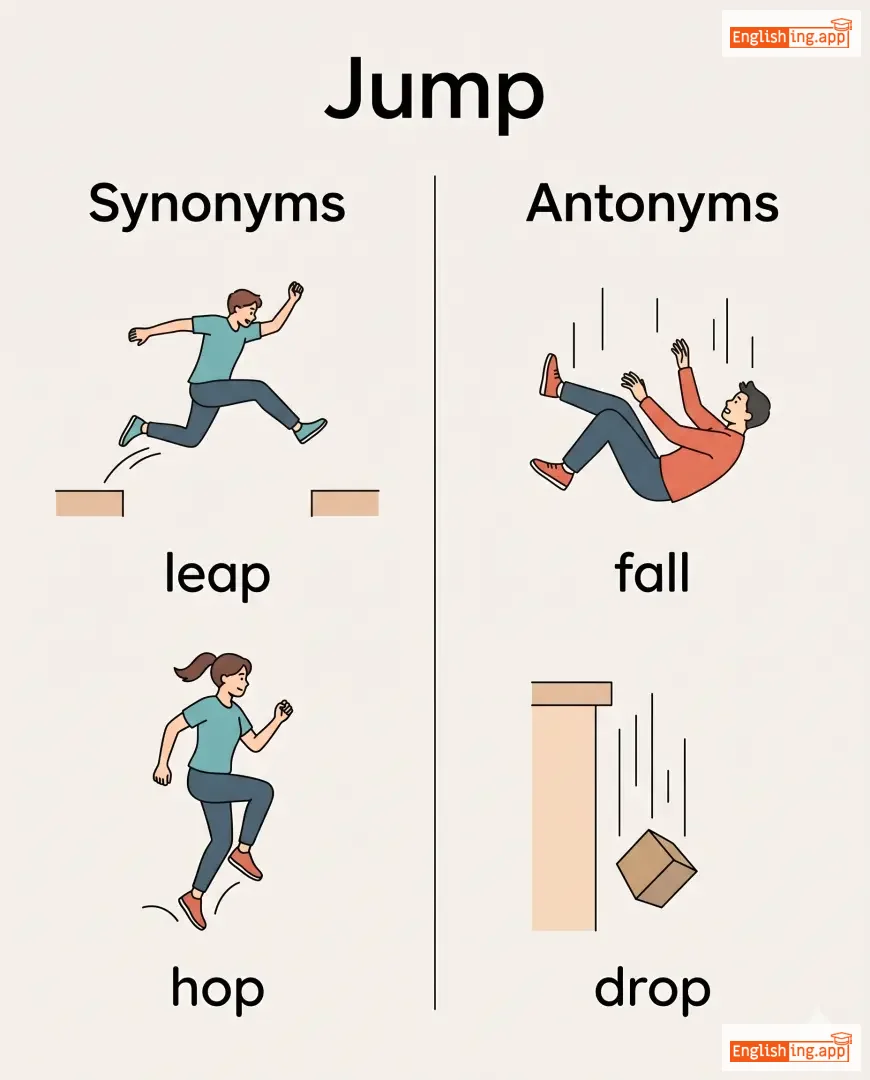
leap, hop, spring, bound, vault
••••••
|
fall, drop, descend
••••••
|
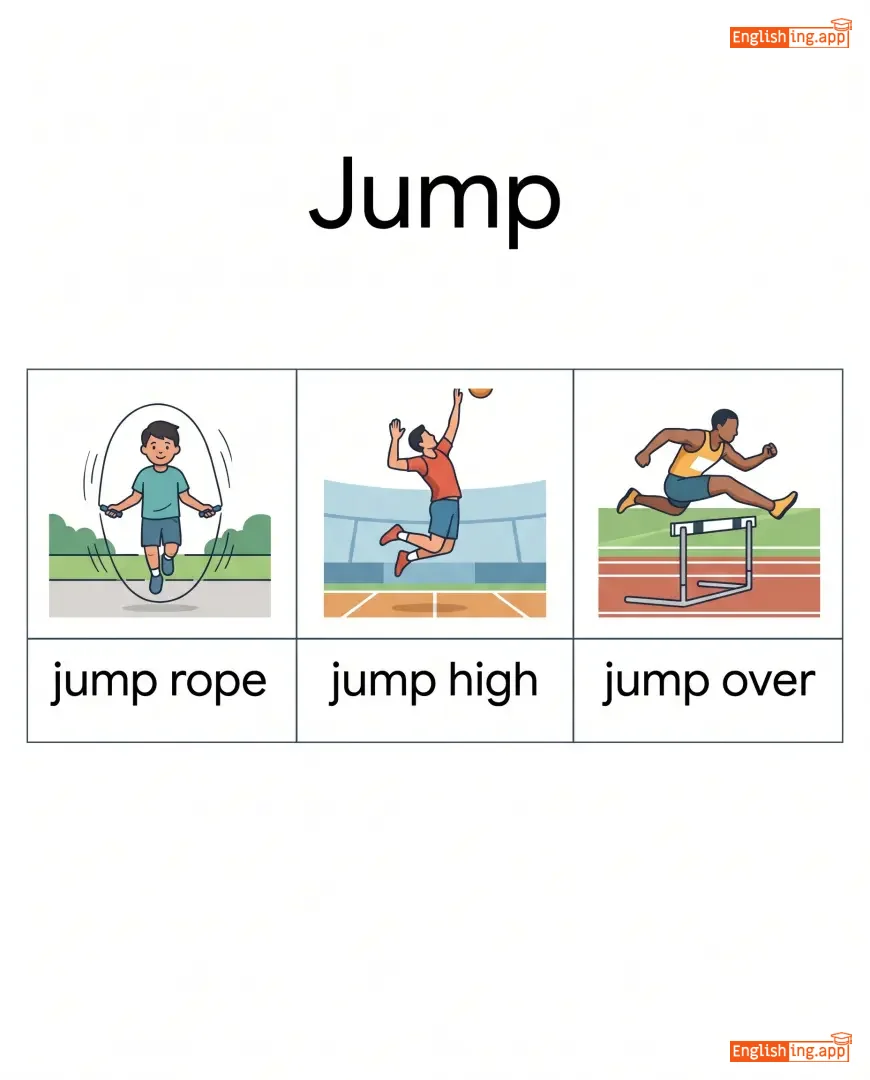
jump rope, jump high, jump over, jump into
••••••
|
No •••••• |
|
🚗
••••••
|
/ˈdʒʌŋk.ʃən/
noun
(jankushon)
••••••
|
- •••••• |
ジャンクション
jankushon
••••••
|
- •••••• | - •••••• | - •••••• | - •••••• |
a place where two or more roads or railway lines meet; a point where things join or connect
••••••
|
Turn left at the junction to reach the shopping center.
ショッピングセンターに行くために、ジャンクションで左に曲がってください。
••••••
|
ショッピングセンターに行くために、ジャンクションで左に曲がってください。
Shopping center ni iku tame ni, jankushon de hidari ni magatte kudasai.
••••••
|
- •••••• | - •••••• | - •••••• |
intersection, crossroads, meeting point, connection
••••••
|
separation, division, dead end
••••••
|
railway junction, road junction, busy junction
••••••
|
ジャンクション: 道路が交差する場所で、曲がる場所を知っている
••••••
|
|
🌞
••••••
|
/dʒuːn/
noun
(ジューン)
••••••
|
- •••••• |
六月
rokugatsu
••••••
|
- •••••• | - •••••• | - •••••• | - •••••• |
the sixth month of the year in the Gregorian calendar
••••••
|
Schools often close for summer vacation in June.
学校はたいてい六月に夏休みに入ります。
••••••
|
学校はたいてい六月に夏休みに入ります。
gakkou wa taitei rokugatsu ni natsuyasumi ni hairimasu
••••••
|
June bride
ジューンブライド
••••••
|
a woman who gets married in June, traditionally believed to bring good luck
••••••
|
ジューンブライド
juun buraido
••••••
|
sixth month, midsummer month, early summer month, calendar month
••••••
|
December, January
••••••
|
early June, late June, mid-June, June holidays, June weather
••••••
|
Rokugatsu = June = 夏の始まり
••••••
|
|
👶
••••••
|
/ˈdʒuː.ni.ər/
noun
(ジュニア)
••••••
|
- •••••• |
ジュニア; 初心者; 下位
junia; shoshinsha; kai
••••••
|
- •••••• | - •••••• | - •••••• | - •••••• |
a person who is younger or lower in rank than someone else; relating to young people
••••••
|
The junior employee was eager to learn from senior colleagues.
ジュニア社員はシニアの同僚から学びたがっていました。
••••••
|
ジュニア社員はシニアの同僚から学びたがっていました。
Junia shain wa shinia no dōryō kara manabitagatte imashita.
••••••
|
- •••••• | - •••••• | - •••••• |
younger, subordinate, novice, apprentice
••••••
|
senior, elder, superior, veteran
••••••
|
junior employee, junior school, junior partner
••••••
|
Junior in Japanese sounds like a newcomer eager to learn from those ahead.
••••••
|
|
🏩
••••••
|
/ˌdʒʊə.rɪsˈdɪk.ʃən/
noun
(ジュリスディクション)
••••••
|
- •••••• |
管轄
kankatsu
••••••
|
- •••••• | - •••••• | - •••••• | - •••••• |
the official power to make legal decisions and judgments; the extent of this power
••••••
|
This case falls under the jurisdiction of the federal court. |
このケースは連邦裁判所の管轄下にあります。
kono kēsu wa renpō saiban-sho no kankatsu-ka ni arimasu.
••••••
|
- •••••• | - •••••• | - •••••• |
authority, power, control, domain
••••••
|
powerlessness, anarchy, lawlessness
••••••
|
legal jurisdiction, federal jurisdiction, court jurisdiction
••••••
|
管轄は、どの裁判所が判決を下せるかを決めます。
••••••
|
|
⚖️
••••••
|
/ˈdʒʊəri/
noun
(陪審団)
••••••
|
- •••••• |
陪審団
baishindan
••••••
|
- •••••• | - •••••• | - •••••• | - •••••• |
a group of people sworn to give a verdict in a legal case based on the evidence
••••••
|
The jury found him guilty of the crime.
陪審団は彼を犯罪者として有罪と認定しました。
••••••
|
陪審団は彼を犯罪者として有罪と認定しました。
Baishindan wa kare o hanzai-sha to shite yūzai to nintei shimashita.
••••••
|
the jury is still out
陪審団はまだ結論を出していません
••••••
|
a decision has not yet been made
••••••
|
陪審団はまだ結論を出していません
Baishindan wa mada ketsuron o dashiteimasen
••••••
|
panel, tribunal, committee, board, assessors
••••••
|
judge, individual decision
••••••
|
jury duty, jury trial, grand jury, jury verdict
••••••
|
陪審団は裁判での結論を下す集団です。
••••••
|
|
⚖️
••••••
|
/dʒʌst/
adverb/adjective
(ジャスト)
••••••
|
- •••••• |
ちょうど、ただ、または公正で道徳的に正しい
choudo, tada, matawa kou-sei de doutokuteki ni tadashii
••••••
|
- •••••• | - •••••• | - •••••• | - •••••• |
Exactly, only, or fair and morally right.
••••••
|
She arrived just in time for the meeting. |
彼女は会議のためにちょうど時間通りに到着した。
Kanojo wa kaigi no tame ni choudo jikan doori ni touchaku shita.
••••••
|
just in case |
As a precaution; in case something happens.
••••••
|
念のため
nen no tame
••••••
|
fair, right, exact, only, merely
••••••
|
unfair, unjust, wrong
••••••
|
just now, just about, just because, just enough
••••••
|
JUSTはちょうど時間通り、公正で道徳的。
••••••
|
|
⚖️
••••••
|
/ˈdʒʌstɪs/
noun
(ジャスティス)
••••••
|
|
正義
seigi
••••••
|
- •••••• | - •••••• | - •••••• | - •••••• |
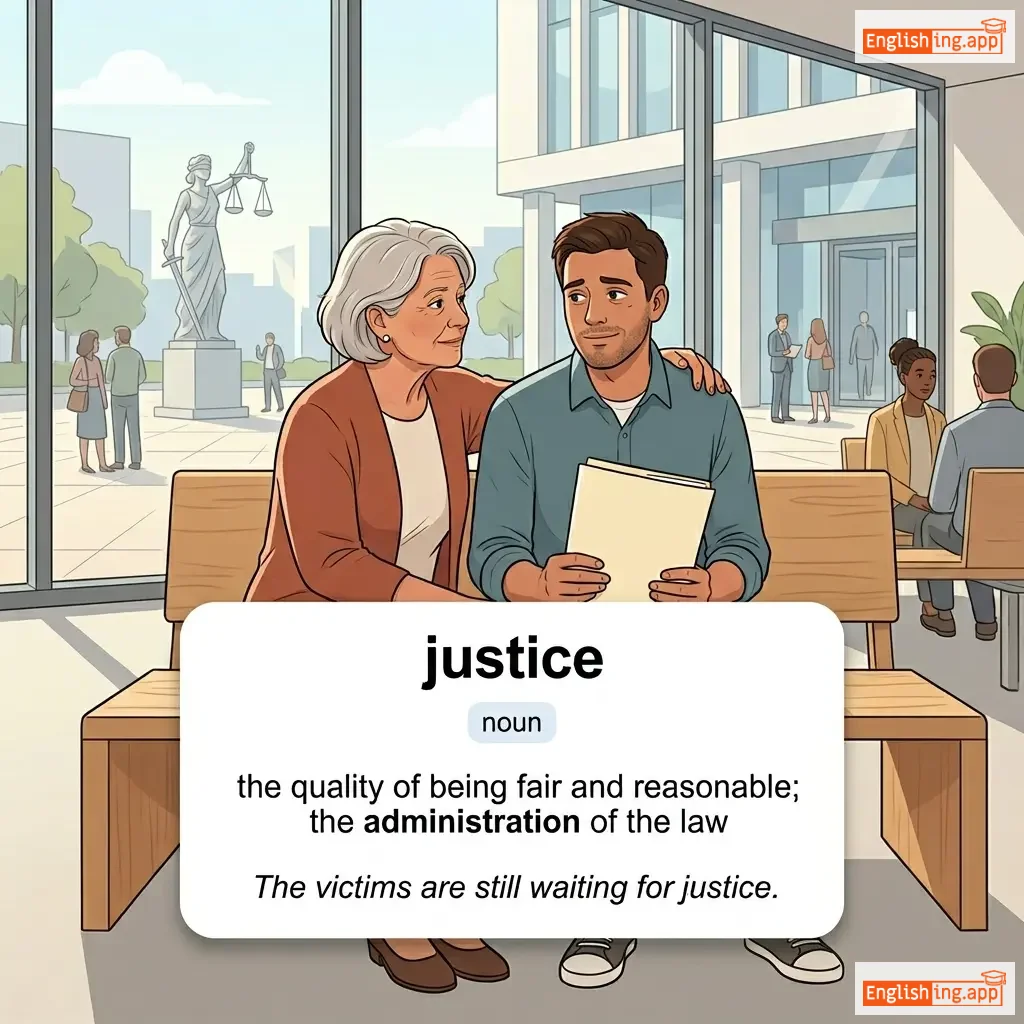
the quality of being fair and reasonable; the administration of the law
••••••
|
The victims are still waiting for justice. |
犠牲者はまだ正義を待っています。
Giseisha wa mada seigi o matteimasu.
••••••
|
bring to justice |
to arrest and punish someone for a crime
••••••
|
正義をもたらす
seigi o motarasu
••••••
|
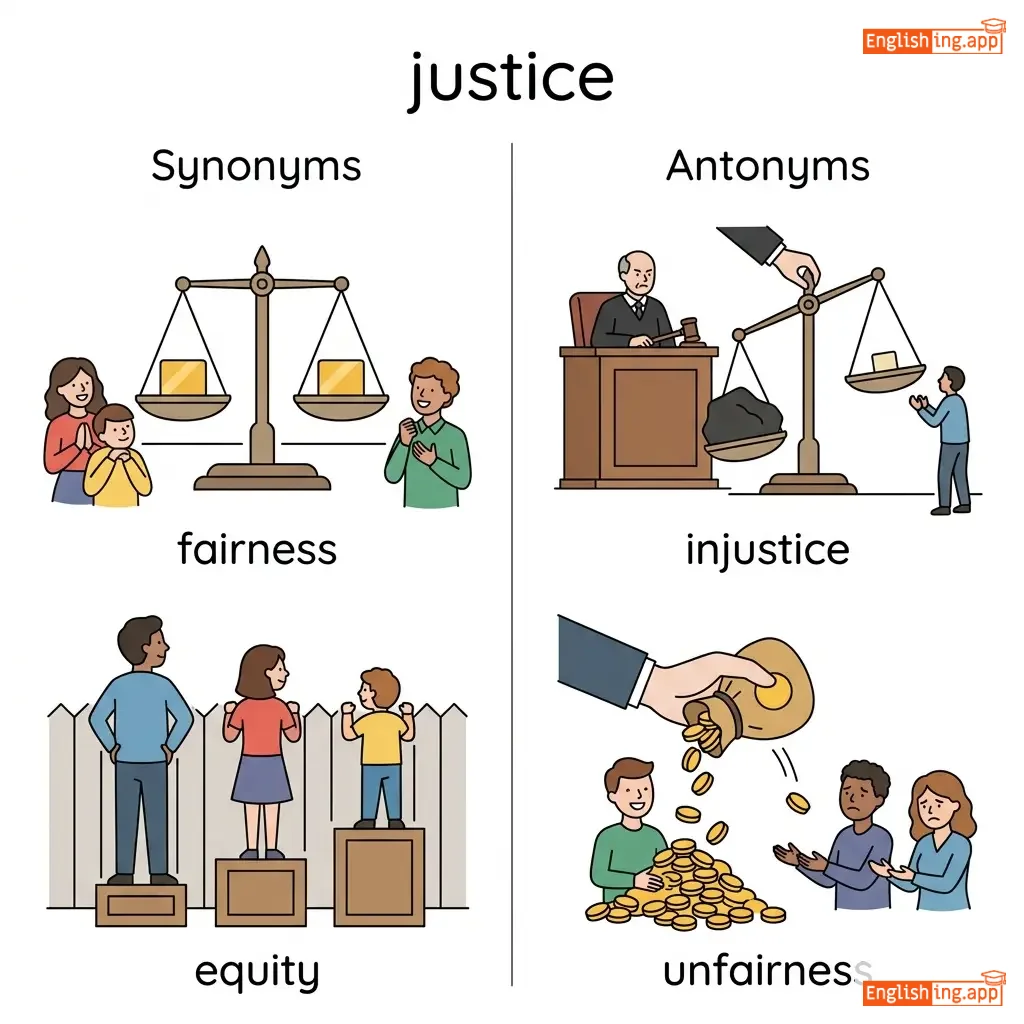
fairness, equity, law, righteousness, impartiality
••••••
|
injustice, unfairness, corruption
••••••
|
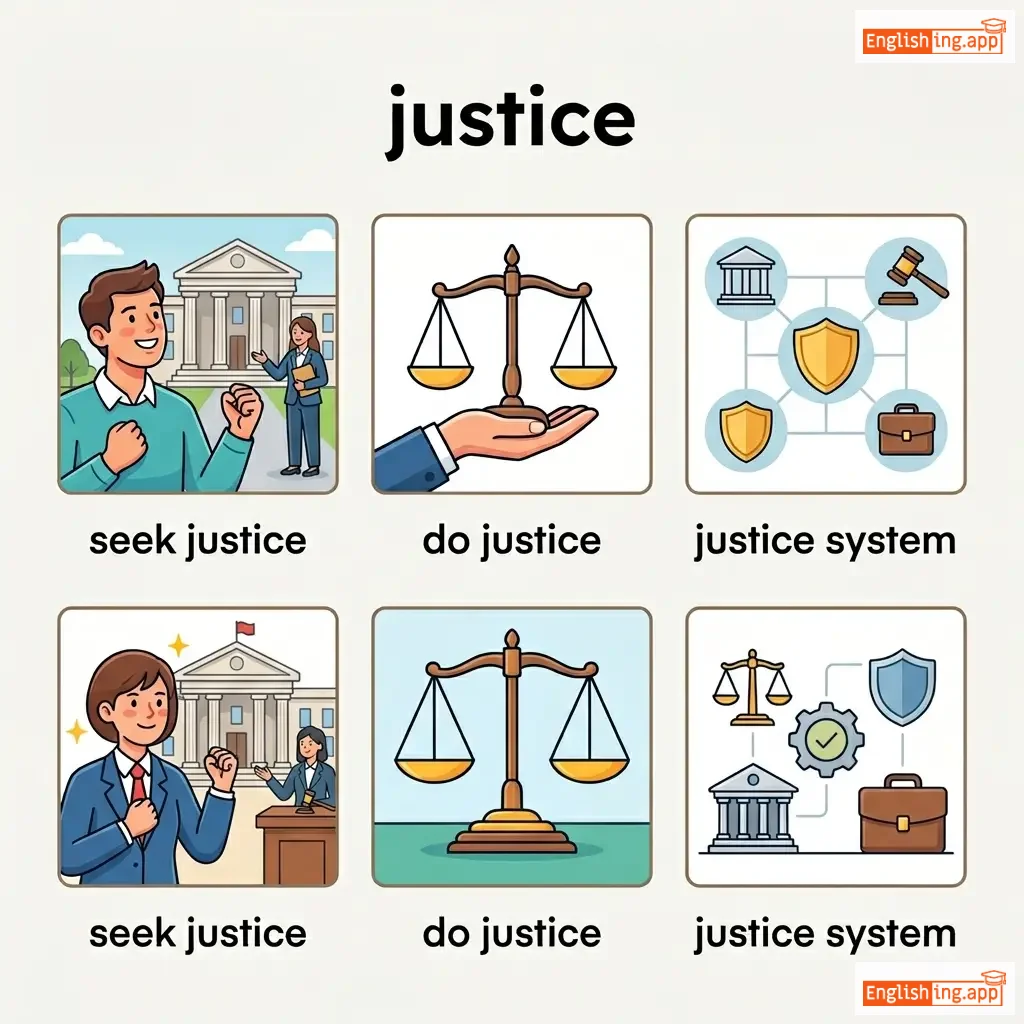
seek justice, do justice, justice system, social justice
••••••
|
Justice = 正義 = 公平をもたらす
••••••
|
|
📝
••••••
|
/ˌdʒʌstɪfɪˈkeɪʃən/
noun
(ジャスティフィケーション)
••••••
|
- •••••• |
正当化
seitōka
••••••
|
- •••••• | - •••••• | - •••••• | - •••••• |
a reason, explanation, or excuse that shows something is right or reasonable
••••••
|
There is no justification for such rude behavior. |
そのような失礼な行動には正当化の余地はない。
sono yōna shitsurei na kōdō ni wa seitōka no yochi wa nai
••••••
|
- •••••• | - •••••• | - •••••• |
reason, excuse, defense, explanation, rationale
••••••
|
accusation, blame
••••••
|
provide justification, lack of justification, justification for action
••••••
|
Justificationは正当化のこと、何かを正当化するには正当化が必要です。
••••••
|
|
🔎
••••••
|
/ˈdʒʌstɪfaɪ/
verb
(ジャスティファイ)
••••••
|
- •••••• |
正当化する
seitouka suru
••••••
|
justified
ジャスティファイド
••••••
|
justified
ジャスティファイド
••••••
|
justifies
ジャスティファイズ
••••••
|
justifying
ジャスティファイング
••••••
|
to show or prove that something is right or reasonable
••••••
|
He tried to justify his decision with logical reasons.
彼は論理的な理由で自分の決定を正当化しようとしました。
••••••
|
彼は論理的な理由で自分の決定を正当化しようとしました。
Kare wa rongiteki na riyuu de jibun no kettei o seitouka shiyou to shimashita.
••••••
|
justify the means
手段を正当化する
••••••
|
the end result makes the actions taken acceptable
••••••
|
手段を正当化する
shudan o seitouka suru
••••••
|
defend, explain, rationalize, vindicate
••••••
|
condemn, blame
••••••
|
justify action, justify decision, justify behavior
••••••
|
Justifyは論理を使って説明する。
••••••
|
|
🧵
••••••
|
/dʒuːt/
noun
(ジュート)
••••••
|
- •••••• |
黄麻
ouma
••••••
|
- •••••• | - •••••• | - •••••• | - •••••• |
a long, soft, shiny plant fiber used to make rope, bags, sacks, and coarse cloth
••••••
|
Jute is widely used to make eco-friendly bags and ropes.
ジュートは袋やロープに使われます。
••••••
|
黄麻は環境にやさしい素材です。
ouma wa kankyou ni yasashii sozai desu
••••••
|
- •••••• | - •••••• | - •••••• |
burlap fiber, plant fiber, natural fiber, sackcloth
••••••
|
synthetic fiber, plastic fiber
••••••
|
jute fiber, jute bag, raw jute, jute sack, jute industry
••••••
|
ジュート(jute)はエコ素材
••••••
|
|
♻️
••••••
|
/kəˈbɑːdi/
noun
(カバディ)
••••••
|
- •••••• |
廃品回収業者
haipin kaishuu gyousha
••••••
|
- •••••• | - •••••• | - •••••• | - •••••• |
a person who collects and sells scrap or recyclable materials, especially in South Asia
••••••
|
The kabadi came every week to collect old newspapers and bottles.
カバディは古い物を集めます。
••••••
|
廃品回収業者は古い物を集めます。
haipin kaishuu gyousha wa furui mono o atsumemasu
••••••
|
- •••••• | - •••••• | - •••••• |
scrap dealer, junk dealer, recycler, waste collector
••••••
|
consumer, buyer
••••••
|
kabadiwala, local kabadi, kabadi shop, scrap kabadi
••••••
|
kabadi = 廃品を集める人
••••••
|
|
🔥
••••••
|
/kiːn/
adjective
(キーン)
••••••
|
- •••••• |
熱心な、積極的な
nesshin na, sekkyokuteki na
••••••
|
- •••••• | - •••••• | - •••••• | - •••••• |
Having or showing eagerness or enthusiasm; sharp or highly developed (for senses).
••••••
|
She is very keen to learn new skills.
彼女は新しいスキルを学ぶことに非常に熱心です。
••••••
|
彼女は新しいスキルを学ぶことに非常に熱心です。
Kanojo wa atarashī sukiru o manabu koto ni hijō ni nesshin desu.
••••••
|
keen on
何かに興味を持つ
••••••
|
Interested in or enthusiastic about something.
••••••
|
何かに興味を持つ
nanika ni kyōmi o motsu
••••••
|
eager, enthusiastic, sharp, intense, passionate
••••••
|
indifferent, apathetic, dull
••••••
|
keen interest, keen sense, keen to learn, keen on sports
••••••
|
Keenは何かに対して非常に積極的で熱心な気持ちを持つことを意味します。
••••••
|
|
🔒
••••••
|
/kiːp/
verb
(キープ)
••••••
|
|
保つ
tamotsu
••••••
|
kept
ケプト
••••••
|
kept
ケプト
••••••
|
keeps
キープス
••••••
|
keeping
キーピング
••••••
|
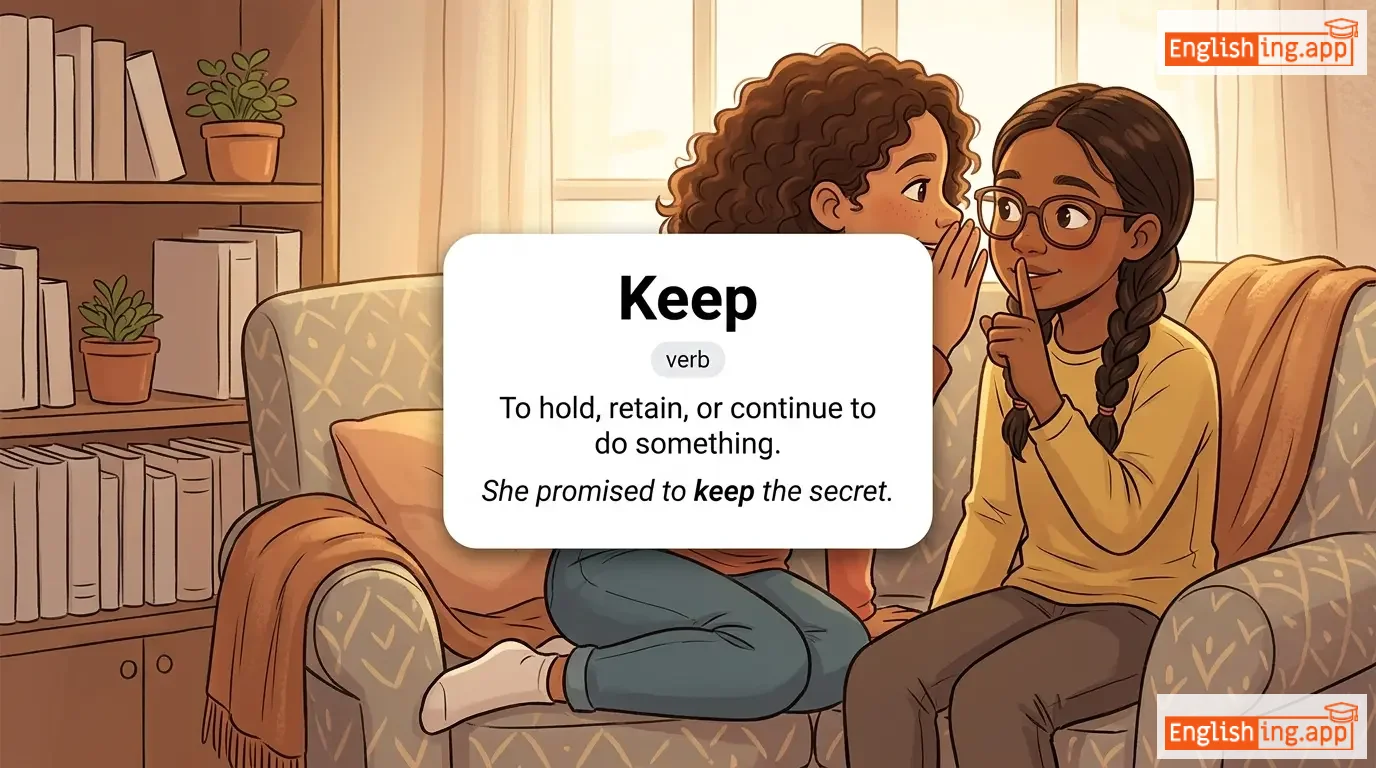
To hold, retain, or continue to do something.
••••••
|
She promised to keep the secret.
彼女は秘密を守ると約束しました。
••••••
|
彼女は秘密を守ると約束しました。
Kanojo wa himitsu o mamoru to yakusoku shimashita.
••••••
|
keep in touch
連絡を取り合う
••••••
|
Maintain communication with someone.
••••••
|
連絡を取り合う
renraku o toriau
••••••
|
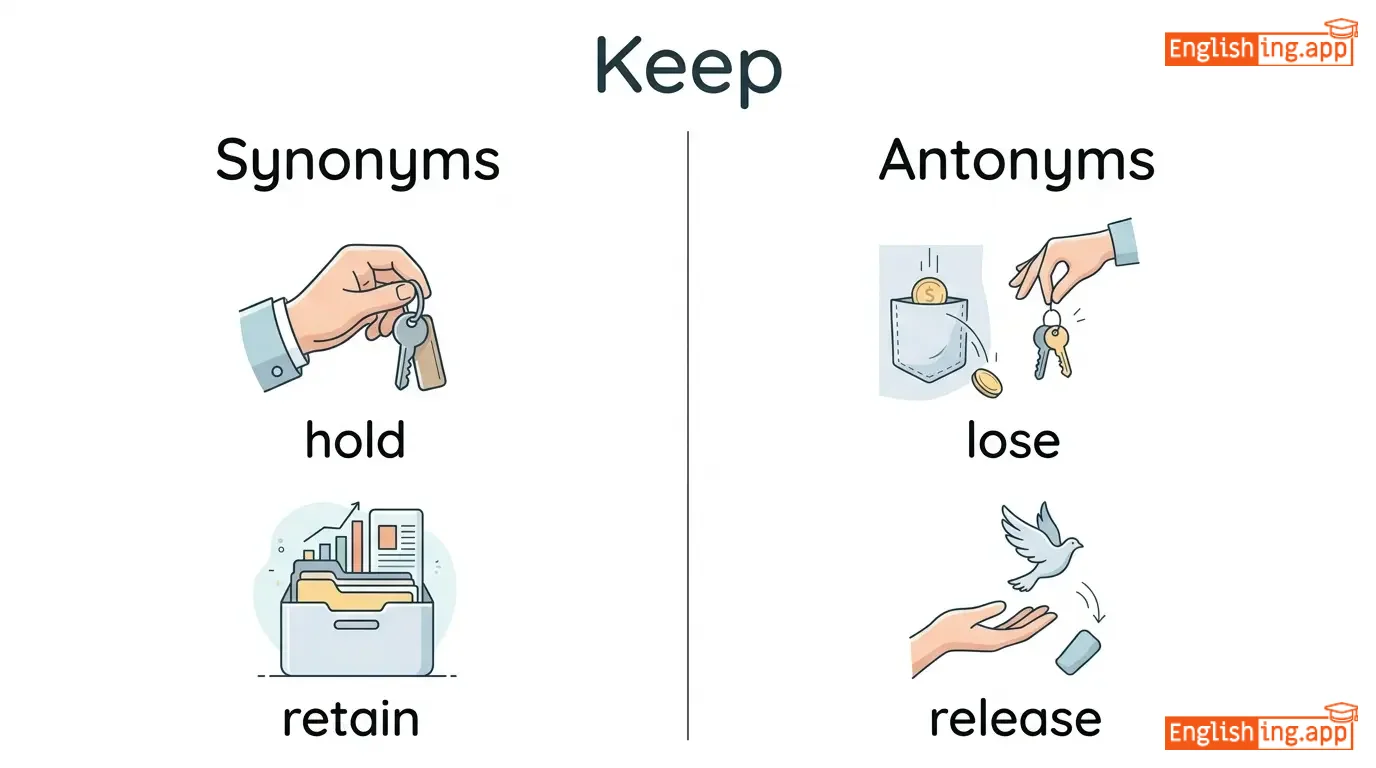
hold, retain, preserve, maintain, continue
••••••
|
lose, release, forget
••••••
|
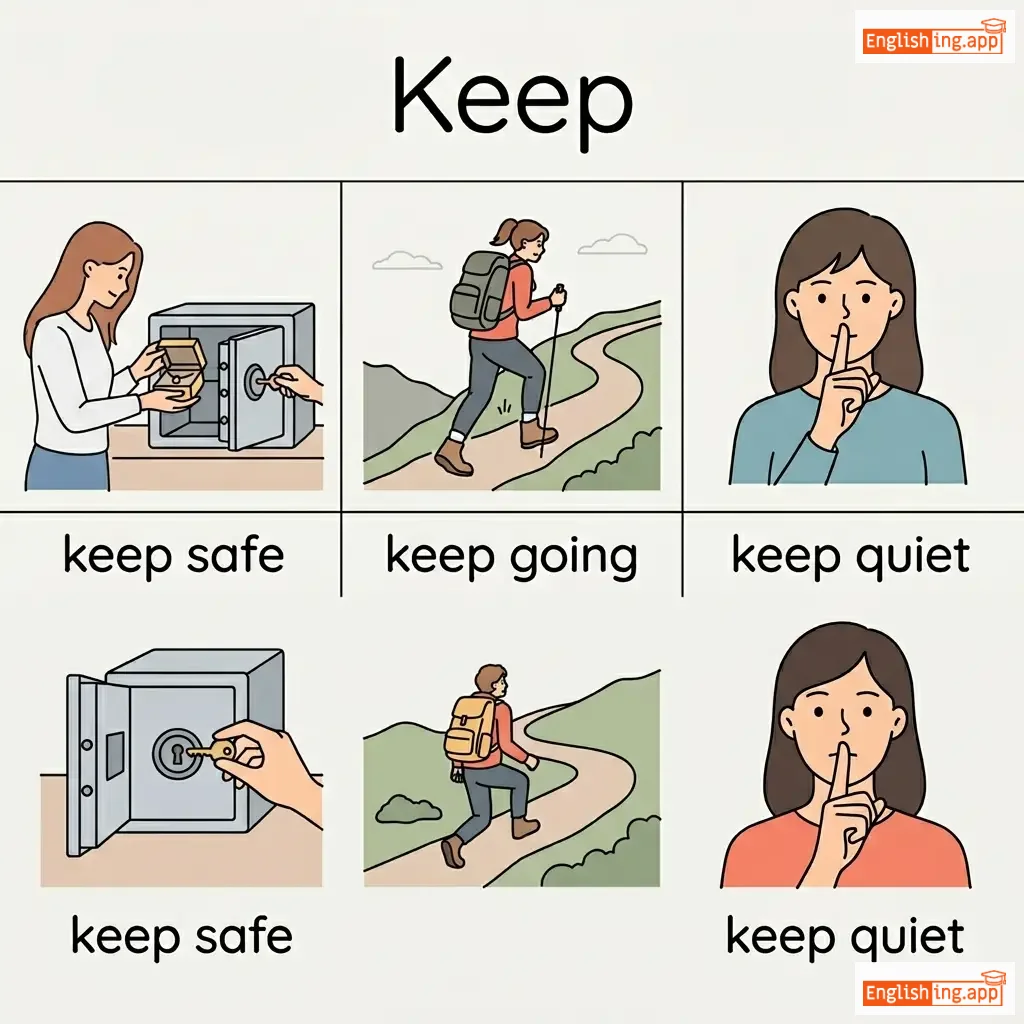
keep safe, keep going, keep quiet, keep calm
••••••
|
KEEP = 保つ - 大切なことを忘れないように。
••••••
|
|
🔑
••••••
|
/kiː/
noun
(ki)
••••••
|
- •••••• |
鍵
ken
••••••
|
- •••••• | - •••••• | - •••••• | - •••••• |
A small piece of shaped metal used to open or close locks, or something crucial and essential.
••••••
|
She lost the key to her apartment. |
彼女は自分のアパートの鍵をなくした。
Kanojo wa jibun no apāto no kagi o nakushita.
••••••
|
key to success |
the essential factor in achieving success
••••••
|
成功への鍵
Seikou e no kagi
••••••
|
essential, crucial, vital, main, important
••••••
|
unimportant, trivial, minor
••••••
|
house key, car key, key role, key point, key factor
••••••
|
鍵は成功への扉を開けるもの。
••••••
|
|
⌨️
••••••
|
/ˈkiːbɔːrd/
noun
(キーボード)
••••••
|
- •••••• |
キーボード
kiiboodo
••••••
|
- •••••• | - •••••• | - •••••• | - •••••• |
a set of keys used to operate a computer, typewriter, or similar device for inputting text and commands
••••••
|
She typed the report quickly on her keyboard.
彼女はキーボードで素早くレポートを入力した。
••••••
|
彼女はキーボードで素早くレポートを入力した。
kanojo wa kiiboodo de subayaku repooto o nyuryoku shita
••••••
|
keyboard warrior
キーボード戦士
••••••
|
a person who expresses aggressive opinions online but avoids real-life confrontation
••••••
|
キーボード戦士
kiiboodo senshi
••••••
|
keypad, console, input device, typing board
••••••
|
screen, output device
••••••
|
computer keyboard, mechanical keyboard, wireless keyboard, keyboard shortcuts
••••••
|
キーを押すと文字が出る=キーボード
••••••
|
|
👟
••••••
|
/kɪk/
verb
(キック)
••••••
|
|
蹴る
keru
••••••
|
kicked
キックド
••••••
|
kicked
キックド
••••••
|
kicks
キックス
••••••
|
kicking
キッキング
••••••
|
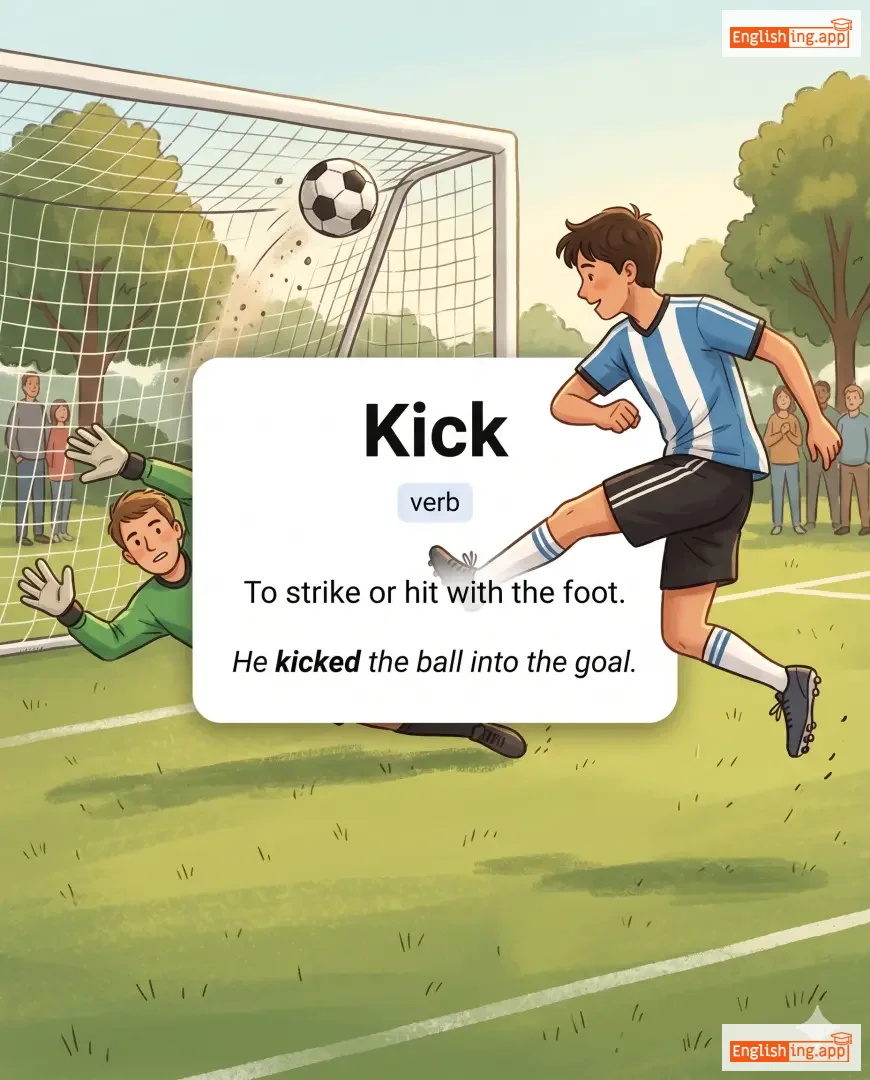
To strike or hit with the foot.
••••••
|
He kicked the ball into the goal.
彼はボールをゴールにキックしました。
••••••
|
彼はボールをゴールにキックしました。
Kare wa booru o gooru ni kikku shimashita.
••••••
|
kick the bucket
バケツを蹴る
••••••
|
a euphemism for dying
••••••
|
死ぬ
shinu
••••••
|
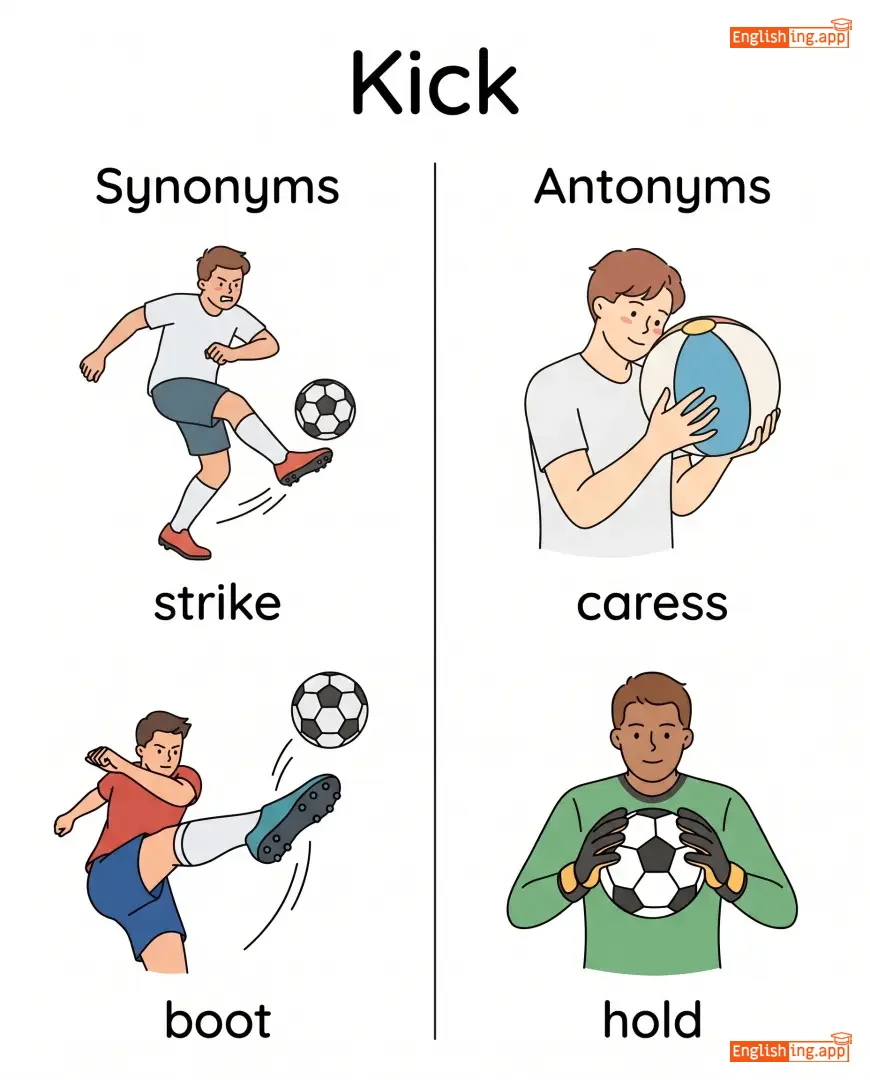
strike, boot, punt, lash, thrust
••••••
|
caress, hold, touch gently
••••••
|
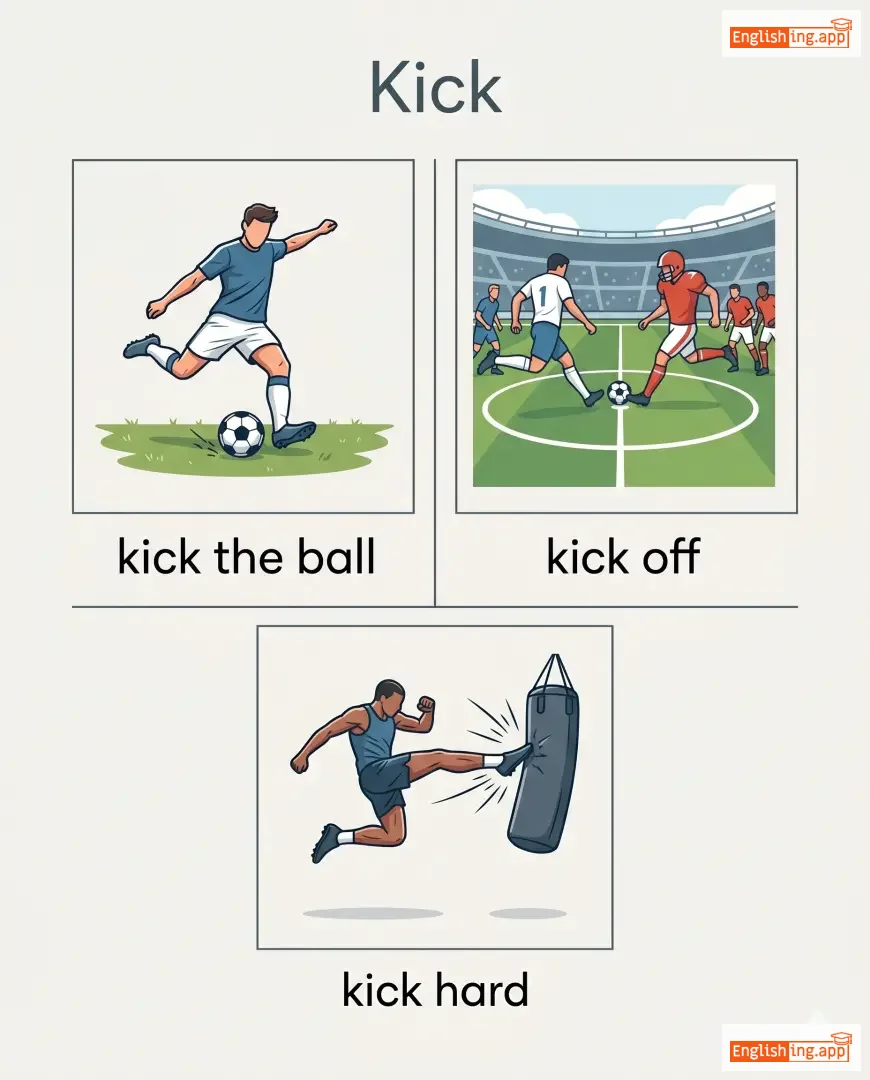
kick the ball, kick off, kick hard, kick out, kick start
••••••
|
Kick は蹴るという意味です。映画では、ヒーローが必ず蹴る(kick)シーンがあります。
••••••
|
|
😄
••••••
|
/kɪd/
verb
(キッド)
••••••
|
- •••••• |
冗談を言う
joudan wo iu
••••••
|
kidded
キデッド
••••••
|
kidded
キデッド
••••••
|
kids
キッズ
••••••
|
kidding
キディング
••••••
|
to joke or tease; to speak in a playful manner
••••••
|
I'm just kidding with you.
私はただあなたと冗談を言っているだけです。
••••••
|
私はただあなたと冗談を言っているだけです。
Watashi wa tada anata to joudan wo itteiru dake desu.
••••••
|
- •••••• | - •••••• | - •••••• |
joke, tease, jest, fool
••••••
|
serious, sincere, honest
••••••
|
just kidding, kid around, stop kidding, no kidding
••••••
|
Imagine a kid joking around playfully in Japanese.
••••••
|
|
🕵️
••••••
|
/ˈkɪdnæp/
verb
(キッドナップ)
••••••
|
|
誘拐
yūkai
••••••
|
kidnapped
キッドナップド
••••••
|
kidnapped
キッドナップド
••••••
|
kidnaps
キッドナップス
••••••
|
kidnapping
キッドナッピング
••••••
|
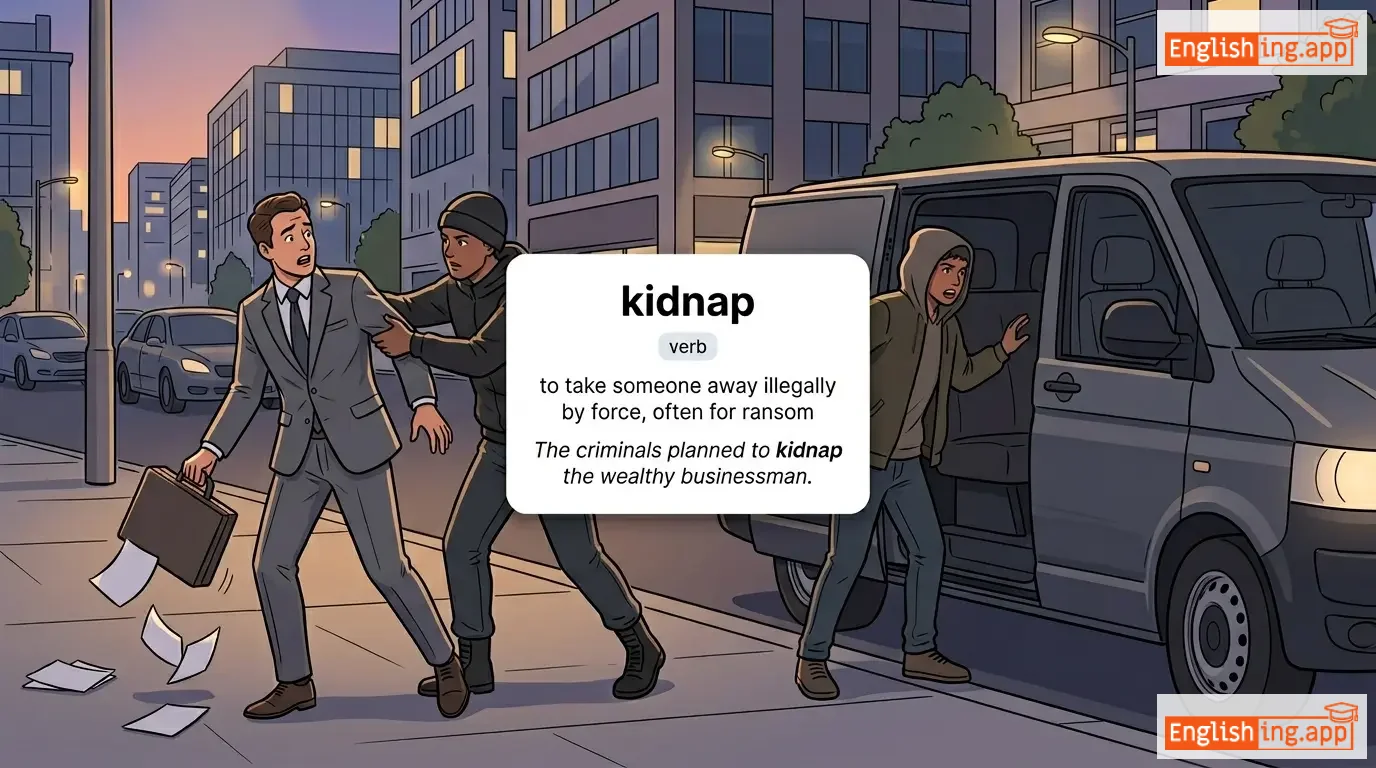
to take someone away illegally by force, often for ransom
••••••
|
The criminals planned to kidnap the wealthy businessman.
犯罪者たちは裕福なビジネスマンを誘拐する計画を立てた。
••••••
|
犯罪者たちは裕福なビジネスマンを誘拐する計画を立てた。
Hanzaisha-tachi wa yūfuku na bijinesuman o yūkai suru keikaku o tateta.
••••••
|
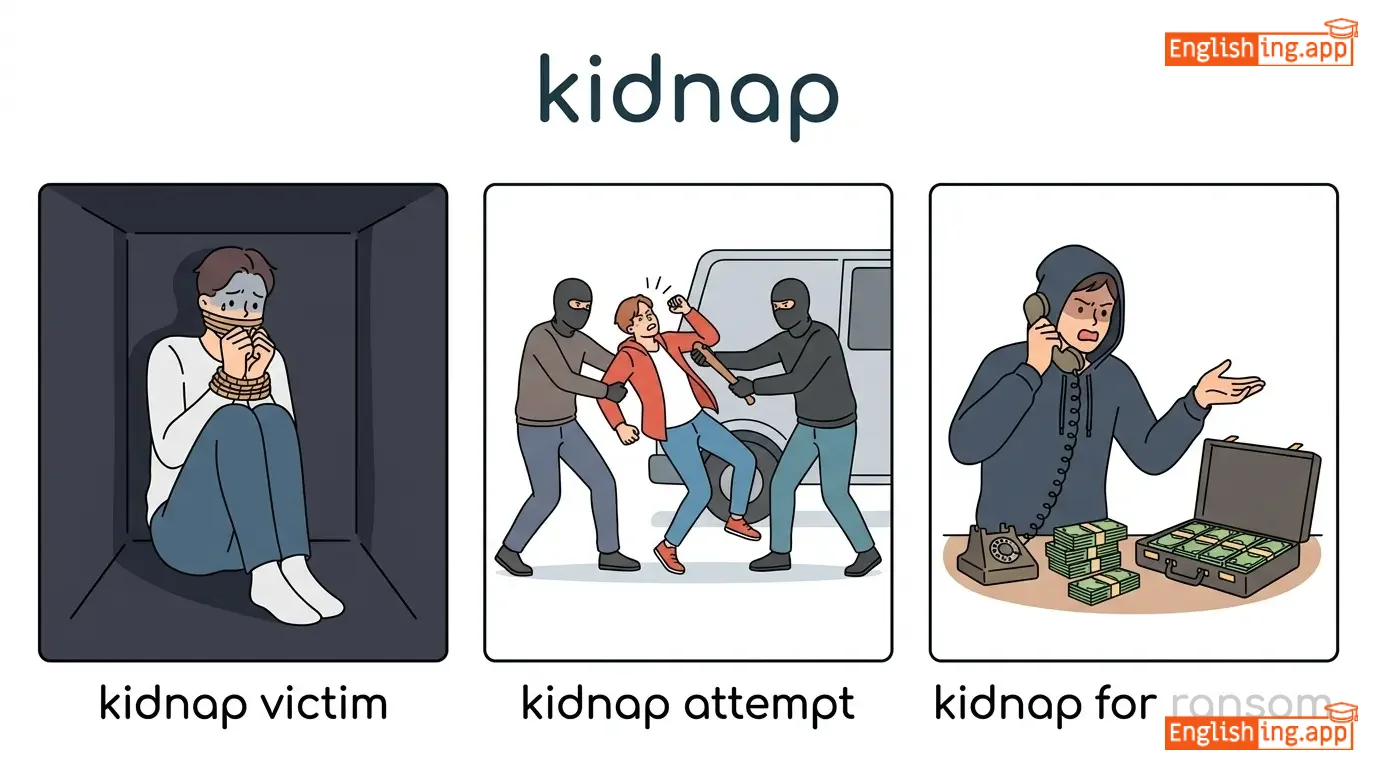
kidnap for ransom
身代金目的の誘拐
••••••
|
abduct someone in order to demand money
••••••
|
身代金目的の誘拐
migawaki mokuteki no yūkai
••••••
|
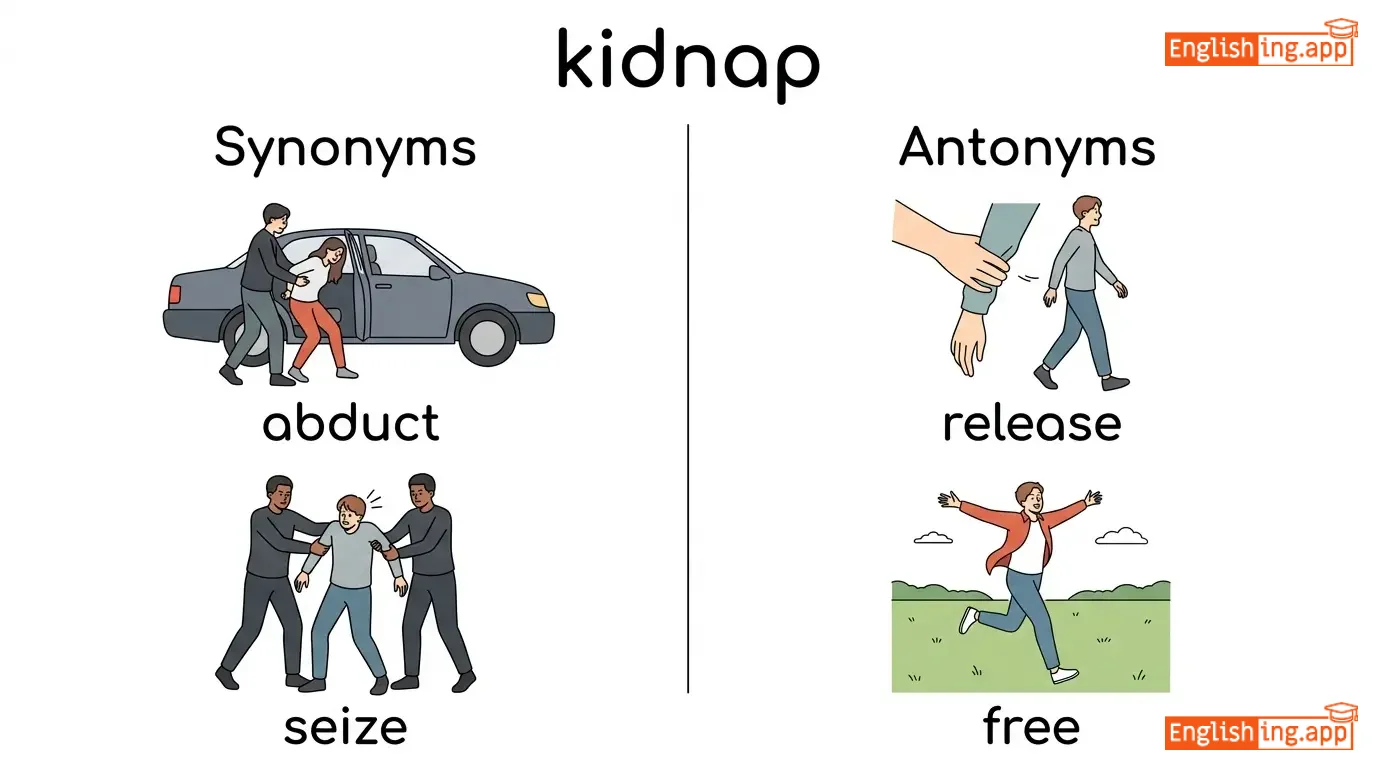
abduct, seize, snatch, capture
••••••
|
release, free, liberate
••••••
|
kidnap victim, kidnap attempt, kidnap for ransom
••••••
|
Kid + nap → 子供が寝ている、誘拐は誰かを連れて行くこと
••••••
|
|
🫘
••••••
|
/ˈkɪdni/
noun
(kídni)
••••••
|
- •••••• |
腎臓
jinzō
••••••
|
- •••••• | - •••••• | - •••••• | - •••••• |
either of a pair of organs that filter waste products from the blood and produce urine
••••••
|
Drinking plenty of water helps keep your kidneys healthy.
Drinking plenty of water helps keep your kidneys healthy.
••••••
|
十分な水分を摂取することで、腎臓の健康を保つことができます。
Jūbun na suibun o sesshu suru koto de, jinzō no kenko o tamotsu koto ga dekimasu.
••••••
|
- •••••• | - •••••• | - •••••• |
renal organ
••••••
|
- •••••• |
kidney disease, kidney stone, kidney function, kidney transplant
••••••
|
腎臓 - 水分をたくさん摂ることで腎臓が健康に保たれます
••••••
|
|
☠️
••••••
|
/kɪl/
verb
(キル)
••••••
|
|
殺す
korosu
••••••
|
killed
キルド
••••••
|
killed
キルド
••••••
|
kills
キルズ
••••••
|
killing
キリング
••••••
|
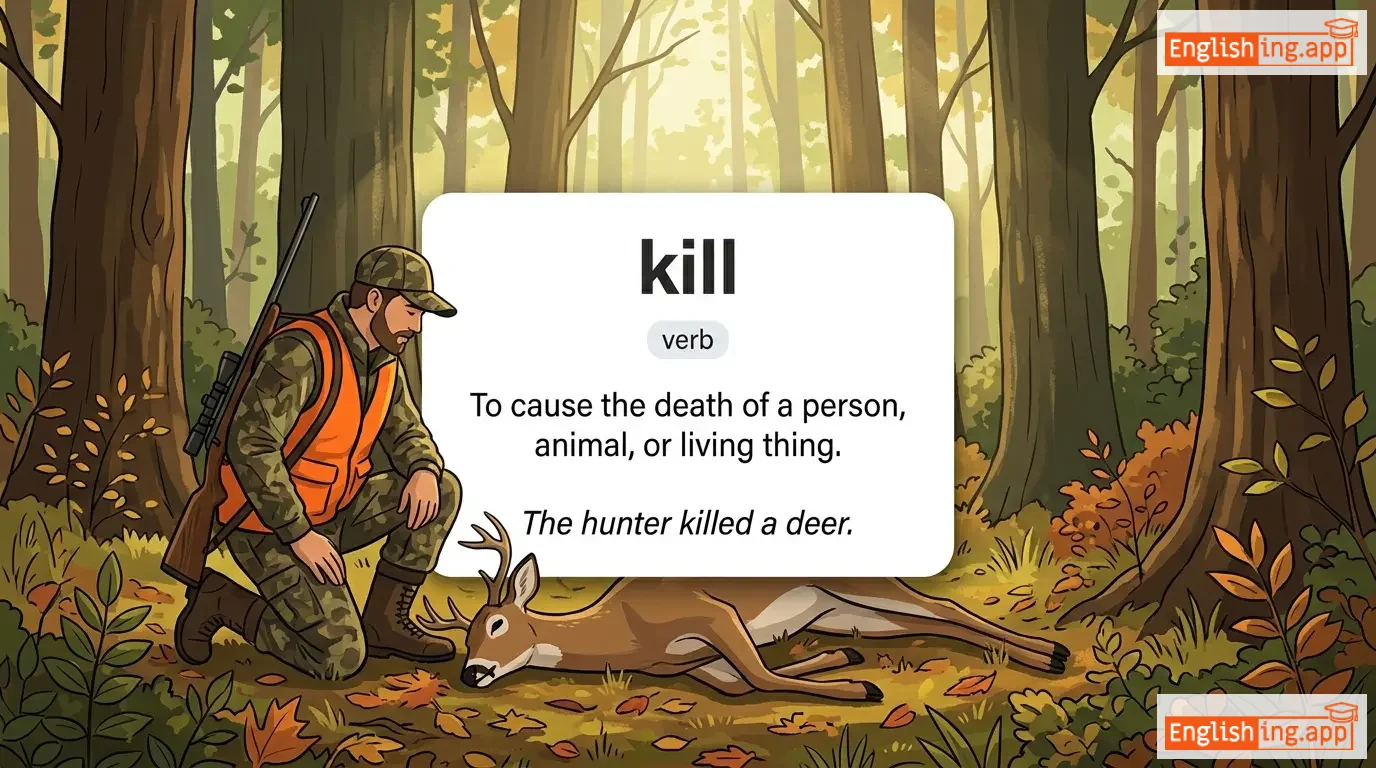
To cause the death of a person, animal, or living thing.
••••••
|
The hunter killed a deer.
ハンターは鹿を殺した。
••••••
|
ハンターは鹿を殺した。
Hantaa wa shika o koroshita.
••••••
|
kill time
時間を潰す
••••••
|
to spend time doing something unimportant while waiting
••••••
|
時間を潰す
Jikan o tsubusu
••••••
|
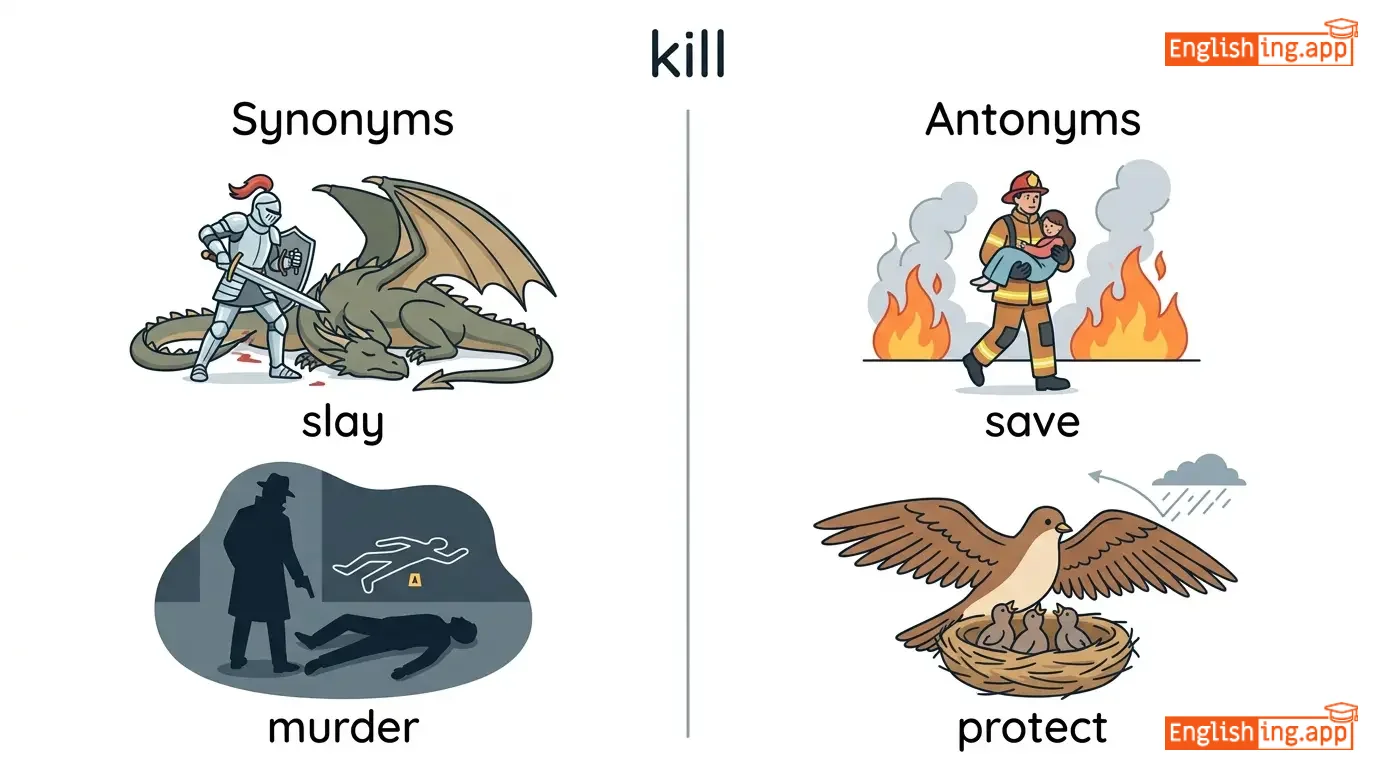
slay, murder, destroy, end, eliminate
••••••
|
save, protect, preserve
••••••
|
kill time, kill instantly, kill someone, kill the mood
••••••
|
殺すは殺す、時間を潰すは退屈な時間を過ごす。
••••••
|
|
🔪
••••••
|
/ˈkɪlər/
noun
(キラー)
••••••
|
- •••••• |
殺人者
satsujin-sha
••••••
|
- •••••• | - •••••• | - •••••• | - •••••• |
A person or thing that kills.
••••••
|
The police caught the killer last night.
警察は昨晩キラーを捕まえた。
••••••
|
警察は昨晩殺人者を捕まえた。
Keisatsu wa sakuban satsujin-sha wo tsukamaeta.
••••••
|
killer instinct
キラー本能
••••••
|
a strong drive to succeed or dominate
••••••
|
キラー本能
kirā honnō
••••••
|
murderer, slayer, assassin, executioner, destroyer
••••••
|
savior, protector
••••••
|
serial killer, cold-blooded killer, contract killer, killer instinct
••••••
|
Killerは日本語で殺人者を意味し、映画の悪役はいつも殺人者です。
••••••
|
|
💀
••••••
|
/ˈkɪlɪŋ/
noun
(キリング)
••••••
|
- •••••• |
殺人
satsujin
••••••
|
- •••••• | - •••••• | - •••••• | - •••••• |
the act of causing death, especially deliberately
••••••
|
The movie depicts the brutal killing of the villagers. |
映画は村人たちの残忍な殺人を描いています。
Eiga wa murabito-tachi no zanrin na satsujin o egaku shimasu.
••••••
|
make a killing |
to earn a large amount of money quickly
••••••
|
大儲けする
ōmōke suru
••••••
|
murder, homicide, slaughter, assassination, massacre
••••••
|
saving, rescue
••••••
|
cold-blooded killing, brutal killing, make a killing, senseless killing
••••••
|
殺人は人を殺すことを意味しますが、ビジネスでは『大儲けする』は素早く多くのお金を稼ぐことを意味します。
••••••
|
|
⚖️
••••••
|
/ˈkɪləɡræm/
noun
(キログラム)
••••••
|
- •••••• |
キログラム
kiroguramu
••••••
|
- •••••• | - •••••• | - •••••• | - •••••• |
the base unit of mass in the metric system equal to 1,000 grams
••••••
|
The bag of rice weighs five kilograms.
ザ バッグ オブ ライス ウェイズ ファイブ キログラムズ。
••••••
|
その米袋は五キログラムあります。
sono komebukuro wa go kiroguramu arimasu
••••••
|
- •••••• | - •••••• | - •••••• |
kilogramme, kilo, kg, metric kilogram
••••••
|
gram, milligram, ounce
••••••
|
one kilogram, half kilogram, kilogram weight, measured in kilograms
••••••
|
キロは千—キログラムは1000グラム
••••••
|
|
📏
••••••
|
/kɪˈlɒmɪtər/ or /ˈkɪləˌmiːtər/
noun
(キロメートル)
••••••
|
- •••••• |
キロメートル
kiromētoru
••••••
|
- •••••• | - •••••• | - •••••• | - •••••• |
a unit of length equal to 1,000 meters
••••••
|
The village is about five kilometers away from the town. |
その村は町から約五キロメートル離れています。
Sono mura wa machi kara yaku go kiromētoru hanareteimasu.
••••••
|
- •••••• | - •••••• | - •••••• |
1000 meters, km, unit of distance
••••••
|
centimeter, millimeter, inch
••••••
|
ten kilometers, per kilometer, travel kilometers
••••••
|
キロ(kiro)は1000を意味し、メートル(mētoru)はメートルを意味する — キロメートルは1000メートルを意味する
••••••
|
|
💖
••••••
|
/kaɪnd/
adjective/noun
(kaindo)
••••••
|
- •••••• |
種類 / 親切
shurui / shinsetsu
••••••
|
- •••••• | - •••••• | - •••••• | - •••••• |
A type or category; showing a gentle, considerate nature.
••••••
|
She is very kind to her neighbors. |
彼女は近所の人々にとても親切です。
Kanojo wa kinjo no hitobito ni totemo shinsetsu desu.
••••••
|
kind of |
Used to indicate similarity or approximation.
••••••
|
ある意味で
aru imi de
••••••
|
type, sort, gentle, caring, compassionate
••••••
|
cruel, harsh, unkind
••••••
|
kind words, kind gesture, be kind, kind of person
••••••
|
KIND は親切を意味し、kind of はある意味でを意味します。
••••••
|
|
😊
••••••
|
/ˈkaɪndli/
adverb; adjective
(カインドリー)
••••••
|
- •••••• |
親切に
shinsetsu ni
••••••
|
- •••••• | - •••••• | - •••••• | - •••••• |
in a kind or gentle manner; showing kindness or goodwill
••••••
|
She kindly helped the old man cross the street.
シー カインドリー ヘルプト ジ オールド マン クロス ザ ストリート。
••••••
|
彼女は親切に老人が道を渡るのを手伝った。
kanojo wa shinsetsu ni roujin ga michi o wataru no o tetsudatta
••••••
|
kindly note that
カインドリー ノート ザット
••••••
|
a polite way to ask someone to pay attention to information
••••••
|
ご注意ください
gochuui kudasai
••••••
|
gently, benevolently, warmly, graciously, considerately
••••••
|
harshly, cruelly, rudely
••••••
|
kindly request, kindly gesture, kindly manner, kindly words
••••••
|
親切 = kind → kindly = 親切に
••••••
|
|
-
••••••
|
noun
(kaindnesu)
••••••
|
- •••••• |
親切; 優しさ; 思いやり
shinsetsu; yasashisa; omoiyari
••••••
|
- •••••• | - •••••• | - •••••• | - •••••• | - •••••• | - •••••• | - •••••• | - •••••• | - •••••• | - •••••• | - •••••• | - •••••• | - •••••• |
Kindness in Japanese is 'shinsetsu', meaning kindness and consideration.
••••••
|
|
👑
••••••
|
/kɪŋ/
noun
(キング)
••••••
|
- •••••• |
王
ou
••••••
|
- •••••• | - •••••• | - •••••• | - •••••• |
the male ruler of an independent state, especially one who inherits the position by right of birth
••••••
|
The king ruled the country with wisdom and fairness. |
王は知恵と公正で国を治めました。
Ou wa chie to kousei de kuni o osamemashita.
••••••
|
King of the hill |
a person who is the best or most powerful in a particular area
••••••
|
丘の王
oka no ou
••••••
|
monarch, ruler, emperor, sovereign, potentate
••••••
|
subject, commoner
••••••
|
king and queen, crowned king, king of England, king of the hill
••••••
|
👑 王は支配者、王冠をかぶる者。
••••••
|
|
👑
••••••
|
/ˈkɪŋdəm/
noun
(キングダム)
••••••
|
- •••••• |
王国
ōkoku
••••••
|
- •••••• | - •••••• | - •••••• | - •••••• |
a country or territory ruled by a king or queen
••••••
|
The kingdom was known for its rich culture and traditions. |
その王国は豊かな文化と伝統で知られていた。
Sono ōkoku wa yutakana bunka to dentō de shirarete ita.
••••••
|
animal kingdom |
the world of living animals
••••••
|
動物界
dōbutsukai
••••••
|
realm, empire, monarchy, domain, territory
••••••
|
republic, democracy, colony
••••••
|
ancient kingdom, powerful kingdom, united kingdom, vast kingdom
••••••
|
王国(Kingdom)とは王が支配する場所 👑
••••••
|
|
💋
••••••
|
/kɪs/
verb
••••••
|
|
- •••••• |
kissed
••••••
|
kissed
••••••
|
kisses
••••••
|
kissing
••••••
|
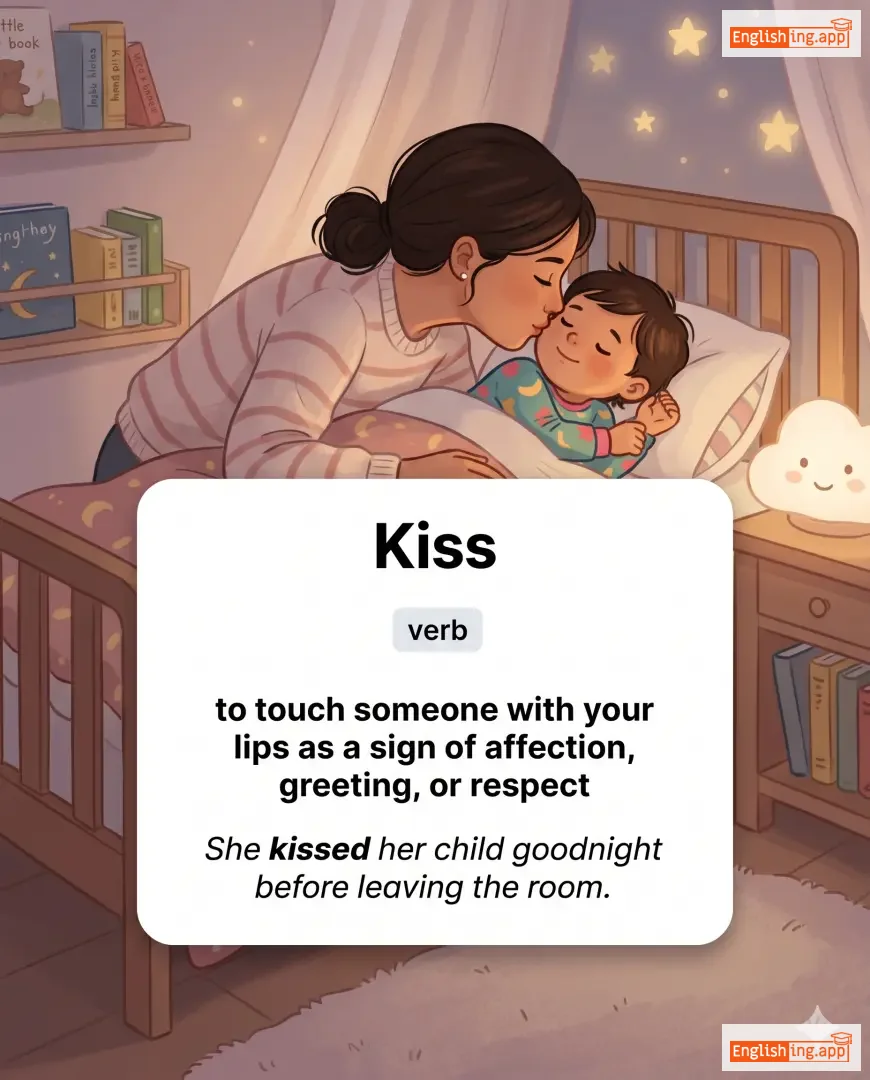
to touch someone with your lips as a sign of affection, greeting, or respect
••••••
|
She kissed her child goodnight before leaving the room. |
- •••••• |
kiss and make up |
to end an argument and become friendly again
••••••
|
- •••••• |
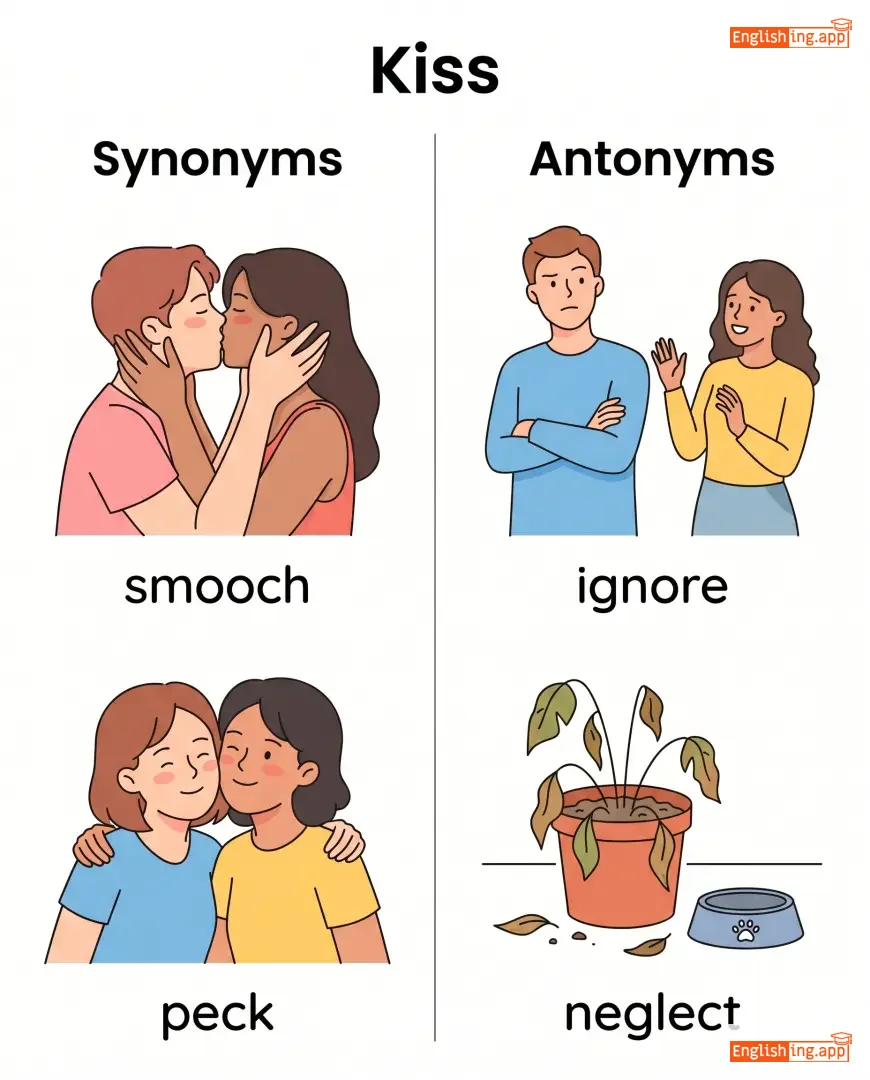
smooch, peck, embrace, caress
••••••
|
ignore, neglect
••••••
|
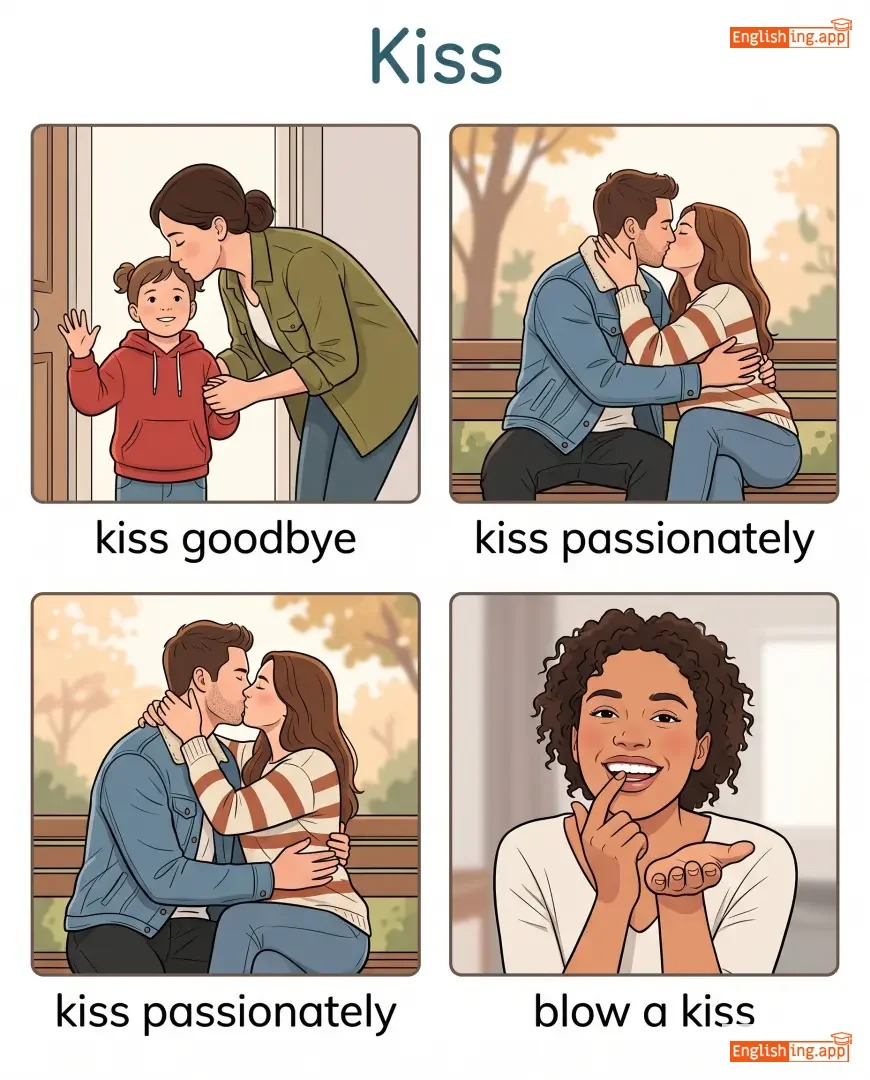
kiss goodbye, kiss passionately, blow a kiss, kiss on the cheek
••••••
|
No •••••• |
|
🧰
••••••
|
/kɪt/
noun
(キット)
••••••
|
- •••••• |
道具セット
dōgu setto
••••••
|
- •••••• | - •••••• | - •••••• | - •••••• |
a set of tools, equipment, or materials used for a particular purpose
••••••
|
He bought a first aid kit for emergencies. |
彼は緊急事態に備えて救急キットを購入しました。
Kare wa kinkyū jitai ni sonaete kyūkyū kitto o kōnyū shimashita.
••••••
|
- •••••• | - •••••• | - •••••• |
set, pack, equipment, toolbox, gear
••••••
|
single item, piece
••••••
|
first aid kit, repair kit, tool kit, survival kit
••••••
|
Kit は、緊急時に役立つ道具セットです — 準備万端!
••••••
|
|
🍳
••••••
|
/ˈkɪtʃən/
noun
(kitchen)
••••••
|
- •••••• |
キッチン
kicchin
••••••
|
- •••••• | - •••••• | - •••••• | - •••••• |
a room or area where food is prepared and cooked
••••••
|
The kitchen was filled with the smell of fresh bread.
The kitchen was filled with the smell of fresh bread.
••••••
|
キッチンは新鮮なパンの匂いで満たされていた。
Kicchin wa shinsen na pan no nioi de mitasarete ita.
••••••
|
everything but the kitchen sink
everything but the kitchen sink
••••••
|
almost everything imaginable
••••••
|
キッチンのシンク以外のすべて
Kicchin no shinku igai no subete
••••••
|
cookhouse, galley, canteen, scullery
••••••
|
living room, bedroom
••••••
|
kitchen table, modern kitchen, clean the kitchen, kitchen utensils
••••••
|
キッチン = 美味しい料理が生まれる場所 🍣
••••••
|
|
✨
••••••
|
/næk/
noun
(nak)
••••••
|
- •••••• |
才能
sainou
••••••
|
- •••••• | - •••••• | - •••••• | - •••••• |
a natural skill or ability; a special talent for doing something easily
••••••
|
She has a knack for making people feel comfortable. |
彼女には人々を快適に感じさせる才能がある。
Kanojo ni wa hitobito o kaiteki ni kanjisaseru sainou ga aru.
••••••
|
have a knack for |
to be especially good at something
••••••
|
才能がある
sainou ga aru
••••••
|
skill, talent, ability, aptitude, flair
••••••
|
inability, incompetence
••••••
|
knack for, natural knack, knack of doing
••••••
|
Knackは才能を意味し、何かに特別に優れていること ⭐
••••••
|
|
🍞
••••••
|
/niːd/
verb
(ニード)
••••••
|
- •••••• |
こねる
koneru
••••••
|
kneaded
ニーデッド
••••••
|
kneaded
ニーデッド
••••••
|
kneads
ニーズ
••••••
|
kneading
ニーディング
••••••
|
to work dough or clay into a uniform mixture by pressing, folding, and stretching
••••••
|
She kneads the dough until it becomes smooth.
彼女は生地を滑らかになるまでこねます。
••••••
|
彼女は生地を滑らかになるまでこねます。
Kanojo wa kiji o nameraka ni naru made konemasu.
••••••
|
- •••••• | - •••••• | - •••••• |
massage, press, fold, work
••••••
|
neglect, ignore
••••••
|
knead dough, knead bread, knead gently
••••••
|
Knead = パンを作るために生地をこねる 🍞
••••••
|
|
🦵
••••••
|
/niː/
noun
(ハピネス)
••••••
|
- •••••• |
幸福
kōfuku
••••••
|
- •••••• | - •••••• | - •••••• | - •••••• |
the joint between the thigh and the lower leg
••••••
|
He hurt his knee while playing football. |
彼女は賞を受け取ったとき、その幸福を隠すことができなかった。
Kanojo wa shō o uketotta toki, sono kōfuku o kakusu koto ga dekinakatta.
••••••
|
cut off at the knees |
to suddenly stop someone from progressing or succeeding
••••••
|
幸福を追求する
Kōfuku o tsuikyū suru
••••••
|
joint, kneecap, patella, articulation
••••••
|
straight leg, extension
••••••
|
bend the knee, knee pain, knee surgery, knee injury
••••••
|
幸福はすべてが順調にいく時
••••••
|
|
🙏
••••••
|
/niːl/
verb
(ニール)
••••••
|
|
ひざまずく
hizamazuku
••••••
|
knelt
ネルト
••••••
|
knelt
ネルト
••••••
|
kneels
ニールズ
••••••
|
kneeling
ニーリング
••••••
|
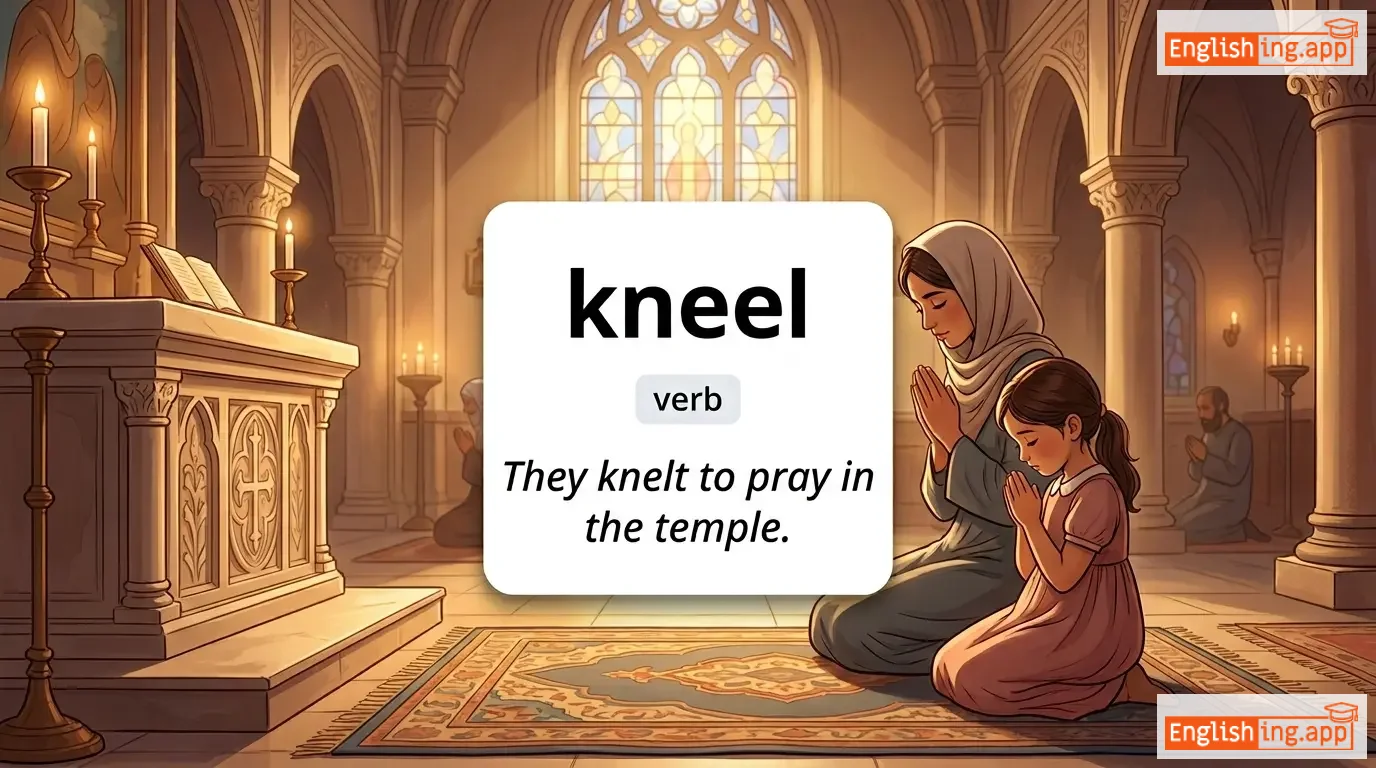
to position the body by resting on the knees, usually as a sign of respect, prayer, or submission
••••••
|
They knelt to pray in the temple.
彼らは寺院で祈るためにひざまずいた。
••••••
|
彼らは寺院で祈るためにひざまずいた。
Karera wa jiin de inoru tame ni hizamazuita.
••••••
|
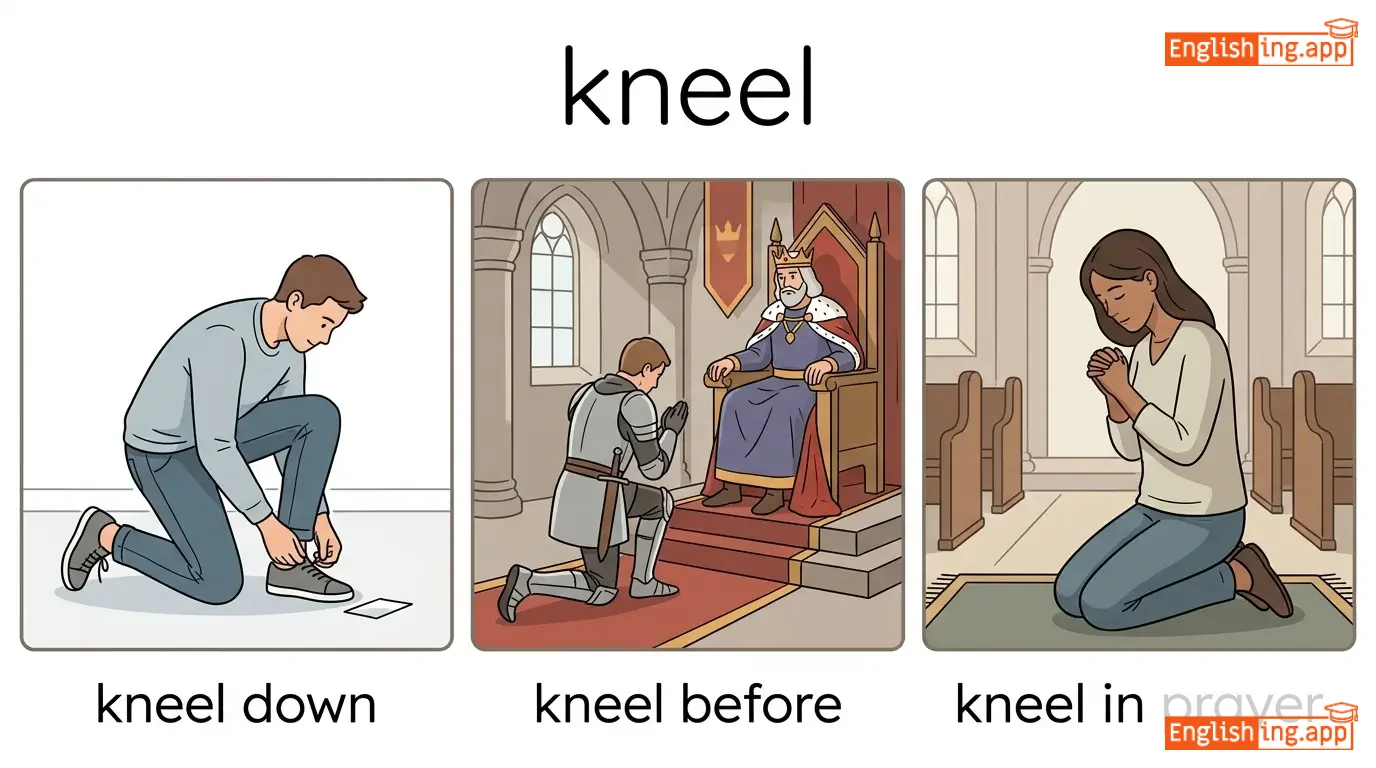
kneel down
ひざまずく
••••••
|
to go down on one or both knees
••••••
|
ひざまずく
hizamazuku
••••••
|
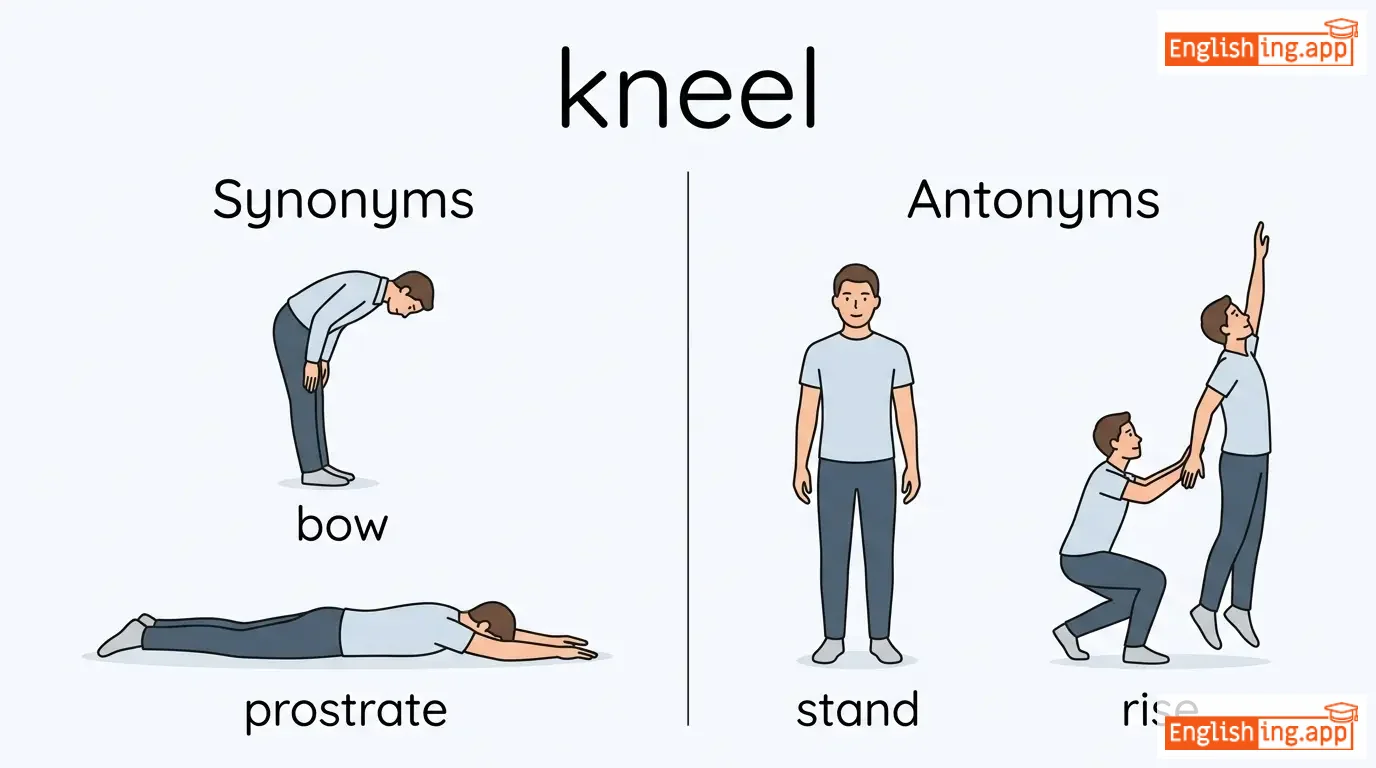
bow, prostrate, stoop, bend
••••••
|
stand, rise
••••••
|
kneel down, kneel before, kneel in prayer
••••••
|
Kneelはひざまずいて祈ること 🙏
••••••
|
|
🔪
••••••
|
/naɪf/
noun
(ハピネス)
••••••
|
- •••••• |
幸福
kōfuku
••••••
|
- •••••• | - •••••• | - •••••• | - •••••• |
a tool or weapon with a blade and a handle, used for cutting
••••••
|
He used a sharp knife to cut the vegetables. |
彼女は賞を受け取ったとき、喜びを隠すことができませんでした。
Kanojo wa shō o uketotta toki, yorokobi o kakusu koto ga dekimasen deshita.
••••••
|
at knife's edge |
in a very tense or dangerous situation
••••••
|
幸せの追求
Shiawase no tsuikyū
••••••
|
blade, cutter, dagger, utensil, scalpel
••••••
|
spoon, fork
••••••
|
sharp knife, kitchen knife, knife blade, knife attack
••••••
|
幸福は喜び、簡単に覚えられる。
••••••
|
|
🛡️
••••••
|
/naɪt/
noun
(ハピネス)
••••••
|
- •••••• |
幸せ
shiawase
••••••
|
- •••••• | - •••••• | - •••••• | - •••••• |
A man awarded a non-hereditary title by a monarch for service, especially in the past as a mounted soldier in armor.
••••••
|
The brave knight rode into battle to protect his kingdom. |
彼女は賞を受け取ったとき、自分の幸せを隠すことができませんでした。
Kanojo wa shō o uketotta toki, jibun no shiawase o kakusu koto ga dekimasen deshita.
••••••
|
knight in shining armor |
A person who comes to someone's aid in a difficult situation.
••••••
|
幸せを追い求める
Shiawase o oimotomeru
••••••
|
warrior, cavalier, champion, defender, nobleman
••••••
|
commoner, villain
••••••
|
brave knight, medieval knight, knight in shining armor
••••••
|
幸せはいつも心の中にあり、人生を楽しむことです。
••••••
|
|
🧶
••••••
|
/nɪt/
verb
(ニット)
••••••
|
- •••••• |
編む
amu
••••••
|
knitted
ニットエド
••••••
|
knitted
ニットエド
••••••
|
knits
ニッツ
••••••
|
knitting
ニッティング
••••••
|
To make clothes or fabric by interlocking loops of yarn with needles.
••••••
|
She loves to knit scarves for her friends during the winter.
彼女は冬に友達のためにスカーフを編むのが好きです。
••••••
|
彼女は冬に友達のためにスカーフを編むのが好きです。
Kanojo wa fuyu ni tomodachi no tame ni sukaafu o amu no ga suki desu.
••••••
|
knit together
一緒に編む
••••••
|
To unite or bring people or things together closely.
••••••
|
一緒に集める
issho ni atsumeru
••••••
|
weave, stitch, interlace, entwine, crochet
••••••
|
unravel, undo, separate
••••••
|
knit a sweater, knit scarves, knit together
••••••
|
Knit は編むことです、覚えておいて – ‘編むことで物が一つになります。’
••••••
|
|
🧶
••••••
|
/ˈnɪtɪŋ/
noun; gerund
(ニッティング)
••••••
|
- •••••• |
編み物
amimono
••••••
|
- •••••• | - •••••• | - •••••• |
knitting
ニッティング
••••••
|
the craft or activity of making fabric by interlocking loops of yarn with needles; the act of forming something closely or firmly together
••••••
|
She spends her evenings knitting scarves for her family.
彼女は家族のために夜にニッティングをします。
••••••
|
彼女は家族のために夜に編み物をします。
kanojo wa kazoku no tame ni yoru ni amimono o shimasu
••••••
|
- •••••• | - •••••• | - •••••• |
needlework, knitwork, handknitting, knitting-work, yarn craft
••••••
|
unraveling, unknitting
••••••
|
knitting needles, knitting yarn, knitting pattern, knitting project, knitting stitch
••••••
|
Knitting は 日本語で 編み物
••••••
|
|
🚪
••••••
|
/nɒb/
noun
(ノブ)
••••••
|
- •••••• |
ドアや引き出しの丸い取っ手; 機械の小さな丸いスイッチ
Doa ya hikidashi no marui totte; kikai no chiisana marui suitchi
••••••
|
- •••••• | - •••••• | - •••••• | - •••••• |
a rounded handle on a door or drawer; a small rounded switch on a machine
••••••
|
He turned the brass knob to open the old wooden door.
彼は古い木の扉を開けるために真鍮のノブを回した。
••••••
|
彼は古い木の扉を開けるために真鍮のノブを回した。
Kare wa furui ki no tobira o akeru tame ni shinchū no nobu o mawashita.
••••••
|
- •••••• | - •••••• | - •••••• |
handle, button, switch, control
••••••
|
lever, flat surface, key
••••••
|
door knob, brass knob, turn the knob
••••••
|
ノブを回すことで古い扉が開くイメージを思い出してみてください。
••••••
|
|
🚪
••••••
|
/nɒk/
verb
(ノック)
••••••
|
|
ドアをノックする
doa o nokku suru
••••••
|
knocked
ノックド
••••••
|
knocked
ノックド
••••••
|
knocks
ノックス
••••••
|
knocking
ノッキング
••••••
|
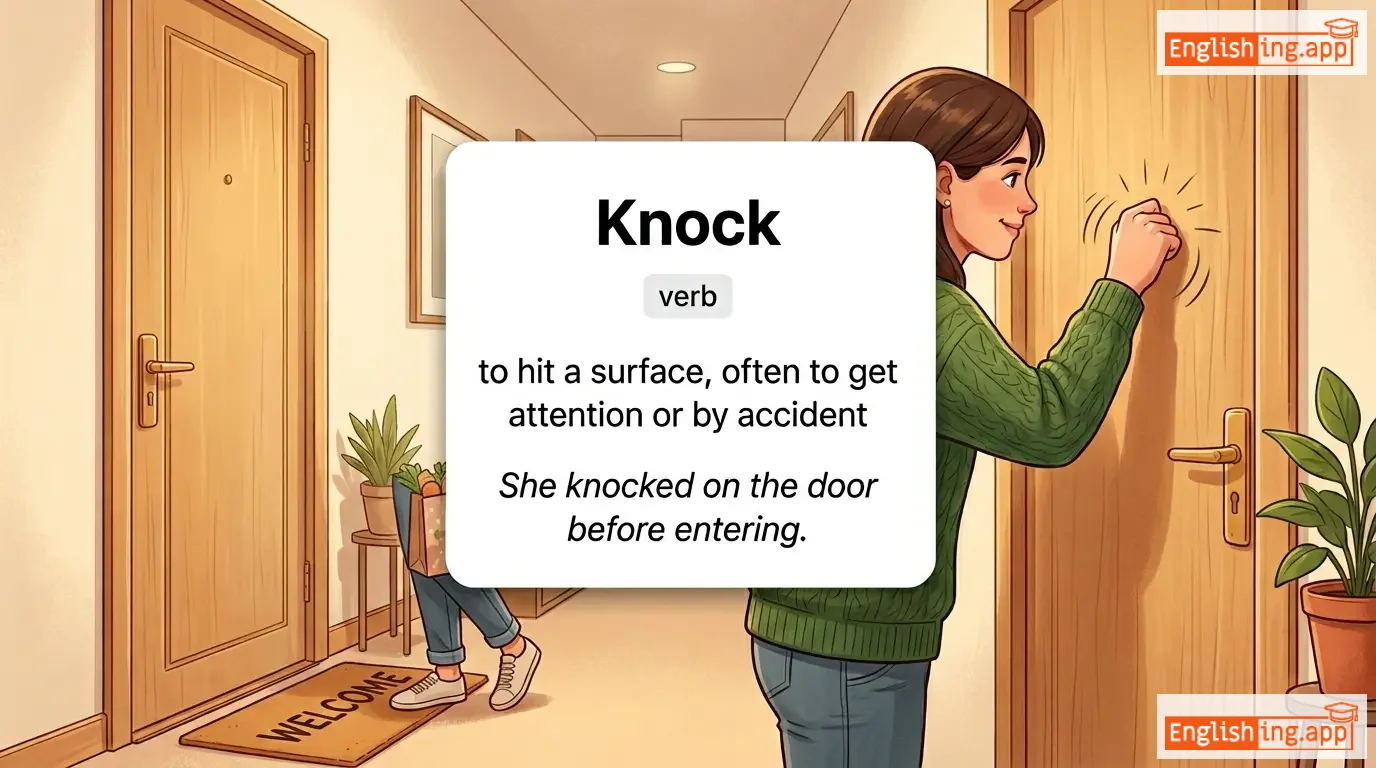
to hit a surface, often to get attention or by accident
••••••
|
She knocked on the door before entering.
彼女は入る前にドアをノックしました。
••••••
|
彼女は入る前にドアをノックしました。
Kanojo wa hairu mae ni doa o nokkushimashita.
••••••
|
knock on wood
ノックオンウッド
••••••
|
said to avoid bad luck after mentioning something good
••••••
|
良いことを言った後、不運を避けるために言う言葉
Yoi koto o itta ato, fuun o sakeru tame ni iu kotoba
••••••
|
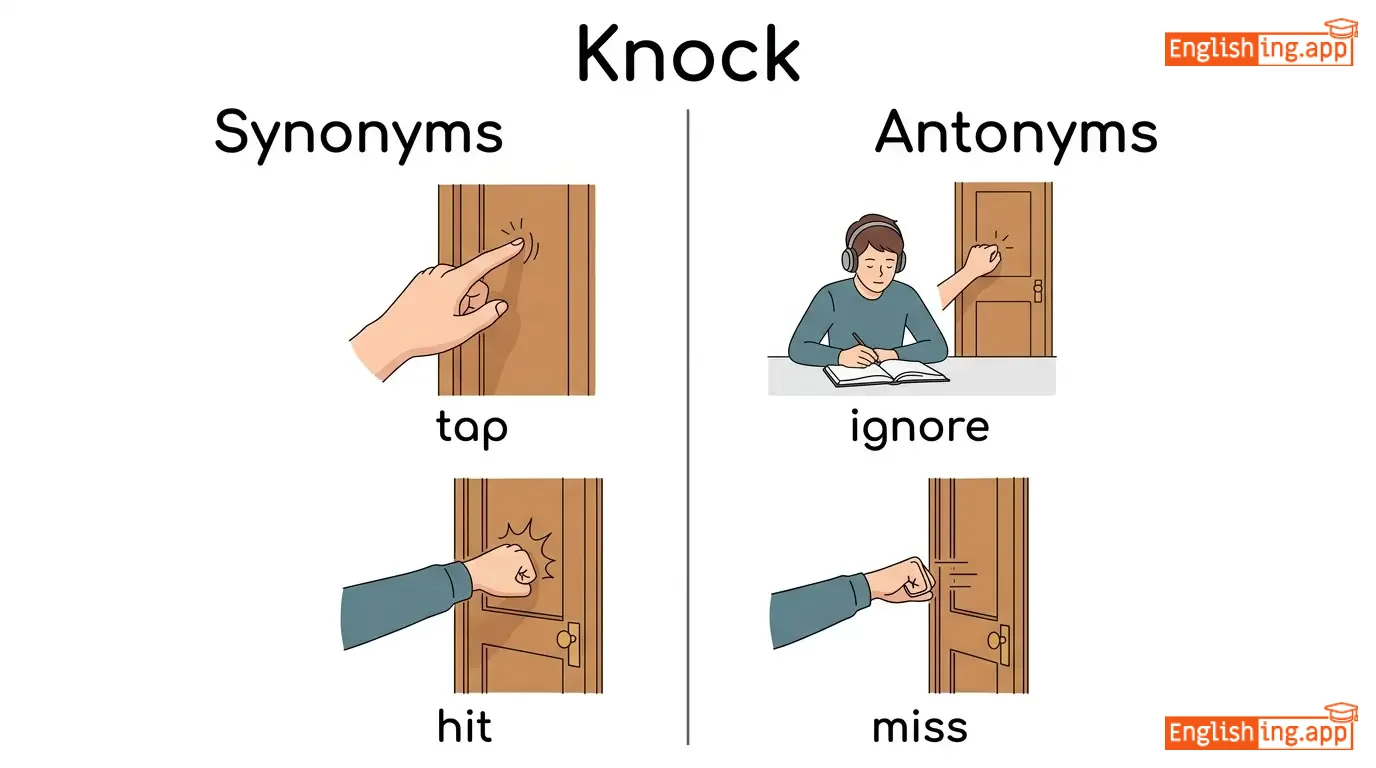
tap, hit, bang, strike, bump
••••••
|
ignore, miss
••••••
|
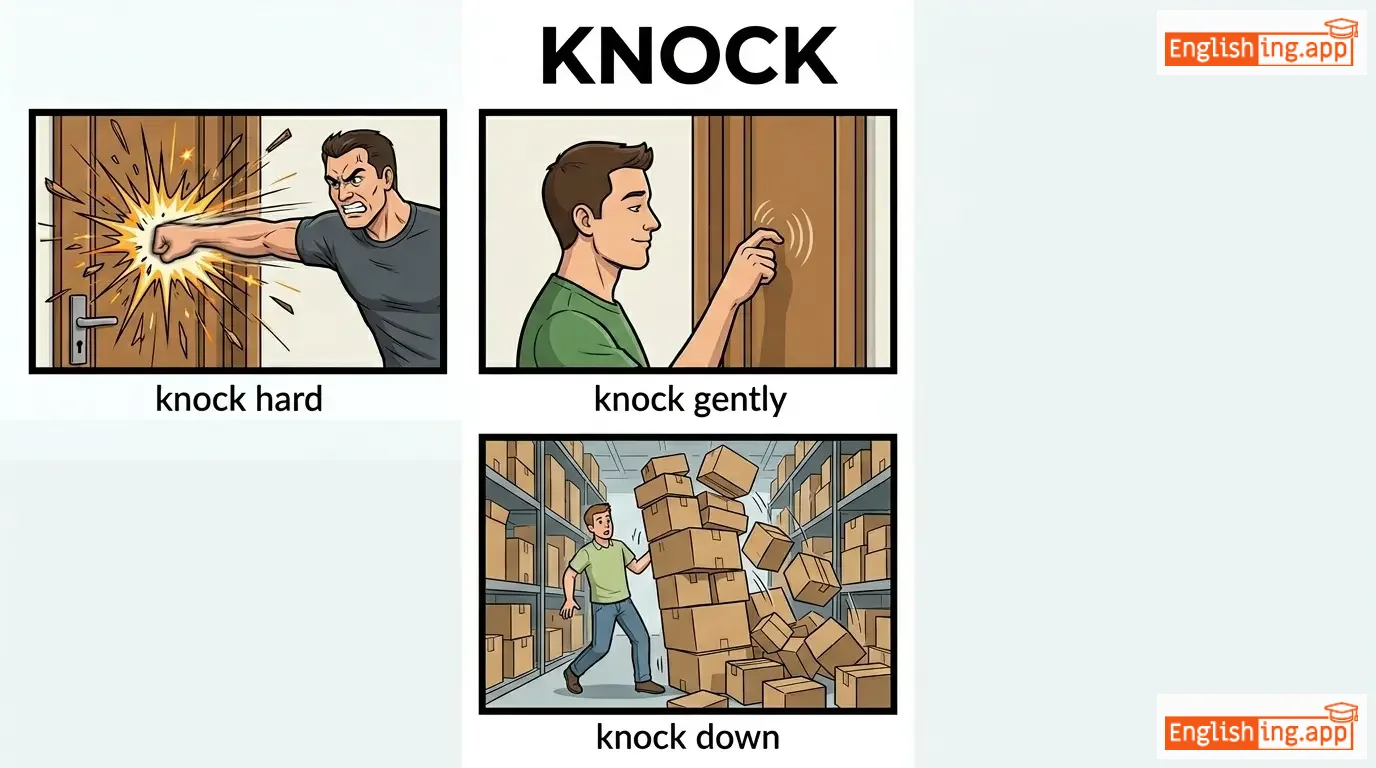
knock hard, knock gently, knock down, knock over
••••••
|
ドアをノック、幸せが待っている!
••••••
|
|
🪢
••••••
|
/nɒt/
verb
(ノット)
••••••
|
|
結び目を作る
musubime o tsukuru
••••••
|
knotted
ノッテッド
••••••
|
knotted
ノッテッド
••••••
|
knots
ノッツ
••••••
|
knotting
ノッティング
••••••
|
to tie in a knot; to fasten with loops and turns
••••••
|
She knotted the rope securely.
彼女はロープを安全に結びました。
••••••
|
彼女はロープを安全に結びました。
Kanojo wa rōpu o anzen ni musubimashita.
••••••
|
- •••••• | - •••••• | - •••••• |
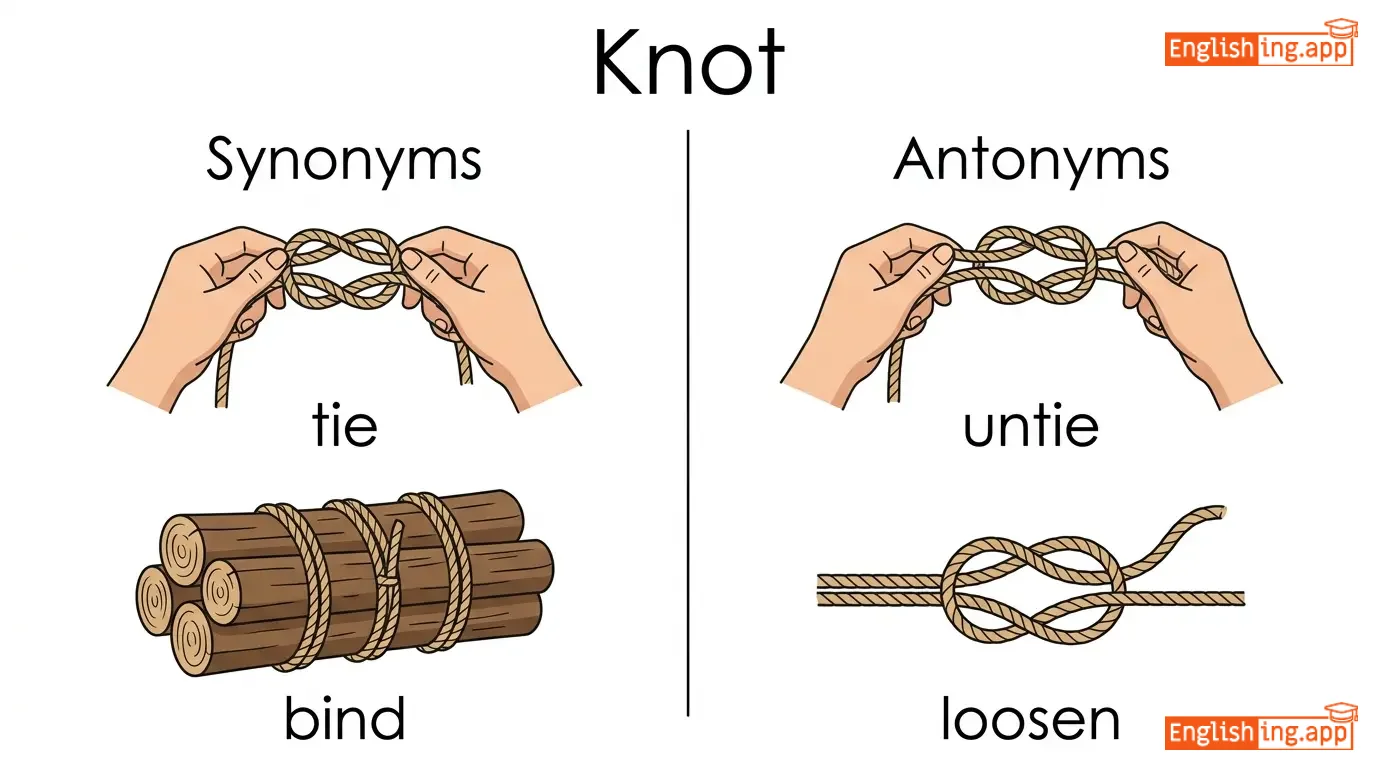
tie, bind, fasten, secure
••••••
|
untie, loosen, unfasten, free
••••••
|
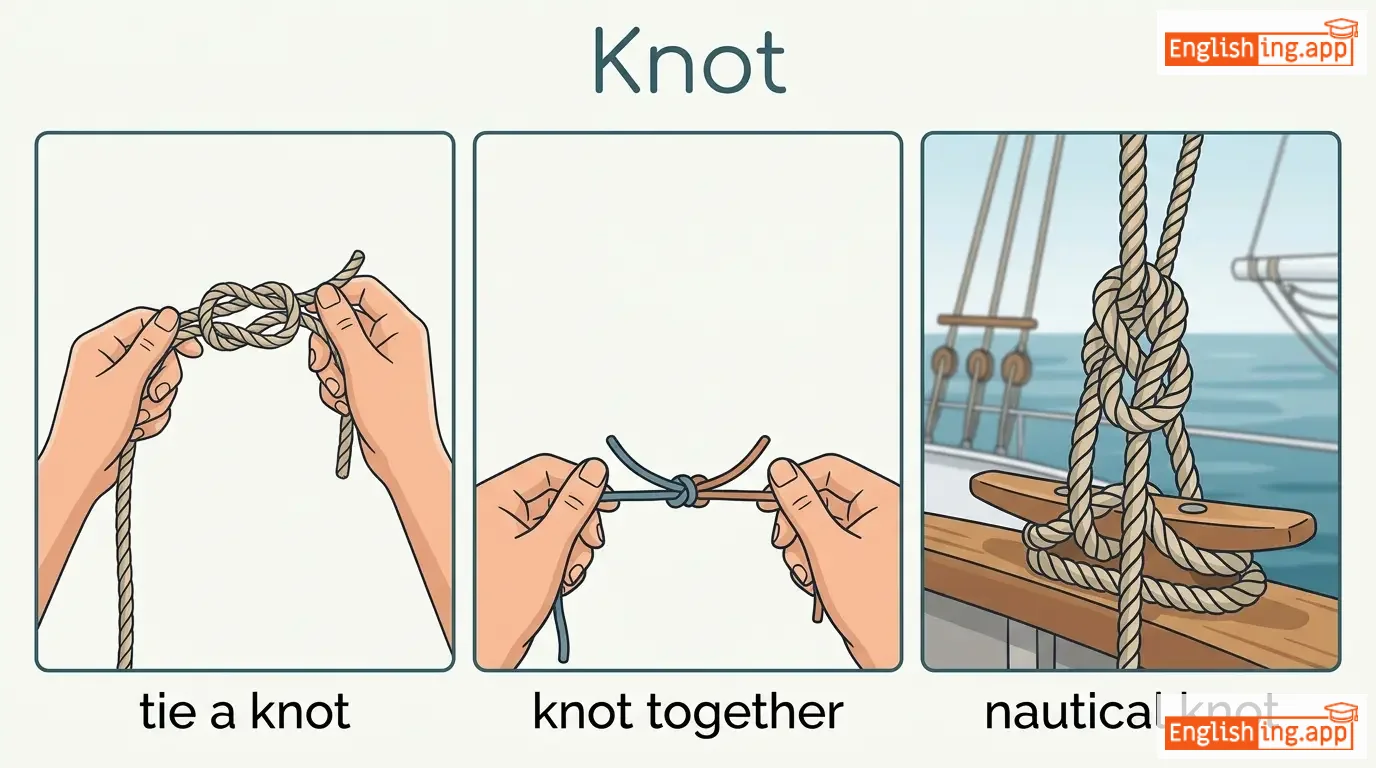
tie a knot, knot together, nautical knot, loose knot, tight knot
••••••
|
靴ひもを結ぶように考えて!
••••••
|
|
🧠
••••••
|
/noʊ/
verb
(ノウ)
••••••
|
|
知っている
shitteiru
••••••
|
knew
ニュー
••••••
|
known
ノウン
••••••
|
knows
ノウズ
••••••
|
knowing
ノウイング
••••••
|
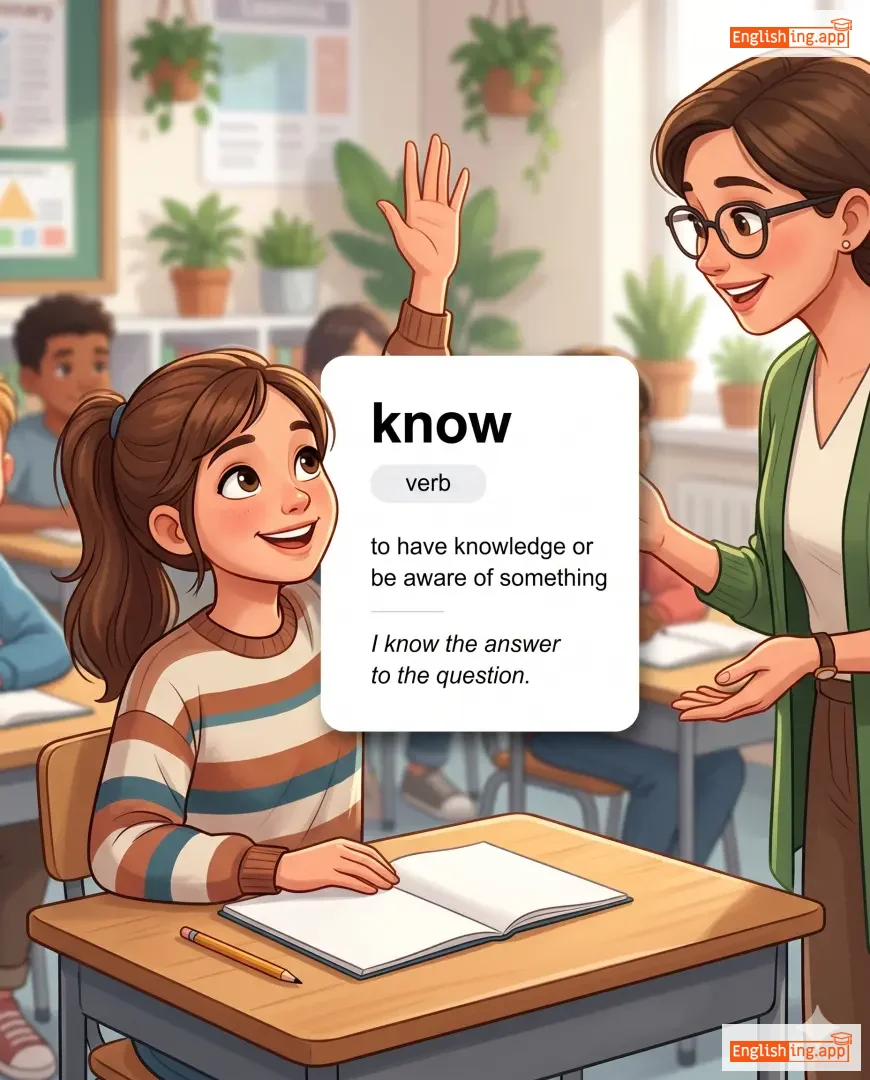
to have knowledge or be aware of something
••••••
|
I know the answer to the question.
私は質問の答えを知っています。
••••••
|
私は質問の答えを知っています。
Watashi wa shitsumon no kotae o shitteimasu.
••••••
|
know the ropes
ロープを知っている
••••••
|
to be familiar with how something is done
••••••
|
何かをする方法を知っている
Nanika o suru hōhō o shitteiru
••••••
|
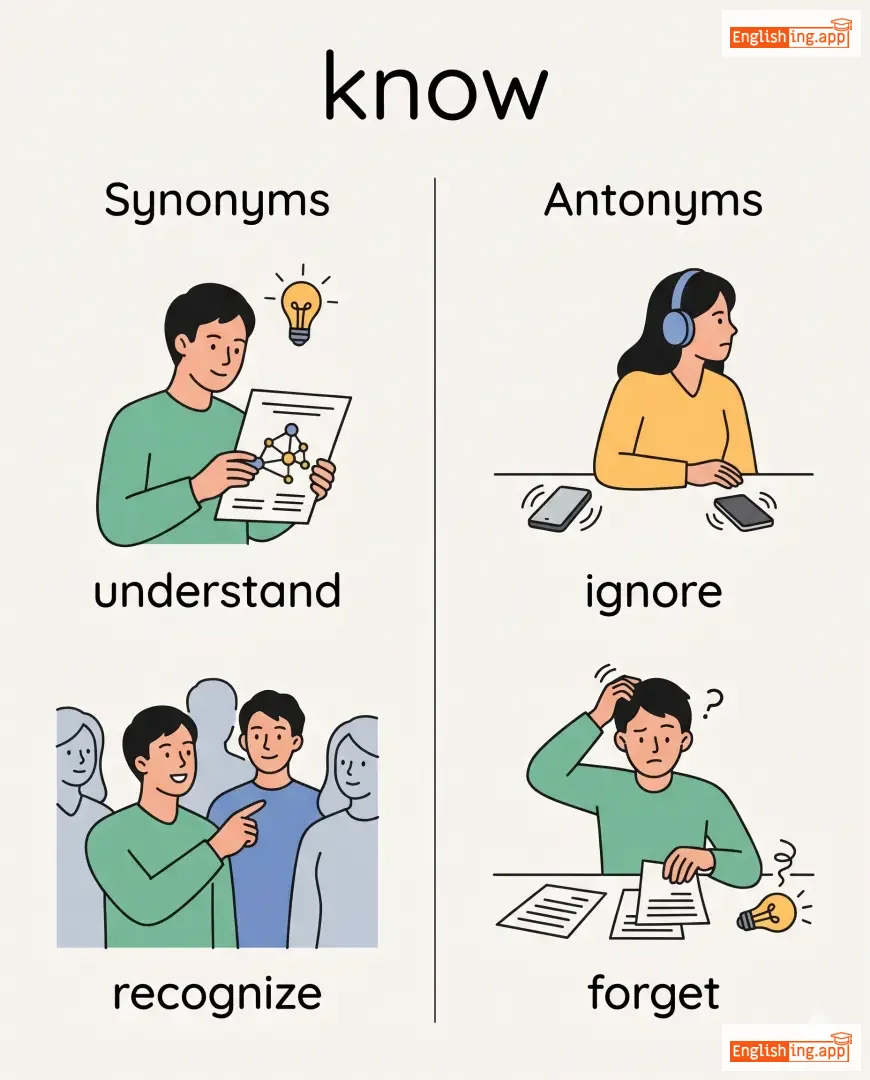
understand, recognize, realize, comprehend, identify
••••••
|
ignore, forget, misunderstand
••••••
|
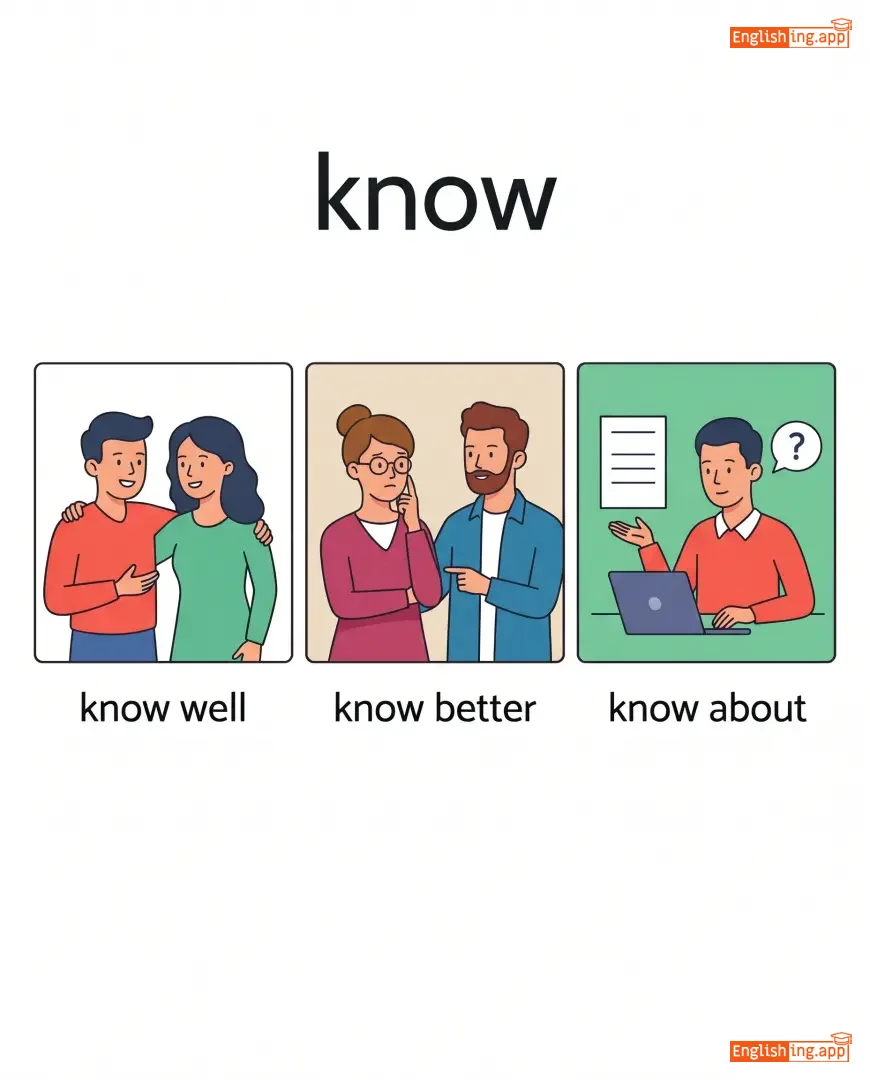
know well, know better, know about, know exactly
••••••
|
Know は知る、知ることで理解が生まれる。
••••••
|
|
📚
••••••
|
/ˈnɒlɪdʒ/
noun
(ノレッジ)
••••••
|

|
知識
chishiki
••••••
|
- •••••• | - •••••• | - •••••• | - •••••• |
information, understanding, and skills gained through learning or experience
••••••
|
Her knowledge of history is impressive. |
彼女の歴史に対する知識は印象的です。
Kanojo no rekishi ni taisuru chishiki wa inshō-teki desu.
••••••
|
a wealth of knowledge |
a large amount of useful information or understanding
••••••
|
知識の宝庫
chishiki no hōko
••••••
|
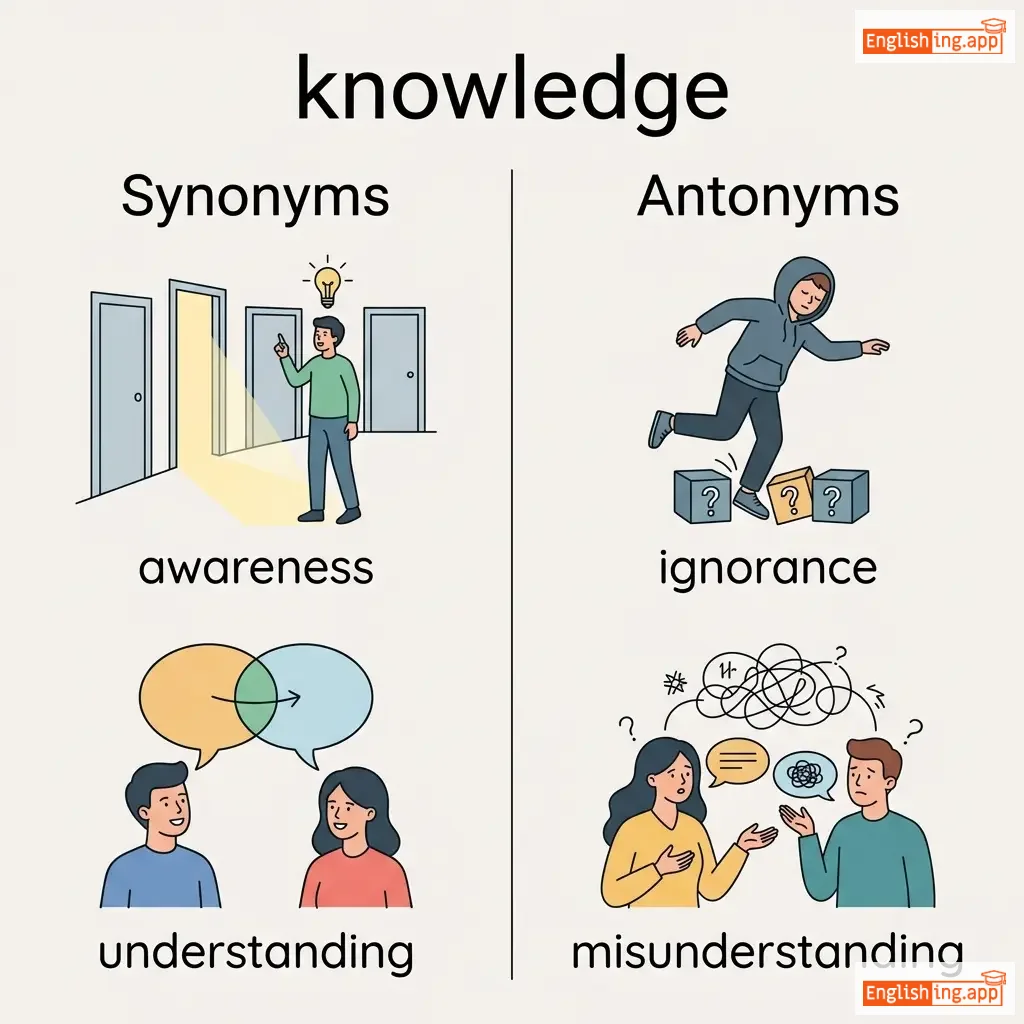
awareness, understanding, wisdom, expertise, intelligence
••••••
|
ignorance, misunderstanding
••••••
|
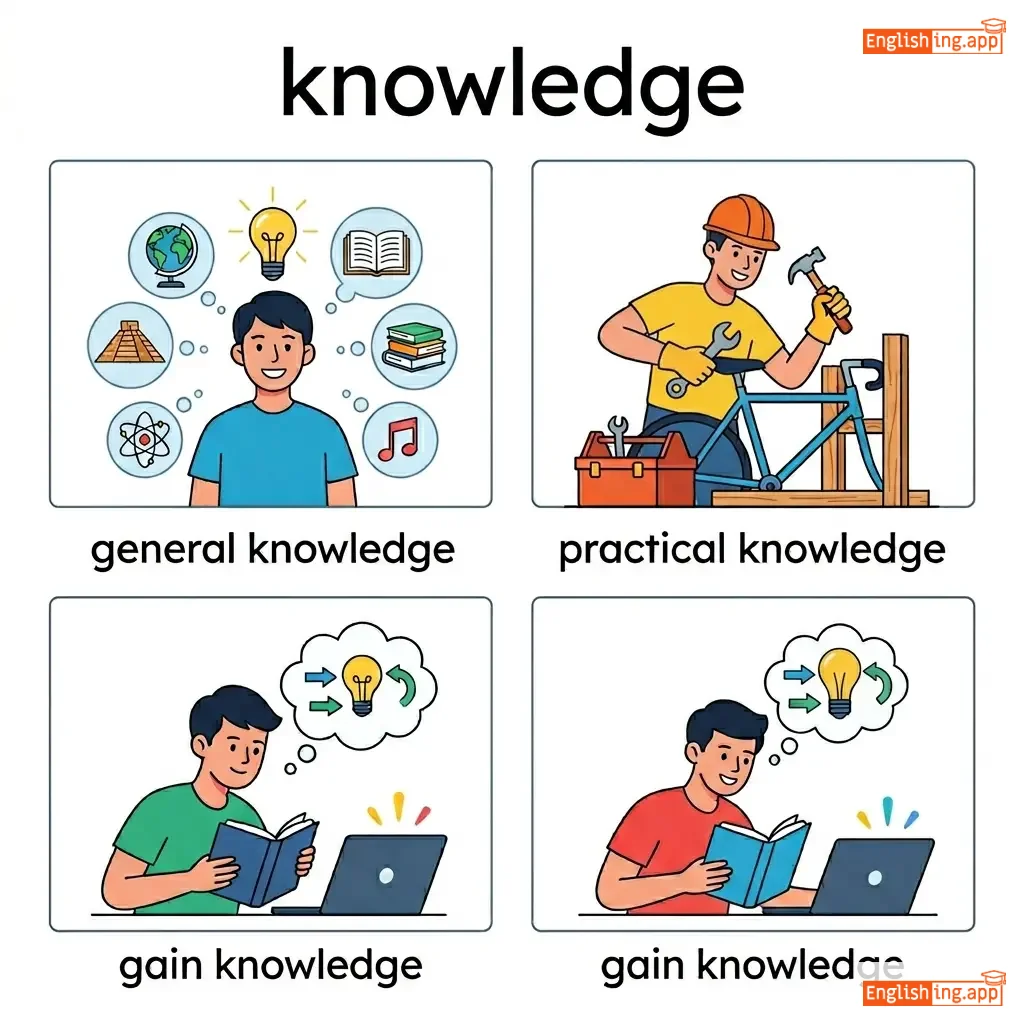
general knowledge, practical knowledge, gain knowledge, share knowledge
••••••
|
知識は宝のように大切にしよう。
••••••
|
|
📖
••••••
|
/noʊn/
adjective
(ノン)
••••••
|
- •••••• |
知られている
shira rete iru
••••••
|
- •••••• | - •••••• | - •••••• | - •••••• |
recognized or familiar; something that is identified or acknowledged
••••••
|
He is a well-known actor in the country. |
彼は国でよく知られた俳優です。
Kare wa kuni de yoku shirareta haiyū desu.
••••••
|
known quantity |
something or someone familiar or predictable
••••••
|
知られた量
shira reta ryō
••••••
|
famous, familiar, recognized, established, acknowledged
••••••
|
unknown, obscure, unfamiliar
••••••
|
well known, little known, widely known, known fact
••••••
|
Known は '知られている' という意味 — '知られている = known' 📖
••••••
|
|
🧪
••••••
|
/læb/
noun
(ラボ)
••••••
|
- •••••• |
実験室
jikken-shitsu
••••••
|
- •••••• | - •••••• | - •••••• | - •••••• |
a place equipped for scientific experiments, research, or teaching
••••••
|
The students conducted an experiment in the chemistry lab. |
学生たちは化学実験室で実験を行いました。
Gakusei-tachi wa kagaku jikken-shitsu de jikken o okonaimashita.
••••••
|
- •••••• | - •••••• | - •••••• |
laboratory, workshop, studio, research center
••••••
|
field, office
••••••
|
science lab, computer lab, lab work, lab equipment
••••••
|
ラボは実験室、実験をする場所です。
••••••
|

