|
表情符号
|
单词 | Images | 翻译 | 过去时 | 过去分词 | 第三人称单数 | 动名词 | 含义 | 例句 | 例句翻译 | 示例表达 | 示例表达含义 | 示例表达翻译 | 同义词 | 反义词 | 搭配词 | 助记符 |
|---|---|---|---|---|---|---|---|---|---|---|---|---|---|---|---|---|---|
|
🤾
••••••
|
/dʒʌmp/
verb
••••••
|
|
- •••••• |
jumped
••••••
|
jumped
••••••
|
jumps
••••••
|
jumping
••••••
|
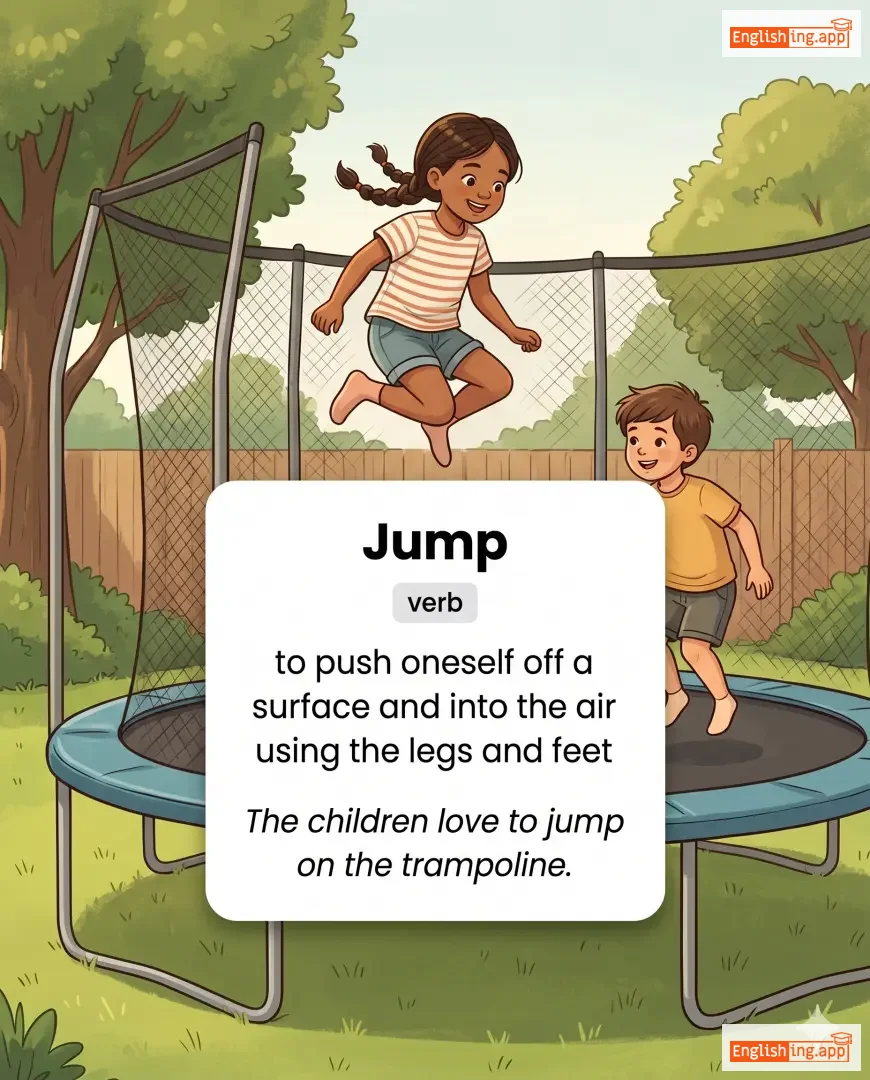
to push oneself off a surface and into the air using the legs and feet
••••••
|
The children love to jump on the trampoline. |
- •••••• |
jump the gun |
to act before the proper time
••••••
|
- •••••• |
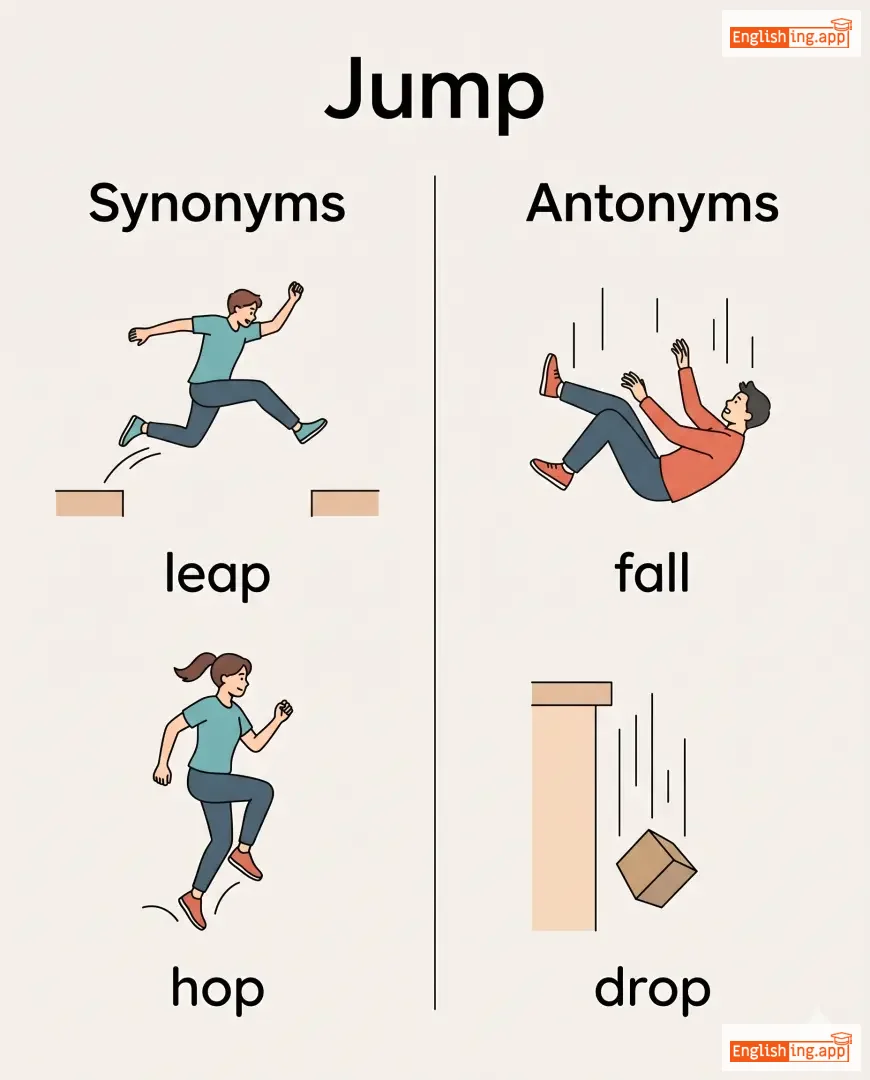
leap, hop, spring, bound, vault
••••••
|
fall, drop, descend
••••••
|
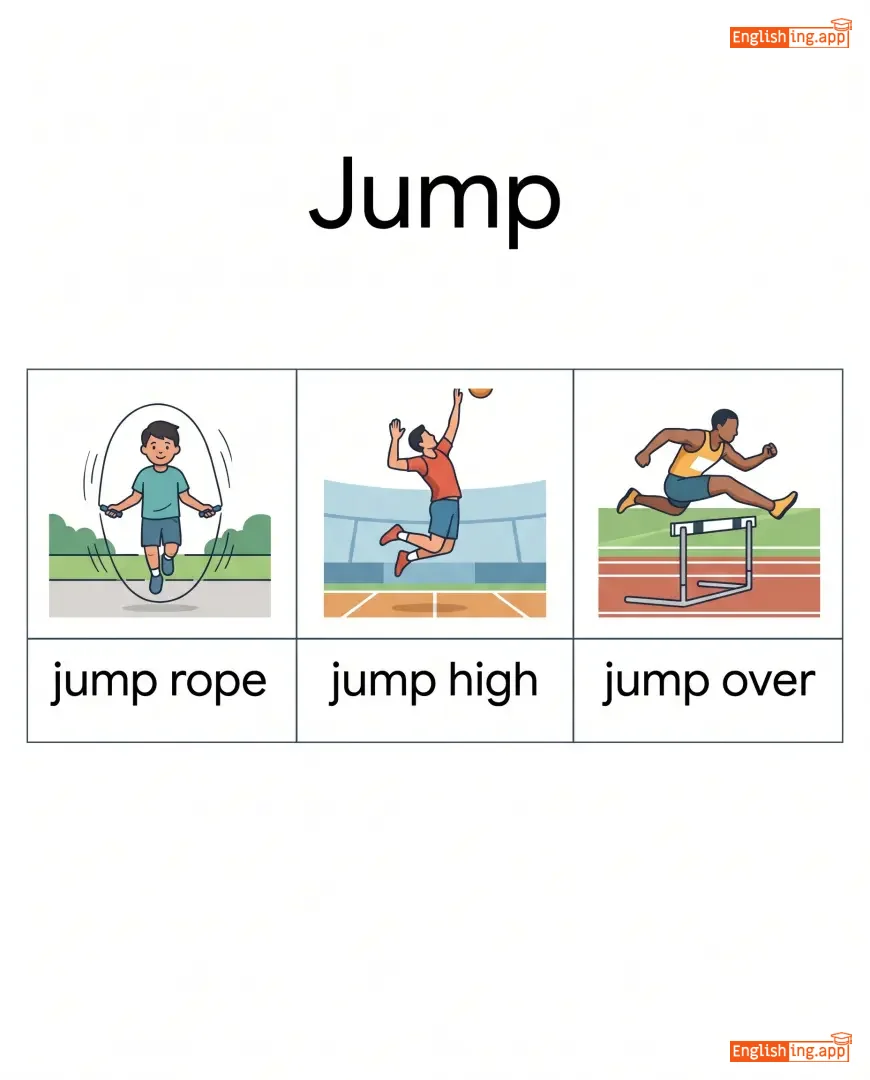
jump rope, jump high, jump over, jump into
••••••
|
No •••••• |
|
🚗
••••••
|
/ˈdʒʌŋk.ʃən/
noun
(jian-kshun)
••••••
|
- •••••• |
交叉口
jiaochakou
••••••
|
- •••••• | - •••••• | - •••••• | - •••••• |
a place where two or more roads or railway lines meet; a point where things join or connect
••••••
|
Turn left at the junction to reach the shopping center.
在交叉口左转,前往购物中心。
••••••
|
在交叉口左转,前往购物中心。
Zai jiaochakou zuozhuan, qianwang gouwu zhongxin.
••••••
|
- •••••• | - •••••• | - •••••• |
intersection, crossroads, meeting point, connection
••••••
|
separation, division, dead end
••••••
|
railway junction, road junction, busy junction
••••••
|
交叉口: 在路口转弯,达到目标。
••••••
|
|
🌞
••••••
|
/dʒuːn/
noun
(朱恩)
••••••
|
- •••••• |
六月
liuyue
••••••
|
- •••••• | - •••••• | - •••••• | - •••••• |
the sixth month of the year in the Gregorian calendar
••••••
|
Schools often close for summer vacation in June.
学校通常在六月开始放暑假。
••••••
|
学校通常在六月开始放暑假。
xuexiao tongchang zai liuyue kaishi fang shujia
••••••
|
June bride
六月新娘
••••••
|
a woman who gets married in June, traditionally believed to bring good luck
••••••
|
六月新娘
liuyue xinniang
••••••
|
sixth month, midsummer month, early summer month, calendar month
••••••
|
December, January
••••••
|
early June, late June, mid-June, June holidays, June weather
••••••
|
六月 liuyue = June = 夏天开始
••••••
|
|
👶
••••••
|
/ˈdʒuː.ni.ər/
noun
(junior)
••••••
|
- •••••• |
初级; 新手; 下属
chūjí; xīnshǒu; xiàshǔ
••••••
|
- •••••• | - •••••• | - •••••• | - •••••• |
a person who is younger or lower in rank than someone else; relating to young people
••••••
|
The junior employee was eager to learn from senior colleagues.
这个初级员工渴望向资深同事学习。
••••••
|
这个初级员工渴望向资深同事学习。
Zhège chūjí yuángōng kěwàng xiàng zīshēng tóngshì xuéxí.
••••••
|
- •••••• | - •••••• | - •••••• |
younger, subordinate, novice, apprentice
••••••
|
senior, elder, superior, veteran
••••••
|
junior employee, junior school, junior partner
••••••
|
Junior in Chinese sounds like someone eager to learn and grow.
••••••
|
|
🏩
••••••
|
/ˌdʒʊə.rɪsˈdɪk.ʃən/
noun
(yú lì sī dí kè shùn)
••••••
|
- •••••• |
司法管辖权
sifa guanxiajquan
••••••
|
- •••••• | - •••••• | - •••••• | - •••••• |
the official power to make legal decisions and judgments; the extent of this power
••••••
|
This case falls under the jurisdiction of the federal court. |
此案件属于联邦法院的司法管辖范围。
cǐ ànjiàn shǔyú liánbāng fǎyuàn de sīfǎ guǎnxiá quánwéi.
••••••
|
- •••••• | - •••••• | - •••••• |
authority, power, control, domain
••••••
|
powerlessness, anarchy, lawlessness
••••••
|
legal jurisdiction, federal jurisdiction, court jurisdiction
••••••
|
司法管辖权决定法院可以在哪些地区做出判决。
••••••
|
|
⚖️
••••••
|
/ˈdʒʊəri/
noun
(陪审团)
••••••
|
- •••••• |
陪审团
peishentuan
••••••
|
- •••••• | - •••••• | - •••••• | - •••••• |
a group of people sworn to give a verdict in a legal case based on the evidence
••••••
|
The jury found him guilty of the crime.
陪审团裁定他犯有罪行
••••••
|
陪审团裁定他犯有罪行。
Peishentuan caiding ta fan you zuixing.
••••••
|
the jury is still out
陪审团尚未作出决定
••••••
|
a decision has not yet been made
••••••
|
陪审团尚未作出决定
Peishentuan shang wei zuochu jueding
••••••
|
panel, tribunal, committee, board, assessors
••••••
|
judge, individual decision
••••••
|
jury duty, jury trial, grand jury, jury verdict
••••••
|
陪审团决定了法律案件的结局,是做出裁决的团队。
••••••
|
|
⚖️
••••••
|
/dʒʌst/
adverb/adjective
(贾斯特)
••••••
|
- •••••• |
正好,仅仅,或公正和道德上正确
zhèng hǎo, jǐn jǐn, huò gōng zhèng hé dào dé shàng zhèng què
••••••
|
- •••••• | - •••••• | - •••••• | - •••••• |
Exactly, only, or fair and morally right.
••••••
|
She arrived just in time for the meeting. |
她刚好准时到达会议。
Tā gānghǎo zhǔnshí dàodá huìyì.
••••••
|
just in case |
As a precaution; in case something happens.
••••••
|
以防万一
yǐ fáng wàn yī
••••••
|
fair, right, exact, only, merely
••••••
|
unfair, unjust, wrong
••••••
|
just now, just about, just because, just enough
••••••
|
JUST意味着正好,公正道德。
••••••
|
|
⚖️
••••••
|
/ˈdʒʌstɪs/
noun
(杰斯提斯)
••••••
|

|
正义
zhèngyì
••••••
|
- •••••• | - •••••• | - •••••• | - •••••• |
the quality of being fair and reasonable; the administration of the law
••••••
|
The victims are still waiting for justice. |
受害者仍在等待正义。
Shòuhài zhě réng zài děngdài zhèngyì.
••••••
|
bring to justice |
to arrest and punish someone for a crime
••••••
|
伸张正义
shēnzhāng zhèngyì
••••••
|
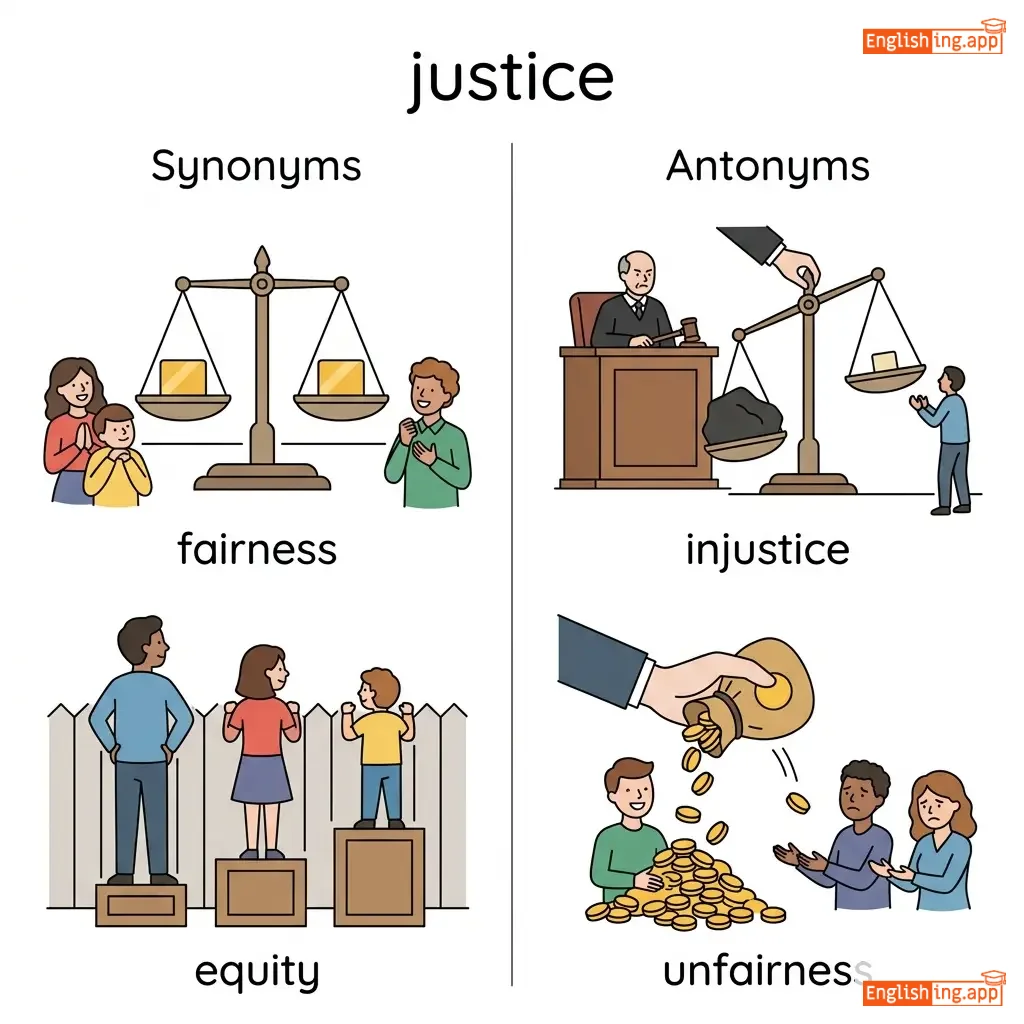
fairness, equity, law, righteousness, impartiality
••••••
|
injustice, unfairness, corruption
••••••
|
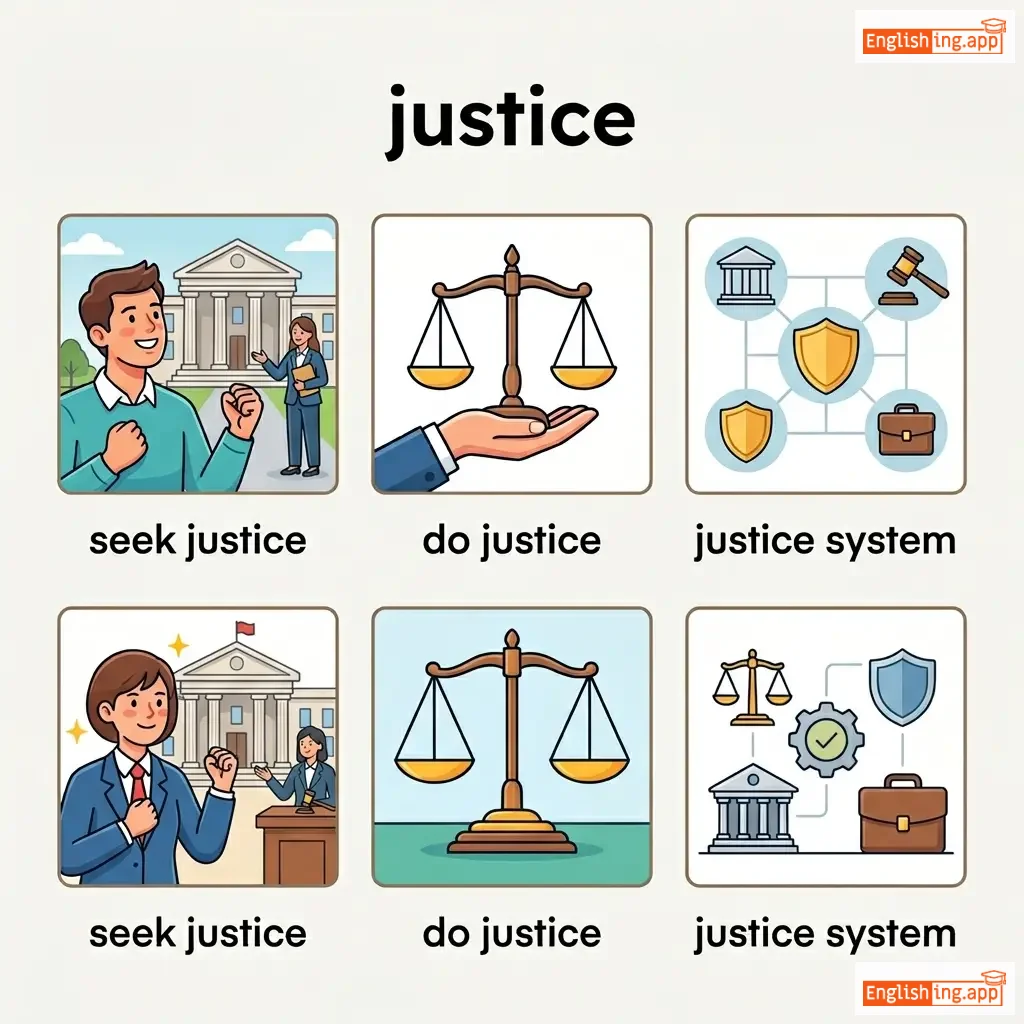
seek justice, do justice, justice system, social justice
••••••
|
Justice = 正义 = 公正无私
••••••
|
|
📝
••••••
|
/ˌdʒʌstɪfɪˈkeɪʃən/
noun
(辩解)
••••••
|
- •••••• |
辩解
biànjiě
••••••
|
- •••••• | - •••••• | - •••••• | - •••••• |
a reason, explanation, or excuse that shows something is right or reasonable
••••••
|
There is no justification for such rude behavior. |
对这种粗鲁行为没有辩解。
duì zhè zhǒng cūlǔ xíngwéi méiyǒu biànjiě
••••••
|
- •••••• | - •••••• | - •••••• |
reason, excuse, defense, explanation, rationale
••••••
|
accusation, blame
••••••
|
provide justification, lack of justification, justification for action
••••••
|
Justification就是辩解,要证明某事正确,就需要辩解。
••••••
|
|
🔎
••••••
|
/ˈdʒʌstɪfaɪ/
verb
(jusitfai)
••••••
|
- •••••• |
辩护
bianhu
••••••
|
justified
jusitfaid
••••••
|
justified
jusitfaid
••••••
|
justifies
jusitfeis
••••••
|
justifying
jusitfaiying
••••••
|
to show or prove that something is right or reasonable
••••••
|
He tried to justify his decision with logical reasons.
他试图用逻辑的理由来为他的决定辩护。
••••••
|
他试图用逻辑的理由来为他的决定辩护。
Ta shitu yong luojide liyou lai wei tade jueding bianhu.
••••••
|
justify the means
辩护手段
••••••
|
the end result makes the actions taken acceptable
••••••
|
辩护手段
bianhu shouduan
••••••
|
defend, explain, rationalize, vindicate
••••••
|
condemn, blame
••••••
|
justify action, justify decision, justify behavior
••••••
|
Justify 就是辩护,一切都可以辩护解释
••••••
|
|
🧵
••••••
|
/dʒuːt/
noun
(朱特)
••••••
|
- •••••• |
黄麻
huangma
••••••
|
- •••••• | - •••••• | - •••••• | - •••••• |
a long, soft, shiny plant fiber used to make rope, bags, sacks, and coarse cloth
••••••
|
Jute is widely used to make eco-friendly bags and ropes.
黄麻用于制作袋子和绳子。
••••••
|
黄麻常用于制作环保袋。
huangma chang yongyu zhizuo huanbao dai
••••••
|
- •••••• | - •••••• | - •••••• |
burlap fiber, plant fiber, natural fiber, sackcloth
••••••
|
synthetic fiber, plastic fiber
••••••
|
jute fiber, jute bag, raw jute, jute sack, jute industry
••••••
|
黄麻 huangma = jute 天然纤维
••••••
|
|
♻️
••••••
|
/kəˈbɑːdi/
noun
(卡巴迪)
••••••
|
- •••••• |
废品收购者
feipin shougouzhe
••••••
|
- •••••• | - •••••• | - •••••• | - •••••• |
a person who collects and sells scrap or recyclable materials, especially in South Asia
••••••
|
The kabadi came every week to collect old newspapers and bottles.
卡巴迪来收集旧物品。
••••••
|
废品收购者来收集旧物品。
feipin shougouzhe lai shouji jiu wupin
••••••
|
- •••••• | - •••••• | - •••••• |
scrap dealer, junk dealer, recycler, waste collector
••••••
|
consumer, buyer
••••••
|
kabadiwala, local kabadi, kabadi shop, scrap kabadi
••••••
|
kabadi = 收废品的人
••••••
|
|
🔥
••••••
|
/kiːn/
adjective
(基因)
••••••
|
- •••••• |
热衷的, 渴望的
rèzhōng de, kěwàng de
••••••
|
- •••••• | - •••••• | - •••••• | - •••••• |
Having or showing eagerness or enthusiasm; sharp or highly developed (for senses).
••••••
|
She is very keen to learn new skills.
她非常渴望学习新技能。
••••••
|
她非常渴望学习新技能。
Tā fēicháng kěwàng xuéxí xīn jìnéng.
••••••
|
keen on
对...感兴趣
••••••
|
Interested in or enthusiastic about something.
••••••
|
对...感兴趣
duì...gǎn xìngqù
••••••
|
eager, enthusiastic, sharp, intense, passionate
••••••
|
indifferent, apathetic, dull
••••••
|
keen interest, keen sense, keen to learn, keen on sports
••••••
|
Keen 就是对某事物充满兴趣和热情,像是学一项新技能。
••••••
|
|
🔒
••••••
|
/kiːp/
verb
(kip)
••••••
|
|
保持
bǎochí
••••••
|
kept
kept
••••••
|
kept
kept
••••••
|
keeps
kips
••••••
|
keeping
keeping
••••••
|
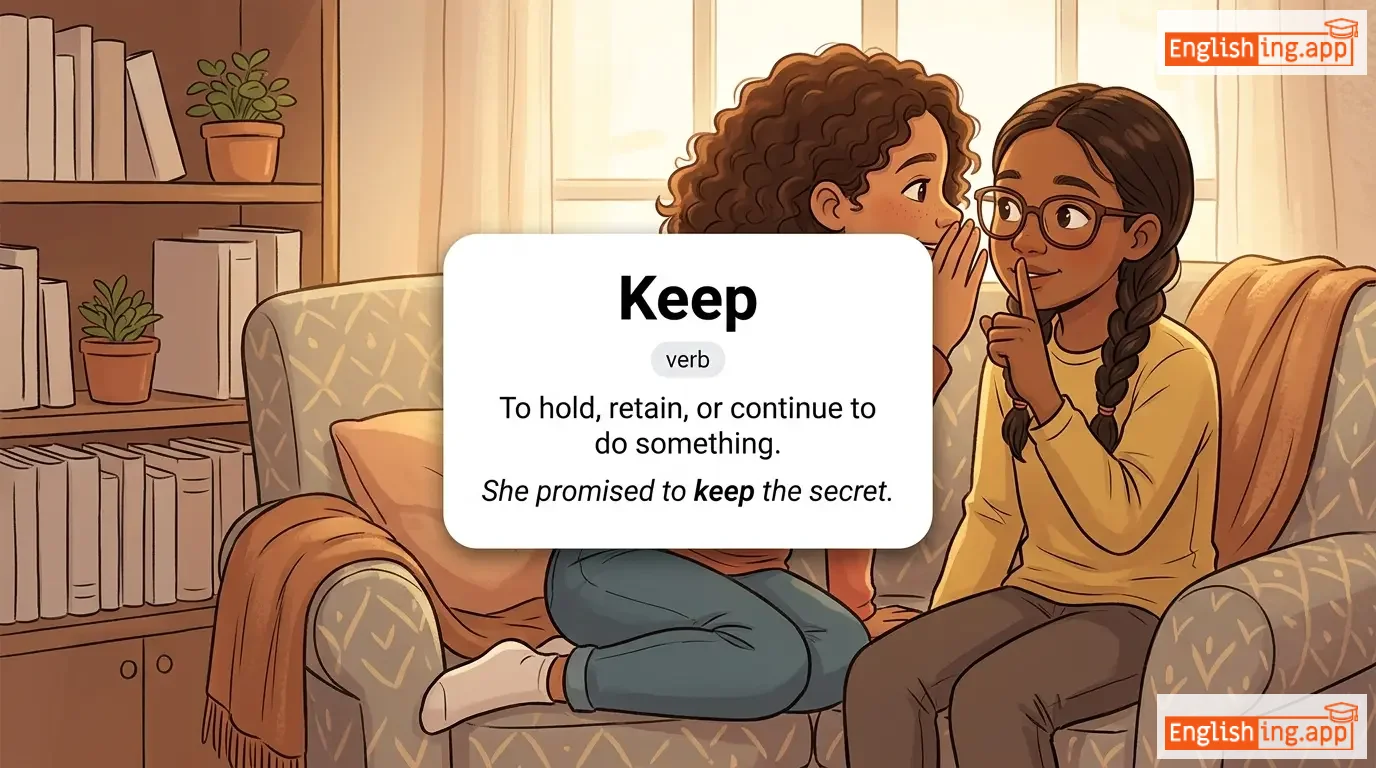
To hold, retain, or continue to do something.
••••••
|
She promised to keep the secret.
她答应保持秘密。
••••••
|
她答应保持秘密。
Tā dāyìng bǎochí mìmì.
••••••
|
keep in touch
保持联系
••••••
|
Maintain communication with someone.
••••••
|
保持联系
bǎochí liánxì
••••••
|
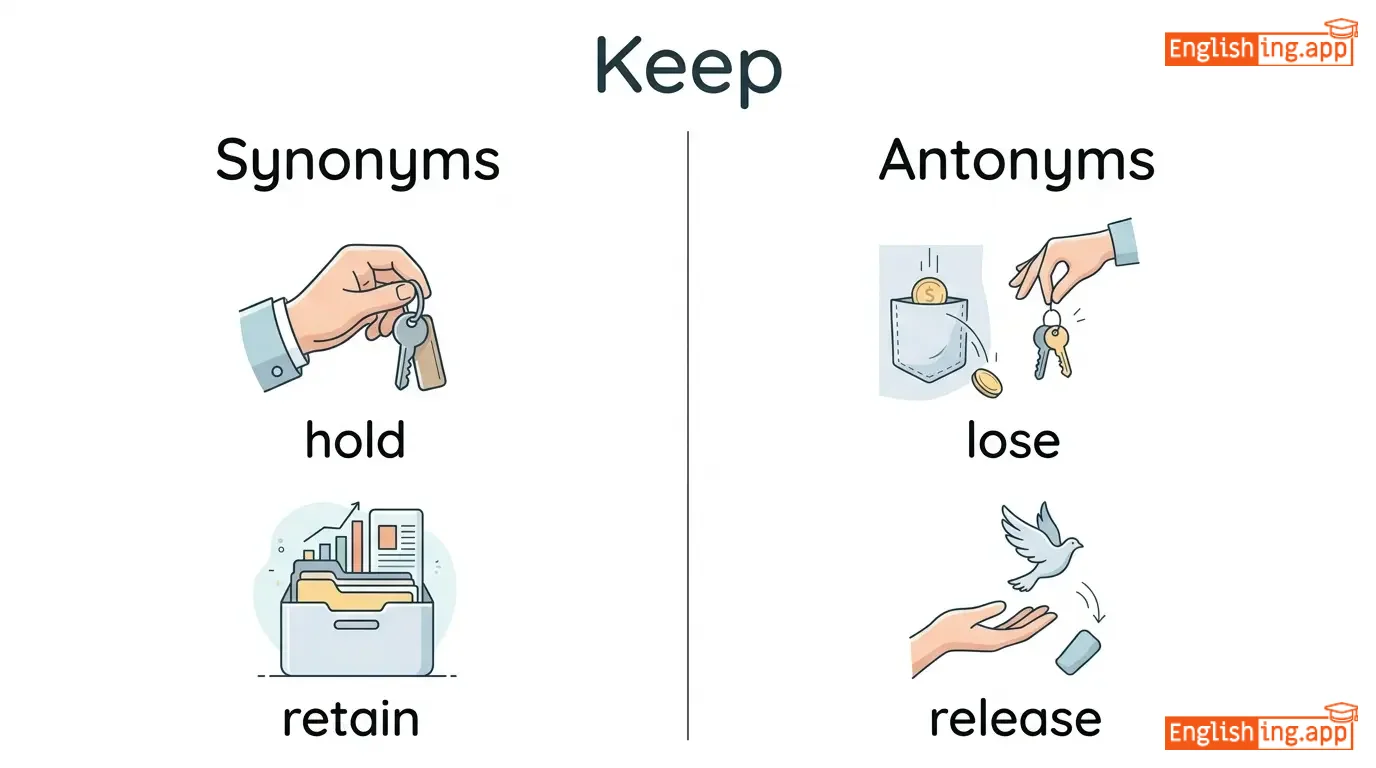
hold, retain, preserve, maintain, continue
••••••
|
lose, release, forget
••••••
|
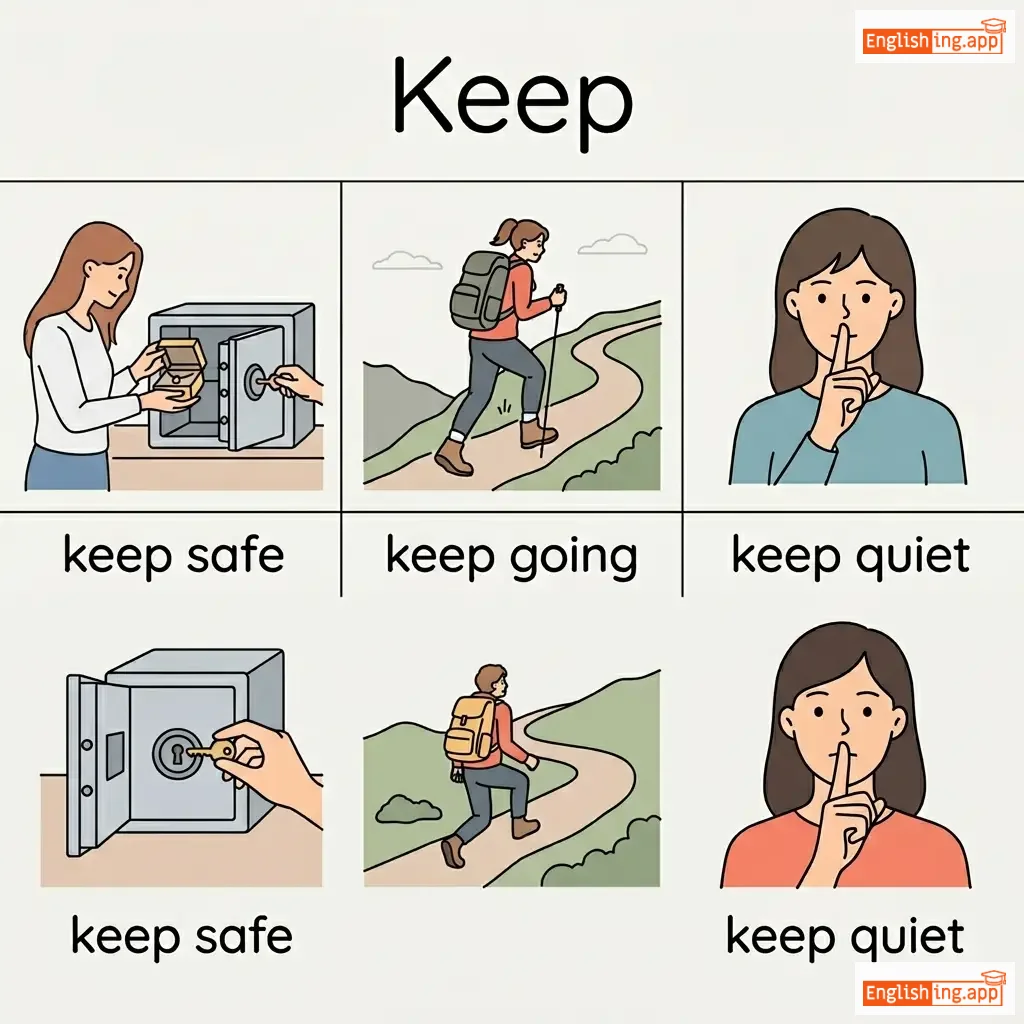
keep safe, keep going, keep quiet, keep calm
••••••
|
KEEP = 保持 - 不要丢失重要的东西。
••••••
|
|
🔑
••••••
|
/kiː/
noun
(ki)
••••••
|
- •••••• |
钥匙
yaoshi
••••••
|
- •••••• | - •••••• | - •••••• | - •••••• |
A small piece of shaped metal used to open or close locks, or something crucial and essential.
••••••
|
She lost the key to her apartment. |
她丢失了她公寓的钥匙。
Ta diushi le ta gongyu de yaoshi.
••••••
|
key to success |
the essential factor in achieving success
••••••
|
成功的钥匙
Chenggong de yaoshi
••••••
|
essential, crucial, vital, main, important
••••••
|
unimportant, trivial, minor
••••••
|
house key, car key, key role, key point, key factor
••••••
|
钥匙是打开成功之门的关键。
••••••
|
|
⌨️
••••••
|
/ˈkiːbɔːrd/
noun
(键盘)
••••••
|
- •••••• |
键盘
jianpan
••••••
|
- •••••• | - •••••• | - •••••• | - •••••• |
a set of keys used to operate a computer, typewriter, or similar device for inputting text and commands
••••••
|
She typed the report quickly on her keyboard.
她在键盘上快速打完了报告。
••••••
|
她在键盘上快速打完了报告。
ta zai jianpan shang kuaisu da wan le baogao
••••••
|
keyboard warrior
键盘侠
••••••
|
a person who expresses aggressive opinions online but avoids real-life confrontation
••••••
|
键盘侠
jianpan xia
••••••
|
keypad, console, input device, typing board
••••••
|
screen, output device
••••••
|
computer keyboard, mechanical keyboard, wireless keyboard, keyboard shortcuts
••••••
|
键盘=按键写字
••••••
|
|
👟
••••••
|
/kɪk/
verb
(kik)
••••••
|
|
踢
ti
••••••
|
kicked
kikd
••••••
|
kicked
kikd
••••••
|
kicks
kiks
••••••
|
kicking
kiking
••••••
|
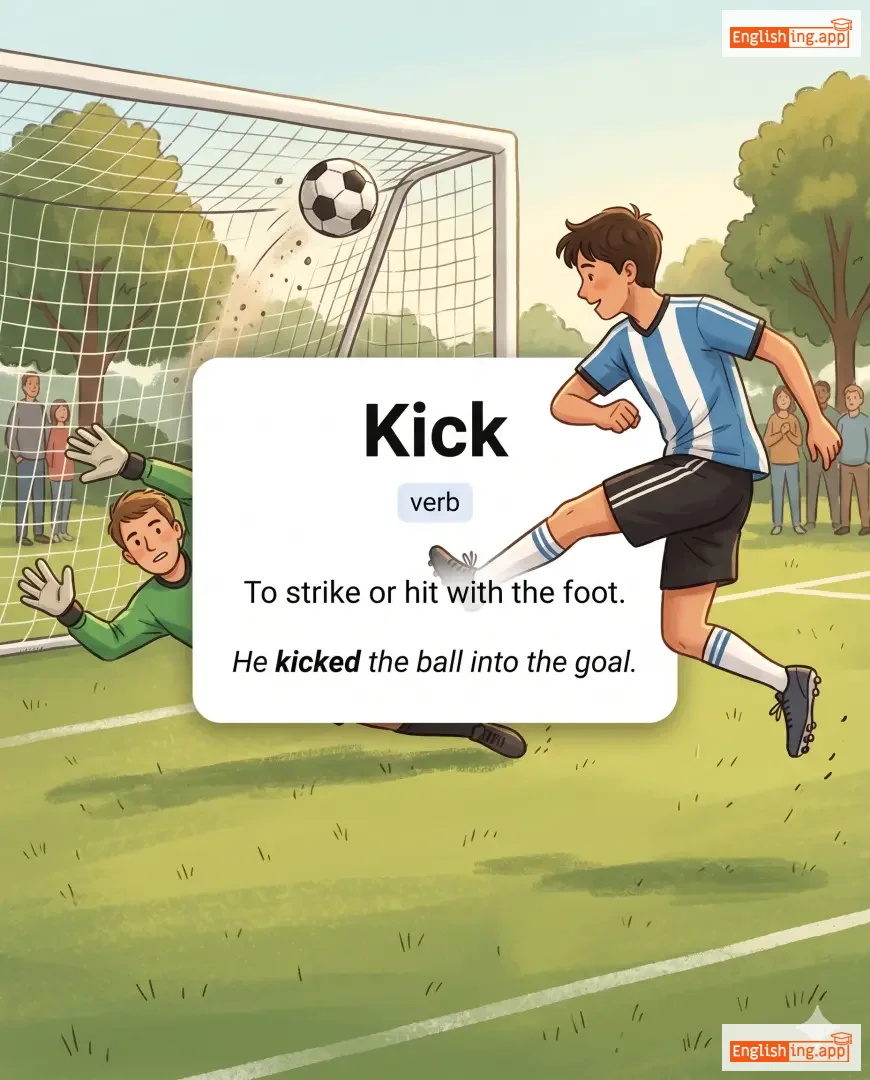
To strike or hit with the foot.
••••••
|
He kicked the ball into the goal.
他把球踢进了球门。
••••••
|
他把球踢进了球门。
Ta ba qiu ti jinle qiumen.
••••••
|
kick the bucket
踢桶
••••••
|
a euphemism for dying
••••••
|
死去
si qu
••••••
|
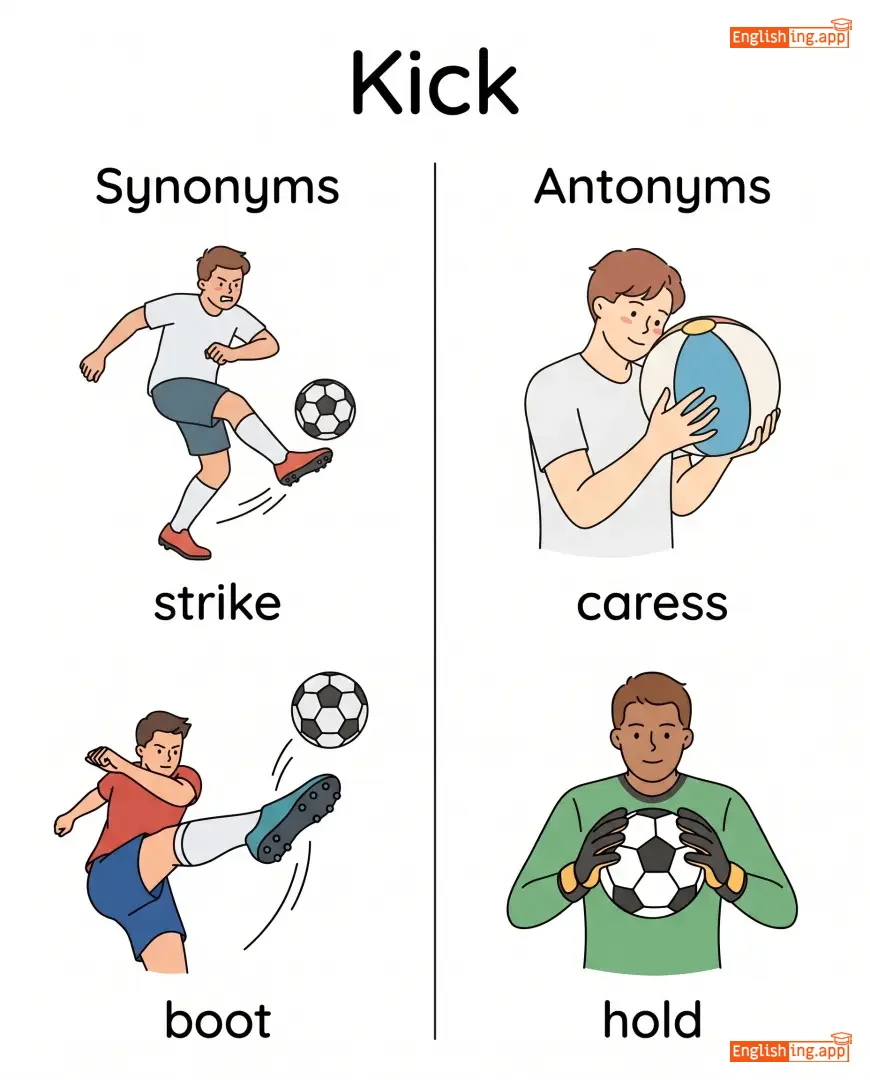
strike, boot, punt, lash, thrust
••••••
|
caress, hold, touch gently
••••••
|
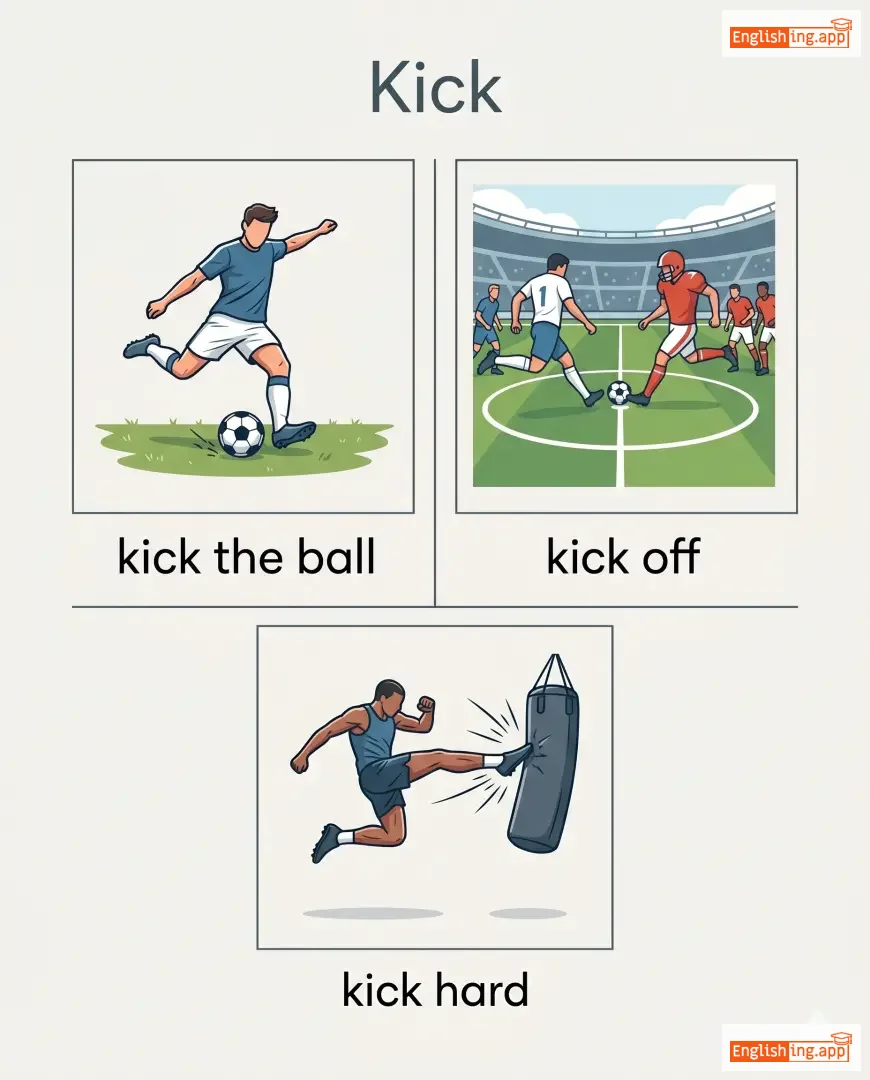
kick the ball, kick off, kick hard, kick out, kick start
••••••
|
Kick 意思是踢,就像电影中的英雄总是踢(kick)对手。
••••••
|
|
😄
••••••
|
/kɪd/
verb
(kid)
••••••
|
- •••••• |
开玩笑
kai wanxiao
••••••
|
kidded
kidded
••••••
|
kidded
kidded
••••••
|
kids
kids
••••••
|
kidding
kidding
••••••
|
to joke or tease; to speak in a playful manner
••••••
|
I'm just kidding with you.
我只是在开玩笑。
••••••
|
我只是在开玩笑。
Wo zhi shi zai kai wanxiao.
••••••
|
- •••••• | - •••••• | - •••••• |
joke, tease, jest, fool
••••••
|
serious, sincere, honest
••••••
|
just kidding, kid around, stop kidding, no kidding
••••••
|
Imagine a kid making jokes playfully in Chinese.
••••••
|
|
🕵️
••••••
|
/ˈkɪdnæp/
verb
(基德纳普)
••••••
|
|
绑架
bǎngjià
••••••
|
kidnapped
绑架
••••••
|
kidnapped
绑架
••••••
|
kidnaps
绑架
••••••
|
kidnapping
绑架中
••••••
|
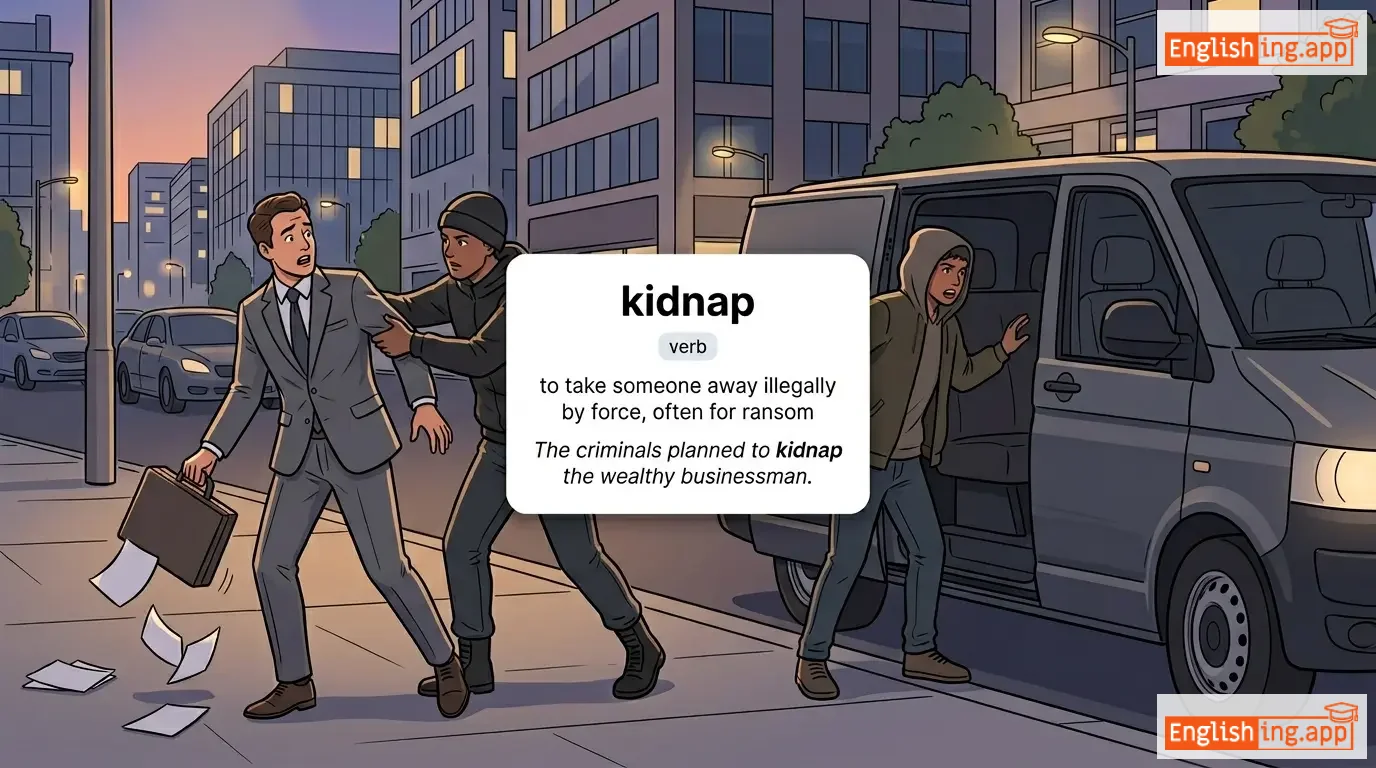
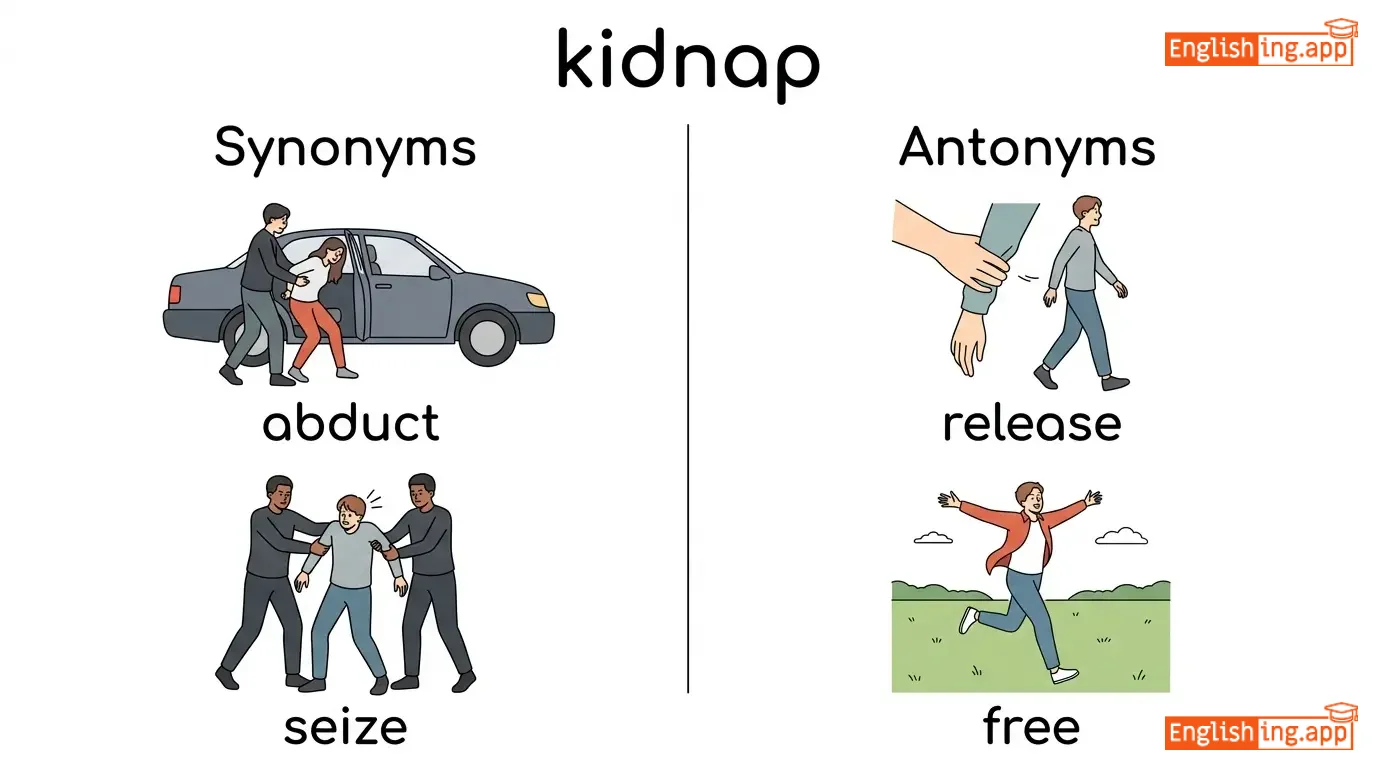
to take someone away illegally by force, often for ransom
••••••
|
The criminals planned to kidnap the wealthy businessman.
罪犯计划绑架富有的商人。
••••••
|
罪犯计划绑架富有的商人。
Zuìfàn jìhuà bǎngjià fùyǒu de shāngrén.
••••••
|
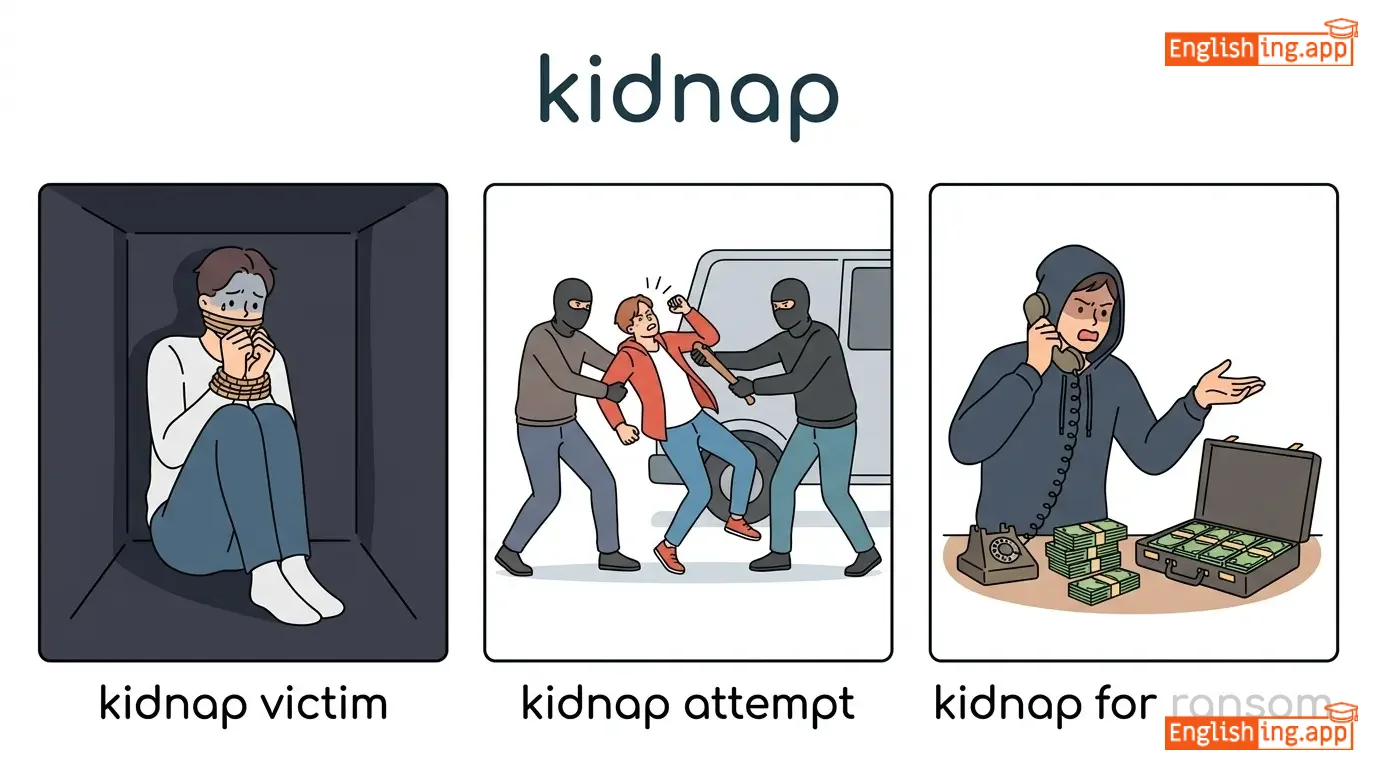
kidnap for ransom
绑架勒索
••••••
|
abduct someone in order to demand money
••••••
|
绑架勒索
bǎngjià lèisuǒ
••••••
|
abduct, seize, snatch, capture
••••••
|
release, free, liberate
••••••
|
kidnap victim, kidnap attempt, kidnap for ransom
••••••
|
Kid + nap → 孩子在睡觉,绑架意味着带走某人
••••••
|
|
🫘
••••••
|
/ˈkɪdni/
noun
(kídni)
••••••
|
- •••••• |
肾脏
shènzàng
••••••
|
- •••••• | - •••••• | - •••••• | - •••••• |
either of a pair of organs that filter waste products from the blood and produce urine
••••••
|
Drinking plenty of water helps keep your kidneys healthy.
Drinking plenty of water helps keep your kidneys healthy.
••••••
|
喝足够的水有助于保持肾脏健康。
Hē zúgòu de shuǐ yǒuzhù yú bǎochí shènzàng jiànkāng.
••••••
|
- •••••• | - •••••• | - •••••• |
renal organ
••••••
|
- •••••• |
kidney disease, kidney stone, kidney function, kidney transplant
••••••
|
肾脏 - 水有助于肾脏健康
••••••
|
|
☠️
••••••
|
/kɪl/
verb
(kil)
••••••
|
|
杀
sha
••••••
|
killed
kild
••••••
|
killed
kild
••••••
|
kills
kils
••••••
|
killing
kiling
••••••
|
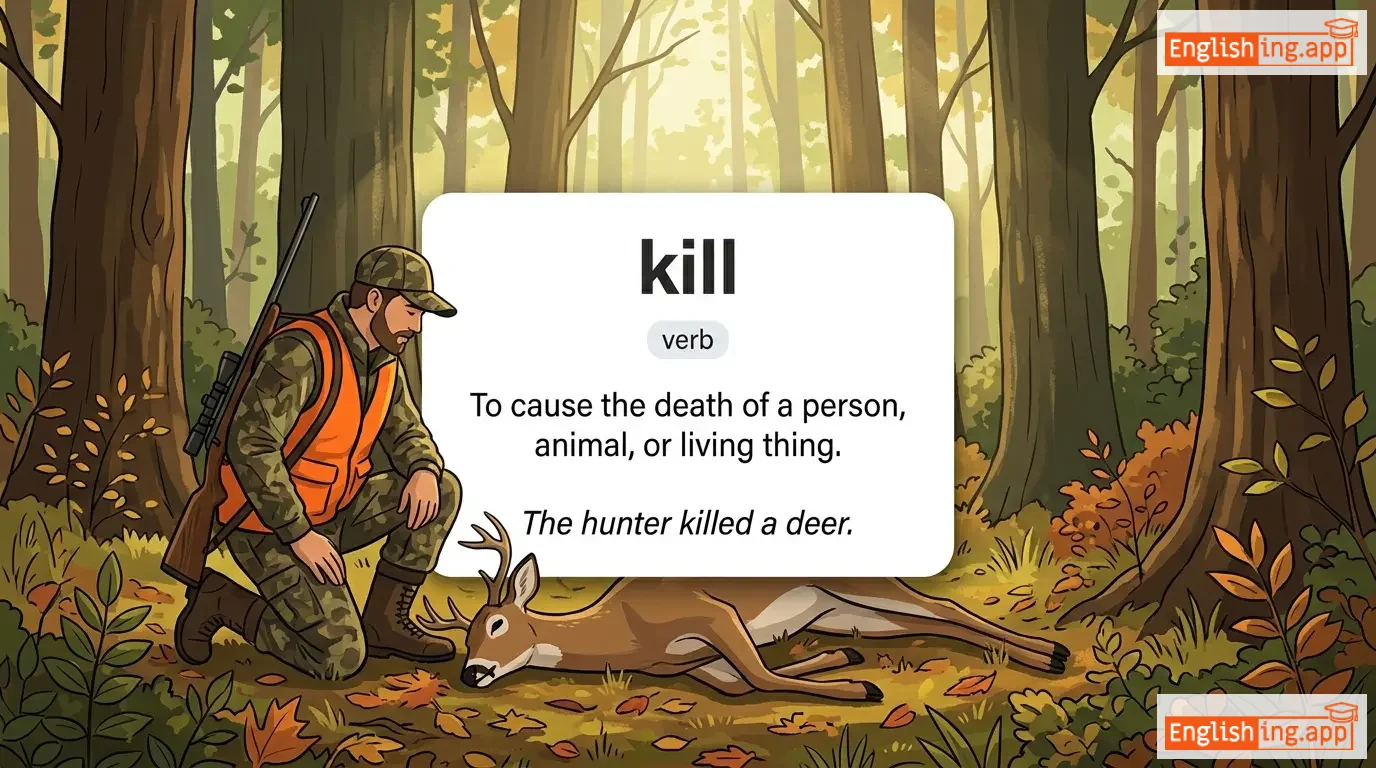
To cause the death of a person, animal, or living thing.
••••••
|
The hunter killed a deer.
猎人杀了一只鹿。
••••••
|
猎人杀了一只鹿。
Lie ren sha le yi zhi lu.
••••••
|
kill time
打发时间
••••••
|
to spend time doing something unimportant while waiting
••••••
|
打发时间
da fa shi jian
••••••
|
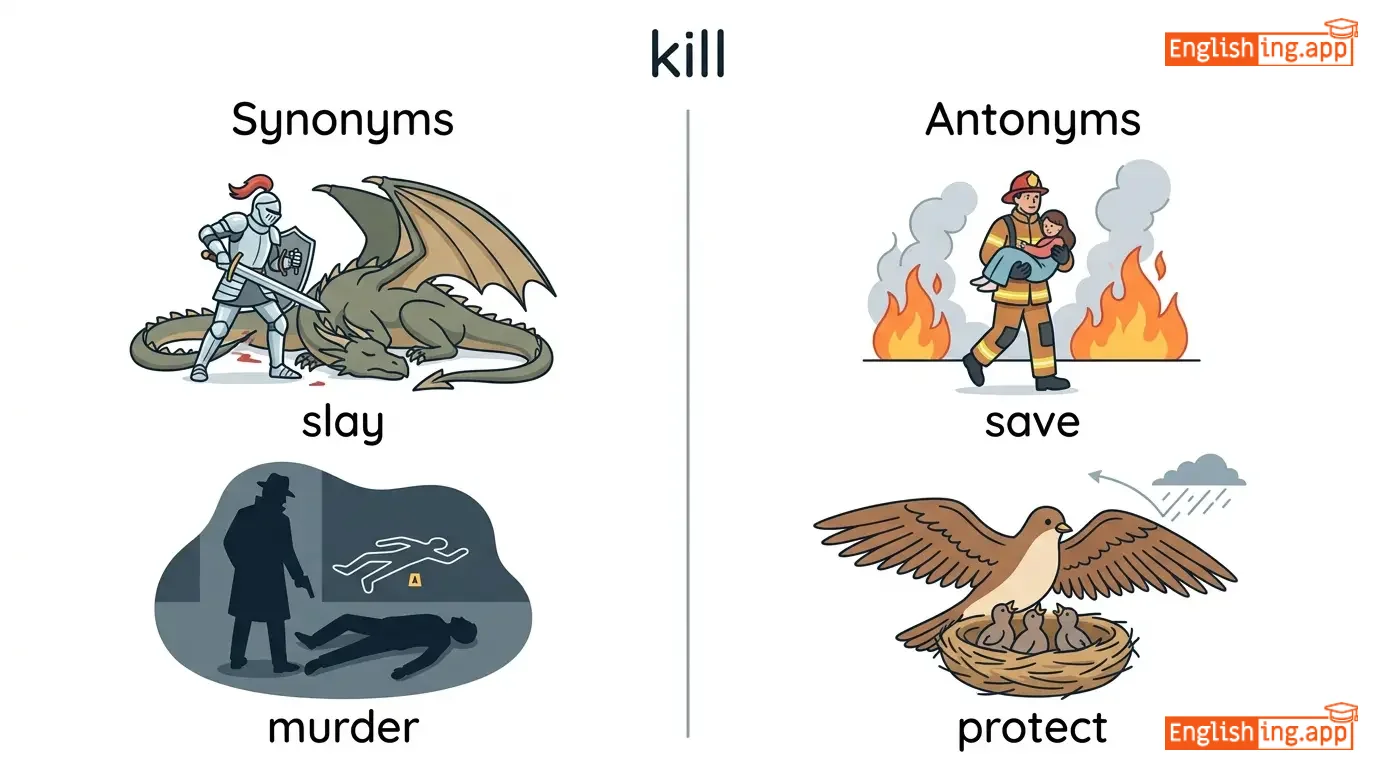
slay, murder, destroy, end, eliminate
••••••
|
save, protect, preserve
••••••
|
kill time, kill instantly, kill someone, kill the mood
••••••
|
杀是杀,打发时间是等待不重要的事情。
••••••
|
|
🔪
••••••
|
/ˈkɪlər/
noun
(kìlè)
••••••
|
- •••••• |
杀手
shāshǒu
••••••
|
- •••••• | - •••••• | - •••••• | - •••••• |
A person or thing that kills.
••••••
|
The police caught the killer last night.
警察昨晚抓住了杀手。
••••••
|
警察昨晚抓住了杀手。
Jǐngchá zuówǎn zhuā zhù le shāshǒu.
••••••
|
killer instinct
杀手本能
••••••
|
a strong drive to succeed or dominate
••••••
|
杀手本能
shāshǒu běnnéng
••••••
|
murderer, slayer, assassin, executioner, destroyer
••••••
|
savior, protector
••••••
|
serial killer, cold-blooded killer, contract killer, killer instinct
••••••
|
Killer 在中文中是杀手,电影中的坏人通常都是杀手。
••••••
|
|
💀
••••••
|
/ˈkɪlɪŋ/
noun
(killing)
••••••
|
- •••••• |
谋杀
móushā
••••••
|
- •••••• | - •••••• | - •••••• | - •••••• |
the act of causing death, especially deliberately
••••••
|
The movie depicts the brutal killing of the villagers. |
电影描绘了村民的残忍谋杀。
Diànyǐng miáohuìle cūnmín de cánrěn móushā.
••••••
|
make a killing |
to earn a large amount of money quickly
••••••
|
赚大钱
zhuàn dàqián
••••••
|
murder, homicide, slaughter, assassination, massacre
••••••
|
saving, rescue
••••••
|
cold-blooded killing, brutal killing, make a killing, senseless killing
••••••
|
谋杀意味着杀人,但在生意中,'赚大钱'意味着快速赚取大量钱财。
••••••
|
|
⚖️
••••••
|
/ˈkɪləɡræm/
noun
(千克)
••••••
|
- •••••• |
千克
qianke
••••••
|
- •••••• | - •••••• | - •••••• | - •••••• |
the base unit of mass in the metric system equal to 1,000 grams
••••••
|
The bag of rice weighs five kilograms.
这袋米重五公斤。
••••••
|
这袋米重五千克。
zhe dai mi zhong wu qianke
••••••
|
- •••••• | - •••••• | - •••••• |
kilogramme, kilo, kg, metric kilogram
••••••
|
gram, milligram, ounce
••••••
|
one kilogram, half kilogram, kilogram weight, measured in kilograms
••••••
|
千 = thousand—千克就是一千克
••••••
|
|
📏
••••••
|
/kɪˈlɒmɪtər/ or /ˈkɪləˌmiːtər/
noun
(千米)
••••••
|
- •••••• |
千米
qian mi
••••••
|
- •••••• | - •••••• | - •••••• | - •••••• |
a unit of length equal to 1,000 meters
••••••
|
The village is about five kilometers away from the town. |
这个村庄离城镇大约五千米远。
Zhège cūnzhuāng lí chéngzhèn dàyuē wǔ qiān mǐ yuǎn.
••••••
|
- •••••• | - •••••• | - •••••• |
1000 meters, km, unit of distance
••••••
|
centimeter, millimeter, inch
••••••
|
ten kilometers, per kilometer, travel kilometers
••••••
|
千(qian)表示1000,米(mi)表示米 — 千米表示1000米
••••••
|
|
💖
••••••
|
/kaɪnd/
adjective/noun
(kāi'ēn)
••••••
|
- •••••• |
种类 / 友善
zhǒnglèi / yǒushàn
••••••
|
- •••••• | - •••••• | - •••••• | - •••••• |
A type or category; showing a gentle, considerate nature.
••••••
|
She is very kind to her neighbors. |
她对邻居非常友善。
Tā duì línjū fēicháng yǒushàn.
••••••
|
kind of |
Used to indicate similarity or approximation.
••••••
|
某种程度上
mǒu zhǒng chéngdù shàng
••••••
|
type, sort, gentle, caring, compassionate
••••••
|
cruel, harsh, unkind
••••••
|
kind words, kind gesture, be kind, kind of person
••••••
|
KIND 表示友善,kind of 表示某种程度上。
••••••
|
|
😊
••••••
|
/ˈkaɪndli/
adverb; adjective
(凯因德利)
••••••
|
- •••••• |
亲切地
qinqie de
••••••
|
- •••••• | - •••••• | - •••••• | - •••••• |
in a kind or gentle manner; showing kindness or goodwill
••••••
|
She kindly helped the old man cross the street.
希 凯因德利 海尔普德 德 欧德 曼 克罗斯 德 斯特里特。
••••••
|
她亲切地帮助老人过马路。
ta qinqie de bangzhu laoren guo malu
••••••
|
kindly note that
凯因德利 诺特 达特
••••••
|
a polite way to ask someone to pay attention to information
••••••
|
请注意
qing zhuyi
••••••
|
gently, benevolently, warmly, graciously, considerately
••••••
|
harshly, cruelly, rudely
••••••
|
kindly request, kindly gesture, kindly manner, kindly words
••••••
|
kind = 亲切, kindly = 亲切地
••••••
|
|
-
••••••
|
noun
(kāi'ndnèisī)
••••••
|
- •••••• |
善良; 仁慈; 善意
shànliáng; réncí; shànyì
••••••
|
- •••••• | - •••••• | - •••••• | - •••••• | - •••••• | - •••••• | - •••••• | - •••••• | - •••••• | - •••••• | - •••••• | - •••••• | - •••••• |
Kindness in Chinese is 'shànliáng', reflecting generosity.
••••••
|
|
👑
••••••
|
/kɪŋ/
noun
(king)
••••••
|
- •••••• |
国王
guowang
••••••
|
- •••••• | - •••••• | - •••••• | - •••••• |
the male ruler of an independent state, especially one who inherits the position by right of birth
••••••
|
The king ruled the country with wisdom and fairness. |
国王以智慧和公正治理国家。
Guowang yi zhihui he gongzheng zhili guojia.
••••••
|
King of the hill |
a person who is the best or most powerful in a particular area
••••••
|
山丘之王
Shanqiu zhi wang
••••••
|
monarch, ruler, emperor, sovereign, potentate
••••••
|
subject, commoner
••••••
|
king and queen, crowned king, king of England, king of the hill
••••••
|
👑 国王就是统治者,带着王冠的权力者。
••••••
|
|
👑
••••••
|
/ˈkɪŋdəm/
noun
(kɪŋdəm)
••••••
|
- •••••• |
王国
wángguó
••••••
|
- •••••• | - •••••• | - •••••• | - •••••• |
a country or territory ruled by a king or queen
••••••
|
The kingdom was known for its rich culture and traditions. |
这个王国以其丰富的文化和传统而闻名。
Zhège wángguó yǐ qí fēngfù de wénhuà hé chuántǒng ér wénmíng.
••••••
|
animal kingdom |
the world of living animals
••••••
|
动物王国
dòngwù wángguó
••••••
|
realm, empire, monarchy, domain, territory
••••••
|
republic, democracy, colony
••••••
|
ancient kingdom, powerful kingdom, united kingdom, vast kingdom
••••••
|
王国(Kingdom)是国王的领域 👑
••••••
|
|
💋
••••••
|
/kɪs/
verb
••••••
|


|
- •••••• |
kissed
••••••
|
kissed
••••••
|
kisses
••••••
|
kissing
••••••
|
to touch someone with your lips as a sign of affection, greeting, or respect
••••••
|
She kissed her child goodnight before leaving the room. |
- •••••• |
kiss and make up |
to end an argument and become friendly again
••••••
|
- •••••• |
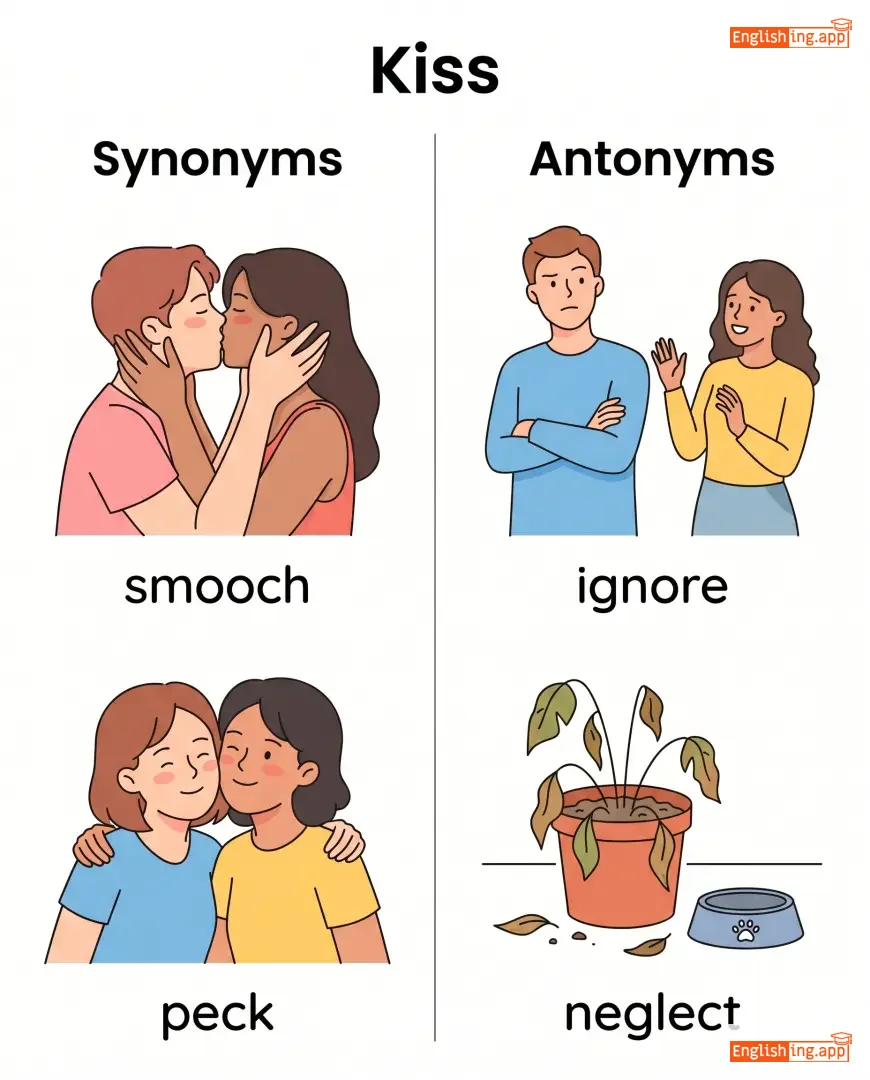
smooch, peck, embrace, caress
••••••
|
ignore, neglect
••••••
|
kiss goodbye, kiss passionately, blow a kiss, kiss on the cheek
••••••
|
No •••••• |
|
🧰
••••••
|
/kɪt/
noun
(kit)
••••••
|
- •••••• |
工具包
gongjupao
••••••
|
- •••••• | - •••••• | - •••••• | - •••••• |
a set of tools, equipment, or materials used for a particular purpose
••••••
|
He bought a first aid kit for emergencies. |
他买了一个急救包以备不时之需。
Tā mǎi le yí gè jíjiù bāo yǐ bèi bù shí zhī xū.
••••••
|
- •••••• | - •••••• | - •••••• |
set, pack, equipment, toolbox, gear
••••••
|
single item, piece
••••••
|
first aid kit, repair kit, tool kit, survival kit
••••••
|
Kit 是一个包含所有急救工具的包 — 随时待命!
••••••
|
|
🍳
••••••
|
/ˈkɪtʃən/
noun
(kitchen)
••••••
|
- •••••• |
厨房
chúfáng
••••••
|
- •••••• | - •••••• | - •••••• | - •••••• |
a room or area where food is prepared and cooked
••••••
|
The kitchen was filled with the smell of fresh bread.
The kitchen was filled with the smell of fresh bread.
••••••
|
厨房里充满了新鲜面包的香味。
Chúfáng lǐ chōngmǎnle xīnxiān miànbāo de xiāngwèi.
••••••
|
everything but the kitchen sink
everything but the kitchen sink
••••••
|
almost everything imaginable
••••••
|
除了厨房水槽以外的所有东西
chúle chúfáng shuǐcáo yǐwài de suǒyǒu dōngxī
••••••
|
cookhouse, galley, canteen, scullery
••••••
|
living room, bedroom
••••••
|
kitchen table, modern kitchen, clean the kitchen, kitchen utensils
••••••
|
厨房 = 美味佳肴的诞生地 🍳
••••••
|
|
✨
••••••
|
/næk/
noun
(nàk)
••••••
|
- •••••• |
天赋
tianfu
••••••
|
- •••••• | - •••••• | - •••••• | - •••••• |
a natural skill or ability; a special talent for doing something easily
••••••
|
She has a knack for making people feel comfortable. |
她有一种让人们感到舒适的天赋。
Tā yǒu yī zhǒng ràng rénmen gǎndào shūshì de tiānfù.
••••••
|
have a knack for |
to be especially good at something
••••••
|
有天赋做某事
yǒu tiānfù zuò mǒu shì
••••••
|
skill, talent, ability, aptitude, flair
••••••
|
inability, incompetence
••••••
|
knack for, natural knack, knack of doing
••••••
|
Knack意味着天赋,就像在某事上非常擅长 ⭐
••••••
|
|
🍞
••••••
|
/niːd/
verb
(尼德)
••••••
|
- •••••• |
揉捏
róu niē
••••••
|
kneaded
尼德德
••••••
|
kneaded
尼德德
••••••
|
kneads
尼兹
••••••
|
kneading
尼丁
••••••
|
to work dough or clay into a uniform mixture by pressing, folding, and stretching
••••••
|
She kneads the dough until it becomes smooth.
她把面团揉到光滑为止。
••••••
|
她把面团揉到光滑为止。
Tā bǎ miàntuán róu dào guānghuá wéizhǐ.
••••••
|
- •••••• | - •••••• | - •••••• |
massage, press, fold, work
••••••
|
neglect, ignore
••••••
|
knead dough, knead bread, knead gently
••••••
|
Knead = 揉捏面团做面包 🍞
••••••
|
|
🦵
••••••
|
/niː/
noun
(happiness)
••••••
|
- •••••• |
幸福
xìngfú
••••••
|
- •••••• | - •••••• | - •••••• | - •••••• |
the joint between the thigh and the lower leg
••••••
|
He hurt his knee while playing football. |
她收到奖项时无法掩饰自己的幸福。
Tā shōu dào jiǎngxiàng shí wúfǎ yǎnshì zìjǐ de xìngfú.
••••••
|
cut off at the knees |
to suddenly stop someone from progressing or succeeding
••••••
|
追求幸福
Zhuīqiú xìngfú
••••••
|
joint, kneecap, patella, articulation
••••••
|
straight leg, extension
••••••
|
bend the knee, knee pain, knee surgery, knee injury
••••••
|
幸福就是一切顺利的时候
••••••
|
|
🙏
••••••
|
/niːl/
verb
(尼尔)
••••••
|


|
跪下
guì xià
••••••
|
knelt
内尔特
••••••
|
knelt
内尔特
••••••
|
kneels
尼尔斯
••••••
|
kneeling
尼灵
••••••
|
to position the body by resting on the knees, usually as a sign of respect, prayer, or submission
••••••
|
They knelt to pray in the temple.
他们在寺庙里跪下来祈祷。
••••••
|
他们在寺庙里跪下来祈祷。
Tāmen zài sìmiào lǐ guì xià lái qídǎo.
••••••
|
kneel down
跪下
••••••
|
to go down on one or both knees
••••••
|
跪下
guì xià
••••••
|
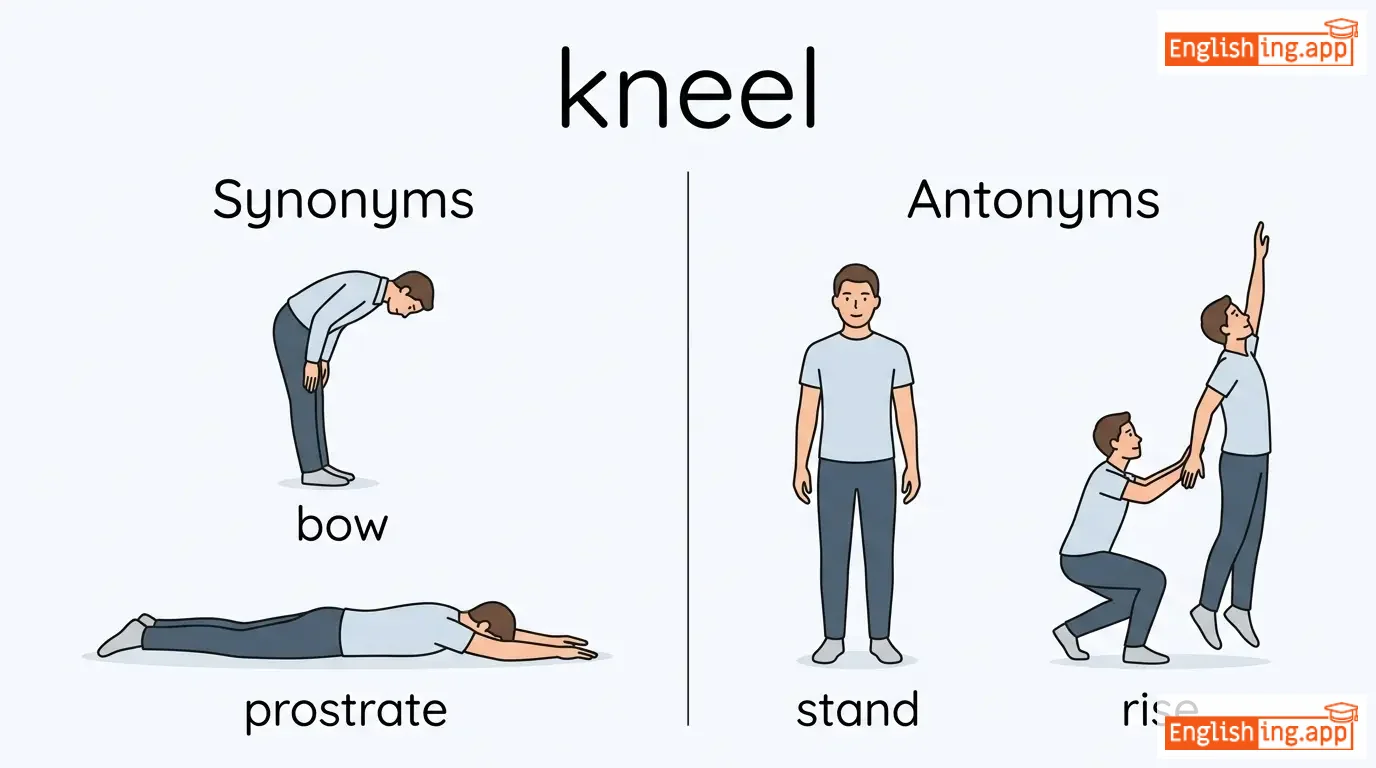
bow, prostrate, stoop, bend
••••••
|
stand, rise
••••••
|
kneel down, kneel before, kneel in prayer
••••••
|
Kneel意味着跪下来祈祷 🙏
••••••
|
|
🔪
••••••
|
/naɪf/
noun
(海皮尼斯)
••••••
|
- •••••• |
幸福
xingfu
••••••
|
- •••••• | - •••••• | - •••••• | - •••••• |
a tool or weapon with a blade and a handle, used for cutting
••••••
|
He used a sharp knife to cut the vegetables. |
她收到奖项时,无法隐藏她的幸福。
Tā shōudào jiǎngxiàng shí, wúfǎ yǐncáng tā de xìngfú.
••••••
|
at knife's edge |
in a very tense or dangerous situation
••••••
|
追求幸福
zhuīqiú xìngfú
••••••
|
blade, cutter, dagger, utensil, scalpel
••••••
|
spoon, fork
••••••
|
sharp knife, kitchen knife, knife blade, knife attack
••••••
|
幸福就是快乐,容易记住。
••••••
|
|
🛡️
••••••
|
/naɪt/
noun
(海皮尼斯)
••••••
|
- •••••• |
幸福
xìngfú
••••••
|
- •••••• | - •••••• | - •••••• | - •••••• |
A man awarded a non-hereditary title by a monarch for service, especially in the past as a mounted soldier in armor.
••••••
|
The brave knight rode into battle to protect his kingdom. |
当她收到奖项时,她无法掩饰自己的幸福。
Dāng tā shōu dào jiǎngxiàng shí, tā wúfǎ yǎnshì zìjǐ de xìngfú.
••••••
|
knight in shining armor |
A person who comes to someone's aid in a difficult situation.
••••••
|
追求幸福
zhuīqiú xìngfú
••••••
|
warrior, cavalier, champion, defender, nobleman
••••••
|
commoner, villain
••••••
|
brave knight, medieval knight, knight in shining armor
••••••
|
幸福就是在每一天中感到快乐和满足。
••••••
|
|
🧶
••••••
|
/nɪt/
verb
(nìt)
••••••
|
- •••••• |
编织
bianzhi
••••••
|
knitted
nìtéd
••••••
|
knitted
nìtéd
••••••
|
knits
nìts
••••••
|
knitting
nìtíng
••••••
|
To make clothes or fabric by interlocking loops of yarn with needles.
••••••
|
She loves to knit scarves for her friends during the winter.
她喜欢在冬天为她的朋友编织围巾。
••••••
|
她喜欢在冬天为她的朋友编织围巾。
Ta xihuan zai dongtian wei ta de pengyou bianzhi weijin.
••••••
|
knit together
编织在一起
••••••
|
To unite or bring people or things together closely.
••••••
|
聚集在一起
jùjí zài yīqǐ
••••••
|
weave, stitch, interlace, entwine, crochet
••••••
|
unravel, undo, separate
••••••
|
knit a sweater, knit scarves, knit together
••••••
|
Knit 意味着编织,记住 – ‘编织将东西联系在一起。’
••••••
|
|
🧶
••••••
|
/ˈnɪtɪŋ/
noun; gerund
(尼亭)
••••••
|
- •••••• |
编织
bianzhi
••••••
|
- •••••• | - •••••• | - •••••• |
knitting
尼亭
••••••
|
the craft or activity of making fabric by interlocking loops of yarn with needles; the act of forming something closely or firmly together
••••••
|
She spends her evenings knitting scarves for her family.
她晚上为家人做尼亭。
••••••
|
她晚上为家人编织围巾。
ta wanshang wei jiaren bianzhi weijin
••••••
|
- •••••• | - •••••• | - •••••• |
needlework, knitwork, handknitting, knitting-work, yarn craft
••••••
|
unraveling, unknitting
••••••
|
knitting needles, knitting yarn, knitting pattern, knitting project, knitting stitch
••••••
|
Knitting 就是 编织,用针和线
••••••
|
|
🚪
••••••
|
/nɒb/
noun
(诺布)
••••••
|
- •••••• |
门或抽屉上的圆形把手; 机器上的小圆形开关
mén huò chōutì shàng de yuánxíng bǎshǒu; jīqì shàng de xiǎo yuánxíng kāiguān
••••••
|
- •••••• | - •••••• | - •••••• | - •••••• |
a rounded handle on a door or drawer; a small rounded switch on a machine
••••••
|
He turned the brass knob to open the old wooden door.
他转动铜制的门把手,打开了那扇旧木门。
••••••
|
他转动铜制的门把手,打开了那扇旧木门。
Tā zhuǎndòng tóng zhì de mén bǎshǒu, dǎkāi le nà shàn jiù mùmén.
••••••
|
- •••••• | - •••••• | - •••••• |
handle, button, switch, control
••••••
|
lever, flat surface, key
••••••
|
door knob, brass knob, turn the knob
••••••
|
想象一个圆形的门把手,像一台小机器上的开关一样。
••••••
|
|
🚪
••••••
|
/nɒk/
verb
(诺克)
••••••
|
|
敲门
qiao men
••••••
|
knocked
诺克德
••••••
|
knocked
诺克德
••••••
|
knocks
诺克斯
••••••
|
knocking
诺金
••••••
|
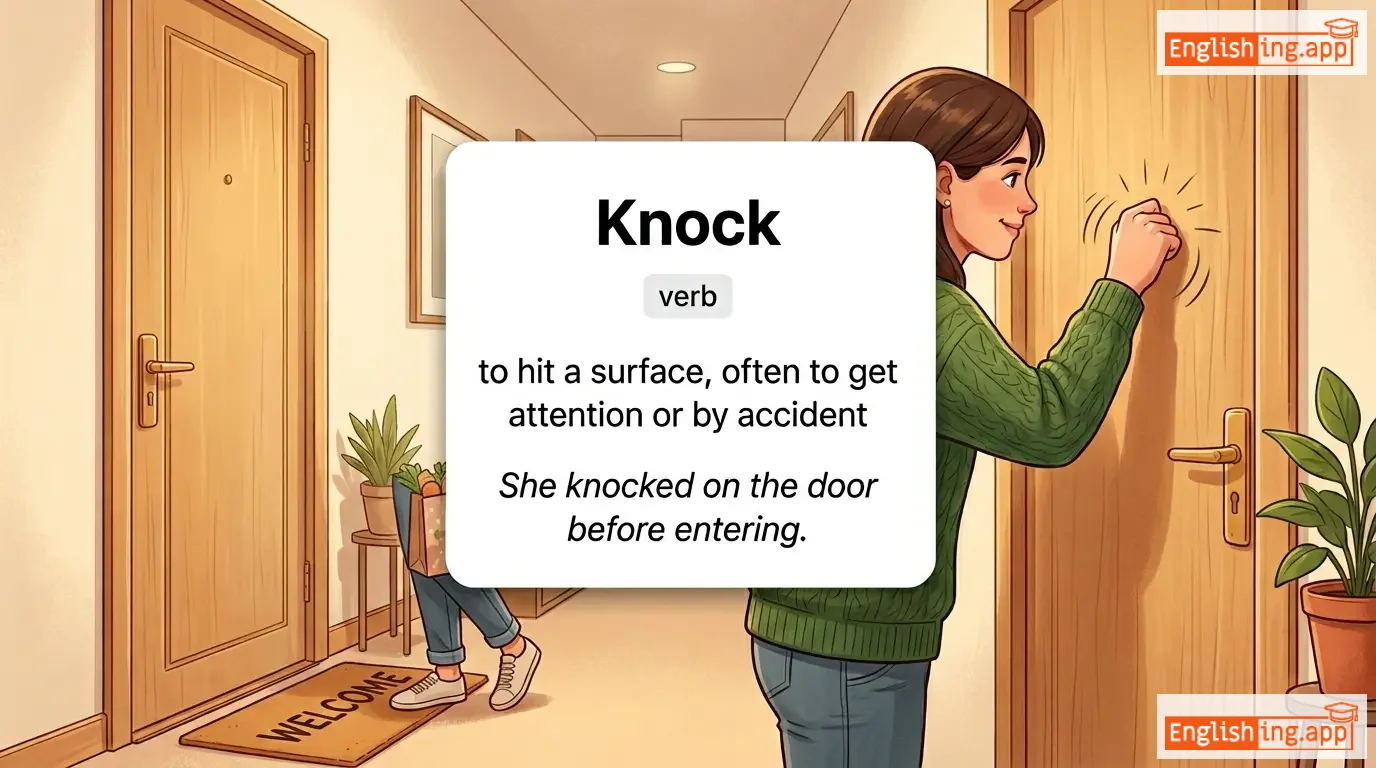
to hit a surface, often to get attention or by accident
••••••
|
She knocked on the door before entering.
她在进入之前敲了敲门。
••••••
|
她在进入之前敲了敲门。
Ta zai jinru zhiqian qiao le qiao men.
••••••
|
knock on wood
敲木头
••••••
|
said to avoid bad luck after mentioning something good
••••••
|
提到好事之后,为了避免厄运而说的
Tidao hao shi zhihou, weile bimiu e yun er shuo de
••••••
|
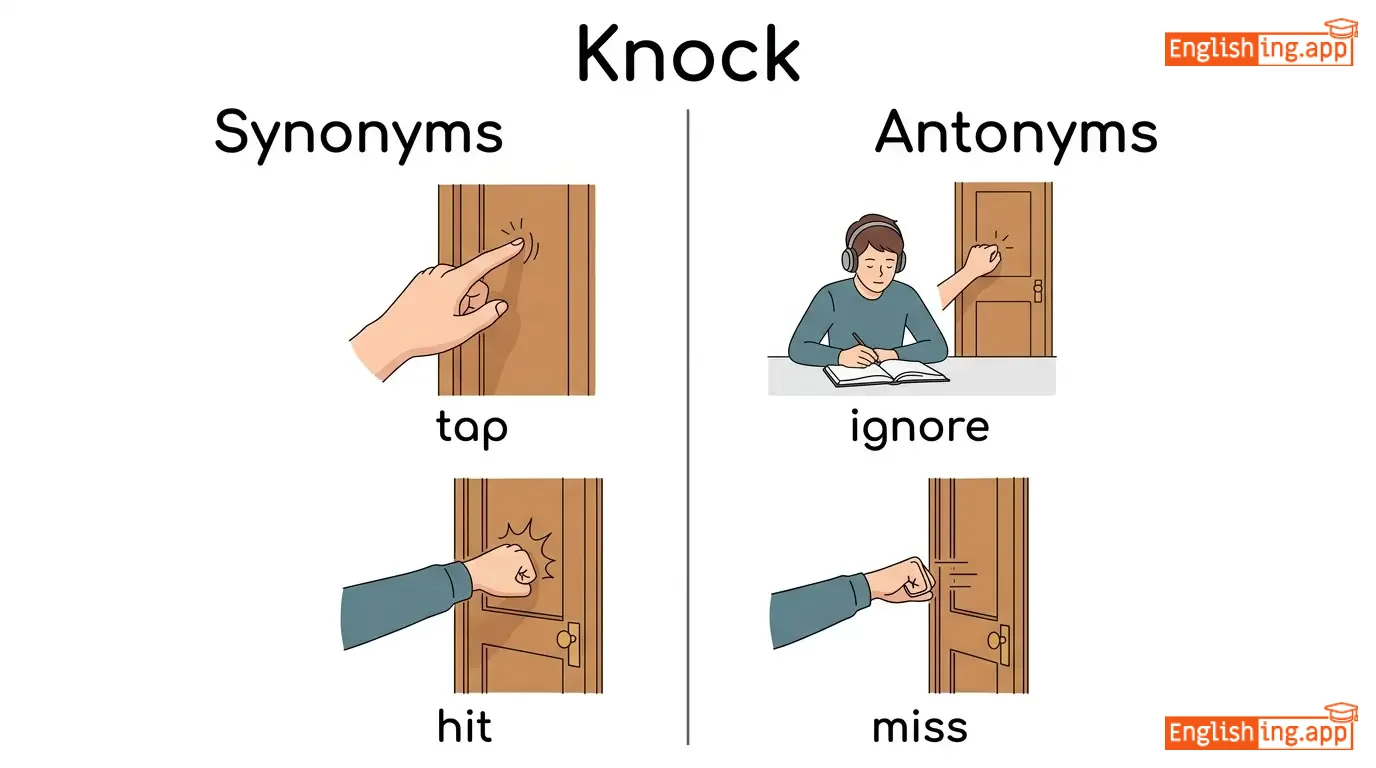
tap, hit, bang, strike, bump
••••••
|
ignore, miss
••••••
|
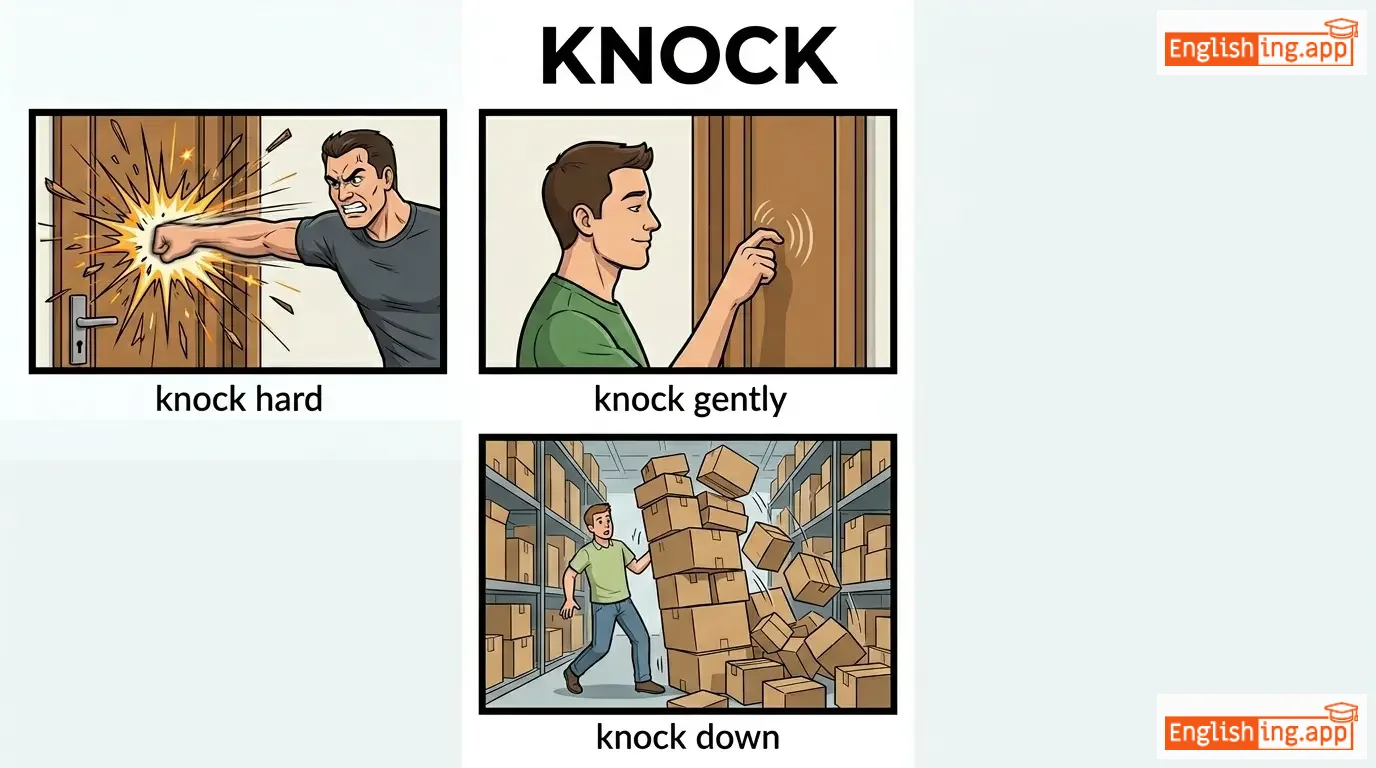
knock hard, knock gently, knock down, knock over
••••••
|
敲门,幸福在等待着你。
••••••
|
|
🪢
••••••
|
/nɒt/
verb
(nót)
••••••
|
|
打结
dǎ jié
••••••
|
knotted
nóted
••••••
|
knotted
nóted
••••••
|
knots
nóts
••••••
|
knotting
nóting
••••••
|
to tie in a knot; to fasten with loops and turns
••••••
|
She knotted the rope securely.
她安全地系好了绳子。
••••••
|
她安全地系好了绳子。
Tā ānquán de jì hǎo le shéngzi.
••••••
|
- •••••• | - •••••• | - •••••• |
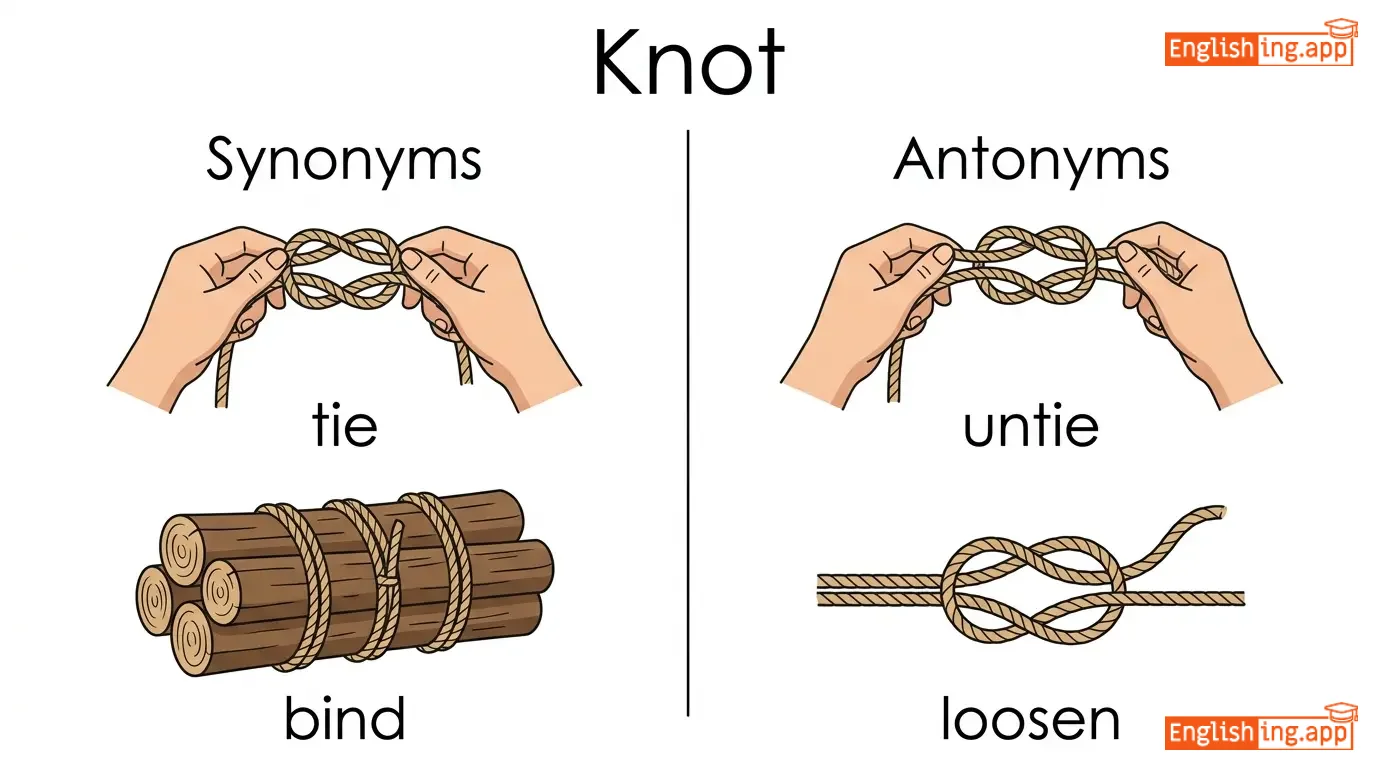
tie, bind, fasten, secure
••••••
|
untie, loosen, unfasten, free
••••••
|
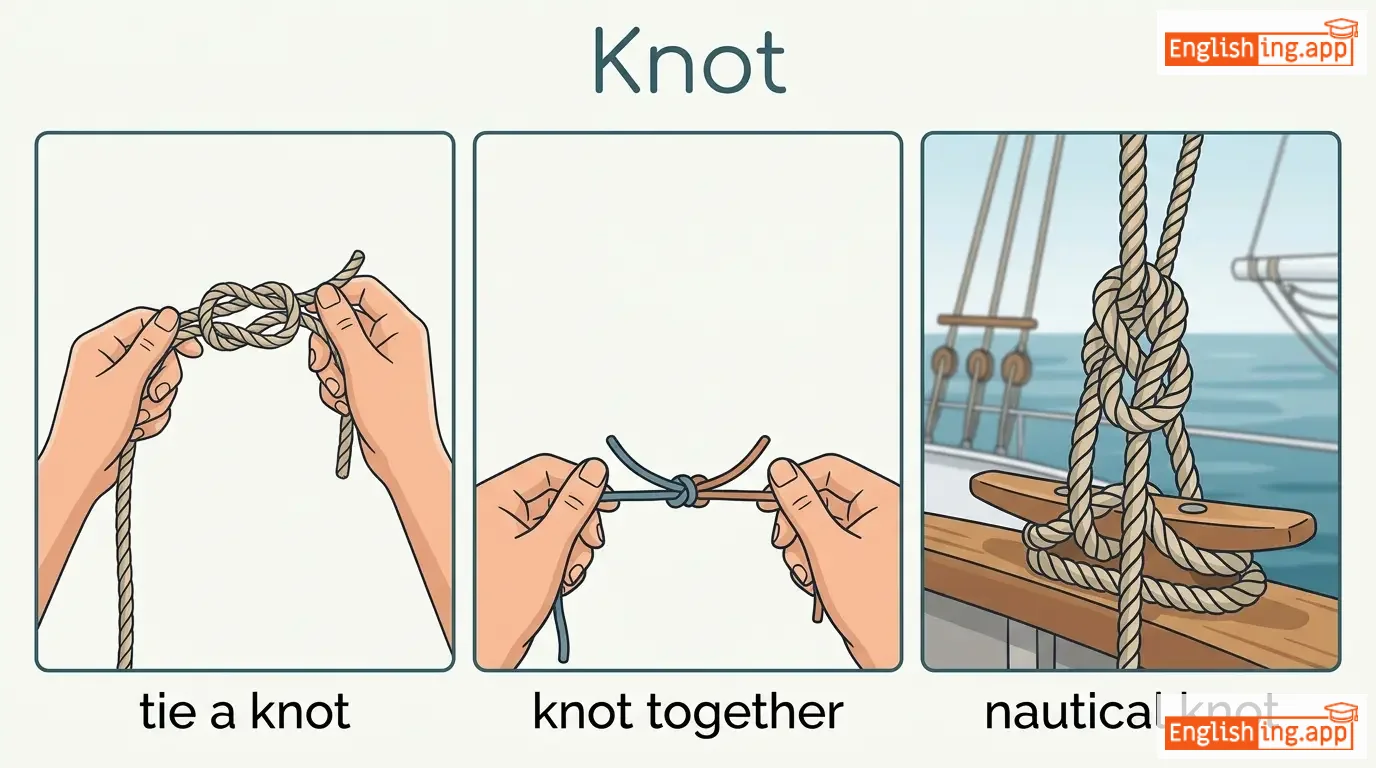
tie a knot, knot together, nautical knot, loose knot, tight knot
••••••
|
想象你把鞋带打结!
••••••
|
|
🧠
••••••
|
/noʊ/
verb
(nóu)
••••••
|

|
知道
zhīdào
••••••
|
knew
nù
••••••
|
known
nóu
••••••
|
knows
nóu zī
••••••
|
knowing
nóu yīng
••••••
|
to have knowledge or be aware of something
••••••
|
I know the answer to the question.
我知道问题的答案。
••••••
|
我知道问题的答案。
Wǒ zhīdào wèntí de dá'àn.
••••••
|
know the ropes
知道绳索
••••••
|
to be familiar with how something is done
••••••
|
知道如何做某事
zhīdào rúhé zuò mǒu shì
••••••
|
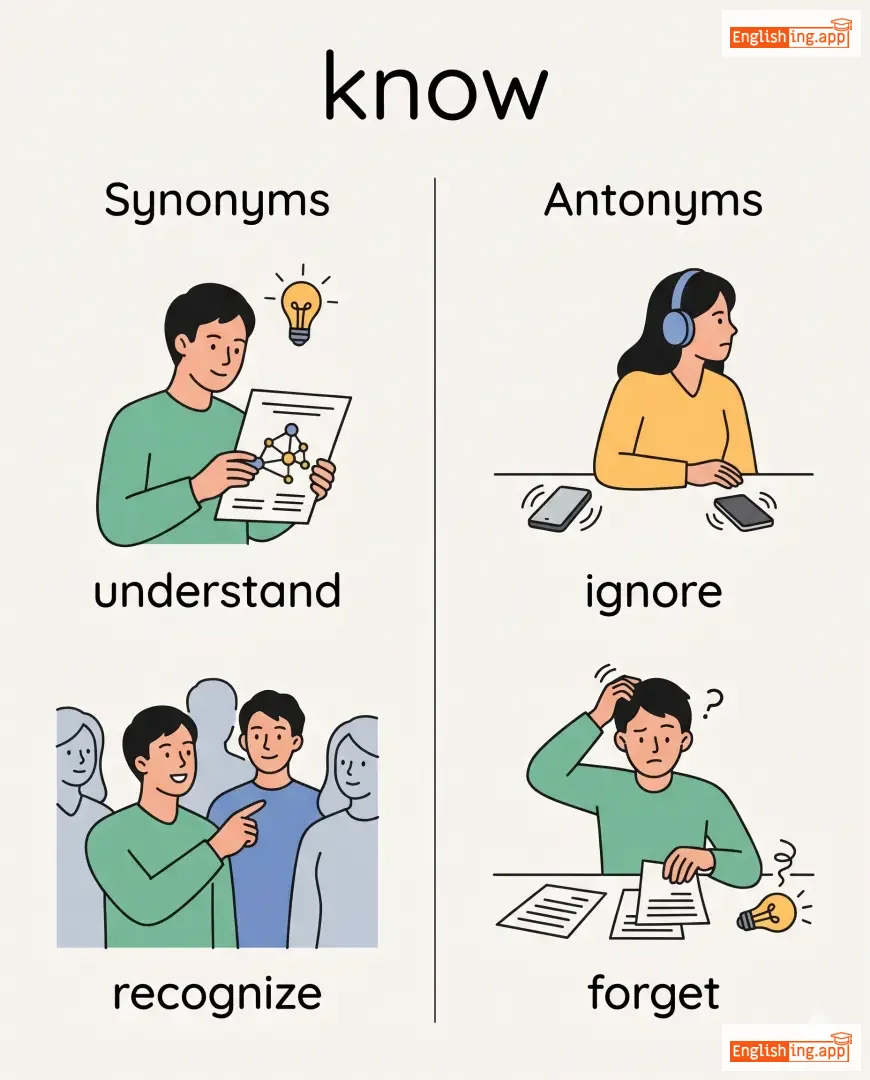
understand, recognize, realize, comprehend, identify
••••••
|
ignore, forget, misunderstand
••••••
|
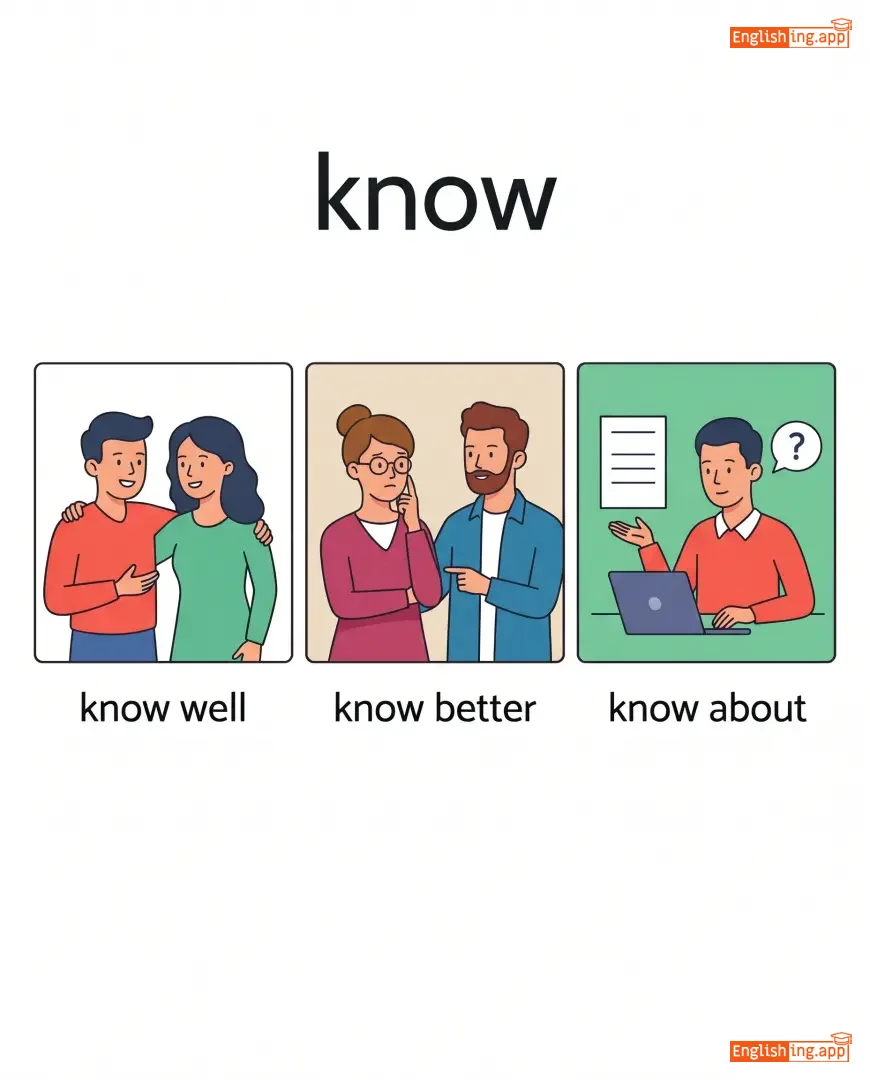
know well, know better, know about, know exactly
••••••
|
Know 就是知道,知道就能做到。
••••••
|
|
📚
••••••
|
/ˈnɒlɪdʒ/
noun
(nólèzh)
••••••
|

|
知识
zhīshi
••••••
|
- •••••• | - •••••• | - •••••• | - •••••• |
information, understanding, and skills gained through learning or experience
••••••
|
Her knowledge of history is impressive. |
她对历史的知识令人印象深刻。
Tā duì lìshǐ de zhīshi lìng rén yìnxiàng shēnkè.
••••••
|
a wealth of knowledge |
a large amount of useful information or understanding
••••••
|
知识的宝库
zhīshi de bǎokù
••••••
|
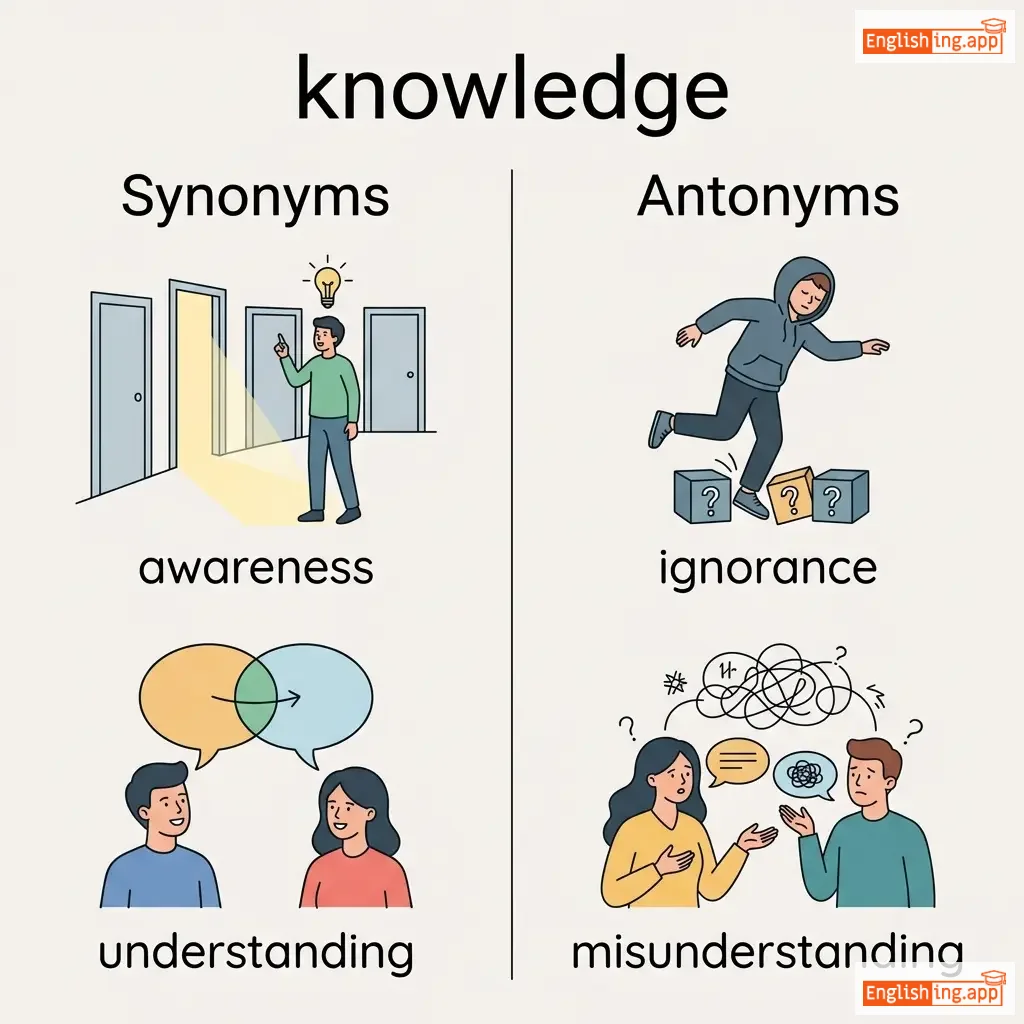
awareness, understanding, wisdom, expertise, intelligence
••••••
|
ignorance, misunderstanding
••••••
|
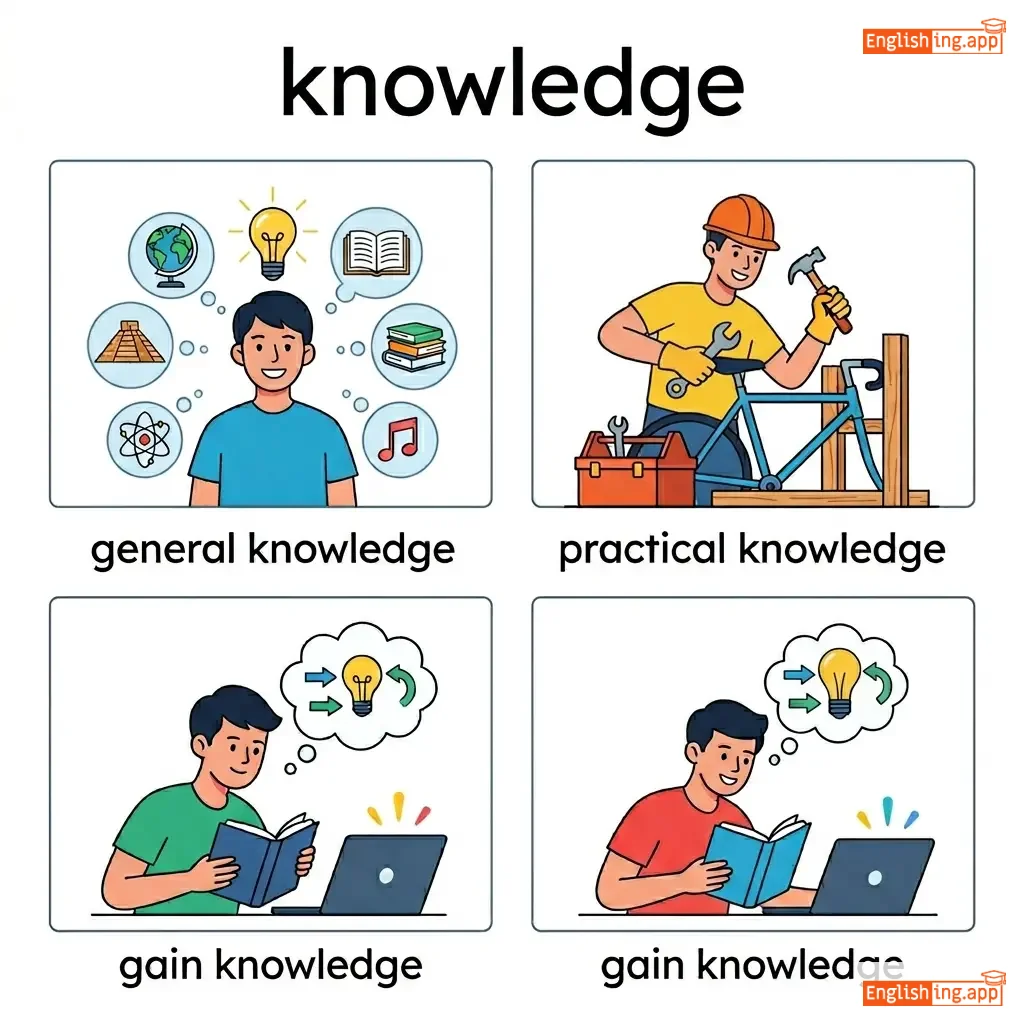
general knowledge, practical knowledge, gain knowledge, share knowledge
••••••
|
知识就像钥匙,帮助你开启人生的新篇章。
••••••
|
|
📖
••••••
|
/noʊn/
adjective
(诺恩)
••••••
|
- •••••• |
已知的
yǐ zhī de
••••••
|
- •••••• | - •••••• | - •••••• | - •••••• |
recognized or familiar; something that is identified or acknowledged
••••••
|
He is a well-known actor in the country. |
他是国内著名的演员。
Tā shì guónèi zhùmíng de yǎnyuán.
••••••
|
known quantity |
something or someone familiar or predictable
••••••
|
已知量
yǐ zhī liàng
••••••
|
famous, familiar, recognized, established, acknowledged
••••••
|
unknown, obscure, unfamiliar
••••••
|
well known, little known, widely known, known fact
••••••
|
Known 的意思是 '已知的' — '已知的 = known' 📖
••••••
|
|
🧪
••••••
|
/læb/
noun
(lèb)
••••••
|
- •••••• |
实验室
shíyànshì
••••••
|
- •••••• | - •••••• | - •••••• | - •••••• |
a place equipped for scientific experiments, research, or teaching
••••••
|
The students conducted an experiment in the chemistry lab. |
学生们在化学实验室里做了一个实验。
Xuéshēngmen zài huàxué shíyànshì lǐ zuòle yīgè shíyàn.
••••••
|
- •••••• | - •••••• | - •••••• |
laboratory, workshop, studio, research center
••••••
|
field, office
••••••
|
science lab, computer lab, lab work, lab equipment
••••••
|
实验室意味着实验室,做实验的地方。
••••••
|

