|
絵文字
|
単語 | Images | 翻訳 | 過去 | 過去分詞 | 三人称単数 | 動名詞 | 意味 | 例文 | 例文の翻訳 | 表現例 | 表現例の意味 | 表現例の翻訳 | 同義語 | 対義語 | コロケーション | ニーモニック |
|---|---|---|---|---|---|---|---|---|---|---|---|---|---|---|---|---|---|
|
👻
••••••
|
/ɡoʊst/
noun
(ゴースト)
••••••
|
- •••••• |
おばけ
obake
••••••
|
- •••••• | - •••••• | - •••••• | - •••••• |
the spirit of a dead person that is believed to appear to the living
••••••
|
She felt as if a ghost was watching her in the dark hallway. |
彼女は暗い廊下でおばけが彼女を見ているように感じた。
Kanojo wa kurai rōka de obake ga kanojo o mite iru yō ni kanjita.
••••••
|
give up the ghost |
to die or to stop working
••••••
|
死ぬか、動かなくなる
shinu ka, ugokanakunaru
••••••
|
spirit, phantom, specter, apparition, soul
••••••
|
body, reality
••••••
|
ghost story, ghost house, ghost town, ghost sighting
••••••
|
おばけとghost - 闇夜にひっそりと現れる亡霊の影。
••••••
|
|
🗿
••••••
|
/ˈdʒaɪənt/
noun
(ジャイアント)
••••••
|
- •••••• |
巨人
kyojin
••••••
|
- •••••• | - •••••• | - •••••• | - •••••• |
an extremely large and powerful being or a very large person or thing
••••••
|
The company grew into a giant in the tech industry. |
その会社はテクノロジー業界で巨人になった。
Sono kaisha wa tekunorojī gyōkai de kyojin ni natta.
••••••
|
gentle giant |
a person who is very large but kind and gentle
••••••
|
優しい巨人
yasashī kyojin
••••••
|
colossus, titan, behemoth, mammoth
••••••
|
dwarf, tiny
••••••
|
giant company, giant step, giant leap, giant figure
••••••
|
ジャイアント = 巨大な存在
••••••
|
|
🐒
••••••
|
/ˈɡɪbən/
noun
(ギボン)
••••••
|
- •••••• |
テナガザル
tenagazaru
••••••
|
- •••••• | - •••••• | - •••••• | - •••••• |
a small to medium-sized tailless ape with long arms, native to the forests of Southeast Asia
••••••
|
The gibbon swung gracefully through the trees using its long arms.
ザ ギボン スワング グレースフリー スルー ザ ツリーズ。
••••••
|
ギボンは長い腕を使って木々の間を優雅に移動した。
gibon wa nagai ude o tsukatte kigi no aida o yuga ni ido shita
••••••
|
- •••••• | - •••••• | - •••••• |
ape, primate, lesser ape, tree ape
••••••
|
human, carnivore, reptile
••••••
|
gibbon species, gibbon habitat, gibbon call, gibbon family
••••••
|
テナガザルは手が長い—gibbon = long arms
••••••
|
|
🎁
••••••
|
/ɡɪft/
noun
(ギフト)
••••••
|
- •••••• |
ギフト
gifuto
••••••
|
- •••••• | - •••••• | - •••••• | - •••••• |
something given willingly to someone without payment; a present
••••••
|
She gave him a beautiful gift for his birthday.
彼女は誕生日に彼に美しいギフトを贈った。
••••••
|
彼女は誕生日に彼に美しいギフトを贈った。
Kanojo wa tanjōbi ni kare ni utsukushī gifuto o okutta.
••••••
|
gift of the gab
gift of the gab
••••••
|
the ability to speak easily and persuasively
••••••
|
おしゃべりの才能
oshaberi no sainō
••••••
|
present, offering, donation, award
••••••
|
penalty, fine
••••••
|
birthday gift, wedding gift, special gift, gift shop
••••••
|
Gift 🎁 日本語でギフト、思いやりを込めて贈りましょう!
••••••
|
|
🎁
••••••
|
/ˈɡɪf.tɪd/
adjective
(ギフティッド)
••••••
|
- •••••• |
才能がある; 天賦の
sainō ga aru; tenpu no
••••••
|
- •••••• | - •••••• | - •••••• | - •••••• |
having exceptional talent or ability; talented;
••••••
|
She is a gifted musician who plays multiple instruments.
彼女は多くの楽器を演奏する才能のある音楽家です。
••••••
|
彼女は多くの楽器を演奏する才能のある音楽家です。
Kanojo wa ōku no gakki o ensō suru sainō no aru ongakuka desu.
••••••
|
- •••••• | - •••••• | - •••••• |
talented, skilled, brilliant, capable
••••••
|
untalented, incompetent, mediocre
••••••
|
gifted student, gifted child, academically gifted
••••••
|
Gifted means someone with a 'gift' in music or arts.
••••••
|
|
🎤
••••••
|
/ɡɪɡ/
noun
(ギグ)
••••••
|
- •••••• |
ミュージシャン、バンド、またはエンターテイナーによるライブパフォーマンス;または一時的な仕事
gig
••••••
|
- •••••• | - •••••• | - •••••• | - •••••• |
A live performance by a musician, band, or entertainer; also a temporary job.
••••••
|
The band has a gig at the local club tonight. |
今晩、バンドは地元のクラブでギグを行います。
Konban, bando wa jimoto no kurabu de gigu o okonimasu.
••••••
|
one-off gig |
a single temporary job or performance
••••••
|
単発のギグ
tanpatsu no gigu
••••••
|
performance, show, job, act, engagement
••••••
|
unemployment, absence
••••••
|
play a gig, land a gig, weekend gig, local gig
••••••
|
Gig はライブパフォーマンスや一時的な仕事を意味します。
••••••
|
|
👧
••••••
|
/ɡɜːrl/
noun
(ガール)
••••••
|
- •••••• |
女の子
onnanoko
••••••
|
- •••••• | - •••••• | - •••••• | - •••••• |
a female child or young woman
••••••
|
The girl was playing with her friends in the park. |
その女の子は公園で友達と遊んでいました。
Sono onnanoko wa kōen de tomodachi to asonde imashita.
••••••
|
girls' night out |
an evening when female friends go out together socially
••••••
|
女子会
joshikai
••••••
|
young woman, lass, maiden, miss
••••••
|
boy, man
••••••
|
school girl, little girl, young girl, girl group
••••••
|
Girl 👧 とは女の子 - 公園で遊んでいる女の子を思い浮かべてください。
••••••
|
|
👩❤️👨
••••••
|
/ˈɡɜːrlfrɛnd/
noun
(ガールフレンド)
••••••
|
- •••••• |
彼女
kareshi
••••••
|
- •••••• | - •••••• | - •••••• | - •••••• |
A woman or girl with whom someone is romantically or emotionally involved.
••••••
|
He introduced his girlfriend to his family. |
彼は彼女を家族に紹介した。
Kare wa kanojo o kazoku ni shōkai shita.
••••••
|
meet the girlfriend |
To introduce one’s romantic partner to friends or family.
••••••
|
彼女を紹介する
Kanojo o shōkai suru
••••••
|
partner, companion, sweetheart, beloved, significant other
••••••
|
boyfriend, stranger
••••••
|
ex-girlfriend, girlfriend experience, girlfriend material, girlfriend problem
••••••
|
彼女 = 彼女 (kanojo) - あなたの大切な人。
••••••
|
|
🎁
••••••
|
/ɡɪv/
verb
(ギヴ)
••••••
|

|
与える
ataeru
••••••
|
gave
ギヴド
••••••
|
given
ギヴン
••••••
|
gives
ギヴズ
••••••
|
giving
ギヴィング
••••••
|
to hand over or transfer something to someone
••••••
|
She will give him a gift on his birthday.
彼女は彼の誕生日に彼にプレゼントをあげるつもりです。
••••••
|
彼女は彼の誕生日に彼にプレゼントをあげるつもりです。
Kanojo wa kare no tanjōbi ni kare ni purezento o ageru tsumori desu.
••••••
|
give up
ギブアップ
••••••
|
to stop trying or to surrender
••••••
|
諦める
akirameru
••••••
|
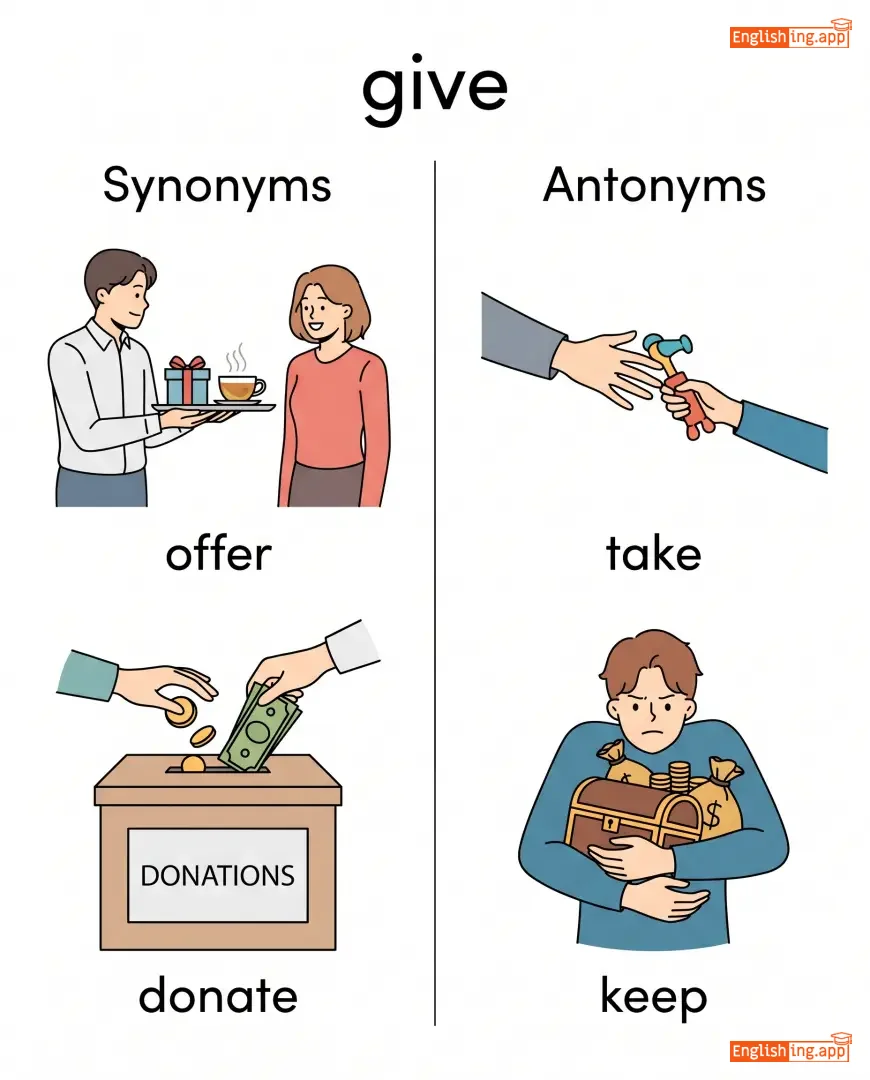
offer, donate, present, provide, deliver
••••••
|
take, keep
••••••
|
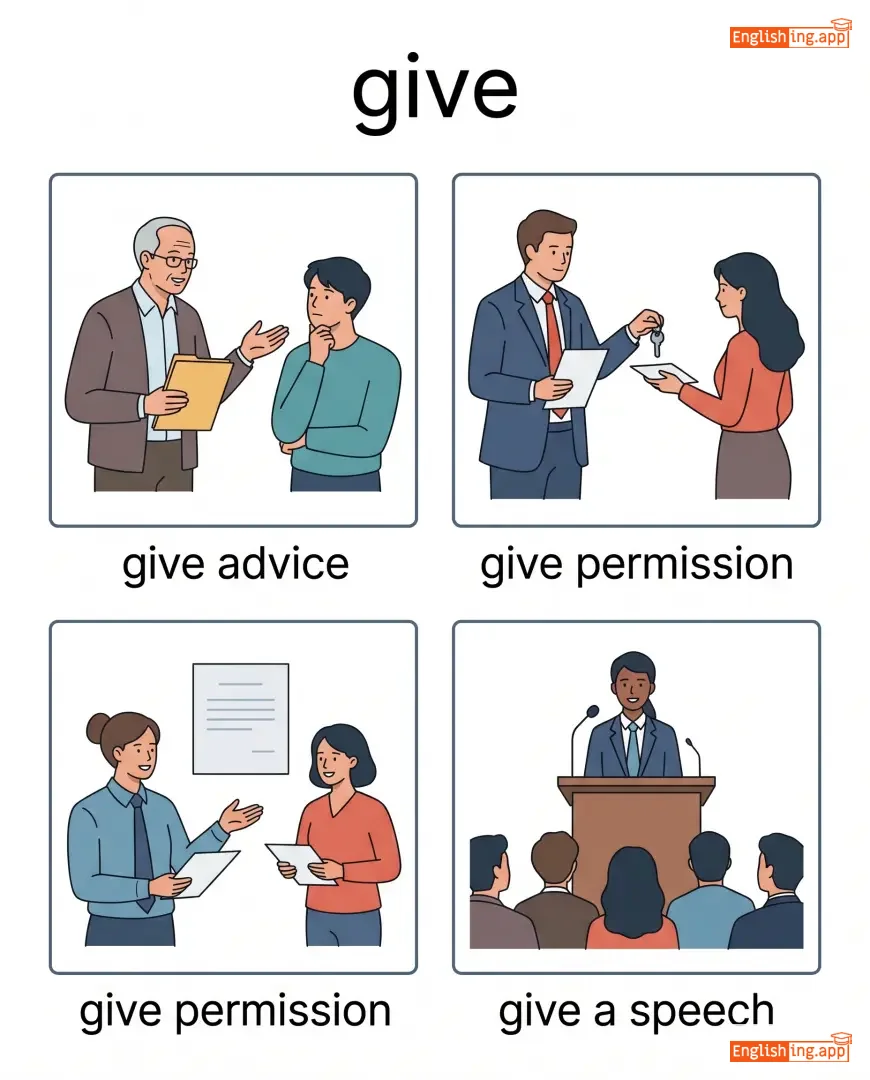
give advice, give permission, give a speech, give thanks
••••••
|
Give (与える) a gift, give (ギヴ).
••••••
|
|
✅
••••••
|
/ˈɡɪvən/
adjective
(ギヴン)
••••••
|
- •••••• |
既定
kitei
••••••
|
- •••••• | - •••••• | - •••••• | - •••••• |
Specified or stated; already decided or certain.
••••••
|
It is a given fact that hard work leads to success. |
努力は成功に導くというのは既定の事実です。
Doryoku wa seikou ni michibiku to iu no wa kitei no jijitsu desu.
••••••
|
take for granted |
To assume something as true or certain without questioning.
••••••
|
当たり前とみなす
atarimae to minasu
••••••
|
certain, established, fixed, determined
••••••
|
uncertain, doubtful
••••••
|
given situation, given fact, given conditions, given time
••••••
|
‘Given’はすでに決まっている、または確定しているものです。
••••••
|
|
😊
••••••
|
/ɡlæd/
verb
(グラッド)
••••••
|

|
うれしい
ureshii
••••••
|
gladded
グラデッド
••••••
|
gladded
グラデッド
••••••
|
glads
グラッズ
••••••
|
gladding
グラディング
••••••
|
feeling pleased or happy; to make someone happy
••••••
|
I'm glad you could make it to the party.
パーティーに来てくれてうれしい。
••••••
|
パーティーに来てくれてうれしい。
Pātī ni kite kurete ureshī.
••••••
|
- •••••• | - •••••• | - •••••• |
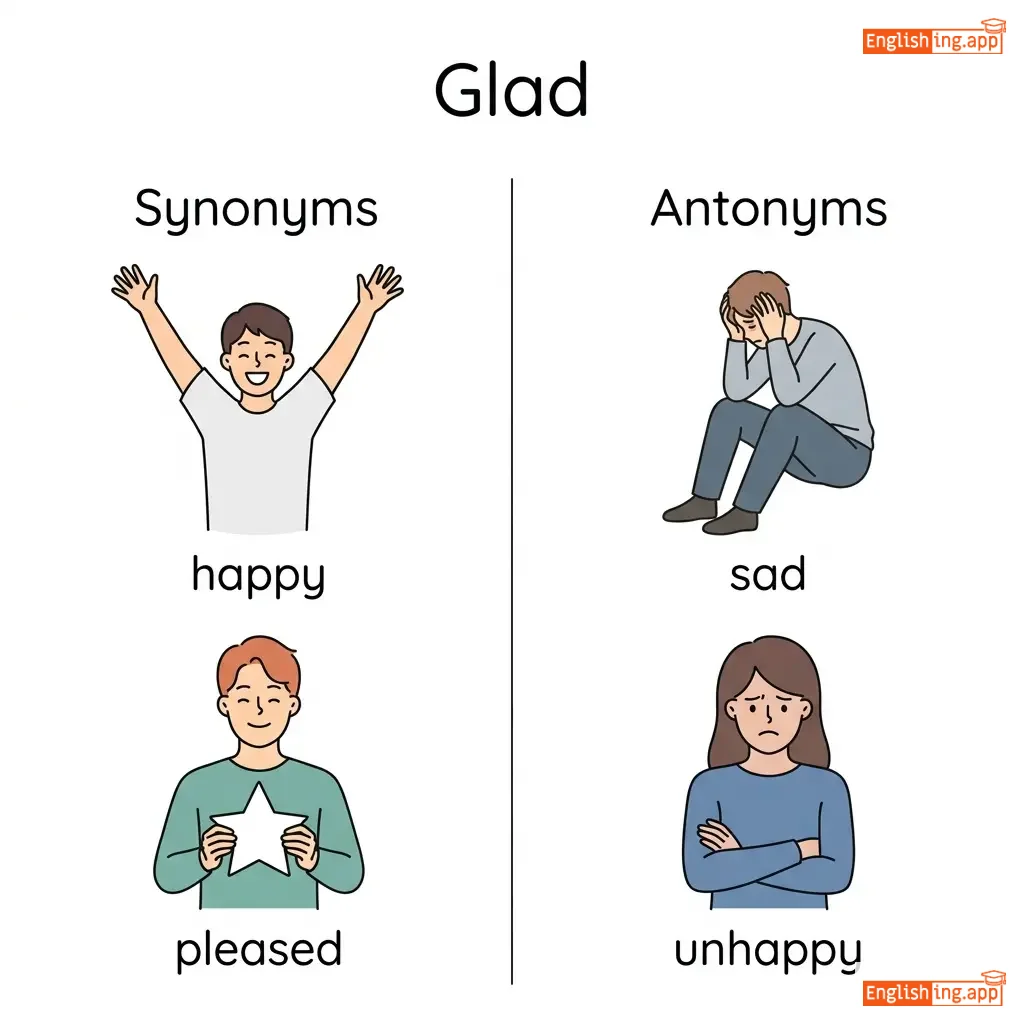
happy, pleased, delighted, joyful
••••••
|
sad, unhappy, disappointed, upset
••••••
|
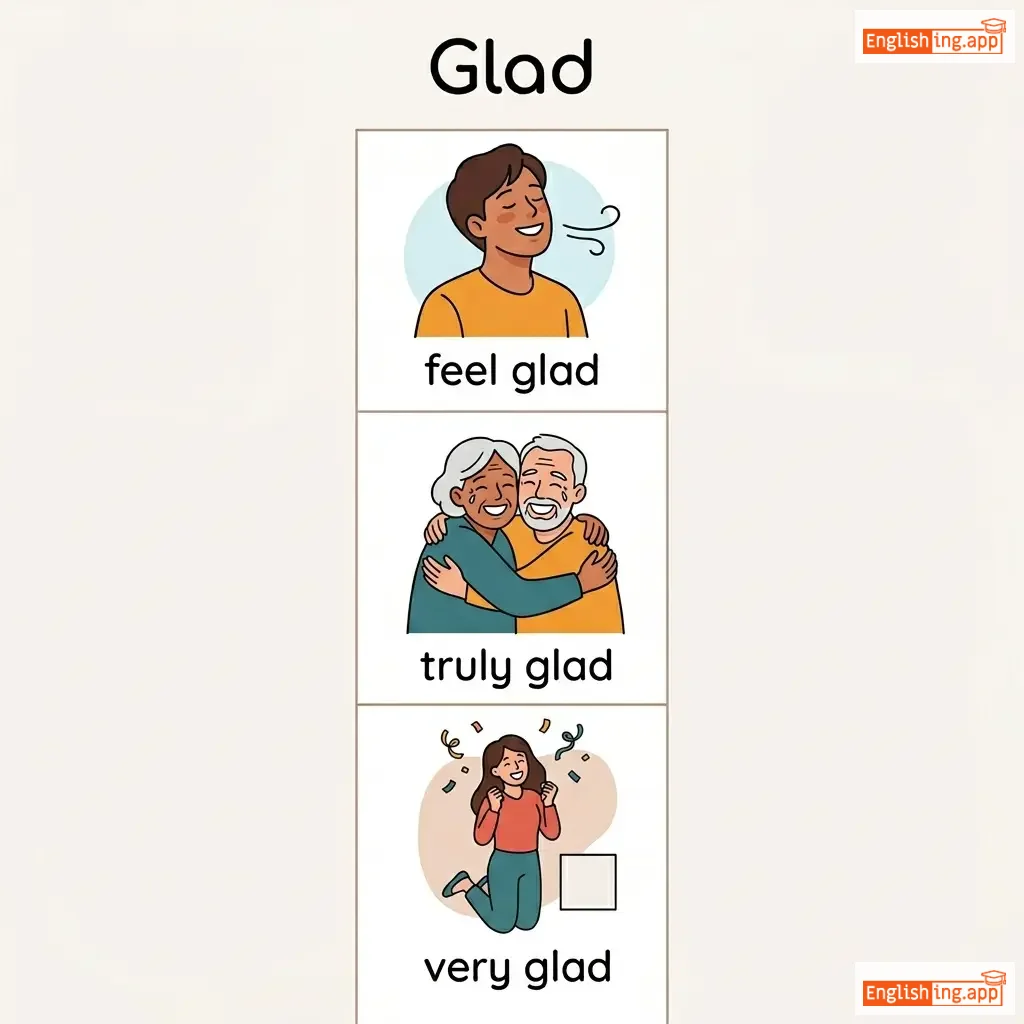
feel glad, truly glad, very glad, so glad, really glad
••••••
|
Happy to feel glad in Japanese
••••••
|
|
👀
••••••
|
/ɡlæns/
verb
(グランス)
••••••
|
|
一瞥
ichime
••••••
|
glanced
グランスド
••••••
|
glanced
グランスド
••••••
|
glances
グランセス
••••••
|
glancing
グランシング
••••••
|
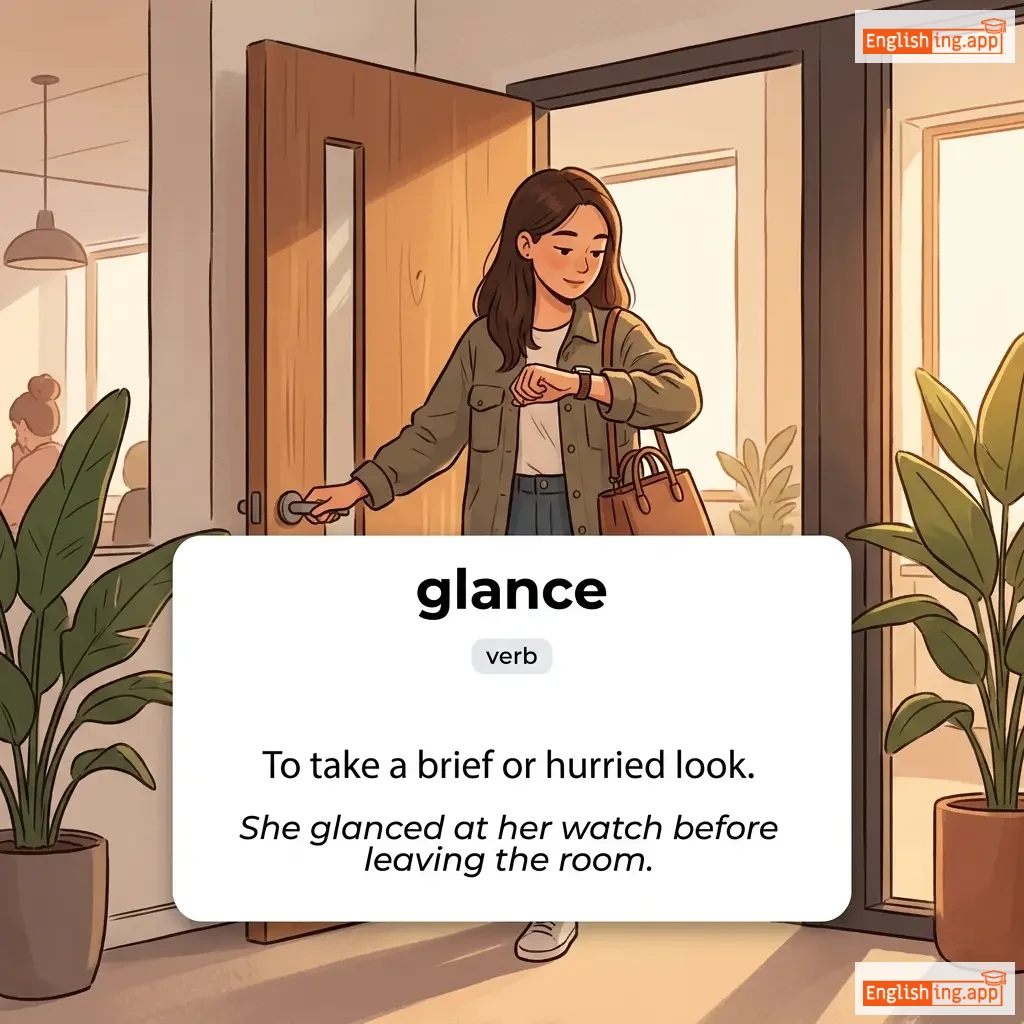
To take a brief or hurried look.
••••••
|
She glanced at her watch before leaving the room.
彼女は部屋を出る前に時計を一目見た。
••••••
|
彼女は部屋を出る前に時計を一目見た。
Kanojo wa heya o deru mae ni tokei o ichime mita.
••••••
|
at a glance
一目で
••••••
|
Immediately; with a quick look.
••••••
|
一目で
ichime de
••••••
|
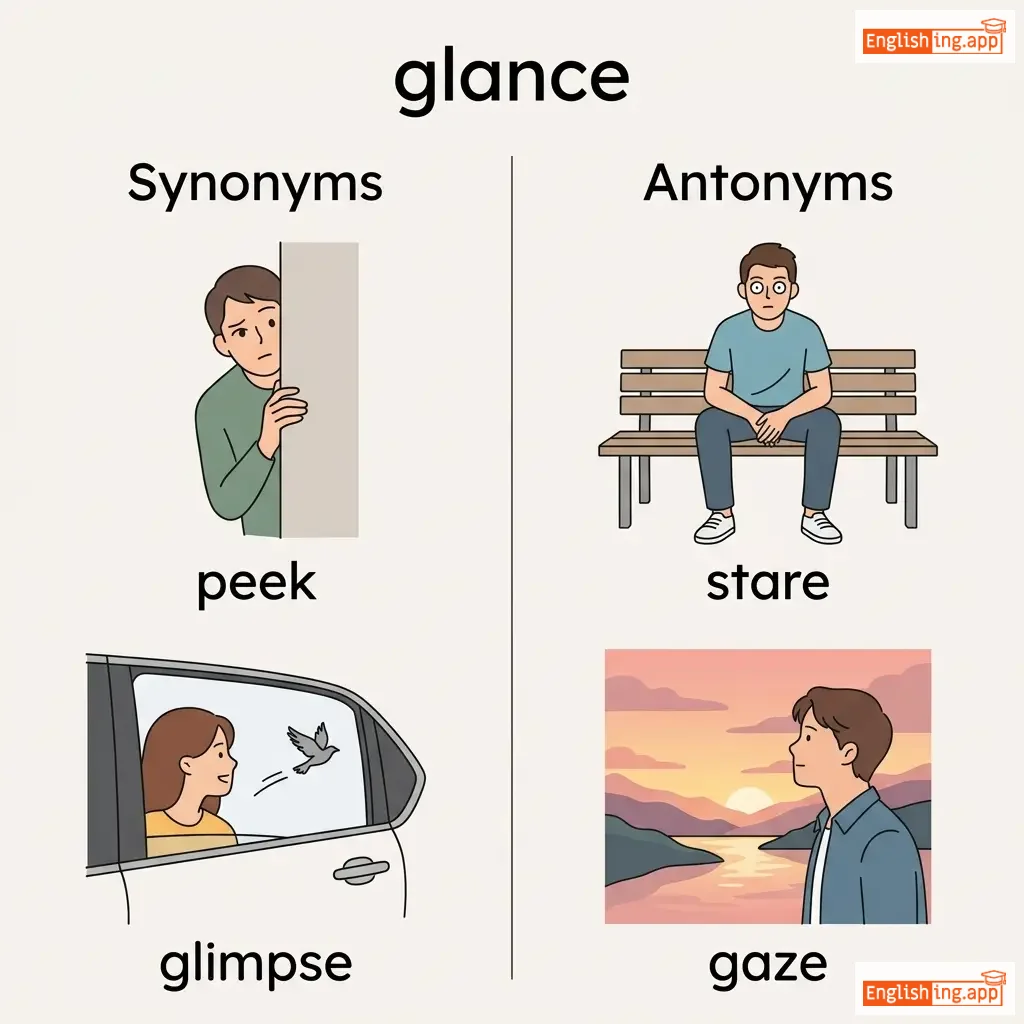
peek, glimpse, scan, view
••••••
|
stare, gaze
••••••
|
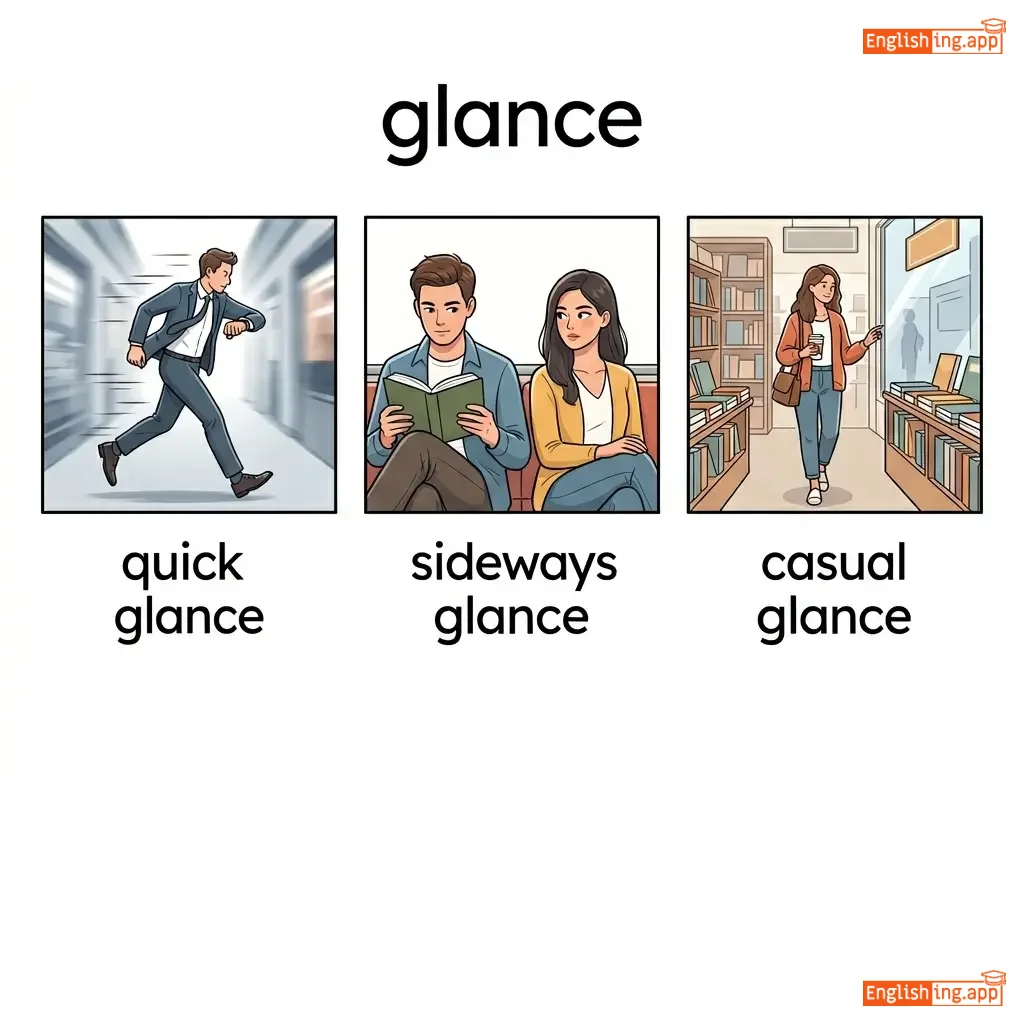
quick glance, sideways glance, casual glance, first glance
••••••
|
Glanceは「一瞥」を意味します – 試験で問題用紙を一瞥することで全てが分かります。
••••••
|
|
🥛
••••••
|
/ɡlæs/
noun
(グラス)
••••••
|
- •••••• |
ガラス
garasu
••••••
|
- •••••• | - •••••• | - •••••• | - •••••• |
a hard, transparent material used for windows, bottles, and other objects
••••••
|
She poured water into a glass and handed it to me.
彼女は水をグラスに注ぎ、それを私に渡しました。
••••••
|
彼女は水をグラスに注ぎ、それを私に渡しました。
Kanojo wa mizu o gurasu ni sosogi, sore o watashi ni watashimashita.
••••••
|
raise a glass
グラスを持ち上げる
••••••
|
to make a toast by lifting a drink
••••••
|
グラスを持ち上げる
gurasu o mochiageru
••••••
|
cup, tumbler, goblet, crystal
••••••
|
plastic, wood
••••••
|
glass of water, glass window, broken glass, glass bottle
••••••
|
ガラスは透明で、グラスに入れた水を覚えやすくします。
••••••
|
|
👀
••••••
|
/ɡlɪmps/
noun/verb
(グリンプス)
••••••
|
- •••••• |
ちらっと見
chiratto mi
••••••
|
glimpsed
グリンプスト
••••••
|
glimpsed
グリンプスト
••••••
|
glimpses
グリンプセス
••••••
|
glimpsing
グリンプシング
••••••
|
A brief or quick view of something.
••••••
|
She caught a glimpse of the actor as he left the stage.
彼女は俳優が舞台を離れるのを一瞬見た。
••••••
|
彼女は俳優が舞台を離れるのを一瞬見た。
Kanojo wa haiyū ga butai o hanareru no o isshun mita.
••••••
|
catch a glimpse
ちらっと見る
••••••
|
To see something briefly or partly.
••••••
|
ちらっと見る
chiratto miru
••••••
|
peek, glance, sight, look, view
••••••
|
stare, gaze
••••••
|
catch a glimpse, fleeting glimpse, quick glimpse
••••••
|
Glimpseはちらっと見るという意味です。例えば、何かをちらっと見る。
••••••
|
|
🌍
••••••
|
/ˈɡloʊbəl/
adjective
(グローバル)
••••••
|
|
グローバル
gurobaru
••••••
|
- •••••• | - •••••• | - •••••• | - •••••• |
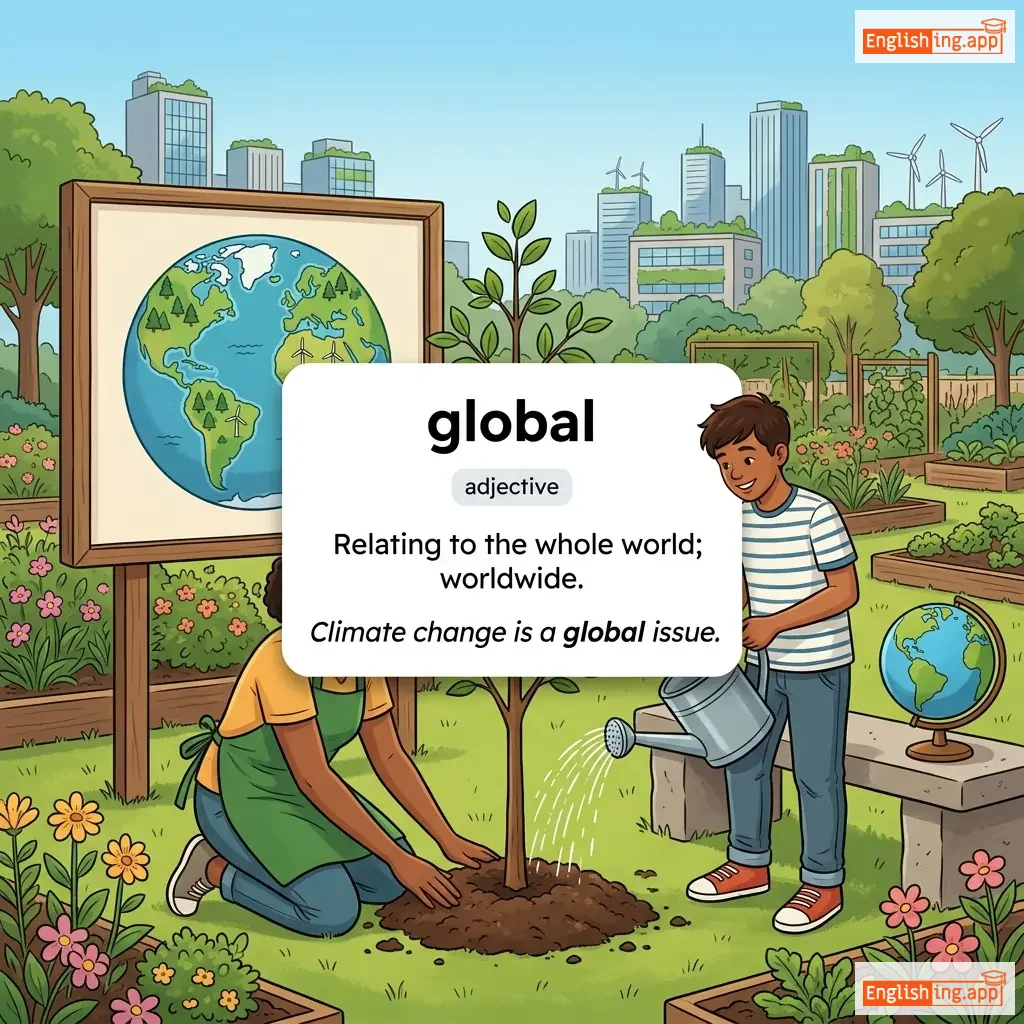
Relating to the whole world; worldwide.
••••••
|
Climate change is a global issue. |
気候変動は世界的な問題です。
Kikō hendō wa sekai-teki na mondai desu.
••••••
|
global village |
The world considered as a community connected by technology and communication.
••••••
|
グローバル村
gurōbaru mura
••••••
|
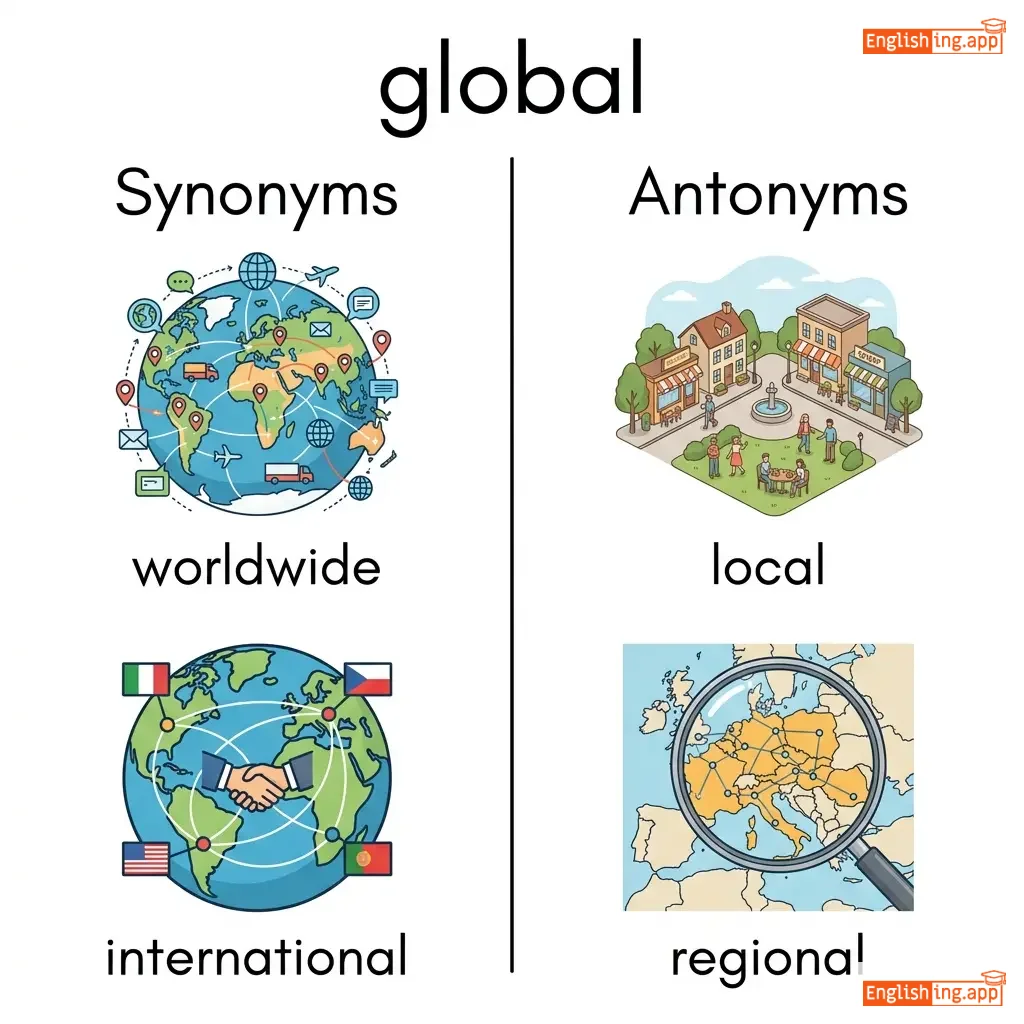
worldwide, international, universal, planetary
••••••
|
local, regional
••••••
|
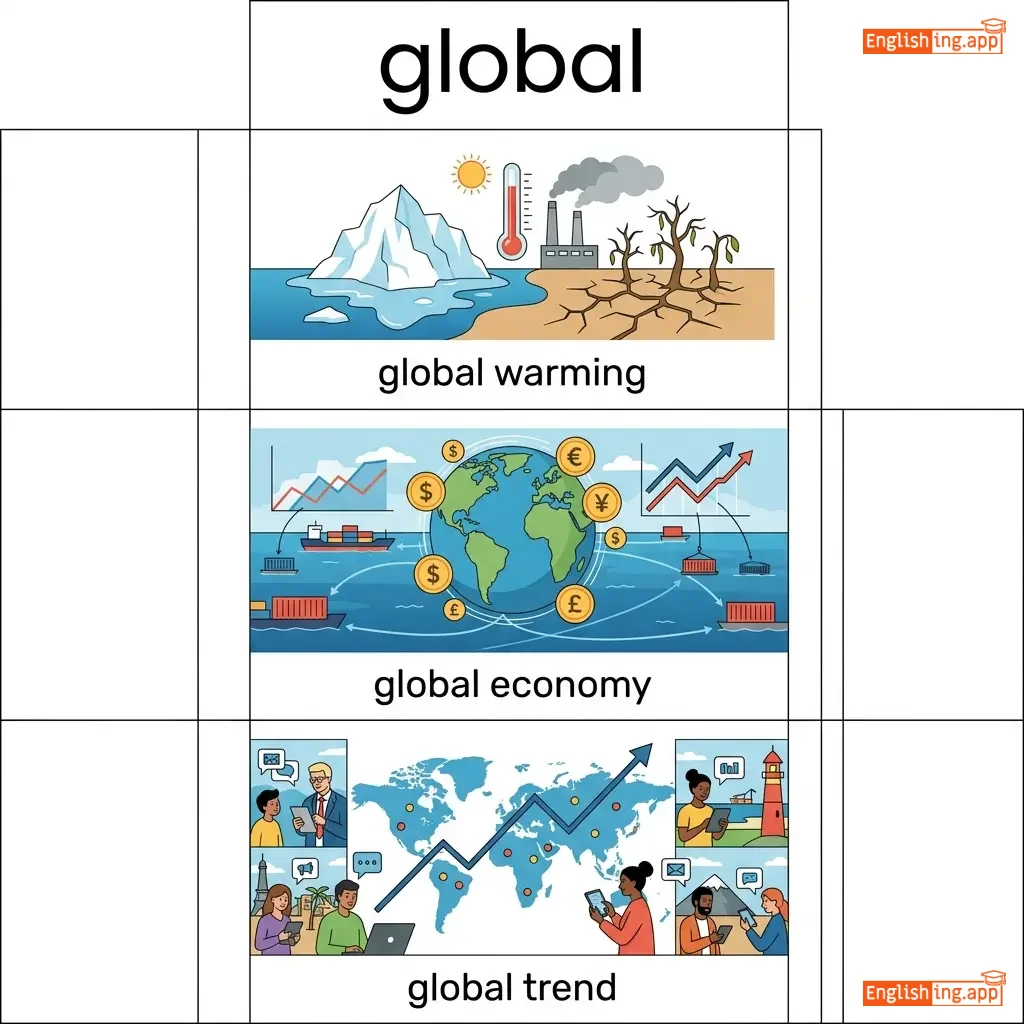
global warming, global economy, global trend, global community
••••••
|
Global = Go + Ball = 世界中のボールのようなもの。
••••••
|
|
🌍
••••••
|
/ˌɡloʊbəlaɪˈzeɪʃən/
noun
(グローバリゼーション)
••••••
|

|
グローバリゼーション
gurobarizēshon
••••••
|
- •••••• | - •••••• | - •••••• | - •••••• |
the process by which businesses or other organizations develop international influence or start operating on an international scale
••••••
|
Globalization has led to increased trade between countries.
グローバリゼーションは国々間の貿易の増加をもたらしました。
••••••
|
グローバリゼーションは国々間の貿易の増加をもたらしました。
Gurōbarizēshon wa kuniguni kan no bōeki no zōka o motarashimashita.
••••••
|
- •••••• | - •••••• | - •••••• |
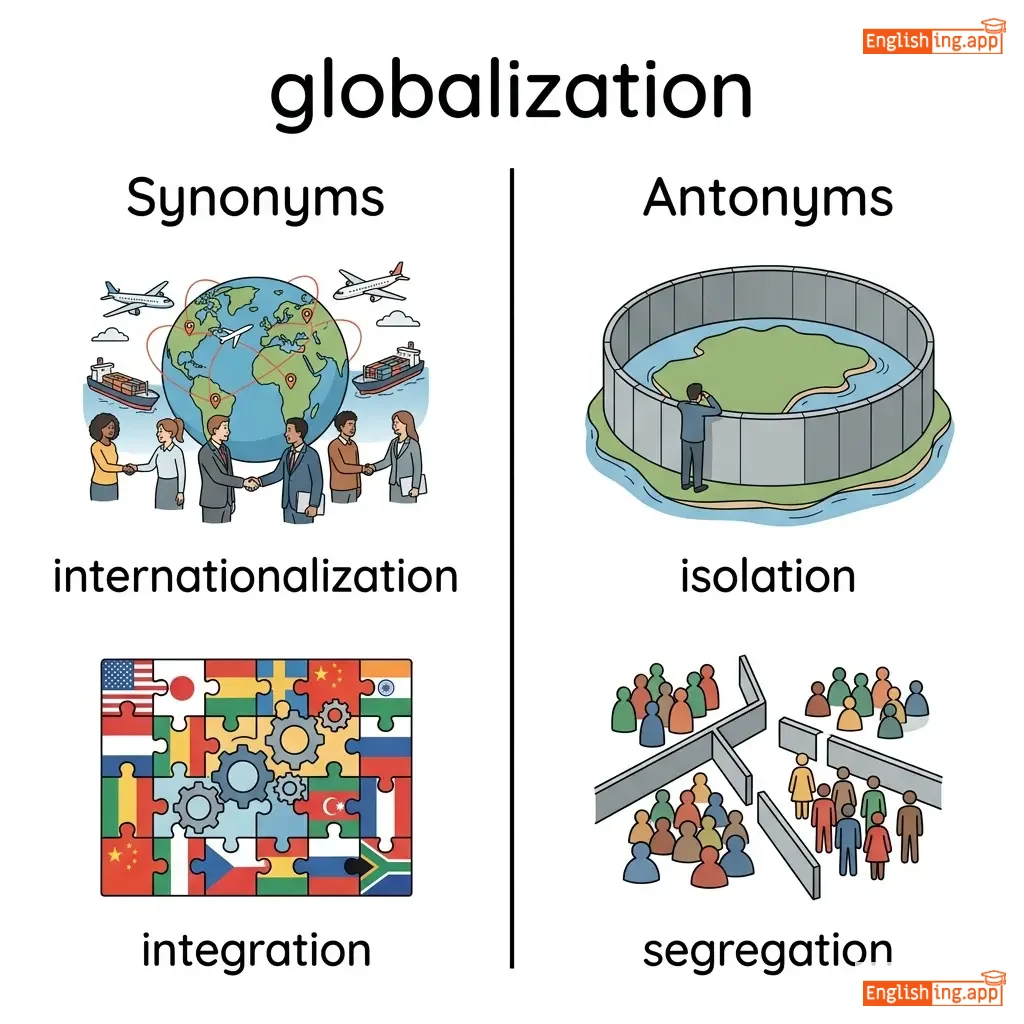
internationalization, integration, worldwide expansion, global reach
••••••
|
isolation, segregation, nationalism
••••••
|
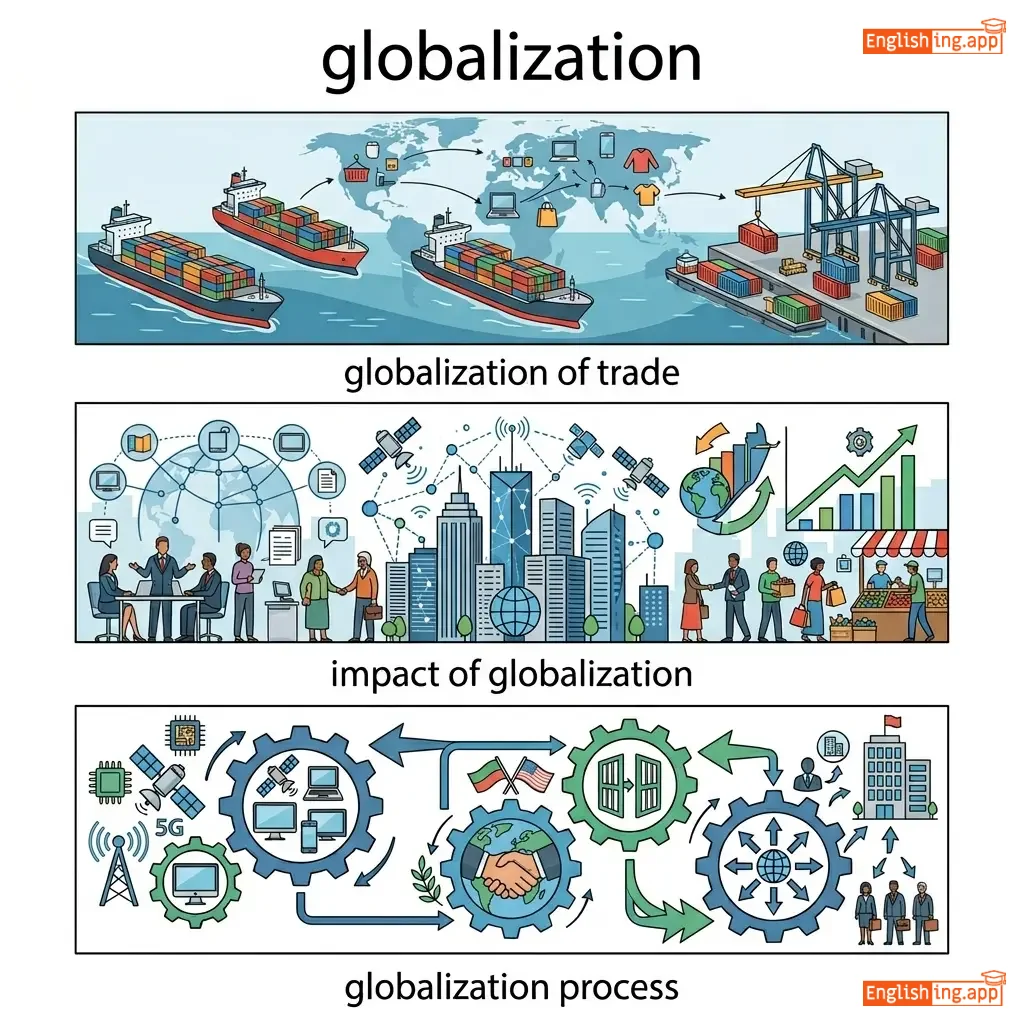
globalization of trade, impact of globalization, globalization process
••••••
|
Globalization connects everyone around the world, just like 'global' does.
••••••
|
|
🌍
••••••
|
/ˈɡloʊbəlaɪz/
verb
(グローバライズ)
••••••
|
- •••••• |
グローバル化する
gurobaruka suru
••••••
|
globalized
グローバライズド
••••••
|
globalized
グローバライズド
••••••
|
globalizes
グローバライズズ
••••••
|
globalizing
グローバライズイング
••••••
|
to make something worldwide in scope or application; to integrate into a global system
••••••
|
Many companies globalize their operations to reach international markets.
メニー カンパニーズ グローバライズ ゼア オペレーションズ トゥ リーチ インターナショナル マーケッツ。
••••••
|
多くの企業は国際市場に進出するため事業をグローバル化する。
ooku no kigyou wa kokusai shijou ni shinshutsu suru tame jigyou o gurobaruka suru
••••••
|
globalize the economy
グローバライズ ジ エコノミー
••••••
|
to integrate national economies into a worldwide economic system
••••••
|
経済をグローバル化する
keizai o gurobaruka suru
••••••
|
internationalize, universalize, worldwide, expand, integrate
••••••
|
localize, isolate, nationalize
••••••
|
globalize markets, globalize business, globalize culture, globalize operations
••••••
|
グローバル = global, グローバル化する
••••••
|
|
🌍
••••••
|
/ɡloʊb/
noun
(グローブ)
••••••
|
- •••••• |
地球儀
chikyūgi
••••••
|
- •••••• | - •••••• | - •••••• | - •••••• |
a spherical model of Earth or another planet; the world itself
••••••
|
Students used a globe to study the continents. |
学生たちは大陸を学ぶために地球儀を使いました。
Gakuseitachi wa tairiku o manabu tame ni chikyūgi o tsukaimashita.
••••••
|
across the globe |
all around the world
••••••
|
世界中で
sekaijū de
••••••
|
world, earth, planet, sphere, orb
••••••
|
flatness, local
••••••
|
global warming, around the globe, world globe, globe map
••••••
|
地球儀は世界を意味します 🌍 — 教室で地球儀を回すと、世界が回るように感じるでしょう。
••••••
|
|
🌟
••••••
|
/ˈɡlɔː.ri.əs/
adjective
(ɡlɔːɾiəs)
••••••
|
- •••••• |
栄光
eikou
••••••
|
- •••••• | - •••••• | - •••••• | - •••••• |
having great beauty, magnificence, or deserving admiration and praise
••••••
|
It was a glorious day filled with sunshine and joy. |
それは栄光の日で、太陽と喜びに満ちていました。
Sore wa eikou no hi de, taiyō to yorokobi ni michite imashita.
••••••
|
a glorious victory |
a magnificent or impressive win
••••••
|
栄光の勝利
eikou no shōri
••••••
|
magnificent, splendid, superb, majestic, wonderful
••••••
|
ordinary, dull, poor
••••••
|
glorious day, glorious past, glorious victory, glorious view
••••••
|
栄光の日、まるで GLORIOUS の勝利のよう
••••••
|
|
🏆
••••••
|
/ˈɡlɔːri/
noun
(グローリー)
••••••
|
- •••••• |
栄光
eikou
••••••
|
- •••••• | - •••••• | - •••••• | - •••••• |
great honor, praise, or fame achieved by doing something remarkable
••••••
|
The athlete won glory for his country with his performance. |
アスリートはそのパフォーマンスで国に栄光をもたらした。
Asurīto wa sono pafōmansu de kuni ni eikou o motarashita.
••••••
|
in all its glory |
in a state of complete beauty or success
••••••
|
その栄光の中で
sono eikou no naka de
••••••
|
honor, fame, triumph, renown, prestige
••••••
|
shame, disgrace
••••••
|
win glory, seek glory, bask in glory, share glory
••••••
|
栄光は努力の報酬だ、常にそれを忘れずに
••••••
|
|
🧤
••••••
|
/ɡlʌv/
noun
(グローブ)
••••••
|
- •••••• |
手袋
tebukuro
••••••
|
- •••••• | - •••••• | - •••••• | - •••••• |
A covering for the hand with separate parts for the fingers and thumb.
••••••
|
She wore gloves to protect her hands from the cold. |
彼女は寒さから手を守るために手袋をしました。
Kanojo wa samusa kara te o mamoru tame ni tebukuro o shimashita.
••••••
|
fit like a glove |
To fit perfectly.
••••••
|
手袋のようにぴったり
Tebukuro no yō ni pittari
••••••
|
mitt, mitten, handwear, covering
••••••
|
barehand, uncovered
••••••
|
wear gloves, leather gloves, boxing gloves, winter gloves
••••••
|
手袋は寒さから守る手の愛。
••••••
|
|
🏃
••••••
|
/ɡoʊ/
verb
(ゴ)
••••••
|
|
行く
iku
••••••
|
went
行った
••••••
|
gone
行った
••••••
|
goes
行きます
••••••
|
going
行く
••••••
|
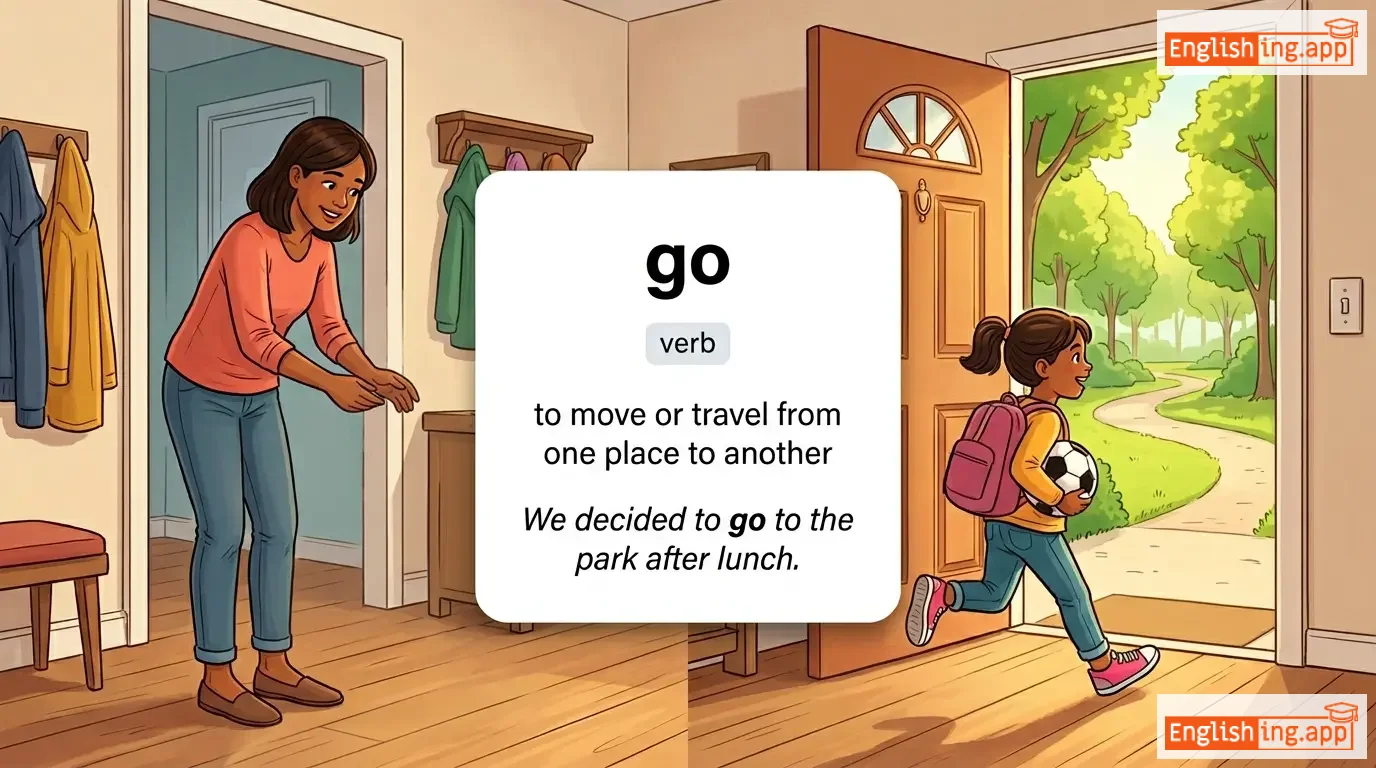
to move or travel from one place to another
••••••
|
We decided to go to the park after lunch.
私たちは昼食後に公園に行くことに決めました。
••••••
|
私たちは昼食後に公園に行くことに決めました。
Watashitachi wa chuushoku go ni kouen ni iku koto ni kimemashita.
••••••
|
go the extra mile
余分な努力をする
••••••
|
to make a special effort to achieve something
••••••
|
余分な努力をする
yobun na doryoku wo suru
••••••
|
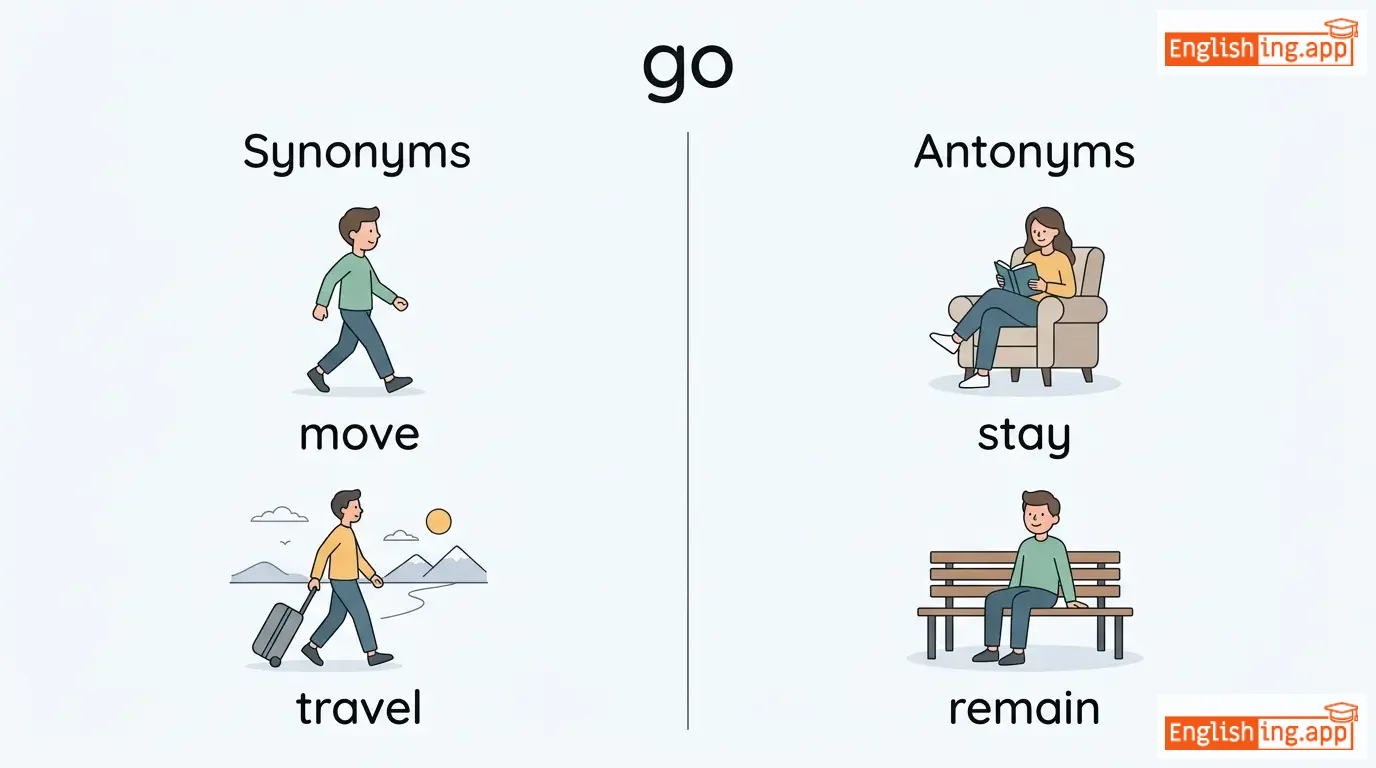
move, travel, proceed, depart, advance
••••••
|
stay, remain, stop
••••••
|
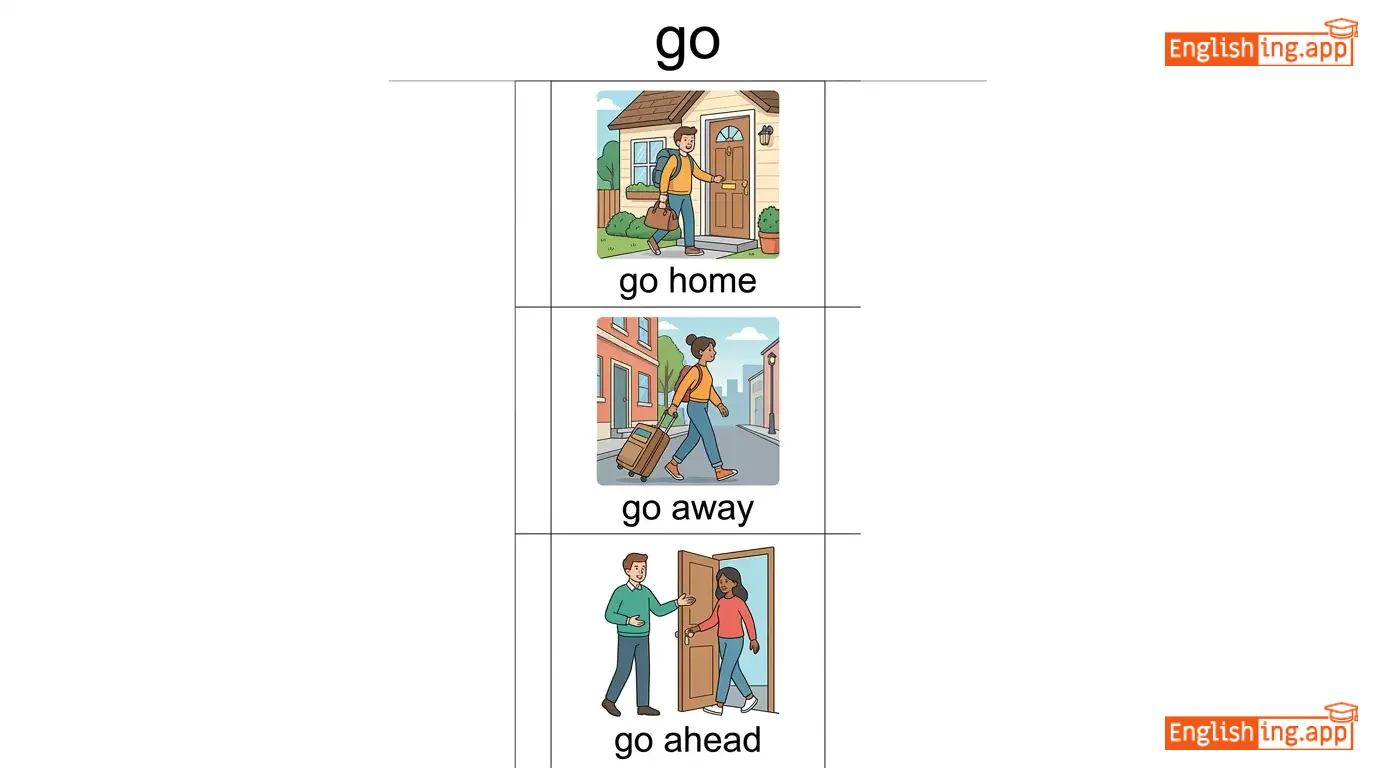
go home, go away, go ahead, go out, go to bed
••••••
|
Goは行くことを意味します。'さあ、goしよう!'と言っているようです。
••••••
|
|
🥅
••••••
|
/ɡoʊl/
noun
(ゴール)
••••••
|
- •••••• |
目標
mokuhyō
••••••
|
- •••••• | - •••••• | - •••••• | - •••••• |
an aim or desired result; a point scored in a game
••••••
|
Her main goal is to become a doctor. |
彼女の主な目標は医者になることです。
Kanojo no omona mokuhyō wa isha ni naru koto desu.
••••••
|
set a goal |
to decide what you want to achieve
••••••
|
目標を設定する
mokuhyō o settei suru
••••••
|
aim, target, objective, purpose, ambition
••••••
|
aimlessness, purposelessness
••••••
|
set a goal, achieve a goal, reach a goal, score a goal
••••••
|
ゴールは目標、サッカーでゴールを決めれば勝利!
••••••
|
|
🙏
••••••
|
/ɡɑːd/
noun
(ゴッド)
••••••
|
- •••••• |
神
kami
••••••
|
- •••••• | - •••••• | - •••••• | - •••••• |
a deity; a supreme being believed to control the universe
••••••
|
People in different cultures worship God in various ways. |
さまざまな文化の人々はさまざまな方法で神を崇拝します。
samazama na bunka no hitobito wa samazama na hōhō de kami o sūhai shimasu
••••••
|
act of God |
an event beyond human control, like a natural disaster
••••••
|
神の行為
kami no kōi
••••••
|
deity, divinity, lord, almighty
••••••
|
mortal, human
••••••
|
believe in God, worship God, fear God, act of God
••••••
|
神は最高の存在、'ゴッド'はすべてを支配しています。
••••••
|
|
🥇
••••••
|
/ɡoʊld/
noun
(ゴールド)
••••••
|
- •••••• |
金
kin
••••••
|
- •••••• | - •••••• | - •••••• | - •••••• |
a yellow precious metal used in jewelry and as money
••••••
|
The ring was made of pure gold. |
その指輪は純金でできていました。
Sono yubiwa wa junkin de dekite imashita.
••••••
|
worth its weight in gold |
extremely valuable
••••••
|
その重さに見合う価値がある
sono omosa ni miaū kachi ga aru
••••••
|
precious metal, wealth, treasure
••••••
|
worthlessness, poverty
••••••
|
pure gold, gold medal, gold mine, gold chain
••••••
|
金はいつでも価値があり、チャンスも金のように貴重です。
••••••
|
|
✨
••••••
|
/ˈɡoʊldən/
adjective
(ゴールデン)
••••••
|
- •••••• |
金色の
kin iro no
••••••
|
- •••••• | - •••••• | - •••••• | - •••••• |
made of or resembling gold; precious or excellent
••••••
|
This is a golden opportunity to learn new skills. |
これは新しいスキルを学ぶための金色の機会です。
Kore wa atarashī sukiru o manabu tame no kin iro no kikai desu.
••••••
|
golden opportunity |
a very good chance to achieve something
••••••
|
金色の機会
kin iro no kikai
••••••
|
bright, valuable, excellent, precious
••••••
|
worthless, ordinary
••••••
|
golden rule, golden age, golden opportunity, golden chance
••••••
|
Goldenは金色の意味です。‘golden rule’のように、人生の最も優れたルールです。
••••••
|
|
🏌️
••••••
|
/ɡɒlf/
noun
(ハピネス)
••••••
|
- •••••• |
幸福
kōfuku
••••••
|
- •••••• | - •••••• | - •••••• | - •••••• |
A game in which players use clubs to hit a ball into a series of holes on a course in as few strokes as possible.
••••••
|
He spends his weekends playing golf with his friends. |
彼女は賞を受け取ったとき、自分の幸福を隠すことができませんでした。
Kanojo wa shō o uketotta toki, jibun no kōfuku o kakusu koto ga dekimasen deshita.
••••••
|
a good walk spoiled |
A humorous phrase describing golf as ruining the enjoyment of walking.
••••••
|
幸福の追求
kōfuku no tsuikyū
••••••
|
sport, game, pastime, recreation
••••••
|
work, labor
••••••
|
play golf, golf course, golf club, professional golf
••••••
|
幸福はゴールのない旅のように感じる、いつも探し続けることが大切!
••••••
|
|
👍
••••••
|
/ɡʊd/
adjective
(gud)
••••••
|
- •••••• |
良い
yoi
••••••
|
- •••••• | - •••••• | - •••••• | - •••••• |
Of high quality; morally right or beneficial.
••••••
|
She is a good student who always helps her classmates. |
彼女は良い学生で、いつもクラスメートを助けています。
Kanojo wa yoi gakusei de, itsumo kurasumēto o tasuketeimasu.
••••••
|
for good |
permanently
••••••
|
永遠に
eien ni
••••••
|
excellent, fine, beneficial, virtuous, positive
••••••
|
bad, evil, poor
••••••
|
good job, good idea, good reason, good student
••••••
|
Good は良い、'良い' でいつも良い。
••••••
|
|
👋
••••••
|
/ɡʊdˈbaɪ/
interjection;noun
(グッドバイ)
••••••
|
- •••••• |
さようなら
sayounara
••••••
|
- •••••• | - •••••• | - •••••• | - •••••• |
a polite expression used when leaving or ending a conversation; the act of parting
••••••
|
She waved and said goodbye before leaving the station.
シー ウェイブド アンド セッド グッドバイ ビフォー リービング ザ ステーション。
••••••
|
彼女は駅を出る前に手を振ってさようならと言った。
kanojo wa eki o deru mae ni te o futte sayounara to itta
••••••
|
say goodbye
セイ グッドバイ
••••••
|
to express farewell to someone
••••••
|
さようならを言う
sayounara o iu
••••••
|
farewell, bye, adieu, see you, take care
••••••
|
hello, hi, welcome
••••••
|
say goodbye, bid goodbye, final goodbye, emotional goodbye
••••••
|
さようなら = say you nara, then goodbye
••••••
|
|
💖
••••••
|
/ˈɡʊdnəs/
noun
(ɡʊdnəs)
••••••
|
- •••••• |
善良
zenryou
••••••
|
- •••••• | - •••••• | - •••••• | - •••••• |
the quality of being morally good or virtuous
••••••
|
Her goodness was evident in the way she treated others. |
彼女の善良さは、他の人々に対する接し方に明らかに現れていました。
Kanojo no zenryou sa wa, hoka no hitobito ni taisuru sesshika ni akirakani arawarete imashita.
••••••
|
- •••••• | - •••••• | - •••••• |
virtue, morality, kindness, goodness
••••••
|
evil, wickedness, immorality
••••••
|
goodness of heart, goodness of character, pure goodness
••••••
|
Goodness is like being 'Good' - kindness and virtue reflected in actions
••••••
|
|
📦
••••••
|
ɡʊdz
noun
(グッズ)
••••••
|

|
商品
shouhin
••••••
|
- •••••• | - •••••• | - •••••• | - •••••• |
Merchandise or possessions; things that are bought and sold.
••••••
|
The company produces high-quality goods for export.
その会社は輸出向けの高品質な商品を生産している。
••••••
|
その会社は輸出向けの高品質な商品を生産している。
sono kaisha wa yushutsu muke no kouhinshitsu na shouhin o seisanshiteiru
••••••
|
- •••••• | - •••••• | - •••••• |
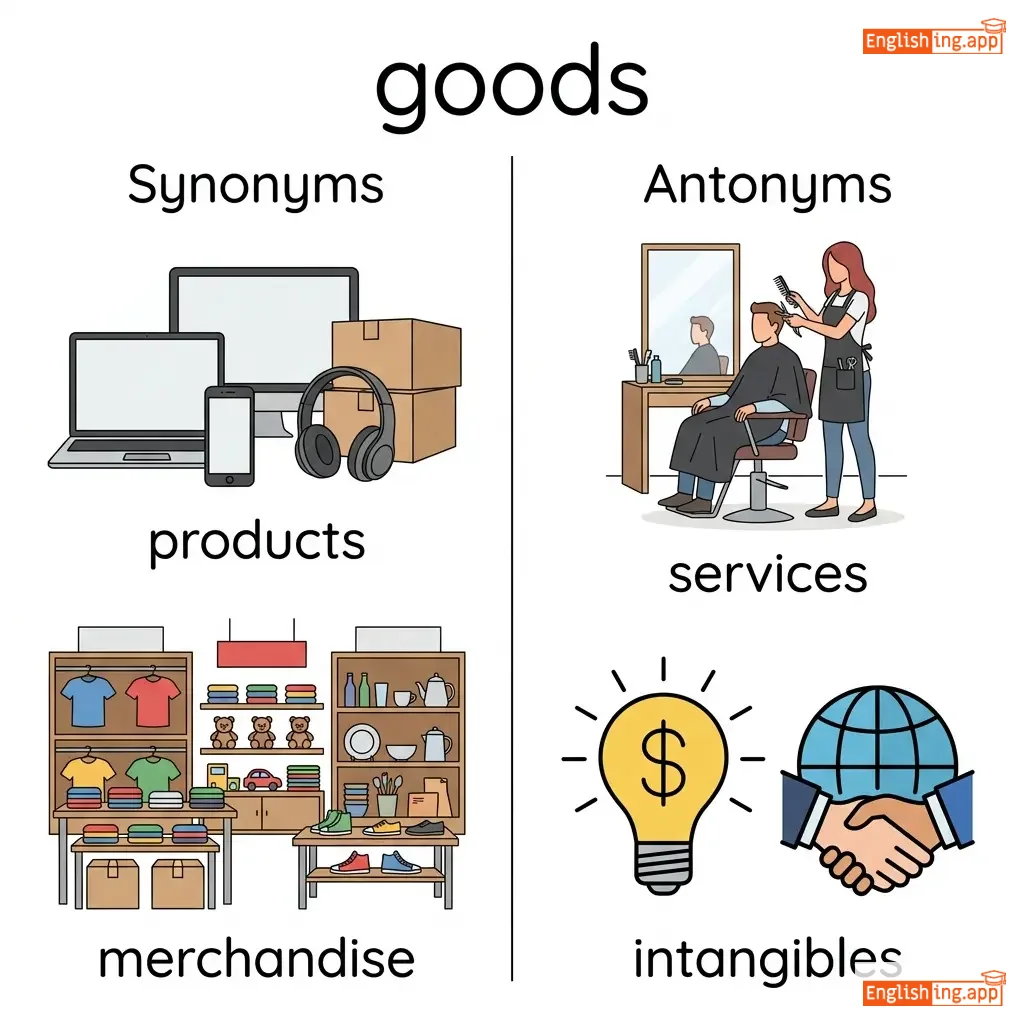
products, merchandise
••••••
|
services, intangibles
••••••
|
- •••••• |
Goods to remember: GOODS = 商品; picture a shop sign that reads GOODS with 商品 written underneath as shouhin
••••••
|
|
💖
••••••
|
/ˈɡɔːr.dʒəs/
adjective
(ɡɔːrʒəs)
••••••
|
- •••••• |
非常に美しい; 魅力的; 視覚的に印象的
hijō ni utsukushī; miryokuteki; shikakuteki ni inshō-teki
••••••
|
- •••••• | - •••••• | - •••••• | - •••••• |
extremely beautiful; attractive; visually stunning
••••••
|
The bride looked absolutely gorgeous.
花嫁は絶対に美しく見えました。
••••••
|
花嫁は絶対に美しく見えました。
Hanayome wa zettai ni utsukushiku miemashita.
••••••
|
- •••••• | - •••••• | - •••••• |
beautiful, stunning, magnificent, lovely
••••••
|
ugly, hideous, repulsive, unattractive
••••••
|
gorgeous dress, gorgeous weather, gorgeous view, absolutely gorgeous
••••••
|
結婚式では花嫁は常に絶対に美しく見えるべきです!
••••••
|
|
🏛️
••••••
|
/ˈɡʌv.ən/
verb
••••••
|
|
- •••••• |
governed
••••••
|
governed
••••••
|
governs
••••••
|
governing
••••••
|
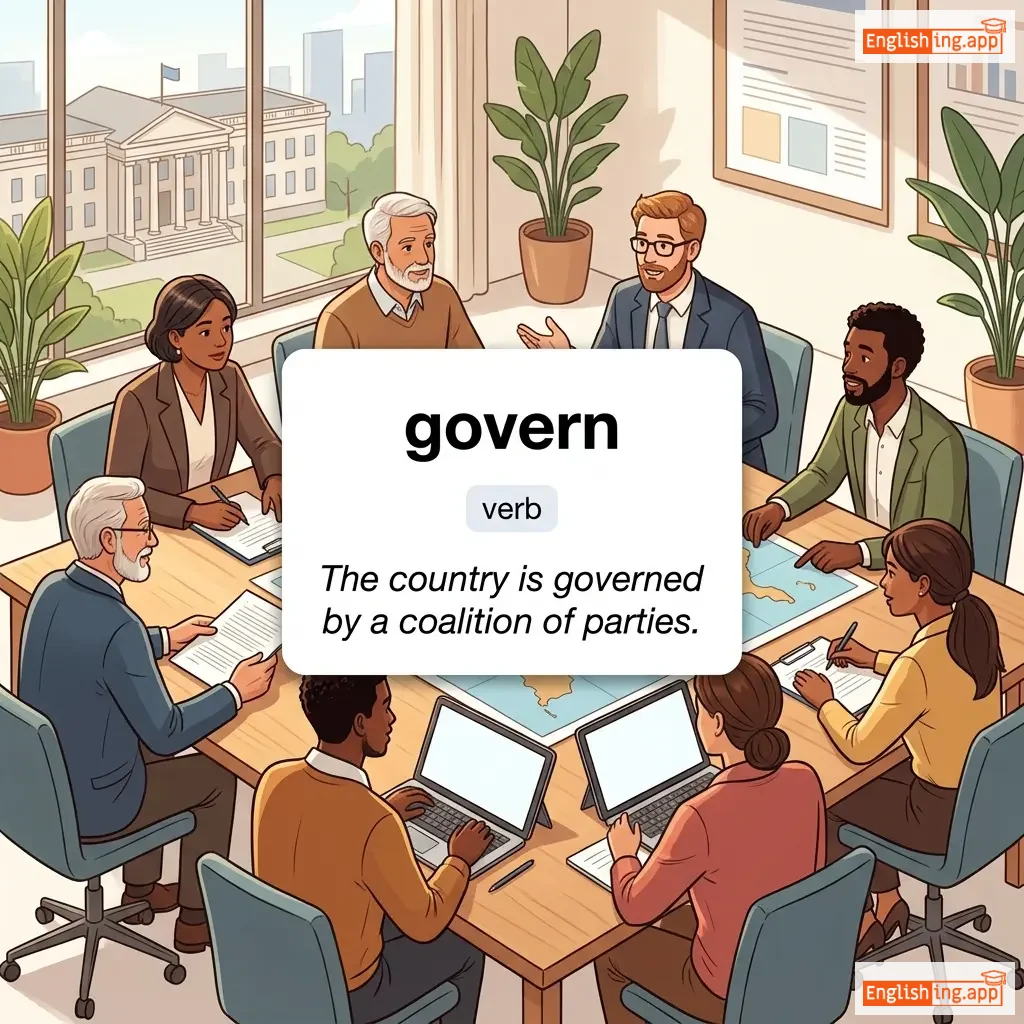
to control, direct, or strongly influence the actions and behavior of others, especially through laws or authority
••••••
|
The country is governed by a coalition of parties. |
- •••••• |
govern oneself accordingly |
to act appropriately based on what one knows or has been told
••••••
|
- •••••• |
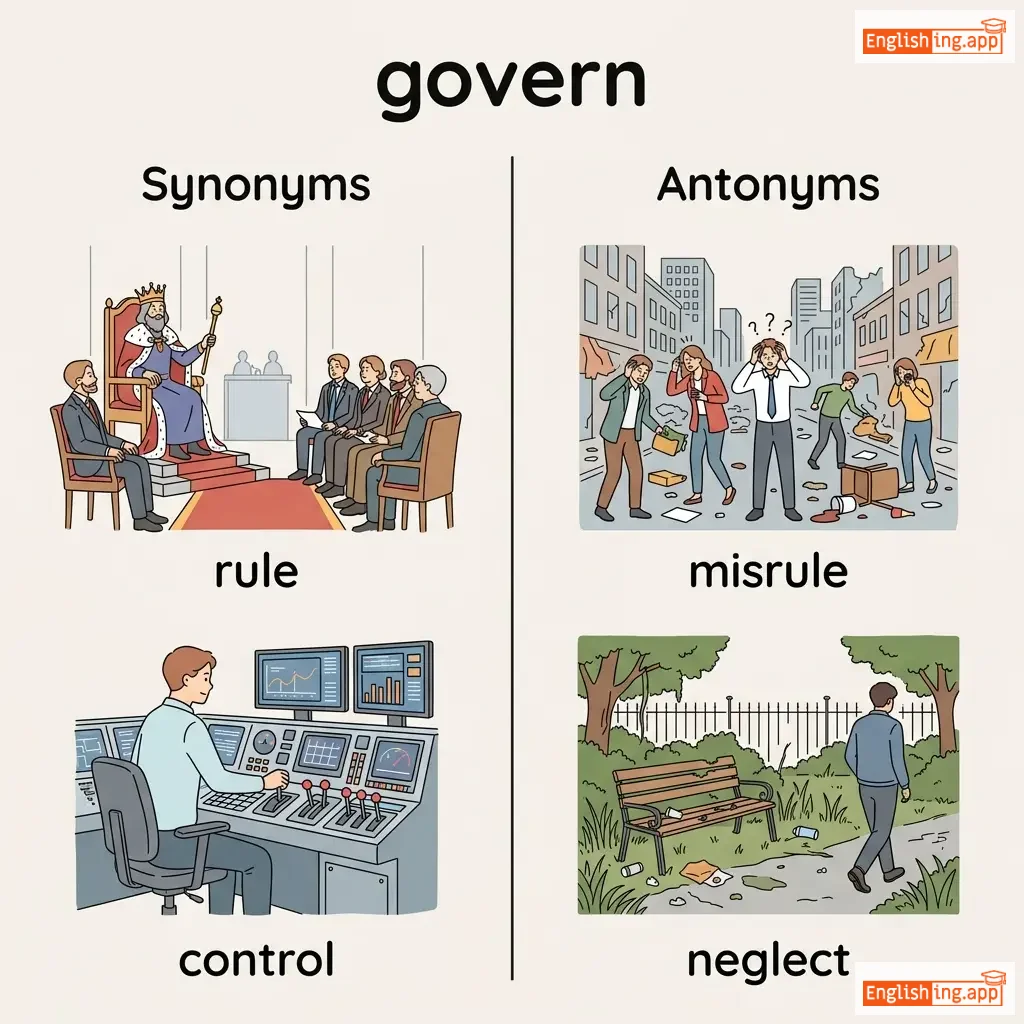
rule, control, manage, administer, oversee
••••••
|
misrule, neglect, abandon
••••••
|
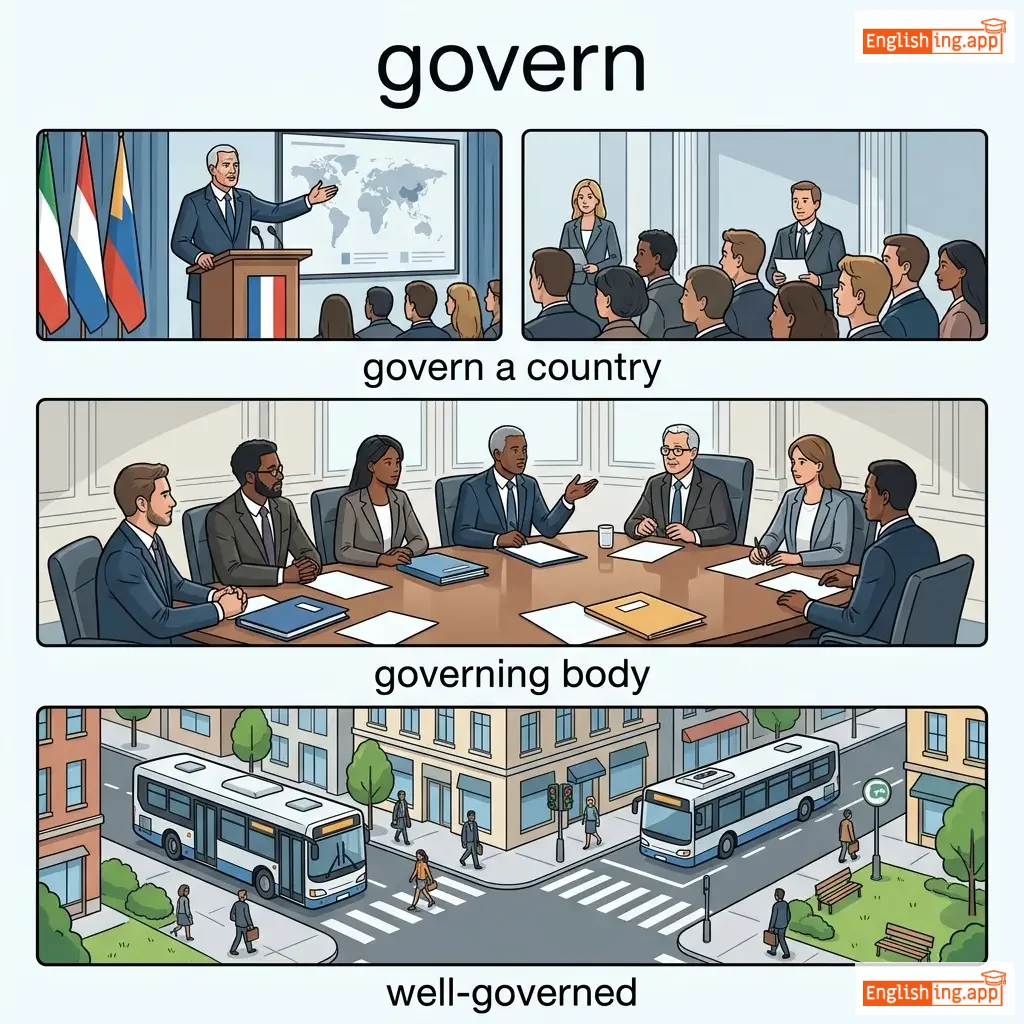
govern a country, governing body, well-governed, self-governed
••••••
|
No •••••• |
|
🏛️
••••••
|
/ˈɡʌvərnəns/
noun
••••••
|

|
- •••••• | - •••••• | - •••••• | - •••••• | - •••••• |
the action or manner of governing a state, organization, or people
••••••
|
Good governance is key to building a strong, prosperous nation. |
- •••••• | - •••••• | - •••••• | - •••••• |
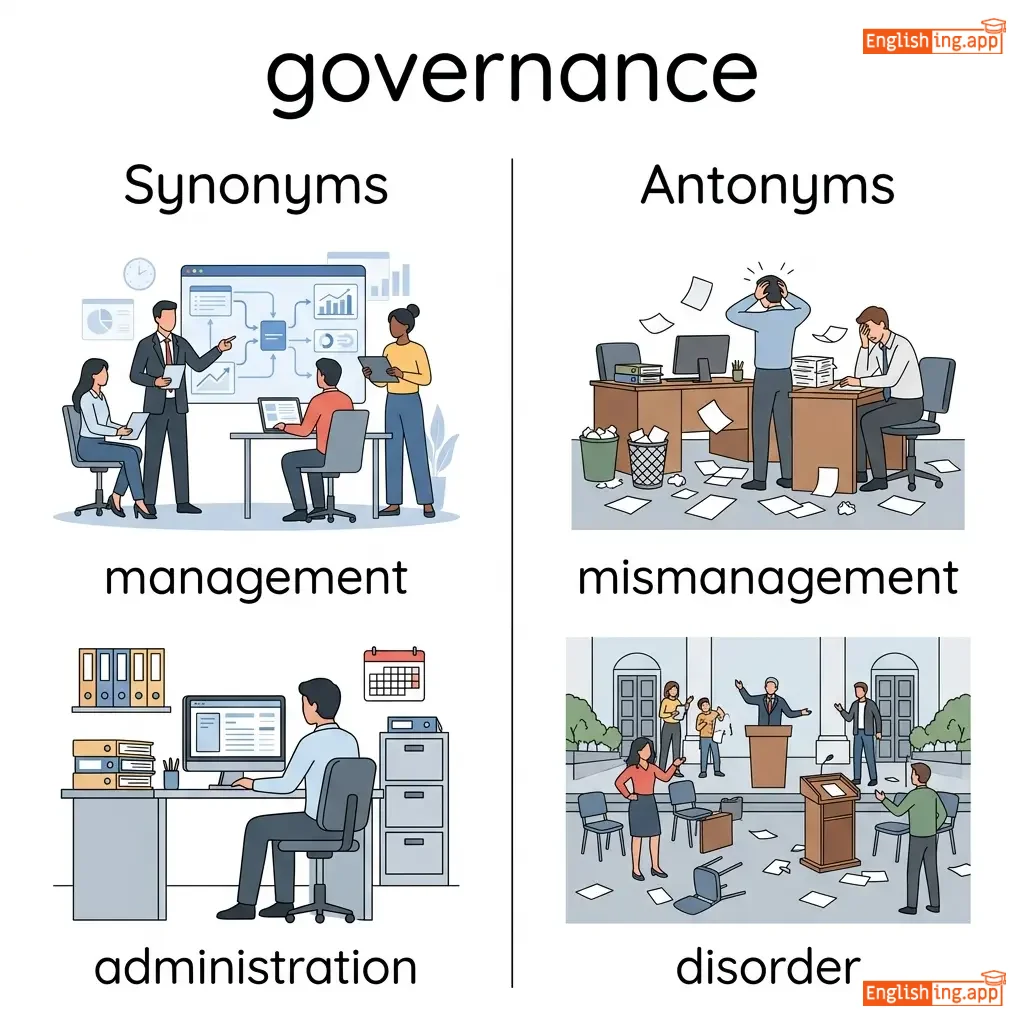
management, administration, leadership, control
••••••
|
mismanagement, disorder, chaos
••••••
|
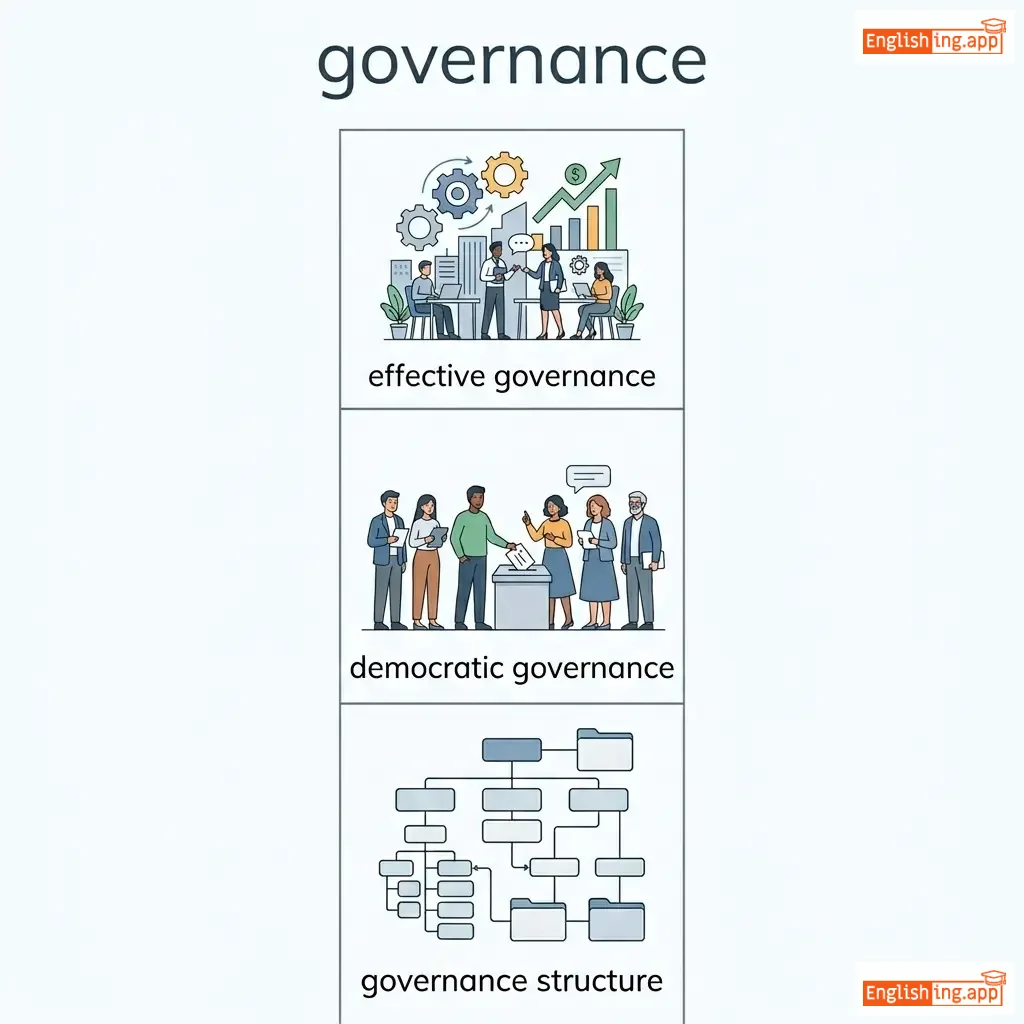
effective governance, democratic governance, governance structure
••••••
|
No •••••• |
|
🏛️
••••••
|
/ˈɡʌvərnmənt/
noun
(ガバメント)
••••••
|
|
政府
seifu
••••••
|
- •••••• | - •••••• | - •••••• | - •••••• |
The governing body of a nation, state, or community responsible for making and enforcing laws.
••••••
|
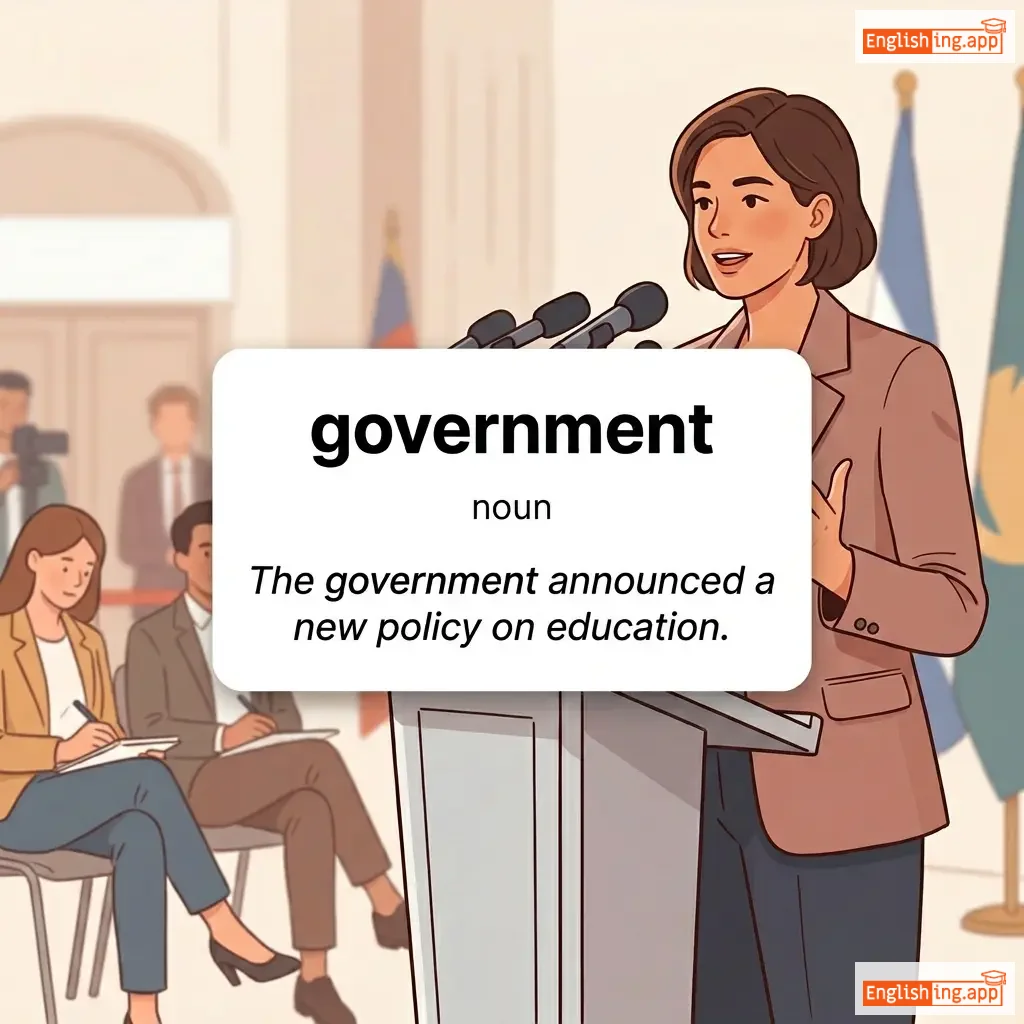
The government announced a new policy on education. |
政府は新しい教育政策を発表しました。
Seifu wa atarashī kyōiku seisaku o happyō shimashita.
••••••
|
big government |
A political concept referring to a government that is large and heavily involved in society.
••••••
|
大きな政府
Ōkina seifu
••••••
|
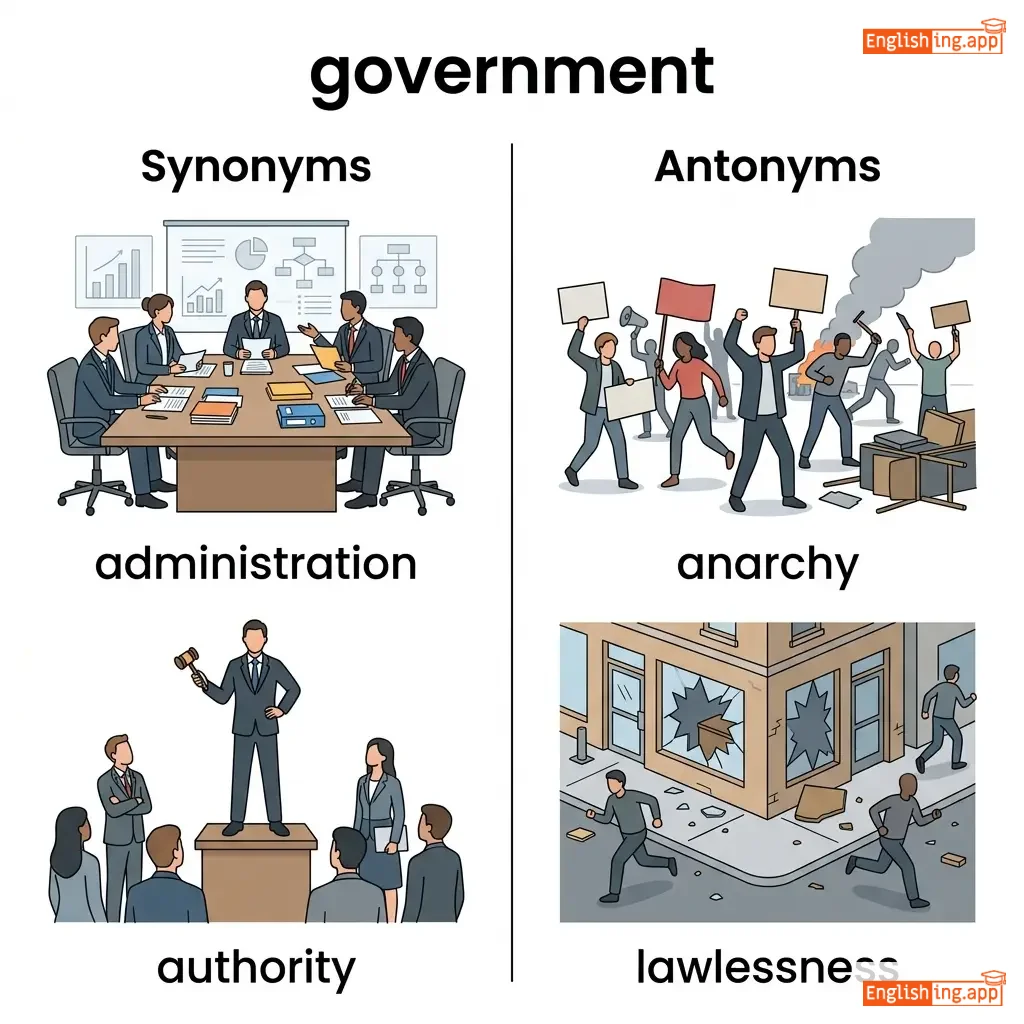
administration, authority, regime, state, leadership
••••••
|
anarchy, lawlessness
••••••
|
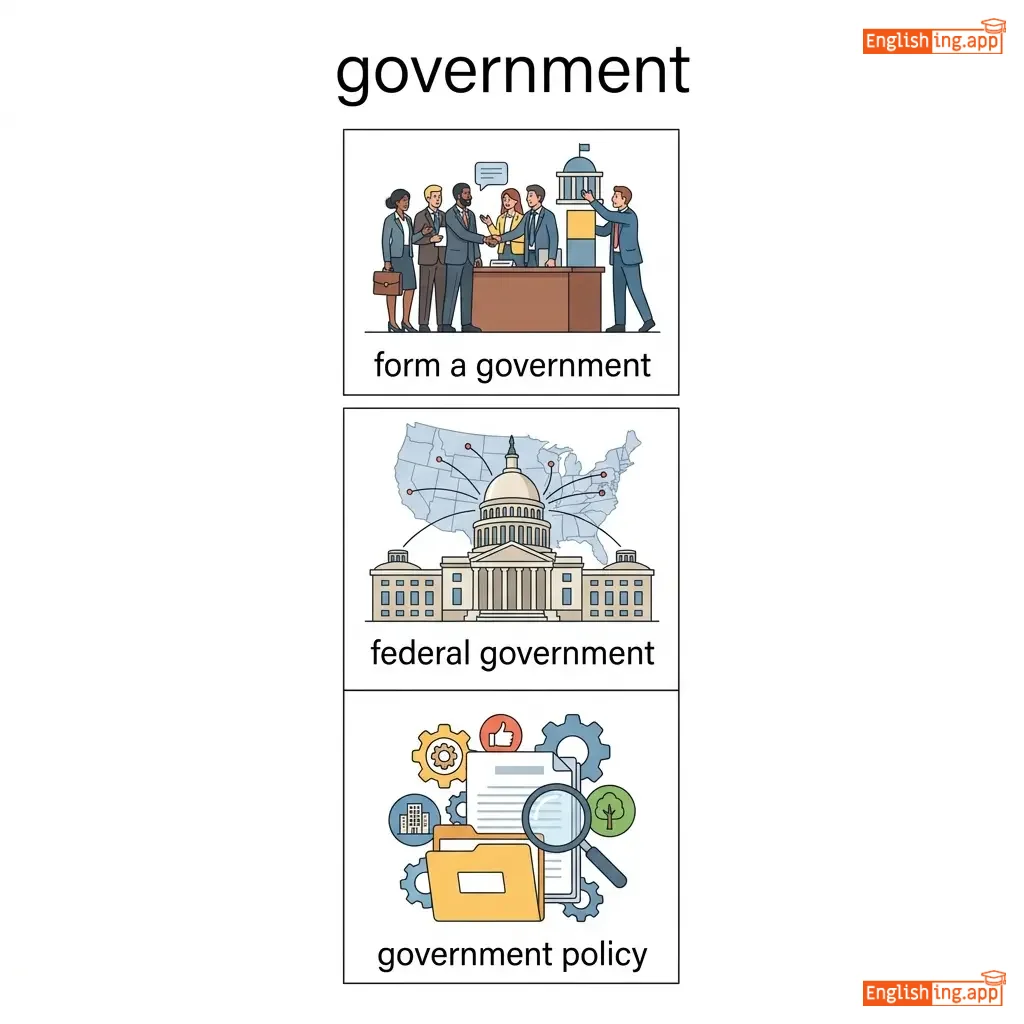
form a government, federal government, government policy, government official
••••••
|
政府は国を統治し、法律を実行する組織です。
••••••
|
|
👔
••••••
|
/ˈɡʌvərnər/
noun
(ゴバーノー)
••••••
|
- •••••• |
知事
chiji
••••••
|
- •••••• | - •••••• | - •••••• | - •••••• |
An official appointed or elected to govern a state, territory, or organization.
••••••
|
The governor addressed the citizens about the upcoming election. |
知事は市民に来たる選挙について話しました。
Chiji wa shimin ni kitaru senkyo ni tsuite hanashimashita.
••••••
|
- •••••• | - •••••• | - •••••• |
ruler, administrator, leader, official
••••••
|
citizen, subject
••••••
|
state governor, governor's office, elected governor, colonial governor
••••••
|
知事は州のボス、選挙で決まるリーダー。
••••••
|
|
🤲
••••••
|
/ɡræb/
verb
(グラブ)
••••••
|
- •••••• |
掴む
tsukamu
••••••
|
grabbed
グラブド
••••••
|
grabbed
グラブド
••••••
|
grabs
グラブス
••••••
|
grabbing
グラビング
••••••
|
To seize something quickly and firmly.
••••••
|
He tried to grab the ball before it rolled away.
彼はボールが転がる前にそれを掴もうとしました。
••••••
|
彼はボールが転がる前にそれを掴もうとしました。
Kare wa bōru ga korogaru mae ni sore o tsukamō to shimashita.
••••••
|
grab a bite
ひとくち食べる
••••••
|
to have something to eat quickly
••••••
|
ひとくち食べる
hitokuchi taberu
••••••
|
seize, snatch, clutch, take, catch
••••••
|
release, let go
••••••
|
grab a chance, grab attention, grab a bite
••••••
|
掴むのは速さ、ひとくちのように!
••••••
|
|
💃
••••••
|
/ɡreɪs/
noun
(グレース)
••••••
|
- •••••• |
優雅, エレガンス
yūga, eregansu
••••••
|
- •••••• | - •••••• | - •••••• | - •••••• |
simple elegance or refined movement; goodwill and kindness
••••••
|
She moved with grace across the stage. |
彼女は舞台を優雅に歩いた。
Kanojo wa butai o yūga ni aruita.
••••••
|
fall from grace |
to lose someone's approval or favor
••••••
|
落ちぶれる
ochibureru
••••••
|
elegance, poise, charm, courtesy, kindness
••••••
|
rudeness, awkwardness, ugliness
••••••
|
move with grace, grace period, divine grace, social grace
••••••
|
Graceは優雅を意味する — グレースフル(graceful)は優雅に動くことを意味する!
••••••
|
|
⏳
••••••
|
/ˈɡrædʒ.u.əl/
adjective
(gurajūaru)
••••••
|
|
段階的な; 徐々の; 進行中の;
dankai-teki na; jojo no; shinkōchū no;
••••••
|
- •••••• | - •••••• | - •••••• | - •••••• |
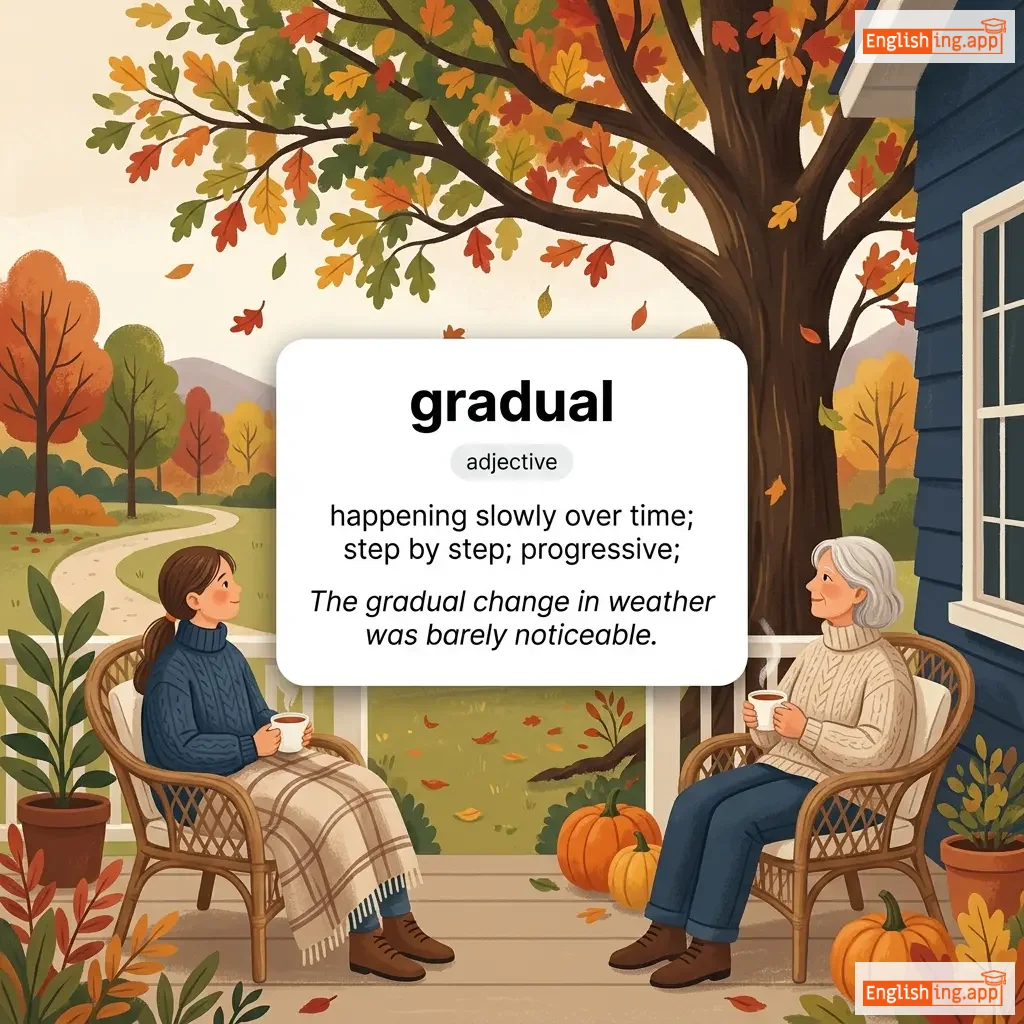
happening slowly over time; step by step; progressive;
••••••
|
The gradual change in weather was barely noticeable.
天気の徐々の変化はほとんど気づかれなかった。
••••••
|
天気の徐々の変化はほとんど気づかれなかった。
Tenki no jojo no henka wa hotondo kizukarenakatta.
••••••
|
- •••••• | - •••••• | - •••••• |
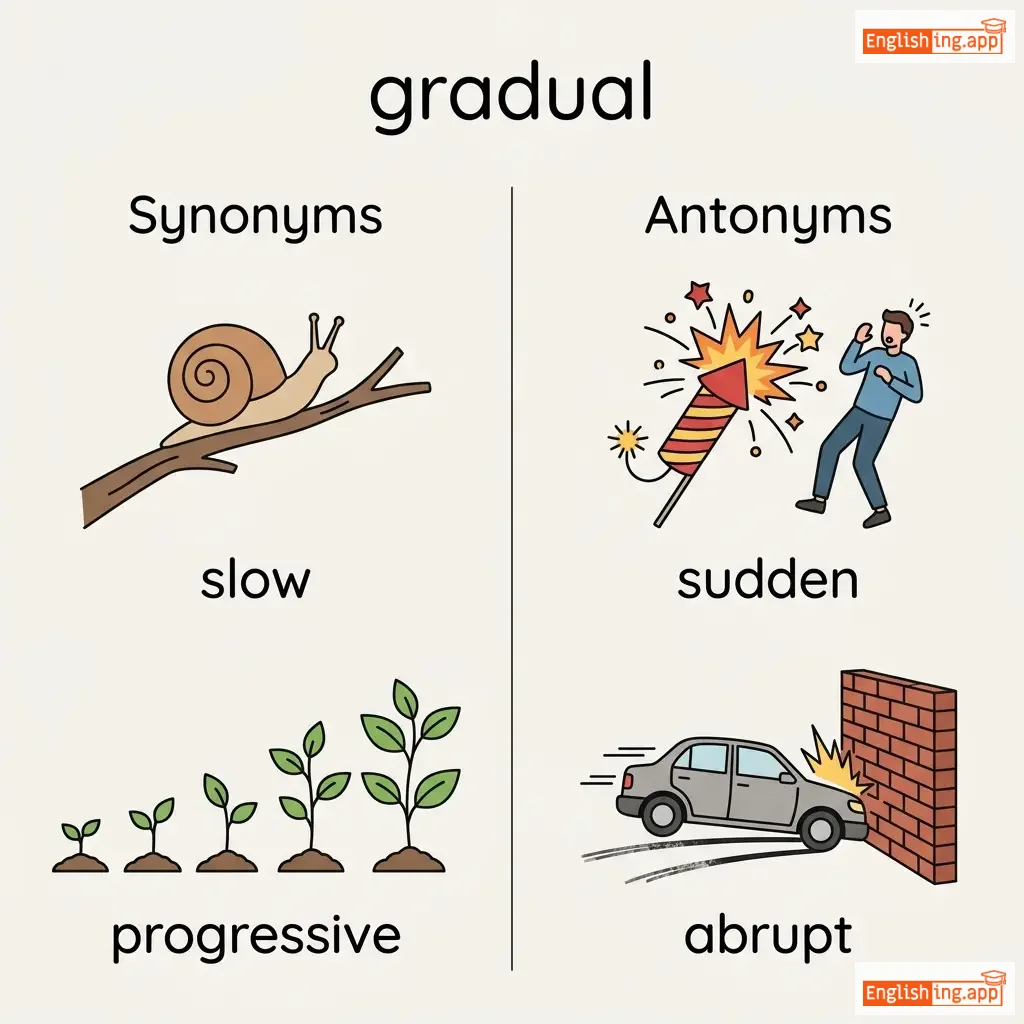
slow, progressive, incremental, step-by-step
••••••
|
sudden, abrupt, rapid, immediate
••••••
|
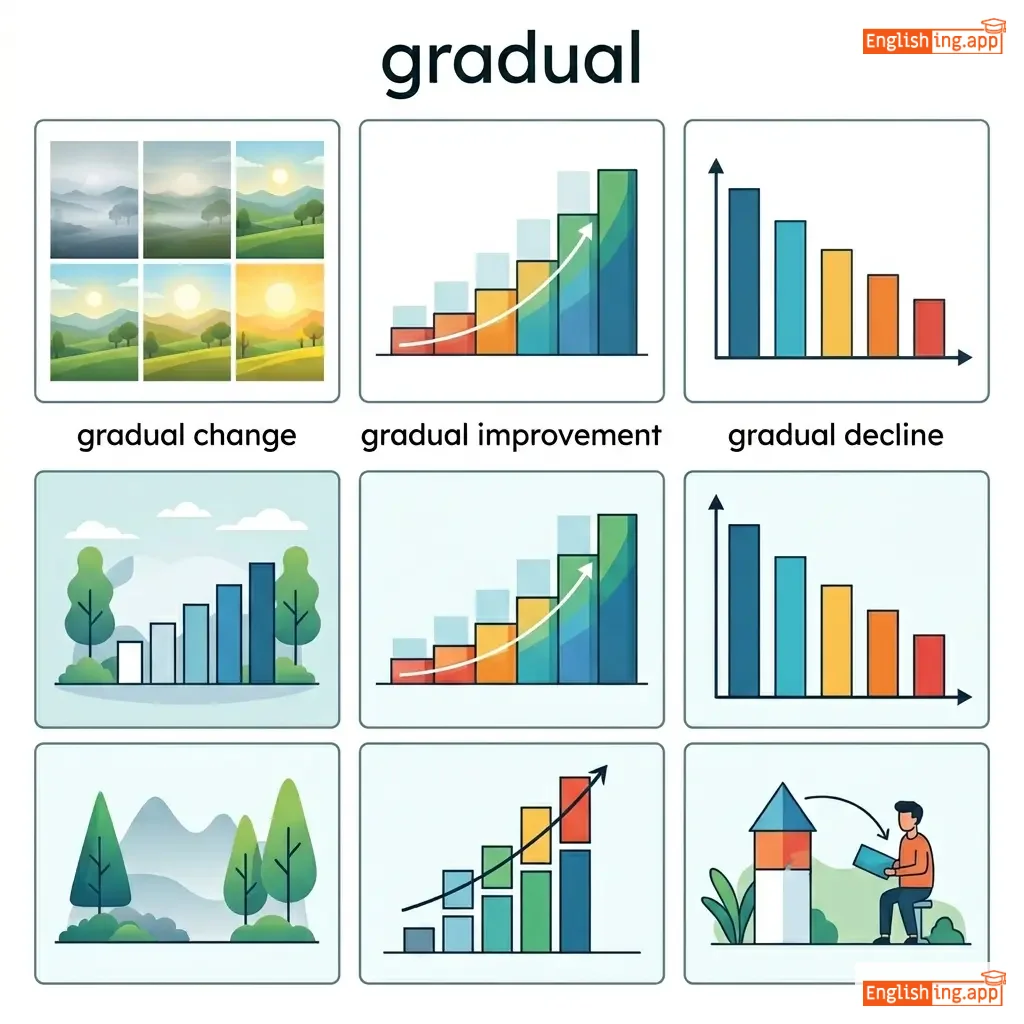
gradual change, gradual improvement, gradual decline
••••••
|
Gradualは時間とともにゆっくり進むこと、天気が変わるように。
••••••
|
|
⏳
••••••
|
/ˈɡrædʒ.u.ə.li/
adverb
(グラジュアリー)
••••••
|
- •••••• |
徐々に; だんだん
jyojyo ni; dandann
••••••
|
- •••••• | - •••••• | - •••••• | - •••••• |
slowly and steadily over a period of time
••••••
|
The weather gradually became warmer in spring.
ðə wɛðər ɡrædʒuəli bɪˈkeɪm wɑːrmɚ ɪn sprɪŋ.
••••••
|
春になると、天気は徐々に暖かくなった。
Haru ni naru to, tenki wa jyojyo ni atatakai kunatta.
••••••
|
- •••••• | - •••••• | - •••••• |
slowly, progressively, steadily, step by step
••••••
|
suddenly, abruptly, immediately, instantly
••••••
|
gradually increase, gradually improve, gradually decline, gradually change
••••••
|
春が来ると、気温が徐々に上がるように感じます。
••••••
|
|
🎓
••••••
|
/ˈɡrædʒuət/ (noun), /ˈɡrædʒueɪt/ (verb)
noun, verb
(グラジュエイト)
••••••
|
- •••••• |
卒業生
sotsugyousei
••••••
|
graduated
グラジュエイテッド
••••••
|
graduated
グラジュエイテッド
••••••
|
graduates
グラジュエイツ
••••••
|
graduating
グラジュエイティング
••••••
|
As a noun: a person who has completed a course of study; As a verb: to complete a course of study successfully.
••••••
|
She will graduate from university next year.
彼女は来年大学を卒業する。
••••••
|
彼女は来年大学を卒業する。
Kanojo wa rainen daigaku wo sotsugyou suru.
••••••
|
graduate with honors
優等で卒業する
••••••
|
To complete studies with high distinction.
••••••
|
優等で卒業する
yuutou de sotsugyou suru
••••••
|
alumnus, degree holder, finish, complete, qualify
••••••
|
dropout, fail
••••••
|
graduate student, graduate school, graduate from, graduate with honors
••••••
|
卒業生 — 大きな卒業帽をかぶって、新しい人生をスタート!
••••••
|
|
🌾
••••••
|
/ɡreɪn/
noun
(グレイン)
••••••
|
- •••••• |
穀物
kokumotsu
••••••
|
- •••••• | - •••••• | - •••••• | - •••••• |
a small hard seed of a cereal plant such as wheat or rice; a tiny particle of a substance
••••••
|
A grain of rice fell off the plate. |
一粒の米が皿から落ちた。
Hitotsubu no kome ga sara kara ochita.
••••••
|
go against the grain |
to do something that is unusual or against one's nature
••••••
|
流れに逆らう
nagare ni sakarau
••••••
|
seed, kernel, particle, speck, granule
••••••
|
chunk, mass
••••••
|
grain of rice, grain of sand, cereal grain, wheat grain
••••••
|
穀物 (kokumotsu) は人生の力を持っている。
••••••
|
|
📘
••••••
|
/ˈɡræmər/
noun
(グラマー)
••••••
|
- •••••• |
文法
bunpo
••••••
|
- •••••• | - •••••• | - •••••• | - •••••• |
the system and structure of a language, including rules for syntax, morphology, and usage
••••••
|
She studied grammar to improve her writing skills.
シー スタディド グラマー トゥ インプルーヴ ハー ライティング スキルズ
••••••
|
彼女は文章力を向上させるために文法を勉強した。
kanojo wa bunshoryoku o kojo saseru tame ni bunpo o benkyo shita
••••••
|
- •••••• | - •••••• | - •••••• |
syntax, linguistics, language rules, morphology
••••••
|
disorder, illiteracy
••••••
|
grammar rules, English grammar, basic grammar, grammar book, study grammar
••••••
|
Grammar = bunpo—文章のルール
••••••
|
|
🏰
••••••
|
/ɡrænd/
adjective
(グランド)
••••••
|
- •••••• |
壮大
soudai
••••••
|
- •••••• | - •••••• | - •••••• | - •••••• |
magnificent and impressive in appearance, size, or style
••••••
|
They stayed at a grand hotel in Paris. |
彼らはパリの壮大なホテルに泊まりました。
Karera wa Pari no soudaina hoteru ni tomarimashita.
••••••
|
grand scheme |
a large, ambitious plan
••••••
|
壮大な計画
soudai na keikaku
••••••
|
majestic, splendid, magnificent, glorious, impressive
••••••
|
modest, ordinary, simple
••••••
|
grand design, grand style, grand hotel, grand idea
••••••
|
Grandは壮大を意味します。
••••••
|
|
👶
••••••
|
/ˈɡrænd.tʃaɪld/
noun
(グランドチャイルド)
••••••
|
- •••••• |
孫
mago
••••••
|
- •••••• | - •••••• | - •••••• | - •••••• |
the child of one's son or daughter
••••••
|
They love spending time with their grandchild on weekends. |
彼らは週末に孫と一緒に過ごすのが大好きです。
Karera wa shūmatsu ni mago to issho ni sugosu no ga daisuki desu.
••••••
|
- •••••• | - •••••• | - •••••• |
descendant, offspring, kin, progeny
••••••
|
ancestor, forebear
••••••
|
new grandchild, first grandchild, proud grandchild
••••••
|
Grandは祖父母、childは子供、grandchildは祖父母の子供です。
••••••
|
|
👧
••••••
|
/ˈɡræn(d)ˌdɔːtər/
noun
(グランドドーター)
••••••
|
- •••••• |
孫娘
mago musume
••••••
|
- •••••• | - •••••• | - •••••• | - •••••• |
the daughter of one’s son or daughter
••••••
|
Her granddaughter visits her every weekend.
ハー グランドドーター ビジッツ ハー エブリー ウィークエンド
••••••
|
彼女の孫娘は毎週末彼女を訪ねます。
kanojo no mago musume wa maishu matsu kanojo o tazunemasu
••••••
|
- •••••• | - •••••• | - •••••• |
grandchild (female), female grandchild, grandgirl, descendant
••••••
|
grandson, grandfather, ancestor
••••••
|
beloved granddaughter, youngest granddaughter, granddaughter was born, raise a granddaughter
••••••
|
孫娘 (mago musume) = granddaughter—家族の宝物
••••••
|
|
👴
••••••
|
/ˈɡrændˌfɑːðər/
noun
(グランドファーザー)
••••••
|
- •••••• |
祖父
sofu
••••••
|
- •••••• | - •••••• | - •••••• | - •••••• |
the father of one's father or mother
••••••
|
My grandfather tells us stories every evening.
私の祖父は毎晩私たちに物語を話してくれます。
••••••
|
私の祖父は毎晩私たちに物語を話してくれます。
Watashi no sofu wa maiban watashitachi ni monogatari o hanashite kuremasu.
••••••
|
grandfather clause
祖父条項
••••••
|
an old rule that continues to apply in some cases
••••••
|
今でも適用される古い規則
ima demo tekiyō sareru furui kisoku
••••••
|
elder, ancestor, forefather, patriarch
••••••
|
descendant, offspring
••••••
|
maternal grandfather, paternal grandfather, old grandfather
••••••
|
GrandfatherはGrand + Father(祖父)
••••••
|
|
👵
••••••
|
/ˈɡrændˌmʌðər/
noun
(グランドマザー)
••••••
|
- •••••• |
祖母
sobo
••••••
|
- •••••• | - •••••• | - •••••• | - •••••• |
the mother of one's father or mother
••••••
|
My grandmother makes delicious cakes.
私のグランドマザーは美味しいケーキを作ります。
••••••
|
私の祖母は美味しいケーキを作ります。
Watashi no sobo wa oishii kēki o tsukurimasu.
••••••
|
teach your grandmother to suck eggs
おばあさんに卵を吸う方法を教える
••••••
|
to give advice to someone who knows more about the subject than you do
••••••
|
自分よりもその分野に詳しい人にアドバイスする
jibun yori mo sono bunya ni kuwashī hito ni adobaisu suru
••••••
|
elder, ancestor, matriarch, granny
••••••
|
descendant, offspring
••••••
|
maternal grandmother, paternal grandmother, old grandmother
••••••
|
Grandmother = Grand + Mother (大きな母 = 祖母)
••••••
|
|
👴👵
••••••
|
ˈɡrænˌpɛrənts
noun
(グランドペアレンツ)
••••••
|
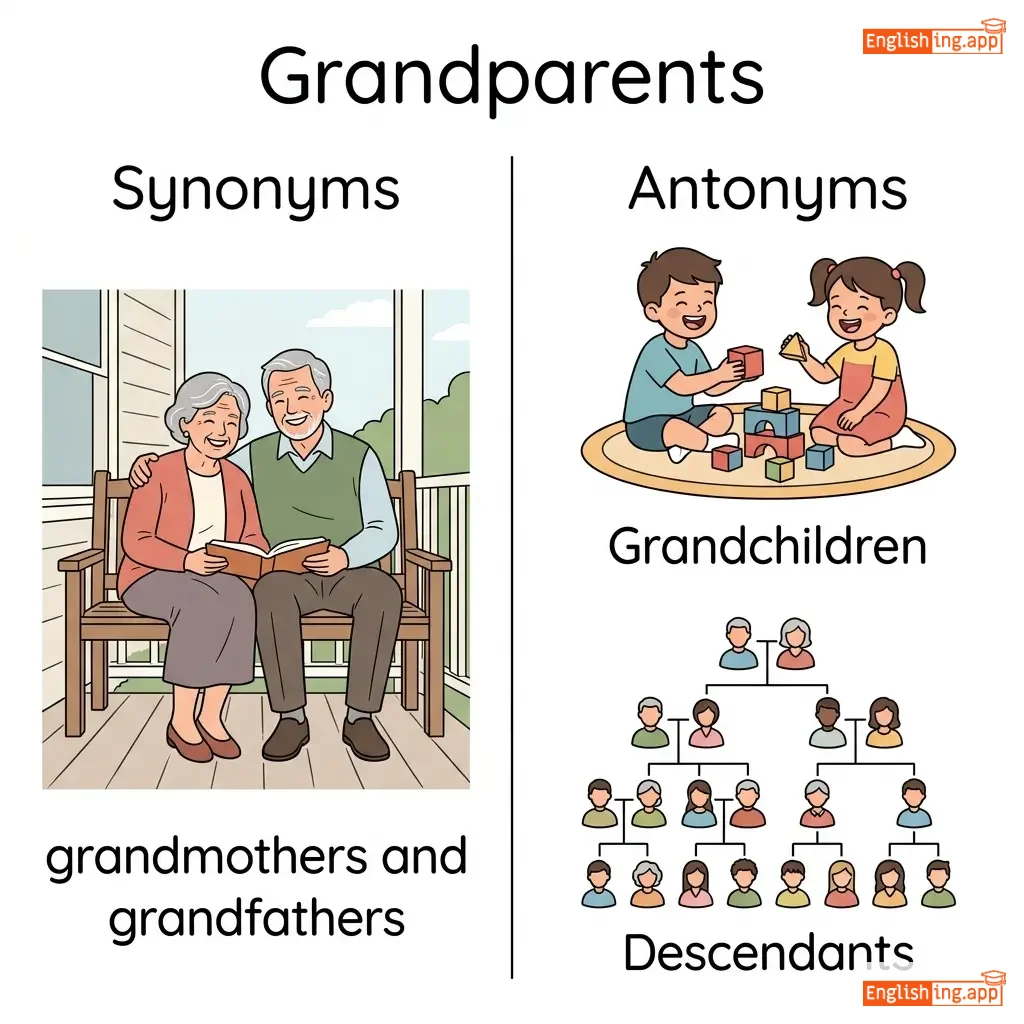
|
祖父母
sofumobo
••••••
|
- •••••• | - •••••• | - •••••• | - •••••• |
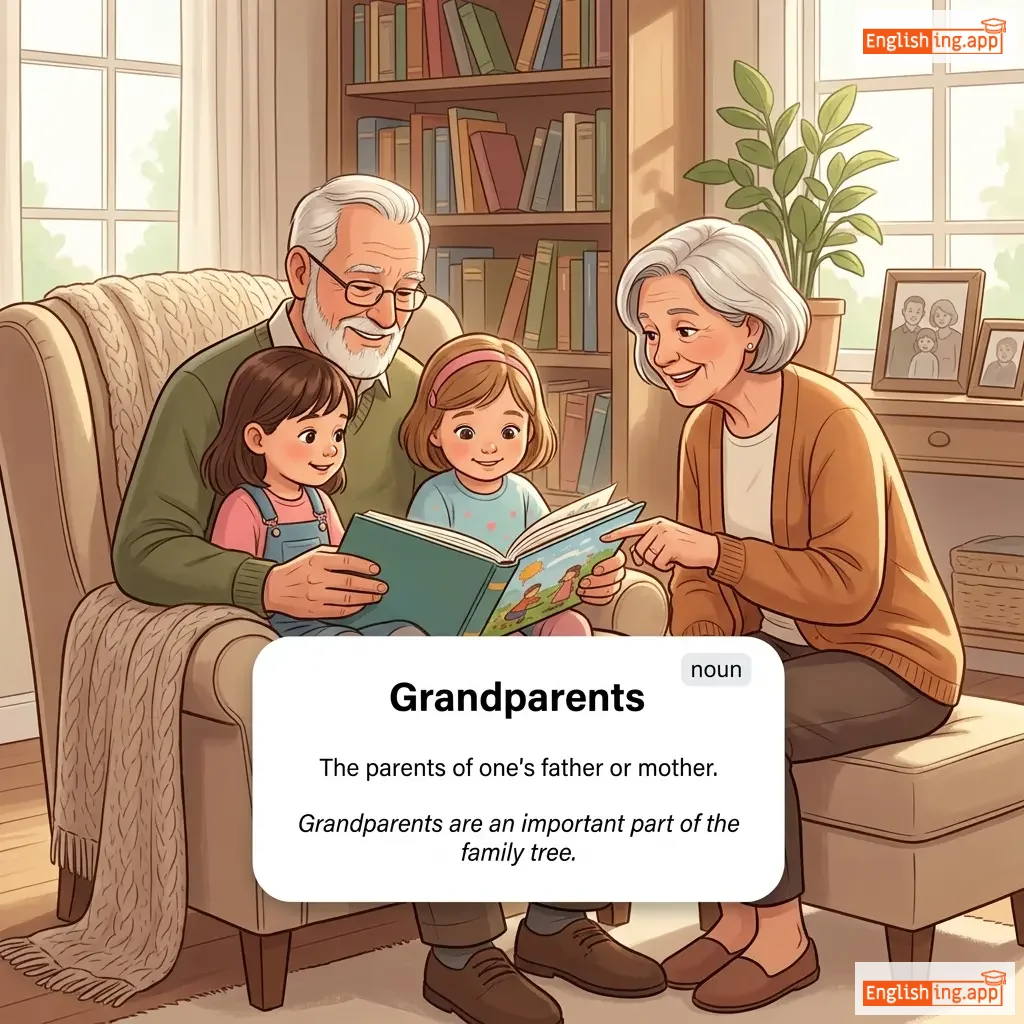
The parents of one's father or mother.
••••••
|
Grandparents are an important part of the family tree. |
祖父母は家族の大切な一部です。
Sofubo wa kazoku no taisetsu na ichibu desu.
••••••
|
- •••••• | - •••••• | - •••••• |
grandmothers and grandfathers
••••••
|
Grandchildren, Descendants
••••••
|
- •••••• |
Grandparents – 祖父母 are always the heart of the family.
••••••
|
|
👦
••••••
|
/ˈɡrændsʌn/
noun
(グランドサン)
••••••
|
- •••••• |
孫
mago
••••••
|
- •••••• | - •••••• | - •••••• | - •••••• |
the son of one's son or daughter
••••••
|
His grandson visits him every weekend.
ヒズ グランドサン ヴィジッツ ヒム エブリー ウィークエンド。
••••••
|
彼の孫は毎週末彼を訪ねます。
kare no mago wa maishuumatsu kare o tazunemasu
••••••
|
- •••••• | - •••••• | - •••••• |
grandchild, boy grandchild, male grandchild, descendant, heir
••••••
|
granddaughter, ancestor, forefather
••••••
|
only grandson, eldest grandson, beloved grandson, young grandson
••••••
|
Mago sounds like 'my go', my grandson goes with me
••••••
|

