|
表情符号
|
单词 | Images | 翻译 | 过去时 | 过去分词 | 第三人称单数 | 动名词 | 含义 | 例句 | 例句翻译 | 示例表达 | 示例表达含义 | 示例表达翻译 | 同义词 | 反义词 | 搭配词 | 助记符 |
|---|---|---|---|---|---|---|---|---|---|---|---|---|---|---|---|---|---|
|
👻
••••••
|
/ɡoʊst/
noun
(ɡəʊst)
••••••
|
- •••••• |
鬼魂
guihun
••••••
|
- •••••• | - •••••• | - •••••• | - •••••• |
the spirit of a dead person that is believed to appear to the living
••••••
|
She felt as if a ghost was watching her in the dark hallway. |
她感觉好像有个鬼魂在黑暗的走廊里看着她。
Tā gǎnjué hǎoxiàng yǒu gè guǐhún zài hēi'àn de zǒuláng lǐ kànzhe tā.
••••••
|
give up the ghost |
to die or to stop working
••••••
|
死去或停止工作
sǐqù huò tíngzhǐ gōngzuò
••••••
|
spirit, phantom, specter, apparition, soul
••••••
|
body, reality
••••••
|
ghost story, ghost house, ghost town, ghost sighting
••••••
|
鬼魂和ghost - 夜晚的阴影,悄悄地在黑暗中徘徊。
••••••
|
|
🗿
••••••
|
/ˈdʒaɪənt/
noun
(大巨人)
••••••
|
- •••••• |
巨人
jùrén
••••••
|
- •••••• | - •••••• | - •••••• | - •••••• |
an extremely large and powerful being or a very large person or thing
••••••
|
The company grew into a giant in the tech industry. |
公司在科技行业变成了巨人。
Gōngsī zài kējì hángyè biàn chéngle jùrén.
••••••
|
gentle giant |
a person who is very large but kind and gentle
••••••
|
温柔的巨人
wēnróu de jùrén
••••••
|
colossus, titan, behemoth, mammoth
••••••
|
dwarf, tiny
••••••
|
giant company, giant step, giant leap, giant figure
••••••
|
巨人 = giant,庞大的存在
••••••
|
|
🐒
••••••
|
/ˈɡɪbən/
noun
(吉本)
••••••
|
- •••••• |
长臂猿
changbiyuan
••••••
|
- •••••• | - •••••• | - •••••• | - •••••• |
a small to medium-sized tailless ape with long arms, native to the forests of Southeast Asia
••••••
|
The gibbon swung gracefully through the trees using its long arms.
泽 吉本 斯旺 格瑞斯福利 斯鲁 泽 特里斯。
••••••
|
长臂猿用它的长臂在树林间优雅地摆动。
changbiyuan yong ta de chang bi zai shulin jian youya de baidong
••••••
|
- •••••• | - •••••• | - •••••• |
ape, primate, lesser ape, tree ape
••••••
|
human, carnivore, reptile
••••••
|
gibbon species, gibbon habitat, gibbon call, gibbon family
••••••
|
长臂猿=长长的手臂,gibbon 的最大特点
••••••
|
|
🎁
••••••
|
/ɡɪft/
noun
(gɪft)
••••••
|
- •••••• |
礼物
lǐwù
••••••
|
- •••••• | - •••••• | - •••••• | - •••••• |
something given willingly to someone without payment; a present
••••••
|
She gave him a beautiful gift for his birthday.
她给了他一份漂亮的礼物作为生日礼物
••••••
|
她给了他一份漂亮的礼物作为生日礼物。
Tā gěile tā yī fèn piàoliang de lǐwù zuòwéi shēngrì lǐwù.
••••••
|
gift of the gab
gift of the gab
••••••
|
the ability to speak easily and persuasively
••••••
|
口才的天赋
kǒucái de tiānfù
••••••
|
present, offering, donation, award
••••••
|
penalty, fine
••••••
|
birthday gift, wedding gift, special gift, gift shop
••••••
|
Gift 🎁 在中文中是礼物,分享爱与温暖!
••••••
|
|
🎁
••••••
|
/ˈɡɪf.tɪd/
adjective
(吉福特)
••••••
|
- •••••• |
天赋的; 才华横溢的
tiānfù de; cáihuá héngyì de
••••••
|
- •••••• | - •••••• | - •••••• | - •••••• |
having exceptional talent or ability; talented;
••••••
|
She is a gifted musician who plays multiple instruments.
她是一位天赋异禀的音乐家,能演奏多种乐器。
••••••
|
她是一位天赋异禀的音乐家,能演奏多种乐器。
Tā shì yī wèi tiānfù yìbǐng de yīnyuèjiā, néng yǎnzòu duōzhǒng yuèqì.
••••••
|
- •••••• | - •••••• | - •••••• |
talented, skilled, brilliant, capable
••••••
|
untalented, incompetent, mediocre
••••••
|
gifted student, gifted child, academically gifted
••••••
|
Gifted means having 'gifts' or natural talents.
••••••
|
|
🎤
••••••
|
/ɡɪɡ/
noun
(吉格)
••••••
|
- •••••• |
音乐家、乐队或艺人的现场表演;也指临时工作
gig
••••••
|
- •••••• | - •••••• | - •••••• | - •••••• |
A live performance by a musician, band, or entertainer; also a temporary job.
••••••
|
The band has a gig at the local club tonight. |
今晚乐队在当地俱乐部有一个吉格演出。
Jinwan yuedui zai dangdi juliebu you yige gig yanchu.
••••••
|
one-off gig |
a single temporary job or performance
••••••
|
一次性演出
yicixing yanchu
••••••
|
performance, show, job, act, engagement
••••••
|
unemployment, absence
••••••
|
play a gig, land a gig, weekend gig, local gig
••••••
|
Gig 代表现场表演或临时工作。
••••••
|
|
👧
••••••
|
/ɡɜːrl/
noun
(gɜːrl)
••••••
|
- •••••• |
女孩
nǚ hái
••••••
|
- •••••• | - •••••• | - •••••• | - •••••• |
a female child or young woman
••••••
|
The girl was playing with her friends in the park. |
女孩正在和她的朋友们在公园里玩。
Nǚ hái zhèngzài hé tā de péngyǒumen zài gōngyuán lǐ wán.
••••••
|
girls' night out |
an evening when female friends go out together socially
••••••
|
女孩之夜
nǚ hái zhī yè
••••••
|
young woman, lass, maiden, miss
••••••
|
boy, man
••••••
|
school girl, little girl, young girl, girl group
••••••
|
Girl 👧 代表女孩 - 想象一个女孩在公园里玩耍。
••••••
|
|
👩❤️👨
••••••
|
/ˈɡɜːrlfrɛnd/
noun
(ɡɜːrlfrɛnd)
••••••
|
- •••••• |
女朋友
nǚ péng yǒu
••••••
|
- •••••• | - •••••• | - •••••• | - •••••• |
A woman or girl with whom someone is romantically or emotionally involved.
••••••
|
He introduced his girlfriend to his family. |
他把女朋友介绍给了家人。
Tā bǎ nǚ péng yǒu jièshào gěi le jiārén.
••••••
|
meet the girlfriend |
To introduce one’s romantic partner to friends or family.
••••••
|
介绍女朋友
Jièshào nǚ péng yǒu
••••••
|
partner, companion, sweetheart, beloved, significant other
••••••
|
boyfriend, stranger
••••••
|
ex-girlfriend, girlfriend experience, girlfriend material, girlfriend problem
••••••
|
女朋友 = nǚ péng yǒu - 你的特别女朋友。
••••••
|
|
🎁
••••••
|
/ɡɪv/
verb
(gív)
••••••
|

|
给
gěi
••••••
|
gave
géve
••••••
|
given
gíven
••••••
|
gives
gívs
••••••
|
giving
gíving
••••••
|
to hand over or transfer something to someone
••••••
|
She will give him a gift on his birthday.
她会在他的生日给他一份礼物。
••••••
|
她会在他的生日给他一份礼物。
Tā huì zài tā de shēngrì gěi tā yī fèn lǐwù.
••••••
|
give up
放弃
••••••
|
to stop trying or to surrender
••••••
|
放弃
fàngqì
••••••
|
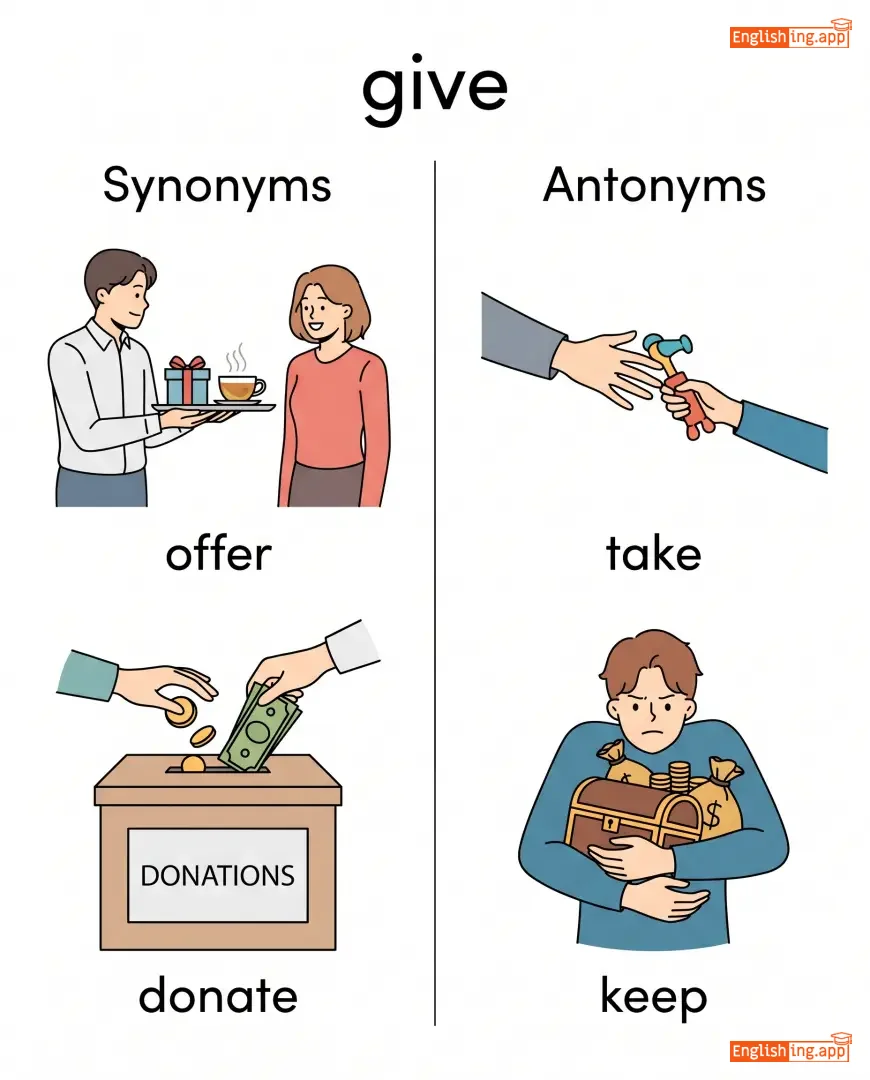
offer, donate, present, provide, deliver
••••••
|
take, keep
••••••
|
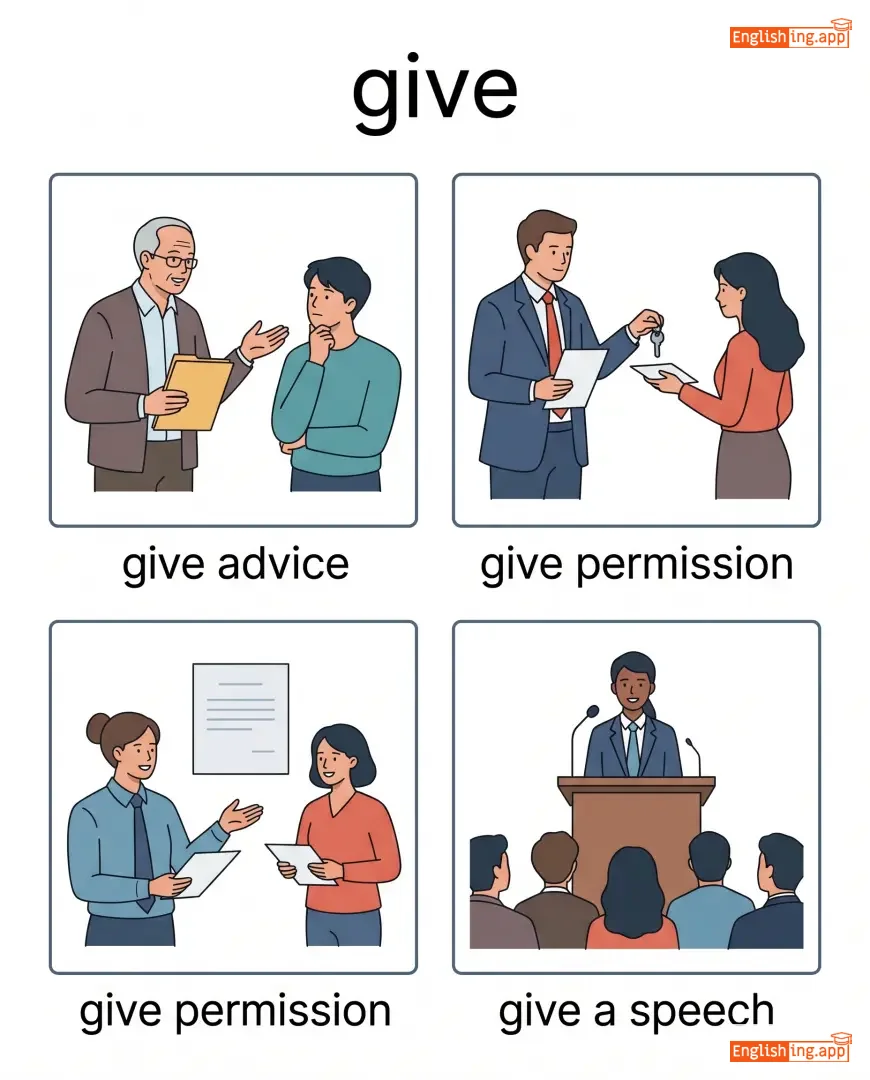
give advice, give permission, give a speech, give thanks
••••••
|
Give (给) someone something to give them a gift.
••••••
|
|
✅
••••••
|
/ˈɡɪvən/
adjective
(吉文)
••••••
|
- •••••• |
已知的
yǐ zhī de
••••••
|
- •••••• | - •••••• | - •••••• | - •••••• |
Specified or stated; already decided or certain.
••••••
|
It is a given fact that hard work leads to success. |
这是一个已知的事实,努力工作通向成功。
Zhè shì yī gè yǐ zhī de shì shí, nǔ lì gōng zuò tōng xiàng chéng gōng.
••••••
|
take for granted |
To assume something as true or certain without questioning.
••••••
|
视为理所当然
shì wéi lǐ suǒ dāng rán
••••••
|
certain, established, fixed, determined
••••••
|
uncertain, doubtful
••••••
|
given situation, given fact, given conditions, given time
••••••
|
‘Given’是已经决定或者确定的,就像是事实已经是确定的。
••••••
|
|
😊
••••••
|
/ɡlæd/
verb
(快乐)
••••••
|

|
高兴
gaoxing
••••••
|
gladded
快乐的
••••••
|
gladded
快乐的
••••••
|
glads
快乐的
••••••
|
gladding
快乐的
••••••
|
feeling pleased or happy; to make someone happy
••••••
|
I'm glad you could make it to the party.
我很高兴你能来参加派对。
••••••
|
我很高兴你能来参加派对。
Wǒ hěn gāoxìng nǐ néng lái cānjiā pàiduì.
••••••
|
- •••••• | - •••••• | - •••••• |
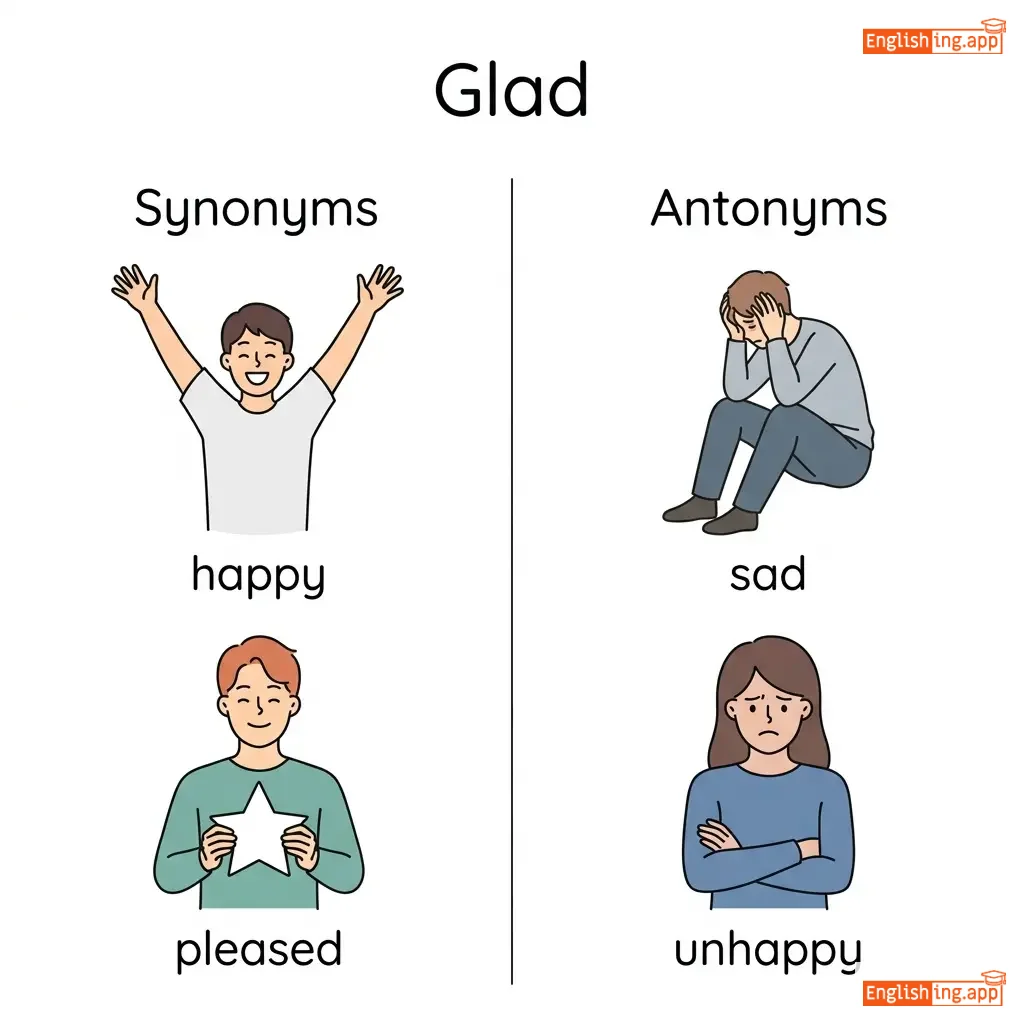
happy, pleased, delighted, joyful
••••••
|
sad, unhappy, disappointed, upset
••••••
|
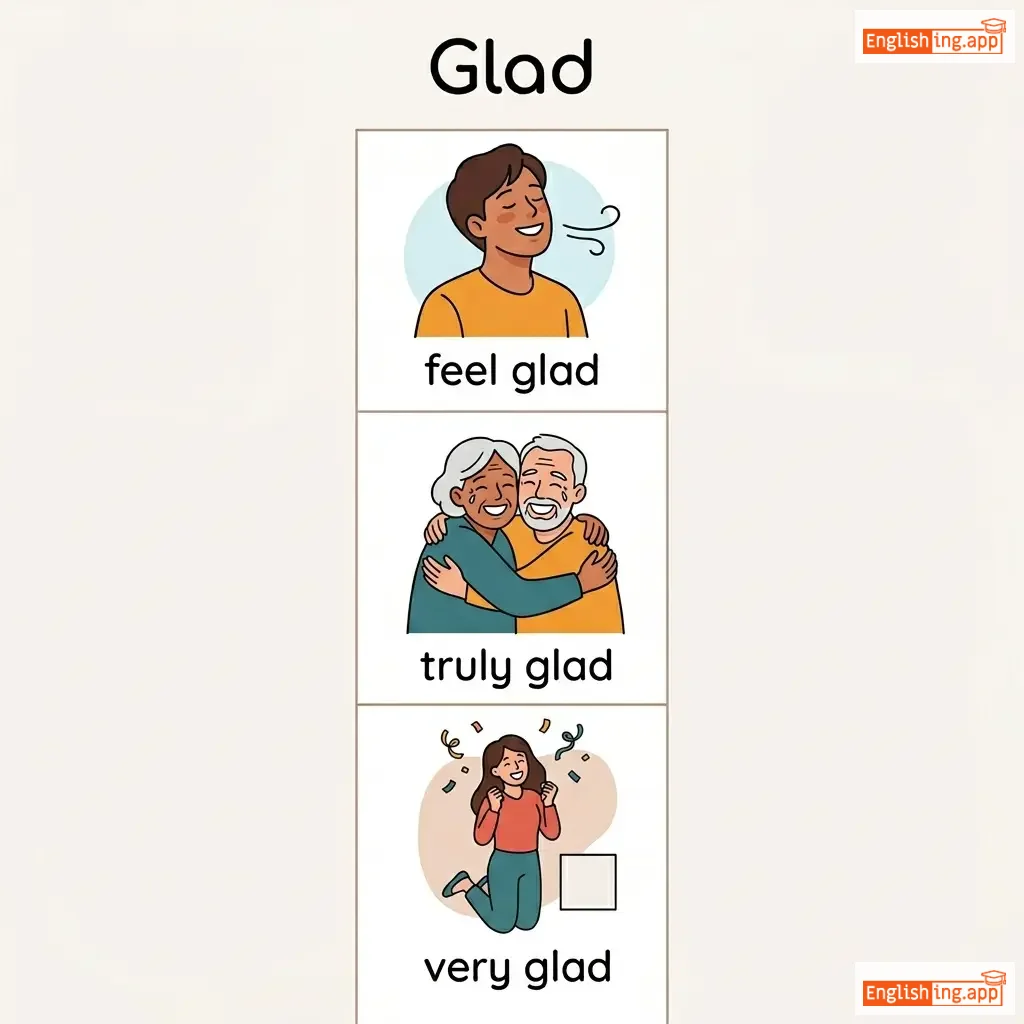
feel glad, truly glad, very glad, so glad, really glad
••••••
|
Happy to feel glad in Chinese
••••••
|
|
👀
••••••
|
/ɡlæns/
verb
(guī lǎn sī)
••••••
|
|
一瞥
yī piē
••••••
|
glanced
guī lǎn sī dé
••••••
|
glanced
guī lǎn sī dé
••••••
|
glances
guī lǎn sī
••••••
|
glancing
guī lǎn xíng
••••••
|
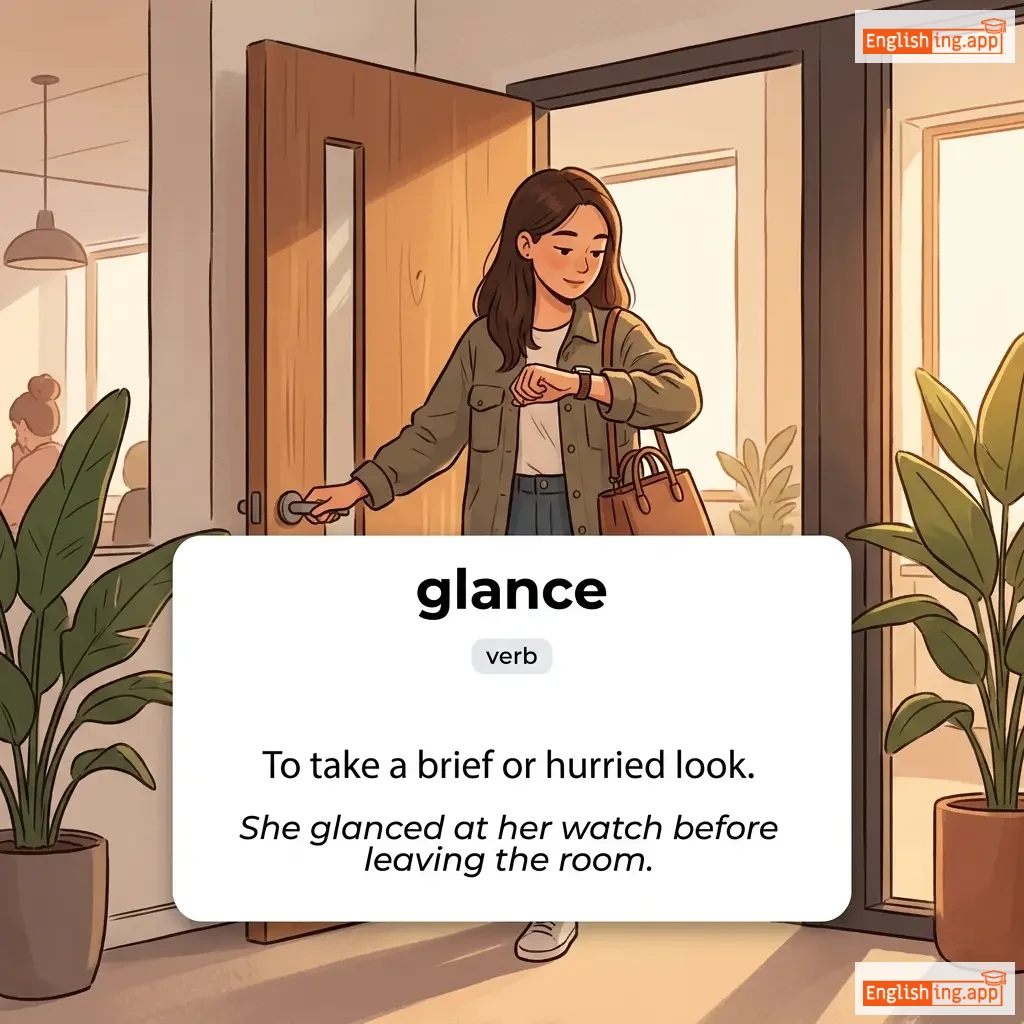
To take a brief or hurried look.
••••••
|
She glanced at her watch before leaving the room.
她在离开房间之前瞥了一眼手表。
••••••
|
她在离开房间之前瞥了一眼手表。
Tā zài líkāi fángjiān zhīqián piē le yī yǎn shǒubiǎo.
••••••
|
at a glance
一瞥
••••••
|
Immediately; with a quick look.
••••••
|
一瞥
yī piē
••••••
|
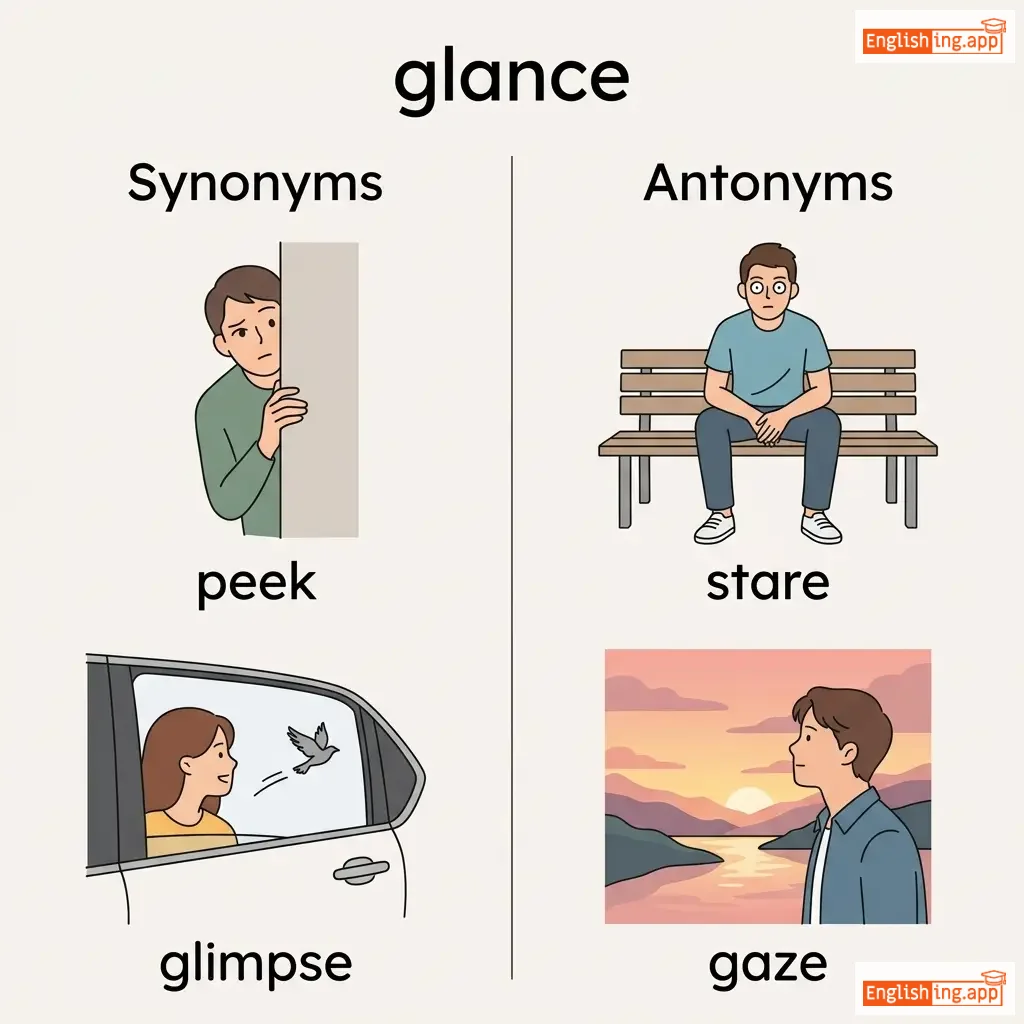
peek, glimpse, scan, view
••••••
|
stare, gaze
••••••
|
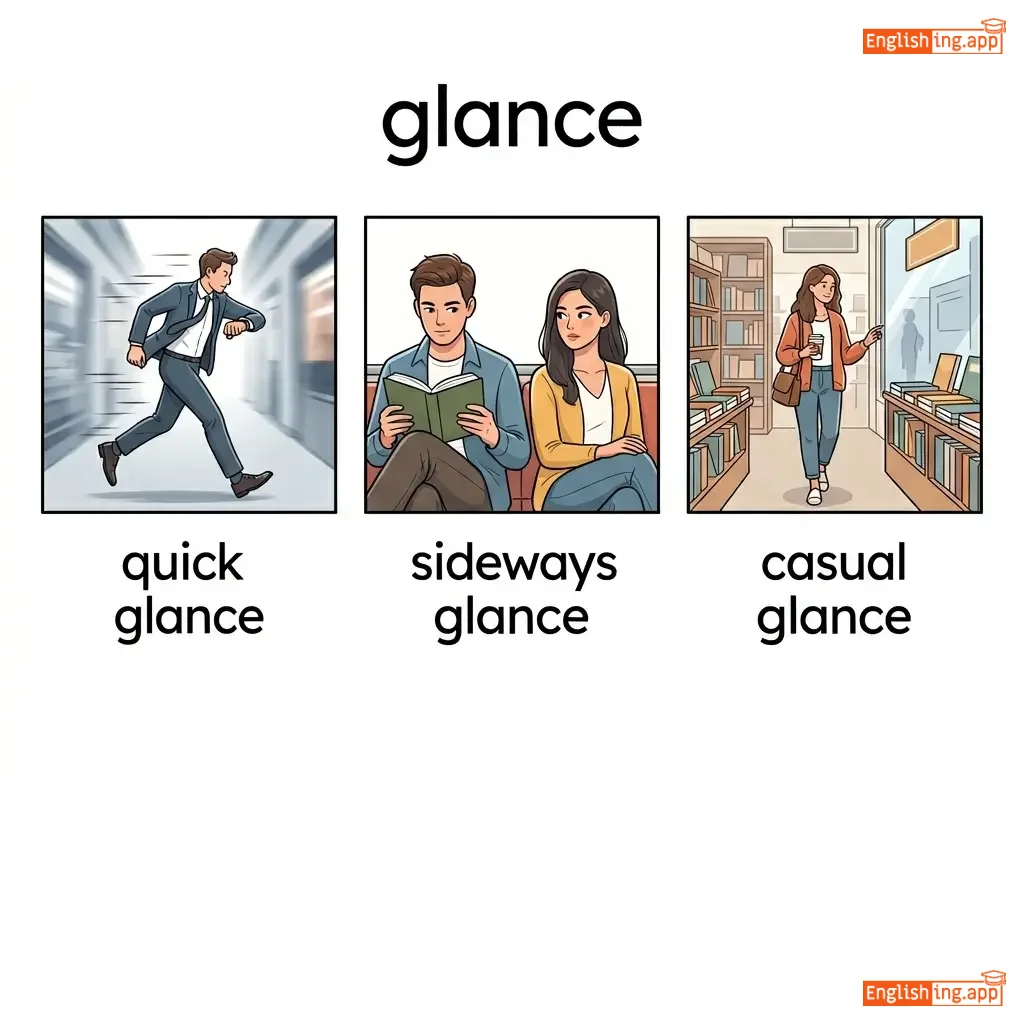
quick glance, sideways glance, casual glance, first glance
••••••
|
Glance 意思是 ‘一瞥’ – 就像考试中一瞥,所有内容立刻明了。
••••••
|
|
🥛
••••••
|
/ɡlæs/
noun
(格拉斯)
••••••
|
- •••••• |
玻璃
boli
••••••
|
- •••••• | - •••••• | - •••••• | - •••••• |
a hard, transparent material used for windows, bottles, and other objects
••••••
|
She poured water into a glass and handed it to me.
她把水倒进了一个玻璃杯,然后递给了我。
••••••
|
她把水倒进了一个玻璃杯,然后递给了我。
Ta ba shui dao jin le yi ge boli bei, ranhou di gei le wo.
••••••
|
raise a glass
举杯
••••••
|
to make a toast by lifting a drink
••••••
|
举杯
ju bei
••••••
|
cup, tumbler, goblet, crystal
••••••
|
plastic, wood
••••••
|
glass of water, glass window, broken glass, glass bottle
••••••
|
玻璃就像杯子一样,我们举着它,喝酒时不忘祝福。
••••••
|
|
👀
••••••
|
/ɡlɪmps/
noun/verb
(glimps)
••••••
|
- •••••• |
一瞥
yī piē
••••••
|
glimpsed
glimpsed
••••••
|
glimpsed
glimpsed
••••••
|
glimpses
glimpses
••••••
|
glimpsing
glimpsing
••••••
|
A brief or quick view of something.
••••••
|
She caught a glimpse of the actor as he left the stage.
她看到演员离开舞台时的一个瞥见。
••••••
|
她看到演员离开舞台时的一个瞥见。
Tā kàn dào yǎnyuán líkāi wǔtái shí de yīgè piējian.
••••••
|
catch a glimpse
瞥见
••••••
|
To see something briefly or partly.
••••••
|
瞥见
piējian
••••••
|
peek, glance, sight, look, view
••••••
|
stare, gaze
••••••
|
catch a glimpse, fleeting glimpse, quick glimpse
••••••
|
Glimpse意味着短暂的一瞥,像是通过快速的一瞥看到某物。
••••••
|
|
🌍
••••••
|
/ˈɡloʊbəl/
adjective
(全球)
••••••
|
|
全球的
quánqiú de
••••••
|
- •••••• | - •••••• | - •••••• | - •••••• |
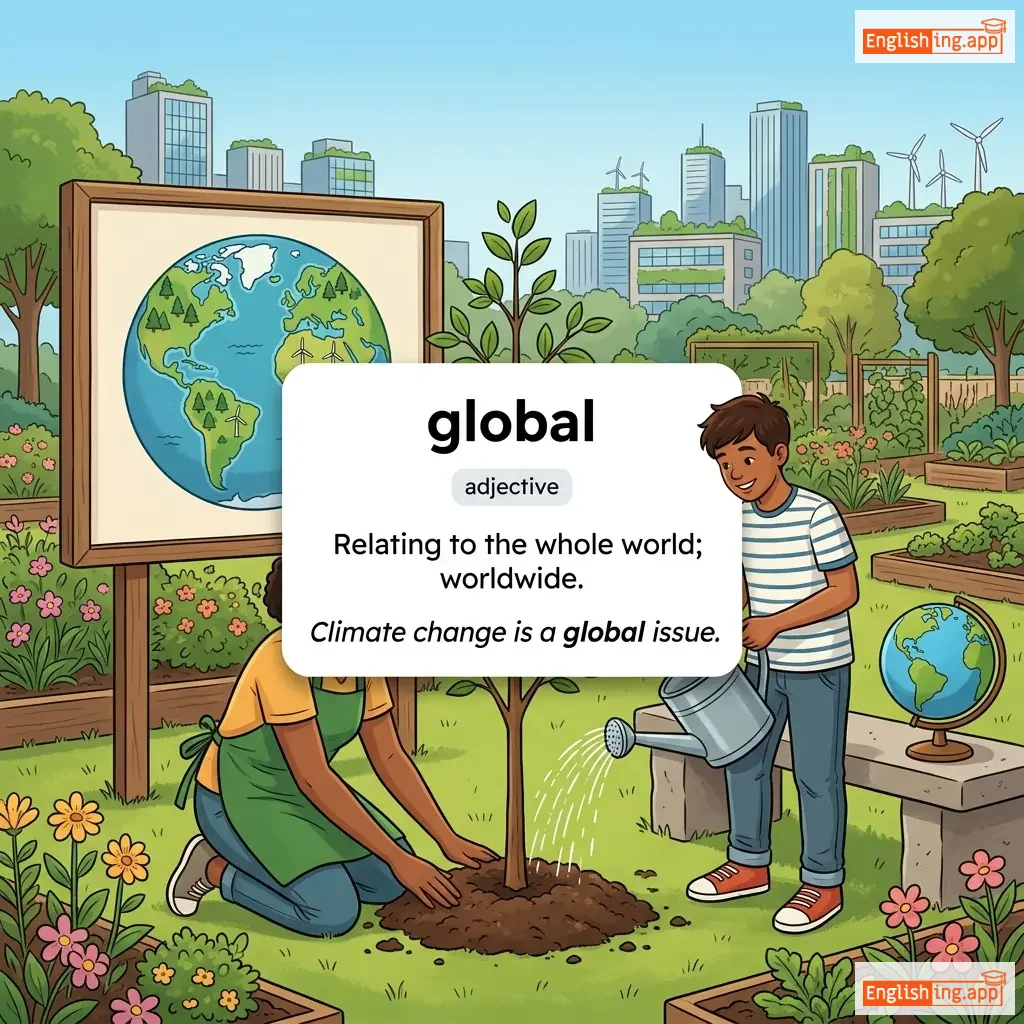
Relating to the whole world; worldwide.
••••••
|
Climate change is a global issue. |
气候变化是一个全球性问题。
Qìhòu biànhuà shì yīgè quánqiú xìng wèntí.
••••••
|
global village |
The world considered as a community connected by technology and communication.
••••••
|
全球村
quánqiú cūn
••••••
|
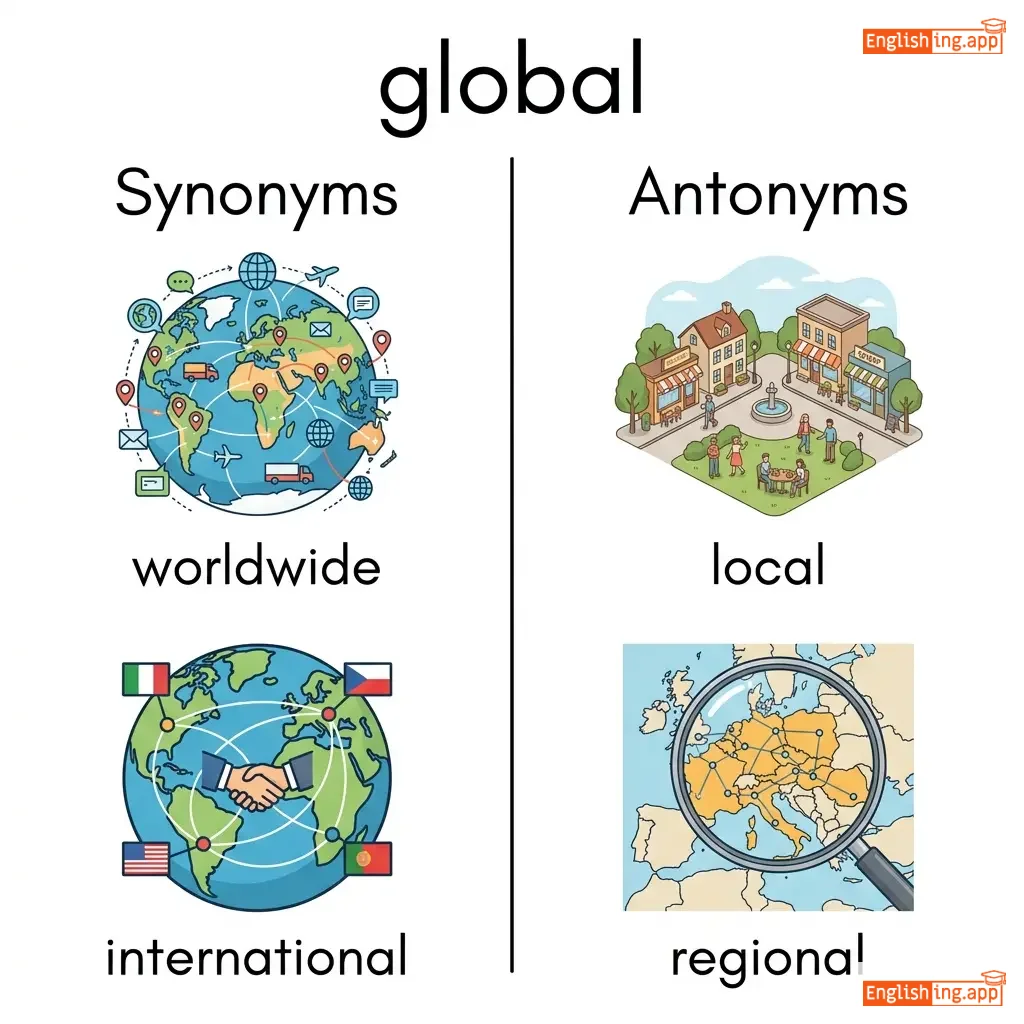
worldwide, international, universal, planetary
••••••
|
local, regional
••••••
|
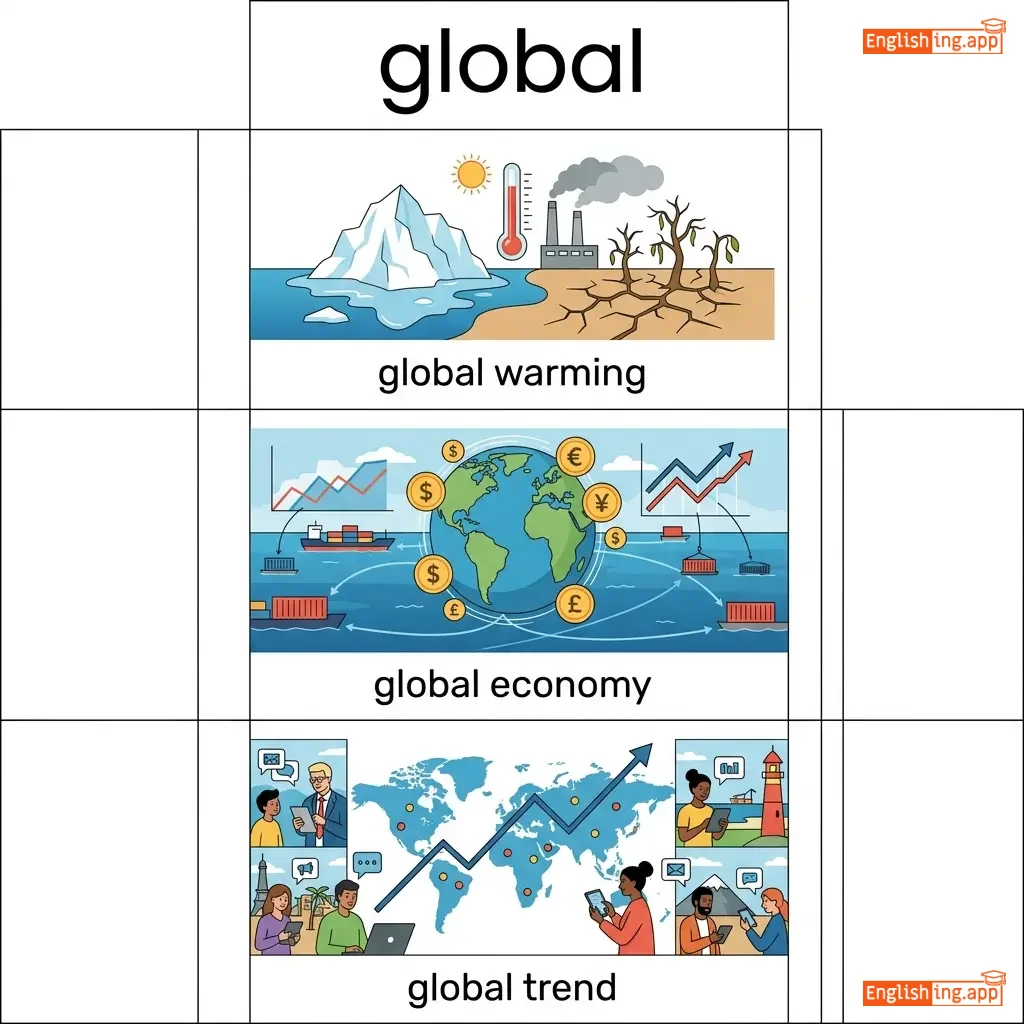
global warming, global economy, global trend, global community
••••••
|
Global = Go + Ball = 全世界在一个球中。
••••••
|
|
🌍
••••••
|
/ˌɡloʊbəlaɪˈzeɪʃən/
noun
(全球化)
••••••
|

|
全球化
quanqiuhua
••••••
|
- •••••• | - •••••• | - •••••• | - •••••• |
the process by which businesses or other organizations develop international influence or start operating on an international scale
••••••
|
Globalization has led to increased trade between countries.
全球化导致了各国之间贸易的增长。
••••••
|
全球化导致了各国之间贸易的增长。
Quanqiuhua daozhule geguo zhijian maoyi de zengzhang.
••••••
|
- •••••• | - •••••• | - •••••• |
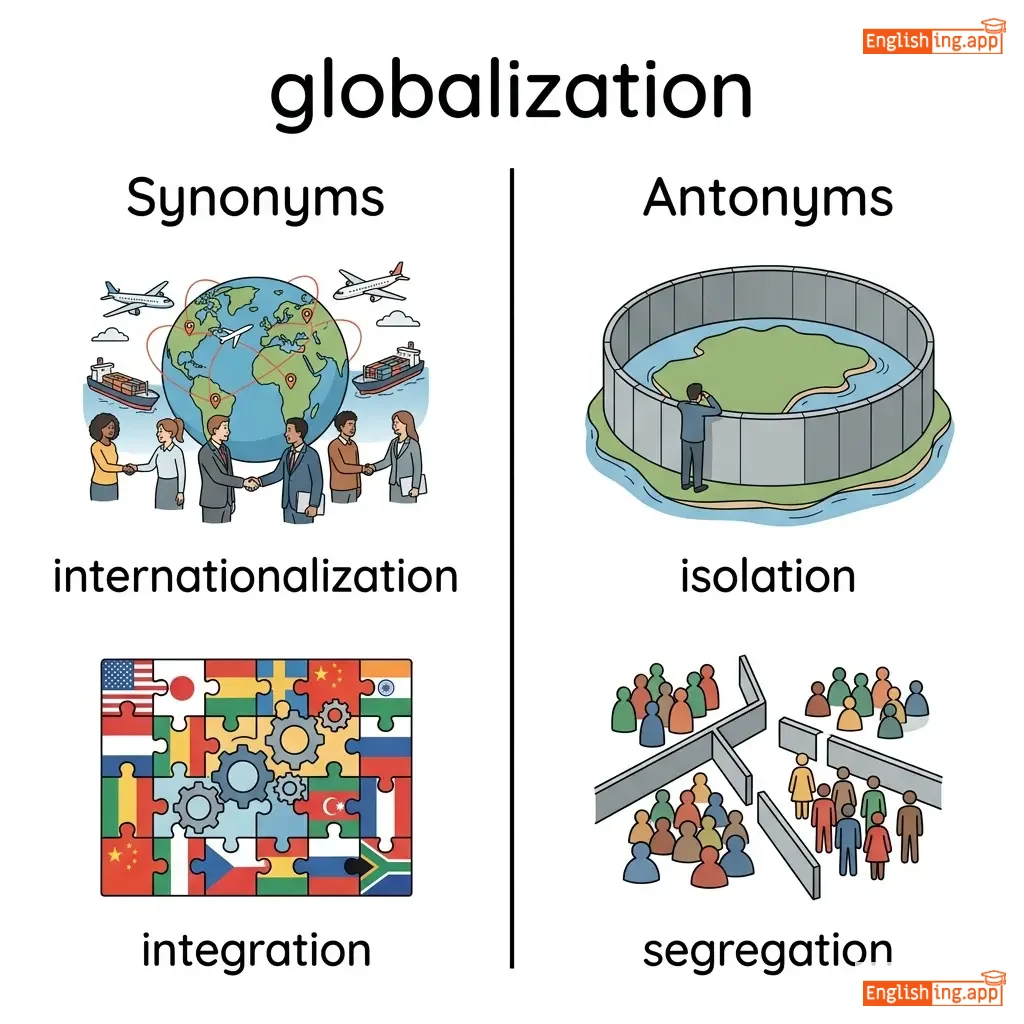
internationalization, integration, worldwide expansion, global reach
••••••
|
isolation, segregation, nationalism
••••••
|
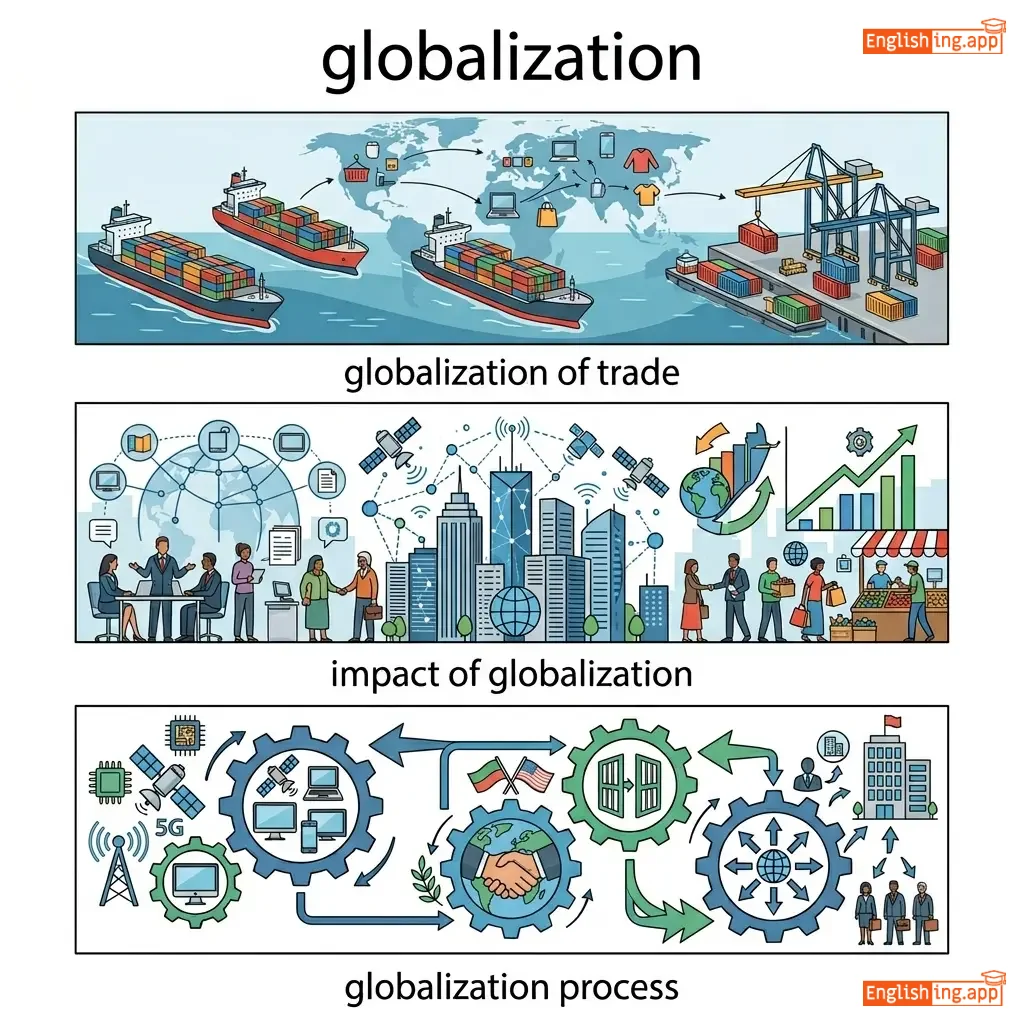
globalization of trade, impact of globalization, globalization process
••••••
|
Globalization connects the world, just like 'global' suggests.
••••••
|
|
🌍
••••••
|
/ˈɡloʊbəlaɪz/
verb
(格罗伯莱兹)
••••••
|
- •••••• |
全球化
quanqiuhua
••••••
|
globalized
格罗伯莱兹德
••••••
|
globalized
格罗伯莱兹德
••••••
|
globalizes
格罗伯莱兹兹
••••••
|
globalizing
格罗伯莱兹英
••••••
|
to make something worldwide in scope or application; to integrate into a global system
••••••
|
Many companies globalize their operations to reach international markets.
曼尼 康帕尼斯 格罗伯莱兹 泽尔 欧珀雷申斯 图 瑞奇 英特纳申诺 马尔凯茨。
••••••
|
许多公司将业务全球化以进入国际市场。
xuduo gongsi jiang yewu quanqiuhua yi jinru guoji shichang
••••••
|
globalize the economy
格罗伯莱兹 经济
••••••
|
to integrate national economies into a worldwide economic system
••••••
|
经济全球化
jingji quanqiuhua
••••••
|
internationalize, universalize, worldwide, expand, integrate
••••••
|
localize, isolate, nationalize
••••••
|
globalize markets, globalize business, globalize culture, globalize operations
••••••
|
Global = 全球, globalize = 全球化
••••••
|
|
🌍
••••••
|
/ɡloʊb/
noun
(地球仪)
••••••
|
- •••••• |
地球仪
diqiuyi
••••••
|
- •••••• | - •••••• | - •••••• | - •••••• |
a spherical model of Earth or another planet; the world itself
••••••
|
Students used a globe to study the continents. |
学生们用地球仪来学习各大洲。
Xueshengmen yong diqiuyi lai xuexi ge dazhou.
••••••
|
across the globe |
all around the world
••••••
|
遍布全球
bianbu quanqiu
••••••
|
world, earth, planet, sphere, orb
••••••
|
flatness, local
••••••
|
global warming, around the globe, world globe, globe map
••••••
|
地球仪意味着世界 🌍 — 想象你在课堂上旋转地球仪,整个世界随之旋转。
••••••
|
|
🌟
••••••
|
/ˈɡlɔː.ri.əs/
adjective
(ɡlɔːɾiəs)
••••••
|
- •••••• |
辉煌
hui huang
••••••
|
- •••••• | - •••••• | - •••••• | - •••••• |
having great beauty, magnificence, or deserving admiration and praise
••••••
|
It was a glorious day filled with sunshine and joy. |
这是一个辉煌的日子,充满了阳光和喜悦。
Zhè shì yīgè huīhuáng de rìzi, chōngmǎnle yángguāng hé xǐyuè.
••••••
|
a glorious victory |
a magnificent or impressive win
••••••
|
辉煌的胜利
huīhuáng de shènglì
••••••
|
magnificent, splendid, superb, majestic, wonderful
••••••
|
ordinary, dull, poor
••••••
|
glorious day, glorious past, glorious victory, glorious view
••••••
|
辉煌的日子就像一个 GLORIOUS 的胜利
••••••
|
|
🏆
••••••
|
/ˈɡlɔːri/
noun
(ɡlɔːri)
••••••
|
- •••••• |
荣耀
róngyào
••••••
|
- •••••• | - •••••• | - •••••• | - •••••• |
great honor, praise, or fame achieved by doing something remarkable
••••••
|
The athlete won glory for his country with his performance. |
运动员凭借他的表现为他的国家赢得了荣耀。
Yùndòngyuán píngjiè tā de biǎoxiàn wèi tā de guójiā yíngdé le róngyào.
••••••
|
in all its glory |
in a state of complete beauty or success
••••••
|
在它的荣耀中
zài tā de róngyào zhōng
••••••
|
honor, fame, triumph, renown, prestige
••••••
|
shame, disgrace
••••••
|
win glory, seek glory, bask in glory, share glory
••••••
|
荣耀就像是战斗的奖励,永远记得它背后的努力。
••••••
|
|
🧤
••••••
|
/ɡlʌv/
noun
(ɡlʌv)
••••••
|
- •••••• |
手套
shǒutào
••••••
|
- •••••• | - •••••• | - •••••• | - •••••• |
A covering for the hand with separate parts for the fingers and thumb.
••••••
|
She wore gloves to protect her hands from the cold. |
她戴上手套保护双手免受寒冷。
Tā dàishàng shǒutào bǎohù shuāngshǒu miǎn shòu hánlěng.
••••••
|
fit like a glove |
To fit perfectly.
••••••
|
像手套一样合适
Xiàng shǒutào yīyàng héshì
••••••
|
mitt, mitten, handwear, covering
••••••
|
barehand, uncovered
••••••
|
wear gloves, leather gloves, boxing gloves, winter gloves
••••••
|
手套保暖,手上穿戴如温暖的爱。
••••••
|
|
🏃
••••••
|
/ɡoʊ/
verb
(戈)
••••••
|
|
去
qu
••••••
|
went
去了
••••••
|
gone
去
••••••
|
goes
去
••••••
|
going
去
••••••
|
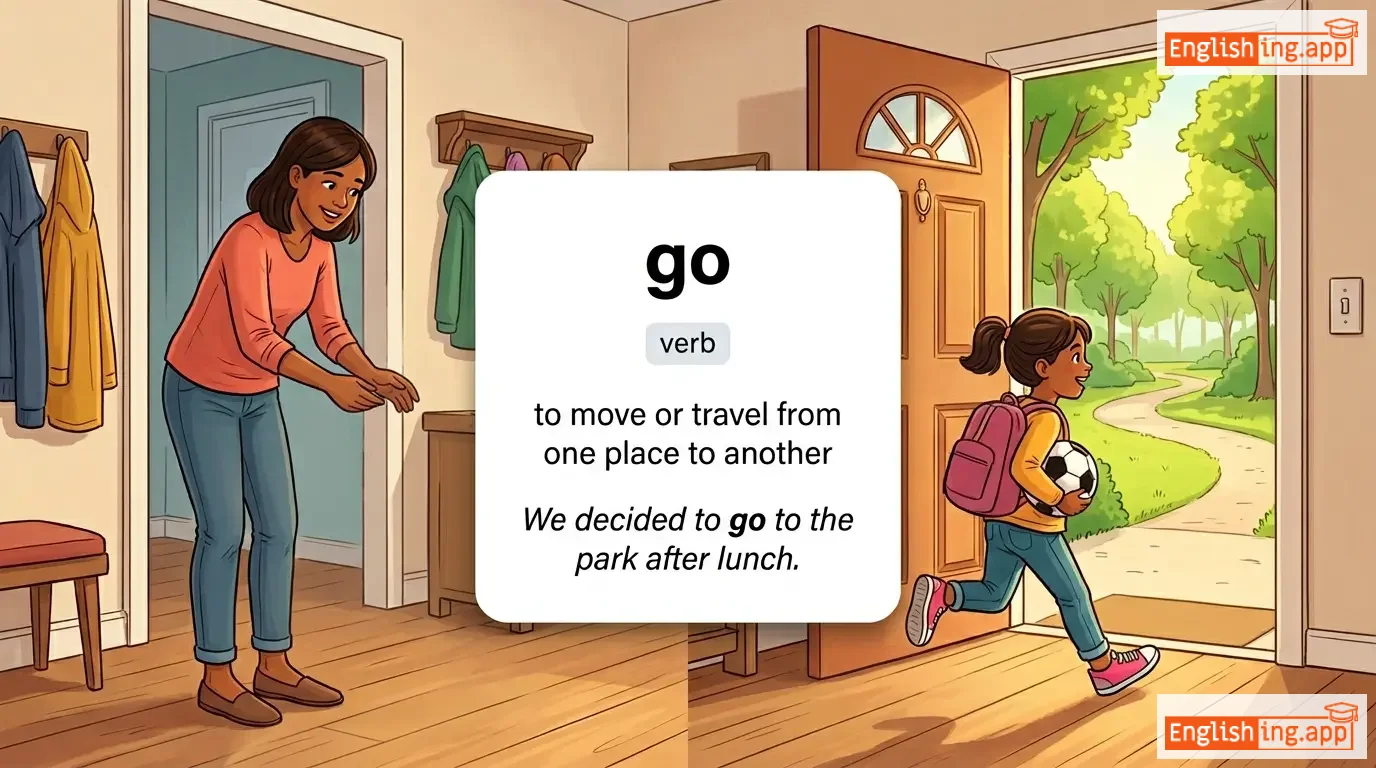
to move or travel from one place to another
••••••
|
We decided to go to the park after lunch.
我们决定午餐后去公园。
••••••
|
我们决定午餐后去公园。
Wo men jue ding wu can hou qu gong yuan.
••••••
|
go the extra mile
走额外的一英里
••••••
|
to make a special effort to achieve something
••••••
|
走额外的一英里
zou e wai de yi ying li
••••••
|
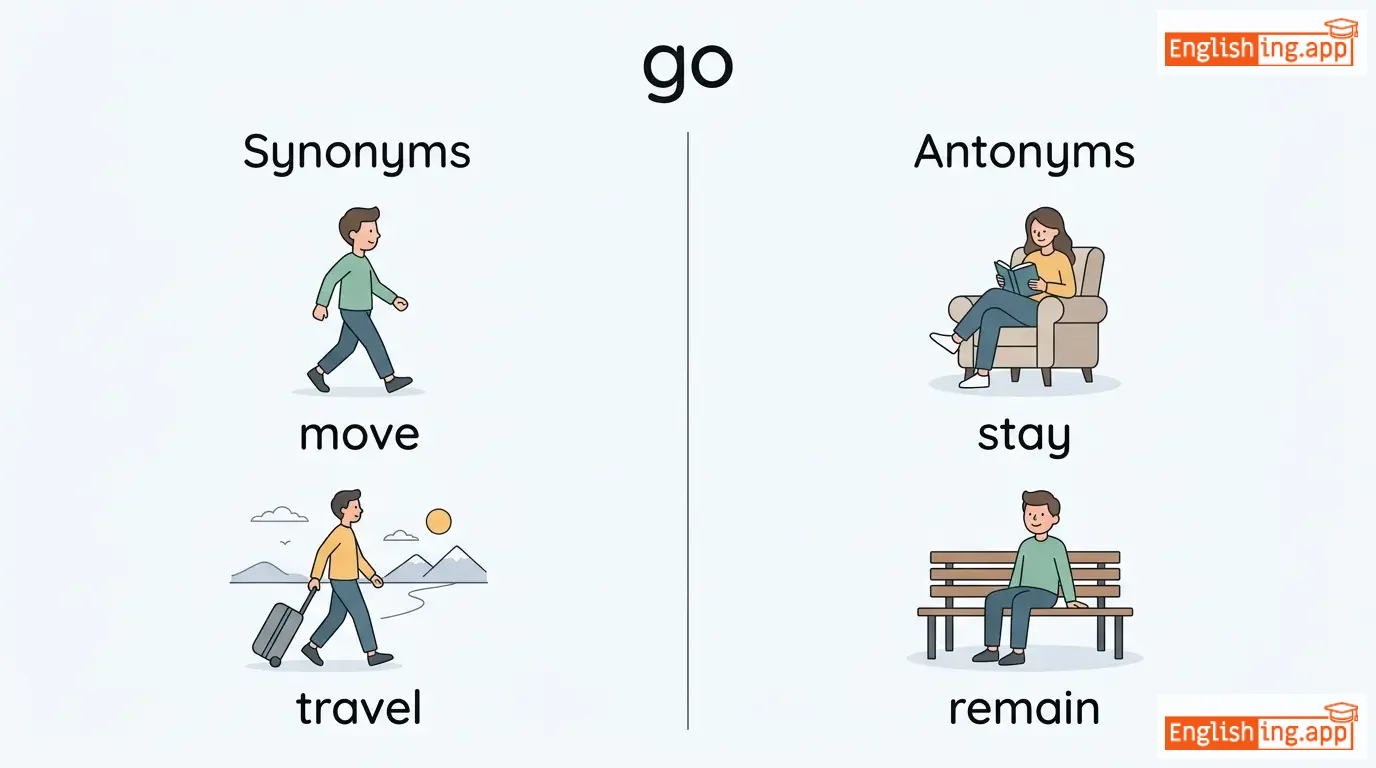
move, travel, proceed, depart, advance
••••••
|
stay, remain, stop
••••••
|
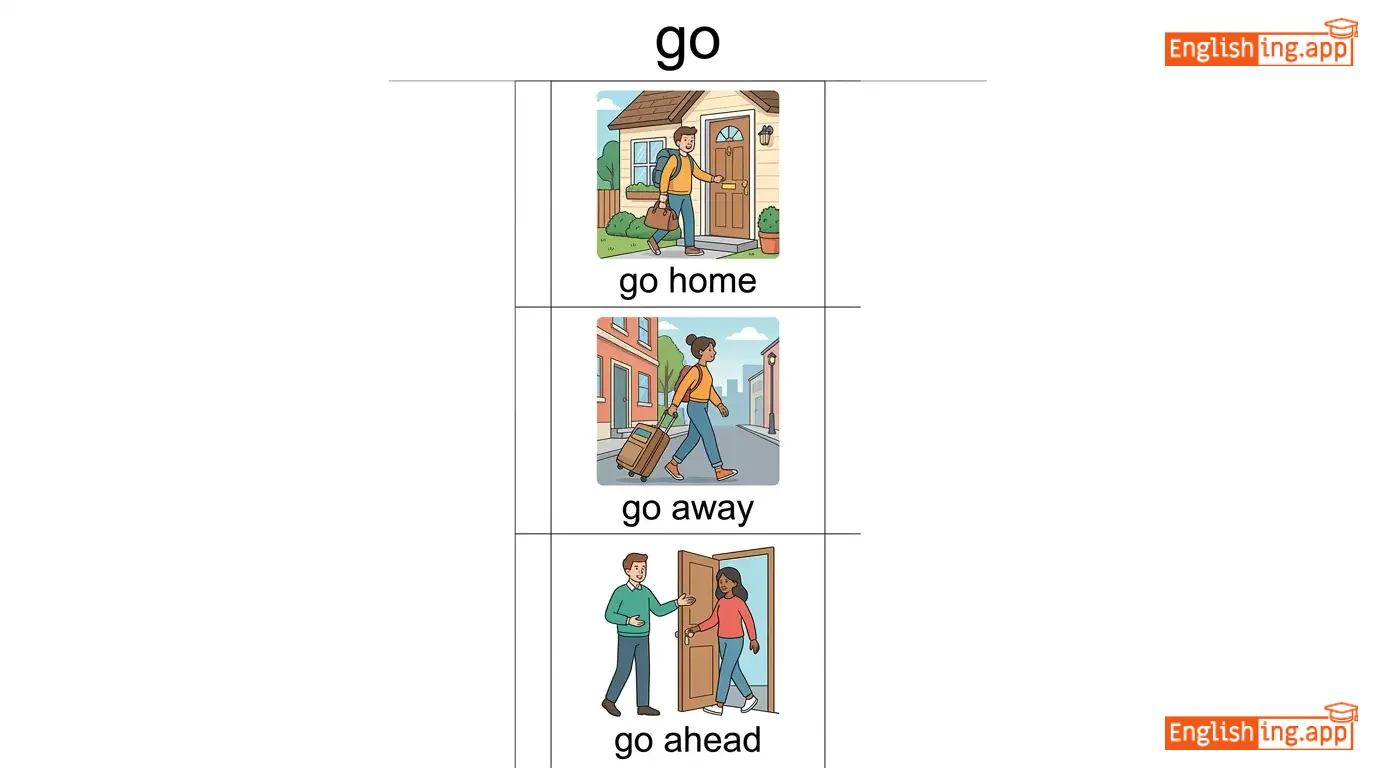
go home, go away, go ahead, go out, go to bed
••••••
|
Go就是去, 就像你说'走吧 go!'
••••••
|
|
🥅
••••••
|
/ɡoʊl/
noun
(gōl)
••••••
|
- •••••• |
目标
mùbiāo
••••••
|
- •••••• | - •••••• | - •••••• | - •••••• |
an aim or desired result; a point scored in a game
••••••
|
Her main goal is to become a doctor. |
她的主要目标是成为一名医生。
Tā de zhǔyào mùbiāo shì chéngwéi yī míng yīshēng.
••••••
|
set a goal |
to decide what you want to achieve
••••••
|
设定目标
shèdìng mùbiāo
••••••
|
aim, target, objective, purpose, ambition
••••••
|
aimlessness, purposelessness
••••••
|
set a goal, achieve a goal, reach a goal, score a goal
••••••
|
一个球就是一个目标,就像在足球比赛中进球就赢了。
••••••
|
|
🙏
••••••
|
/ɡɑːd/
noun
(ɡɑd)
••••••
|
- •••••• |
上帝
shàngdì
••••••
|
- •••••• | - •••••• | - •••••• | - •••••• |
a deity; a supreme being believed to control the universe
••••••
|
People in different cultures worship God in various ways. |
不同文化的人以不同的方式崇拜上帝。
bùtóng wénhuà de rén yǐ bùtóng de fāngshì chóngbài shàngdì
••••••
|
act of God |
an event beyond human control, like a natural disaster
••••••
|
上帝之事
shàngdì zhī shì
••••••
|
deity, divinity, lord, almighty
••••••
|
mortal, human
••••••
|
believe in God, worship God, fear God, act of God
••••••
|
上帝是宇宙的主宰,记住'上帝'掌控一切。
••••••
|
|
🥇
••••••
|
/ɡoʊld/
noun
(ɡoʊld)
••••••
|
- •••••• |
黄金
huangjin
••••••
|
- •••••• | - •••••• | - •••••• | - •••••• |
a yellow precious metal used in jewelry and as money
••••••
|
The ring was made of pure gold. |
这枚戒指是由纯金制成的。
Zhè méi jièzhǐ shì yóu chún jīn zhìchéng de.
••••••
|
worth its weight in gold |
extremely valuable
••••••
|
值其黄金重量
zhí qí huángjīn zhòngliàng
••••••
|
precious metal, wealth, treasure
••••••
|
worthlessness, poverty
••••••
|
pure gold, gold medal, gold mine, gold chain
••••••
|
黄金是最珍贵的金属,像是金光闪闪的机会。
••••••
|
|
✨
••••••
|
/ˈɡoʊldən/
adjective
(gōldén)
••••••
|
- •••••• |
金色的
jīnsè de
••••••
|
- •••••• | - •••••• | - •••••• | - •••••• |
made of or resembling gold; precious or excellent
••••••
|
This is a golden opportunity to learn new skills. |
这是一个学习新技能的金色机会。
Zhè shì yīgè xuéxí xīn jìnéng de jīnsè jīhuì.
••••••
|
golden opportunity |
a very good chance to achieve something
••••••
|
金色的机会
jīnsè de jīhuì
••••••
|
bright, valuable, excellent, precious
••••••
|
worthless, ordinary
••••••
|
golden rule, golden age, golden opportunity, golden chance
••••••
|
Golden意味着金色的,就像‘golden rule’,人生的金科玉律。
••••••
|
|
🏌️
••••••
|
/ɡɒlf/
noun
(海皮尼斯)
••••••
|
- •••••• |
幸福
xìng fú
••••••
|
- •••••• | - •••••• | - •••••• | - •••••• |
A game in which players use clubs to hit a ball into a series of holes on a course in as few strokes as possible.
••••••
|
He spends his weekends playing golf with his friends. |
当她收到奖项时,她无法掩饰自己的幸福。
Dāng tā shōu dào jiǎngxiàng shí, tā wúfǎ yǎnshì zìjǐ de xìngfú.
••••••
|
a good walk spoiled |
A humorous phrase describing golf as ruining the enjoyment of walking.
••••••
|
追求幸福
zhuīqiú xìngfú
••••••
|
sport, game, pastime, recreation
••••••
|
work, labor
••••••
|
play golf, golf course, golf club, professional golf
••••••
|
幸福就像一个无尽的旅程,一直追寻着真正的快乐!
••••••
|
|
👍
••••••
|
/ɡʊd/
adjective
(gud)
••••••
|
- •••••• |
好
hao
••••••
|
- •••••• | - •••••• | - •••••• | - •••••• |
Of high quality; morally right or beneficial.
••••••
|
She is a good student who always helps her classmates. |
她是一个好学生,总是帮助她的同学。
Tā shì yīgè hǎo xuéshēng, zǒng shì bāngzhù tā de tóngxué.
••••••
|
for good |
permanently
••••••
|
永远
yǒngyuǎn
••••••
|
excellent, fine, beneficial, virtuous, positive
••••••
|
bad, evil, poor
••••••
|
good job, good idea, good reason, good student
••••••
|
Good 就是好,'好' 一直好。
••••••
|
|
👋
••••••
|
/ɡʊdˈbaɪ/
interjection;noun
(古德拜)
••••••
|
- •••••• |
再见
zaijian
••••••
|
- •••••• | - •••••• | - •••••• | - •••••• |
a polite expression used when leaving or ending a conversation; the act of parting
••••••
|
She waved and said goodbye before leaving the station.
她挥手并在离开车站前说古德拜。
••••••
|
她在离开车站前挥手说了再见。
ta zai likai chezhan qian huishou shuo le zaijian
••••••
|
say goodbye
说古德拜
••••••
|
to express farewell to someone
••••••
|
说再见
shuo zaijian
••••••
|
farewell, bye, adieu, see you, take care
••••••
|
hello, hi, welcome
••••••
|
say goodbye, bid goodbye, final goodbye, emotional goodbye
••••••
|
再见 = 再次见面, goodbye
••••••
|
|
💖
••••••
|
/ˈɡʊdnəs/
noun
(ɡʊdnəs)
••••••
|
- •••••• |
善良
shanliang
••••••
|
- •••••• | - •••••• | - •••••• | - •••••• |
the quality of being morally good or virtuous
••••••
|
Her goodness was evident in the way she treated others. |
她的善良在她对待他人的方式中表现得淋漓尽致。
Ta de shanliang zai ta duidai taren de fangshi zhong biaoxian de linli jinzhi.
••••••
|
- •••••• | - •••••• | - •••••• |
virtue, morality, kindness, goodness
••••••
|
evil, wickedness, immorality
••••••
|
goodness of heart, goodness of character, pure goodness
••••••
|
Goodness is like being 'Good' - Kindness and virtue shine through
••••••
|
|
📦
••••••
|
ɡʊdz
noun
(古德斯)
••••••
|

|
商品
gudz
••••••
|
- •••••• | - •••••• | - •••••• | - •••••• |
Merchandise or possessions; things that are bought and sold.
••••••
|
The company produces high-quality goods for export.
该公司生产用于出口的高质量商品。
••••••
|
该公司为出口生产高质量的商品。
Gai gongsi wei chukou shengchan gao zhiliang de shangpin.
••••••
|
- •••••• | - •••••• | - •••••• |
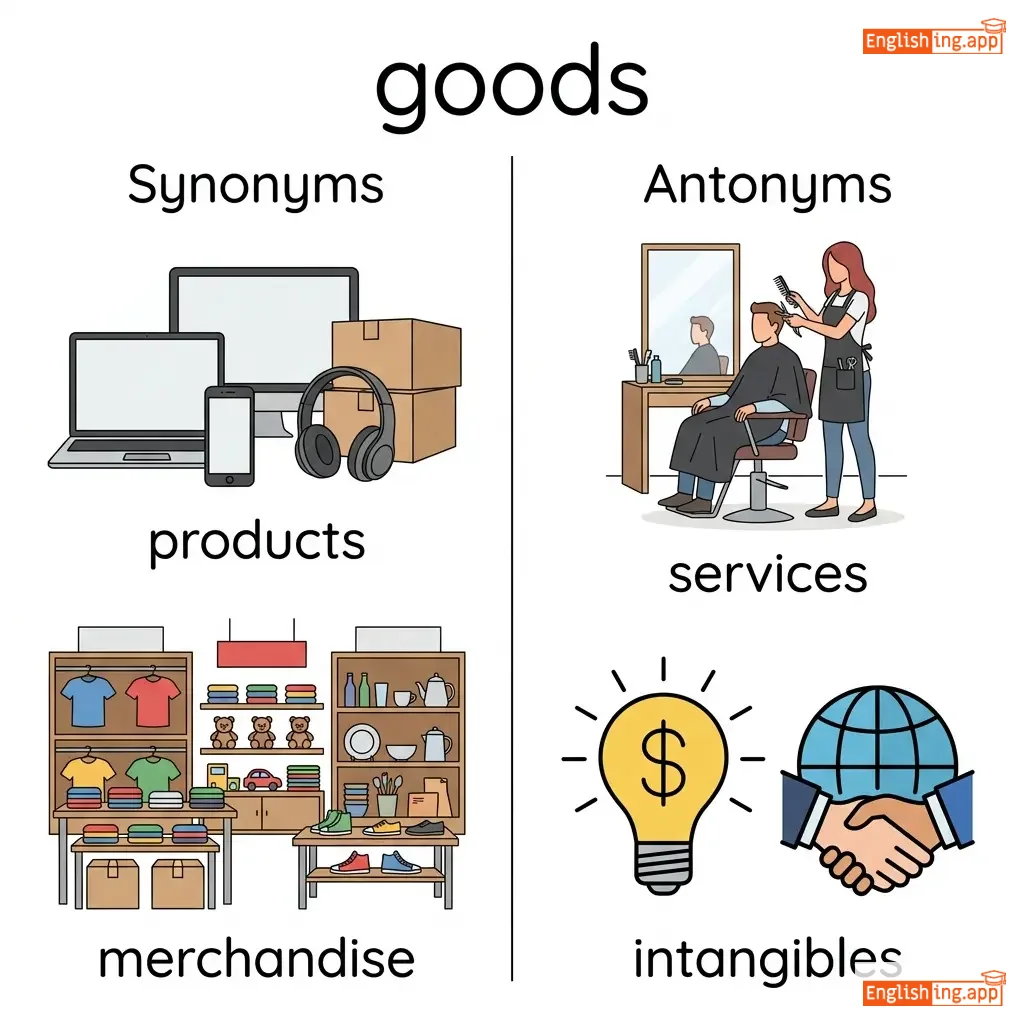
products, merchandise
••••••
|
services, intangibles
••••••
|
- •••••• |
Gao de goods: 想象一个高高的货架 上摆满 高质量 的 商品, goods 就是 商品
••••••
|
|
💖
••••••
|
/ˈɡɔːr.dʒəs/
adjective
(ɡɔːrʒəs)
••••••
|
- •••••• |
极其美丽;吸引人;视觉上令人印象深刻
jíqí měilì; xīyǐn rén; shìjué shàng lìngrén yìnxiàng shēnkè
••••••
|
- •••••• | - •••••• | - •••••• | - •••••• |
extremely beautiful; attractive; visually stunning
••••••
|
The bride looked absolutely gorgeous.
新娘看起来绝对美丽。
••••••
|
新娘看起来绝对美丽。
Xīnniáng kàn qǐlái juéduì měilì.
••••••
|
- •••••• | - •••••• | - •••••• |
beautiful, stunning, magnificent, lovely
••••••
|
ugly, hideous, repulsive, unattractive
••••••
|
gorgeous dress, gorgeous weather, gorgeous view, absolutely gorgeous
••••••
|
在婚礼上,新娘总是必须看起来非常美丽!
••••••
|
|
🏛️
••••••
|
/ˈɡʌv.ən/
verb
••••••
|

|
- •••••• |
governed
••••••
|
governed
••••••
|
governs
••••••
|
governing
••••••
|
to control, direct, or strongly influence the actions and behavior of others, especially through laws or authority
••••••
|
The country is governed by a coalition of parties. |
- •••••• |
govern oneself accordingly |
to act appropriately based on what one knows or has been told
••••••
|
- •••••• |
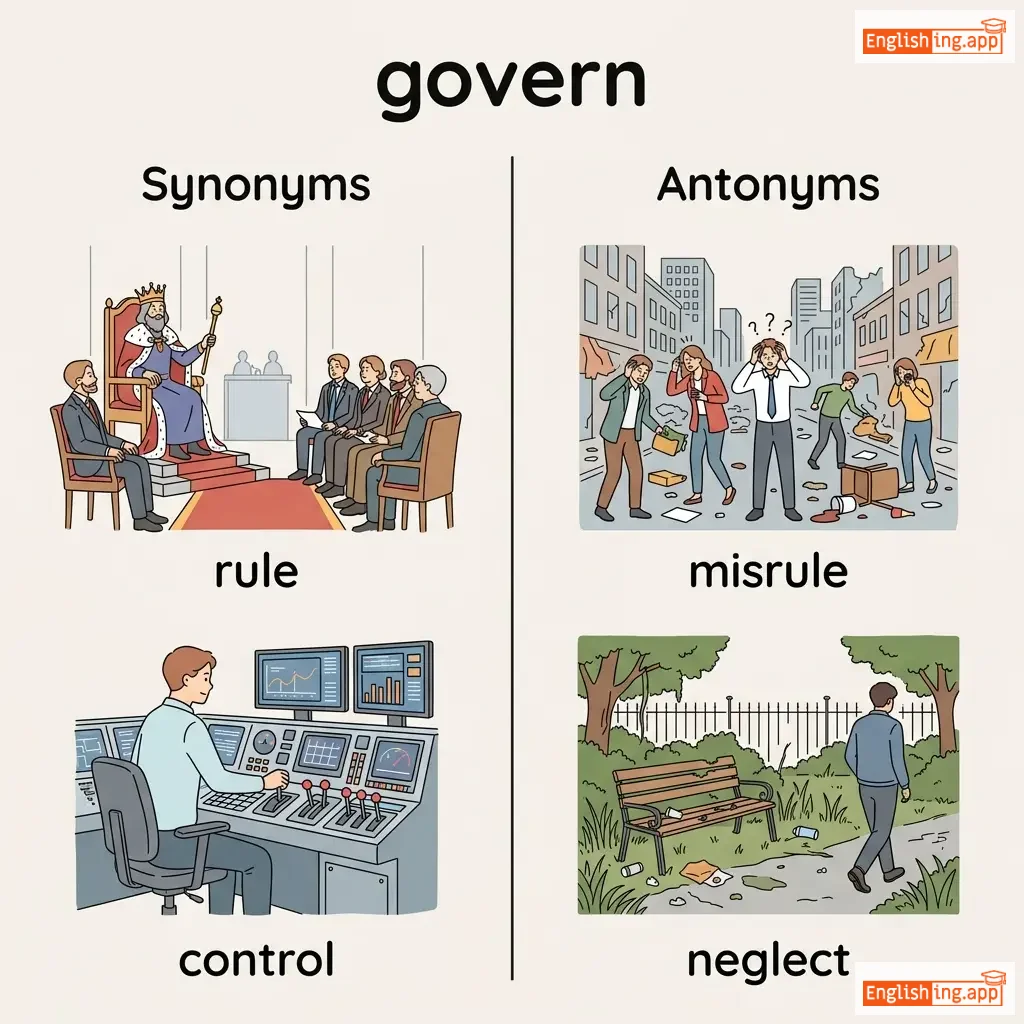
rule, control, manage, administer, oversee
••••••
|
misrule, neglect, abandon
••••••
|
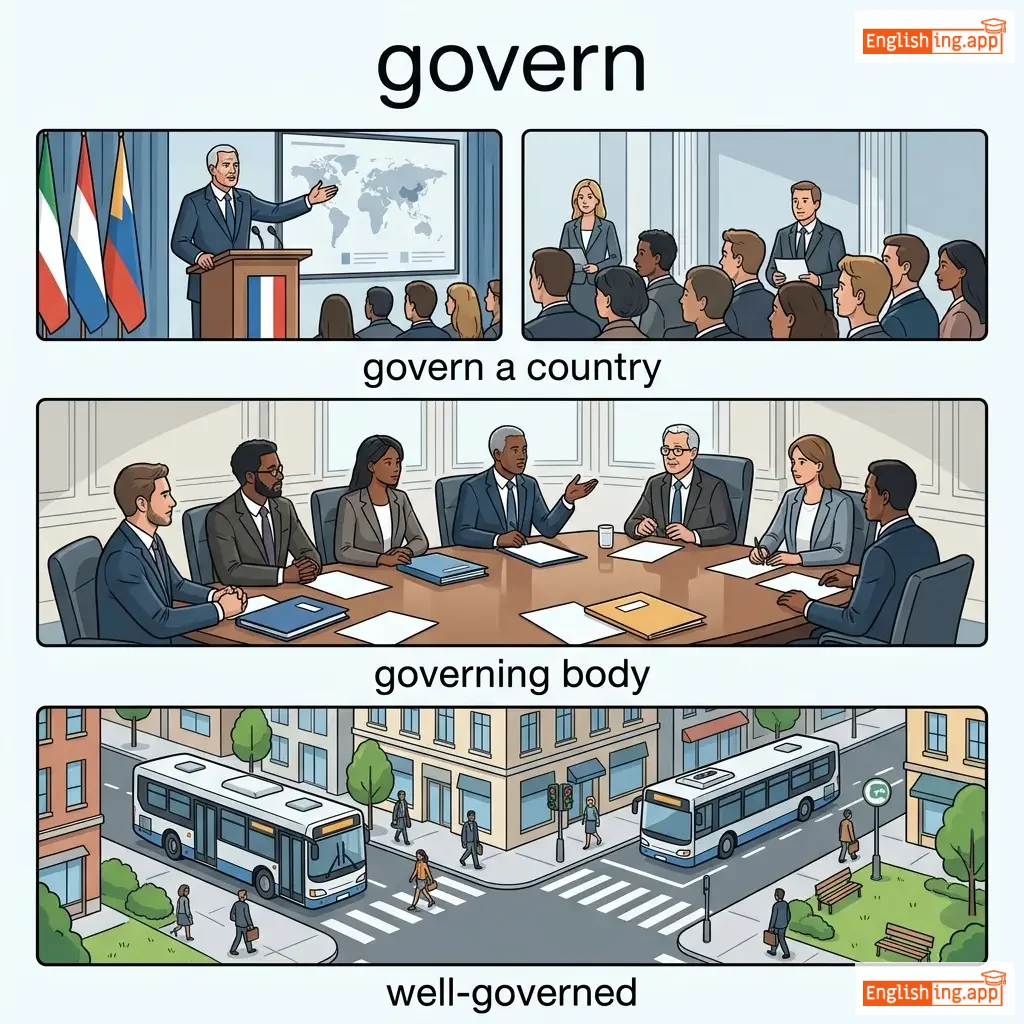
govern a country, governing body, well-governed, self-governed
••••••
|
No •••••• |
|
🏛️
••••••
|
/ˈɡʌvərnəns/
noun
••••••
|

|
- •••••• | - •••••• | - •••••• | - •••••• | - •••••• |
the action or manner of governing a state, organization, or people
••••••
|
Good governance is key to building a strong, prosperous nation. |
- •••••• | - •••••• | - •••••• | - •••••• |
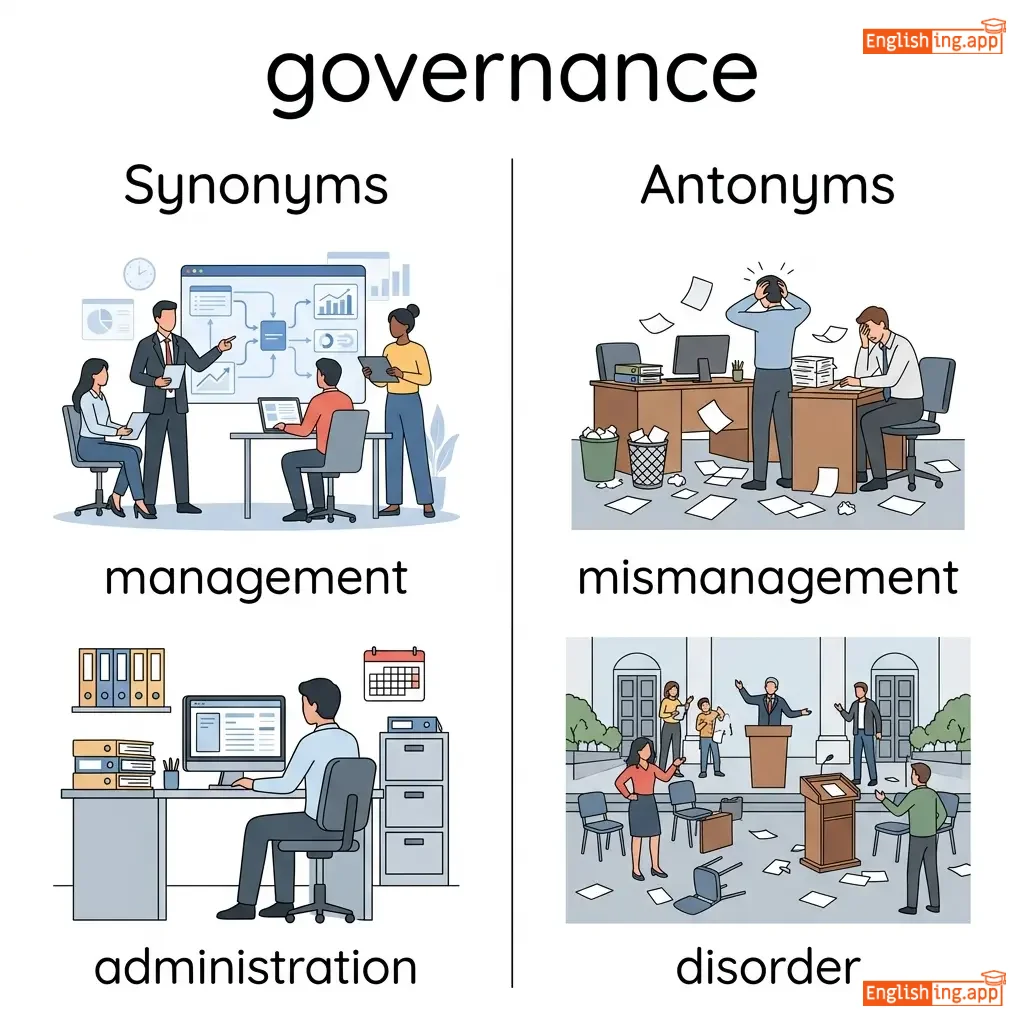
management, administration, leadership, control
••••••
|
mismanagement, disorder, chaos
••••••
|
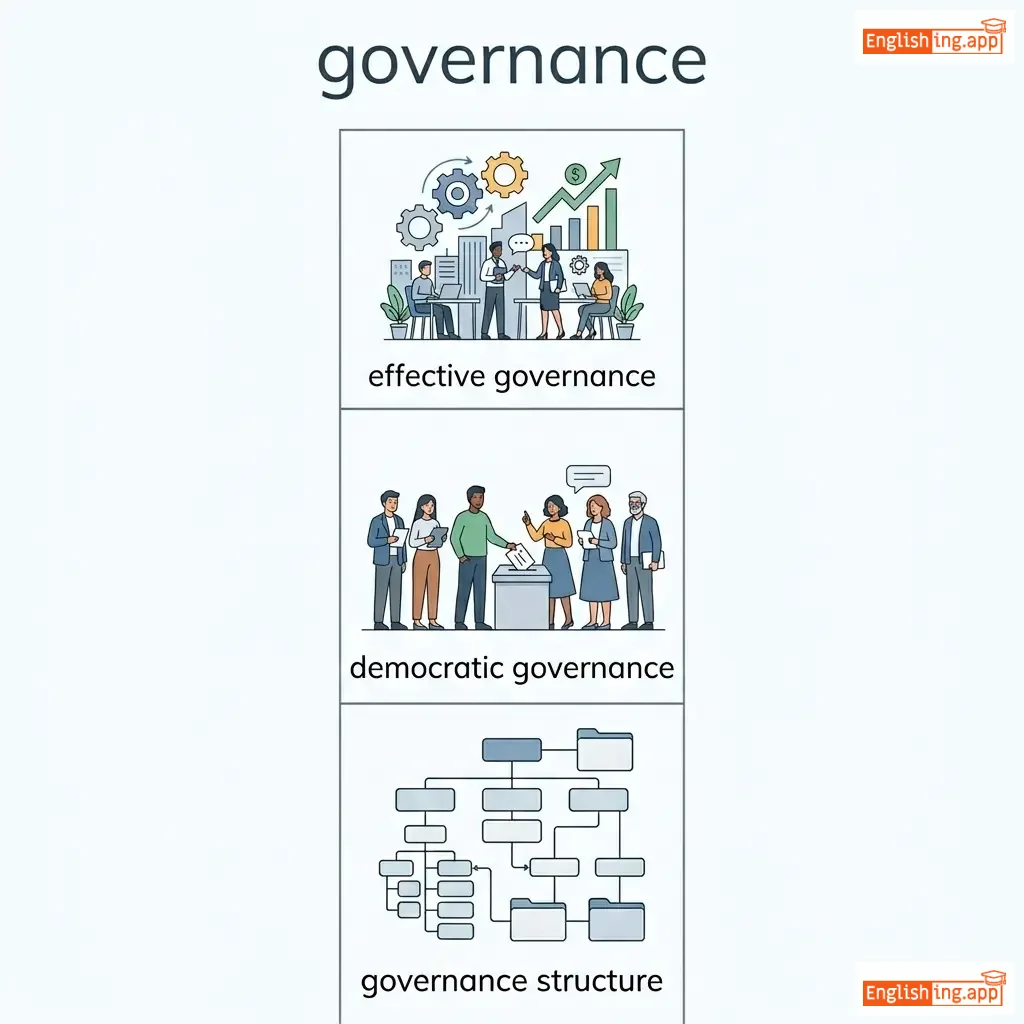
effective governance, democratic governance, governance structure
••••••
|
No •••••• |
|
🏛️
••••••
|
/ˈɡʌvərnmənt/
noun
(guózhì)
••••••
|
|
政府
zhèngfǔ
••••••
|
- •••••• | - •••••• | - •••••• | - •••••• |
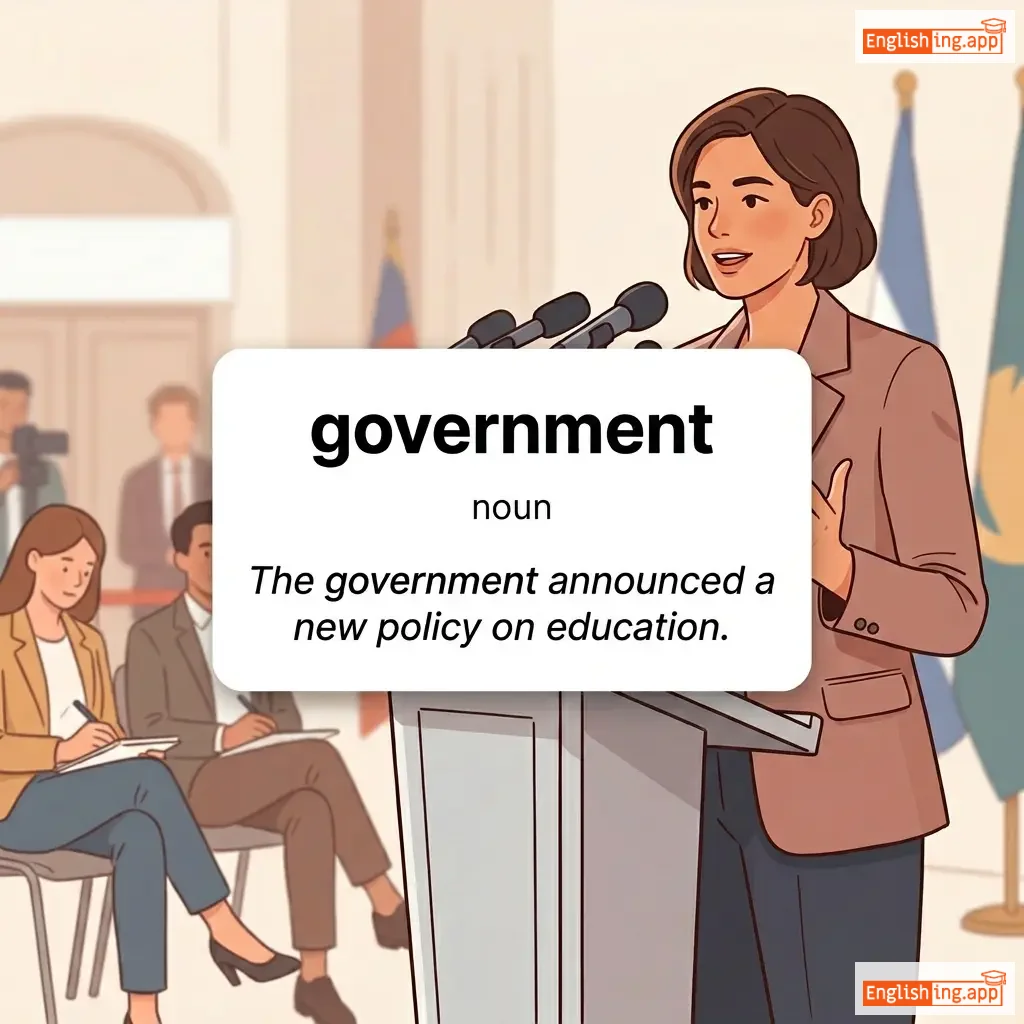
The governing body of a nation, state, or community responsible for making and enforcing laws.
••••••
|
The government announced a new policy on education. |
政府宣布了一项新的教育政策。
zhèngfǔ xuānbùle yī xiàng xīn de jiàoyù zhèngcè.
••••••
|
big government |
A political concept referring to a government that is large and heavily involved in society.
••••••
|
大政府
dà zhèngfǔ
••••••
|
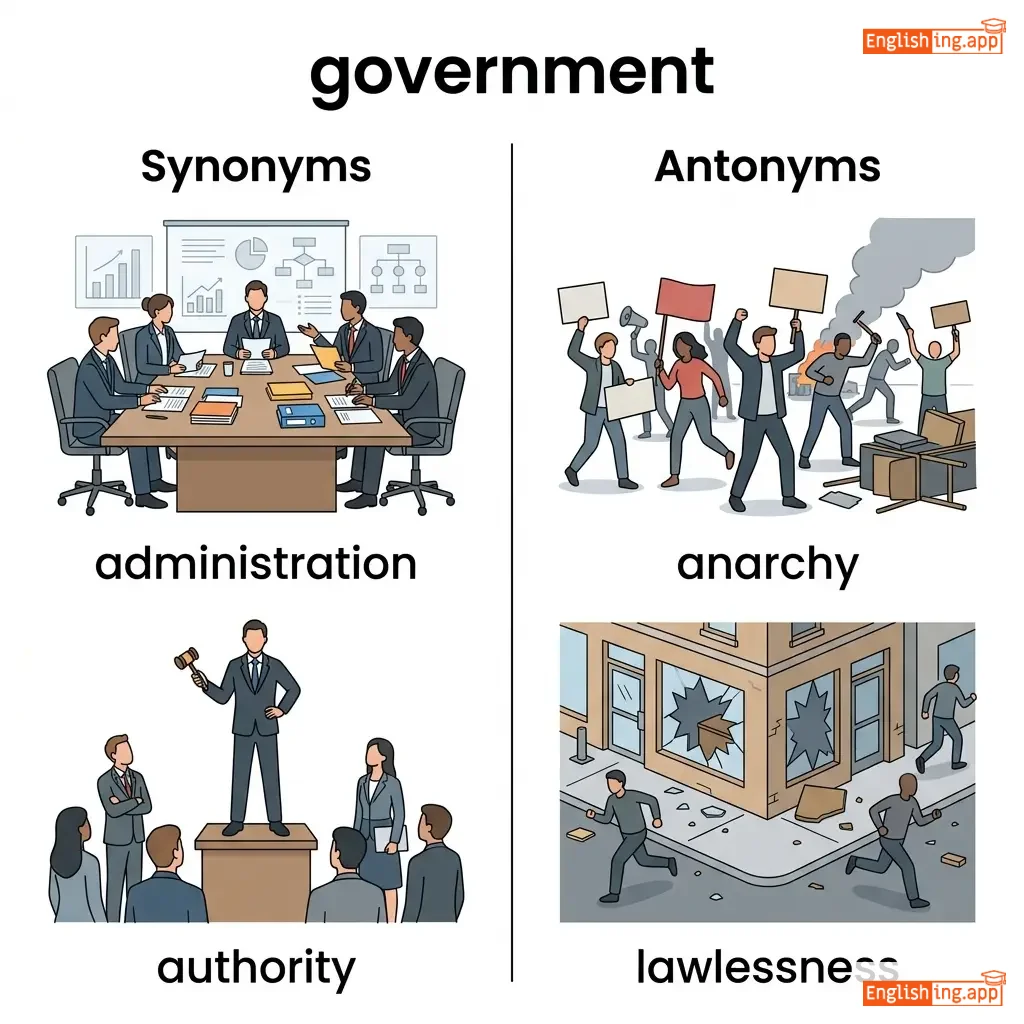
administration, authority, regime, state, leadership
••••••
|
anarchy, lawlessness
••••••
|
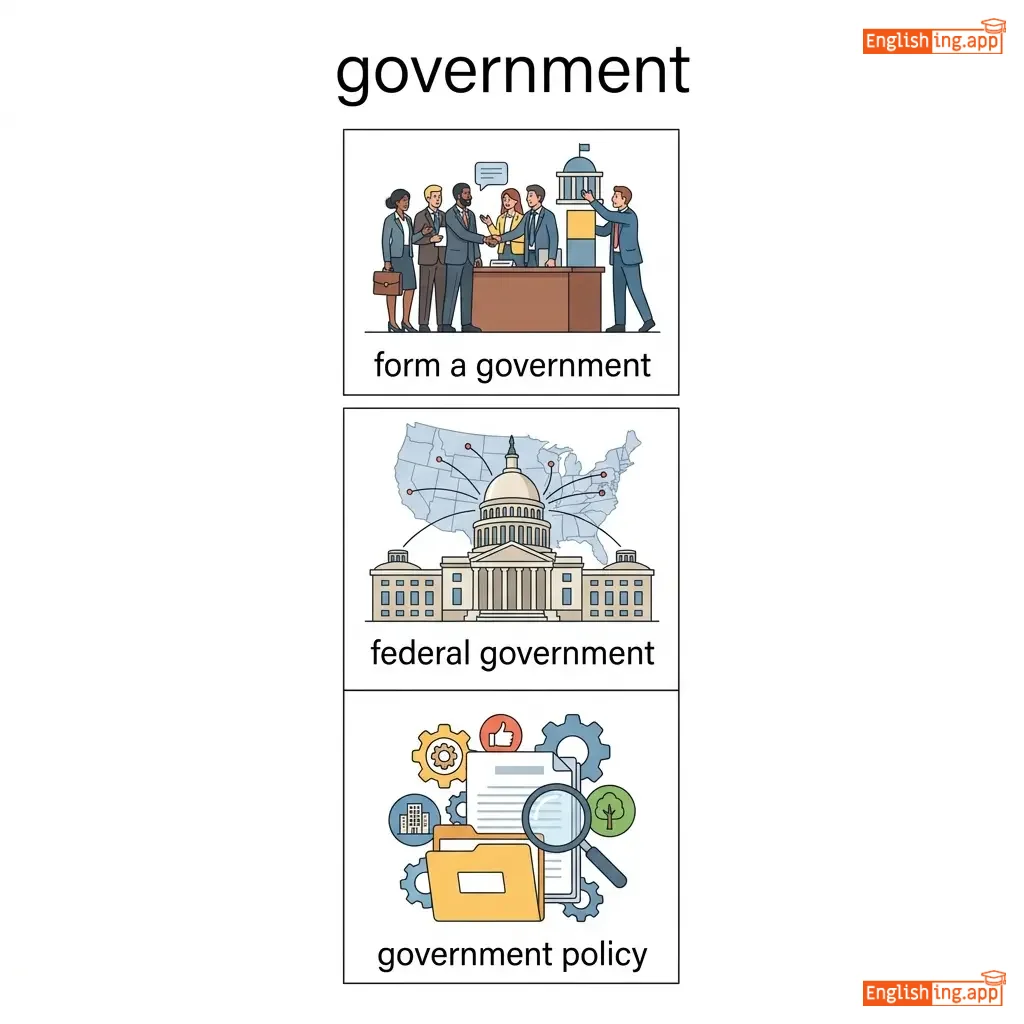
form a government, federal government, government policy, government official
••••••
|
政府是负责治理国家、执行法令的机构。
••••••
|
|
👔
••••••
|
/ˈɡʌvərnər/
noun
(ɡʊvɛʁnɚ)
••••••
|
- •••••• |
州长
zhouzhang
••••••
|
- •••••• | - •••••• | - •••••• | - •••••• |
An official appointed or elected to govern a state, territory, or organization.
••••••
|
The governor addressed the citizens about the upcoming election. |
州长向公民们讲述了即将来临的选举。
Zhōuzhǎng xiàng gōngmínmen jiǎngshùle jíjiāng láilín de xuǎnjǔ.
••••••
|
- •••••• | - •••••• | - •••••• |
ruler, administrator, leader, official
••••••
|
citizen, subject
••••••
|
state governor, governor's office, elected governor, colonial governor
••••••
|
州长像是州的领袖,负责决策。
••••••
|
|
🤲
••••••
|
/ɡræb/
verb
(格雷布)
••••••
|
- •••••• |
抓住
zhuazhu
••••••
|
grabbed
格雷布德
••••••
|
grabbed
格雷布德
••••••
|
grabs
格雷布斯
••••••
|
grabbing
格雷布英
••••••
|
To seize something quickly and firmly.
••••••
|
He tried to grab the ball before it rolled away.
他试图抓住球,在它滚走之前。
••••••
|
他试图抓住球,在它滚走之前。
Tā shìtú zhuā zhù qiú, zài tā gǔn zǒu zhīqián.
••••••
|
grab a bite
抓住一口
••••••
|
to have something to eat quickly
••••••
|
抓紧吃一口
zhuājǐn chī yī kǒu
••••••
|
seize, snatch, clutch, take, catch
••••••
|
release, let go
••••••
|
grab a chance, grab attention, grab a bite
••••••
|
‘抓住’就像是抓住一口快餐。
••••••
|
|
💃
••••••
|
/ɡreɪs/
noun
(格蕾丝)
••••••
|
- •••••• |
优雅, 优美
yōuyǎ, yōuměi
••••••
|
- •••••• | - •••••• | - •••••• | - •••••• |
simple elegance or refined movement; goodwill and kindness
••••••
|
She moved with grace across the stage. |
她优雅地走过舞台。
Tā yōuyǎ de zǒu guò wǔtái.
••••••
|
fall from grace |
to lose someone's approval or favor
••••••
|
失宠
shīchǒng
••••••
|
elegance, poise, charm, courtesy, kindness
••••••
|
rudeness, awkwardness, ugliness
••••••
|
move with grace, grace period, divine grace, social grace
••••••
|
Grace意味着优雅 — 优雅的(graceful)意味着以优美的方式行动。
••••••
|
|
⏳
••••••
|
/ˈɡrædʒ.u.əl/
adjective
(gulai)
••••••
|
|
逐渐的; 逐步的; 进步的;
zhújiàn de; zhúbù de; jìnbù de;
••••••
|
- •••••• | - •••••• | - •••••• | - •••••• |
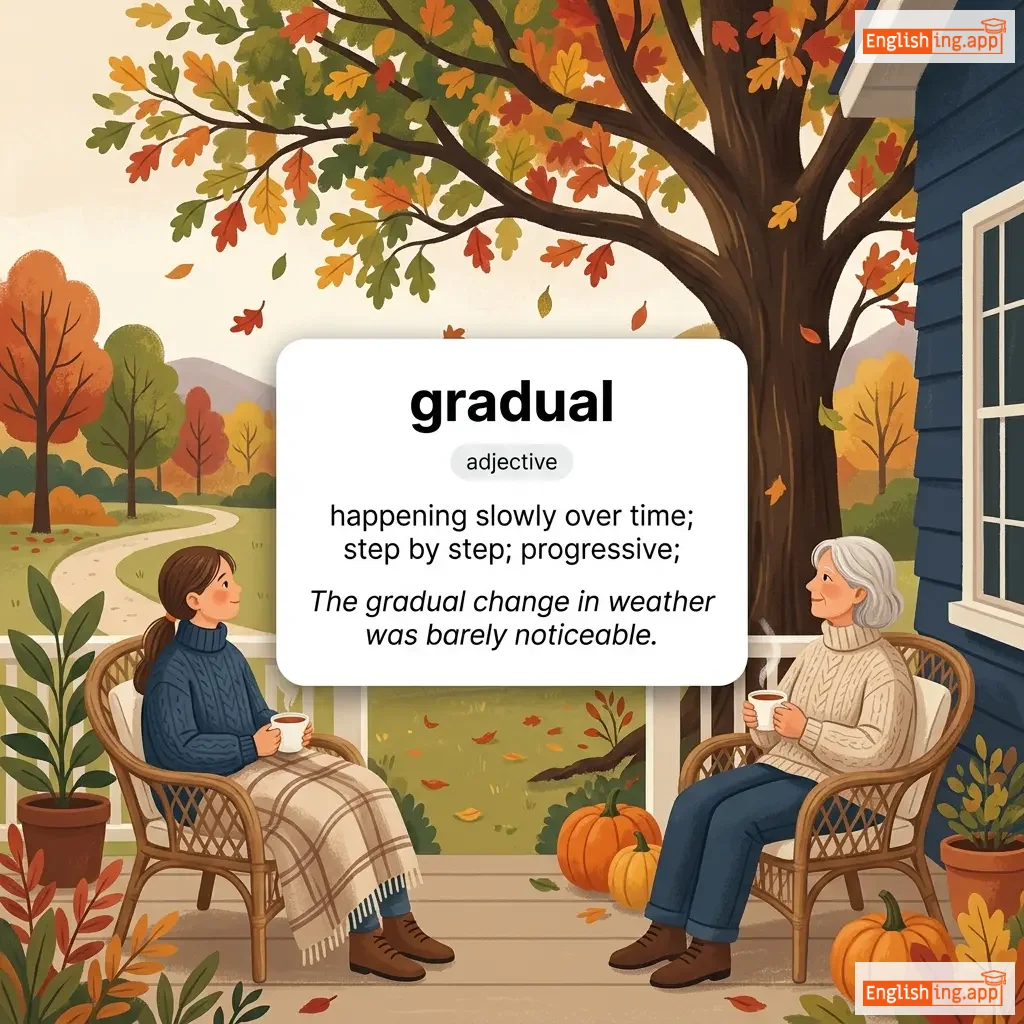
happening slowly over time; step by step; progressive;
••••••
|
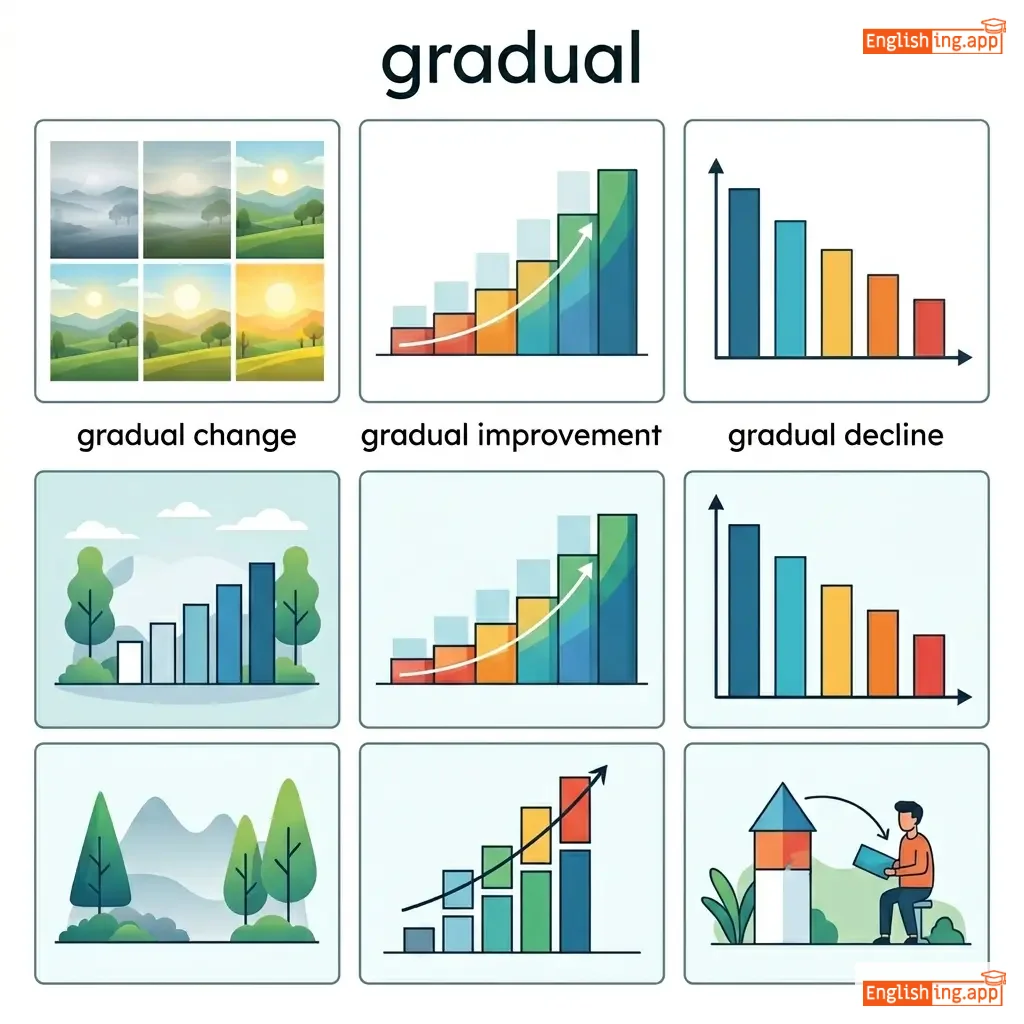
The gradual change in weather was barely noticeable.
天气的渐变几乎没有引起注意。
••••••
|
天气的渐变几乎没有引起注意。
Tiānsì de jiànbìan jīhū méiyǒu yǐnqǐ zhùyì.
••••••
|
- •••••• | - •••••• | - •••••• |
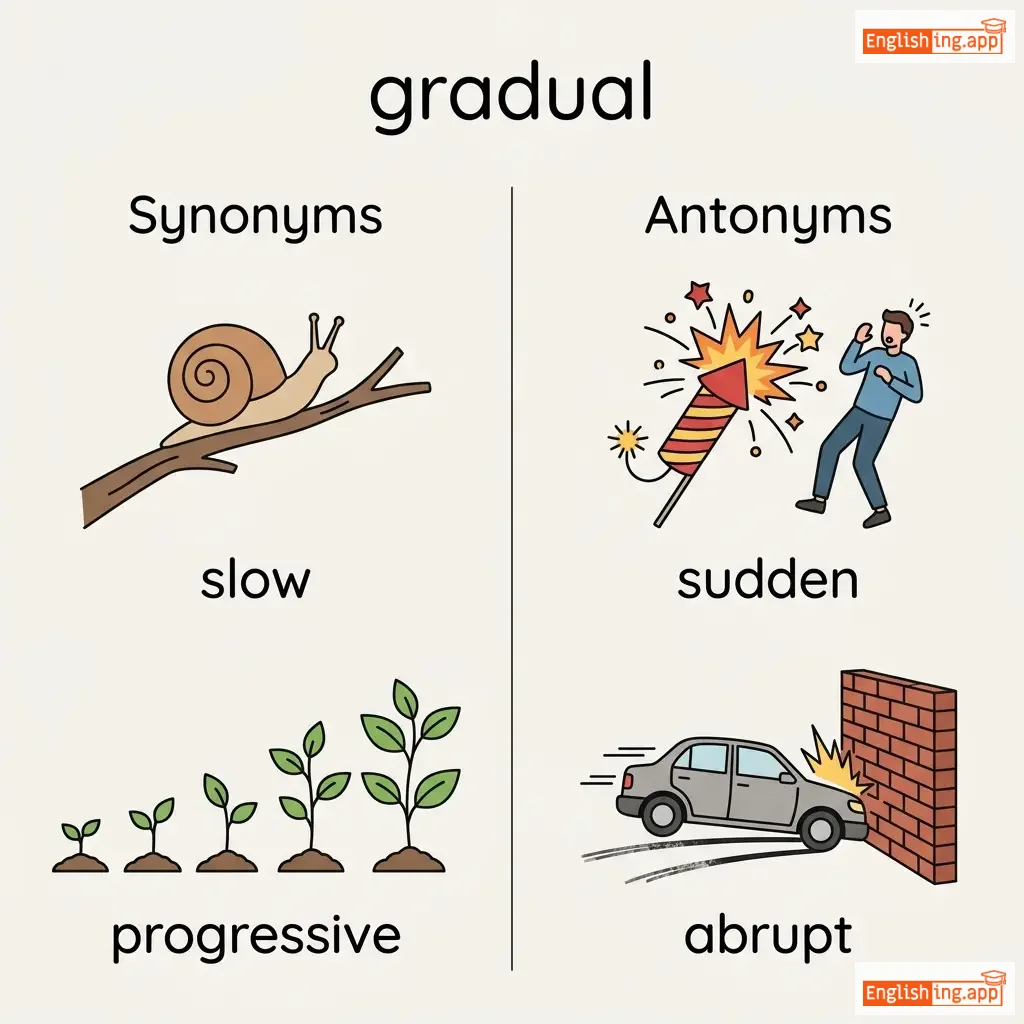
slow, progressive, incremental, step-by-step
••••••
|
sudden, abrupt, rapid, immediate
••••••
|
gradual change, gradual improvement, gradual decline
••••••
|
Gradual意味着缓慢的变化,就像天气一样。
••••••
|
|
⏳
••••••
|
/ˈɡrædʒ.u.ə.li/
adverb
(ɡrɑdʒuəli)
••••••
|
- •••••• |
渐渐地; 逐渐地
jiànjiàn de; zhújiàn de
••••••
|
- •••••• | - •••••• | - •••••• | - •••••• |
slowly and steadily over a period of time
••••••
|
The weather gradually became warmer in spring.
ðə wɛðər ɡrædʒuəli bɪˈkeɪm wɑːrmɚ ɪn sprɪŋ.
••••••
|
春天里,天气逐渐变暖。
Chūntiān lǐ, tiānqì zhújiàn biàn nuǎn.
••••••
|
- •••••• | - •••••• | - •••••• |
slowly, progressively, steadily, step by step
••••••
|
suddenly, abruptly, immediately, instantly
••••••
|
gradually increase, gradually improve, gradually decline, gradually change
••••••
|
记住,渐渐地温暖的春天是最美的。
••••••
|
|
🎓
••••••
|
/ˈɡrædʒuət/ (noun), /ˈɡrædʒueɪt/ (verb)
noun, verb
(gulaiyue)
••••••
|
- •••••• |
毕业生
biye sheng
••••••
|
graduated
gulaiyued
••••••
|
graduated
gulaiyued
••••••
|
graduates
gulaiyets
••••••
|
graduating
gulaiyetin
••••••
|
As a noun: a person who has completed a course of study; As a verb: to complete a course of study successfully.
••••••
|
She will graduate from university next year.
她将在明年毕业。
••••••
|
她将在明年毕业。
Ta jiang zai mingnian biye.
••••••
|
graduate with honors
以荣誉毕业
••••••
|
To complete studies with high distinction.
••••••
|
以荣誉毕业
yi rongyu biye
••••••
|
alumnus, degree holder, finish, complete, qualify
••••••
|
dropout, fail
••••••
|
graduate student, graduate school, graduate from, graduate with honors
••••••
|
毕业生 — 达到新的巅峰,像毕业帽一样!
••••••
|
|
🌾
••••••
|
/ɡreɪn/
noun
(guīng)
••••••
|
- •••••• |
谷物
gǔwù
••••••
|
- •••••• | - •••••• | - •••••• | - •••••• |
a small hard seed of a cereal plant such as wheat or rice; a tiny particle of a substance
••••••
|
A grain of rice fell off the plate. |
一粒米从盘子里掉了下来。
Yī lì mǐ cóng pánzi lǐ diàole xiàlái.
••••••
|
go against the grain |
to do something that is unusual or against one's nature
••••••
|
逆流而上
nìliú ér shàng
••••••
|
seed, kernel, particle, speck, granule
••••••
|
chunk, mass
••••••
|
grain of rice, grain of sand, cereal grain, wheat grain
••••••
|
谷物 (gǔwù) 是生命的种子。
••••••
|
|
📘
••••••
|
/ˈɡræmər/
noun
(格拉玛)
••••••
|
- •••••• |
语法
yufa
••••••
|
- •••••• | - •••••• | - •••••• | - •••••• |
the system and structure of a language, including rules for syntax, morphology, and usage
••••••
|
She studied grammar to improve her writing skills.
shi sitadid gelama tu yimpruv her raiting skils
••••••
|
她学习语法来提高写作能力。
ta xuexi yufa lai tigao xiezuo nengli
••••••
|
- •••••• | - •••••• | - •••••• |
syntax, linguistics, language rules, morphology
••••••
|
disorder, illiteracy
••••••
|
grammar rules, English grammar, basic grammar, grammar book, study grammar
••••••
|
Grammar 就是 语法 yufa—语言规则
••••••
|
|
🏰
••••••
|
/ɡrænd/
adjective
(ɡɹænd)
••••••
|
- •••••• |
宏伟
hongwei
••••••
|
- •••••• | - •••••• | - •••••• | - •••••• |
magnificent and impressive in appearance, size, or style
••••••
|
They stayed at a grand hotel in Paris. |
他们住在巴黎的一家宏伟酒店里。
Tamen zhu zai Bali de yijia hongwei jiudian li.
••••••
|
grand scheme |
a large, ambitious plan
••••••
|
宏伟计划
hongwei jihua
••••••
|
majestic, splendid, magnificent, glorious, impressive
••••••
|
modest, ordinary, simple
••••••
|
grand design, grand style, grand hotel, grand idea
••••••
|
Grand意味着宏伟。
••••••
|
|
👶
••••••
|
/ˈɡrænd.tʃaɪld/
noun
(guòpòchái)
••••••
|
- •••••• |
孙子或孙女
sūnzi huò sūnnǚ
••••••
|
- •••••• | - •••••• | - •••••• | - •••••• |
the child of one's son or daughter
••••••
|
They love spending time with their grandchild on weekends. |
他们喜欢在周末和他们的孙子或孙女一起度过时光。
Tāmen xǐhuān zài zhōumò hé tāmen de sūnzi huò sūnnǚ yīqǐ dùguò shíguāng.
••••••
|
- •••••• | - •••••• | - •••••• |
descendant, offspring, kin, progeny
••••••
|
ancestor, forebear
••••••
|
new grandchild, first grandchild, proud grandchild
••••••
|
Grand意味着祖父母,child意味着孩子,grandchild就是祖父母的孩子。
••••••
|
|
👧
••••••
|
/ˈɡræn(d)ˌdɔːtər/
noun
(格兰德多特)
••••••
|
- •••••• |
孙女
sun nu
••••••
|
- •••••• | - •••••• | - •••••• | - •••••• |
the daughter of one’s son or daughter
••••••
|
Her granddaughter visits her every weekend.
赫尔 格兰德多特 维吉茨 赫尔 艾芙瑞 威肯德
••••••
|
她的孙女每个周末来看她。
ta de sun nu meige zhoumo lai kan ta
••••••
|
- •••••• | - •••••• | - •••••• |
grandchild (female), female grandchild, grandgirl, descendant
••••••
|
grandson, grandfather, ancestor
••••••
|
beloved granddaughter, youngest granddaughter, granddaughter was born, raise a granddaughter
••••••
|
孙女 = sun + girl—下一代的小女孩
••••••
|
|
👴
••••••
|
/ˈɡrændˌfɑːðər/
noun
(爷爷)
••••••
|
- •••••• |
祖父
zǔfù
••••••
|
- •••••• | - •••••• | - •••••• | - •••••• |
the father of one's father or mother
••••••
|
My grandfather tells us stories every evening.
我的爷爷每天晚上给我们讲故事。
••••••
|
我的爷爷每天晚上给我们讲故事。
Wǒ de yéyé měitiān wǎnshàng gěi wǒmen jiǎng gùshì.
••••••
|
grandfather clause
祖父条款
••••••
|
an old rule that continues to apply in some cases
••••••
|
一个仍然适用的旧规则
Yī gè réngrán shìyòng de jiù guīzé
••••••
|
elder, ancestor, forefather, patriarch
••••••
|
descendant, offspring
••••••
|
maternal grandfather, paternal grandfather, old grandfather
••••••
|
Grandfather是Grand+Father(祖父)
••••••
|
|
👵
••••••
|
/ˈɡrændˌmʌðər/
noun
(祖母)
••••••
|
- •••••• |
祖母
zǔmǔ
••••••
|
- •••••• | - •••••• | - •••••• | - •••••• |
the mother of one's father or mother
••••••
|
My grandmother makes delicious cakes.
我的祖母做美味的蛋糕。
••••••
|
我的祖母做美味的蛋糕。
wǒ de zǔmǔ zuò měiwèi de dàngāo.
••••••
|
teach your grandmother to suck eggs
教你的祖母吸蛋
••••••
|
to give advice to someone who knows more about the subject than you do
••••••
|
给比你更懂的人建议
gěi bǐ nǐ gèng dǒng de rén jiànyì
••••••
|
elder, ancestor, matriarch, granny
••••••
|
descendant, offspring
••••••
|
maternal grandmother, paternal grandmother, old grandmother
••••••
|
祖母 = 祖 + 母 (年长的母亲)
••••••
|
|
👴👵
••••••
|
ˈɡrænˌpɛrənts
noun
(ˈɡrænˌpɛrənts)
••••••
|
|
祖父母
zǔfùmǔ
••••••
|
- •••••• | - •••••• | - •••••• | - •••••• |
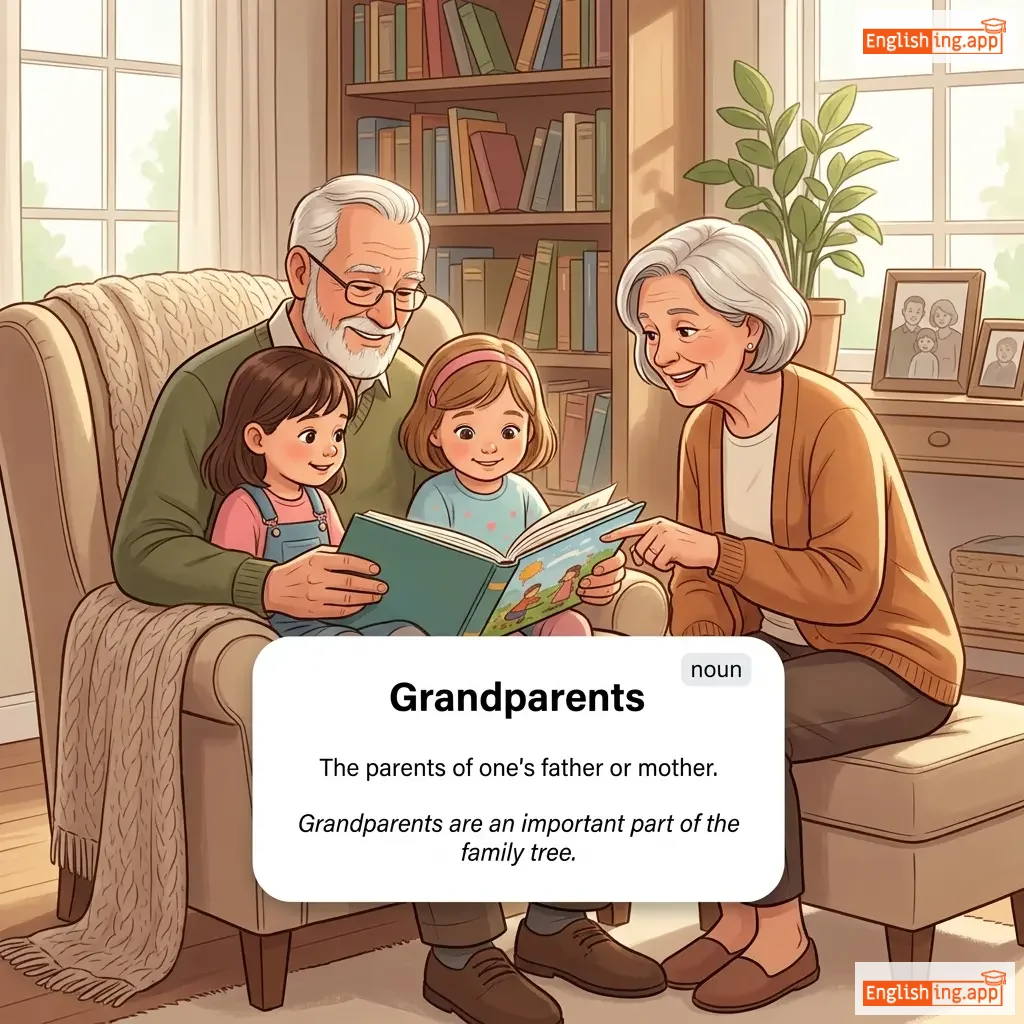
The parents of one's father or mother.
••••••
|
Grandparents are an important part of the family tree. |
祖父母是家谱中的重要部分。
Zǔfùmǔ shì jiāpǔ zhōng de zhòngyào bùfen.
••••••
|
- •••••• | - •••••• | - •••••• |
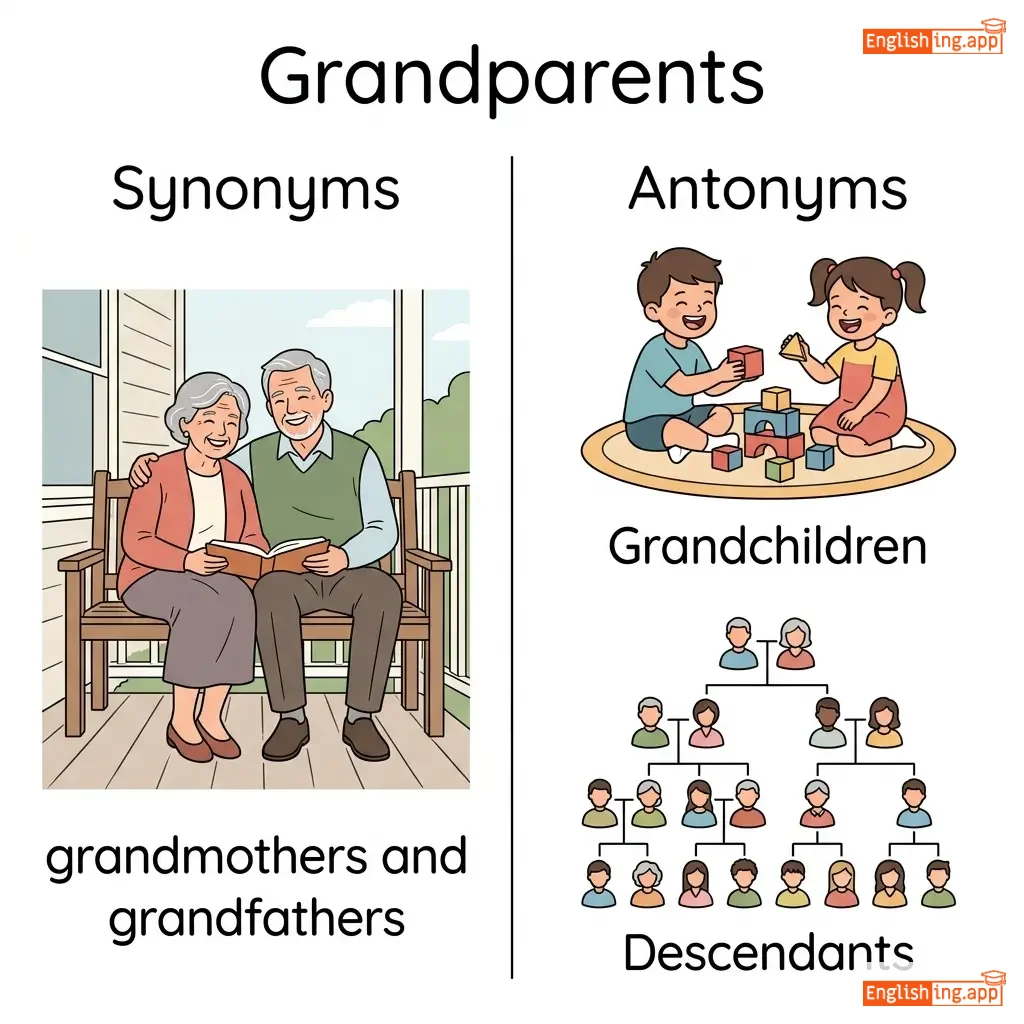
grandmothers and grandfathers
••••••
|
Grandchildren, Descendants
••••••
|
- •••••• |
Grandparents – 祖父母 are always there for you!
••••••
|
|
👦
••••••
|
/ˈɡrændsʌn/
noun
(格兰德森)
••••••
|
- •••••• |
孙子
sunzi
••••••
|
- •••••• | - •••••• | - •••••• | - •••••• |
the son of one's son or daughter
••••••
|
His grandson visits him every weekend.
希斯 格兰德森 维兹茨 希姆 艾维 维肯德。
••••••
|
他的孙子每个周末都来看他。
ta de sunzi meige zhoumo dou lai kan ta
••••••
|
- •••••• | - •••••• | - •••••• |
grandchild, boy grandchild, male grandchild, descendant, heir
••••••
|
granddaughter, ancestor, forefather
••••••
|
only grandson, eldest grandson, beloved grandson, young grandson
••••••
|
Sunzi sounds like son, grandson is son of son
••••••
|

