|
絵文字
|
単語 | Images | 翻訳 | 過去 | 過去分詞 | 三人称単数 | 動名詞 | 意味 | 例文 | 例文の翻訳 | 表現例 | 表現例の意味 | 表現例の翻訳 | 同義語 | 対義語 | コロケーション | ニーモニック |
|---|---|---|---|---|---|---|---|---|---|---|---|---|---|---|---|---|---|
|
😡
••••••
|
/ˈfjʊəriəs/
adjective
(フューリアス)
••••••
|
- •••••• |
怒っている
okotte iru
••••••
|
- •••••• | - •••••• | - •••••• | - •••••• |
Extremely angry.
••••••
|
She was furious when she heard the bad news. |
彼女は悪いニュースを聞いて怒っていた。
Kanojo wa warui nyūsu o kiite okotte ita.
••••••
|
furious debate |
a heated or intense argument
••••••
|
怒った討論
okotta tōron
••••••
|
angry, enraged, irate, mad, incensed
••••••
|
calm, peaceful, relaxed
••••••
|
furious with someone, furious about, furious debate, furious pace
••••••
|
Furiousは怒っている意味 - 怒ると火が燃え上がる。
••••••
|
|
🪑
••••••
|
/ˈfɜːrnɪtʃər/
noun
(fāničā)
••••••
|
- •••••• |
家具
kagu
••••••
|
- •••••• | - •••••• | - •••••• | - •••••• |
Objects such as chairs, tables, beds, or cupboards used to make a room suitable for living or working.
••••••
|
The living room was filled with beautiful wooden furniture. |
リビングルームは美しい木製の家具でいっぱいでした。
Ribingurūmu wa utsukushī mokusei no kagu de ippai deshita.
••••••
|
move the furniture |
to rearrange or shift the position of furniture in a room
••••••
|
家具を動かす
Kagu o ugokasu
••••••
|
fixtures, fittings, furnishings, decor, equipment
••••••
|
emptiness, vacancy
••••••
|
antique furniture, wooden furniture, office furniture, move furniture, buy furniture
••••••
|
家具は家具 🪑 — 日本語で'家具屋'を思い出すことで覚えやすくなります。
••••••
|
|
➕
••••••
|
/ˌfɜːrðərˈmɔːr/
adverb
(ファーザー・モア)
••••••
|
- •••••• |
その上
sono ue
••••••
|
- •••••• | - •••••• | - •••••• | - •••••• |
Used to introduce an additional point or idea; in addition.
••••••
|
The plan is simple and, furthermore, it is affordable. |
その計画は簡単で、さらに、手頃な価格です。
Sono keikaku wa kantan de, sara ni, tegorona kakaku desu.
••••••
|
- •••••• | - •••••• | - •••••• |
moreover, in addition, also, besides
••••••
|
however, nevertheless
••••••
|
furthermore argue, furthermore demonstrate, simple and furthermore
••••••
|
Furthermore は 'その上' を意味します ➕ 思い出してください: 'もっとポイントがあります。'
••••••
|
|
🔮
••••••
|
/ˈfjuːtʃər/
noun
(フューチャー)
••••••
|
|
未来
mirai
••••••
|
- •••••• | - •••••• | - •••••• | - •••••• |
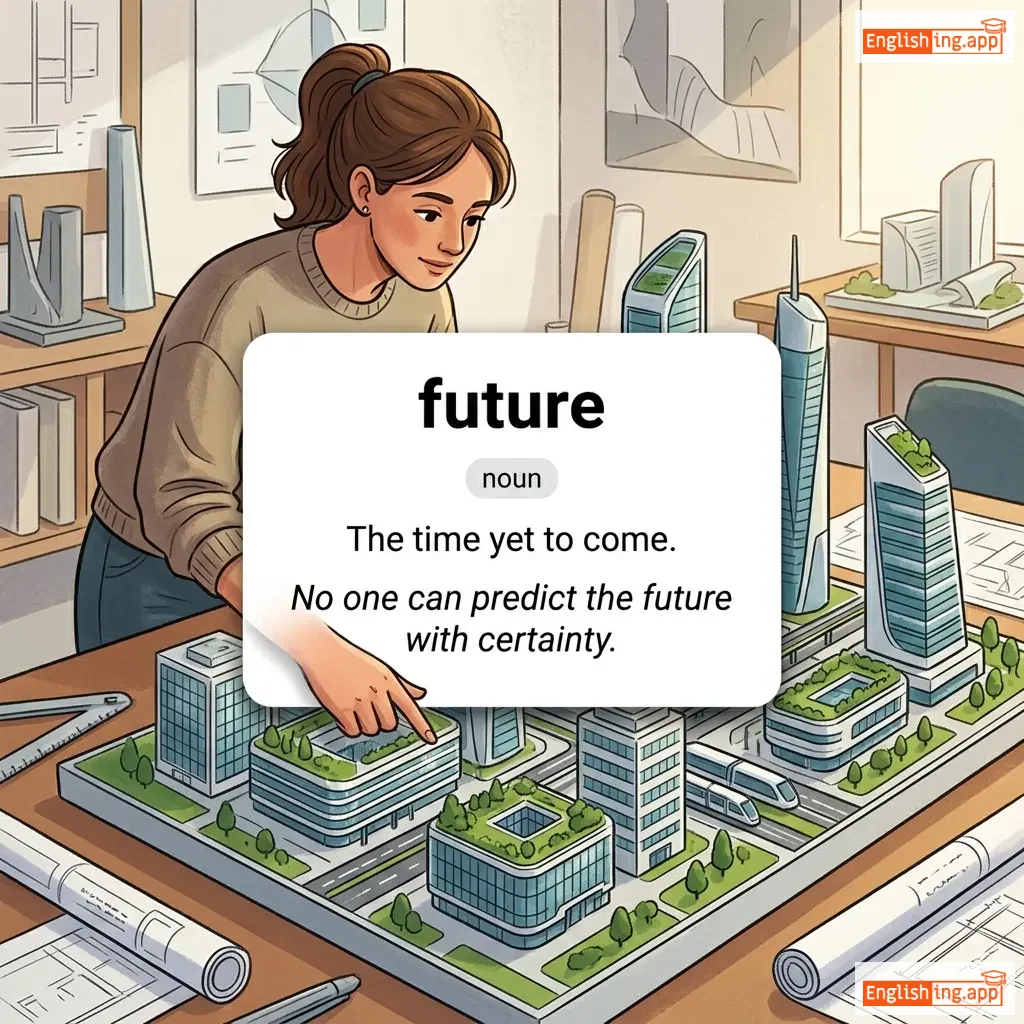
The time yet to come.
••••••
|
No one can predict the future with certainty. |
誰も未来を確実に予測することはできません。
Dare mo mirai o kakujitsu ni yosoku suru koto wa dekimasen.
••••••
|
bright future |
a positive or successful time ahead
••••••
|
明るい未来
akarui mirai
••••••
|
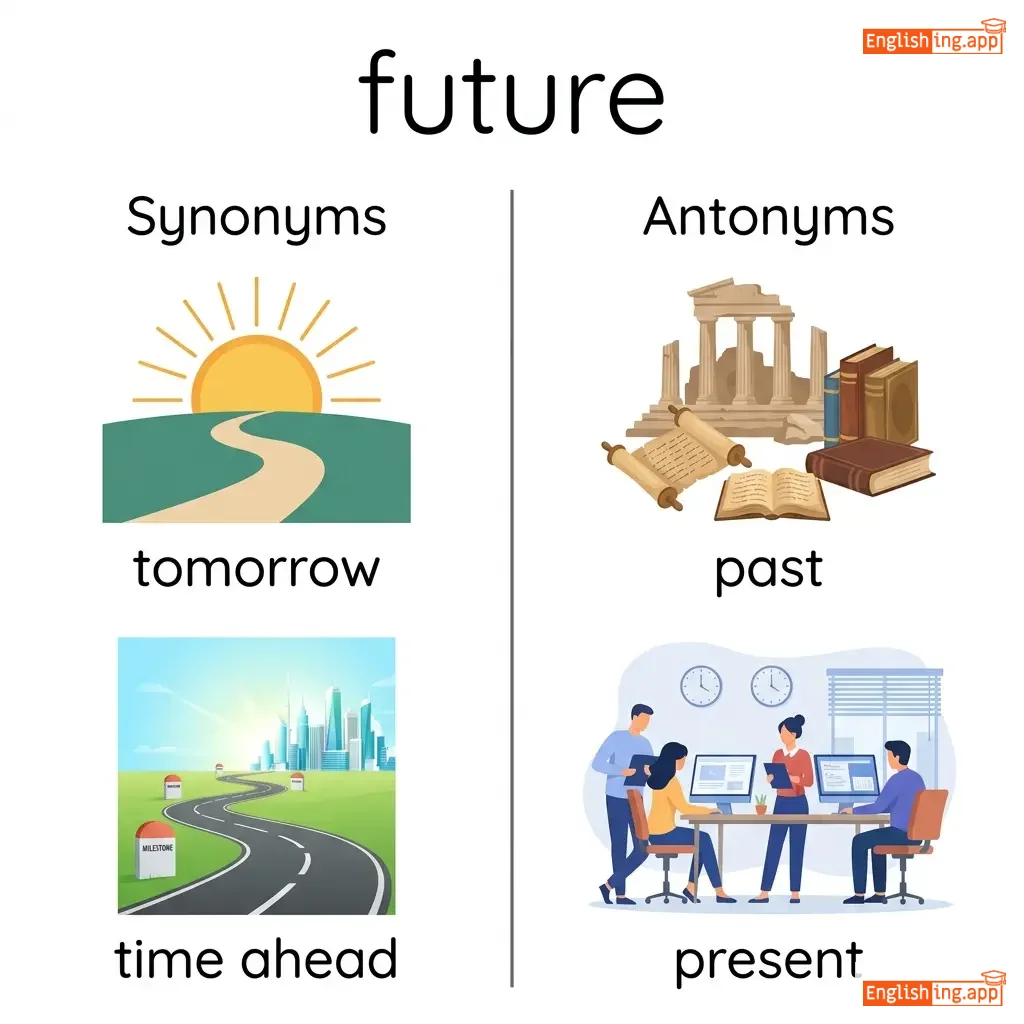
tomorrow, time ahead, destiny, prospect
••••••
|
past, present
••••••
|
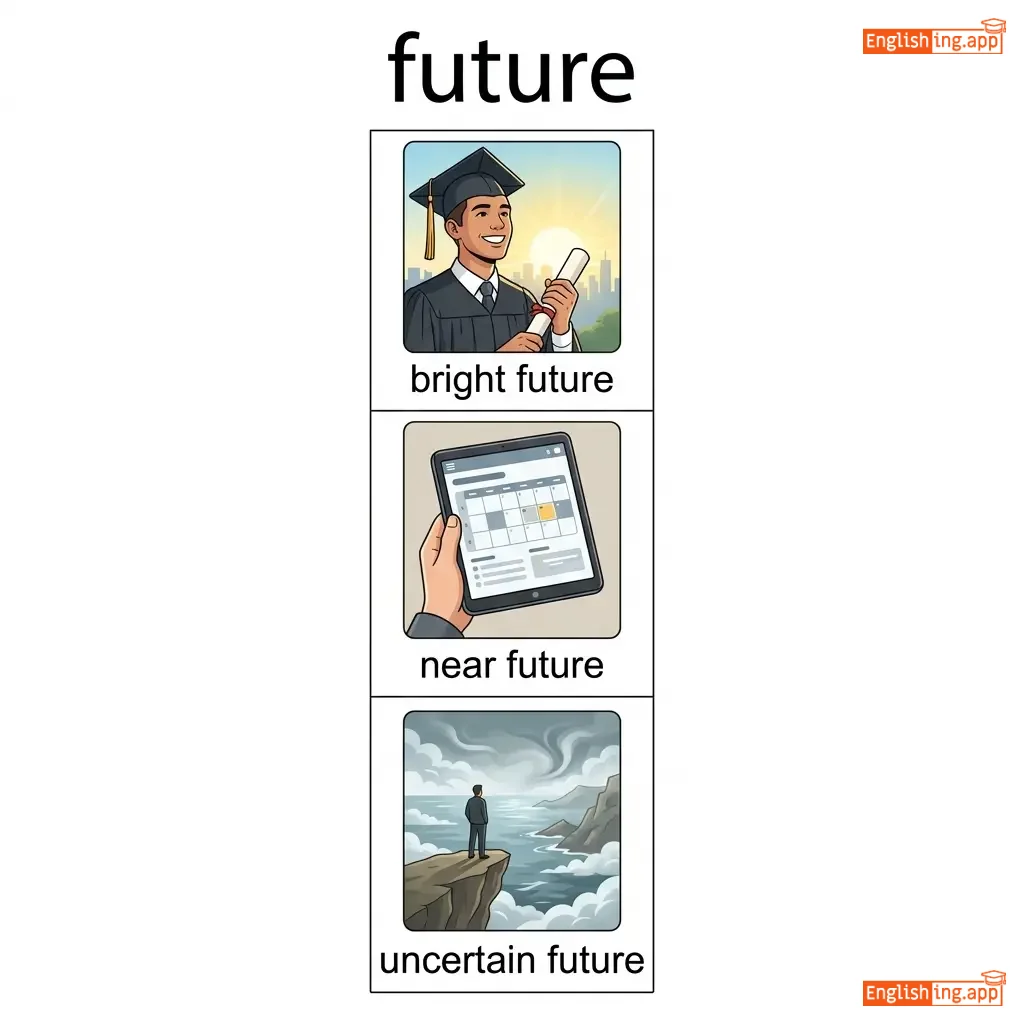
bright future, near future, uncertain future, future plans
••••••
|
Futureは日本語で未来です。明るい未来は明るい未来です。
••••••
|
|
📈
••••••
|
/ɡeɪn/
verb
(ゲイン)
••••••
|
|
得る
eru
••••••
|
gained
ゲインド
••••••
|
gained
ゲインド
••••••
|
gains
ゲインズ
••••••
|
gaining
ゲイニング
••••••
|
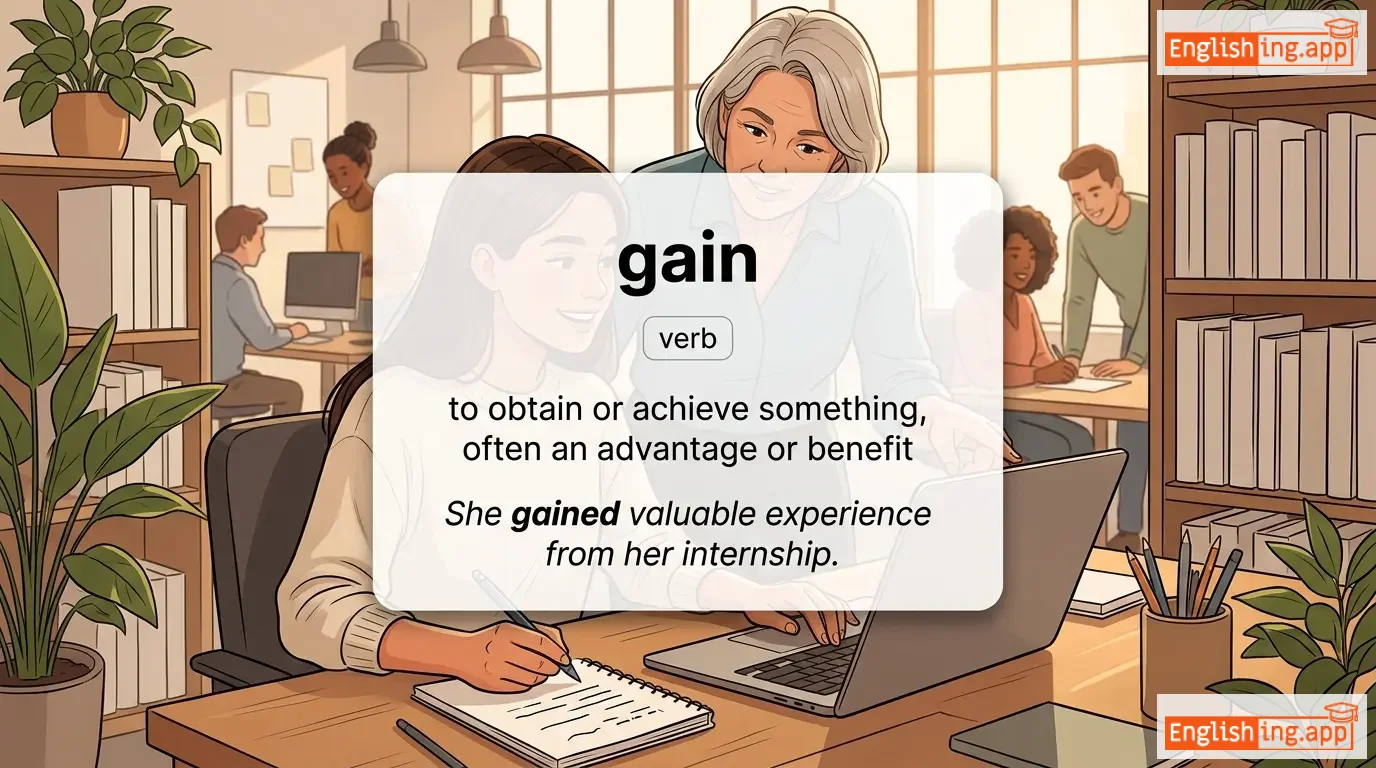
to obtain or achieve something, often an advantage or benefit
••••••
|
She gained valuable experience from her internship.
彼女はインターンシップから貴重な経験を得た。
••••••
|
彼女はインターンシップから貴重な経験を得た。
Kanojo wa intānshippu kara kichōna keiken o eta.
••••••
|
gain ground
ゲイングラウンド
••••••
|
to make progress or become more successful
••••••
|
進歩する
shinpo suru
••••••
|
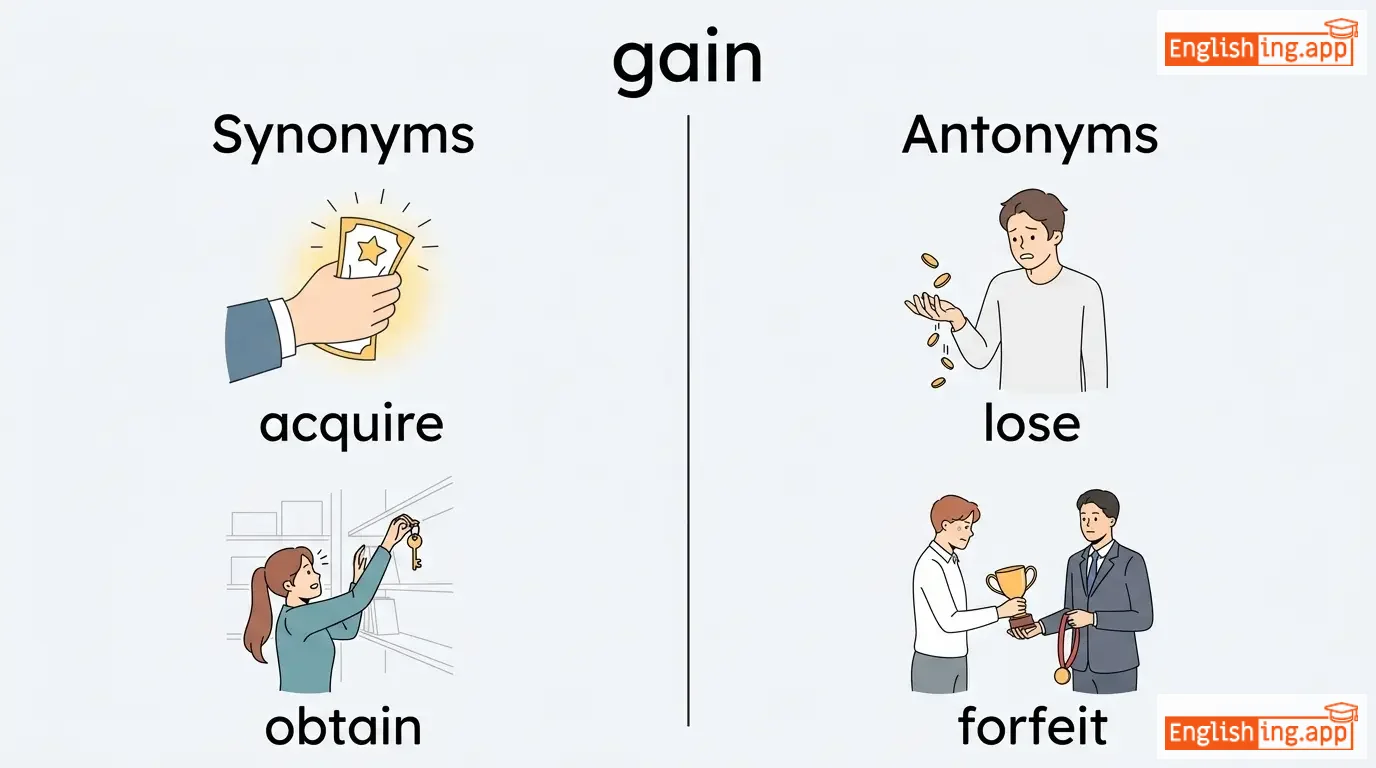
acquire, obtain, earn, secure, win
••••••
|
lose, forfeit, surrender
••••••
|
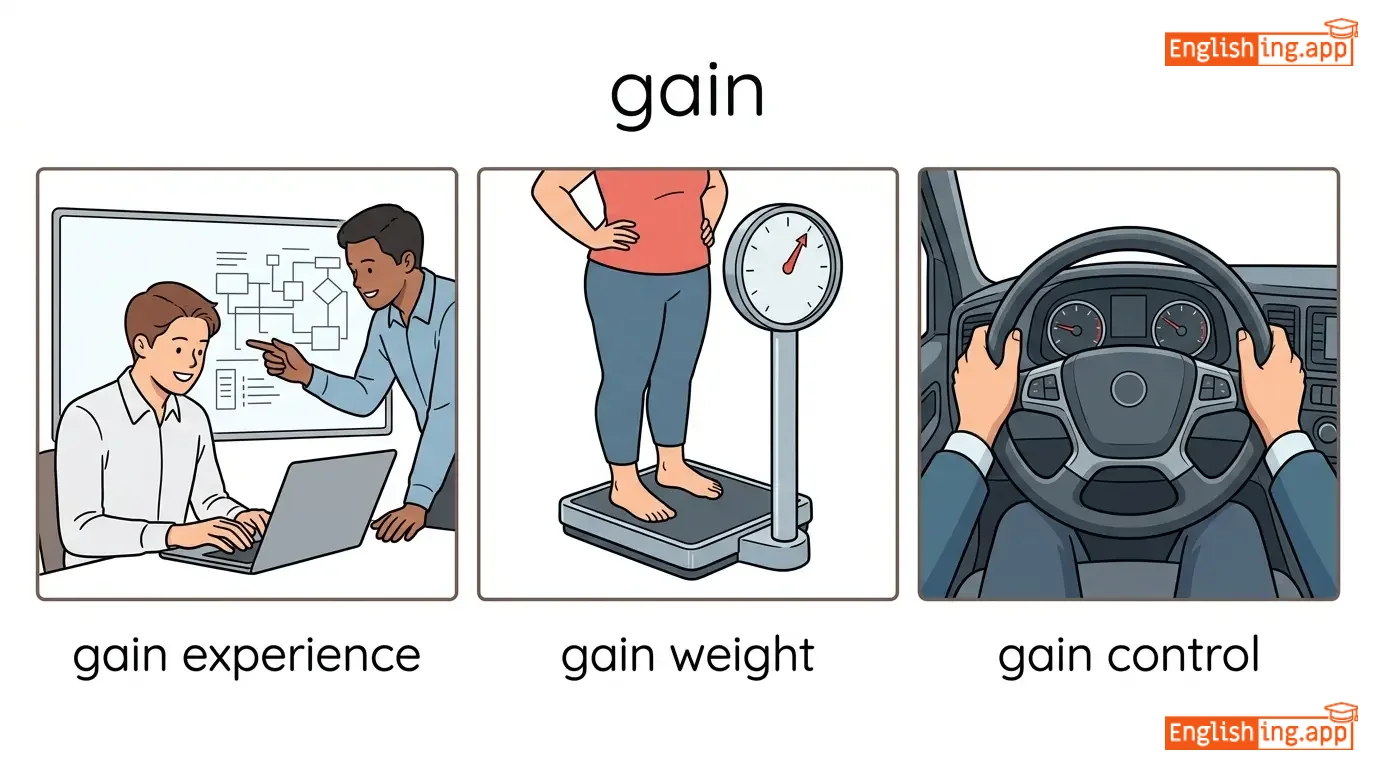
gain experience, gain weight, gain control, gain advantage
••••••
|
Gainは得ること—得ることで知識が広がる
••••••
|
|
🌌
••••••
|
/ˈɡæl.ək.si/
noun
(銀河系)
••••••
|
- •••••• |
銀河系
ginga kei
••••••
|
- •••••• | - •••••• | - •••••• | - •••••• |
a system of millions or billions of stars, together with gas and dust, held together by gravitational attraction
••••••
|
The Milky Way is the galaxy that contains our solar system and Earth.
天の川は私たちの太陽系と地球を含む銀河系です。
••••••
|
天の川は私たちの太陽系と地球を含む銀河系です。
Amanogawa wa watashitachi no taiyōkei to chikyū o fukumu ginga kei desu.
••••••
|
- •••••• | - •••••• | - •••••• |
star system, constellation, nebula, universe
••••••
|
void, emptiness, space, vacuum
••••••
|
spiral galaxy, distant galaxy, galaxy cluster
••••••
|
銀河系 - 星々が集まり、夜空に広がる壮大な『銀河』のようです。
••••••
|
|
🖼️
••••••
|
/ˈɡæləri/
noun
(ギャラリー)
••••••
|
- •••••• |
ギャラリー
gyararī
••••••
|
- •••••• | - •••••• | - •••••• | - •••••• |
A room or building for the display or sale of works of art.
••••••
|
The gallery showcased modern paintings by local artists. |
ギャラリーは地元のアーティストによる現代絵画を展示しました。
Gyararī wa jimoto no ātisuto ni yoru gendai kaiga o tenji shimashita.
••••••
|
peanut gallery |
an audience or group of critics, often giving unsolicited comments
••••••
|
ピーナッツギャラリー
pīnattsu gyararī
••••••
|
exhibition hall, showroom, museum, studio, display room
••••••
|
storage, warehouse
••••••
|
art gallery, photo gallery, gallery space, gallery exhibition
••••••
|
ギャラリー 🖼️ — 芸術作品を集めて展示する場所を思い浮かべよう。
••••••
|
|
🥛
••••••
|
/ˈɡælən/
noun
(ギャロン)
••••••
|
- •••••• |
ガロン
garon
••••••
|
- •••••• | - •••••• | - •••••• | - •••••• |
a unit of measurement for liquid capacity, equal to 4 quarts or approximately 3.8 liters
••••••
|
He bought a gallon of milk. |
彼は1ガロンの牛乳を買いました。
Kare wa 1 garon no gyūnyū o kaimashita.
••••••
|
- •••••• | - •••••• | - •••••• |
quart, liter, container
••••••
|
drop, tiny amount
••••••
|
gallon of water, gallon of milk, gallon jug
••••••
|
ガロン - 大きな容量のための単位!
••••••
|
|
🎲
••••••
|
/ˈɡæmbəl/
verb
(ギャンブル)
••••••
|
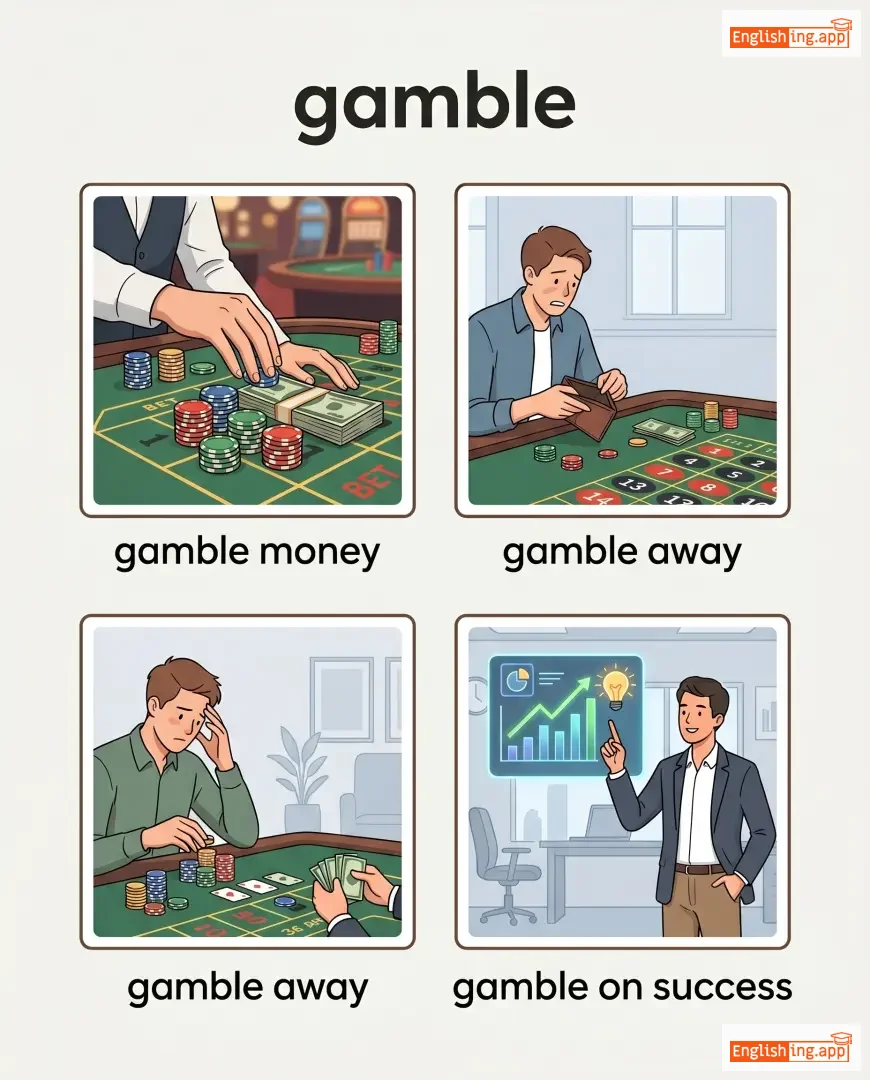
|
賭ける
kakeru
••••••
|
gambled
ギャンブルド
••••••
|
gambled
ギャンブルド
••••••
|
gambles
ギャンブルズ
••••••
|
gambling
ギャンブリング
••••••
|
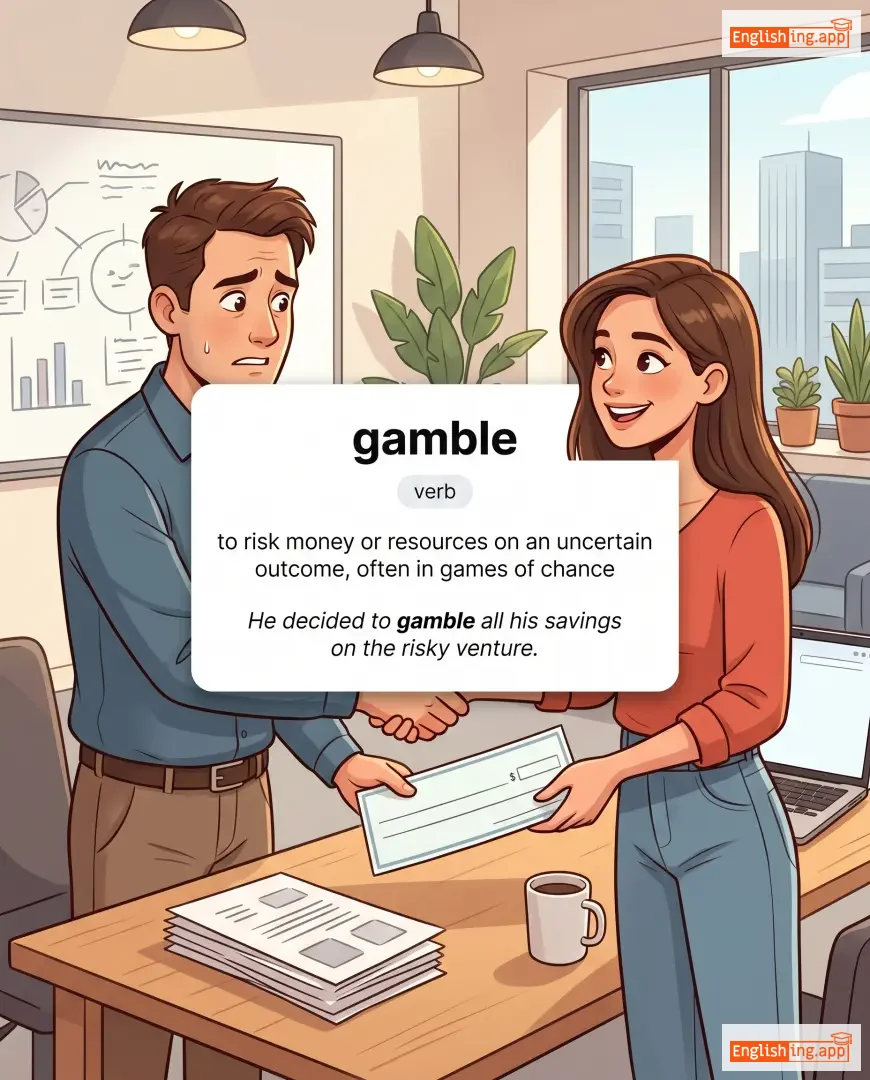
to risk money or resources on an uncertain outcome, often in games of chance
••••••
|
He decided to gamble all his savings on the risky venture.
彼はすべての貯金をリスクのある事業に賭けることを決めました。
••••••
|
彼はすべての貯金をリスクのある事業に賭けることを決めました。
Kare wa subete no chokin wo risuku no aru jigyō ni kakeru koto wo kimemashita.
••••••
|
gamble with fate
運命に賭ける
••••••
|
to take a serious risk with uncertain outcomes
••••••
|
運命に賭ける
Unmei ni kakeru
••••••
|
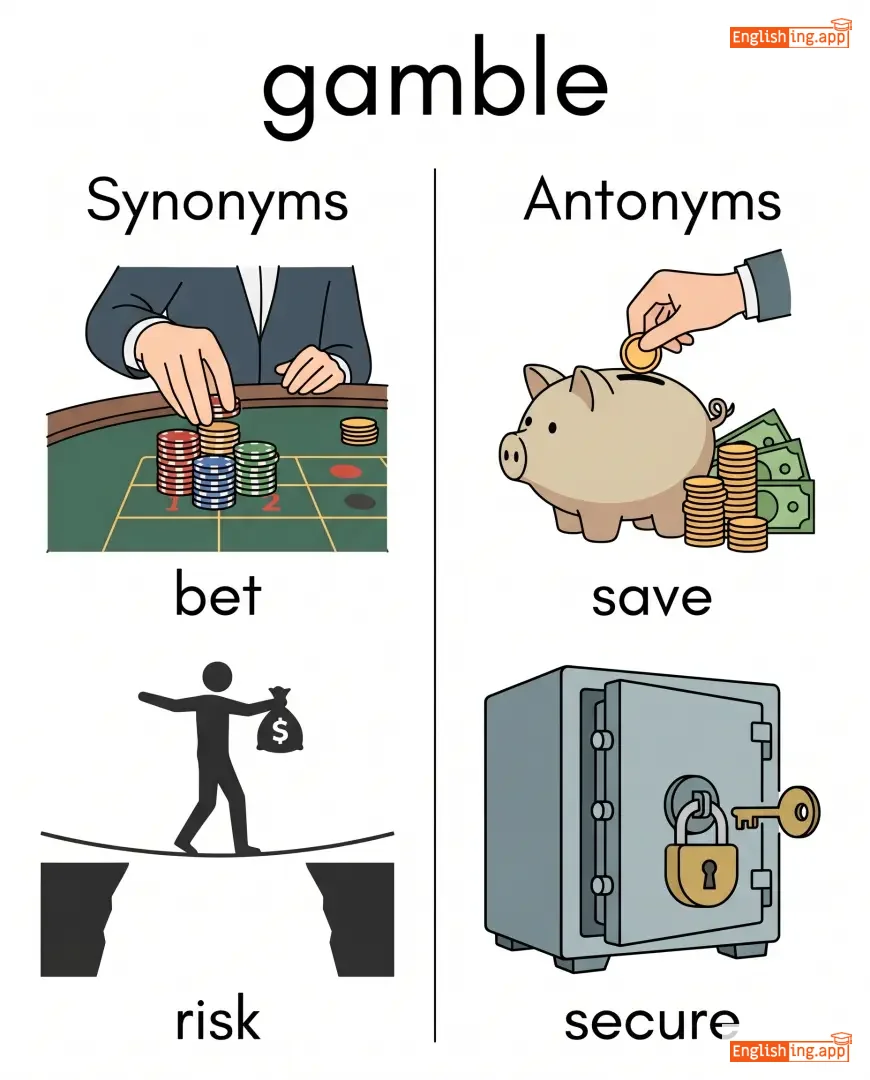
bet, risk, wager, speculate, venture
••••••
|
save, secure, protect
••••••
|
gamble money, gamble away, gamble on success
••••••
|
Gamble sounds like ‘gamba’, don’t risk everything! 🎲
••••••
|
|
🎲
••••••
|
/ˈɡæmblɪŋ/
noun
(ギャンブリング)
••••••
|
- •••••• |
ギャンブル
gyanburu
••••••
|
- •••••• | - •••••• | - •••••• | - •••••• |
the activity of betting money or valuables on an outcome, often involving risk
••••••
|
He got addicted to gambling at the casino.
彼はカジノでギャンブルに依存するようになった。
••••••
|
彼はカジノでギャンブルに依存するようになった。
Kare wa kajino de gyanburu ni izon suru you ni natta.
••••••
|
- •••••• | - •••••• | - •••••• |
betting, wagering, gaming, speculation
••••••
|
saving, investing
••••••
|
gambling addiction, gambling problem, gambling casino
••••••
|
ギャンブリング (gambling) - 勝つために賭ける!
••••••
|
|
🎮
••••••
|
/ɡeɪm/
noun
(gēmu)
••••••
|
- •••••• |
ゲーム
gēmu
••••••
|
- •••••• | - •••••• | - •••••• | - •••••• |
An activity or sport played for amusement, competition, or skill.
••••••
|
They played a football game in the afternoon. |
彼らは午後にサッカーの試合をしました。
Karera wa gogo ni sakkā no shiai o shimashita.
••••••
|
fair game |
a target that is considered legitimate to criticize or attack
••••••
|
フェアプレイ
Feāpurei
••••••
|
match, play, contest, sport, competition
••••••
|
work, duty
••••••
|
play a game, video game, board game, win the game, lose the game
••••••
|
ゲームを楽しむ — 友達と一緒にプレイする楽しい時間。
••••••
|
|
🎮
••••••
|
/ˈɡeɪmɪŋ/
noun
••••••
|

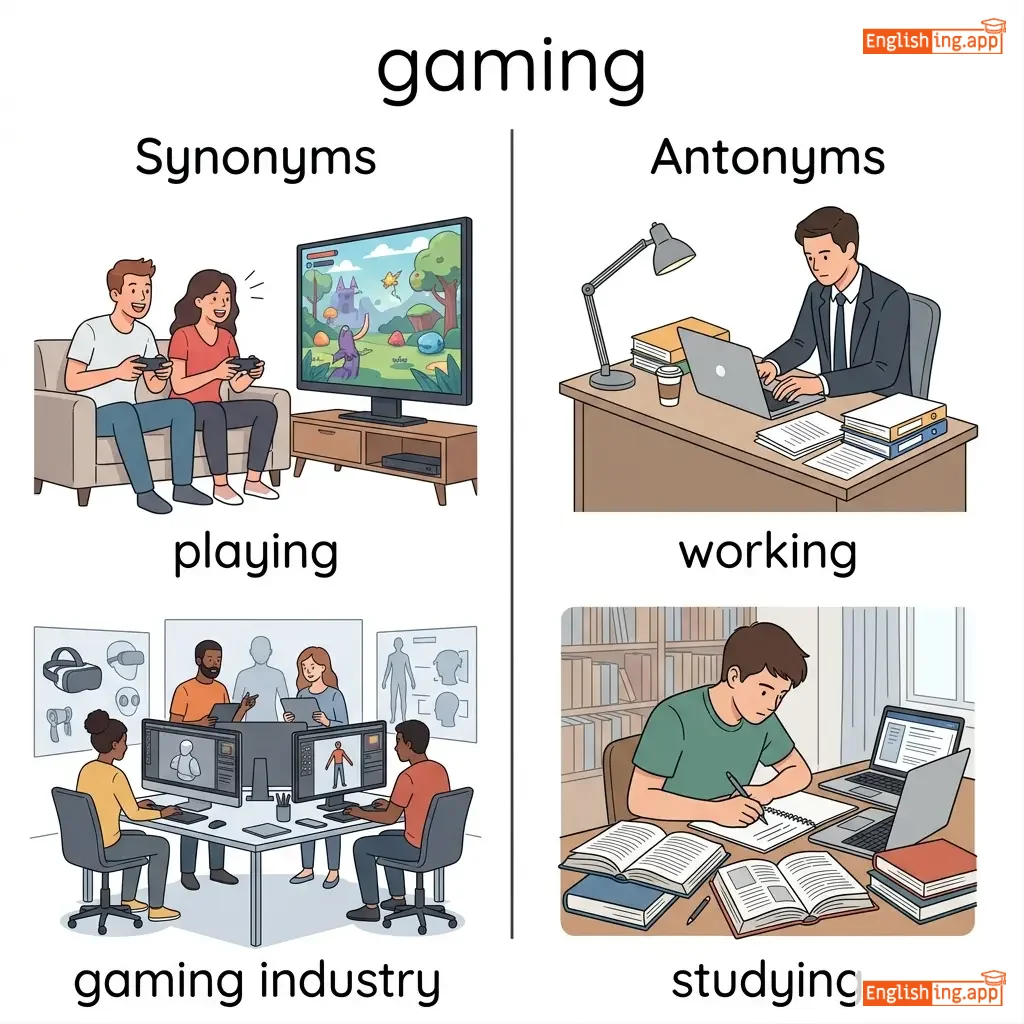
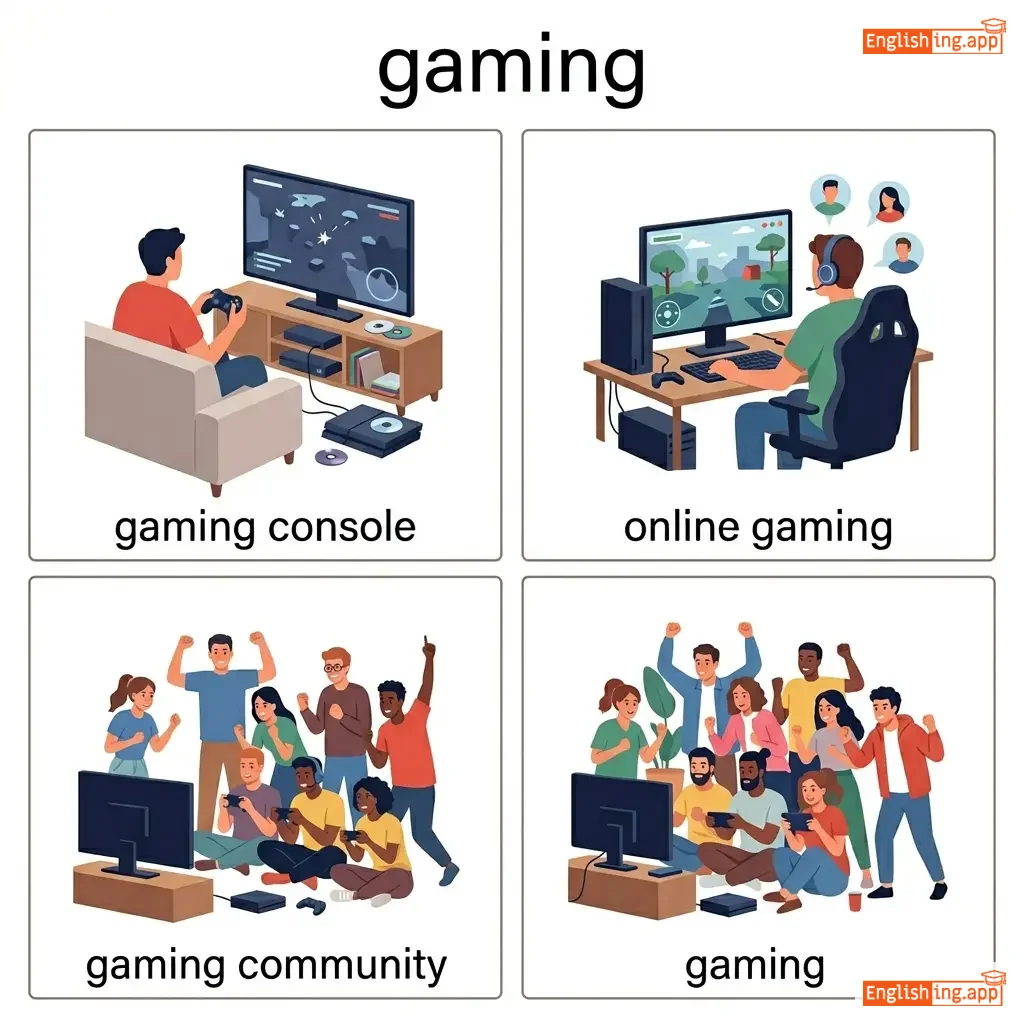
|
- •••••• | - •••••• | - •••••• | - •••••• | - •••••• |
the action or practice of playing games, especially video games
••••••
|
Gaming has become a popular pastime among teenagers. |
- •••••• | - •••••• | - •••••• | - •••••• |
playing, gaming industry, esports
••••••
|
working, studying
••••••
|
gaming console, online gaming, gaming community
••••••
|
No •••••• |
|
👥
••••••
|
/ɡæŋ/
noun
(ギャング)
••••••
|
- •••••• |
ギャング
gyangu
••••••
|
- •••••• | - •••••• | - •••••• | - •••••• |
An organized group of people, often involved in crime or violence.
••••••
|
The gang was arrested by the police last night. |
そのギャングは昨晩警察に逮捕されました。
Sono gyangu wa sakuban keisatsu ni taiho saremashita.
••••••
|
gang up on |
to join together against someone in a hostile way
••••••
|
誰かに対して団結する
Dareka ni taishite danketsu suru
••••••
|
crew, group, band, mob, clique
••••••
|
individual, loner
••••••
|
street gang, criminal gang, gang leader, gang violence
••••••
|
ギャング 👥 はみんなで集まること、まるでギャングのように!
••••••
|
|
🕳️
••••••
|
/ɡæp/
noun
(ギャップ)
••••••
|
- •••••• |
ギャップ / 隙間
gyappu / sukima
••••••
|
- •••••• | - •••••• | - •••••• | - •••••• |
An empty space or break between two objects or parts; a difference or disparity.
••••••
|
There is a huge gap between the rich and the poor. |
裕福な人々と貧しい人々の間には大きなギャップがあります。
Yūfukuna hitobito to mazushī hitobito no aida ni wa ōkina gyappu ga arimasu.
••••••
|
generation gap |
The difference in attitudes or values between younger and older people.
••••••
|
世代間ギャップ
sedai-kan gyappu
••••••
|
space, opening, break, divide, interval
••••••
|
closure, connection, link
••••••
|
bridge the gap, fill the gap, gap year, income gap
••••••
|
Gapはギャップです – ‘Gapは隙間を埋めます’
••••••
|
|
🏠
••••••
|
/ɡəˈrɑːʒ/
noun
(ガレージ)
••••••
|
- •••••• |
ガレージ
gareeji
••••••
|
- •••••• | - •••••• | - •••••• | - •••••• |
a building or space for housing a motor vehicle; a commercial establishment for repairing motor vehicles
••••••
|
He parked his car in the garage to protect it from the hailstorm.
彼は車をガレージに停めて、雹から守りました。
••••••
|
彼は車をガレージに停めて、雹から守りました。
Kare wa kuruma o gareeji ni tomete, hyou kara mamorimashita.
••••••
|
- •••••• | - •••••• | - •••••• |
carport, shed, workshop, parking space
••••••
|
street, outdoors, open air, driveway
••••••
|
car garage, garage door, parking garage
••••••
|
日本語の 'ガレージ' は英語の 'garage' と同じ意味で、自動車を保管する場所です。
••••••
|
|
🗑️
••••••
|
/ˈɡɑːrbɪdʒ/
noun
(ガービッジ)
••••••
|
- •••••• |
ゴミ
gomi
••••••
|
- •••••• | - •••••• | - •••••• | - •••••• |
waste material; things that are no longer useful or wanted
••••••
|
Please take out the garbage before it starts to smell. |
臭くなる前にゴミを外に出してください。
Kusakunaru mae ni gomi o soto ni dashite kudasai.
••••••
|
one man's garbage is another man's treasure |
something worthless to one person may be valuable to another
••••••
|
一人のゴミは他人の宝
Hitori no gomi wa tanin no takara
••••••
|
trash, waste, litter, refuse, junk
••••••
|
treasure, valuables
••••••
|
garbage can, garbage truck, collect garbage, throw garbage
••••••
|
ゴミ = 捨てるべきもの 🗑️
••••••
|
|
🌱
••••••
|
/ˈɡɑːrdn/
noun
(ガーデン)
••••••
|
- •••••• |
庭
niwa
••••••
|
- •••••• | - •••••• | - •••••• | - •••••• |
A piece of ground where flowers, vegetables, or plants are grown.
••••••
|
She grows roses in her garden. |
彼女は自分の庭でバラを育てています。
Kanojo wa jibun no niwa de bara o sodateteimasu.
••••••
|
lead someone up the garden path |
To deceive or mislead someone.
••••••
|
誰かを庭道に誘う
Dareka o niwadori ni sasou
••••••
|
yard, lawn, park, orchard
••••••
|
wasteland, desert
••••••
|
botanical garden, back garden, flower garden, vegetable garden
••••••
|
庭で花を育てる場所 – ガーデンから庭へ。
••••••
|
|
🧄
••••••
|
/ˈɡɑːr.lɪk/
noun
(にんにく)
••••••
|
- •••••• |
にんにく
ninniku
••••••
|
- •••••• | - •••••• | - •••••• | - •••••• |
a strong-smelling pungent-tasting bulb, used as a flavoring in cooking and in herbal medicine
••••••
|
The recipe calls for three cloves of fresh garlic to enhance the flavor.
風味を引き立てるために、レシピには新鮮なにんにくを三片使います。
••••••
|
風味を引き立てるために、レシピには新鮮なにんにくを三片使います。
fuumi o hikitaseru tame ni, reshipi ni wa shinsen na ninniku o sanpi tsukaimasu.
••••••
|
- •••••• | - •••••• | - •••••• |
bulb, clove, seasoning, herb
••••••
|
sweetener, sugar, bland spice, mild herb
••••••
|
fresh garlic, garlic clove, roasted garlic
••••••
|
Imagine a garlic bulb with a neon GARLIC sign and a tiny chef whispering にんにく to flavor every dish.
••••••
|
|
⛽
••••••
|
/ɡæs/
noun
(ガス)
••••••
|
- •••••• |
ガス
gasu
••••••
|
- •••••• | - •••••• | - •••••• | - •••••• |
A substance like air that is neither solid nor liquid and can expand freely.
••••••
|
The balloon was filled with gas. |
風船はガスで満たされていた。
Fūsen wa gasu de mitasarete ita.
••••••
|
step on the gas |
To accelerate or go faster.
••••••
|
アクセルを踏む
Akuseru o fumu
••••••
|
vapor, fume, air, fuel
••••••
|
solid, liquid
••••••
|
natural gas, gas station, gas leak, gas supply
••••••
|
ガス – ガスは速く広がる、車を速く進ませる。
••••••
|
|
⛽
••••••
|
/ˈɡæsəˌliːn/
noun
(ガソリン)
••••••
|
- •••••• |
ガソリン
gasorin
••••••
|
- •••••• | - •••••• | - •••••• | - •••••• |
a liquid fuel made from petroleum, used mainly to power engines in vehicles
••••••
|
The price of gasoline has increased significantly this month. |
今月のガソリン価格は大幅に上昇しました。
kongetsu no gasorin kakaku wa ouhaba ni joushou shimashita.
••••••
|
run out of gasoline |
to have no fuel left in a vehicle
••••••
|
ガソリンが切れる
gasorin ga kireru
••••••
|
petrol, fuel, gas, diesel, energy
••••••
|
electricity, power outage
••••••
|
gasoline price, gasoline engine, gasoline station, gallon of gasoline
••••••
|
ガソリンは車の燃料です。'ガソリン'は車にエネルギーを与えるものです。
••••••
|
|
🚪
••••••
|
/ɡeɪt/
noun
(ハピネス)
••••••
|
- •••••• |
幸せ
shiawase
••••••
|
- •••••• | - •••••• | - •••••• | - •••••• |
A movable barrier that opens and closes to allow or prevent entry through an opening.
••••••
|
She closed the gate behind her as she left the garden. |
彼女は賞を受け取ったとき、喜びを隠すことができませんでした。
Kanojo wa shō o uketotta toki, yorokobi o kakusu koto ga dekimasen deshita.
••••••
|
at death's gate |
very close to dying
••••••
|
幸せの追求
shiawase no tsuikyū
••••••
|
door, entrance, barrier, portal, gateway
••••••
|
exit, opening
••••••
|
front gate, garden gate, iron gate, open the gate
••••••
|
幸せはあなたが追い求めるべき目標です。
••••••
|
|
🤲
••••••
|
/ˈɡæðər/
verb
(ギャザー)
••••••
|
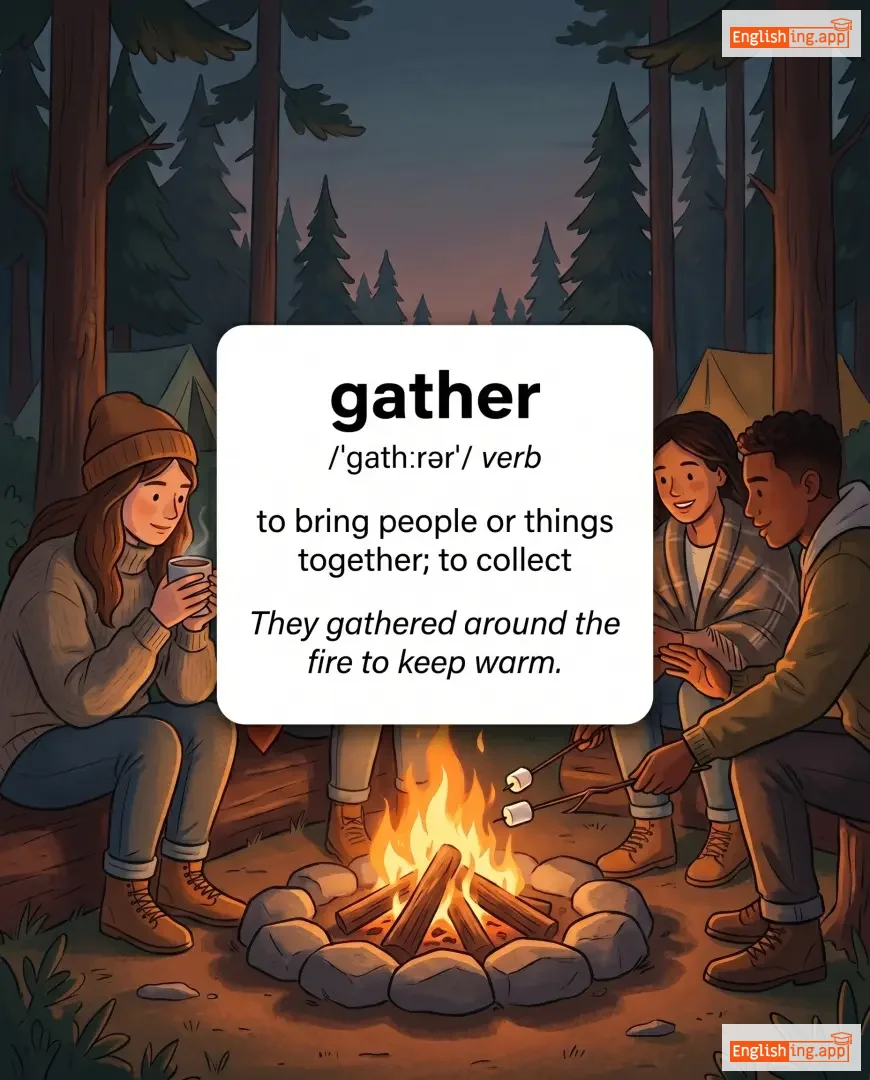
|
集める
atsumeru
••••••
|
gathered
ギャザード
••••••
|
gathered
ギャザード
••••••
|
gathers
ギャザーズ
••••••
|
gathering
ギャザリング
••••••
|
to bring people or things together; to collect
••••••
|
They gathered around the fire to keep warm.
彼らは暖かく保つために火の周りに集まりました。
••••••
|
彼らは暖かく保つために火の周りに集まりました。
Karera wa atatakai koto o tamotsu tame ni hi no mawari ni atsumarimashita.
••••••
|
gather one's thoughts
考えをまとめる
••••••
|
to take time to think and organize one's ideas
••••••
|
考えをまとめる
Kangae o matomeru
••••••
|
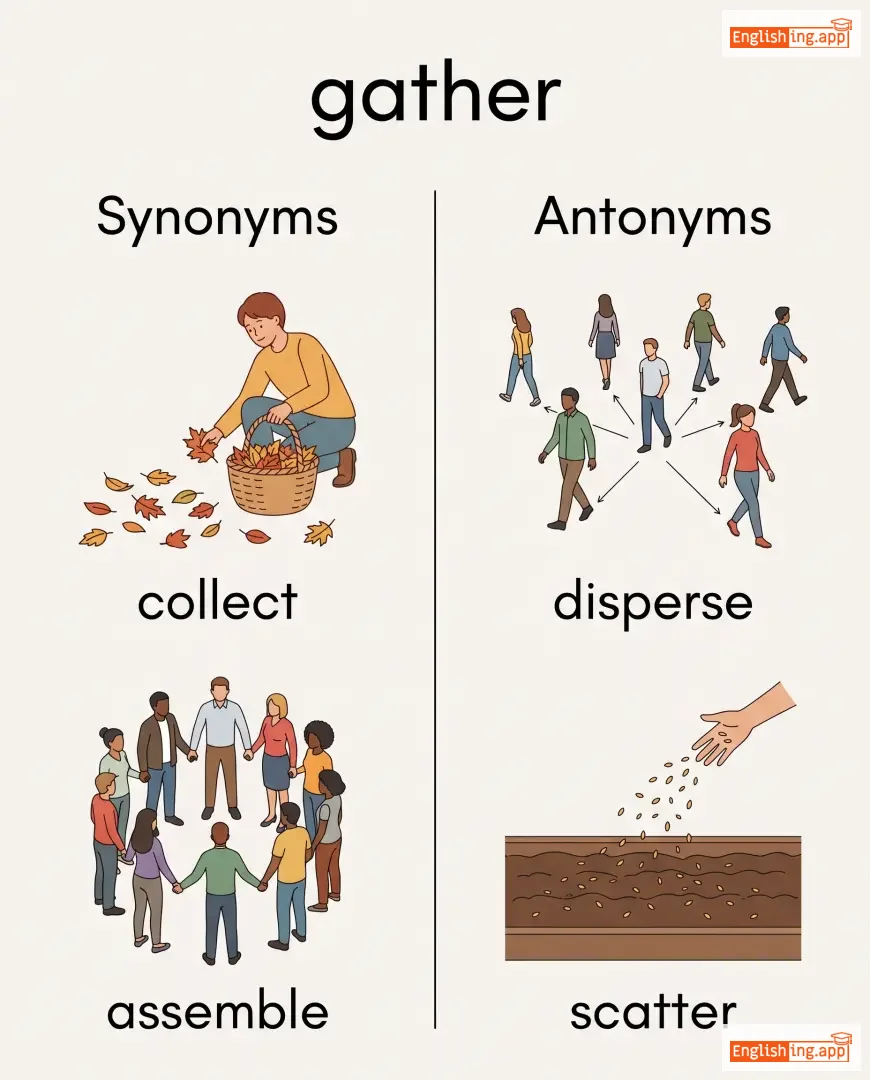
collect, assemble, accumulate, convene, congregate
••••••
|
disperse, scatter, separate
••••••
|
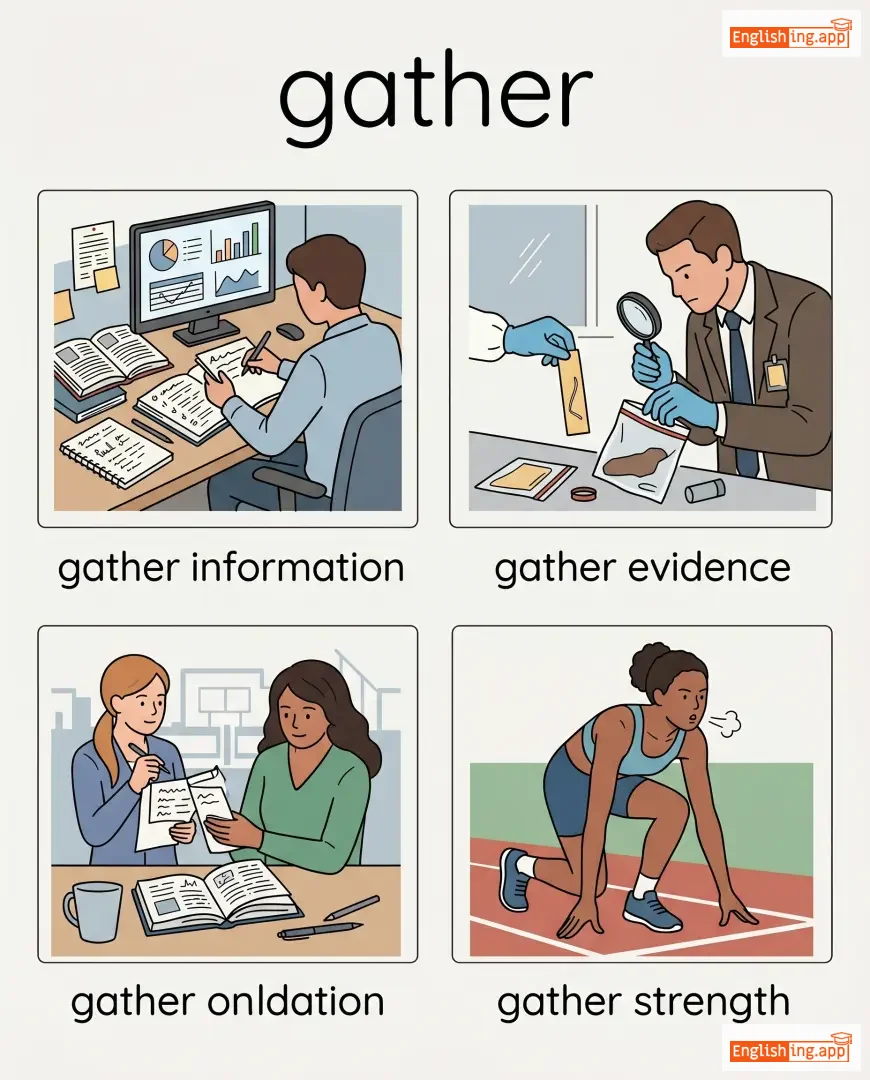
gather information, gather evidence, gather strength, gather crowd
••••••
|
Gatherは集める意味で、みんなが火の周りに集まるようなものです。
••••••
|
|
👥
••••••
|
/ˈɡæðərɪŋ/
noun
(ギャザリング)
••••••
|
- •••••• |
集まり
atsumari
••••••
|
- •••••• | - •••••• | - •••••• | - •••••• |
a meeting or assembly of people for a particular purpose
••••••
|
We attended a family gathering last weekend.
私たちは先週末、家族の集まりに参加しました。
••••••
|
私たちは先週末、家族の集まりに参加しました。
Watashitachi wa senshūmatsu, kazoku no atsumari ni sankashimashita.
••••••
|
social gathering
ソーシャルギャザリング
••••••
|
a casual event where people meet and interact socially
••••••
|
社会的集まり
shakaiteki atsumari
••••••
|
meeting, assembly, party, event, conference
••••••
|
separation, dispersal
••••••
|
family gathering, large gathering, small gathering, informal gathering
••••••
|
Gather は集める意味 → Gathering は集まること、例えば 'Family gathering' のようにみんなが集まる!
••••••
|
|
🏳️🌈
••••••
|
/ɡeɪ/
adjective
(ゲイ)
••••••
|
- •••••• |
ゲイ
gei
••••••
|
- •••••• | - •••••• | - •••••• | - •••••• |
sexually attracted to people of the same sex; also used to mean cheerful or lively
••••••
|
He came out as gay during college. |
彼は大学でゲイであることをカミングアウトした。
Kare wa daigaku de gei de aru koto o kamingu auto shita.
••••••
|
- •••••• | - •••••• | - •••••• |
homosexual, queer, cheerful, lively
••••••
|
straight, sad
••••••
|
gay rights, gay community, gay marriage, openly gay
••••••
|
ゲイは日本語でもそのまま、レインボーフラッグ (🏳️🌈) を思い出して
••••••
|
|
👀
••••••
|
/ɡeɪz/
verb
(ゲイズ)
••••••
|
- •••••• |
じっと見る
jitto miru
••••••
|
gazed
ゲイズド
••••••
|
gazed
ゲイズド
••••••
|
gazes
ゲイゼス
••••••
|
gazing
ゲイジング
••••••
|
To look steadily and intently at something, usually with admiration, surprise, or thought.
••••••
|
He gazed at the stars in wonder.
彼は驚きで星を見つめた。
••••••
|
彼は驚きで星を見つめた。
kare wa odoroki de hoshi o mitsumeta.
••••••
|
gaze into the distance
遠くを見つめる
••••••
|
to look far away thoughtfully
••••••
|
遠くを見つめる
tōku o mitsumeru
••••••
|
stare, look, peer, glance, observe
••••••
|
ignore, overlook
••••••
|
gaze at, gaze into, gaze upward, gaze longingly
••••••
|
ゲイズはじっと見るということです。
••••••
|
|
⚙️
••••••
|
/ɡɪə(r)/
noun
(ギア)
••••••
|
- •••••• |
装備 / ギア
sōbi / gia
••••••
|
- •••••• | - •••••• | - •••••• | - •••••• |
Equipment or apparatus for a particular purpose; also a toothed wheel in machinery.
••••••
|
The climber packed all his gear before starting the journey. |
登山者は旅を始める前にすべてのギアをパックしました。
Tozan-sha wa tabi o hajimeru mae ni subete no gia o pakkushimashita.
••••••
|
shift gears |
To change one's approach or method of doing something.
••••••
|
ギアを変える
Gia o kaeru
••••••
|
equipment, apparatus, tools, kit, machinery
••••••
|
emptiness, lack, nothing
••••••
|
sports gear, camping gear, gear shift, protective gear
••••••
|
ギアは車のギアと同じく、物事を進めるために使う道具です。
••••••
|
|
⚧️
••••••
|
/ˈdʒen.dər/
noun
(ジェンダー)
••••••
|
- •••••• |
性別
seibetsu
••••••
|
- •••••• | - •••••• | - •••••• | - •••••• |
either of the two sexes (male and female); the range of characteristics pertaining to masculinity and femininity
••••••
|
The company promotes gender equality by ensuring equal opportunities for all employees.
その企業はすべての従業員に平等な機会を提供することで、ジェンダー平等を促進しています。
••••••
|
その企業はすべての従業員に平等な機会を提供することで、ジェンダー平等を促進しています。
Sono kigyō wa subete no jūgyōin ni byōdō na kikai o teikyō suru koto de, jendā byōdō o sokushin shiteimasu.
••••••
|
- •••••• | - •••••• | - •••••• |
sex, classification, category, type
••••••
|
genderless, neutral, unspecified, ambiguous
••••••
|
gender equality, gender roles, gender identity
••••••
|
ジェンダー (seibetsu) – 性別による男女の違いを理解するために使用されます。
••••••
|
|
🧬
••••••
|
/dʒiːn/
noun
(ジーン)
••••••
|
- •••••• |
遺伝子
iden-shi
••••••
|
- •••••• | - •••••• | - •••••• | - •••••• |
A unit of heredity in living organisms, transferred from parent to offspring, determining traits.
••••••
|
Eye color is influenced by genes inherited from parents. |
目の色は親から受け継いだ遺伝子によって影響を受けます。
me no iro wa oya kara uketsuida idenshi ni yotte eikyo o ukemasu.
••••••
|
in one's genes |
a natural trait inherited from family
••••••
|
誰かの遺伝子に
dareka no idenshi ni
••••••
|
DNA, chromosome, heredity, trait, genome
••••••
|
environment, nurture
••••••
|
gene mutation, gene therapy, human gene, dominant gene
••••••
|
遺伝子 = Gene、DNA 🧬 忘れないで!
••••••
|
|
🌍
••••••
|
/ˈdʒɛnərəl/
adjective
(ジェネラル)
••••••
|
- •••••• |
一般的
ippan-teki
••••••
|
- •••••• | - •••••• | - •••••• | - •••••• |
Relating to all or most people, things, or situations; not specific.
••••••
|
He made a general comment about the project. |
彼はプロジェクトに関する一般的なコメントをしました。
Kare wa purojekuto ni kansuru ippan-teki na komento o shimashita.
••••••
|
in general |
usually or mostly
••••••
|
一般的に
ippan-teki ni
••••••
|
common, overall, broad, universal, widespread
••••••
|
specific, particular
••••••
|
general idea, general knowledge, general opinion, general rule
••••••
|
一般的は一般的、'一般的に'は通常または主にを意味します。
••••••
|
|
🌍
••••••
|
/ˈdʒɛnərəli/
adverb
(ジェネラリー)
••••••
|
- •••••• |
一般的に
ippanteki ni
••••••
|
- •••••• | - •••••• | - •••••• | - •••••• |
in most cases; usually; as a rule
••••••
|
He generally arrives at work before 9 a.m. |
彼は一般的に午前9時前に仕事に到着します。
Kare wa ippanteki ni gozen 9 ji mae ni shigoto ni touchakushimasu.
••••••
|
as a general rule |
something that is true in most situations
••••••
|
一般的なルールとして
ippanteki na ruuru to shite
••••••
|
usually, typically, commonly, ordinarily, mostly
••••••
|
rarely, seldom, never
••••••
|
generally accepted, generally speaking, generally known, generally considered
••••••
|
一般的なルールの中で通常のことであり、だから‘generally’は‘一般的に’を意味します。
••••••
|
|
⚡
••••••
|
/ˈdʒɛnəreɪt/
verb
••••••
|
- •••••• | - •••••• |
generated
••••••
|
generated
••••••
|
generates
••••••
|
generating
••••••
|
to produce or create something
••••••
|
The machine generates electricity. |
- •••••• |
generate interest |
to make people feel curious or engaged
••••••
|
- •••••• |
produce, create, make, yield, cause
••••••
|
destroy, stop, halt
••••••
|
generate power, generate ideas, generate revenue, generate interest
••••••
|
No •••••• |
|
👶
••••••
|
/ˌdʒɛnəˈreɪʃən/
noun
(ジェネレーション)
••••••
|
- •••••• |
世代
sedai
••••••
|
- •••••• | - •••••• | - •••••• | - •••••• |
all the people born and living at about the same time; the process of producing something
••••••
|
The younger generation is more comfortable with technology. |
若い世代はテクノロジーにもっと慣れています。
wakai sedai wa tekunorojī ni motto nareteimasu.
••••••
|
generation gap |
the difference in attitudes and behavior between older and younger people
••••••
|
世代間のギャップ
sedaikan no gyappu
••••••
|
cohort, age group, era, production, creation
••••••
|
ancestors, destruction
••••••
|
younger generation, next generation, generation gap, generation of energy
••••••
|
各世代 (sedai) は新しいGENを作ります - Generationは世代を意味します
••••••
|
|
📦
••••••
|
/dʒəˈnɛrɪk/
adjective
(ジェネリック)
••••••
|
- •••••• |
ジェネリック
jenerikku
••••••
|
- •••••• | - •••••• | - •••••• | - •••••• |
characteristic of or relating to a whole group or class; not specific
••••••
|
This medicine is available in generic form. |
この薬はジェネリックの形態で提供されています。
Kono kusuri wa jenerikku no keitai de teikyō sareteimasu.
••••••
|
generic term |
a word used for a general category rather than something specific
••••••
|
ジェネリック用語
jenerikku yōgo
••••••
|
general, common, universal, non-specific
••••••
|
specific, unique, special
••••••
|
generic brand, generic product, generic form, generic term
••••••
|
ジェネリックはブランドなし、でも効く薬です。
••••••
|
|
🎁
••••••
|
/ˈdʒɛnərəs/
adjective
(ジェネラス)
••••••
|
- •••••• |
寛大
kandai
••••••
|
- •••••• | - •••••• | - •••••• | - •••••• |
willing to give or share more than is necessary; kind and giving
••••••
|
She is very generous with her time and money. |
彼女は時間とお金にとても寛大です。
Kanojo wa jikan to okane ni totemo kandai desu.
••••••
|
to a generous extent |
to a large or considerable degree
••••••
|
寛大な程度まで
kandai na teido made
••••••
|
kind, giving, charitable, benevolent, unselfish
••••••
|
selfish, stingy, mean
••••••
|
generous offer, generous donation, generous spirit, generous amount
••••••
|
寛大 means generous heart— 日本語、寛大な心
••••••
|
|
🤲
••••••
|
/ˈdʒenərəsli/
adverb
(ジェネラスリー)
••••••
|
- •••••• |
惜しみなく
oshiminaku
••••••
|
- •••••• | - •••••• | - •••••• | - •••••• |
in a kind, giving, or unselfish manner; in a plentiful or abundant way
••••••
|
She generously donated money to help the poor.
シー ジェネラスリー ドネイテッド マニー トゥ ヘルプ ザ プア
••••••
|
彼女は貧しい人々を助けるために惜しみなくお金を寄付した。
kanojo wa mazushii hitobito o tasukeru tame ni oshiminaku okane o kifushita
••••••
|
give generously
ギブ ジェネラスリー
••••••
|
to give freely and kindly without expecting anything in return
••••••
|
惜しみなく与える
oshiminaku ataeru
••••••
|
kindly, liberally, benevolently, freely, charitably
••••••
|
stingily, selfishly, miserly
••••••
|
generously donate, generously support, generously offer, generously reward
••••••
|
惜しみなく = generousに = generously
••••••
|
|
🧬
••••••
|
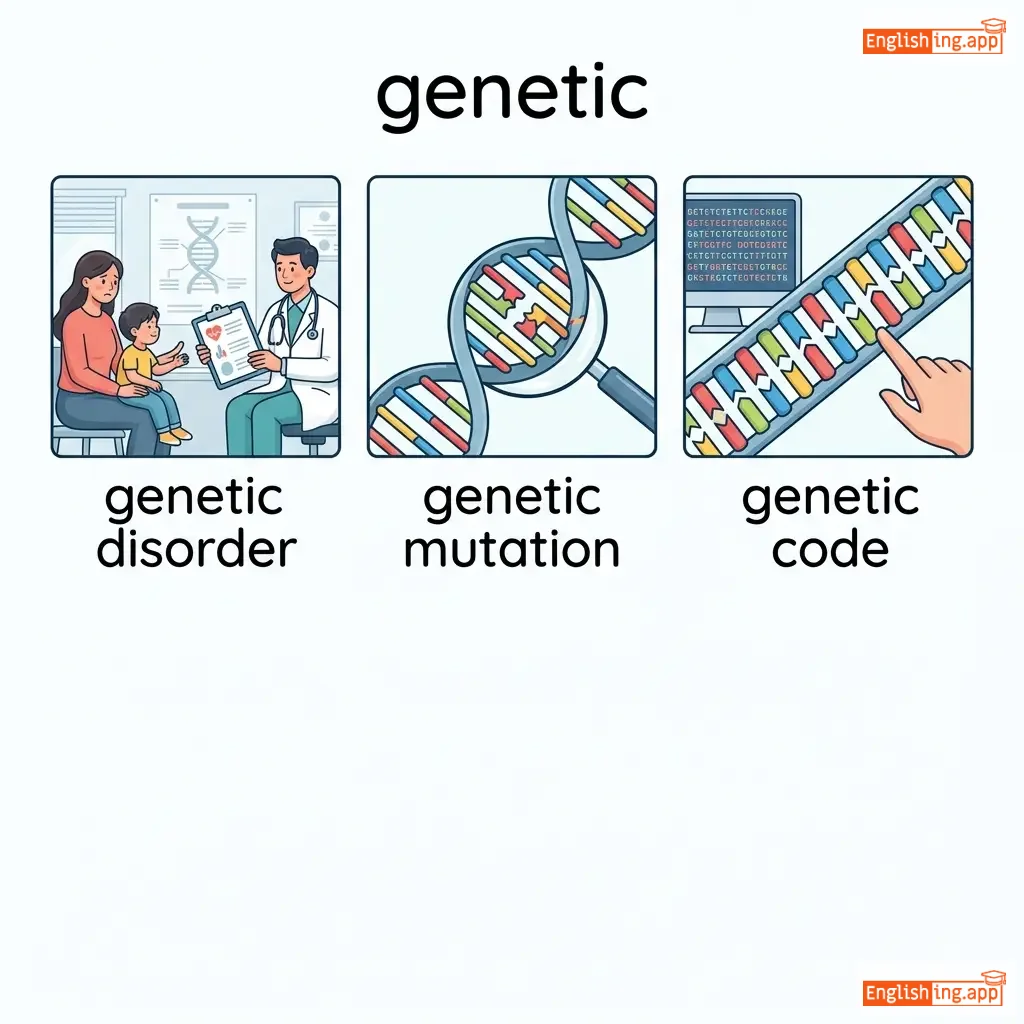
/dʒəˈnɛtɪk/
adjective
(ジェネティック)
••••••
|
|
遺伝的
identeki
••••••
|
- •••••• | - •••••• | - •••••• | - •••••• |
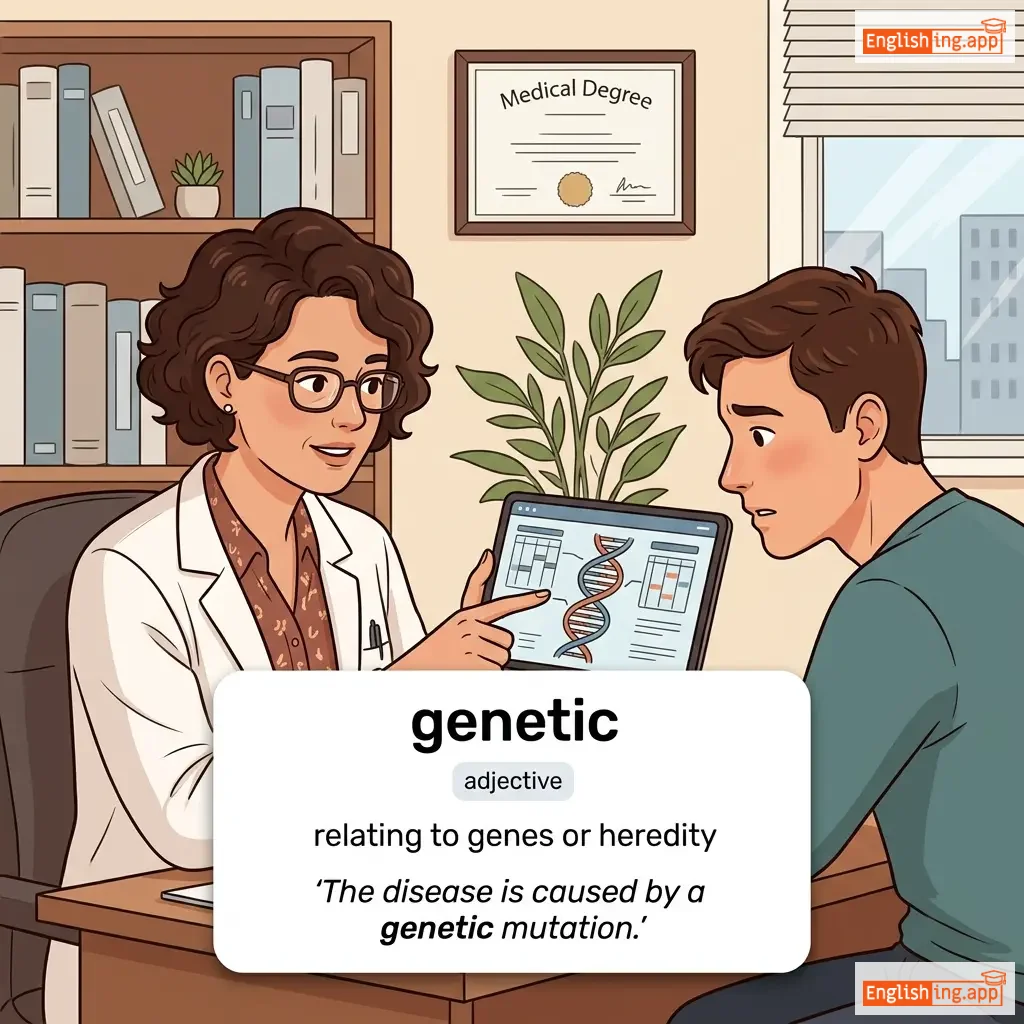
relating to genes or heredity
••••••
|
The disease is caused by a genetic mutation.
その病気は遺伝的変異によって引き起こされます。
••••••
|
その病気は遺伝的変異によって引き起こされます。
sono byōki wa iden teki hen'i ni yotte hikiokosaremasu.
••••••
|
genetic makeup
遺伝的構造
••••••
|
the set of genes that make up an individual
••••••
|
遺伝的構造
iden teki kōzō
••••••
|
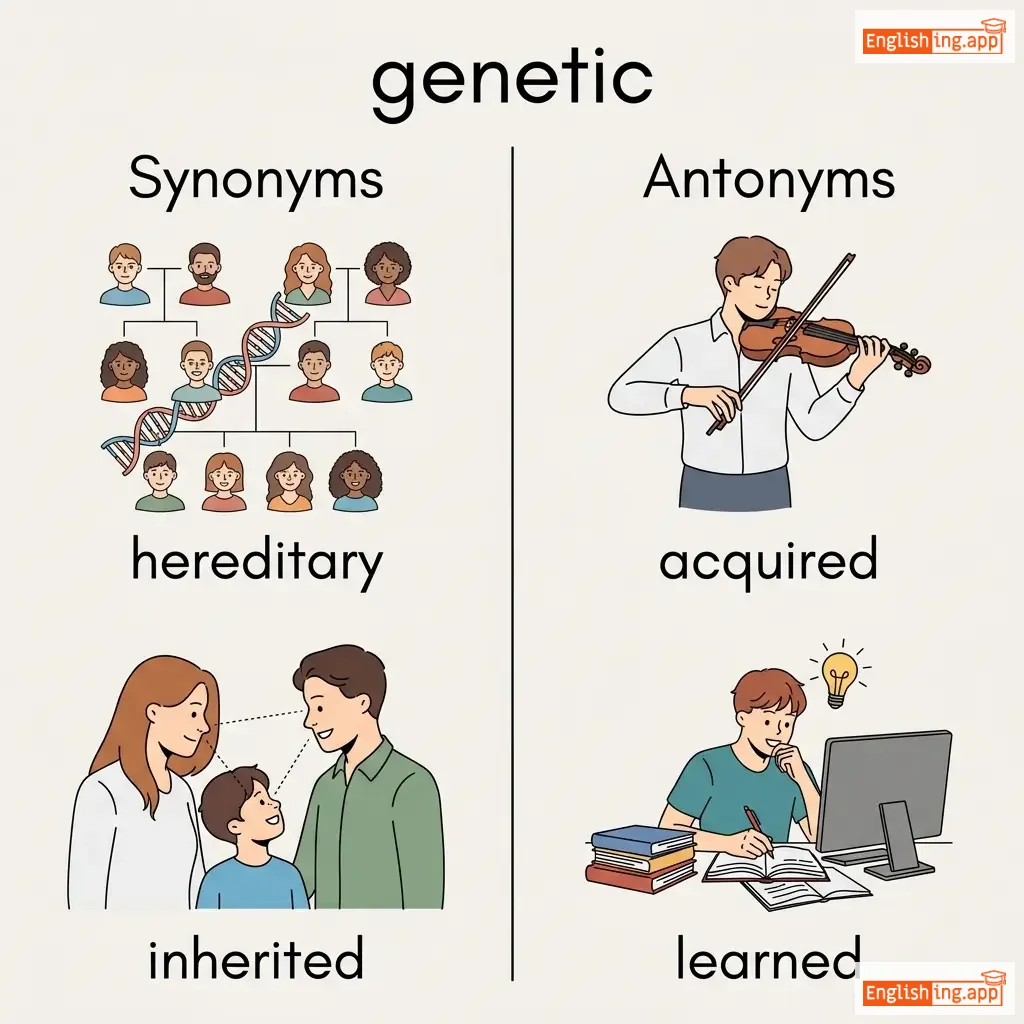
hereditary, inherited, biological, genomic
••••••
|
acquired, learned
••••••
|
genetic disorder, genetic mutation, genetic code, genetic makeup
••••••
|
GENは遺伝的に関連しており、ジェネティックがその意味です。
••••••
|
|
🧠
••••••
|
/ˈdʒiːniəs/
noun
(ジーニアス)
••••••
|
- •••••• |
天才
tensai
••••••
|
- •••••• | - •••••• | - •••••• | - •••••• |
a person with exceptional intellectual or creative ability
••••••
|
Einstein was a scientific genius. |
アインシュタインは科学的な天才でした。
Ainshutain wa kagakuteki na tensai deshita.
••••••
|
stroke of genius |
a brilliant or very clever idea
••••••
|
天才のひらめき
tensai no hirameki
••••••
|
prodigy, mastermind, intellect, wizard, brain
••••••
|
fool, simpleton, idiot
••••••
|
artistic genius, musical genius, pure genius, show genius
••••••
|
Geniusを覚えるには‘天才’ — アイデアの天才だ!
••••••
|
|
☠️
••••••
|
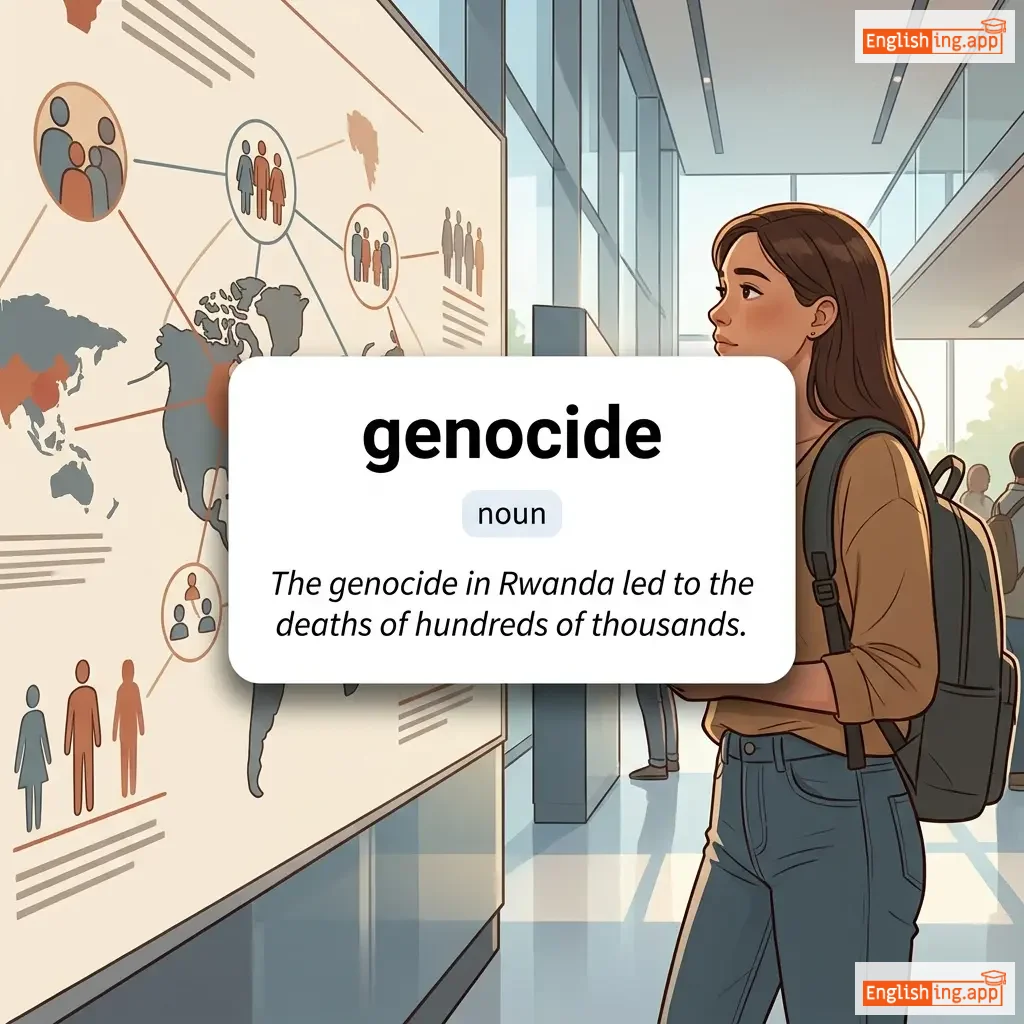
/ˈdʒen.ə.saɪd/
noun
(ジェノサイド)
••••••
|
|
ジェノサイド
jenosaido
••••••
|
- •••••• | - •••••• | - •••••• | - •••••• |
the deliberate killing of a large group of people, especially those of a particular ethnic group or nation
••••••
|
The international court condemned the systematic genocide committed during the war. |
国際裁判所は戦争中に行われた体系的なジェノサイドを非難しました。
Kokusai saiban-sho wa sensō-chū ni okonawareta taikei-teki na jenosaido o hinan shimashita.
••••••
|
- •••••• | - •••••• | - •••••• |
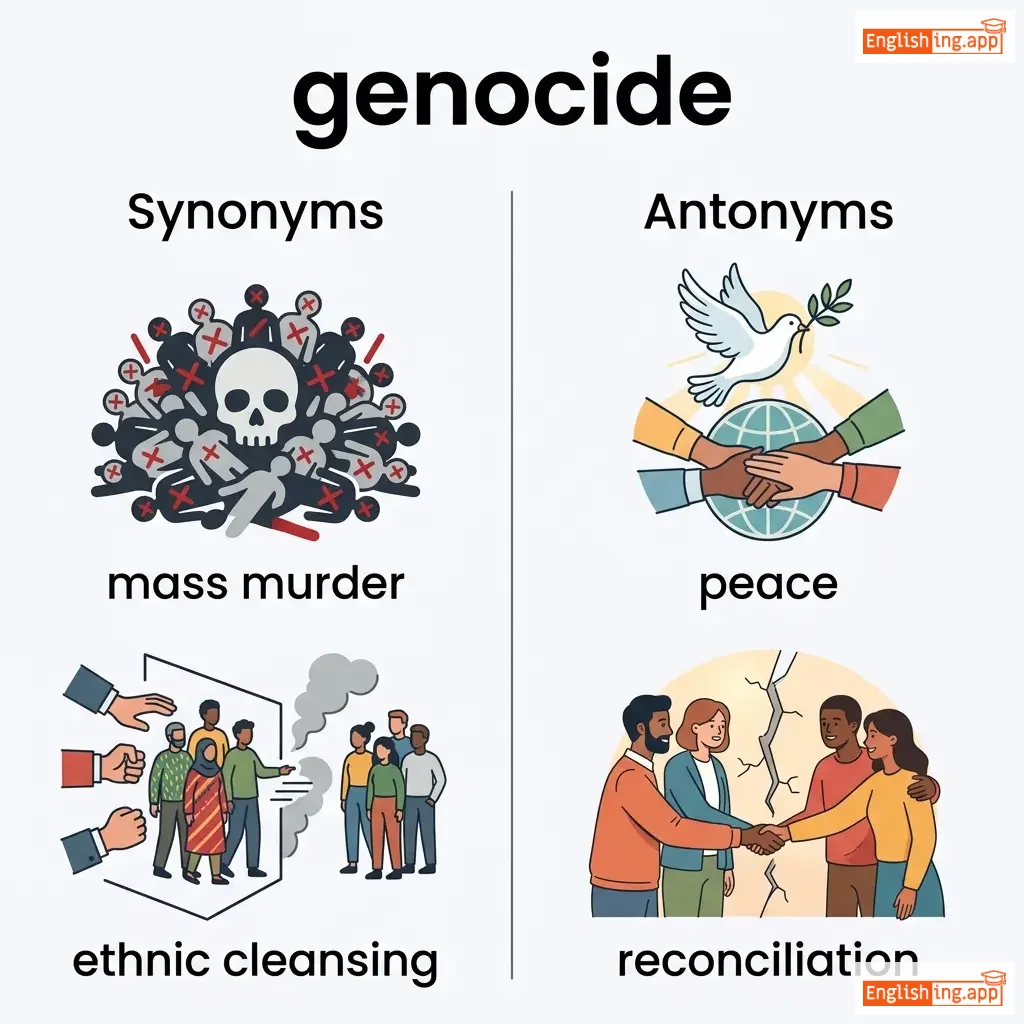
mass murder, ethnic cleansing, extermination, massacre
••••••
|
protection, preservation, salvation, rescue
••••••
|
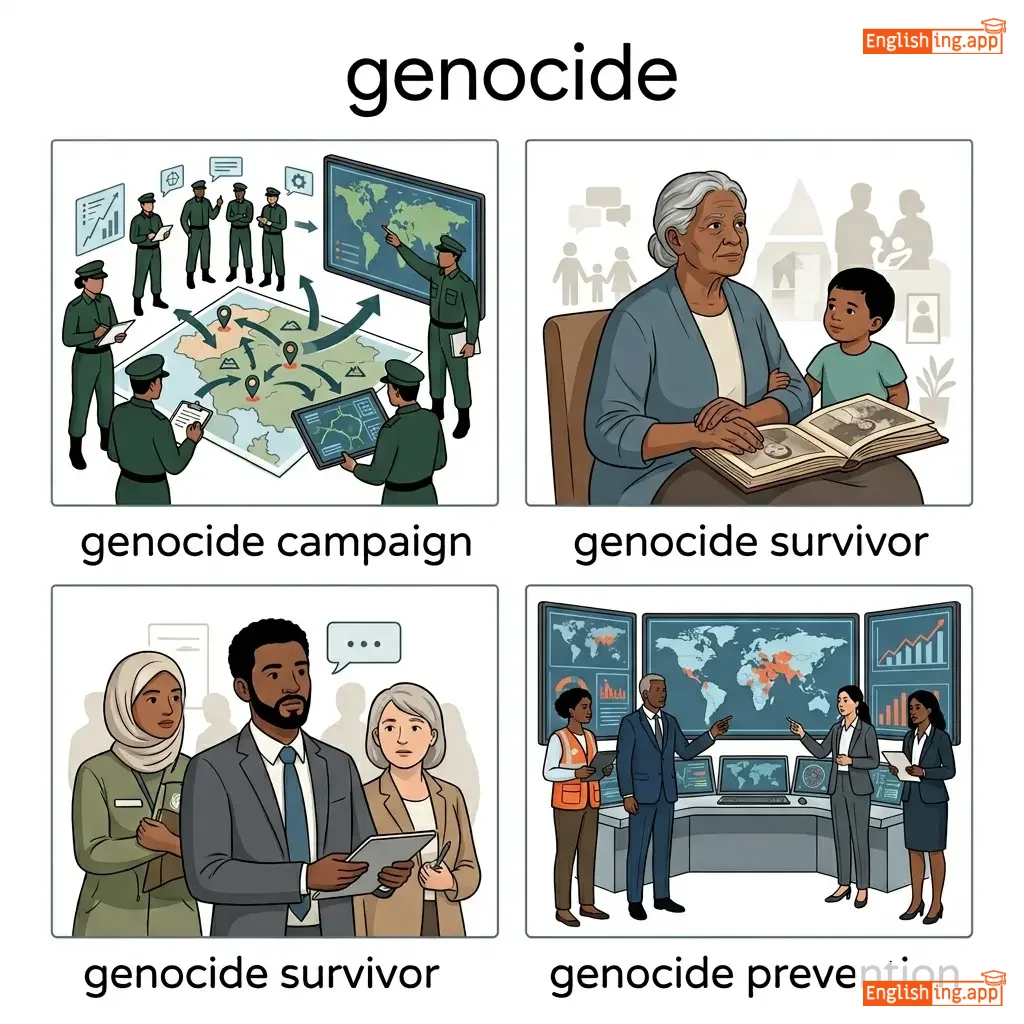
prevent genocide, genocide prevention, ethnic genocide
••••••
|
ジェノサイドとは民族を根絶すること、覚えやすいジェノサイド。
••••••
|
|
🌸
••••••
|
/ˈdʒɛntəl/
adjective
(ジェントル)
••••••
|
- •••••• |
優しい
yasashii
••••••
|
- •••••• | - •••••• | - •••••• | - •••••• |
Kind, mild, or tender in nature or behavior
••••••
|
He was always gentle with children. |
彼はいつも子供たちに優しかった。
Kare wa itsumo kodomotachi ni yasashikatta.
••••••
|
gentle reminder |
a polite and soft way to remind someone
••••••
|
優しいリマインダー
yasashī rimaitā
••••••
|
kind, tender, mild, soft, calm
••••••
|
harsh, rough, cruel
••••••
|
gentle touch, gentle smile, gentle reminder, gentle nature
••••••
|
優しい風のような優しさ
••••••
|
|
🤵
••••••
|
/ˈdʒɛntəlmən/
noun
(ジェントルマン)
••••••
|
- •••••• |
紳士
shin-shi
••••••
|
- •••••• | - •••••• | - •••••• | - •••••• |
a man who is polite, courteous, and honorable
••••••
|
He opened the door for her like a true gentleman. |
彼は本物の紳士のように彼女のためにドアを開けた。
Kare wa honmono no shin-shi no yō ni kanojo no tame ni doa o aketa.
••••••
|
perfect gentleman |
a man who behaves very politely and respectfully
••••••
|
完璧な紳士
kanpeki na shin-shi
••••••
|
man, sir, nobleman, gallant, gent
••••••
|
boor, rude man
••••••
|
true gentleman, perfect gentleman, young gentleman, gentleman's club
••••••
|
紳士 (shin-shi) は Gentle (ジェントル) な男性で、尊敬を集めます
••••••
|
|
🌸
••••••
|
/ˈdʒɛntli/
adverb
(ジェントリー)
••••••
|
- •••••• |
優しく
yasashiku
••••••
|
- •••••• | - •••••• | - •••••• | - •••••• |
in a kind, careful, or soft way
••••••
|
She gently placed the baby in the crib. |
彼女は赤ちゃんを優しくベビーベッドに置きました。
Kanojo wa akachan o yasashiku bebībeddo ni okimashita.
••••••
|
gently does it |
a reminder to do something slowly and carefully
••••••
|
優しくやって
yasashiku yatte
••••••
|
softly, tenderly, lightly, calmly
••••••
|
harshly, roughly
••••••
|
speak gently, touch gently, gently smiling, gently place
••••••
|
優しく、ジェントリー、どちらも丁寧!
••••••
|
|
✅
••••••
|
/ˈdʒɛnjʊɪn/
adjective
(ジェニュイン)
••••••
|
- •••••• |
本物
honmono
••••••
|
- •••••• | - •••••• | - •••••• | - •••••• |
real and authentic; not fake or artificial
••••••
|
This is a genuine leather bag. |
これは本物の革のバッグです。
Kore wa honmono no kawa no baggu desu.
••••••
|
genuine article |
an authentic or real example of something
••••••
|
本物の記事
honmono no kiji
••••••
|
authentic, real, true, legitimate, sincere
••••••
|
fake, false, counterfeit
••••••
|
genuine smile, genuine leather, genuine concern, genuine effort
••••••
|
Genuine は本物を意味します、例えば本物の笑顔は本物の笑顔を意味します。
••••••
|
|
❤️
••••••
|
/ˈdʒɛnjʊɪnli/
adverb
(ジェニュインリー)
••••••
|
- •••••• |
本当に
hontōni
••••••
|
- •••••• | - •••••• | - •••••• | - •••••• |
in a truthful and sincere way
••••••
|
She genuinely cares about the environment.
彼女は本当に環境のことを気にかけています。
••••••
|
彼女は本当に環境のことを気にかけています。
Kanojo wa hontōni kankyō no koto o ki ni kaketeimasu.
••••••
|
- •••••• | - •••••• | - •••••• |
sincerely, honestly, truly, authentically
••••••
|
falsely, insincerely, dishonestly
••••••
|
genuinely concerned, genuinely interested, genuinely believe
••••••
|
本当に何かを言うとき、それはあなたの'本当の'感情を示しています、まるで'ホント'のように誠実に言っているかのように。
••••••
|
|
🗺️
••••••
|
/ˌdʒiːəˈɡræfɪkəl/
adjective
(ジオグラフィカル)
••••••
|
- •••••• |
地理的な
chiriteki na
••••••
|
- •••••• | - •••••• | - •••••• | - •••••• |
relating to geography; connected with the physical features, location, or characteristics of the Earth or a particular area
••••••
|
The country’s geographical position makes it an important trading hub.
ザ カントリーズ ジオグラフィカル ポジション メイクス イット アン インポータント トレーディング ハブ。
••••••
|
その国の地理的な位置は重要な貿易拠点となっています。
sono kuni no chiriteki na ichi wa juyo na boeki kyoten to natte imasu
••••••
|
geographical location
geographical location
••••••
|
the specific position or place of an area on the Earth
••••••
|
地理的な位置
chiriteki na ichi
••••••
|
regional, territorial, spatial, topographical, locational
••••••
|
nonspatial, abstract
••••••
|
geographical location, geographical features, geographical distribution, geographical boundaries, geographical diversity
••••••
|
地理 = geography → 地理的な
••••••
|
|
🌍
••••••
|
/dʒiˈɒɡrəfi/
noun
(ジオグラフィー)
••••••
|
- •••••• |
地理
chiri
••••••
|
- •••••• | - •••••• | - •••••• | - •••••• |
the study of the Earth’s physical features, climates, populations, and the relationships between people and their environments
••••••
|
She studies geography to understand how landscapes and human societies interact.
彼女はジオグラフィーを勉強しています。
••••••
|
彼女は世界を理解するために地理を学んでいます。
kanojo wa sekai o rikai suru tame ni chiri o manande imasu
••••••
|
- •••••• | - •••••• | - •••••• |
earth science, physical geography, human geography, geoscience
••••••
|
history, literature
••••••
|
physical geography, human geography, study geography, geography lesson, world geography
••••••
|
地 = earth, 理 = reason → 地理 = geography
••••••
|
|
🇩🇪
••••••
|
/ˈdʒɜːrmən/
noun/adjective
(ジャーマン)
••••••
|
- •••••• |
ドイツ語
doitsugo
••••••
|
- •••••• | - •••••• | - •••••• | - •••••• |
relating to Germany, its people, or its language
••••••
|
She is learning German to study abroad. |
彼女は海外で勉強するためにドイツ語を学んでいます。
kanojo wa kaigai de benkyou suru tame ni doitsugo o manandeimasu.
••••••
|
German shepherd |
a breed of large dog originally bred in Germany
••••••
|
ジャーマン・シェパード
jāman shepādo
••••••
|
Teutonic, Deutsch, European
••••••
|
non-German, foreign
••••••
|
German language, German culture, German shepherd, German food
••••••
|
ドイツ語はドイツで話されており、ドイツ語の犬であるジャーマン・シェパードもドイツから来た!
••••••
|
|
🤲
••••••
|
/ˈdʒɛs.tʃər/
noun
(ジェスチャー)
••••••
|
- •••••• |
ジェスチャー
jesuchā
••••••
|
- •••••• | - •••••• | - •••••• | - •••••• |
A movement of part of the body, especially the hands or head, to express an idea or meaning.
••••••
|
She made a friendly gesture to welcome the guests. |
彼女はゲストを歓迎するために友好的なジェスチャーをしました。
Kanojo wa gesuto o kangei suru tame ni yūkō-teki na jesuchā o shimashita.
••••••
|
gesture of goodwill |
An act intended to show kindness or positive intention.
••••••
|
善意のジェスチャー
zen'i no jesuchā
••••••
|
motion, signal, sign, indication, movement
••••••
|
inaction, stillness
••••••
|
kind gesture, simple gesture, symbolic gesture, gesture of support
••••••
|
ゲストに対して友好的なジェスチャーをしよう!
••••••
|
|
📦
••••••
|
/ɡɛt/
verb
(ゲット)
••••••
|

|
得る
eru
••••••
|
got
ゴット
••••••
|
gotten
ゴットン
••••••
|
gets
ゲッツ
••••••
|
getting
ゲッティング
••••••
|
to obtain, receive, or come to have something
••••••
|
I need to get a new phone before my old one stops working.
新しい電話を手に入れる必要がある、古いものが動かなくなる前に。
••••••
|
新しい電話を手に入れる必要がある、古いものが動かなくなる前に。
Atarashii denwa wo te ni ireru hitsuyou ga aru, furui mono ga ugokanakunaru mae ni.
••••••
|
get going
始める
••••••
|
to start moving or to begin something
••••••
|
始める
hajimeru
••••••
|
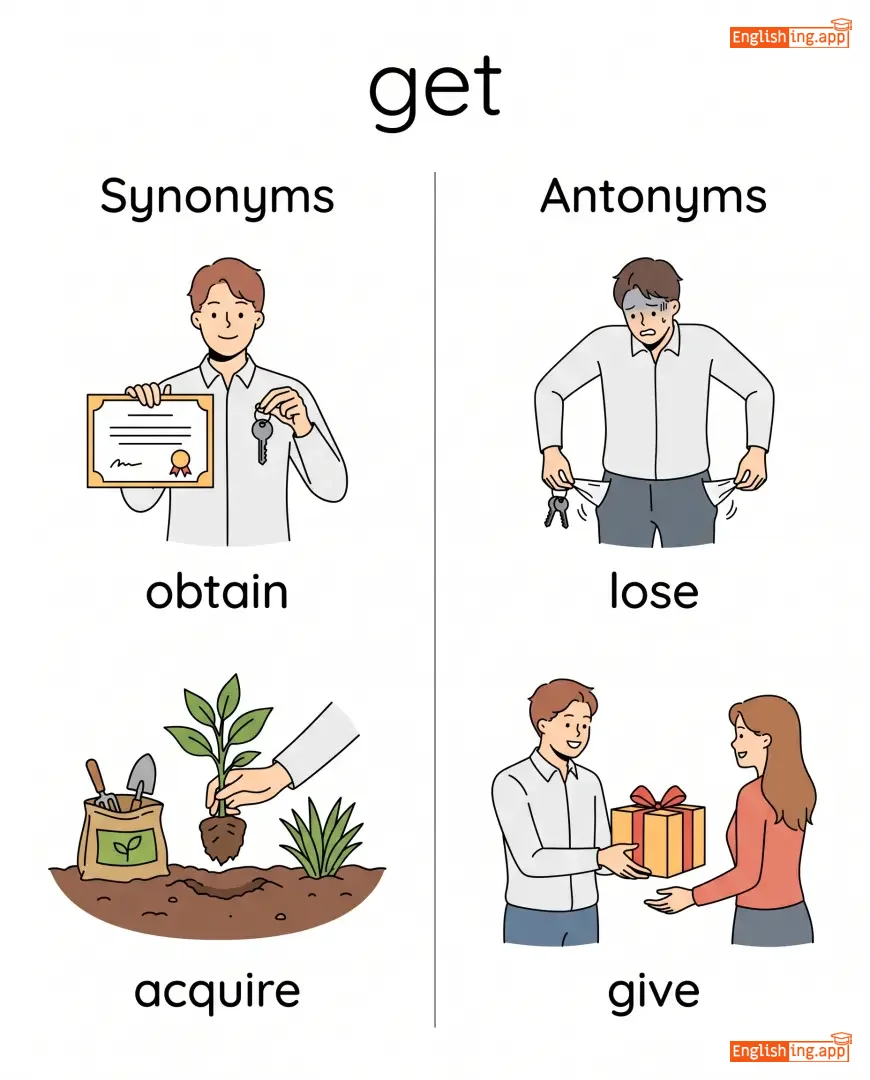
obtain, acquire, receive, gain, secure
••••••
|
lose, give
••••••
|
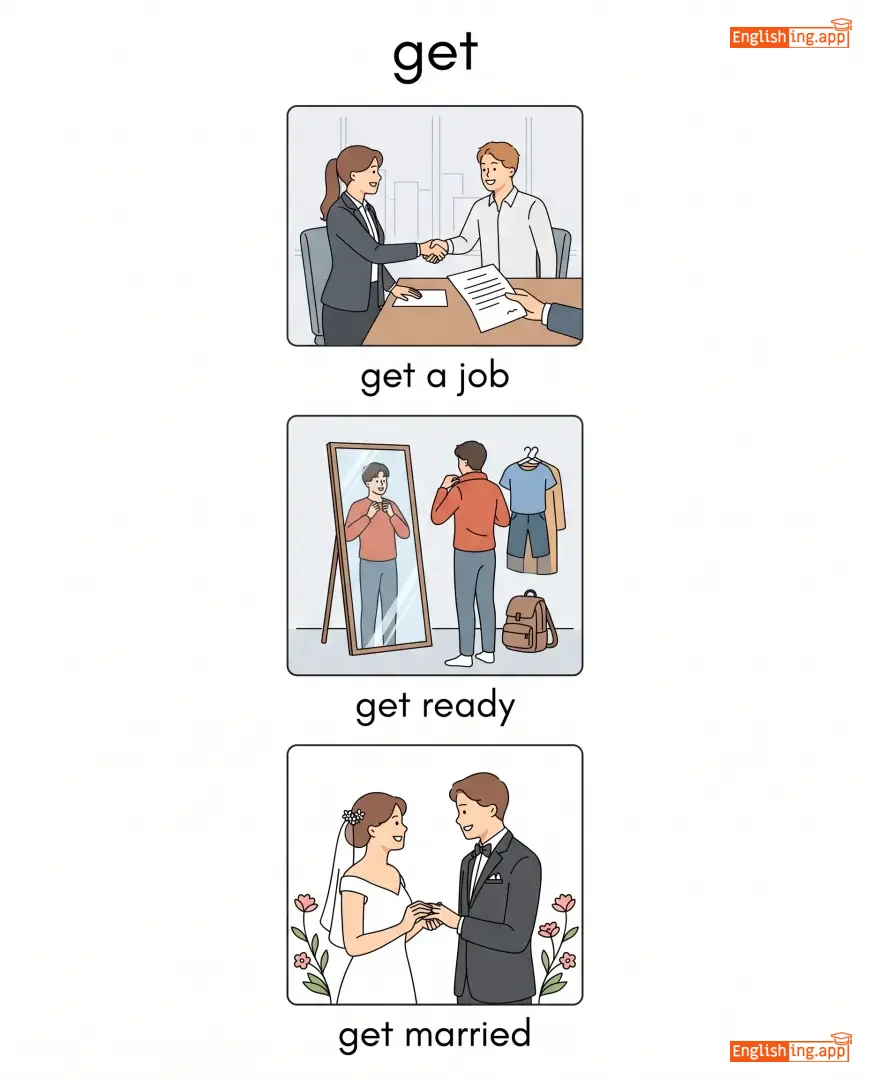
get a job, get ready, get married, get lost, get better
••••••
|
何かを得るためにはゲート(gate)を通る必要がある - getは得ることを意味する
••••••
|

