🤲gather (ギャザー)

verb
/ˈɡæðər/
集める (atsumeru)

意味

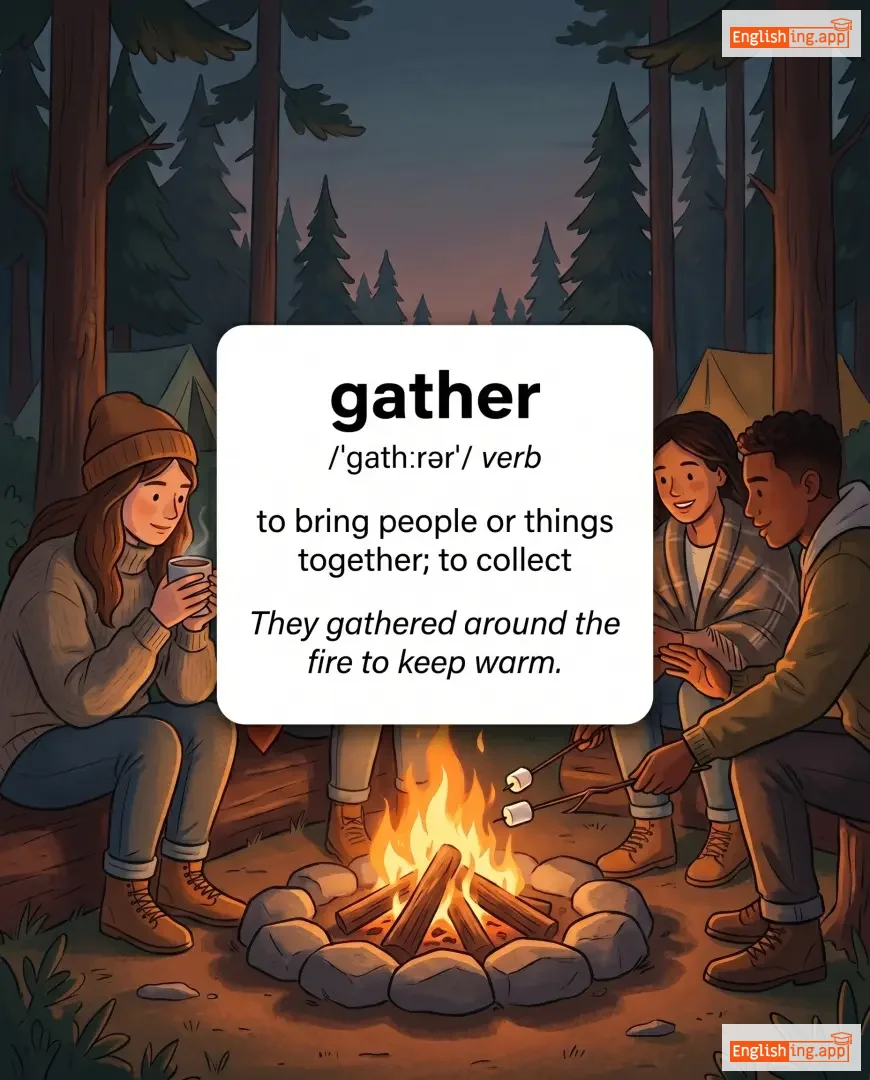
to bring people or things together; to collect
to come together or collect in one place; to assemble
意味の翻訳
人や物を一緒に持ってくる; 集める
hito ya mono o issho ni motte kuru; atsumeru

例文

They gathered around the fire to keep warm.

彼らは暖かく保つために火の周りに集まりました。
Karera wa atatakai koto o tamotsu tame ni hi no mawari ni atsumarimashita.

People gather in the park for the festival.

人々は公園で祭りのために集まります。
Hitobito wa kōen de matsuri no tame ni atsumarimasu.

表現例

gather one's thoughts
考えをまとめる
Kangae o matomeru

同義語

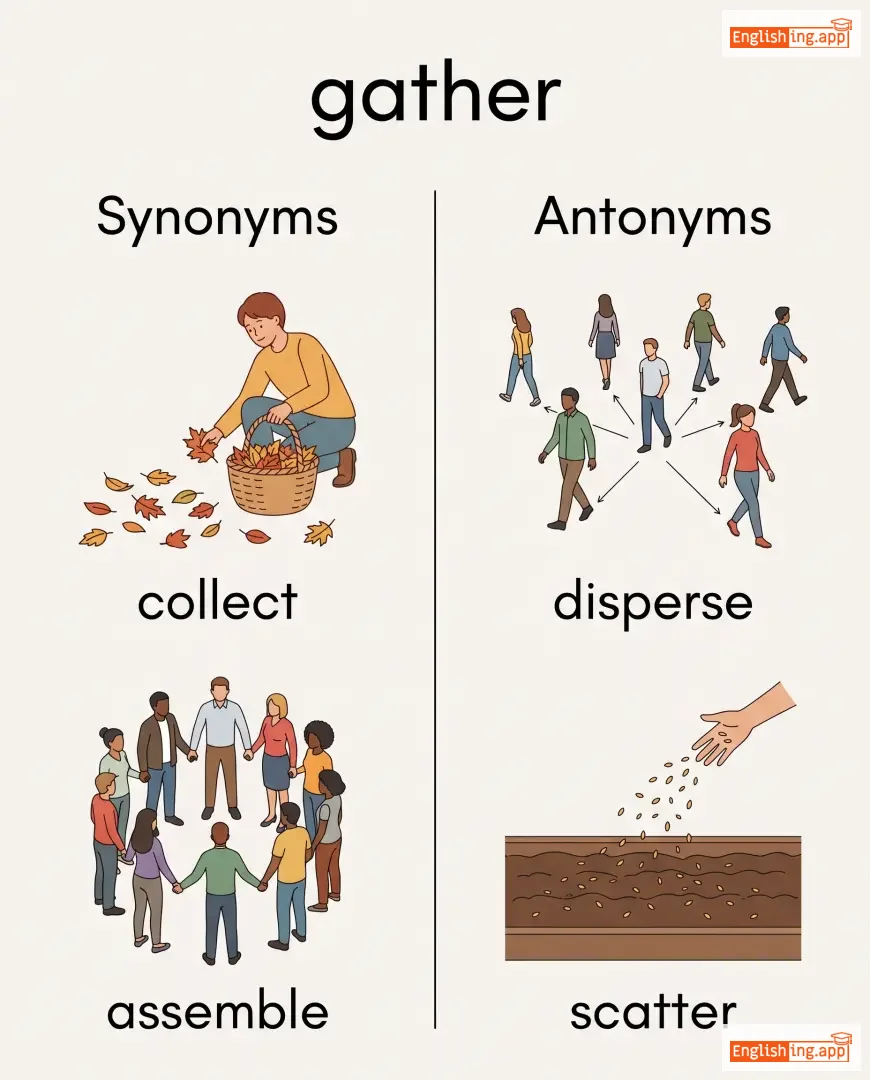
collect, assemble, accumulate, convene, congregate
エントリー 1
collect, assemble, accumulate, convene, congregate
エントリー 2
collect, assemble, congregate

対義語

disperse, scatter, separate
エントリー 1
disperse, scatter, separate
エントリー 2
scatter, disperse, separate

コロケーション

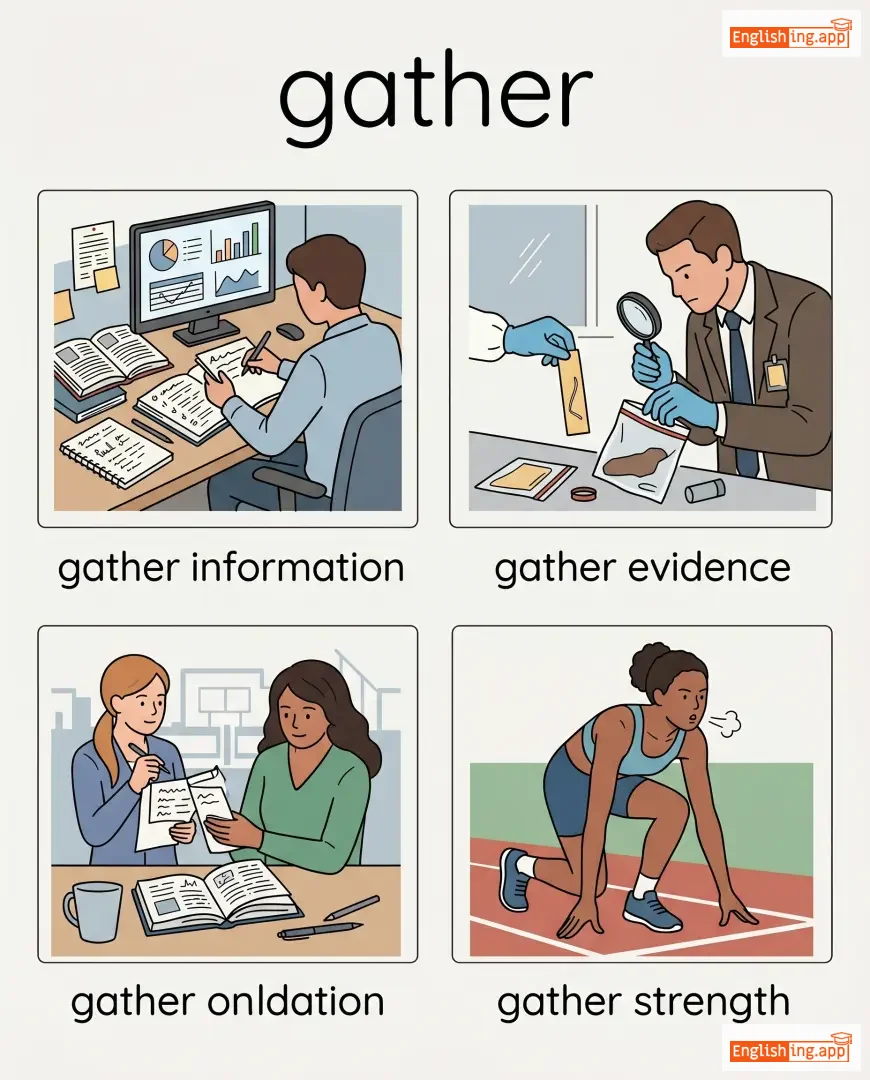
gather information, gather evidence, gather strength, gather crowd, gather around, gather together, gather courage, gather speed
エントリー 1
gather information, gather evidence, gather strength, gather crowd
エントリー 2
gather around, gather together, gather information, gather courage, gather speed

その他の例文

Today, we are all gathered here in Chattogram, which is the perfect place to host such an event.

今日、私たちは皆チッタゴンに集まっています。ここはこのようなイベントを開催するのに最適な場所です。
Kyou, watashitachi wa mina Chittagon ni atsumatteimasu. Koko wa kono you na ibento wo kaisai suru no ni saiteki na basho desu.

A man applies for a passport at the government office for the first time in his life because he wants to travel abroad to visit his relatives in Canada who moved there several years ago and he gathers all the required documents

男が数年前にそこに引っ越したカナダにいる親戚を訪ねるために海外旅行をしたくて人生で初めて政府機関でパスポートを申請し、彼は必要な書類をすべて集める
Otoko ga suunen mae ni soko ni hikkoshita canada ni iru shinseki wo tazuneru tame ni kaigai ryokou wo shitakute jinsei de hajimete seifukikan de passport wo shinsei shi, kare wa hitsuyou na shorui wo subete atsumeru

A man applies for a passport at the government office for the first time in his life because he wants to travel abroad to visit his relatives in Canada who moved there several years ago and he gathers all the required documents including his birth certificate and photographs

男が数年前にそこに引っ越したカナダにいる親戚を訪ねるために海外旅行をしたくて人生で初めて政府機関でパスポートを申請し、彼は出生証明書と写真を含めて必要な書類をすべて集める
Otoko ga suunen mae ni soko ni hikkoshita canada ni iru shinseki wo tazuneru tame ni kaigai ryokou wo shitakute jinsei de hajimete seifukikan de passport wo shinsei shi, kare wa shussei shoumeisho to shashin wo fukumete hitsuyou na shorui wo subete atsumeru

A woman cooks a traditional dish for a cultural festival that her community celebrates every year following a recipe passed down from her great-grandmother using spices and ingredients she finds at a specialty store and the kitchen fills with a rich, warm aroma that brings back childhood memories of family gatherings

専門店で見つけたスパイスと食材を使い、曾祖母から受け継がれたレシピに従って、女性が、彼女のコミュニティが毎年祝う文化祭のために伝統料理を作り、キッチンは豊かで温かい香りで満たされ、家族の集まりの子供の頃の思い出が蘇る
Senmonten de mitsuketa supaisu to shokuzai wo tsukai, sousobo kara uketsugareta reshipi ni shitagatte, josei ga, kanojo no komyuniti ga mainen iwau bunkasai no tame ni dentou ryouri wo tsukuri, kicchin wa yutaka de atatakai kaori de mitasare, kazoku no atsumari no kodomo no koro no omoide ga yomigaeru

A man applies for a passport at the government office for the first time in his life because he wants to travel abroad to visit his relatives in Canada who moved there several years ago and he gathers all the required documents including his birth certificate and photographs then submits the application and pays the fee

男が数年前にそこに引っ越したカナダにいる親戚を訪ねるために海外旅行をしたくて人生で初めて政府機関でパスポートを申請し、彼は出生証明書と写真を含めて必要な書類をすべて集め、その後申請書を提出し手数料を支払う
Otoko ga suunen mae ni soko ni hikkoshita canada ni iru shinseki wo tazuneru tame ni kaigai ryokou wo shitakute jinsei de hajimete seifukikan de passport wo shinsei shi, kare wa shussei shoumeisho to shashin wo fukumete hitsuyou na shorui wo subete atsume, sonogo shinseisho wo teishutsu shi tesuuryou wo shiharau

A woman cooks a traditional dish for a cultural festival that her community celebrates every year following a recipe passed down from her great-grandmother using spices and ingredients she finds at a specialty store and the kitchen fills with a rich, warm aroma that brings back childhood memories of family gatherings and she shares the food with her neighbors and friends

専門店で見つけたスパイスと食材を使い、曾祖母から受け継がれたレシピに従って、女性が、彼女のコミュニティが毎年祝う文化祭のために伝統料理を作り、キッチンは豊かで温かい香りで満たされ、家族の集まりの子供の頃の思い出が蘇り、彼女はその料理を近所の人や友人と分かち合う
Senmonten de mitsuketa supaisu to shokuzai wo tsukai, sousobo kara uketsugareta reshipi ni shitagatte, josei ga, kanojo no komyuniti ga mainen iwau bunkasai no tame ni dentou ryouri wo tsukuri, kicchin wa yutaka de atatakai kaori de mitasare, kazoku no atsumari no kodomo no koro no omoide ga yomigaeri, kanojo wa sono ryouri wo kinjo no hito ya yuujin to wakachiau

A man applies for a passport at the government office for the first time in his life because he wants to travel abroad to visit his relatives in Canada who moved there several years ago and he gathers all the required documents including his birth certificate and photographs then submits the application and pays the fee hoping to receive it before his flight date next month.

男が数年前にそこに引っ越したカナダにいる親戚を訪ねるために海外旅行をしたくて人生で初めて政府機関でパスポートを申請し、彼は出生証明書と写真を含めて必要な書類をすべて集め、その後申請書を提出し手数料を支払うが、来月のフライト日の前にそれを受け取ることを望んでいる。
Otoko ga suunen mae ni soko ni hikkoshita canada ni iru shinseki wo tazuneru tame ni kaigai ryokou wo shitakute jinsei de hajimete seifukikan de passport wo shinsei shi, kare wa shussei shoumeisho to shashin wo fukumete hitsuyou na shorui wo subete atsume, sonogo shinseisho wo teishutsu shi tesuuryou wo shiharau ga, raigetsu no flight bi no mae ni sore wo uketoru koto wo nozonde iru.

A woman cooks a traditional dish for a cultural festival that her community celebrates every year following a recipe passed down from her great-grandmother using spices and ingredients she finds at a specialty store and the kitchen fills with a rich, warm aroma that brings back childhood memories of family gatherings and she shares the food with her neighbors and friends who compliment the authentic flavor and ask for the recipe

専門店で見つけたスパイスと食材を使い、曾祖母から受け継がれたレシピに従って、女性が、彼女のコミュニティが毎年祝う文化祭のために伝統料理を作り、キッチンは豊かで温かい香りで満たされ、家族の集まりの子供の頃の思い出が蘇り、彼女はその料理を近所の人や友人と分かち合い、彼らはその本物の味を褒めてレシピを尋ねる
Senmonten de mitsuketa supaisu to shokuzai wo tsukai, sousobo kara uketsugareta reshipi ni shitagatte, josei ga, kanojo no komyuniti ga mainen iwau bunkasai no tame ni dentou ryouri wo tsukuri, kicchin wa yutaka de atatakai kaori de mitasare, kazoku no atsumari no kodomo no koro no omoide ga yomigaeri, kanojo wa sono ryouri wo kinjo no hito ya yuujin to wakachiai, karera wa sono honmono no aji wo homete reshipi wo tazuneru

A man teaches himself to play the guitar using free lessons on the internet after buying an inexpensive acoustic guitar from a second-hand music shop and he practices basic chords every evening in his living room after dinner struggling at first with sore fingers and wrong notes but gradually improving over several months until he can play his favorite songs from start to finish and surprises his family with a performance at a holiday gathering.

中古の楽器店で安価なアコースティックギターを買った後、男がインターネット上の無料レッスンを使って独学でギターを学び、彼は毎晩夕食後にリビングルームで基本的なコードを練習するが、最初は指の痛みや間違った音符に苦労するものの、数ヶ月かけて徐々に上達し、お気に入りの曲を最初から最後まで弾けるようになり、休日の集まりでの演奏で家族を驚かせる。
Chuuko no gakkiten de anka na akoosutikku gitaa wo katta ato, otoko ga intaanetto jou no muryou ressun wo tsukatte dokugaku de gitaa wo manabi, kare wa maiban yuushokugo ni ribingu ruumu de kihonteki na koodo wo renshuu suru ga, saisho wa yubi no itami ya machigatta onpu ni kurou suru monono, suukagetsu kakete jojoni joutatsu shi, okiniiri no kyoku wo saisho kara saigo made hikeru you ni nari, kyuujitsu no atsumari de no ensou de kazoku wo odorokaseru.

A woman cooks a traditional dish for a cultural festival that her community celebrates every year following a recipe passed down from her great-grandmother using spices and ingredients she finds at a specialty store and the kitchen fills with a rich, warm aroma that brings back childhood memories of family gatherings and she shares the food with her neighbors and friends who compliment the authentic flavor and ask for the recipe making her feel deeply connected to her heritage and traditions.

専門店で見つけたスパイスと食材を使い、曾祖母から受け継がれたレシピに従って、女性が、彼女のコミュニティが毎年祝う文化祭のために伝統料理を作り、キッチンは豊かで温かい香りで満たされ、家族の集まりの子供の頃の思い出が蘇り、彼女はその料理を近所の人や友人と分かち合い、彼らはその本物の味を褒めてレシピを尋ね、彼女は自分の伝統や文化との深いつながりを感じる。
Senmonten de mitsuketa supaisu to shokuzai wo tsukai, sousobo kara uketsugareta reshipi ni shitagatte, josei ga, kanojo no komyuniti ga mainen iwau bunkasai no tame ni dentou ryouri wo tsukuri, kicchin wa yutaka de atatakai kaori de mitasare, kazoku no atsumari no kodomo no koro no omoide ga yomigaeri, kanojo wa sono ryouri wo kinjo no hito ya yuujin to wakachiai, karera wa sono honmono no aji wo homete reshipi wo tazune, kanojo wa jibun no dentou ya bunka to no fukai tsunagari wo kanjiru

関連語彙

to mark letters, words, or symbols on a surface
to cause something to change direction; to avoid answering directly
to speak very softly or quietly, often to avoid being overheard
To assign too low a value or importance to something or someone.
to arouse strong feelings or provoke anger; to cause inflammation in the body
to give temporarily; to allow someone to use something

さらに探索