Получите неограниченный доступ ко всем словам с подпиской Pro
Обновить до ProПолучите неограниченный доступ ко всем предложениям с подпиской Pro
Обновить до Pro|
Эмодзи
|
Слово | Images | Перевод | Прошедшее | Причастие прошедшего времени | Третье лицо единственного числа | Герундий | Значение | Пример предложения | Перевод примера предложения | Пример выражения | Значение примера выражения | Перевод примера выражения | Синонимы | Антонимы | Коллокации | Мнемоника |
|---|---|---|---|---|---|---|---|---|---|---|---|---|---|---|---|---|---|
|
😡
••••••
|
/ˈfjʊəriəs/
adjective
(фьюриас)
••••••
|
- •••••• |
яростный
yarostny
••••••
|
- •••••• | - •••••• | - •••••• | - •••••• |
Extremely angry.
••••••
|
She was furious when she heard the bad news. |
Она была яростной, когда услышала плохие новости.
Ona byla yarostnoy, kogda uslyshala plokhie novosti.
••••••
|
furious debate |
a heated or intense argument
••••••
|
яростные дебаты
yarostnye debaty
••••••
|
angry, enraged, irate, mad, incensed
••••••
|
calm, peaceful, relaxed
••••••
|
furious with someone, furious about, furious debate, furious pace
••••••
|
Furious значит яростный, как буря, которая рушит всё.
••••••
|
|
🪑
••••••
|
/ˈfɜːrnɪtʃər/
noun
(фёрнитур)
••••••
|
- •••••• |
мебель
mebel
••••••
|
- •••••• | - •••••• | - •••••• | - •••••• |
Objects such as chairs, tables, beds, or cupboards used to make a room suitable for living or working.
••••••
|
The living room was filled with beautiful wooden furniture. |
Гостиная была наполнена красивой деревянной мебелью.
Gostinaya byla napolnena krasivoy derevyannoy mebelyu.
••••••
|
move the furniture |
to rearrange or shift the position of furniture in a room
••••••
|
перемещать мебель
peremeshchat' mebel'
••••••
|
fixtures, fittings, furnishings, decor, equipment
••••••
|
emptiness, vacancy
••••••
|
antique furniture, wooden furniture, office furniture, move furniture, buy furniture
••••••
|
Mебель означает мебель 🪑 — в русском языке можно запомнить через 'мебельный магазин'.
••••••
|
|
➕
••••••
|
/ˌfɜːrðərˈmɔːr/
adverb
(фёрзермор)
••••••
|
- •••••• |
к тому же
k tomu zhe
••••••
|
- •••••• | - •••••• | - •••••• | - •••••• |
Used to introduce an additional point or idea; in addition.
••••••
|
The plan is simple and, furthermore, it is affordable. |
План прост, и к тому же он доступен.
Plan prost, i k tomu zhe on dostupen.
••••••
|
- •••••• | - •••••• | - •••••• |
moreover, in addition, also, besides
••••••
|
however, nevertheless
••••••
|
furthermore argue, furthermore demonstrate, simple and furthermore
••••••
|
Furthermore означает 'к тому же' ➕ помните: 'больше идей есть.'
••••••
|
|
🔮
••••••
|
/ˈfjuːtʃər/
noun
(фьючер)
••••••
|

|
будущее
budushchee
••••••
|
- •••••• | - •••••• | - •••••• | - •••••• |
The time yet to come.
••••••
|
No one can predict the future with certainty. |
Никто не может точно предсказать будущее.
Nikto ne mozhet tochno predskazat' budushchee.
••••••
|
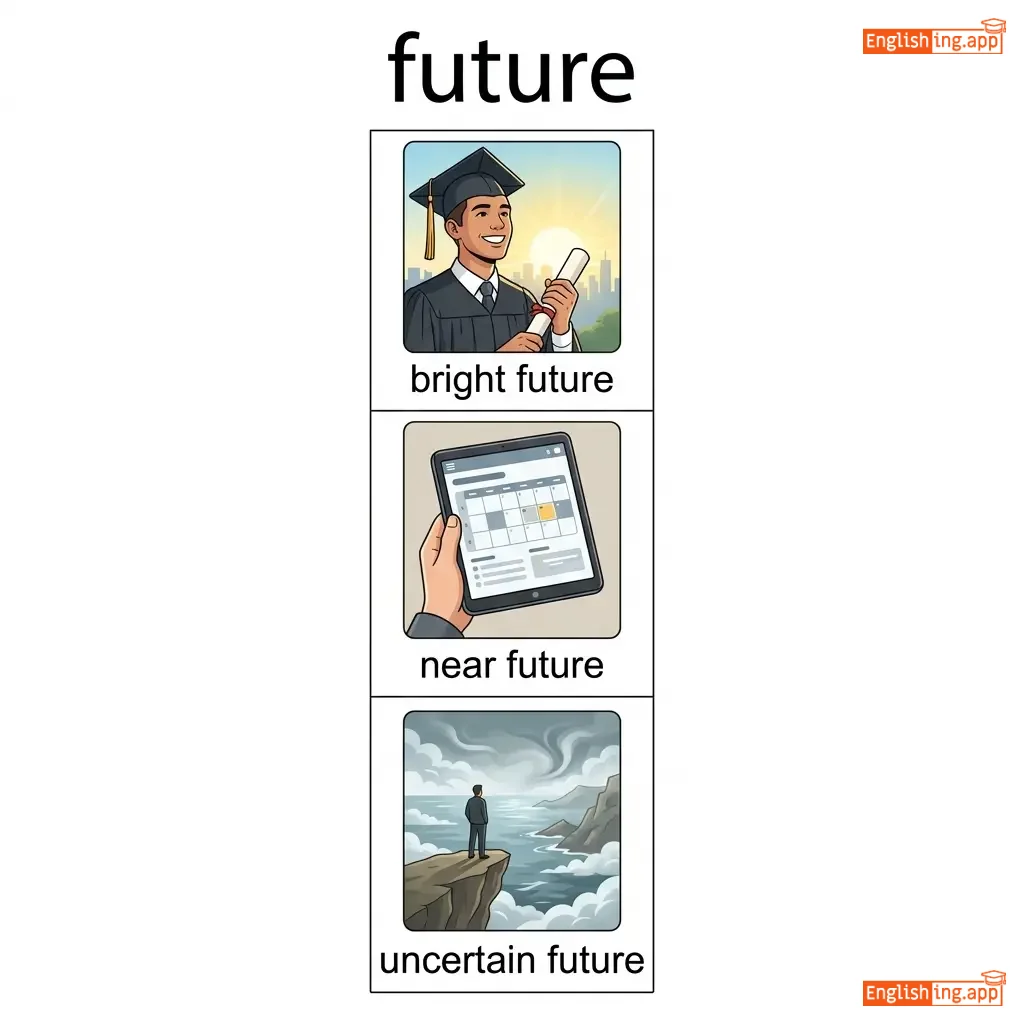
bright future |
a positive or successful time ahead
••••••
|
яркое будущее
yarkoye budushchee
••••••
|
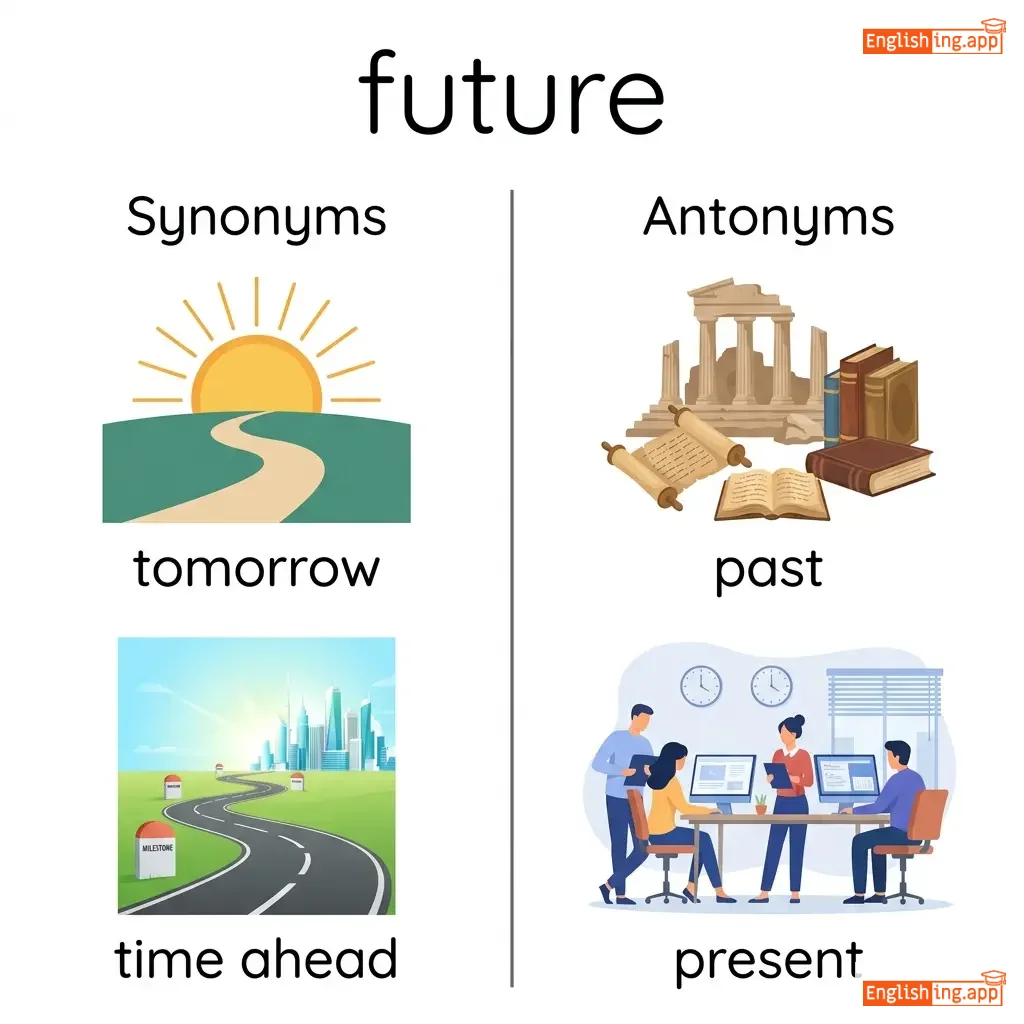
tomorrow, time ahead, destiny, prospect
••••••
|
past, present
••••••
|
bright future, near future, uncertain future, future plans
••••••
|
Future - будущее, время, которое предстоит.
••••••
|
|
📈
••••••
|
/ɡeɪn/
verb
(geyn)
••••••
|
|
приобрести
priyobresti
••••••
|
gained
geynd
••••••
|
gained
geynd
••••••
|
gains
geyns
••••••
|
gaining
geyning
••••••
|
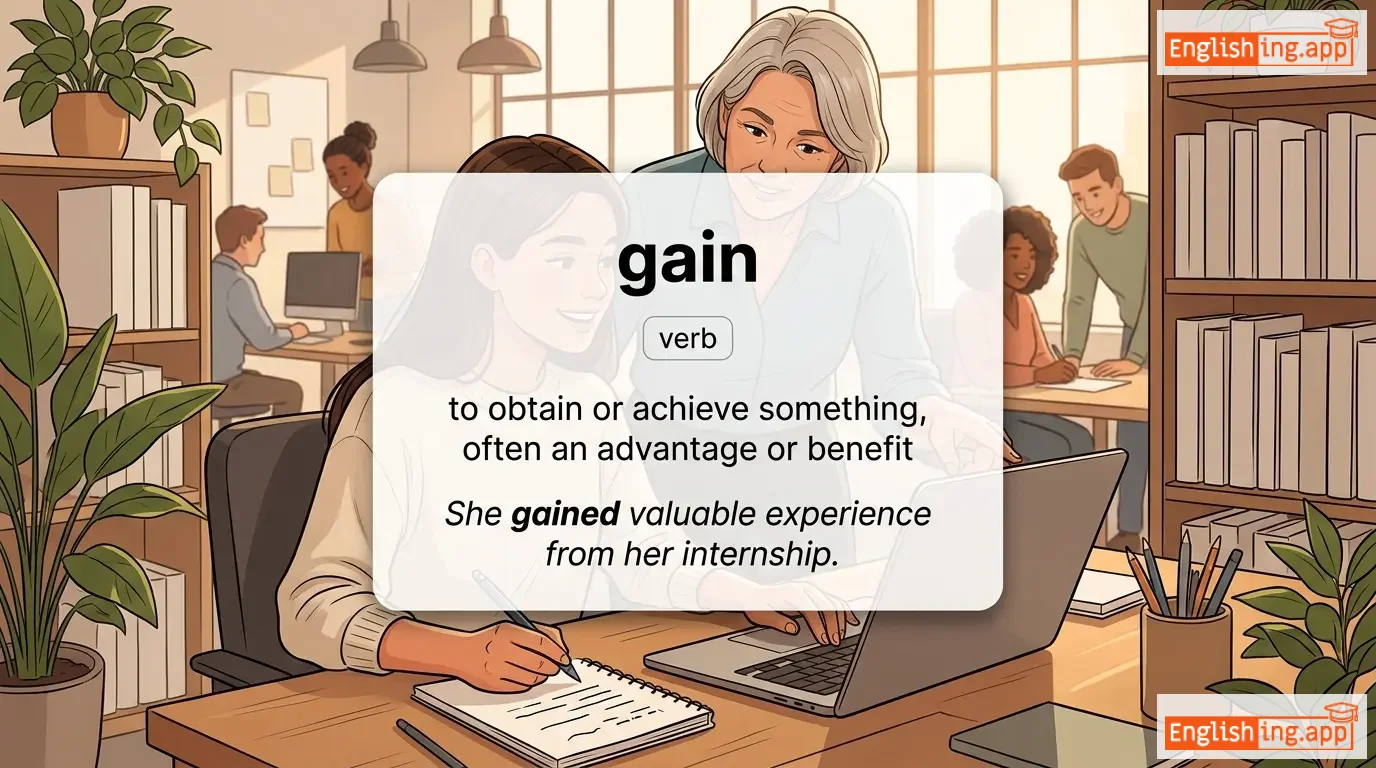
to obtain or achieve something, often an advantage or benefit
••••••
|
She gained valuable experience from her internship.
Она приобрела ценный опыт на своей стажировке.
••••••
|
Она приобрела ценный опыт на своей стажировке.
Ona priobrela tsennyy opyt na svoey stazhirovke.
••••••
|
gain ground
завоевать территорию
••••••
|
to make progress or become more successful
••••••
|
достигать прогресса
dostigat' progressa
••••••
|
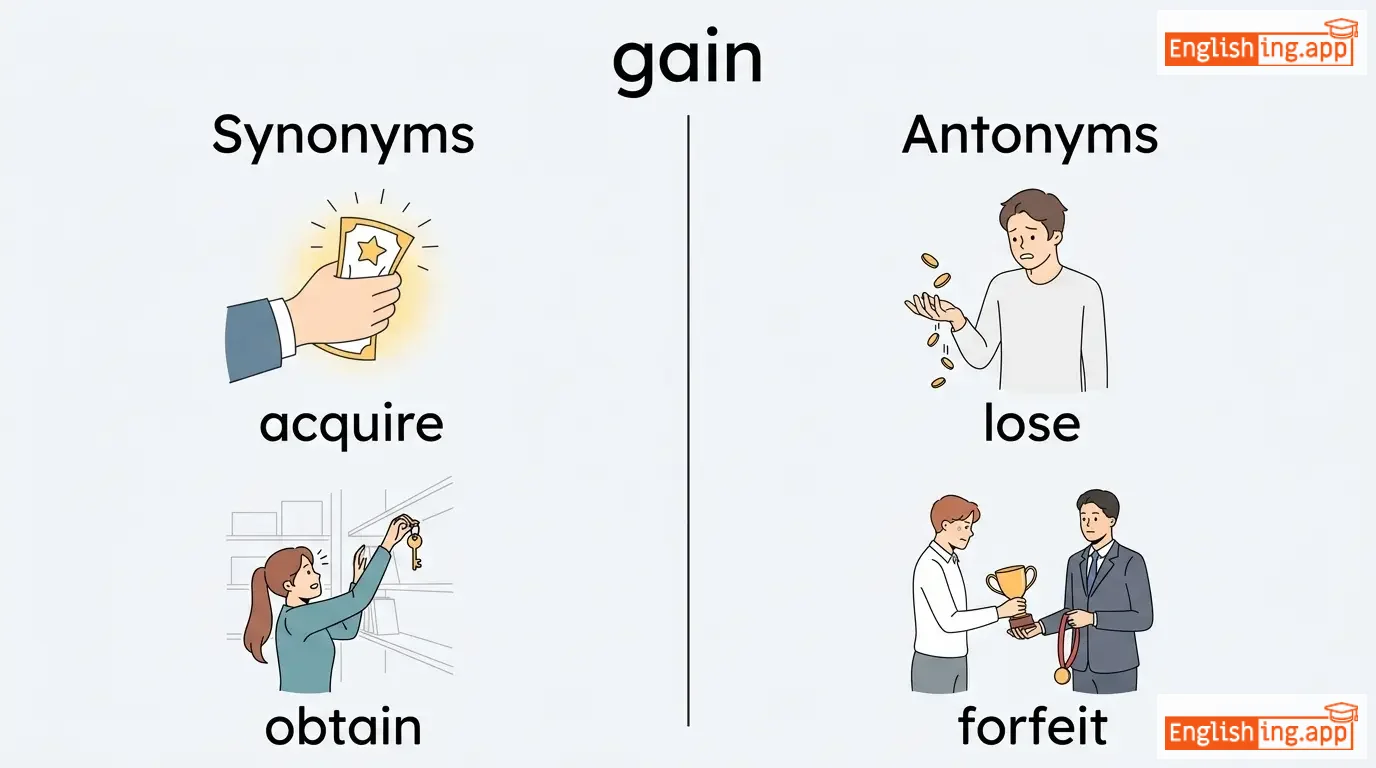
acquire, obtain, earn, secure, win
••••••
|
lose, forfeit, surrender
••••••
|
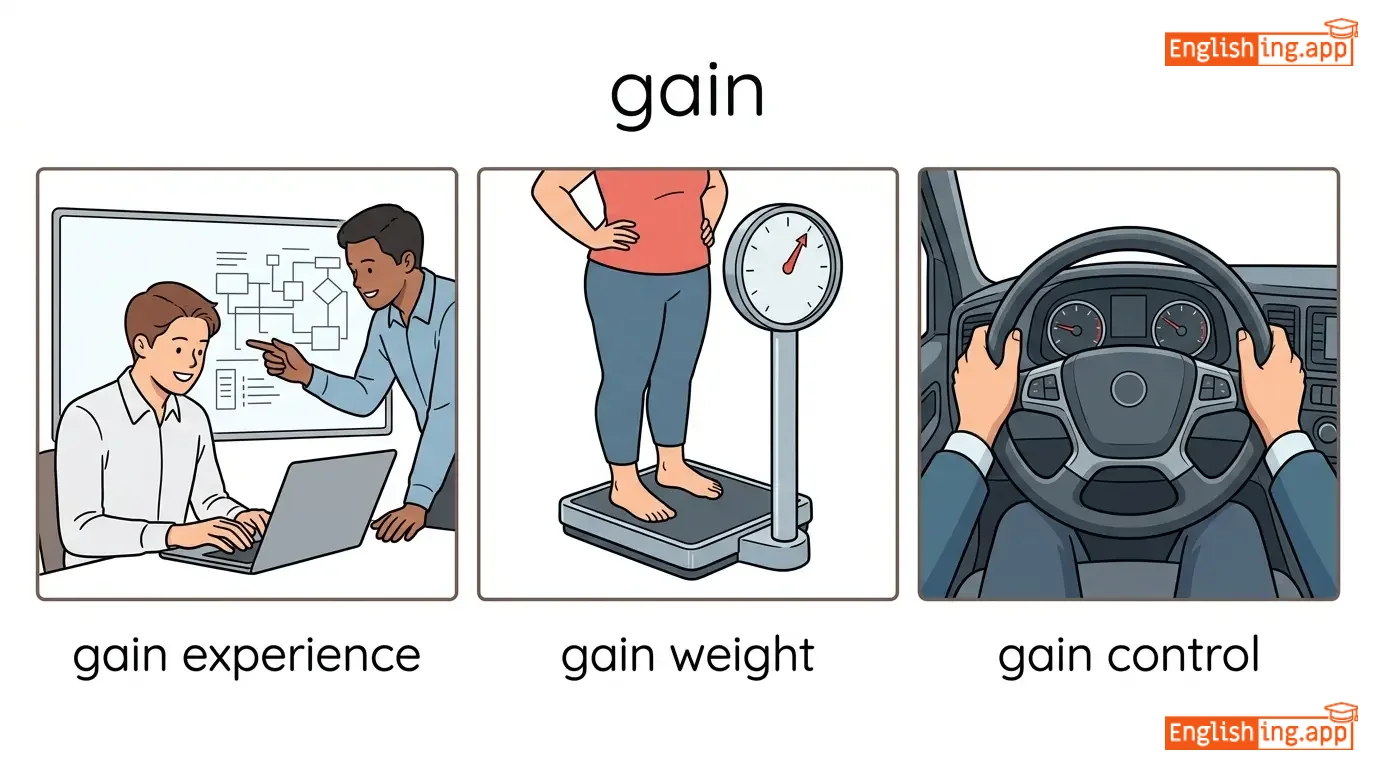
gain experience, gain weight, gain control, gain advantage
••••••
|
Gain означает приобретать — как при приобретении чего-то, увеличивается ваш опыт
••••••
|
|
🌌
••••••
|
/ˈɡæl.ək.si/
noun
(галактика)
••••••
|
- •••••• |
галактика
galaktika
••••••
|
- •••••• | - •••••• | - •••••• | - •••••• |
a system of millions or billions of stars, together with gas and dust, held together by gravitational attraction
••••••
|
The Milky Way is the galaxy that contains our solar system and Earth.
Млечный Путь — это галактика, которая содержит нашу солнечную систему и Землю.
••••••
|
Млечный Путь — это галактика, которая содержит нашу солнечную систему и Землю.
Mlechny Put’ — eto galaktika, kotoraya soderzhit nashu solnechnuyu sistemy i Zemlyu.
••••••
|
- •••••• | - •••••• | - •••••• |
star system, constellation, nebula, universe
••••••
|
void, emptiness, space, vacuum
••••••
|
spiral galaxy, distant galaxy, galaxy cluster
••••••
|
Galaktika - Величественные звезды, которые заполняют 'галактику'.
••••••
|
|
🖼️
••••••
|
/ˈɡæləri/
noun
(галерея)
••••••
|
- •••••• |
галерея
galereya
••••••
|
- •••••• | - •••••• | - •••••• | - •••••• |
A room or building for the display or sale of works of art.
••••••
|
The gallery showcased modern paintings by local artists. |
Галерея выставила современные картины местных художников.
Galereya vystavila sovremennye kartiny mestnykh khudozhnikov.
••••••
|
peanut gallery |
an audience or group of critics, often giving unsolicited comments
••••••
|
галерея арахиса
galereya arakhisa
••••••
|
exhibition hall, showroom, museum, studio, display room
••••••
|
storage, warehouse
••••••
|
art gallery, photo gallery, gallery space, gallery exhibition
••••••
|
Galeria 🖼️ — место для выставок и картин.
••••••
|
|
🥛
••••••
|
/ˈɡælən/
noun
(ɡælon)
••••••
|
- •••••• |
галлон
gallon
••••••
|
- •••••• | - •••••• | - •••••• | - •••••• |
a unit of measurement for liquid capacity, equal to 4 quarts or approximately 3.8 liters
••••••
|
He bought a gallon of milk. |
Он купил галлон молока.
On kupil gallon moloka.
••••••
|
- •••••• | - •••••• | - •••••• |
quart, liter, container
••••••
|
drop, tiny amount
••••••
|
gallon of water, gallon of milk, gallon jug
••••••
|
Галлон - Это большой объем жидкости!
••••••
|
|
🎲
••••••
|
/ˈɡæmbəl/
verb
(гэмбл)
••••••
|

|
играть в азартные игры
igrat' v azartnye igry
••••••
|
gambled
гэмблд
••••••
|
gambled
гэмблд
••••••
|
gambles
гэмблс
••••••
|
gambling
гэмблинг
••••••
|
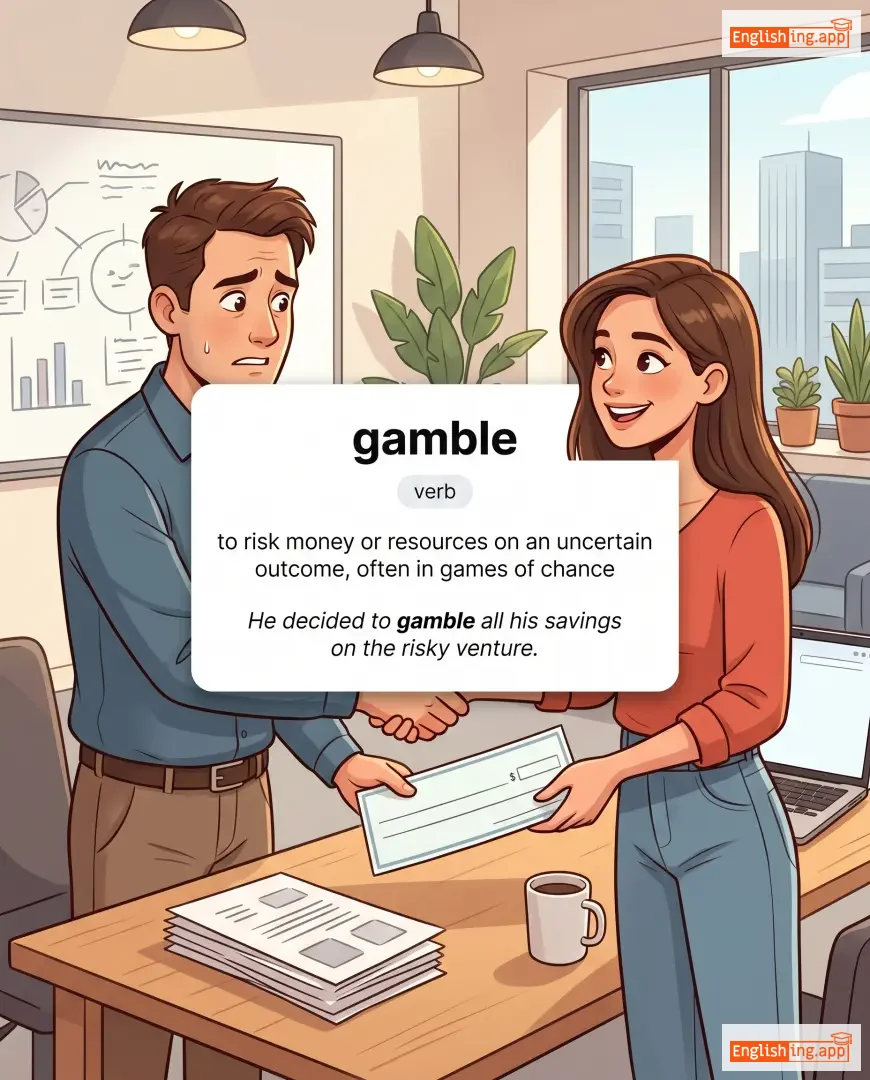
to risk money or resources on an uncertain outcome, often in games of chance
••••••
|
He decided to gamble all his savings on the risky venture.
Он решил поставить все свои сбережения на рискованное предприятие.
••••••
|
Он решил поставить все свои сбережения на рискованное предприятие.
On reshil postavit' vse svoi sberezhniya na riskovannoe predpriyatie.
••••••
|
gamble with fate
играть с судьбой
••••••
|
to take a serious risk with uncertain outcomes
••••••
|
играть с судьбой
igrat' s sud'boy
••••••
|
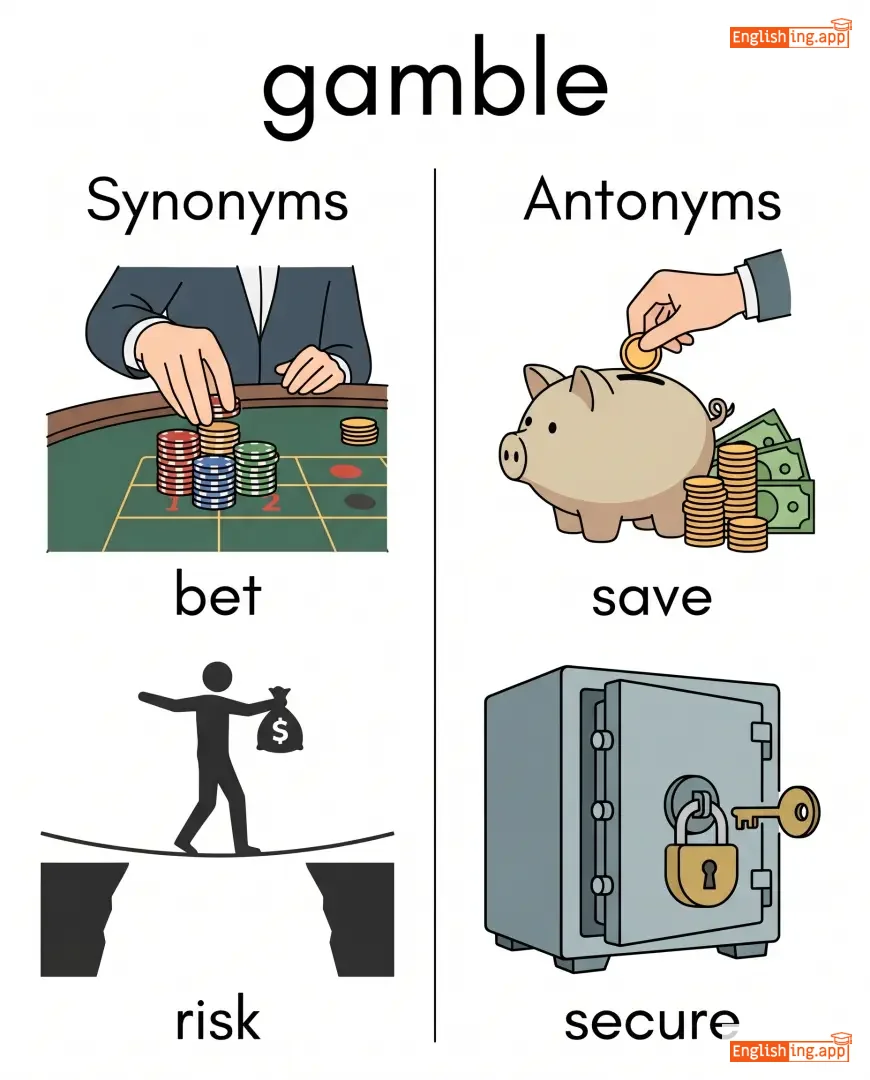
bet, risk, wager, speculate, venture
••••••
|
save, secure, protect
••••••
|
gamble money, gamble away, gamble on success
••••••
|
Gamble похоже на ‘gamba’, не ставь всё на кон! 🎲
••••••
|
|
🎲
••••••
|
/ˈɡæmblɪŋ/
noun
(гэмблинг)
••••••
|
- •••••• |
азартные игры
azartnye igry
••••••
|
- •••••• | - •••••• | - •••••• | - •••••• |
the activity of betting money or valuables on an outcome, often involving risk
••••••
|
He got addicted to gambling at the casino.
Он стал зависимым от азартных игр в казино.
••••••
|
Он стал зависимым от азартных игр в казино.
On stal zavisimym ot azartnykh igr v kazino.
••••••
|
- •••••• | - •••••• | - •••••• |
betting, wagering, gaming, speculation
••••••
|
saving, investing
••••••
|
gambling addiction, gambling problem, gambling casino
••••••
|
Гэмблинг (азартные игры) - играй, чтобы выиграть!
••••••
|
|
🎮
••••••
|
/ɡeɪm/
noun
(geym)
••••••
|
- •••••• |
игра
igra
••••••
|
- •••••• | - •••••• | - •••••• | - •••••• |
An activity or sport played for amusement, competition, or skill.
••••••
|
They played a football game in the afternoon. |
Они сыграли в футбол после обеда.
Oni sygrali v futbol posle obeda.
••••••
|
fair game |
a target that is considered legitimate to criticize or attack
••••••
|
честная игра
chestnaya igra
••••••
|
match, play, contest, sport, competition
••••••
|
work, duty
••••••
|
play a game, video game, board game, win the game, lose the game
••••••
|
Игра — как играть с друзьями по-настоящему!
••••••
|
|
🎮
••••••
|
/ˈɡeɪmɪŋ/
noun
••••••
|

|
- •••••• | - •••••• | - •••••• | - •••••• | - •••••• |
the action or practice of playing games, especially video games
••••••
|
Gaming has become a popular pastime among teenagers. |
- •••••• | - •••••• | - •••••• | - •••••• |
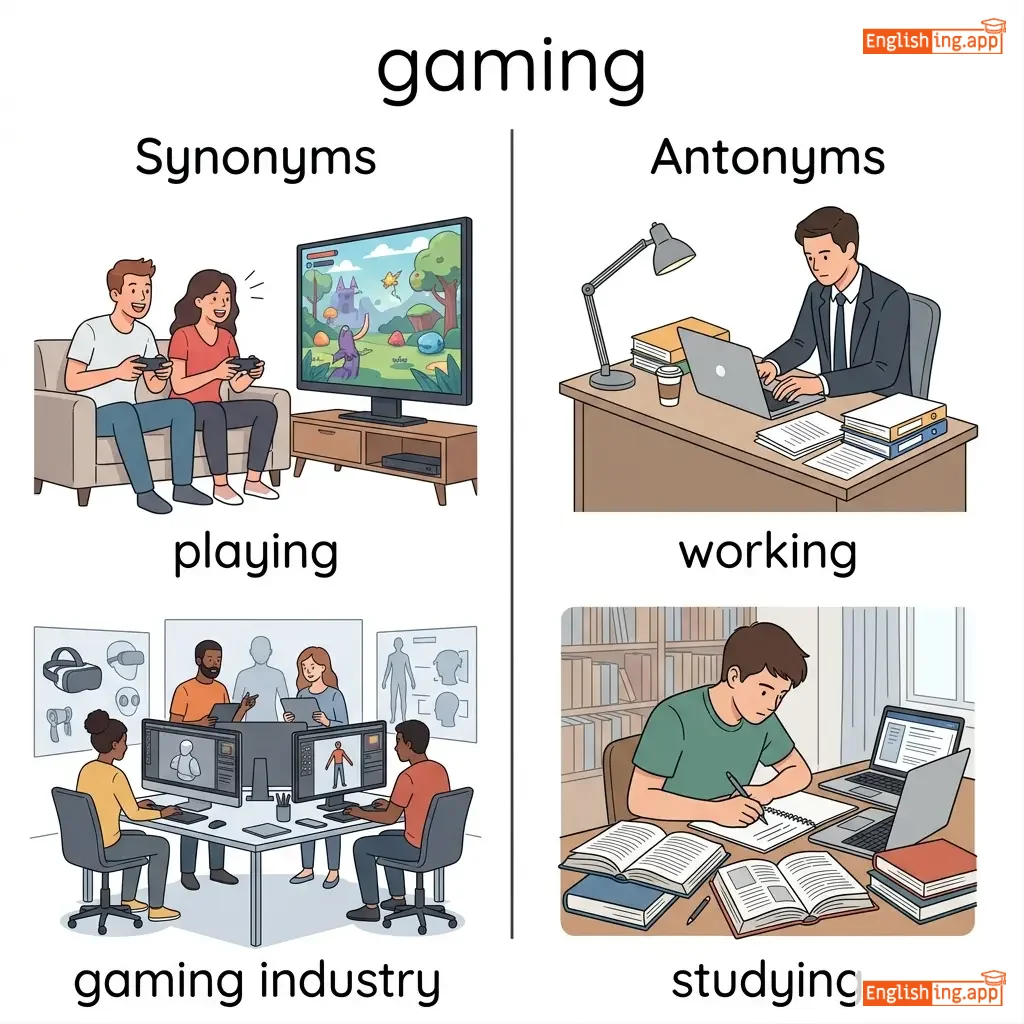
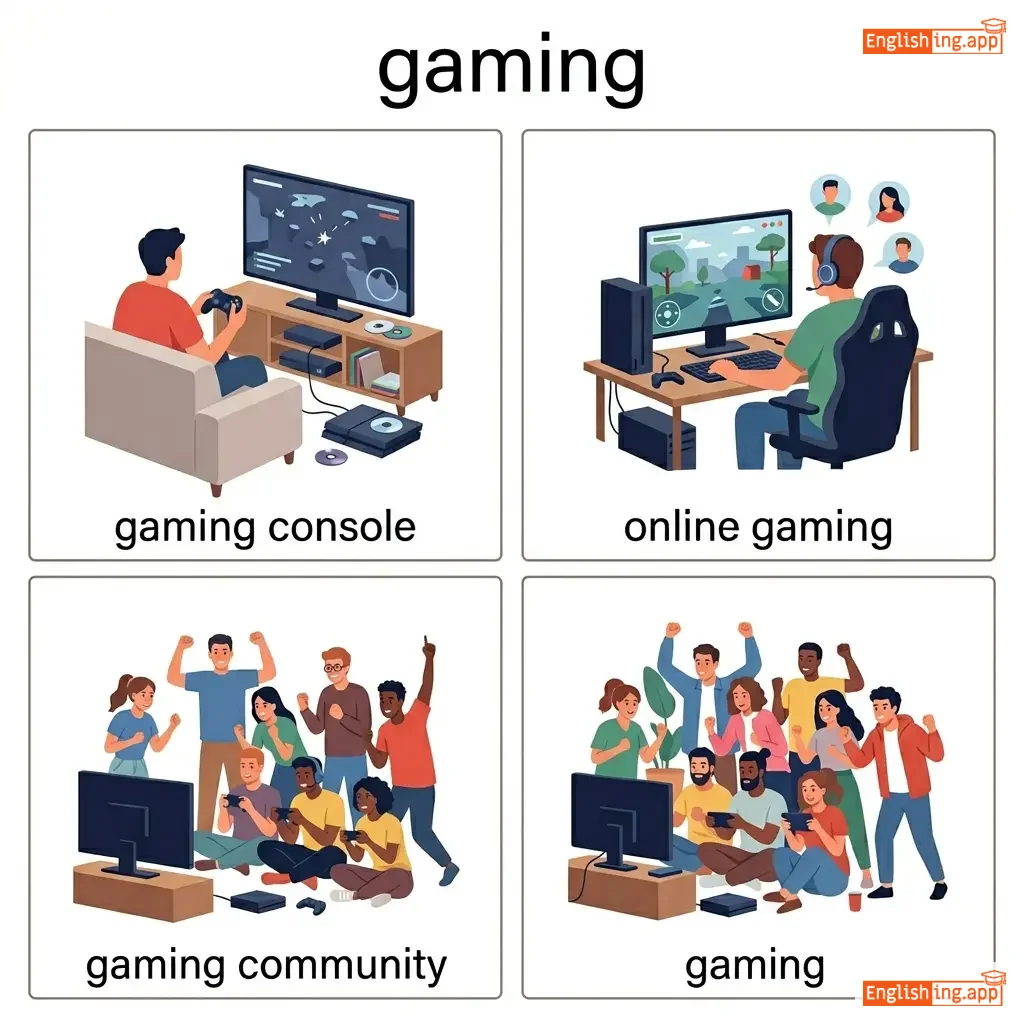
playing, gaming industry, esports
••••••
|
working, studying
••••••
|
gaming console, online gaming, gaming community
••••••
|
No •••••• |
|
👥
••••••
|
/ɡæŋ/
noun
(гэнг)
••••••
|
- •••••• |
банда
banda
••••••
|
- •••••• | - •••••• | - •••••• | - •••••• |
An organized group of people, often involved in crime or violence.
••••••
|
The gang was arrested by the police last night. |
Банда была арестована полицией прошлой ночью.
Banda byla arestovana politsey proshloy noch'yu.
••••••
|
gang up on |
to join together against someone in a hostile way
••••••
|
объединиться против
ob'yedinit'sya protiv
••••••
|
crew, group, band, mob, clique
••••••
|
individual, loner
••••••
|
street gang, criminal gang, gang leader, gang violence
••••••
|
Banda 👥 — это группа, которая собирается вместе, как банда!
••••••
|
|
🕳️
••••••
|
/ɡæp/
noun
(гэп)
••••••
|
- •••••• |
щель / разрыв
shchel / razryv
••••••
|
- •••••• | - •••••• | - •••••• | - •••••• |
An empty space or break between two objects or parts; a difference or disparity.
••••••
|
There is a huge gap between the rich and the poor. |
Между богатыми и бедными существует огромный разрыв.
Mezhdu bogatymi i bednymi sushchestvuet ogromnyy razryv.
••••••
|
generation gap |
The difference in attitudes or values between younger and older people.
••••••
|
генерационный разрыв
generatsionnyy razryv
••••••
|
space, opening, break, divide, interval
••••••
|
closure, connection, link
••••••
|
bridge the gap, fill the gap, gap year, income gap
••••••
|
Gap означает разрыв – ‘Gap – это разрыв между людьми.’
••••••
|
|
🏠
••••••
|
/ɡəˈrɑːʒ/
noun
(гараж)
••••••
|
- •••••• |
гараж
garazh
••••••
|
- •••••• | - •••••• | - •••••• | - •••••• |
a building or space for housing a motor vehicle; a commercial establishment for repairing motor vehicles
••••••
|
He parked his car in the garage to protect it from the hailstorm.
Он припарковал свою машину в гараже, чтобы защитить ее от града.
••••••
|
Он припарковал свою машину в гараже, чтобы защитить ее от града.
On priparkoval svoyu mashinu v garazhe, chtoby zashchitit yeye ot grada.
••••••
|
- •••••• | - •••••• | - •••••• |
carport, shed, workshop, parking space
••••••
|
street, outdoors, open air, driveway
••••••
|
car garage, garage door, parking garage
••••••
|
В русском языке слово 'гараж' используется так же, как и в английском для обозначения места для автомобилей.
••••••
|
|
🗑️
••••••
|
/ˈɡɑːrbɪdʒ/
noun
(garbidzh)
••••••
|
- •••••• |
мусор
musor
••••••
|
- •••••• | - •••••• | - •••••• | - •••••• |
waste material; things that are no longer useful or wanted
••••••
|
Please take out the garbage before it starts to smell. |
Пожалуйста, вынесите мусор, прежде чем он начнёт пахнуть.
Pozhaluysta, vynesite musor, prezhde chem on nachnyot pakhnut'.
••••••
|
one man's garbage is another man's treasure |
something worthless to one person may be valuable to another
••••••
|
Что для одного мусор, то для другого сокровище
Chto dlya odnovo musor, to dlya drugogo sokrovishche
••••••
|
trash, waste, litter, refuse, junk
••••••
|
treasure, valuables
••••••
|
garbage can, garbage truck, collect garbage, throw garbage
••••••
|
Мусор = то, что выбрасываем в ведро 🗑️
••••••
|
|
🌱
••••••
|
/ˈɡɑːrdn/
noun
(ˈɡɑːrdn)
••••••
|
- •••••• |
сад
sad
••••••
|
- •••••• | - •••••• | - •••••• | - •••••• |
A piece of ground where flowers, vegetables, or plants are grown.
••••••
|
She grows roses in her garden. |
Она выращивает розы в своем саду.
Ona vyrashchivayet rozy v svoem sadu.
••••••
|
lead someone up the garden path |
To deceive or mislead someone.
••••••
|
вести кого-то по садовой дорожке
vesti kogo-to po sadovoy dorozhke
••••••
|
yard, lawn, park, orchard
••••••
|
wasteland, desert
••••••
|
botanical garden, back garden, flower garden, vegetable garden
••••••
|
Сад – место, где цветут розы и растут растения.
••••••
|
|
🧄
••••••
|
/ˈɡɑːr.lɪk/
noun
(gar-lik)
••••••
|
- •••••• |
чеснок
chesnok
••••••
|
- •••••• | - •••••• | - •••••• | - •••••• |
a strong-smelling pungent-tasting bulb, used as a flavoring in cooking and in herbal medicine
••••••
|
The recipe calls for three cloves of fresh garlic to enhance the flavor.
Рецепт требует три зубчика свежего чеснока для улучшения вкуса.
••••••
|
Рецепт требует три зубчика свежего чеснока для улучшения вкуса.
Retsept trebuyet tri zubchika svezhego chesnoka dlya uluchsheniya vkusa.
••••••
|
- •••••• | - •••••• | - •••••• |
bulb, clove, seasoning, herb
••••••
|
sweetener, sugar, bland spice, mild herb
••••••
|
fresh garlic, garlic clove, roasted garlic
••••••
|
Chesnok is the Russian word for garlic, known for its pungent taste and aroma.
••••••
|
|
⛽
••••••
|
/ɡæs/
noun
(гас)
••••••
|
- •••••• |
газ
gaz
••••••
|
- •••••• | - •••••• | - •••••• | - •••••• |
A substance like air that is neither solid nor liquid and can expand freely.
••••••
|
The balloon was filled with gas. |
Шар был наполнен газом.
Shar byl napolnen gazom.
••••••
|
step on the gas |
To accelerate or go faster.
••••••
|
нажать на газ
nazhat na gaz
••••••
|
vapor, fume, air, fuel
••••••
|
solid, liquid
••••••
|
natural gas, gas station, gas leak, gas supply
••••••
|
Газ – Это то, что помогает двигаться быстрее, как будто газ разгоняет.
••••••
|
|
⛽
••••••
|
/ˈɡæsəˌliːn/
noun
(гасолин)
••••••
|
- •••••• |
бензин
benzin
••••••
|
- •••••• | - •••••• | - •••••• | - •••••• |
a liquid fuel made from petroleum, used mainly to power engines in vehicles
••••••
|
The price of gasoline has increased significantly this month. |
Цена на бензин значительно выросла в этом месяце.
Tsenа na benzin znachitel'no vyrosla v etom mesyatse.
••••••
|
run out of gasoline |
to have no fuel left in a vehicle
••••••
|
заправиться бензином
zapravit'sya benzinom
••••••
|
petrol, fuel, gas, diesel, energy
••••••
|
electricity, power outage
••••••
|
gasoline price, gasoline engine, gasoline station, gallon of gasoline
••••••
|
Бензин - это топливо для автомобилей. Представь себе, что бензин наполняет машину, как энергия.
••••••
|
|
🚪
••••••
|
/ɡeɪt/
noun
(хэппинесс)
••••••
|
- •••••• |
счастье
schast'ye
••••••
|
- •••••• | - •••••• | - •••••• | - •••••• |
A movable barrier that opens and closes to allow or prevent entry through an opening.
••••••
|
She closed the gate behind her as she left the garden. |
Она не могла скрыть своего счастья, когда получила награду.
Ona ne mogla skryt' svoego schast'ya, kogda poluchila nagradu.
••••••
|
at death's gate |
very close to dying
••••••
|
поиск счастья
poisk schast'ya
••••••
|
door, entrance, barrier, portal, gateway
••••••
|
exit, opening
••••••
|
front gate, garden gate, iron gate, open the gate
••••••
|
Счастье — это когда ты достигаешь своей цели.
••••••
|
|
🤲
••••••
|
/ˈɡæðər/
verb
(гэзэр)
••••••
|
|
собирать
sobirat
••••••
|
gathered
гэзэрд
••••••
|
gathered
гэзэрд
••••••
|
gathers
гэзэрс
••••••
|
gathering
гэзэринг
••••••
|
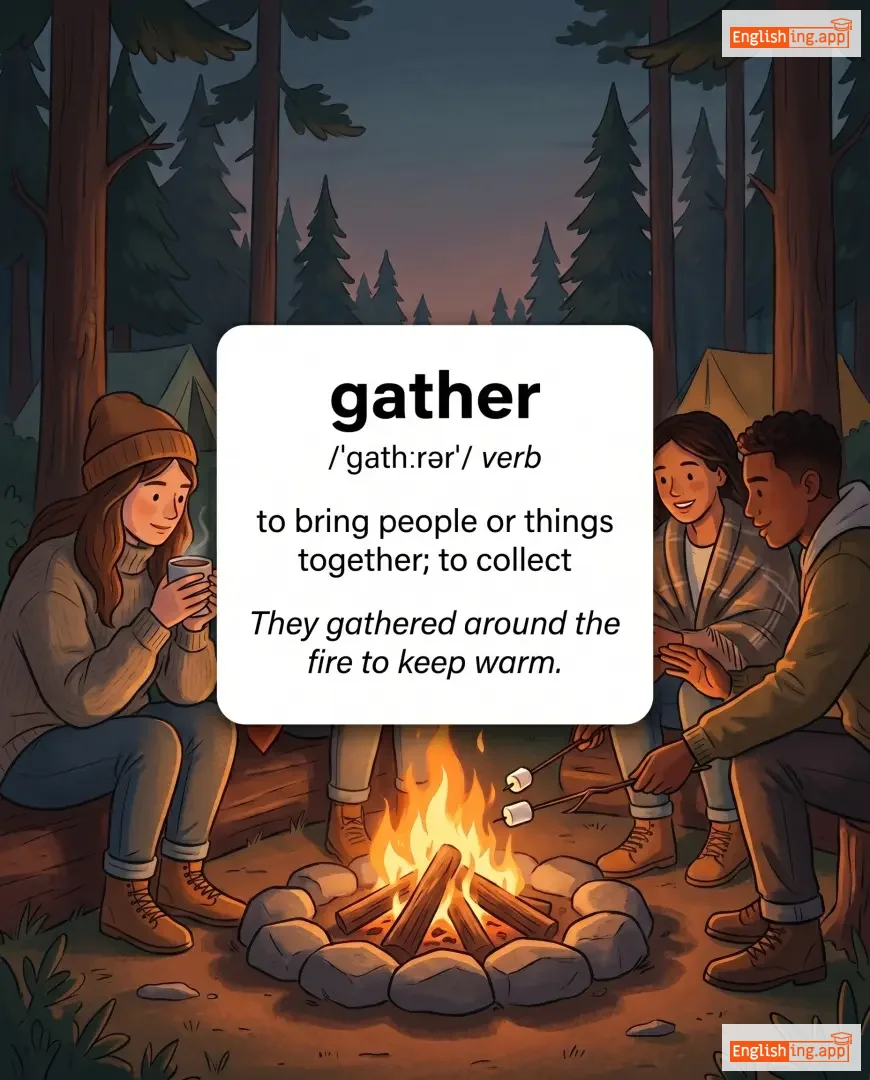
to bring people or things together; to collect
••••••
|
They gathered around the fire to keep warm.
Они собрались вокруг огня, чтобы согреться.
••••••
|
Они собрались вокруг огня, чтобы согреться.
Oni sobralis’ vokrug ognya, chtoby sogretsya.
••••••
|
gather one's thoughts
собрать свои мысли
••••••
|
to take time to think and organize one's ideas
••••••
|
собрать свои мысли
sobrat svoi mysli
••••••
|
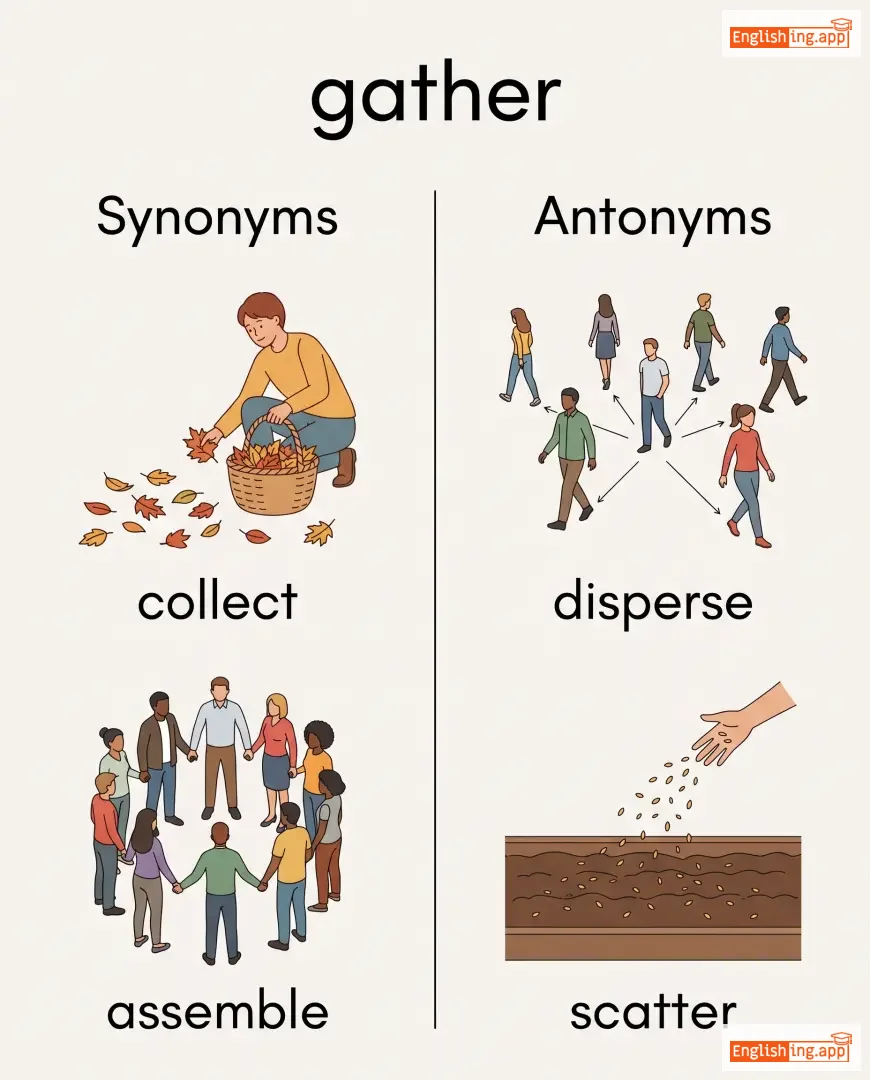
collect, assemble, accumulate, convene, congregate
••••••
|
disperse, scatter, separate
••••••
|
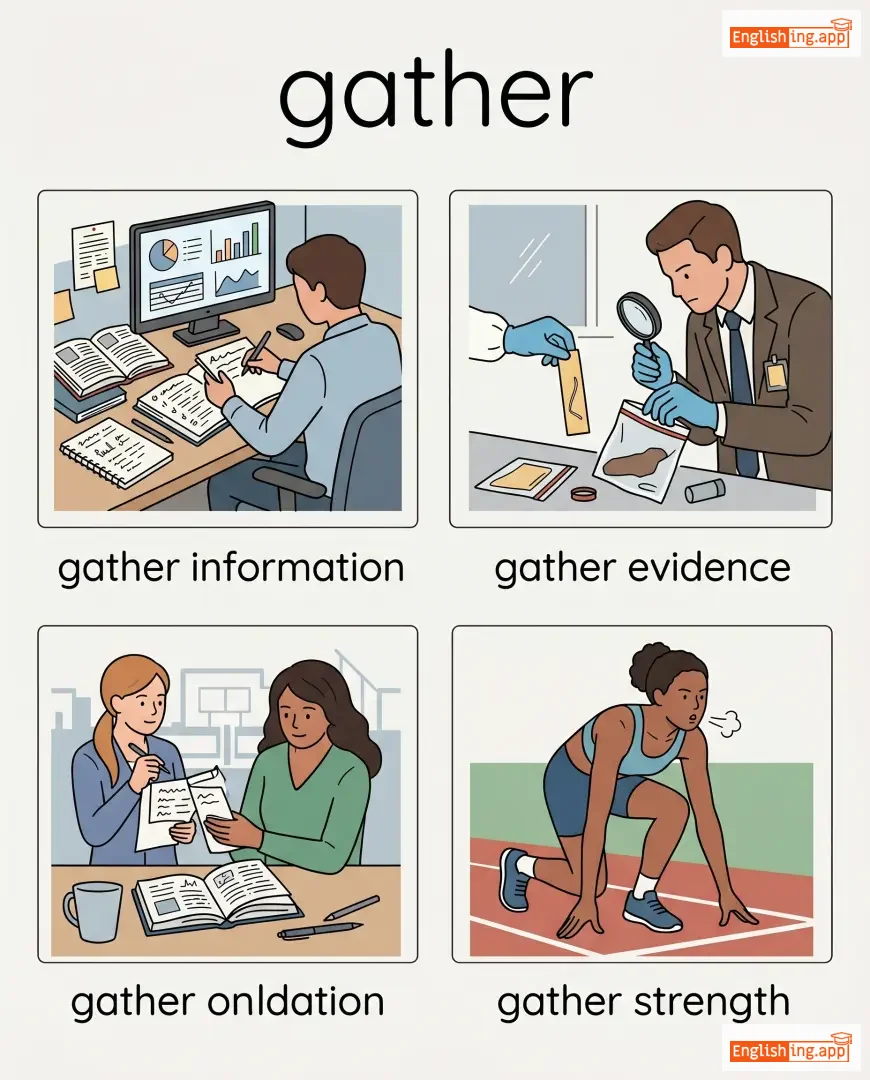
gather information, gather evidence, gather strength, gather crowd
••••••
|
Gather означает собирать, как когда все собираются вокруг костра.
••••••
|
|
👥
••••••
|
/ˈɡæðərɪŋ/
noun
(гэзэринг)
••••••
|
- •••••• |
собрание
sobranie
••••••
|
- •••••• | - •••••• | - •••••• | - •••••• |
a meeting or assembly of people for a particular purpose
••••••
|
We attended a family gathering last weekend.
Мы участвовали в семейном собрании в прошлые выходные.
••••••
|
Мы участвовали в семейном собрании в прошлые выходные.
My uchastvovali v semeynom sobranii v proshlye vykhodnye.
••••••
|
social gathering
социальное собрание
••••••
|
a casual event where people meet and interact socially
••••••
|
социальное собрание
sotsialnoe sobranie
••••••
|
meeting, assembly, party, event, conference
••••••
|
separation, dispersal
••••••
|
family gathering, large gathering, small gathering, informal gathering
••••••
|
Gather означает собирать → Gathering означает собрание, как в 'Family gathering', где все собираются.
••••••
|
|
🏳️🌈
••••••
|
/ɡeɪ/
adjective
(гей)
••••••
|
- •••••• |
гей
gey
••••••
|
- •••••• | - •••••• | - •••••• | - •••••• |
sexually attracted to people of the same sex; also used to mean cheerful or lively
••••••
|
He came out as gay during college. |
Он вышел как гей во время учебы в университете.
On vyshel kak gey vo vremya ucheby v universitete.
••••••
|
- •••••• | - •••••• | - •••••• |
homosexual, queer, cheerful, lively
••••••
|
straight, sad
••••••
|
gay rights, gay community, gay marriage, openly gay
••••••
|
Гей означает gay на русском, запомните радугу (🏳️🌈)
••••••
|
|
👀
••••••
|
/ɡeɪz/
verb
(гэиз)
••••••
|
- •••••• |
пристально смотреть
pristal'no smotret'
••••••
|
gazed
гэйзд
••••••
|
gazed
гэйзд
••••••
|
gazes
гэйзес
••••••
|
gazing
гэйзинг
••••••
|
To look steadily and intently at something, usually with admiration, surprise, or thought.
••••••
|
He gazed at the stars in wonder.
он гейзд ат зе старс ин вондер.
••••••
|
он с удивлением смотрел на звезды.
on s udivleniem smotrel na zvezdy.
••••••
|
gaze into the distance
гейз инту зе дистэнс
••••••
|
to look far away thoughtfully
••••••
|
смотреть вдаль
smotret' vdal'
••••••
|
stare, look, peer, glance, observe
••••••
|
ignore, overlook
••••••
|
gaze at, gaze into, gaze upward, gaze longingly
••••••
|
Гейз – смотреть, как взгляд не двигается.
••••••
|
|
⚙️
••••••
|
/ɡɪə(r)/
noun
(гир)
••••••
|
- •••••• |
снаряжение / оборудование
snaryazhenie / oborudovanie
••••••
|
- •••••• | - •••••• | - •••••• | - •••••• |
Equipment or apparatus for a particular purpose; also a toothed wheel in machinery.
••••••
|
The climber packed all his gear before starting the journey. |
Альпинист упаковал всё своё снаряжение перед началом путешествия.
Al'pinist upakoval vsyo svoe snaryazhenie pered nachalom puteshestviya.
••••••
|
shift gears |
To change one's approach or method of doing something.
••••••
|
переключить передачи
pereklyuchit' peredachi
••••••
|
equipment, apparatus, tools, kit, machinery
••••••
|
emptiness, lack, nothing
••••••
|
sports gear, camping gear, gear shift, protective gear
••••••
|
Gear, как в снаряжении альпиниста, который меняет свой подход.
••••••
|
|
⚧️
••••••
|
/ˈdʒen.dər/
noun
(джендер)
••••••
|
- •••••• |
гендер
gender
••••••
|
- •••••• | - •••••• | - •••••• | - •••••• |
either of the two sexes (male and female); the range of characteristics pertaining to masculinity and femininity
••••••
|
The company promotes gender equality by ensuring equal opportunities for all employees.
Компания продвигает гендерное равенство, обеспечивая равные возможности для всех сотрудников.
••••••
|
Компания продвигает гендерное равенство, обеспечивая равные возможности для всех сотрудников.
Kompaniya prodvigayet gendernoye ravenstvo, obespechivaya ravniye vozmozhnosti dlya vsekh sotrudnikov.
••••••
|
- •••••• | - •••••• | - •••••• |
sex, classification, category, type
••••••
|
genderless, neutral, unspecified, ambiguous
••••••
|
gender equality, gender roles, gender identity
••••••
|
Гендер (gender) – помогает понять различия между мужским и женским полом.
••••••
|
|
🧬
••••••
|
/dʒiːn/
noun
(jin)
••••••
|
- •••••• |
ген
gen
••••••
|
- •••••• | - •••••• | - •••••• | - •••••• |
A unit of heredity in living organisms, transferred from parent to offspring, determining traits.
••••••
|
Eye color is influenced by genes inherited from parents. |
Цвет глаз зависит от генов, унаследованных от родителей.
tsvet glaz zavisit ot genov, unashledovannykh ot roditeley.
••••••
|
in one's genes |
a natural trait inherited from family
••••••
|
в чьих-то генах
v ch'yikh-to genakh
••••••
|
DNA, chromosome, heredity, trait, genome
••••••
|
environment, nurture
••••••
|
gene mutation, gene therapy, human gene, dominant gene
••••••
|
Ген = gene, помни о ДНК 🧬
••••••
|
|
🌍
••••••
|
/ˈdʒɛnərəl/
adjective
(дженерал)
••••••
|
- •••••• |
общий
obshchij
••••••
|
- •••••• | - •••••• | - •••••• | - •••••• |
Relating to all or most people, things, or situations; not specific.
••••••
|
He made a general comment about the project. |
Он сделал общий комментарий по проекту.
On sdelal obshhij kommentarij po proyektu.
••••••
|
in general |
usually or mostly
••••••
|
в общем
v obshchem
••••••
|
common, overall, broad, universal, widespread
••••••
|
specific, particular
••••••
|
general idea, general knowledge, general opinion, general rule
••••••
|
Общий означает общий, как 'в общем' означает обычно или в основном.
••••••
|
|
🌍
••••••
|
/ˈdʒɛnərəli/
adverb
(дженерэли)
••••••
|
- •••••• |
обычно
obychno
••••••
|
- •••••• | - •••••• | - •••••• | - •••••• |
in most cases; usually; as a rule
••••••
|
He generally arrives at work before 9 a.m. |
Он обычно приходит на работу до 9 утра.
On obychno prikhodit na rabotu do 9 utra.
••••••
|
as a general rule |
something that is true in most situations
••••••
|
как общее правило
kak obshchee pravilo
••••••
|
usually, typically, commonly, ordinarily, mostly
••••••
|
rarely, seldom, never
••••••
|
generally accepted, generally speaking, generally known, generally considered
••••••
|
Как правило, все общее обычно начинается с обычаев, так что generally — это обычно.
••••••
|
|
⚡
••••••
|
/ˈdʒɛnəreɪt/
verb
(dʒɛnəreɪt)
••••••
|
- •••••• |
генерировать
generirovat
••••••
|
generated
dʒɛnəreɪtɪd
••••••
|
generated
dʒɛnəreɪtɪd
••••••
|
generates
dʒɛnəreɪts
••••••
|
generating
dʒɛnəreɪtɪŋ
••••••
|
to produce or create something
••••••
|
The machine generates electricity.
Машина генерирует электричество.
••••••
|
Машина генерирует электричество.
Mashina generiruet elektrostatichestvo.
••••••
|
generate interest
генерировать интерес
••••••
|
to make people feel curious or engaged
••••••
|
генерировать интерес
generirovat interes
••••••
|
produce, create, make, yield, cause
••••••
|
destroy, stop, halt
••••••
|
generate power, generate ideas, generate revenue, generate interest
••••••
|
Машина генерирует электричество, значит генерировать – это производить или создавать.
••••••
|
|
👶
••••••
|
/ˌdʒɛnəˈreɪʃən/
noun
(поколение)
••••••
|
- •••••• |
поколение
pokolenie
••••••
|
- •••••• | - •••••• | - •••••• | - •••••• |
all the people born and living at about the same time; the process of producing something
••••••
|
The younger generation is more comfortable with technology. |
Молодое поколение более комфортно с технологиями.
Molodoe pokolenie bolee komfortno s tekhnologiyami.
••••••
|
generation gap |
the difference in attitudes and behavior between older and younger people
••••••
|
поколенческий разрыв
pokolenshchik razryv
••••••
|
cohort, age group, era, production, creation
••••••
|
ancestors, destruction
••••••
|
younger generation, next generation, generation gap, generation of energy
••••••
|
Каждое поколение (pokolenie) создает что-то новое - Generation означает поколение
••••••
|
|
📦
••••••
|
/dʒəˈnɛrɪk/
adjective
(женерик)
••••••
|
- •••••• |
генерик
generik
••••••
|
- •••••• | - •••••• | - •••••• | - •••••• |
characteristic of or relating to a whole group or class; not specific
••••••
|
This medicine is available in generic form. |
Это лекарство доступно в виде генерика.
Eto lekarstvo dostupno v vide generika.
••••••
|
generic term |
a word used for a general category rather than something specific
••••••
|
генерический термин
genericheskiy termin
••••••
|
general, common, universal, non-specific
••••••
|
specific, unique, special
••••••
|
generic brand, generic product, generic form, generic term
••••••
|
Генерик — это безбрендовая, но эффективная альтернатива.
••••••
|
|
🎁
••••••
|
/ˈdʒɛnərəs/
adjective
(дженерос)
••••••
|
- •••••• |
щедрый
shchedryy
••••••
|
- •••••• | - •••••• | - •••••• | - •••••• |
willing to give or share more than is necessary; kind and giving
••••••
|
She is very generous with her time and money. |
Она очень щедра со своим временем и деньгами.
Ona ochen' shchedra so svoim vremenem i dengami.
••••••
|
to a generous extent |
to a large or considerable degree
••••••
|
до щедрой степени
do shchedroy stepeni
••••••
|
kind, giving, charitable, benevolent, unselfish
••••••
|
selfish, stingy, mean
••••••
|
generous offer, generous donation, generous spirit, generous amount
••••••
|
Щедрый means generous heart— по-русски, щедрое сердце
••••••
|
|
🤲
••••••
|
/ˈdʒenərəsli/
adverb
(дженересли)
••••••
|
- •••••• |
щедро
shchedro
••••••
|
- •••••• | - •••••• | - •••••• | - •••••• |
in a kind, giving, or unselfish manner; in a plentiful or abundant way
••••••
|
She generously donated money to help the poor.
ши дженересли доунейтед мани ту хелп зе пур
••••••
|
Она щедро пожертвовала деньги, чтобы помочь бедным.
ona shchedro pozhertvovala dengi chtoby pomoch bednym
••••••
|
give generously
гив дженересли
••••••
|
to give freely and kindly without expecting anything in return
••••••
|
щедро давать
shchedro davat
••••••
|
kindly, liberally, benevolently, freely, charitably
••••••
|
stingily, selfishly, miserly
••••••
|
generously donate, generously support, generously offer, generously reward
••••••
|
Щедрый = generous, щедро = generously
••••••
|
|
🧬
••••••
|
/dʒəˈnɛtɪk/
adjective
(гентéтик)
••••••
|
|
генетический
geneticheskiy
••••••
|
- •••••• | - •••••• | - •••••• | - •••••• |
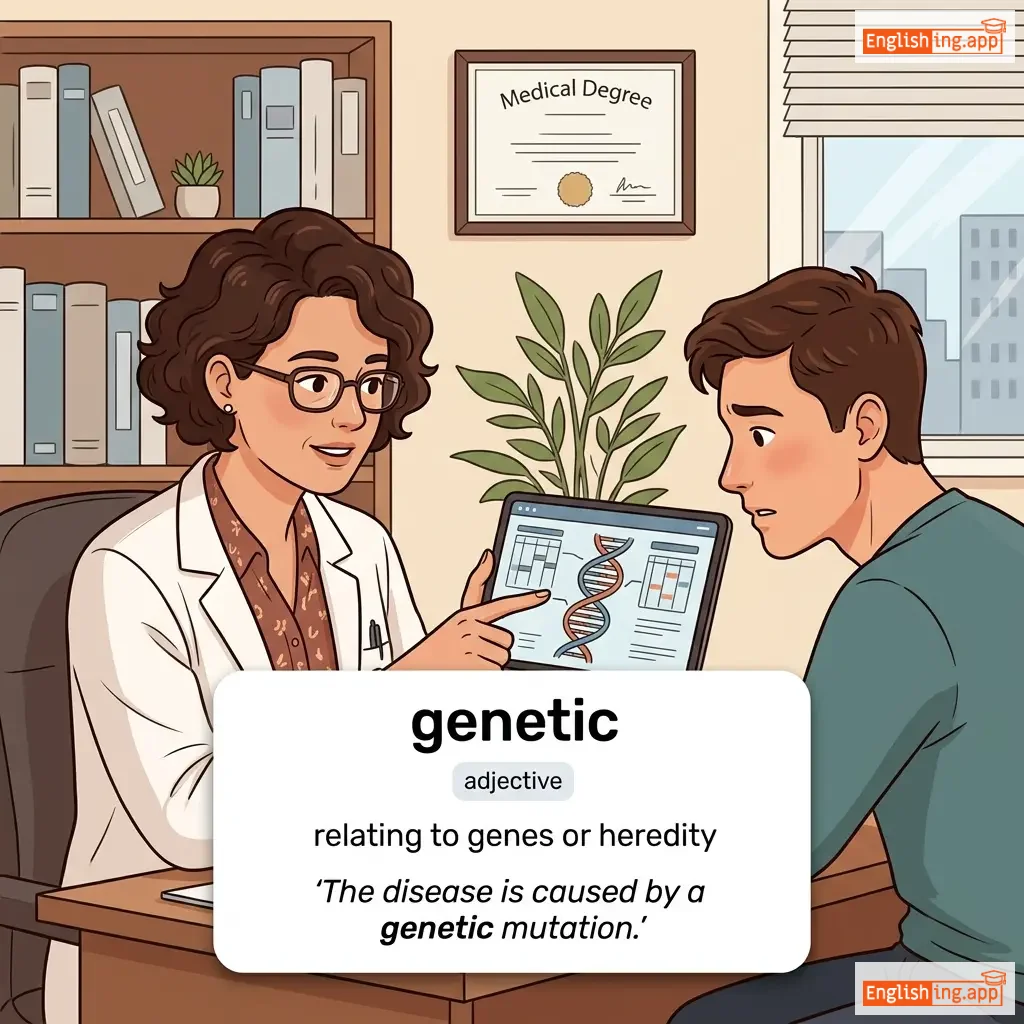
relating to genes or heredity
••••••
|
The disease is caused by a genetic mutation.
Это заболевание вызвано генетической мутацией.
••••••
|
Это заболевание вызвано генетической мутацией.
Eto zabolevanie vyzvano geneticheskoy mutatsiey.
••••••
|
genetic makeup
генетическая структура
••••••
|
the set of genes that make up an individual
••••••
|
генетическая структура
geneticheskaya struktura
••••••
|
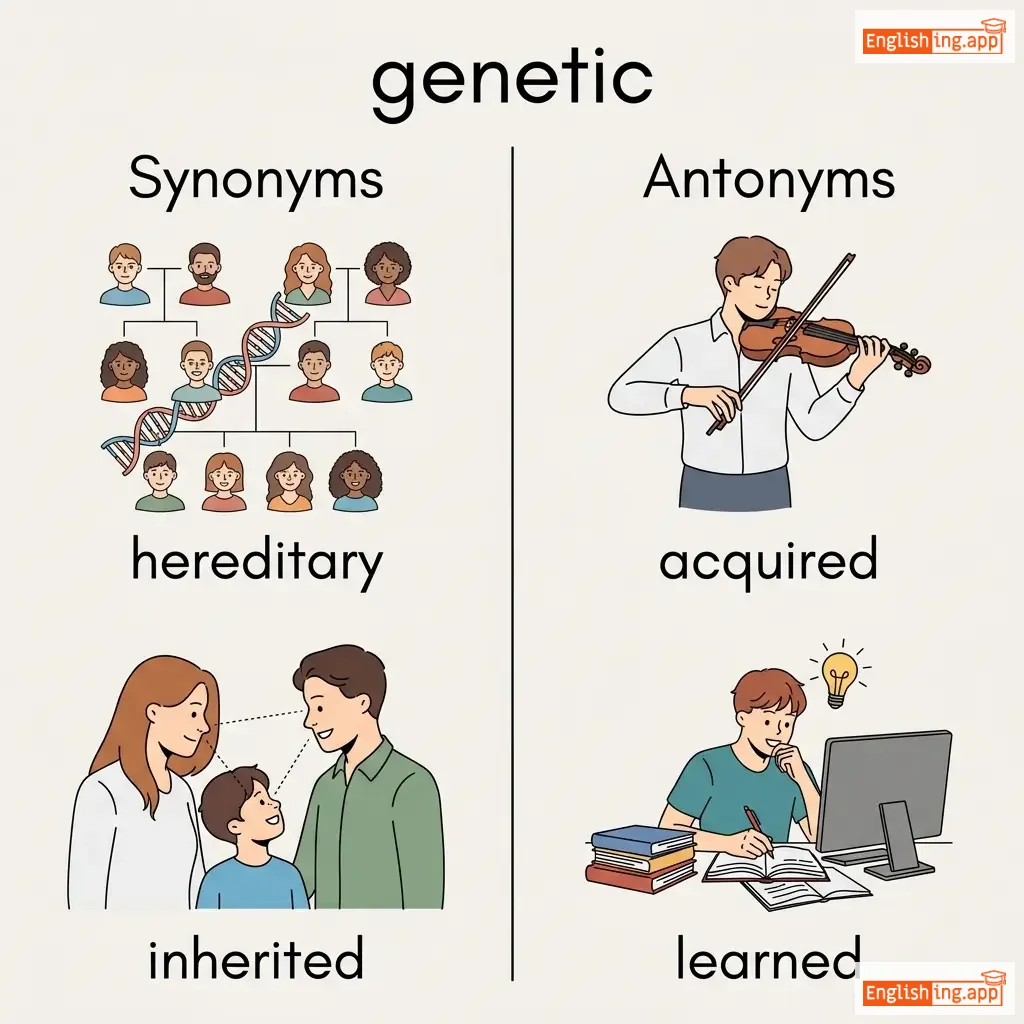
hereditary, inherited, biological, genomic
••••••
|
acquired, learned
••••••
|
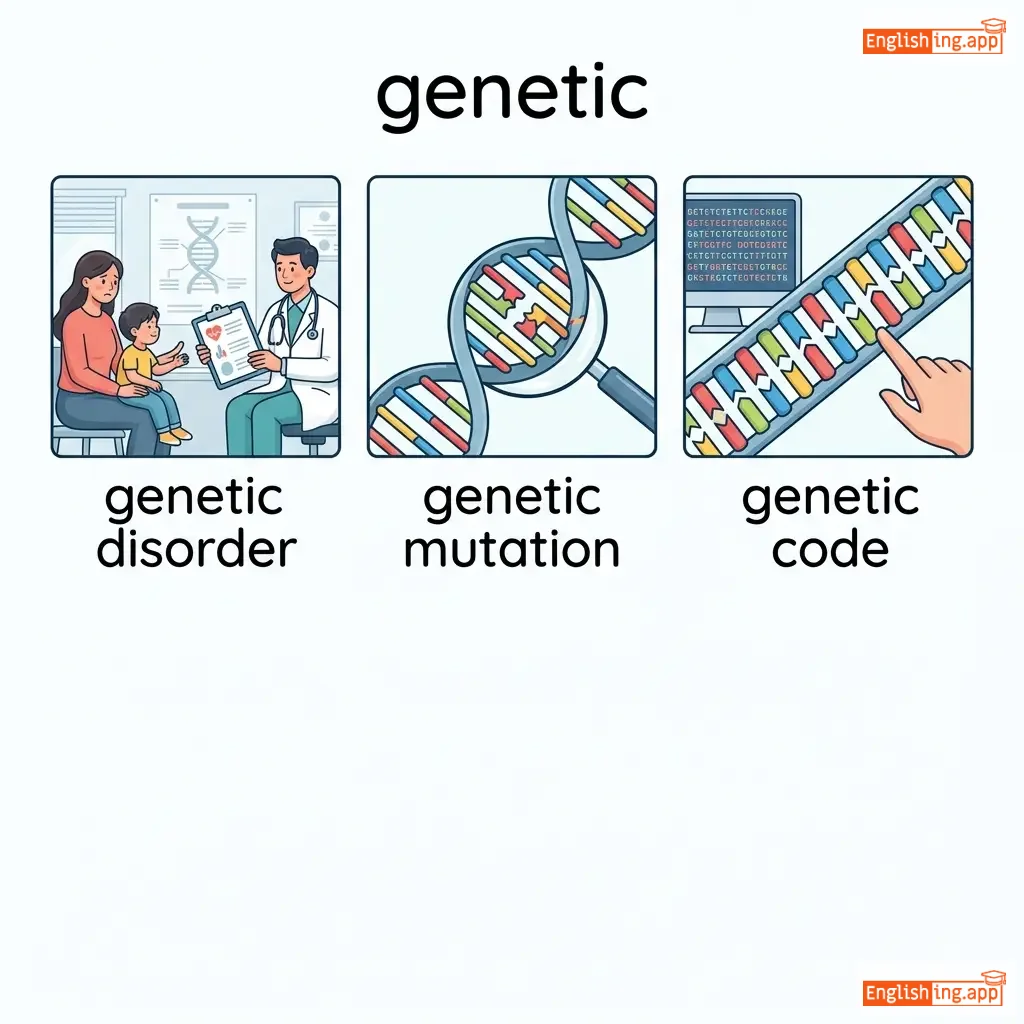
genetic disorder, genetic mutation, genetic code, genetic makeup
••••••
|
ГЕН (генетический) — это все о генах и наследственности.
••••••
|
|
🧠
••••••
|
/ˈdʒiːniəs/
noun
(ˈdʒiːniəs)
••••••
|
- •••••• |
гений
geniy
••••••
|
- •••••• | - •••••• | - •••••• | - •••••• |
a person with exceptional intellectual or creative ability
••••••
|
Einstein was a scientific genius. |
Эйнштейн был научным гением.
Eynshteyn byl nauchnym geniyem.
••••••
|
stroke of genius |
a brilliant or very clever idea
••••••
|
озарение гения
ozarenie geniya
••••••
|
prodigy, mastermind, intellect, wizard, brain
••••••
|
fool, simpleton, idiot
••••••
|
artistic genius, musical genius, pure genius, show genius
••••••
|
Genius – запоминай, как гений с гениальными мыслями!
••••••
|
|
☠️
••••••
|
/ˈdʒen.ə.saɪd/
noun
(геноцид)
••••••
|
|
геноцид
genotsid
••••••
|
- •••••• | - •••••• | - •••••• | - •••••• |
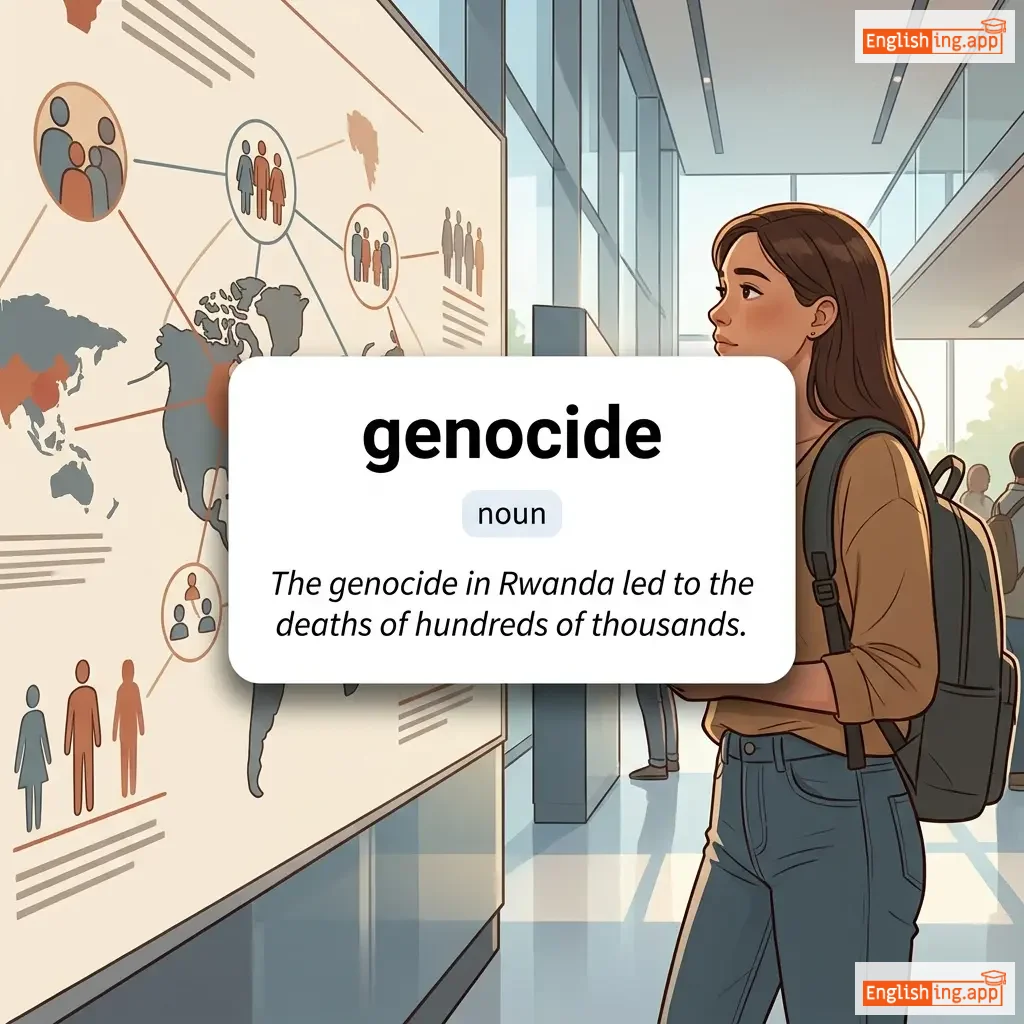
the deliberate killing of a large group of people, especially those of a particular ethnic group or nation
••••••
|
The international court condemned the systematic genocide committed during the war. |
Международный суд осудил систематический геноцид, совершенный во время войны.
Mezhdunarodnyy sud osudil sistematicheskiy genotsid, sovershennyy vo vremya voyny.
••••••
|
- •••••• | - •••••• | - •••••• |
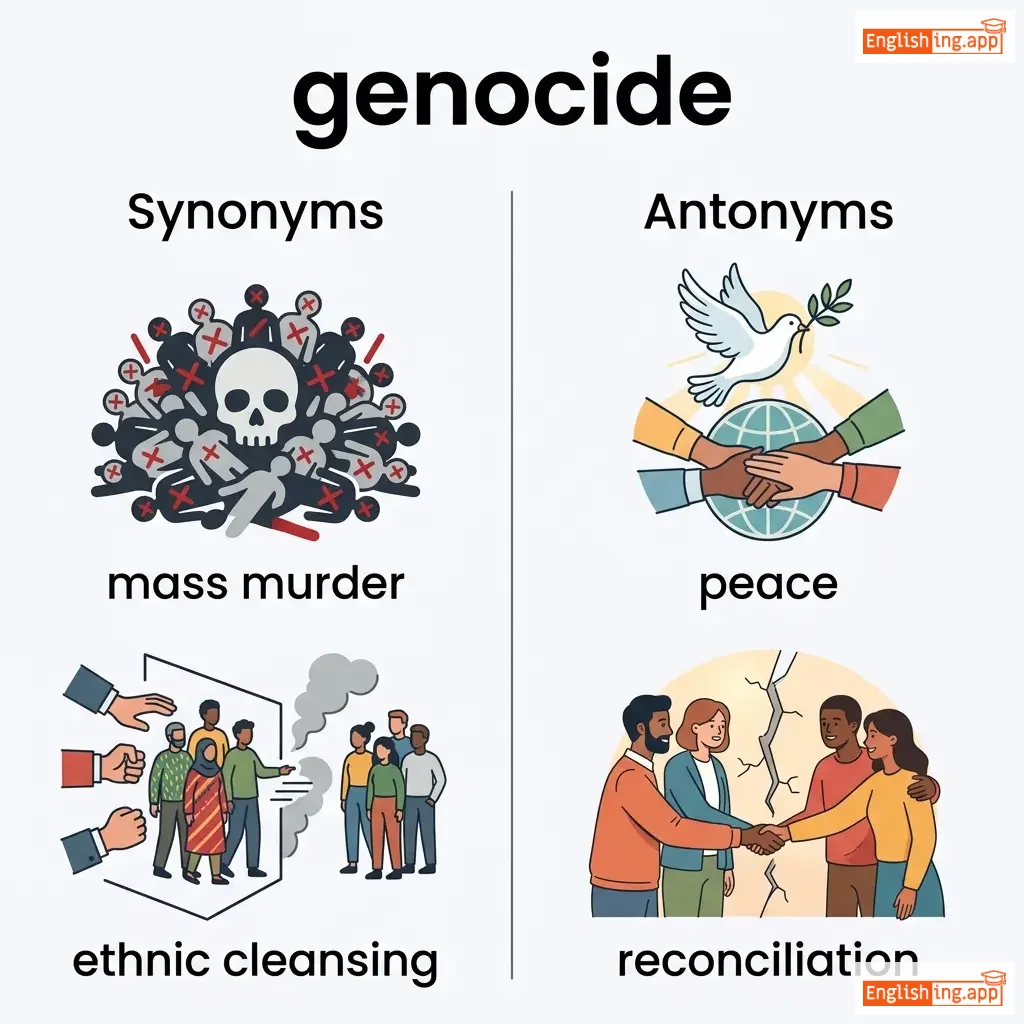
mass murder, ethnic cleansing, extermination, massacre
••••••
|
protection, preservation, salvation, rescue
••••••
|
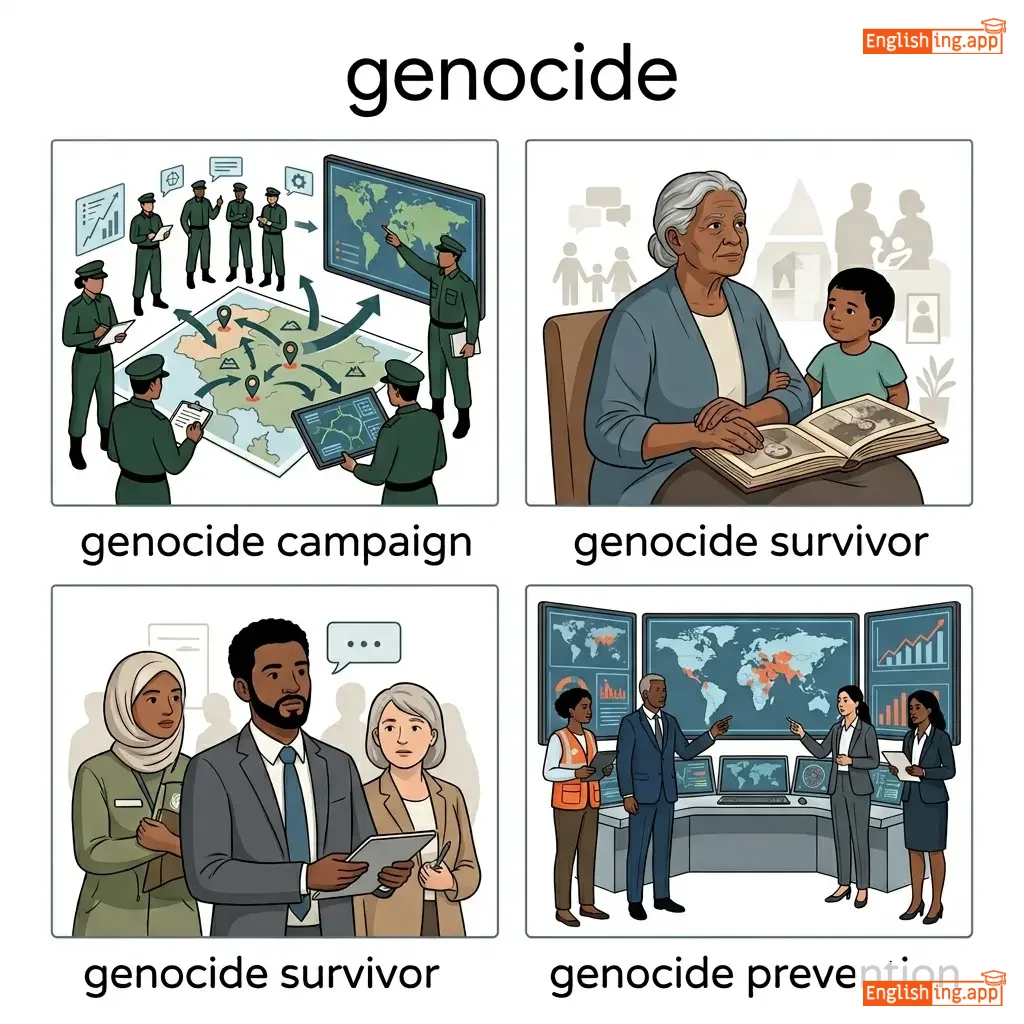
prevent genocide, genocide prevention, ethnic genocide
••••••
|
Геноцид - это преступление против целых народов, запомни с 'геноцидом'.
••••••
|
|
🌸
••••••
|
/ˈdʒɛntəl/
adjective
(жентл)
••••••
|
- •••••• |
нежный
nezhny
••••••
|
- •••••• | - •••••• | - •••••• | - •••••• |
Kind, mild, or tender in nature or behavior
••••••
|
He was always gentle with children. |
Он всегда был нежным с детьми.
On vsegda byl nezhnym s det'mi.
••••••
|
gentle reminder |
a polite and soft way to remind someone
••••••
|
нежное напоминание
nezhnoe napominanie
••••••
|
kind, tender, mild, soft, calm
••••••
|
harsh, rough, cruel
••••••
|
gentle touch, gentle smile, gentle reminder, gentle nature
••••••
|
Нежный как мягкий ветер
••••••
|
|
🤵
••••••
|
/ˈdʒɛntəlmən/
noun
(джентльмен)
••••••
|
- •••••• |
джентльмен
dzhentl'men
••••••
|
- •••••• | - •••••• | - •••••• | - •••••• |
a man who is polite, courteous, and honorable
••••••
|
He opened the door for her like a true gentleman. |
Он открыл ей дверь, как настоящий джентльмен.
On otkryl yey dver', kak nastoyashchiy dzhentl'men.
••••••
|
perfect gentleman |
a man who behaves very politely and respectfully
••••••
|
идеальный джентльмен
ideal'nyy dzhentl'men
••••••
|
man, sir, nobleman, gallant, gent
••••••
|
boor, rude man
••••••
|
true gentleman, perfect gentleman, young gentleman, gentleman's club
••••••
|
Джентльмен - это тот, кто всегда вежлив и учтив, как идеал вежливости.
••••••
|
|
🌸
••••••
|
/ˈdʒɛntli/
adverb
(джентли)
••••••
|
- •••••• |
мягко
myagko
••••••
|
- •••••• | - •••••• | - •••••• | - •••••• |
in a kind, careful, or soft way
••••••
|
She gently placed the baby in the crib. |
Она мягко положила ребенка в кроватку.
Ona myagko polozhila rebenka v krovатку.
••••••
|
gently does it |
a reminder to do something slowly and carefully
••••••
|
мягко делай это
myagko delay eto
••••••
|
softly, tenderly, lightly, calmly
••••••
|
harshly, roughly
••••••
|
speak gently, touch gently, gently smiling, gently place
••••••
|
Мягко, как нежность, медленно делай это!
••••••
|
|
✅
••••••
|
/ˈdʒɛnjʊɪn/
adjective
(дʒɛнʊɪн)
••••••
|
- •••••• |
настоящий
nastoyashchiy
••••••
|
- •••••• | - •••••• | - •••••• | - •••••• |
real and authentic; not fake or artificial
••••••
|
This is a genuine leather bag. |
Это настоящая кожаная сумка.
Eto nastoyashchaya kozhannaya sumka.
••••••
|
genuine article |
an authentic or real example of something
••••••
|
настоящий товар
nastoyashchiy tovar
••••••
|
authentic, real, true, legitimate, sincere
••••••
|
fake, false, counterfeit
••••••
|
genuine smile, genuine leather, genuine concern, genuine effort
••••••
|
Genuine означает настоящий, как настоящий смех означает настоящий смех.
••••••
|
|
❤️
••••••
|
/ˈdʒɛnjʊɪnli/
adverb
(dzhen-yoo-in-lee)
••••••
|
- •••••• |
искренне
iskrenne
••••••
|
- •••••• | - •••••• | - •••••• | - •••••• |
in a truthful and sincere way
••••••
|
She genuinely cares about the environment.
Она искренне заботится о окружающей среде.
••••••
|
Она искренне заботится о окружающей среде.
Ona iskrenne zabotitsya o okruzhayushchey srede.
••••••
|
- •••••• | - •••••• | - •••••• |
sincerely, honestly, truly, authentically
••••••
|
falsely, insincerely, dishonestly
••••••
|
genuinely concerned, genuinely interested, genuinely believe
••••••
|
Когда вы говорите что-то искренне, вы показываете свои 'искренние' чувства, как если бы 'Искренний' говорил правду.
••••••
|
|
🗺️
••••••
|
/ˌdʒiːəˈɡræfɪkəl/
adjective
(джиографикал)
••••••
|
- •••••• |
географический
geograficheskiy
••••••
|
- •••••• | - •••••• | - •••••• | - •••••• |
relating to geography; connected with the physical features, location, or characteristics of the Earth or a particular area
••••••
|
The country’s geographical position makes it an important trading hub.
Зе кантриз джиографикал позишн мейкс ит эн импотэнт трейдинг хаб.
••••••
|
Географическое положение страны делает её важным торговым центром.
geograficheskoe polozhenie strany delaet ee vazhnym torgovym tsentrom
••••••
|
geographical location
geographical location
••••••
|
the specific position or place of an area on the Earth
••••••
|
географическое положение
geograficheskoe polozhenie
••••••
|
regional, territorial, spatial, topographical, locational
••••••
|
nonspatial, abstract
••••••
|
geographical location, geographical features, geographical distribution, geographical boundaries, geographical diversity
••••••
|
Гео = земля по-гречески → географический
••••••
|
|
🌍
••••••
|
/dʒiˈɒɡrəfi/
noun
(джиография)
••••••
|
- •••••• |
география
geografiya
••••••
|
- •••••• | - •••••• | - •••••• | - •••••• |
the study of the Earth’s physical features, climates, populations, and the relationships between people and their environments
••••••
|
She studies geography to understand how landscapes and human societies interact.
Она изучает джиографию в школе.
••••••
|
Она изучает географию, чтобы лучше понимать мир.
ona izuchaet geografiyu chtoby luchshe ponimat mir
••••••
|
- •••••• | - •••••• | - •••••• |
earth science, physical geography, human geography, geoscience
••••••
|
history, literature
••••••
|
physical geography, human geography, study geography, geography lesson, world geography
••••••
|
Гео = Земля, графия = описание
••••••
|
|
🇩🇪
••••••
|
/ˈdʒɜːrmən/
noun/adjective
(дʒɜːрман)
••••••
|
- •••••• |
немецкий
nemetskiy
••••••
|
- •••••• | - •••••• | - •••••• | - •••••• |
relating to Germany, its people, or its language
••••••
|
She is learning German to study abroad. |
Она учит немецкий, чтобы учиться за границей.
Ona uchet nemetskiy, chtoby uchitsya za granitsey.
••••••
|
German shepherd |
a breed of large dog originally bred in Germany
••••••
|
немецкая овчарка
nemetskaya ovcharka
••••••
|
Teutonic, Deutsch, European
••••••
|
non-German, foreign
••••••
|
German language, German culture, German shepherd, German food
••••••
|
Немецкий язык и немецкая овчарка происходят из Германии, так что оба - немецкие!
••••••
|
|
🤲
••••••
|
/ˈdʒɛs.tʃər/
noun
(жест)
••••••
|
- •••••• |
жест
zhest
••••••
|
- •••••• | - •••••• | - •••••• | - •••••• |
A movement of part of the body, especially the hands or head, to express an idea or meaning.
••••••
|
She made a friendly gesture to welcome the guests. |
Она сделала дружелюбный жест, чтобы поприветствовать гостей.
Ona sdelala druzhelyubnyy zhest, chtoby poprivetsvovat' gostey.
••••••
|
gesture of goodwill |
An act intended to show kindness or positive intention.
••••••
|
жест доброй воли
zhest dobroy voli
••••••
|
motion, signal, sign, indication, movement
••••••
|
inaction, stillness
••••••
|
kind gesture, simple gesture, symbolic gesture, gesture of support
••••••
|
Когда приветствуешь гостей, покажи жест доброй воли.
••••••
|
|
📦
••••••
|
/ɡɛt/
verb
(гет)
••••••
|


|
получить
poluchit
••••••
|
got
гот
••••••
|
gotten
готтен
••••••
|
gets
гетс
••••••
|
getting
геттинг
••••••
|
to obtain, receive, or come to have something
••••••
|
I need to get a new phone before my old one stops working.
Мне нужно получить новый телефон, прежде чем мой старый перестанет работать.
••••••
|
Мне нужно получить новый телефон, прежде чем мой старый перестанет работать.
Mne nuzhno poluchit' novyy telefon, prezhde chem moy staryy perestanot rabotat'.
••••••
|
get going
начать движение
••••••
|
to start moving or to begin something
••••••
|
начать
nachat'
••••••
|
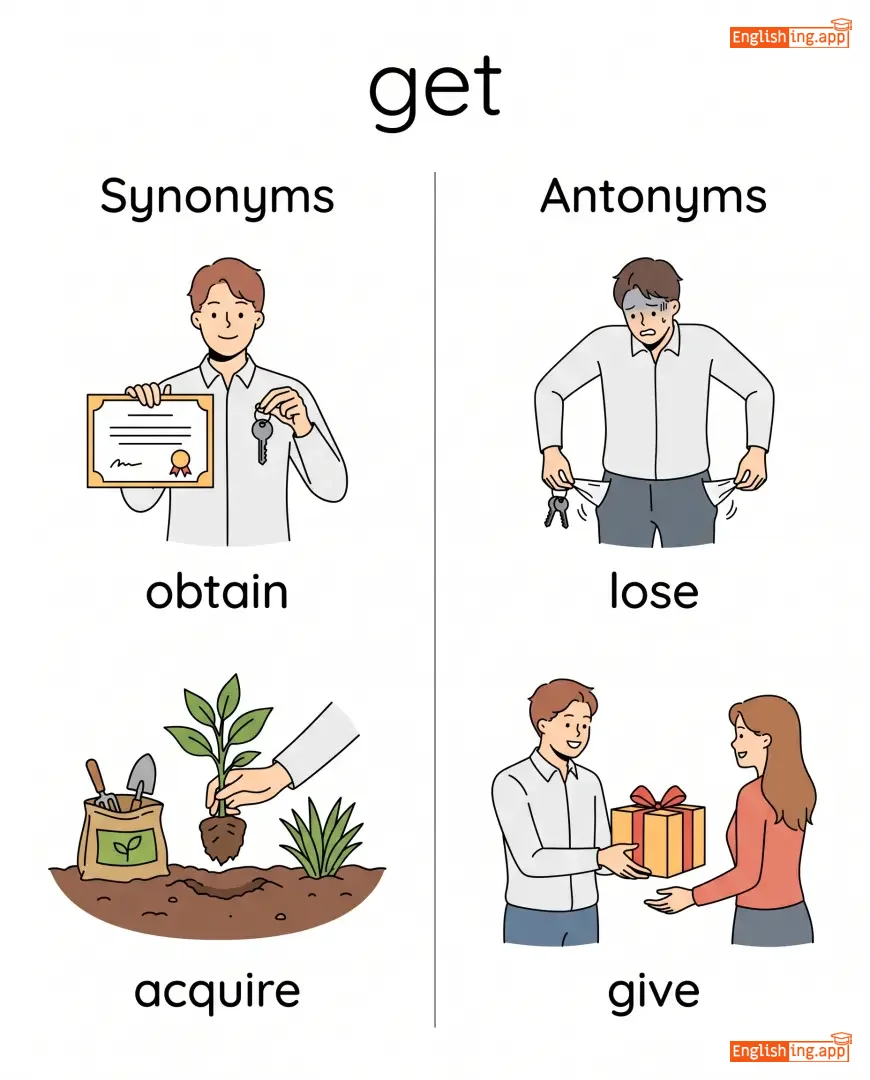
obtain, acquire, receive, gain, secure
••••••
|
lose, give
••••••
|
get a job, get ready, get married, get lost, get better
••••••
|
Чтобы что-то получить, пройдите через ворота (gate) - get означает получить
••••••
|

