|
絵文字
|
単語 | Images | 翻訳 | 過去 | 過去分詞 | 三人称単数 | 動名詞 | 意味 | 例文 | 例文の翻訳 | 表現例 | 表現例の意味 | 表現例の翻訳 | 同義語 | 対義語 | コロケーション | ニーモニック |
|---|---|---|---|---|---|---|---|---|---|---|---|---|---|---|---|---|---|
|
🌍
••••••
|
/ɪnˈtaɪər/
adjective
(エンタイア)
••••••
|
- •••••• |
完全な
kanzen na
••••••
|
- •••••• | - •••••• | - •••••• | - •••••• |
whole; with no part left out
••••••
|
He spent the entire day reading books. |
彼は一日中本を読んで過ごしました。
Kare wa ichinichijū hon o yonde sugoshimashita.
••••••
|
the entire world |
everywhere; globally
••••••
|
全世界
zenshikai
••••••
|
whole, complete, full, total, all
••••••
|
partial, incomplete
••••••
|
entire day, entire life, entire system, entire team
••••••
|
Entire はエンタイア、完全に、すべてが含まれている
••••••
|
|
🔄
••••••
|
/ɪnˈtaɪərli/
adverb
(エンタアーリー)
••••••
|
- •••••• |
完全に
kanzen ni
••••••
|
- •••••• | - •••••• | - •••••• | - •••••• |
Completely or wholly.
••••••
|
She is entirely responsible for the project. |
彼女はそのプロジェクトに完全に責任があります。
Kanojo wa sono purojekuto ni kanzen ni sekinin ga arimasu.
••••••
|
entirely up to |
Completely dependent on someone or something
••••••
|
完全に依存
kanzen ni izon
••••••
|
completely, fully, wholly, absolutely
••••••
|
partly, partially, incompletely
••••••
|
entirely responsible, entirely new, entirely different, not entirely
••••••
|
完全には全く意味 — '完全'が'完全に'にあることを覚えて!
••••••
|
|
📜
••••••
|
/ɪnˈtaɪtəl/
verb
(エンタイトル)
••••••
|
- •••••• |
権利を与える
kenri o ateru
••••••
|
entitled
エンタイトルド
••••••
|
entitled
エンタイトルド
••••••
|
entitles
エンタイトルズ
••••••
|
entitling
エンタイトルイング
••••••
|
to give someone the right to have or do something
••••••
|
Employees are entitled to receive paid holidays.
従業員は有給休暇を受ける権利があります。
••••••
|
従業員は有給休暇を受ける権利があります。
jūgyōin wa yūkyū kyūka o ukeru kenri ga arimasu.
••••••
|
be entitled to
権利を有する
••••••
|
to have a right or claim to something
••••••
|
権利を有する
kenri o yū suru
••••••
|
authorize, allow, permit, empower, grant
••••••
|
forbid, deny, disqualify
••••••
|
entitle someone to, entitled to benefits, entitled to rights, entitled book
••••••
|
Title は権利を意味します。だから en-title は権利を与えることを意味します。
••••••
|
|
🏢
••••••
|
/ˈɛntəti/
noun
(エンティティ)
••••••
|
- •••••• |
実体
jittai
••••••
|
- •••••• | - •••••• | - •••••• | - •••••• |
something that exists as a single and complete unit; an organization or being
••••••
|
The new company will operate as a separate legal entity. |
新しい会社は別個の法的実体として運営されます。
Atarashī kaisha wa bekkō no hōteki jittai toshite un'ei saremasu.
••••••
|
- •••••• | - •••••• | - •••••• |
being, organization, unit, body
••••••
|
nothingness, nonexistence
••••••
|
legal entity, independent entity, business entity, separate entity
••••••
|
実体は組織や法人といった存在を意味します。
••••••
|
|
🚪
••••••
|
/ˈɛntrəns/
noun
(エントランス)
••••••
|
- •••••• |
入り口
iriguchi
••••••
|
- •••••• | - •••••• | - •••••• | - •••••• |
A place of entering; an entry point.
••••••
|
They waited at the main entrance of the building. |
彼らは建物の正面入り口で待っていました。
Karera wa tatemono no shōmen iriguchi de matte imashita.
••••••
|
make an entrance |
To arrive in a way that attracts attention.
••••••
|
登場する
tōjō suru
••••••
|
entry, doorway, access, gateway, threshold
••••••
|
exit, departure, way out
••••••
|
main entrance, entrance hall, entrance exam, entrance door
••••••
|
入り口とは、すべての始まり。入り口を通ることで、すべてが始まる!
••••••
|
|
💼
••••••
|
/ˌɒntrəprəˈnɜːr/ (UK), /ˌɑːntrəprəˈnɝː/ (US)
noun
(アントレプレナー)
••••••
|
- •••••• |
起業家
kigyōka
••••••
|
- •••••• | - •••••• | - •••••• | - •••••• |
A person who starts and runs a business, taking on financial risks in the hope of profit.
••••••
|
The young entrepreneur launched a successful tech startup. |
若い起業家は成功したテクノロジースタートアップを立ち上げました。
Wakai kigyōka wa seikō shita tekunorojī sutātopu o tachiagemashita.
••••••
|
serial entrepreneur |
A person who starts multiple businesses one after another
••••••
|
シリアル起業家
Shiriaru kigyōka
••••••
|
businessperson, founder, innovator, tycoon, capitalist
••••••
|
employee, follower, worker
••••••
|
young entrepreneur, successful entrepreneur, serial entrepreneur, social entrepreneur
••••••
|
Entrepreneurは起業家を意味します – ENTER 新しいビジネスのためにPRofit。
••••••
|
|
🎟️
••••••
|
/ˈɛntri/
noun
(エントリー)
••••••
|
- •••••• |
エントランス
entoransu
••••••
|
- •••••• | - •••••• | - •••••• | - •••••• |
the act of going into a place, or permission to go in
••••••
|
Entry to the museum is free on Fridays. |
金曜日は博物館のエントランスが無料です。
Kin'yōbi wa hakubutsukan no entoransu ga muryō desu.
••••••
|
deny entry |
to refuse permission to enter
••••••
|
エントランスを拒否する
entoransu o kyohi suru
••••••
|
admission, access, doorway, record
••••••
|
exit, departure
••••••
|
entry fee, entry point, gain entry, deny entry
••••••
|
Entry は場所に入るためのエントランス
••••••
|
|
✉️
••••••
|
/ˈɛnvəloʊp/
noun
(エンベロープ)
••••••
|
- •••••• |
封筒
fūtō
••••••
|
- •••••• | - •••••• | - •••••• | - •••••• |
a flat paper container used to enclose a letter or document
••••••
|
She sealed the letter in an envelope and posted it. |
彼女は手紙を封筒に入れて、郵送しました。
Kanojo wa tegami o fūtō ni irete, yūsō shimashita.
••••••
|
push the envelope |
to go beyond normal limits; to innovate or take risks
••••••
|
限界を超える
genkai o koeru
••••••
|
wrapper, cover, packet, casing, container
••••••
|
uncovering, exposure
••••••
|
seal an envelope, open an envelope, address an envelope, brown envelope
••••••
|
Envelope は封筒です 📬 — 手紙を‘封筒に入れて’送ることを覚えてください。
••••••
|
|
🏞️
••••••
|
/ɪnˈvaɪərən/
verb
(インヴァイロン)
••••••
|
- •••••• |
囲む
kakomu
••••••
|
environed
インヴァイロンド
••••••
|
environed
インヴァイロンド
••••••
|
environs
インヴァイロンス
••••••
|
environing
インヴァイリング
••••••
|
to surround or enclose; to encircle
••••••
|
Mountains environ the small valley.
山々は小さな谷を囲んでいます。
••••••
|
山々は小さな谷を囲んでいます。
Yamayama wa chīsana tani o kakondeimasu.
••••••
|
- •••••• | - •••••• | - •••••• |
surround, encircle, encompass, enclose
••••••
|
free, release, uncover
••••••
|
environ with, environ by, environ around
••••••
|
環境は周りを囲んでいるので、environは囲むことを意味します。
••••••
|
|
🌱
••••••
|
/ɪnˈvaɪrənmənt/
noun
(enbaironment)
••••••
|
|
環境
kankyou
••••••
|
- •••••• | - •••••• | - •••••• | - •••••• |
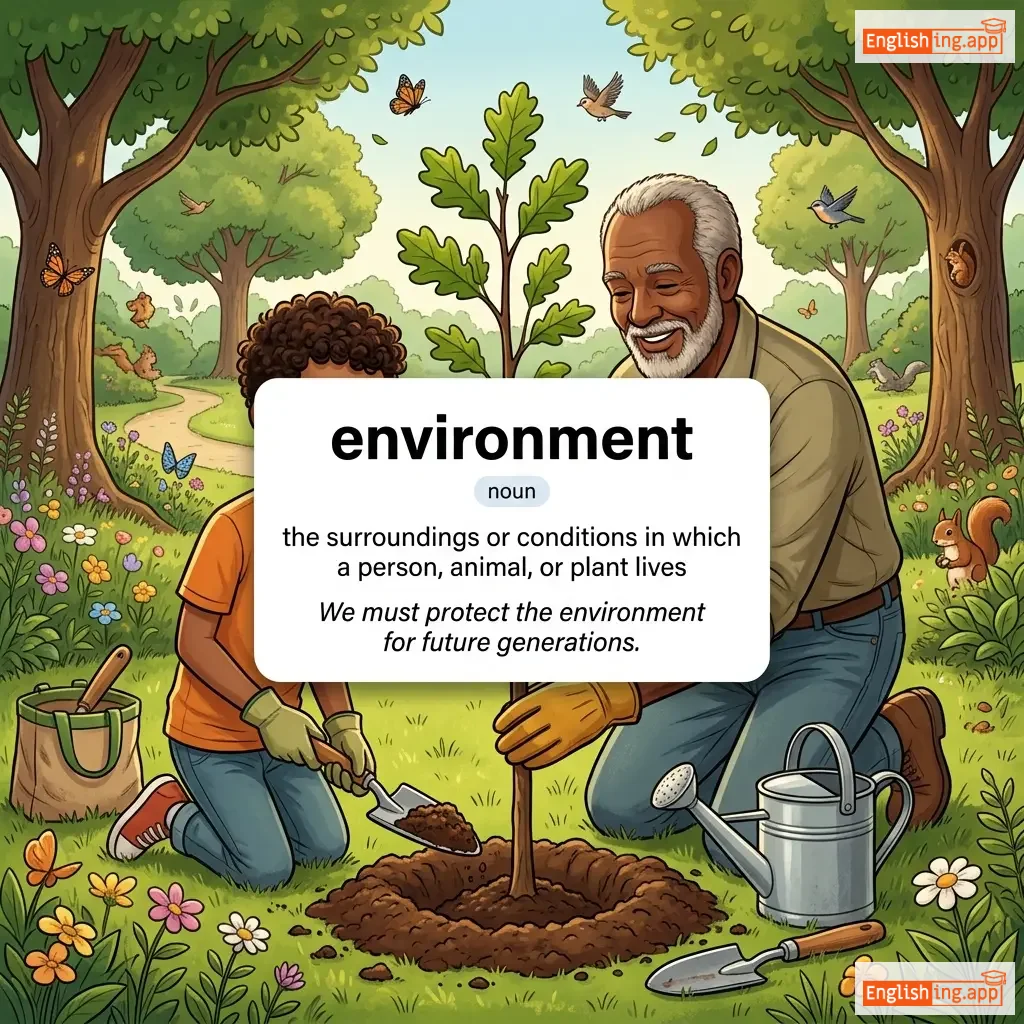
the surroundings or conditions in which a person, animal, or plant lives
••••••
|
We must protect the environment for future generations. |
私たちは未来の世代のために環境を守らなければなりません。
Watashitachi wa mirai no sedai no tame ni kankyou o mamoranakereba narimasen.
••••••
|
environmentally friendly |
not harmful to the natural world
••••••
|
環境に優しい
kankyou ni yasashii
••••••
|
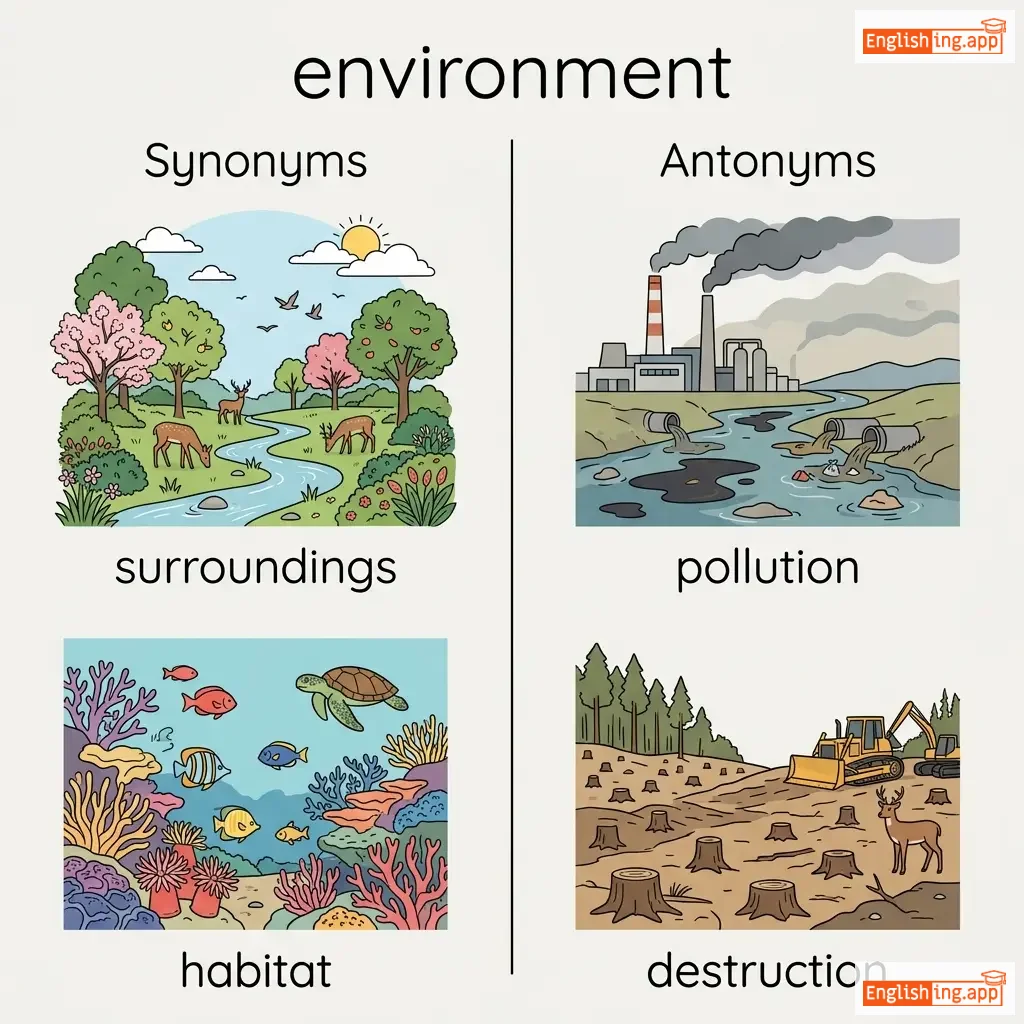
surroundings, habitat, ecology, atmosphere, setting
••••••
|
pollution, destruction
••••••
|
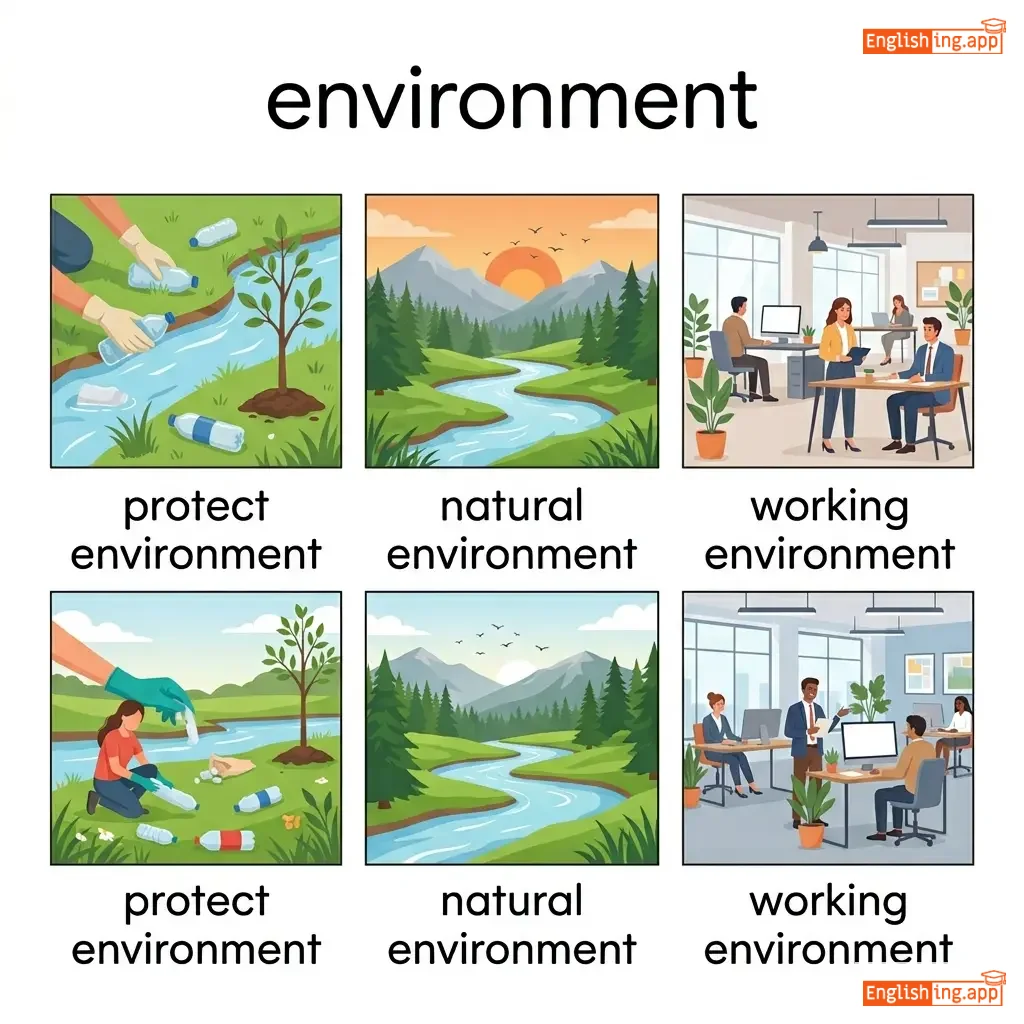
protect environment, natural environment, working environment, environment protection
••••••
|
環境:自然と共生する
••••••
|
|
🌍
••••••
|
/ɪnˌvaɪrənˈmɛntl/
adjective
(エンバイアロンメンタル)
••••••
|
- •••••• |
環境的な
kankyōtekina
••••••
|
- •••••• | - •••••• | - •••••• | - •••••• |
relating to the natural world and the impact of human activity on its condition
••••••
|
The company adopted new policies to reduce environmental damage. |
その会社は環境へのダメージを減らすために新しい方針を採用しました。
Sono kaisha wa kankyō e no damēji o herasu tame ni atarashī hōshin o saiyō shimashita.
••••••
|
environmental impact |
the effect that activities have on the natural world
••••••
|
環境への影響
kankyō e no eikyō
••••••
|
ecological, green, natural, sustainable, conservation
••••••
|
industrial, artificial, destructive
••••••
|
environmental protection, environmental law, environmental awareness, environmental issue
••••••
|
環境的なは自然に関連すること。
••••••
|
|
🦠
••••••
|
/ˌɛpɪˈdɛmɪk/
noun
(happiness)
••••••
|
- •••••• |
幸福
koufuku
••••••
|
- •••••• | - •••••• | - •••••• | - •••••• |
a widespread occurrence of an infectious disease in a community at a particular time
••••••
|
The flu epidemic affected thousands of people in the city. |
彼女は賞を受け取ったとき、幸せを隠すことができませんでした。
Kanojo wa shou o uketotta toki, shiawase o kakusu koto ga dekimasen deshita.
••••••
|
spread like an epidemic |
something that grows or spreads very quickly
••••••
|
幸せを求める
Shiawase o motomeru
••••••
|
outbreak, plague, pandemic, contagion, surge
••••••
|
endemic, limited, contained
••••••
|
flu epidemic, epidemic outbreak, control epidemic, epidemic spread
••••••
|
幸せ = 幸せを見つけること
••••••
|
|
🎬
••••••
|
/ˈɛpɪsoʊd/
noun
(エピソード)
••••••
|
- •••••• |
エピソード
episōdo
••••••
|
- •••••• | - •••••• | - •••••• | - •••••• |
An event or part of a story, or one installment in a series.
••••••
|
The last episode of the drama was watched by millions. |
そのドラマの最後のエピソードは何百万もの人々によって観られました。
Sono dorama no saigo no episōdo wa nanbyakumō no hitobito ni yotte miraremashita.
••••••
|
dramatic episode |
A notable or intense event in a story or life.
••••••
|
劇的なエピソード
Gekiteki na episōdo
••••••
|
event, incident, chapter, installment, occurrence
••••••
|
continuation, whole
••••••
|
TV episode, final episode, latest episode, dramatic episode
••••••
|
TV Episode = テレビシリーズのエピソード (episōdo)。
••••••
|
|
⚖️
••••••
|
/ˈiːkwəl/
adjective
(イクォール)
••••••
|
|
平等
byoudou
••••••
|
- •••••• | - •••••• | - •••••• | - •••••• |
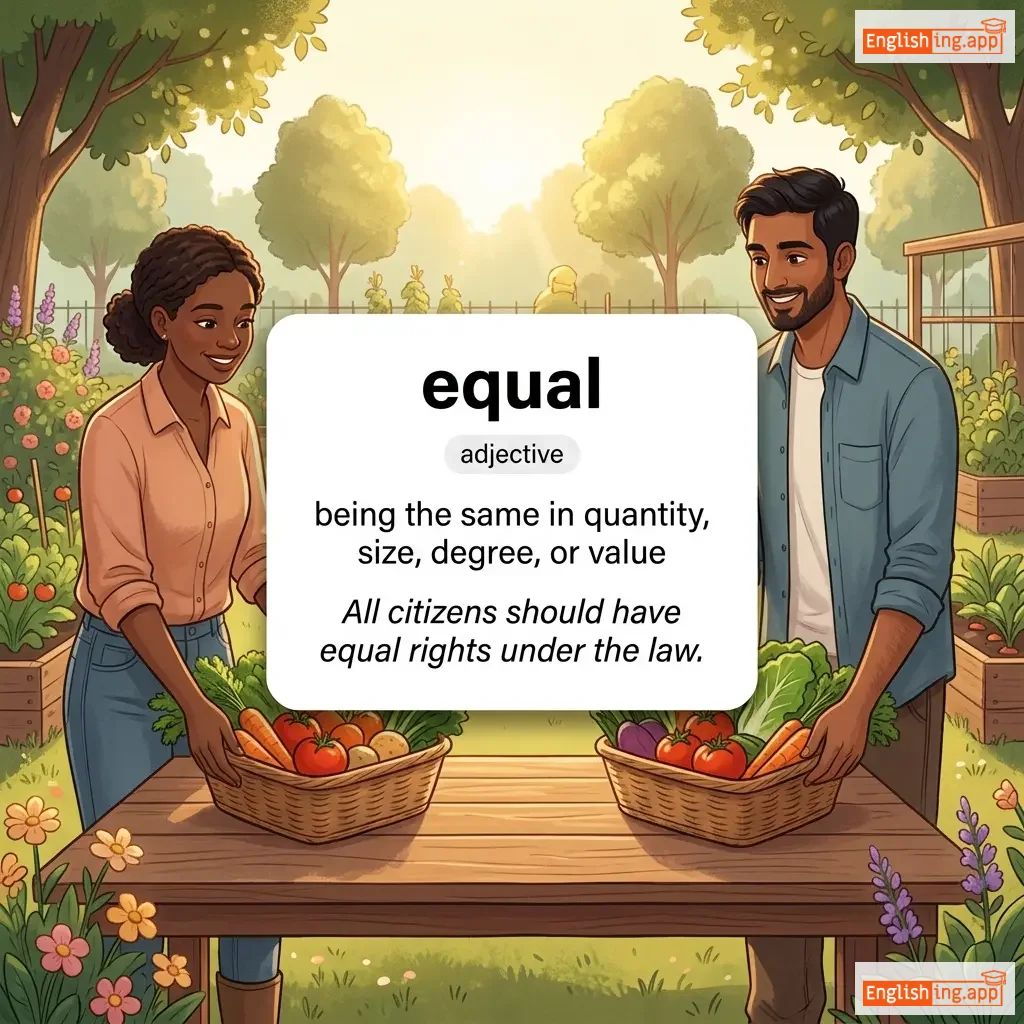
being the same in quantity, size, degree, or value
••••••
|
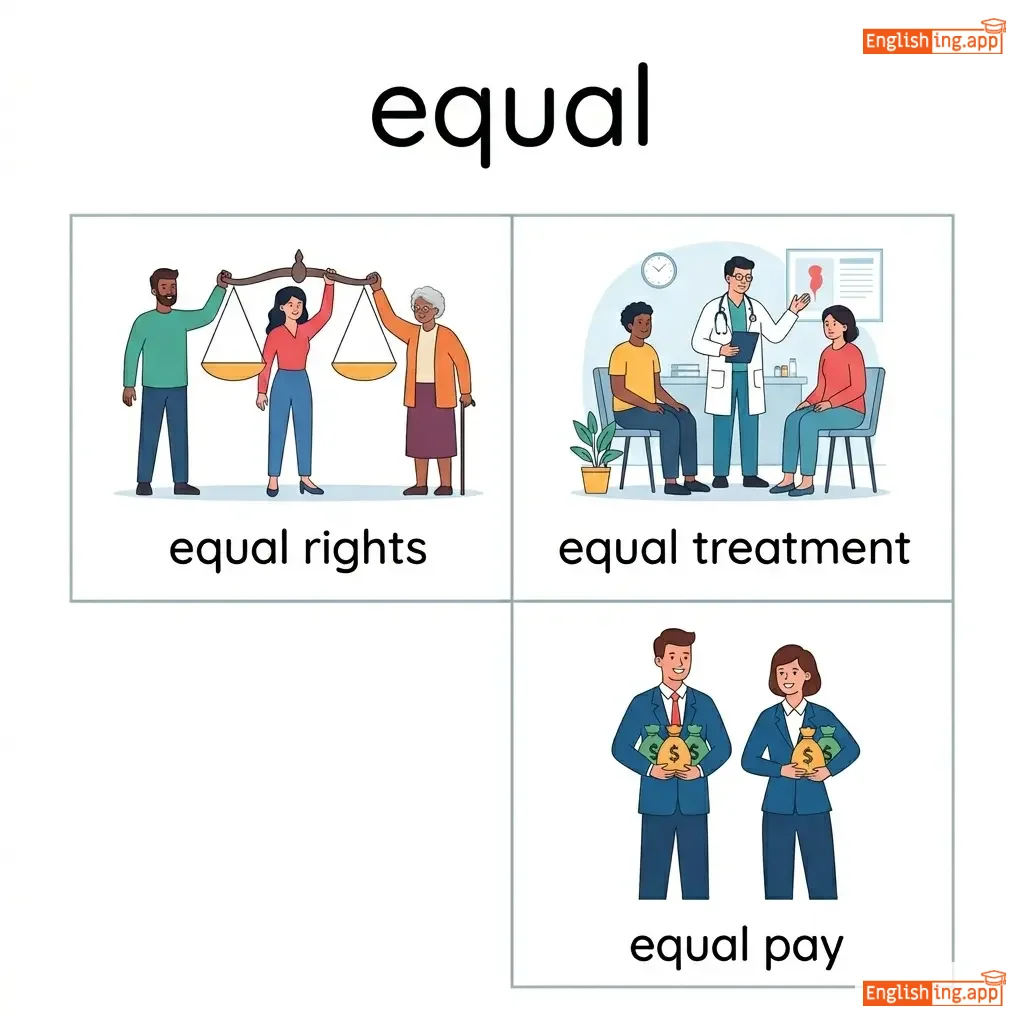
All citizens should have equal rights under the law.
すべての市民は法の下で平等な権利を持つべきです。
••••••
|
すべての市民は法の下で平等な権利を持つべきです。
Subete no shimin wa hō no moto de byōdō na kenri o motsu beki desu.
••••••
|
equal opportunity
平等な機会
••••••
|
the principle that everyone should have the same chances in life
••••••
|
平等な機会
byoudou na kikai
••••••
|
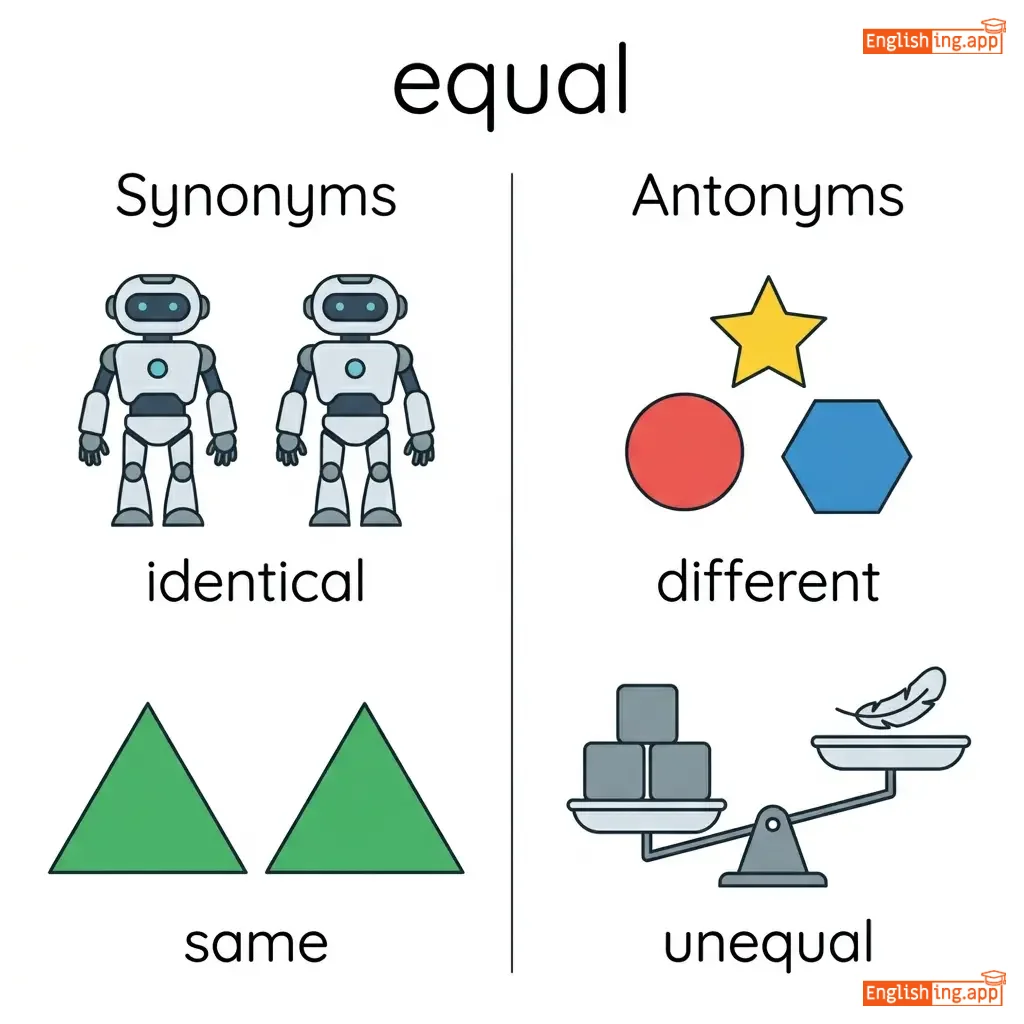
identical, same, equivalent, matching, uniform
••••••
|
different, unequal, unfair
••••••
|
equal rights, equal treatment, equal pay, equal opportunity
••••••
|
Equalとはすべての人を平等に見ることです
••••••
|
|
⚖️
••••••
|
/ɪˈkwɒləti/
noun
(iˈkwɒləti)
••••••
|
|
平等
byoudou
••••••
|
- •••••• | - •••••• | - •••••• | - •••••• |
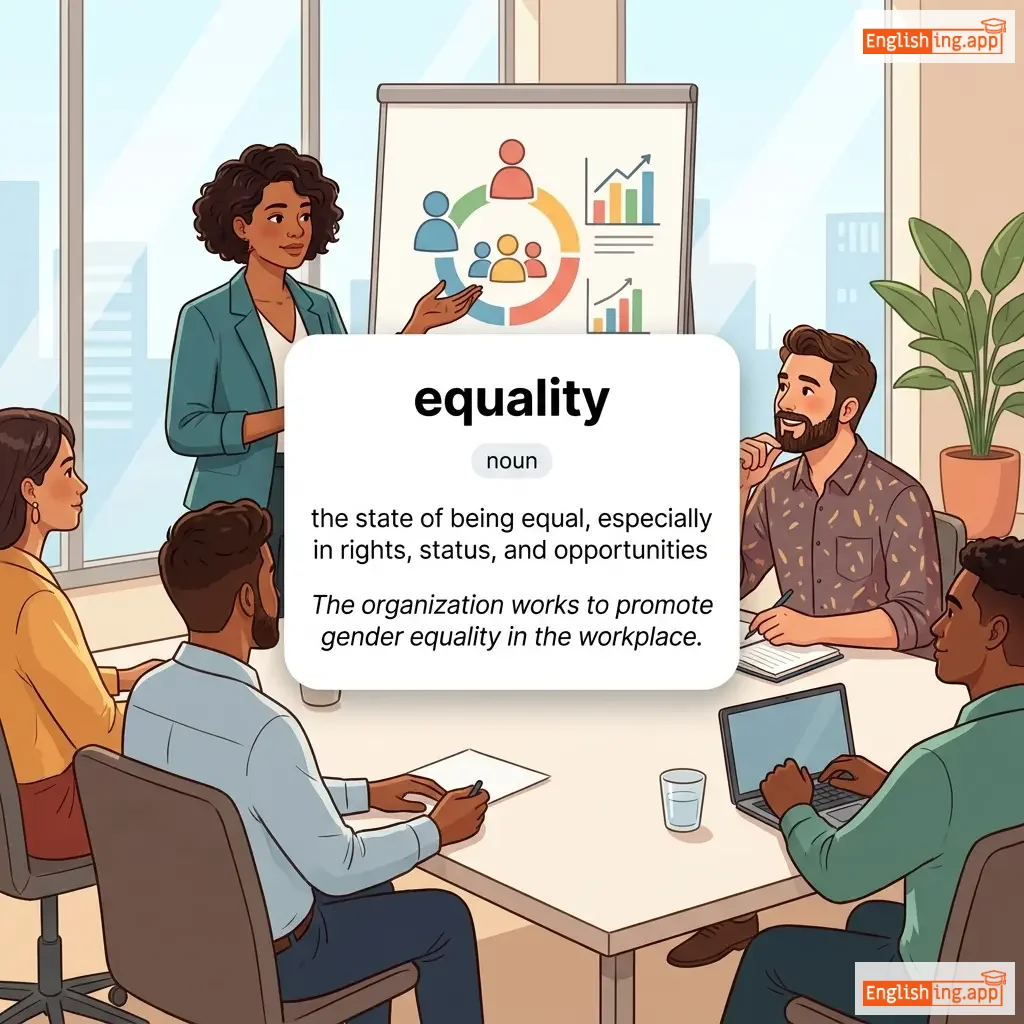
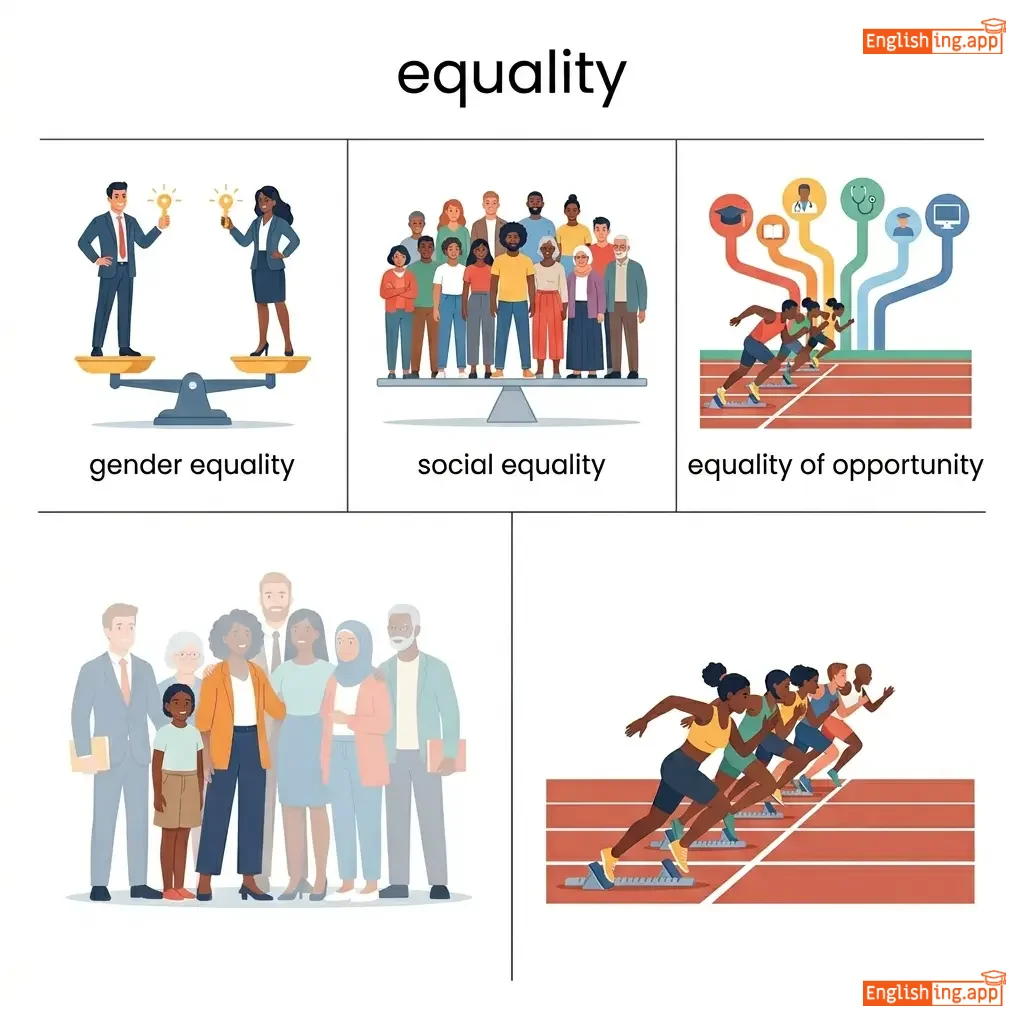
the state of being equal, especially in rights, status, and opportunities
••••••
|
The organization works to promote gender equality in the workplace.
その組織は職場での男女平等を推進するために働いています。
••••••
|
その組織は職場での男女平等を推進するために働いています。
Sono soshiki wa shokuba de no danjo byoudou o suishin suru tame ni hataraiteimasu.
••••••
|
- •••••• | - •••••• | - •••••• |
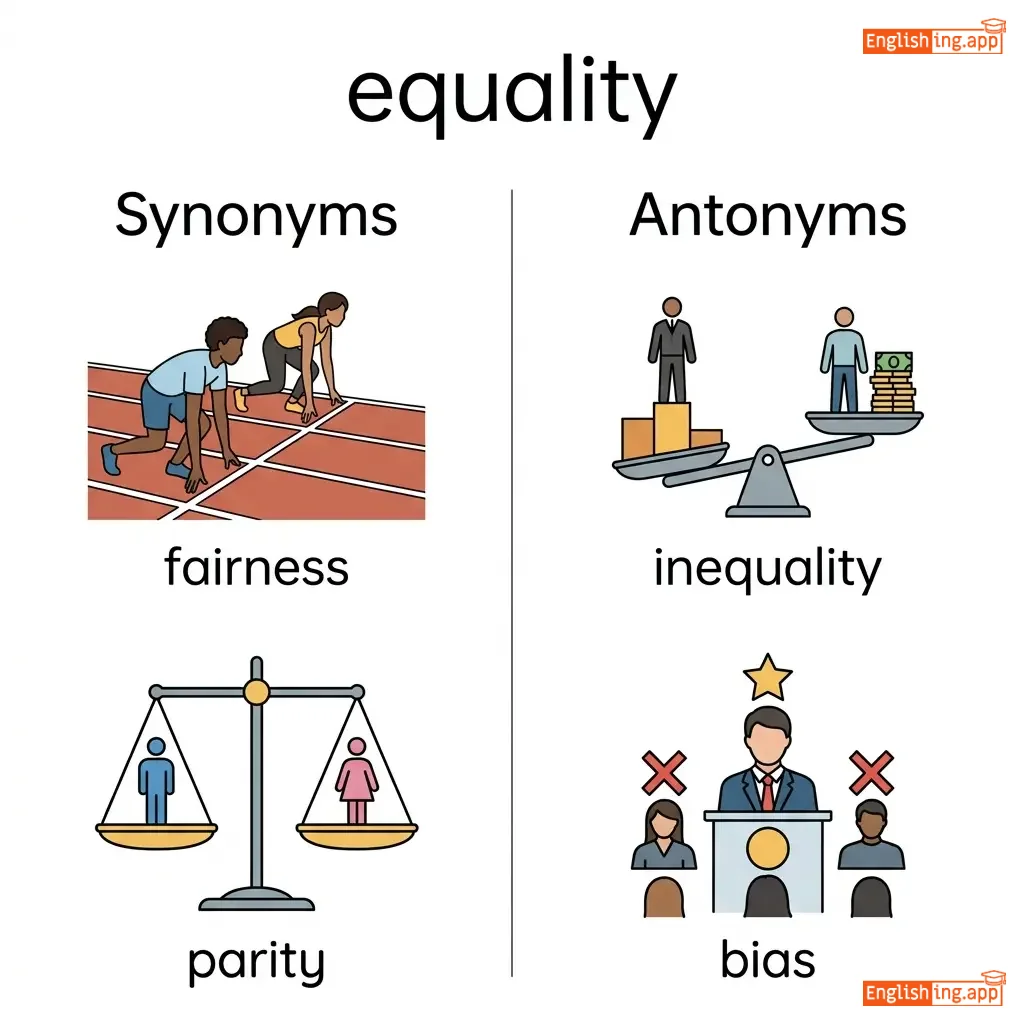
fairness, parity, balance, justice
••••••
|
inequality, bias, discrimination
••••••
|
gender equality, social equality, equality of opportunity, promote equality
••••••
|
Byou + dou = 平等 — 平等はすべての人々に平等な権利と機会を意味します!
••••••
|
|
⚖️
••••••
|
/ˈiːkwəlaɪz/
verb
(イークワライズ)
••••••
|
- •••••• |
平等にする
byōdō ni suru
••••••
|
equalized
イークワライズド
••••••
|
equalized
イークワライズド
••••••
|
equalizes
イークワライズズ
••••••
|
equalizing
イークワライズイング
••••••
|
To make equal or level in status, value, or amount.
••••••
|
The team equalized the score in the last minute.
チームは最後の瞬間にスコアを同点にしました。
••••••
|
チームは最後の瞬間にスコアを同点にしました。
Chīmu wa saigo no shunkan ni sukō o dōten ni shimashita.
••••••
|
equalize the playing field
競技場を平等にする
••••••
|
To create fair conditions for everyone
••••••
|
競技場を平等にする
Kyōgijō o byōdō ni suru
••••••
|
balance, level, adjust, standardize, match
••••••
|
unequal, imbalance, differentiate
••••••
|
equalize pressure, equalize the score, equalize opportunities
••••••
|
Equalize とは、平等にすることです - 競技場を平等にしましょう。
••••••
|
|
➗
••••••
|
/ˈiːkwəli/
adverb
(イコーリー)
••••••
|
- •••••• |
平等に
byoudou ni
••••••
|
- •••••• | - •••••• | - •••••• | - •••••• |
in an equal or fair way; to the same degree
••••••
|
The prize money was equally divided among the winners. |
賞金は受賞者の間で平等に分けられました。
Shoukin wa jushousha no aida de byoudou ni wakeraremashita.
••••••
|
- •••••• | - •••••• | - •••••• |
fairly, evenly, impartially, uniformly
••••••
|
unequally, unfairly, disproportionately
••••••
|
equally important, equally divided, equally responsible
••••••
|
Equally は平等に(平等に)することを意味します
••••••
|
|
🧮
••••••
|
/ɪˈkweɪʒən/
noun
(方程式)
••••••
|
- •••••• |
方程式
hōtenshiki
••••••
|
- •••••• | - •••••• | - •••••• | - •••••• |
a mathematical statement that shows the equality of two expressions
••••••
|
He solved the equation to find the value of x. |
彼はxの値を見つけるために方程式を解いた。
Kare wa x no atai o mitsukeru tame ni hōtenshiki o toita.
••••••
|
balance the equation |
to make both sides of an equation or situation equal
••••••
|
方程式をバランスさせる
hōtenshiki o baransu saseru
••••••
|
formula, expression, equality, calculation
••••••
|
inequality, imbalance
••••••
|
solve an equation, linear equation, quadratic equation, mathematical equation
••••••
|
方程式は等式、両側が等しいとき、方程式は正しいです。
••••••
|
|
⚖️
••••••
|
/ˌiːkwɪˈlɪbriəm/
noun
(エクイリブリアム)
••••••
|
|
均衡
kinkou
••••••
|
- •••••• | - •••••• | - •••••• | - •••••• |
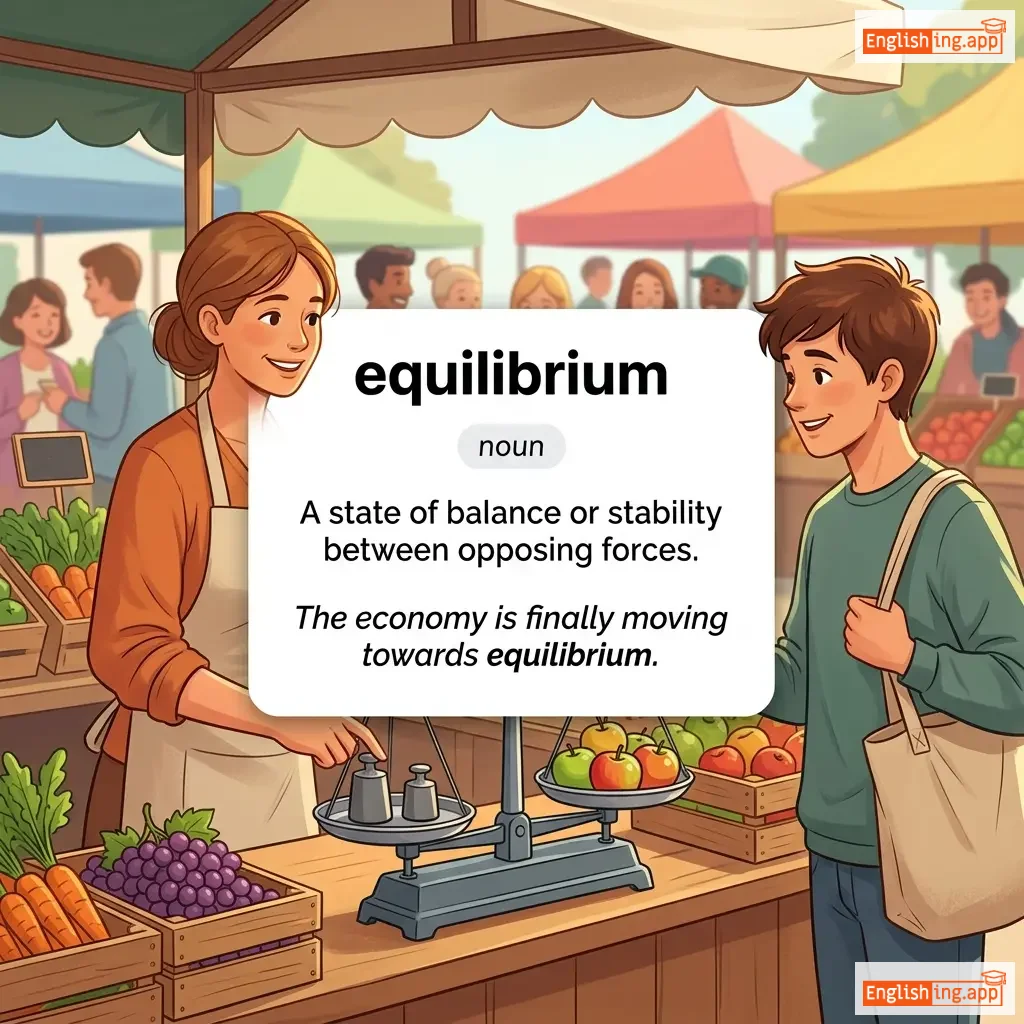
A state of balance or stability between opposing forces.
••••••
|
The economy is finally moving towards equilibrium. |
経済はついに均衡に向かって動いています。
Keizai wa tsuini kinkou ni mukatte ugoiteimasu.
••••••
|
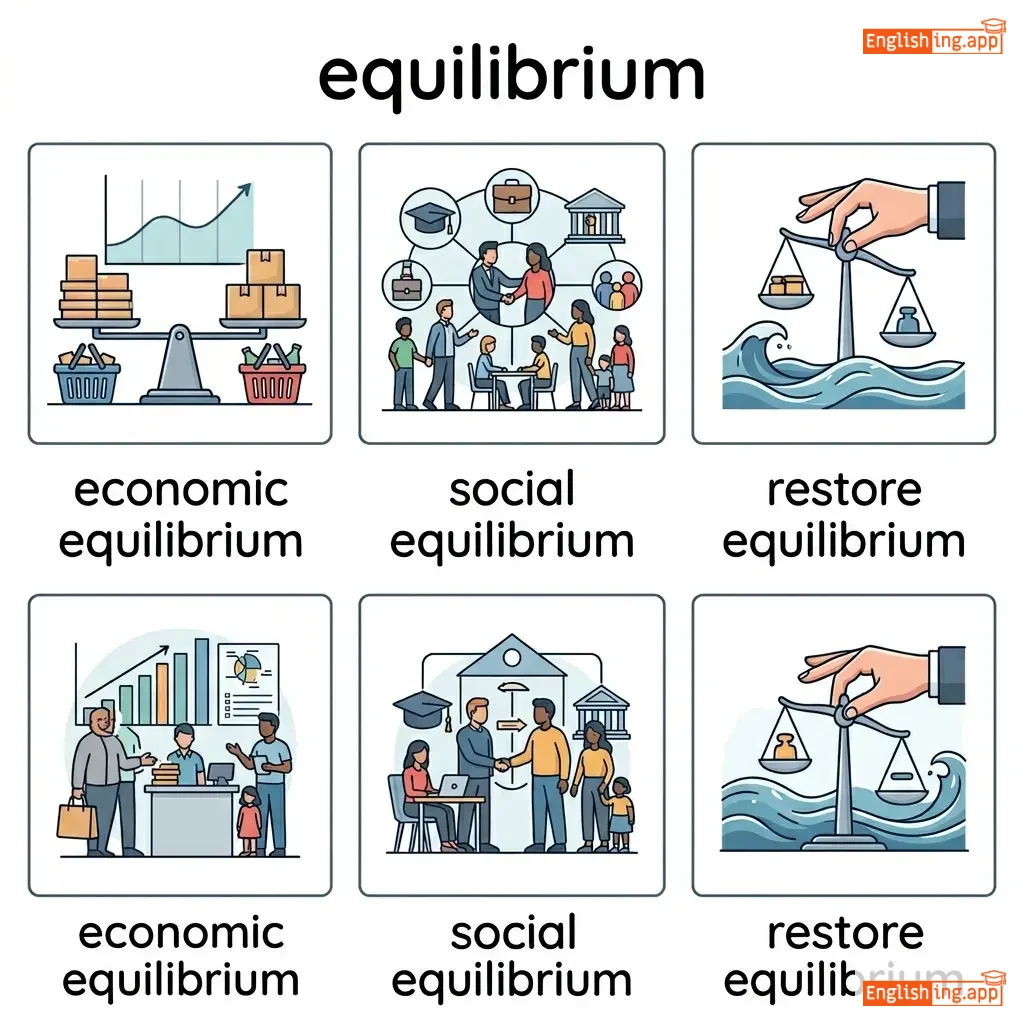
restore equilibrium |
To bring back balance or stability
••••••
|
均衡を回復する
Kinkou o kaifuku suru
••••••
|
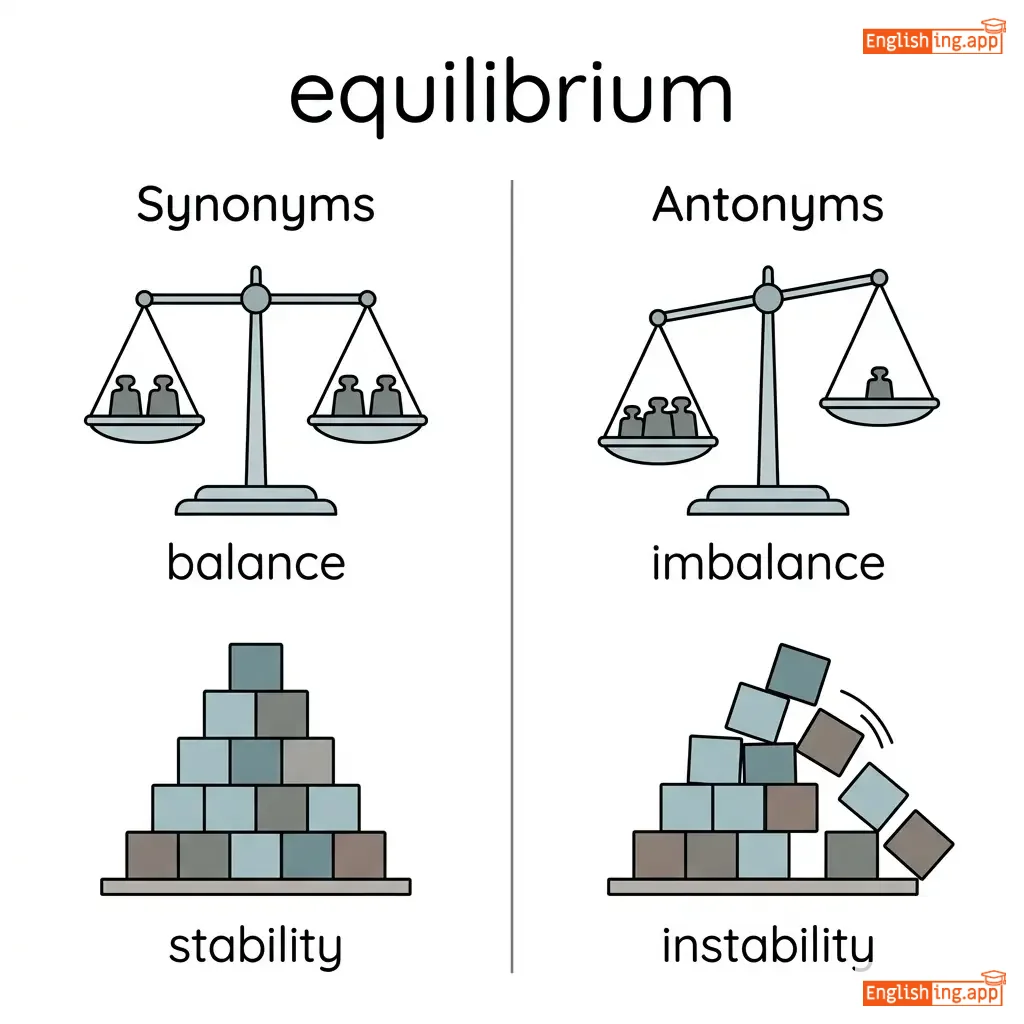
balance, stability, symmetry, poise, harmony
••••••
|
imbalance, instability, disorder
••••••
|
economic equilibrium, social equilibrium, restore equilibrium, maintain equilibrium
••••••
|
Equilibrium = 同じ + LIBRIum → 均衡 = 均衡
••••••
|
|
🧰
••••••
|
/ɪˈkwɪp/
verb
(イクイップ)
••••••
|
- •••••• |
装備する
soubisuru
••••••
|
equipped
イクイップド
••••••
|
equipped
イクイップド
••••••
|
equips
イクイップス
••••••
|
equipping
イクイッピング
••••••
|
to provide someone or something with the necessary items or skills for a task
••••••
|
The school equipped its students with modern technology.
学校は生徒たちに最新の技術を装備させました。
••••••
|
学校は生徒たちに最新の技術を装備させました。
Gakkou wa seitotachi ni saishin no gijutsu o soubi sagemashita.
••••••
|
well-equipped
良く装備された
••••••
|
having all the necessary tools or resources
••••••
|
良く装備された
yoku soubi sareta
••••••
|
supply, furnish, provide, prepare, arm
••••••
|
deprive, strip, disarm
••••••
|
equip with, properly equipped, equip someone for, equip team
••••••
|
装備は準備を整えることだ!
••••••
|
|
🛠️
••••••
|
/ɪˈkwɪpmənt/
noun
(エクイップメント)
••••••
|
- •••••• |
機器
kiki
••••••
|
- •••••• | - •••••• | - •••••• | - •••••• |
the necessary tools, machines, or other items needed for a particular purpose
••••••
|
The laboratory bought new equipment for research. |
実験室は研究のために新しい機器を購入しました。
jikken-shitsu wa kenkyū no tame ni atarashī kiki o kōnyū shimashita.
••••••
|
state-of-the-art equipment |
the most modern and advanced tools or machines available
••••••
|
最先端の機器
saizentan no kiki
••••••
|
tools, gear, apparatus, machinery, instruments
••••••
|
supplies, consumables, disposables
••••••
|
sports equipment, safety equipment, office equipment, medical equipment
••••••
|
機器は仕事に必要な道具です (kiki)
••••••
|
|
⚖️
••••••
|
/ɪˈkwɪv.ə.lənt/
adjective
(エクイヴァレント)
••••••
|
- •••••• |
等価; 同等
tōka; dōtō
••••••
|
- •••••• | - •••••• | - •••••• | - •••••• |
equal in value, amount, function, or meaning; having the same effect or result
••••••
|
This amount is equivalent to ten dollars. |
この金額は10ドルに相当します。
Kono kingaku wa 10 doru ni sōtō shimasu
••••••
|
- •••••• | - •••••• | - •••••• |
equal, same, comparable, identical
••••••
|
different, unequal, distinct
••••••
|
equivalent value, equivalent amount, equivalent to
••••••
|
日本語: 'エクイヴァレント'は'同じ'を意味します。数字が等しいように、ものが等しいことをイメージしましょう。
••••••
|
|
⏳
••••••
|
/ˈɪərə/
noun
(エラ)
••••••
|
- •••••• |
時代
jidai
••••••
|
- •••••• | - •••••• | - •••••• | - •••••• |
a long and distinct period of history with a particular feature or characteristic
••••••
|
The invention of the internet marked a new era in communication. |
インターネットの発明は、通信における新しい時代の幕開けを意味しました。
Intānetto no hatsumei wa, tsūshin ni okeru atarashī jidai no makuake o imi shimashita.
••••••
|
end of an era |
the close of a significant period in history or someone's life
••••••
|
時代の終わり
jidai no owari
••••••
|
age, epoch, period, time, generation
••••••
|
moment, instant, short-term
••••••
|
modern era, digital era, new era, Victorian era
••••••
|
時代はデジタル時代のように、特別な期間を表す言葉です。
••••••
|
|
🏗️
••••••
|
/ɪˈrɛkt/
verb
(イレクト)
••••••
|
|
建てる
tateru
••••••
|
erected
イレクテッド
••••••
|
erected
イレクテッド
••••••
|
erects
イレクツ
••••••
|
erecting
イレクティング
••••••
|
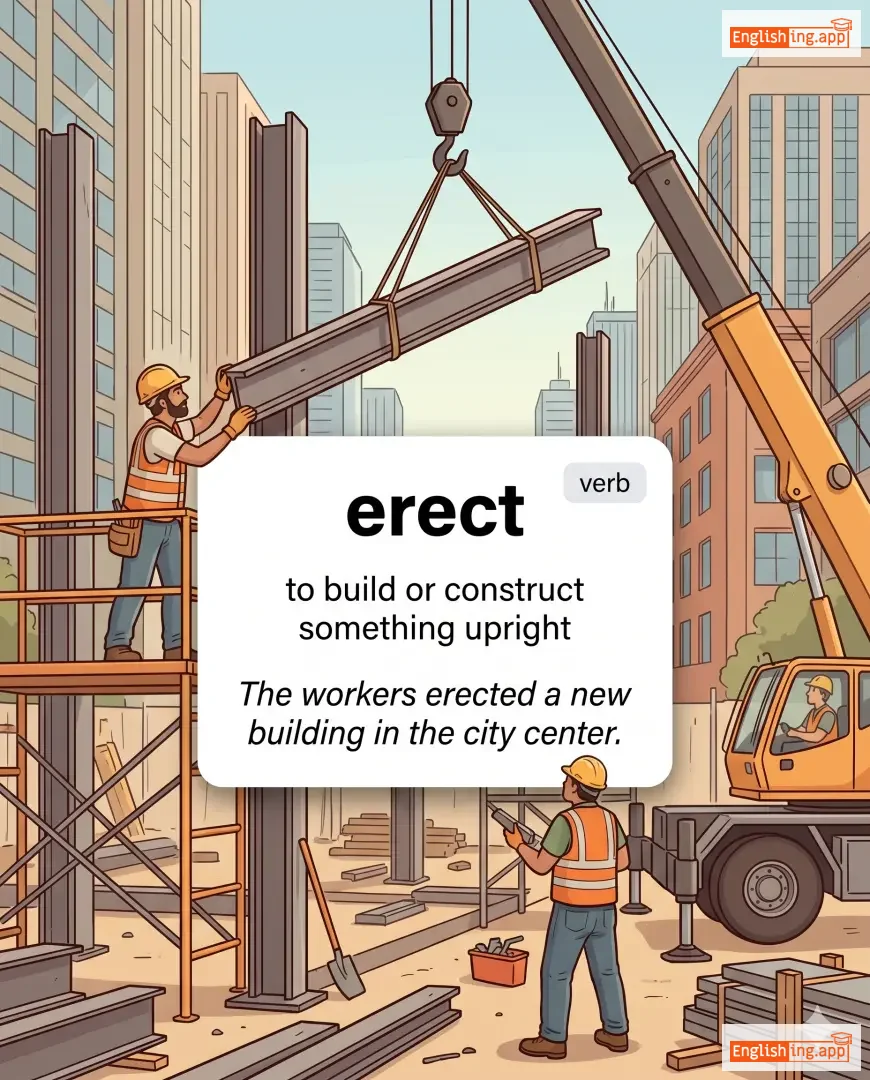
to build or construct something; to set upright
••••••
|
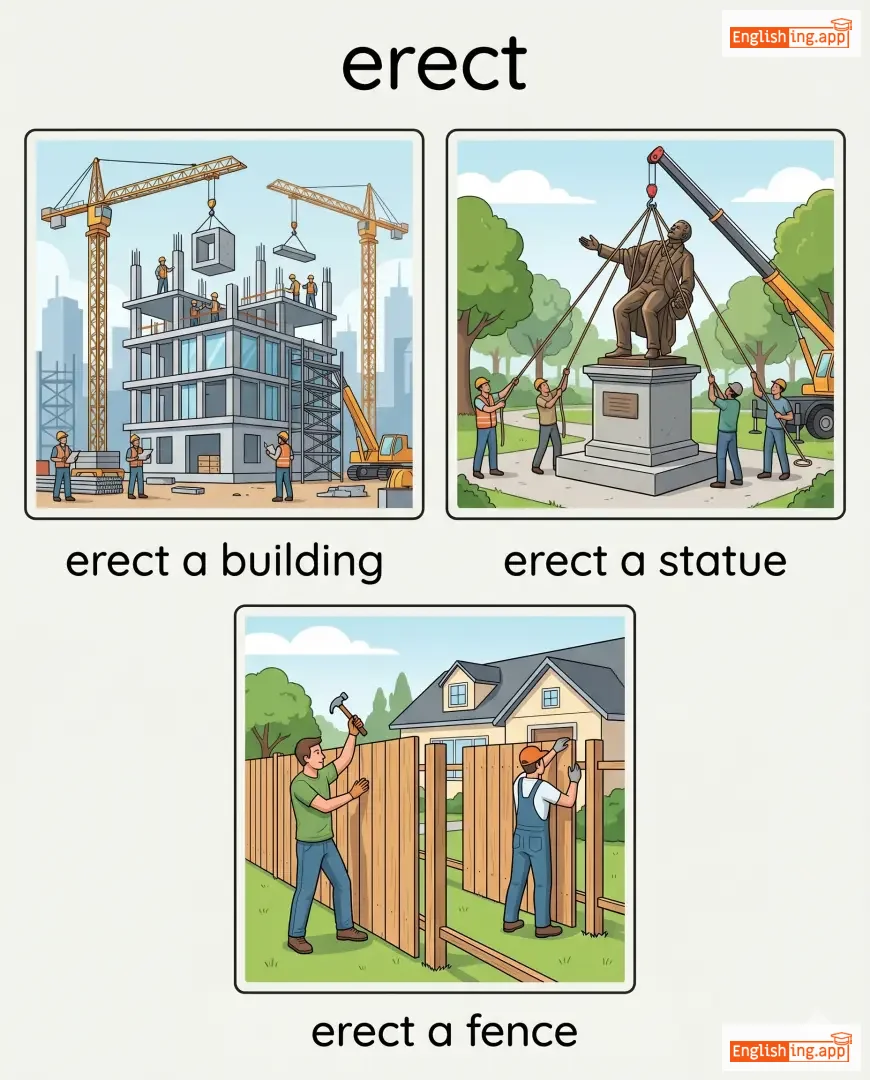
They erected a statue in the town square.
彼らは町の広場に像を建てました。
••••••
|
彼らは町の広場に像を建てました。
Karera wa machi no hiroba ni zou o tatemashita.
••••••
|
- •••••• | - •••••• | - •••••• |
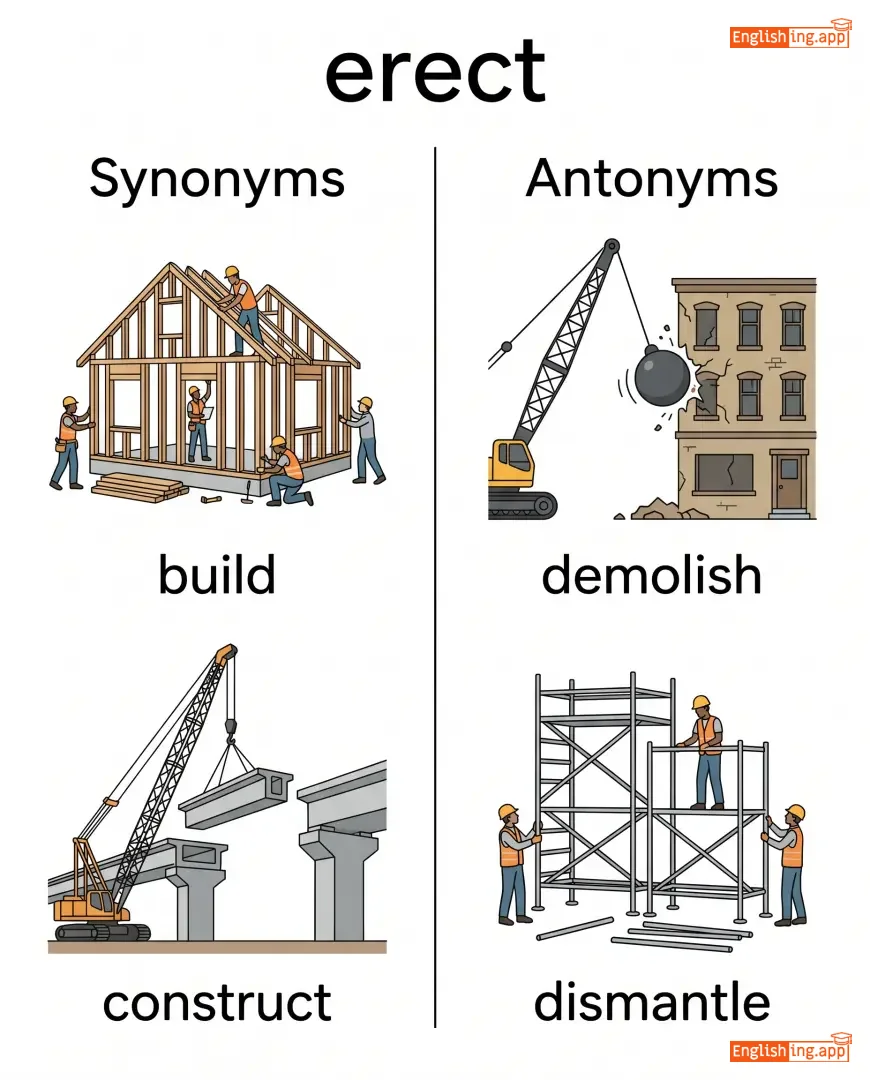
build, construct, raise, establish
••••••
|
demolish, destroy, tear down
••••••
|
erect building, erect monument, erect statue, erect structure
••••••
|
建てる像を立てる、建設のように。
••••••
|
|
⚠️
••••••
|
/ˈɛrər/
noun
(エラー)
••••••
|
- •••••• |
誤り
ayamari
••••••
|
- •••••• | - •••••• | - •••••• | - •••••• |
A mistake or inaccuracy in action, thought, or judgment.
••••••
|
The report contained a major error in the data analysis. |
レポートにはデータ分析における重大な誤りが含まれていました。
Repoto ni wa deeta bunseki ni okeru juudaina ayamari ga fukumarete imashita.
••••••
|
trial and error |
A way of solving problems by trying different methods until finding one that works.
••••••
|
試行錯誤
shikou sakugo
••••••
|
mistake, fault, blunder, slip, inaccuracy
••••••
|
accuracy, correctness, precision
••••••
|
human error, computer error, make an error, error message
••••••
|
誤りは日本語でミスを意味します。何か間違ったことが起きると、私たちは '誤り' と言います。
••••••
|
|
🌋
••••••
|
/ɪˈrʌpt/
verb
(エラプト)
••••••
|
- •••••• |
噴火する
funka suru
••••••
|
erupted
エラプテッド
••••••
|
erupted
エラプテッド
••••••
|
erupts
エラプツ
••••••
|
erupting
エラプティング
••••••
|
to burst forth suddenly and violently
••••••
|
The volcano erupted after centuries of dormancy.
火山は何世紀もの間沈黙していた後、エラプトしました。
••••••
|
火山は何世紀もの間沈黙していた後、エラプトしました。
Kazan wa nanseiki mono aida chinmoku shite ita ato, eraputo shimashita.
••••••
|
- •••••• | - •••••• | - •••••• |
explode, burst, blast, discharge
••••••
|
calm, subside, settle
••••••
|
erupt in anger, erupt in flames, erupt suddenly
••••••
|
ERUPT the volcano with an explosive power!
••••••
|
|
📈
••••••
|
/ˈɛskəleɪt/
verb
(エスカレート)
••••••
|
|
エスカレート
esukarēto
••••••
|
escalated
エスカレーテッド
••••••
|
escalated
エスカレーテッド
••••••
|
escalates
エスカレーツ
••••••
|
escalating
エスカレーティング
••••••
|
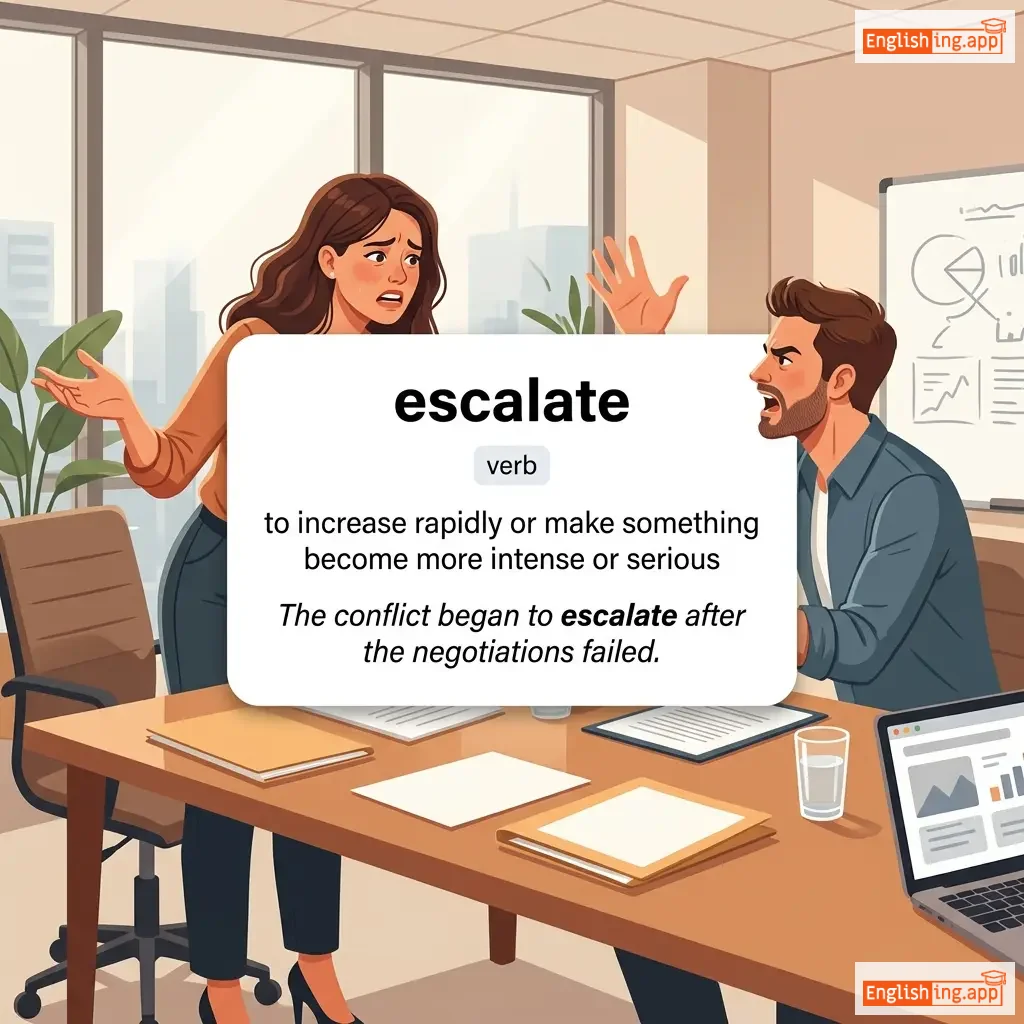
to increase rapidly or make something become more intense or serious
••••••
|
The conflict began to escalate after the negotiations failed.
交渉が失敗した後、紛争はエスカレートし始めた。
••••••
|
交渉が失敗した後、紛争はエスカレートし始めた。
Kōshō ga shippai shita ato, funsō wa esukarēto shihajimeta.
••••••
|
escalate the situation
状況をエスカレートさせる
••••••
|
to make a problem or conflict more serious
••••••
|
状況をエスカレートさせる
jōkyō o esukarēto saseru
••••••
|
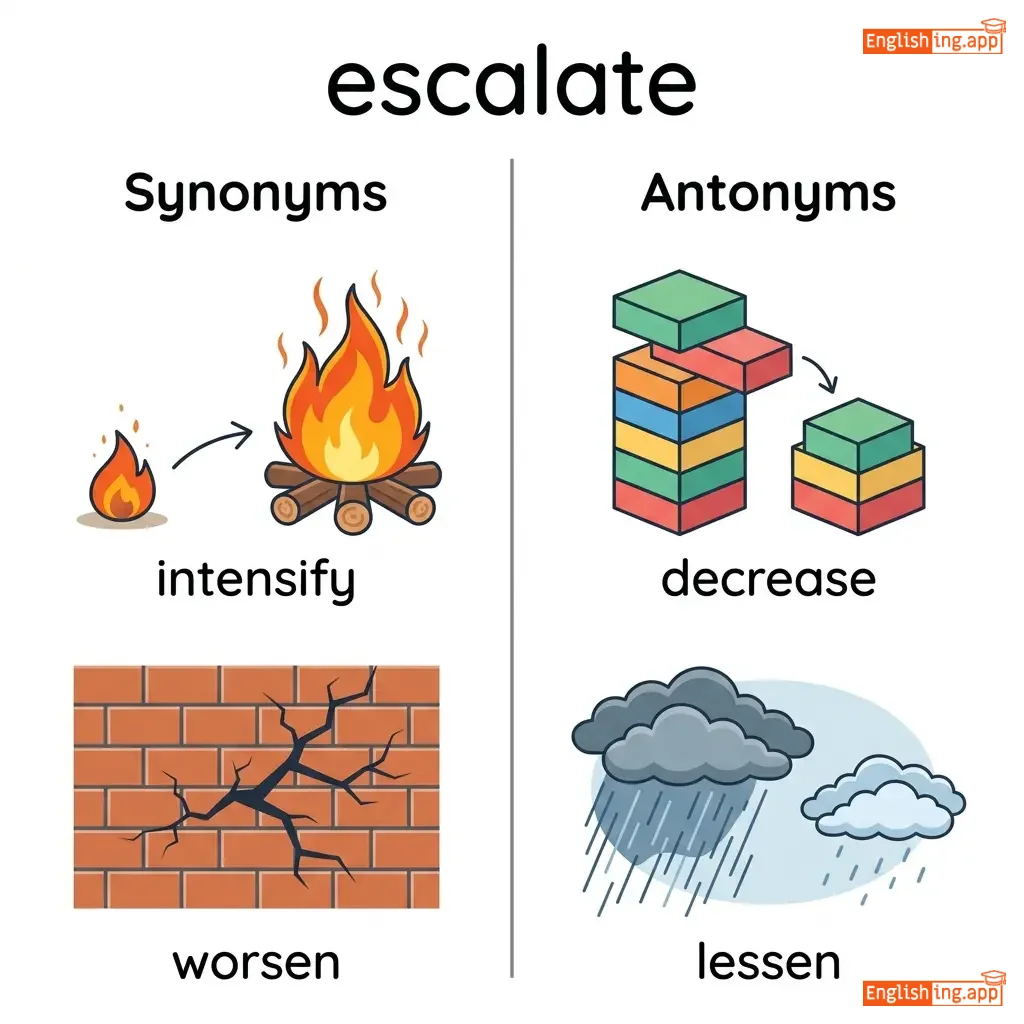
intensify, worsen, amplify, heighten, increase
••••••
|
decrease, lessen, reduce
••••••
|
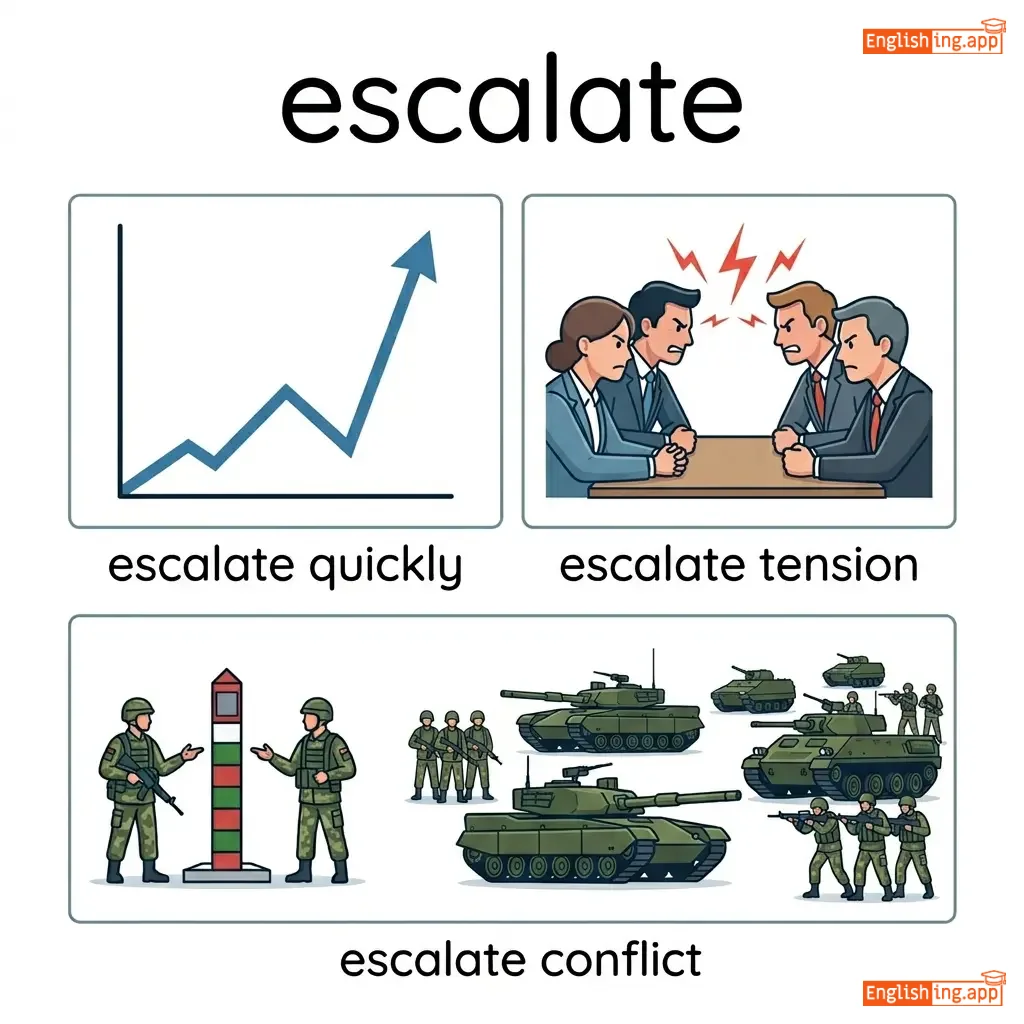
escalate quickly, escalate tension, escalate conflict, escalate costs
••••••
|
エスカレーターで上がる、エスカレートは増加や強化を意味する
••••••
|
|
🏃♂️
••••••
|
/ɪˈskeɪp/
verb
(eskeipu)
••••••
|
- •••••• |
逃げる
nigeru
••••••
|
escaped
eskeipudo
••••••
|
escaped
eskeipudo
••••••
|
escapes
eskeipusu
••••••
|
escaping
eskeipingu
••••••
|
To break free from confinement or control; to get away.
••••••
|
The prisoner tried to escape from jail.
囚人は刑務所から逃げようとした。
••••••
|
囚人は刑務所から逃げようとした。
Shuujin wa keimusho kara nigeyou to shita.
••••••
|
escape reality
現実から逃れる
••••••
|
To avoid or forget real-life problems by focusing on something else.
••••••
|
現実から逃れる
genjitsu kara nogareru
••••••
|
flee, break out, evade, get away, run away
••••••
|
stay, capture, confinement
••••••
|
escape route, escape plan, escape from, narrow escape
••••••
|
逃げるは逃げる – Nige + ru = Nogeru!
••••••
|
|
⭐
••••••
|
/ɪˈspeʃəl/
adjective
(エスペシャル)
••••••
|
- •••••• |
特別な
tokubetsu na
••••••
|
- •••••• | - •••••• | - •••••• | - •••••• |
Particularly remarkable or significant; distinguished from others
••••••
|
This is an especial opportunity you should not miss.
これは見逃せないエスペシャルな機会です。
••••••
|
これは見逃せない特別な機会です。
Kore wa minogasenai tokubetsu na kikai desu.
••••••
|
- •••••• | - •••••• | - •••••• |
particular, notable, remarkable, distinguished
••••••
|
ordinary, common
••••••
|
especial attention, especial care, especial event
••••••
|
Tokubetsu na means special in Japanese; think 'toku' = 'special'
••••••
|
|
⭐
••••••
|
/ɪˈspeʃəli/
adverb
(エスペシャリー)
••••••
|
- •••••• |
特に; 特別に; とりわけ
toku ni; tokubetsu ni; toriwake
••••••
|
- •••••• | - •••••• | - •••••• | - •••••• |
particularly; in particular; above all
••••••
|
I love all fruits, especially mangoes.
私はすべての果物が好きですが、特にマンゴーが好きです。
••••••
|
私はすべての果物が好きですが、特にマンゴーが好きです。
Watashi wa subete no kudamono ga suki desu ga, toku ni mango ga suki desu.
••••••
|
- •••••• | - •••••• | - •••••• |
particularly, specifically, notably, chiefly, mainly
••••••
|
generally, broadly, commonly
••••••
|
especially important, especially difficult, especially when
••••••
|
特にマンゴー - とっても好き!
••••••
|
|
📝
••••••
|
/ˈɛseɪ/
noun
(エッセイ)
••••••
|
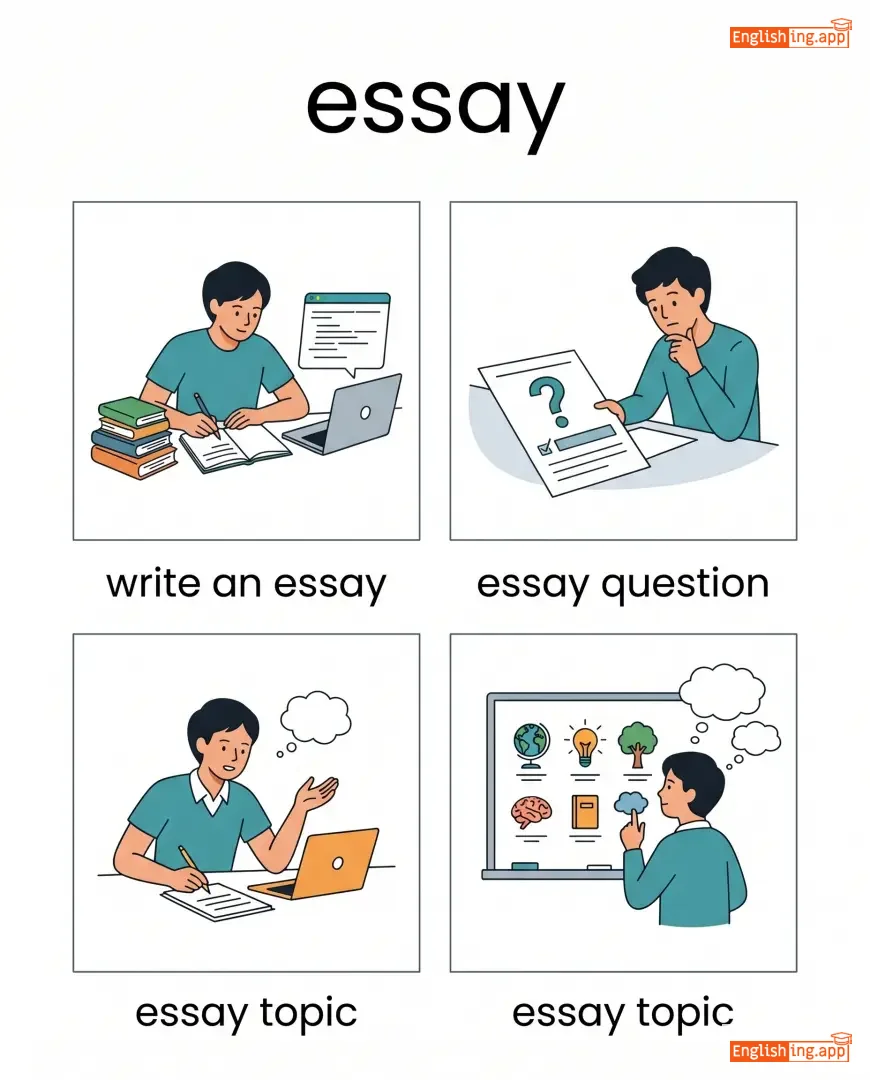
|
エッセイ
essei
••••••
|
- •••••• | - •••••• | - •••••• | - •••••• |
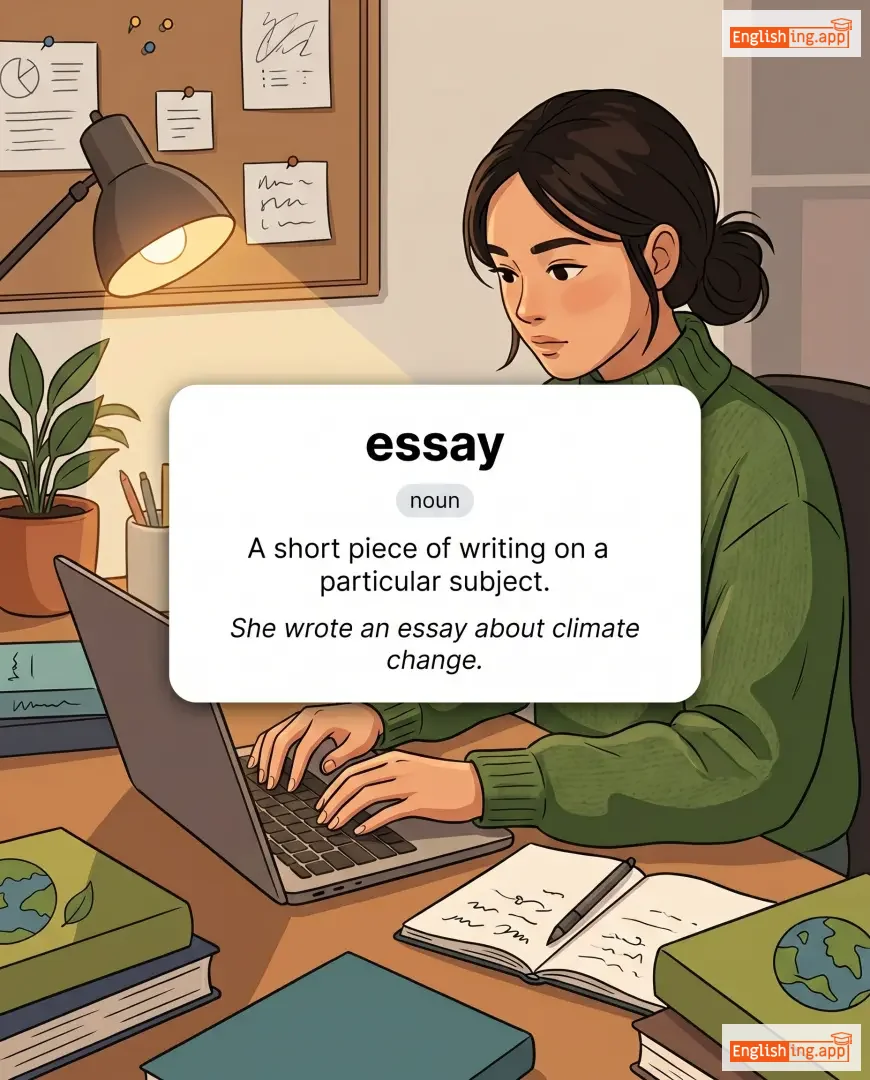
A short piece of writing on a particular subject.
••••••
|
She wrote an essay about climate change. |
彼女は気候変動についてのエッセイを書きました。
Kanojo wa kikō hendō ni tsuite no essei o kakimashita.
••••••
|
- •••••• | - •••••• | - •••••• |
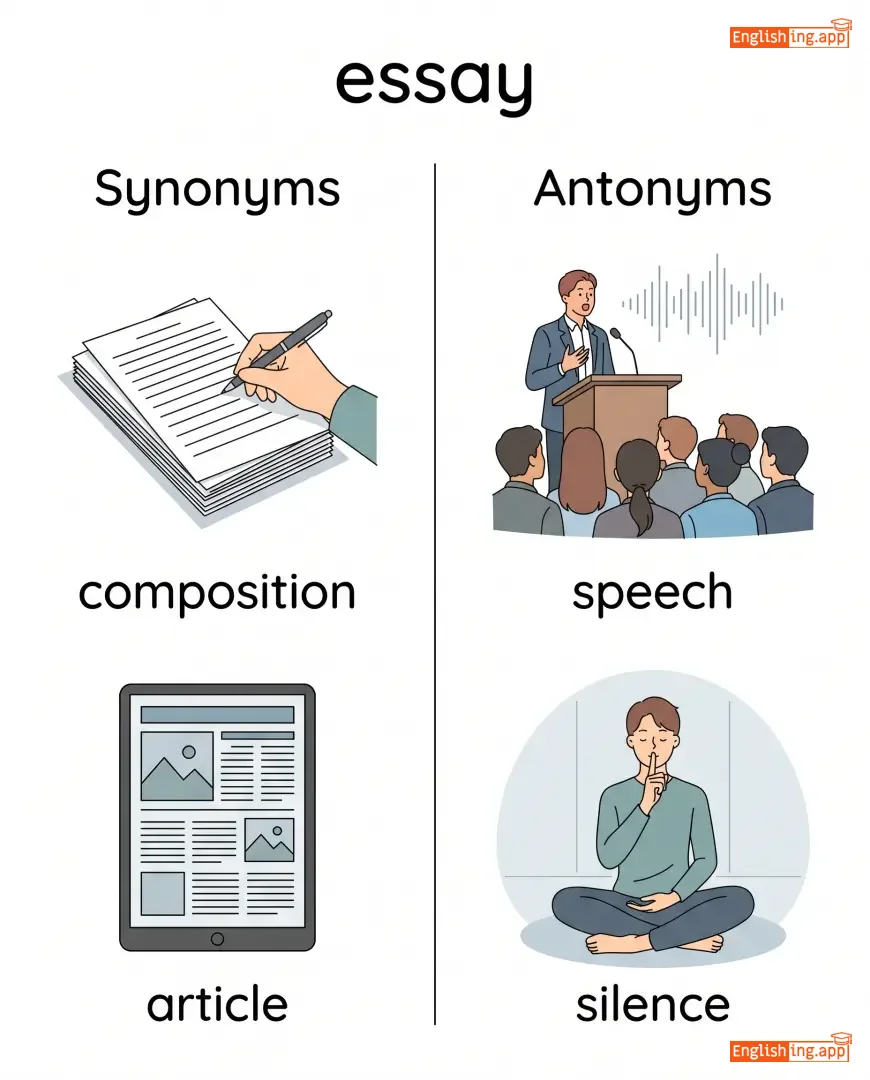
composition, article, paper, text, prose
••••••
|
speech, silence
••••••
|
write an essay, essay question, essay topic, essay competition
••••••
|
Essayはエッセイを意味する – 学校ではエッセイを書くことはエッセイを書くことです。
••••••
|
|
🌿
••••••
|
/ˈɛsəns/
noun
(エッセンス)
••••••
|
- •••••• |
本質
honshitsu
••••••
|
- •••••• | - •••••• | - •••••• | - •••••• |
The intrinsic nature or indispensable quality of something that determines its character.
••••••
|
The essence of democracy is freedom of speech.
民主主義の本質は言論の自由です。
••••••
|
民主主義の本質は言論の自由です。
Minshu shugi no honshitsu wa genron no jiyū desu.
••••••
|
in essence
本質的に
••••••
|
basically or fundamentally
••••••
|
本質的に
Honshitsuteki ni
••••••
|
core, nature, substance, spirit, heart
••••••
|
superficiality, exterior, surface
••••••
|
true essence, essence of life, capture the essence, in essence
••••••
|
Essence は本質です — まるで香水のエッセンスが香りを決定するように。
••••••
|
|
💧
••••••
|
/ɪˈsɛnʃəl/
adjective
(エッセンシャル)
••••••
|
- •••••• |
必要不可欠
hitsuyō fukaketsu
••••••
|
- •••••• | - •••••• | - •••••• | - •••••• |
Absolutely necessary; extremely important.
••••••
|
Water is essential for life.
水は生命にとって必要不可欠です。
••••••
|
水は生命にとって必要不可欠です。
Mizu wa seimei ni totte hitsuyō fukaketsu desu.
••••••
|
essential services
必須サービス
••••••
|
basic services that must continue even in emergencies
••••••
|
必須サービス
hisshu sābisu
••••••
|
vital, crucial, fundamental, indispensable
••••••
|
nonessential, trivial, unnecessary
••••••
|
essential role, essential requirement, essential need
••••••
|
Essentialは必要不可欠 → 試験でペンは必要不可欠、無ければどうやって書くの?
••••••
|
|
🔑
••••••
|
/ɪˈsɛnʃəli/
adverb
(エッセンシャリー)
••••••
|
- •••••• |
本質的に
honshitsuteki ni
••••••
|
- •••••• | - •••••• | - •••••• | - •••••• |
Used to emphasize the basic or fundamental nature of something.
••••••
|
The two plans are essentially the same. |
その2つの計画は本質的に同じです。
Sono futatsu no keikaku wa honshitsuteki ni onaji desu.
••••••
|
- •••••• | - •••••• | - •••••• |
basically, fundamentally, primarily, inherently, intrinsically
••••••
|
incidentally, superficially
••••••
|
essentially true, essentially different, essentially the same
••••••
|
Essentiallyは本質的に – 本質的なものが一番大切です。
••••••
|
|
🏢
••••••
|
/ɪˈstæblɪʃ/
verb
(エスタブリッシュ)
••••••
|
- •••••• |
設立する
setsuritsu suru
••••••
|
established
エスタブリッシュド
••••••
|
established
エスタブリッシュド
••••••
|
establishes
エスタブリッシュズ
••••••
|
establishing
エスタブリッシング
••••••
|
To set up, create, or bring into existence something on a firm basis.
••••••
|
The company plans to establish a new office in Dhaka.
その会社はダッカに新しいオフィスを設立する予定です。
••••••
|
その会社はダッカに新しいオフィスを設立する予定です。
Sono kaisha wa Dāka ni atarashī ofisu o setsuritsu suru yotei desu.
••••••
|
establish a reputation
名声を築く
••••••
|
to build or create recognition over time
••••••
|
名声を築く
meisei o kizuku
••••••
|
set up, found, create, build, institute
••••••
|
abolish, destroy, dismantle
••••••
|
establish control, establish a company, establish rules, firmly establish
••••••
|
設立は '創設' と同じような意味で、安定した基盤を作ること。
••••••
|
|
🏢
••••••
|
/ɪˈstæblɪʃmənt/
noun
(es-taburisshumento)
••••••
|
- •••••• |
設立
setsuritsu
••••••
|
- •••••• | - •••••• | - •••••• | - •••••• |
An organization, business, or system; the act of setting something up.
••••••
|
The restaurant is a new establishment in town. |
レストランは町の新しい設立です。
Resutoran wa machi no atarashī setsuritsu desu.
••••••
|
the establishment |
A group in society with power and influence.
••••••
|
権力者の集団
kenryokusha no shūdan
••••••
|
institution, organization, foundation, business, setup
••••••
|
disbandment, dissolution
••••••
|
establishment of, business establishment, political establishment
••••••
|
設立は、すべてを始める場所です。ここからすべてが始まります!
••••••
|
|
🏡
••••••
|
/ɪˈsteɪt/
noun
••••••
|
- •••••• | - •••••• | - •••••• | - •••••• | - •••••• | - •••••• |
A large area of land, property, or possessions owned by someone, often including a big house.
••••••
|
The family owned a large estate in the countryside. |
- •••••• |
real estate |
Property consisting of land or buildings
••••••
|
- •••••• |
property, land, assets, holdings, manor
••••••
|
liabilities, debt
••••••
|
real estate, country estate, large estate, estate planning
••••••
|
No •••••• |
|
📊
••••••
|
/ˈɛstɪˌmeɪt/
verb
(エスティメイト)
••••••
|
- •••••• |
見積もる
mitsumoru
••••••
|
estimated
エスティメイテッド
••••••
|
estimated
エスティメイテッド
••••••
|
estimates
エスティメイツ
••••••
|
estimating
エスティメイティング
••••••
|
To roughly calculate or judge the value, number, quantity, or extent of something.
••••••
|
The engineer estimated the cost of the project at $5 million.
エンジニアはプロジェクトのコストを500万ドルと見積もりました。
••••••
|
エンジニアはプロジェクトのコストを500万ドルと見積もりました。
Enjinia wa purojekuto no kosuto o 500-man doru to mitsumorimashita.
••••••
|
rough estimate
ラフ見積もり
••••••
|
An approximate calculation
••••••
|
ラフ見積もり
Rafu mitsumori
••••••
|
calculate, assess, evaluate, appraise, guess
••••••
|
measure exactly, determine
••••••
|
make an estimate, accurate estimate, cost estimate, estimate value
••••••
|
見積もりは大まかな計算のようなものです、見積もり 📊
••••••
|
|
➕
••••••
|
/ɛtˈsɛtərə/
abbreviation
(エトセトラ)
••••••
|
- •••••• |
など
nado
••••••
|
- •••••• | - •••••• | - •••••• | - •••••• |
Used to indicate additional, similar items in a list that are not mentioned.
••••••
|
The shop sells fruits, vegetables, dairy, etc. |
店では果物、野菜、乳製品などが販売されています。
Mise de wa kudamono, yasai, nyūseihin nado ga hanbai sareteimasu.
••••••
|
- •••••• | - •••••• | - •••••• |
and so on, and the rest, and others
••••••
|
none
••••••
|
etc., and so on, etcetera list
••••••
|
etc = など ➕ = 他のものもある
••••••
|
|
📝
••••••
|
/ɛtˈsɛtərə/
adverb
(エトセテラ)
••••••
|
- •••••• |
その他
sonota
••••••
|
- •••••• | - •••••• | - •••••• | - •••••• |
used at the end of a list to indicate that other similar items are included
••••••
|
She bought apples, oranges, bananas, etcetera from the market.
彼女は市場でリンゴ、オレンジ、バナナ、エトセテラを買いました。
••••••
|
彼女は市場でリンゴ、オレンジ、バナナ、その他を買いました。
Kanojo wa ichiba de ringo, orenji, banana, sonota wo kaimashita.
••••••
|
- •••••• | - •••••• | - •••••• |
and so on, and the rest, and the like, and others
••••••
|
none, specific items
••••••
|
etc., etc. in writing, apples, oranges, etc.
••••••
|
エトセテラ = 'その他', 覚えてリストの残りも含む。
••••••
|
|
♾️
••••••
|
/ɪˈtɜːrnəl/
adjective
(イーターナル)
••••••
|
- •••••• |
永遠
eien
••••••
|
- •••••• | - •••••• | - •••••• | - •••••• |
lasting or existing forever; without end
••••••
|
They pledged their eternal love for each other. |
彼らはお互いに永遠の愛を誓いました。
Karera wa otagai ni eien no ai o chikaimashita.
••••••
|
eternal flame |
a fire that burns continuously as a symbol of remembrance
••••••
|
永遠の炎
eien no honoo
••••••
|
everlasting, perpetual, infinite, timeless, immortal
••••••
|
temporary, fleeting, mortal
••••••
|
eternal love, eternal life, eternal flame, eternal truth
••••••
|
永遠は eternal を意味します – 終わりがない!
••••••
|
|
💼
••••••
|
/ˈɛθɪk/
noun
(エシック)
••••••
|
- •••••• |
倫理
rinri
••••••
|
- •••••• | - •••••• | - •••••• | - •••••• |
a set of moral principles, especially ones relating to a particular group, system, or profession
••••••
|
He has a strong work ethic and always meets deadlines.
彼は強い労働倫理を持っており、常に締め切りを守ります。
••••••
|
彼は強い労働倫理を持っており、常に締め切りを守ります。
Kare wa tsuyoi rōdō rinri o motte ori, jō ni shimekiri o mamorimasu.
••••••
|
- •••••• | - •••••• | - •••••• |
morality, principles, values, standards
••••••
|
immorality, corruption
••••••
|
ethical behavior, strong work ethic, moral ethics, business ethics
••••••
|
Ethics を理解しよう ‘エシック’ - 仕事に関連する道徳的原則
••••••
|
|
⚖️
••••••
|
/ˈɛθɪks/
noun
(エシックス)
••••••
|
- •••••• |
倫理
rinri
••••••
|
- •••••• | - •••••• | - •••••• | - •••••• |
moral principles that govern a person's behavior or the conduct of an activity
••••••
|
Business ethics require companies to act fairly and responsibly. |
ビジネス倫理は、企業に公平かつ責任を持って行動することを求めます。
Bijinesu rinri wa, kigyō ni kōhei katsu sekinin o motte kōdō suru koto o motomemasu.
••••••
|
code of ethics |
a set of principles that guide professional conduct
••••••
|
倫理規定
rinri kitei
••••••
|
morality, principles, values, integrity, conscience
••••••
|
immorality, corruption, dishonesty
••••••
|
business ethics, professional ethics, medical ethics, code of ethics
••••••
|
倫理 = 行動における正しい道徳的ガイドライン
••••••
|
|
🌍
••••••
|
/ˈɛθnɪk/
adjective
(エスニック)
••••••
|
- •••••• |
民族的
minzokuteki
••••••
|
- •••••• | - •••••• | - •••••• | - •••••• |
relating to a population subgroup with a common national or cultural tradition
••••••
|
The festival celebrated the city's diverse ethnic communities. |
フェスティバルは都市のさまざまな民族のコミュニティを祝いました。
Fesutibaru wa toshi no samazama na minzoku no komyuniti o iwaimashita.
••••••
|
- •••••• | - •••••• | - •••••• |
cultural, racial, traditional, indigenous
••••••
|
universal, general, nontraditional
••••••
|
ethnic group, ethnic community, ethnic diversity, ethnic background
••••••
|
Ethnic = 伝統文化を共有するグループ
••••••
|
|
🇪🇺
••••••
|
/ˌjʊərəˈpiːən/
adjective
(ヨーロピアン)
••••••
|
- •••••• |
ヨーロピアン
Yōropian
••••••
|
- •••••• | - •••••• | - •••••• | - •••••• |
Relating to Europe or its people.
••••••
|
She studied European history at university. |
彼女は大学でヨーロッパの歴史を学びました。
Kanojo wa daigaku de Yōroppa no rekishi o manabimashita.
••••••
|
European Union |
A political and economic union of European countries
••••••
|
ヨーロッパ連合
Yōroppa rengō
••••••
|
continental, western, EU-related
••••••
|
non-European, Asian
••••••
|
European culture, European history, European countries, European Union
••••••
|
European はヨーロッパの人々や物を意味します = ヨーロッパの歴史はヨーロッパの物語を意味します 🇪🇺
••••••
|
|
🚨
••••••
|
/ɪˈvækjueɪt/
verb
(エヴァキュエイト)
••••••
|
- •••••• |
避難する
hinan suru
••••••
|
evacuated
エヴァキュエイテッド
••••••
|
evacuated
エヴァキュエイテッド
••••••
|
evacuates
エヴァキュエイツ
••••••
|
evacuating
エヴァキュエイティング
••••••
|
To remove people from a dangerous place to safety.
••••••
|
The residents were ordered to evacuate the building after the fire alarm.
火災警報後、住民は建物から避難するよう命じられました。
••••••
|
火災警報後、住民は建物から避難するよう命じられました。
Kasai keihou go, jumin wa tatemono kara hinan suru you meijiraremashita.
••••••
|
evacuate the premises
施設を避難させる
••••••
|
To leave a building or area immediately for safety reasons.
••••••
|
施設を避難させる
Shisetsu o hinan saseru
••••••
|
clear, empty, vacate, withdraw
••••••
|
occupy, stay
••••••
|
evacuate building, evacuate area, evacuate residents, emergency evacuate
••••••
|
Eva + Queue みんな避難 - 避難する
••••••
|
|
📊
••••••
|
/ɪˈvæljueɪt/
verb
(イヴァリュエイト)
••••••
|
- •••••• |
評価する
hyoukasuru
••••••
|
evaluated
イヴァリュエイテッド
••••••
|
evaluated
イヴァリュエイテッド
••••••
|
evaluates
イヴァリュエイツ
••••••
|
evaluating
イヴァリュエイティング
••••••
|
To assess or judge the value, quality, or significance of something.
••••••
|
The teacher will evaluate the students’ projects tomorrow.
教師は明日学生のプロジェクトを評価します。
••••••
|
教師は明日学生のプロジェクトを評価します。
Kyoushi wa ashita gakusei no purojekuto wo hyoukasuru.
••••••
|
evaluate the situation
状況を評価する
••••••
|
to carefully consider all aspects before deciding
••••••
|
状況を評価する
Joukyou wo hyoukasuru
••••••
|
assess, judge, appraise, analyze, review
••••••
|
ignore, neglect
••••••
|
evaluate performance, evaluate results, evaluate options
••••••
|
評価するは評価する → 試験の評価
••••••
|
|
📝
••••••
|
/ɪˌvæljʊˈeɪʃən/
noun
(イヴァリューエイション)
••••••
|
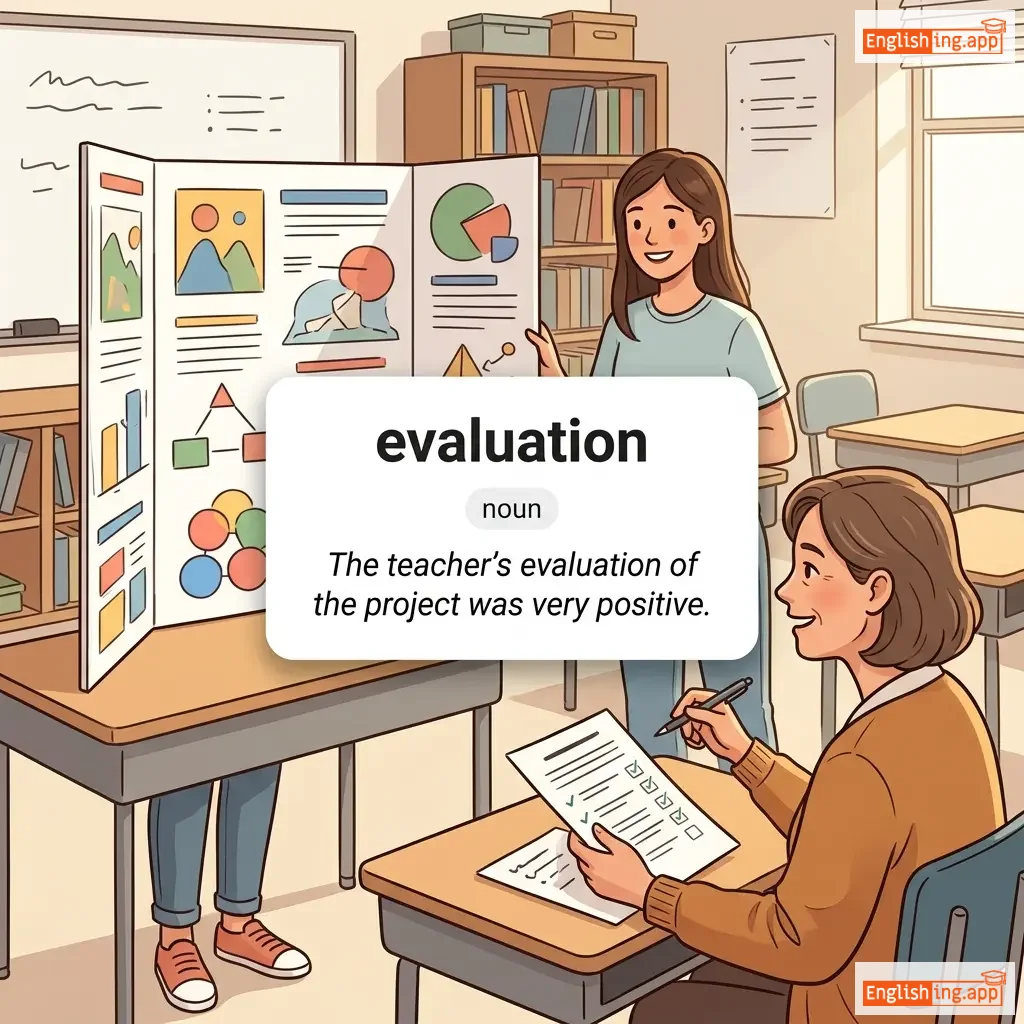
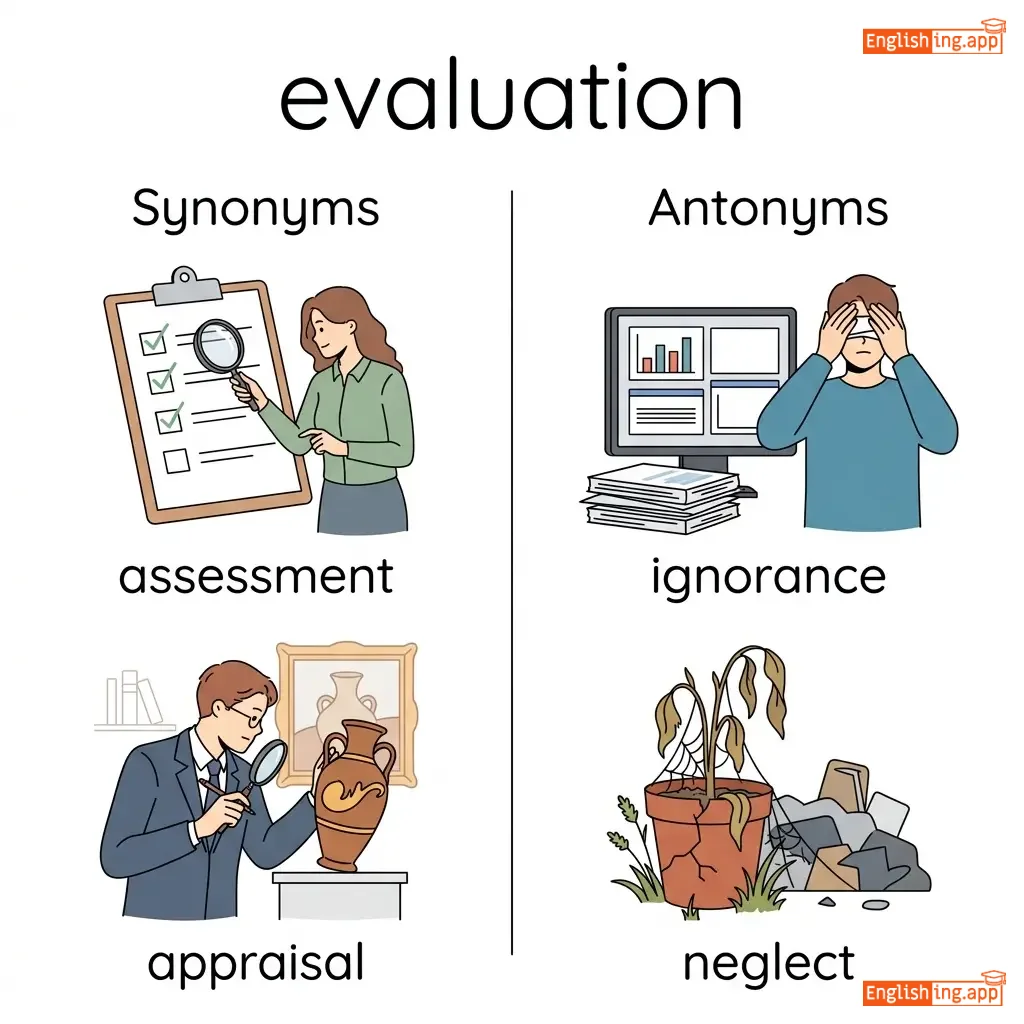
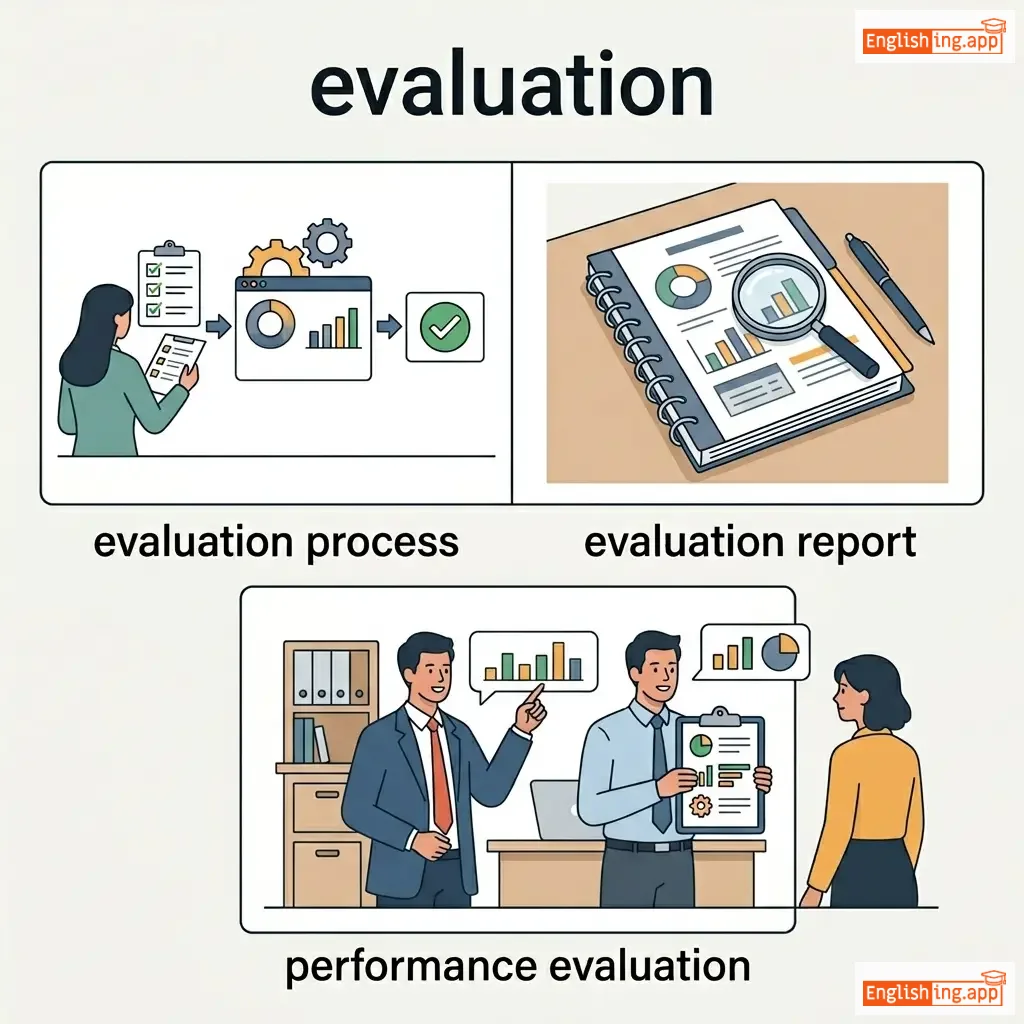
|
評価
hyouka
••••••
|
- •••••• | - •••••• | - •••••• | - •••••• |
The process of assessing or judging the value, quality, or importance of something.
••••••
|
The teacher’s evaluation of the project was very positive. |
教師のプロジェクトの評価は非常に肯定的でした。
Kyoushi no purojekuto no hyouka wa hijou ni kouteki deshita.
••••••
|
performance evaluation |
The process of assessing how well someone performs their job
••••••
|
パフォーマンス評価
Pafōmansu hyōka
••••••
|
assessment, appraisal, review, judgment, analysis
••••••
|
ignorance, neglect
••••••
|
evaluation process, evaluation report, performance evaluation, self-evaluation
••••••
|
評価 = 評価 📝 テストで教師が評価を行うように
••••••
|
|
⚖️
••••••
|
/ˈiː.vən/
adjective, adverb
(イーブン)
••••••
|
- •••••• |
平らな
tairana
••••••
|
- •••••• | - •••••• | - •••••• | - •••••• |
flat or smooth; equal in degree or amount; used to emphasize something surprising
••••••
|
The road was surprisingly even after the storm.
嵐の後、道路は驚くほど平坦でした。
••••••
|
嵐の後、道路は驚くほど平坦でした。
Arashi no ato, douro wa odoroku hodo tairan deshita.
••••••
|
even odds
イーブンオッズ
••••••
|
a situation where chances of success or failure are equal
••••••
|
平等なチャンス
byoudou na chansu
••••••
|
level, flat, equal, balanced, fair
••••••
|
uneven, unfair, irregular
••••••
|
even surface, even chance, even number, even tone, even odds
••••••
|
Evenは平らな意味で、'イーブンオッズ' ⚖️
••••••
|
|
🌆
••••••
|
/ˈiːv.nɪŋ/
noun
(ivning)
••••••
|
- •••••• |
夕方
yūgata
••••••
|
- •••••• | - •••••• | - •••••• | - •••••• |
the part of the day between afternoon and night
••••••
|
We went for a walk in the cool evening.
私たちは涼しい夕方に散歩に行きました。
••••••
|
私たちは涼しい夕方に散歩に行きました。
Watashitachi wa suzushī yūgata ni sanpo ni ikimashita.
••••••
|
good evening
こんばんは
••••••
|
a greeting used in the evening
••••••
|
こんばんは
Konbanwa
••••••
|
nightfall, dusk, twilight, sundown
••••••
|
morning, dawn
••••••
|
evening walk, evening meal, evening star, evening news
••••••
|
Evening = 日が沈んだ後の涼しい時間 🌆
••••••
|

